Operator
Good day and thank you for standing by. Welcome to the Central Band Company first quarter 2026 earnings conference call. At this time, all participants are in a listen-only mode. After the speaker's presentation, there'll be a question and answer session. To ask a question during the session, you'll need to press star 11 on your telephone. You will then hear an automated message advising your hand is raised. To withdraw your question, please press star 11 in the game. Please be advised that today's conference is being recorded. I would now like to turn the conference over to your speaker for today, John Ross, President and CEO. Please go ahead.
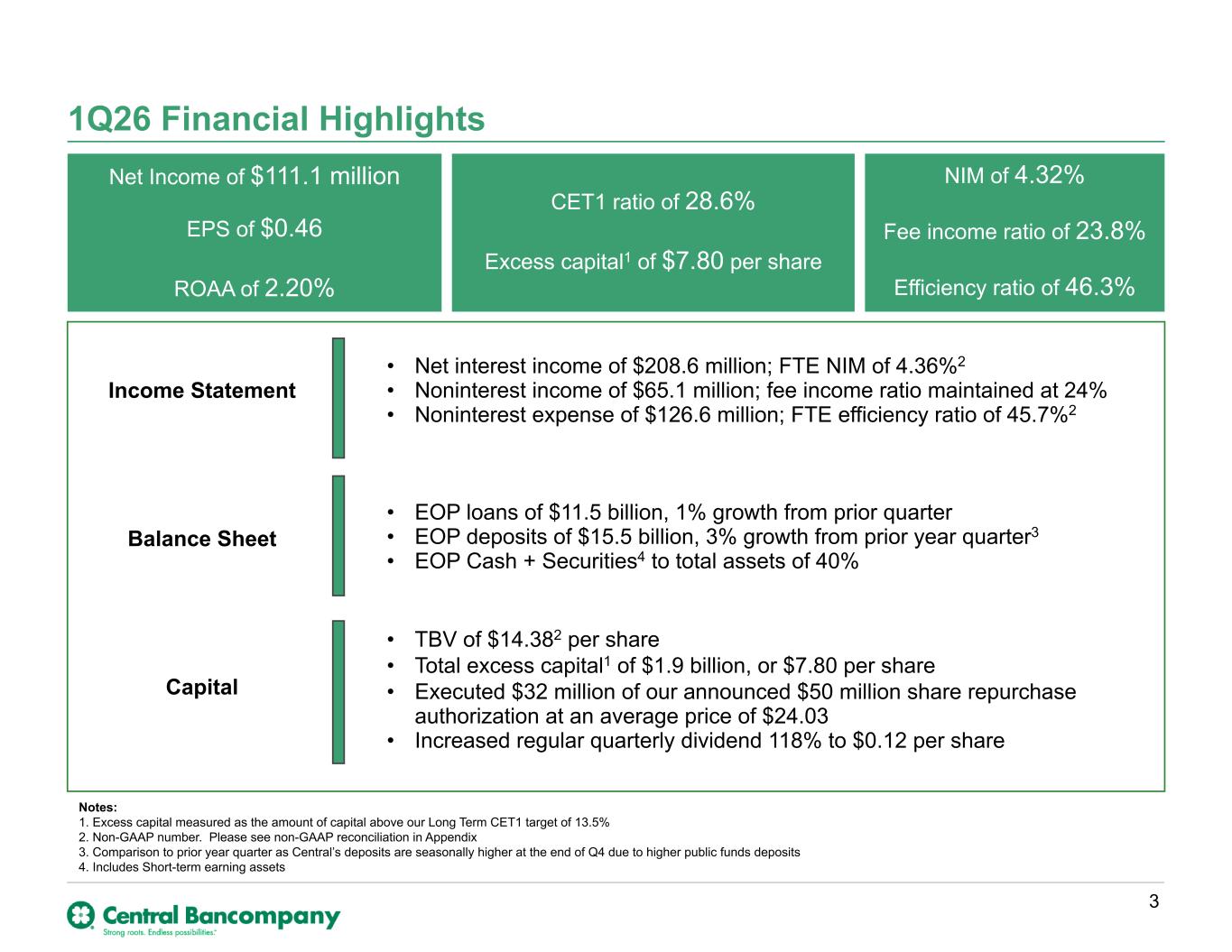
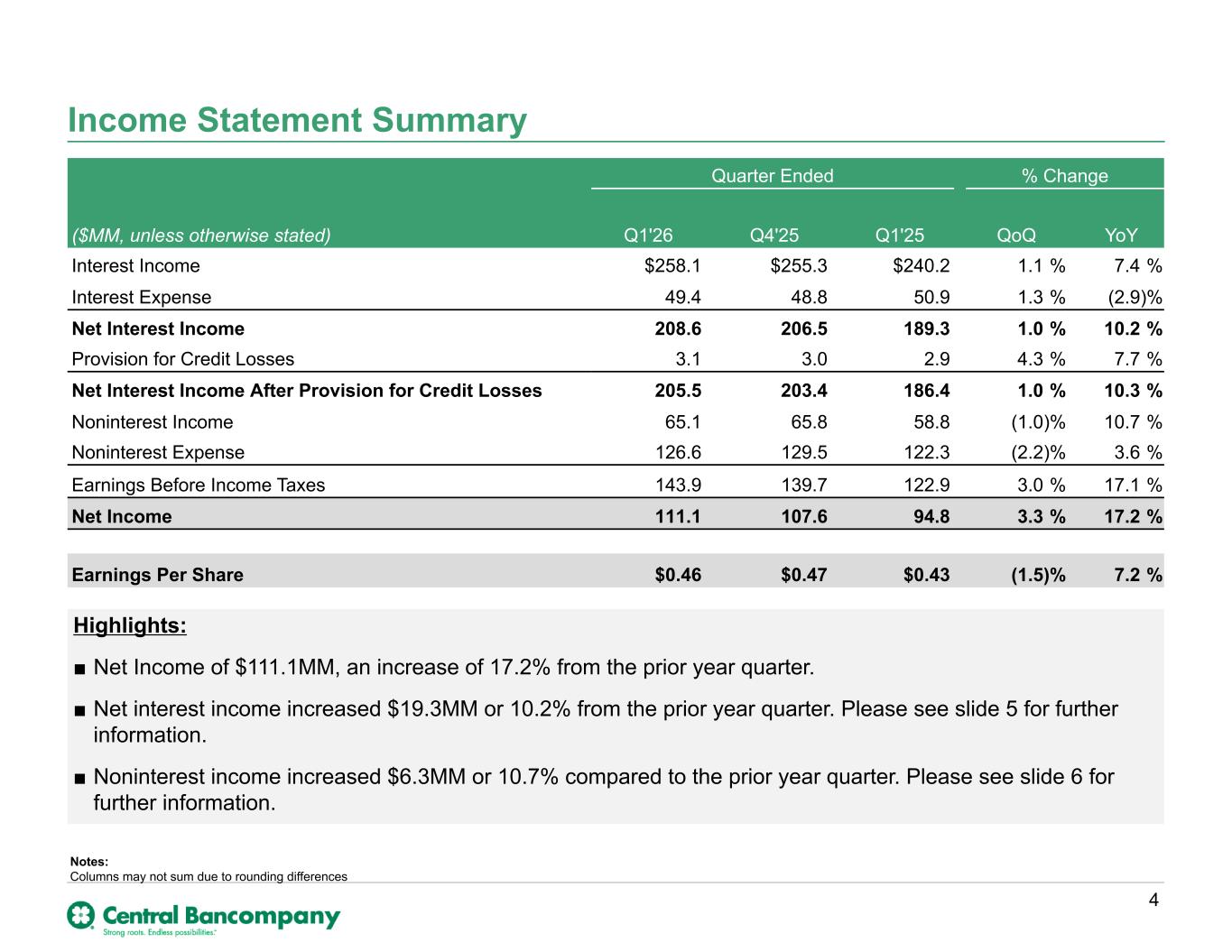
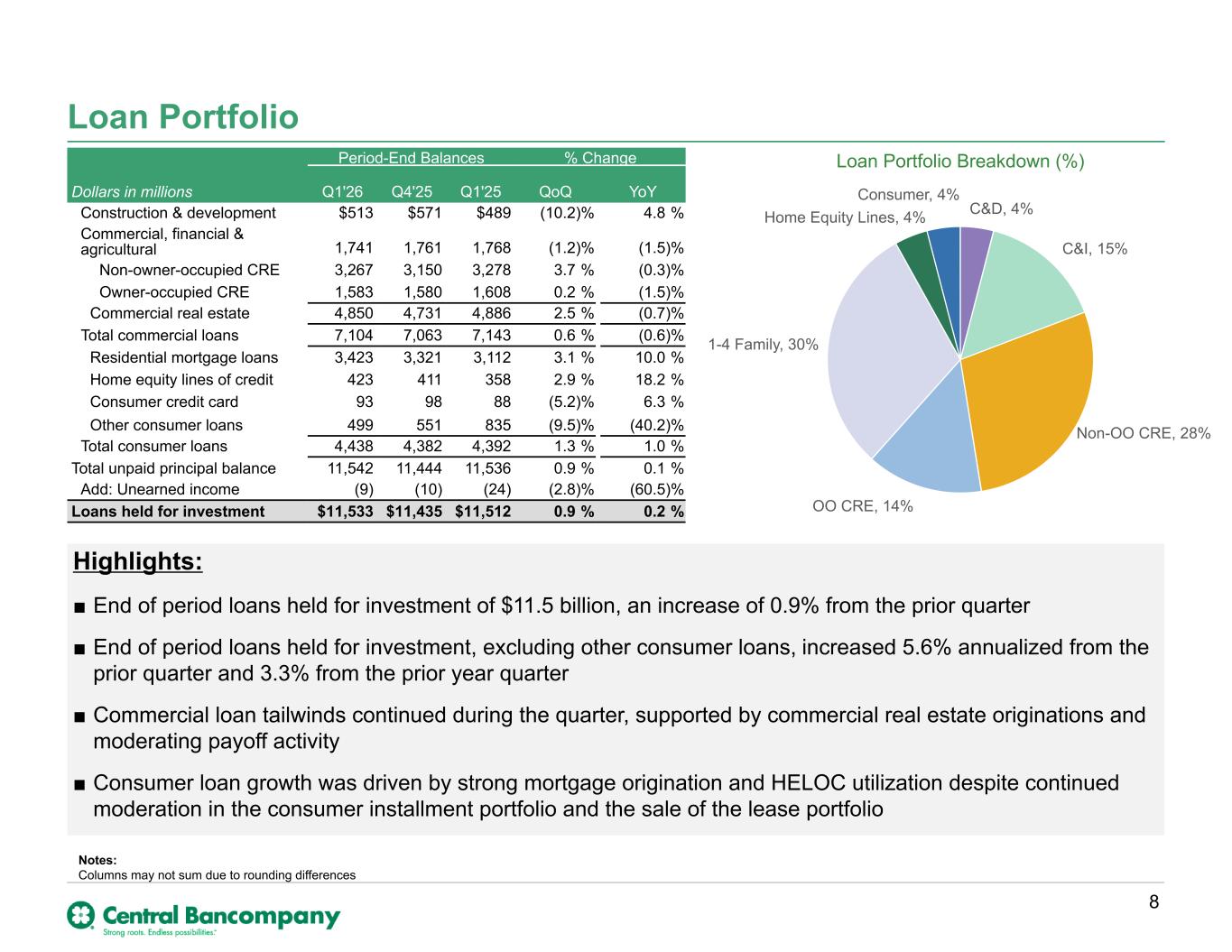
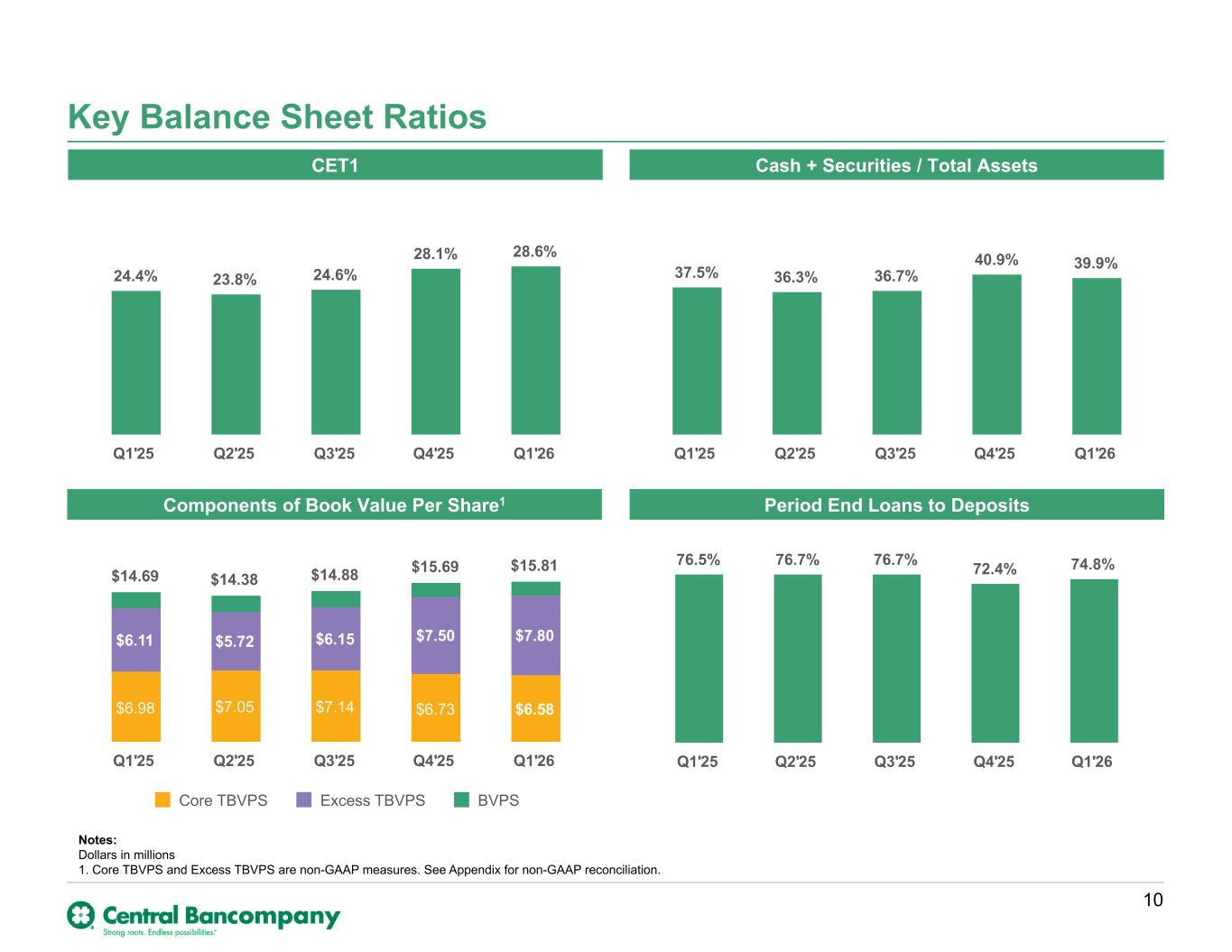
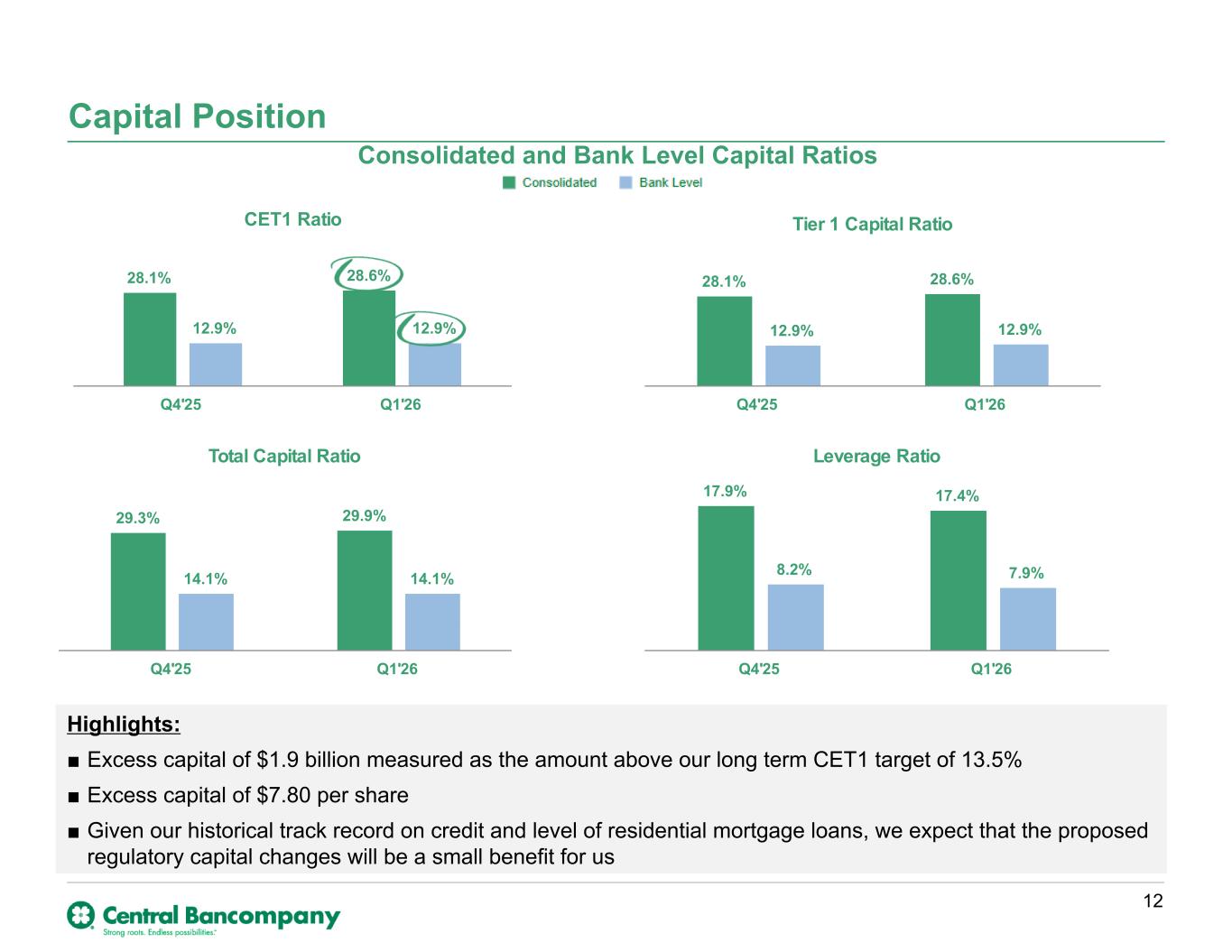
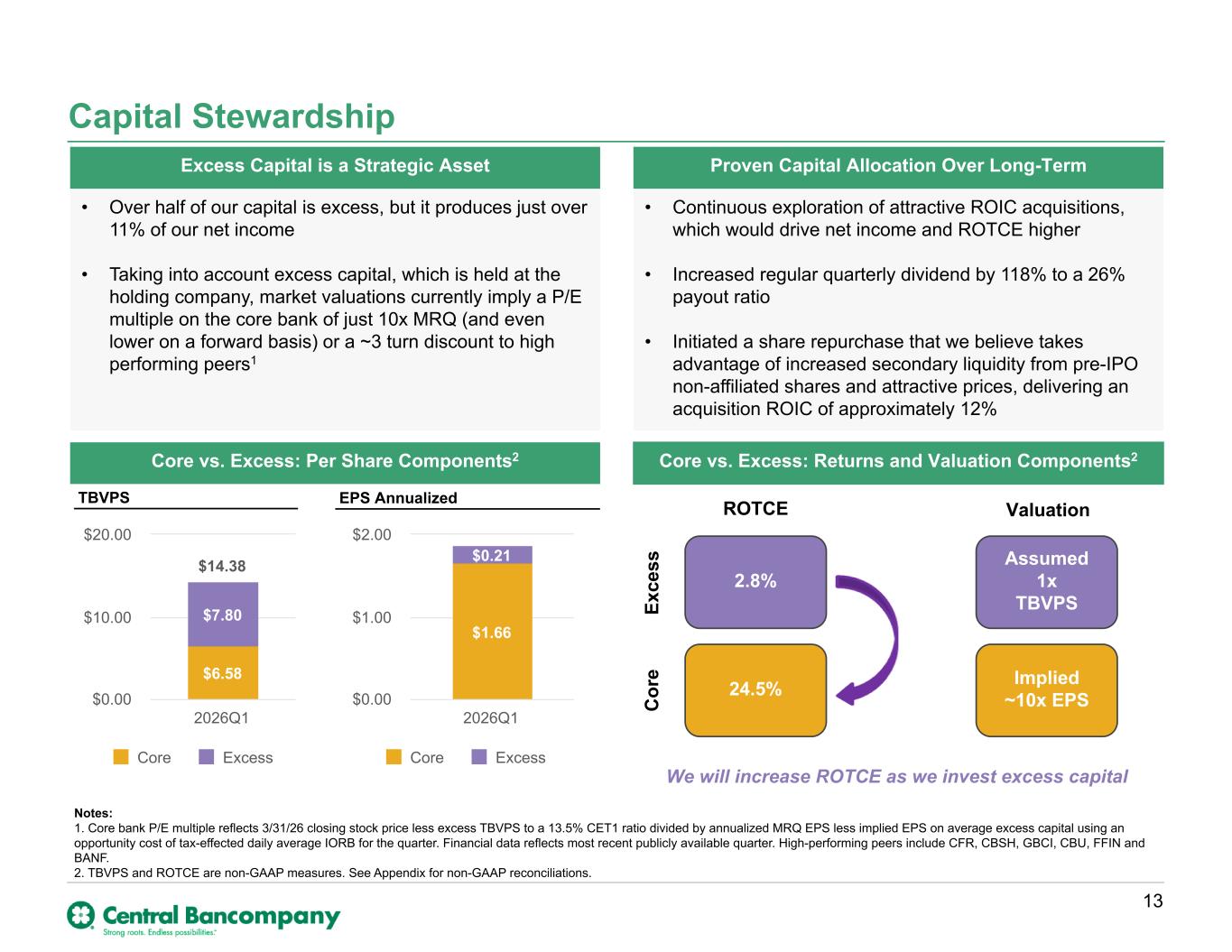
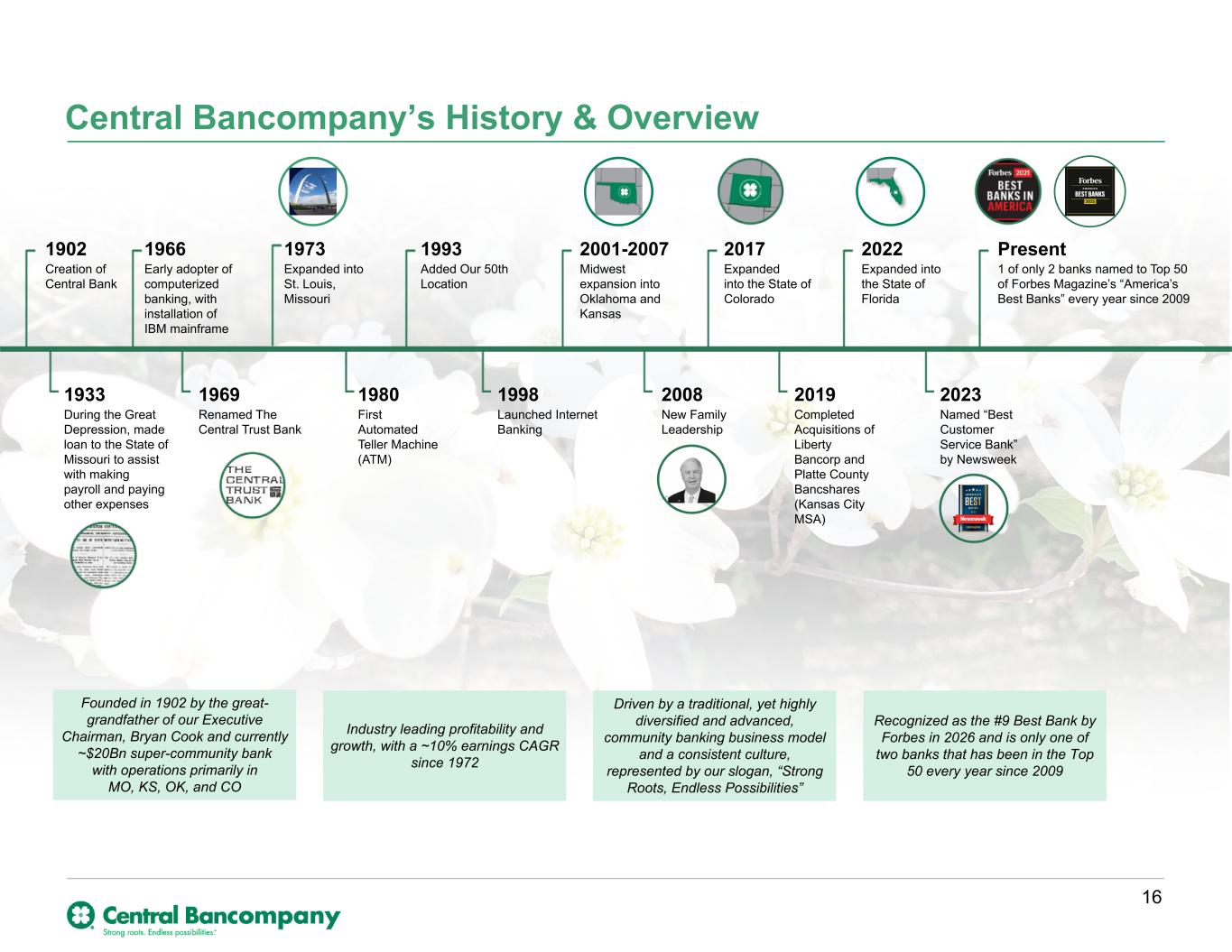
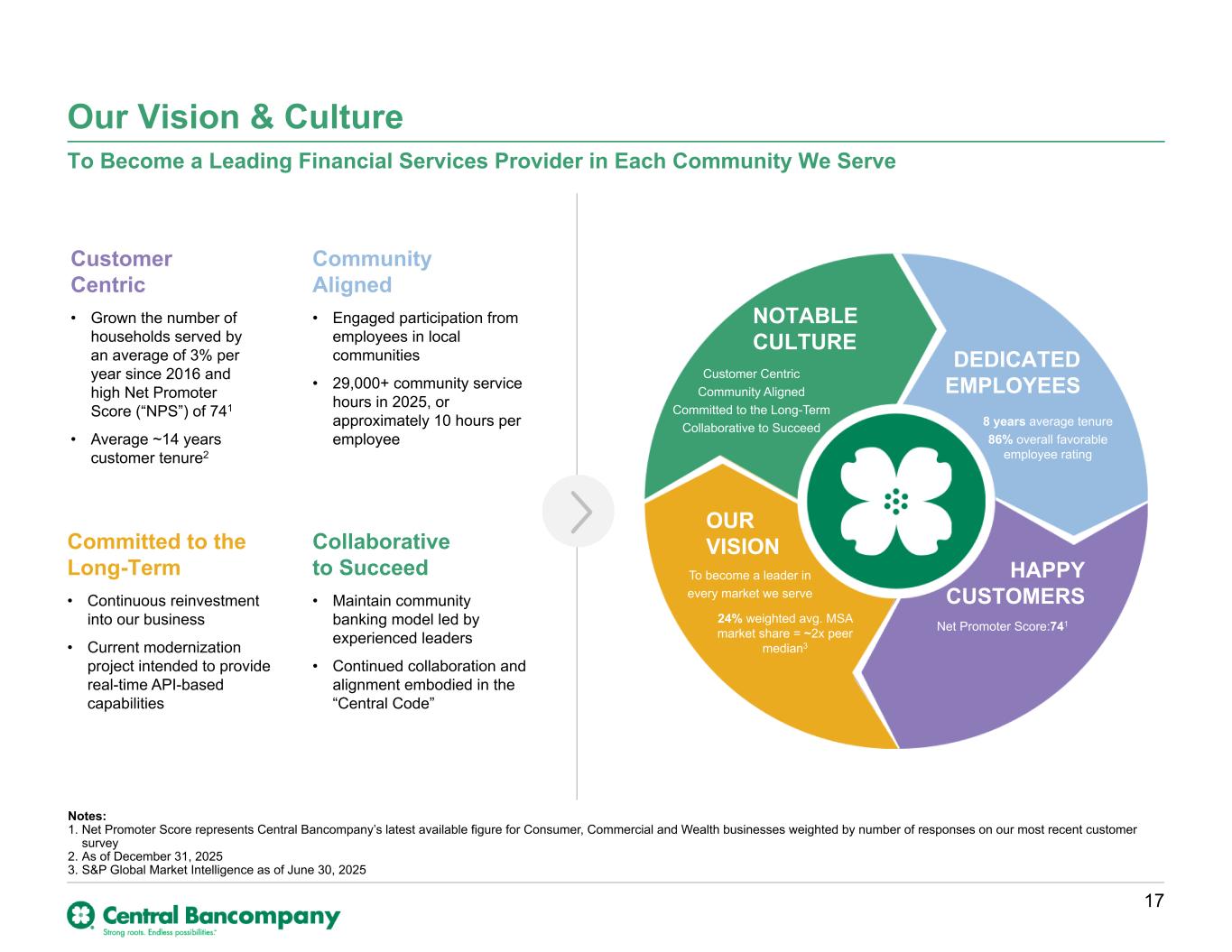
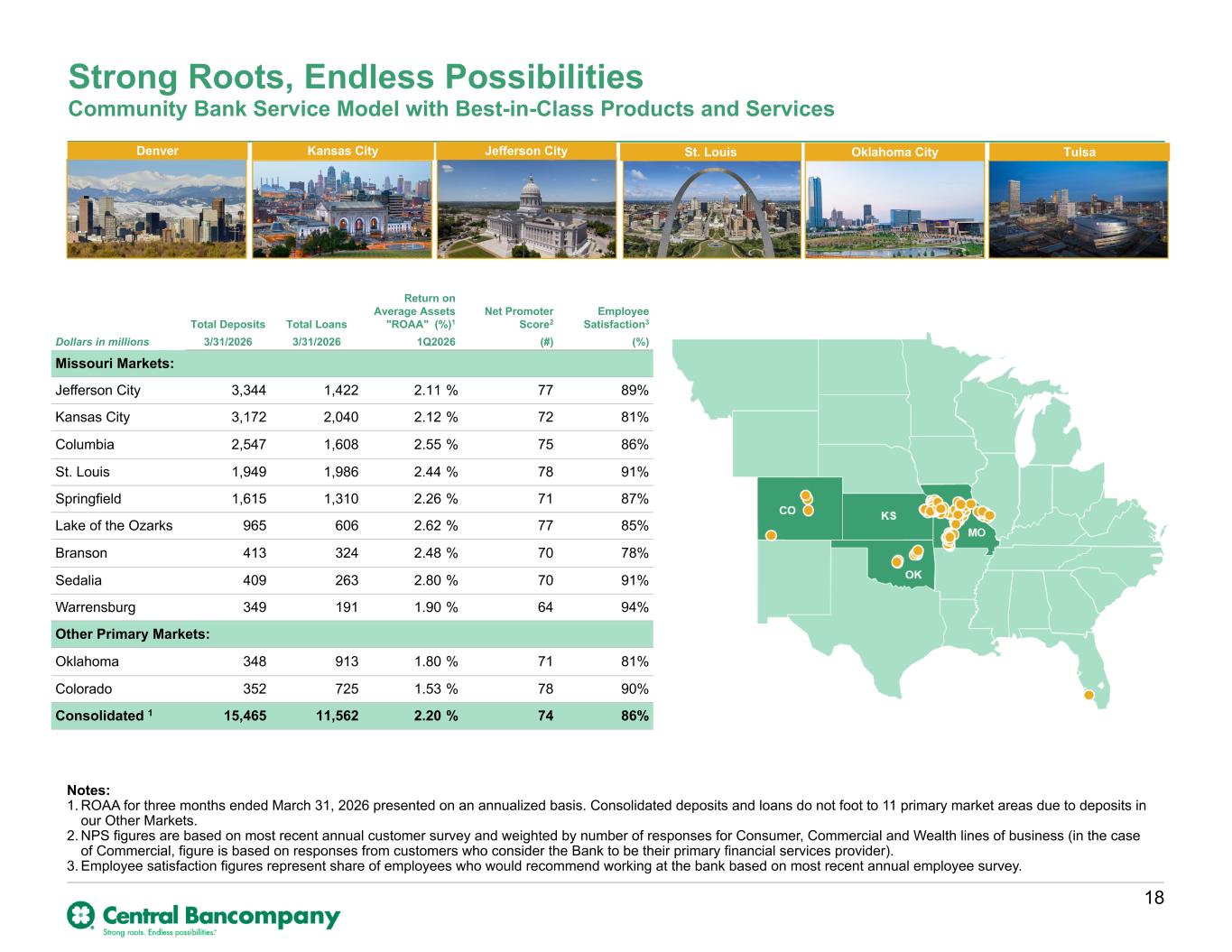
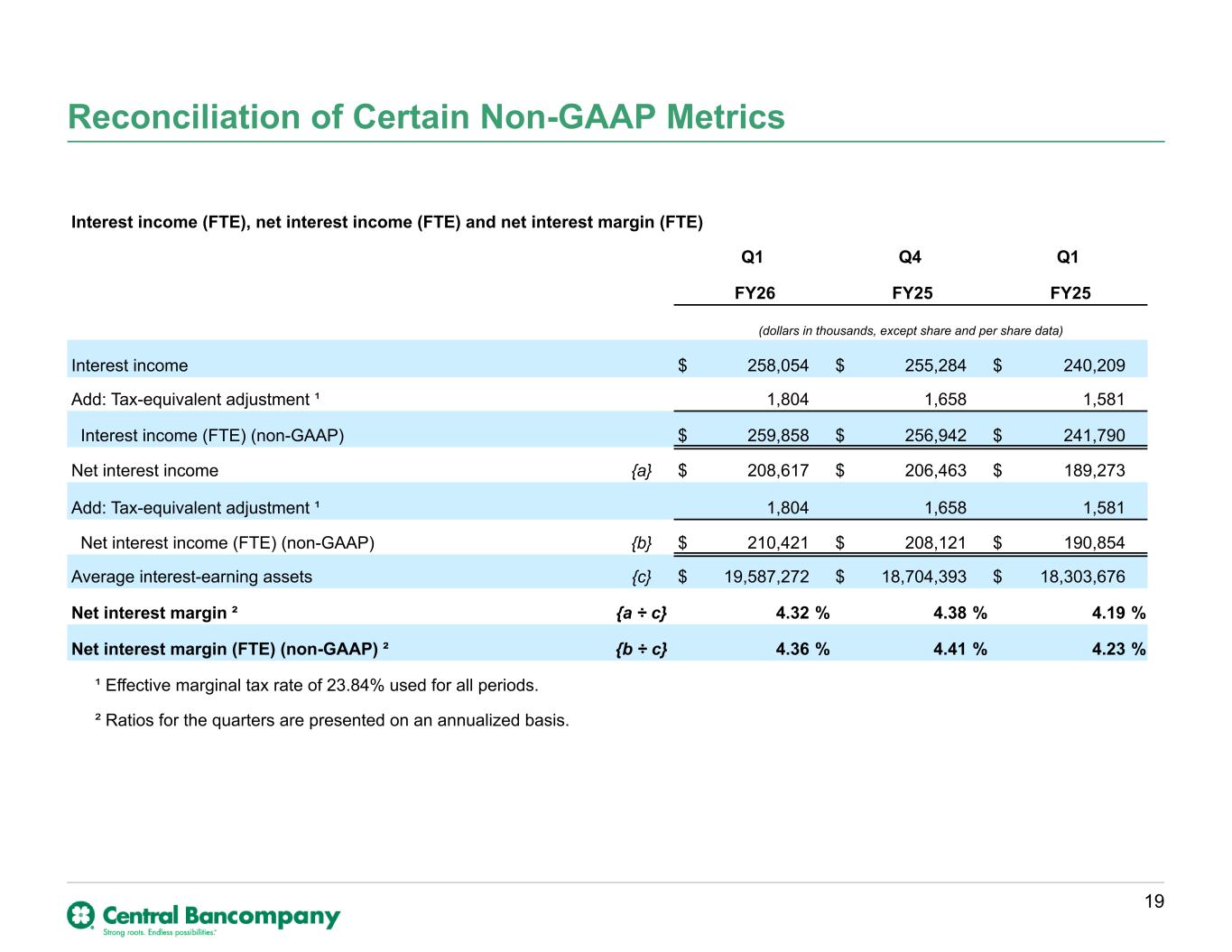
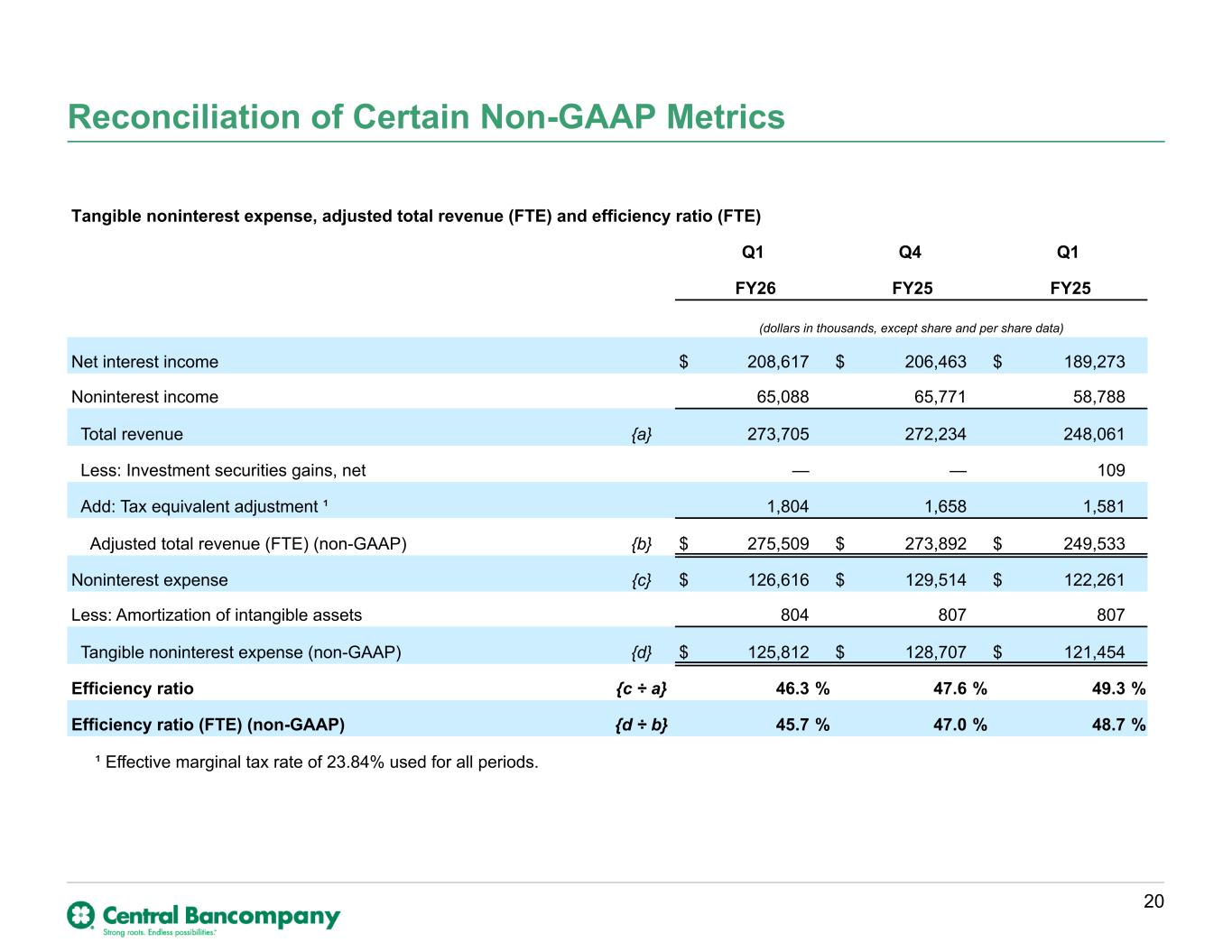
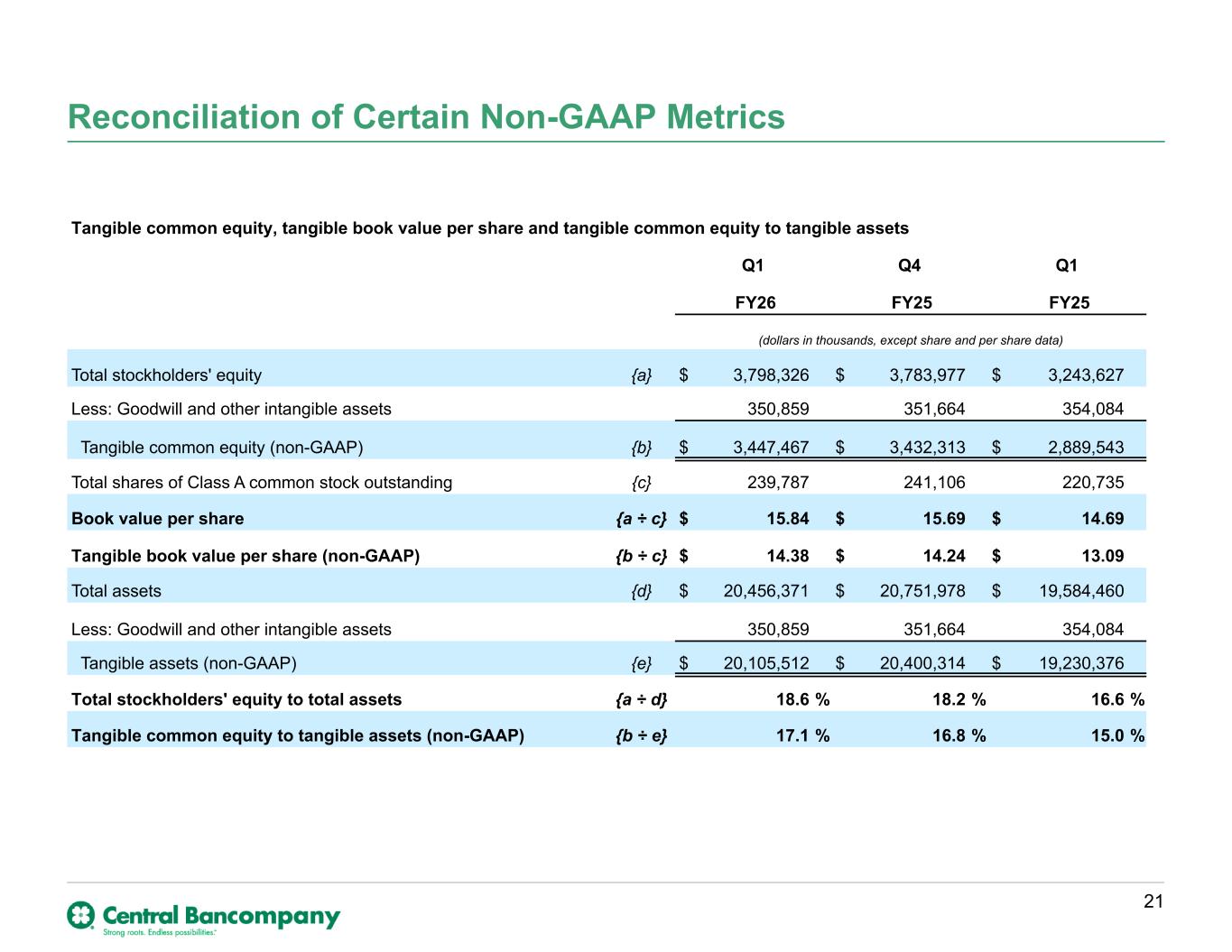
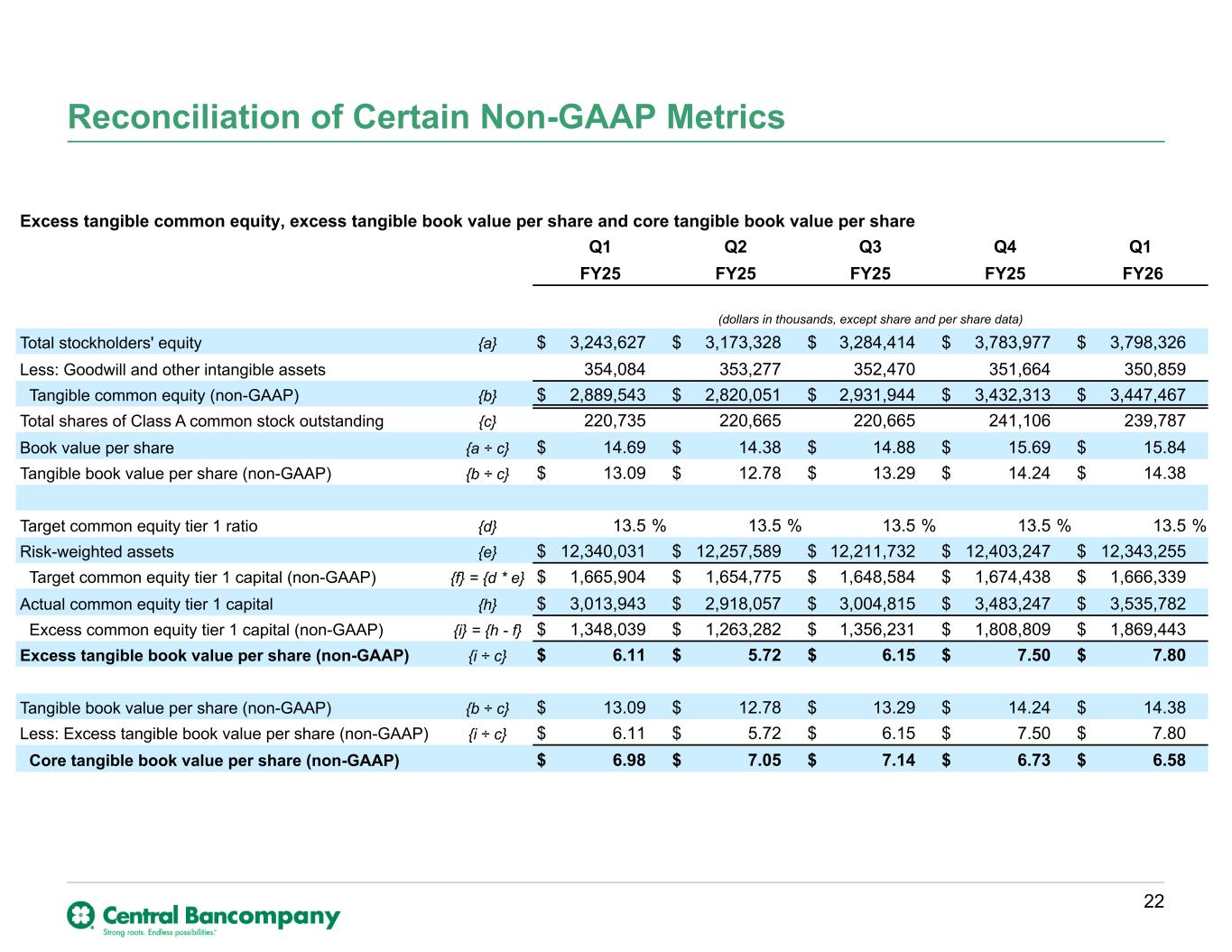
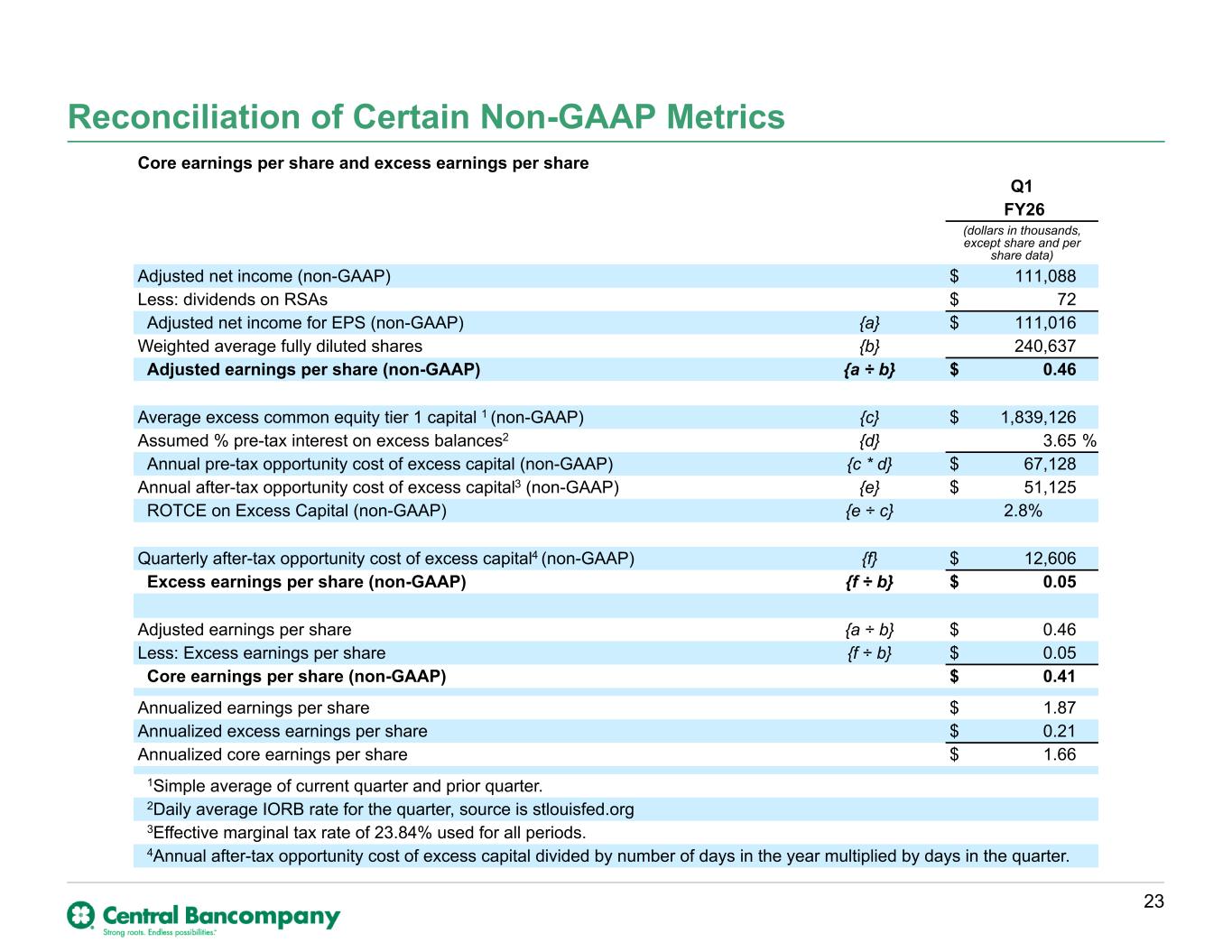
Thank you, Operator. Good morning, and thank you for joining us for Central Bank Company's first quarter 2026 earnings call. With me in the room today are our Chief Financial Officer, Jim Ciroli, Chief Customer Officer, Dan Westhuse, and Chief Credit Officer, Eric Fulgram. As a reminder, I'd like to point out that the discussion today is subject to the same forward-looking considerations outlined on page three of our press release. Today, we plan to briefly discuss first quarter highlights before opening the line for questions. Before I turn to the numbers, please allow me to share some non-financial highlights. In the first quarter, we were humbled to again be named one of America's best banks by Forbes, as well as the best-performing U.S. public bank with more than $10 billion in assets by S&P Global Market Intelligence. Recognition from such organizations is a testament to the efforts of our nearly 3,000 full-time employees, who I'd like to thank for their continued legendary service. With that, let's cover the financial results. For the quarter, Central Bank posted net income of 111.1 million dollars or 46 cents per fully diluted share return on average assets of 2.2 percent NIM on an FTE basis of 4.36 percent and efficiency ratio on an FTE basis of 45.7 percent relative to the first quarter of 2025 net income increased 16.3 million dollars or 17 percent our asset quality remained consistent with 10 basis points of net charge-offs again this quarter and allowance covered 130 basis points of total loans. We remain encouraged by the continued resumption of growth in our balance sheet with ending loans excluding other consumer of nearly 6% annualized quarter over quarter and average deposits of 5% year-over-year. Lastly, capital levels at the holding company remain well above target with approximately 1.9 billion of excess or seven dollars and 80 cents per share we leaned into capital deployment this quarter by announcing a meaningful increase to our quarterly dividend and repurchasing 32 million worth of our shares taking advantage of attractive prices and expanded liquidity we are pleased with these results and appreciate those on the line for joining us for this call. With that, I'd like to open the line for questions. Operator?
Operator
Thank you. As a reminder, if you have a question, please press star 11 on your telephone. You'll hear that automated message advising your hand is raised. To remove yourself, please press star 11 again. One moment while we compile the Q&A roster. And our first question coming from the line of Manning Ghosalia of Morgan Stanley. Your line is open. Hi.
So it looks like loan yields held up nicely despite rate cuts at the end of last year.
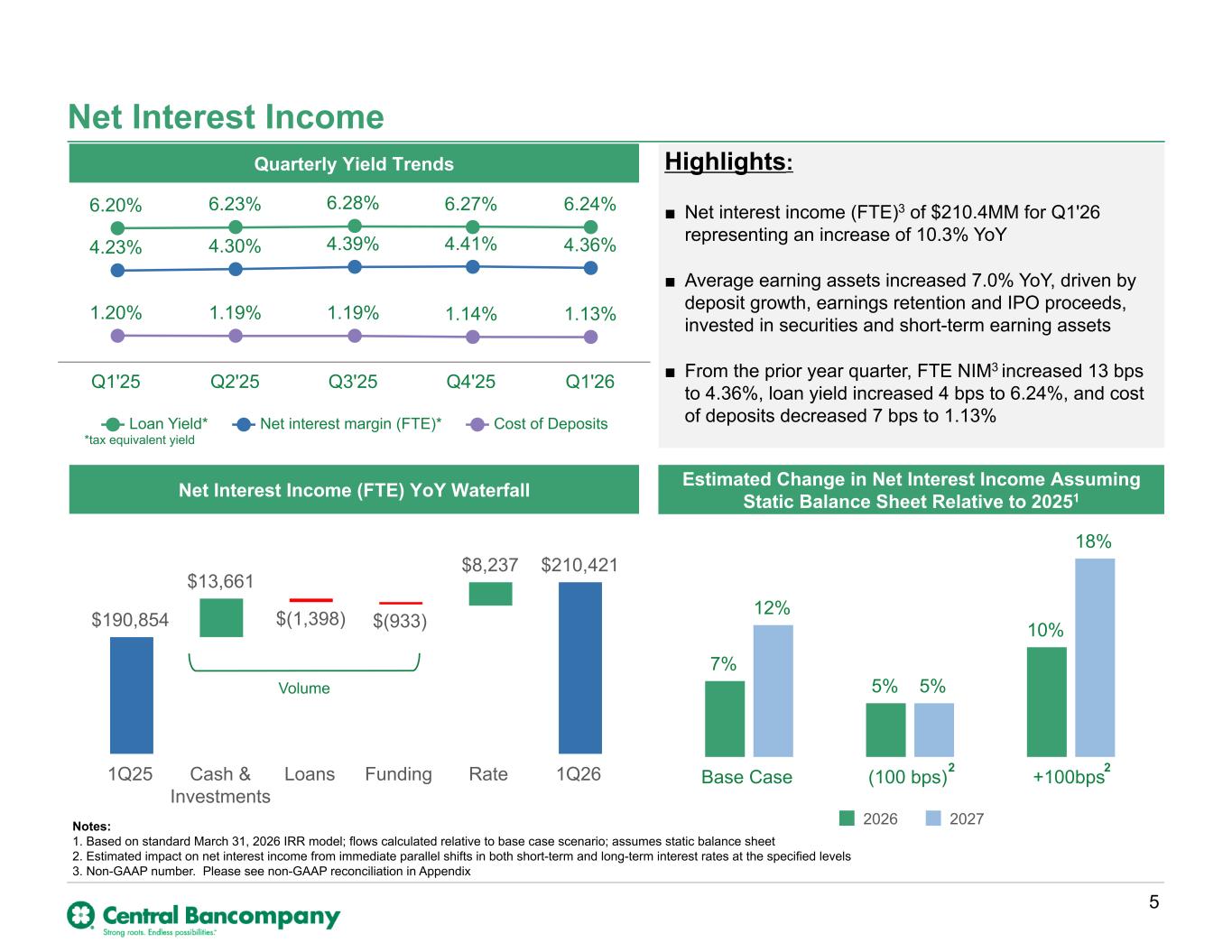
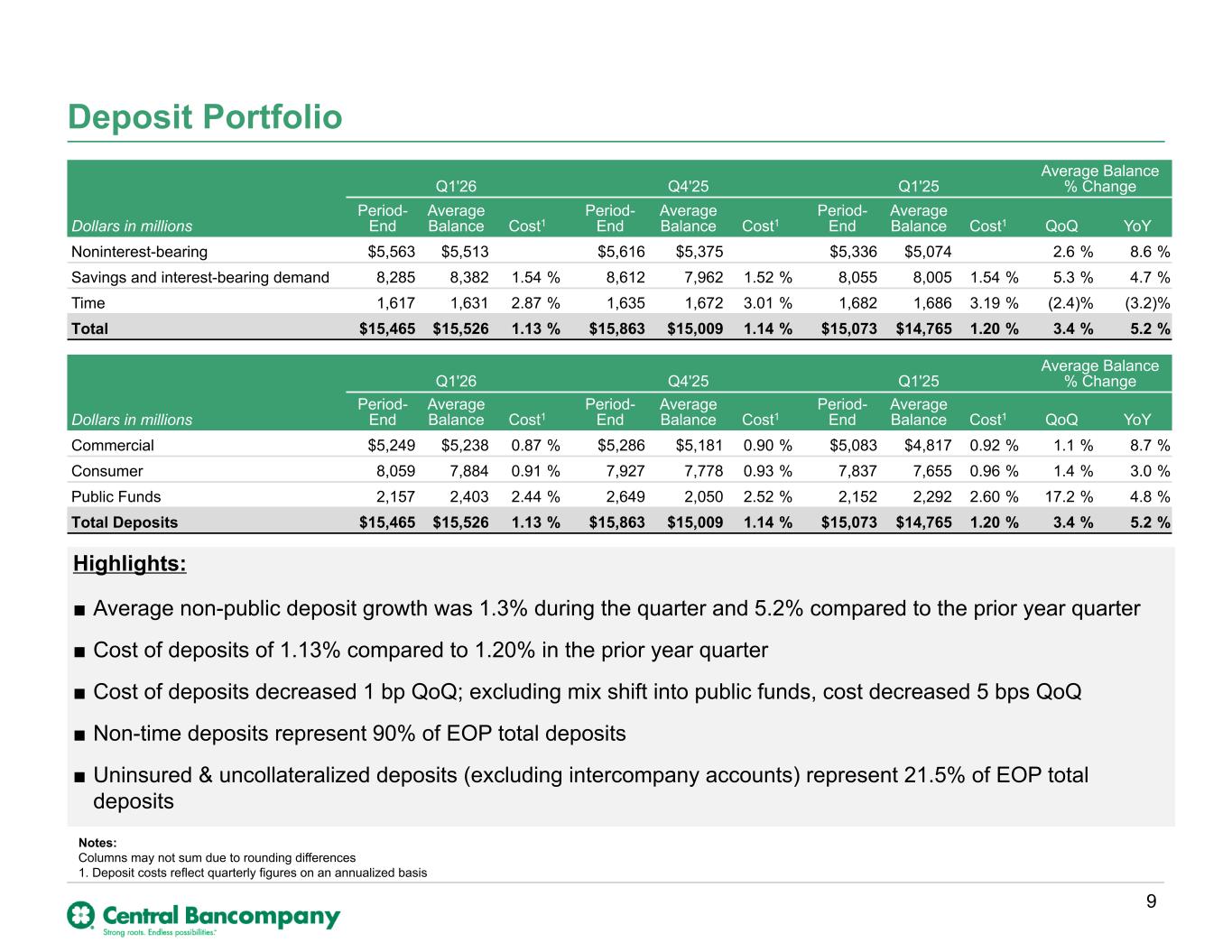
I was hoping you can help us with what's going on under the surface in terms of, you know, yields, spreads, fixed rate loan repricing, et cetera. you know anything that can help us think through the forward look on the different rate scenarios given that rate expectations have been moving around quite significantly over the past several weeks yeah happy to manan this is jim so you know looking at it on a linked quarter basis as you look at the loan yields yeah sure they came down three basis points almost all of that was loan fees just coming off of higher prepayment fees in the prior quarter which being that we had fewer prepayments this quarter and i would also note that our our loans kind of ended the quarter higher than their average so we're showing kind of growth momentum coming out of the quarter and into the second quarter so with fewer free payments uh we kind of like that scenario what i would say additionally is that we repriced about 400 million in the quarter and we anticipate about a billion eight more for the rest of the year repricing when those loans are uh repricing they're they're coming out at uh like a 580 ish type yield and we continue to see uh loan opportunities at 300 basis points over over similar maturity treasuries so as those at that billion eight reprices in the rest of the year I think that that could provide you know some upside to where we were in in in MIM one of the things I would I would just point out as you look at our NIM coming down I wouldn't necessarily focus on the loan yields coming down they sure they came down three basis points but if you look at the deposit side our deposit costs came down five basis points if you factor out the shift higher in public funds we kind of signaled on the last call so public funds ended the fourth quarter higher and we talked about the seasonality there and said seasonality would kind of go sideways during quarter i.e. the averages for the first quarter we're going to be higher than the averages for this fourth quarter the length quarter in public funds and that's exactly what we saw and we anticipate that the public funds you saw those guys I point out slide nine that we added to the deck but you saw our public fund deposits at the end of the quarter start to come down so the ending balance was lower than the average balance and that's exactly what we said on on the call last time did I cover everything you want to be covered there, Manan? That was a lot.
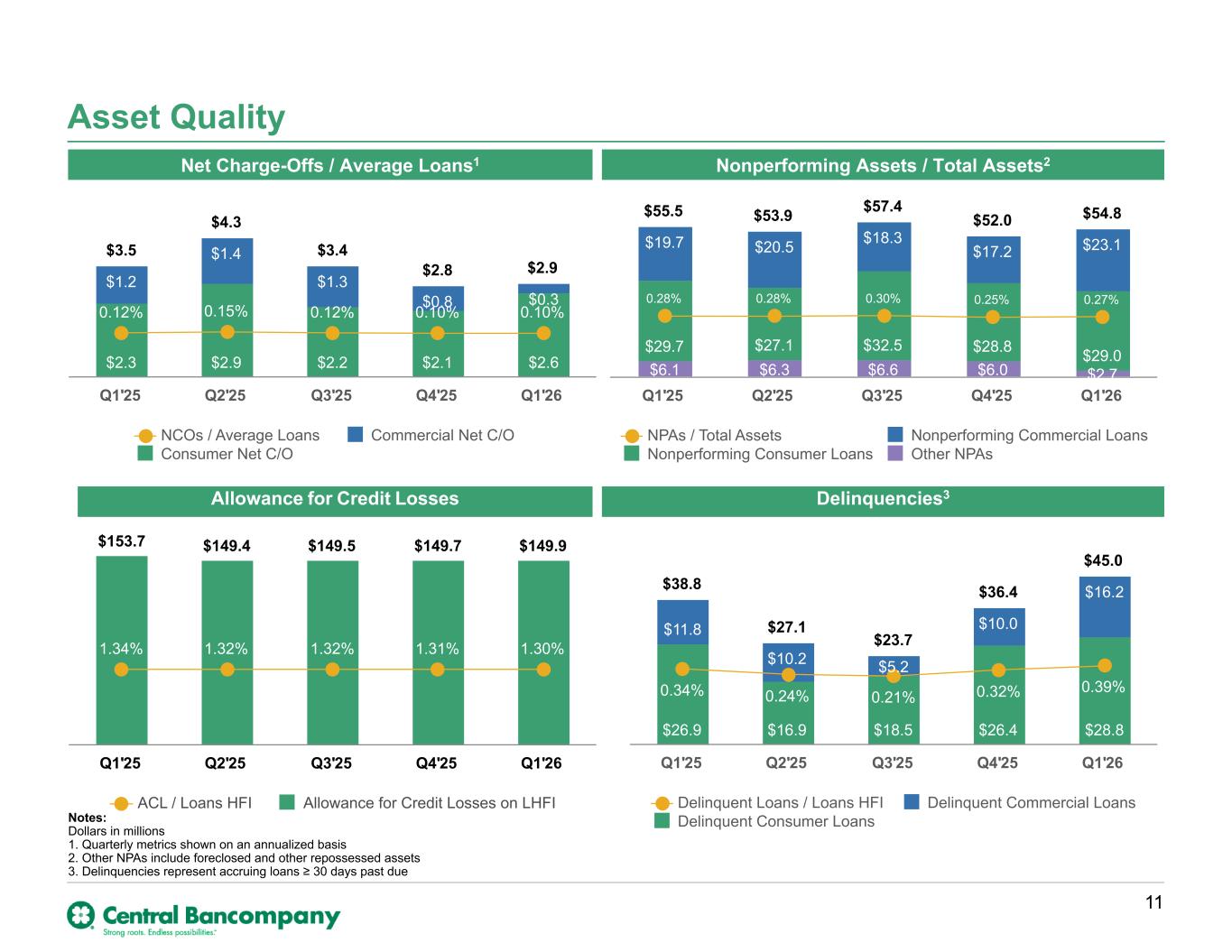
Yeah, no, that was great detail. I really appreciate that. So then maybe to just pivot over to the credit side, you know, I see the credit remained broadly solid in the quarter. I guess if I really had to nitpick, you know, one question is on the delinquencies. You know, we've had a couple of quarters where they've edged up a little bit and it looks like it was driven by commercial. So any thoughts you can give there on what you're seeing and your views on credit overall?
I'll turn to Eric Hallgren our chief credit officer in a second. What I tell you what I'm seeing right now is that we still continue to have a lot of small numbers in our asset quality statistics and so when you have small numbers small changes can seem like they're bigger than they actually are so I think that you know really what we're looking at in our asset quality numbers continues to be pristine and just like I said small changes in that pristineness can can lead to big percentage changes but that doesn't necessarily mean anything Eric what color can you add yeah thanks Jim so the increase Menon as you noted was primarily driven the first quarter by commercial that was really concentrated
to a small number of markets and largely attributable to a handful of commercial clients. From what we see, we don't anticipate those delinquencies degrading any further and expect resolution here. So overall, we view it as isolated pockets of stress and not indication of systemic weakness kind of emerging as we look ahead for the rest of the year.
Got it. That's great. Thanks so much for the color.
Operator
Thank you. One moment for the next question, please.
And our next question will be coming from the line of Nathan Race. of piper sandler your line is open hey guys good morning we're all doing well in terms of taking the questions um jim just going back to your earlier comments around some of the deposit flows in the quarter you know just curious how you're thinking about you know working down some of the excess liquidity that kind of weighed on the margin in 1q and just generally how we should think about the size of the balance sheet specifically kind of earning assets as a better jump off point for the second quarter that's a great question and i i appreciate it because you know we really worked hard in the first quarter if you recall the path of rates
um it wasn't terribly looking good in earlier parts of the quarter but at the end of the quarter where we like to extend duration to is about the four-year mark with our security portfolio and near the end of the quarter um you know we saw rates come up in that part of the curve and so we we stepped up the pace of our buying activity in March, and that continued into April as well. In fact, in April, we're seeing, we're reinvesting that cash into about a 430 yield right now. So we continue to work hard to try to find great opportunities. You know, like we want to find things that are U.S. government guaranteed, or at least sponsored by agencies of the U.S. government we don't like taking on a lot of convexity risk and trying to deploy that money there's a lot of work by our Treasury team and so when the market comes back in in where we want it to be like it did in March and April we were able to move even even more and faster in that environment than we did gotcha that's helpful maybe changing gears a little a little bit you know you guys are obviously continuing to build, you know, excess capital, really strong clips going
forward as evidence here in 1Q as well. So, Jim, would, I'm sorry, JR, would love to get your kind of thoughts on just kind of your optimism level for an acquisition announcement this year and just generally how conversations are trending.
Seems like you guys have a competitive currency to, you know, share with potential partners, but would just love some updated thoughts on that front yeah it's a very understandable question uh more than half our capital is excess and it is a major focus of ours uh on a daily basis having said all of that we have no real updates for you at this stage you can kind of push replay on the comments we made last quarter and just summarizing those briefly we do think we're well positioned we are in active We see everything that's out there and we'll update you and we have a deal, but until then, we're just going to work really hard on it. So no, no real updates this quarter.
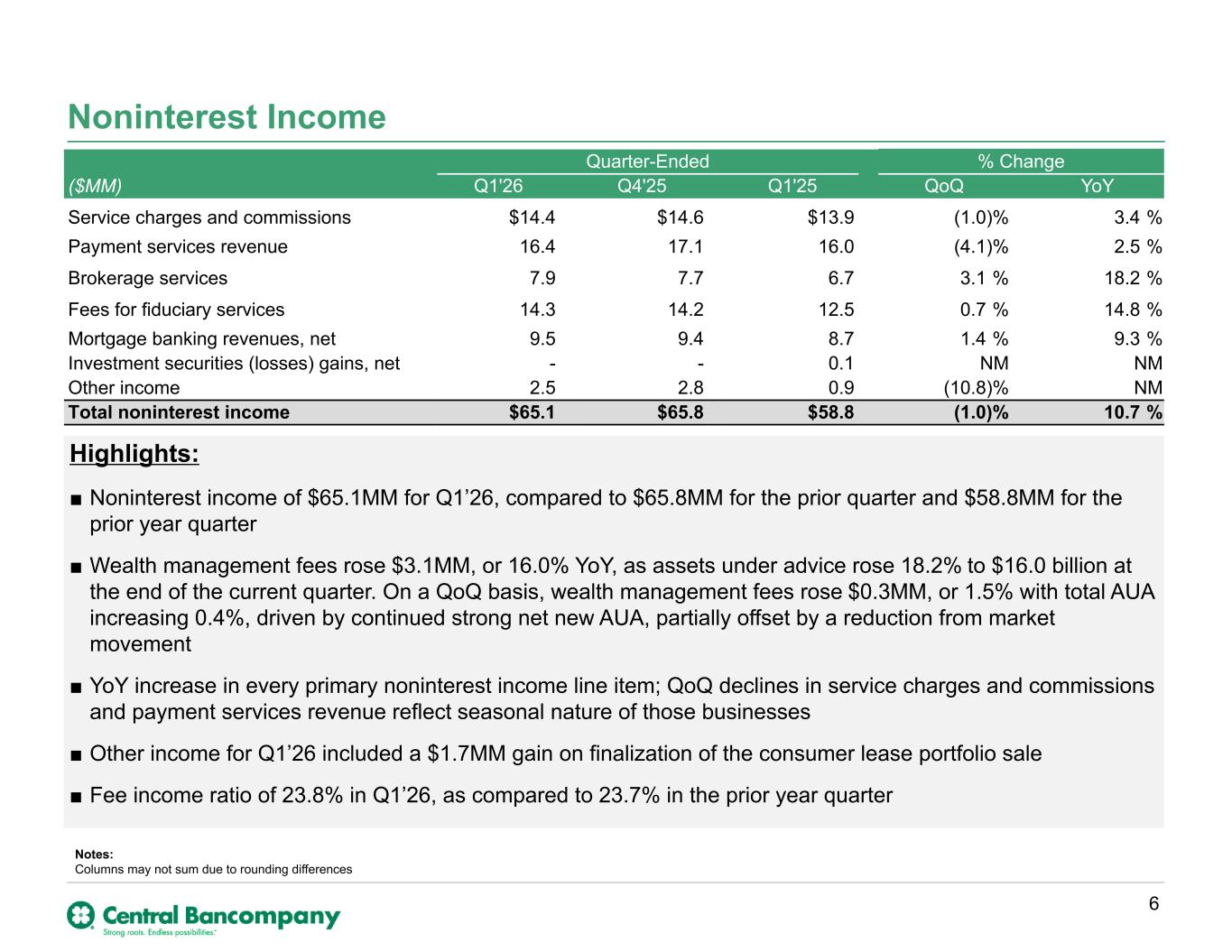
Okay, fair enough helpful. Maybe 1 last 1 for me, you know, the, the payments revenue, you know, tends to show kind of a seasonally decline in the 1st quarter, you know, just curious if you guys still feel like some of the initiatives you put in place. particularly with Dan and his team, you know, are bearing fruit? And do you still think, you know, some of the payments revenue projections that we've talked about in the past, you know, kind of hold true in terms of kind of a nice ramp over the balance of this year?
We do. I mean, yeah, I appreciate, Nate, that you notice the seasonality between Q4 and Q1. It really comes off of a good quarter in Q4, and it comes down pretty sharply. But, you know, But when you look at this on a year-over-year basis, what we're seeing is still the consumers still spending. So there's no concern from a consumer spending perspective. And we're seeing nice growth on the commercial side with some of the programs we're putting into place. So I would say, yeah, we continue to feel pretty sentient about that business as we look forward.
I appreciate all the color. Thanks, guys.
Operator
Thank you. one moment for the next question, please. And our next question will be coming from the line of Matt Olney of Stevens. Your line is coming.
Hey, thanks. Good morning, everybody. Just want to go back to the deposit discussion. And Jim, you already addressed the moving parts around the public funds and slide nine is helpful for that. Any general observations you can share as far as just the competitive dynamics for deposits in your marketplace and kind of what you're seeing more recently?
That's a fair question, Matt. And welcome to coverage on our stock. So looking forward to spending more time with you as well. What you're going to find as you look at us is we're out there generally growing deposits at around, you know, adjusting for seasonality, which we had a lot this quarter. Adjusting for seasonality, we're growing deposits kind of mid single digits across our markets, but we're doing that through our acquisition campaigns where we're focused on growing checking accounts. So we're focused really on being our borrower's primary checking account. We're focused on primacy overall. And I think this quarter, once you normalize the activity, you can see the growth that I'm talking about in terms of mid single digit so we're not really out there competing for the yield seeking funds we're out there competing on service trying to be people's primary checking account in the markets that we serve um so i don't think we would be the best to ask you know the competitive questions yeah i think i think it is competitive out there from what i hear but that's not that's not really the market we compete in.
Okay. Appreciate the color on that. And then I guess going back to the capital discussion, I think you noted in prepared remarks, you stepped up the sharey purchase program this quarter, just over a million shares. I guess help us appreciate your capital allocation strategy and where buybacks come into play. And I think JR already addressed the M&A question.
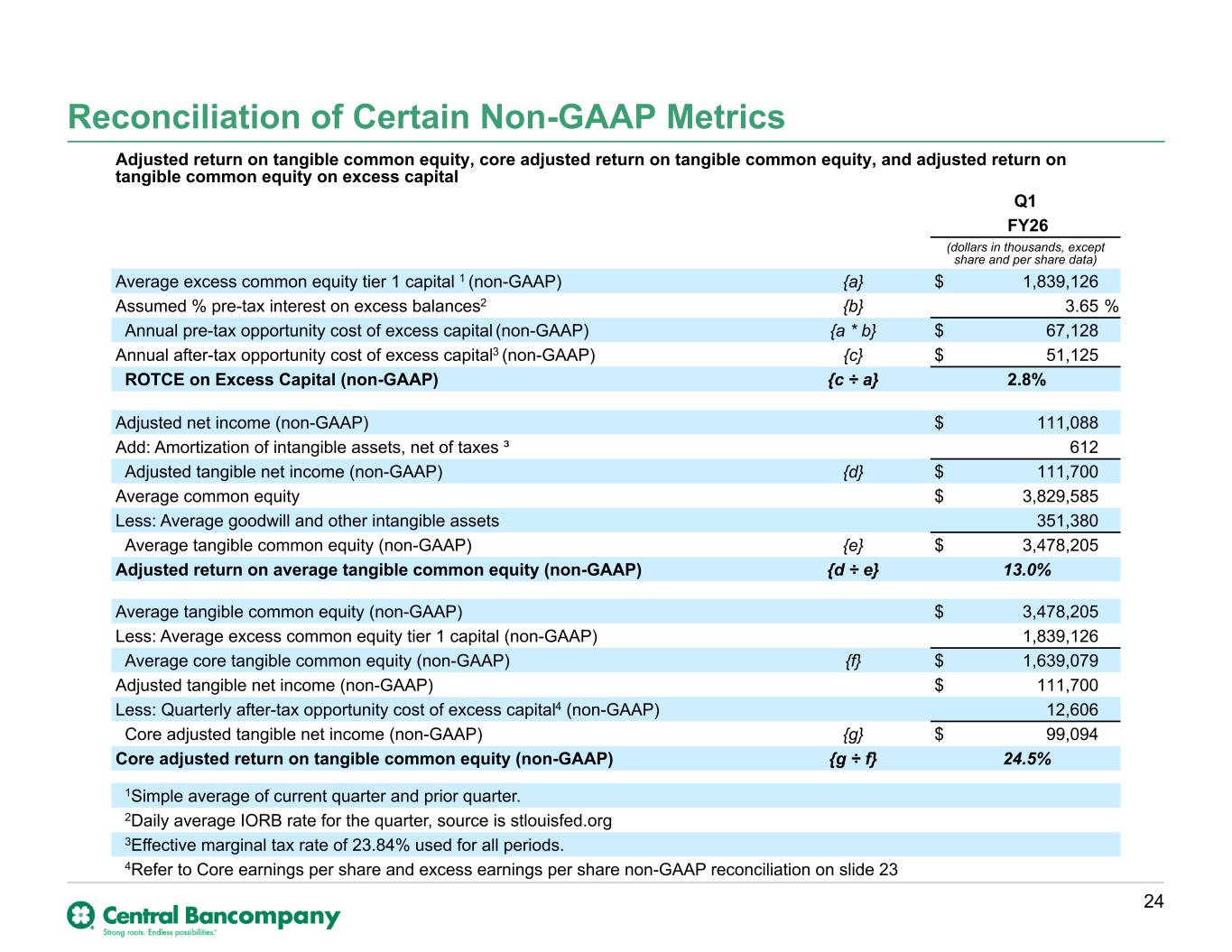
So just put that aside for a second just i'm trying to appreciate the uh i think you disclosed that roic around 12 based off kind of the way you guys think about it any more color you can share on on cap allocation and the buybacks yeah so so you know one of the things i would point out is that even with the 32 million that we bought back this quarter and we stepped up the dividend we still continue to grow our excess capital number so it went from a billion eight to a billion nine as jr said more than half of our tangible book value is excess capital so and when we look at that excess capital and we look at where you know we value that at roughly a dollar for dollar i don't know how else you value that and you strip out you look at what our core capital is and And compare that to any measure you want, trailing 12 months, next 12 months of expectation. Looking at 2027 earnings, we think the stock is still cheap. And if we intend to use that stock in an M&A transaction, having it that cheap is something that we'd like to work against. We'd like to get that stock a little bit more value to the marketplace. Jerry, anything you want to add to that?
No. I mean, to your point on Roe, if we do calculate it, we calculate it in the same way that we look at other bank acquisitions because we think that's a good practice. And we look at several other methods as well. But practically speaking, it's the intuition of bringing a single digit peaking multiple on a forward basis when you look at the core bank is very attractive. Now, obviously, $32 million is a drop in the bucket compared to our excess capital. The one last thing I would add that we were pleasantly surprised with the increase in the liquidity in the stock which will maybe provide us more opportunities on that front as we go forward here as well. We were a little bit constrained in our initial, you know, resolution of the 50 million because we were concerned about impacting the liquidity of the stock, but we've been pleasantly surprised to see pick up here.
Okay. That's perfect, guys.
Operator
Thanks for the color.
Operator
Thank you. One moment for the next question. And our next question will be coming from the line of Christopher McGathey of KBW. Your line is open.
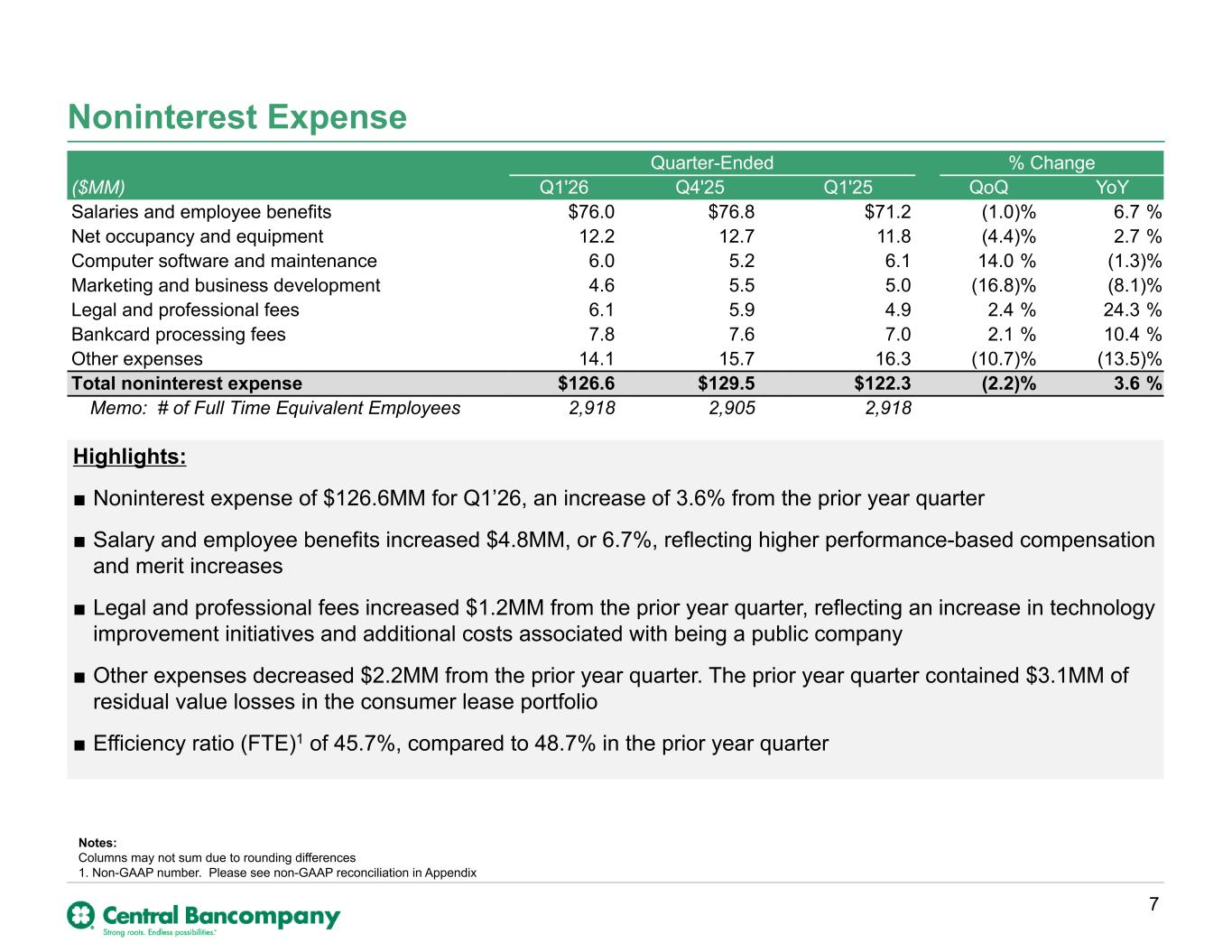
Oh, great. Morning. Jim, on expenses, really good performance in the quarter. Can you speak to sustainability and maybe broader operating leverage expectations?
Yeah, great question. Look, I think what you saw on a quarter-over-quarter basis is that come down a little bit. What I would share with you on the current quarter, we've signaled that we're going to have some additional costs of around $5 million a year in terms of public company expenses. when we look at it the first quarter has about that you know run rate in it so the other thing I would share is that you know we are still in the middle of our core conversion but during the quarter we only capitalized 700,000 of the of the dollars that was spent so I think the first quarter NIE is fairly loaded. I think that's a fairly sustainable fund rate. There might be a little uptick because we do merit increases in March, but there's not going to be much of an uptick that I would expect.
Okay. That's helpful. And if I could go to, I guess it's slide five, the updated rate sensitivity static analysis, I think it was up a touch, call it 100 basis points from last quarter. But the base case shows a pretty good ramp in both years. Can you speak to just broader, any strategies being contemplated to lock in the margins given higher for longer is seemingly a base case, how we should be thinking about progression of NII as you get a little bit better growth in the loan fee adjustment that you talked about?
Chris, I appreciate the question. I really go back to what I was talking with Nate about and answering Nate's question. I think that one of our biggest opportunities is to continue to invest our excess cash. And because most of the quarter, the differential between the four-year point on the curve the overnight point on the curve was was slight that's kind of steepened a little bit with uh an anticipation that we won't have a rate cut until sometime late in 27 and as that environment has improved we've accelerated our investing strategy to put that put that excess cap cash to work but also having said that i think the real opportunities companies come from continuing to grow and non-interpreting deposits. I think there's still some movement to do on the deposit cost side and managing those down. I'd point out that 90% of our deposit base is non-maturity. And so in order to work that down from the rate cuts we saw in late 25, our market CEOs have to go out there every day and try to manually work that account with their with their depositors and so it's not something that just mechanically comes down we still think uh a low 20s beta is appropriate but because of that nature of the non-maturity deposits that's going to take a little while to come in and i point out the seasonality too is we roll out of first quarter with the higher public fund deposits and that's why we put slide nine in there chris uh to help you help help give you transparency on that phenomenon and the seasonality. So as that comes down, like I said earlier, had we not mixed higher in public fund deposits, our cost of deposits would have been down five basis points on a linked quarter basis. And so as we see those fund deposits come down across Q2 and Q3, I expect that the mixing lower in those deposits will continue to benefit net interest margin as well.
Okay. Just if I could squeeze one on the excess cash, how does that settle in terms of proportional balance sheet over the next couple of years? Where do you want to run cash to earning assets?
I don't think of it as much that way as I think about. So it's not necessarily percentage, but just we do statistical analysis on what's the core amount of ready cash we need to have. And that's probably, you know, $300 to $500 million on the balance sheet.
Operator
Thank you. And that does conclude the Q&A session for today. I would like to turn the call back over to John Ross, President and CEO. Please go ahead for closing remarks.
Thank you, Operator. And thank you to those on the call for your time and interest and to our investors more broadly for your continued support. We look forward to any opportunity to serve you better as we mature as a public company thanks again and we'll talk to you next quarter thank you all for joining today's conference call you may now disconnect