Operator
And thank you for standing by. Welcome to the Central Bank Company Second Quarter 2026 Earnings Conference Call. At this time, all participants are in a listen-only mode. After the speaker's presentation, there will be a question and answer session. To ask a question during the session, you'll need to press star 11 on your telephone. You will then hear an automated message advising your hand is raised. To answer your question, please press star 11 again. Please be advised that today's conference is being recorded. I would now like to turn the conference over to your speaker today, John Ross, President and CEO. Please go ahead.
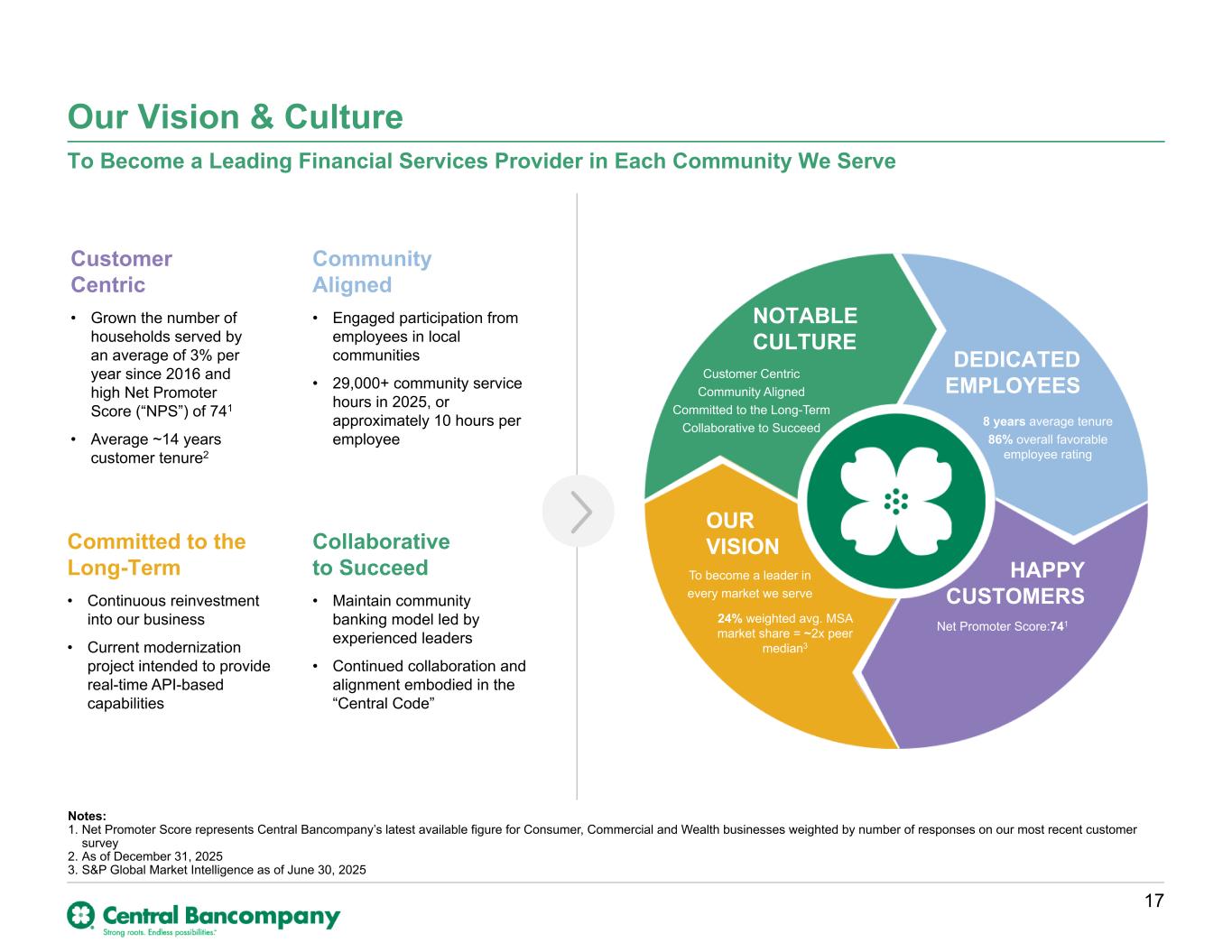
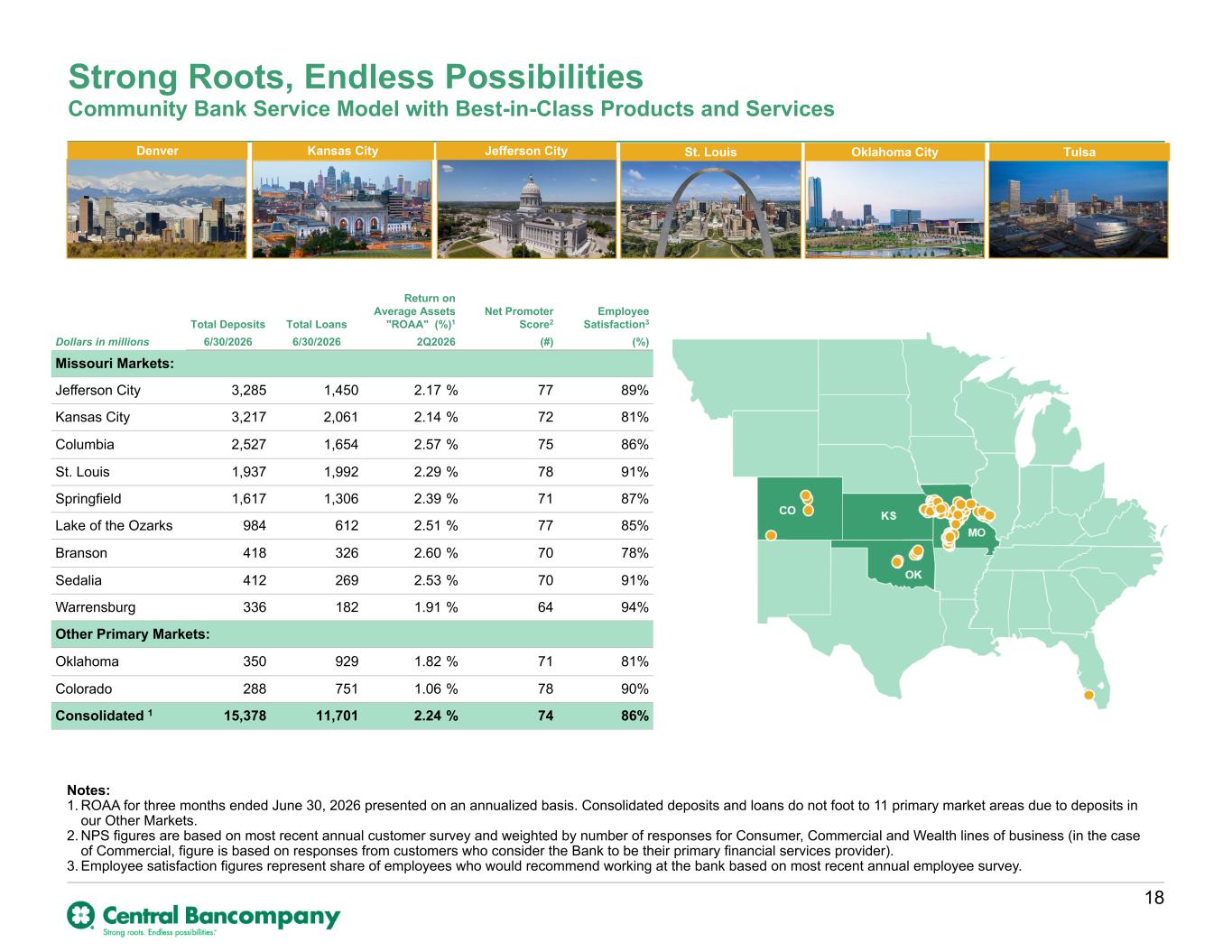
Thank you, Operator. Good morning, and thank you for joining us for Central Maine Company's second quarter earnings call. With me in the room today is our Chief Financial Officer, Jim Cerulli, Chief Customer Officer, Dan Westhuse, and Chief Credit Officer, Eric Holgren. As a reminder, I'd like to point out that the discussion today is subject to the same forward-looking considerations outlined on page four of our press release. Today we plan to again briefly provide some details on second quarter highlights before opening the line for questions. I'd like to begin with some non-financial updates for the second quarter. We opened three new full-service branches during the second quarter, one in St. Louis and two in Colorado, as part of our growth strategy in underpenetrated metro markets. Our Kansas City teammates were also busy welcoming World Cup fans and putting exclusive Soccer Capital of America debit cards in their wallets. But more than anything, I guess you could say it was business as usual here at Central Bank. I'd like to thank the nearly 3,000 full-time employees across our organization for their continued efforts providing legendary service to our clients and communities. I will now turn it over to Jim to cover a few financial highlights.
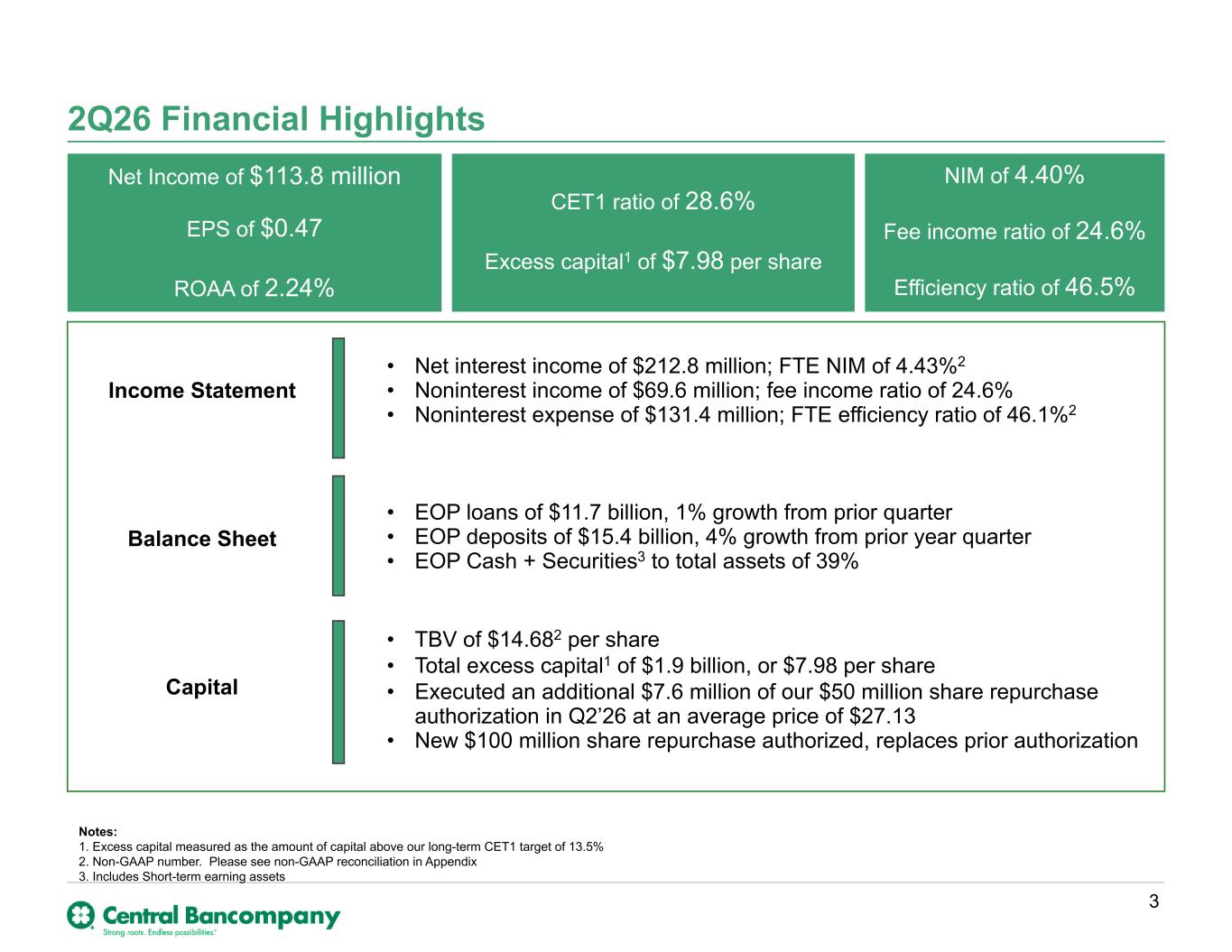
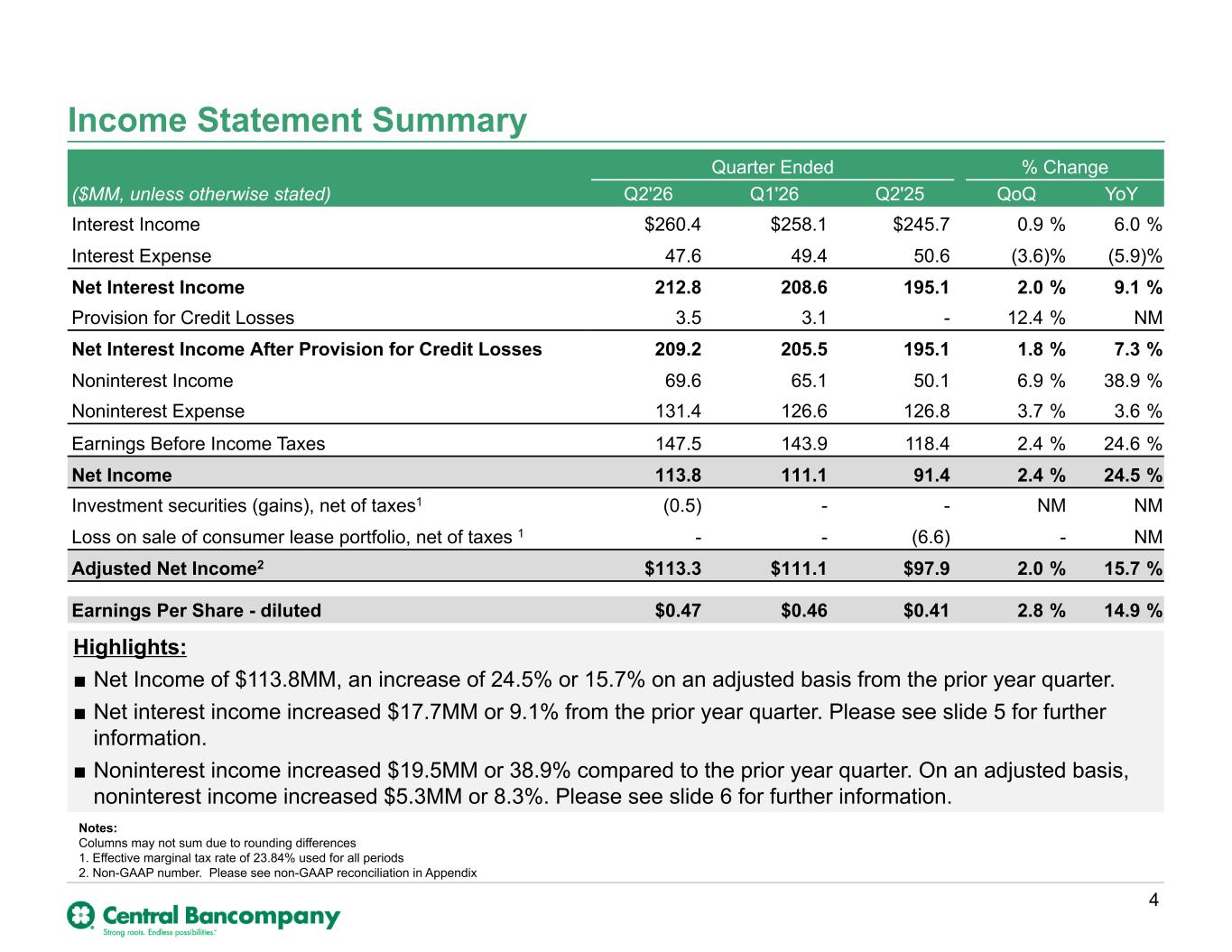
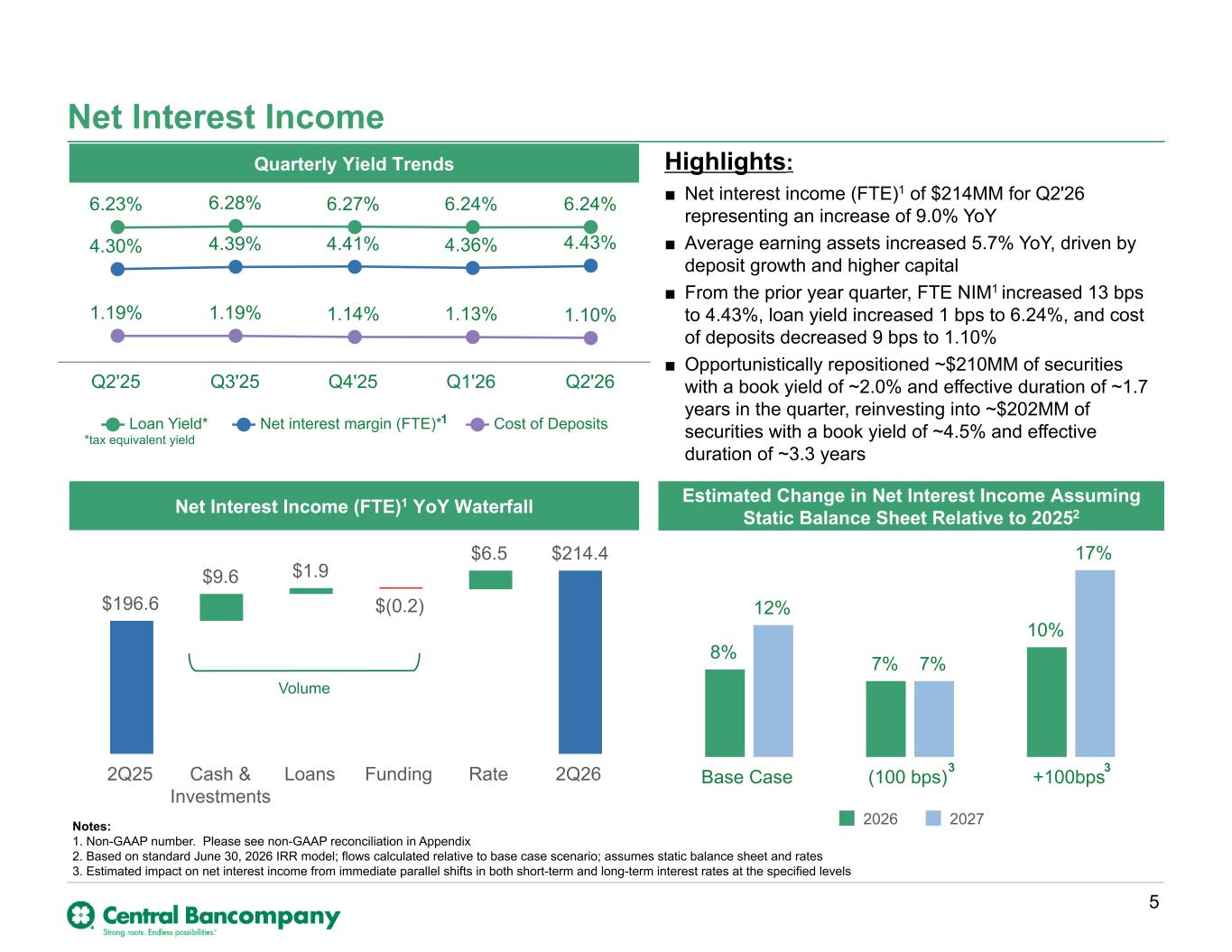
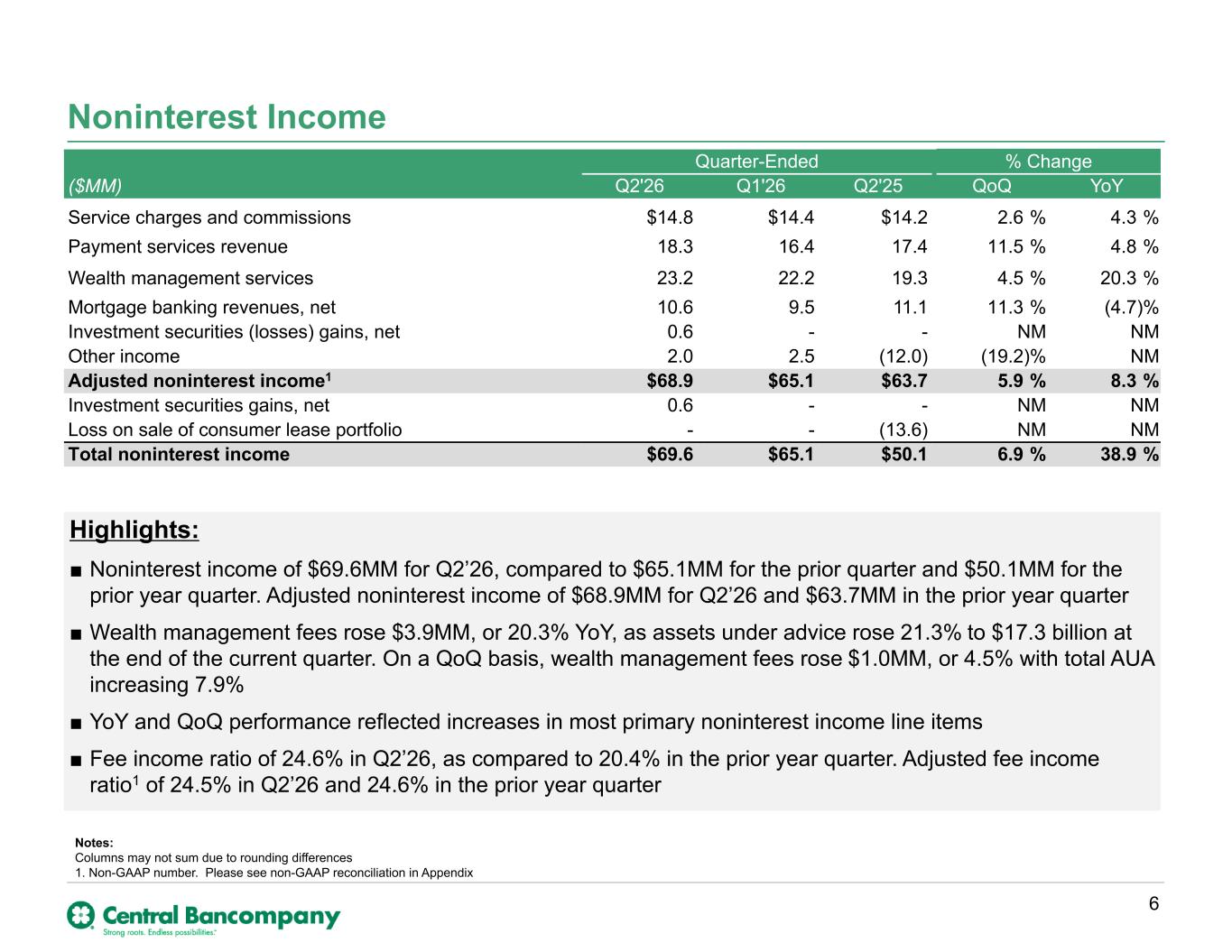
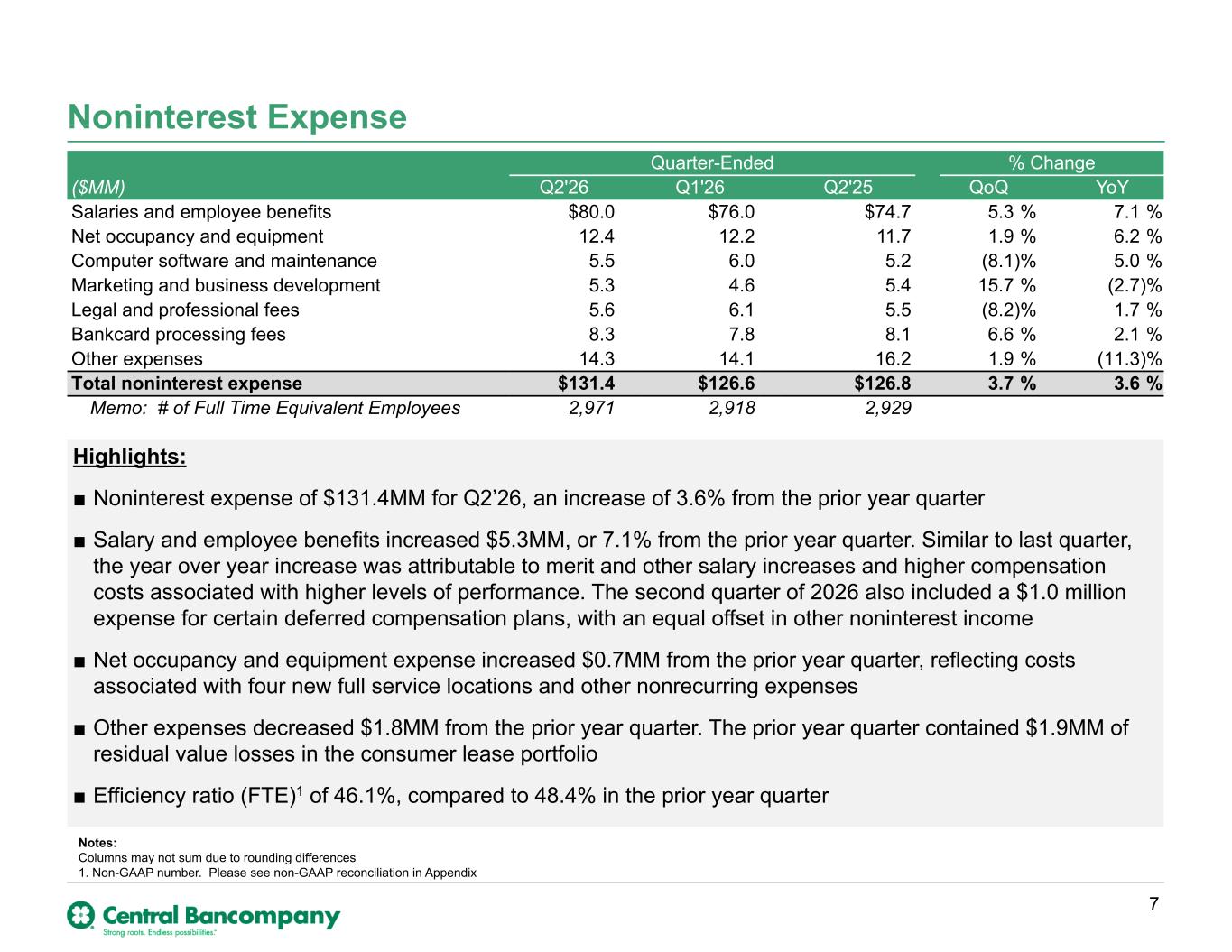
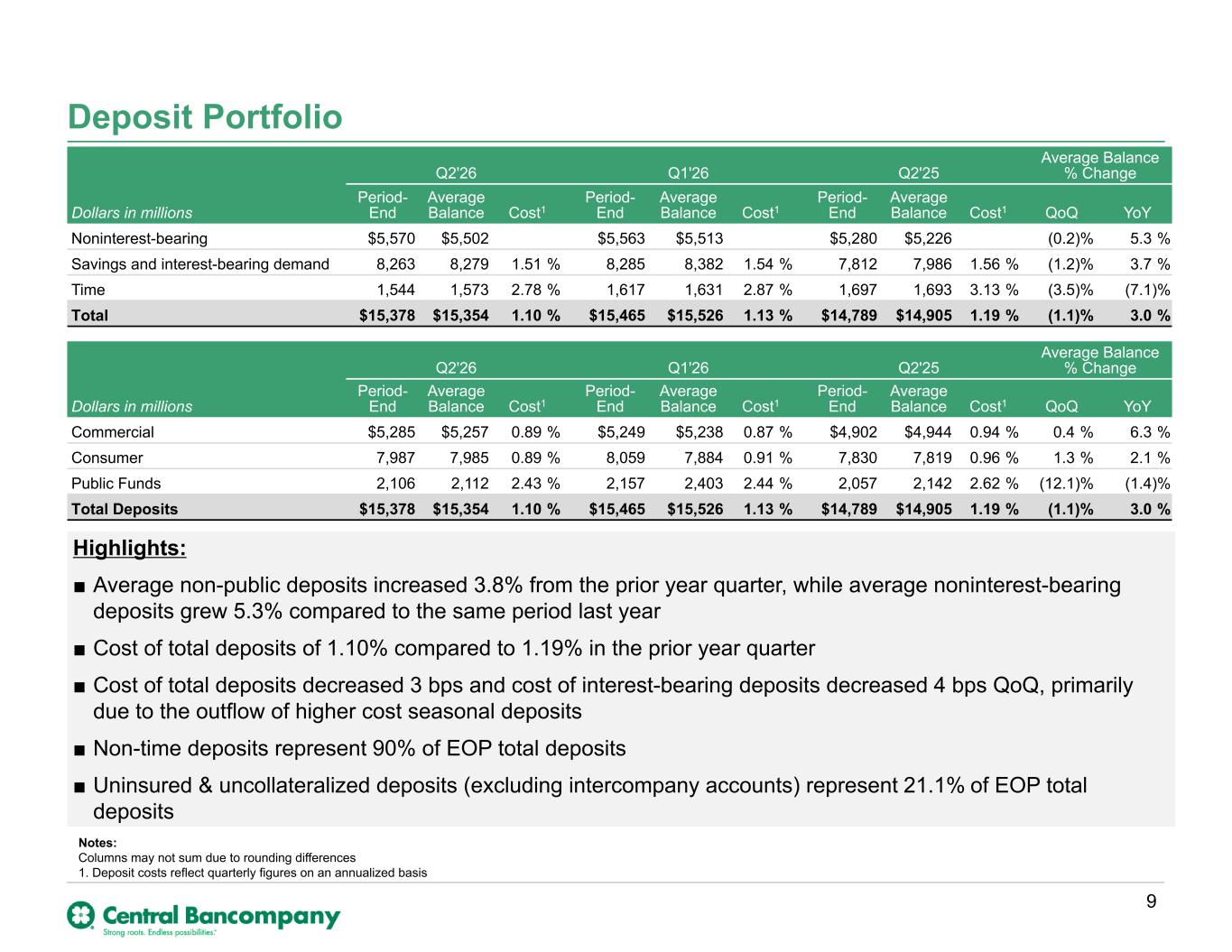
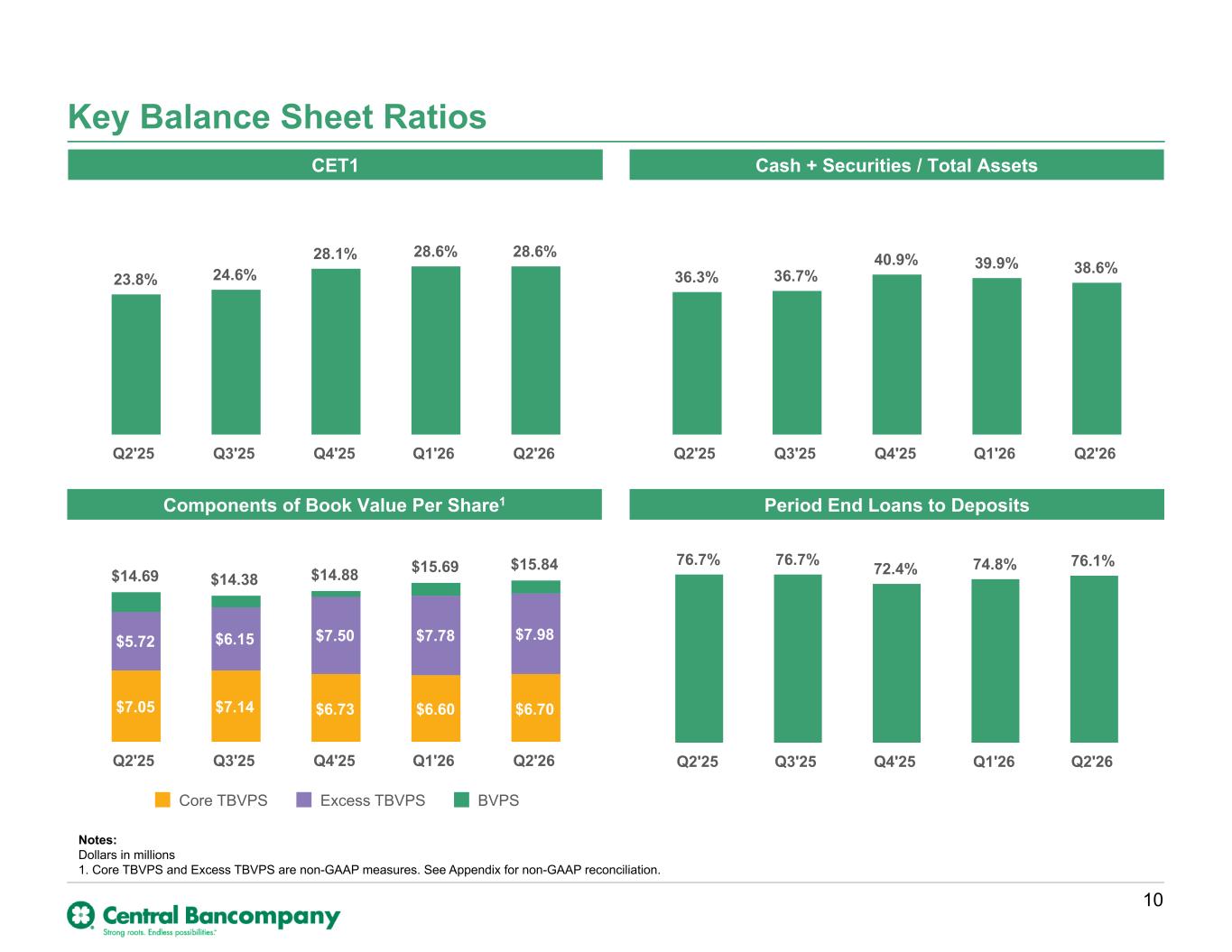
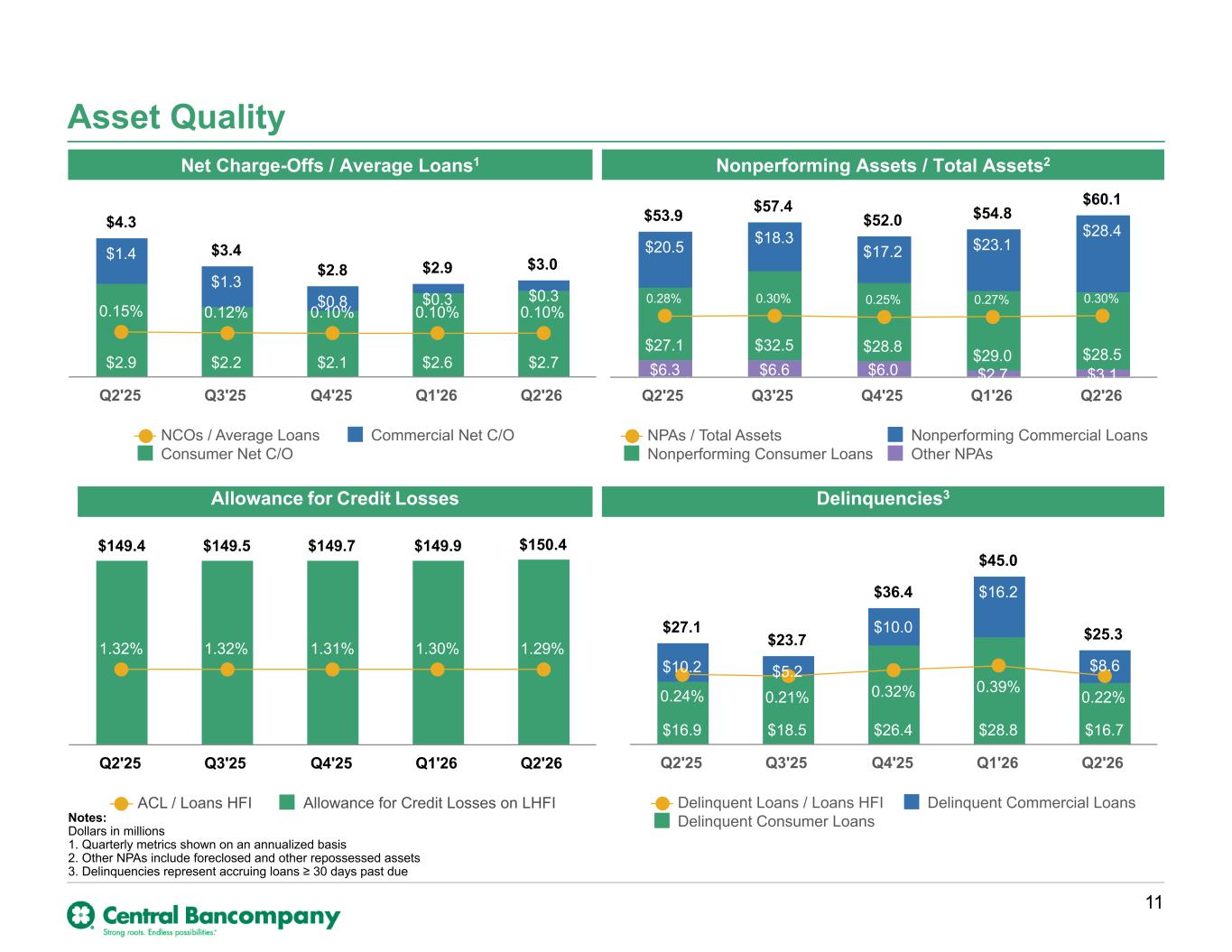
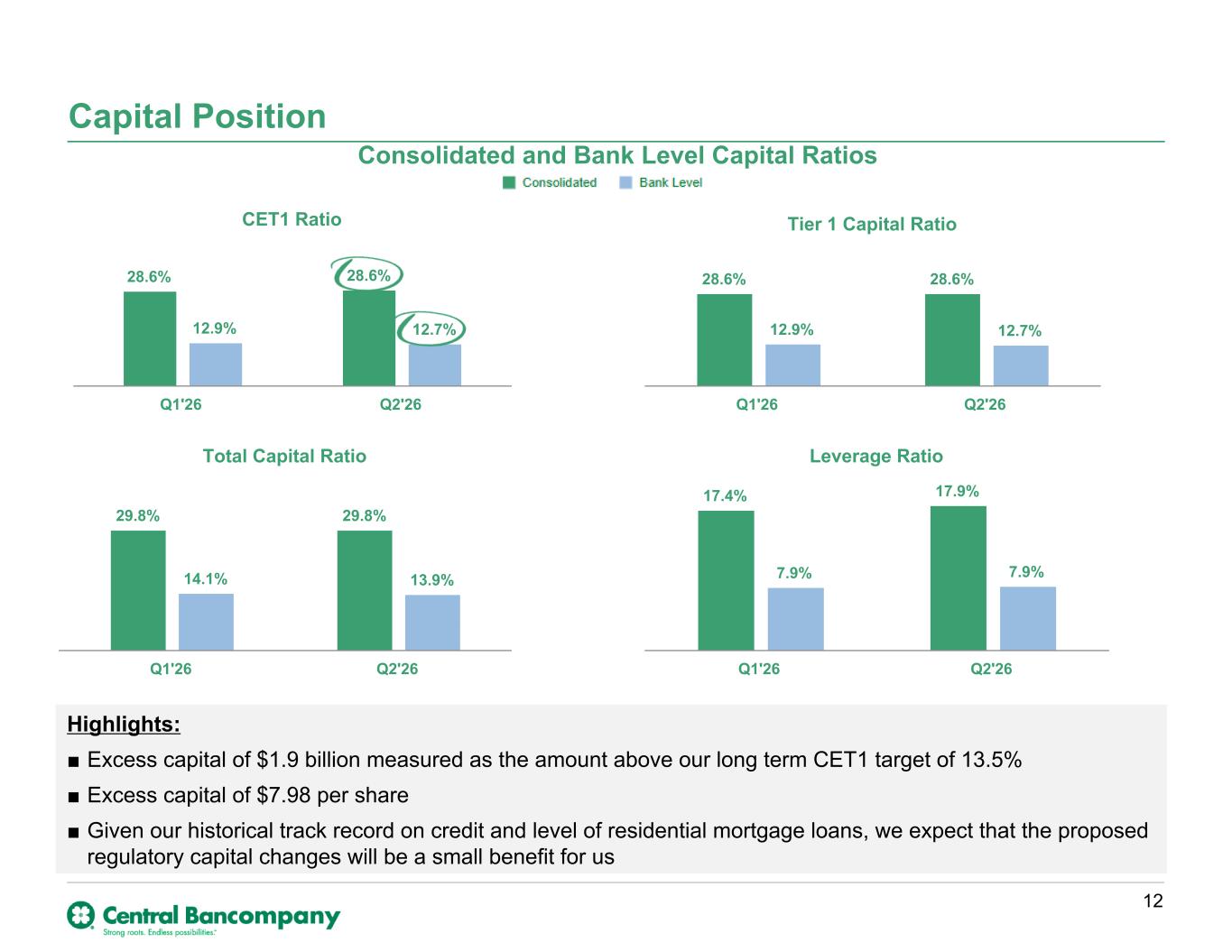
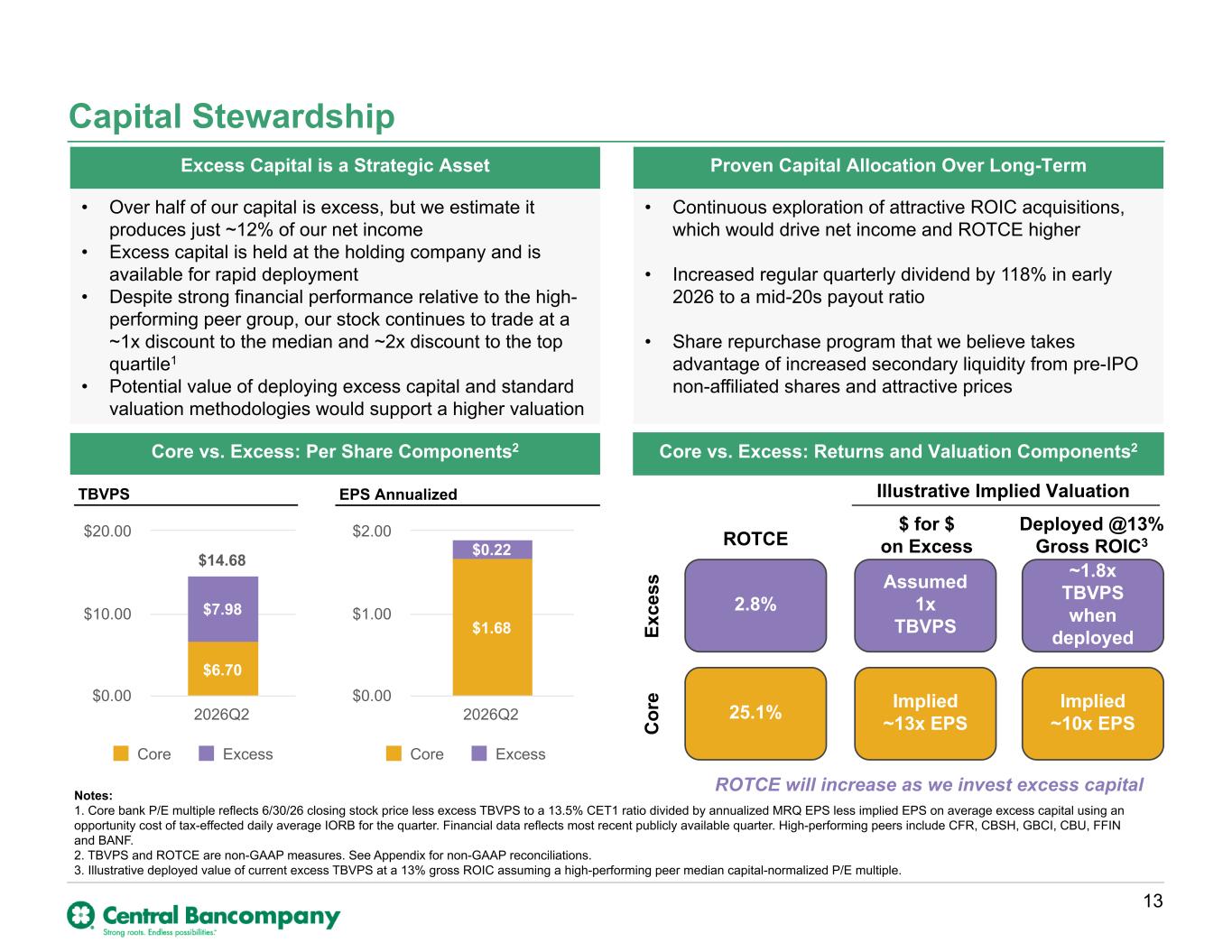
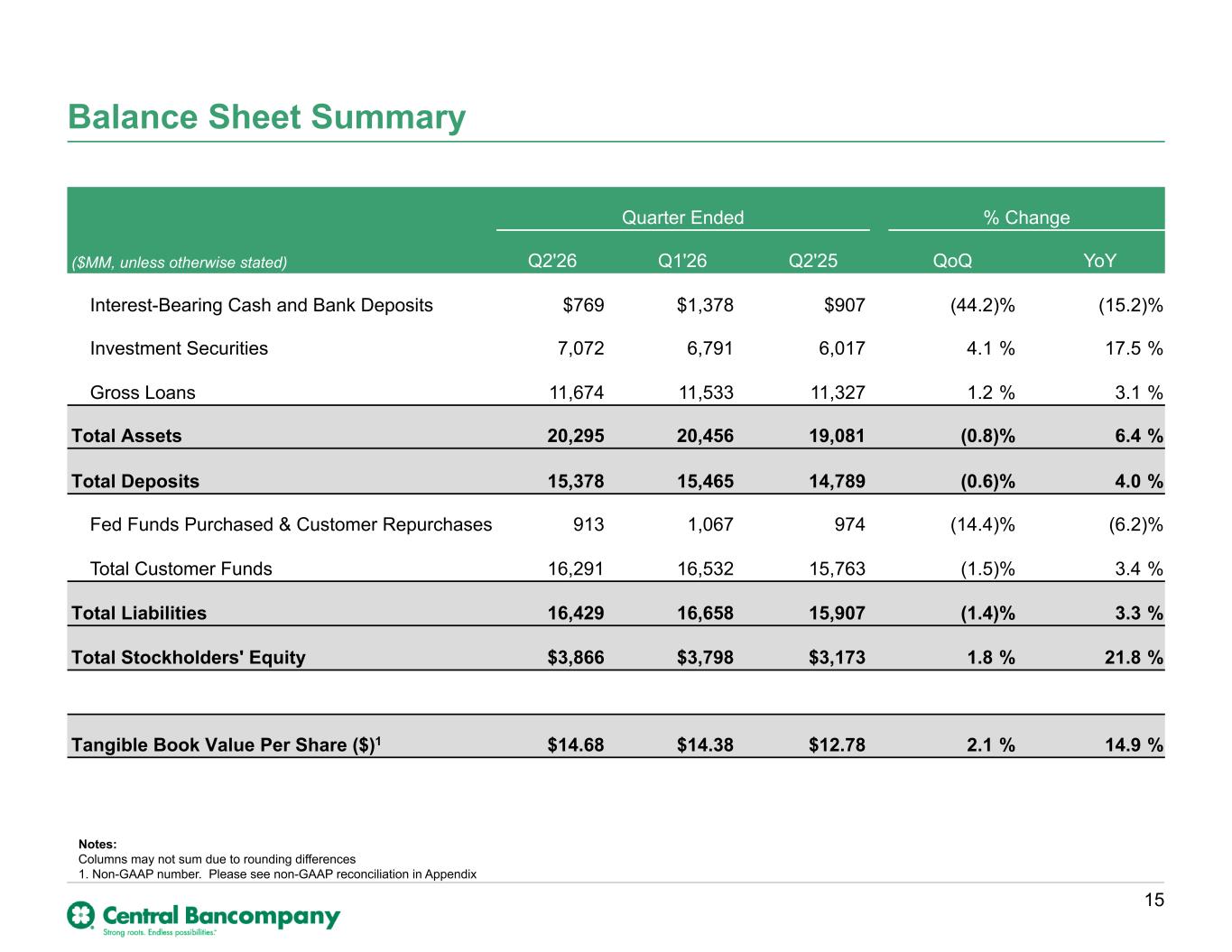
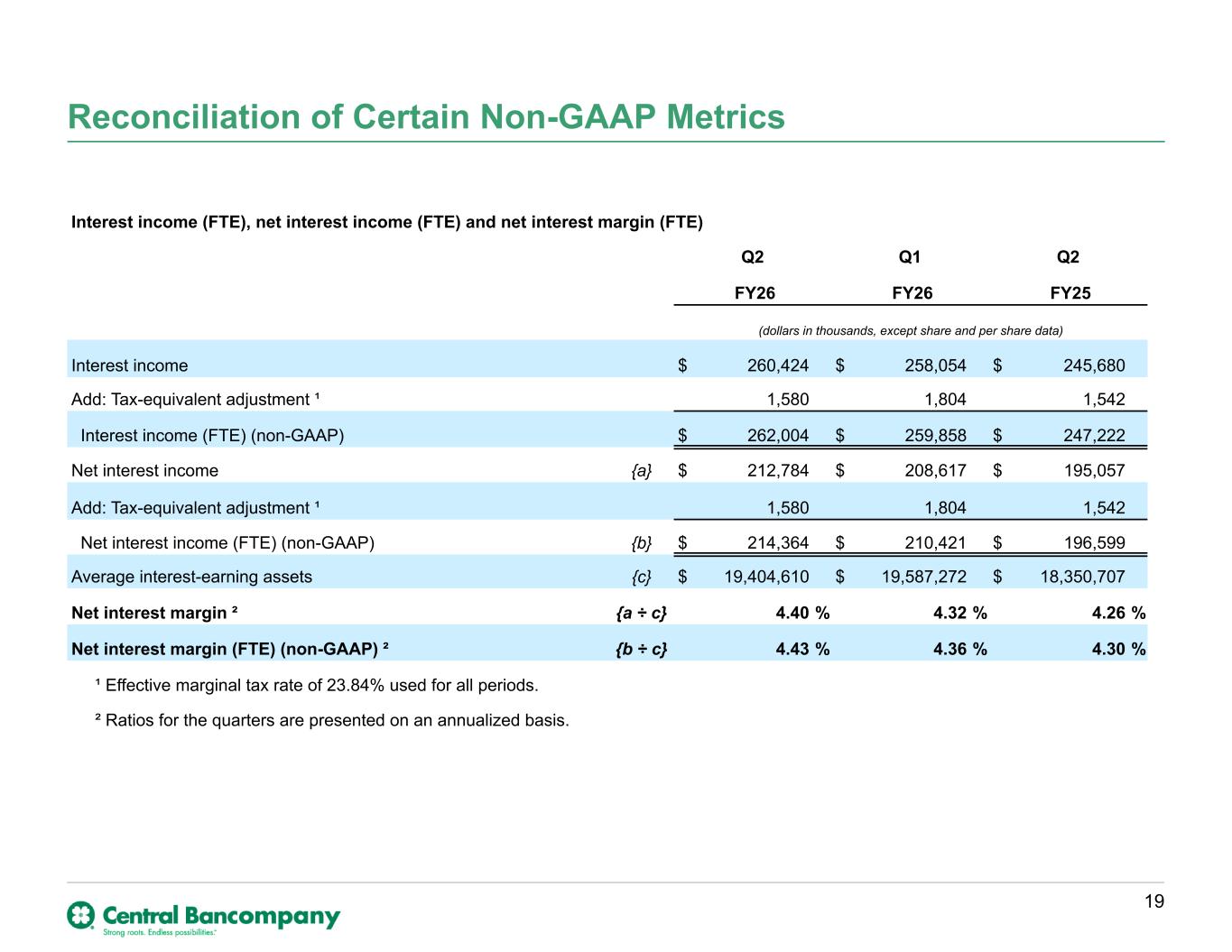
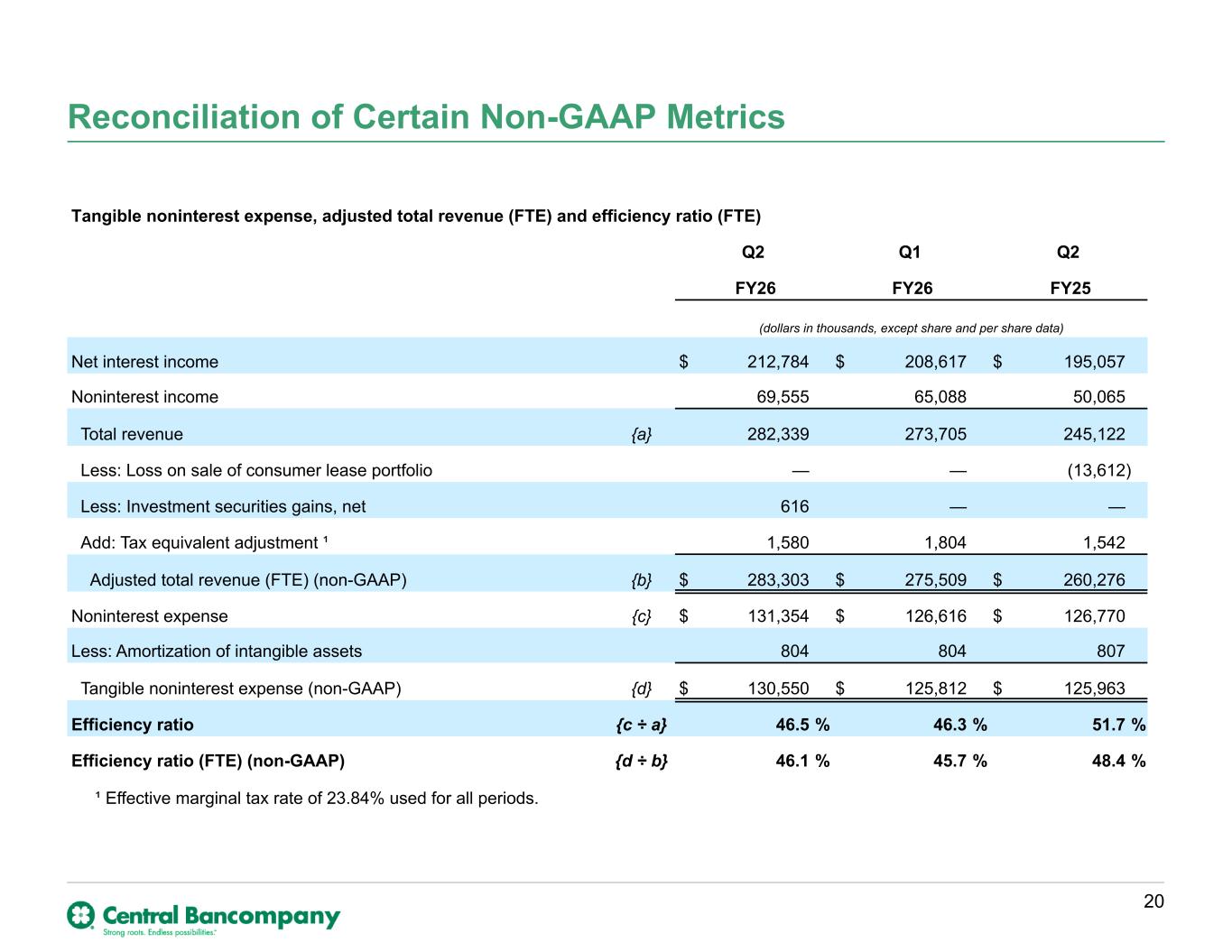
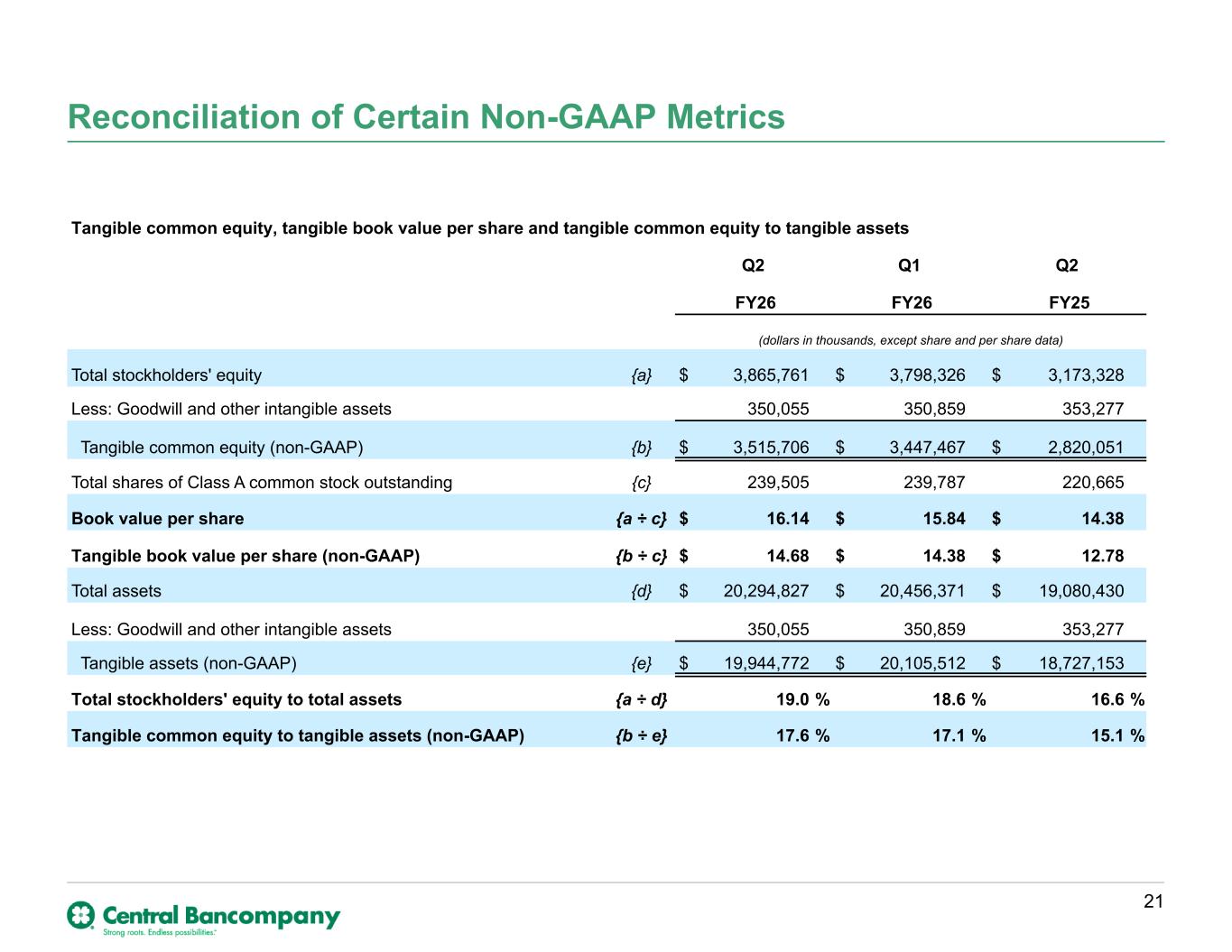
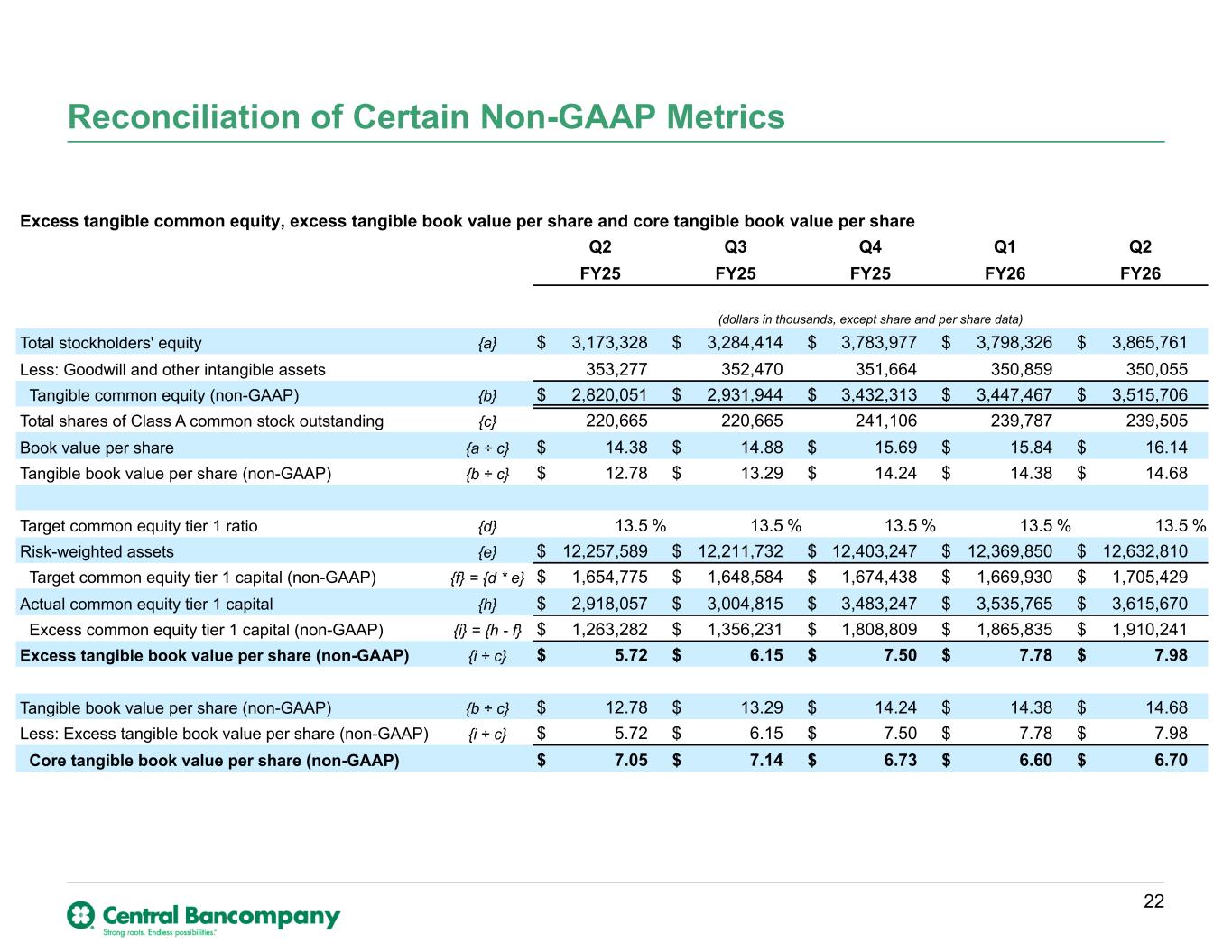
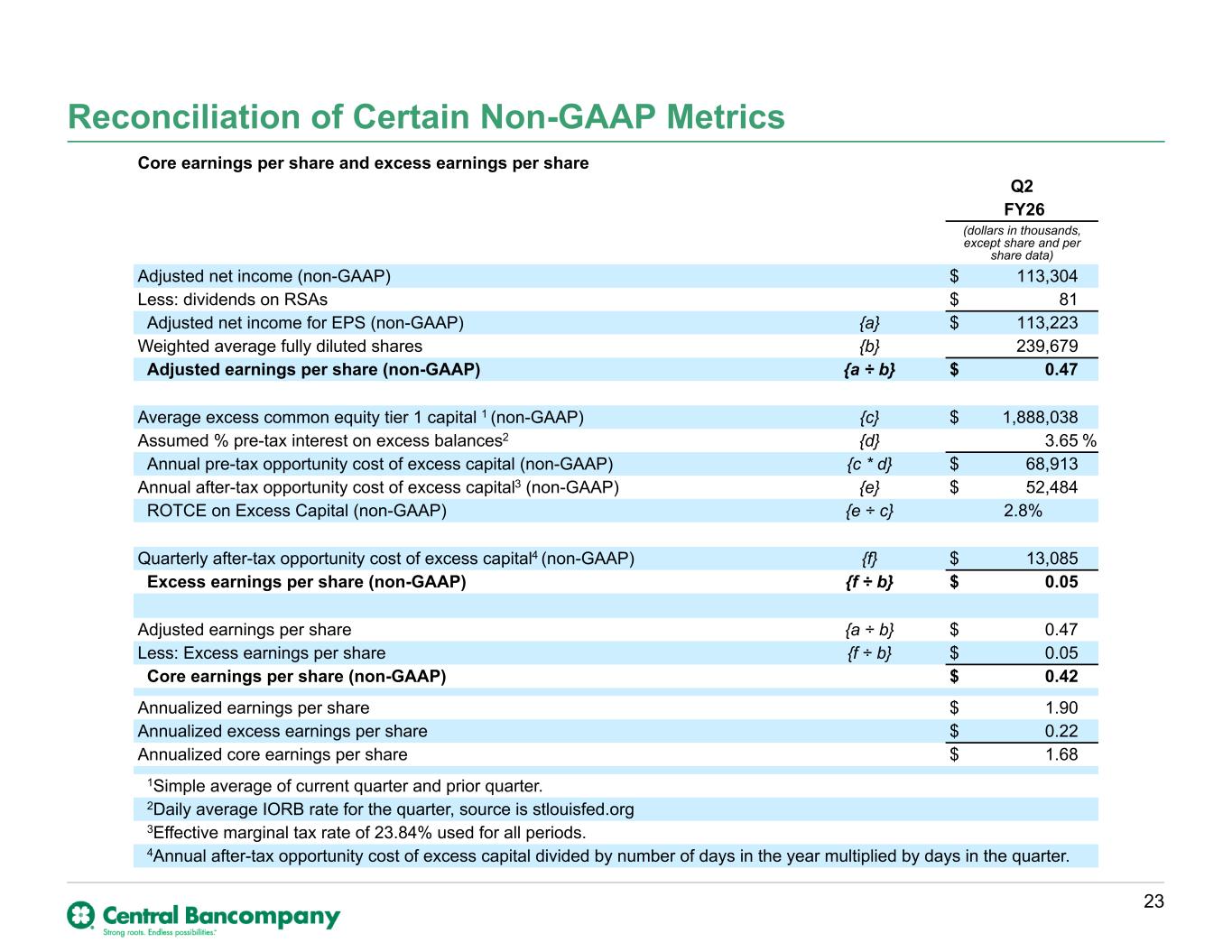
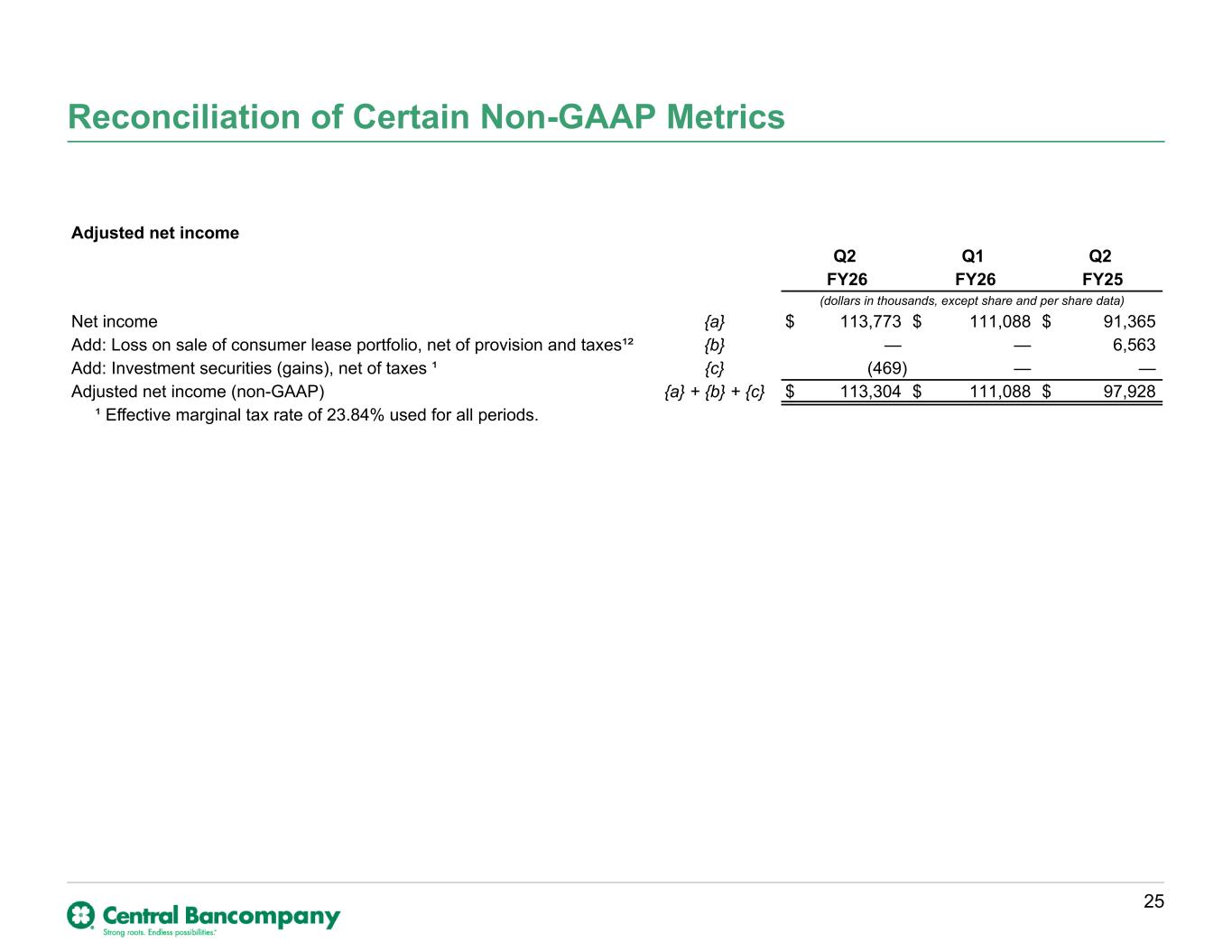
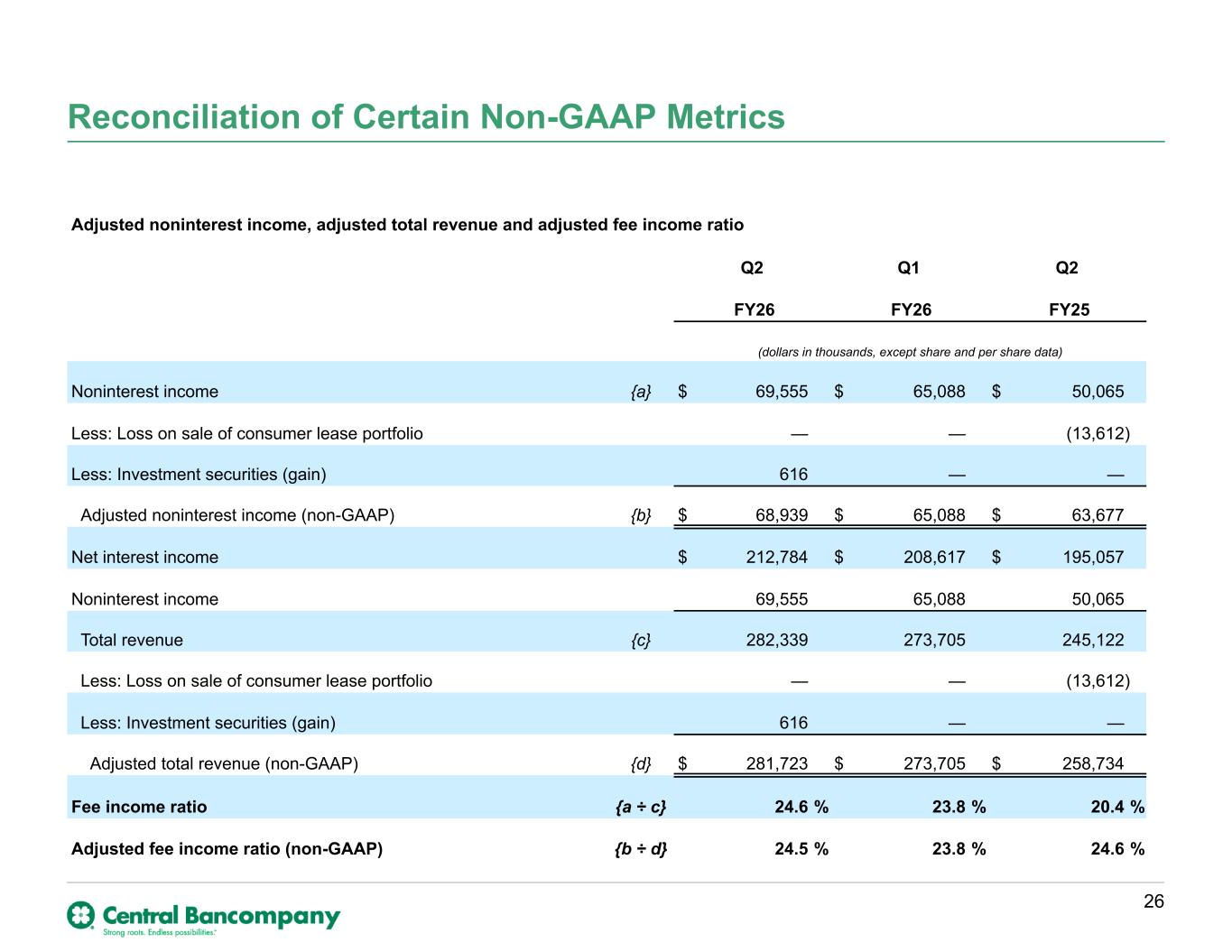
Thank you, J.R. Net income of $113.8 million for the quarter, or $0.47 per share, produced a return on average assets of 2.24%. Relative to the second quarter of 2025, adjusted net income increased by $15.4 million, or 16%. Net interest income increased $17.7 million over the prior year quarter, with average earning assets up $1.1 billion and net interest margin on an FTE basis, expanding 13 basis points to 4.43%. Loan yields over the past year have been relatively stable, despite a decline in short-term rates, and a mixing of the consumer portfolio into lower-yielding but lower-risk mortgage loans and out of the higher-yielding consumer loans, where we're being more selective. During the quarter, our cost of deposits declined three basis points, due mostly to a lower level of public fund deposits. We expect the public fund deposits will continue to decline seasonally in Q3 before increasing in Q4. Our core fee income ratio was 24.5%, reflecting seasonality and continued growth in non-interest income, a remarkable achievement considering the increase in net interest income. During the quarter, we participated in the Visa Shares exchange offer, converting a portion of our Class B shares and recognizing a gain of $8.4 million. Additionally, we took advantage of higher rates to marginally reduce our asset sensitivity by selling $210 million in shorter duration securities, taking a loss of $7.8 million, and reinvesting the proceeds in medium-term duration securities with a 250 basis point pickup in yield. We posted an FTE efficiency ratio of 46.1%. On a linked quarter basis, we typically experience more of an expense increase moving from Q1 to Q2. The largest component of this increase was salary and benefits. Last year, we had a 4.9% linked quarter increase. This year, we saw a similar increase of 5.3%. While our merit raises drive most of this increase, This quarter, we had the impact of, A, deferred compensation expense, which totaled $1 million, with an equal offset in other non-interest income, and, B, higher performance-related compensation. Mortgage commissions were $1.0 million seasonally higher in Q2. Commissions are recognized when loans close, so 1Q commission expense related to the revenue from December through February, the lowest volume part of the year. Our asset quality remained consistent with just 10 basis points of net charge-offs again this quarter. Our NPA ratio picked up slightly as we downgraded one small commercial loan into non-performing status at the end of the quarter. Delinquencies were only 22 basis points of total loans, a decline from the prior quarter, driven by improvement in commercial loans and consumer credit cards. Lastly, capital levels at the holding company remain well above target with approximately $1.9 billion of excess capital or $7.98 per share. We announced this morning that our board refreshed our stock buyback authorization to $100 million, which replaces the $11 million remaining on the buyback authorization we announced in February. While we have been pleased to see our stock outperform the market in the second quarter, we still see value at current levels and will continue to be opportunistic with our new authorization. With that, I'd like to open the line for questions.
Operator
Thank you. As a reminder, if you would like to ask a question, please press star 11 on your telephone. You'll hear that automated message advised in your hand is raised.
We also ask that you please wait for your name and company to be announced before proceeding with your question.
Operator
One moment while we compile the Q&A roster. Our first question will be coming from the line of Nain Gafalia of Morgan Stanley. Please go ahead.
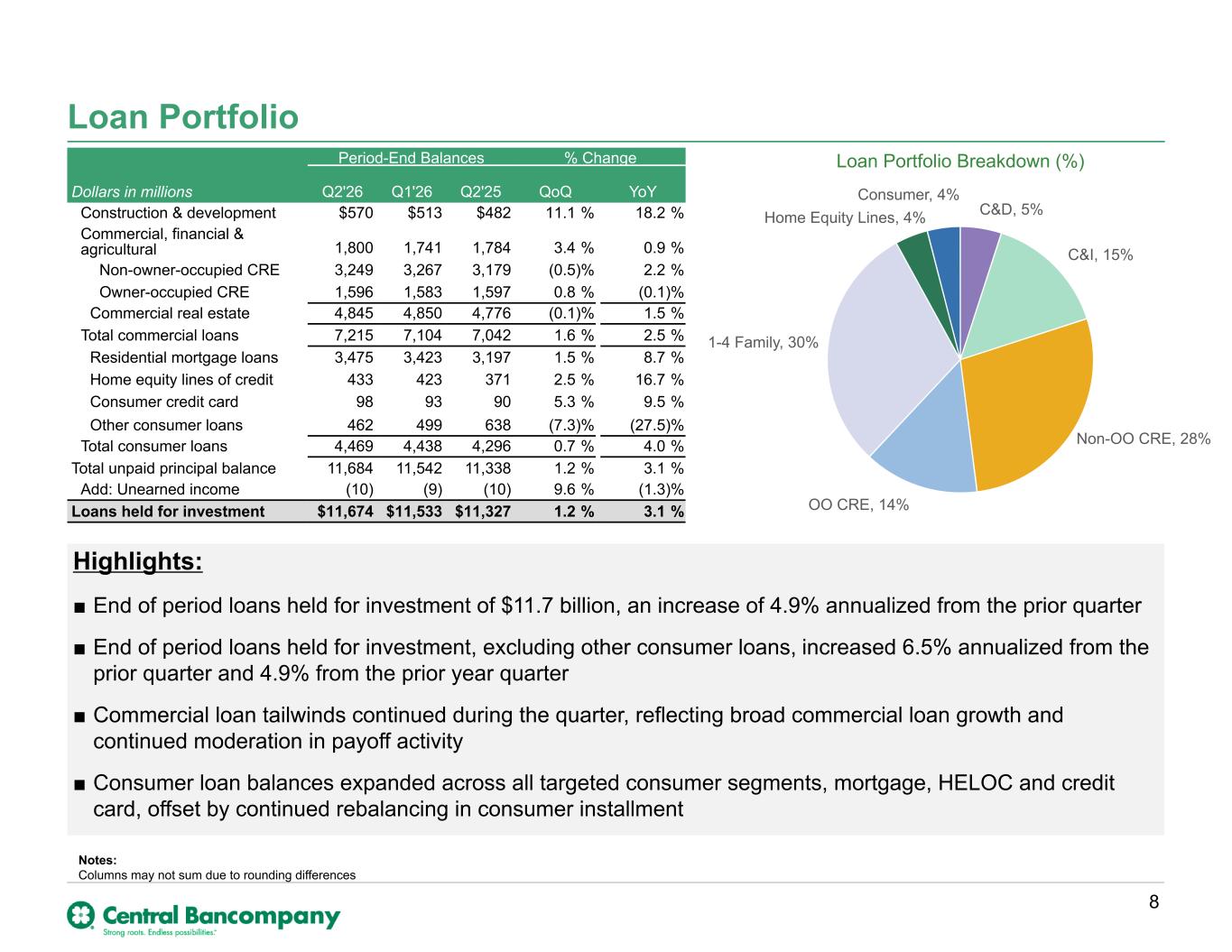
Hi, good morning, all. Good morning. You guys saw some nice pickup in commercial loan growth in the second quarter. The comments in your deck sounded pretty positive as well. Does it think there's more room for loan growth to pick up here based on some of the trends that you're seeing in your footprint?
Yes, none. Loan growth was pretty broad-based during the quarter. And, look, net of the decline in other consumer loans, which, as I mentioned in my prepared remarks, were de-emphasizing and being selective, we grew at a 6.5% annualized pace this quarter and finished the quarter with an ending balance higher than our average balance. So carrying some nice momentum into the second quarter. So we continue to see good opportunities. The pipelines are robust and similar to what they were, I'd say, in the first half of 2025.
Got it. And maybe on the other side of the balance sheet, as you think about deposit costs overall, any trends you noticed as you went through the quarter is deposit competition picking up in your footprint? and, I guess, how do you expect that to trend from here given the positivity on the lending side?
You know, I think price competition and yield-seeking deposits is always intense, but that's not necessarily where we compete. We were really trying to go out there and win primacy of our customers and our communities. So we're out there trying to grow non-interest-bearing deposits. And, you know, you know there's seasonality in our deposit numbers, so the best way to look at this on a year-over-year basis where you can see total deposits are up 3%, but if you look at just non-interest-bearing on a year-over-year basis, so taking the seasonality out of it, they're up 5%. So I think in terms of price competition where we really don't compete, it's intense, but where we compete in terms of service and looking for primacy of our customers, I think we're doing quite well, as you can see, with that 5% year-over-year growth.
Operator
Great. Thank you. One moment for the next question. The next question is coming from the line of Chris McGrady of KBW. Please go ahead.
Sorry, I was muted. The question is on M&A. Obviously, your stock's done well. I'm interested in kind of an update on conversations, pipelines, willingness to transact.
Chris, you were kind of cutting in and out, Just to make sure your question is about M&A and whether the dialogue or the nature has changed in the backdrop of stock pricing moving around. That's right. Yeah, no real change on our end. I mean, as you know, the discipline that we've communicated is predicated on absolute valuations, and so the market moves don't make a substantial move. I would also note that, you know, we're trying to do a little bit different type of deal, all things that we communicated in the IPO, so no update on our strategy. We mentioned last time maybe a little bit changing our tactics in terms of the velocity and formality of our approaches to these high-quality banks that we're pursuing, but there is no update on the status of any of those, and we look forward to the time when we can update you on the status of those, but there's nothing to report at this time.
Okay. Great. Thanks for that. And then, Jim, you touched on the one downgrade of the commercial loan in the quarter. Is there any additional color you could place on that?
I don't think there's any real – it's a small loan. When you look at our portfolio, our median size is $150,000, right? So it was bigger than that, but it's in the overall scheme of things on an 11.5 close to $12 billion portfolio. It's a really small shift. There's no trends that we're seeing in the portfolio. There's nothing really going on. But let me turn it over to Eric and see if there's anything.
Yeah, I think the only thing I would add on that loan in particular, it is very specific to the situation of the borrower and really not indicative of any shift in kind of asset quality of like-kind assets or collateral position. So we feel pretty good that it's isolated and don't see a significant trend or shift in kind of risk profile going forward. Okay, thank you.
Operator
Thank you. One moment for the next question. Our next question is coming through the line of Matt Olney of Seasons. Please go ahead.
Hey, thanks. Good morning. I appreciate you taking my question. I want to ask about loan yields in the second quarter. Didn't see any movement there. We've talked previously about that fixed rate loaner pricing tailwinds. Just curious if there's any update there. I appreciate the question, Matt. Look, the price competition on the loan side for the really best loans that we're seeing is intense and maybe even intensifying. I'd say that, you know, during the quarter, there were a lot of things. So we still have the back book repricing. And at the end of the quarter, we have $1.3 billion of repricing to go in the second half of the year. and rolling off the same yield we signaled last quarter of 5.8%. During the quarter, the benefits of those repricing, I think, were offset by a few things. One, I mentioned in my prepared remarks in that we're continuing to mix down into lower yielding, lower risk content loans away from the indirect other consumer loans that we have on our balance sheet, which yielded much higher, and so that contributed to – that offset some of the tailwind effects of that back book repricing. Also, from an overall macro environment sense, rates in the intermediate term, which is where our – we mostly have fixed rate loans on our balance sheet, so we're particularly sensitive to rates in the two- to five-year zone of the curve, and those picked up sharply. during the quarter, and what we've witnessed and what I've witnessed in my nearly 40 years of banking is when rates rise sharply, generally, you know, you've been talking with your customer about a certain rate, and so spreads compress a little bit on you. So if rates are stable from here or maybe even slightly down from here, I think that will reverse itself in the future. Time will tell. And, you know, we continue to be somewhat protective of our top customers. And so, you know, over time, I think that will – we'll see where that goes. But we're also being protective of our very best customers in making sure they get our very best rates.
Appreciate the color on that, Jim. And then just as a follow-up, I guess, just taking a step back on the net interest margin, any other puts and takes you would offer up? You mentioned the securities portfolio and the restructuring there. It feels like yields could move higher. Any other puts and takes on the margin we should keep in mind for the back half of the year? Great question, Matt. I think to your point, I see the opportunity for loan yields to continue to grind higher because of that back book repricing effect. I think some of the things we saw this quarter will, you know, attenuate in the future. And I also think on the other side of the balance sheet, we would expect to see on a seasonally adjusted basis deposit costs relatively stable in the future. And that's looking at not trying to predict rates, but, you know, I don't see our deposits being particularly price sensitive. So I would say deposit costs on a seasonally adjusted basis are going to be largely stable. Okay, great.
Operator
Thank you. If you would like to ask a question, please press star 11 on your telephone. One moment for the next question. Our next question is coming from the line of Adam Kroll of Piper Sandler. Please go ahead. Hey, Adam.
Hey, I'm on for Nate Race. Nice. Good morning, and thanks for taking my questions. Maybe just starting out, just given your profitability profile, you'll be growing capital at pretty strong clips, and obviously buybacks came down during the quarter, and I appreciate your comments on buybacks, but with the new authorization, I was wondering if you could provide a little more color on appetite at shares current levels.
We're very happy with where the stock is, Adam. The authorization we feel is an appropriate tool in our toolbox, and being that we authorized $50 million earlier in the year, spent $39 of that, so had $11 left, and in spending $39 of that really saw no diminishing of liquidity in the market. So we wanted to come back and resize that authority to a level that we thought was more appropriate for where we are. We expect to be opportunistic in the future about utilizing that authorization.
The only thing I would add to your specific question about valuation, Jim did put a page 13 in our investor deck that you can take a look at that helps you see how we think about value and given that we continue to trade at a discount to our peers, we see value here. We'll, as Jim alluded to, always weigh that against other opportunities we have, whether that's an M&A or concerns or lack of concerns about the liquidity in our stock. But we kind of put all of those things in a blender and will continue to be opportunistic in our purchases.
That's right. We look at a certain group of high-performing peers, that we compare ourselves to. And we feel like when you look at the metrics of those high-performing peers and compare those to central, you're going to find that we trade at or near the top. We perform at or near the top of all those metrics. So we believe we're worthy of a P-E ratio that reflects that outperformance.
Got it. I appreciate that comment there, Jim. And maybe moving to the fee income side of things, specifically in wealth management. I thought there was some really nice fee and AUA growth during the quarter. I guess I was curious how much was driven by market appreciation versus new client inflows.
Yeah, so I think the best metric to look at is on a year-over-year basis. And so we ended the quarter with $17.3 billion of AUA. A big piece of that is market-driven and not only market-driven, but performance-driven as well because our team does a really good job against their relative benchmarks and outperforming those benchmarks. Over the past year, we've seen really good net new increases and flows into our wealth management platform, and that continues to portend wealth for the future. We also saw some nice fee pickup at the client level.
Really, as we probably mentioned previously, we were going to be launching a private bank initiative that has been launched now and is showing good early day returns and adding to that AUM but too early to really call the success of that but it is a contributor got it appreciate the cover and thanks for taking my questions thank you thank you and there are no more questions in the queue I would like to turn the call back over to management for closing remarks thank you operator i have 9 19 as a time here central time which i think is the personal best i will attribute that to the wisdom of our analysts but we are pleased to deliver another solid set of results this quarter and appreciate those on the line joining us this morning we do look forward to any opportunity to serve you better as we mature as a public company thanks again and we will talk to you next quarter thank you for participating I think this concludes today's program.
Operator
You may now disconnect.