Operator
Welcome to the U.S. Bancorp Second Quarter 2026 Earnings Conference Call. Following a review of the results, there will be a formal question and answer session. If you would like to ask a question, please press star, then 1 on your phone. If you wish to withdraw your question, please press star, then 1 again. This call will be recorded and available for replay beginning today at approximately 10 a.m. Central Time. I will now turn the conference over to Brian Mani, Director of Investor Relations for U.S.
Bancorp. Thank you, Krista, and good morning, everyone. Today, I'm joined by our Chairman and Chief Executive Officer, Gunjan Kedia, and Vice Chair and Chief Financial Officer, John Stern. In a moment, Gunjan and John will be referencing a slide presentation together with their prepared A copy of the presentation, our press release, and supplemental analyst schedules can be found on our website at ir.usbank.com. Please note that any forward-looking statements made during today's call are subject to risk and uncertainty. Factors that could materially change our current forward-looking assumptions are described on page two of today's earnings presentation or press release and reports on file with the SEC. Following our prepared remarks, Gunjan and John will be happy to take questions that you have. I have an officer to call over to Gunjan.
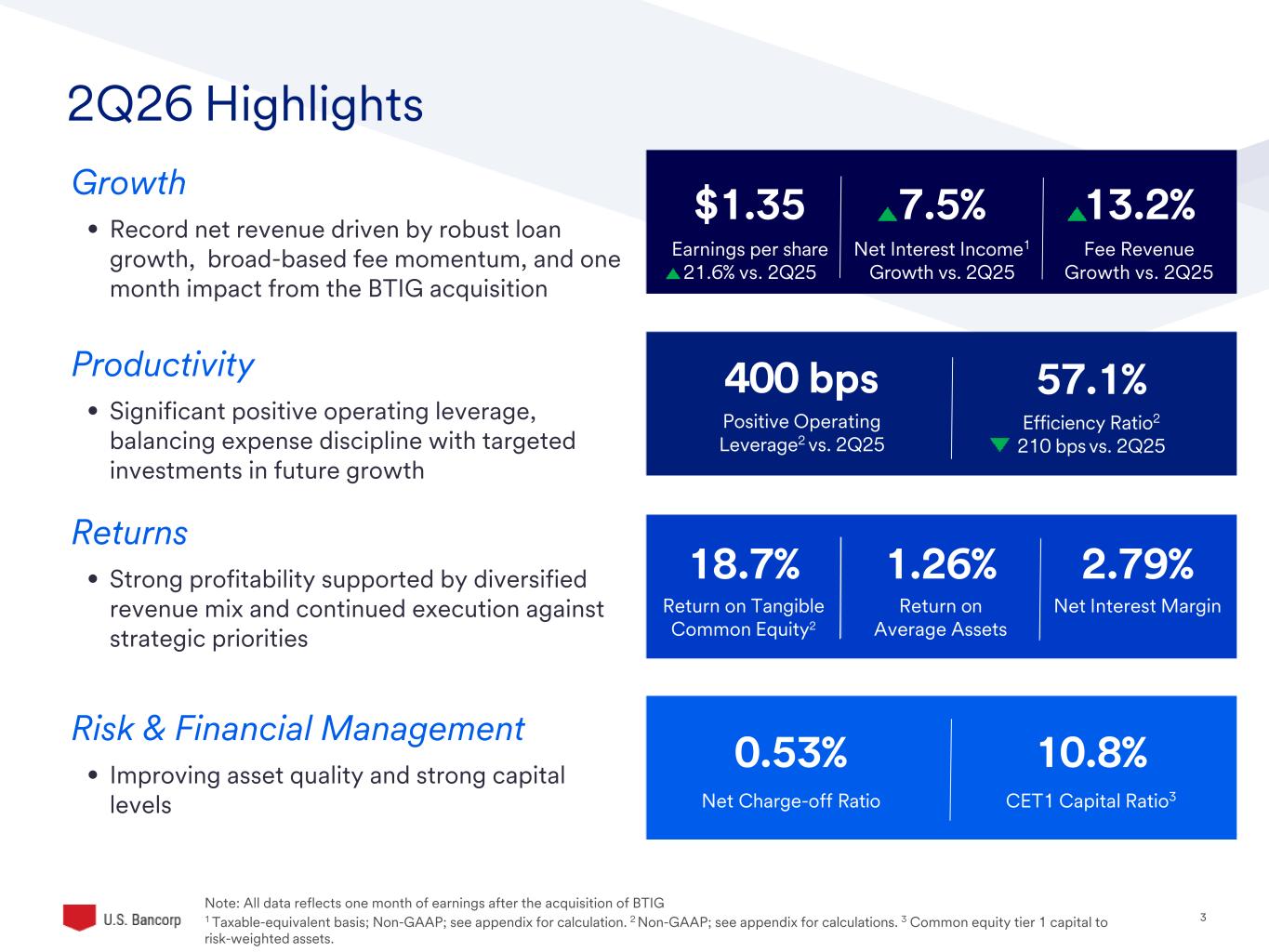
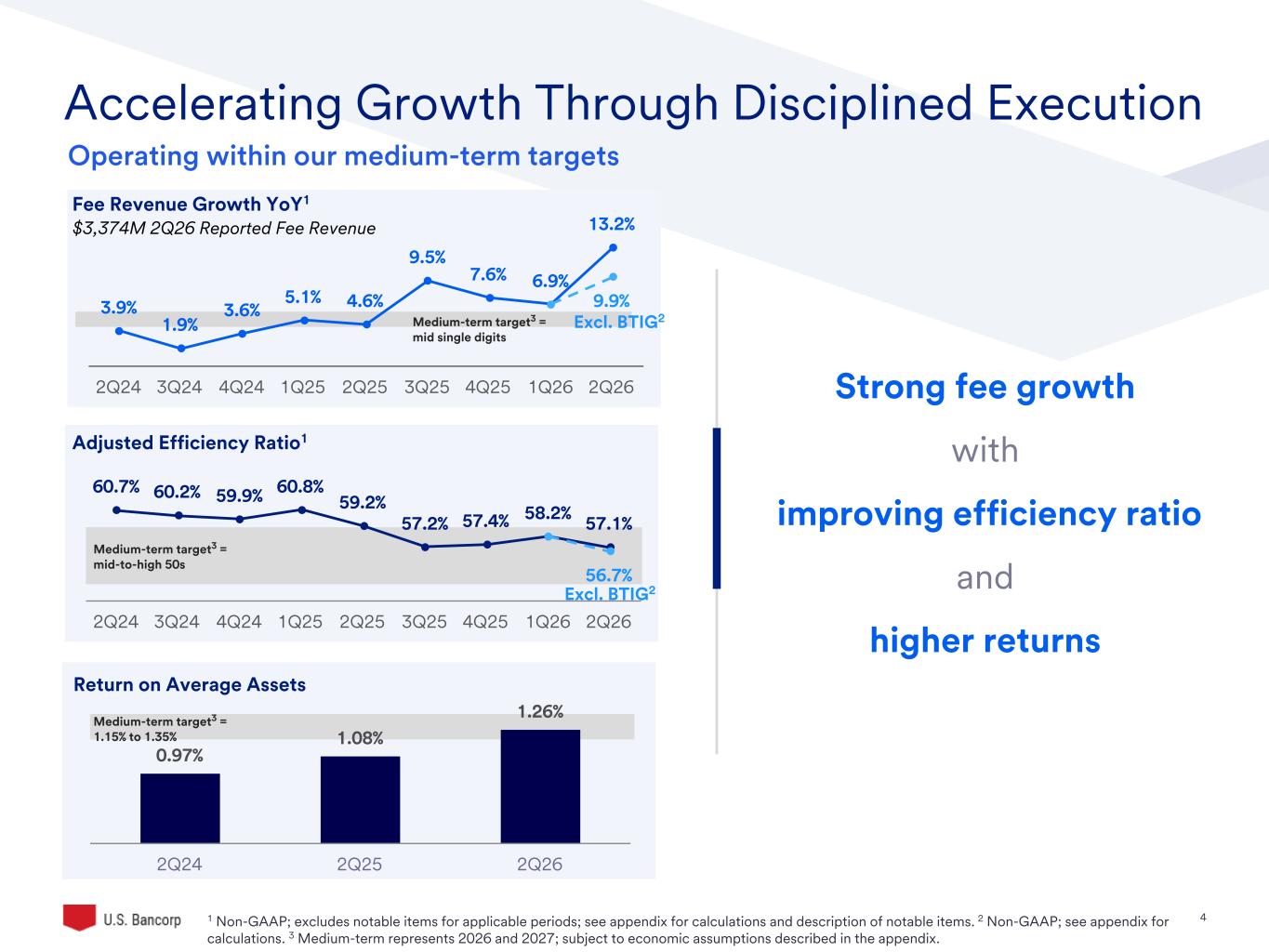
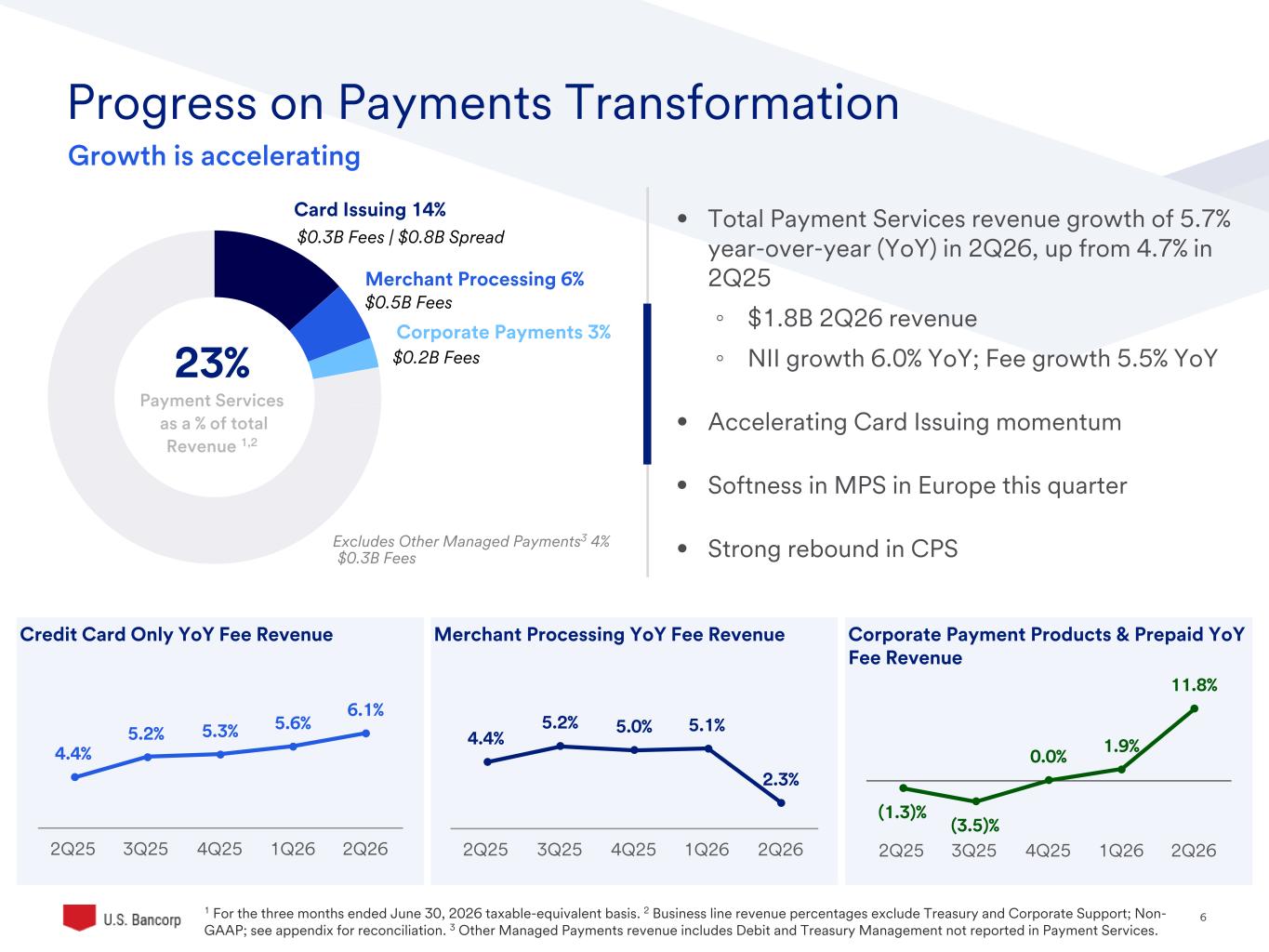
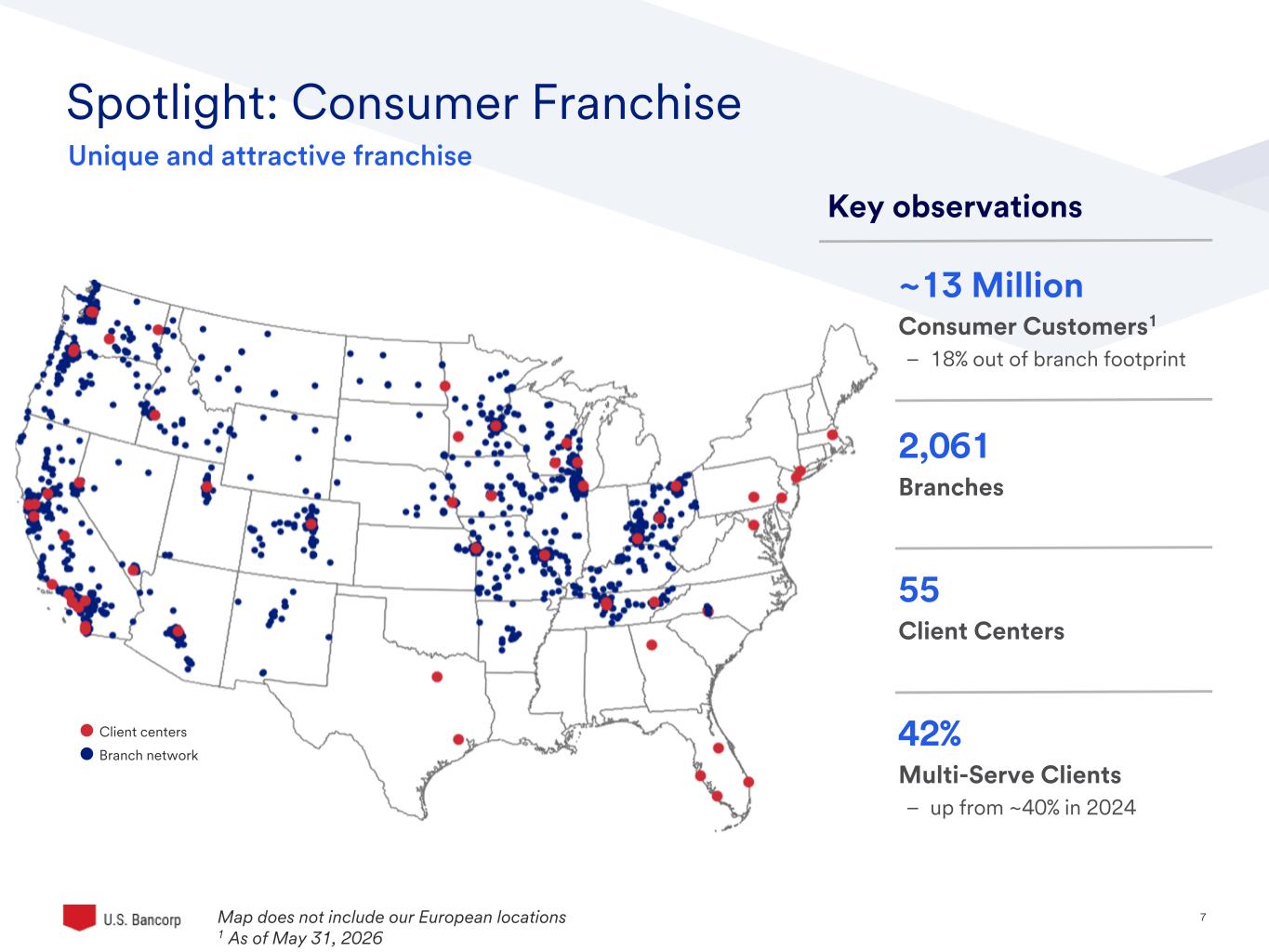
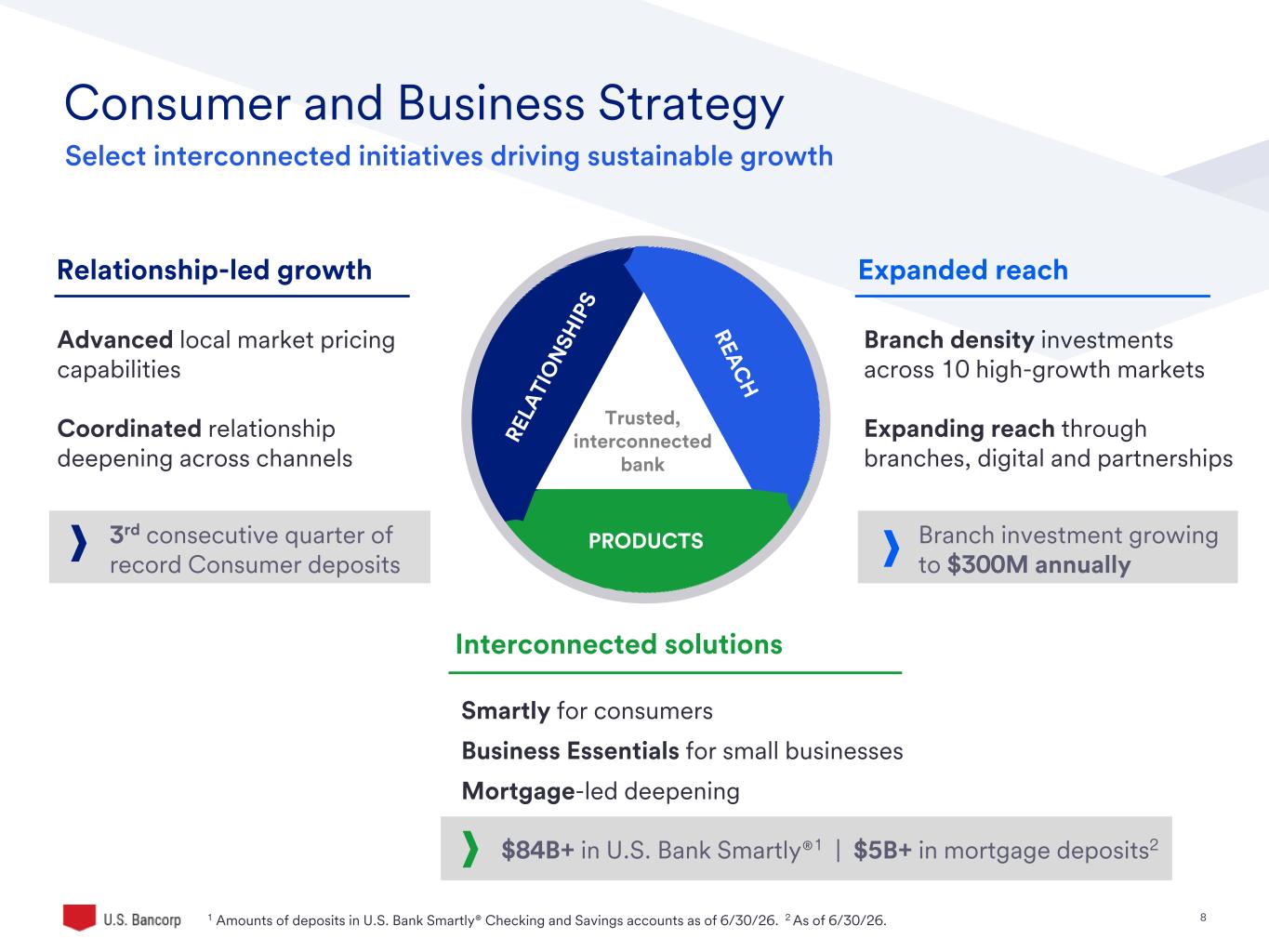
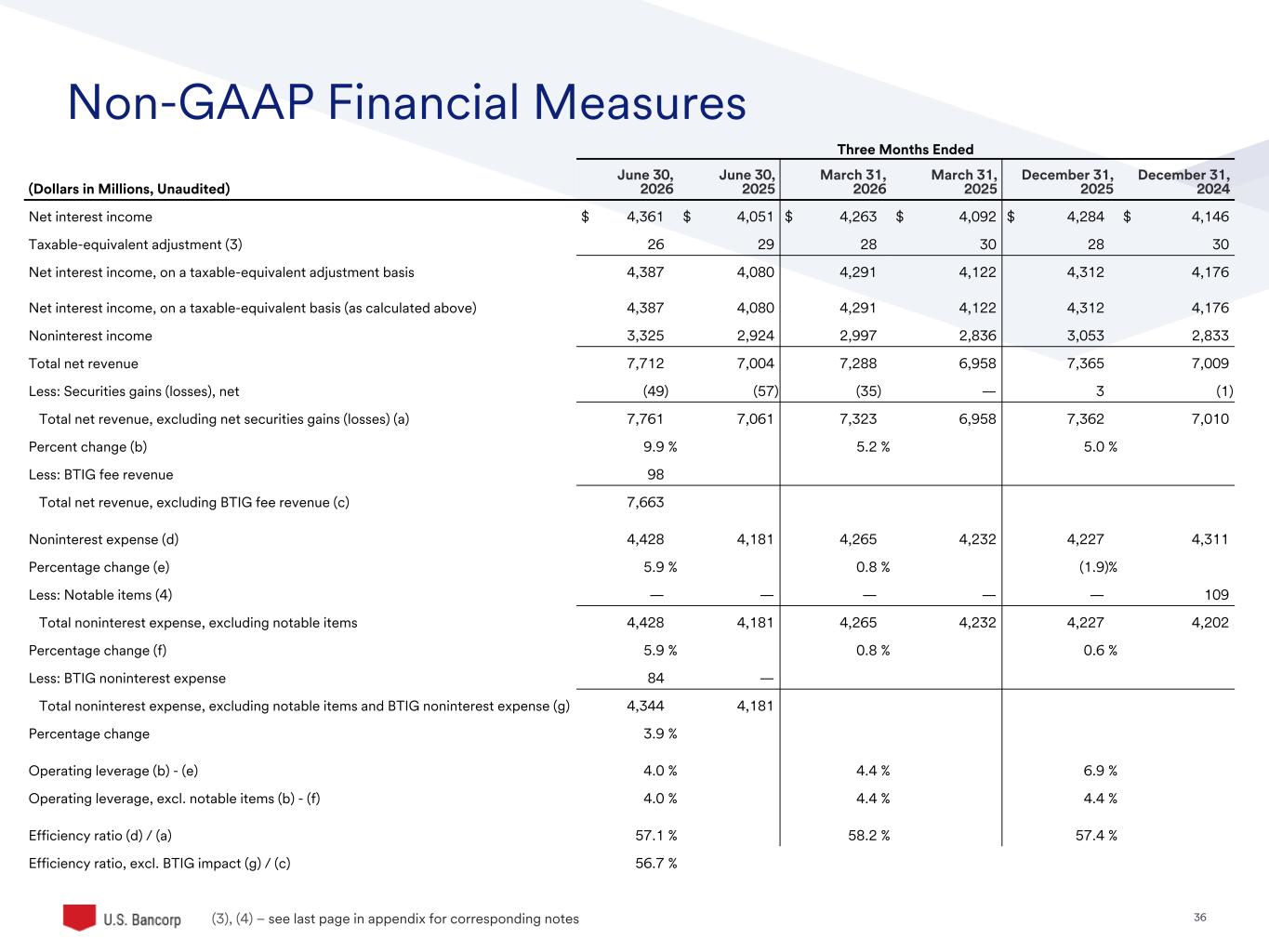
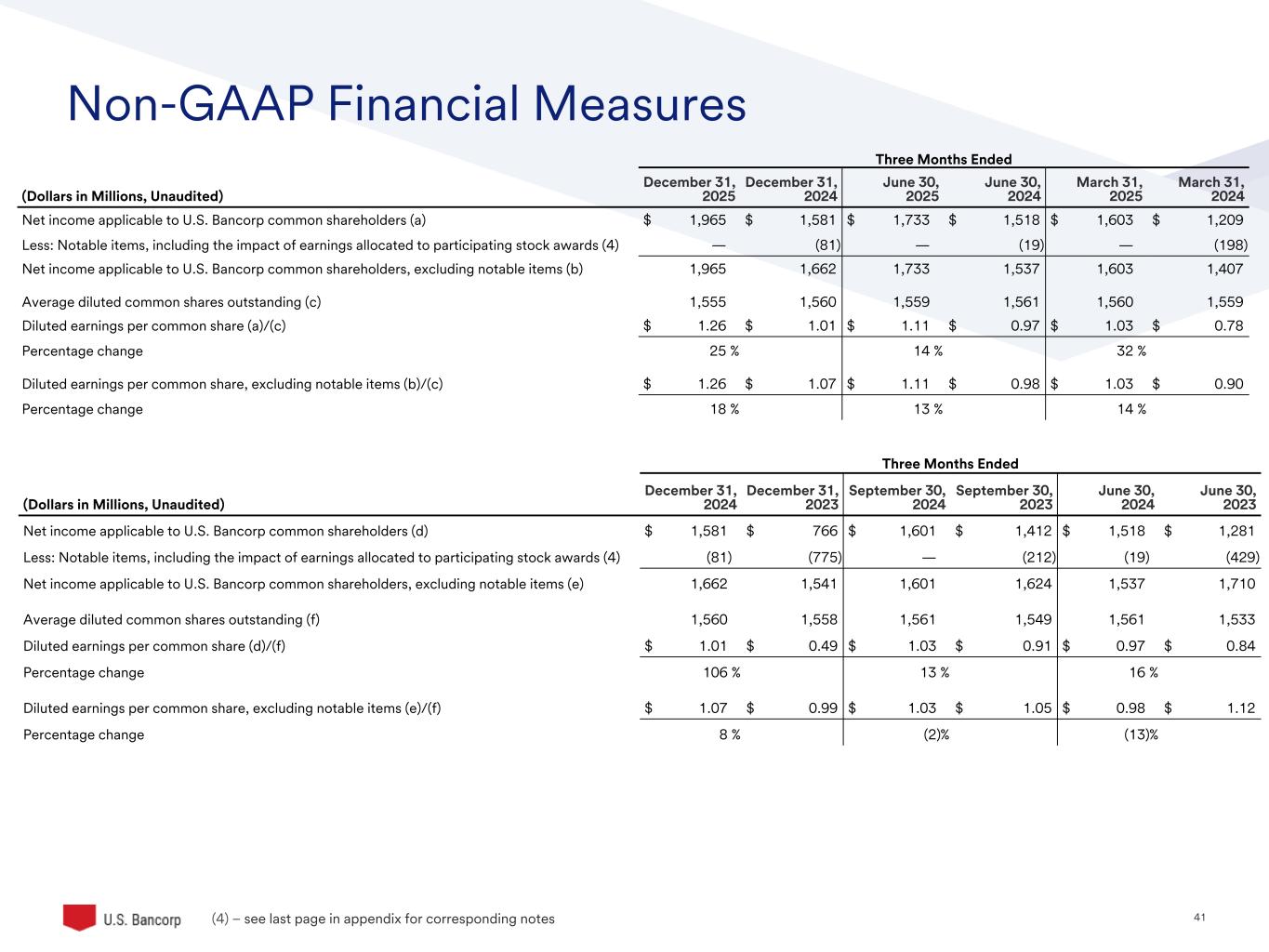
Thank you, Brian, and welcome to our team. Good morning, everyone. Beginning on slide three, this quarter we delivered earnings per share of $1.35, an increase of approximately 22% year-over-year. Record net revenue of $7.7 billion highlights the strength of our diversified business mix and improved executions. results in the quarter reflect strong progress against our three strategic priorities revenue growth accelerated to 10.1 percent year over year expense discipline remains a hallmark for us with 400 basis points of positive operating leverage this quarter our payments transformation is differentiating us and driving innovative client value propositions especially for the Gen Z, and younger generations. Importantly, we delivered these results while maintaining strong returns, credit performance, and capital levels. John will provide more details on our financial performance in his opening remarks. Turning to slide four, fees rose to 44 percent of total revenue this quarter, with both scale and quality of our fee mix driving high returns, stable earnings, and enduring relationships. Fee growth has steadily accelerated, and this is an important priority for us. While fee growth drives higher expenses, productivity initiatives helped improve our efficiency ratio and increased return on average assets. Moving to slide five, the successful completion of the BTIG acquisition marks a significant milestone in our strategic build-out of capital markets. In its first month as part of U.S. Bancorp, BTIG generated approximately $98 million of revenue, marking the strongest monthly revenue performance in BTIG's history and outpacing our earlier expectations from the deal. As integration progresses, we expect to capture more long-term strategic benefits of the combination. Our aim is to grow capital markets to more than 10 percent of total company revenue over time. On slide six, our payments franchise remains an important source of diversification and client engagement across the company. Total payment services revenue increased 5.7% year-over-year, compared with 4.7% growth in the prior year quarter. While merchant processing growth slowed during the quarter, card issuing continued to perform well, and corporate payments saw a strong rebound, driven by core demand and new business installations. We are increasingly managing these products holistically at the client segment level, and investing to be competitive as this space evolves. Turning to slide seven, a consumer franchise is a source of strength for the company and an important driver of long-term relationships and lower-cost deposits. Given the increased interest we have seen in this space recently, we are spotlighting this strategy for the consumer franchise. We serve nearly 13 million consumers through a combination of digital and physical distribution, with approximately 18% residing outside of our traditional branch footprint today. In addition, we serve approximately 7 million customers through our card, co-brand, Elan, and partner platforms. Our core products benefit greatly from this expanded scale. 42 percent of our consumer clients are now multi-service, up approximately two percentage points over the past two years. These relationships are more durable, generate higher return, and strengthen engagement over our franchise. Slide eight highlights the core strategies of our consumer franchise. We are seeing strong momentum from differentiated offerings like banks Smartly, which we introduced in 2024. It balances across Smartly checking and savings now exceeding $84 billion. We have more recently introduced a similar interconnected product suite for small business called Business Essentials. Our branch expansion is focused on densifying our presence in approximately 10 markets within our footprint, that have high rates of household formation. We expect our annual investment in branches to increase from approximately 200 million historically to 300 million annually. Importantly, these strategies are delivering strong results and have now driven a third consecutive quarter of record consumer deposits. Let me now turn the call over to John.
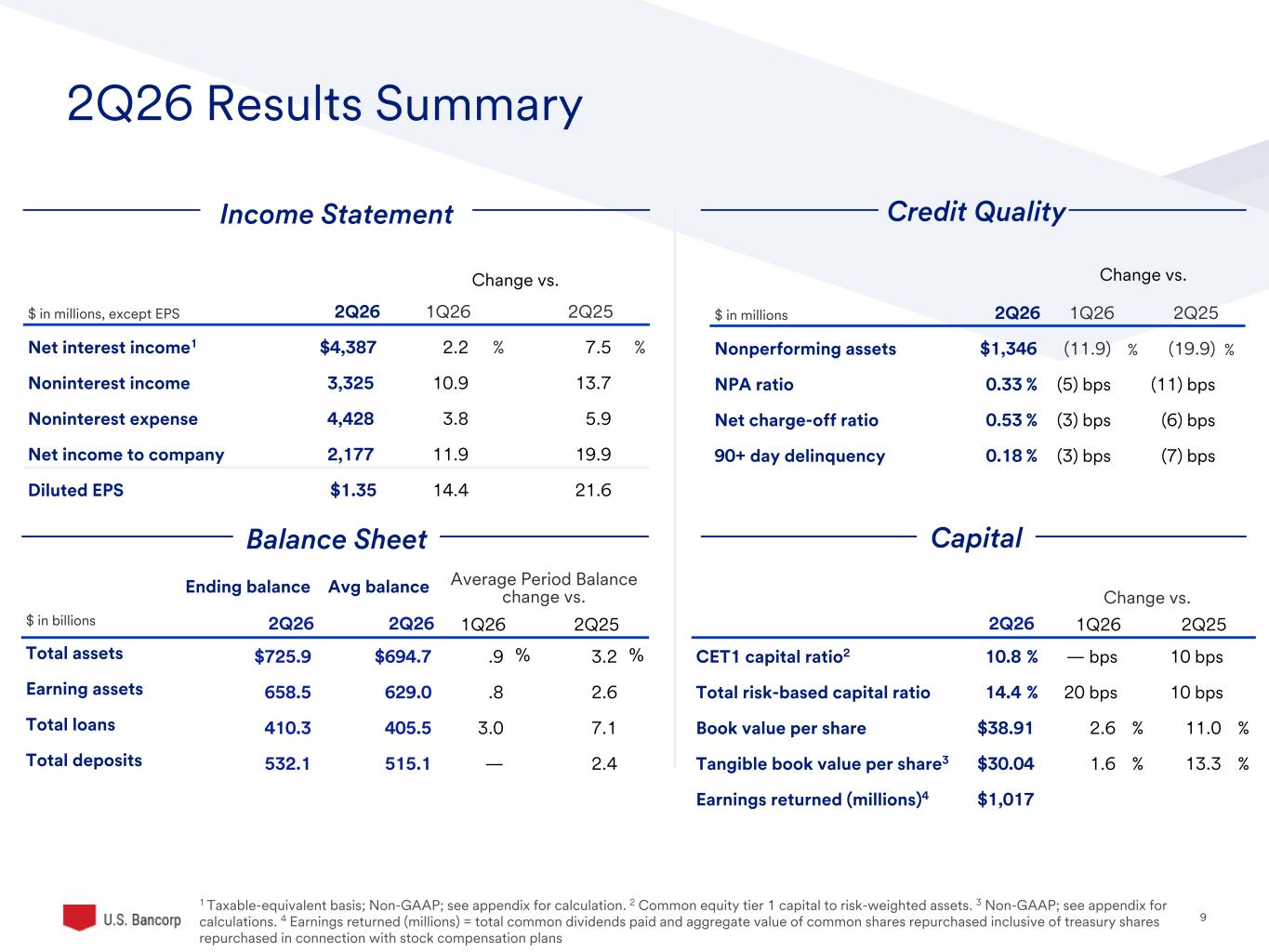
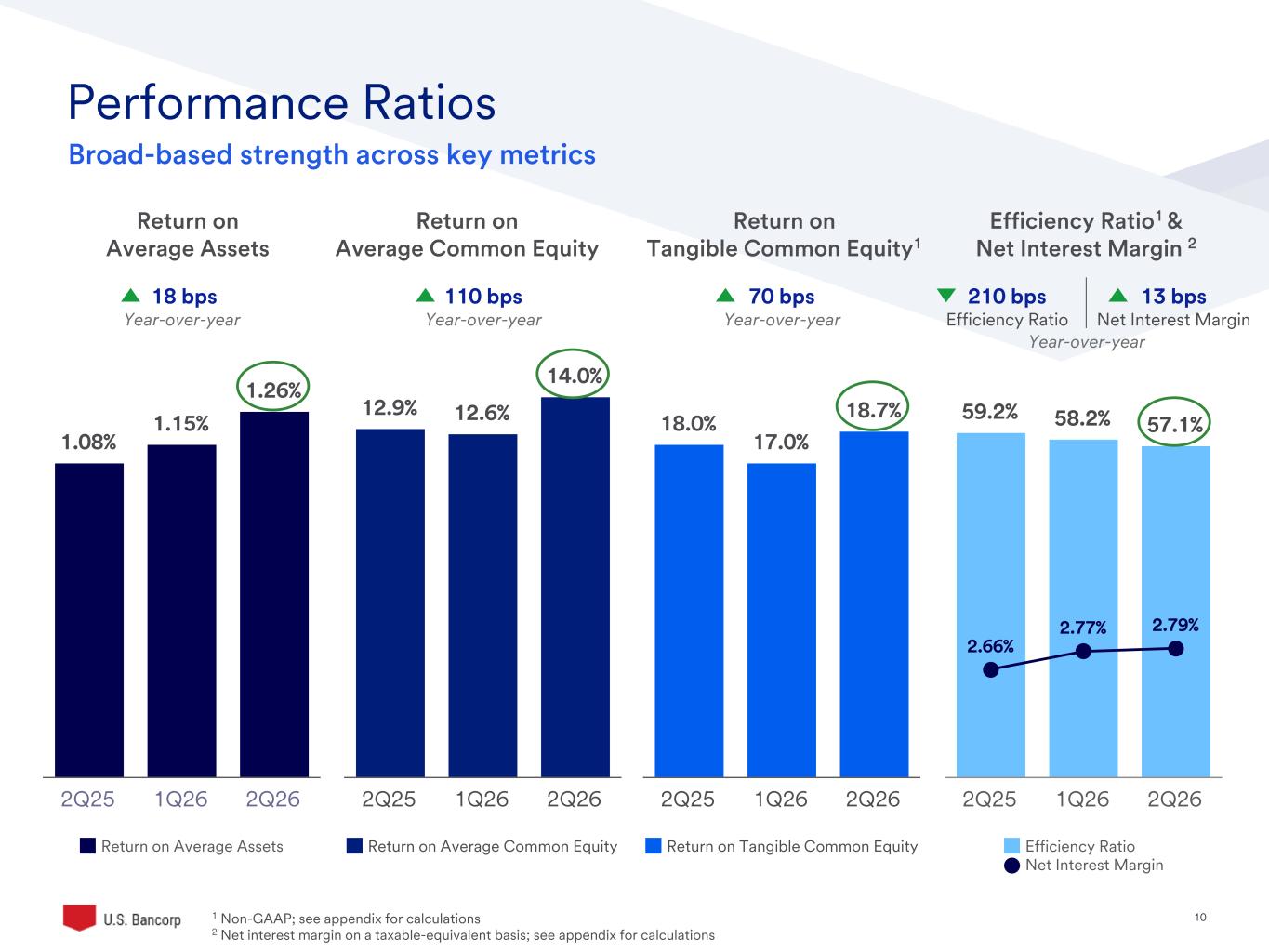
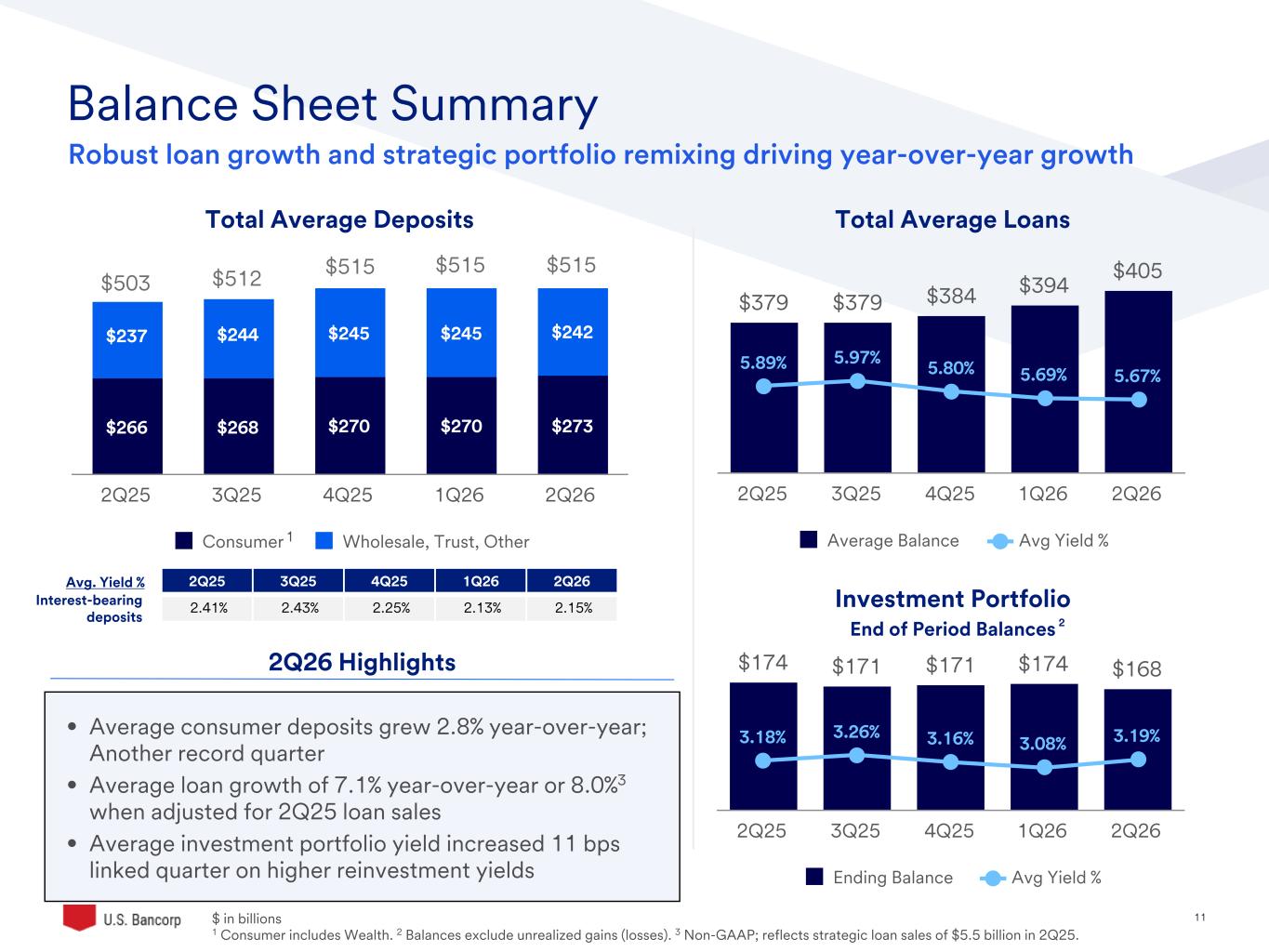
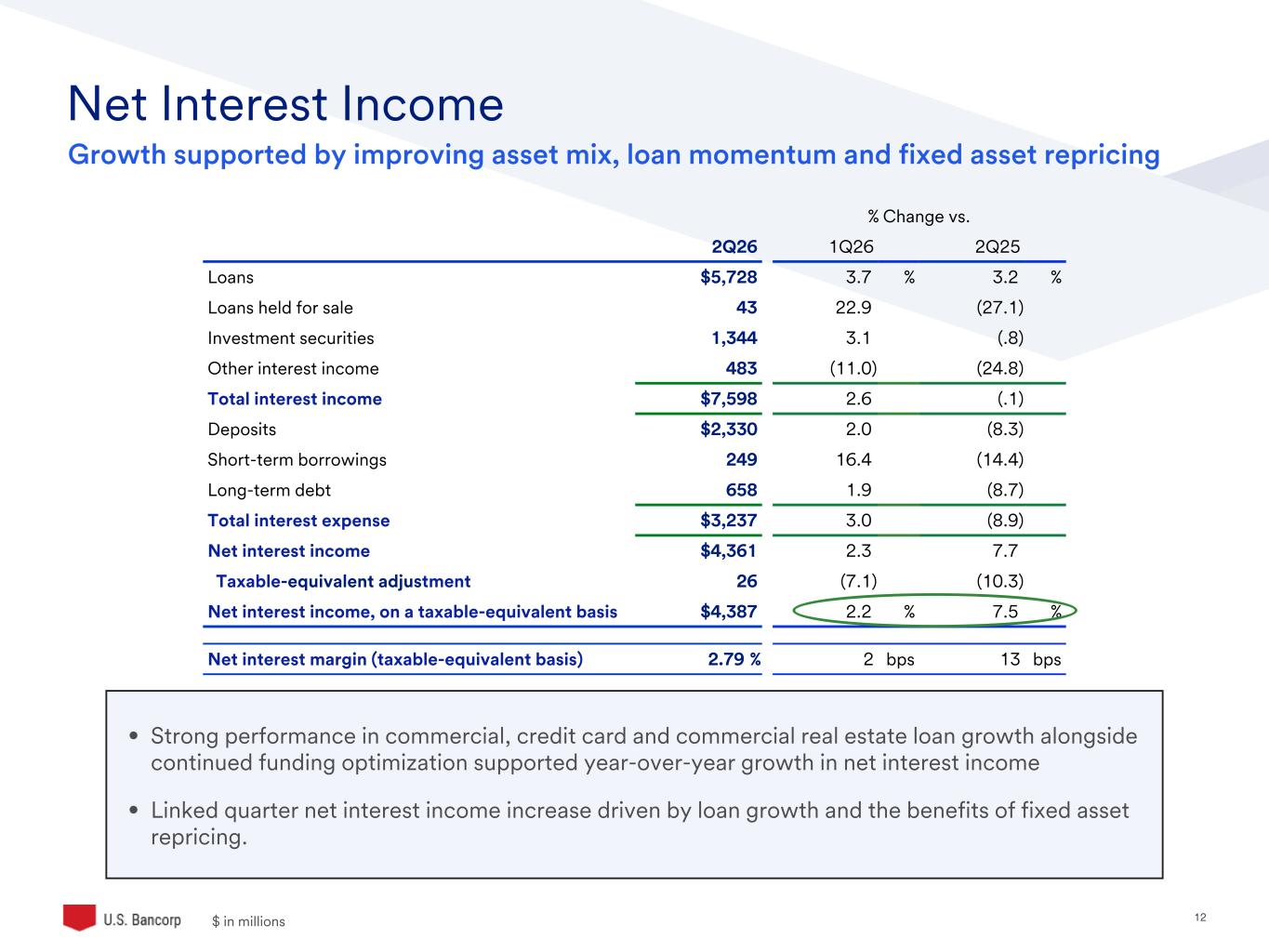
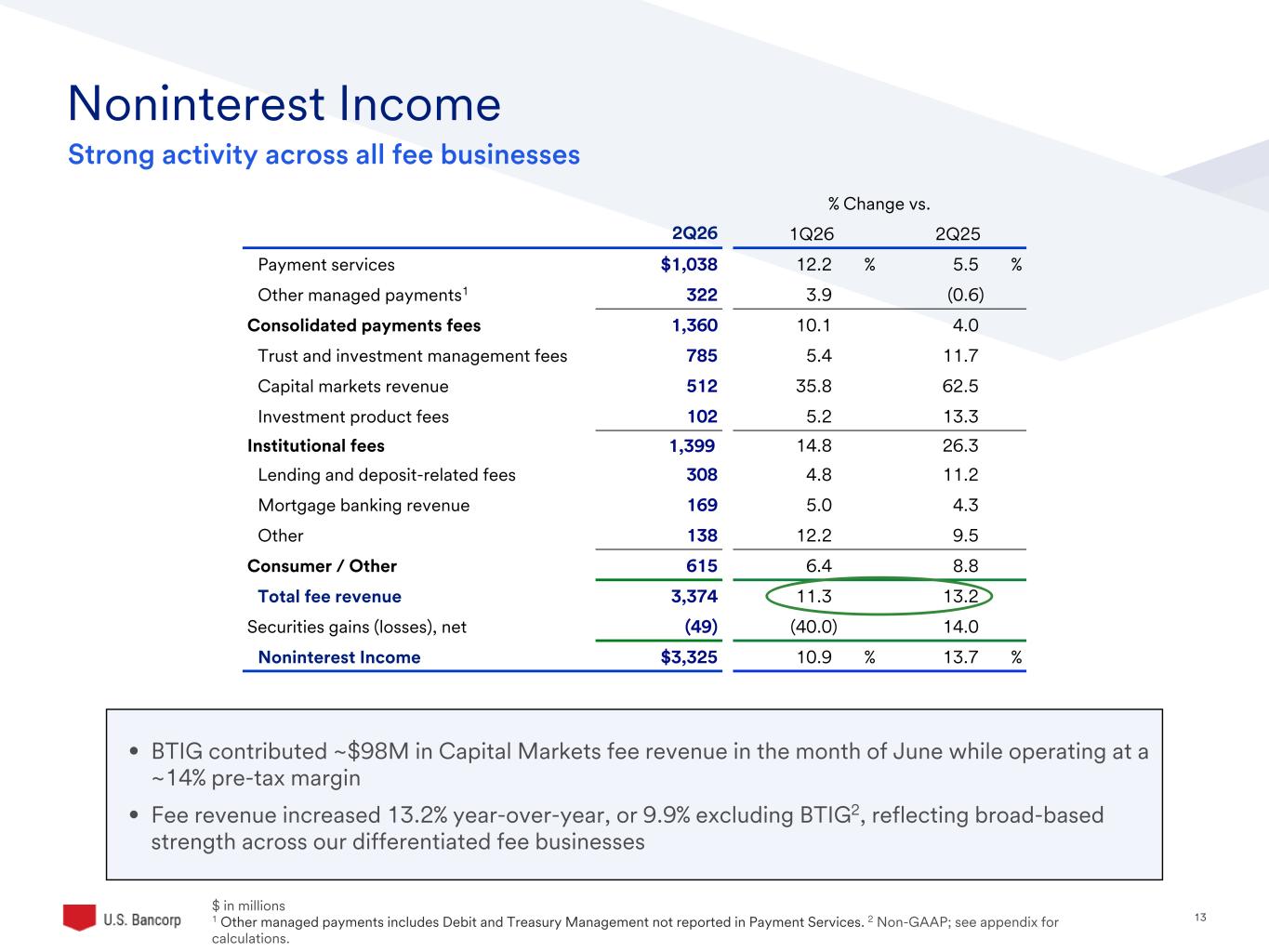
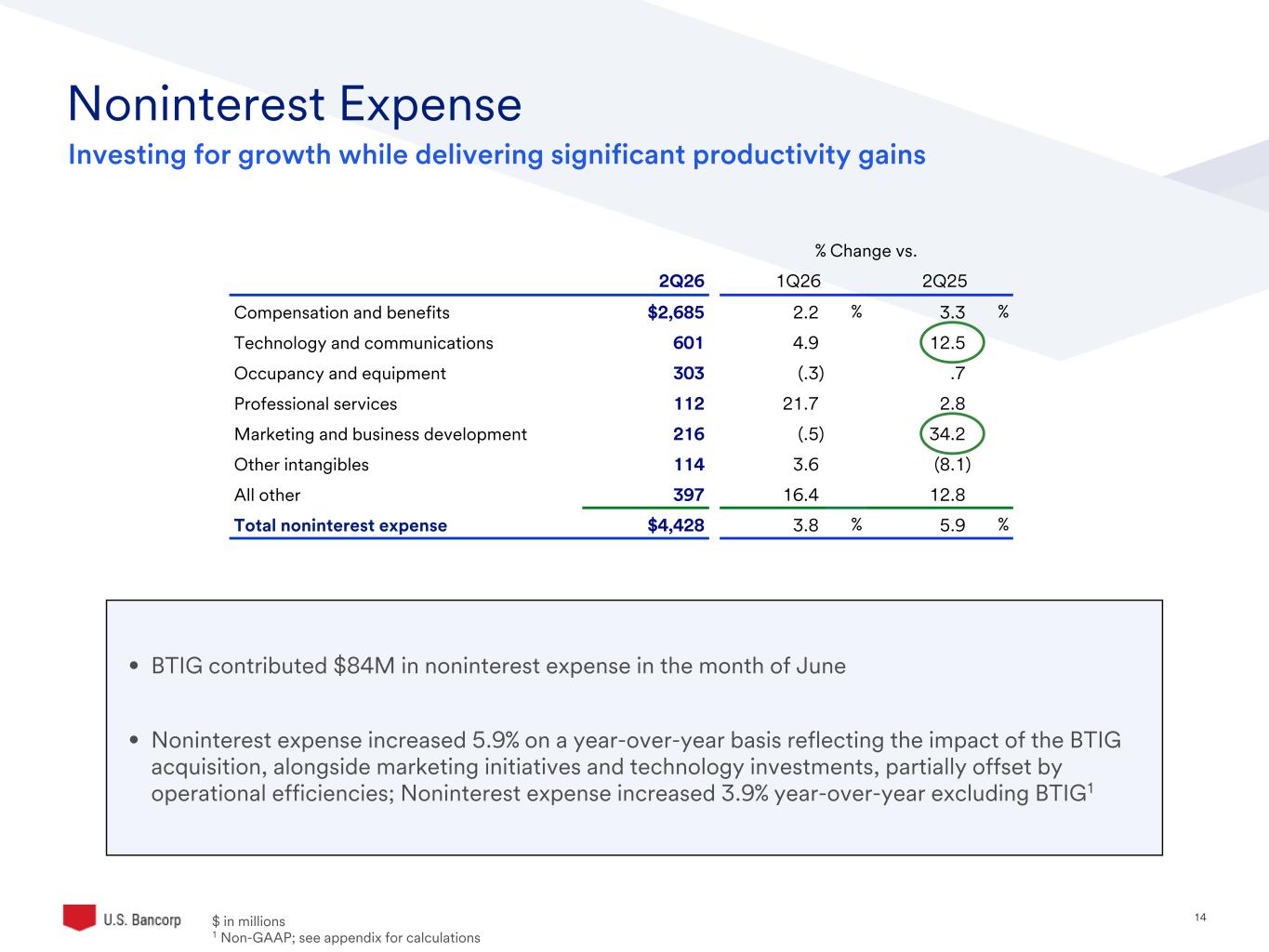
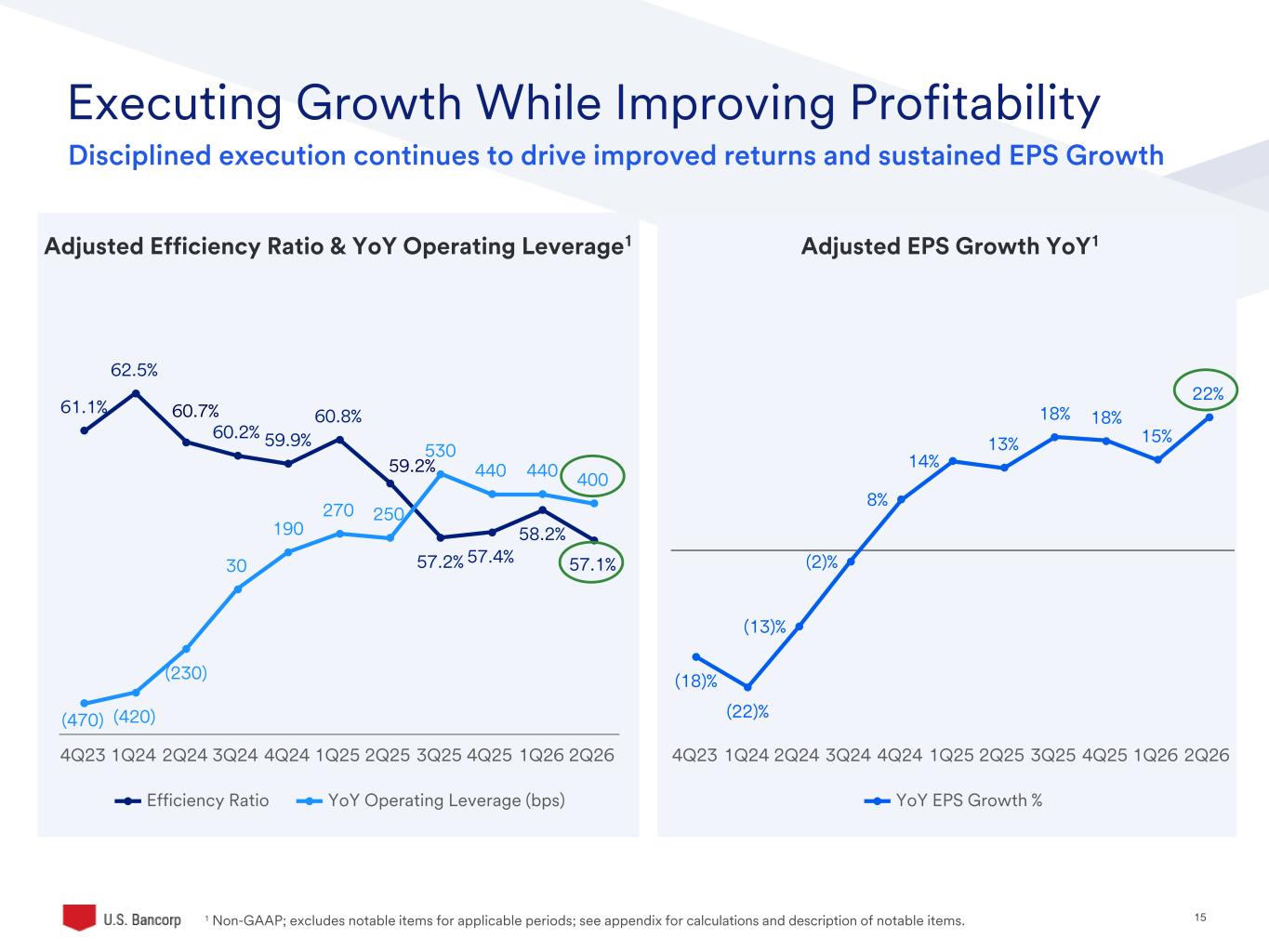
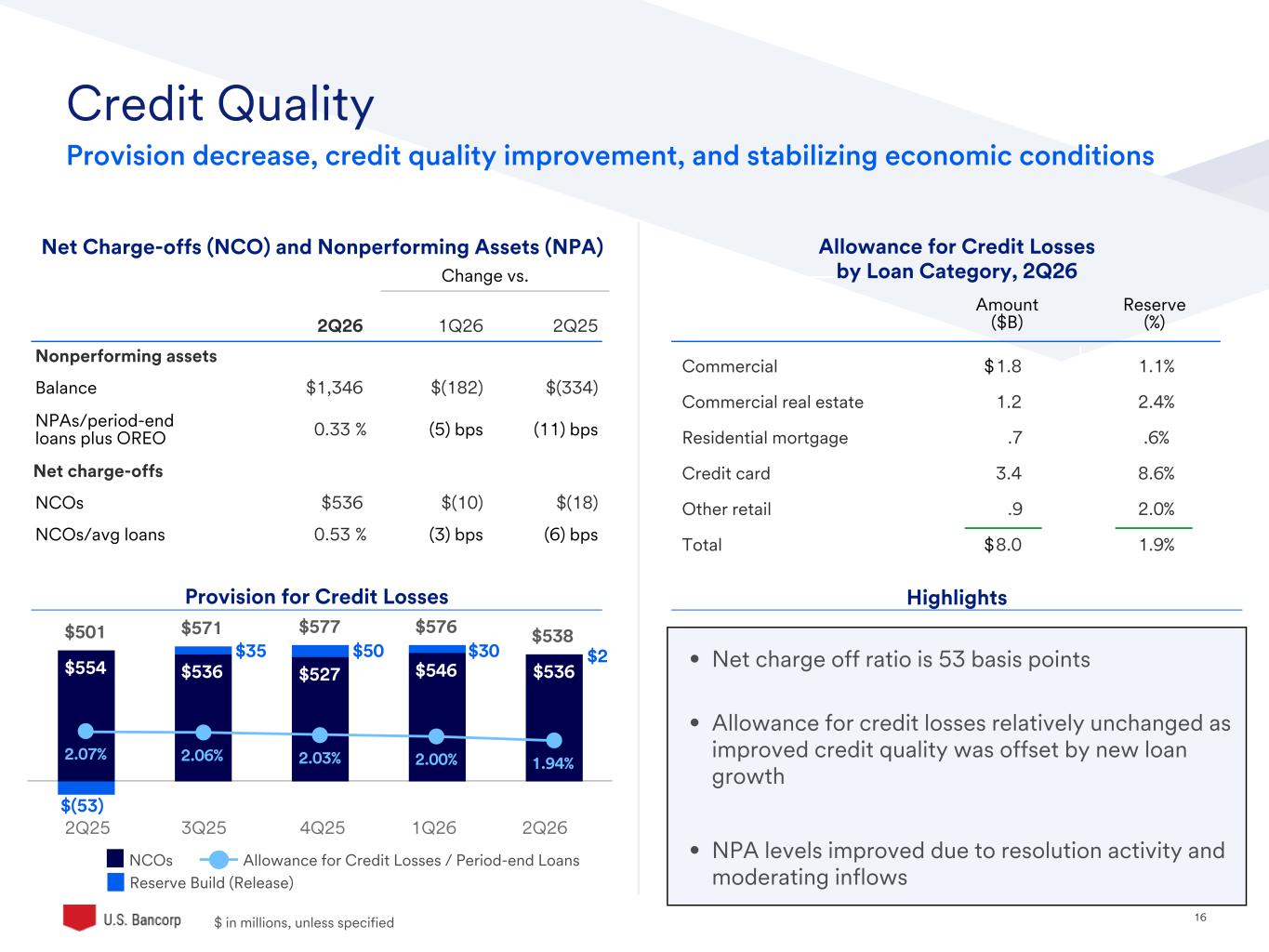
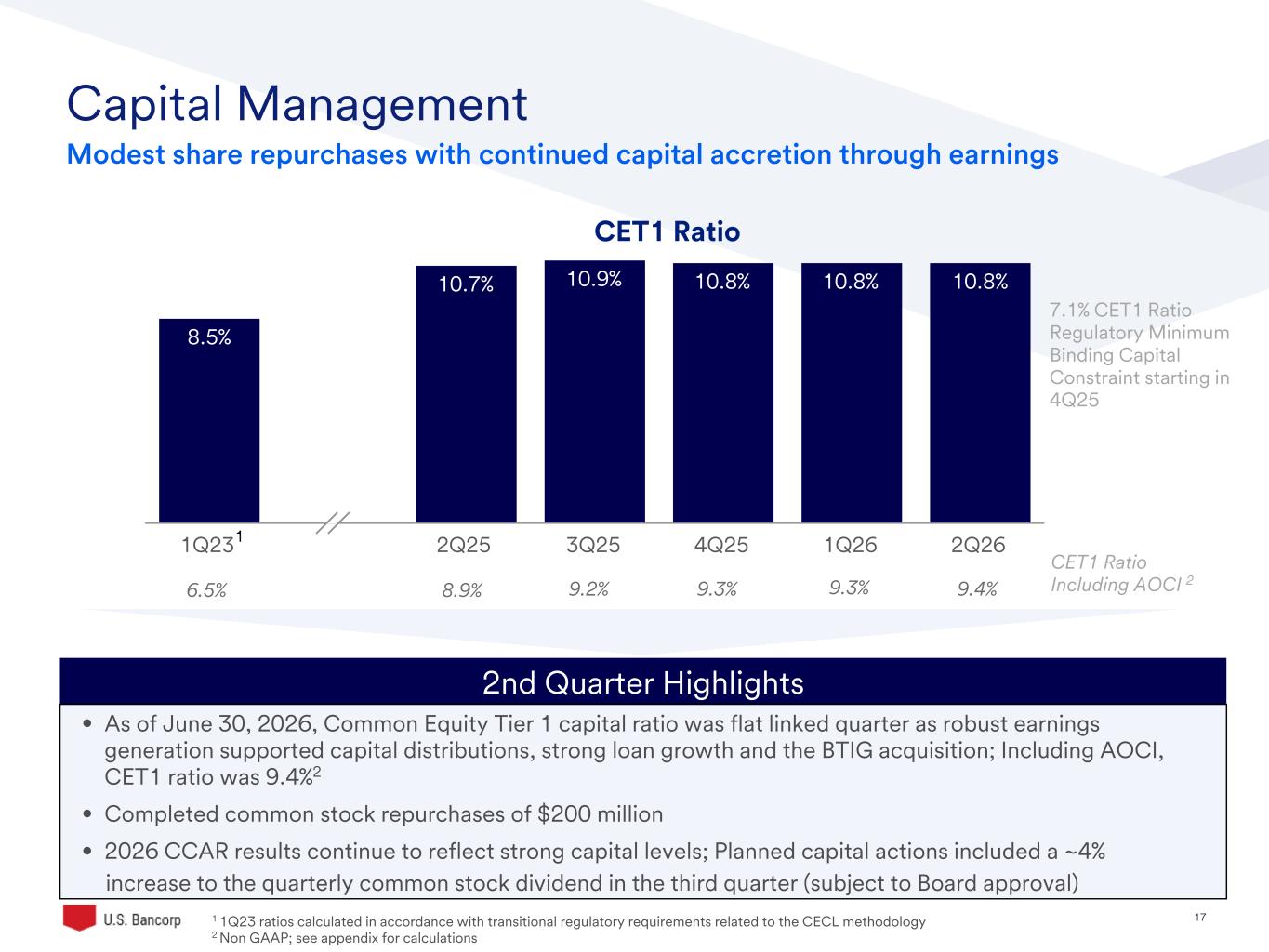
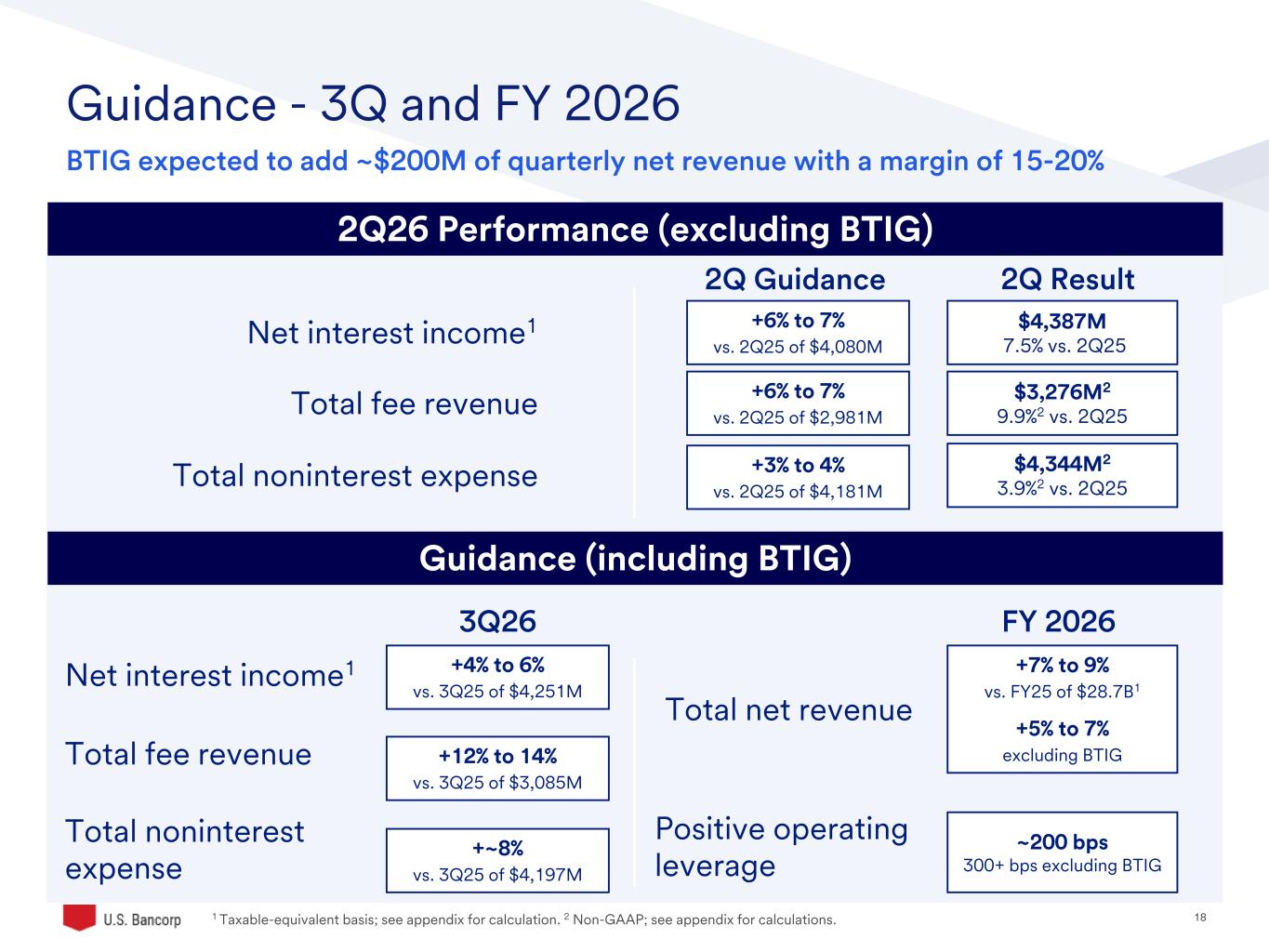
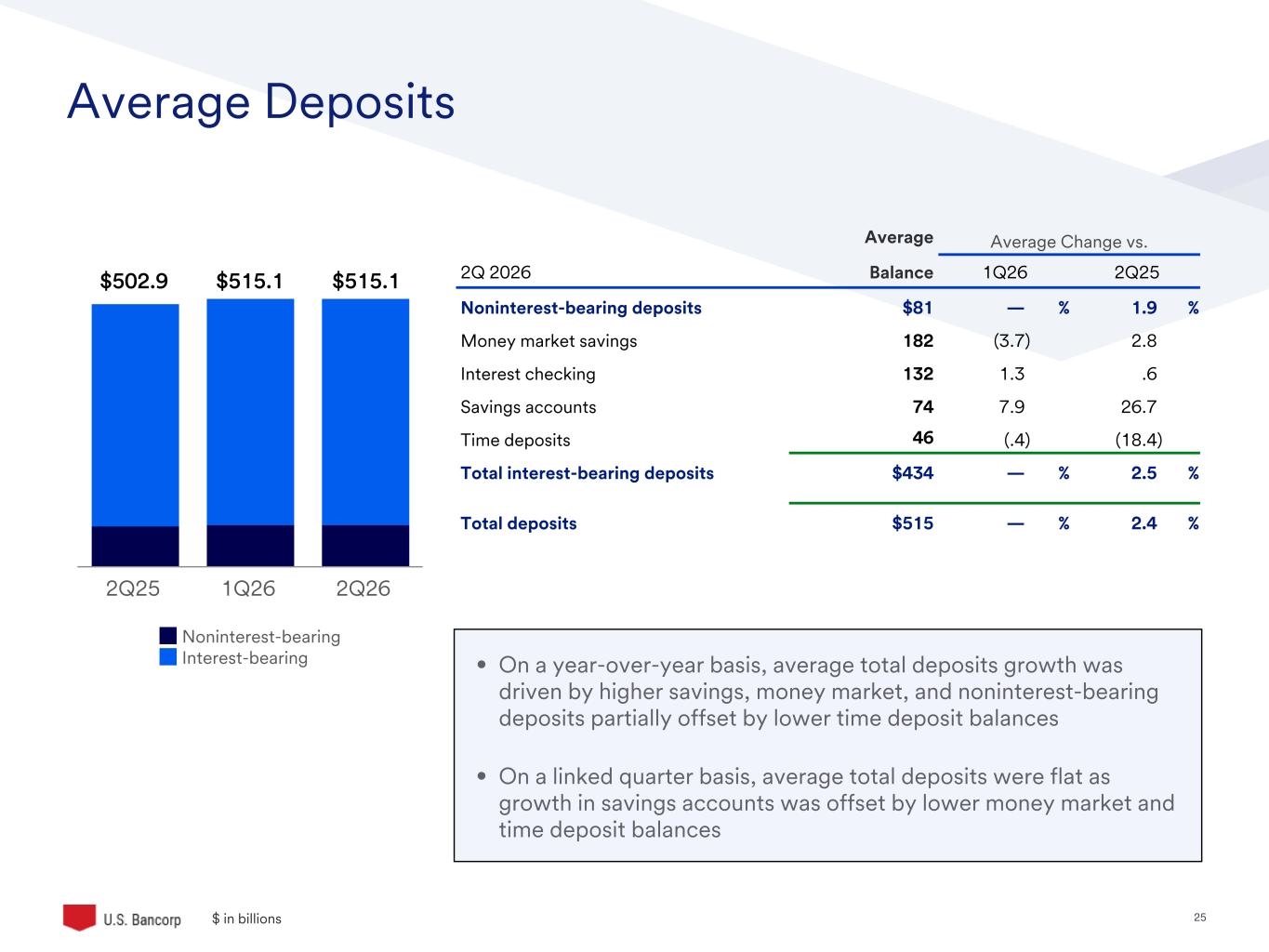
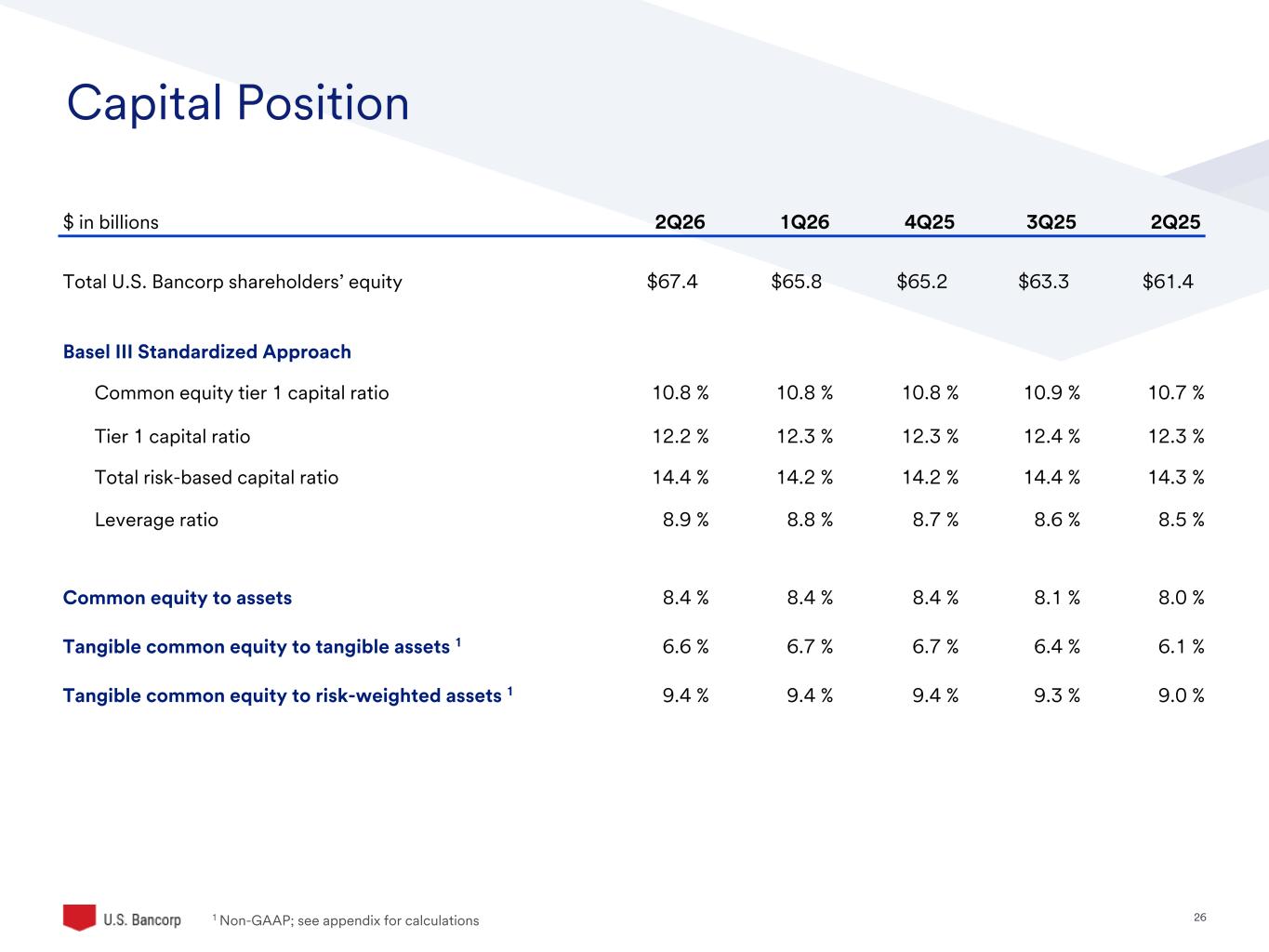
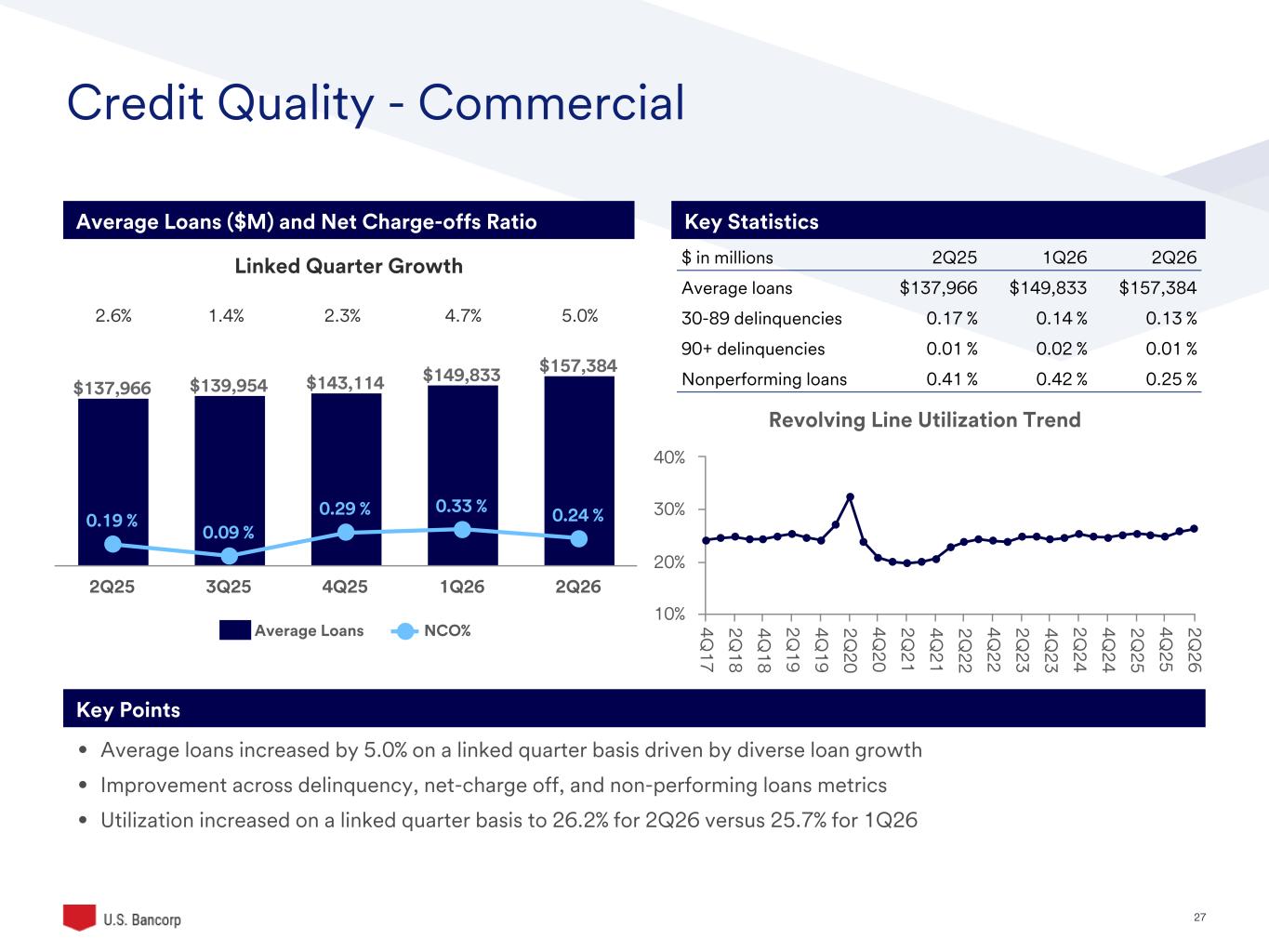
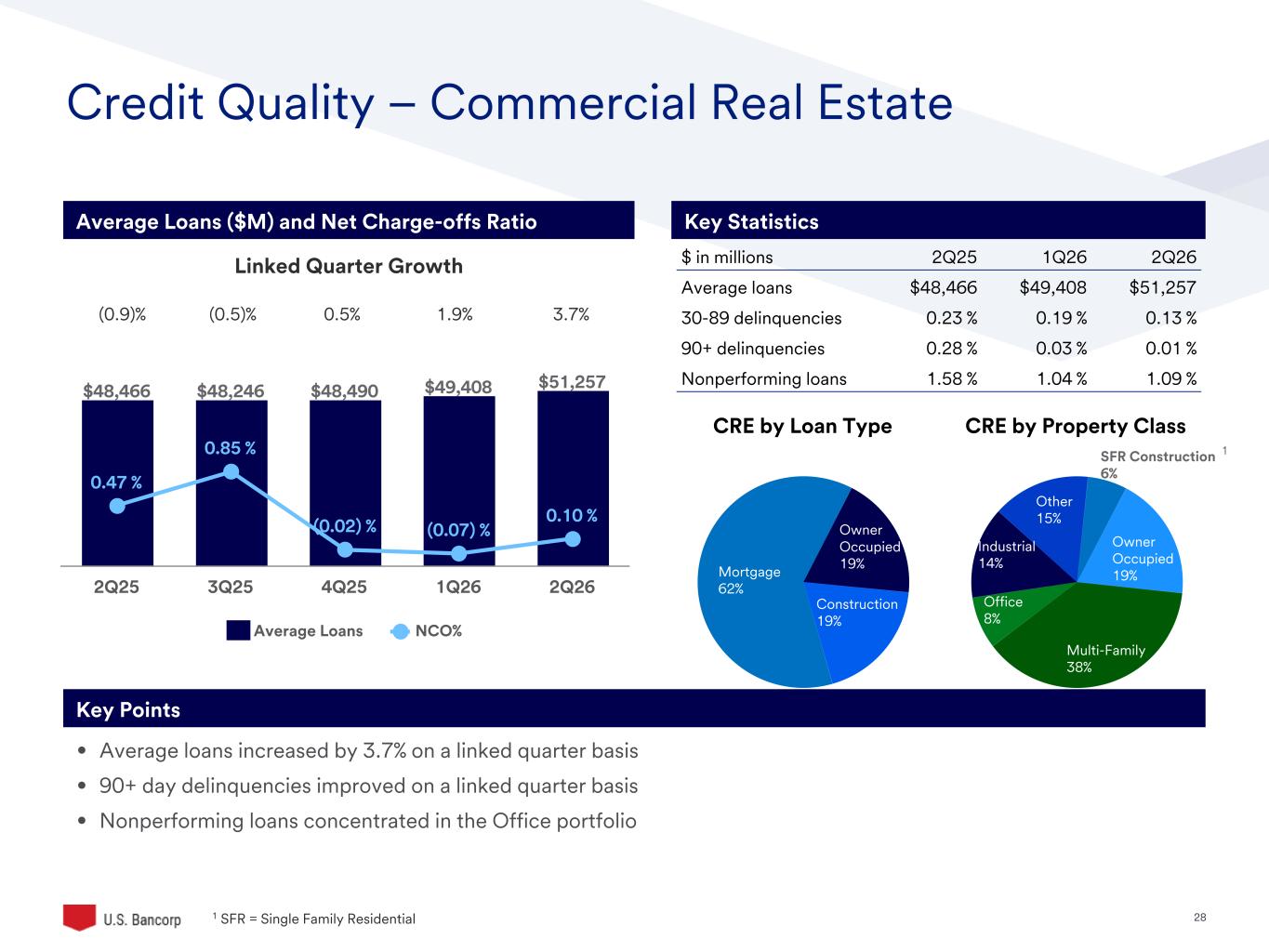
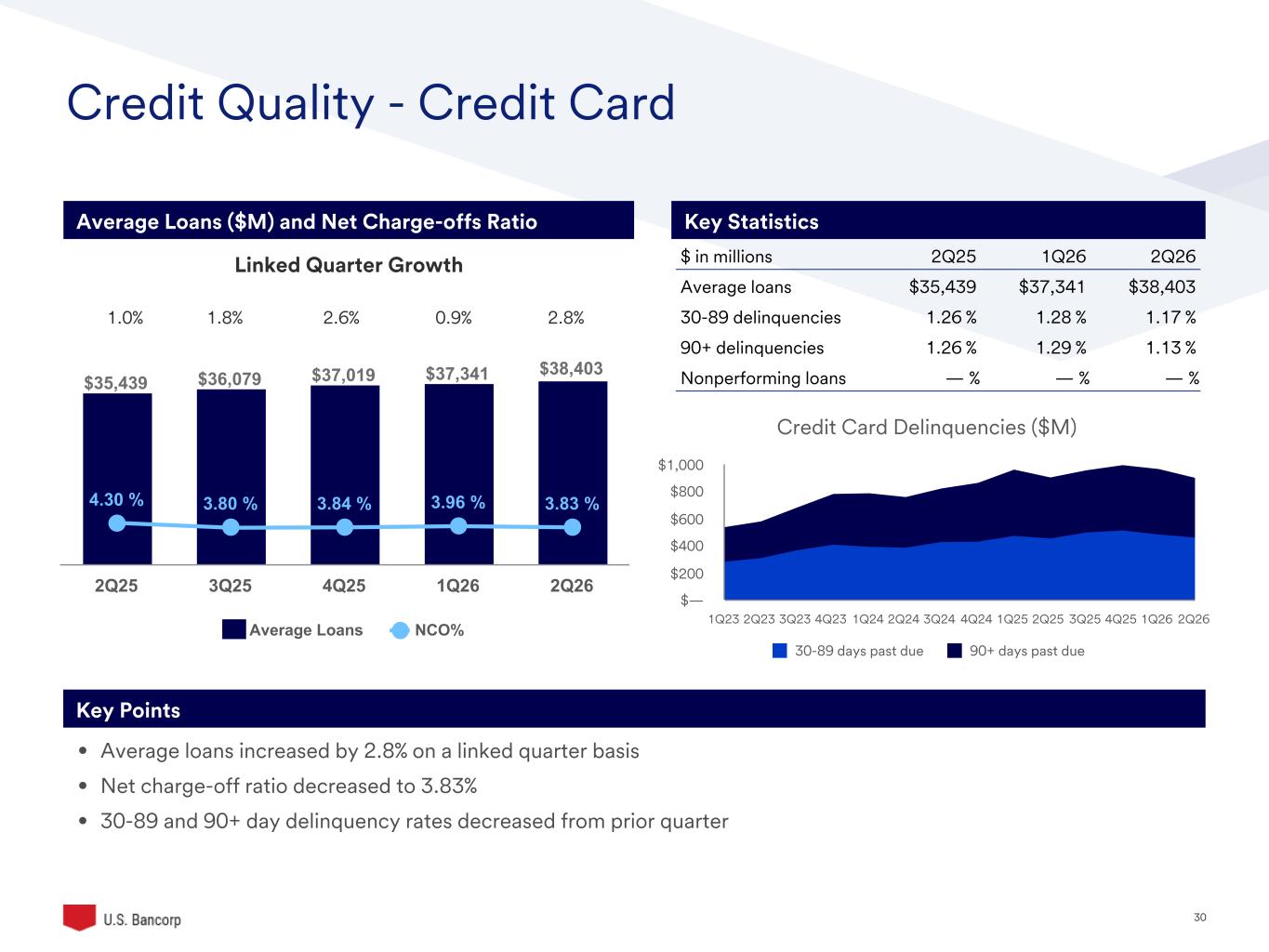
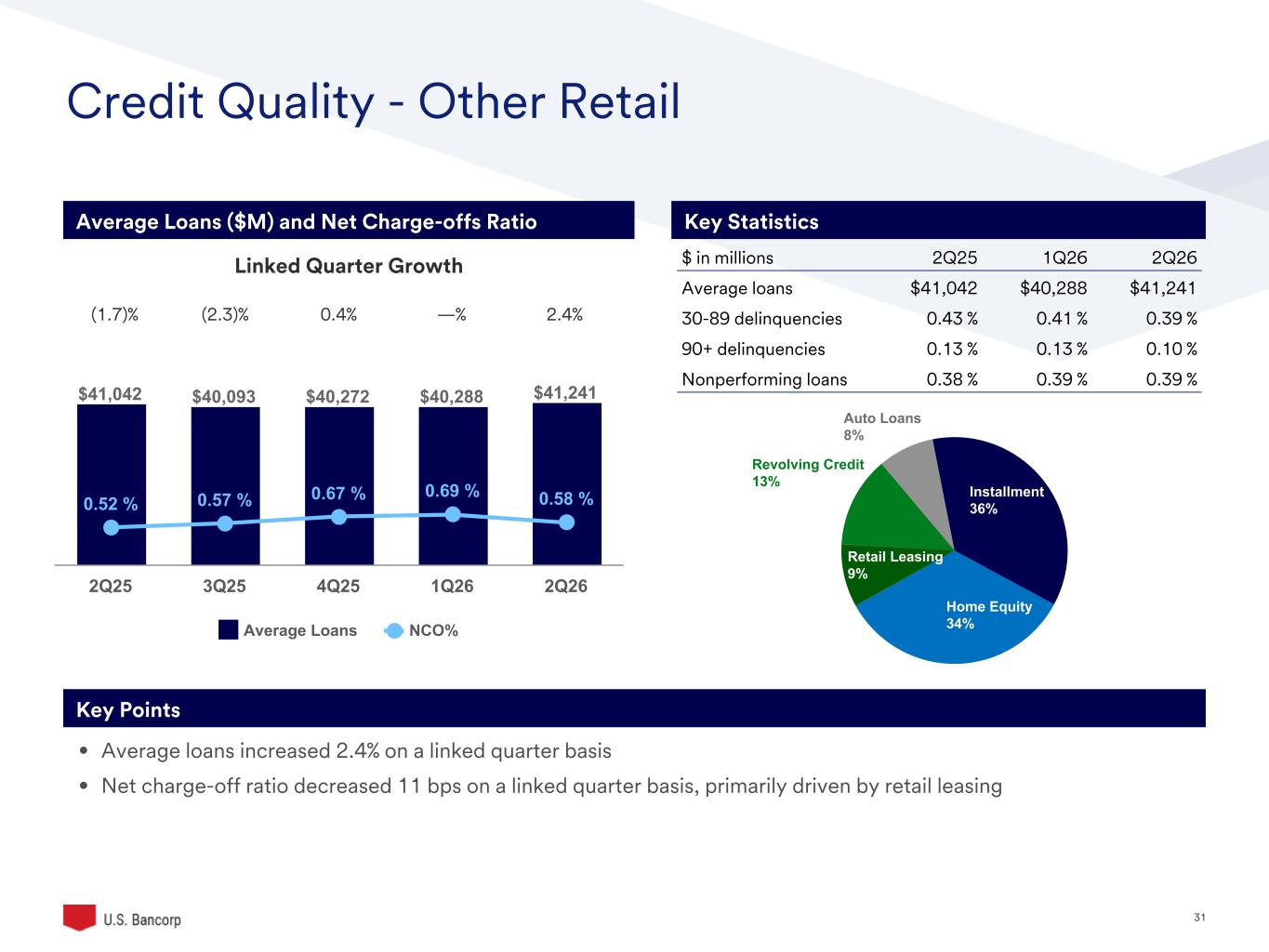
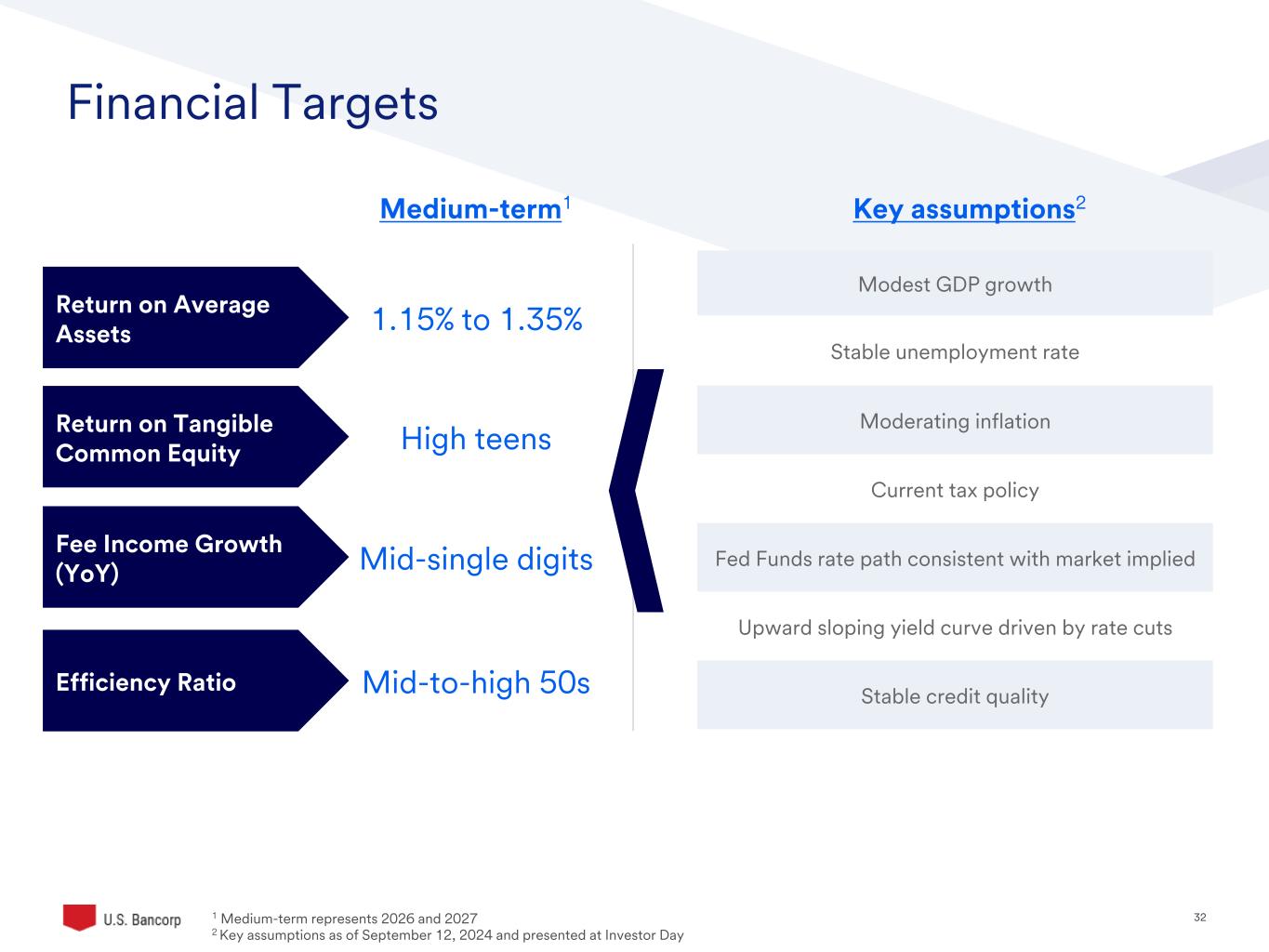
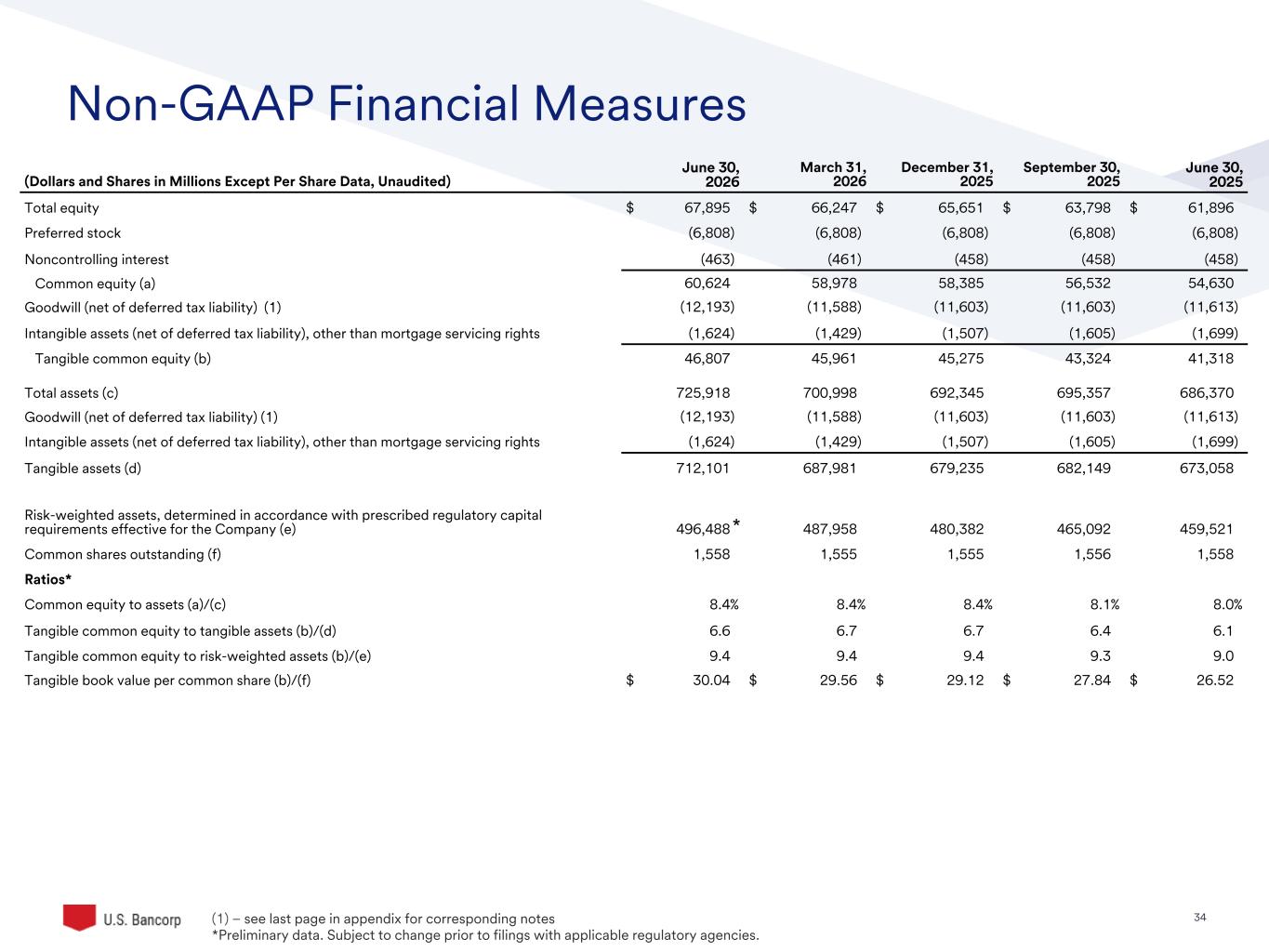
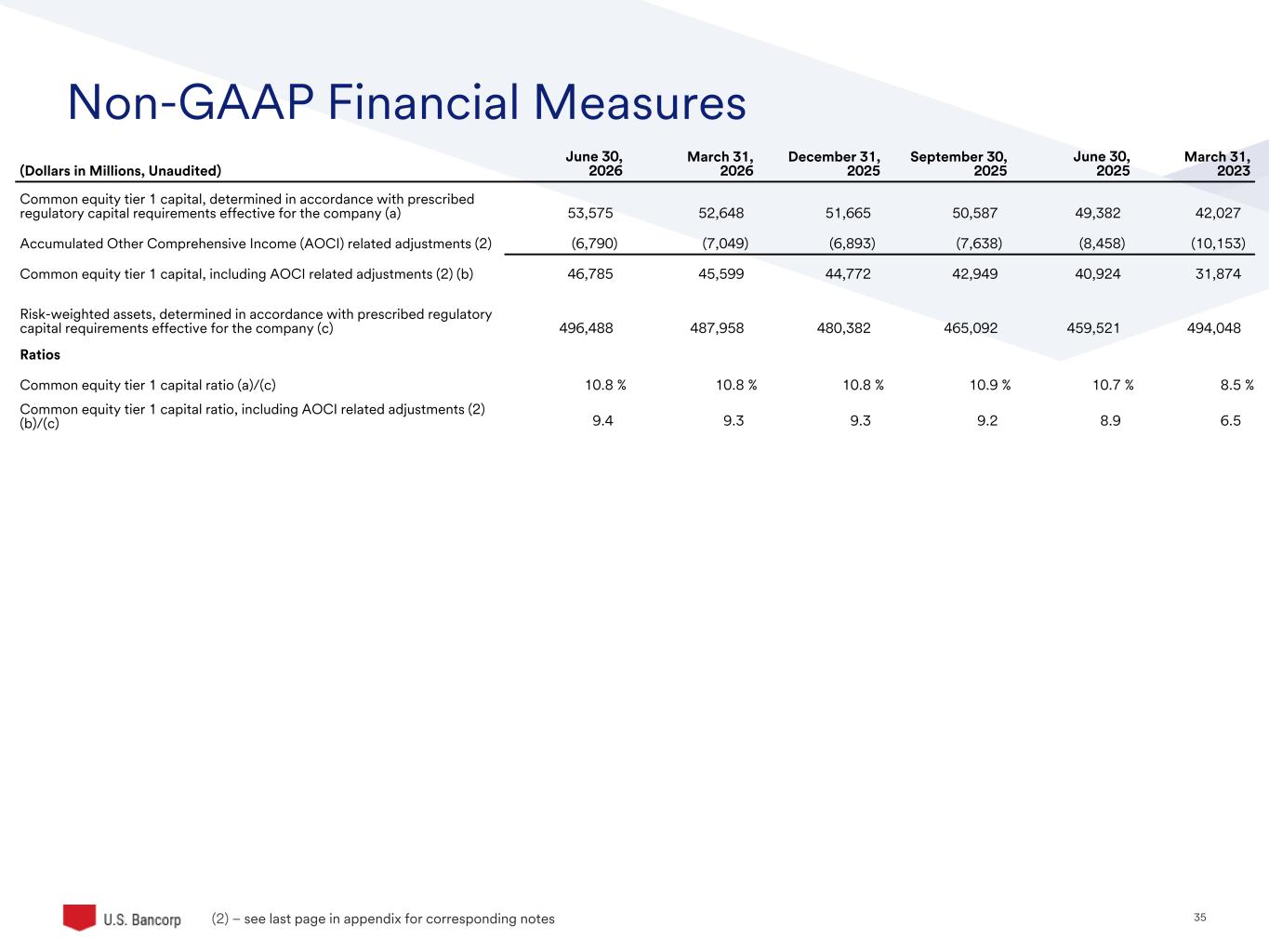
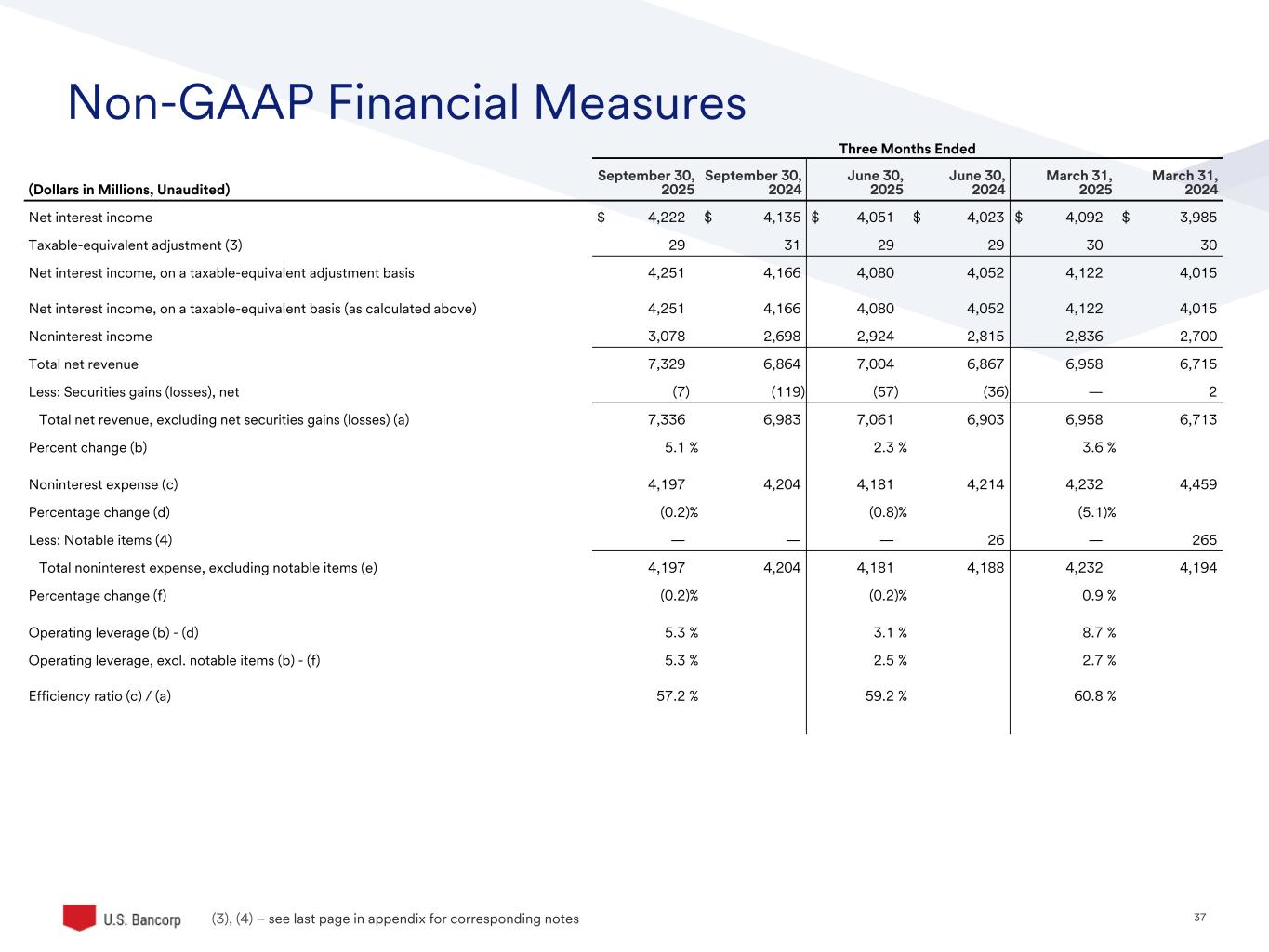
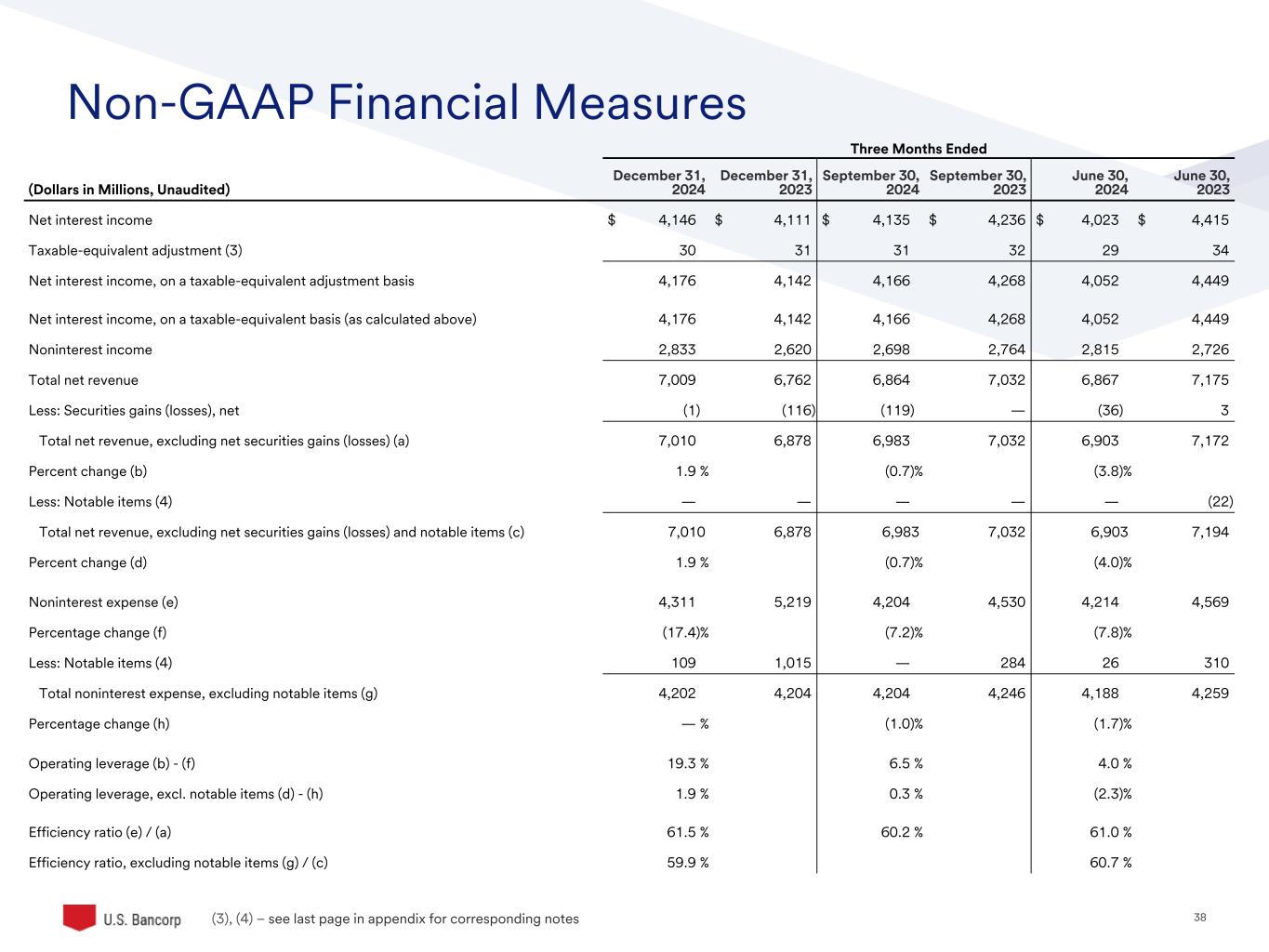
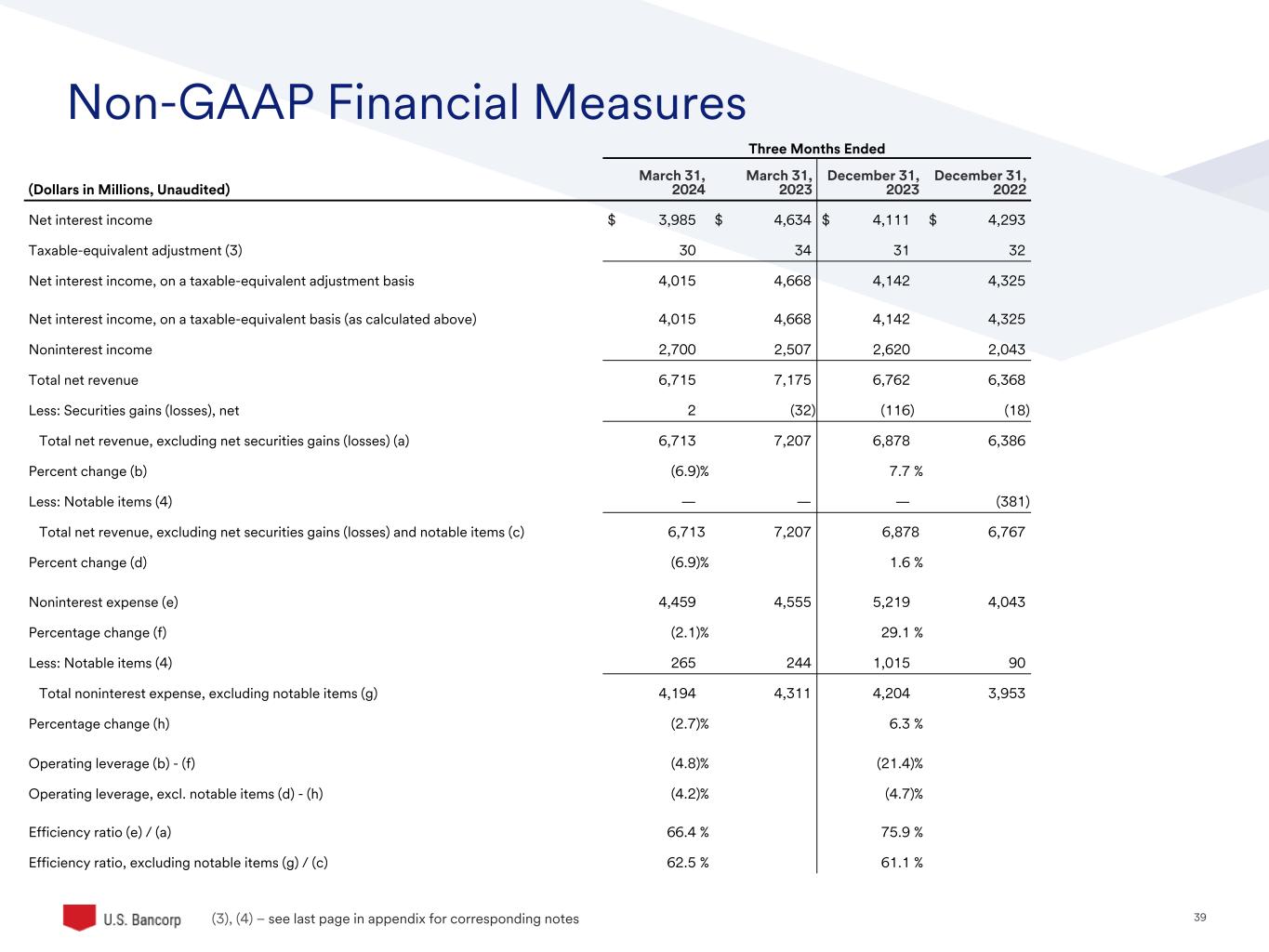
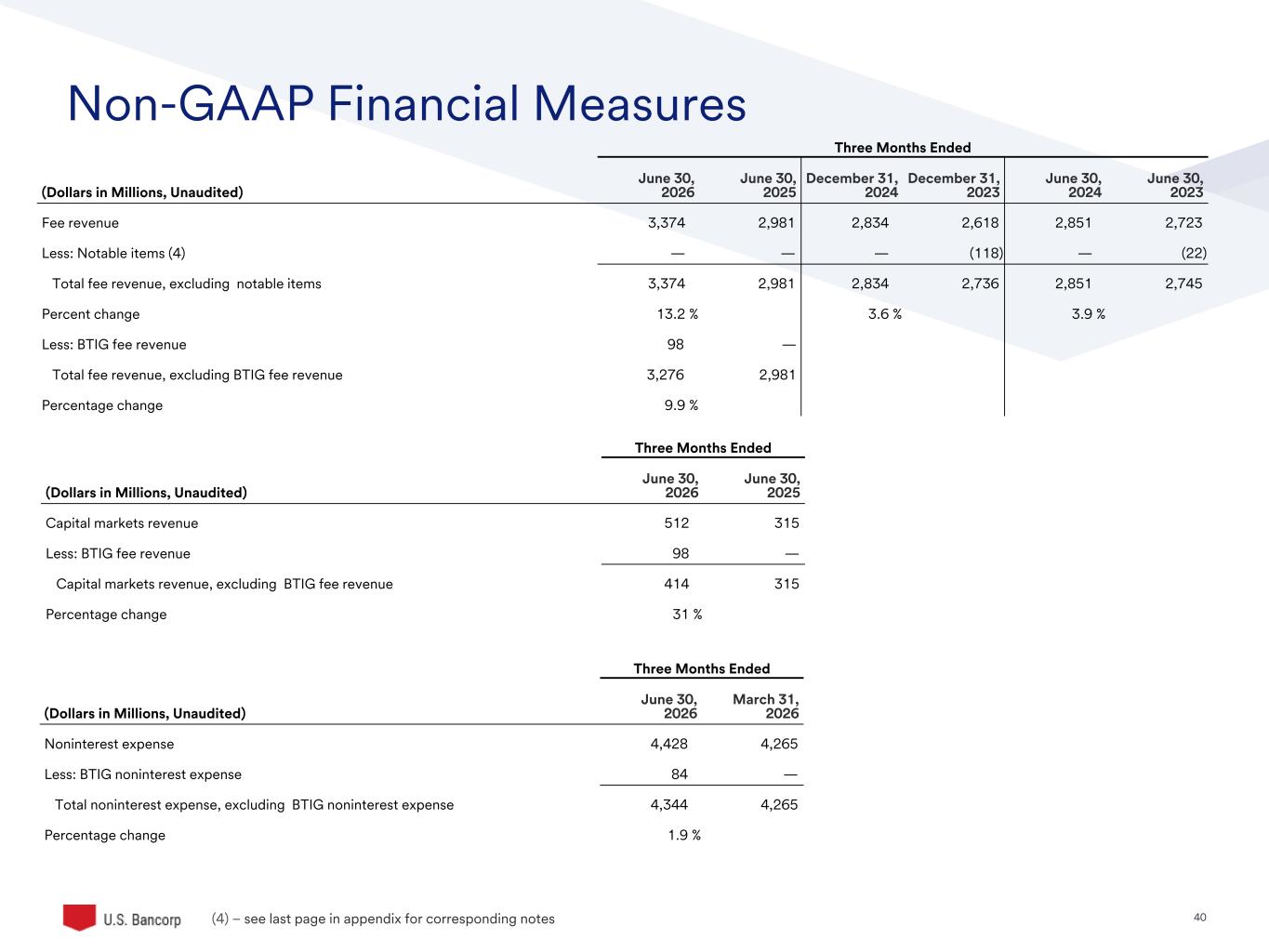
Thanks, Gunjan, and good morning, everyone. This was another strong quarter for us as we continue to execute against our strategic priorities. We delivered meaningful revenue and fee growth, significant positive operating leverage, and improved profitability metrics that are well within our medium-term target ranges. If you turn to slide nine, I'll start with some highlights followed by a discussion of trends for the second quarter. We reported earnings per common share of a dollar 35 and generated record net revenue of 7.7 billion dollars representing 10.1 percent growth year over year this quarter we continued to see strong loan growth in areas like cni commercial real estate and card reflecting steady client activity across the franchise meanwhile fee income growth accelerated across most line items notably this includes one month of BTIG. Our fee growth was still approximately 10% excluding BTIG. Average total assets increased 0.9% linked quarter to $695 billion. Key credit quality metrics improved both sequentially and year-over-year, reflecting a stable economic backdrop and the continued fortitude of our clients. As of June 30th, our tangible book value per common share eclipsed 30 dollars and increased more than 13 percent on a year-over-year basis slide 10 provides our key performance metrics roa rotce efficiency ratio and nim all improved both sequentially and year-over-year as results of a disciplined execution we delivered strong returns which includes a return on tangible common equity of 18.7 percent and a return on average assets of 1.26 percent the efficiency ratio improved to 57.1 slide 11 provides a balance sheet summary total average deposits grew 2.4 percent year over year and were flat linked quarter consumer deposits reached another record this quarter driven by our smartly flagship product the offset was typical seasonality in our wholesale and investment services businesses average loans totaled 405 billion dollars up 7.1 percent from the prior year quarter and 3.0 percent from the prior quarter growth was broad based in strategic categories such as cni credit card and commercial real estate which brings ancillary fees with them turning to slide 12. net interest income on a fully taxable equivalent basis totaled 4.4 billion dollars an increase of 7.5 percent on a year-over-year basis above the range we had previously guided to driven by stronger loan dynamics during the quarter on a sequential basis net interest income increased by 96 million dollars or 2.2 percent driven by loan growth recent investment portfolio repositioning and ongoing benefits from fixed asset repricing Net interest margin improved two basis points sequentially to 2.79%. Slide 13 highlights fee revenue trends within non-interest income. Total fee revenue accelerated during the quarter, reflecting broad-based strength across our businesses. Total fee income increased 13.2% year-over-year, driven by strong performance in capital markets, trust and investment management, payments, and other institutional fee businesses. In June, BTIG contributed approximately $98 million of capital markets fee revenue. Excluding BTIG, fee revenue grew 9.9% year-over-year. Capital markets revenue excluding BTIG increased approximately 31% year-over-year, reflecting strong client activity across foreign exchange, syndications, and corporate bond underwriting. Moving to slide 14, non-interest expense totaled approximately $4.4 billion and included approximately $84 million related to BTIG. Excluding BTIG, expenses grew roughly 1.9% sequentially and 3.9% versus the prior year. The increase in core expense primarily reflected continued investments in technology and marketing, as well as higher incentive compensations associated with this quarter's strong revenue performance. These increases were partially offset by ongoing expense discipline across the franchise. Turning to slide 15, this quarter highlights our ability to improve profitability while continuing to grow the franchise. Over the past several quarters, we have meaningfully improved profitability, significantly reducing our efficiency ratio from its recent peak. We remain committed to meaningful positive operating leverage as we fully integrate and normalize BTIG. While disciplined expense management remains an important contributor, we are increasingly seeing revenue growth become a larger driver of earnings growth. That combination of improving top-line momentum and ongoing expense discipline resulted in a year-over-year EPS growth of more than 20 percent this quarter. We remain confident in our ability to sustain strong profitability while continuing to invest for future growth. Slide 16 highlights our credit quality performance, which continues to improve. Our ratio of non-performing assets to loans and other real estate of 0.33% improved 5 basis points from the previous quarter and 11 basis points from a year ago. The second quarter net charge-off ratio was 0.53%, decreasing 3 basis points sequentially. Meanwhile, our allowance for credit losses remained steady at $8 billion, or 1.94% of period and loans. Turning to slide 17, as of June 30th, our common equity Tier 1 capital ratio was 10.8%, or 9.4%, including AOCI. Strong earnings generation this quarter supported capital distributions, strong loan growth, and 12 basis points of impact from the BTIG acquisition this quarter. On slide 18, we provide a comparison of our second quarter results to our previous guidance, provide third quarter guidance, and update our full year 2026 outlook. Excluding BTIG, second quarter net interest income and fee revenue exceeded previous guidance, while non-interest expense came in as expected. turning to forward looking guidance for the third quarter and full year 2026 both of which are inclusive of btig and recently announced partnerships for the third quarter we expect net interest income growth of four to six percent on a fully taxable equivalent basis compared to the third quarter of 2025. total fee revenue growth in the range of 12 to 14 percent compared to the third quarter of 2025 with contribution from btig of roughly 200 million dollars per quarter in the back half of the year non-interest expense growth of approximately eight percent compared to the third quarter of 2025 excluding btig we would expect our core expense growth to be approximately 3.5 percent additionally we expect to recognize approximately 160 million dollars of reserve bill related to the amazon small business portfolio purchase which we anticipate will close in mid-august for the full year 2026 we now expect total net revenue growth of seven to nine percent compared to the prior year or in the range of five to seven percent excluding btig up from our prior range of four to six percent we expect to deliver approximately 200 basis points of positive operating leverage this year and more than 300 basis points in excluding the impact from BTIG. Moving to slide 19. Second quarter results represented another consecutive quarter operating within all of our medium term target ranges. We are encouraged by the momentum across the franchise and remain confident in our ability to continue to build on these results to deliver consistent, sustainable returns over time. Let me now hand it back to Gunjan for closing remarks.
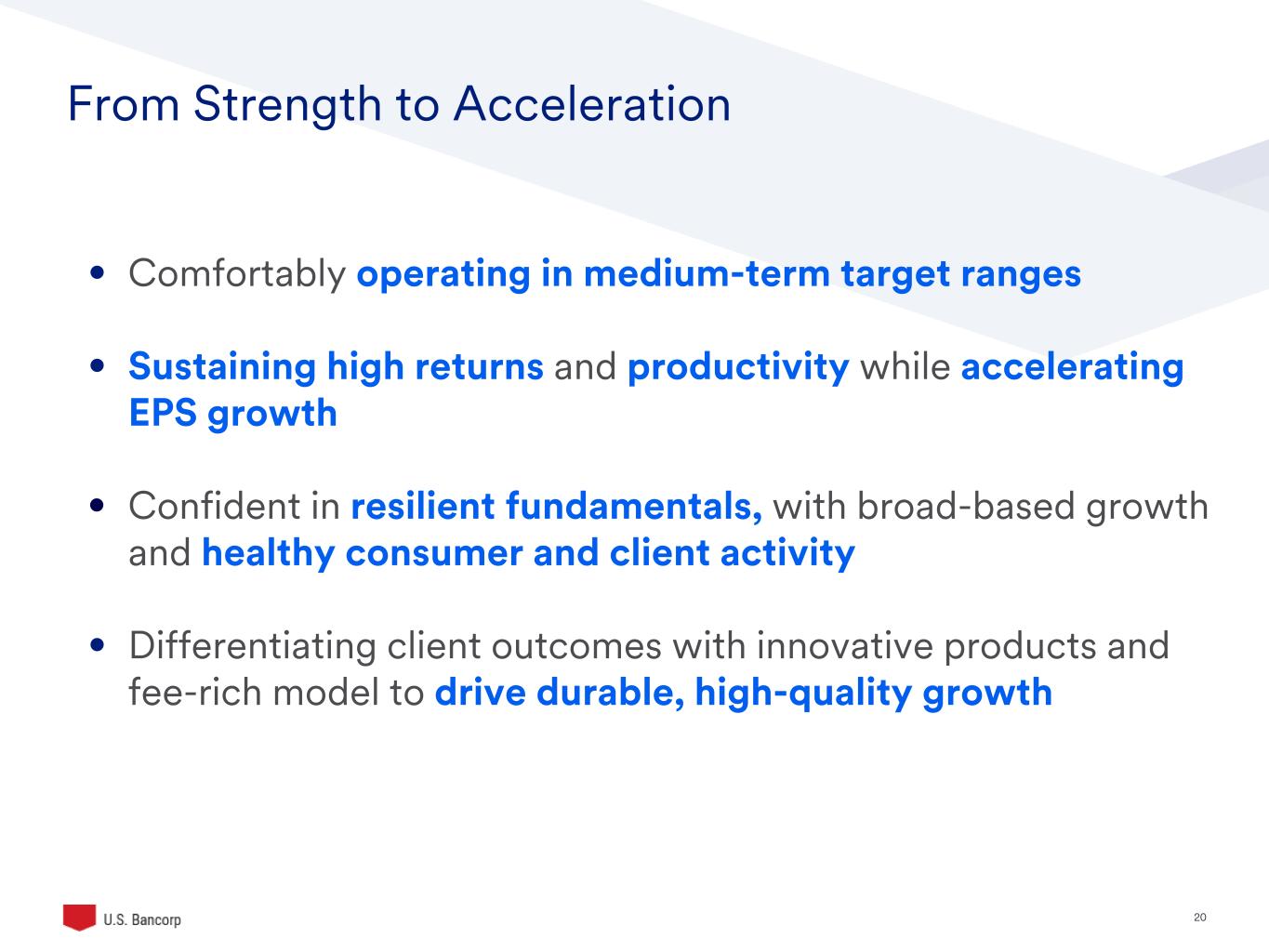
Thank you, John. As we look ahead, our focus remains on sustaining the strong return profile of the company while accelerating growth. With resilient fundamentals, strong execution momentum, and an increasingly interconnected franchise, we believe we are well-positioned for the next phase of profitable growth and long-term value creation. With that, we will now open the call for your questions.
Operator
Thank you. We will now begin the question and answer session. As a reminder, if you would like to ask a question, please press star, then the number 1 on your telephone keypad. We'll pause for just a moment to compile that roster. We do ask that you limit yourself to one question and one follow-up. For any additional questions, please re-queue. And your first question comes from Erica Najarian with UBS Financial. Please go ahead.
Hi, good morning. Thank you for taking my questions. Gunjan and John, you know, fully appreciate the revenue upgrade. I'm wondering if you could unpack maybe the path from 4 to 6 to 5 to 7 and perhaps separate the discussion with regards to the net interest income trajectory, particularly how you're viewing net interest margin from here with deposit costs coming up a little bit in the quarter.
So I'm going to pause because that's already a lot oh sure good morning erica thanks for the for the question you know um let me just uh start we we do expect uh as i mentioned the full year revenue guide to go up to seven to nine percent or five to seven percent of excluding btig uh which is uh better than where we started the year when we we mentioned four to six and that just reflects a lot of broad-based growth that we just commented on in our opening comments there. You mentioned net interest income and maybe just to talk through that a bit, you know, we've started the year expecting mid-single digits. I would continue to expect mid-single digits on net interest income. You know, just given the momentum that we've had in the first half of the year, I would just say that we expect to be uh north of five percent uh for the full year um that obviously a lot can happen um we you know i think in terms of net interest income and net interest margin in particular we do expect that to to grow uh over the course of the year and that's reflected in the guide and uh you know um you know the deposits you know we you know we we think that that's uh that nothing's really changed on that front from a competitive nature standpoint so we still feel really good about uh where we're moving here and just as a follow-up um i've already fielded um investor questions on you know positive operating leverage um you know it feels so silly to even ask this but
you know i've been guiding us about this squiggly 200 versus 200 plus um and um but anyway i guess like just to frame it for us from your prepared remarks it sounds like the fee um generation x btig is better right and clearly that comes with it higher expenses um and also it seems like you know consensus has to you know frame btig with that higher efficiency ratio so i guess like you You know, is that a fair read of, you know, how positive operating leverage is tracking? It's because fees are driving the upside and thereby that comes with it with expenses. And further, just to sort of slip another one in, the $98 million in a month is clearly better than the $200. You know, given the ECM sort of largesse that's happening in the industry, do you expect the pacing of BTIG contributions to be closer to $300 million this year?
Sure. Sure, a lot to unpack there, but I think maybe I'll start on the, you know, you talked about positive operating leverage just to start, and I would say that, you know, we're firmly committed to positive operating leverage. That is something we have been said repeatedly since the Investor Day back in 2024. You know, we've obviously have been focusing more and more on fees, and you see that in the guide. We do expect, you know, our fees overall to be low teens from a full-year perspective, and just, you know, likely over four points of that is going to be on the BTIG side of the equation. You know, I think, you know, in terms of the squiggly line, as you call it, versus the 300 basis points or more that we signal, you know, with BTIG, you know, within that $200 million that we anticipate per quarter, we assume a 15% contribution margin. There's also about $60 million of integration costs that will likely come in that's embedded and that we'll call out, obviously, as we move forward. But, you know, we're firmly positioned for positive operating leverage. And I think from a BTIG perspective, we're really excited about that acquisition and the new team that we have there. But we do expect the contribution margin to improve over time.
I'll just add, Erica, that we're very comfortable with our expense and productivity. runway on our programs, and like John said, very committed to a healthy, positive operating leverage on the core. Just a reminder here that between BTIG and the Amazon deal, we're installing more than a billion dollars of run rate revenue over a very short period of time, and there's a fair amount of one-time cost that we are absorbing within the 300-plus BOL as well. So, just a reassurance that we are both committed to it and very confident in our plans there.
Operator
Thank you. Your next question comes from the line of John Pencari with Evercore ISI. Please go ahead. Morning, John.
You've put up some good numbers on the fee side, and you've acknowledged that fee growth has steadily accelerated. and we certainly saw upside this quarter in card and corporate payments. And I know in corporate payments, you acknowledge the rebound that you're seeing. Can you maybe just give us a little bit more color given this, you know, what is that growth rate that you believe is likely for the overall fee component for the year? But also maybe can you talk through what are you seeing as the greatest drivers of this accelerating growth in the fee trend that is materialized and that you expect to continue to play out? What are the biggest contributors? Thanks.
Yeah, sure. So I think, you know, John, thanks. The biggest drivers, and we've seen a nice turn on the corporate payment side, you called that out. I think we've alluded to this at the beginning of the year. We mentioned that there has, we see a lot of one but not yet installed business, and that is certainly the case here. We're experiencing that. And so we have a lot of what used to be headwinds in this business this year at this time are now tailwinds. And so I think that, along with the new business, is helping. And I would say then on the card side, we're also saying the same thing. We've been seeing a lot of great account growth. The fee revenue has been steadily increasing. We're going to get the Amazon book loaded here in mid-August, we anticipate. And so we think there's just a lot of momentum on the fee side of the equation there.
John, I'll add, you know, this is a very important part of our strategy. It's a defining feature of our banking franchise. We closed this quarter. We were at 44 percent fee revenue. That gives us enormous stability, both of earnings and depth in our relationship. And we are building this four-legged stool of fees, which are very well diversified. So it's the capital markets that's become very significant now. The payments franchise, which was always great. The trust and investment franchise has grown very nicely for us and has lots of tailwinds right now with the capital markets. And then the traditional consumer fees. So we expect that the fee complex overall will outpace our NII, at least in the non-term, very, very healthy growth across the board on all fee categories. And by design and strategy, we are very focused on that part of the business.
So based on that, Jen, how would you characterize the year-over-year growth expectation on the fee side? Yeah, I know you said should outpace, but anyway, you can help us with that.
Sure, yeah, I mean, we expect full-year low teens on the fee side of the equation, and that's going to include about four points, a little over four points will be BTIG-driven, and again, that's, we assume, $200 million per quarter on the back half of the year. And then inclusive, obviously, of the 100 that they did in June. So, you know, so that's going to be, that's kind of how we think about it. And as Gunjan said, it's strengthened capital markets, investment services, and payments that are really going to drive it.
Yeah, thank you. And I know you gave that little team detail before. But, and then lastly, just around loans to the end, let me see if you can give us a bit more detail on what you're seeing there as trends came in pretty solid for the quarter.
On loans, sure. Yeah, so on loan growth, a very strong quarter for us. The pipelines continue to look very good, particularly on the commercial and commercial real estate side. Commercial real estate saw some nice uptick this quarter. We continue to see that improve, and it's in virtually all the categories that we talked about last quarter. Pretty much every category in the commercial side is green from a growth standpoint, everything from large corporates down to small business and SBA loans and things of that variety. So I know we talked about mid-single-digit growth last time at this time, but we anticipate to be through that. And then, of course, we have the Amazon, the billion six that we, as I mentioned, that will come online in the April timeframe, August timeframe, excuse me.
Got it. All right. Thanks for taking my questions, John.
Operator
Your next question comes from the line of John McDonald with Truist Securities. Please go ahead.
Good morning. Thank you. Could you give us some color, John, on what you saw in terms of deposit trends this quarter and how you're thinking about the back half of the year in terms of deposit growth, costs, and mix? Sure. Sure.
So maybe just to start with the quarter, this is a pretty typical second quarter for us, I would say, over long periods of time. On the commercial side, we always see seasonal outflow, and that's a reflection of just the tax seasonality. And so we anticipated that we would have lower balances on the commercial side. We did see nice growth on the consumer side, and that's by design. We've been very much focused on growing our consumer deposits. You know, as I look ahead, clearly we've already, you know, as we look at the trends here starting in the third quarter, we've already made good progress on deposit growth. A lot of that just, you know, comes back over the course of late second quarter and into third for us. So I would expect as loan growth continues to go, deposit growth will grow with some sort of parity there. And so, and then I think from a deposit rate standpoint, I think you mentioned that as well, you know, we're up a couple basis points this quarter. In terms of how we're looking at it going forward, that rate is going to be dependent on just how strong loan growth is. I think the stronger the loan growth is, the potential rates might go up on that deposit side. We just anticipate some of that in our guidance as well. So those are kind of the puts and takes right now as I think about deposits. okay and then just following up on that could you remind us of the broader drivers of the nim expansion story and your thoughts on getting into that three percent range next year that you've talked about on the nim yeah sure absolutely um you know we we continue to see a path on the three percent um uh journey here you know at some point in 2027 you know not much has changed really since I think the last time we talked here some time ago, it was good to see the NIM go up this quarter. We expect that to continue to progress. You know, the positives, of course, are going to be on the asset mix side as well as, you know, just the continual fixed repricing. You know, I think, John, what it's going to come down to in terms of the speed in which we go that way is going to be on the deposit side of the equation, as I just mentioned, some points there, but also the slope of the curve. Obviously, there's some talk of rate hikes and things like that. And the hikes in and of themselves are not consequential. It's more what's the shape of the curve after that. And that's what we're going to be focused on as we move forward.
Operator
Your next question comes from the line of Ibrahim Poonawalla with Bank of America. Please go ahead.
Morning, Ibrahim. Morning, morning. I guess maybe one just big picture question on slide 19. when we look at your return for the second quarter and for the first half, like ROA, ROTC, ROA in the midpoint of the guidance, maybe just talk to us. I mean, obviously, all banks want to use a strong revenue backdrop to invest in the business. When you think about just if we can pick on the return on assets at 1.26, the higher end of the guidance, 135, like, how do you think about it? Do you think this should move towards that 135, or are you happy operating at this midpoint?
Hey, Ibrahim, thank you. You know, first of all, we're pleased with where we're at at this part of the journey. It's good to see that we're well-established in our medium-term targets that we had talked to you about back in 2024. Yes, of course, our hope and expectation is to continue to improve. I mean, that's where we want to go is to the, you know, we started at the beginning of the year or late last year, actually, at the lower end of the range, not just our way, but some of these other metrics as well. And we want to, our continual push is to continue to improve these metrics as we progress.
Ibrahim, you know, if we think about it in waves, we published these medium-term targets at Invest Today in 2024. So the first goal was to get into the ranges across the board. The metrics have been very thoughtfully selected to balance growth, productivity, and returns, which is how we think about the metrics. The first thing we made progress on was capital. You'll remember we were very low on capital coming out of the union bank acquisition. We are feeling very good about that, very ready for a Category 2 transition that's upcoming. Expenses was the next thing that we were able to very quickly make a difference on. Then fee revenue growth, and right now we are very focused on NIA expansion, which will help the ROA. So broadly speaking, move towards the right on the ranges is the way we are managing the bank.
Got it. And maybe just on the capital front, maybe if we can revisit in terms of timing, You've talked about wanting to get to a 10% adjusted CET1 before we see a ramp up in buybacks. Is that still the case? And beyond that, are there additional BTIGs out there in terms of small tuck-in deals? That would make sense?
I'll start with the capital question. I mean, yeah, we've made tremendous progress for the last couple of years. You know, we've grown capital over 30% just in those last two years. and we think we're on the last lap, certainly, of capital build right now. You know, our first priority is going to be, you know, supporting loan growth. That's, you know, that's something that we clearly did this time along with BTIG, and so we're pleased to see our capital levels actually flatten and at the same time making progress in our Category 2. And, Abraham, I would say that we would anticipate to increase the buybacks and glide into that 70% to 75% range, which we're very committed to as we approach that 10%, approximately that 10% level. So, you know, this quarter we had $200 million of repurchases that was flat versus the prior quarter, but we had a lot of loan growth and the BTIG acquisition. So, you know, if we continue to see those sorts of opportunities, we'll pause for share repurchase or keep it, you know, at these particular levels, but we intend to glide up into that level.
And, Ibrahim, on your second question, are there other BTIGs? You know, we do steadily look at a lot of smaller bolt-on deals. It would not be our expectation that we would need to do a bolt-on on capital markets. BTIG brought equity trading and advisory businesses to complement our FIC business. So we have a complete offering now. It's about 7% of our total revenue. That puts us roughly in line with our regional peers, but with a lot of headroom relative to GSIBs. So we think we have a nice platform to grow organically and get to the 10% revenue, which would really give us sort of the right portfolio mix. But the broader question on the bolt-on, you know, our thought process always is to create a very accretive, creative financially attractive way of creating localized scale in one or two of our products and we do look at look at those and again i i think of them very much as organic growth um because these are sort of tuck in deals i hope that answers your question yep super clear thank you so much your next question comes from the line of mike mayo with wells fargo please go ahead Hi.
I think the key phrase here is fee complex. You keep mentioning fees in many different ways. And what's the output of all your plans here? Like fees over 50% or up to 50%? And then as a component of that, how do you plan to get that capital markets number higher investing in legacy CUS Bancorp or BTIG, relates to cards, you know, in terms of, by the way, is Amazon in the guide for the year and then corporate payments. So what's really the plan for fee, the fee complex as a whole? And how does that overlay with your existing business relationships?
Thank you, Mike. I do call it the fee complex, don't I? Because the quality and the mix is an important part of our we don't want to be a single sort of business name. And the four categories are very diversified with each other and they're underpinned by some faster growing markets. You know, we would aspire to be in the higher 40s as a total percentage. We were at 45 at one point, and if we can keep our efficiency ratio to the mid, to the 55-57 range and grow fees at that level, I think it makes for a very enduring franchise. And that's not just financially. You know, we think about fees as the hooks that create enduring relationships that also bring high-quality deposits, both on the consumer side and the corporate side. So the intent here is not just the business portfolio, but the consumer relationship being very deep and multi-product. So the strategies are all anchored around each of those four big pillars, having enough nourishment and enough investments to grow alongside the bank. And I'll let John answer the questions in the outlook for CPS.
Yeah, I would just maybe add to that, Gunjan. We talk a lot about here leveraging the balance sheet, the growth that we have either in the loan book, et cetera, to help with the fee categories, whether that is capital markets or investment services. That's why the fee complex is so important. We have a lot of different products that we can apply to clients that have balance sheet usage for us. And so we're really leveraging that component. And, yes, the Amazon components is in the guide. We've talked about $75 to $85 million of revenue. That is a majority of that is in net interest income, so there will be some split between NII and fees on that. And then, of course, just as a reminder, we anticipate $160 million reserve bill that will occur with the closing that we anticipate to be mid-August.
And then as far as how you intend to go from 7% to 10% in capital markets as a percentage of revenues, is that would you be hiring more people through BTIG, or is it through Legacy U.S. Bancorp, or other means, or do you have in the back of your mind maybe you will find a small bolt-on?
Well, thank you for that. Yes, you did ask that. You know, we are not anticipating a small bolt-on needed to get to the 10-ish percent. This is organic growth from just leveraging the relationship and the product capabilities on both sides. What we are seeing, Mike, even in the first month, and we're just getting started here, is the balance sheet that is already being deployed has room to earn some fee revenue just from the relationships we have. So BTIG is being invited into the relationships we already have. So the organic growth does not really anticipate a massive expansion of headcount or a massive. It's just cross-selling and getting a fair share of the fee revenue from the book, from a balance sheet that has been deployed against the commercial side. So that's the plan, and we have some confidence that gets us to about 10% of the total revenue.
Thank you, Mike. your next question comes from the line of ken usedin with autonomous research please go ahead morning ken morning hi good morning um i was just wondering if i could just clean up a couple of the like these acquisition related uh math things so uh so first of all i guess on btig you mentioned you've got the 60 million of restructuring that's in the all in the second half um and will that be the end of it um so you see kind of like an improvement in the incremental margin post uh the end of the year as we go forward yeah ken that's right so uh so 60 million is it would be the uh just the merger related items that we would anticipate this year there there'll be a tail uh
or so probably early 27 uh we'll update you as we as we progress uh but yes the the contribution margin we anticipate uh being the remainder of this year kind of that 15 uh for this business but we anticipate that to to build out uh i have 20 in my head um or how we're thinking about it right now uh and with hopeful room for improvement but that's that's how we're progressing and on btig so they just did a 300 run rate in june as you mentioned 100 almost 100 but you're only you're only building in 200 into the forward guide from here is there some was there something extraordinary?
Obviously, second quarter wasn't extraordinary for capital markets. I was just wondering, maybe you could just help us understand, like, what's the right run rate for that capital markets line, you know, once we kind of get to the right place and fully run rate type of thing?
Yeah, well, a couple things. Yeah, just to be clear, $200 per quarter is what we anticipate. You know, I think there's some seasonality, you know, in the third and fourth. You know, they had a record month in June, you know, a lot of transactions. Could it go higher than 200? It could. But, you know, capital markets, you know, fees can swing and things of that nature. So we'll see how that goes. You know, going back, I would just point back to Gunjan's comments you just made on, you know, we're 7% of revenue right now, anticipating to get to 10. I think that's the right trajectory. We expect strong growth. I mean, organically, the capital markets grew 30%, both first and second quarter. I don't anticipate being that strong in the back half of the year, but it's still going to be strong based on everything we see and based on the new business and all the different pieces that we've been building on our legacy products, not to mention the BTIG synergies that we anticipate. So that's what gives us all that positivity and momentum that we think for this business. Okay, and then the third one, thanks for mentioning the 7585 on amazon just make want to make clear again that's an annualized number and would you expect that to be fully run rated in the fourth quarter yeah that's a per quarter uh number and that would be then so we would anticipate getting approximately half of that for the uh third quarter and then that would be fully in for the fourth quarter okay so that's a quarterly so more like 300 ish on an annual perspective yeah that's right so um Back to link all these things together, Gunjan mentioned adding a billion. So if we think about 200 per quarter and 75, 85 for Amazon, that's going to be north of a billion for revenues that we're installing based on these acquisitions, which we're excited about.
Got it. Yep, that's what I wanted to get through. Thank you, John.
Operator
Your next question comes from the line of Gerard Cassidy with RBC Capital Markets. Please go ahead.
Morning. Hi, Gunjan. Can you guys share with us the build out of the consumer branches that you mentioned, Gunjan? I think you said you're going to spend $300 million up from $200 million. dollars. How much of that is for new branches and versus just rehabbing existing branches? And then second, how long does it take when you do build a new branch in, you know, your markets that does it take to reach break even and then to a profitability level that you're satisfied with?
Yeah, thank you, Gerard. And, you know, we spotlighted that business because having sort have really worked on our expenses and fees last year we are very focused now on the consumer deposit franchise in particular and these consumer relationships are increasingly driving card in our wealth business as well because we've gotten quite good at it so it's a very important part of our strategy as we look forward and hence the higher investment into the branches it's not a one-time step up it's just something we have been gradually leaning into for context for the last 10-ish years now, we have been reshaping our branch network to go from what it was, which was a lot of Tier 3 markets, smaller service branches, many of them in in-store locations, to modern technology-enabled, multi-product hubs in attractive Tier 2-like markets. So that's been the journey all along. We are at a point when the refurbishment part of our branch network is largely done. So we are now leaning into new builds and a new growth focus. Our first set of focus is on densifying within our region. The returns on that investment are very quick because the brand is known. The customers are going back and forth from those geographies. So we tend to arrive at our sort of attractive target numbers very quickly. When you inch out to brand-new locations, it's a slightly longer runway. That's why we look for a strategy where we've already planted a flag through our client centers, and those are important aspects for us as well. The client center houses our wealth teams, our commercial teams, our mortgage teams, increasingly small business, and they are also anchored around some of our partnership relationships. So we would expect that for the next few years, the focus will be on the densification. The returns are very good there on the investments, and then the inch-outs are more strategic in nature.
I see. And, Gunjan, have you identified the number of branches per year over the next two or three years that you might be building?
Yeah, I mean, Gerard, we anticipate accelerating that. Part of this as well is we've been spending some time in how to drive the cost down a branch, build out, how we do it faster. So that's all going to be incorporated. We don't have a specific number in mind that's going to ramp, though, as we continue here. The densification, as Gunjan mentioned, that's kind of our first priority as the refurbishments have largely taken hold. And obviously we'll have refurbishments, you know, ongoing. That's just kind of the care and feeding of the network that we want to make sure that we do. But also it's important that we have the product set, you know, with the Smartly Suite and the products we have now and the pricing models that we have associated with it. We have an area where we can equip the frontline branch folks with the tools to help us grow and drive down that break-even time, which is what we're really focused on.
Very good. And then as a follow-up question, and this is maybe tough to answer, we see in this country the benefits of the build out of ai both in data centers and all the capital expenditures that are being done have you guys been able to look at your second derivative exposures or what what the benefits are that you might be seeing john i think you touched on your commercial loan growth was quite good across the different size companies but we've been asking on these calls, what kind of impact is this having on the numbers, not just in lending, but BTIG is probably volumes. We saw with the big investment banks, you know, the trading volumes were phenomenal in this quarter. And a lot of it had to do with the hyperscalers and the semiconductor stocks. So have you guys been able to, or have you started to look at, you know, what kind of presence is this new industry having on your business and should it ever slow down, you know, what it might do to, you know, the impact on some of the growth you're experiencing?
Yeah, that's a good question, Gerard. I think, you know, from a, I think there's more direct impact with the capital market space, but I'll tell you, you know, we're not, you know, the very biggest headlines, you know, we may not be as involved in, but, you know, there's a number of just activities that are going on with our clients across. I think I understand the AI, the build of all that and how that can, that certainly is helping the U.S. GDP. But I think the way we view our, the way we talk to our clients, they are growing their businesses and it's in all areas. It's in food and beverage. It's in, it's in media and technology. It's in power. It's in, so, I mean, So some of that clearly has more tangential to the AI bill, but others are not. So I just think there's just people are feeling very optimistic. They want to grow their business, and we're here to support them. And I think those are the broad themes we think about right now.
I would just add, Gerard, for us, the data center loans in particular are not very large in terms of on our balance sheet. The sentiment rebound from the pause with tariffs last year has been the story. We've heard it certainly in the middle American footprint that we've had. A lot of people who had paused last year to say where is all of this going are seeing a very resilient consumer and a lot of demand and beginning to lean into that in a fair way. So it's more broad-based and healthier loan growth and loan demand than just a concentrated AI trade. And you're right, we do try to look through the motivations behind the loan demand, and it's quite healthy right now.
Thank you. I appreciate the color.
Operator
Your next question comes from the line of Manan Gosalia with Morgan Stanley. Please go ahead.
Hi, good morning. Good morning. Good morning. So you mentioned that deposit rates might go up a little bit as loan growth is stronger. I guess the question is, is there a difference in how proactive you want to be here? You know, we're hearing from several banks that loan growth has been a little stronger than expected. Your loan growth outlook from here is pretty good. Rates have been fairly volatile. We're going to get less forward-looking color from the Fed. I guess, is there anything different that you're doing here that you weren't doing at the start of the year, maybe in terms of promo balances, marketing incentives to just get ahead of what could be a little bit more volatility on the deposit side?
Yeah, thanks for the question, Manan. You know, I think, largely speaking, our strategy on deposits has been in whole – remains on track. The consumer deposits – excuse me – the consumer deposits we continue to focus on. We've had three quarters there in a row of record deposit growth on the consumer franchise. The commercial side was a little light seasonally this quarter, but we anticipate that to continue to go up. And I would say, you know, from our seat, the commercial deposits will help fill any gap that we need from a loan growth perspective. So, and, you know, the pricing on the commercial side is well understood by us, whereas the consumer side, you know, added tools and added models to help, again, our frontline folks in the network really help can help us price that appropriately and so you know we always see different pockets of pricing in different geographies and things like that but that's that's that sort of episodes happen all the time and so I don't think there's anything here any different than than any other environment so I would say largely our strategy is intact got it okay perfect and then maybe just a follow-up to Gerard's question do you remind us which
geographies you're focused on in terms of branch expansion and I guess what level of densification you expect to reach in these new markets? Is there a specific branch share number or rank or something you're targeting in the new markets you're expanding in?
Yes, thank you, Manon. We're looking to be more than 8% of the branch count, which gets you into a sweet spot to be the top four depositor in the region, which is what our goal is, obviously to be up higher than that as well, but at that number, it's pretty good. Right now, our focus very much has been in the southwest. We've been growing out our Arizona footprint. Nashville and our surrounding Tennessee markets have been very good for us. And then everything else is not a state-focused necessarily, but for example, parts of Utah are very high growth, even in and around Boise. So we are very surgical about how we think about permits that are being filed many years into advancement where the shopping is growing. And so we have a very good sense of where sort of household formation is higher. And I must say that since COVID, we have seen many, many areas within our footprint really revive in terms of affluence and in terms of younger generations moving in. And all of those, the quality of the household formation is very important to us too. So those are the 10-ish markets that are just the focus right now to get it above a certain branch density.
Operator
Your next question comes from the line of Chris McGrady with KBW. Please go ahead.
Oh, good morning. Thanks for the question. John, on the fixed rate asset repricing, any update given the curve moved from what you said last quarter and maybe remind us they pick up on both the loan and security side? Thanks.
Sure. Yeah. So, I think, you know, what's been going on as we've, as we've been getting bigger, the devout volumes have picked up in terms of the amount. You know, I think that we have more like $10 to $11 billion per quarter that really, you know, come through in terms of repricing. You can think of about three to four of that is on the investment portfolio versus the balance being on the loan side. You know, I would say we're kind of in that 100 to 125 basis point. And, you know, it depends on what's rolling off and what the rate is at the time of coming on. And that's obviously very fluid. But you know, it's been helpful, the Fed funds versus five-year treasuries, you know, around 60 bps or so, and that's been hanging in there. You know, we obviously watch the forwards, and we know that that forward curve is flattening as you look out.
But, you know, to the extent that it stays around here, we feel really good that hopefully that we can keep at that level or expand as we move forward okay great thanks for that and given the the positive commentary on on loan growth um and the focus on the deposit the branches that we've been talking about is there any scenario where you might uh consider a depository acquisition over the medium term i know the message has been no recently yeah good nothing has changed really about our we're very targeted with our organic build on the deposit quality and the customer franchise quality so yes nothing has changed about a stance really focused on the organic growth aspects here.
Operator
Your next question comes from the line of Saul Martinez with HSBC. Please go ahead.
Hi, Saul. Hey, good morning. Hello. Good morning. So, I apologize in advance. I'm going to get into the weeds on some of the numbers with some of these questions again, but on your NII guidance, that does include Amazon 80 million, 75, 85 million a quarter, that, you know, half a quarter, that's about one percentage point of benefit in terms of the year on year growth. So four to six is organically, maybe three to five. And if I look at it on a sequential basis, it kind of applies flattish to about up 2%, which isn't really suggestive of much NIM expansion. So I'm just curious, given everything else you guys are talking about and, you know, good underlying trends, loan growth, controlled deposit costs, fixed asset repricing, whether there's an element of conservatism in this guide. And I'm just curious how you think about all that.
Sure, thanks. Just want to reiterate, you know, that the 75 to 85 is a total revenue number. you know, a majority of that is going to be NII. So, you know, it's probably, you know, I know I said majority, but it's probably, I would say two-thirds is going to be NII to one-third fee is going to be roughly what it is, but that can move. So that maybe helps there a little bit. Of course, in the third quarter, we gave you a guide for four to six, and, you know, that includes a half a quarter assumed for the Amazon. So there's pieces of it before it kind of ramps up fully in the fourth quarter. That's why we anticipate, as I mentioned earlier, our trajectory of NIM and net interest income kind of growing throughout the course of the year, in part due to the Amazon. But of course, we have momentum in other places. The loan growth, as we've talked about, is positive. I just answered a question on the fixed asset repricing. Those are the positive items, obviously, that will continue to manifest. You know, it's the things that we're watching, and it's the deposit side as well as the shape of the curve. Those are kind of the things that, you know, can move, and we'll watch that, obviously, very closely.
Okay. That's helpful. Well, then more, you know, just to go back to the BTIG numbers and follow up on some of the questions there, make sure I have them straight here. So, you know, $200 a quarter and then $100 in June. So that's about $500 million. You have $60 million of integration costs built into that and the 15% margin. That margin is net, my understanding, net of those integration costs, which, you know, would imply, you know, $60 million on $500 million. And that, you know, that's a big number that the, you know, sort of the cleaner margin on this is, you know, much higher, mid-20 kind of percent margin. Am I thinking about that right? Because you also said 20% was what you had in your head. But it does imply, you know, at a 15% margin with $60 million of integration costs, it would imply that the margin is much higher than that.
Yeah, thanks, Saul, for the, you know, just to clarify, so that the $60 is kind of outside of the 15% contribution. So the $200, I'd multiply that by 85% to get the expense rate, and that's kind of our, you know, core operating model at this particular juncture. I would anticipate, you know, $60 million or so, $30 million or so per quarter here in the third and fourth quarter. There might be some trailing components of that in the first quarter. We'll see as we kind of progress, you know, but in terms of the contribution margin, that 15% is a good core base run rate. That's why we gave it to you in that sense. And then we'll obviously over time we look to improve that, as I mentioned.
Okay, got it. Thank you so much.
Operator
Your next question comes from the line of David Chivarini with Jeffreys. Please go ahead.
Hi, thanks for taking the questions. I wanted to ask on slide six, you highlight the payments businesses and good trends overall, but you do show the merchant processing, the middle chart showing a slowdown. You cited the softness in Europe. Anything else that's driving that? And what's the outlook for the merchant processing business going forward?
Yeah, good morning. Thank you. You know, on the merchant side, yes, certainly Europe had an impact on the business. We just saw slowness post-war impacts that gave us that sort of thing. However, we also had loss of some non-strategic distribution partners over there and that we will feel that impact for the next three quarters or so. So I think our growth rate will be – so while the European macro component will come back, the distribution component or the partner aspect will hang for a few quarters. And, you know, this is just part of the transformation, as Gunjan has talked about. It's a very big priority for us. You know, and so while we anticipate perhaps lower growth rates in the near term here for merchant, We do expect the other parts of the payment complex to really improve. All the cards are doing very well, as we've talked about. Corporate, retail, and small business are doing quite well.
And, you know, I would just add for the total payment business, which is quite sizable for us, about 23% of our total revenue this quarter, the revenue grew very healthily. It's 5.7%, so well within our mid-single-digit expectations from a medium-term target. standpoint and quite strengthened from last year you know last year we were really looking at the corporate side dragging because of slowness in corporate and government spend and they have come back very much so the diversification benefits are real but we absolutely feel confident in the mid single digit number for the overall payments complex and on the better side of that range as we go forward great thanks for that and then shifting to a housekeeping question on on amazon
how much in one-time costs if any related to amazon are embedded in the in the expense guide yeah we've we've uh embedded some of that already in our in our run rate and so uh there has been some some costs uh you know some of the other expense and and so on so forth um that you're seeing, but that's already been largely embedded. There might be some other ongoing, but that's all embedded into our guide that we've been talking about.
And are you able to quantify that impact or no?
It's, you know, there's probably, you know, 20 to 30 million or so this quarter, and, you know, there's been a little bit prior to that, but it's been, it hasn't been worth mentioning as it's been pretty immaterial. Very helpful.
Operator
Your next question comes from the line of Vivek Juneha with J.P. Morgan. Please go ahead.
Morning. Morning. Thank you. A question on BTIG. What are your plans for expanding that in terms of, you know, growing its panoply of products capabilities, such as research, sales, et cetera? And also, what are your plans and what have you factored in terms of adding to risk and controls and regulatory, given that it's now part of a bank umbrella and it's a very widespread franchise all the way from Norway to Australia and Hong Kong?
Yeah, thank you, Greg. You know, broadly speaking, our senses, their product capabilities are helpful to the franchise And the focus is on leveraging those within our existing client base rather than building the franchise out over time. So the product build is not a big part of our immediate plans. And the risk and control overlays are very important, and they're already in place because we've anticipated this deal for some time. So we were building those out here earlier in the year and from day one all of that is all of that infrastructure is fully in place at this point. Thank you.
Operator
Your next question comes from the line of Matt O'Connor with Deutsche Bank. Please go ahead.
Hi Matt. Good morning. Hi. I know period and balance sheets can be a little quirky, but you had a big increase in cash, lower securities, maybe from the restructuring, and then a big increase in short-term borrowings. And is that the BTIG deal, something else going on, or just kind of quarter-end audities?
Yeah, it's more the latter. Matt, thanks for the question. It's going to, you know, June 30 and December 30 are very, you know, intense, high activities for our clients, especially given our investment services, businesses, and things of that variety. So, you know, while obviously ending balance sheets are important, I always stress to investors that, you know, the averages are the best place to look. So you do have some elevation there. However, I would say on the investment portfolio, because of the sale, we had a billion six of sales this quarter as we did there. I do anticipate that the investment portfolio will kind of keep at this level or so, you know, as we kind of have been trading the securities book balances for more loan balances, which we think is a healthy thing to do from a balance sheet perspective.
Okay, that's helpful. And then just separately, kind of a more big picture question on the Amex or the Amazon deal that came from Amex. I guess what's what's the kind of opportunity over time here you know it's 1.6 billion it seems like a pretty meaningful refresh switching over to MasterCard. I assume Amazon picked you over where has it been kind of for a reason and I would assume you know optimism to grow it. So just talk about you know is this a book that can grow five ten percent or we're going to walk in a couple years and it's you know just significantly bigger for kind of obvious reasons.
Yeah, thank you. It's a very strategic deal for us, certainly economically very, very attractive, but it introduces us to the small business segment around a partner that has a longstanding reputation of growing quite robustly. Their vision for this product set and this partnership is to do anything they can to support a very large ecosystem of small businesses around their platform. They think expansively about how to provide financial services to them, very keen on exploring our business essentials, smartly-like product platform to figure out how card and banking and some amount of ancillary services, even around the payments, can be fully provided to the base. So we expect that this will be a visionary set of product development. And of course, we hope the book will grow, but we don't have experience with this yet. We'll convert it and then we'll get a sense of how it grows. It joins a pretty robust co-brand platform for us, which is providing a lot of scale to our existing products. We reuse almost all parts of the business. So we are anticipating it'll create a strategic platform that will be leveraged with our own small businesses and perhaps with other deals. But more to come. You know, once we experience the book, we experience the nature of the relationship. We'll know more next earnings quarter.
Okay. So more than just kind of targeting the credit card balances, I mean, And have you thought about also going after like the kind of primary small business checking accounts or accounts? Is that part of the thought process when you say traditional banking as well?
It is because, you know, this is we've had a partnership platform with State Farm that we and then we improved with Edward Jones that brings banking and credit card together in a branded name for the partner. And that's that's the platform that we are now enhancing for the small business because it was built for consumer. So we know how to do it, all the operational processes around how do you bank a credit card and a banking customer out of a footprint through digital means are all now in place. We've had two or three years of experience running that. So the expansion of the partner platform to small business could be sort of a strategy we grow out over time. Very exciting.
Operator
There are no further questions at this time. Mr. Monty, I'll turn the call back over to you.
Thank you to everyone who joined our call this morning. Please contact the Investor Relations Department if you have any follow-up questions. Krista, you may now disconnect.
Operator
Ladies and gentlemen, this does conclude today's call, and you may now disconnect.