Operator
Welcome to the U.S. Bank Corp. 3rd Quarter 2025 Earnings Conference Call. Following a review of the results, there will be a formal question and answer session. If you would like to ask a question during this time, please press star, then 1 on your phone. If you wish to withdraw your question, please press star, then 1 again. This call will be recorded and available for replay beginning today at approximately 11 a.m. Central Time. I'll now turn the conference over to George Anderson, Director of Investor Relations for U.S. Bancorp.
Thank you, Jean-Louis, and good morning, everyone. Joining me today in Minneapolis is our Chief Executive Officer, Gunjin Kedia, and Vice Chair and CFO, John Stern. In a moment, Gunjin and John will reference a slide presentation together with their prepared remarks. A copy of the presentation, our press release, and all supplemental consolidated schedules are available on our website at ir.usbank.com. Please note that any forward-looking statements made during today's call are subject to risks and uncertainties that can cause our actual results to differ materially from our current expectations. These factors are described on page 2 of today's earnings presentation in our press release and in reports filed with the SEC. Following our prepared remarks, Gunjan and John will be happy to answer your questions. I will now turn the call over to Gunjan.
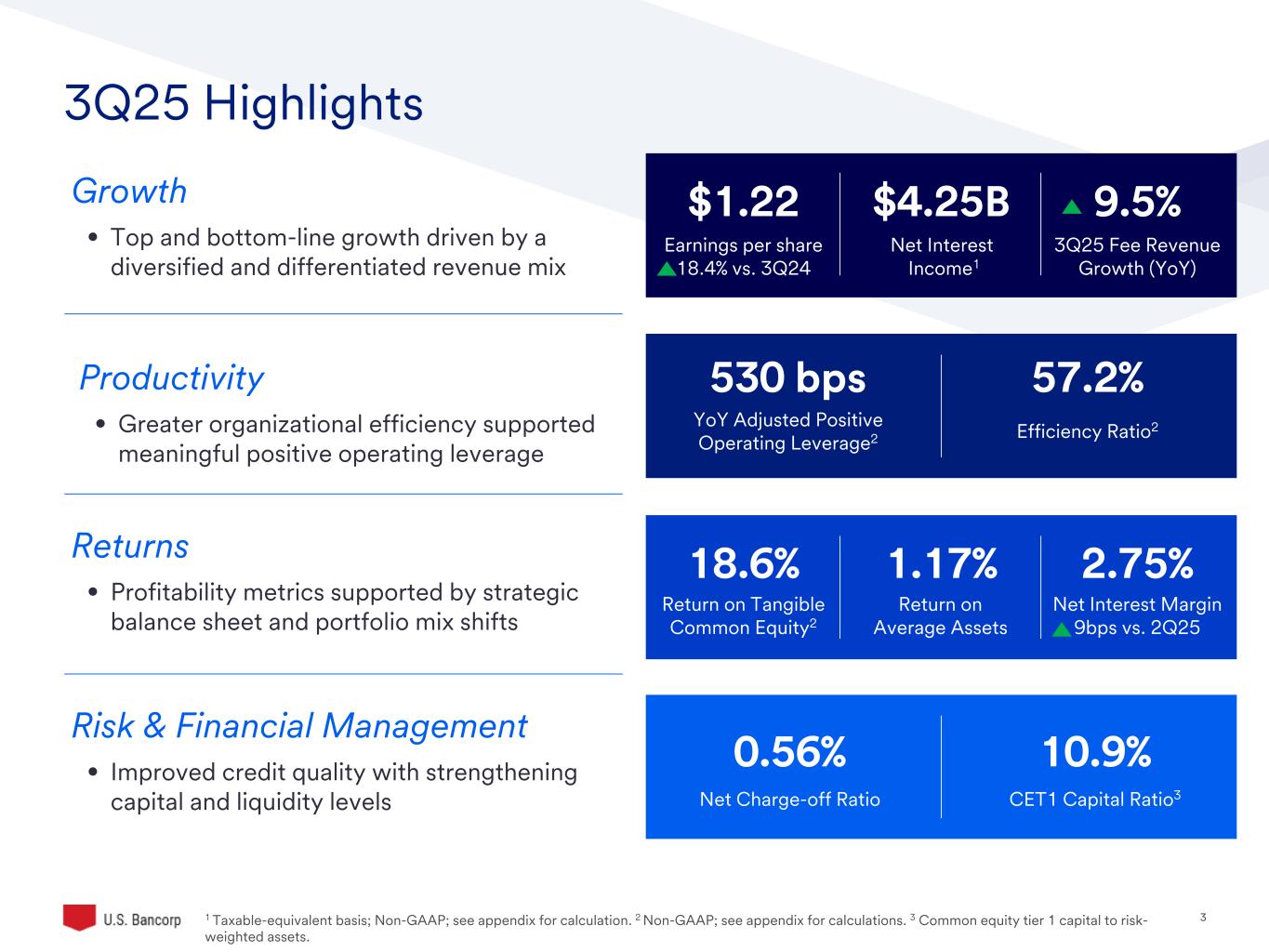
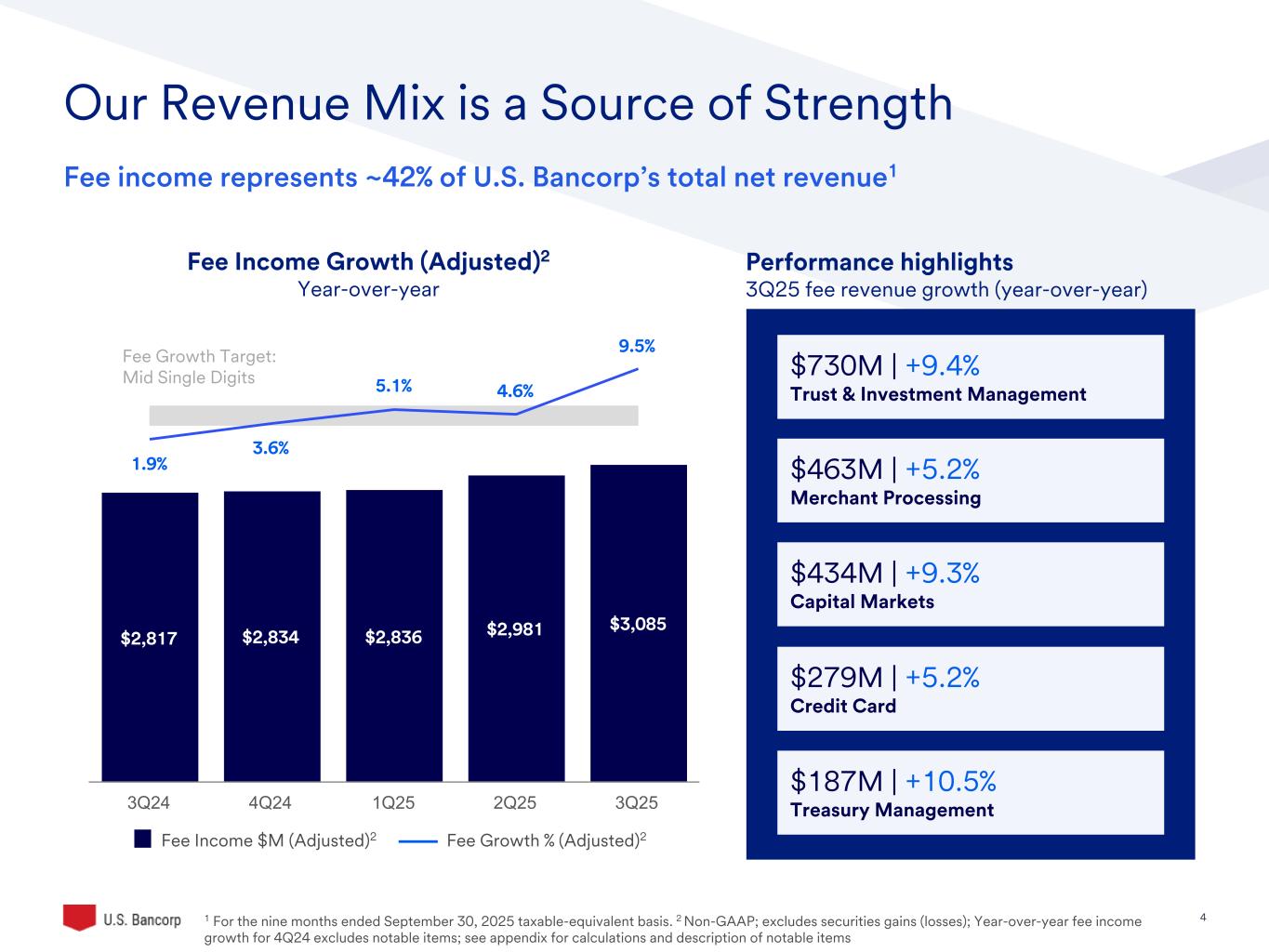
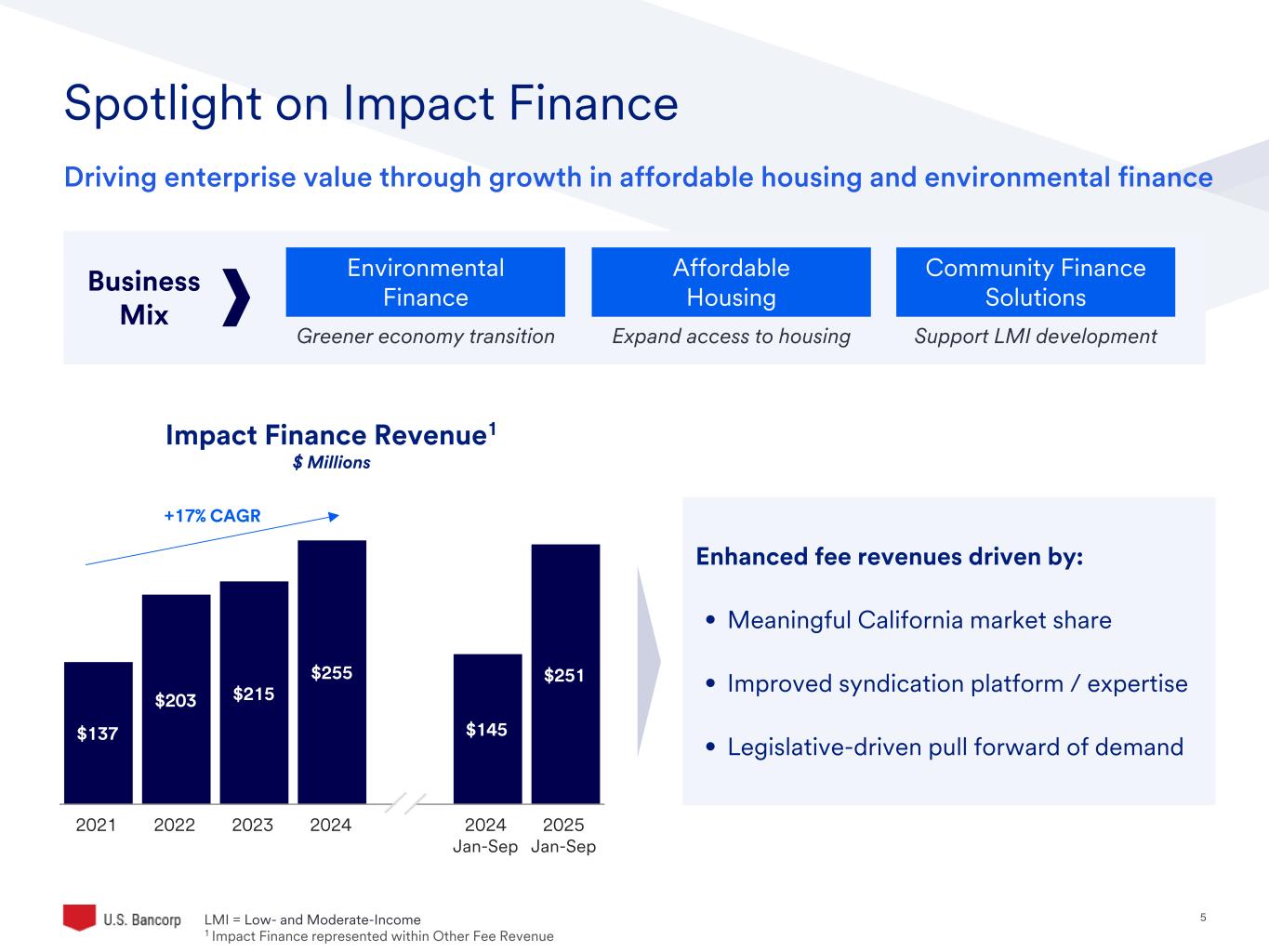
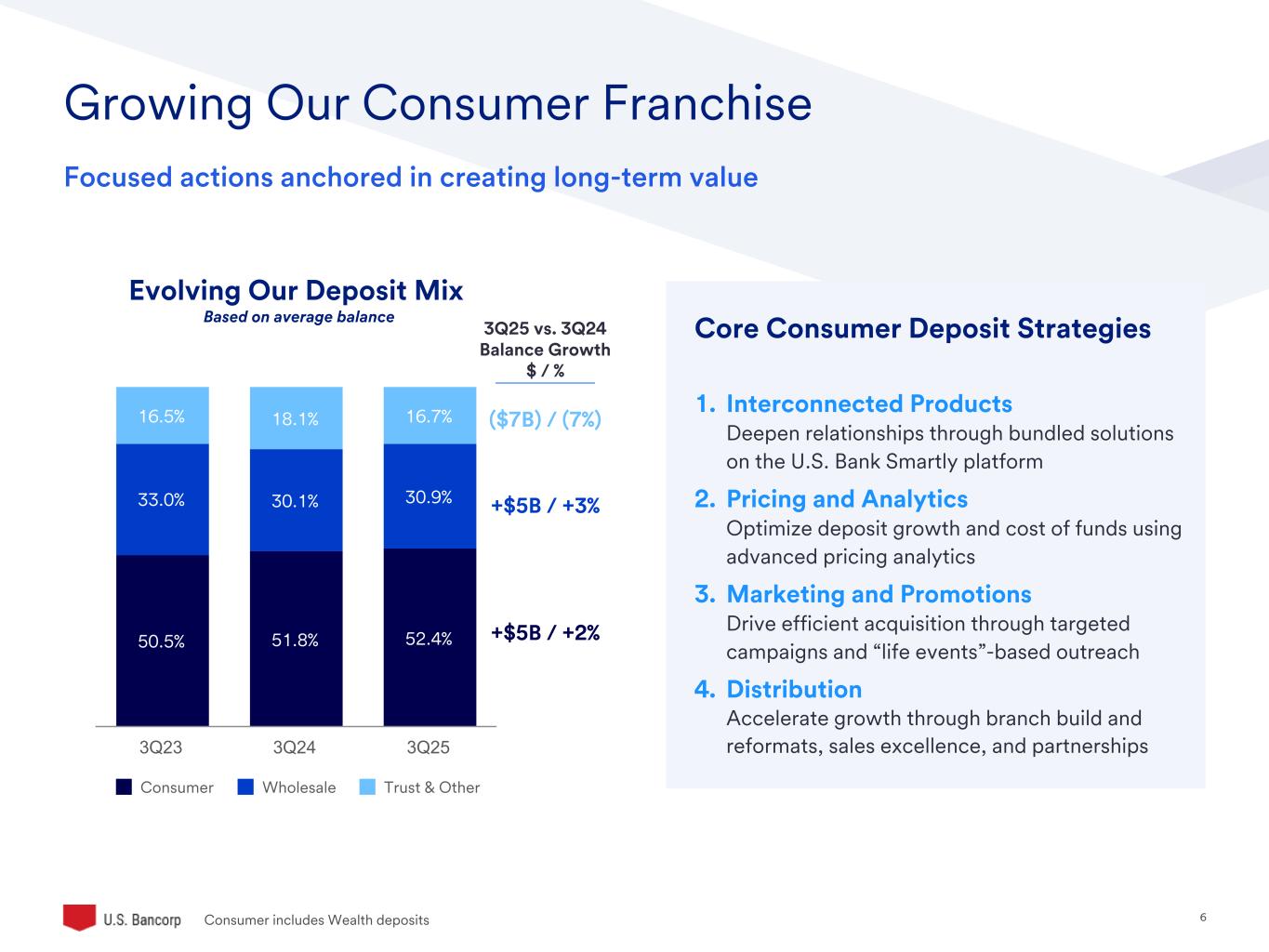
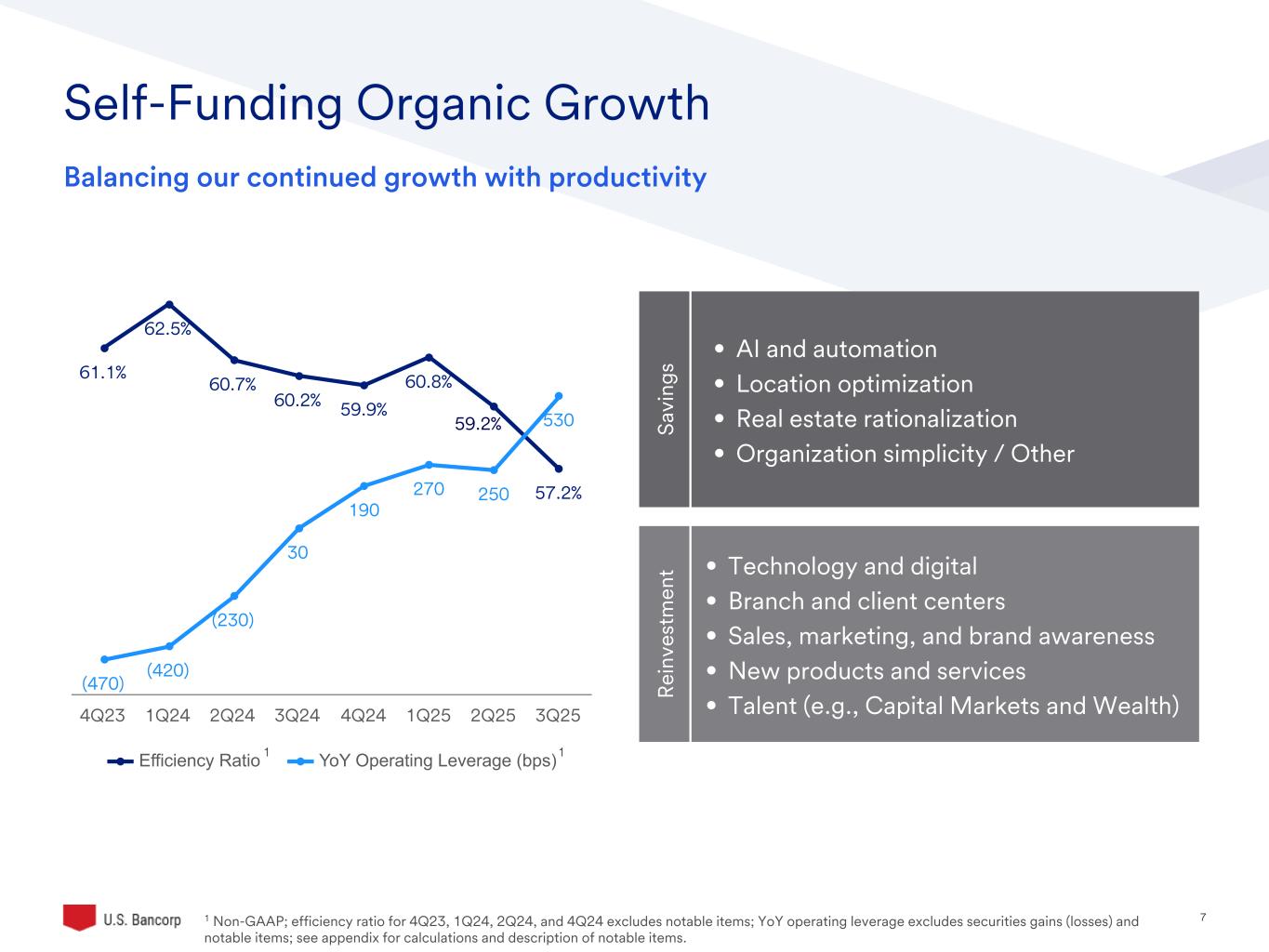
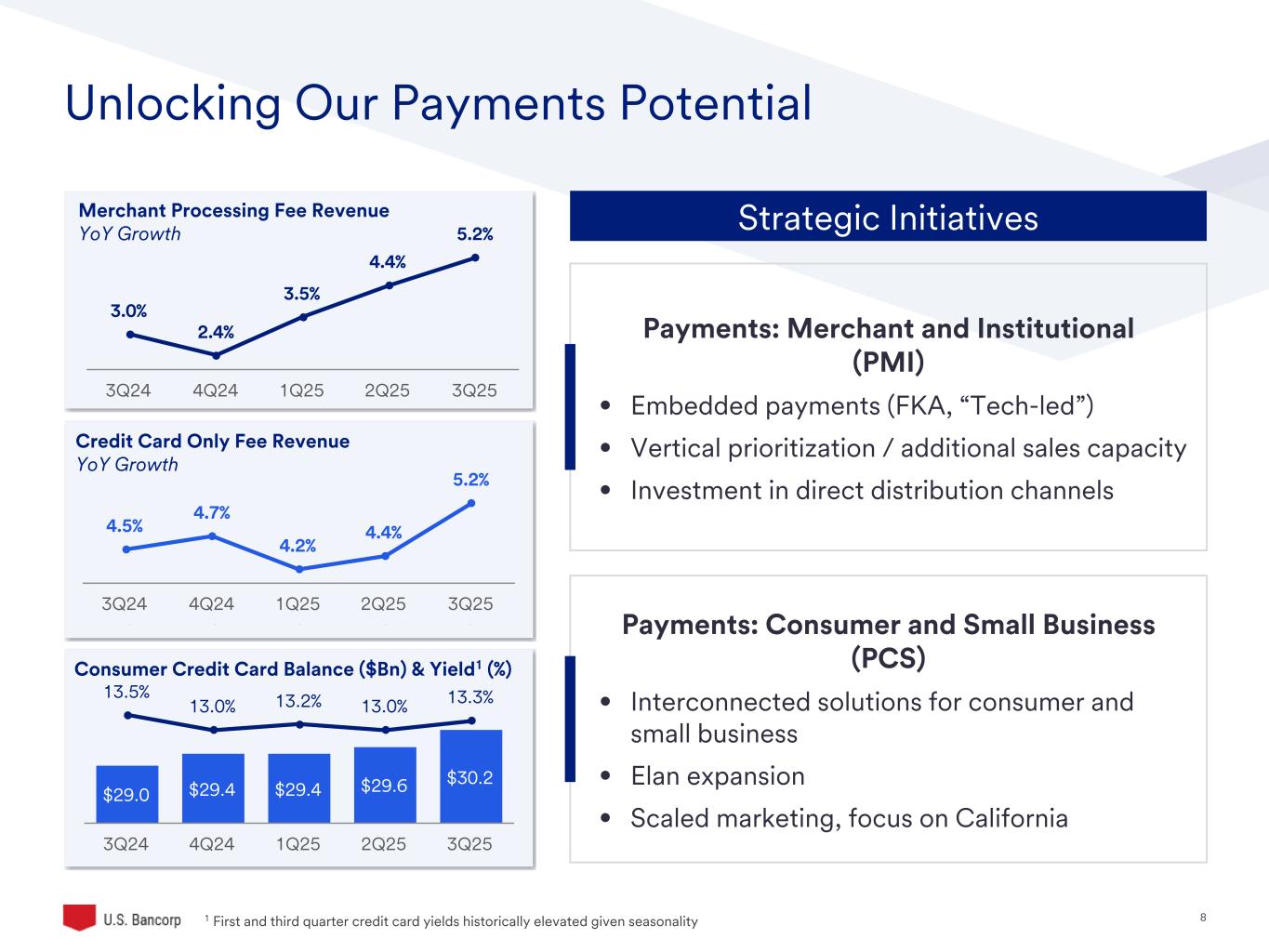
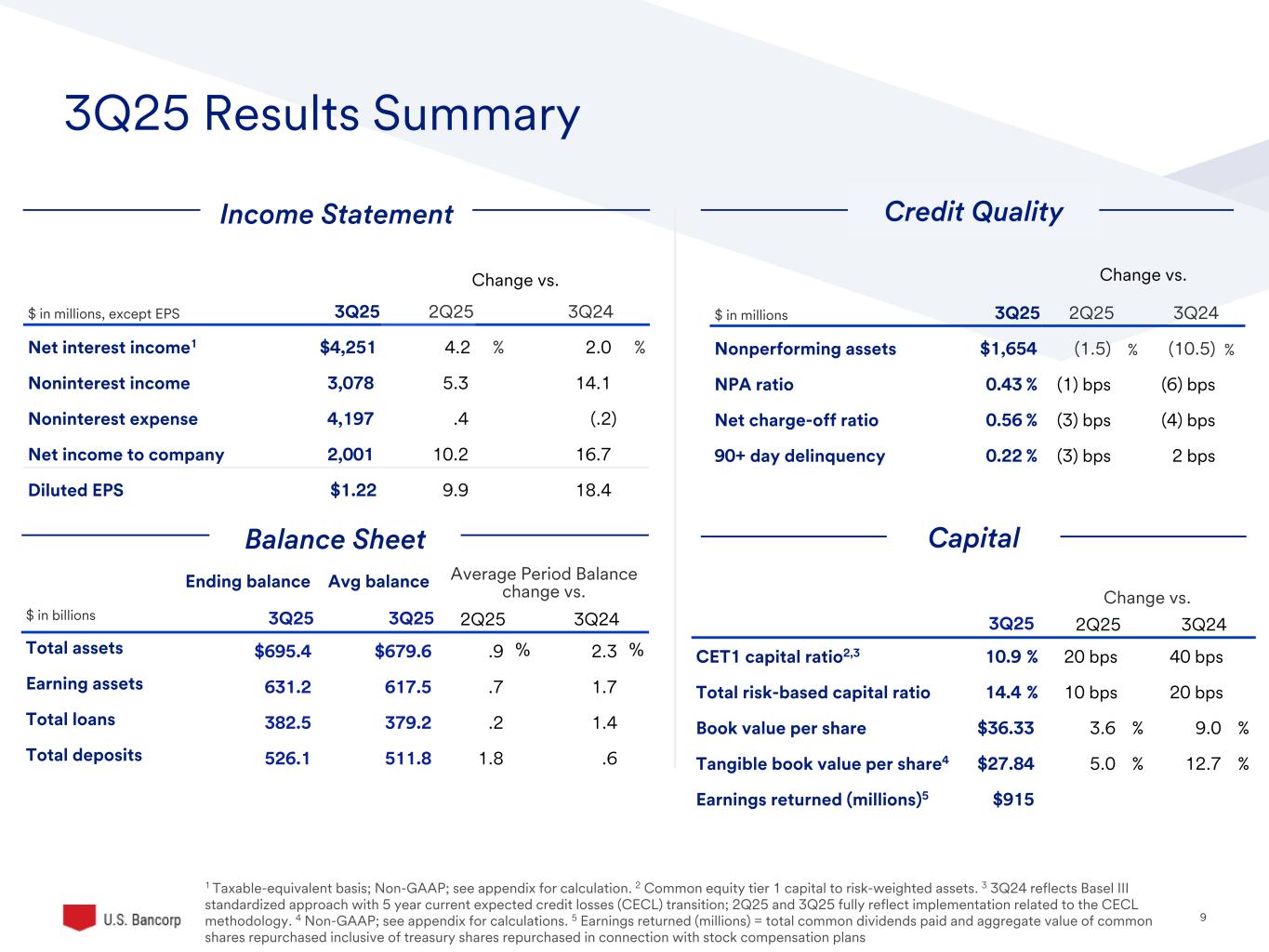
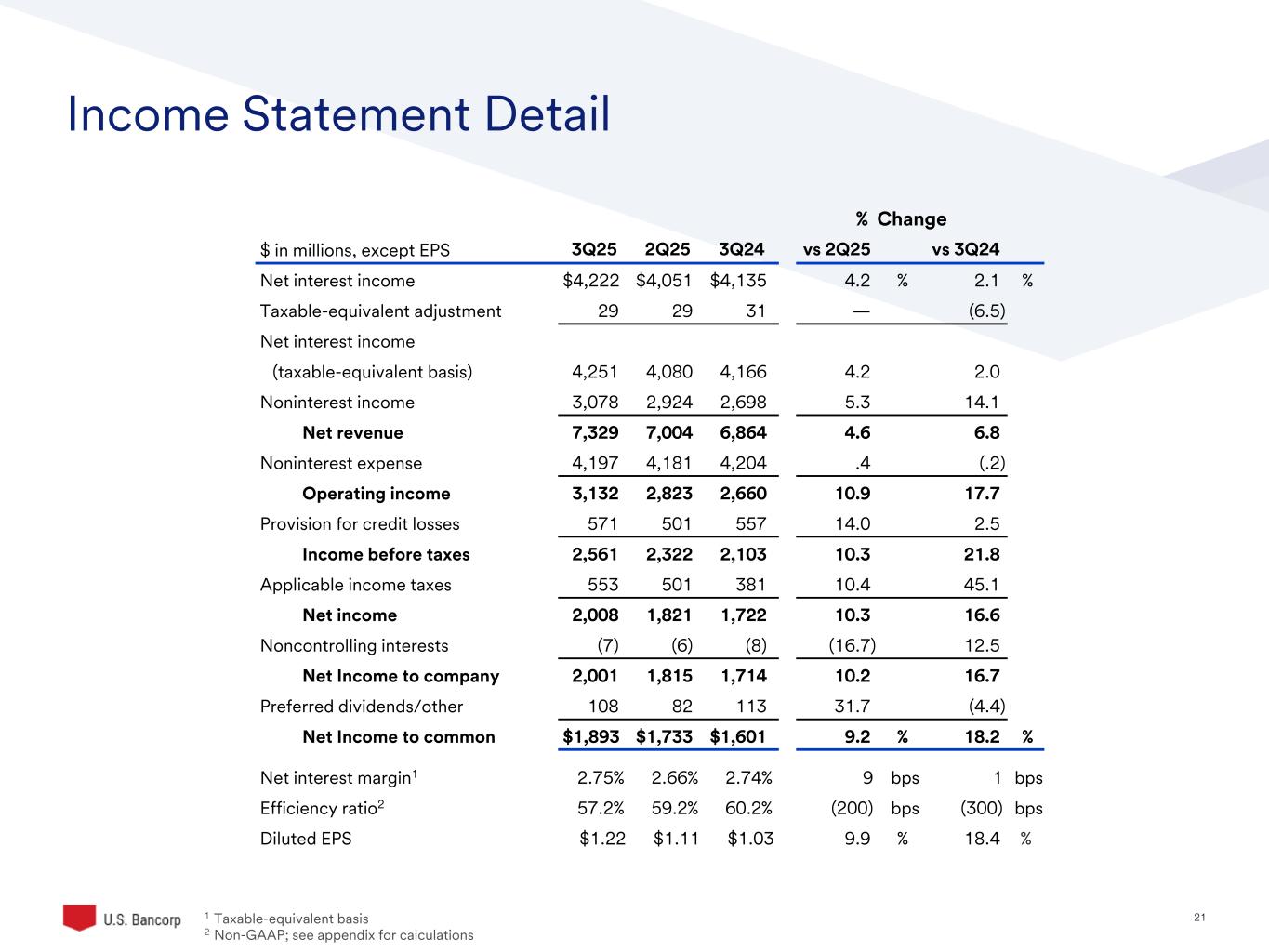
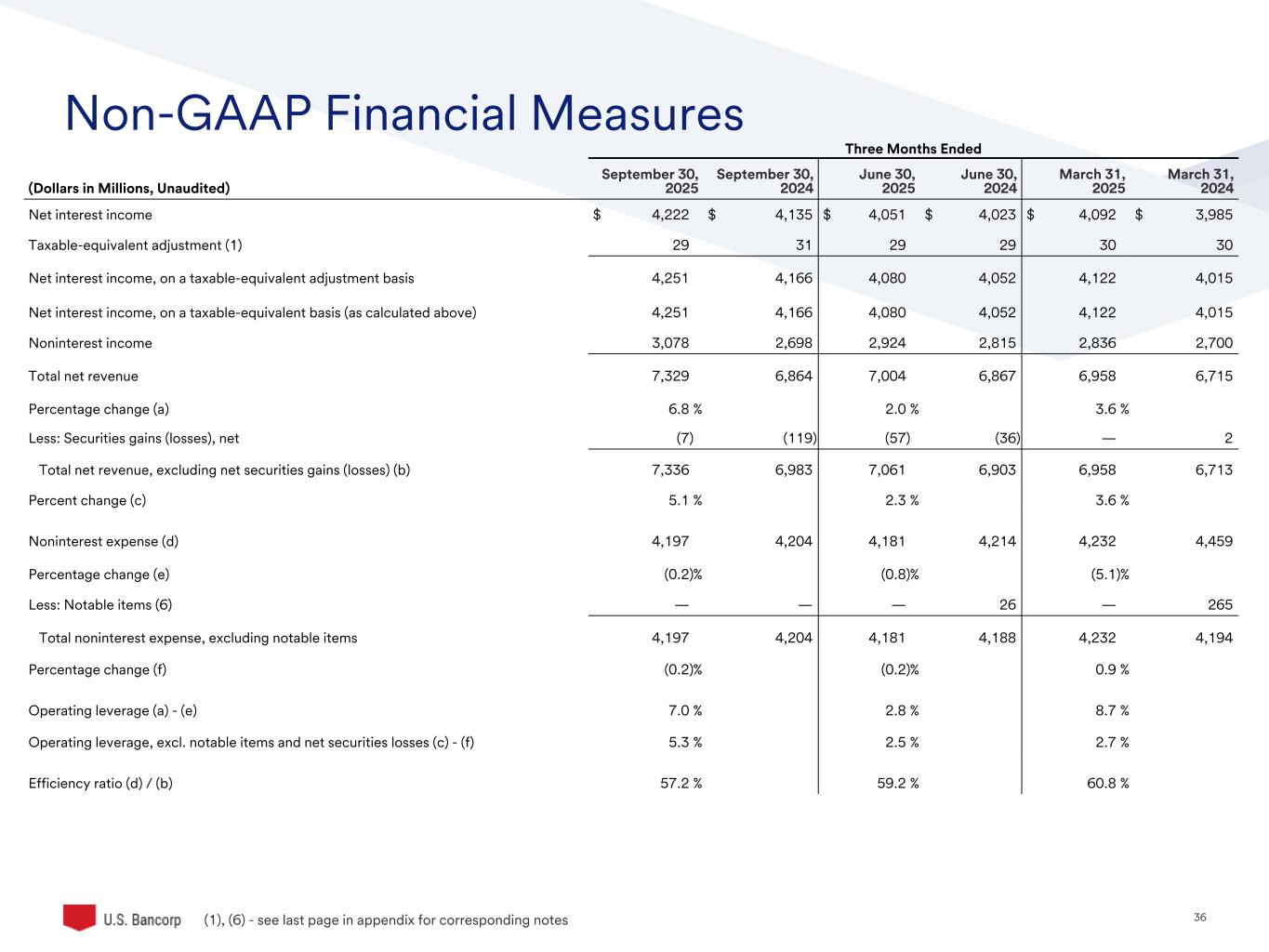
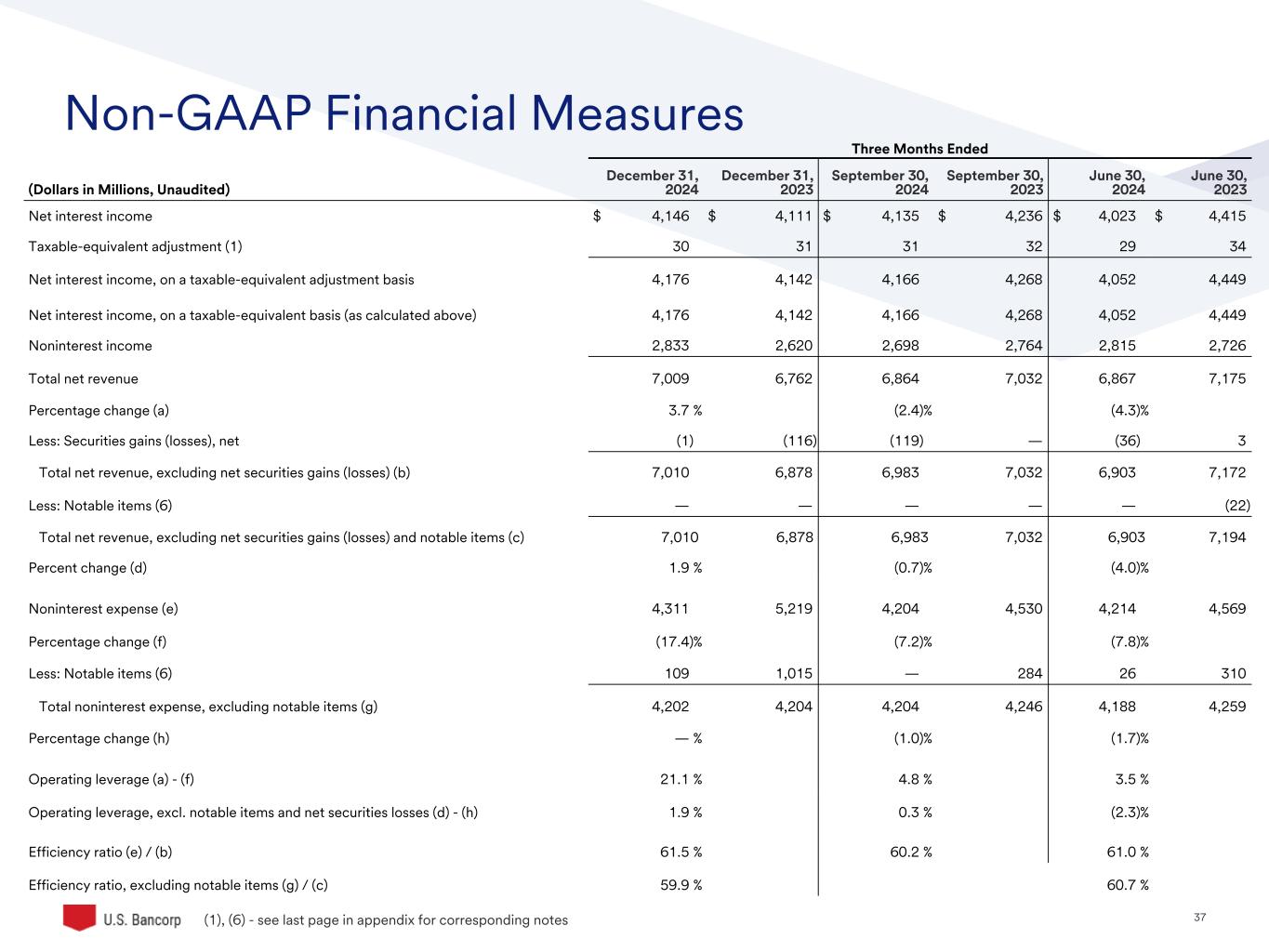
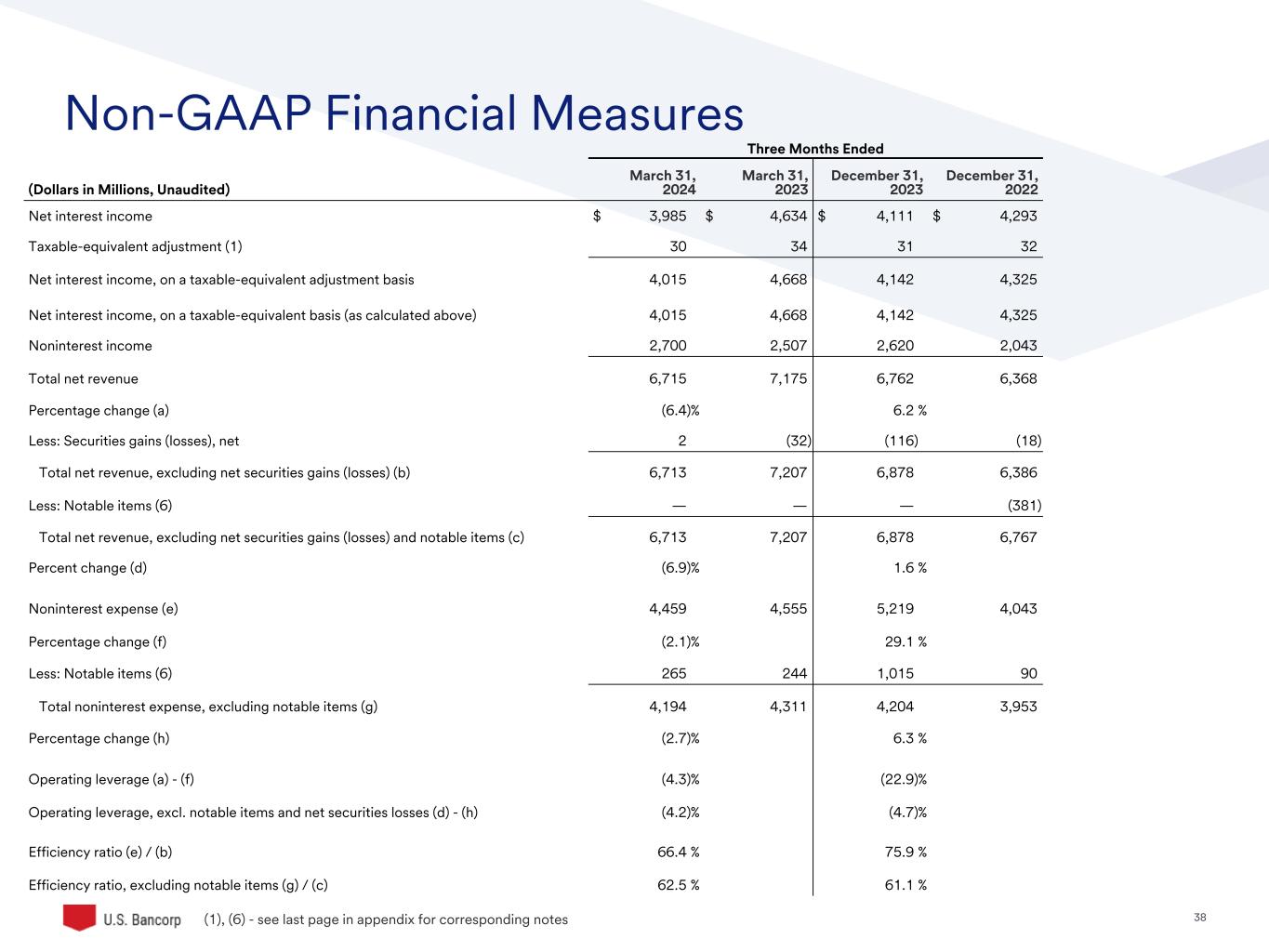
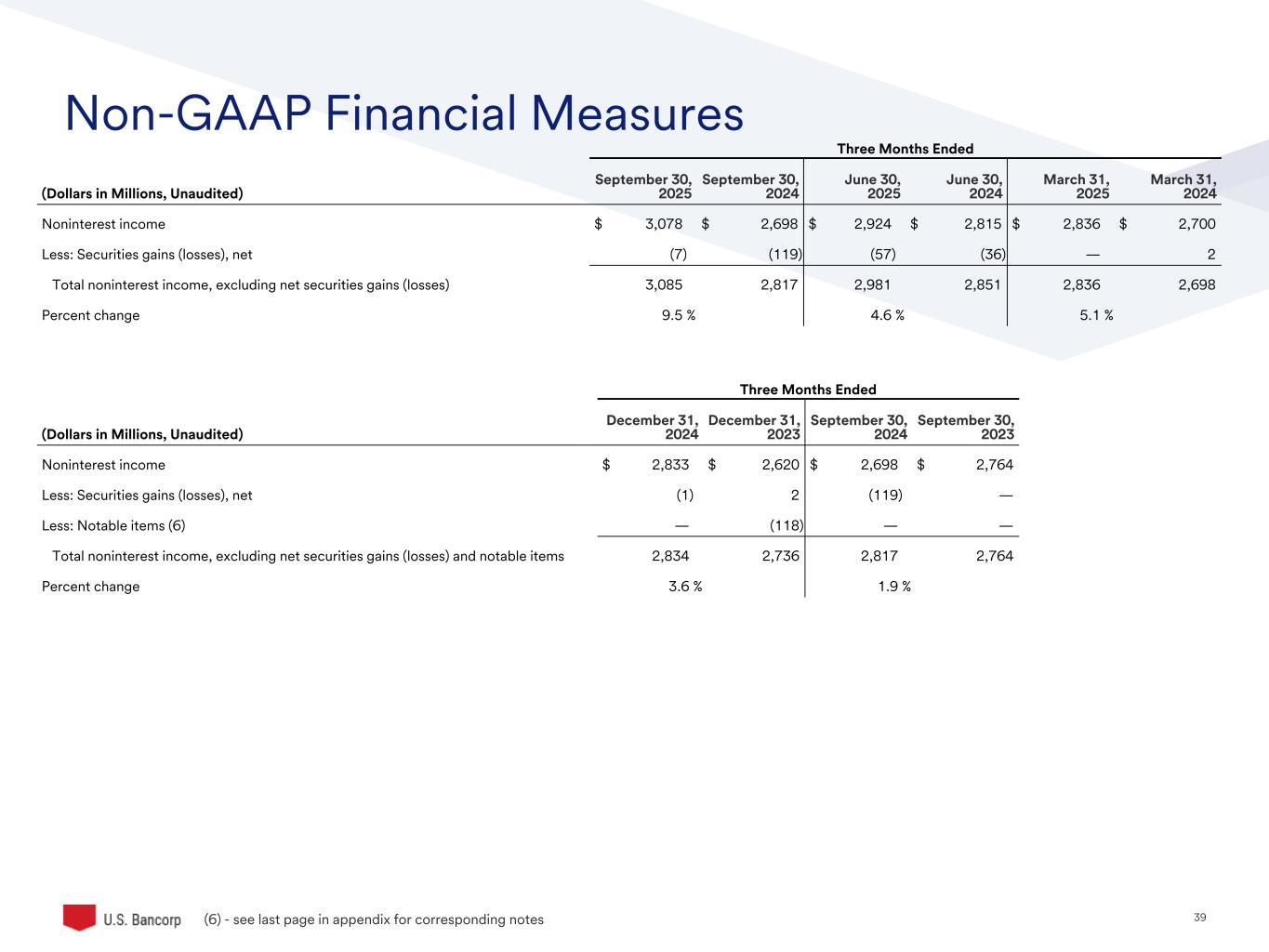
Thank you, George. And good morning, everyone. If I could please turn your attention to slide three. In the third quarter, we reported earnings per share of $1.22, an increase of 18.4% year over year. Our net revenue of $7.3 billion was a quarterly record, reflecting both strong momentum across our fee businesses and improved spread income. This quarter, we generated a very meaningful 530 basis points of positive operating leverage, a return on average assets of 1.17% and a net interest margin of 2.75%. John will provide more details on our financial performance in his opening remarks. Importantly, we are making strong progress against each of our three strategic priorities for our company. We are generating organic growth through distinctive, interconnected solutions. We are maintaining our expense discipline through sustainable process automation, and we are executing on our payments transformation with greater focus and strategic investments. And as we manage the bank for the long run, through both positive and uncertain times, our highly diversified balance sheet and foundational risk management capabilities delivered improved credit quality and stronger capital and liquidity levels this quarter. Moving to slide four, fee income diversification is a key source of strength for the company. On the left, you will see that fee revenue grew at 9.5% on a year-over-year basis, reflecting broad-based strength across our payments, institutional, and consumer businesses. Notably, interest rate movements this quarter supported a meaningful acceleration in select capital markets and mortgage revenues. On the right, we highlight five key businesses that have demonstrated strong year-over-year growth and that we believe present a favorable growth outlook. Collectively, these businesses represented approximately two-thirds of our total fee revenue this quarter. Turning to slide five, we spotlighted one additional business, Impact Finance. With the union bank acquisition, we bolstered our platform, bringing improved tax credit syndication capabilities, new talent, and increased access to the California market. Currently reported within the other revenue, impact finance has grown at a 17% CAGR from 2021 to 2024 and is an important mission-driven capability that is core to our fee income portfolio. Over the next several years, we anticipate additional growth from a pull forward of activity tied to some recent executive orders and expect revenue trends across our environmental finance, affordable housing, and community finance solutions to remain robust. In addition, the business also supports a net tax benefit to the company, which we believe will continue to be a meaningful driver of bottom-line EPS growth. Slide 6 showcases our growing consumer franchise and long-term deposit strategy. Our deposit base is highly diversified across clients, geographies, and products, providing strength and stability through the cycle. We are actively working to increase our share of consumer deposits with interconnected products like BankSmartly, branch and client center expansions, partnerships, and enhanced marketing and analytical capabilities. consumer deposits now represent over 52 percent of total average deposits up nearly two points from the third quarter of 2023 moving to slide seven our expense discipline over the last two years and execution on four signature productivity programs has resulted in improved organic growth and greater operational efficiencies. As you can see on the left, the outcomes of our efforts have been quite successful as we have seen steady improvement to both the efficiency ratio and positive operating leverage as adjusted. Turning to slide eight, our payments transformation remains a key strategic priority for our company. As the charts on the left show, we have seen steady improvement and more consistent year-over-year fee growth over the last several quarters across both our traditional card-issuing and merchant-processing businesses. We are looking forward to providing a deeper dive into our payments transformation and strategy at an upcoming industry conference in the fall. Let me now turn the call over to John.
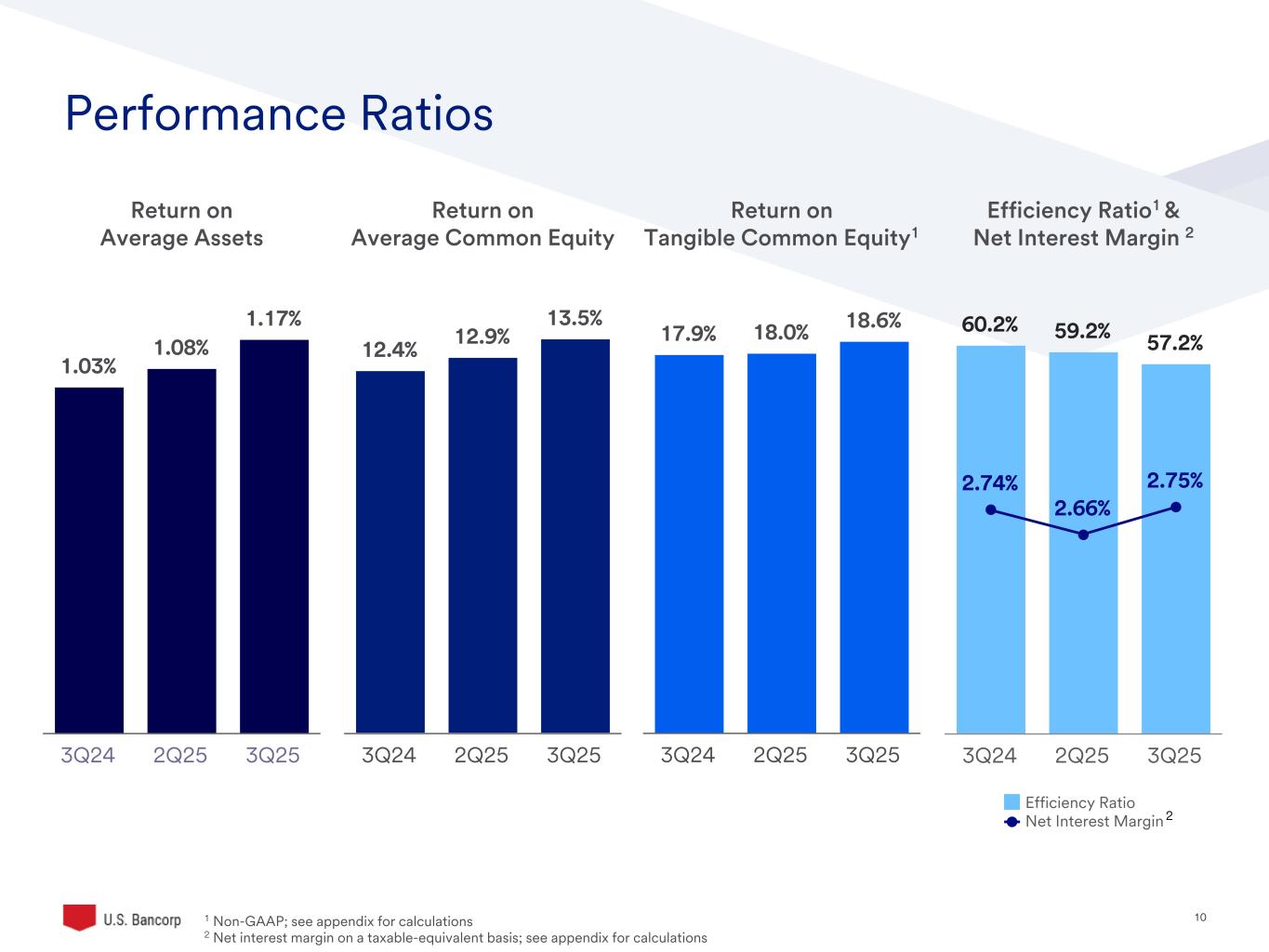
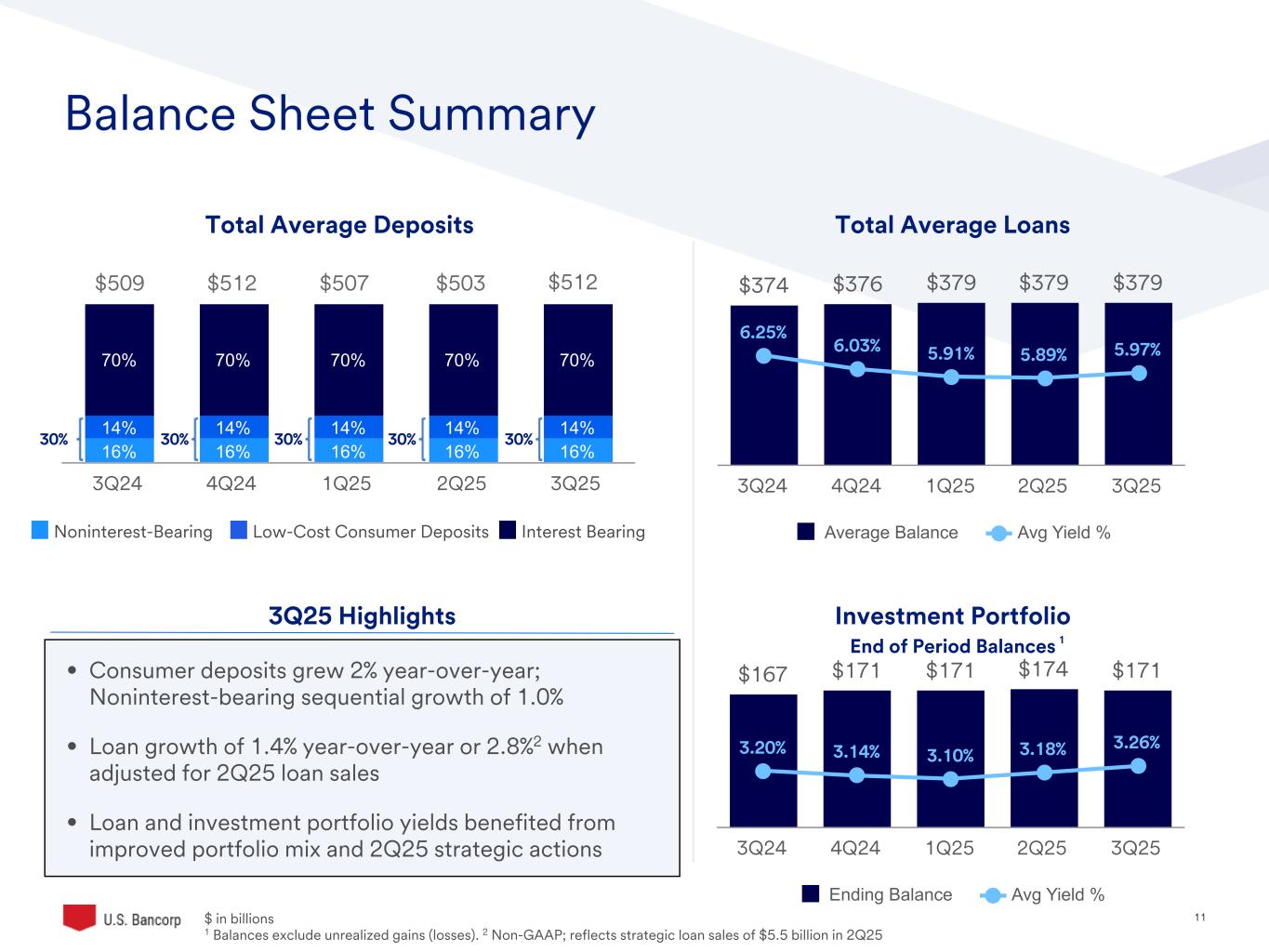
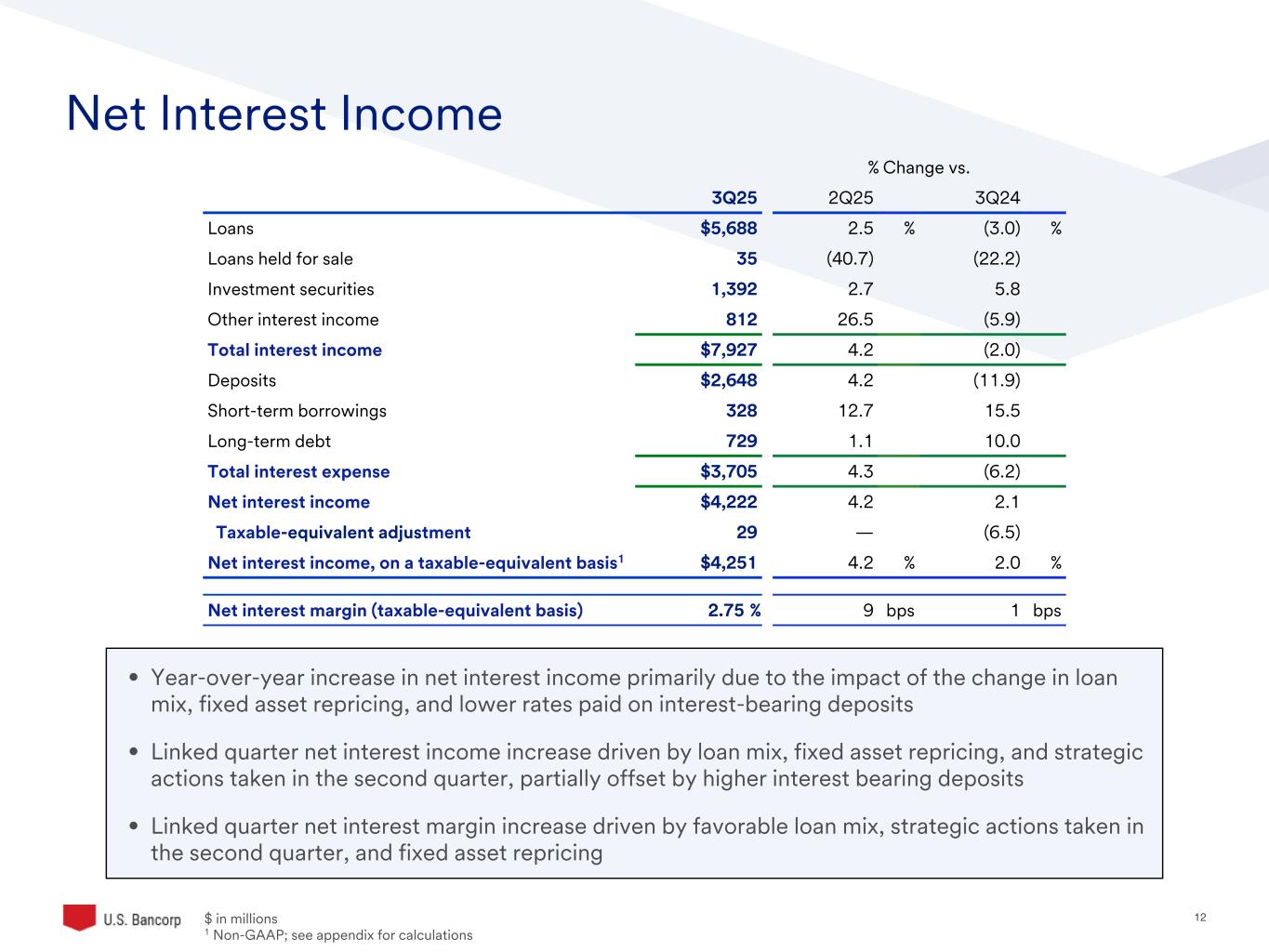
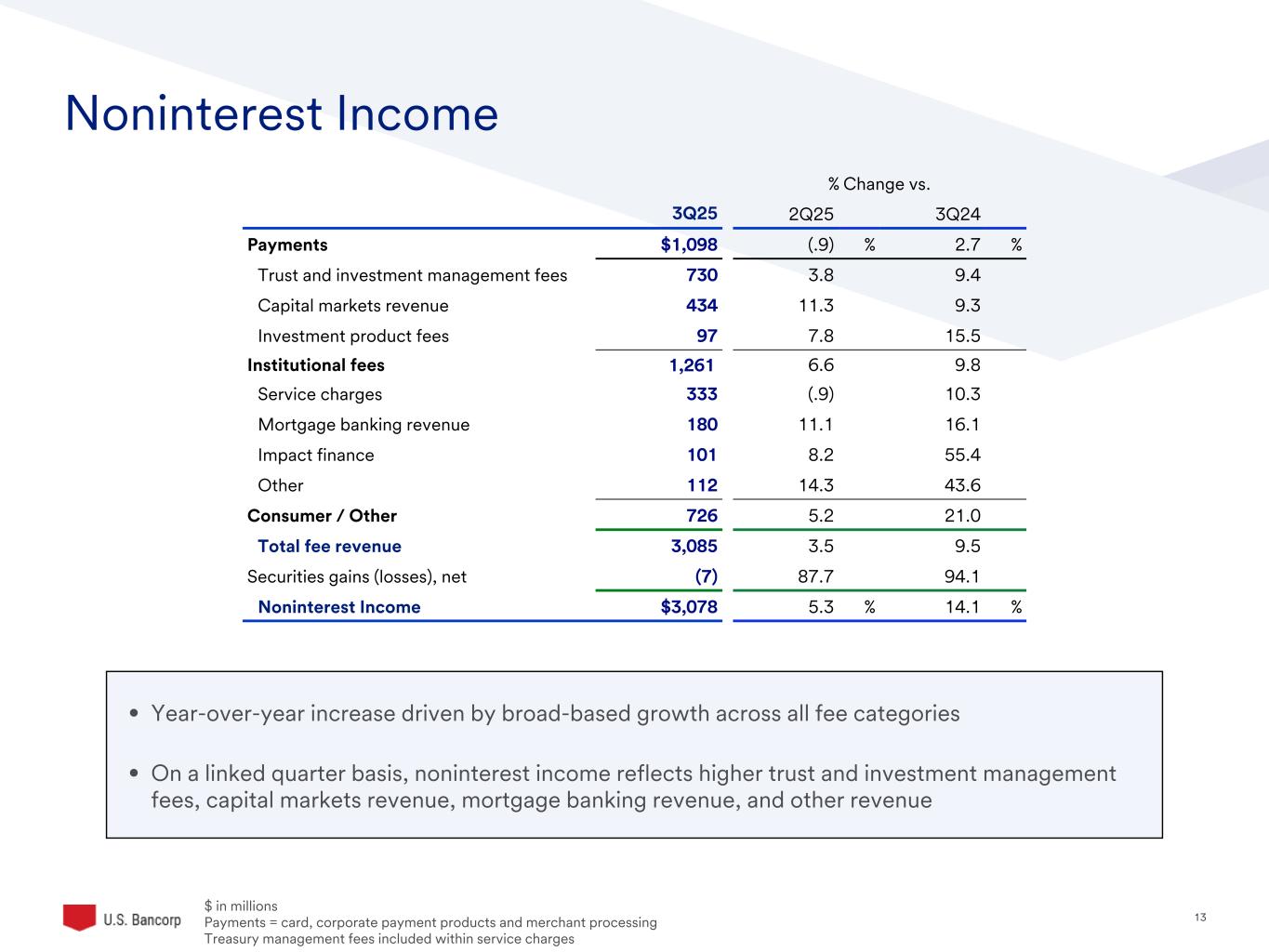
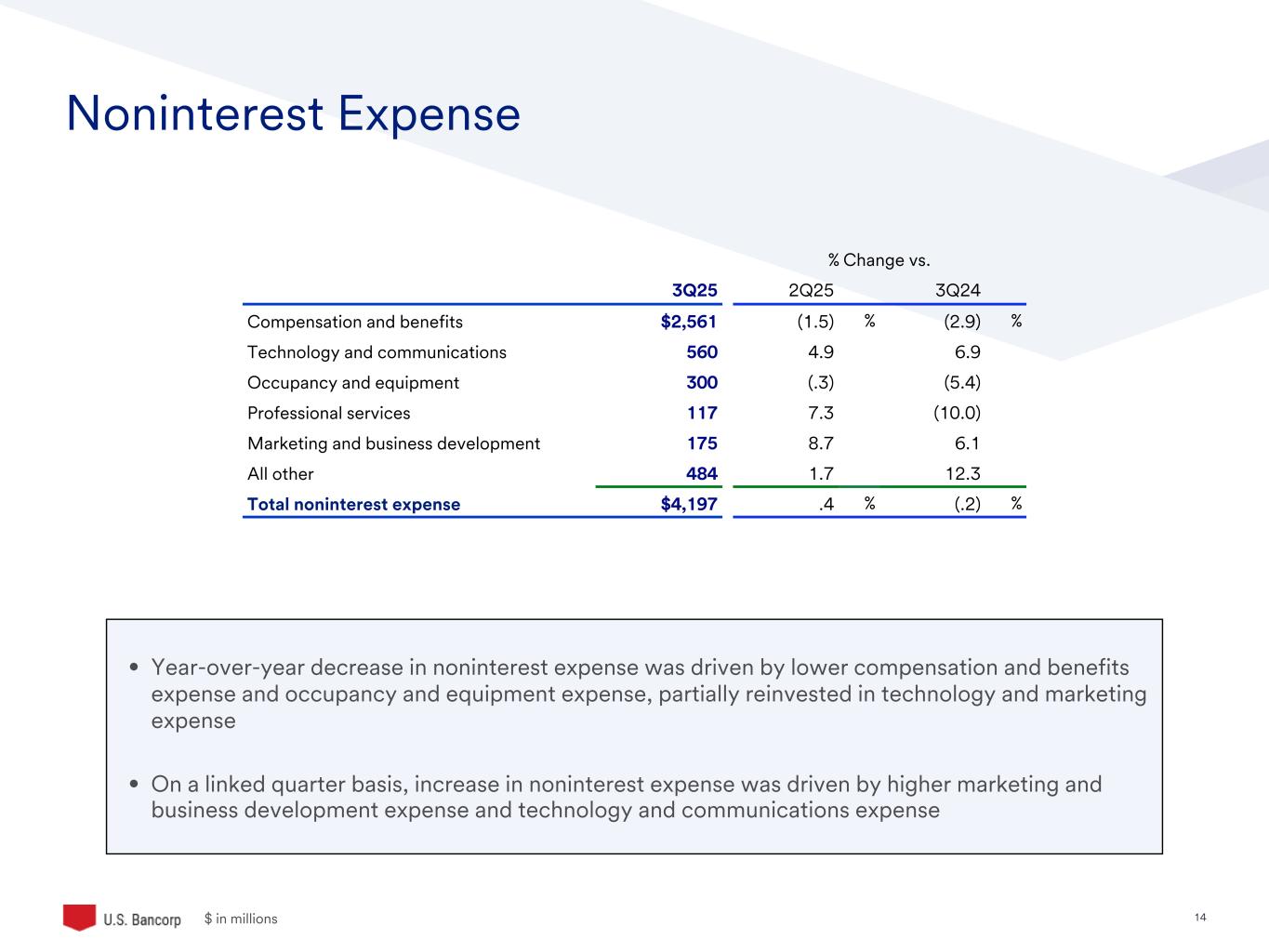
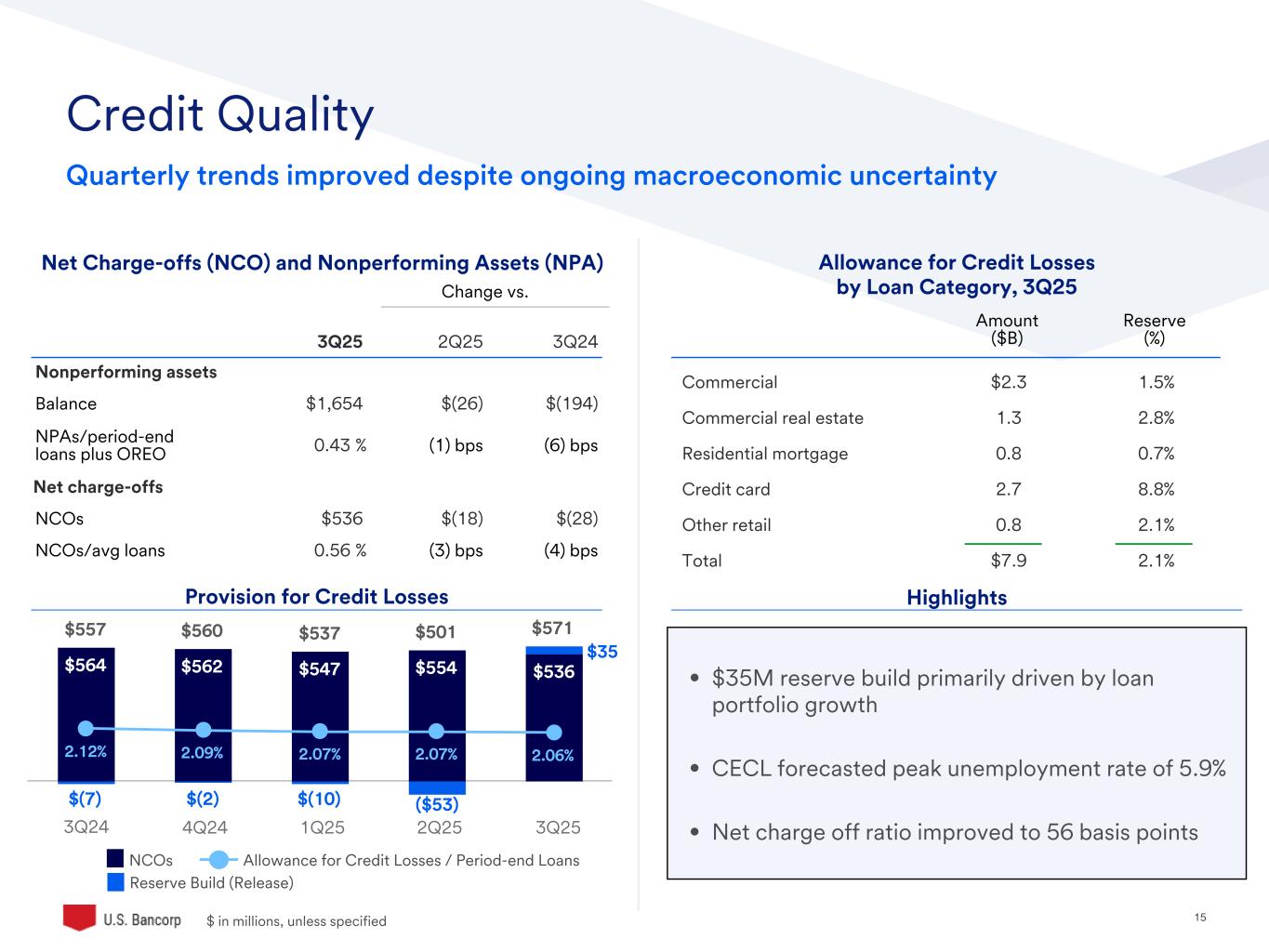
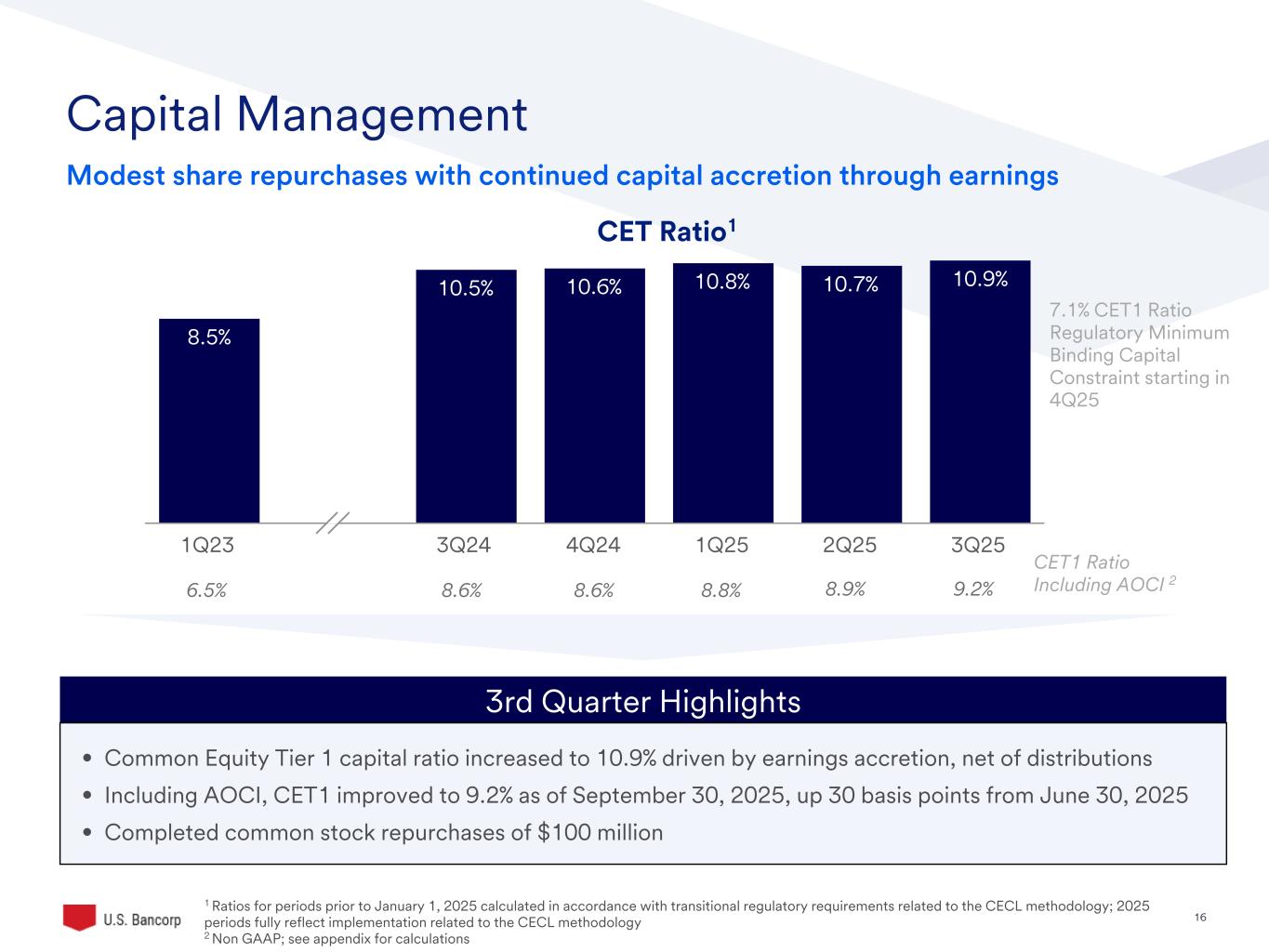
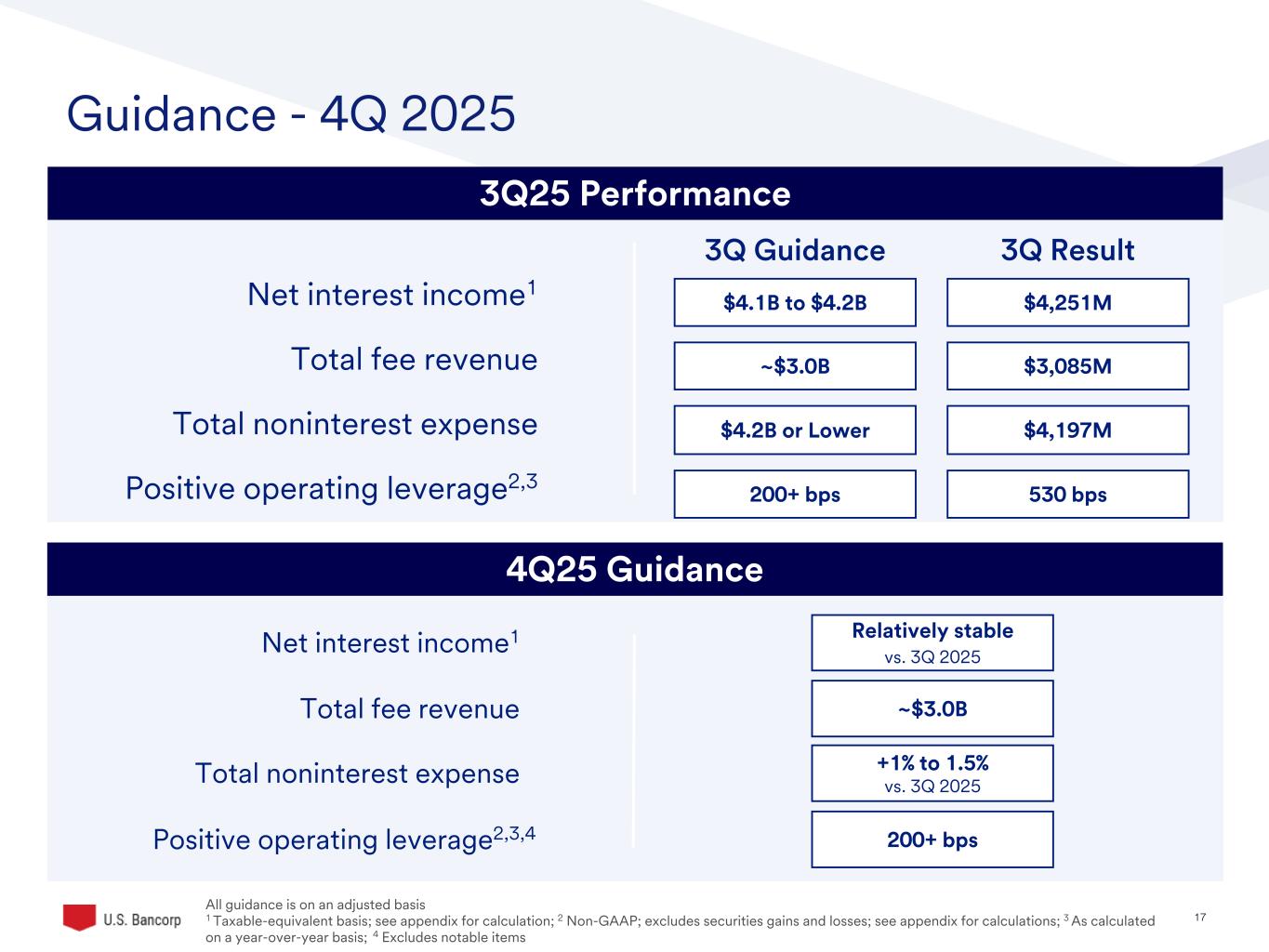
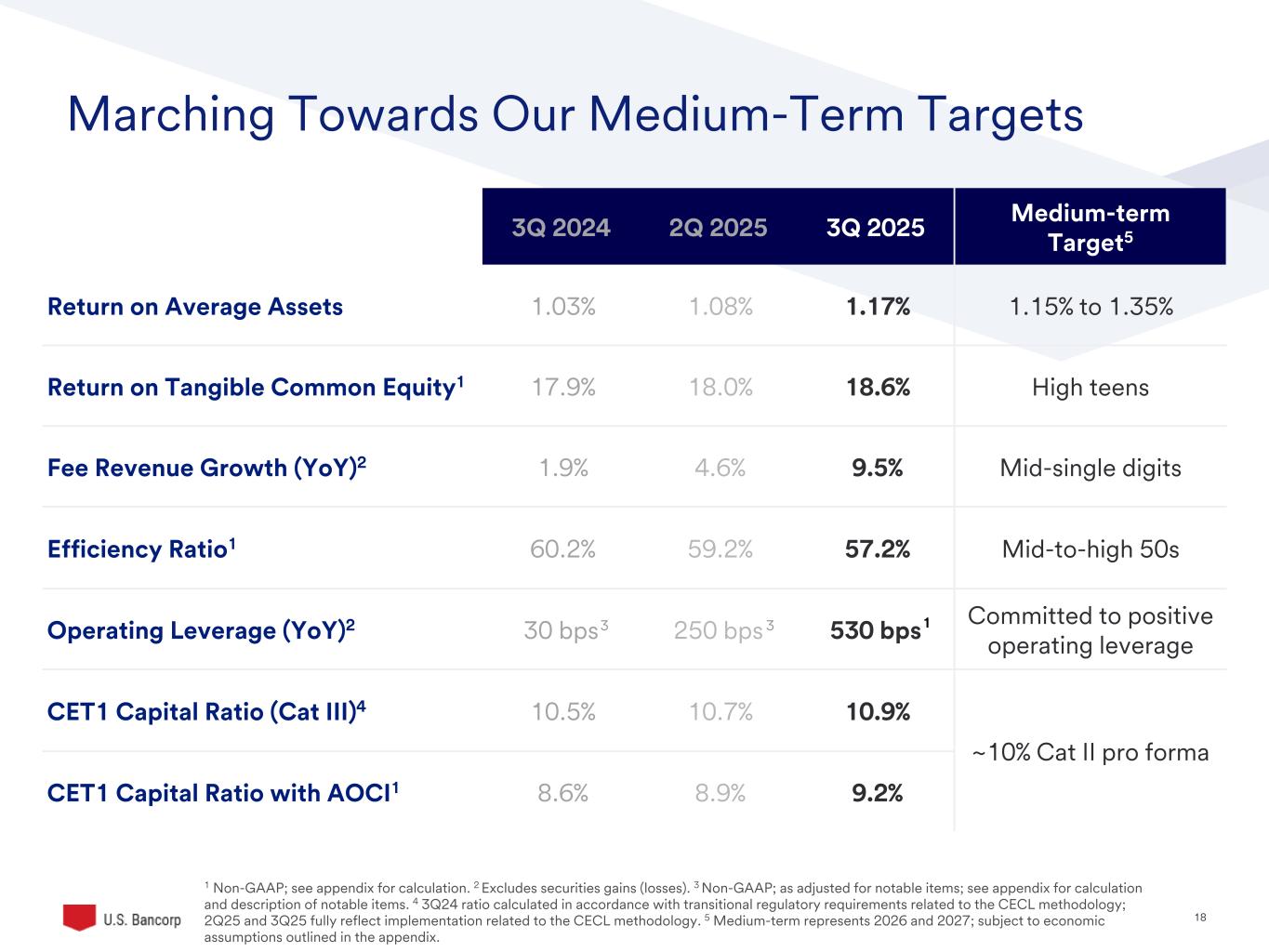
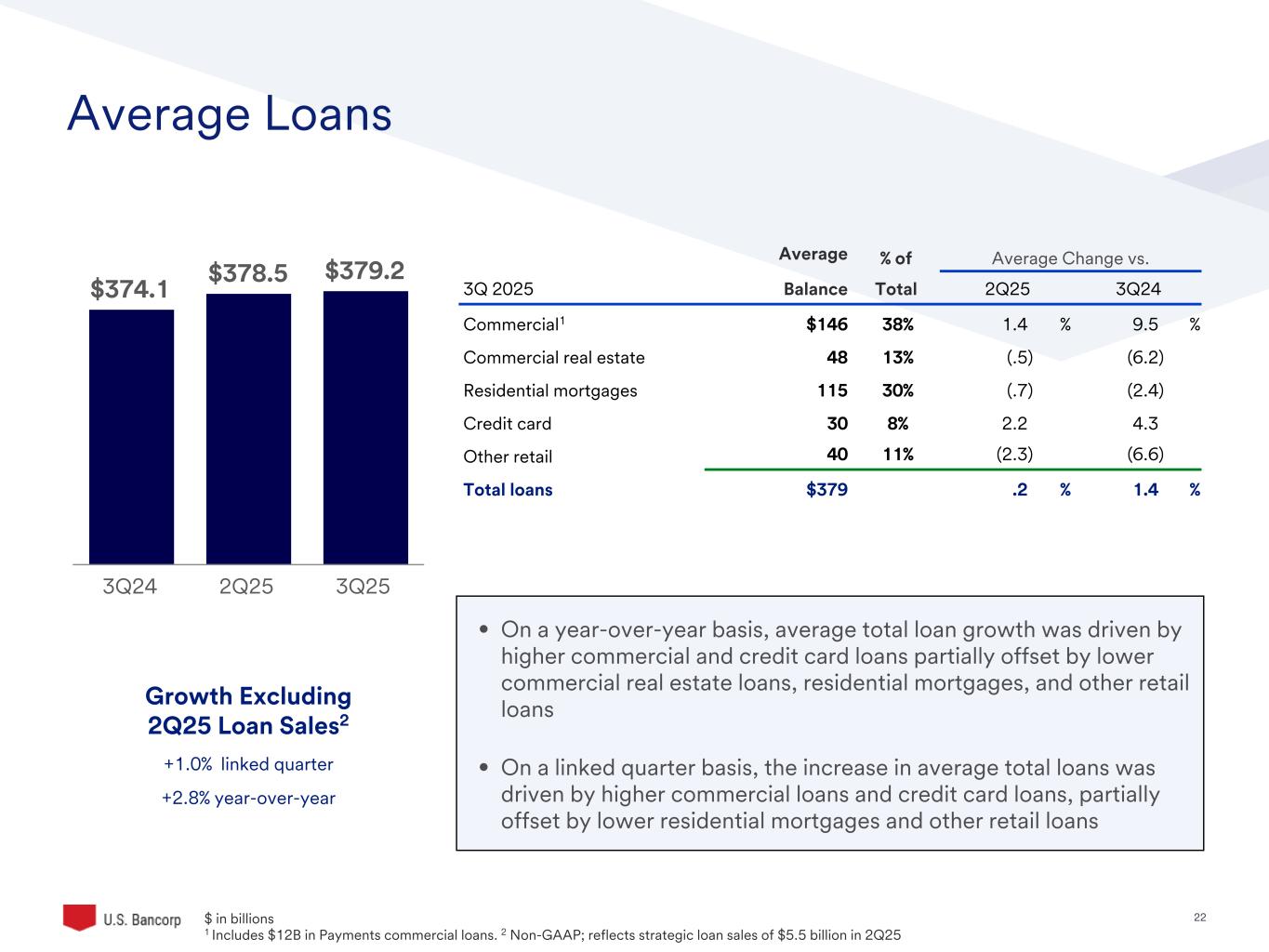
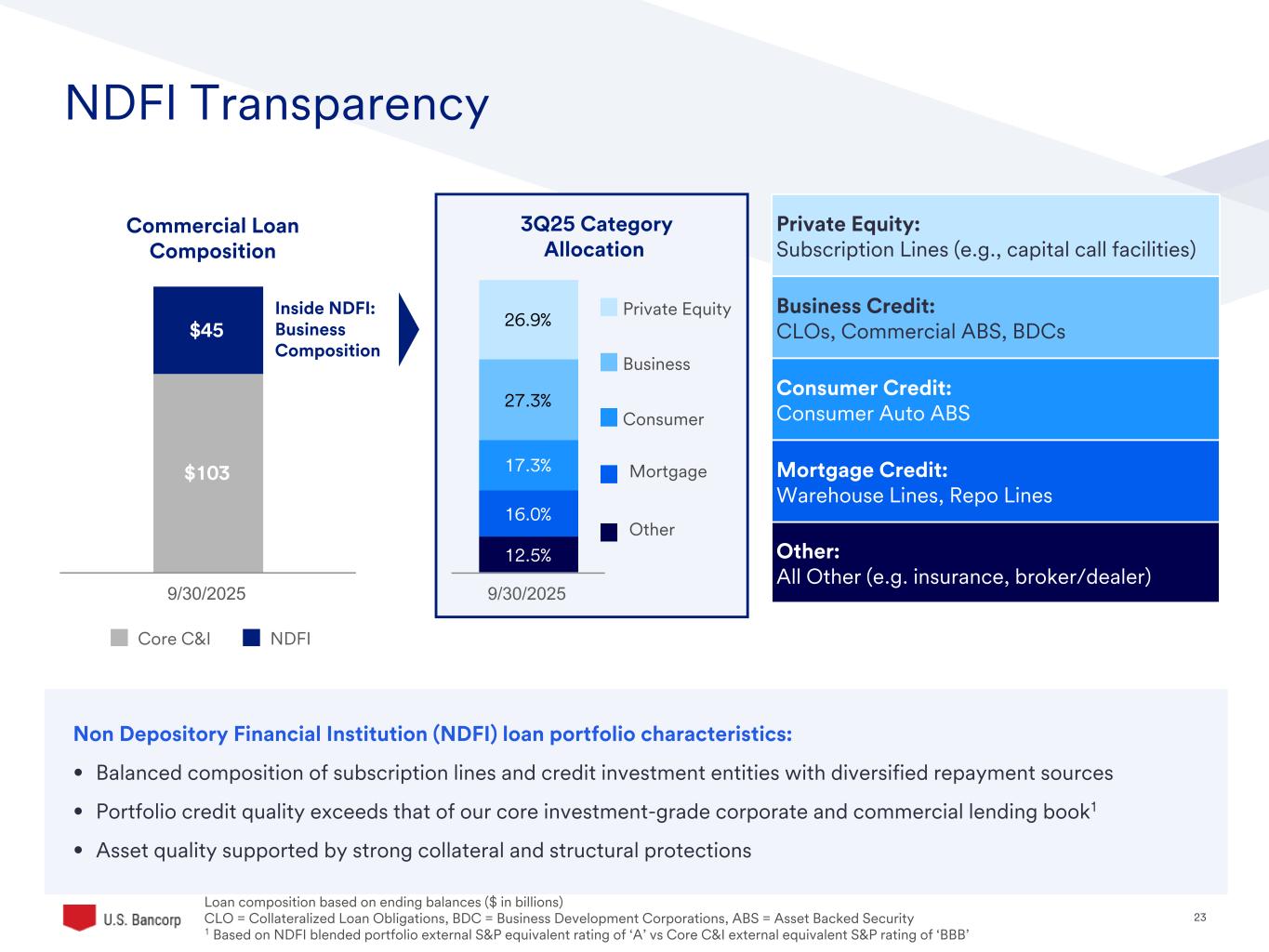
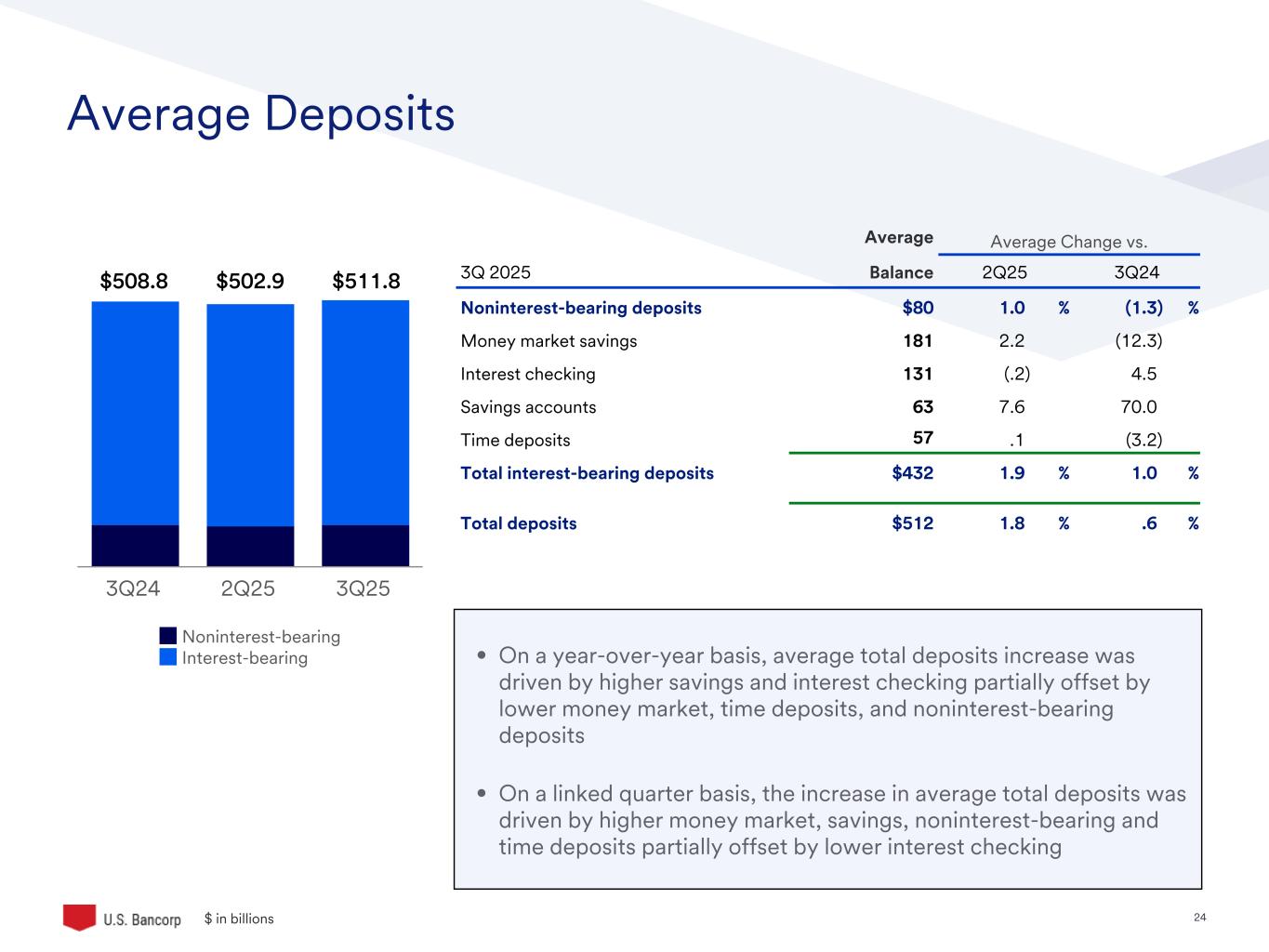
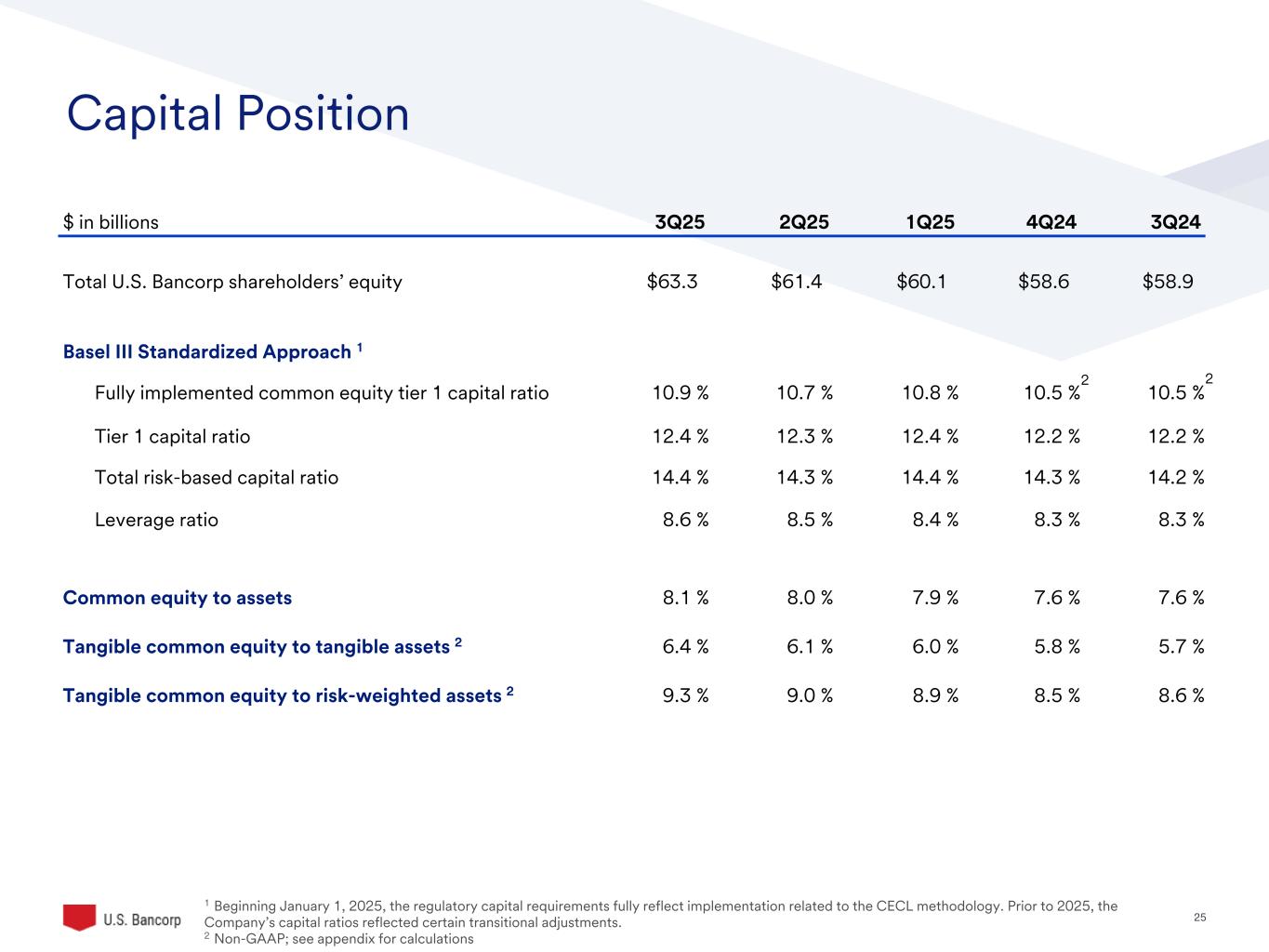
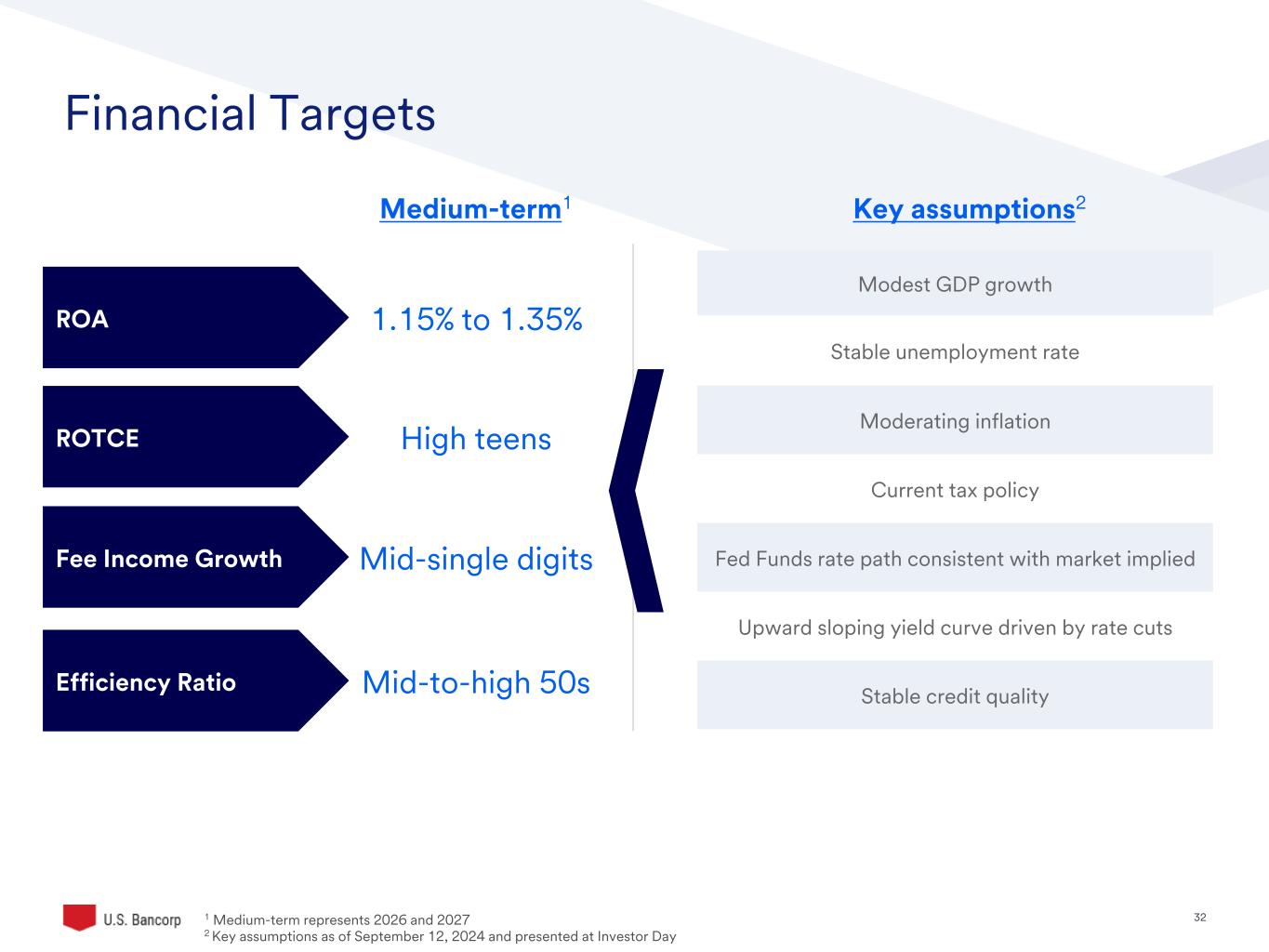
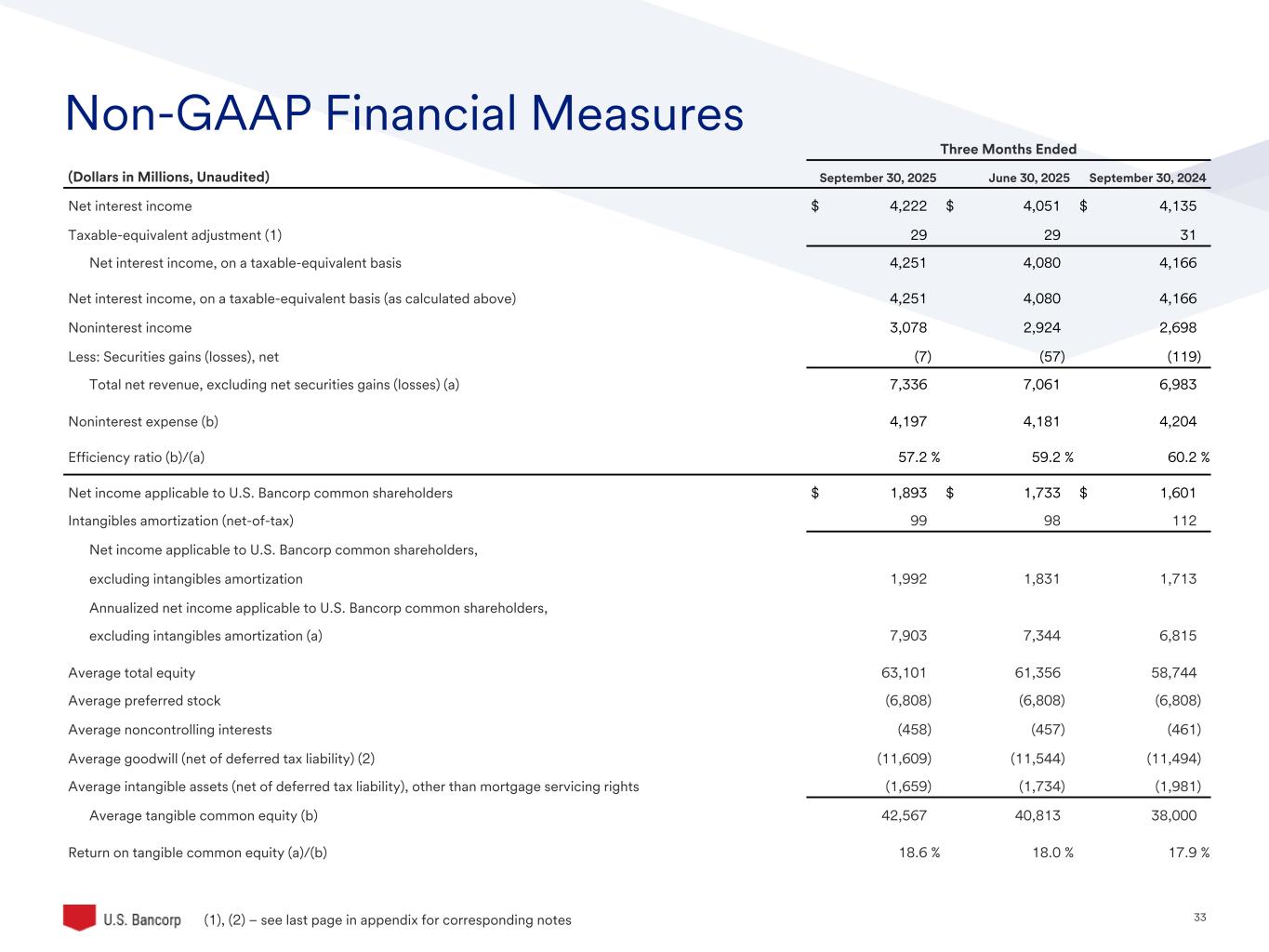
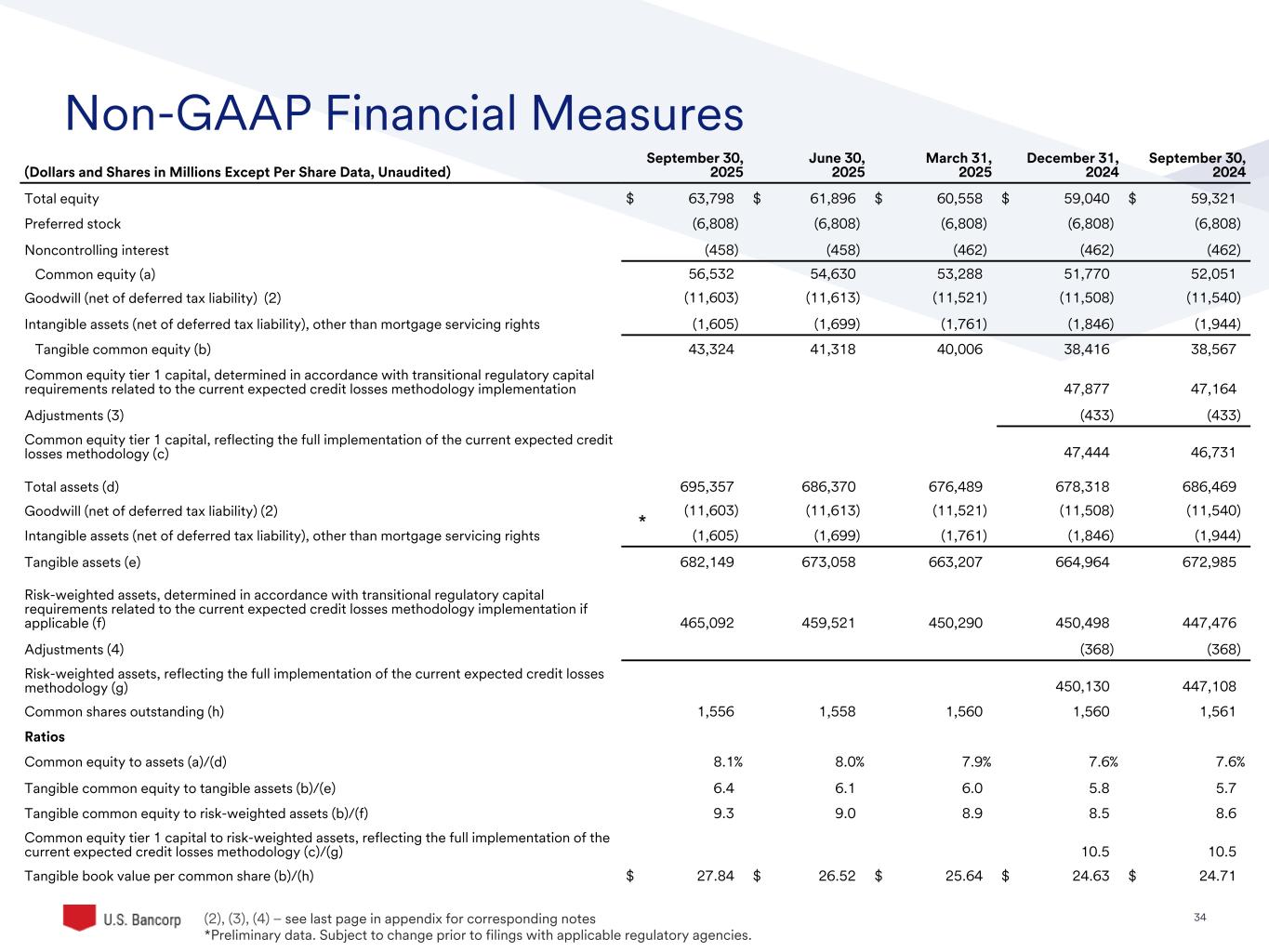
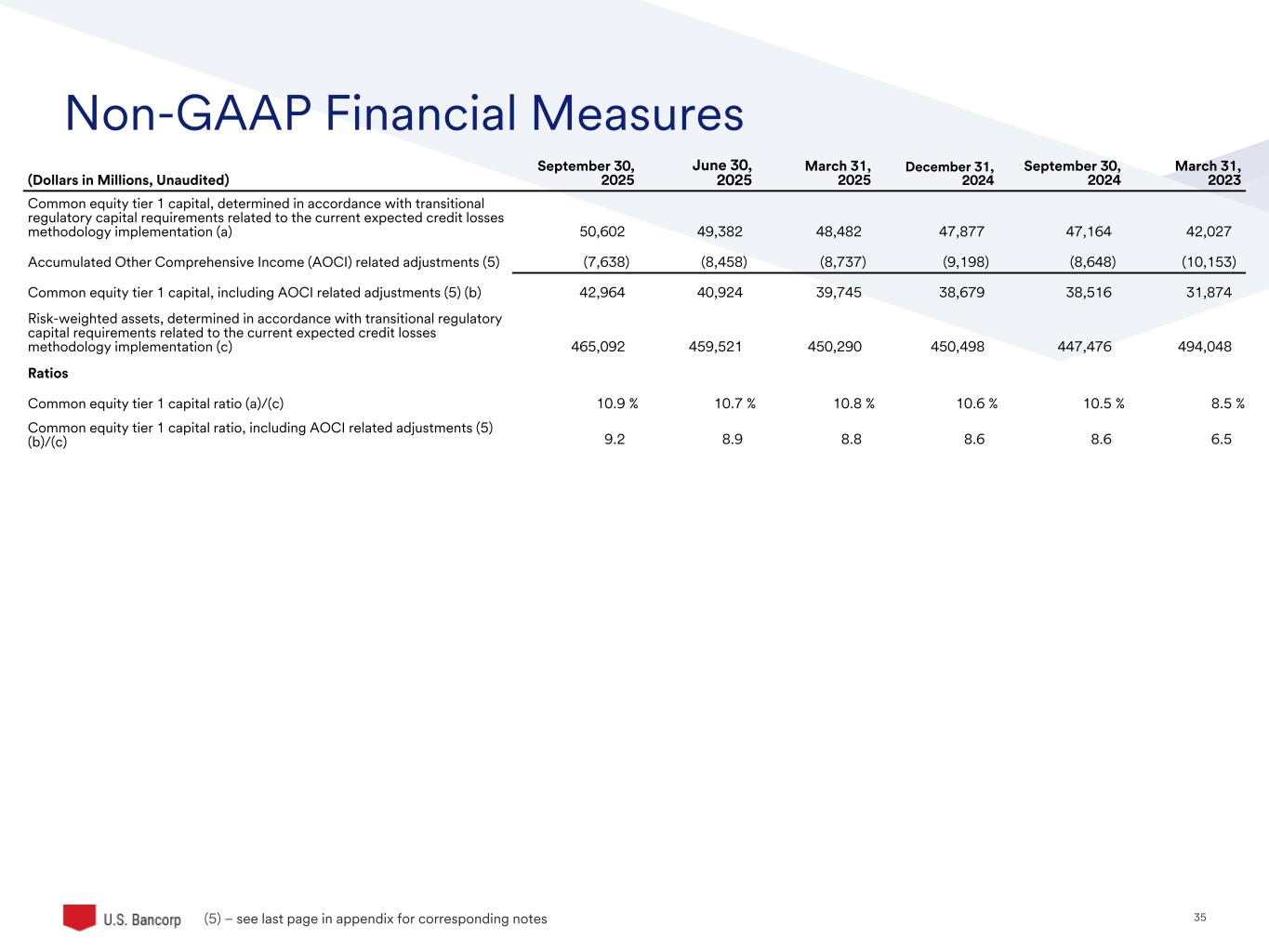
Thank you, Gunjan, and good morning, everyone. This is a very strong quarter for us, highlighted by core underlying business momentum and accelerating growth as we made meaningful progress toward our medium-term financial targets. If you turn to slide nine, I'll start with highlights for the quarter, followed by a discussion of third quarter earnings trends. As Gunjan mentioned, we reported earnings per common share of $1.22 and achieved record net revenue of $7.3 billion this quarter. Revenue growth versus prior periods benefited from improved spread income driven by enhancements we've made to our portfolio mix, as well as broad-based fee growth as we deepen client relationships across the franchise. Elevated deposit flows at the end of the quarter in support of more robust client activity and seasonality in our corporate trust business resulted in ending assets of $695 billion. As expected, nearly all key credit quality metrics, including non-performing assets and net charge-offs, improved both sequentially and on a year-over-year basis. As of September 30th, our tangible book value per share increased 12.7 percent on a year-over-year basis. Slide 10 provides key performance metrics. As the slide illustrates, each of our key profitability and efficiency ratios improved this quarter, highlighted by a return on average assets of 1.17 percent and a return on tangible common equity of 18.6 percent. Over the last two years, we have increased our tangible common equity approximately 30 percent while continuing to deliver a high teens rotce on steadily improving earnings growth notably we also delivered an improved efficiency ratio of 57.2 and a net interest margin of 2.75 percent this quarter our sequential margin expansion of nine basis points was driven by fixed asset repricing strong card and commercial loan growth as well as strategic balance sheet actions we took in the second quarter. We continue to expect net interest margin expansion in the medium term. Slide 11 provides a balance sheet summary. Total average deposits increased 1.8% linked quarter to $512 billion as we continued to emphasize growth in relationship-based deposits. Our percentage of non-interest bearing to total deposits remains stable at approximately 16%. Average loans totaled $379 billion, up 0.2% from the prior quarter. Adjusting for loan sales last quarter, our underlying growth rate was 1.0% linked quarter and 2.8% on a year-over-year basis. Loan yields increased to 5.97%, an eight-basis-point improvement linked quarter. As we continue to strategically remix our balance sheet with a greater proportion of commercial and credit card loan balances we increased both commercial and credit card loans 9.5 percent and 4.3 percent respectively on a year-over-year basis given the current industry focus on non-depository financial institution lending we included a slide in the appendix of our presentation to provide additional transparency on this loan category as you will observe this is a highly diversified portfolio with a balanced and broad composition of borrowers that is underpinned by our proven underwriting capabilities and strong collateral and structural protections. Finally, as it relates to the balance sheet, the ending balance in our investment portfolio as of September 30th was $171 billion and had an average yield of 3.26%, an eight basis point improvement sequentially, driven by the strategic actions we took last quarter and fixed asset repricing. Turning to slide 12, net interest income on a fully taxable equivalent basis, totaled $4.25 billion, an increase of 4.2% on a linked quarter basis. Slide 13 highlights trends in non-interest income. Total non-interest income was approximately $3.08 billion. Excluding security losses, total fee revenue increased 9.5% on a year-over-year basis, driven by new business momentum and broad-based growth across our fee businesses. Turning to slide 14, non-interest expense totaled approximately $4.2 billion as we continue to prudently manage our expense base. Slide 15 highlights our improving credit quality performance despite ongoing macroeconomic uncertainty. Our ratio of non-performing assets to loans and other real estate was 0.43% at September 30th, an improvement of one basis point linked quarter and six basis points year over year. This quarter, our net charge-off ratio of 0.56% improved three basis points sequentially and four basis points year-over-year. Turning to slide 16, as of September 30th, our common equity Tier 1 capital as a percentage of risk-weighted assets was 10.9%, a 20-basis point increase linked quarter. Including AOCI, our CET1 ratio improved to 9.2%. At the top of slide 17, we provide a comparison of third quarter results to our previous guidance. This quarter, both net interest income and fee revenues exceeded our expectations, while non-interest expense was in line with previous guidance, which drove meaningful positive operating leverage for the quarter. Let me now provide our forward-looking guidance. In the fourth quarter, we expect net interest income on a fully taxable equivalent basis to be relatively stable to our third quarter level of $4.25 billion. Total fee revenue is expected to be approximately $3 billion. Total non-interest expense is expected to increase between one and 1.5 percent sequentially. We expect to deliver positive operating leverage of 200 basis points or more on an adjusted basis. Turning to slide 18, we are now operating within all of our medium-term target ranges, one year removed from our 2024 investor day, and remain confident in our ability to build on these results over time. Let me now hand it back to Gunjan for closing remarks.
Thank you, John. Third quarter results show that we are beginning to hit our stride on execution. We remain focused on delivering growth, productivity, returns, and strong risk management, both in favorable and uncertain economic environments. Let me just close by extending my deep gratitude to our clients and shareholders. Our results reflect the power of our strategy, the strength of our franchise, and the dedication of our teams across this organization. We appreciate your trust and your partnership. With that, we will now open the call for your questions.
Operator
Thank you. At this time, as a reminder, if you would like to ask a question, press star, then the number one on your telephone keypad. We'll pause for just a moment to compile the Q&A order. Your first question comes from the line of John McDonald of Twist Securities. Your line is open.
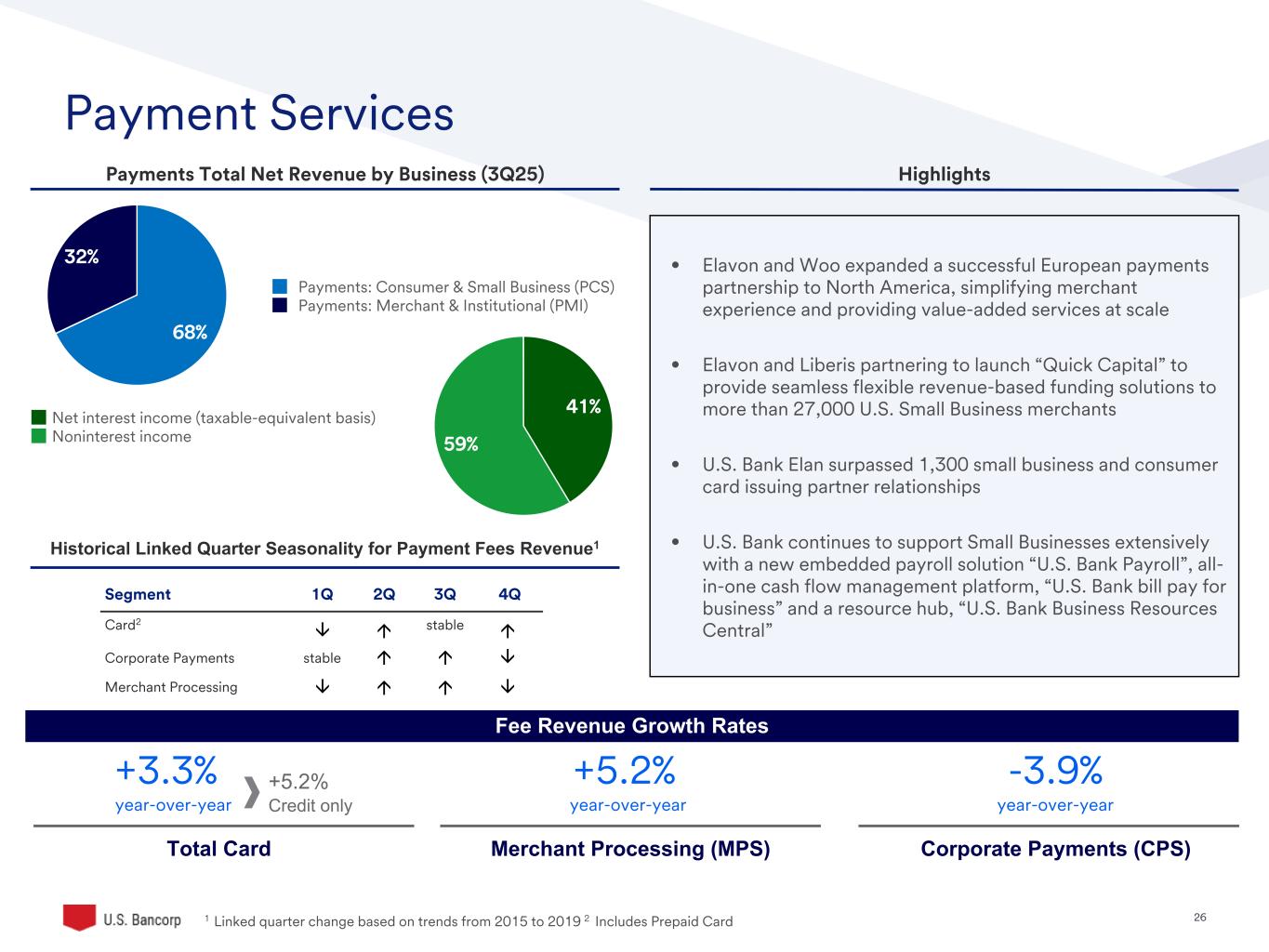
Hi, good morning. I'll start off with a question for John, just on the outlook. Look, John, what are you seeing for net interest margin trend in the fourth quarter? And do you give us some puts and takes on your outlook for net interest income to be relatively finished in the fourth quarter?
Sure. Good morning, John. You know, maybe stepping back just to the third quarter, we had a lot of favorable items this quarter that will continue to be sustainable. We had strong fixed asset repricing. We had a healthy mix of favorability, both on the loan side of the equation as well as on the liability side. And, of course, we had the strategic actions that we talked about last quarter that ended up being favorable as well. So looking forward, if I think about, you know, the fourth quarter, we talked about relative stability. And, you know, we have the favorable items still being a tailwind in terms of repricing and mix. However, we have credit card favorability this quarter that is seasonal to a certain extent, and that will reverse in some capacity. And so when I think about the quarter, there's obviously some risks and there's some opportunities. I would say that we're biased to the upside, both in terms of net interest income and net interest margin versus our flat guidance, because I just see more opportunity than I do risk. But we'll see how the quarter plays out, but that's where we're at right now.
Okay. And then just following up on that, looking a little further out, what are some of the drivers you have for net interest margin expansion next year in the context of maybe a few rate cuts? And do you still think that you could get towards 3% in 2027?
We definitely see a path of net interest margin expansion getting to that 3% level in 2027. The drivers are going to be the ones that we've talked about in the past. We have fixed asset repricing that is quite mechanical. We've talked about the $3 billion of investment portfolio and the $5 to $7 billion of loans that reprice. We still have mix that we have in our control in terms of leaning more into card and commercial type of loans that are helping. And so I think of those things of having somewhere in that two to three basis points of embedded lift from a net interest margin standpoint. The third component is really going to be on the deposit side and the mix and pricing of that. and that will depend a little bit the speed in which we gain to that three percent margin is going to depend on the curve depends on deposit competition and how we execute really on on dda and checking and all those sorts of accounts that we need to grow so we we definitely see a path for three percent in 2027 but some of those macro environments might impact the speed in which we get there okay thanks john you bet your next question comes from the line of john pancari of Evercore.
Operator
Your line is open.
On the positive operating leverage came in particularly solid this quarter, and you're clearly confident in the 200 base points plus expectation for 25. Can you give us just a little more color in terms of your confidence in that front or in that pace as you look into 2026, just given some of the investments that you're looking at, but also conversely, some of the momentum you're clearly seeing on the revenue side. Could we see positive operating leverage exceed that 200-plus range as we look out?
So, thanks, John. You know, in terms of our guidance, of course, we've been signaling over 200 basis points of operating leverage this year, and we've been achieving that. Obviously, we had a lot of strength this quarter, and we continue to expect that in the fourth quarter. You know, as we think about 26, we haven't provided formal guidance there. We're going to, in the middle of our planning process, of course, but, you know, I think you can kind of see the key drivers here. You can think about net interest income having, you know, having a good, you know, growth trajectory as we think about all the different items I just talked about, the fees, we continue to expect that mid-single-digit type of growth, and our expenses, you know, we've been able to manage quite prudently. So we expect to achieve meaningful, positive operating leverage next year.
And, John, I'll just add, this is Gunjan. We are very confident in our expense management disciplines because our four signature programs have runway still to go, and the revenue outlook is positive. It does depend on the fee mix. As you know, we are very focused on improving our fee mix, and that tends to attract more expense, which we are very glad to do. So that's the range. But the business model lends itself to meaningful, positive operating leverage for next year. It's just a matter of level.
Okay. Got it. Got it. And then on the fee side, also some clear momentum there, some pretty good upside this quarter. And as you mentioned in your repair remarks, you're certainly seeing some of the momentum follow through in terms of your key drivers and in your payments space as well. I mean, I guess on the payment side, can you give us a little more color in terms of the drivers of the growth that you're seeing there and your confidence in that mid-single-digit expectation? You know, and is there anything from the standpoint of customer acquisition or the benefits of the investments that you've made that you'd call out here as being key drivers to what seems to be a more sustainable consistency around your fee performance as of late?
Thank you. We are feeling very confident in the broad-based strength of the fees. And let me just share two things, and then I'll get to the specifics on payments. We have made a lot of progress over the last 12 months on creating an operating model that creates interconnectivity between our product sets, so the fees are lifting each other. Our relationship teams, our sales and marketing efforts are multi-product, the product design is multi-product, and all of that is leading to a measurable lift in effectiveness of marketing dollars. So that gives us some real shift in the trajectory here. What we track internally on payments, for example, is new card acquisitions that we can measure today that have grown nicely from past trends, and it takes 12 to 18 months for that revenue to catch up. We are also seeing material strength in sold but not installed business on businesses like CPS and merchants. So all of that leads us to have confidence in our mid-single-digit fee guidance across the whole portfolio and payments overall, with upside over time as we gain momentum.
And that upside, that would go well for 2026, I assume, there, Gunjan, above that mid-single-digit level, possibly?
Well, we've talked about mid-single-digit and the payment complex, and that's where our objective is with upside. So I think that's where our starting point is. We'll have more detail, obviously, as we think about that in the next call, but mid-single digit is a good place to start to the plus.
I do also want to just reiterate that there is a lot of curiosity around payments, and in the fall, we're going to bring a deep dive on the merchant business and the card-issuing businesses, so I look forward to more dialogue there.
Got it. Okay, thank you. Appreciate it.
Operator
Your next question comes from mine of Ken Usdin of Autonomous Research. your line is open.
Hi, thanks. Good morning. I just wanted to follow up on the payments point and just ask you to dive in a little bit more. I think 3% year over year is not far from mid single digit, but that corporate piece is still comping negative and credit and debit is still three-ish. So I just want to kind of give us some of the moving parts of the drivers now and across the lines, you know, where do you expect those to inflect?
Sure. So your question regarding on the corporate payment side of the house, you know, that has seen negative year-over-year prints the last couple of quarters. The drivers of that are really on the government side of the equation, as well as Corporatini. So you could think of government spend as about 15% of this line item. Corporatini is kind of about the same thing. And those have had some headwinds in those particular areas. As Gunjan mentioned, uninstalled revenue and strong pipelines, that is certainly the case, and we expect to see some online versions of that coming on into the fourth quarter. And so we do expect improving trends in our year-on-year outlook on corporate payments. And Merchants has had some strong quarter given success in our key verticals that we've been talking about and as well as some of the embedded finance and tech-led type of strategies and card, as Gunjan mentioned, the marketing and account growth we see is very encouraging. So those are kind of the items that I talk about from a payment standpoint.
I can add just a line on the debit card where the growth is really about growing your entire consumer franchise, and we are very laser-focused on that and see a lot of upside over time with interconnected products between card and the consumer bank. So as we see momentum in the, we showed you some data on consumer deposits that was a very favorable set of trends over the last two years. And that creates momentum in the total number of clients and usage of the bank accounts and the debit card revenue line. So we should expect that to come. But the real payment strategies focused on the card issuing and the merchant businesses that are the vast majority of our payments businesses. And, of course, CPS is a very attractive business, and we are expecting those trends to reverse in due course here.
Great. One follow-up just related to consumer. It's great to see the card loss rate come back down now at 3.73 in the third quarter. Are we starting just to see that maturation of the portfolio? and kind of, you know, where do you expect to see that card loss rate go going forward, assuming a reasonably stable economy from here? Thanks.
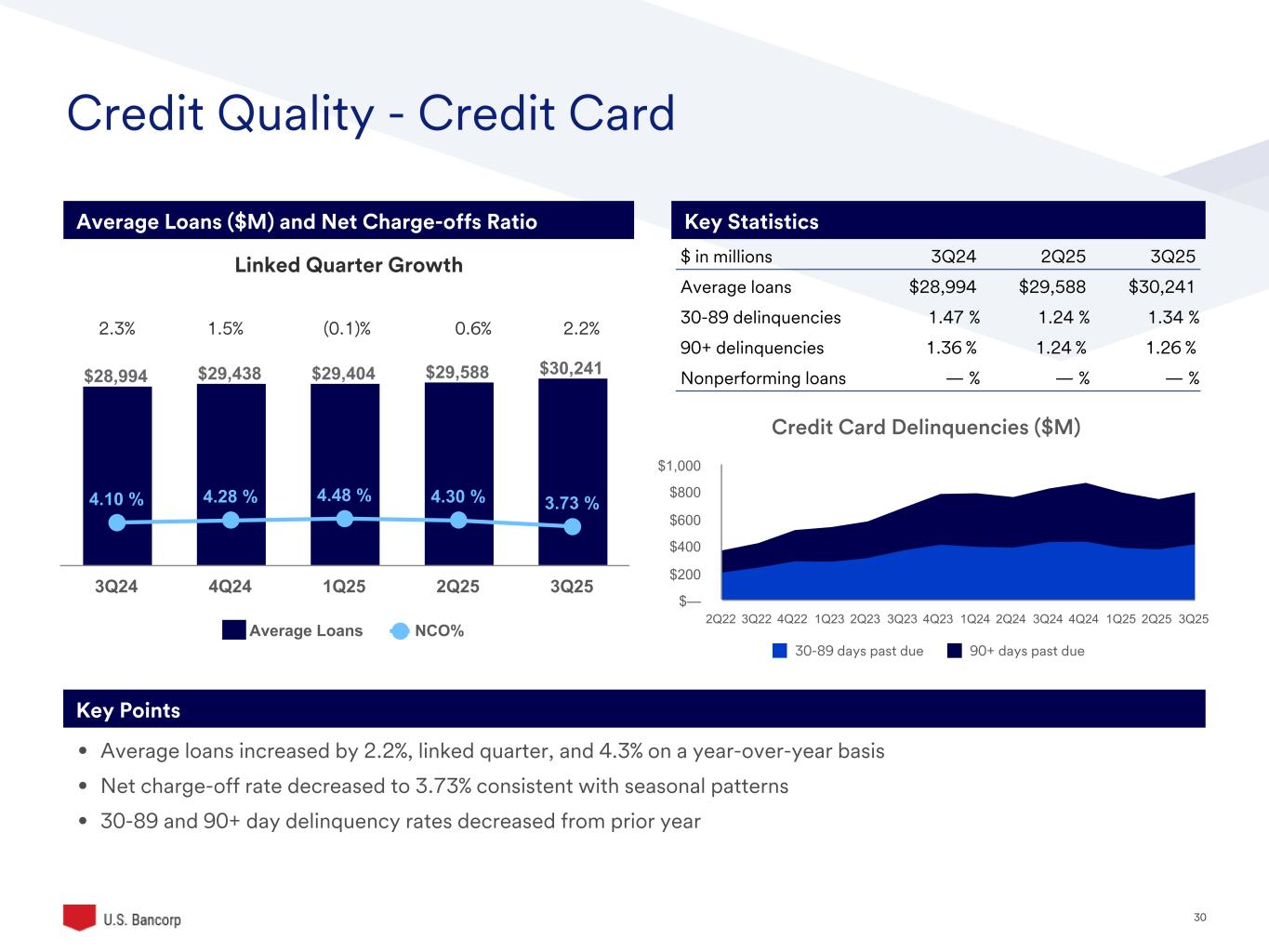
Yeah, our view on credit right now is favorable. We see strong spend trends and credit trends, particularly the vast majority of our book is 720 or greater. The spend levels have been very good. The loss rates, as you mentioned, have come down meaningfully this quarter um you know there's some seasonality there uh but our for certain our 2025 loss rate on card will be less than um our loss rate in 2024 so there's some good momentum there you know as we get into 26 we'll likely update you there but it's it's we don't see any anything that gives us any concern in this area and and so it's been a strong result Your next question comes from the line of Abraham Poonawala of Bank of America.
Operator
Your line is open.
I just wanted to, as we think about NII margin, I think deposit growth and pricing matters. I think, Gunjan, in your opening remarks, you talked about the bank smartly, partnerships, branches, like all of those from an outside looking in. And it's just very hard to figure out whether these are sticky deposits, lower cost deposits. If you don't mind spending some time on just the client acquisition that's happening through these channels and how we should think about either the magnitude of growth they can drive as we look out the next couple of years and the cost structure of these deposits.
Let me start and then John will add on. So the consumer clients and the consumer deposits, as you pointed out, are both sticky and favorably priced according to the total portfolio. And we think about our deposits in three big categories. The consumer deposits, which includes our wealth franchise, and our wholesale deposits that you're very familiar with. And then we have a large trust business that is quite a unique property. Our ability to drive fee business growth is very helped by the balance sheet presence we have on the wholesale and the trust side. And the pricing there is quite dynamic. So the consumer and our focus on improving the mix of consumer deposits is all about creating stickiness and better funding costs. these clients also then feed enormous growth in other businesses. So we very steadily see a client that might start with us on a core checking account or a core savings account, then deepens with credit card, deepens with wealth, and deepens even on the small business side. So those are the strategies across all of the levers that you point out. And I'll add to a digital acquisitions with marketing, which we have really stepped up in terms of our investments and our capabilities there as well. So that's sort of the story on deposits and the consumer franchise. And John, you'll add something, I think.
Yeah, a couple of things I would just mention is we feel very good about where the deposit portfolio shaped out this quarter. We saw very strong growth in both consumer as well as on the commercial side of the equation. And our desire, as Gunjan, just to reiterate what she said, our growth is really to, on deposits, is to grow where it matters and where it's conducive to supporting fee growth. And so when we think about Smartly, and you mentioned that product, Ibrahim, for us, we are highly encouraged because it is a product that has three times as much multi-products attached to that client when they open up this product. in and of itself, we know that has more stickiness to it. It brings in a new type of client into the bank, which is, from a credit card standpoint, about half of the cards that open up are new relationships that we have to the bank, which is very encouraging. And then on the commercial side of the house, we saw a lot of growth on the deposit side across all sorts of different areas, including treasury management and the investments we've been making in that business. over the last couple of years, really starting to come to fruition. We saw a lot of growth in investment services this quarter. There's just a lot of business activity. And so we gain a lot of deposits as there's just a lot of investments moving around. And so we house those deposits while that is occurring. So all this activity that occurs is really beneficial to us. And for that reason, we saw benefits to our fee categories, as you saw this quarter.
And it's really all interconnected, which is the point of what Gunjan was saying earlier in the call got it that's helpful and i guess maybe going back to the margin discussion john so you've talked about it's pretty good expansion this quarter you've talked about the three percent i'm just wondering as we think through that uh the journey from 275 to three uh is there a point where there's a pretty material inflection outside of like the back book repricing everything that you talked about i'm just wondering is there a chance you could hit three percent by this time next year by the fourth quarter is it just very steady state or are they going to be big step
ups in the progress towards that three percent name sure um so um you know i won't repeat everything i said on the on the drivers but the but to your point on the speed in which you get there you know i'll point out that the curve from a sofa versus five-year treasury is still quite inverted. And so a speed up, if you will, of margin could be the Fed is programmatically cutting, the curve is more upward sloping on that part of the curve, and that could really help boost the speed in which net interest margin improves. The other sides on the asset side are going to be a little bit more mechanical and more embedded in how we move forward.
But it's really going to be that uh the macro that's going to drive the speed in which we get there but thank you your next question comes from the line of michael mail of wells fargo your line is open uh hi um i don't know if we put this in the category of the lock nest monster bermuda triangle and the contents of ndfi but i'm sure many appreciate your detailing of ndfi um but that's not really the way you run the business by NDFI. So I guess it's just connecting regulatory reporting with your business lines. But since you did disclose that, can you just give us a little bit more color? You say that credit quality is higher on NDFI than your core CNI portfolio, which is interesting. NDFI is 12% of the total loan book. Where would that have been, say, five or 10 years ago, and any loans that you're not pursuing. I mean, the key to good credit quality is choosing to say no a lot. Thank you.
Sure, Mike, thanks. I think the slide is in there because there's just been a lot of interest in the industry. You're right. I mean, it is a very broad set of businesses within there. Obviously, as you know, mortgage warehouse lending uh and subscription lines and um auto abs are very different items we just wanted to show that uh that that sort of the sort of categories that we have you know i think that the point that what we're trying to make is that you know our our risk disciplines and how we think about the diversification of this book is is something that we spend a lot of time on and it's not just the category for the category's sake it's just the way we operate in terms of our credit culture. So we think about the multiple ways that there's repayment. We think about how these are over collateralized. We think about the data that it's needed to look through on some of these structures and things like that and the risk limits embedded in there. And ultimately, we know these clients a lot over many years. Many of these clients we've been servicing in many different products over a vast number of years. And in terms of the growth that we've seen, I don't have a number for you in terms of five or 10-year, but it obviously has grown pretty substantially over the last several years. But we're very comfortable with it because, again, we know the clients.
And we'd add that these are broad relationships on the fee side in addition to the loan book, and that's just client selection there.
And my other question is, where would you say you choose to say no a little bit more often than not? In other words, you could have BASF for longer, if any bank could. Are there any areas for you to say, hey, let's pay more attention to this?
Sure. We have that conversation all the time on our credit committees and things of that variety. We're talking about line items and single counterparty limits and things of that variety and a number of different things. We're careful about certain areas that when we look through have more leverage and things of that variety. we want to make sure we understand it. It's all on the credit profile, and the client selection is very important. We're servicing a number of the different large players here that are very well-known to the market, and we feel very comfortable about the book.
Operator
Your next question comes from the line of Saul Martinez of HSBC. Your line is open.
Okay. Good morning. Just wanted to quickly follow up on the fourth quarter net interest income. outlets being stable. I get that there is a bias to the upside. But, John, you did mention that there are some upside sources and there are some risks. And I think you mentioned credit card favorability and 3Q and some other risks. But I'm not sure I understand, but could you just elaborate a little bit on what the card favorability dynamics are and what the other downside risks are, and what are you assuming there for rates in the fourth quarter, and how are you thinking about the rate backdrop in 26? Are you working with the forward curve, which I think has five cuts in it, which presumably would be good for you, but just any color on how you're thinking about the rate backdrop next year, and also is it, what are you assuming for the fourth quarter? How is it influencing your guidance at all?
Sure. Let me go with the assumptions first. I think that's a good place to start on your questions. You know, from a curve and from a rate perspective, we do include two cuts this year. We also have two more cuts in 2026. So maybe we're a little bit late relative to the market in terms of cuts, but, you know, that obviously always shifts. We do have longer-term yields. I'll just pick on the 10-year treasury as an example, more in the 4.25 to 4.50 range for the 2026 year. And so as I think about the fourth quarter, to get to the more specifics of what you were talking about, we have a lot of upside in terms of the things that have been working for us in the past in terms of fixed accessory pricing, the mix is obviously going to be very favorable for us. When I think about the things that are going the other way for the fourth quarter, we did have meaningful pickup and credit card yield this quarter. There was fees that we picked up as well as just strength in that area. Some of that is seasonality. We expect that to reverse in the fourth quarter, just given the trends that we are observing. But all in all, as we put together these things, There's obviously a lot of moving parts, especially in the fourth quarter, but I'll reiterate that we see more opportunity than we do risk as it's embedded into our call.
And so I'll add that the fourth quarter credit card dynamics are very seasonal and expected. It's the holiday season dynamics, so we expect that. There's nothing unique about what we are seeing in that book just at this time. It's just the holiday season changes the dynamics there a little bit.
And then maybe the surprise, positively surprise, I guess, by the size of the sustainable finance business and the growth you've seen there, and it is a pretty big part of the other income line. I just wanted to make sure I understood you aren't expecting continued growth as you see a pull forward of some of this activity and, you know, from current levels. And if that is the case, I guess, what is it? I guess what does it mean for the other income line? Because that has been moving higher, I guess. You know, I know it could jump around quarter to quarter. But is that should we be thinking that line is going to move higher as well as this business continues to grow?
Yeah, our view is that this impact finance line will improve and increase. We've had, as we saw on the slide, a 17% increase. We expect this to be a high single-digit type of business over the medium term. There's not, I mean, there may be some pull forward given some of the legislative moves and things of that variety, but we see the momentum in the business. they've been gaining market share. It's an area that the team has had a lot of focus on. And you look about renewable energy tax credits and you look at low income housing and things of that variety. These are areas that we, and new market tax credits, we're number one in terms of that market share. And so we've been building our capabilities here and we've been, the additional tailwinds have been some of the administrative or the legislative areas that have helped this year as well.
And Saul, you're right. It's quite a large business today. It started out in the other category, and we've had some questions from all of you on sort of what really is there. So we wanted to highlight a part of the business that's actually very core to what we do. It's ingrained in day-to-day sort of running of the businesses, but it has become quite sizable also because of union bank you know union bank acquisition for us is about three years old now and we are just beginning to realize the revenue benefits of some of that some of that client base and the presence in california and this business is a is a good example of sort of what a good strong presence in california can can do to certain certain line items so very attractive business for us a long long-standing business, which just has become quite large now.
Great. That's very helpful. Thank you.
Operator
Your next question comes from the line of Gerard Cassidy of RBC Capital Markets. Your line is open.
Good morning, Gunjing. Good morning, John. Good morning. Can you guys share with us, obviously, there's a lot of talk about stablecoin and the impact it may have on the payments business, and can you share with us how you're getting out in front of and what you're doing to prepare yourselves for the stablecoin activity eventually coming into the payments business?
Yes, good morning, Gerard. So we are working on stablecoins in two very distinct areas. The first is around the capital markets and investments part of it, where the business model is very clear and it's very favorable to us. So this is custody and safekeeping of the collateral underlying stable coins or custody and safekeeping of cryptocurrency assets. These are products that we introduced some time back, have reintroduced with the shift in the supervisory environment and are quite confident in our ability to just provide those products. The other side is stablecoins as a payment rail, where the client demand is more muted, although there are a lot of discussions. And there are efforts that are twofold. One is to just be ready to onboard and off-board a stablecoin into the banking system, and we are working on that in conjunction with the industry consortiums. And then the second is just being ready to provide stablecoin services as a payment vehicle should that market take off within our client base. So we expect to pilot some stablecoin transactions yet this year with some partnerships in the market. I'm also, we're also very aware that we have a unique franchise in Elon where we provide credit card payment services to 1,200 banks, smaller banks, on a white-label service. So this is also a question that we'll get from our smaller bank base. So we are just studying that market and being ready for if it takes off. But the real momentum from revenues and a clear business case and an economic model is on the custody and investment side. So it's a multidimensional field. It's moving very fast. We've just announced some organizational changes to stay current with the industry as it evolves and more to come there.
Very good. Thank you. And then can you remind us when you look out over the next 12 or 24 months as your CET win ratio with the AOCI included continues to grow, So your views of returning capital to shareholders, for years, U.S. Bancorp consistently returned 75% to 80% of earnings. Can you kind of refresh our memories on what you think the long-term return will be to shareholders?
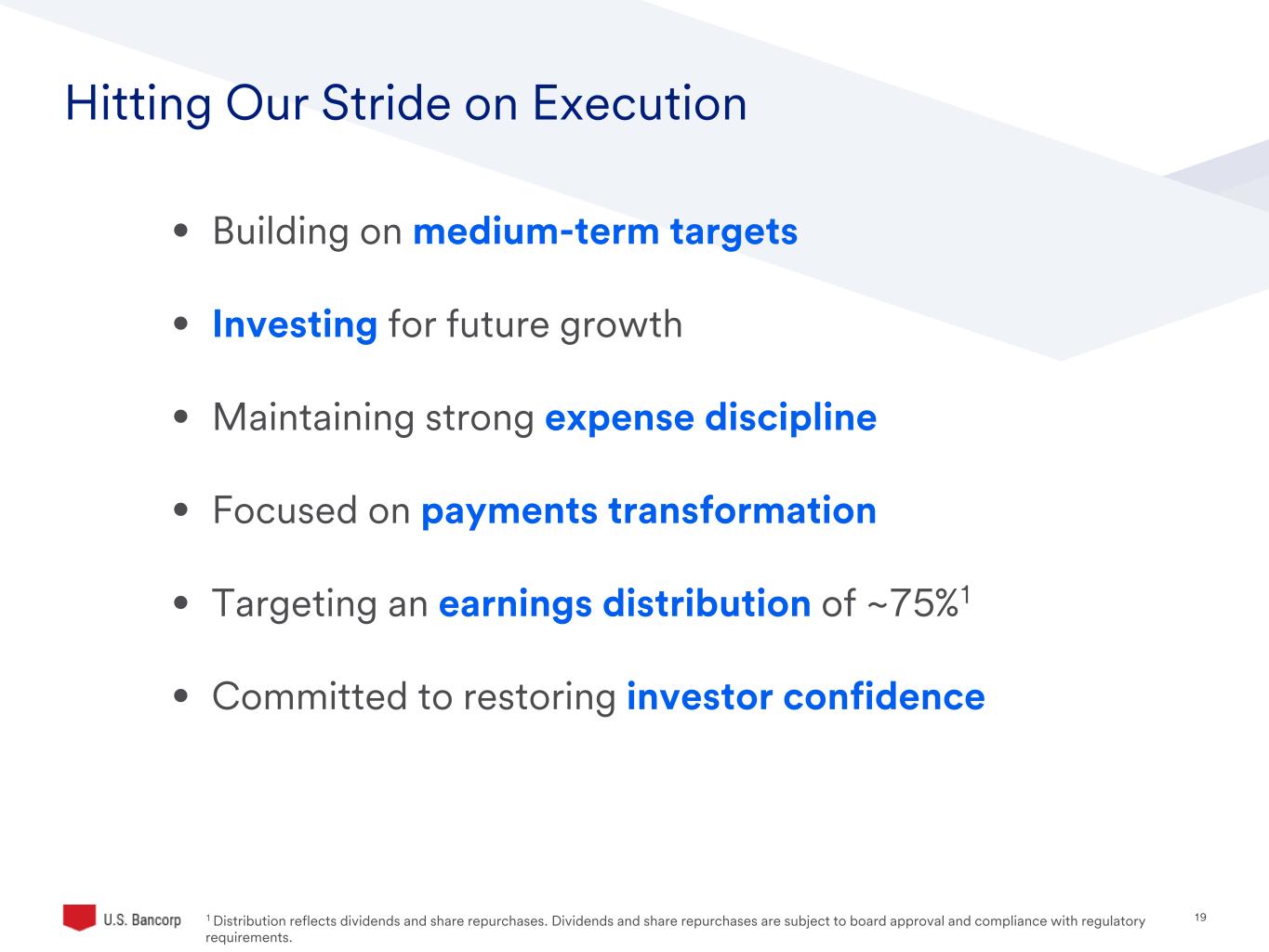
Sure. Gerard's John here. So, you know, we're obviously continuing to build our capital base. I would consider that we're in the final lap, if you will, of building out our capital. we were at 8.4 a couple of years ago. You'll recall we're at 10.9 now. We gave you the number including AOCI and where we're attempting to get into. Obviously, we are looking to increase that amount. It may not be this quarter, but as we look into 2026, we certainly feel that the GlidePath will be there to increase our pace and get to that 75% area that we had mentioned on the slide that you'll see there. We're very much committed to that. And so that, along with the things we have to balance, things like loan growth and things like that, we'll take it quarter by quarter. But that just gives you kind of high level how we're thinking about it.
Great. And Gunjan, thank you for bringing Mark to BAB for the details about payments. We appreciate it.
Thank you, Gerard. Mark and Courtney. So, Courtney will present on the card issuing business, which is sort of a big part of our business, and Mark will join you for MPS. So, look forward to that.
Operator
Thank you. Your next question comes from the line of Erica Najarian of UBS. Your line is open.
Hi. Just a few clean-up questions, as I may. Just first, you know, I wanted to clarify, John, you said fixed asset repricing is two to three basis points of embedded lift. I just wanted to clarify if that embedded lift is a per quarter statement. And also, as we think about fixed asset repricing, is that more tethered to the belly of the curve or the 10-year range that you mentioned, 425, 450?
Sure. So, yeah, just to be clear, and thank you for allowing me to clarify. When I said the two to three basis points, I was referring to mix as well as fixed asset repricing that we have on a quarterly basis. So think of that as an embedded quarterly type of improvement that should be happening. Now, as we know, every quarter there can be movements in balance sheet that can alter net interest margin, and we don't always manage, you know, net interest margin as an output, but directionally, obviously, we want that to improve and things of that variety. And then in terms of the mix, or excuse me, the repricing and where we focus on, it's more the belly of the curve is probably more appropriate. The five-year treasury, I think, is always a good proxy to look at and obviously spreads where those are at, whether it's mortgage spreads or credit spreads just in general. So those are the items that I look at.
Thank you. And my second question is for Gunjan. You know, the stock is clearly reacting favorably today. You know, you had a nice beat to consensus really on the revenue side, and it's really the revenue side, you know, that's driving the positive operating leverage this quarter. As you think forward, how are you balancing some of the embedded momentum that you have been talking about on this call that you're going to continue to talk about in Boston in a few weeks versus what seems to be a lot of questions and pressure on larger management teams in terms of questions on scale and having a relatively short inorganic growth? window under this current administration.
Erika, good morning, and thank you for the question. When I stepped into my role now six months back, we had very clearly articulated three priorities, and they were connected to each other. The first most urgent from a sequencing and timing standpoint was expenses. Our opportunity was very real there. We had finished embedding Union Bank. We had finished all of the work we were doing to restore our capital positions. And it was appropriate to bring the efficiency ratio back to what the business model requires it to be, which is mid to high 50s. Having done that, we exceeded what we wanted to do from the efficiency ratio and positive operating leverage standpoint and released a fair amount of investment to invest in organic growth. And you're beginning to see that show up now, and you'll see payments show up sequentially a little bit behind that just because the sales cycles and the revenue models take time. That's why we talk about leading indicators. So it's less a matter of balancing between them, but one fueling the other, with the ultimate goal being EPS growth that is also accompanied by very high attractive returns. And you'll know, John pointed out, that we have increased our – we have maintained and increased our return on tangible capital very specifically. So going forward, you'll see the growth side of the equation become more present in our strategies. First, with all of the fee businesses, our evolution to a more attractive asset side with more leaning in on CNI and credit loans and on deposits, more attractive balance sheet leaning in on the consumer side. So you see NII growth and you see fee growth, and then you're going to start seeing the strategies for payments. So we're feeling very good about the momentum organically over time and certainly see very real opportunity and quite a lot of runway on organic growth for us.
And just to clarify, Gunjan, given how you answered that question, USB's focus, and obviously, like John said, you're sort of in the final phase of rebuilding capital.
Your focus is inward and not outward in terms of bank acquisitions. just want to be clear that that's the message that you're giving us our focus is very much on organic growth thank you your next question comes from line of betsy grasek of morgan stanley your line is open hi good morning um i just wanted to circle back to the discussion earlier on the impact financing and the implication for tax rate because i think you mentioned that you will be leaning into this effort that you have and that as you do lean into it, it should have some impacts on tax. Could you help us understand how much and over what kind of timeframe is this? And I bring it up relative to the slide 32 that talks about key assumptions for medium term include current tax policy. And I wasn't sure if current tax policy meant current tax rate or the expectation for tax rate to come down as you increase impact finance.
Sure, Betsy. So when I think about the impact finance components for me, the tax benefit that we've received is likely not going to change much from where we sit today. So there's probably a three or so plus or minus point benefit to us in our tax rate that has been there for some time and will continue. The growth that we're talking about here on the fee side is related to transferability and syndications and things of that variety where we have been very good, where the tax policy changes have allowed that market to flourish with more freedom. And I think that is where we have our ability to grow and where do we get to see more fee revenues that I've been talking about there in terms of our assumed growth rate. So that's really where it's at. And the tax rate will continue that favorability, as we mentioned, on the tax rate as well.
Okay. So right now it's about 3% benefit to tax rate. And even with increasing this business, you expect it to hover in that range?
Operator
Your next question comes from the line of Chris from McGrady of KBW. Your line is open.
Oh, great. Good morning, everybody. Looking at slide 19, I guess 18, 19 together, the building upon medium-term targets comment, you know, several larger banks have either put out revised targets or hinted at targets this quarter. I guess my question is, given that you're more or less there, is that something that we might think is on the horizon over the near to intermediate term?
Thanks, Chris. I appreciate the question. You know, obviously we're pleased to be where we're operating here in terms of where we sit in terms of our medium term targets. There's nothing formal, but you'll note in my prepared comments about how while we're pleased, this isn't the end. We anticipate to improve, and that's really what our focus is. So there's no change to any of the medium term targets. We think those are appropriate and right but we do expect improvement of ourselves over over time okay and then john if i could just push what would i guess what would it take for you to to revisit them is it just staying here for a bit of time and the operating environment staying good or what would specifically need to change yeah i think it would be uh those two things that you just mentioned i mean is that the operating environment uh improves our execution uh exceeds even our own expectations and then are going to be triggers that we would we would look to i would just add we need to just consistently stay in the range and then start hitting the upper end of each range and then we'll think about changing the ranges okay great thank you your next question comes from line of matt o'connor
of deutsche bank your line is open uh good morning just a quick clarification um you talked about assuming slightly higher rates in the forward curve uh in 2026 uh if the forward curve plays out versus your rate of functions? Would that be directionally positive or negative for your net interest margin?
Yeah, I think the, you know, as I mentioned, we have four cuts in our forecast. I think the market's a little bit wider than that. So if the forwards actually transpire, then that would be a net benefit. I think our longer-term rates are probably a little bit more higher than where the forwards are at this point and so we would need to see a little bit more improvement there to get additional benefit on the fixed assery pricing so it's a little bit of a mix on balance it's it's it's about equal i would say okay so positive on the short end get back on the long end and when you put all together about the same exactly okay all right thank you again if you would like to ask a question press star then the number one on your telephone keypad.
Operator
Your next question comes from the line of Vivek Duneja of J.P. Morgan. Your line is open.
Given that a lot of the bigger picture questions have been asked in the realm of some cleanup, John, I have a question for you. What is included in your other earning assets where the yield went up 300 basis points linked quarter with an interest income increase of $100 million, which is over 60% of the increase in your NII-linked quarter, and the yield is almost 8%. It's higher than any other asset on the brand sheet. What drove that, and how sustainable is that, John?
Sure. Thank you. So we have to look at that line item along with the short-term liability line item. And so those two things have a little bit more of a, gross up of yield. And so if I step back in what's going on, we've increased our capacity and ability in the capital market space on tri-party repo, and our volumes have picked up quite a bit. We do have the ability to net those balances. So the balance sheet is smaller, to your point, about a billion dollars or so on that particular line item. But we keep the grossed up amount on the yield. And so that differential is going to show up in those two line items. If you net those things out, there's really no meaningful change to NII or net interest margin. You just have to look at the two of those items together. You'll note that short-term borrowings dropped about $7 billion. That wasn't really repo-related. That's, again, about that billion dollars. Most of it was just short-term borrowings that we had used the prior quarter, given the asset sales that we had. And we had, obviously, strong deposit growth, so we could just reduce that balance there.
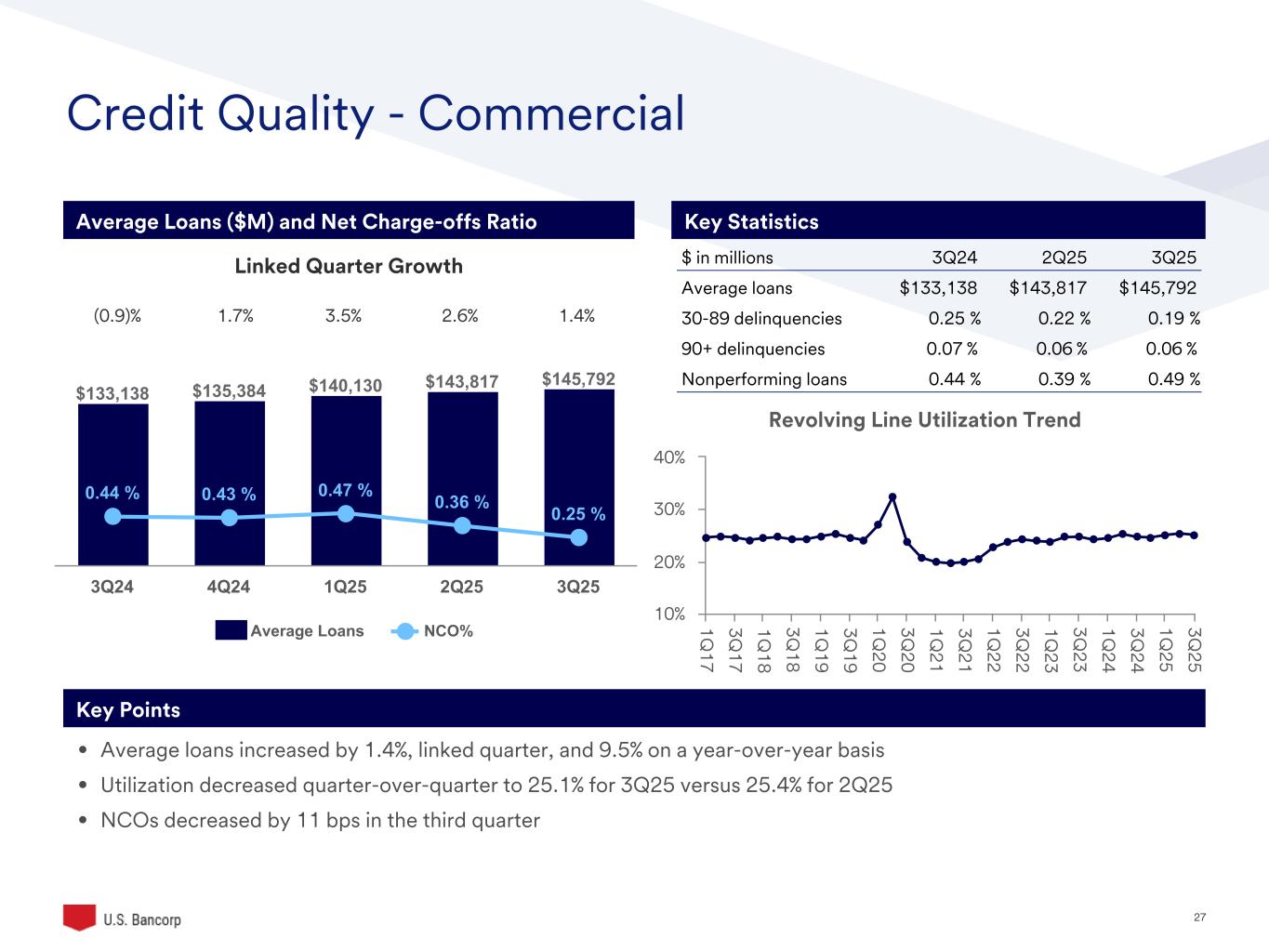
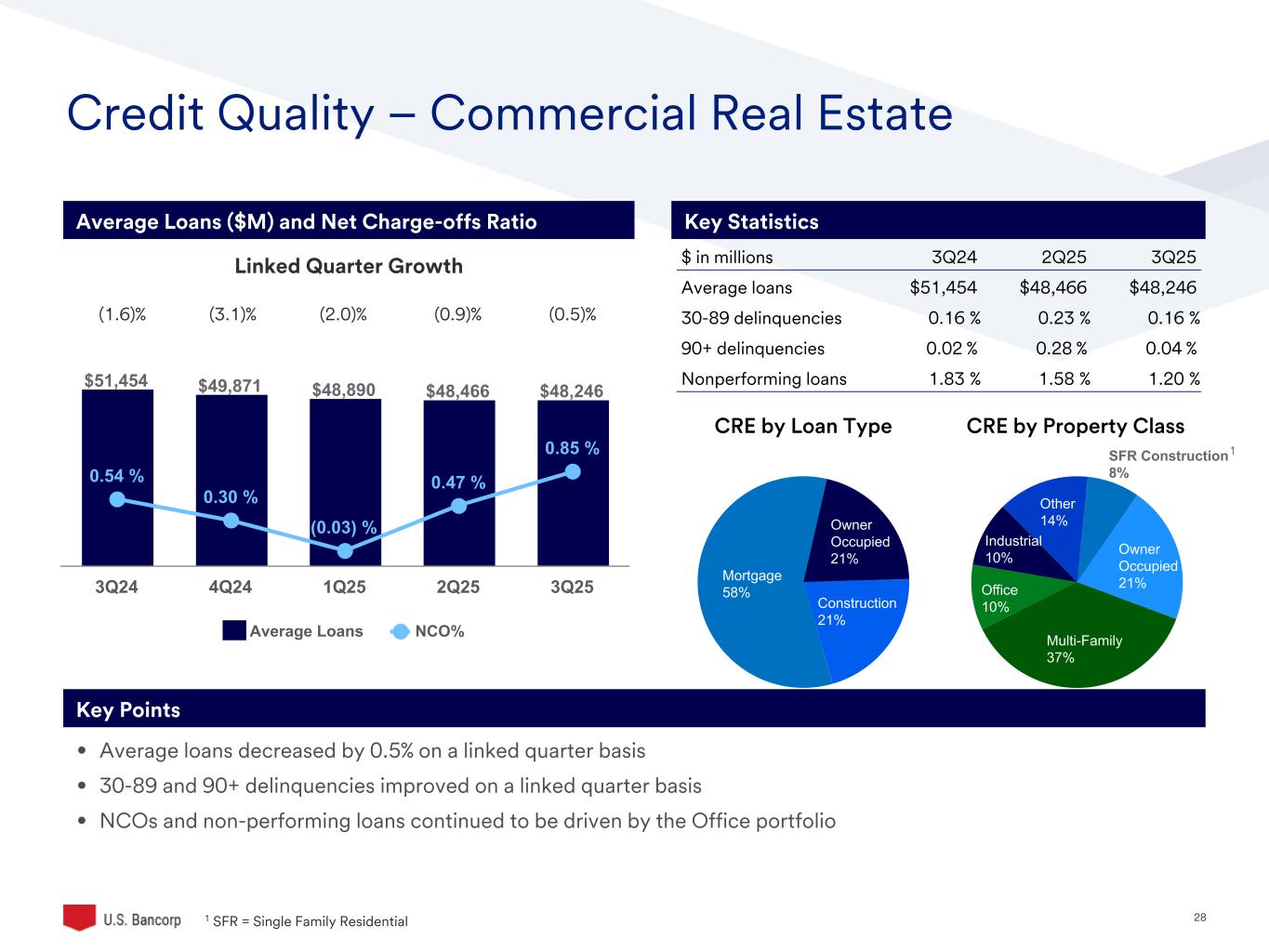
Okay, thanks. And another one for either of you, your CNI NPLs were up 30% link quarter. Any color on what you're seeing, which industry sectors, what's the lost content like, you know, any color on that?
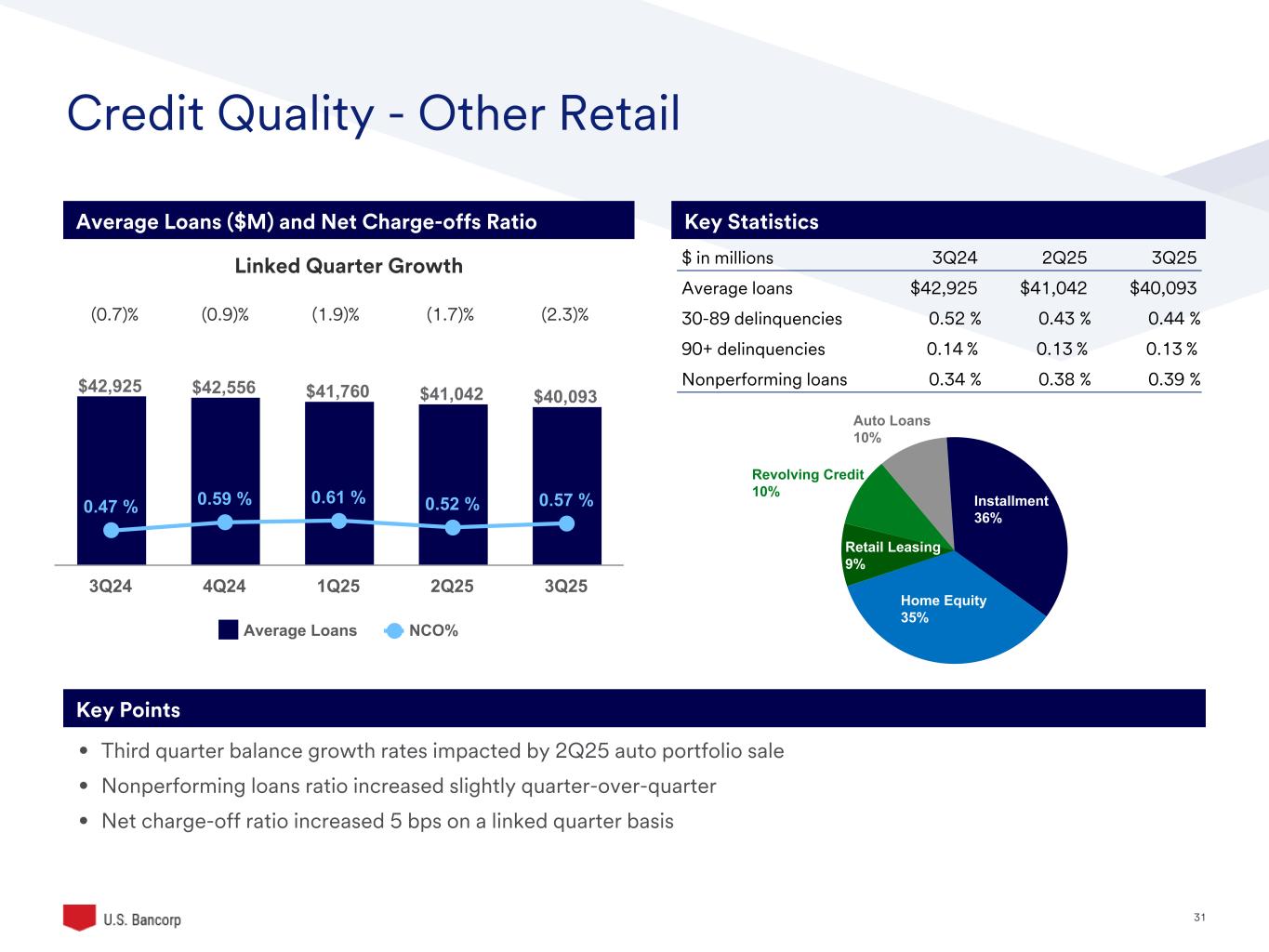
Sure. So a couple things. You know, it's obviously there's some things that can be lumpy from time to time. We do have some exposure to first brands. It's not material to our financials as it's already contemplated in the reserve, but that partially explains the rise in commercial NPAs that you reference.
And have you taken any kind of a loss or provision, therefore, for first brands?
And in what form was that exposure to first brands, John? it's it's just uh it's just our secure borrowings that we have with them and it's already any of the losses contemplated in our reserve already within the provision and are there other similar structures like this that we should be worrying about given i would presume that the first brand stuff showed up under your ndfi no um you know this is on the bank uh side of the equation and and no the answer is no there's uh We see a lot of strength in the commercial side of the equation as well as on the retail side, as we talked about with cards. So we continue to look to see if there are things, and we just are not seeing it.
Gunjan, for you, what are you thinking of doing differently? Because First Brands is obviously a big surprise for the market.
I don't think we'll do anything differently. We have very, very strong underwriting capabilities. When you have a large book, you have one or two issues. you have to be very appropriately reserved for it, which we are. You have to be diligent to learn lessons from it, and we have a lot of confidence in the quality of the credit book and our underwriting process. So I'm not sure there's anything to be done differently, but to remain very vigilant and rely on your strong traditional underwriting strength.
Operator
Thank you both. Your next question comes from the line of Scott Seifers of Piper Sandler. Your line is open.
Thanks, guys. I think most have been asked and answered. But maybe, John, I know we've had a little noise in the long growth numbers this year with some of the actions you took earlier in the year. Are we kind of at a point where we could expect to start to see more visible momentum?
I know you saw some modest end of period growth in the aggregate, but just curious on your thoughts from here and what you're seeing in terms of overall demand. are you uh scott just to clarify are you talking about in a period were you talking about deposits there or loans or you're just just in general no no loans loans i see got it okay yeah so um you know i i think we had an opportunity in the second quarter as we had already talked about and so i think that was um something that we uh found attractive and acted on it's obviously given us a benefit here uh in the third quarter i i don't see anything in particular on the horizon for that But obviously, you're always looking at opportunities as they come about. And so it's just something that we keep a pulse on. But we're focused, obviously, on the organic side, growing accounts, making sure you're leaning into growth with our clients and that sort of thing. Gotcha.
I think that actually does it. So thank you very much.
Operator
We have a follow-up question from the line of Abraham Punawala of Bank of America. Your line is open. Abraham, perhaps your line is on mute. My apologies. There are no further questions at this time. Mr. Anderson, I turn the call back over to you.
Thank you, John. And thank you to everyone who joined our call this morning. Please contact the Investor Relations Department if you have any follow-up questions. You may now disconnect the call.
Operator
This concludes today's call. You may now disconnect.