Operator
Good morning, and welcome to F&G's First Quarter 2025 Earnings Call. I would now like to turn the call over to Lisa Foxworthy-Parker, Senior Vice President of Investor and External Relations. Thank you. You may begin.
Speaker 1
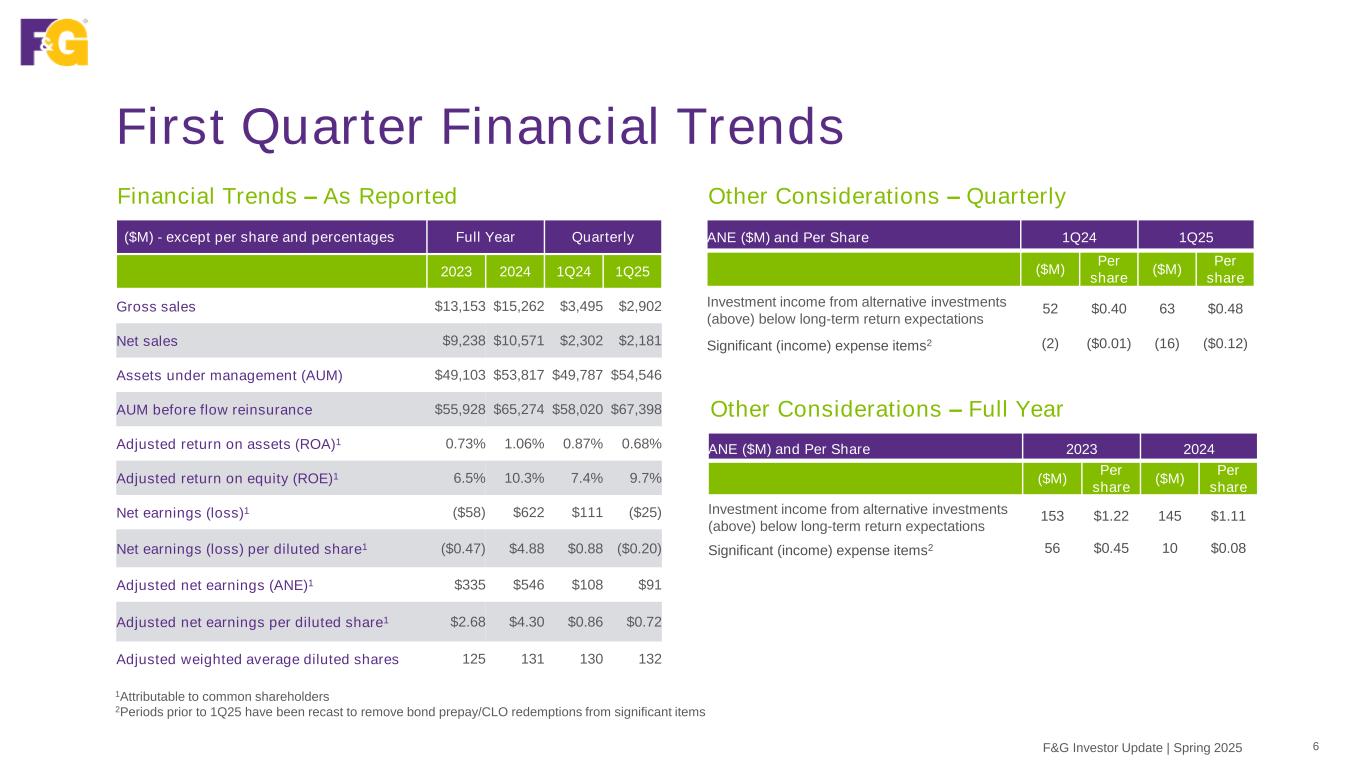
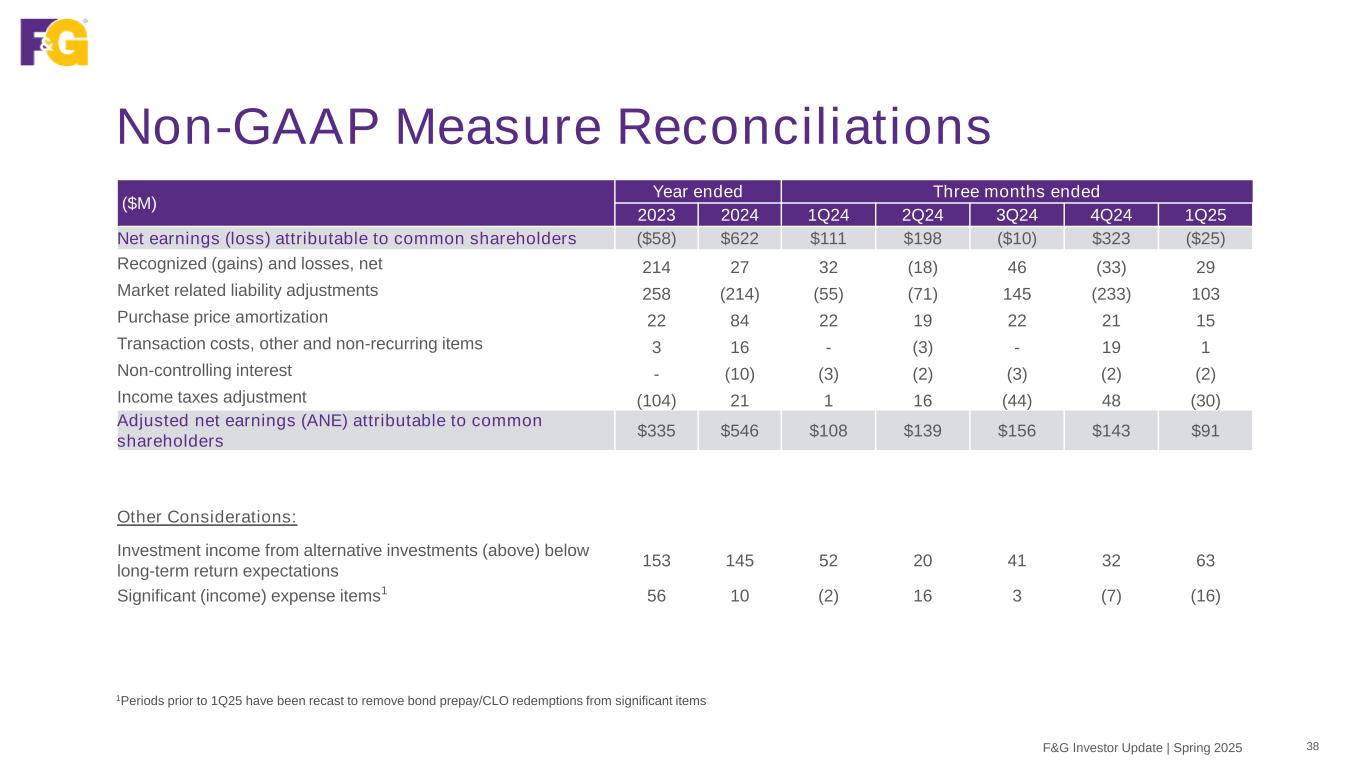
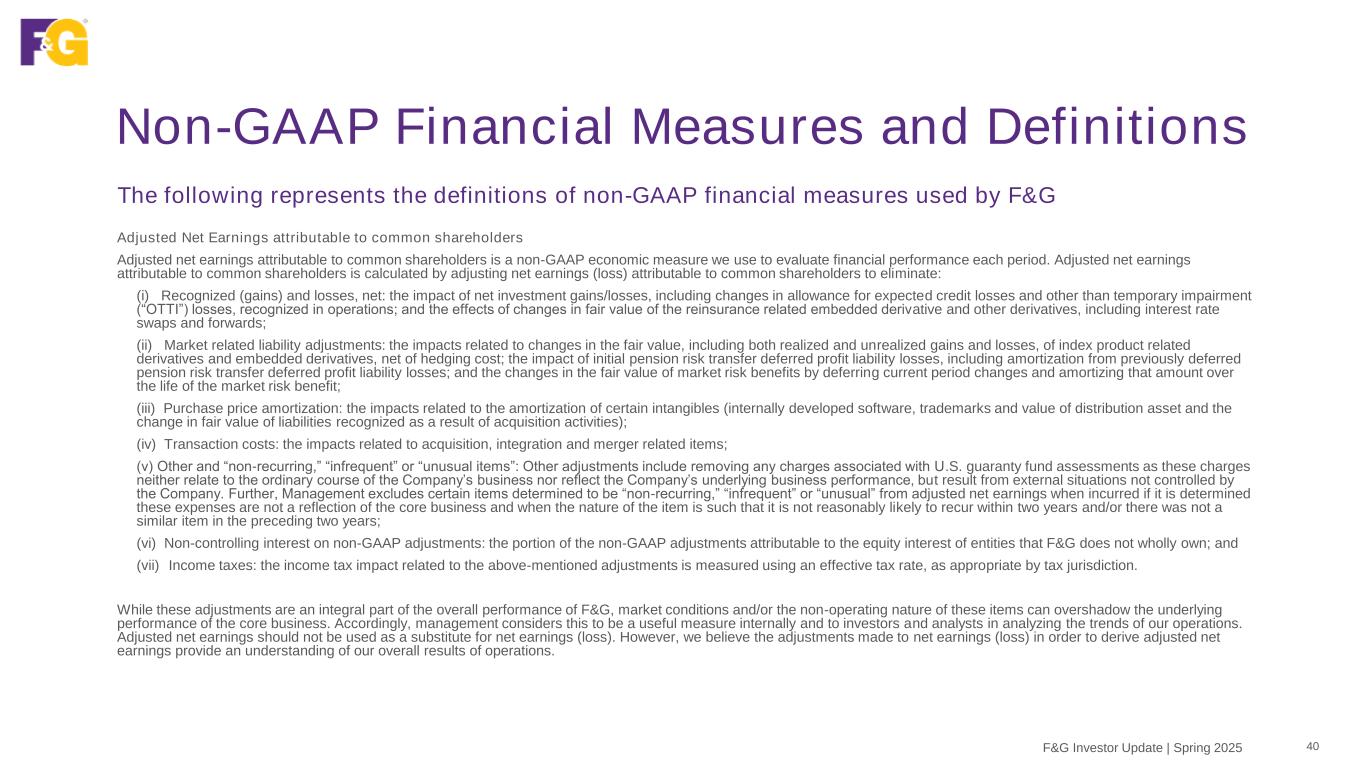
Thanks, operator, and welcome, everyone. I'm joined today by Chris Blunt, Chief Executive Officer; and Conor Murphy, Chief Financial Officer. Also, Wendy Young, Chief Liability Officer, will be available for Q&A. Before we get started, I wanted to note that we have recast prior period financial results during the quarter. We have removed CLO redemption and bond prepay income from our significant items and have updated definitions for the cost of funds and flow reinsurance fee income within our ANE management view income statement. Importantly, historical reported net earnings and adjusted net earnings, or ANE, have not changed. The recast financial results are available in our quarterly financial supplement and earnings release, as well as our Spring 2025 investor presentation. Also, starting this quarter, we are presenting our financial results on an as-reported basis throughout our earnings materials. Therefore, these results, including ANE, ROA, and ROE are no longer presented on an excluding significant items basis. On Page 6 of our quarterly financial supplement, you can find a summary of the impacts to ANE from significant items and investment income from alternative investments. Today's earnings call may include forward-looking statements and projections under the Private Securities Litigation Reform Act which do not guarantee future events or performance. We do not undertake any duty to revise or update such statements to reflect new information, subsequent events or changes in strategy. Please refer to our most recent quarterly and annual reports and other SEC filings for details on important factors that could cause actual results to differ materially from those expressed or implied. This morning's discussion also includes non-GAAP measures which management believes are relevant in assessing the financial performance of the business. Non-GAAP measures have been reconciled to GAAP where required and in accordance with SEC rules within our earnings materials available on the company's investor website. Please note that today's call is being recorded and will be available for webcast replay. And with that, I'll hand the call over to Chris Blunt.
Speaker 2
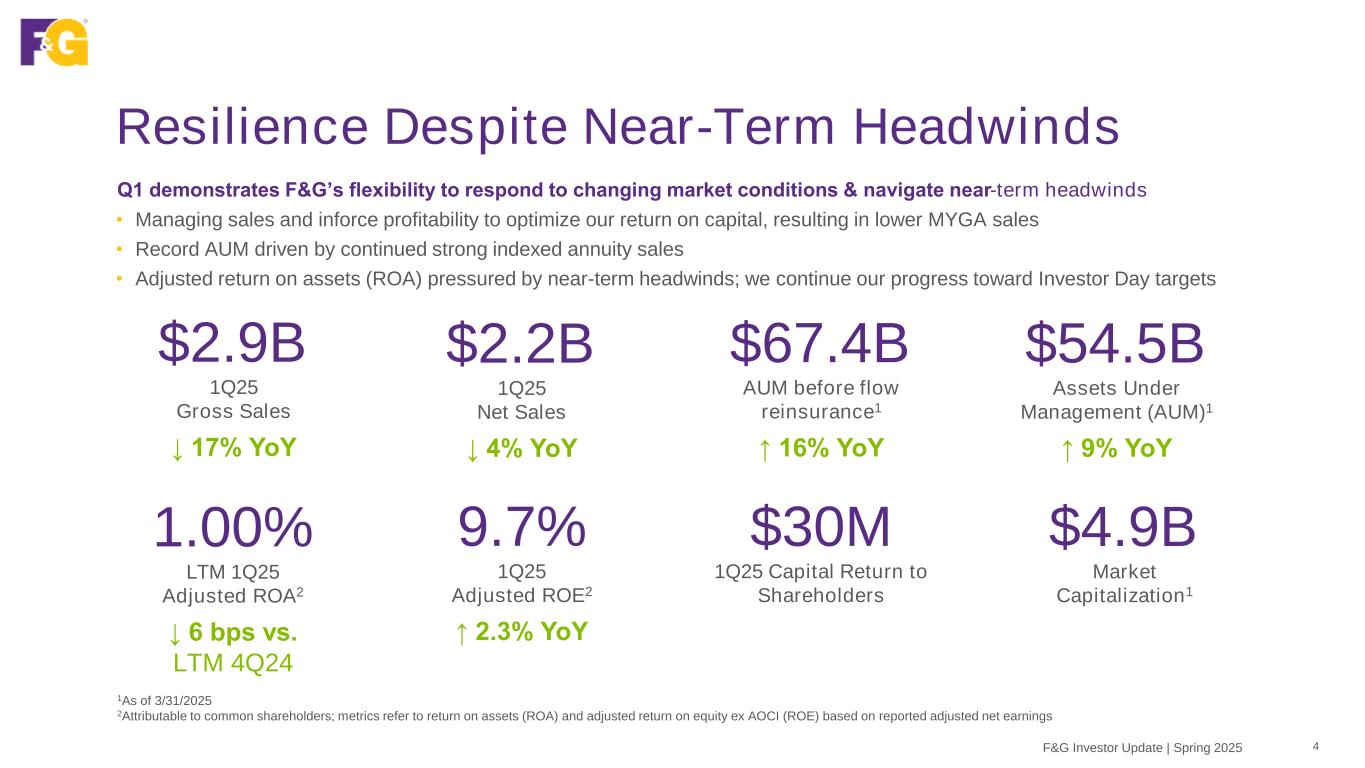
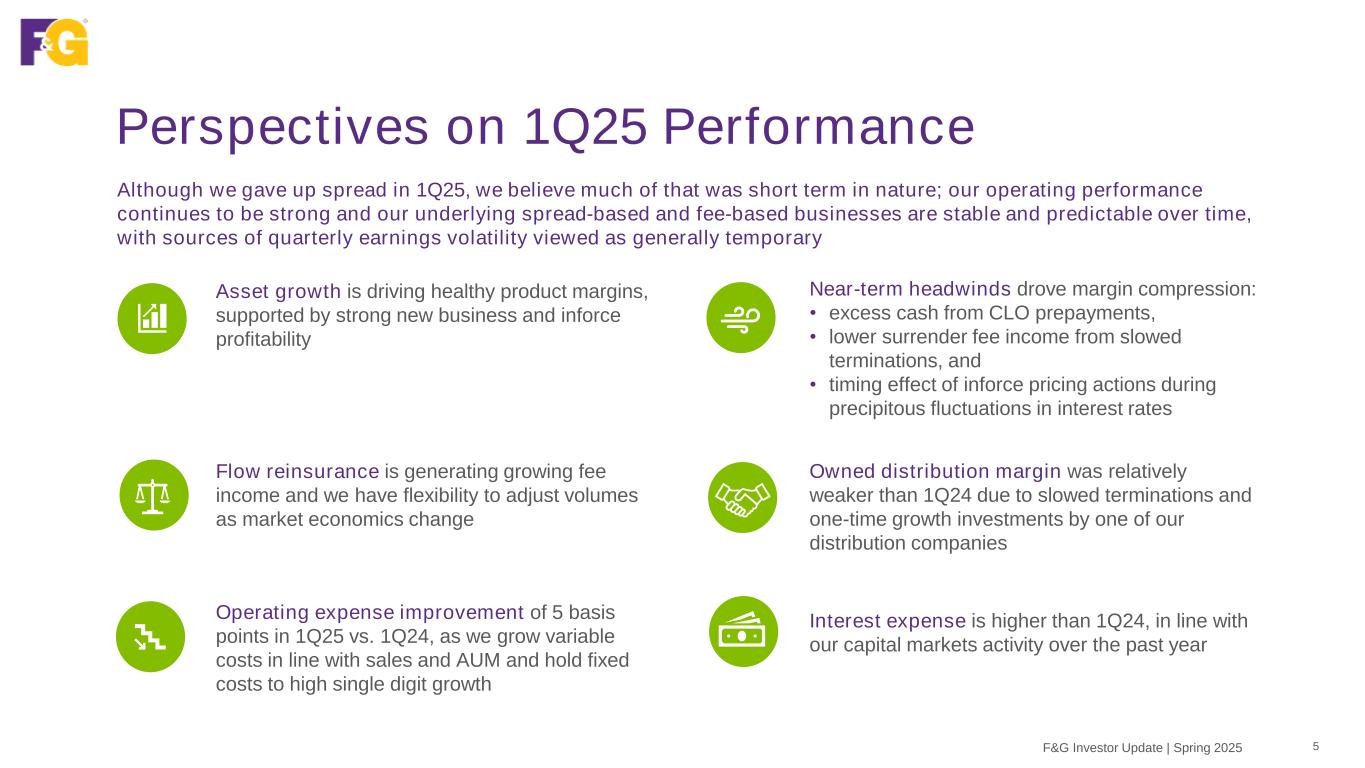
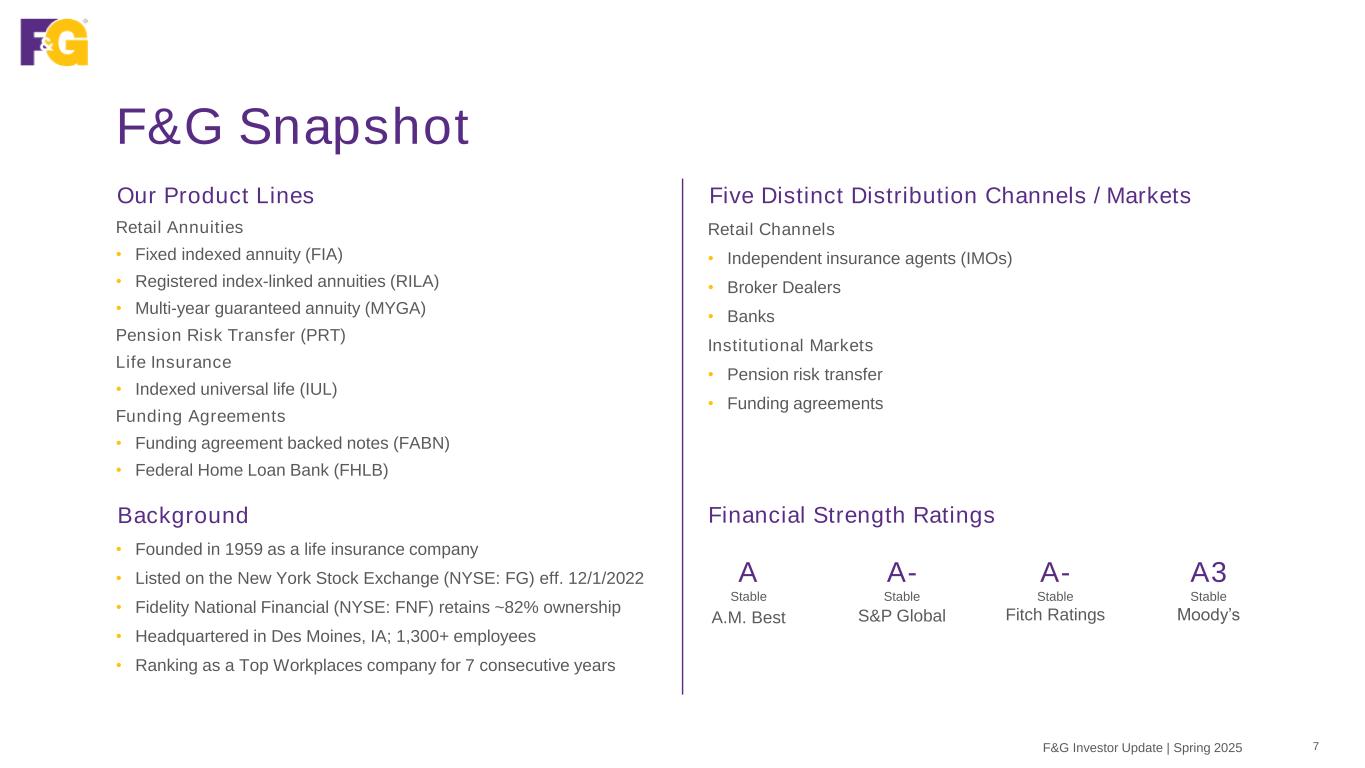
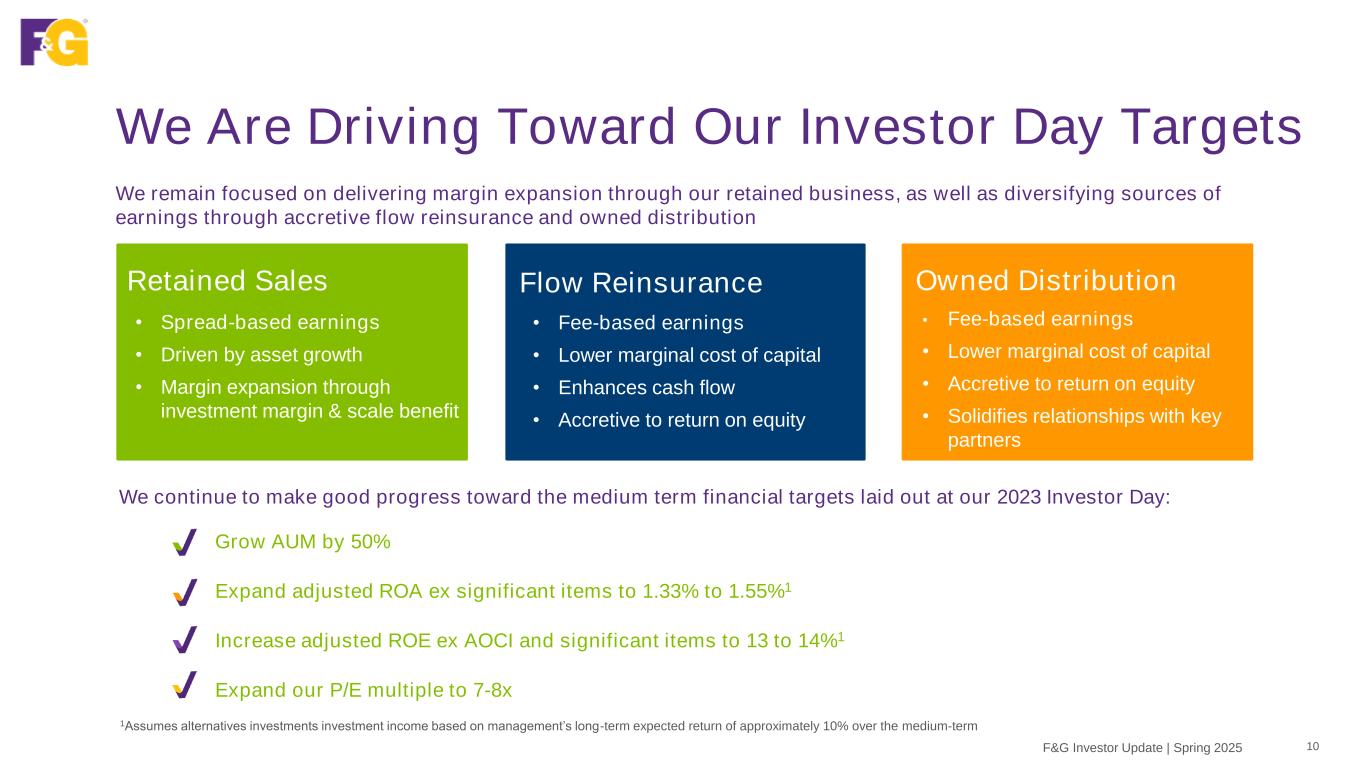
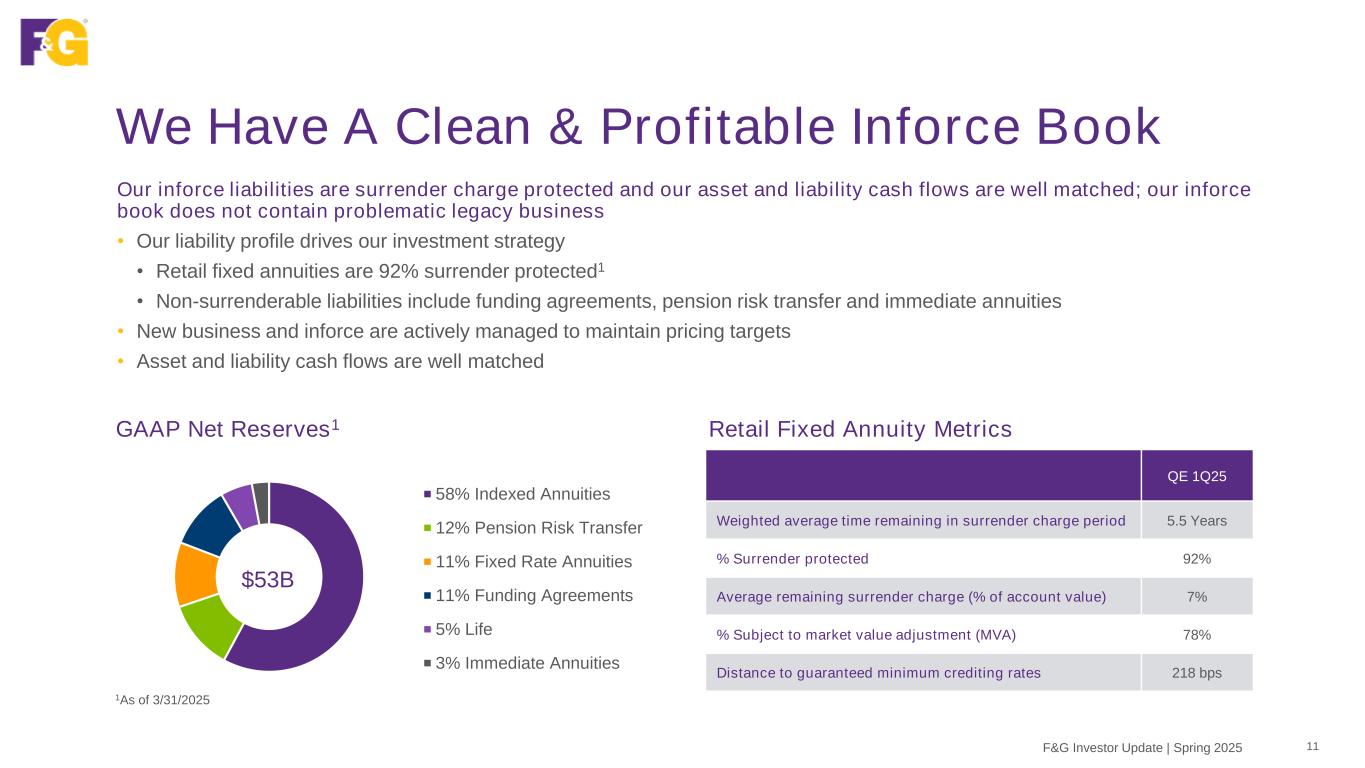
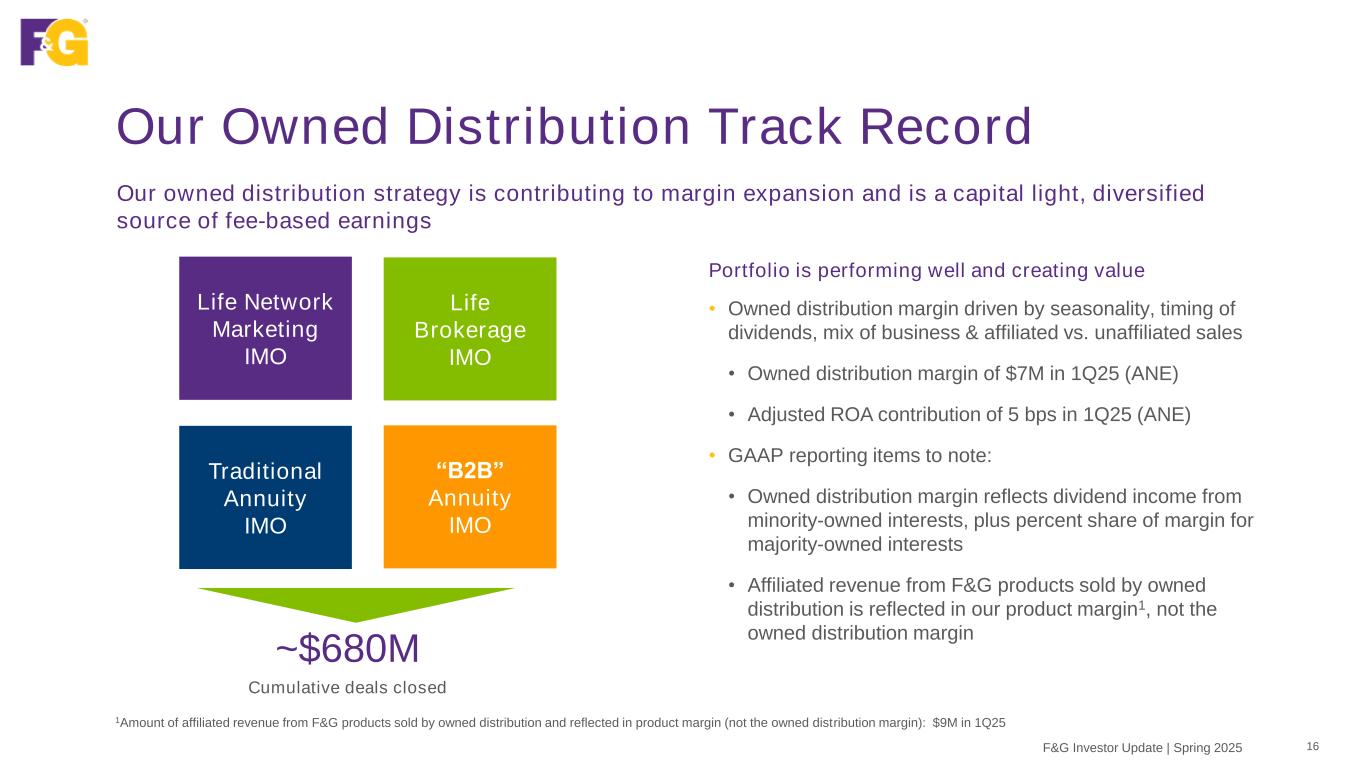
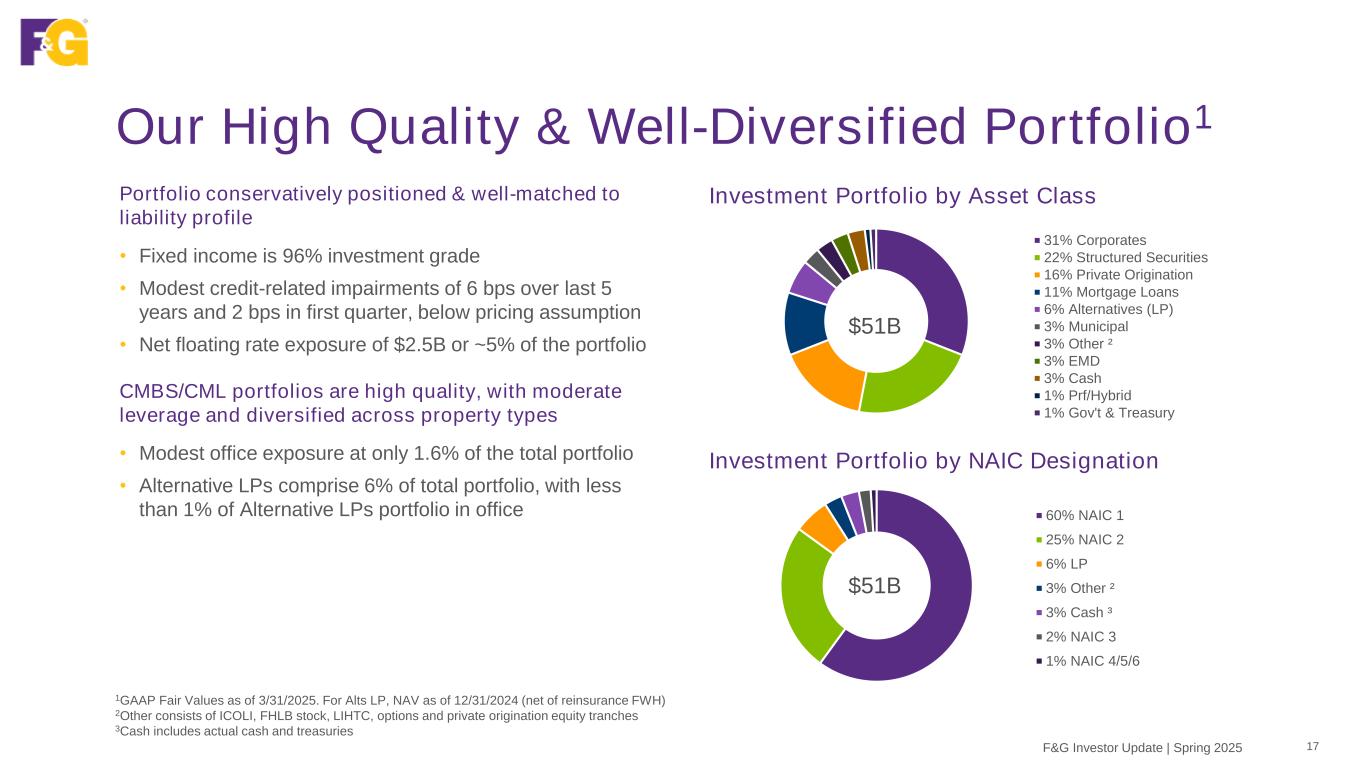
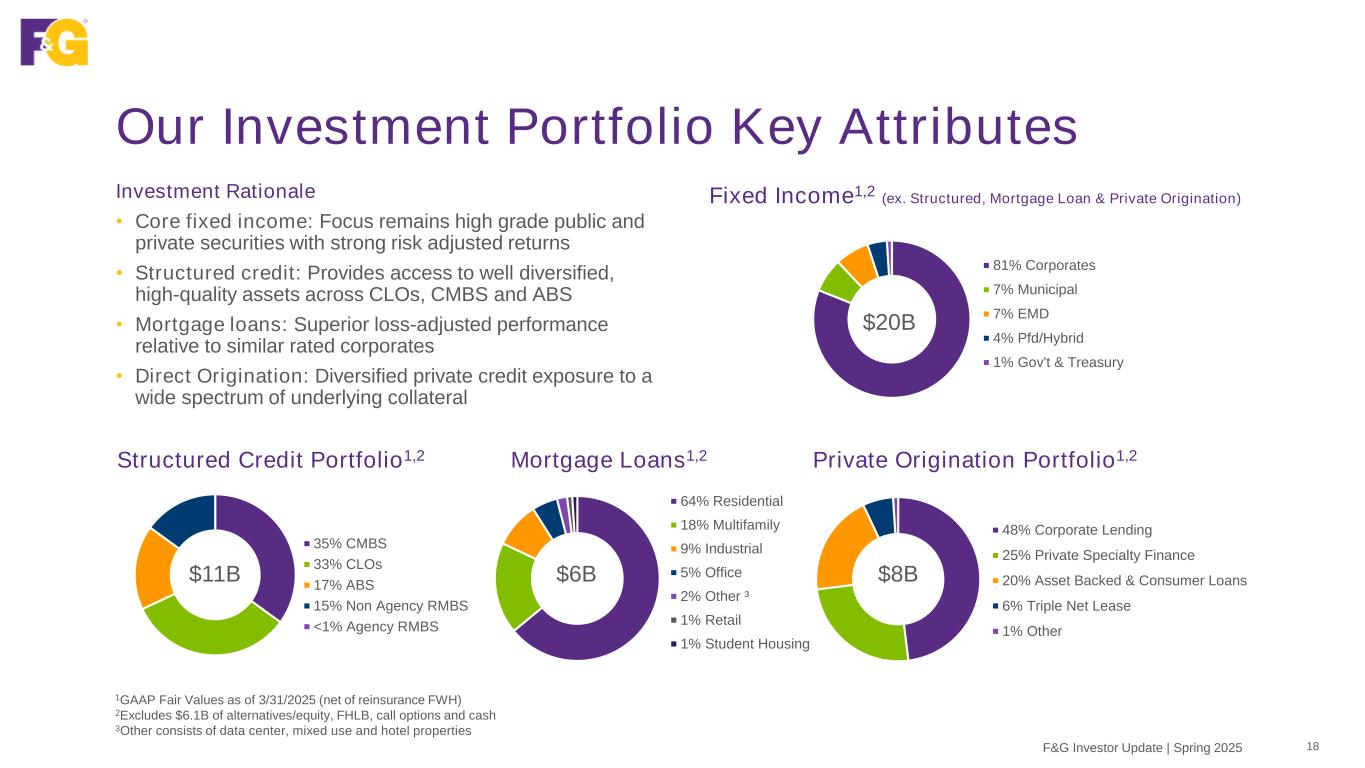
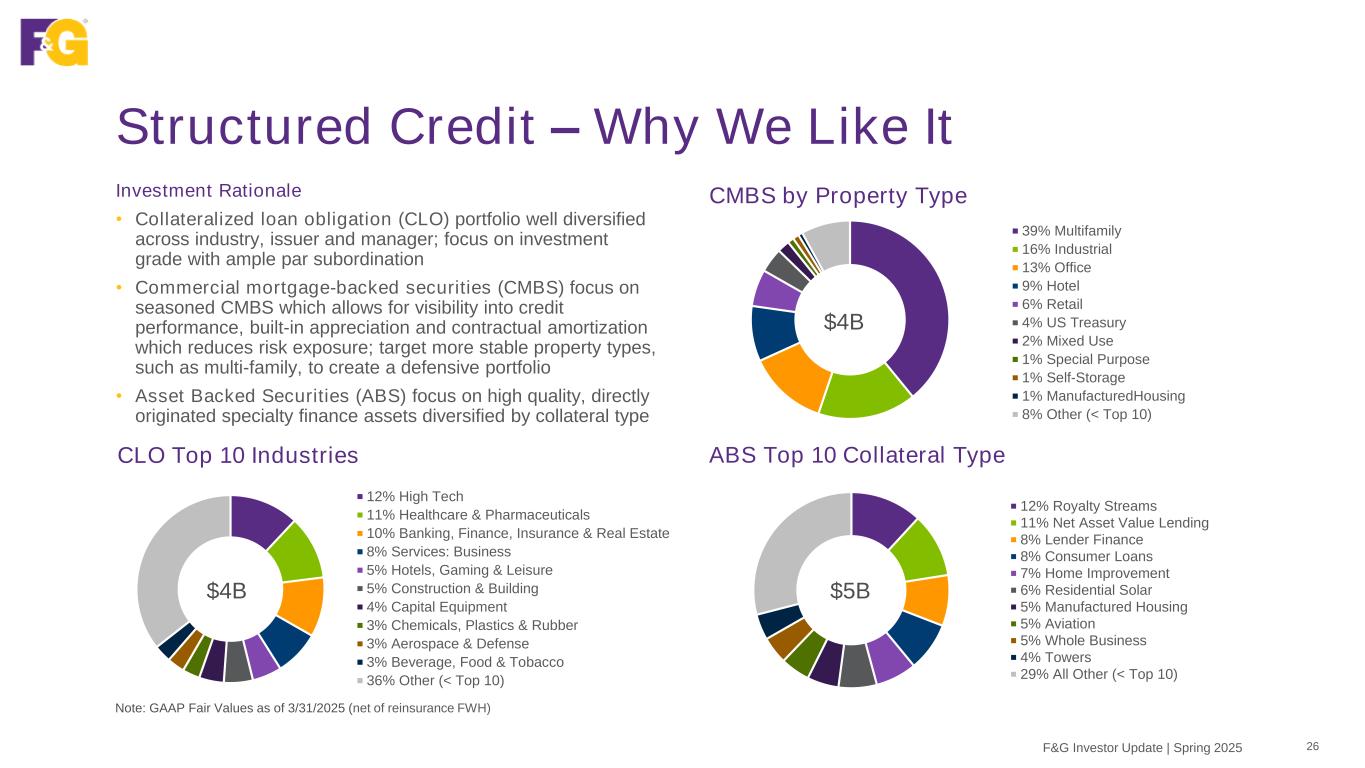
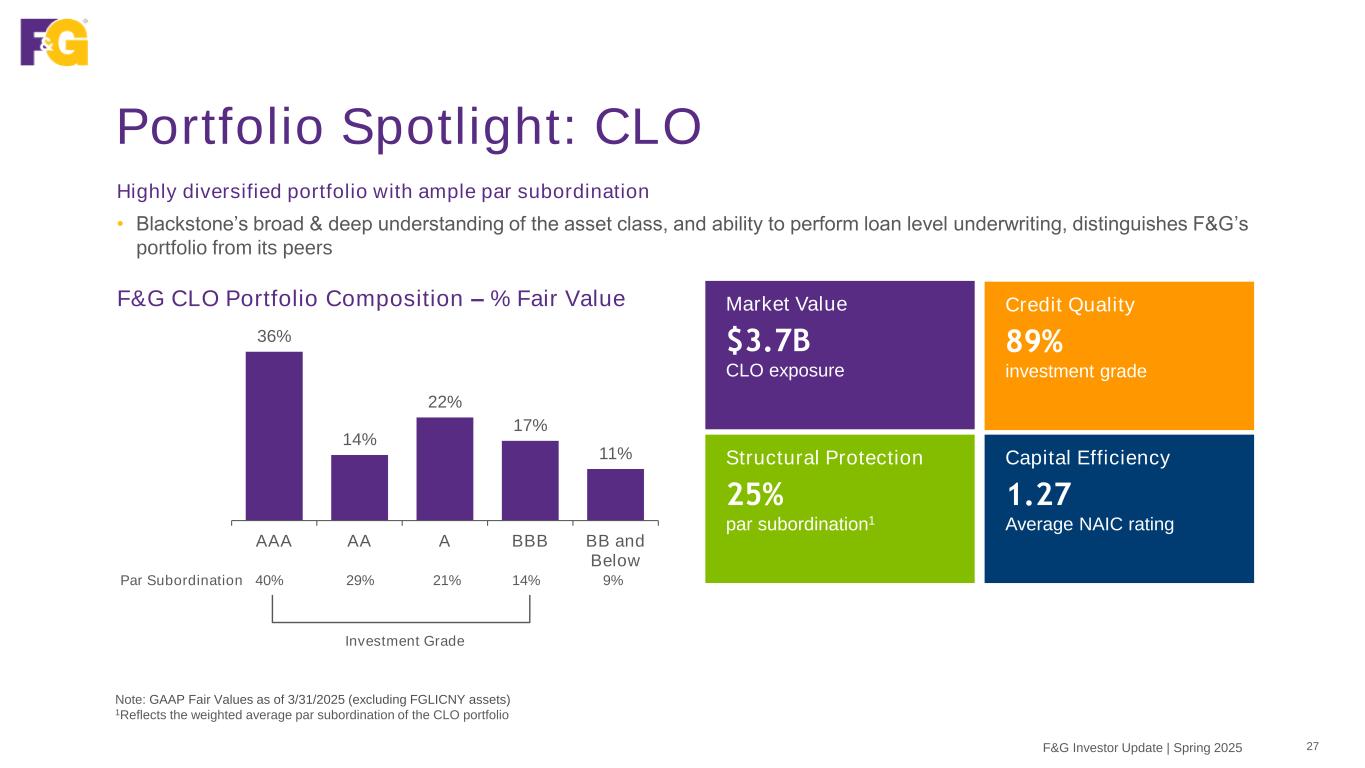
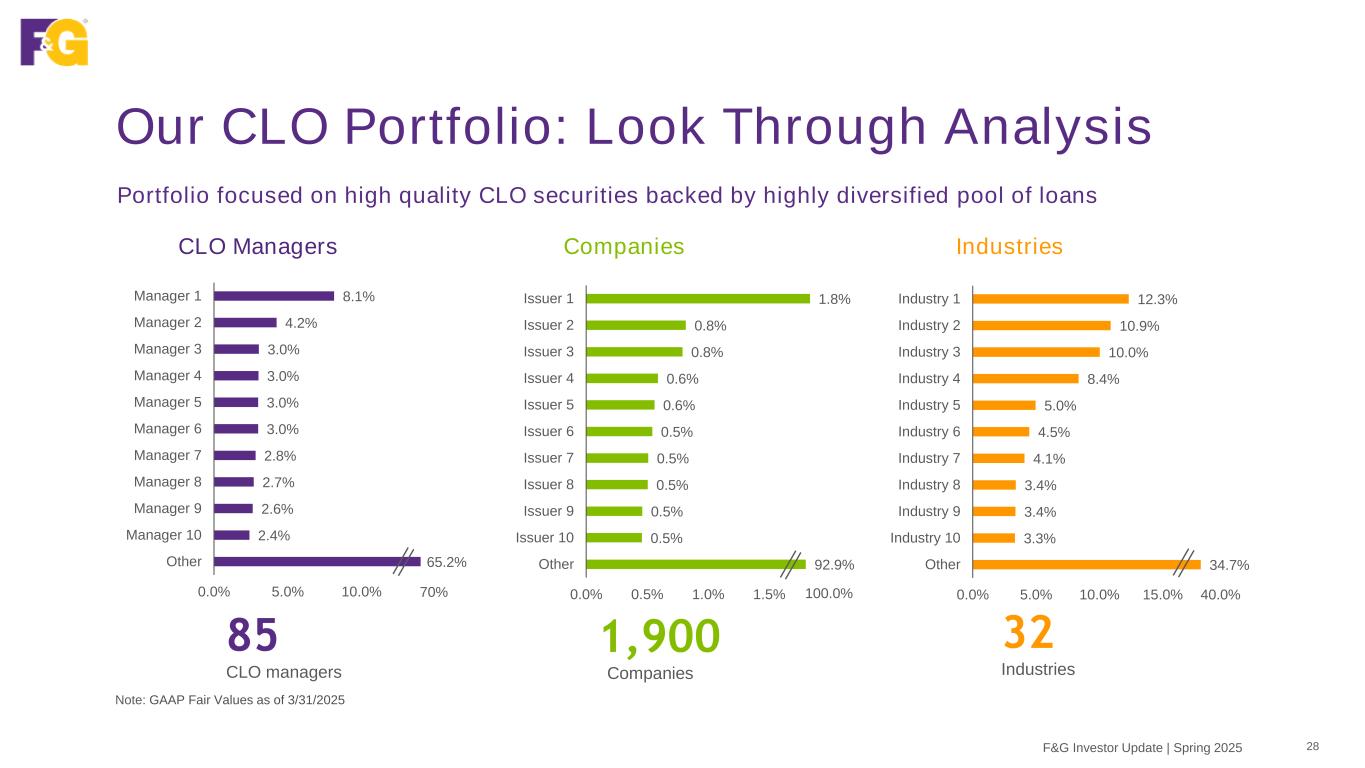
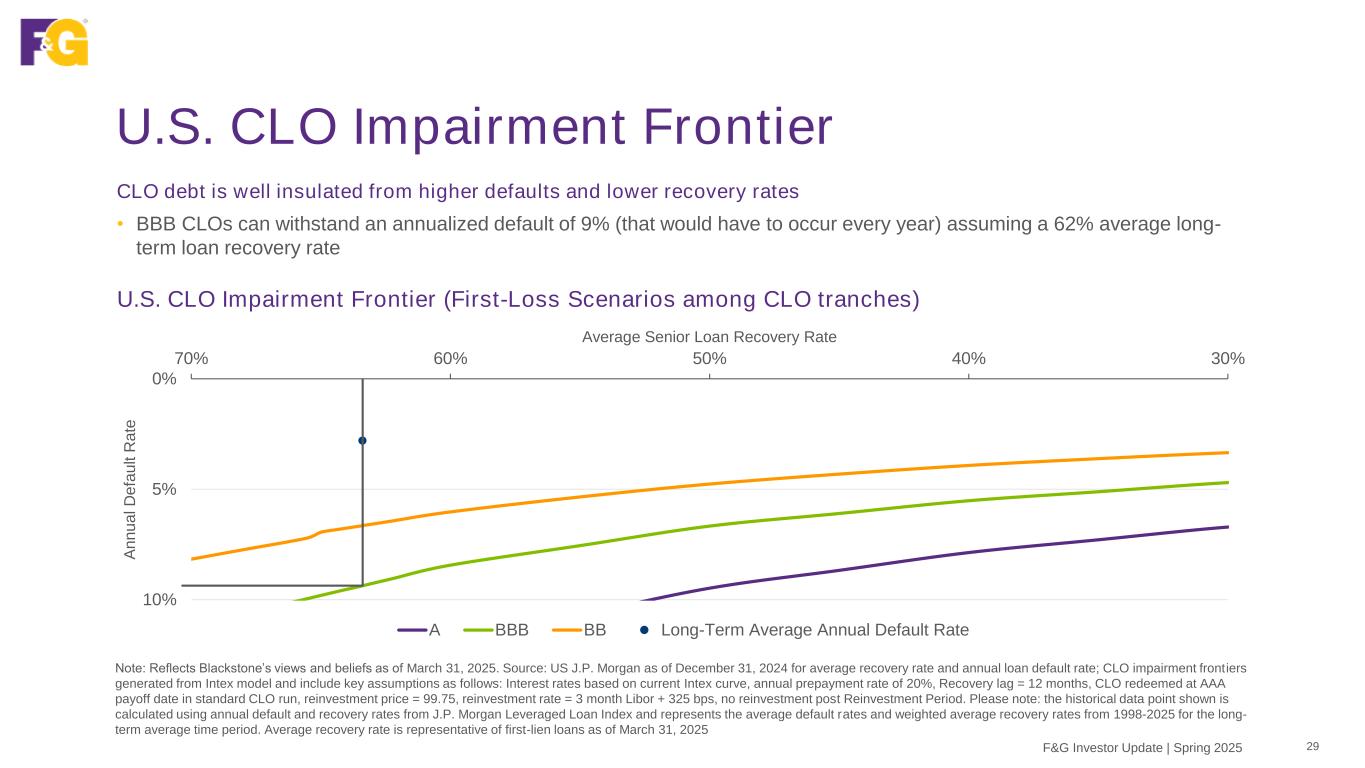
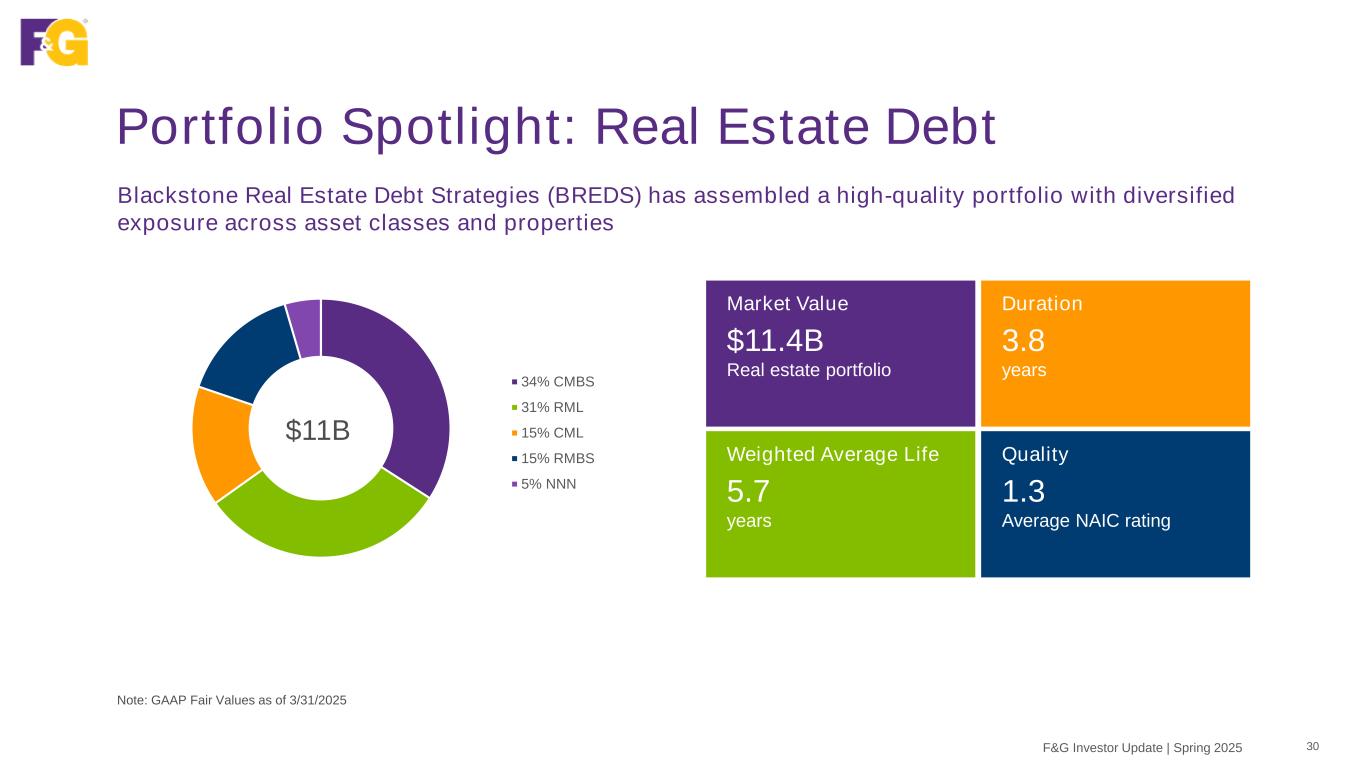
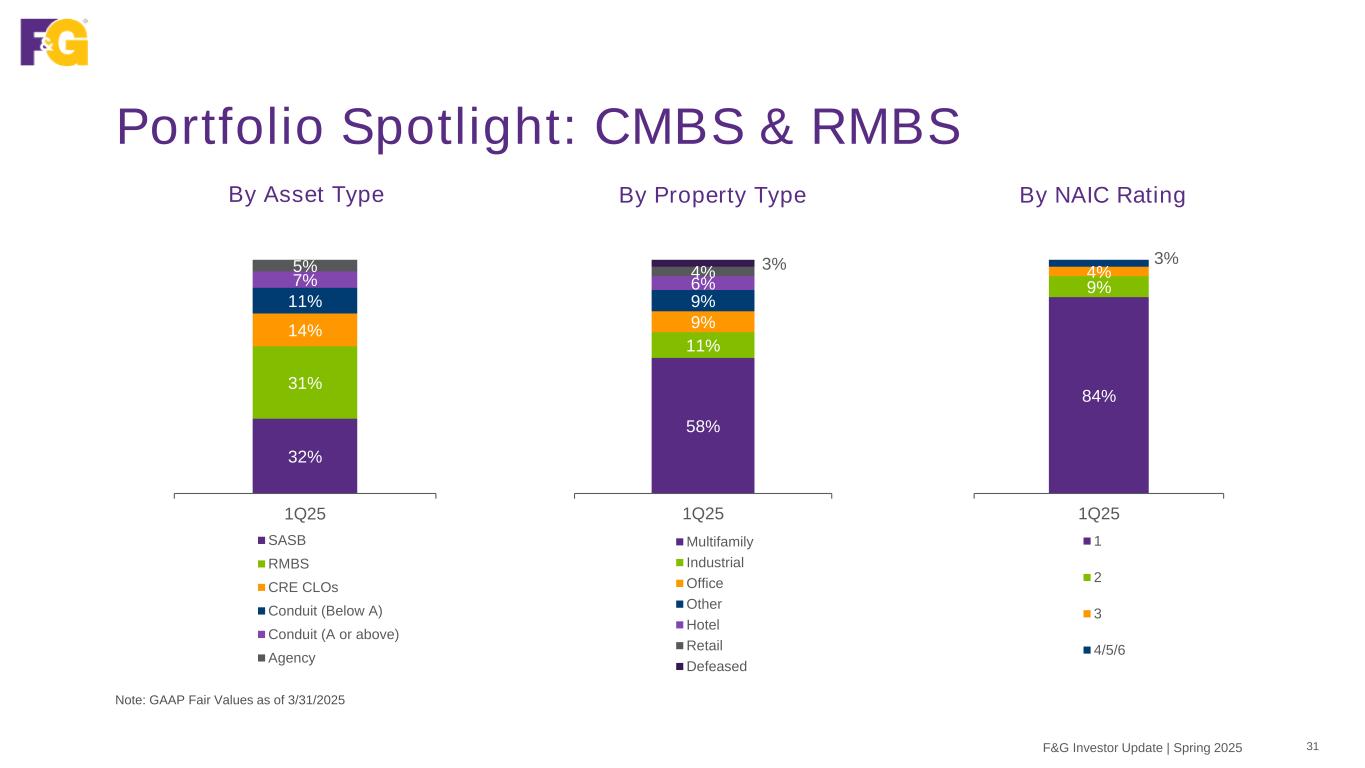
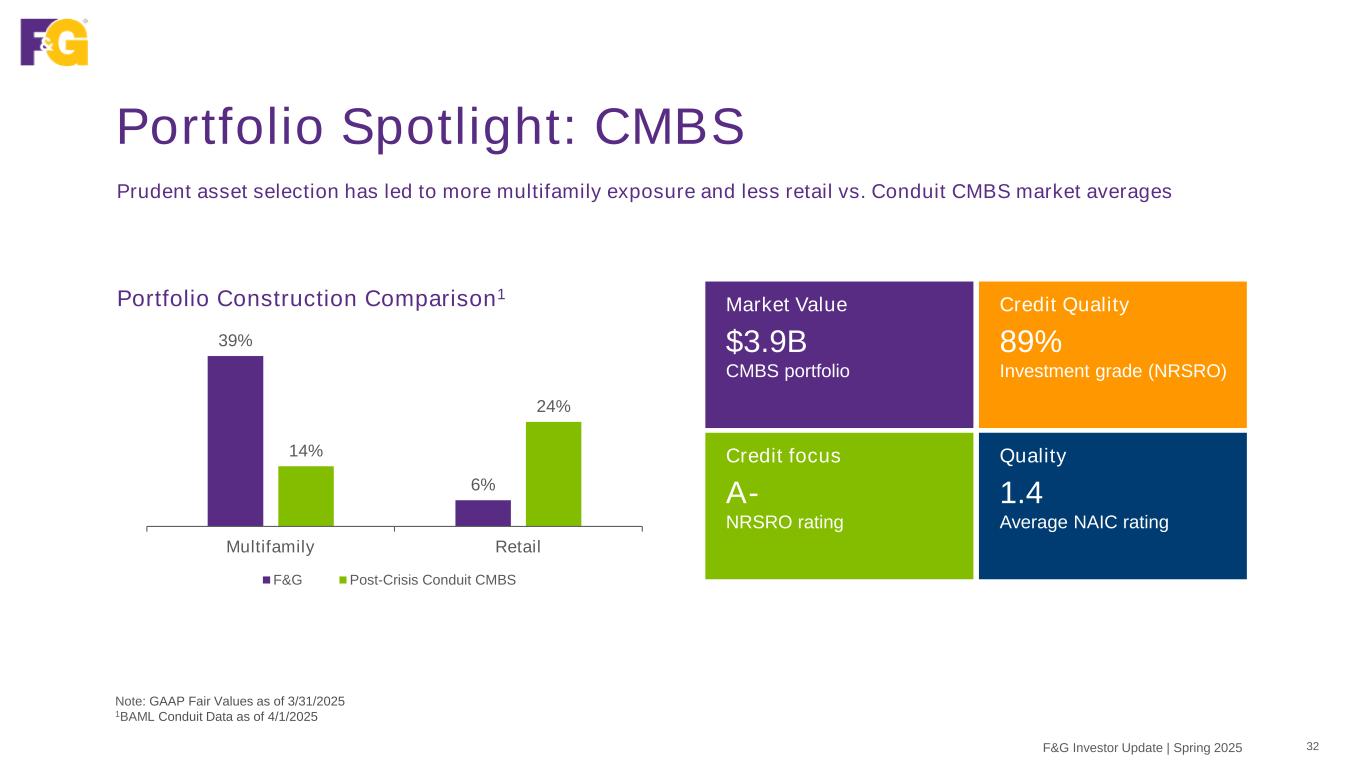
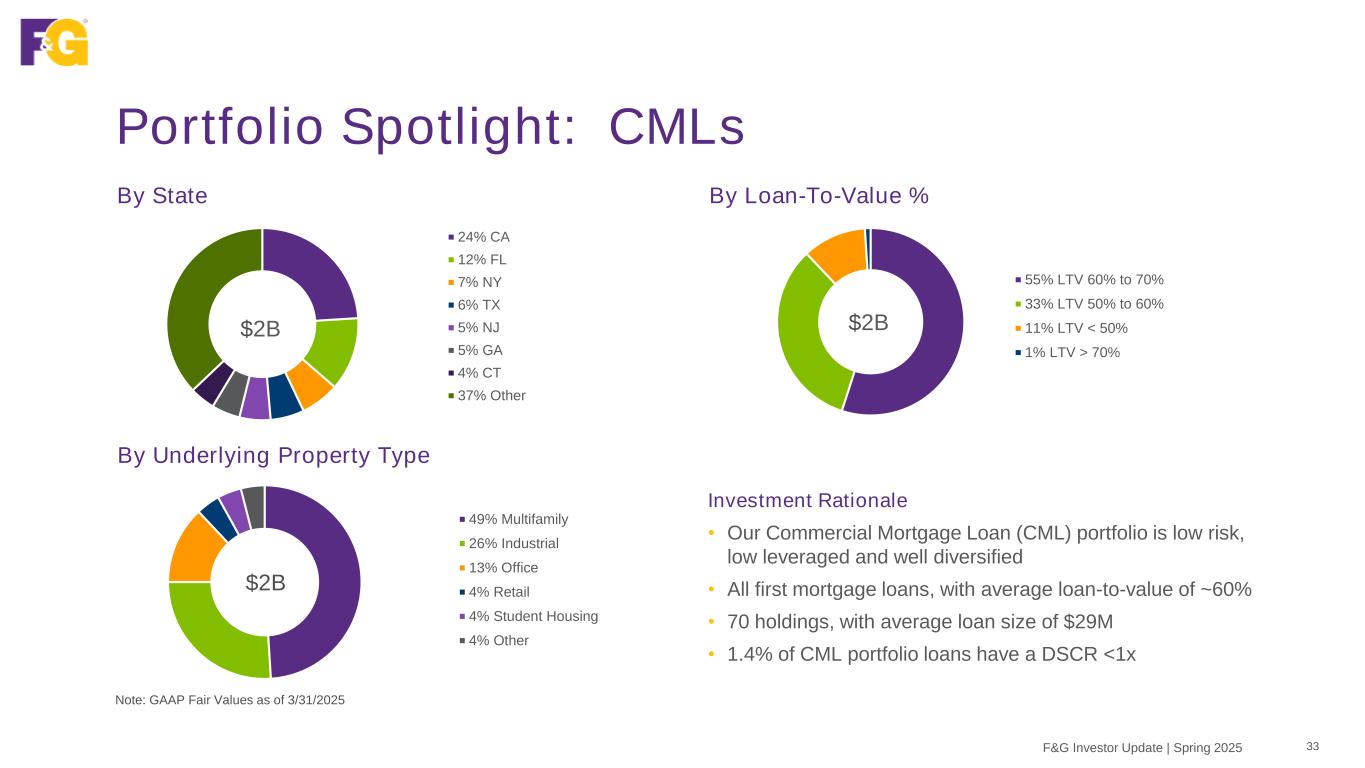
Good morning, everyone, and thanks for joining our call. Our first quarter results reflect near-term headwinds from the volatility of the overall environment, the majority of which we believe to be temporary in nature. From a top-line perspective, we continue to manage sales and in-force profitability to optimize our return on capital. This resulted in a reduction in MYGA sales in the first quarter with continued strong fixed indexed annuity and pension risk transfer sales, which are our highest returning businesses. From a bottom-line perspective, while we gave up some spread during the first quarter, we believe much of that was short term in nature and not indicative of any longer-term challenge to our business model. The four main drivers were excess cash due to CLO prepayments coupled with a drop in cash rates, lower surrender income as there was a noticeable pause in refinancing of old policies by agents, a relatively weaker quarter for our own distribution business, largely driven by the same slowdown, as well as some one-time growth investments by one of our distribution companies. And simply the timing effect of in-force pricing changes, which can occur in periods where there are precipitous increases or decreases in interest rates. As things stand today, we would expect each of these drivers to improve throughout 2025, and we remain committed to achieving our 2023 Investor Day targets. Conor will provide more details on our sales and financial results later in the call. Overall, our in-force book of business and the investment portfolio are performing well and as expected in the current environment. For the in-force book, we have a young fixed annuity block that is surrender charge protected. We lock in spread at the time of sale and also have the flexibility to reprice a large majority of our liabilities to economics on an annual basis. We maintain pricing discipline over the life cycle of the product. And during periods of market volatility like we're seeing now, we take a measured approach to renewal rates, balancing pricing consistency with distribution. Next, turning to the investment portfolio in more detail. The portfolio is well matched to our liability profile and diversified across asset types. We are now in the seventh year of our seasoned partnership with Blackstone and have a fully developed public and private asset toolkit. This enables us to be competitive without taking on additional credit risk. If spreads in one asset class are shrinking, we have many others to choose from. The retained portfolio is high quality, with 96% of fixed maturities being investment-grade. We continue to invest in defensive sectors having an up in quality bias. Our real estate exposure is high quality and moderate leverage, with diversified exposure across property types. Notably, we hold very little office exposure at 1.6% of our total portfolio. Our portfolio credit quality has improved since 2020 through implementation of various portfolio repositioning programs. We have had excellent credit performance in the portfolio. Credit-related impairments have remained low and stable, averaging 6 basis points over the last five years and two basis points in the first quarter, well below pricing. The portfolio is conservatively positioned to outperform under various economic scenarios while maintaining the ability to withstand a downturn. During the first quarter, we have modestly increased our hedge ratio to 75% of our floating rate assets, which are now only 5% of our total portfolio net of hedging. Our fixed income yield was 4.53% in the first quarter, a decrease of 3 basis points from the first quarter of 2024. This reflects the benefit of higher yields on new investments, offset by the runoff of higher-yielding in-force assets. On a sequential basis, our fixed income yield decreased 6 basis points from the fourth quarter, primarily due to the runoff of higher-yielding shorter-duration in-force assets that generated excess cash. We continually look for opportunities to add yield over time by taking advantage of the market dislocations and continuing to work with Blackstone to source new asset categories. Next, I'd like to provide a few brief topical updates on tariff exposure, CLOs and alternative limited partnerships. During the first quarter, we conducted a comprehensive analysis across the portfolio to assess direct tariff exposure and broader economic implications. Our analysis confirmed that the portfolio is resilient and largely insulated from tariff-related impacts due to our focus on credit and the robust structural protections that we have in place. Turning to our CLO portfolio. We have a diversified portfolio that represents $3.7 billion or 7% of the total retained portfolio. It's a well-seasoned portfolio that is approximately 89% investment-grade and has outperformed most purchases dating prior to 2021. And many have already prepaid since spreads have narrowed, which is reflected in our net investment income as prepay income. Our CLOs are backed by a highly diversified pool of loans with ample par subordination. Our portfolio uses 85 CLO managers and invests in close to 2,000 companies operating within 30-plus industries. By industry, CLO skewed toward high-tech, health care and pharma, and financial industries, with low exposure to energy and retail. Historic studies have shown that CLOs have had superior performance compared to corporates, and we benefit from Blackstone's capabilities and expertise, which allows our CLO portfolio to be underwritten at the underlying loan level. Within our overall alternative investments, I want to spend a few minutes on limited partnerships. We held 6% of the portfolio in LPs as of March 31. As a reminder, our target allocation is 5%, and we expect that our allocation will move between a range of 5% to 7%, given that the pace of capital calls and distributions can vary. The LP portfolio is very well diversified from a sector vintage and funds perspective with 37 different funds. By asset class, our LP portfolio was 57% in private equity, 27% in real estate, and 16% in credit for the first quarter. And by sector, the real estate fund skewed towards industrial, residential, and REITs, while the private equity funds are weighted toward financials, information technology, and industrials. The bottom line is that we do not have a lot of direct tariff exposure. And for our private equity holdings, we remain confident that there's real value in these underlying companies despite a delay in realizations. Our LP portfolio is a relatively young book. Since the inception of our LP portfolio build-out with Blackstone in 2018, we have seen a return of over half of the capital invested. As an asset class, we like LPs because they provide our portfolio with a long duration asset at a very attractive return on capital. Turning to our growth strategies. Beyond AUM growth, we continue to diversify our earnings between spread-based and fee-based sources, including our own distribution stakes. In aggregate, we have invested $680 million in our own distribution companies through two majority stakes taken in 2024 and two minority stakes purchased in 2023. These stakes are held at the holding company level under our Peak Altitude entity and our strategic long-standing relationships. Our holdings are diversified by product and market and reflect growing businesses with strong leadership. Overall, the owned distribution portfolio is performing well and creating value, with double-digit annual growth of EBITDA expected over the medium term. Looking ahead to the remainder of 2025, we will continue to execute on our strategy while prioritizing pricing discipline and allocating capital to the highest return opportunities. Let me now turn the call over to Conor to provide further details on F&G's first quarter sales and financial highlights.
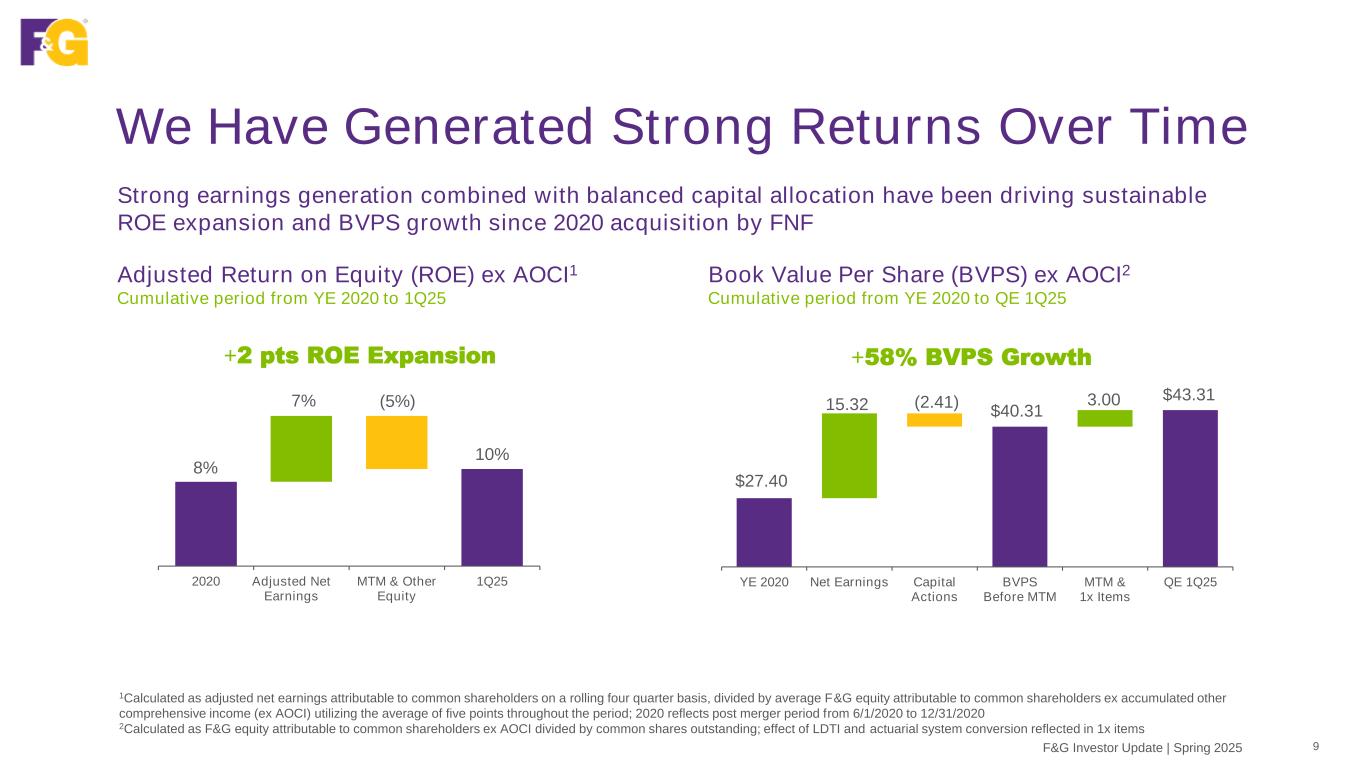
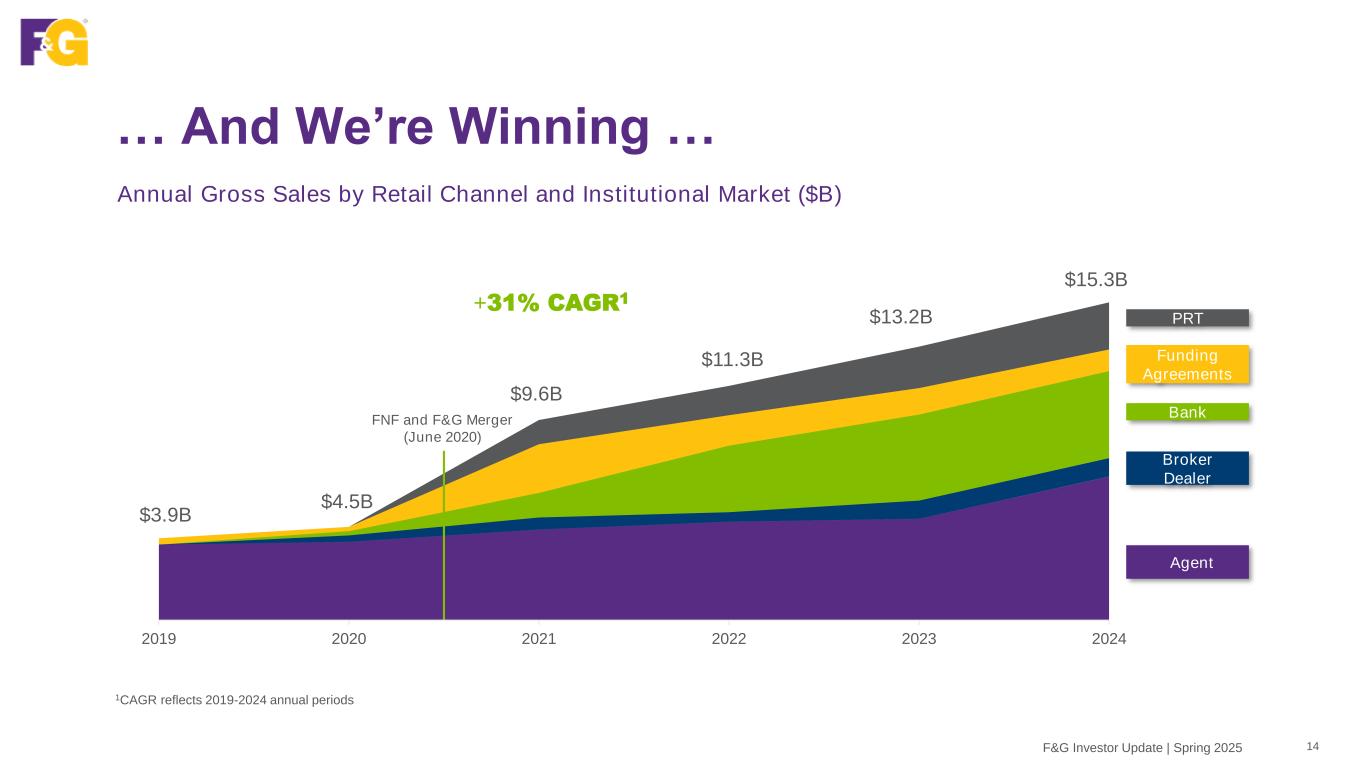
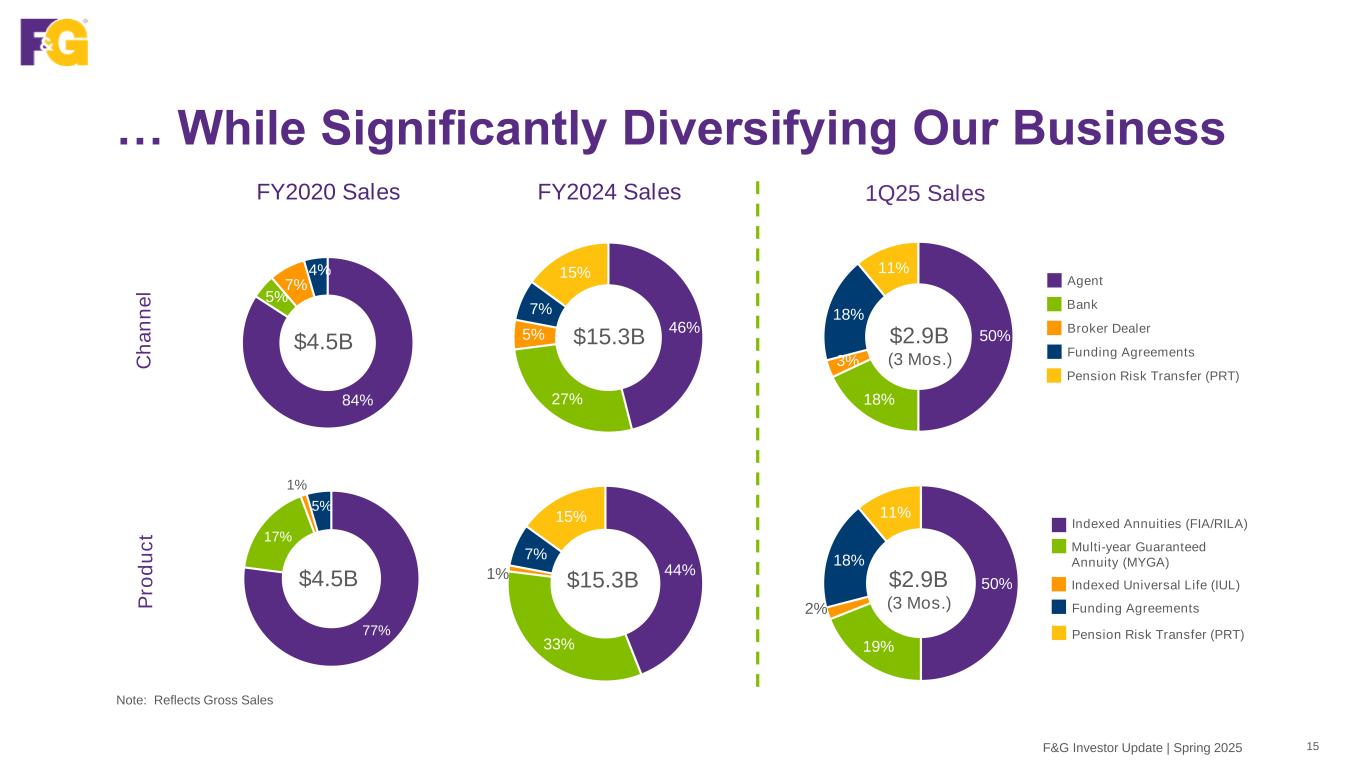
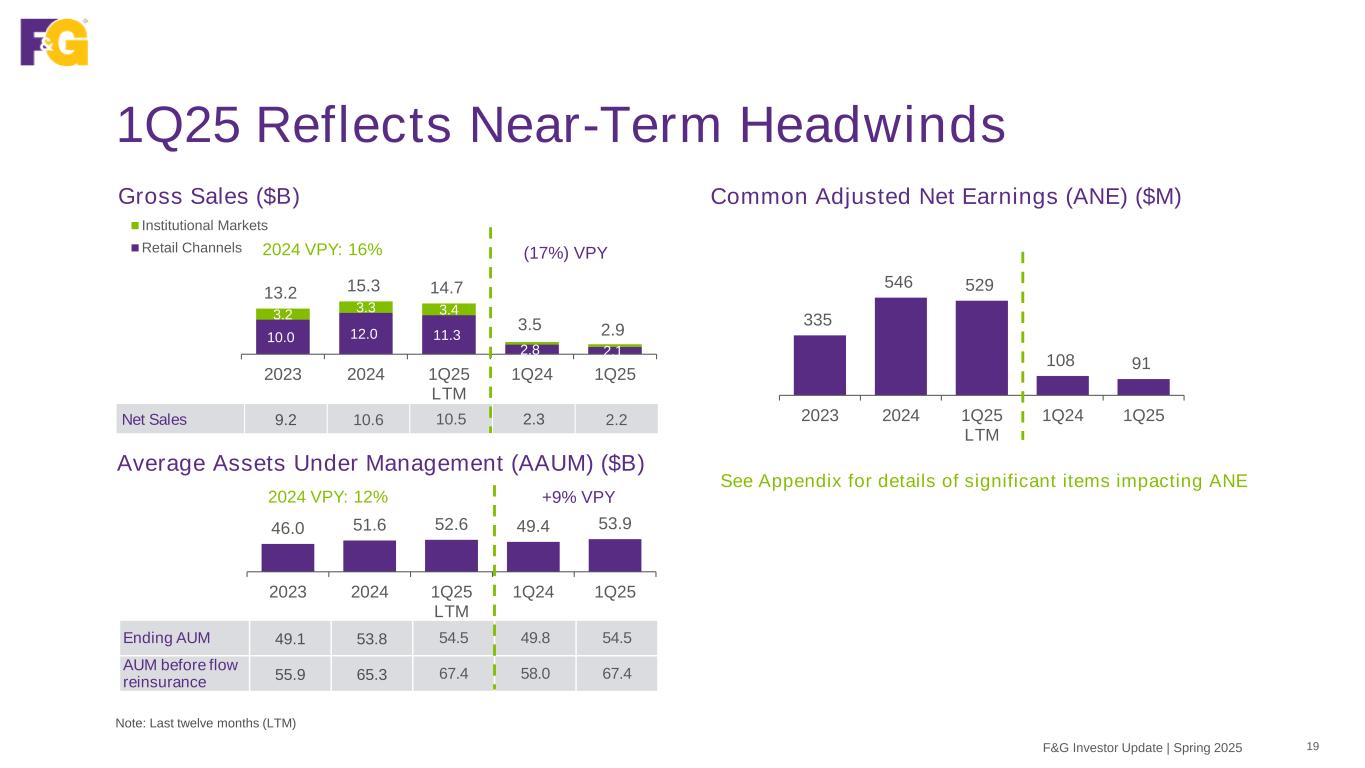
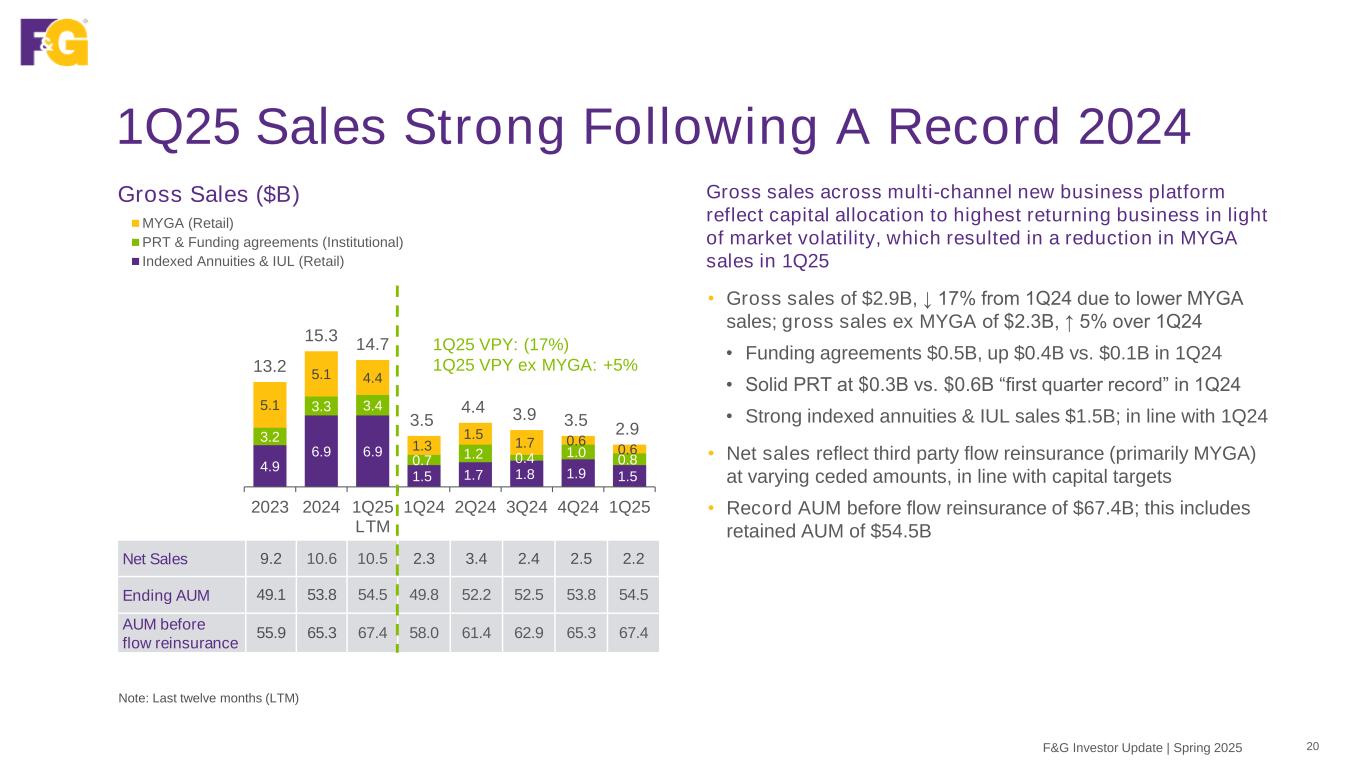
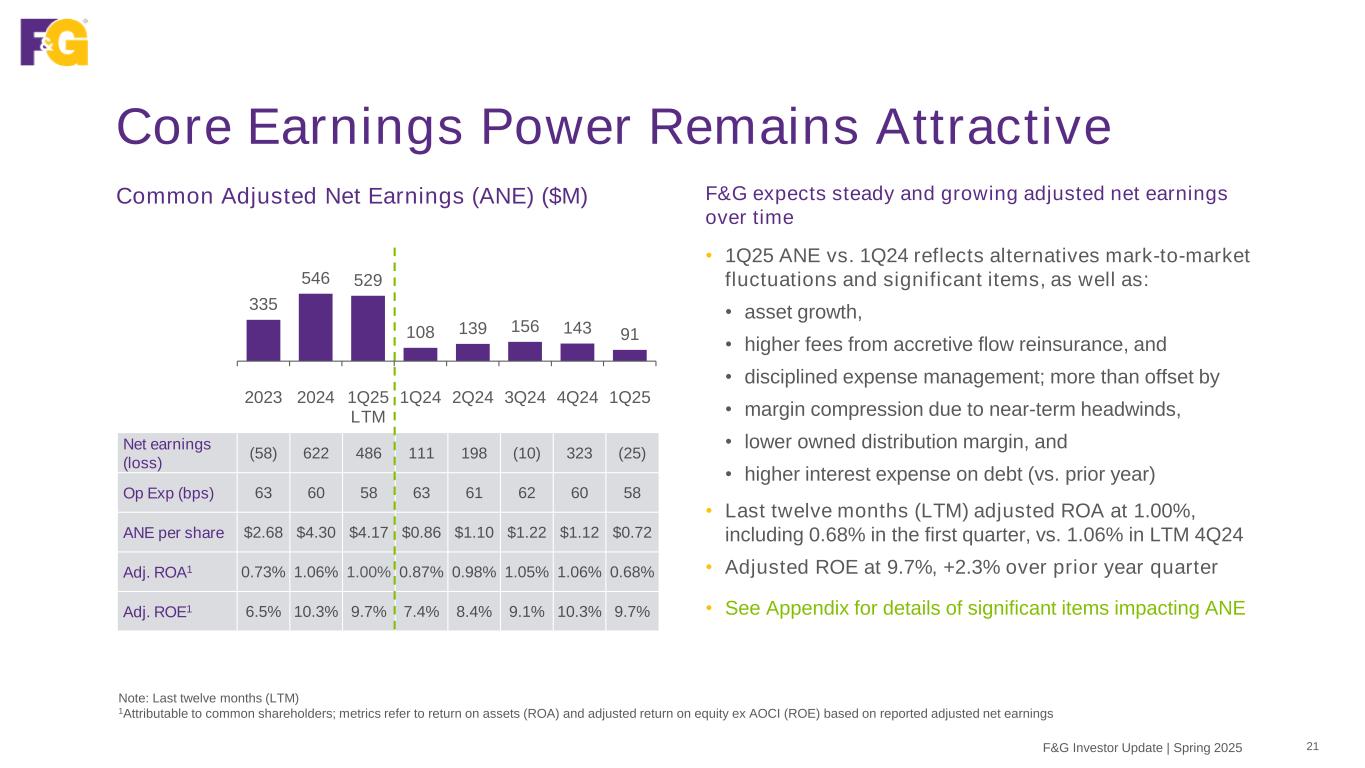
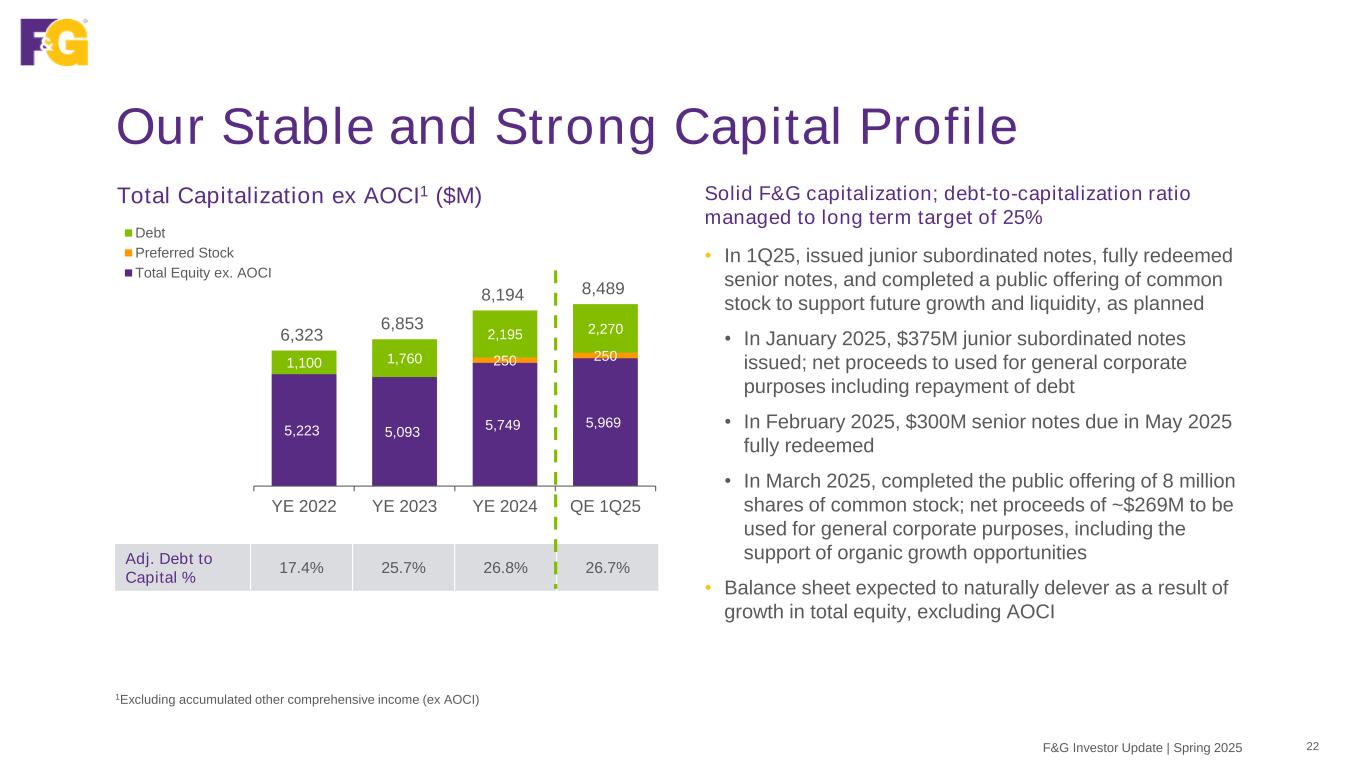
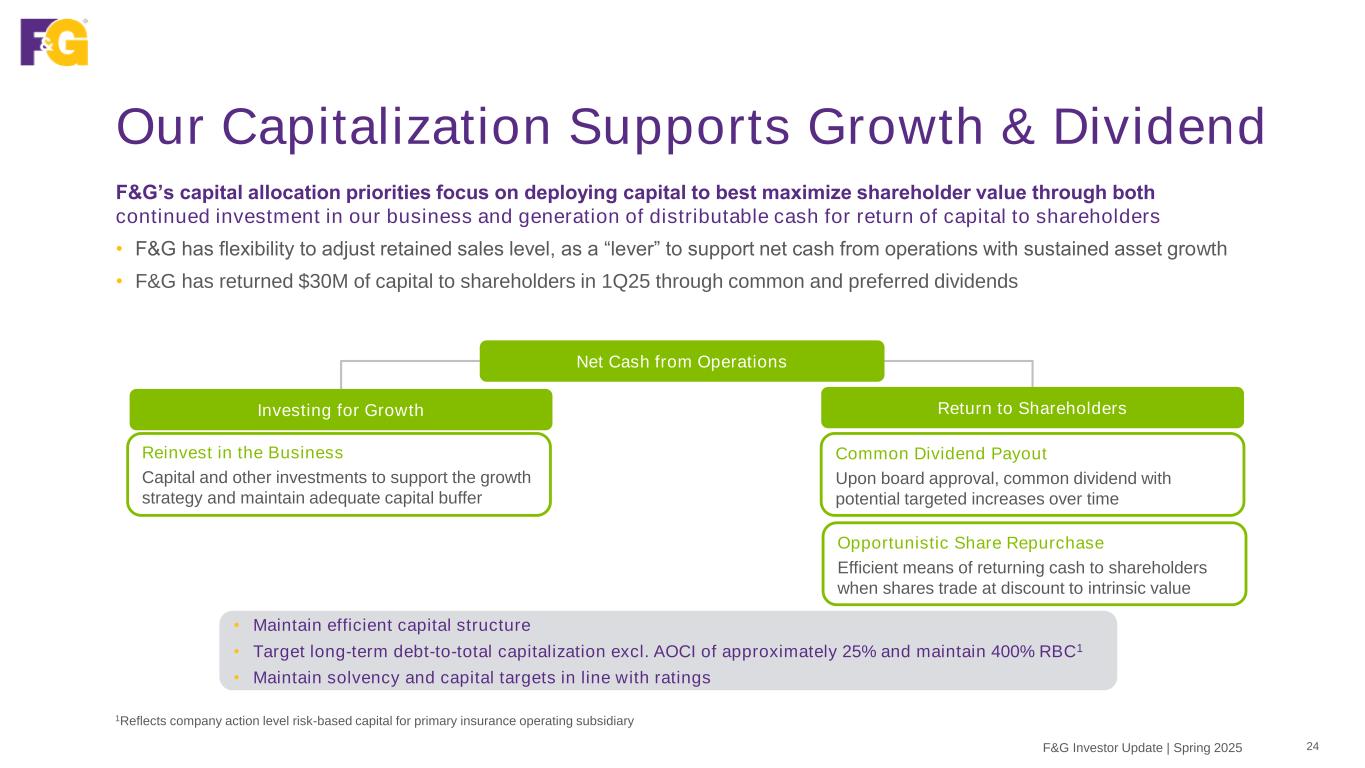
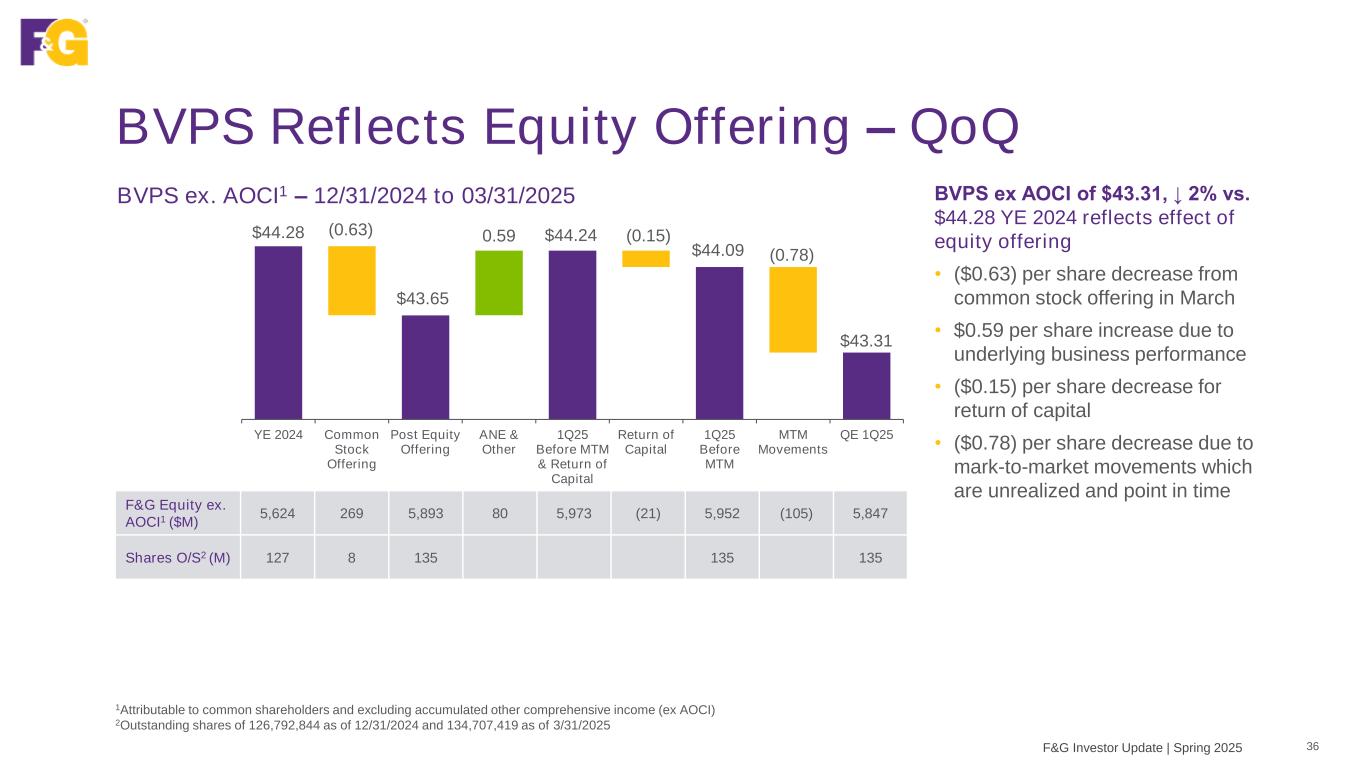
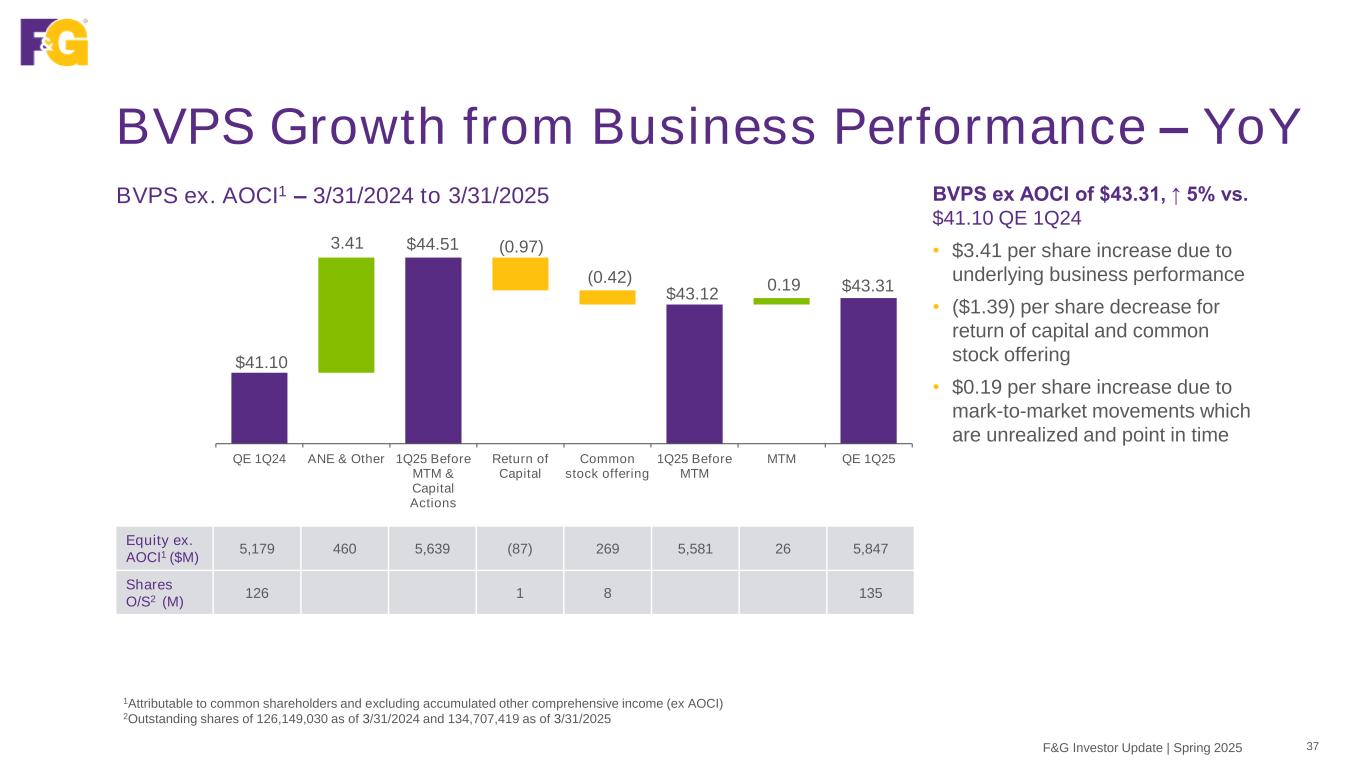
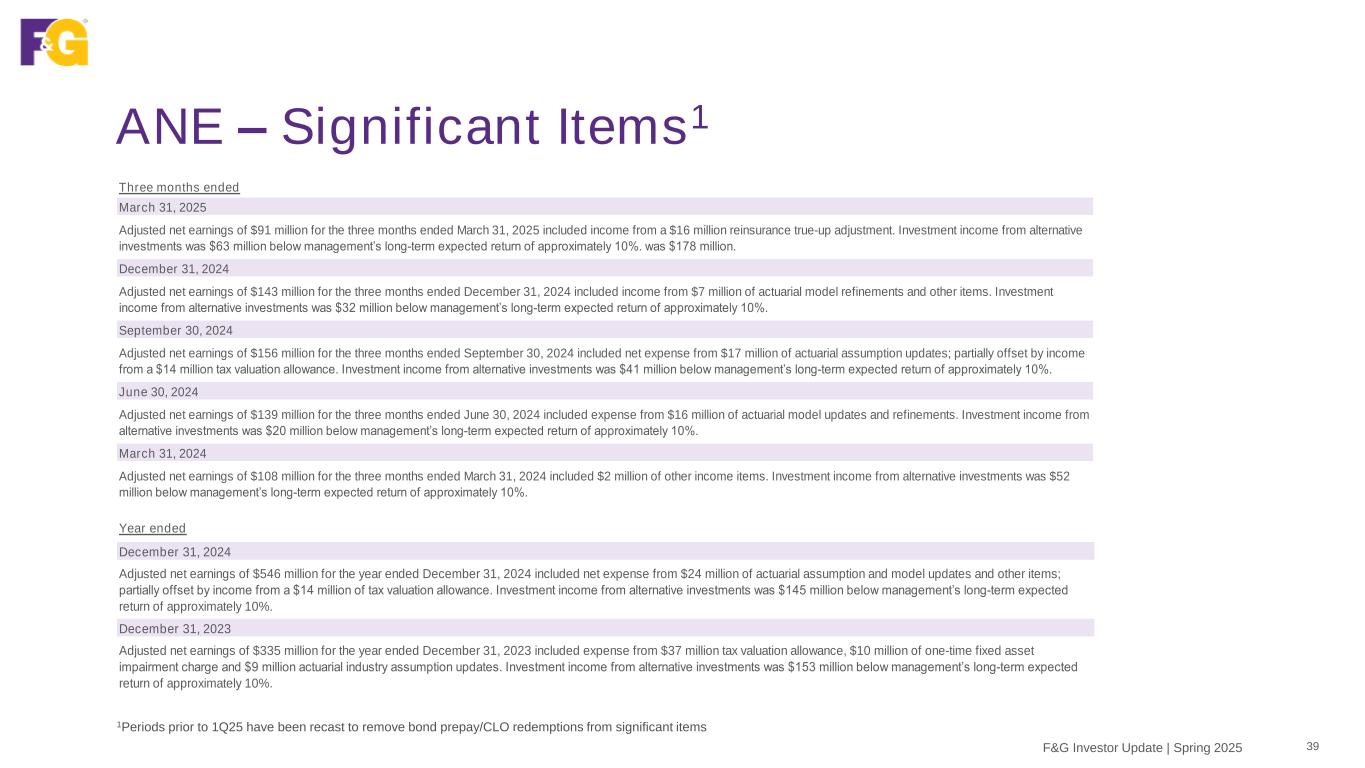
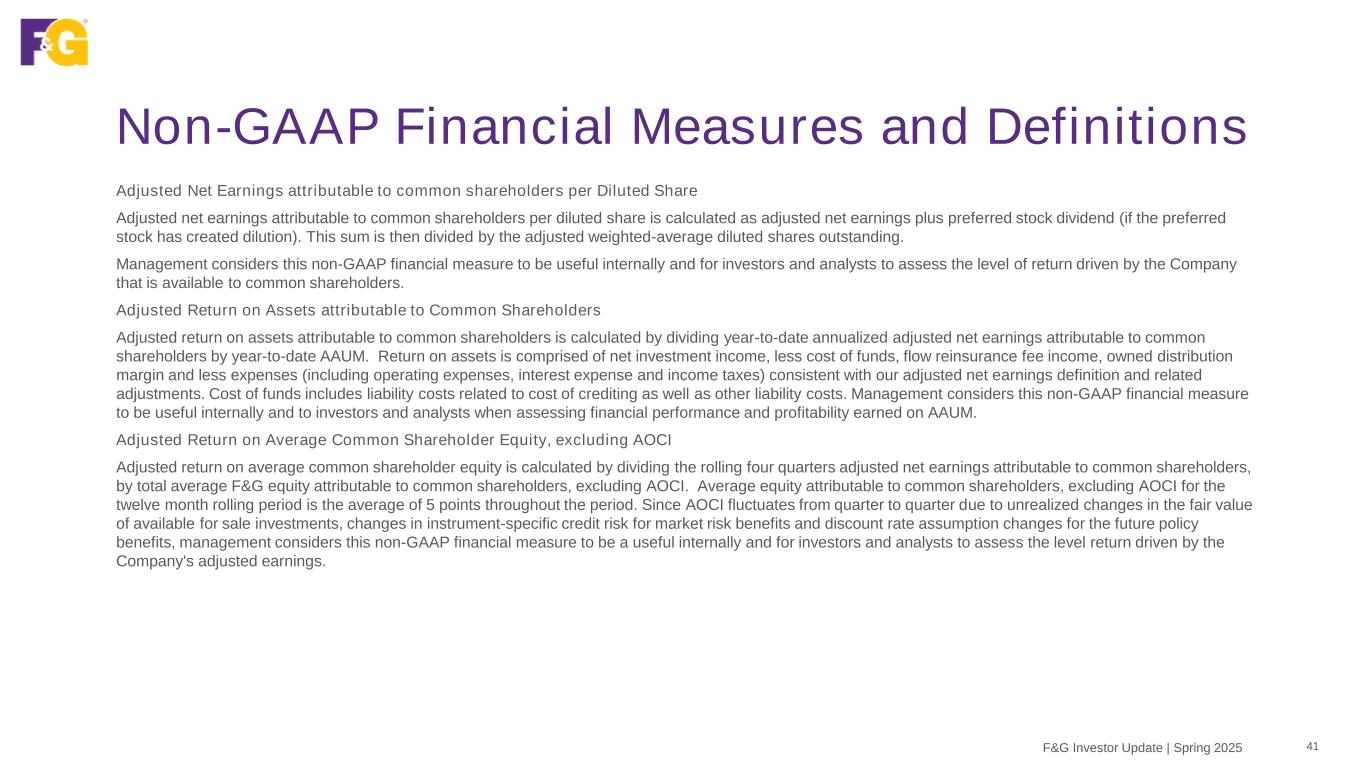
Thank you, Chris. This morning, I'll focus my comments on assets under management and sales, updates to our financial reporting, adjusted net earnings and returns, and our balance sheet and capital position. Starting with AUM and sales. F&G reported record AUM before flow reinsurance of $67.4 billion as of March 31 despite the near-term pressures, including retained assets under management of $54.5 billion. Compared to the first quarter of 2024, this reflects 16% and 9% increases, respectively, driven by net new business flows. F&G's gross sales were $2.9 billion, 17% lower than the first quarter of 2024, primarily due to lower MYGA sales. As we continue to prioritize allocating capital to the highest returning business, specifically indexed annuity sales and pension risk transfer sales, we intentionally scaled back MYGA. Excluding MYGA, gross sales increased 5% over the first quarter of 2024. Indexed annuity sales were strong at $1.5 billion in the first quarter, in line with the first quarter of 2024. FIA continues to be our largest contributor to indexed annuity sales, although our RILA product is gaining traction and building momentum. We took a measured approach in reflecting rate volatility in our pricing during the early part of 2025, but have subsequently seen increasing levels of submitted annuity business in March and April. Indexed universal life sales were strong at $43 million in the first quarter, in line with the first quarter of 2024. Pension risk transfer, or PRT, sales are off to a solid start with $311 million in the first quarter. While down from $584 million in the first quarter of 2024, which was a record first quarter, our full year PRT sales are typically more weighted to the back half of the year. Funding agreements were $525 million in the first quarter as compared to $105 million in the first quarter of 2024. We view funding agreement sales as opportunistic, and volumes vary quarter-to-quarter depending on market conditions. MYGA sales were $562 million in the first quarter as compared to $1.3 billion in the first quarter of 2024. F&G has the flexibility to optimize its level of flow reinsurance in line with capital targets by dynamically adjusting MYGA volumes up and down as market economics change. Net sales retained were $2.2 billion compared to $2.3 billion in the first quarter of 2024. Next, turning to our financial reporting updates. As Lisa mentioned at the top of the call, there were two retrospective management reporting changes in the quarter. First, we have refined the classification of acquisition costs between the low reinsurance fee income and cost of fund line items in our adjusted net earnings management view income statement to better align amortization and expenses. Second, significant income and expense items now exclude CLO redemptions and bond prepay income, as we consider these indicative of the economic performance of our business. Applicable periods have been recast to conform to these changes. Importantly, there was no impact to GAAP earnings or reported ANE. Please refer to our quarterly financial supplement for further details. Also, beginning this quarter, we are presenting our financial results on an as-reported basis throughout our earnings materials. Therefore, these results, including ANE, ROA, and ROE, are no longer presented on an excluding significant items basis. Turning to earnings. First quarter reported adjusted net earnings were $91 million or $0.72 per share as compared to $108 million or $0.86 per share in the first quarter of 2024. First quarter of 2025 ANE reflects a $16 million benefit from a reinsurance true-up. For the quarter, investment income from alternative investments was $63 million below management's long-term expected return. First quarter of 2024 ANE included a $2 million benefit from other income items. For the prior year quarter, investment income from alternative investments was $52 million below management's long-term expected return. Compared to the first quarter of 2024, adjusted net earnings decreased by $17 million. This was primarily driven by margin compression due to near-term headwinds, as Chris outlined, lower owned distribution margin and higher interest expense, in line with our capital market activity. These were partially offset by asset growth, higher flow reinsurance fee income, and disciplined expense management. Notably, we are benefiting from increased scale as our ratio of operating expenses to AUM before flow reinsurance decreased to 58 basis points in the quarter from 63 basis points a year ago. As Chris mentioned, while we gave up some spreads during the first quarter, we believe much of that was short term in nature and not indicative of any longer-term challenge to our business model. First quarter reported adjusted return on assets was 68 basis points. ROA was pressured from near-term headwinds, as well as the short-term fluctuations in investment income from alternative investments. On a last 12-month basis, adjusted ROA of 100 basis points decreased 6 basis points from 106 basis points in the fourth quarter of 2024. And reported adjusted return on equity, excluding AOCI, was 9.7%, up 2.3% over the first quarter of 2024. Now turning to our strong and growing balance sheet. We continue to maintain RBC at or above 400%, remain committed to our long-term target of approximately 25% debt to capitalization, excluding AOCI, and expect that our balance sheet will naturally delever as shareholders' equity excluding AOCI growth. F&G has successfully completed the following recent capital markets activity as expected. In January, F&G issued $375 million of junior subordinated notes, with the net proceeds to be used for general corporate purposes, including the repayment of debt. In February, F&G fully redeemed its $300 million of outstanding senior notes due in May of 2025. On a pro forma basis, our annualized interest expense is approximately $165 million or roughly a 7% blended yield on $2.3 billion of total debt outstanding. We target holding company cash and invested assets at 2x interest coverage. In March, F&G completed the public offering of 8 million shares of common stock, with net proceeds of approximately $269 million to be used for general corporate purposes, including the support of organic growth opportunities. Fidelity National Financial, Inc., F&G's major stockholder, purchased 4.5 million shares and held an ownership stake in F&G of approximately 82% as of March 31. We ended the quarter with a GAAP book value attributable to common shareholders, excluding AOCI, of $5.8 billion or $43.31 per share at March 31. I share Chris' enthusiasm for F&G's future opportunities to deliver long-term shareholder value. As we navigate the near-term headwinds and macro uncertainty, we are focused on managing sales and in-force profitability to optimize our return on capital, diversifying our spread-based and fee-based earnings through middle market life insurance, low reinsurance and own distribution and continuing our progress towards the target set out at our 2023 Investor Day, which will continue to drive expansion of our return on equity. This concludes our prepared remarks, and let me now turn the call back to our operator for questions.
Operator
First question here is from John Barnidge from Piper Sandler. Please go ahead.
Speaker 4
Good morning. Thank you for the opportunity. My first question is around sales and distribution. With the RILA product now entering the second year, can you maybe talk about how you think about the growth opportunity there, both from a sales perspective, but also from a distribution one too?
Speaker 2
Yes, happy to. So a couple of things. One, just a comment on sales during the quarter. As I think you saw, we had a decline in MYGA, and that was just simply a function of the volatility that was going on in the markets, which caused challenges, not just for us, but for some of our reinsurance partners. But that has rebounded nicely. In fact, we've done more MYGA business in the month of April than we did the entire first quarter. So I think the sales engine is in great shape. Specifically, to RILA, yes, we're still super excited about that, given that we were not a player in registered products before, it has admittedly taken longer to get on to platforms, but that is happening. So we're adding broker-dealers pretty consistently now. So yes, as we've said before, that's a product that in the medium term, we think can actually be in the billions for us. So we're pretty excited about RILA.
Speaker 4
And then maybe my follow-up question. Are you able to parse out the impact on owned distribution from lower industry volume versus the owned distribution partner that maybe had invested in the platform?
Speaker 2
That's a great question. I don't have the exact figures right now, but I believe the investments were fairly balanced. Regarding owned distribution, we've seen a strong recovery in April. I can't say for sure if it's exactly half, but I would estimate that around half of it was due to an investment we made that had a quick payback from one of our partners. The rest was influenced by an industry-wide slowdown in activity, particularly in 1035 transactions. However, this has also rebounded in April and May, which is why we believe these challenges are temporary.
Operator
Next question here is from Wes Carmichael from Autonomous Research. Please go ahead.
Speaker 5
Hey, good morning. First question, just on the decision to raise common equity in the quarter. We received a lot of questions from investors at the time, and I think it came as maybe a bit of a surprise and wait on the stock. But can you maybe just help us with your thoughts on deployment and timing? And are you maybe wanting to hold any of that capital back given some of the recent volatility that we've seen?
Speaker 2
Yes, it's a great question. I think in terms of deployment, as I gave you the MYGA stats. And so I don't think our plans have changed. I think it is to deploy it thoughtfully into new business. As you know, our business model is pretty sound. We like it. We're pretty disciplined about how we price new business, 57% of our reserves are in FIA. So we go through a similar annual process when policies come up for renewal. So I think the most important thing is the business model is still intact, and we see lots of opportunities there. So yes, I don't think from an environment perspective, we were cautious when it came to MYGA in the first quarter of wanting to make sure we understood the lay of the land with rates and with spreads. So we did have some cash build up, but we are now deploying that. And I think our patience has been rewarded. I think we're deploying it now at spreads, frankly, better than what we priced for. So again, we're not market timers, but that's probably the only area where some caution came in to just try to get the lay of the land there.
And it's Conor. I know you know this, but just a reminder that the timing of the capital raise, it was right at the end of the first quarter. So there wasn't time to do anything noteworthy with it until Q2.
Speaker 5
Yes, understood. I guess just second one, just looking at the cost of funds at 318 basis points. That was up, I think, sequentially, 22 basis points. And I guess, more of a significant jump that we've seen in prior quarters. But Chris, how much of that do you think is a function of competition in the market? Was there something going on in the first quarter? And would you expect that to get better with some of the in-force pricing actions you're contemplating?
Speaker 2
Yes, I'll let Conor provide more details, Wes, as it's a good question. However, I want to emphasize that our pricing targets for new business remain unchanged. We are disciplined about maintaining our spreads on our in-force business while ensuring fairness to policyholders and our distribution partners. This approach hasn't changed. There was a slight decrease in surrender income, but that has since recovered. Some of this reflects a lag in adjusting our in-force book to recent changes. Conor, do you want to add anything?
Yes, to further clarify, if we look at it from a product margin perspective, both in terms of income and cost of funds, the key drivers in order of significance are as follows: first, the owned returns, which are the most significant when normalized; next, the impact of lower surrenders reflected in the cost of crediting; and lastly, the reduced cash yield effect observed in the recent quarter. I hope this provides some clarity.
Speaker 2
And Wes, if I could just squeeze in one more comment here. In terms of progress toward Investor Day, we still feel really good, right, about that for a couple of reasons. One, the expense piece we control and you heard from Conor, we're driving that operating expense ratio down, and we will continue to do so. That's 100% in our control. Flow reinsurance income was down a bit in the quarter, but that's because the reinsurers are struggling with the same thing we were of how do you price in an environment when rates are bouncing all around, and you're not sure what the spread outlook is? That has already normalized. So that's a positive. We covered owned distribution. So those are three big drivers for us, right, in terms of our Investor Day targets. And then we talk about the base spread model. Again, that hasn't changed. We don't see anything right now that says, 'Oh, we're seeing outsized moves that we can accommodate within our normal mechanisms.' So hence, the comment of still feeling like we're on track.
Operator
Next question is from Mark Hughes from Truist Securities. Please go ahead.
Speaker 6
Yes, thank you. I think you've touched on this, Chris, but for the MYGA bouncing back in April, is that a market phenomenon? Or is that you got comfortable with the environment and kind of leaned into that market?
Speaker 2
It's difficult to assess how others are performing, and we typically don't disclose monthly figures. However, it was important to highlight some unusual events affecting the pricing of our MYGA business, which we approach with discipline. I believe this situation fell within our control. Once we had a better understanding of slight decreases in rates, widening spreads, and reassurance from reinsurers about achieving good returns, everything aligned. In this environment, MYGA can be a bit unpredictable. We value this business as it is quite profitable for us. Ideally, we would like to see consistent growth in fixed index annuities and RILA every quarter, and we aim to continue expanding the PRT business. MYGA may experience more fluctuations because we strive to manage your and your clients' capital wisely, leading to the observed variability. Lastly, FABNs are strictly opportunistic; if the spreads are favorable and we have capital available that yields good returns, we will proceed. Otherwise, we will refrain from writing. I hope this clarifies things.
Let me add just one thing, too, because I think this is important. The MYGA activity was not to the detriment of other retail opportunities that we enjoy too around either indexed universal life for the fixed indexed annuity businesses. They had good April as well. So it's not like we did MYGA and didn't do the others.
Speaker 6
Understood. Chris, based on your experience, is this situation similar to past instances of volatility? Are there any takeaways or conclusions you can share? I recognize that each time is different, but I’m interested in your perspective.
Speaker 2
Yes, that's a great question. I would refer everyone back to the COVID period. When COVID struck, LIBOR fell sharply, almost overnight, dropping about 140 basis points. At that time, we had a significant amount in floating rate assets, with our exposure around 15%. We've since managed that risk and currently our net floating rate exposure is only 5%. Even during that extreme fluctuation, we began a repricing process and within a year, we managed to recover our original spread target. This illustrates that our business model is effective. We’ve been navigating these types of scenarios for a long time, and I believe the model remains resilient despite the current volatility.
Speaker 6
The investment that you called out for one of the owned distribution companies, what was the nature of that investment? And is that just kind of one quarter and done? Or does that have some carryover?
Speaker 2
Yes. It was really quite simple. It was an opportunity for one of our IMOs to acquire a stake in a smaller IMO that they had a relationship with. And it had a very quick, very attractive payback. And so as Board members, we looked at it and said, 'Frankly, we'd rather have you do that than get a dividend in the quarter.' So it's really that simple. I don't think that's a normal something that we're going to see every single quarter. It was a bit more opportunistic. But again, without being able to go into specific details, it felt like a good use of capital.
Speaker 6
Yes. Are they going to be in a position to start paying the dividends again? Or...
Speaker 2
Yes, it's our expectation.
Operator
Next question is from John Barnidge from Piper Sandler.
Speaker 4
Thanks for the opportunity to do a follow-up. With market volatility, is there anything to think about as far as RBC sensitivity to equity market volatility?
John, it's Conor. Not much has changed. We are still managing our RBC expectations, which we discuss publicly every year. The simplest answer to your question is that our targets remain above 400 at the end of the year.
Operator
Next question is from Wes Carmichael from Autonomous Research.
Speaker 5
Hey, thanks for taking the follow up. I just wanted to touch on the alts portfolio, and I think this includes the direct lending and nondirect lending securitizations. But would you be able to just break out the performance of that bucket a little bit in the quarter? I know you called out kind of the $63 million below expectations. But any way to think about how the return came in with traditional alts versus securitizations? And maybe how you're thinking about that on a go-forward basis?
I'll provide some insights, and others can weigh in as well. You have a blended return that you've published, and within that, there are a few categories to consider. The direct lending portfolio, which I would categorize as more debt-like securities, is performing at the higher end of expectations. However, the LP portfolio came in lower, around mid-single digits, which has an impact on the overall yield. I understand that's the point you're highlighting. In terms of whole loans, I would place them in the middle, possibly a little on the lower end. If you're comparing the relative performance of the three categories, the direct lending book has been the standout performer among them.
Speaker 2
Yes. And Wes, it's an obvious point, but it's kind of the one thing we can't control is the pace of realizations in private equity funds. And people have a tendency sometimes to say alts, and it's too broad a definition. So I appreciate your refining it and going a bit deeper because people sometimes think that our entire alts portfolio is sitting in P/E funds, which is not. So...
Speaker 5
Yes. No. That's helpful. And then I guess just going back to the surrenders. If we remain in this environment, are you expecting surrender activity to pick back up relative to the first quarter? Or should we kind of maybe expect that to be a little bit more of a drag on cost of funds going forward?
It's an interesting question. I would say that the surrender activity peaked in the third quarter of last year, but it remained quite high in the second, third, and fourth quarters. What we observed in the first quarter was lower than those three quarters. The figures in April were nearly the same as in the first quarter. Therefore, based on the results from April, we are projecting something similar for the second quarter compared to the first quarter. This projection is likely close to where we were a year ago as well.
Speaker 2
And I don't know if this is helpful at all, Wes, but when we look at our book and the policies that we wrote back when rates were really low, sort of red, orange, green, what are the ones that are perhaps the most vulnerable to being replaced, there's still a fair amount of that that hasn't been worked through. So I think surrenders are going to be just hard to predict. But it's not like, oh, that's over. I think if rates stay where they are, there's still quite a few policies for us and other companies that get replaced, and we've talked about this before. Ironically, you end up in a better place because you have even stickier liabilities that are less likely to get pulled out or surrendered early on you going forward, but it does create some of this near-term noise.
Operator
This concludes the question-and-answer session. I'd like to turn the floor back to Chris Blunt for any closing comments.
Speaker 2
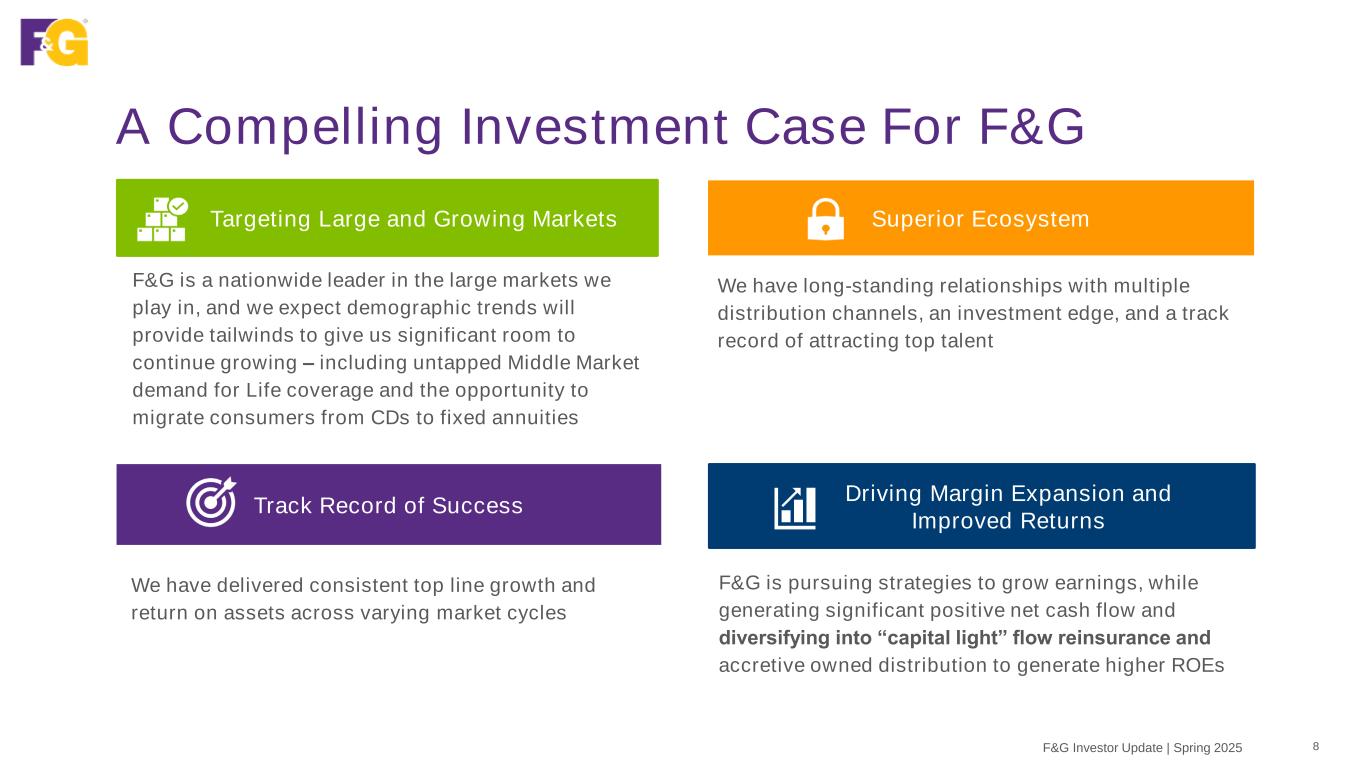
Great. Thank you. I just want to conclude by saying I'm confident in our underlying operating performance and the long-term stability of our business despite the near-term headwinds. F&G's business is resilient and well positioned for the many opportunities ahead through the strength and flexibility that's provided by our multichannel distribution model, our disciplined pricing and underwriting of our spread-based products and our ability to generate fee-based earnings. Thank you for joining us. We appreciate your interest in F&G and look forward to updating you on our second quarter earnings call.
Operator
This concludes today's teleconference. You may disconnect your lines at this time. Thank you again for your participation. Goodbye.