Operator
Good morning all and thank you all for attending the First Horizon third quarter 2025 earnings conference call. My name is Bricka and I will be your moderator for today. All lines will be muted during the presentation portion of the call with an opportunity for questions and answers at the end. I would now like to pass the conference over to your host Tyler Craft, Head of Investor Relations at First Horizon Bank. Thank you, you may proceed tie now.
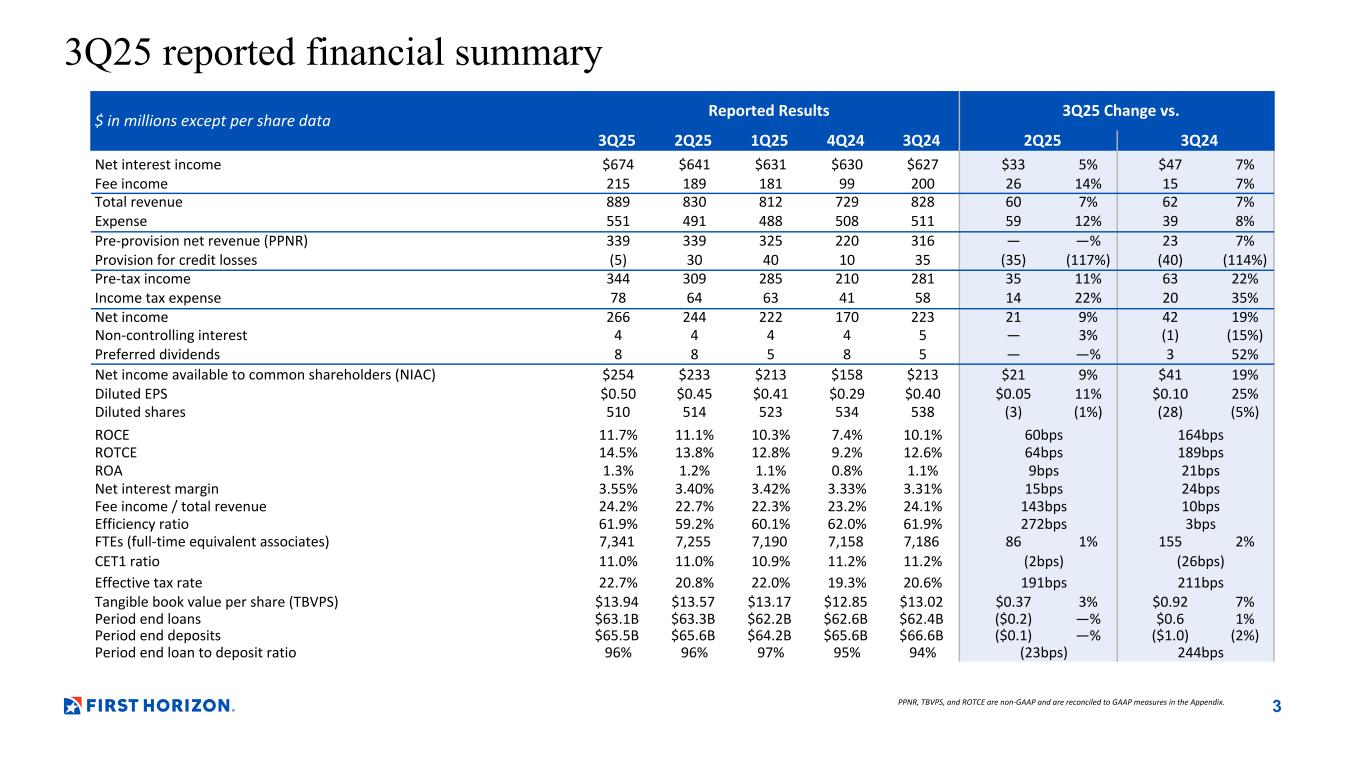
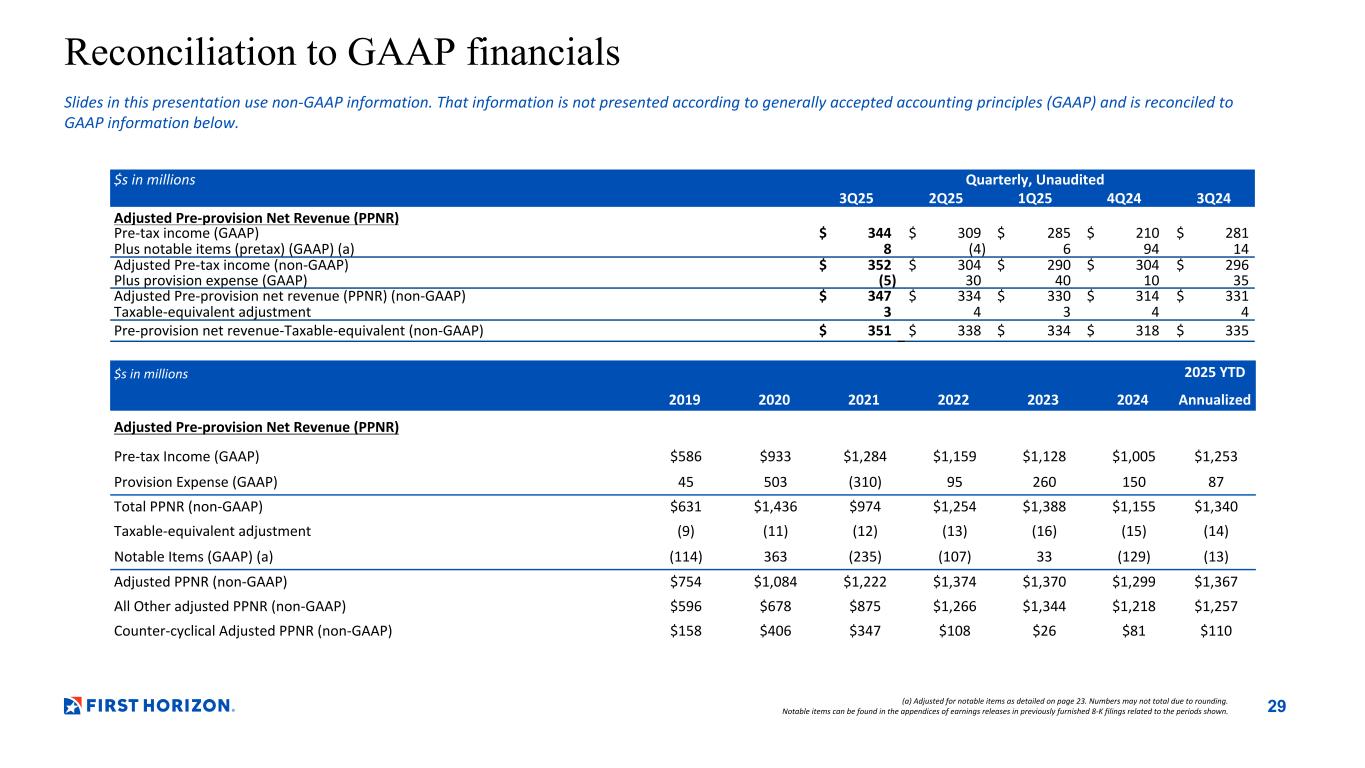
Thank you, Bricka. Good morning. Welcome to our third quarter 2025 results conference call. Thank you for joining us. Today, our Chairman, President, and CEO, Brian Jordan, and Chief Financial Officer, Hope Tomchowski, will provide prepared remarks after which we'll be happy to take your questions. We're also pleased to have our Chief President Officer, Thomas Hung, here to assist with questions as well. Our remarks today will reference our earnings presentation, which is available on our website at IR.FirstHorizon.com. As always, I need to remind you that we will make forward-looking statements that are subject to risks and uncertainties. Therefore, we ask you to review the factors that may cause our results to differ from our expectations on page 2 of our presentation and in our SDC filing. Additionally, please be aware that our comments will refer to adjusted results which exclude the impact of notable items and to other non-GAAP measures. Therefore, it's important for you to review the GAAP information in our earnings release, page 3 of our presentation, and the non-GAAP reconciliations at the end of our presentation. And last but not least, our comments reflect our current views, and you should understand that we are not obligated to update them. And with that, I'll hand it over to Brian.
Thank you, Tyler. Good morning, everyone. Thanks for joining us. We appreciate your continued interest in First Horizon. I'm extremely pleased with our performance this quarter, highlighted by strong adjusted EPS of $0.51 per share. We continue to deliver excellent returns for our shareholders and execute on our priorities across the franchise, focusing on safety and soundness, profitability, and sustainable growth. Thank you to our associates and clients for their continued dedication and trust in First Horizon. I'll invite Hope to walk through the financial results, and I'll share my perspective on the rest of the year and the broader economy at the end.
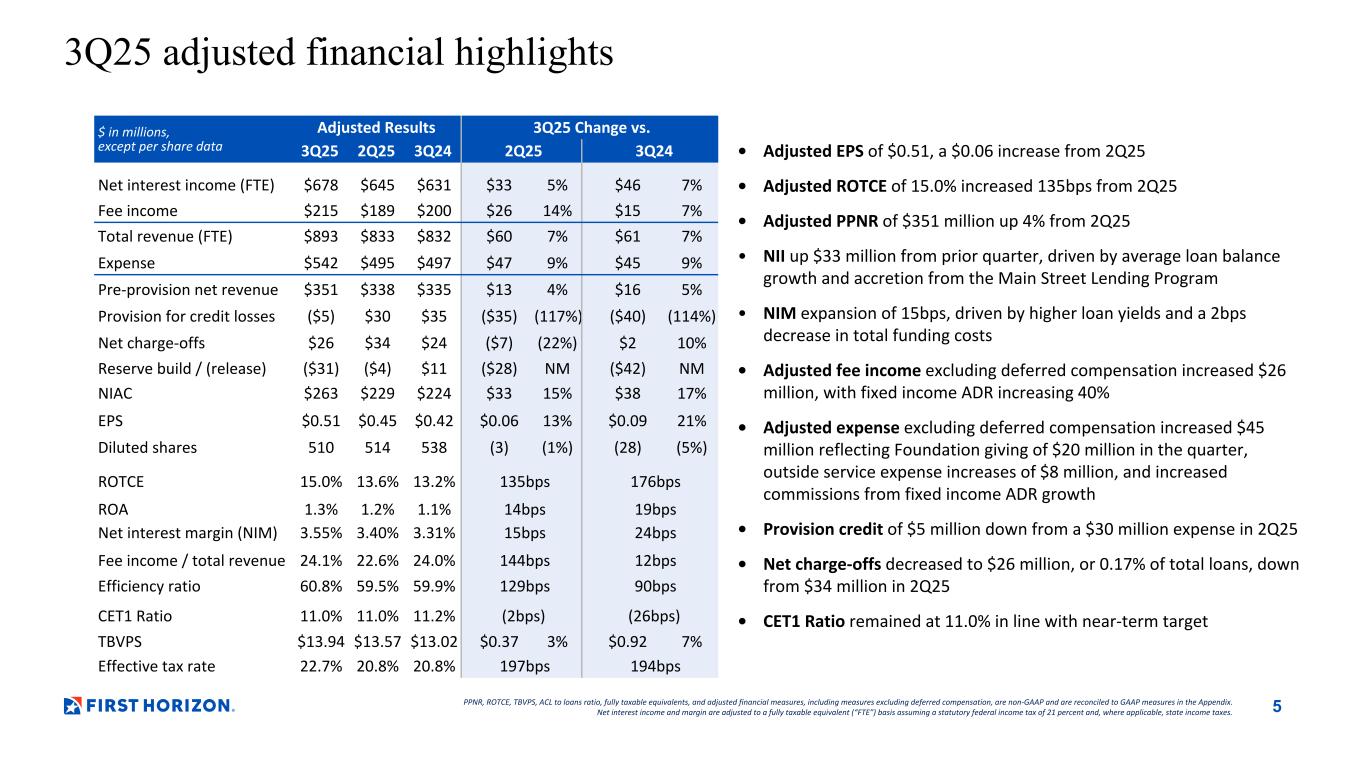
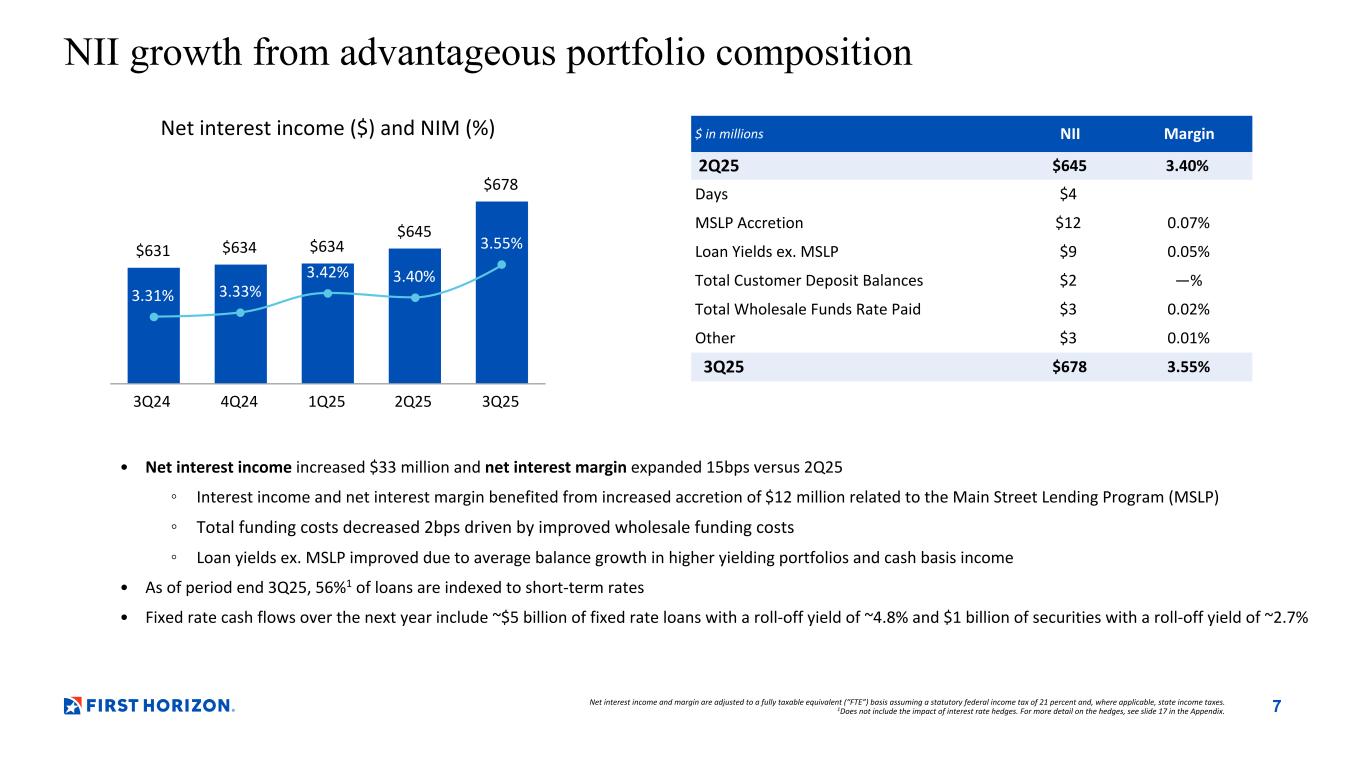
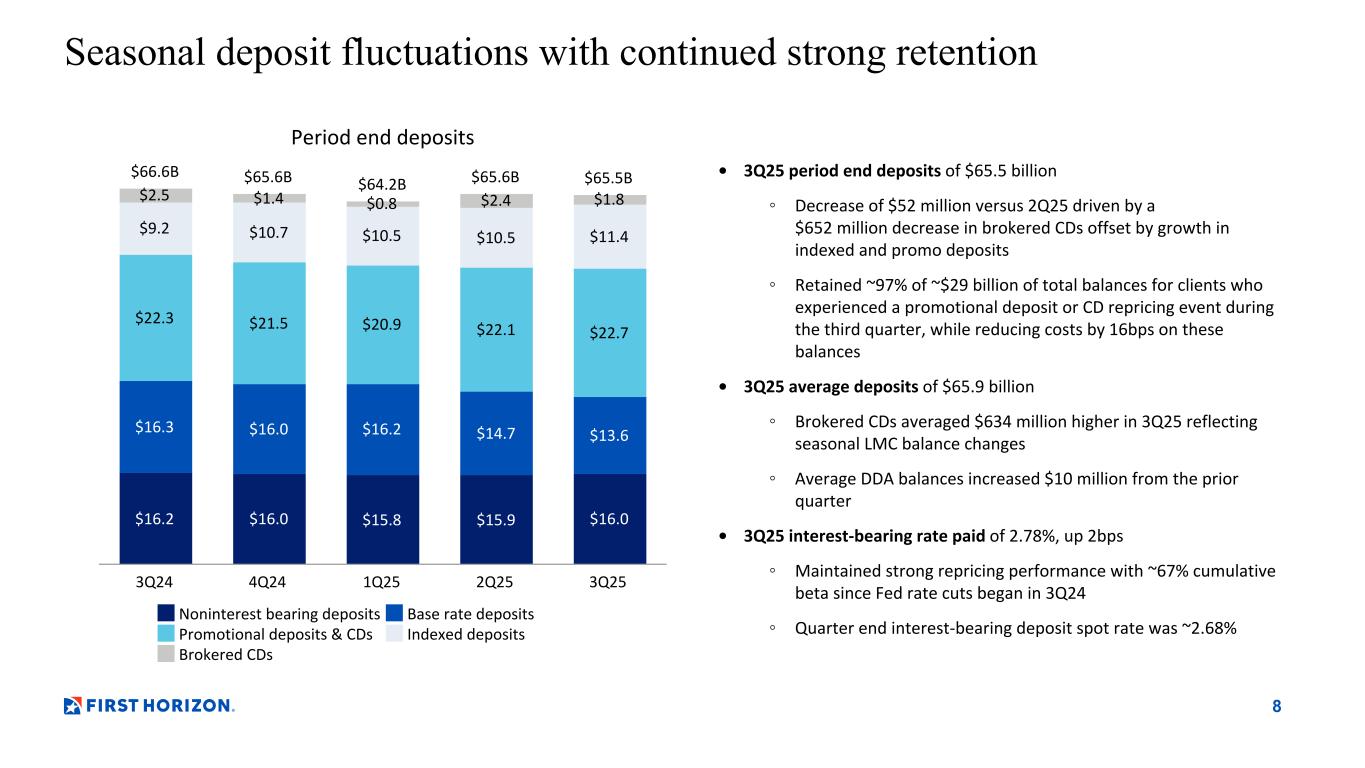
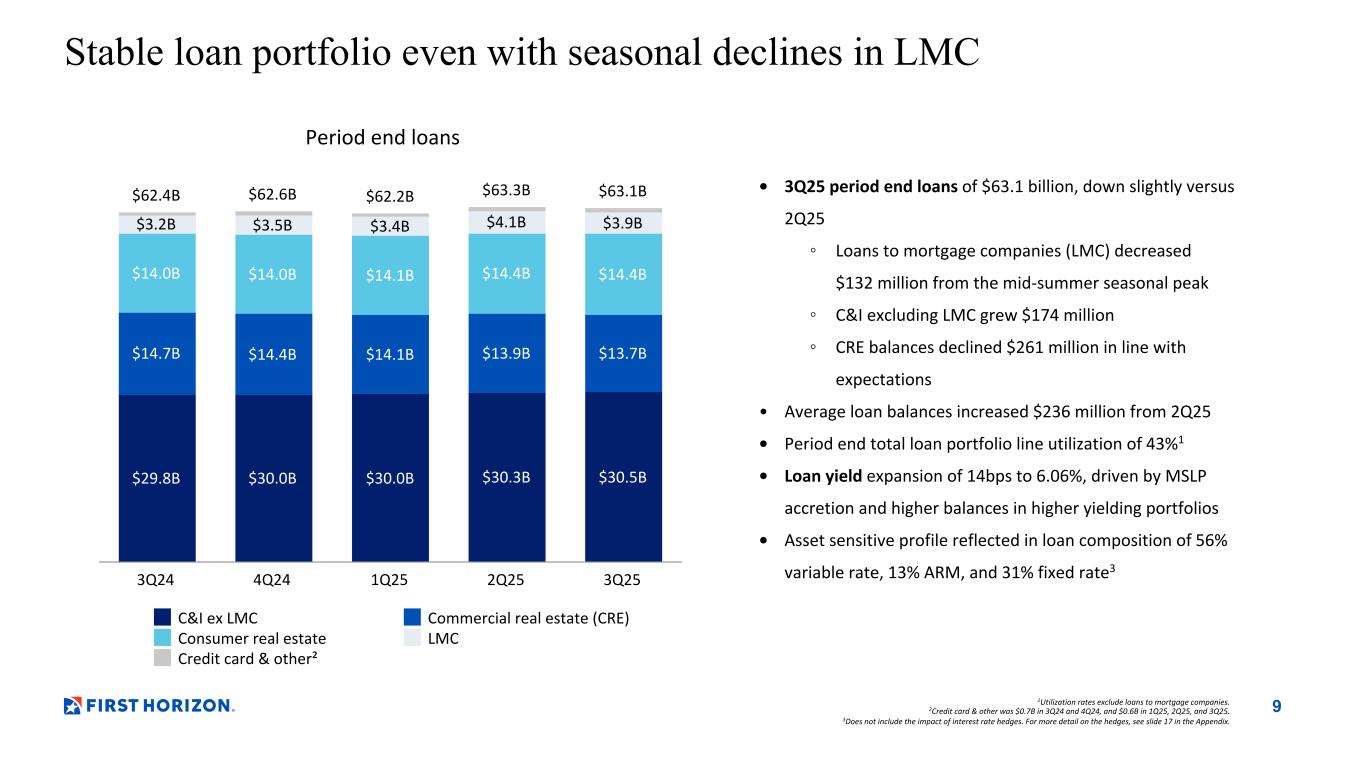
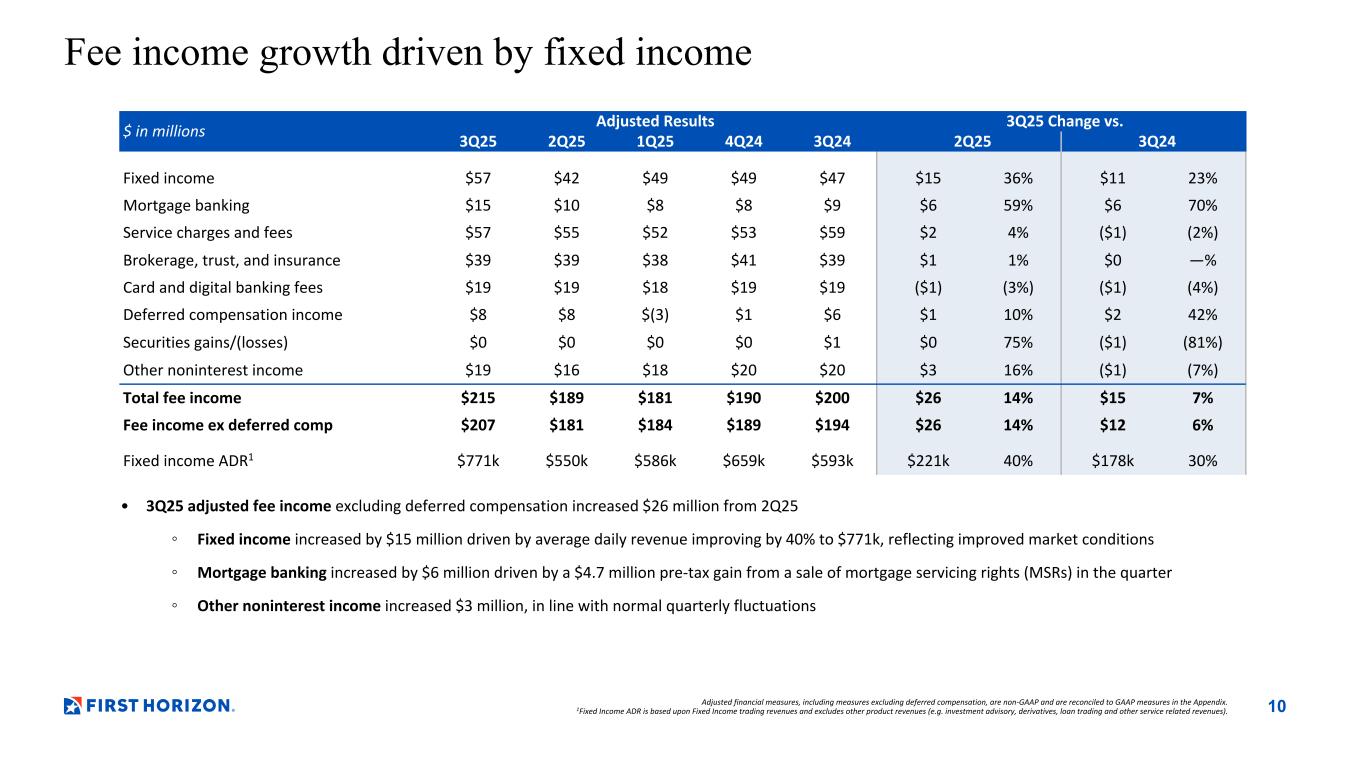
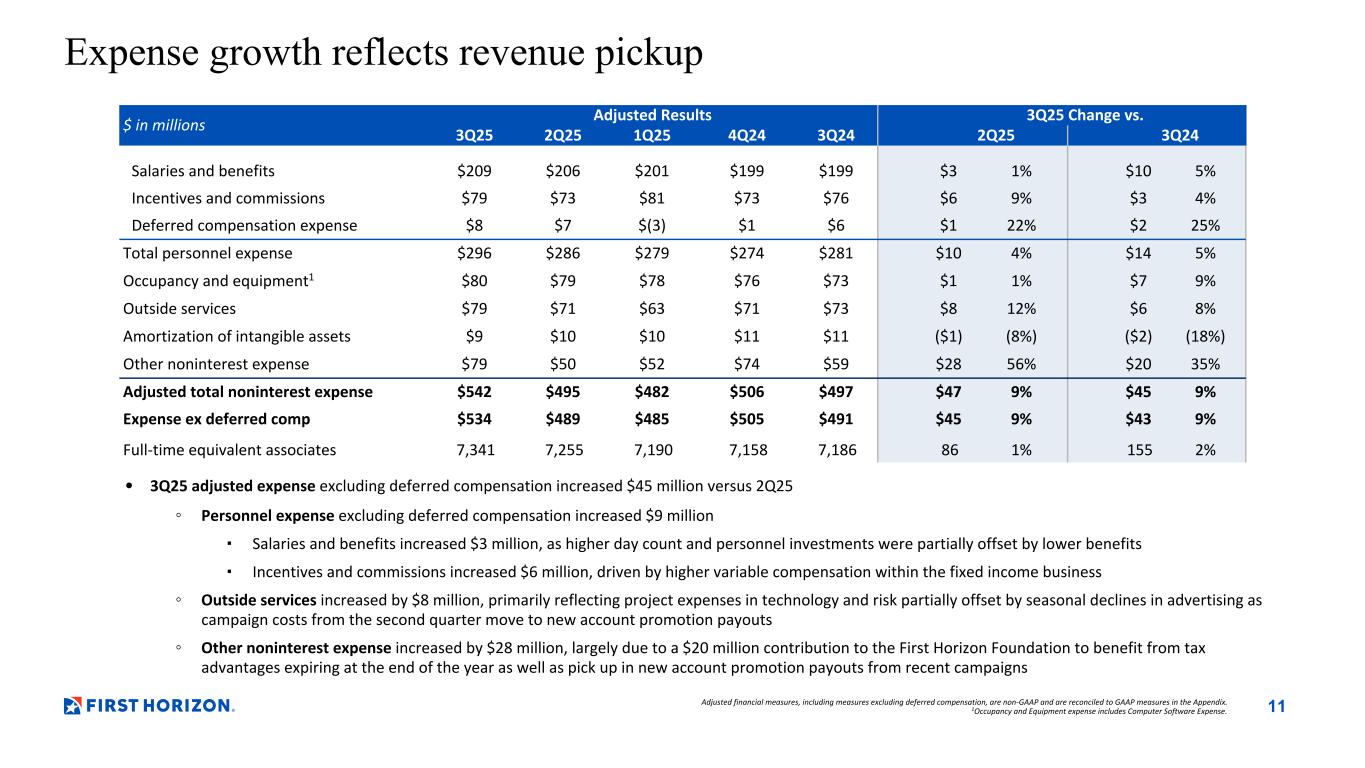
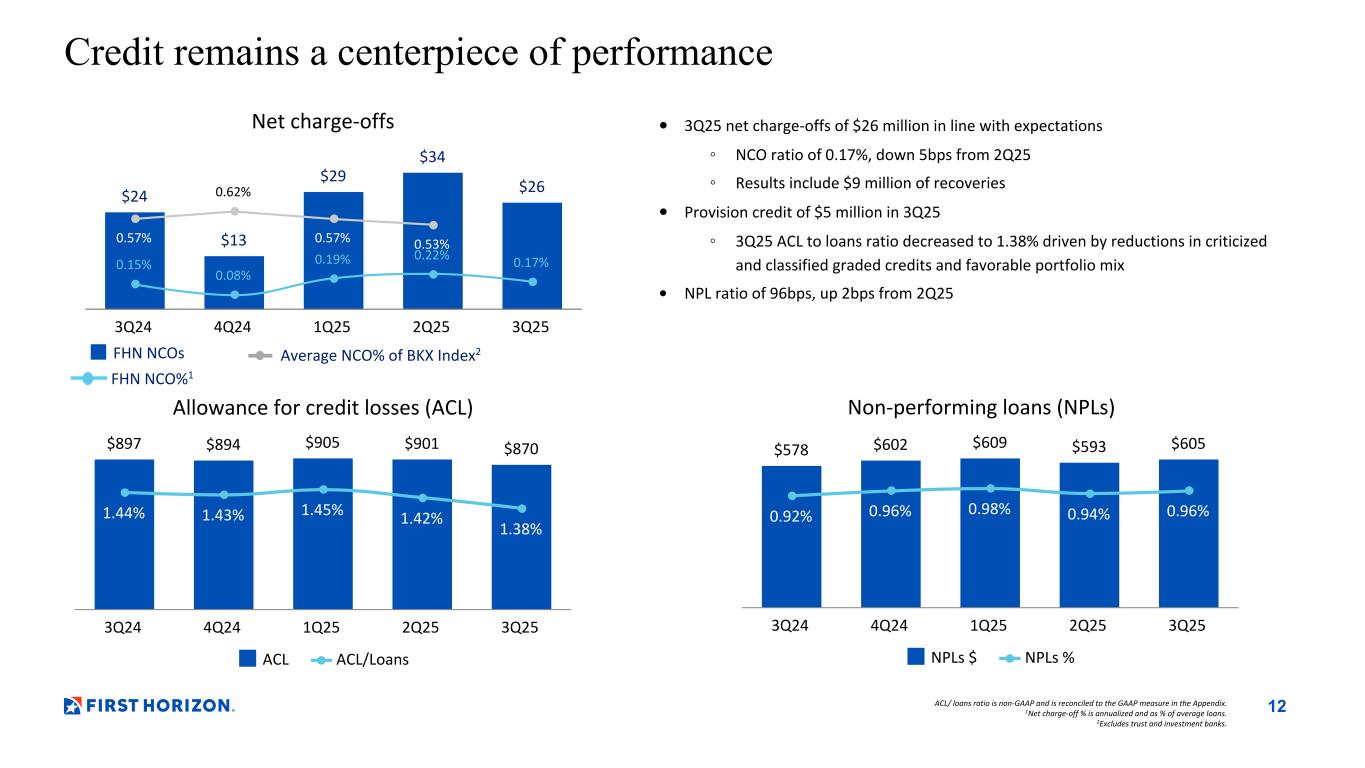
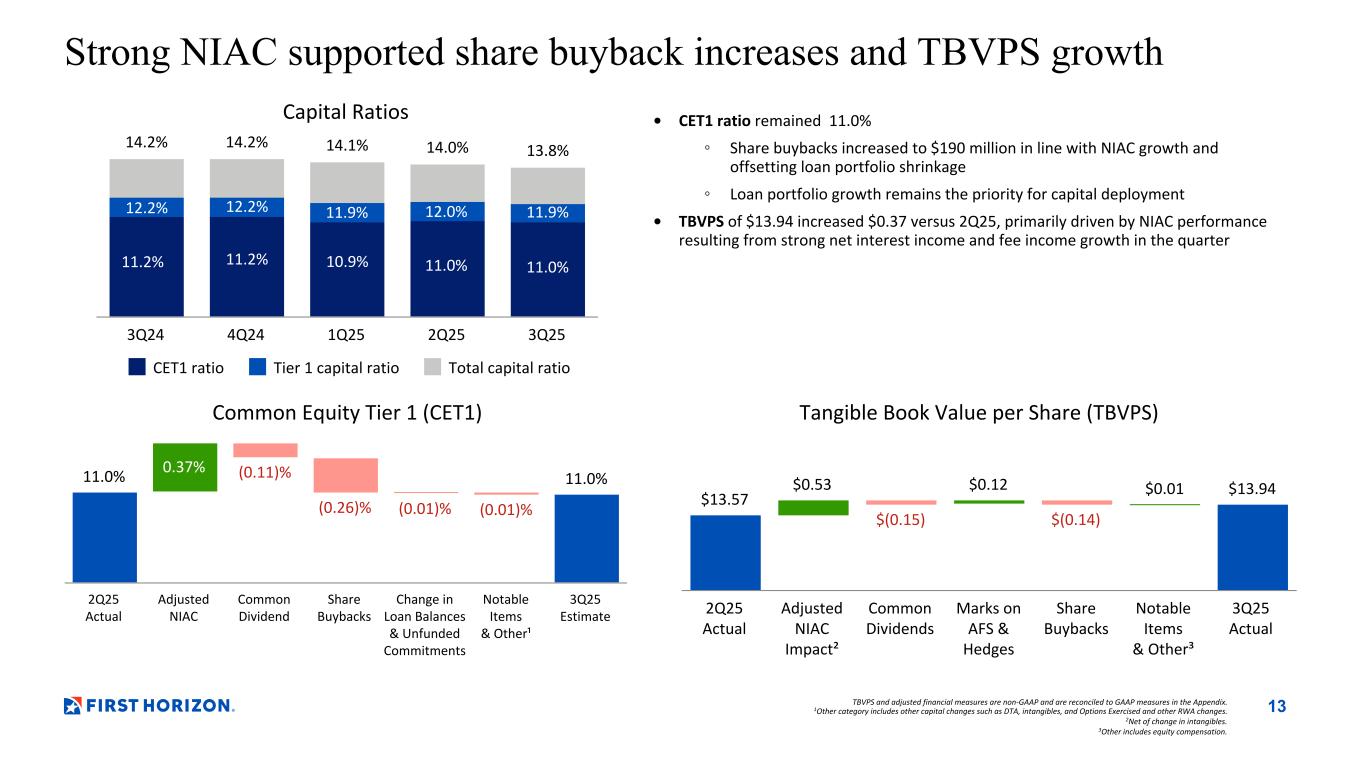
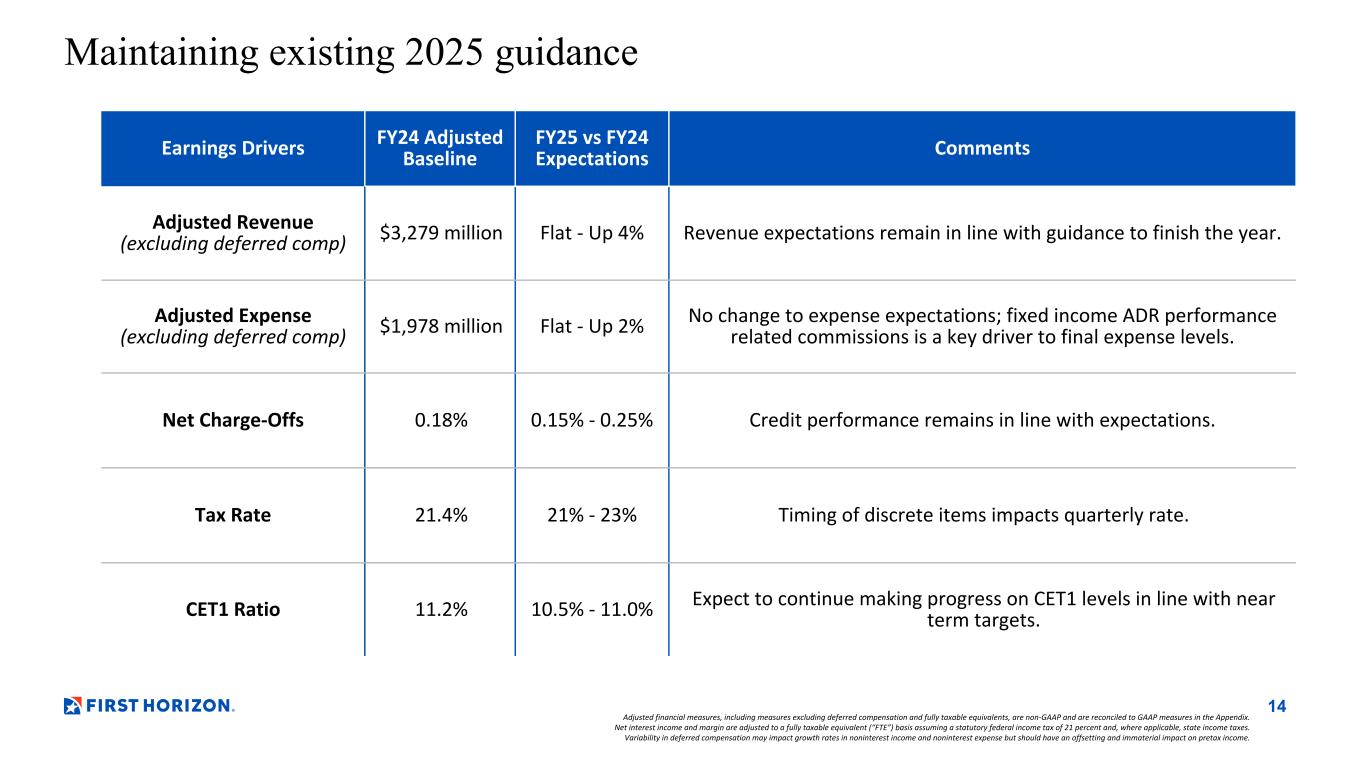
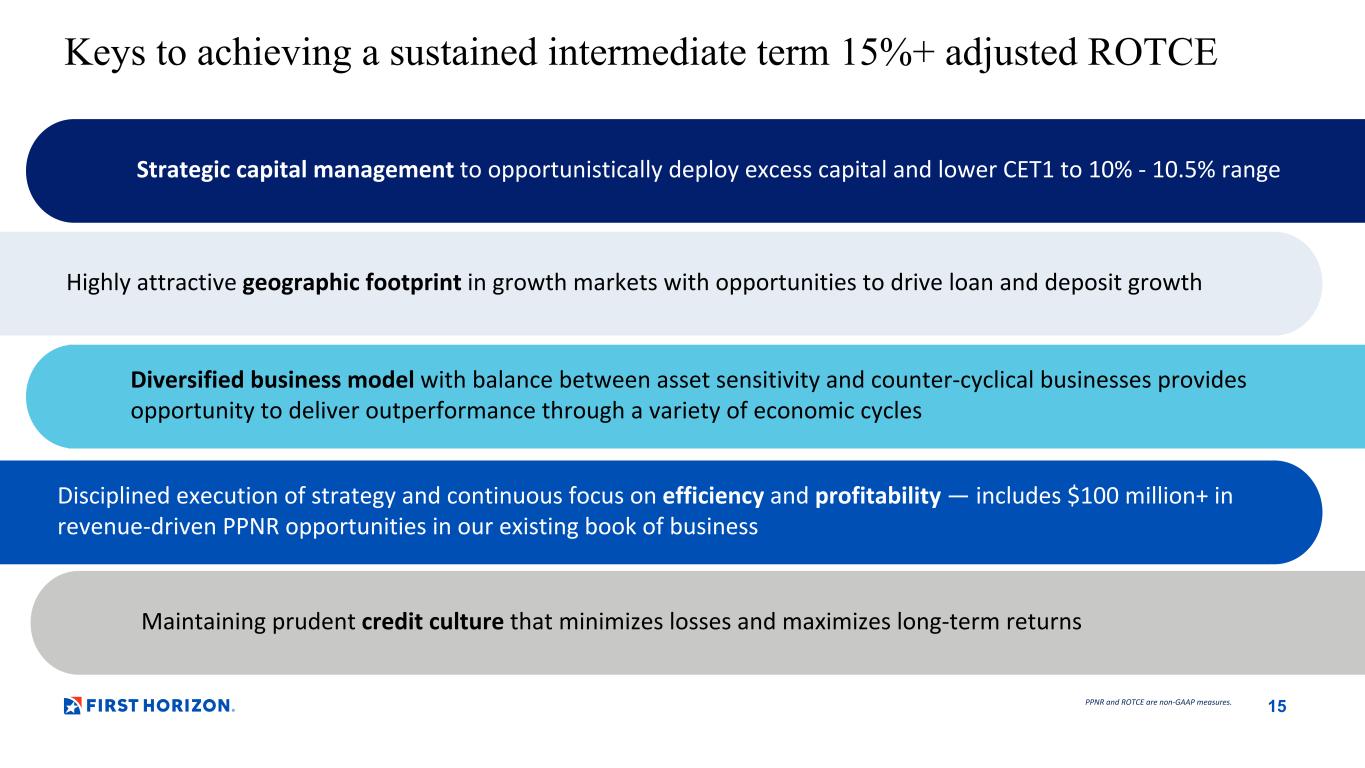
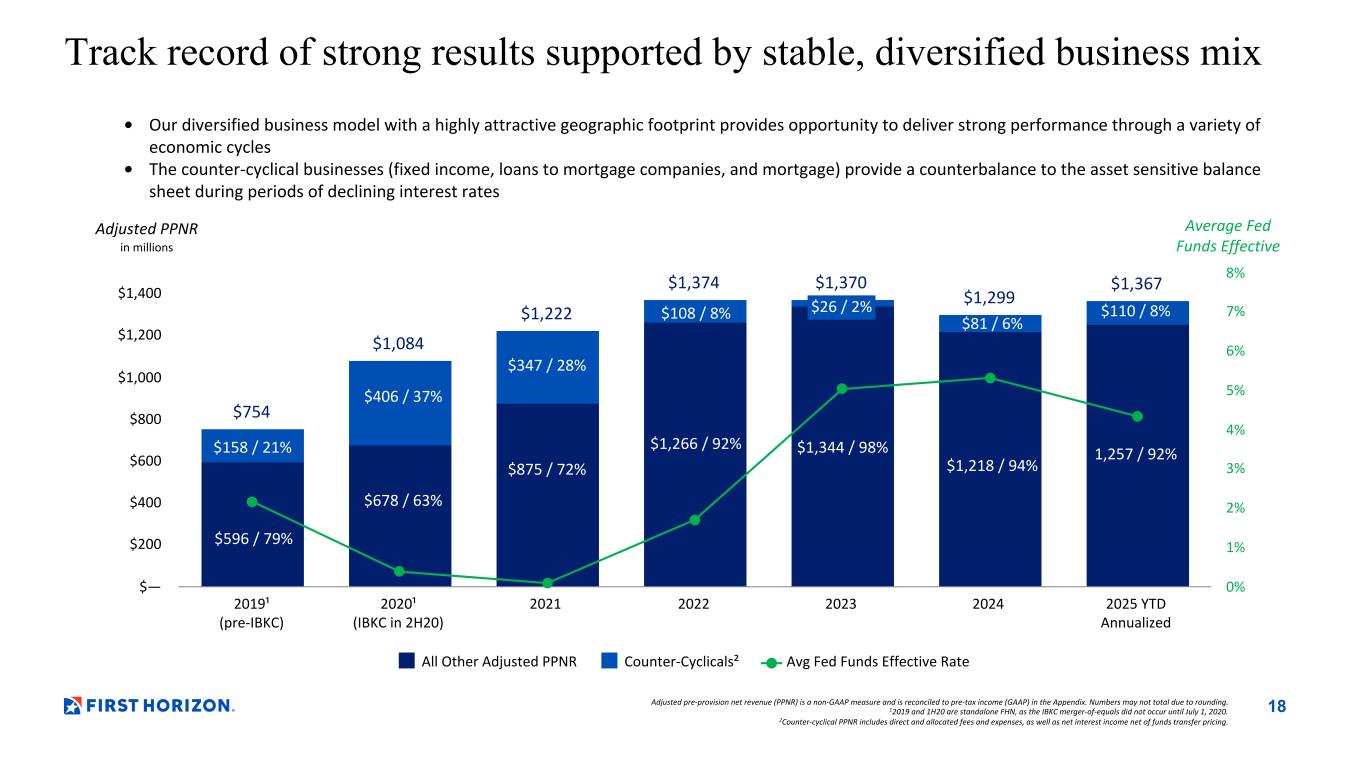
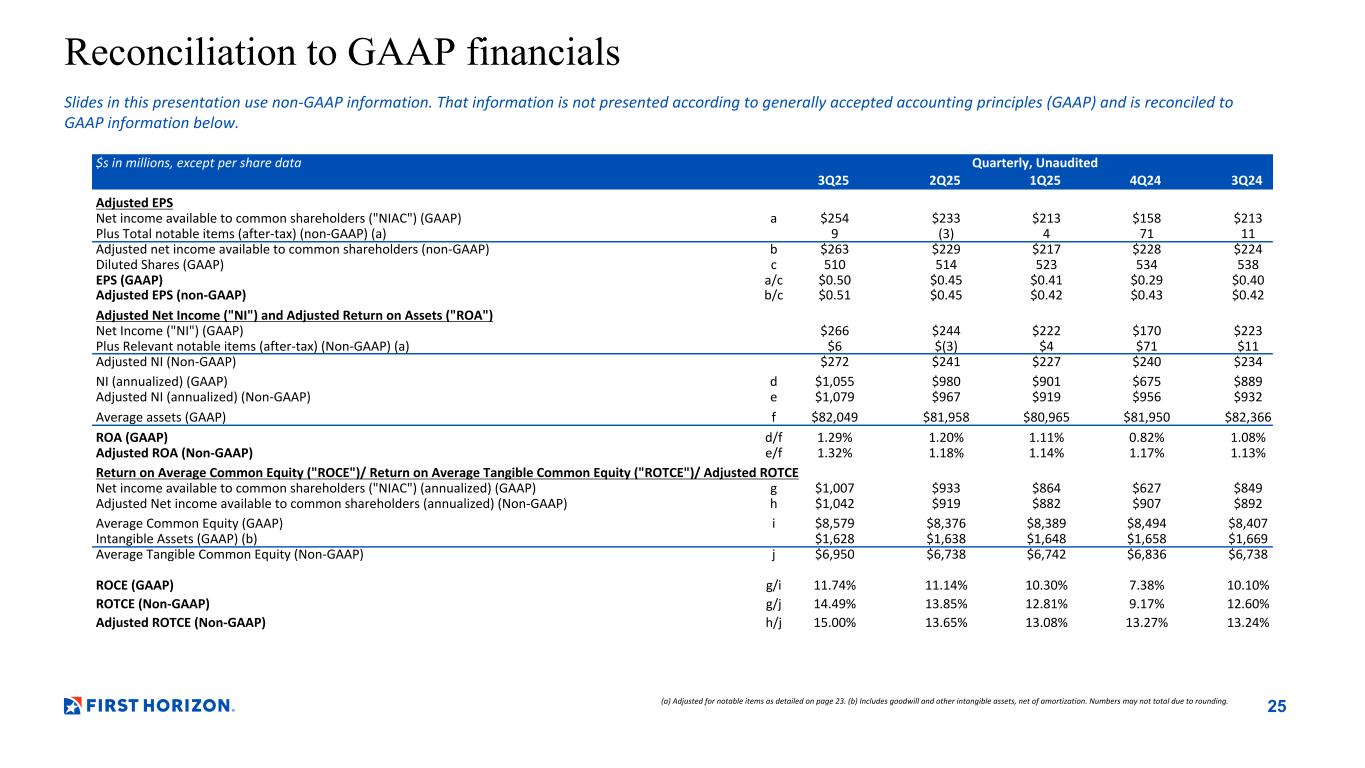
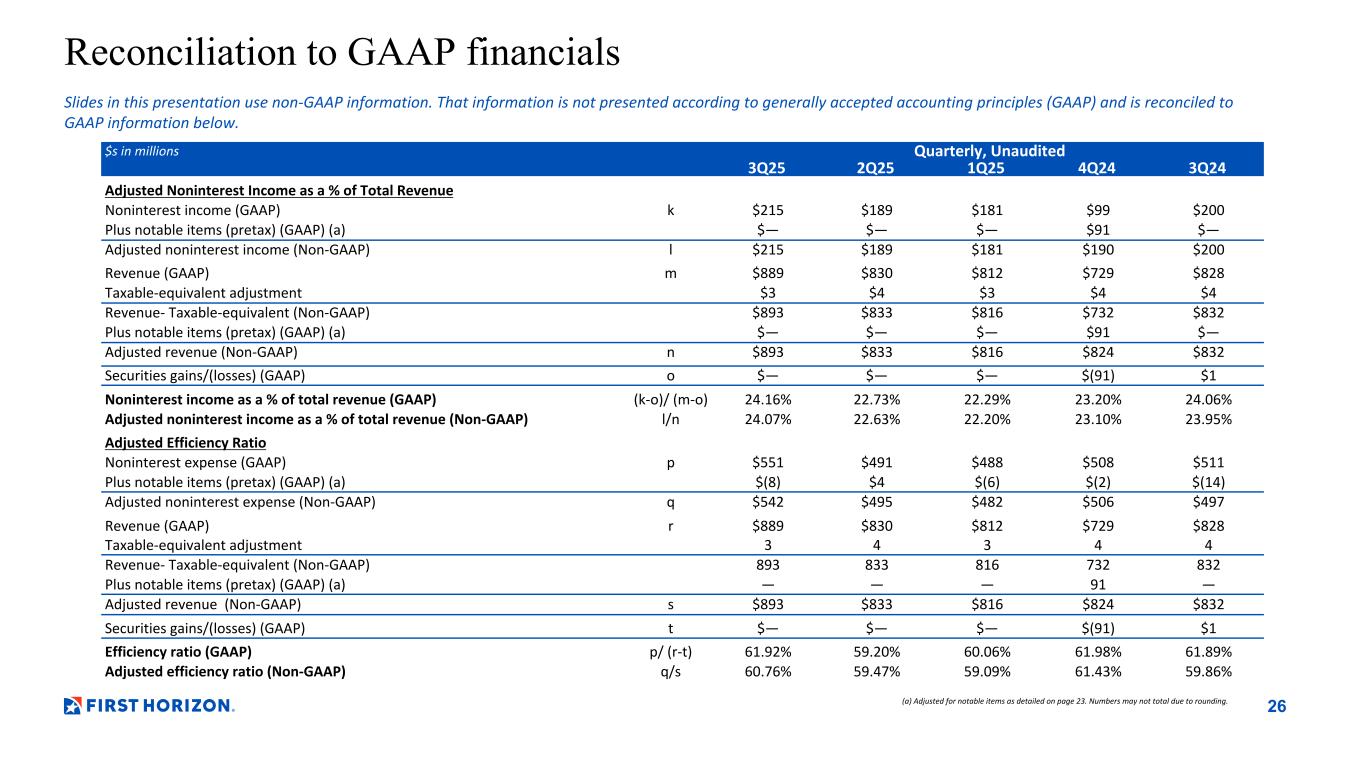
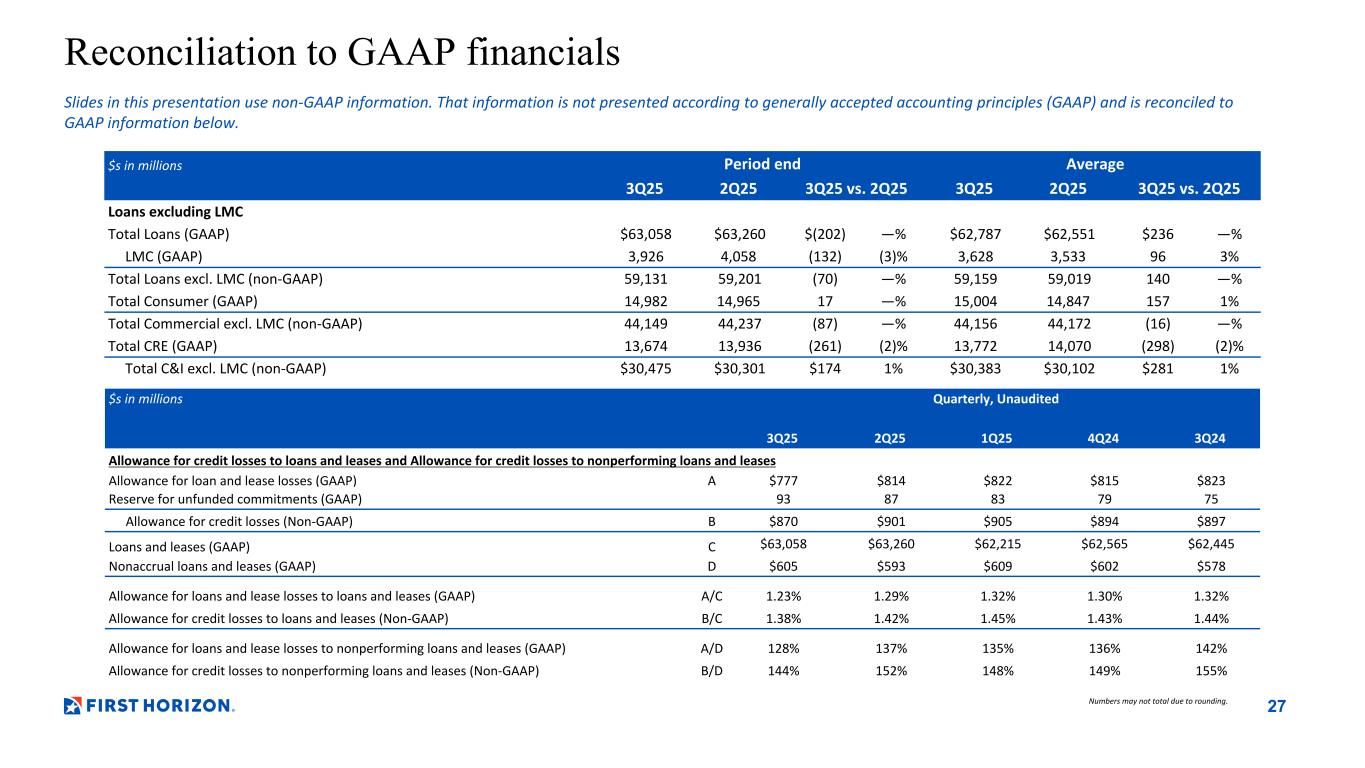
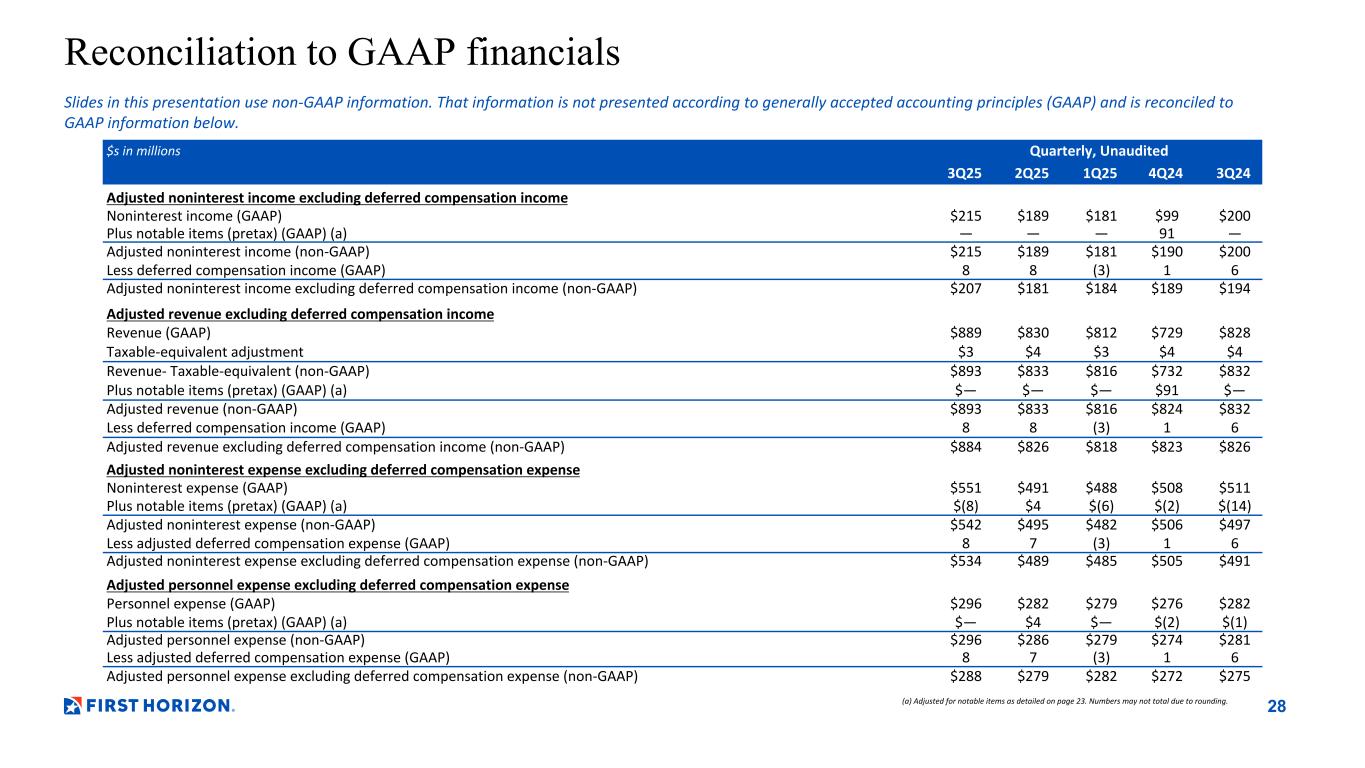
Thank you, Brian. Good morning, everyone, and thank you for joining us today. I'm excited to share the details behind another great quarter for First Horizon. Getting started on slide five with some of our key performance metrics. We generated an adjusted earnings per share of 51 cents, a six-cent increase from last quarter. This earnings growth increased our adjusted return on tangible common equity by 135 basis points to 15%. Moving ahead to slide 7, we cover our $33 million of net interest income growth and the 15 basis point expansion of net interest margin. NII growth benefited from average loan balance growth, including our high-yielding mortgage warehouse business, which contributed to a 14 basis point expansion of total loan yield and drove margin expansion to 3.55%. NII and NIM this quarter also benefited from the recognition of interest income associated with increased accretion related to the Main Street Lending Program. This impact is primarily concentrated in the third quarter. On slide eight, we provide more information about our deposit performance in the quarter. Period end balances decreased by $52 million compared to prior quarter, driven by a $652 million decrease in brokered CDs, offset by growth in index and promotional deposits, which reflect loans to mortgage company seasonality. We did see growth within non-interest-bearing deposits as period end imbalances were up $131 billion. Retention continues to be a highlight for our deposit story as we retained approximately 97% of the $29 billion imbalances associated with clients who had a repricing event in the quarter, while continuing to reduce our costs on those deposits even in a flat rate environment. For deposit pricing overall, the average rate paid on interest bearing deposits increased to 2.78% up from the second quarter average of 2.76%. Our objective is to achieve consistent datas through the cycle as the rate environment evolves. Please keep in mind that there is a delay between Fed rate moves and deposit rate adjustments as we work through client repricing. On slide 9, we cover our loan portfolio performance. Period-end loans were down slightly from prior quarter. Loans to mortgage companies decreased $132 million during the third quarter, which is in line with our normal seasonality that peaks in the middle of the summer. This portfolio continues to be roughly three-fourths purchase transactions versus refinances. To the extent that mortgage rates decline in a falling rate environment, refinance activity could pick up. We saw growth again this quarter in our C&I portfolio with period end balances up $174 million quarter over quarter. We continued seeing Cree balances decline in line with the longer-term pattern we've seen of stabilized projects moving to the permanent market. Importantly, we remain focused on growing higher profitability relationships. We see this in relationship depth with our clients and yields in our loan portfolio with spreads from the mid-100 basis point to the upper 200 basis point range. This overall growth pattern is consistent with our expectations for average loan balance growth in 2025. On slide 10, we detail our fee income performance for the quarter, which increased $26 million from the prior quarter, excluding deferred compensation. as improved business conditions led to increased customer activity for FHN Financial. We saw ADR increase to $771,000 and drive fixed income fee revenues of $57 million. Mortgage fees increased by $6 million driven by an MSR sale during the quarter. On slide 11, we highlight that excluding deferred compensation, adjusted expenses increased $45 million from prior quarter. Personnel expenses, excluding deferred compensation, increased by $9 million from last quarter, driven by $6 million in incentives and commissions growth on the improved ADRs. Outside services increased by $8 million, with the largest driver being project expenses and technology and risk, partially offset by declines in advertising as prior quarter campaign costs moved to new account promotion payouts within other expenses. Expenses this quarter reflect a contribution of $20 million to the First Horizon Foundation. This higher amount for the contribution we typically make to our foundation maximizes the relative tax advantages available for contributions made in 2025. Turning to credit on slide 12. Net charge-offs decreased by $7 million to $26 million. Our net charge-off ratio of 17 basis points is in line with our expectations for the year. Loan loss provision was a credit of $5 million this quarter. This resulted from loan payoff and the ACL to loans ratio declined to 1.38% as we saw criticized and classified loans decline and balances grow in lower risk categories. our two basis point increase to out mpls is relatively flat and we feel confident in continuing long-term credit trends and success in problem loan workouts on slide 13 we ended the quarter with cet1 of 11 which is flat quarter over quarter when we completed our annual stress testing during the quarter we noted that our updated near-term target will be 10.75 and we intend to make progress towards this target in the coming quarters. With loan balance declining in the quarter, our share buybacks accelerated to $190 million with approximately 8.6 million shares repurchased. We have more than $300 million in remaining buyback authorization for our current program. On slide 14, we take another look at our full year 2025 guidance. We remain confident in achieving year-over-year PPNR growth. We maintain our revenue guidance. The NII benefit this quarter discussed earlier and counter-cyclical fee income from FHN Financial provide an offset to the asset sensitivity or balance sheet in this falling rate environment. Our expense guidance remains unchanged with a significant foundation contribution noted earlier and the potential for increased commissions driven by ADR growth as that business has accelerated in the third quarter, we currently expect that expenses may finish 2025 at the top end of our current guidance range. As we noted in our stress testing press release, in the near term we are targeting 10.75% CET1 as we continue progressing towards our long-term normalized CET1 targets. Our outlook for charge-offs and taxes remain unchanged as we close out the year. I will wrap up on slide 15. We are proud of our performance, our 15% adjusted ROTC this quarter, and to see our counter-cyclical business model support profitability as we enter a declining rate environment. Through continued capital normalization, the value generated by our credit culture and performance, and most importantly, our ability to execute on creating value through efficiency and revenue enhancements like those aligned with our $100 million plus PPNR opportunity. We are confident in our ability to hit our near and long-term targets. Our target for the coming year remains achieving a sustainable 15% plus adjusted ROTC. And with that, I will give it back to Brian.
Thank you, Hope. We're starting to see activity pick up overall, and the economy continues to perform reasonably well. On the whole, our clients are growing more confident navigating tariff uncertainty, and we're seeing their willingness to take action flow through to solid pipeline momentum. Now that we have seen the Fed initiate rate cuts, the potential for more to come, we are optimistic that this will drive growth across a broader economy and is an important opportunity for first Rising to capitalize on profitable loan growth across our diversified lines of business in the coming quarters. This past quarter, our organization continued to make meaningful progress positioning First Rising for the future. We invested further in our systems, technology, and processes, which enables us to deepen client relationships and deliver our broad financial capabilities with community banking approach. Our bankers continue delivering our relationship approach to our clients. The third quarter was our highest origination funding quarter in the last two years. Bank M&A activity clearly accelerated in the third quarter. While our near-term focus is unchanged, I am increasingly confident in our ability to integrate a well-structured merger with a strong cultural fit in our existing footprint if such an opportunity arises in 2026 or beyond. Our team's energy remains high, our strategy is clear, and our competitive position and our attractive southern footprint is enviable. We see continued strength in both our credit trends and our capital outlook. Bored-looking, we remain focused on executing the initiatives that result in more than $100 million of additional pre-tax net revenue. We expect to drive sustained, profitable growth supported by our balanced business model and our unwavering commitment to safety, soundness, and serving our clients. Our goal of delivering sustained 15-plus percent adjusted ROTC remains firmly in sight, powered by the hard work of each of our associates. Their dedication and resilience continues to drive our momentum and success. Marika, we can now open it up for questions.
Operator
Thank you. We will now begin the question and answer session. And if you would like to ask a question, you can do so by pressing star followed by one on your telephone keypads. If you change your mind at any time and would like to remove yourself from the queue, you can do so by pressing star followed by two. And as a reminder, that is star followed by one. The first question we have from the phone lines comes from John Astrum with RBC Capital Markets. You may proceed.
Good morning, everyone. Good morning. Hey, Brian, maybe we'll just start the call with you talked a little bit about the activity picking up and some pipeline momentum. How optimistic are you on growth? And is it really, is it a noticeable change from a quarter ago?
Yeah, it has picked up. There is more confidence, and it is noticeable. And I would say it's yet to be seen how anything that occurs with the new friction around China. But we did see beginning to build in the middle of the quarter and beyond rates. I see no reason in the immediate near term that that ought to solve it. It looks like it's sustained.
And then hope one for you, just on the margin, it surprised us positively. It feels a little bit elevated. Is there a better starting point for the margin for the fourth quarter, given the Main Street impact and the mortgage company impact?
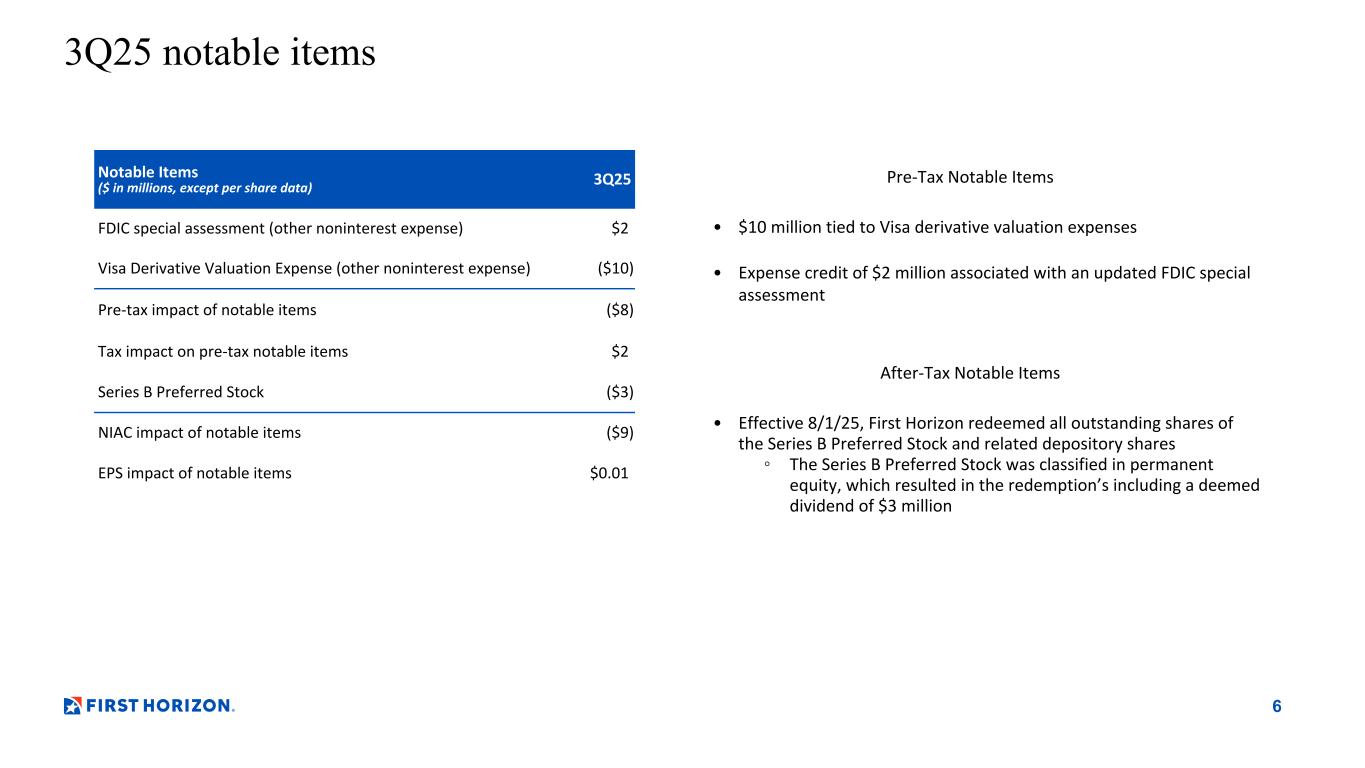
John, great to hear from you, and thanks for that question. Yes, we did have, as we note in our earnings slide, a one-time adjustment this quarter that did increase our margin. Last quarter, we were at 340, and I think that's a good way to think of us in the high 330s and 340. We've been pretty consistently there for the last few quarters, and even this quarter, if you adjust out that one-time item.
Yep. Okay. All right. Thank you very much. Thanks, John.
Operator
Your next question comes from Michael Rose with Raymond James. Your line is open. Michael, could you please ensure your line is unmuted locally before speaking? Michael, if you could please ensure your line is unmuted.
Yeah, we'll go ahead and we'll come back to Michael later, maybe.
Operator
Your next question comes from Casey Hare with Autonomous. Please go ahead.
Good morning, everyone. Good morning. I wanted to touch on the core, the deposit franchise on slide eight. I know there were some seasonal challenges this quarter, but just looking at the trends, the core deposit franchise is down almost 8% over the last two quarters. Just what is driving this and what is being done to kind of, you know, stabilize or reverse the trend and sort of the outlook?
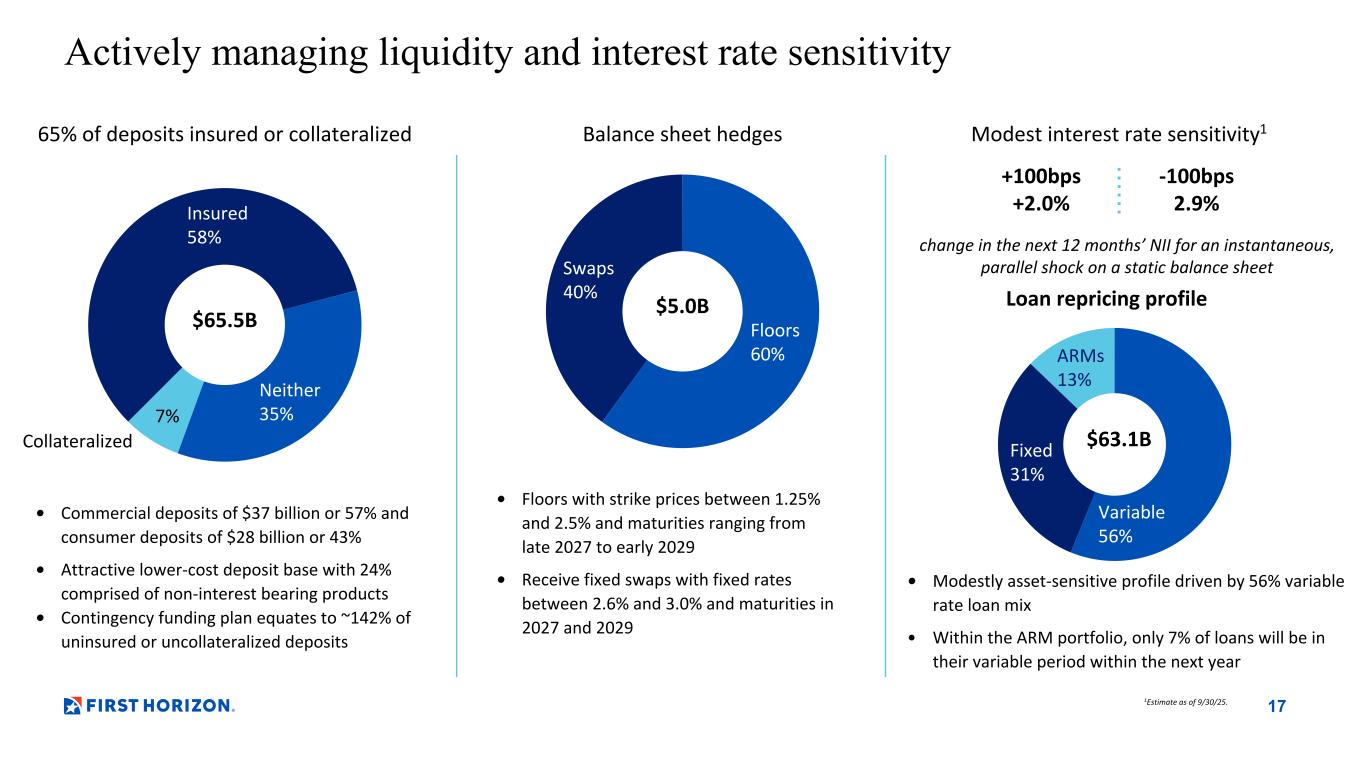
Yeah, Casey, I'm not sure exactly what you're calling core deposits. You know, we really pull out brokered and wholesale in the deck in order to really show the match funding that we do with Mortgage Warehouse. But, you know, H8 data is slightly flat to decreasing. The deposits in the industry are shrinking, specifically out of banking. We mentioned in our last earnings call that we saw a mix out of money markets, and we looked at where our clients are transferring their funds, it was into brokerage accounts. And so I think the competition for deposits will continue to heat up. We talked about last quarter and this quarter, I prepared remarks that we are having high retention rate of our existing clients. and we've put additional money into marketing and cash offers in order to increase new-to-bank clients. But deposit competition has been significant this year, as you've seen, especially as it comes to rate and bringing that rate down on existing customers. It's really a balance that we focus on. How do we keep existing customers with a fair rate through this environment?
Okay. All right. I'm referring to the DDA and the base rates, right? That's down 80%. percent over the last two quarters. You know, that's definitely below, that's definitely lagging H8. And you guys are talking about keeping beta consistent with the prior cycle. It just seems kind of a challenge with the loan to deposit ratio at 97 percent and, you know, the core deposit franchise under pressure.
Casey, on slide eight, if you look at the stacked bar chart third quarter 2024 non-interest bearing deposits which is is really you know a lot of our dda and our customer money there it went from 9.2 to 11.4 in a year and so i don't see that as decreasing dda is just a subset when you look at price order but we are focused on growing that non-interest bearing deposit core and we've continued to see momentum quarter over quarter as you illustrate on slide eight?
Yeah, Casey, we feel very good about the core deposit franchise. We feel very good about the retention of customers, and particularly we are a miles of ratio, and that's one measure. But I think when you look at loans and securities to total deposits, our comparisons are much more in the middle of the pack. We feel good about the momentum we see in the business. We have a significant focus on our core consumer banking business. We have recently hired a new head of consumer banking, and we see very good momentum there. And it's easy to conflate what's happening in wholesale and brokered with what's the core franchise, eyes, but we feel very, very good about the progress we're making there and have a very optimistic outlook as we look into 26 and beyond.
Casey, one note. I think you may – I'm trying to figure out your question. I think you may be talking about the promotional deposits and CDs. That is a subset that we show for what the opportunity is to reprice down during a decreasing rate cycle. A lot of those do go to base pricing and are somewhere else in the chart, so it may be a correlation that's not a causation. We are trying to bring new-to-bank clients down to base rate, and then they fall out of that box.
Okay. All right. And just last one for me, Brian, I wanted to touch on your M&A comment. So, you know, in terms of what you guys would be looking for in terms of size and geography if a bank acquisition were to present itself in 2026.
Yeah, I want to be really clear and sort of reiterate where I started. Our near-term priorities are not changed, and we're very focused $100 million of incremental pre-tax pre-provision and continuing to focus on executing our business model. Given that the M&A environment has picked up and the progress we're making on the foregoing, I feel very good about our ability to integrate if the right opportunity does present itself in 26 and beyond. That said, I tried to focus my comment on the fact that we're very focused on the footprint that we're in, that it's a fill-in opportunity with a strong deposit franchise. It gives us the ability to leverage our middle market consumer, our middle market commercial consumer, private client wealth businesses across that. So cultural fit is very important, but our short-term focus is unchanged. We're a business model, just really mindful of the fact that the environment has changed and that we will be opportunistic if it presents itself in 26 or later.
Operator
Thank you. We have a question from Ben Gerlinger with City. Your line is open.
Good morning. Morning, Ben. I just want to kind of follow up on Mike's question regarding M&A. It seems like people have kind of implied that First Horizon would be a potential seller down the road given the one that's happened before, I guess you could say. But when you think about just the environment it seems like bigger deals are more in vogue and more accepted by regulators i mean think about the opportunity in front of you and shareholder value i mean are you taking yourself off the table or is this more so just kind of positioning if something smaller did come up that you could potentially be a buyer so just kind of think about i mean the share price is down quite a bit on your comments i'm sorry the last part broke up then based on your closing remarks when you talked about being in touch of taking the share phrase down a bit because it's not
really what an implication of people's thought might happen and just hopefully you can expand a little well i don't i don't think that that i intended to change anything that that we have previously said other than enforce and that that we are um increasingly confident get that given the right opportunity in our footprint, that we could be in a position to do that. It is recent approval, the regulatory backdrop. In terms of, I've tried to be very consistent on this point in years, which is that we are very focused on creating value for our shareholders, both near and long term, that we believe we have to operate the franchise with a long term mentality. And And that means focusing on building the business, in our case, for the next 161 years and investing in that regard. I don't believe that changes any of our optionality. And while we were not for sale in the early part of 2022, we received an offer that our board did the right thing in considering that alternative and the various alternatives and the need to create maximum value for shareholders. And so I'm not changing anything about the future, just saying that we're in a much better place today than we were six months ago, and that given the changing environment, to the extent that opportunities present themselves, we're in an increasingly improving position to consider fill-in opportunities in our franchise.
And then just thinking from a core basis, it seems like you said the mainstream lending program added roughly, when we think about a starting point for fourth quarter and into next year, kind of the high 340s, I feel like that's an appropriate level. um but when you think kind of just the cadence of potential cuts in october and december you can talk about repricing on deposits how do you think we should position the margin movement especially with mortgage warehouse use a seasonal outflow report to you or potentially want you to
yeah i think in the nearer term casey you know the high 330s or low 340s is the way to think about us that's where we've been the prior two quarters and if you're just out the main street lending program terminations, that would bring us down to the low 340s this quarter. As far as repricing the deposits, I would expect it to look a lot like it did last year, where in Q3, we saw the rate cut, and then in Q4, we picked up the beta. I don't know if we'll have an October cut or December, but that repricing will always lag. To my earlier comments about slide eight, I think we may have confused people about core deposits versus non-core deposits and trying to show the opportunity to reprice we particularly took out the added in the index bar which shows what we can reprice down you know more real time and then the promo 13.6 billion of promo deposits and cds that will reprice at promo expiration down with each rate cut so we've seen a high 60 low 70 beta and we you know are targeting trying to continue that trajectory as we go into a falling rate environment thank you okay sorry ben one correction i was looking in my chart wrong. It's 22 of promotional posits and 13 of face. I inverted that. So apologies for that.
Operator
Thank you. We now have Anthony Elian with JP Morgan on the line.
Hi, good morning. Hope, you had a strong quarter on both NII and fees, but in your remarks, you maintained the revenue outlook of flat to up 4%. I know you noted that expenses may trend at the high end of the range, but given the strength you saw in revenue in 3Q, I'm wondering if you also expect revenue to trend closer to the high end of the range, or if there's a level of conservatism in your outlook?
You know, if you look at the fact that we have nine out of the 12 months baked, and you look at what our year-to-day results are, we'll absolutely be, you know, short of any unexpected event in the next two and a half months. We would expect to be towards the higher end of the revenue range. So the one that I can't predict well right now is FHN Financial. They had a really strong fixed income quarter, specifically a really strong September. In the last two weeks, we've seen that come down pretty significantly. Partially, we think due to the government shutdown, but I think to get to the higher end of that range, we would need FHN Financial to have a similar quarter to Q3, if not better.
Thank you. And then one on credit, maybe for Tom, if he's on the line. There were several questions on the large bank calls yesterday on their loan exposure to NDFIs, given growth in that category over the past several quarters. I think your loan exposure to NDFIs is a little over 10% for the call report. Just given what's happened in the past several weeks, is this a loan category you're doing a deeper dive on now or anything more broadly on credit? Thank you.
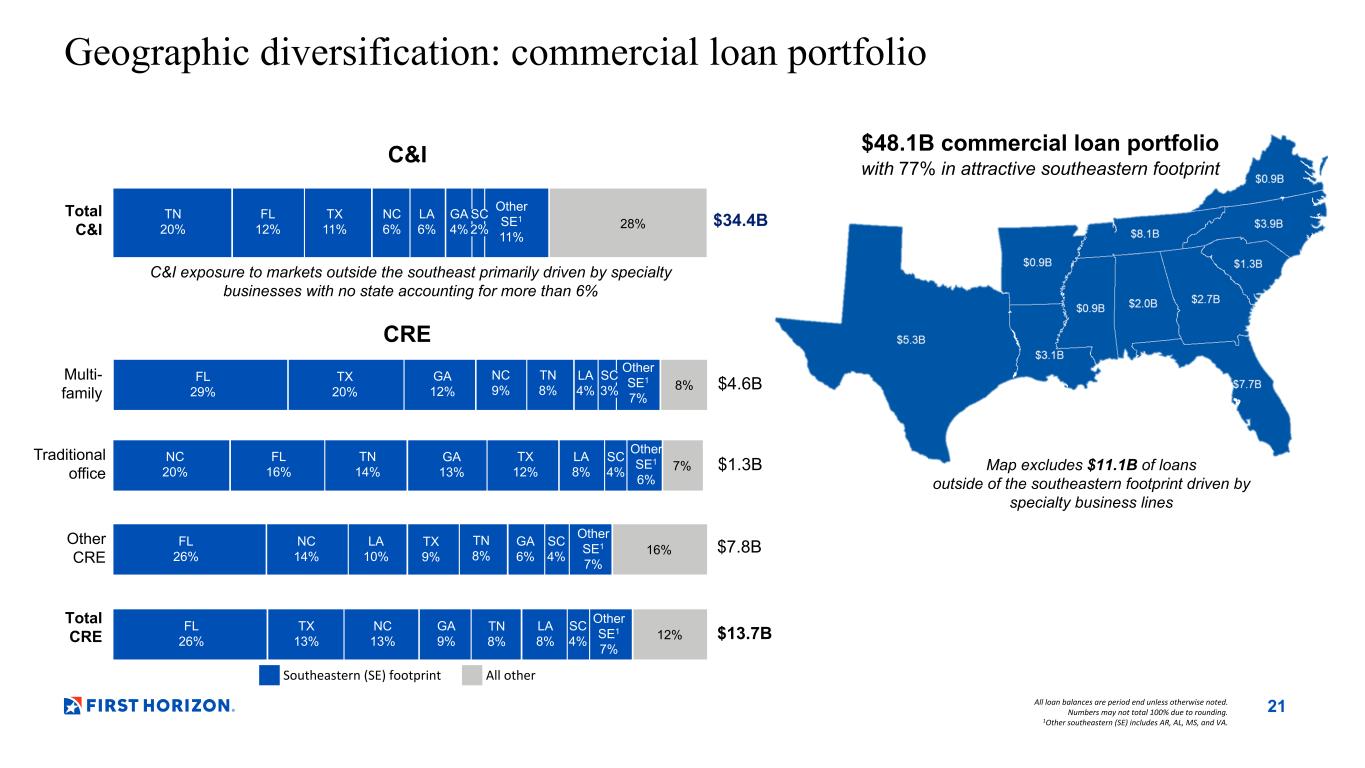
Yeah. Hey, Anthony, I am on the line and thanks for the question. If I look at our NDFI book. I mean, this is an area we've always, even before recent events, always monitored very carefully and looked at. You know, overall, I kind of break our NDFI book into three separate components. Our consumer lending portion of NDFI actually remains very, very strong. There's a very low amount of our C&Cs. I think kind of, you know, I would specifically more focus on, based on the recent events on our consumer financing portion of that, that's where kind of our auto and retail financing would fall into. For us, it's a relatively small book. It's only about 2% of CNI or about 1% of total. And there are some elevated NPLs and classifieds in that book. However, it's all well within control, And we also have a lot of expertise and a lot of history in the space. And so, you know, one thing I would point to, for example, is we've always maintained a full-time team of field examiners that are consistently out of our customers' on-site visits. That team has an average of 18 years' experience in the space, and between that team and outside vendors, we're on site one to three times every year at our customer sites to examine the collateral.
Operator
Thank you. Your next question comes from Jared Shaw in the Barclays Capital. Your line is open. You may proceed with your question.
Hey, good morning. I guess maybe sticking with credit, you talked about the broader improvement in the criticized and classified. Did you change any of the assumptions on the macro side for the CECL analysis driving that allowance, or is it all just sort of fundamental loan-by-loan improvement?
Yeah, so on the CECL modeling process, we used Moody's Analytics for running our macroeconomic scenarios. There is some management judgment in terms of our weighting between the baseline and the upside and the downside scenarios. But, like I said, largely we really follow Moody's analytics. I think, you know, maybe what you're driving at is regarding the decrease in ACL that we had this year. Some of that is individually loan-driven. I think you probably noticed our criticized assets down about 9% or $330 million on the quarter. So we've certainly seen some good overall positive grade migration that's contributing to that. And so it's partly that as well as the updated Nudie's analytics outlook.
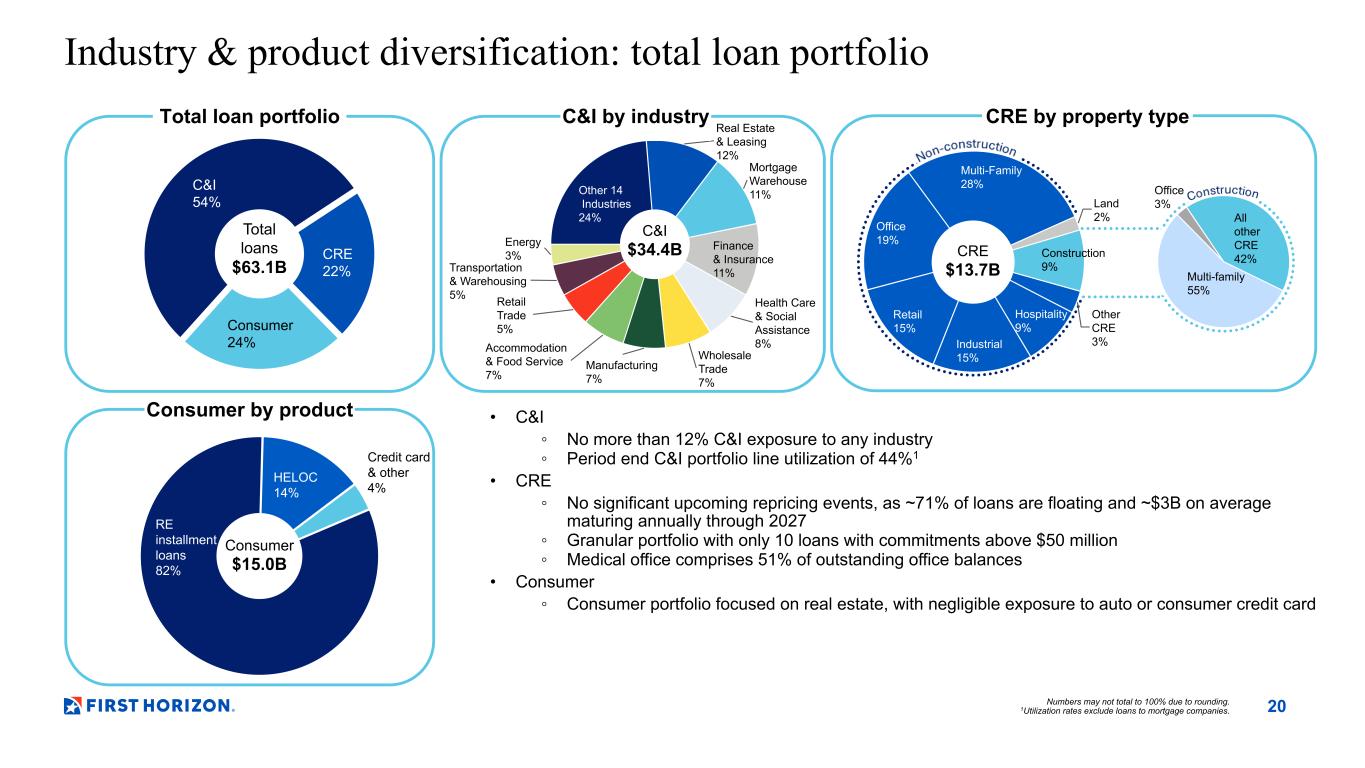
All right, thanks. And then on the loan growth, you referenced, Brian, you referenced the paydown of construction and move over to permanent. Like I said, at what level or what point could we expect to see net growth in CRE?
So, Jared, good morning. I mean, that's a business that is, as you know, you originate a loan and it funds up over two or three or four years and it pays off all at once as it goes into the permanent market. So it has a bit of a spring loading effect over time. We are starting to see with lower rates that those pipelines have built. The third quarter origination activity was significantly better than earlier in the year. So we're seeing progress, and as those projects fund up, you'll start to see it come into equilibrium. I would expect you'll have another quarter or two of continued pay-down, pay-off, but we're starting to see borrowers lean in a bit more. Tom, I don't know if there's anything you'd add to that. No, I think that's right.
That's really kind of the effect of a more construction-heavy portfolio on our CRE site.
If I could just ask a final one. On the Main Street accretion, was that related to loans acquired through Iberia and just accretion at final payoff?
Or what was, I guess, what was driving that outsized accretion this quarter? no it's not related to iberia or an acquisition the main street lending program is coming to an end and they gave banks the opportunity to repurchase those loans for existing clients and so we had some existing clients that were part of that program when we repurchased a loan first time it's now on our and that's it from that loan hitting our balance sheet at the end of last quarter okay and that's all wrapped up there there shouldn't be a tail end of fourth quarter with that? Correct.
Operator
We now have Tim Breslia with Wells Fargo. Please go ahead.
Hi, good morning. Good morning. Sticking to the M&A theme, it's been a couple months now since the Pinnacle Synovus announcement. I'm just wondering what you're seeing in terms of fallout from that transaction? Is that increasing competitive nature on loans, deposit, talent? Just maybe talk us through kind of the first couple of months post that deal.
Yeah, I think it's too early to see an awful lot of impact from that. I would say that the environment for lending in particular, and people, to a certain extent, really experienced RM, PM teams in the environment. And I think it goes, we've had a significant shift in the last, call it two years, from people wanting to bring down risk-weighted assets to a real emphasis on on growth and growth and lending. We've been pretty constructive as we look into 2025, the rest of 2025 and into 2026. We've had very good success. Bankers, and we continue to talk to bankers all across the franchise. And we're looking to be very, very focused in growing the franchise by focusing on our commercial middle market banking, our specialty businesses, our private client wealth teams, and we think we are well positioned to do that over the next really several quarters.
And then, you know, Brian, your comment on potentially integrating a well-structured merger, I mean, that's a little bit more pointed than in the past in terms of First Rise and maybe looking to engage in M&A here in the next couple of years. I guess, what does that mean for just the potential pool of buyers out there? I know, you know, recent quarters, the comment has always been that there's just not that many logical buyers kind of lined up. Is this further reinforcing that statement? And I guess, is that really the driver here, is that there's lack of logical buyers, and therefore you've got to just keep going and kind of consider all possible options on the capital front. I'm just wondering, you know, what changed in terms of making that more point of comment on the M&A side?
Yeah, I think it's really much more narrow in that, one, the regulatory environment, environment, and particularly the bright line around $100 billion or Category 4 in a total asset seems to be a little less bright and potentially can be moved up over time and significantly easier to deal with. Two, the approval process is significantly quicker than it has been in the not-too-distant past. And so that's a positive. And there does appear to be more activity in terms of institutions thinking about what the future may look like. And as we look at our footprint, it is an opportunity to potentially gain a bigger foothold in some of these very fantastic markets that we have across our franchise. With respect to our longer-term thinking, it really is not a change. We are very focused on deploying capital in the business. We want to focus first on deploying that capital on an organic basis. M&A is an alternative to deploying that capital, but it is not our priority. Number one growth is focused on organic deployment of capital in our franchise, and we think we have a number of growth opportunities. I don't think it changes anything about the optionality we have as an organization. We believe we create maximum shareholder value by deploying capital in the business and growing and building for the long term. And we don't think that in any way changes other alternatives that are available. So the big shift is the environment has changed significantly in the last several quarters and the bright line seems to be a little less bright and approval processes and the ability to announce a transaction and get it done in a timely manner seems to be better. And so while I said earlier that we're not making a big shift in the near term. I am saying that given that backdrop, who knows what happens in 26 and 27 and beyond.
Operator
We now have Abraham with Bank of America on the line.
Hey, everyone. Good morning. This is Eric on for EB. Hope, you mentioned kind of the 15% ROC target next year. I know you guys have talked previously kind of about expenses at a high level for next year. Can you just talk about, as we head into 26, kind of what you need to do to hit that 15% and to achieve that and kind of what's based into being able to kind of get there?
The slide in the deck shows the three components pretty clearly. The first is bringing capital down. We have a near-term target of 10.75, which we're working towards after we successfully completed our stress testing. Longer term, Brian and I have been very public. We think 10 to 10.5 is the right capital level for our balance sheet. The second is credit normalization. We've been building provision for two-plus years now for charge-offs that haven't materialized that we don't expect that we will see spike. We've given guidance this year of charge-offs between 15 and 25 basis points, and we're coming in on the low end of that. And so, not having to build provision and being able to have a more normalized credit cost, we build our balance and the third is ppnr growth in our existing book we have a hundred million plus of opportunities that we expect to get out of our existing client base and franchise over the next you know two plus years okay got it um that that's helpful i i guess as the follow-up was curious um just about capital, you know, CT1 kind of at 11 percent.
You've said 1075 is kind of a near-term target. And Brian, maybe kind of with respect to the M&A point, is that excess capital, I mean, you talked about buyback capabilities. Are the deals you're thinking about kind of tucking or are they larger deals that could be done in 2026?
I think as we sit here today, Hey, if we use capital for M&A, it would largely be tuck-in. We think we have significant growth opportunities to invest organically in the franchise, and we really do believe that returning capital, repatriating capital to shareholders through that program gives us the tools or the flexibility to manage our capital levels. We talk to our board consistently about how we deploy excess capital. So, we're not making any significant shifts in the way we thought about it.
A lot of M&A questions, you know, stocks down 12% right now just because of that fear, I think. So, I wanted to make sure that you had the chance to kind of clarify those comments.
What Brian said is we haven't changed our stance. We've been talking about opportunistically. What has changed is that there are smaller banks that are selling in our footprint, and the comment was meant to note that we are able to take advantage of that with our strong uh franchise you know and reiterate what brian said earlier we were not for sale when tv brought us an offer but our board looked at it and did the right thing you know i think we might be over indexing a little bit on a couple comments brian made about a changing m&a by our environment we have not changed our stance on optionality thank you we will now move on to the next question
Operator
now we have chris mcgratty with kbw hey how's it going this is andrew leishner on um for chris Just going back to capital, as you make progress towards that updated 10.75 C21 target, will buybacks continue to be more of a function of where loan growth lands in any given quarter, or will we see a greater appetite for those buybacks going forward?
Thanks. yes absolutely the first priority is to grow the balance sheet with loan growth and so as we put out the target for our share buybacks in at the beginning of a quarter we look at what our forecast is for loan growth and then what you know what capital we cannot deploy to loan growth we then deploy to share buyback second okay great thank you sure thanks thank you we now have christopher Maranac with Janay Montgomery Scott on the line.
Operator
Please go ahead.
Thanks. Good morning. Brian, I know Tom talked about NDFI loans earlier, and I was curious about the deposit opportunity with these customers, particularly outside of the mortgage finance channel. Is that an area that you can grow in the treasury area and otherwise?
Yeah, that's an area where we've had a tremendous amount of focus over really the last several years. And we have made significant progress in gathering activities in our specialty lines of business more broadly. I think in our supplemental information, you'll see that the loan deposit ratio is, we've made progress in that regard, more lending oriented. They are very attractive, have deep expertise and knowledge in those businesses. We'll continue to make progress penetrating deposits in place significantly easier with the ability to gather those deposits. So I feel good about the hope.
Sounds great. Thank you for that background. I appreciate it, and thanks for taking our questions today.
Operator
We have a question from Janet Lee with TD Cowan. Please go ahead.
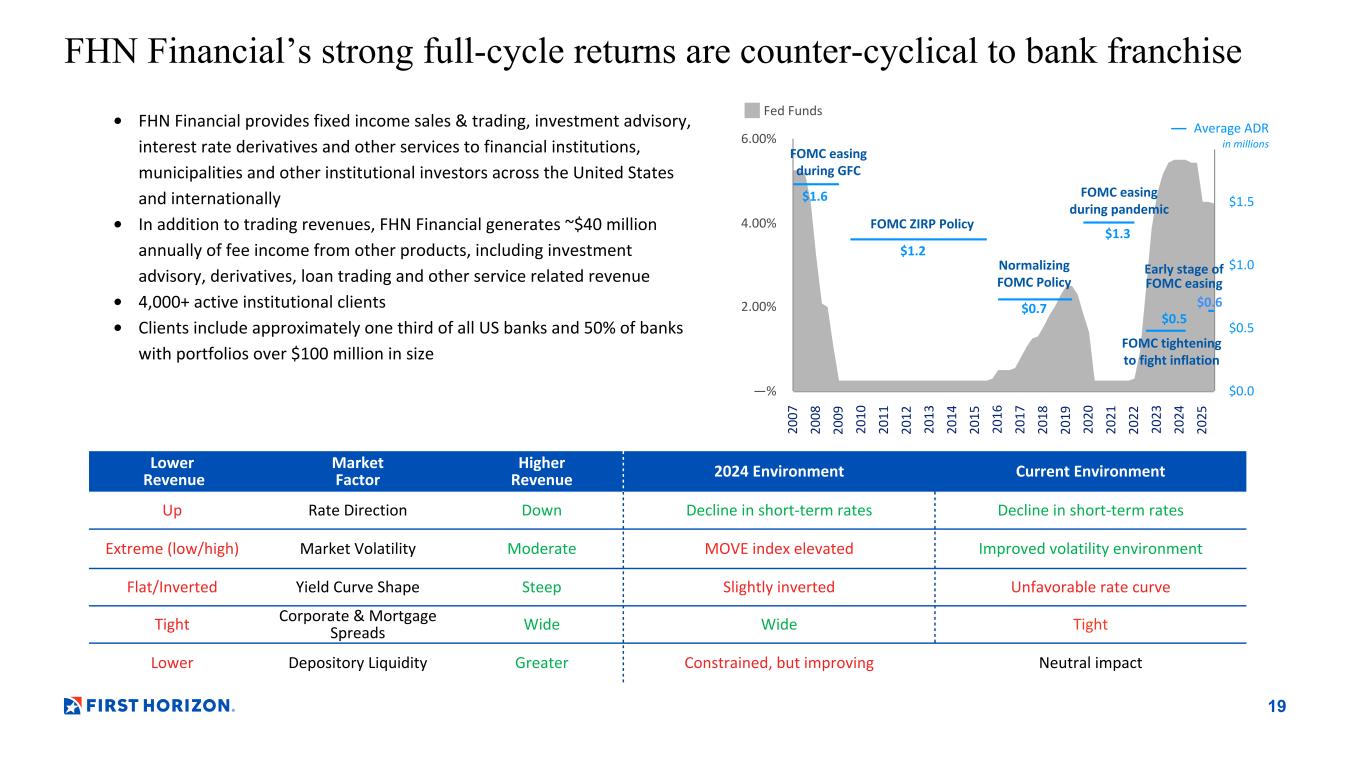
Good morning. I know you guys touch up on FHN trading revenue before, but I want to just get more color. So most of the strength came in September, it seems, but is it sort of around when the rate cuts came? Because when I look at the shape of the curve, looking at the 2-5 and the spread between the 2-year and 5-year, the average spread hasn't changed that much in the third quarter versus 2Q. So I'm trying to understand what drove the 40% increase in ADR in the quarter and the sustainability of the level going forward. Or if the strength had anything to do with more securities repositioning from the banks.
Janet, we saw the momentum pick up really the two weeks before the rate cut as the Fed started to strongly signal that we would see a rate cut. And we saw it continue through early October, you know, first week of October until the government shut down. And so I don't believe, and we have not heard, that it's a ton of balance sheet repositioning. We typically tend to see that at the end of the year. We've commented in our last two years in our earnings that in Q4 we saw FHN financial pick up due to balance sheet restructuring at year end, but I don't believe we had much of it this quarter. As far as the ability to maintain it, I think, you know, whether we see a rate cut this month or in December would be positive for their business, as well as the shape of the yield curve, which is moving around a lot right now in the last week or two as we look at both the tariff impact and the government shutdown impact. I'm hoping it rebounds from where we've been in the last two weeks.
Okay, got it. That's helpful. And in terms of the other C&I balances, excluding the loans to mortgage companies, so that increased this quarter, but roughly at half the pace reported in the second quarter. Has anything changed? I know that Brian commented that the pipelines are building, but is there anything to read from the change in CNI loan growth this quarter versus the last quarter? And do you still expect that sort of mid-single-digit loan growth in 2026 is a reasonable place to be?
Yeah, no, I would say there's no significant change third quarter, second quarter. In the second quarter, our C&I balance's excluding mortgage warehouse was up over $170 million, so I think that reflects good momentum. When we're talking kind of one-point difference quarter to quarter, that's a matter of just a couple of deals. So that's just a little bit of inherent lumpiness, but overall, we have really good momentum in our C&I and in our CRE channels.
And with respect to the 2026 outlook, I'm still comfortable with the mid-single digit. loan growth numbers. And clearly, as I said earlier, we're expecting to turn in commercial real estate lending as rates have come down and projects pencil out better in the momentum that we're seeing in the organization. So, yeah, we're still comfortable with what I said, 2026.
Got it. Thank you. And my last question is just, you know, following up on M&A, would you, for potential M&A opportunities, would you look at contiguous footprint or is it focused on your core footprint? And also, in terms of the timing, would you be comfortable crossing $100 billion without the asset threshold being lifted above $100 billion?
Yeah. So, a couple of thoughts. One, I said near term, nothing's really changed. So, I think this is, if anything, it's 26 and beyond. But yes, we'd be focused on our core franchise. And two, I'm increasingly confident that the ability to cross $100 billion is significantly better than it would have been 18, 24 months ago.
Operator
Thank you. Just a quick reminder that a staff followed by one to register for questions. And we have another question from Nick Elawakai with UBS. Please go ahead.
Thanks for taking my question. Maybe just one more on M&A. You know, I know you've flagged in the past the PPNR opportunity, $100 million plus over the next couple of years here, with a chunk of that at least stemming from residual opportunity because of the Iberia First Horizon merger. Do you feel like you need to realize a significant portion of that $100 million plus opportunity prior to engaging in any further M&A?
Well, it's been our focus to be well down the path. We continually have seen, and that gives us increasing confidence that if anything presented itself in terms of a fill-in opportunity, that we would be in a position to execute on both.
Understood. Thank you. And then, I guess, looking out to 26 and the potential for flattish expenses there, X any changes in the fixed income business, can you just touch on how you're thinking about balancing expense discipline versus investing, especially as you think about the possibility of being a much larger institution?
Yeah, I'll start, and then Hope can clean it up, I suppose. We think we have the ability, given the levers that we've been making over the last couple of years, to deliver on flattish expenses, caveated as you appropriately did with the fee-income businesses. So we can deliver on that, that we can continue to invest in technology, infrastructure, and continue to deliver a superior customer and associate experiences, and that we can do all that and maintain flattishness. that does include continuing to build the capability of an LFI banking institute does not in any way inhibit our ability to continue to build the franchise for the long term and continue to build it in a way that delivers for our customers, communities, and for our associates this year.
I think Brian said it well. I'll reiterate, we are still investing with flat expenses. We do have banker growth built in there. We have DeNovos that are opening later this year and next year. Brian mentioned earlier hiring a new retail head that is also going to make some investments back into our franchise. We announced two and a half years ago that we would have a three-year, $100 million investment back into our technology. Those investments do come with additional revenue and cost savings. We're getting to see, you know, as we come to complete that third year, we're seeing the benefit of those efficiencies. We've also made many strategic decisions that decreased our operating costs we've talked before when we've had some restructuring charges in our earnings about outsourcing our facilities management to jll our broker dealer partnership with lpl all of these things are items that help us drive efficiencies in our expenses while raising revenue thanks for taking my questions thank you nick our final question comes from john astrom with rbc with a follow-up.
Hey, thanks. Thanks for taking the follow-up. Annoying here, Brian, to talk about this, but I think you're saying you can run the company. You cannot run the company as if someone larger like TD is going to come in with a big premium in the near term. You have to keep looking ahead, growing the franchise. If a small deal comes up, you consider it. If it enhances franchise value. A big premium comes in next week or a year from now, the board would consider it. But if it doesn't happen, you can't just sit there and wait. I know it's annoying, but that's the message, right? Really, nothing's changed in terms of your approach.
Yeah, absolutely, John. You said it much more articulately than I've said it this morning. Nothing has changed in our view. We believe we have to run the franchise, and that does acquisitions. We believe that very strongly that if we create value by delivering high returns, improving profitability, and capitalizing on one of the best footprints, we believe in the banking space, it doesn't take any off the table. So I think as you articulated, we don't see ourselves limiting our optionality in any way by continuing to invest and deliver in the franchise. Thanks for your help.
Operator
Thank you. We now have another follow-up from Anthony Ian with J.P. Morgan on the line.
Hey, Brian. One more on M&A. And I'm curious, you kept emphasizing in-footprint, existing footprint. But if I think Iberia and Capital Bank, they expanded your footprint to the Carolinas, Texas, Louisiana. So I'm curious, why put the emphasis on in-footprint this time around in your prepared remarks?
Yeah, Anthony, it's really in many ways very, very different. If you think about capital bank for a Tennessee-based franchise at that point in time, and that really enhanced. And today we have broadly ranges from Texas to Florida to Virginia to Arkansas and back to Texas. And we look at the growth and the opportunities in that footprint. it really seems the place that we are. Anything, at least immediately, that's what is one of them.
Operator
Thank you. I can confirm that that concludes our question and answer session today. And I would like to hand it back to our CEO, Ryan Jordan, for some final closing comments.
Thank you, Barika. We appreciate everyone joining us this morning. We appreciate your time and your interest. If you have follow-up questions or you need additional information, please do not hesitate to thank you.
Operator
Thank you all for joining the first Horizon Third Quarter 2025 Earnings Conference call. Today's call has now concluded. You may now disconnect and please enjoy the rest of your day.