Operator
Good morning, ladies and gentlemen, and welcome to the HomeBancorp's second quarter, 2026 earnings conference call. All participants will be in lesson-only mode. Should you need assistance, please signal a conference specialist by pressing the star key, fill by zero. After today's presentation, there will be an opportunity to ask questions. Please note this event is being recorded. I would like to turn the conference over to HomeBancorp's Chairman and CEO, John Bordelon, President Darren Giddey, and Chief Financial Officer David Kirti. Please go ahead, Mr. Kirti.
Thank you, Anna. Good morning and welcome to Home Bank's second quarter 2026 earnings call. Earnings release and investor presentation are available on our website. I ask that everyone please refer to the disclaimer regarding forward-looking statements in the investor presentation and our SEC files. I'll hand it over to John to make a few comments about the second quarter.
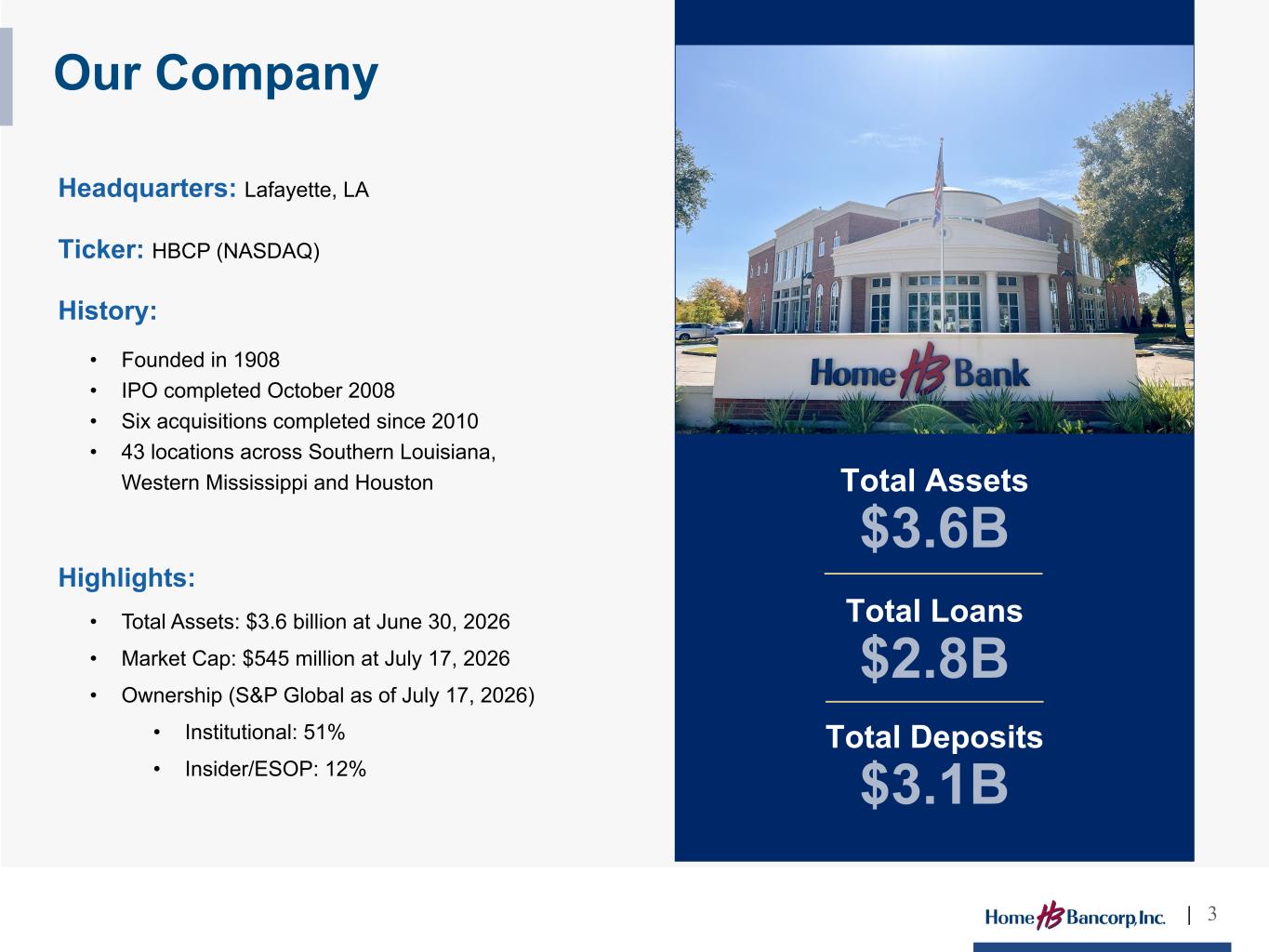
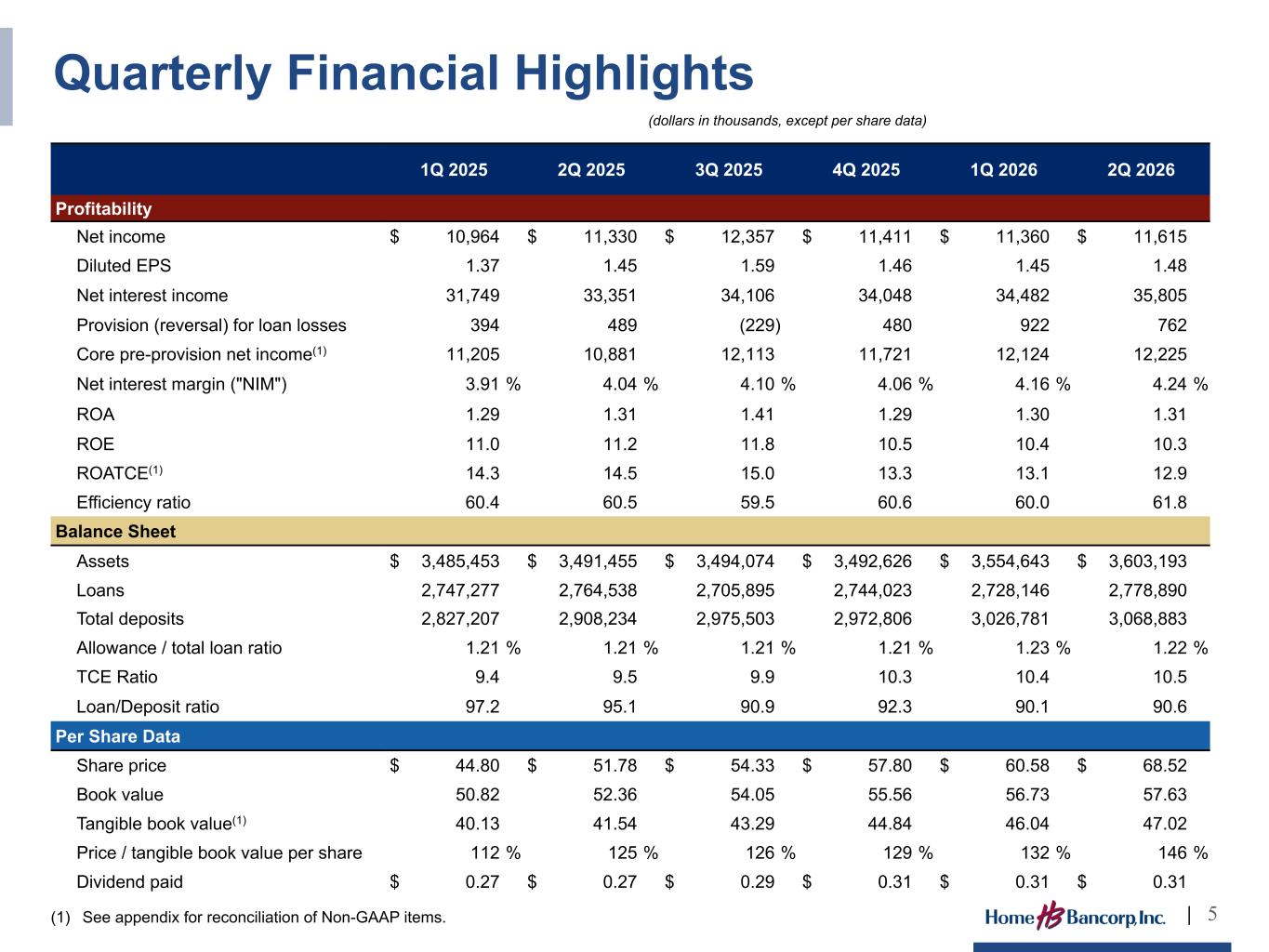
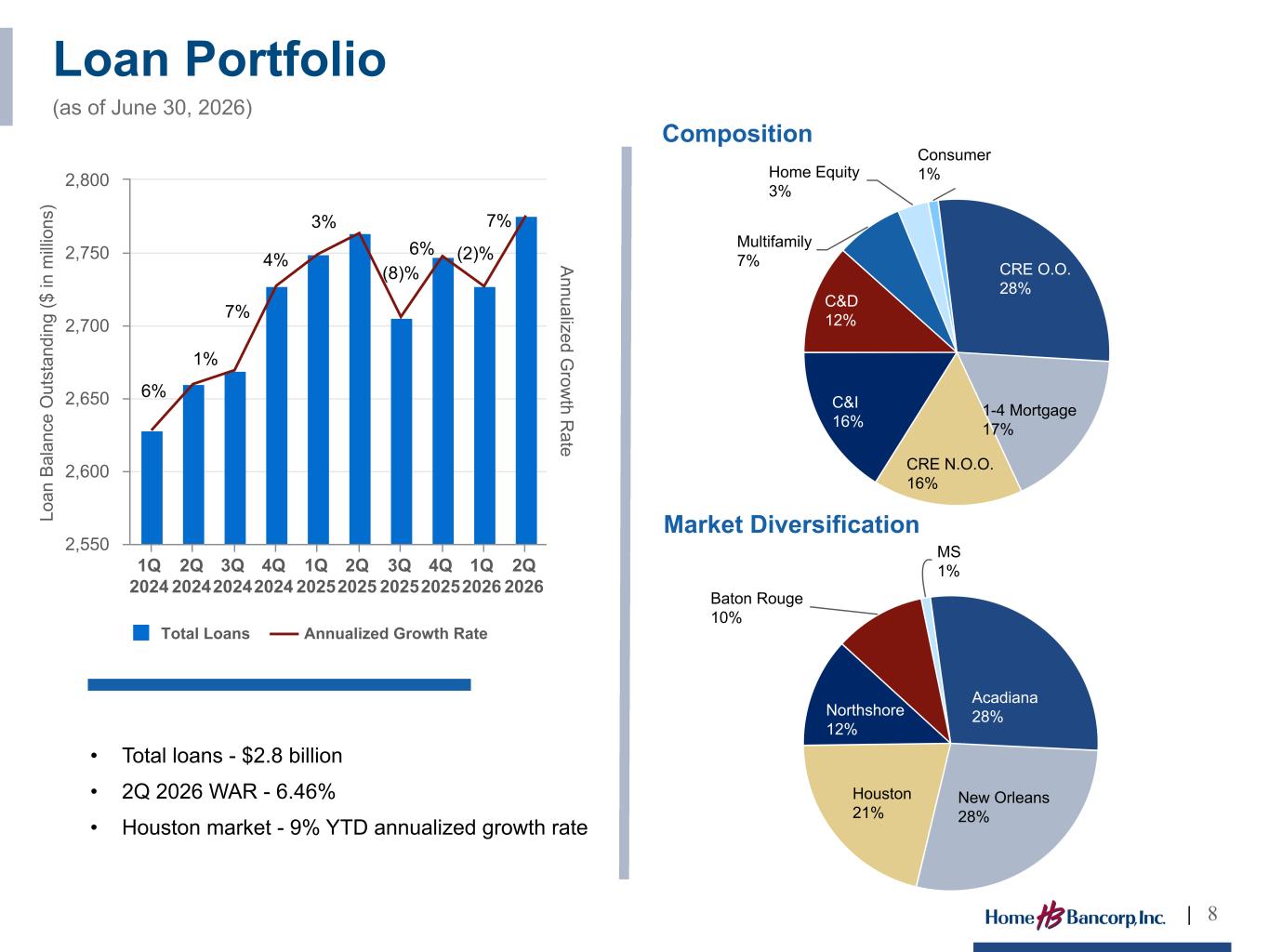
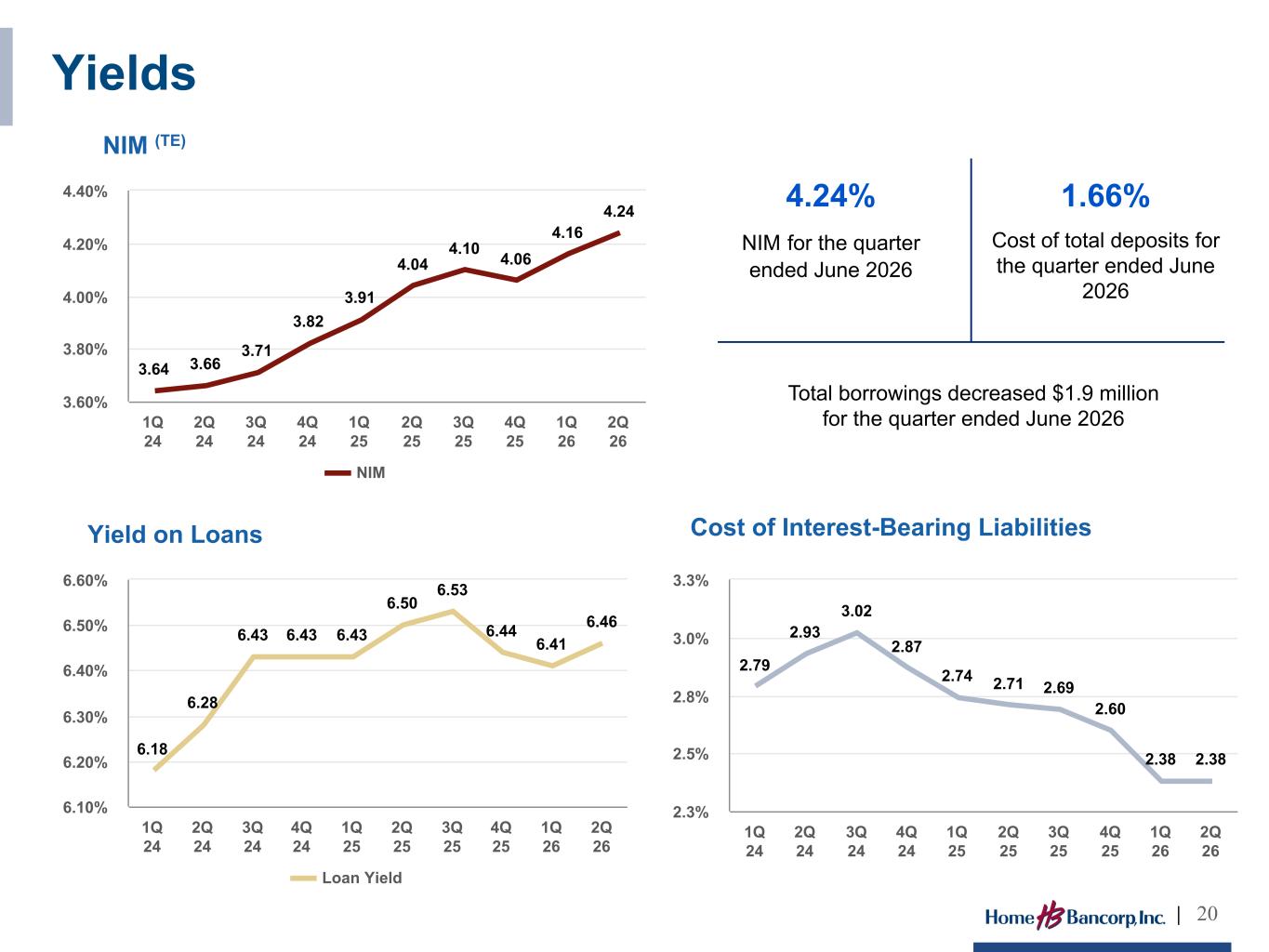
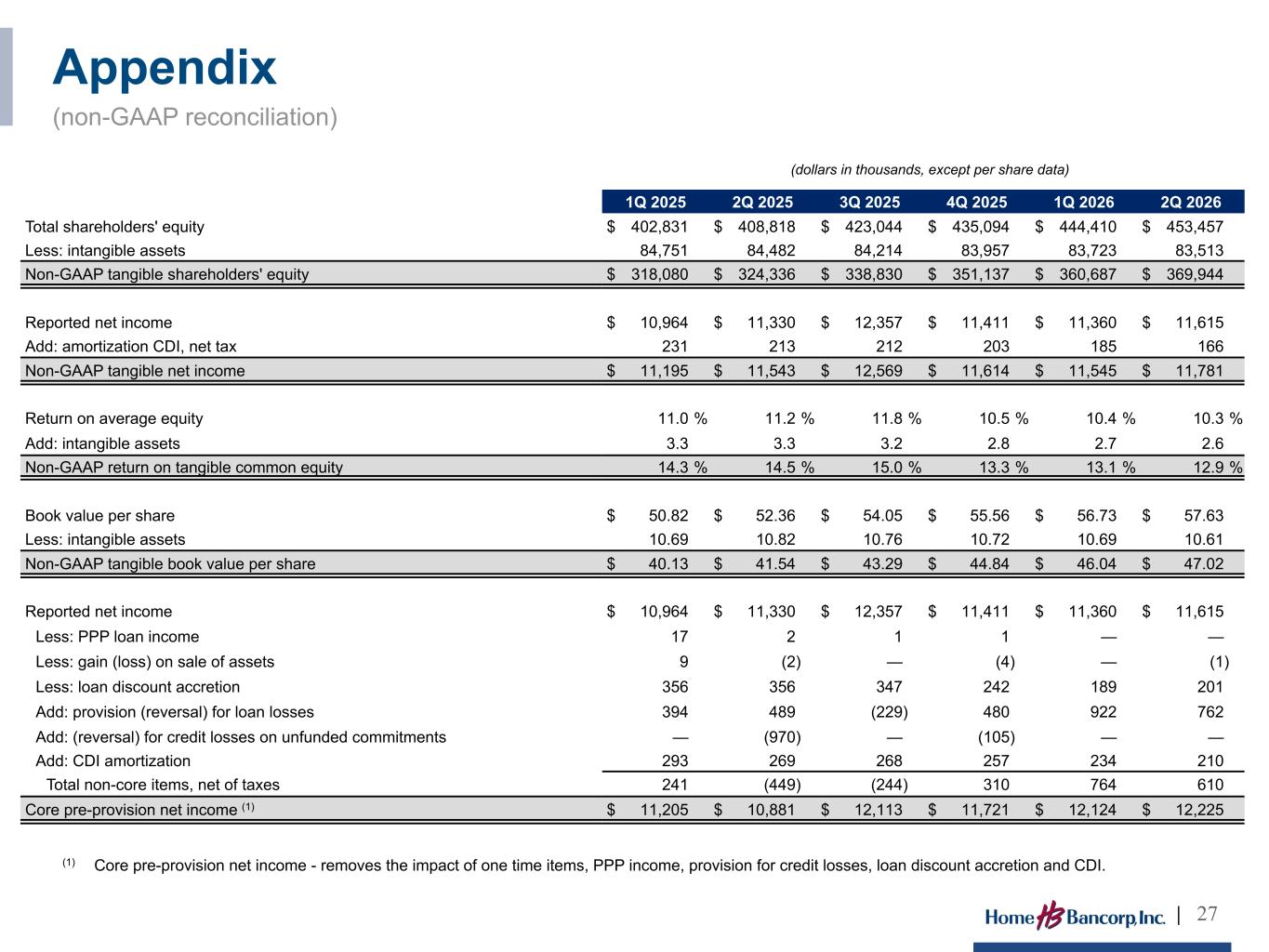
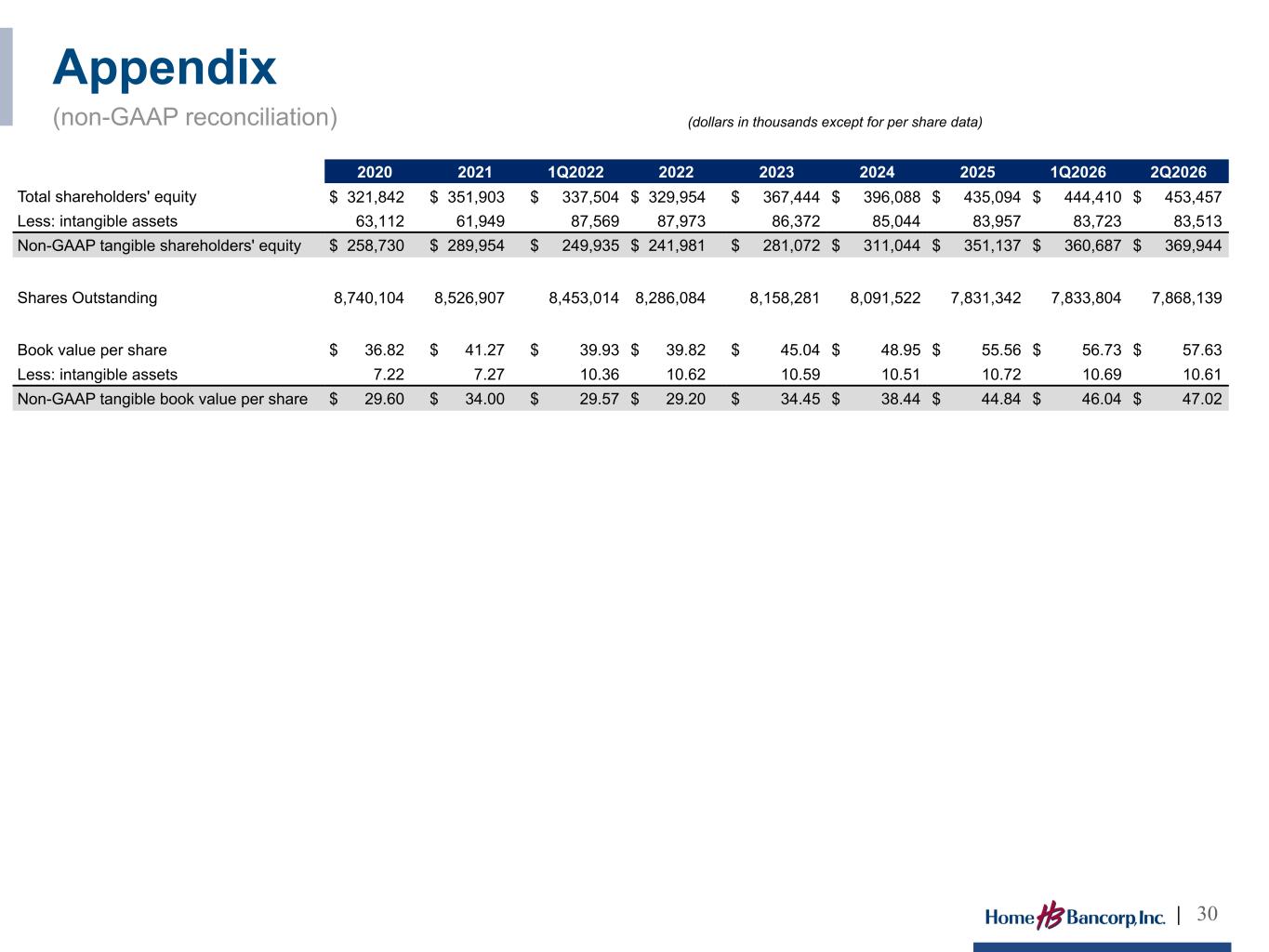
Thanks, David. Good morning, everyone, and thank you for joining us on this call today. We appreciate your interest in Home Bank as we discuss our results, expectations for the future, and our approach to creating long-term shareholder value. Before I discuss our second quarter results, I want to take a moment to introduce Darren Gidry as Home Bank's new president. Darren has served as a chief risk officer since 2022, and prior to that, chief credit officer beginning in 2013, and Chief Lending Officer since he came to the bank in 1993. His deep knowledge of our business, our customers, and our markets makes him exceptionally well-suited for this expanded role. By separating the CEO and President roles, we are creating a leadership structure designed to sustain our next phase of growth. As CEO, I will remain focused on overall corporate strategy, capital planning, and share of order relations. while Darren will lead the day-to-day execution of our strategic priorities. He'll be working closely with our executive leadership team to drive performance across the organization while maintaining our strong discipline in credit quality, risk management, and customer service. We are enthusiastic about this transition and confident it will serve our shareholders, employees, and customers well for years to come. Now turning to the second quarter results. Yesterday afternoon, we reported a second-quarter net income of $11.6 million, or $1.48 per value of share. Earnings per share increased 2% from the first quarter, and were up from $1.46 per share a year ago. Net interest margin expanded to 4.24% in the second quarter, and return on assets increased to 1.31%. Net interest income increased to $35.8 million in the second quarter and was the highest quarterly net interest income in Home Bank's 118-year history. This continued net interest income growth and margin expansion was driven by higher yields in our earning asset portfolio and stable funding costs. Our cost of deposits was stable at 1.66% for the quarter, which is one of the lowest in our peer group and reflects the continued strength of our core deposit franchise. Loans grew by $50.7 million in the second quarter, approximately 7% annualized, which was a nice recovery from the slight contraction we saw in the first quarter. Our Houston market continues to lead the way, going at a 9% annualized grade year-to-date. The Tombaugh Branch in Northwest Houston, which opened in the first quarter, is annual momentum and building its customer base. We believe the pipeline we have been building will support continued mid-single-digit loan growth in the second half of the year, but predicting when our customers will make decisions about financing has become challenging. Total deposits grew by $42.1 million, or 6% annualized in the second quarter, which kept our loan-to-deposit ratio in the middle of its 90 to 92 target range. The quality and stability of our deposit base remains one of Homebuke's most important competitive advantages. We continue to work our problem credits to resolution. There does not appear to be any specific industry-related stress, but more individual customers are struggling in this economy. Substandard loans increased during the four, primarily due to 1C&I loan from a manufacturing company, which is paying as agreed and has a very strong guarantor. We continue to work through our classified assets toward improvement as some of the loans are refinanced elsewhere, businesses are sold, some loans are moved to real estate owned, and eventually the assets sold. We anticipate that 14 loans with balances of approximately one-third of our classified assets will be rectified and removed off the bank's balance sheet by year end. Net charge-offs remain extremely low at just six basis points annualized, and we remain confident that our conservative, underwriting, and proactive management of challenge loans will minimize any losses we ultimately incur. Over the past two years, the financial transformation at Home Bank has been significant. Net interest margin has expanded approximately 58 basis points since the second quarter of 2024. Debt interest income has increased by more than 7% year-over-year, and tangible book value per share has grown more than 13% from a year ago to $0.47.02. These improvements reflect the benefits of our disciplined balance sheet management, the strength of our quarter-fine franchise, and the earning power of our loan portfolio. We believe we are well-positioned to continue delivering strong, sustainable results. With that, I'll turn it back over to David, my chief financial officer.
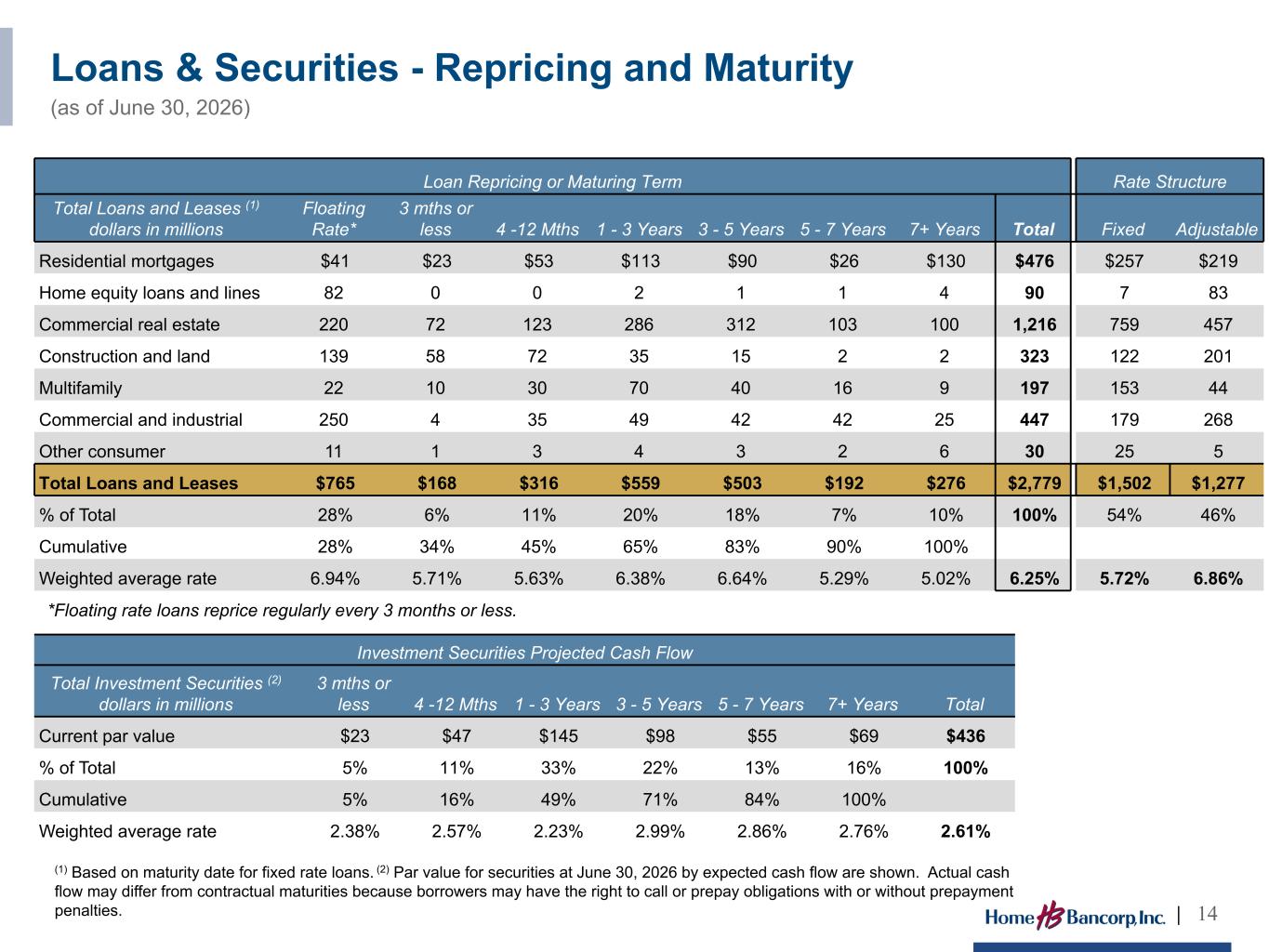
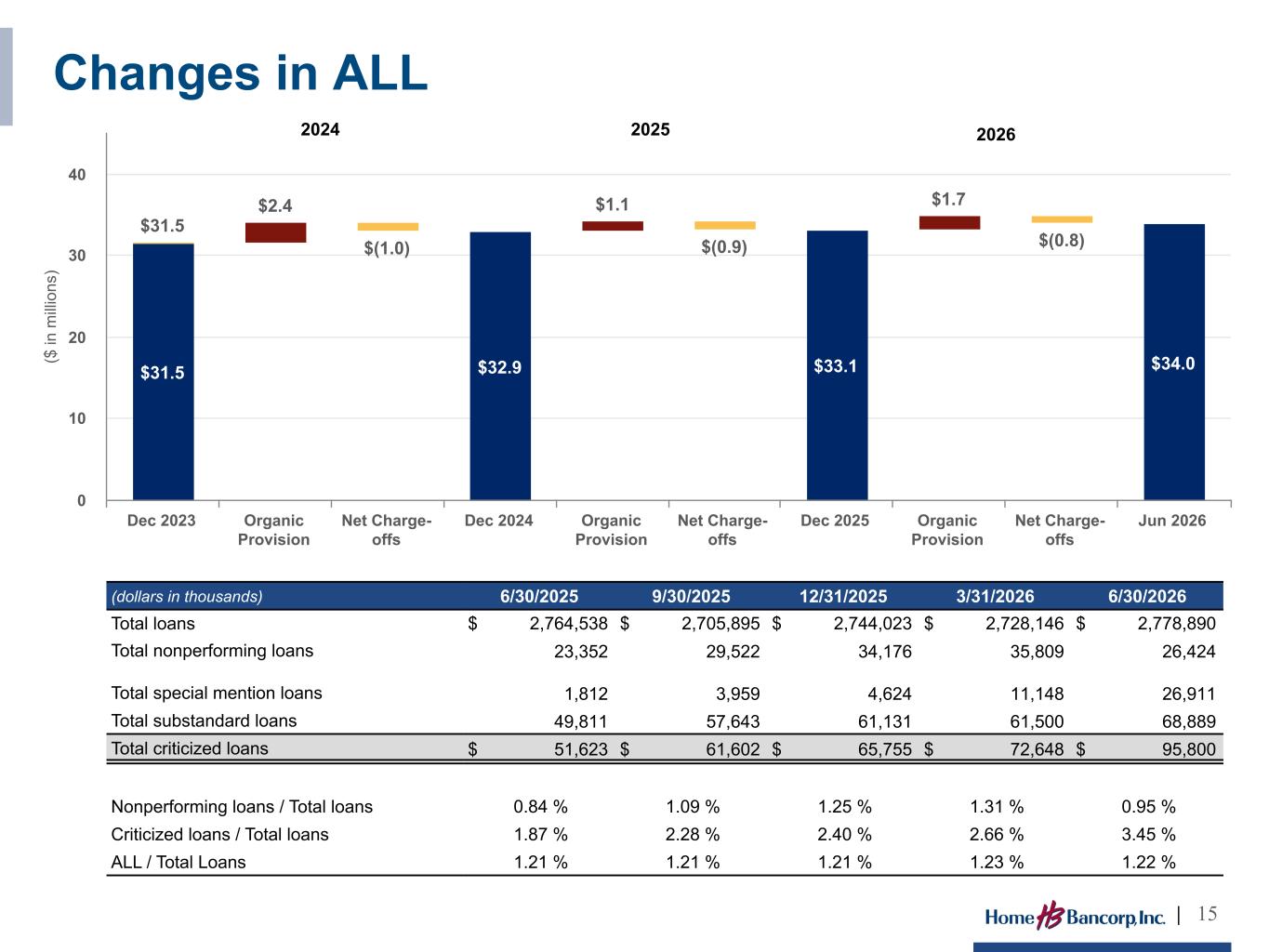
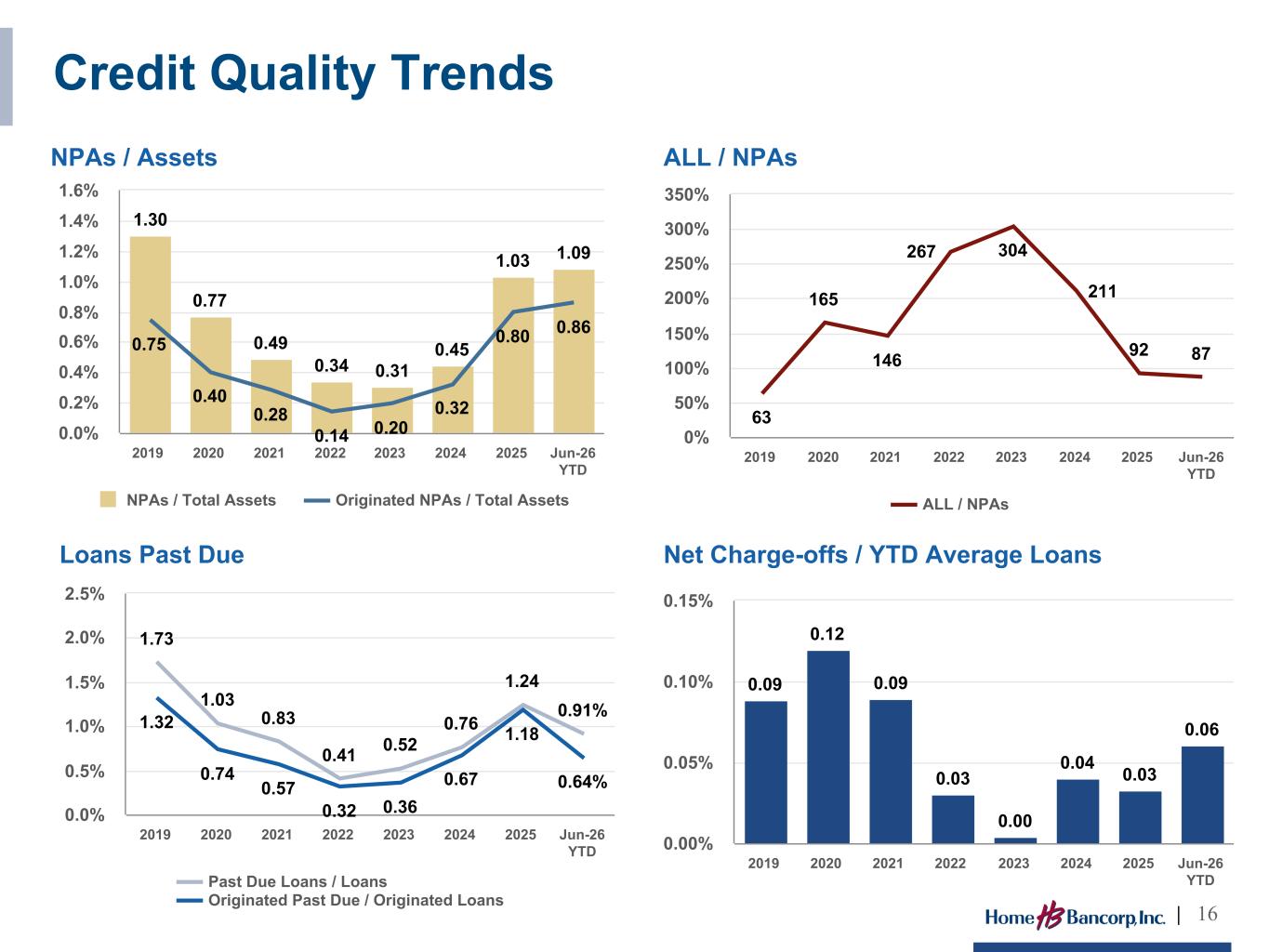
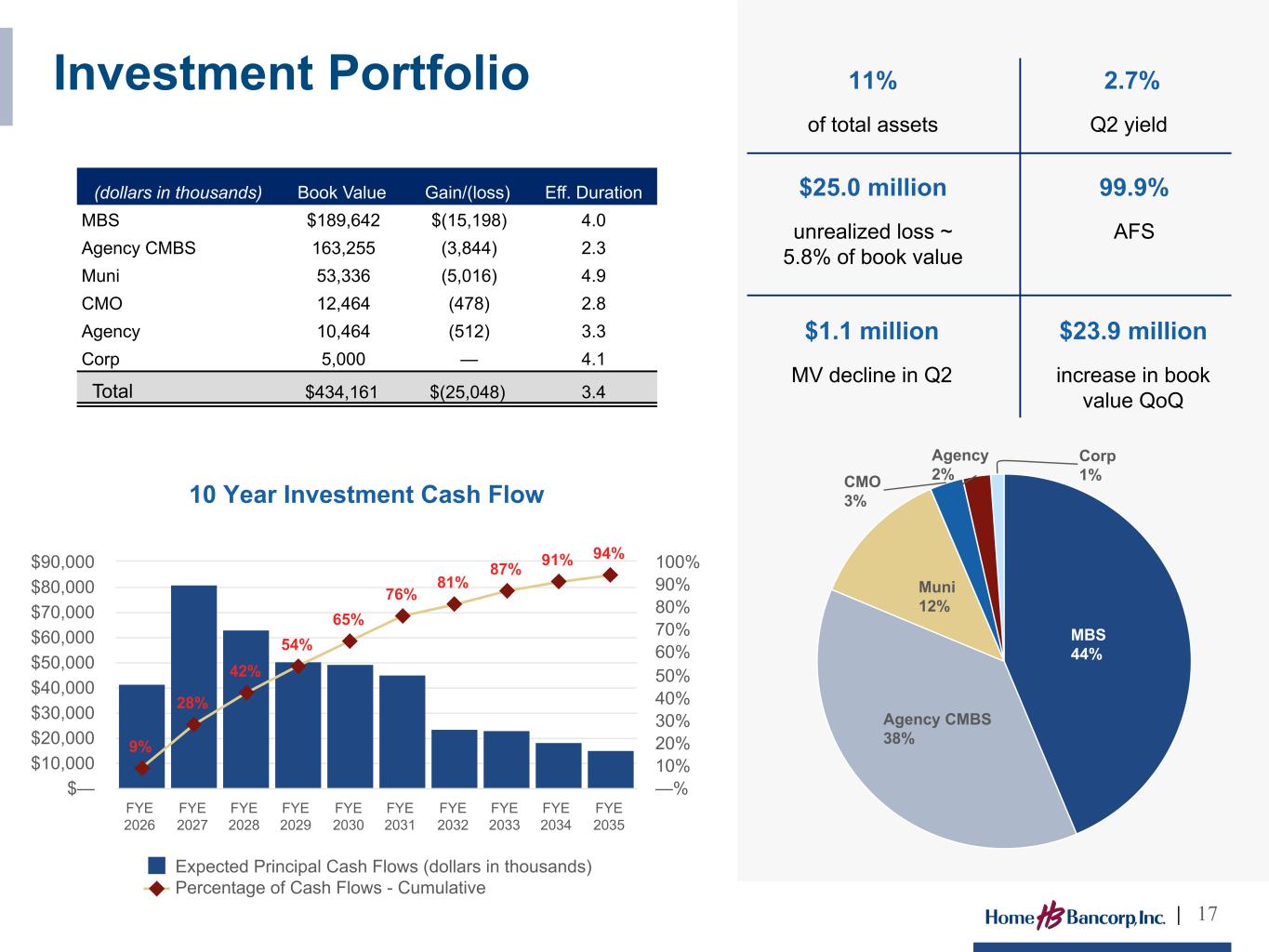
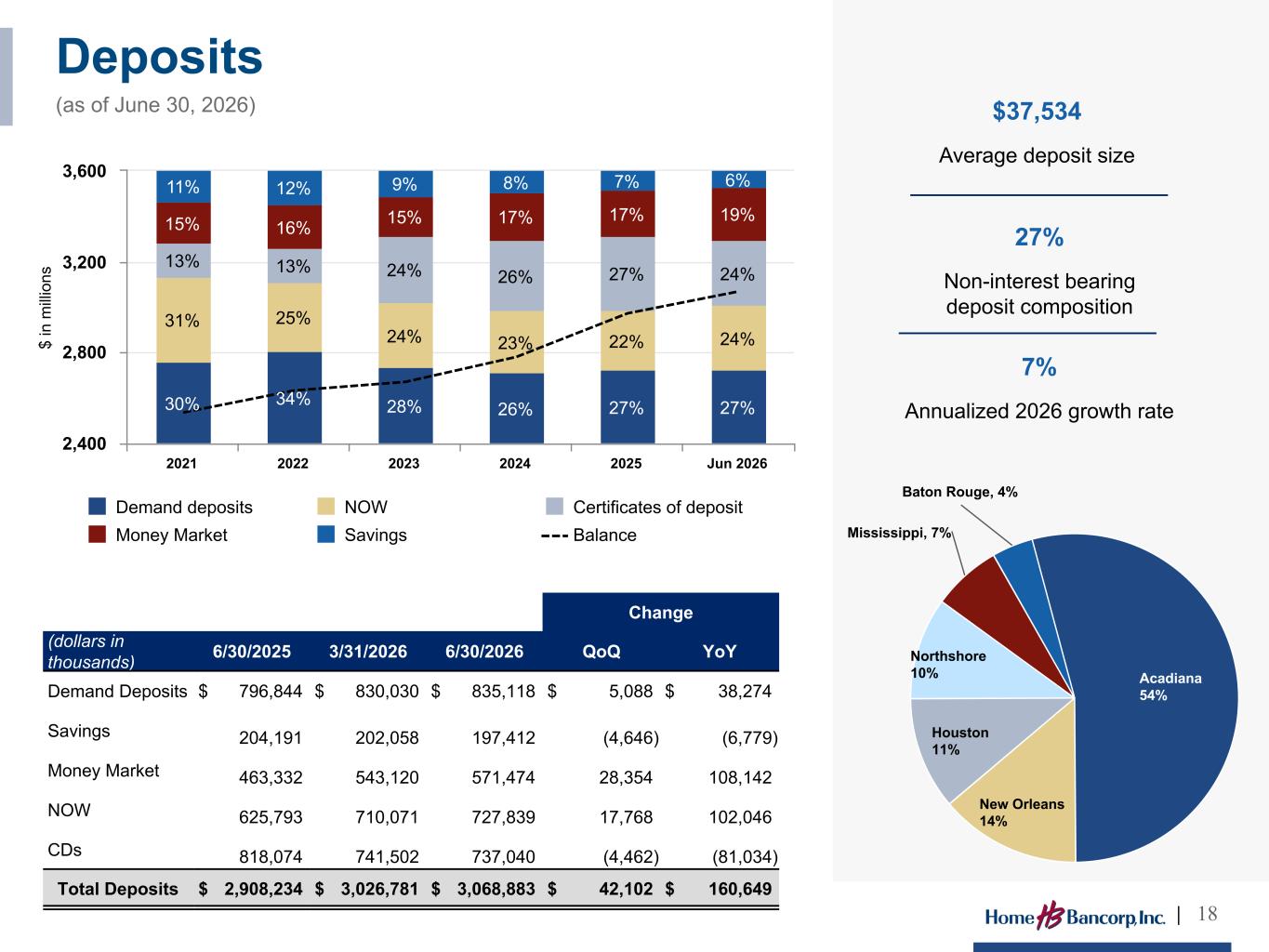
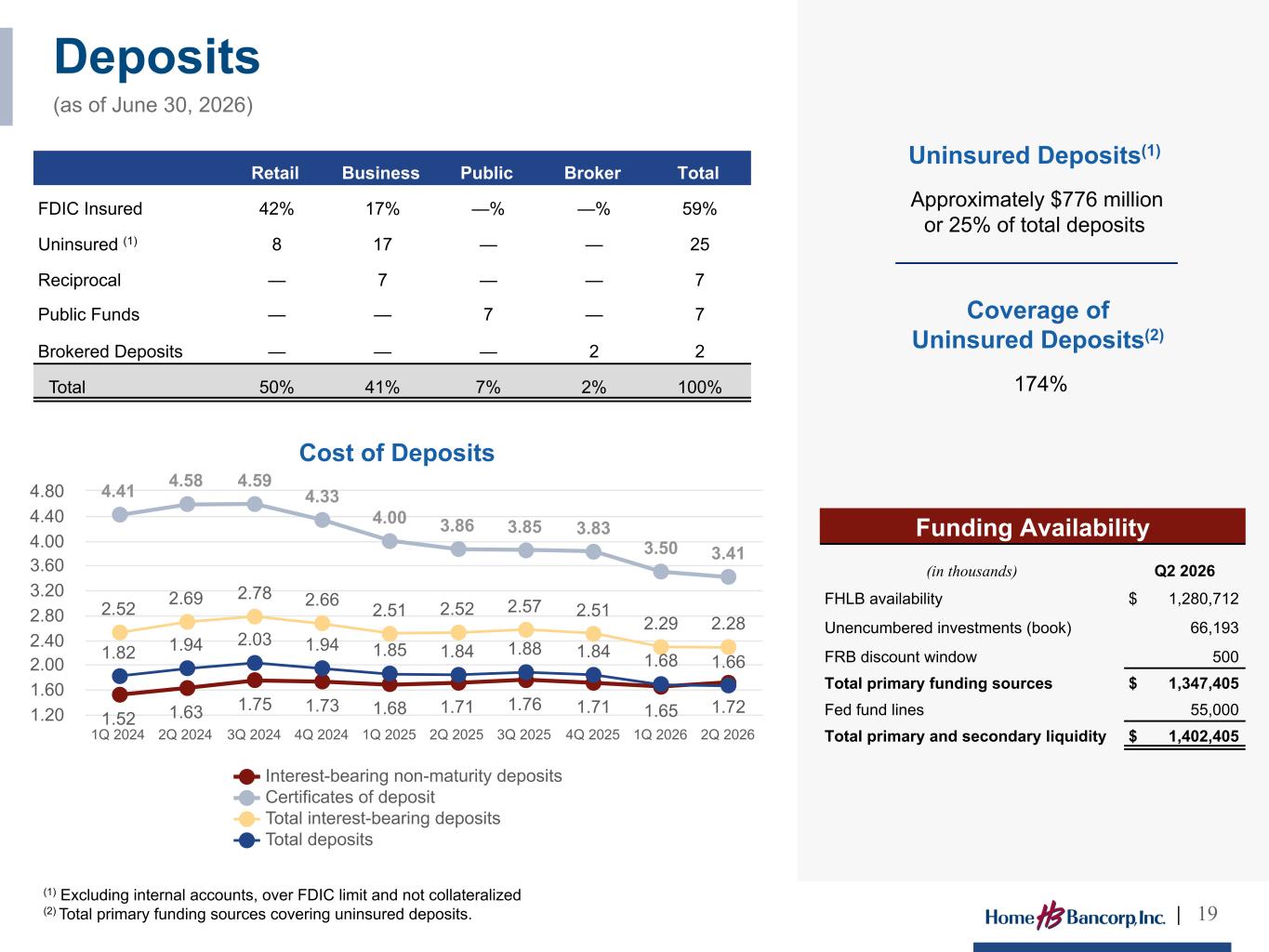
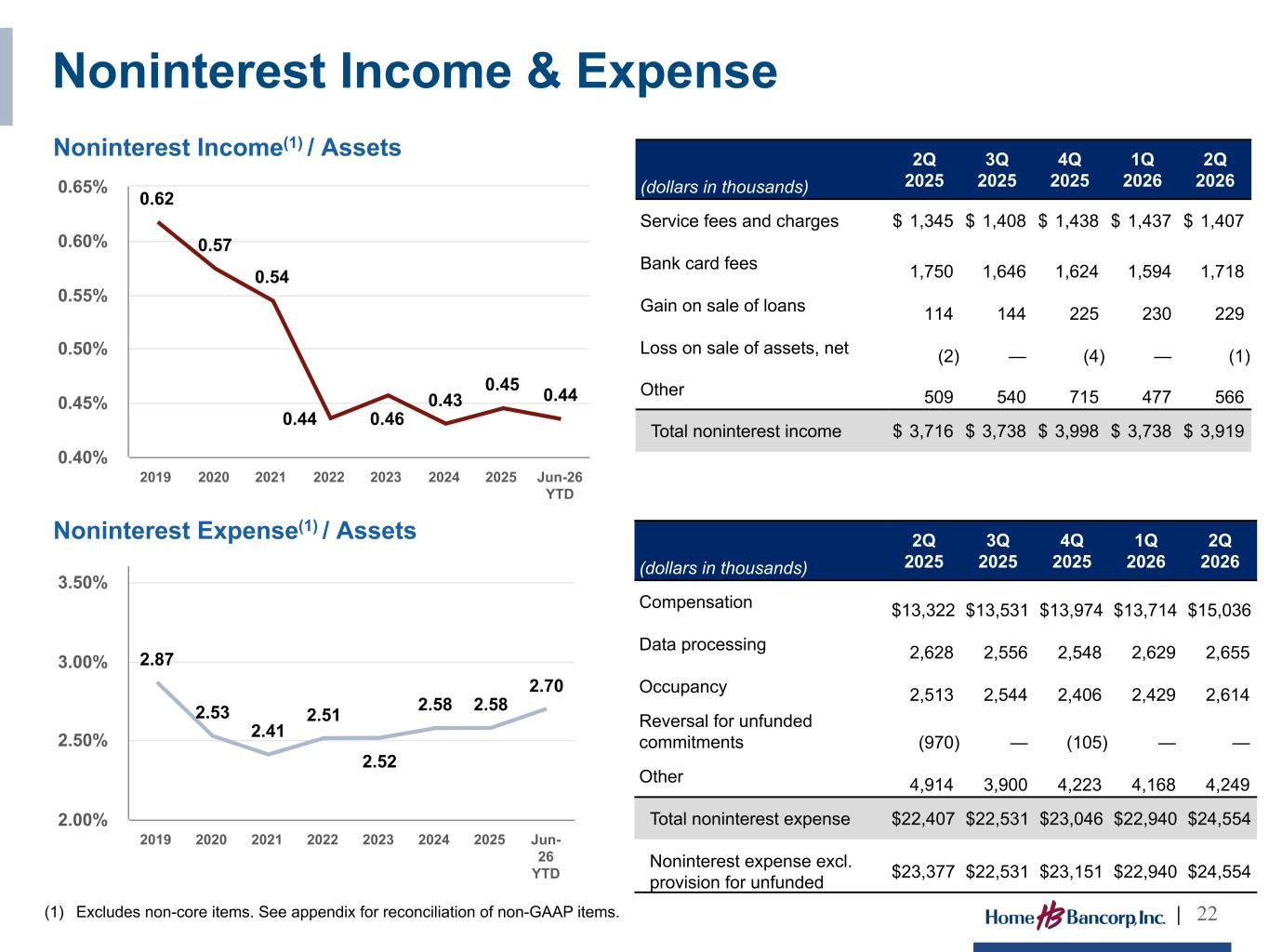
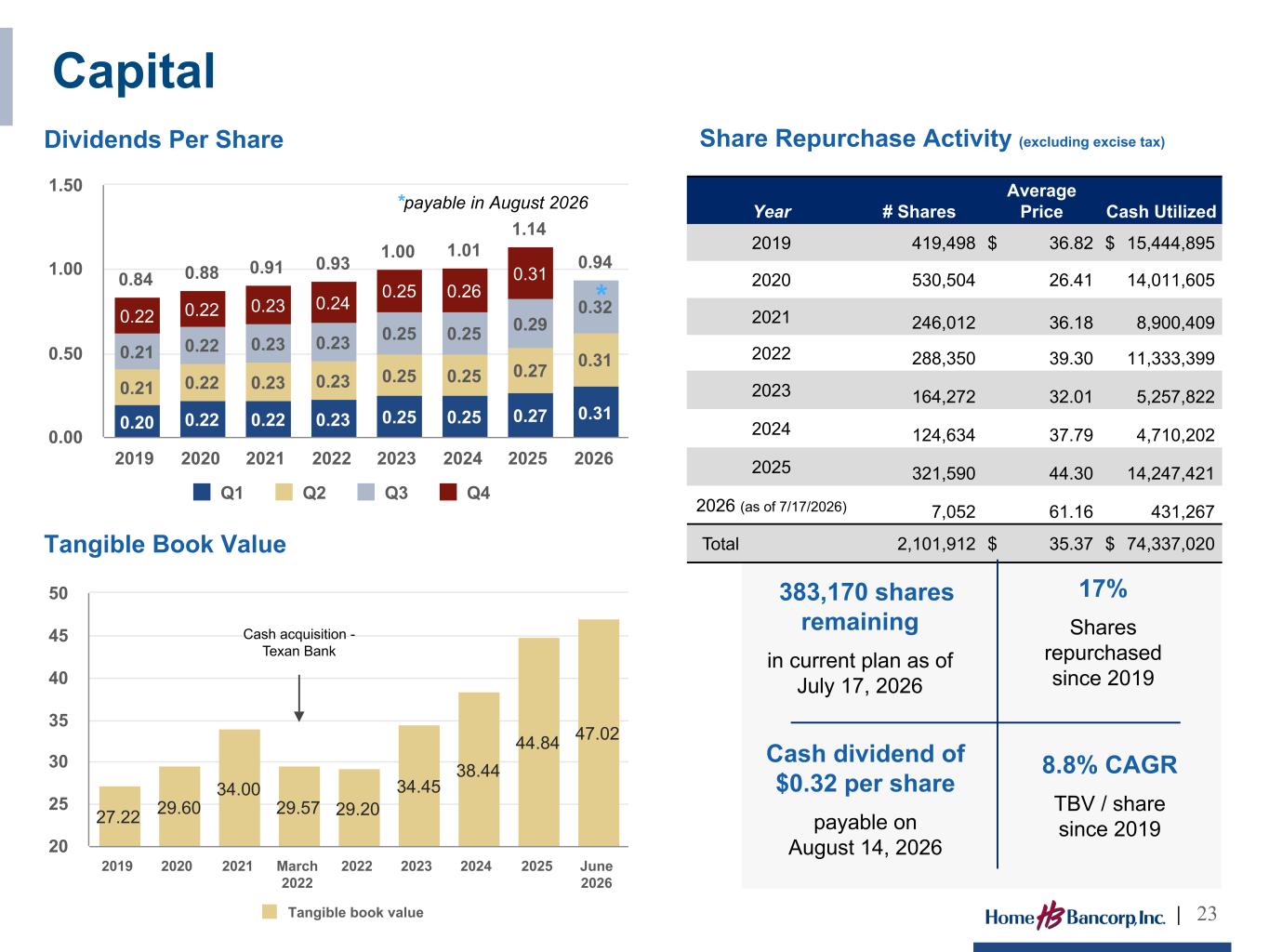
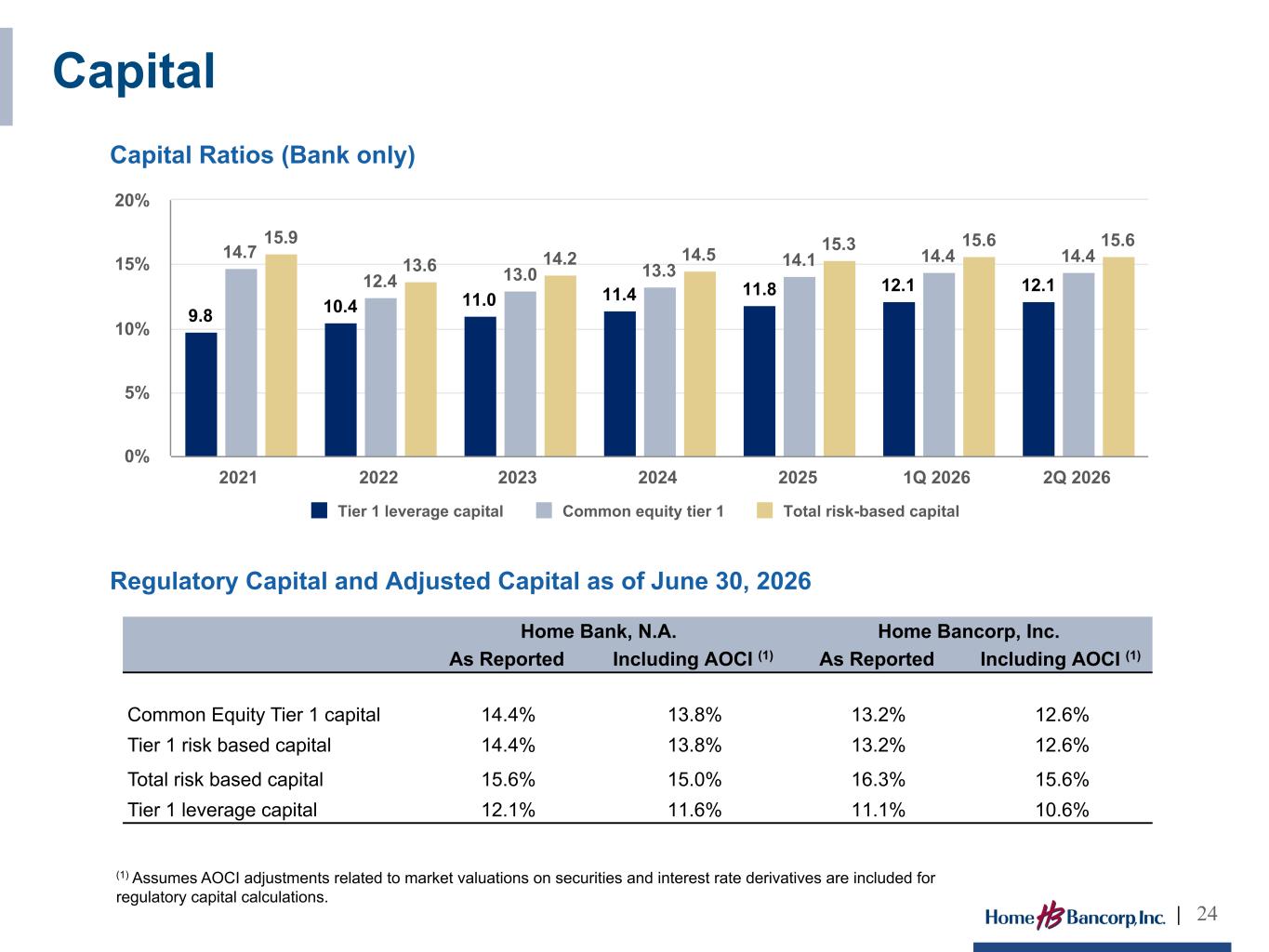
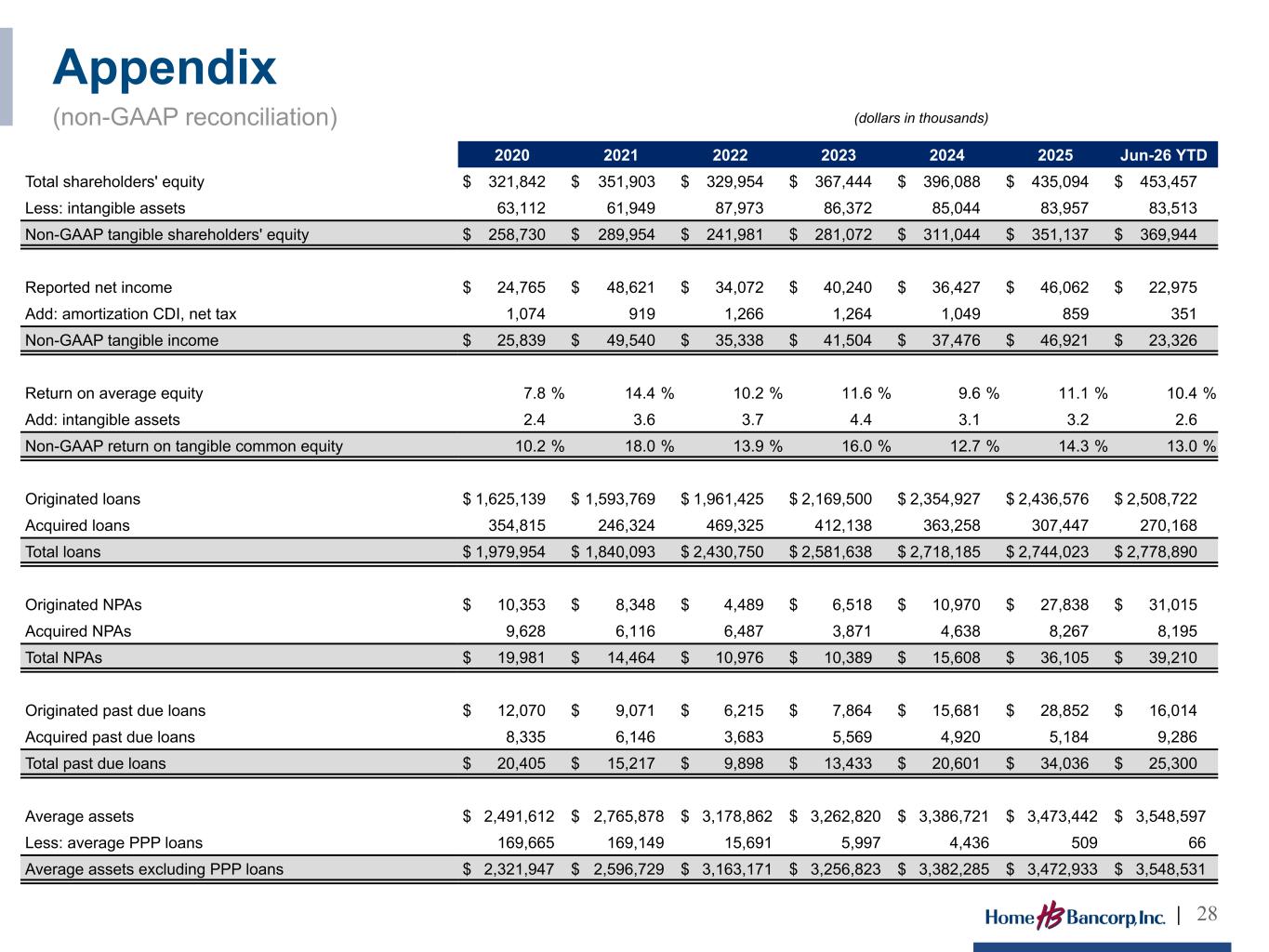
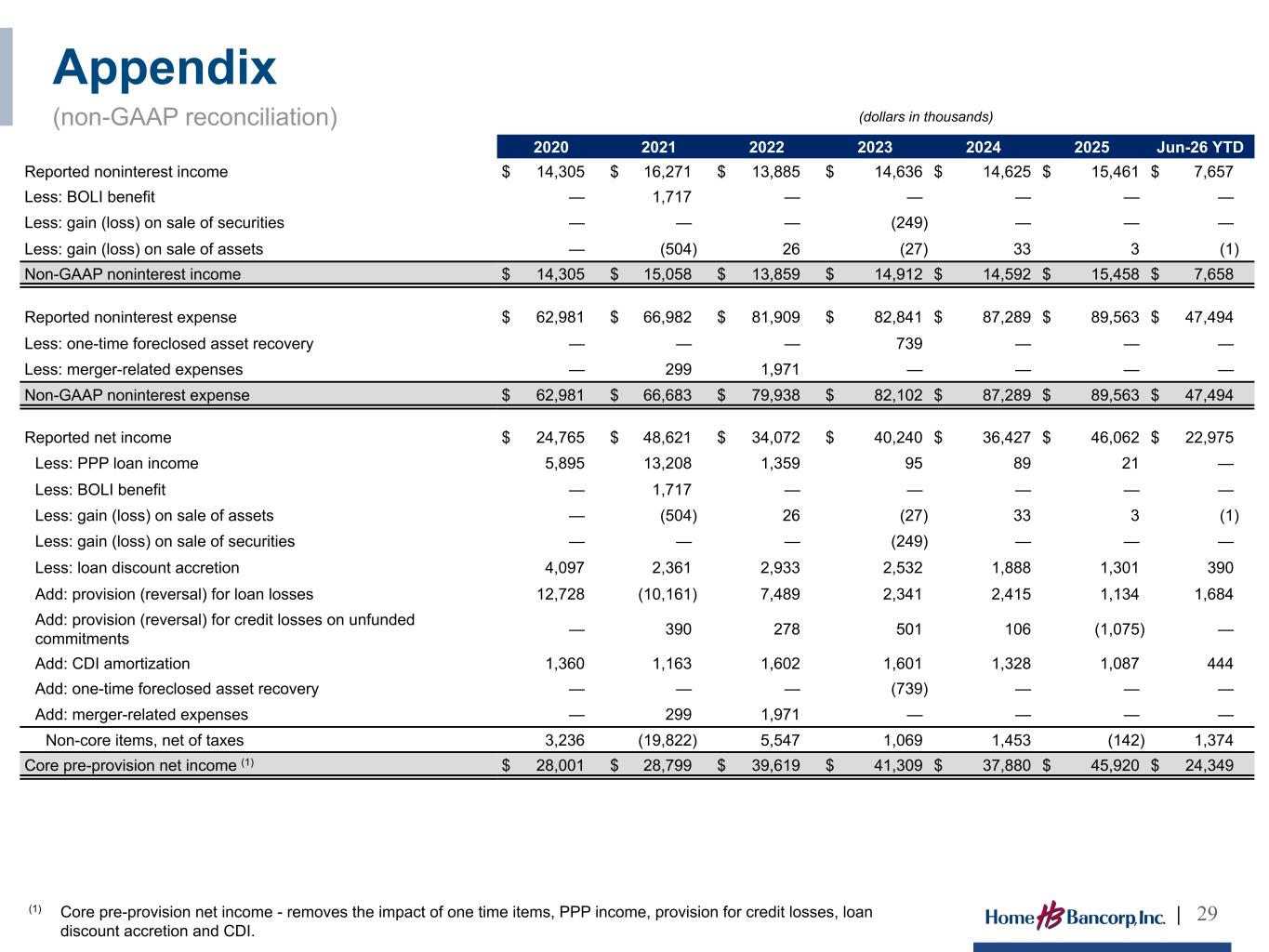
Thanks, John. Please feel free to refer to the investor presentation we have provided and discuss the company's second quarter financial performance. Net interest income totaled $35.8 million in the second quarter, an increase of $1.3 million from the first quarter, and a $2.5 million increase from a year ago. NIM expanded eight basis points to 4.24% in the second quarter, driven by loan yields increasing five basis points to 6.46%, while our cost of interest-bearing liabilities remained flat at 2.38%. Slide 14 details the repricing and maturity profile of our loan and investments portfolio. We continue to see opportunities to increase yields on maturing and repricing loans. Our investment portfolio was a weighted average rate of 2.61%, and significant cash flows expected over the next three years also presents meaningful reinvestment opportunity at current yields that are substantially above the roll-off rate. Yield and earning assets increase seven basis points quarter over quarter, and we believe future repricing opportunities will support room for additional name expansion. Deposit growth continues to be a key strength. As shown on slide 18, total deposits grew to $3.1 billion, with core deposit growth of $46.6 million during the quarter, more than offsetting a modest decline in certificates of deposit. Non-interest-bearing demand deposits increased $5.1 million during the quarter and continued to represent 27% of total deposits. The average cost of interest-bearing deposits declined to 2.28% in the second quarter, reflecting growth of benefit of deposit mix improvement and the repricing of mature CDs at other rates. While we've been pleased with our success in driving down deposit costs down by 37 basis points since the recent peak in Q3 of 2024, we don't expect further material declines. Slides 15 and 16 provide additional detail on credit quality. Non-performing loans declined during the quarter from $35.8 million to $26.4 million, or from 1.31% to 95 basis points to total loans. This was primarily driven by the transfer of approximately $10 million of non-performing loans into OREO. Total non-performing assets were $39.2 million, or 1.09% of total assets, as foreclosed asset balances increased due to the foreclosure of multiple properties with the largest being $2.6 million. We provisioned $762,000 in the second quarter, down from $922,000 in the first quarter. The allowance for loan losses stand at $34 million, or 1.22% of total loans, and we are comfortable with our reserve levels given the composition and risk profile of the portfolio. Total criticized loans increased during the quarter to $95.8 million, or 3.45% of total loans, primarily due to the migration of six relationships into the special mention category and a $7.4 million increase in substandard loans. Substandard loans increased during the quarter primarily due to the downgrade of the $12.4 million C&I credit, which was partially offset by almost $10 million in transfer from substandard to Oreo and paydowns. We are actively monitoring these credits and believe our proactive approach to credit management will continue to limit actual loss exposure. Slide 22 provides detail on non-interest income and expenses. Non-interest income totaled $3.9 million in the second quarter, up $181,000 from the first quarter. We continue to expect quarterly non-interest income to be in the range of $3.8 to $4.1 million. Non-interest expense totaled $24.6 million in the second quarter, an increase of $1.6 million from the first quarter. The increase was primarily driven by compensation and benefit expense of $1.3 million, a $331,000 increase of foreclosed asset expense. Due to elevated expenses working through foreclosed assets, we expect our interest expenses will be in a range of $24 to $24.8 million over the next several quarters. Slides 23 and 24 summarize the capital position and the progress of our capital management strategy. Tangible book value per share increased to $47.02, up from $46.04 in the first quarter, and up more than 13% from a year ago. Since 2019, we have increased adjusted tangible book value per share at an annualized rate of approximately 9.7%, increased EPS at a more than 11% annualized rate, and increased our quarterly dividend by almost 50%. We have also repurchased approximately 17% of shares outstanding since 2019. Capital ratios remain strong with a Tier 1 network ratio of 12.1% and a total risk-based capital ratio of 15.6%. Lastly, we declare a quarterly cash dividend of $0.32 per share, an increase of a penny from last quarter. With that, operator, please open the line for Q&A.
Operator
Thank you. We will now begin the question and answer session. To ask a question, you may press star, then 1 on your touchstone phone. If you are using a speakerphone, please pick up your handset before pressing the keys. To withdraw your question, please press star, then 2. At this time, we will pause momentarily to assemble a roster. Thank you. And your first question comes from the line of Joe Yankinis from Raymond James. Please go ahead.
Good morning. Good morning, Joe. So, thanks for taking my questions. I was hoping to start with the NIM. So, the market's expanded, you know, 18 bits over the past couple quarters, well above that 410 to 415 range you had previously outlined. Now, as we look ahead, when do you expect the benefit from fixed-rate asset repricing to begin to moderate?
I think you're going to see a couple of basis points increase. I think in Q3 and a little bit in a Q4, you're still having some lower-yielding loans roll off in a size and manner that will continue to see loan yields increase. In the second quarter, new loan originations came on at a little bit north of 6.6%, so that still leaves the room for repricing opportunities. I think after Q4 and into Q1 and 27, I think that's when you'll see some moderation.
That was very helpful. And then shifting over to loans, so loan growth, you know, really accelerated nicely this quarter. How much of that improvement reflected stronger customer demand versus, you know, seasonality or lower payoff activity? And then also, you know, on the last quarter call, you mentioned the pipeline had increased by about $30 million sequentially. Can you provide an update on where the pipeline stands today and how you're thinking about, you know, conversion for those in the funded loan through the backhash?
Yeah, I think through most of 25, we did have some payoffs, especially in third quarter of 25. And that happened also in first quarter. So we're seeing less payoffs in second quarter. And that's just a seasonal thing that we – I don't know. We do have some classified assets that Darren will talk about, but we anticipate some of those going away, which will hurt our overall loan growth. But our pipeline, I think, remains consistent. While not robust, it remains consistent. And so we should be able to generate loan production. It's just a matter of how much of our loans are paid off because of them being bad assets moving somewhere else or whatever.
And is your guide for mid-single-digit growth in the back half of the year or for the full year?
Yeah, it's really the back half.
And then one more for me here. So capital remains a pretty clear strength, you know, yet acquisition activity, you know, across the industry remains pretty subdued at the moment. Have your views on M&A opportunities changed over the past few months?
Not really. We're hearing a lot less noise than we heard in 2025. I'm not sure if that's because of potentially a rate increase by the Fed or what, but it has definitely been much quieter. So we have our ears open and are ready to go. We have a lot of drive power to utilize, so we're looking for that right corner.
All right, perfect. Well, thanks for taking my questions, Ellen. Thank you, Joe.
Operator
Thank you. And your next question comes to the line of Stephen Scouting from Piper Sundler. Please go ahead.
Hey, good morning, everyone. Maybe just following up on that line of questioning, you know, If, for whatever reason, M&A is not able to come across the finish line here, what would be kind of how you think about capital uses beyond M&A? Because, obviously, your excess capital continues to build quarterly based on really strong profitability. So, good problem to have, I guess, if we want to call it a problem. But just can you help us think about other uses for that capital as it builds?
I'll answer a little further, and I'll turn it over to David. David, surely we've shown over our history as a public company that we have had periods where we've grown capital, and that was very handy for us to be able to utilize that capital in any transaction. So we still anticipate a primary use in that. Now, I'm turning over to David as far as dividends are buybacks.
So we've been selective in buybacks based off of the stock price, and our stock price has had a nice run over the last couple of quarters. So, we've really been out of the buyback space, but we'll always evaluate that. We increase our dividend one cent, which from a capital madness standpoint, deploys a little bit, but it's not really impacting the ratios. So, we're really looking, keeping the dry powder for M&A. And also, we have our sub-debt, which is callable in 2027, which could potentially be an option given the M&A landscape.
And can you remind us what you're paying on that sub-debt currently and kind of what that could potentially do maybe to your name as you've modeled some of that?
Our coupon rate is $5.75.
And in terms of, you know, Fed rate hikes, can you remind us what you think if the Fed were to hike? In fairness, I'm not really believing that personally, but if they do hike, what could that do to the trajectory of your game from here?
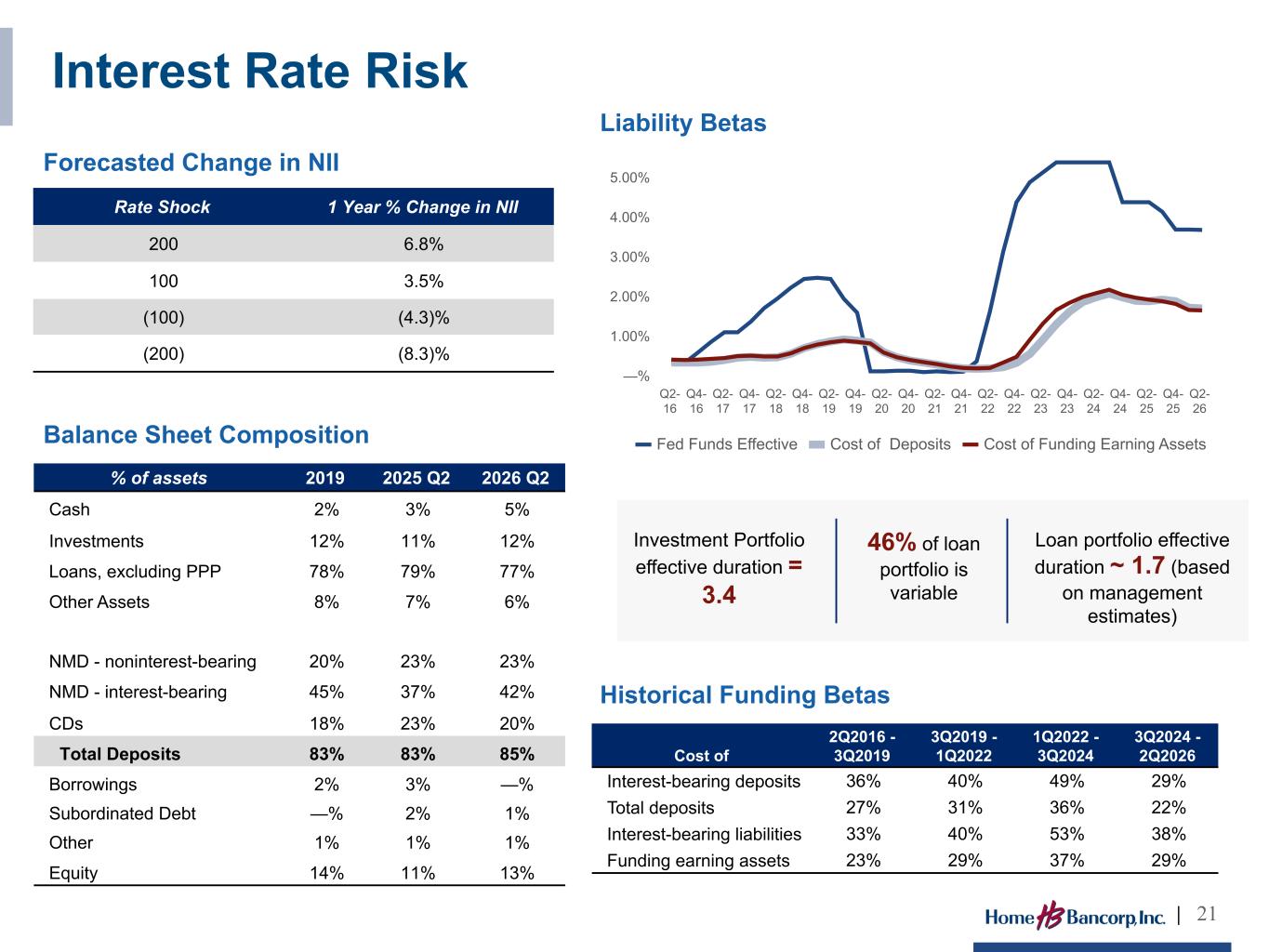
Look, I think our balance sheet is very well positioned for rising rates. I think we've demonstrated when the Fed makes a move, we have a little bit of a blip with earning asset yields increasing two to three basis points, and then we adjust our deposit prices. They have probably a quarter of what's called a decline when the deposit rates increase. But then, like I said, we have a good cash flow coming through. So I think we'll be able to sustain, like, I'll just add to that that depends on the shape of the yield curve.
Is it staying in its current normal shape, or do we know what that could do is hurt NIMS and all banks because the deposit customers may be seeking a little bit higher yield. So, you know, I'm more concerned about what happens with our deposits than with our loans, really, because we all be pricing loans at a better rate today. But deposits, because so many banks are at a very high loan-to-deposit ratio, they're paying up significantly. So a rise in interest rates could cause a little bit of a run on the deposit side. So we'll have to be competitive in that arena.
Yeah, I think that's a good point. And that's a big message we're hearing across the industry right now is just competitive dynamics. John, how would you say you feel like competition has been in your markets? And has it been relatively rational, or where are you seeing pressure? Is it more on rate, deposit rate, structure of loans? Where's the kind of tension points from a competitive environment perspective?
We're seeing it both loan and deposit. Texas is probably more competitive than Louisiana. We're seeing it not as much maybe the last month as it was first and second quarter, where loan rates were pretty low, but also deposit rates. There were four or five banks in the Texas market that were paying back up close to 4%. I think in the first quarter, we had two or three banks in Texas that were at four and a quarter, so way above the market. And so competing against those has been a little bit of a challenge. But I still think we're going to have banks across all of our footprint that periodically are going to need more liquidity and are going to raise the rates.
Yeah, very good point. Craig Keller, appreciate it. And congrats on a great quarter.
Operator
Thank you. And your next question comes from the line of Fedye Stricklander from Poptic Group. Please go ahead.
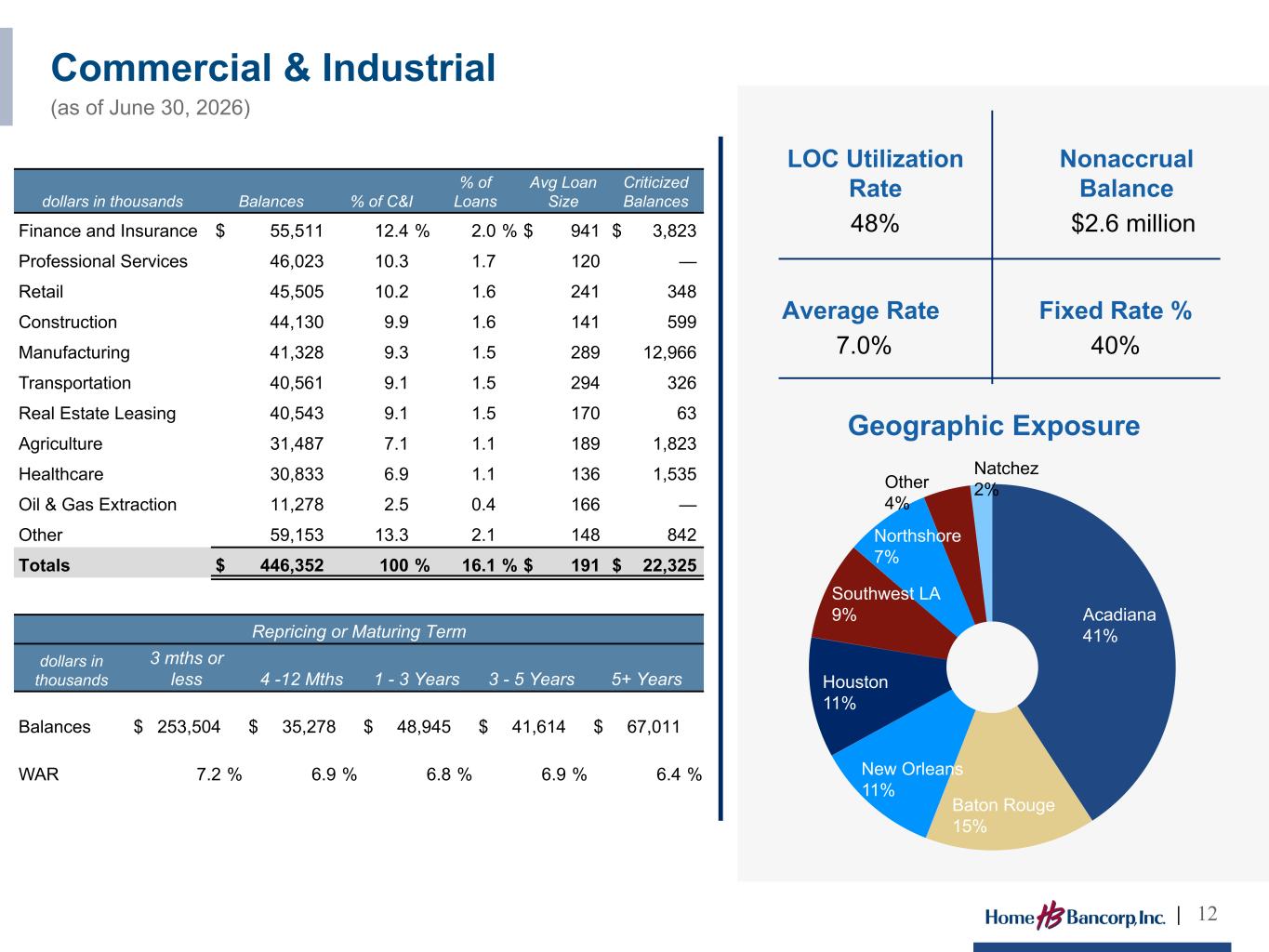
Hey, good morning. Just wanted to ask some lenders, appreciate the overall guide. In terms of mix, it seems like you have pretty healthy CRE, C&I, multifamily growth in the quarter and a step down in construction. Should we expect more of the same in terms of the buckets of growth in the next couple quarters?
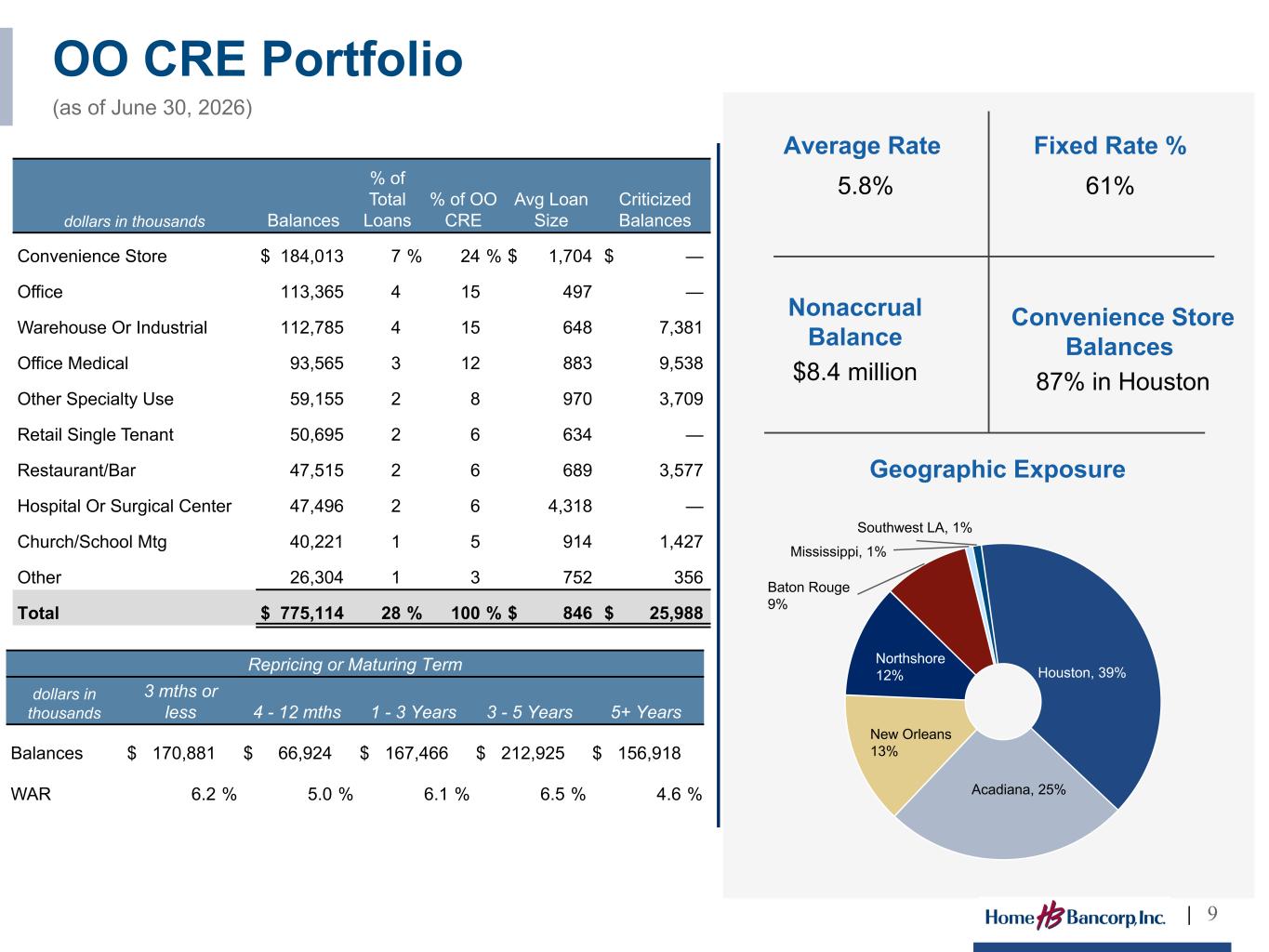
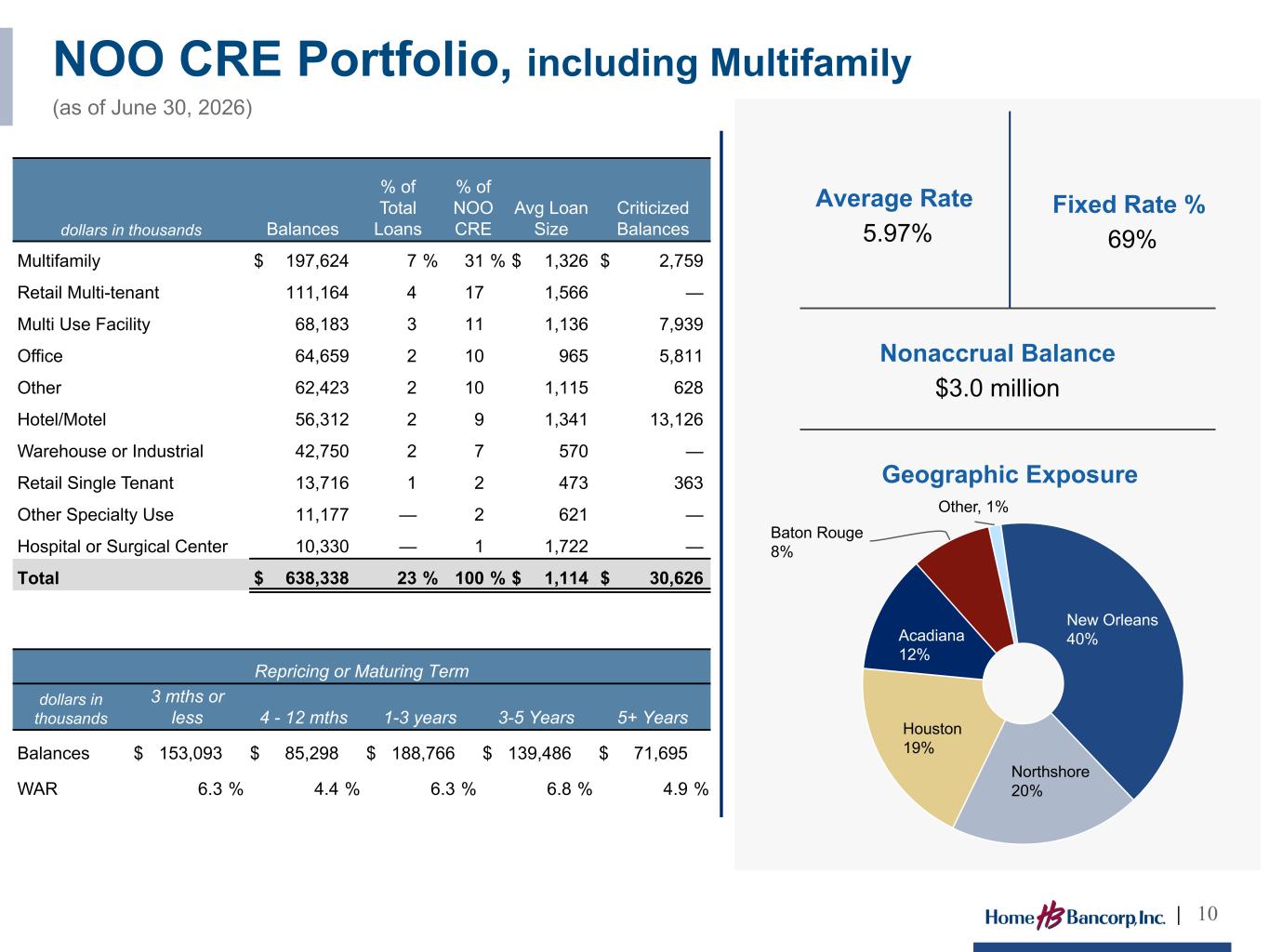
Yeah, you know, it is surprising a little bit that construction is continuing to head down. When rates were higher, it slowed down for sure, but we're still seeing a little bit of reduction there. We've always been a very strong construction lender, so that is probably the biggest surprise in our balance sheet. But, yes, I think we're doing well in other categories, trying to diversify our risk and as much as we can along the portfolio. So you'll continue to see growth in other areas than just playing CRE. We've done a good job over the last probably four quarters of reducing our non-owner-occupied CRE and increasing our owner-occupied. So that was a goal of ours starting about two and a half years ago, and it's really paying off.
Appreciate that, John. And just switching gears on the expense side, you know, again, I appreciate the guide there. I think you mentioned, you know, some of the expenses, working through some of these credits, foreclosure expenses, what have you, are keeping that a little elevated in the second half of the year. But as we get into early 27, as you work through a bit of these existing NPAs, assuming nothing new comes up, could we maybe see expenses overall decline a little bit just as you work through some of those problem aspects?
Yeah, I'll touch up on it for a second. As we work through those, we're just going to have some elevated expenses on the Oreo side. In Q2 and Q1, we've had a little bit of elevated fraud activity on our deposits, and I think we're getting that back down to a more normalized run rate going into Q3 and into Q4. So you'll see a little bit of help from that. But I think once we work through the Oreo expenses, depending on the pipeline of how that shapes out, you'll see a little bit more normalized rate of our expense base.
Last question for me real quick. It seems like you've got pretty good loan and deposit pipelines, but do you expect, you know, loan deposits kind of stays around that 90% to 92% range that you've been targeting? Do you see anything that would cause you to kind of jump above or below that the next couple quarters?
No, on the deposit side, you know, we tried to lower our rates a little bit in the first quarter, and we lost about $60 million of CDs and such, and we have not moved from there. We still are down for the year about $60 million in CDs. So holding our CDs intact, I think, is important to maintaining the growth. So a lot of our growth is coming in the core deposit sector, But we have to make sure that we don't lose our CDs to offset that. So that's a big strategy for us to remain part of this year and going into next year.
I'm sure that's helpful. Thank you for taking the questions. Thank you. Have a good day.
Operator
Thank you. Once again, if you have a question, please press star for the one. And your next question comes from the line of Christopher Marinek from Marine Capital. Please go ahead.
Hey, good morning. Thanks for hosting the call. And just had a question for Darren in his new role. Do you see additional hires or maybe an acceleration of kind of lending hires as this next year-plus unfolds?
Yeah, we're not anticipating any major changes, Chris. We've just got a strong crew, executive team, a strong chief banking officer. It's a really good crew. We haven't had much in terms of turnover. So we're just looking to add good bankers when they're available, but no major plans for additions at this time. All right, very well, thank you. We did just have one new RM in Baton Rouge Market, which is our slowest developing market. So hopefully that will help.
All right, thank you both for that. And then just to go back on the criticized terms and other comments related to that you've already made, Is there anything else in the pipeline or any other trends you see kind of under the surface in terms of, you know, either risk ratings going back and getting upgraded or additional items that may pop up over time?
I can speak to what's in the watch list now. We've got, as John and David mentioned earlier, our special assets group has been working on watch credit. A significant number of resolutions, and specifically, we downgraded about 15 minutes into special mention. We have resolutions in place that should occur by the end of the year, amounting to about $22 million. In fact, more than half of that should be up this quarter. Substandard credit resolutions, including our longest tenured classified loan, is set to be resolved by the end of the fourth quarter as well. We're really excited about that. Substandard resolutions should be a little more than $4 million through the end of the year. And finally, our non-performing assets, we're expecting through payoffs, upgrades, and sales of other real estate owned approximately $7 million. Overall, between the next five months, we should exceed about $30 million of improvement in special assets.
Good. Thank you, Darren. That's very helpful. I appreciate it, and thanks again for hosting the call this morning. Thank you, Chris.
Operator
Thank you. There are no further questions at this time. I would like to turn the conference back over to John for any closing remarks.
Once again, thank you very much for joining us today. We look forward to speaking with many of you in the coming days or weeks. We appreciate your interest in Home Bank World. Have a great day.
Operator
Our conference has now concluded. Thank you for attending today's presentation. You may disconnect.