Operator
Hello, everyone. Thank you for attending today's HIPPO third quarter 2025 and its call. My name is Ken, and I'll be your moderator today. All lines will be muted during the presentation portion of the call with an opportunity for questions and answers at the end. If you would like to ask a question, please press star 1 on your telephone keypad. I would now like to pass the conference over to our host, Charles Zabatsky, the investor relations of HIPPO to begin. Please go ahead.
Thank you, Operator. Good morning, and thank you for joining Hippo's third quarter 2025 earnings call. Earlier today, Hippo issued an earnings release announcing its third quarter 2025 results and a financial results presentation, which will be webcast during today's call, both of which are available at investors.hippo.com. Leading today's discussion will be HIPPO President and Chief Executive Officer Rick McCatherin and Chief Financial Officer Guy Zeltzer. Following management's prepared remarks, we will open the call for questions. Before we begin, we'd like to remind you that our discussion will contain predictions, expectations, forward-looking statements, and other information about our business that are based on management's current expectations as of the date of this presentation. Forward-looking statements include, but are not limited to, HIPPO's expectations or predictions of financial and business performance and conditions and competitive and industry outlook. Forward-looking statements are subject to risks, uncertainties, and other factors that could cause actual results to differ materially from historic results and or our forecast, including set forth in HIPPO's Form 10-Q filed today. For more information, please refer to the risks, uncertainties, and other factors discussed in HIPPO's FCC filings, in particular in the section entitled Risk Factors in our Form 10-Q. All cautionary statements are applicable to any forward-looking statements, and we make whenever they may appear. You should carefully consider the risks and uncertainties and other factors discussed in HIPPO's FCC filings. Do not place undue reliance on forward-looking statements as HIPPO is under no obligation and expressly disclaims any responsibility for updating, offering, or otherwise revising any forward-looking statements, whether as a result of new information, future events, or otherwise, except as required by law. During this conference call, we will also refer to non-GAAP financial measures, such as adjusted net income and adjusted EBITDA. Our GAAP results and descriptions of our non-GAAP financial measures with full reconciliation to GAAP can be found in our third quarter 2025 which has been furnished with the SEC and available on our website. And with that, I'd like to turn the call over to Rick McArthur, our president and CEO.
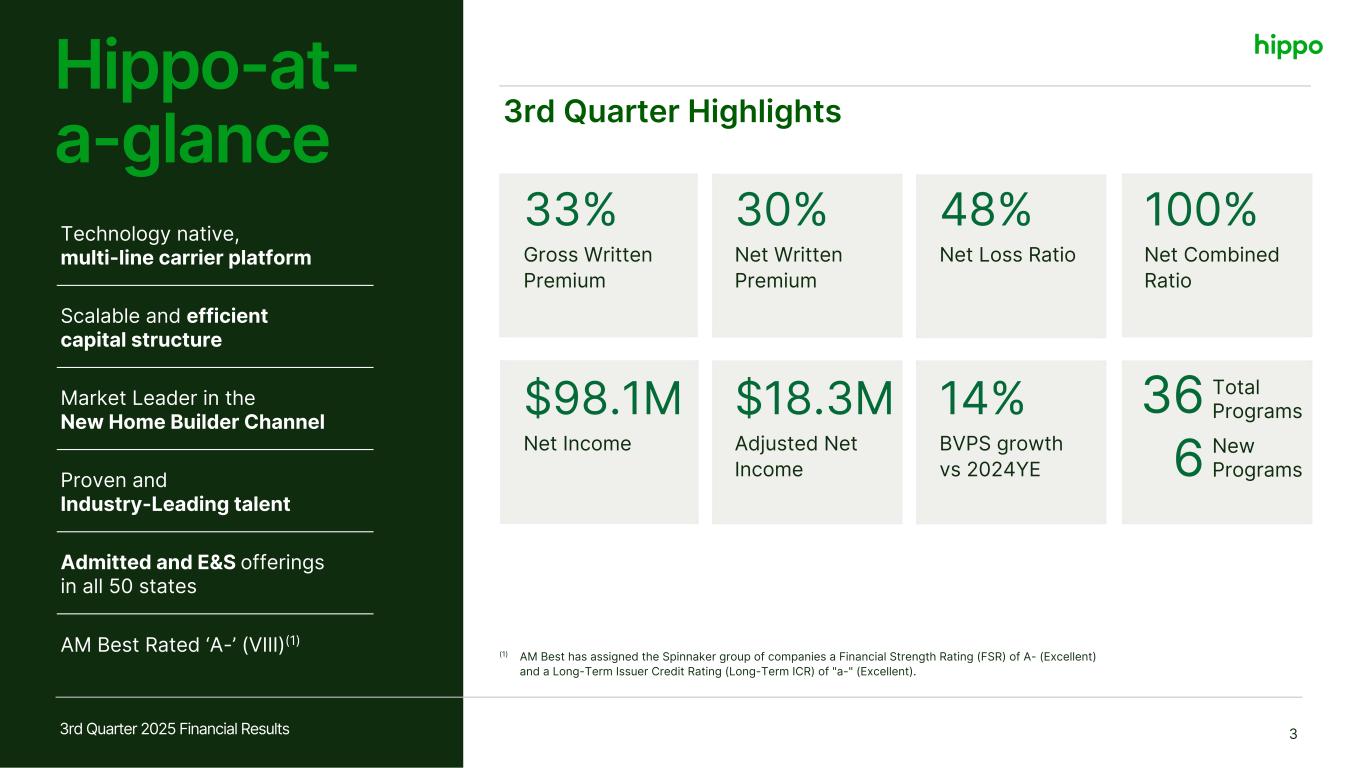
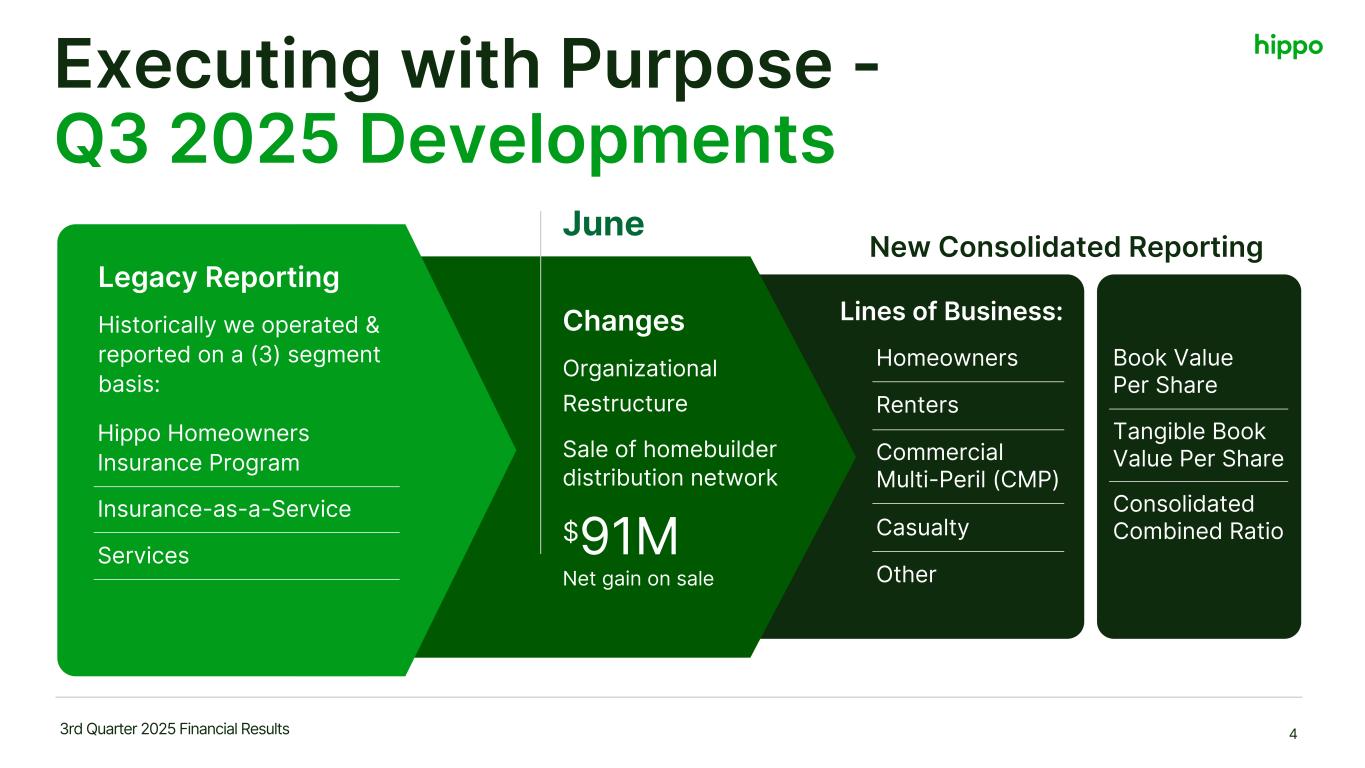
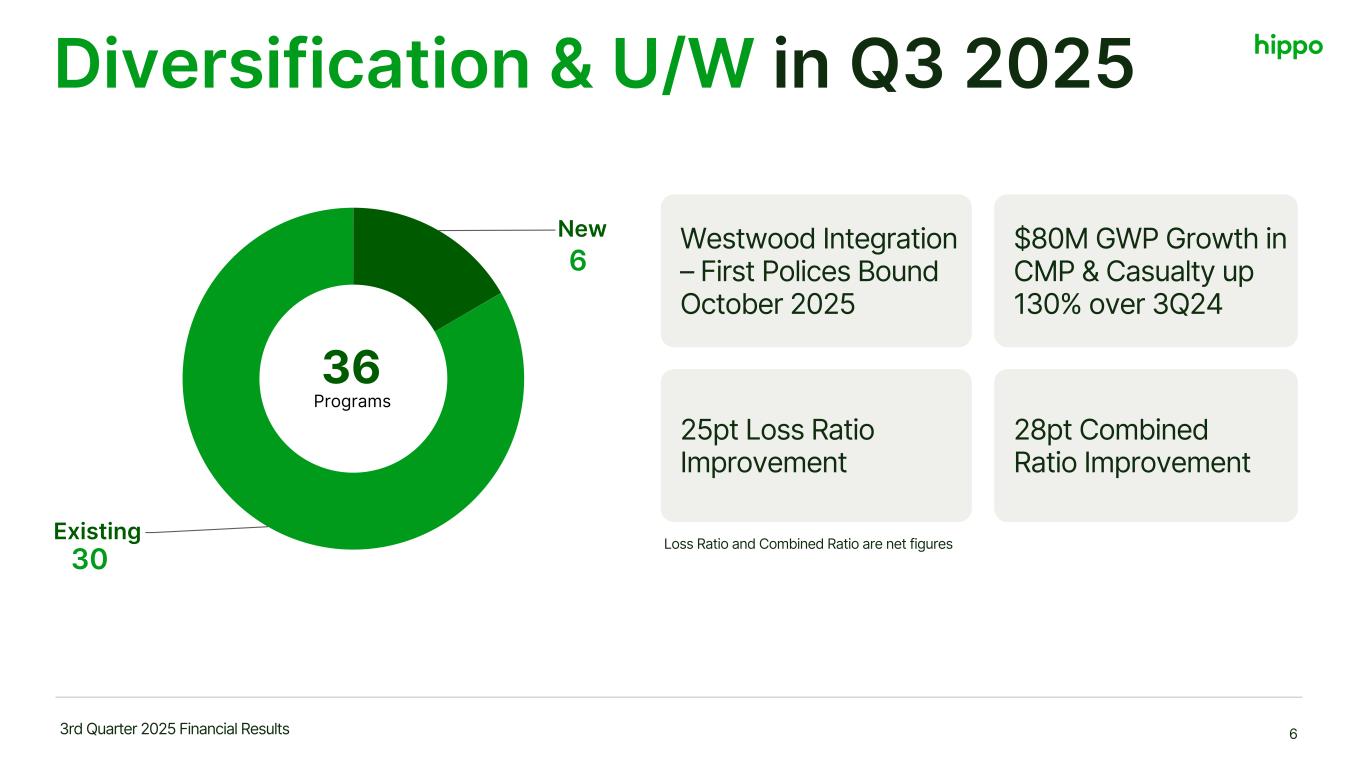
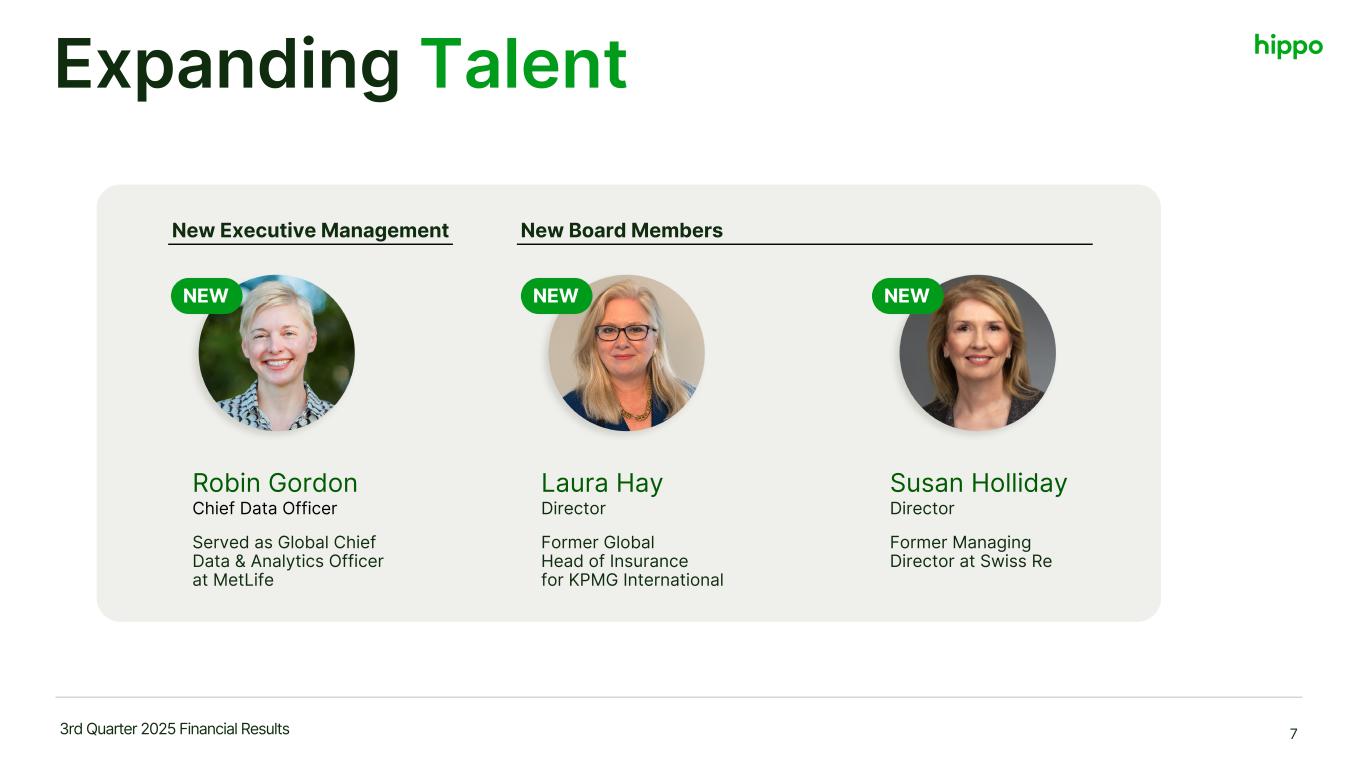
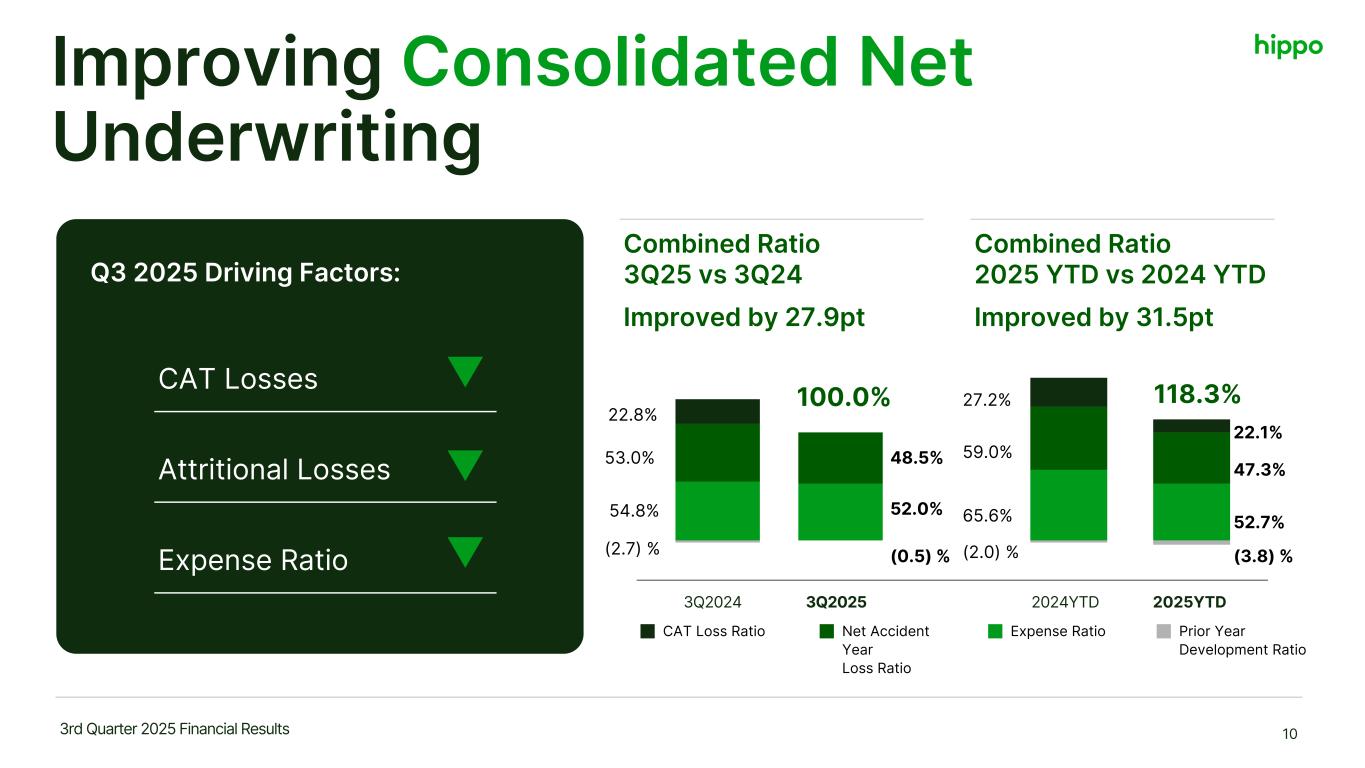
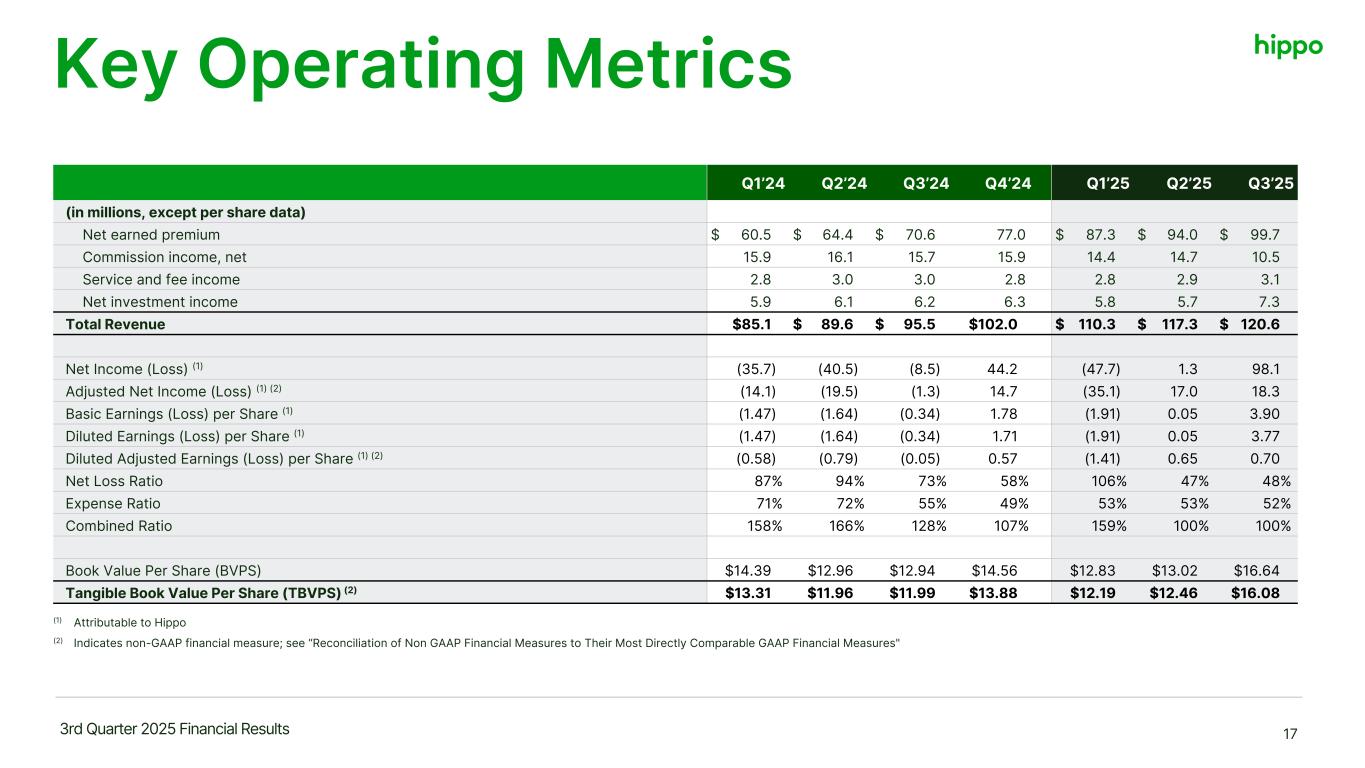
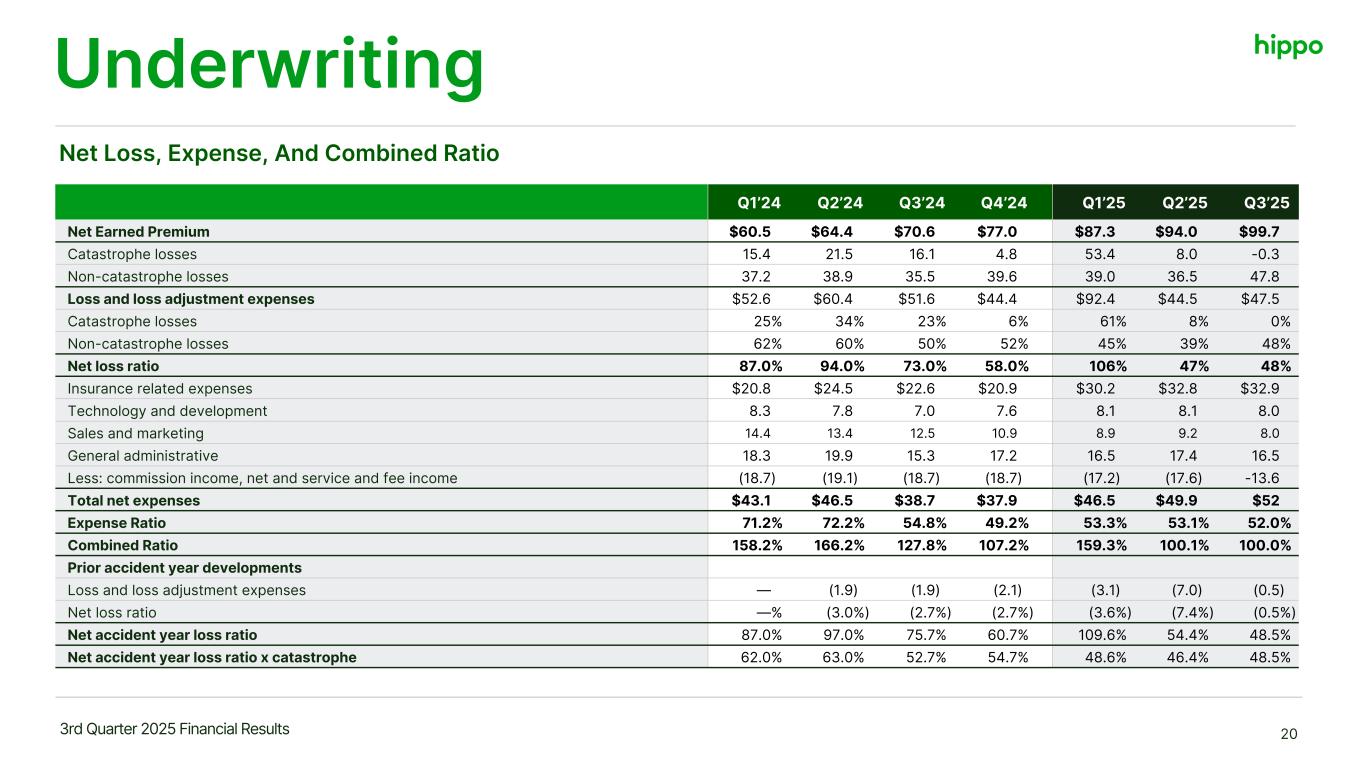
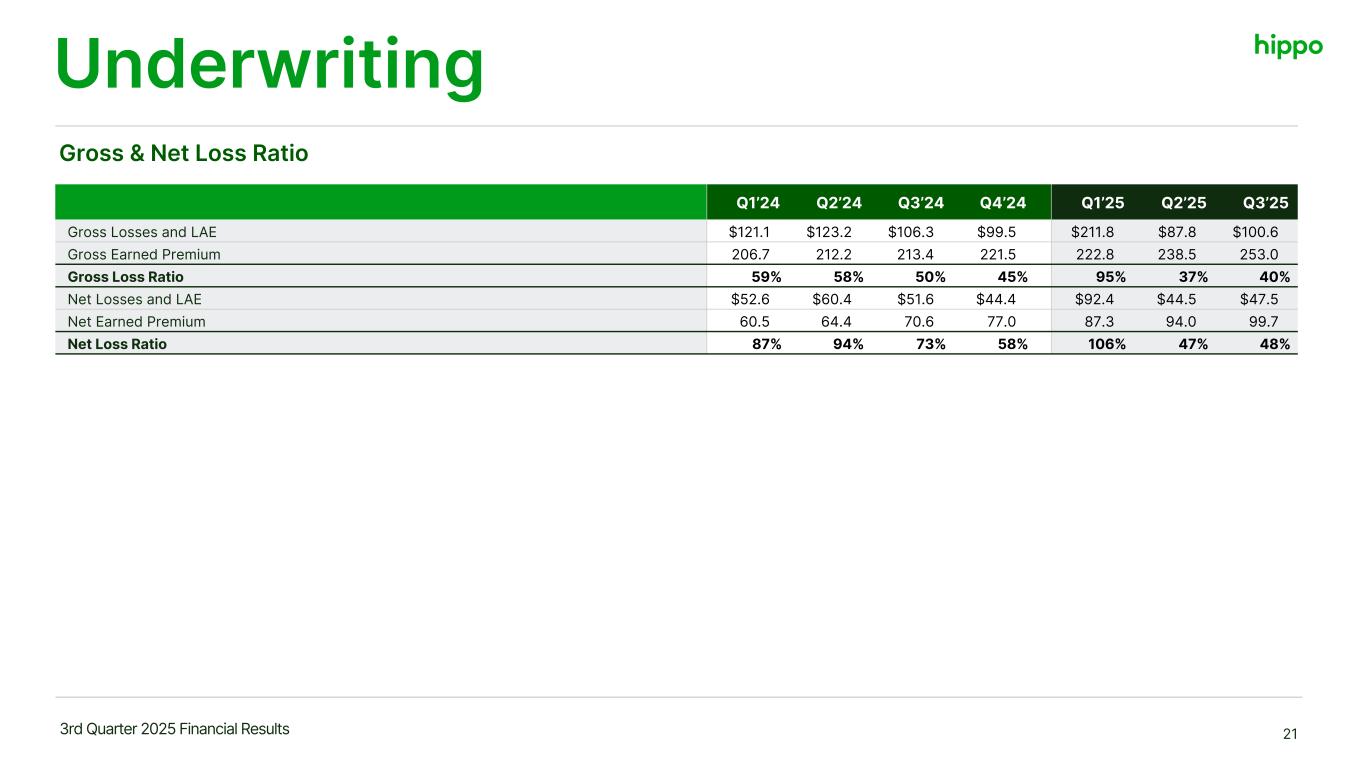
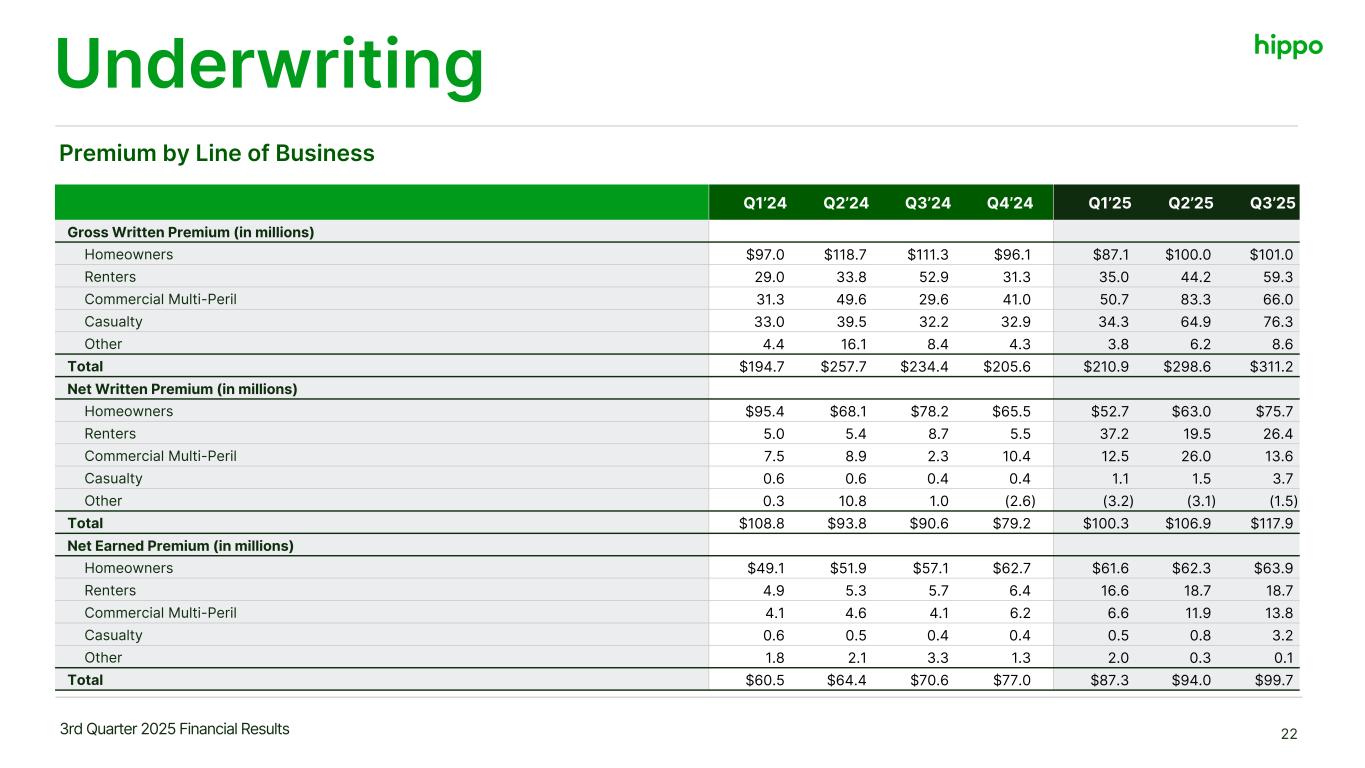
Thank you, Chuck, and good morning, everyone. Thank you for joining us. This was a very strong quarter for HIPPO. We maintained our momentum from last quarter and delivered another set of impressive results, achieving adjusted net income of 18 million while growing our gross written premium by 33% year-over-year these results underscore the strength of our model and our continued ability to generate meaningful incremental improvements across the core drivers of our business as we shared at our June investor day HIPAA was doubling down on what we do best building a technology native insurance platform that drives profitable growth across both our owned and partnered MGAs. This quarter, we are introducing a new way of looking at our business, one that aligns our reporting with a new, unified way of managing our business. We now manage the business and allocate resources as a single carrier platform that underwrites a broad spectrum of insurance products across homeowners, renters, commercial multi-parallel, and casualty lines. Our continued evolution aligns squarely with the three strategic pillars that guide our business with the goal of positioning HIPPO for continued profitable growth over the long term. First, strategic diversification. We continue to broaden our premium base across both personal and commercial lines, building a more balanced and resilient portfolio. Second, unlocking market growth. Our programs deliver a differentiated technology-driven customer experience that sets HIPPO apart and expands our reach into attractive markets. Third, optimize risk management. We are leveraging our diversified portfolio and deep risk management capabilities to continuously optimize performance across cross-market cycles. And this quarter, we continue to execute on all three. Investors can now better see not only where we are going, but just as importantly, the risks we are attaining within each line of business. We continue to rebalance and diversify our portfolio, supported this quarter by six new programs who joined our platform, bringing our total up to 36. These programs further diversify our premium base across commercial and casualty lines, and our new reporting format should better showcase the progress we're making in this area. During the quarter, we also focused on integrating our new homes product and infrastructure with Baldwin's industry-leading Westwood Insurance Agency, which will triple our access to annual new home closings, fueling both premium growth and additional geographic diversification. I'm pleased to share that we bound our first new policies with Westwood last month, and it's worth noting that there is typically a three to six-month lag between quote and bind in this channel, as quotes are frequently made pre-construction, so we expect volume from this partnership to accelerate in the coming months. While unlocking market growth opportunity remains central to our strategy, we do not pursue growth at the expense of underwriting discipline. Our underwriting results improve significantly, highlighting HIPPO's potential as we continue to scale. For example, on a gross written premium basis, commercial multi-parallel and casualty grew by $80 million, more than offsetting the slight decline in ENS homeowners. This reflects our underwriting discipline, maintaining pricing standards amid increased competition in homeowners, while optimizing our portfolio by increasing participation in lines that align more closely with our underwriting appetite. As part of our updated disclosures, we are now reporting both our net loss ratio and our combined ratio, both of which improve meaningfully year over year. Our net loss ratio improved by 25 percentage points year-over-year to 48, and our net combined ratio improved 28 percentage points year-over-year to 100%. While we benefited from lower cat loss activity this quarter, we also saw continued improvement in both our expense ratio and the attritional loss ratio. This progress reflects our disciplined approach to risk, including underwriting and rate actions, diversification, as well as the benefit of scale and expense efficiency, all of which continue to strengthen our foundation for sustainable profitability. Collectively, these results and our focus on operational excellence continue to make HIPPO an attractive home for world-class talent. I'm proud to highlight several important additions to our leadership team this quarter. Robin Gordon joined us as our Chief Data Officer, bringing deep expertise that will help us manage our portfolio holistically. Robin's appointment underscores Ippo's position as a technology-native platform leveraging advanced data and analytics to sharpen risk management, expand and diversify our portfolio, and deliver superior customer We also welcome two new members of our Board of Directors, Laura Hay and Susan Holliday, both accomplished leaders with distinguished careers in insurance. Having the right insurance talent across the organization is critical to any organization's success over the long term, and these additions will further strengthen HIPPO's capabilities, culture, and resiliency. Q3 was yet another clear demonstration of the strength of our platform, the caliber of our team, and the momentum we're carrying into the future. I'm immensely proud of all we've accomplished and look forward to building on this trajectory as we move towards 2026 and beyond. Now, I'd like to turn the call over to our Chief Financial Officer, Guy Zeltzer, to walk through the highlights of our third quarter 2025 financial results and our expectations for the remainder of 2025.
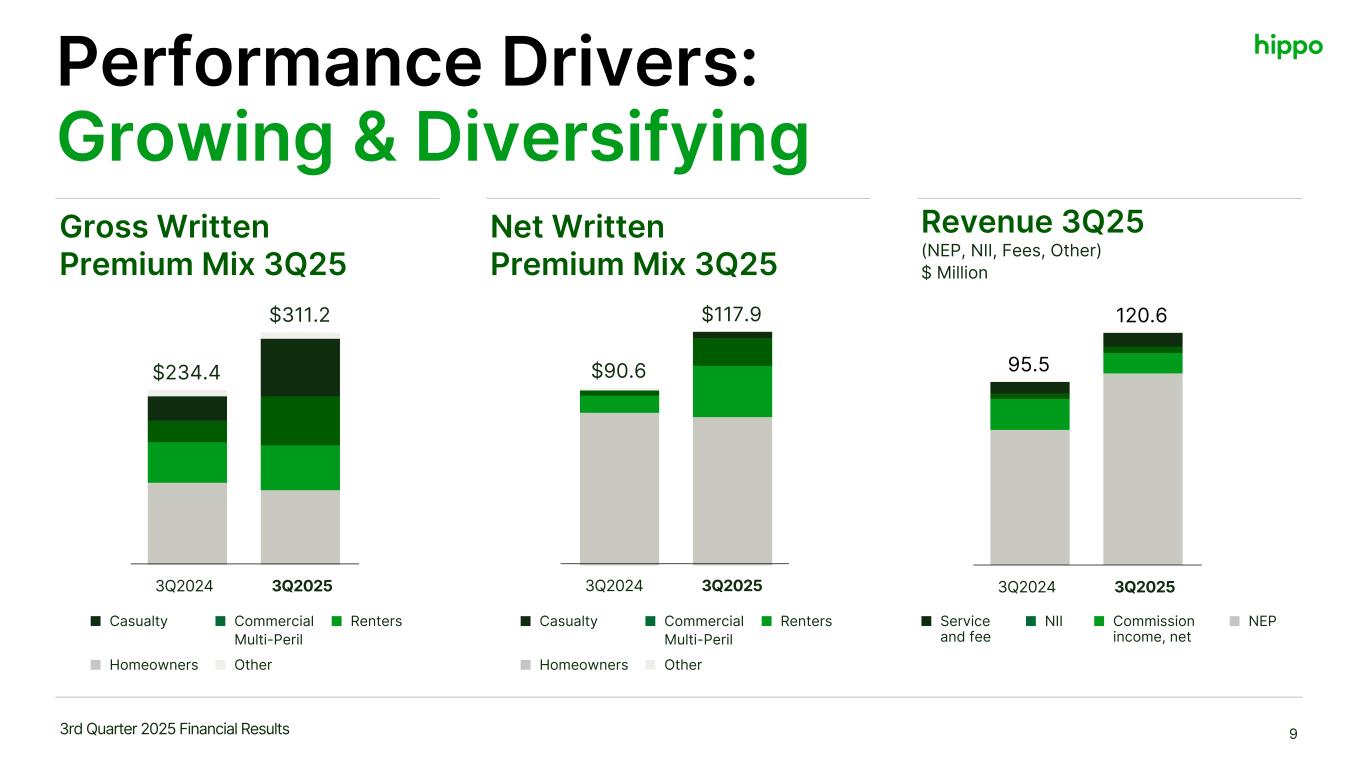
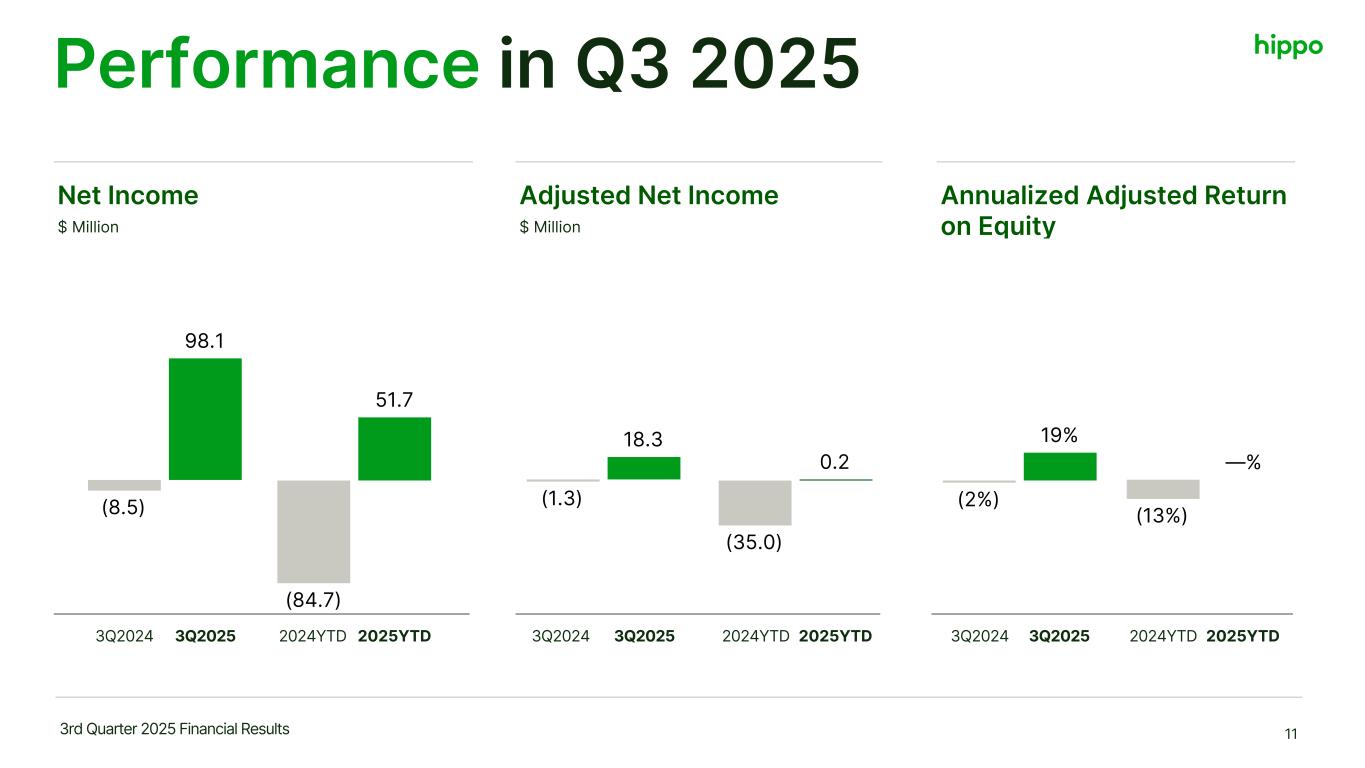
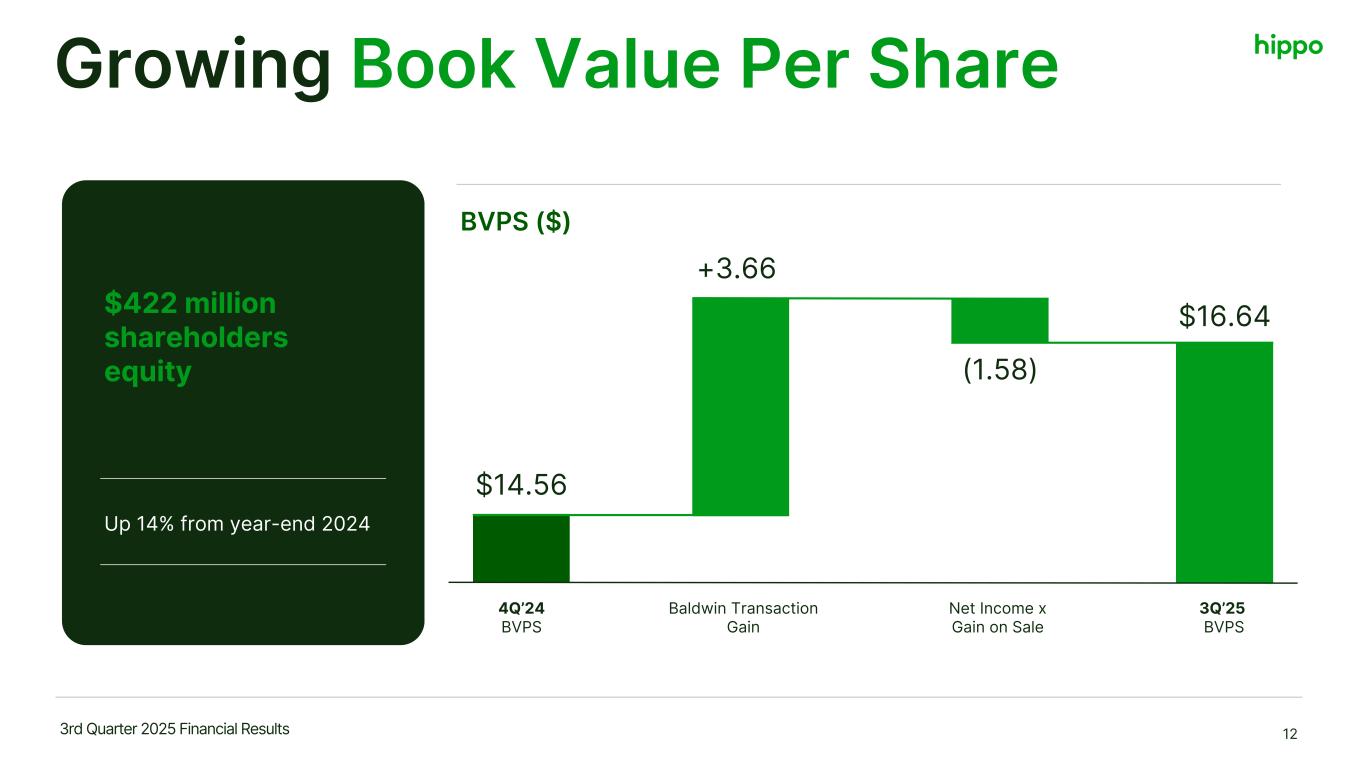
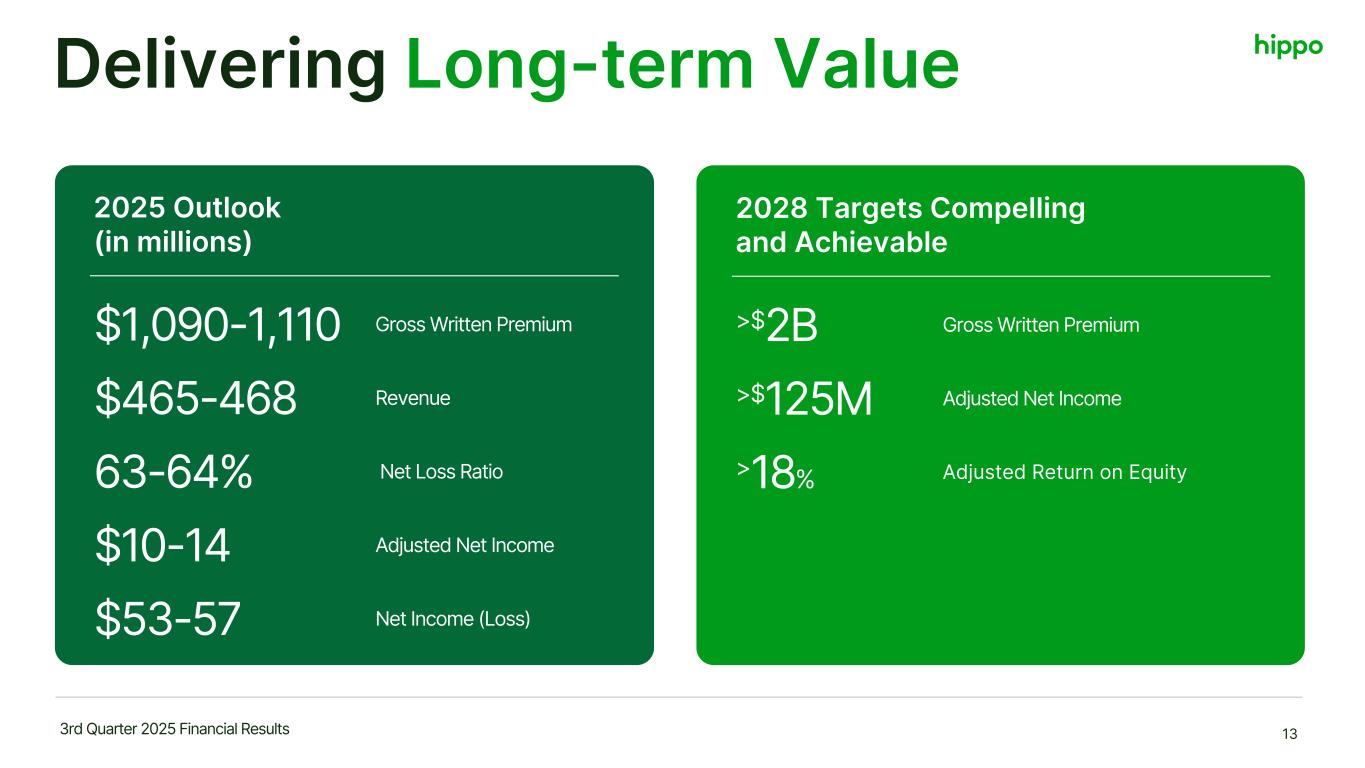
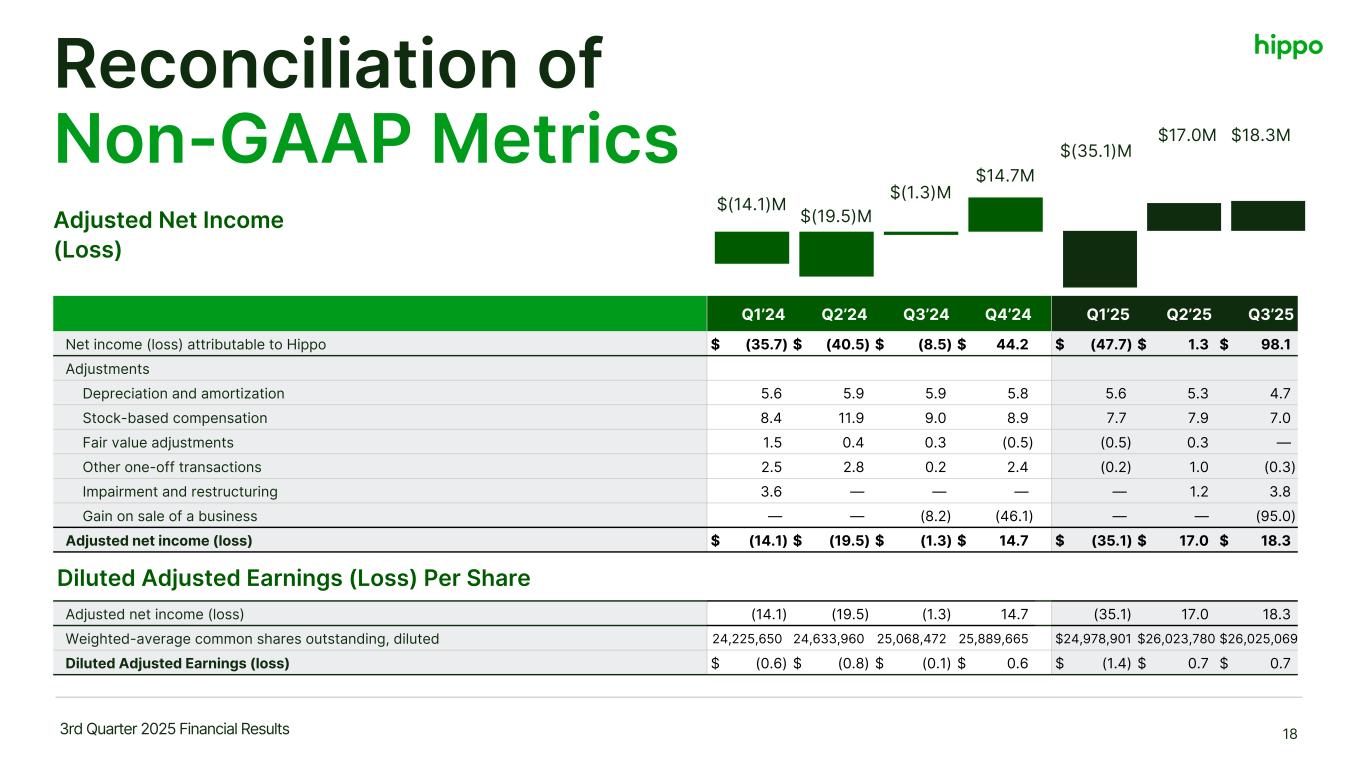
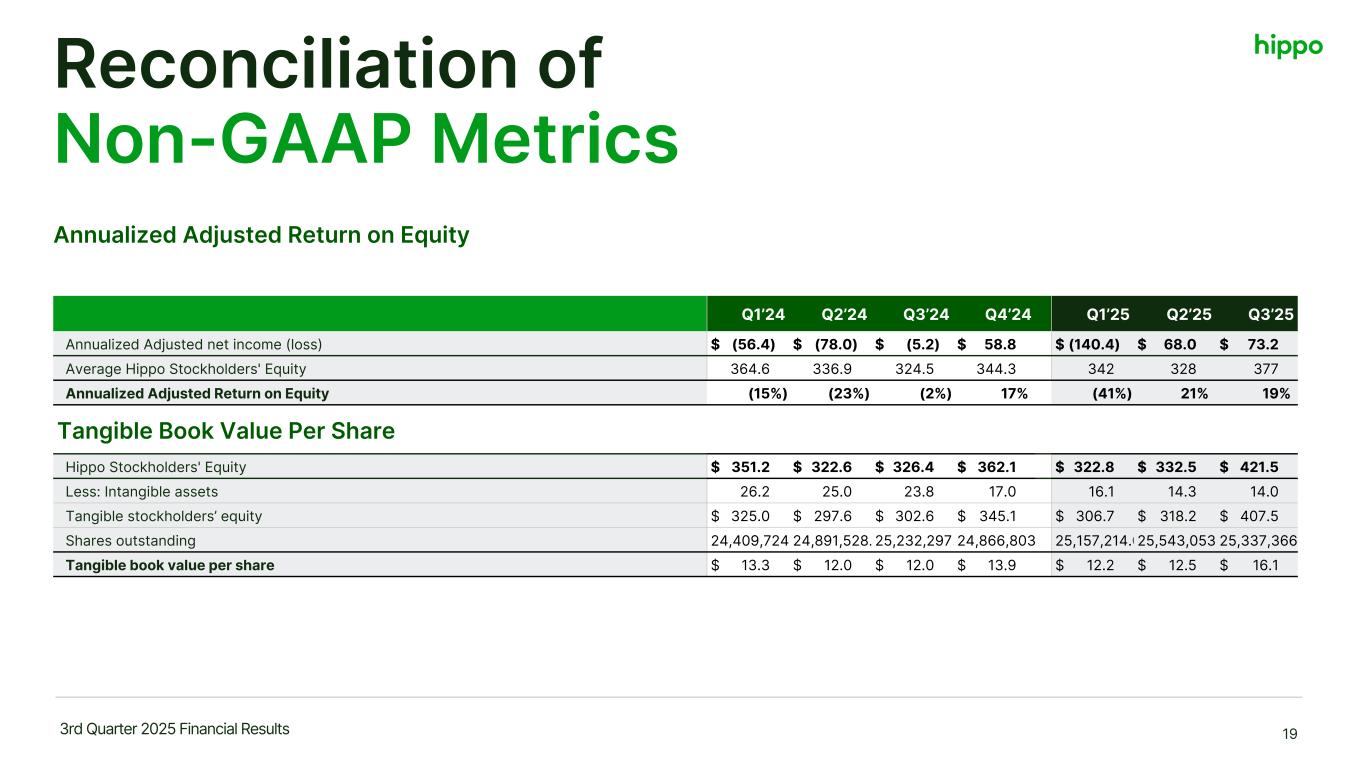
Thanks, Rick, and good morning, everyone. As Rick mentioned, this quarter we updated our reporting structure to align with how we're now managing the business. we have transitioned to reporting consolidated pnl in a way that emphasizes gross and net premium by line of business and as part of this change we have eliminated segment reporting we have also begun reporting consolidated expense and combined ratios and as discussed previously changed our poor profitability metric from adjusted dvda to adjusted net income to help analysts and investors to model our business, we've also prepared a supplemental financial package that provides the details of the past six quarters under the new reporting structure and made this available on our investor relations website. In the third quarter, we once again delivered top-line premium growth while maintaining underwriting profitability and gained meaningful operating leverage as premium growth continued to outtake fixed expense growth. Q3 gross written premium grew 33% year-over-year to $311 million, up from $234 million in Q3 of last year. Growth in the third quarter was driven by strong performance across most our lines of business, more than offsetting a small contraction in homeowners as we continue to prioritize underwriting discipline over premium growth in that line of business. This mix shift demonstrates early progress towards our strategic goal of diversifying the portfolio beyond its historical concentration in homeowners. I'll highlight a few more details of this diversification. Casualty increased to 25 percent of gross return premium, up from 14 percent last year. Commercial and multi-peril increased to 21 percent of gross return premium, up from 13 percent last year and homeowners which was 47 percent of gross written premium in q3 of last year decreased to 32 percent discord on a net basis renters increased to 22 percent of net written premium up from 10 percent last year commercial multi-ferral increased to 12 percent of net written premium up from three percent last year and homeowners which was 86 percent of net written premium in Q3 of last year decreased to 64% this quarter. Fantastic progress and more to come. Speaking of net return premium, this key metric was up 30% year-over-year to $118 million, up from $91 million in Q3 of last year. Net return premium was 38% of gross return premium, a slight reduction from 39% in Q3 of last year. Our net return premium growth was driven by continued strength in our renter's line of business which increased by 18 million dollars or 203 percent year over year this growth was primarily the result of a higher premium retention which rose from 16 a year ago to 45 this quarter supported by the renter's program's long track record and a loss ratio in the low 30. in q3 revenue grew 26 year over year 221 million dollars up from 96 million dollars in q3 of last year the increased rate was driven by net earned premium growth of 41 percent to 100 million dollars up from 71 million dollars in q3 of last year the net earned premium growth more than offset the 5 million reduction in commissions following the sales of first connect in the home builder distribution network over the last year Q3 consolidated net loss ratio improved 25 percentage points year-over-year to 48%, driven by improvement in both CAF and non-CAF loss experience. The biggest driver of the year-over-year improvement was the very low level of CAF losses during the quarter, which provided a 23 percentage point benefit compared to Q3 of last year. As discussed in previous quarters, we have largely completed our efforts to reduce the wind and head exposure in the portfolio that grossed some of the historical volatility, but this quarter's results were even more favorable than our target levels. We also improved our non-cast loss ratio by two percentage points year over year to 48%, driven by continued rate improvements, refined policy terms and conditions, enhanced underwriting processes, and stronger claims operations. Our excellent year non-care loss ratio, which excludes the impact of prior year development, improved by five percentage points year over year to 48.5%. Following the reporting change this quarter and our intention to manage exposure by line of business holistically, we do not intend to disclose program-level performance going forward. However, during this transition period, we are providing an update on HIPAA Home Insurance Program, our owned MGA. The HHIV net loss ratio improved 29 percentage points year over year to 50% this quarter, driven by the same factors that supported improvement in the consolidated net loss ratio. Our Q3 consolidated net expense ratio improved by 3 percentage points year over year to 52%. As we scale, we expect the expense ratio to continue to improve, though not necessarily linearly together improvements in our loss and expense ratios resulted in a consolidated combined ratio of 100 percent a 28 percentage point improvement versus q3 of last year q3 net income came in at 98 million dollars or three dollars and 77 cents per diluted share a 107 million dollars improvement year over year this improvement was driven by 91 million dollars net gain from the sale of the Home Builder Distribution Network, materially better underwriting performance, and continued top-line groups. Q3 adjusted net income came in at $18 million, or $0.70 per diluted share, a $19 million improvement year-over-year. The same factors that drove the net income improvement also contributed to the increase in adjusted net income, with the exception of the net gain on the sale, which does not impact adjusted net income. Top 50 people shareholders' equity at the end of the quarter was $422 million, or $16.64 per share, up 14% from $362 million, or $14.56 per share, at the year-end 2024. The increase was driven primarily by the gain on sales of the home-builder distribution network, which more than offsets first quarter operating losses from the California wildfires and the repurchase of 514,000 shares for approximately $15 million. As we look ahead to the remainder of the year, we are raising our full year 2025 outlook based on this quarter's strong results. For gross return premium, we are raising the midpoint of our full year guidance by 15 million dollars to a range of 1.09 to 1.11 billion dollars this reflects our expectation that growth in your lines of business will continue to more than offset the short-term intentional stabilization in homeowners which we anticipate will begin to grow again in 2026. for revenue we are raising full year guidance from a range of 460 to 465 million dollars to a range of $465 to $468 million in line with our premium guidance rate. For our consolidated net loss ratio, we are improving our full-year guidance from a range of 67% to 69% to a range of 63% to 64% driven by the positive loss trends reflected in our Q3 results. For net income, we are raising our full-year guidance from a range of $35 to $39 million dollars to between 53 and 57 million dollars driven by the stronger top line growth improved net loss ratio trends and continued expense discipline and finally for adjusted net income we are raising items from our previous range of a loss of zero to four million dollars to a new range of a profit of between 10 and 14 million dollars also driven by stronger top line growth improved net loss ratio trends and continued expense discipline And with that, operator, I'd now like to open the floor to questions.
Operator
Thank you. If you would like to ask a question, please press star float by one on your telephone keypad. To remove your question, please press star float by two. Again, to ask a question, please press star one. As a reminder, if you are using a speakerphone, please remember to pick up your handset before asking a question. We'll pause here briefly as questions are registered. Thank you. We have our first question from Andrew Anderson from Jefferies. Please go ahead.
Hey, good morning. Just looking at some of the new premium disclosures by line of business and recognizing it's off of a small base, but the casualty growth was pretty sizable. Could you just give us some color on kind of the growth there and what type of business you're writing within casualty?
Hi, Andrew. Thanks for the question. I'll have Guy talk a little bit about the numbers, but one thing to keep in mind, and we've emphasized this before, but I think it's a very important piece of the equation. When we grow premium in any of our fronted lines, we have the option to take risk or to not take risk. Generally speaking, until we have strong comfort and a historical reference point on the profitability of any particular program we generally opt not to take risk so even though we've grown that number fairly significantly as a premium line we've we take very little risk initially until we gain that trust and confidence in the individual program guy do you want to go over some of the makeup yeah so uh Andrew this guy in terms of what lines uh then it's a combination of uh we have some cyber uh commercial general liability um which depends across small businesses real estate investors construction
um uh as rick mentioned what i and what you can also see with the net written premium disclosure is that the net retention on that is relatively small we like to start usually with the fully fronted and then after we get some traction then we like to increase the retention over time especially if we are happy with the underwriting performance thanks and then on homeowners i think you talked about some increased competition on ens are you seeing the admitted market come back to take some share of homeowners or or more competition within the ens world and can you maybe just remind us like what kind of rate need do you do you have left in that book or is it just
kind of the competition is pricing too aggressively right now yeah i think there's two different components in your question, Andrew, so if I don't answer it, please ask it again. First, where we're seeing softening of the ENS market is predominantly price softening and customers that are going to the admitted market as the admitted market has started to rebound over the last few quarters, and we expect that rebound to continue. From a price adequacy perspective, we actually feel very good that the rate we need, we have in the portfolio, and we do not anticipate, other than taking some occasional inflationary trend increases, we do not anticipate any repricing of the book or the portfolio in the foreseeable future.
Operator
Thank you. We have our next questions from Tommy McJones from KBW.
Jane
Analyst — KBW (representing Tommy McJones)
Hi, good morning. This is Jane for Tommy. Thank you for taking my question. My first question is versus mixed. So as HIPAA diversify away from home, I'm just curious, by 2028, what is the reasonable versus mixed that you would expect?
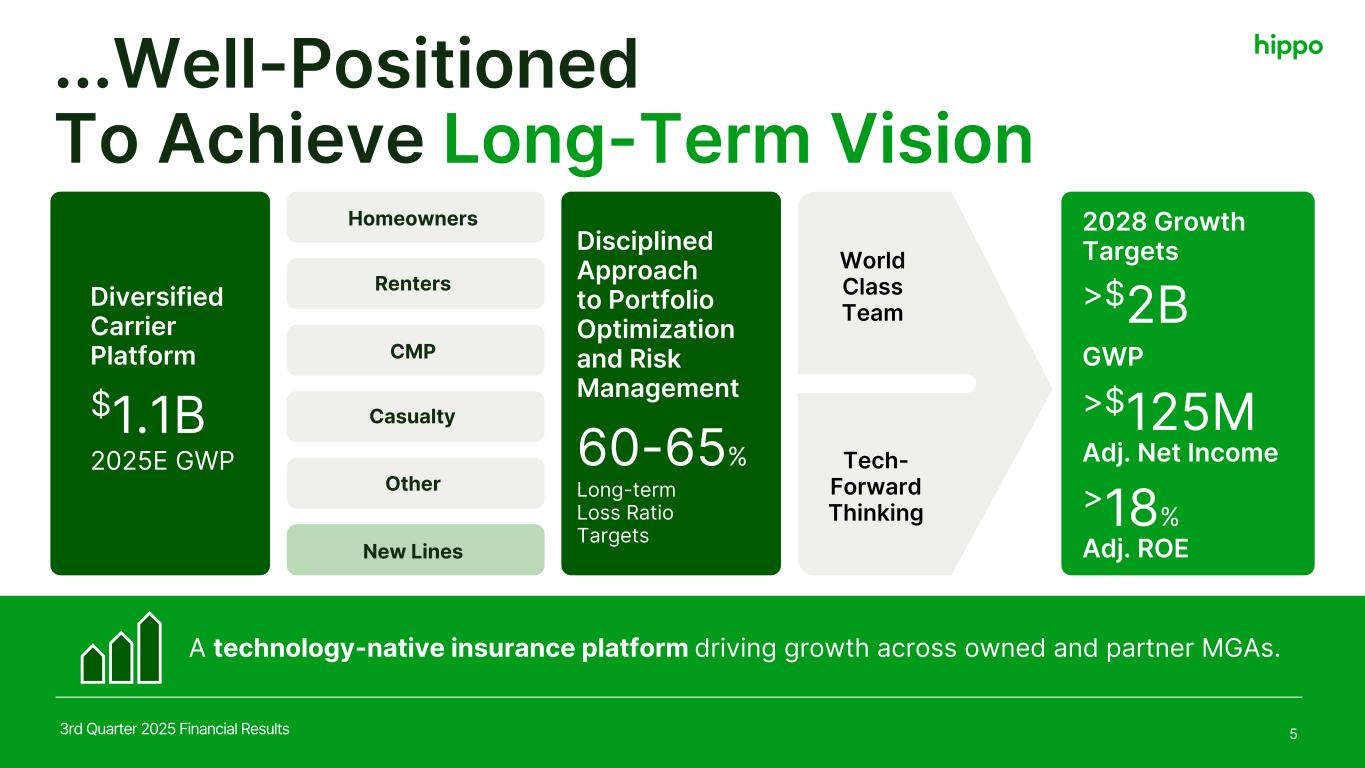
Yeah, thank you. Thank you for the question. I think it's probably worth sharing a little bit of history on our homeowners line and where we're looking at it on a go forward basis. So when we went through the portfolio correction over the last couple of years, we intentionally exited portions of the homeowners market that was non-new build, non-new construction. And as we've mentioned in our presentation, that we've actually tripled the size of the funnel for new homes through our Westwood partnership. So the shrinking that you have seen in the homeowners line was an intentional effort to diversify into less cap-prone states and to make sure that we had correct underwriting pricing going forward. On the go-forward basis, we expect to increase the number of writings for new construction. We expect to continue to open our manufactured HHIP homeowners program, and we expect growth within our fronted partners that are also on our carrier platform. Because when you look at the homeowners numbers, it's a combination of what we do at HHIP and the partnerships that we have with our fronted programs. So we anticipate growth in the homeowners market over the next three years. Likewise, we anticipate growth in the entire portfolio over the next three years. So I refer back to our Investor Day three-year pro forma, and we anticipate over $2 billion in premium, which is nearly doubling our current premium basis. And I do think that $2 billion will be further diversified, but homeowners will grow in the absolute.
And this is, Guy, the one thing I would add on what Rick said is that you can see that we made great progress on both growth and net diversification. you're still seeing the there's still some lag i would say that as we get into 2028 you also see more diversification in the net written premium and it will look closer to all the written premium the gross written premium uh pie looks like right now got it thank you very helpful um my second question is um share repurchases um just curious about kind of forward looking?
Jane
Analyst — KBW (representing Tommy McJones)
Are buybacks intended to be like a plan going forward as a use of capital?
Yeah, I think the use of capital, and I'll reiterate what we said during Investor Day, from our perspective, the use of capital will be a culmination of continuing to grow our portfolio and the necessary surplus to facilitate that more than $2 billion of premium in three years. We've also indicated that we will be opportunistic if there are opportunities for us to acquire entities that will further diversify the portfolio and accelerate that diversification. That is a potential use of additional funds. But we feel very good with our cash position. We feel very good with our ratios in terms of the car. and we think we're well positioned not only to grow to the two plus billion premium in three years but also to take advantage of things that might help us accelerate that further thank you appreciate for the color thank you very much thank you we currently do not have any questions as a reminder if you would like to ask a question please press star 1 on your telephone keypad.
Operator
Thank you. And a reminder that if you would like to ask any questions, please press star 1 on your telephone keypad. Thank you. We do not have any questions at the end. We will hand over to Rick McCaffrey, the CEO, for any further remarks. Thank you.
Well, first of all, I'd like to thank all of you for joining us this morning. We're very excited about the quarter that we posted, and we believe that this is just the beginning. So thank you again. We look forward to speaking next quarter.
Operator
Thank you. That concludes today's call. Thank you for your participation. You may now disconnect your line.