Operator
Thank you for standing by. My name is Kate, and I will be your conference operator today. At this time, I would like to welcome everyone to the Herc Holdings, Inc. second quarter 2026 earnings call and webcast. All lines have been placed on mute to prevent any background noise. After the speaker's remarks, there will be a question and answer session. If you would like to ask a question during this time, simply press star followed by the number one on your telephone keypad. If you would like to read your question, press star one again. Thank you. I would now like to turn the call over to Leslie Hanziker, Head of Investor Relations. Please go ahead.
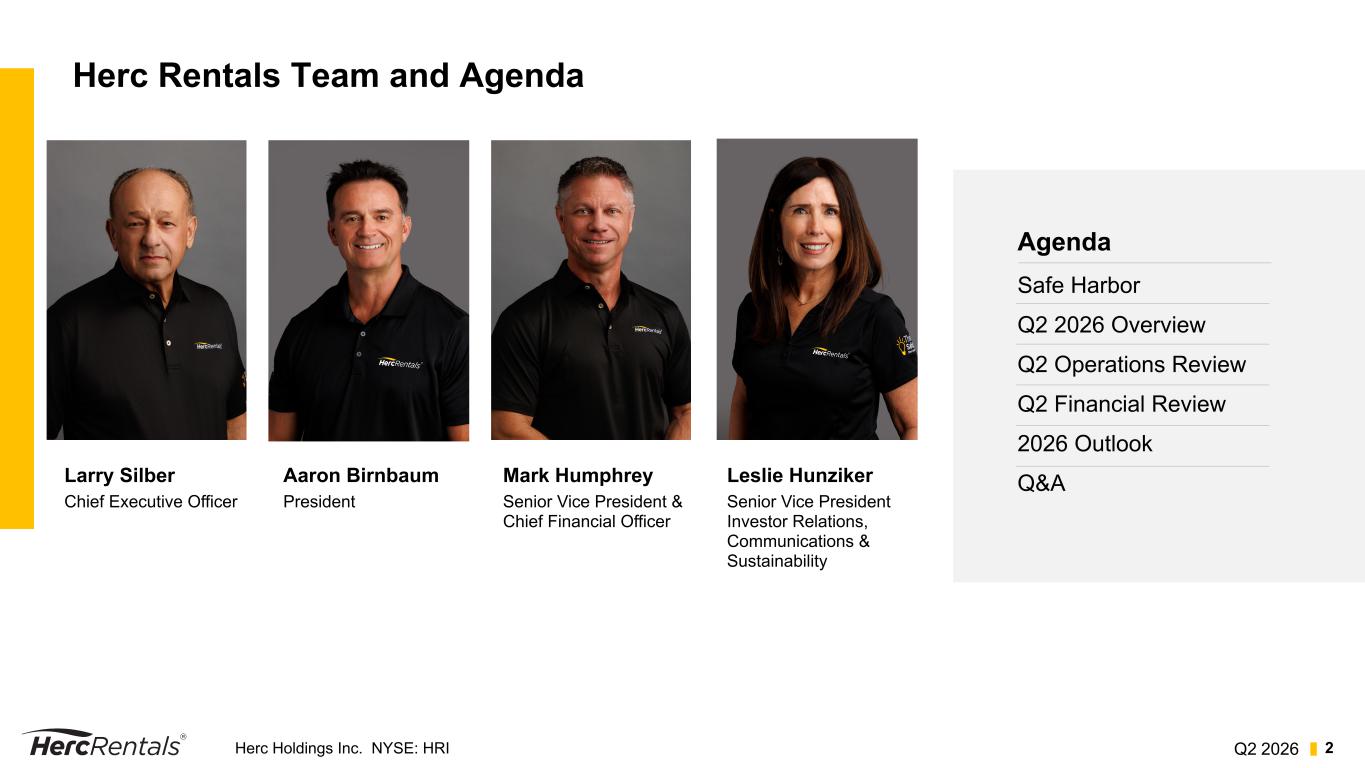
Thank you, Operator, and good morning, everyone. Today, we're reviewing our second quarter 2026 results with comments on operations and our financials, including our view of the industry and our strategic outlook. The prepared remarks will be followed by Q&A. Let me remind you that today's call will include forward-looking statements. These statements are based on the environment as we see it today and are subject to risks and uncertainties that could cause actual results to differ materially from our expectations and projections. These risks and uncertainties include but are not limited to the factors identified in the press release, our Form 10-Q, and our most recent annual report on Form 10-K, as well as other filings with the SEC. In addition, we'll be discussing non-GAAP information that we believe is useful in evaluating the company's operating performance. Reconciliations for these non-GAAP measures with the closest GAAP equivalent can be found in the conference call material. Finally, please mark your calendars to join our third quarter management meeting at Morgan Stanley's 14th Annual Laguna Conference in California on September 16th. This morning, I'm joined by Larry Silber, Chief Executive Officer, Aaron Birnbaum, President, and Mark Humphrey, Senior Vice President and Chief Financial Officer. I'll now turn the call over to Larry.
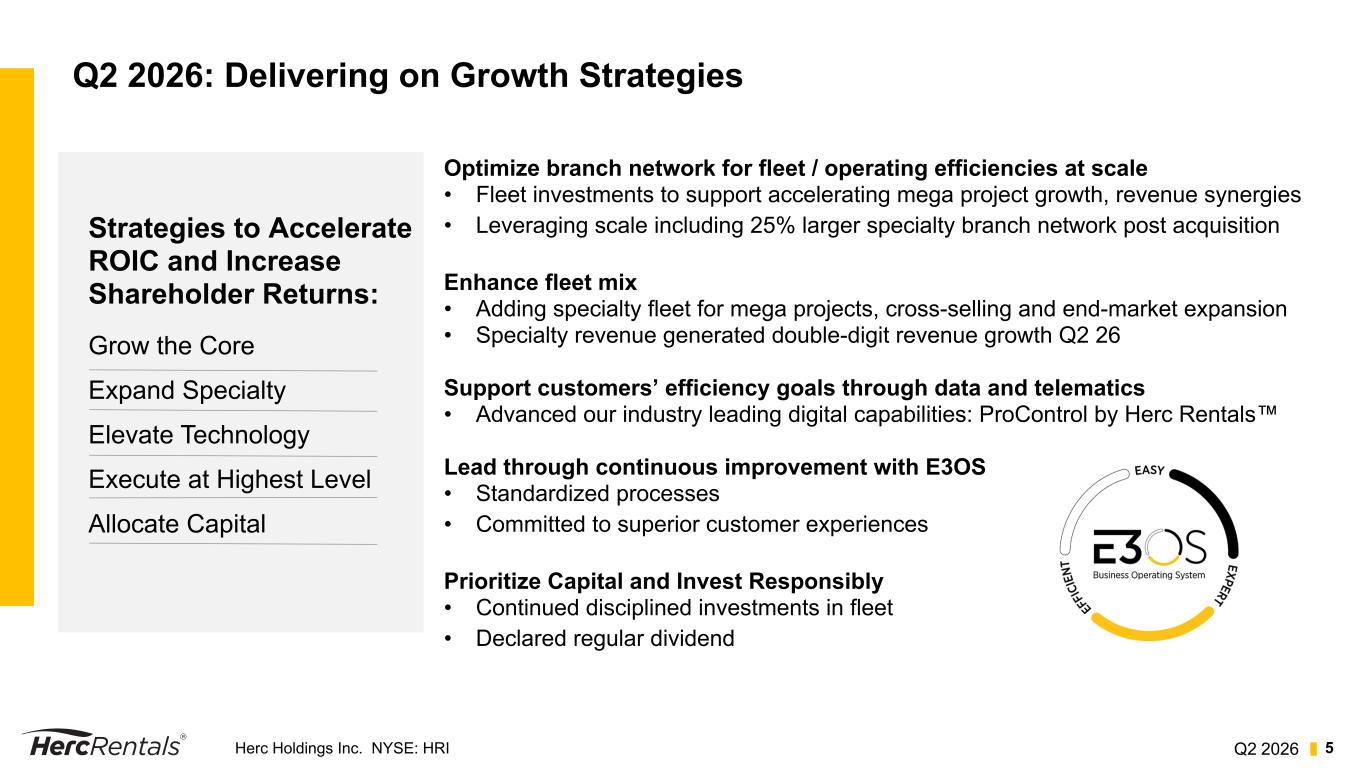
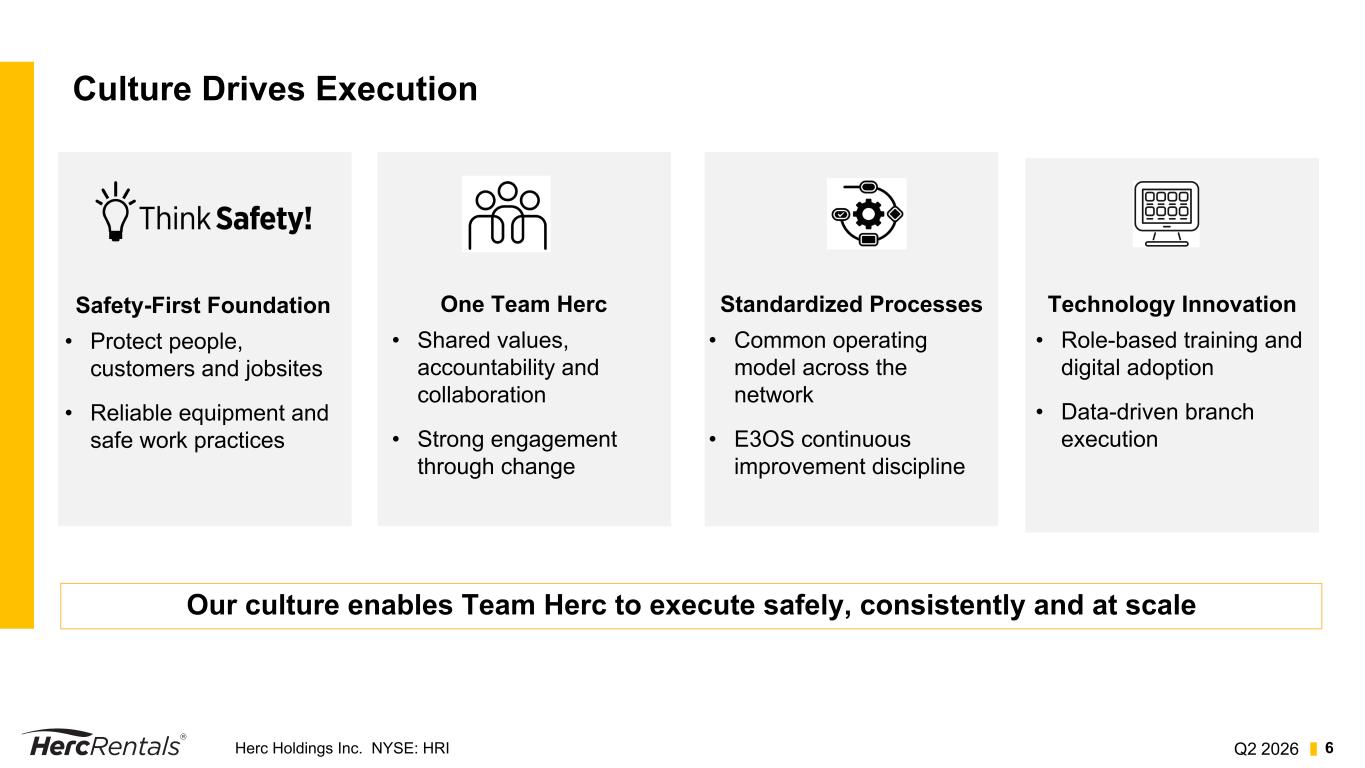
Thank you, Leslie, and good morning, everyone. With the H&E integration successfully completed in the first quarter, our entire focus in the second quarter shifted to execution. As we've discussed, the first half of 2026 was about converting our larger optimized platform into stronger utilization and revenue growth as we move through the seasonal ramp. I'm incredibly proud of how Team Herc is performing. In the second quarter, we reached an important post-acquisition turning point as pro forma equipment rental revenue returned to growth, increasing 2% overall. Importantly, that return to growth happened earlier than we expected within the quarter, which gives us momentum and confidence heading into the second half. Alongside revenue growth, disciplined fleet management drove positive fleet efficiency as we continued to align the combined fleet. We are also progressively capturing more of the value of this acquisition as revenue cross-selling synergies build and cross-cost synergies track the plan. That operating momentum, combined with accelerating customer demand, gives us confidence to raise our full-year guidance today. Of course, the quarter was not without its challenges. Fuel inflation was a macroeconomic headwind that pressured margins, most notably in April, though margins improved as volume built through the quarter. Mark will take you through those details. Turning to slide five, we continue to follow our playbook, executing against our long-term growth strategies. First, we are growing the core. Today, our top-line growth continues to be led by national accounts, fueled by robust mega-project activity. The H&E acquisition was well-timed, adding scale, fleet capacity, talent, and branch density to expand our role on large, complex projects and capture a greater share of this increasing demand. second we're expanding specialty specialty revenues were up double digits in the quarter and we continue to disproportionately invest in specialty fleet to support mega projects our new specialty branches and the cross-selling opportunities across our combined customer base third we're elevating technology as an industry leader our digital capabilities remain a true differentiator. We continue to invest heavily in our proprietary ProControl platform, utilizing AI and advanced telematics to give customers the insights they need to track, measure, and manage their fleet for a safer, more efficient job site. Engagement is building quickly. Active external users on ProControl grew nearly 20% quarter to quarter as more of our combined customer base puts these tools to work. At the same time, our e-commerce channels provide 24-7 flexibility for customers who know exactly what they need. The platform is a seamless way to transact and secure equipment on their schedule, always backed by the expert support of our sales and branch teams. And that convenience is clearly resonating as Q2 was our highest revenue generating e-commerce quarter to date. And finally, we're investing responsibly in fleet to support highly visible customer demand while maintaining capital discipline and managing our balance sheet for the long term. Now moving to slide six, our ability to execute at this level is a direct result of our people and our culture. Integrating a large, complex acquisition while simultaneously pivoting back to growth in an uneven demand environment requires an exceptional organization we have built a culture grounded in collaboration standardized processes comprehensive training and industry-leading technology to execute consistently across our expanded network and the absolute foundation of that culture is safety it is the non-negotiable starting point of everything we do by equipping our teams with the right training and safe well-maintained gear we ensure they can perform at their best while delivering the superior reliable service our customers expect team herc's dedication to operating safely and efficiently is what makes our growth possible now before we discuss the financial outlook let me turn it over to aaron to talk about our operational performance and initiatives.
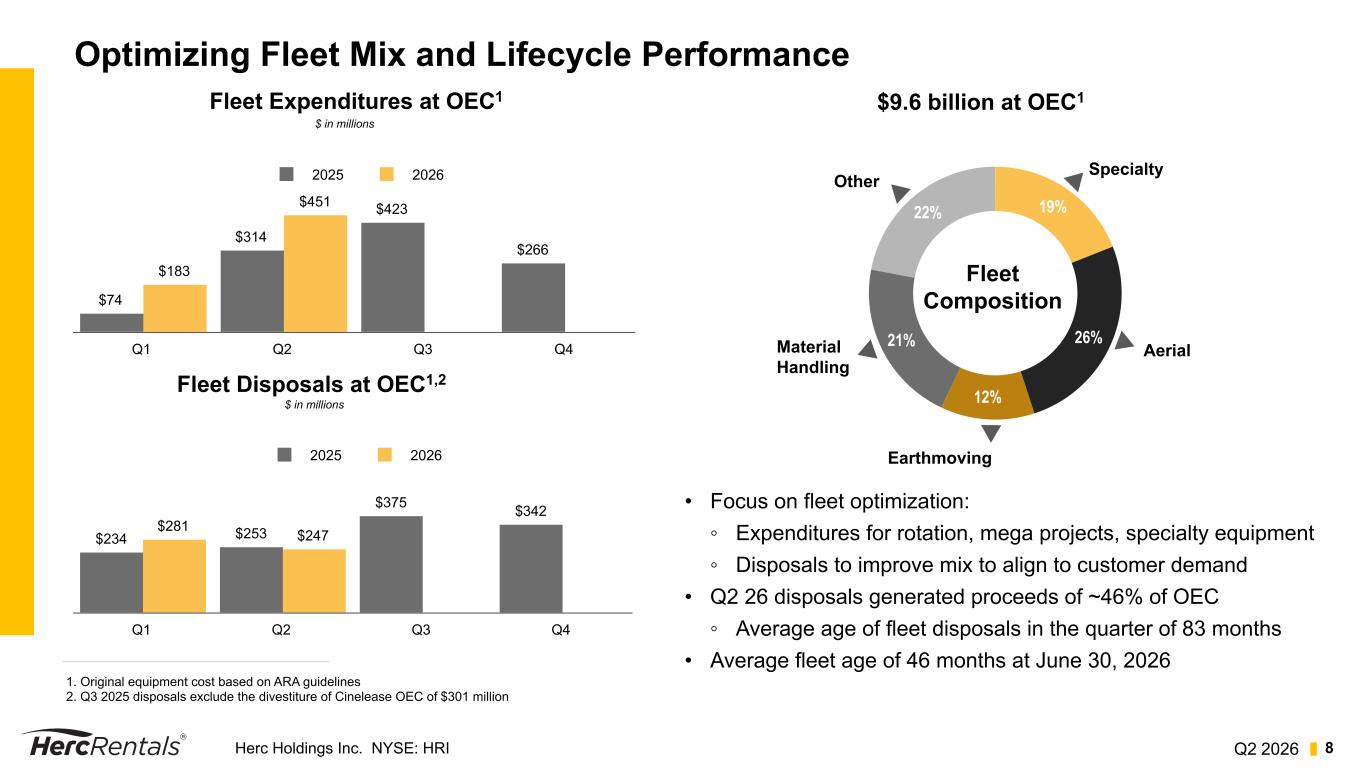
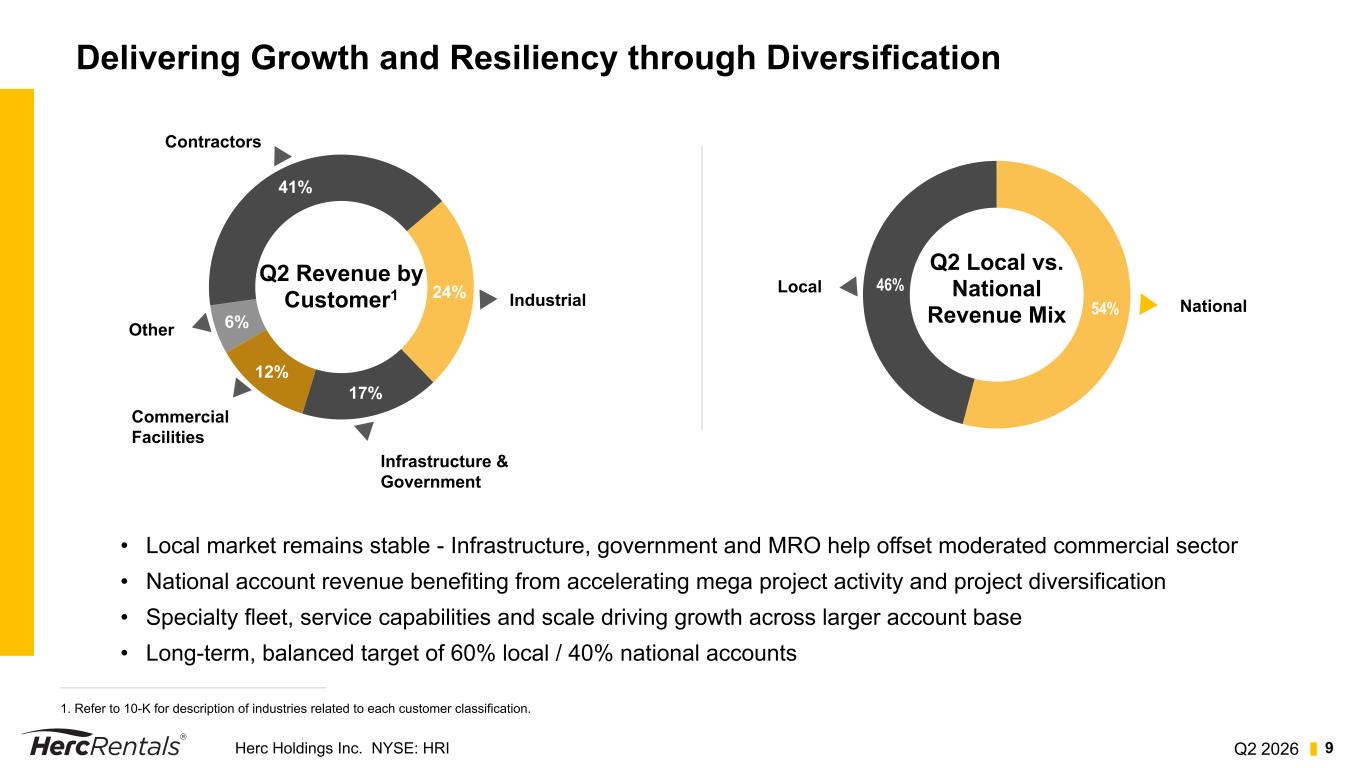
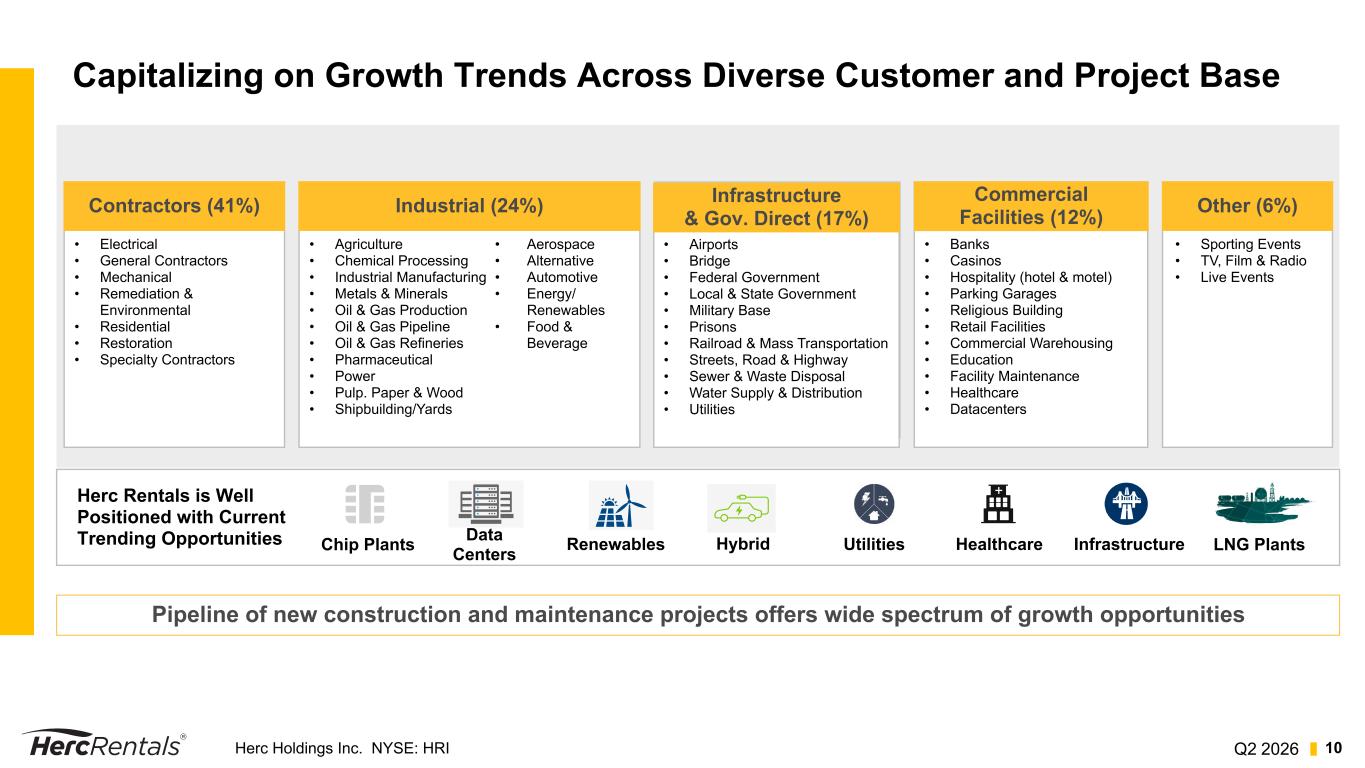
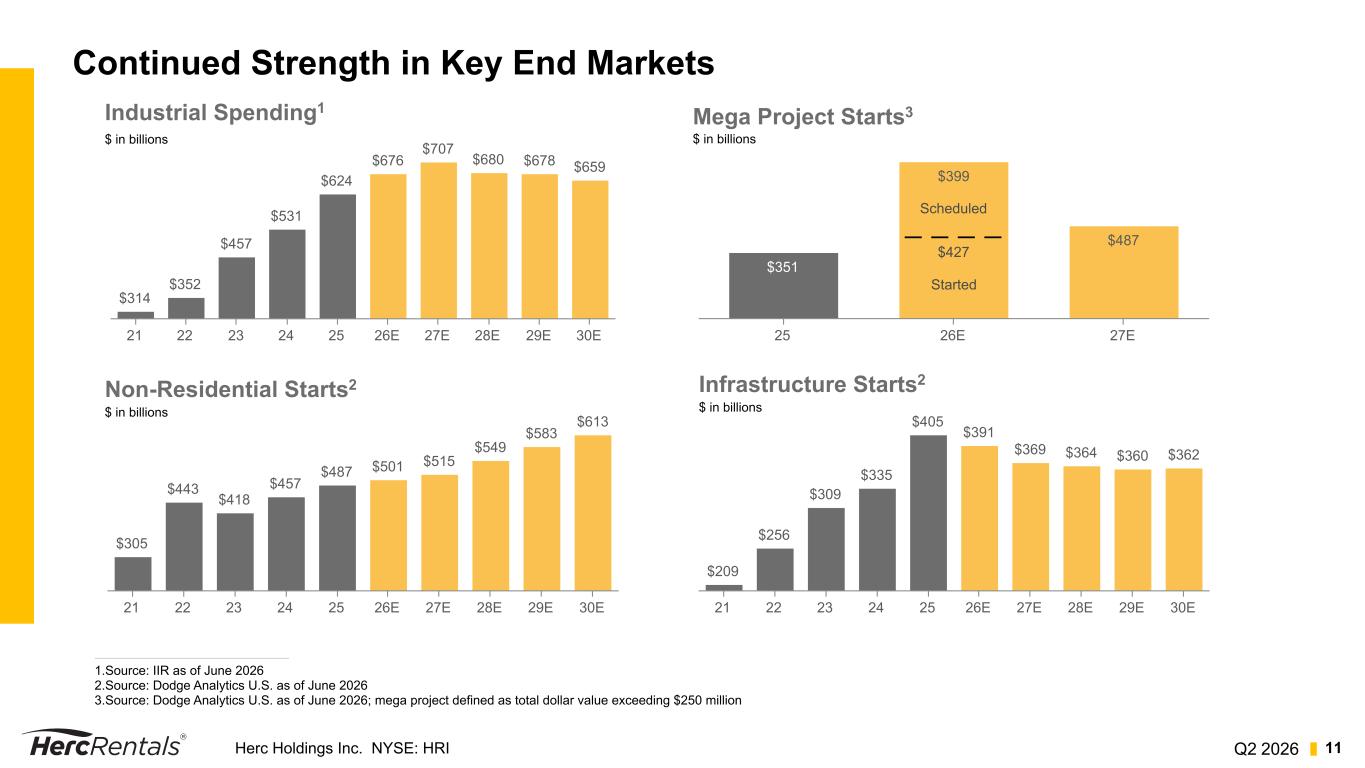
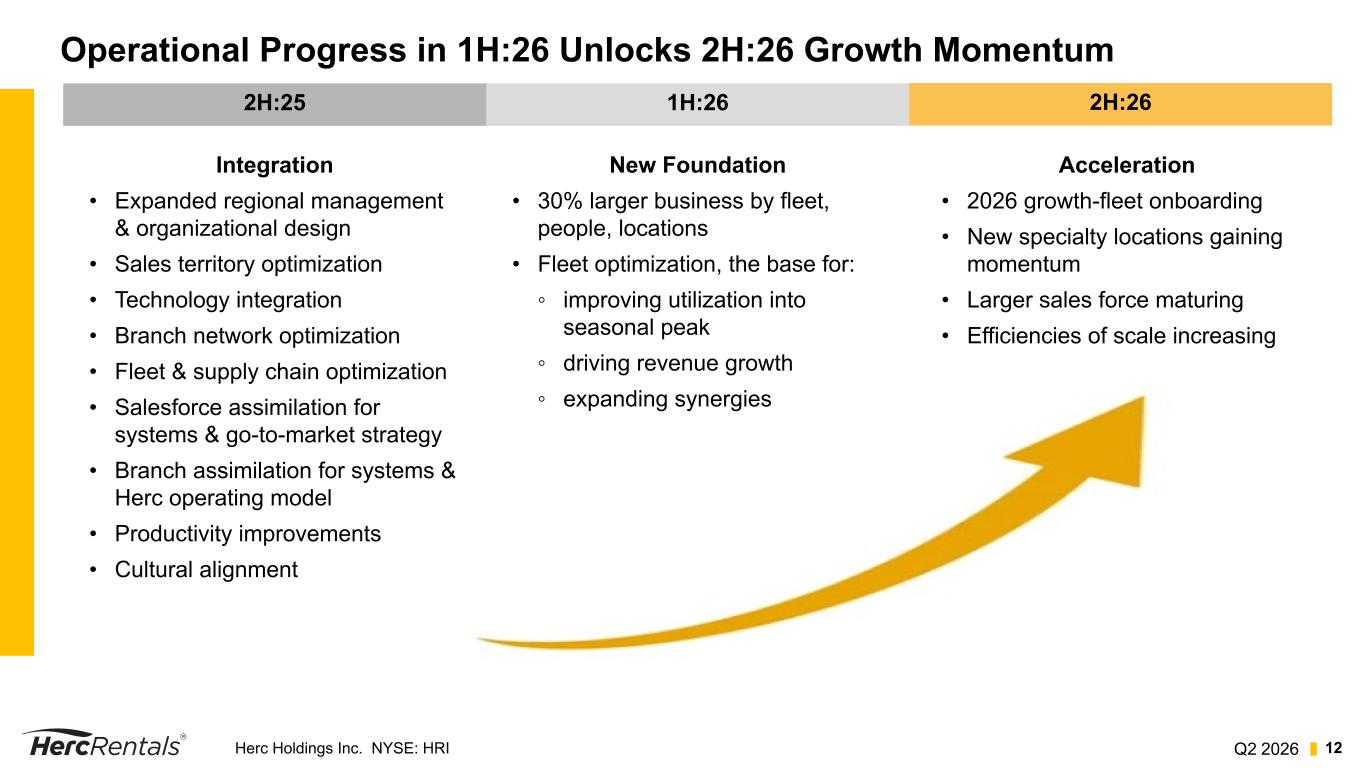
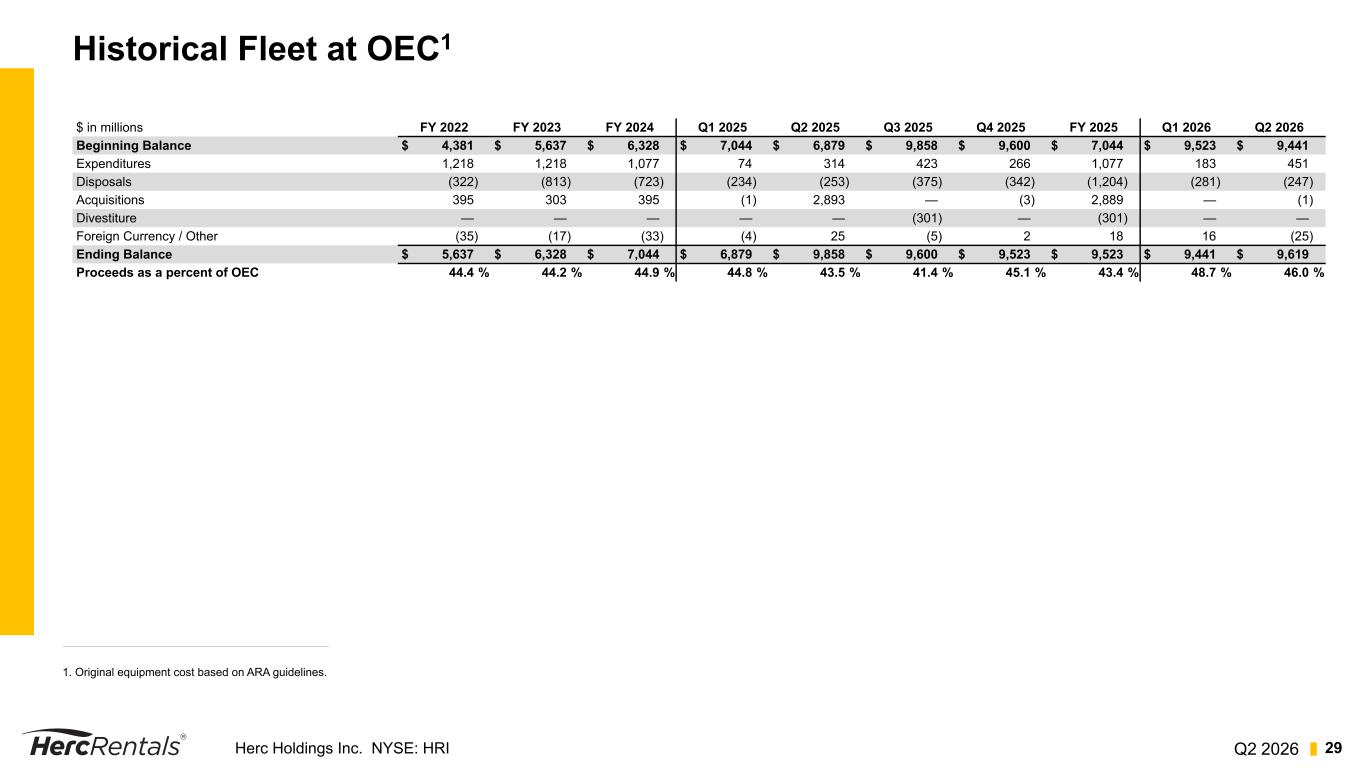
Thanks, and good morning, everyone. I 100% agree with Larry's comments on the strength of our culture. It was the dedication, discipline, and collaboration of our team that allowed us to integrate the H&E acquisitions so efficiently. Now, with that heavy lifting behind us, we have fully pivoted to execution. Our sales force is aligned and fully engaged, and our operating model is standardized across the network. Today, we are actively leveraging our expanded geographic footprint and beginning to capture the efficiencies of scale and the synergy opportunities that made this combination so compelling. Turning to slide eight, optimizing our fleet was a critical integration initiative, getting the right equipment into the right markets with the right mix. But optimization isn't a one-time event. It requires continuous active management to stay ahead of evolving demand trends. And this is where HIRC excels. We are experienced, disciplined fleet managers, and it showed in the quarter as we brought the combined company back to positive fleet efficiency where revenue growth outpaces fleet growth. By keeping our focus squarely on improving utilization, we generated 2% higher-performing equipment rental revenue on approximately 3% less average fleet at OEC compared to last year. That improved efficiency is exactly what positions us to grow. With the fleet now tightly aligned to demand and utilization moving higher, we have the operating discipline in place to invest in the accelerating opportunity we are seeing. As seasonal volume ramps up in the corridor, we onboarded roughly $450 million of our 2026 fleet buy. Through the first half of the year, we added $634 million of fleet at original equipment costs. A portion of that spend supports the revenue synergy target we set for this year, while another portion supports the planned megaproject growth embedded in our original fleet plan. Today, however, our pipeline and on-rent activity on large multi-year projects are tracking ahead of our assumptions. External data also continues to point to increased megaproject starts this year. So we are stepping up fleet investment where we have high conviction in the rising demand and where our larger scale is enabling us to expand our role with major contractors and gross share of wallet. Mark will walk you through the revised capital investment plan in just a minute. But even as we increase clean investment, we remain highly disciplined with life cycle management. In the quarter, we disposed of $247 million of fleet at OEC, generating healthy proceeds of approximately 46 percent. You'll see that our full-year disposals step up from our original plan. That's intentional. As demand acceleration is coming from mega projects and specialty, we are fine-tuning the fleet mix for today's environment. Recycling that capital at healthy recovery rates helps fund the higher demand fleet and keeps us capital efficient. On slide nine, despite the stronger rental activity we're seeing, the overall demand environment remains bifurcated. Local market activity is stable in general, though the dynamics vary. While some markets are feeling the brunt of the weakness in the interest rate-sensitive commercial sector, others are experiencing growth driven by infrastructure, education, health care, and MRO. Certain local markets are also benefiting from the secondary demand generated by nearby megaprojects. That said, national accounts are where we continue to see the strongest growth driven by increasing activity across energy data center and manufacturing projects the h&e acquisitions significantly increased our bandwidth to serve this national market legacy herc was already a strong mega project participant what's changed is our ability to take on more of these opportunities and expand our role with major contractors because we now have more fleet capacity more branch density and a larger operating platform as such we have increased our target share of the total u.s mega project opportunity from 15 to 20 percent in today's uneven environment diversification across geographies project types and customer accounts is what drives our resiliency and gives us a distinct competitive advantage And you can see the breadth of that diversification on slide 10. This is where our diversification becomes more tangible. We serve contractors, industrial accounts, infrastructure and government agencies, commercial facilities and event-driven customers, and each of those groups has different demand trends, project requirements, and service expectations. That's why sector expertise matters. Our sales teams understand the language of their customers, the nuances of their projects, and the equipment and service requirements that matter most in each vertical. So whether it's a data center, a healthcare project, a utility job, or a pharmaceutical manufacturing plant, we can bring the right solution to the table. And now with the larger platform, broader fleet availability, and leading edge technology tools, we can support those customers in more ways. That's what helps us deepen relationships and create stickier, higher value opportunities over time. And those opportunities aren't just broad, they're deep, and they keep growing. Turning to slide 11, the external data continues to back up what we're seeing in the field, with Dodge projecting over $800 billion of U.S. megaproject starts in 2026, all above the level we saw in 2025. five. We know investors are trying to translate these massive headline numbers into actual rental revenue. So let me frame how we think about it. First, that Dodge number reflects total construction value, not equipment rental spend. Historically, about 2% converts into rental. So that varies by project type. Second is our target share. As I said, over time, we are now targeting 20% share of that mega project rental opportunity. And third, these are multi-year jobs. So the revenue doesn't hit all at once it's spread over the duration of the project which is typically three to five years or more so the math is more nuanced than the headline suggests but the takeaway is simple the market opportunity is large it is durable and we now have the capacity to capture a meaningfully larger piece of it as these projects ramp and new projects enter the pipeline turning to slide 12 this is the framework we introduced at the beginning of the year to illustrate our 2026 operational progression. And the key message is that the playbook is working. The integration actions are behind us. The foundation is in place. And we are now moving into the acceleration phase with a 30% larger, more efficient business, a highly productive fleet, new specialty locations gaining momentum, and a larger sales force maturing across the network. As we execute this playbook, two factors have shifted since we set our original plan. The first is the strengthening megaproject demand we just discussed. The opportunity is larger than we expected earlier in the year, and we are increasing fleet investment to support that growth based on the robust project pipeline in front of us. We are adjusting our equipment rental revenue guidance accordingly. The second variable is fuel and logistics inflation, which is significantly higher beginning in April as a result of the conflict in the Middle East. Larry touched on this earlier, and Mark will take you through the specifics, but let me give you some operational insight into how we're thinking about logistics longer term and the opportunity it presents because fuel and logistics inflation isn't only a cost recovery issue. With a much larger network in place, we have an opportunity to improve the way we manage transportation economics across the platform. That work is underway through a comprehensive logistics transformation initiative that began in late 2025. It builds on the progress we've made over the last several years, but it's designed for the scale of the company we are today. The focus is on better routing, stronger process discipline, improved cost recovery, and more consistent execution across the network. This is a multi-year effort, and it is above and beyond our acquisition cost synergies. Over time, we expect it to help us build a more efficient, scalable delivery engine that improves service for customers and supports ongoing margin improvement. So as we move into the second half, the operating agenda is clear. With the right fleet against accelerating demand, continue improving utilization and fleet efficiency, and take the next step in scaling our cost structure for the long term.
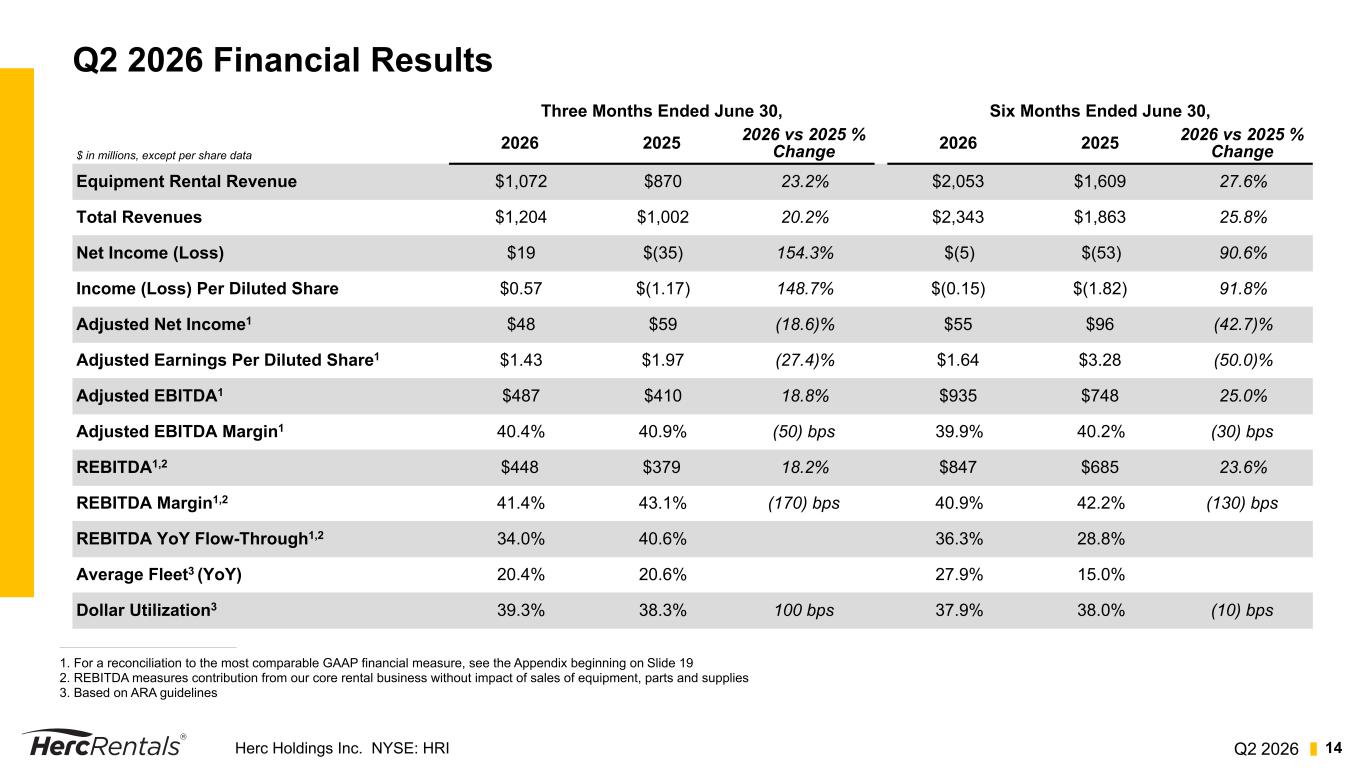
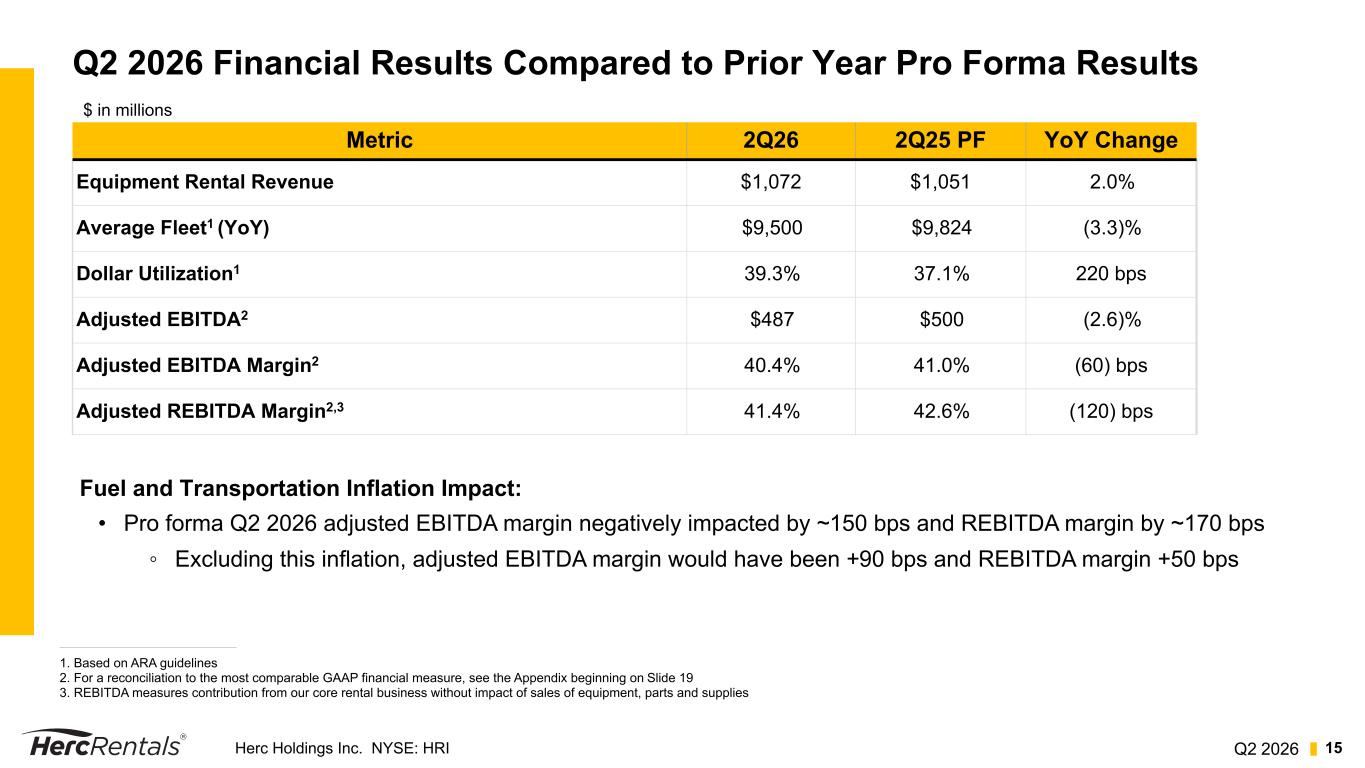
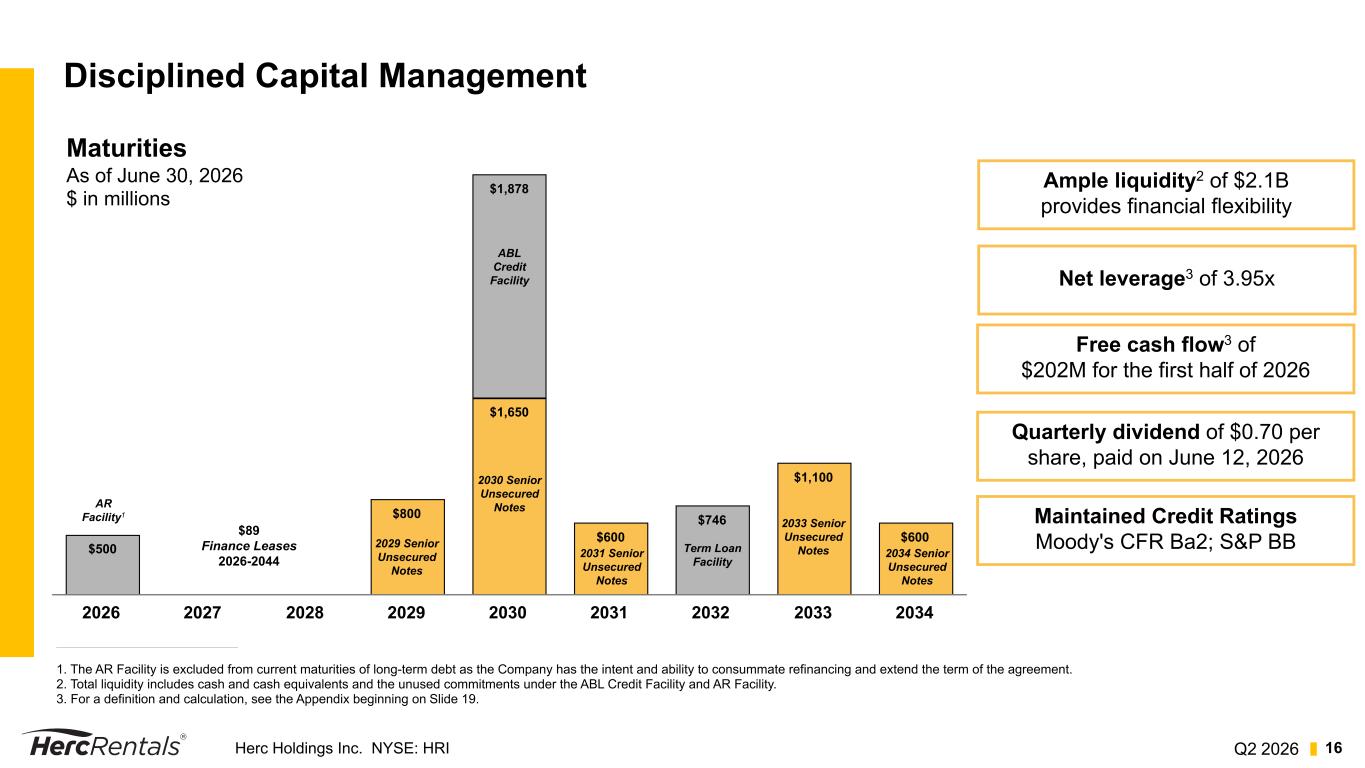
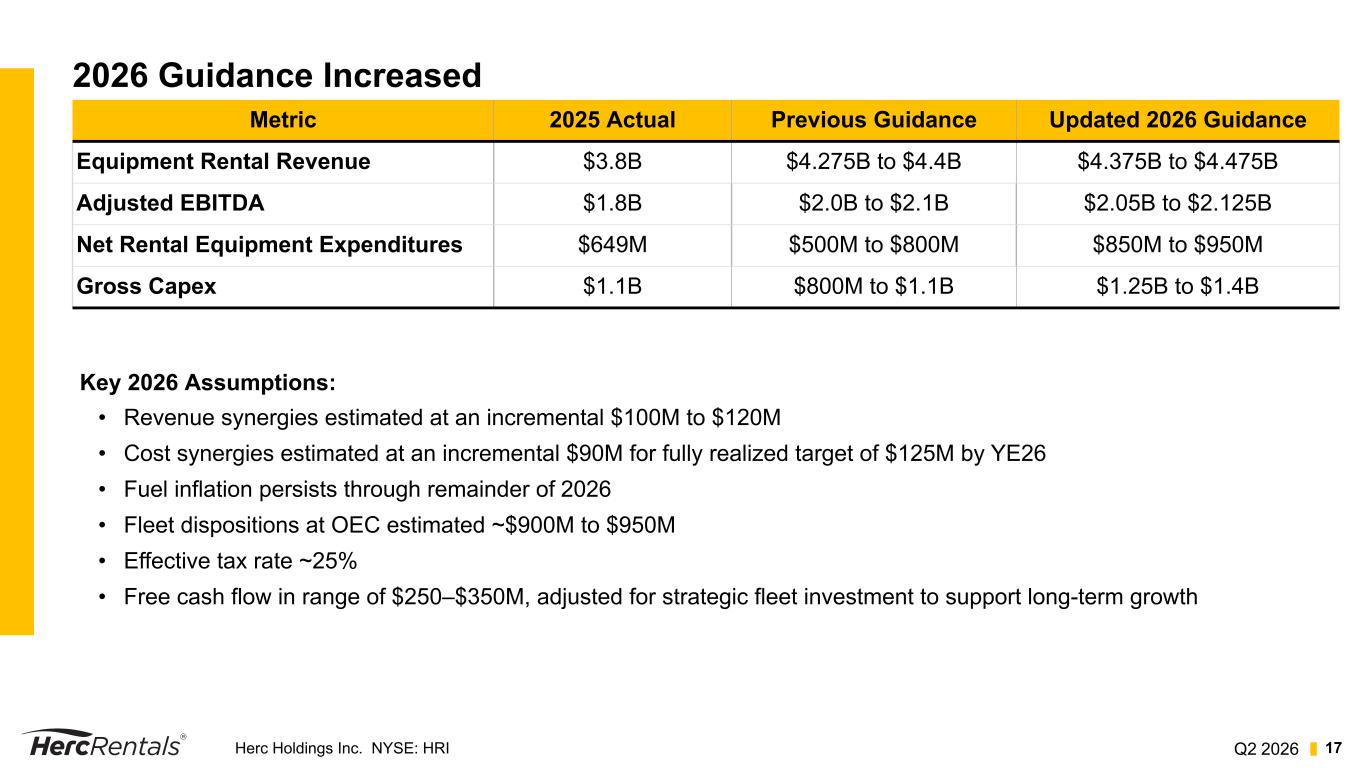
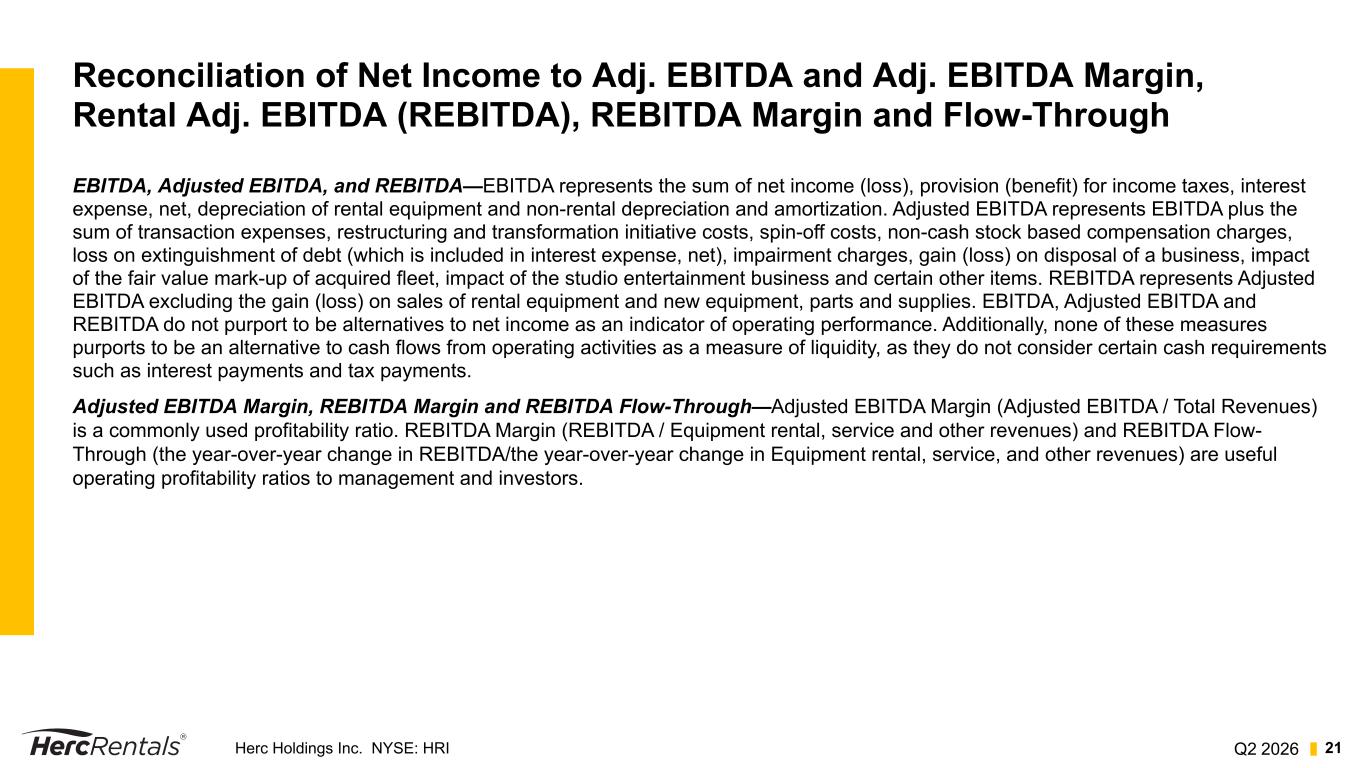
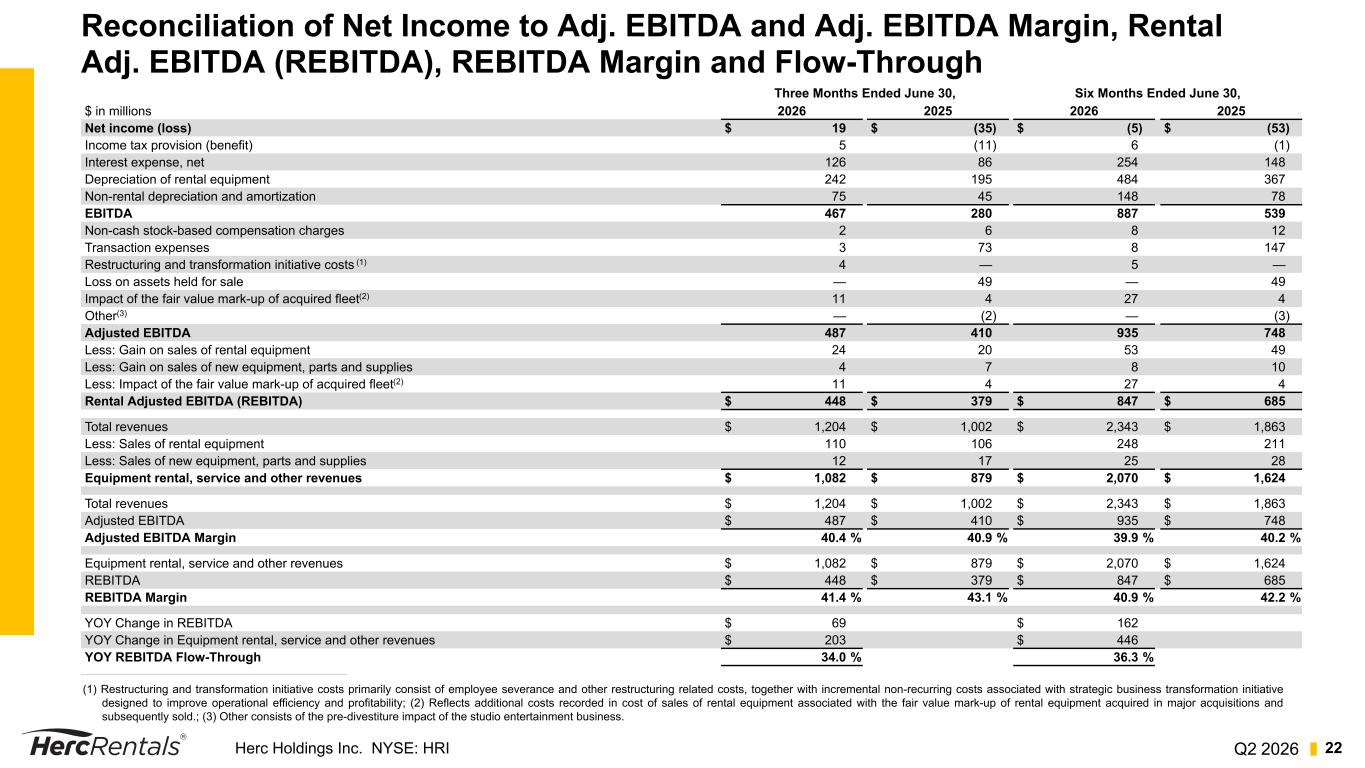
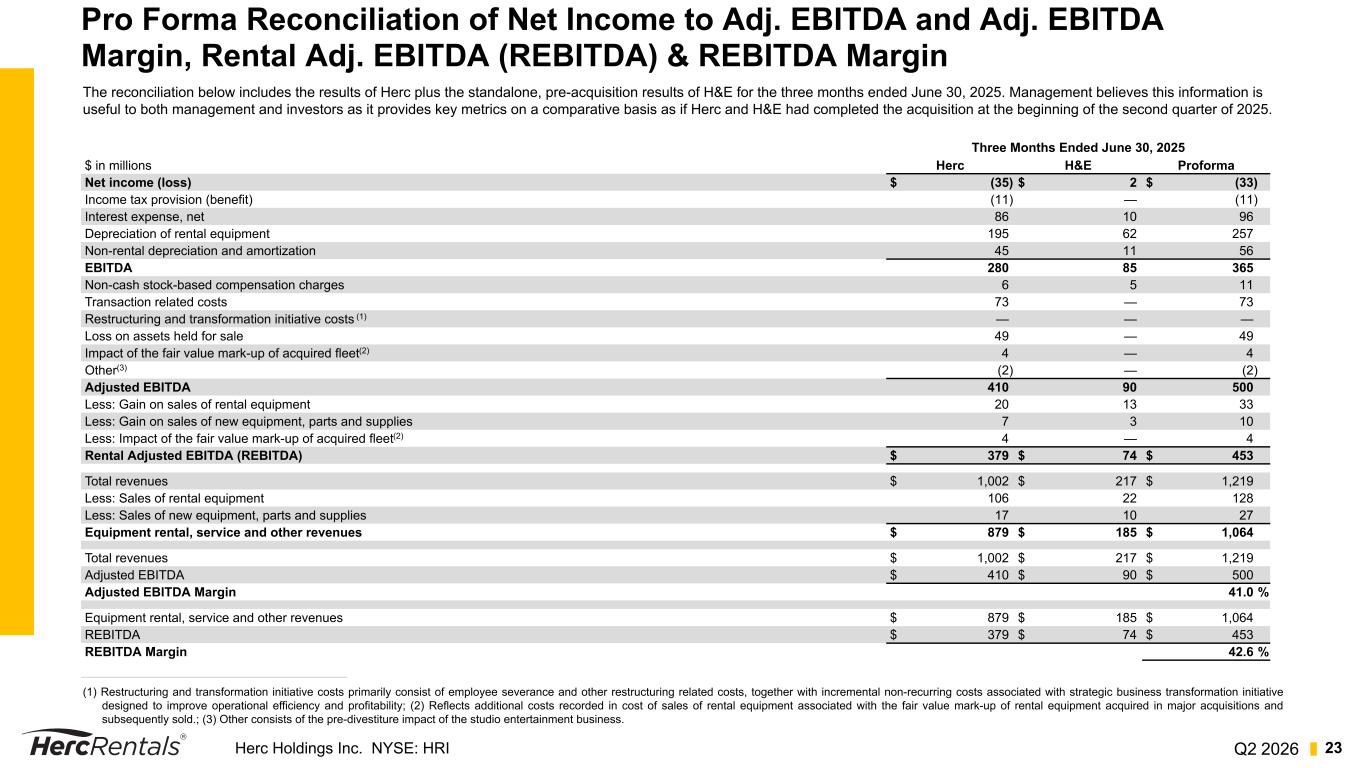
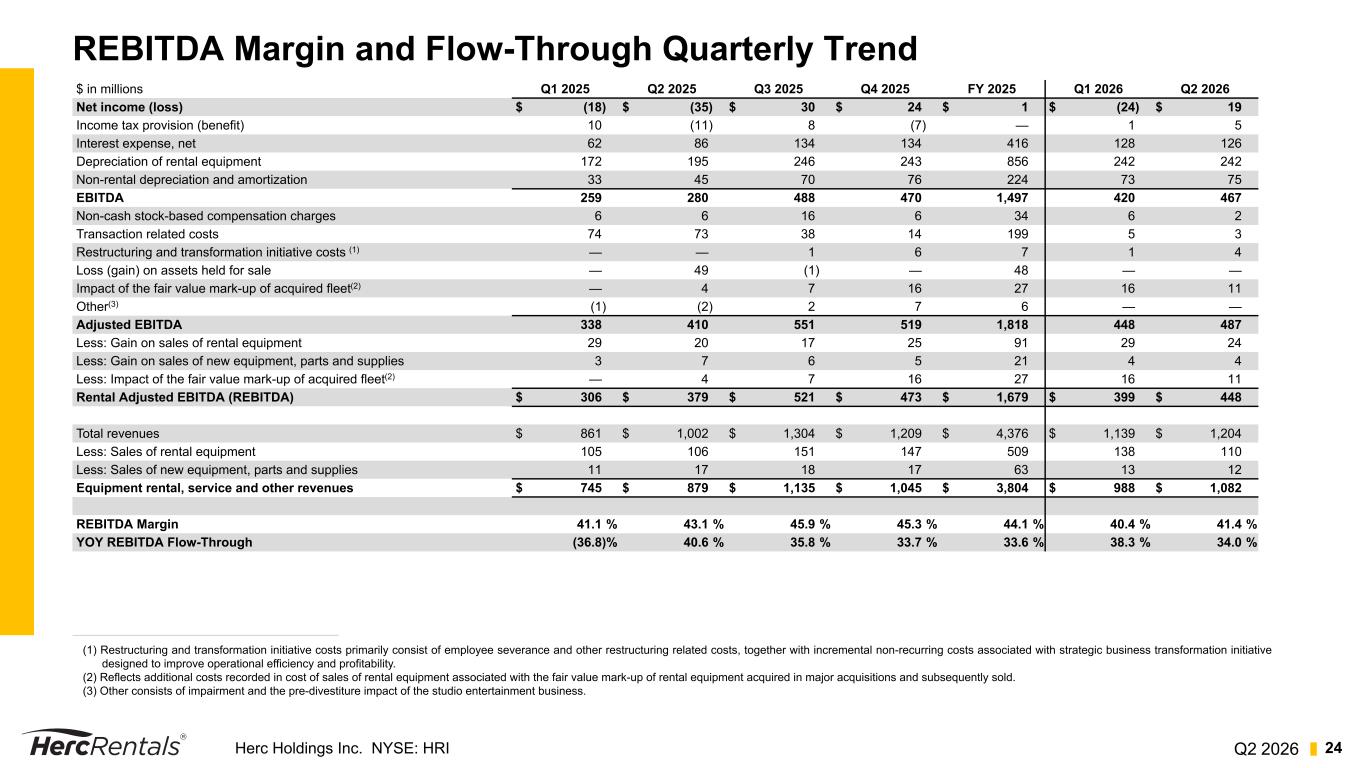
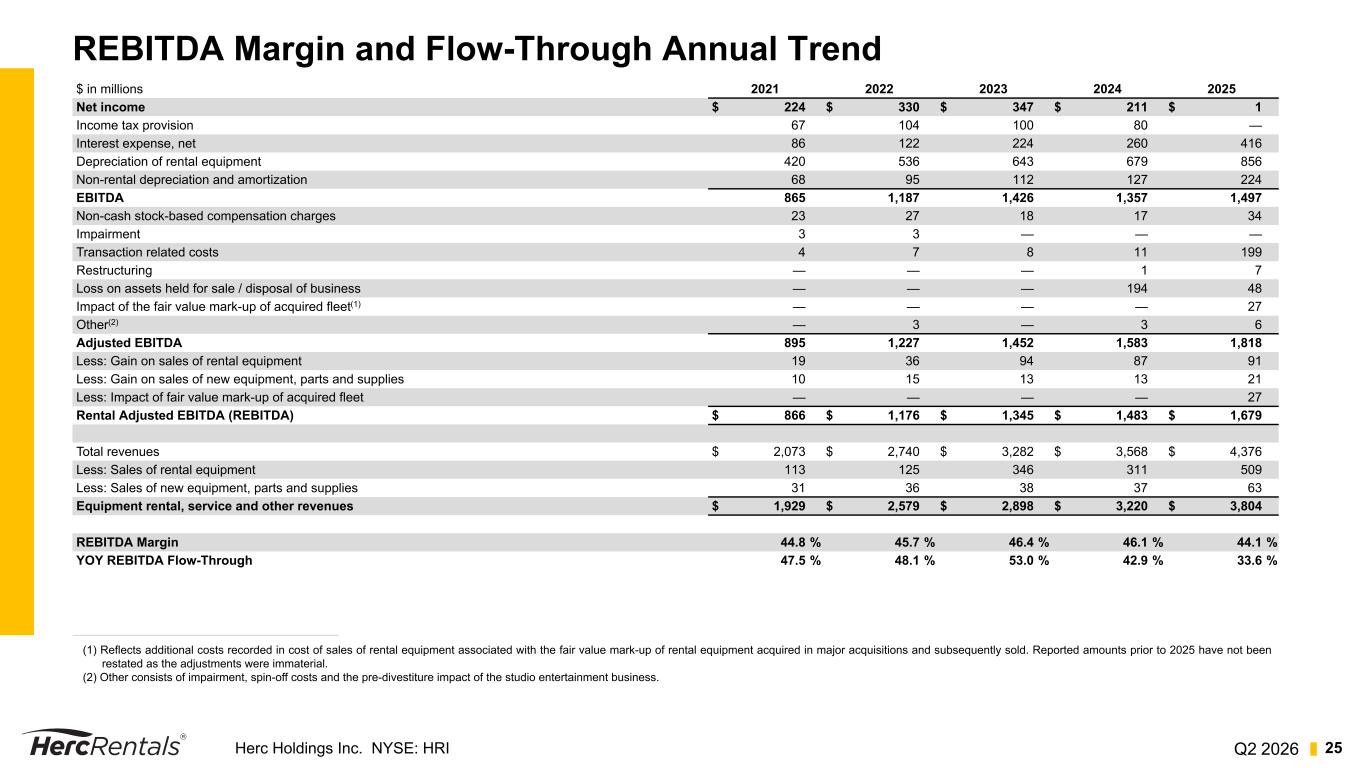
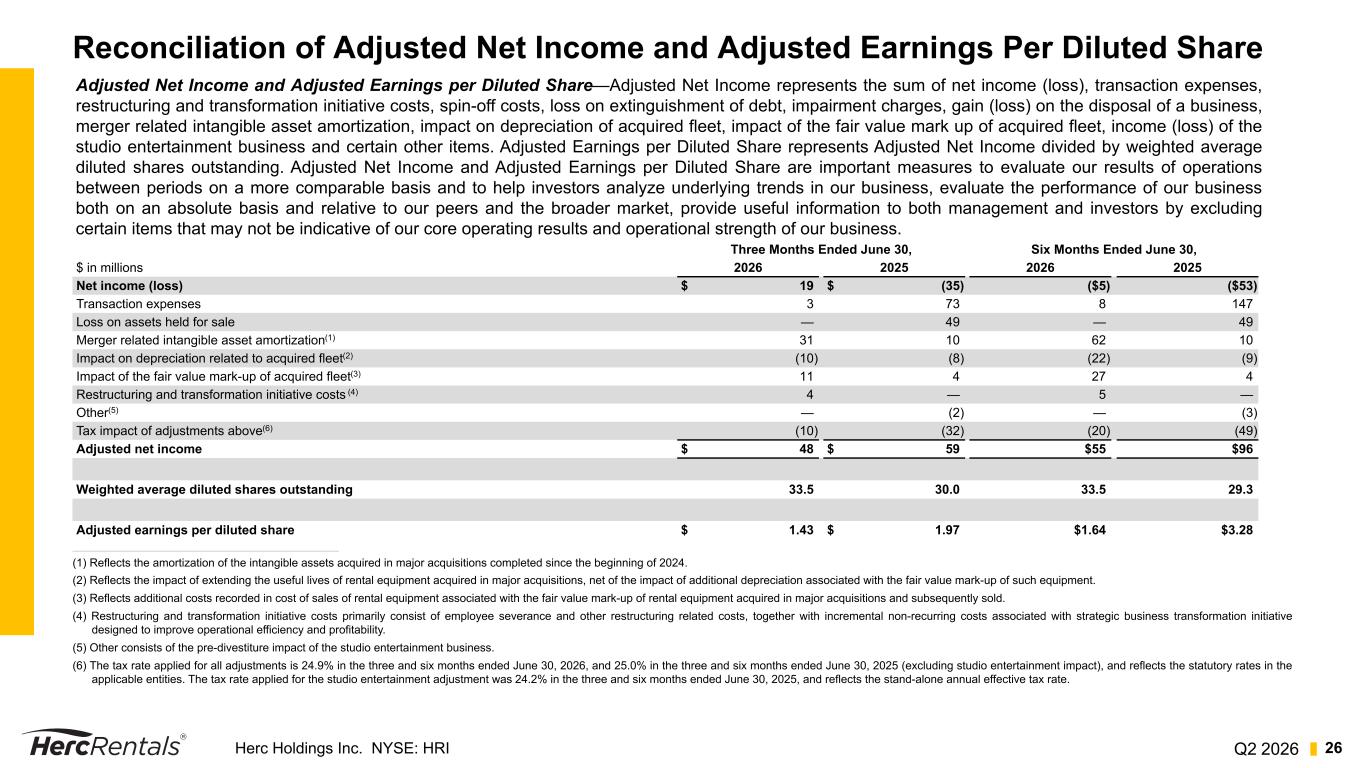
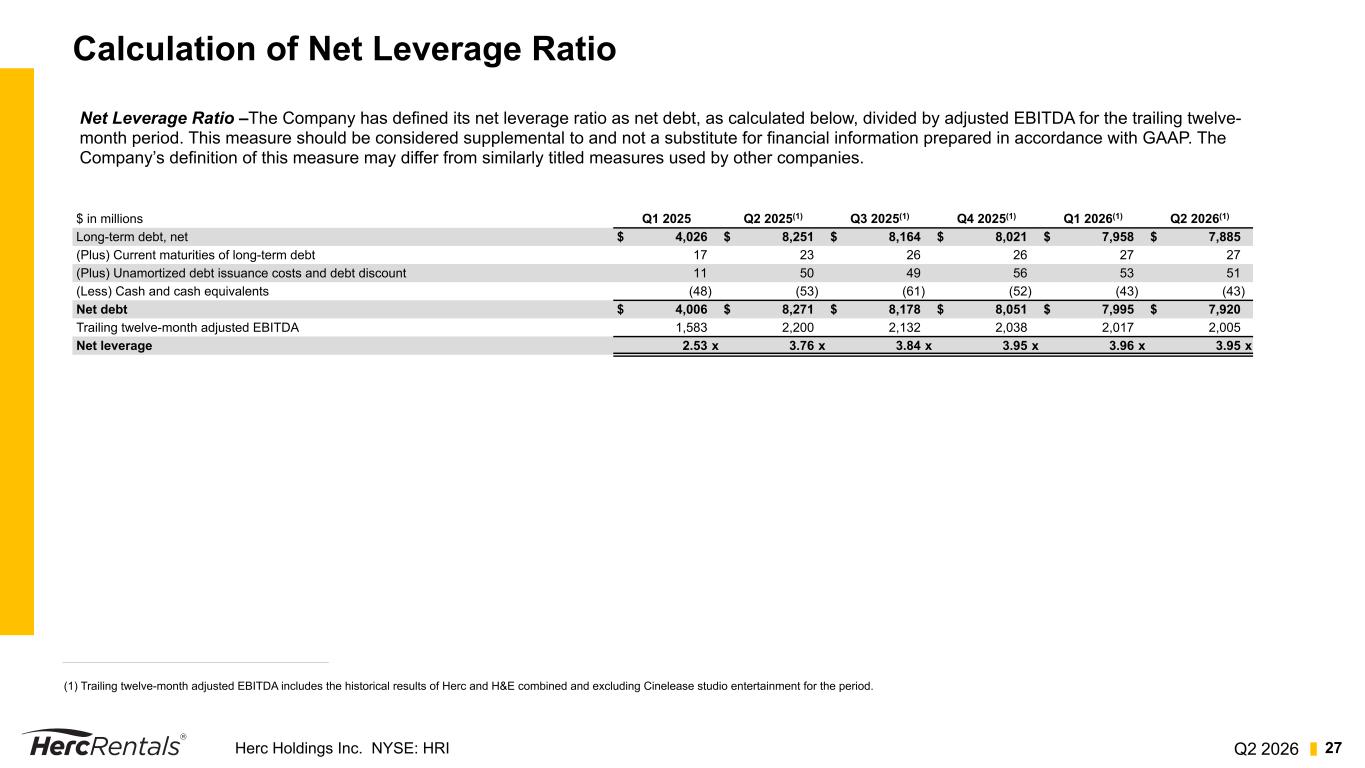
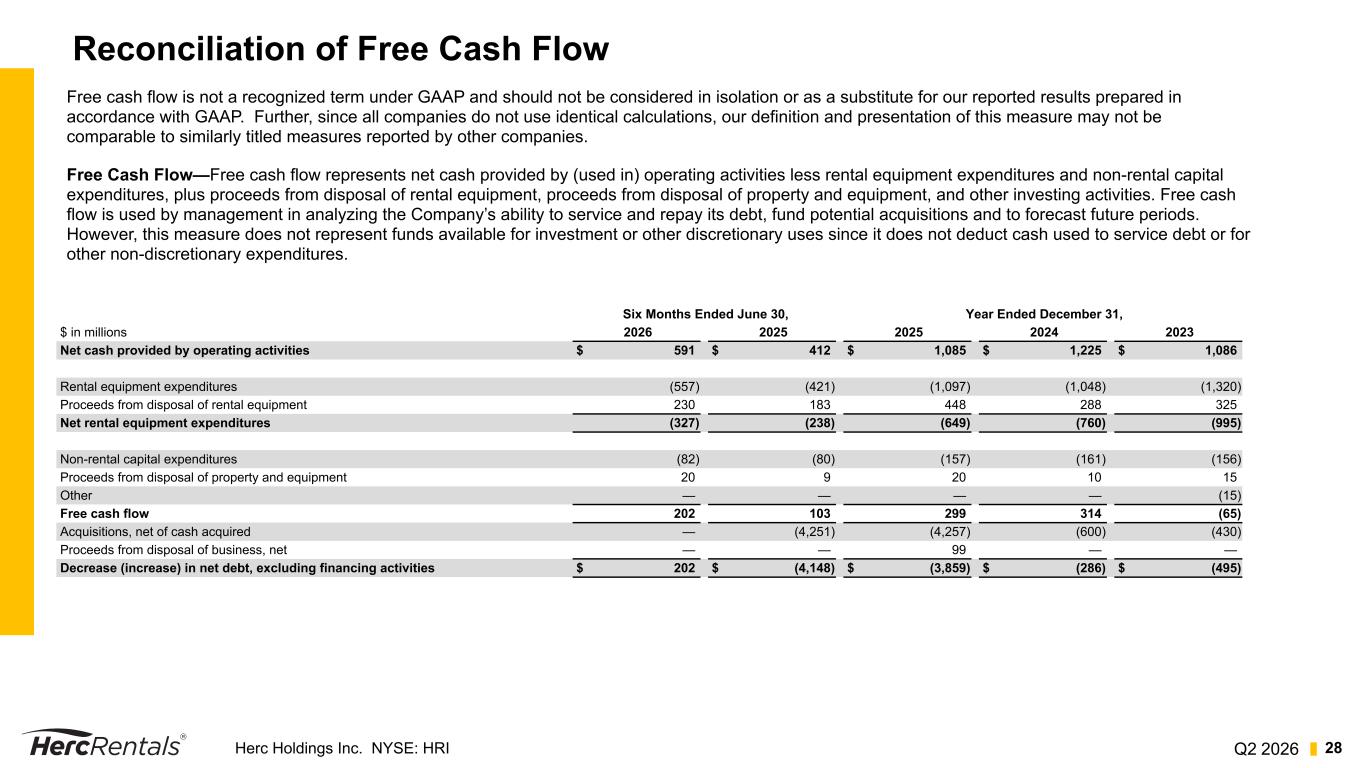
The team is aligned, the opportunity is strong, and we are focused on converting this larger platform into sustainable growth. mark will now walk you through the financial results and the updated outlook mark thanks aaron and good morning everyone i'm on slide 14 with a summary of our key financial metrics starting with our gap results equipment rental revenue was up approximately 23 year-over-year and total revenues grew 20 primarily driven by the acquisition of h e which was in our base for only one month in the prior year period adjusted EBITDA increased 19% and adjusted EBITDA margin was 40.4%. ReBITDA which excludes equipment and parts sales increased approximately 18% and ReBITDA margin was 41.4%. Margin pressure was driven by the impact of the H&E acquisition and fuel and freight inflation year over year. Adjusted net income was $48 million or $1.43 per diluted share, including add-back adjustments of $4 million of restructuring and transformation costs. That includes initial costs of the logistics transformation initiative Aaron just discussed. Because the prior year gap comparison includes only one month of H&E, slide 15 provides a more meaningful view of the combined company's underlying performance in the second quarter. On a pro forma basis, with Herc and H&E combined in both periods, equipment rental revenue increased despite the year-over-year reduction in average fleet at OEC, resulting in strong fleet efficiency in the second quarter. Pro forma dollar utilization increased more than 200 basis points over last year, another clear indication that the combined fleet and the rental revenue mix are becoming more productive. On profitability, Proforma adjusted EBITDA margin was down approximately 60 basis points, and Proforma re-BITDA margin was down about 120 basis points. As noted, the largest source of year-over-year cost pressure in the second quarter came from fuel and transportation inflation, which is up approximately 35% since the first quarter. This impacted adjusted EBITDA margin by about 150 basis points and adjusted REBITDA margin by 170 basis points. For context, not all fuel exposure can be recovered in real time. A portion of our fuel consumption comes from our own sales and service vehicles, as well as typical inter-region fleet positioning where there is no direct customer offset. On the delivery and refueling side, which is embedded in ancillary revenue, recovery depends on customer arrangements and contract terms. And the timing of that recovery can lag sudden price moves like we saw in April. So we're working on all of this through our own pricing actions, better pass-through discipline, and contract renewal negotiations. Those fuel and transportation pressures were partially offset by improved operating performance and cost synergies, such that when you exclude fuel inflation, adjusted EBITDA margin was up 90 basis points, and adjusted REBITDA margin was up 50 basis points year over year. Turning to slide 16, you can see that we generated $202 million of free cash flow for the first half. We ended the quarter with ample liquidity of $2.1 billion and net leverage of 3.95 times, and we paid our regular quarterly dividend to $0.70 per share. When it comes to capital allocation, as Aaron said, we're making a deliberate choice this year to step up fleet investment to meet increasing demand. And importantly, that incremental investment is weighted toward higher margin, higher return specialty equipment. As this fleet goes on rent, against strong demand, it drives EBITDA growth, and growing EBITDA is the most powerful lever for bringing down leverage. We like the flywheel setup we're beginning to see as we think about the trajectory into 2027. That brings me to guidance on slide 17, which we are increasing to reflect stronger demand, particularly in national accounts. You can see the full ranges here. At the midpoint of the updated guidance, we now expect full-year equipment rental revenue of $4.425 billion, suborted by roughly $900 million of NetFleet CapEx. On a pro forma basis, the revised midpoint estimate reflects equipment rental revenue growth of nearly 5% on flat average OEC year-over-year. Adjusted EBITDA is now projected to be approximately $2.09 billion at the midpoint of the range. A few key assumptions behind the updated outlook. Our incremental revenue synergy target for the year is unchanged at $100 to $120 million. We feel really good about the progress we're making there, and cost synergies also remain on track, with an incremental $90 million this year towards a fully realized $125 million target by year end. That said, oil prices have moved higher again since June, so our guide assumes fuel and freight will remain cost headwinds in the second half. Given the uncertainty around how long that macro volatility persists, we're modeling a quarterly expense impact broadly consistent with the second quarter. All in, we expect fuel and transportation inflation to create about a point of pressure year over year on adjusted EBITDA margin for full year 2026. Finally, as a result of the higher fleet investment, free cash flow is now expected to be between $250 to $350 million this year. The bottom line, the revenue inflection we expected is now underway. Demand is stronger than our original plan, and we are investing to capture that opportunity while continuing to manage fleet efficiency, costs, and capital with discipline. Now, let's open it up for questions. Operator?
Operator
At this time, I would like to remind everyone, in order to ask a question, press star, then the number one on your telephone keypad. We request to limit yourselves to one question and one follow-up. We will pause for just a moment to compile the Q&A roster. Your first question comes from the line of Jerry Rivett with Wells Fargo. Your line is open.
Good morning, Jerry. Good morning, Larry. Good morning, everybody. I just wanted to ask, really nice to see the dollar you accelerate over the course of the quarter. We're hearing about price increases up to a point per month in some regions. Just talk about the pricing environment that you're seeing. Is that consistent with the cadence that you've seen over the course of the quarter and into July, Mark?
Yeah, I mean, I think from our perspective, Jerry, right, the dollar utilization was, quite honestly, a lot of self-help. You know, we saw and anticipated the fleet to get healthier as we sort of worked our way and inflecting through Q2. You know, that happened probably a little bit ahead of where we thought it would. And that's probably the biggest driver in the Lyft from a dollar u perspective. I think on the pricing environment, right? I mean, I think at the end of the day, you know, we have a rational and constructive pricing environment. The supply and demand dynamics are extremely healthy. It's a huge focus for us, and we're going to continue to sort of, you know, push price like we always do.
Super. And then, you know, on the time utilization part of the equation, when we look at the strong results you folks were posting as a standalone company before H&E, dollar-eute in the mid-40s. How much progress can we make on closing that dollar-eute gap based on what you see in front of you compared to what Herc posted on a standalone basis college four years ago?
Yeah, I mean, it's a great question, Jerry. I mean, I think you have to think about that sort of in context of averages, right? And so, you know, Herc was probably running 42s and 43s. You know, I think, you know, as we sit here today, there's still a mixed component of that, that we have to continue to invest in to sort of bring that overall mix back up to where Herc was on a standalone basis, pre-acquisition. But I do think as you think about sort of the incrementals from a dollar you perspective I think you can anticipate probably seeing you know what you saw incrementally from q1 to q2 probably that sort of lift into q3 and q4 as well year-over-year dollar you list your next question comes from the line of Robert Zimer with millions research your line is open yeah you were just touching good morning guys uh i know you just touched on it with jerry and then and previously but what do you see as your biggest margin
opportunities kind of going forward i mean are there still inefficiencies there's still a lot of salesforce ramp as you try to get people to sell you know the broader range of what you guys do um just curious what gets you back there and i'll just ask my second now on mega projects does this put you in a position of wanting to bid for more first position in mega project uh maybe you could just talk about uh you know that opportunity widening out is that just more support or is that a change in how you'd approach go to market thank you yeah rob on the margin question i would say it's uh you know moving our our mixed profile back to where we were with specially we have a long you know longer term goal of kind of taking our specialties to like a 20 to 30 range of our
business. But, you know, with after the HE acquisition, we fell down until like, you know, the mid-teens. So moving that back up really helps our margin profile. There's a lot of self-help stuff we can do. Like we're talking about our logistics work we've embarked on, which will be a, you know, a multi-year program. You know, we're still, the sales teams are large, but they're still working. You'll learn how to work together from the acquisition. So as we, that kind of matures, you know, you get the tools being used properly, tools like, you know, pricing discipline. So those are things that are going to help our discipline. On the mega piece, you know, when we look back kind of what our position was two years ago to now, yeah, we are more equipped to be like a, you know, the primary or a strong secondary on more mega projects than, you know, I think we were two or three years ago. You know, our scale matters a lot. And quite honestly, I've mentioned just the view that the large contractors take when they look at us because we have more fleet, more scale, more capabilities, you know, better technology than we had a few years ago. So, those are all things that are kind of positioning us in the right spot to win more. Thank you. Thank you.
Your next question comes from the line of mig de gray with baird your line is open good morning mig good good morning everyone um just going back to the to the capex uh guidance increase um you know i i think i heard two things going on and i'm trying to parse out which is the bigger driver here on on the one side you're talking about better demand and mega projects being at the root of that um you're also talking about leaning into specialty more. So I'm trying to understand if this capex increase is a function of you sort of trying to truly ramp up the specialty business, maybe taking advantage of that H&E footprint, or if this is more truly a demand signal and presumably this tells us something about 2027 really given the timing of your capex increase.
So help us kind of parse these things that yeah i would say um mig that the increased fleet is demand driven um that demand is coming from both mega projects and specialty and oftentimes those are going hand in hand um and so you know when you think about this or when we're thinking about this as we move into the back half of the year, sort of that midpoint of the new guide sort of grows fleet at about 300 basis points, 2H, and sort of levels you year over year from an average fleet perspective. And so when we step back and look at that, I would tell you that, you know, this increased CapEx is absolutely not speculative. This is demand-driven and not sort of a, you know, phase two, if you will, of the branch optimization where we're just trying to put additional fleet into those new specialty locations. That may be part of it, but the demand is the driver here.
Okay. That's helpful. My follow-up on the H&E integration, which you said that you're pretty much done with that. My impression of their business prior to you acquiring it is that pricing was a little bit different relative to what we would consider best in class maybe in the industry, maybe some of the things that you were doing. And so I'm curious where you are in terms of reassessing pricing for that part of the business, maybe some of the contracts that are a little more longer term in nature that H&E had.
Yeah, I mean, I think you have to bifurcate that answer. Excuse me, Meg. You have to bifurcate that answer between sort of the local market spot and the contract. I think that, you know, maybe to answer your question directly, I think we're probably right where we thought we would be. Two, I think that the contract component of this will probably take sort of the three-year run to sort of raise the ultimate contract pricing to where we anticipated it to be back pre-acquisition. And I think the spot market component will run as the local market runs. I mean, they're inside of our technology and pricing tools now. So we're beginning to see those benefits today. But I think that the real pricing lift comes from sort of the local market being reignited.
Operator
Your next question comes from the line of Kyle Minches with Citigroup. Your line is open.
Morning, Kyle. Good morning. Thanks for taking the question. I was hoping if you could just unpack a little bit what's going on in the fuel and transportation costs, inflation, and not sure if you're able to maybe break it down a little bit further, but maybe between what's stickier versus more transitory in your mind, you know, kind of what is tied to your sales and service vehicles versus just maybe timing of getting better recoveries, et cetera.
Yeah. Yeah. No, I think simplistically, if you think about 170 basis points of impact, I would call it all transitory as we sit here today. You know, that's just a measure off of Q1. And as I mentioned in my prepared, you know, we saw somewhere in the order of magnitude of sort of 35 percent increases as we worked our way through Q2. Simplistically, probably half of that impact is not able to be passed on. So you just think about sort of the interbranch moves, which we've done from the beginning of time and sort of the servicing of our own sales and service vehicles, that probably equates to about half of the impact. The other half, to your point and question, is, you know, items that have the ability to be passed on to customers. We continue to sort of work there to make sure that we're as tight as we can possibly be as we move into Q3. You know, the wild card is, does 35% become 50? You know, like I said, we sort of built in about the same level of impact in three and four, and then we'll see how it plays out.
And then just curious, any update on the 50 or so specialty locations that you had opened in fourth quarter and first quarter and just how those are progressing and in the ramp um and and the cross-selling as well uh yeah so those are performing well um we uh it was really just a benefit of an exercise with the real estate that we picked up from the acquisition to to scale our specialty business that rapidly that would have taken us several years to do without an acquisition with that much real estate So it's working very well. It'll take two years, you know, for that kind of that EBITDA margin to mature to a level that is like our mature locations, but they're contributing, you know, EBITDA now, and they're all managed by, you know, internal managers that came up through our organization. So, you know, there's a lot of career movement with all those branch optimization openings, But our regional management has done a great job putting people in positions to win, and our team's working really well, Sharon Fleet.
Operator
Your next question comes from the line of Ken Newman with KeyBank Capital Markets. Your line is open.
Good morning, Ken. Hey, good morning, guys. Thanks for taking the question. Morning. First, Mark, just on the Synergy Capture target, sorry if I missed this in your prepared remarks, But of the incremental $90 million in cost synergies and the incremental $100 to $200 million of revenue synergies, how much of that is left to kind of be realized in the back half of this year or just to help us kind of frame just the momentum that we have looking into the third and fourth quarter?
Yeah, I mean, I think you got to think about, you know, from a revenue perspective, it was always more heavily weighted to the back half, probably 60, 40 back half weighted. From a cost perspective, it started that incremental 90, it started a little slower. That ramp now is probably extremely ratable from, you know, July through December, you know, probably think, you know, probably 55% of that, if I'm sort of rounding here, probably is incremental back half, give or take.
Okay. Yeah, got it. That's very helpful. And then maybe just going back to, for my follow-up, just going back to the fleet and the CapEx needs, it's good to hear that activity is heating up. It's supporting the visibility that you have into the back cap. I guess when you think about your suppliers and the price of equipment inflation, one, do you think the OEMs have capacity to support you know even further fleet expansion if if the market supports it and then two um you know is there how do you think about the incremental return on on that next piece of equipment being bought because obviously this would be you know purchased outside of your your advanced purchasing uh agreements that you do late in the year of last year yeah look um you know we we are very confident in the oem's ability to supply us with gear um in the back half of the
year to the incremental level the vast majority of it you know probably 70 percent of it is specialty equipment uh that we'll be bringing in and uh we do think that that'll be you know able to contribute to the levels that we expect um relative to financial performance and dollar you and time utilization because most of that will probably go right to a job and it will also set up a great flywheel going into 27.
Operator
Your next question comes from the line is Tammy Zucario with JP Morgan. Your line is open.
Hi, good morning. Thank you so much. My question is more of a medium-term question. Given your free cash flow expectation has come in a bit lower now. How do you think about your potential to de-leverage the balance sheet over the next 12, 24 months if you have to continue investing in CapEx in response to improving demand?
Yeah, no, it's a fantastic question, Tammy. You know, I think, you know, just looking at 2026, firstly, there's very little impact to the 2026 leverage expectation we have there. I do think that you hit on it, though, and really hearkening back to what Larry just said, there's a flywheel effect of this into 2027. We're kind of staring at maybe, you know, and a half to 3% fleet growth into 2027, generating EBITDA, which as you are well aware, you know, that EBITDA generation is the most efficient way to get that leverage down. And so I don't necessarily see, you know, yeah, maybe very, very slight sort of short-term impact from a leverage perspective. But as you think about that in context of getting to that three times at the end of 2027, I don't see this as problematic in the slightest. I think we're going after the demand. Like I said, this is not speculative.
So it should be EBITDA generating, which is what we need to sort of lever down to that three times range. understood that's very helpful uh my second question is on fuel inflation i appreciate all the comments you made earlier i'm i'm hoping to fish for some numbers if if that's okay the 150 basis points uh fuel had been in the second quarter you saw do you currently have any expectation of what that headwind might look like in 3q and 4q in in terms of basis points Yeah, I guess what I would say is we're sort of anticipating the same level of impact in Q3 and Q4 that we saw in Q2.
Obviously, Q3 and Q4 are higher equipment rental revenue quarters, so the percentage will go down slightly. what I would say is that we are anticipating about a point of drag for the entirety of the year.
Operator
Your next question comes from the line of Neil Tyler with Rothschild & Co. Redburn. Your line is open.
Hey, Neil. Yeah, good morning. Just going back to the earlier question on the changed goal for megaproject participation, How does that impact your longer term strategy in terms of customer mix? And therefore, I suppose, you know, are there any, you know, within that, any verticals that you think you might need to add to, you know, to accommodate that change go to market strategy? That's the first one. And then the second question, I'll ask that now on the on the longer term logistics efficiency program. can you can you help us with i know i appreciate that's going to take some years to sort of filter through and to smooth things out but can you help us with the sort of um how you're thinking about the upfront investment cost um and at what point that sort of balances out with those with those efficiencies and you know whereabouts uh we will be when that happens okay neil um first part was the uh the balance of our our revenues um you know we uh we believe to have a 60 local 40 national mix is the right mix long term in this environment with the interest rate pressure on the local
markets it's difficult to achieve so obviously there's opportunities and that's how we're moving our business you know in scaling and service and those mega opportunities now over time the local is attractive to us because, you know, we're hopeful that cycle will change at some point. That's how we built our business. We have an urban market strategy. And actually the pricing points, the pricing that you get in the local market is a better price point than your local. But in the meantime, our fleet is fungible. So we can move it from, you know, the local markets to serve the mega projects. But long-term, 60-40 is still where we want to be. and we think that's the optimal way to manage the business. Now, we continue to focus on the local markets, right? So we know that the cycle will turn. It always turns, and we want to be ready for it. So we continue to work on building our capabilities on the local market and not kind of conflating what we're doing in the mega with our core local business, okay? That's always kind of the core part of our business, so we'll continue to be focused on that. The logistics, we're very excited about the logistics. It's actually something we started to focus on about three and a half, four years ago internally. So we built a logistics team to focus on improving our recovery of costs for the Herc Rentals business before the big acquisition. When we moved to the big acquisition, we saw that we have all this extra scale. And although we got some early synergies with logistics by having more trucks on the road in in the urban markets we saw that we could do much much better logistics is a complex item our core business is rental and solution services right it's not logistics but logistics is a big cost burden on the business so we're moving to become experts at the logistics side of our business too as far as the car cost piece um we do have a core team we expanded our team and we enlisted some help from a large consulting company that has expertise in logistics because there's things that we knew that we couldn't do alone. So that's beginning to happen. That engagement started earlier in the year. We'll call it January. And now we're rolling out into pilots. So as we get traction, as we have more information to share, we'll provide that.
Operator
But we know that we'll, you know, we focus, you win. and you know it's a multi-year project and we'll get to a point where yeah we're experts at our logistics businesses what rel is our rental and solutions business great thank you your next question comes from the line of steven ramsey with sompson research group your line is open morning steven good morning everyone uh wanted to get get deeper on the national accounts topic here you can now reach the the 20 percent share uh at least on the on the mega projects that is is that something you expect to achieve in in second half 2026 or is this something that you
reach in 2027 um if you look back in time over the last few years we said our our guide on our share of mega is 10 to 15. Um, we said that, you know, the big acquisition really positioned us better. We started to touch that 15% level. And, uh, with our pipeline of activity, um, our commitment to, um, new business contracts we have, you know, what we're doing with our CapEx this year, we just see that our, we're going to shift from a 15 to 20. That doesn't mean we're going to get to 20 in 2026 or 27. But, you know, over the next few years, we see our position strengthening to a 15 to 20 range.
Operator
Okay. That's helpful. And then thinking about raising CapEx and better market demand, do you feel like you were missing opportunities in the marketplace and now with the larger fleet, you can capture that or is it simply it's out there and we can go get it now?
No, it's really just about PERC's positioning in the opportunities that are in the mega project arena and our capabilities. So, you know, we're a much different looking company than we were 15 months ago. So that's really our view on where we're going with that.
Operator
Your next question comes from the line of Seth Weber with BNP Paribas. Your line is open.
Hey, Seth. Hey, guys. Hey, guys. Nice to talk to you. You know, he's historically had a pretty strong footprint in some petrochemical-type projects. I'm wondering if you were seeing any pickup in that part of the world specifically. Thanks.
Yeah, they had a good footprint in the Gulf and in the West Texas, the Permian, as did Herc Reynolds. Herc had upstream, H&E had upstream, Herc had downstream, and H&E didn't have downstream. But our position is still, you know, in the mid single digits, high single digits range. When oil shoots up the way it does, usually you see like the downstream business slow down turnaround activity because they want to produce, you know, more fuel. um and so it's kind of ebb and flow so no general change to our oil and gas business still in the mid to high you know single digital level okay thanks and then um just can you help us on on this cap on the capx cadence for the second half i mean it seems like yeah you know third quarter could be unusually enlarged here is that the right way to think about it then fourth quarter kind of goes back more normal is just very heavily third quarter
weighted yeah i i think seth the way i would tell you to think about that is you know if you think about the new midpoint um billion 325 and you think about 70 percent 70 75 percent of that being acquired in Q2 and Q3 I think that's the right way to think about it I think that the the 1Q and 4Q will come back and look normal but I think you probably have a little bit heavier and that's probably consistent as well but Q2 Q3 heavier 70 75 percent of the totality and then the the remainder would fall into 4Q.
Operator
I will now turn the call back over to Leslie Henziker for closing remarks.
Thank you for joining us on the call today. We certainly look forward to updating you on our progress in the quarters to come. Of course, if you have any further questions, please don't hesitate to reach out to us. Have a great day.
Operator
Ladies and gentlemen, that concludes today's call. Thank you for joining. You may now disconnect.