Operator
Welcome to IDACOR First Quarter 2025 Earnings Conference Call. Today's call is being recorded and our webcast is live. A replay will be available later today and for the next 12 months on the IDACOR website. If you need assistance at any time during the presentation, please press star zero on your phone. I will now turn the call over to Amy Shaw, Vice President of Finance, Compliance, and Risk. Thank you.
Operator
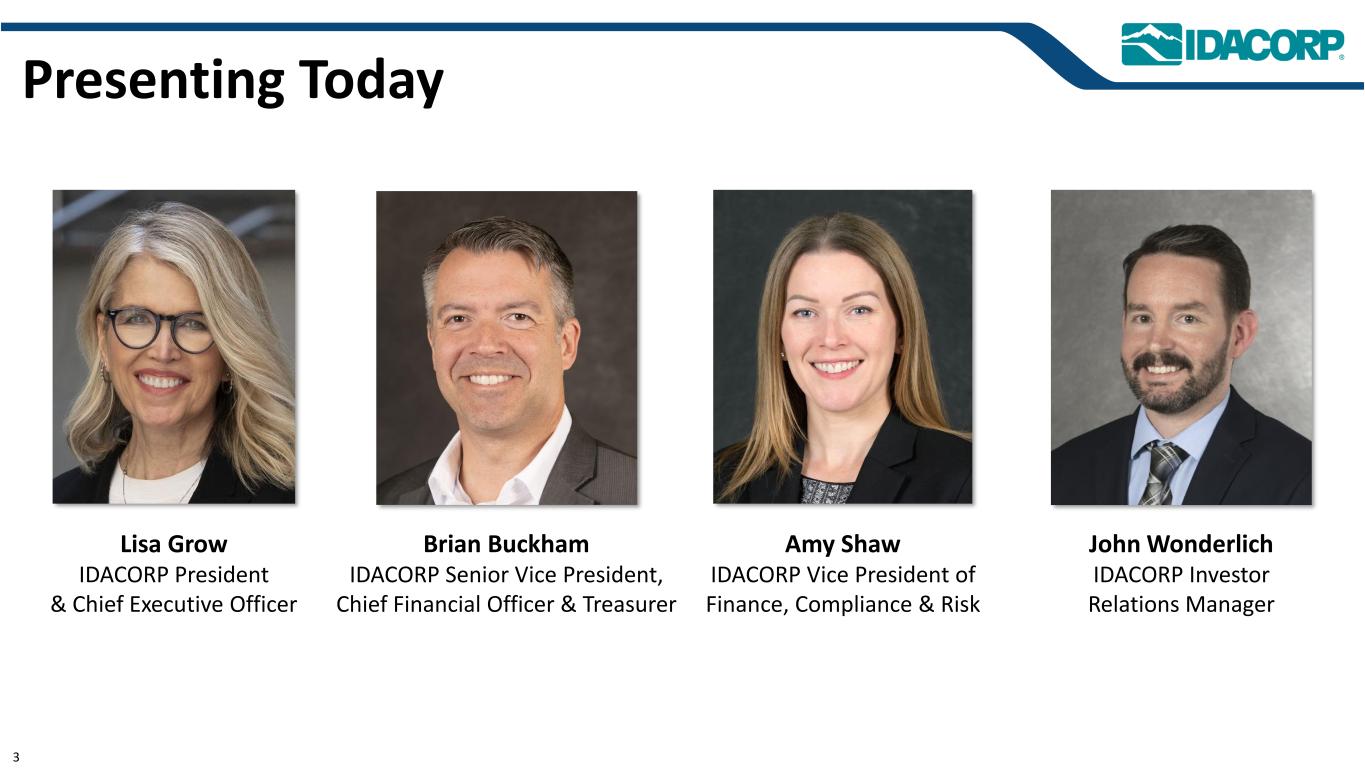
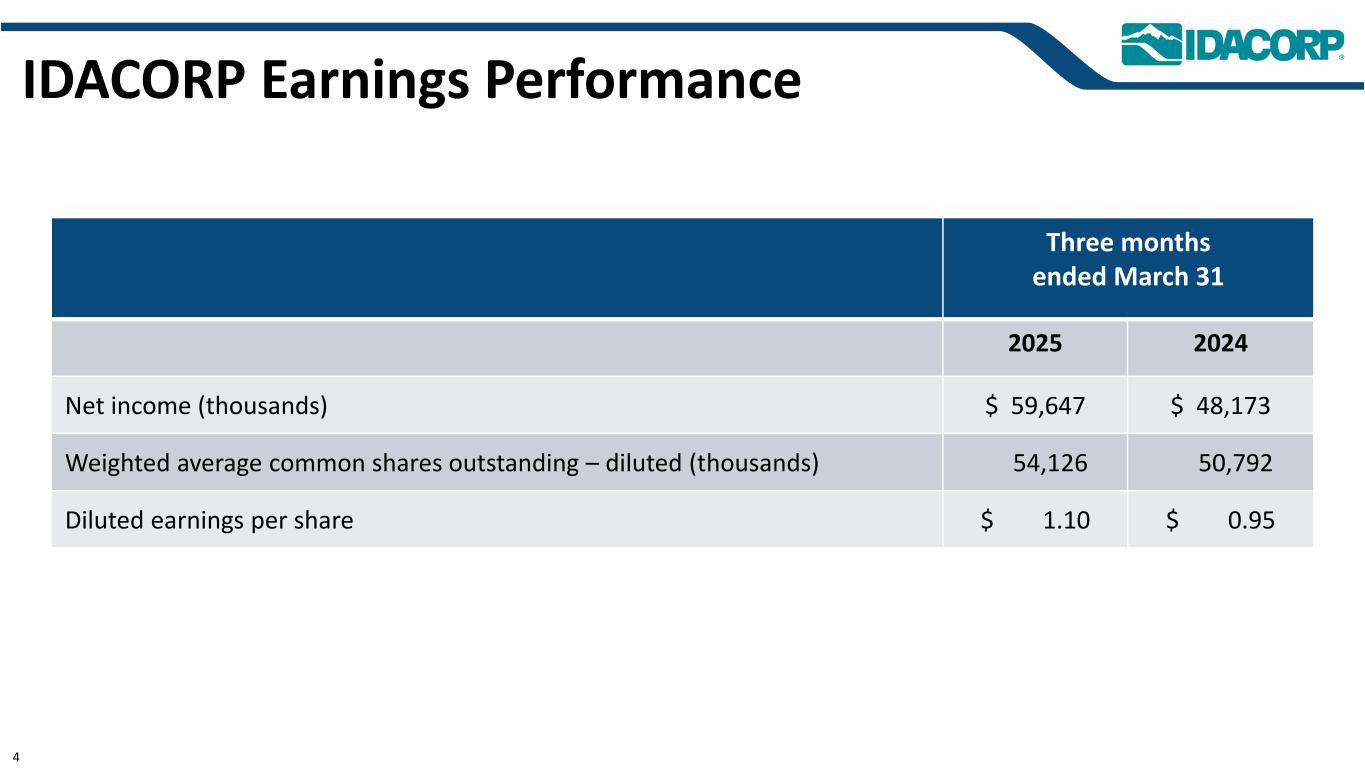
Good afternoon, everyone. We appreciate you joining our call. The slides we'll reference during today's call are available on IDACorp's website. As noted on slide two, our discussion today includes forward-looking statements, including earnings guidance, spending forecasts, financing plans, regulatory actions and plans, and estimates and assumptions that reflect our current views on what the future holds, all of which are subject to risks and uncertainties. These risks and uncertainties may cause actual results to differ materially from statements made today, and we caution against placing undue reliance on any forward-looking statements. Our cautionary note on forward-looking statements and various risk factors are included in more detail for your review in our filings with the Securities and Exchange Commission. As shown on slide three, we have Lisa Goh, President and CEO, Brian Buckham, SEP, CFO and Treasurer, and John Wunderlich, Investor Relations Manager, presenting today. We also have other members of our management team available for a Q&A session following our prepared remarks. Slide four shows a summary of our first quarter results. IDACORP's diluted earnings per share were $1.10 compared with $0.95 for last year's first quarter. Our key operating metrics and guidance are unchanged, except for our hydropower generation forecast, which has improved. We're reaffirming our full-year IDACORP diluted earnings per share guidance range of $5.65 to $5.85. This includes our expectation that Idaho Power will use between $60 and $77 million of additional tax credit amortization. These estimates assume historically normal weather conditions and normal power supply expenses for the rest of the year. Now I'll turn the call over to Lisa.
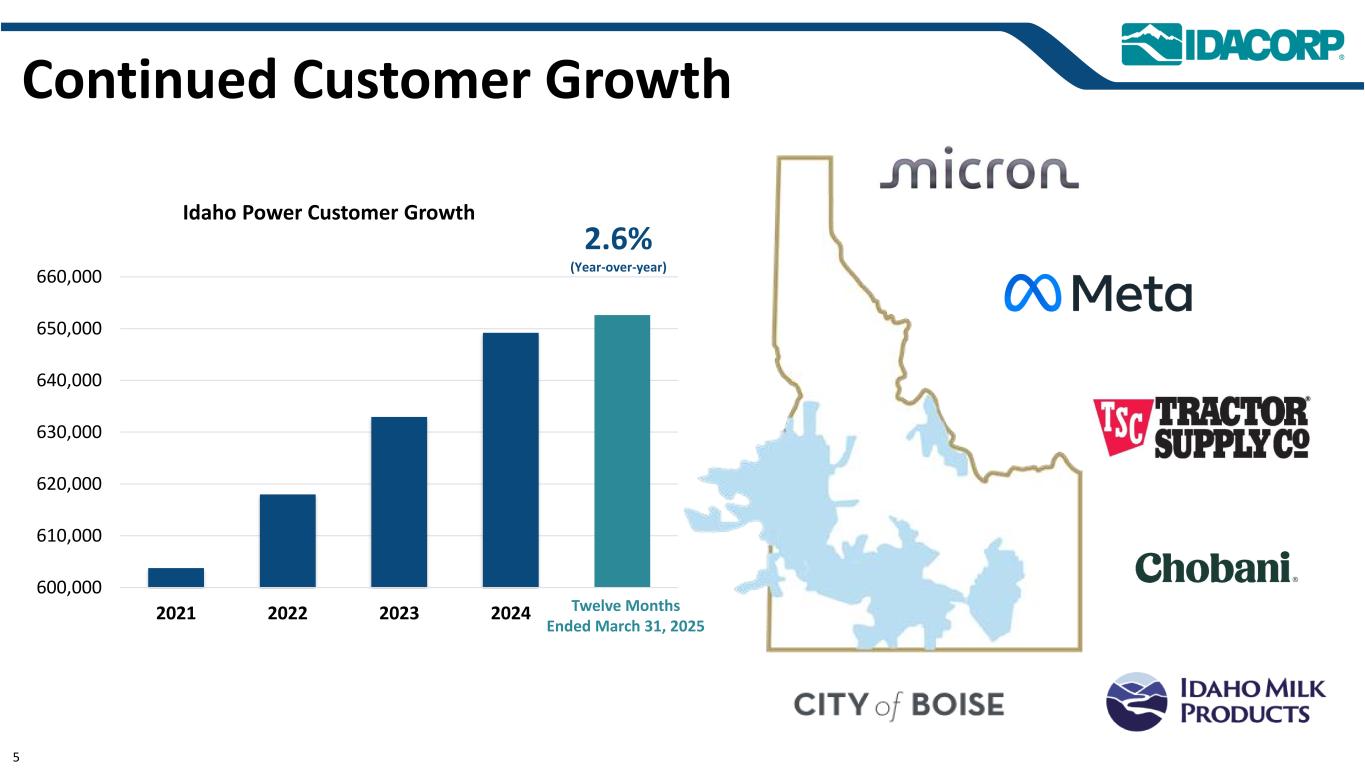
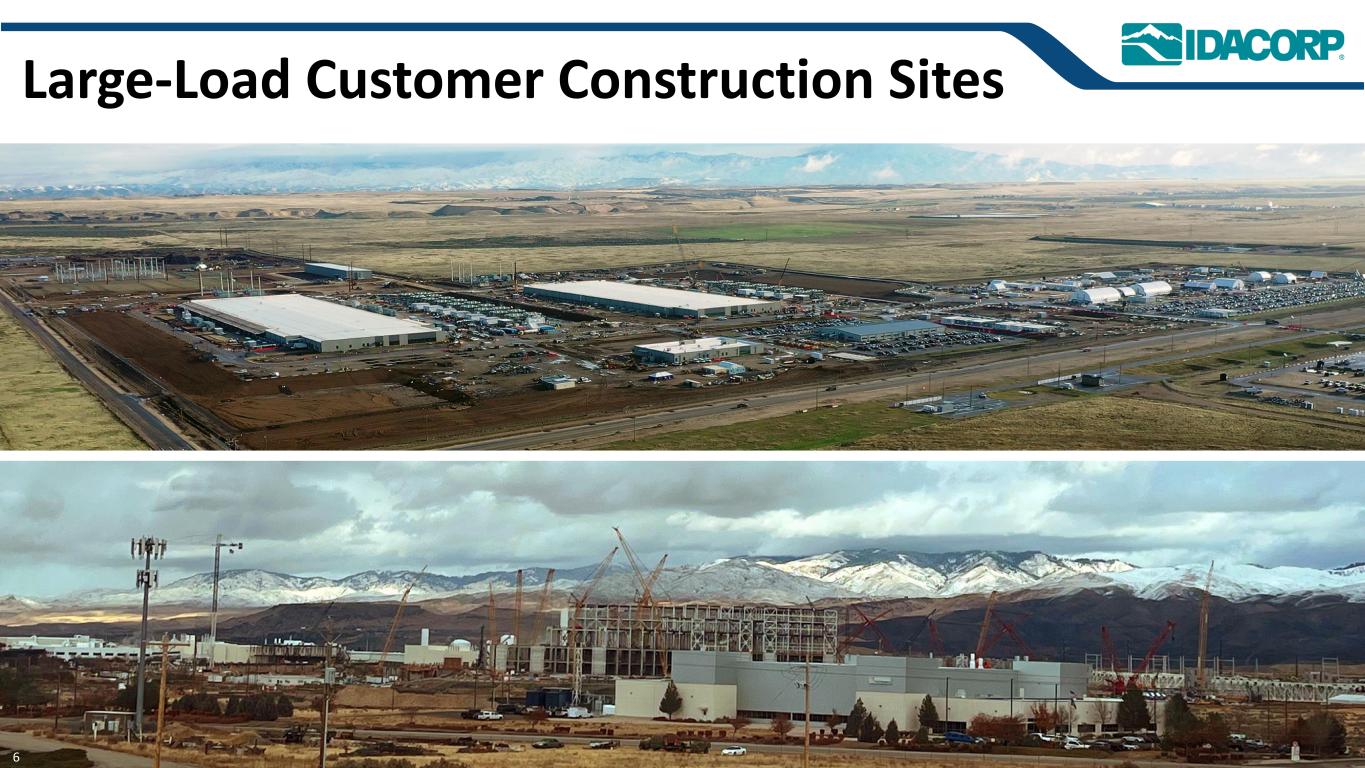
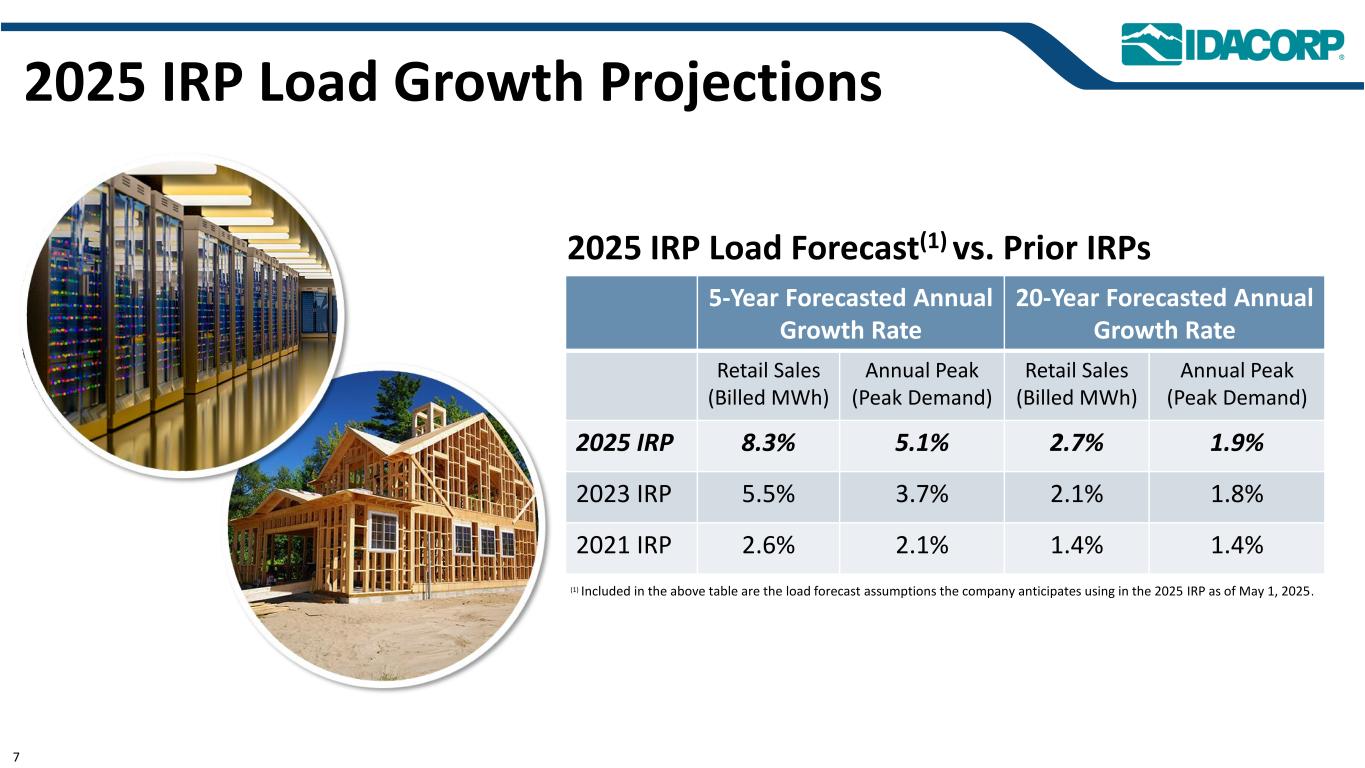
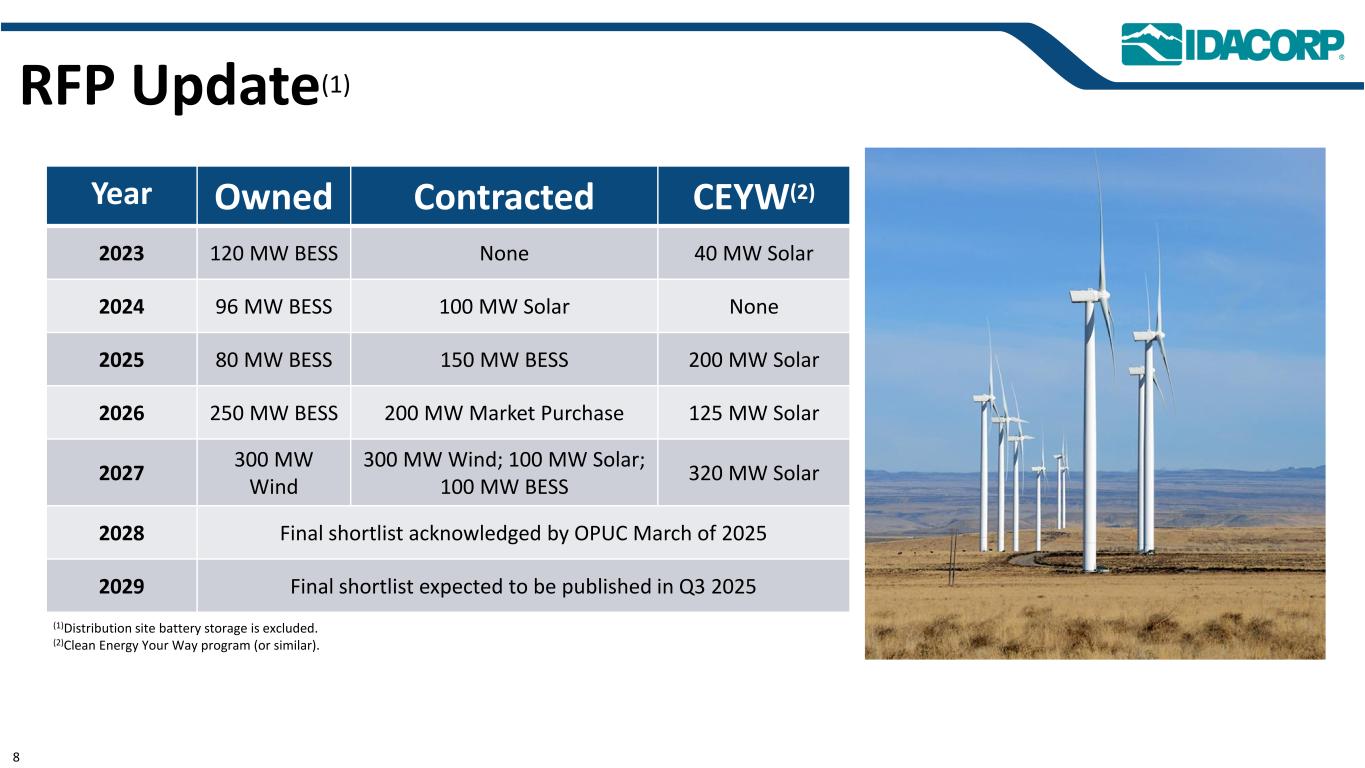
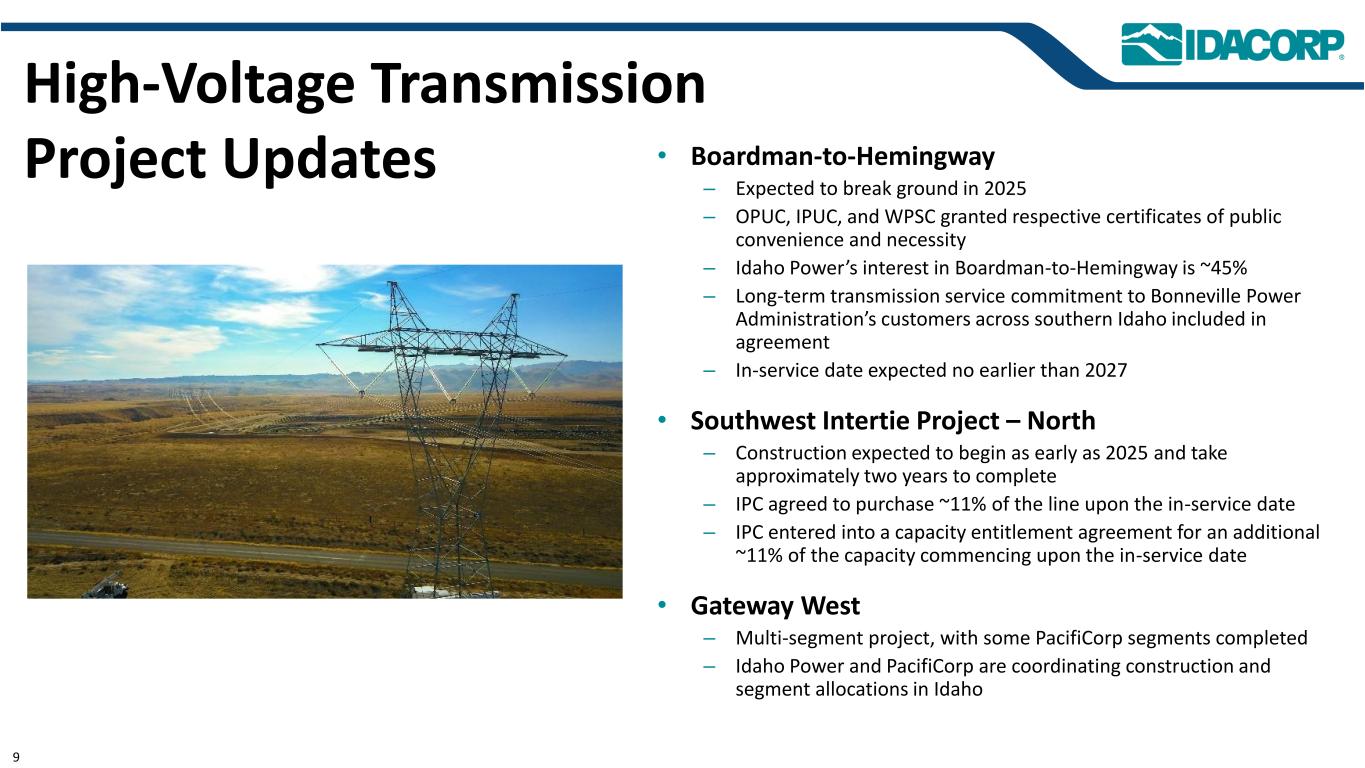
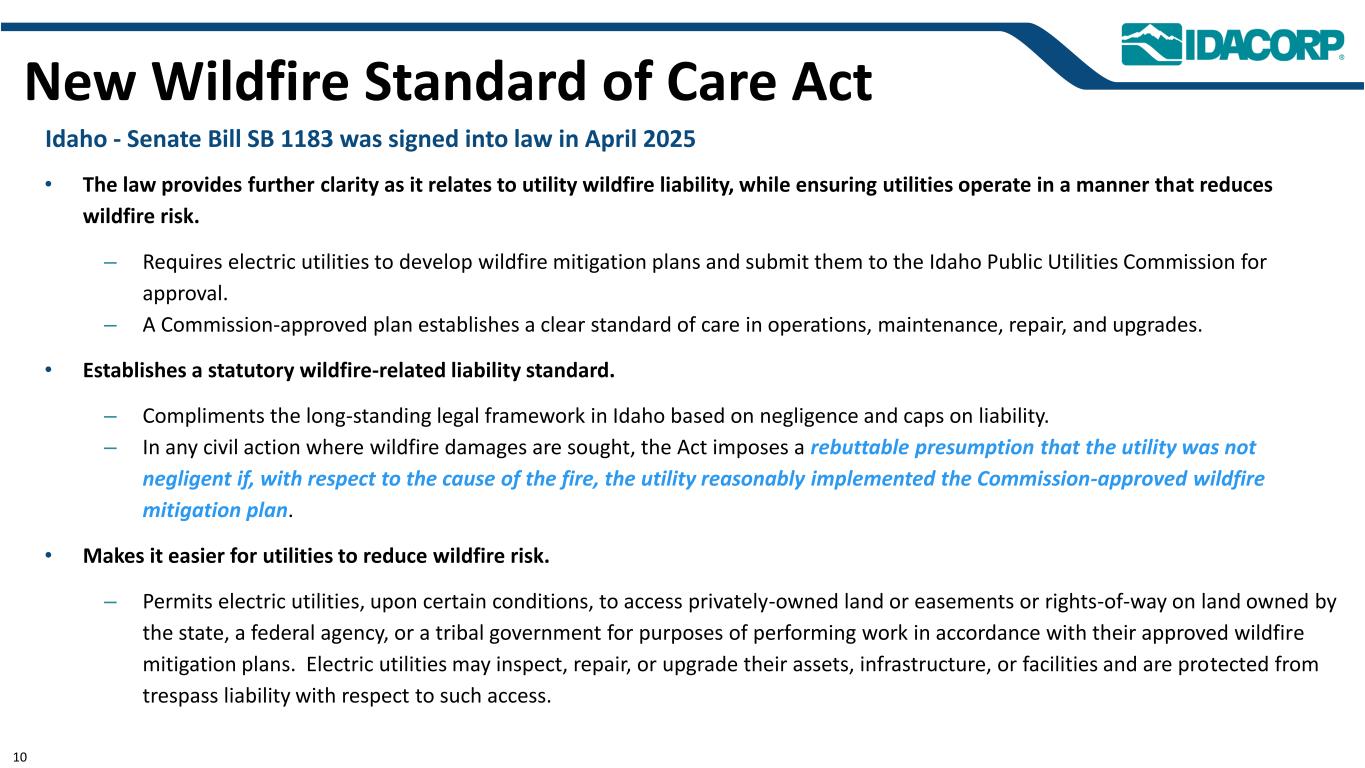
Thanks, Amy, and thanks to everyone for joining us on the call today. I'll start with a look at the continued customer growth and economic expansion happening across Idaho Power's service area, as you can see on slide 5. Our customer base has grown 2.6% since last year's first quarter, including 2.9% for residential customers. The first quarter featured several significant new customer investments in the food processing and warehousing sectors. Our existing customer, Chobani, announced a $500 million expansion of its facility in southern Idaho, increasing production by 50% and adding 500,000 square feet to its plant. The expanded plant will total 1.6 million square feet, with 24 production lines, making it the largest natural food production facility in the country. In addition, the tractor supply company broke ground on a new distribution center in Nampa. The 865,000 square foot facility represents an investment of nearly $225 million. Many of our large customers are far along in their projects. as you can see the magnitude of two of those projects on slide six recall we have another large customer that made a financial commitment and whose load ramp is expected to start in 2029 so you can see interest remains high from businesses looking to locate and expand within idaho power's service area as a reminder prospective customers would be incremental to both our existing anticipated load growth rates and our capital plans turning to slide seven the five-year forecast for retail sales growth is 8.3% annually. This forecasted growth continues to drive our need for additional system investments and power purchases to help meet projected low deficits. Like our customers, we're very much in execution mode. We're making great progress on the projects being built to support our customers. Our 80-megawatt 2025 battery project is on track to be operational later this spring, along with a 150-megawatt storage agreement. In addition, our Boise Bench battery storage project was recently permitted. Our agreements on the 600-megawatt Jackalope wind project, 300 megawatts of which will become our first company-owned wind resource, are pending approval from the Idaho Commission. A solar PPA project associated with our Clean Energy Your Way program also came online. Our update on the ongoing RFP process for 2028 is on slide 8. On March 31st, the OPUC acknowledged the 2028 final shortlist, which includes both owned resources and third-party projects. We're currently working through negotiating and contracting process, and we anticipate providing an update later this year. Transmission is also vital to meeting demand. and our three major projects are highlighted on slide 9. We're working towards breaking ground on the Boardman to Hemingway project this year, with an anticipated in-service date as early as 2027. As I mentioned on the year-end call, we've also entered into an agreement to become a partial owner of the SWIFT North project. We expect construction to begin as early as this year and take approximately two years to complete. The Gateway West transmission line also remains in our plans. We've initiated permitting and preliminary design activities and are coordinating with Pacific Corps on the timing to best meet customer and system needs. We're pressing full speed ahead on bringing these important projects online to help meet customer demands. As we work to put steel in the ground on new infrastructure projects, we've had a lot of questions about tariffs and executive orders. Idaho Power is actively monitoring the situation as we remain focused on affordability for our customers. We've reviewed countries of origin for our supplies, the potential impacts, and alternative plans to mitigate those impacts. Tariffs on battery storage assets in particular are something we're monitoring because we have several projects in progress. At the same time, we're committed to meeting customer demand and must have the energy and capacity available when and where our customers need it. And switching resources for in-process projects is almost impossible given the demands on our system. Turning to regulatory matters, we submitted to the Idaho Commission a notice of intent to file a general rate case in Idaho as early as the end of May. We expect the process for this full general rate case to take approximately seven months with rates effective no earlier than January 2026. We expect this comprehensive of filing will be similar to the full general weight case we filed in 2023. This filing is necessary to recover on the substantial capital investments we've been making to keep our system safe and reliable. We shared some good news with our customers this spring. The combination of the annual power cost and fixed cost adjustments, along with a filing related to additional collection of AFUDC resulted in Idaho Power requesting a substantial rate decrease for all Idaho customers. It would be a net 8.3% decrease for residential customers. The power cost adjustment rate decrease was largely due to completing the final year of collection of the 2023 PCA. The AFUDC filing requests recovery of an additional $30 million of financing costs annually related to the investments we've made in re-licensing the Hills Canyon Complex. The intent of this filing is to provide incremental cash collection and mitigate future rate impacts once the license is received. We've also requested a price decrease for Oregon customers in our annual spring power cost adjustment. Shifting our attention to slide 10, we received good news from this year's legislative session in Idaho with Governor Little signing the wildfire standard of care act under this new law commission approved wildfire mitigation plans will establish the standard of care and facilitate access to land for wildfire mitigation work some additional details on the legislation are in the 10q idaho power has had a wildfire mitigation plan which includes psps in place for several years and we continue to actively enhance our plan as we pilot new technologies and approaches i'll close with a look at hydro conditions we had a great winter with heavy snow in the mountains in the mountain ranges that helped fuel our 17 hydroelectric projects on the snake river and its tributaries our snowpack currently sits at a hundred percent 108 of normal which bodes well for another year of solid reservoir storage and ability for us to generate reliable affordable hydropower. And with that I will hand the presentation over to Brian for an overview of our financial results.
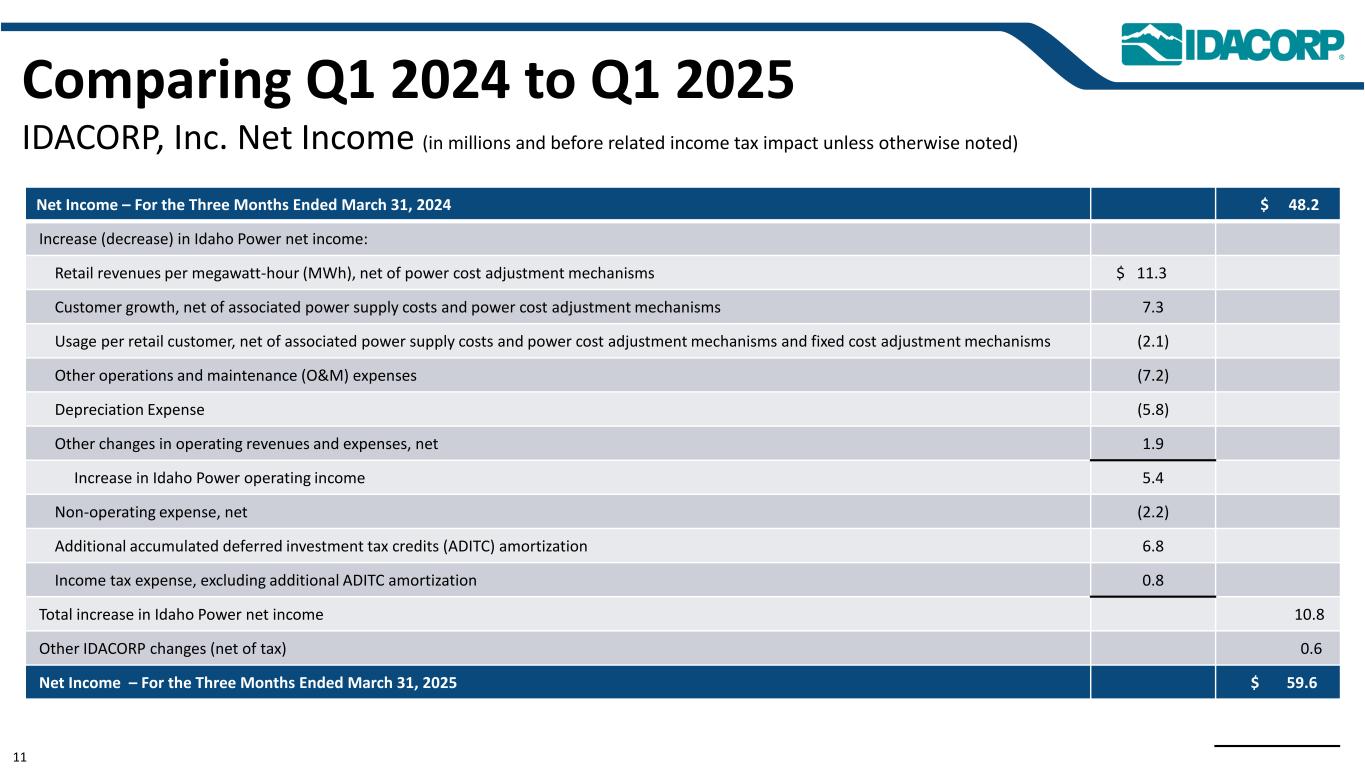
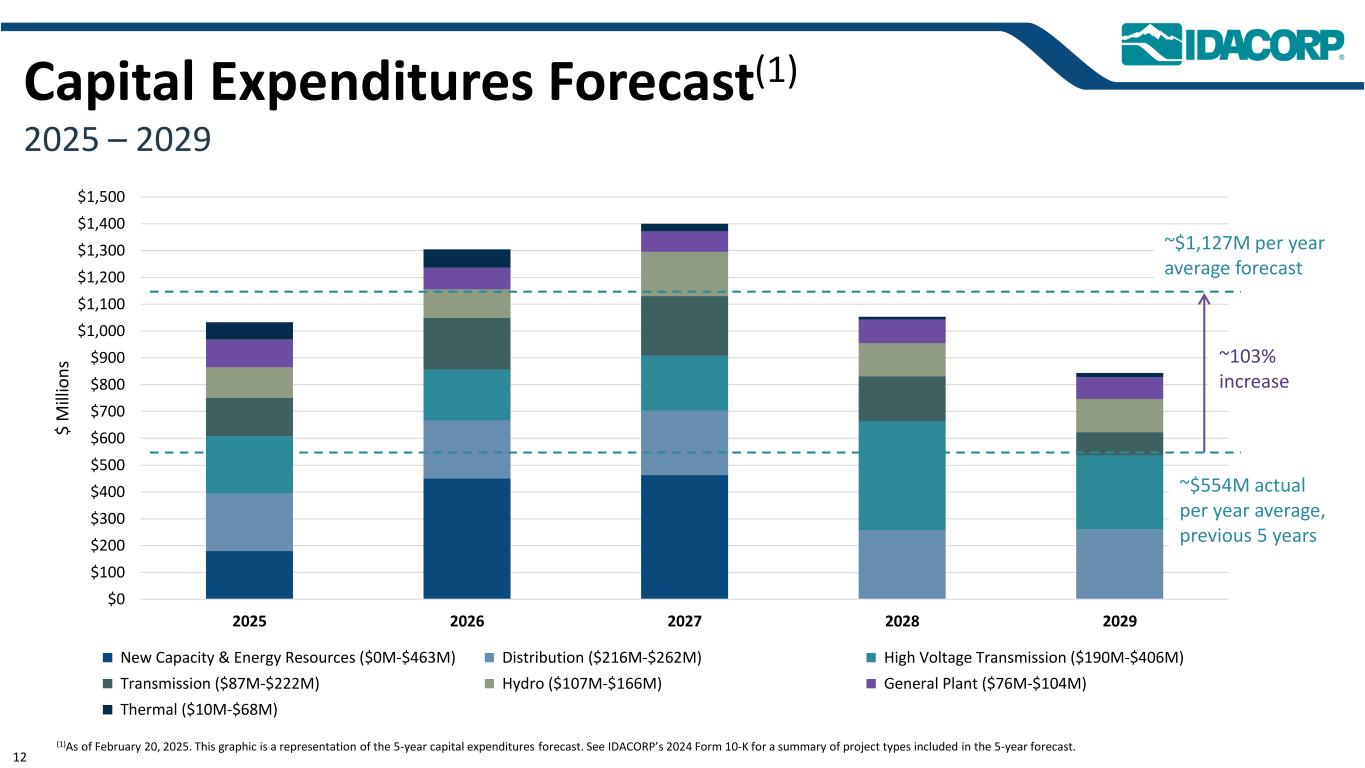
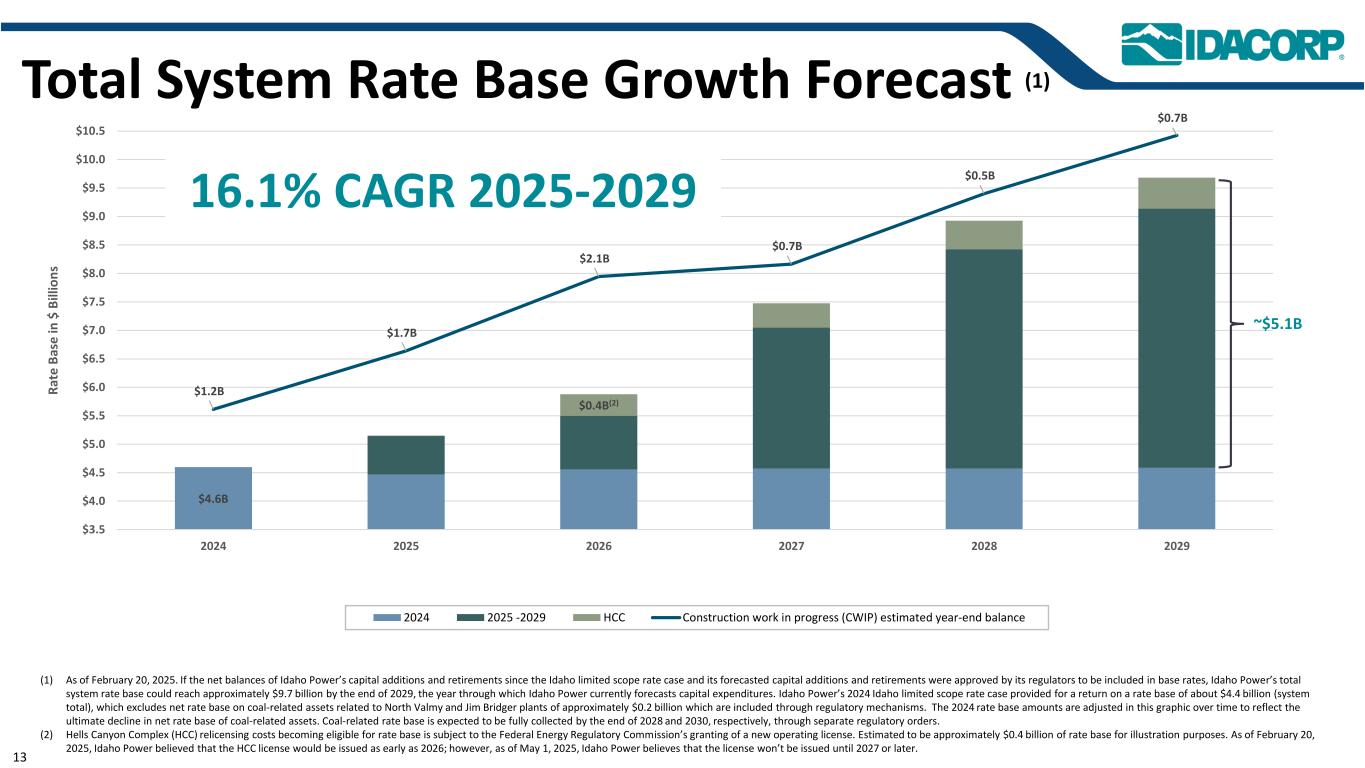
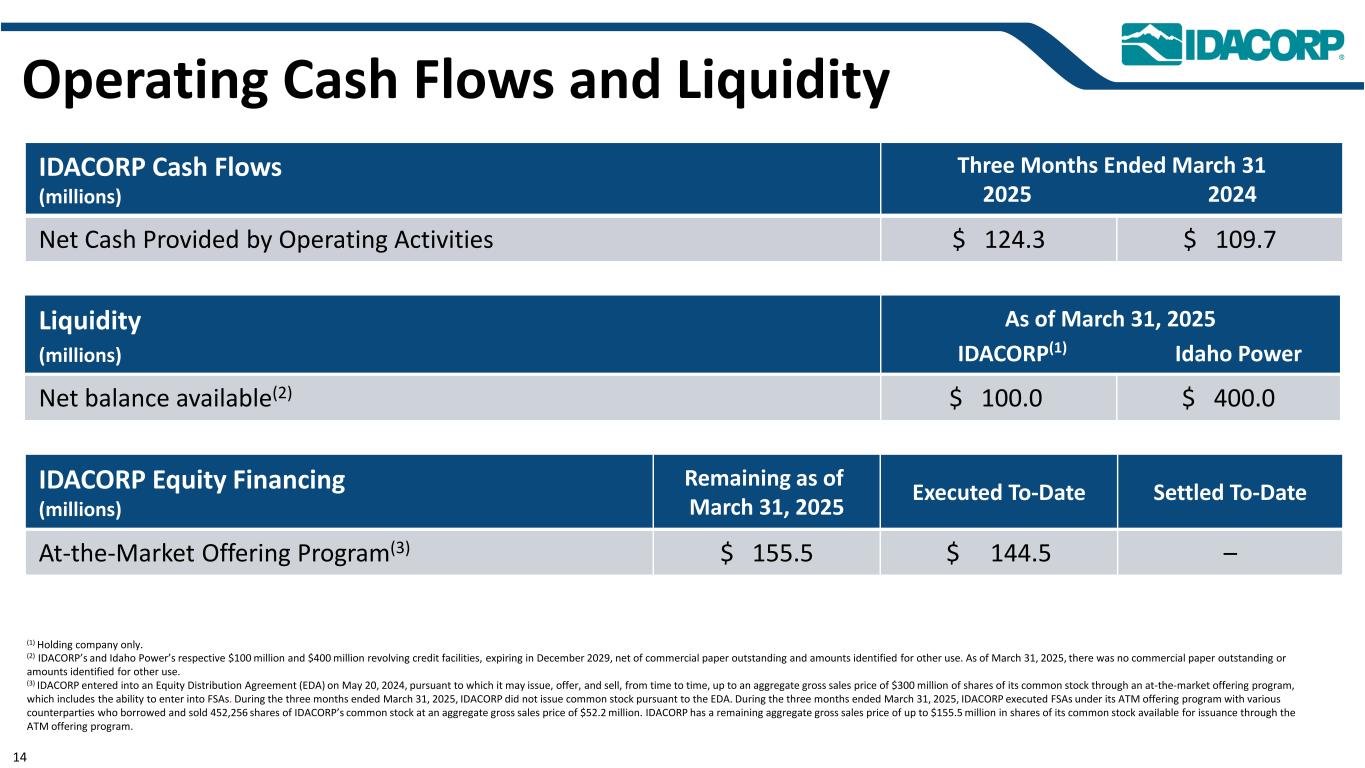
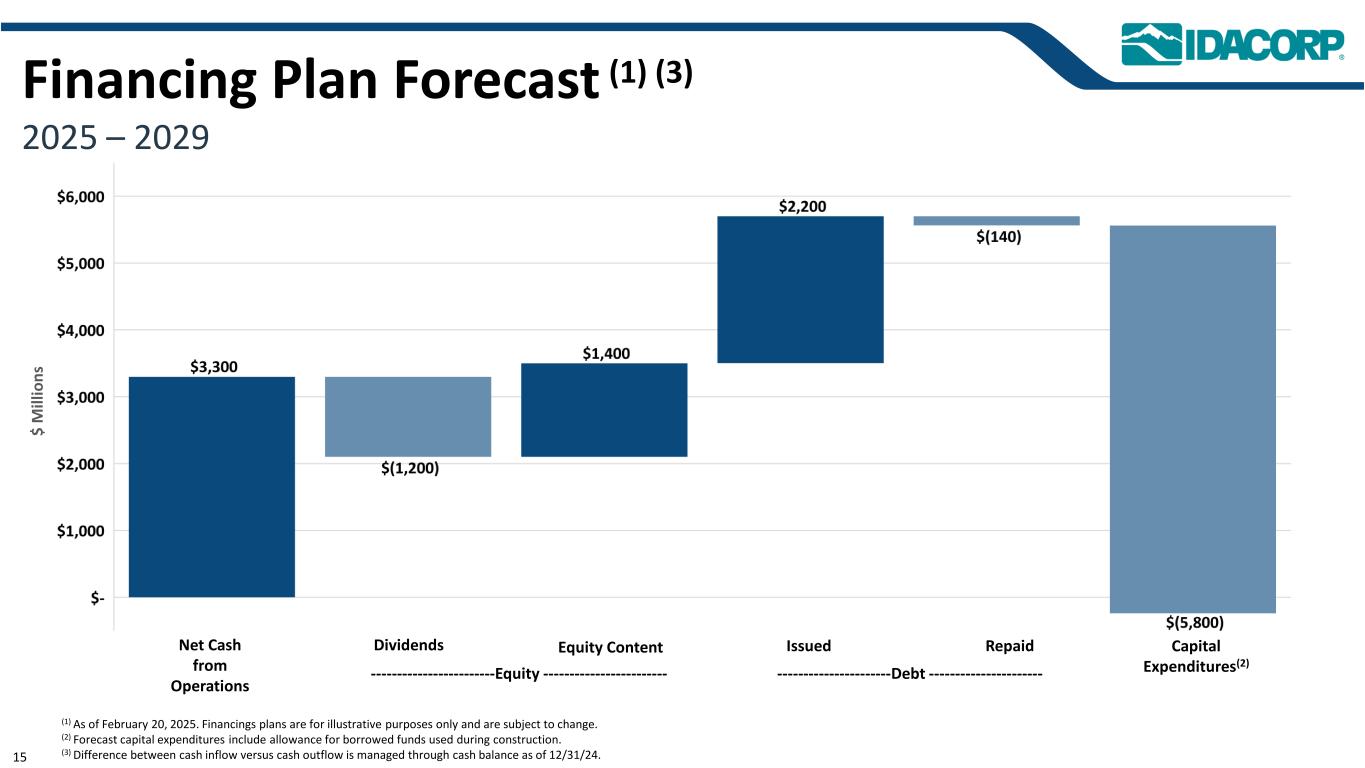
Hey thanks Lisa hi everyone I'm going to start on slide 11 which has our reconciliation of first quarter results. As you can see IdaCorp's net income increased 11.4 million dollars for the first quarter this year when compared with the first quarter last year. And to summarize the quarter the increase was mainly driven by Idaho Power's higher retail revenues from the January 1st rate case increase from customer growth and from recording incremental tax credits this year under the Idaho regulatory mechanism. Those benefits, though, were partially offset by higher depreciation and interest expense from our, and I'd expect to see those trends continue throughout the year. Getting into specifics, a net increase in retail revenues per megawatt hour, which is net of power cost adjustment mechanisms, increased operating income by $11.3 million on a relative basis. This benefit was mostly from the increase in Idaho base rates from the limited issue rate case Idaho Power. Customer growth increased operating income by $7.3 million with no slowdown in customer growth during the past year. Usage for retail customers was relatively consistent quarter over quarter. Residential usage per customer increased because lower temperatures in the first quarter of this year resulted in residential customers using more energy for heating purposes, but that increase was offset by a slight decrease in industrial usage per customer and the effects of customer mix changes, with some customers moving between rate classes. Last, on the revenue side, an increase in the deferral of revenues through the fixed cost adjustment mechanism reduced retail. Other O&M expenses in the first quarter of this year were $7.2 million higher. This was partially related to a roughly $3 million increase in wildfire mitigation program and related insurance expenses. They also increased $1.8 million due to a decrease in grant funding for maintenance work compared to the prior year's first quarter, and then standard labor-related costs also contributed to the increase. Depreciation expense increased $5.8 million for the year, which was an expected increase from our continued investment. And on a net basis, other changes in operating revenues and expenses increased operating income by $1.9 million. That resulted primarily from a decrease in Idaho Power's share of net power supply expenses that weren't deferred for you, and that's thanks to Left's Wall. On a net basis, non-operating expense increased $2.2 million in the first quarter. Higher long-term debt balances and an increase in interest that Idaho Power is required to pay on transmission customer deposits were what contributed to the increase and this was partially offset by an increase in AFUDC because the average construction the decrease in income tax expense that you see was mostly the result of an increase in additional ADITC amortization based on current expectations of full year financial results Idaho Power reported 19.3 million amortization under the Idaho regulatory settlement stipulation during the first quarter that was compared with 12.5 million dollars of additional ADITC amortization and remember we record the 80 itc's rapidly each moving to slide 12. This is really just a reminder on the capex for that forecast as of spending 5.6 billion dollars on cap and that's double what we spent again the capex stack in the two out years isn't fully refined that's in part because that's a ways out and we're also still in the rfp process for additional resources in those years lisa mentioned that idola power continue active new large load additional large load. You can now plainly see the actual CapEx materializing in our financial statements. In the 2024 Form 10-K, if you look at the cash flow statement, you'll see additions to PP&E exceeded a billion dollars for the first time. Spending continued in the first quarter of this year, and Quip on the balance sheet as of March 31st is around 1.4 billion dollars. We've been busy executing a capital plan designed to meet customer needs. Our customers have a lot of steel in the ground on their project and I think the photos that Lisa showed earlier were illustrative of that. So we're working in lockstep to ensure they have the energy when they need it. As we talked about on the last earnings call, building the needed infrastructure is just one step in our execution. We also need to convert it into rate-based to provide returns to the debt and equity. We've replicated slide 13 from our 2024 year-end call where you can see our then current 2025 to 2029 estimated rate base and growth rate. Upside to that, five-year CAGR could come from things like additional RFP wins or from a change in our regulatory methodology to eliminate some of the regulatory lag we've experienced. Either way, we expect to at least double our rate base in a five-year period. Another part of our execution is our financing plan. I'll have you flip to slide 14 for that. Operating cash flow alone is insufficient, obviously, to finance what we're doing given the magnitude so it's no surprise that we'll need growth capital like i've mentioned in the past as we go through this cycle of growth we're focused on keeping our balance sheet strong still targeting a 50 50 debt equity capital ratio at march 31st you can see that our balance sheet is slightly debt heavy which resulted from the 400 million dollar debt issuance we did during the quarter but not shown on the equity side is around 90 million dollars of stock issuance from the November 2023 equity offering, along with over $144 million in to-date forward sales under the ATM program, none of which we've drawn thus far. So the balance would be closer to our strike, likely near 49. At March 31st, we also had a relatively large amount of cash on the balance sheet. The bulk of that balance is proceeds from the March debt issuance, which we'll use in the relative near term to fund our interest. Flight 15 is another one we included on the q4 call replicated here it shows the amount of external financing we estimated we need for 2025 through 2029 based on capital already in the plan at that time which is about 1.4 billion dollars in equity and about 2.2 billion dollars in debt we believe those amounts allow us stay at our target capital ratio and fund the projects in our plan this is over a five-year period and as i've mentioned the amounts needed in each year will not be equal but we do have a degree of optionality to be opportunistic on the timing and nature of our debt and equity issuances. With significant revenues anticipated in the later years of our plan, we do anticipate a step down in the amount of our external capital needs further out, but we still expect incremental financing would be necessary. So to conclude, I'm going to double down on what Lisa said. We're in execution mode and we're seeing the benefits of the thoughtful planning we've already done. Several factors are helping with that execution. Starting the permitting of our transmission projects well over a decade ago has been key because the timeline to build transmission is very capacity needs and ensure we get the best price. We are negotiating with large load customers on thoughtful contract terms that fairly allocate costs, focusing on our constructive relationship with our regulators and working to ensure affordability of the service we provide to our customers. And to top it off, our team of employees at Idaho Power are some of the smartest and hardest working people in the business. All of those factors help us execute in this period of unprecedented growth with our customers already far along in their projects power has to be there when they flip the switch on their facilities and we're working full speed ahead operationally and financially to ensure we meet that important commitment to our customers we appreciate that our shareholders and debt holders have been with us as we execute with that i'm going to turn it over to john to step through our 2025 guidance and estimated key operating metrics.
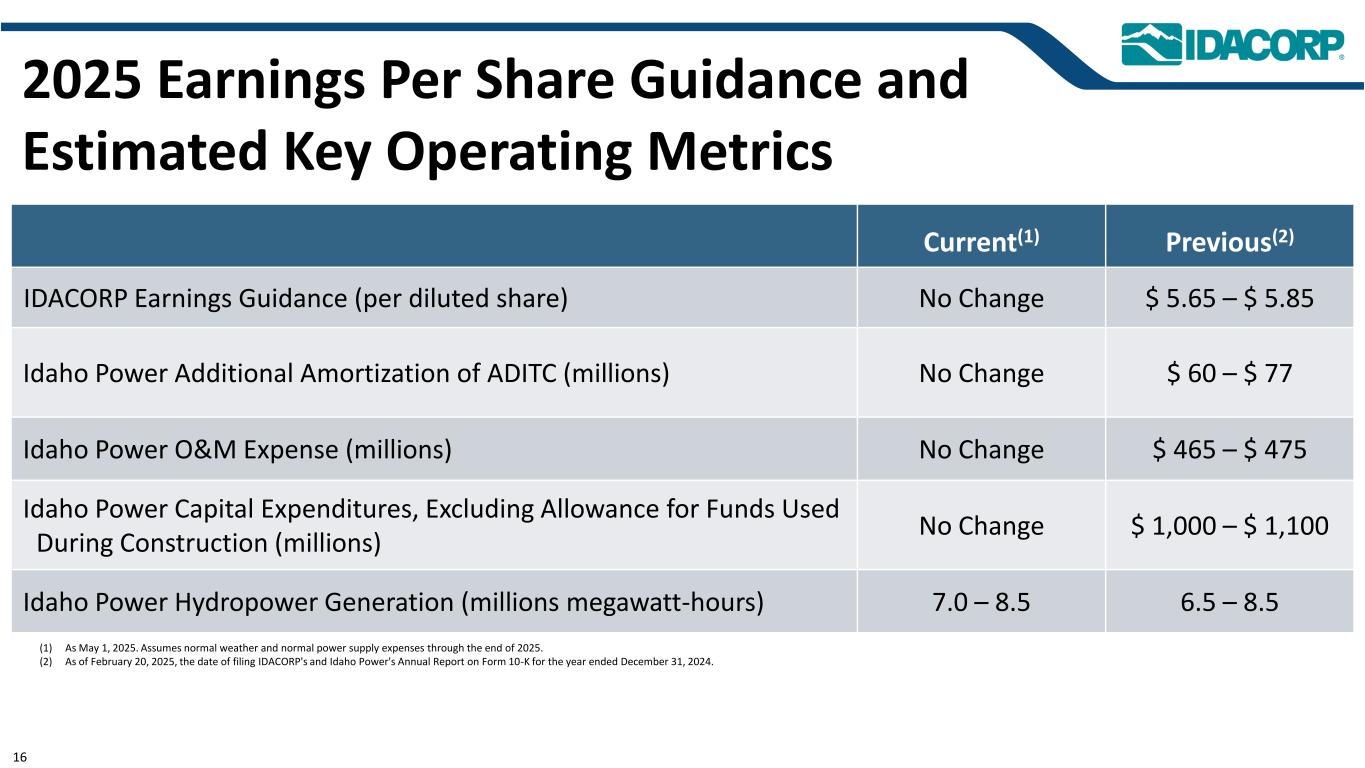
Thanks, Brian. Moving to slide 16, you can see our 2025 full year earnings guidance and key operating metrics. Not a lot of change from our Q4 2024 conference call. This guidance assumes normal weather and normal power supply expenses for the rest of the year. We continue to expect IDACorp's diluted earnings per share this year to be in the range of $5.65 to $5.85, with the assumption that Idaho Power will use $60 to $77 million of additional investment tax credit amortization. That $77 million top end is what we currently have remaining in the mechanism. We have the ability to request that the Idaho PUC allow Idaho Power to add additional credits to the mechanism either from legacy credits on our balance sheet or credits from our current battery projects and we'll consider that option in the context of our broader regulatory strategy going forward our expectation for full year o m expense continues to be in the range of $465 to $475 million. We still anticipate spending between $1 and $1.1 billion on CapEx in 2025, although we have not adjusted our forecast for new tariffs as we continue to evaluate and monitor the situation. Finally, we expect good hydropower generation in 2025, ranging from 7 to 8.5 million megawatt hours for the year. We have solid carryover from the prior year, and SNOPAC has been favorable this year as well, as noted by Lisa. With that, we're happy to address any questions you might have.
Operator
We are now ready to begin the question and answer session for attendees who have joined on the Q&A line. If you would like to ask a question, please do so by pressing star 1 on your phone. Please ensure your mute function is turned off before you ask your question. We will take as many questions as time permits on a first-come basis. Once again, that is star 1 on your phone to ask a question now. Your first question comes from David Arcaro with Morgan Stanley. Please go ahead.
Hi, David. David. Hey, thanks so much for taking my question. And maybe on, let's see, you know, on the wildfire legislation, I was just curious, do you expect any changes to your wildfire mitigation plans on the back of that legislation or just generally any changes to programs that you would anticipate?
We don't anticipate any changes in the program. We are hard at work at deploying that now. We are taking a look at the plan as it's written today and may make some modifications, but it would not necessarily be changing any of the actual activities. So more to come on that, but we feel really confident in what our plan has us doing now, and we'll continue to evolve it over time.
Okay, thanks. That's helpful. And then looking ahead to the rate case, I was just wondering if you'd be able to share thoughts on what kind of mechanisms or trackers you might be contemplating filing for, whether it's capital trackers or otherwise just efforts to improve earned ROEs from here.
I'm going to have Tim Tatum answer that. He's our VP of Regulatory Affairs.
Yeah, thanks for the question, David. David, we're right in the middle of preparing our case right now. We're considering a number of different options. I can say that we will take some action in the case to request that the commission help us to reduce regulatory lag. The details on exactly what we're doing at this point are still sort of in flux and more to come.
Yeah, David, this is Brian. One thing I'd also point to is the Health Canyon filing that we made on AFUDC that we've talked about in terms of helping to reduce regulatory lag. Like that's more of an earnings neutral item, but it does help from a cash flow perspective. So that helps on outside of the general rate case.
I'll leave it there. Thanks so much.
Operator
Your next question comes from Chris Eliehaus with Siebert Williams Schenck & Company. Please go ahead.
How are you today? So you talked about some of the business development. Obviously, you still have a lot of moving in here. Have you noticed anything through sort of this chaotic period? Any effect on the agricultural community and, you know, what kind of crops they're working on, you know, given their expectations on their ability to export discretionary in-migration or tourism or any of those kinds of things?
Yeah, so I think, like us, it's a little bit too early to tell. A lot of the agricultural customers, they've made the decision what they're going to plant last season, so what they might do in the next season I think remains to be seen. But I will say, you know, there's concerns just given how uncertain things are. But I can't really say that there has been anything very measurable at this point in time. We are still getting a lot of interest in what is, you know, the inquiries we get and, you know, as far as tourism goes, I think that still remains to be seen how that shapes up.
This is a state that people that love the outdoors come to and we haven't seen um i guess we'll just have to let the season sort of play out but um i think adam what would you add to what you're seeing out there hi chris yeah i actually spoke with our irrigation customer representatives a couple weeks ago and from a planting perspective they said it appeared to be a relatively normal season i think commodity prices aren't great and certainly at some point the tariffs could have an impact but the boots on ground you know the Idaho Power employees that are out there they did not believe it would impact this year and then I might also add in terms on the irrigation side of things the water conditions are are positive as well so that should provide some help to the farmers.
Okay that's great Given the filing up on the rate case, can you give us any thoughts and I guess some of the mitigation efforts that you might put into the filing might give us sort of be thinking about, you know, this as the normal cadence of what you would expect unless there is some kind of breakthrough on traffic. trackers or some other kind of mitigating mechanism?
Well, certainly I think that's fair to say given the amount of capital in our near-term plans. But of course, as these customers come on and start generating revenue, you know, that may delay some of future rate cases. And then of course, if there are any sort of mechanisms that come through this rate case, yeah, it certainly could change the cadence, but based on what we know we need to spend to meet our customers' needs, we will continue to be filing rate cases more frequently than we certainly have in the past. Anything you would add?
I know they have expressed, what word to use, dismay is maybe too strong, but have expressed some issues with their workload.
So do you have any capacity to provide anything along the lines of a multi-year mechanism as far as the pcs go yeah yeah you know we're willing to talk with them about you know any sort of creative solutions um and we do know that they like our regulatory group you know it is it is a lot of work um to process these filings so we'd certainly be open to um anything that would you know help with that but um you know i don't know what what else we would you add him yeah it's certainly it's certainly an
option that will consider and we want to be mindful of the volume of filing it in light of the success of SB 1183 that's sort of one level of wildfire liability mitigation or wanting to to pursue or would be hopeful for you know another step at the legislature to sort of codify you know more direct limitations legally on what potential litigants can pursue other than just you know sort of this type of legislation which says you know we have followed the the plan type of legislation well I think it's important to remember that in Idaho, we have had tort reform.
So I don't know that we have anything imminent that we would be pursuing. And we do feel like this has been a good step to define what a standard of care plan looks like just so that it isn't decided after the fact. So we feel like we're in a pretty good spot. Anything you would add, Julia?
Hi, yes, this is Julia Hilton. I'm the company's general counsel, and Idaho has really favorable damage caps for both punitive damages and non-economic damages. In wildfire litigation, what we have seen is that the non-economic damages are the ones that tend to really run away, so having those statewide damage caps on non-economic damages is very favorable in Idaho.
Okay yeah that's what I'm getting at. Um lastly um you know you continue to have some pretty sizable um development in your area. Have you revised at all your thinking on when you need your next dispatchable resource at all?
That's absolutely um you know taken into consideration when we do our IRP. So we're in the process of doing that right now, and dispatchable resources are showing up in the portfolio for sure.
Can you tell us what that timeframe is at this point that they're showing up?
Adam, I'm not sure what we have shared publicly yet, if it's in a place yet where we're ready We have shared.
We have shared two of the timeframes. 2029 shows a dispatchable resource in 2030 as well, and then it was kind of a question of whether we might see something in the next couple years after that as well. So we'll know more as we work through the IRP process. Certainly as of right now it's showing at least 2029 and 2030 and could be more over the next couple years after that.
Okay, that helps. And are you seeing additional or incremental large load customers coming to you, you know, say over the last couple of quarters, you know, seeking interconnection? I don't want to say at a break, are you still seeing interconnection requests continue to build in the queue?
As far as interconnection requests, that's a little further down in the process. We are still seeing, I would say, the same inquiries, which would then start a process that involves construction studies, et cetera. And I think those are on a pretty similar pace as we've seen in the past. Adam, what would you say about the interconnection requests? That seems like us at the sort of end of the large load process.
Operator
I agree. It's been a steady flow of inquiries and requests from large loads. And what we're seeing in our queue, too, is a lot of generation resources showing up across our service territory to help meet that that potential low growth so it's been Chris it's been pretty strong and continues to be strong okay that's helpful that's exactly what I was trying to get out I appreciate it thanks for the details thanks Chris your next question comes from the line of Julian de Mullen Smith with Jeffries please go ahead hi Julian hi hi Hi, it's Brian Russo on for Julian.
Hey, just curious about the 28 and 29 RFPs. If there are new large load customers, would that be captured in those RFPs or would you need subsequent RFPs to meet any incremental demand above what's embedded in that 8.3% low growth rate in the IRP?
Yeah, so when new loads would come into making a request to us, it would depend on what year they would start for sure, but it's possible that if we have a number of projects that would meet a need as the need changes, we could certainly contract with those as well. So, but if the customer needs are beyond that in time or amount, we may have to, you know, do some other kind of RFP. Yeah, it's just sort of a, we have to wait and see what is real before we would make that kind of commitment.
Okay, got it. And I think on the last call, you discussed that contract negotiations were ongoing with another data center. Is that still the updated status, or is there anything that's transpired since then?
Yeah, that is still ongoing.
Okay. And then, you know, it looks like as you're transmitted, you know, you highlighted three transmission projects, right? You can look at your CapEx forecast and there are some, you know, incremental investments there. how should we think about the timely recovery of those types of projects? Would that be separate filings from your traditional base rate filings, or how confident are you for timely recovery of some of these larger projects?
Sorry about that. We're not looking at each other.
Yeah. So I think at this point, we are looking at the developed and evaluated internally, but our efforts to reduce quite a few of them, but to the extent the in-service data of a transmission line lined up well with a general array case or some form of...
Okay, great. And lastly, could you just remind us how much capacity is in the shortlist that was acknowledged by the OPUC for the 2028 RP?
Adam do you have that number?
I don't have that exact number I mean it was it's several hundred megawatts maybe even more than that and just as a reminder there was a idle power project on that list as well for 2028. It was a fair amount of projects.
All right great thank you very much.
Operator
Your next question comes from the line of Anthony Crowdle with Mizzouo. please go ahead hey good afternoon team sorry i think those guys asked all all nine of my questions just i guess a quick follow-up was just on the wildfire legislation just anything in the legislation you guys were hoping to get or the utilities in the state were hoping together that were not, that was not included in what passed?
Well, I feel like we were really happy that it passed at all, to be quite honest. So, I can't think of anything offhand that we wanted that we, you know, ultimately didn't get. We knew that, you know, this is a first step at trying to define the the standard of care and and that's essentially what this what this bill did. Is there anything you would add, Julia?
I think that this bill does a really great job of establishing a first step and establishing that standard of care like Lisa mentioned. There was an earlier run of the bill that that did not go through. I think that the bill that ultimately passed contains a majority of the protections that we were seeking to achieve, so I do think that it's a great result, and we were able to be comfortable with it with the final version of that.
Operator
Do you see the company in the future looking to push for a fund? It seems that, you know, I know every state has their own issues with respect to wildfire, but it seems investors, you know, I think in another state, they're trying to get a fund going. It didn't happen, or it's not moving the legislature. Is that something that's on the radar in Idaho, or you don't believe so?
It was certainly something that we discussed. The hard part is that Idaho is very small and so you know the the amount of money that would be needed to to create a fund would fall on a few people. So you know when you have the state of California that you know can put billions of dollars into a fund it is not really something that um that Idaho could do. And then it was well do you look at a multi-state sort of arrangement? But then that's always the sort of, well, who pays and who gets the benefit? And so it wasn't one that really we thought was something we could do now, but it's something we could certainly think about, but it's also important to remember we do have insurance and there might be other strategies like a captive insurance product or something along those lines great that's all i had thanks for taking my questions of course thanks for calling in exactly and a final opportunity press star one to signal for a question and we'll pause for just a moment that concludes the question and answer session for today miss grow i will turn the conference back to you well thank you again for everyone joining us today and we really appreciate your continued interest in IDACOR and hope you have a great evening. Thank you.