Operator
Welcome to IDACorp's second quarter 2025 earnings call. Today's call is being recorded and our webcast is live. A replay will be made available later today for the next 12 months on the IDACorp website. If you need assistance at any time during the presentation, please press star zero on your phone. I will now turn the call over to Amy Shaw, Vice President of Finance, Compliance, and Risk. Please go ahead.
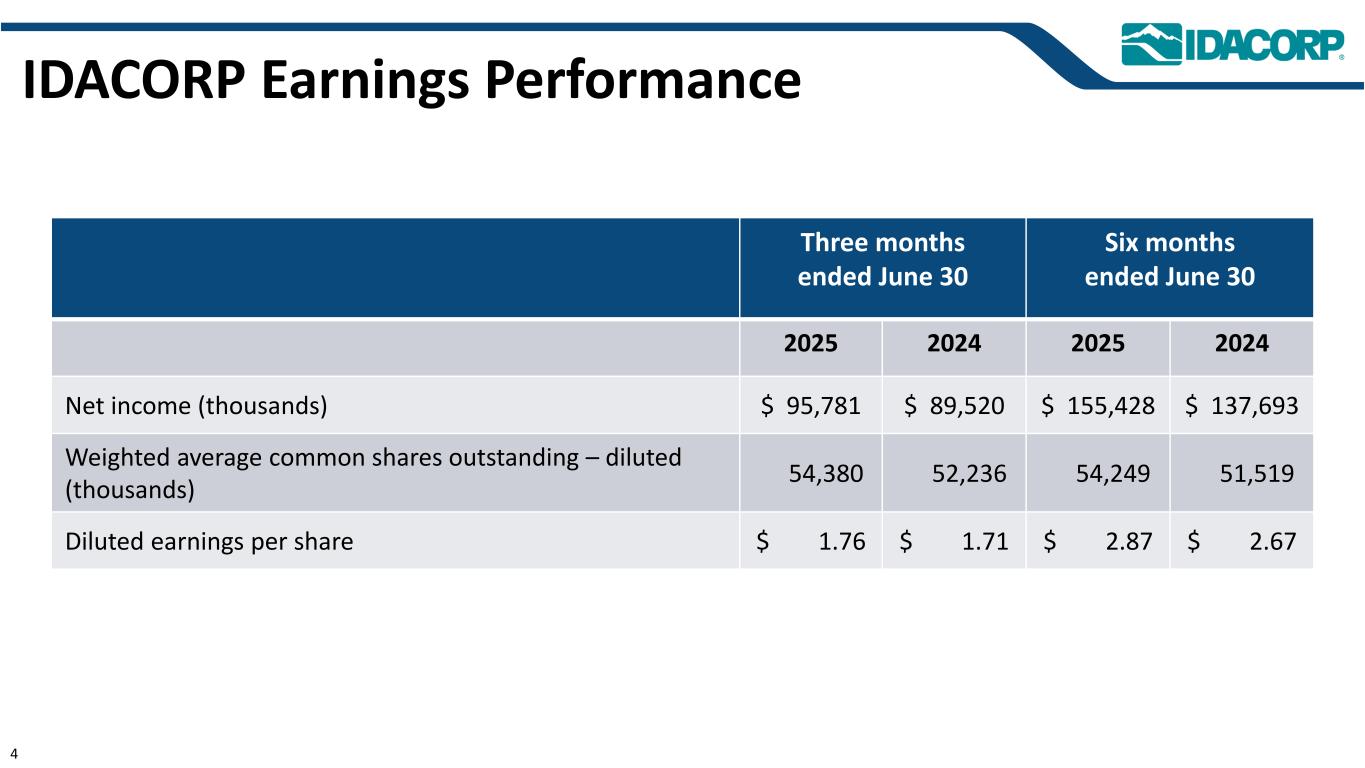
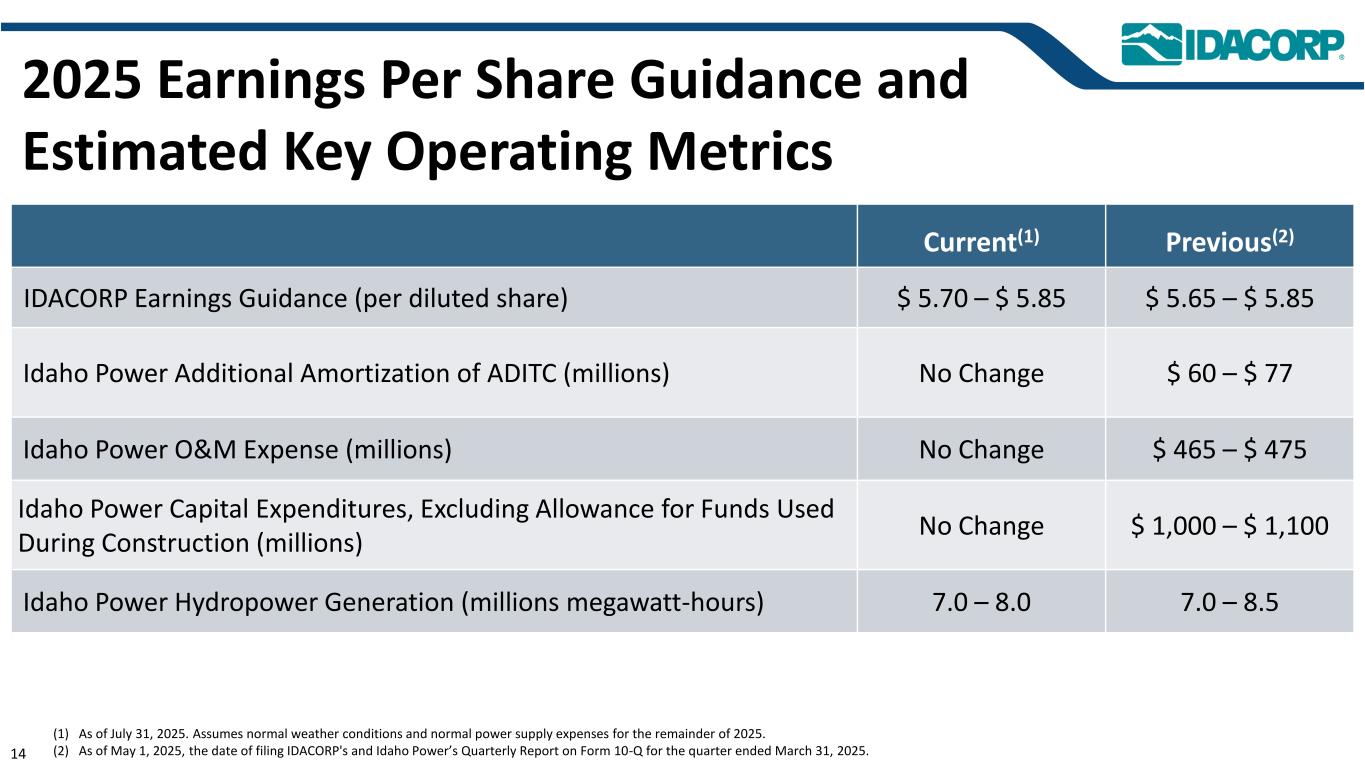
Thank you. Good afternoon, everyone. We appreciate you joining our call. The slides we'll reference during today's call are available on IDACorp's website. As noted on slide two, our discussion today includes forward-looking statements, including earnings guidance, spending forecasts, financing plans, regulatory plans and actions, and estimates and assumptions that reflect our current views on what the future holds, all of which are subject to risks and uncertainties. These risks and uncertainties may cause actual results to differ materially from statements made today, and we caution against placing undue reliance on any forward-looking statements. We've included our cautionary note on forward-looking statements and various risk factors in more detail for your review in our filings with the Securities and Exchange Commission. As shown on slide three, we also have Lisa Groh, President and CEO, Brian Buckham, SCP, CFO and Treasurer, and John Wunderlich, Investor Relations Manager, presenting today. Slide four has a summary of our second quarter results. IDACORP's diluted earnings per share were $1.76 compared with $1.71 for last year's second quarter. In the second quarter of this year, we recorded $17.2 million of additional tax credit amortization under the Idaho regulatory mechanism, compared with $7.5 million in the second quarter of last year. For the first half of 2025, diluted earnings per share were $2.87 versus $2.67 in 2024. Those results include additional tax credit amortization of $36.5 million in the first half of 2025 versus $20 million in the first half of last year. For our key operating metrics, we're raising the lower end of our full-year IDACORP diluted earnings per share guidance by $0.05 to the new range of $5.70 to $5.85. This increase was driven by strong operational results in the second quarter, and it includes our expectation that Idaho Power will use between $60 and $77 million of additional tax credit amortization for the full year. These estimates also assume historically normal weather conditions and normal power supply expenses for the rest of the year. Now I'll turn the call over to Lisa.
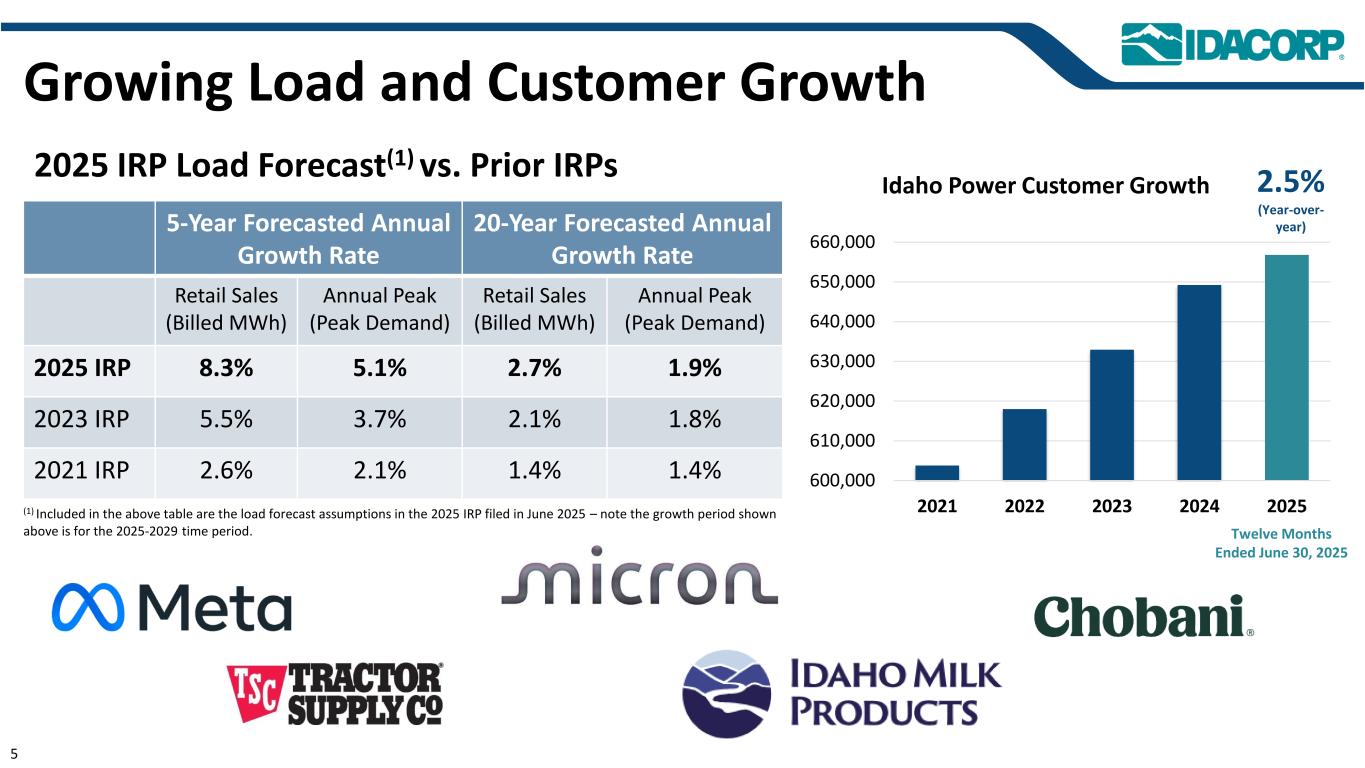
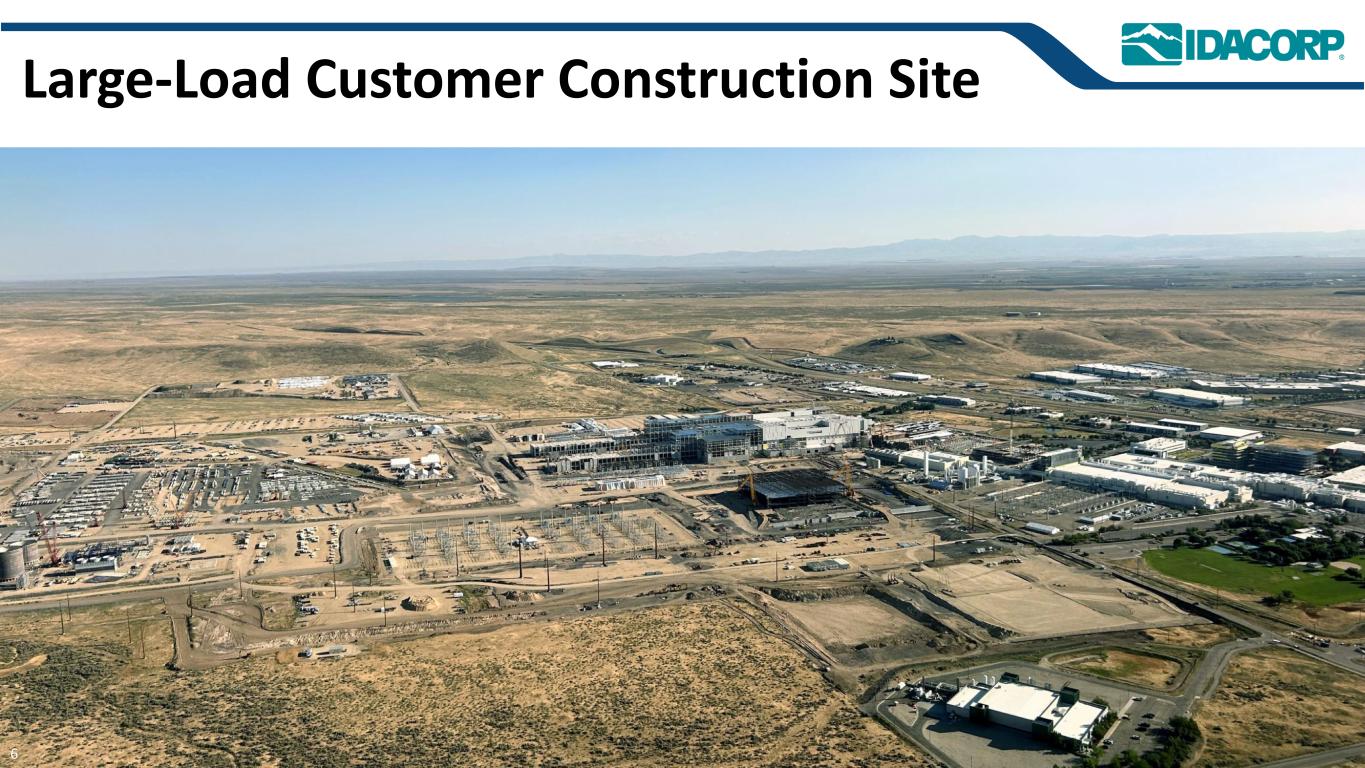
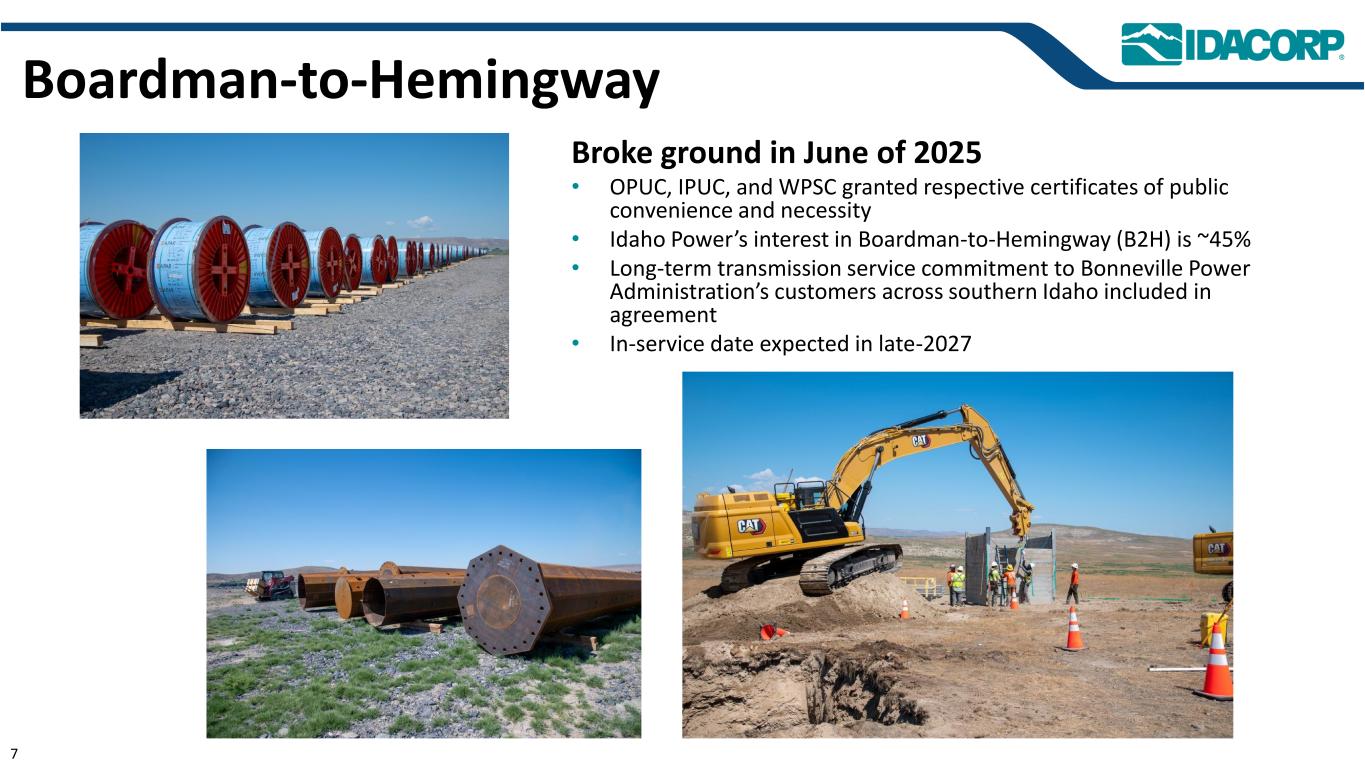
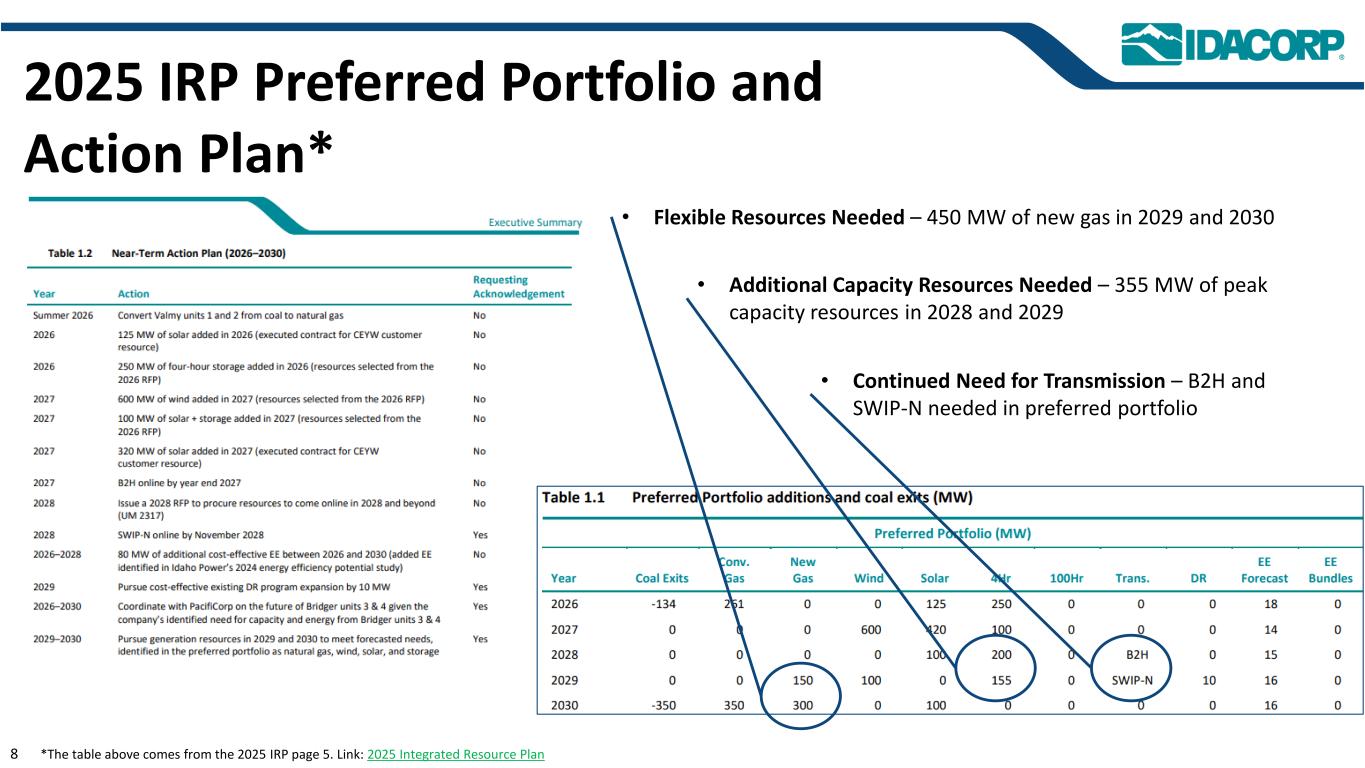
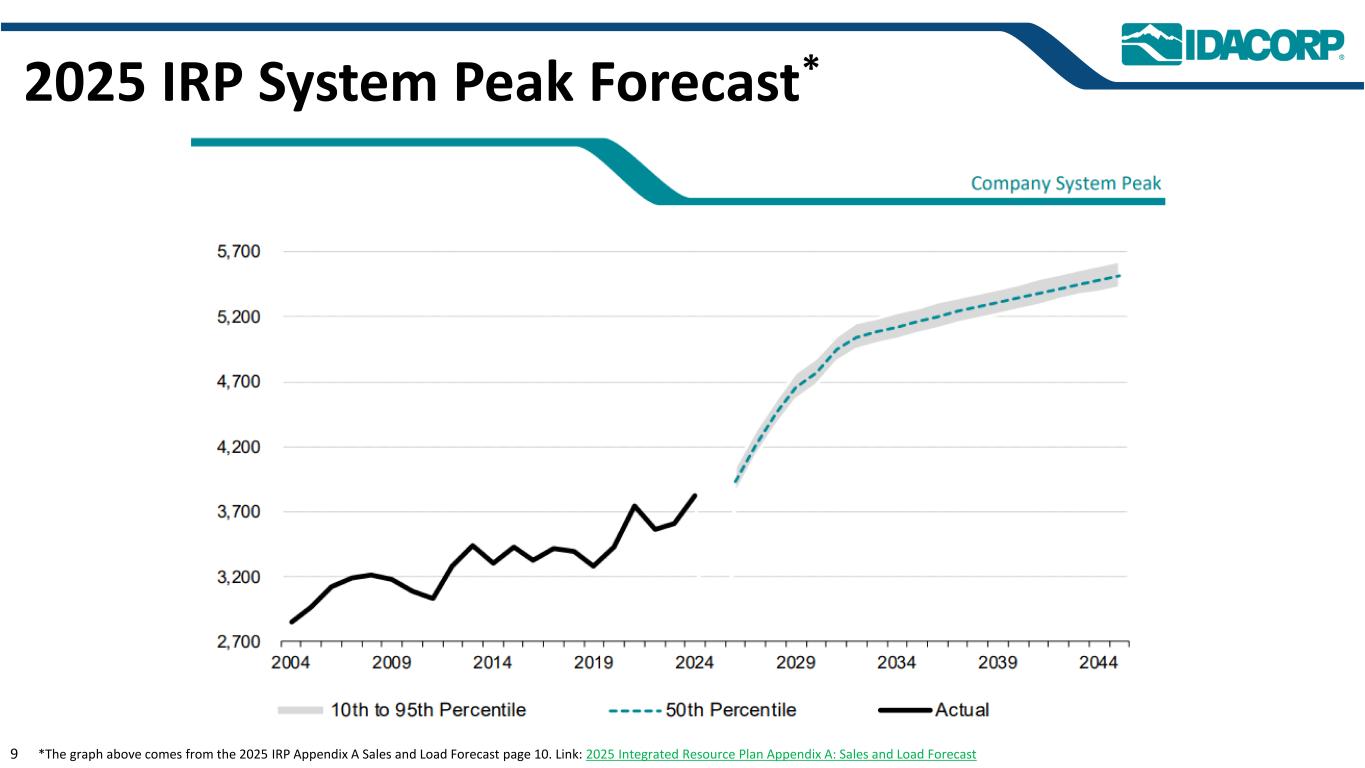
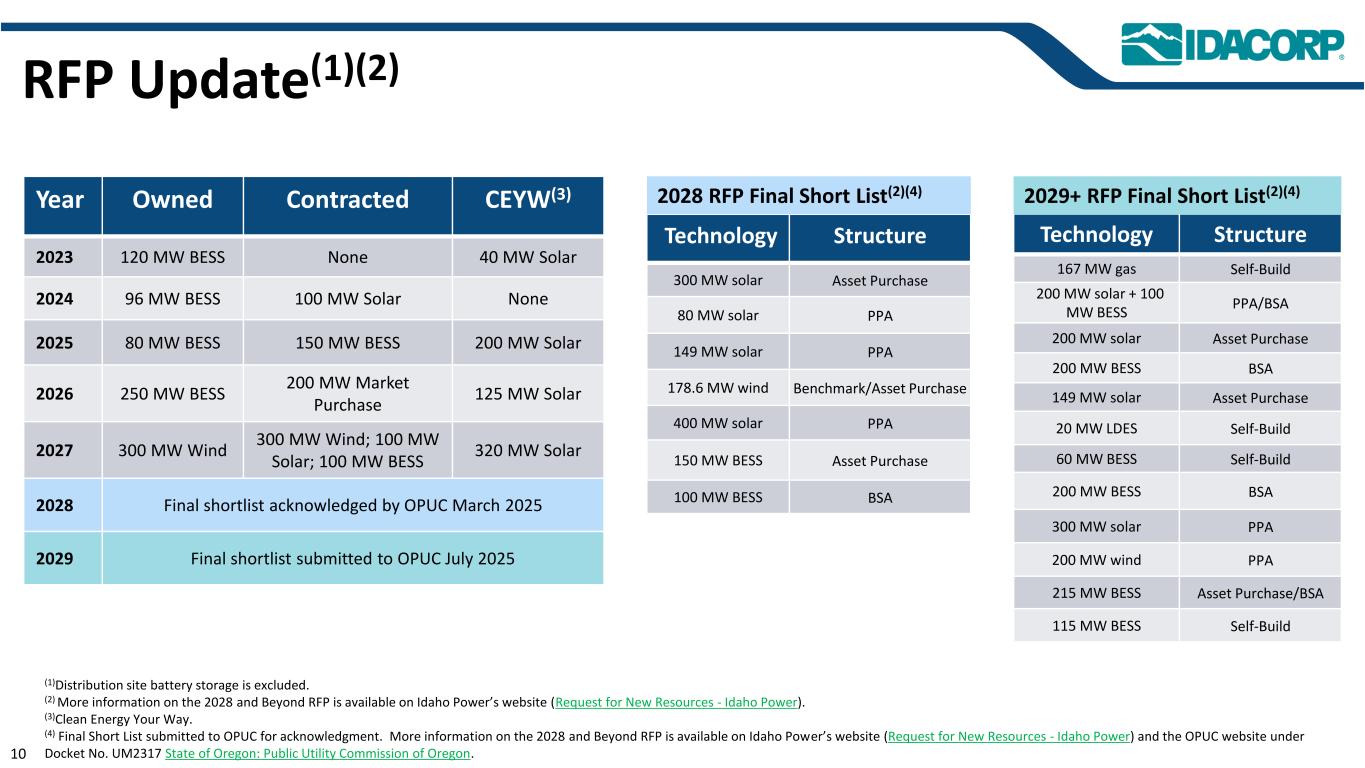
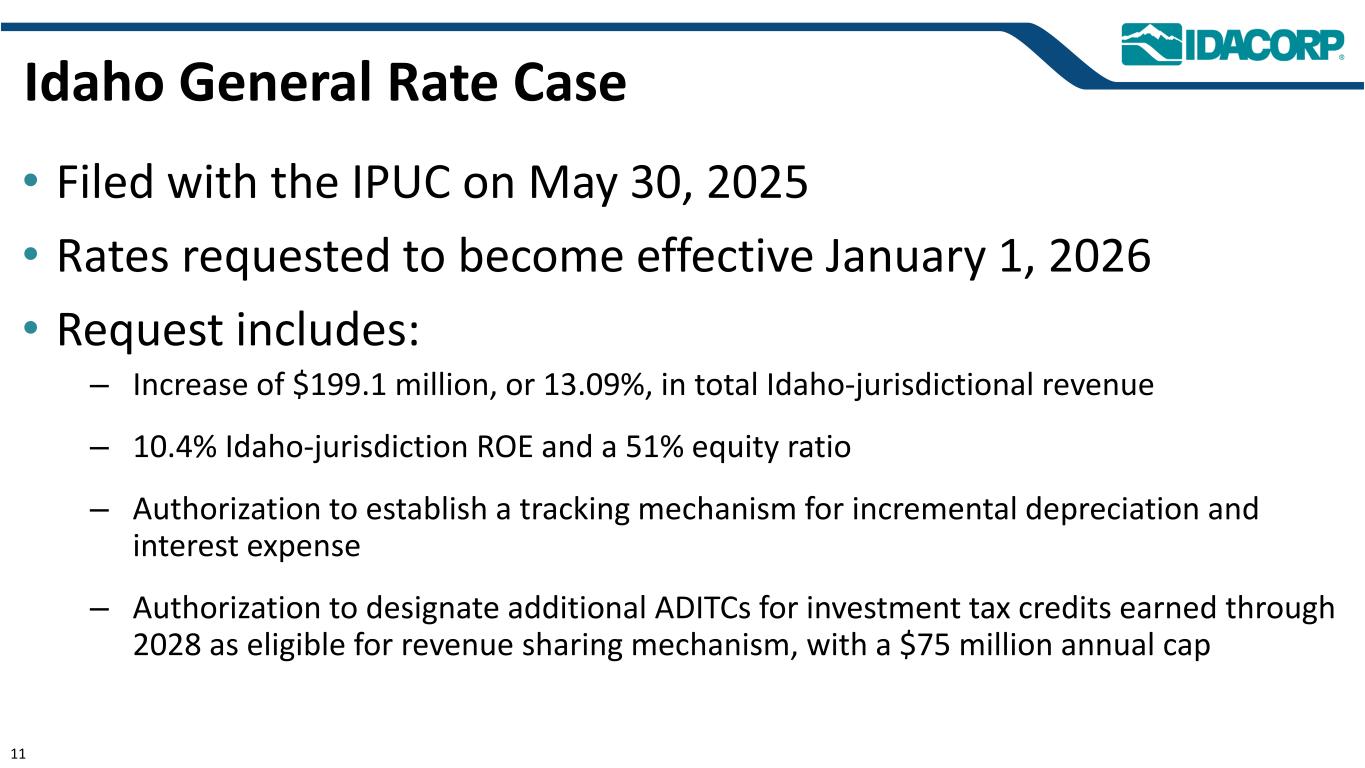
Thank you, Amy, and thanks to all of you for joining us today. I'll start with a look at the continued customer growth across our service area, which we've summarized on slide five. Idaho Power's customer base has grown 2.5% since last year's second quarter, including 2.7% for residential customers. We saw several significant new customer investments in the technology, food processing, mining, and distribution warehousing sectors during the first half of the year. I talked about some of those on our first quarter call. The most notable new one I'll highlight is Micron's June announcement of a second high-volume fabrication plant in Boise, adding to the first fab already under construction. We expect that second fab facility will be about the same size as the first fab. We've included a recent photo of the construction progress of the first fab on slide six, so you can see the scale of that project. We've served Micron since its inception, and we're excited for them and the opportunities that this expansion creates for our region. We're already working with the Micron team to determine how we'll serve the expanded project. Valor C3 data centers also announced an expansion at a second location in Boise, and Tesla has energized six new large electric vehicle fast charging stations throughout Idaho Power's service area. While growth is already robust, we continue to field and thoughtfully process requests from businesses looking to locate and expand within our service area. The pipeline of prospective customers on our list exceeds our all-time peak load of around 3,800 megawatts. While we don't expect all of those customers to materialize in the near term, those prospective customers would be incremental to the load growth rate that we included in our recently filed IRP. And they give us visibility on incremental load growth well into the 2030s. Also, the infrastructure and resources needed to serve those prospective customers is not yet in our CapEx plans. We're strong advocates that growth has to be sustainable and responsible, and that service to our existing customers must remain reliable and affordable. So any new agreements with large load customers will include the appropriate timeframes needed for build-out and ramp-up, as well as appropriate cost allocation, just as we've done in recent large-load special contracts. Turning to slide 7, I'll provide some updates on what we're building to meet this historic demand. In June, we broke ground on the Boardman to Hemingway transmission line, a key resource we've been working hard for nearly 19 years to make a reality. We also recently brought a company-owned 80-megawatt battery project online, along with the batteries for a 150 megawatt energy storage agreement. For the Gateway West and Swift North transmission lines, which will join Boardman to Hemingway as major energy highways across the western U.S., we're working through the remaining regulatory and permitting processes to get to construction. Recent legislation and executive orders have introduced new hurdles and some uncertainty around the constructability of renewable projects. So we've been working with our counterparty on the Jackalope Wind Project in Wyoming to assess the impacts of these federal actions. In addition to permitting, there are other conditions that still need to be satisfied to move forward with the project. This project would provide both energy and capacity that we need to serve load growth. So if ultimately the project doesn't move ahead, we are identifying alternative capacity and energy resources. With a dynamic environment, remaining flexible and planning ahead is key. In other developments related to resources, we recently filed our 2025 IRP. On slide 8, you can see a key takeaway from this 20-year plan is that our IRP recommends more gas-fired resources, which are needed to provide additional system flexibility and dispatchable capacity. These gas assets would complement our existing diverse resource portfolio. Remember that the IRP is a fixed point in time, and it assumes that current laws, like the Clean Air Act Section 111D, continue into the future. If those rules change, the portfolio could also change. Like I said, things are very dynamic. Also, it's important to remember that we issue RFPs for resources, and what we're looking for as we plan for the future is the least-cost, least-risk resources that are viable and meet the capacity and energy deficits we see in our future. Often, through that RFP process, those resources are ultimately different than what our IRP shows. On slide nine, you can see the significant load growth the 2025 IRP forecasted between 2025 and the early 2030s. As I mentioned, our five-year growth rate has increased notably in each of the last three IRPs, and micron-second fab wasn't included in this one, so we're quite possibly underestimating load growth in our 2025 IRPs. On a related note, turning to slide 10, we filed our 2029 RFP final shortlist in July for Oregon PUC acknowledgement. As a reminder, the Oregon PUC acknowledged the 2028 RFP final shortlist last quarter, and it has a mix of renewable projects. For resources in both RFPs, some of the listed projects would be owned by Idaho Power and some would have third-party ownership. We continue to make progress on contract negotiations. We'll be working with the bidders to help understand the impacts of recent federal legislation, tariffs, and executive orders on their projects as we focus on identifying the least cost, least risk resources from those RFPs. I think the most notable is the 167-megawatt Idaho Power-owned gas plant shown as the top project on the shortlist for the 2029 RFP which would provide us with greater certainty on a high capacity factor relative to the other listed projects. Turning to regulatory matters on slide 11, Idaho Power filed a general rate case in Idaho at the end of May. The regulatory process for that case is underway and we expect new rates to go into effect at the beginning of next year. This request is a full general rate case filing, similar to our 2023 Idaho rate case, and it requests an overall rate increase of about $199 million for Idaho customers. We're requesting a 51% equity ratio, a 10.4% ROE, and additional ADITCs to be added to our regulatory mechanism, along with a depreciation and interest expense tracker.
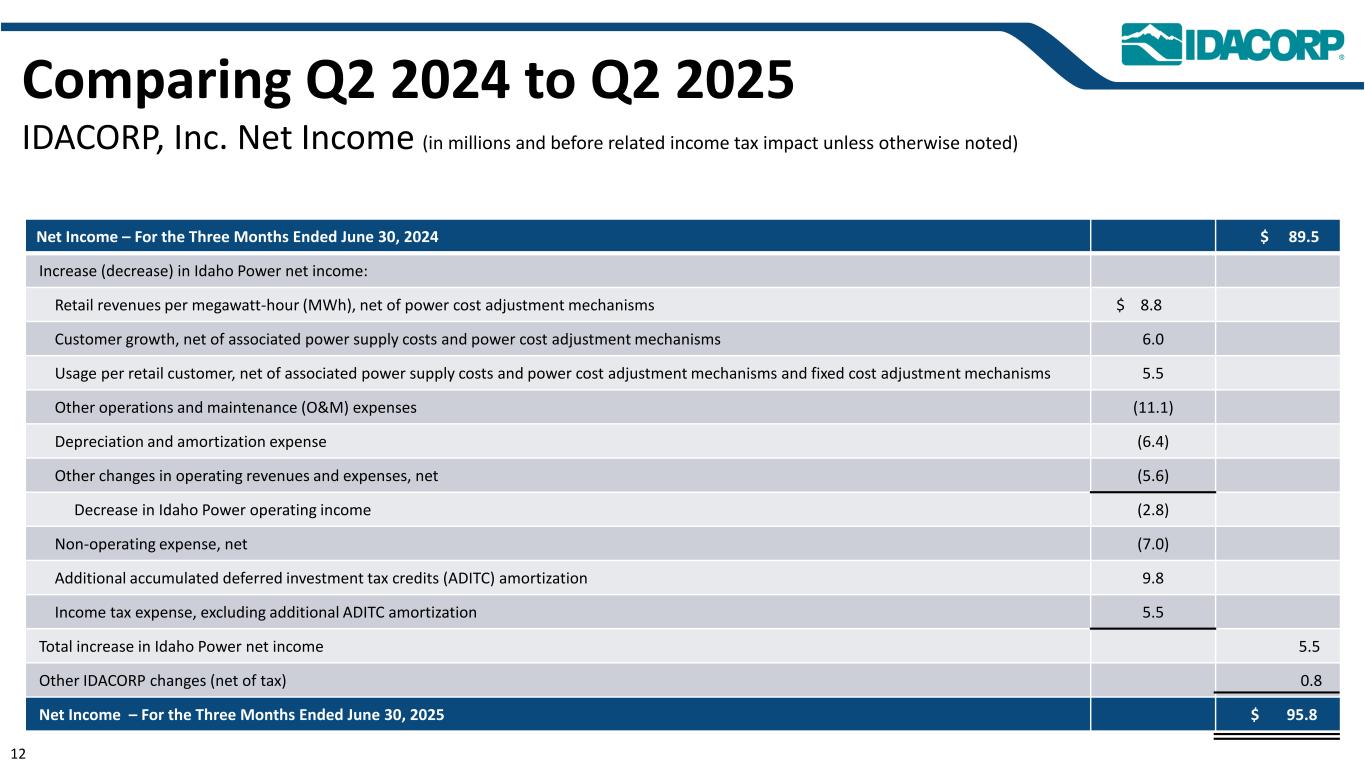
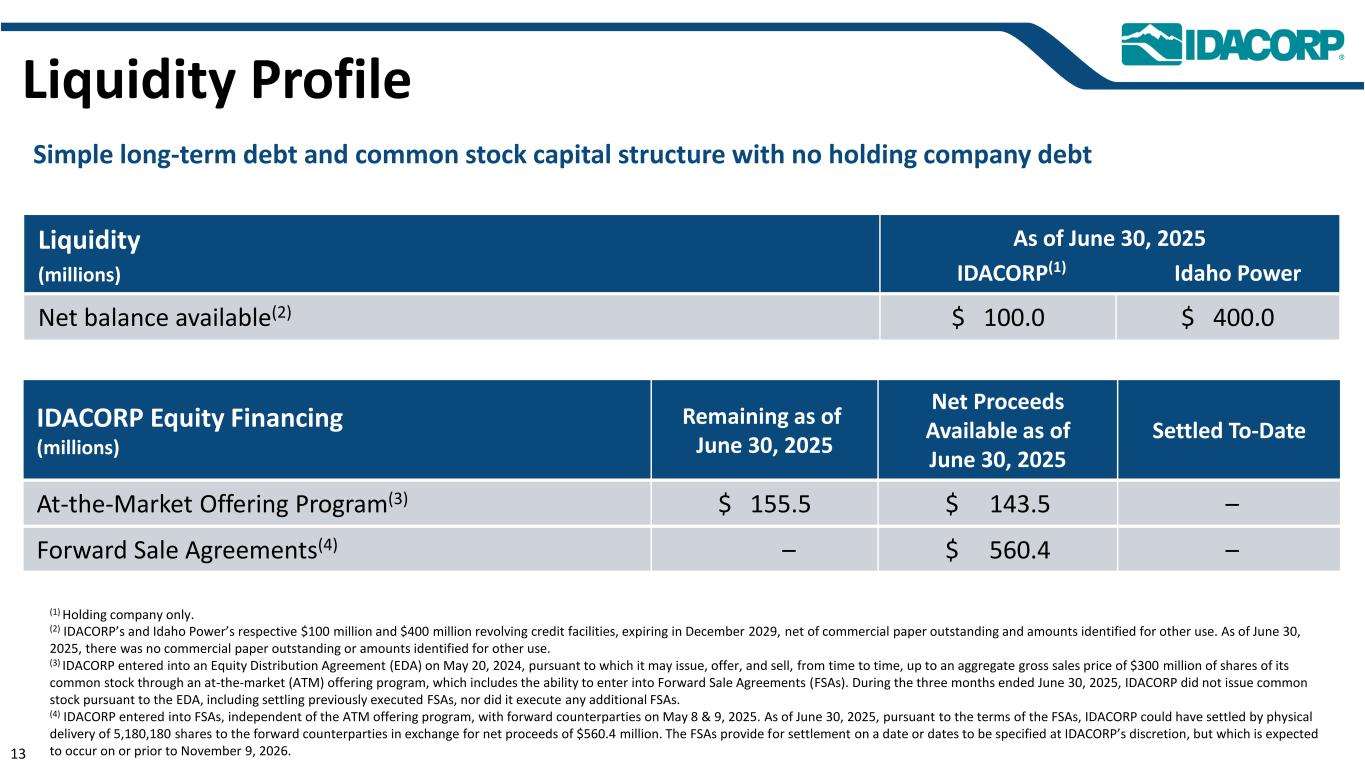
Brian will talk more about the case in his comments and i will hand it over to him now hey thanks lisa hi everybody i'm going to start on slide 12 today and as the table shows idacorps net income increased 6.3 million dollars for the second quarter this year compared with the second quarter last year the major drivers for the quarter were higher retail revenues from the january 1st rate change customer growth higher customer usage due to warm and dry weather and then recording incremental tax credits this year under the idaho regulatory mechanism. No surprise, those benefits were partially offset by higher depreciation and interest expense. We also had higher O&M expense, in large part from labor cost increases, but I'd say we're still on track with our own. A little more detail on the drivers. A net increase in retail revenues per megawatt hour increased operating income by $8.8 million on a relative basis. That benefit was mostly from the increase in Idaho-based rates from the limited-issue rate case that idaho power customer growth increased operating income by six million dollars quarter over quarter usage for retail customer was a benefit of 5.5 million cooling degree days were 49 higher than normal which was only slightly higher than the warmer than normal second but precipitation was for irrigation customers other o-n-m expenses were 11.1 million dollars higher i already mentioned the higher labor costs but there were some wildfire mitigation program and some related insurance expenses included in the mix of higher cost and consistent with the trend we've seen over the past several quarters from continued and accelerated capital investment, depreciation expense increased $6.4 million quarter to over quarter. The other net changes in operating revenues and expenses decreased operating income by $5.6 million. We expected this. It was mostly due to the timing of recording and adjusting regulatory approvals and deferrals in the second quarter last year that didn't recur in this year's second quarter. The net non-operating expense increased $7 million in the second quarter. Interest on higher long-term debt balances needed to finance our growth, and also an increase in interest at Idaho consumer deposits both contributed to the increase. There's one new factor this year on the non-operating expense side that you might have noticed in the 10Q if you've gotten to it yet. In May, our first battery project, subject to a third-party energy storage agreement, started operations. that triggered the beginning of our finance lease accounting for the project and this resulted in higher interest expense and amortization of the right of use asset from a financial results perspective this item is passed through in our power cost adjustment mechanism in idaho but i wanted to call it out because you'll see the various leasing it's not bad it's just different the increases in non-operating expenses were partially offset by an increase in AFUDC because the average construction quip was a fairly staggering $1.4 billion. Also, we saw higher interest income due to higher cash balances. The decrease in income tax expense was mostly the result of an increase in additional ADITC amortization and some variances in flow through tax adjustments. Based on our current expectations of full-year financial results, Idaho Power reported $17.2 million of additional ADITC amortization, like Amy noted earlier. compared with $7.5 million in the second quarter last year. Remember, we record the ADITCs readily each quarter based on our full year. Moving on to slide 13, I want to touch on our recent equity transaction. In early May, we entered into forward sale agreements to sell $575 million in gross amount of IDACorp stock through a discrete follow-on offering. Combining the future net proceeds from that offering with $145 million in forward sale agreements we executed in the fourth quarter last year and in the first quarter this year we expect to be able to fund our equity needs and into 2027. lisa mentioned new customers and she mentioned the pending rfps so there's certainly pressure to the upside on incremental capex and that can impact our plans but in any event we haven't taken down any of the atm short shares or any of the shares from the follow-on offering to date so those are all available and they aren't shown as equity in our capital ratio right now we're committed to maintaining a 50 50 debt equity ratio at idaho power and our equity forward transactions help make that achievable we're excited to have the follow-on transaction completed with a solid outcome and it had very high receptivity so i just say that we appreciate our owners continued support and confidence and we are of course committed to the thoughtful drawdown and the investment also related to liquidity our operating cash flows for the first half of 2025 were 301 million dollars which was $45 million higher than the first half of last year. So more good news. Lastly, for me, Lisa gave the highlights on our general rate case. We're looking to add nearly a billion dollars of rate base through the case, which is reflecting the investments we've made in our system for reliability and to address economic growth. That's a notable amount, but it's otherwise a relatively standard general rate case for us in most respects. We're asking for our typical historic test year treatment, like we received in our 2023 general rate case. But because of the notable regulatory lag that inevitably results from that historic test-ture approach, we also requested in our case a new-to-us depreciation and interest expense tracking mechanism. That mechanism would help to reduce the substantial amount of regulatory lag we're experiencing as we move through this period of heightened capital investment. Just stated generally, the mechanism would measure the difference between actual depreciation and interest expense, and a sales-adjusted baseline level of depreciation and interest expense on a calendar year basis starting in 2026. We'd have both the forecast and true-of component, like our PCA, and rates would adjust at the same time as the PCA. If it's approved, we expect the mechanism would help address regulatory lag and benefit both our earnings and our credit metrics, and help keep financing costs at an acceptable level, ultimately benefiting our customers as well. We also asked in our filing for authority to incorporate additional ADITCs in the tax credit regulatory mechanism. We asked that all existing ADITCs on the books that are not already authorized for inclusion in the tax credit mechanism, plus all the ITCs we earned through 2028, as of now, estimate the amount of those credits is incremental to the 70%. And we also asked for a year. So it was a busy quarter. We're growing and we're executing on our financing, regulatory, and capital investment plans to support.
Thanks, Brian. moving to slide 14 you can see our updated 2025 full year earnings guidance and key operating metrics. This guidance assumes normal weather and normal power supply expenses for the rest of the year. We raised our lower end of our guidance and now expect IDACorp's diluted earnings per share this year to be in the range of $5.70 to $5.85 with the assumption that Idaho Power will use 60 to 77 million dollars of additional investment tax credit amortization our expectation for full year o m expense continues to be in the range of 465 to 475 million dollars we still anticipate spending between 1 and 1.1 billion dollars on capex in 2025. although it is important to note that we have not adjusted our forecast for terrace given the volatility and amounts and we continue to evaluate and monitor that situation finally we still expect good hydropower generation in 2025 though we have updated our range to seven to eight million megawatt hours for the year the dry june weather was the largest driver of the reduction to the high end with that we're happy to address any questions you might have.
Operator
We are now ready to begin the question-and-answer session for attendees who have joined the Q&A line. If you would like to ask a question, please do so by pressing star 1 on your telephone. Please ensure your mute function is turned off before asking your question.
We will now take as many questions as times permit on a first common basis once again that is star one on your telephone keypad to ask a question now your first question is from the line of Chris Ellinghaus with Seberg Williams shank hey everybody how are you good hi Chris how you doing Brian yeah thank you I think you I think the number you quoted us was 38 hundred megawatts in the pipeline a can you talk about how How many potential connections that is? And secondly, I'm not sure if you mentioned this, but was there any of that in the IRP numbers?
So I don't have the number of exact projects that that amounts to. And it's actually more than our peak load, but kind of around that number. So it's mostly data centers that are in that pipeline, although there are smaller projects in there as well. So the exact number I don't have on the top of the top of my head.
I don't have the exact number, Chris. This is, I think, one of the data centers is included, but it's beyond the five-year window mostly. And so you won't see that low, the 8.3.
And, Chris, this is Brian. I'll say when we do our load forecasting for the IRP, we always assume some amount of commercial and industrial growth. Some of those customers are the ones that are on the pipeline list, but I would say it's a relatively small growth rate compared to what it would look like when you add some of the larger customers from that pipeline going forward.
Lisa, you also sort of address this where you might be conservative in the IRP. Are you kind of thinking at this point, You know, looking at slide five, which shows sort of the progression of your retail sales forecast growth, are you thinking that it's conceivable that you could have another step up in the 2027 IRP that's kind of comparable to what we've been seeing in the progression?
Yeah, I think that's a fair assumption, Chris. And I'll say, I've said it on several of these calls, you know, the IRP process, we sort of publish a study every two years. But these are studies we essentially do with every large load customer that comes in, which is quite frequent. So just given that when you do the IRP process, you have to sort of lock down the number you're going to use in the study. And meanwhile, you know, the economic activity continues. So, long-winded way of saying that, yes, it could very well be higher and in a similar amount.
And, Chris, just maybe I'll add to that. This is Adam, just to give you our large load request this year, inquiries, and the year before was in terms of inquiries and interest. So, we're seeing, you know, interest in our service territory. That's great.
So looking at slide eight, you know, I looked at this preferred portfolio for a long time when it came out, and you mentioned the tax bill and how that may complicate things. It certainly looks today like, you know, you've got an awful lot that's affected in the solar winds, you know, maybe not the best column, but are you currently thinking today that you're going to need to upsize and pull forward more of the gas expectation given what the tax bill looks like? that's certainly some of the scenarios that we're analyzing um and lastly i guess i haven't seen it yet but do you have any idea when you'll get a procedural schedule on the ray case
tim do you want to take that one sure hi chris it's tim tatum um yeah we've been working on the procedural schedule with the parties and staff i would expect it in the coming weeks maybe even as early as next week we're close we're not um what maybe one more thing brian um can you give us any kind of color on what the irrigation impacts look like in the second quarter i can give you a little bit on that chris it was pretty significant you know last year we had a really strong irrigation season second quarter that was fueled by high temperatures you know
this quarter we have continued high temperatures relative to normal what we saw this quarter though was very low precipitation across our service territory and it turns out irrigation load is sensitive to heat certainly but it's also very sensitive to precipitation levels and we saw that this year if you look at actual sales year over year year to date it's been about a 15 increase increase in irrigation. If you look at it on a weather-adjusted basis, it's relatively flat, so very, very weather-sensitive. And remember, on irrigation… Okay. Thanks a lot. Appreciate it.
Operator
Thanks, Chris. As a final opportunity, press star 1 to signal for a question, and we'll pause for just a moment. Your next question is from the line of Julian DeMall-Smith with Jefferies.
Yeah, hi. Hey, it's Brian Russo on for Julian.
Oh, hi, Brian. I don't know. It's always sort of a guess.
Good afternoon. Hey, just on, you mentioned the Micron Phase II. It's great to hear it could be the same size as the first phase, still under construction. And I think, according to the tariffs, ultimately, you know, the first phase is 500 megawatts. You know, what kind of timeline do you see unfolding here? You know, I suppose they're just going to want to start construction of phase two, maybe even before phase one ends, right, to keep the continuity of the EPCs, et cetera. Just any thoughts there? And I would imagine that would correlate to one of the upside scenarios in the 2025 IRP?
Yes, on the second part of your question, it would be upside. And for the first part, We're just working through those details with Micron, so we're not really able to speak to the amounts or timing, but it is underway, and as soon as we have information we can share, we will.
Okay, great. And just to clarify, the 28 and 29 RFPs that you show in the slide, in theory, that's based off of your 23 IRP, right? So the way to look at it is whatever's in the 2025 IRP, just subtract what we see here on slide 10, and that's what will be incremental in any sort of follow-up RFP.
I'm not sure if the math is that simple, just given how many moving parts are, but what would you say, Adam?
Yeah, typically the way it goes is we send out an RFP, we get the projects that come in, as we're evaluating those projects, we're also evaluating the load and the need, and so that can ebb and flow given what we need at that exact time that the RFP is out. So this is just responding to our RFP request, and we would have to decide how many of those projects we actually pick to then meet the current needs that exist at that time. Does that make sense, Brian?
Yeah, it does. So, you know, for example, 160 megawatts self-built gas plant that you referenced in the 29 RFP shortlist, that kind of correlates to what you have on slide 8, 2029, 150 megawatts of new gas. But I suppose you'll need an RFP for 2030 for 300 megawatts of new gas. Is that the simplistic way of looking at it?
Yeah, I think that's one way to look at it. Maybe another way, Brian, is just in terms of the next five years, our need in megawatts of perfect capacity. So that's, you know, the resources, maybe not renewable, that can give you everything you need at that moment. It's about a little over 200 megawatts a year, every single year, based on the 2025 IRP. Now, when we decide which projects we're going to pick related to the 2028-2029 IRP, we will continue to look at that load forecast, see if it's changed. But in terms of the 2025 IRP, it's a little over 200 megawatts of perfect capacity every year, which could be hundreds of megawatts in renewables or even a little bit less in natural gas.
But that can work on these different projects. okay great and then just uh lastly uh you mentioned something uh some issues with the jackal wind farm it's a build on transfer right i think it's for 2027 needs it conceptually um if that's facing you know economic um you know issues with the tax bill etc could you just shift to gas this is adam yeah that is absolutely one option i think on jack look we're really looking at the permitting uh potential permitting issues related to the executive orders that are out
there if we did not build jackalope certainly one of the things we have and we'll continue to look at is is gas bills in that timeline great thank you very much thanks brian that concludes the question and answer session for today ms grow you will i will turn the call back to you well thanks again to everyone for joining us today and we thank you for your continued interest in idacor and I wish you all a good evening.