Operator
Good day, everyone, and welcome to the First Internet Bank Corp's fourth quarter and full year 2024 conference call. At this time, all lines are in a listen-only mode. Following the presentation, we will conduct a question-and-answer session. If at any time during this call you require immediate assistance, please press star zero for the operator, and please note that today's event is being recorded. I would now like to turn the conference over to Ben Berkowitz, Financial Profiles, Inc. Ben, please go ahead.
Thank you, Jenny. Hello, everyone, and thank you for joining us to discuss First Internet Bancorp's fourth quarter and year-end 2024 financial results. The company issued its earnings press release yesterday afternoon, and it is available on the company's website at www.firstinternetbancorp.com. In addition, the company has included a slide presentation that you can refer to during the call. You can also access these slides on the website. Joining us today from the management team are Chairman and CEO, David Becker, and Executive Vice President and CFO, Ken Lovick. David will provide an overview of the quarter in 2024, and Ken will discuss the financial results. Then we'll open up the call to your questions. Before we begin, I'd like to remind you that this conference call contains forward-looking statements with respect to the future, performance, and financial condition of First Internet Bancorp that involve risks and uncertainties. Various factors could cause actual results to be materially different from any future results expressed or implied by such forward-looking statements. These factors are discussed in the company's SEC filings, which are available on the company's The company disclaims any obligation to update any forward-looking statements made during the call. Additionally, management may refer to non-GAAP measures, which are intended to supplement but not substitute for the most directly comparable GAAP measures. The press release available on the website contains the financial and other quantitative information to be discussed today, as well as the reconciliation of the GAAP and non-GAAP measures. At this time, I'd like to turn the call over to David.
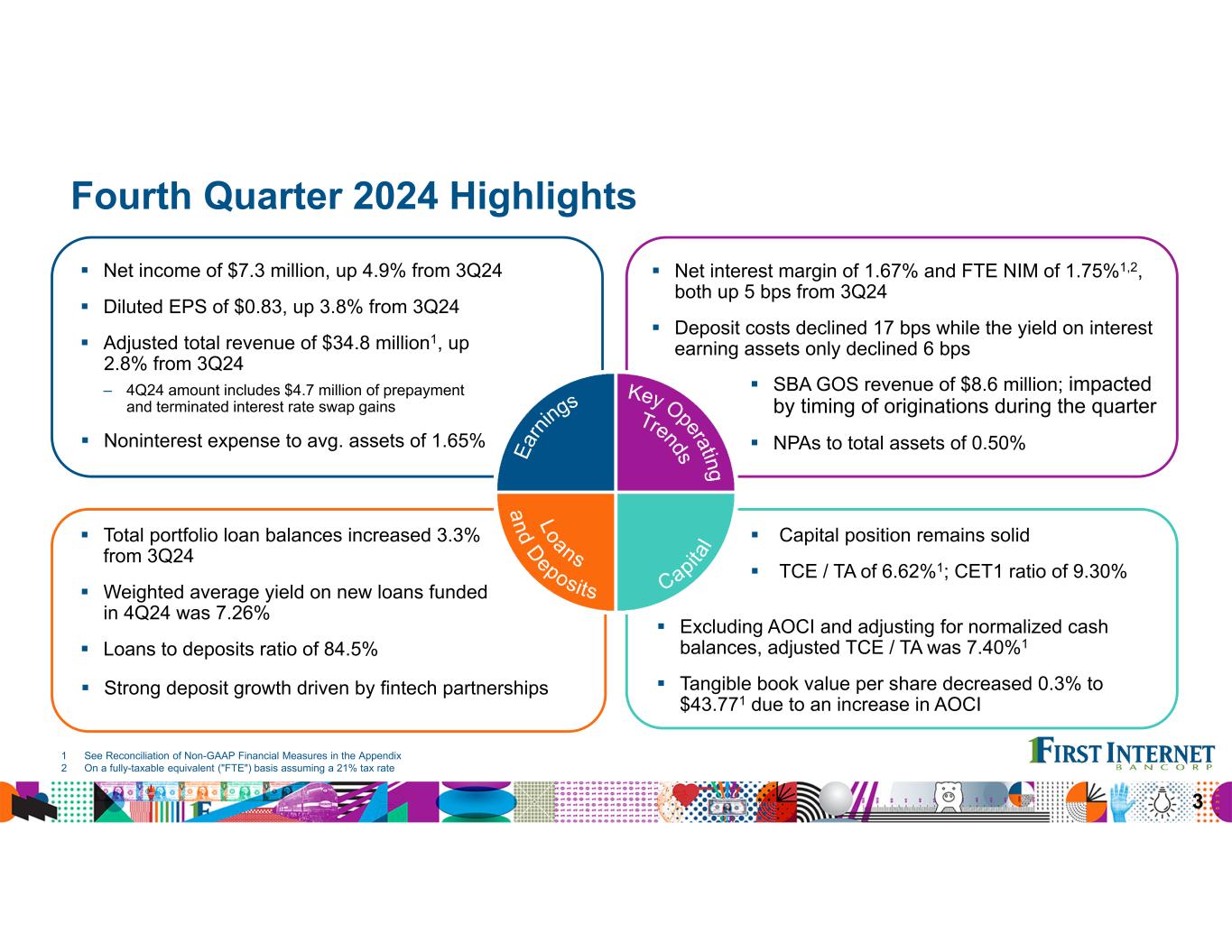
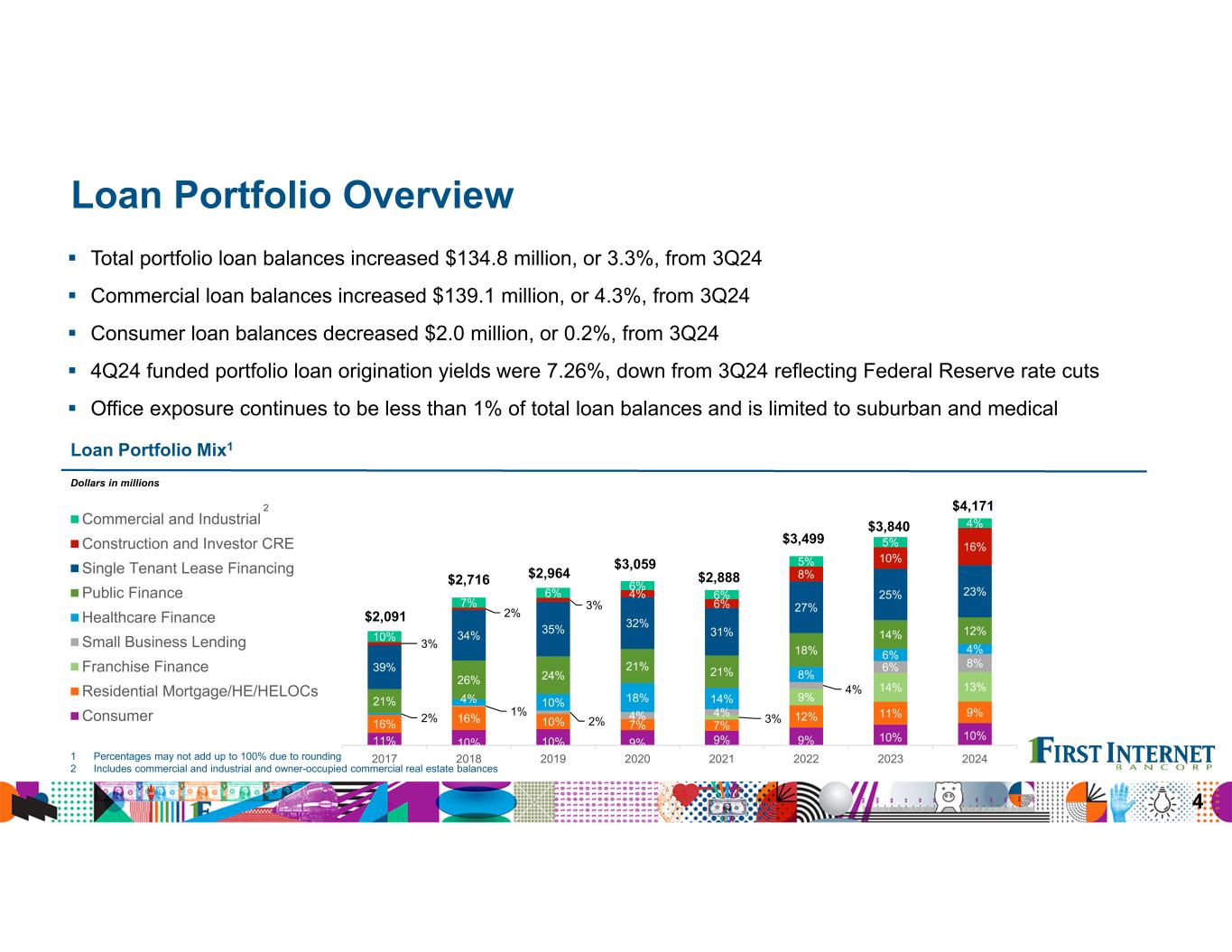
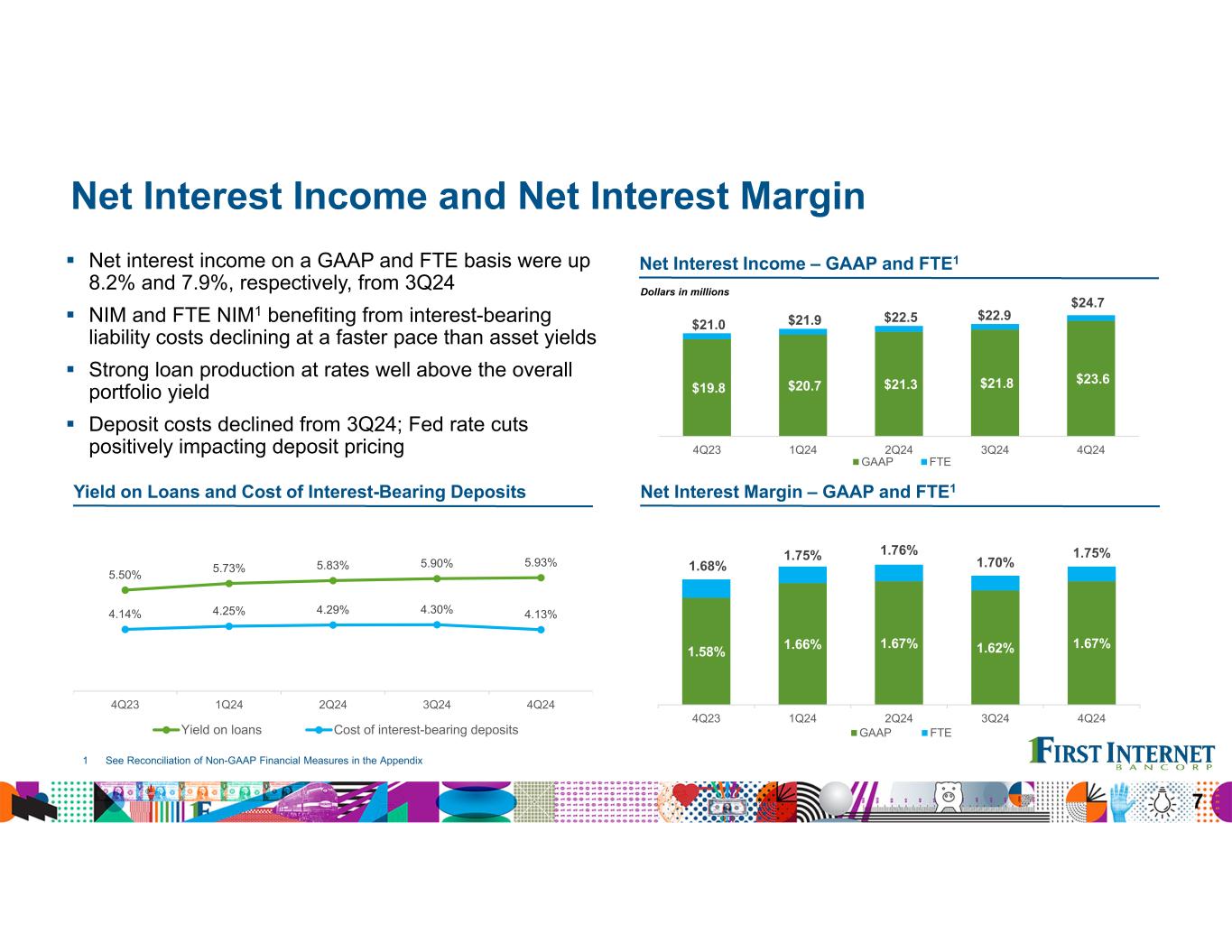
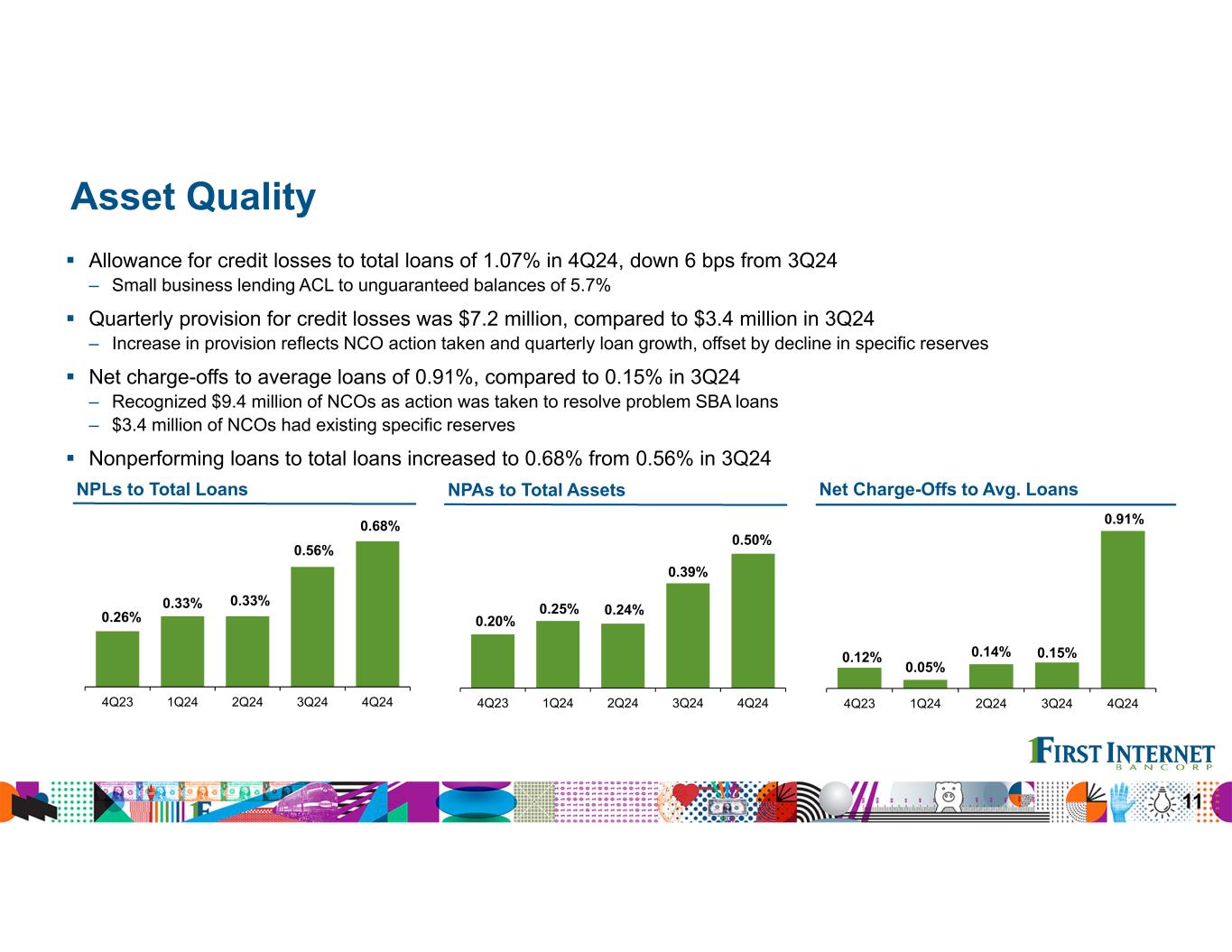
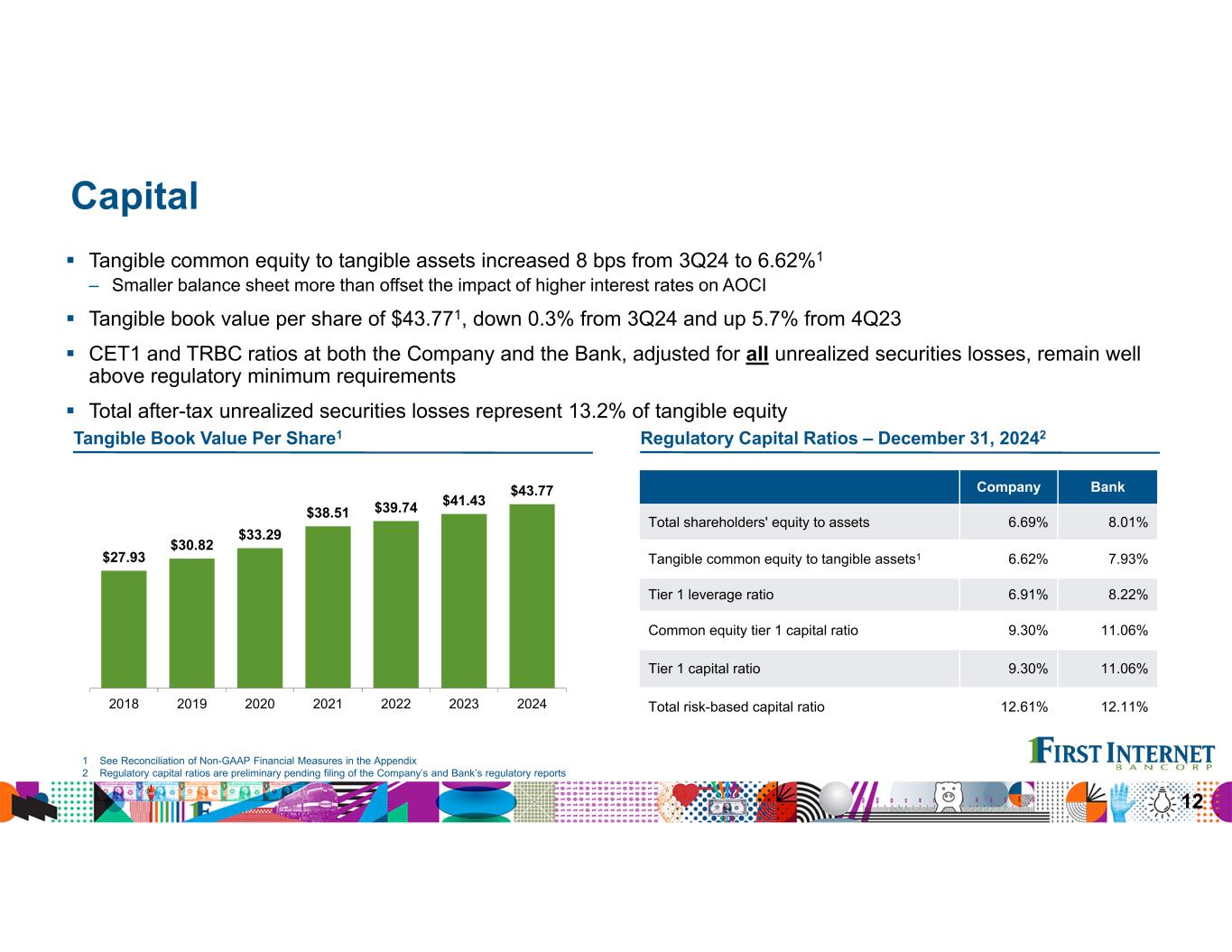
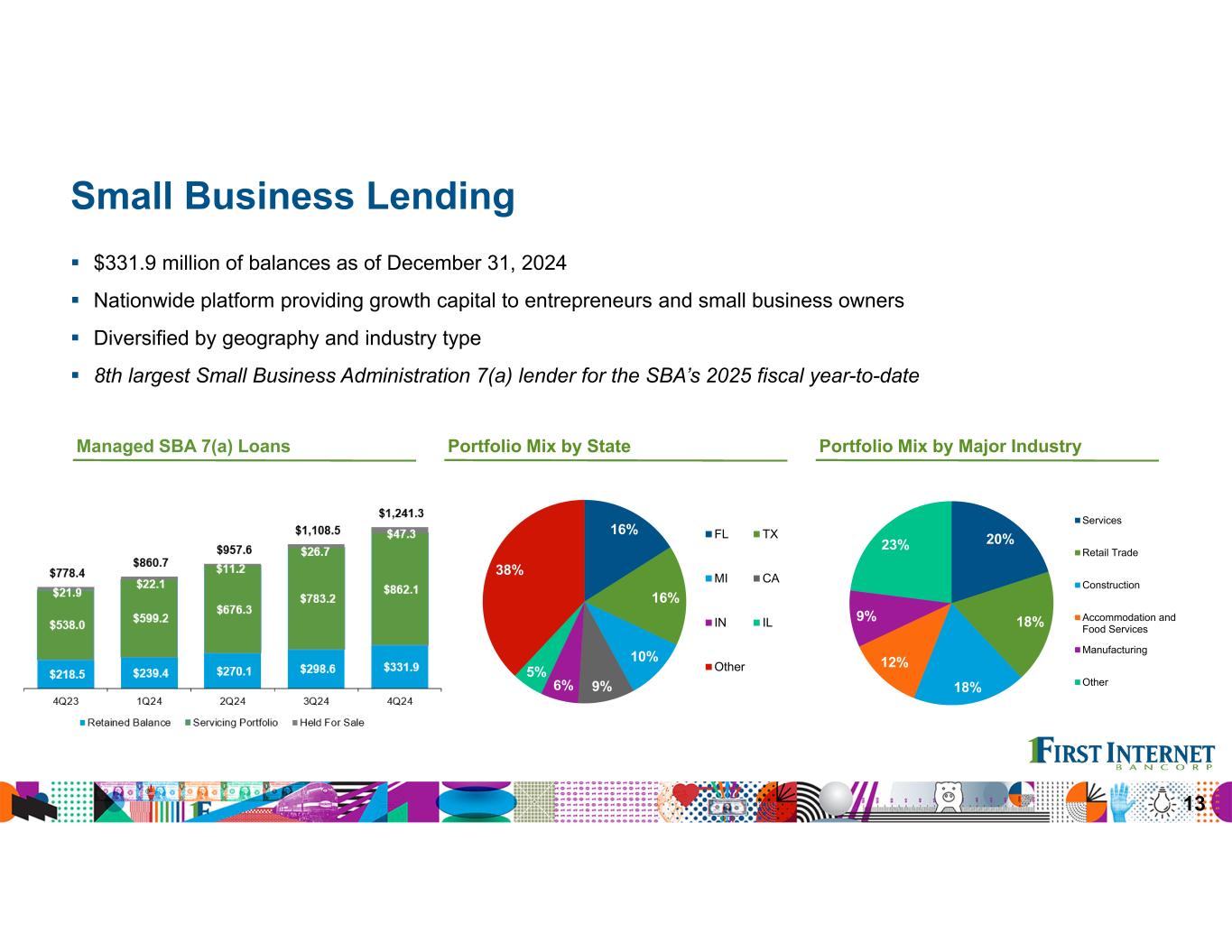
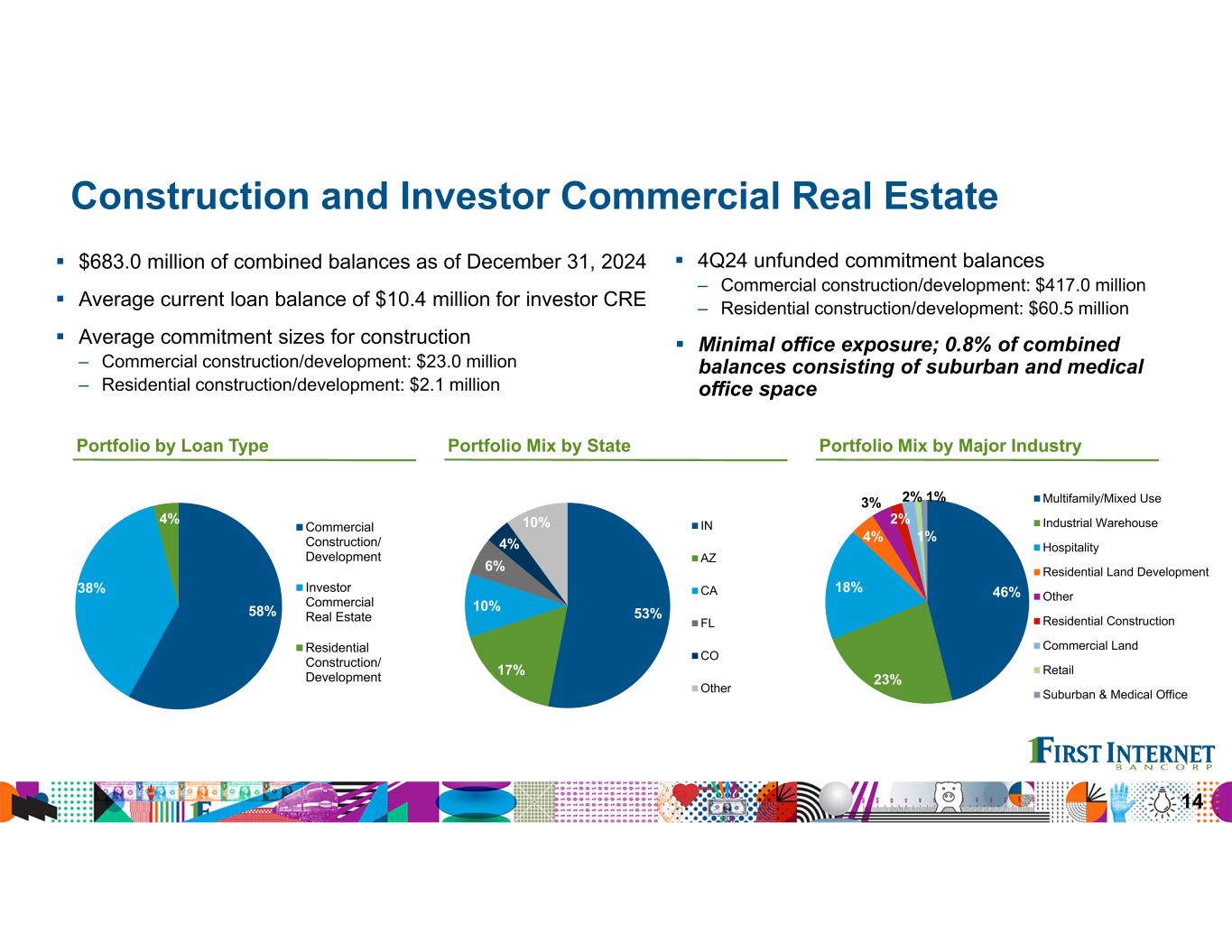
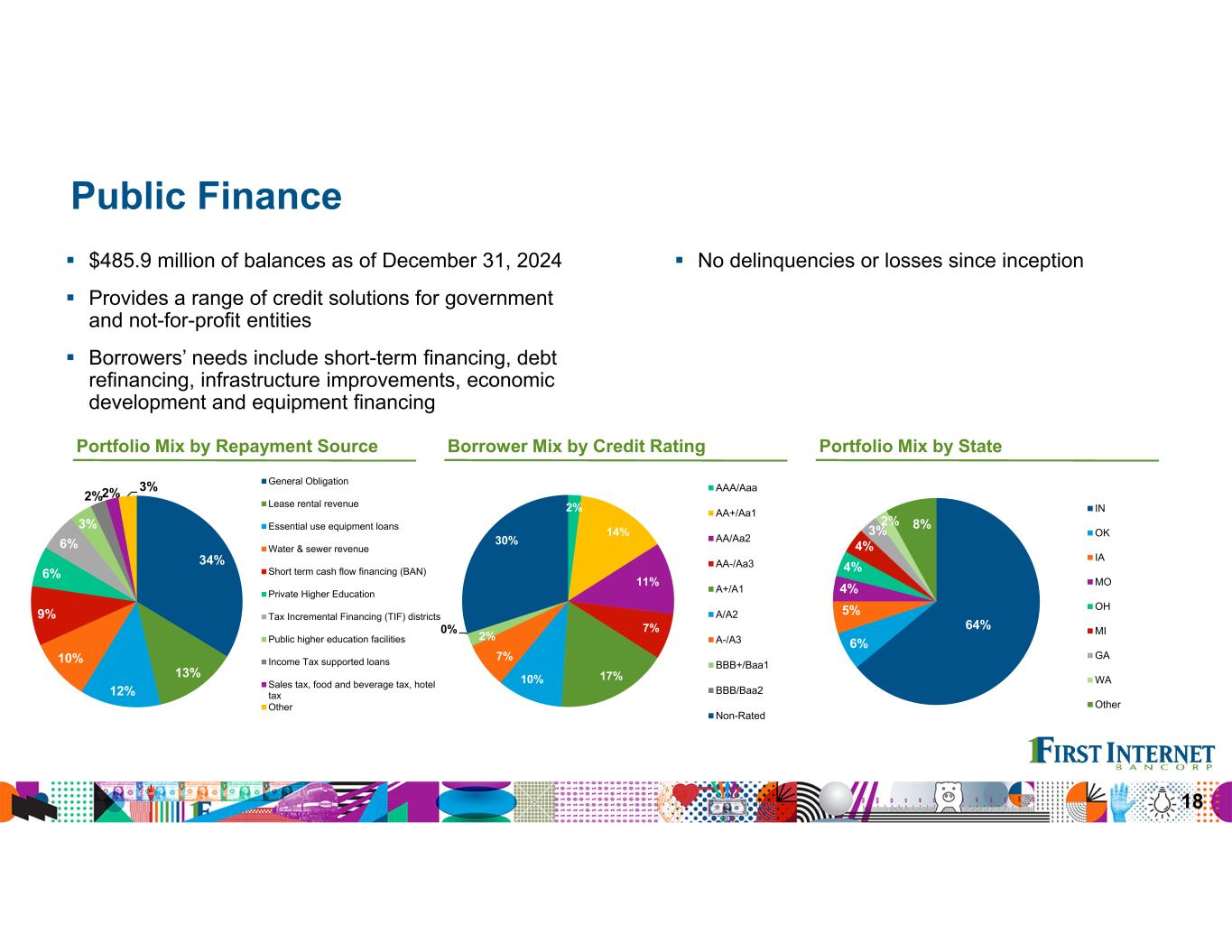
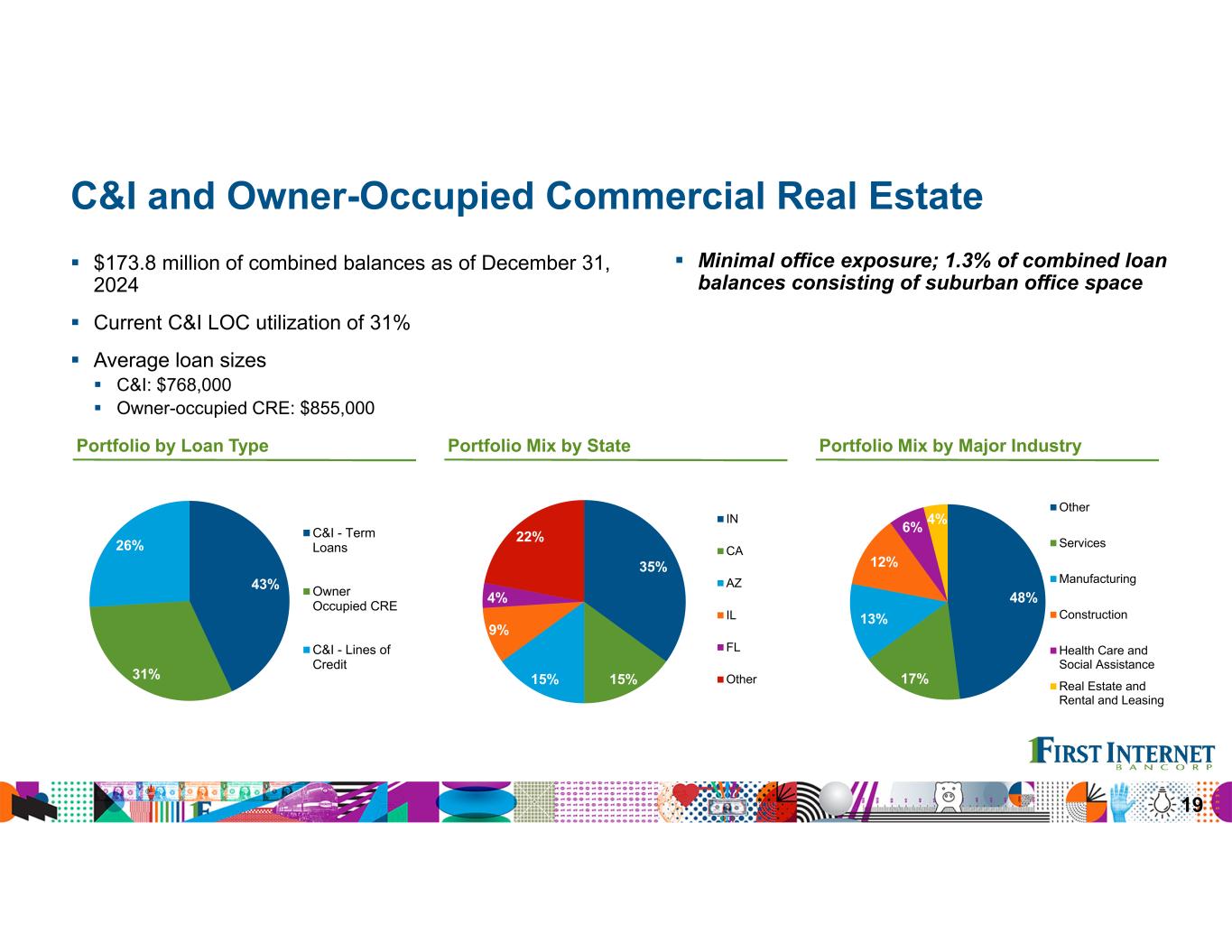
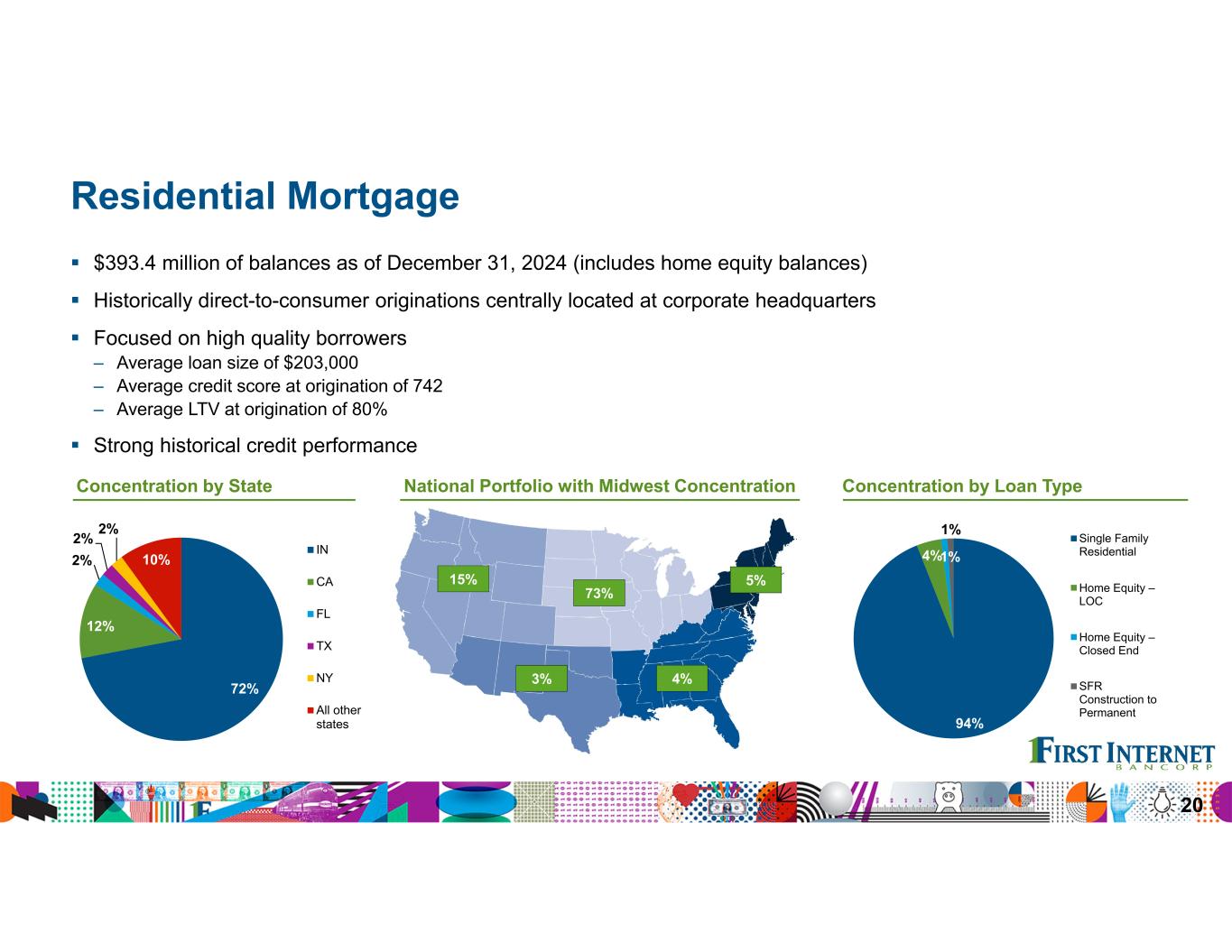
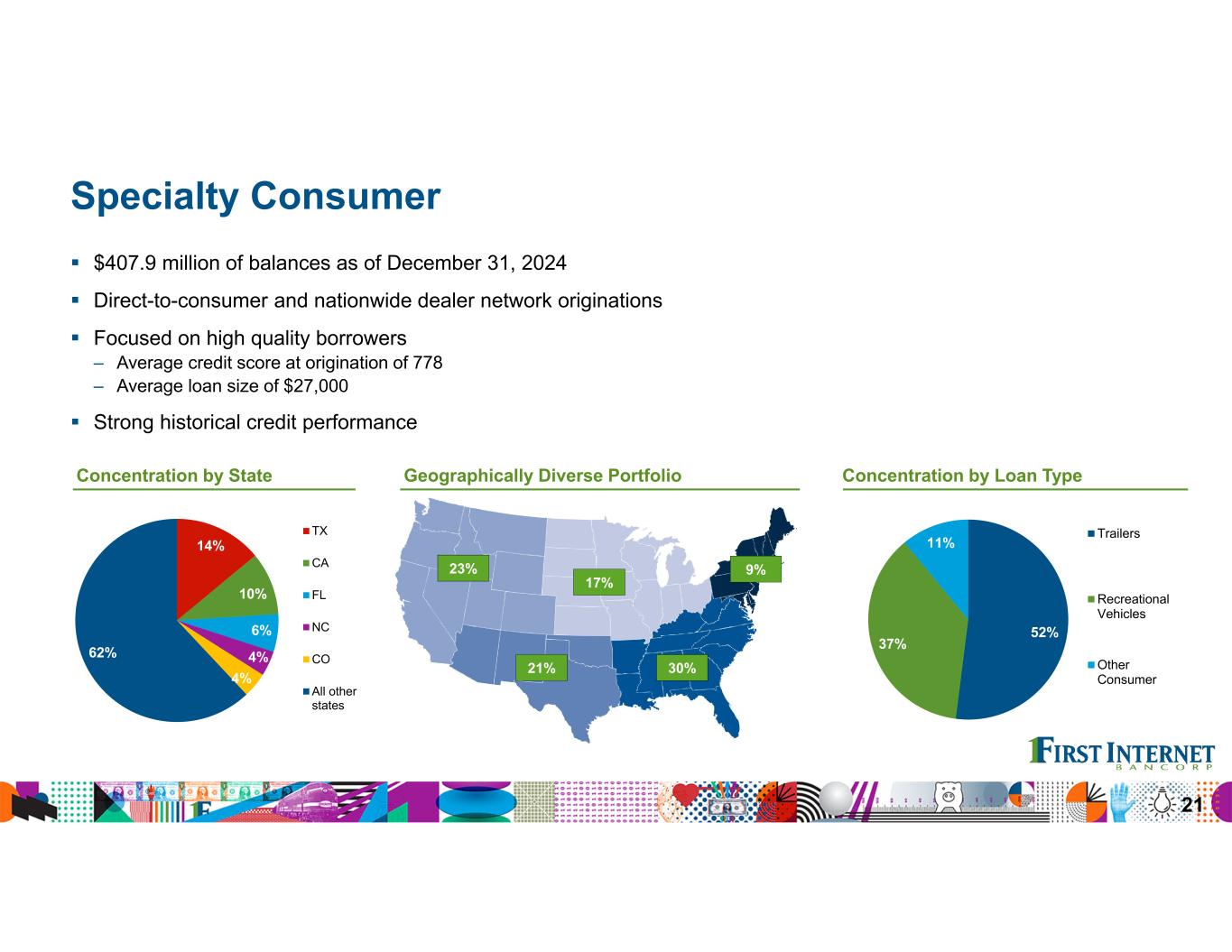
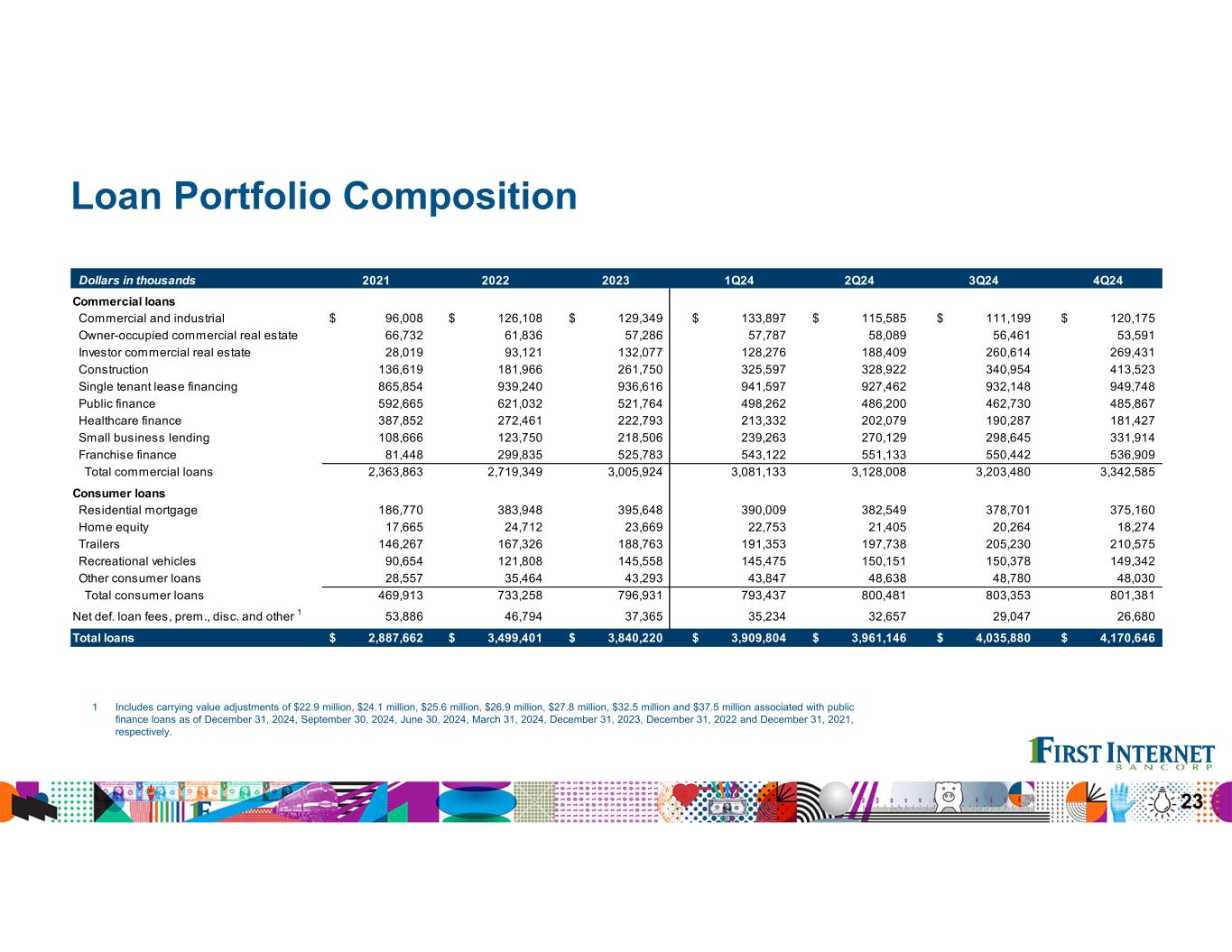
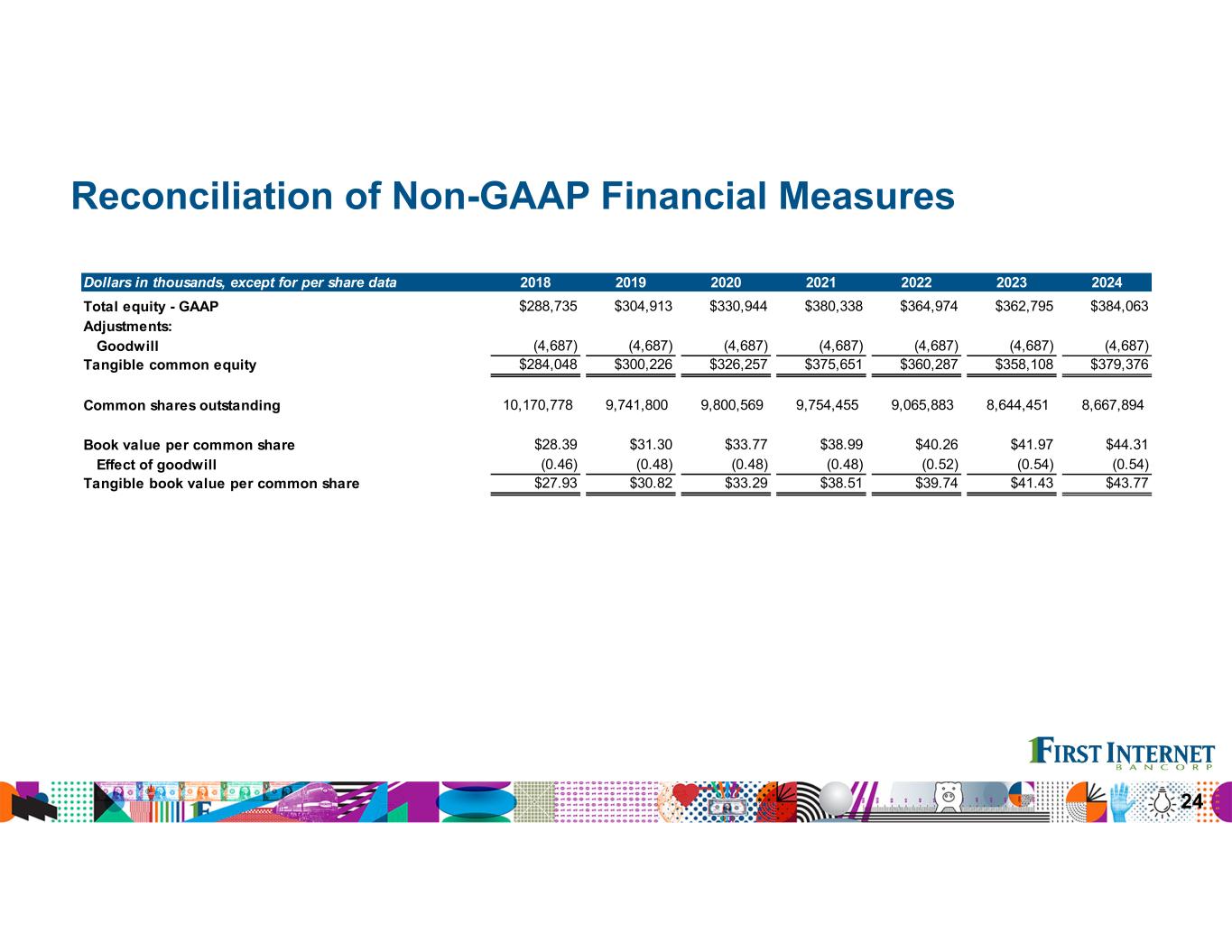
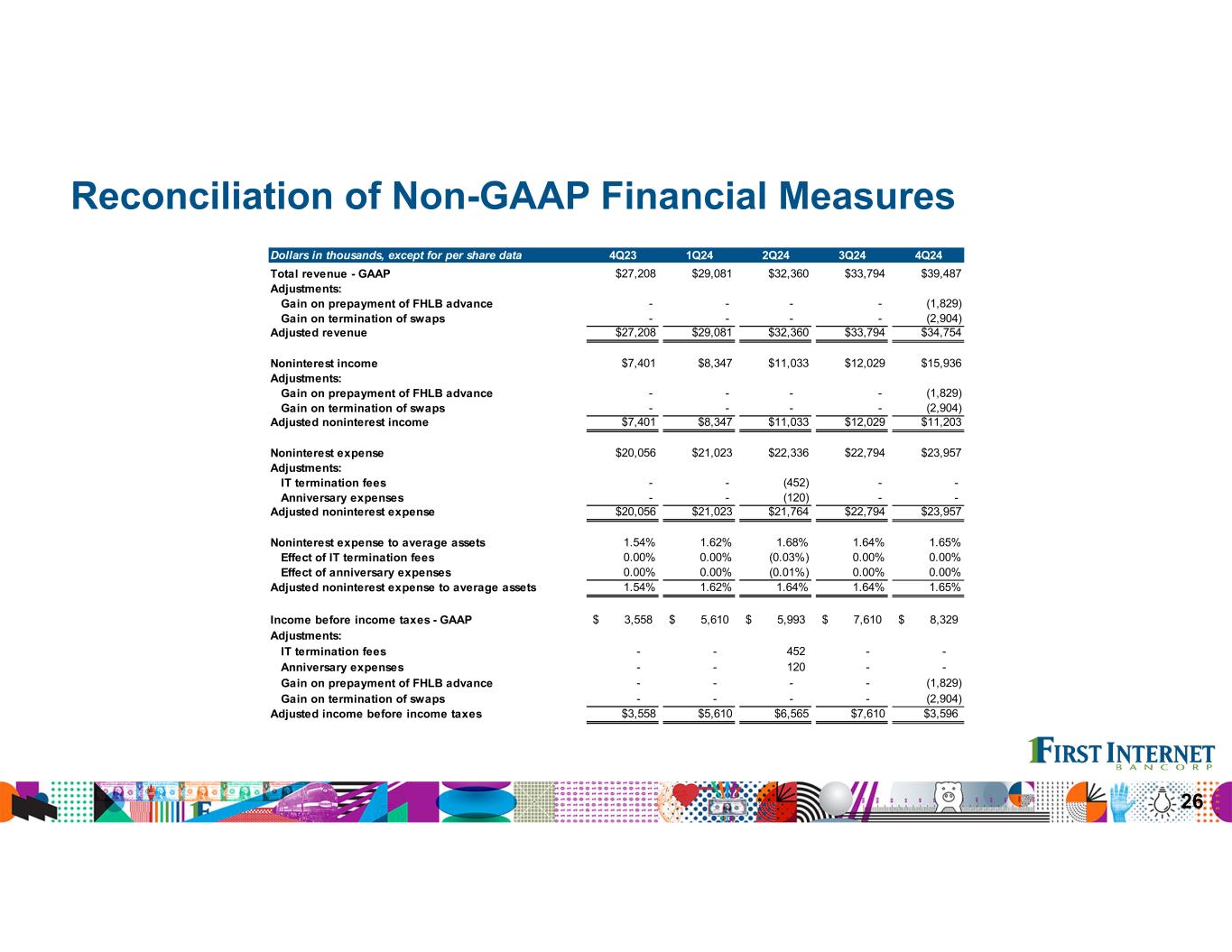
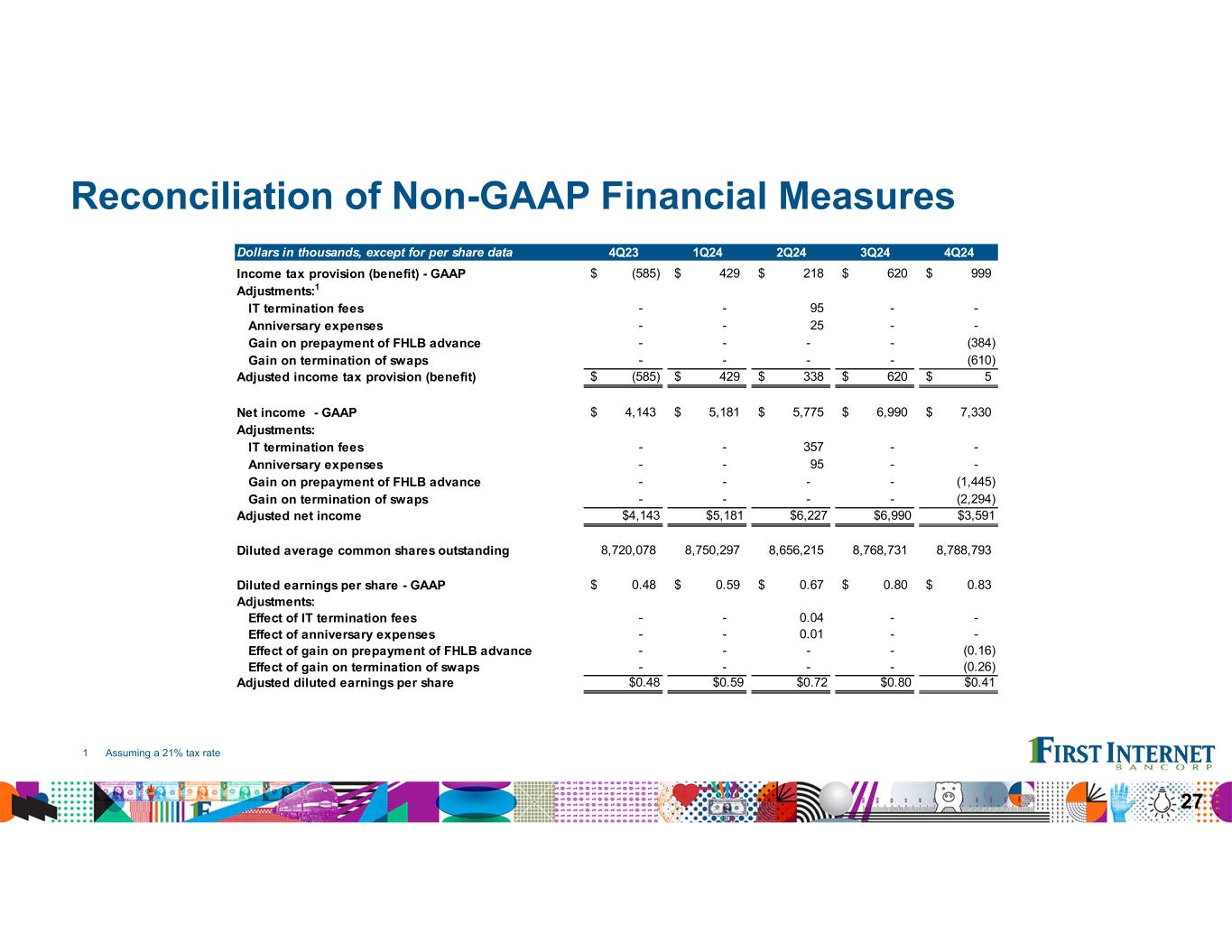
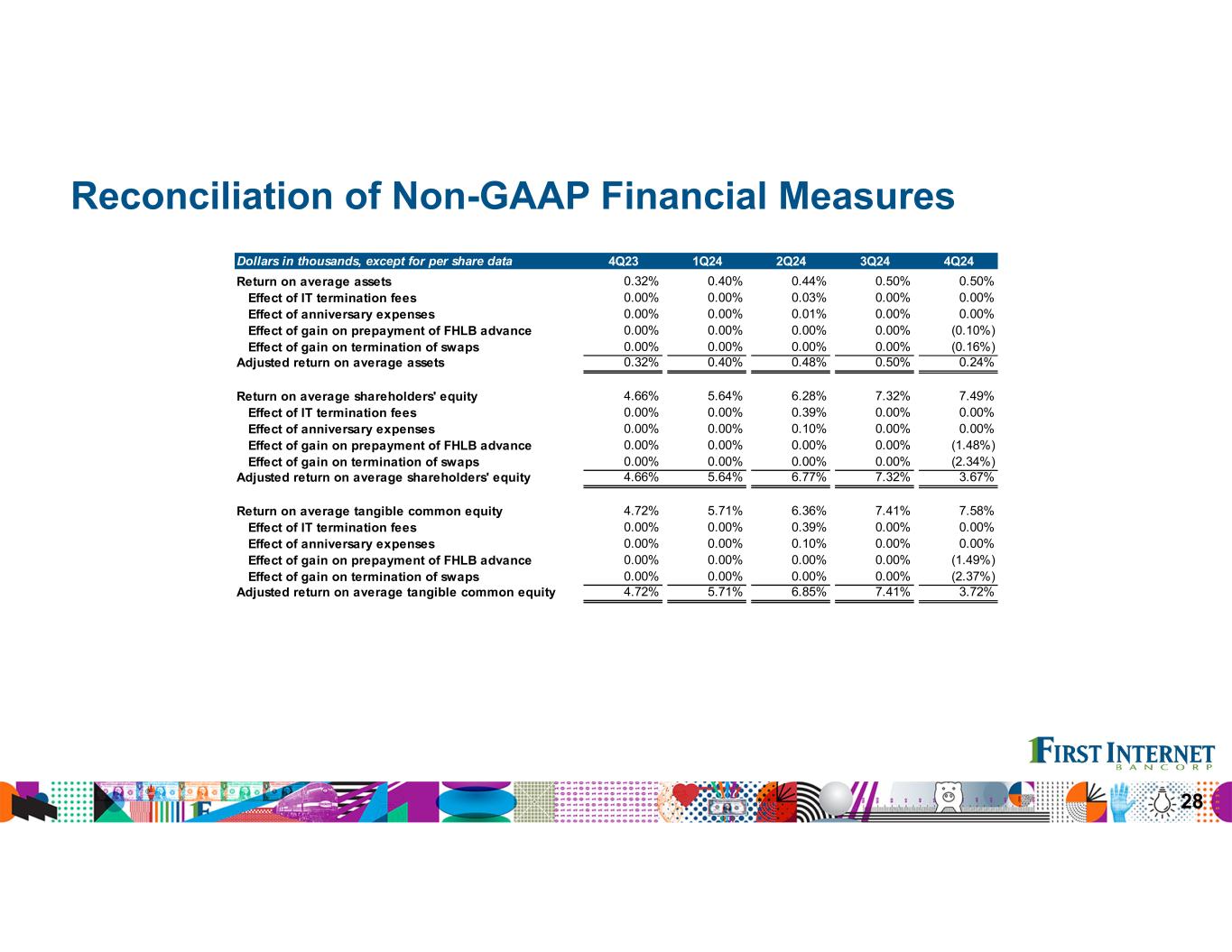
Thank you, Ben, and good afternoon, everyone. Thanks for joining us today for the fourth quarter and full year 2024 results. Our 2024 results reflect a year of remarkable growth. We entered 25 with a strong momentum. We produced significantly improved financial results marked by a recovery in net interest income and net interest margin. We generated strong loan growth while we focused on optimizing the composition of our interest-earning assets. Furthermore, our SBA lending business had an outstanding year that drove non-interest income substantially higher year-over-year and allowed us to achieve greater revenue diversification. To summarize some of the key achievements for the year, net income and diluted earnings per share tripled compared to 2023 at $25.3 million versus and $2.88, respectively. Net income of $87.4 million was up 17 percent. Gain on sale revenue was up more than 60 percent, fueling non-interest income growth of 81 percent from 2023. Total adjusted revenue growth of almost 30 percent far outpaced the increase in expenses, creating significant annual positive operating leverage. On the balance sheet, we grew balances by $330 million, an increase of 9 percent over 2023, which we attribute to strong growth in construction, investor commercial real estate, and small business lending. We also produced continued strong deposit growth, which allowed us the balance sheet flexibility to pay down a significant amount of federal home loan bank borrowings while also maintaining a solid liquidity position. The loans-to-deposit ratio is relatively consistent with the prior quarter and is indicative of continued flexibility as we continue to optimize both sides of the balance sheet throughout 2025. I would note that many of these year-over-year trends were evident in our performance for the fourth quarter, which I'll now discuss in a little more detail. If you're following along on the presentation, quarterly highlights are on slide three. It is only fitting that we would cap off a year with so much activity with a busy quarter. With a number of moving parts that impacted our results, our core business continued several of its upward trends. We drove an 8% increase in net interest income, making this our fifth consecutive quarter of growth in net interest income, notably a five basis point improvement in net interest margin. Even as the Federal Reserve rate cuts impacted the yield on new loan originations, the yield on the overall portfolio increased three basis points from the third quarter. The impact of the rate cuts was even more pronounced on deposit costs, which declined 17 basis points. At 24.7 million on a FTE basis, net interest income for the fourth quarter of 2024 2024 was up 17% compared to the fourth quarter of 2023. We remain confident that net interest income and net interest margin will continue to trend higher throughout 2025 as we experience the full impact of the 2024 Fed rate cuts on deposit costs and continue to improve the composition of the loan portfolio. Additionally, our balance sheet flexibility will allow continued opportunities to optimize our funding costs as higher cost wholesale funding and CDs mature. Another positive trend is the continued strong performance of our small business lending team. As I noted earlier, gain on sale of SBA guaranteed loans is a critical component of our non-interest income. Loan originations in this line of business were strong, up over 2% compared to the prior quarter, which had previously been a quarterly record for us. Consequently, SBA gain on sale revenue, while strong on a historical basis, dipped slightly this quarter. Decline was really more of a timing issue as a large portion of the originations were closed during the second half of December, and there is a lag between closing the loan and being able to sell it in the secondary market in order to complete the necessary post-closing activities. So while we didn't get to record revenue from those loan sales in the fourth quarter the upside is we're very well positioned for a great start to the 2025 for gain on sale revenue turning to the earnings for the quarter we reported net income of 7.3 million up five percent and diluted earnings per share of 83 cents up four percent from the third quarter's reported results as i mentioned earlier we had some moving parts that impacted the quarter's results first in connection with paying down federal home loan bank borrowings we recognized $4.7 million of prepayment and terminated interest rate swap gains. When adjusting for this activity, revenue for the quarter totaled $34.8 million, an increase of almost 3% from the third quarter and 28% from the fourth quarter of 2023. This marks the sixth consecutive quarter of increase in total revenue. During the quarter, we took steps to address certain problem loans and recognized $9.4 million of net charge-offs, most of which related to the SBA portfolio. As a result, net charge-offs to average loans totaled 91 basis points. I would note that approximately 3.4 million of these charge-offs were related to loans that already had existing specific reserves. As with most small business loans, the issues with these credits were borrower-specific and not driven by any particular industry or geography. and nor are we seeing any significant trends of stress with certain industries or regions. We had certain problem credits in various stages of workout where the outlook for a positive outcome was becoming less likely. So we made the decision to charge these loans off and help de-risk the portfolio going forward. Our overall credit quality remained sound. Non-performing loans to total loans were 68 basis points. Non-performing assets to total assets were 50 basis points at the end of the quarter. The increase in non-performing loans was due to additions in franchise finance and small business lending as we took action to get in front of some potential loans. Despite the increase in non-performing loans, our asset quality metrics still compare favorably to all of our peers, and we have adequate resources on our loan servicing and special assets team, as well as the processes in place to address any loans showing a sign of stress. At the moment, we have specific reserves on about 30% of the total non-performing loan balance. Another high-level point before I move on, and that is an update on our fintech partnership business. We told you at this time last year that we did not plan for rapid growth in the number of sponsor programs in 2024. We focused instead on nurturing the relationships we had already entered into amid challenges in the bank fintech partnership space that's turned out to be a prudent decision. I'm pleased to report we have seen growth on both sides of the balance sheet and in non-interest income as well. I believe the partnerships between chartered institutions and solution-focused innovators is critical to the evolution of financial services. Without it, customers would still be standing in teller lines to cash checks and get their savings passbooks updated. We are committed to exploring relationships with partners that advance the financial services landscape and doing so in a way that creates value for our shareholders on the topic of shareholder value i'll make one last point on this slide and that is how keenly we monitor tangible book value per share as a key measure of our focus on shareholder value despite the sizable increase in intermediate and long-term interest rates during the quarter tangible book value per share only experienced a slight decline and it's up nearly six percent on a year-over-year. Since 2018, our tangible book value per share is up more than 55 percent, which reflects our commitment to operational discipline and diligent balance sheet management through some very challenging periods for the industry. We, like you, are shareholders in First Internet Bank. Turning to slide four, I've already made some high-level comments about our lending activity. I'm proud of the work our lending teams did over the quarter to produce strong loan growth of 13% on an annualized basis. Virtually all of our lines of commercial lending experience growth, but balances up almost $140 million from the third quarter, or 17% on an annualized basis. Our small business lending team has been a key driver in our efforts to reposition the loan portfolio and diversify our revenue streams. For the full year 2024, SBA loan originations totaled almost $540 million, up 45 percent over 2023, with solid loan volume also up 45 percent year-over-year, demonstrating the measurable impact we can make by providing growth capital to entrepreneurs and small business owners across the nation. Following strong production in the fourth quarter, retained balances increased to 11 percent compared to the linked quarter. Our small business pipeline remains robust and with the staffing investments we have made, we are targeting 600 million of SBA loan originations for 2025 and we are proud to be ranked as the eighth largest SBA 7A lender in the nation for the SBA's 2024 fiscal year. The growth of our SBA business also drove a significant increase in non-interest income for the year, which comprised one-third of total adjusted revenue, up from 26% in 2023. Our construction and investor commercial real estate team had another solid quarter, originating over $70 million of new commitments, and the aggregate construction and investor commercial real estate balances increased $81 million as we experienced strong growth activity on existing commitments. At quarter end, total unfunded commitments on our construction line of business were $480 million. As these projects progress, draws on these loans in the upcoming months, combined with the optionality to deploy excess liquidity to hold a portion of our SBA originations on our balance sheet that will play a meaningful role in the continued shift of our loan portfolio towards higher yielding variable rate loans. For the more favorable interest rate environment, our single-tenant lease financing team had an active quarter originating almost $40 million of new loans, which translated into solid loan growth of $18 million over the link quarter. Additionally, our public finance team had a solid quarter with balances up $23 million over the third quarter as it capitalized on some high-quality, shorter-duration opportunities with attractive tax-equivalent yields. On the consumer side, small business, the consumer side total balances were down as expected as declines in residential mortgage and home equity balances more than offset growth in our specialty consumer lines, where originations were down due to seasonal factors. We focus on the super prime borrower and our consumer lending and rates on new production were in the mid to low 8% range. The more delinquencies in these portfolios remain extremely low at 10 basis points of total consumer loan. I'm proud of the performance our lending teams turned in to finish the year strong. I'm proud of the work that all of the employees at First Internet Bank put in to deliver 12 months of improving performance and a five-quarter streak for growth in net interest income and net interest margin expansion. Combined with the ongoing investments we've made in small business lending, We remain confident in the earnings momentum we have built. Entering 2025, we are well positioned with solid liquidity and capital levels and asset quality metrics that compare favorably to peer institutions, all the while continuing to optimize both sides of the balance sheet and further diversifying our revenue streams. Our team is committed to delivering strong earnings, growth, and net interest margin expansion that will create meaningful value for our shareholders in the years ahead. now I'd like to turn the call over to Ken.
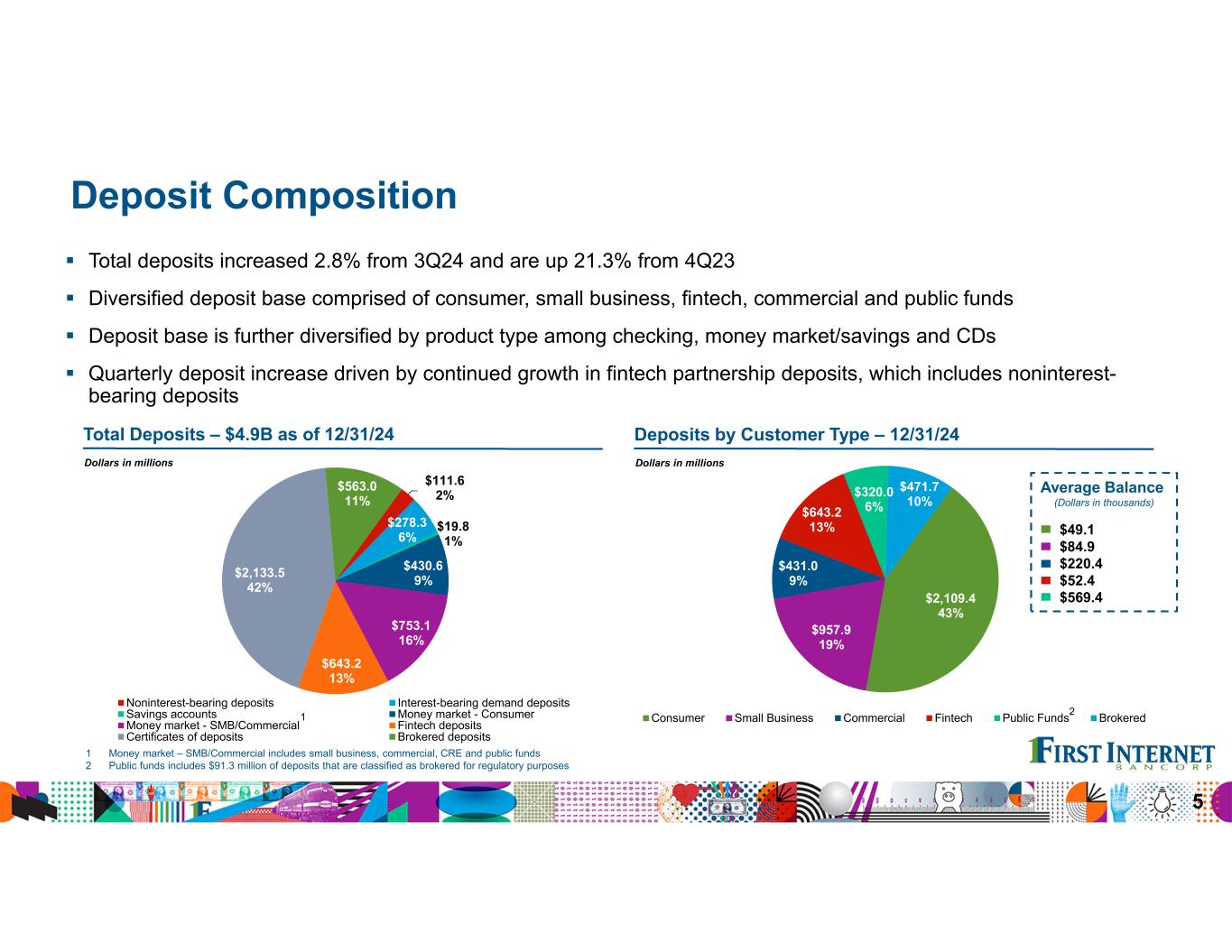
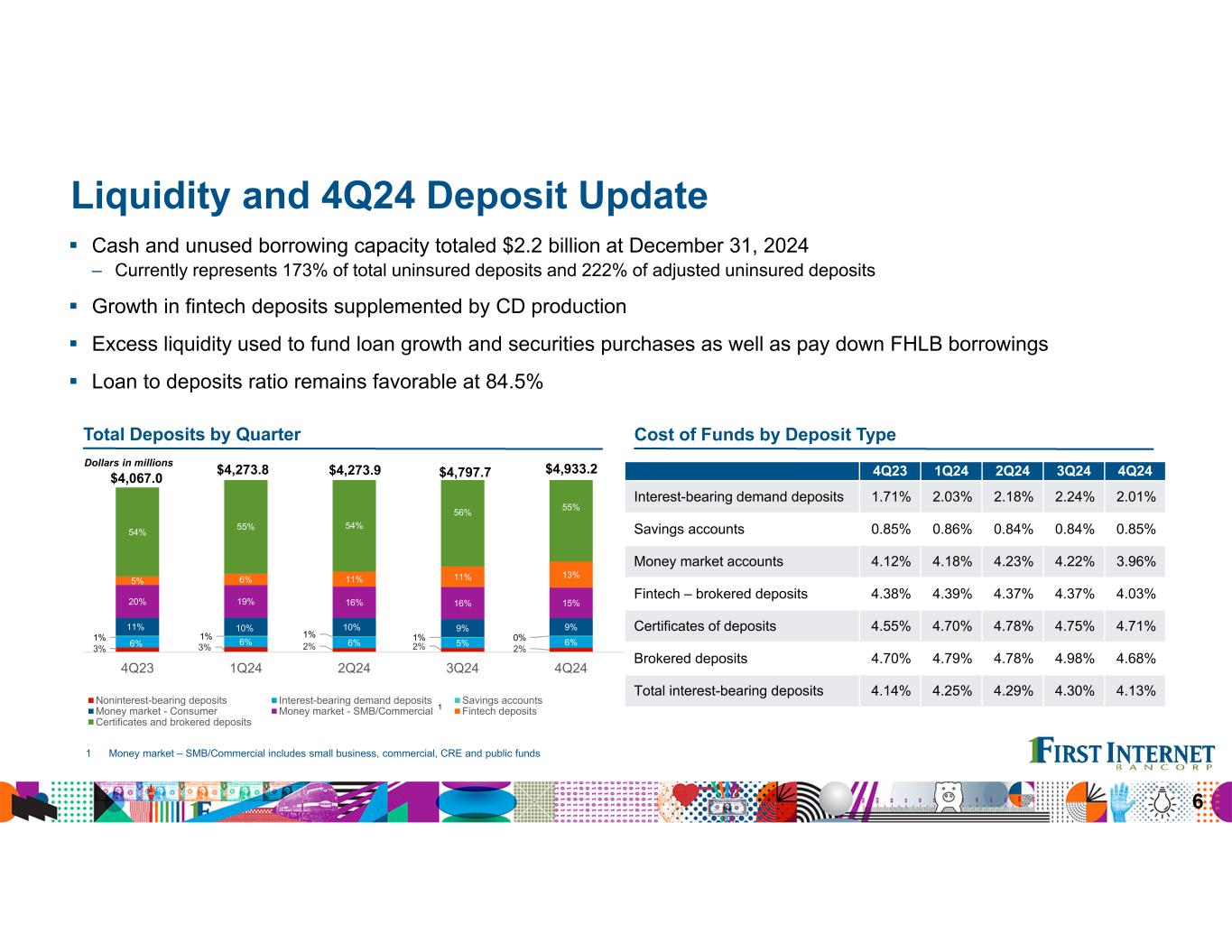
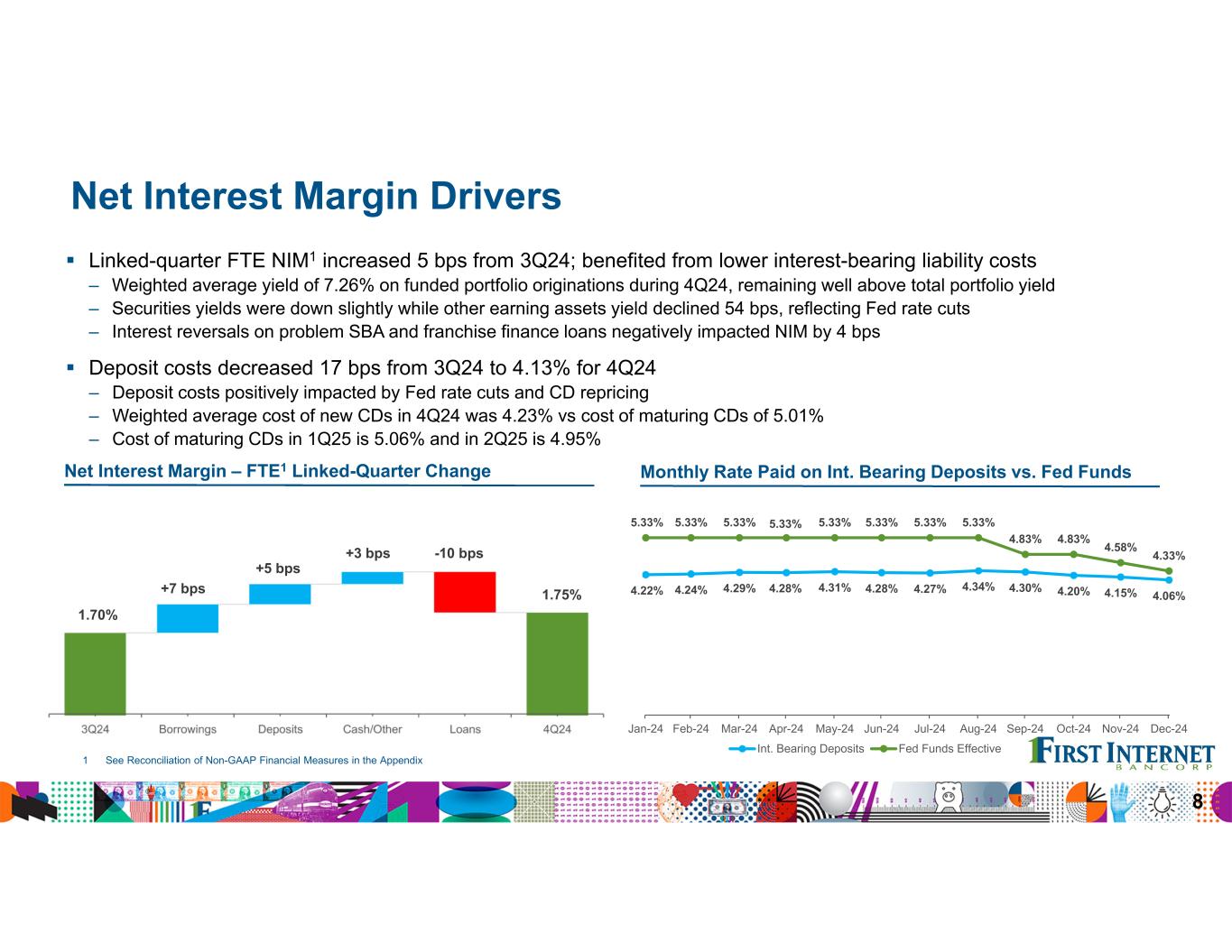
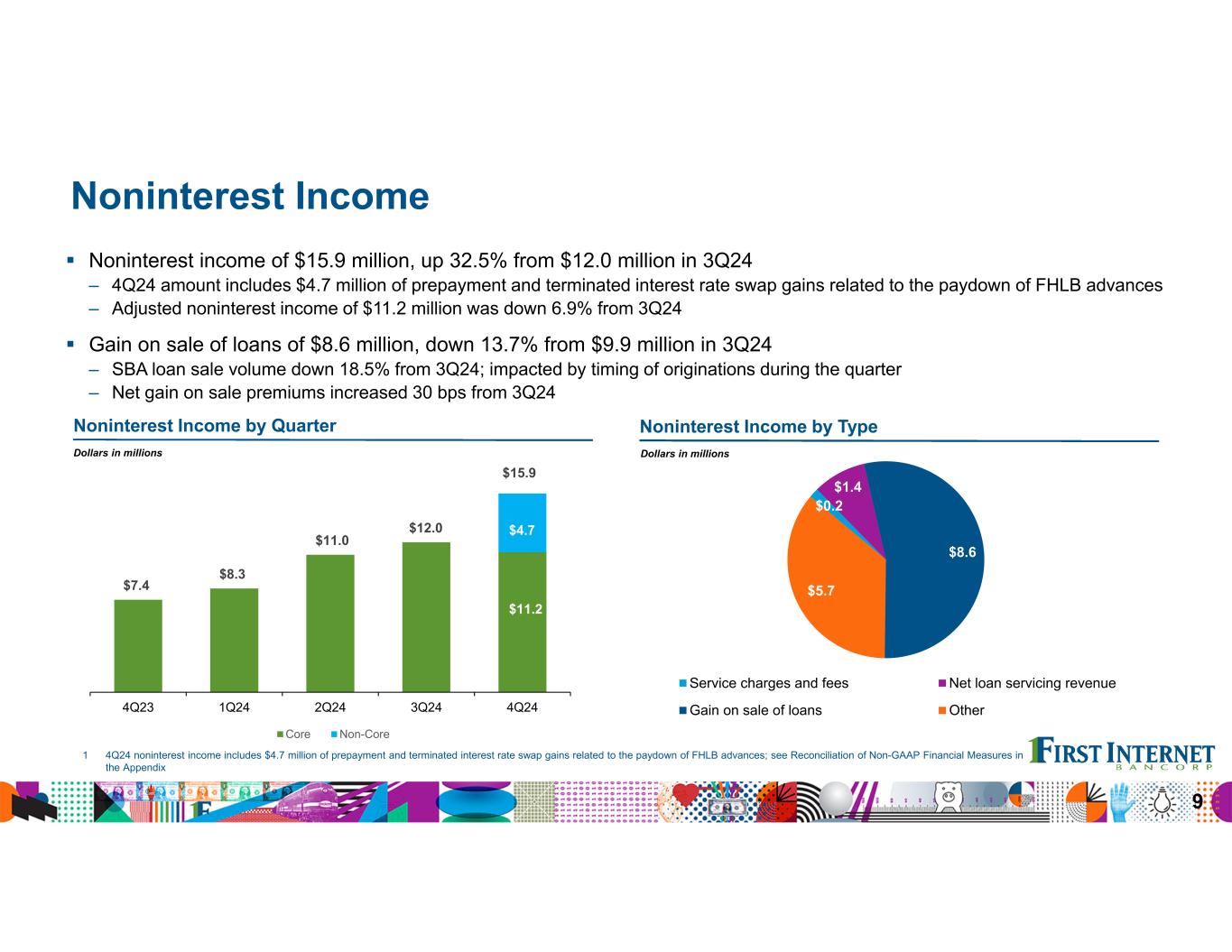
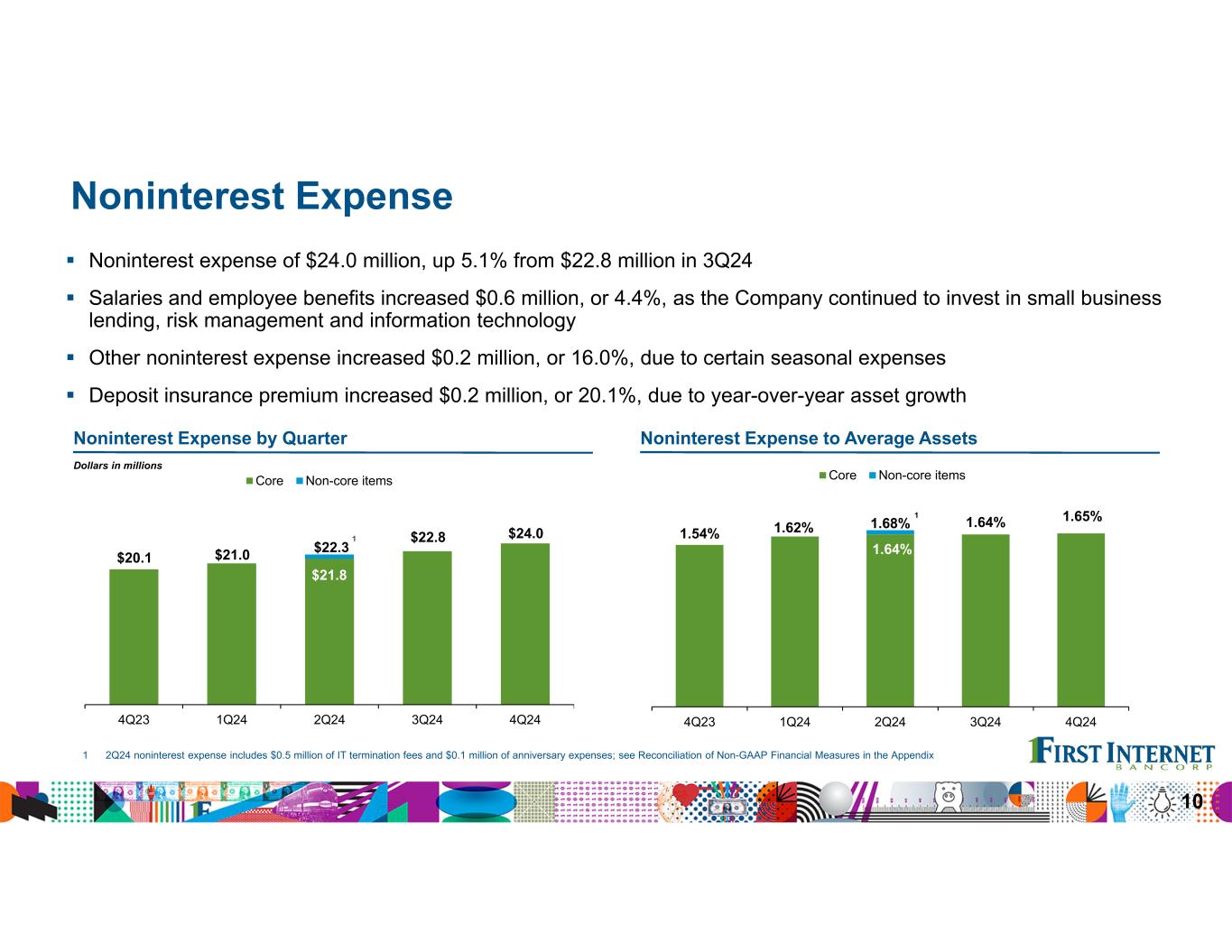
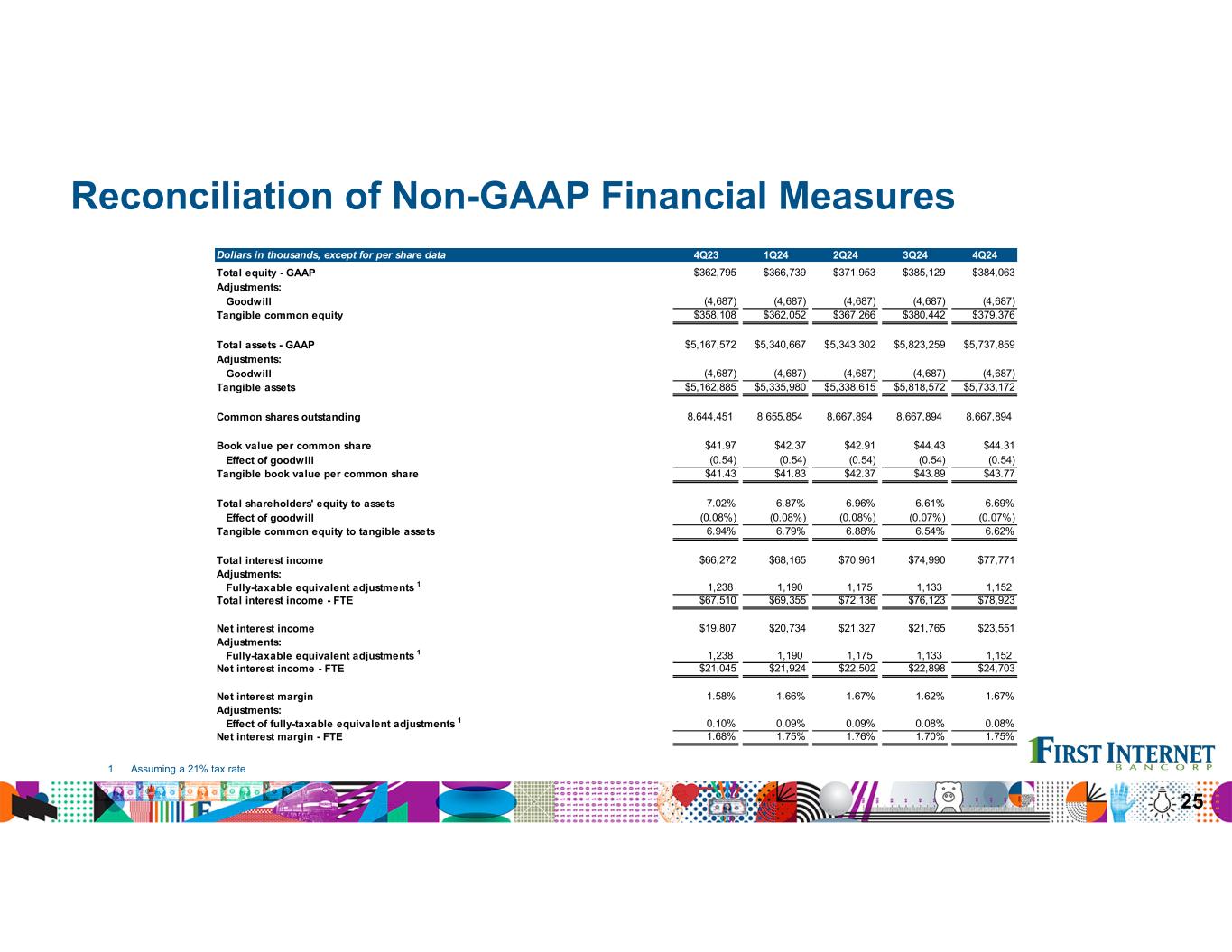
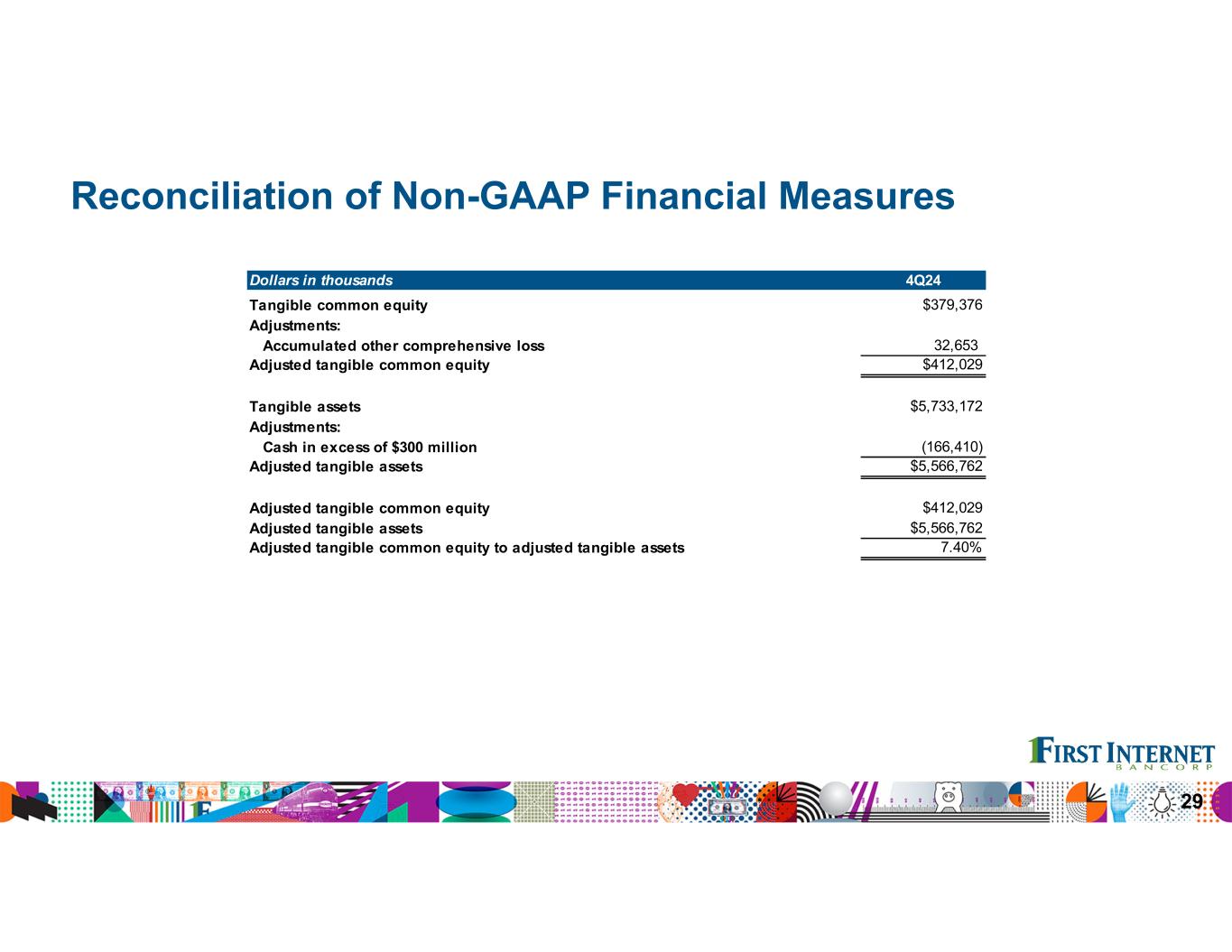
Thanks David. As David covered the loan portfolio let's turn to slides five and six where I will cover deposits in more detail. The average balance of deposits increased almost $344 million or eight percent during the quarter and period end deposits were up $135 million or three percent from the prior quarter driven primarily by growth in fintech partnership deposits. Non-maturity deposits were up $122 million or 6 percent, reflecting the increase in fintech partnership deposits. Additionally, total deposits from our fintech partners were up 27 percent from the third quarter and totaled $643 million at quarter end. During the fourth quarter, we submitted a notice of reliance on the primary purpose exemption with the FDIC related to fintech deposits that had been classified as brokered, and as of December 31, we reclassified these deposits to interest-bearing demand deposits. During the fourth quarter, these partners generated almost $16 billion in payments volume, which was up 38% from the volume we processed in the third quarter. Total fintech partnership revenue was $880,000 in the fourth quarter, which was up over 14% from the linked quarter. Related to CD activity during the quarter, CD balances were relatively stable with balances increasing only $22 million over the quarter. Although medium to longer term treasury rates increased during the fourth quarter, we held CD pricing constant through most of the quarter and further lowered CD rates in December following the Fed's rate cut that month. We originated $242 million in new production and renewals during the fourth quarter at an average cost of 4.23% and a weighted average term of 12 months. These were partially offset by maturities of $238 million with an average cost of 5.01%. Similar to last quarter, new CD production is coming on at lower rates than those maturing, which will continue to benefit our cost of funds going forward. Looking forward, we have $414 million of CDs maturing in the first quarter of 2025 with an average cost of 5.06% and $351 million maturing in the second quarter of 2025 with an average cost of 4.95%. So for the next several quarters, we expect a continued positive pricing gap between new production and maturing CDs. For example, January month-to-date new CD production has been at an average cost of 4%, which is a positive spread of 106 basis points over the weighted average cost of CDs maturing in the first quarter. Moving to slide 6, at quarter end, total liquidity remained very strong, reflecting cash and unused borrowing capacity of $2.2 billion. dollars. We deployed a portion of the elevated liquidity we had at the end of the third quarter, supplemented by continued deposit growth during the quarter to pay off a significant amount of federal home loan bank borrowings and a smaller amount of maturing brokered CDs, as well as to fund loan growth and securities purchases. As part of paying down certain structured FHLB advances, we were able to capitalize on favorable embedded prepayment features, as well as pay down structures hedged with interest rate swaps. We structured these borrowings prior to the Fed tightening cycle, and as a result, the positions had significant mark-to-market gains at the time of termination. In total, we recognized $4.7 million of gains on the repayment of $200 million of FHLB advances during the quarter. With total deposit balances increasing 3% and loan growth of $135 million or 3%. The loans to deposits ratio was relatively unchanged at 84.5% from the end of the third quarter. At quarter end, our cash and unused borrowing capacity represented 173% of total uninsured deposits and 222% of adjusted uninsured deposits. Turning to slides 7 and 8, net interest income for the quarter was $23.6 million and $24.7 million on a fully taxable equivalent basis, up 8.2% and 7.9% respectively from the third quarter. The yield on average interest earning assets declined to 5.52% from 5.58% in the linked quarter, due primarily to a 54 basis point decrease in the yield earned on other earning assets, which are predominantly cash balances impacted by the Fed's rate cuts, but partially offset by a three-basis point increase in the yield earned on loans. The higher yield on the loan portfolio, combined with higher average loan balances, produced solid top-line growth in interest income, increasing almost 4% compared to the linked quarter, which far outpaced the increase in interest expense. As a result, net interest income was up over 8.2% during the quarter, building on last quarter's increase and further distancing us from the low point in the third quarter of 2023. Net interest margin for the fourth quarter was 1.67% and 1.75% on a fully taxable equivalent basis, both representing five basis point increases compared to the linked quarter. The net interest margin roll forward on slide eight highlights the drivers of change in fully taxable equivalent net interest margin during the quarter. The yield on funded portfolio originations was 7.26% in the fourth quarter, down from 8.85% in the third quarter, which reflects the 100 basis points of Fed rate cuts since September, as well as a larger volume of originations in fixed rate portfolios, which are priced at lower spreads over U.S. treasuries, but are still significantly higher than the current all-in yield on the loan portfolio. Pipelines remain solid, especially in the construction and small business lending lines of business, and our focus on improving the composition of our loan portfolio gives us further confidence that net interest income will continue to increase in future quarters. Related to deposits, looking at the graph on slide 8 that tracks our monthly rate on interest-bearing deposits against the Fed funds rate, you can see that our deposit costs are beginning to trend down along with the decline in Fed funds. At quarter end we had 1.4 billion dollars of deposits indexed to Fed funds which when combined with the 765 million dollars of CDs maturing over the next two quarters and an additional 200 million dollars of higher cost broker deposits maturing at the end of the first quarter are expected to drive further net interest income growth and provide a strong catalyst for net interest margin expansion. Turning to non-interest income on slide 9, non-interest income for the quarter was $16 million, up $3.9 million, or 32.5% from the third quarter. As I previously mentioned, non-interest income included $4.7 million of prepayment and terminated interest rate swap gains related to the paydown of Federal Home Loan Bank advances. Excluding these gains, adjusted non-interest income was $11.2 million, down 7% from the third quarter. Gain on sale of loans totaled $8.6 million for the quarter, down from $9.9 million in the prior quarter. Loan sale volume was $106.7 million, down 16% quarter over quarter, while net gain on sale premiums increased 30 basis points from the third quarter. As David mentioned in his comments, the decline in loan sale volume was mainly due to timing. We originated $167 million of SBA loans during the quarter, an increase of 2% over the linked quarter, with over a third of those closing late in the quarter. The decline in gain on sale revenue was partially offset by higher net loan servicing revenue, which totaled $1.4 million for the quarter due to growth in the servicing portfolio and a lower fair value adjustment to the servicing asset. Moving to slide 10, non-interest expense for the quarter was $24 million, up 1.2 million from the third quarter. The increase was driven in part by higher compensation costs due to staff additions in small business lending, risk management, and information technology as we continue to invest in key areas of our business. Additionally, other non-interest expense was up due to seasonal expenses and deposit insurance premium increased due to year-over-year asset growth. Turning to asset quality on slide 11, David covered several of the major components of asset quality for the quarter in his comments, so I will just add some commentary around the allowance for credit losses and provision for credit losses. The allowance for credit losses as a percentage of total loans was 1.07% at the end of the fourth quarter, down six basis points from the third quarter. The decrease in the allowance for credit losses reflects a decline in specific reserves related to charged off SBA loans, as well as the net charge-off activity David discussed earlier, partially offset by qualitative adjustments to the small business lending ACL and overall loan growth. At quarter end, the small business lending ACL to unguaranteed SBA loan balances was 5.7%. Additionally, at a higher level, if you exclude the balances and reserves on our public finance and residential mortgage portfolios, which have lower coverage ratios given their lower inherent risk, the allowance for credit losses represented 1.27% of loan balances. Provision for credit losses in the fourth quarter was $7.2 million compared to $3.4 million in the third quarter. The increase in the provision for the fourth quarter reflects the elevated net charge-off activity, the qualitative adjustments to the small business lending ACL, and overall growth in the loan portfolio, partially offset by the decline in specific reserves and adjustments to qualitative factors and other portfolios. Moving to capital on slide 12, our overall capital levels at both the company and the bank remain solid. The tangible common equity ratio was 6.62%, an increase of eight basis points from the third quarter as a smaller balance sheet more than offset the impact of higher interest rates on the accumulated other comprehensive loss. If you exclude accumulated other comprehensive loss and adjust for normalized cash balances of $300 million, the adjusted tangible common equity ratio would be 7.4%. From a regulatory capital perspective, the common equity tier one capital ratio remains solid at 9.3%. Before I wrap up, I would like to provide some commentary on our outlook for 2025. While the market may be pricing in a rate cut or two over the course of the year, we are sticking with our conservative approach and assuming Fed funds and other short-term rates remain constant through 2025. When looking at the estimates for full year 2025, I think the consensus earnings per share number is within the range we are forecasting for next year. However, how we get to that range is a little different than what the current models are projecting. We expect loan yields to increase as we continue to originate new production at rates well above the current portfolio yield. We also expect deposit costs to continue declining as, one, the last two Fed rate cuts get fully incorporated into quarterly run rates, two, the significant CD repricing gap on over three quarters of a billion dollars of CDs maturing over the next six months, and three, the paydown of higher cost broker deposits at the end of the first quarter. Assuming loan growth in the range of 10% to 12% for the year and deposit growth in the range of 5% to 7%, we expect that annual net interest income will increase in a mid-30% range over 2024 and fully taxable equivalent net interest margin will increase throughout the year and should be in the range of 2.20% to 2.30% by the fourth quarter of 2025. If the Federal Reserve were to begin reducing short-term interest rates, our net interest income and net interest margin would likely exceed these projections. With regard to non-interest income, as our SBA team continues to grow and deliver consistently higher origination activity, we expect annual core non-interest income to be up in the range of 9% to 12% over 2024. A potential risk to this forecast will be loan sale pricing in the secondary market. While gain on sale premiums are currently attractive, if pricing were too softened, it may make more economic sense to hold a loan yielding 10% or more versus selling for a premium far below the annual spread income we would earn. Looking at the provision for credit losses, with quarterly provisions higher than what we have experienced on a historical basis, we are taking a conservative approach in our forecast for 2025 and are modeling an annual provision that is in the range of 15% to 20% higher than what we recognized in 2024. And finally, from a non-interest expense perspective, we added a number of personnel throughout 2024 to support growth in small business lending, as well as in risk management and information technology. And with the planned growth in SBA originations and the continued investments in key areas of our business, we do expect compensation expense to increase in 2025. All in, we expect annual non-interest expense to be up in the range of 10 to 15 percent. One additional point I would like to make, when looking at the quarterly earnings per share estimates for 2025, I think the distribution might be off a little. While the total for the year is in the range, due to seasonal factors and the time that it takes CD repricing to work its way through, our forecast is a little lighter in the first and second quarters of the year and a little higher in the back end of the year. With that, I will turn it back to the operator so we can take your questions. Jenny?
Operator
Thank you. Ladies and gentlemen, we will now begin the question and answer session. Should you have a question, please press the star followed by the one on your touchstone phone questions will be taken in the order received should you wish to cancel your request please press the star followed by the two if you are using a speaker phone please lift the handset before pressing any case once again that is star one should you wish to ask a question and your first question is from brett rabbiton from hop to group your line is now open hey good afternoon guys wanted wanted to start on the asset quality cleanup and then you know any color that you can provide on the sba charge off and just you know what you're seeing in the
sba portfolio generally and your guidance for provisioning to be 15 percent higher In 25, that's probably 45, 46 basis points. Are you expecting some continued charge-offs in the SBA portfolio?
I guess maybe let's just start with our assumption on increased provisioning for the year. I think over the last several years, as the SBA business has grown, loan. There have been more charge-offs and more provisioning. You know, certainly you have just growth in the overall portfolio. We're reserving at a higher rate on those loans. And the charge-offs are certainly higher in those than, say, single tenant or others. So I think we've just seen a higher run rate over the last couple, you know, over the last, you know, four to six quarters of that. And I think we're just kind of going to take a conservative approach and, you know, hopefully we're provisioning more than what we need, but I think we'd rather just be conservative in our forecast and add a little bit to that as, again, keep in mind that the portfolio is going to continue to grow and we have bumped up just the overall ACL coverage there. So there's a piece of that driving that as well.
And then on the cleanup, what that entailed, and you had the one specific charge off that had allocated reserves, but was just trying to get a little more color on what you were seeing in the SBA portfolio.
I know that the credit trends in SBA for the industry have been a little softer, but I know everybody kind of does things differently and the rules changed um two years ago on on underwriting just any any thoughts on the sba portfolio um as you see it from a credit perspective i'll take that one brett in the sba portfolio actually in the bank in total there is absolutely nothing going on that causes me to lose any sleep at night um as you just stated the sba world is a little tougher right now we've analyzed the top to bottom underwriting loan issues looked at everything they only real as Nicole I like to continually say every loan is a snowflake it's one of a kind there is no seam we don't have any concentration in a state and a product and anything out there it's just kind of one off the only thing that is somewhat of a common denominator about half of our delinquent accounts have some kind of tie to the hurricanes that blew through the country last year through florida and up through to north carolina they're they're having problems getting things rebuilt restructured uh catching up for losing two to three months of income etc as you well know too in the sba world they they bend over backwards to assist the small business owners so sba does a lot of things and we're working through some of those mechanics we're not as familiar as some of the processes as Ken said you know it takes longer to get through things to both on the sales side as well as recovery side and well as the collection so we took advantage in the fourth quarter looking at some of the loans we might get some recovery we might not get recovery we were doing okay on earnings and we just wanted to set a clean stage for going into 25 Ken said we bumped up reserves a little bit because if you looked at our credit history for the last five years, we've done more outside of the Wahoo experience we had in early 23. We charged off more loans over the past year than we probably have in the last three or four years put together outside of Wahoo. But the bottom line is the SBA, even with those charge-offs in the fourth quarter, we made $4 million more an SBA at the bottom line that we did a year ago. And I think that's kind of watching the market reaction to today. I get a little perturbed when peers are out here selling hundreds of millions of bad, not bad security, solid security, but low rate securities taking millions of dollars of hits, getting a three to four year payback. We get a little aggressive, knock down a few loans to really set the stage for a great 2025 and we get beat up in the marketplace and their stock goes up. It doesn't make a lot of sense to me what's going on out here. But yeah, there's nothing fundamentally wrong. We have some of the best BDOs and people in the country in the SBA world. We built out a phenomenal team over the last three or four years. And we think it's just a hell of a great opportunity for us going forward. There will be more losses than we're used to seeing. And there's more work that goes with it because of all the rules and regulations in SBA. But it's It's a very diversified, solid portfolio, and we're going to keep the pedals to the metal and keep it moving forward.
Okay. And I didn't hear, lastly, for me, I just – I've got a bunch of questions, but I'll just ask this last one and hop back in the queue. You did $540 million of SBA in 24, and I heard – I think I heard the fee income guidance for 9% to 12%. What are you assuming for production for SBA for 25? And then I didn't quite understand what you were implying that gain on sale could create some variability in that, but didn't quite get what you were assuming for gain on sale margins.
Yeah, well, two things, Brett. We're assuming $600 million of originations next year. You know, right now, our gain on sale net premiums have been in the range of, say, $108 on average, probably maybe a little bit higher. but in our forecast, we're assuming 108. And then the one piece I said that could be variable, Brett, is that if, you know, the gain on sale premiums, you know, have been a little, we've seen volatility in those over the past 18 months. And, you know, again, if say gain on sale premiums drop to say 106 and we got a loan that's, you know, prime plus 275, that's a solid loan, we may just elect to keep that on the balance sheet versus selling it. So that would be, again, it's the volatility and gain-on-sale premiums could be a risk to gain-on-sale income should we choose to hold the loan.
As Ken stated, we carried forward into January where $60 million in production from December sold that here over the last couple of weeks, and we, again, did net that $108 million. We had one loan that came in at a 106, and we just kept it on the books. There was no reason to sell it in the market. And all of that appears to be stable. As we well know, the President is stating today that he's going to force us to drop interest rates and blow everything up. It could change at a moment's notice, but we're pretty comfortable that, as Ken stated, we are not forecasting any additional rate decreases. So that should stabilize somewhere in that low 108 range and carry forward for the balance of the year. That's what we built into our budget.
Appreciate all the color, guys.
Operator
Thank you. Your next question is from Tim Switzer from KBW. Your line is now open.
Hey, good afternoon. Thank you for taking my questions. Hey, Tim. I have a follow-up on... the commentary around credit performance, particularly for the SBA. Are there any specific industries that you're seeing a little bit more pressure or types of borrowers at all?
No, not at all. As I stated in a minute ago, we've analyzed that portfolio six ways to Sunday and trying to see if there's a common theme, if there's a common broker, if there's a common BDO, if there's a common underwriter, there's a common anything and outside of about half of the loans having some kind of a impact due to the hurricane issues there is no common denominator so well one i'll take it back one thing that did kind of show up for the loans we originated during covid that were either had real estate components or pretty heavy build build-outs where they got delayed, they couldn't get supplies, they couldn't get team. They ate up a lot of their excess working capital and cash with that 12, 18-month delay. And so some of those folks we're working with today to try and help them get back on their feet. But outside of the hurricane and outside of the issues related to the pandemic, and most Most of those were people that had significant build outs or physical building construction in order to get open. We can find no common denominator. So it really is just that, as Nicole says, snowflakes that sometimes they work and sometimes they melt. So right now it seems to be stabilizing. We're not seeing anything really crazy going on, but time will tell. So that's why we're being conservative in the reserves a little bit.
Okay, okay. And, you know, what, I guess, what impact do you see looking forward on the outlook from, like, the rate environment if rates are higher for the longer? How do you see that impacting your SBA borrowers and, I guess, the rest of your credit portfolio as well?
You know, we've looked at that in terms of the rate environment. If you think about, like, when we've gotten into SBA, right, I mean, we've really experienced our strong growth in, you know, beginning in 20, a little bit 21, then more 22, 23, 24. We've been originating in a high-rate environment to begin with. You know, we're doing credit, you know, we do interest rate stress testing and underwriting where, you know, you're shocking rates up 200, 300 basis points to make sure there's good debt service coverage and there's still working capital. So a lot of our loans have been originated in the high rate environment to begin with. So, you know, we've gotten 100 basis points of relief thus far. It's not, you know, when you do the math on an average loan balance and, you know, You know, you look at what a 25 basis point decrease or a 50 basis point decrease is, you know, it's not on a monthly basis, on a monthly P&I basis, it's not really a significant amount. So, I mean, we haven't really, you know, none of the, you know, I would say any of the charge off we've experienced have been due to high rates.
I don't think there's going to be any impact in our client base and or our numbers if it holds steady. What would impact is, and I think would totally demoralize a lot of our commercial accounts, is if the rates start to go up. If inflation blows up for whatever reason and the Fed makes a move the other way, that could have some significant impact. And it's not us. It's going to be the whole industry. But I think as long as it stays stable, there's kind of a light at the end of the tunnel. As Ken said, a hundred-point decrease last year is a couple hundred bucks a month maybe on a loan payment, but it was positive news. Inflation's coming down, employment's going up, consumers still spending. Day in and day out, the real economic news is pretty solid, and folks think there's a Nobody's losing hope today, but I would tell you the one to watch is if it turns and the Fed has the bump rates, then that could be a different story, but not only for us, for everybody in the industry.
Okay, great. Thank you. The last question I had was in regards to your fintech deposits, obviously very good trends this quarter and the last few quarters. Can you provide some commentary on like how much of that deposit growth and some of the revenues being driven by current customers you've had versus new onboardings? And then can you give us an update on kind of the pipeline you see and what kind of customers you're looking to bring on board?
Yeah, I think that in the fintech space, a couple things out there, as we discussed several times here, we had a good core component of fintech customers. We have some folks a little irritated with us that the onboarding process, instead of being 60 days, has been six months to get through all the regulatory issues and stuff. I think we discussed a couple calls back that after our spring exam last year, We finally got the working guidelines from the regulators of what they want us to do and how they interpret, I still call it BSA, whatever it is, AML, something or the other nowadays. We've got great customers that are growing significantly, literally all the growth here over the past year. For example, in 23, we finished the year $1 million in the hole on the BASC division. We added expenses and staff, quadrupled some of the staff, almost a million increase in expenses related to BAS this year, yet the earnings flipped to a positive 1.2 million at the end of the year. So we made a $2.5 million swing in earnings, and we added up staff. We've got a great team. We've got some really solid clients that are really starting to grow. We've got a young lady on the West Coast. we just doubled down her card opportunities so we should see some i would be remiss if we don't wind up doubling tripling even quadrupling that one million earnings could end up being four million in earnings by the end of this year just with the folks we have we have a good pipeline we have good opportunities out here but with all the noise in the industry from synapse and all the problems there. We're being extremely cautious. There are a lot of people running for the hills in the banking world as well as the Pentech world. So we want to make sure we're not taking on somebody else's problems. So our due diligence, which was very tough, everybody tells us compared to peers to begin with, has gotten even tougher. So we think we're going to have significant growth and we could have exponential growth in a couple of them, but we're not going to go out just It's because the market is frothy now and sign up somebody else's problem. So we're in it. We're going to stay in it, and we're going to grow it. And we think there's a heck of a future for us in the fintech space.
That sounds great. Thank you for all the color.
Operator
Thank you. Your next question is from Nathan Rice from Piper Sounder. Your line is so open.
Hey, guys. Good afternoon. Not to beat a dead horse on the SBA front, But, you know, just thinking back to the call in October, it seemed like SBA delinquencies kind of peaked over the course of the summer. So, you know, some of the charge-offs that we saw this score are a little surprising. So just curious if you can shed any additional light in terms of what occurred between now and then to necessitate these charge-offs and the elevated provisioning. Was it more so just around getting some updated financials from clients or any other light you can shed on that would be appreciated?
Well, part of it, yeah, I mean, part of it was like, you know, as we referenced, we, you know, of the large chargeoffs, 3.4 million of that had to do with loans we'd already had reserves on, whether in full or in part. You know, some of those were borrowers that were, you know, were trying to work towards some kind of resolution, help, you know, whether it's a sale of the business pending or trying to get something like that done, where it just became evident that the outlook wasn't going to be as optimistic as we would have liked. So I think we just decided, you know, let's just charge the loans off, remove the specific reserve and move on. You know, we have, sometimes it's hard to tell. We had probably maybe a little bit higher than usual, a number of maybe perhaps a borrower who had a deferral. And, you know, a lot of times they come off a deferral and, you know, their business is back and they get back to making payments and probably had a little bit higher number than one would expect this quarter where they came off deferral and just really, you know, business was struggling. And it's all, as David mentioned before, he used the term snowflakes. a lot of it is just really everything is borrower specific. No common theme, no geography, no industry. It really just seemed like there's just kind of more than what we had usually seen in the past.
One of the things we did, Nate, over the last few months and like I said earlier, we analyzed that portfolio to death. We've had outside reviews of the portfolio. We wanted to make sure we hadn't missed something, that we didn't have fundamentally a bad decision maker, a bad referral source, a bad BDO, and it all came out spotless and clean. So it is just a factor of the industry right now, as one of our peers, a much larger SBA shop than us, announced some pretty tough numbers last night, this morning. it's it is what it is in the industry we were on the right path everything was smooth for months and months on end and it got a little bit sideways but with the earnings component that's coming with this product on gain on sale on servicing all the revenue the interest side of things even taking that pop if If you remember back in early 23, when we took a $9 million hit, we ended up the quarter with a $5 million loss. We sucked up this hit and improved earnings fourth quarter over third quarter. So we had the luxury of getting a little aggressive on calling some of this stuff and just getting it out of the way. And that's what we opted to do. And I can guarantee you we will have more SBA losses over the course of the next year. I hope they're not $9 million every quarter, but I will tell you with the growth play, if it turned out to be $9 million every quarter next year, we're still going to put another $10 to $15 million to the bottom line. So it's built into the pricing. It's built into the structure. And as I said earlier, I'm not losing any sleep that there's anything fundamentally wrong with SBA or any of the other assets we have on the books.
Got it. That's really helpful. I'm familiar with some other SBA lenders and, you know, typically, you know, normalized charge-offs for them. And this business is, you know, anywhere between 30 to 40 basis points a quarter. Is that how you guys are thinking about the future charge-off trajectory?
Yeah, shame on us. As Ken said, we had already reserved $3 million in the second and third quarter on a couple loans and trying to – this is our first experience on the bad side of the SBA, figure it out. We should have just popped some of those earlier on, and that's exactly what I think is going to happen is being that 30-40 basis point range going forward. We might – we got one guy that has a couple two three businesses we could be steep i don't think we're going to be nine million uh here in the in the first quarter but yeah we anticipate leveling off spot on in that 30 40 basis point we've taken a little extra provision on our numbers going forward just to be safe uh but yeah we we think that's a good play to work with and that's just 30 to 40 basis points you know off the sba portfolio itself not the entire portfolio exactly exactly um just turning changing gears thinking about the margin trajectory for this year you know i appreciate the guide
around 220 230 coming out um by the fourth quarter just curious in terms of kind of the cadence to get to that margin do you think it's more kind of first half loaded just given some of the cd repricing that Ken described earlier? Just any thoughts on kind of the progression, the margin over the course of this year?
Yeah. Well, it's, you know, it's, I think the first quarter is going to be a little tricky to see that because what we really get a nice pop is in the second quarter when we pay down some very expensive brokered and start getting, again, some of the timing of the CD maturities. Well, those will start to kick in more in the second quarter and certainly in the back end of the year. You know, like I said, first quarter, I mean, we're expecting a nice increase in the first quarter, but sometimes that's a little bit tricky to pin down. That range is a little bit wider. But I really think we'll get a nice one in the second quarter and then kind of in the back end of the year.
Ken said earlier, and I think all of you guys have has averaged out somewhere around $4.20 in earnings for next year. We think that's a very achievable number, probably starting somewhere in that low-mid 80-cent range here in the first quarter and working up. In calendar year 2025, we're going to pop it by another $13,000, $14 million in earnings over 24. So we're not changing anything on the overall side. We did not expect to have interest rate decreases last year. that's helping us. So we're more than confident we can keep the earnings trajectory as we thought it was going to be in 2025. If we don't have the losses that we think we might have in SBA, then the bottom line gets even better. So being from the Midwest, we're a little more conservative than most folks. We're not going to sit here and tell you we're going to whack $5 a share, but I can tell you with the four bucket, kind of where you guys have us today, as Ken said, some of the parts in between are moving a little maybe from what your model showed at the beginning of uh 23 but it's 24 is going to be a great year for us okay 20. really appreciate the color guys thank you all right thanks nate thank you your next question is from george sutton from craig column.
Operator
Your line is so open.
Thank you. You did call out franchise finance in terms of the provisions or at least the delinquencies. Can you just give us a little bit more of a picture there? Is that still a program you're planning to continue to grow quite a bit?
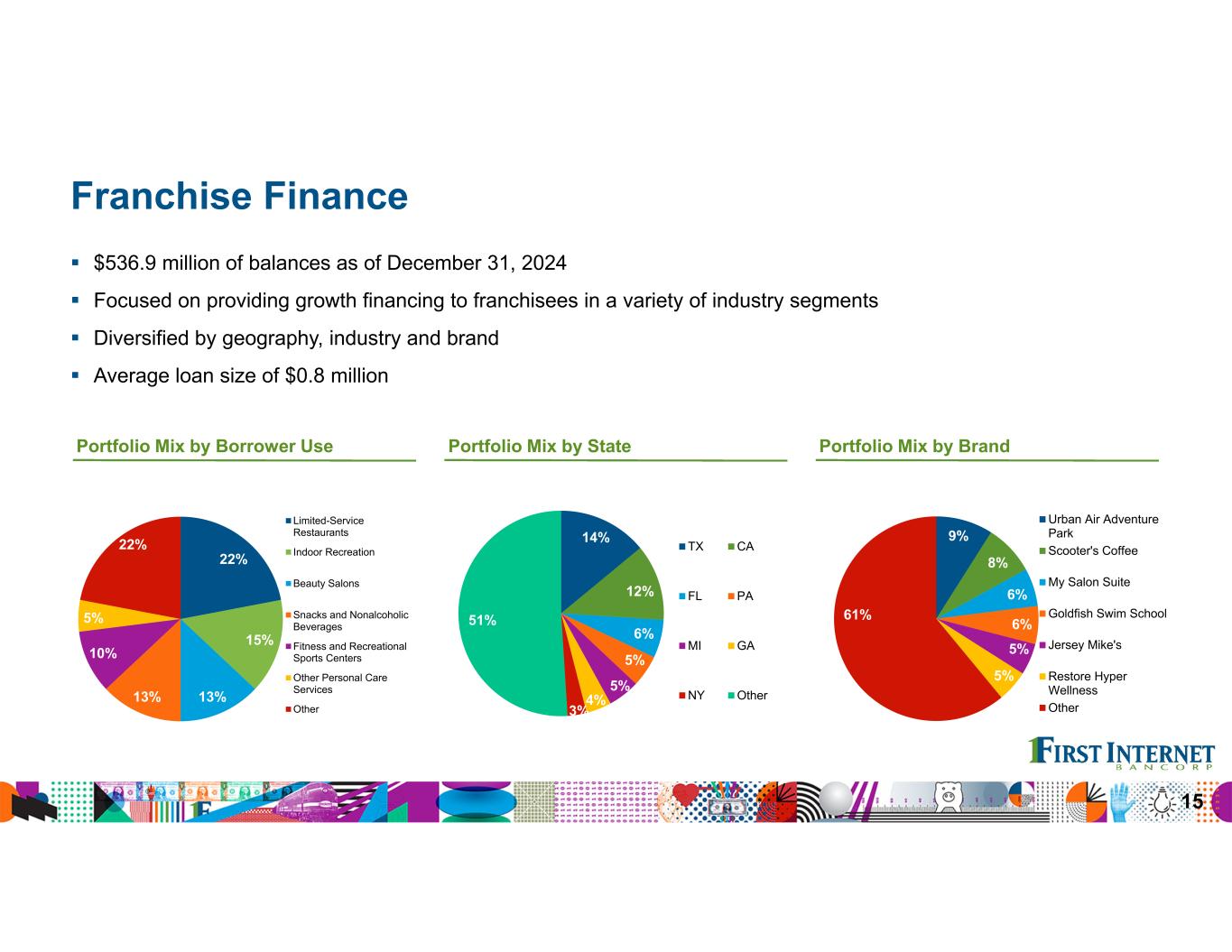
No. I mean, obviously, we got about a $500 million portfolio there. It has grown quite a bit over the last several years. I think we've, you know, with other, you know, when you think about allocating capital and growth in SBA and some other things going on, our growth there is, will probably be pulled back significantly from what you've seen in prior years. I mean, I think year over year balances were actually down. You know, we've probably seen a little bit, we've certainly seen a little bit of increase in the non-performers there as we've tried to get in front of certain franchises that have been struggling. And our team's working very closely with our partner on that. But I mean, we're probably doing, I don't know, call it maybe six to eight million a month of new originations. There are probably the amount of originations that are offsetting paydowns in the portfolio. But just, again, it's nice yields.
It's been a nice earnings contributor to us but it's you know it's obviously one part of a much bigger pie I will tell you George the folks at Apple pie and working with our team they changed and made some comments I think in the last earnings call or the call before about servicer and having some of the issues they have a new servicer our team's in constant contact with it we're starting to see a light at the end of the tunnel on that one as Ken said their volumes off a little bit we're still buying we won't see tremendous growth and quite honestly we have some better channels right now but the relationship between us and Apple pie and their customer base has really come a long ways in the last 90 days we're not really worried about the portfolio there are things there you got a store that's operating particularly some of these smaller coffee shops and you got an owner that thought they were going to make a quarter million a year working six hours a day and they're slugging it out at 12 14 hours a day and making 40 grand and they just give it up so that's a little bit on human nature but we've reserved for it we're working with them and we just have we're getting to the table with people that are going south much earlier in the game and we're able to help them and and they I will tell you the franchisors are stepping up as well they don't want a bad reputation in the market so they're finding other
services and players and people to help or take over uh stores and when we're in there early on we can do that before it becomes a crisis and everybody wins in the end so david just one other question uh if you've been paying attention to the news we days ago entered a new golden age um i'm curious what you think that means broadly defined for your opportunities are you seeing a a legitimate increase in uh enthusiasm demand for growing businesses and loans just curious your thoughts there i haven't seen any impact from the golden age yet but uh what i can tell you and
And again, maybe it's just back to kind of being in the Midwest. You're located here in the Midwest. Hopefully, you're seeing the same thing. What I love about being part of the Midwest and that being our home base, we don't go to extremes one way or the other. We don't get appreciation and property values and prices like other areas of the country do, but we don't get the depreciation when things fall apart. It's not as tough. We don't get the upside, but we don't have the wild, crazy downsides. I think we and all of our businesses across the line, outside of SBA and the super growth that's going on in SBA is over the last two or three years, we just put a hell of a team of people together there. We have some of the best, highest producing BDOs in the country that because of our consistency and our focus on the market and call Midwest values that we do what we say we're going to do and get it done timely. Our business is just pretty rock solid and consistent. We're not expecting any massive spikes, nor are we expecting any massive problems. So, yeah, we had that discussion a little earlier this morning. If you heard some of the stuff that was being discussed in Davo this morning, that the world is, oil is going to go down, the da-da-da-da-da. We just, that's noise. We don't pay much attention to it. Thanks for the thoughts. Thank you.
Operator
Thank you. Your next question is from John Rodas from Jenny. Your line is now open.
Hey, good afternoon, guys. Hey, John.
Ken, first off, just the tax rate we should use for 25?
Yeah, I think as you, you know, if you think about, you know, the earnings trajectory on a quarterly basis for next year, we have nice, you know, kind of similar to this this past year in 24 kind of a nice stair step up in terms of earnings except we're at a much higher level so you know from our perspective on a quarterly basis looking at a tax rate of say maybe somewhere in the first quarter of nine percent ranging up to about you know 16 17 percent at the end by fourth quarter that's the way we're looking at it so I guess on average you're 13 to 14 percent for the year so that's kind of the way that
we're modeling it right now okay thanks Ken and then Ken just to clarify I think you said on fee income year over year growth of nine to 12 percent yeah would that shoot as far as the base for 24 is is the base with or without the gains in the fourth quarter of 4.7 million It's without the gains, so back out the gains that gets you to, say, 42.6, and then go off of that.
Okay. Thanks, guys. All right. Thanks, John.
Operator
Thank you. There are no further questions at this time. I will now hand a call back to David Becker for the closing remarks.
Thank you, Jenny, and thanks, everybody, for joining us on today's call. As I said, we wrapped up 24 with some strong performance. We're entering 25 with a lot of great momentum and a lot of backlog in business and opportunity. We're highly optimistic about the future. Outstanding performance of the lending teams along with emerging opportunities through the fintech and other partnerships positions us to greater, more diversified revenue growth. We have the wind at our backs with a more favorable interest rate environment and an improving business climate. Adding all that together creates a great foundation to build on and deliver stronger earnings and profitability in 2025 and going forward. As fellow shareholders, we remain dedicated to maximizing shareholder value. We appreciate all your ongoing support and wish you a pleasant afternoon. Thank you.
Operator
Thank you. Ladies and gentlemen, the conference has now ended. Thank you all for joining. You may always connect your lines.