Operator
Good morning, and welcome to the Iron Mountain Second Quarter 2026 Earnings Conference Call. All participants will be in listen-only mode. Should you need assistance, please signal a conference specialist by pressing the star key, followed by zero on your telephone keypad. After today's presentation, there will be an opportunity to ask questions. To ask a question, you may press star, then one on your telephone keypad. To withdraw your question, please press star, then two. We will limit analysts to one question, and you can rejoin the queue. Please note this event is being recorded. I would now like to turn the conference over to Mark Rupp, Senior Vice President of Investor Relations. Please go ahead.
Thanks, Bailey. Good morning, everyone, and welcome to our second quarter 2026 earnings conference call. Joining us today are Bill Meany, our President and Chief Executive Officer, and Barry Heitman, our Executive Vice President and Chief Financial Officer. After our prepared remarks, we'll open the lines for Q&A. Today's call will include forward-looking statements which are subject to risks and uncertainties. For discussion of the major risk factors that could cause our actual results to differ from these statements please refer to today's earnings materials including the safe harbor language on slide two of the earnings presentation and their annual and quarterly reports on form 10k and 10q each of these items as well as reconciliations of non-GAAP financial measures referenced during this call can be found on our investor relations website with that i'll turn the call over to Bill.
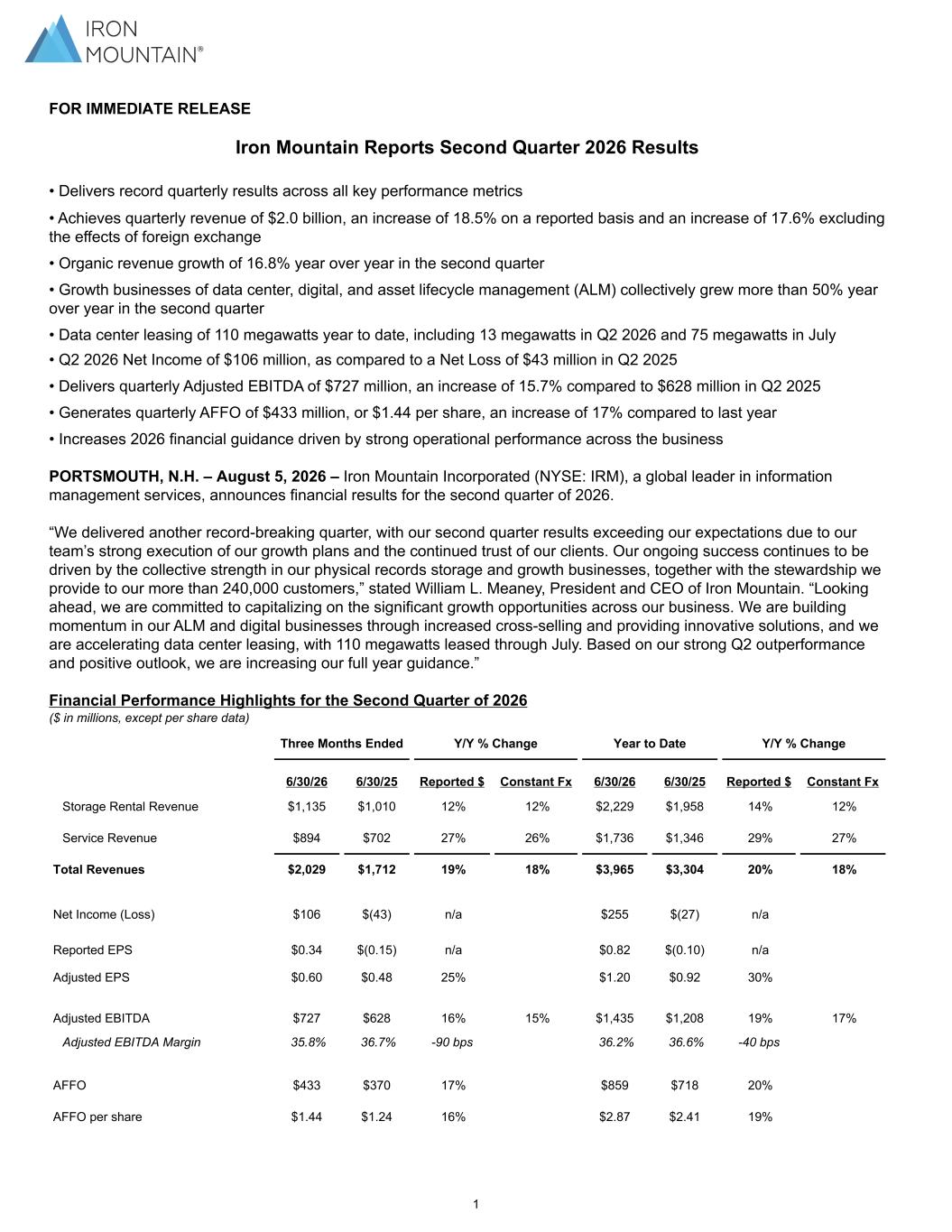
Thank you, Mark, and thank you all for joining us today to discuss our second quarter results. As you saw in this morning's release, our team delivered another outstanding performance with record-breaking second quarter results exceeding our expectations across all metrics driven by strong execution of our growth plans. Revenue increased 19% year-over-year, including organic growth of 17%, and adjusted EBITDA and AFFO grew 16% and 17% respectively. The foundation of our ongoing success continues to be driven by exceptional customer stewardship, combined with the strength in our traditional records business and the expanding portfolio of growth businesses. Our data center, ALM, and digital businesses collectively grew more than 50% in the quarter, or 14 percentage points on a consolidated basis. These three growth businesses accounted for 35% of our second quarter revenue, an increase of 750 basis points as compared to last year. This impressive growth is further strengthened by the consistent mid-single-digit growth that our highly recurring cash-generative physical storage business continues to deliver. Let me now share some of the highlights from the quarter and the confidence this provides as we expect to compound double-digit revenue and earnings growth well into the future. Our data center business continues to deliver strong growth, up 39% in the quarter, with an equally promising outlook. We leased 13 megawatts in the second quarter and another 75 megawatts in July, bringing our year-to-date leasing to 110 megawatts. With strong industry demand and pipeline, we are well-positioned with approximately 325 megawatts of leasable capacity expected to energize over the next 24 months. We delivered another outstanding performance in our asset lifecycle management business with second quarter growth of 88%. ALM represents a multi-billion dollar opportunity for Iron Mountain and as an industry leader, we are uniquely positioned to capture it on a global basis. By providing a compelling and differentiated value proposition, we continue to drive new customer wins and expand penetration within our existing base. Let me provide a framework for our ALM strategy, which consists of two principal channels, enterprise and hyperscale decommissioning. The enterprise channel offers the most consistent and strong growth potential. It benefits from a large, highly fragmented, addressable market representing 75% of the $35 billion ALM market. Much like our records management business, we are well positioned to serve a global customer base, capitalizing on our established brand, deep client relationships, and logistics infrastructure aimed at this rapidly growing market. The enterprise channel also has several structural advantages, including client activity tends to be consistent and recurring in nature. It drives the vast majority of our ALM profitability, and we see strong operating leverage over the next several years, which will drive profitability and margins even higher, and through our strong cross-sell opportunity into our 240,000 customers, we see sustainable growth of 25% or more annually for the foreseeable future. Turning to the hyperscale decommissioning channel, this also represents a significant long-term growth opportunity supported by the rapid growth and renewal of data centers. In this hyperscale channel, we offer a complete solution including decommissioning, remarketing, and securely disposing equipment through our comprehensive global platform. Our digital solutions business maintained its strong momentum, achieving record quarterly revenue in line with our expectations of continued double-digit organic growth. I am especially pleased with the traction we are seeing in DXP, our AI-powered agentic solutions platform. As this platform expands, the recurring nature of our digital business is now more than 45% of our revenue. This naturally helps underpin the long-term growth momentum of the business. I am also proud that we continue to gain recognition by leading analyst firms. In Q2, Forrester recognized Iron Mountain as a top provider of document mining and analytics platforms. Positioning Insight DXP has a top scorer for eugenic AI functionality, data privacy, validation rules, globalization, and platform breadth. And lastly, from an operational perspective, we continue to execute very well, driving overall enterprise-adjusted EBITDA growth of 16% in the quarter, which was ahead of our expectation. Based on this strong performance and continued momentum in our business, we are pleased to increase our full-year financial outlook. I now want to highlight a couple of notable recent recognitions that reinforce our strategic efforts. In June, we achieved portfolio-wide high-trust R2 accreditation, which serves as the gold standard data security credential within heavily regulated industries. And more recently, Iron Mountain was recognized on the Wall Street Journal's Best Companies for the Future list, capturing the number 12 spot in the innovation category for S&P 500 companies. These accolades build directly upon our momentum from last quarter, where we highlighted our FedRAMP high authorization in Google Partner of the Year recognition. Now, let me share some of the wins from the quarter that illustrate the strength of our synergistic business model and commercial success. In records management, in the U.S., we won a contract to deploy our SmartSort solution to process 10 million files as part of a building relocation for a leading global financial institution. In digital solutions, we continue to build momentum as evidenced by the number and types of DXP deployments we are winning. In the UK, we secured a three-year global managed services agreement with a leading fintech company to deliver intelligent intake management across 45 countries. DXP will digitize and process 500,000 inbound items annually using AI agents to classify content, enrich metadata, and apply the appropriate governance rules. Our real-time dashboards will provide greater operational visibility while strengthening compliance and controls across markets. In Australia, a longstanding financial services customer chose Iron Mountain to digitize 40 million images into DXP, leveraging our policy center solution to automate records retention and destruction whilst ensuring robust governance through a paperless environment integrated into their technology ecosystem. I am also very pleased with the continued momentum in our government business, with considerable new wins in this quarter and expanding deployments in our existing contracts, both in the U.S. and on a global basis. We had particularly strong bookings performance in Europe this quarter. Now let me highlight some of our data center wins. We signed a 25-megawatt lease in July, fully leasing our London III asset. This came on the heels of the 10-megawatt lease we signed in Amsterdam. Both of these leases are a direct result of the large and expanding pipeline we have around AI inference. Also in July, a major global hyperscaler leased 51 megawatts in Mumbai as part of a 10-year contract. India is quickly becoming a major hyperscale data center market, and we are well positioned with another 100 megawatts of future development capacity. Turning to our asset lifecycle management business, we continue to successfully scale our global capabilities, broaden our customer base through cross-selling initiatives, and deepen our penetration among existing customers. In the second quarter, we secured a multi-year global ALM program with a longstanding business services customer to manage their IT assets annually across North America, EMEA, and APAC. This is another example of a customer standardizing with Iron Mountain across the world and builds on other recent single-vendor consolidation wins. In Australia, we were awarded a three-year agreement by a government department for the secure disposition of 100,000 IT assets annually. We won due to our proven scale, security standards, and the strength of our local partnership. And in our ALM decommissioning business in Europe, thanks to our market-leading position in the global reach of our brand and capabilities, we were pleased to be selected by a NeoCloud customer to decommission and remarket tens of thousands of IT assets and conduct on-site shredding of drives. And in Canada, a leading financial institution selected Iron Mountain has their decommissioning partner across the country building on our existing exclusive partnership in the U.S. In conclusion, as you heard today, our team is delivering very strong results across the business. And notwithstanding our success, we are still in the early phases of our long-term growth trajectory. This growth trajectory is underpinned by an ever-expanding revenue share from our rapidly expanding portfolio of growth businesses. This portfolio is already more than 30% of the consolidated revenue, supporting our ability to drive sustained, double-digit, top- and bottom-line consolidated growth well into the future. I want to extend my sincere thanks to Mountaineers across the world for their steadfast dedication to serving our more than 240,000 customers. I also especially wish to express my gratitude to our customers for allowing Iron Mountain to serve as their trusted guardian of your most important assets, helping you unlock value and enhance efficiency. With that, I'll turn the call over to Barry.
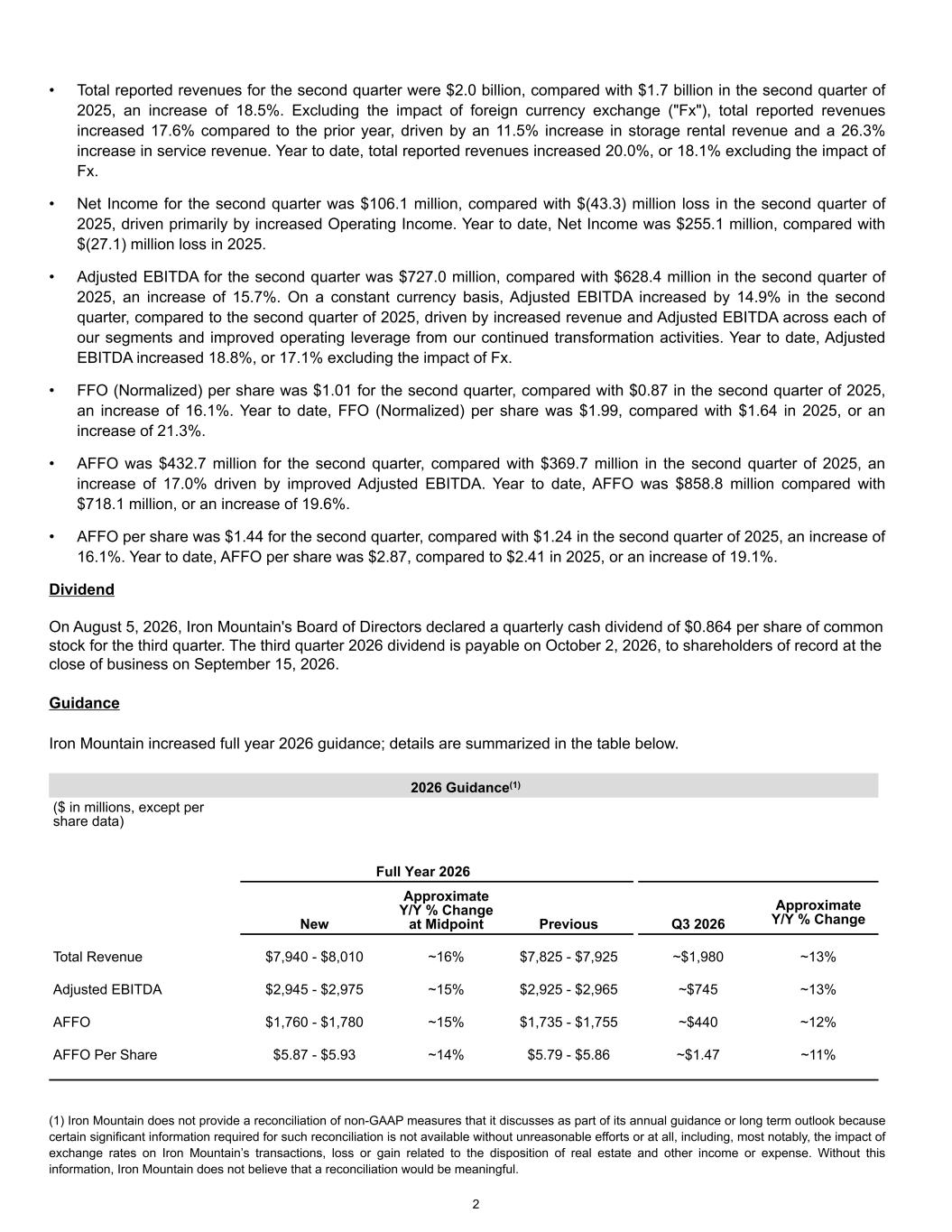
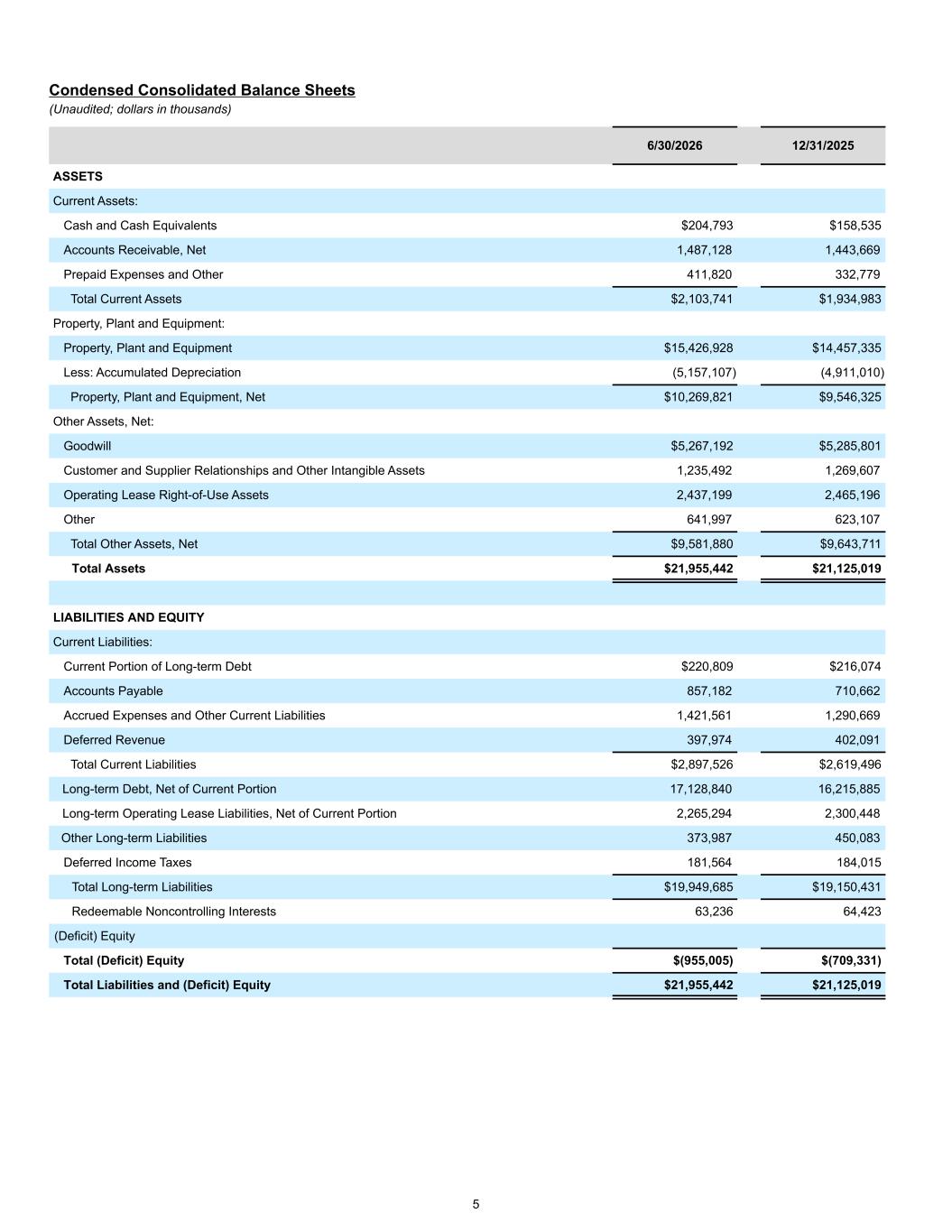
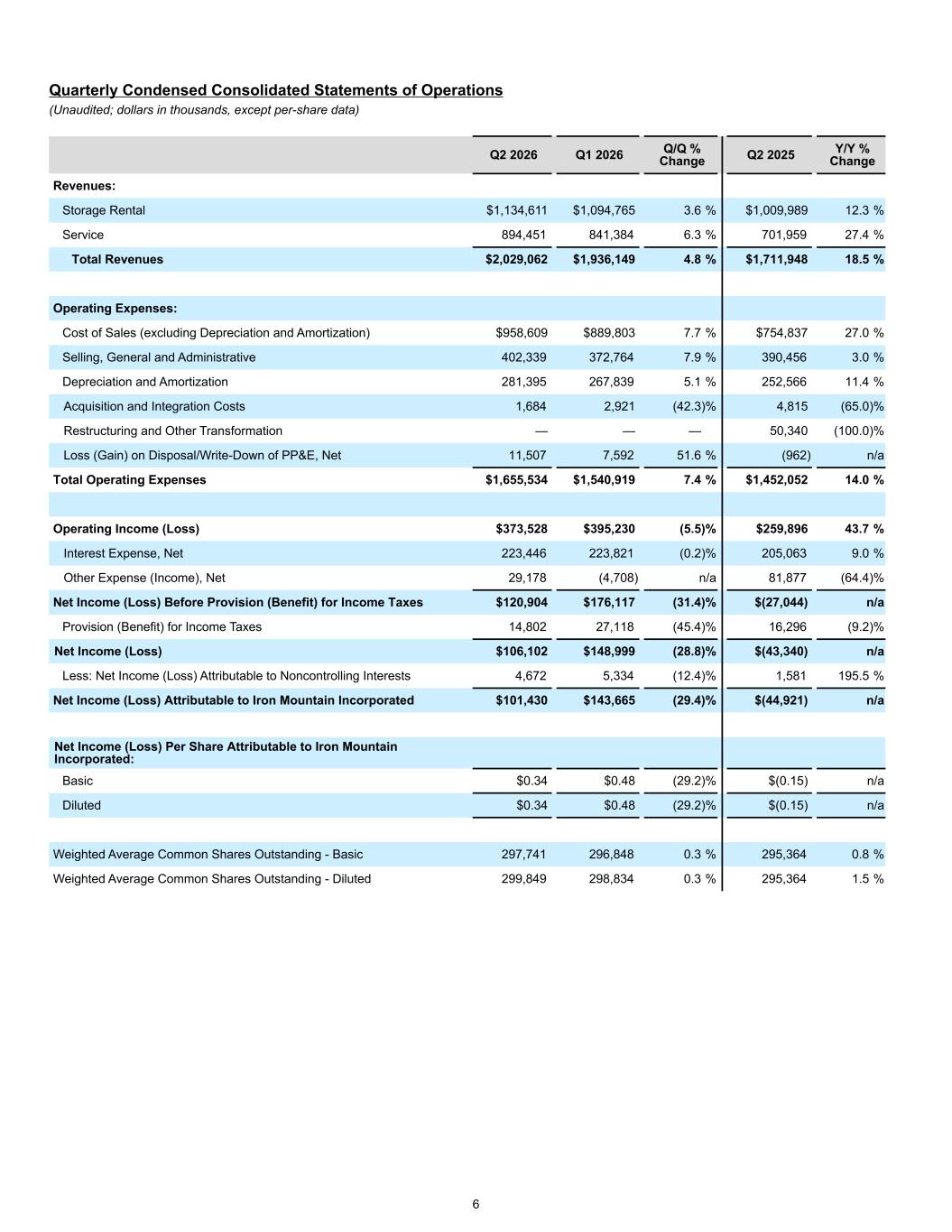
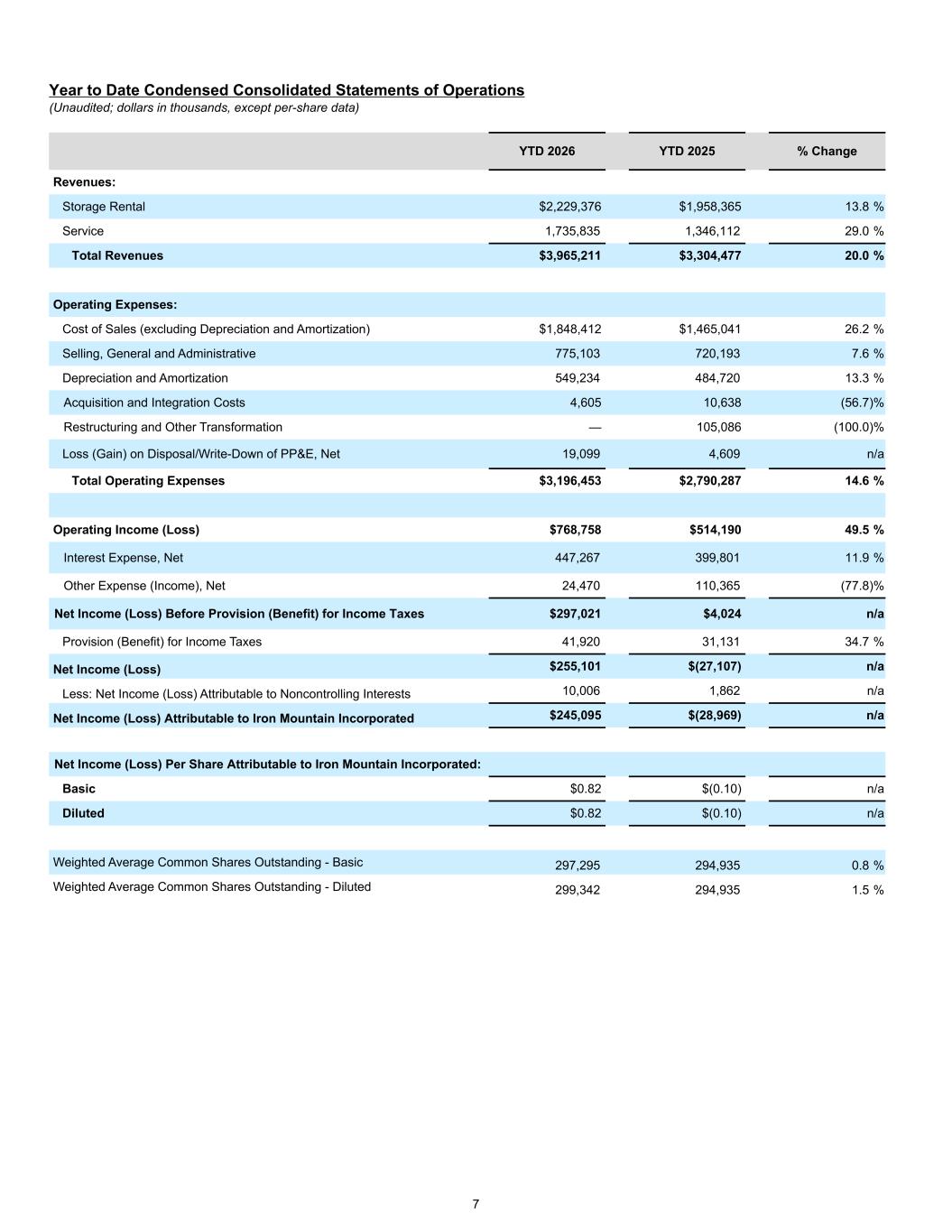
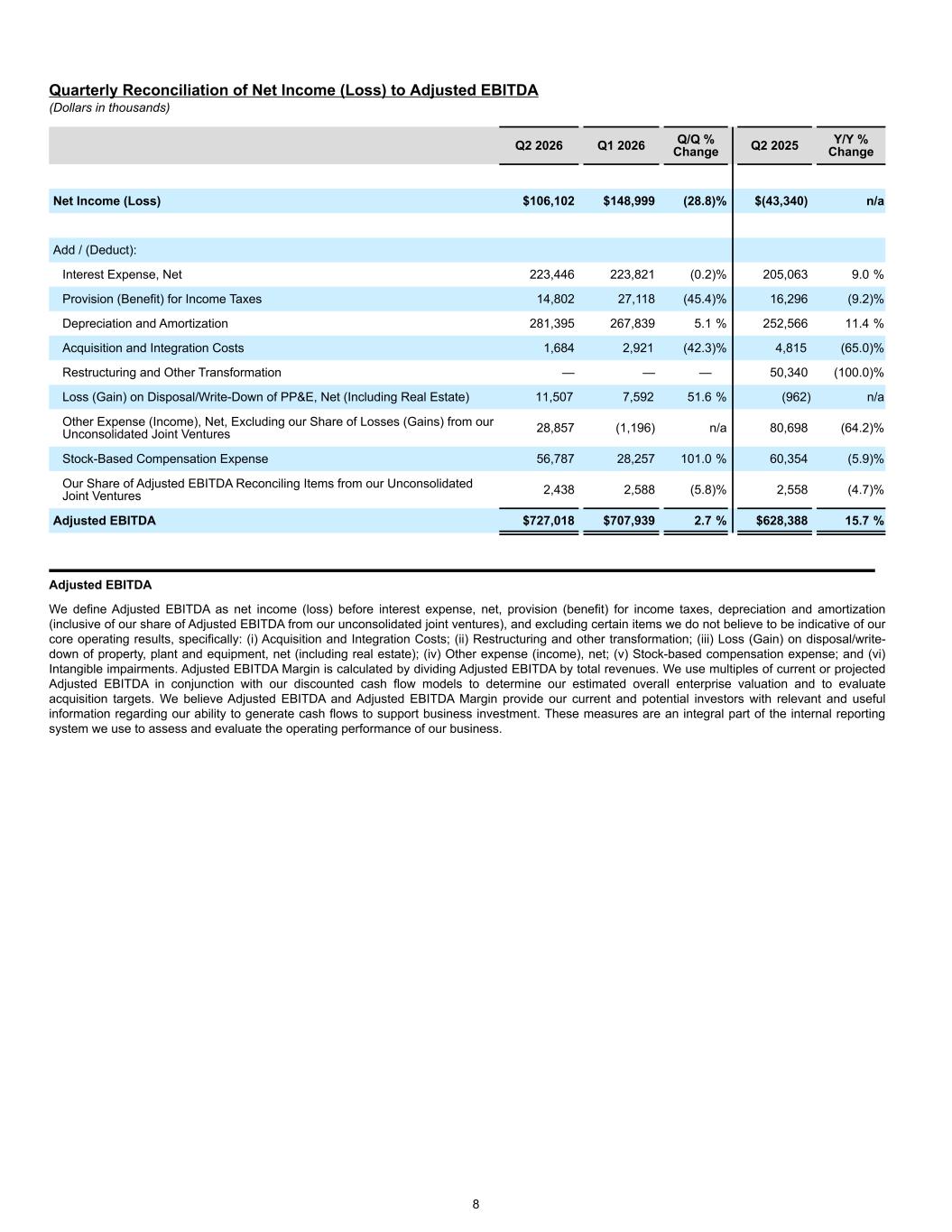
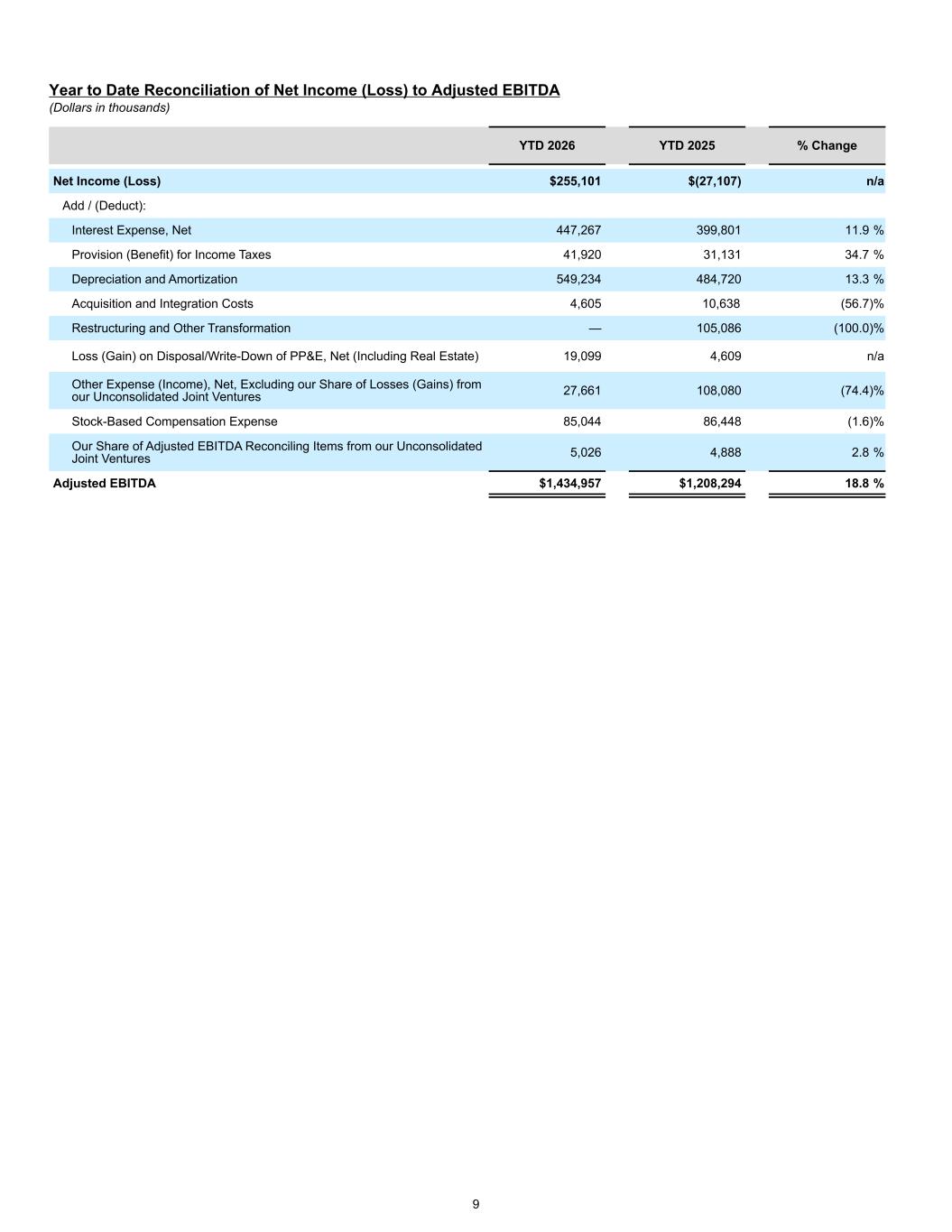
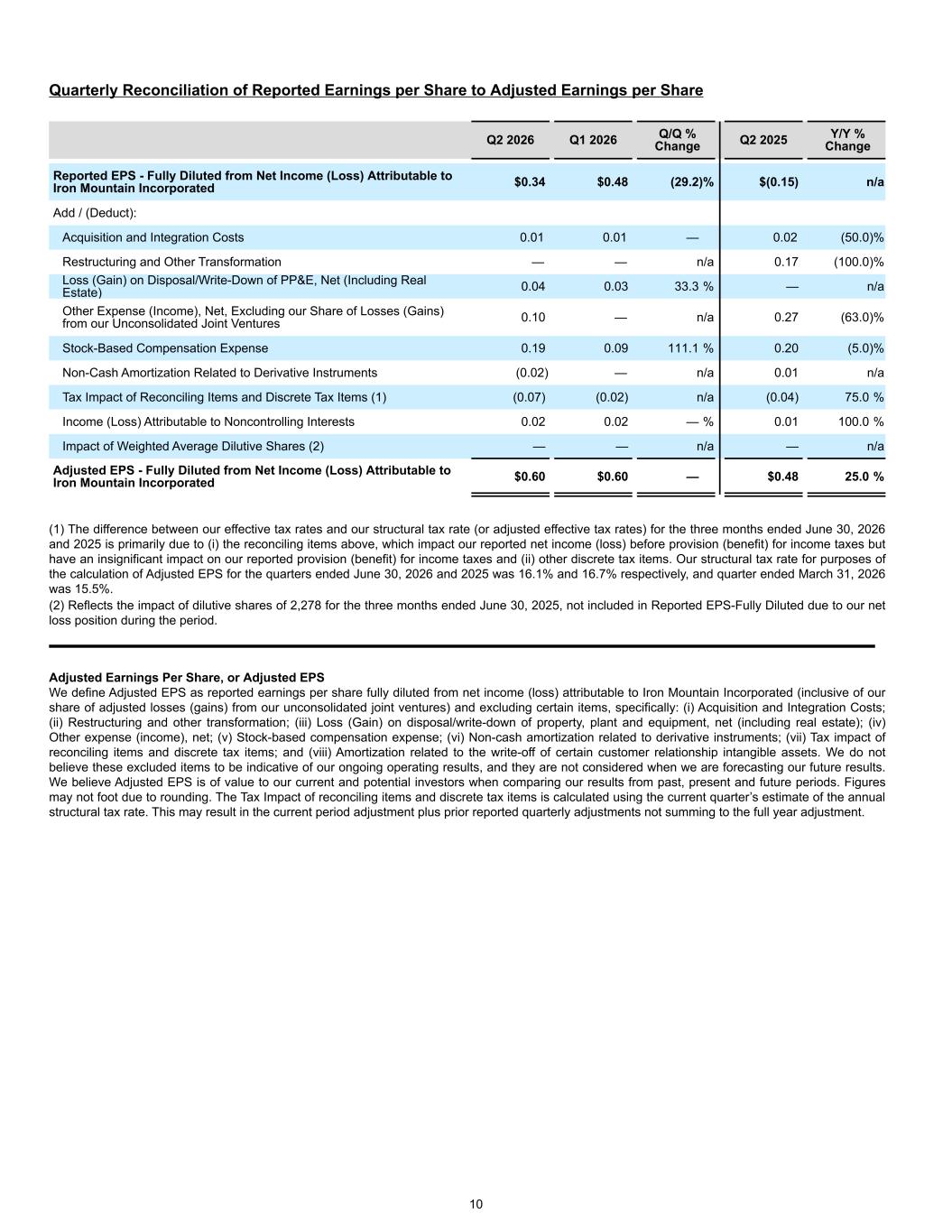
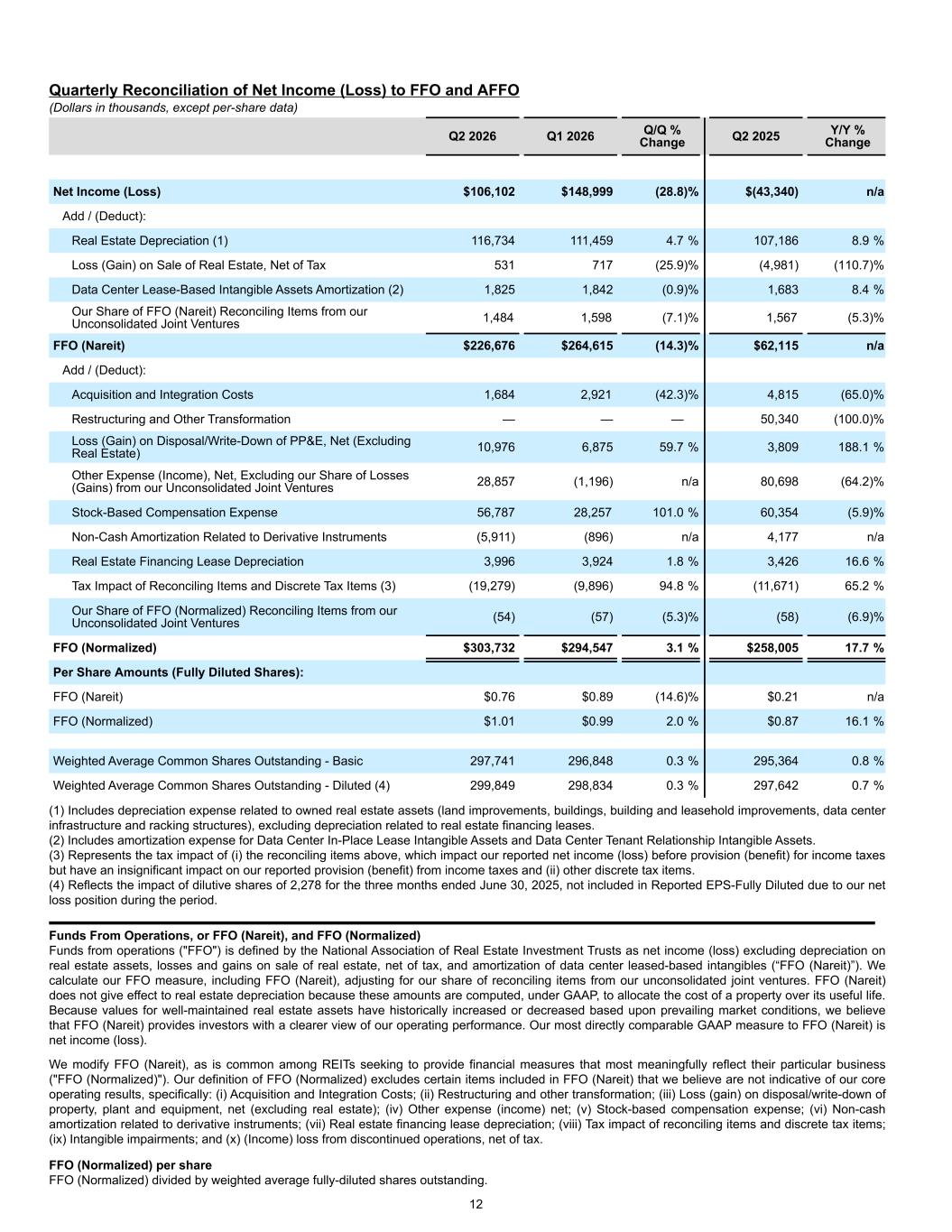
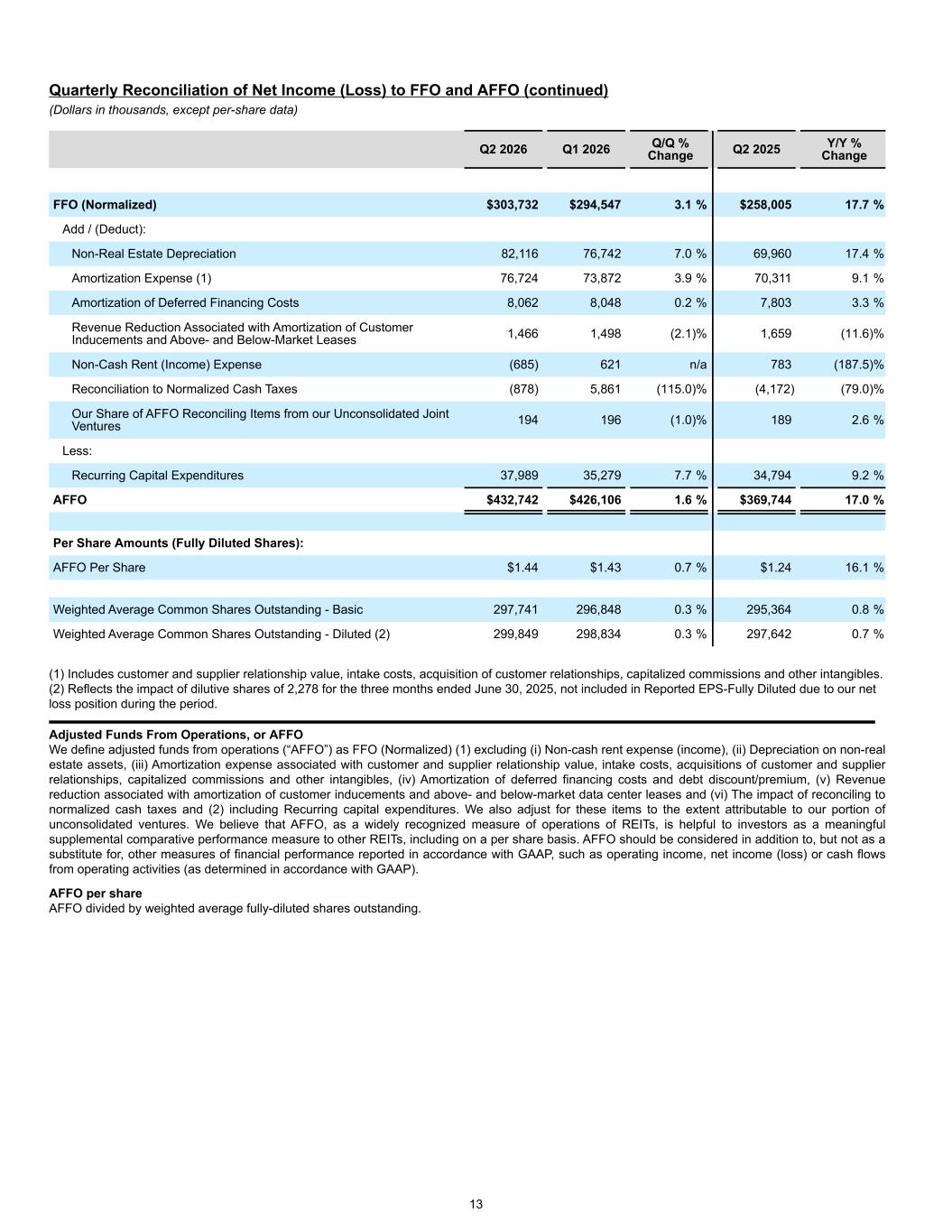
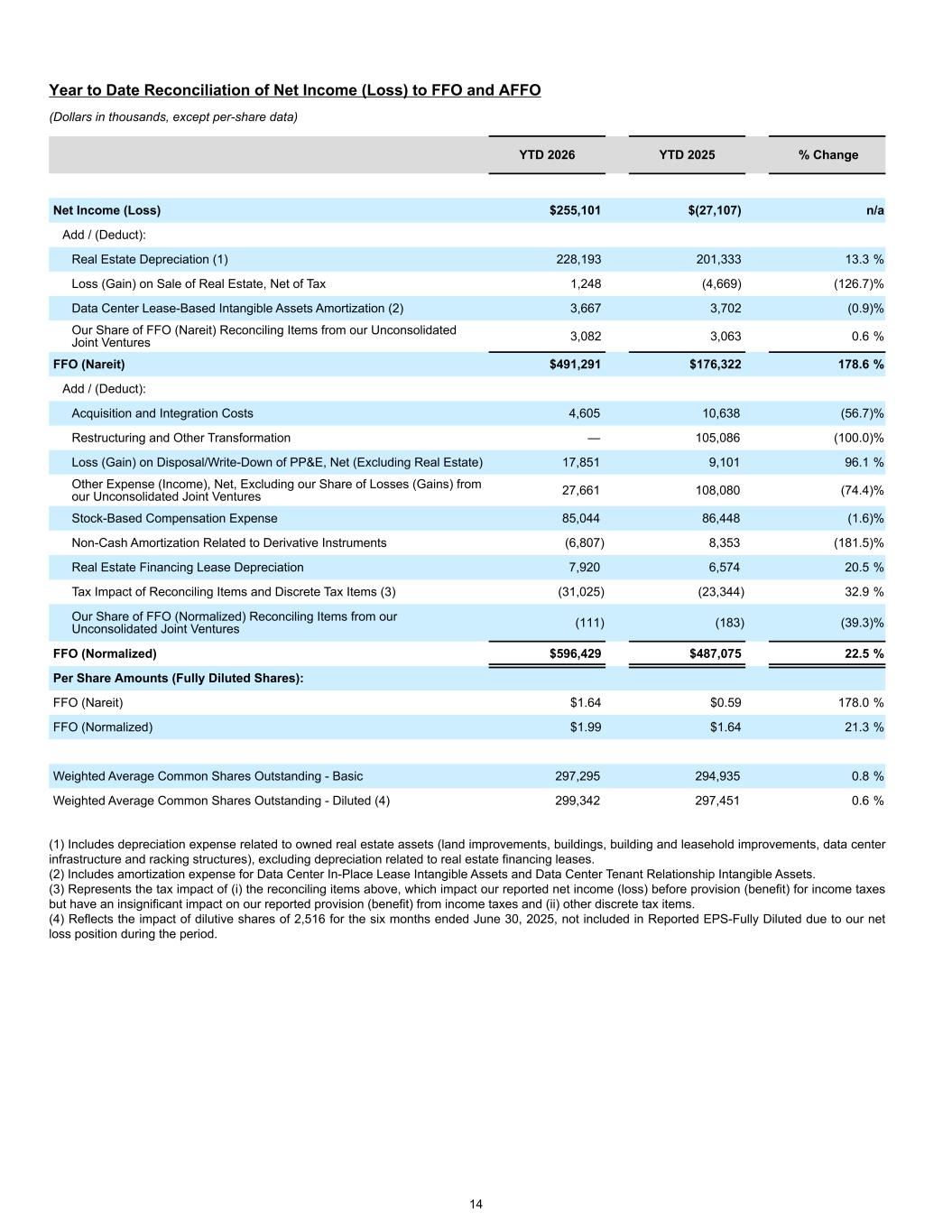
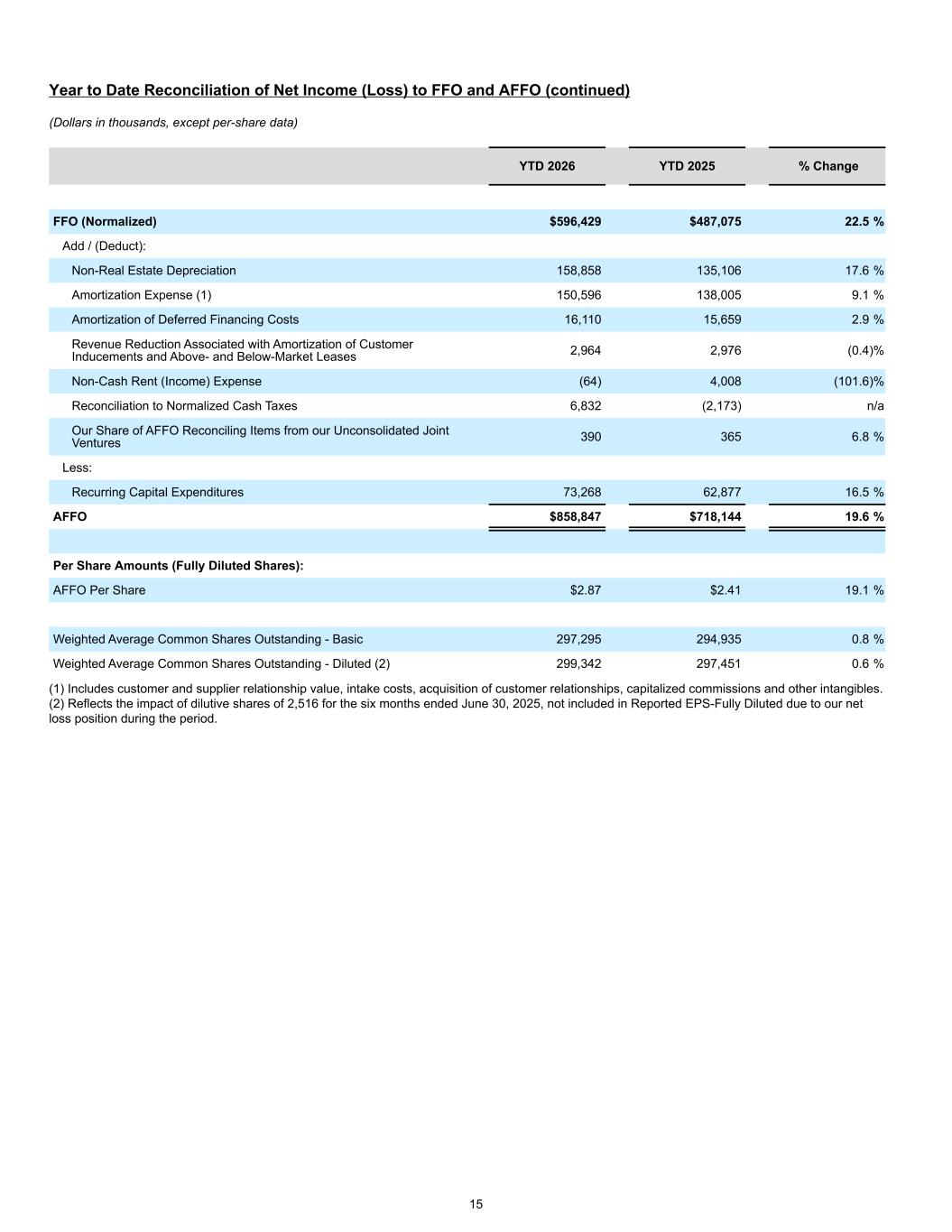
Thanks, Bill, and thank you all for joining us to discuss our results. Our second quarter performance reflects another outstanding team effort. We delivered record results across the business driven by the successful execution of our growth plans. Revenue of $2.03 billion was up $317 million year on year. This was approximately $65 million ahead of the projection we provided on our last call, driven principally by upside in our ALM hyperscale decommissioning business. As compared to last year, revenue increased 19% on a reported basis, 18% on a constant currency basis, and 17% on an organic basis. While the change in FX rates contributed approximately $14 million in revenue year-on-year, I would like to note that this was slightly below what we had assumed in our outlook as the dollars strengthened following our last call. Adjusted EBITDA of $727 million was a new record and increased $99 million or 16% year on year. This was above the $715 million projection we provided on our last call. This strong performance was driven by better than expected revenue growth and continued cost discipline across the business. Our margin performance in the quarter reflects the team's outstanding growth in services revenue, which naturally drives a mixed headwind. AFFO was $433 million, up $63 million. This represented an increase of 17% as compared to last year. And AFFO on a per share basis was $1.44, up 16% to last year, and was $0.04 ahead of the projection we provided on our last call. Now, turning to segment performance. In our global rim business, second quarter revenue of $1.4 billion was a quarterly record and grew $110 $10 million as compared to last year. This marks the third quarter in a row during which our global RIM business has delivered more than $100 million of year-on-year revenue growth. Segment growth was 8% on a reported basis and 7% on an organic basis. The consistent growth we continue to deliver is the result of strong performances in both our storage and services businesses. Storage revenue growth was up 7% on a reported basis and up 5% on an organic basis. Global RIM service revenue grew 11% and was up 9% on an organic basis. This was driven by our digital business, which grew more than 25% and continued strength in core services. From a profitability perspective, Global RIM adjusted EBITDA increased $34 million to $621 million dollars. This was an increase of six percent year-on-year with an adjusted EBITDA margin of 43 percent. Turning to our global data center business, we achieved revenue of 263 million dollars in the second quarter, an increase of 73 million dollars, or 39 percent year-on-year, driven by lease commencements and positive pricing trends. In the second quarter, we signed 13 megawatts of new leases, including a 10 megawatt lease in Amsterdam and three megawatts in our enterprise segment. We also commenced 25 megawatts and renewed 189 leases, totaling 4 megawatts. Renewal pricing was strong, with spreads of 12% and 14% on a cash and gap basis, respectively. Second quarter data center adjusted EBITDA was $137 million, up $41 million year-on-year, resulting in an adjusted EBITDA margin of 52.2%, up 140 basis points to last year. And on like-for-like power, our data center margin was up over 100 basis points sequentially from the first quarter. Turning to asset lifecycle management, total ALM revenue was $288 million, an increase of $135 million, or 88% year-on-year. On an organic basis, our team grew revenue by more than $127 million, or 82%. This strong performance exceeded our projection by more than $45 million, driven by both our enterprise and hyperscale decommissioning channels. Enterprise continued its strong trajectory, growing more than 60% organically through increased penetration of existing customers and the addition of new wins. Data center decommissioning revenue increased more than 100% year-on-year. This was driven partially by $30 million of timing benefit related to a couple large projects that hyperscalers accelerated into the quarter versus their initial schedule. From a profitability perspective, we drove solid improvement in margins reflecting improved operating performance across the business as well as acquisition synergies. Let me now provide additional color on the price environment for memory and our updated outlook for ALM. Memory prices continue to remain elevated as compared to last year. Relative to the first quarter, mix and pricing varied across memory components with some up and some down. In terms of our outlook, we are pleased to once again raise our ALM projection and we now expect full-year revenue to approach $1 billion. This outlook assumes strong growth on the enterprise side to continue in the second half of the year. Consistent with our strategy to offer our clients a complete ALM solution across the world, we recently acquired Group ATF, which expands our capabilities and ALM offering in France and Belgium. Now, turning to cash flow on a consolidated basis. Year-to-date operating cash flow was $888 million, up $315 million from last year. This marks the best first half operating cash flow the company has ever achieved. Free cash flow improved $441 million in the first half of 2026 as compared to the first half of 2025. This significant increase was driven principally by growth in our business, improved cash cycle, and the conclusion of our Matterhorn restructuring in 2025, which was $100 million in the first half of 2025 and zero this year. Turning to capital allocation, our focus remains on investing in high return opportunities that drive double-digit growth and growing our dividend while maintaining our strong balance sheet. Our board of directors declared our quarterly dividend of 86.4 cents per share to be paid in early October. On a trailing four-quarter basis, our AFFO payout ratio is now 60%. In terms of capital investments, in the second quarter, we invested $553 million of growth CapEx and $38 million of recurring CapEx. Turning to the balance sheet, with strong EBITDA performance, we ended the quarter with net lease-adjusted leverage of 4.8 times, remaining at the lowest level we've had on this metric since prior to the company's REIT conversion in 2014. During the quarter, and aligned with our strategy, our team successfully issued a new $1.5 billion bond, achieving a 6.25% fixed coupon, maturing in 2035. We are very pleased to have achieved a new milestone with this offering. It includes our first-ever investment-grade covenant package. We are gratified that debt investors continue to appreciate the strength of Iron Mountain's credit profile. I would like to thank our bondholders for their support of our growth initiatives. And now, turning to our outlook for the full year 2026. Based on our strong second quarter performance and positive outlook, we are increasing our financial guidance for the year. The updated guidance can be found on slides 14 and 15 on our second quarter earnings presentation, which is available on our investor relations website. We now expect total revenue to be within the range of $7.94 to $8.01 billion, which represents year-on-year growth of 16% at the midpoint. We now expect adjusted EBITDA to be within the range of $2.945 billion to $2.975 billion, which represents year-on-year growth of 15% at the midpoint. We expect AFFO to be within the range of $1.76 billion to $1.78 billion, or $5.87 to $5.93 on a per-share basis. At the midpoint, this represents 15% and 14% growth, respectively. Now, turning to the third quarter, we expect revenue of approximately $1.98 billion and adjusted EBITDA of approximately $745 million, both an increase of 13% to the third quarter of last year. We expect AFFO of approximately $440 million, an increase of 12% to last year, or $1.47 per share. In light of the strength of the U.S. dollar since our last earnings call, let me provide some context on our updated outlook. On the same FX rates as used at the time of our last guidance, our full-year outlook at the midpoint represents an increase of $125 million for revenue with a $60 million increase in the second half, an increase of $25 million for adjusted EBITDA with a $12 million increase in the second half, An increase of $35 million for AFFO with a $20 million increase in the second half. An increase of $0.10 for AFFO per share with a $0.06 increase in the second half. In conclusion, our team has delivered outstanding year-to-date results and our long-term growth opportunity remains very substantial. I want to express my thanks to our entire team for their focus and dedication to serving our customers and their deep commitment to Iron Mountain. And with that operator, would you please open the line for Q&A?
Operator
We will now begin the question and answer session. To ask a question, you may press star, then one on your telephone keypad. If you are using a speakerphone, please pick up your handset before pressing the keys. If at any time your question has been addressed and you would like to withdraw the question, please press star then 2. We will limit analysts to one question and you can rejoin the queue. At this time, we will pause momentarily to assemble our roster. Our first question comes from Eric Lubko with Wells Fargo. Please go ahead.
Great. I appreciate you taking the question. Great to see some of the data center leasing come through in July in India and London. Maybe you could talk a little bit about what the pipeline looks like beyond July for the rest of the year. You've already exceeded the 100 megawatt target that you laid out at the beginning of the year. What are some of the top of mind campuses, whether it be Richmond or other places in Virginia where you're seeing demand?
Thank you. Good morning, Eric. Thanks for the question. Yeah, we're really pleased with the momentum that we're building in the data center leasing side. As we kind of predicted on the last call, we had 400 megawatts that was being energized over the next 24 months. As we sit here today, after the strong leasing that we've had in the first half of the year, including July, we have 325 megawatts that remain that will be energized in the next 24 months. Obviously, we have a lot coming after that, but we feel really good about the pipeline that we have, which includes the Richmond campus, as you highlighted, but, you know, beyond Richmond, also including Europe and, you know, more in India. So we feel really good about, you know, what the momentum we're building. I mean, obviously the leasing for these large hyperscale deals is a little bit bumpy, but, you know, the assets we have are compelling, and the pipeline that we have against those assets is super strong.
Operator
Our next question comes from George Tong with Goldman Sachs. Please go ahead.
Hi, thanks. Good morning. Sticking with the data center piece, acknowledging signings and leasings can be lumpy. Can you talk about the pipeline and how discussions with hyperscalers are currently progressing and what your latest leasing target is for full year 2026?
Hi, George. Thank you. As we said in the last call, in terms of what we expect to happen in 2026 on the leasing side, is we still say that we think we will meaningfully exceed obviously our original guidance of 100 megawatts, which we're already beyond. So I would say that we still feel very good that we'll meaningfully exceed that number. I think that's really based on, to your point, on the pipeline that we have against the 325 megawatts of the amount of capacity that will be energized over the next 24 months. And a lot of that is, I think I made a comment in my remarks, a lot of it is to do with building out of inference capacity for the hyperscale community. And then also the expansion of not just hyperscale, but I would say a number of data center providers in India. So, you know, the pipeline is strong and multiple against each of those assets. And, you know, I would expect that we will meaningfully exceed, you know, where we are sitting today by the end of the year. But, these are large leases and tend to be lumpy in nature.
Yeah. And George, I would just add that as we've talked about publicly a few times, it is our intention to be more consistent with the rest of the industry and not necessarily be guiding to leasing on a given year. That's part of the reason why we've been sharing with the investment community, our energization schedule, because that I think to Bill's point about it being lumpy is a better indication of what the potential is and frankly, the likelihood over that period of time, because all of those megawatts that we have energizing over the next couple of years are in great markets. We have robust pipeline against that. In fact, we're even starting to build pipeline against the megawatts we have that energize after that period of time and having some very good conversations about that, as you would expect since a good amount of that additional megawatts is in northern virginia which is as you know the number one market in the world so we feel really really good about where we are and i just echo bill's point like we're gonna we're obviously going to meaningfully exceed our original target for the year thanks george our next question comes from brendan lynch with barclays please go ahead great thanks for taking my question um want to follow up on group atf can you give some details
on the size of the acquisition, the operating synergies you anticipate with your existing European exposure, and the opportunity to cross-sell your respective customer bases.
Thanks, Brian. Let me take the cross-sell and commercialize, and then I'll ask Barry to comment on ATF more in terms of the acquisition. So, yeah, I mean, it is consistent with our strategy to add to our platform. So we have, as you know, a very strong ALM platform in Europe, as we do in most major geographies where we operate. But this particular acquisition will actually broaden and deepen our platform in basically key markets of Belgium and France. So we feel really good about that. Obviously, there's a lot of synergies on that, and it gives us the ability to have more conversations with our customers. And we're already starting to see the fruits of that in terms of customers that we've known for a long time in one part of our business, say in records management or in the digital business, is we're now able to have a broader conversation with them, including ALM. And you can see that in our ALM print this quarter where we're up 88% year-on-year in terms of ALM sales.
Brendan, hey, a couple more details on the Group ATF deal. So we just closed it. It closed right at the end of July or I think technically August 1st. And it's not a huge deal. I mean, think like high teens, millions of revenue annually. So I think in the back half, you ought to be expecting something like $7 million of contribution in light of the timing of when we closed it and just the normal cadence of the business. It's like a lot of these enterprise opportunities that we see out there. It's kind of a low 20s EBITDA margin, and it is very consistent with our, if you will, algorithm for tuck-in acquisitions, kind of thinking that we've paid in the five to seven times multiple, and we expect it to synergize well below five times because, as your question knows, there's a lot of synergy. And there's synergy both on the cost side as well as on the revenue side in terms of the additional cross-selling that Bill mentioned. And just to give you a sense, so Group ATF, as I mentioned, it is quite well established in France and in Belgium. As you probably know, France is one of the top ALM markets, both in the world as one of the very top markets in Europe. So we are very pleased to be able to support our clients in a more robust way and continue to tuck in acquisitions on the enterprise side. As we've seen before with other tuck-in acquisitions, we've been able to drive considerable growth of top line as well as considerable improvement in margin. And so we expect that to occur here. And I'll just note that our corporate development team and our ALM team are doing a great job with continuing to develop a robust pipeline of tuck-in acquisitions of this sort. We're going to obviously continue to be very financially disciplined using our five to seven terms of multiple of EBITDA as our kind of basis for what we pay versus a build versus buy type of situation. And, you know, I'll just acknowledge, again, that the enterprise business is growing very, very fast. So we're very pleased with the opportunity in that channel. As Bill highlighted, it's a much higher margin business for us within ALM. And as that grows, we think we're going to develop a multibillion-dollar ALM business. Thanks, Brendan.
Operator
Our next question comes from Toby Sommer with Truist. Please go ahead.
Thank you. I wanted to pull on that thread with ALM. Is your global scale now sufficient so as to unlock MSAs with the largest global multinationals and you'd be able to service them truly globally? The growth has been very impressive, but I was wondering whether we're at the cusp of that or it's already occurred where you're, you know, unlocking large global footprints on a regular basis?
No, thank you, Toby, for the question. I would say that it's approaching that. In other words, by far, we have the best platform. Still, it's still a fragmented mark, but we have the best platform. So in places like Europe and North America, yes, we have that. But we're still working and building it out in places like India, in Asia, Australia, we have the platform. But to your point, if you if you note the wind that I mentioned in terms of a long term standing business services customer where we just want a contract that's across multiple of those geographies. It was exactly to your point is we were the only one that could give them it's not give them the MSA, but more important, give them the certainty that we could execute that in a both an economic, but also in a very secure way, because the security around these IT assets really plays into our brand and our strength. And I like to maintain a level of humility on it, but just objectively, if you look at us versus any of the other alternatives, for companies that are looking to operate on multiple geographies where they're sensitive to the security of these assets, we really are the only ones that have the platform that can play in those key geographies. That being said, there's still, as we talked about, just the recent acquisition in France, is we can continue to build on that, which gives us, you know, further growth opportunities. And there are certain areas in Asia Pacific and I would say the Middle East that we're still building up the platforms.
And Toby, I would just add that to put it in perspective on that opportunity, you know, look, this year, our enterprise ALM business is going to be up north of 50% versus last year, call it, you know, a little over 600 million of revenue for the full year. And you're talking about ALM, you're talking about the segment of ALM that is very large. I mean, this TAM for ALM is 35 plus billion and growing. The enterprise business is 75 or more percent, and we're only like 600 million. So we are really just getting started in the business, but we've grown a lot. That enterprise business has grown about 15 or 20-fold in the last five or six years, so very strong growth, a lot of growth ahead of us. And I'll just also mention that the other piece of the pie on ALM hyperscale data center decommissioning and broader data center decommissioning with corporate clients, that slug is a very meaningful target for us as well. And in fact, the hyperscale data center decommissioning segment is expected to double over the next four or five years in terms of the TAM, from three to about six billion of TAM. And that is driven by, of course, the massive growth of data centers over the last few years and the continuous renewal of the gear inside those data centers. So we feel really well positioned in ALM.
Operator
Our next question comes from Andrew Steinerman with J.P. Morgan. Please go ahead.
Hey, guys. This is Alex Hassan for Andrew Steinerman. Just wanted to maybe think strategically for a second with you guys about, you know, obviously the TAM estimates that you guys gave in 2022, you know, especially around data center and ALM, now perhaps you're a touch conservative. You know, how do you think about further cross-selling, further service penetration, mining the seams as the number of really scaled companies with huge capital commitments expands throughout the data center ecosystem? Just, you know, it feels like there might be more roles for you guys to play there. You know, how are you thinking about that holistically, you know, attacking and monetizing the seams of the dam?
Thanks, Alex, for the question. And I'll ask Barry to also add on, because I think you're pulling on really an important thread. I mean, it was the whole thesis behind when we launched Matterhorn and reorganized our go-to-market and our commercial strategy, which is really about, you know, if you think about Iron Mountain today, it's multiple mountain ranges, if you will, and we need to sell the whole range with our commercial engine. But specifically, if we if you kind of drill down on you kind of you're also following on on the hyperscale decommissioning segment of the ALM market and the data center ecosystem, we just kind of focus on that is we are building muscle and approaches to better and further penetrate that. I mean, we're already having large success. Barry mentioned that the hyperscale decommissioning side of the business is going to double in the next, say, four or five years. There's also some decommissioning in some of our enterprise customers that's either refreshing their data centers, in some cases, closing down their data centers and going to colo, which obviously gives us an opportunity to pick up some colo customers on the enterprise side in the data center side. And, you know, so whether it's the hyperscale customer relationships that we have, which started with selling data center leasing to them, which is now much more kind of cradle to grave, including helping to dispose of some of their IT assets when they're going through refresh cycles, is we're finding that the synergy between the data center business and the hyperscale enterprise decommissioning business is really meaningful. And we are, in fact, having those conversations, and you're starting to see that reflect in the 88% year-over-year growth that we've seen in the segment. But, Barry, you might want to comment further.
I guess I'll pick up on that. You know, Alex, thanks for the question. I would say, you know, I think it's pretty clear we're the only provider of a complete end-to-end lifecycle solution for the hyperscale marketplace. As we develop, we operate, and we decommission data centers, we can do it all for them. And I think that's one of the reasons why we're seeing continued strength in both businesses. Bill mentioned on the prepared remarks a new element of data center that's coming in as an incremental leg for us on hyperscale decommissioning. That's neocloud. You think about all the neoclouds that have been developing over the last few quarters, a couple of years. They also will have a lot of refreshing to do over time. And as you think about what's coming in the future to be refreshed, it'll be more GPU based, i.e. higher priced gear with likely even more demand in the secondary market. So we feel very good about that. But of course, the bigger TAM is the enterprise side, where we're building that very complete global solution that is akin to what the company did in records, whereby we have offered clients a solution to a series of challenges they have, and we can do it and they standardize with us. and we want to do a very similar type of exercise for our clients on the ALM side.
Operator
Our next question comes from Nate Crossett with BMP. Please go ahead.
Just on the core storage business, I was wondering if you could just give an update on your outlook for global rim volume and pricing, and then separately if there's anything to note on just the ramping of the DOT contract thank you hi Nate thanks for those so yeah our physical volume continues to grow very nicely you can see in the supplemental report it was up I think two and a half million cubic feet on a sequential basis as I've said before I'll say it again we have never stored more physical volume on behalf of clients than we are storing right now So it continues to be a very strong performance force. I always have been saying we expect our physical volume to grow very slowly in a positive way, something like slightly up to maybe 50 basis points or so a year. And we've been consistently performing. Our team continues to find ways to help clients in consolidating incremental volume. We are leveraged to markets where there's a continued outsourcing of volume ongoing, such as India, where our team is doing great things. And our Indian business, incidentally, is doing exceptionally well, not just on the volume side, I might add, on the physical side, but the big lease that we just signed in Mumbai does speak to how we are approaching India in a very comprehensive way. We think that's a huge growth opportunity for us over the next few years. So the physical volume, I expect it to continue to be slightly up for the foreseeable future. As it relates to revenue management, I'll just say what we endeavor to do, as you know, Nate, because you've covered it for a long time, is we look to charge for value. And our revenue management initiatives are based on the fact that we can support those through offerings to clients that they can't get from anybody else. So whether it be our smart sort, our smart reveal, digital on demand, cross-selling of ALM services together, we really feel that the way we generate the ability to drive revenue management is through generating significant value for clients. And we want to continue to have very satisfied clients. And I'm pleased to say, by the way, that our retention rate continued to increase over the last several quarters, including this quarter. And then lastly, as it relates to the IRS deal, yeah, Bill and I both mentioned that our digital business continued to grow, had a record quarter. And I'll say this, the IRS deal was a few million dollars, a couple million dollars ahead of our expectations in the second quarter, ramped even faster. I think we did about 15 plus million. That's up from the nine that we did in the first quarter. So we're probably running a little bit ahead of our expectations for the full year. And I'll just reiterate that we continue to expect in 2027 that business to be in excess of 100 million and to carry on in that way for years to come. Thank you, Nate.
Operator
Again, if you have a question, please press star, then one.
Our next question comes from John Atkin with RBC Capital Markets. please go ahead all right thank you um a couple of cats and dogs uh if i if i could just throw these in one is uh can you comment on the role of indirect channel in driving sales now or or maybe going forward in any of your segments i suppose um and then operating efficiencies um a lot a lot of your margin expansion is through things like revenue management and um sweating assets you know more effectively but in terms of things that require you know like code to cash or sales source efficiency and so forth anything um on the operations side that um we should be thinking
about as a source of margin expansion and then and then thirdly um i think webworks has a bare metal computer hosting unit and i just wondered whether that is some a line of business that you see some potential in to uh um to maybe expand thank you okay um thanks john i think um let me kind of start now i'll ask barry especially on the transformation side because uh that rolls up to him and i should i should just kind of caveat is for us transformation is a lifestyle not a diet so it's part of the ongoing you know and ai is part of the story but not all of the story but it is about, you know, how do we actually make sure that we're doing things the right way, the most efficient. And it's also part, if you think about, you know, every three years, the size of the company at these growth rates is 50% bigger than it is today. That's been the story over the last four or five years. And we can continue to expect that to be the story over the next many, many years to come. So it's the transformation and the efficiency isn't just about margin. It's making sure that we're fit and we're building capacity that can manage that growth in the best way going forward. So I'll ask Barry to talk a little bit, to give you a little bit more flavor, but we think we're really excited about what our transformation office has been able to do with our leaders. Coming to your point on the channels, I think it's a really good question, is that we are using channels more and more. Mostly it's on the digital side. You can imagine You have a lot of the big systems integrators that have been serving customers on business process outsourcing or BPM type work. And, you know, they're coming to us more and more saying, can they partner with us? Because of the unique capabilities that we built, you know, when we were the first time we won AI partner of the year with Google, which was, I guess, seven or eight years ago. And we've been building on that capacity. We own the IP, and we're building on that capacity, which allows companies really to seize what I call the holy grail of straight-through processing in their back office on a number of solutions. And so we are finding more and more, and not just systems integrators, but that's one of the channels that we're using. We're also across the marketplaces of the Azure, the GCP, or the Google platform, as well as the AWS platform. And so we're able to seamlessly work with those three cloud providers through their marketplaces and allow customers to use their credits or commits with those three cloud providers to buy our mountain services. And that is becoming a bigger and bigger part of the service. In terms of bare metal, no, I mean, we are very focused on digital infrastructure and infrastructure as a service for our customers. We think that is it keeps us out of conflicts.
And, you know, and we we think that adding to that, what we think makes the most sense for Iron Mountain is the synergies that we see with our data center infrastructure, not in doing bare metal as a service, but rather helping them with their IT assets when they go through decommissioning cycles, which has been a huge part of our growth. and and john on the transformation i'll add a little bit of color here uh first of all you should just in the short term you should be expecting our margin to continue to improve as implied in the guidance of you know half to half and quarter quarter because you know that's both our seasonal pattern as well as just how um the mix will play out i think over the next few quarters the improving mix. In terms of transformation in particular, we have a very broad program ongoing, which will drive considerable EBITDA and the opportunity to further invest in our growth initiatives. And so those are efficiency driven, productivity driven. I could give you a whole laundry list. I'll hit a few of the high points. In our core physical services, the team continues to drive incredible margin opportunity. It is strength to strength from that team continuing to do it. And you might say, how is that possible after all these years of improving trends there? And the team is very innovative and continues to adapt. So for example, they partner with our real estate team. And as you know, we've got a multi-decade real estate program here where we are slowly but surely improving our footprint, which enables us to unlock transportation savings. It enables us to be more efficient inside the warehouses. That is a big factor for us now and going forward. Another one is we have significantly improved the capabilities in our procurement organization, and they are driving considerable savings now and in the future. And even more important, we're really starting to more strategically source. So that is a huge transformation area. Our customer care organization is getting much more efficient and productive. And as Bill mentioned, as you think about the business doubling over the last five years and with a huge growth agenda going forward, being that much more efficient in the way we go to work for our customers. And that can be in leveraging AI. That can just be more effective all-time response. That drives incremental margin as well. And I guess I'll end with AI. So when we think about AI, John, there's a whole lot of leverage that we can drive on our operations in terms of both being more efficient, more effective, and it's really across the organization from, you know, our support functions of finance, legal, HR, but also in the commercial area and being that much more effective in terms of how we respond to RFPs, how we are developing pipeline. line and and lastly just to sum it up our transformation program is really built around customer focused growth so think revenue operational excellence um continued modernization
Operator
and ai transformation so thanks john this concludes our question and answer session and the iron mountain second quarter 2026 earnings conference call Thank you for attending today's presentation. You may now disconnect.