Operator
Good afternoon, ladies and gentlemen, and thank you for standing by. My name is Kelvin, and I will be your conference operator today. At this time, I would like to welcome everyone to the QC 2025 NOLS Corporation earnings conference call. All lines have been placed on me to prevent any background noise. After the speaker's remarks, there will be a question and answer session. If you would like to ask a question during this time, enter press star followed by the number one on your telephone keypad. If you would like to withdraw your question, please press star one again. Thank you. I would now like to turn the call over to Sarah Cook. Please go ahead.
Thank you, and welcome to our second quarter 2025 earnings call. I'm Sarah Cook, Vice President of Investor Relations, and presenting with me today are Jeffrey New, our President and CEO, and John Anderson, our Senior Vice President and CFO. Our call today will include remarks about future expectations, plans, and prospects for nulls, which constitute forward-looking statements for purposes of the state harbor provisions under the applicable federal securities laws. Forward-looking statements in this fall will include comments about demand for company products, anticipated trends in company sales, expenses, and profits, and involve a number of risks and uncertainties that could cause actual results to differ materially from current expectations. The company urges investors to review the risks and uncertainties in the company's SEC filings, included but not limited to the annual report on Form 10-K for the fiscal year ended December 31st, 2024, periodic reports filed from time to time with the SEC, and the risks and uncertainties identified in today's earnings release. All forward-looking statements are made as of the date of this call and NOLS claims any duty to update such statements except as required by law. In addition, pursuant to Reg G, any non-GAAP financial measures referenced during today's conference call can be found in our press release, posted on our website at NOLS.com, and in our current Form 8-K filed today with the SEC. This will include a reconciliation to the most directly comparable GAAP measure. All financial references on this call will be on a non-GAAP continuing operations basis, with the exception of cash from operations or unless otherwise noted. We've made selected financial information available in webcast slides, which can be found in the Investor Relations section of our website. With that, let me turn the call over to Jeff, who will provide details on our results.
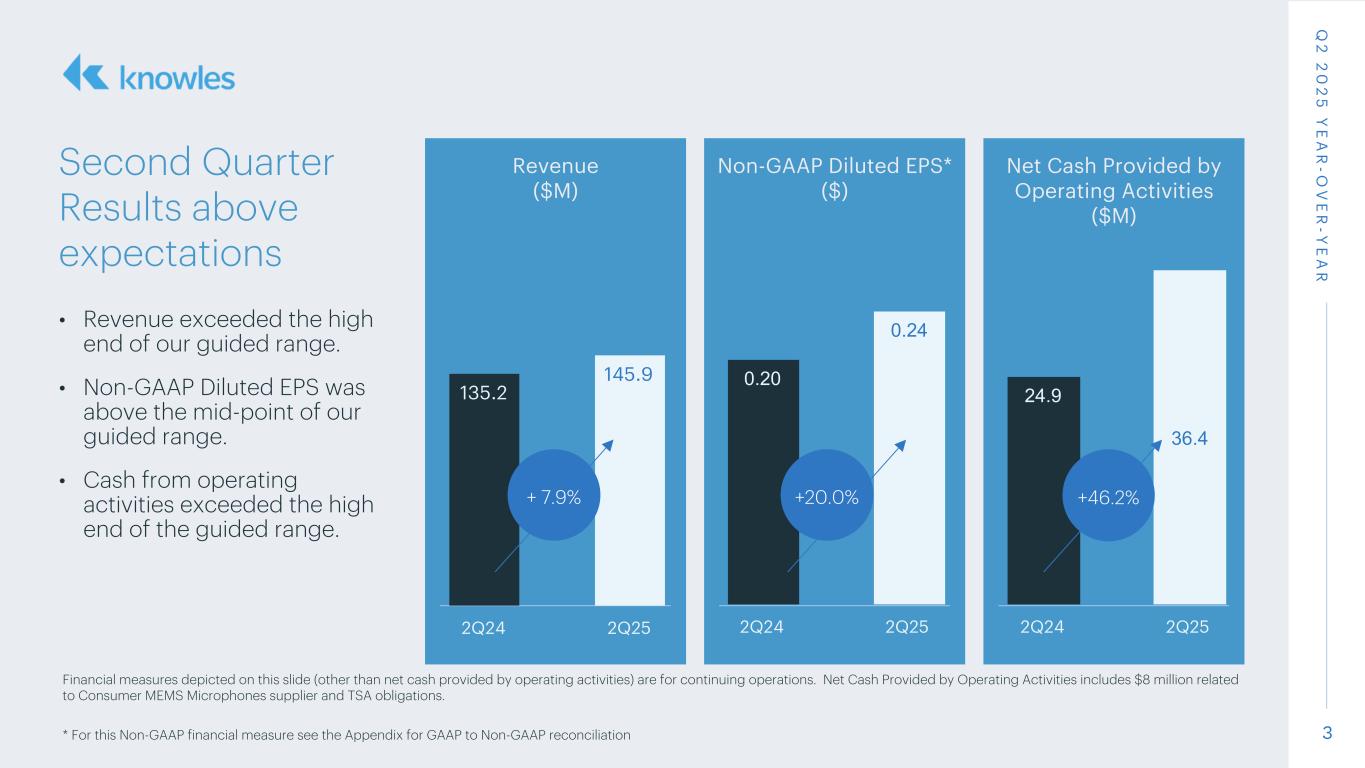
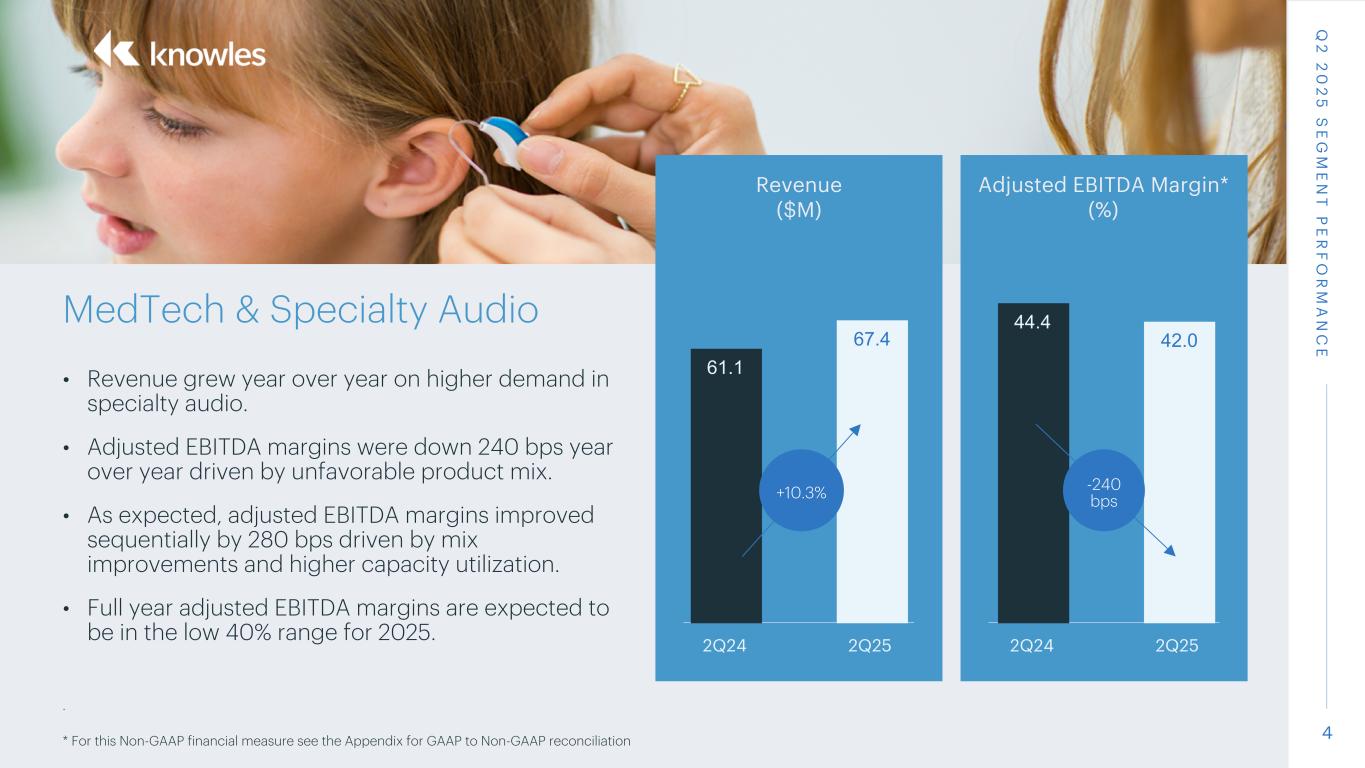
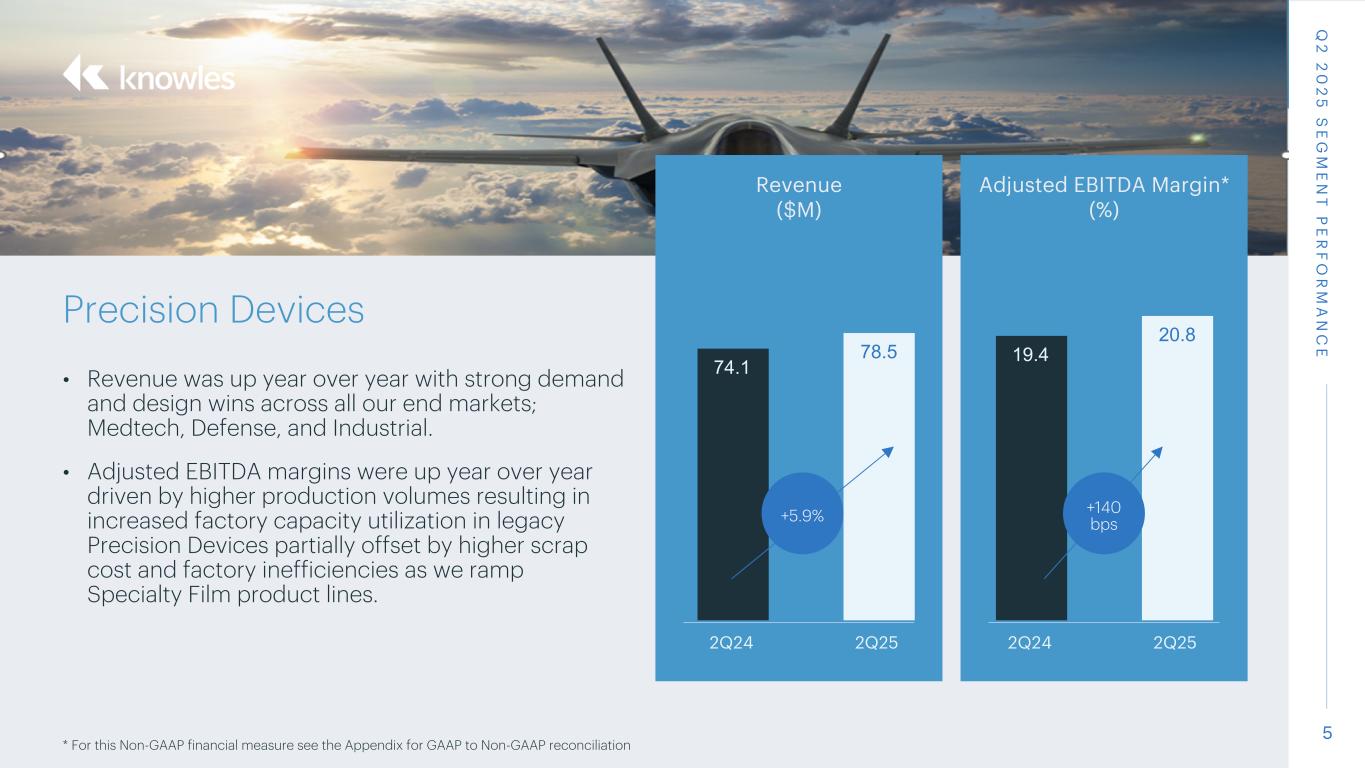
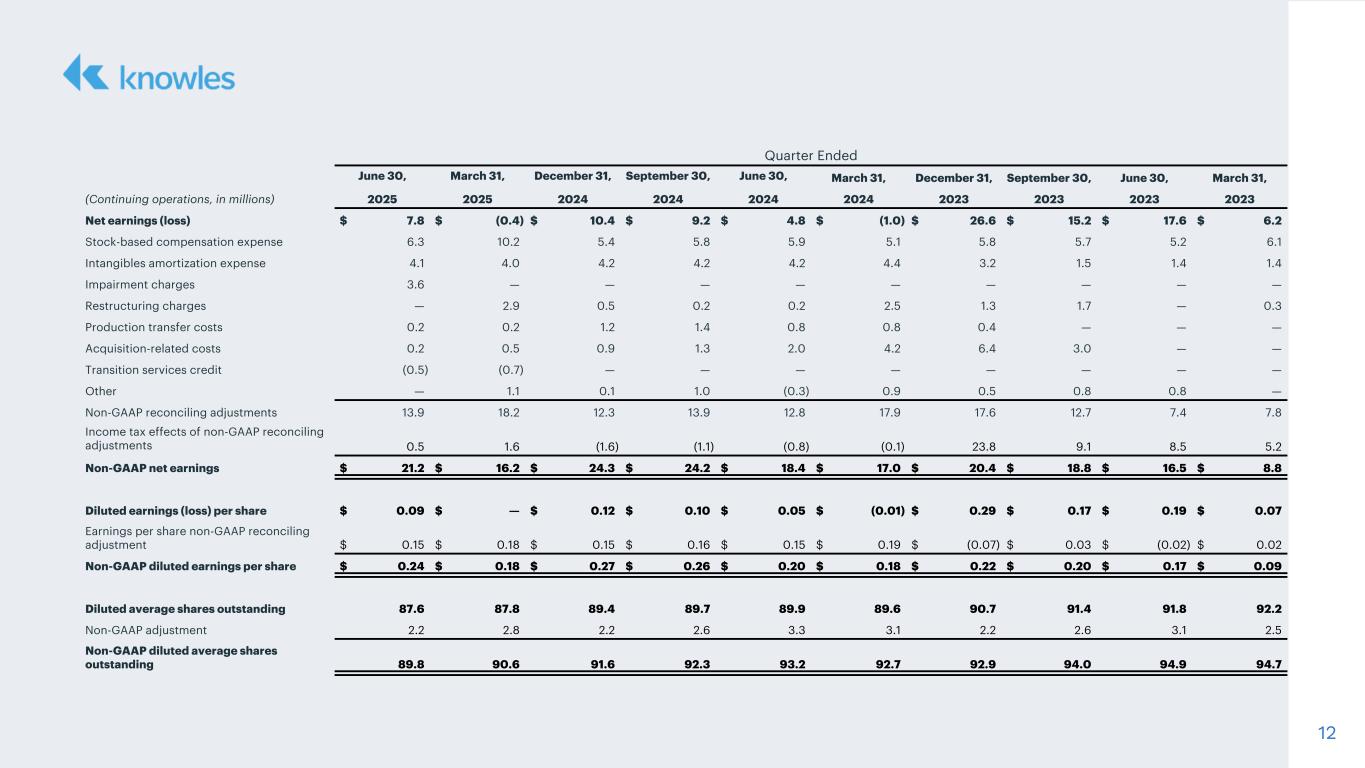
Thanks, Sarah, and thanks to all of you for joining us today. As the tariff situation continues to evolve, I will provide a brief update before my commentary on our second quarter results and the market outlook. Although the terrorist situation continues to be fluid, we are further along in our analysis and still believe NOLS is well positioned as it relates to the direct and indirect impacts of terrorists. As I previously said, we are generally a proximity manufacturer, meaning the vast majority of our products built in the U.S. are shipped within the U.S. and products built in Asia shipped to customers in Asia and Europe. Couple this with our philosophy of sourcing materials geographically close to our production facilities, and our total exposure to tariffs is less than 5% of revenue and 3% of cost of goods sold. In Q2, we have had success in passing these additional costs on to our customers, and our expectation is to continue to do so without loss of business. Additionally, I believe the primary end markets we serve in MedTech, defense, and the industrial sectors will be relatively insulated from the impacts of tariffs. Let me reiterate what I previously said. The applications that our products serve in MedTech markets, such as hearing aids and devices that our capacitors are in, such as implantables, imaging, and ventilators, to name a few, have traditionally been considered essential. As these products are essential, our historical experience shows economic shocks and subsequent recessions can have modest short-term impacts to these markets, but tend to have very little impact over the course of a full year. I also believe that defense programs we participate in are secure, and based on a recent order activity, demand appears to be gaining strength. Finally, the industrial market has been more sensitive than medtech and defense to recessions, but we are currently not seeing any impact on demand. We are obviously continuing to monitor this closely. Now I'll turn to our results. In Q2, we had a strong quarter delivering revenue of $146 million, up 8% year-over-year, and cash from operations of $36 million, both exceeding the high end of our guided range. EPS of $0.24 was above the midpoint of the guided range, up 20% year-over-year. Our business units continued to execute to the plan based on the strategy we laid out at our investor day. Now turning to our segments, in Q2, MedTech and specialty audio revenue was $67 million, up 13% sequentially and 10% year-over-year. We saw strength in both our specialty audio business and in the hearing health market in Q2. Very similar to what we have seen historically, there was a brief slowdown in demand for hearing health products due to macroeconomic uncertainty in Q1, with sequential and year-over-year growth returning in Q2. The hearing health business continues to be resilient as these products are considered essential devices. With customers depending on our ability to deliver unique solutions, I would note the demand for MSA products continues to be strong as we head into Q3, giving me confidence and expected year-over-year growth within our MSA business. In the precision device segment, Q2 revenue was $79 million, up 8% sequentially and 6% year-over-year. Revenue increased across all end markets for both OEM and distribution partners. In Q2, bookings trends, building on Q1, continued to be strong for the precision device segment. I would note this is the third consecutive quarter with positive bookings trends. The bookings trend was bought broad-based across most of our end markets, and the distribution demand has returned as we believe inventory levels have normalized. We continue to collaborate with our customers, leading to a robust pipeline of new design wins as our customers continue to choose our innovative and differentiated solutions across all the markets we serve. Overall for NOLS, as we noted at the investor day, with the acceleration of design wins and order activity, we are positioned well for organic growth in 2025. Beyond 2025, we expect an increase of organic growth rates from historical levels as new initiatives, such as the expansion of our specialty film production line, comes online. Additionally, new products, such as our inductor line, which we just announced last week, have the potential to expand our CAM and drive future growth. We are executing on the strategy of leveraging our unique technologies, creating custom products through our customer application intimacy, and then scaling into production with a world-class operational capability for end markets with strong secular growth trends. It is proving to be a winning combination, leading to the beat in revenue in EPS this quarter, and I believe it will allow us to continue to expand our margin profile. In the second quarter, we purchased $30 million in shares, which was funded by robust cash generation from operations. We believe our strong cash generation will allow us to pursue synergistic acquisitions and buyback shares while continuing to keep our debt at very manageable levels. In summary, as we enter the third quarter of 2025, I am excited by the momentum and strength the business demonstrated and the growth opportunities that we have in front of us both in the near and longer term. As I think about our growth potential in 2025, Distribution inventory appears to have normalized and as orders are increasing and our design wins continue to be strong across our product portfolio. This is driving increased demand for our products, which gives me confidence we have entered a period of accelerated organic growth. We are laser-focused on what we do best, designing custom-engineered products and delivering them at scale for customers and markets that value our solutions, positioning us well for growth beyond 2025. Now, let me turn the call over to John to detail our quarter results and provide our Q3 guidance.
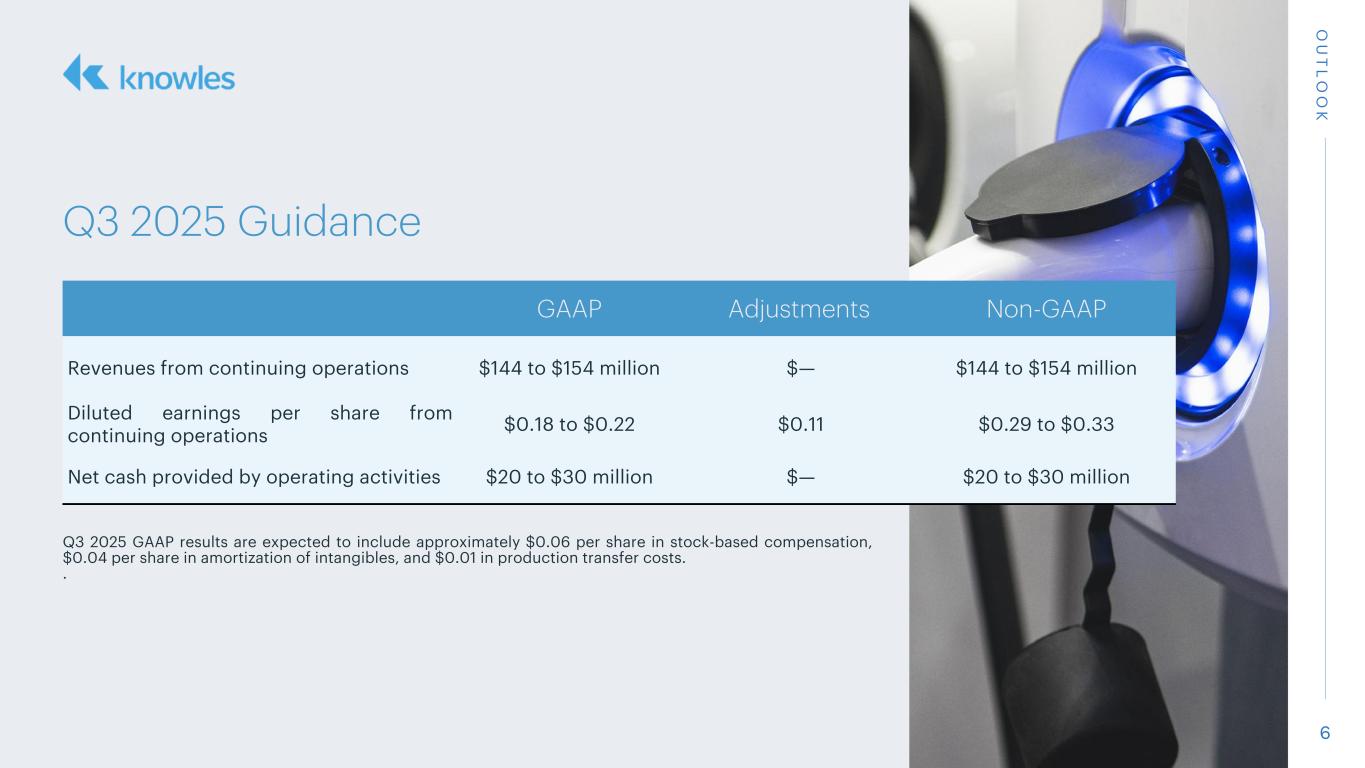
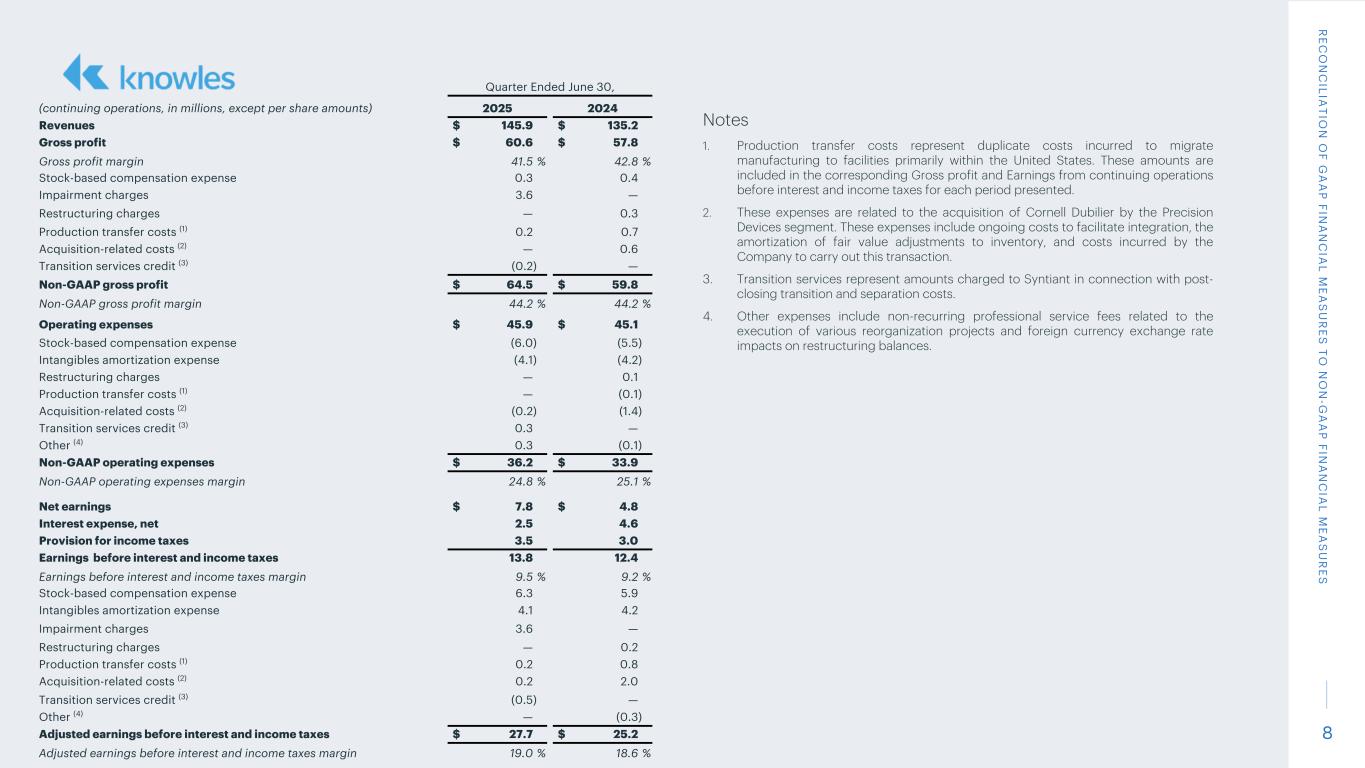
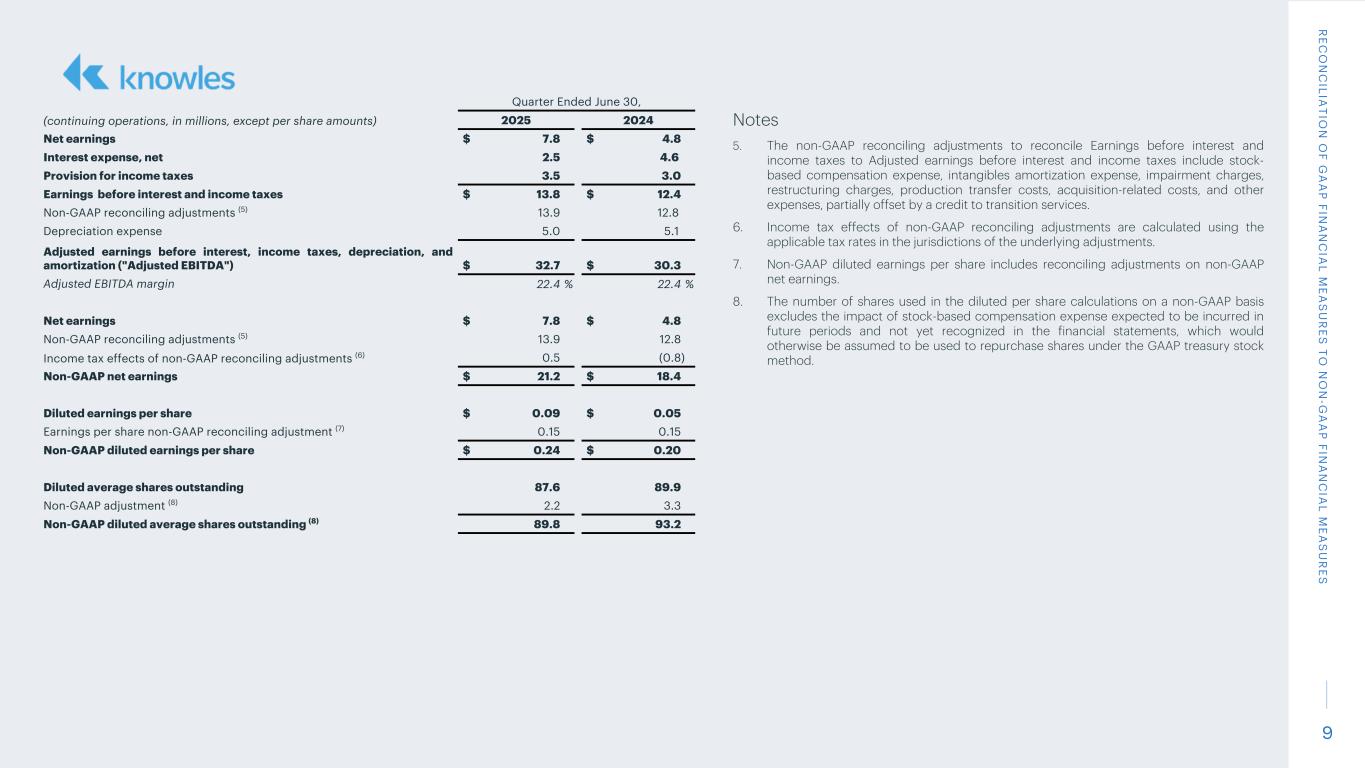
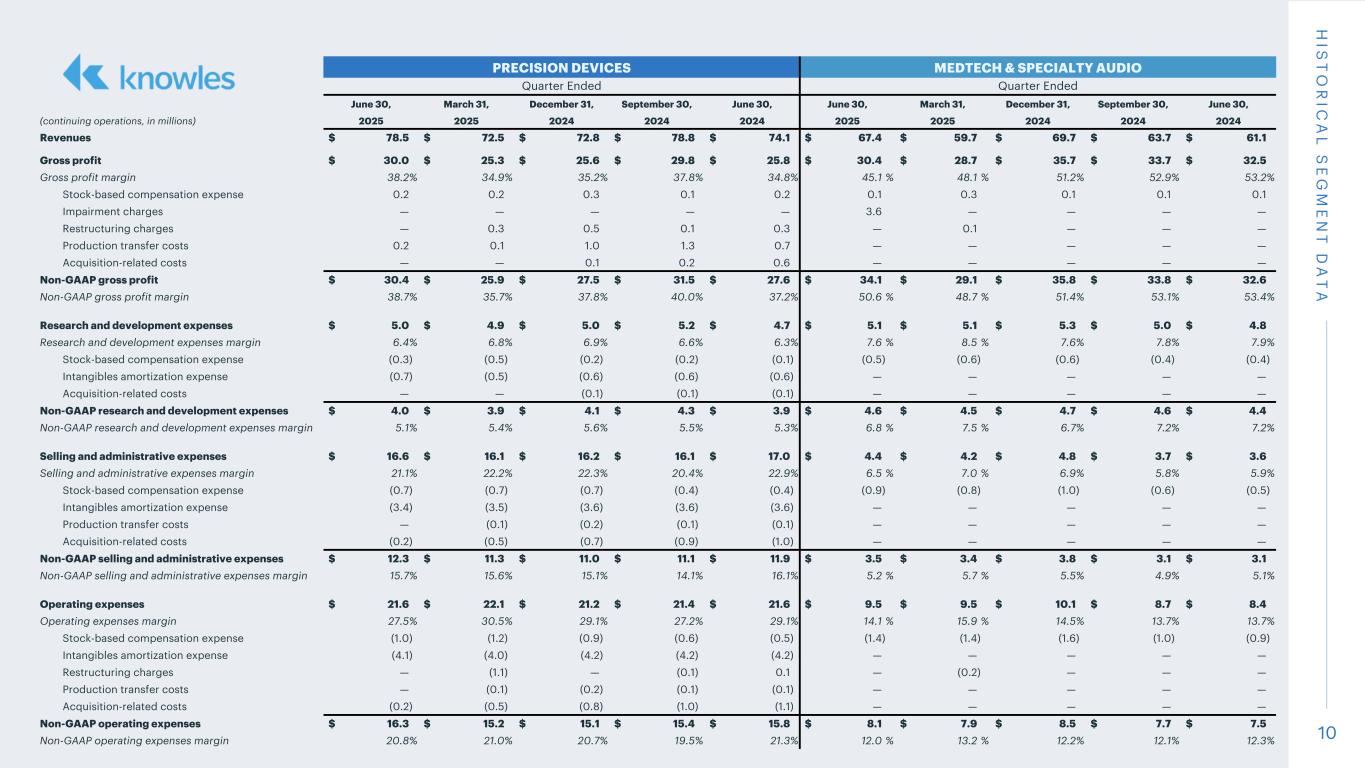
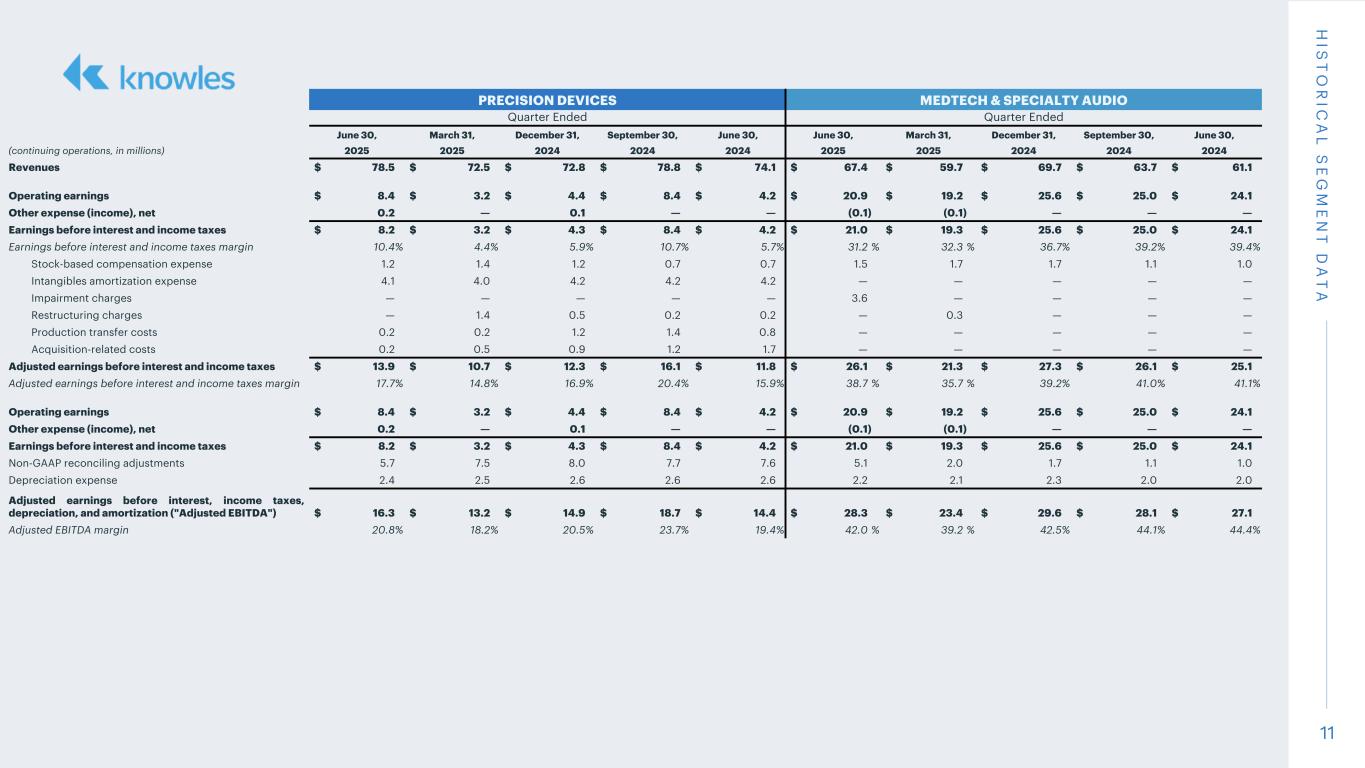
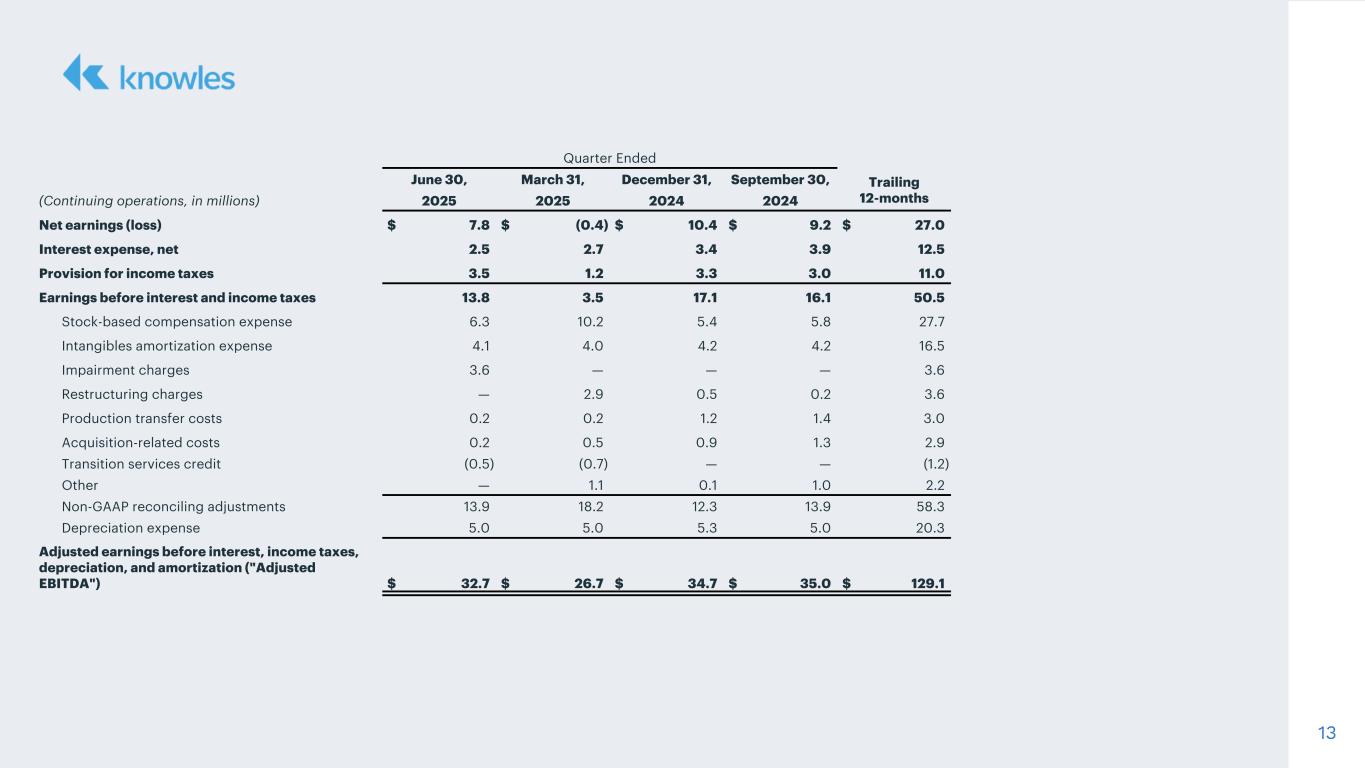
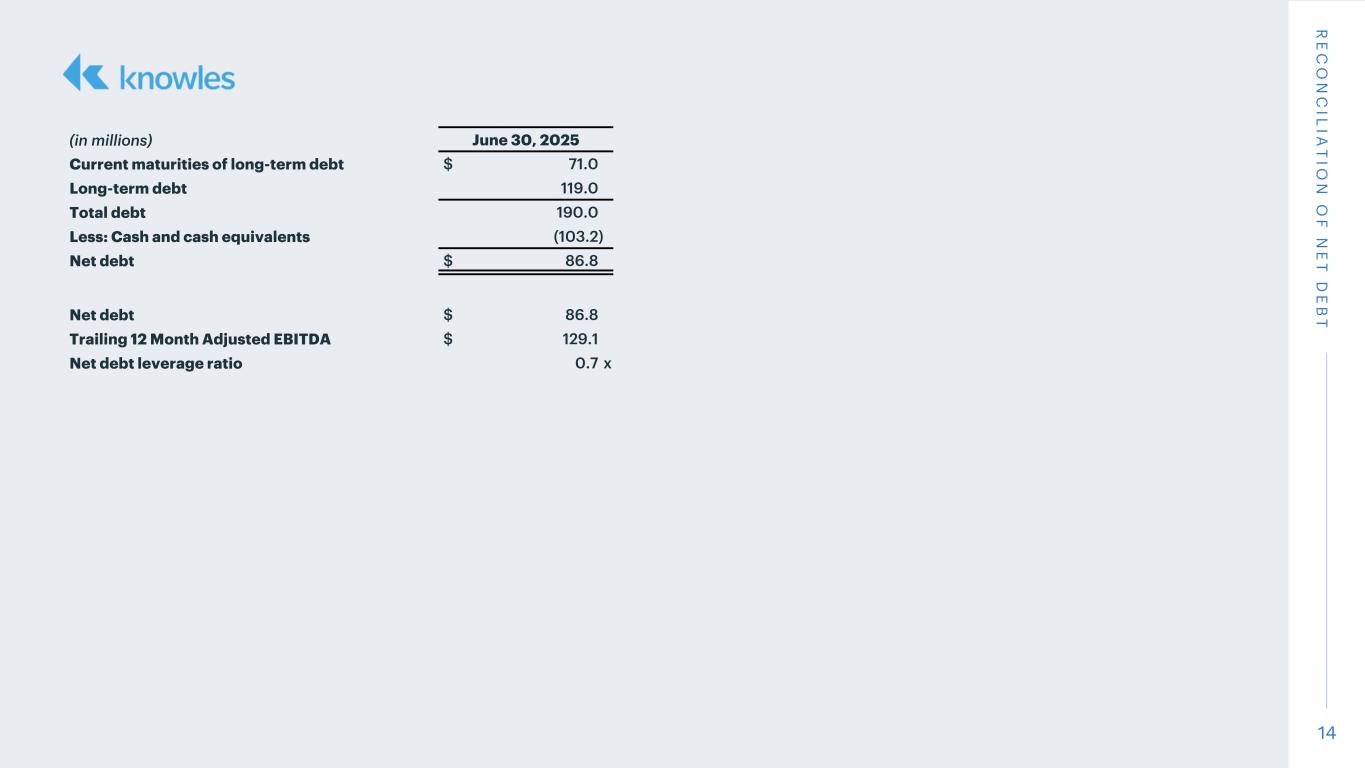
Thanks, Jeff. We reported second quarter revenues of $146 million, up 8% from the year-ago period and above the high end of our guidance range. EPS was $0.24 in the quarter, up $0.04, or 20%, from the year-ago period and above the midpoint of our guidance range. Cash generated by operating activities was $36 million, exceeding the high end of our guidance range, driven by timing of collection activities, lower than anticipated inventory, and payments received in connection with settlement of foreign currency hedges. In the MedTech and specialty audio segment, Q2 revenue was $67 million, up 10% compared with the year-ago period, driven by increased demand in hearing health and specialty audio. Q2 gross margins were 50.6%, down 280 basis points versus a year-ago period, driven by unfavorable product mix and higher factory costs. As expected, gross margins in the second quarter improved 200 basis points sequentially, and we expect gross margins to remain in the low 50% range in the second half of the year. The precision devices segment delivered second quarter revenues of $79 million, up 6%. Segment gross margins were 38.7% of 150 basis points from the second quarter of 2024 as improved pricing and higher production volumes resulted in increased factory capacity utilization in our legacy precision devices business. These improvements were partially offset by higher scrap costs and factory inefficiencies as we continue to ramp up the specialty film product decline. On a total company basis, R&D expense in the quarter was $9 million, up slightly from Q2 2024 levels. SG&A expenses were $28 million, up $2 million from prior levels, driven primarily by annual merit increases and higher incentive compensation costs. Interest expense was $3 million in the quarter and down $2 million from the year-ago period as we continue to reduce our debt levels. Now, I'll turn to our balance sheets and cash flow. In the second quarter, we generated $36 million in cash from operating activities. It's important to note that cash from operations for the three months ended June 30 includes $8 million in cash utilized to settle supplier obligations related to consumer MEMS microphone business, which was sold last year. Capital spending was $5 million in the quarter. We continue to expect to generate operating cash flow of 16 to 20 percent of revenues for full year 2025. During the second quarter, we repurchased 1.9 million shares at a total cost of 30 million. We exited the quarter with cash of 103 million and 190 million of debt. That includes borrowings under our revolving credit facility and an interest-free seller note that was issued in connection with the Cornell acquisition. Lastly, our net leverage ratio based on trailing 12 months adjusted EBITDA was 0.7 times and we have liquidity of more than $350 million as measured by cash plus unused capacity under our revolving credit facility. Moving to our guidance. For the third quarter of 2025, revenues are expected to be between $144 million and $154 million. R&D expenses are expected to be between $8 and $10 million. Selling and administrative expenses are expected to be within a range of $25 to $27 million. We're projecting adjusted EBIT margin for the quarter to be within a range of 22 to 24%. Interest expense in Q3 is estimated at $2 million and includes non-cash imputed interest. And we expect an effective tax rate of 13 to 17%. We're projecting EPS to be within a range of $0.29 to $0.33 per share. This assumes weighted average share is outstanding during the quarter of $88.5 million on a fully diluted basis. We're projecting cash generated by operating activities to be within the range of $20 to $30 million. Capital spending is expected to be $11 million. We expect full-year capital spending to be approximately 5% of revenues as we increase investments associated with capacity expansion related to our specialty fill line. In conclusion, we resumed year-over-year revenue and earnings growth in both segments in the second quarter, and with a strong backlog and increased order activity, we expect to continue to sustain both sequential and year-over-year revenue and earnings growth for the remainder of 2025. I will now turn the call back over to the operator for the questions and answers portion of our call. Operator.
Operator
Thank you. Ladies and gentlemen, we will now begin the question and answer session. At this time, I would like to remind everyone to ask a question. Please press the star button followed by the number one on your telephone keypad. If you would like to withdraw your question, please press star one again. One moment, please, for your first question. The first question comes from the line of Christopher Rowland of Susquehanna. Please go ahead.
Hey guys, thanks for the question and congrats on these results. So the guide was nicely ahead of what we were thinking and perhaps what you guys were thinking earlier in the year. If you could speak to maybe the delta, what is providing that upside and then also any update on demand for the thin film opportunity as well?
Yeah, so first I would sit there and say, you know, I think, Chris, as I mentioned on the call, this is the third, with Q2, the third successive quarter within the PD segment where we've had a book to bill over one. I would note our book to bill in Q2 for PD was above 1.15. So we have a very strong bookings quarter again. And it was pretty broad-based. You know, I'd say, you know, in the PD segment, it was, you know, medical, defense, industrial. It's with our distribution partners as well as with our direct customers. So, you know, we're seeing quite a bit of demand on the PD side. You know, I would sit there and say on the MSA side, on the hearing health side, you know, obviously, you know, we saw Q1 be a little bit weaker in the end market, but it bounced right back in Q2. Kind of like we've said in the past, you know, with these essential devices, maybe somebody stays home for a month and delays getting a hearing aid by a month, but it bounced back very nicely. And we're expecting both segments to have year-over-year growth for full year 2025. So it's really pretty broad-paced, Chris, across most markets. And I think, you know, kind of it's a, I would say, a little bit of a testament to of what we laid out in investor day, which is, you know, around these three markets, medtech, industrial, and defense. You know, and I would add one last piece I would add, you know, I was just looking at our bookings for July, you know, July to date. We are already having another strong month of bookings in July ready.
Excellent. Thank you, Jeff. And then I know you're not guiding two quarters ahead um but without the mems business uh i think you know that was maybe uh it could create some volatility for q4 um did you have any uh early thoughts on how we should be thinking about q4 and then secondly uh just gross margin expansion like it with these higher volumes um What should we expect from higher utilizations moving forward here?
I'll let John cover the gross margin in a second. Just from a revenue base, obviously, you're correct. We're not guiding Q4. But I would say this. We are expecting year-over-year growth again in Q4, and we expect sequential growth again in Q4. That's what I would sit there and say at this point. You know, I mean, I think we're pretty fully booked already for Q3, you know, with our lead times, you know, and our dead strong intimacy with our customers. We have a pretty good view of Q3. We're starting to get a pretty good view into Q4, but we're still expecting, based on order activity, that we'll see year-over-year growth in Q4 as well as sequential growth in Q4.
Yeah, Chris, in terms of gross margins and specifically capacity utilization, we delivered gross margins of 44.3% in Q2. We expect sequential to be at least up 100 basis points or more in Q3 and kind of similar levels in Q4. And again, those improvements over the current 44.3%, as you said, it's primarily driven by capacity utilization. in our high-performance caps business and also a little bit in our MSA segment.
Operator
Your next question comes from a line of Bob Lebeck from CJS Securities. Your line is open.
Good afternoon. Congratulations on continued strong performance, and thanks for taking our questions.
Hey, Bob, you're a little faint. I don't know if you can speak up a little.
Let's see. Is that any better? Is that any better? Better, maybe? Yeah, I think it's better, much better. Okay, great. Well, congrats on a strong performance. Let's see. You touched on organic growth accelerating, you know, on 25, you mentioned, you know, the film expansion and inductor lines. I was hoping you could just expand on that a little bit. And the film is for the energy order you talked about on previous calls, or how should we think about that?
Well, the film will be, yes, the energy order, But that won't really start hitting revenue line until probably mid-year next year when we'll start delivering that order. So the growth in the specialty film line is actually going to be other customers, mainly medtech, defense, and industrial, shorter term. But I think here's how I kind of would frame it. If you looked historically, we gave quite a bit of information at the Investor Day. And historically, these businesses that we have owned today, continuing ops, have grown over a cycle. They grew at, we showed, 4% organically. We kind of committed that on an organic basis, we think that, you know, over a cycle, 4% to 6% now is kind of the growth rate for these businesses. And I would say we're trending toward the higher end of that range right now. And so it's going to be driven by, first, you know, a lot of new design wins in our core. So I think we got, you know, good design wins in our core products. But then there's these other expansionary opportunities. You know, I would sit there and say specialty film is going to really start, you know, delivering, you know, significant growth in the back half of this year as well as in 2026. The inductor line is going to take a little longer. We just introduced that product category last week. You know, it builds off of our ceramic capacitor capabilities, our ceramic inductors. And we would hope, you know, starting in about 24 months from now, we start to see some more significant revenue. So I think, you know, I would sit there and say, we've got a lot of design wins in the core, plus we've got some other opportunities that are expanding our TAM and allowing us to grow. So, you know, over the next, I would say, you know, year to two years, I would sit there and say our growth rate is going to be probably towards the higher end of that organic range that we laid out at the investor day.
Okay, that sounds great. And then you touched on this too. Obviously you had strong cash flow in the quarter. you bought back stock, but you still mentioned M&A as a, you know, potential, you know, part of the growth over time. Can you talk to us a little bit about the M&A market? You know, it has closed up for a couple of companies or industries, you know, with all the macro noise. How does it look now? How's your pipeline? What are your opportunities? How do you feel about it?
Pipeline's good. You know, it's obviously hard to predict, you know, exactly when this is all going to come to fruition. We want to be disciplined around this, of course, as we've kind of done in the past. We want to make sure that we're thinking about what we do. You know, we said at the investor day, there's kind of three types of acquisitions. There's consolidation, there's extensions, and there's adjacencies. I'd say, you know, again, Q1 into Q2, the market kind of froze up a little bit on doing M&A. It seems like it's starting to reopen again. So, you know, while I don't have anything to announce here today, obviously, and it's hard to predict when things will happen, I think we're being aggressive here in areas where we think we can drive value for the corporation. And so we'll be looking at this. You know, obviously, you know, we have our metrics. I know, John, you want to cover how we look at this, but we're going to be very disciplined about what we do.
Yeah, I mean, Bob, we have a lot of optionality, I would say, with our low leverage, our strong cash flow. generation uh we continue to have a lot of optionality with respect to capital allocation as you mentioned you know we repurchased 30 million share in shares uh 30 million dollars in shares in q2 at an average price of just under 16 i would say likely that we'll continue to buy back shares in the back half of 25. okay super i'll turn back in q thank you again if you'd like to ask a question press star one in your telephone keypad and there are no further questions this
Operator
concludes today's conference call. Thank you for your participation. You may now disconnect.