Operator
Hello, everybody, and welcome to the Lemonade Q4 2025 earnings call. My name is Elliot, and I'll be coordinating your call today. If you'd like to register a question during today's event, please press star 1 on your telephone keypad. And I'd like to hand over to the Lemonade team. Please go ahead.
Speaker 11
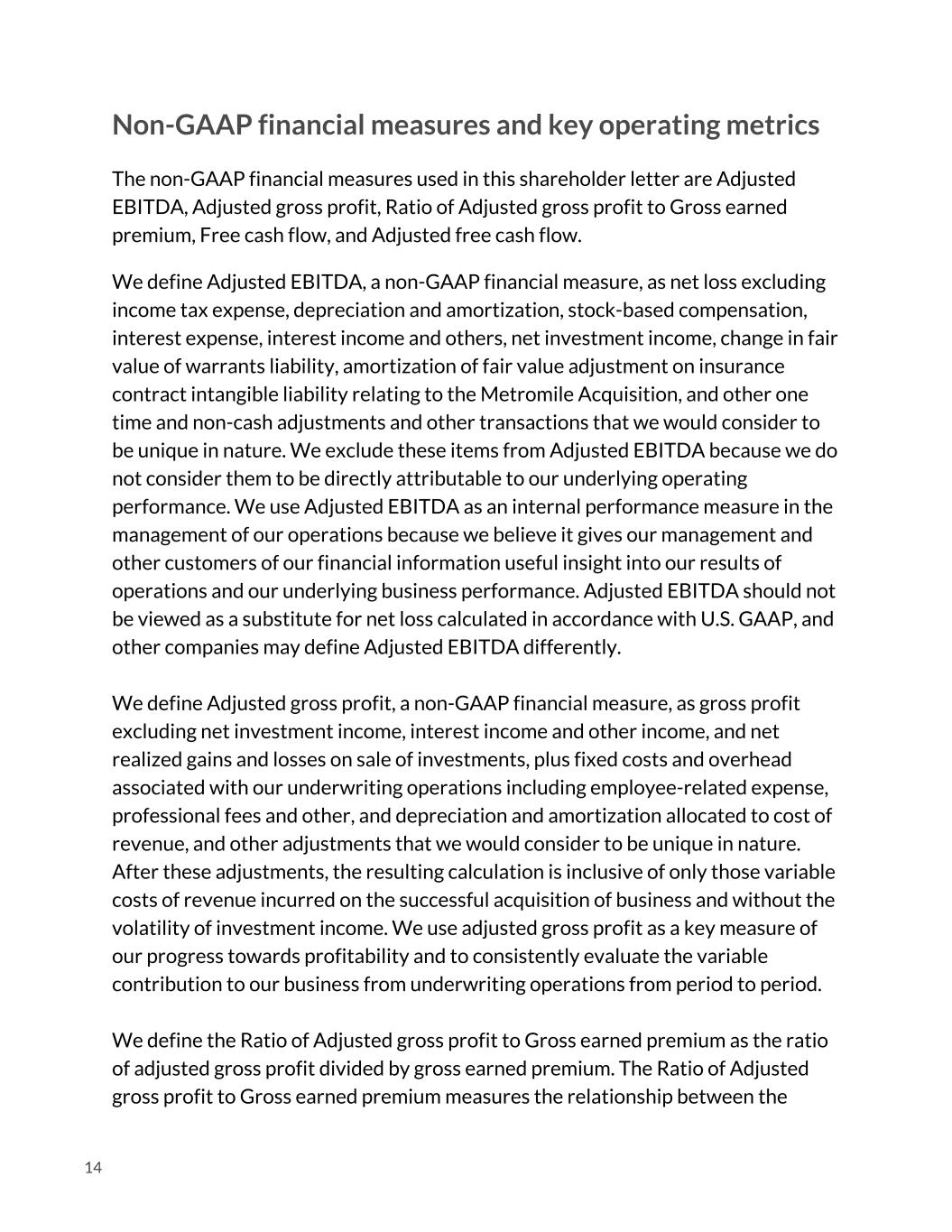
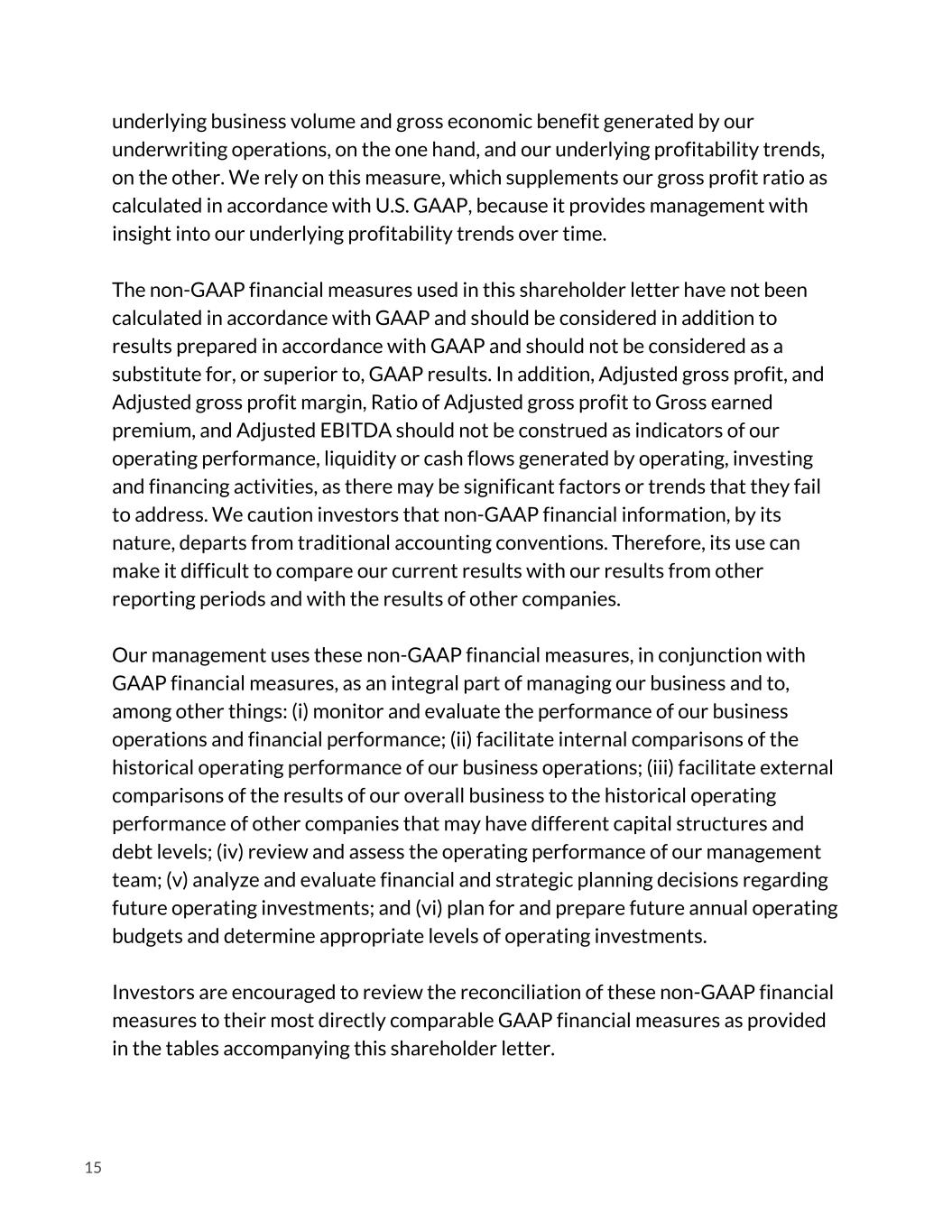
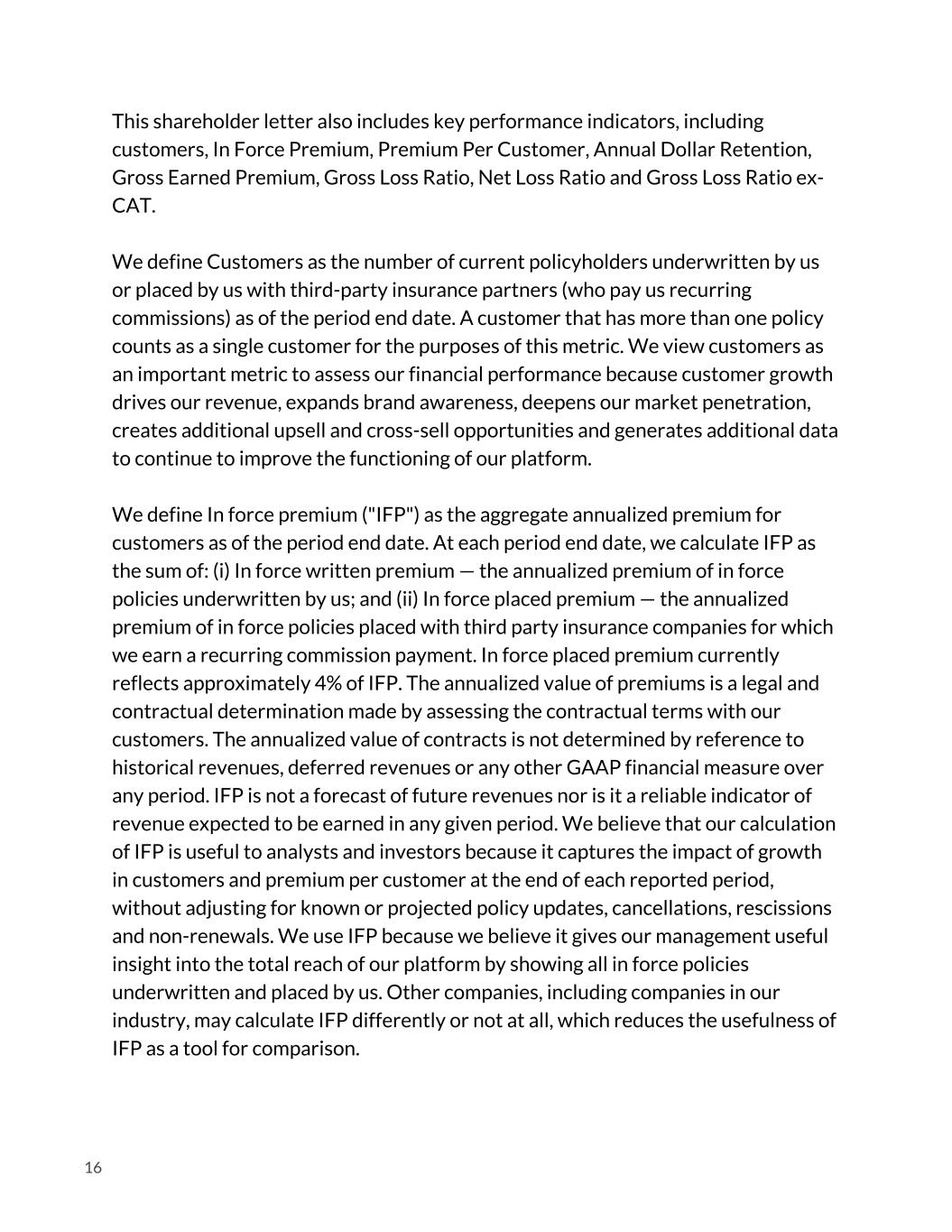
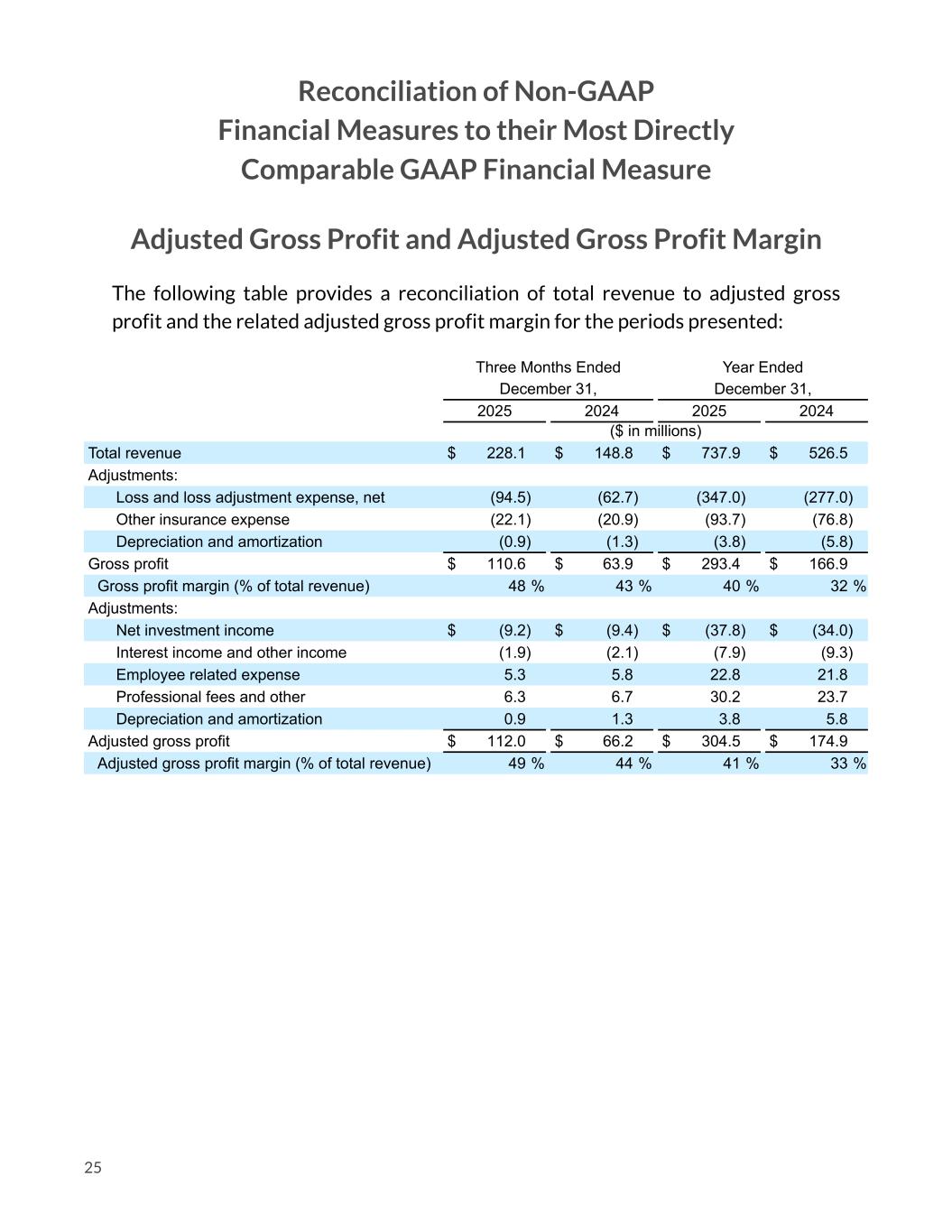
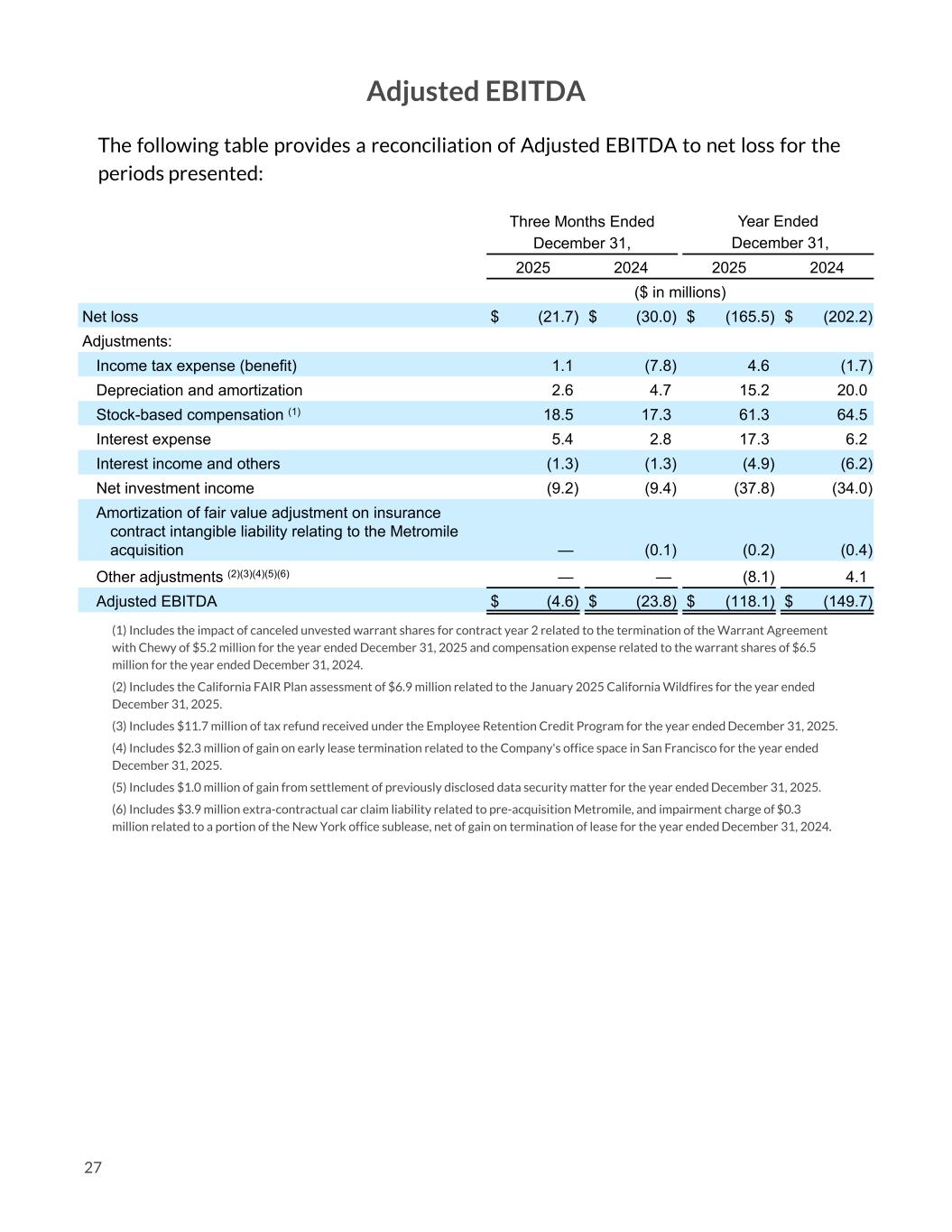
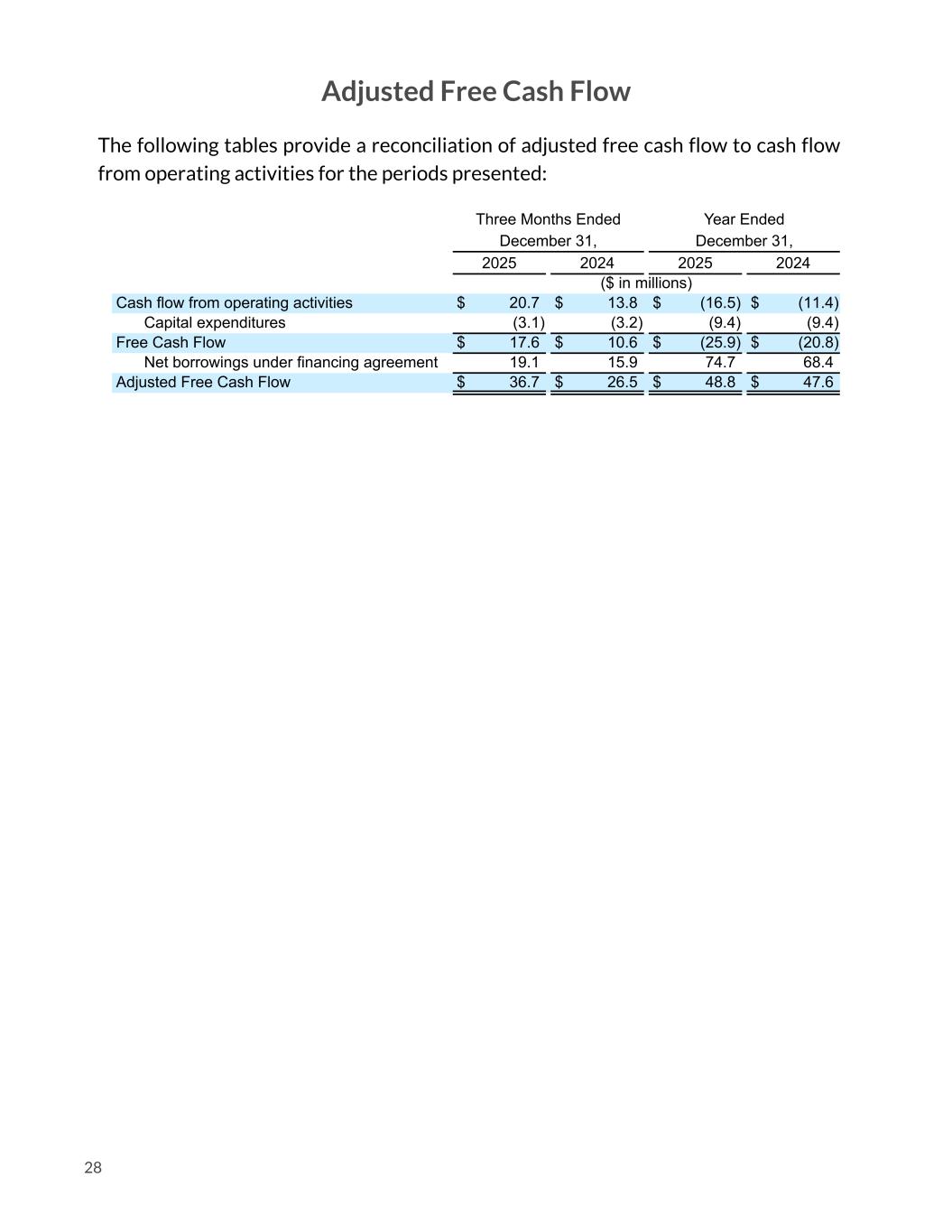
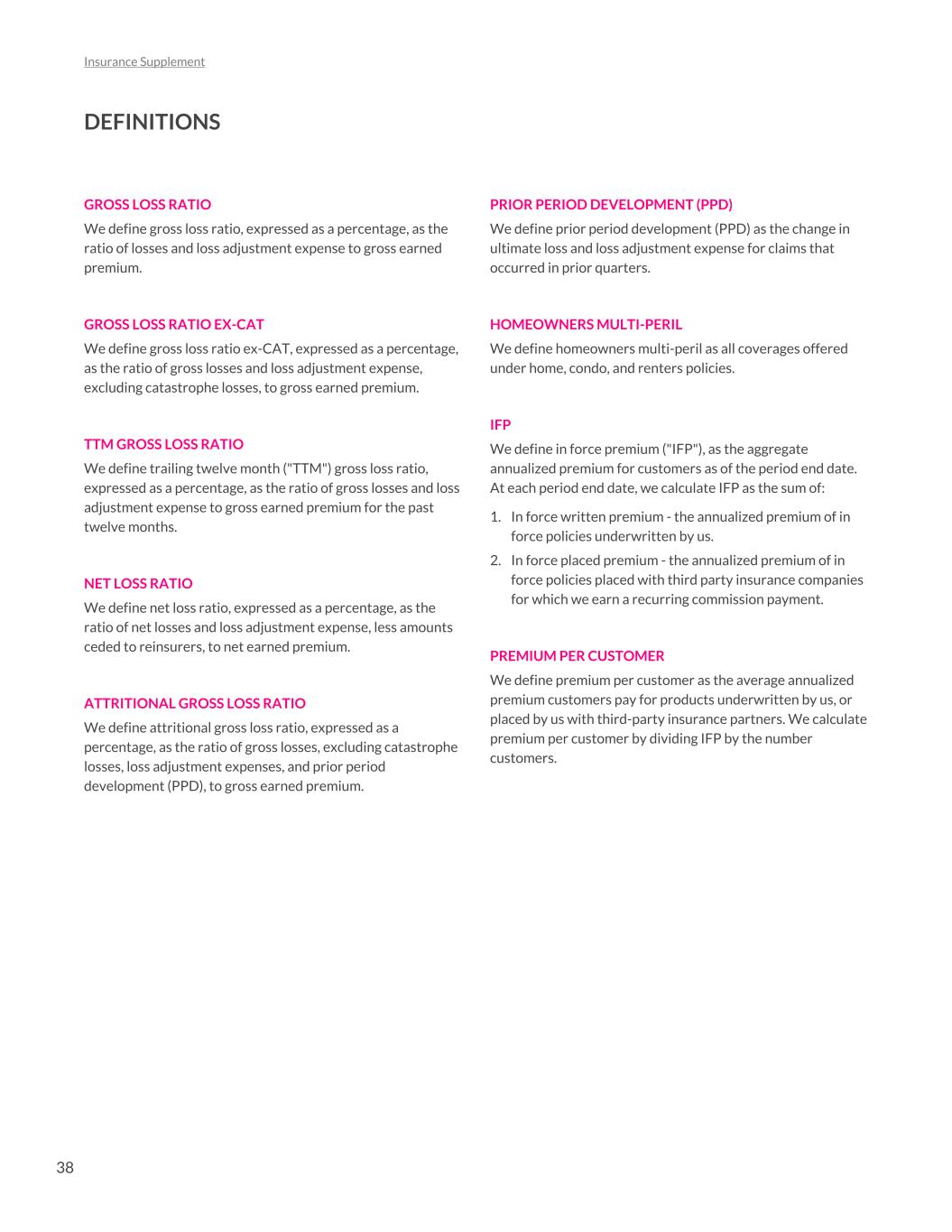
Good morning, and welcome to Lemonade's fourth quarter 2025 earnings call. Joining us on our call today, we have Daniel Schreiber, CEO and co-founder, Shai Winninger, president and co-founder, and Kim Bixby, chief financial officer. a letter to shareholders covering the company's fourth quarter 2025 financial results is available on our investor relations website at lemonade.com investor i would like to remind you that management remarks made on this call may contain forward-looking statements within the meeting of the private securities litigation reform act of 1995. actual results may differ materially from those indicated by these forward-looking statements as a result of various important factors including those discussed in the risk factors section of our most recent Form 10 filed with the SEC and our more recent filings with the SEC. Any forward-looking statements made on this call represent our views only as of today, and we undertake no obligation to update them. We will be referring to certain non-GAAP financial measures on today's call, including adjusted EBITDA, adjusted free cash flow, and adjusted gross profit, which we believe may be important to investors to assess our operating performance. Reconciliations of our non-GAAP financial measures to the most directly comparable gap financial measures are included in our letter to shareholders our letter to shareholders also includes information about our key performance indicators including number of customers enforced premium premium per customer annual dollar retention gross earned premium gross loss ratio gross loss ratio x cat trailing 12 month loss ratio and net loss ratio and a definition of each metric why each is useful to investors and how we use each to monitor and manage our business with that i'll turn the call over to daniel for some opening remarks.
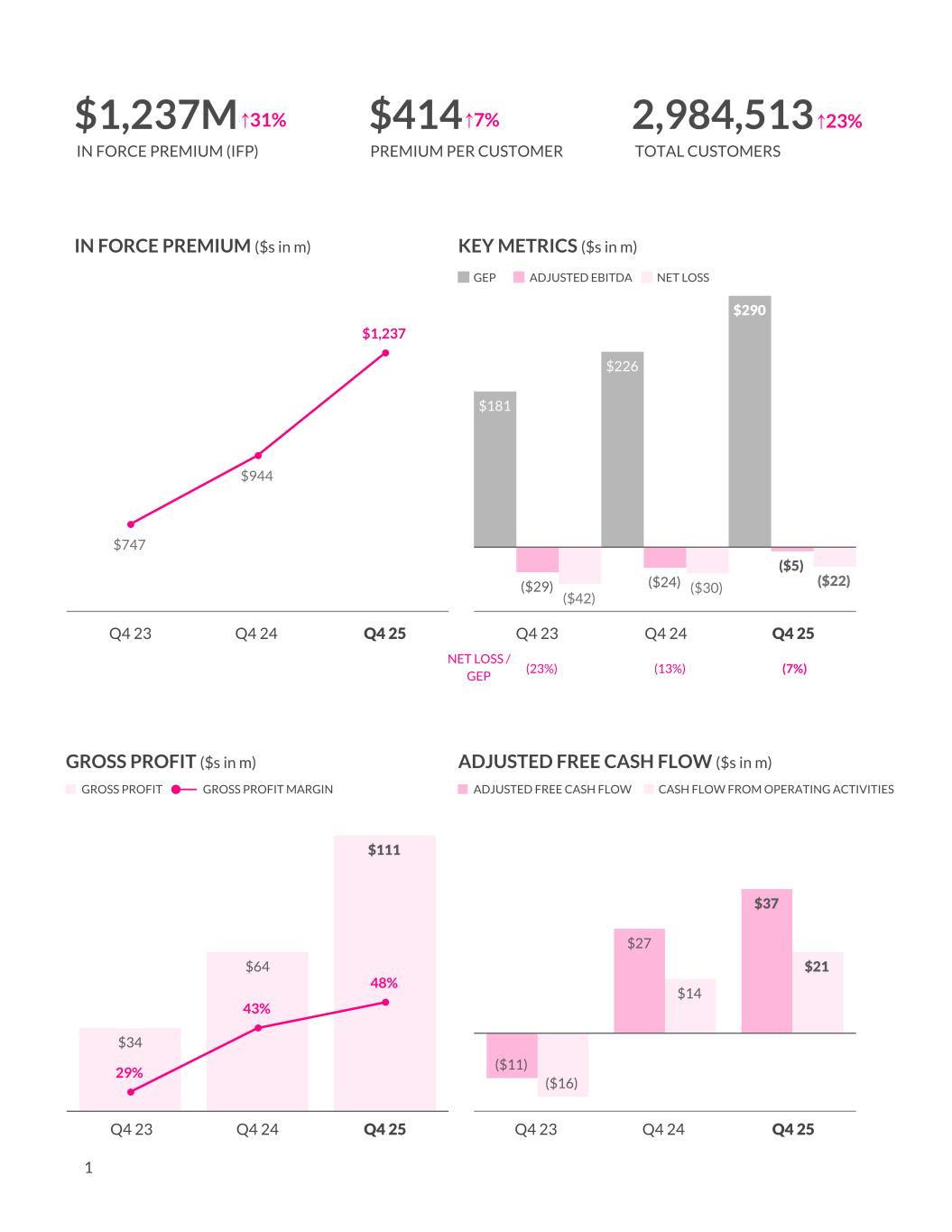
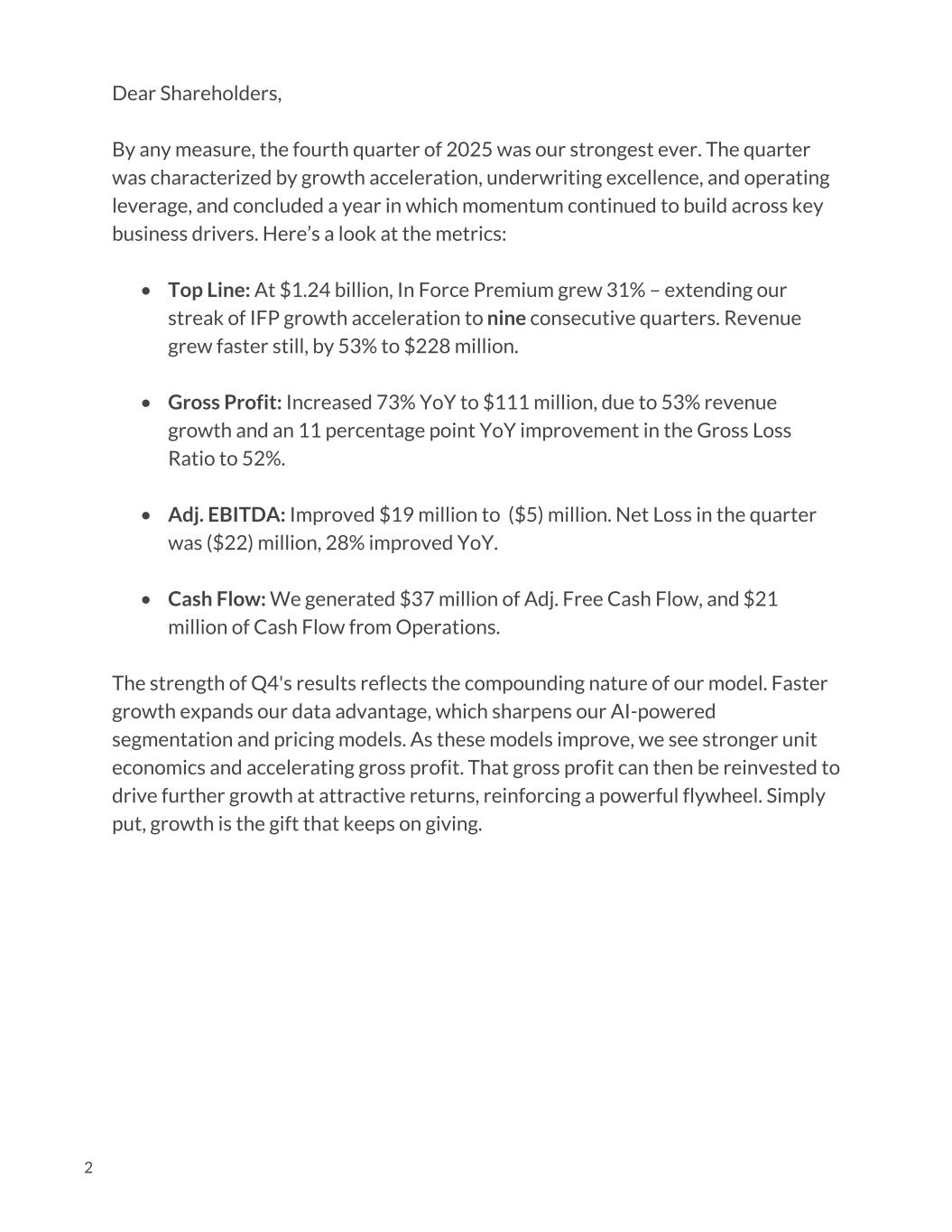
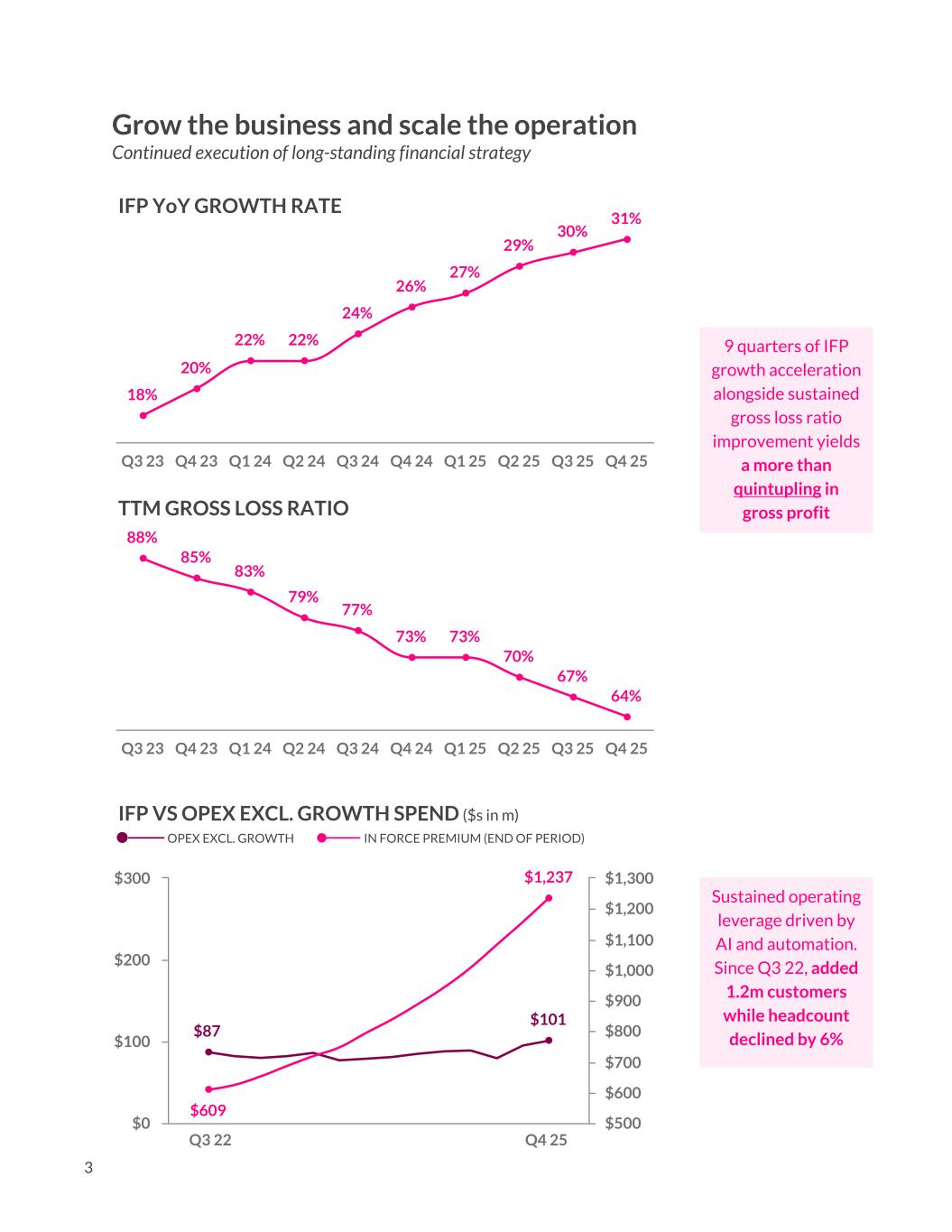
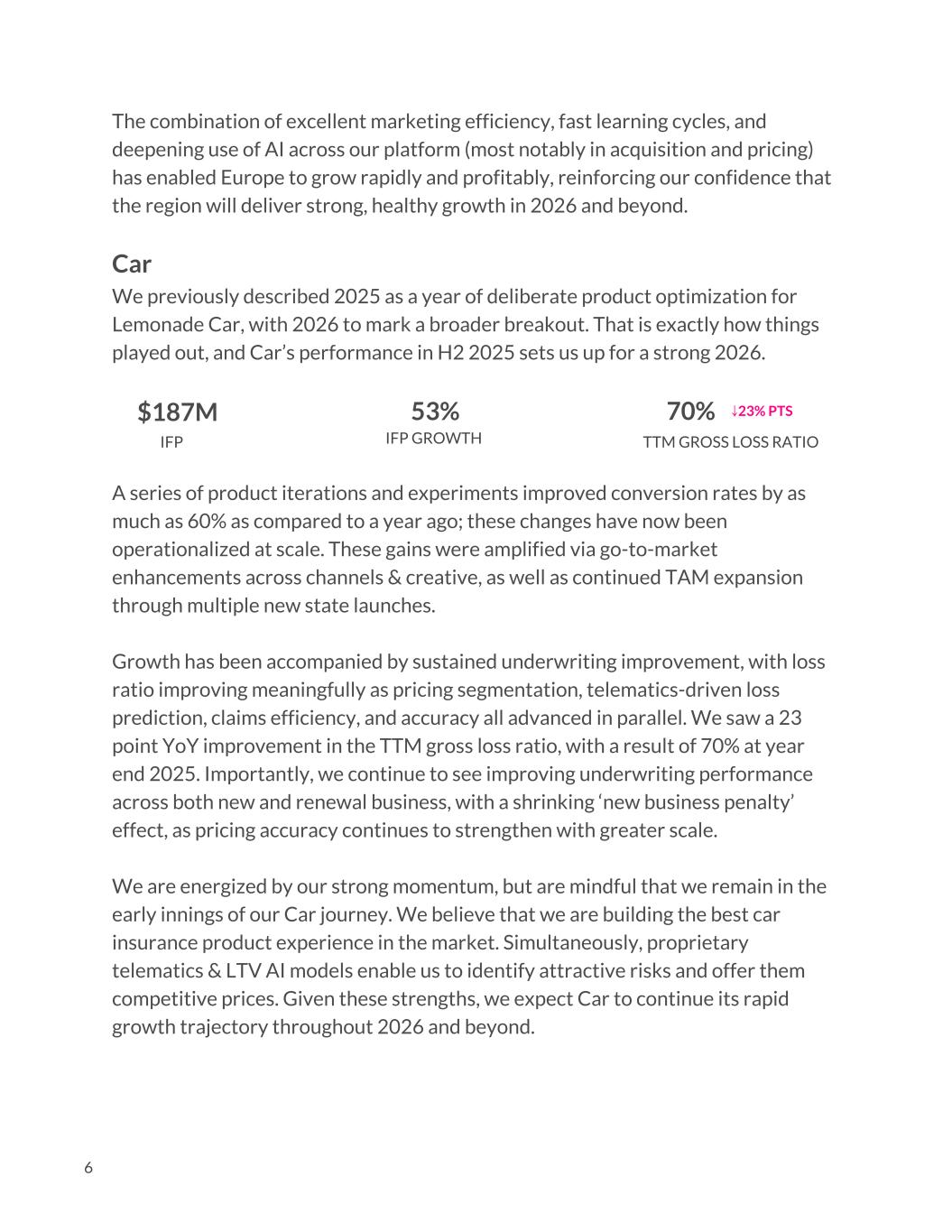
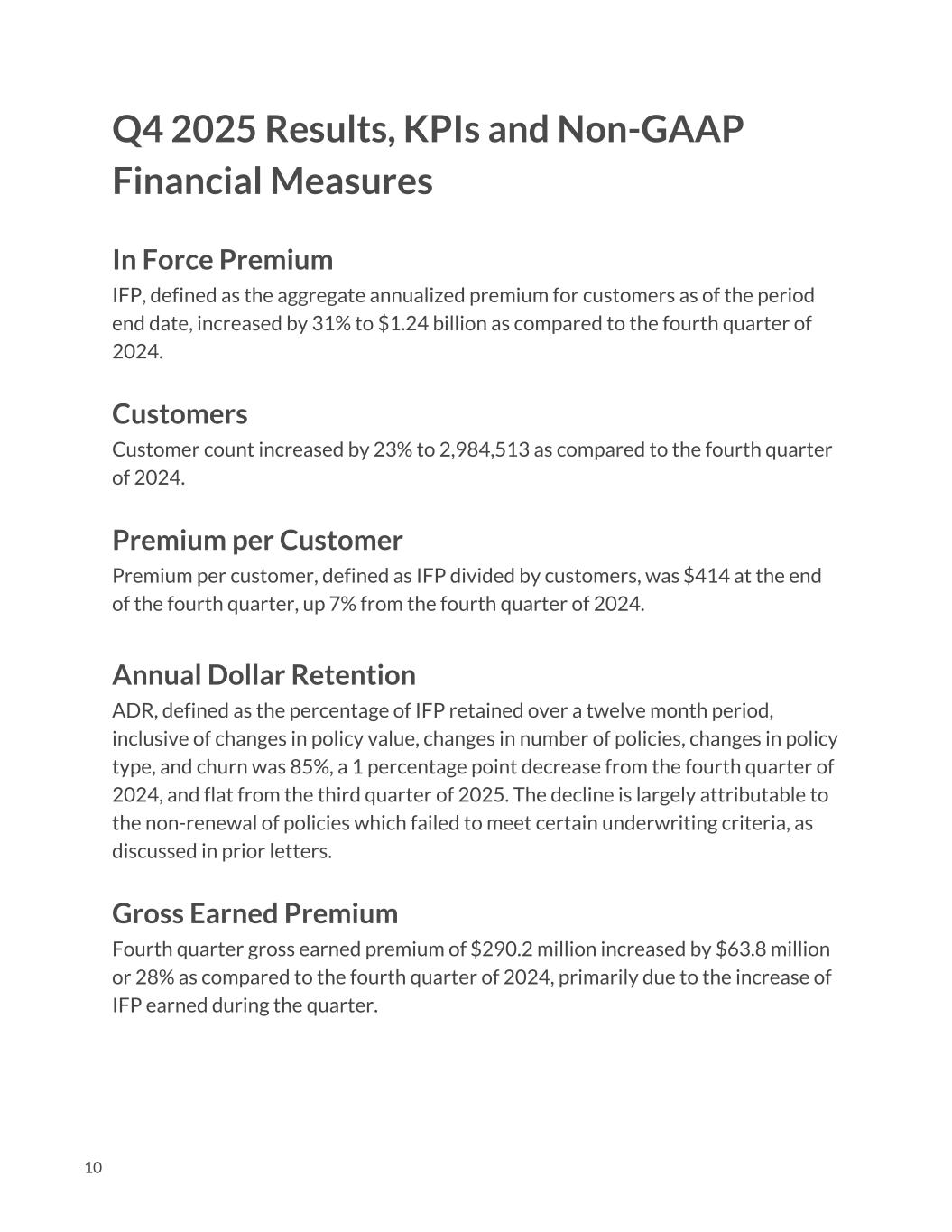
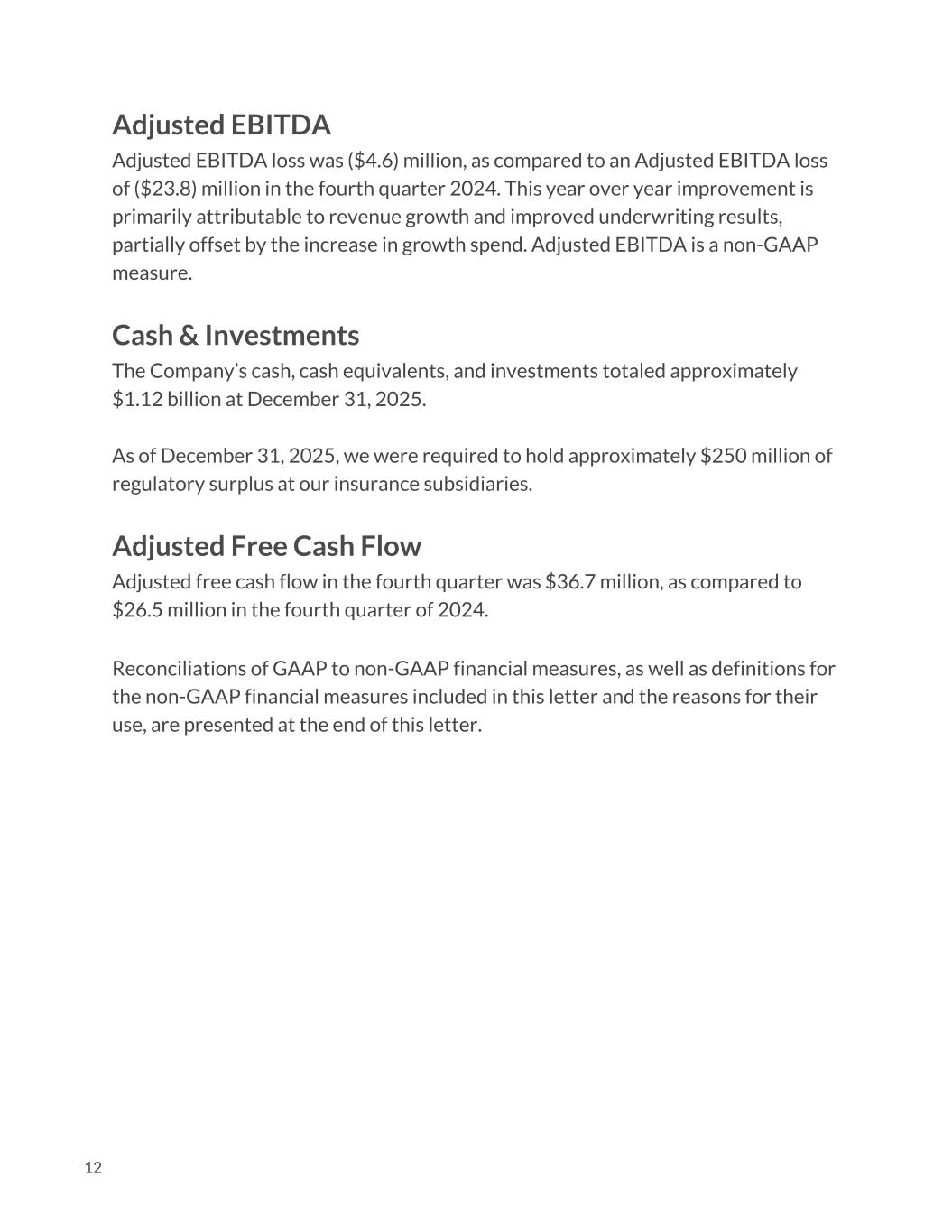
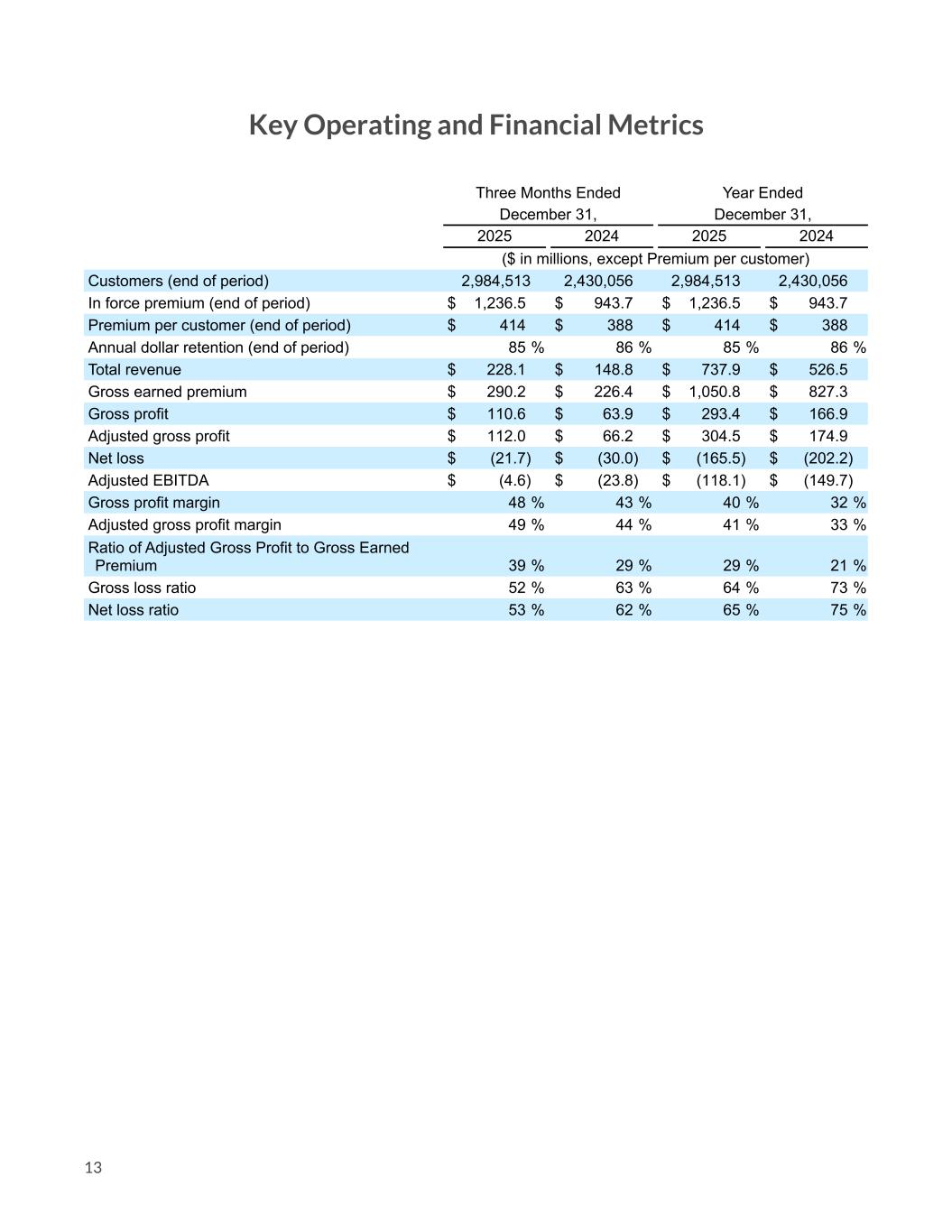
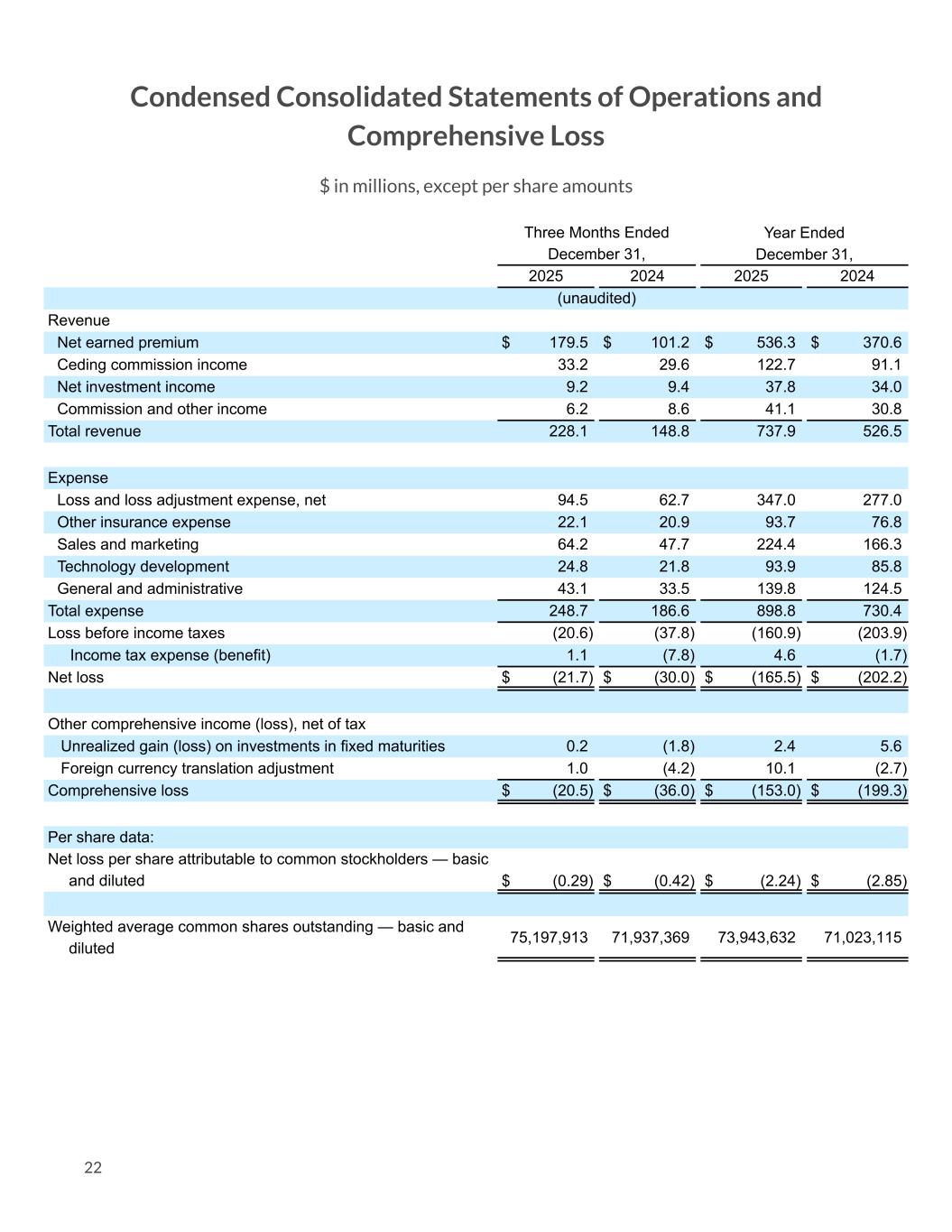
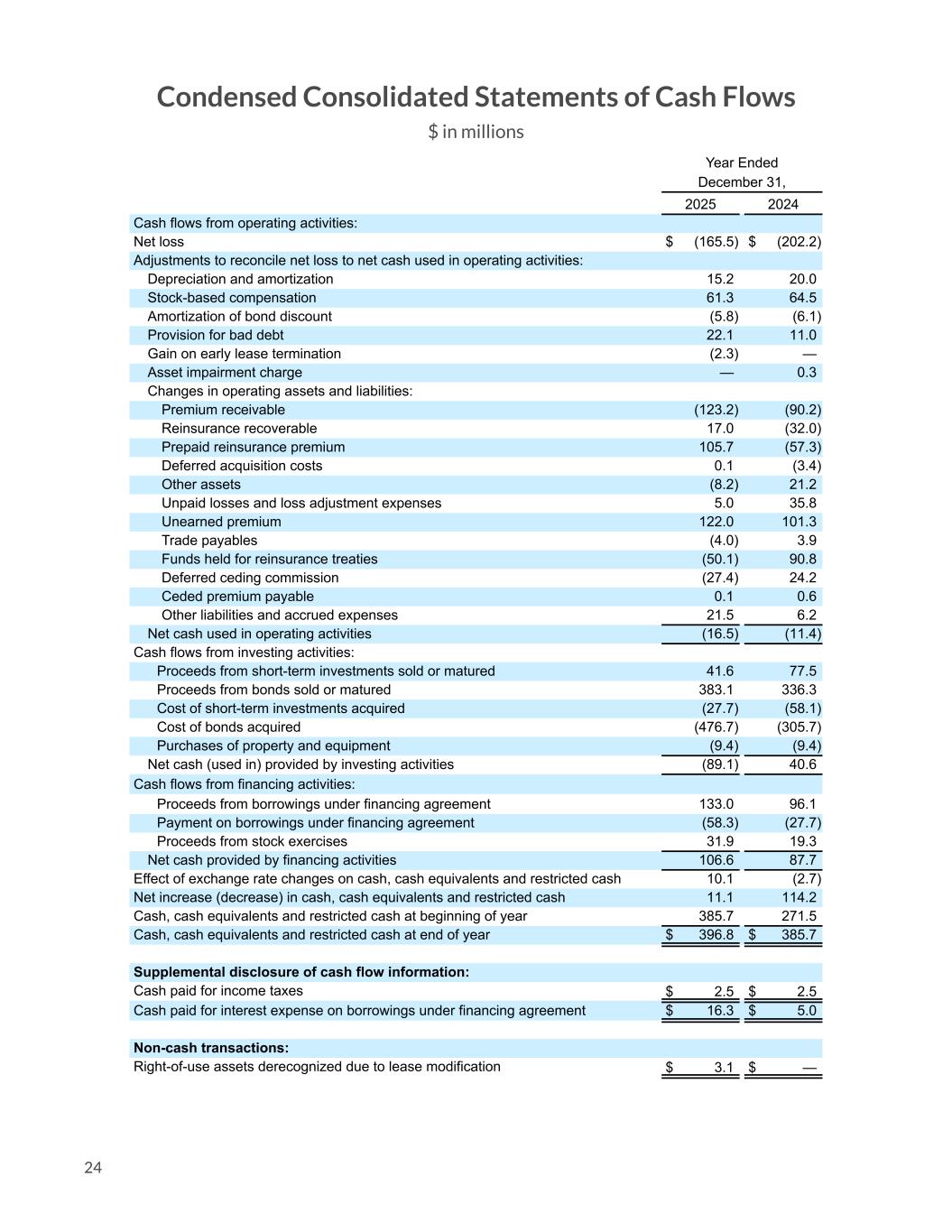
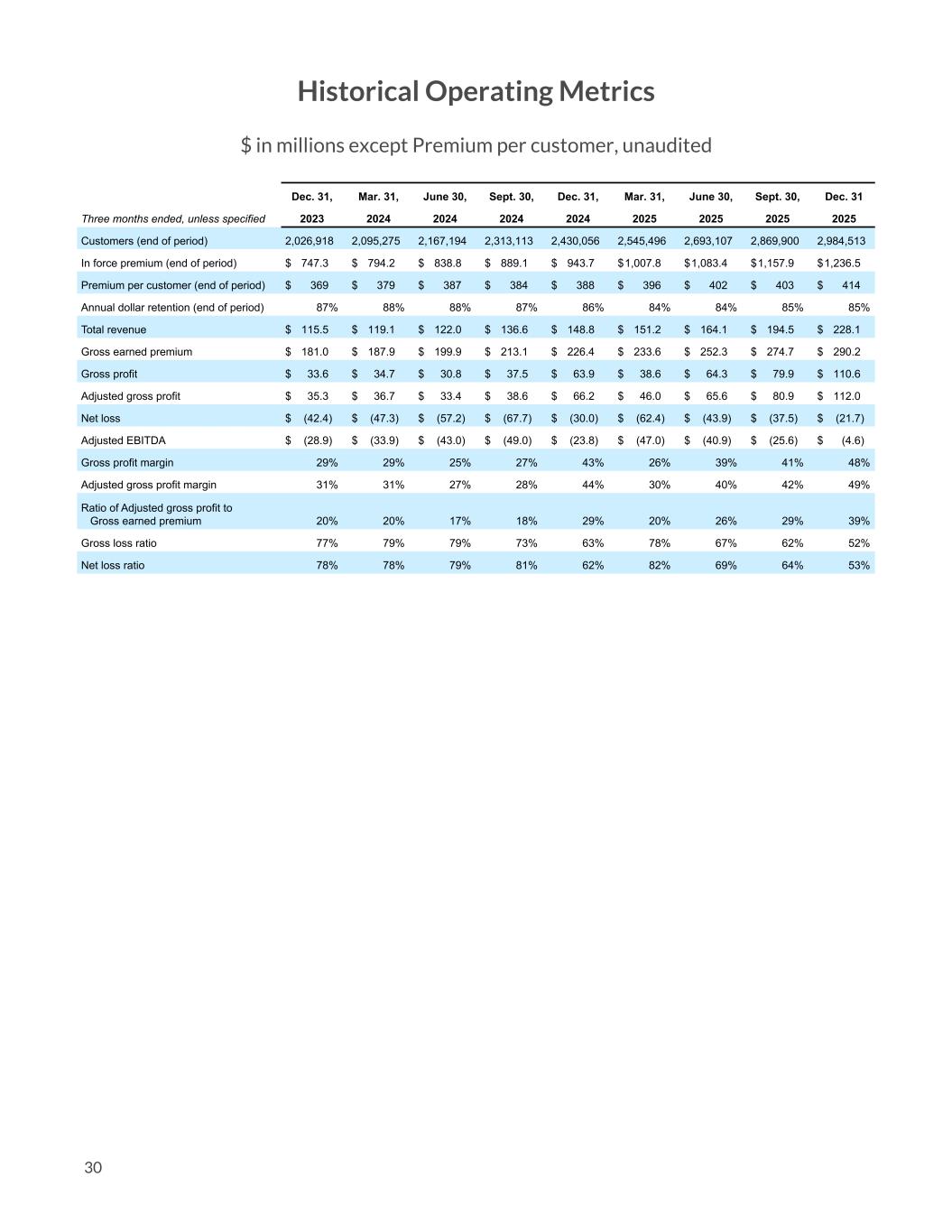
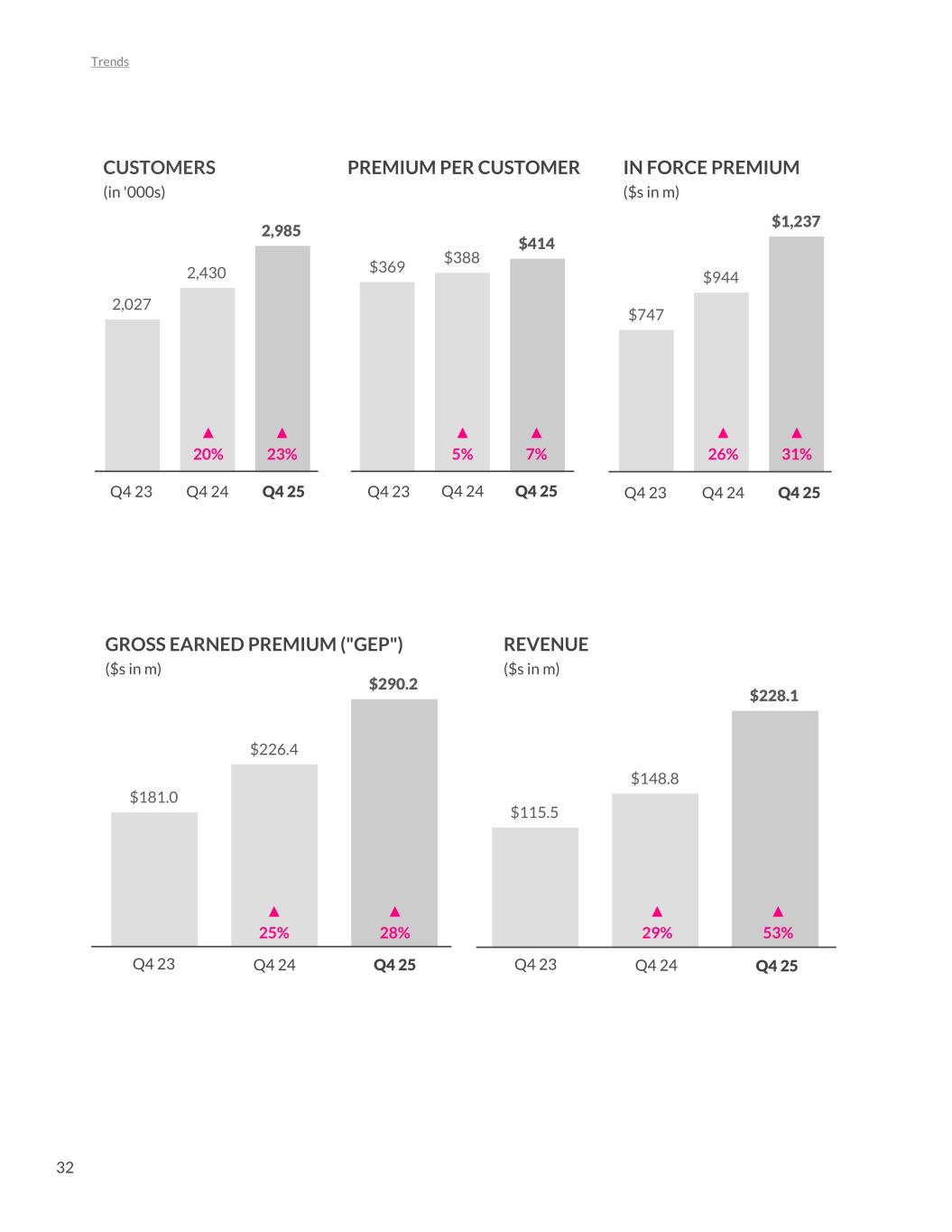
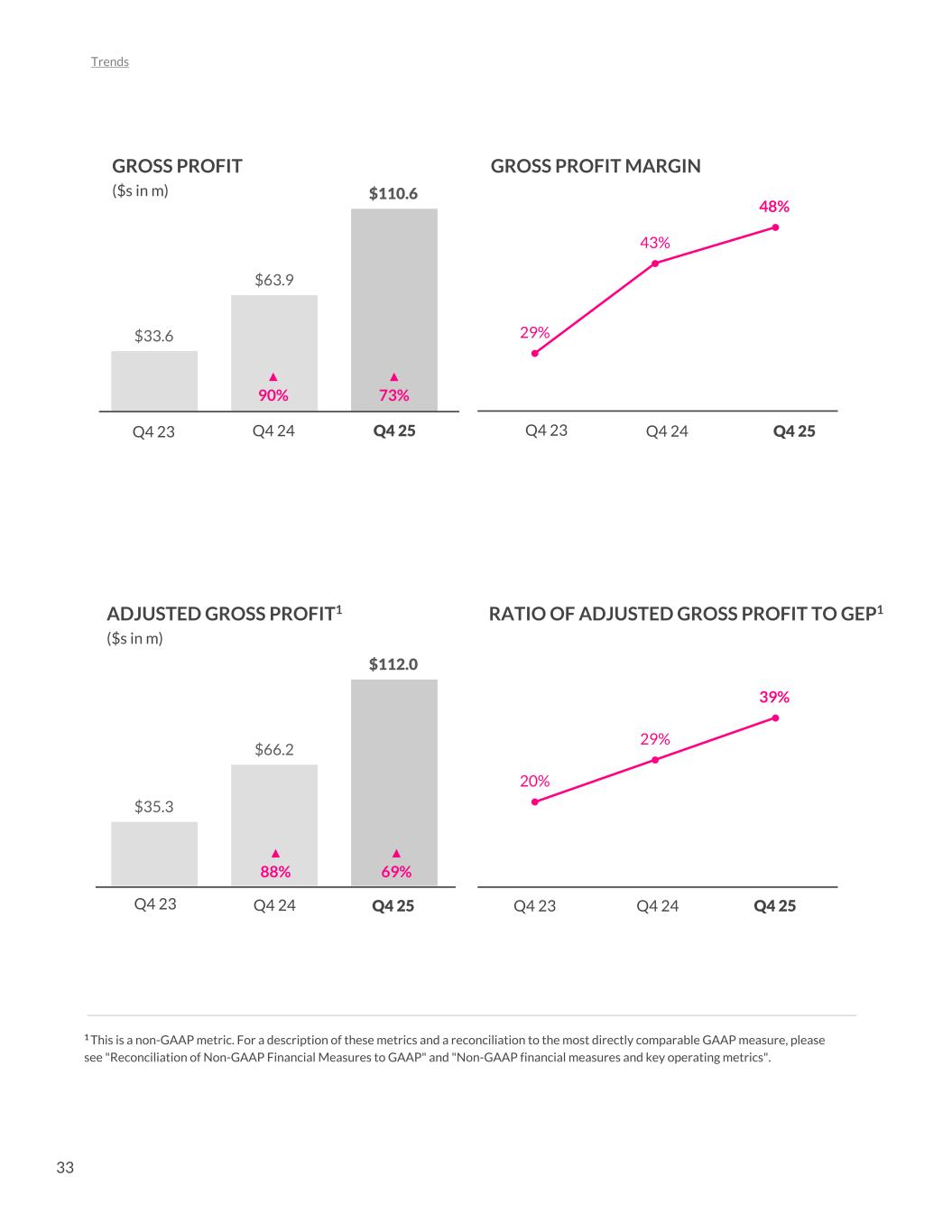
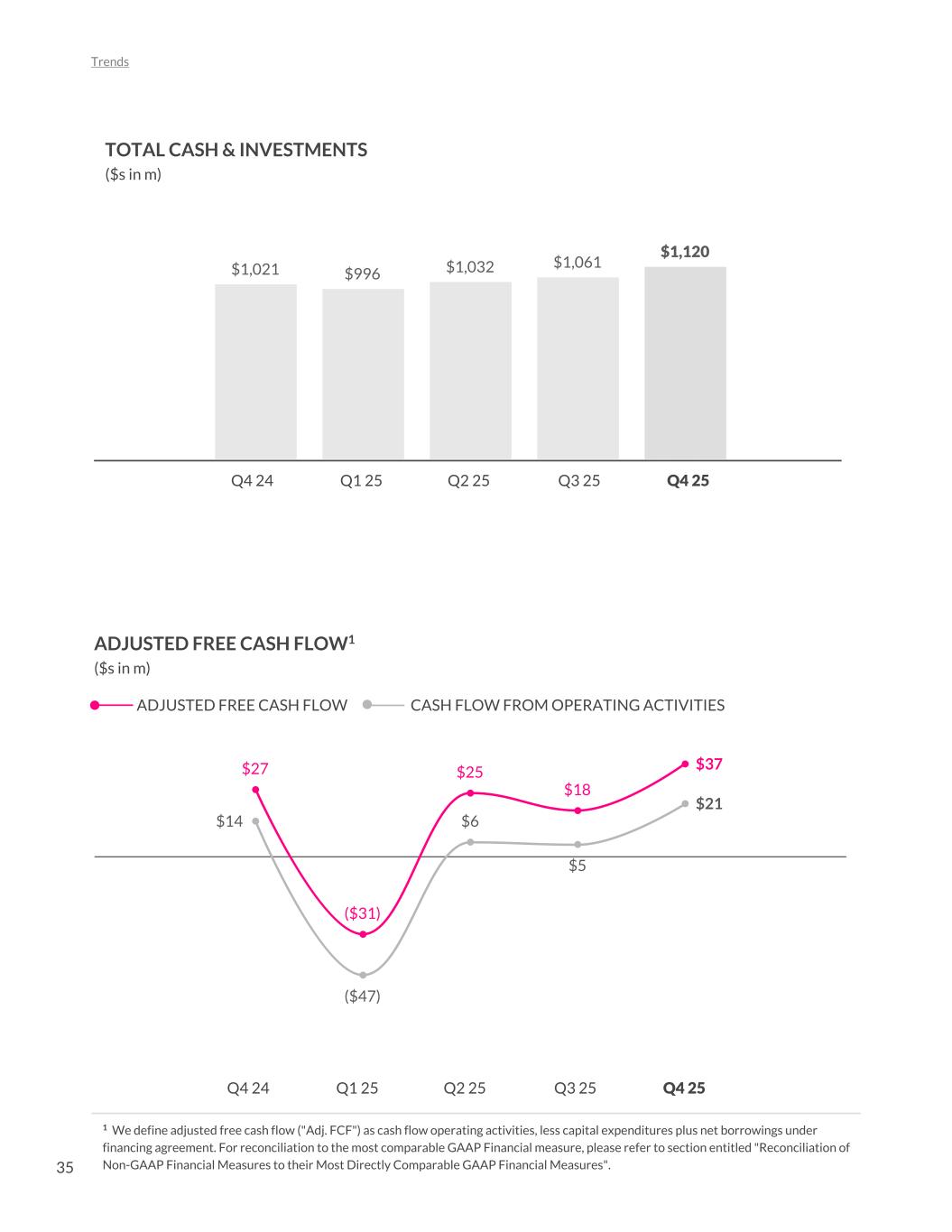
Good morning, and thank you for joining us to review Lemonade's results for Q4 2025. By any measure, this was our strongest quarter ever, and it capped a year of excellent financial execution and operating performance. In the fourth quarter, Inforced Premium grew to $1.24 billion, up 31% year over year, and this extended our streak of accelerating growth to nine consecutive quarters. Revenue grew even faster, up 53%, reflecting both growth and improving economics across the business. Indeed, I'm pleased to share that this growth translated directly into profitability metrics. Gross profit increased 73% year over year to a record $111 million. And if I zoom out to take in a three-year perspective, a gross profit has been compounding at an annual compounded growth rate in the triple digits. As a result, adjusted EBITDA loss narrowed to just $5 million in the quarter, placing us on the brink of break-even, and this represented a $19 million improvement year over year. Indeed, we generated $37 million in positive adjusted free cash flow in the fourth quarter, capping a strong year of cash generation. 2025 was our second consecutive year where we saw our cash reserves swell. Somewhat unusually, insurance is a business that tends to turn cash flow positive before gap accounting positive, though the one almost inevitably follows the other. This then is as good a spot as any to reiterate a long-standing expectation that we will be EBITDA profitable in Q4 of this year and EBITDA positive for the full year of 2027. We continue to be highly focused on growth and accelerating growth because it's a gift that keeps on giving. Faster growth drives better data and further sharpens our segmentation and pricing capabilities. This powers improving underwriting performance and rapid gross profit growth, and we can swiftly redeploy gross profit, thus generated, into profitable growth investments with compelling unus economics. And so the cycle continues. It's energizing to see the flywheel continue to compound even as we scale. What's particularly encouraging is that all this progress is broad-based. PET, CAR, and Europe are all coming into their own as powerful growth drivers, each combining hyper-growth with improving underwriting performance. In our shareholder letter, we highlight critical initiatives we are investing in this year to leverage the latest AI technologies to further enhance our go-to-market operations, pricing, and cross-selling capabilities. We believe that these initiatives can drive durable competitive advantage in pricing and unit economics that support our ability to sustain an industry-leading gross profit growth profile for years to come. One last thing, I wanted to take a moment to draw your attention to our upcoming Investor Day. This event is scheduled to take place in November of this year in New York and online. Specifics will follow and we certainly hope you'll be able to join us for significant updates on our vision AI capabilities and ambitious plans. And with that I'll hand over to Shai. Shai?
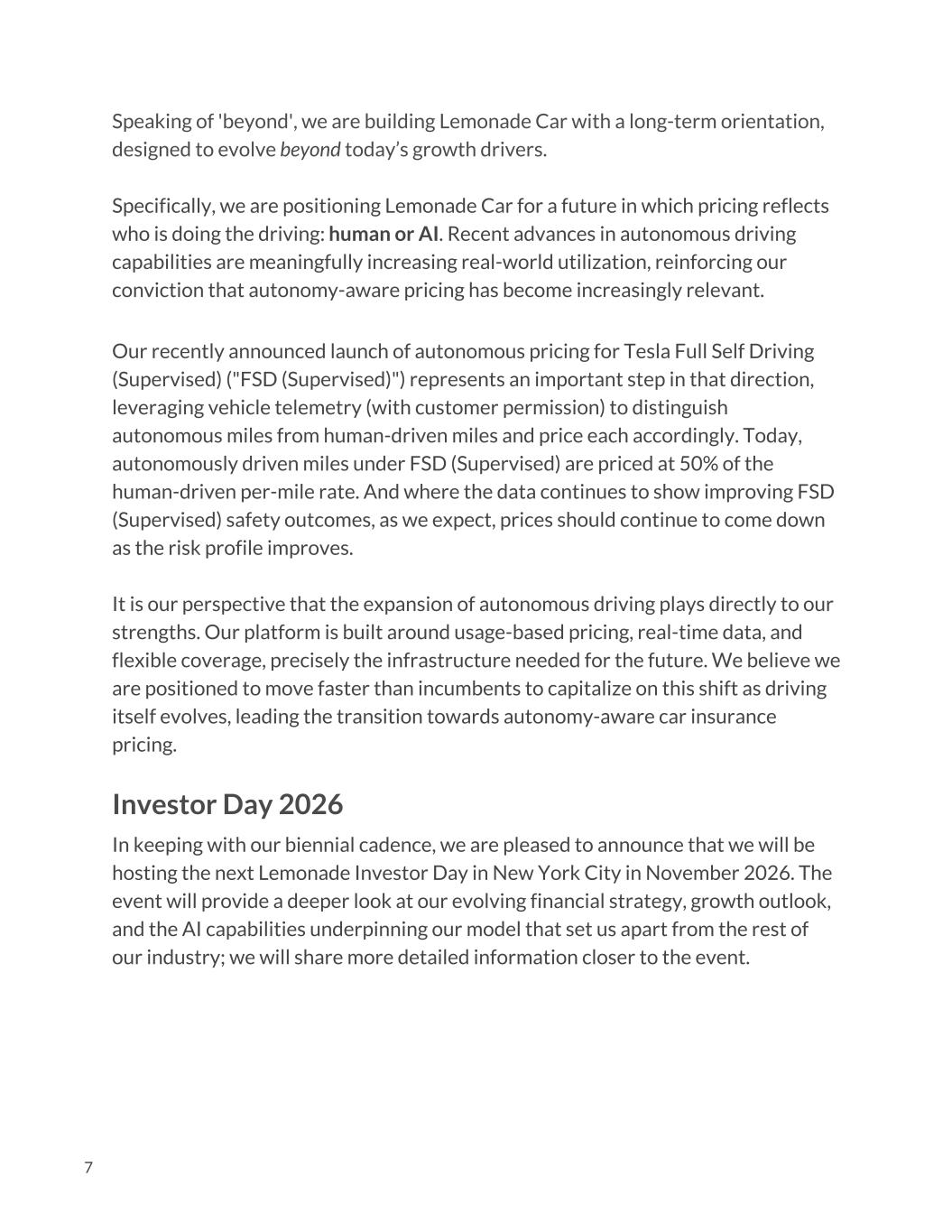
Thanks Daniel. A key vector for us is autonomous insurance and specifically lemonade autonomous car which we announced and launched a few weeks ago starting with the test list. As physical objects such as vehicles increasingly shift from being controlled by humans to being operated by AI, insurance needs to evolve as well historically the industry has priced auto insurance using proxies credit scores marital status education and other similar features we always believe that telematics is a much more precise tool than these blunt proxies measuring the driving itself rather than something broadly correlated but when a car isn't driven by human these proxies lose touch with reality altogether lemonade autonomous car is priced based on three modes when a car is parked when it's driven by a human and when it's driven by ai by integrating directly with a car's on-board computer we can tell which mode that car is in at any given moment distinguishing between various kinds of risk and pricing each accordingly when the car is driving itself and doing so more safely than a human the price reflects that our system accounts for the vehicle software version as well as for the quality and precision of the hardware sensors and computational units as the car becomes better and safer with software updates or hardware upgrades our pricing will automatically respond and continue to drop as of this moment autonomously driven miles using Tesla's FSD are priced at about 50% of the equivalent human driven mile and we expect this to get better over time. We believe this represents a fundamental shift for the industry. As autonomous driving becomes safer and more widely adopted, prices should fall transparently and dynamically. With that, I'll hand it off to Tim, who will cover our financial performance and outlook. Tim?
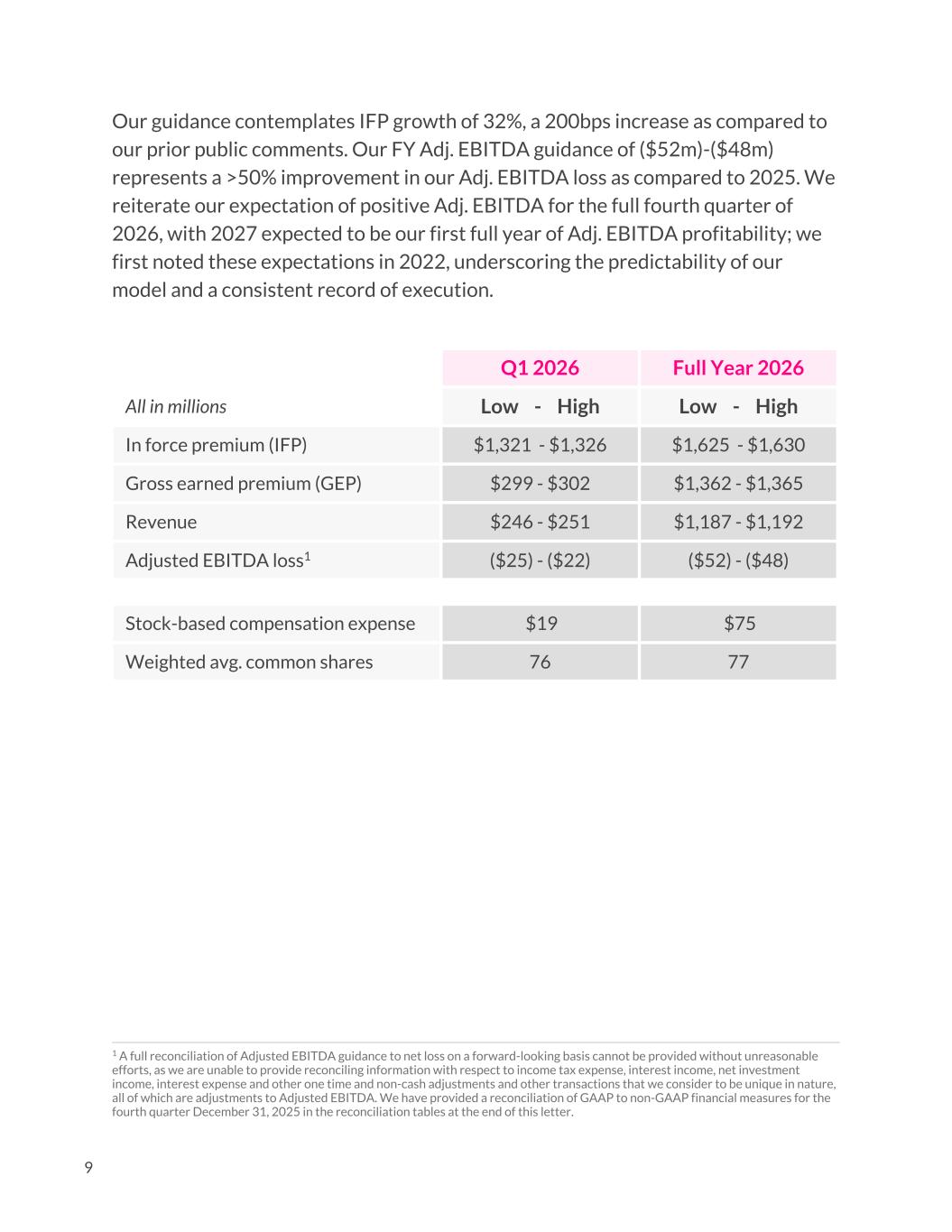
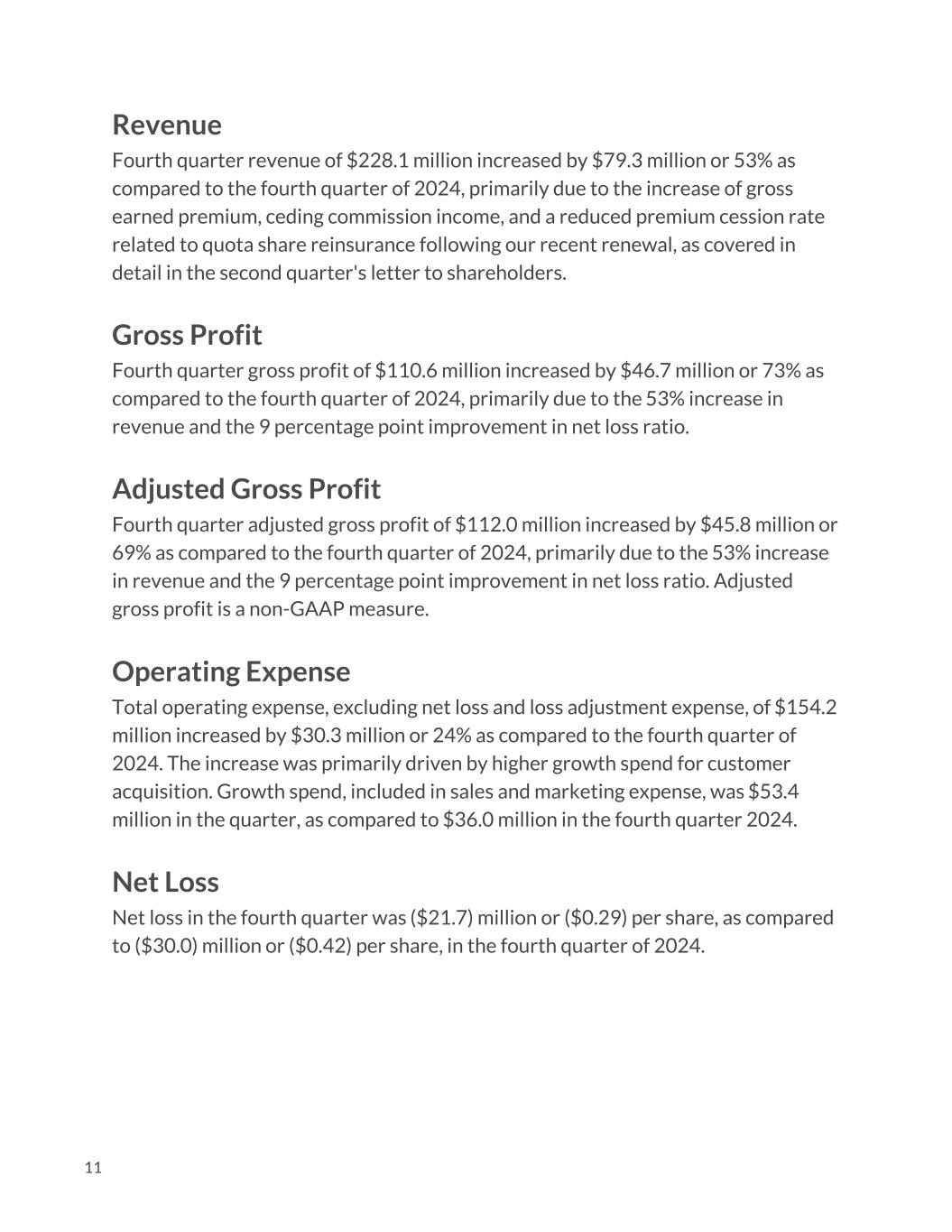
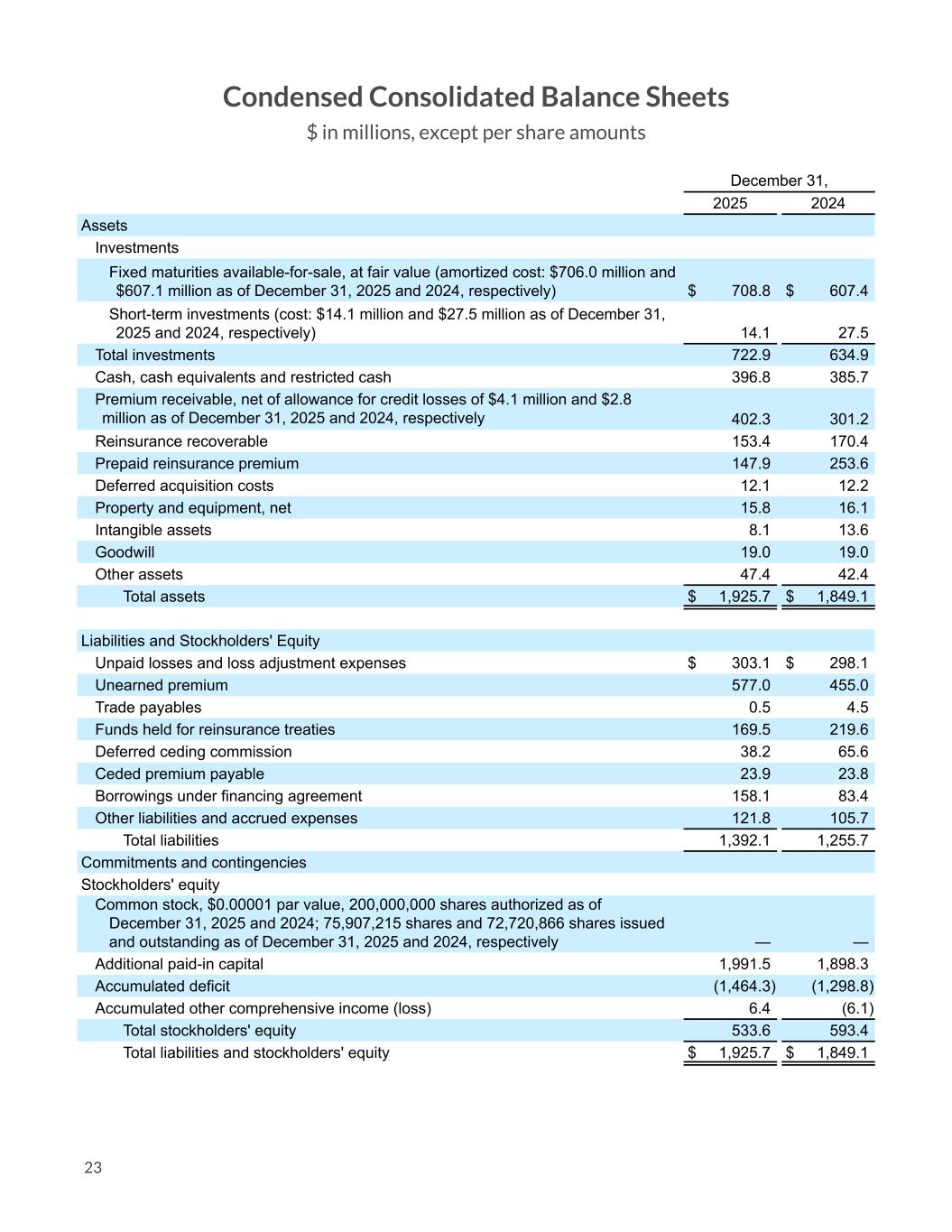
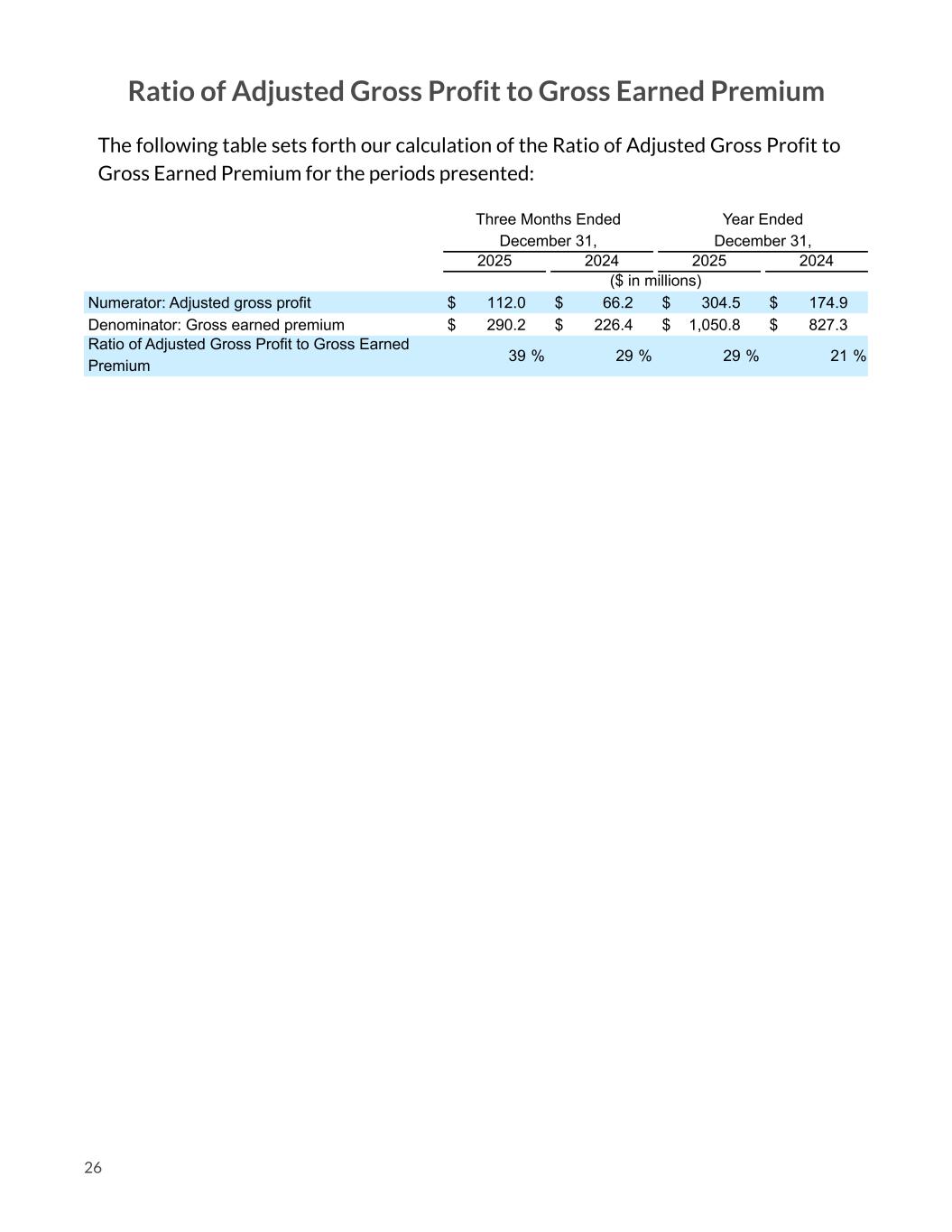
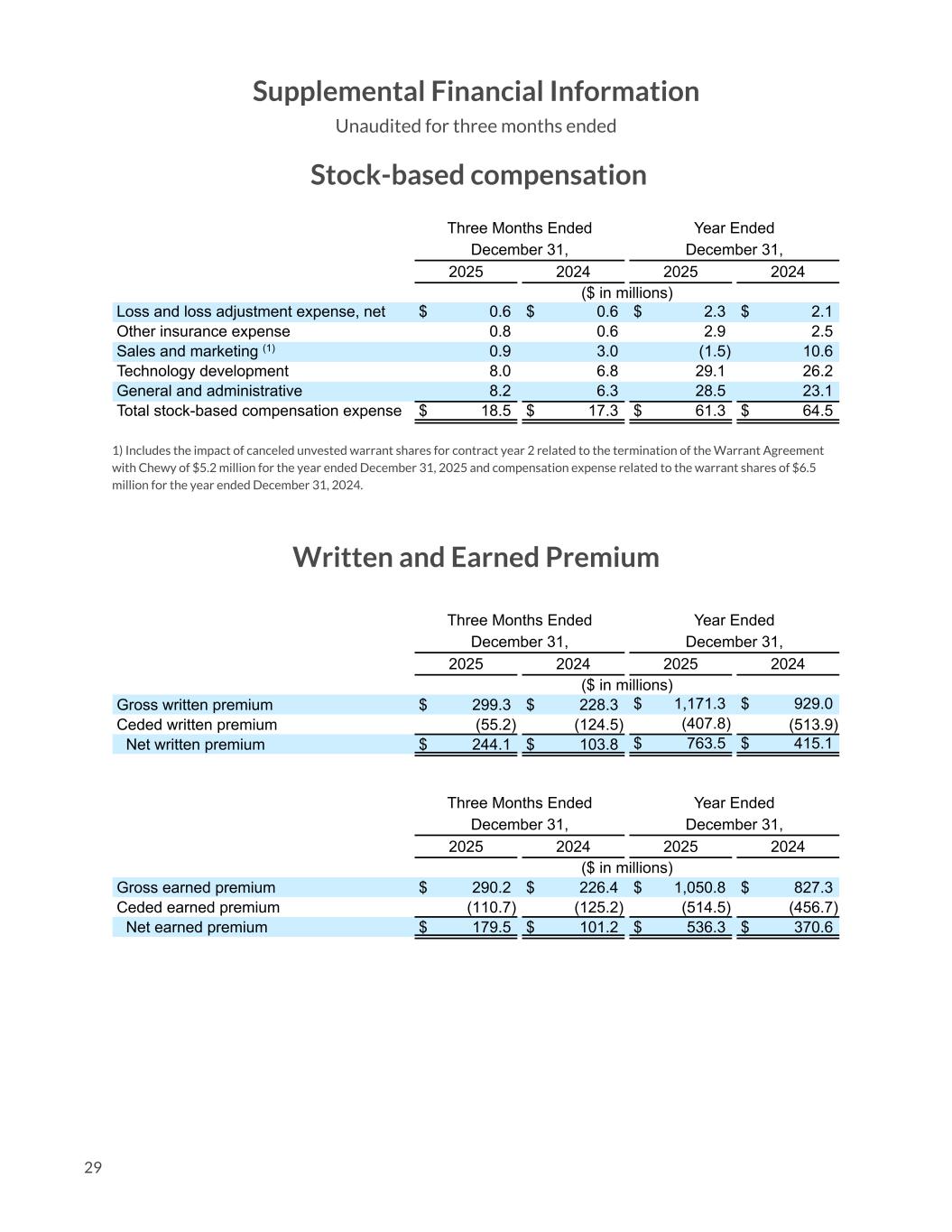
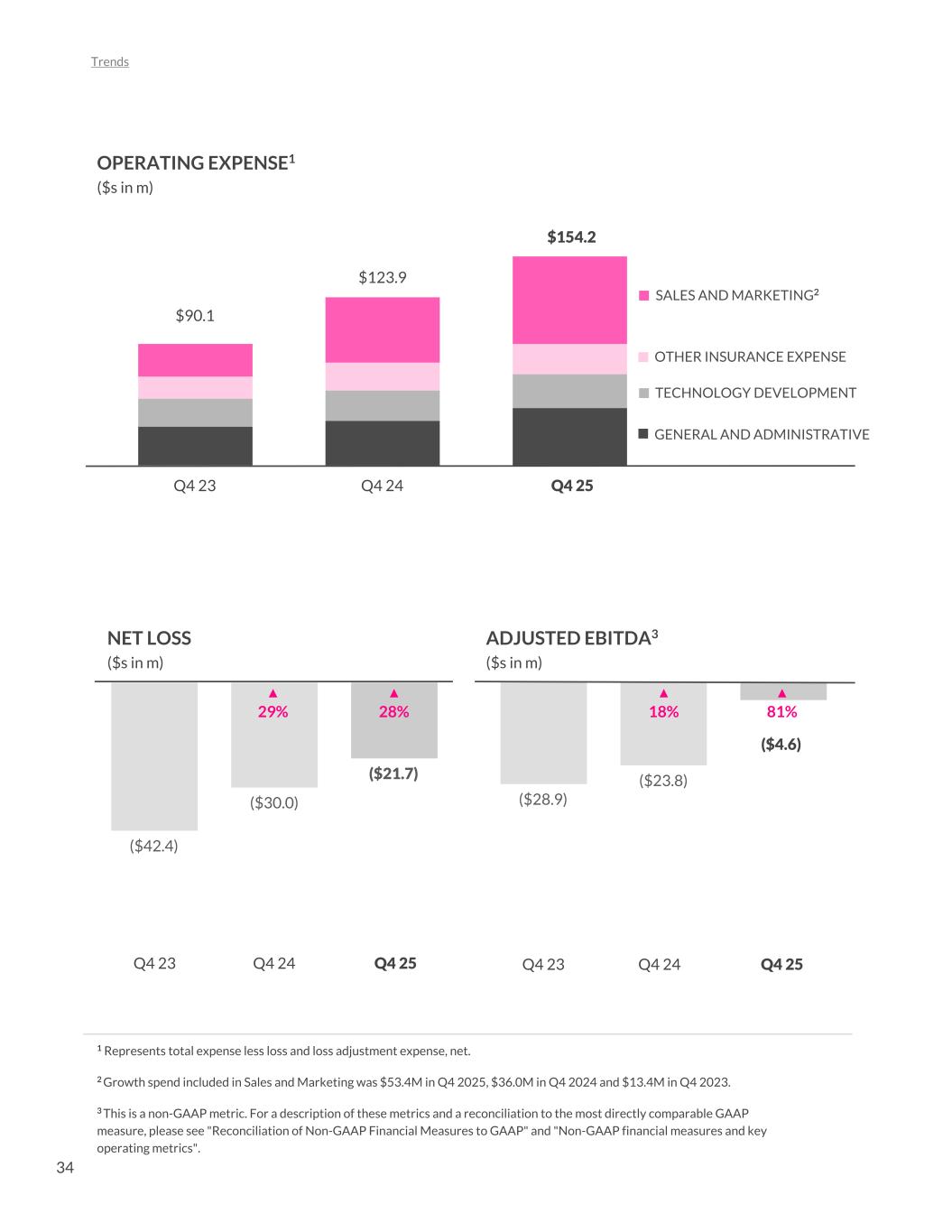
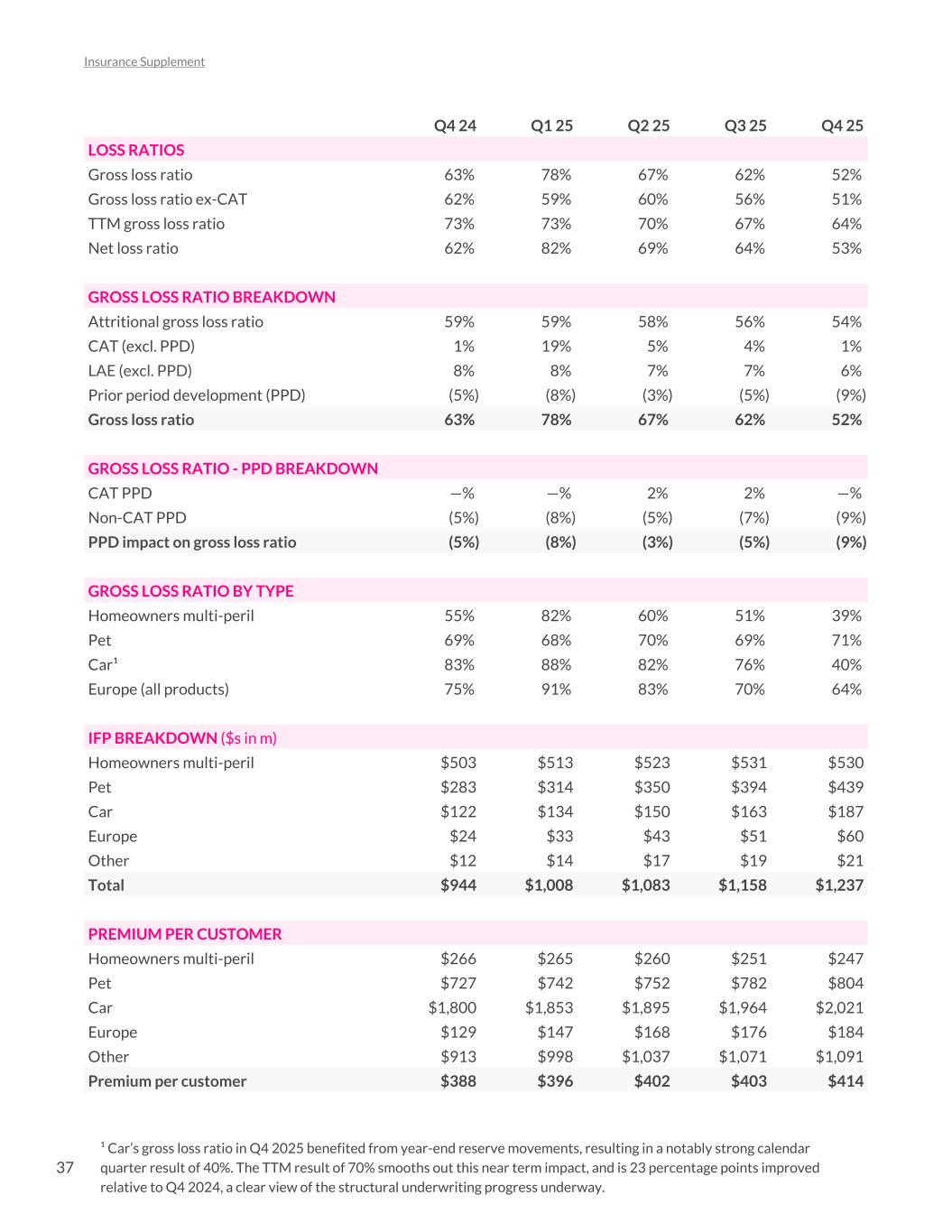
Thanks, Shai. Let's start with our Q4 scorecard. Inforced premium grew 31% year-on-year to $1.24 billion, driven by customer growth of 23% and premium per customer growth of about 7%. We added about 550,000 new customers in 2025, 35% more than the prior year. Within our reported gross loss ratio of 52%, our favorable prior period development of 9% was driven entirely by non-cat prior period development, primarily from our home and car products. Prior year development, which we report on a net basis, was $11 million favorable in Q4 and about $30 million favorable for the full year. Gross profit increased 73% to $111 million, while adjusted gross profit increased 69% to $112 million for a gross margin of 48% and an adjusted gross margin of about 49%. These metrics use revenue as their denominator. As a reminder, adjusted gross profit as compared to gross earned premium was 39% in Q4, up 10 points from 29% in the prior year. Revenue grew 53% to $228 million, while our adjusted EBITDA loss improved to a loss of just $5 million. Notably, revenue grew more than 20 percentage points faster than IFP, a dynamic we expect to continue. Importantly, adjusted free cash flow was positive for the third consecutive quarter at $37 million, and has been positive six of the last seven quarters, while operating cash flow was $21 million. We ended the quarter with roughly $1.1 billion in cash and investments, of which about $250 million is required to be held as regulatory surplus. Annual dollar retention, or ADR, remains stable as we continued our clean-the-book efforts in our home business at 85% flat versus the prior quarter. Operating expenses, excluding loss and loss adjustment expense, increased by $30 million or 24% to $154 million in Q4 as compared to the prior year. And let's break those expense lines down a bit. Our other insurance expense grew by just $1 million or 6% in Q4 versus the prior year as compared to a 31% growth rate of our top-line ISP. Total sales and marketing expense increased by $17 million, or 35%, due primarily to increased growth spend versus the prior year. In Q4, growth spend was $53 million, up 48% as compared to the prior year. Importantly, as we continue to ramp growth spend, our marketing efficiency levels remained stable and strong in the fourth quarter, with an LTV to CAC ratio above three times in line with prior year. We expect Q1 growth spend to be at a similar level as Q4, and expect a total growth spend of about $225 million for the year. Technology development expense was up 14% year on year, $25 million, while G&A expense increased 29% as compared to the prior year to $43 million. The year-on-year increase in G&A expense of roughly $10 million was made up primarily of three items, an increase in non-cash stock compensation expense of about $2 million, an increase in interest expense of roughly $1 million, and an increase in bad debt expense of approximately $5 million. Our headcount increased slightly by about 4% to $1,282 in Q4 as compared to the prior year. Our net loss was $22 million in Q4, or a loss of $0.29 per share, as compared to a net loss of $30 million or $0.42 per share in the prior year. Our adjusted EBITDA loss was $5 million in Q4, dramatically improved versus a $24 million EBITDA loss in the prior year. Our detailed guidance for Q1 and the full year of 2026 is included in our shareholder letter and represents 32% Q1 and full-year top-line growth year-on-year, roughly 60% full-year revenue growth, and, of course, positive full-quarter EBITDA expected in Q4. And with that, I'd like to pass back to Shai to answer some questions from our retail investors.
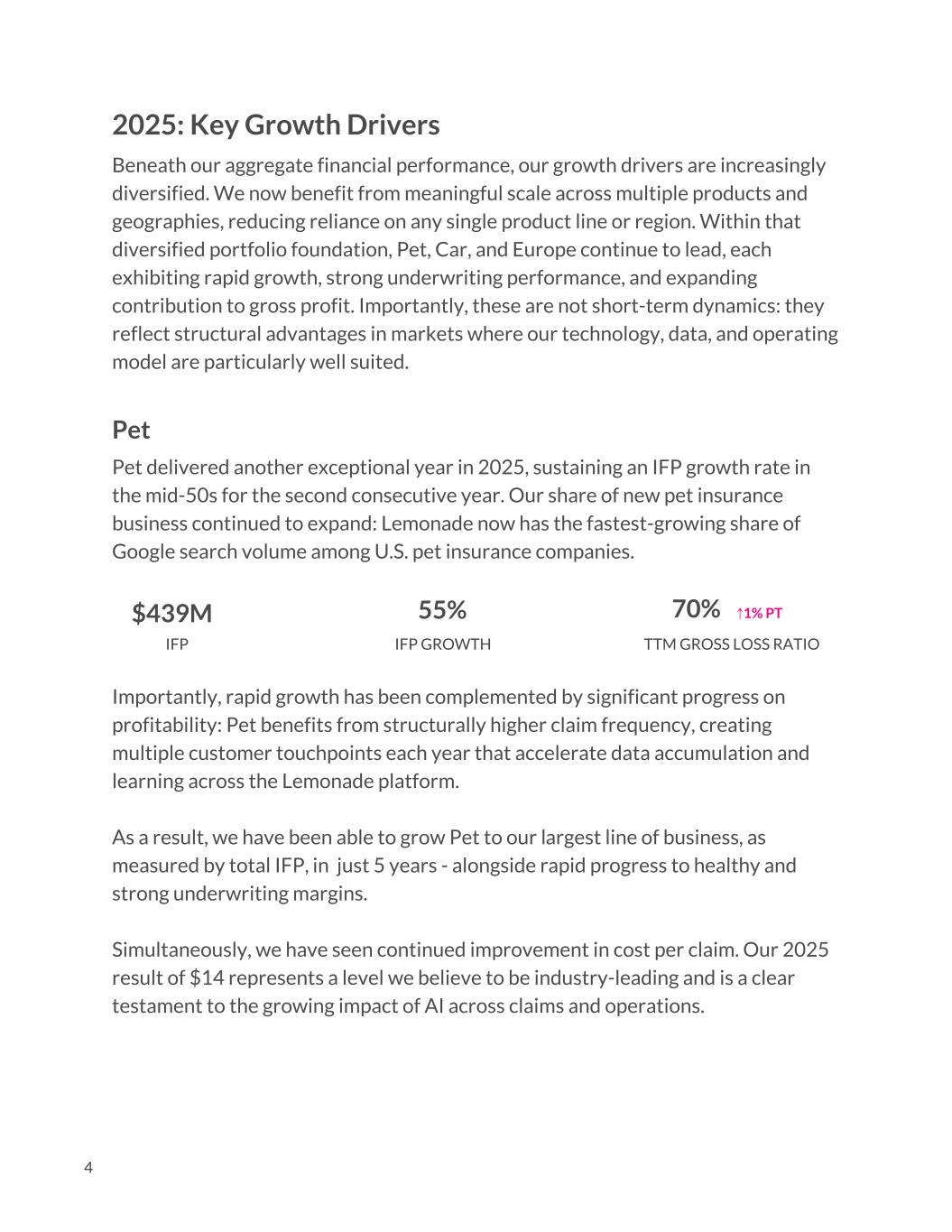
Thanks, Tim. We now turn to our shareholders' questions submitted through the CEPA. There were a couple of questions from Paperback about our loss ratio and recent autonomous car insurance launch. Thanks, Paperback. As we have explained on a few occasions before, perhaps in more detail during our most recent investor day, we don't think of loss ratio as a standalone target, but rather as one metric or lever to optimize our quest for maximizing gross profit. Sometimes maximal gross profit is achieved by lowering loss ratios, sometimes by raising them. Our pricing strategy is solving for maximal gross profit in absolute dollar terms rather than any ratio turning to our autonomous car product with our telematics infrastructure we're able to evaluate and price the risk associated with every driven mile accurately in the case of tesla ssd the data we have shows that miles driven with it are more than 50 safer than when driven by a unit this allows us to drop rates and become more attractive to customers versus peers, which is, in turn, lowering our customer acquisition costs and helps us win and retain more business. Responding to your question about our 30% growth, I would think about this autonomous car insurance launch as a first step of a much broader strategy and direction that will materialize over time. Indeed, it could take years before we see a step change in autonomous car and ownership. And with that said, we believe it is critical to begin now with building the best product for that future with the best experience, pricing, underwriting, and coverage. In the near term, as we highlighted in our shareholders' letter, our growth drivers are increasingly diversified, such as we are not reliant on any one segment or product line to drive growth above 30%. PET and CAR are both seeing IFP growth in the 50s and Europe in the triple digits, for example. In another question, we were asked how soon CAR will expand to remaining U.S. states. We launch new states as soon as we can from a regulatory perspective, but only after we are confident that we can competitively and profitably price risk in each state. Our improving CAR results, both top and bottom line, speak for that discipline. Launching a stage requires thoughtful preparation for marketing, pricing, product, tech, legal, and finance perspectives. With our local platform and the agentic automations we're constantly layering into it, we're becoming very effective in this process, collapsing stages that used to take months into days. I believe we now have the most advanced regulatory and compliance process in the market, and we're only getting started. That said, states we've already launched represent roughly 50% of the U.S. car insurance market, a TAM measured in many tens of billions, and car is available to about 60% of our existing customers. We've been launching multiple car states since the beginning of 2025 and expect to continue to launch new states with our autonomous car product throughout 2026. By 2027, I expect lemonade car products to be available to the overwhelming majority of the U.S. population. In another question, Charwak asked, with AI simplifying the insurance industry, what will keep Lemonade in an advantage position over incumbents who might be willing and ready to modernize their software stacks? How does Lemonade continue to differentiate and stay ahead? This is a question we get a lot, and I think the answer comes down to structural and cultural differences that are nearly impossible to overcome. Lemonade was built as an AI first organization 10 years ago every team member was hired into that environment people who didn't thrive in a tech first fast-paced culture like ours moved on today I estimate more than 95% of our team operates with an AI first mindset our product and tech organizations are the core of the company which makes us product-led customer centric tech organization. In many ways, the AI explosion is the moment Lemonade was built for. We built the data infrastructure from day one. We collect every signal and we have been doing so for a decade. We have a highly rated app that customers love and actively use, which keeps them connected and allows us to continuously optimize pricing for the safest customers. Now compare that to traditional shares. These are companies built on the foundations of people, not technology. They treat tech as a cost center, not their core. They rely on third-party vendors that are themselves built on legacy systems, which leaves insurers with hundreds of these connected systems they need to run their business. It's very hard for an organization like that to compete with a full-stack tech-first company like Lemonade. In fact, in the history of all tech revolutions, you can probably count on the fingers of one hand the companies that dominated prior to the tech revolution and still were there in a dominant position when the dust settled it would be naive to expect that incumbents will be in this place forever of course they're already talking about increasing investment in ai and sharing a case study here and there but by the time they make meaningful progress we believe will always be several steps ahead in the next question cyber cat asks how does lemonade think about ai reducing uncertainty while creating new risk categories I have to say, CyberCat, that a shrinking time does not keep us up at night. Even if AI compresses pockets of time, the resulting market opportunity remains essentially limitless relative to our current size. But with that said, I agree with the premise of your question. We are already seeing this in our existing suite of products with the expansion of autonomous I think it's true that AI will continue to redefine the insurance industry with regards to the types of risks and products that are relevant over time perhaps in ways that aren't immediately obvious today with that i'll pass it over to the moderator and we'll take some questions from thank you if you would like to ask a question please press star followed by one on the telephone keypad if you'd like to withdraw your question please press star followed by two when preparing to ask your question please ensure your device is unmuted locally first question comes from jason
Operator
Helstein with Oppenheimer. Your line is open. Please go ahead.
Hi, everybody. Thanks for taking the question. So when we look at the numbers, we can clearly see an improvement in marketing efficiency. You obviously talk about it. We can see it kind of in like a contribution margin. When I think about what that kind of implies to 26, it looks like the EBITDA guide would be particularly conservative unless you plan to make other OPEX investments or essentially kind of, like, lean into potentially pricing for growth. So maybe talk about how you are thinking about that, i.e., reinvesting marketing efficiency into growth or just that it's conservative. And maybe, Ty, that you made three points in the earnings letter, that you plan to lean more into cross-selling and you kind of automated pricing. and improved pricing accuracy so maybe just like take those three comments and i don't know if you want to link that back to like the first question you know if it's connected thank you so i'll take a a shot at a a subset of that jason then maybe my uh my partners will uh jump in uh daniel's
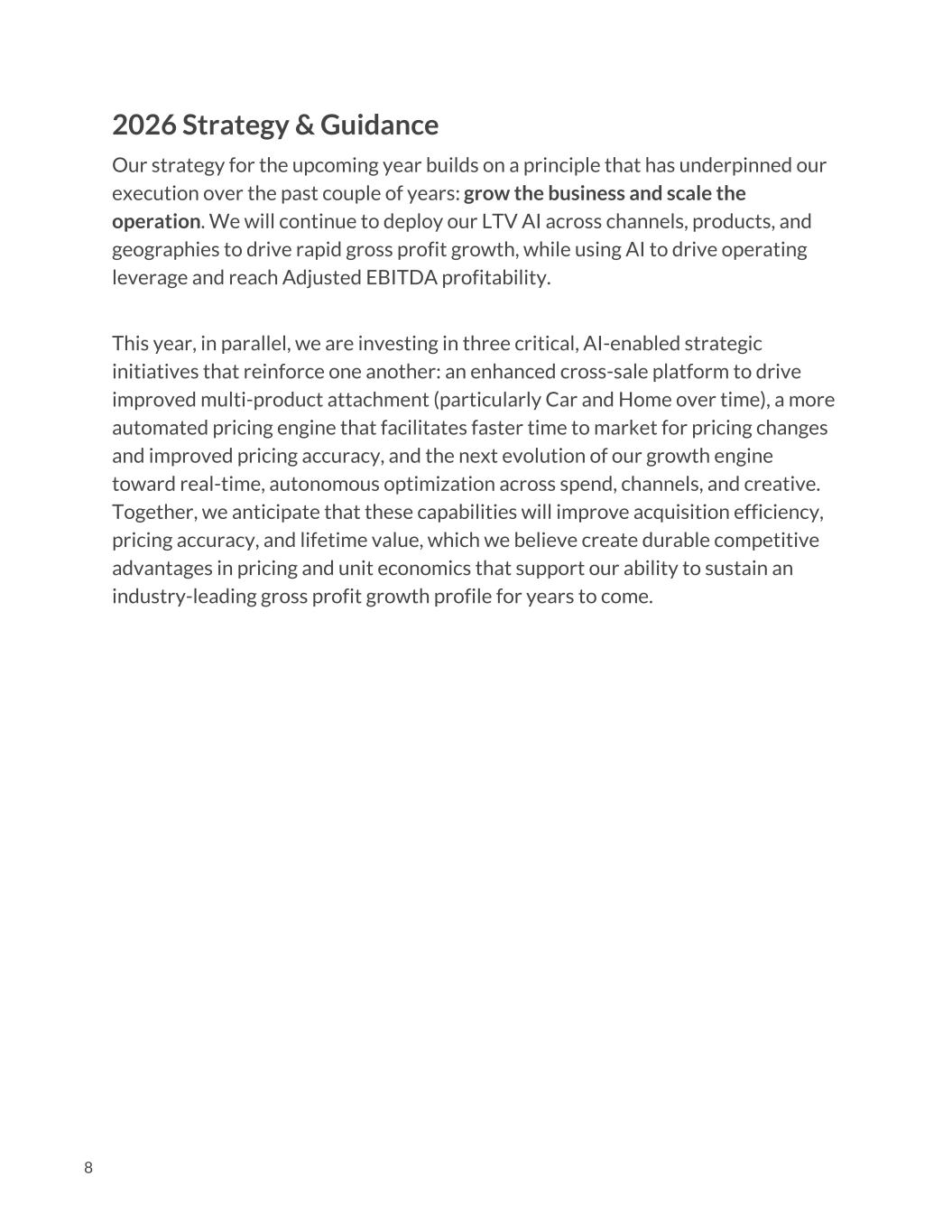
joined me here and we've also asked nick stead our svb of finance to join us to uh perhaps answer a few questions um if i kind of think you know zoom out and think about 26 generally from a growth perspective you know actually actually q4 was that was a pretty good proxy for how we're thinking about it so you saw a couple things happening really coming together in q4 um certainly the the underwriting or loss ratio side of the business came in very nicely but from a growth perspective which is really the core the focus right now which is how do we how do we grow effectively? How do we maintain an LTV to CAC that we are comfortable with, number one, and excited about improving over time, number two? And how do we lean into that over time? So we saw that come together nicely in Q4, where we were able to see free up a little more spending, free up a little more capital to invest, because we saw nice underwriting results. And we plowed that back into additional growth. So you see overperformance on the top line versus our guidance. That's because we deployed a little more growth spend than anticipated, and that's a good thing. So that's a backward-looking view. If you take a forward-looking view into 26, we're guiding to our very strong track record of being able to maintain a solid LTV to CAC of free or better. What we do see here and there in certain pockets and certain channels and certain products and certain geos is overperformance, and that's when we're able to lean in. So I think what you see embedded in the guidance is some of that continued goodness, but we have not changed our philosophy of taking everything good that's happening in the most recent period and extrapolating that forward. So I think you're right. There's probably a similar potential to overperform. We think growing a little bit faster each quarter is important, and we grow at a pace of our own choosing. We're guiding to 30 percent plus. obviously we the market will enable us to do more it's essentially an endless market but I think for at this point of the year we're six weeks in we like what we're seeing in in January and February to date and so that guidance reflects real optimism not being able to spend more significantly more in 26 than in 25 that's a continuing trend and to potentially see that growth rate accelerate yeah i agree with everything the only thing i'd say um jason hi thanks for your question there isn't um designed buffer or conservatism built into the number um we're guiding as best
we can as we always do um we do always look for opportunities to surprise ourselves and you and everybody but our guiding strategy is to go into pretty much what we have line of sight to And what I think may be making the difference that you're kind of pointing to is captured in some of the things you referenced, which is we are investing in quite a lot of R&D work this year. So we highlighted three areas of investment. There are others that we didn't detail and even those we just touched on in passing. But we are undergoing very significant investments really that compound one another. We see 2026 as a year of multiple engineering efforts, quite aside from the fact that the kind of ground beneath our feet is moving because the models keep getting better and better. Every day we wake up to a more powerful brain at the very core of what we're doing. But beyond that, Shai mentioned the local platform that is going to look very different by the end of 26 than it is at the beginning of the year. And we spoke about our cross-selling platform, our pricing machine, as they're calling it, and our revenue machine, all big initiatives that should collapse time, increase precision, and ultimately lower expenses. But perhaps some of the delta that you're pointing to and that you're assuming is conservatism is actually going to be spent on those initiatives.
Jason, it's Nick. I just want to jump in on your question around expenses in 2026. you can think about operating expenses as being broken into two chunks. There's growth spend and then the remainder of operating expenses. Growth spend will continue to increase in 2026 as it has in in 25 and 24. The remainder of the expense base should generally remain stable or closer to stable growing in the single digits as compared to the top line which is growing above 30 We now send to John Barnage with Hypersandler.
Operator
Your line is open. Please go ahead.
Thank you very much. I appreciate the opportunity. My question is about adjusted EBITDA profitable in 27. How do you think about the target for premiums to surplus at that time? And do you think he can operate at greater leverage given some of the operational scale you've begun to achieve?
So from an EBITDA, maybe two questions in there perhaps. From an EBITDA perspective, we do expect Q4 this year, 26, to be fully positive as well as the full year of 27, which would be the first full year of EBITDA positivity. While we've not indicated growth rates beyond 26, we have been consistent in our communication that a 30% plus growth rate is our goal and an accelerating growth rate each quarter is also our goal so i would expect that uh ambition to continue into 27 and beyond given the immense size of the market that we're in and the markets that we can potentially be in from a surplus leverage perspective we noted that we have about 250 million dollars currently that's held as required for surplus. That's relatively quite capital light. We take advantage of a captive structure and we have reinsurance in place and other structures that in combination enable us to keep that surplus satisfactory for all regulatory requirements, but also to a minimum so that we can deploy capital in all the ways we choose to grow the business. We expect that to continue. All of our forecast modeling tells us that we have more than ample surplus to support very ambitious growth rates, even beyond our current growth rate, and with ample cushion left over. And I think you can take real confidence. Our forecasted break-even points for EBITDA has has essentially been unchanged for almost four years at this point and so our visibility is quite good our leverage enables us to continue to be capital light and we are more than sufficiently capitalized to grow at really ambitious uh paces through 27 and beyond thank you we now turn to tommy mcjoint with kbw your line is open please go ahead hey guys good morning thanks for taking
our questions um the first one here is obviously there's been a lot of headlines around some advancements in uh chad gpt and sort of the integration of carriers with that distribution model do you guys have any plans to allow you know tools like chad gpt to actually bind policies for lemonade or where the preferred route be to use chad gpt as a search tool that ultimately leads to lemonade where they could bind a policy.
I was talking on mute all this time. I'm sorry.
I am so sorry. I am so sorry. Tommy, let me start over. Can you hear me okay now?
Yeah. Okay. I gave you a wonderful answer, but it was all lost because I was on mute. What I was saying was that we use AI in many, many aspects of our marketing. At the moment, it's not on the most front-end aspect of our marketing, but everything other than the skin-deep kind of chat interface, which ChatGPT has integrated with some players. Obviously, from the skin on in, it's all AI. When it comes to that kind of outermost layer, we generally love our own AI for that. Maya does and has done a great job chatting with customers, offering them an incredible experience. That isn't to say that we would never use something like a chat GPT interface, but it's not something we've launched yet. And if we decide to do that, you'll be the first to know.
Okay, understood. And then switching gears, As you guys have rolled out this autonomous vehicle insurance product on the car side, that obviously introduces a variable level of premium that's charged to customers on either a six-month basis or a monthly basis. Is it your vision that over the long term, most car insurance will move to a variable level of pricing rather than, you know, a fixed six-month term premium?
Yes and no. We today have both models. We have models where you can pay per mile, and we have others where it's fixed, and it's kind of customer's choice. We don't have all of the options in all of the markets right now, but that is where we see this going, and several states are there already. And this is really a choice, a style choice. You know, if you want, you can remember the early days of mobile where you could pay by minute or by planned and family plans and other things where you bought buckets and rollover months and all that kind of stuff. We think there's plenty of ways to do pricing around it. The big difference between what we're doing and everybody else is that we know the cost per mile. We are making predictions. Shai spoke about this in his comments earlier. We are making predictions based on a plethora of data that come to us in real time, very high granularity from really high fidelity machinery, that allows us to know that when you're driving, where you drive, how much you drive, how you drive, and if it's you driving or the car, all of that means that we can price per mile with tremendous precision. If you then prefer to buy a bulk and have a fixed price, that's fine. We can use all of that information in order to price it for you as a fixed price, which will correct episodically, and other people prefer to pay per mile, and we offer that as well. Both of them are fueled by the same AI engine and data set underneath.
Operator
As another reminder, if you'd like to ask a question, please press star one on your telephone keypad now. We now turn to Jack Matten with BMO. Your line is open. Please go ahead.
Hey, good morning. Just a follow-up on the strategic initiatives, and you talked about it in the letter, including the enhanced cross-sell platform. I'm just wondering if you could unpack that a little bit more. I know it references cross-sell of car and home, and over the past year or so, I think you've de-emphasized home insurance growth a little bit. So just wondering how you view that line of business as part of Lemonade's overall mix longer term?
Sure. So that was a good tidbit that we put in the shareholder letter to give a feel for the kinds of things that in a year when we are really continuing to focus on growth, on autonomous car, on really nice financial results, we're also continuing to invest in farther reaching capabilities that we think over time will continue to not only help us maintain our advantages, whether AI-enabled or otherwise, but actually to expand those advantages versus incumbents. And those three areas we noted are really the core of what is a lot of interesting activity going on in terms of investment in future stuff. Cross-selling continues to be important. More than 5% of our customers have multiple policies at this point. That's a really important metric. Almost 20% of our in-force premium, however, is coming from customers with multiple policies. So cross-sell, our ability to cross-sell, which is a really efficient way to increase IFP and accelerate growth without quite as much of a growth spend investment is important. And then the other two pieces, really pillars of our underwriting capability which is pricing uh constantly focusing on being able to de-average pricing pricing uh price on a car driver's behavior and not on their credit score uh and also to optimize how we allocate growth spend so those are really three of the real key areas we're continuing to invest both with um current resources and actually we'll grow those resources to some extent over 26. All of that's embedded in the guidance, all of that we expect to deliver significant future ROI, yet when you peel it all apart, our overhead expense, even with those incremental investments, is growing very modestly in the low single digits from an operating expense standpoint. and almost our entire growth and expense is on growth expense to acquire new customers. That's a theme you've seen now for several years running, and that will continue. We expect well into 26, 27, and beyond.
Got it. Thanks. And just one on the Tesla FSD initiative, and I appreciate the color you gave earlier on this, but just wondering if you could unpack the opportunity you see for Lemonade and how much you think it could eventually contribute to a share of your business, And then just given Tesla also has its own insurance offering, can you just talk about how Lemonade's positioning its offering from a competitive standpoint?
We love talking about Lemonade, but we will shy away a bit from talking about Tesla and their plans and their goals. They're a terrific partner at setting a standard in so many ways, but we'll let them speak for their goals and aspirations. From our view, we want to be where our customers are and where our customers are going. We've had a paper-mouth product in place for years. It's not right for every customer, but it enables us to do what we're best at, which is take deep levels of granular data and use that to price a customer most effectively. And often that's to give the customer a better price. An autonomous vehicle, autonomous driving falls into that category without question. Pricing the driver of the car, and that's whether that driver is a human driver, or an AI driver or no driver at all the risk is still there and we are best placed in the market to be a I think we think to be a partner to Tesla but also to be a kind of lay the groundwork as this part of the car market evolves we think it helps us accelerate things that change more quickly play to our best strength which is agility and a data-driven platform and so we're We're really optimistic about it. We don't, a little premature for us to say what the impact on the financial and forecast model is. And as Daniel said, when it's the right time, we will certainly do that, and you'll be the first to know. Thank you.
Operator
Ladies and gentlemen, we have no further questions, so this concludes our Q&A and today's conference We'd love to thank you for your participation. You may now disconnect your lines.