Operator
Hello, everyone. Thank you for joining us and welcome to Lemonade's Q1 2026 earnings call. After today's prepared remarks, we will host a question and answer session. If you would like to ask a question, please press star one to raise your hand. To withdraw your question, please press star one again. I will now hand the conference over to Lemonade to begin the call. Please go ahead.
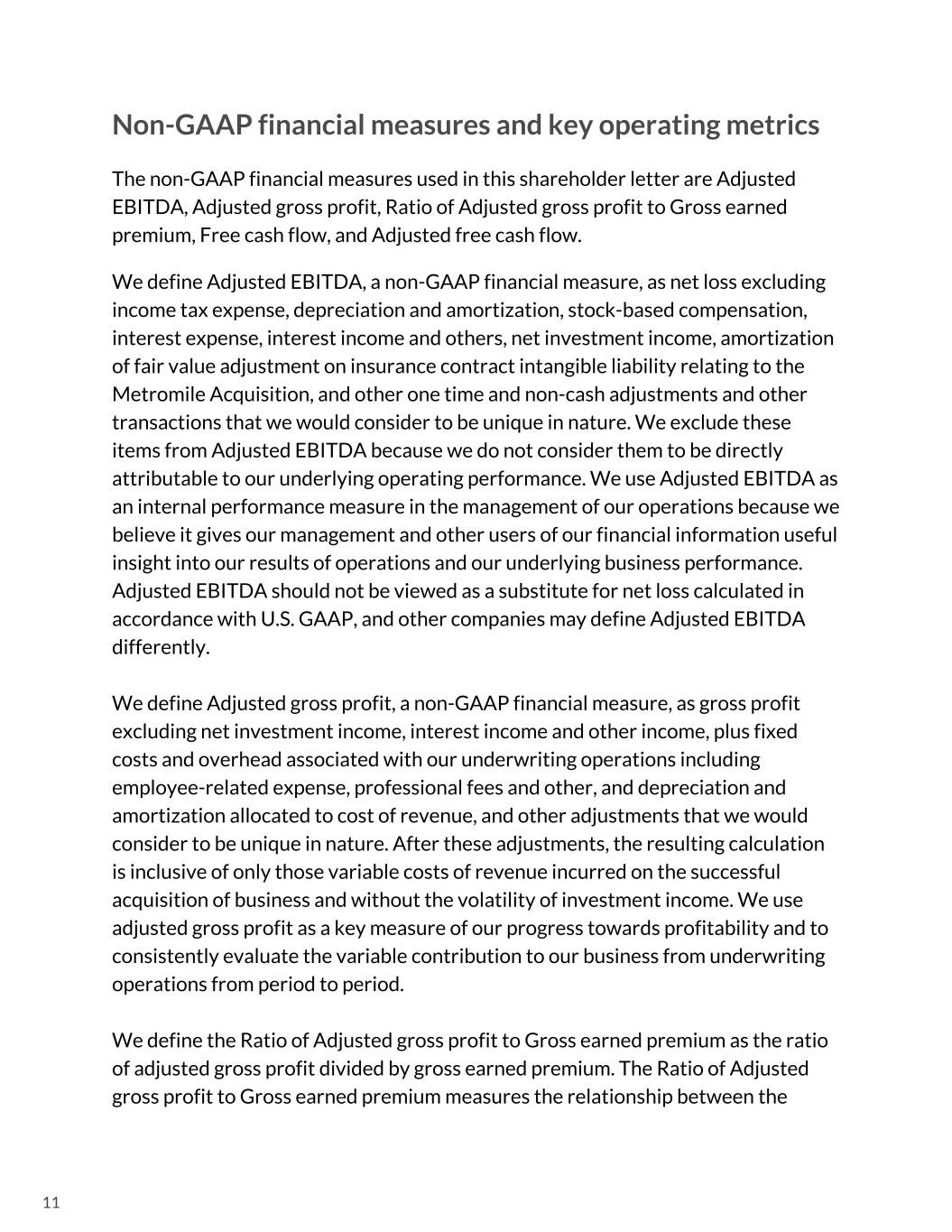
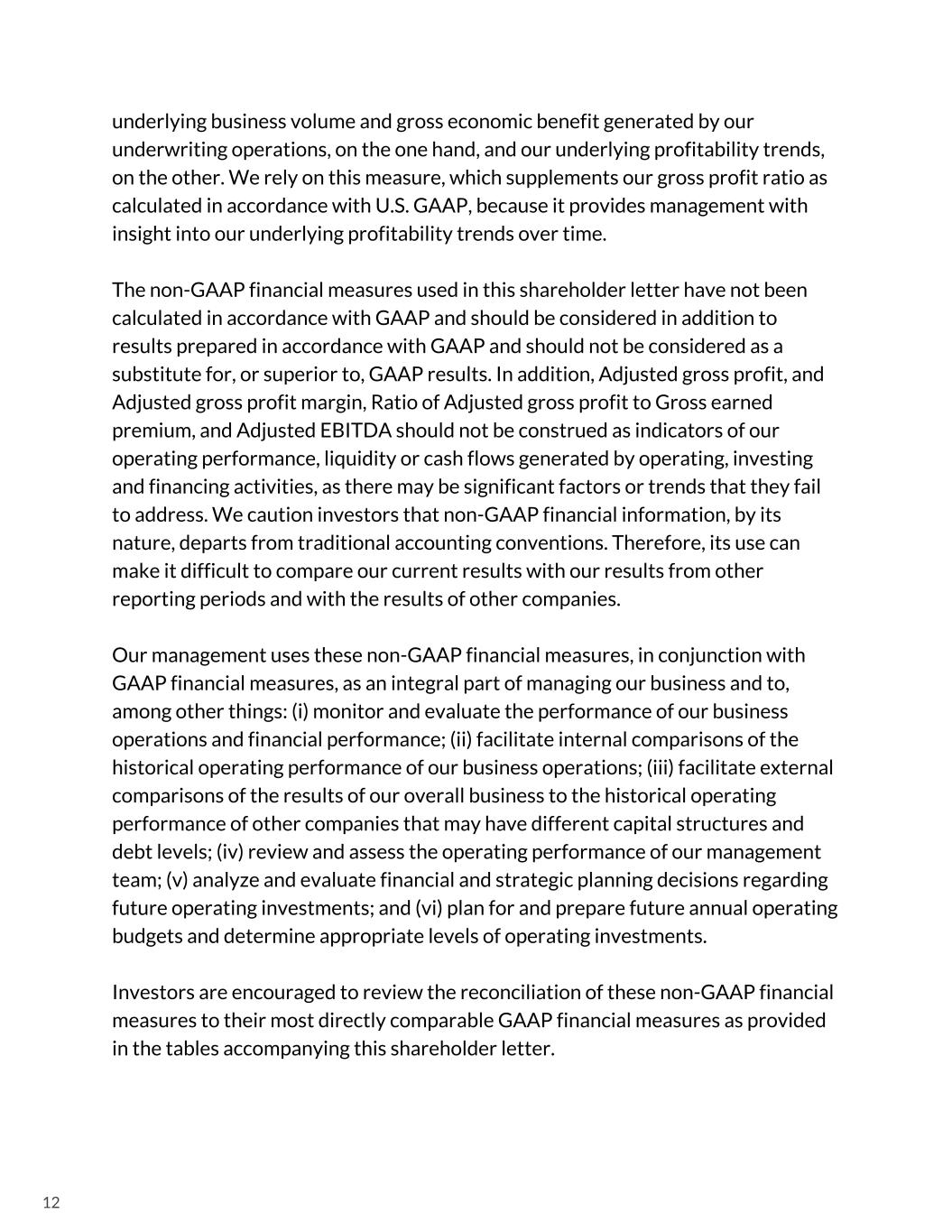
Good morning, and welcome to Lemonade's first quarter 2026 earnings call. Joining us on our call today, we have Daniel Schreiber, CEO and co-founder, Shai Winninger, President and co-founder, Tim Bixby, Chief Financial Officer, and Nick Stead, SVP Finance. A letter to shareholders covering the company's first quarter 2026 financial results is available on our Investor Relations website at lemonade.com slash investor. I would like to remind you that management's remarks made on this call may contain forward-looking statements within the meeting of the Private Securities Litigation Reform Act of 1995. Actual results may differ materially from those indicated by these forward-looking statements as a result of various important factors, including those discussed in the risk factors section of our most recent Form 10-K filed with the SEC and our more recent filings with the SEC. Any forward-looking statements made on this call represent our views only as of today, and we undertake no obligation to update them. We will be referring to certain non-GAAP financial measures on today's call, including adjusted EBITDA, adjusted free cash flow, and adjusted gross profit which we believe may be important to investors to assess our operating performance reconciliations of our non-GAAP financial measures to the most directly comparable GAAP financial measures are included in our letter to shareholders our letter to shareholders also includes information about our key performance indicators including number of customers enforced premium premium per customer annual dollar retention gross earned premium gross loss ratio gross loss ratio x cat trailing 12 month loss ratio and net loss ratio and a definition of each metric why each is useful to investors and how we use each to monitor and manage our business with that i'll turn the call over to daniel for some opening remarks good morning and thanks for
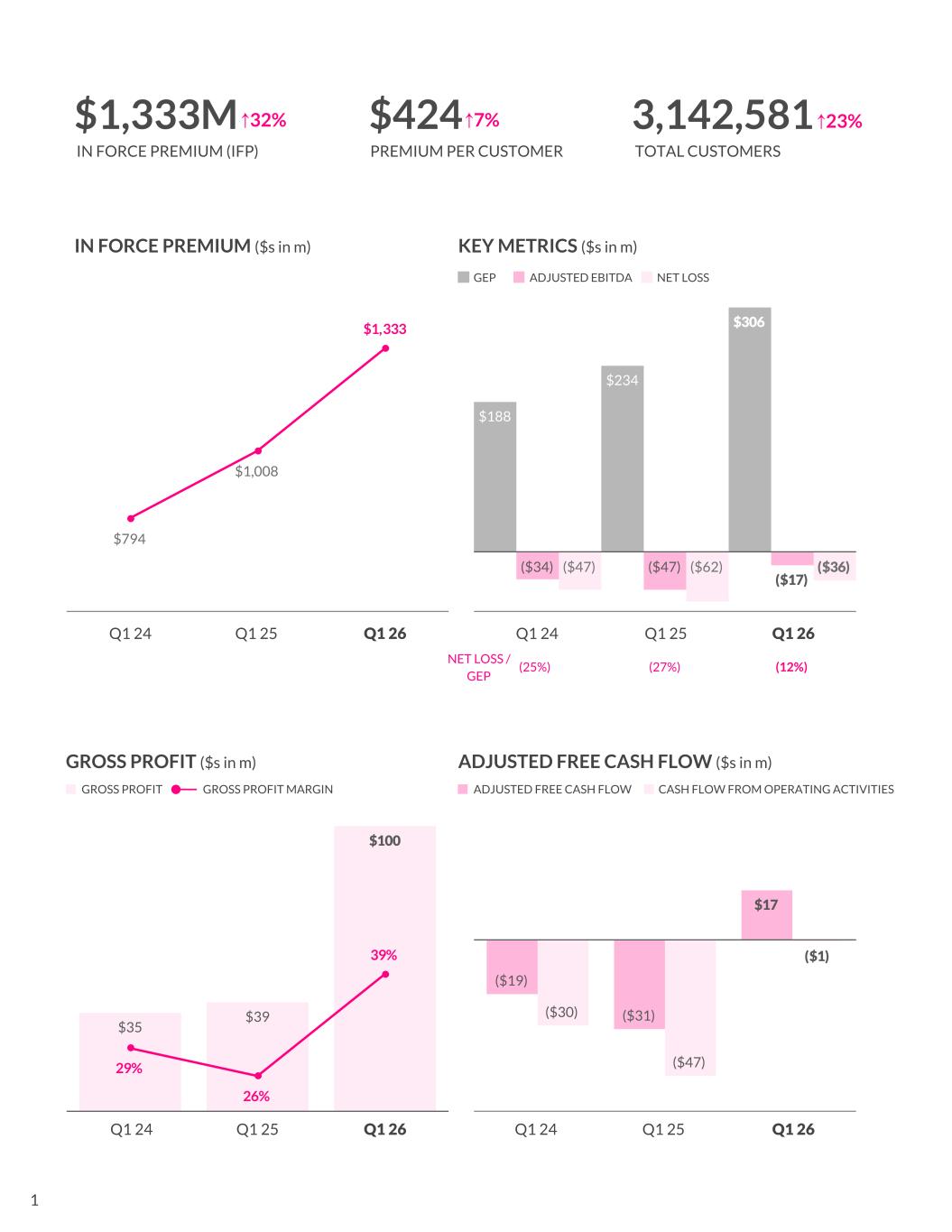
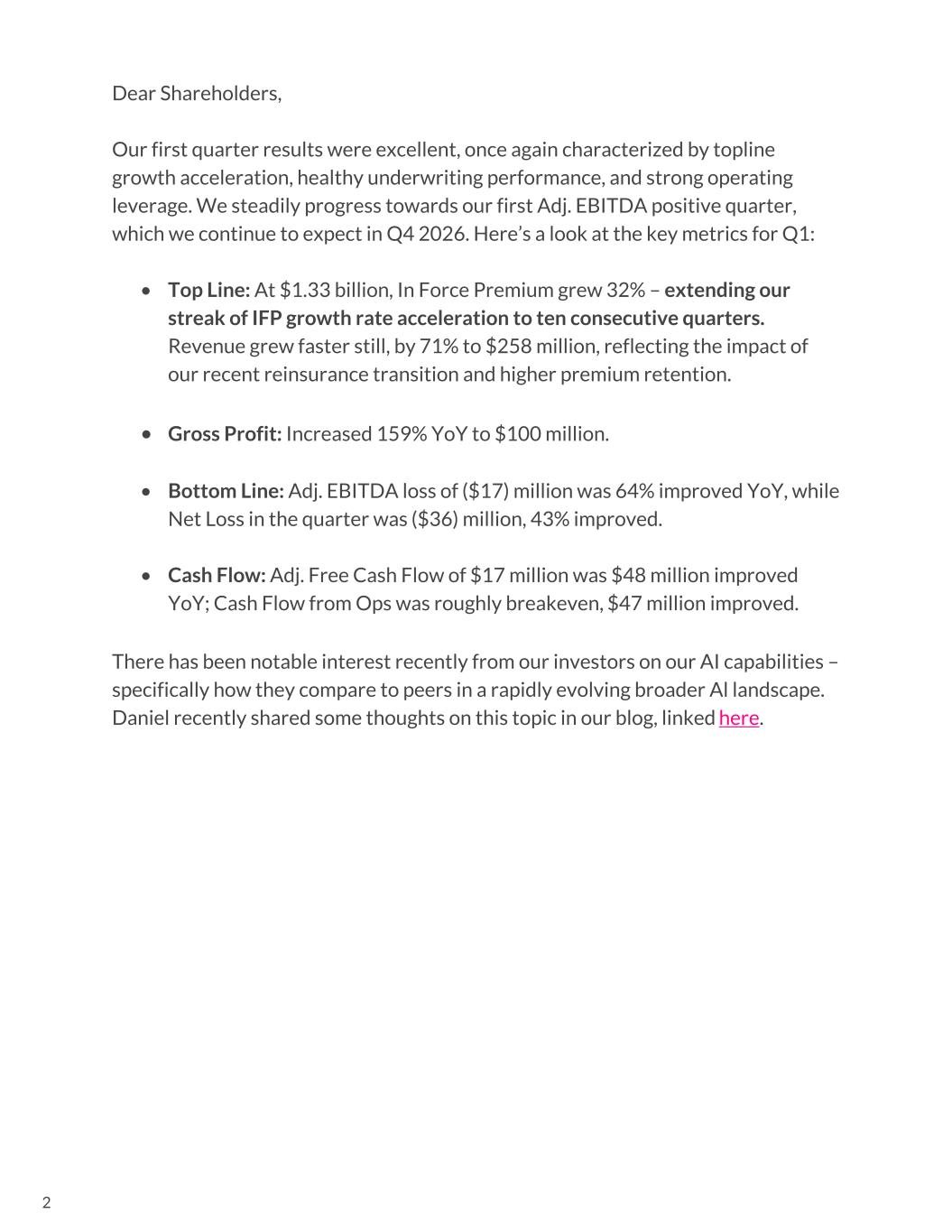
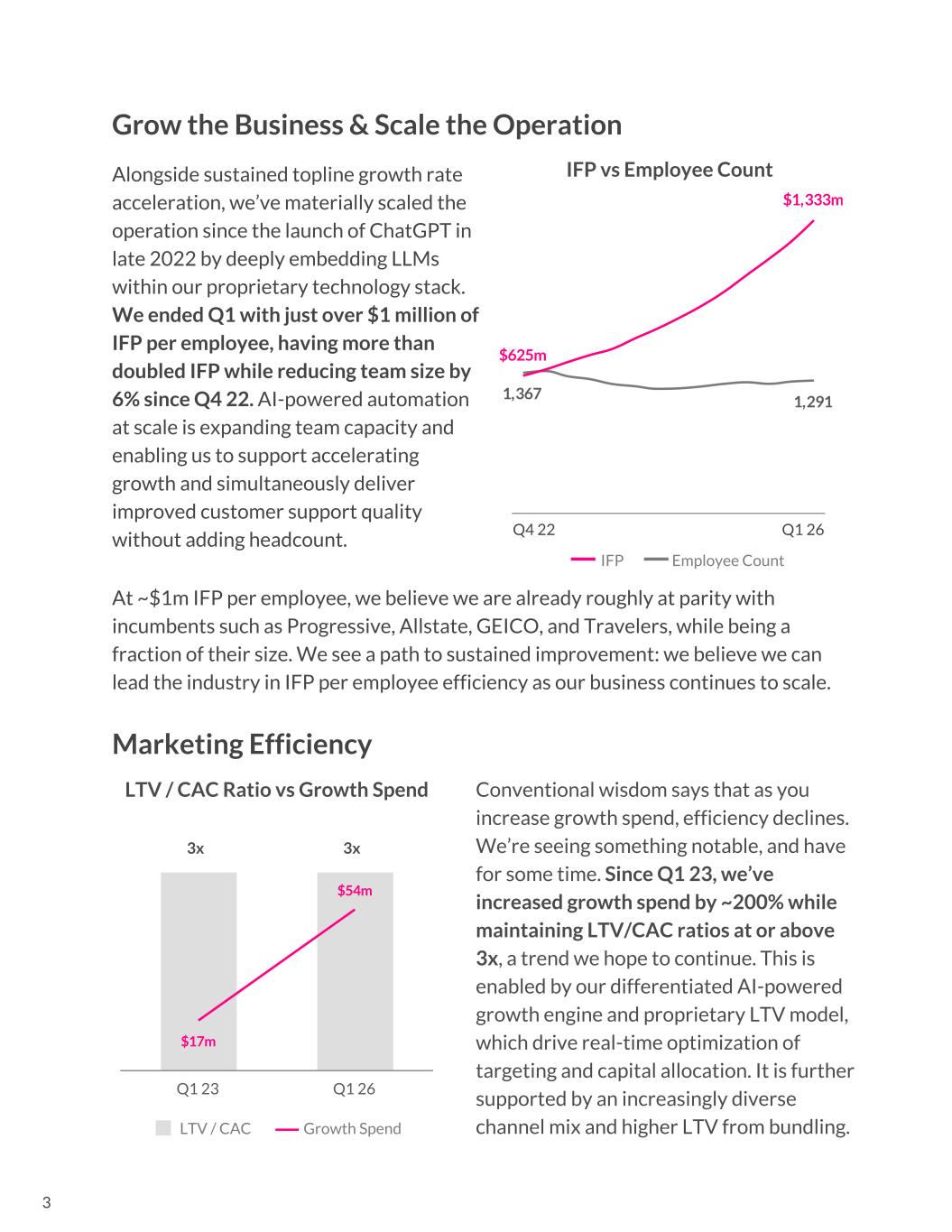
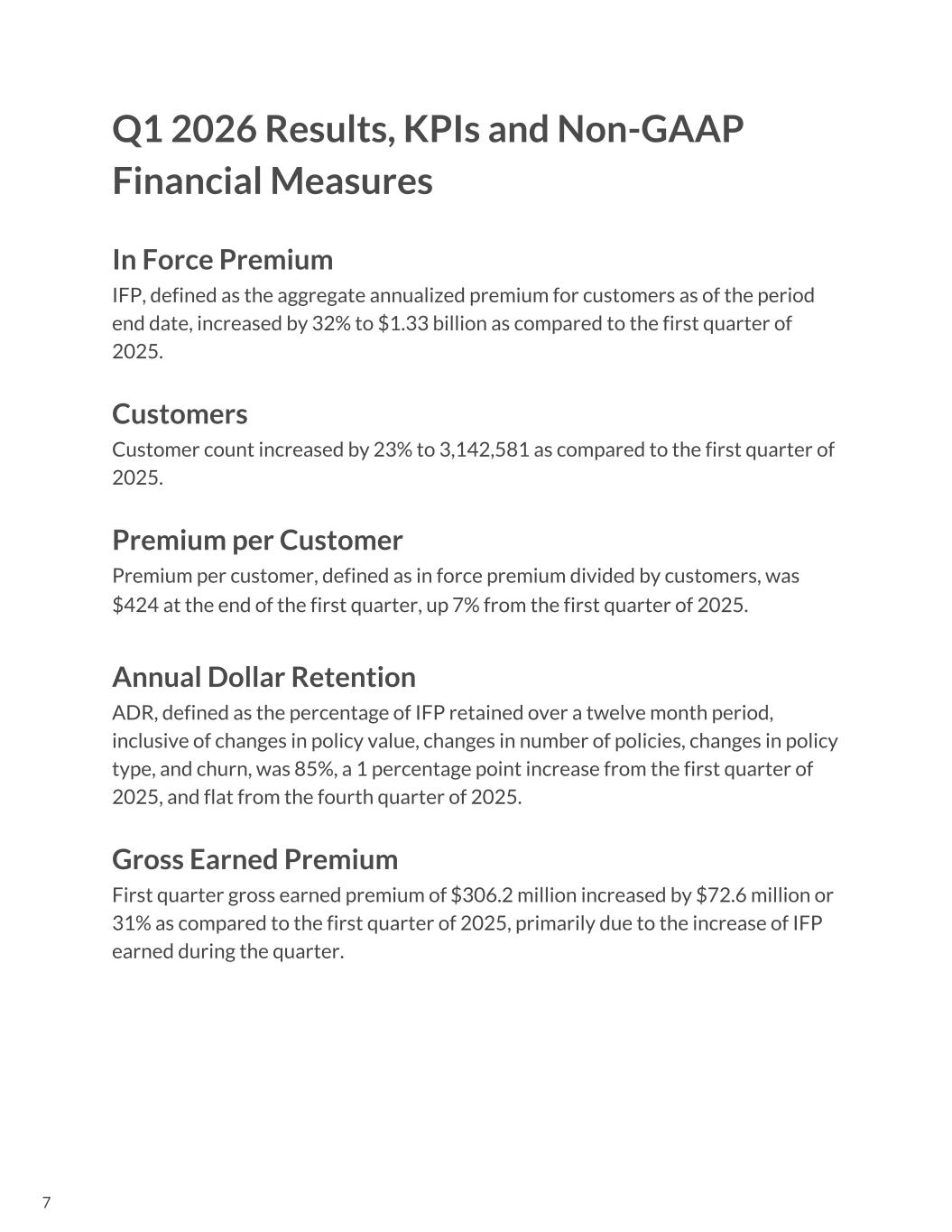
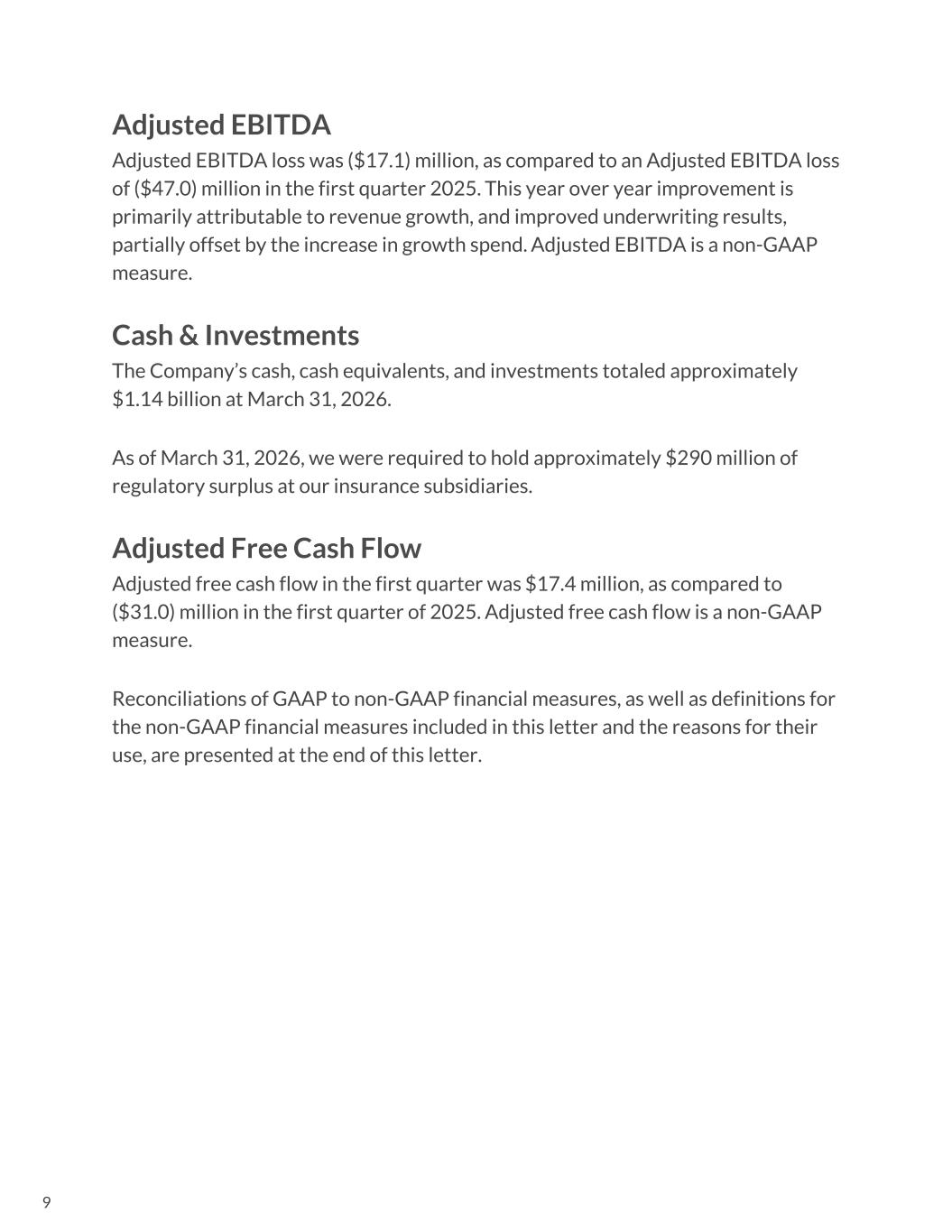
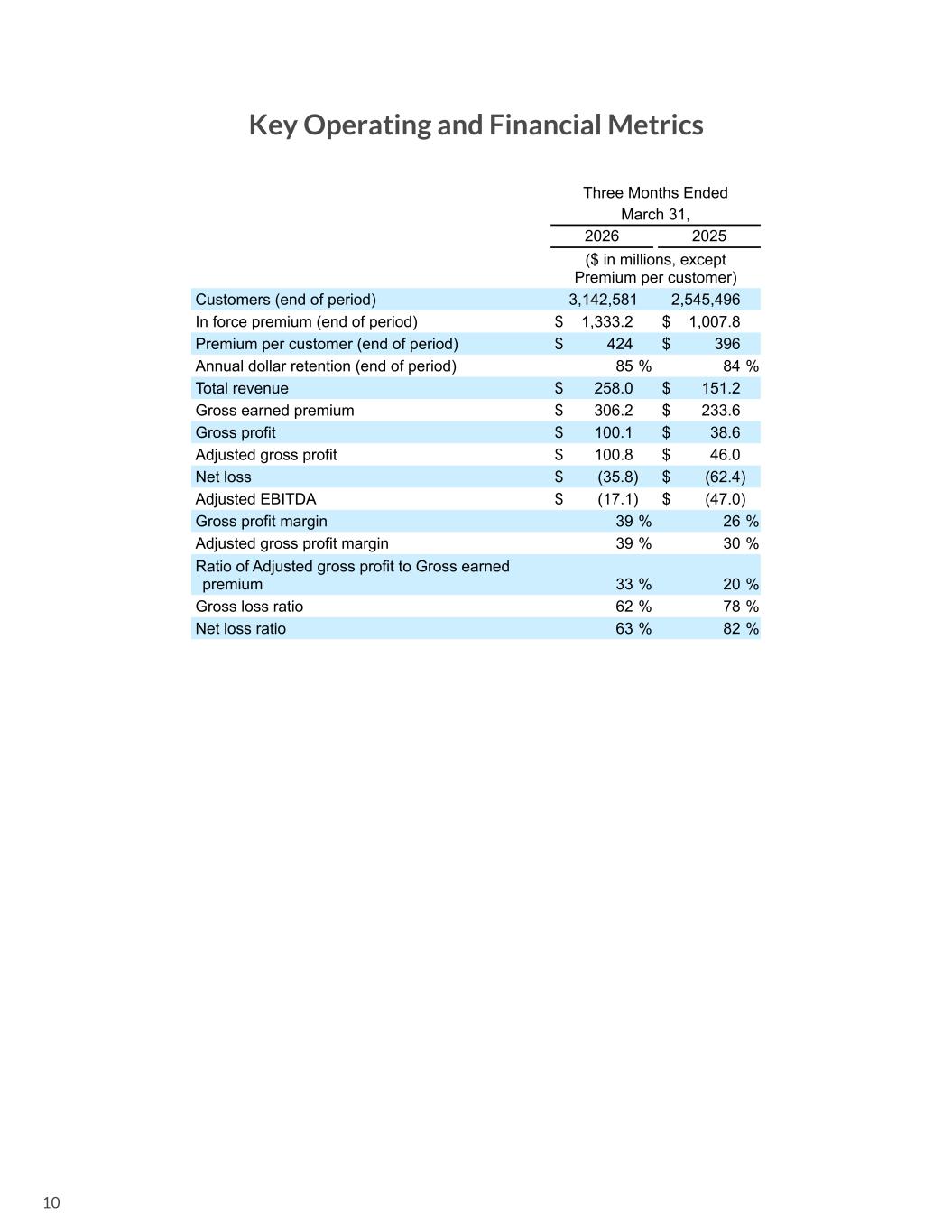
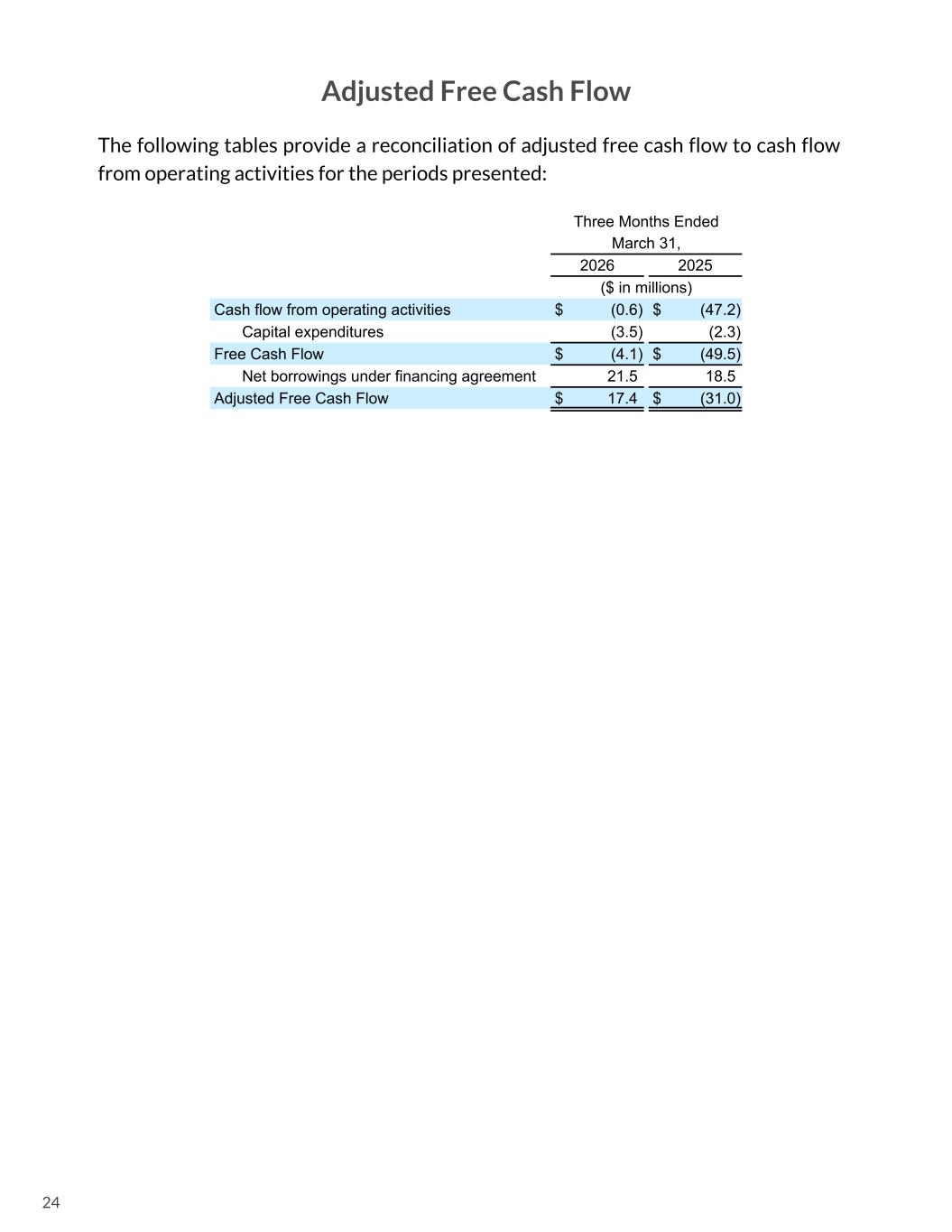
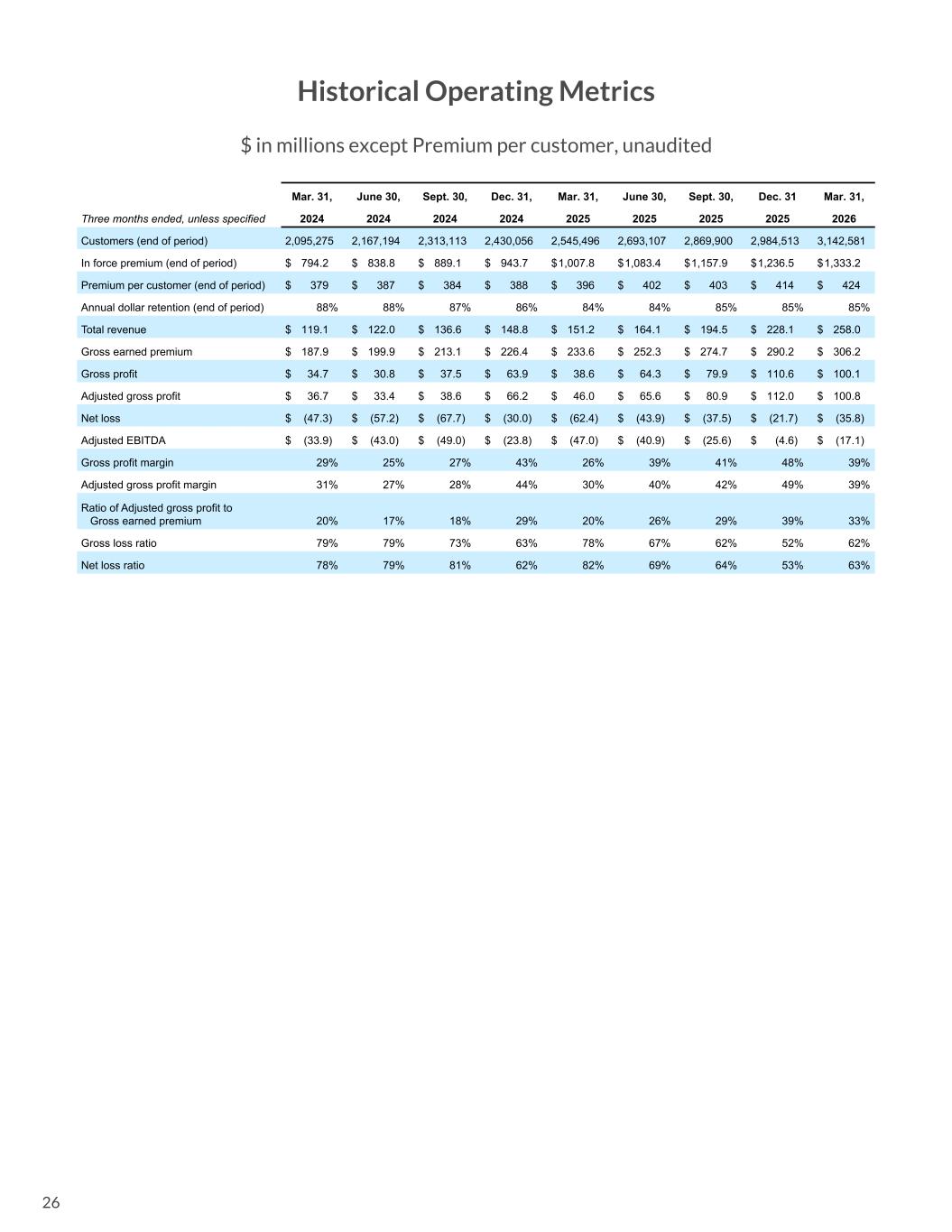
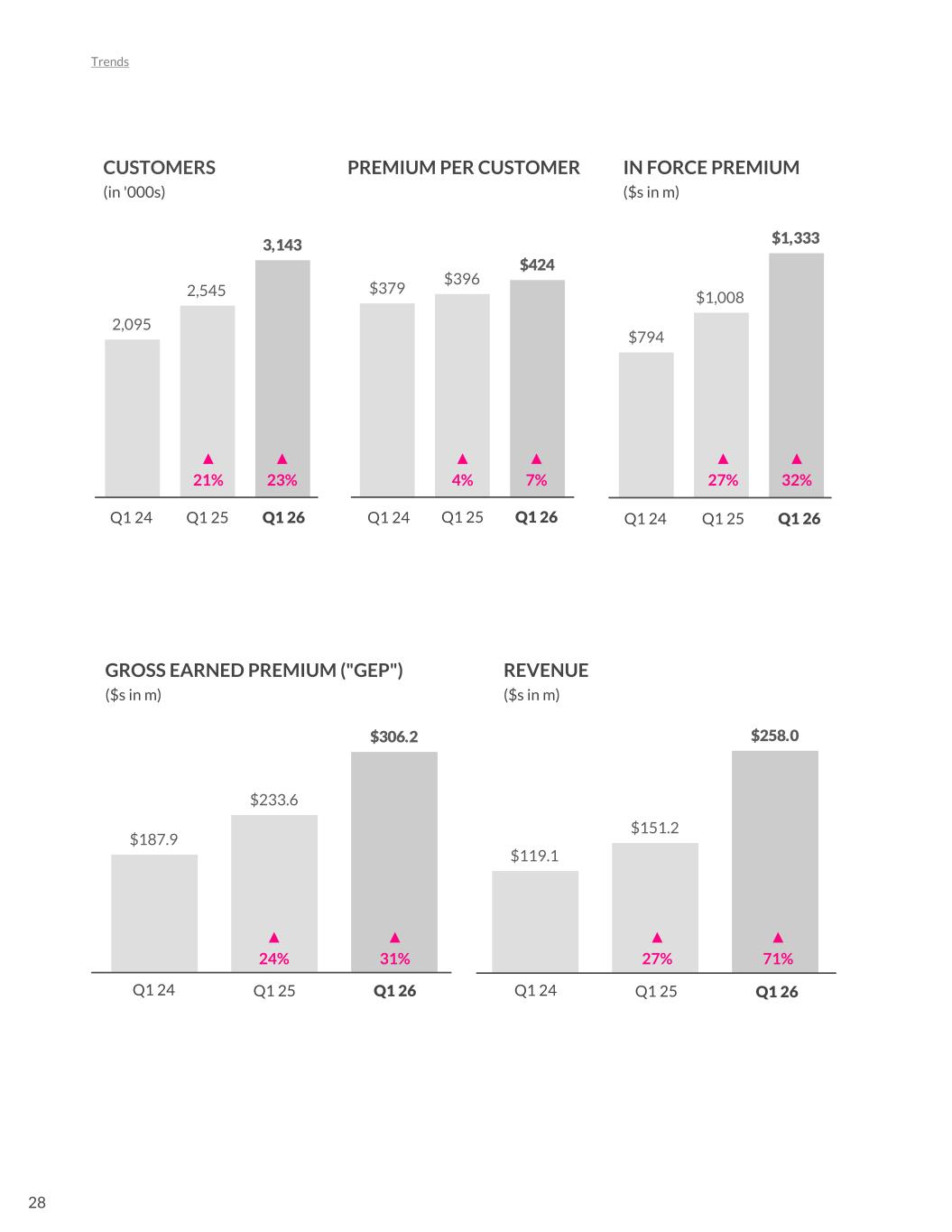
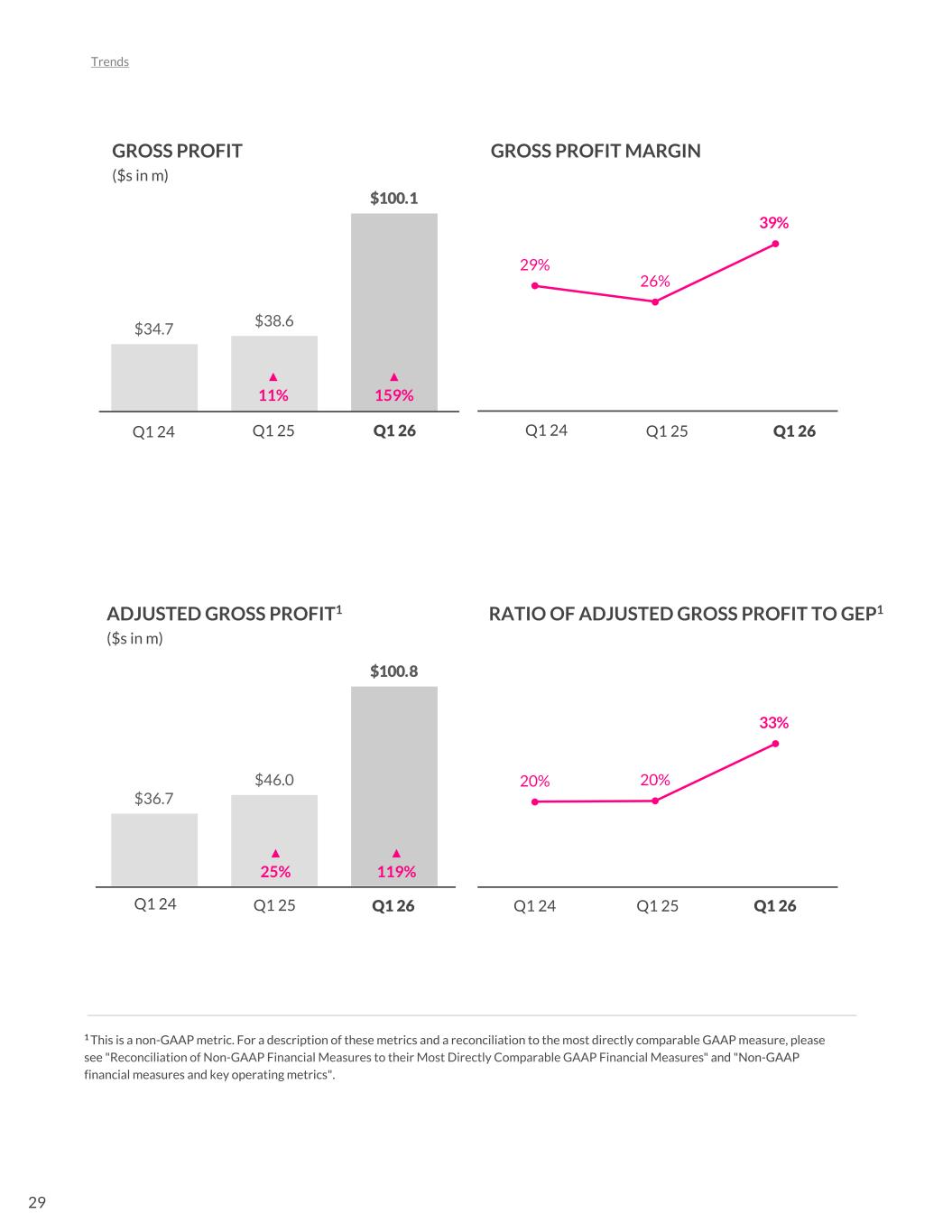
joining us to review lemonade's results for q1 26. this was another excellent quarter marked by continued acceleration in growth strong underwriting performance and clear operating leverage across the business in the first quarter enforced premium reached 1.33 billion dollars growing 32 percent year-over-year. This extends our streak of accelerating growth to 10 consecutive quarters. Revenue grew even faster, up 71%, boosted by a recent reinsurance transition and the resultant higher premium retention. Underwriting performance continues to be very strong and it is the combination of accelerating growth and strong underwriting results that led to 159% growth in our gross profit. We also saw solid cash flow from operations, generating $17 million in adjusted free cash flow, a $48 million improvement year-over-year. On the bottom line, adjusted EBITDA loss narrowed 64% year-over-year, reflecting continued progress towards profitability, and we reiterate a long-standing expectation that Q4 this year will be EBITDA positive, as will the full year of 2027. We often note two specific drivers that power our financial performance, grow the business, and scale the operation. I'll share a couple of comments on each of those. As it relates to growth acceleration, strength in marketing efficiency has been a consistent tailwind for us. Conventional wisdom suggests that increased growth spend comes at the expense of efficiency, yet we continue to see the opposite. Since Q1 2023, we've grown our spend by roughly 200% while maintaining an LTV to CAC ratio of above three. This is enabled by our proprietary LTV AI that dynamically allocates capital to maximize returns and is supported by the diversity of channels, products, and geographies which we enjoy. At the same time, increased bundling activity is boosting customer lifetime time value, which enables us to scale growth investments while preserving strong unit economics. The second notable driver of our performance is leverage across our expense base. In the first quarter, we surpassed $1 million of IFP per employee, representing a nearly 3x improvement over the past four years. This progress reflects the growing impact of our AI and automation tools, which are enabling us to scale efficiently. The impact of 10 years of investment in AI infused into our single proprietary and vertically integrated system is now visible throughout our business and on pretty much every line of our P&L. Against that backdrop, we expect recent trends to continue and are raising our full year guidance for both top and bottom lines and looking forward to continuing to deliver increased growth and increase profitability throughout 2026 and beyond. With that, let me hand over to Shai. Shai?
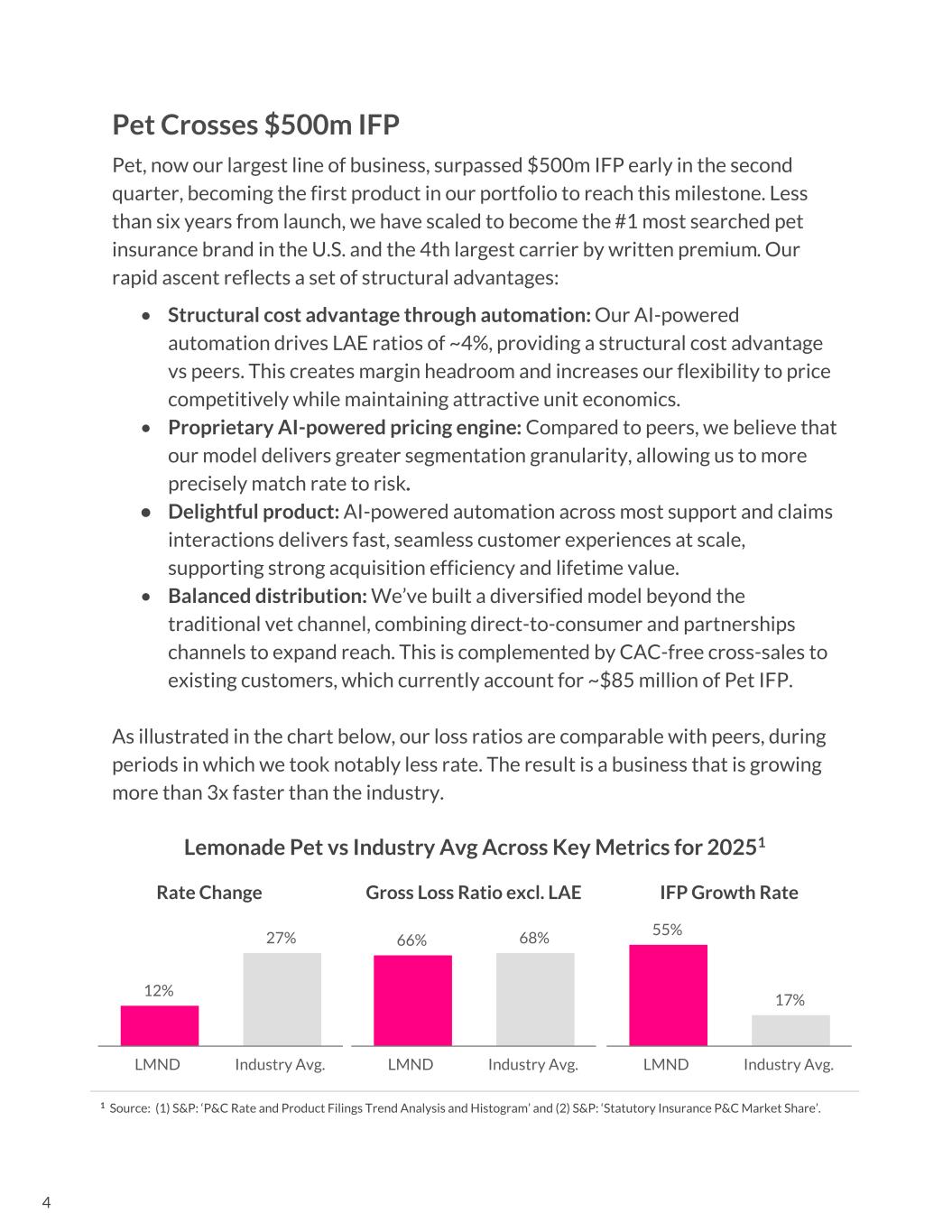
Thanks, Daniel. I'm going to spend a few minutes discussing PET, which is now our largest line of business and recently reached a notable milestone, $500 million of IFP, becoming the first product in our portfolio to reach that milestone. In less than six years from launch, we've become the most search pet insurance brand in the US and the fourth largest carry, competing against incumbents with decades of operating history. As it relates to growth, a couple of drivers to highlight. We have a notable cross-sell advantage versus many pet insurers with over 3 million customers to whom we can sell directly, cag-free. In fact, 85 million of current pet IFP was sourced from our existing customer base. They also benefit from high conversion rates due to delightful AI-powered customer experiences. Lastly, our distribution strategy is diversified across direct-to-consumer channels and partnerships, which has allowed us to scale spend quickly without reliance on any one channel. At the same time, we have a structural expense advantage versus peers. our ai-powered automation engine enables excellent expense efficiency when it comes to claims management unlike many of our other lines of business pet is a high frequency low severity product which means that a vast majority of customer claims are excellent candidates for end-to-end automation with that i have to lead off to team who will cover our financial performance in Italy.
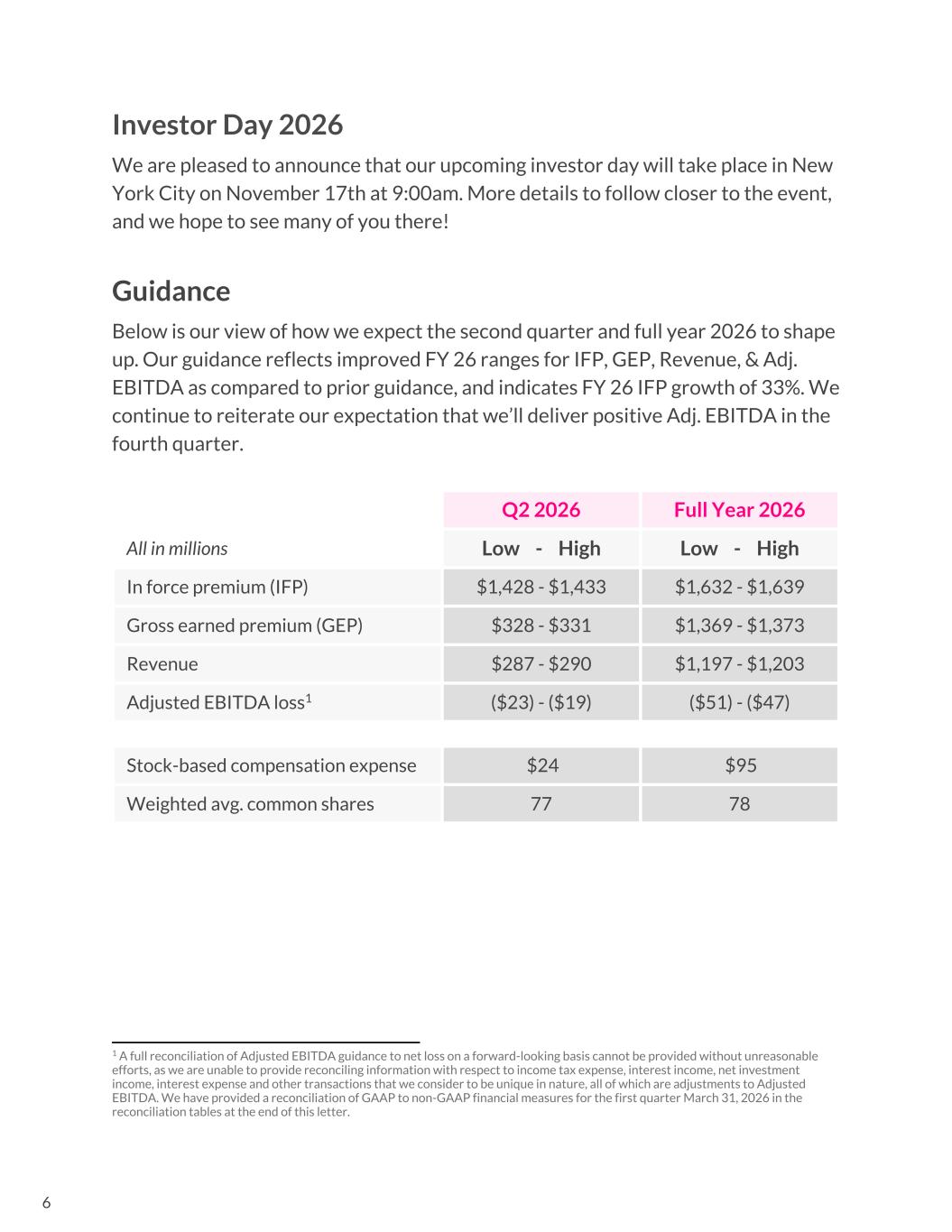
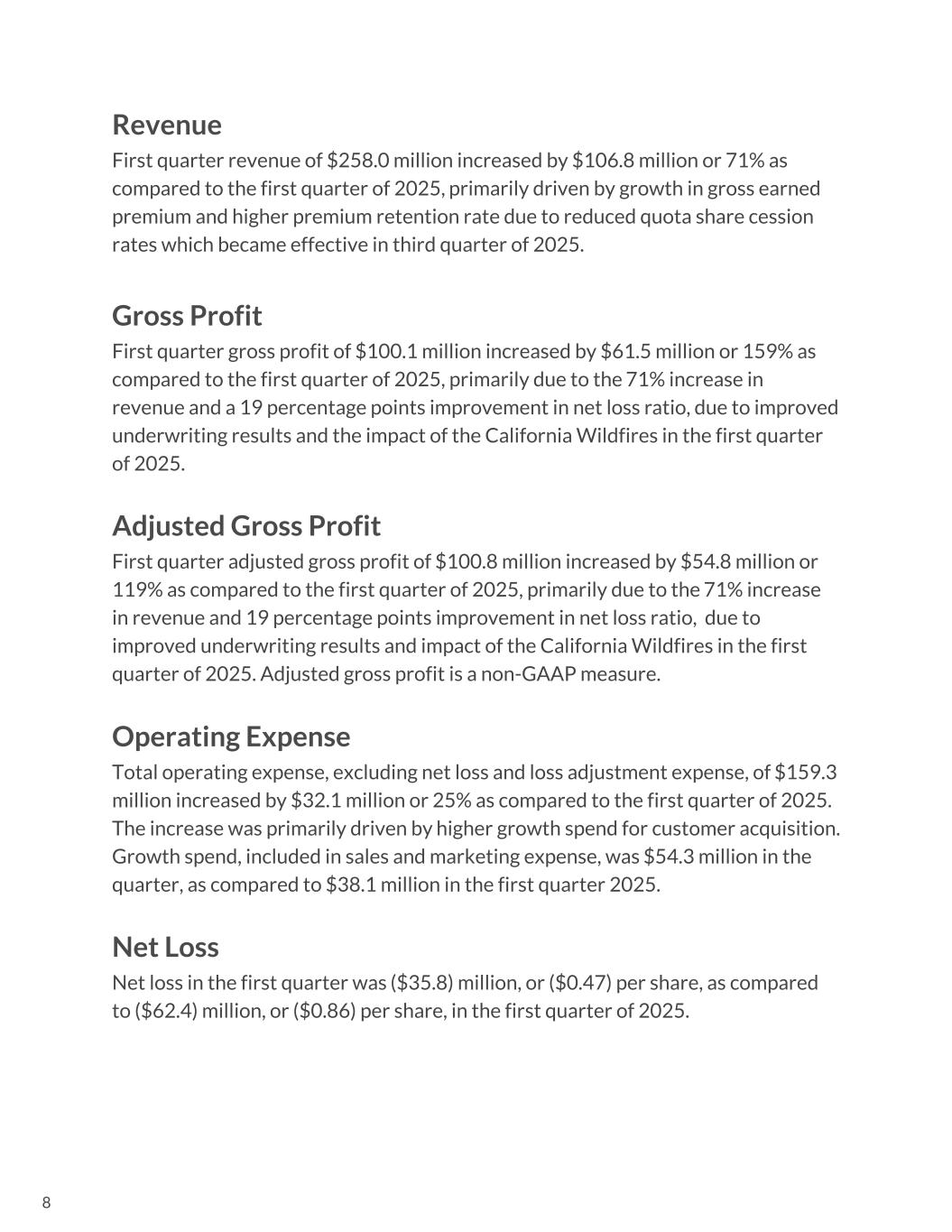
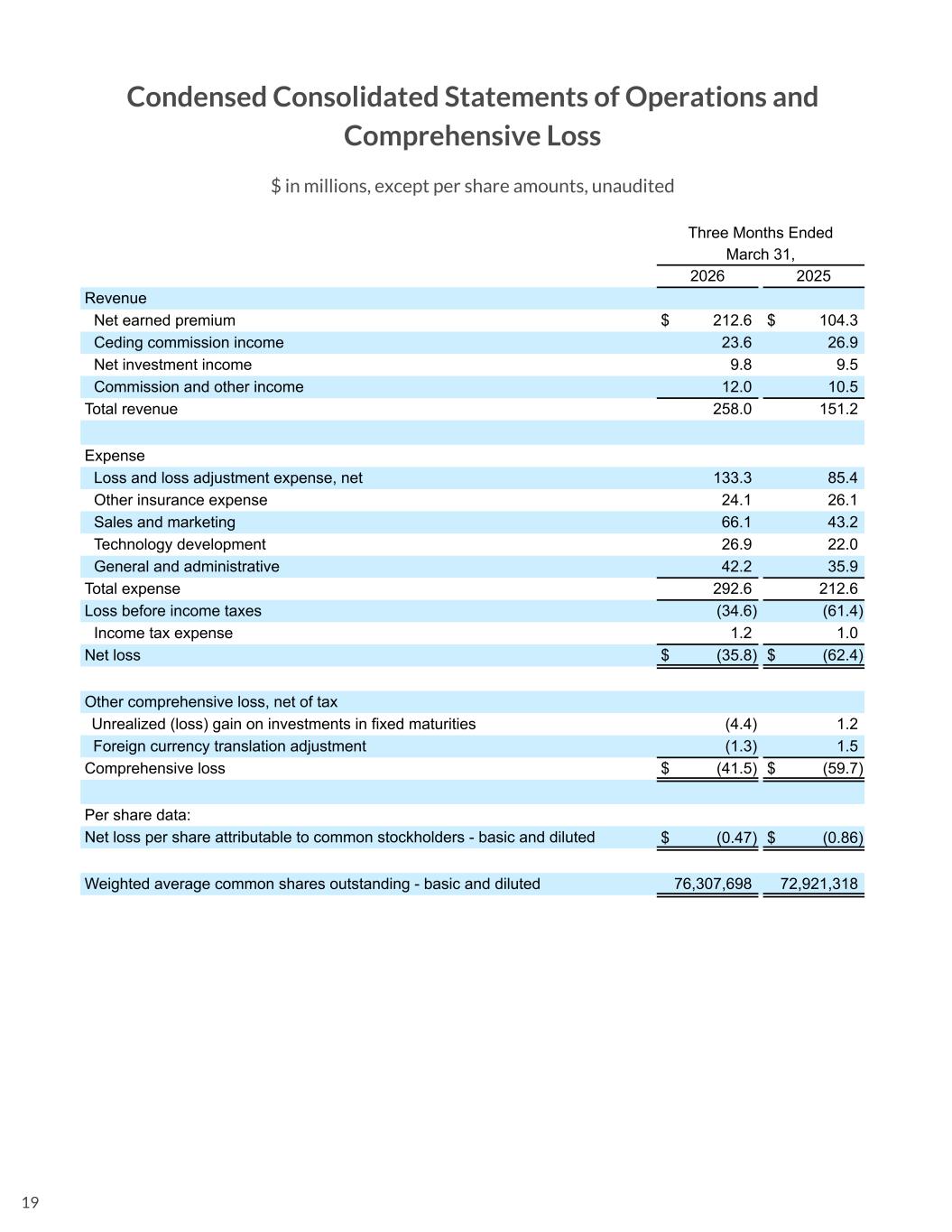
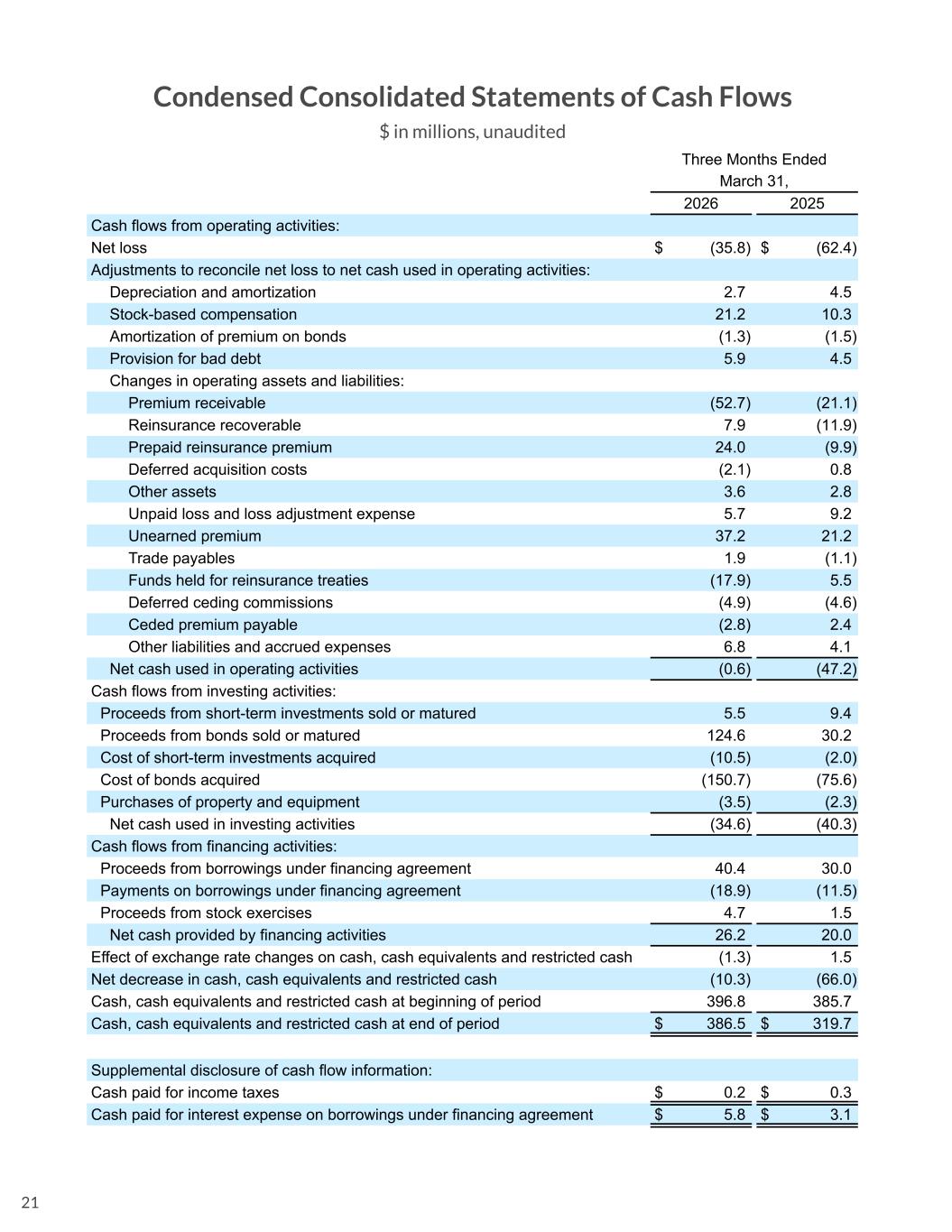
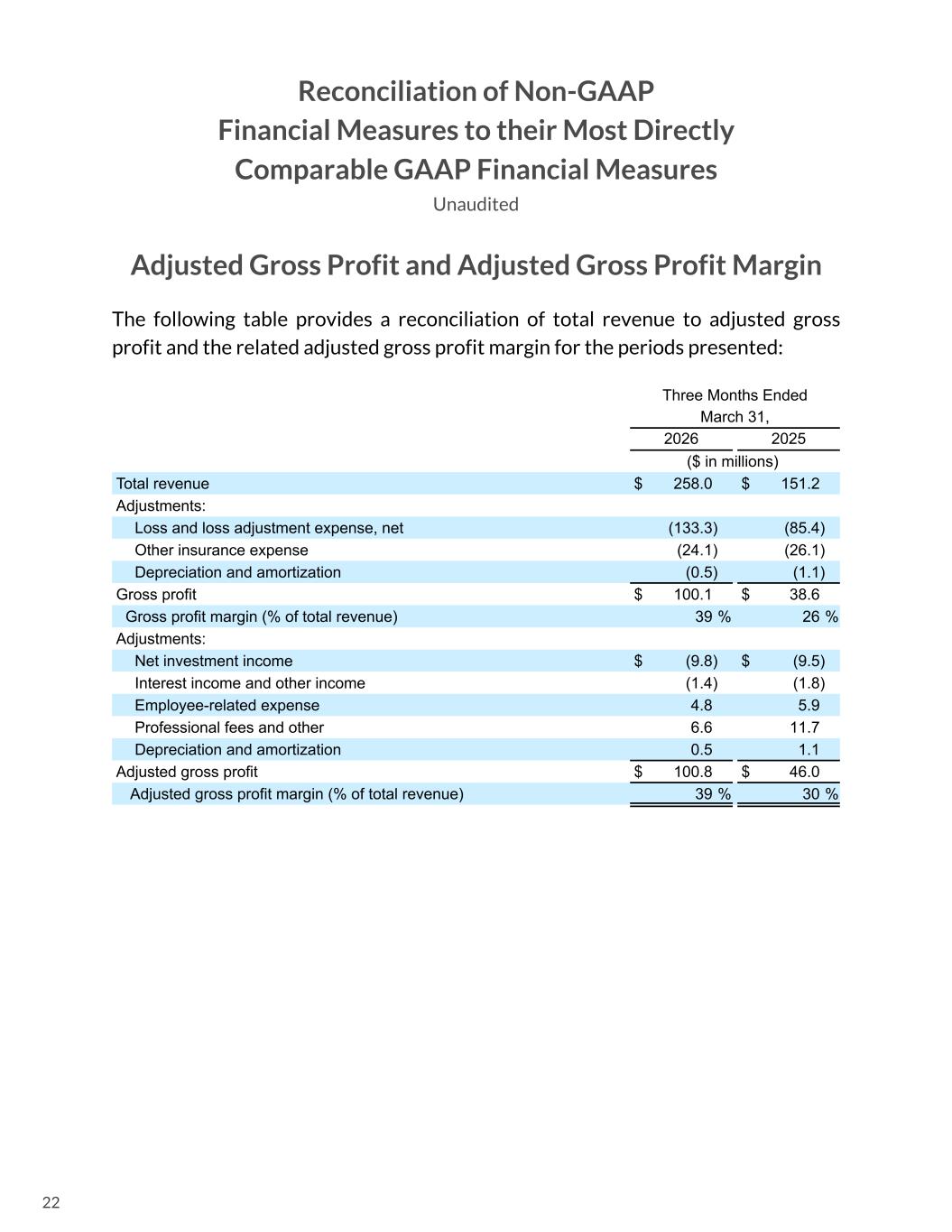
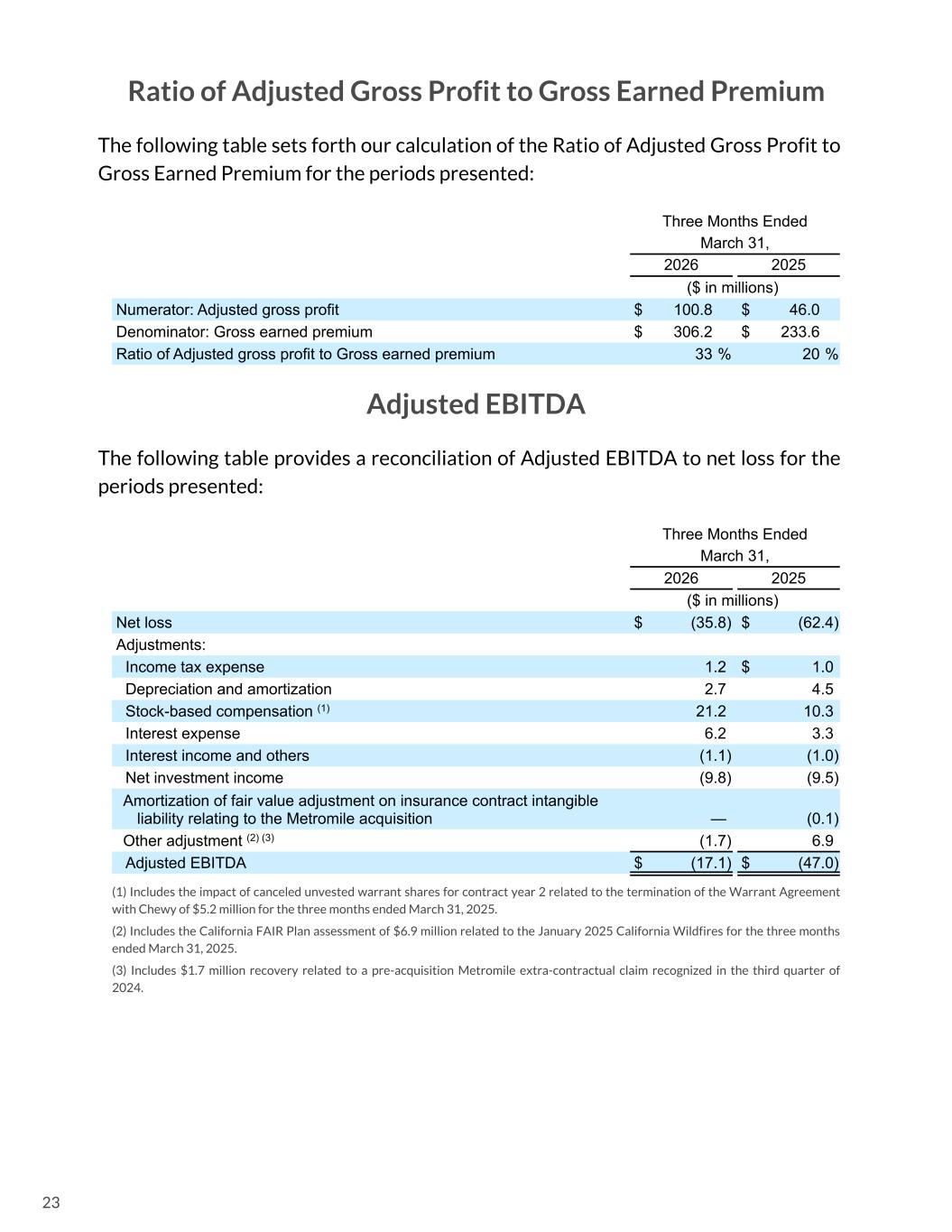
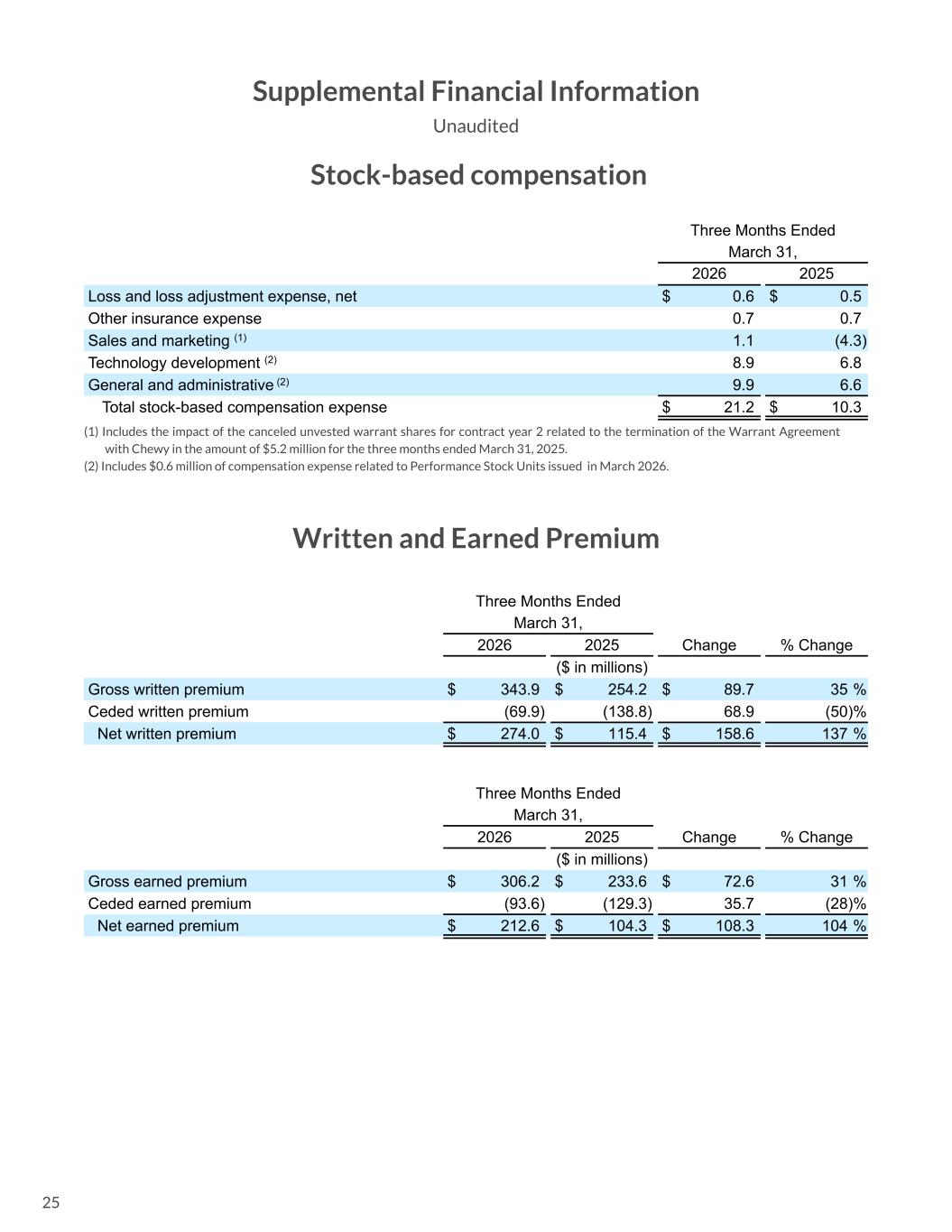
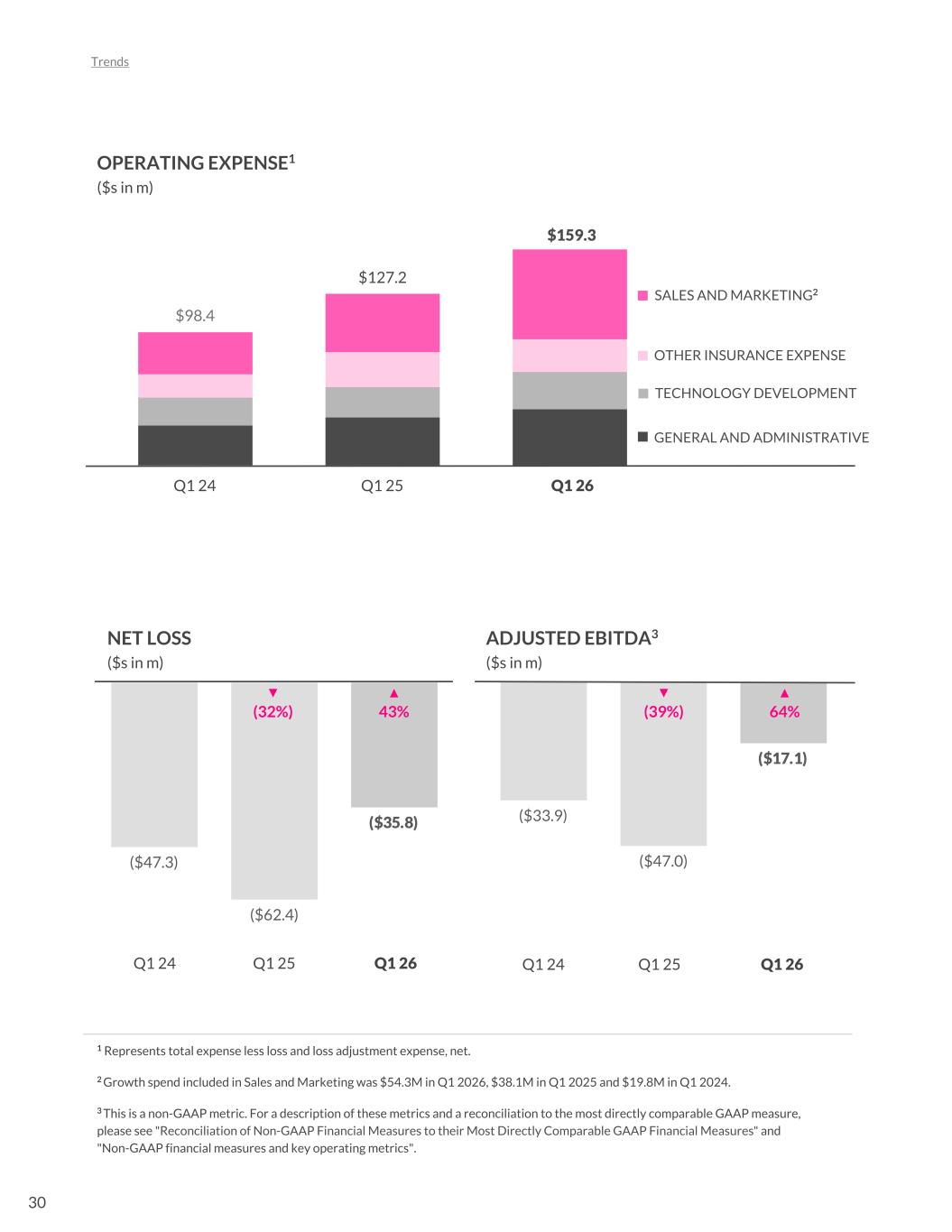
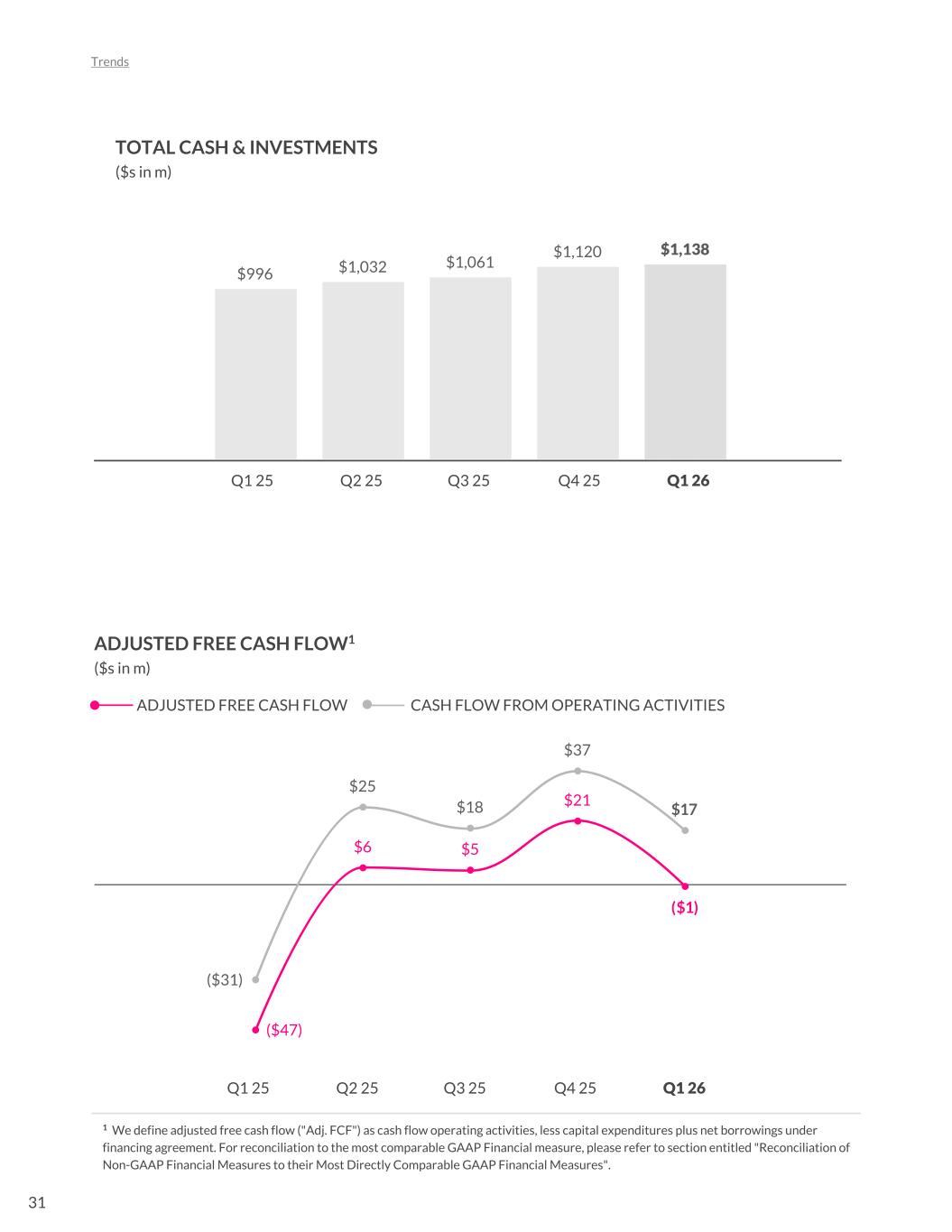
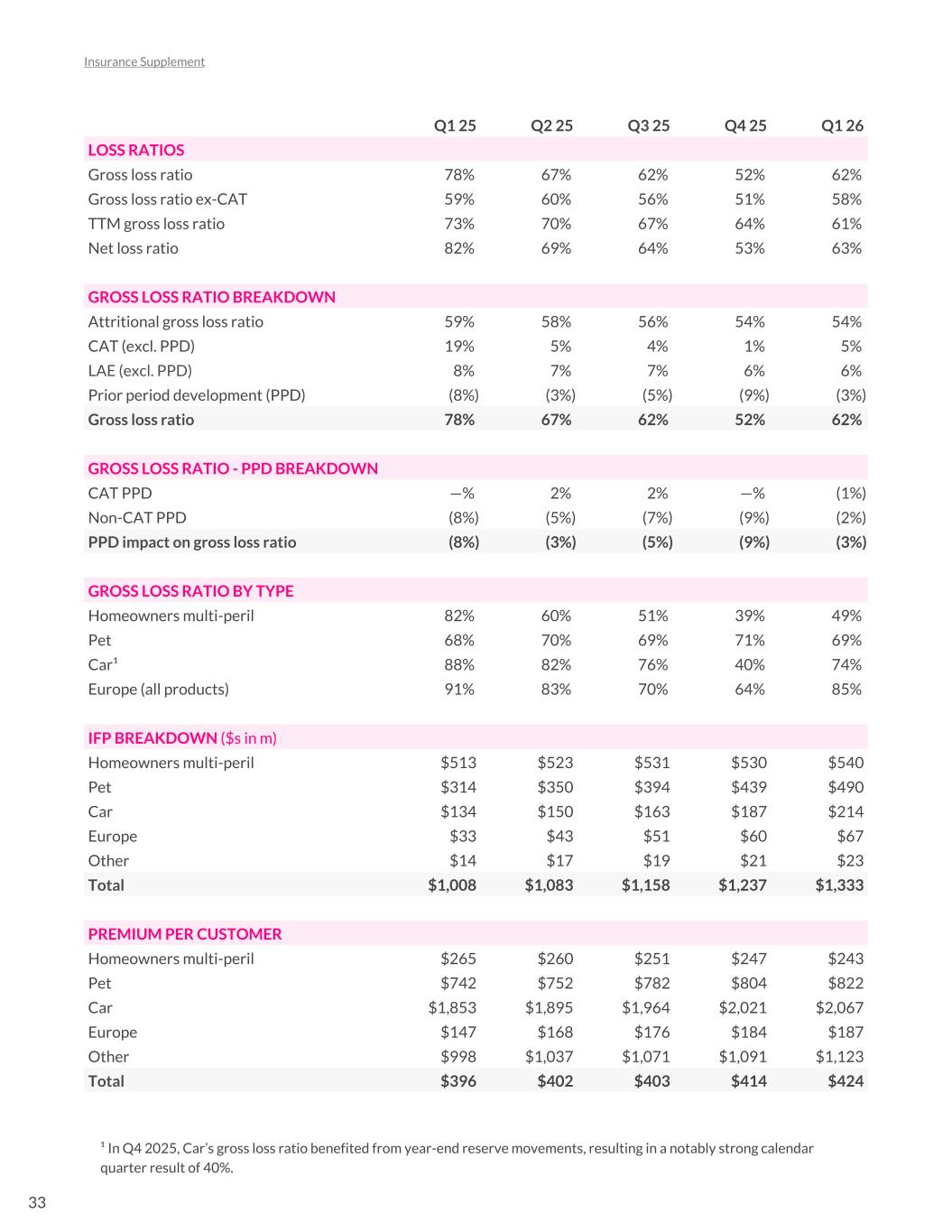
Tim? Thanks, Shai. Let's start with Q1 results, which were excellent. Inforced premium growth 32% year-on-year to $1.33 billion, driven by customer growth of 23% and premium per customer growth of 7%. We added 158,000 new customers in Q1, 37% more than the roughly 115,000 in the prior year. Within our reported gross loss ratio of 62%, our favorable prior period development of 3% was driven primarily by our homeowners' multi-parallel and car products. Total cat impact in the quarter was 5%, primarily due to winter storm activity, and this excluded cat prior period development. Prior year development, which we report on a net basis, was $4 million favorable in Q1. Gross profit increased 159% to $100 million, while adjusted gross profit increased 119% to $101 million for a gross margin and an adjusted gross margin, both, of 39%. The metrics use revenue as their denominator. Adjusted gross profit as compared to gross earned premium was 33% in Q1, up 13 points from 20% in the prior year. It's worth noting that the prior year results include the impact of significant California wildfires, as well as a California Fair Plan assessment, all recorded in Q1 last year. Revenue rose 71% to $258 million, while our adjusted EBITDA loss improved to a loss of just $17 million. Notably, revenue grew roughly 40 percentage points faster than IFP, a dynamic we expect to continue through at least mid-year. importantly adjusted free cash flow was positive for the fourth consecutive quarter at 17 million dollars and has been positive seven of the eight last quarters while operating cash flow was negative one million dollars following a common seasonal pattern we ended the quarter with roughly 1.1 billion dollars in cash and investments of which about 290 billion dollars is required to be held as regulatory surplus annual dollar retention or ADR remains stable sequentially primarily due to the continuing impact of our clean the book efforts in our home business at 85 percent flat versus the prior quarter operating expenses excluding loss and loss adjustment expense increased by 32 million dollars or 25 percent to 159 million dollars in q1 as compared to the prior year now let's break down those expense lines a little bit other insurance expense decreased by two million dollars or eight percent in q1 versus the prior year versus a 32 growth rate of ifp the prior year period included the seven million dollar telefonia fair plan expense assessment and absent this fee the annual increase in this line item would have been about 26 percent a bit less than our top line growth rate of 32 percent total sales and marketing expense increased by about 23 million dollars or 53 percent due to increased growth spend versus the prior year in q1 growth spend was 54 million dollars up 43 percent as compared to the prior year importantly as we continue to ramp growth spend marketing efficiency levels remain stable and strong in the first quarter with an LTV to CAC ratio above three times in line with the prior year. We expect Q2 growth spend to step up about 12% versus Q1 and expect total growth spend of about $235 million for the full year of 2026. Technology development expense was up 22% year-on-year to $27 million, and G&A expense increased 18% as compared to the prior year at $42 million. Notably, G&A improved sequentially and was down by about $1 million versus the prior The year-on-year increase in G&A was driven primarily by an increase in stock compensation and interest expense. Our expected stock compensation expense for the year is expected to be approximately $95 This is somewhat higher than our previous guidance, primarily due to multi-year equity grants given to our two founders. headcount increased slightly by about two percent to 1291 in q1 as compared to the prior year our net loss was a loss of 36 million dollars in q1 or 47 cents per share as compared to a net loss of 62 million dollars or 86 cents per share in the prior year adjusted ebitda loss was 17 million dollars in q1 dramatically improved versus all ebitda loss of 47 million dollars the prior year. Our detailed guidance for Q2 and our updated full-year 2026 guidance are both included in our shareholder letter, and that new guidance represents a 32% top-line growth rate in Q2 and a 33% full-year top-line growth rate. Roughly 77% revenue growth is implied by our Q2 guidance and roughly 63% full-year revenue growth implied by that guidance. And unchanged, we do expect a positive full quarter of EBITDA in Q4 this year. With that, I'd like to pass back over to Shai to answer some questions from our retail investors.
Thanks, Tim. We now turn to our shareholders' questions. We'll start with Paper Bag who asked why ADR hasn't improved faster. So just to level set, ADR, or annual dollar retention, is a training metric. It compares the IFP generated by a specific cohort a year ago and measures how many dollars we are able to retain from that same group 12 months later. Over the past year, ADR has been held back by a targeted non-renewal initiative in our homeowner's line focused on reducing cat-exposed business. That deliberate move created a temporary headwind for ADR while improving the overall health of our business and has largely wrapped up by the end of 2025. Looking ahead, that headwind should start to fade as those cohorts roll off the base used to calculate ADR. It's also worth noting that if you exclude homeowners, ADR actually improved over 300 basis points year over year. Paperbag also asked about multi-line customers, currently about 5% of total, asking when we'll see that tick upwards. It's a great question, Paperbag, and actually, if you look at the dollars rather than customer count, you can already see the impact of cross sales showing up quite dearly in our financials. As of the end of Q1, 18% of total IFP is bundle. Importantly, cross-sell business is largely acquired with little to no CAC, which is a meaningful driver of the improvements you're seeing in our overall profitability. With improving performance and growing data, we now have greater confidence in the impact of cross-sells on new customer LTV. Higher LTV gives our growth team more room to operate, so they can increase allowable CAC and lean forward further into growth while still maintaining our 3 to 1 LTV to CAG ratio. We've seen a strong momentum here over the past few quarters, and we feel good about continued acceleration, especially as we expand CAR into more states. 19B asked for an update on our efforts to build an excellent shareholder base with strong institutional ownership. Our investor relations efforts are producing excellent results. In the past couple of years, we've seen institutional ownership excluding SoftBank increase by more than 50%. A handful of our top 20 shareholders are net new institutions who initiated the position in the past year or so. This work is ongoing, but we are encouraged by the recent momentum. NDK asked what prevents a competitor who launched tomorrow with unlimited compute and the latest models from being where we are in a couple of years. That's a thoughtful question. Thanks, Andy. Well, our differentiation doesn't stem from access to AI tools, but rather from a decade of compounding execution around an AI-first architecture, unique organizational structure, and successful navigation through complex and expensive regulatory environments in multiple geographies. We've spent the last 10 years building, training, and integrating our technology and hand-grown models into every layer of the business, turning real-world data into continuously improving underwriting, pricing, and claim loops to now show up in superior growth and efficiency metrics. Importantly, commercial AI models, as advanced as they may be, can't price insurance on their own. Underwriting and pricing depend on statistical models, trained on large data sets built over time, and that's where our advantage is most pronounced. A new entrant would start from zero on data, regulatory approvals, brand trust, and production validated models. These are things that only accrue with time. Meanwhile, our head start means that our systems keep learning and accelerating, so even with equal technology, the distance continues to widen. In short, you can launch with cutting-edge AI, but you can't fast forward the decade of compounding data, integration, and operational learning that defines our advantage. With that, I'll pass it over to the moderator and we will take some questions from the street.
Operator
We will now begin the question and answer session. Please limit yourself to one question and one follow-up. If you would like to ask a question, please press star one to raise your hand to withdraw your question please press star one again we ask that you pick up your handset when asking a question to allow for optimum sound quality if you are muted locally please remember to unmute your device please stand by while we compile the q a roster your first question comes from the line of jason helfstein from oppenheimer your line is now open Hey, everybody.
Thanks for taking the question. So I'm going to ask, too, just talk a bit about the AV insurance. When could that begin to kind of impact the financials? And I guess, how are you thinking about the initial margin impact on that business? Just so any call there as we all begin to think about that.
And then just, Tim, when do we reach normalized or peak levels with the reinsurance transition thanks hey Jason good morning Daniel here so I assume that by AV you mean autonomous because a lot of our cars are AVs already and that's nothing yet yeah yeah so this is something that's very exciting really I think a dramatic demonstration of the kind of capabilities that we bring in it shows our differentiation I think at its maximal effect, which is that we are able to price every mile driven per driver, and we recognize AI as a driver, and therefore we can price it accordingly. This launched and has been very well received. We're seeing our conversion rate for these policies almost twice as good as our average conversion rate, something like a 70% increase in conversion for such customers. But it has launched in only a couple of places so far. So the rollout will be throughout the year to all of our markets, but at the moment, it is still relatively modest in terms of the impact on our financials as reported at the moment.
As the year rolls out, you'll see this being expanded to more and more states, and we'll gather theme as it goes, and we'll update you throughout. yeah and on the reinsurance question jason uh you're you're right on the the transition or the shift in the rate of business that we are retaining continues to shift in our favor where we're retaining more business over time we renewed our reinsurance last uh about nine months ago in july and so that that retention rate uh has increased consistently quarter over quarter since that time q1 the seed rate was about right around 30 percent versus the peak last year of 55 q2 that will ebb further will retain more the seeding rate will be something like 25 and then we'll normalize in q3 at right around that 20 percent rate that we announced from new renewed last year so it phases in over four quarters that assumes no change in our reinsurance at July 1. That's our renewal date. We're well into that process now, as is typical each year for renewal. We've not yet determined what that will be. That's something we do share with the market once we get the final terms that we like. We have some optionality there. As we have for quite some time, we can confidently retain more business. So the likeliest outcome there is is perhaps no change or perhaps a greater rate of retention it's unlikely that we would see it at a higher rate and we'll share that update uh not too not too far out post the july 1 renewal date thanks appreciate it thank you for your question your next question comes from the line of andrew anderson from jeffries andrew your line is now open hey good morning You've highlighted operating leverage from automation.
Where specifically are you seeing some savings today and how much of that is being reinvested versus dropping through? Just kind of taking a look at some of the operating expense line items that are still growing.
Yeah, so we kind of think about expenses in really three buckets, and this has been really consistent over time. there's uh truly variable costs uh and there's a few of those things like premium taxes and processing fees and that those tend to vary to vary quite in line with the growth rate of the business so if we're growing 31 or 32 percent then you'll see those expenses kind of grow in line with that that's a relatively small bucket the largest bucket is our fixed cost and that's things like salaries and overhead and uh legal and finance and compliance and all of those things that every insurance company has and those scale consistently really really well over time i point you to the shareholder letter where for some time we've shared a chart which you know the the highlight today i think was a headcount decline over three years where the premium has more than doubled or tripled over the same same time so that's where we really see scale the expenses that are increasing tend to fall into the discretionary bucket they're at our choosing so the the most clear one is growth spend where we choose and determine our growth rate we work hard to push that up each quarter you've seen the results of that with growth rates increasing sequentially quarter after quarter and that's the result of two things our investing more maintaining our ltd to cac ratio maintaining that marketing efficiency coupled with really an unlimited TAM, total addressable market. And so those come together and you kind of see that every quarter. We do choose to invest in other things that have either short-term or medium-term payback, and we continue to do those as well, but those are really at our discretion. So over time, you'll see a similar trend, I would expect, where you'll see great leverage, continued growth. Our guidance implies a 32% Q2 growth rate, 33% for the full year, and I expect continued scale across all of those expense lines.
And Andrew, maybe if I can jump in, I think one place in particular you can really see the impact of AI-powered automation at scale is in the cost of adjudicating claims, and that's our LAE ratio, which is currently at 6%, which we consider levels that are roughly best in class today and materially improved over time.
Thanks. And which acquisition channels are contributing the most to incremental growth today, whether that be direct or cross-sales? And maybe how does agency factor into distribution, if you can size that at all?
Yeah, so I'll take that and then maybe Nick uh jumped in um so our the short answer is all of the channels meaning every month every quarter we've been successful at expanding into new channels uh that doesn't mean the existing channels are going away but there tends to be a broadening or a deepening of the number of channels and so the concentration in the top you know five or so channels today is much less than it was two or three years ago. So that long tail is getting longer. And that's really the result of an amazing growth marketing team that through human intelligence and really intense AI automation have been able to do that quarter over quarter. Our partners are strong and continuing to get stronger. It's the minority of growth. The vast majority of our sales come from our direct consumer efforts and that will I expect that will continue for for quite some time but the indirect or the partner referral that continues to be strong whether it's uh uh Homesite or QE uh or real estate management or landlords we've got a really long set of folks who uh who drive lots of strong sales for us uh Nick anything you want to add on the agent front uh I was just going to note that we're seeing real strength across channels, to your question, Andrew, and that is both new business to Lemonade as well as cross sales to existing customers.
As it relates to new business, we saw our highest ever new sales volume in the first quarter, and we've been able to sustain really strong efficiency metrics on our growth spend. And at the same time, on cross sales, we saw a near doubling year-over-year of cross-sales to existing Lemonade customers. And those are trends we really hope to sustain, strength across our various channels that have enabled our growth acceleration curve until now. Thank you.
Operator
Thank you for your question. Your next question comes from the line of Tommy McJoint from KBW. Your line is now open.
Hi, good morning. Yeah, I had suspected that all of the effectively free advertising and brand building that Lemonade benefited from with the media's attention on the autonomous vehicle announcement in the first quarter, that that might allow Lemonade to actually dial down its need for growth spend while still exceeding the 30% enforced premium growth.
Can you talk about you know why that wasn't the case does does sort of mainstream media coverage of lemonade help with with attracting customers hey tommy daniel here um that coverage is is fabulous for us in terms of uh general perception i think it draws attention to the um widening gap between us and everybody else you know the rest of the industry pricing based on gender and credit scores and marital status and on the other end of the spectrum you have us partnering with tesla to price per mile and per version of the AI that's driving. So definitely, that captures the imagination. I think it drives home the unique elements that Lemonade has and the differentiation from the industry. So that drives attention and brand building, but that was never about getting clicks and sales instantaneously. This is the kind of long-tail investment in brand that builds over time. We see our organic sales growing. We see our conversion rates growing. We We see the trust scores and brand recognition growing. You'll have noticed in Shai's comments that in PET, for example, we are now the number one most searched brand. So we're definitely seeing the cumulative effect of all the coverage of Lemonade in our differentiation and our tech-centric offering. But we had no, the expectation implicit in your question was never shared by us.
Okay, that all makes sense.
And switching over to the stock-based comp, all for the the full year the guide for stock based comp was raised by 20 million to clarify is that an incremental or is that just a switch from cash comp to stock based comp and is that new 95 million dollar a fair base level to assume in the out years as well yeah so i would think of that as a as a step up uh that that will be a new roughly base level uh i would note that those are unique uh grants and and uh are multi-year in nature uh all that info is disclosed and out there but big picture uh there's um performance there's a performance-based aspect to a subset of those grants uh and that focuses on the next two years uh and requires significant value increase in order for those to become vested and drive value. In addition, there's a long-term multi-year grant that you've seen at other thoughtful companies, particularly for the founders, to kind of drive a long-term vest. Our standard vesting for new employees is four years. These grants have an eight-year view with a thoughtful vesting pattern. So I would think of these as a one-time for a multi-year view. If you think about our stock based comp, kind of zoom out a little bit and look over say the last five years or so, which gives a better picture and takes away some of the noise of stock volatility and things like that. And look at our actual effective burn rate or dilution rate, which is really the thing that financially we're concerned about.
It's right on target with best in class it's sort of a two-ish percent number uh one point something to two point something over that very long term period that's really the focus number for us and we expect over time that that will continue to be the case uh founder grants are unique things and and so you'll see some volatility in the short term due to that and and also i maybe wanted to add notwithstanding the increase in our expectation for expense within the calendar year we're seeing stock-based comp scale very nicely as a percentage of any metric you'd like to index against whether that be enforced premium revenue or gross profit uh those levels are improving and and from our view healthy
relative to benchmarks thanks thank you for your question your next question comes from the line of mike zaremski from bmo your line is now open hey good morning um thanks um you know my first question is um a follow-up on on Lemonade's um I think probably best in class loss adjustment expense ratio um does it have something to do with you know on a NAIC statutory basis uh you know we've always seen that Lemonade's um claims uh we call it denial rate so claims are closed with no payment has been immaterially higher than the peer average or industry average. Does that have something to do with kind of why the LAE ratio is so much better than others?
So the short answer to that is no. The more thoughtful answer is that Lemonade has some unique aspects to the business. We have a very large number of relatively low premium policies because of the nature of our renter's business. that has changed and diminished over time so the renters book of business in terms of premium is now under 30 percent of the business in the high 20s uh used to be you know 90 something long long ago so the book of business is nicely diversified that said if you just count the policies you're going to get a very large number of uh renters and so that can skew uh rejection rates because you You can get a lot of claims which are thoughtful claims, but not necessarily a covered claim. Claims below the deductible, for example, claims that are not covered by the policy. And that's not uncommon when you have a customer base who, in a certain subset, can be newer to insurance. Might be their first policy or it might be the first time filing a claim. And so that will definitely skew the numbers. If you isolate a part of our business that makes us look more like a more established incumbent, if you took just homeowners and car and pet, for example, you'd see a different number that looked much more in line. And I think our NPS scores and our customer satisfaction scores, which I would put up against any insurance company on the planet, show that over the arc of the total business, Lemonade, almost every time, as best we can, does the right thing and pays every valid claim effectively.
And let me just also note, Mike, sorry, the LAE ratio is cost to manage claims over earned premium and claims without payment generally don't have cost attached to them. So I wanted to offer that as well. But I wanted to take the opportunity to share that fully aligned to Tim's points around product mix and how that has certain nuances within our LAE ratio. But we're actually seeing favorable trends in LAE over time across all of our lines of business. And that's especially true in CAR, where we've seen notable improvement in recent periods, and our CAR-LAE ratio is, at this stage, not materially different than the overall Lemonade result of 6 percent. So we're encouraged to see that momentum across lines.
That's thoughtful. My follow-up is just kind of also benchmarking, kind of looking at Lemonade's gross combined ratio about 138 percent um this quarter uh improving uh materially uh a year over year um you know if i benchmark lemonade to the industry and on the maybe standard business mix is a bit different i think the industry is running 90 90 ish so lower i'm curious you know does lemonade uh have a goal to kind of lower that gross combined ratio materially over time towards the industry average, or will there always be kind of a material gap? Thanks.
Yeah, you're exactly right. The improvements have been dramatic. A little color, something like a 60-point improvement, I think, which is significant. And obviously, you're really seeing it in the expense ratio, for sure. The loss ratio, We've reported a gross loss ratio of 52, this quarter at 62, so we're right where we need to be with loss ratio. Expense ratio continues to show dramatic improvement. Two things to note, because of the nature of reinsurance, depending on the way you calculate combined ratio, there's a couple of different ways, but reinsurance certainly has an impact on that, where the growth in the net will differ. but anyways life that we're seeing significant improvement one of the things we're right on track with is our commitment to EBITDA break even you'll see that in Q4 for the full quarter for the first full quarter we've noted that for several years now that's also the point where net book value begins to rise that also tells you a lot about the trajectory of the business and then uh gap profitability is not an exact proxy for a combined ratio on 100 but it's uh in broad strokes quite close so we're right on track for that um and that's notwithstanding the fact that the vast majority of our business we're expensing all the cost of acquiring that business up front uh so that's a headwind for us it's a it's a good news bad news for our business we love it because we're able to acquire direct relationships with customers but we have to expense that up front So even given that, it's not a handicap, but it's a nuance of our business, you're seeing these really dramatic improvements quarter over quarter. So we feel like it's right on track. Thank you.
Operator
Thank you for your question. Before moving to our next question, a reminder that if you would like to ask a question, please press star one to raise your hand.
To withdraw your question, please press star one again. we now move to your next question which comes from the line of bob wong from morgan stanley your line is now open all right good morning uh first question is um on the the growth of the car business i just i know you addressed a little bit but just want to maybe uh double click on it a little bit more um obviously pet is now one of the bigger business here and uh If we go back to the investor day, thinking about it, you were talking about car eventually being the biggest driver for 10x your business going forward. Just given the current competitive environment, can you maybe just talk about your competitive positioning versus the industry and where you are in the car business today and how we should think about that growth engine going forward?
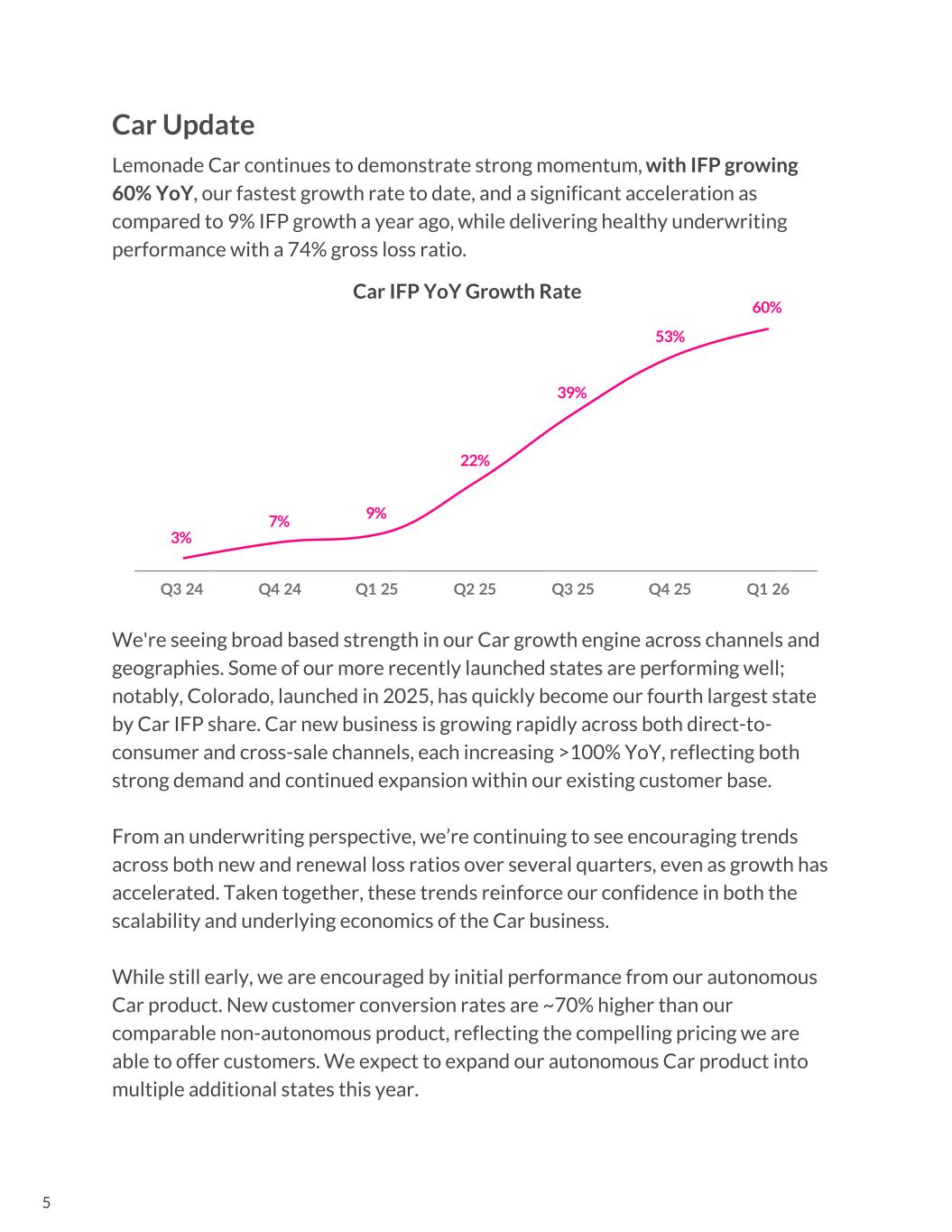
Hey, Bob. Good morning. Yeah, I think a lot of what I would encourage you to think about going forward is merely a straight line continuation of what we've seen in the last year or two. So we said, if you go back a year, car was growing up in the memory so it was about 9%. Contrast that with the 60% of this quarter. If you went back a year more, you'd probably be in negative growth territory. So not only are we reaching fast growth rates and rates of acceleration, but we're seeing very rapid acceleration from negative to positive to 60%. We don't intend to slow down too much thereafter. And the IFP component of CAR in our book is still modest, but its portion of our sales in the last quarter is already pretty significant. Something like a third of our sales in the last quarter came from CAR. So because we other larger base, it will take time for it to capture its fair share, but it's catching up pretty dramatically, so definitely significant. The other thing I would point out, and I touched on this in earlier responses, we think we have an offering that is highly differentiated and structurally advantage relative to the incumbency. We are, to the best of our knowledge, unlike any incumbent in that over 90% of our customers have continuous telemetry on, and that just really gives us x-ray goggles into which risks we have, how we should be pricing them, rather than using broad strokes, proxies that are meant to, you know, in some way or fashion mirror driving behavior like where you live and your gender, your age, your education level. We're pacing through all of those, de-averaging those really big monolithic groups and being able to price every individual per se as they drive, depending on a per mile basis oftentimes, and adding AI into that mix as another driver. So I do think this is a structural advantage that will allow us to continue to compound that business. And the messages that you're recalling from our last investor day are ones that we would stand behind absolutely today as well.
Okay. Really appreciate that. um second question is on autonomous um not specifically for uh your business but really just how you think about uh the growth trend of autonomous vehicles uh for the industry going forward right right so right now if we think about autonomous the l3 or better autonomous vehicle penetration rate is still very uh insignificant um as we think about just that the autonomous vehicle technology advances, as well as penetration rate going forward. Can you maybe help us think about the potential size of that market and the growth opportunities there for the industry, but also for lemonade? Just curious your thought on that.
I'll share a couple of thoughts and then invite my colleagues to add if they feel I missed anything. Cars have very long ownership cycles, and therefore newer technologies do take a while to penetrate into the install base. But there's got to be little doubt that various degrees of autonomy is the future. And it is going to be growing much faster than the rest of the industry. And Tesla may be leading the way, but every major car manufacturer is adding these capabilities. And they aren't entirely binary. They have everything from various forms of adaptive cruise control all the way up to full self-driving of the likes of Tesla and we can see into each of those different gradations and we can price them accordingly so if you widen the aperture a bit you start seeing all different ways in which cars are adding safety features and degrees of autonomy and those are absolutely things that we are focused on and pricing into our policies. So I think if you are a 50, 60, $70 billion insurance company with dominant market share, this may seem insignificant, but our market share is maybe a tenth of a percent of what a progressive or a GEICO is right now. We have maybe less than one pro-mil market share, which is to say we can see in this emerging sector a very promising growth opportunity. We don't limit ourselves to it, but I think you will see autonomy impacting our financials much more significantly than perhaps on the incumbency with a very, very large install base.
Yeah, I think that's exactly right. This is an area where I'd love us to have a better crystal ball than you do, but I fear we may not. What we do know is two things. One, the numbers today are small, and as Daniel noted, small numbers can have a really significant impact on a company the size of lemonade if you're a billion dollar player versus a a 50 billion dollar player that plays to our advantage to uh the the name of the game here when you have an uncertain growth curve and this you know like many other uh technology advancements this adoption rate will be very very slow and then all of a sudden it will be very very fast And the point of that bend in the curve is quite difficult to predict. Lemonade and our depth and level of agility is such that we love that. Fast, quick, thoughtful adaptation is really what we were built to do. And so when that curve comes, whether it's a year from now or six years from now or something in between, we'll be ready and we'll be more as adept as any player in the market to react to it. And we'll have several years of autonomous experience behind us, rather than still to build. So we love these curves, and we're looking forward to it coming.
Thank you. I really appreciate that.
Operator
There are no further questions at this time, and we've reached the end of the Q&A session. This concludes today's call. Thank you for attending. You may now disconnect.