
Executive readout · one minute
Webcast research workspace
Read the call alongside every captured source. Transcript, audio stay in one workspace.
Conference · 2026-05-12
Executive readout · one minute
Read the call alongside every captured source. Transcript, audio stay in one workspace.
Research coverage
2 live sources
Switch sources without leaving this page or losing your listening position.
Open the source you need; every reader stays inside this workspace.
Good morning.
I'm Ray. I'm part of the MedTech device team here at Bank of America, and it's my pleasure to welcome Glenn French, president and CEO of Pulmonix, here today to present. Welcome, Glenn, and thanks for being here.
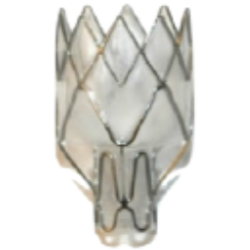
Thank you very much. So just by way of background, I've been in the interventional pulmonology space for about 30 years, 10 years with Pulmonix, came to a turnaround challenge. We turned the business around, took the company public in 2020, and I retired in 2024. And after growing the business and sort of having it at a reasonable run rate, stayed on the board and was called back after about seven quarters of slowing growth by the board. And it's an interesting process, been back for about six months. We are focused on, first, realigning our spending, which is done. Second, strengthening our balance sheet, which is done. And third is restoring double-digit growth, which we're in the process of doing. I'd like to talk with you a little bit more about pulmonics here. This is going to be rapid fire. In terms of the investment highlights, there are many. It's a big market opportunity. We have a precise treatment. We've got great clinical data, which I'll talk about, broadly reimbursed, great data which supports that reimbursement, and a strong team and pipeline. Emphysema is a disease that has sort of a downward spiral. It's a severe form of COPD. It's a result of tissue damage and air trapping, and in severe emphysema, the quality of life is really terrible. And it is one of the top four causes of death worldwide. The spectrum of treatments that existed prior to our introduction started with medical management, trying to tune up the patient as best you could. And then there was lung volume reduction surgery, which was done both in an open fashion and thoracoscopically. And so clearly there was a need for something that was less invasive. And we developed the Zephyr valve, and I'll talk to you a little bit about how it works. we're targeting patients that have air trapping, significant air trapping. And in this cartoon here in the upper left, you'll see a hyperinflated lobe, which is the target. We go into patients and place valves into the airways that feed that lobe in an effort to reduce or eliminate the air that flows into that lobe and allow that air to come out, effectively doing lung volume reduction surgery without cutting open the patient. it's important to note that in these patients they need to have isolated airflow in the target lobe if they have collateral ventilation it creates a problem and we'll talk about that in a moment the treatment itself is it's easy to identify the patients because the normal workup is that the patient will is often a former smoker they'll go into their physician they'll say hey listen, I'm short of breath, doing things that I used to be able to do yesterday, and I want to get back to those things. And the physician will order a CT scan, and on that CT scan, they'll look at the density of the tissue. Low-density tissue implies the existence of emphysema, which explains the problem, and that patient gets worked up. We have a STRATEX report, which helps identify the patients. We have a complementary chartist procedure, which is done right before we place the valves to confirm that they're great candidates. And then the valves are placed and the patient spends three nights in the hospital. What we do is we reduce that target volume and in doing so, reduce that air trapping, improve lung function, quality of life, and exercise capacity. One of the truly significant things about this technology is the amount and the quality of the clinical data. We have four randomized controlled trials, each of which has been published, as you'll see on the far left there. I don't know if you can read that, but either in the American Journal of Respiratory and Critical Care Medicine or the New England Journal of Medicine, these trials were very well designed, very well executed, and in measured changes in lung function, exercise capacity, and quality of life, and the red line on each of the bars on the right-hand side, that is the threshold above which the magnitude of benefit is clinically meaningful, and in each of these four trials, on each of these three measures, we delivered both clinically meaningful and statistically significant benefit to those patients. As a result, The technology was adopted as essentially part of the standard of care. It is a central component within the GOLD guidelines for patients with COPD, and it's been awarded the highest level of evidence by this group. With good data and the support of consensus guidelines, We have had good luck with reimbursement, including coding, solid coding, coverage, and payment. We have about 75% of our patients are Medicare, 100% of the time they're getting paid. And the other 25% are commercial patients, and we're able to get those paid about 95% of the time. So very high probability of payment. and the reimbursement for the physician is also sufficient to support the technology. So we have those things in place. Another unique aspect of our business is that we are a global company. Better than 95% of our business is direct. I think, you know, we are a small company, but our interventional pulmonology footprint on a global basis rivals anybody else, certainly in the therapeutic side of the business. We're in more than 25 countries, as I mentioned. We have sales reps in the United States, number 42, and outside the United States that are in the 30s as well. The opportunity is substantial. We, on a prevalent basis, there's about 500,000 target patients in the United States, about 700,000 patients outside the United States. Our average selling price is north of $10,000 per patient or average revenue per patient, I should say. We actually sell the valves and the delivery devices separately. But that revenue generating opportunity, obviously, with these numbers on a prevalent basis is, you know, $13,000, $12 billion. On an incident basis, it's about $1.2 billion. two. I had mentioned the concept of collateral ventilation. Most of the patients that we target, about 80% of the patients that we target, have little to no collateral ventilation. We confirm that with the Chartis balloon, which I showed before, where you blow up a balloon, you measure changes in pressure and flow on the other side of that balloon. If, for example, you are targeting a lobe that you estimate has a liter of volume in it, and 1.2 liters of volume comes back through that catheter, you know you have collateral ventilation. If you see low flow and an increase in pressure, you know there is no collateral ventilation, and that's a great candidate for our treatment. The issue is that 20% of the time, these patients who are very interested in getting to a better place, are woken up from anesthesia and told, again, 20 percent of the time, that I'm sorry, we don't have any, you know, with this technology, these valves aren't going to work for you because you have communication or airflow between your valves. And so we acquired a technology called AeroSeal, which is an injectable polymer, and we are able to target that group of patients that have this collateral ventilation. So imagine the patient is anesthetized, and one out of five times roughly, they would determine on Chartist that they're collateral ventilation positive, and rather than putting in valves, they would be putting in aeroseal. We have commenced clinical research on this technology and demonstrated in the CONVERT-1 trial, which has already been presented and will soon be published, that we're able to take patients that are objectively CV positive and make them CV negative roughly 75% of the time by using aeroseal. So this is a nice TAM expander. It's these patients that we're targeting have already expressed a desire to get valves, and it allows us to then not only have a revenue flow from aeroseal, but also from the additional valves as well. So I had mentioned at the beginning that we were growing nicely. When I departed, our U.S. growth was on the order for the prior five quarters was on the order of 40%. Our global growth was on the order of 30% and on a year-over-year basis, and it declined fairly abruptly over the last 18 months. And so we've been focused since we've been back. Myself and Derek Sung, who is our CFO when I was in the saddle before, are both back with the company. And we rejoined because we felt that there was a tremendous opportunity to create value in this company through some sort of fundamental changes, if you will. So the last quarter we had just over $20 million of revenue. Our gross margin is 75-plus percent, which is an enviable place in the medical device space. And we strengthened our cash position by renegotiating some debt or at least strengthened the balance sheet, not necessarily the cash position. We didn't take any meaningful additional debt. So that is the backdrop. We have an opportunity that we feel very good about in terms of value creation, and I'd be happy in the remaining couple minutes here to take any questions if anybody has them. Thank you.
0:00 to 10:58 · One card per analyst, follow-ups included. Each plays from its start, and the one being answered is marked.
I'm Ray. I'm part of the MedTech device team here at Bank of America, and it's my pleasure to welcome Glenn French, president and CEO of Pulmonix, here today to present. Welcome, Glenn, and thanks for being here.
Glendon French: Thank you very much. So just by way of background, I've been in the interventional pulmonology space for about 30 years, 10 years with Pulmonix, came to a turnaround challenge. We turned the business around, took the company public in 2020, and I retired in…