Operator
Good morning and thank you all for attending the Ocean First Financial Court Q424 Earnings Call. My name is Bricka and I will be your moderator for today. All lines will be muted during the presentation portion of the call with an opportunity for questions and answers at the end. Please press star followed by one if you wish to join the queue. And I would now like to pass the conference over to your host, Alfred Goon, Investor Relations at Ocean First Financial. Thank you. You may proceed, Alfred.
Thank you very much. Good morning and welcome to the Ocean First Fourth Quarter 2024 Earnings Call. I am Alfred Goon, SVP of Corporate Development and Investor Relations. Before we kick off the call, we'd like to remind everyone that the quarterly earnings release and related earnings supplement can be found on the company website OceanFirst.com. Our remarks today may contain forward-looking statements and may refer to non-GAAP financial All participants should refer to our SEC filings, including those found on Forms 8K, 10Q, and 10K, for a complete discussion of forward-looking statements and any factors that could cause actual results to differ from those statements. Thank you, and now I will turn the call over to Christopher Marr, Chairman and CEO.
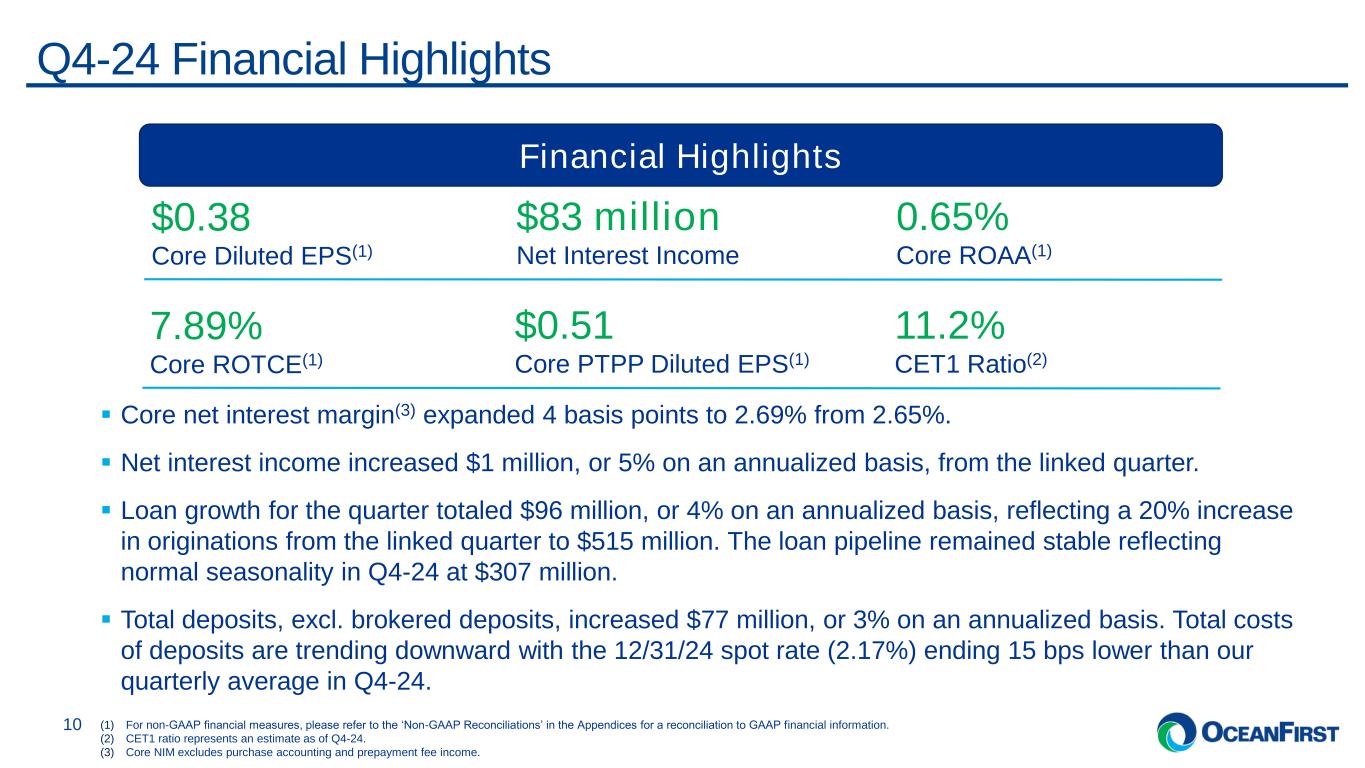
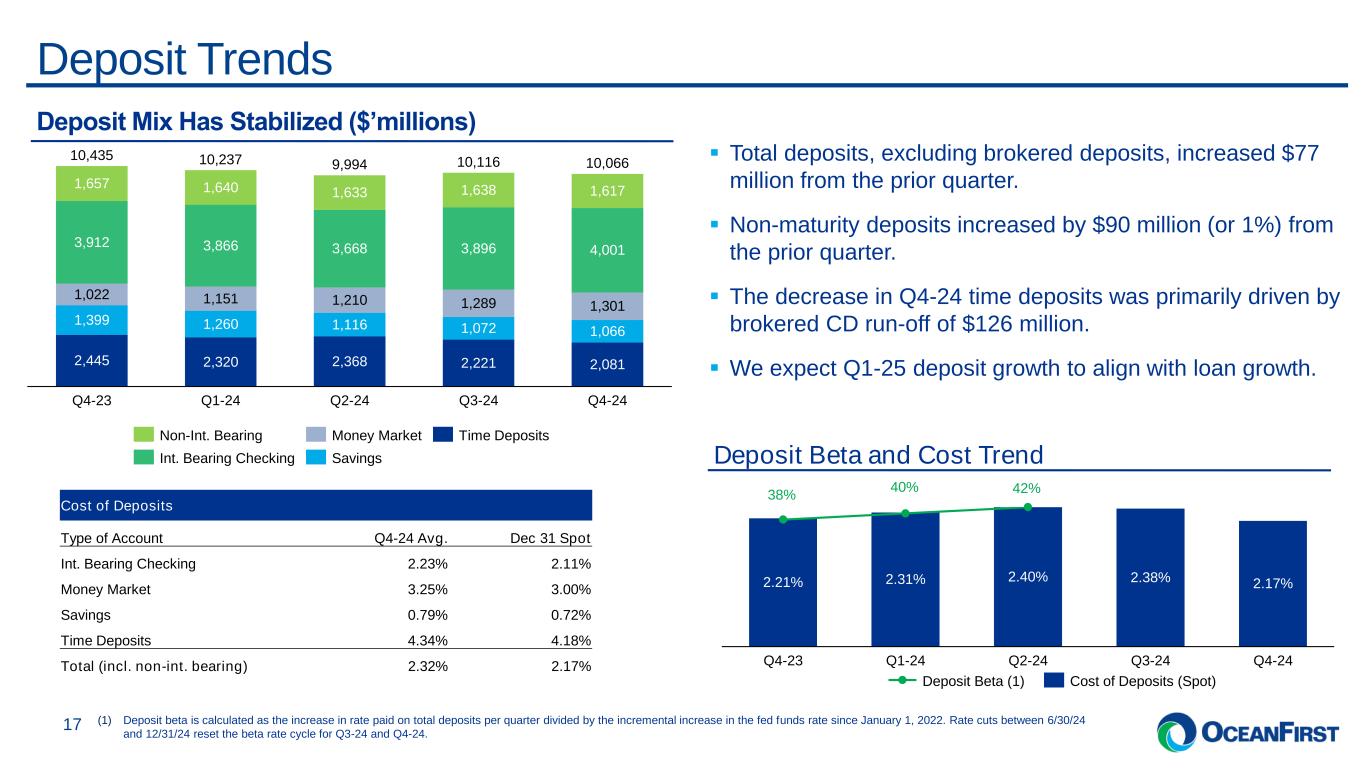
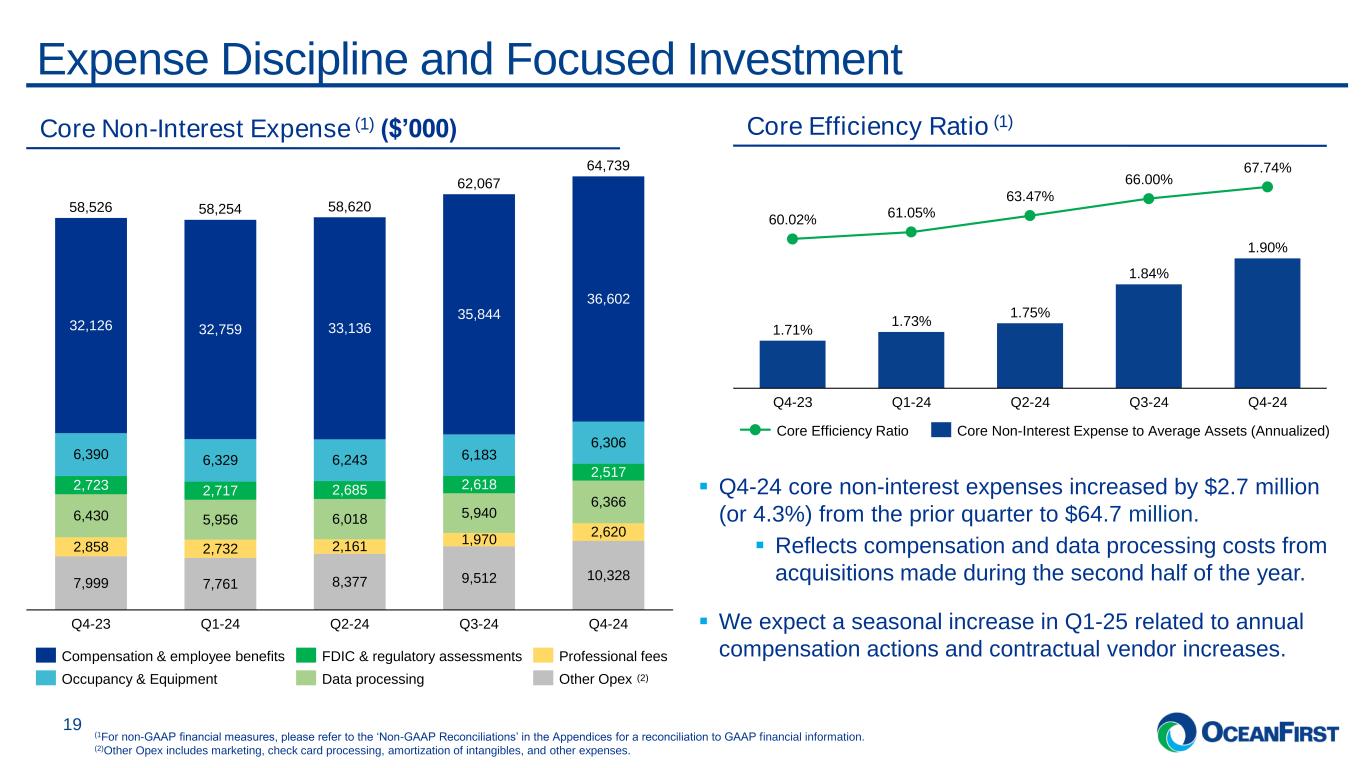
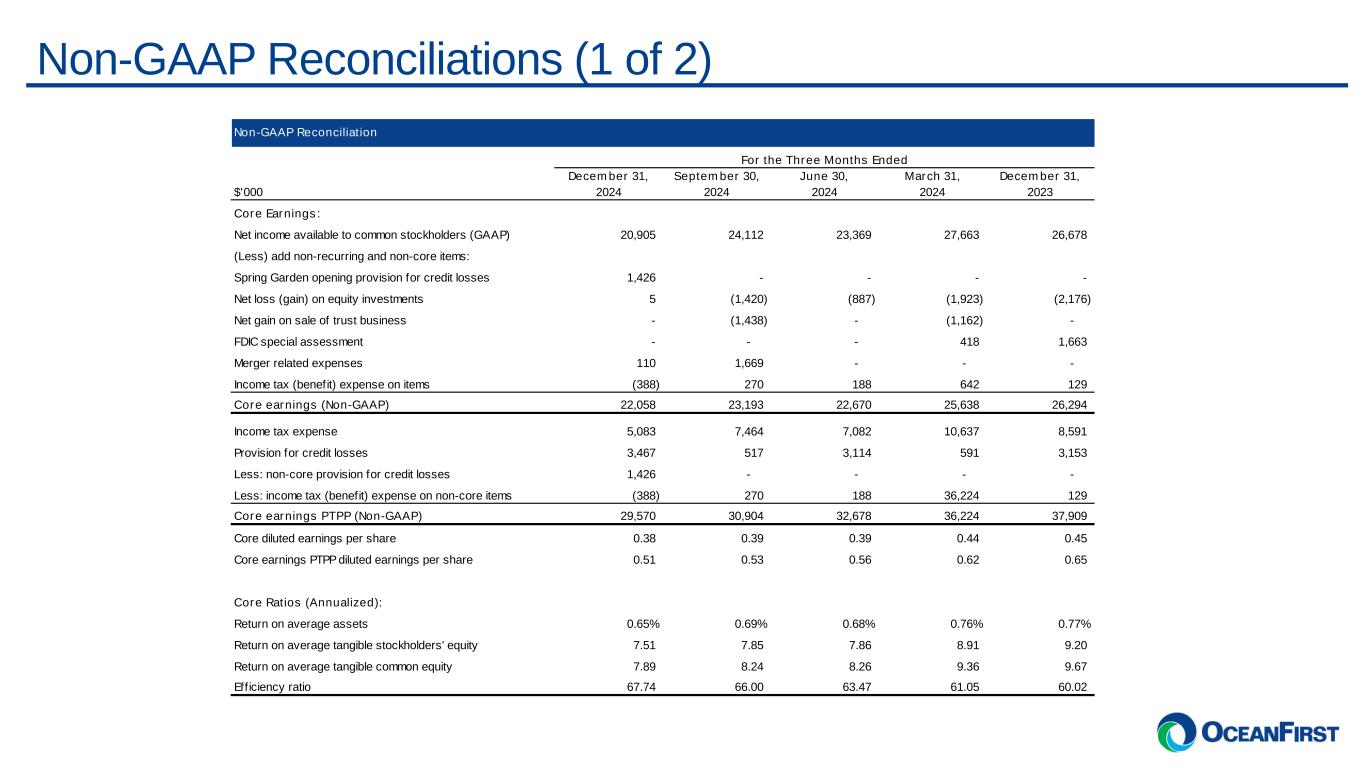
Thank you, Alfred. Good morning, and thank you to all who have been able to join our fourth quarter 2024 earnings conference call. This morning, I'm joined by our President, Joe LaBelle, and our Chief Financial Officer, Pat Barrett. We appreciate your interest in our performance and this opportunity to discuss our results with you. This morning, we'll provide brief remarks about the financial and operating performance for the quarter and some color regarding the outlook for our business. We may refer to the slides filed in connection with the earnings release throughout the call. After our discussion, we look forward to taking your questions. Our financial results for the fourth quarter reflected net income of $0.36 per share on a fully diluted gap basis and $0.38 per share on a core basis. We were pleased to see expansion of both net interest income and margin this quarter on both a gap and core basis and saw a return to positive growth in our loan portfolio. Deposit growth was also solid as we were able to nearly eliminate the last of our brokered deposits that we had added over the past two years. Operating expenses increased as we expected, reflecting growth from the acquisitions of Garden State Home Loans and Spring Garden Capital during the last few months of the year. We also saw modest increases from the continued hiring of revenue-producing talent, which Joe will discuss in a moment.
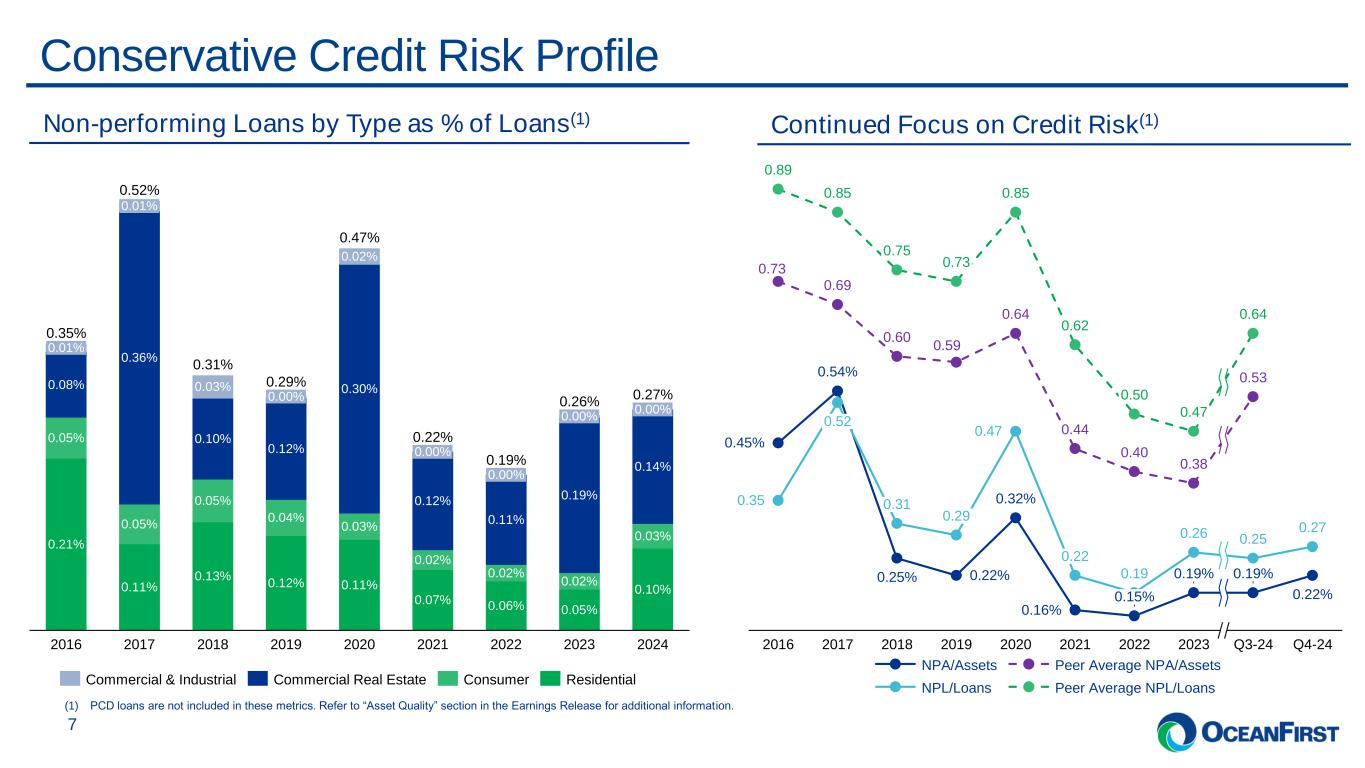
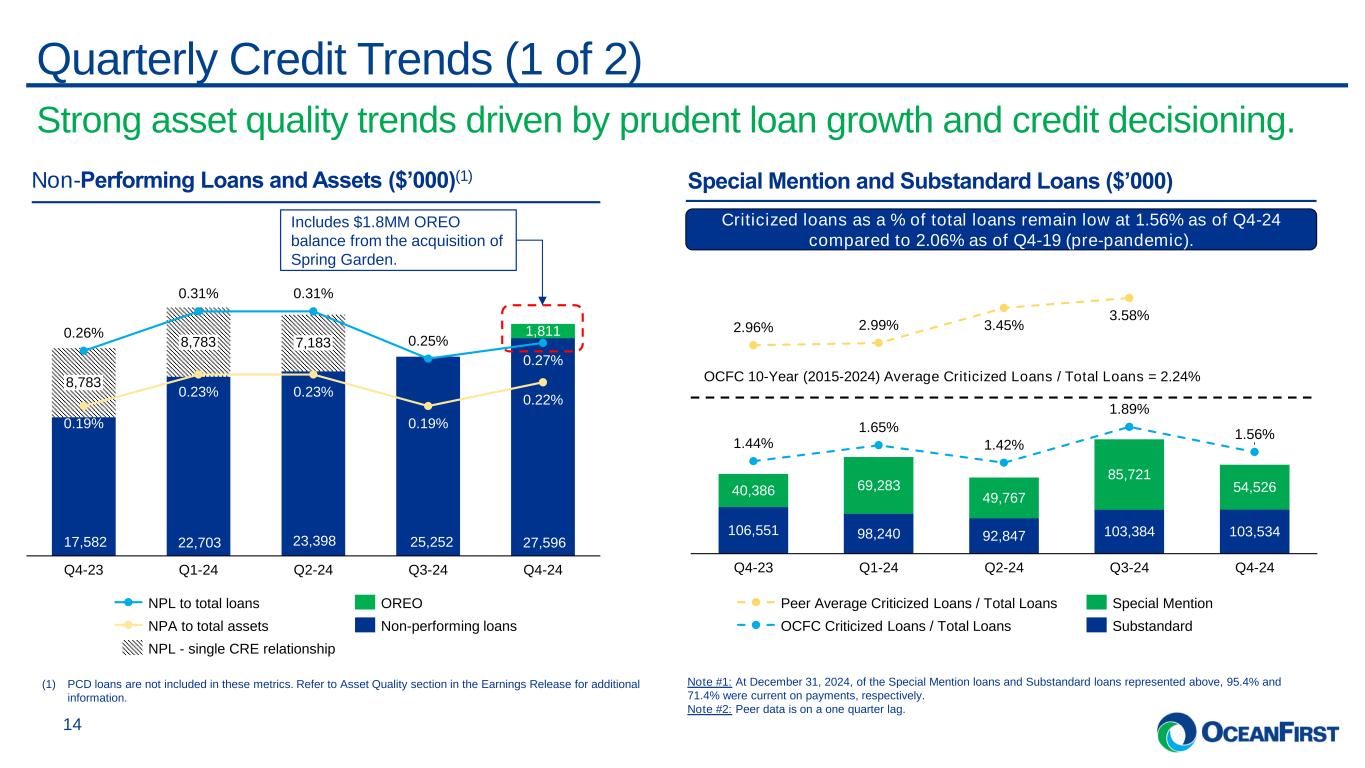
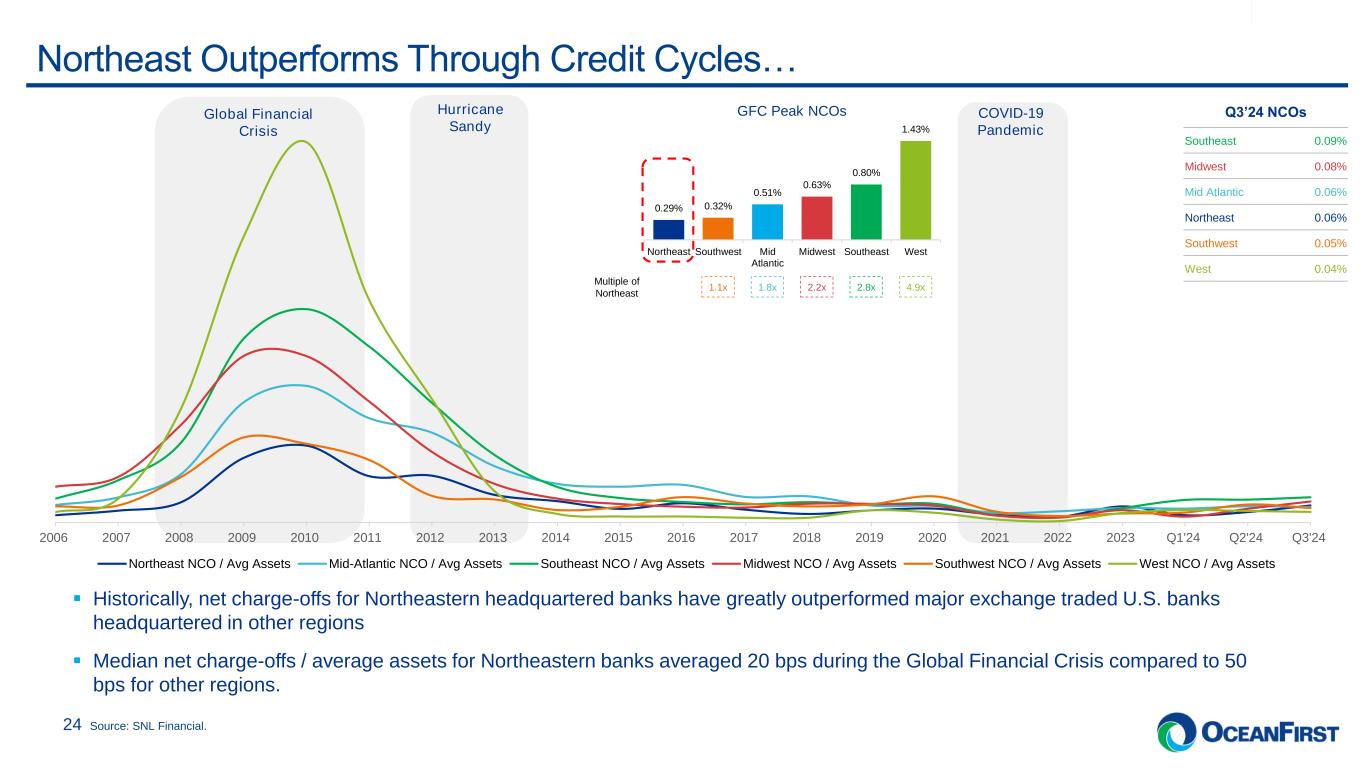
Asset quality remained very strong.
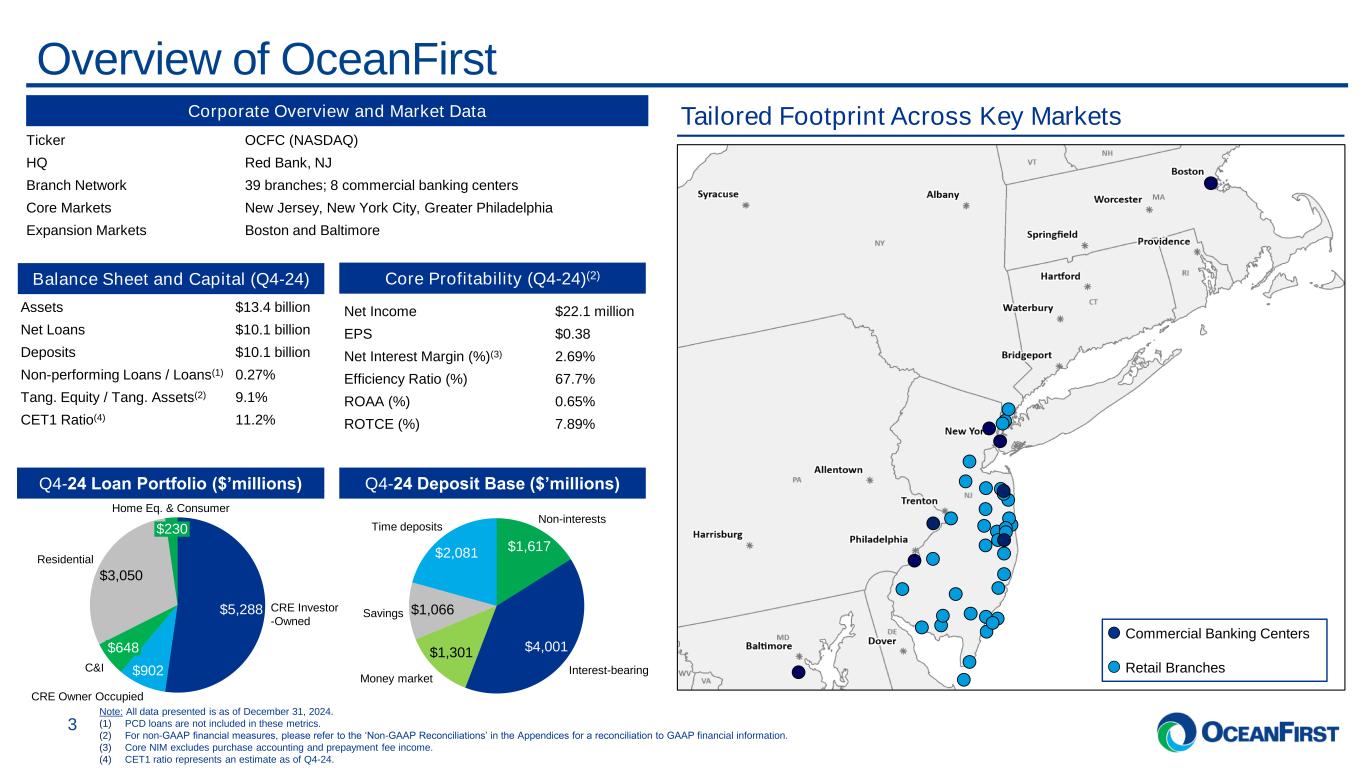
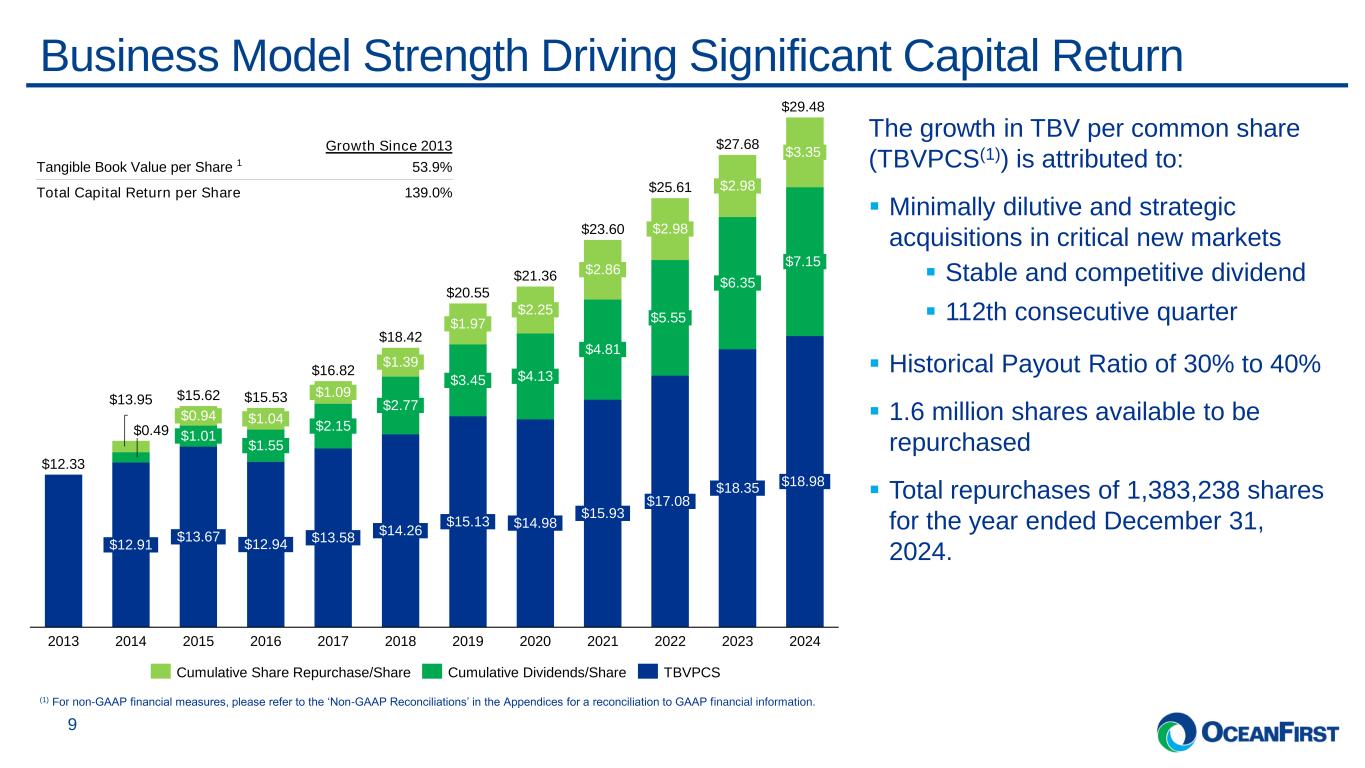
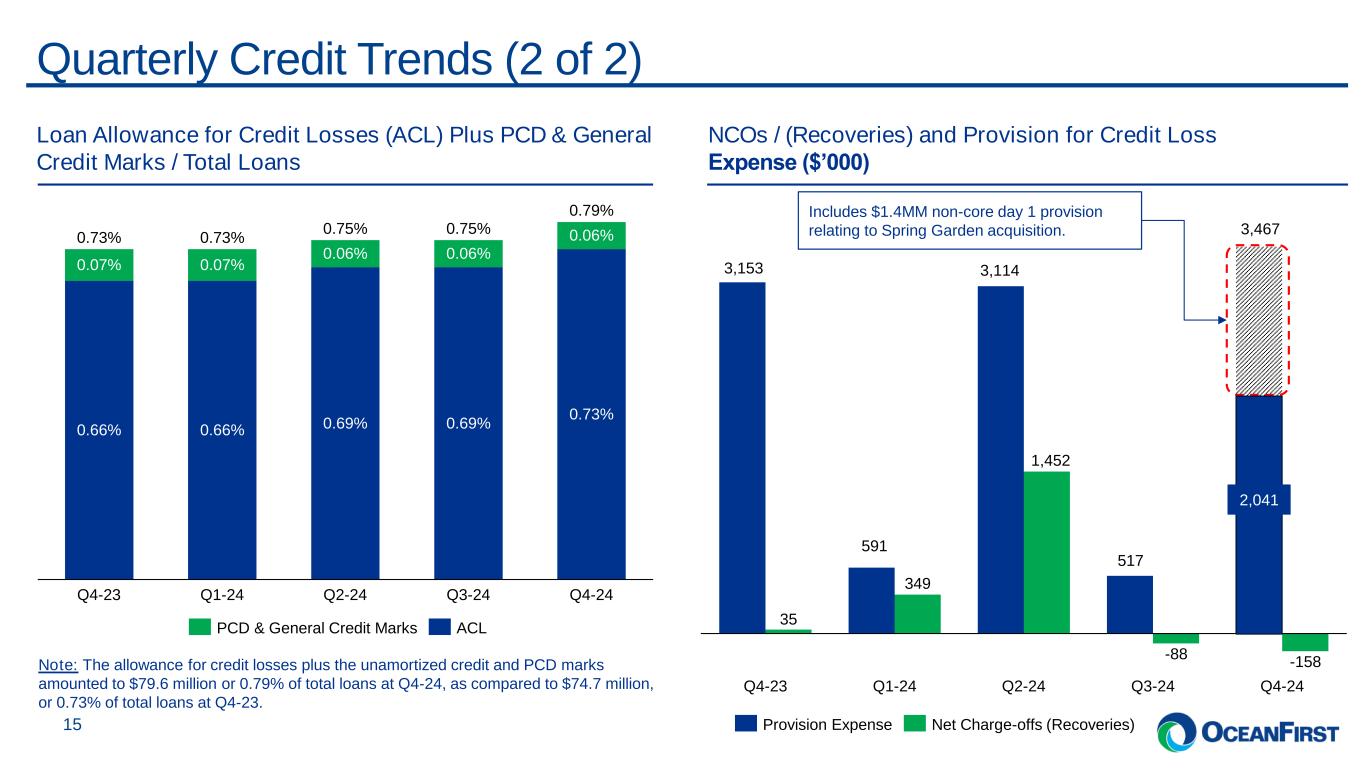
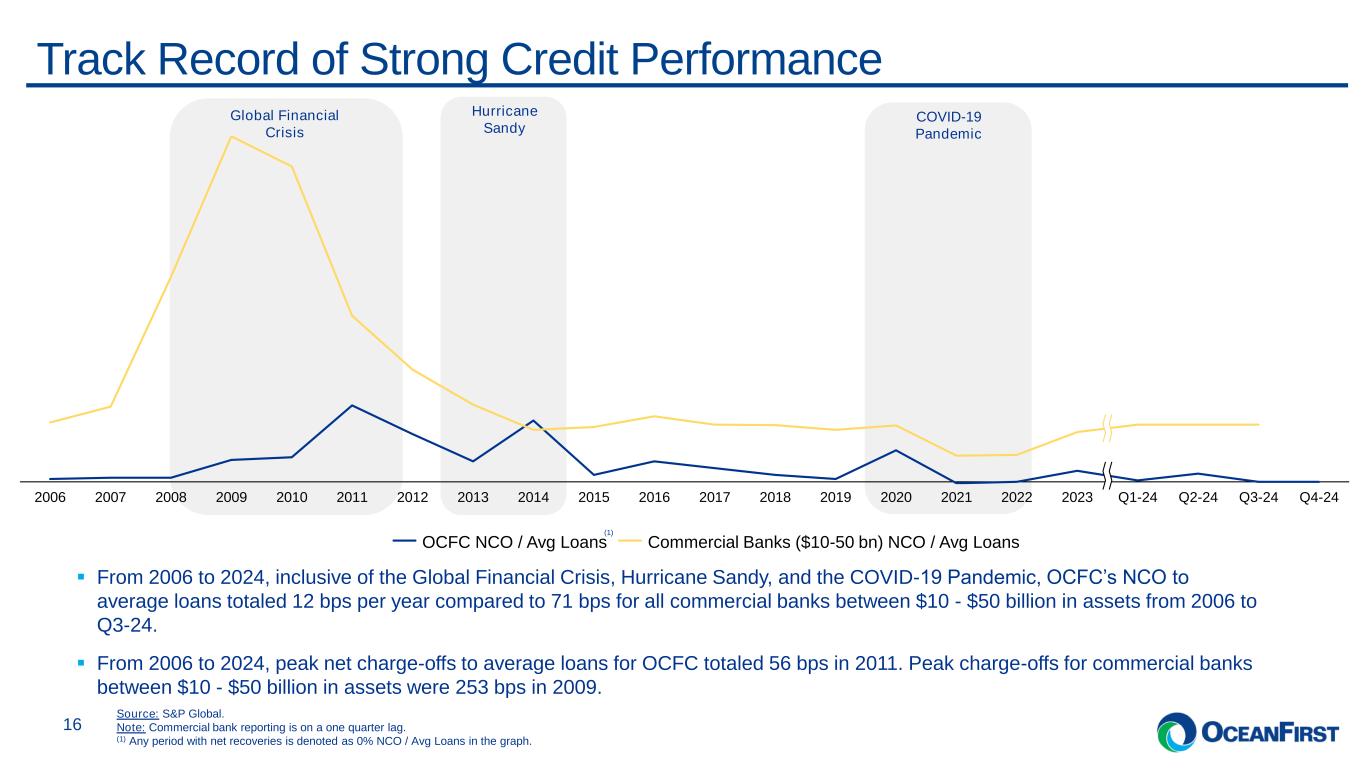
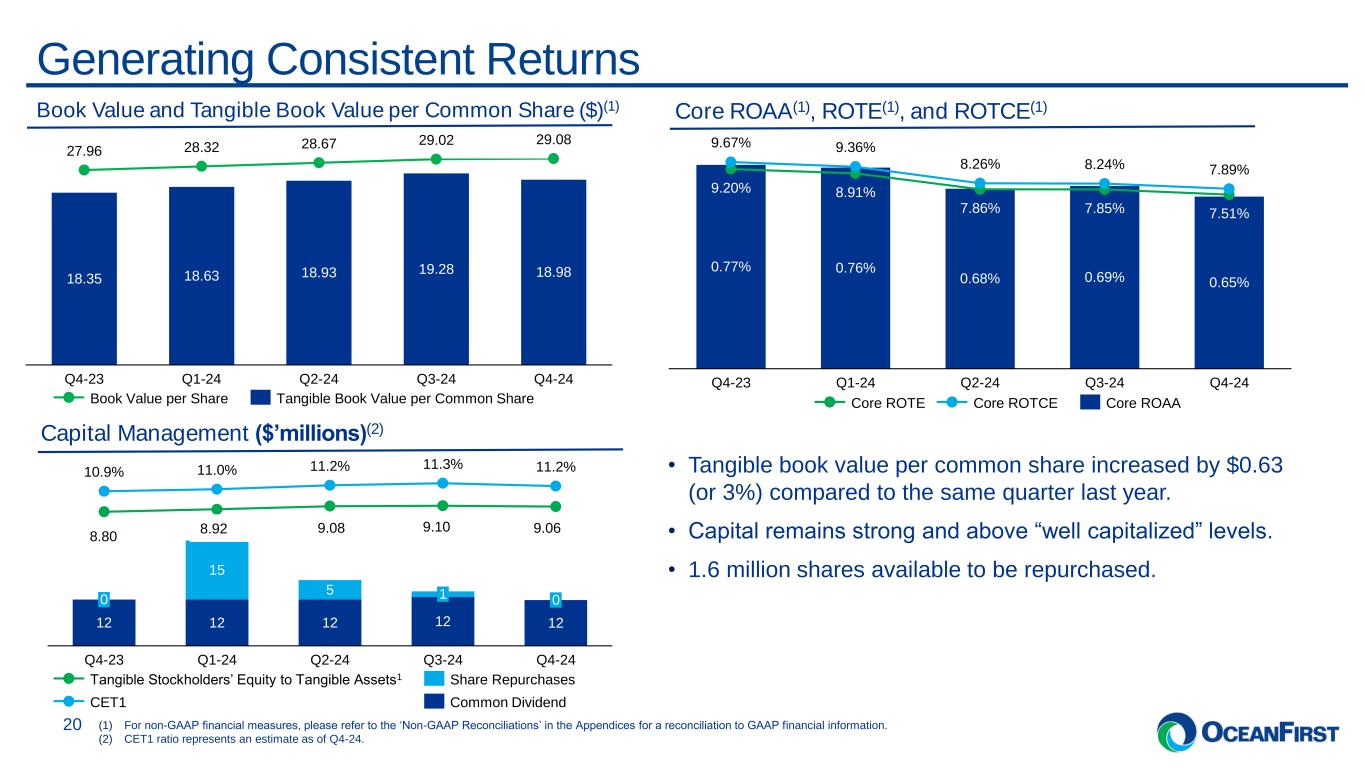
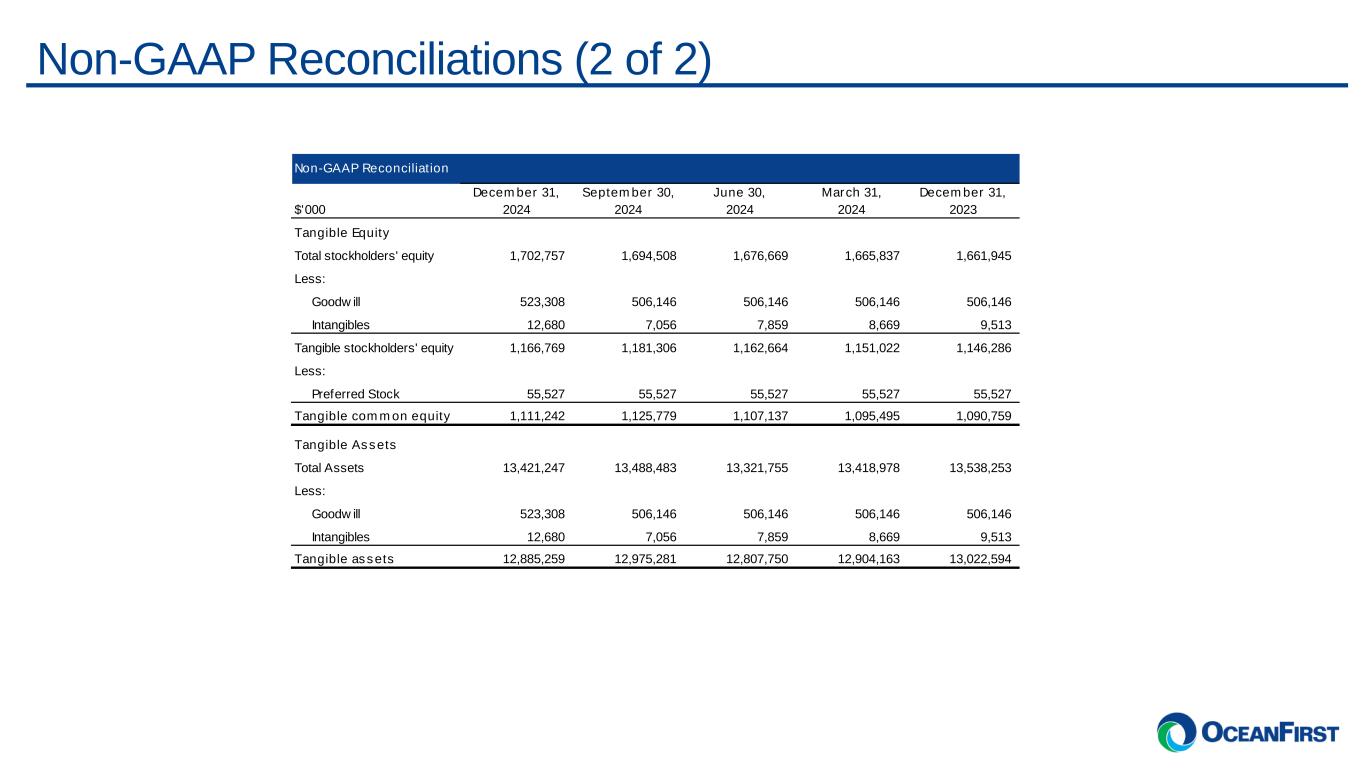
The reserve build for the quarter was related to the Day Day 1 CECL provision resulting from the Spring Garden acquisition and macroeconomic factors. Loans classified as special mention and substandard decreased by 16 percent and represent just 1.56 percent of total loans, well below our historical average and considerably lower than the peer average. We saw another quarter of net recoveries resulting in a full-year net charge-off rate of less than two basis points. Capital levels remain robust, with an estimated common equity Tier 1 capital ratio of 11.2% and tangible book value per share of $18.98. This week, our Board approved a quarterly cash dividend of $0.20 per common share. This is the company's 112th consecutive quarterly cash dividend and represents 56% cap earnings. At this point, I'll turn the call over to Joe to provide more details regarding our performance during the fourth quarter and our organic efforts heading into 2025.
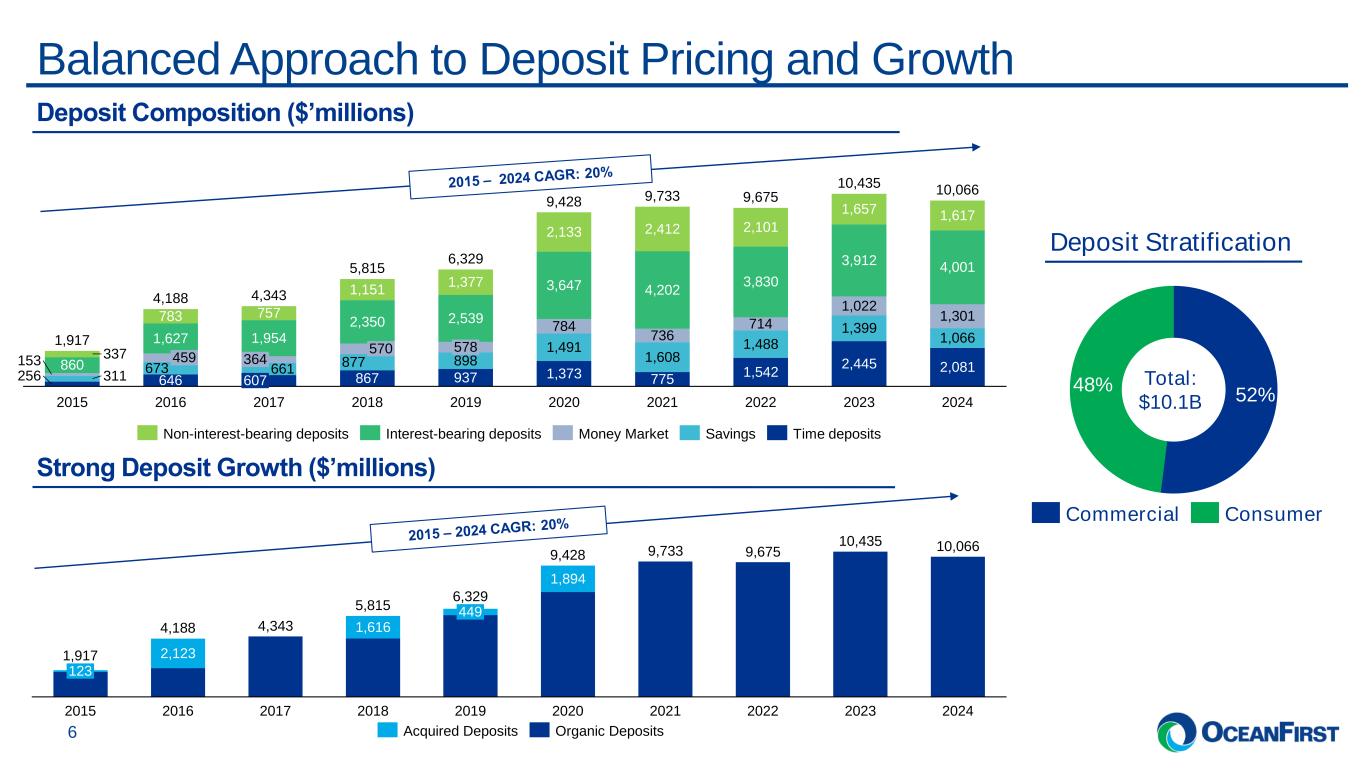
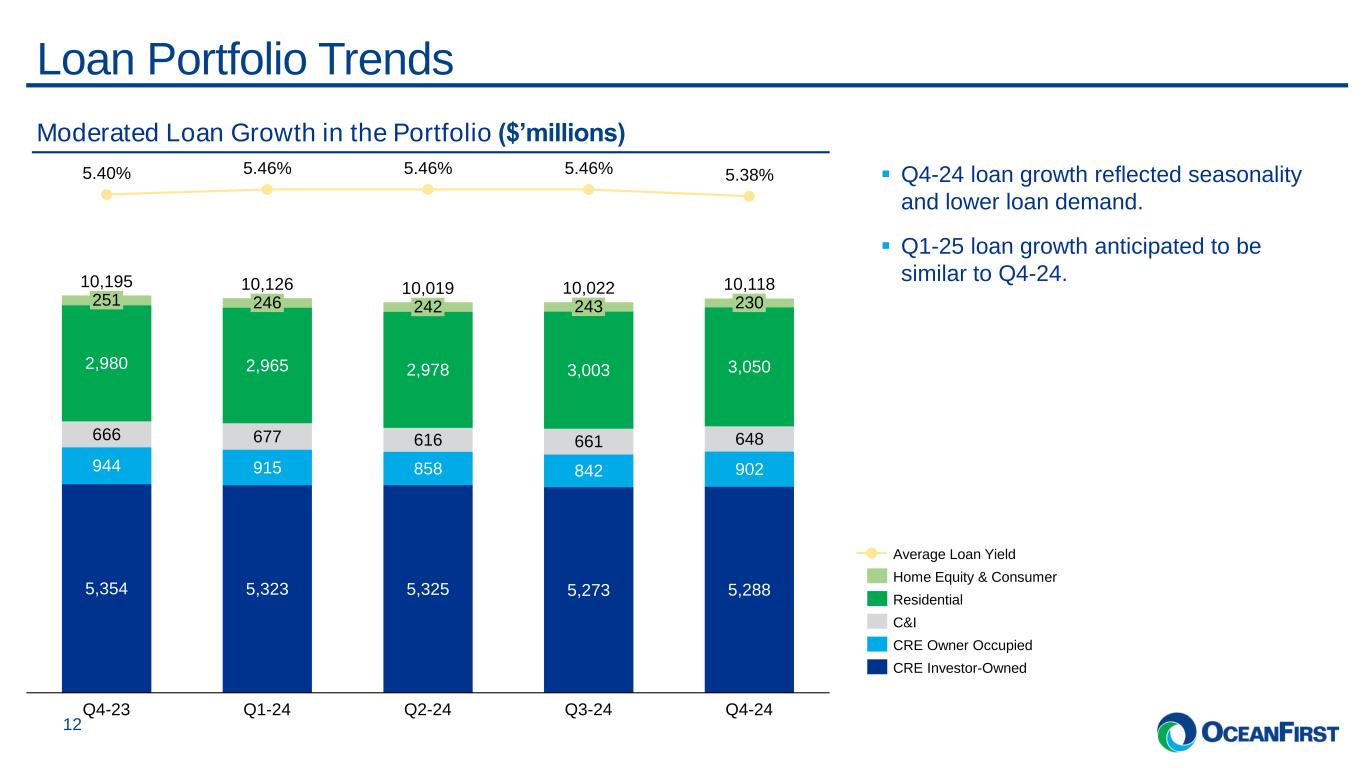
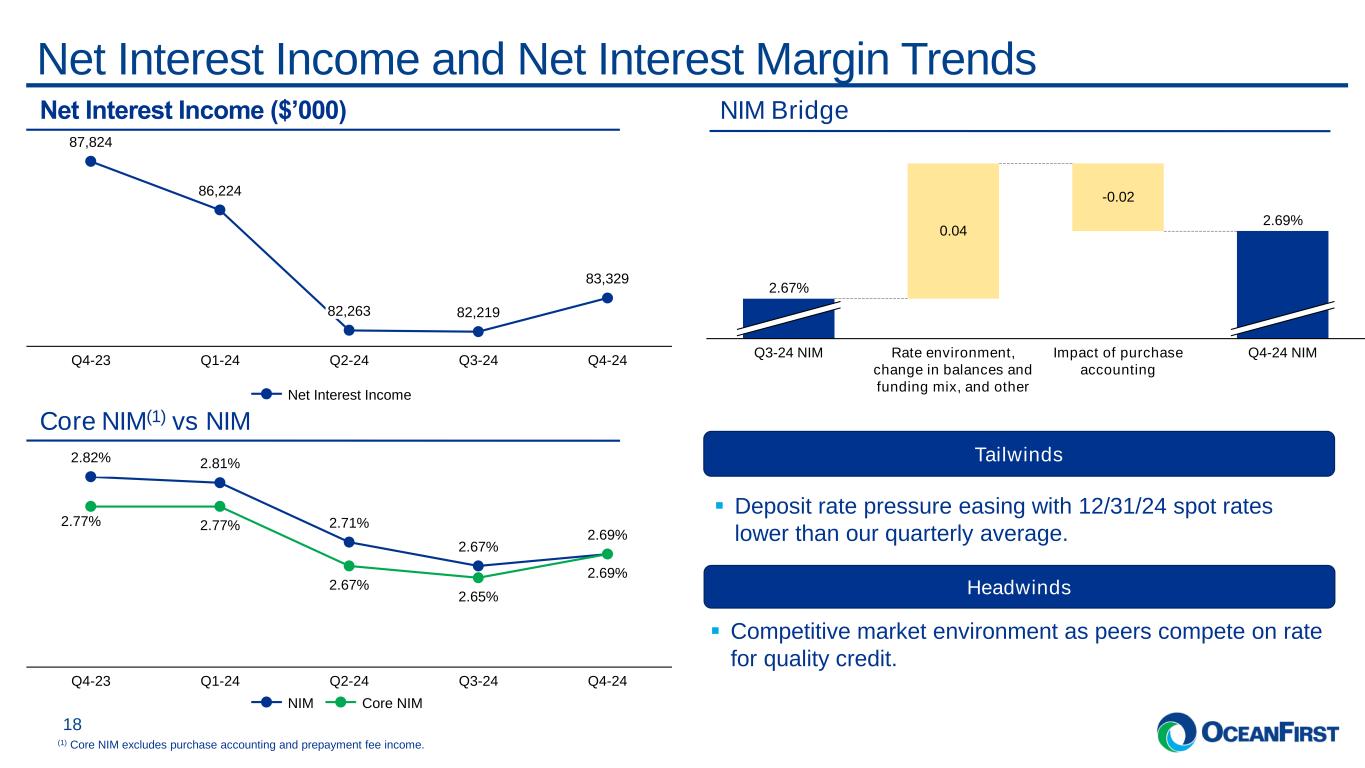
Thanks, Chris. The company's loan originations for the quarter totaled $515 million and included $78 million of C&I originations. The annualized net loan growth was 4% during the quarter, driven by our owner-occupied and residential portfolios. Despite solid residential originations of $235 million for the quarter, pipelines remain impacted by uneven loan demand given interest rates increases and seasonality commercial loan pipelines of 197 million remain stable quarter over quarter and should improve as we move out of the winter months which also reflects seasonality for the quarter we added three new cni bankers to the eight already onboarded in 2024 this month alone we've added another three bankers as we continue to focus efforts on expanding the cni bank we are also excited about the build out of our premier banking team which is focused on targeting low-cost deposit rich commercial customer relationships we believe this is a pivotal opportunity to expand our services to new clients with our historical level of superior delivery Deposit balances, excluding brokered CDs, increased by approximately 1% compared to the prior quarter. Our year-to-date runoff of brokered CDs is 557 million, which as Chris mentioned, is close to our early 2023 levels of near zero. We remain confident in our ability to grow, retain, and reprice consumer, commercial, and government deposits in this environment, and based on our commitment to attract and hire talent, we anticipate accelerating commercial deposit growth in the coming quarters. Non-interest income decreased $2.5 million to $12.2 million during the quarter. However, excluding non-core and non-recurring items, non-interest income increased modestly, primarily driven by increased gain on sale of residential loans, combined with modest improvements in fee income but we will likely not see significant near-term improvement without increased mortgage activity in the markets with that i'll turn the call over to pat to review the remaining areas for the quarter thanks joe good morning to everyone as chris noted both net interest income and margin grew in the quarter totaling 83 million dollars and 2.69 9% respectively.
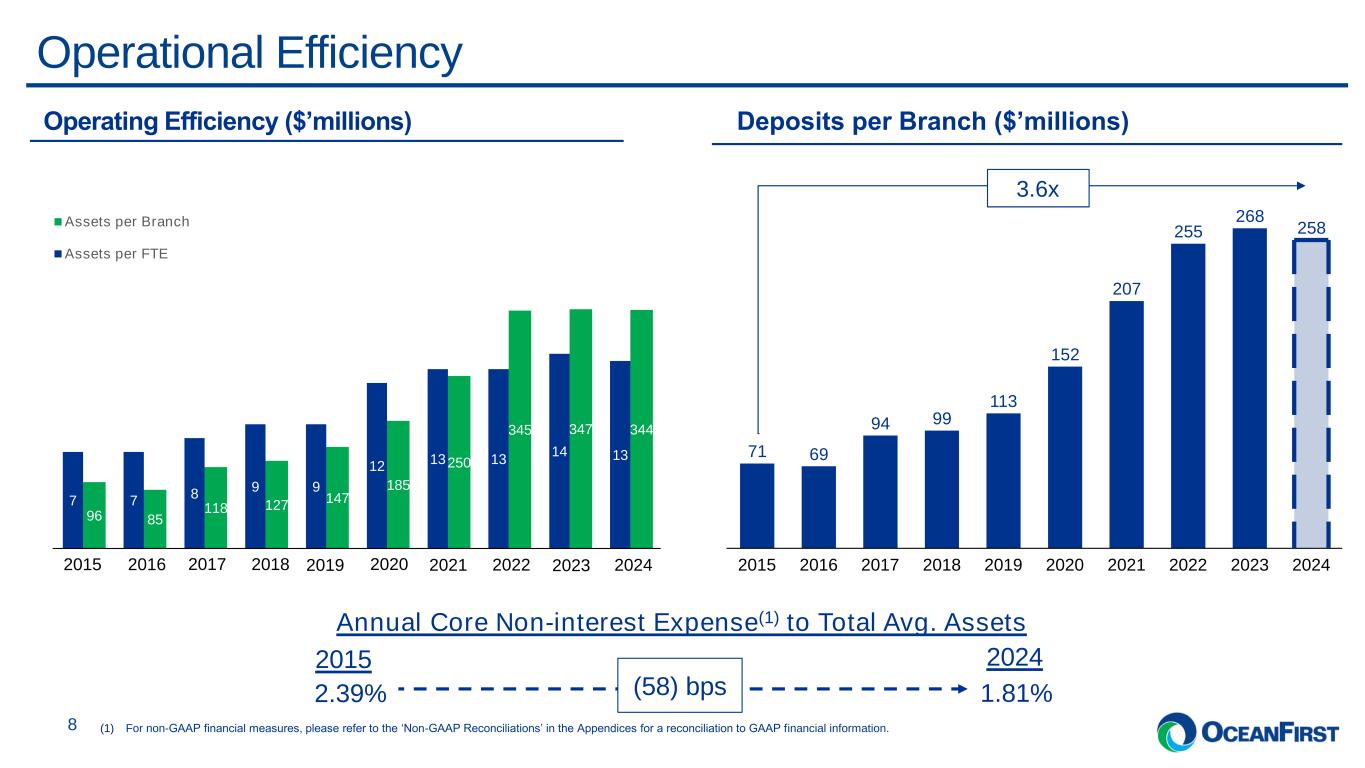
Funding costs declined by 16 basis points, a degree that meaningfully exceeded the modest decline in earning asset yields, as the impact of rate cuts and further repricing activities rolled through our balance sheet this quarter. While volume growth was modest, we're pleased with the momentum in reducing overall deposit costs across all deposit types and are cautiously optimistic that we'll be able to continue this repricing into 2025. You should still expect seasonality and volatility and consumer spending, rate sensitivity, and investment alternatives, particularly if we're entering a higher-for-longer short-term rate environment. Asset quality remains strong with non-performing loans and loans 30 to 89 days past due at 0.35% and 0.36% respectively. These measures reflect modest increases due to acquired PCD loans and normal seasonality for delinquencies. Despite of historically low net charge offs and absent any deterioration in credit quality, we were still able to increase our allowance modestly, and we continue to feel great about our credit profile and outlook. Non-interest expense increased $1.1 million to $64.8 million during the quarter, in line with our expectations. Excluding non-recurring charges, expenses grew by $2.7 million largely reflecting the full quarter impact of our acquisitions on compensation marketing data processing and professional fee expenses this run rate may increase modestly in the next quarter reflecting the impact of annual compensation actions and vendor contract renewals capital levels remain robust we did not repurchase any shares during the quarter and ended the year with total repurchases of nearly 1.4 million shares at a weighted average cost of $15.38. We're not planning for material share repurchases in the near term. Finally, a word on taxes. Our effective tax rate of 19 percent for the quarter was positively impacted by tax credits and other year-end true-up activity. We expect our effective tax rate going forward to remain in the 23 to 25 percent range, absent any changes in tax policy. At this point, we'll begin the Q&A portion of the call.
Operator
Thank you. We will now begin the question and answer session. If you would like to ask a question, please press star followed by one on your telephone keypad. And if for any reason you would like to remove that question, please press star followed by two. And again, to ask a question, please press star followed by one. And as a reminder, if you are using a speakerphone, please remember to pick up your handset before asking a question reported briefly whilst questions are registered we have the first person on the line which is tim switzer with kbw you may proceed hey good morning guys thank you for taking my question good morning tim um we appreciate the uh
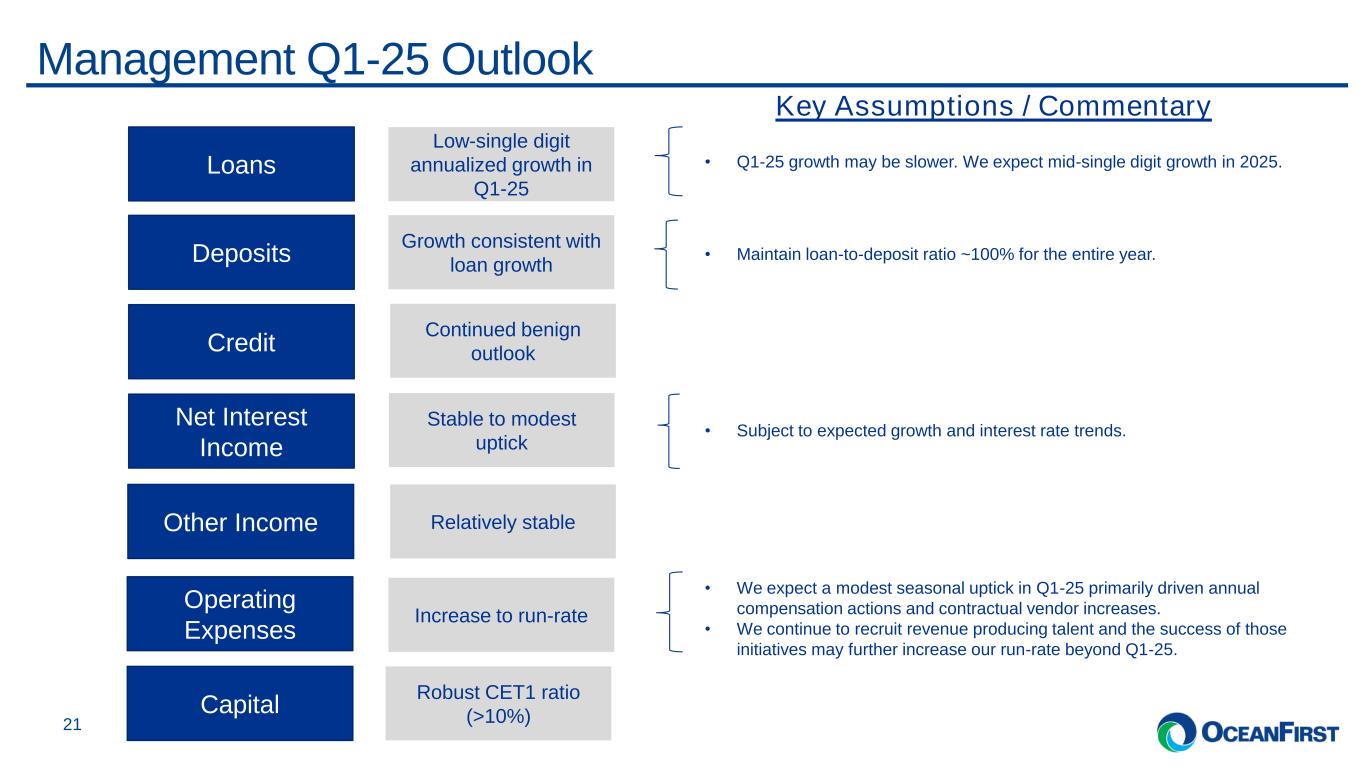
Q125 outlook you guys provided is very helpful. Can you kind of help quantify the typical seasonal increase you guys see on the OPEC side, kind of give us an idea of where that goes? And then what's this trajectory from there over the course of the year, knowing that, you know, you might be able to recruit some additional talent along the way?
So there's a reason that we've modified our guidance to just being q1 because we know that we're making investments this year so we're a little bit reluctant to guide towards a full year outlook we'll keep you posted and apprised each quarter as we're making those investments typically we do see a little bit of an uptick as most firms do around compensation payroll taxes etc that that have an uptick in q1 It's pretty modest, a million, maybe, a million and a half. So this year probably wouldn't be any different than that. So the only real changes in expenses are likely to be in hiring that we'll be making or have already made. And that's almost entirely focused on revenue-producing talent.
And, Tim, those hires, typically this is the season when bankers evaluate their options. and high-quality bankers are usually receiving some sort of incentive payments, depending on the bank, somewhere between January and March. So we can't be quite certain exactly what the recruiting class of 2025 is going to be. But I would say this. What you see in our baseline, the guidance we've given you today, is consistent with the staff we have today. So should we have a successful recruiting season? and we certainly hope to and have every indication we will, we would not just be adjusting expense guidance. We would also be adjusting guidance around deposit growth and loan growth. So we'd really like to, it's not going to impact Q1. And by the time we're on the phone with you in April, I think we'll have a pretty good handle on what those numbers look like and would plan to share a better outlook or more precise outlook at that time.
Okay, great. Yeah, that all makes sense. And are there any kind of specific regions or areas you're looking to be adding some additional bankers typically? And then you mentioned multiple initiatives. What are some of the other initiatives you guys have?
There's really two sets of bankers, and I'll let Joe kind of walk into more of the details. But if you think about them broadly, C&I bankers who are broadly interested in both loan and deposit taking but tend to have loan-to-deposit ratios that, you know, require funding from other parts of our business. So we've been successful hiring some of them in the last couple of years. We're accelerating the pace of hiring in that place. And then, you know, as everyone has been doing, we're focused on deposit-gathering commercial bankers as well who have, you know, may have a niche area that they focus in and able to provide that their loan-to-deposit ratios tend to be quite low. So they're a net producer of deposits for other parts of our business. But, Jeremy, talk about the hiring you did in 24 and kind of how you're thinking about things in 25.
Yeah, Tim, I think we spent the latter half of really 24, and as you can see already in 25, focusing on the additions to the CNI bank, which, you know, the recruiting door is open for us. We have the opportunity to grow that, in my mind, exponentially. And then I think Chris aptly touched on the Premier Bank, and I'd add one more comment about the residential bank. You know we're, obviously, as all of us are, dependent on the rate environment, but we've had some success in bringing the people in. We have the small acquisition we've added, which has been a substantial add to our volume. And while that may be a little choppy, a lot of those folks tend to work on a commission. They're active. They're in the market. And we're in the market as well. So if we have the opportunity to recruit some more of those, we will, which will only help us as time goes on.
And if I get one more question, you guys have your sub-debt preferreds coming up here. Have you had your thoughts at all on, you know, if you want to refinance those at all, change?
I guess the way we're thinking about that, Tim, is we've got multiple options, and we're kind of watching the markets and the cost of capital that would be available. One of the reasons that we have been allowing our capital ratios to drift up is to have the ability to at least partially redeem those out of our existing capital base when they hit their repricing. So, it's something that we would consider various options, but one of the options on the table is just using our current capital position to redeem some of them in May and then maybe in subsequent quarters redeem the remainder out of earnings. So we would certainly consider other ways to do that, raising fresh capital, but we want to be very careful about the overall cost of capital and the utilization of what we have in the books. Certainly, our growth rate will factor into this as well. So as we kind of conclude the hiring season and understand how much capital we'd like to have on hand for growth capital, we'll think through that as well.
Great. Thank you guys for answering all my questions.
Operator
Thank you. Your next question comes from Christopher Maranak with Johnny Montgomery Scott. Please go ahead.
Chris and Joe, I wanted to ask about the reserve bill we saw this quarter. Is that really reflective of kind of future loan growth? Can you anticipate this year? Is there any change in kind of loss content that you see on the horizon?
Fortunately, I give you two primary messages on that. The first is that, you know, about half of it, less than half of it was related to day one provision for spring garden, so that won't recur. And then the remainder of it was macroeconomic factors. You know, the models move around a little bit. Everything we're seeing on the interior, the loan portfolio, the performance has been very good. So I think if you look at where the reserve is now, as we grow, we'd probably be growing at that level. may be a little bit higher depending on the mix of growth. So as we do more C&I lending, you might expect that the incremental provisioning for growth would probably be closer to or maybe a little bit over 1%.
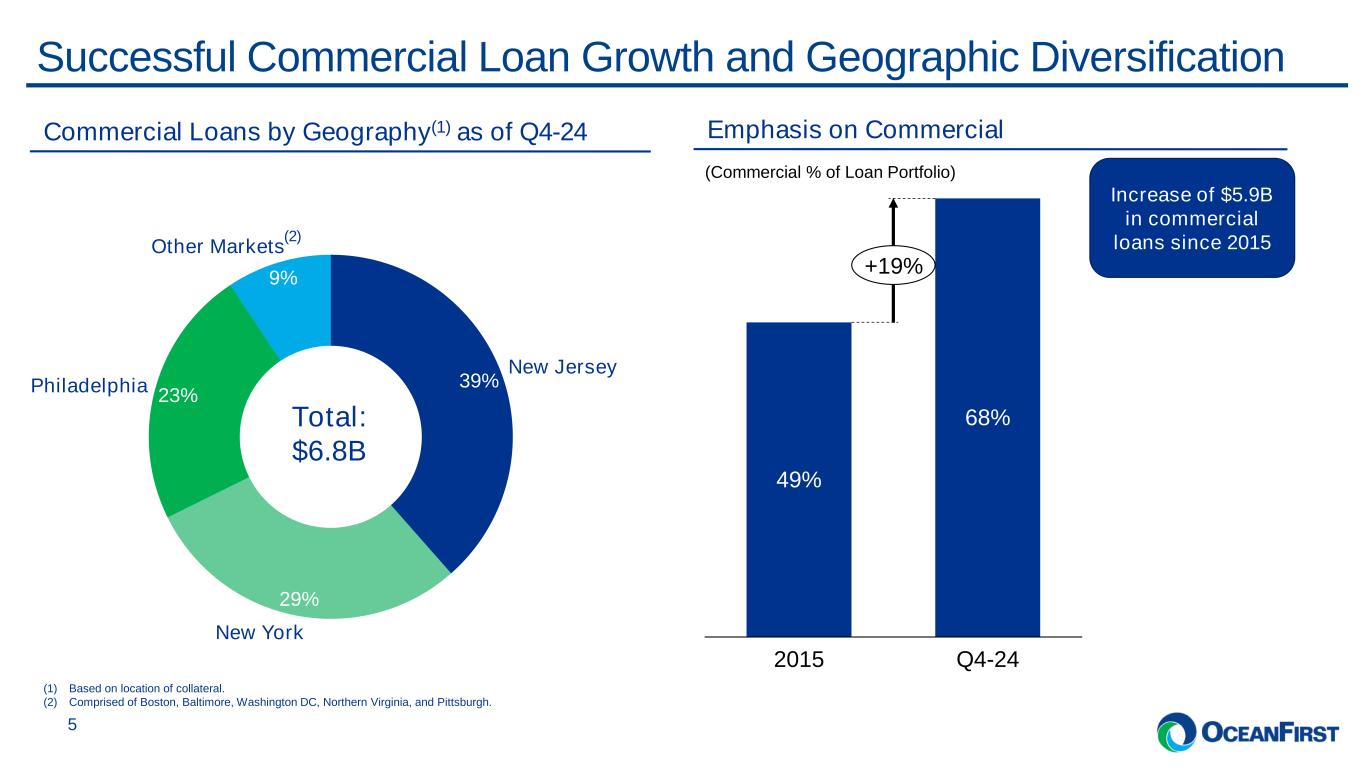
Great. Thank you for that. And then just a quick, I guess, overview about C&I as a percentage of the portfolio. I mean, if you look out a year or two, how big of a change should we anticipate just in terms of percentage mix of the overall company?
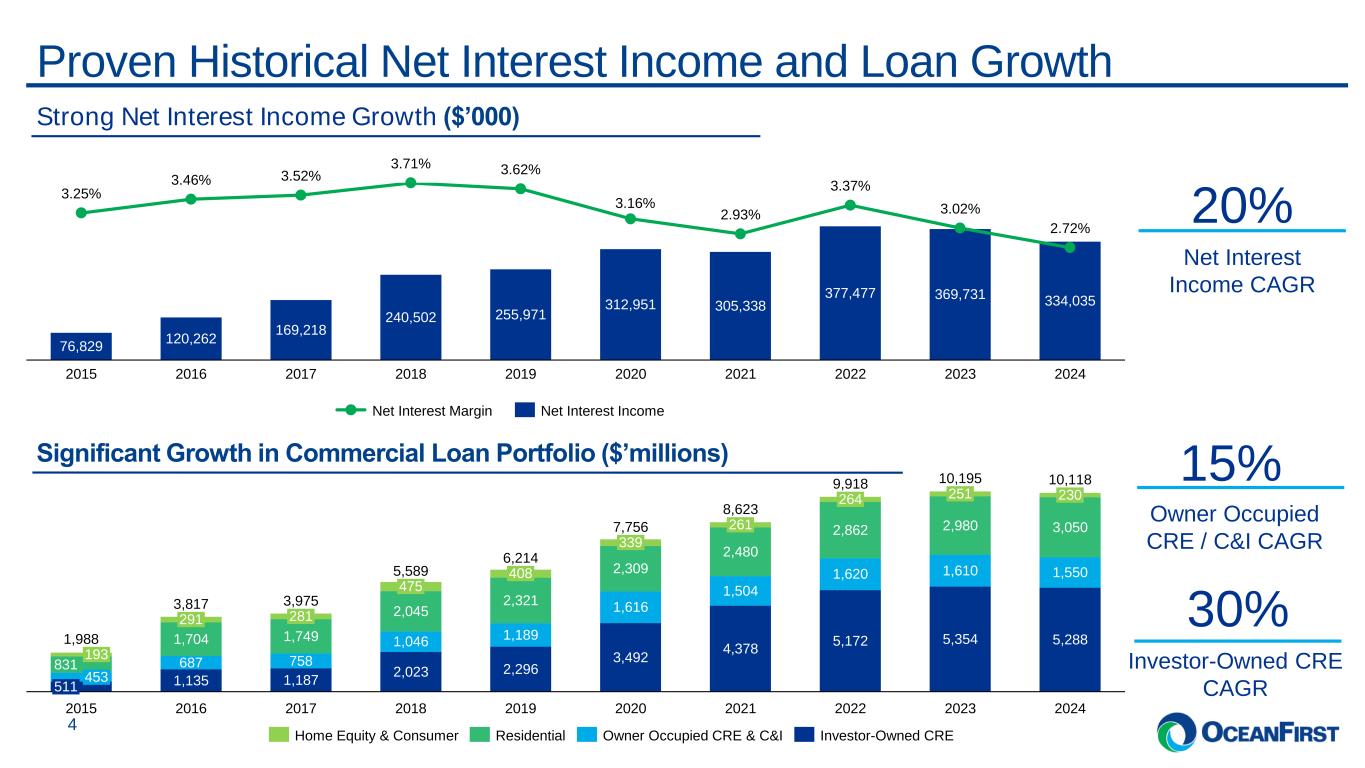
I think it's going to be something you'd see very gradually. So, you know, we're not trying to turn too quickly. We're very mindful that it's a crowded market, meaning, you know, kind of there's a lot of people out there trying to do exactly the same thing we're doing. And we're going to be very careful about our risk selection in that. But it all comes down to risk selection structure and pricing. So, you know, I think you're going to see that kind of grow slowly. But you will see as a proportion that's going to increase and investor CRE is on a more downward trend. and that's just kind of a rebalancing. We think we're a better and more profitable and more valuable company with a little more balance.
Thank you for hosting us and all the background today. Thanks, Chris.
Operator
We now have a question from David Bishop with Huff DeGreep. You may proceed.
Yeah, good morning, gentlemen. Hey, Chris and Joe, just curious on the funding side.
You know, we've seen the cost come down. just curious uh where you see more opportunity or you know how much more opportunity there is to sort of roll down deposit cost either in the cd book or on sort of the retail commercial deposit base we're still in the process dave of repricing that base down so and um it can be very hard to figure out exactly at what point the market pushes back a little bit the cd book is obviously the easiest one to kind of deliberately price down and watch how flows work. So our posture going into Q1 is that we're going to continue to price that down slowly but methodically. And if we get to a point where there's, you know, kind of pushback on balances and, you know, then we'll kind of pull back a little bit. But at this point, we think there's still a little more room. I wouldn't say there's a lot of room, but a little more room.
And there's certainly less competitive pressure than there was uh pretty much at any point in the last two years so um we still see that pressure decreasing which we think is just a little bit of room around rates got it then maybe a question for you and joe i guess and chris too um you mentioned the premier banking um division have any of those hires related to that group and are you seeing any sort of traction thus far you know from ericow's hiring some of these new background so it's still very early days
so we have been building out the infrastructure so already baked into the expense rate today is a few hires to make sure we've got our infrastructure tuned really well we're very mindful that as we add these new bankers in we have one opportunity to get our brand right especially in markets we may be going into let's say in the new york metro that don't know the ocean first brands as well so we're being very deliberate very careful we want to launch the right way. And the hiring in that division of bankers will probably be more skewed into Q2 than Q1. We may have one or two hires in Q1, but you haven't seen that yet. We do have the escrow team we talked about last quarter. They're starting to put business on, which is nice. Anything to add, Joe?
No, I think you hit it right on the head. I think the vast majority of the hires will be Q2 and Q3. The people we've met so far, we've been impressed by. So looking forward to it.
Got it. A final question. Hello? Yep. Hey, just some details on the loan purchase, Chris. Yeah, the $76 million loan purchase. Any sort of details on that loan pool?
Sure. Well, we have, you know, we noted a couple years ago that we did the AUXCAP investment, auxiliary capital. And Joe, why don't you talk a little bit about the loans we do with them and then this opportunity to add some of these.
So, Dave, we've been pretty thoughtful. We like the relationship we have with AUXCAP on a variety of levels, and we look at that as a three-pronged approach. Obviously, we have the ownership investment, which we've been very happy with. We also do a combination of purchases with them. We've looked at a variety of purchases that we do, what I refer to as participation in purchases on a one-off transaction where we have larger transactions where we partner with them. And then, as you see more recently, we've done a couple of these loan pools, which have been really an amalgam of credits that we already knew and credits that they'd originated. And then we also have the white label business where they act on our behalf as our equipment leasing provider, where we also share in the ownership. We hold the majority of those loans, and they own a smaller piece. So it's been a really good three-pronged stool approach for us, and we're pretty happy with the – and the credit quality has been great. We have no delinquencies in the portfolio.
Operator
Thank you. We have Matthew Braves and Stephen.
Hey, good morning, everybody. Good morning, man. Understanding some hesitancy on the law of return guidance in a number of different areas, I guess maybe what is the pipeline for some of these new teams look like? And if you're successful in bringing them in, what does that do to the deposit expense loan impact per team or overall? Or maybe that's another way.
If you guys were to give yourself an A grade in terms of the hiring opportunities here, bringing them in, how would that impact some of these items, expenses deposits loans just just some color you know would be very helpful here matt i'm glad you started off with you you understand our hesitancy uh because you know until until we kind of work through the hiring season and have people on board and this is clicking we don't want to uh kind of get out ahead of ourselves um but i i would tell you that we're talking to multiple teams each team has a couple people on it teams have portfolios of a variety of sizes you know some might be just 100 million dollars some maybe a few hundred million dollars and um i think you've seen very good examples in the market of what other banks have done in this space and you know if you kind of think about the opportunity we wouldn't be doing this if we didn't think there was an opportunity for hundreds of millions of dollars of new customers over time but i'm very hesitant to give you a sense of when that would be and and what the cost of those would be. And the cost is not, it's not gonna be free money, but it will be well-priced deposits. So you get the opportunity to kind of blend into your deposit base higher quality customer deposit. So I think at the call in April, we'll be able to give you information that make you feel a little more comfortable about what this is. But this is not a new strategy for us. There's a new pool we're going after, But we've been hiring commercial bankers for years. It's the way we built our business largely. We slowed that down tremendously in 23 and 24 because there was a lot of other things going on in the market. The environment, the liquidity issues that had come up, and we wanted to be deliberate and not get over our skis then. But we're kind of back into that mode of hiring bankers.
But, you know, we obviously hope it's a substantial number of bankers. and maybe just to push it a little bit further you know one of the things we've seen in the market a lot of these teams tend to come with from what it sounds like maybe 35 to 45 non-sparing demand deposits with the balance being kind of in an app market either money market or savings is that is that a fair statement as you start to bring some of these teams in it's going to be an improvement to the positive in other words yeah that's consistent with the conversations we've had and then maybe just bigger picture you know this environment this yield curve is for folks like yourselves increasingly favorable you know where the martians anticipate at 269 is kind of a far cry from where it's been historically um i would assume it's up and to the right i was just curious when you think you know you can kind of get back to your your you know three percent level is that do you think in your mind a 2025 25 event or 2026?
Probably more likely in 26 than 25, but there's still a fair amount of uncertainty about the shape of the curve. But your general point, Matt, I think is the right one, that this is not a bad rate environment for us. I talked earlier about our deliberate repricing of deposit accounts. If that goes really well, then maybe that's a little bit faster. If we hit the resistance point a little earlier that maybe takes us a little longer. But, you know, our back book, we have a pretty nice part of it rolls this year and next. One of the nice things about the long end of the curve being up is that those things are going to reprice at a healthy rate. And by the way, our stress testing shows that they're going to perform just fine at those new rates. So, you know, we like to have a little more time with the long end of the curve having a being elevated like this. So a lot of variables in that, but we're on the march now. We're really pleased to see that inflection point is now behind us. But I think you're going to see it just a steady, slow march, not something that happens in a dramatic fashion. Got it. Understood.
I appreciate my questions. Thank you. Thanks, Matt.
We have the next question from Frank shiroki with piper sandler morning um we mentioned i might i might admit i know you talked to joe about new cni bankers uh being hired uh over i think even the last couple of weeks um would you mention what geography those are yeah sure frank they're varied geographies but as you know our footprint so we've hired some new bankers i'll use in january but also in the last half year anywhere from the northern virginia market uh up all through boston so we've hired in philly we've hired in new jersey and those two outside markets and the interesting thing is something i expected to happen but i'll use the example we tend to hire from larger regional or national banks just because they're more familiar with the way we do things in terms of credit and everything else but we've been already seeing some additional activity from folks that we've hired from historically like td especially early in the year they've already paid their bonuses and people are unhappy with the direction so we're benefited by that i don't want to lose sight of the fact we also hired in new york city so so i would say all throughout our markets okay um and then as you're thinking about these um the potential for these deposit that focus teams to come over.
You know, any sort of – are you casting a pretty wide net? I mean, are there certain niches, geographies that you're maybe shying away from? Or, you know, could this very well result in just an expansion of a geography kind of, you know, reasonably far outside your current footprint?
Look, it's a wide net, Frank, but most of the conversations are happening in places pretty either directly within or pretty close to our current footprint. You know, a cluster in New York, you know, areas like that that are not far flung for us. I've had a pretty wide appetite over the kinds of customers that they service. You know, we do have an eye on volatility. We want to make sure that we're not creating a funding source that would be more volatile than we would like. So we're going to have to be high-quality, long-term relationships. And, you know, the conversations we've had, and this goes for all the hiring we do. You know, Joe was talking about the CNI hiring we've done. You know, we love people that have, you know, usually are best people, have spent more than a decade where they are. They have mature, durable relationships with their clients. And that creates a lot of long-term value for us.
Okay, and just wondering how you're thinking through what a reasonable earnback would be. Obviously, you bring these teams over. There's some upfront expenses. Broadly speaking, what do you think a reasonable earnback is? Is it one year? Is that too short a time to do it right? Any broad thoughts there?
I think it would be a blend, Frank. Some of the teams may be very productive early on, And we would expect that they're all productive, right? But as long as you're seeing that they're productive and on track, you feel pretty good about things. But that's the way we've historically looked at things. If you see momentum, you've got the right conversations, you have the right pipelines, you're going to give people the time they need to get kind of maturity. Our best bankers over the years, typically they're at that kind of contributing point, somewhere between year one and year two. If they're really good, it could be at a year or inside that. And if they need a little more time, but they've got momentum, not unusual for them to kind of hit stride more in the second year than the first. But this is not a multiyear exercise. It's somewhere in the next, you know, kind of, if you were to pick a number, I'd say in the next 18 months, that they're making substantial contributions. They should be contributing all along. You know, and I would also caution, while these are high talent, and it doesn't matter what part of the business it is, good talent has a cost. But the kinds of costs we're talking about, the number of people, would not represent a giant percentage of our total expenses, right? This is still on the margins for the expense for us.
And then just lastly, given the focus here, and I guess given the valuation of the stock, would you say you know organically is or would you say I guess M&A is on the back burner here is that less likely as you kind of you know are focused on these organic initiatives we're highly focused on the organic initiatives that's that's kind of what I would say okay all right fair enough all right thank you thanks Frank thank you Frank as a reminder it's staff followed by one to register for any questions.
Operator
And we have another question on the line from Daniel Tamayo with Raymond James.
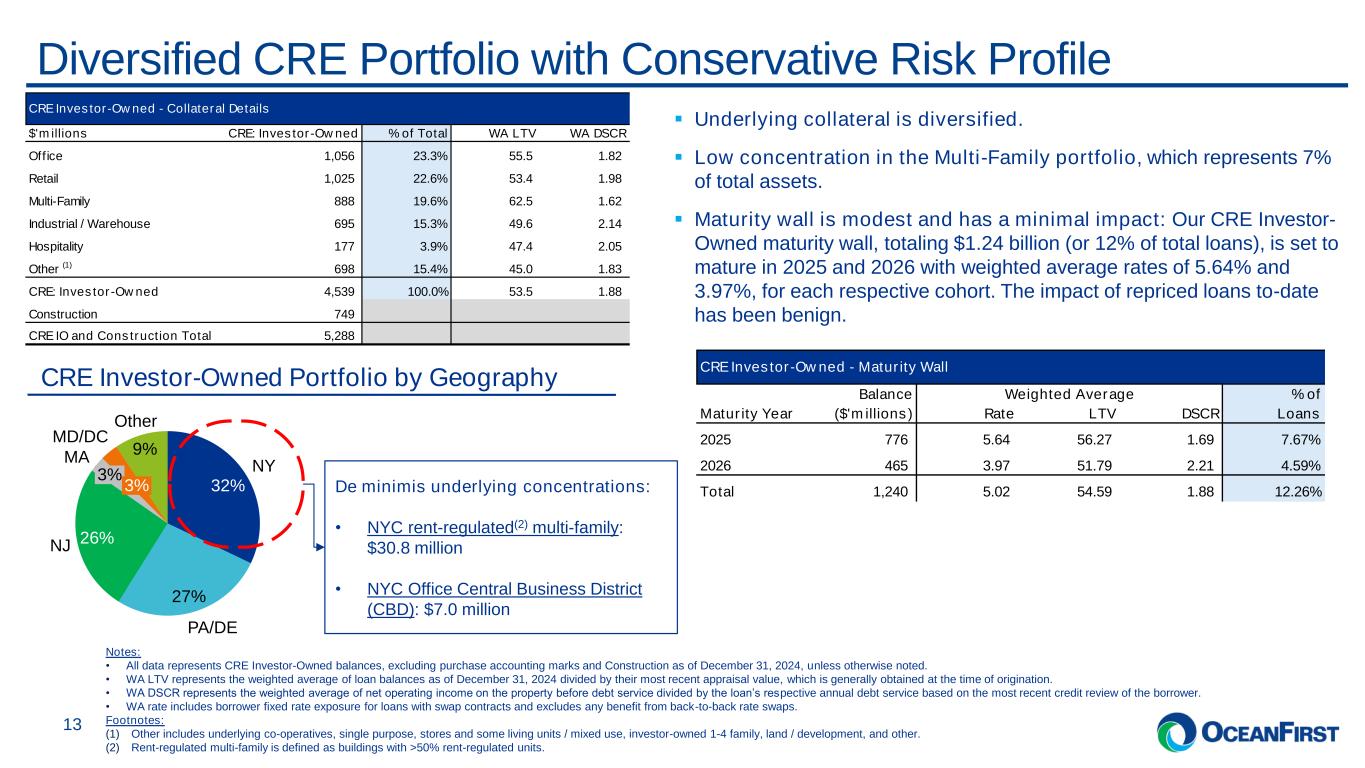
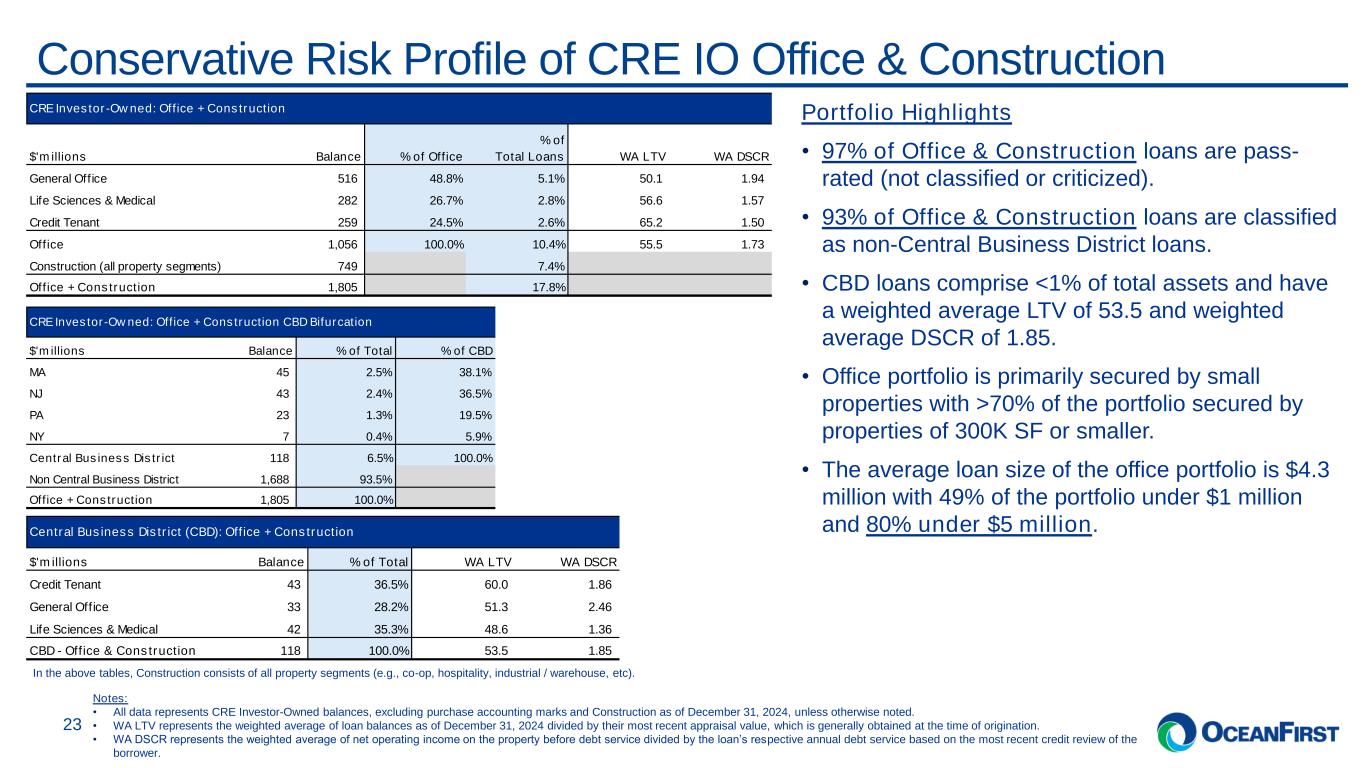
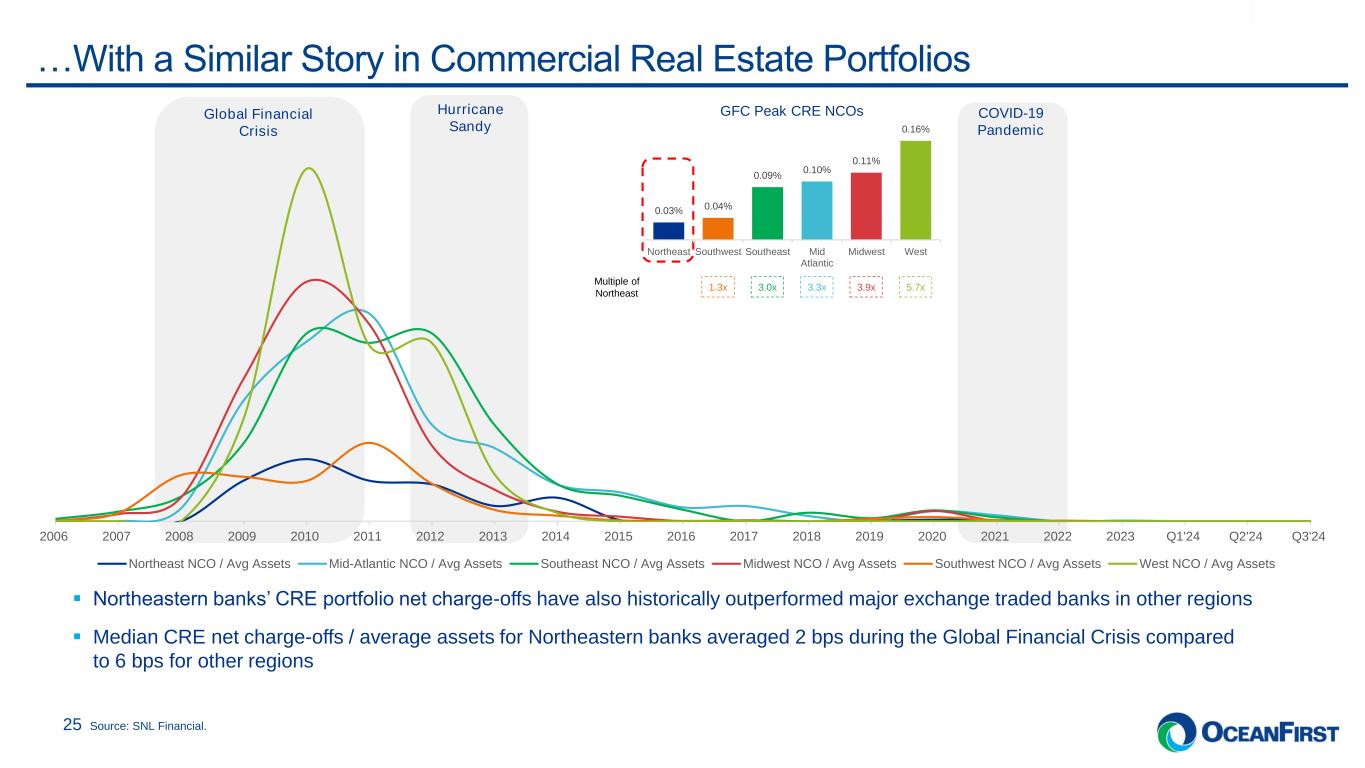
Thank you, guys. Good morning. So most of my questions have been asked and answered already, but I guess I'll just ask one also related to the big picture here. You're obviously making a big push into the CNI space, but have a strong track record and credit and growth on the CRE side, just uh you know if you then to get back to that business again is it the re concentration that's the biggest lever there is it mix um just curious how you're thinking about the the kind of the core crv business that you've had um going forward we have a few thoughts on it i mean the first is that we were very conservative in the way we constructed the portfolio So it's a portfolio that does not have an exposure to things like, you know, rent-stabilized multifamily.
It doesn't have a material exposure in, you know, urban office or central business district office. It's performing really well. It's spread among five states. It's been rolling really well. So as customers kind of roll to the new rates, we've not seen signs of distress. Our stress testing is good and the credit metrics are good. So we like the book, but we recognize that I think we're a more valuable company. we're more diversified. So that's why you're seeing the investor CRE number is slowly going down and the C&I number will be coming up. But this is not something we're trying to accomplish in the next three quarters. And there's a fair amount of repricing CRE that gives us the opportunity to originate CRE loans every day. So we're not out of the markets. We never left the markets it's important to us that we're there for our clients you know obviously our appetites a little different we're a little more conservative we want to get paid for what we do but some of the things we've seen in the CRE space are the best structured and best price credits that you can do so so we're still doing those loans but directionally you'll see more of a blend of the business lines if that makes sense yep that's a good color thanks Chris, that's all I had. All right.
Operator
Thank you. We currently have no further questions registered, but as a quick reminder, please press star 1 to register for a question now. Thank you all for joining. I can confirm that does conclude today's call. Please enjoy the rest of your day, and you may now...