Operator
Good day, and thank you for joining us. Welcome to the PROG Holdings Q2 2025 Earnings Conference Call. Please note that today's conference is being recorded. I will now turn the call over to John Baugh, Vice President of Investor Relations. Please proceed.
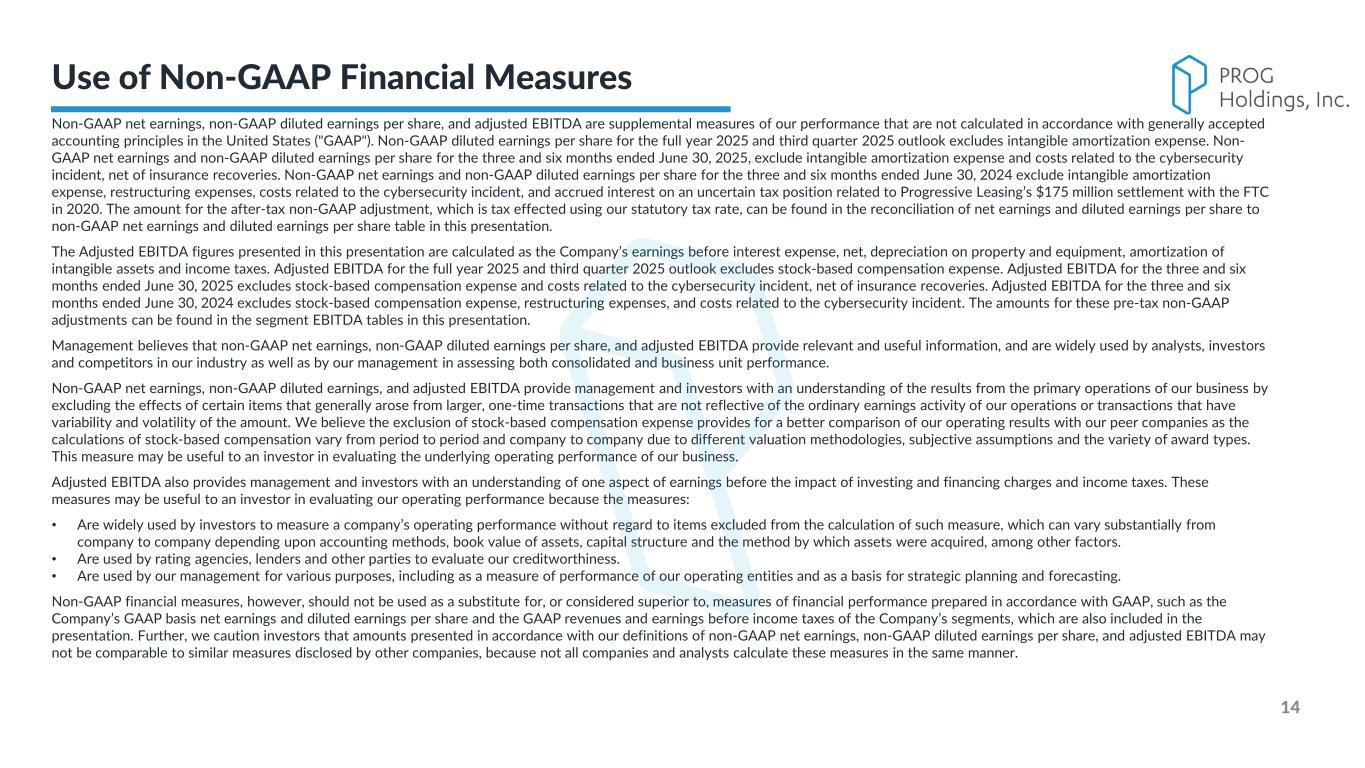
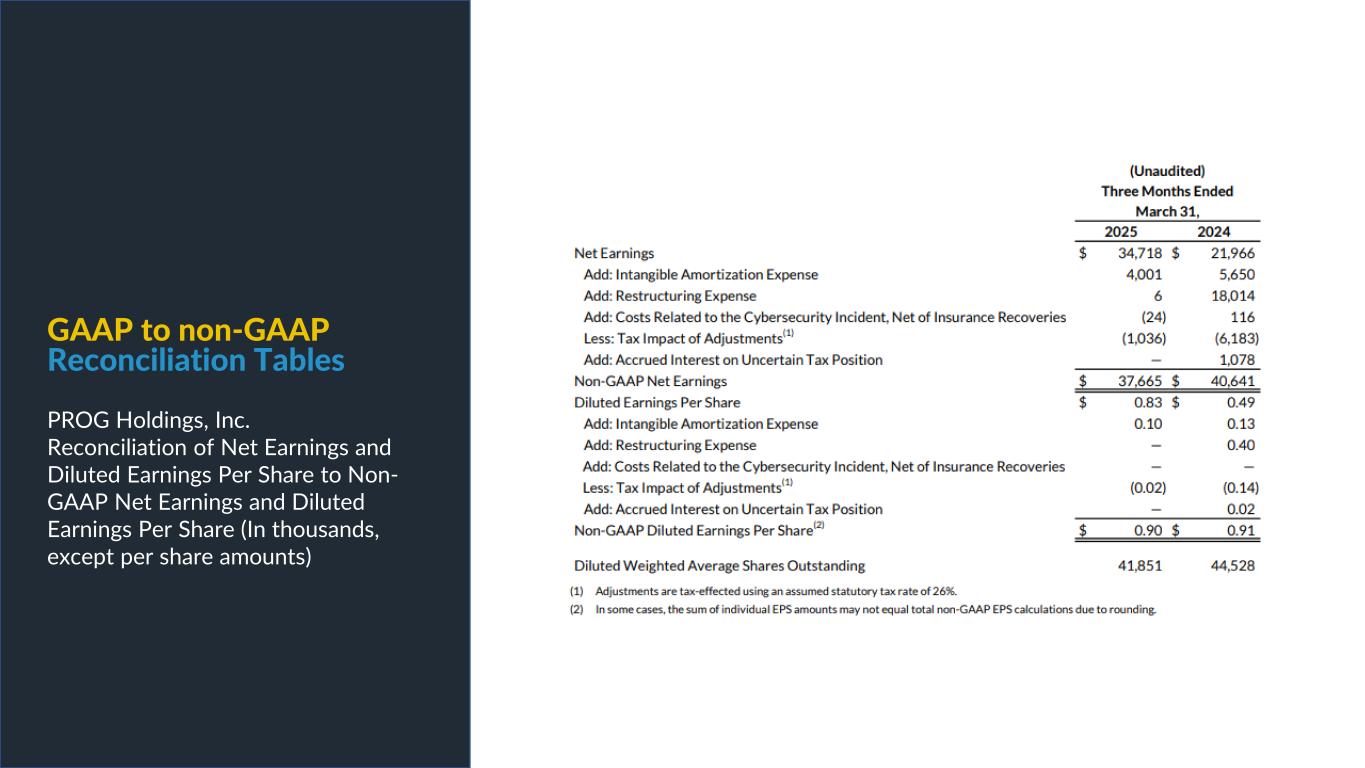
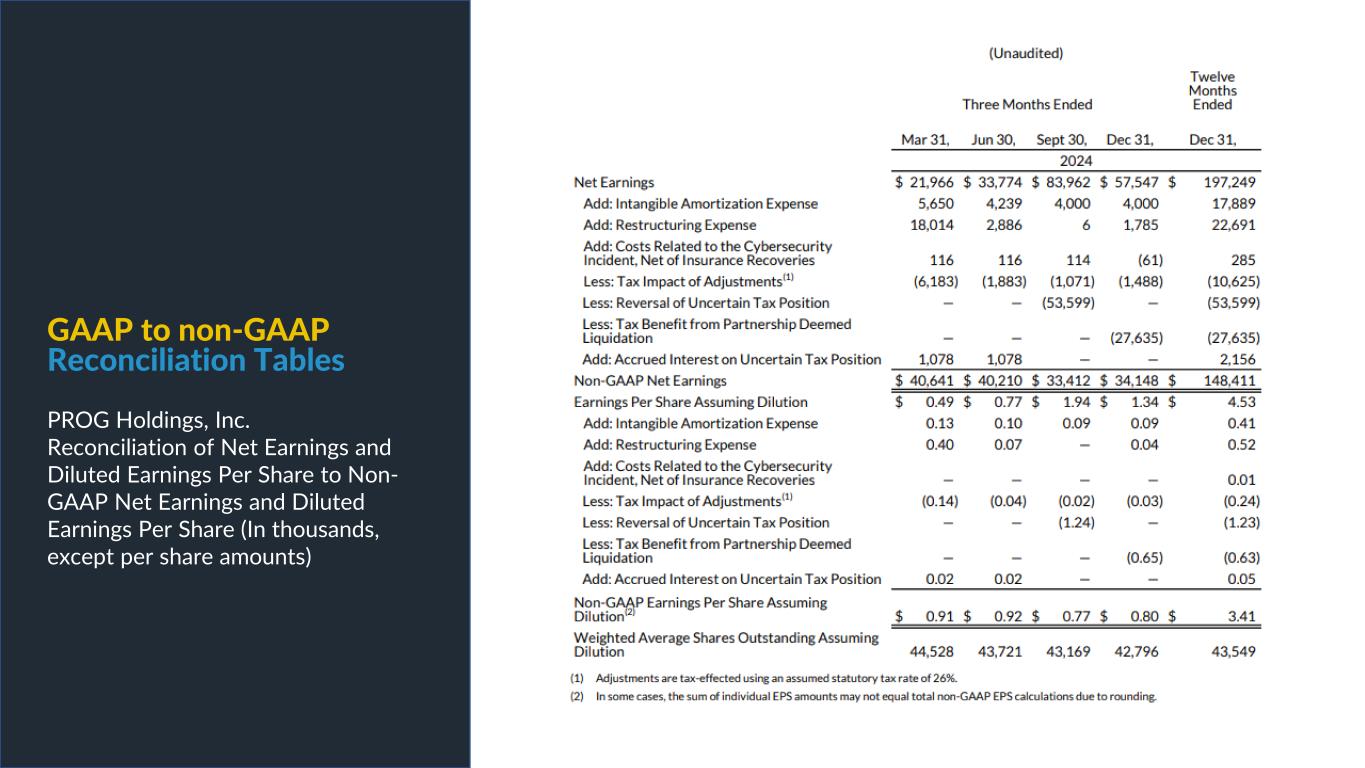
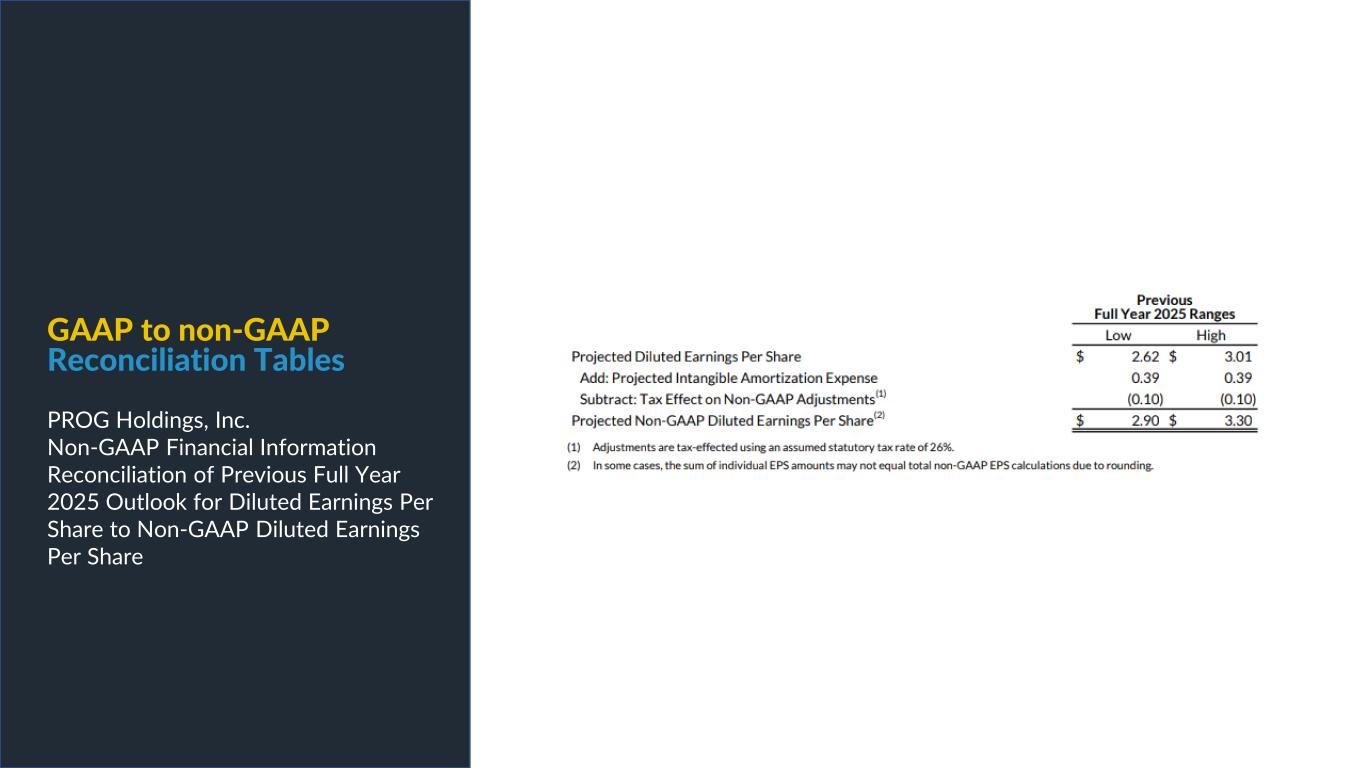
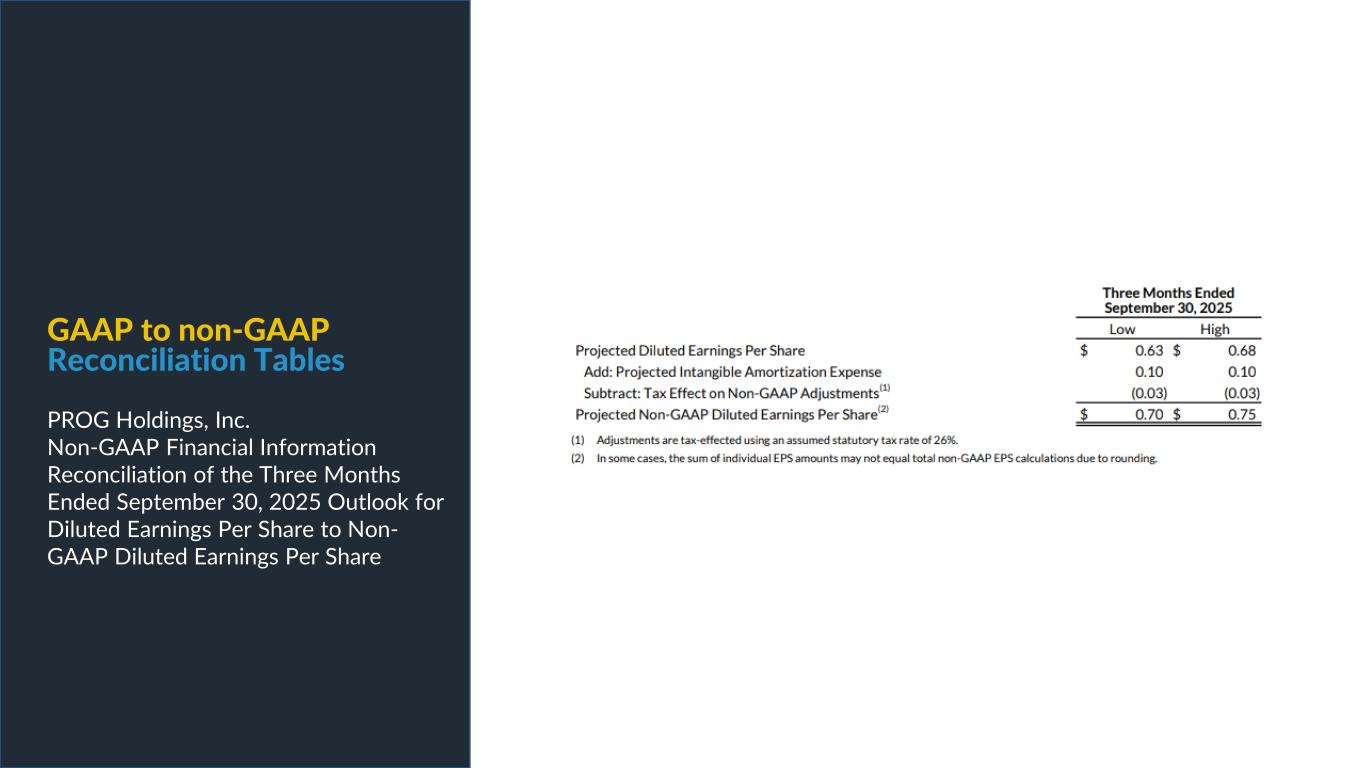
Thank you, and good morning, everyone. Welcome to the PROG Holdings Second Quarter 2025 Earnings Call. Joining me this morning are Steve Michaels, PROG Holdings' President and Chief Executive Officer; and Brian Garner, our Chief Financial Officer. Many of you have already seen a copy of our earnings release issued this morning, which is available on our Investor Relations website, investor.progholdings.com. During this call, certain statements we make will be forward-looking, including comments regarding our revised 2025 full-year outlook, and our guidance for the Third Quarter of 2025, the health of our lease portfolio, and our capital allocation priorities. Listeners are cautioned not to place undue emphasis on forward-looking statements we make today, all of which are subject to risks and uncertainties, which could cause actual results to differ materially from those contained in the forward-looking statements. We undertake no obligation to update any such statements. On today's call, we will be referring to certain non-GAAP financial measures, including adjusted EBITDA and non-GAAP EPS, which have been adjusted for certain items that may affect the comparability of our performance with other companies. These non-GAAP measures are detailed in the reconciliation tables included with our earnings release. The company believes that these non-GAAP financial measures provide meaningful insight into the company's operational performance and cash flows and provides these measures to investors to help facilitate comparisons of operating results with prior periods and to assist them in understanding the company's ongoing operational performance. With that, I would like to turn the call over to Steve Michaels, PROG Holdings' President and Chief Executive Officer. Steve?
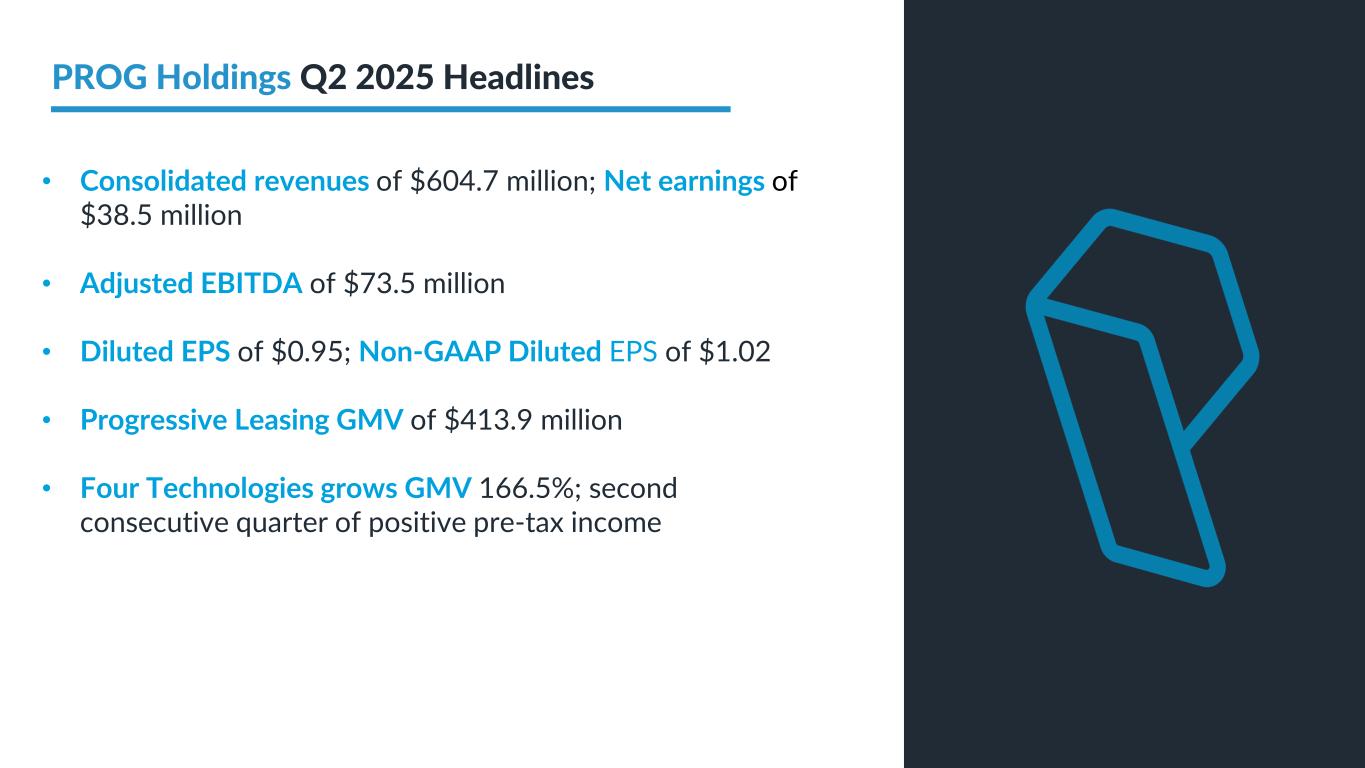
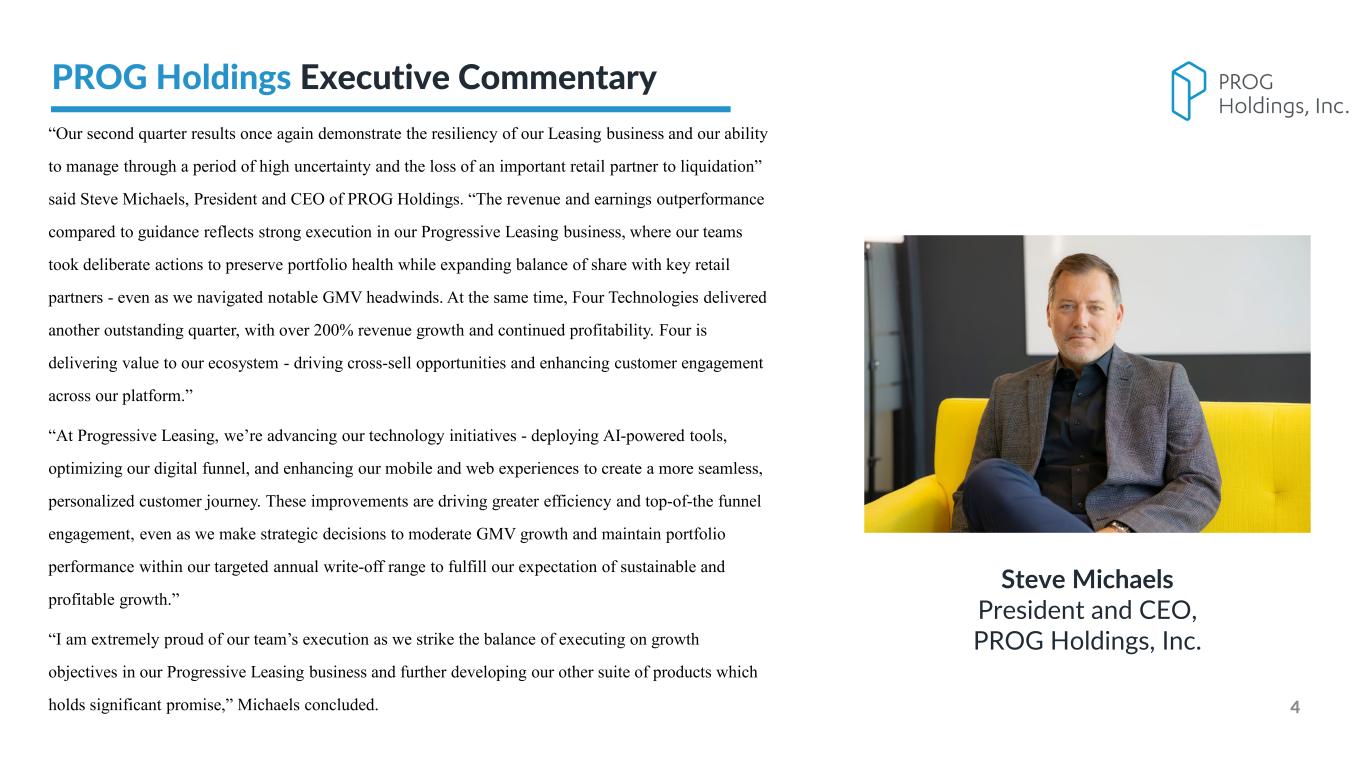
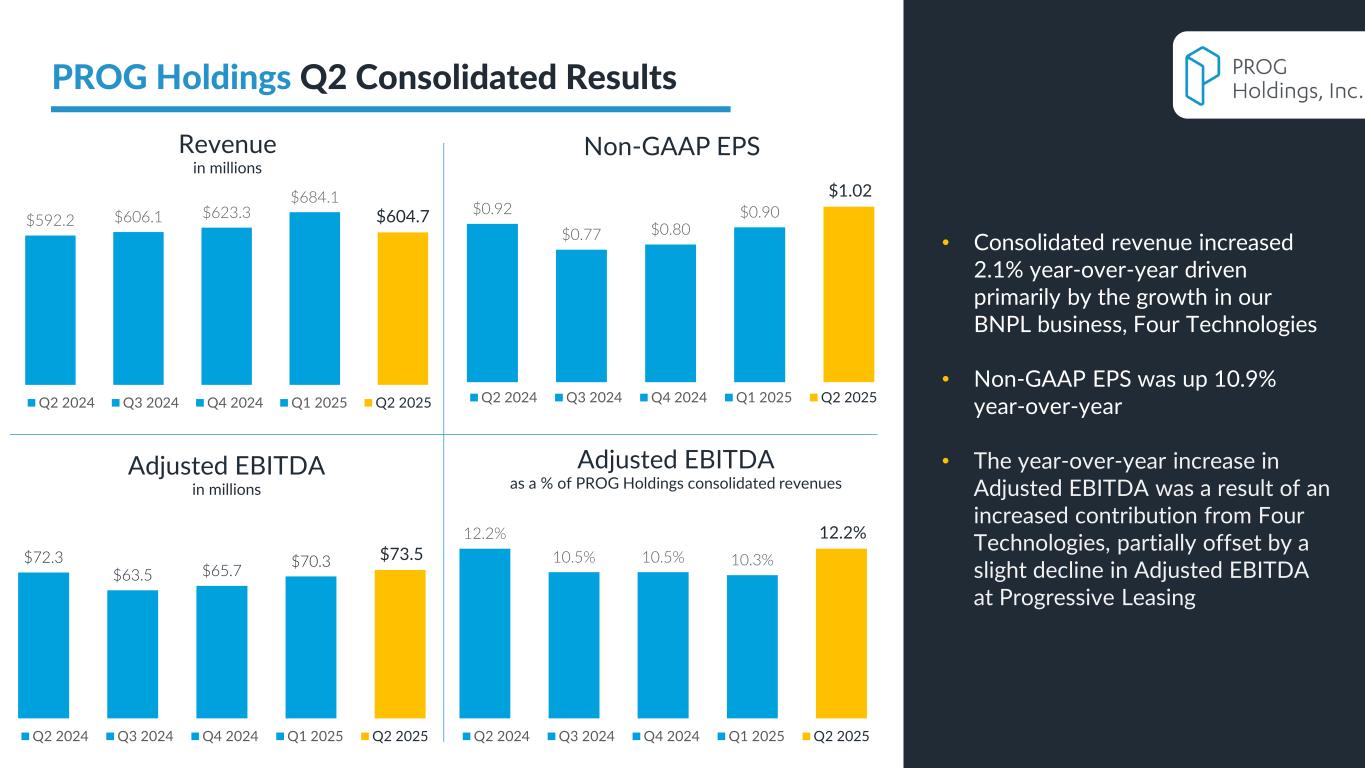
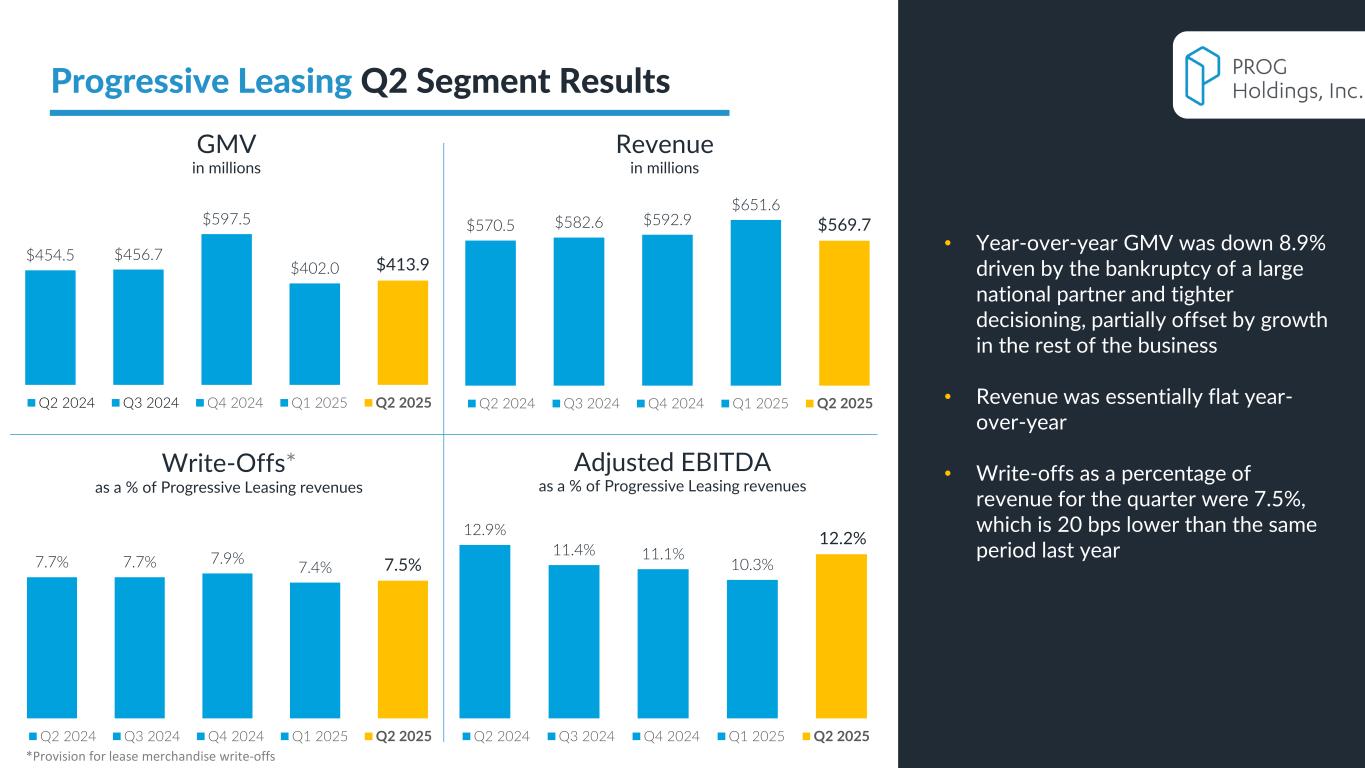
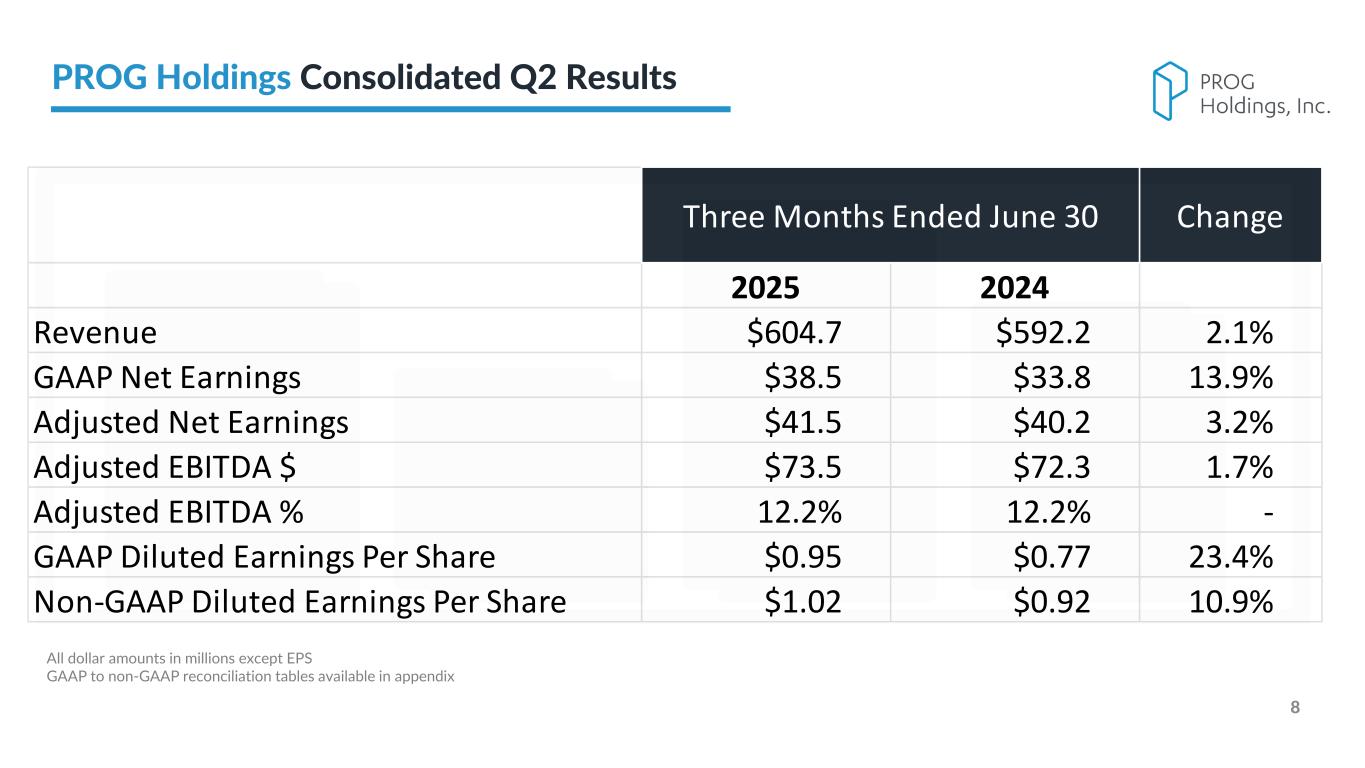
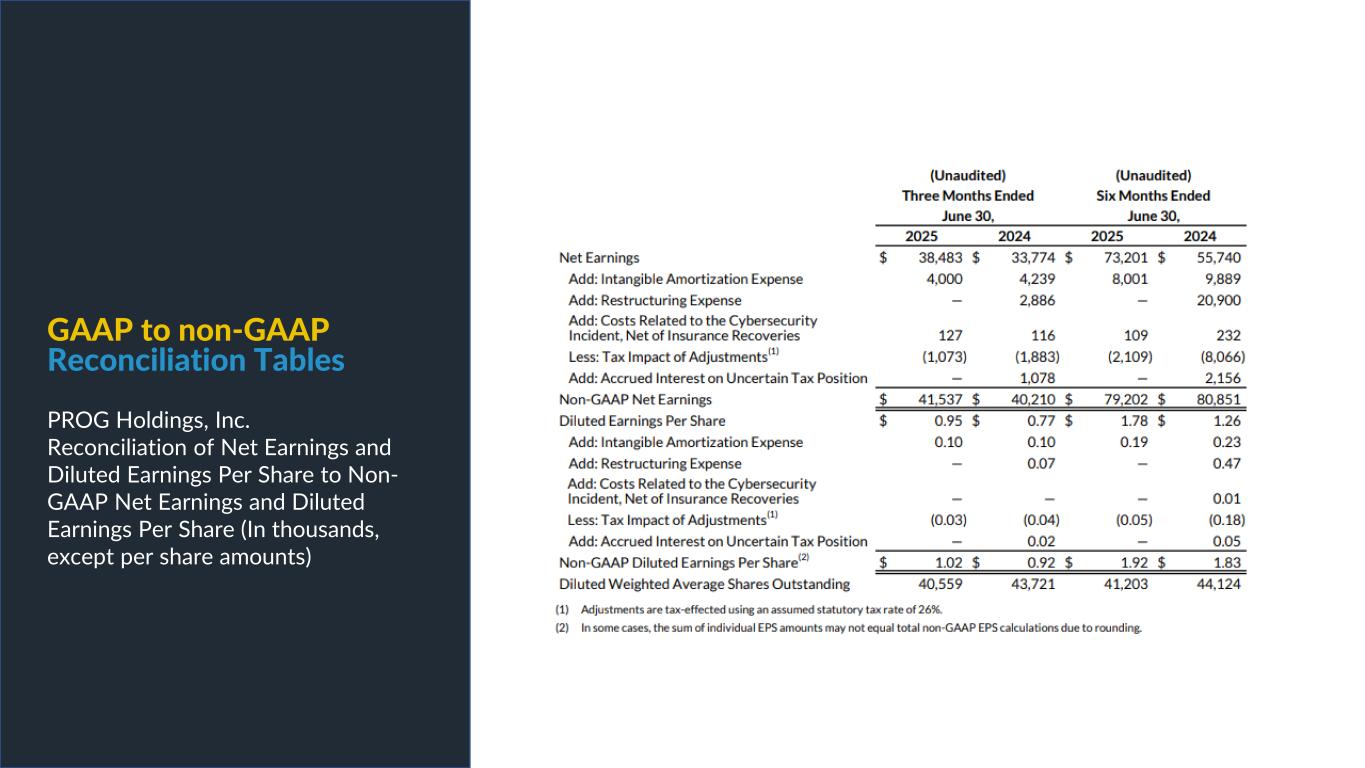
Thanks, John. Good morning, everyone, and thank you for joining us. Today, we will discuss our second-quarter performance, update you on our business, and provide insights on our outlook for the remainder of 2025. We delivered revenue and earnings above the high end of our guidance, driven by effective portfolio management, continued strength in our Pay in Four Buy Now Pay Later platform technologies, and disciplined cost control. Non-GAAP EPS of $1.02 significantly exceeded our outlook range of $0.75 to $0.85 per share. We are focused on improving results across the business as we lean into pipeline opportunities, expand our online platforms, and remove friction from customer touchpoints. Progressive Leasing's year-over-year GMV performance was impacted in the period by two primary factors: the Big Lots bankruptcy from late 2024, which is approximately a $40 million GMV headwind this quarter, and our deliberate tightening actions in the second half of 2024 and early 2025, which impacted GMV to a similar degree year-over-year. Adjusting for these relatively discrete events, we are executing nicely with the expansion of our balance of share within key retail partners and ramping new partners year-over-year. While the tightening actions have weighed on GMV, we've once again demonstrated our commitment and ability to deliver consistent portfolio performance within our targeted annual write-off range of 6% to 8%, a key guardrail for sustainable and profitable growth. These results demonstrate the strength of our retail partnerships, the effectiveness of our commercial execution, and the durability of our go-to-market model despite the ongoing soft demand for leasing categories we serve. Consolidated revenue came in at $604.7 million, which was low single-digit growth year-over-year. This performance was led by another standout quarter from Four Technologies, which delivered over 200% revenue growth. Consolidated adjusted EBITDA was $73.5 million and non-GAAP EPS was $1.02, both exceeding the high end of our outlook. Our lease portfolio once again exceeded expectations with strong performance. In Q2, write-offs came in at 7.5%, which is 20 basis points better than last year, reinforcing our ability to actively manage portfolio risk and deliver consistent performance even amid a dynamic consumer environment. This strength is the result of proactive decision-making adjustments made in late '24 and early 2025, which continued to drive favorable early-stage indicators. These actions reflect our disciplined data-driven approach to portfolio optimization. With the portfolio performing well and early-stage indicators trending favorably, our decision science teams are identifying pockets of opportunity to deliver incremental GMV. We are committed to maintaining disciplined decision standards and expect write-offs to remain within our targeted annual range of 6% to 8%. We generated meaningful momentum in Progressive Leasing during the quarter, supported by strong execution across our direct-to-consumer initiatives. These efforts, such as personalized lifecycle campaigns and targeted digital outreach, are driving engagement across new, repeat, and reactivated customer segments. Additionally, we are scaling our PROG Marketplace platform, delivering double-digit GMV growth and staying on track to surpass $75 million in GMV for 2025, reinforcing its role as a complementary channel that enhances our retail ecosystem and expands customer engagement opportunities. Efforts to increase our e-commerce business show progress. In Q2, e-commerce as a percentage of Progressive Leasing GMV was at an all-time high, representing approximately 21% of total leasing GMV. These results demonstrate our momentum under the Grow strategic pillar. We are growing market share with existing retail partners by executing jointly on key initiatives. Our marketing investments, ranging from enhanced SEO to personalized data-driven campaigns, are driving measurable gains in both customer acquisition and retention. Under our Enhanced pillar, we are advancing technology initiatives that elevate the customer and retailer experience. We are improving top-of-the-funnel web and mobile functionality for customers, streamlining the application process, and introducing AI-driven tools to improve customer engagement and reduce friction. These investments will help us personalize, segment, and nurture with more precision. Our PROG Labs team is leveraging generative AI to boost employee productivity and enhance customer tools, including AI chatbots that provide real-time support, personalized recommendations, and faster resolution of common service inquiries, ultimately improving the overall customer experience. In Q2, we expanded our rollout of our new consumer chat feature to more Progressive Leasing customers after the success of our pilot from Q1, and now have consumer chat capabilities across Leasing, Four, and Money App, our cash-advanced solution. This digital servicing initiative is already showing promising results, helping us better engage with customers. We've seen a lift in application starts and completions through AI-assisted interactions, along with a reduction in call center volumes, indicators that these new AI tools have the potential to create value for both our customers and our business. Looking ahead, we're preparing to expand the chat platform to include several self-service capabilities. These enhancements are designed to further improve the experience, reduce friction in our servicing model, and ultimately shift more volume into lower-cost digital channels. Our Expand pillar is building real momentum, and I'm particularly excited about the progress we're seeing from Four Technologies. Four delivered its seventh consecutive quarter of triple-digit GMV and revenue growth, continuing a positive trajectory that reflects the strength of our strategy and execution. We acquired Four Technologies in 2021 during a period of rapid expansion in the BNPL sector, though much of that industry growth lacked a clear path to profitability. From the outset, our vision was to scale the business differently by integrating it into our broader ecosystem and aligning it with our mission to deliver flexible, empowering financial solutions for consumers in a profitable manner. Over the past several years, we have remained focused on building Four deliberately, prioritizing sustainable unit economics and responsible growth. I'm proud to share that in Q1 of 2025, we achieved profitability in the Four business. And with another profitable performance in Q2, we're now accelerating our momentum. In the second quarter, Four delivered 167% GMV growth year-over-year, reflecting demand for our Pay in Four BNPL product and increasing relevance with both consumers and merchants. Revenue grew over 200% supported by a trailing 12-month take rate of approximately 10%, defined as revenue generated as a percentage of GMV over the 12-month period, which is a strong indicator of monetization efficiency as we scale the platform. From a customer lens, Four's engagement trends are strong. Average purchase frequency is steady year-over-year, and for the last four quarters, it was approximately 5x per quarter, coupled with over 130% growth in active shoppers year-over-year. We're seeing growth in active shoppers and unique retailers, which is expanding the addressable opportunity and contributing to GMV. Our Four+ subscription service, launched in early 2024, has seen robust adoption, with more than 85% of GMV now driven by active subscribers. These results reinforce Four's growing role in our ecosystem, not just as a stand-alone growth engine, but as a compelling customer acquisition channel and catalyst for cross-selling into Progressive Leasing, driving deeper engagement and increasing customer lifetime value across the PROG platform. I want to thank our team for their focused execution and disciplined approach, which advances our growth strategy while supporting margin expansion. As we look ahead, we are committed to enhancing the user experience on the Four platform and sustaining momentum through both direct initiatives and its strategic role within the broader PROG ecosystem. Also, within our Expand pillar, I'm pleased to share that Money App, our cash advance solution, is gaining traction. The product is now delivering consistent unit-level profitability, which is an important milestone as we scale this offering. We are focused on executing our strategy with discipline and intention. While the macro environment presents headwinds, particularly as consumers remain cautious around large discretionary purchases, we factored these dynamics into our outlook for the balance of the year, which Brian will speak to in more detail. Our guidance assumes ongoing softness in demand across key leasable categories, along with no changes to our current decisioning posture that has shaped much of the first half. We've also accounted for higher 90-day purchase activity compared to 2024 and stable portfolio performance within our 6% to 8% write-off range. Despite the unpredictable environment, we are confident in our ability to continue gaining share and driving sustainable, profitable growth, powered by our multiproduct ecosystem, disciplined portfolio performance, and scaled omnichannel leasing platform. Our ability to consistently execute through volatility is a competitive strength and a driver of long-term shareholder value. Our capital allocation priorities are unchanged. We are reinvesting in high-impact growth initiatives, exploring strategic M&A opportunities, and returning excess capital to shareholders through a balanced approach of dividends and share repurchases. Our businesses generate meaningful free cash flow, providing us with the flexibility to meet our priorities. With that, I'll turn it over to Brian for a deeper look at our Q2 results and updated 2025 outlook.
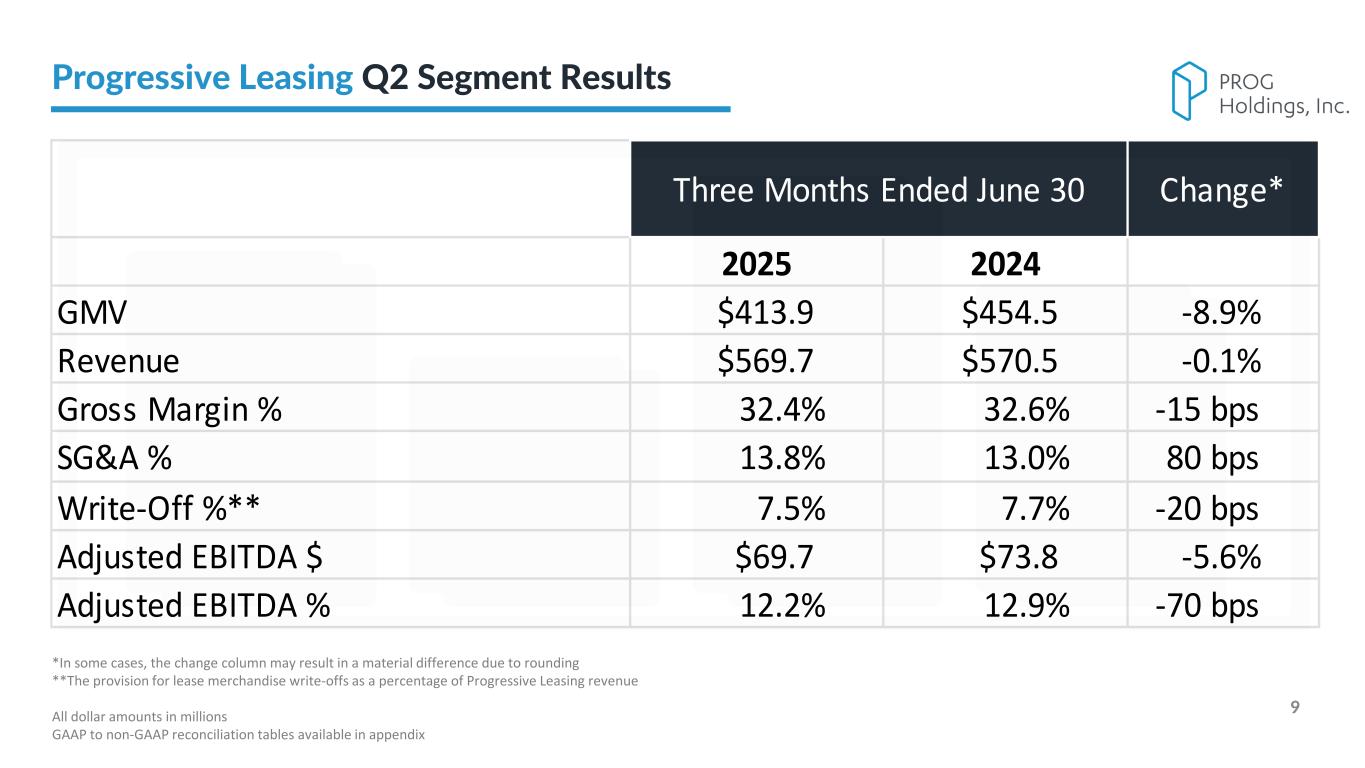
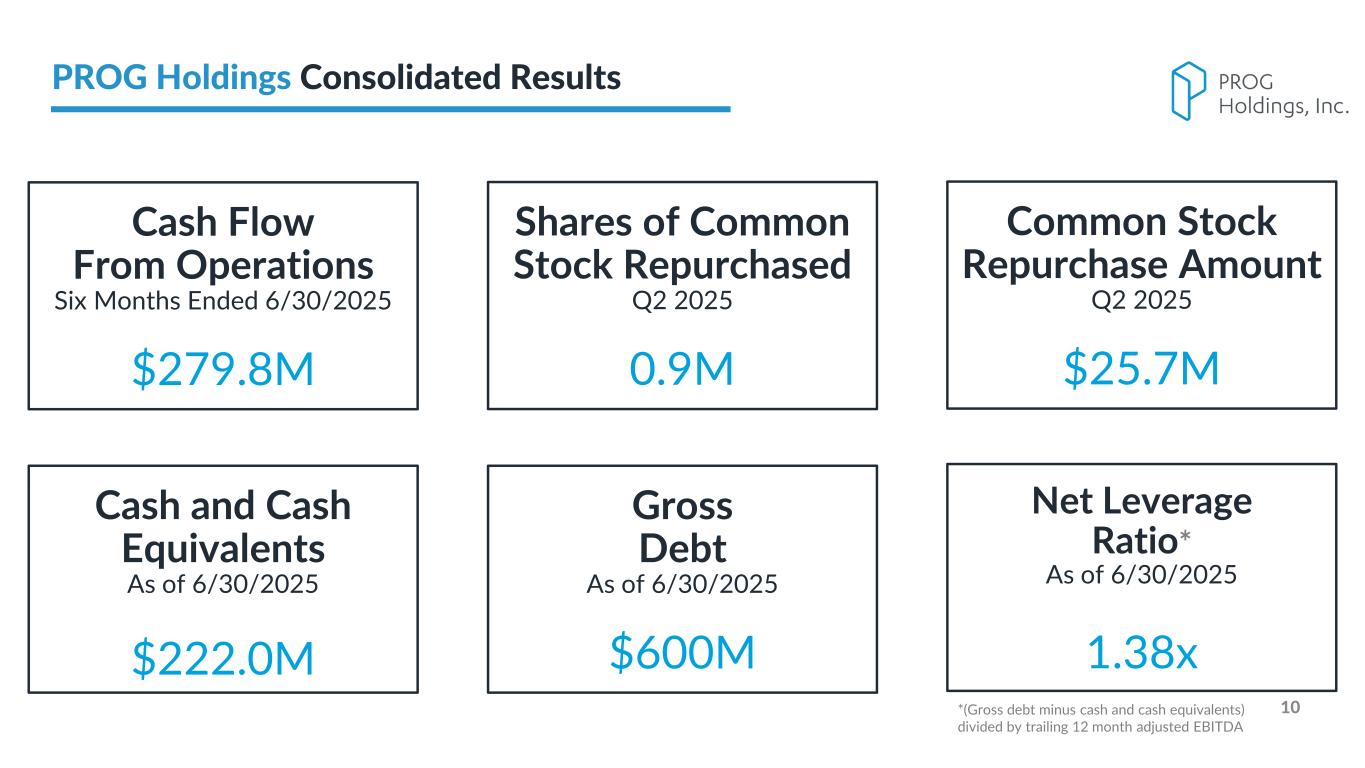
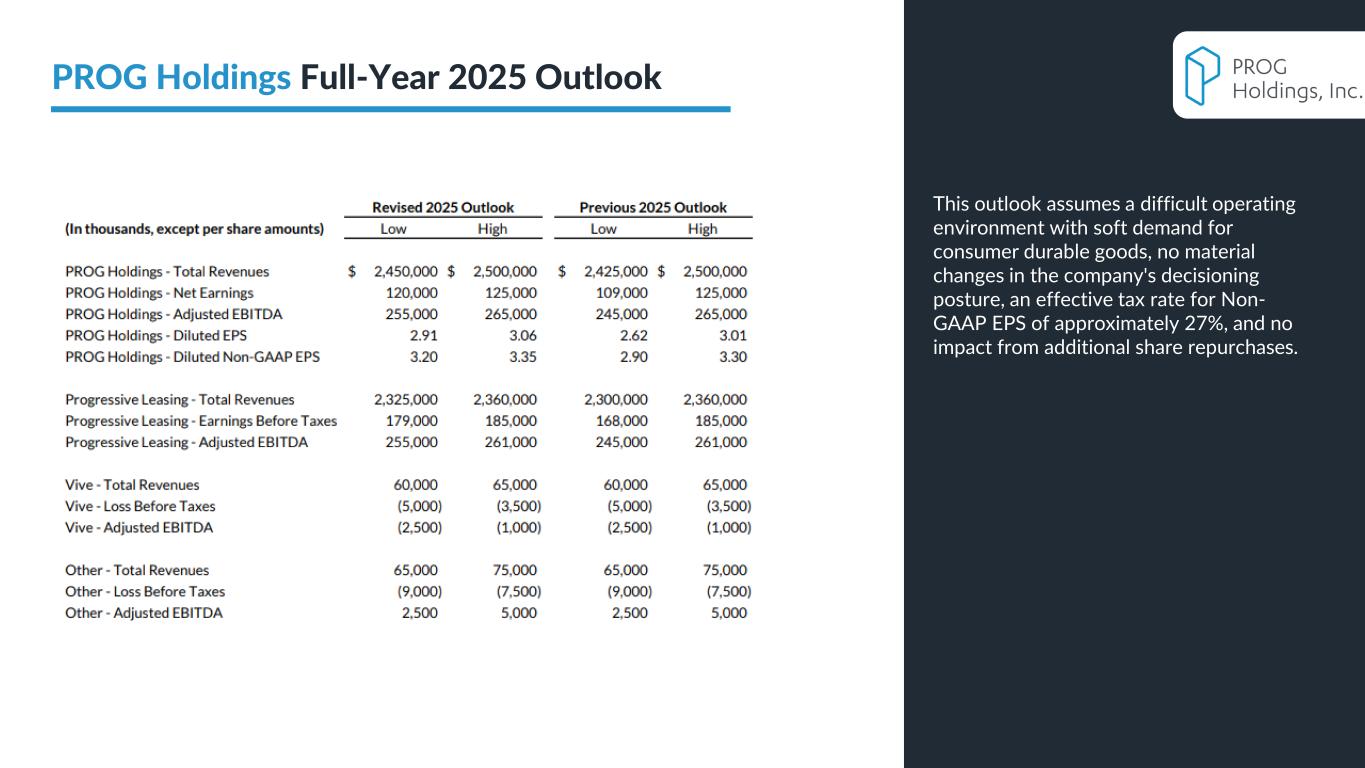
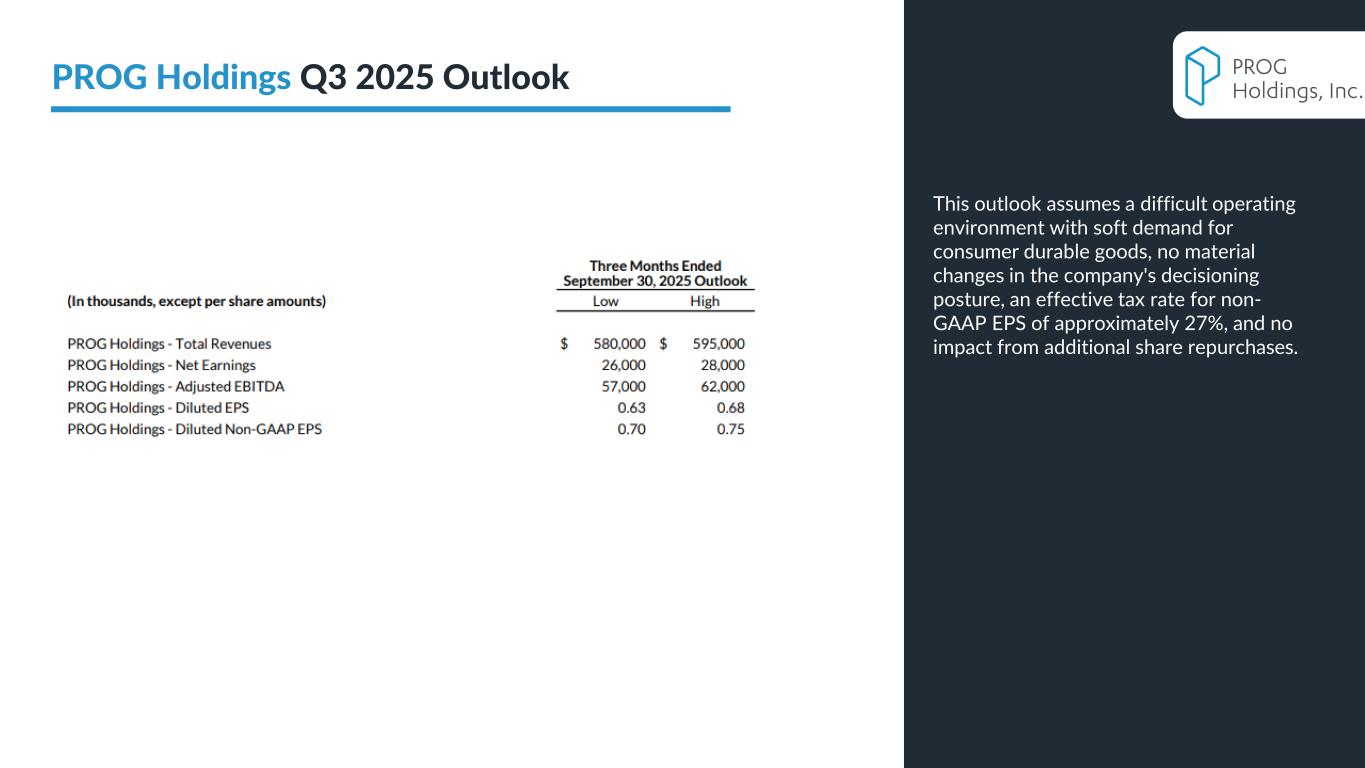
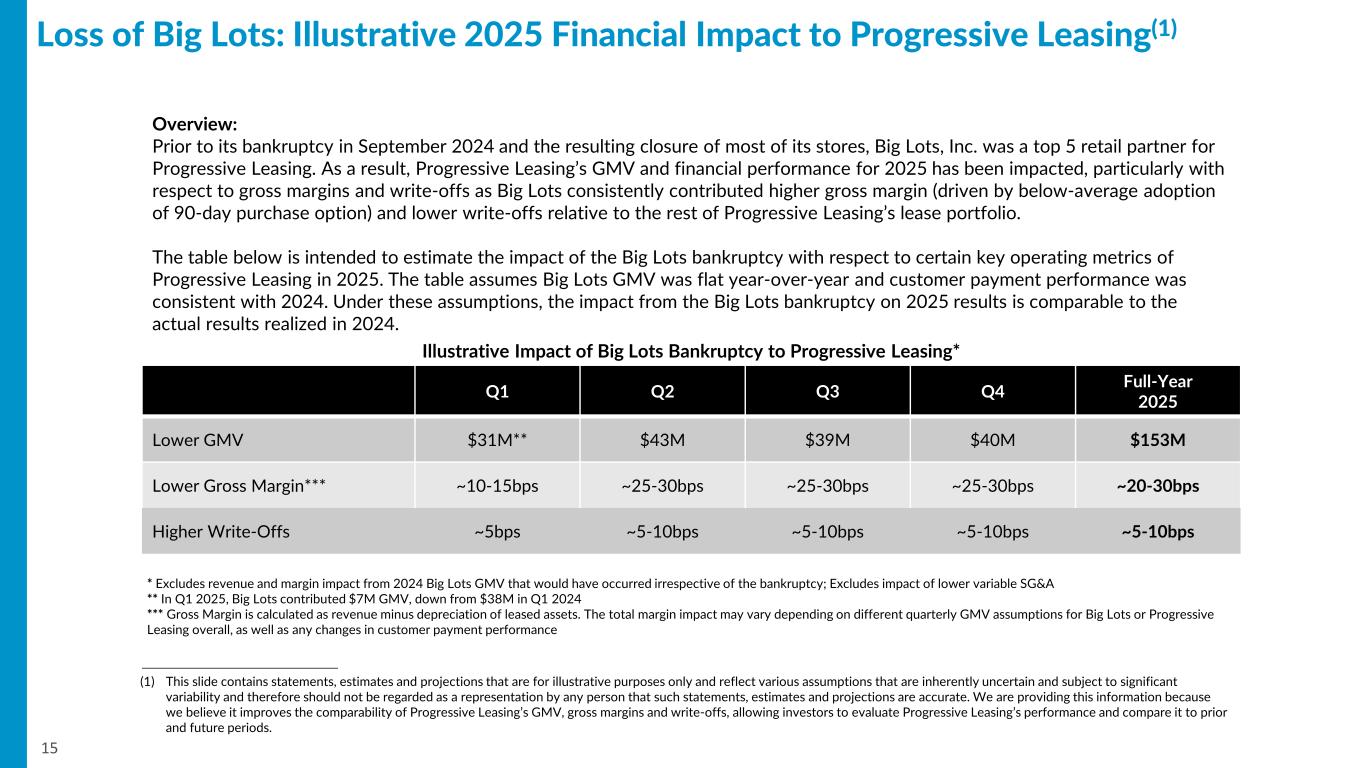
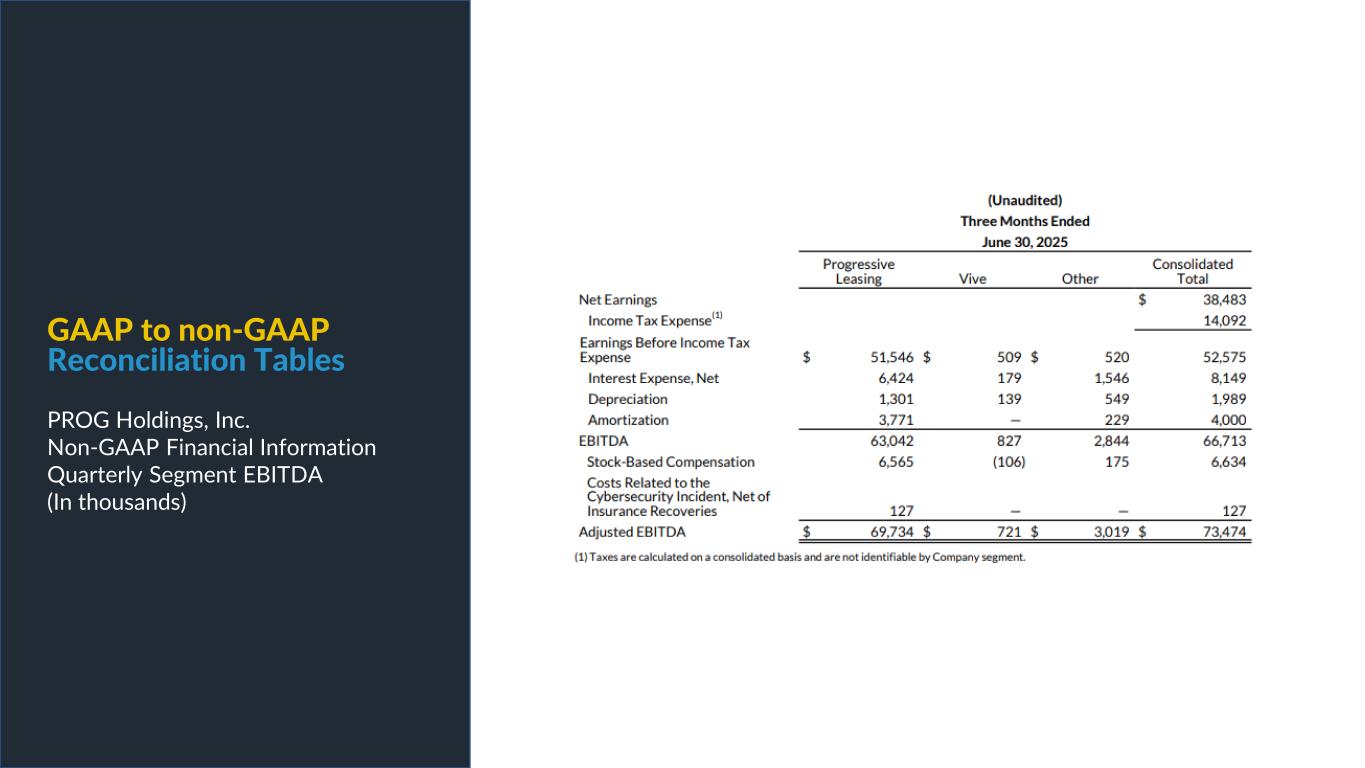
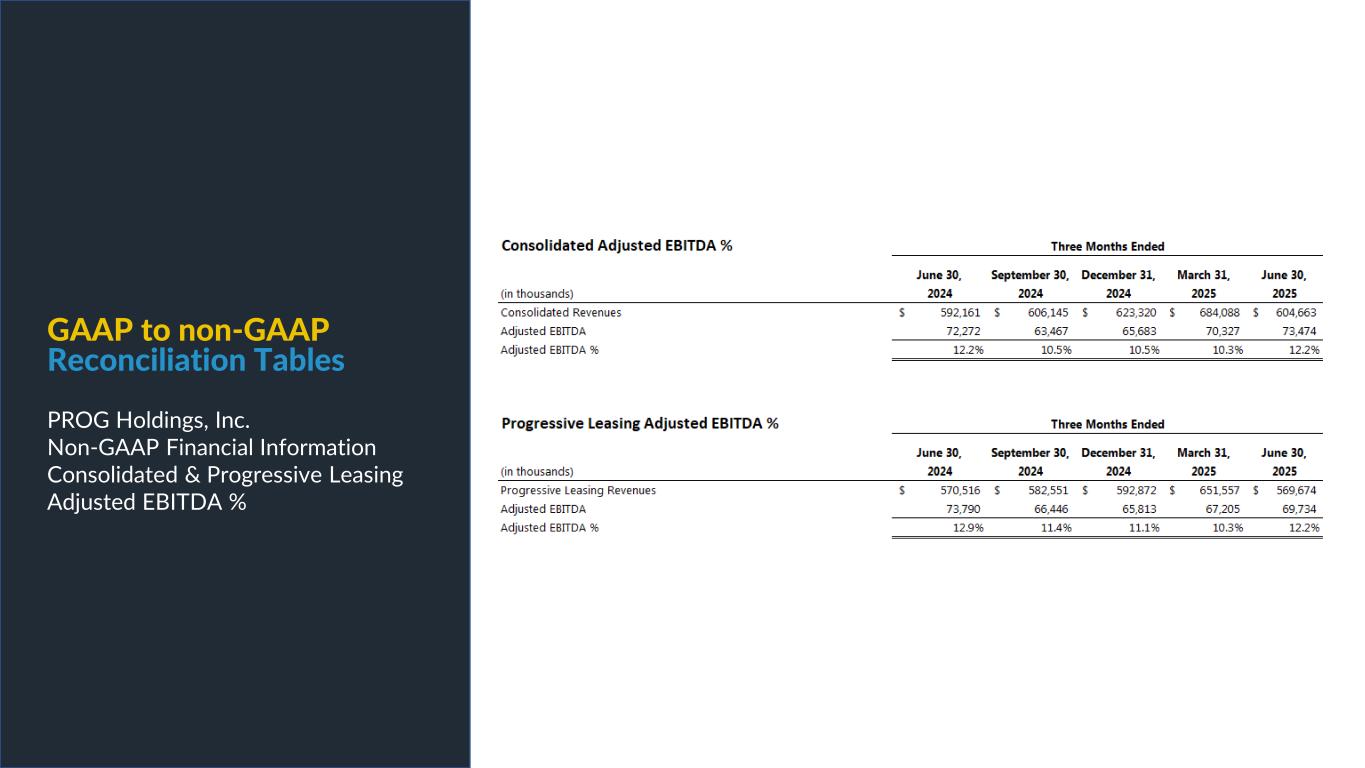
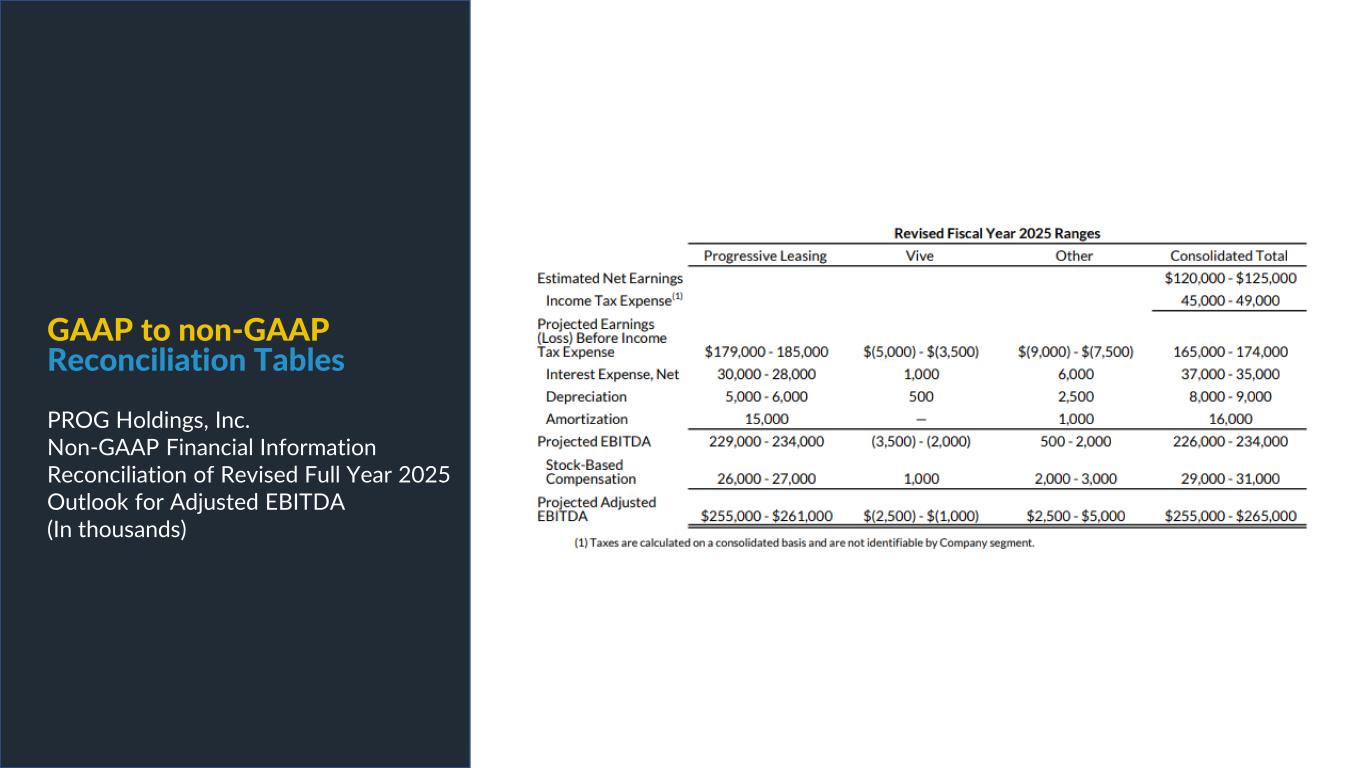
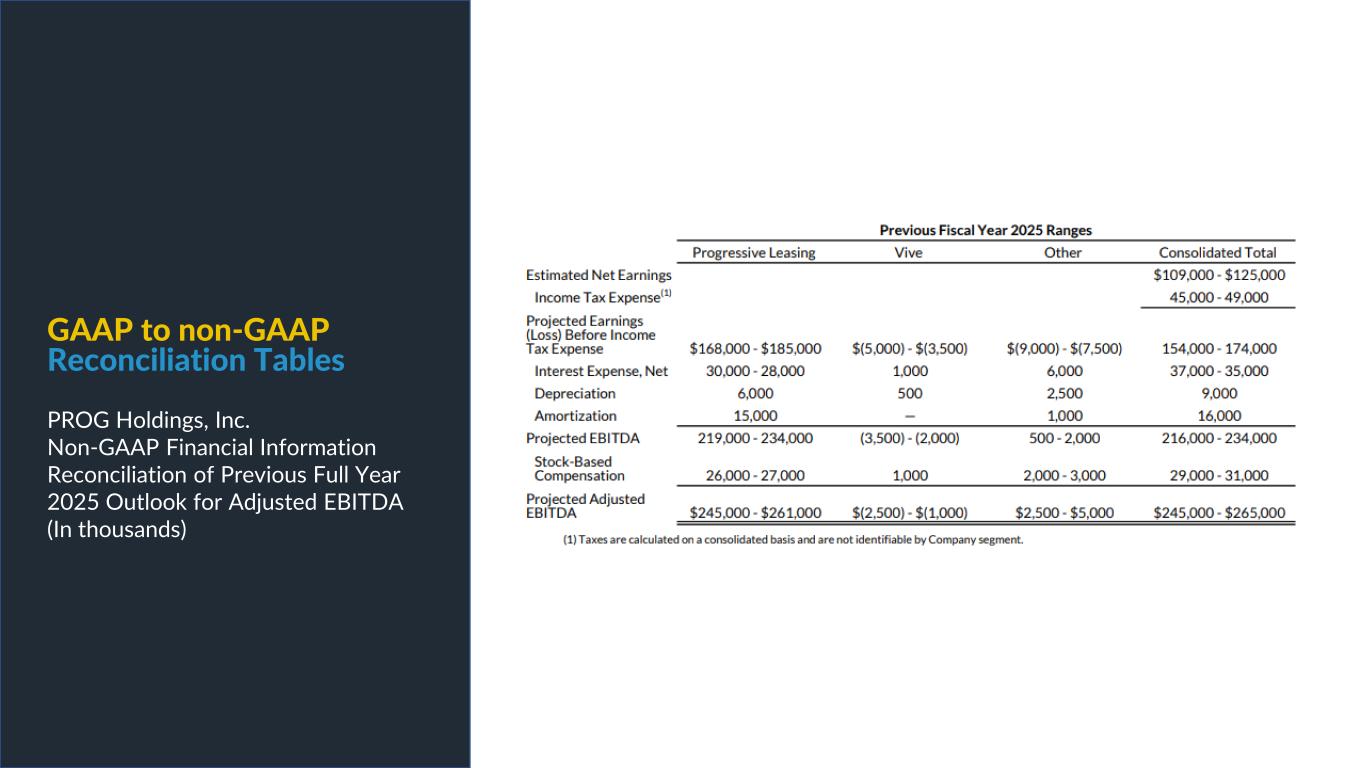
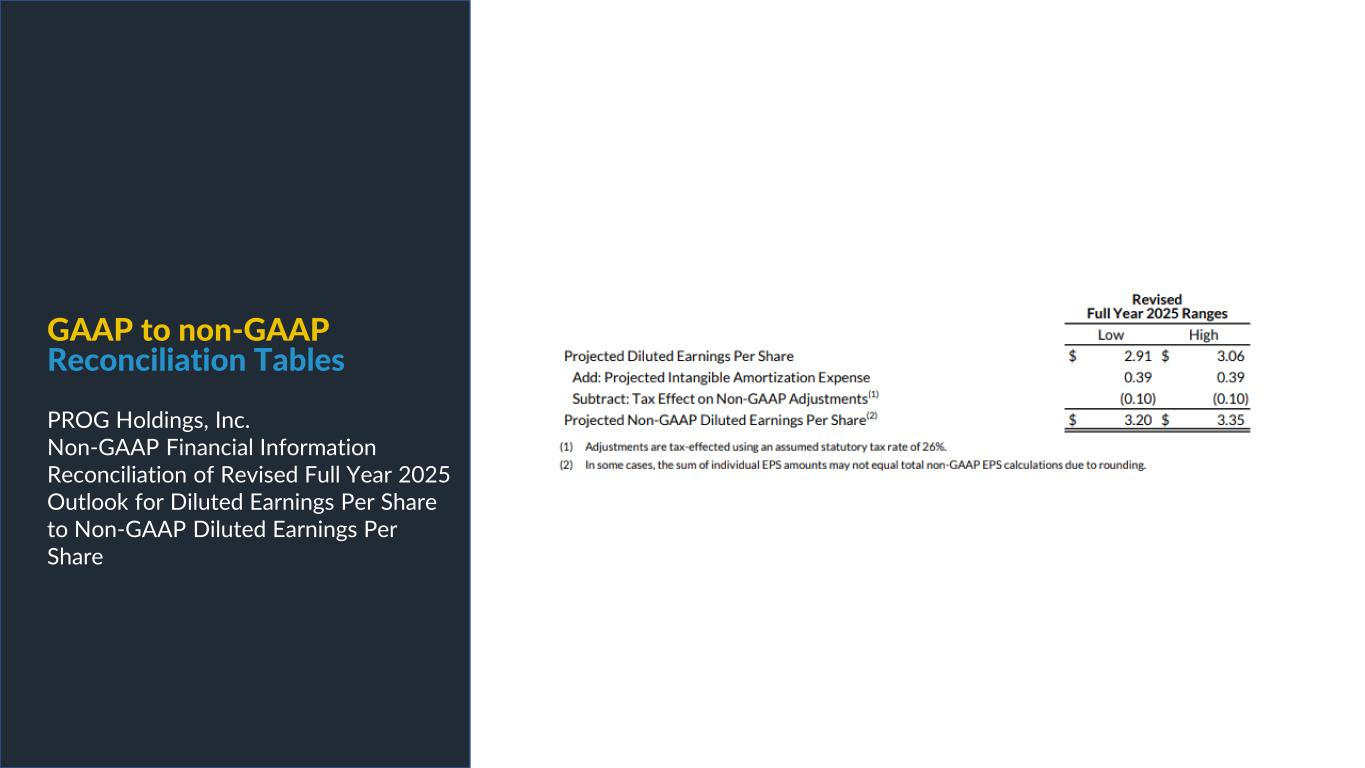
Thanks, Steve, and good morning, everyone. Our second-quarter performance highlights the strength of our business and the growing impact of our ecosystem strategy, particularly in a challenging operating environment marked by macro volatility. I'm pleased to report that consolidated revenue and earnings exceeded the high end of our outlook with non-GAAP EPS coming in at $1.02 per share. This outperformance was driven by strong execution across the organization. Our Progressive Leasing team effectively managed the lease portfolio and delivered a result meaningfully better than expectations. At the same time, our Four Technologies team delivered another quarter of profitable triple-digit growth. Together, these results reflect the power of our diversified platform and our ability to execute across multiple business models while investing in sustainable long-term growth. Let me begin with an overview of the Progressive Leasing segment's performance in the second quarter. GMV came in at $413.9 million, which is down 8.9% year-over-year, largely due to two primary factors: the previously disclosed Big Lots bankruptcy and our intentional tightening of approval rates to manage portfolio performance, underscored by ongoing soft consumer demand in our key leasable categories. When adjusting for the impact of Big Lots, GMV was up approximately 1%. In addition, the tightening efforts deployed late last year and in Q1 of 2025 further impacted the growth rate by an estimated 800 to 900 basis points. We expect the approval rate comparison to begin easing in Q3 of 2025 and will completely lap those tightening actions in Q1 of 2026. Importantly, PROG Marketplace, our direct-to-consumer channel, remains a meaningful contributor to growth, with Q2 GMV up 38% year-over-year. As we look ahead, we are focused on improving conversion within the marketplace funnel by enhancing the consumer experience, from browse to application and checkout, ensuring we are capitalizing on this demand with greater efficiency and customer satisfaction. Additionally, we continue to evaluate and improve the customer experience across all of our platforms, with a focus on serving the evolving expectations of our core demographics. Millennials and Gen Z now account for approximately 70% of our GMV. Many of these customers begin their lease journey in-store and then could transition online, through either the retailer site or internal platform, such as PROG Marketplace, underscoring the importance of a seamless omnichannel experience. Q2 revenue for Progressive Leasing was close to flat at $569.7 million, compared to $570.5 million in the prior year. Revenue benefited from a slightly higher customer utilization of 90-day purchase options. These tailwinds, however, were offset by marginally lower Pay In Four performance, primarily tied to leases funded before the tightening actions we took in late 2024 and early 2025. Looking ahead, we expect payment performance to improve year-over-year in the second half as those pre-tightening vintages roll off and higher quality leases comprise a greater portion of the portfolio. Portfolio performance was strong with Q2 write-offs at 7.5%, 20 basis points better than Q2 of 2024 and slightly better than our internal expectations. This performance reflects the effectiveness of our dynamic decisioning models and the deliberate tightening actions. Progressive Leasing's gross margin for the quarter was 32.4%, in line with our expectations and down just 15 basis points year-over-year, primarily driven by increased customer utilization of 90-day purchase options, along with a loss of Big Lots, which had a below average number of customers utilizing the 90-day purchase option and above average gross margin. The overall estimated impact of the Big Lots bankruptcy on Progressive Leasing's gross margin is approximately 20 to 30 basis points in the period. Progressive Leasing's SG&A expenses were $78.9 million, or 13.8% of revenue, up from 13% in Q2 of 2024. As previously communicated, this expected deleverage reflects active investments in technology and sales enablement, partially offset by disciplined cost management. We remained focused on cost efficiencies while prioritizing investments that we expect to provide a high return. Adjusted EBITDA for Progressive Leasing was within our 11% to 13% annual target at $69.7 million, or 12.2% of revenue compared to $73.8 million, or 12.9% of revenue in Q2 of 2024. In terms of consolidated results, Q2 revenues grew 2.1% to $604.7 million, from $592.2 million in Q2 of 2024, primarily driven by over 200% revenue growth at Four Technologies. Consolidated adjusted EBITDA was $73.5 million compared to $72.3 million in Q2 of 2024, reflecting materially improved profitability of Four, slightly offset by Progressive Leasing margin pressures. Non-GAAP EPS was $1.02, exceeding the high end of our outlook supported by strong earnings and a lower share count from our repurchase program. Turning to the balance sheet. We ended Q2 with $222 million in cash and $600 million in gross debt, resulting in a net leverage ratio of 1.38x trailing 12 months adjusted EBITDA. We are undrawn on our $350 million revolver. I also want to highlight a legislative development that will positively impact our cash tax outlook. The Big Beautiful Bill, which makes permanent several key provisions of the Tax Cuts and Jobs Act, most notably 100% bonus depreciation on qualified property. We expect this change to significantly reduce future cash taxes by allowing immediate expensing of lease merchandise for tax purposes. In Q2, we continued to return meaningful capital to shareholders through both dividends and share repurchases. We paid a quarterly dividend of $0.13 per share and repurchased approximately 900,000 shares of our common stock at a weighted average price of $28.51 per share, reflecting our ongoing commitment to a balanced capital return strategy. As of quarter end, we had $309.6 million remaining authorized under our $500 million share repurchase program, providing ample flexibility to deliver shareholder value. To recap some of the key highlights from the first half of the year, includes strong portfolio performance, impactful marketing initiatives driven by enhanced SEO and personalization, progress on technology enhancements, improving customer experiences, and meaningful traction on our ecosystem strategy with profitable growth at Four. We are anchored in the strength and stability of our lease portfolio, which we believe will remain on solid footing. Our disciplined operating model, combined with the flexibility of our multiproduct platform positions us to deliver sustainable, profitable GMV while creating long-term value for customers, partners, and shareholders. For our 2025 consolidated outlook, we are raising the midpoint of the range for revenues and earnings. Consolidated revenues in the range of $2.45 billion to $2.5 billion, adjusted EBITDA in the range of $255 million to $265 million, and non-GAAP EPS in the range of $3.20 to $3.35. This outlook assumes a difficult operating environment with soft demand for consumer durable goods, no material changes in the company's current decisioning posture, an effective tax rate for non-GAAP EPS of approximately 27%, and no impact from additional share repurchases. We are focused on driving profitable growth, maintaining portfolio health, and returning capital to shareholders while continuing to invest in initiatives that position us for long-term value creation. Our strategy is clear: operate with discipline, prioritize high-impact opportunities, and build value deliberately over time. With that, I'll turn the call back over to the operator for questions.
Operator
Our first question comes from Kyle Joseph with Stephens.
Speaker 4
Just kind of want to get to the underlying growth, recognizing there's a lot of moving parts right now, and I appreciate the color you provided on Big Lots in the appendix of your slides. But I calculate kind of ex-Big Lots GMV being flattish. And then I think you talked about some incremental headwinds from underwriting. So kind of ex those two headwinds, do you think about the business as kind of like mid-high single-digit growth right now? And then kind of remind us exactly when we lap both the underwriting and the Big Lots comps?
Thank you, Kyle. You're right. In our prepared remarks, we mentioned that without Big Lots, the GMV would have been up 1% for the quarter. We also highlighted a new point regarding the tightening of decisioning. Traditionally, we've discussed this in terms of year-over-year approval rates, but there are many factors influencing those rates. This quarter, we revised our approach to represent it as a drag on GMV, which accounted for approximately 800 to 900 basis points. Therefore, aside from those two events, we'd have seen a GMV growth rate in the high single digits to nearly 10%. Of course, we can't exclude these factors in reality, and they present challenges we're addressing. However, this reflects the pro forma trajectory of the business. Big Lots' GMV impact will mostly be in the past in Q4 of this year; we did experience about $7 million in GMV in Q1 of '25 due to going-out-of-business sales and varying closure dates for different stores. We have discussed various tightening actions we've taken over the past year, some of which occurred in the latter half of 2024, and as Brian mentioned, those will start to phase out as we enter the latter half of '25. The majority of the tightening took place in the first half of Q1 this year, so we still have some time before most of it lapses. I believe the portfolio is in a strong position, and I’m pleased with the decision science team’s ability to manage it effectively. This also gives us the chance to identify specific opportunities for approvals. However, I want to caution against overly high expectations, as we're looking at smaller opportunities compared to the larger tightening actions we implemented earlier. We will continue to seek out those opportunities and hope they contribute positively to GMV in the upcoming quarters. Additionally, we have numerous marketing initiatives we're collaborating on with our retail partners for the latter half, so we’re actively working to advance the business despite facing these two headwinds with Big Lots and decisioning. Now, I'll turn it over to Brian for further explanation regarding the additional slide in the appendix.
Yes. No, Kyle, and thanks for pointing that out. The intent there is, as Steve mentioned, showing first GMV and how that's going to represent a difficult compare for the remainder of the year and into Q1. And also attempting to size up the direct portfolio impacts. I think gross margins and write-offs and what pressure we're going to continue to fill there. As we've talked about Big Lots previously, one of the things that present itself is the fact that they had a better-performing customer than our average customer. And so that's a dynamic that is working its way through margins and will continue to throughout the comparison period. And so we highlighted that. The only other thing I'd offer is that's a sizing of the portfolio impact, not necessarily the SG&A, or the direct SG&A costs that are tied to Big Lots as there's a lot of assumptions there. And we've not attempted to size that or provide color on it within that slide, but just being cognizant of that is that would be additive to the impact that is shown there. So hopefully, it's helpful, and we'll continue to reference it throughout the year and try to give some color on the actual performance relative to kind of maybe a SAM's Big Lots view.
Speaker 4
Got it. Really helpful. I have one follow-up. I'm going to ask about the pipeline. I understand you can only share so much, but could you update us on your discussions with retailers regarding their interest in adding the leasing product to their financing options, especially considering the recent uncertainties surrounding tariffs and the bankruptcies in the furniture sector at the end of last year?
Yes. As you said, we can only say what we can say, and I've learned over the years not to commit to certain logos because they always wrong from a timing standpoint. But we have seen more engagement, I would say, even to the extent of some RFIs, or even RFPs, with some logos that have not traditionally been leaning into that. So that's positive. We continue to believe that we are kind of the obvious choice, especially for the enterprise-sized retail partners. So nothing to report on that, but it is certainly a main focus of ours, and we're pleased with where the pipeline is and the progression.
Operator
Our next question comes from Bobby Griffin with Raymond James.
Speaker 5
I guess, first for me, I wanted to maybe go back on just the core underlying progressive GMV and ask it a little bit different way. But if I give you credit for the Big Lots add-backs, which their bankruptcy was out of your control, it still looks like you factor in the prior year comparisons in 1Q versus 2Q. The core business, even with the decision tightening is accelerating. I guess the math I'm looking at is like 1Q ex-Big Lots is up 3 or 4 in GMV, 2Q is up 1, but the prior year comparison was roughly 800 basis points harder. So, one, do you disagree with that type of analysis on it? And two, if that's the case, what's driving that? Is that better trade-down, market share gains, kind of anything there to unpack that?
Yes, it's interesting that you mention it. Last year, in 2024, we observed some acceleration in the second and third quarters, which we believe was mainly due to trade-down behaviors. However, it seems to us that trade-down is not a significant factor this year. While I'm not saying it has disappeared, I don't think the primes have loosened either. From what we see in the data, particularly at the top of the funnel, it doesn't appear to be intensifying. Therefore, year-over-year, we believe it's likely flat to slightly negative, impacted by changes in our thin file and no-file categories, as well as potential influences from immigration actions affecting the top of the funnel. I wouldn't categorize this as trade-down. We continue to have positive outcomes with our existing retail partners, which we have discussed for several quarters, and they are successfully collaborating with us. Notably, our e-commerce performance reached an all-time high, which is interesting since typically, the second quarter isn't expected to reach that level; the two best quarters are usually in the fourth quarter due to a specific initiative we launched with a long-term partner that enhanced productivity and share balance. Although there are challenges, such as the 8.9% decline, we are doing everything we can to address the comparisons with Big Lots and the necessary actions we've taken, and we feel optimistic about the business's positioning and our ability to improve this negative growth over time.
Speaker 5
Understood. That's helpful. And I guess Brian, my second question is just kind of on the guidance, the update. Maybe you guys beat 2Q, it looks like the midpoint went up a little slightly less than the 2Q beat. And I appreciate just the environment and the fact that having some conservatism in there. But what took place in 2Q that isn't really assumed to continue that you would say was upside in the quarter that you guys didn't assume to go forward, to kind of just have the guide move up with the 2Q beat versus actually moving up more?
Yes. I appreciate the question, Bobby, you just quite answered that, just given some color on what I think are some margin dynamics in the back half that I think will present themselves a little bit more than what they did there in Q2. And I think, starting with the positive, and what I think will be a bit of a tailwind in the back half. The write-off picture, as Steve mentioned, is on track, and we're encouraged by what we're seeing there. We actually ended up lower write-offs here in Q2 than we anticipated as we reported out in April. And so that's a very favorable dynamic that we expect based upon everything that we're seeing to continue to work through the back half of the year. And so write-offs and then portfolio performance overall, I think, are a tailwind. The headwinds, which I think a bit more than offset that and why you're seeing the margin that you are in the back half. I mean, in order of magnitude, I think I'll just start at the top. The Big Lots piece is meaningful. And while we've talked a lot about the GMV comparison, one thing I don't want to have get lost is the fact that, yes, we turned off the GMV faucet for Big Lots a couple of quarters ago, but what has remained and what has continued to present itself on the P&L for the first half is those customers that were originated, and we continue to service and their performance continues to flow through in the first half. We experienced benefits from revenue and EBITDA, along with favorable margin profiles in the first half, despite Big Lots not generating significant GMV this year. This trend is likely to diminish in the latter half. Additionally, we started this quarter with a slightly increased portfolio but ended it down 3% in gross leased assets. Some of this decline is due to seasonal factors, but it's clear that the increase in 90-day buyouts and the overall GMV calendars have exerted pressure on the portfolio size. As this serves as the starting point for the second half, we expect to see an impact on the revenue numbers forecasted in our guidance. Furthermore, on a consolidated basis, we are experiencing positive momentum with Four, which, although it poses a margin challenge particularly in Q4 due to CECL accounting that necessitates upfront reserving for loans, can be managed given the short duration of these instruments. We appreciate the growth momentum of Four, which will contribute positively to margins by year-end. In summary, we expect lower margins in the second half due to factors related to Big Lots, portfolio size, SG&A adjustments, and the CECL dynamics of Four reflected in our guidance.
Operator
Our next question comes from Brad Thomas with KeyBanc Capital Markets.
Speaker 6
Steve, I was wondering if you could talk a little bit about what you're seeing from a category and channel perspective? And then perhaps if you could talk about efforts and initiatives to grow with smaller and more medium-sized businesses, rather than just the enterprise?
Certainly. Our GMV is more influenced by specific initiatives at the retailer or merchant level than by category-level trends. There is still some weakness in categories like mattresses, furniture, and large appliances, where the replacement cycle hasn’t begun. However, we do see variations and strong performance with certain retailers. As I mentioned earlier, achieving specific initiatives can significantly boost performance. While the overall demand in many categories remains weak, the results we achieve often stem from collaborative efforts with our retail partners, which can lead to meaningful gains in sales. So that's a good data point that helps us avoid being hindered by the competition. We've discussed a lot about the regions compared to the enterprise. The regions are quite aggressive, with a lot of churn and many players involved, but it's a significant business opportunity for us. It's a challenging segment, yet we have a great team. We are being selective about where we concentrate our efforts and which retailers appreciate the unique assets we offer in partnerships. We are equipping our sales team with more resources than ever to help them succeed in the market, and we plan to compete vigorously in this area. While we won't compete on every front, we will choose our battles wisely, and we believe success is achievable. Hopefully, we will see a more positive trend in the regions moving forward.
Speaker 6
That's helpful, Steve. And if I could ask a question about the outlook for Four. I'd be interested in, for one, sort of how, if at all, you're leveraging the customer database you have of progressive customers? Are you using them to help advertise to help support the growth rate? And then as you see incremental customers taking on the NPL transactions. How do they compare to the rent-to-own customers? And does it give you any more insights into what kind of risk, or lack of risk, the growth of the BNPL category may be for rent-to-own?
Yes. Well, I'll just start with, we're very excited about where Four is and what it's accomplishing. The growth rates are very healthy, as you can see. And from an overlap standpoint, Four serves the whole spectrum from below prime to super prime. And so as you can imagine, there is overlap with a lease-to-own customer but not a complete overlap. We do have initiatives in place for our ecosystem strategy and there are synergies going in both directions between Four and the Leasing business. Currently, I would say the synergies are more from Four to Leasing than the other way around because Four is such a robust customer acquisition channel that, and we do have internal targets and OKRs for GMV driven to the leasing business from Four and our Money App product, and we're executing well across those goals. We have a wealth of valuable data from the affiliate products that can be shared throughout the organization. The decision science teams at Leasing are collaborating with the underwriting teams at Four. We see further opportunities for value creation within the ecosystem, enabling the two products to support each other. The leasing offering caters to a distinct use case, involving higher-ticket durable goods with an average ticket of about $1,200, which is higher than the furniture category, while the portfolio's average is around $1,100 to $1,200. In contrast, Four's average order value is approximately $120. These products serve different purposes, and we believe this variability allows for increased frequency of customer engagement and transactions across multiple use cases. Additionally, by having these businesses collaborate, we can better understand consumer profiles and potentially reduce risks in originations for both sides.
Operator
Our next question comes from Hoang Nguyen with TD Cowen.
Speaker 7
My first question is about the opportunities you are exploring to reverse some of the tightening measures implemented over the past year. What would it take for you to fully unwind these measures? I believe credit conditions are improving for you. From a macro perspective, what would give you the confidence to return to the level of underwriting similar to the first half of 2024? I have a follow-up question as well.
Yes. I believe that's a self-fulfilling situation. Credit decision-making and portfolio performance are improving due to the actions we've taken. Without those actions, we wouldn't be in our current position regarding portfolio performance. As we've stated repeatedly over the past decade, maintaining a healthy portfolio is our top priority, and we will not stray from that. Nonetheless, we continually assess the data and learn each month and quarter. Our data science teams are among the best in the industry and can identify areas of opportunity. However, I want to clarify that we do not plan to revert to our previous state from the first half of 2024, as our observations of the consumer and data do not support that course of action. So it would be incremental, small adjustments that can add up to being meaningful, but not an unwind of the great work that was done to get us in the spot we're in. And what would have to happen for us to do that? I mean, we'd have to see it in the data. We'd have to see the consumer health and the application profile and the quality of the profile change to give us the confidence in the early indicators in the portfolio to change. And I'm not saying that couldn't happen, but we won't preemptively make that choice before the data proved to us it's the right choice.
Speaker 7
Can you hear me?
Speaker 7
I just have a follow-up. So maybe, I mean, your Four business is growing very strongly. I think you cited that 85% of the GMV is by active subscribers. So it looks like it's predominantly a subscriber-only business. Can you talk a little bit about maybe the competitive landscape in that kind of subscription product for buy now, pay later? I mean, is it a competitive space? But I mean when we think about subscription, I mean, how do you think about the competitions?
Yes, there are some impressive brands and competitors in the market. With a few small differences, the industry has generally moved toward similar offerings that include a paywall and a subscription service, which customers are readily accepting and adopting. We are encouraged by the rapid and strong uptake of our Four+ subscription, the value it provides to customers, and our direct-to-consumer approach. The Four business primarily operates on a direct-to-consumer basis. We are not actively pursuing integrated retail partnerships, apart from a few exceptions. Instead, traffic is directed to the Four app, and from there, it leads customers to retailers based on their needs, some of which are subject to the paywall. As mentioned in our prepared remarks, 85% of the GMV comes from subscribers, which is an encouraging figure for us. However, there is significant competition in the market, with valuable companies in play. One of the reasons we're discussing Four more is because it has reached a point where it is profitable, experiencing rapid growth, and holds substantial value. We feel that our offering is not receiving the same recognition from a value perspective as some other dedicated BNPL providers. We are eager to gain more visibility within the PROG ecosystem and to continue our growth. We have ambitious plans for Four.
Operator
Our next question comes from Anthony Chukumba with Loop Capital Markets.
Speaker 8
So I heard a brief mention of ASI, American Signature. I guess my question was, how is American Signature ramping relative to your original expectations?
We are very pleased with our partnership with ASI. They have been excellent partners, and the launch has been successful as we continue to improve. Our teams are embracing our approach and support. We are progressing as anticipated, although it can be challenging to monitor exact dollar amounts; it’s more about evaluating the business we are supporting. From a sales perspective, we are meeting our expectations and are optimistic about continuing to enhance that partnership with ASI for many years, especially throughout this holiday season.
Speaker 8
Got it. And then just a quick follow-up. One of the things that you had talked about when Big Lots went out of business was some initiatives to try to retain as many of those customers as possible. Not just in terms of like, obviously, servicing existing leases, but trying to get them to do like product marketplace, or convert them to another one of your retail partners. Would just love any update in terms of those efforts?
Yes, you're right, Anthony. And certainly, that is an effort of ours, or an initiative of ours, not just with Big Lots, but with all of our customers to keep them in the preferred partner network of Progressive, but certainly with Big Lots because they don't have the option to go back to those stores. And so we've got marketing nurture campaigns, and we are seeing some success. I mean, some of those Big Lots customers, even if Big Lots continues to exist, would have naturally, through our normal marketing campaigns and through their normal purchasing habits, would have kind of organically shown up in Best Buy, or in one of our other partners. And so we're tracking that as well as tracking the direct response from our marketing efforts to target them with a promotional campaign, or something to get them into one of our other partners. And we're pleased with the results there. It's something that we're way better at now than we would have been 5 or 6 years ago, or even 3 years ago. So continue to track that, and it will be an ongoing effort so that we can keep as many of those customers in the family as possible.
Operator
Our next question comes from John Hecht with Jefferies.
Speaker 9
Congratulations on a good quarter. My question maybe is a little bit of an extension of the question about when you would loosen. And it's more like we've been waiting for this replenishment cycle. It feels like we're deeper into a more stable, although forget the news headlines and more stable economic climate. Are you seeing any green shoots in terms of whether it's frequency of interaction with customers, or just general spend trends? Is there anything that you would lean on that would say that you're getting more optimistic that maybe the discretionary spend cycle or replenishment cycle is on the horizon?
Yes, John, thank you. The replacement cycle has proven to be difficult to predict. We are not forecasting that it will begin soon, especially for furniture, mattresses, and large appliances. You might argue that we are either in or approaching it in segments such as home computing, personal computing, electronics, and certainly smartphones. However, we won't predict a strong recovery in furniture, mattresses, and large appliances just yet. We are hopeful and prepared for it, but it’s challenging to interpret the headlines. It really depends on whether you view things negatively or positively. As you know, our customer's experience often contrasts with the broader macroeconomic news, and we believe taking a more cautious approach in our decision-making is the right strategy. We continue to look for signs of improvement, and although we may see some positive results from various retailers, introducing new retailers to our platform is always beneficial. Overall, we’re not anticipating signs of improvement or a strong recovery in the near future, but we are focused on executing as effectively as possible while we wait for that change.
Speaker 9
Okay, that makes sense. For my second question, which is more financial in nature, I'd like to ask about your ongoing plans for repurchases and capital returns in relation to your near-term leverage target. Additionally, regarding the tax change you mentioned and the lower cash taxes, is this merely a timing issue, or could it possibly influence your accrual tax rate over time?
I'll begin, and Brian can correct me if I misspeak. We don’t provide guidance on stock repurchases. As you mentioned in your question, we look at it through our net leverage ratio over a 12-month period, which is currently in a good position. We've been actively buying back our stock since the spin transaction and still believe that it doesn't accurately represent the true value of the underlying business. I'll leave that as part of our capital allocation priorities. The effect of cash taxes from the immediate expensing is quite significant. The one change in this bill is that it has become permanent, so we won’t have to worry about a sunset or reversal like we did with the 2017 Tax Act. This means it's a deferral of taxes, pushing them into the future rather than an additional tax benefit. In a stable or growing GMV environment, this deferral can last for an extended period, which is advantageous for us. However, it won't affect our GAAP financials or the GAAP income statement tax rate. For the next few years, we expect that cash taxes will be lower than the GAAP tax expense.
Operator
Our next question comes from Vincent Caintic with BTIG.
Speaker 10
I wanted to revisit the topic of Four Technologies. The growth of that business appears very impressive. Based on my calculations, it seems that Four's GMV is now a third the size of the leasing business. Given that it's growing by over 100% year-over-year, I'm curious about how large that business could eventually become and whether it might surpass the leasing business. Could you discuss your outlook on where that business is headed, what could support such growth, and also explain the economics as Four becomes an integral part of the overall Progressive business? Specifically, how should we consider revenues related to the GMV, along with write-off rates and margins for that segment?
Yes, thank you, Vincent. We are very excited about Four. It is in an excellent position, and the team has executed exceptionally well over the past few years. We've kept things under wraps while refining the model and working on the unit economics. Now that we are confident about the profitability profile of individual transactions and the ability to scale, we see opportunities for growth and margin expansion. We plan to fully embrace that. However, it's important to note that comparing Four's GMV to leasing GMV is not straightforward, as the ticket sizes and economics of each transaction differ significantly. It is very profitable and has the potential to greatly expand its margins beyond those of the leasing business. We are projecting to more than double our gross merchandise volume for 2025 compared to 2024, which had approximately $300 million in GMV. We are on track to achieve this and possibly exceed it in 2025. As the numbers get larger, we expect growth rates to normalize, and while I am not projecting 150% growth rates for 2026, we will provide more insights in February 2026. You can observe how other pure-play companies are performing and being valued in the capital markets, and we are excited about the opportunities within the PROG Holdings ecosystem. As a standalone business, we see great potential for value creation through our ecosystem strategy and leasing business, which excites us even further. When considering a customer acquisition channel with hundreds of thousands of users each period and a high frequency of transactions, we have more opportunities to engage customers monthly, quarterly, and annually, allowing us to present offers for affiliate products. We appreciate the question and will keep providing more insights on Four. We've shared more details this quarter than ever before. The take rate indicates the inefficiencies in the industry and serves as a key performance indicator for monetization, showing what percentage of gross merchandise volume translates into revenue over a 12-month period. We've indicated this is around 10% for the trailing year. Frequency of transaction is another important metric, with our rate being about five times per quarter. We track customers as new, repeat, and long-term, with long-term customers exhibiting a lower loss rate due to improved payment behavior. Currently, our growth is largely driven by new customers, leading to higher loss rates at this scale compared to if we were larger. While still profitable on an origination basis, we expect that as the platform expands and more new customers transition to repeat and long-term status, those loss rates will decrease, contributing to margin expansion. There are many positive trends and opportunities in the Four business, both as a standalone entity and within the ecosystem.
Speaker 10
Great, that's helpful. Yes, the take rate and transaction frequency are higher than a few of the buy-now-pay-later companies I cover, which is good to know. I have one quick follow-up regarding Four. Is the business potentially under-earning as it grows? Given that, with the CECL credit reserving, reserves have been set aside upfront while the business has experienced growth of over 100%, could the actual underlying earnings power be greater than what is currently reported?
Yes, the short answer is yes. As growth rates moderate, the change in provision won't be as impactful, and margins can and will expand. To reiterate what Brian mentioned earlier, Q4 is experiencing growth. It's a seasonal business, and Q4 will be the largest GMV quarter for 2025 by a wide margin, with December being significantly larger than any other month. This will lead to an adjusted EBITDA loss in Q4, which is part of our outlook. However, as you know from CECL, that's not necessarily negative; it's a result of growth. So, as the business scales and maintains healthy growth rates, though not excessively high, margins will expand. We believe that the margins some public competitors are achieving are achievable for us over time.
Operator
Thank you. This concludes the question-and-answer session. I would now like to turn it back to Steve Michaels for closing remarks.
Yes. Thank you all for joining us this morning, and as always, for your interest in PROG Holdings. We delivered another good quarter. As we've discussed, we continue to deal with some leasing GMV headwinds, but that's nothing we haven't faced before. The teams are energized and up to the task. Our portfolio is in good shape, and we continue to actively manage it to ensure consistent performance. As we've talked about, and I appreciate the questions, we are very excited about where Four is currently and more excited about where it's going. I want to thank all the team members for their tireless work and dedication, and we look forward to updating you again on our October call.
Operator
This concludes today's conference call. Thank you for participating. You may now disconnect.