Operator
Greetings. Welcome to Simpson Manufacturing Company's First Quarter 2026 Earnings Conference Call. Please note, this conference is being recorded. I will now turn the conference over to Kim Orlando, Investor Relations. Thank you. You may begin.
Good afternoon, ladies and gentlemen and welcome to Simpson Manufacturing Company's First Quarter 2026 Earnings Conference Call. Any statements made on this call that are not statements of historical fact are forward-looking statements. Such statements are based on certain estimates and expectations and are subject to a number of risks and uncertainties. Actual future results may vary materially from those expressed or implied by the forward-looking statements. We encourage you to read the risks described in the company's public filings and reports, which are available on the SEC's or the company's corporate website. Except to the extent required by applicable securities laws, we undertake no obligation to update or publicly revise any of the forward-looking statements that we make here today, whether as a result of new information, future events or otherwise. On this call, we will also refer to non-GAAP measures such as adjusted EBITDA, which is reconciled to the most comparable GAAP measure of net income in the company's earnings press release. Please note that the earnings press release was issued today at approximately 4:15 p.m. Eastern Time. The earnings press release is available on the Investor Relations page of the company's website at ir.simpsonmfg.com. Today's call is being webcast and a replay will also be available on the Investor Relations page of the company's website. Now I would like to turn the conference over to Mike Olosky, Simpson's President and Chief Executive Officer.
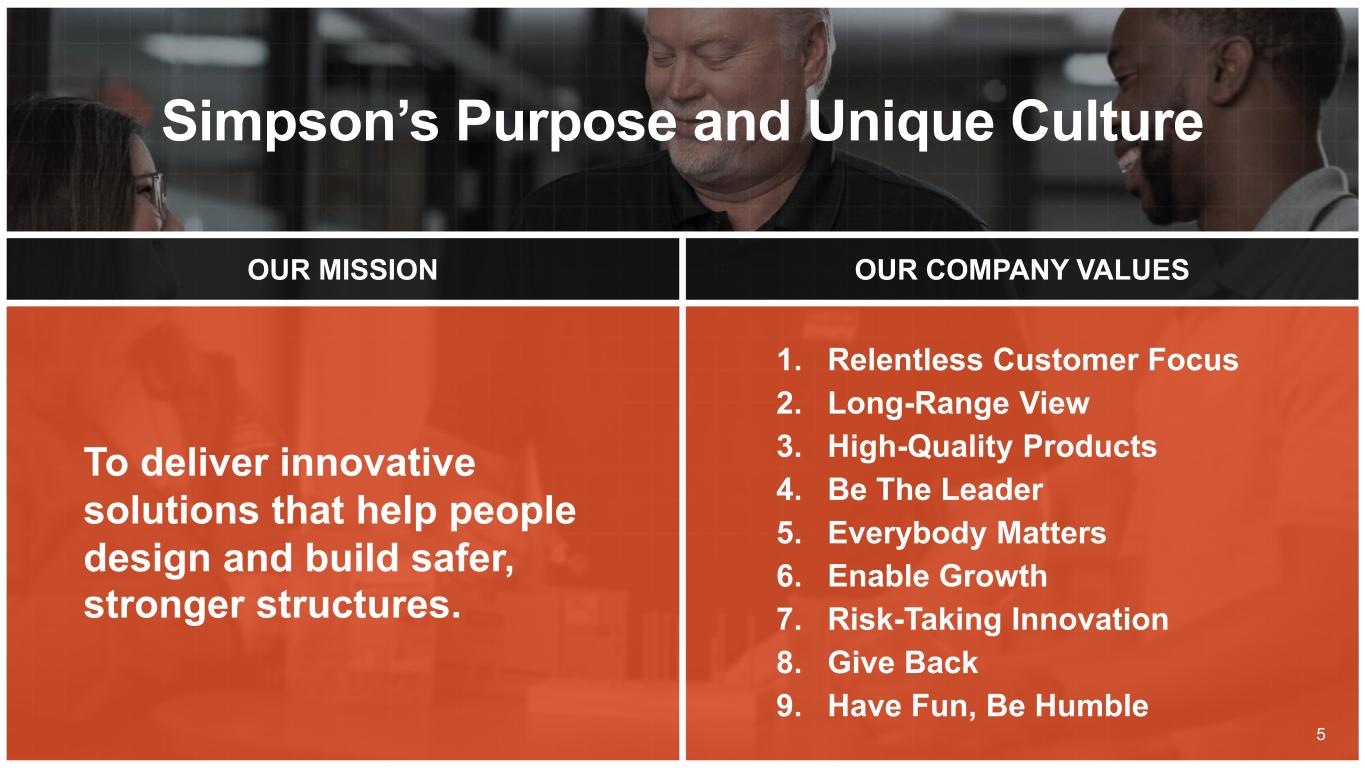
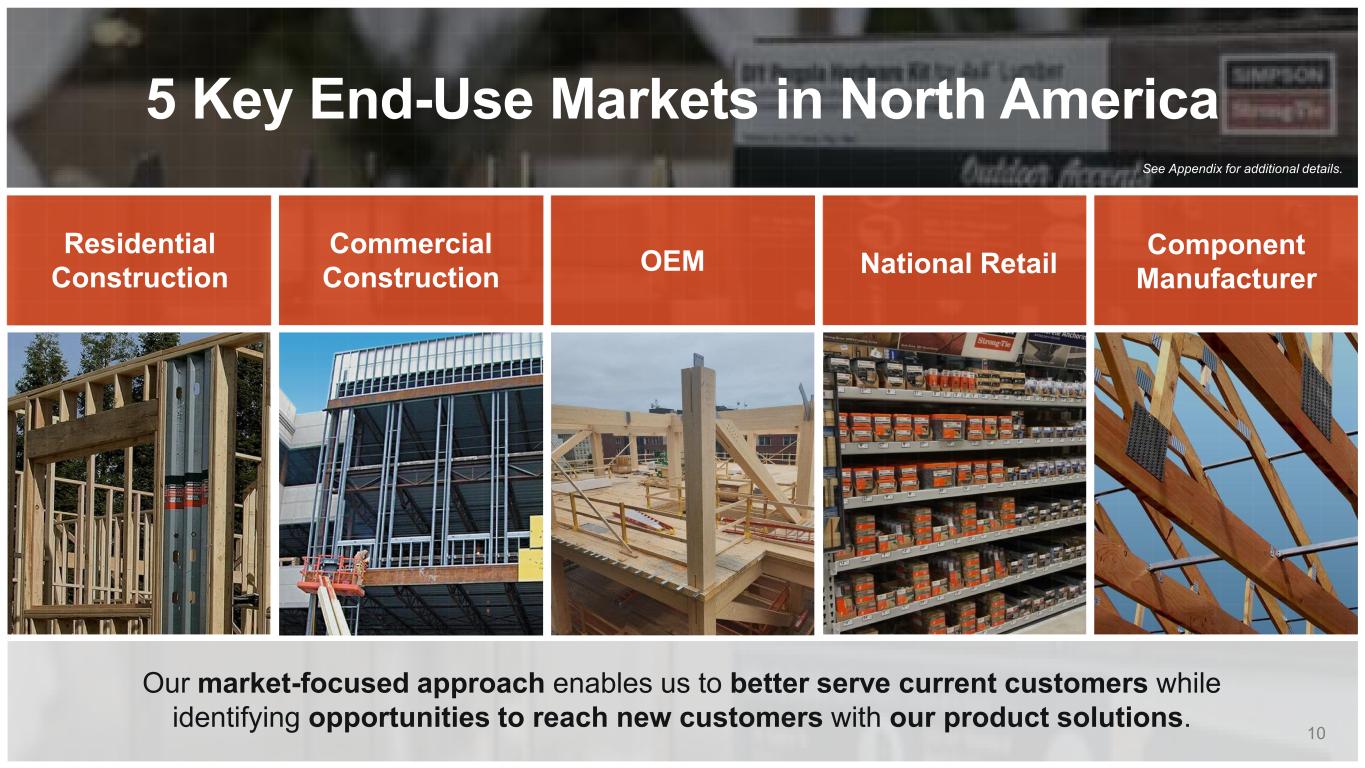
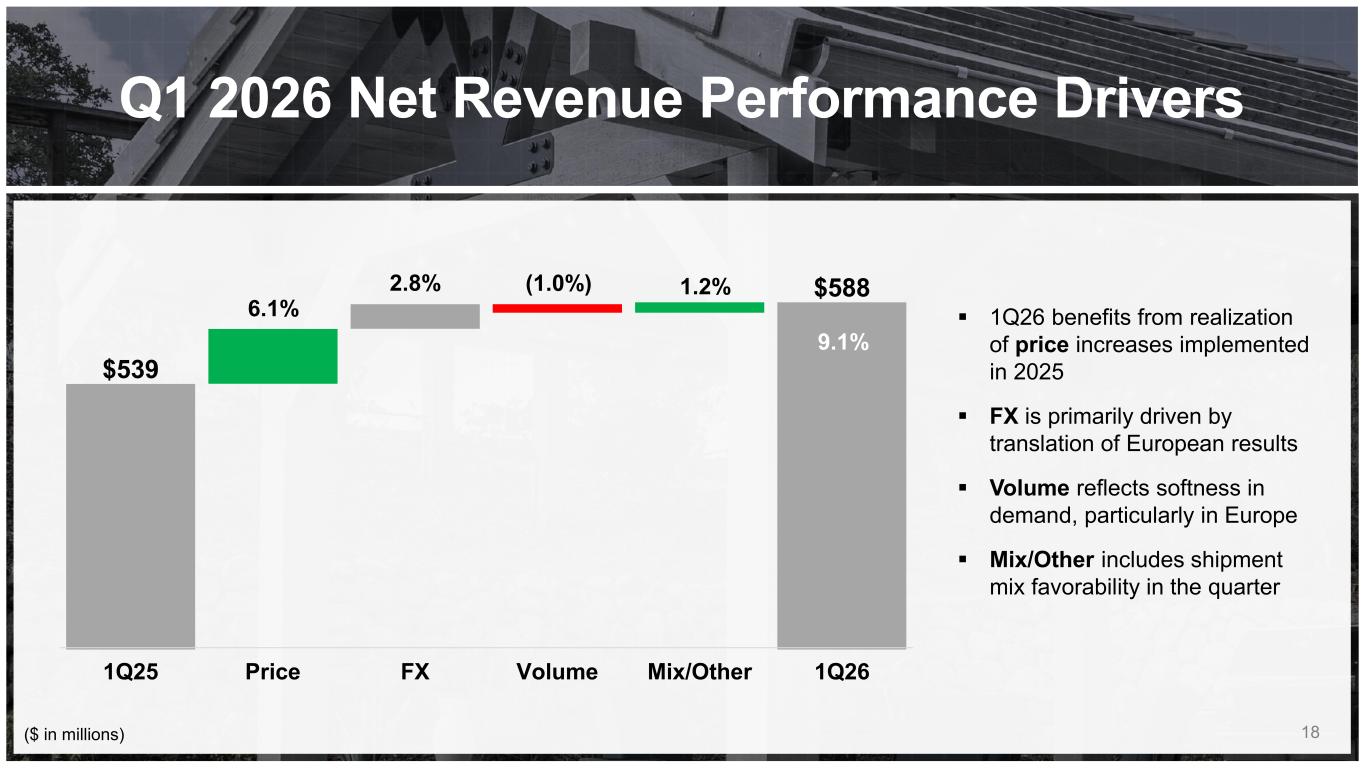
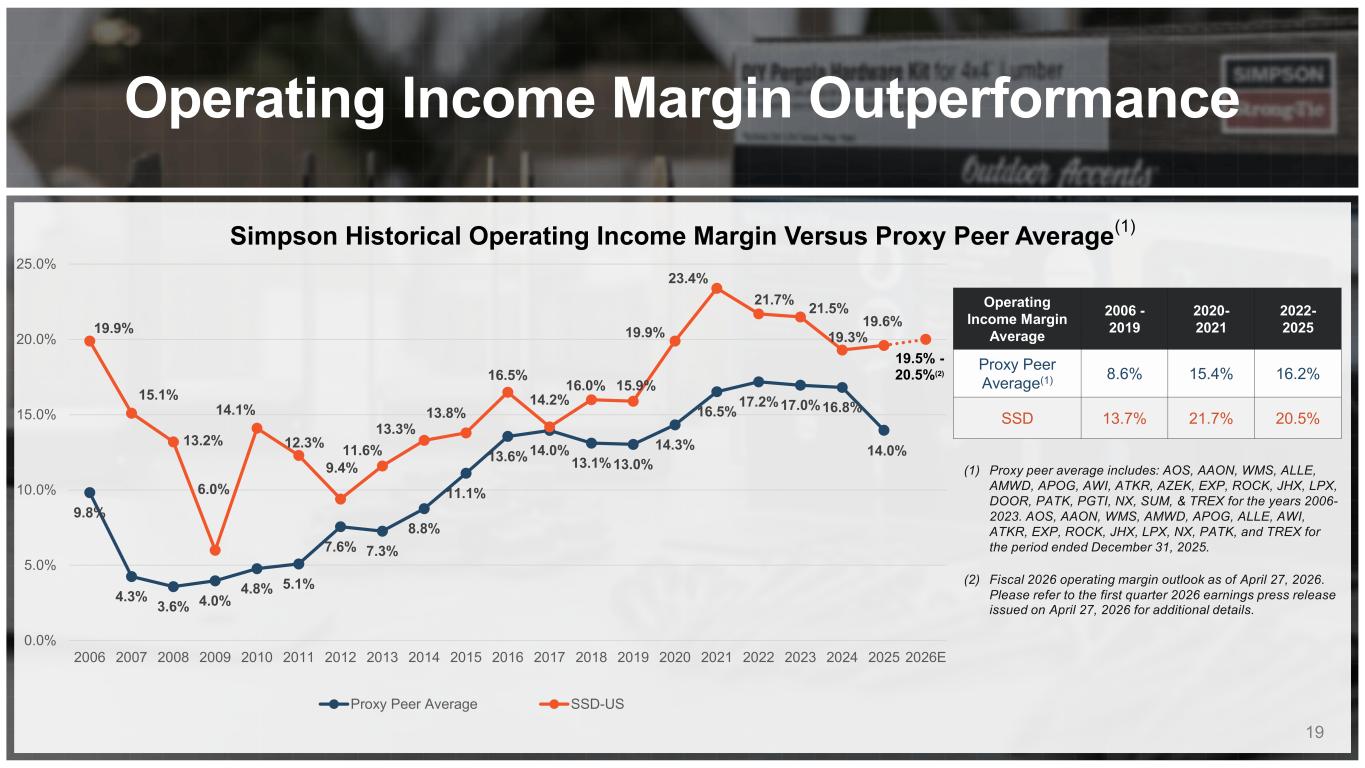
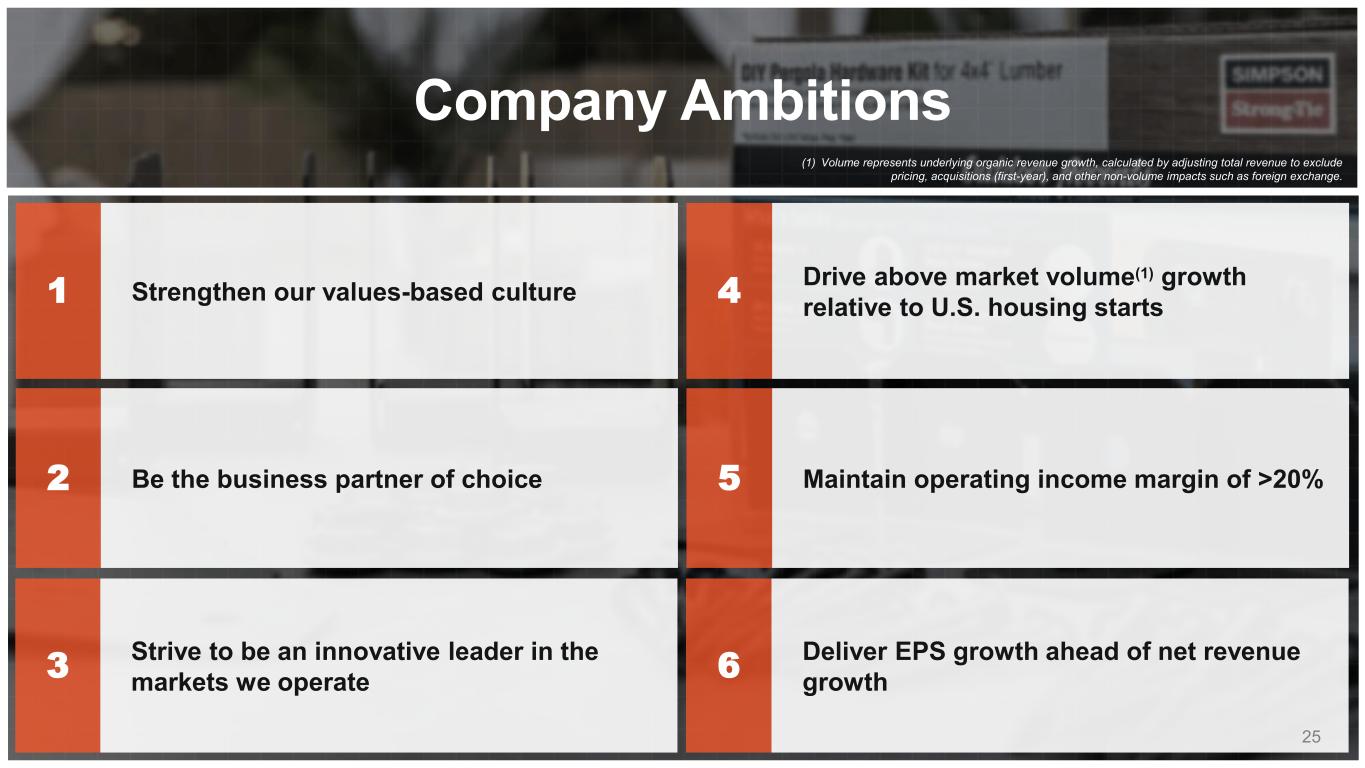
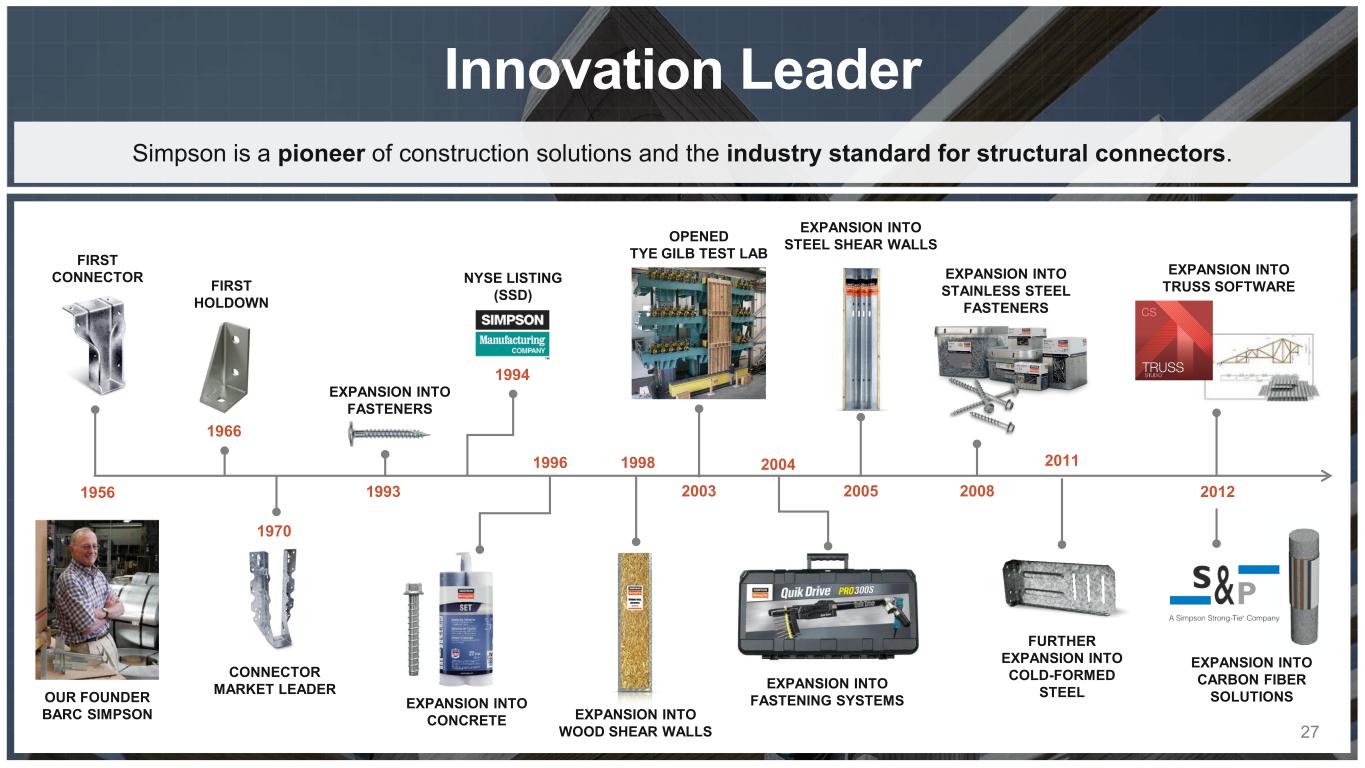
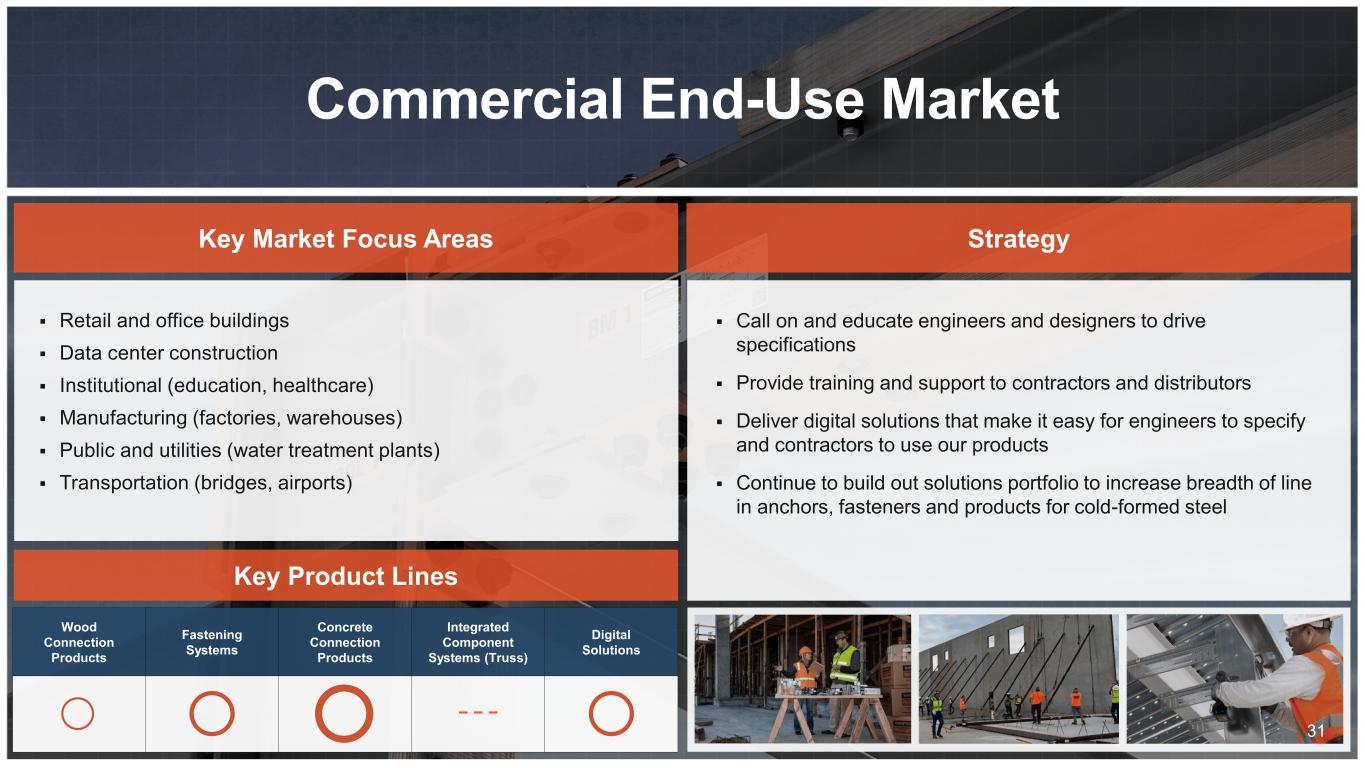
Thanks, Kim. Good afternoon, everyone and welcome to today's call. With me is Matt Dunn, our Chief Financial Officer. As we begin, I'd like to step back and briefly anchor our performance this quarter and the broader ambitions that guide how we build and grow Simpson. Across the organization, we remain focused on being the partner of choice for our customers, an innovation leader in the markets we serve and strengthening our values-based culture, all while delivering strong financial performance. We are making meaningful progress on these ambitions despite continued market challenges. A defining hallmark of our values-based culture is the depth of experience and long-term commitment across our organization. As we celebrate our 70th year as a company, that continuity matters. It reflects a culture that has allowed us to perform, adapt and grow through many different construction cycles. Throughout the year, we'll be highlighting employees whose long-term dedication and impact reflect the values and culture that have defined Simpson for seven decades. I'd like to take a moment to recognize a few members of our team. First is Sheryl Wyatt, Plant Director for our Southeast operations. She is celebrating 42 years with Simpson. Sheryl started her career in our customer service organization, gaining firsthand insight into our customers and how we support them. She advanced through several manufacturing and operation roles and today leads our highest volume and most cost-effective manufacturing facility. I'd also like to recognize Cyndi Chandler. Cyndi started her career with Simpson in Texas and has spent 41 years with the company. She currently leads our business in the United Kingdom, where she made meaningful profitability improvements. Over her career, she has consistently led teams through complex change from reshaping our U.S. national accounts approach, to launching operations in Chile and most recently, successfully strengthening our customer relationships across the U.K. Finally, I'd like to recognize our brothers, Genaro and John Sid, from our Southwest operations. With 48 and 42 years of service, respectively, Genaro and John bring a combined 90 years of experience spanning production planning, leadership and quoting. They are a great example of the deep operational knowledge and customer focus that underscore what makes us unique. These are just a few examples of the people behind the results and we're grateful for the experience, leadership and commitment they bring to work every day. Now turning to our financial results. We delivered net sales of $588 million, up 9.1% from the prior year quarter. As outlined in our investor presentation, net sales growth was primarily driven by our 2025 pricing actions, which contributed approximately 6% and foreign exchange of approximately 3%. These gains were partially offset by an approximate 1% decline in volume as a result of softer housing start activity during the quarter. In North America, net sales were $461.9 million, up 9.8% from the prior year quarter, including a $31 million benefit from pricing actions. As we look across our North American business, performance remains mixed by market segment and varies by geography, consistent with broader construction trends. However, we continue to see areas of resilience and growth and our strategy, business model and customer relationships position us well. The component manufacturer business delivered a strong quarter with volumes up double digits, driven primarily by new customer wins. This business continues to represent one of our most attractive long-term growth opportunities. Even amid broader residential housing softness, customer engagement remains solid, particularly around productivity-enhancing solutions. Truss manufacturers remain focused on labor efficiency, throughput and operational visibility, resulting in increased demand for our solutions across software, plates, equipment and design services. We are making great progress in expanding and enhancing our offerings with value-added functionality. We are also improving our ability to respond quickly with new software features as customers' needs evolve. Adoption of our solutions continues to advance, strengthening our role as a strategic partner to our component manufacturing customers. The OEM business delivered another strong quarter with double-digit volume growth. This segment remains an area of relative strength and strategic importance, supported by long-term trends toward prefabrication and off-site construction methods, including engineered wood systems and mass timber. While project timing can vary, customer engagement remains high and our pipeline of opportunities continues to build. Our ability to pair innovative products with deep engineering expertise, testing capabilities and field support remains a key differentiator. As customers pursue increasingly complex performance-driven projects, we believe our OEM segment is well positioned to grow faster than the broader construction market over time. Our residential business volume increased modestly year-over-year, supported by continued cross-selling of connectors, fasteners and anchoring solutions. While builders are focused on cost control, cycle time reduction and lowering inventory levels, we renewed builder agreements, launched new products and increased our service offerings to support both our builders and our LBM partners. These initiatives, combined with high service levels across the industry's broadest and deepest product line have enabled us to perform relatively well in a market pressured by soft housing starts. In our commercial business, first quarter volumes were down slightly year-over-year, reflecting mixed construction activity by segment and geography. Demand for cold-formed steel and anchoring systems remains relatively resilient. Customers continue to value our technical expertise, project coordination, broad portfolio of code compliance solutions and reliable product availability on large complex projects, particularly where early engagement helps reduce risk and improve execution. While overall activity remains uneven, our differentiated capabilities position us well for continued share gains. Our National Retail business experienced low single-digit decline in shipments, while point-of-sale volumes declined in the mid-single digits versus the prior year. The retail environment remains competitive and reflective of broader housing and repair and renovation trends with customers remaining value-focused and selective in discretionary spending. Our teams remain focused on disciplined execution, strong in-store support and close collaboration with retail partners to optimize merchandising. We continue to make progress through pay optimization initiatives, targeted product innovation and the expansion of decorative hardware via our Outdoor Accents offerings. While near-term volumes remain pressured, our emphasis on service, reliability and in-market execution continues to strengthen retail relationships and support long-term growth opportunities. In summary, while near-term market conditions remain difficult, our diversified portfolio, strong customer relationships and focus on engineering and value-added solutions resulted in solid performance across the North American business. In Europe, first quarter net sales totaled $121 million, up 6.3% year-over-year, driven by foreign currency translation. On a local currency basis, net sales were down 5.4% with a decline in volumes partly offset by price increases. The market has been off to a slow start this year but we continue to expect flat to low single-digit market growth over the next couple of years. Even in this environment, we've had several meaningful customer wins, including multiple mass timber projects. We also made progress improving profitability in select countries and continue to optimize our footprint to support long-term performance. While our raw material positions remain strong, we are seeing input cost headwinds that have required us to pass through surcharges and price increases. Taken together, these dynamics reinforce our confidence in our ability to continue improving profitability in Europe. Our consolidated gross margin declined 130 basis points year-over-year to 45.2%, driven by higher material, factory and tooling and labor cost as a percentage of net sales, including start-up costs from the ongoing ramp of our Gallatin facility that opened late last year. Our 2025 price increases, which we now expect will contribute approximately $130 million in annualized net sales helped offset these costs, including those attributable to tariffs. Gross margin was also negatively affected by product mix, partially offset by our productivity initiatives. Our operating margin was 19.5%, up 50 basis points year-over-year, which included one-time costs of $2.3 million related to our strategic cost savings initiatives. Adjusted EBITDA totaled $139.4 million, a 14.1% increase year-over-year. As outlined in our last call, our financial ambitions remain: one, driving above-market volume growth relative to U.S. housing starts; two, maintaining an operating income margin at or above 20%; and three, consistently driving EPS growth ahead of net sales growth. In summary, our first quarter results reflect disciplined pricing and cost management reinforced by strong execution and an unwavering focus on supporting our customers. As we look ahead, we expect conditions in both the U.S. and Europe to remain challenging and we do not anticipate sustaining the same level of revenue growth through the remainder of the year. As for our outlook on the markets, we now believe 2026 housing starts in the United States will be down low single digits compared to 2025. And in Europe, we expect flat to modest growth in the market for 2026. Looking ahead, our culture, customer focus, innovation and financial discipline position us well to execute and maintain a strong competitive position. With that, I'd like to turn the call over to Matt, who will discuss our financial results and outlook in greater detail.
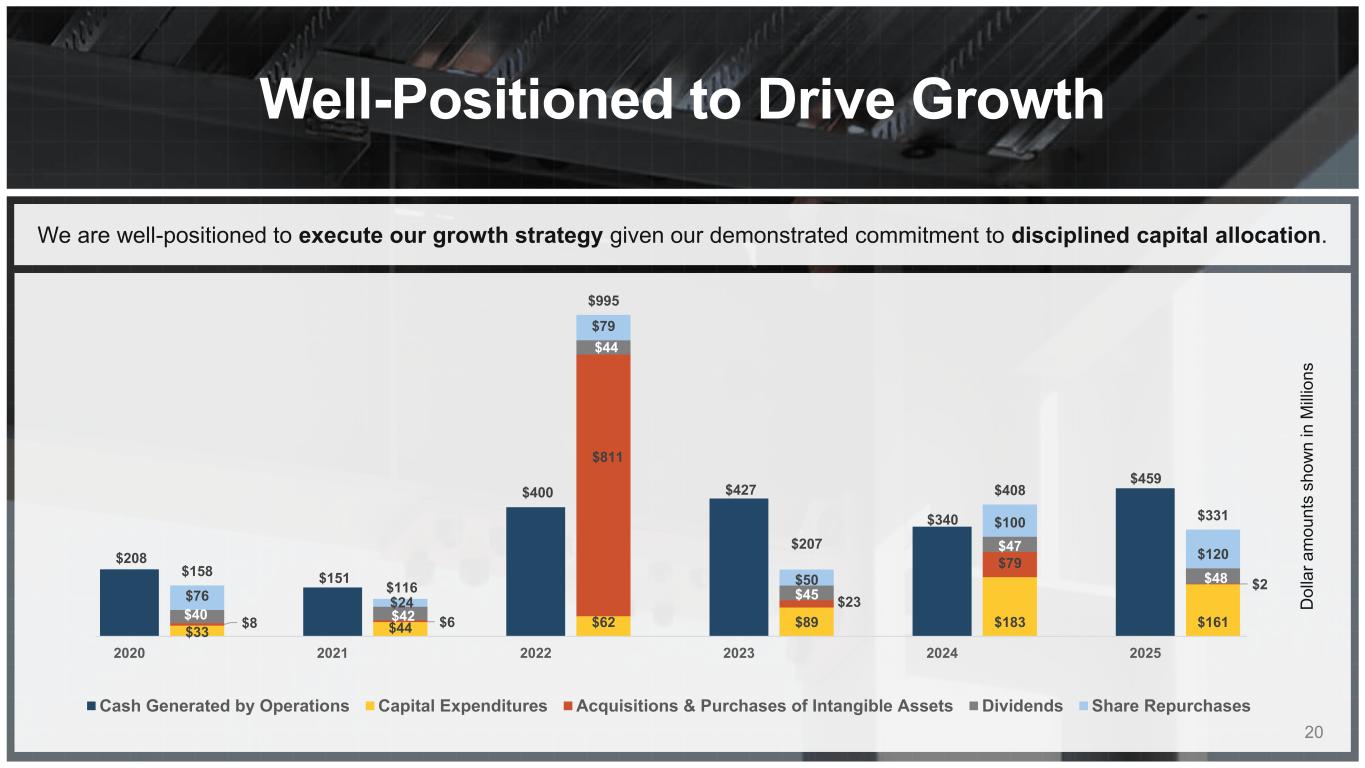
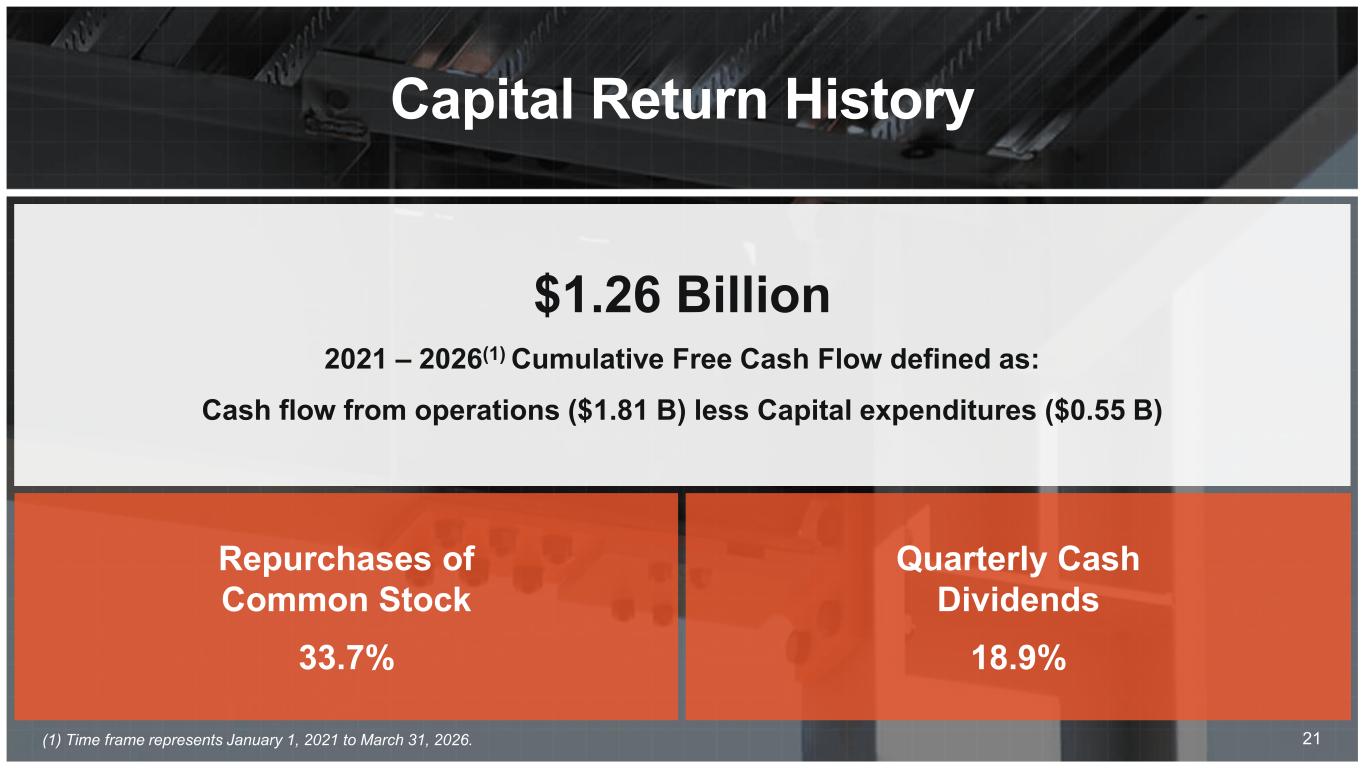
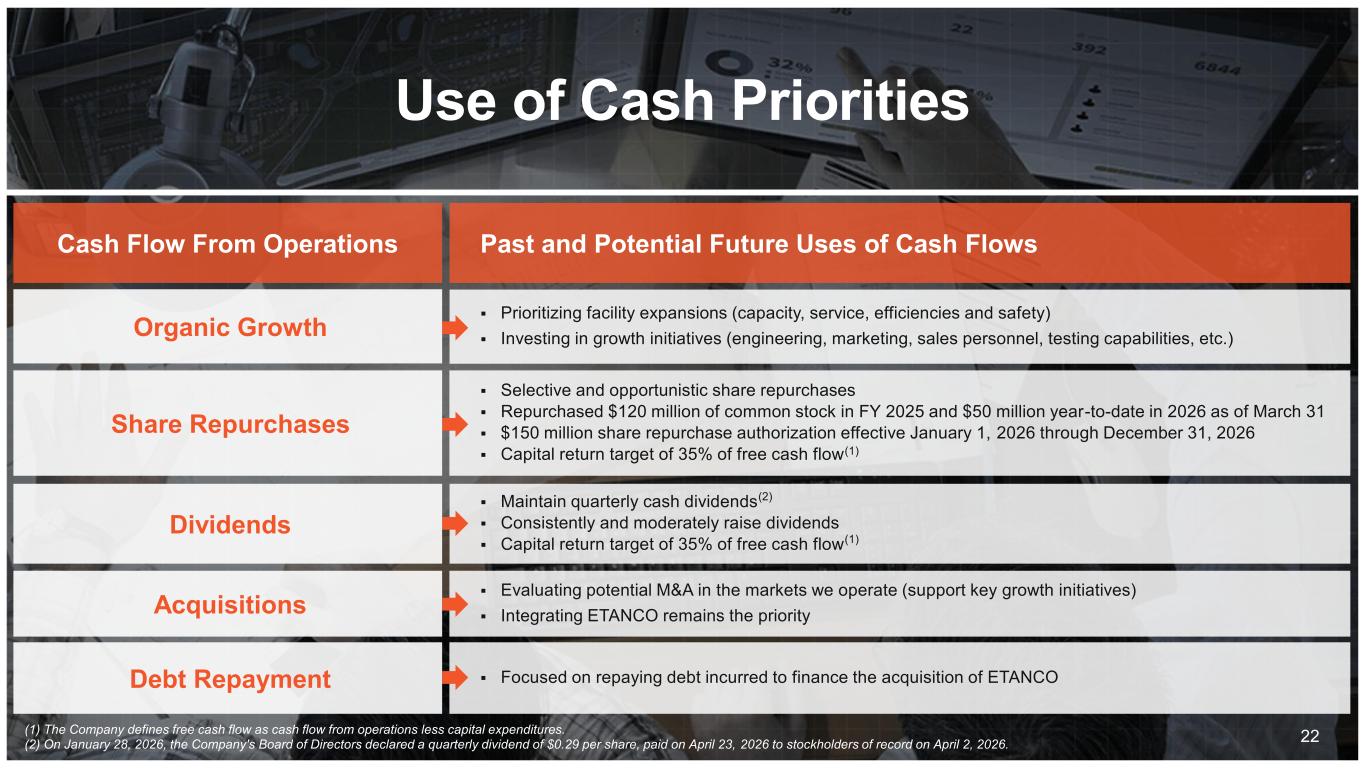
Good afternoon, everyone. Thank you for joining us on our earnings call today. As we celebrate our 70th year as a company, I'd like to echo Mike's comments and extend our gratitude to our many long-standing employees who have made Simpson the company it is today. I'd also like to mention that unless otherwise stated, all financial measures discussed in my prepared remarks refer to the first quarter of 2026 and all comparisons will be year-over-year comparisons versus the first quarter of 2025. Now turning to our results. Consolidated net sales grew 9.1% to $588 million. In the North America segment, net sales rose 9.8% to $461.9 million. Europe delivered a 6.3% increase in net sales to $121 million, driven by $13.2 million in favorable foreign currency translation and price increases, which were partially offset by lower sales volumes, partly from adverse weather conditions across the region. Globally, wood construction product sales were up 8.3% and concrete construction products sales were up 14.7% as a larger percentage of these products are imported and included in tariff-driven price increases. Consolidated gross profit increased 6.1% to $265.9 million, resulting in a gross margin of 45.2%, down 130 basis points. In North America, gross margin was 47.8%, below the 49.8% reported in the prior year, reflecting the impact from tariffs and higher factory overhead and labor costs as a percentage of net sales, along with some unfavorable product mix in the quarter. As Mike noted, start-up costs in our Gallatin facility represented an approximate 100 basis point headwind to our first quarter gross margin, which we expect to moderate as we progress through the year. In Europe, gross margin increased to 36.3% from 35.2%, driven by higher pricing and lower material costs, partly offset by higher factory and tooling costs as a percentage of net sales. From a product perspective, our gross margin was relatively flat at approximately 46% for wood products. For concrete products, gross margin was 40.2% compared to 49.5% one year ago, with the decrease due to tariffs, partly offset by recent pricing actions. Now turning to expenses. As a percentage of net sales, first quarter operating expenses were 25.6%, an improvement from 27.5% last year. SG&A headcount was down approximately 9.1% year-over-year, which reduced personnel-related costs. In total, operating expenses increased 1.7% to $150.7 million, driven primarily by $4.2 million of foreign currency translation and one-time costs in Q1 2026 of $2.3 million related to our strategic cost savings initiatives. These increases were largely offset by lower professional fees and variable incentive compensation. To further detail our SG&A, our research and development and engineering expenses decreased by 6.1% to $18.6 million on lower personnel cost due to less headcount and footprint optimization. Selling expenses were relatively flat at $54.5 million as a result of our strategic cost savings initiatives. On a segment basis, selling expenses in North America were down 3.3% and in Europe, they were up 11.9%, primarily due to FX. General and administrative expenses increased by 4.5% to $77.6 million due to one-time costs of $2.3 million related to our strategic cost savings initiatives. As a result, our consolidated income from operations totaled $114.6 million, an increase of 12% from $102.3 million. Our consolidated operating income margin was 19.5%, up from 19.0% last year. In North America, income from operations increased by 12.8% to $118.3 million due to higher net sales and reduced operating expenses. Our operating income margin in North America was 25.6% compared to 24.9% last year. In Europe, income from operations decreased 23.8% to $7.1 million due to lower volumes. Our operating income margin in Europe was 5.9% compared to 8.2% last year. Our effective tax rate was 24.1%, approximately 140 basis points below the prior year period. Accordingly, net income totaled $88.2 million or $2.13 per fully diluted share compared to $77.9 million or $1.85 per fully diluted share. Adjusted EBITDA was $139.4 million, an increase of 14.1%, resulting in a margin of 23.7%. Now turning to our balance sheet and liquidity. As of March 31, 2026, we had $74.2 million drawn on the revolver, resulting in $525.8 million of remaining availability. Our debt balance was $370.5 million, down $3.8 million from December 31, 2025 and cash and cash equivalents totaled $341 million, resulting in a net debt position of $29.5 million. Our inventory position as of March 31, 2026, was $549 million, which was down $45.2 million compared to December 31, 2025. Pounds of inventory on hand in North America were down double digits with a nearly double-digit increase in cost per pound driven primarily by raw materials. We generated cash flow from operations of $35.9 million for the first quarter. Our capital allocation strategy remains focused on both supporting growth and delivering returns to our stockholders. In Q1, we invested $17.7 million in capital expenditures, returned $12 million in dividends to our stockholders and repurchased $50 million of our common stock. As announced in October, the Board authorized a new share repurchase program for 2026, permitting the repurchase of up to $150 million of our shares through year-end 2026. This authorization underscores our confidence in the long-term prospects of the business and our ongoing commitment to returning capital to shareholders. Next, I'll turn to our 2026 financial outlook. Based on business trends and conditions as of today, April 27, 2026, our guidance for the full year ending December 31, 2026, is as follows. We continue to expect our consolidated operating margin to be in the range of 19.5% to 20.5%. Additional key assumptions include our outlook for U.S. housing starts to be down in the low single-digit range, a lower overall gross margin based on imposed tariffs and increased depreciation costs, a higher realization of the annualized contribution from our 2025 price increases, an expected $3 million to $5 million of footprint optimization costs in Europe and a projected $10 million to $12 million benefit on the sale of vacant land in the back half of 2026. Our effective tax rate is estimated to be in the range of 25% to 26%, including both federal and state income tax rates based on current tax laws. And finally, our capital expenditures outlook is expected to be in the range of $75 million to $85 million. In summary, we delivered solid results in the first quarter with growth in net sales, EBITDA and operating margin despite a housing market that remains challenged. Pricing actions are contributing as expected and are projected to add roughly $130 million in annualized net sales, helping offset some tariff-related cost pressures. Overall, while we were pleased with our Q1 results, we do not expect this level of revenue growth to carry through the remainder of the year, given our tempered outlook for the housing market in 2026 and the timing of 2025 price increases. We remain focused on disciplined capital deployment and our commitment to return at least 35% of free cash flow to shareholders. With that, I will now turn the call over to the operator to begin the Q&A session.
Operator
Our first question comes from Daniel Moore of CJS Securities.
Congrats on the quarter. I guess we'll start with the modest change in expectations around housing starts for the year, certainly not a surprise. And I realize we're talking weeks, not months. But just talk about the cadence of demand and volumes in North America that we've seen since the start of the war in Iran and spike in oil prices. Just wondering what sort of impact you're seeing in real time? And how do you see that playing out as we look through to the remainder of Q2?
Dan, thanks for the question. We started coming into this year thinking the market was going to be roughly flat. The census data is a little delayed. When we look at the market, we're doing two things. We're getting feedback from six to seven different firms on how the year is going to play out. Consensus from those firms is low single-digit. We then cross-check that with a lot of our customers. What we hear from customers in the spring is that it's been a bit of a soft selling season, which confirms that low single-digit market growth rate expected for the year.
Very helpful. In terms of pricing, Q4, about a 5% to 6% benefit, and again, 6% benefit this quarter. Have you taken or contemplated any additional price increases given continued inflationary pressures? How should we think about the impact of pricing in Q2 as well as the back half of the year? I know you mentioned kind of $130 million all in. Any comments on cadence would be helpful.
When we look at pricing going forward, in Europe we are seeing rising inputs in many areas. We have started doing surcharges and implemented some price increases there, which we mentioned in our prepared remarks. We're experiencing rising costs across other parts of our business in North America. We are working to take cost out and drive productivity with the expectation that we maintain our gross margins over the longer period of time.
And Dan, this is Matt. To answer your specific question, we haven't taken any additional price increases in North America beyond the two we announced last year. As we look forward, we're seeing cost increases, whether fuel or potentially steel, but we haven't contemplated or announced anything. We're focused on maintaining and preserving our gross margins. We could consider pricing if conditions change, but right now, nothing is in the works.
Okay. Taking a step back from the macro, good color and detail about increased penetration, particularly in some of those newer end markets like trusses and outdoor decorative. If you can dig in a bit on how things are progressing from a share gain perspective and what your expectations are for outpacing housing starts for the year from a volume perspective, assuming it does come in low single digits.
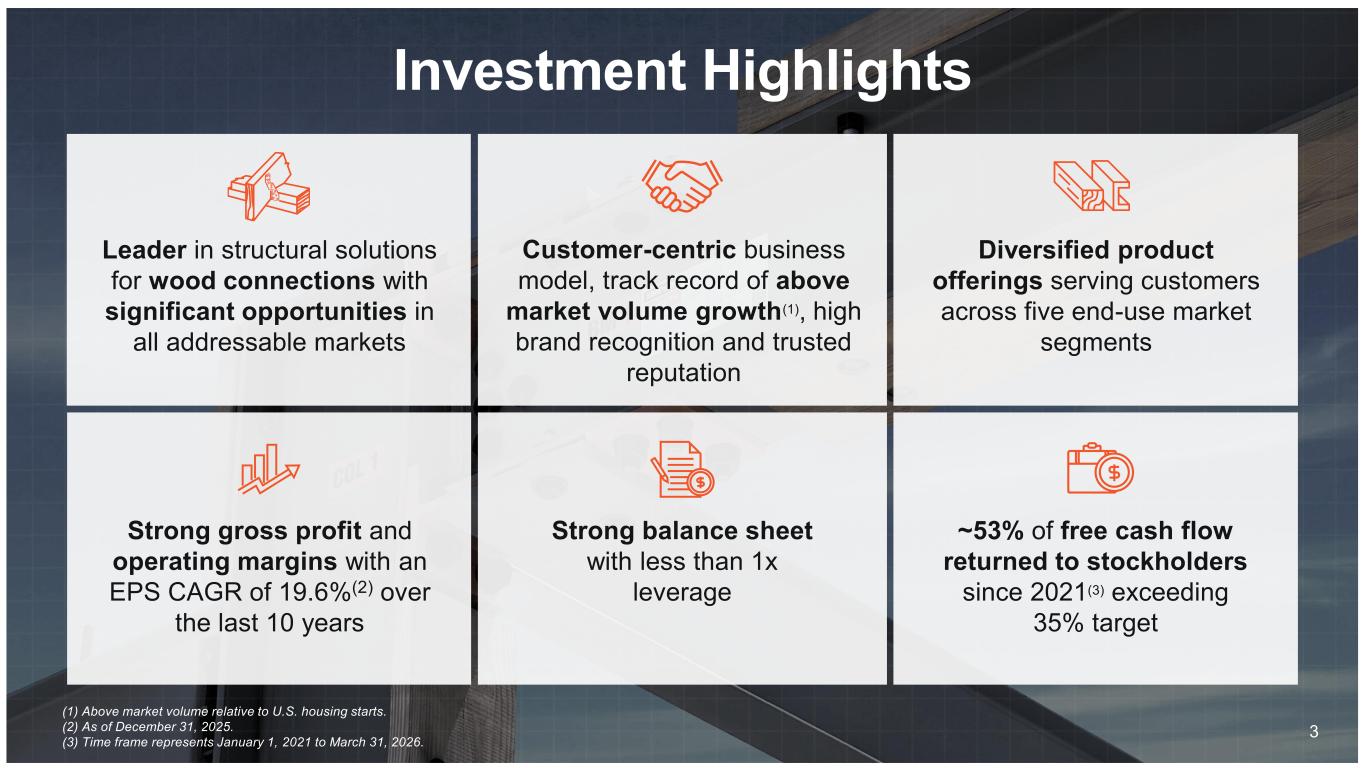
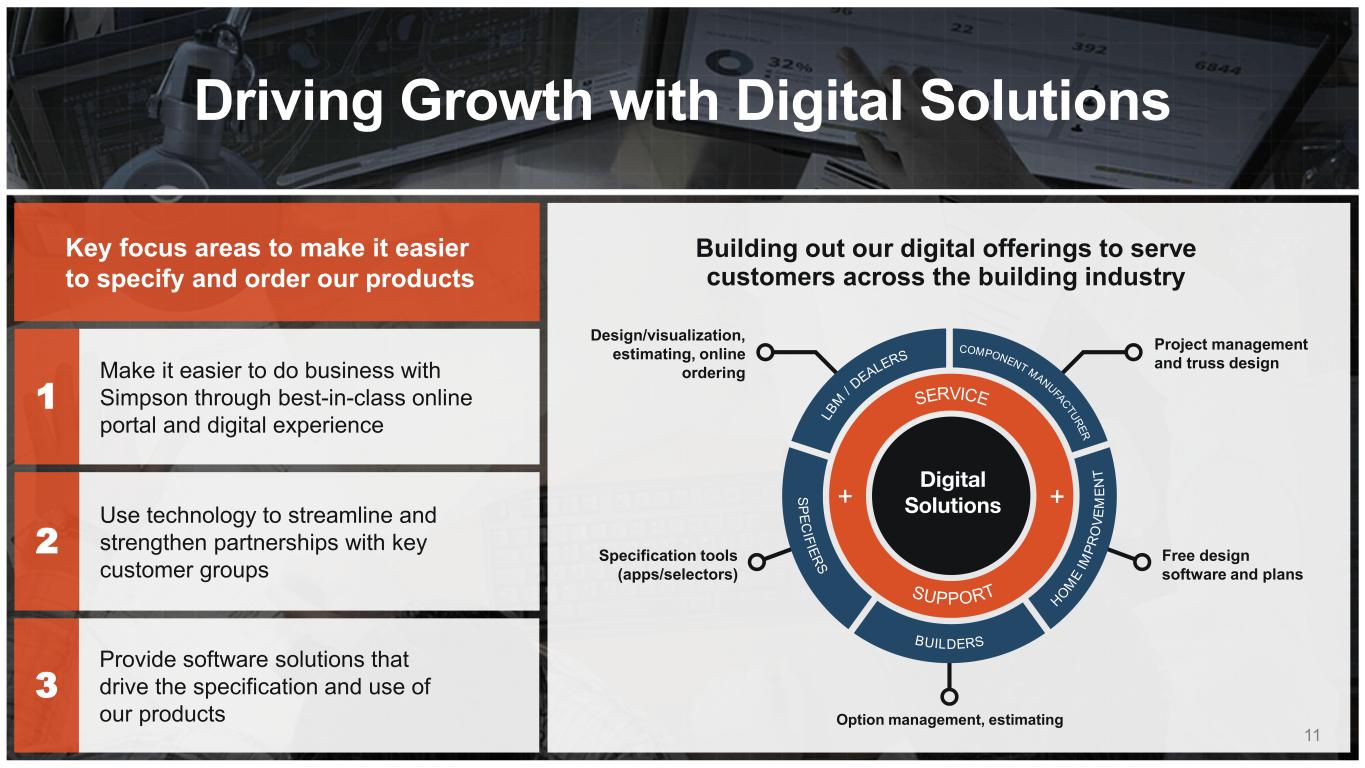
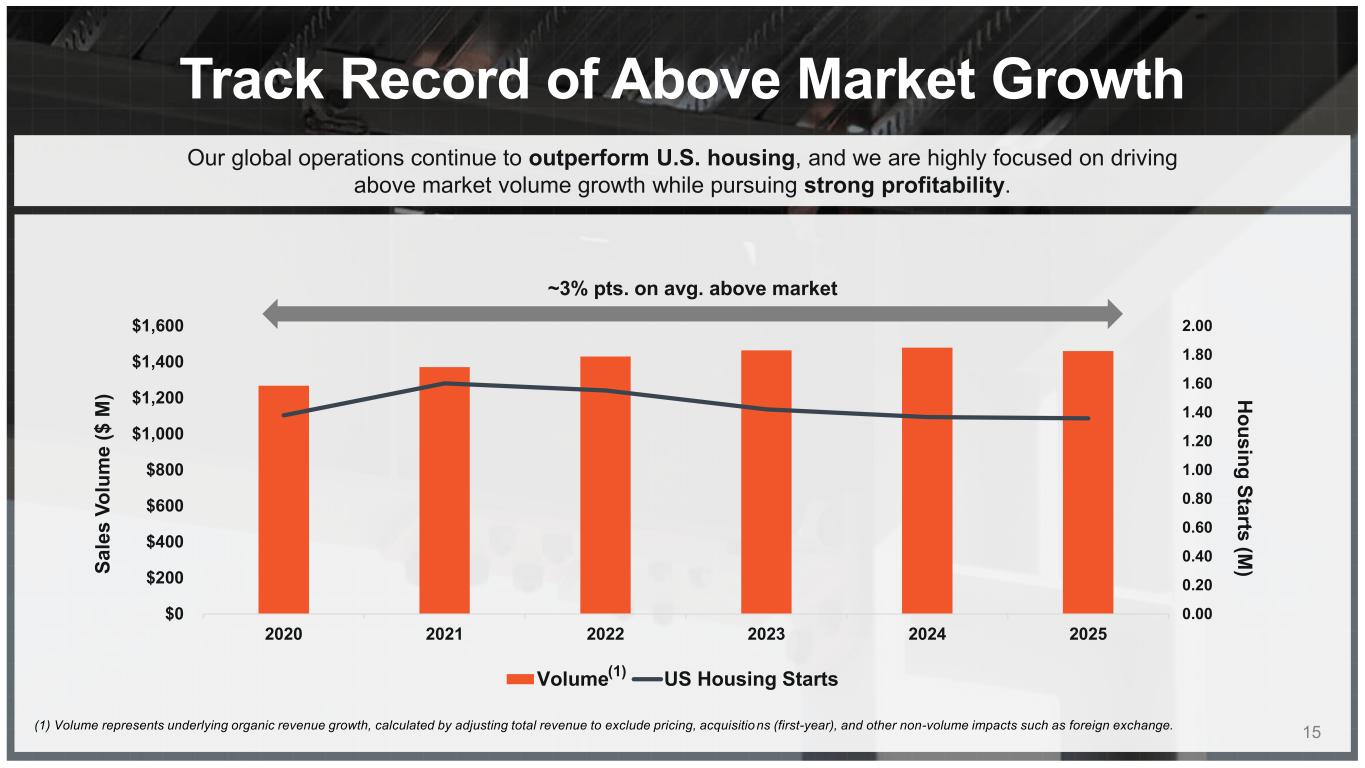
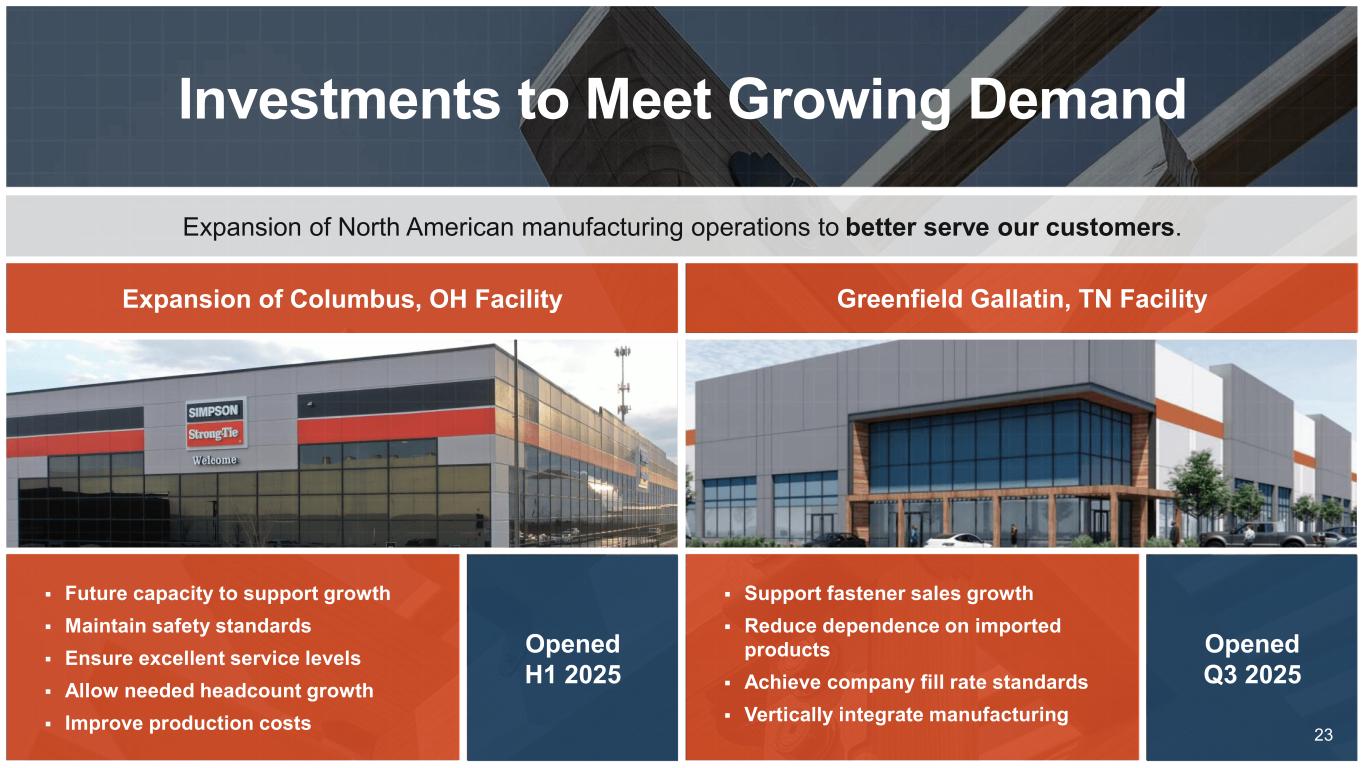
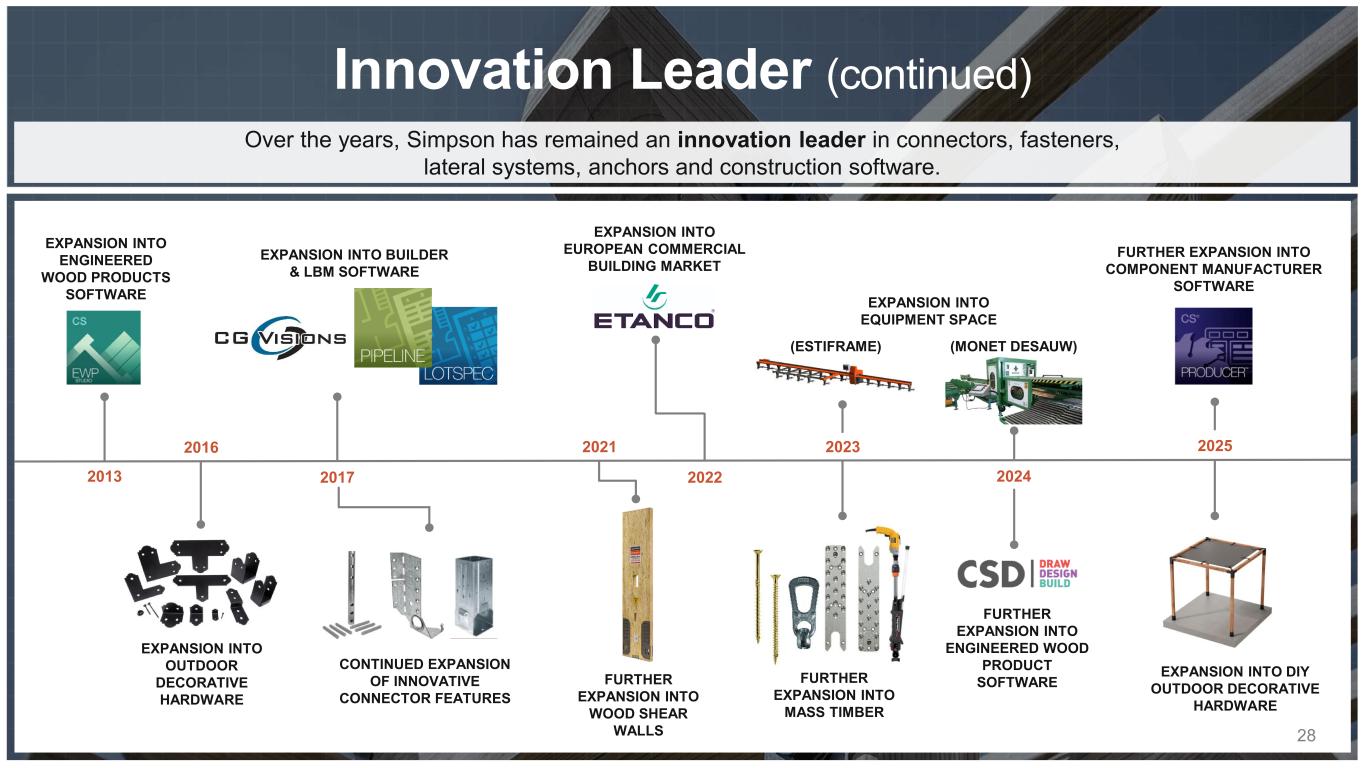
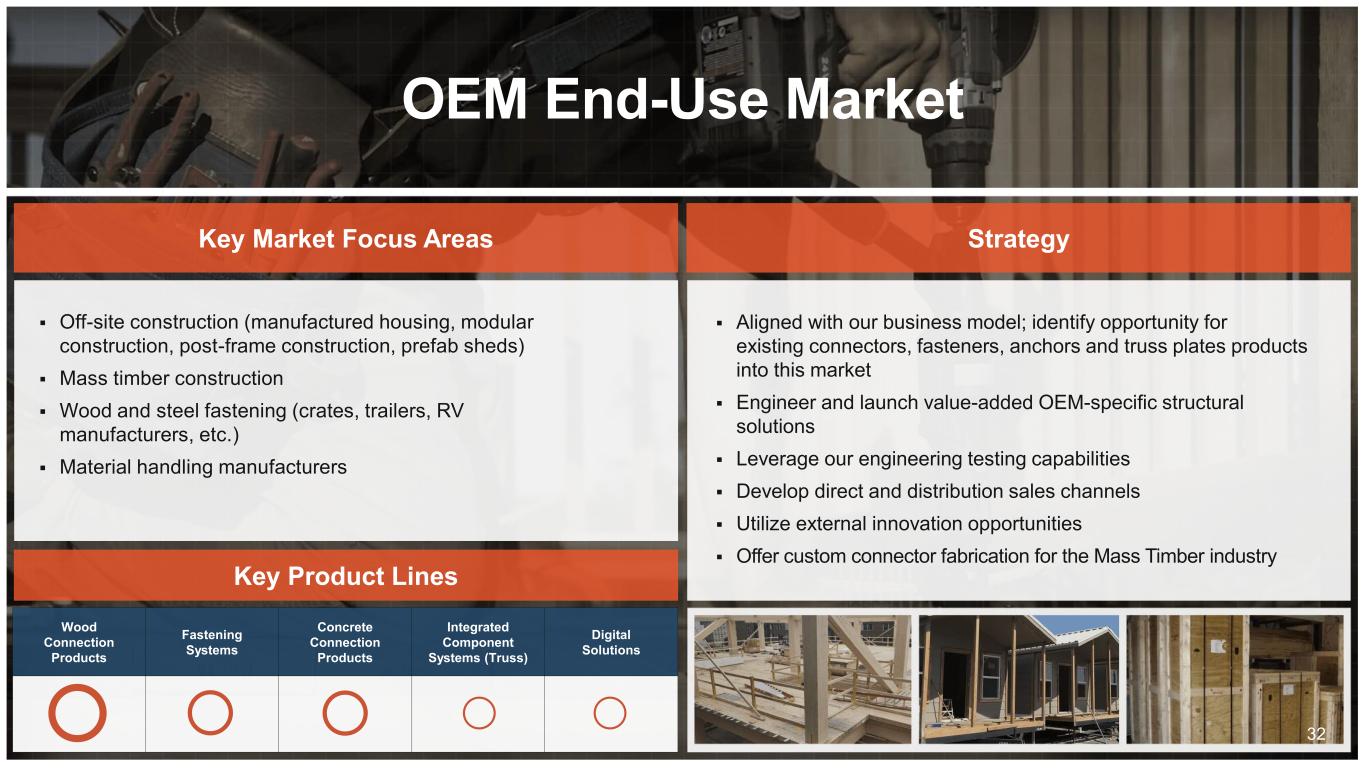
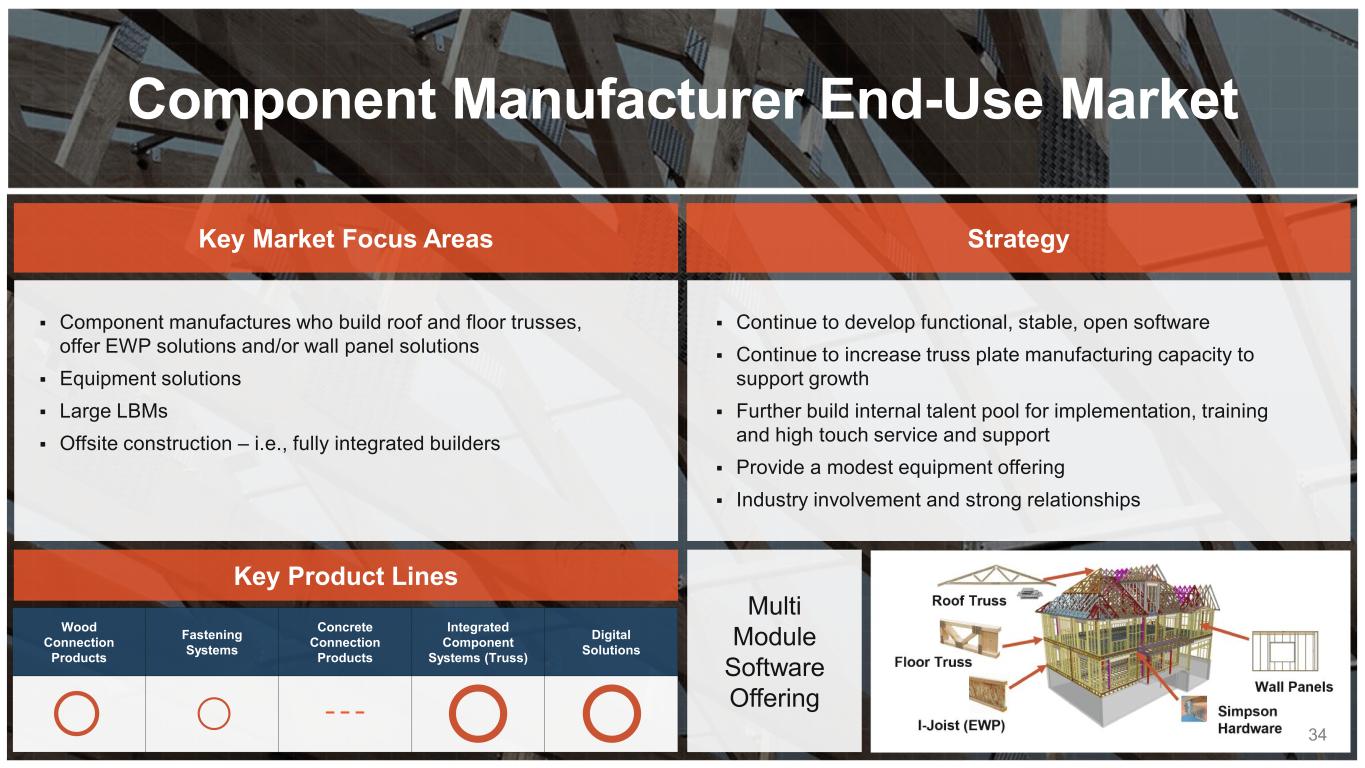
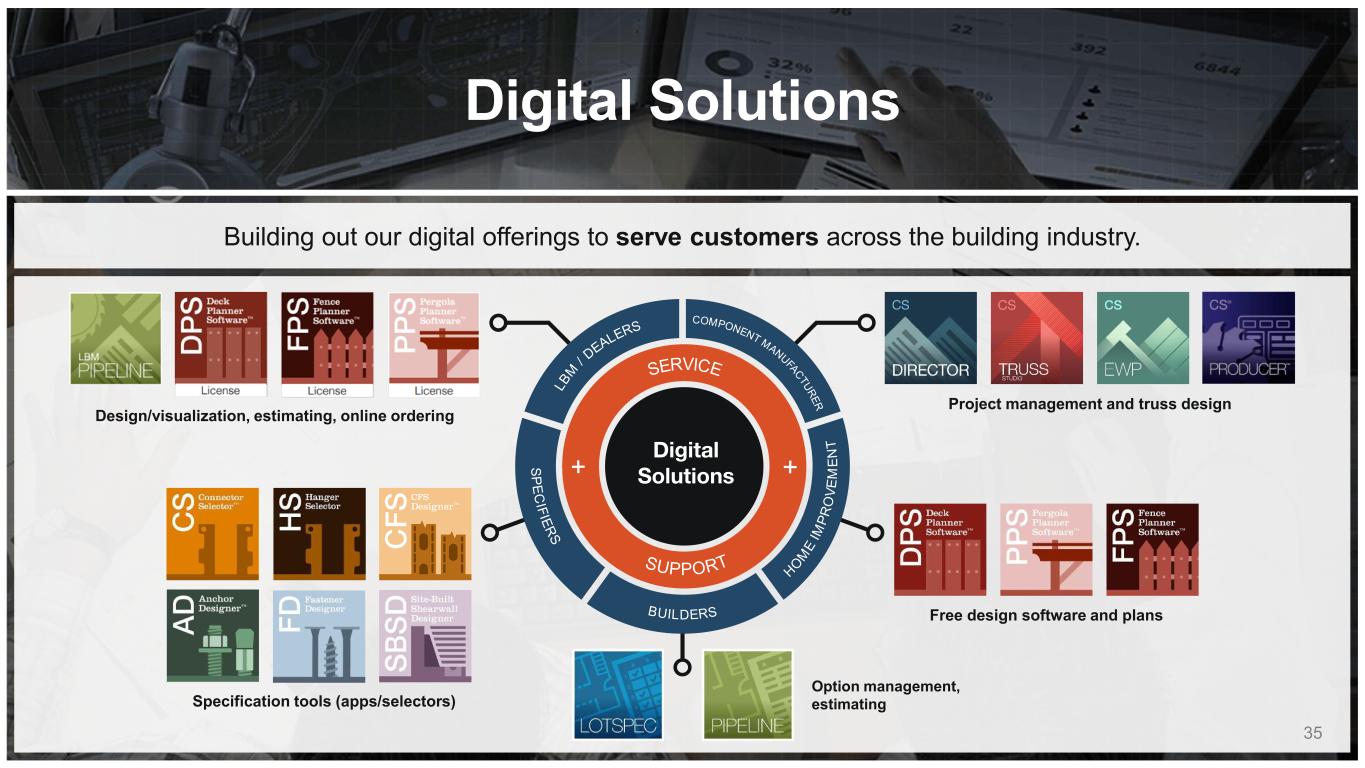
Let me add one more comment on the market. The census data is delayed, so we're not exactly sure how the first part of the year has played out; we expect the first round of data in a couple of weeks, which will give us a better feel. We believe we are slightly ahead of the market based on a trailing 12 months. Driving above-market growth comes back to market playbooks across our segments and product playbooks around innovation, new customer gains, additional shelf space and more content on houses. We are particularly excited about the component manufacturing business growing double digits from new customer wins. The truss business is developing well. The producer tool has been in the market for a while; it is cloud-based and allows multiple releases to respond quickly to customer needs. We're progressing on a new design tool rolling out later this year and actively using AI to develop new software and quality assurance in the truss space. In OEM, mass timber projects are getting bigger and they want a broad set of solutions from us. The Gallatin facility will help us respond quicker. We've also done work to support high-strength, heavy-duty connector packages for mass timber buildings out of our Riverside facility. We're feeling good and want to drive above-market growth while maintaining that 20% operating income target.
Great to hear. Last one, a housekeeping item: timing around the gain on sale of land — you said back half. Has that been pushed out at all? Just trying to get a sense for modeling.
Yes, Dan. It's definitely going to be in the back half and it's included in our guidance for the year. We didn't specify a quarter when we gave guidance three months ago but we've got more visibility now that it's going to be in the back half. Whether it's Q3 or Q4 is to be determined; we'll try to refine that once we get closer.
Operator
Our next question is from Trey Grooms with Stephens.
Speaker 5
Congrats on the quarter. Thanks for the color on the outlook on housing, makes sense. How are you thinking about some of the other end markets? Are you still expecting demand for commercial to be kind of flattish? And for retail or R&R, do you expect that to be flat to up a little bit? Any changes there?
When we look at our end markets, we use multiple firms to estimate U.S. housing starts, which are in the low single-digit range. For the National Retail business and repair and renovation, we expect flattish to maybe up about one percent. In commercial, we are thinking low single digits for starts. For OEM, we benchmark versus IPX and expect low single digits.
Speaker 5
Okay. No real change there. On geography, I know you've seen mix headwinds from underperformance in California and Florida over the years. It sounds like Florida might be recovering somewhat. Any details on what you're seeing geographically and whether mix headwinds are starting to subside if Florida is starting to pick up?
State-level starts data varies by source. Big picture, Florida and California are down significantly from their peak about three years ago. In California, there's a lot of engineering tied to seismic requirements; customers report a strong backlog and projects ready to kick off, but we have not yet realized that in sales revenue. In Florida, we haven't seen a significant change for us yet and it's still a little soft.
Speaker 5
Okay. One housekeeping item on inventories: inventories were down significantly in the quarter despite sales improvements and stepped down sequentially. You usually build inventory in Q1 then work it down seasonally. Any color on how to think about this seasonal trend given lower levels as we enter the building season?
We're doing a lot of work to drive productivity on finished goods and work-in-process, which plays out in the inventory drop in dollars and more in pounds. Pounds are down significantly while cost per pound increased, driven primarily by raw materials. The bulk of the drop is on the raw material side, like steel and steel coils. We tend to buy in lumpier chunks when the market meets our needs, so raw material inventory will be a bit lumpy. I would expect we'll probably bump back up a bit on raw material through the year. At the same time, we're improving productivity on finished goods and work in process, which will somewhat offset that. We expect to stay below the prior peaks on pounds and on dollars it's tougher to say because price per pound is rising, but we would likely remain below the high watermark where we started 2026.
Operator
Our next question is from Kurt Yinger with D.A. Davidson.
Just wanted to go back to pricing. Can you talk about the difference between the new $130 million versus the $100 million previously? Is that just an updated view on what you'll capture? Or does that encapsulate some surcharges and the actions you've discussed in Europe?
Previous guidance was about $100 million annualized. In the prior quarter release, we realized about $60 million of that in 2025, which implied an additional $40 million in 2026. We're upping the annualized number to $130 million, which implies $70 million incremental in 2026. It's a combination of pricing enacted in Europe, particularly related to surcharges and some price increases, and a bit of product mix in North America driving more pricing. Products with higher price increases are primarily fasteners and anchors; they continue to grow a bit faster than the connector business, which yields additional dollars when you look at pricing impact. That doesn't necessarily drive better gross margin or operating income, but it does increase realized pricing dollars. It's a combination of those factors that raised the number to $130 million.
That makes sense. On the cost side, the change in 232 tariffs doesn't seem to be having much impact on you. Can you touch on that? Also, on freight with self-distribution, how are transportation and freight costs shared between you and customers? Is it similar to Europe where surcharges are passed along? Can you discuss that dynamic?
On the 232 tariffs, the announcements in early April don't have much impact for us; the tariffs we were paying are largely unchanged. For fuel and related surcharges, we are seeing suppliers pass along surcharges and rates can change weekly. Many of our shipments travel prepaid freight, and we have not implemented surcharges. From time to time, we may adjust the amount that ships prepaid for free, such as raising the minimum purchase threshold, but we haven't done that yet. We are seeing an impact in our 2026 outlook from increased fuel costs and we haven't acted to pass that through yet. We are actively monitoring it and will evaluate options to preserve our gross margin.
On volume, a really good quarter for North American residential. Anything transitory there? Looking at the full year, you trimmed expectations for housing starts. The first half comps are difficult and get easier in the back half. Given the positive Q1 performance, any reason to believe that wouldn't be sustainable as comps get easier?
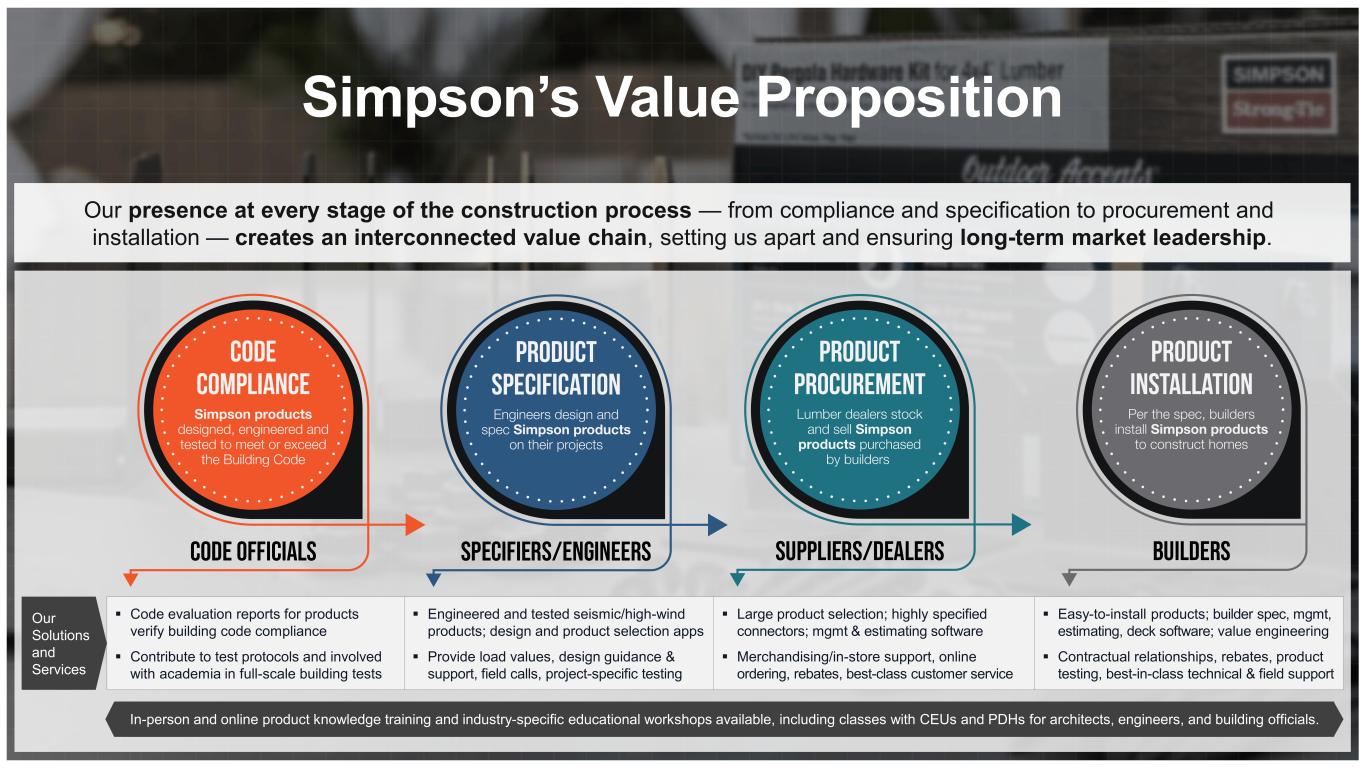
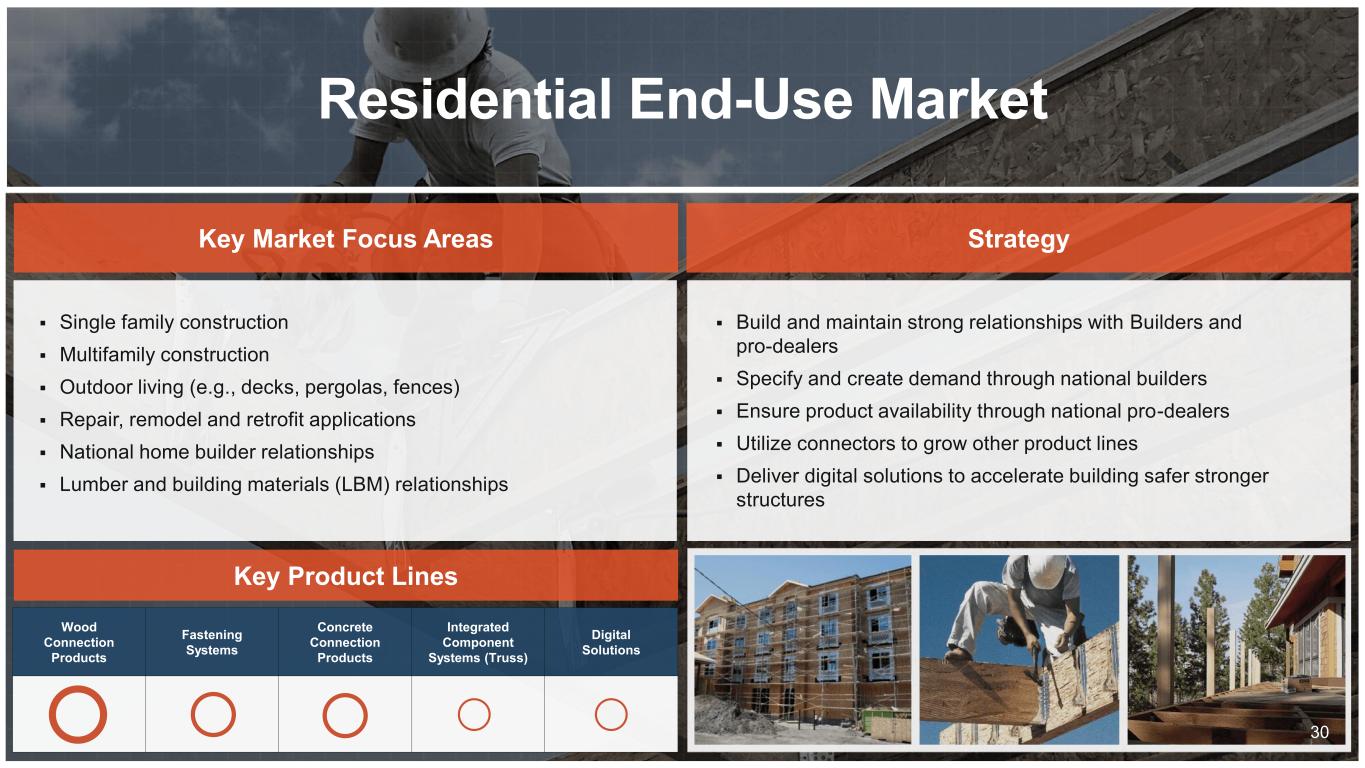
We're pleased with the development of our residential business team. The shift three years ago to a market-focused sales model has enabled us to cross-sell the complete product line. We've developed our warehouse network to be closer to customers and improve service levels, enabling same-day order processing and next-day delivery. That combination helps us get more content on houses and additional shelf space with lumber yards and Pro dealer customers.
On your comments about back-half comps, our volume comps do get a little easier in the back half compared to last year, but we also expect the market to be softer through 2026 as we've updated guidance. We're somewhat blind right now on the market due to reporting delays; 2025 actuals are still subject to revision from the Census Bureau when they publish the February and March starts numbers. We believe we're outperforming the market a bit on volume and expect to continue to do that, but the quarter-to-quarter comparisons will depend on when the Census data is revised and published. The outlook for the year has gotten a bit worse, backed by many market forecasters who expect a softer 2026.
Finally, on the national retail side: the weakness last year showed periods where sell-in didn't match sell-through but POS has turned now. Is that a function of the overall project environment or customers being more value-sensitive? Any thoughts on performance there early this year?
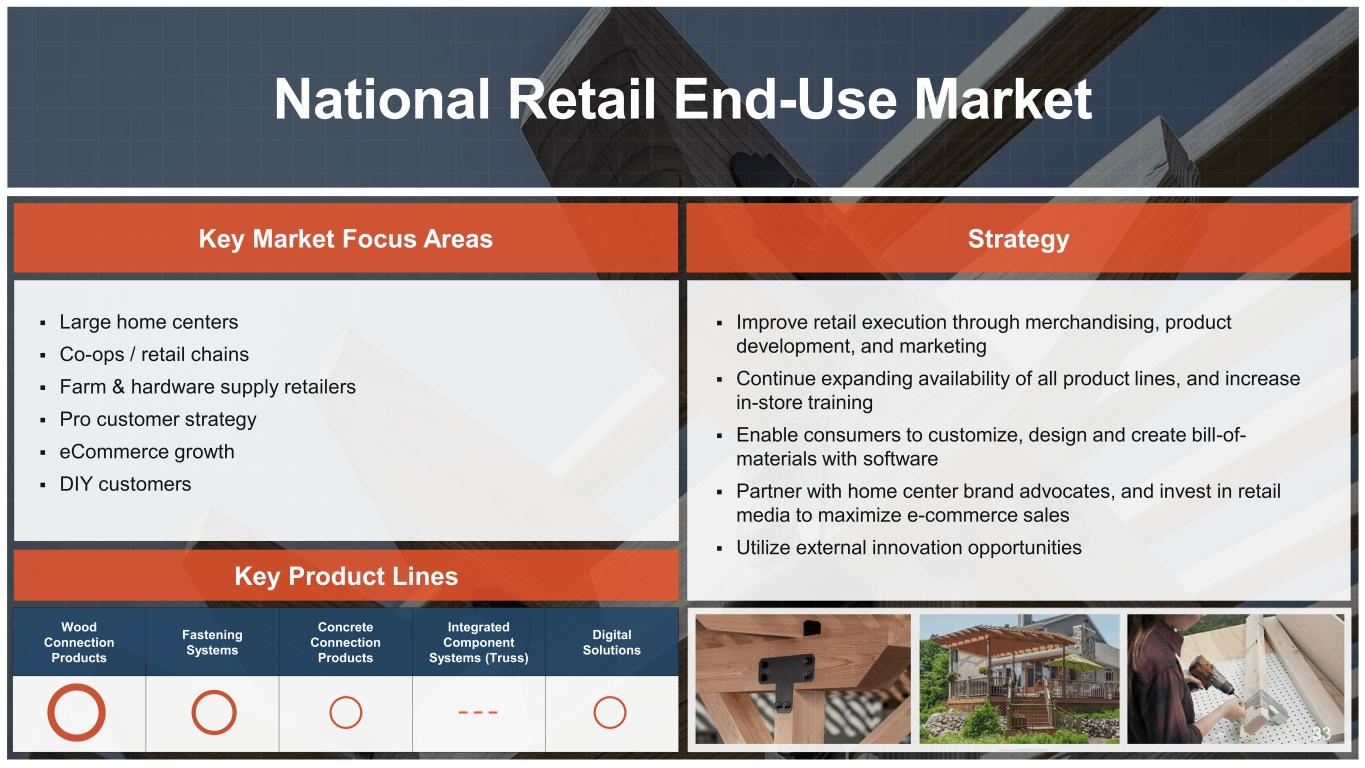
I wouldn't say we're seeing a shift to a value-only approach. In national retail, especially at Pro, customers know the products they want. We had several quarters where POS and our sell-in were disconnected; it flipped in Q1. We continue working with retailers on merchandising and promoting our outdoor living solutions, which have shown good growth. We're supporting Pro desks with estimating services and cross-selling the full product line. Over time, these initiatives should help, though we occasionally see inventory shifts with these customers which has been reflected in recent numbers.
To add, it's good to see the trend reverse a bit between sell-in and sellout. We've had several quarters where POS units were materially better than our sell-in. One quarter doesn't make a trend, but it's positive to see that reversal and we'll monitor how it progresses.
Operator
Our next question is from Tim Wojs with Baird.
Speaker 7
Nice job on the results and the inventory number. If I remember right, you were expecting about $30 million of annualized cost savings from SG&A actions you took last year. What was the realization in the first quarter?
If you recall, the $30 million savings was about two-thirds SG&A and one-third in COGS. We said we'd expect $10 million to $15 million on an annualized basis below last year's SG&A spend. In Q1, SG&A was up $1 million on the face of it, but you need to adjust for foreign exchange and one-time costs. FX translated to a $4.2 million headwind and we had about $2 million of one-time costs related to the cost savings initiatives. If you adjust for those, we're down about $5 million net. SG&A headcount is down about 9% year-over-year. So the realization in Q1, adjusting for FX and one-time costs, is in the $3 million to $5 million range. Project that across the year and you get close to the net number we expect to be down versus last year's actual.
Speaker 7
On the component manufacturing business: last quarter it was up low single digits and now it's up double digits. Is that lumpiness inherent in that business or did you have a significant number of adds this quarter?
It is a bit lumpy because it takes effort to convert a customer. We continue to add customers; a couple we added in late 2025 are now starting to scale in 2026.
Speaker 7
Any way to give a ballpark figure for how big that business is today?
We have not commented on the size of the component manufacturing business or the different market segments.
Operator
Our final question is from Andrew Carter with Stifel.
On the residential volume performance, up slightly, and you lowered guidance to low single digits. Based on your sources and customer conversations, would you be assuming a pretty deep decline in Q1 that improves throughout the year? Is that fair?
I wouldn't say deep decline. We expect the numbers to show the market was down in Q1 from a housing starts standpoint. Remember the back half of last year was the worst part compared to the front half of last year, which had slight growth. So comps are different. The front half could look worse and the back half better, which is more a function of what you're comparing to than a change in the starts rate.
On component manufacturers and truss reacceleration, you mentioned customer wins. How often do those occur? Is the double-digit run rate something durable because of customers you already have? Any unlocks as you roll out the rest of the software later in the year?
We've been working with many of these customers for a long time, especially larger Pro dealers. Smaller and midsized customers know our service and approach and we've been communicating our software development over the last 12 to 18 months with demos and updates. That visibility and the investments we've made have opened doors. Our cloud-based solution, customer-friendly design and contracting, and our focus on taking care of customers position us well as a partner of choice. That combination is driving additional opportunities.
Finally on Europe, you mentioned flat to low single digits over the next two years. I thought that was the expectation for this year. The quarter started down 5% organically. Could you comment on market risk given energy prices and the commercial-heavy mix which is longer cycle? Any update on Europe and downside risk?
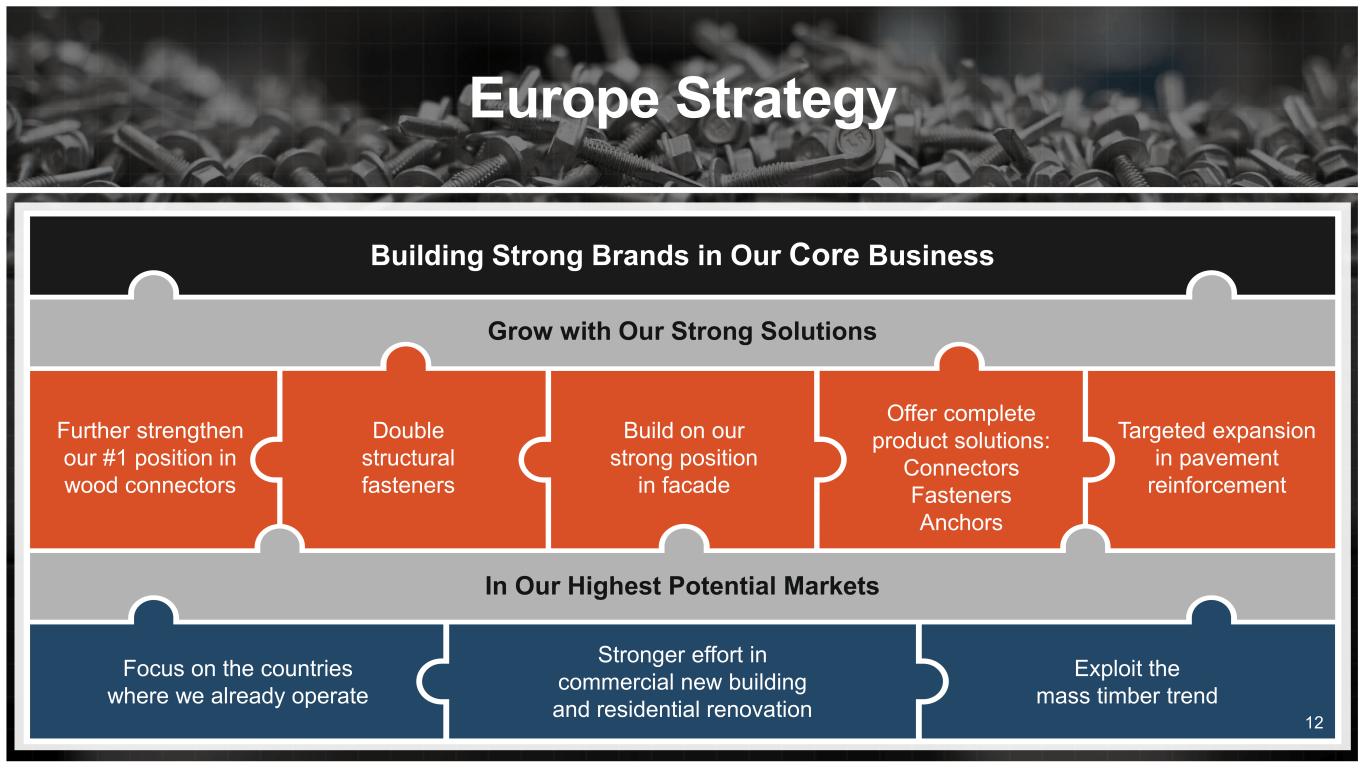
We look at a composite index based on the countries we operate in and the residential-commercial mix, and we use external experts for forecasts. Our view going in was flat to low single digits for the market. The slow start due to weather hasn't changed that view. There's some optimism; zero to two or three percent growth would be better than the last three to four years. In the meantime, we are focused on areas we can control: picking up new applications, shelf space and more content on jobs.
Operator
With no further questions, that will conclude today's conference. You may disconnect your lines at this time and thank you for your participation.