Operator
Good morning, and welcome to the Trinity Industries Inc. First Quarter 2025 Earnings Call. Please note, this event is being recorded. I would now like to turn the conference over to Leigh Anne Mann, Vice President, Investor Relations. Please go ahead.
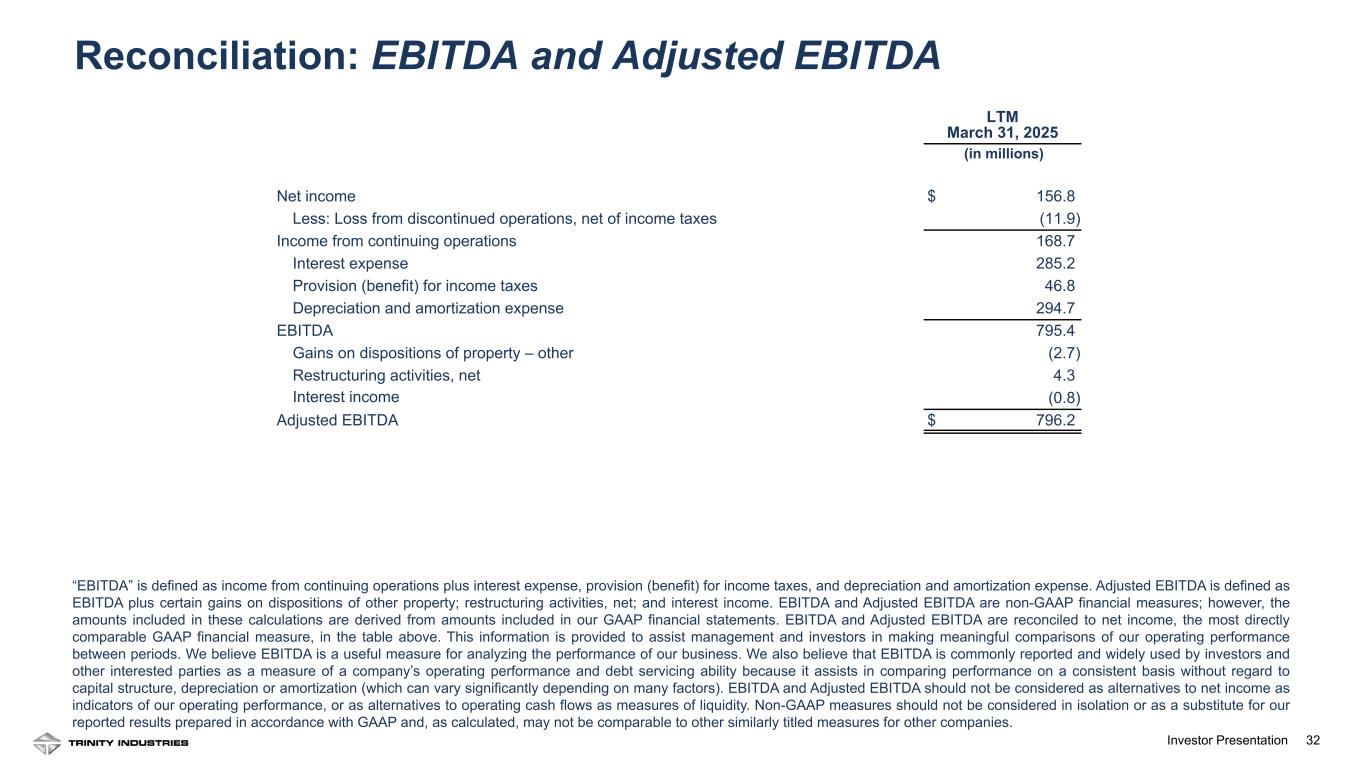
Thank you, operator. Good morning, everyone. We appreciate you joining us for the company's First Quarter 2025 Financial Results Conference Call. Our prepared remarks will include comments from Jean Savage, Trinity's Chief Executive Officer and President; and Eric Marchetto, the company's Chief Financial Officer. We will hold a Q&A session following the prepared remarks from our leaders. During the call today, we will reference certain non-GAAP financial metrics. The reconciliations of the non-GAAP metrics to comparable GAAP measures are provided in the appendix of the quarterly investor slides, which are accessible on our Investor Relations website at www.trin.net. These slides are under the Events and Presentations portion of the website, along with the first-quarter earnings conference call event link. A replay of today's call will be available after 10:30 a.m. Eastern Time through midnight on May 8, 2025. Replay information is available under the Events and Presentations page on our Investor Relations website. It is now my pleasure to turn the call over to Jean.
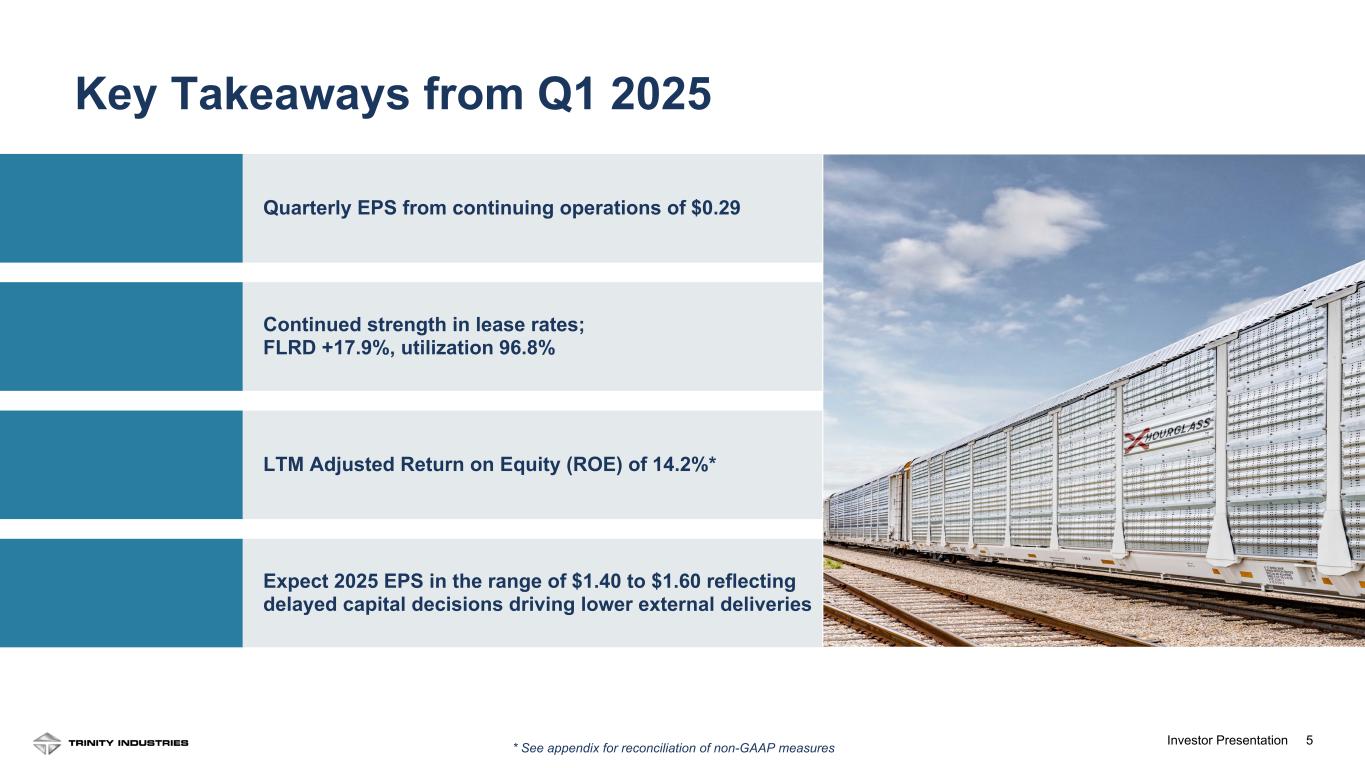
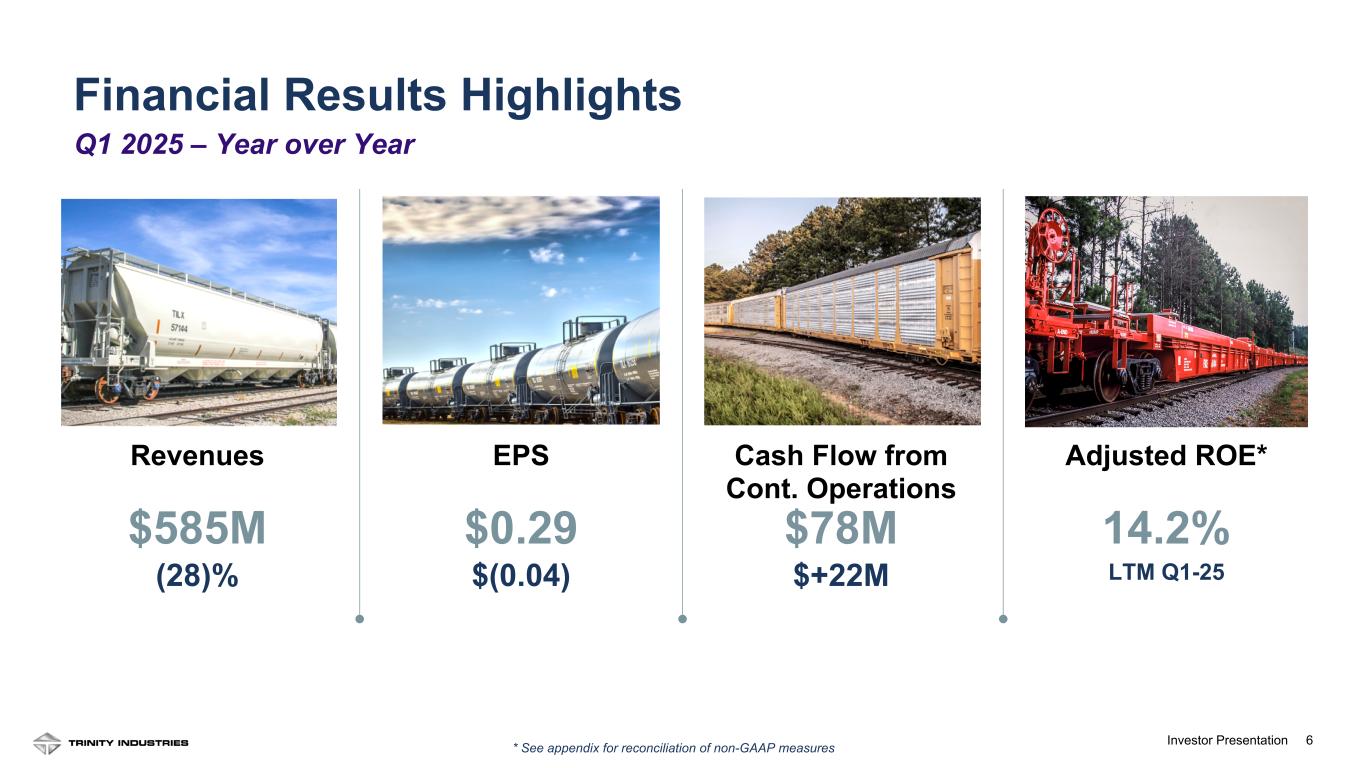
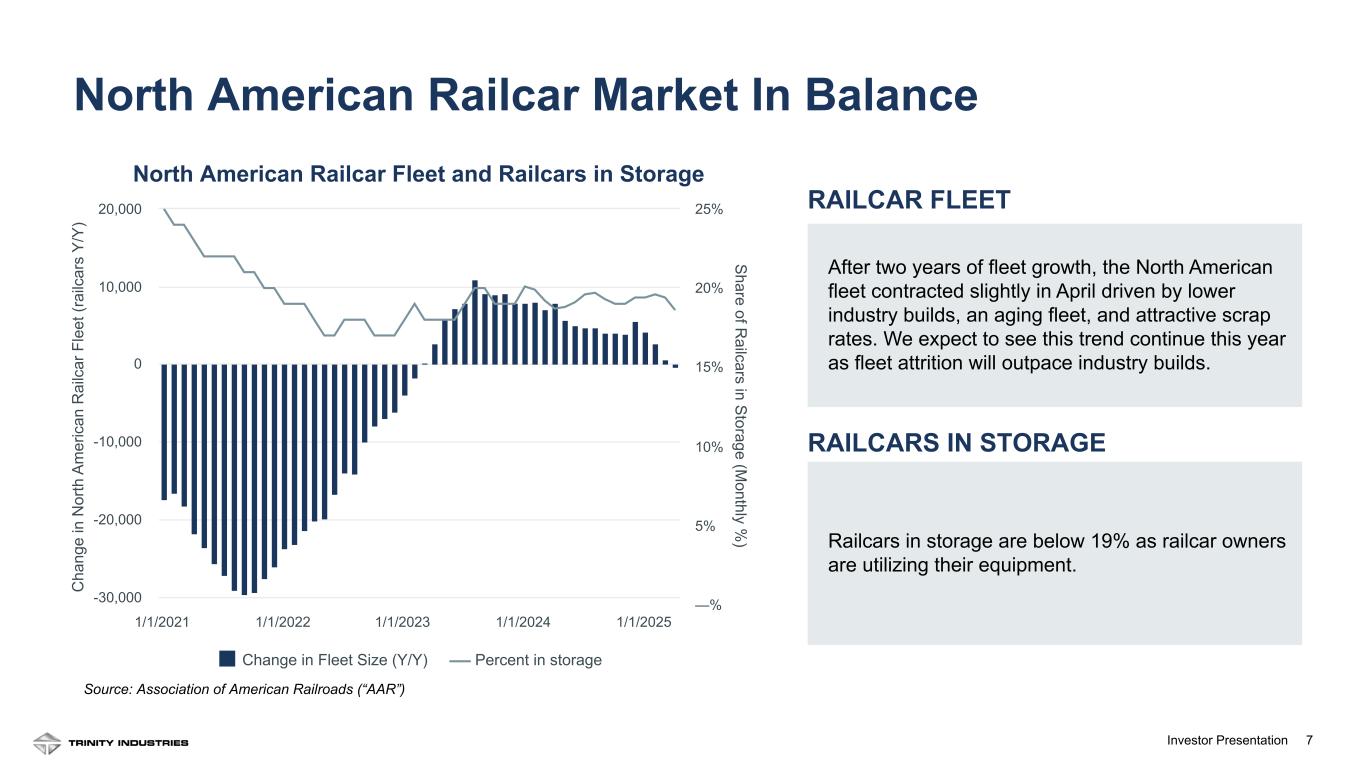
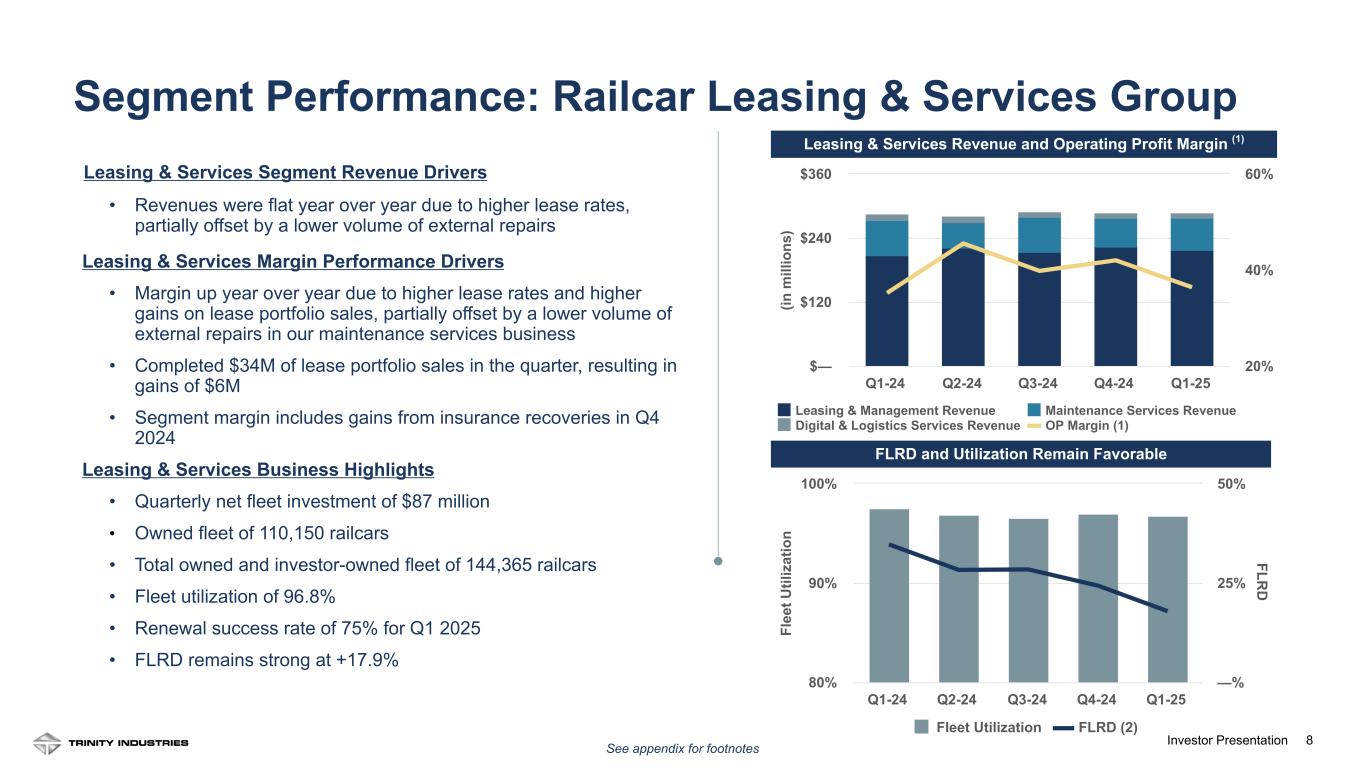
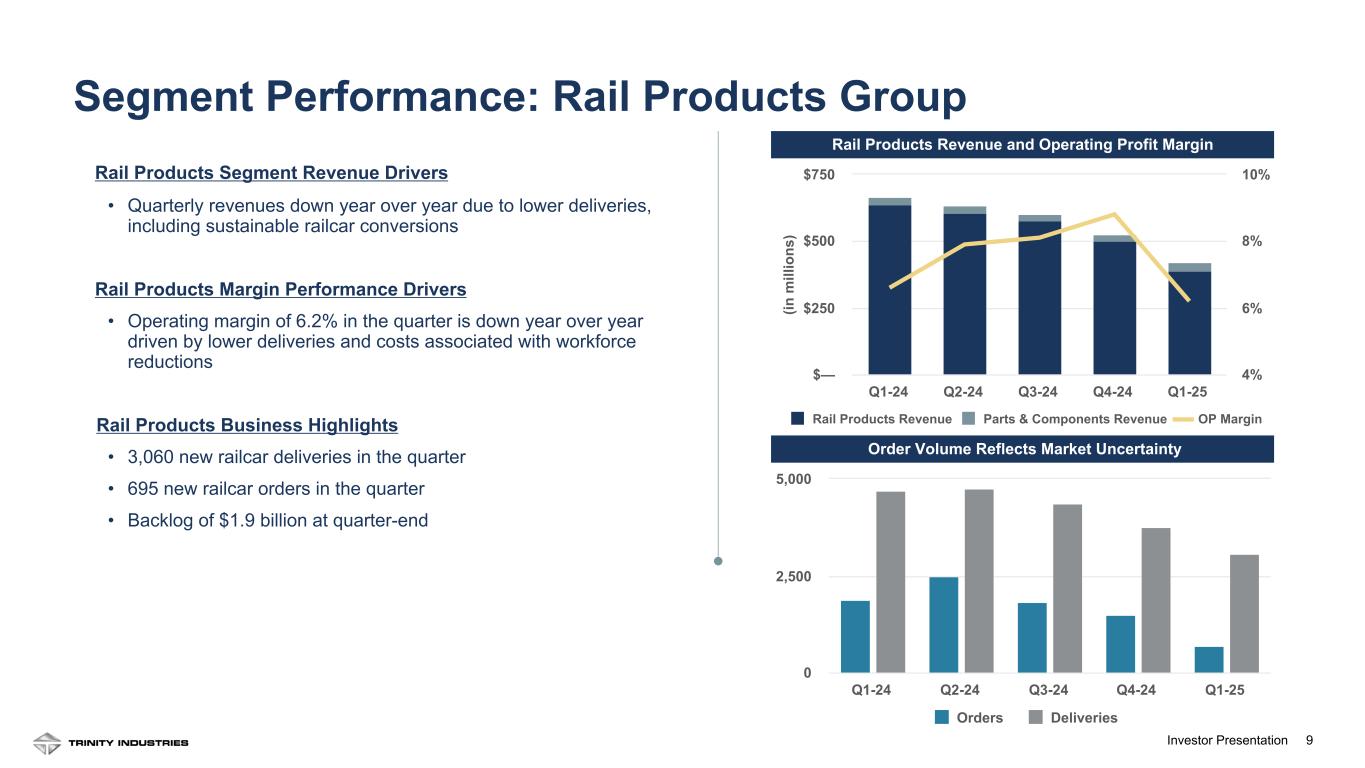
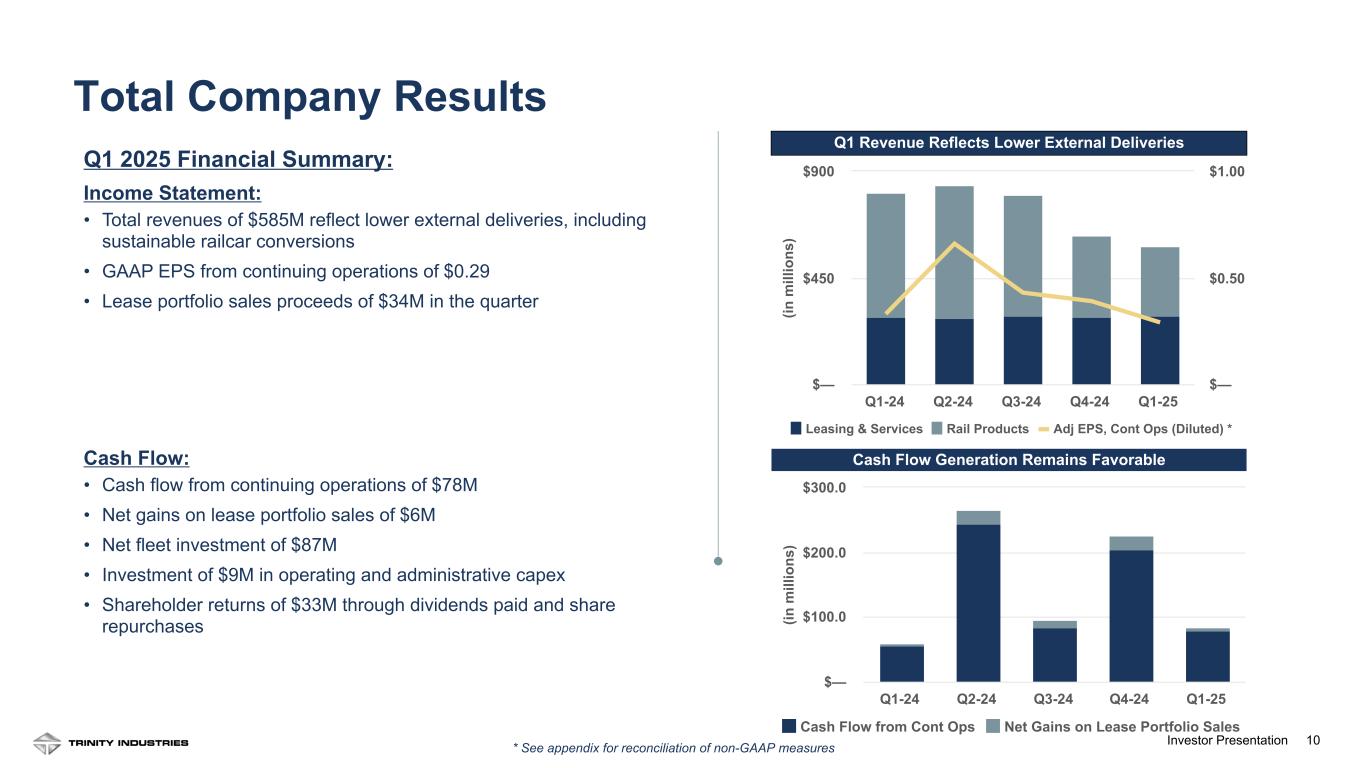
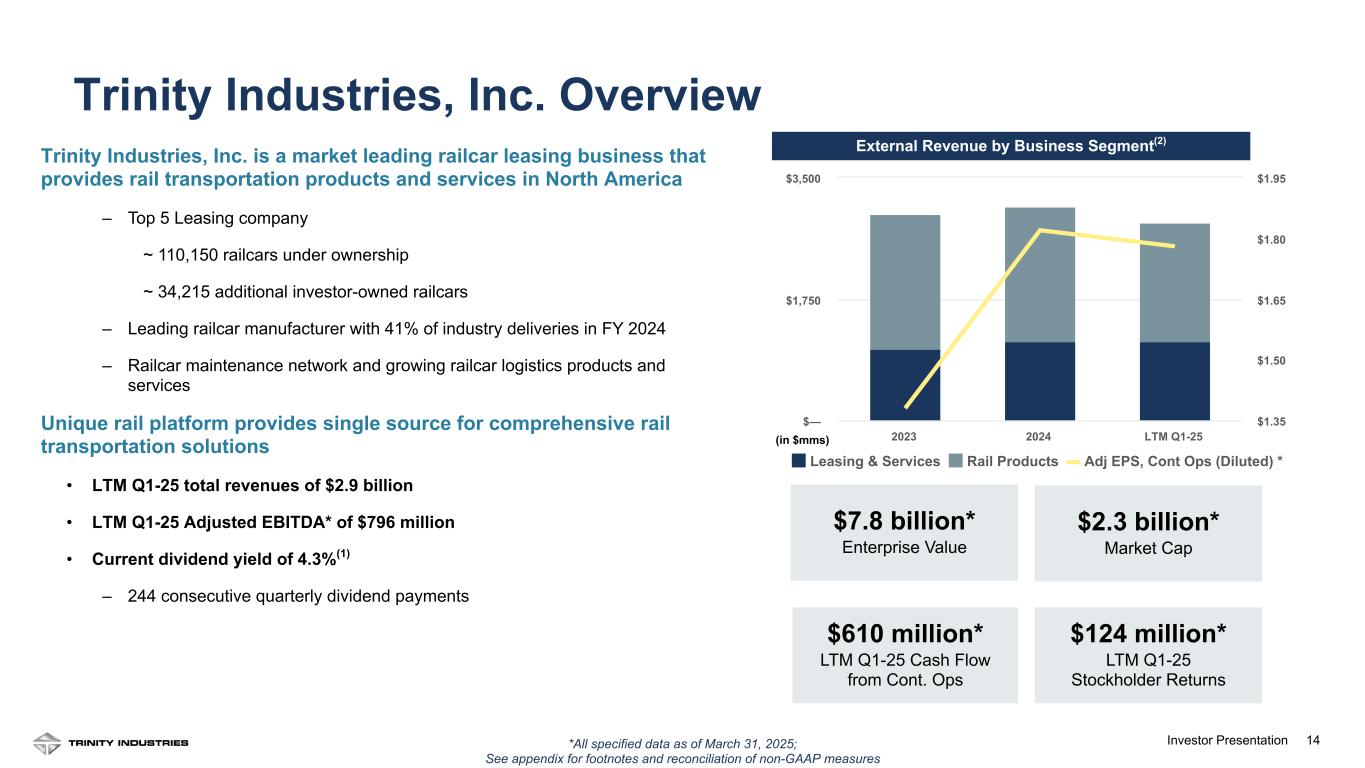
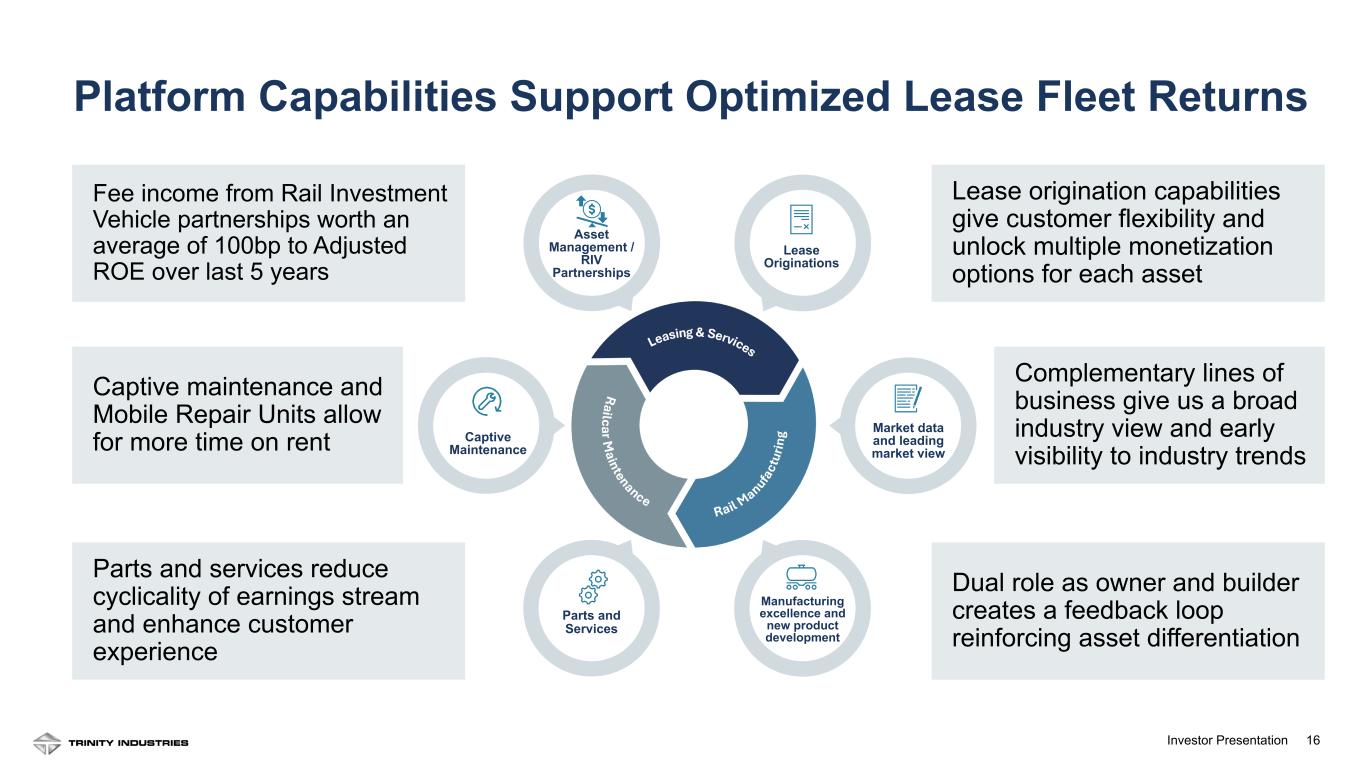
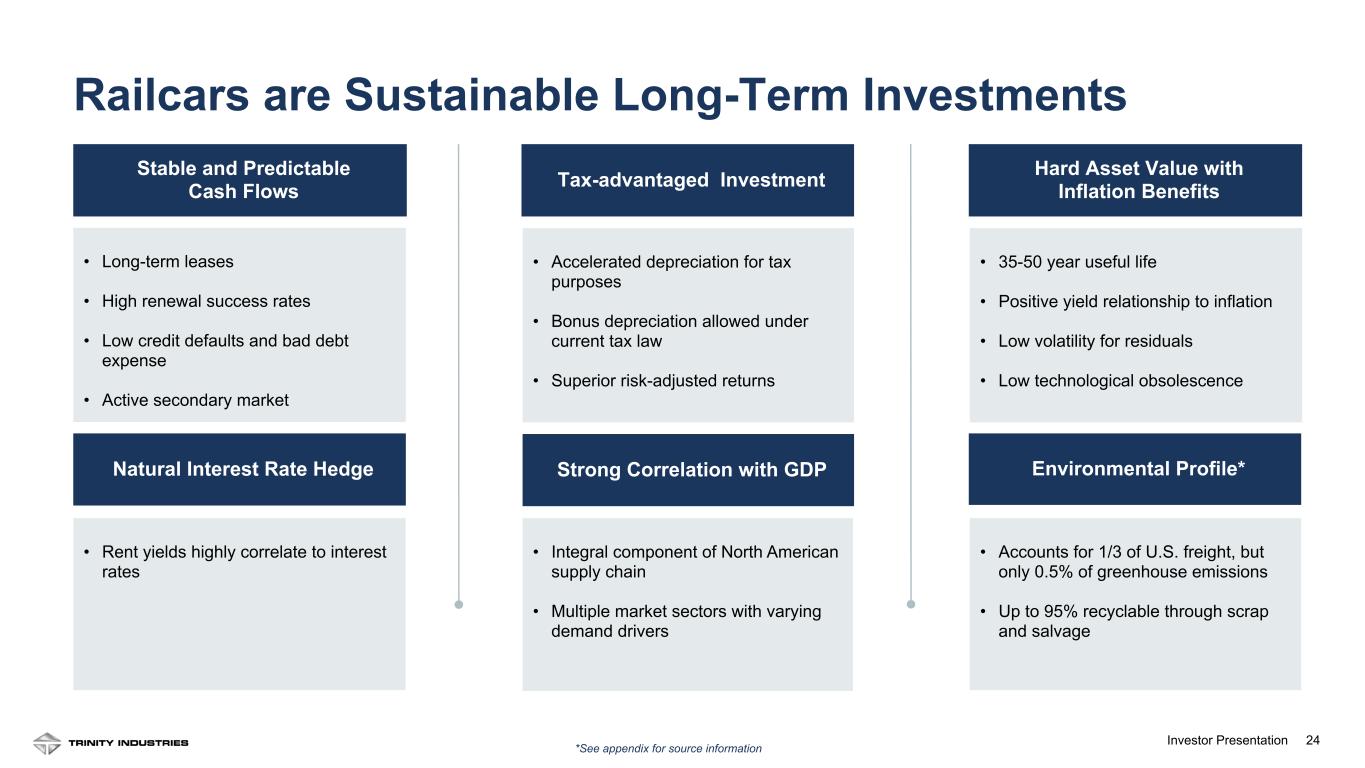
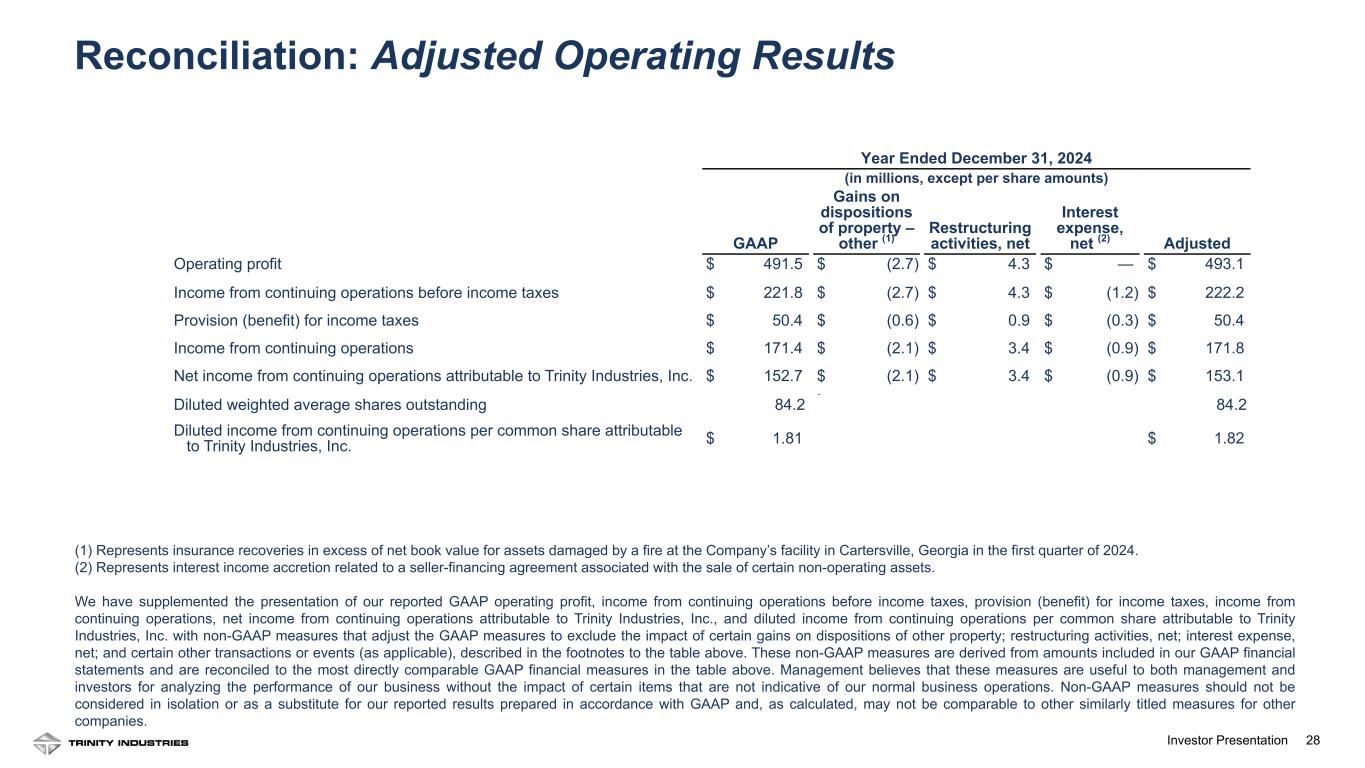
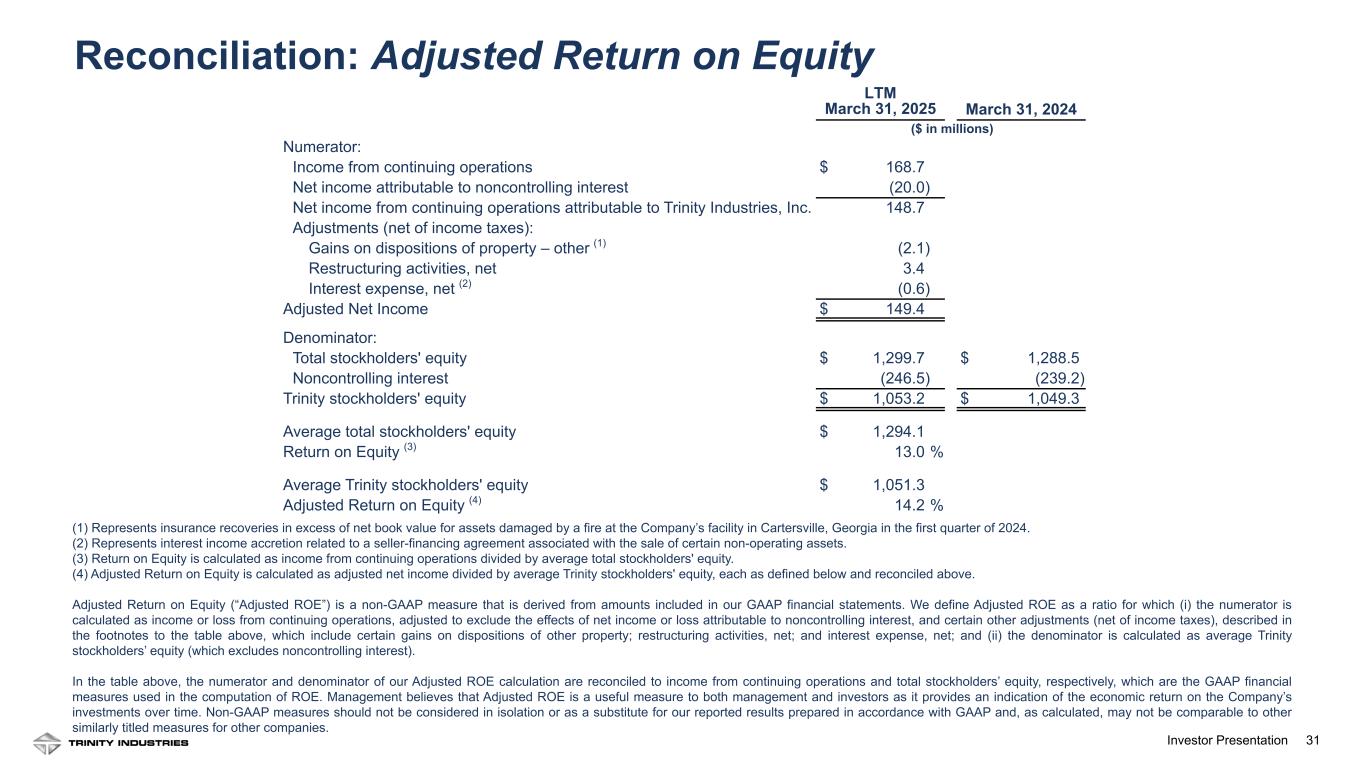
Thank you, Leigh Anne, and good morning, everyone. Before we begin with financial and operational results, I would like to congratulate our Jonesboro maintenance facility on achieving a significant milestone in March. This facility has gone 5 years without a lost time incident. Safety is a core value at Trinity, and this achievement is certainly worth acknowledging. As you may have heard from other companies this earnings cycle, 2025 is a year of uncertainty. While we are not immune to the current macroeconomic challenges, we are operating with agility and adaptability to respond to customers and market conditions appropriately. The railcar manufacturing industry has always had a cyclical element to it. And while we continue to believe the fundamentals of the industry have changed and this cycle is being led by the replacement level demand, the current environment gives us the opportunity to prove the resiliency of our platform. In the first quarter, GAAP earnings per share for Trinity Industries were $0.29 on revenues of $585 million. Our work to lower the breakeven on our railcars and improve the Rail Products Group margins through the cycle is reflected in this environment. Despite 38% fewer external deliveries year-over-year, our EPS was only down 12%, highlighting the strength and resilience of our platform. I am proud of our team for that work. Furthermore, our last 12 months adjusted return on equity was 14.2%, showing we continue efficiently deploying our capital to generate returns. The current environment will benefit our lease fleet of 144,000 owned and managed railcars. Our customers need the railcars they have in their fleet, and higher costs and interest rates have been and continue to support lease rate expansion, improving our business' overall returns. The forward-looking metrics for our lease fleet remain favorable with fleet utilization at 96.8% and our future lease rate differential or FLRD at 17.9%. In summary, we expect macroeconomic forces in 2025 to have some effect from those, whether through inflation, recession, or other economic conditions, but we also expect to continue to be opportunistic as a railcar lessor, disciplined as a railcar builder, and innovative with our customers. Moving to a market update. Market uncertainty in the first quarter continued to slow conversion inquiries to orders. Inquiry levels at the beginning of 2025 were the highest they've been in several years, but customers are taking longer to make capital decisions. We think industrial production is the best predictor of growth for our business. And while macro sentiment and confidence are trending negatively due to market uncertainty, industrial production remains positive. Over the next several quarters, decisions by our customers for new railcar orders will allow us to manage our production lines efficiently. Our current expectations for industry railcar deliveries this year are 28,000 to 33,000 railcars. While we cannot control the volatility in the current market, as an organization, we are focused on making prudent decisions to support the long-term investment in our fleet and growth of our business. Currently, we expect minimal direct cost pressures from current policy proposals. However, we have seen an impact on demand and subsequently revenue. Based on industry data, we saw the North American railcar fleet contract for the first time in about 2 years. This is further evidence that builders and lessors are remaining disciplined, limiting speculative purchases, and responding to replacement needs. We did see attrition outpace deliveries in Q1, and we would expect that to continue as long as customers delay buying decisions. Railcar activity stepped up in March with less than 19% of the fleet in storage. The relatively low level of railcars in storage is consistent with a healthy fleet utilization and renewal rate increases we have sustained. I would now like to provide some segment highlights for the quarter, beginning with the Railcar Leasing and Services segment, which includes our Leasing, Maintenance and Digital & Logistics Services businesses. As noted at the top of the call, our Leasing business continues to perform at or above our expectations. Our FLRD has been double-digit positive for 12 quarters, and in that time, we have repriced about 58% of our fleet. In the first quarter, renewal lease rates were 29.5% above expiring rates, and fleet utilization remained favorable at nearly 97%, with a renewal success rate of 75%, demonstrating that customers are holding on to their existing equipment and we continue to renew leases upward to market rates. We expect these positive trends to continue as lower railcar deliveries this year continue driving tightness in the market. Looking at the first quarter results, revenues were flat year-over-year as higher lease rates were partially offset by a lower volume of external repairs. Furthermore, weather impacted our first quarter results for the maintenance business with lost weeks in January and February. We are also in a heavy tank car compliance year, which increases maintenance costs to our fleet. In summary, Leasing segment operating margin was up year-over-year due to higher lease rates and higher gains on lease portfolio sales, partially offset by lower volume of external repairs in our Maintenance Services business. In the quarter, we completed $34 million of lease portfolio sales and achieved gains of $6 million. Our quarterly net lease fleet investment was $87 million, in line with our full-year guidance. The hard assets of our leasing business provide stable returns, which makes for a compelling investment thesis in an uncertain market. Moving to Rail Products Group, which includes our railcar manufacturing and our railcar parts businesses. Our results in this segment reflect the current operating environment. We delivered 3,060 new railcars in the quarter and received orders for 695 railcars, evidence of the delayed investment decisions I have previously acknowledged and the lumpiness of orders quarter-to-quarter. As a result, quarterly revenue was down due to lower deliveries. Operating margin of 6.2% is down both sequentially and year-over-year. This margin includes costs associated with workforce rationalization. Our backlog at the end of the quarter was $1.9 billion, and we have seen order activity improve in the second quarter. In a minute, Eric will provide updated guidance for the full year, but I wanted to acknowledge our guidance assumes that some of the inquiries we are seeing begin to convert to orders in the next few months, which will allow us to efficiently run our production lines. We believe in the power of our leasing business and in the competitive and economic advantages our manufacturing and services businesses give to our lease fleet. Although short-term volatility is outside our control, we are focused on making decisions that support the generation of long-term economic value. I'll now turn the call over to Eric to talk through financial results as well as our updated guidance for 2025.
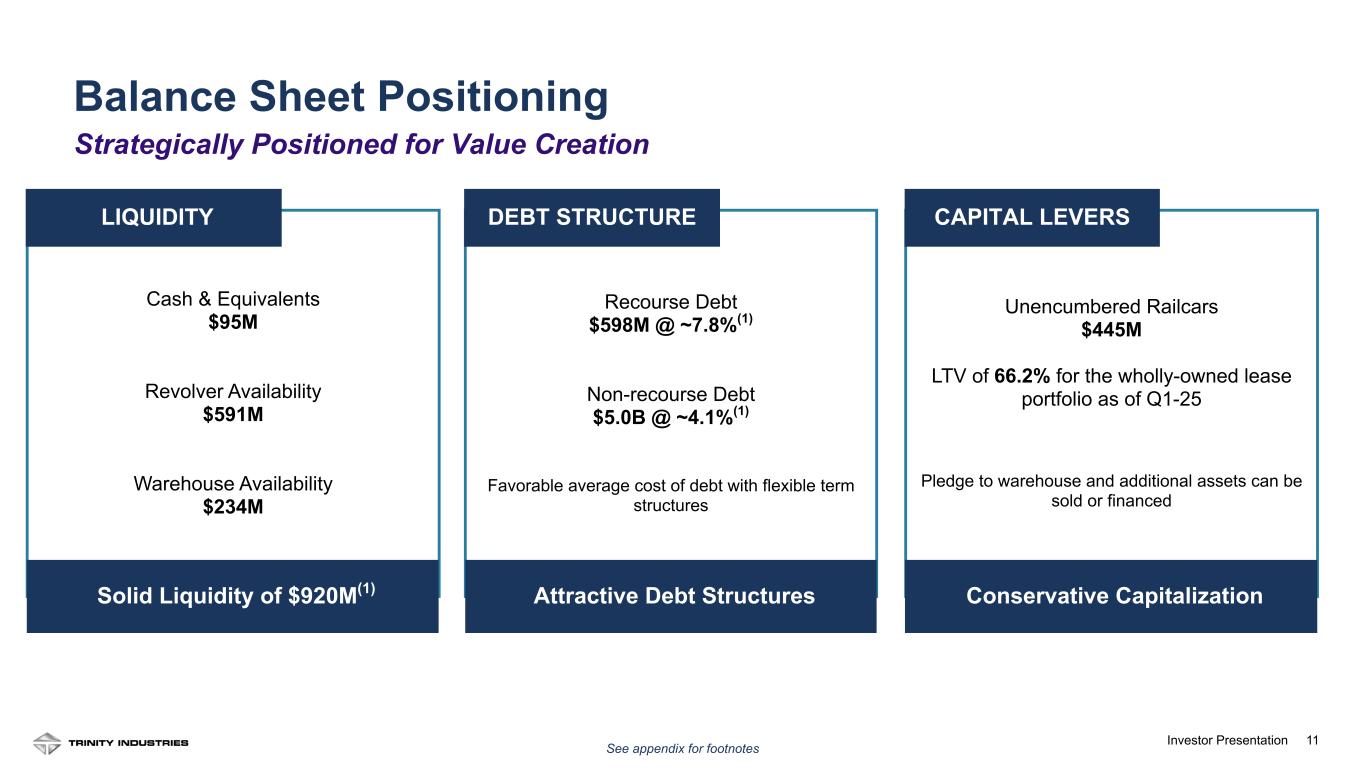
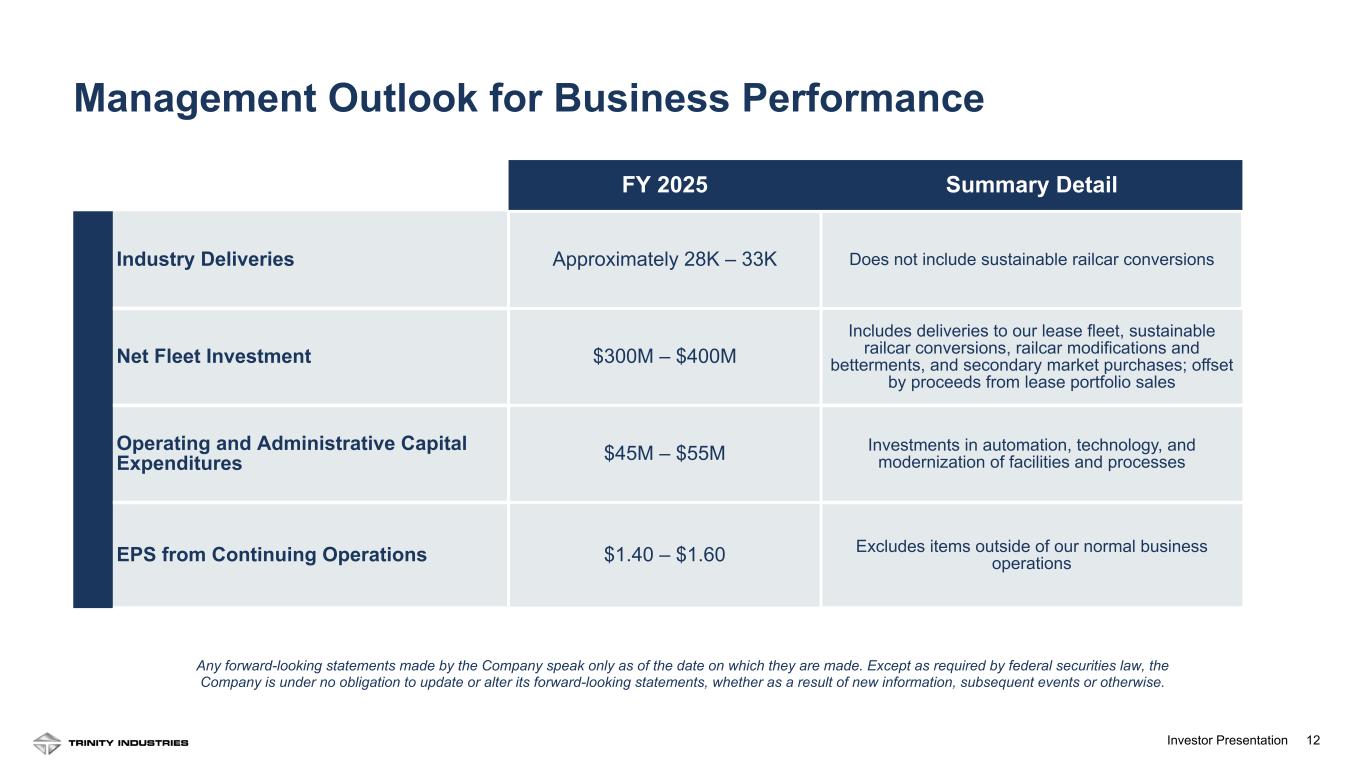
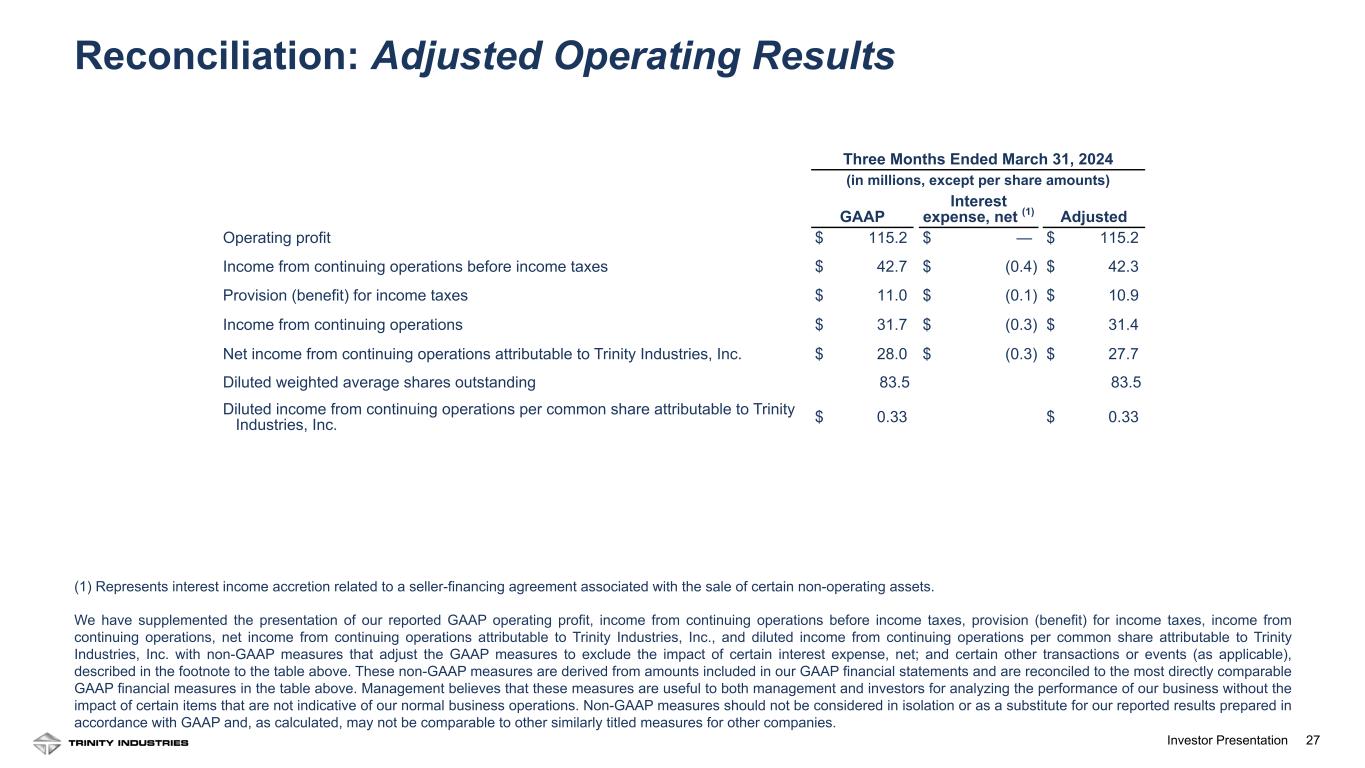
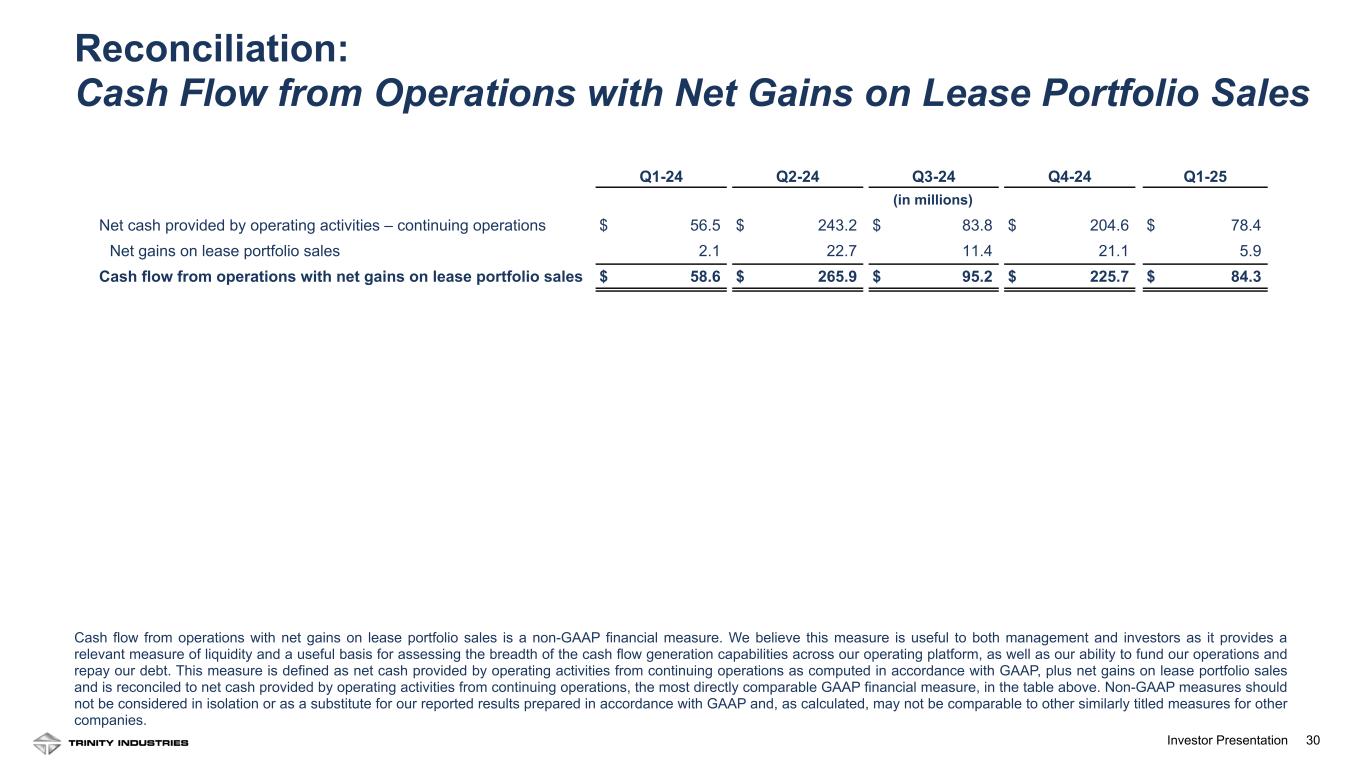
Thank you, Jean, and good morning, everyone. I will begin by discussing our first quarter financial statements, starting with the income statement. In the first quarter, we generated revenues of $585 million, reflecting lower external deliveries. Furthermore, 29% of our Rail Products Group revenues were eliminated as it went into our internal lease fleet. Our GAAP EPS from continuing operations was $0.29 in the quarter. We benefited in the quarter from lower corporate interest and tax expenses. Moving to the cash flow statement. Our quarterly cash from continuing operations was $78 million, and our net gains on lease portfolio sales were $6 million in the quarter. We invested $9 million in operating and administrative capital expenditures. We returned $33 million to shareholders in the quarter, $25 million through our quarterly dividend and $8 million in share repurchases. Our balance sheet is positioned for value creation and provides flexibility in an uncertain market. We have $920 million of liquidity through our cash, revolver, and warehouse availability. Our loan-to-value of 66.2% on our wholly owned fleet is within our target range of 60% to 70%. Now I want to talk about the expectations for the rest of 2025. As Jean noted, there is uncertainty in the market. We know the demand for railcars is out there given the aging profile of the fleet and solid inquiries we continue to receive from our customers. The pace at which these inquiries are converting to orders is slower than expected. We are lowering our full-year industry delivery guidance to approximately 28,000 to 33,000 railcars. Our full-year guidance assumes additional orders are received for delivery this year. Based on what is currently in our backlog and being manufactured, we expect the second quarter to be a low point for the year, but expect production, deliveries, and subsequently earnings to pick up as we move into the back half of the year. Rail Products Group margins will be impacted by lower volumes and margin compression on new orders. Our current view is segment operating margin will be between 5% and 6% for the year. We are leaving our capital expenditure guidance for the year unchanged at $45 million to $55 million for operating and administrative capital expenditures, and $300 million to $400 million for net fleet investment. Net fleet investment guidance assumes a pickup in demand in the near term. The operating performance and cash flow generation of the lease fleet remains strong. We see opportunities for lease fleet investments and expect continued strength in our fleet utilization. Lease rates are driven by many factors, but the most important is a balanced fleet, meaning there is not an excess of supply. This allows for rational and higher lease rates. In the current environment, the North American railcar fleet is in balance, evidenced by fleet utilization, rising lease rates, and renewal success rates. Furthermore, general inflationary pressure will drive new railcar prices upward, which will allow lessors to raise lease rates. And finally, we are refining our full-year EPS guidance to a range of $1.40 to $1.60 per share. Our lease fleet continues to perform favorably, and our customers are holding on to their existing fleets as they continue to need the railcars in their fleets. This provides a predictable baseload of cash flow and earnings. The long-term fundamentals of our franchise remain intact. Our platform has the ability to generate significant cash and above-average shareholder returns based on the strength of the hard assets in our lease fleet and a value proposition to our customers that is unmatched. Operator, we are now ready to take our first question.
Operator
The first question is from Bascome Majors with Susquehanna.
Speaker 4
The FLRD measure remains high, though it has decreased from 24% last quarter and a few points higher in previous quarters. Can you explain the relationship between the expiring lease rate comparisons as we progress and the sequential spot lease rate? Additionally, if you could clarify any differences you're observing in tank versus freight, that would be beneficial.
Sure. Thanks, Bascome. Great question. As we look at the FLRD, it's really affected by the mix of car types coming up for renewal in the time frame, but still overall very positive, as we mentioned in the prepared remarks. The renewal rate versus expiring rate in the quarter was 29.5%. If we look at our average lease rate, it's up both sequentially quarter-over-quarter and year-over-year. So still very positive, especially with 42% of our fleet yet to be renewed in the higher lease rate environment. So we're feeling good about that. Again, it could vary quarter-to-quarter more on the mix of car types coming up during that 12-month period.
Speaker 4
And just to clarify, 29.5%, can you articulate how that's different than the FLRD at 18% and what's driving such a gap between 2 supposedly similar measures?
Sure. It's going to be the car types that expired and got renewed in that quarter versus the car types that are coming up for renewal in the next 12 months. So we're giving you the rates from the quarter that happened and the mix or the change in the cars in the next 12 months could be different. And based off the increased amount for those car types, it can change that overall number from the 29.5% to the 17.9%.
Speaker 4
Okay, that's helpful. And I would assume that just looking out 12 months and the FLRD would probably be more representative of the overall mix of the fleet with more time there.
It's representative of the expirations in the next four quarters. It's not necessarily representative of the fleet. It's just a forward-looking metric on our expirations weighted by revenue for the next four quarters. That's where the difference lies. It's a bit more indicative of future changes in revenue. However, as Jean mentioned, the 29.5% reflects the actual change for this current quarter.
Speaker 4
That's a great number, and thank you for reconciling and clarifying that. Just one more for me, and I'll hop back in queue. You made some comments on cadence, Eric. I think 2Q on both deliveries, I believe you said margin and overall earnings would probably be the weakest in your expectation. Can you walk through that in a little more detail on what's driving that cadence? And maybe bridge to sort of where you exit the year in 4Q, like why do you think there is some improvement from the 2Q trough? What do you have visibility into to drive that improvement? And ultimately, anything else that gives you conviction that we kind of go down and then go up from here?
I'll start with leasing since there’s likely more certainty around that. As Jean mentioned, we expect leasing revenue to continue rising through our renewals and fleet growth, resulting in improved leasing margins. Gains from car sales are projected to be weighted toward the second half of the year, with $40 million to $50 million guided for that period, but we experienced relatively low gains this quarter. Regarding the Rail Group, we anticipate lower deliveries in the second quarter compared to the rest of the year, which contributes to the expectations for a weaker second quarter, but we foresee improvement as we move further into the year.
Speaker 4
I think there was a comment in that discussion in the prepared remarks about pricing on the railcars and rolling them through. I don't want to pick that out of context. Can you expand on that a little bit, and then I'll pass it down the queue.
Yes. So I’ll go ahead and take that one, Bascome. When you look at the pricing on the new railcars, we expect input costs, so the material cost, some of the rates you need to finance those cars to remain higher. And those are all good for us on the overall price of that car. Where there is some competition on the lower volumes that we’re projecting for industry deliveries, you see some of the margin compression from the pricing between competitors out there. So we’ve seen that come into play and that’s affecting mainly volume, but then pricing compression for competition.
Operator
The next question is from Andrzej Tomczyk of Goldman Sachs.
Speaker 5
I just wanted to start with the point that you mentioned earlier, guidance assumes some of the inquiries turning to orders in the next few months. Can you just talk about how customer conversations have sort of developed through the quarter and here into April? And what's leading you to believe the inquiries will turn to orders?
Thank you. Well, great question. As we look at what's going on in this quarter, we mentioned that inquiry levels were the highest we've seen in the last couple of years. And we are currently finalizing several orders that are approximately $100 million. So we're starting to see some of that convert more. I guess the other thing I would say there is that as you look at it, the brunt of the delays are more in freight than tank cars.
Speaker 5
Got it. Okay. When considering orders versus deliveries, when can we expect orders to exceed deliveries? Would it be accurate to say that this might not happen until 2026, or could we anticipate a change still this year?
So when you're looking at that, I don't know that we can give you the exact answer. When you're looking at this year, the macro uncertainty has the volumes down, if you go to the midpoint, basically, of our guidance for industry deliveries, about 30%. But it's still a supply-led recovery and the fleet is very tight. In the first quarter, we saw that even get tighter with the cars that were scrapped or removed from service being higher than what was added back in. So we're confident that it's got to come back that they need those cars, but that gives us strength in our main business, which is leasing. So the lease fleet utilization remains high, our lease rates remain high. So overall, we think the setup there is good while we wait for the overall new car orders to come through.
Speaker 5
Okay. And maybe just to clarify, do I have it right that I think 17% of the deliveries went to internal fleet in the first quarter, if I just take your own leasing fleet change quarter-over-quarter? Just seeing if that's correct? And then do you still expect the 25% to 30% of the full year deliveries to go to the internal fleet this year implying sort of the larger internal deliveries and eliminations for the remainder of this year relative to the first quarter?
Andrzej, we may have to talk later. But eliminations for the first quarter were right around 29%; sorry, 29%. And for the year, we're expecting them to be over 30% of eliminations. So I think we'll have to go back and look. That really hasn't changed.
Speaker 5
Got it. So the deliveries to the internal fleet in the first quarter were closer to like 1,000. Is that correct?
Speaker 5
Got it. Okay. Makes sense. That does clarify that. So how do we think of, I guess, total deliveries sequentially through the year relative to the 3,100 that you did in the first quarter? I know you said it's going to, I think, step down potentially into the second quarter and then sequentially improving from there. Do I have that right?
No, Andrzej, we gave you a little bit on second quarter to try to help you understand what we saw happening short term there. But we don't give quarterly guidance. We expect to be within our normal range, 30% to 40%, just like we were deliveries in the first quarter for the year. And so I would use that as a basis.
Speaker 5
Okay. It makes sense. And then one more question just on the manufacturing side. If the industry deliveries were closer to down to 28,000 this year, down 34% versus 2024 for the industry. How should we think about margins for Trinity in that scenario? Should that be closer to the 5% level? And then conversely, if industry deliveries were at the higher end, we'd be closer to the 6%? Just trying to think about the margins this year.
Yes. The volume is the biggest driver in the change and the operating margin that you're going to see. So I would say what you're saying makes sense and is reasonable.
Speaker 5
Okay. And then last for me was just, any more share repurchases to think about this year just to think opportunistically there?
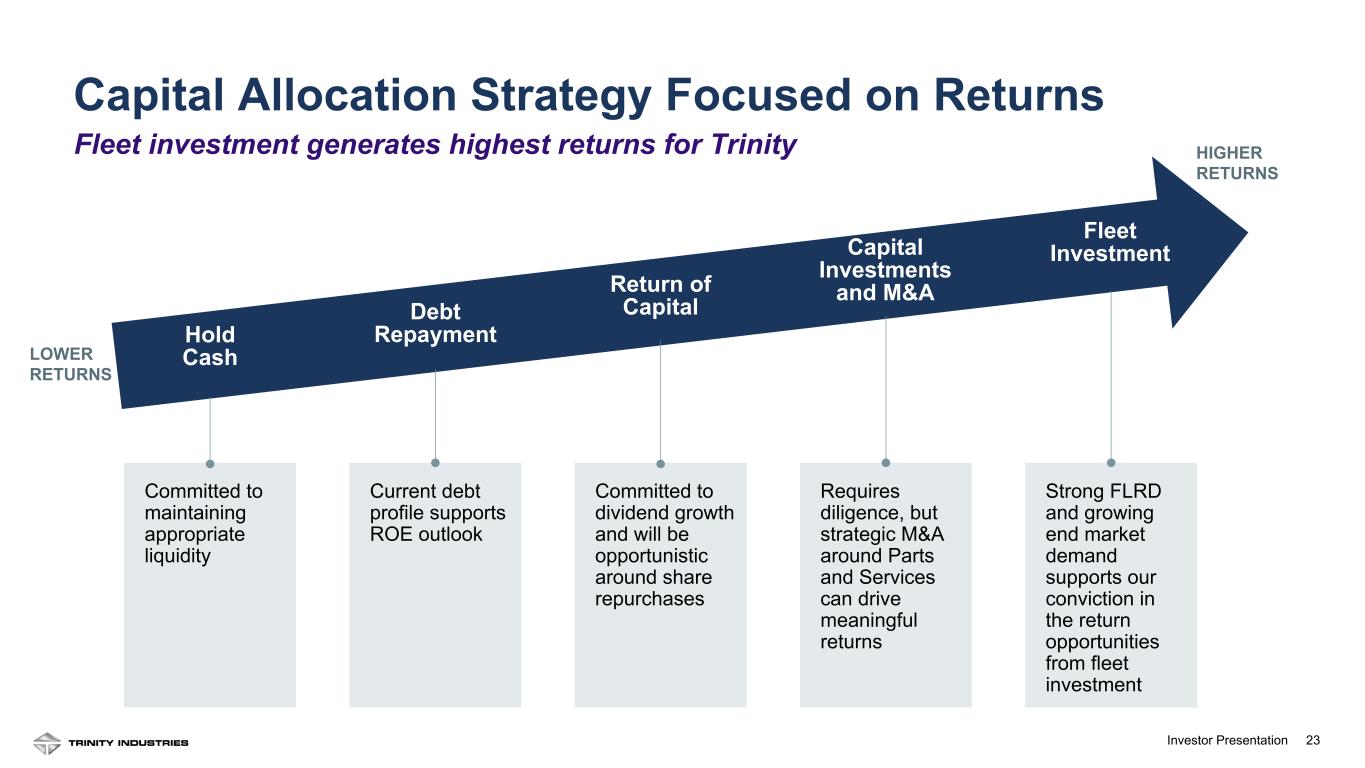
That share repurchases, we did buy back some shares in the first quarter and we still have our authorization outstanding. We said we’re going to be opportunistic around share repurchases. And so we’re going to be opportunistic.
Operator
This concludes our question-and-answer session. I would like to turn the conference back over to Jean Savage, Chief Executive Officer and President, for any closing remarks.
Well, thank you for joining us today. And as we stated today, although customers are taking longer to make order decisions, which will impact our short-term performance, we remain confident in the long-term fundamentals of the business. Our platform is unparalleled and we have implemented necessary changes to our business to ensure we can generate strong returns through the cycle. We look forward to sharing our progress with you next quarter.
Operator
Thank you for attending today's presentation. You may now disconnect.