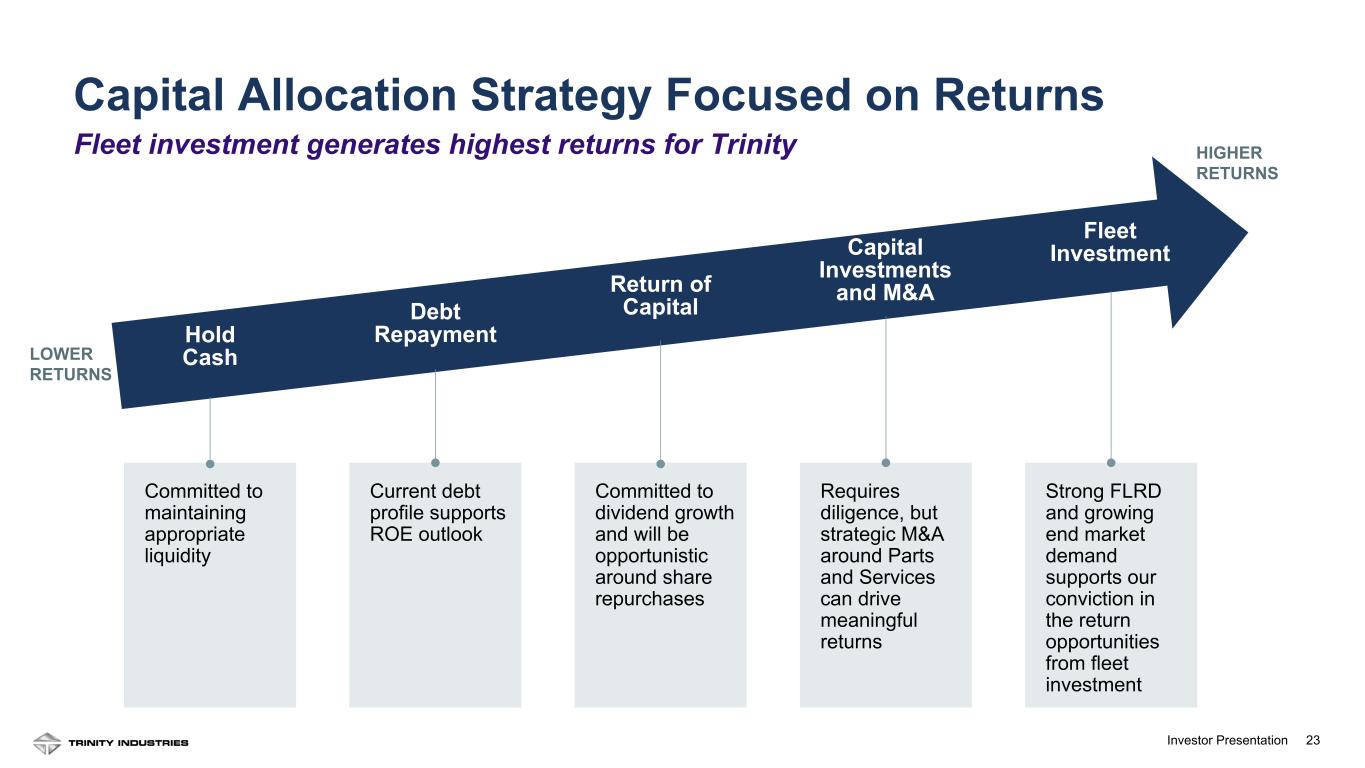
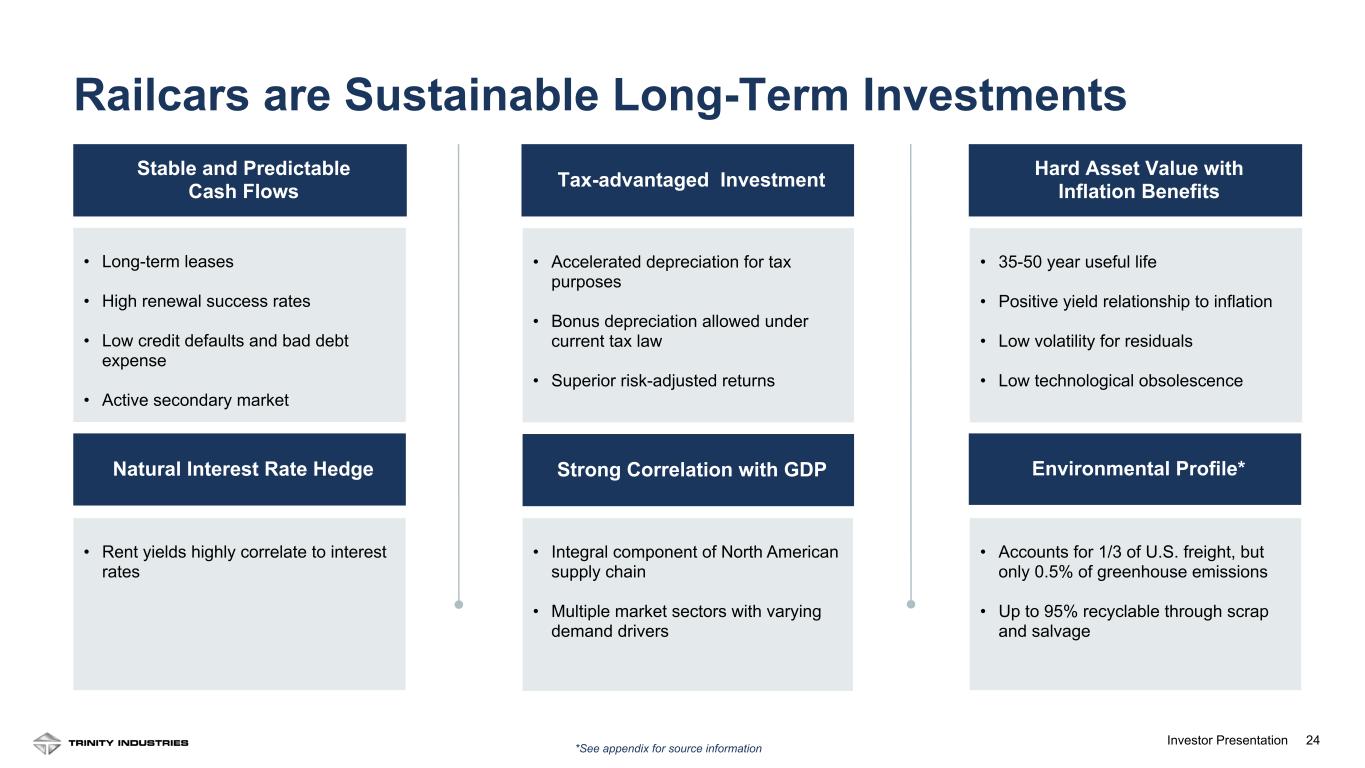
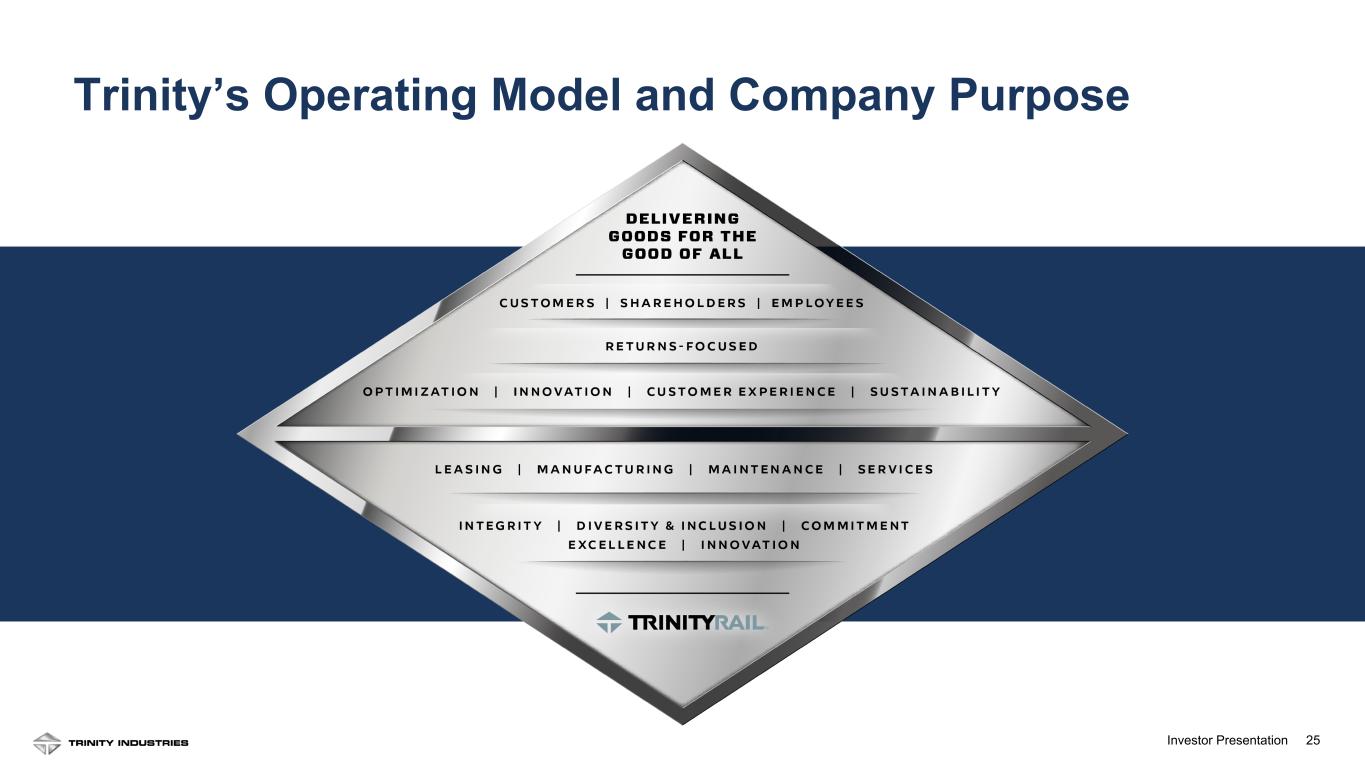
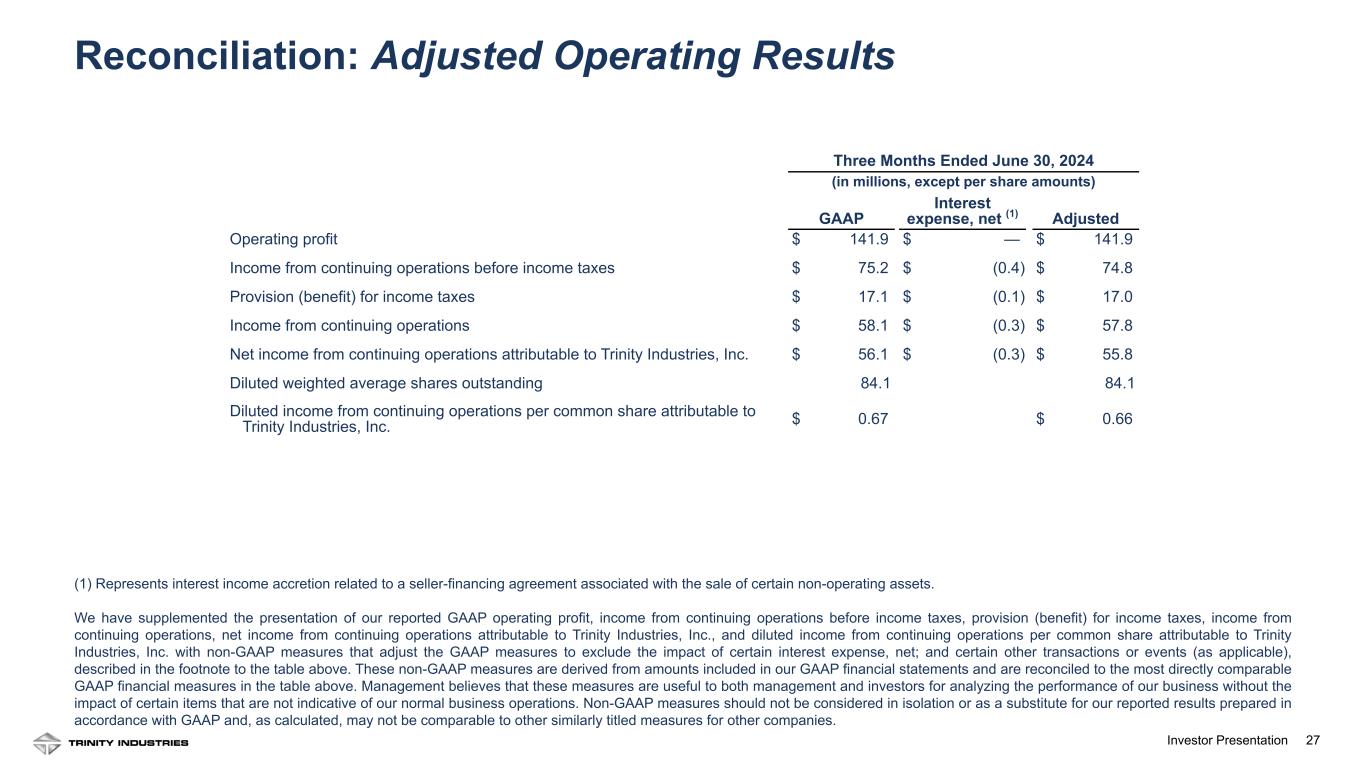
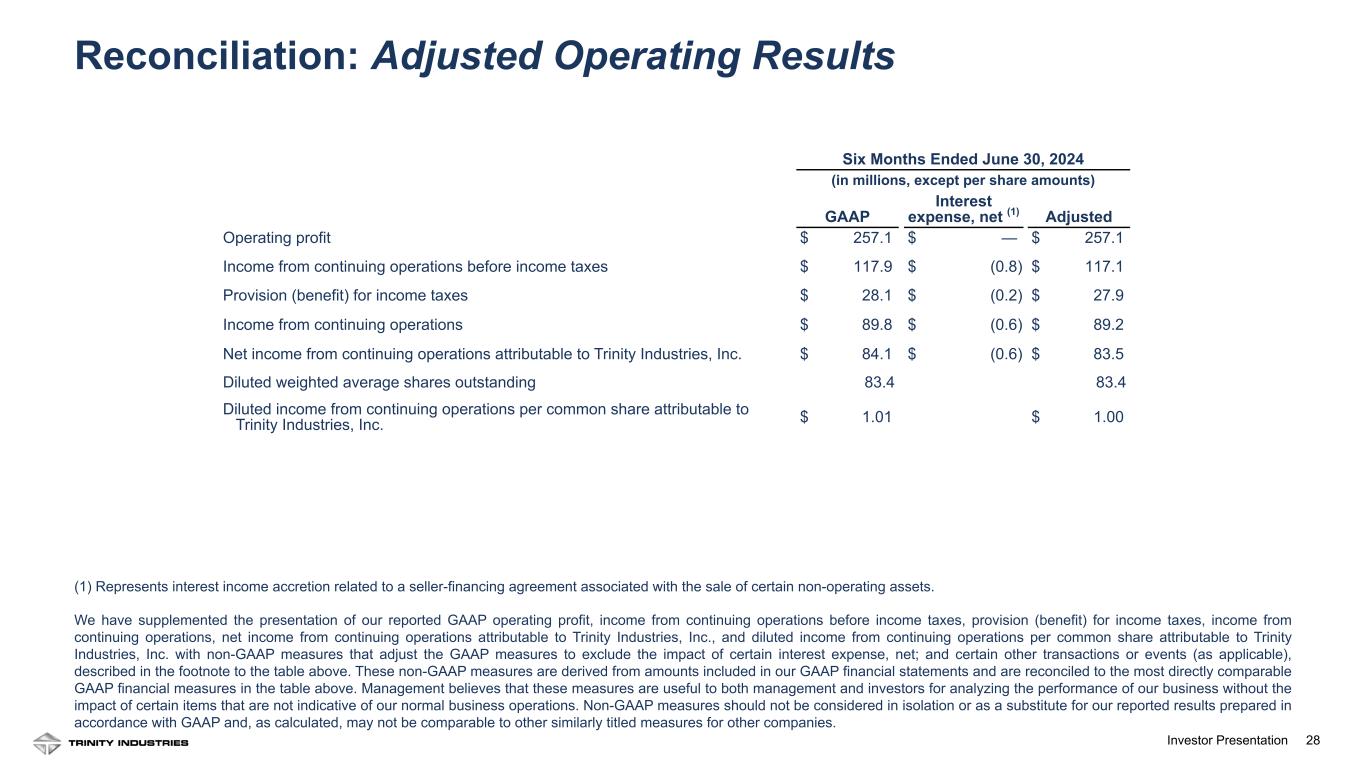
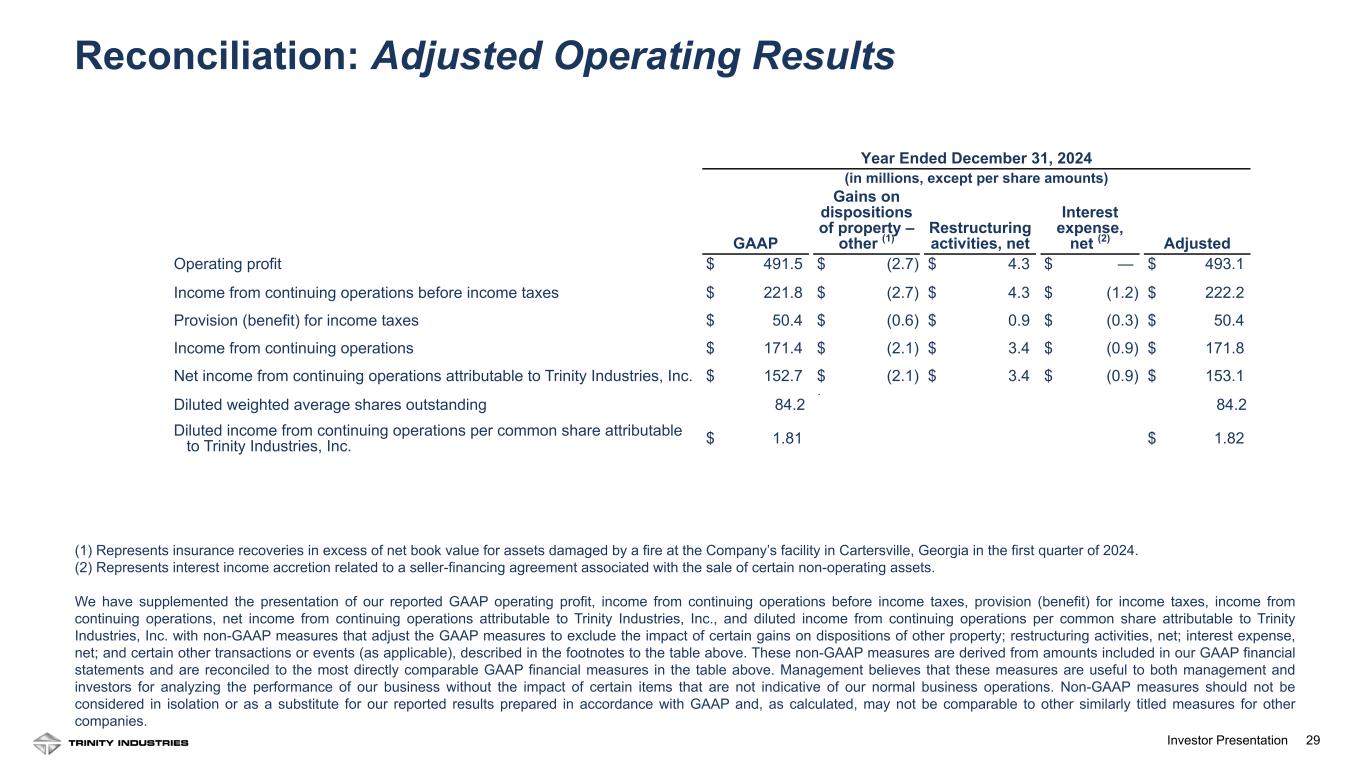
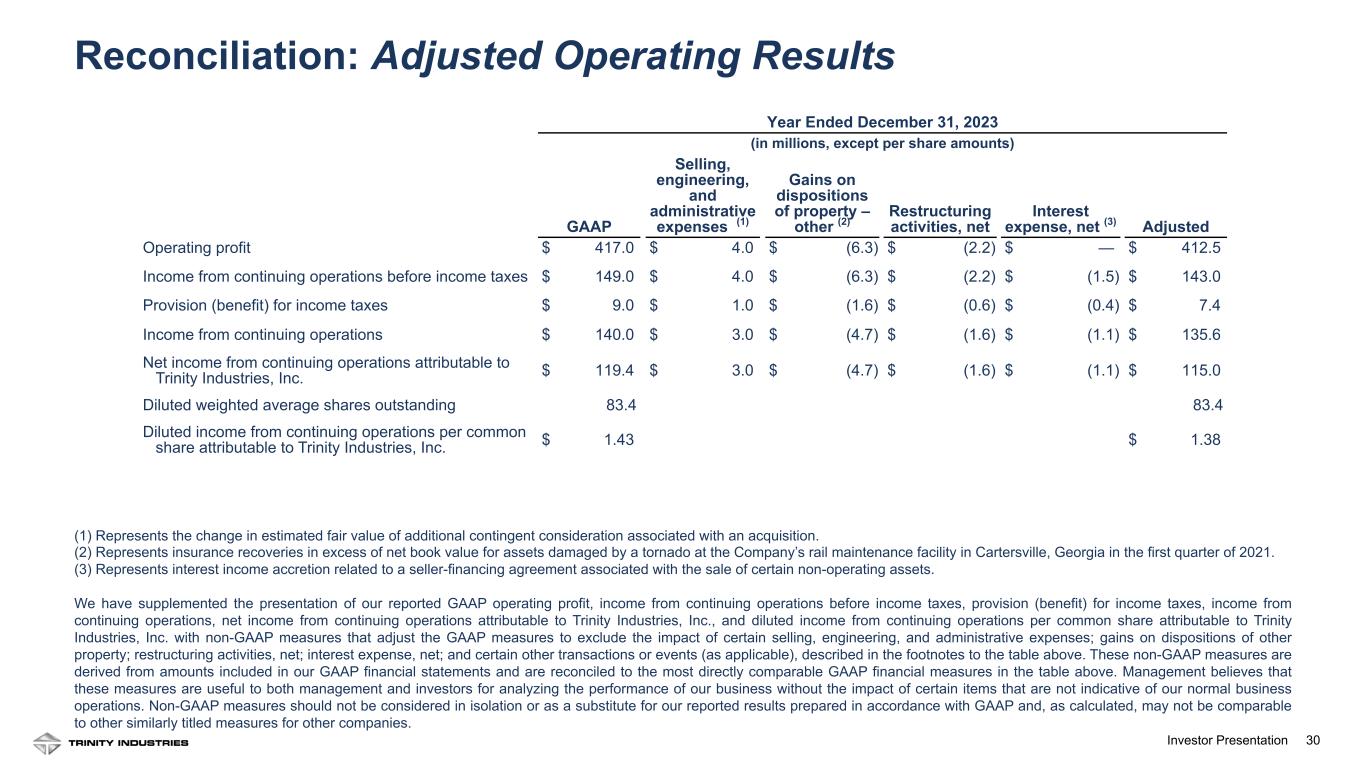
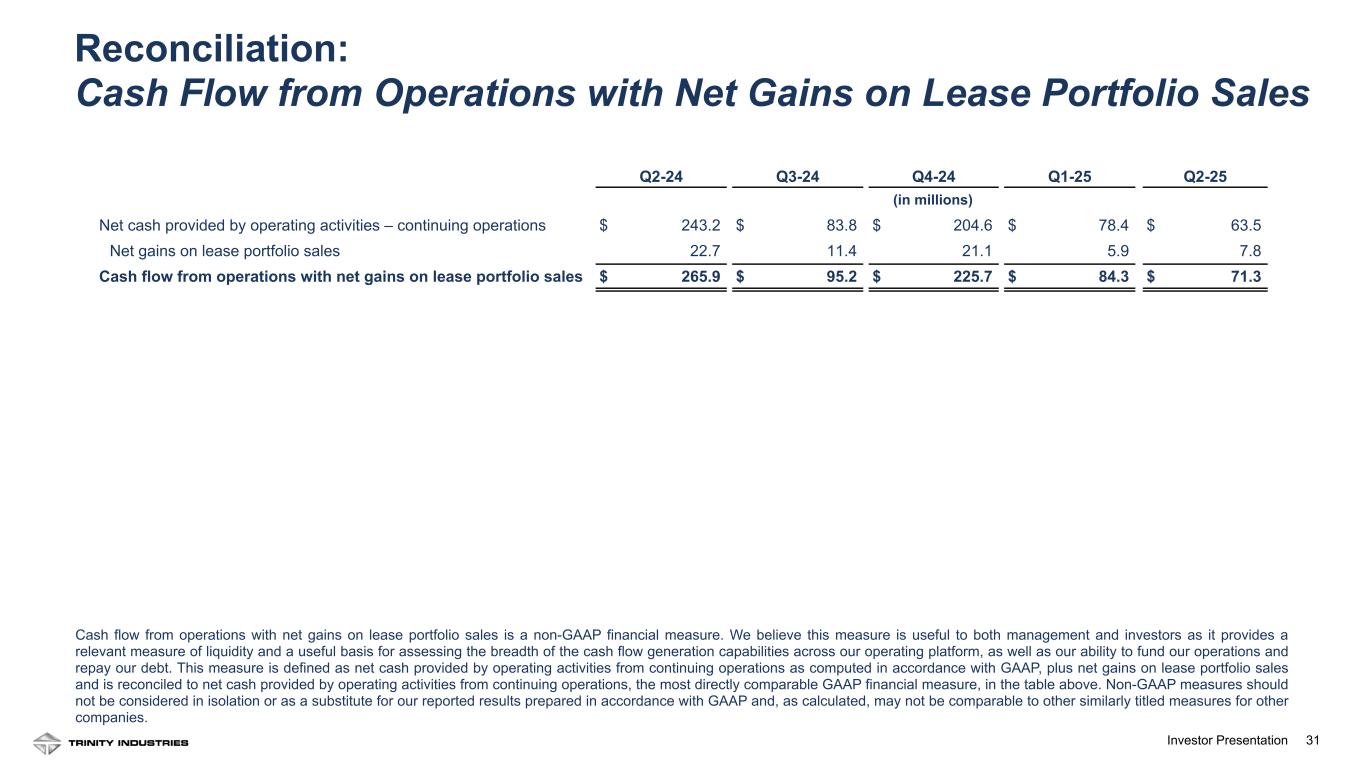
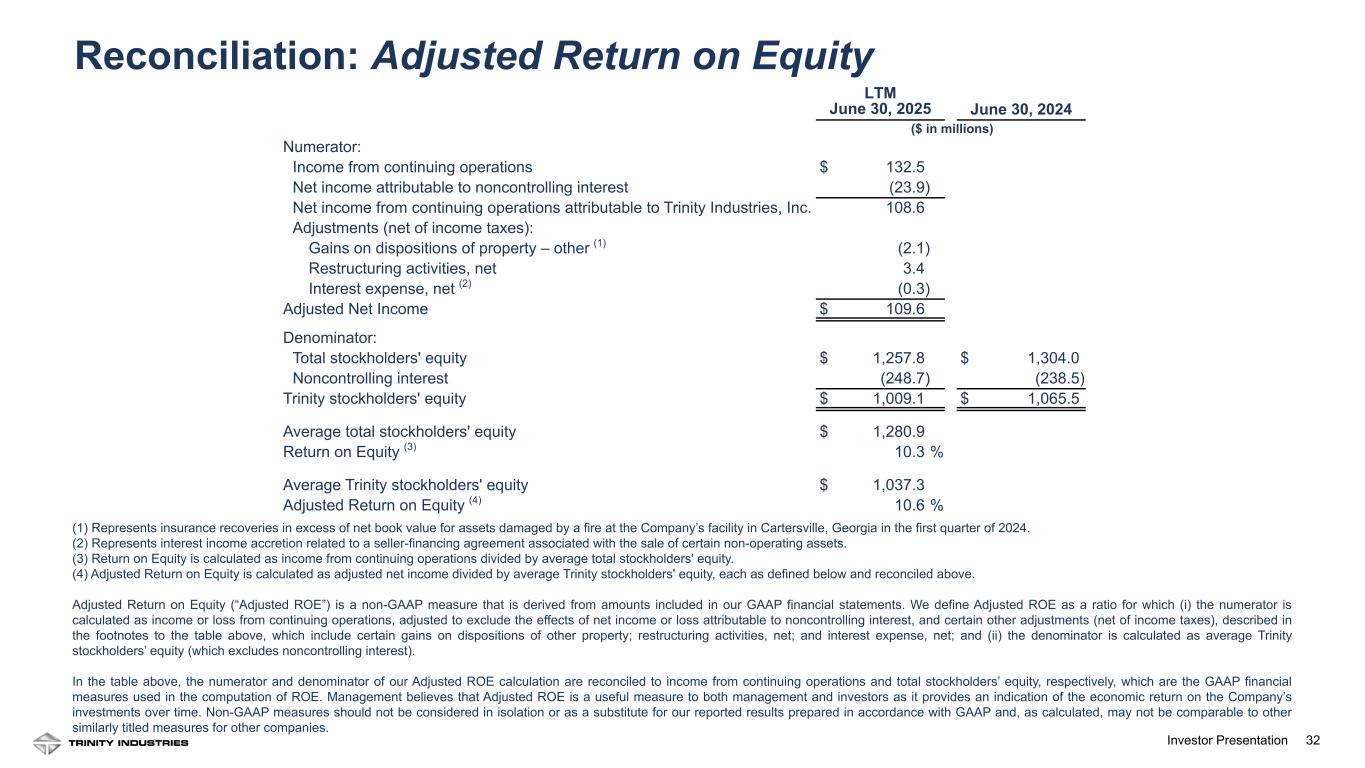
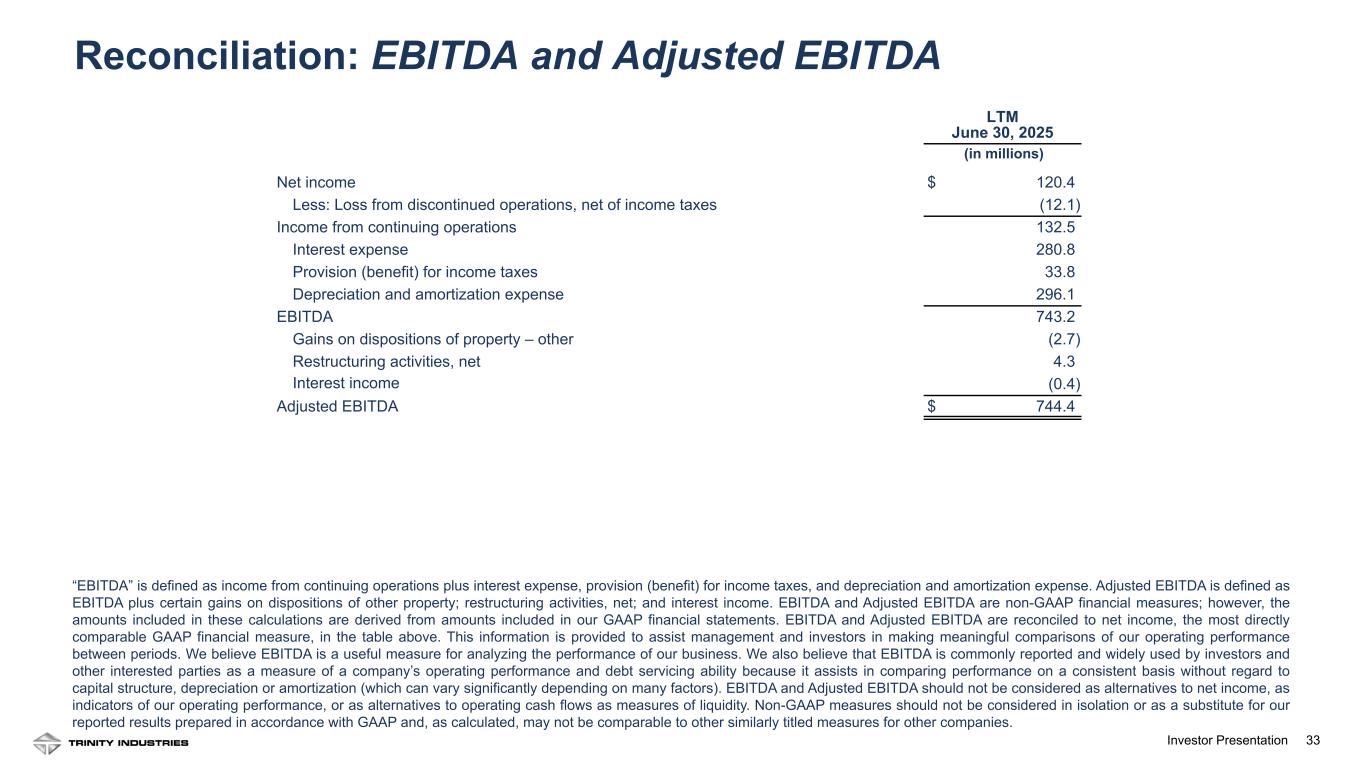
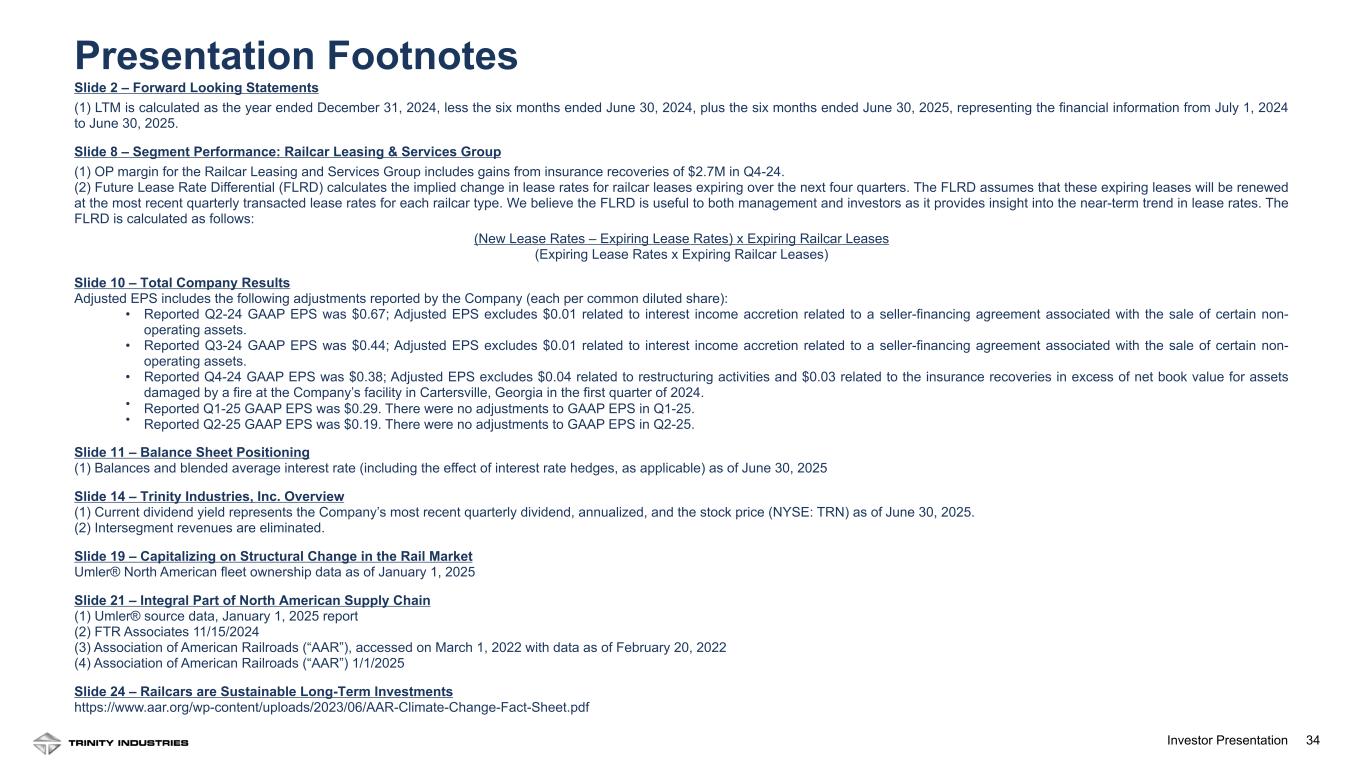
Thank you, operator. Good morning, everyone. We appreciate you joining us for the company's Second Quarter 2025 Financial Results Conference Call. Our prepared remarks will include comments from Jean Savage, Trinity's Chief Executive Officer and President; and Eric Marchetto, the company's Chief Financial Officer. We will hold a Q&A session following the prepared remarks from our leaders. During the call today, we will reference certain non-GAAP financial metrics. The reconciliations of the non-GAAP metrics to comparable GAAP measures are provided in the appendix of the quarterly investor slides, which are accessible on our Investor Relations website at www.trin.net. These slides are under the Events and Presentations portion of the website, along with the second quarter earnings conference call of that link. A replay of today's call will be available after 10:30 a.m. Eastern Time through midnight on August 7, 2025. Replay information is available under the Events and Presentations page on our Investor Relations website. It is now my pleasure to turn the call over to Jean.
Speaker 1
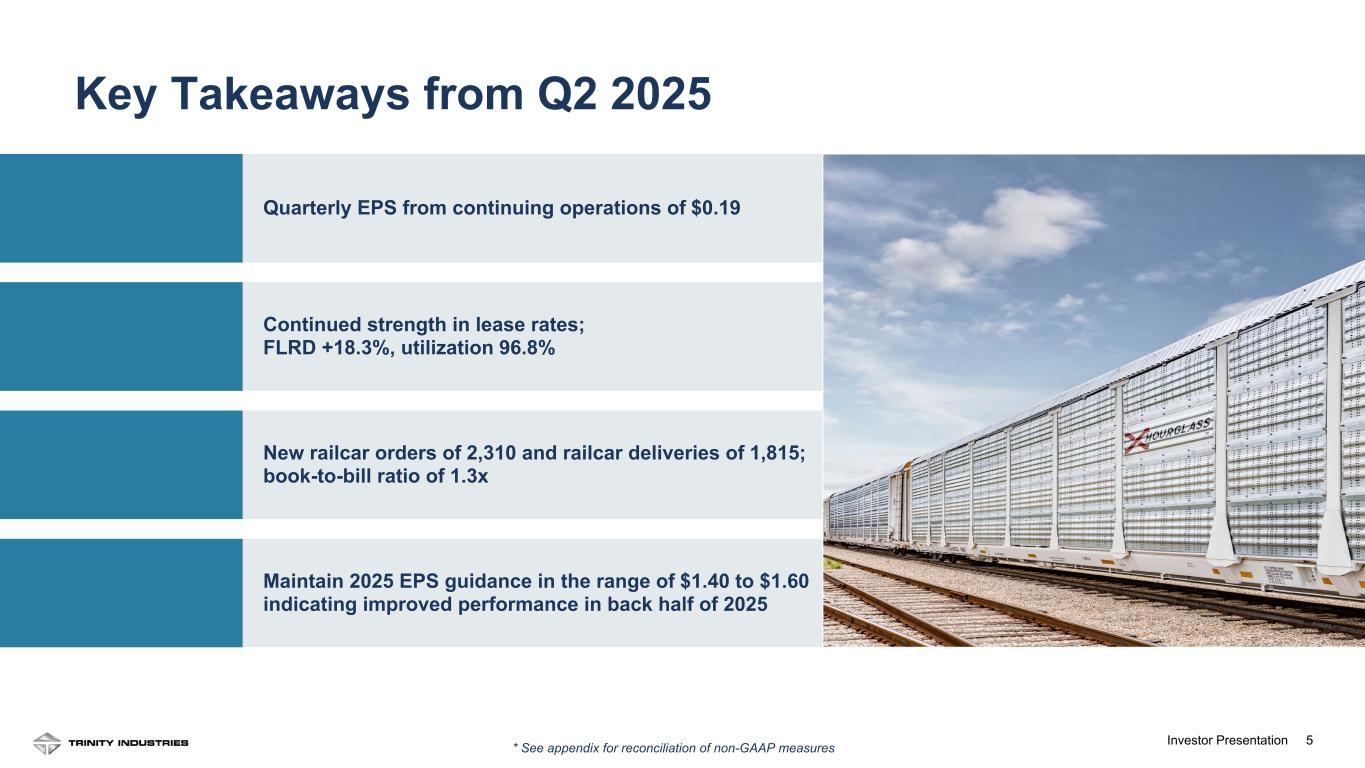
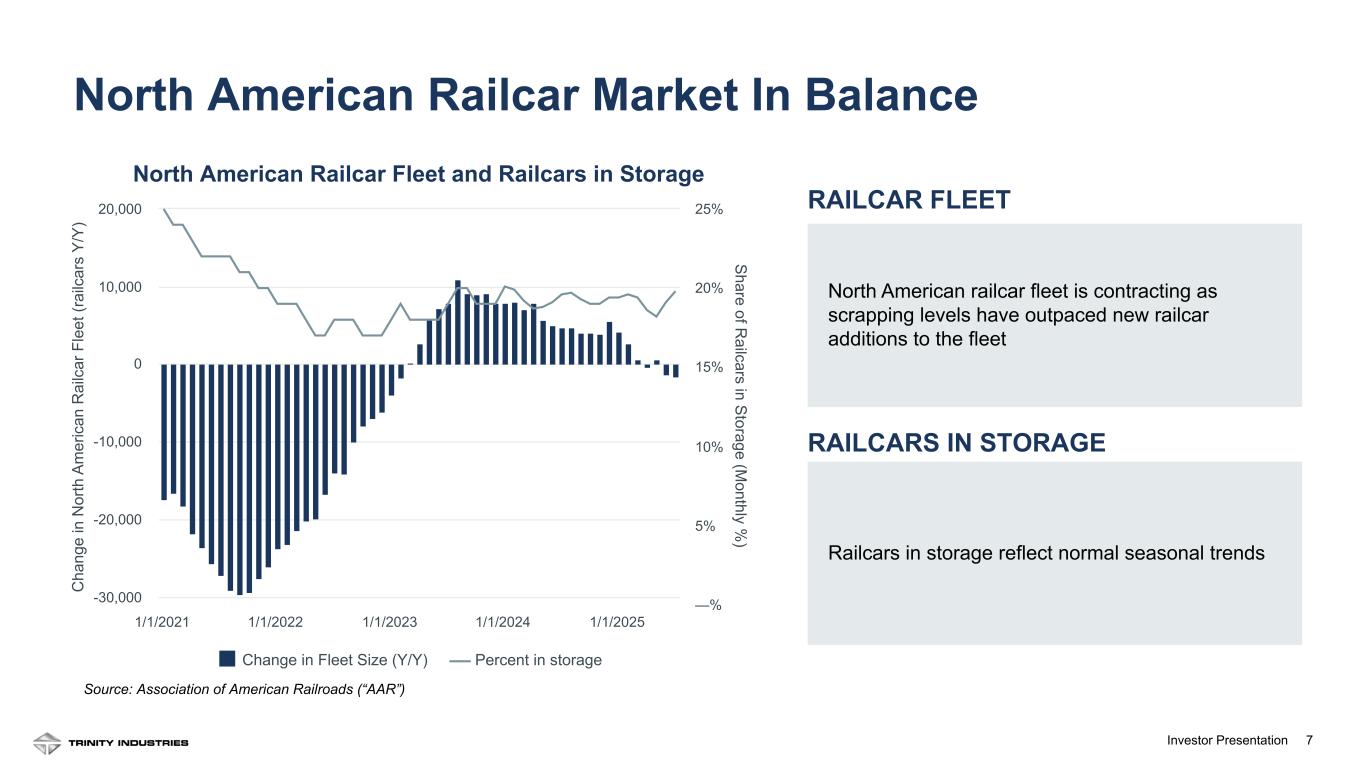
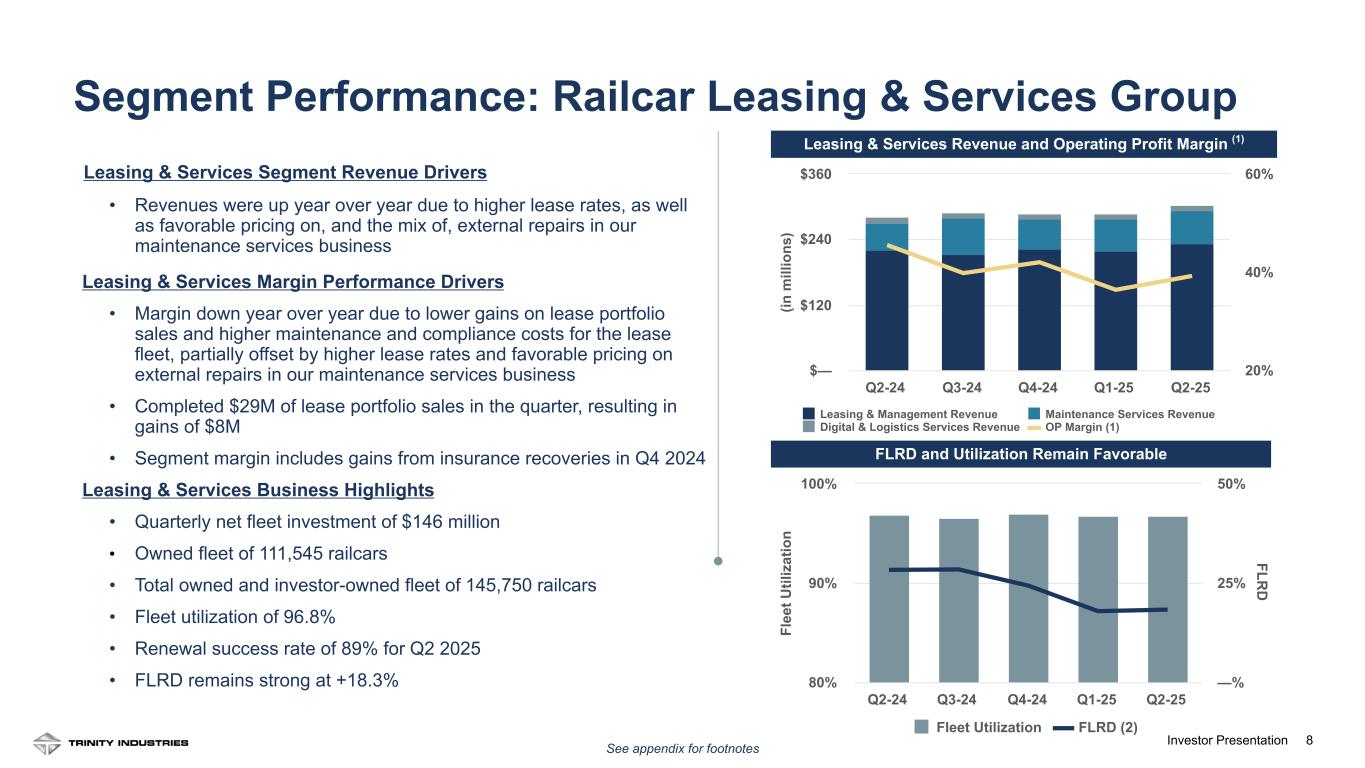
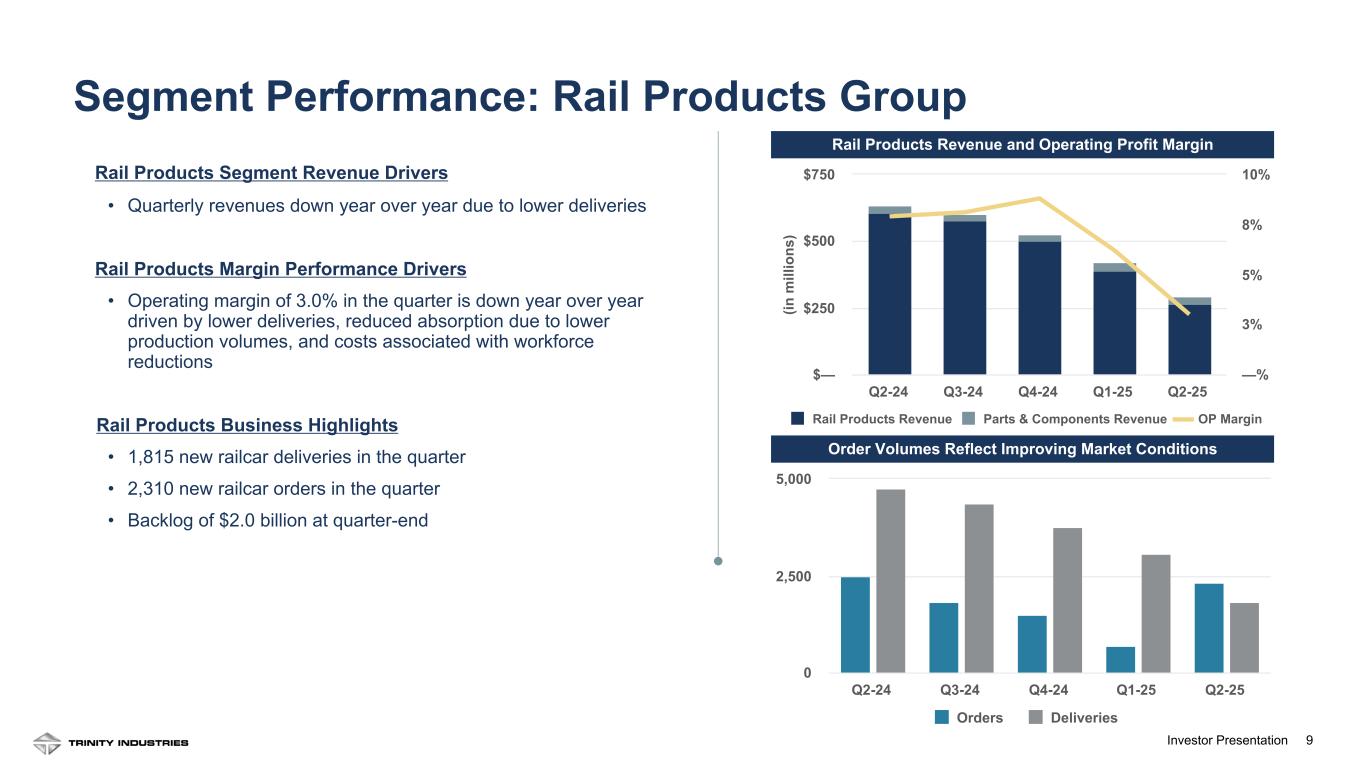
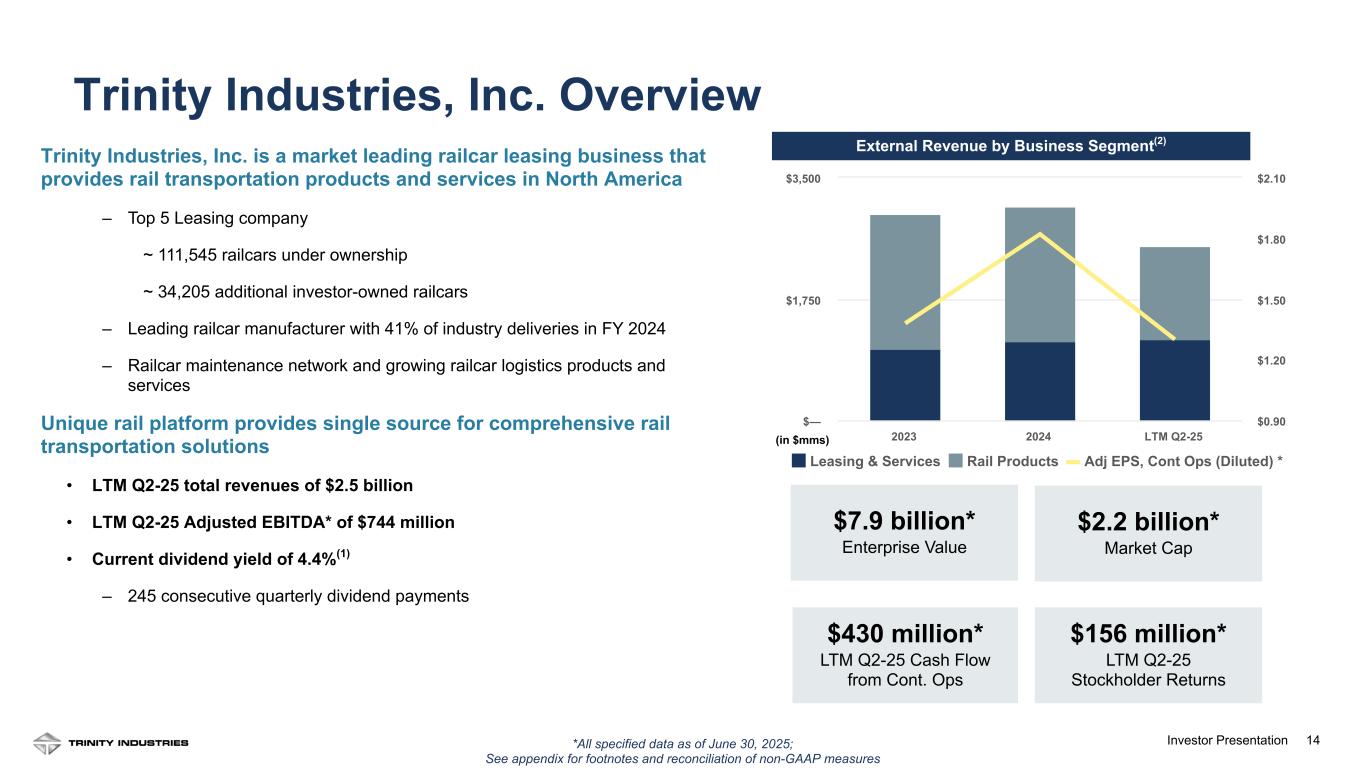
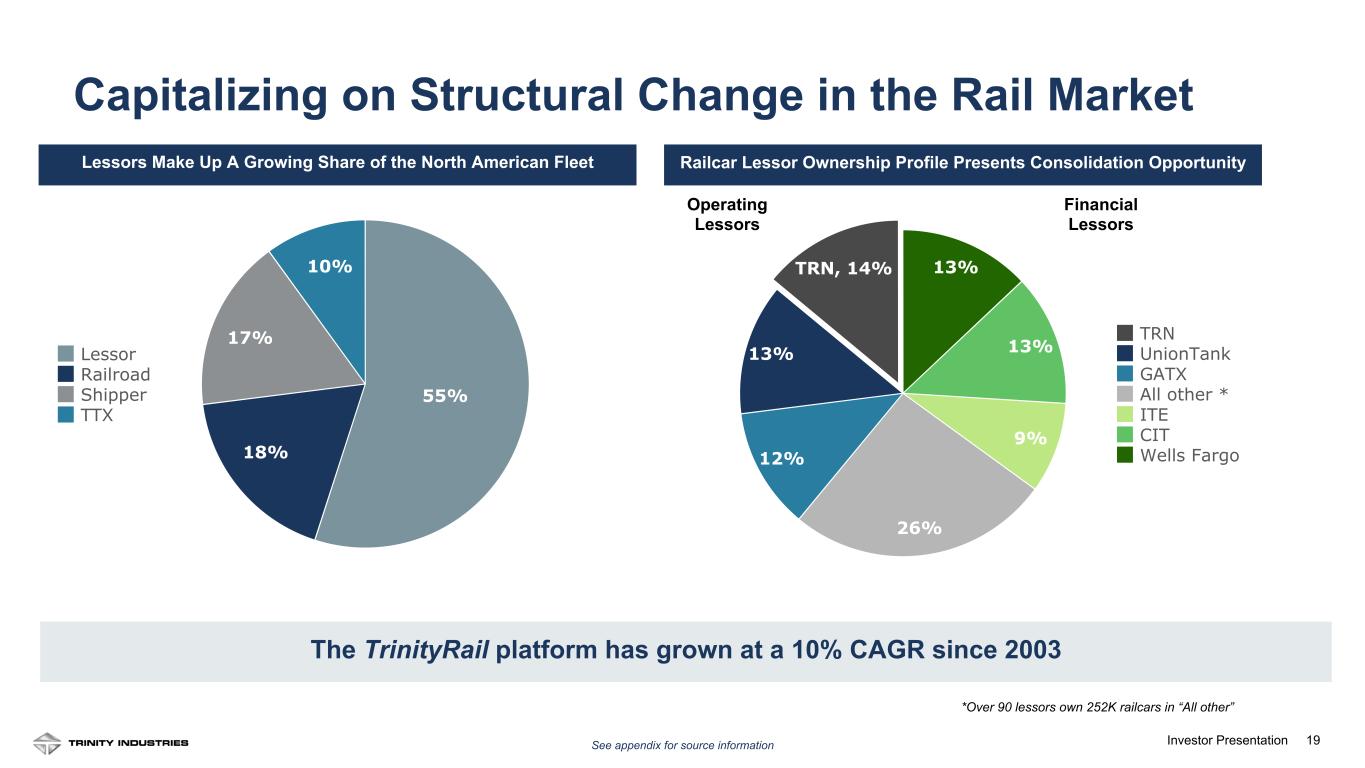
Thank you, Leigh Anne. Good morning, everyone. Our second quarter results underscore the solid performance of our leasing business and Trinity's strong ability to generate substantial cash flow. The North American railcar feed remains in balance with ongoing improvements in pricing. Although customers have delayed their capital expenditure plans and new RevPAR decisions due to evolving trade and tax circumstances, they continue to retain their current railcars. Additionally, we are starting to see a recovery in new railcar demand as sequential order volumes improved, and we generated a book-to-bill ratio of 1.3x. As detailed in our prepared remarks today, we expect an increase in deliveries from second quarter levels and continued improvement across the business in the second half of the year. Before discussing our quarterly results, I would like to provide a brief market overview. Inquiry levels remain healthy, and these inquiries are translating into increased order activity, albeit at a slower rate than initially anticipated. We are encouraged by the sequential pickup in orders in the second quarter, both for Trinity and for the broader industry. The industry's lead has experienced some modest contraction considering lower year-to-date deliveries for 2025, coupled with ongoing fleet attrition through scrapping. Given current production levels and an improving order environment, the industry is on pace for full year industry deliveries in the range of 28,000 to 33,000. Within the existing railcar market, car loads have improved in the second quarter, primarily driven by strength in the energy and agriculture markets. Railcars and storage have picked up slightly, consistent with normal seasonal trends. We continue to monitor recent tax legislation and ongoing trade developments and remain generally optimistic about their impact on our business. I will now highlight segment performance for the quarter. The Railcar Leasing and Services segment, which includes leasing, maintenance, digital, and logistics services, continues to perform exceptionally well. Segment revenues have increased both sequentially and year-over-year, primarily due to higher lease rates, reflecting our strategic efforts to reprice the fleet. The maintenance business has benefited from favorable pricing and a positive mix contributing to a 21% year-over-year increase in quarterly maintenance services revenue. The future lease rate differential for FRD stands at an impressive 18.3% for the quarter, marking 13 consecutive quarters in double digits, during which 63% of our fleet has been successfully repriced. Renewal rates in the quarter were 17.9% above expiring rates, and our renewal success rate was 89%, demonstrating our ability to continually drive lease rates while sustaining a high fleet utilization of 96.8% during the second quarter, indicating a well-balanced fleet. During the quarter, we completed $29 million in lease fleet portfolio sales with gains of $8 million. We remain active in the secondary market as both the buyer and the seller and anticipate this trend will continue in the second half of the year. The cost of revenues in the segment increased by 13.7% year-over-year, primarily due to higher maintenance and compliance expenses for the lease fleet as well as a change in the mix of external repairs and our maintenance services business. Turning to the Rail Products segment, which includes our manufacturing and parts businesses, second quarter results were in line with our expectations. Due to lower order volumes in preceding quarters, we adjusted production to match the pace of customers' delayed decisions, delivering 1,815 railcars in the quarter. This resulted in a segment operating margin of 3%, which is inclusive of costs associated with workforce reductions. We are encouraged by the sequential improvement in orders. In the quarter, we received orders for 2,310 railcars and achieved a book-to-bill ratio above 1x for the first time in 10 quarters. We believe this positive order momentum will continue, supported by inquiry levels consistent with replacement-level demand, favorable tax policies, and increased trade certainty expected in the near future. We are well positioned to respond to further market improvement as the year progresses. I would like to commend our Rail Products group for their strategic initiatives over recent years, including optimizing manufacturing operations, investing in automation, and lowering the business breakeven point. Your hard work is evident in this low order volume environment. We are maintaining our full-year operating margin guidance in the 5% to 6% range for the segment. This outlook is underpinned by our expectations of stronger deliveries in the latter part of the year, better fixed cost absorption, a streamlined workforce, and continued efficiencies through automation. As we enter the second half of the year, we remain confident in our ability to deliver strong performance across our business. We will continue our efforts to reprice our lease fleet and capitalize on favorable conditions in the secondary market. We anticipate an increased pace of quarterly deliveries, benefiting both revenues and margins. Additionally, we expect our backlog to increase as pent-up demand translates into orders, driving momentum through the latter half of the year and into 2026. I'll now turn the call over to Eric to talk through financial results as well as our updated guidance for 2025.
Speaker 2
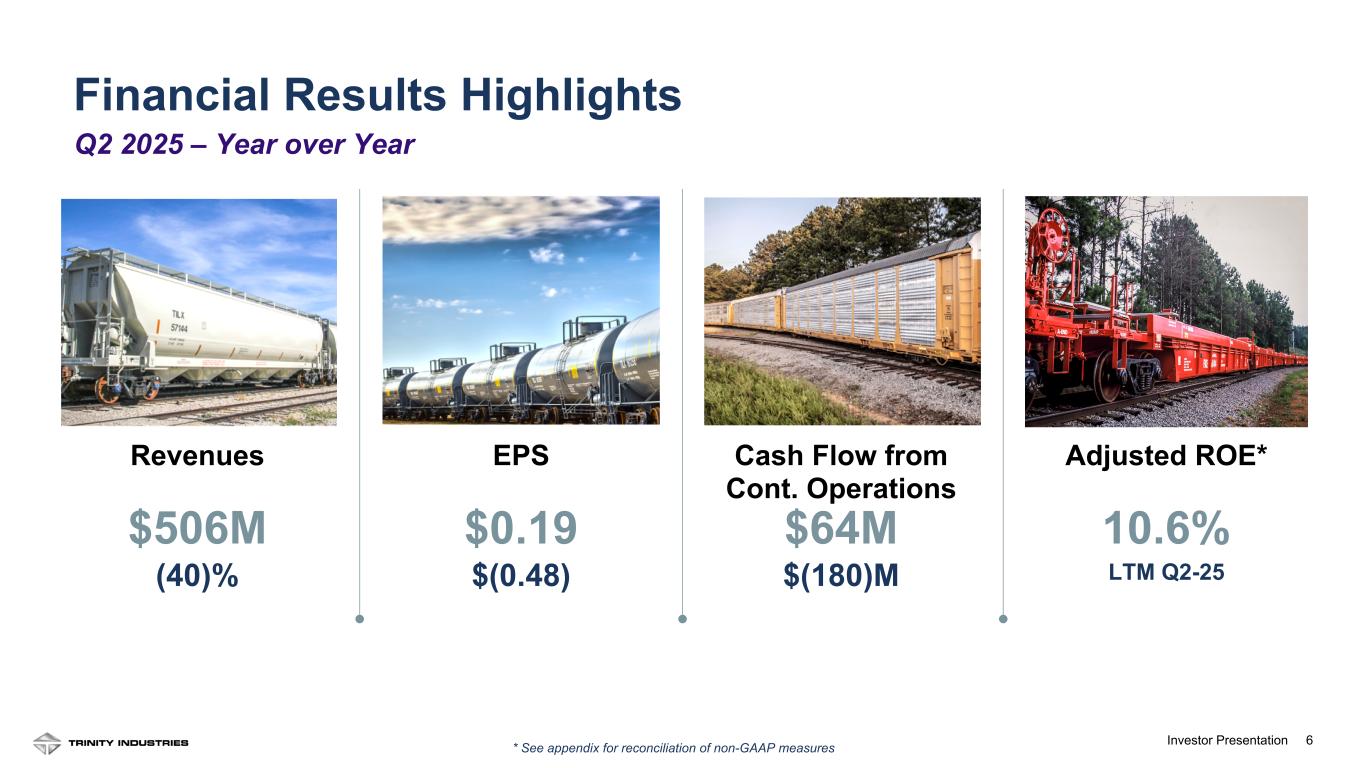
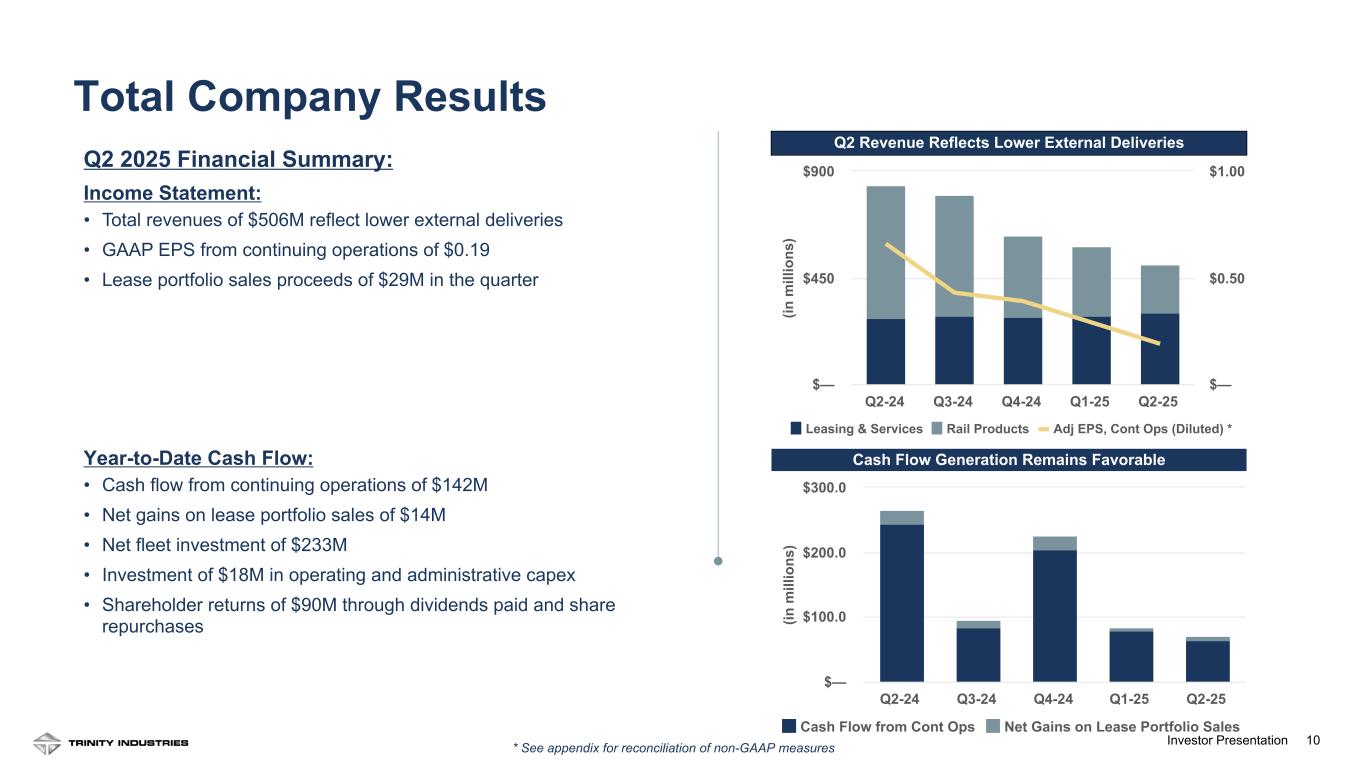
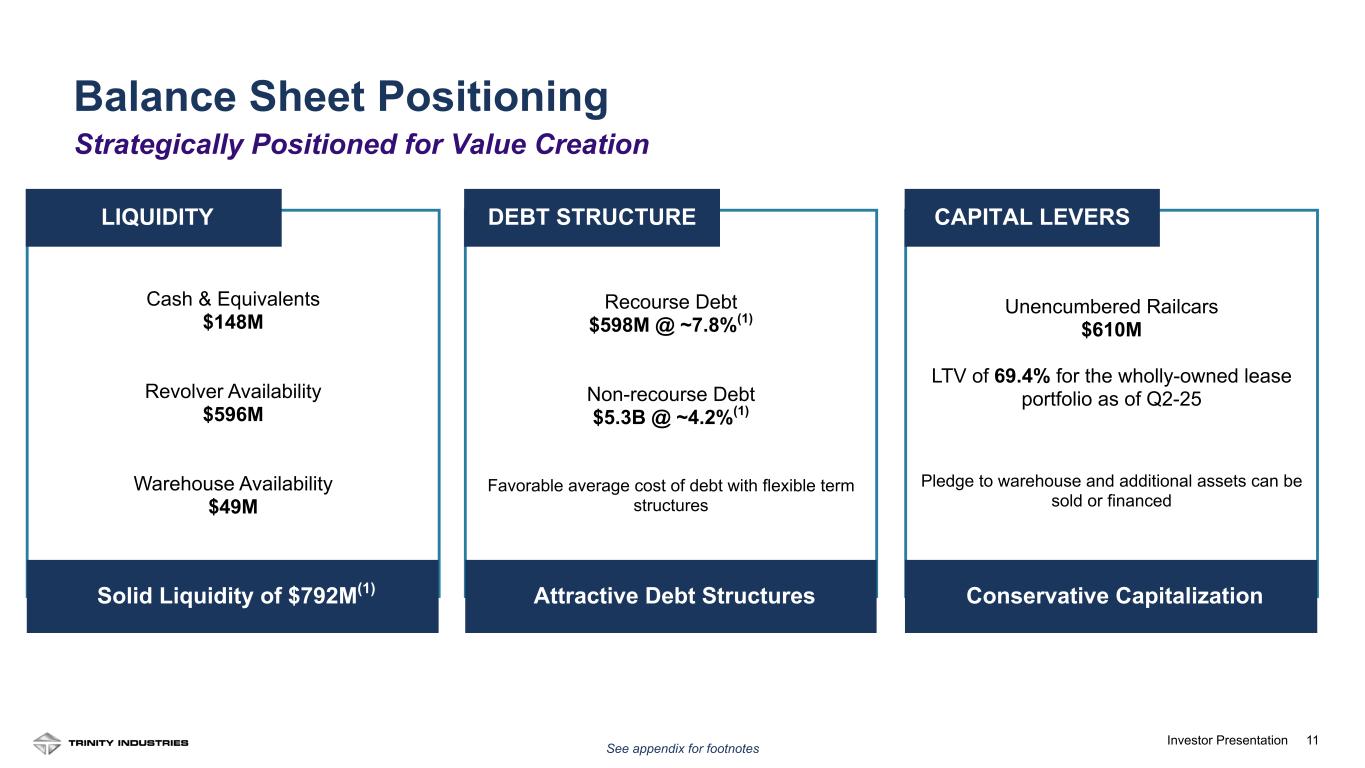
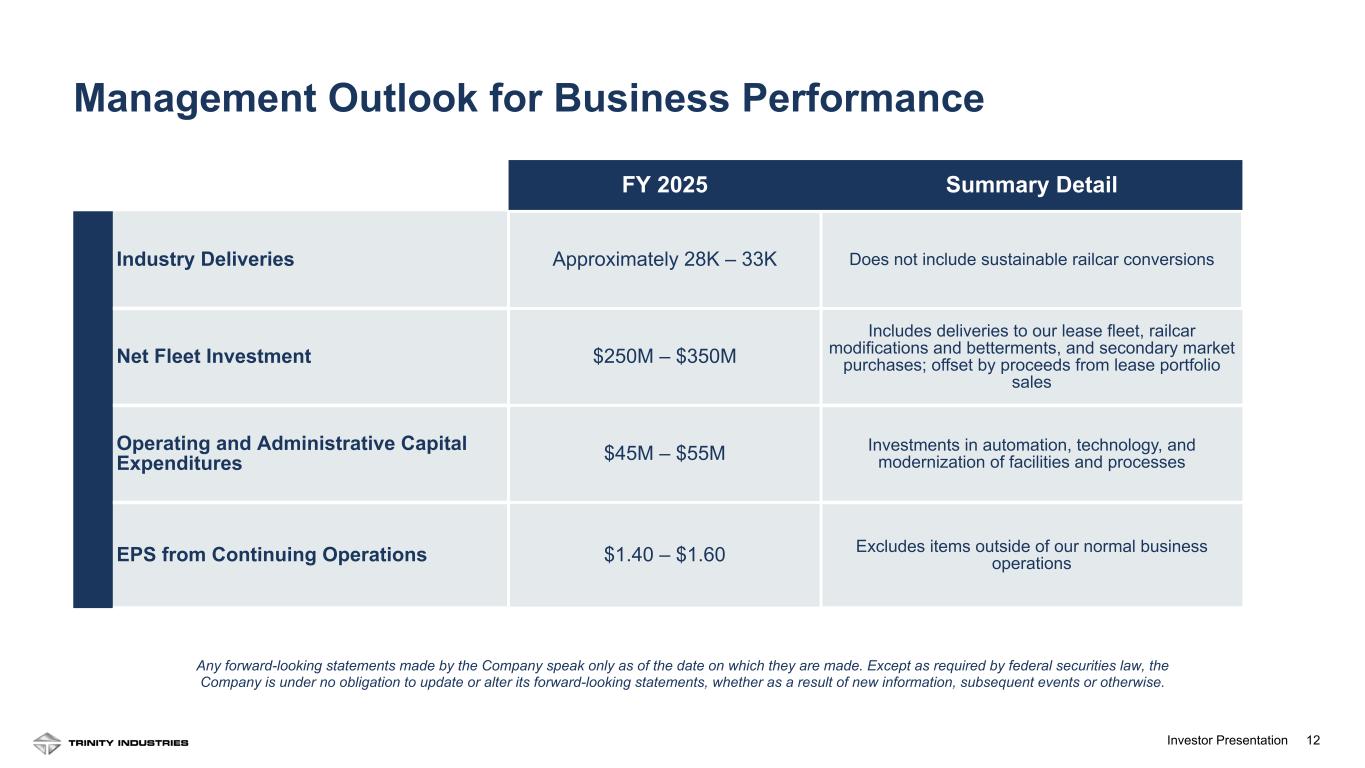
Thank you, Jean, and good morning, everyone. I will begin by discussing our second quarter financial statements, starting with the income statement. Revenues of $506 million and GAAP EPS of $0.19 in the second quarter are consistent with our expectations given a slower delivery pace in the second quarter. As Jean mentioned, lease portfolio sales proceeds were $29 million in the quarter. Our effective tax rate for the quarter was 15.8%. In the quarter, we purchased $40 million in transferable tax credits at a discount, which benefited our quarterly tax rate. These credits were used to offset the company's federal tax liability for 2024. We have incurred approximately $8 million of severance expense year-to-date, split between the Rail Products Group and Corporate. We are expecting full-year severance expenses of $15 million, with remaining severance costs to be incurred in the Rail Products Group. Given the workforce reductions as well as lower incentive-based compensation, we expect to realize about $50 million in savings across the enterprise in 2025. Net gains on lease portfolio sales are $14 million year-to-date, $8 million of which was in the second quarter. As I said last quarter, we expect gains on sales to be weighted to the second half of 2025. Moving to the cash flow statement, our business continues to demonstrate its cash generation potential. Year-to-date cash flow from continuing operations is $142 million. As we go forward, we expect the effects of recent legislation to benefit our cash from operations. Year-to-date, our net lease fleet investment is $233 million. We remain active in the secondary market, both as a buyer and a seller. Secondary market purchases allowed us to improve the yield on our fleet while also growing our lease fleet. Our full year guidance for net lease fleet investment reflects higher originations and consistent secondary market adds, offset by significantly higher secondary market railcar sales in the second half of the year. In keeping with our capital allocation framework, we increased share repurchase activity to $31 million in the quarter. Year-to-date, we have returned $90 million to shareholders through dividends paid and share repurchases. Finally, our year-to-date investment in operating and administrative capital expenditures is $18 million. Our balance sheet positioning remains strong, providing us with significant flexibility with $792 million in liquidity through our cash reserves, revolver, and warehouse availability. We are well positioned for a variety of market conditions. Our loan-to-value ratio of 69.4% on our wholly owned fleet aligns with our target range. In the second quarter, we successfully refinanced and upsized our TRL 2023 notes, further optimizing our debt portfolio and positioning our balance sheet for continued value creation. As we look ahead to the remainder of 2025, we are maintaining our industry delivery forecast to a range of 28,000 to 33,000 railcars. While railcar orders are recovered more slowly than anticipated, we remain confident that demand will further materialize, with some demand shifting into 2026 based on customer conversations and market insights. We are adjusting our net lease fleet guidance to a range of $250 million to $350 million with approximately 35% of our 2025 deliveries expected to be added to our lease fleet. This slight reduction in fleet investment is due to lower originations and continued utilization of a robust secondary market. We anticipate gains on lease portfolio sales for the full year to be between $50 million and $60 million. Our operating and administrative capital expenditures guidance remains steady at $45 million to $55 million. Finally, we are maintaining our full-year 2025 EPS guidance at a range of $1.40 to $1.60. This projection indicates a significantly stronger performance in the second half of the year, which aligns with our expectations. Included in the annual guidance is severance expense of approximately $0.14 per share. Additionally, we are maintaining our segment margin guidance with improved performance in the Rail Products segment expected in the latter half of the year, primarily driven by higher deliveries, partially offset by severance expenses. The resilience of our business is on full display this year against a backdrop of low industrial growth and macroeconomic uncertainty. Anchored by our leasing business, we have seen improved performance in our fleet. In the manufacturing segment, our people have responded to changing customer demand and position training to perform in a period of lower demand. As we move forward, we are poised to realize additional operating leverage across our platform. Operator, we are now ready to take our first question.
Congratulations on getting production aligned with orders, and it's encouraging to hear that you continue to think that goes up from here. Can you talk a little bit about the production plans for the second half? And how the build rates should probably trend versus where you were in the quarter? And ultimately, are you aligning that to where orders are now or where you think they're going as the economy improves?
Speaker 1
Well, thanks, Bascome. Let me start off by talking a little bit about the cycle. Remember, we told you that we were working to optimize our products group to be able to perform through a cycle. At the bottom of the cycle, we wanted them to at least be breakeven, and when you were in the mid- to upper part, they would be accretive to our overall earnings. We're saying that we believe second quarter was the bottom of that cycle. So we're proud of what the products group was able to do in delivering a 3% margin. We did have lower deliveries in the second quarter, and that was mainly due to resetting the line to the pace of production that we're expecting for the second half of the year. You heard us say that we're still expecting margins to be 5% to 6% for the products group, which means we're expecting volume to increase for the second half of the year for those deliveries. And that aligns really well with the positive inquiry levels we're seeing and the positive customer sentiment that's starting to come through.
And to the cadence of deliveries and margins, do you expect it to be fairly stable through the next 2 quarters? Or will there be some lumpiness as you continue to build in the new configuration?
Speaker 1
So we expect it to improve through the year.
Margins and deliveries? Or is that a margin comment?
Can we go to taxes? You talked about purchasing some federal tax credits to reduce the tax rate. My understanding was, as a leasing company, the cash tax burden is pretty light to start with. And then you've gotten this big, beautiful bill, full expensing which I'm guessing is improving that framework for you. Can you talk a little bit about tax management, why that made sense for Trinity? And ultimately, do you have a run rate estimate of the cash tax saving from the full expensing deduction versus where you were before?
Speaker 2
Yes, great question. We purchased $40 million in tax credits related to the 2024 tax year when the bonus depreciation rate was lower and there were limitations on interest expense deductibility under Section 163J. Initially, we anticipated being a cash taxpayer, but with the new tax bill allowing for full bonus depreciation and the adjustment to 163J, our tax burden will significantly decrease, positively impacting our cash flow from operations. Additionally, the implications of the tax bill extend beyond our company; they also influence market demand. Previously, uncertainty surrounding the tax bill, regulatory reform, and tariffs hindered investment decisions. However, with more clarity on the tax bill and the regulatory environment, businesses are better positioned to make deals and investments. While there is still some uncertainty around tariffs, it looks like we're moving away from prolonged tensions, which will assist businesses in evaluating their investment choices. We remain very optimistic about our current position in the cycle as these factors evolve.
Tying it back to the overall sentiment and how customers are responding, we expect to see that reflected in the coming year. I have one final question before passing it along. You set a margin target for next year at your Investor Day, and based on our current position, you're slightly below that target, correct? You're projecting a margin of 5% to 6% instead of the previously anticipated 7% to 9%. The main difference seems to stem from build rates and absorption. You had indicated a goal of an average of 40,000 annual railcar deliveries, but we are currently tracking around 30,000 for the industry. How do you reconcile the 9% to 11% margin expectation from the Investor Day with today's numbers, considering the possibility of improvement but perhaps not returning to the 40,000-plus range?
Speaker 1
Good question, Bascome, and you're right. We did set out the 40,000 a year on average for the deliveries. The uncertainty that came into this year dropped that drastically about a 30% drop year-over-year. And with that, the volume has been the biggest impact that we've seen on our product margins. When you look at recovery from that, as we see the volume go up, you will see the recovery in those margins. I think it will be quicker this time, and I'm saying that because of all the hard work that the products group has done over the last few years. They've worked on their efficiencies, their changeovers, the automation, the supply chain. All of that work, although it won't come back overnight, will come back quicker than what you've seen in the past as we see the volume recovery. So when we get back to the 40,000, you'll see it. We think they're deferring orders right now depending on where they feel comfortable with the certainty in the macroeconomics and the tariffs is when we'll start seeing that volume get closer to the 40 for the industry.
Speaker 4
I have a quick follow-up regarding the margins for the full year, specifically the 5% to 6% in manufacturing. Should we anticipate being below the low end of that range in the third quarter and then improving into the fourth quarter? Or do you expect to remain within that range for the second half?
Speaker 1
So we don't give quarterly guidance, Andrzej. So sorry about that, but we are saying our full year guidance should be in the 5% to 6% range. So you would have all four quarters contributing to get to the full year. We do expect to see volumes improve through the year. Hopefully, that helps a little bit.
Speaker 4
No. That makes sense. And I guess putting those pieces together, does the delivery picture in the back half then look more like that first quarter level? Or should we be thinking more between the 2 quarters? I'm just trying to get a sense for the full year deliveries relative to the total industry delivery guidance because I think you said 28,000 to 33,000. If we come in at 28,000 and you guys maintain your market share that you did last year at 41%, that would assume roughly 11,500 deliveries for you this year. I'm just curious if you can comment on the relative back half deliveries, if that's looking closer to the first quarter or if we should expect to ramp more into the fourth quarter. Any additional color there would be super helpful.
Speaker 1
Sure. And you hit the key points. We do expect the industry deliveries to be between 28,000 and 33,000. We expect to be within our normal range of market share, which would be between that 30% and 40%. And so you can back into the numbers there. As I say, the business improves through the year, which means the biggest improvement we'll see is based off volume.
Speaker 4
Understood. And maybe just switching to leasing. Could you speak a little bit more to the current competitive environment and what you're seeing in terms of the secondary market perspective in lease rates? I know you said that you should expect that to tick up into the second half, but any additional commentary into the quarter relative to the beginning of the year would be helpful as well.
Speaker 1
So the market is still very tight and imbalanced, so that's always great for our lease fleet. We are seeing good FLRD. We're seeing that our renewal rate and success was 89% in the quarter. That's the highest that we've seen for a while. In that aspect, I think all the metrics that we're looking at are positive overall for the lease fleet. We don't see anything that's going to change that. As you can see from the build of deliveries that they are not outpacing the demand or the orders. So those are all good data points to say we expect leasing to continue to be strong. We've only repriced 63% of our fleet. So we still have quite a bit of luck there to reprice over the next few years. So all those indicators are positive in our viewpoint.
Speaker 2
Yes. And Andrzej, on the secondary market, I'll just add that we see the market as still very good. And it stands to reason with lower build rates leasing companies really are going to get your growth through the secondary market, and we're seeing that. You may have caught in our comments on the guidance, we did increase our gains on sale from $40 to $50 to $50 to $60 for the year, and that's just a testament to how we see the secondary market.
Speaker 4
Yes, that makes sense. And then maybe just 2 sort of higher-level questions, 1 for me to close out. The first one is on the tariff situation; I'm just curious; is it too simplistic to think higher steel prices could limit customer demand for new cars in the near term? Or does that sort of speak to the delayed decision-making that you guys were talking about earlier? Just trying to think through that longer term? And then if you could share thoughts on the recent news on the potential transcontinental rail merger, if that were ultimately to go through, how do you see that impacting the leasing and manufacturing business or the industry overall for the time, everybody.
Speaker 1
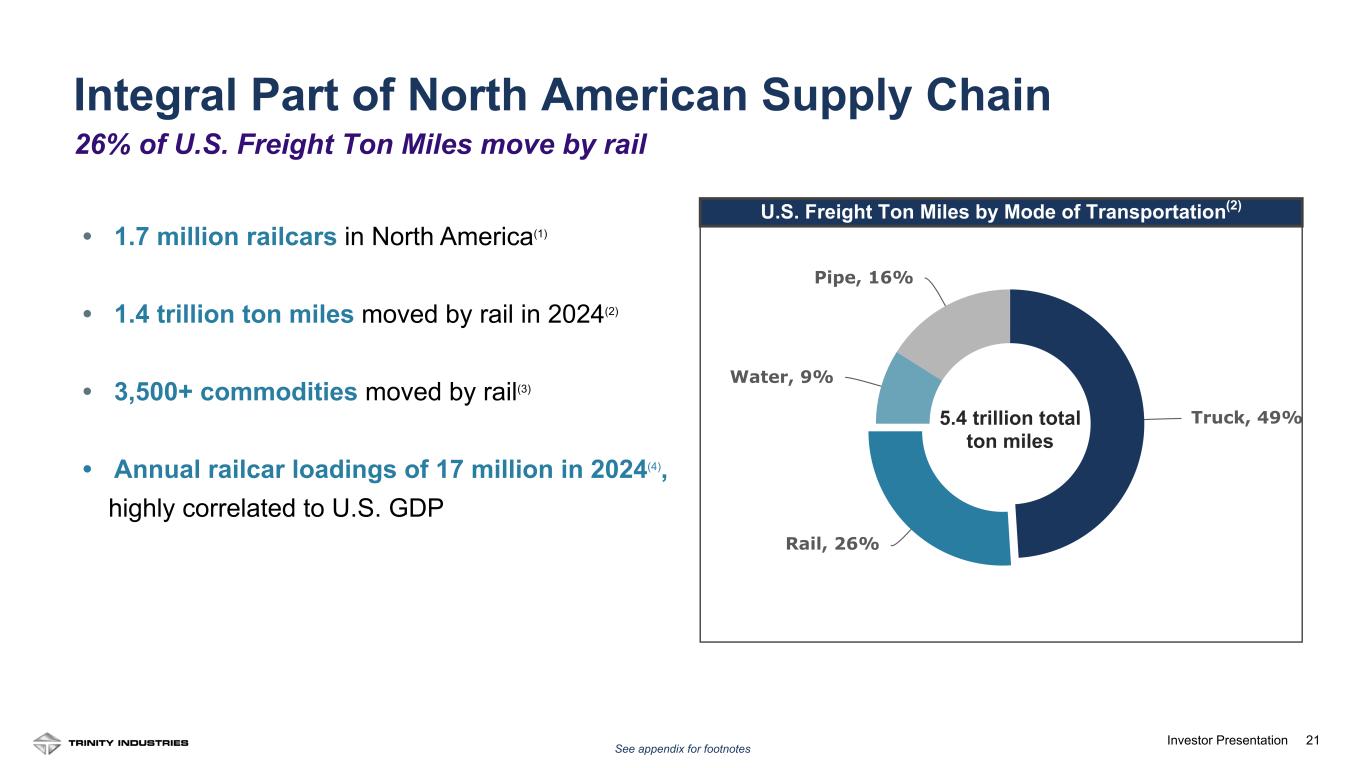
So on higher steel pricing, it does mean that car costs are going to be higher. But also, as you look at higher steel prices, that means scrap prices typically are higher too, which leads people to attrition. The first half of this year, just over 20,000 cars were scrapped. So the scrapping was higher than the delivery. So we saw a little bit of a contraction in the overall fleet. At some point, that contraction is going to lead to having to order new cars. That's what we're saying. We're seeing sentiments start to change there. And that's where the steel price is already in effect for us. As far as the merger, when you look at it from what we know right now, the interchange process does cause inefficiencies between the railroads. Anything you can do to fix or improve those inefficiencies should help our customers overall and lead to better modal share. If you look at the synergies that have been called out for this merger, two-thirds of those are in revenue synergies from identified opportunities to grow volume. They're talking about converting truck to rail, capturing transcontinental shipments, and penetrating deeper into international markets. All of those are good for us in the long term with modal share shift. So that's what we know right now. We'll keep watching to see if anything new comes down, but we think this could be good overall for the industry. Well, thank you for joining us today. Trinity's second quarter results highlight the strength of our leasing business and the resilience of our franchise. We're encouraged by our ability to perform in a challenging delivery environment and are optimistic about the improving order volumes. This positive trend paves the way for an enhanced operating environment and improved financial performance in the second half of 2025.
Operator
Conference has now concluded. Thank you for attending today's presentation. You may now disconnect.