Operator
Hello everyone. Thank you for joining today's UMB Financial First Quarter 2025 Financial Results Conference Call. My name is Sierra, and I will be the moderator for this call. All lines will be muted during the presentation, but there will be a chance for questions and answers at the end. Now, I would like to hand over the call to our host, Kay Gregory from Investor Relations. Please proceed.
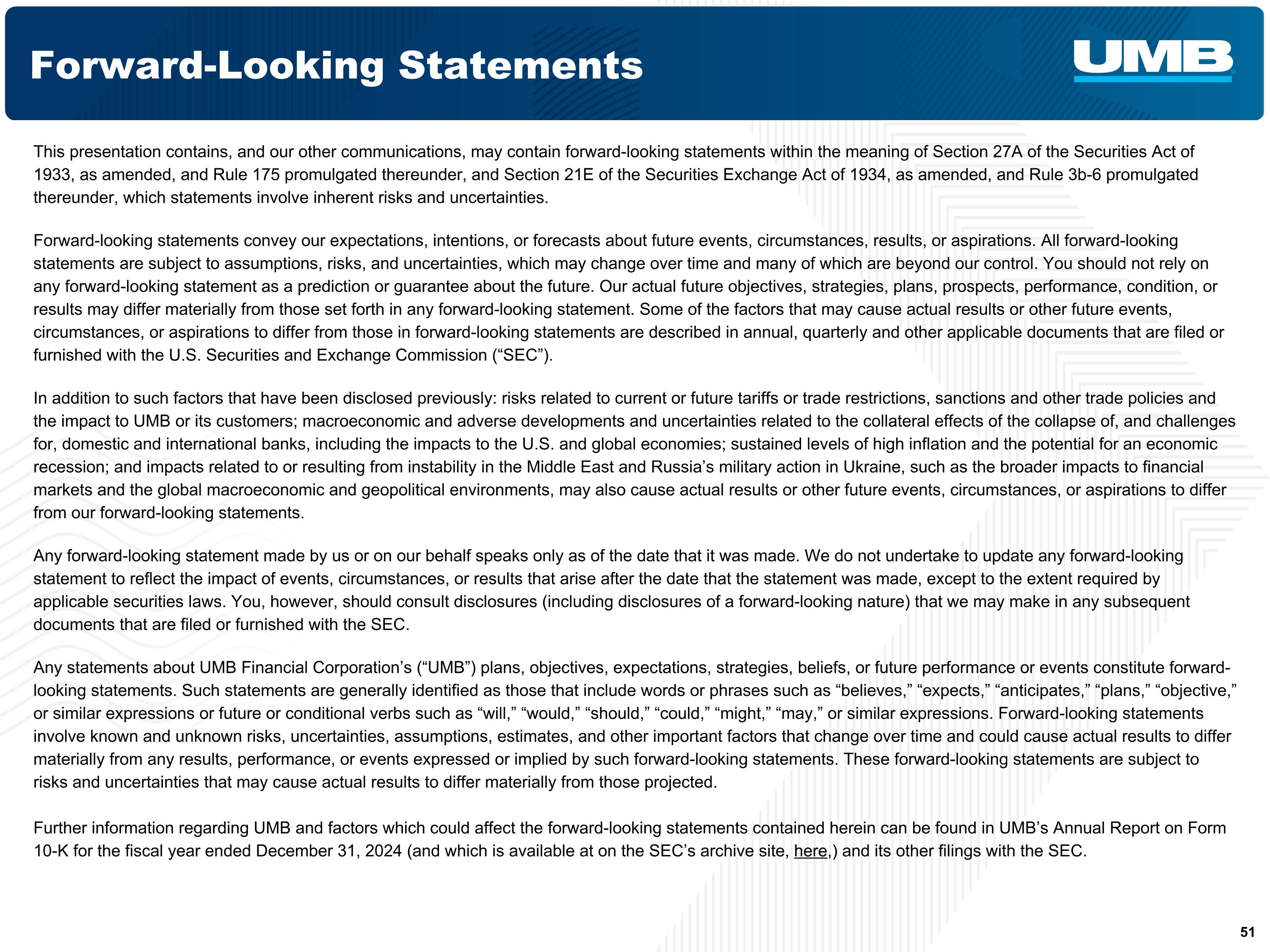
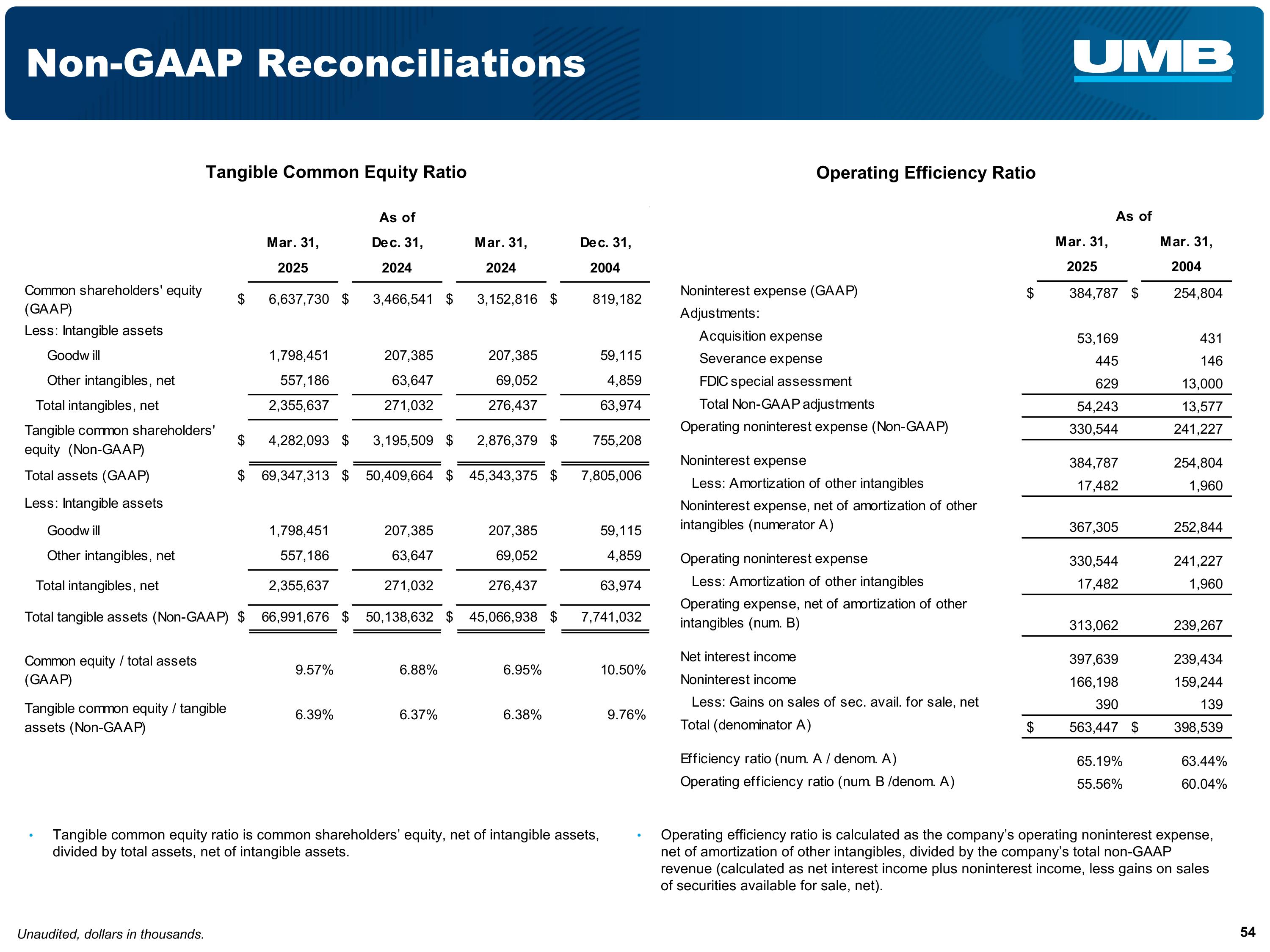
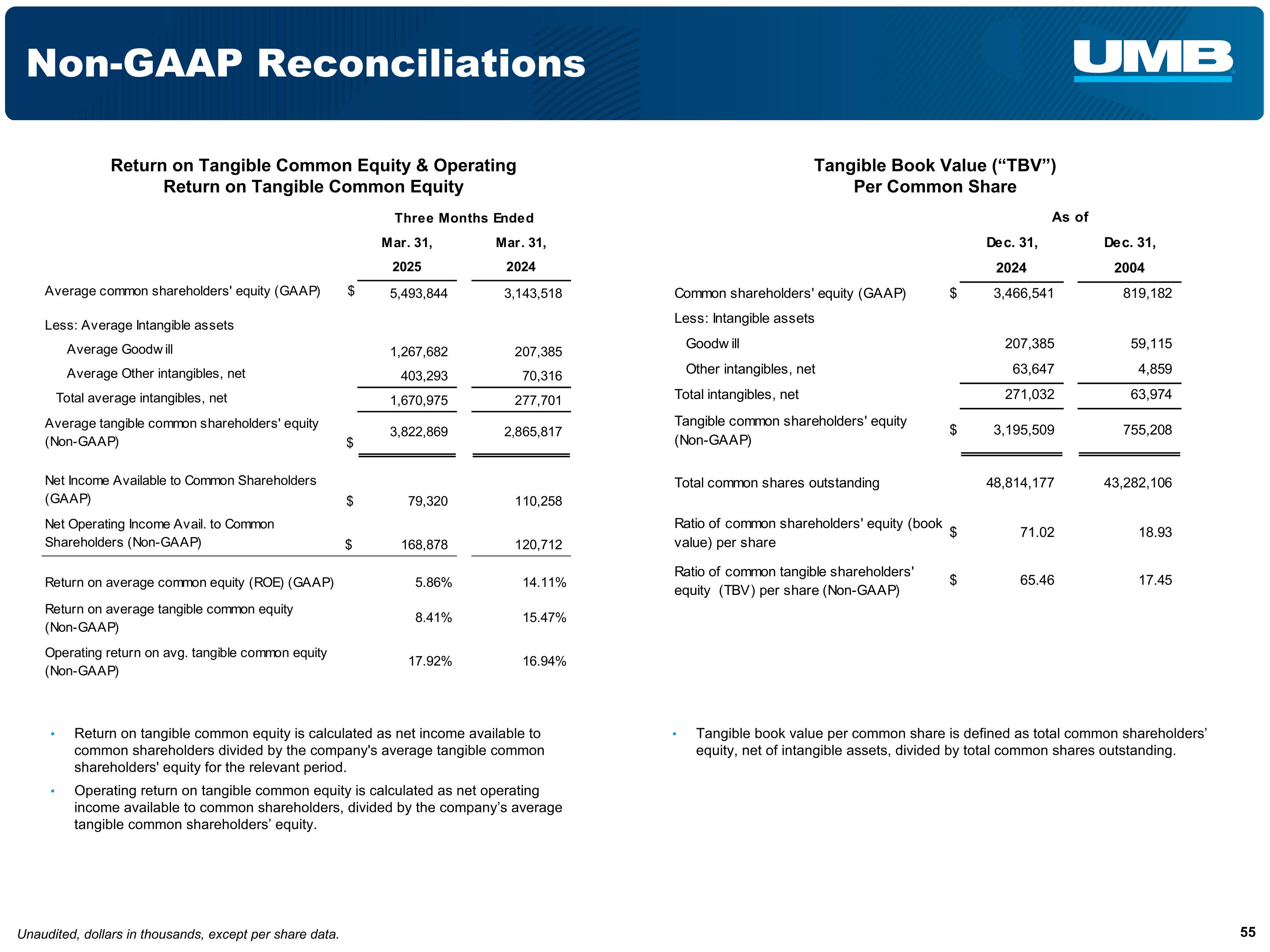
Good morning, and welcome to our first quarter 2025 call. Mariner Kemper, Chairman and CEO, and Ram Shanker, CFO, will share a few comments about our results, and then we'll open the call for questions from our equity research analysts. Jim Rine, President of the Holding Company and CEO of UMB Bank, along with Tom Terry, Chief Credit Officer, will be available for the question-and-answer session. Before we begin, let me remind you that today's presentation contains forward-looking statements, including the discussion of future financial and operating results, benefits, synergies, gains, and costs that the company expects to realize from the pending acquisition, as well as other opportunities management foresees. Forward-looking statements and any pro-forma metrics are subject to assumptions, risks and uncertainties, as outlined in our SEC filings and summarized in our presentation beginning on Slide 49. Actual results may differ from those set forth in forward-looking statements, which speak only as of today. We undertake no obligation to update them, except to the extent required by securities laws. Presentation materials are available online at investorrelations.umb.com and include reconciliations of non-GAAP financial measures. All per share metrics are on a diluted share basis. Now I'll turn the call over to Mariner Kemper.
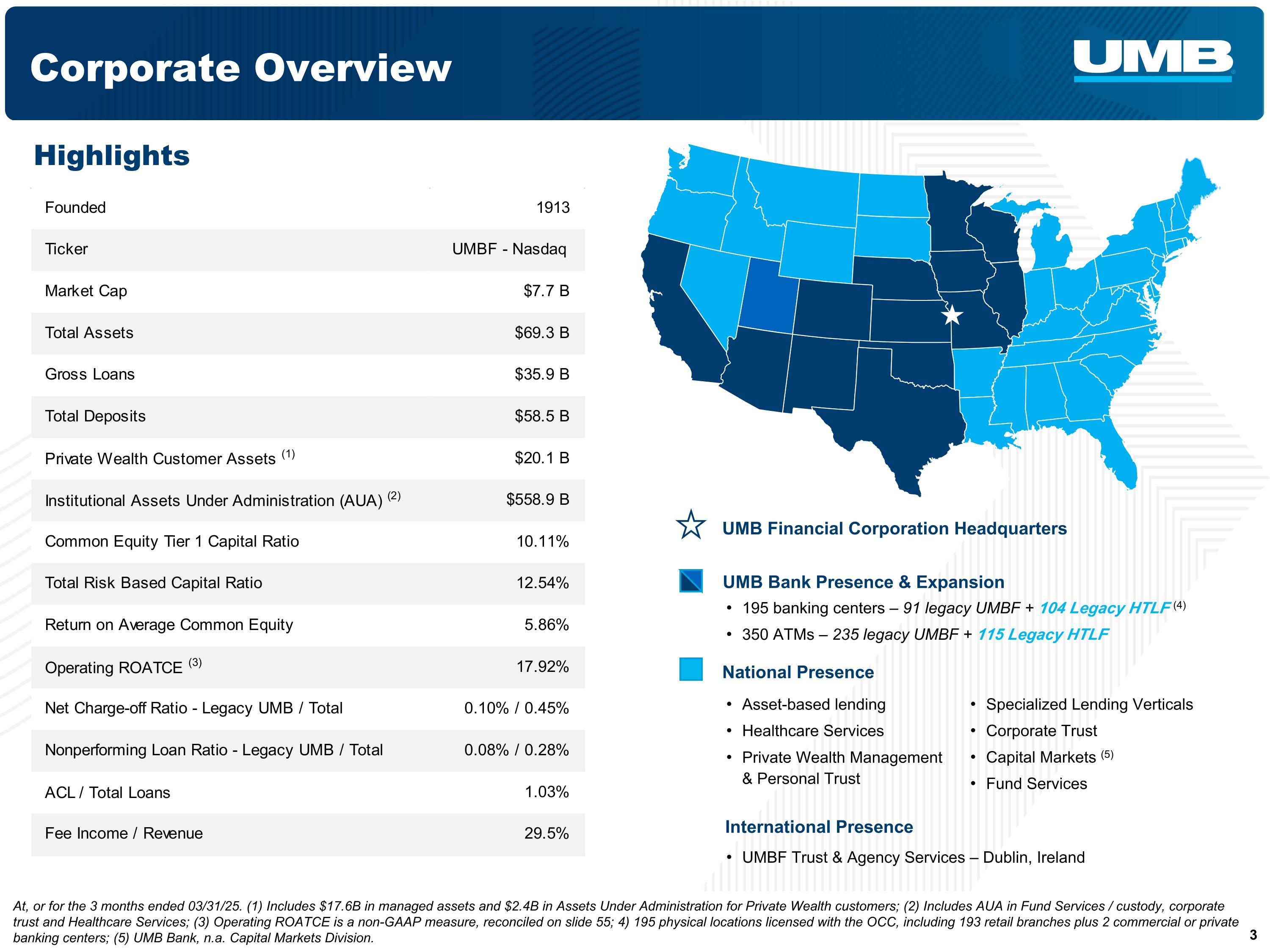
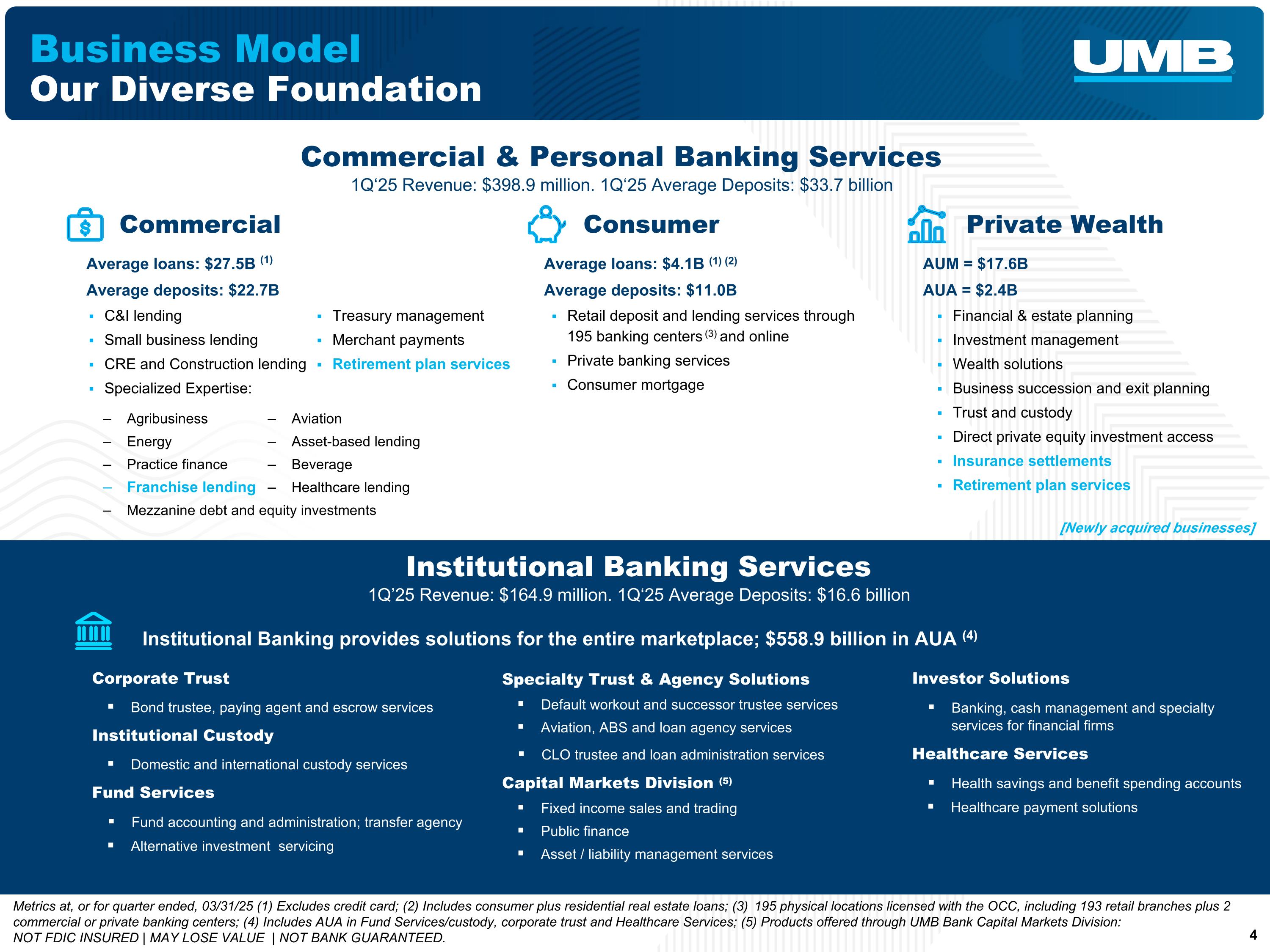
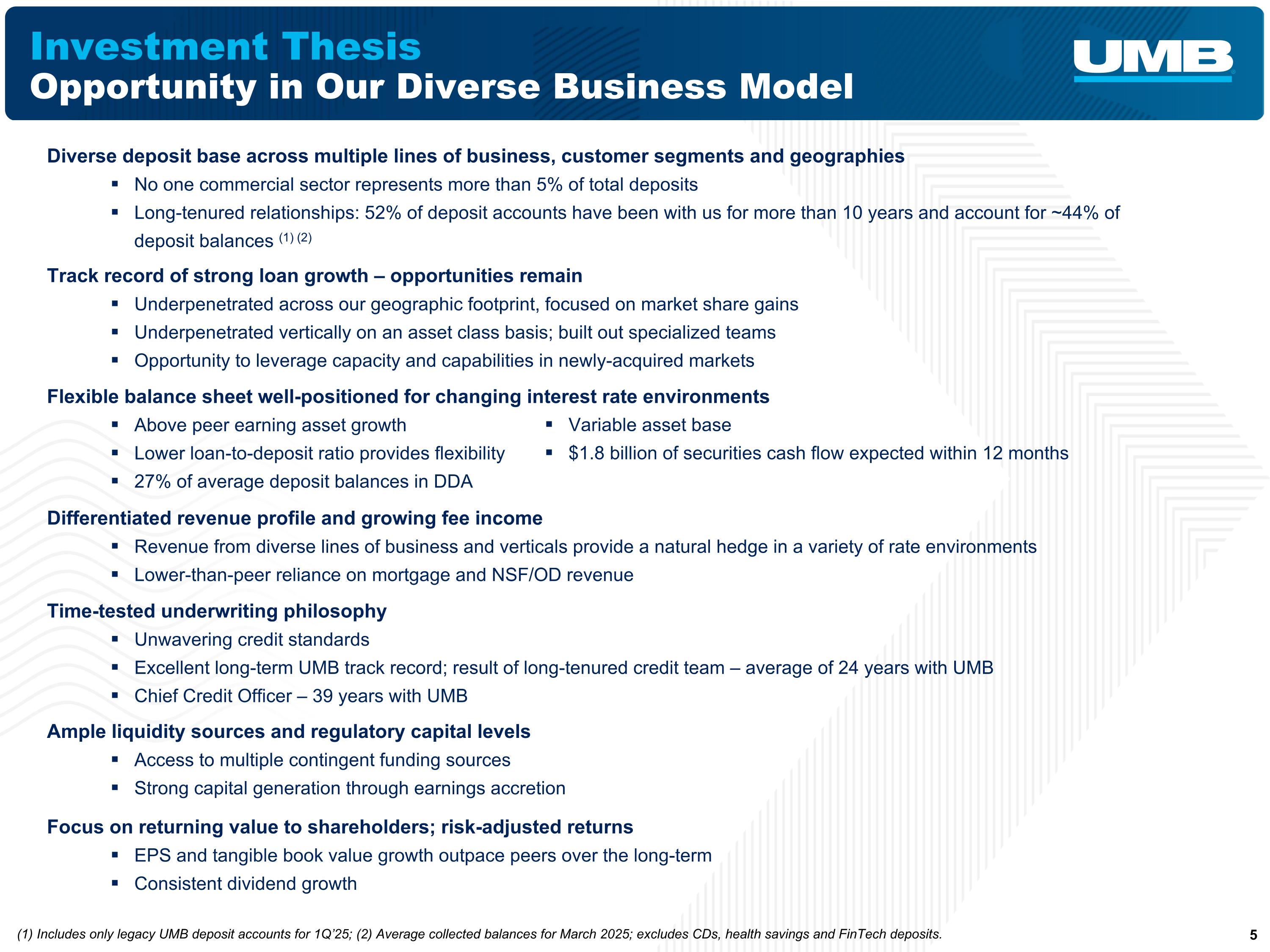
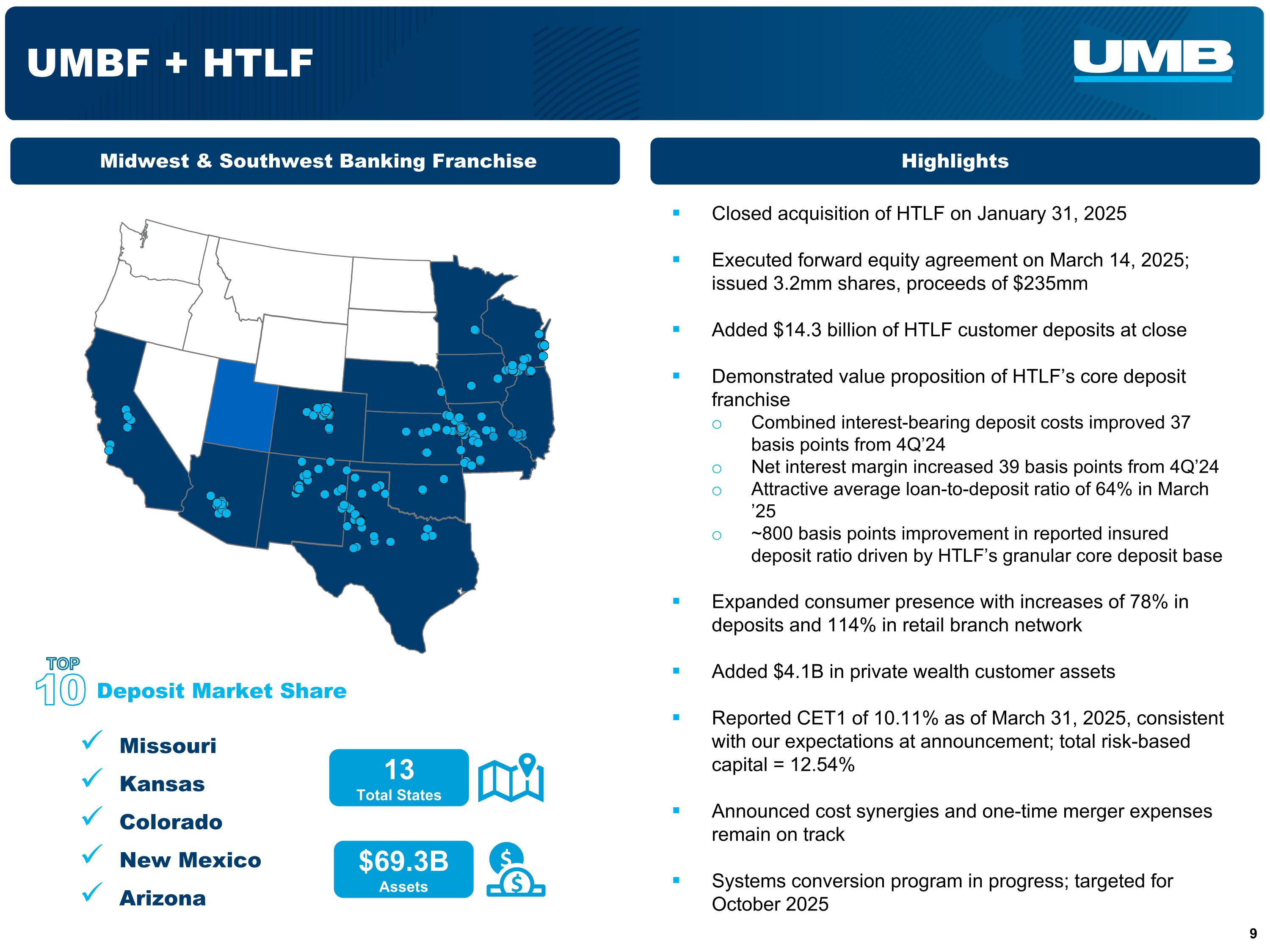
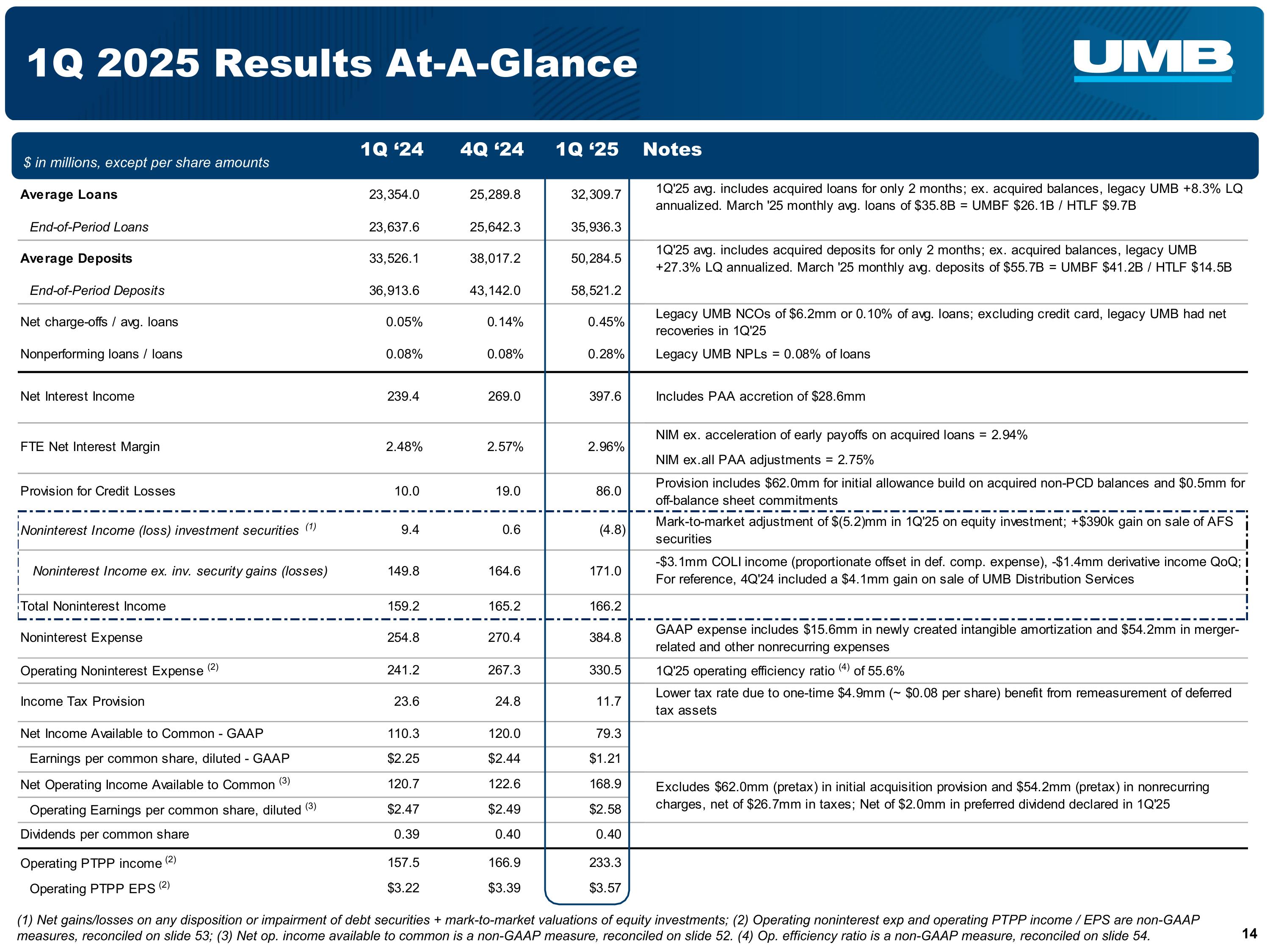
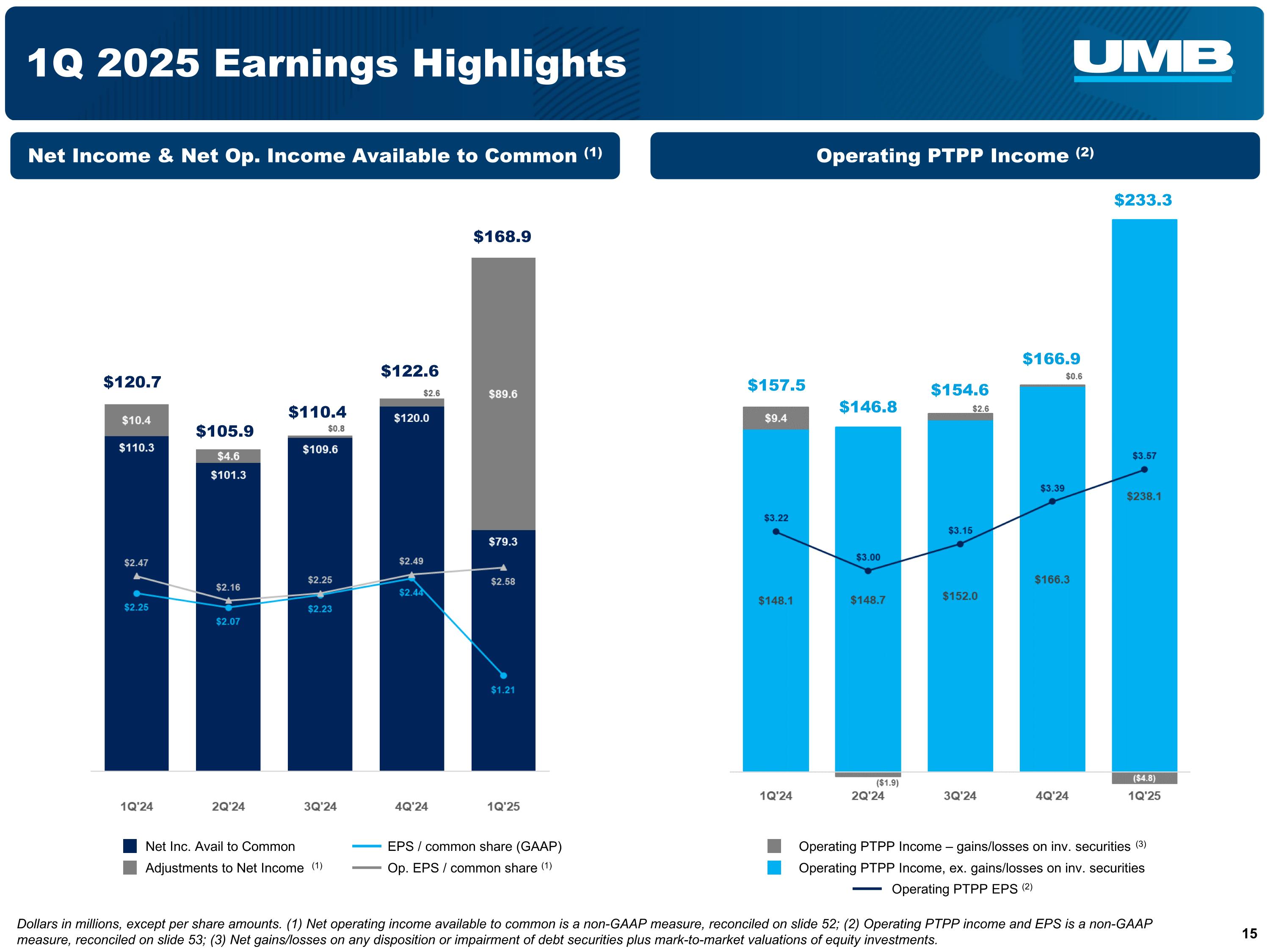
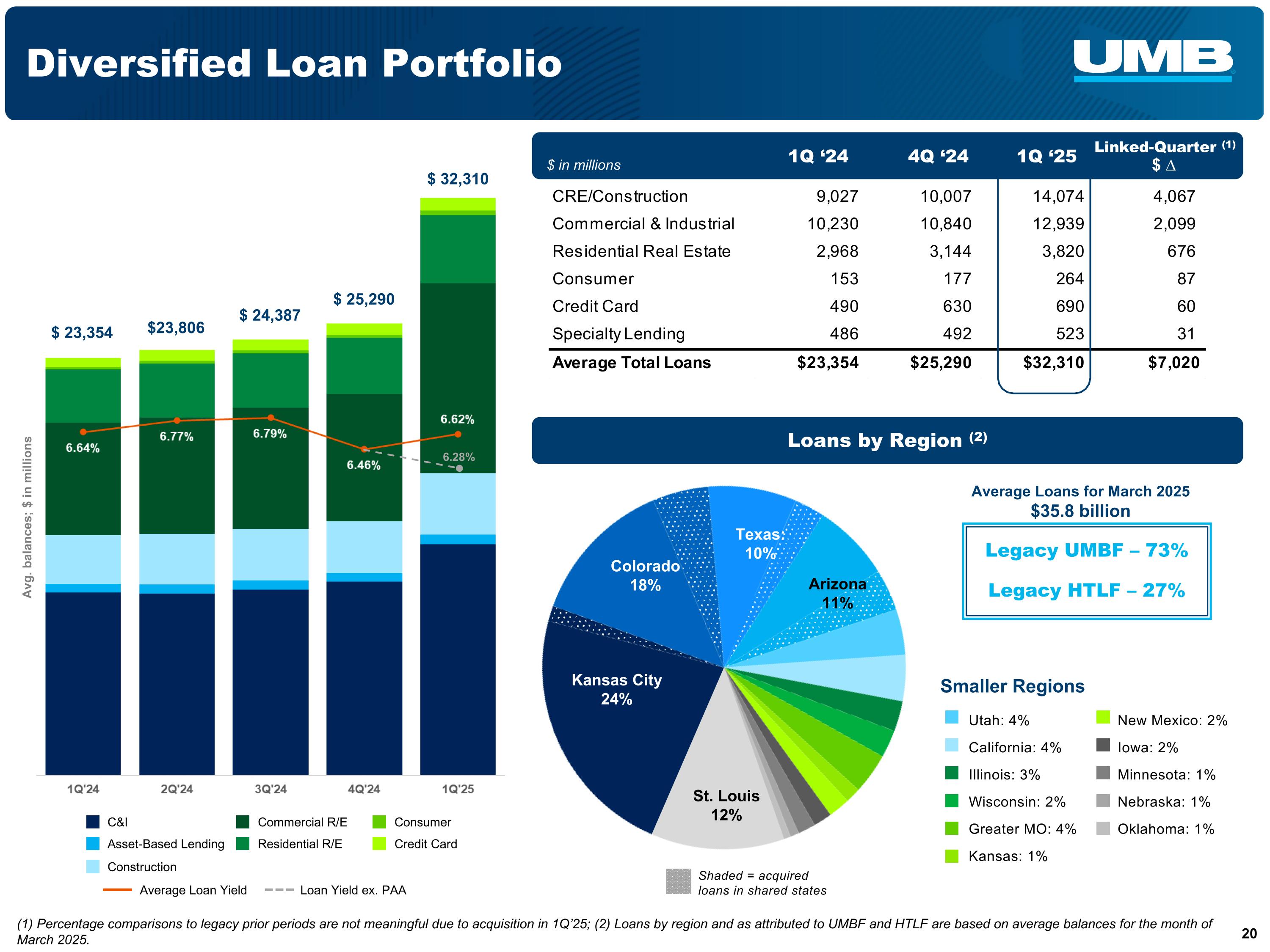
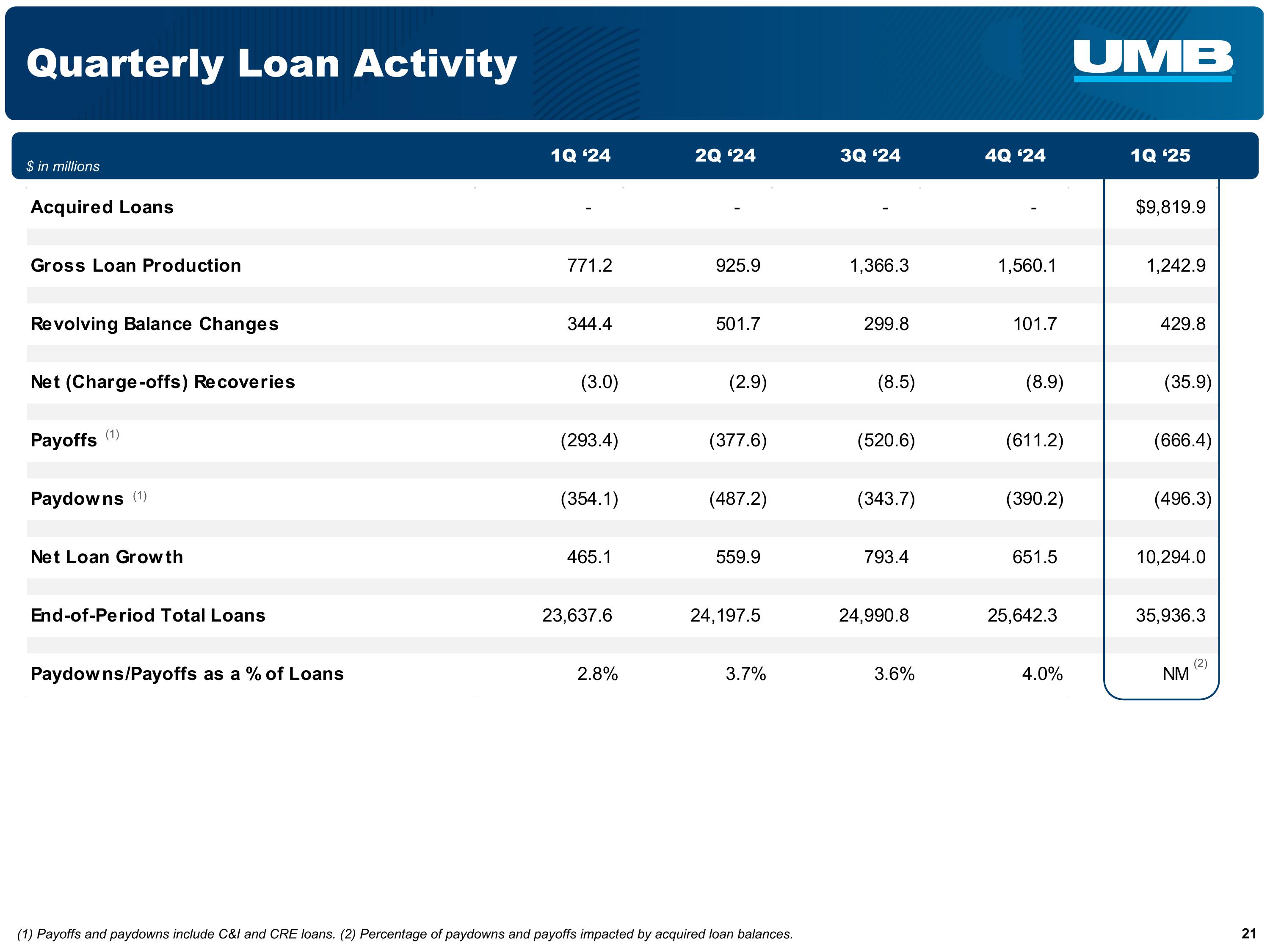
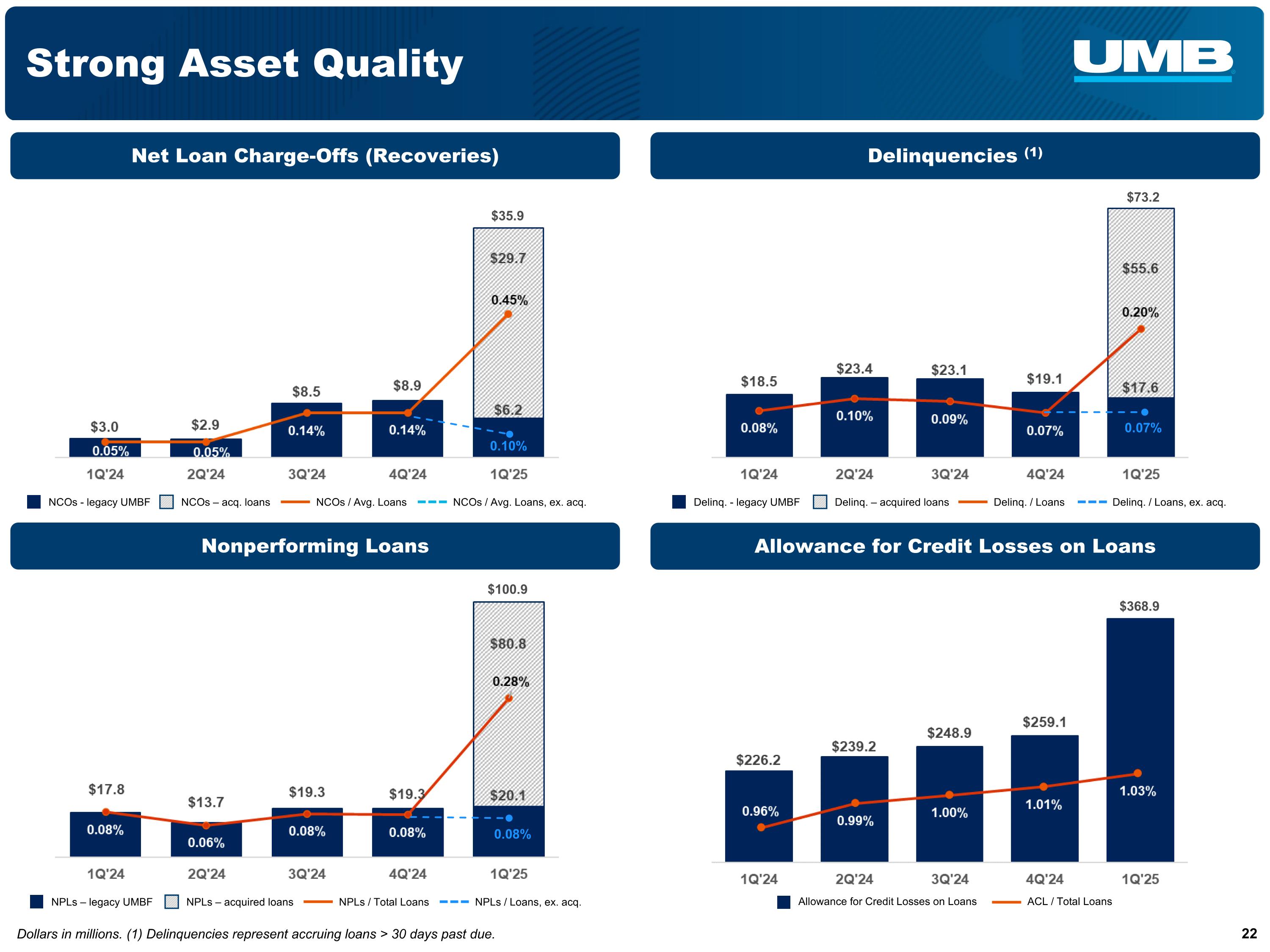
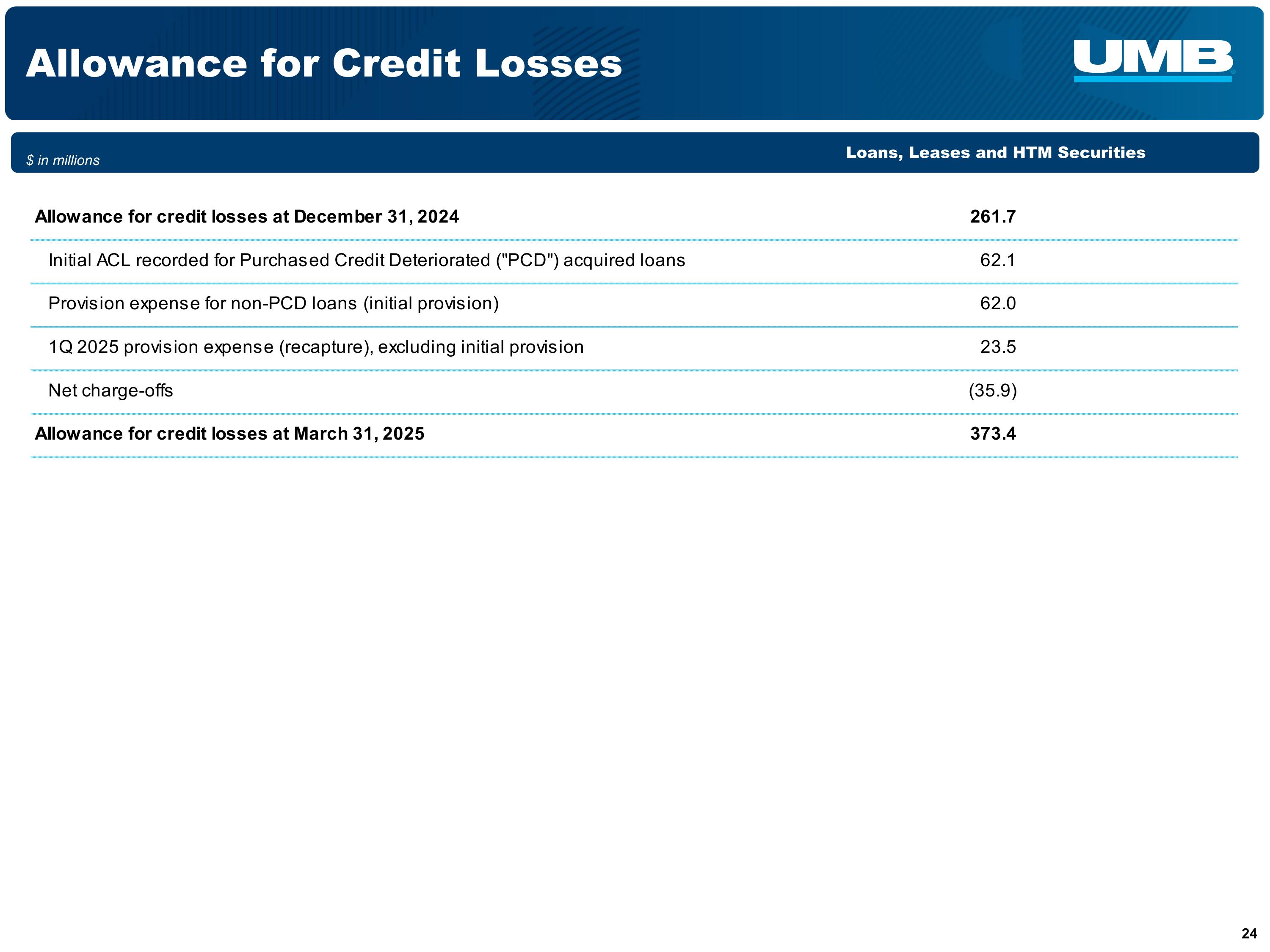
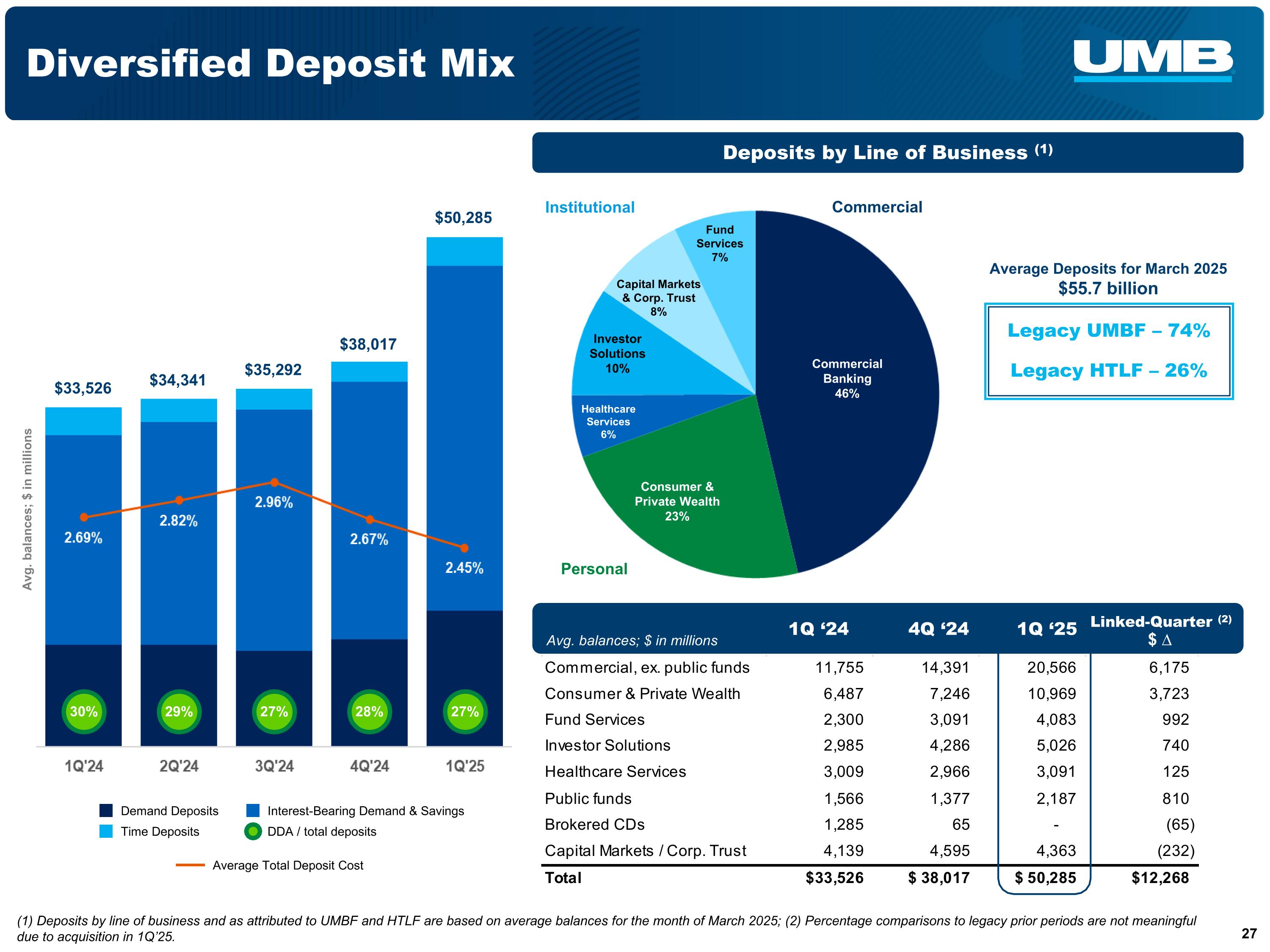
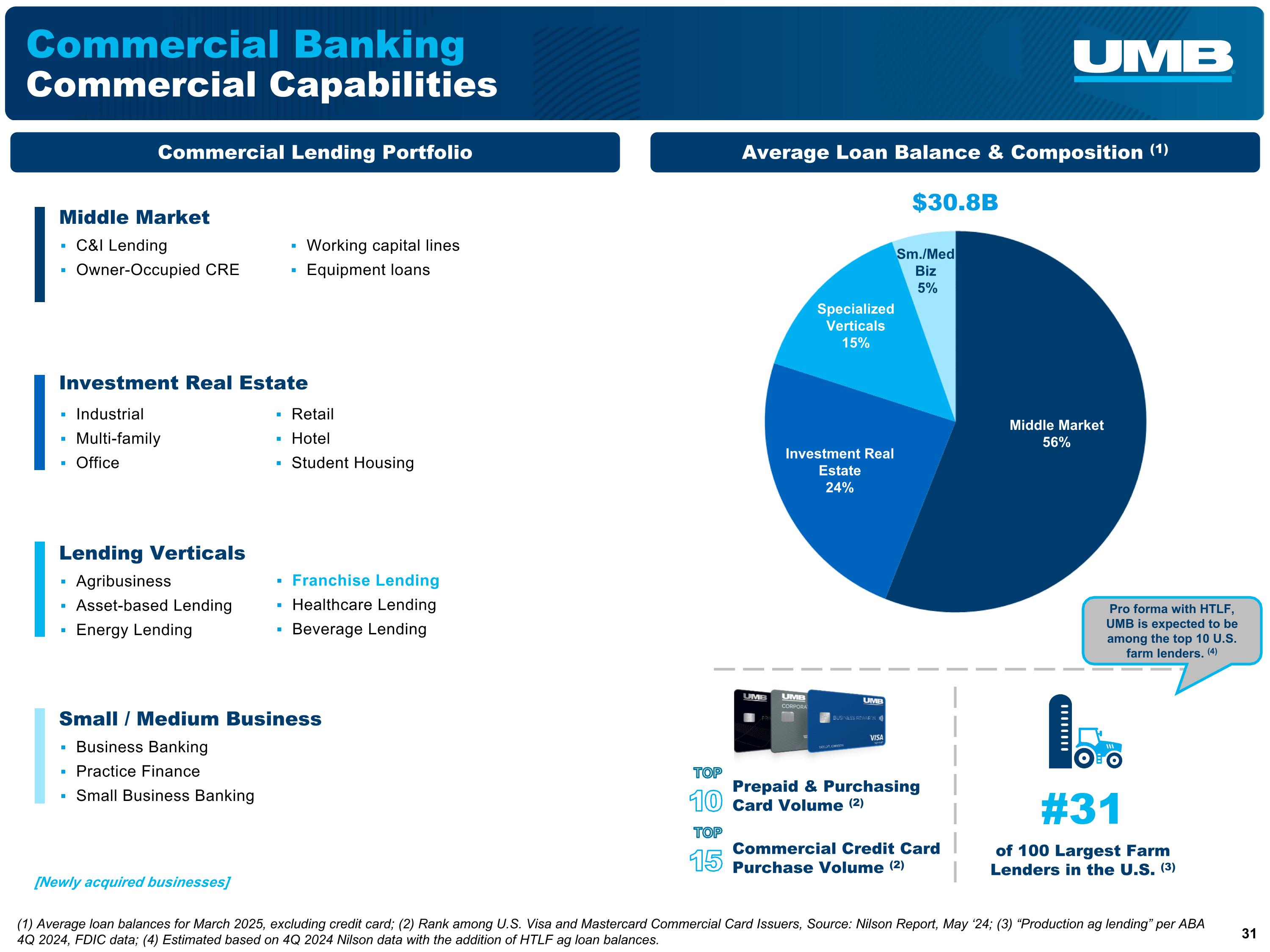
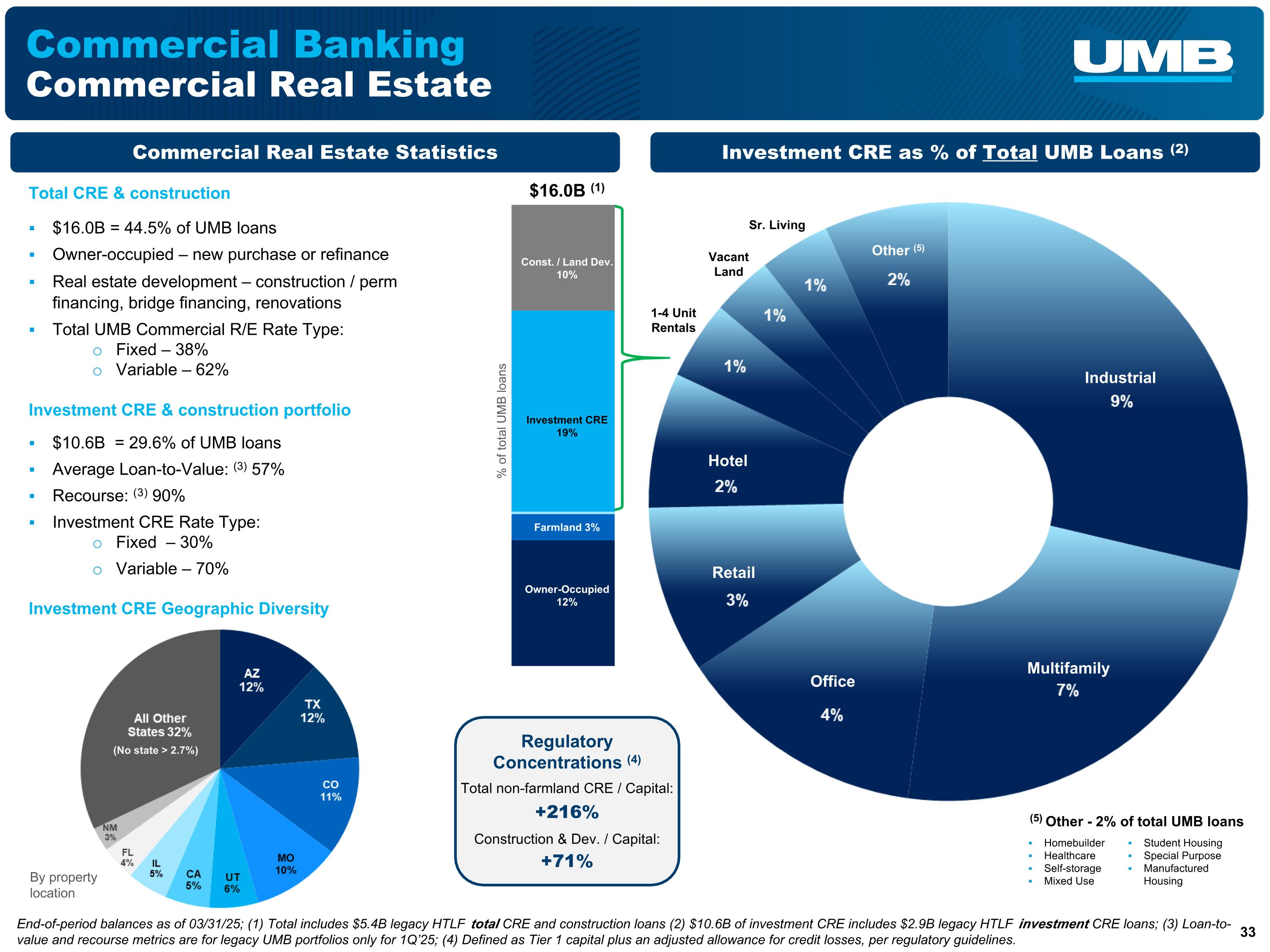
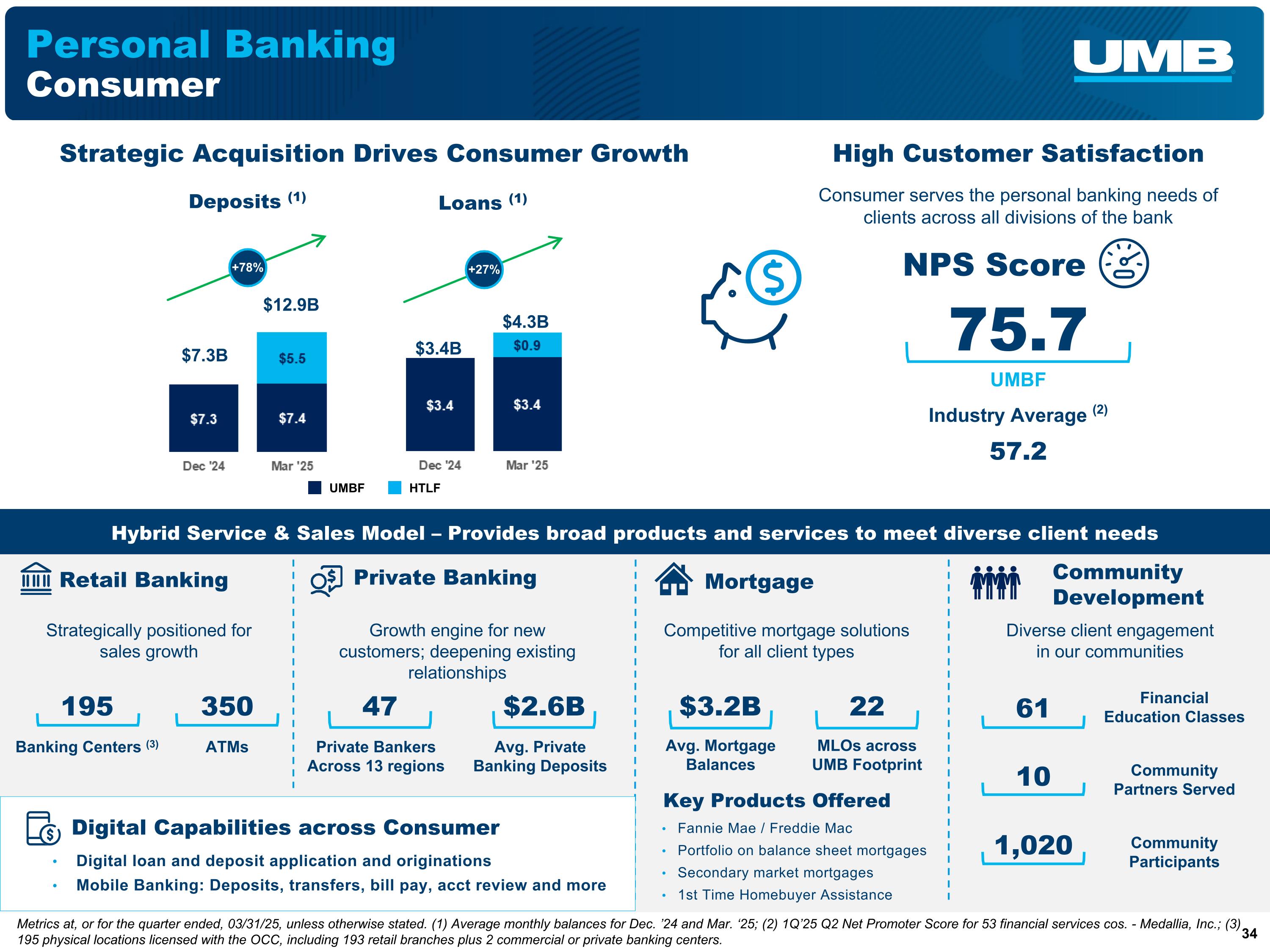
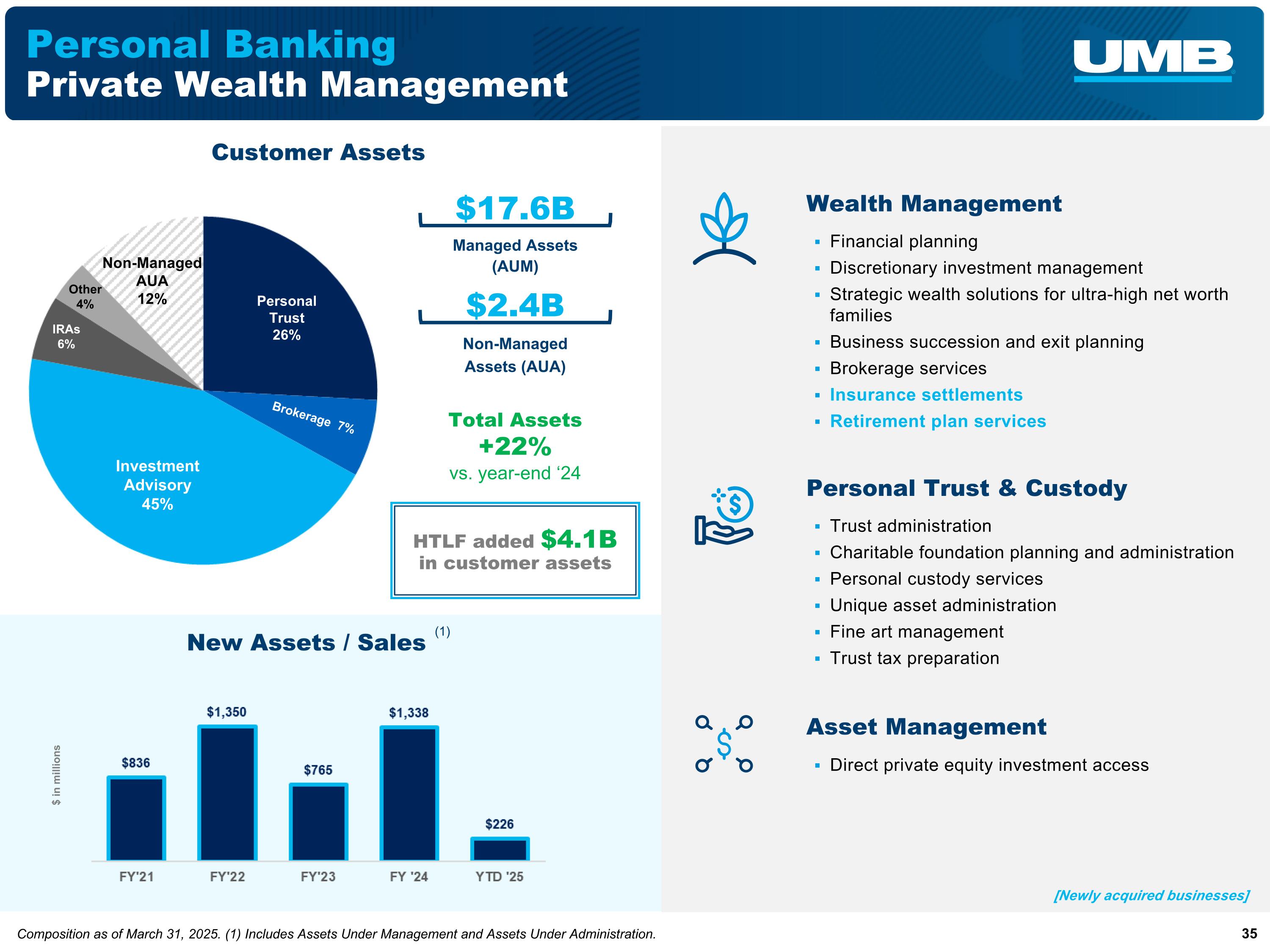
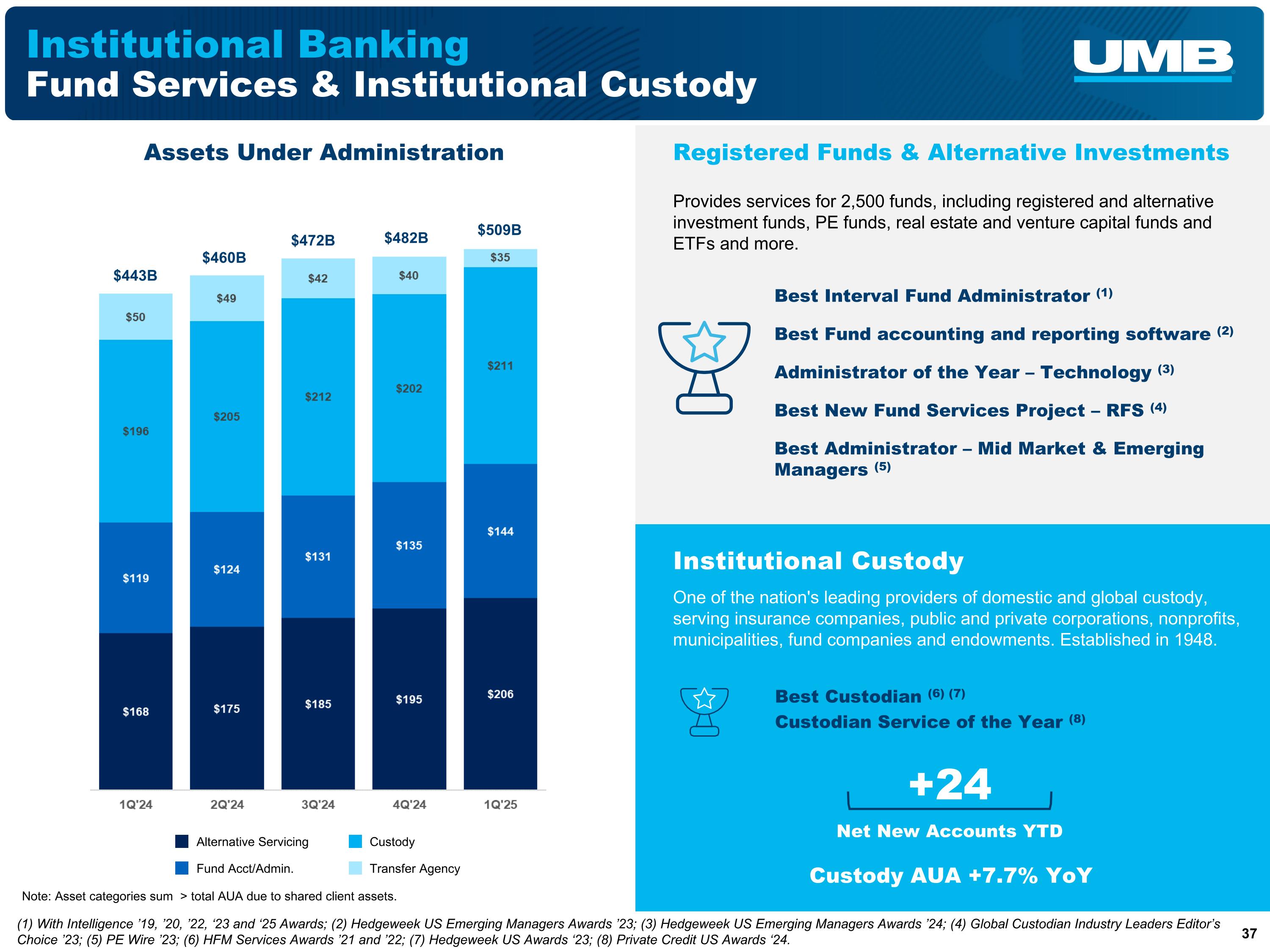
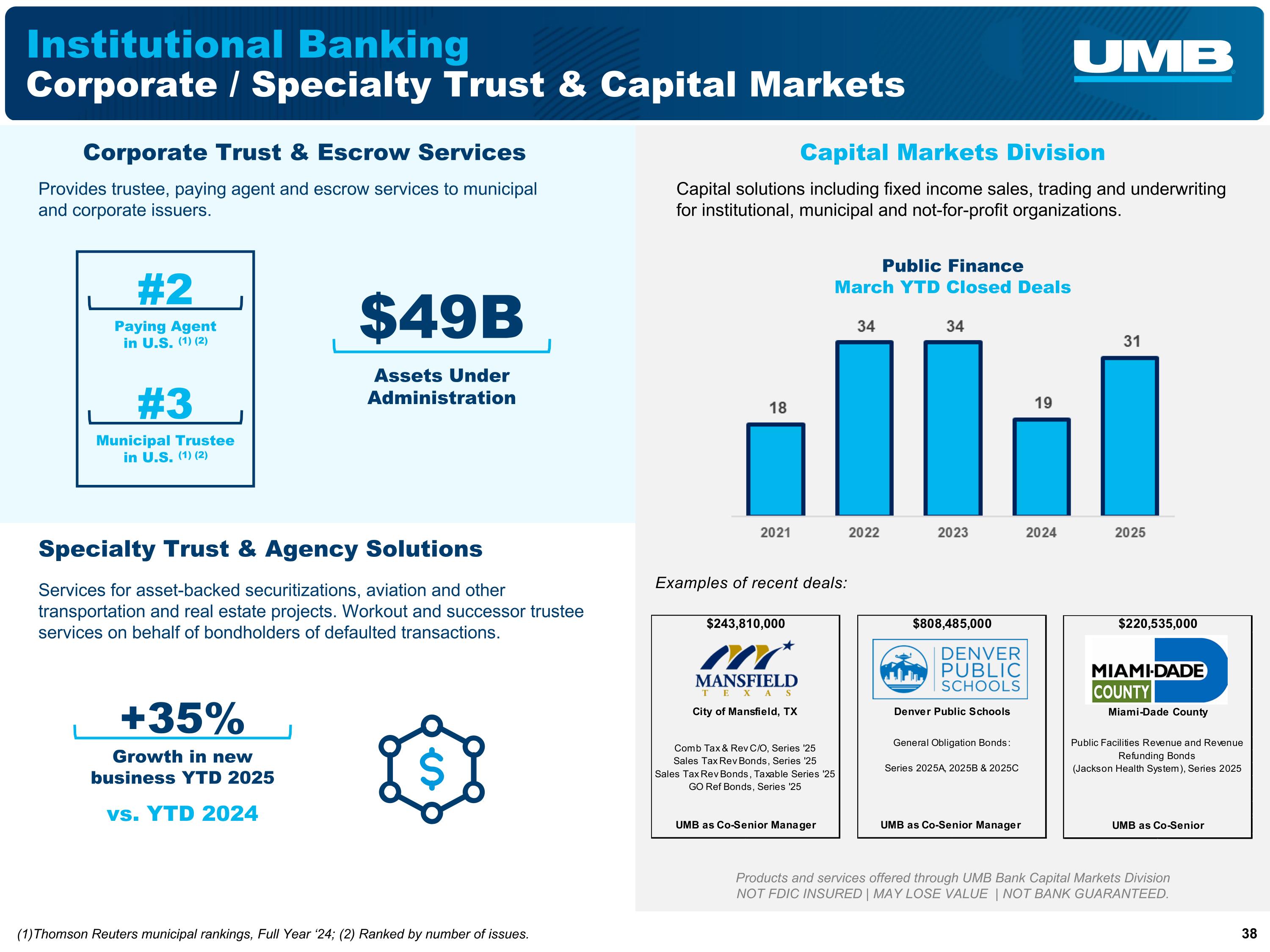
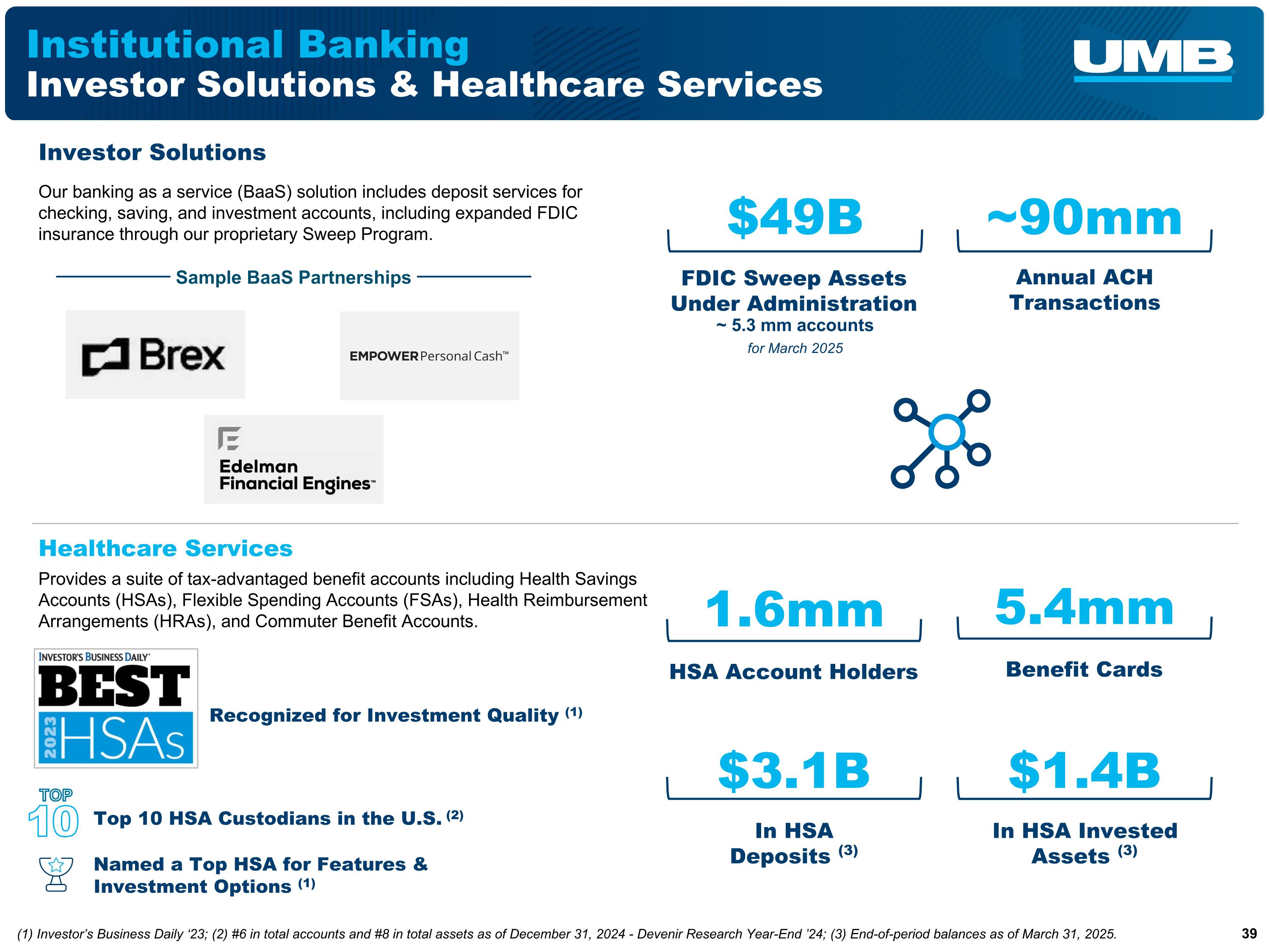
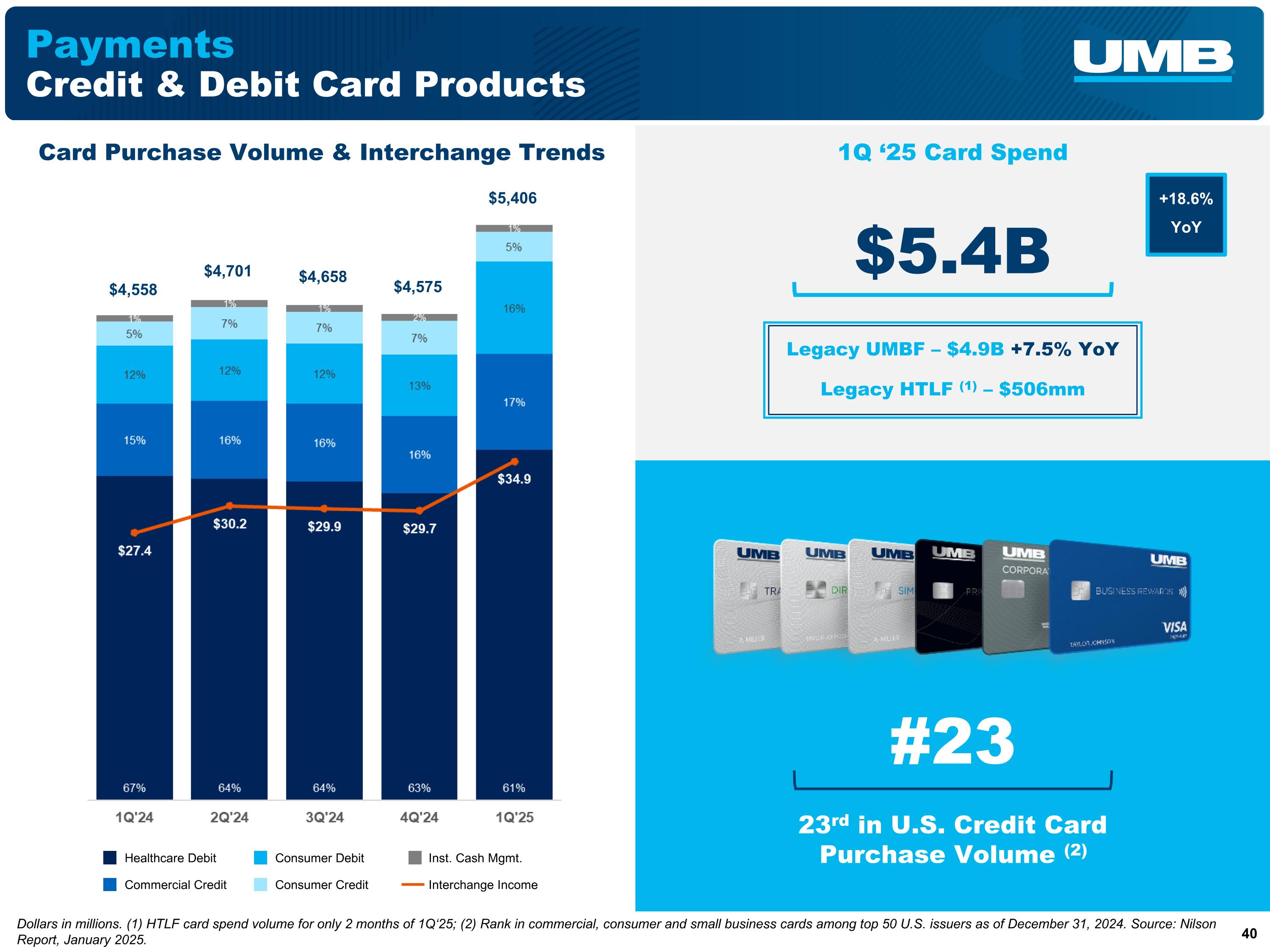
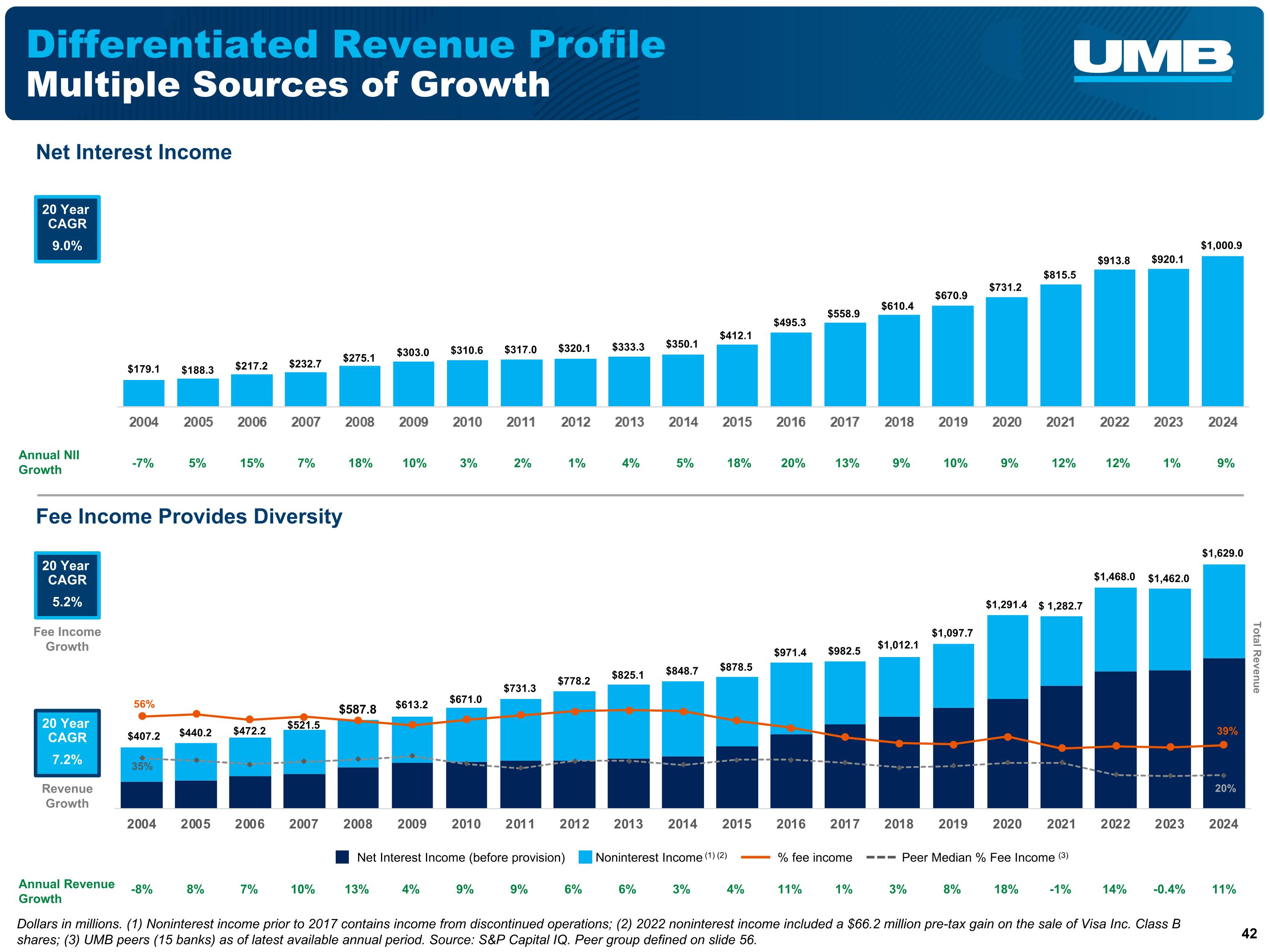
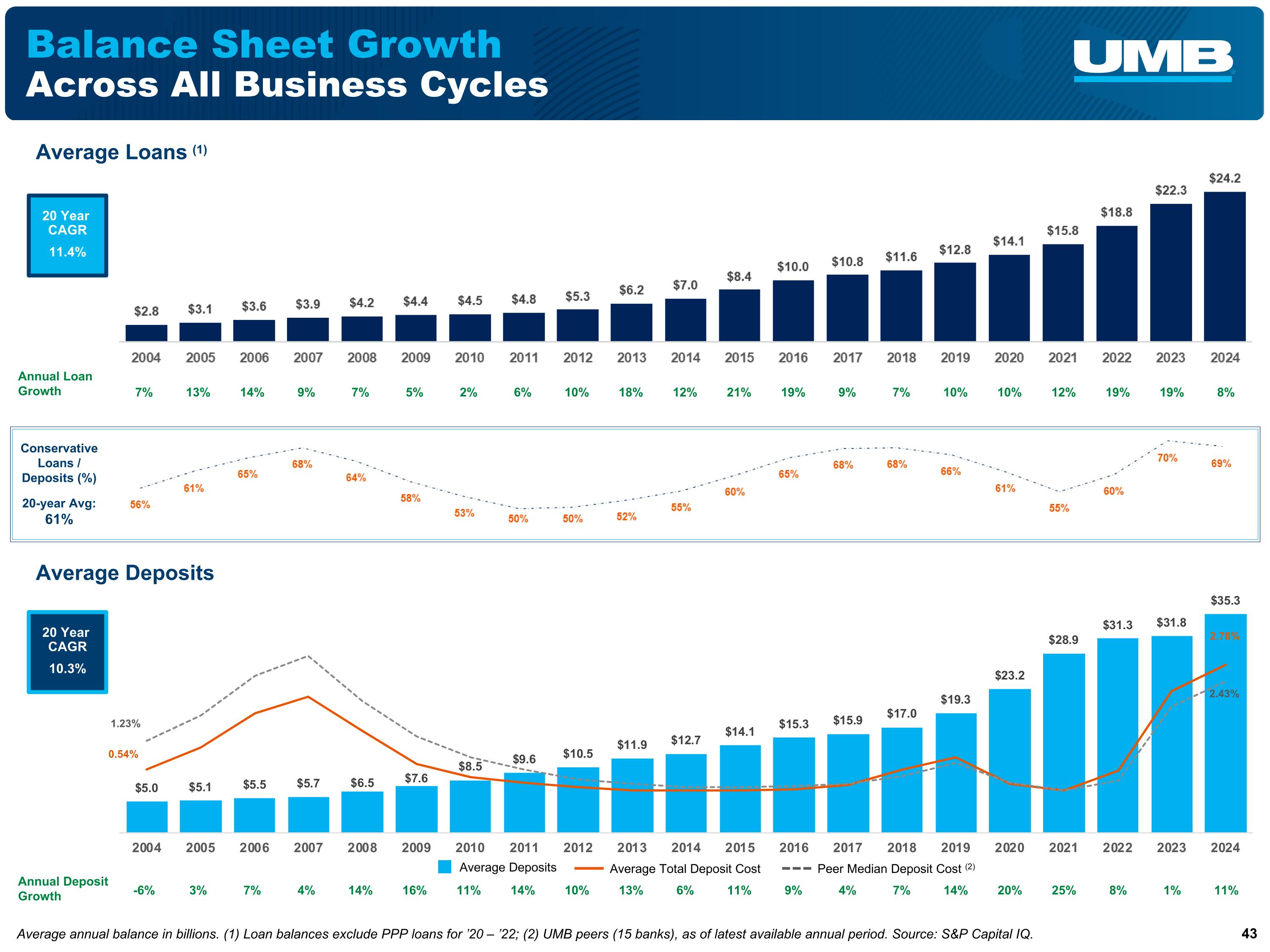
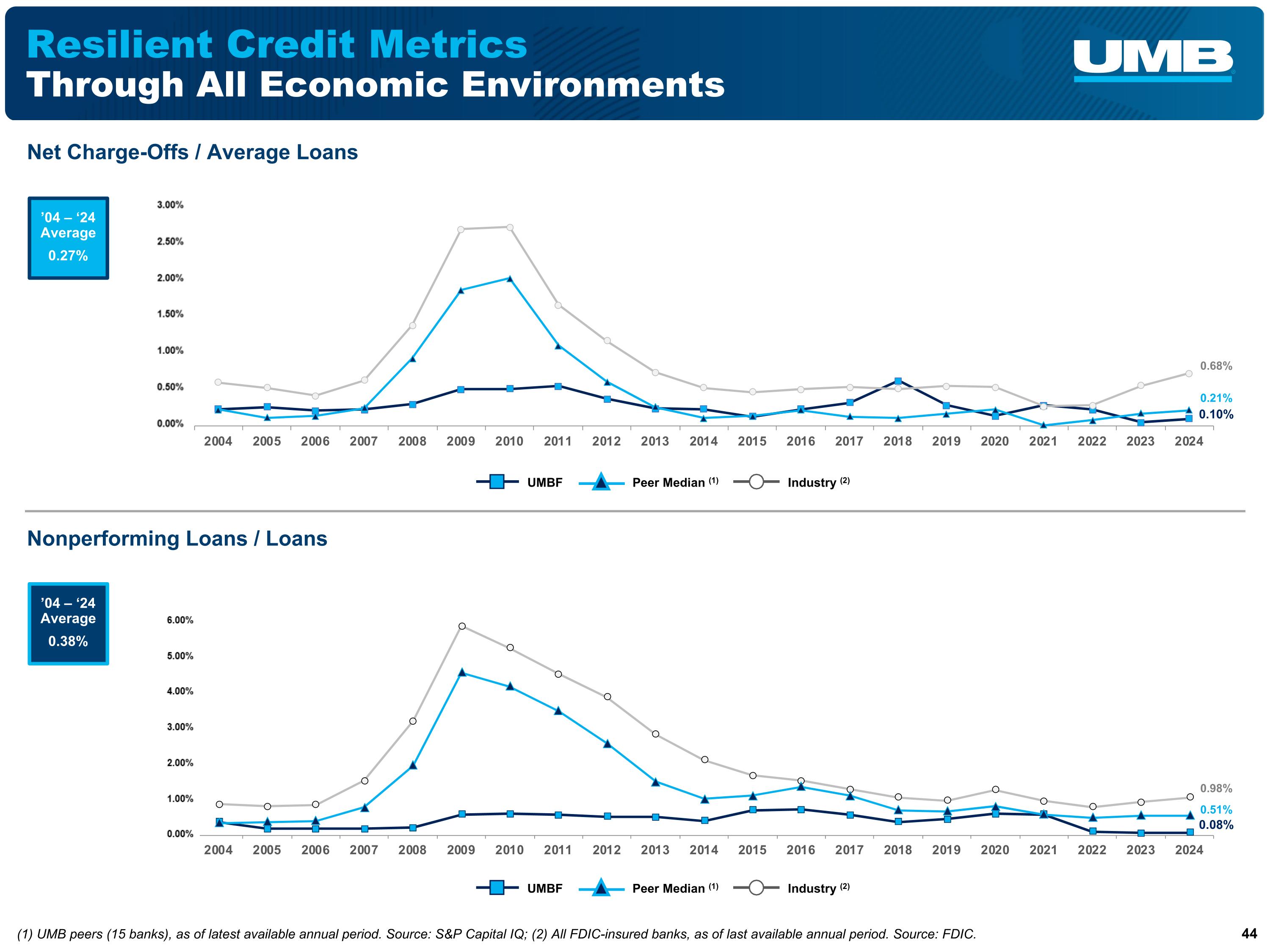
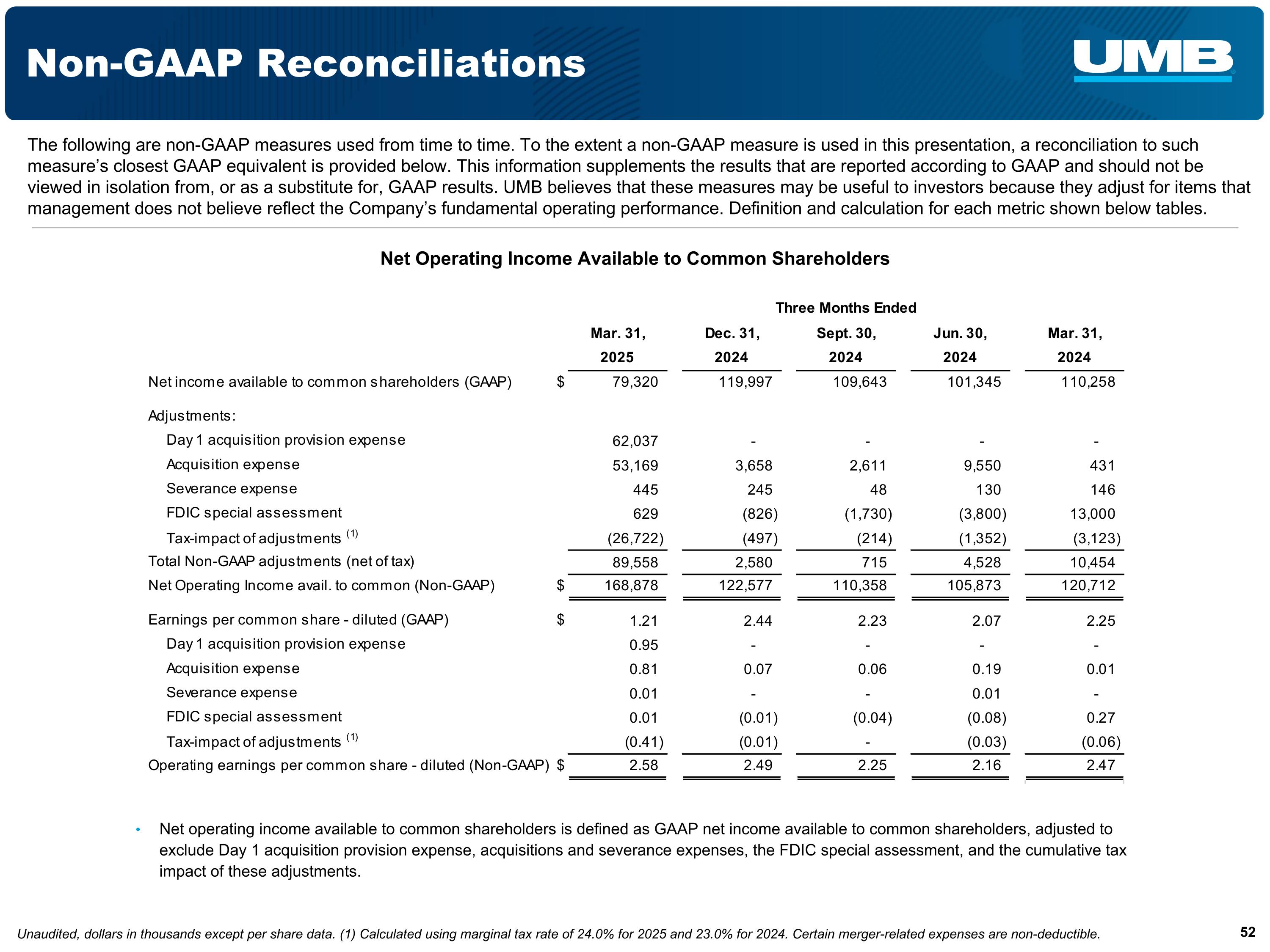
Thank you, Kay, and good morning, everyone. 2025 is off to a great start with a strong first quarter and of course the closing of our acquisition of Heartland on January 31. Through the acquisition, we added just over $14 billion in deposits and more than doubled our branch presence across 13 states. We're on track to realize the cost synergies we outlined a year ago when we announced the transaction and plans for systems conversion are well underway at this point. Equally as important, the cultural integration of the two companies is well underway and we've been pleased with the positive momentum among HTLF bankers as they get up to speed on UMB's framework. There is excitement about the opportunities our capabilities and our greater capacity bring and we are seeing early encouraging activity in the acquired markets. As we noted a year ago, the primary value proposition of this acquisition hinged on cheaper and granular core deposits. This value is evident and demonstrated by the improvement in our cost of deposits and net interest margin expansion this quarter. Our operating efficiency ratio improved to 55.6% and our operating ROA to 1.14%. While the inclusion of the HTLF results for the first two months of the quarter and the impact of the purchase accounting adjustments made for a difficult set of comparisons, we reported solid core results. Our reported earnings this quarter included $62.1 million in day one provisioning and $54.2 million in merger-related and other non-recurring charges. Excluding these items, our first quarter net operating income available to common shareholders was $168.9 million or $2.58 per share. We had both acquisition-related and organic growth on both sides of the balance sheet in the quarter. Average loans increased 27.8% to $32.3 billion and average deposits increased 32.3% to $50.3 billion on a linked quarter basis. Noting that HTLF balances were only included for two-thirds of the quarter. On a legacy UMB basis, we saw an 8.3% linked quarter annualized increase in loan balances, again outpacing many peer banks. Banks that have reported first quarter results so far have reported just a 3.3% median annualized increase in loan balances. Legacy UMB average total deposits increased 27.3% on a linked quarter annualized basis. A snapshot of our combined loan book is shown on slide 20. We're very well diversified both in terms of loan products and geography and are looking forward to further penetration into these new regions across our footprint. Quarterly loan activity is on the following slide. Total top line loan production exceeded $1.2 billion in the first quarter, while payoffs and paydowns ticked up slightly. Turning to asset quality, on page 22, you can see the impact of acquired loans. Charge offs attributed to legacy UMB loans were just $6.2 million or only 10 basis points of average loans for the quarter. In fact, excluding credit cards, legacy UMB once again had net recoveries this quarter. For the remainder of 2025, we expect the legacy UMB loan portfolio to perform in line with our historical trends, while we work to align the acquired portfolio within UMB standards. Non-performing loans related to legacy UMB were just 8 basis points, consistent with prior quarters. For reference, banks that have reported first quarter results so far have reported a 0.45% median NPL ratio. On slide 24, you'll see the details of our first quarter allowance, which stands at $373.4 million up from $261.7 million at the end of the fourth quarter, $62.1 million of PCD-related allowance was established as a part of the acquisition and $62 million of day one allowance was established for non-PCD loans through provision expense. Now just a few highlights on our fee income, then Ram will provide more detail on the first quarter impact of purchase accounting and other drivers of our results. We have continued to see income growth across our segments despite some of the market-related variances and other noise. The addition of HTLF helped drive increased service charge and interchange income and the $4 billion of additional private wealth customer assets boosted personal banking, trust and securities processing income. Credit and debit card purchase volume was $5.4 billion in the first quarter, up 18.6% on a year-over-year basis and surpassing the $5 billion mark for the first time. This included just over $500 million in spend from HTLF cards in February and March. Over the past 10 years, legacy UMB spending volumes grew from $2.3 billion at a compound annual growth rate of 8.7%. In our institutional businesses, assets under administration continue to expand increasing 16% year-over-year and at $559 billion. Within that segment, corporate trust AUA grew 25% over the last twelve months to $48.6 billion. Our teams continue to bring in new business. Ten years ago, these assets were just under $11 billion highlighting the accelerated growth we've seen in all areas of corporate trust. We continue to explore new services such as our CLO Trustee and loan administration businesses launched in 2024. We see a strong pipeline ahead of us in this business with many cross-sell opportunities with fund services and other parts of the company. Alternative servicing is another fast-growing part of our business. There continues to be a lot of M&A disrupting the space from which we've seen a lot of benefit. And we are seeing more activity related to the democratization of private investing and we serve several clients who are leading in those initiatives. There's a lot of opportunity ahead of us in this space. Before I turn it over to Ram, we've had quite a few conversations around the uncertainty related to tariffs and general economic conditions that have dominated the headlines recently. We are closely monitoring the impact of the evolving tariff situation and engaging regularly with our clients about potential impacts on their business. As a bank with a large commercial customer base, we may have a different view than consumer-heavy banks. While it's really too soon to comment, we are largely a supply-chain lender and most of our clients are telling us they are currently able to pass on the cost and expect to do this in the short run. Of course, the uncertainty increases the longer this goes on. As I said before, anyone who claims to know what's coming is purely speculating. We can't predict the next move, but our job is to be prepared to stay in touch with our customers and make adjustments as needed. To wrap up, we are risk managers first and our many years of managing risk together in a consistent intentional way have demonstrated that we performed well in periods of uncertainty. Now I'll turn it over to Ram for more details.
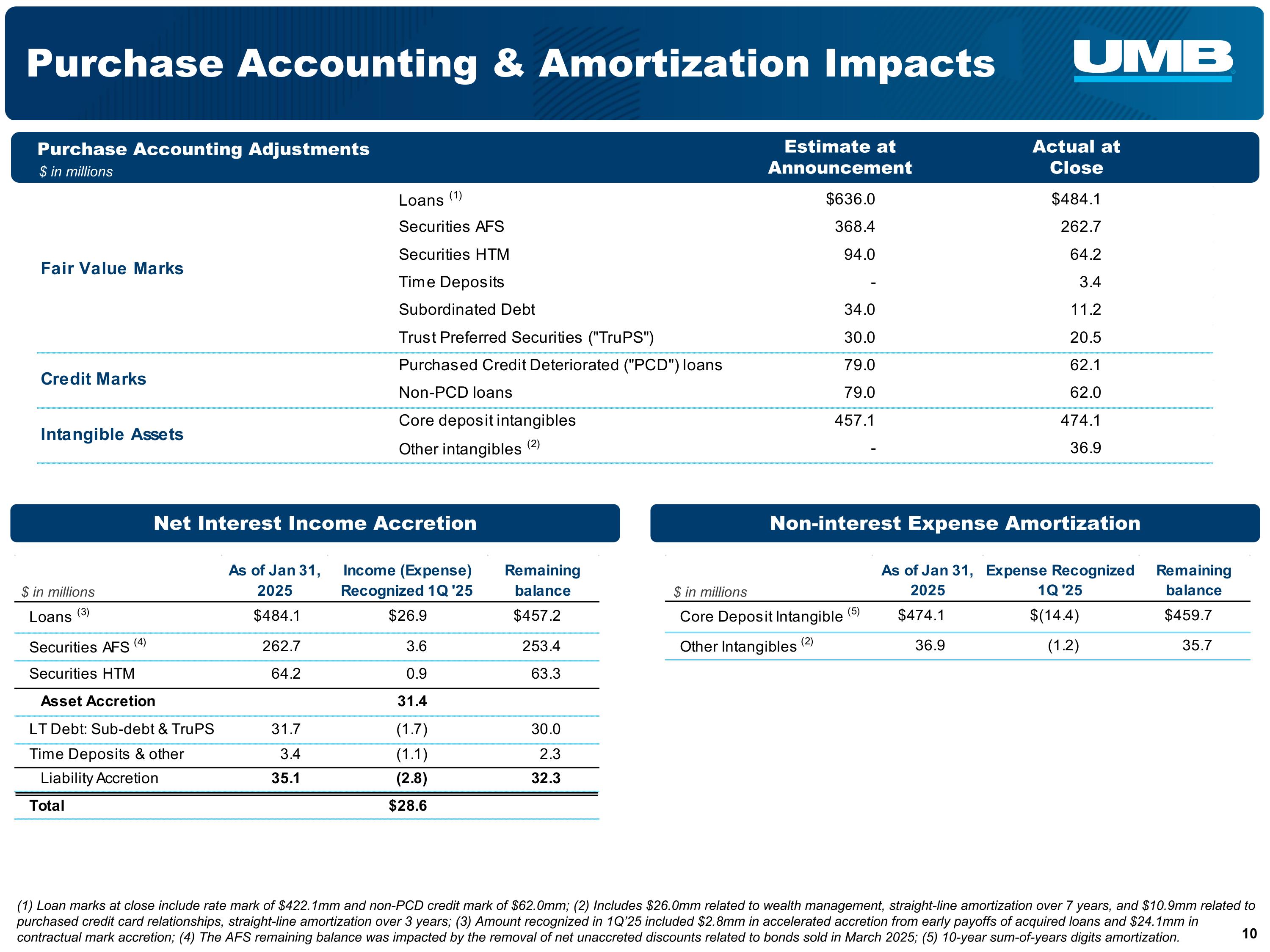
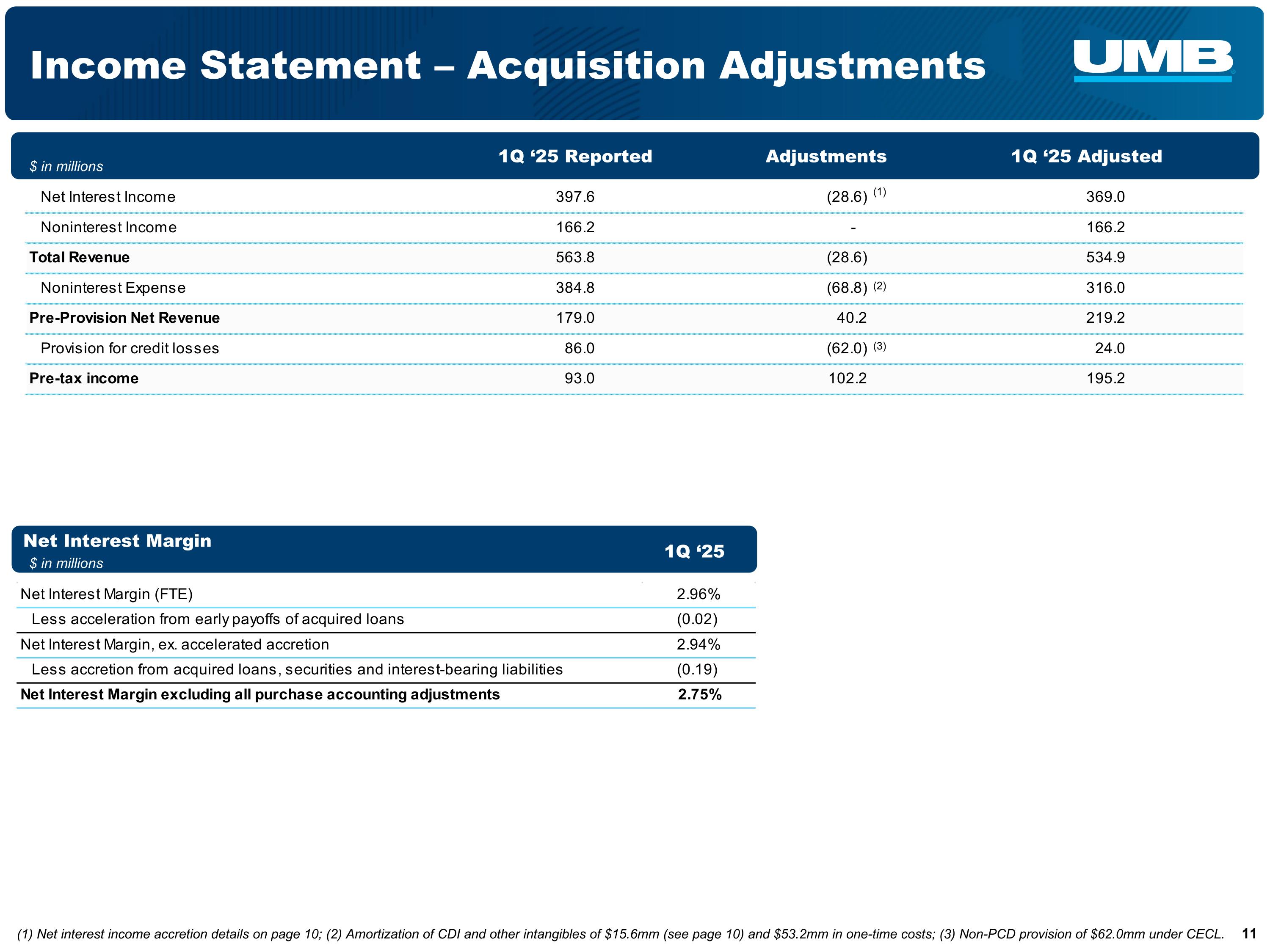
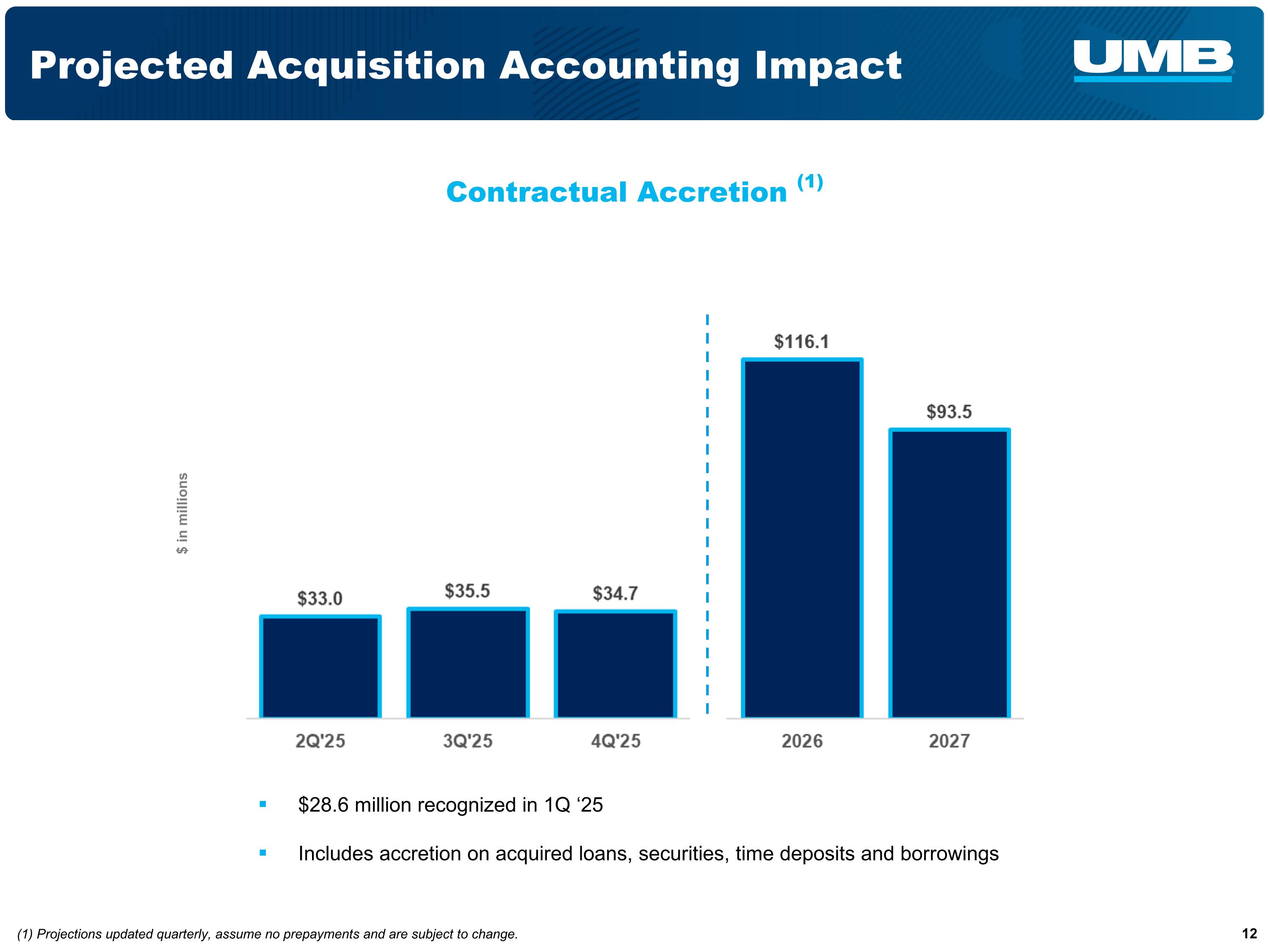
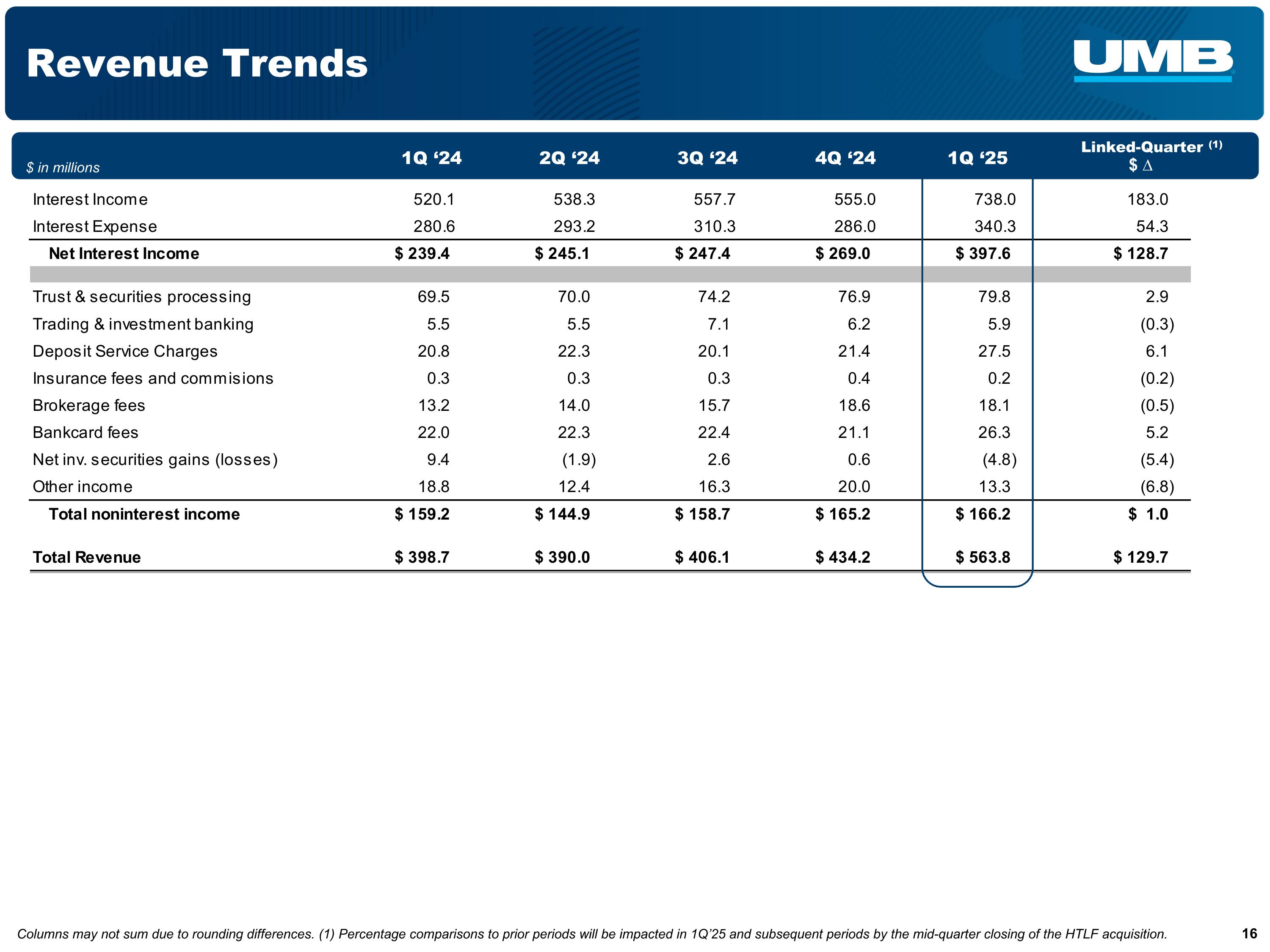
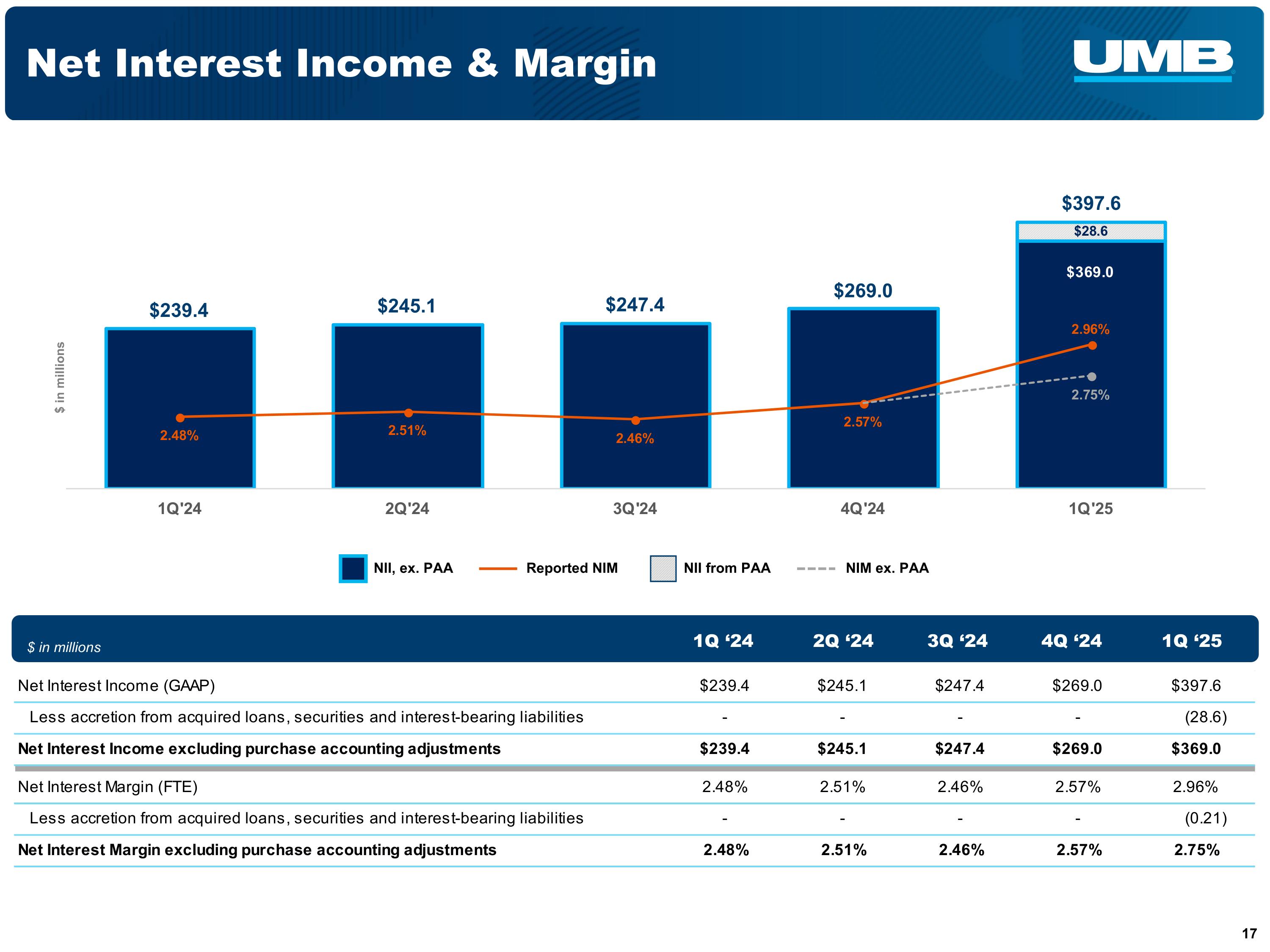
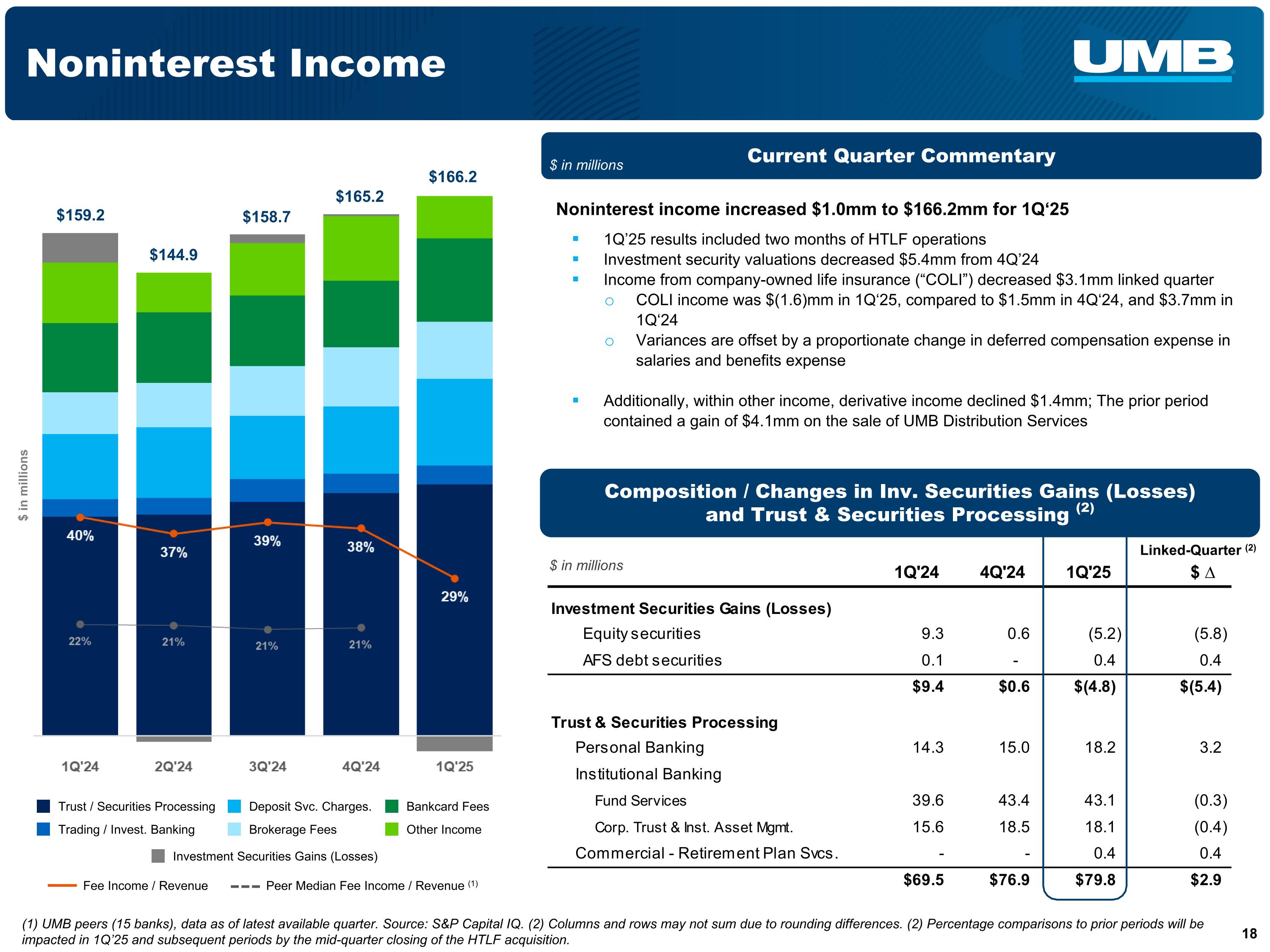
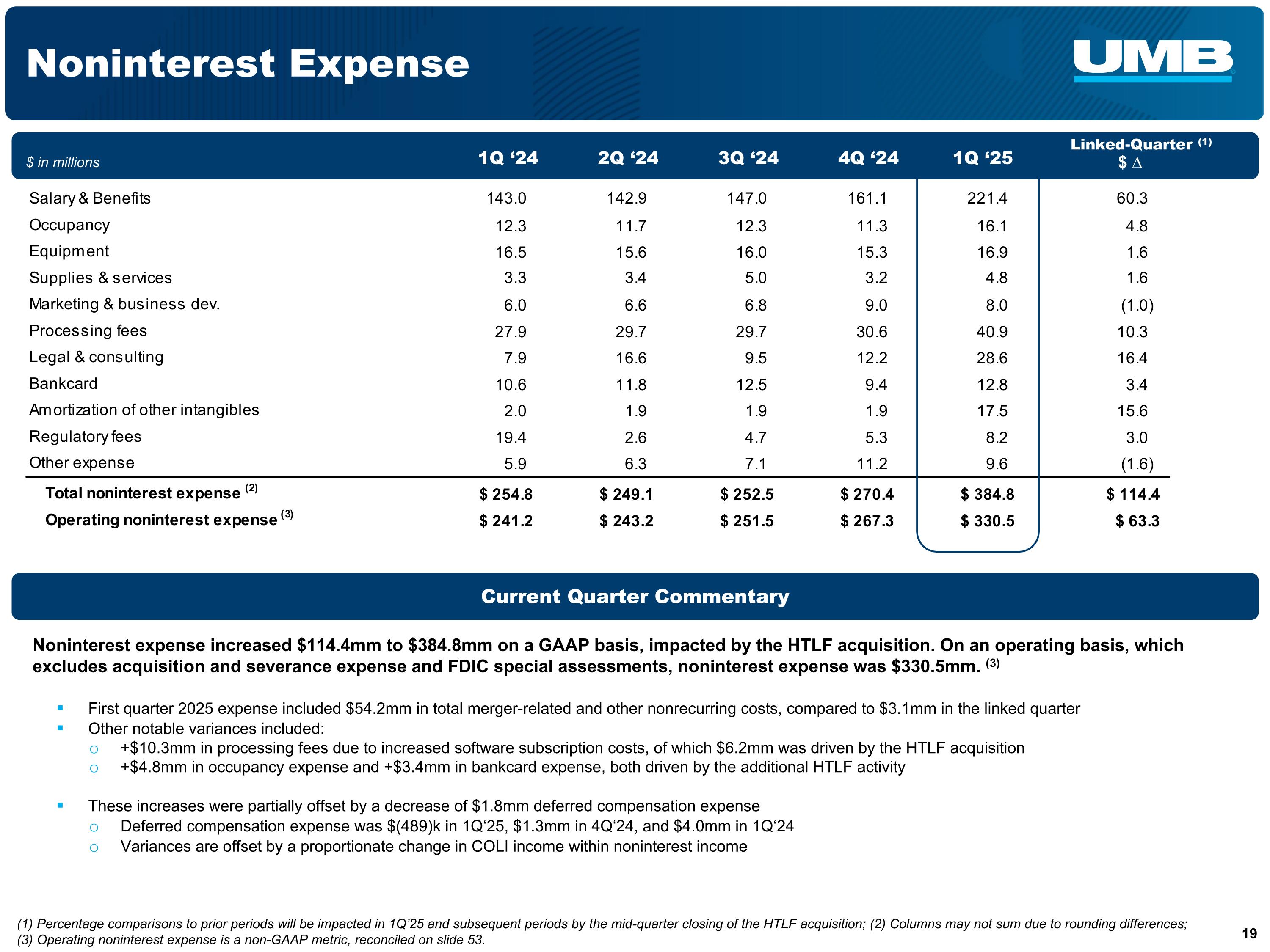
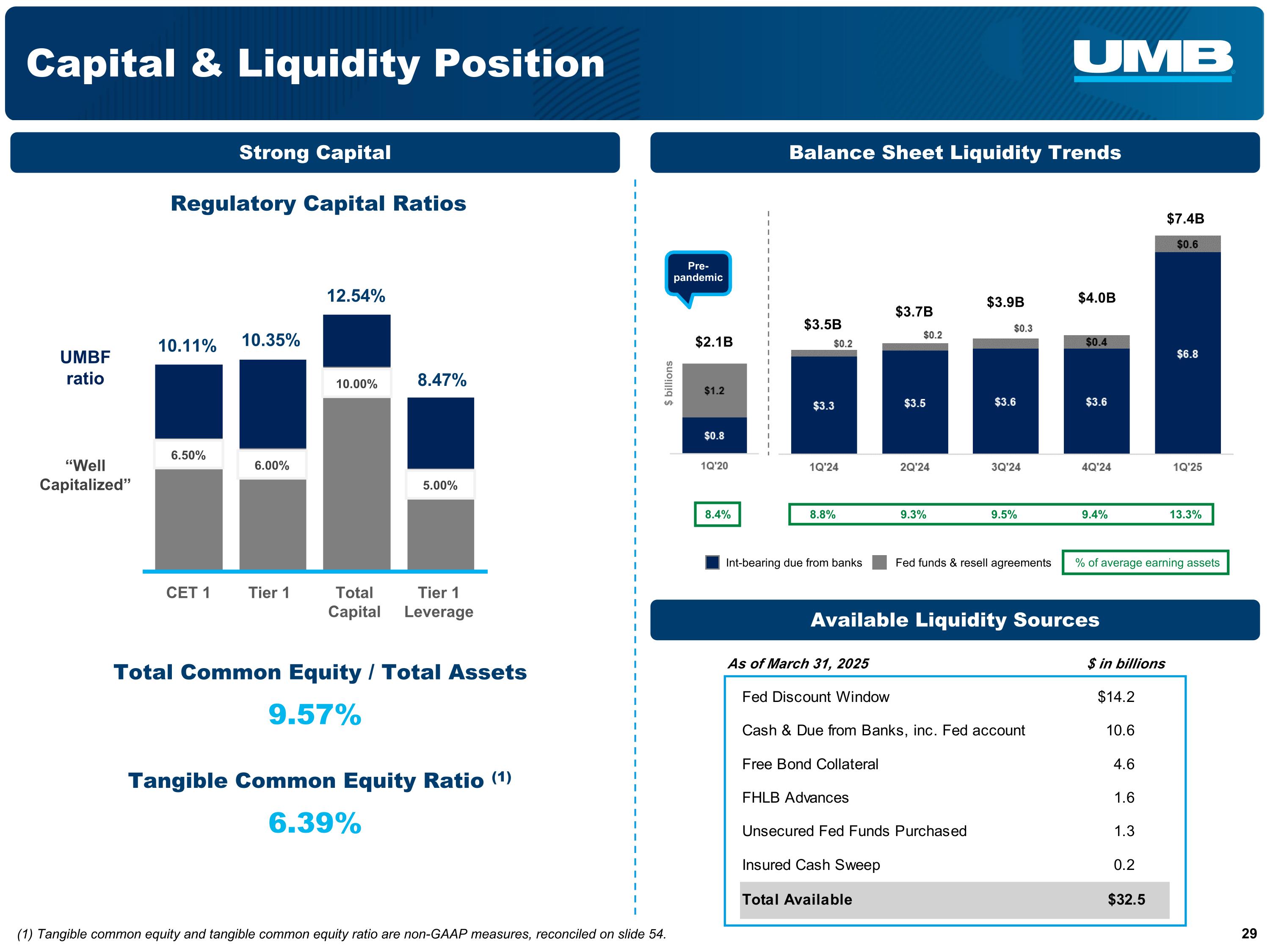
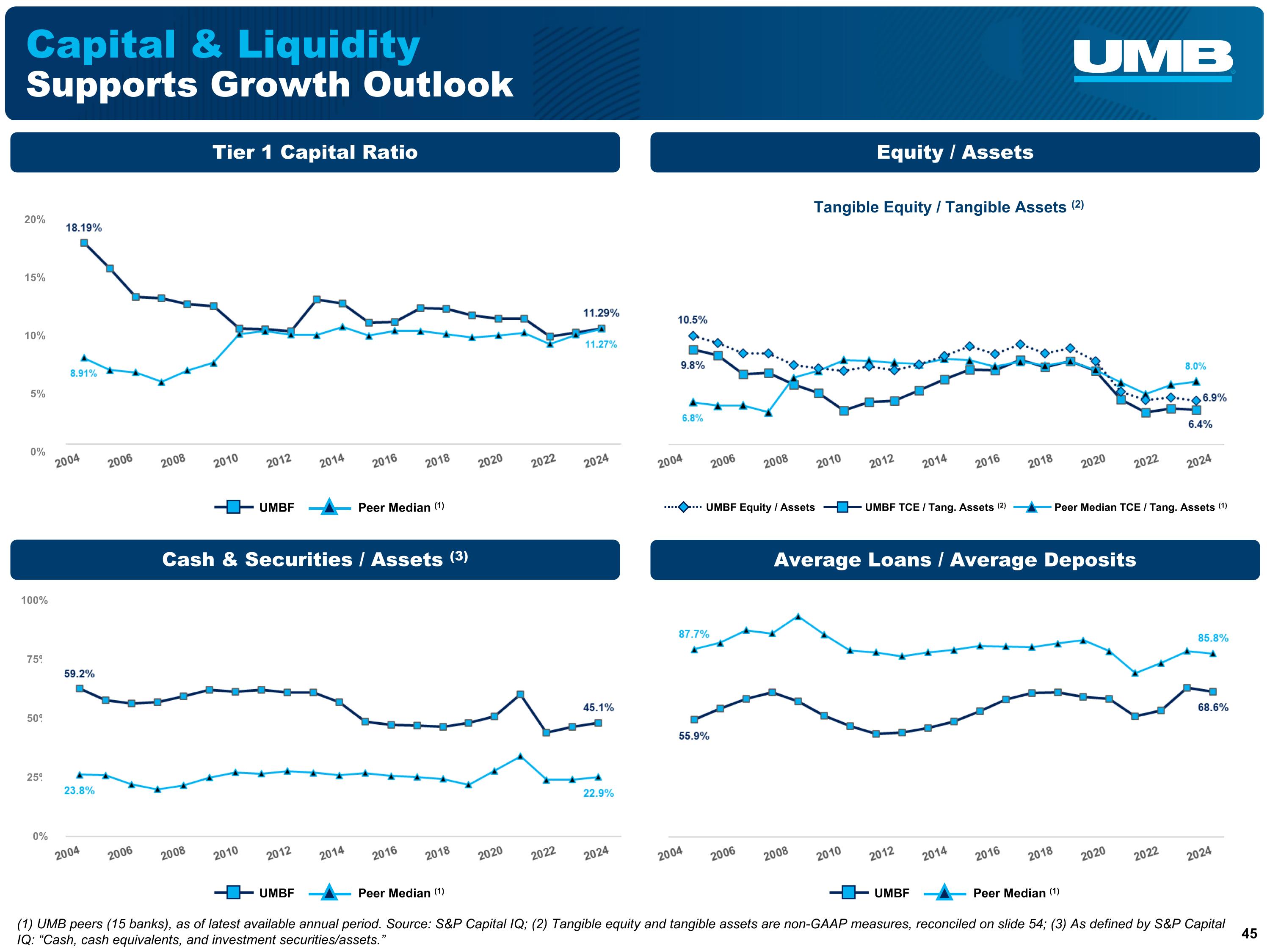
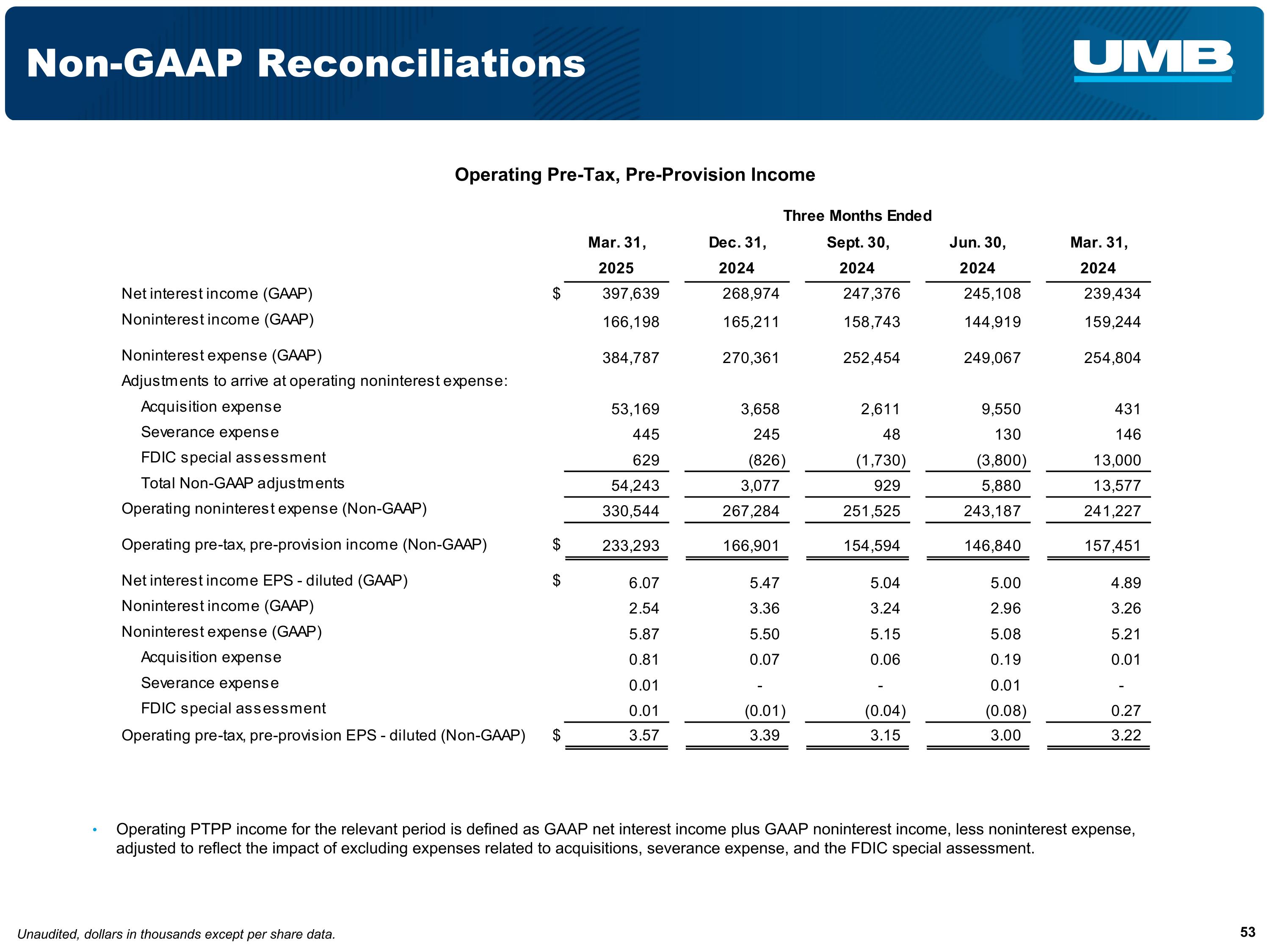
Thanks, Mariner, and good morning, everyone. We've added new disclosure slides in our investor presentation that compare purchase accounting adjustments at close to those at the time of announcement. We've also broken out the various aspects of accretion and amortization that impact our financial results. As a reminder, these figures represent just the two-month impact of the acquisition. Our March 31 common equity Tier 1 ratio was in line with our expectations at announcement at 10.1%. On Page 10, you can see that our first quarter results included $28.6 million in net accretion to net interest income including a $2.8 million accelerated benefit from early payoffs of some acquired loans. The net benefit to margin from this accretion was approximately 21 basis points. In addition, core margin benefited approximately two to three basis points from higher DDA balances. Our operating expenses reflected a $15.6 million increase related to the amortization of newly created intangibles. As Mariner noted, our $86 million provision for the quarter included $62 million in initial provision to establish an allowance for non-PCD acquired loans, which have been non-GAAP for reporting purposes. Turning to fee income. Our reported fee income of $166.2 million was impacted by $5.2 million in mark-to-market losses on certain equity investments. HTLF has added approximately $17 million in fees for the two months it closed or about $8 million per month. These HTLF fees were primarily made up of trust and security processing fees from the wealth assets, interchange income from commercial credit and consumer debit volume, deposit service fees and other miscellaneous fees and adjustments. Adjusting to exclude HTLF's contribution, the $1.6 million COLI loss we noted on the slide, the security loss and $9 million in legal settlements, we estimate core UMB income at $154 million for the first quarter compared to an adjusted $158 million in the prior quarter. The small decline reflects fewer days and lower back-to-back swap income and 12b-1 fees. Turning to expenses. Operating expenses were $330.5 million for the quarter and included the $15.6 million in new amortization expenses I referenced earlier. As Mariner noted, we are on target to achieve the cost synergies we identified at announcements. We estimate that we have achieved $17 million of the quarterly run rate savings today. Given the earlier than modeled January 31 close date, we now expect to achieve greater than the estimated 40% of savings in calendar year 2025. Our effective tax rate of 12.6% for the first quarter included a $5 million benefit or $0.08 per share for the remeasurement of deferred tax assets due to an increase in the forecasted state marginal tax rate following the acquisition. Finally, some notes to keep in mind as we look ahead. Relative to the core margin of 2.75% in 1Q that excludes all accretion, we expect the second quarter margin to range between 2.75% and 2.80%. Future period contractual net accretion amounts are highlighted on page 12. I will add my usual caveat that the trajectory of our margin will depend on the timing of schedules as well as DDA trends and levels of excess liquidity. As I noted previously, HTLF contributes approximately $8 million in fee income per month. We expect our second quarter operating expense to be approximately $375 million inclusive of $25 million in total amortization expenses. Drivers include merit cycle increases in April and the impact of an extra day in the quarter, partially offset by seasonally lower FICA and other benefits expenses. This can also be impacted by the timing of marketing or advertising spend. And finally, we expect the effective tax rate to average between 19% and 20% for the full year 2025. Now I'll turn it over to the operator for the Q&A session.
Operator
Thank you. Our first question today comes from Chris McGratty with KBW. Your line is now open.
Speaker 4
Hey, good morning.
Hey, good morning, Chris.
Speaker 4
Ram, maybe a big-picture question. If you annualize the fourth quarter earnings, roughly it puts you on like a $10 run rate already before you layer in the cost saves. And consensus for next year is a little over $11. I'm interested in your comments on bridging that walk. In particular, the cash balances were very elevated, deposit growth is very strong. Can you just help us with kind of the near-term NII trajectory? I hear you on the expenses and fees, but the NII is a big piece.
Sure, Chris. I believe we don't give specific earnings guidance, but maybe let me highlight some of the data points that impacted our fourth quarter results. And then if I didn't answer your question, come back at me. So first thing, when you look at our first quarter EPS of $2.58, we noted that there was a $0.08 benefit from a discrete tax item. So that's a one-time thing that will not repeat. And as I said in my prepared comments, our effective tax rate for the rest of 2025 and 2026 would be somewhere in the 19% to 20% level, right? And then the other thing you have to adjust for in the first quarter is we had only 65 million weighted average diluted shares outstanding. And because of the timing of when Heartland closed and the equity forward that we did, going forward, most of you guys have your models right, it's going to be about 76 million shares outstanding. What's missing in the first quarter results, obviously, I noted a $5 million negative impact from a mark-to-market. So as you guys do it normally, I would core adjust that out of the earnings power for the first quarter. There's going to be one more month of Heartland's core earnings. There's also going to be one more month of CDI and amortization, which is about $8 million pretax for the extra month. And then there's the contract accretion that we have. So you look at Page 12, we've disclosed what the second quarter number is going to be at about $33 million. And then the final piece, I would say, is one more month of cost saves. As I said in my prepared comments, on a quarterly run rate basis, we've achieved about $17 million of cost saves, but only two months of that is captured in the first quarter. So that's another month that you're going to get. And then on top of that, there's just growth and number of days of impact, right? So if you look at the first quarter, going back to your point about net interest income, our per day net interest income now with the combined franchise is about $4.5 million to $5 million. So that's something that's going to be added to when you look at future quarters. So that's a lot of data points at you. But let me know if I didn't answer any of your questions. Again, we don't give guidance about 2026. It's hard to figure out what's in consensus models because of the noise. So that's why we bucked our usual trend of not providing guidance to give more clarity for you guys. So hopefully that was helpful. But yes, if I didn't answer any part of your questions, just let me know.
And the only thing I should say on the growth side just like we have been saying, we do expect the coming quarter two's production pipeline as we've given you a look into that historically that remains as stronger and stronger. I know you're hearing different things from other banks. But as you remember, our loan growth comes from market share gains and not economic activity and the pipeline remains very strong.
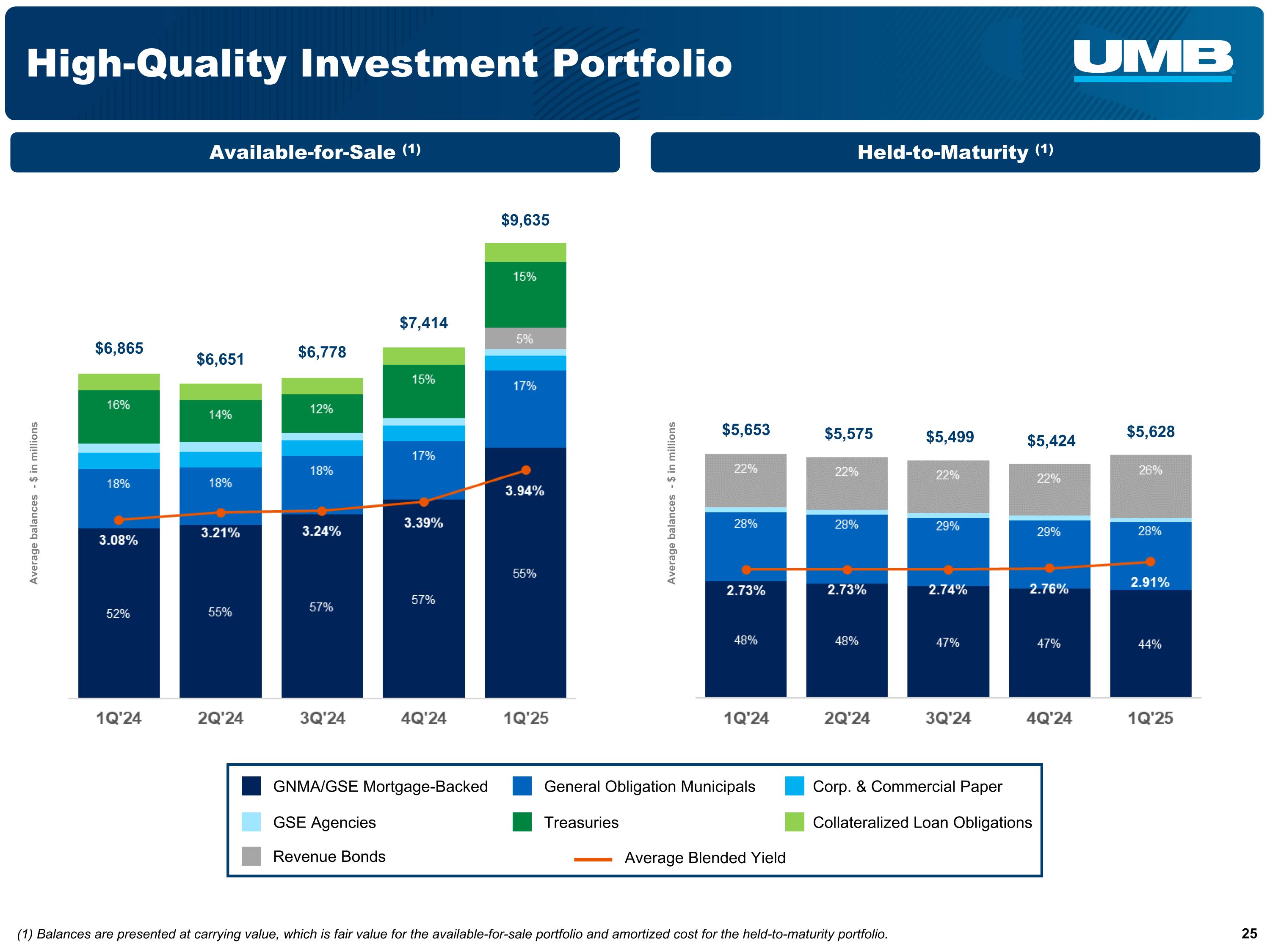
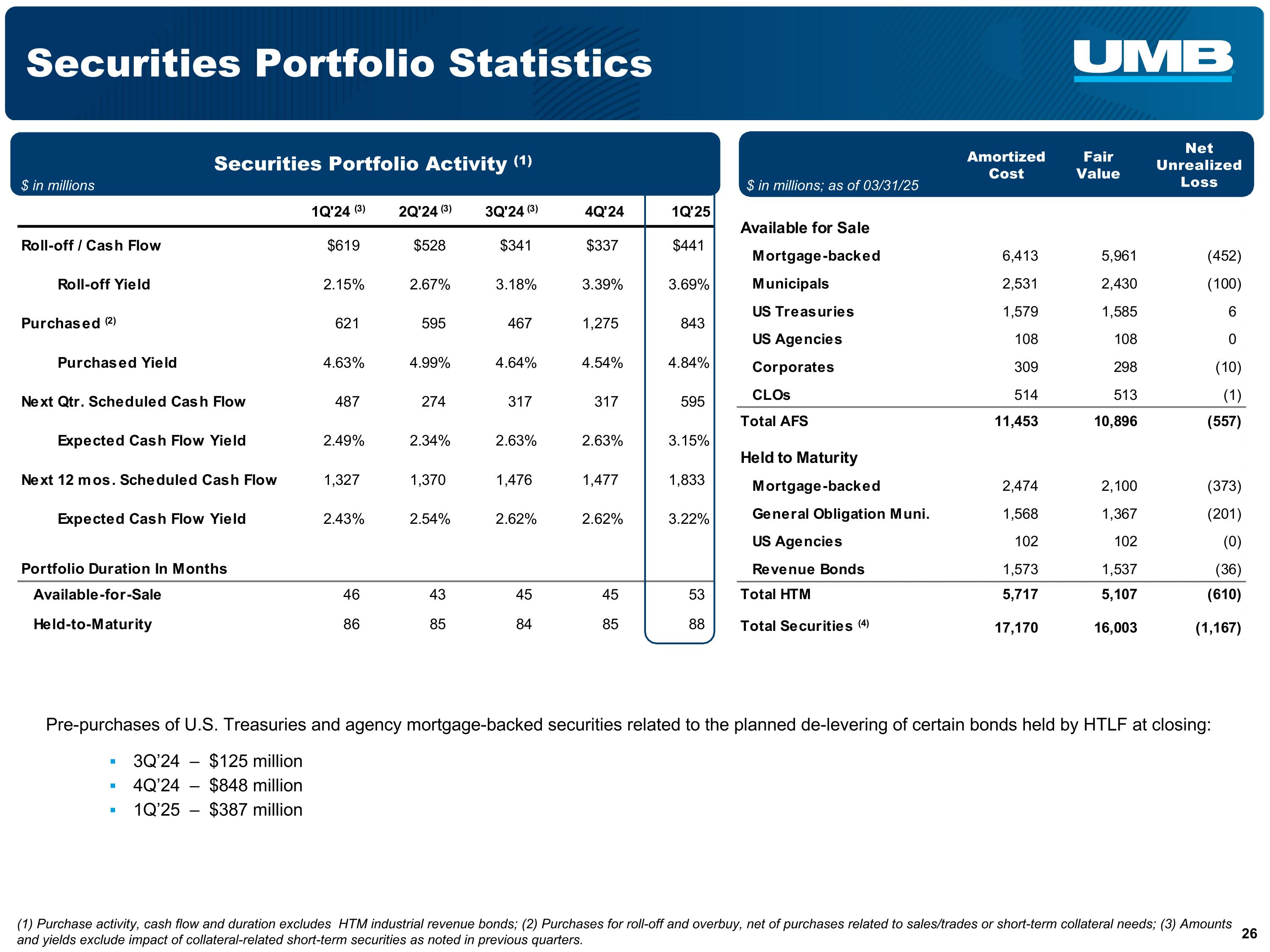
One more data point I'll add. Just on page 26, Chris, you've seen this chart before on the roll-off roll-on yields on investment securities. We got that $1.8 billion of cash flows coming due in the next twelve months yielding three $22 million and we are reinvesting if you go into the bond portfolio 100 basis points to 125 basis points at least higher than that. We also have about $3 plus billion of fixed-rate loans that currently yield 475 that again would reprice 200 basis points assuming no more rate cuts. So those are kind of the underpinnings of what net interest income and net interest margin will look like for the next 12 months.
Speaker 4
Okay. That's helpful. If I could just follow up. I guess, one, the 4.5 to 5 NII a day, if you take the round number, it's like 4.5 a quarter. Is that a jumping that's basically you're trying to say that's a jumping off point before the balance sheet continues to grow. And then does that include the scheduled accretion on top of that?
Yes, the 4.5 sounds about right. The accretion, you can do the math. I mean, you have $397 million in the first quarter. Let me come back to you on that one.
Speaker 4
Okay. And I guess my last question, if I could, is just, plans on the balance sheet, right, your cash position is almost 15% of the balance sheet. You've got a ton of flexibility with your loan to deposit ratio. How should we think about what you may or may not do with balance sheet earning assets? You've got the preferred outstanding that you acquired. Help us a little bit on that. Thanks.
Yes. So one of the reasons why I've got mixed cash or the second account still earning 4.33% today is, if you look at page 26, we did buy about $400 million of what we call repurchases connected with the Heartland acquisition. So we did as much as we could from a capacity standpoint. We're looking at the market. There's still opportunity for us to invest in treasuries or genies or even Freddie Fannie. So we're still evaluating that. So the reason why we have more cash at 331 was some of the bond sales that happened as we closed the acquisition. But we do plan to deploy it in the next three to six months.
Speaker 4
Great. Thank you.
Operator
Our next question comes from David Long with Raymond James. Your line is now open.
Speaker 5
Good morning, everyone.
Hey, good morning, David.
Speaker 5
Ram, you gave some color on the core NIM. The core NIM came in, in the quarter at 2.75%. I think you said in the second quarter, your outlook for the core NIM before the purchase accounting was still at $2.75 to $2.80. What assumptions are you making into that? I would assume adding another month with HTLF that would have been more accretive to that core NIM. So just wanted to see what went into that 2.75% to 2.8% outlook on the core NIM for the second quarter?
Yes, sure. I mean, so what the positives are, obviously, as you said, one more month of Heartland's cheaper deposits. Heartland will also add the one-month impact of the DDA, which is going to be another $1 billion, $1.1 billion call it. As I noted, we also expect a rate cut in mid-June. That's the only rate cut that we have in the second quarter. And then finally, just some assumptions about what will happen to excess liquidity. Like I said to Chris' questions, we may deploy some of that excess liquidity yielding 4.3% and get a different yield on that. The only headwind that I can think of is really the number of days, right, because when you go from a 90-day to 91-day quarter, that impacts the margin calculation. So I would say two 2.75% to 2.80% is our initial estimate of where we end up. And obviously, that will be impacted by the contractual accretion that we have listed on Page 12 and then any other early payoffs. And the other point that I also made was in the first quarter, relative to our expectations, we had a 2 to 3 basis point benefit from DDA outperformance. So those are all the different moving parts that dictate what will happen to our NIM.
Speaker 5
Got it. Great. Thanks for that additional color. And then switching gears to credit. The HTLF net charge-offs in the quarter, any common thread amongst these, was it a few credits? Was it much more broad than that? Maybe just a little bit more color on what you guys decided to run through the charge-off line from HTLF in the quarter.
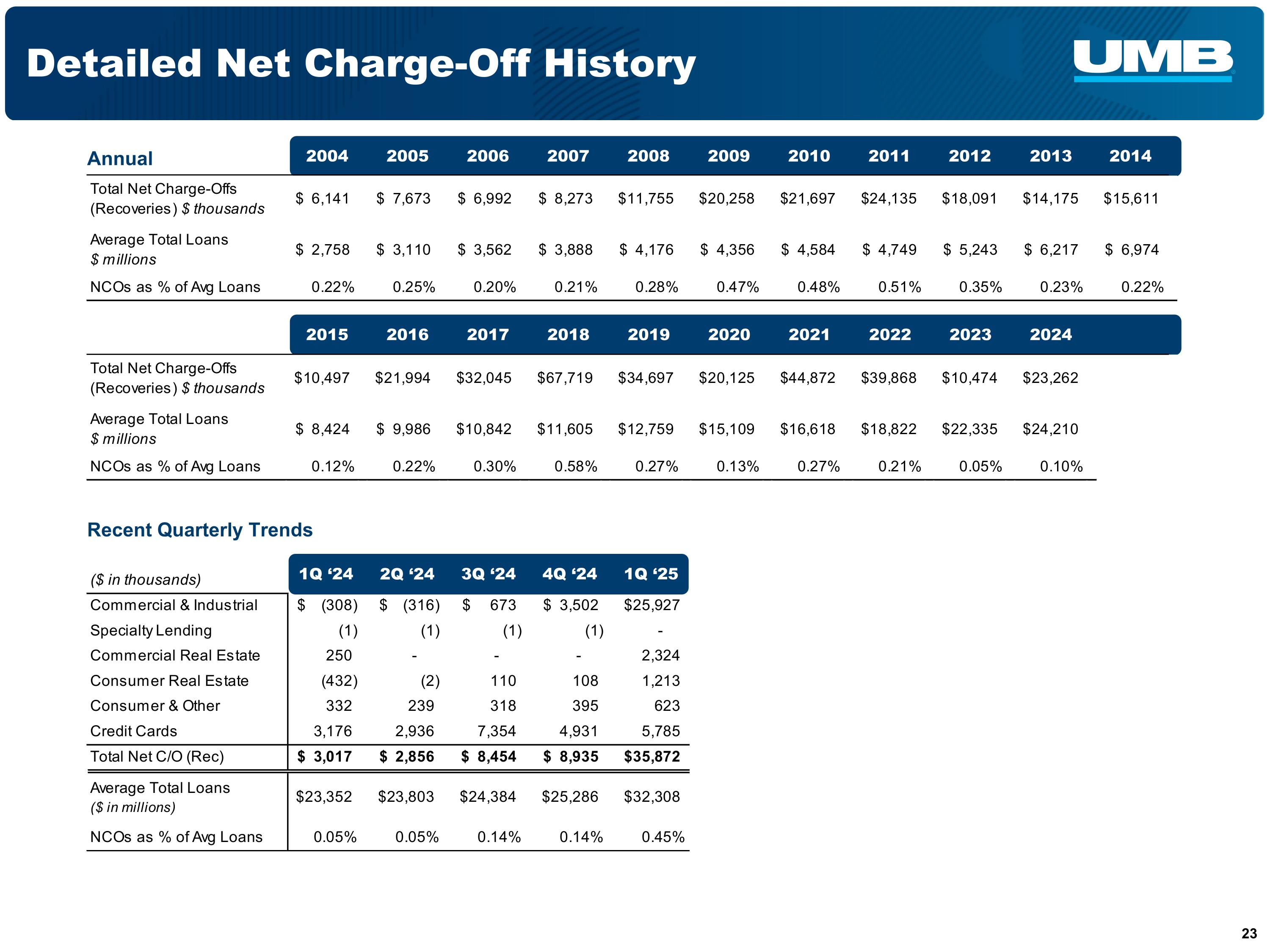
Thank you. It's important to understand that the charge-offs we identified were from credits recognized during our diligence process, and Heartland had addressed some of these before we took additional steps after the acquisition. The charge-offs are typical for our business and are part of our ongoing efforts to resolve issues flagged in our watch list and diligence. More crucially, I want to highlight our overall performance. We anticipate that the combined companies will perform in line with our historical results, targeting 27 basis points or better based on combined performance. I want to emphasize that our expectations remain aligned with our past achievements. For credibility, just look at our performance trends, which you can see in our charge-off history on Page 23 of our deck. We expect to maintain our usual performance levels with the insights we've gained from Heartland. We're particularly excited about the expanded platform this acquisition provides, allowing us to continue achieving strong growth coupled with superior quality. We remain optimistic about our future outlook.
Speaker 5
Excellent. Great. Thanks for taking my questions. Appreciate it, gentlemen.
Operator
Our next question comes from Nathan Race with Piper Sandler. Your line is now open.
Speaker 6
Hey, good morning, everybody. This is Adam Butler on for Nate. Just wanted to first talk about, loan growth. I appreciate your commentary, Mariner, about how your customers are primarily, along the supply chain and how they're able to pass their cost along to customers right now. But I was just curious from a growth perspective, how you're thinking about opportunities going forward with Heartland and how you think that might contribute to a growth rate going forward maybe on the good quarter or annualized basis?
Yes, that's a great question. I'll refer back to our main reason for pursuing the deal, which is to gain a lower cost, under-leveraged deposit base and a significantly larger presence. We more than doubled our branch network and expanded into several states with large populations where we previously had no presence. The latest data indicates that California's GDP is larger than many countries we trade with globally, highlighting a considerable opportunity for us. When we announced the deal, I described it as placing a powerful engine onto a larger chassis. We're gaining many talented individuals from Heartland, and in just the first couple of months, we're seeing positive early indicators from the loan committee across the new Heartland area, with high-quality deals coming in. It seems there was some pent-up demand in the months leading up to our closing, which extended some deal timelines. We're witnessing a lot of robust activity and a solid pipeline. I've been impressed with the lenders and bankers we've brought on board, and I've attended every loan meeting where I've seen promising developments. The signs point to strong contributions across this expanded footprint. We have a lower cost, under-leveraged deposit base alongside a larger presence filled with talented individuals. We also incorporated our regional Credit Officers right from Day One, which allows us to leverage their knowledge in this new area to expedite deal closings while maintaining high quality. Our regional credit officers will assist in closing deals and evaluating talent, ensuring we uphold our long-term quality alongside our impressive loan growth. The quality we aim for is consistently better than average, as illustrated in our presentation. The leadership team has been working together for 30 years, and our historical performance reflects that. Even when faced with potential recessionary pressures, our track record surpasses that of peers, as depicted in our data. We're extremely optimistic about the future and what Heartland will offer us, as well as what we can contribute to Heartland. We're truly excited about enhancing our operations with this new partnership.
Speaker 6
That's very helpful commentary. I know you touched on it briefly, but could you provide more specific insights on the AEA based run rate now that we've had two months with Heartland? Additionally, you've mentioned that you've mainly sold off the securities from Heartland's book that you intended to, but I'm curious about your appetite for more going forward.
Yes. I know you cut out maybe. Did you say average earning assets? Is that what you asked?
What was the run rate? You asked the run rate question. What was it?
Yes. So that's a great question and it allows me to clarify something that I've seen in some early notes. So there's been some comments about the size of the loan portfolio that we acquired from Heartland at $9.8 billion of the waterfall slide. The things I would remind you is $9.8 billion is net of the fair value first thing. So that's another $484 million. So add another $5 billion on top of that. And then as we discussed in our pro forma, there was another $500 plus million that got reclassed from loans to industrial revenue bonds. So that's a reclass. So that's nearly about $1 billion more that should be added to that $9.8 billion, right? So to your question, Adam, my point is the average earning assets captures that. So if you look at our expectations and where you see on a normalized basis, earning assets are between $60.5 million to $61.5 million So and then on top of that, we'll get any growth on top of that. And then Chris, I'll go back to your question, I did the math. So the $4.5 million per day does not include PAA. The higher end, another $5 million times 91 days, which is $45 million will include the PAA.
Speaker 6
Okay. That's super helpful commentary and thank you for answering my questions.
Operator
Our next question comes from Jared Shaw with Barclays. Your line is now open.
Speaker 7
Hey, good morning. Congrats on the deal closing. When you look at the deposits, did Heartland do anything sort of pre-close to work down their cost of deposits? Or were there any major steps that you took after close to readjust their pricing or their products?
No. That just came over right as it was. Nothing to note at all really.
The only thing they did is the delevering of some of the brokered CDs that they had. So those ran down. And then the only thing as part of our conversion efforts we are doing is making sure that the deposit pricing is aligned between UMB and Heartland markets. So no material shifts that way.
We just finished what we anticipated, which is mainly a decrease in deposit costs. Yes. What about brokered deposits? We also reduced some of our brokered deposits, as did others in the industry. This seems to be a common issue for everyone.
Speaker 7
Yes. And then when at the growth in DDA, anything you can point to there that was driving a lot of that success? Is it higher average balances? Is it customer acquisition or expanding the offerings into the new footprint?
Yes. It's a combination of all of that. Yes. For us, it's the up and down volatility that we get with some large clients that are either deploying money in the market. So when you think about Corporate Trust or our Investor Solutions businesses, we see some high fluctuations. We did obviously add on more clients as well. But for us, the challenge always and the internal debate always remains about the levels of DDA because of some of the activities of our clients and what's going on with the equity or debt markets.
Yes. The only thing I would add is I think you have to take a longer-term look of our deposits in general. I would think of it at multiple quarters or even year-over-year not so much linked quarter or month end or quarter end just because the scale of what we do is so large with institutional businesses. So from one quarter to the next or one month to the next there can be some volatility. But overall, it's about client growth over the long run. And as the client growth continues on the institutional businesses that baseline of demand deposit just grows. So you just have to think about it. You have to look past a month and look past a quarter to really get a sense of what's happened with our DDAs.
Speaker 7
Okay. Thanks for that color. And then on the expenses can you give a little update on maybe some of the timing of cost saves that are still to come? Any big milestones we should be looking at for layering in those expense saves?
Yes. The key points are Legal A1, which includes the $17 million I mentioned that we've already achieved. Typically, the next updates occur in the fourth quarter, applying to both one-time costs and savings. This is when the conversion takes place, and we expect further savings from both staffing and vendor perspectives. The run rate in early 2026 will reflect the combined expense base, but you'll see additional savings come in the fourth quarter of this year. To remind you, we previously stated that we were aiming for 40% of the cost savings. Additionally, due to the earlier closure than anticipated when we announced the transaction, we will realize two extra months of savings for calendar year 2025.
Speaker 7
Okay. Okay. Thanks.
I would say we feel very good about the overall cost saves and the modeling. We feel very confident with them.
Speaker 7
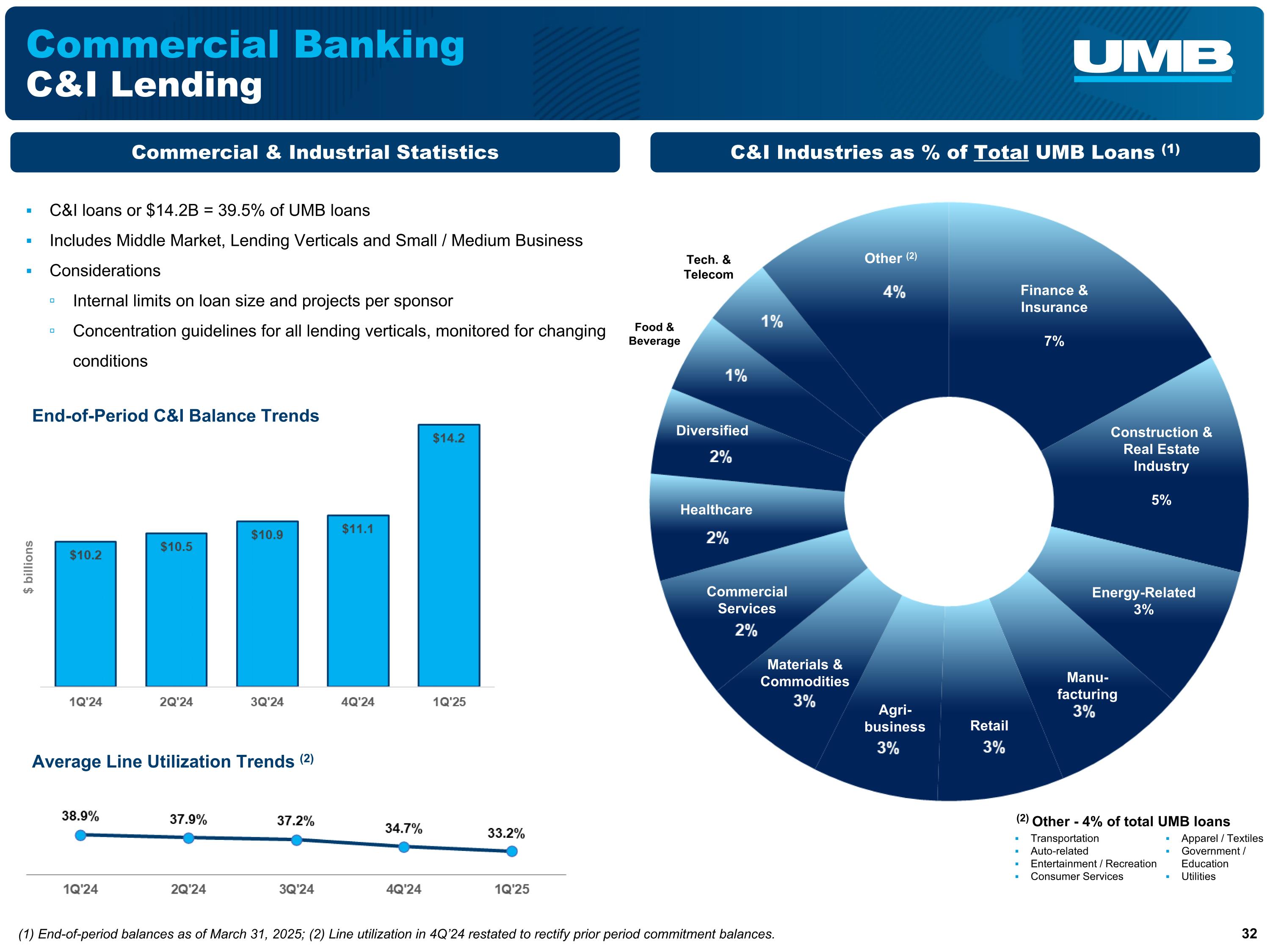
Okay. And then just a quick one. You have 3% ag related C&I. Is there any impact there from export and tariffs?
I'm sorry, I was a 6% number again. I didn't follow that.
Speaker 7
It looked like about 3% of C and I is ag related. Any impact expected impact there from tariffs, yes, agriculture?
Got you. I think it's a little too early to have any real valuable commentary to this. I think as I said in my call, I think anybody talking to you confidently about this is speculating in my opinion. But what I'd say in general about most of our clients as we reach out and we assimilate the feedback from all of our officers back to headquarters and do it ourselves. The general theme is that they all are telling us that they can pass on the cost at this point. And then I think that that's generally the impact for the large majority of our borrowers through the remainder of this year based on what we know today if this tariff path we're on doesn't revert itself one way or another some point this year and it sticks, that uncertainty is going to start to weigh in future certainly in 2026 and late in 2025. But it's going to be the consumer as we all know is going to feel this first. You and me don't really rely a whole lot on the consumer from a lending perspective. We're pretty insulated from that on a relative and comparative base to still a lot of our peers. And we don't have a lot of exposure to consumer discretionary. So that would be the other place to see it from a supply chain or a commercial perspective to be consumer discretionary. And we can keep a close eye on our exposure to consumer discretionary and we don't have a lot of that. So that's what I would say at this point today, keep a close eye on it, talk to our customers a lot. Again the profile of the UMB customer is very strong. These are borrowers that believe in gravity, believe in what goes up must come down. So there's retained earnings and cash flow. So we just have a better stronger borrower who's seen ups and downs. So they prepare their balance sheet and income statements for exactly what we're staring at. We do best during uncertain times.
Operator
Our next question comes from Timur Braziler with Wells Fargo. Your line is now open.
Speaker 8
Hi. Good morning, guys. Following up on the deposit related question, just the gap between end of period and average DDAs looks like that gap higher this quarter. I know this is a common question you get, but just can you give us a sense of where those average DDAs shake out and how should we think about that GAAP closing in 2Q?
I'll let Ram provide the details. Ultimately, the actual figures at the end of the quarter can differ significantly from the averages. The reported number at quarter's end was quite high, and that's a reflection of the inconsistent nature of our vendor operations. We've discussed this extensively. Looking ahead to the second quarter, we anticipate it will be relatively flat based on current observations. It’s quite challenging to predict precisely where we will land due to the unpredictable, event-driven nature of our business. However, we expect to have a slight increase from Heartland, as there’s one less month accounted for in the first quarter. We can't provide exact figures, but we expect it to remain flat or show slight growth considering the additional month of apartment data.
Yes. And the flat part is just on a core. I guess the UMB basis. So the $13.4 billion that we had in the first quarter average, as I said earlier and Mariner alluded to, you would add another $1.1 billion for the extra month of Heartland. They had called it a $3.5 billion DDA booked, so this $13.4 billion and another $1 billion plus on top of that.
Speaker 8
Okay. That's great color. Thank you. And then Mariner, you made a comment in your prepared remarks that you're working to align the acquired portfolio with UMBF standards. I'm just wondering what does that portend from both a credit quality standpoint as much of what's been identified already been addressed, is there still some cleanup work to do in regards to that comment? And then I'm just wondering what that might mean from a loan growth standpoint going forward as to how much of the Heartland underwriting criteria methodology whatever you want to call it has to change to align with UMB?
Yes, that’s a great question. The comment I made was meant to provide a broad overview regarding the profile of UMB customers. When we announced this deal, I mentioned that during the due diligence process, we discovered some credits that were underwritten differently. This doesn’t mean they were poor credits; rather, they were assessed in a manner that is not typically how we operate. The goal is to align the entire portfolio with our policies and procedures, which might involve implementing guarantees where previously there were none. I aimed to provide context rather than get into specific details. In response to your question about overall performance, we have identified and isolated potential challenges that date back to our initial diligence. There may be a small percentage of losses, but based on our understanding of the overall portfolio, we expect it to perform as well as or better than before. We have confidence in this outlook and are excited about it. Regarding the pipeline and our approach moving forward, I can assure you that there will be no changes. We’ve already had two months of activity from them, and we maintain a strong interest in pursuing high-quality deals. Plenty of excellent opportunities are coming through, fueled by talented teams. Our focus remains on leveraging our substantial deposit base alongside their teams to achieve meaningful growth. The main difference with the combined UMB and Heartland is that we will be able to grow more rapidly, efficiently, and profitably while maintaining the high quality we’re known for, thanks to the regional credit officers we have in place. This enhancement will facilitate quicker decision-making, leading to faster growth while keeping quality consistent. The current combined pipeline looks very promising and is historically strong for the second quarter. We are anticipating a new peak in the next 90 days, and the outlook is just as favorable, if not better, than the first quarter.
Speaker 8
Great. And then if I can just one more. Looking at the accretion expectations and maybe this is a hard question to answer, but we had a little bit of accelerated accretion in 1Q the $2.8 million. I'm just wondering if you think about the puts and takes of maybe again aligning Heartland with UMB versus just maybe slower payoff activity, just given some of the broader uncertainty. Do you see accelerated accretion maybe accelerating as some of those loans that maybe aren't aligned or helped out of the bank a little bit faster or does the environment weigh down that timeline and we just get more or less scheduled accretion? I guess, Ram, how are you thinking about that dynamic?
Yes. It's a hard question to answer as you rightfully surmised. We gave you on page 12 the contractual accretion and whether loans pay off or are managed out that will impact and be a good guide to that accretion number, it's so hard to say sitting here.
Speaker 8
Yes, got it. Great. Thank you for the question.
Operator
Our next question comes from Brian Wilczynski - Morgan Stanley. Your line is now open.
Speaker 9
Hi, good morning.
Speaker 9
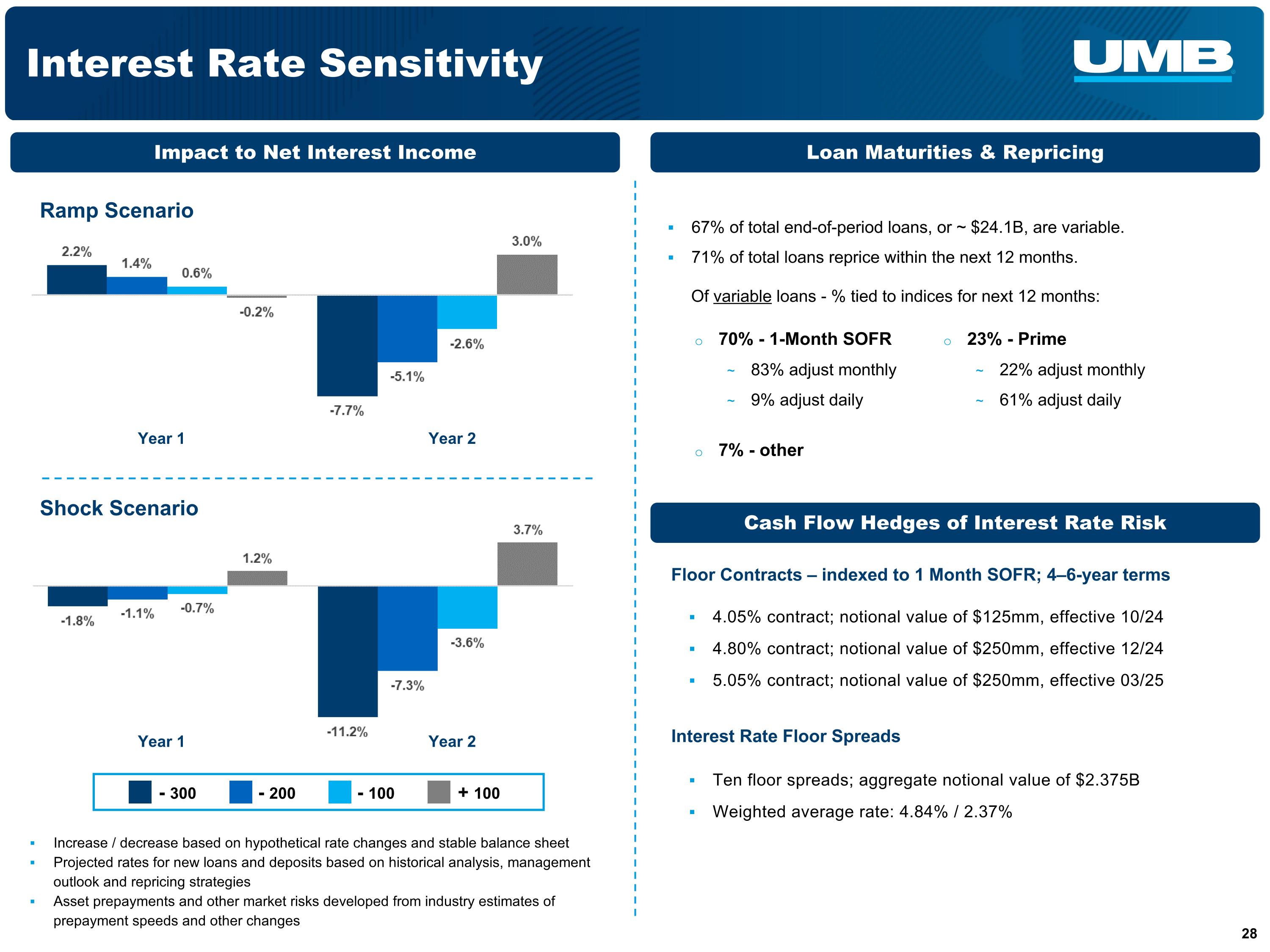
Hi, was wondering if you could update us on your interest rate sensitivity following the acquisition. It looks like on Slide 28 of the deck in the ramp scenario, you view yourself as liability sensitive in the first year, but more asset sensitive in the second year. I was wondering if you could just talk through that.
Yes. You see on Slide 28, like we said, so for 100 basis points cut, we expect our base net interest income before any balance sheet growth to be slightly up. And the main driver of that and I'll use this opportunity to update you guys on where we are with the hard index and soft index. Including the new acquisition as of March, so 27% of our total deposits are hard index and another 18% are soft index. So when rates are cut in this 100 basis point scenario, as we talked about before, those repriced immediately. And then DDAs are 27% and 28% non-indexed to complete that pie. And then what happens in the second year is because of SOFAR movements and repricing of loans that has a negative impact in terms of loan yields catching up with what has already happened with deposits, right? So that's why we're slightly again 0.6%. I would call that very slightly liability sensitive. And then year two tends to be the impact of loan yields repricing down because as you see on the right side, we still have a fairly decent variable rate book, which is 2/3rd of our portfolio.
Speaker 9
That's really helpful. And then for my follow-up on the reserve ratio, you mentioned the uncertainty in the environment. Nobody quite knows how things are going to play out. I was wondering if you could provide some color on what's baked into the reserve ratio today as far as the economic outlook, maybe the unemployment rate and just where you see that reserve ratio trending over the next few quarters?
Yes. So we're watching. So we use in our CECL methodology, we use Moody's baseline scenario right now. It's weighted 100%, so there's no blend of any other recessionary S1, S3 environments just yet. And then as of the April 2015 publication or mid-April publication, the Moody's estimates do not factor in that. And part of that is, as Mariner said earlier, it's just too soon to speculate what's going to happen to GDP or whether we're seeing a stagflation or what Fed funds do. But our CECL model, as you know, is predicated on multiple macroeconomic variables by FRB code. For our C&I book, we use a combination of GDP growth, capacity utilization, credit spreads, what does the 10-year Treasury look like against BBB, household income. So there's a lot of different variables that go into each different portfolio. So based on what we've seen so far in the Moody's baseline, at this point, there's not a big demand on provision, but that can change as the variables get tweaked favorably or unfavorably.
We don't anticipate our book to perform any differently due to our underwriting practices. If you examine our performance during previous periods, you'll see that because of how we underwrite and manage credits, even if we need to provision more, the long-term effects of possibly over provisioning against our performance will play out in a certain way. Therefore, we expect to continue underwriting, performing, and managing credits as we always have.
Speaker 9
That's really helpful. Thank you for taking my questions.
Operator
Thank you all for your questions. Our next question today comes from Jon Arfstrom with RBC Capital Markets. Your line is now open.
Speaker 10
Thanks. Good morning.
Speaker 10
Anything you guys would call out one way or the other on the non-interest income trends? And as part of that, can you talk a little bit about the outlook for the card business? It looks like balances, fees interchange were all up and Heartland is additive to that.
Yes. I mean, at high level and then the couple of things I can add to it, I'm not sure exactly where you're taking the question. But if you took out the mark-to-market action in the first quarter, we would be in kind of our typical growth mode. The profile looks pretty good. We're seeing great tailwinds really across the board whether it's within the bank with wealth management or it's across our institutional book. All those businesses have deep pipelines, good profiles. Teams feel very good about the trajectory. So that's what I'd say high level. Just a little color on that mark-to-market issue. We had an investment at the company level that didn't meet the Volcker rules basically. So we ended up having to move it out. And in order to move it out in a timely fashion, we had to take a loss on it. So it wasn't really even an underperforming investment. We just were forced to get rid of it. And therefore, when people know you need to take get rid of something you have to take a loss on it basically. So we took a loss on something we didn't wouldn't have wanted to take a loss on. So that's a one-time deal we'll never see again. And so absent that, the businesses all really look good. I don't know Jim if you want to add anything?
Yes. On the card that's obviously a synergy opportunity with Heartland and we'll see increased activity at our card sales specifically consumer late second quarter mid-second quarter, which we feel good about. The return is the legacy UMB card portfolio continues to grow. We're having a lot of success in our payables programs coupled with our traditional consumer and commercial business.
Yes. So we start selling the consumer card in May into the Heartland book and then she what page is that for? So page 40 in the book shows what's happened to present debit card interchange with the addition of, Heartland. So I think Heartland's about $500 million.
That's for two months. So I mean, yes, so this number, if we had hard loans for the entire three months, it would have been more like $5.7 million. As I said in my prepared remarks, that's mostly commercial credit and consumer debit. So there's opportunities to expand, as Mariner said, on those capabilities. And then on the broadband fee income, just in case you didn't catch it, Jon, in my prepared comments, I said our 1Q core legacy only fee income was about $154 million if you take out the mark-to-market that Mariner talked about, take out the negative quarterly adjustment and then take out the positive legal settlement. And then as I said in my guidance, Heartland will add about $80ish million per month, so add another $24 million and then number of days and then any future growth. So we feel pretty good at this, what Jim and Mariner said about our fee income trajectory.
Team on the institutional side is really just on fire across the board, seeing all sorts of opportunity all across the country. And there's pent-up demand for municipal underwriting and infrastructure across the country, so for the corporate trust business. CLO business, which is new to us is on fire. So it's just really across the board and we've talked about the democratization of alternatives since we're seeing a lot of opportunity with organizations that are taking advantage of that. So just really across the board, wealth is really also doing really well. We've made some really nice changes to the platform and open architecture and portal, the customer portal and all that. So, really looking we're investing in customer experience, which is really great and we expect that to bear fruit on that side. So just nothing but great things to say about the fee income trajectory.
Speaker 10
Okay. Good. That's helpful. One more for you Mariner, I guess. How long do you think it takes for you to get Heartland kind of fully integrated and operating in the same manner as UMB? And related after going through this, is bank M&A more interesting to you? It seems like a more favorable regulatory environment. You haven't done a lot of bank deals recently. Is this how long does it take and is it more interesting to you?
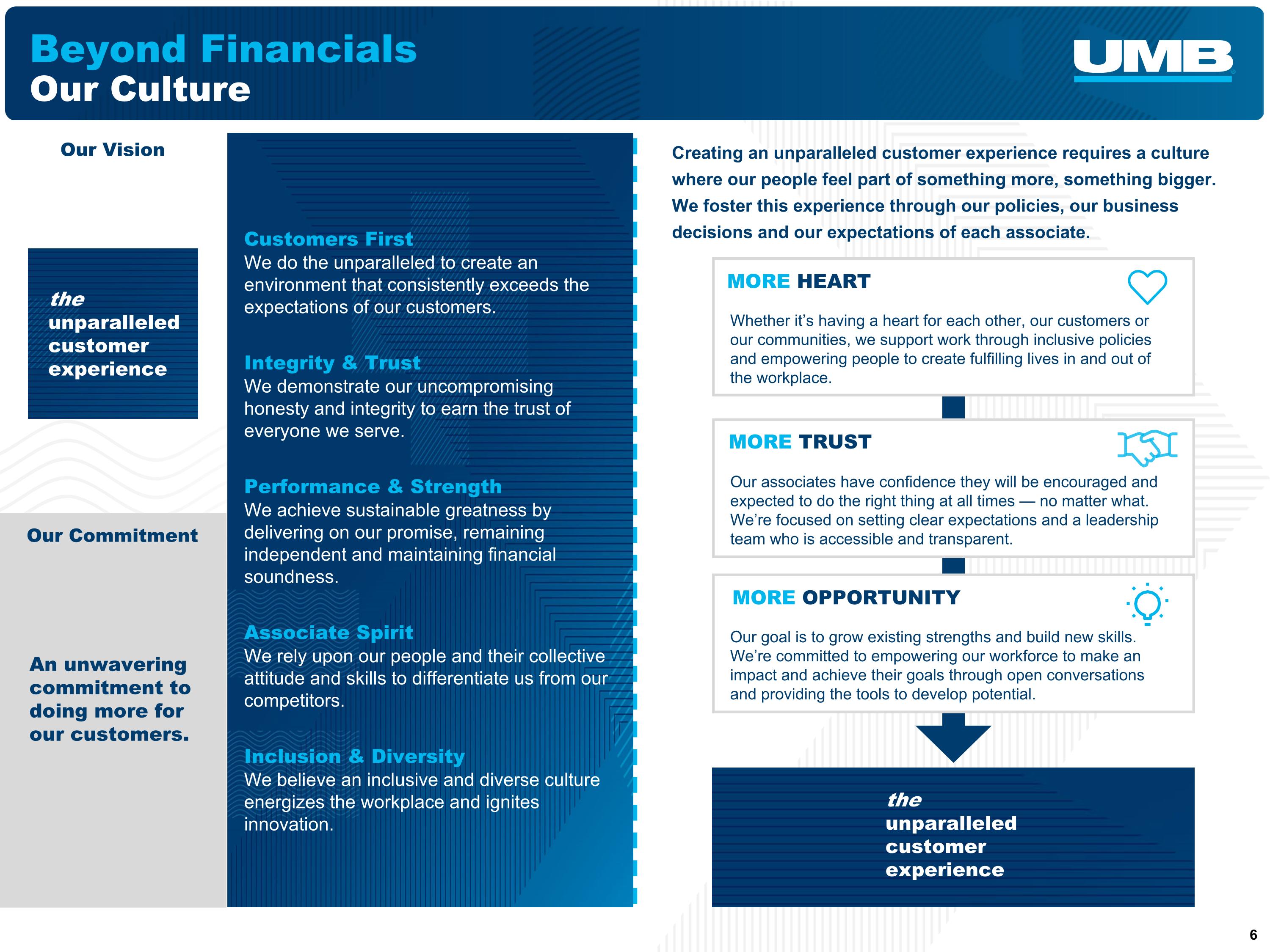
I will address your questions in the order you asked. Regarding the integration of Heartland into our operations, there is some encouraging news. When we acquired Heartland, the senior management team was not included, which allowed us to deliver a consistent message from UMB right away. This has begun immediately, and our regional credit officers, a key component for combined loan growth from the Heartland footprint, are actively providing real-time feedback and approvals. While the technical conversion will occur in October, the cultural aspects, such as sales and business integration, are already underway. We set up a process to pair a Heartland associate with a UMB associate to facilitate business without requiring two separate conversions for customers, helping us maintain momentum. I believe we are making significant progress on the cultural side and in terms of sales and energy. The technical aspect of systems conversion will take place in October as planned. As for M&A, our entire focus right now is on optimizing our current achievement and ensuring our two teams are working seamlessly to maximize the benefits. We are dedicated to maintaining high quality through this process. In terms of the future, my colleagues and I are actively engaging with our contacts at other institutions to nurture relationships, as these opportunities take time to cultivate. While M&A is certainly part of our long-term strategy, our current priority is to complete this integration effectively and efficiently.
Speaker 10
Okay. Thank you very much.
Operator
Our next question is a follow-up from Timur Braziler with Wells Fargo. Your line is now open.
Speaker 8
Hi, thanks. Just one follow-up on the capital side. You guys called out $1 million buyback authorization in the release. I'm just wondering what your appetite is here and what your thoughts are about potentially engaging that from a timing standpoint and magnitude standpoint?
Sure, Timur. There's nothing exciting to report there. We do that every year at the exact same time and the exact same amount typically. That's just really just to give us the flexibility and the availability. We have no plans.
Yes. Let's just add. It's a yearly cycle for the Merck Carey purchase authorization and a three-year cycle for our shelf registration. That happens like clockwork. Yes. So nothing to read into it.
Speaker 8
Great. Okay. Thank you.
Operator
Thank you all for your questions. There are no longer questions in queue. So I'll pass the conference back to the management team for any further or closing remarks.
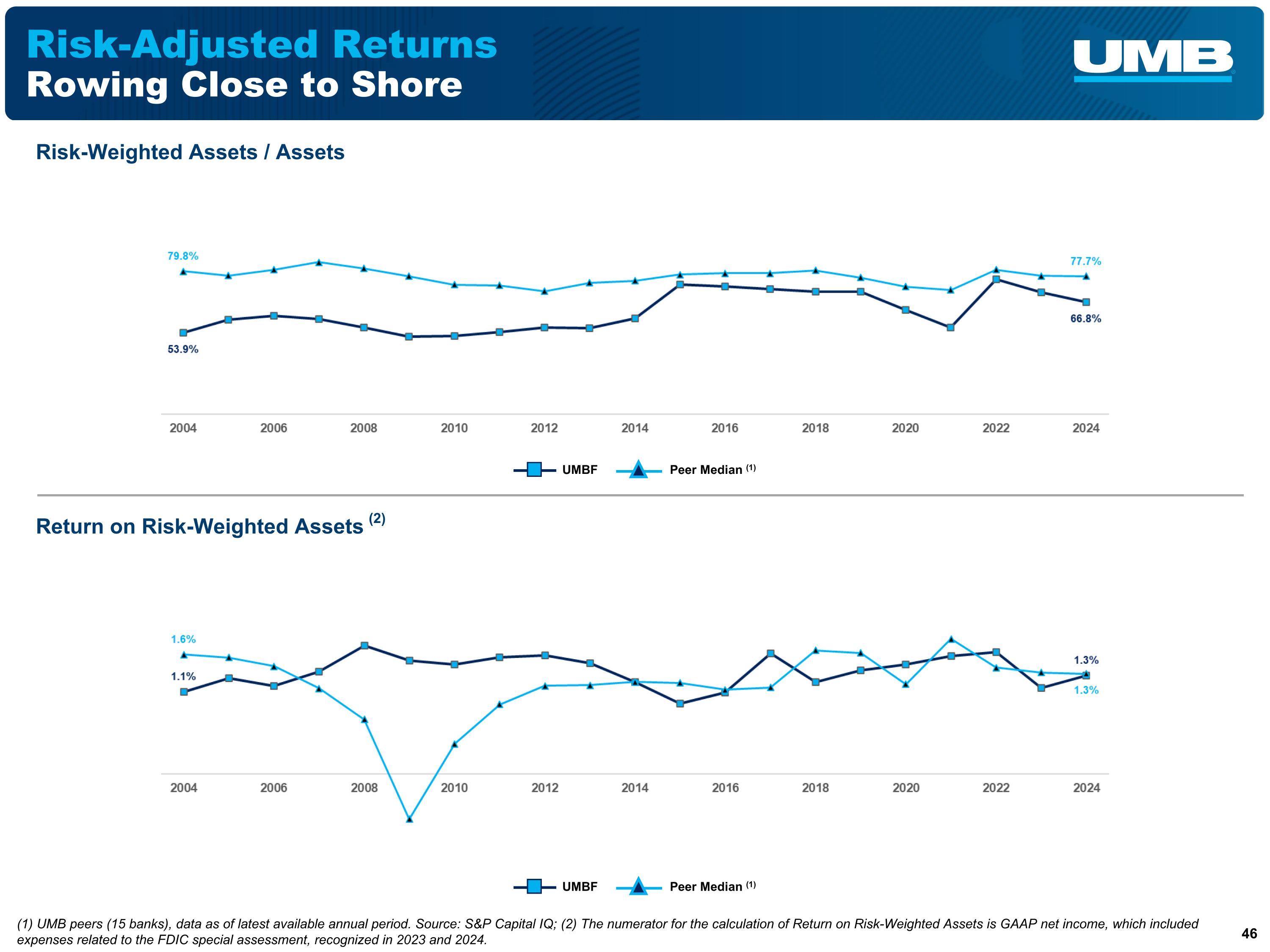
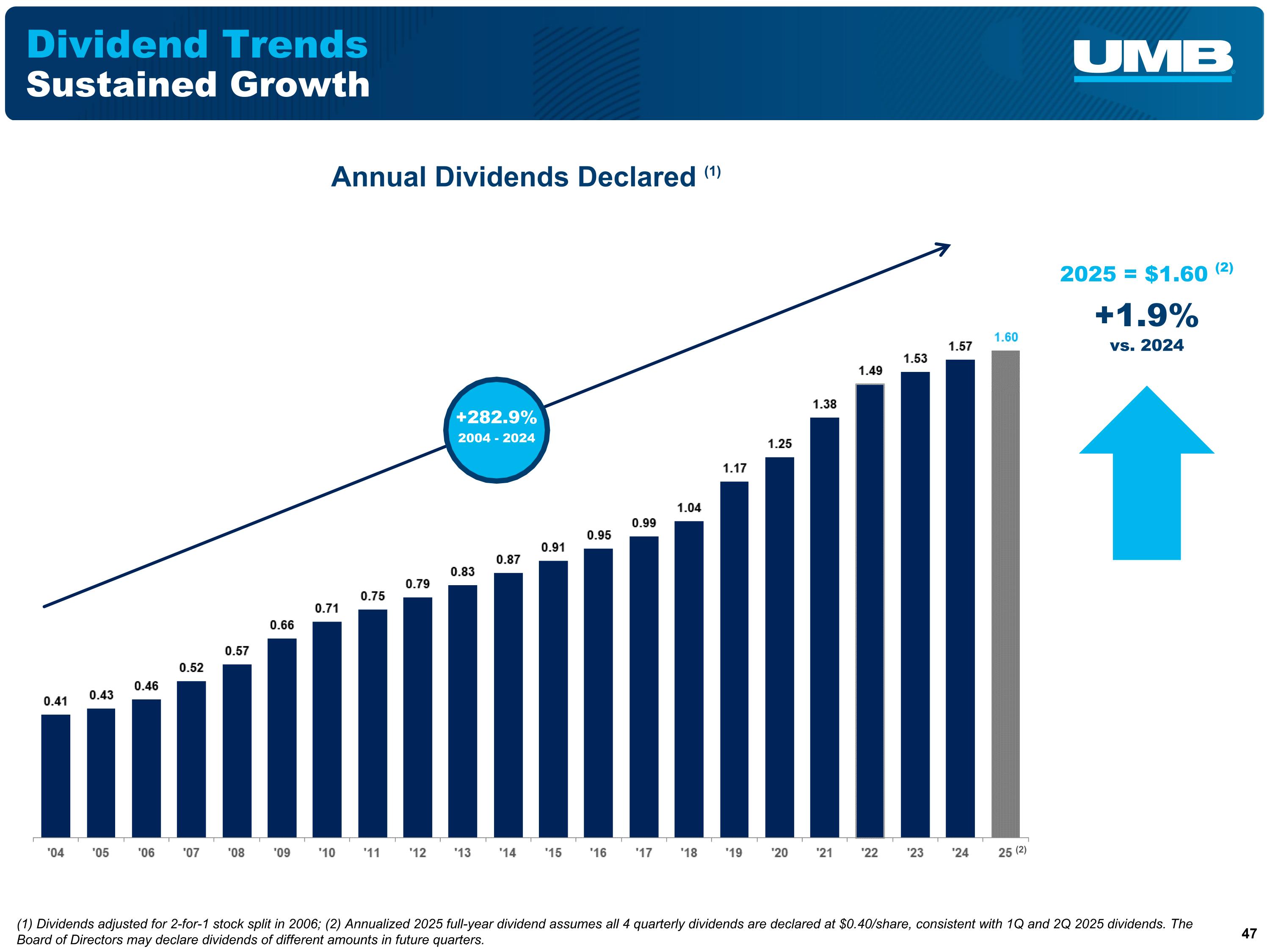
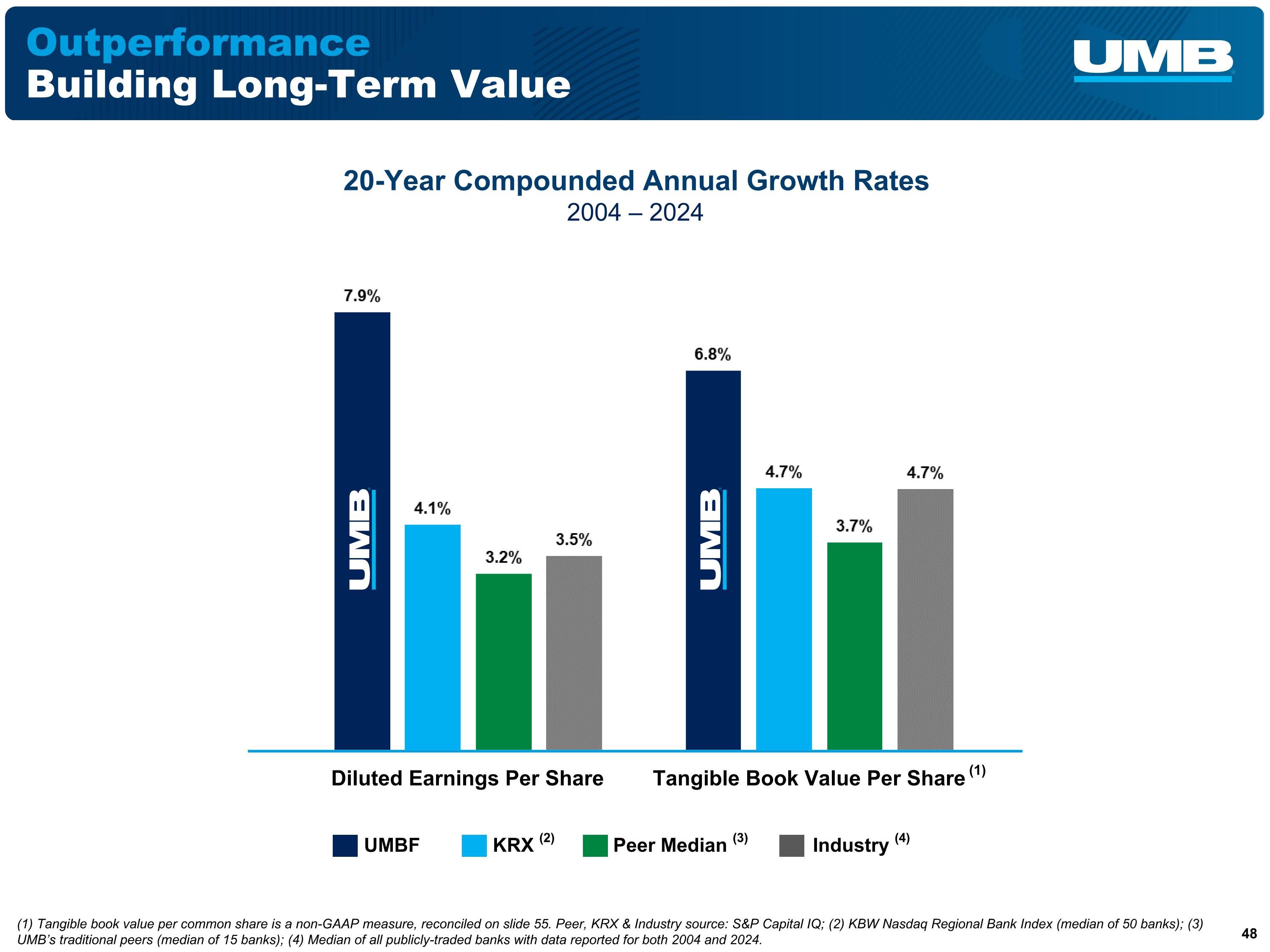
Yes, this is Mariner. I want to wrap up by expressing how excited we are about this development. I'm really enthusiastic about it. I want to reiterate the thesis behind our newly combined engine. To understand our future, I encourage you to look back at our history. If you review our presentation, starting on page 44, you'll see that our management team has been together for nearly 30 years, demonstrating a long-standing track record of remarkable growth along with significantly better quality than the average. We operate in a unique space where we consistently outgrow our competitors while maintaining high quality, and we've achieved this together for a long time. The advantage of this merged company is our ability to operate more efficiently and profitably as a larger organization. Historically, we've faced criticism for not being as efficient as others, but now we can achieve growth with improved efficiency. We have a powerful engine for generating business, along with a fresh new structure, new markets, new team members, new branches, and a wealth of affordable raw materials to utilize. We plan to continue our momentum with exceptional quality, now supported by a larger platform. We're also excited about the revenue synergies we can explore. While we briefly mentioned credit cards, there are numerous opportunities to expand our product offerings across this new landscape. With a team that's worked closely for 30 years, we have the credibility to deliver on our promises. I look forward to this journey with you in the coming months and years. We're truly excited about it. Thank you for your time.
Thanks, Mariner, and thanks everyone for joining us today. If you have follow-up questions, you can reach us at (816) 860-7106. Thanks, and have a great day.
Operator
Thank you, everyone, for joining us today. If you have follow-up questions, you can reach us at (816) 860-7106. Have a great day.