Operator
Welcome, everyone. The UMB Financial Fourth Quarter 2025 Financial Results Conference Call will begin shortly. In the meantime, if you would like to pre-register to ask a question, please press star followed by one on your telephone keypad. If you change your mind, please press star followed by two. Once again, today's call is going to start shortly. Thank you for your patience. Hello, everyone, and thank you for joining the UMB Financial Fourth Quarter 2025 Financial Results Conference call. My name is Gabrielle, and I will be coordinating your call today. During the presentation, you can register a question by pressing star followed by one on your telephone keypad. If you change your mind, please press star followed by two on your telephone keypad. I will now hand over to your host, Kay Gregory. Please go ahead.
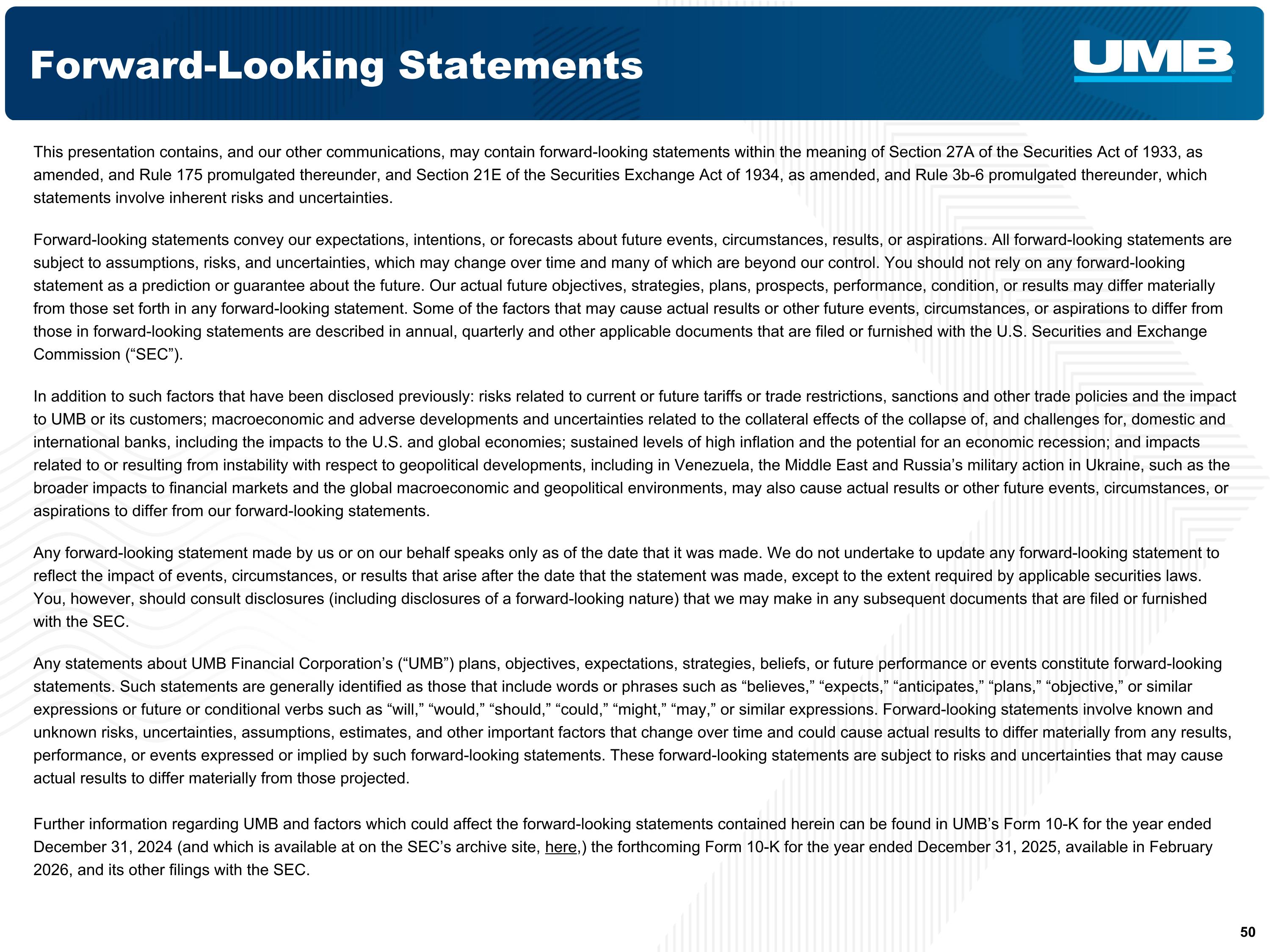
Good morning, and welcome to our fourth quarter 2025 call. Mariner Kemper, Chairman and CEO, and Rahm Shonker, CFO, will share a few comments about our results, then we'll open the call for questions from equity research analysts. Jim Rine, President of the Holding Company and CEO of UMB Bank, along with Tom Terry, Chief Credit Officer, will be available for the question and answer session. Before we begin, let me remind you that today's presentation contains forward-looking statements, including the discussion of future financial and operating results benefits synergies gains and costs that the company expects to realize from our acquisition as well as other opportunities management proceeds forward looking statements and any pro forma metrics are subject to assumptions risks and uncertainties as outlined in our SEC filings and summarized in our presentation on slide 50 actual results may differ from those set forth and forward-looking statements which speak only as of today. We undertake no obligation to update them except to the extent required by securities laws. Presentation materials are available online at investorrelations.umb.com and include reconciliations of non-GAAP financial measures. All per share metrics refer to common shares and are on the diluted share basis. Now I'll turn the call over to Mariner Kemper.
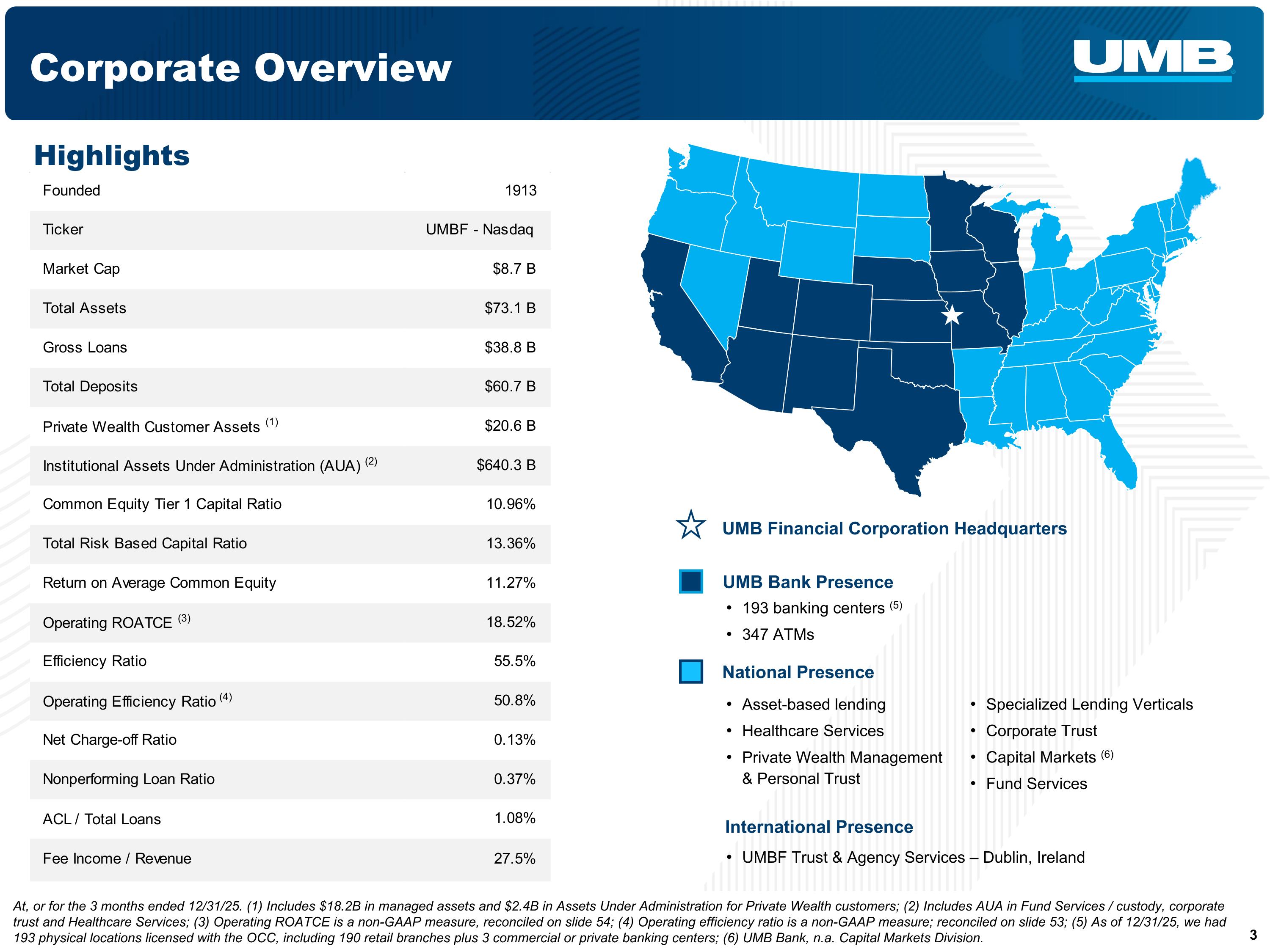
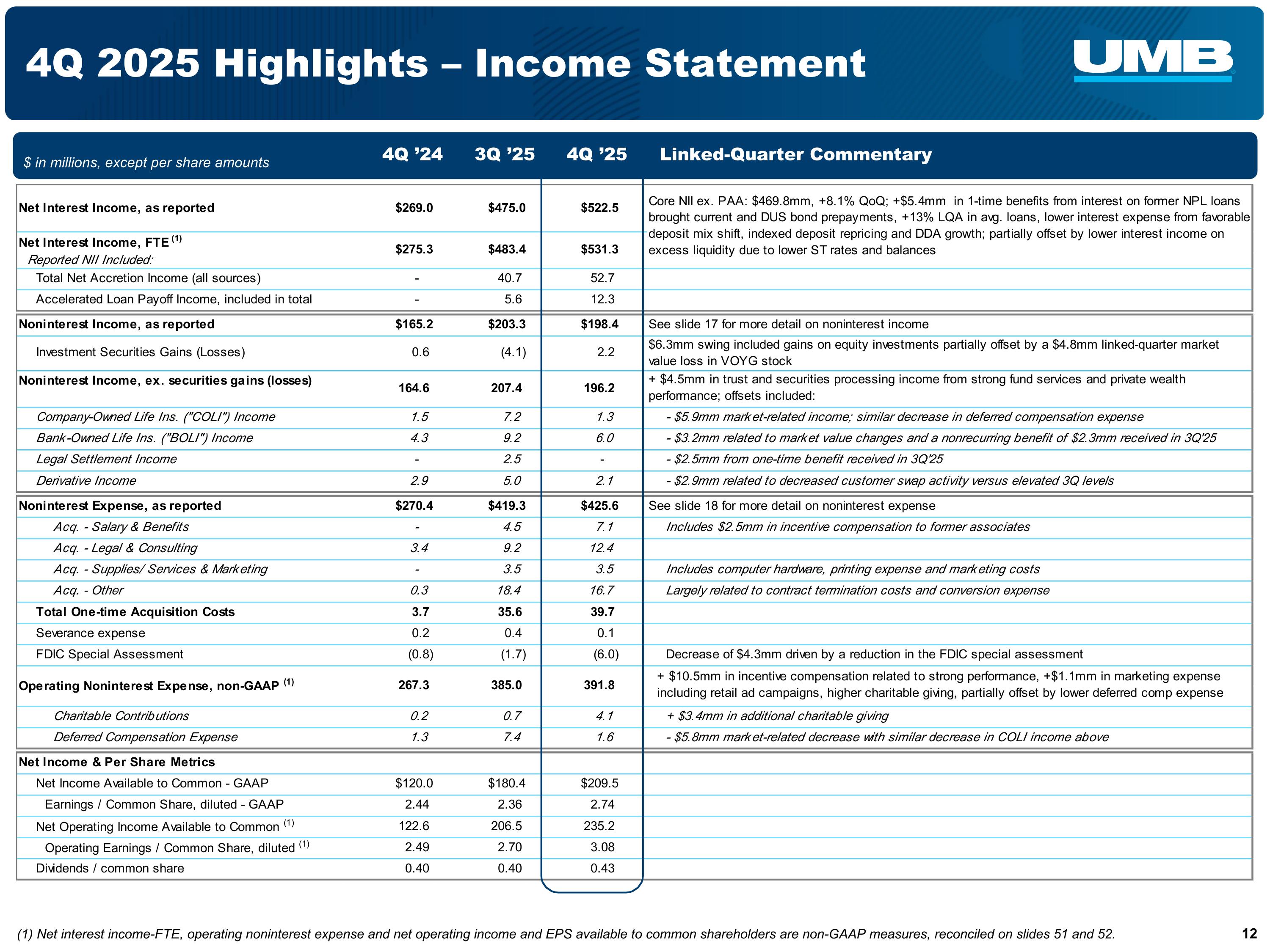
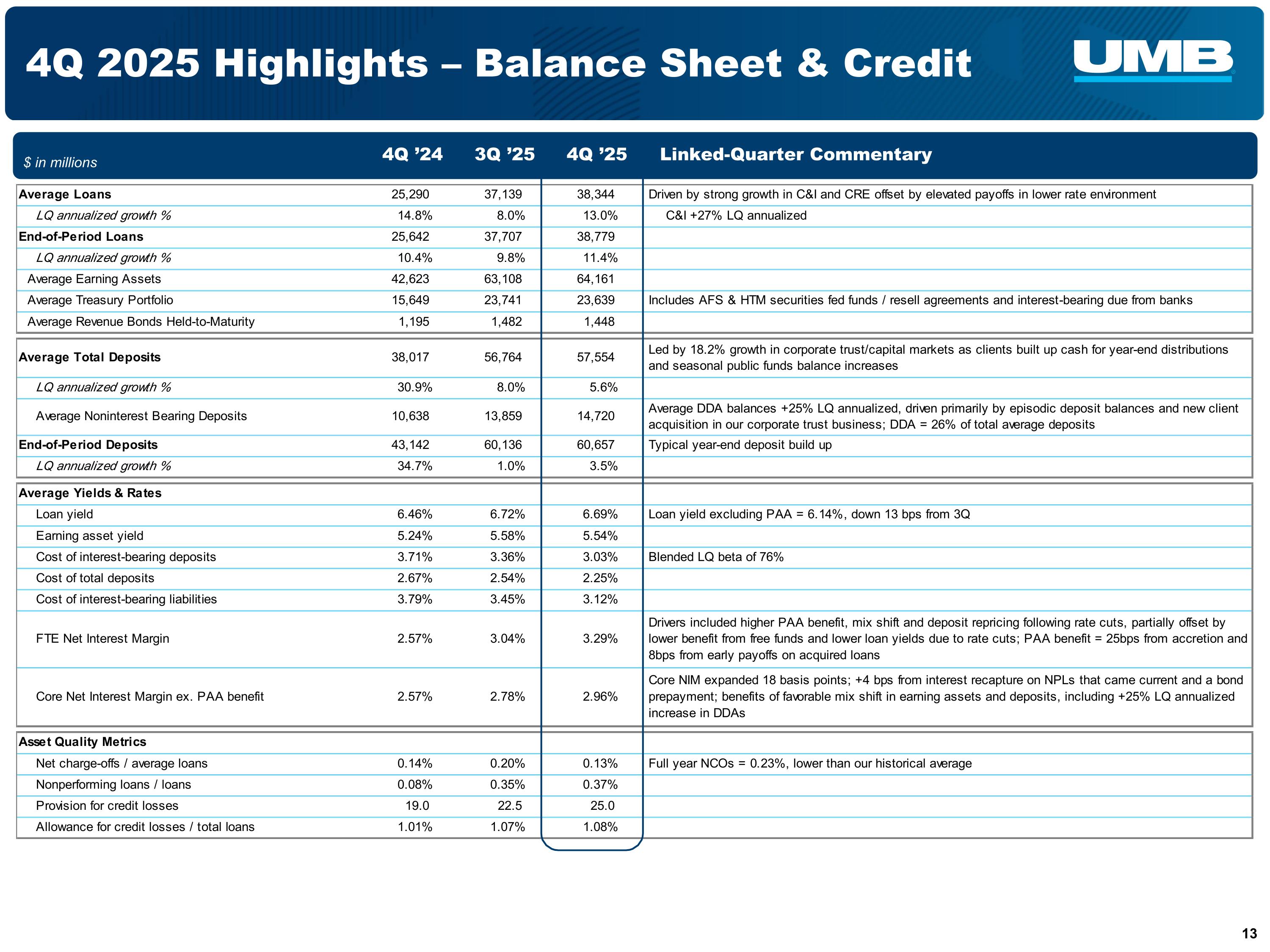
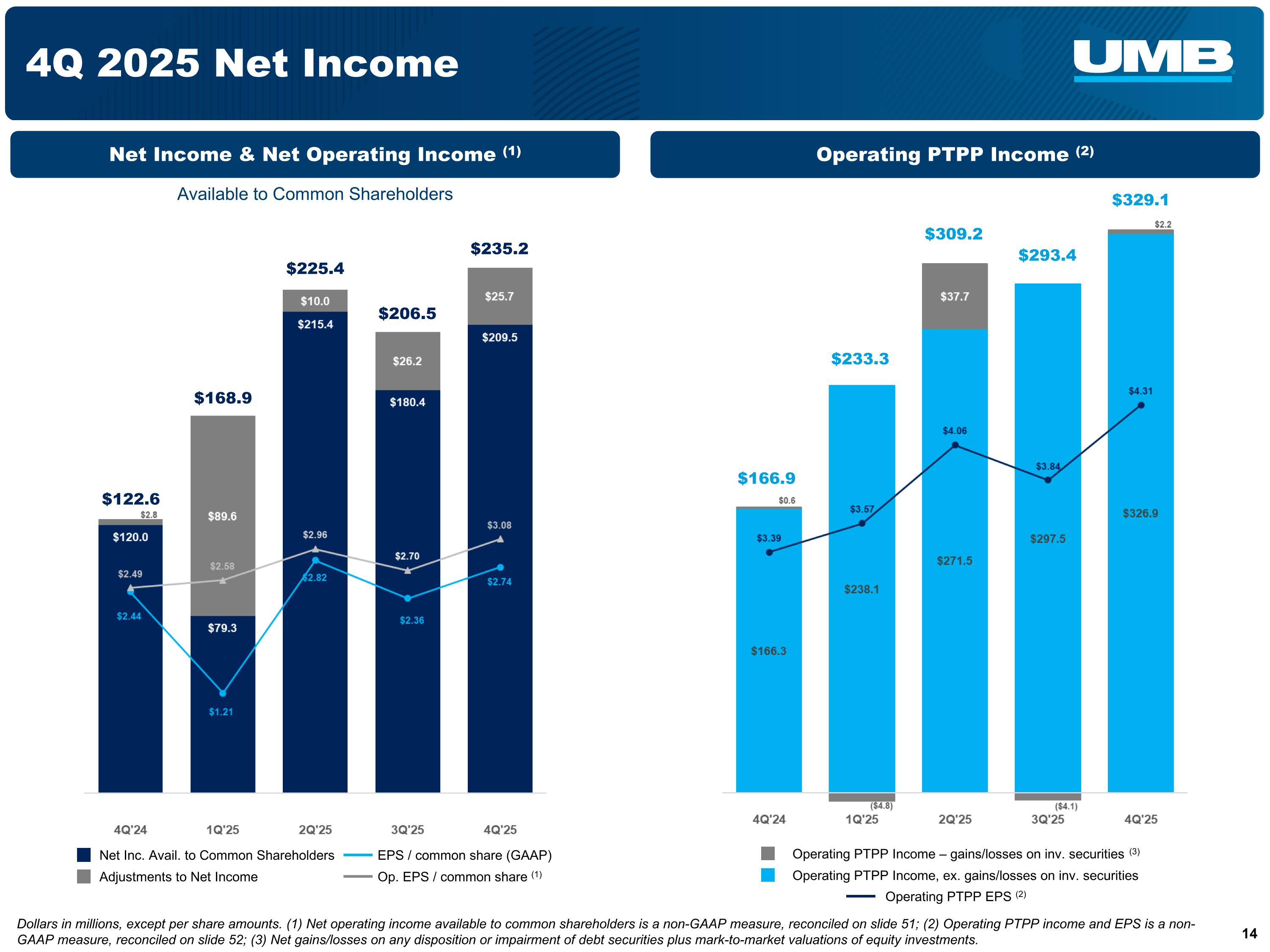
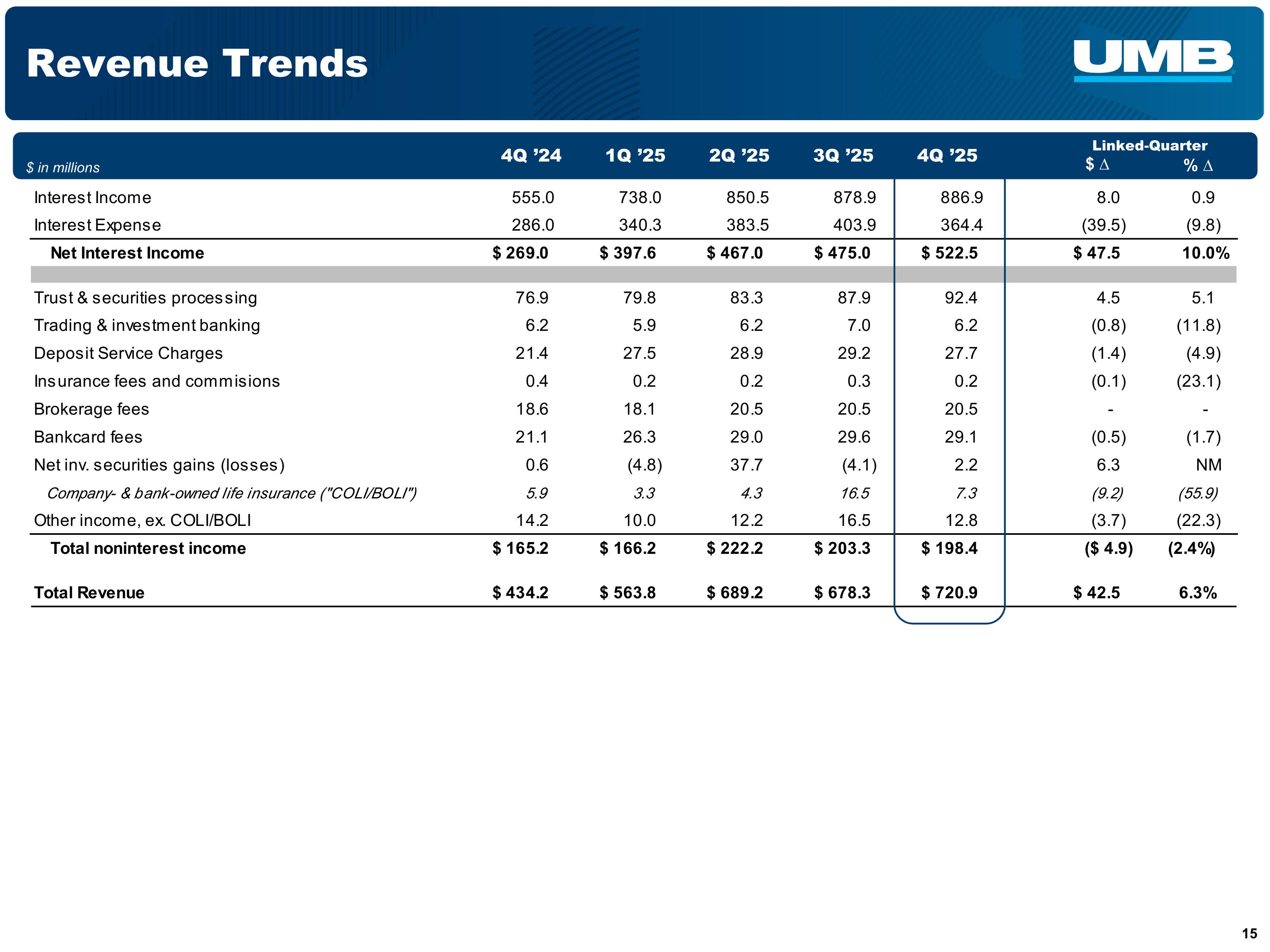
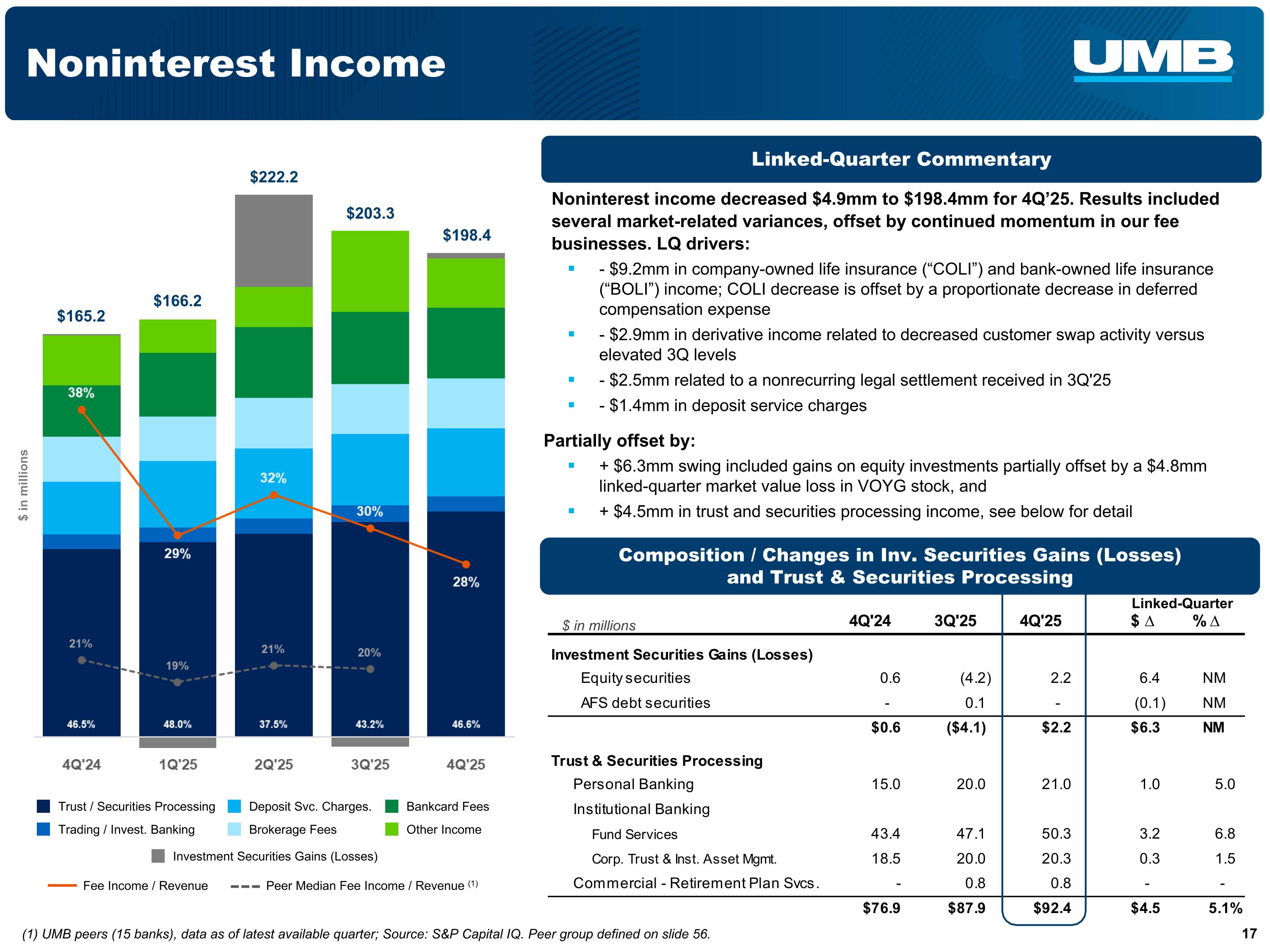
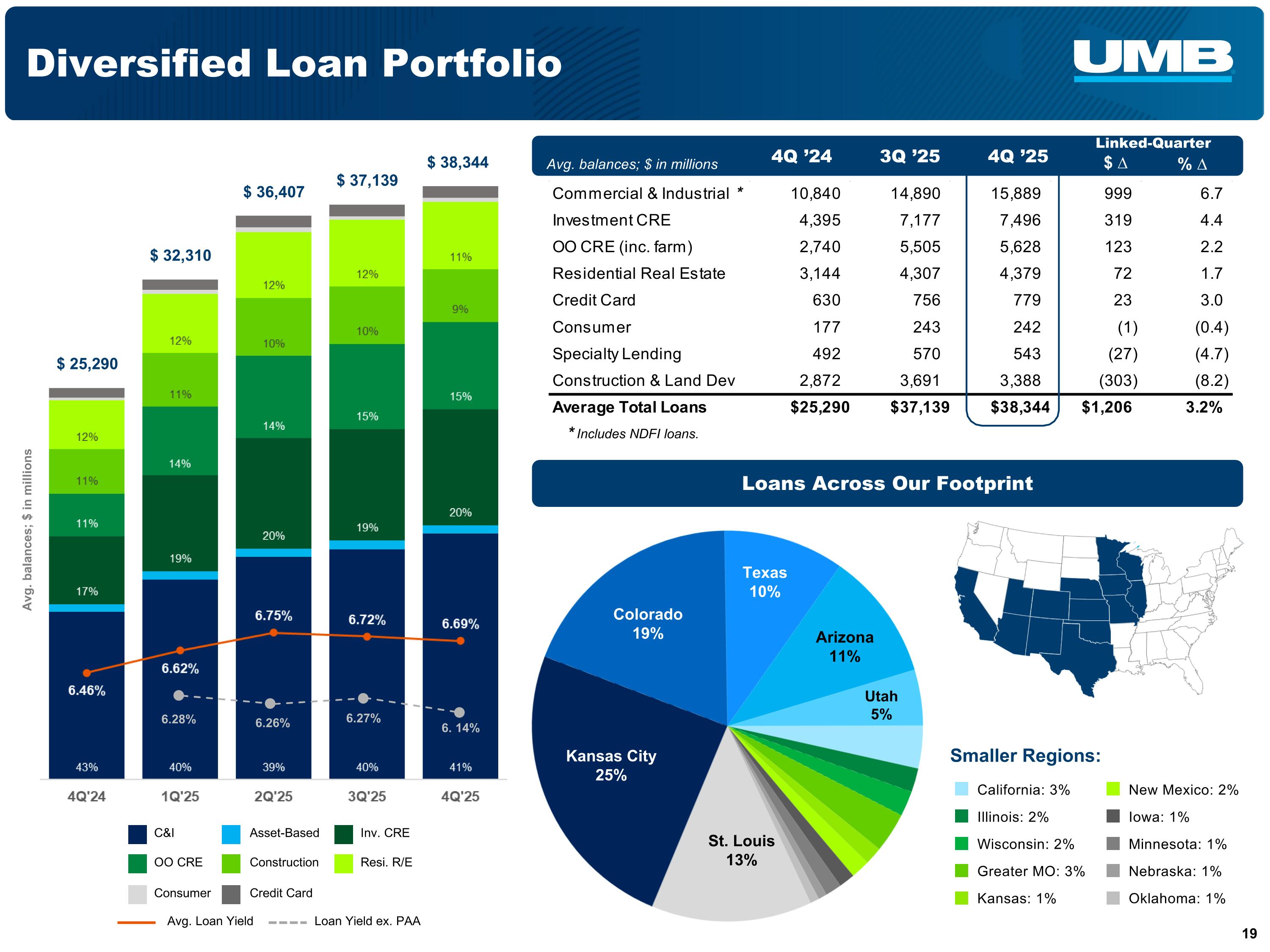
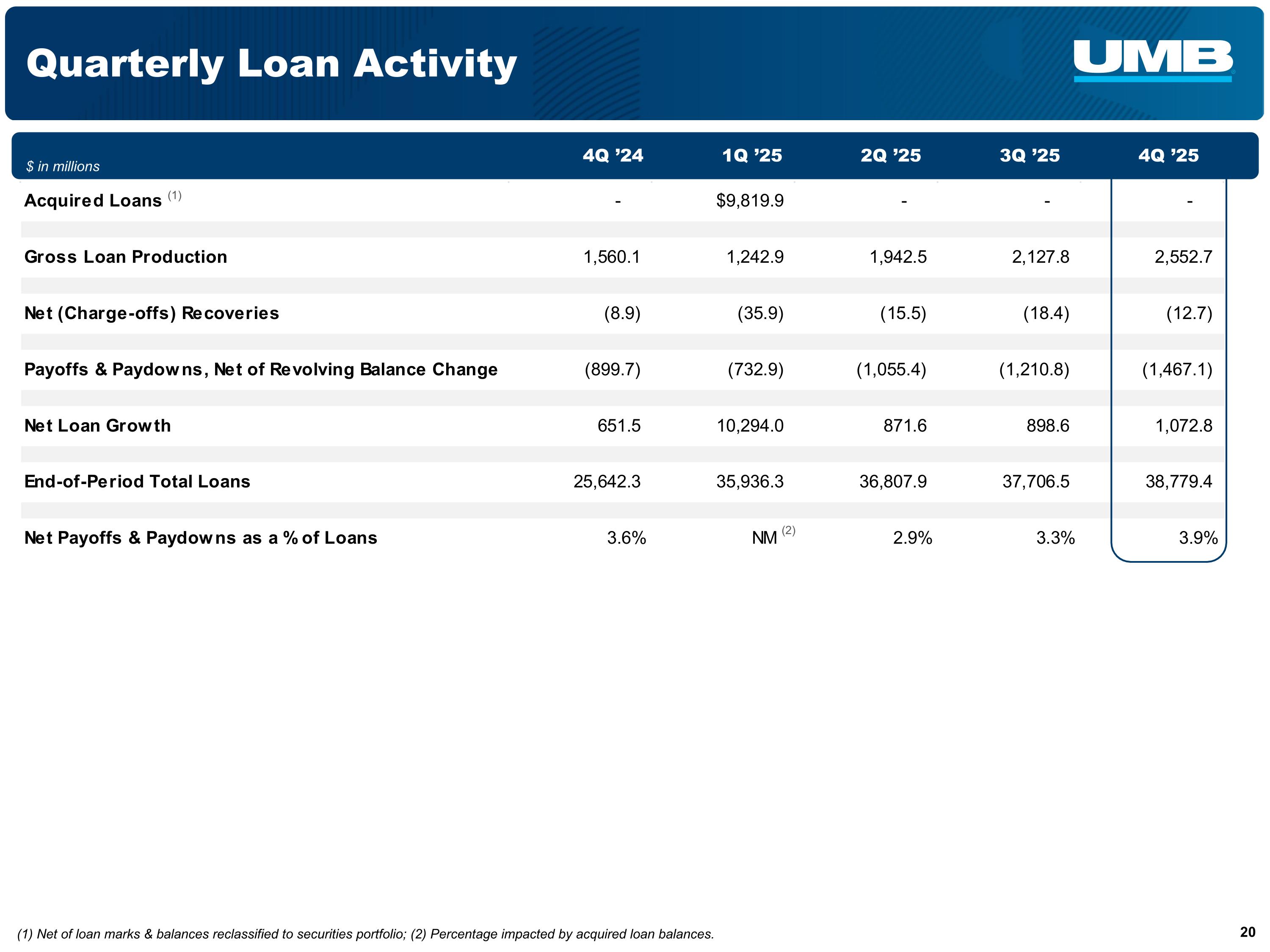
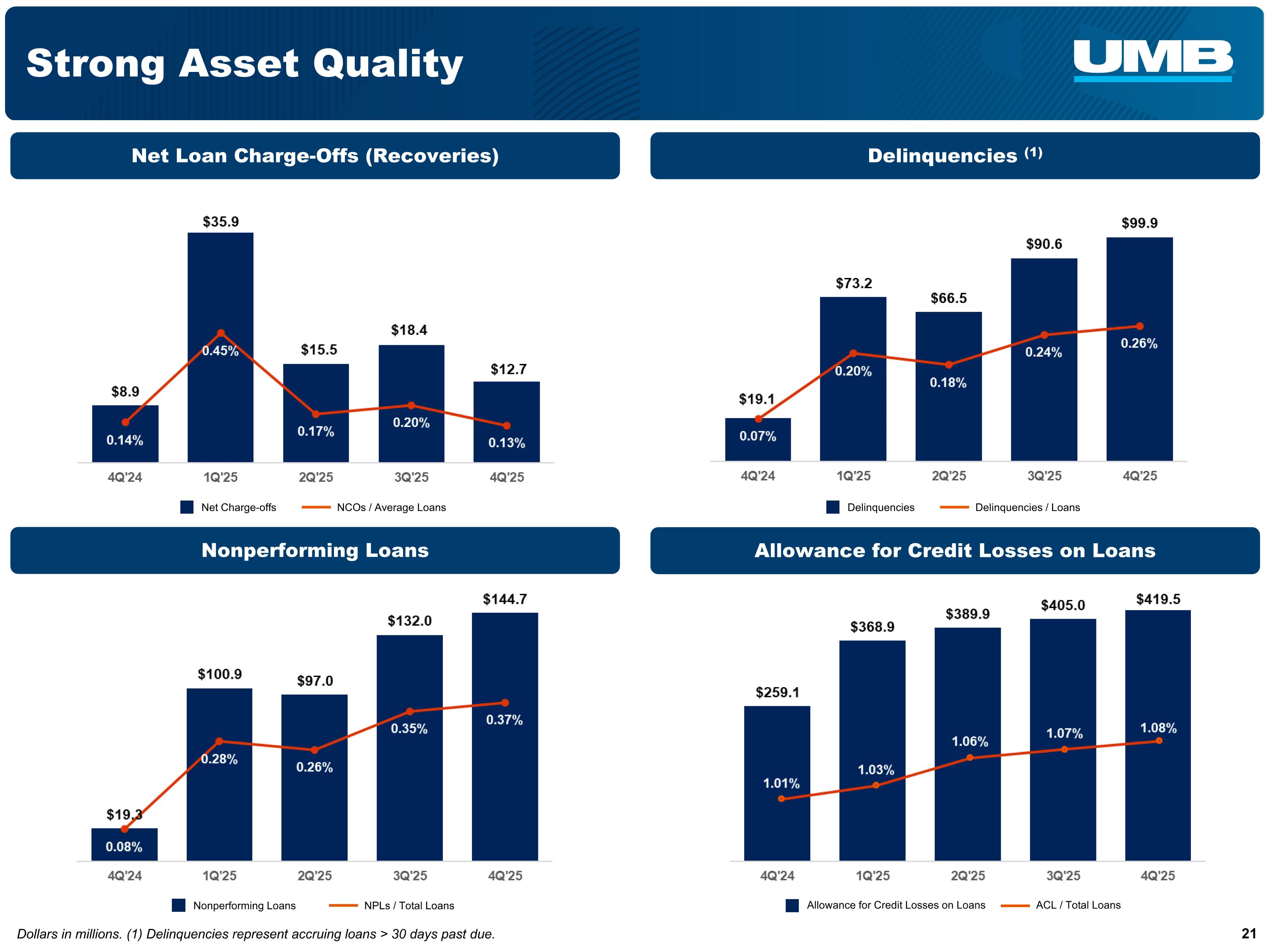
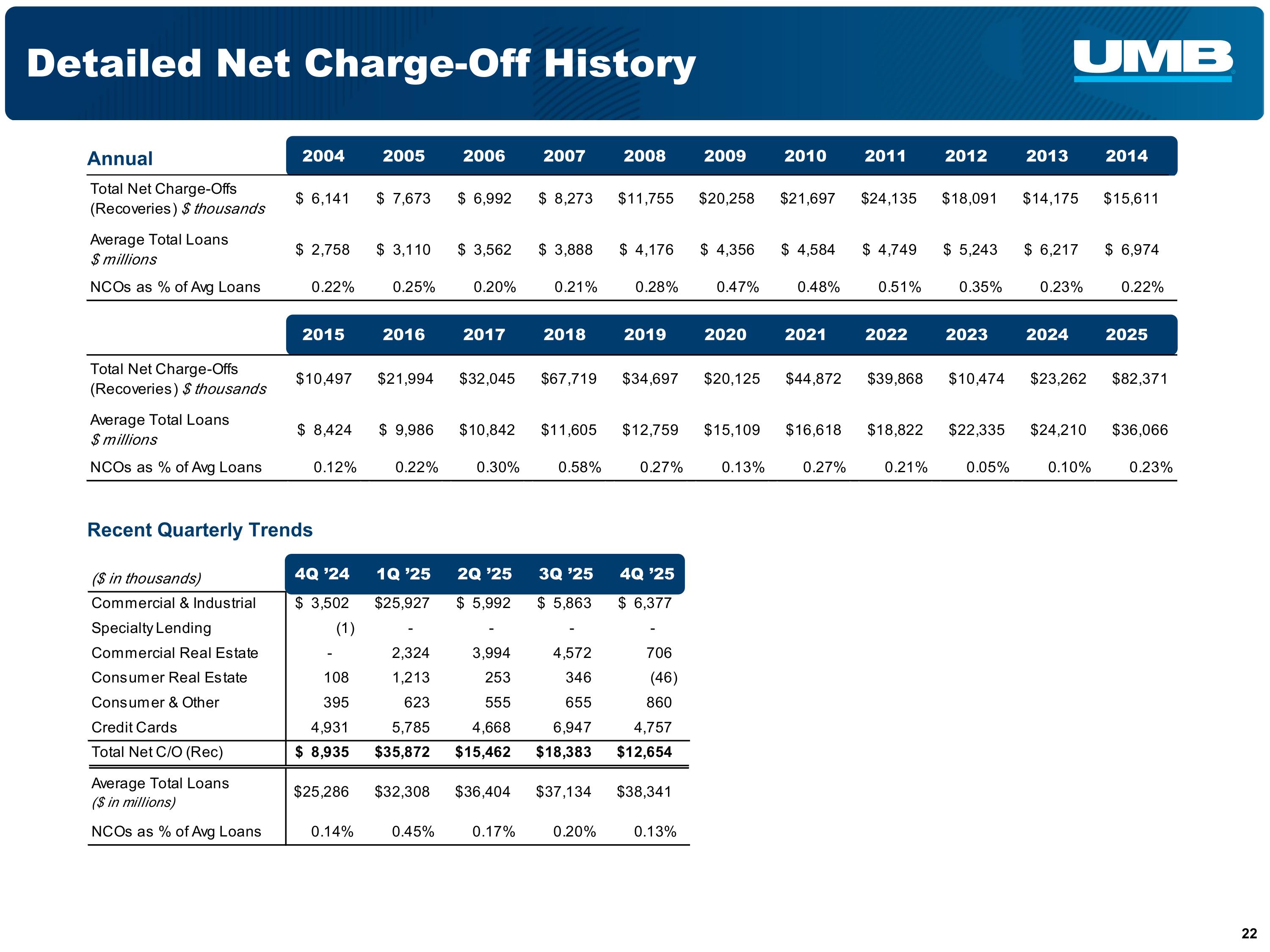
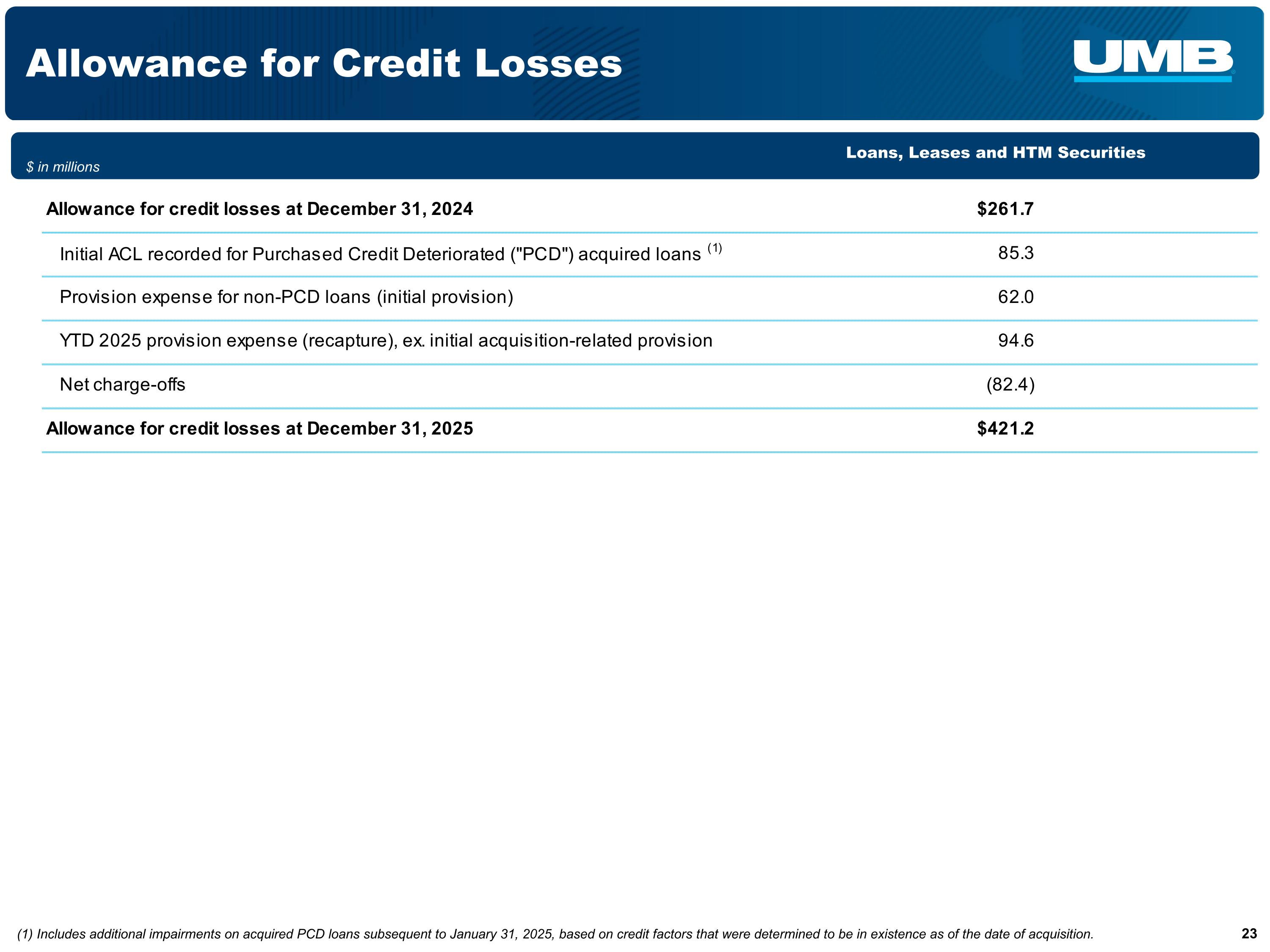
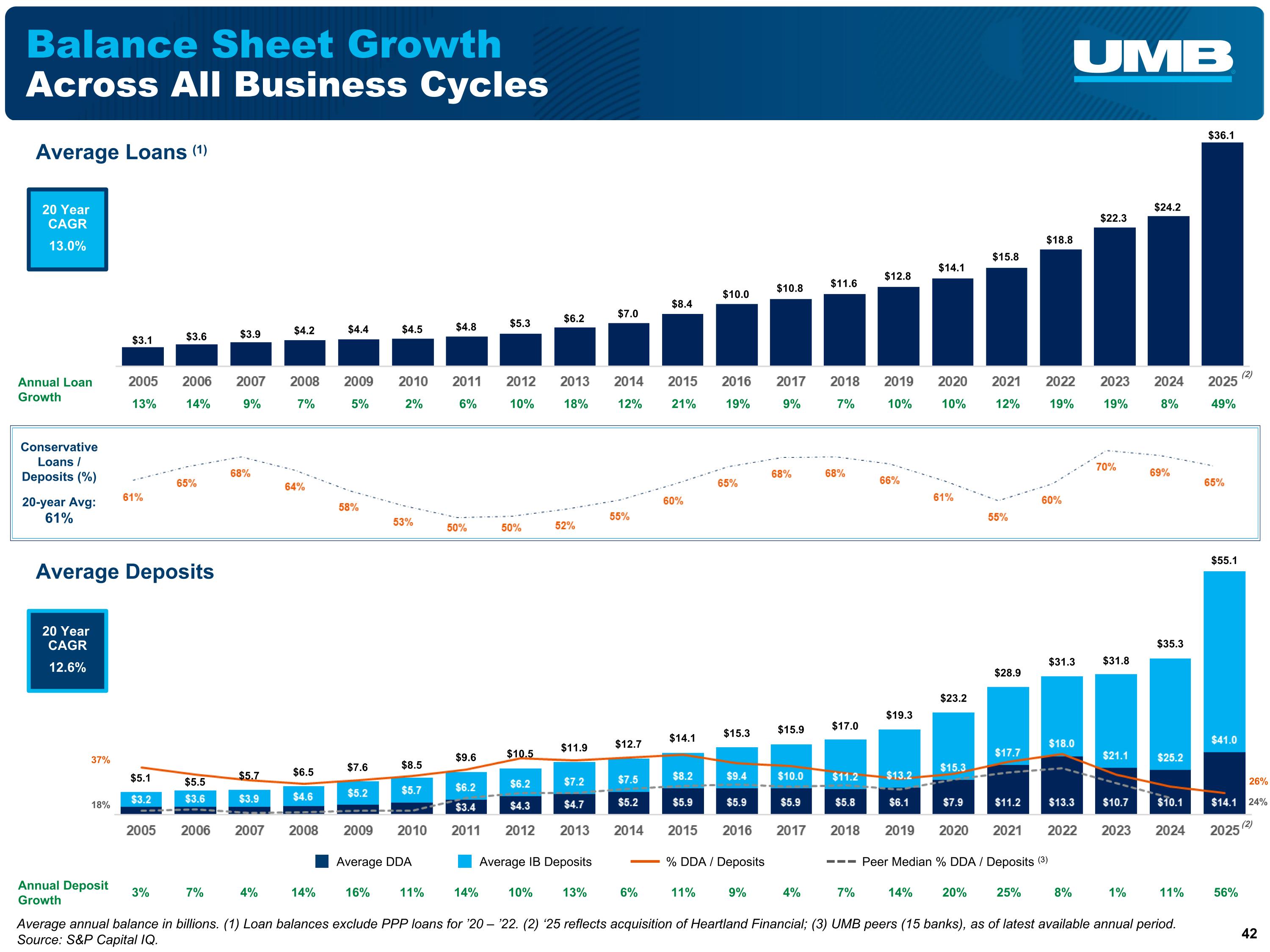
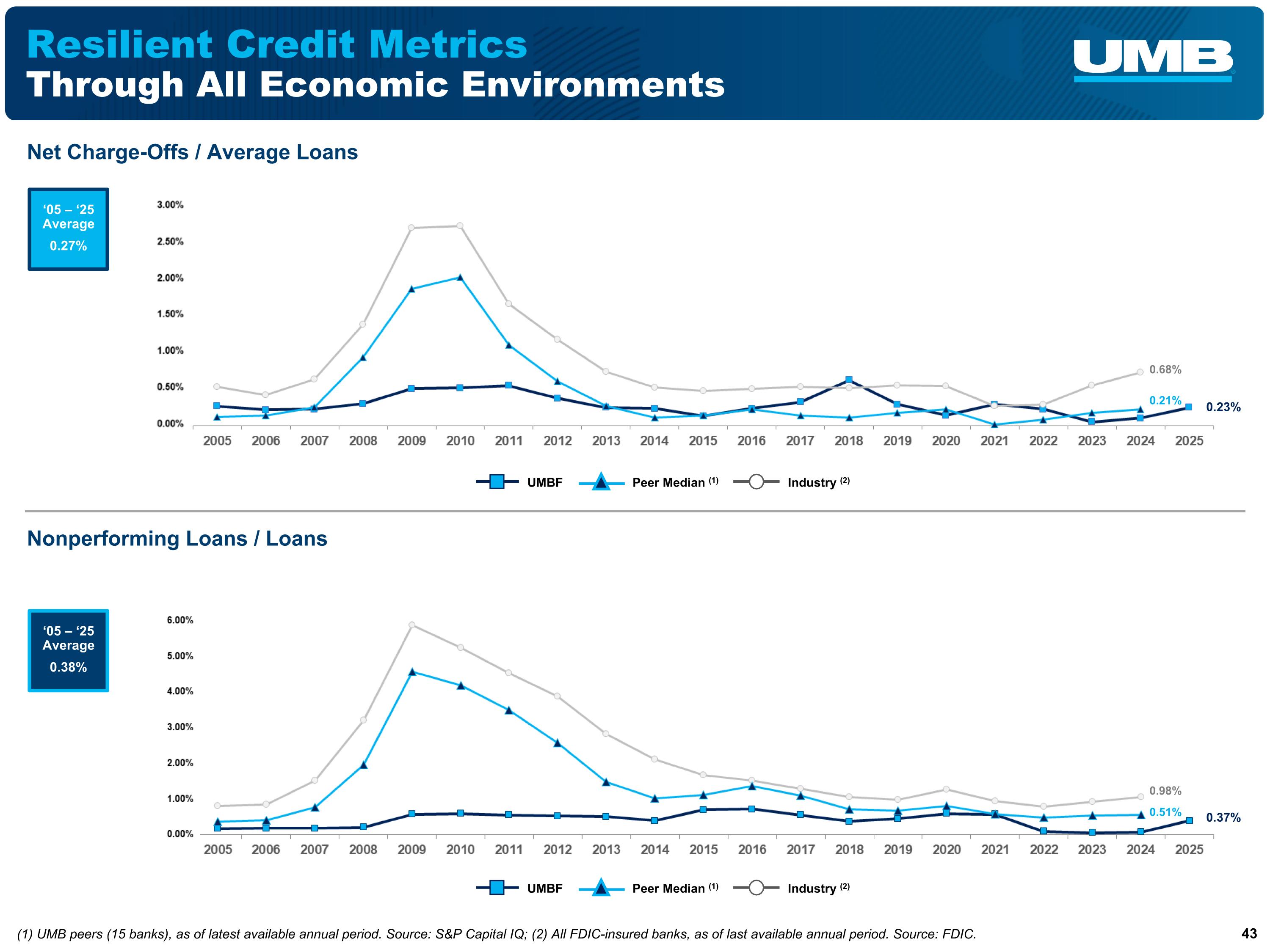
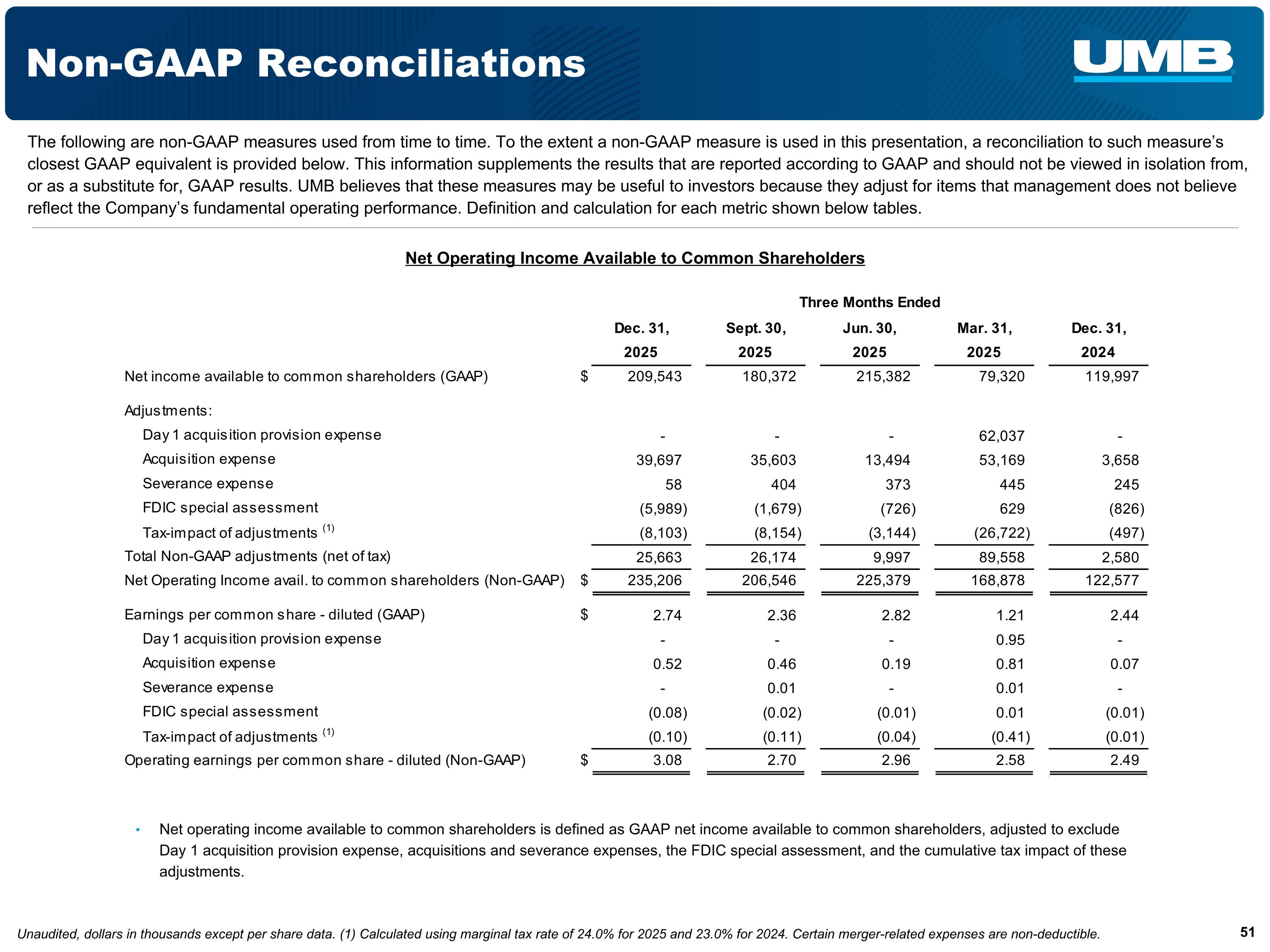
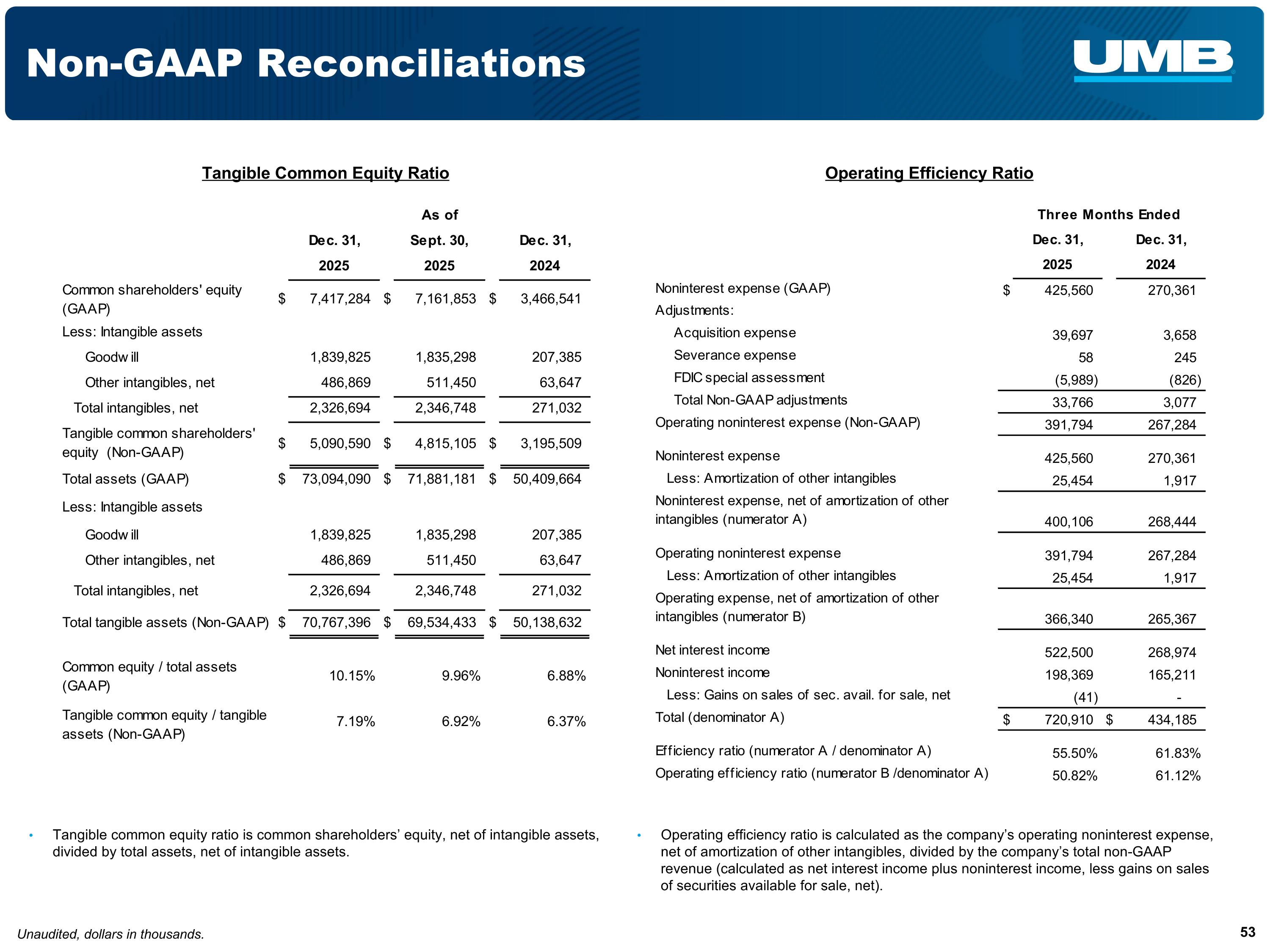
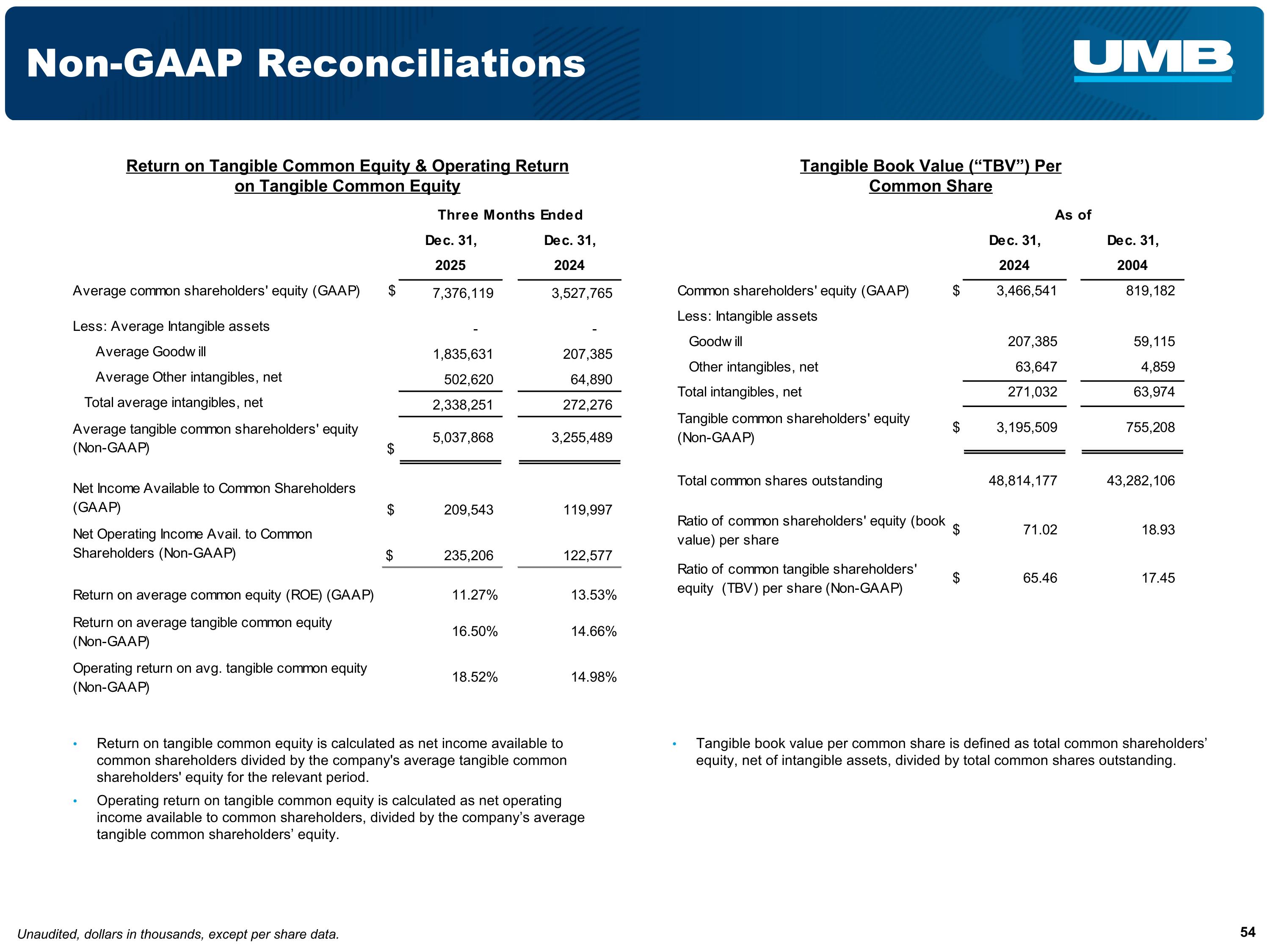
Thank you, Kay. Good morning everyone. We will share some brief comments about our results, then open up for questions. We reported another strong quarter to close out 2025 with the successful acquisition of Heartland Financial, the opening of our first branch location at Utah, and another year of record earnings. We posted significant improvements in our profitability metrics as we continue to build scale, deliver profitable growth on both sides of the balance sheet, and maintain our unwavering focus on strong asset quality metrics. A few fourth quarter metrics that I want to highlight are return on average assets of 120 compared to 104 in the third quarter, return on average common equity of 1127, up from 1014, and an efficiency ratio that improved to 55.5 from 58.1 in the third quarter and 51.8 in the period a year ago. I'm incredibly proud of our associates for delivering strong, fundamental, and financial performance in 2025 while providing outstanding customer experience to our existing and newly acquired clients, all of which continue to drive our reported net income available for common shareholders for the fourth quarter was $209.5 million, or $2.74 per share, an an increase of 16.1% from the third quarter. For the full year, we earned $684.6 million, or $9.29 per share. Fourth quarter included $39.7 million of acquisition expenses compared to $35.6 million last quarter. Excluding these and some smaller non-recurring items, our fourth quarter net operating income was $235.2 million, or $3, and fourth quarter net interest income totaled $522.5 million, an increase of 10% from the third quarter. This was driven by double-digit growth in loans and DDAs, along with the impact of lower rates on our index deposits benefited net interest income. Our fee businesses continued their strong performance in the quarter, while our total non-interest income was impacted by several market-related variances, new business activity from our fund services and private wealth teams continue to drive results, which contributed 4.5 million or 5.1% link quarter increase in trust and security. During the quarter, while we can't predict the future success in our private investment, we're likely to see that. Looking at the balance sheet, we've looked at 13% link quarter annualized growth in average loans and 5.6% in average deposits. Quarterly top-line loan production reached $2.6 billion in the quarter. We are seeing positive activity across our footprint and I'm excited about our additional opportunities in our acquired market post-conversion. CNI was again our strongest contributor this quarter with 27% annualized growth over the third quarter. The rate of net payoffs and paydowns as a percentage of total loans is 3.9%. Looking ahead into the first quarter, overall loan activity and pipeline remains strong. Our loan growth has continued to outpace many peer banks. Banks that have reported fourth quarter results so far have posted a 4.9% median annualized increase in average loans compared to our 13%. Total net charge us for the fourth quarter were just 13 basis points. For the full year of 2025, net charge us were 23 basis points, below a long-term historical average of 27 basis points. Total non-performing loans were $145 million, or 37 basis points, while total criticized loan levels improved 9.1% from industry-wide NPLs for the banks reported so far, or a median of 55 basis points. Our total losses levels will fluctuate from quarter to quarter as we manage our book. We're quick to recognize trouble, take action, and address any issues. This proactive management has been consistent, and historically, we've seen very little migration to loss, as evidenced by our chart of history. We're incredibly proud of our history. As I mentioned, for the 20-year period ending with 2025, our annual losses have averaged just 27 basis points. Over that same period, average loan balances have increased from $3 billion to $36 billion through market and vertical expansions, including our recent acquisitions. This equates to a median annual growth rate. We achieve these results through our focus on risk management and the continuity that comes by having the same team in place managing credit together. We continue to build common equity to the timeline. Our capital priorities remain the same with organic growth. Many bank management teams have received questions on their fourth quarter calls about, and I'd like to provide. As I've said many times, we don't need, we are really proud of. We expect these trends to continue, especially given the opportunities we see for penetration in our newly acquired markets and expanding in our existing markets. Organic growth is and always will be our top. At the same time, we also feel that we are adept at evaluating and integrating acquisitions to bolster our organic growth. We're still answering our phones, building and maintaining relationships, and we expect the tuck-in acquisitions that make financial and strategic. We've also been asked about the size of potential deals. Without giving specific parameters, we would be wary of transactions that would put us close to the $100 billion mark. We are in the early stages of assessing what the threshold means to us, and until we are ready, our appetite for any M&A will continue to be measured. While many believe thresholds may move under the current administration, we are operating as though those rules still remain in place. We believe that we've built something very special here at UMP, including one of the best teams in the business. We are not going to put that at risk by pursuing a deal that might dilute our culture, our business model, our organic momentum, or our strength. As we look into 2026, we're excited to continue the momentum we saw in 2025 and capitalize on the opportunities in our newly acquired markets. As always, our primary focus will be on positive operating leverage, no matter what the economic or geopolitical environment brings our way. Now, I'll turn it over to Rom for more detail.
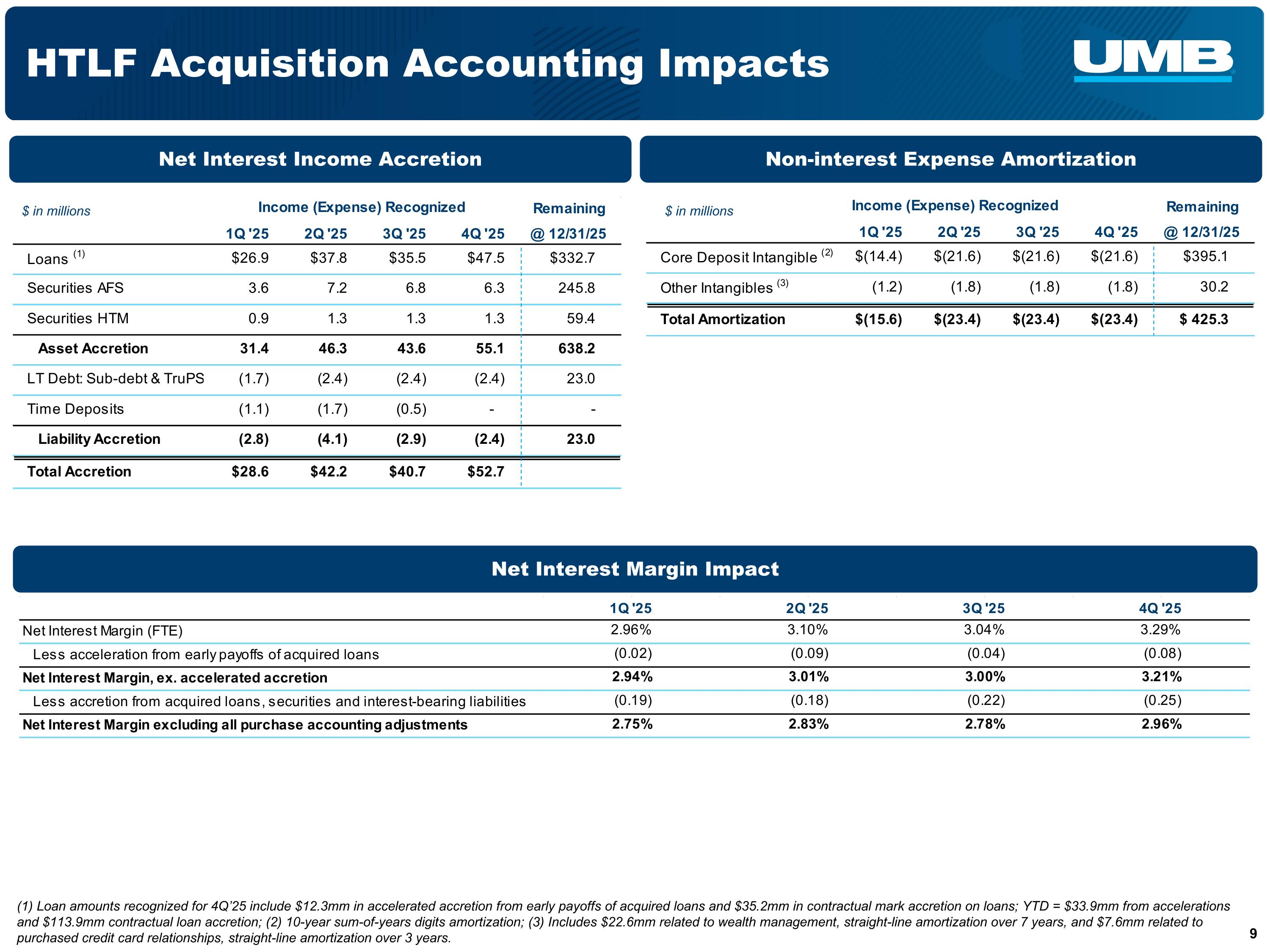
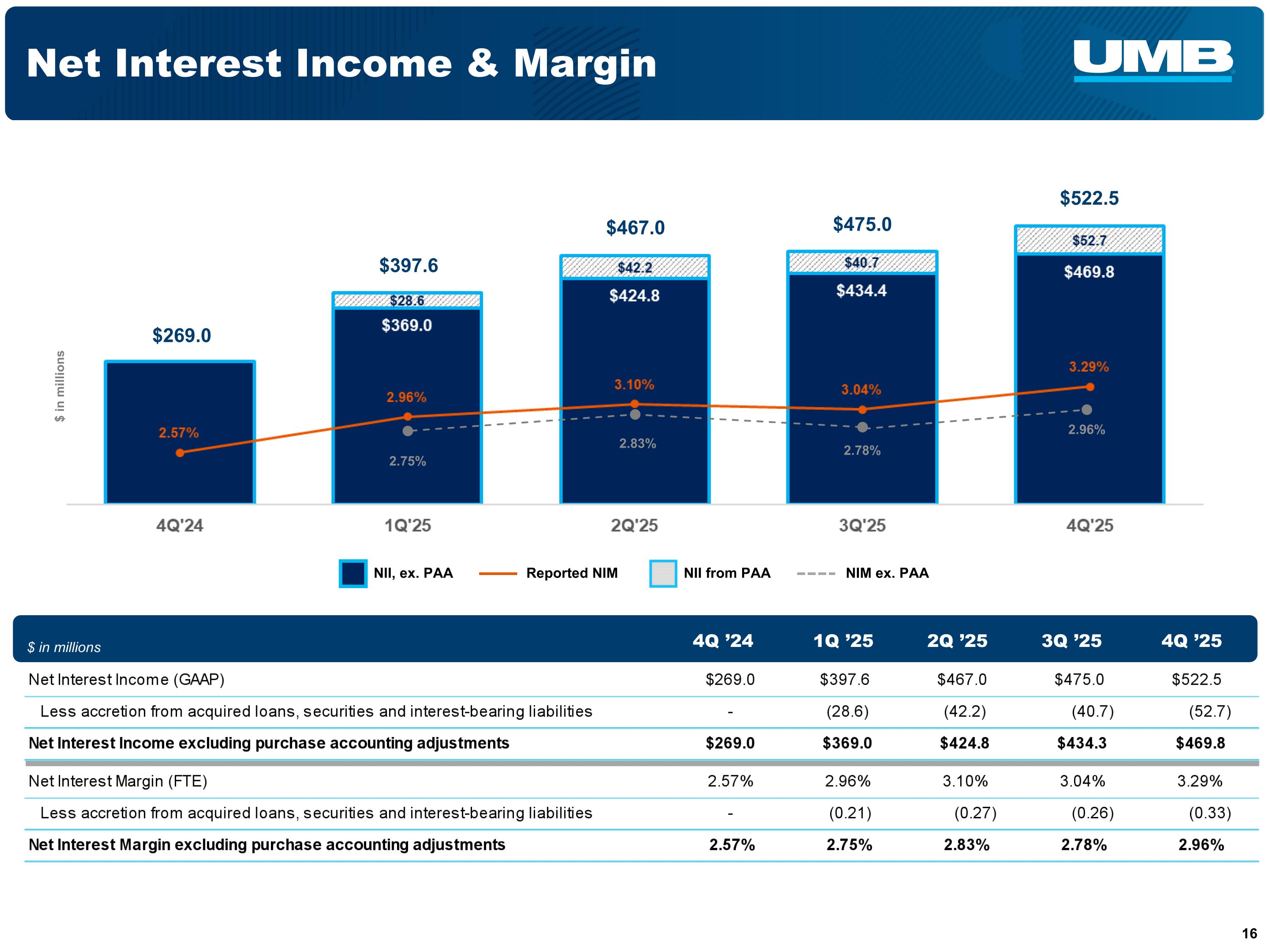
Our fourth quarter results included $52.7 million in net interest income from purchase accounting adjustments, $12.3 million of which was related to accelerated accretion from early payoffs of acquired loans.
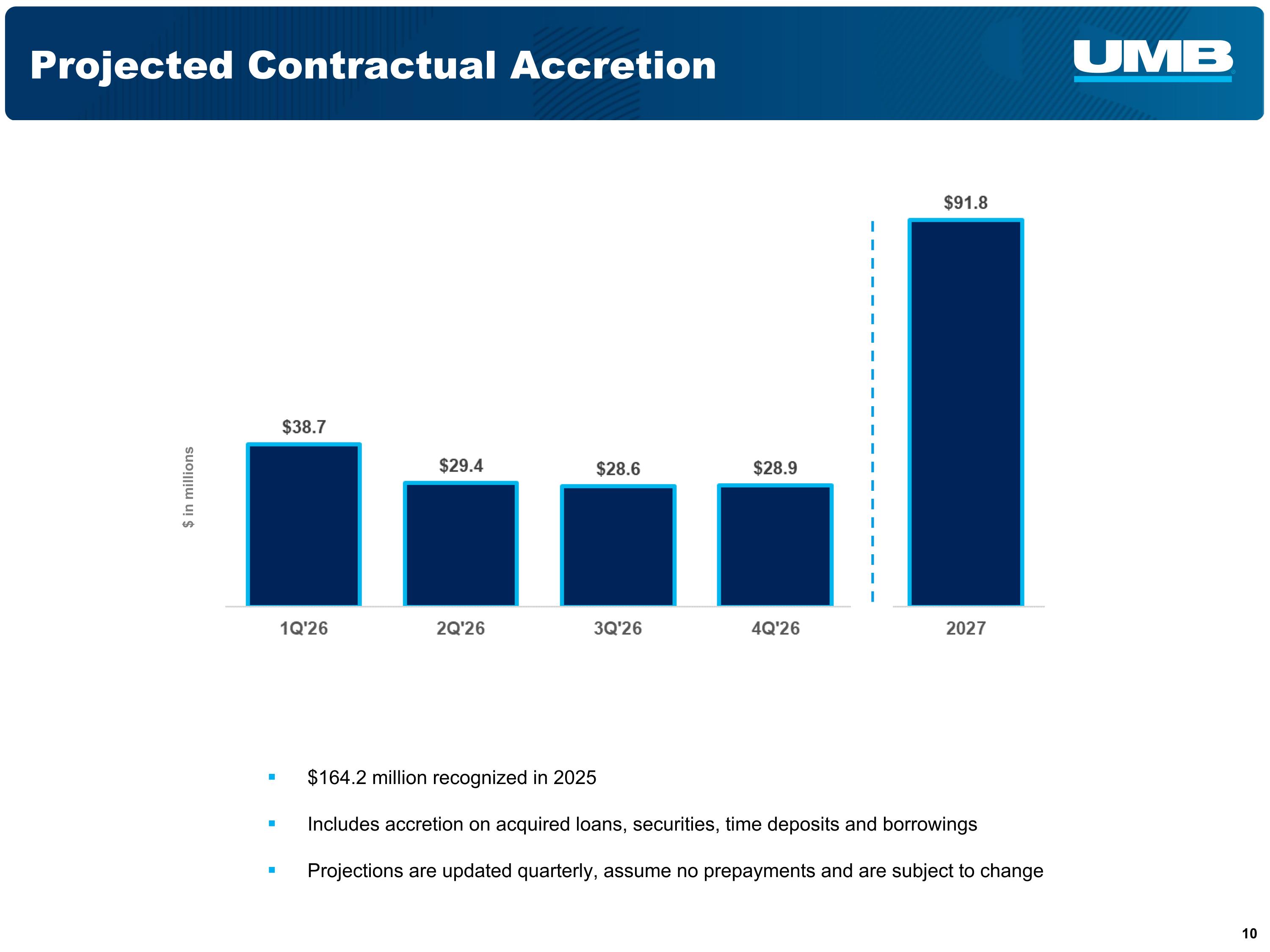
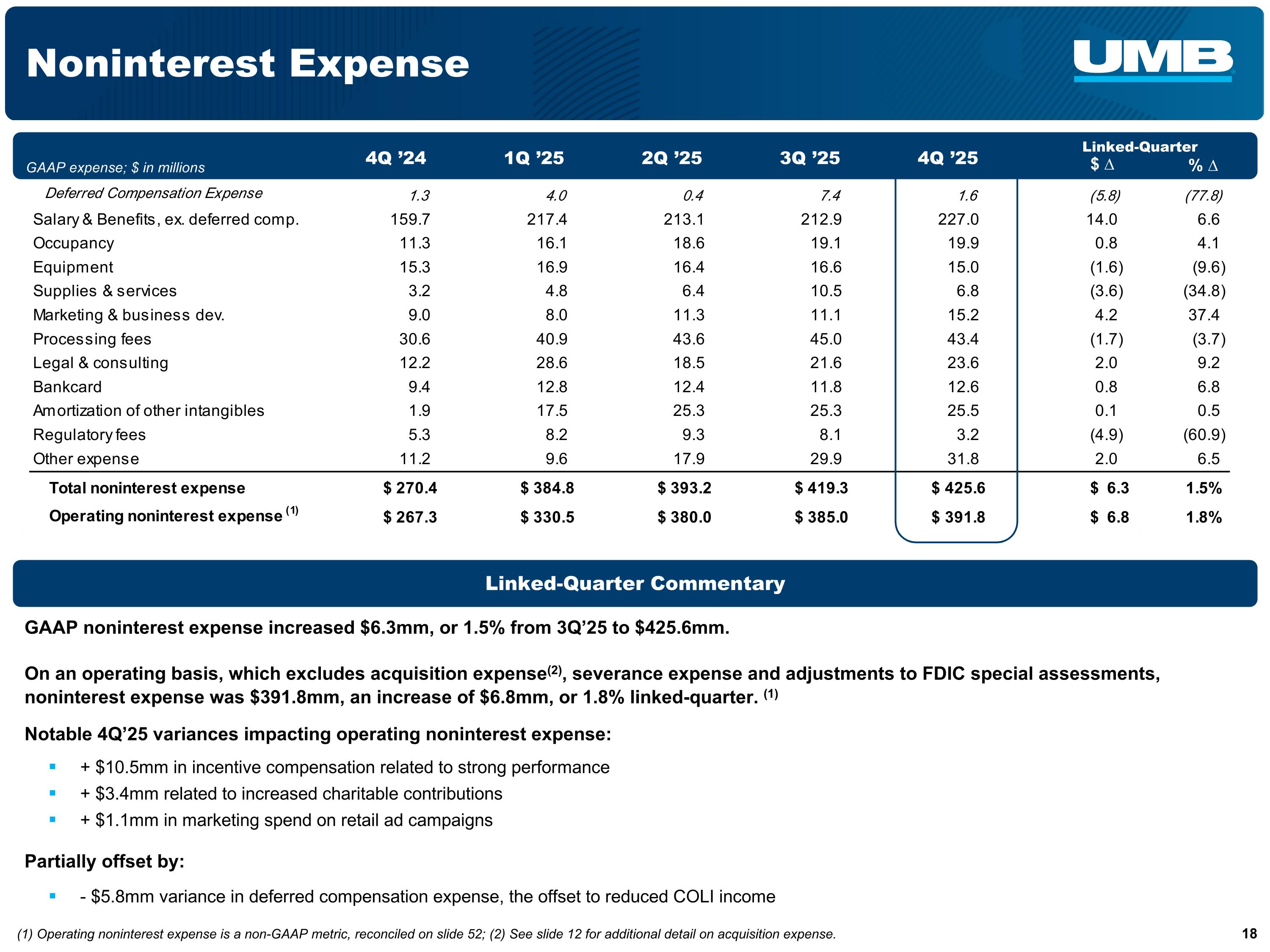
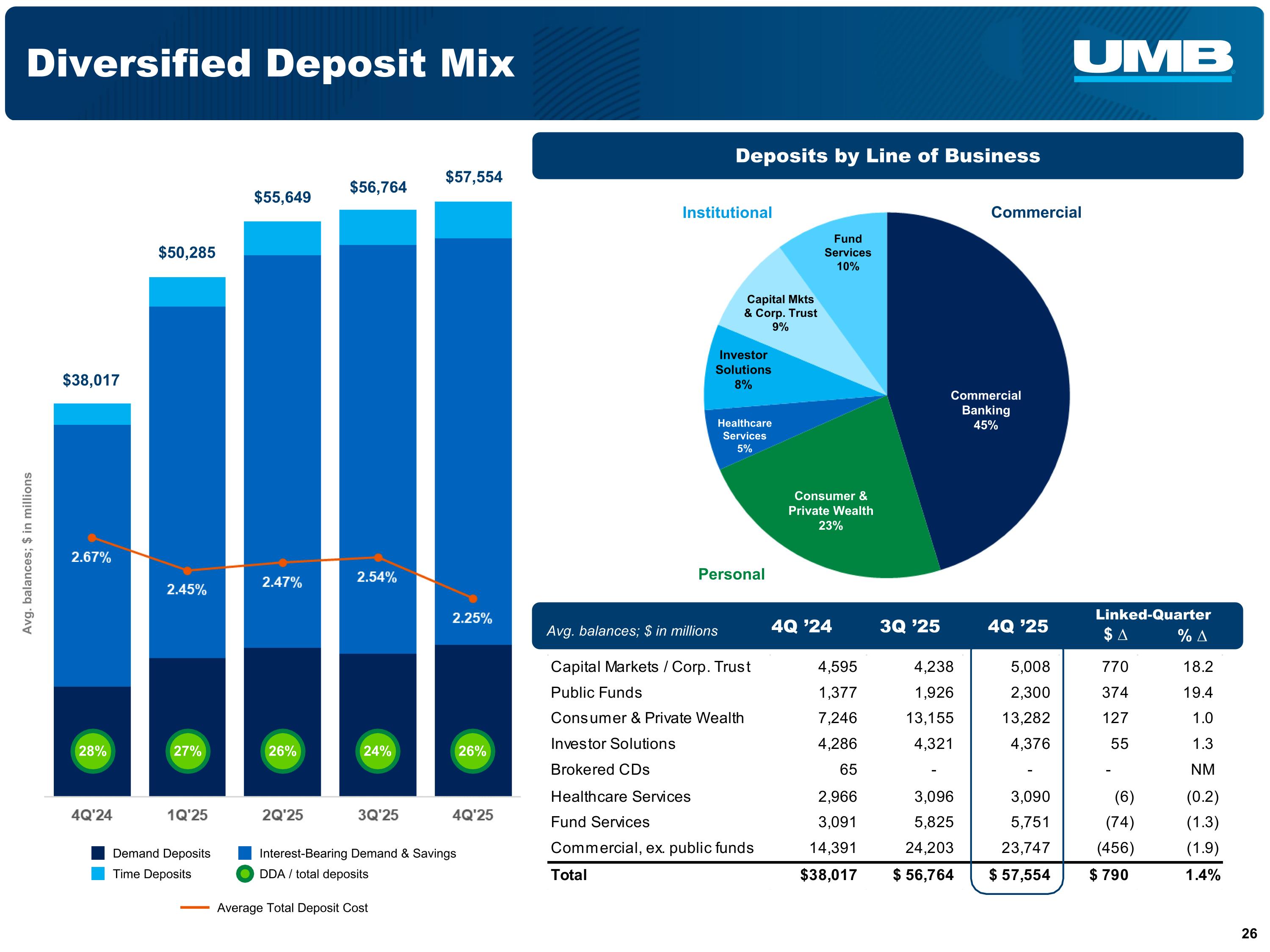
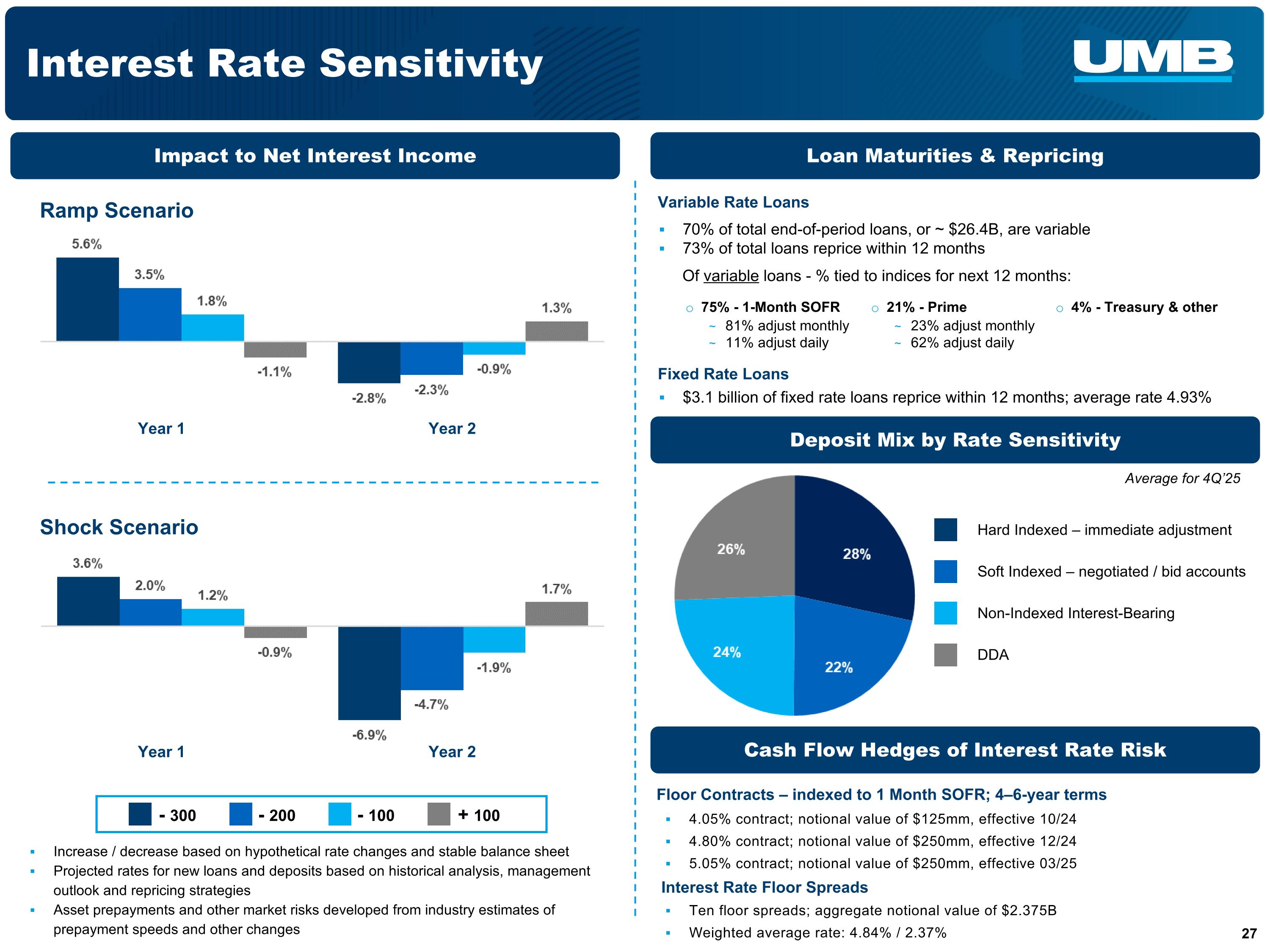
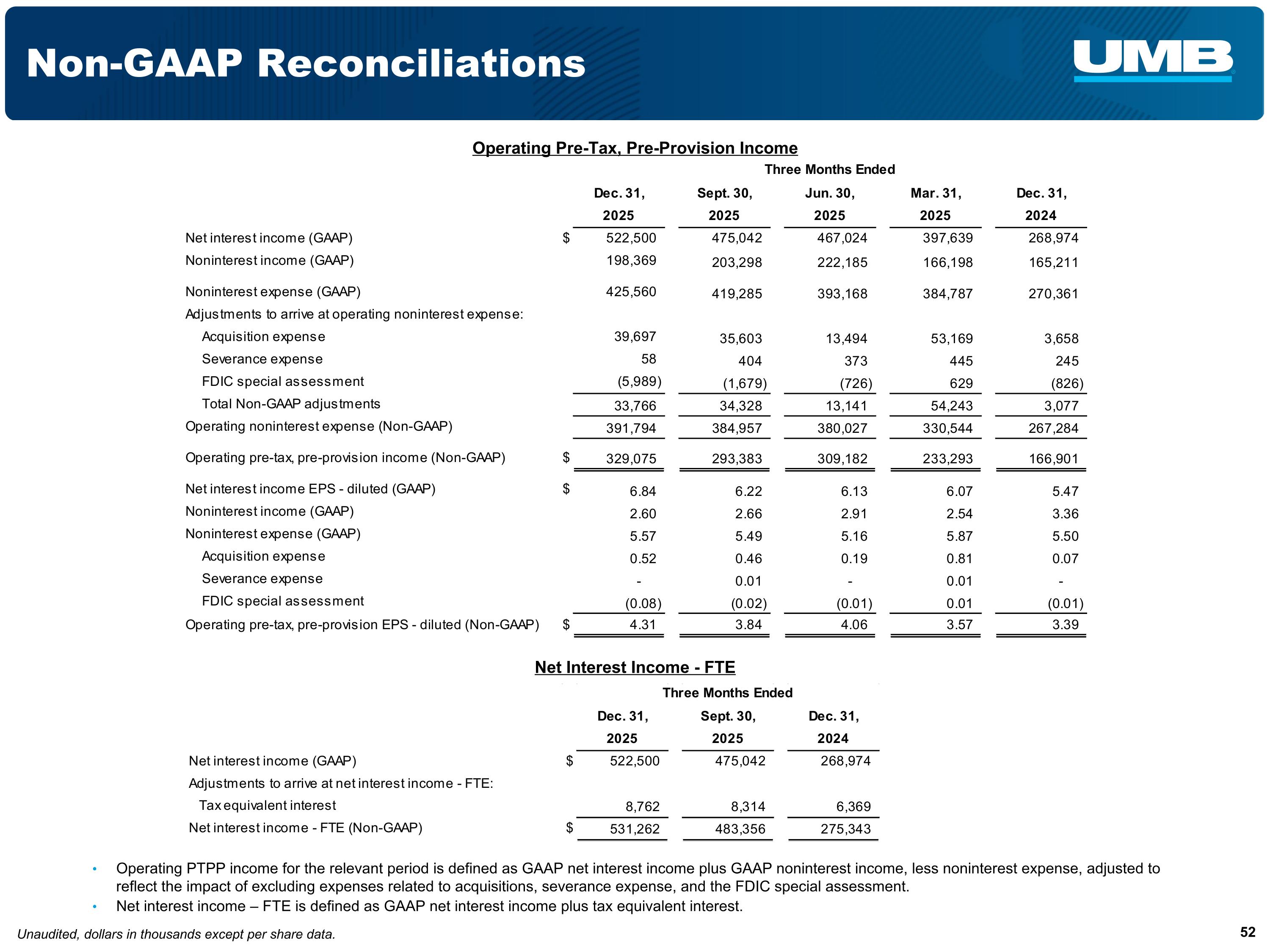
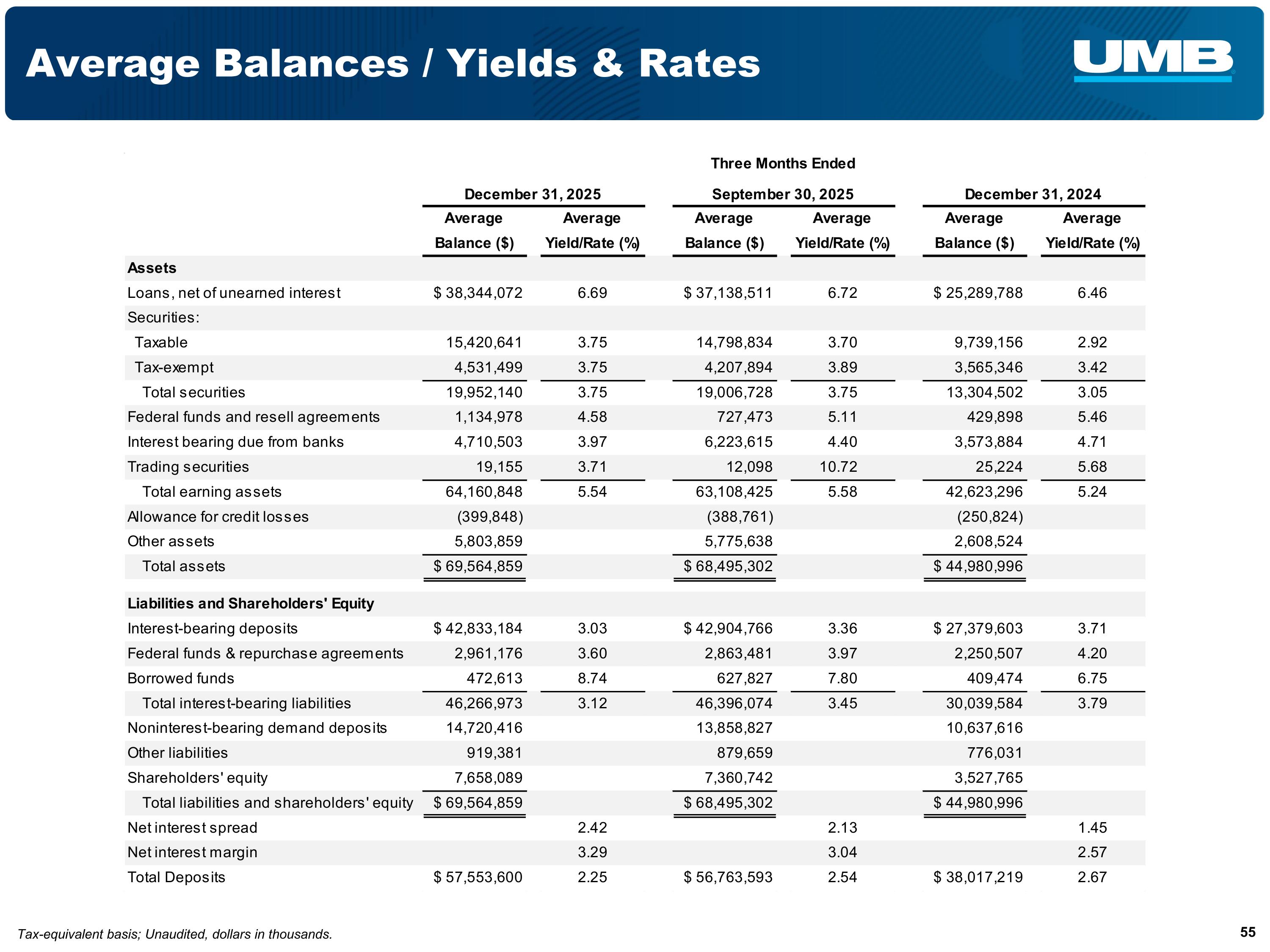
The benefit to net interest margin from total accretion was approximately 33 basis points. On slide 10 is the projected contractual accretion, which is estimated at $126 million for a the full year 26 and 92 million for 27. These totals do not include any estimates for accelerated payoffs. Slide 12 and 13 include some key highlights and drivers of our quarter-over-quarter variances as well as breakout of one-time costs by expense categories. Non-interest income to the quarter included 2.2 million in net investment security gains comprised of 6.3 million dollars of gains on various equity investments partially offset by a $4.8 million link quarter market value loss on Voyager stock. At Mariner notice, we sold substantially all of our Voyager positions in the fourth quarter. Since its IPO, our net gain on our investment in Voyager was approximately $17 million on an initial investment of $6 million, translating to an internal rate of return of 30% and a nearly 4X multiple on invested capital. Fee income, excluding these valuation changes, was $196.2 million, a decrease of $11.2 million from the third quarter. The largest drivers were $9.2 million in market-related variances in both Coley and Boley income and a $2.9 million decrease in derivative income from elevated 3Q levels, as noted on slide And as previously disclosed, we had a non-recurring benefit in the third quarter of $2.5 million related to a legal settlement. Partially offsetting these decreases was the $4.5 million increase in trust and securities processing income that Mariner mentioned, driven by solid performance in asset servicing and private wealth. Our fund services and custody teams added a total of 15 new fund families in 2025 with a total of 109 new funds. On the expense side, we have $39.7 million of merger-related costs compared to $35.6 million in the prior quarter. As shown, the largest portion of these costs in the past two quarters have been for contract termination and conversion expense that were heavily weighted in the back of a year. Excluding the impact of merger and other one-time costs, operating non-interest expense was $391.8 million, up 1.8% compared to the third quarter. The largest drivers included an additional $10.5 million in incentive comp expense related to our strong fourth quarter and full year outperformance, increases of $3.4 million in additional charitable contributions, and $1.1 million in marketing expense, which included some retail advertising campaigns in our new regions. Deferred compensation expense, as shown on slide 12, was $1.6 million for the quarter. Excluding the deferred comp impact, the recalibration of incentive compensation for the fourth quarter outperformance and the additional $2 million in charitable expenses or normalized quarterly expenses were approximately $380 million. Looking ahead, we would expect first quarter operating expense to be in the $385 to $390 million range. This includes an estimated additional $15 million increase in FICA, payroll taxes, and 401k expense, driven both by typical seasonal resets and timing of bonus payments, as well as normal inflation in medical and other costs and other investments. Offsets will include day count impact and post-conversion synergy. After the first quarter elevated levels, we would expect FICA and other payroll taxes to decline by approximately $10 million in the second quarter. As Mariner noted, we expect to achieve positive operating leverage in 2026, notwithstanding an estimated $38 million in lower contractual purchase accounting accretion benefit and approximately $30 million benefit from our investment in Voyager and other investment gains recognized in 2025. Turning to the balance sheet and margin, reported net interest margin for the fourth quarter was 3.29 percent, excluding the 33 basis points contribution from purchase accounting adjustments, core margin was 2.96 percent, increasing 18 basis points sequentially. The primary drivers of the link order increase in core NIM included a non-recurring four Over basis points benefit from interest recapture on non-accrual loans that became current during the quarter and a bond-free payment. Favorable basis risk between Fed target rates, which impact our funding costs, and one month so far, which impact our loan yields. Benefits of a favorable midship in both earning assets and deposits, including the 24.9 percent linked quarter annualized increase in DDA balances, repricing of index deposits from from the December 10th rate cut and higher loan fees, partially offset by lower benefits from free funds. Total average deposits in the fourth quarter increased 5.6% on a linked quarter annualized While we expected DDAs to rebound from seasonal lows in the third quarter, the outsized growth was driven in large part by new customer acquisitions in our corporate trust business, as well as the often episodic nature of these deposit inflows. As previously noted, we have very limited line of sight into these movements. This balance remix, coupled with the impact of rate cuts, drew our cost of total deposits down by 29 basis points to 2.25 percent, while cost of interest-bearing deposits declined by 33 basis points to 3.03 percent. We realized a blended beta of 76 percent on interest-bearing deposits for the quarter, driven by favorable mix shift, as well as outperformance for repricing on our soft-index deposits. On Phase 27, we disclose our current composition of deposits by rate sensitivity, along with our interest rate simulation that shows us positioned as essentially neutral. Relative to the fourth quarter adjusted margin of 2.92% that excludes accretion and the non-recurring four basis points from interest reversals on non-accruals and the bond-free payment that I mentioned, we expect first quarter margin to be relatively flat as pricing on variable rate loans with monthly resets catch up and are offset by positive churn in fixed rate loans and bond reinvestment and day impact. We have not assumed any upside to margin from additional rate cuts in the first quarter based on current implied market probabilities. Actual margin and NII results will depend on levels of DDA growth, levels of excess liquidity, any SOFR movements, and mid-shifts within the lending and funding portfolios. Finally, our effective tax rate was 20.3% for the fourth quarter and 19.7% for the full This compares to 18.5% for the full year 2024. Looking ahead, our effective tax rate is expected to be between 20% and 22% for 2026. Now, I'll turn it back over to the operator to begin the Q&A session.
Operator
Thank you. To ask a question, please press star followed by one on your telephone keypad now. If you change your mind, please press star followed by two. When preparing to ask your question, please ensure your device is unmuted locally. Our first question is from John Arfstrom from RBC Capital Markets. Your line is now open. Please go ahead.
Good morning, everyone. Good morning, John. Good morning. Maybe Mariner or Jim, just can you give us a little more detail on the drivers of the commercial loan growth in the quarter? You know, pretty strong, but if you can give us a little more detail on that. And then as a follow-up, just curious if you can talk a little bit more about the Heartland contributions to the growth. You flagged that last quarter about how post-conversion it could be a little bit stronger. Thank you.
John, thanks, Mayor. I'd say, you know, we're seeing it across really all markets are performing well. When for us in the quarter, as it continues to be, you know, as we've talked before, our growth really comes from 50% of our growth comes from new customer acquisition and that 50% largely comes from market share gains and that story continues to say that few you know few trends energy continues to be strong and the sort of M&A family office transactional work continues to be strong across the footprint with the companies being acquired by private equity firms or family offices, or looking for growth capital or transition ownership capital, but otherwise, I'd say pretty broad, Jim.
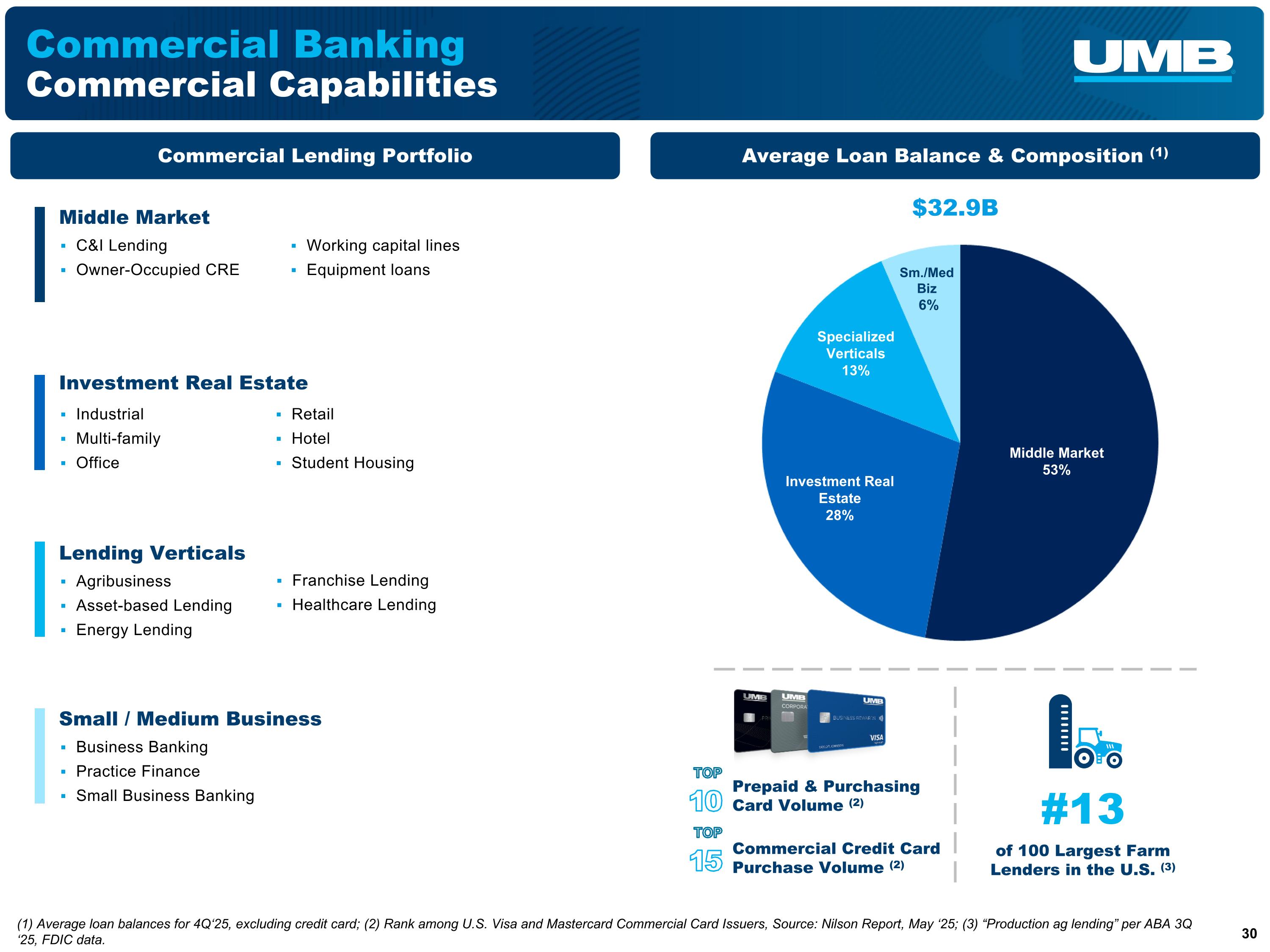
Yeah, I would agree. We've had some real bright spots through the HCL Life acquisition. Our franchise lending group has been additive to what we're doing. We've also seen nice growth from the team out in California as it relates to our Ag business, which has been a real bright spot. But, again, the CNI has been across the board, as Sid mentioned.
And it's early still with Heartland, good, all good times, it's still early. We converted on Columbus Day, so we think that the benefit from Heartland is still significant and full.
Good, thank you. Tom, a quick one for you. Certainly not worried. Touch on the NPO increase and just any likely updated timeline for working through some of the acquired credits.
One credit that is fully secured. we don't anticipate any loss from that one you know as it relates to the the overall portfolio of the NPLs and the watch list that's a process and it takes time we're having a lot of success I would take you back to our historic charge-off numbers and we expect the historical norms to remain the same as we go forward so with what we know today we still feel positive and good about the portfolio and we're working through them but you know again our report card earlier net charge off and we keep we believe with what we know today we're still going to trend toward that historical norm thank you very much thank you thank you john our next question is from jarrett
show from barxies your line is now open please go ahead thanks good morning hey hey um maybe just looking at deposits, some really good growth in DDAs there, both average and end-of-period. And I know that, you know, there's moving parts that can impact that, you know, at any given day. But, you know, as we start off the year here, how should we think about maybe, you know, average DDA growth quarter over quarter? Is there an opportunity for that to grow?
Yeah, I would say it probably picks up a little if you just historically look at what happens between fourth quarter and first quarter, there's a slight pickup. And then, you know, and then public funds, this is non-interest-bearing, or non-interest-bearing only, it's tight, slight pickup. And as I said in my prepared comments, we did have some new client acquisition, particularly in our corporate trust group. We're excited about the prospects from our newly acquired teams from on the CLO side and other corporate trust teams and then looking at the public fund side we had about a billion dollars of inflows coming in in December and continues to build in January and then in the second half of February you'll see about a billion dollars go away on this on the rest of the deposit story do the tax payment okay yeah and then on the house our early trends on the HSA side you You know, with the benefits from the budget bill, have you been able to look a little more at the potential market impact there,
and is there any appetite to, you know, maybe do a deal to add in that space specifically?
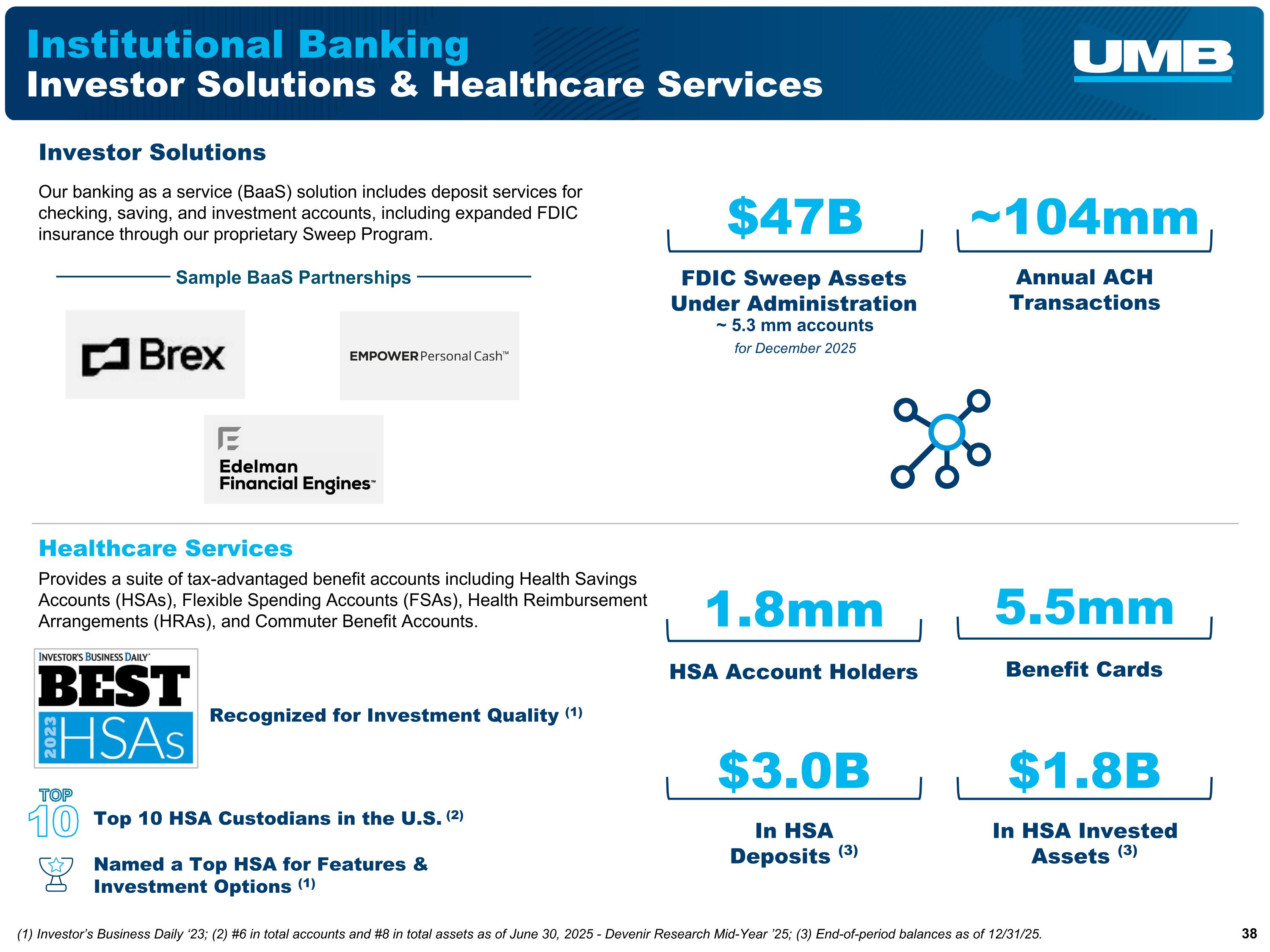
I'll take that high level, and if I miss something, Jim can jump in. But I think that's pretty much business as usual for us, nice, steady growth through the enrollment season and continuing to sell into our customer base. I think the benefit of the Heartland footprint and customer base will be additive to our ability to sell direct there. But I wouldn't say anything that elevated one way or the other. It's a nice, steady addition to the book.
Operator
Thank you, Jared. Our next question is from Chris Magrati from KBW. Your line is now open.
Please go ahead. all right great morning um morning i'm just going to hey good morning everybody um on the expenses uh i hear you on the the first quarter and then the normalization thereafter i guess are all the cost saves realized and then um i'm interested in kind of where incremental dollars are being put back into the business you know you're generating operating leverage but where Where are you investing to grow the company?
Yeah, definitely 100% of the cost that we identified at the time of the announcement of the transaction have been realized as of today. So post-conversion, after a little while, there were the, you know, terms, there were contract terminations that are happening right now, you saw that part of our one-time cost in the fourth quarter as well. So as we said today, all those have been acted upon in part of our run rate going forward. And then the other side is just normal inflation, as I said, in the prepared comments about medical costs. Obviously, in the first quarter, because of the timing of our bonus payments and resets of FIKE 401k match and payroll taxes, the elevated spike, us being a larger company and all that, but that should also recede in the second quarter by about $10 million.
And I would just add that I think the thing to focus on, and we've demonstrated it and will continue to is that we're disciplined and so the operating leverages where we're focused as it relates to expenses going forward you shouldn't expect to see anything other than coming from you know whether we're successful with sales activities and then the path can be elevated because of the activities from the sales side of the business otherwise really we ought to be able to get investments that we make in the business out of business as usual levels of commitment okay great is my follow-up the the trust in it the
trust and security processing line has been a really big source of growth I mean I admittedly I keep undershooting the growth rate but can you help us on it's a big line item there's a lot of stuff in there can you help on like what would a reasonable growth rate for that business well you know I think looking Looking backwards, if you don't give guidance, you know, institutional banking year over year at a 12.8 percent, I would just say that the momentum and tailwinds remain strong.
The pieces and parts are fund services business and largely coming from the alternative side, which would be the private equity and hedge funds, et cetera, kind of the alternative space leads the way there as it does in the marketplace, really. and and then our corporate trust business so those are the two it's coming from all but those are the two great thank you thank you Bruce thank you Chris our next question is from Ben Gullinger from City your line is now
open please go ahead good morning I appreciate the color on the gap versus core margin but kind of I get the commentary for one tune I know you don't give a full year so it's just kind of thinking just kind of philosophically it's a curve stays the same and there's no more cuts in the growth you you're adding dilutive or a creative to the core margin because your growth is great and just trying to think like new money coming on either both sides of the balance sheet together would you expect a drift higher or lower on the core margin generally I would say you know the margin will be stable all else being
equal, right? Without rate movements, without makeshift in DDAs or earning assets. Depends what happens on the steepness of the curve. Obviously, we're in a pretty good environment where short-term rates which drive our funding are coming down. Maybe they won't come until June. That's kind of our internal forecast. And then the long end where the reinvestment yields, they've held up pretty well, right? If you look at the last couple of months, they've averaged between 4.25 and 4.40 on bond investments versus the roll-off of 360. So, those are all tailwinds from the margin that can offset any repricing risk that might happen on the loan book or if the shape of the yield curve stays the same with it. No additional leverage on deposit pricing because the Fed is not cutting rates. I think our margin will be generally consistent with where we are right now.
I might add environmentally SOFR has been kind of a tailwind in the way it's been priced in recent periods. So, that has been a tailwind, so if that continues, that would…
Yeah. That's a great point. You just look at since the Fed started tightening this cycle since September, Fed target has come down 75 basis points, and one month sulfur, which tends to lead that, has come down only 68 basis points. So, between that and the steepness of the curve, we've seen the benefits that we're seeing in our margin in the fourth quarter, and outlook forward as well.
Gotcha. That's really helpful color. And then the second question, I know you guys kind of shied off on whole bank M&A, but given the market disruption pretty much throughout your footprint, considering it's a pretty large footprint, is there opportunities for increased hires throughout 26 via disruption or even team liftouts? I'm just kind of curious on where you guys are approaching as a third party to M&A. Is there anything that's on the table that you consider a low-hanging fruit?
So you touched off on a few things there, so I guess I would – pure M&A, I'd revert you back to my comments in the script, which are just that we're focused on organic growth and, you know, the phone line is open and we maintain relationships otherwise. On the M&A side, looking for possibly some tuck-ins along the way, but certainly focused on organic growth. So, then you touched on other ways to add things that emulate M&A, I guess, so lift out some teams and things like that. So, again, a similar kind of comment. We love to find good teams, you know, whether they're corporate trust teams or a couple lenders that are just disenfranchised somewhere in a market where we think that can be additive. So, we take those calls, we look for those opportunities always. But that's how I'd say, you know, M&A is secondary to organic growth and then lift outs, we're always looking for those. This is a people business and if we can find high quality talent, people will talk to them all day long.
Operator
Thank you, Ben. Our next question is from Brian Wilk-Zensky from Morgan Stanley. Your line is now open. Please go ahead.
Good morning. I wanted to go back to the opportunity with Heartland. I was wondering if you could talk about some of the potential revenue synergies on the fee income side in terms of offering capabilities that UMB has that Heartland did not. Is there anything that you're seeing already today, and how should we think about that progressing over time?
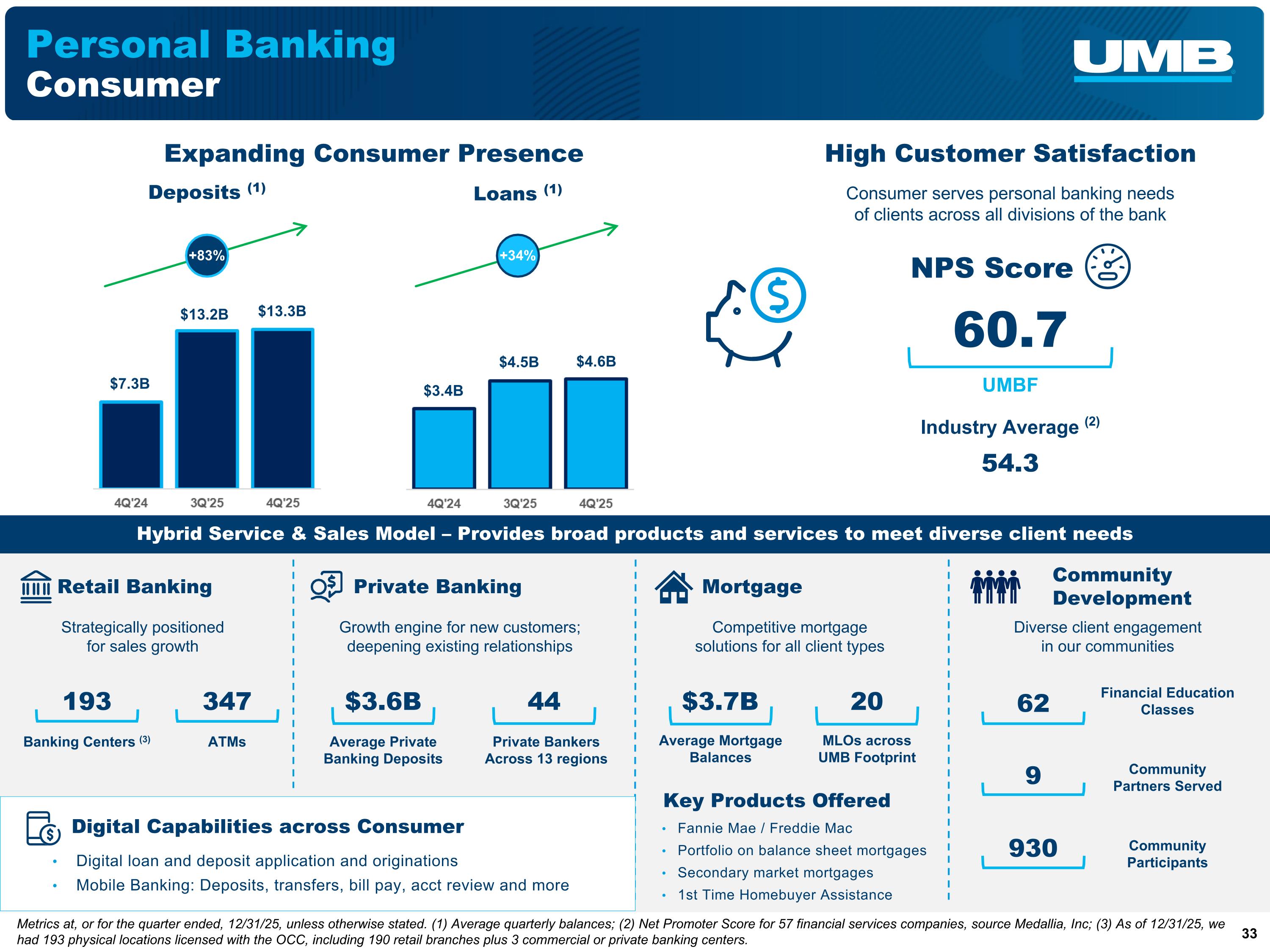
Great question. The orders have rolled on. The main areas would be mortgage on the fee side. They didn't really have a mortgage product. We have a really fantastic custom mortgage product, you know, and so we, with the private banking across the footprint, we really think we can excel there in a big way. Credit card, they didn't offer a credit card, so we've already launched that again very early but the signs are good the activity is good and then our corporate trust business is a very local business we talked about this before kind of lawyers the lawyers local so having more having more signs and more offices across our footprint will help the the ability to feel and act local and in a lot of these markets and expand into in particular California is a big market opportunity for us and some of the other markets that we didn't have a footprint in where whether it would be New Mexico or Wisconsin or Minnesota so those are really exciting treasury management you know they had a kind of a basic treasury management platform so they'll benefit will be able to benefit from larger corporate opportunities in their footprint and and then lastly some Some obvious stuff is sort of an uptick, which would be our legal lending limit, some deals where they were participants, now we can lead, and we're seeing some really nice, Jim mentioned earlier the franchise lending, that's a perfect example where they would take a 25% piece of a really nice high-quality franchise opportunity, and we've already seen four or five deals just in the last handful of months where we go from being a participant to a lead or taking the whole thing. So we see those kinds of opportunities already pretty frequently, so very, very excited about all that. And so those would be the main. The other one, which we, this is the thing I say all the time about UMB because of the complexity of our offering, what we've been able to bring the Heartland officers along to understand is that when you're at a cocktail party, every single person at that cocktail party is a target or isn't the case at most other banks. So whether you're a private equity, you know, you work at a private equity firm or you work in the government or you work at a law firm that does corporate trust and bond counsel stuff, we can do business with literally anybody at a cocktail party. So that's another benefit for them is you're out networking, you're a community event, or you're going somewhere after church or you're a holiday cocktail party. Everybody's a target.
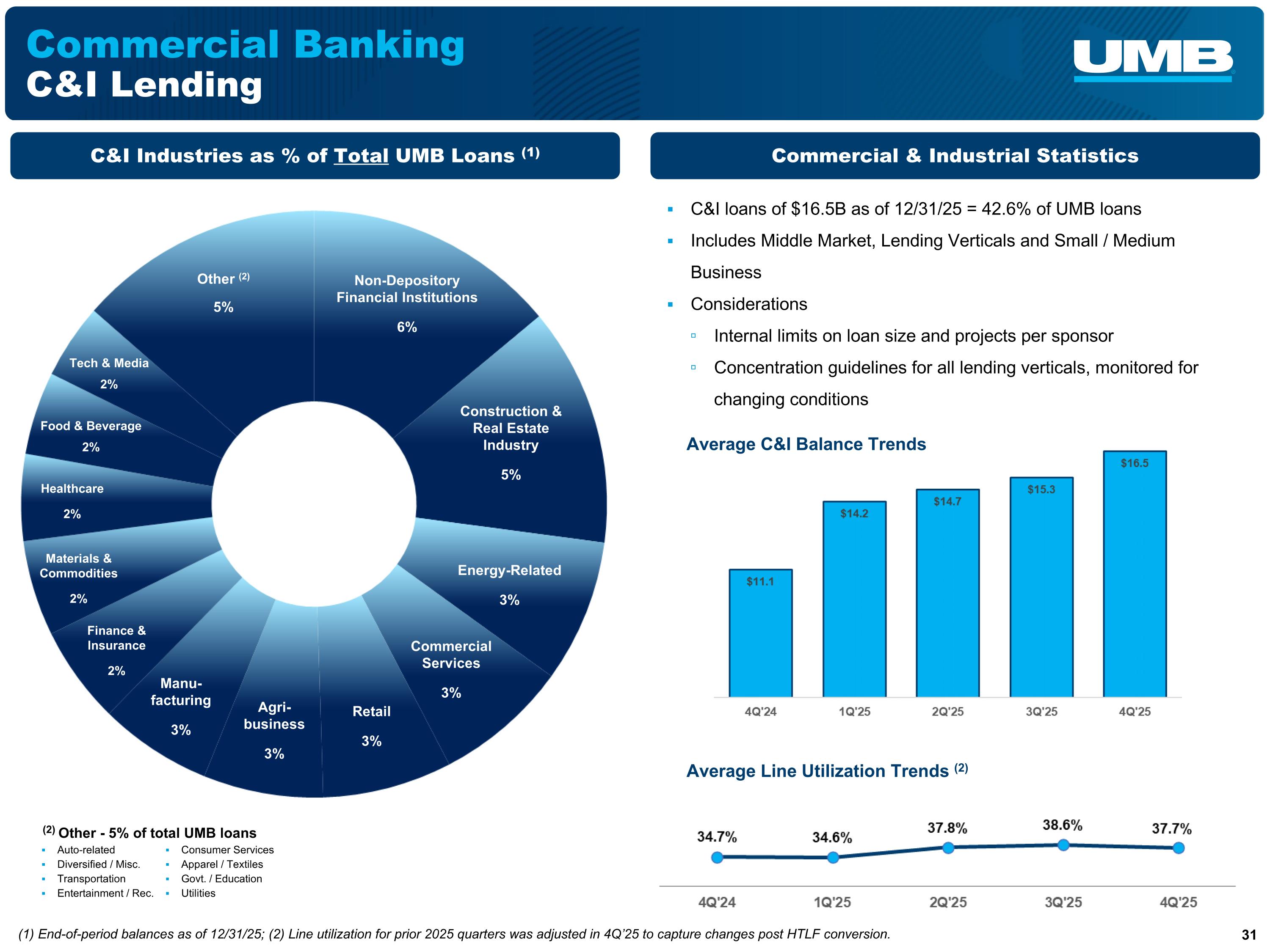
Collar, thank you. And then as my follow-up on the loan growth, sort of record production, if I look at slide 31, the line utilization over the past few quarters has been relatively flat. And I know that chart goes back about a year or so. But I was just wondering if you could provide some additional context where you are today versus historical levels, what you're seeing, and how you expect that to play out over the course of 26.
You know, it's a great question. It remains a little bit one way or the other, from quarter to quarter. You would think, and we would think, you know, that it would be slightly more elevated just because of, you know, the environment that we've had for many years now with the supply chain issues, et cetera. But I think the answer to that for UMB largely is the high quality nature of our borrower. So we have a borrowing base on the CNI side that has a strong net worth, which is sort of neutralization. And it stays pretty steady.
Operator
Thank you, Brian. Our next question is from Brian Foren from Therese. Your line is now open. Please go ahead.
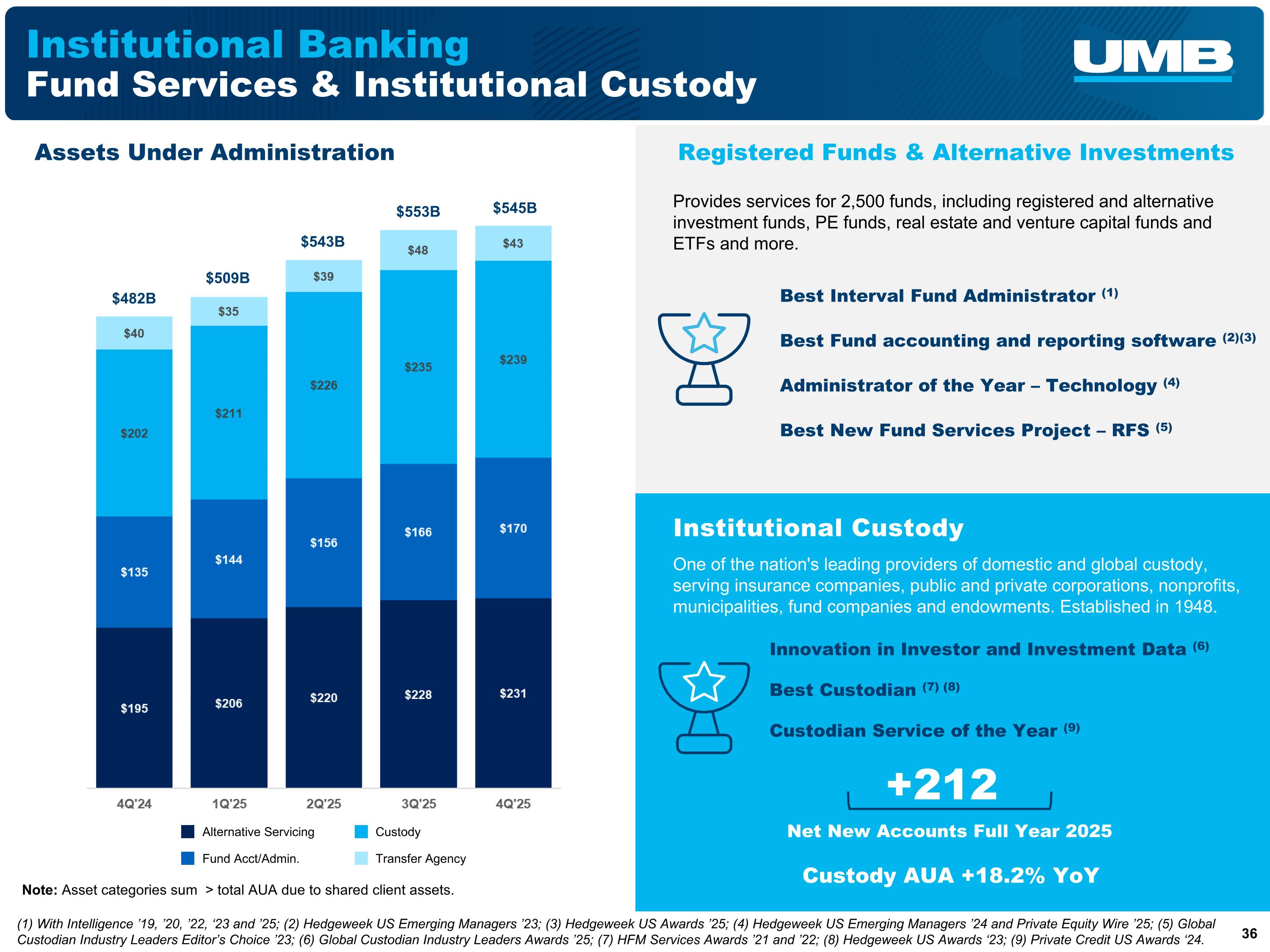
Oh, hi. I have one small one. Hey, good morning. Just one small one and then maybe one bigger picture one. So the small one, I'm looking at slide 36. Definitely understand, you know, this business has great momentum. There was a small tick down in AUA, at least in, like, the top netted out totals. Was there anything to note there, you know, why the quarter-over-quarter decline in AUA for the overall business?
Yeah, Brian, this is Mariner. I saw that in your early note, and we all sat around trying to figure out where you came up with that, because it is a in the category of transfer agency we did have a quarter link or slight decline but I would say that's just a nuance it pops around a little bit I would focus you on the top line instead of the transfer agency line because it can move around from quarter to quarter number of clients activity inflows outflows so really the better way to think about that is the total total assets under administration which is up on a link quarter basis so So nothing in there on the trend side.
The business has tremendous – And then on the M&A commentary, I wonder if, like, maybe you could look back, you know, with Heartland, almost a year under your belt, key lessons learned that maybe inform any future transactions. Are there, you know, one or two things you really felt went great and got right that you'd want to replicate in any future deals? And then, conversely, anything that you would have done different or would do different as you think about, you know, targeting, sourcing, integrating, just, you know, big picture, having done this, you know, one of the bigger transactions, I guess the biggest, the first one in a while, what was the top one or two lessons learned?
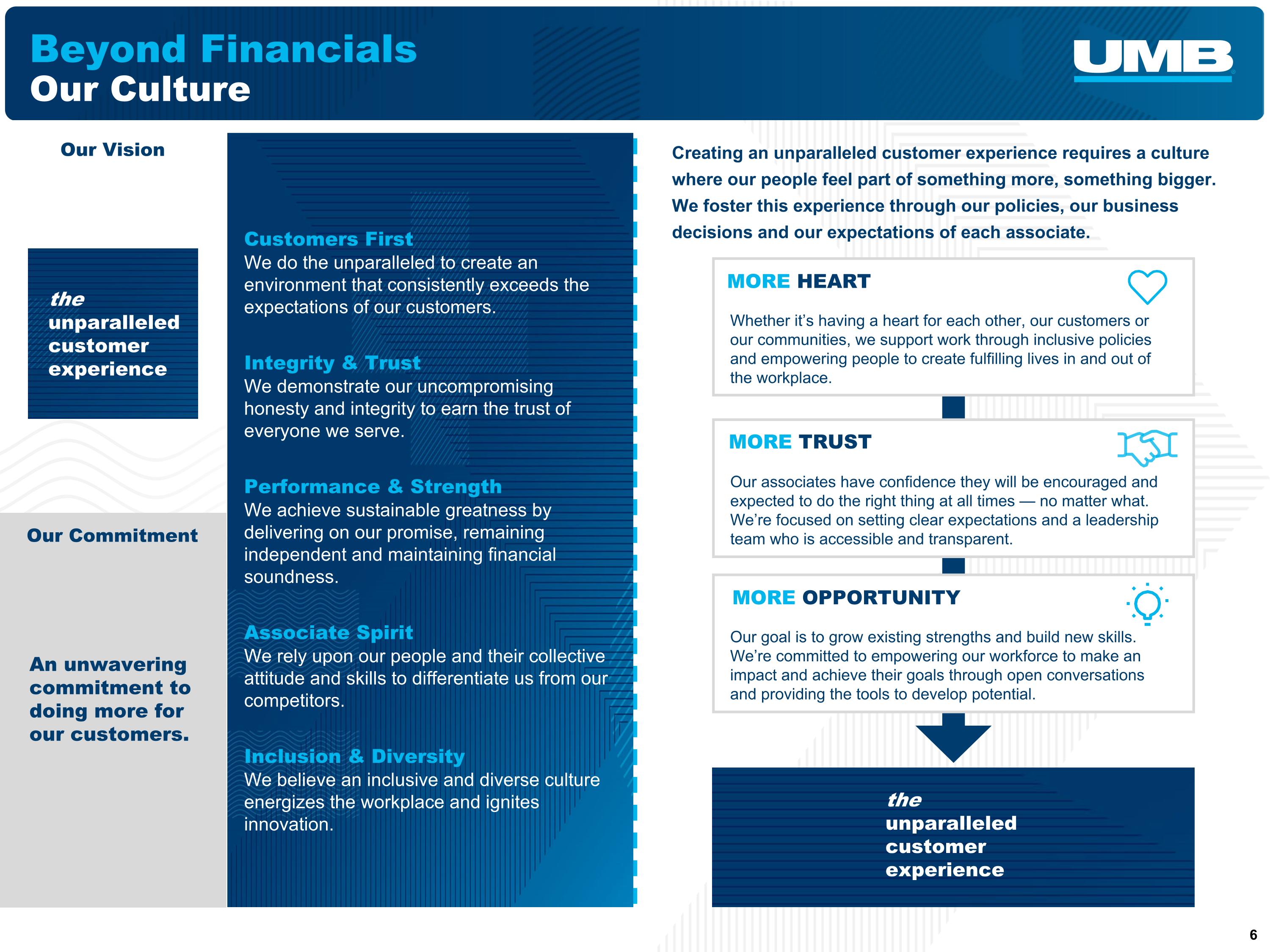
Yeah, I got to say, I feel incredibly lucky to be surrounded by probably the best team in the business, And we picked up some fantastic people who know how to do these transactions in Heartland as well because they had done a bunch of deals themselves. So we have just, and I just, I don't know, I'm almost speechless about it. The transaction went so well, incredibly well, flawlessly, you know, you have your little tiny lessons to learn along the way, but it was a pretty much flawless transaction mainly because we have a super committed, dedicated, hardworking, very smart team. We were super committed to a concept called do no harm, which we communicated a ton. We had ambassadors from UMB that were tied to locations and individuals across the company who were there for the conversion, to be there to answer questions and help them through you know through the customer interactions and experience to keep that where it needed to be so just all in all I mean I pinch myself right now as I'm talking to you it was a fantastic fantastic deal and as far as lessons learned I mean gosh you know we modeled some deposit runoff as I think everybody does when they do these deals we grew our deposits and then overall we exceeded our expectations on growth so far on a combined basis and we got all of our synergies got all of our dollars out of the deal and we've been very received very well in communities that we're in and you know like I said I just pinched myself I wish I could give you something other than it was fantastic because it feels you know unrealistic to tell you there weren't any big lessons, but I don't know, you've got that on out.
This is Jim Ryan. The only thing I would add that was a real positive, there's a lot of built-up muscle memory. The team has a process that has been proven and, you know, Mariner nailed it. We, it couldn't have gone any better, quite frankly, but the number one rule in any of these is going to be culture.
And I think that would be something that, not that we wouldn't have before, but just make sure that we know what we're getting into as it relates to culture and that that needs to be the right fit yeah I think one of the things we did in this case which is what we would do if we ever did another deal is that that was very helpful and would be always the case for us and yeah I mean the only thing I would say let you know being candid and lessons learned would be in smart really is that you know between clothes and and conversion expectations should be more muted for growth out of the acquired company and we wish so UMB outperformed during that period and so we on a combined basis really had great results but you know you should expect a somewhat more muted growth out of the acquired company I think then now I'm just pontificating philosophically with you but it was a fantastic transaction I wouldn't wish for anything different and I just would echo that people people people people we just have a fantastic team with super committed working around the clock and I feel lucky that's a great answer thank you so much thank you Brian our next question is from Janet Lee from TD Cohen your line is now open please
go ahead good morning if I were to if I were to just want to make sure that I understand your commentary around NIM correctly. So basically through 2026, you're pretty neutral to changes in interest rates. So as long as you could maintain that beta on deposits, you could be able to hold that NIM fairly, core NIM, XNE, that four basis points, one-off impact in the quarter relatively slattish. And I guess another question would be that 76% deposit data in the quarter was pretty outsized. Do you think you'll be able to maintain that, or was that a different outsized quarter? Yeah, I'll take that, Janet.
Yeah, so we are pretty neutral as you look at our interest rate simulation. So if you look at it, based on fourth quarter results, $33 billion of our earning assets are variable. So that's about 51% of our total earning asset base. And if you look at our funding deposit mix, 50% of our deposits are indexed, right? So we run a pretty match both on the asset side and the liability side. So any changes in them from quarter to quarter will largely be predicated on what happens with changes in DDA balances, interest rate, mix of deposits, or when the Fed rate cut happens, right? So if your situation plays out where we don't have any more rate cuts, as I said in my prepared comments, there's potential upside if the June rate cut happens. So our internal view based on market probabilities is still two more rate cuts, one probably at the end of the second quarter and one probably in the fourth quarter, there's additional upside for margin from that because our index deposits will reprice down. But then there's always the catch-up and loan yields the following period, right, based on how they reset. So I just point out to answer your first question, yes, generally we would expect our NIMM to be plus or minus where our core NIMM was in the fourth quarter adjusted for that four basis points. I forgot your second question already.
Is that the beta of 76% that's sustainable or outsized?
For the rate cuts, if the rate cuts happen, yes, our expectation, the team did a great job outperforming on the soft index deposits, like we said on the prepared comments. So if our outlook is for no more rate cuts, the leverage on the deposit cost side is fairly limited until that happens, right? Index deposits are largely formulaic in the fourth quarter reacting to the September, October, and December cuts, we passed along a good 76% of it to our existing clients. So it really comes down to when the rate cut happens. We are looking at the back book, but as you look at our slides, only 30% of our deposits are really non-index deposits outside of DDAs, so there's fairly limited leverage on that side to keep doing data until we have another set cut.
Got it. Thank you. And just one follow-up, philosophically, should we think of, in terms of your loan and deposit growth, should we think of it as like deposit growth, you're going to fund your loan growth with deposit growth in the same ballpark dollar amount, or would you, so basically would you, yeah, what would be the ideal sort of loan-to-deposit ratio? Would you have that going up a little, or do you want to maintain at this level? How should we think about that?
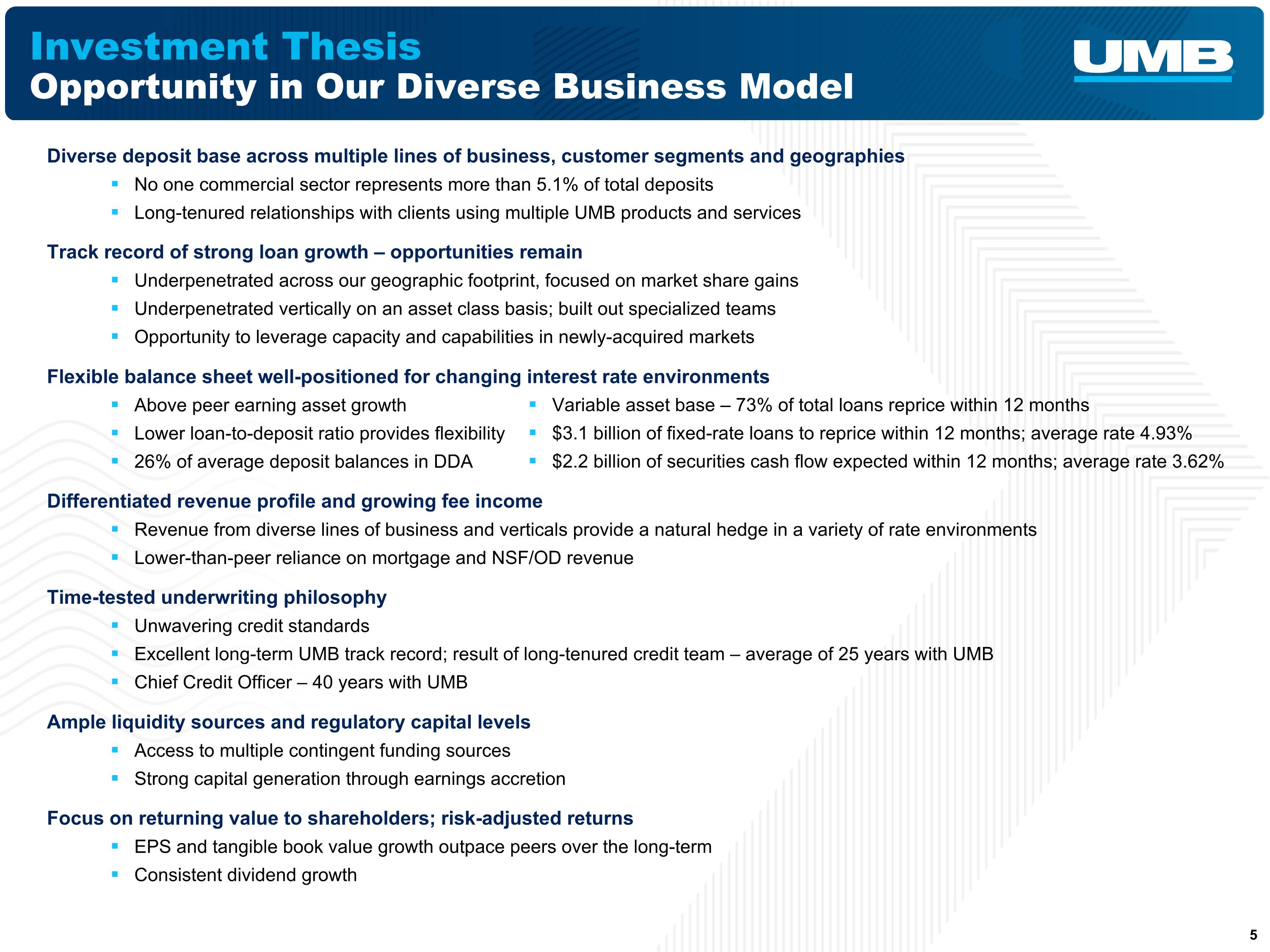
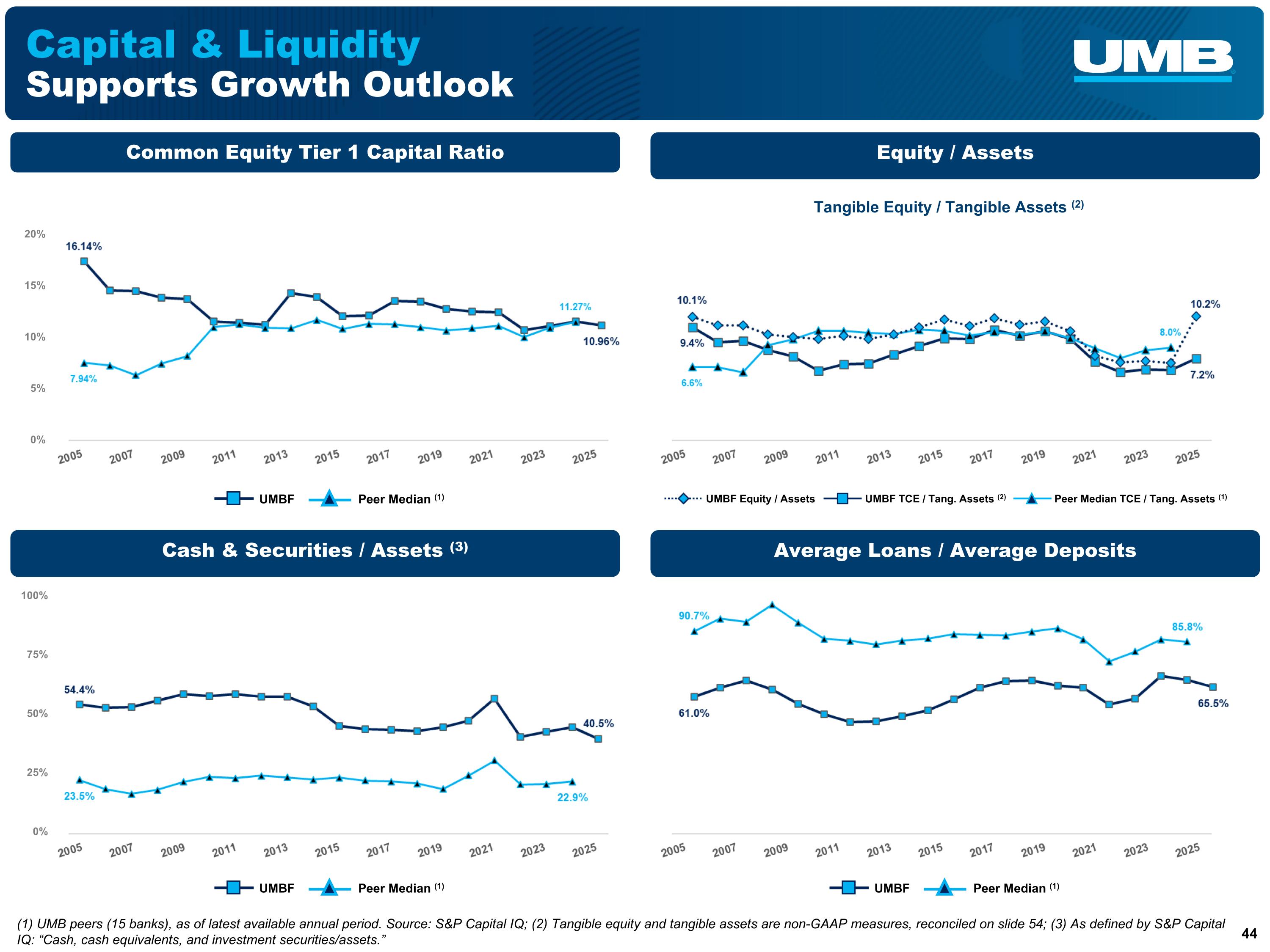
So I would say, think about it differently. The way we think about loan and deposit ratio is that the value of a bank, of a franchise in the banking industry is in its deposits, and if we are all in raw material that is cost effective, core, and granular as possible, and not limiting that in any way, shape, or form, you let the loans end up where they end up. So at the end of the day, it's really, we don't guide that. We expect to have exceptional loan growth and exceptional deposit growth. We are fully comfortable at a higher level of loan to deposit ratio. We've been as high as 75% before, very comfortable there, but we're not aiming there and we don't give guidance. And we're comfortable at higher levels, but really the focus is on building the franchise through high-quality loans and high-quality granular core deposits as much as we can in And we let the chips fall where they may. Certainly we don't want to be overly lint up, and so, you know, without giving guidance to that, we certainly wouldn't want to be in the 90s. That would be uncomfortable for us.
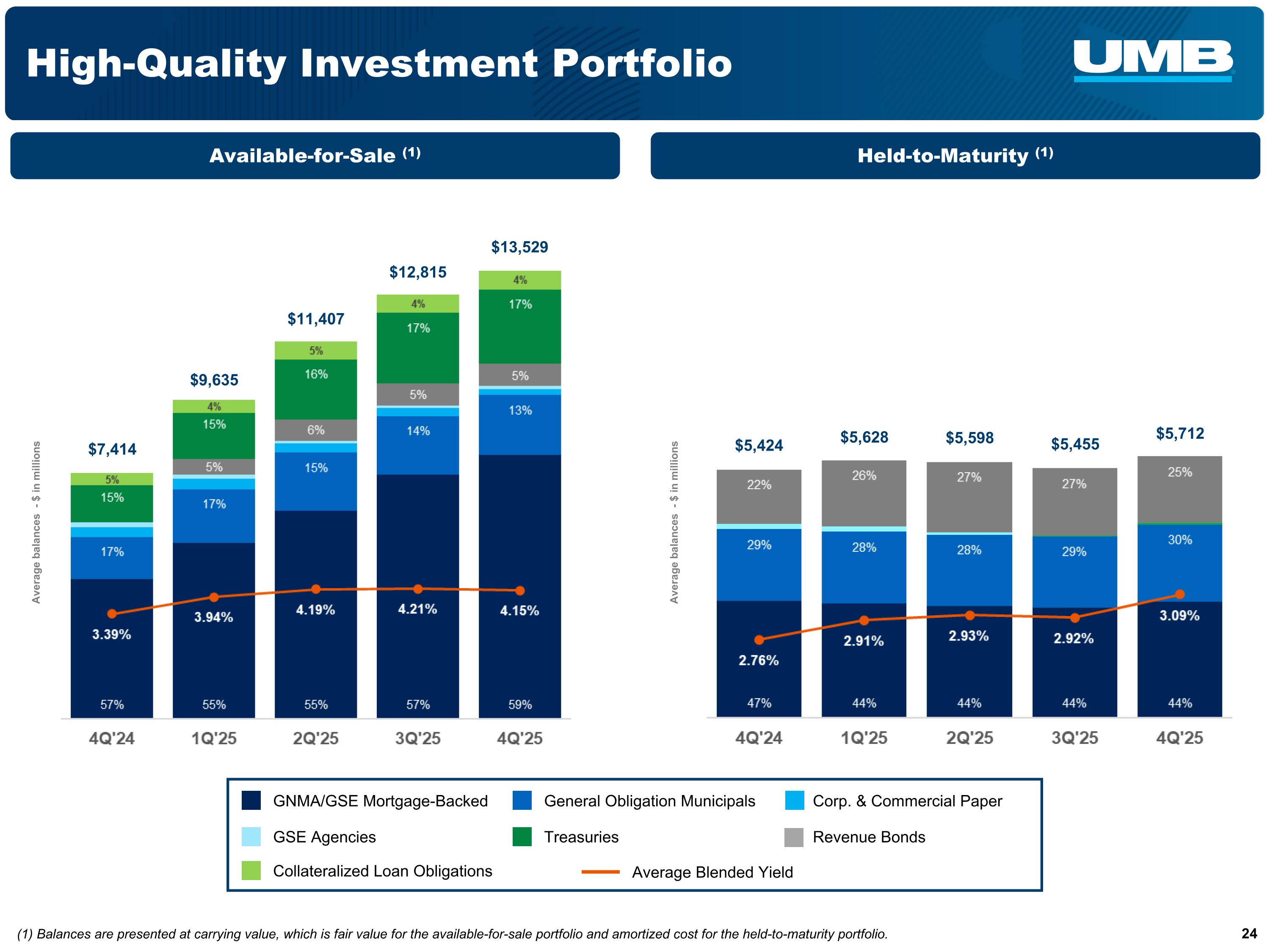
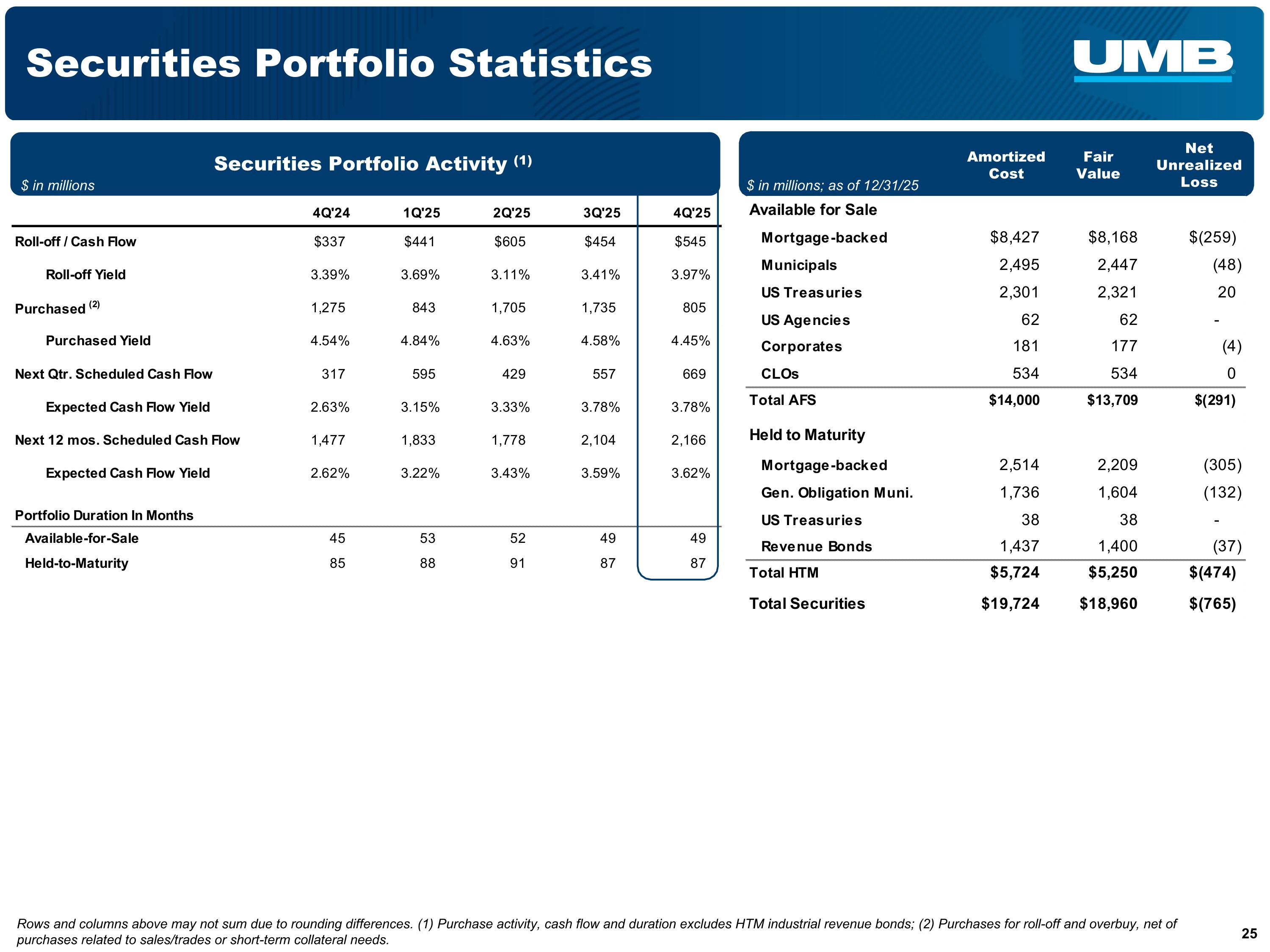
And the flexibility, I'll just add to that, the flexibility of our balance sheet on page 25, right? We have $2.2 billion of cash flows coming from our bond portfolio. We, you know, we're intentional about that. So those are all, in the past, we've used that to fund our loan growth to see excess opportunities coming out of Heartland. So there's always an opportunity, but as Mariner said, you know, yeah, the deposit is where the focus is.
And there's no, the thing about our franchise and the success of our deposit generating and capabilities. We keep, what, $20 billion off balance sheet? Yeah, we have $20 billion off balance sheet for clients that we put into money markets and earns with 12 V1 fees on. We can bring that on whenever we want based on what kind of loan growth we have if we pay market rates on it. So, you know, deposit generation is something we do very, very well. And so we, as an asset generating machine, we are also a deposit generating machine. So this is something we don't worry about.
Very fair. Thank you for taking my questions.
Operator
Thank you, Janet. Our next question is from David Long from Raymond James. Your line is now open. Please go ahead.
Good morning, everyone. On the growth expectations from the HTLF franchise, I understand, you know, you're fully in one organization now, but when you just look at the HTLF growth that you're expecting from that organization. Does it come mostly from the current HGF team or the legacy HGF team, those bankers growing into the UMB model, or do you guys have to bring in more veteran bankers from larger institutions in those locations?
The answer is both. So we think there is a lot of opportunity with the middle market team and small business team that they built. And then I would say in places like California, Minnesota, they are smaller and have not been there as long, et cetera. We have the opportunity over the coming years to add talent. And so it's a combination.
Thanks, Mariner. And then follow up for Rahm, as you look at the cost of deposits, I think you said all in was about two and a quarter, non-interest bearing and interest bearing for the quarter. Do you know where that ended the year at, at December 31st?
I don't have that, Dave, but, you know, using any particular month or period end doesn't work for us because of the nature of inflows when the timing of inflows happened, right? We could have three, four billion dollars of deposits come in and change the average for any month or period end, so it's hard to judge what that is. But, you know, I would say for the December 10th rate cut based on that 76% beta that still some juice left to squeeze on the deposit cost side because you know it's not fully baked in for the for the fourth quarter so that will still happen but I don't have specifics and it's not relevant really just to give you one month for us I know that's that's great appreciate the color there Ron thanks guys appreciate it thank you Our next question is from Nathan Reis from Piper Sandler.
Operator
Your line is now open. Please go ahead.
Thanks for taking the question. Mariner, the rate of – or the level of gross loan production stepped up, you know, in each of the last few quarters and even going further back as well.
You know, just curious when you look at the existing capacity across the team and the runway for growth that you've described in the past, do you think that can continue to step up in this year or would we need to see you know some hiring to see maybe a step change function in that gross loan production level no I think we you know we try not to give too much guidance there other than you know a quarter forward look which we do and so I would say the first quarter looks to be as strong as or near the the fourth quarter for production and then I would just kind of you know you've got your we're sitting around this table with guys I've been doing this with for 30 years together and you know our if you look at page 42 in our deck it's a 13% 20 year cater for loan growth and that's from grabbing market share and having consistency in in in continuity and tenure we don't turn our team over and we have a huge huge runway in most of markets where we still have low penetration so there's a significant penetration opportunity as long as we keep our people and build our pipelines so I have no expectation that we can't keep doing what we've been doing and do that on an even bigger base now so our base has gone from you know on an average basis from 24 billion in loans to 36 billion in loans and I don't have any expectation other than we keep doing what we're doing on a bigger base okay Yeah, great.
That's helpful. And then maybe for Rom, appreciate the expense guys for the first quarter. And then I think you mentioned you're expecting about $10 million in terms of the step down from the seasonal increase in the second quarter. Are there any other kind of offsets in terms of where you're investing or around other areas of expense growth that would mitigate that relief in the second quarter?
Yeah, the $10 million, just to be clear, is only on those seasonal expenses like FICA, payroll, and 401k match, right? No dramatic change in our expense trajectory. We would go back to operating leverage. So to the extent that revenue growth, you know, exceeds our expectations or exceeds quarter over quarter, you might see additional step up in expenses on commissions paid on widgets sold, but nothing otherwise in terms of, you know, dramatic investments.
We're a disciplined team, and we'll stay focused on making sure those – Understood.
That's helpful. If I could just sneak one more in, you know, appreciate that the focus is on organic and you're, you know, less inclined to do any depository-type acquisitions, but just curious, you know, what the opportunities that may be out there, what the appetite is to maybe acquire, you know, a non-bank entity that could augment, you know, some of your less capital-intensive, new businesses to maybe get that fee income proportion up close to the historical levels around 35% plus the total revenue?
Well, you kind of asked two questions there. I think when it comes – I think – I point back to we sold Scouts, and when we sold Scouts, that reduced our fees by over $100 million in one year. We replaced all of that through organic growth in 12 months. So, I think the way to think about the income growth for us is not percent of total, but absolute loan growth. If we can maintain a growth rate of our institutes, that is more important than its percent of total because with interest rates changing from one year to the next, you know, that mix can change just because of what the interest rates are. So we're more focused on making sure the momentum and the strength is there for the business system. We have no design. So on the other one, just a pure M&A question, I just point you back to my comments. You know, we're focused on it, you know, the organic growth will continue, but, you know, we're looking for a tuck-in smaller added. And most importantly, if you find those, you've got to understand, we don't want to give up any kind of control if we do anything at all.
Nate, this is Jim Ryan. The only other thing I would add to that is what you've seen from us on the institutional The financial side has mainly been through talent, acquiring great people in those markets to accelerate that fee income, and I think that's what we need in the immediate future.
Yeah, lift outs in corporate shops and other places like that. Yeah, we keep an eye out for little – we do them all the time, you guys don't even see them, but they're always additive.
Got it. Okay, great. I appreciate all the colleagues. We're having a great quarter in the year.
Operator
Thank you, Nathan. Our next question is from Timur Braziller from Wells Fargo. Your line is now open. Please go ahead.
Timur, are you there? You might be on mute.
Operator
Your line is now open, Timur. Please ask your question and ensure your device is unmuted locally.
Hi. Can you hear me now? Thanks. Sorry about that. Just one more for me on loan growth, two-parter. I guess first on the Heartland piece, is that now firing on all cylinders or is there still ability to add capacity there in terms of overall production? And then similarly on loan payoffs, that's been stepping up over the last couple of quarters. I'm just wondering if we're reaching a plateau there or if there's, you think, another leg higher as rates move lower.
On the Heartland loan growth capacity and capability, I touched on that a little earlier. We – it is – it's early days. The traction is good. We think we can get a lot out of the team that exists, and then in some of the markets where they're newer and smaller, we think over time we can add some talent and accelerate that growth. but there's there's a lot there's a lot of energy we're seeing a lot of activity in in loan committee feel very good about what we're going to see from them and are seeing early from them from from the team and so then the second question about payoffs there was a slight elevation but if you look at the combined number of of all of those items was paydowns or payoffs from third quarter to fourth quarter, it remains kind of in line. And so as rates come down, if they come down, there is some expectation that could accelerate some. You know, we saw on a combined category of all those numbers together in the fourth 3.9. So there was a slight tick up that I would say that movement doesn't send a lot of directional are trending to us, but certainly there's a possibility that that could accelerate. There's some pent up demand for that, for things to go into the secondary market from the construction book, but we haven't seen it yet. And as we look at what we know right now, as we look into the first quarter for talking to the teams and doing the work we do to project forward, it looks still in line with what we saw in the fourth quarter.
Operator
Thank you, Timur. We currently have no further questions, so I will hand back to management for closing remarks.
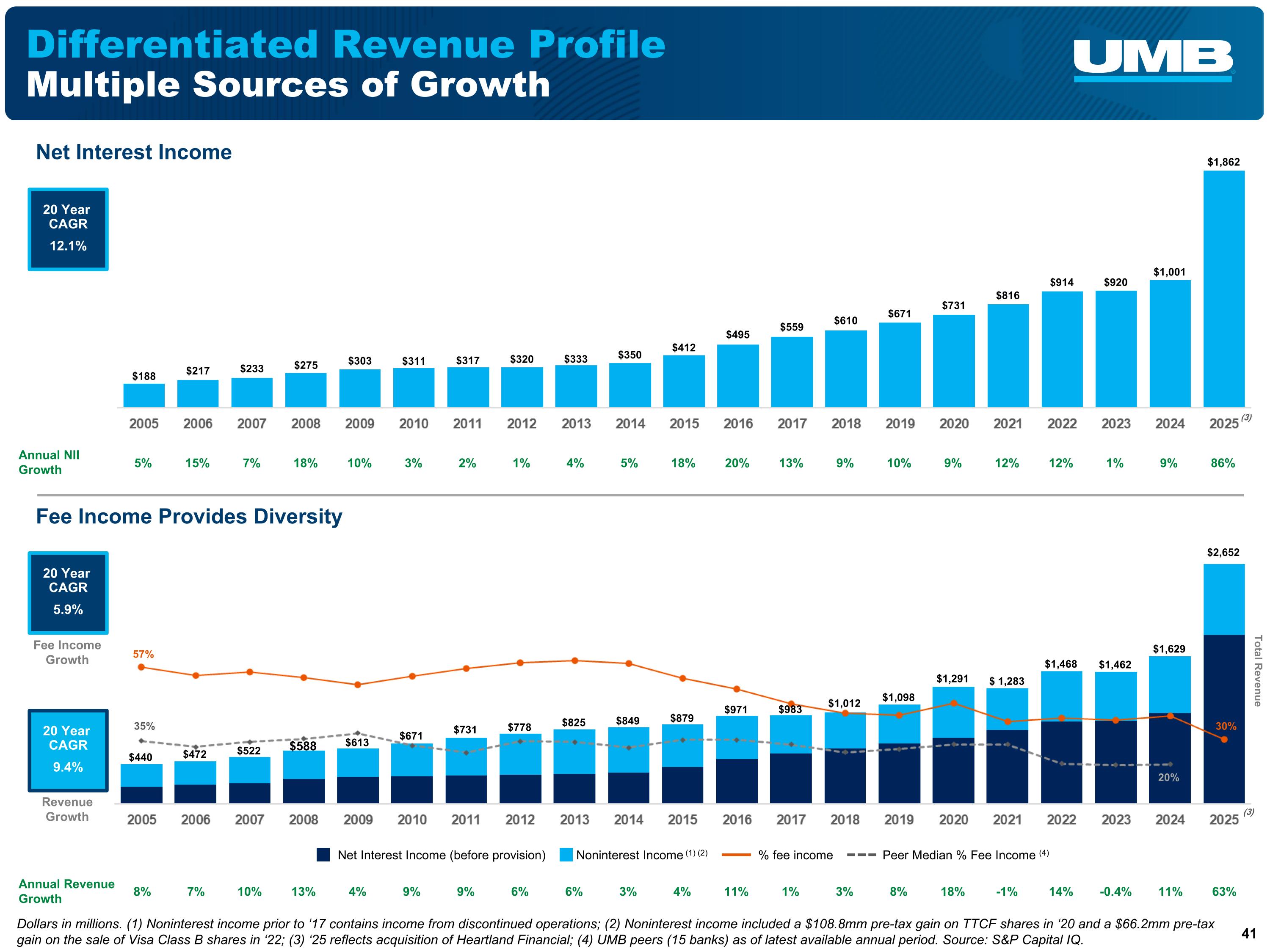
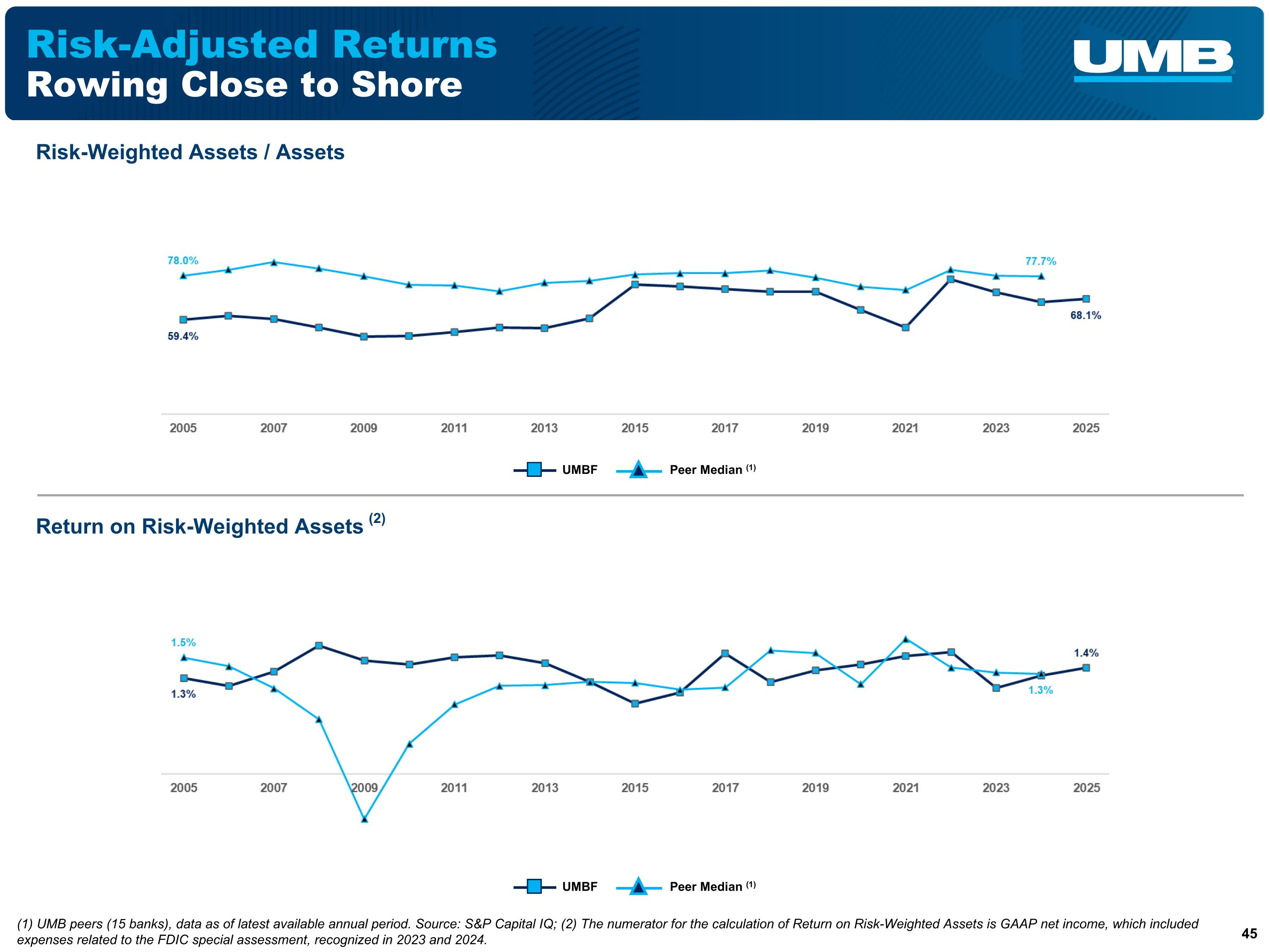
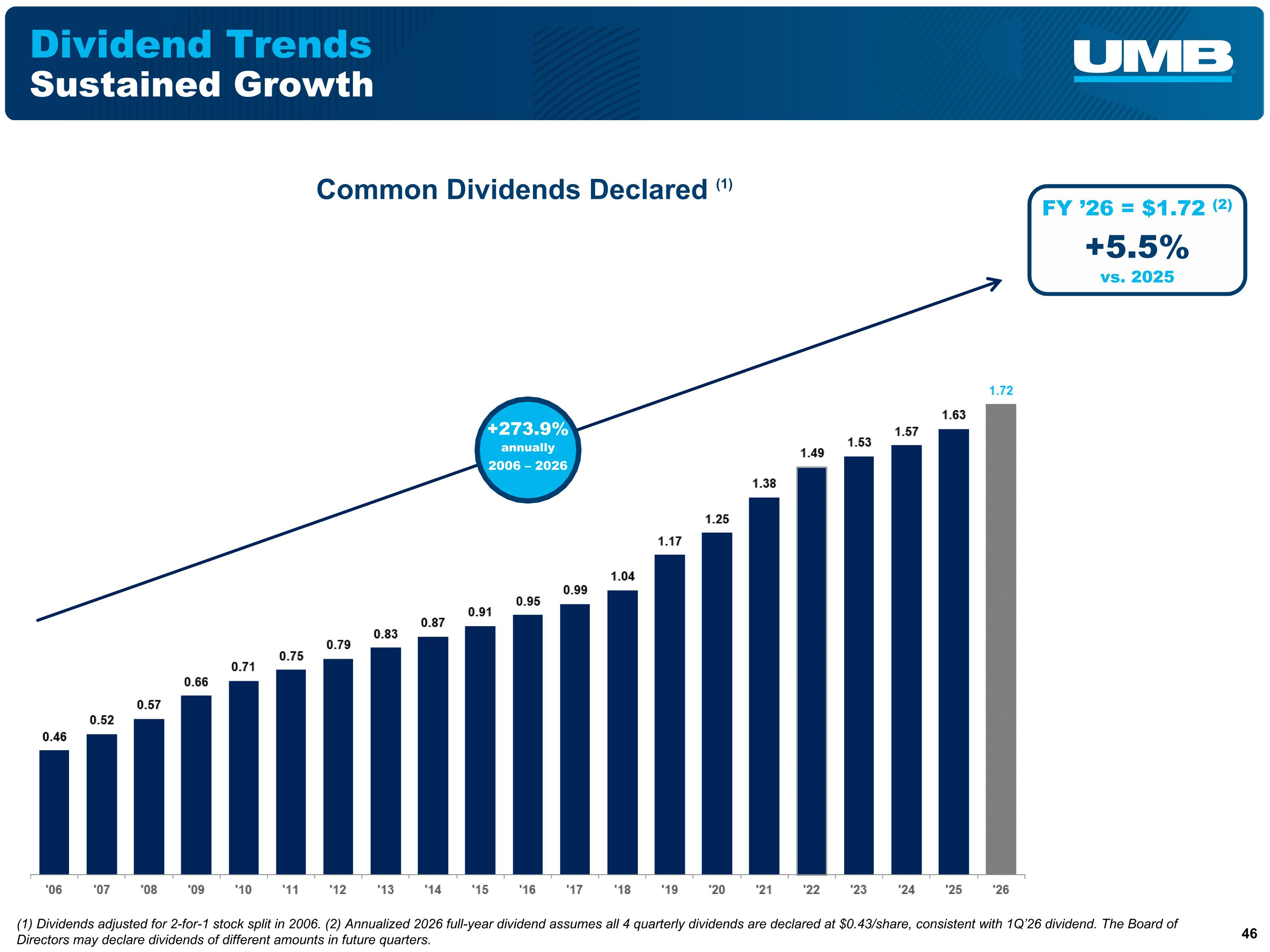
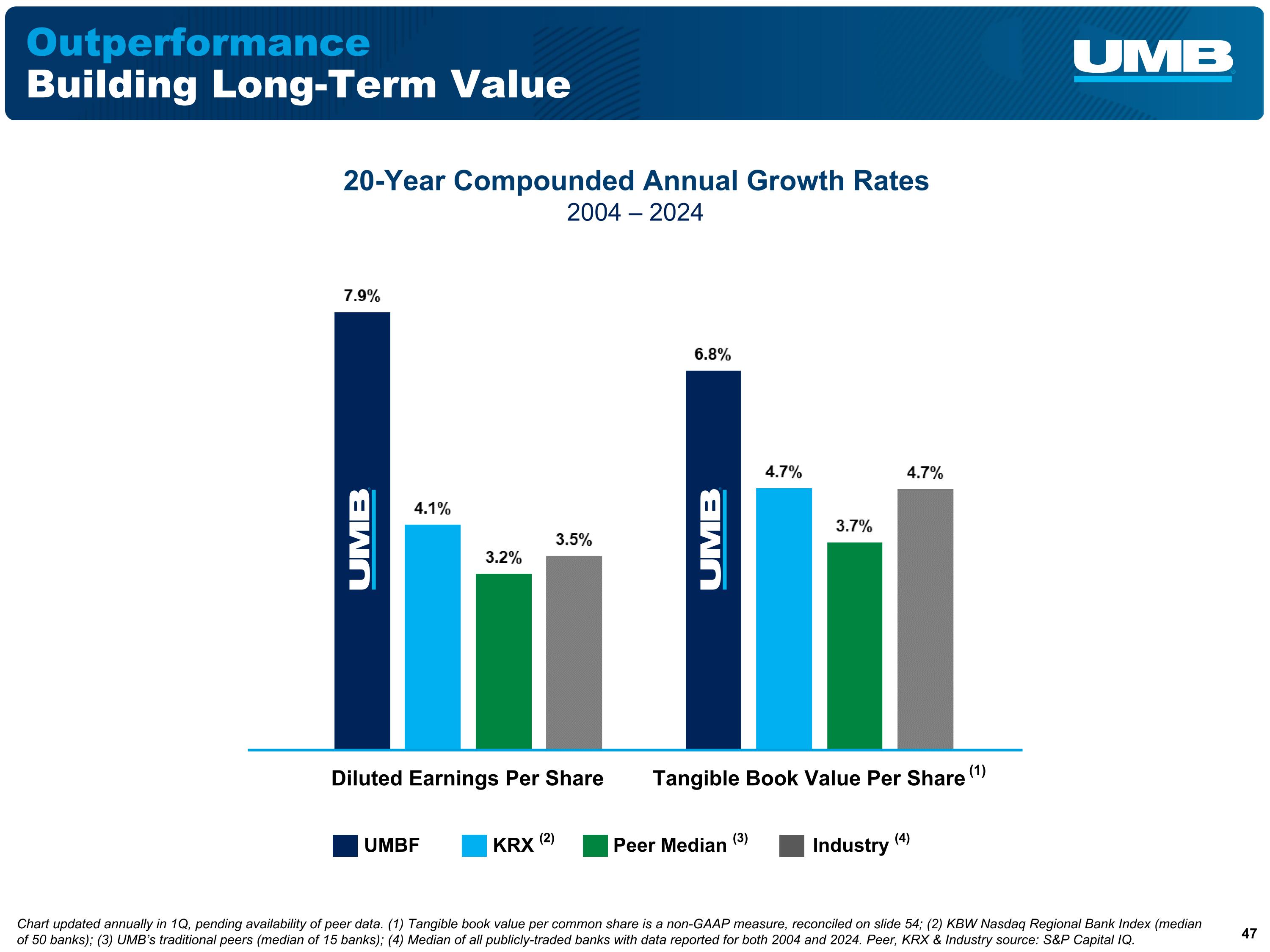
Yeah, thanks. I've got just a couple things I want to end on because we're pretty excited about where we are, coming off the heels of our acquisition and how well it performed. I just want to remind you all, I'm sitting around the table here with Tom and Jim, myself, a few others, but the three of us have been working together for, you know, 30 years together, Tom, 40 years, I'm at 31, Jim's at 32. We've been leading this, particularly the credit efforts, but the company, in my case, for 22 years at the helm, I've been doing these calls for 22 years approaching 100 quarters of doing this with you all. And I know the one thing that I've learned from the investor community is you hate surprises and you hate being alarmed. And so, what I'd like to do is take you momentarily to my favorite section in our deck, which is the long-term performance trends, 41 through 47 in our deck, and just remind you of a couple of things of what's happened over the last 20 years for UMB with this team. Two put two at ease around being surprised and alarmed. We do the same thing year in and year out. So if you look at net interest income over the last 20 years, the CAGR is 12.1 percent. Revenue, 20 years, 9.4% kegger. Net loan growth, 20 years kegger, 13%. Deposit growth, 20 years, 12.6% kegger. Charge-offs, less than 27 base points over the last 20 years and particularly during the crisis from 08 to our line forms the bottom of the chart where the rest of the industry looks like a shark fin. And you fast forward to where we are with $38 billion in loans in the fourth quarter, and we had 13 basis points to charge off compared to 20 years ago with $2.7 billion in loans. We had 22 basis points to charge off with $2.7 billion in loans against our 38 billion today and 13 basis points to charge off in the fourth quarter. And then you can go to the dividend, for those of you who care about the dividend, 274% growth in our dividend over the last 20 years, and in this last year, a 5.5% increase year-over-year. And then, you know, risk-adjusted returns, you can see that on page 45. So, you know, not only do we do it, but I think as a company we live at the – we breathe rarefied air at the intersection of industry-leading growth and industry-leading quality. And really the point of all that, as it translates into the last page there, and you see our 20-year compound annual growth rates, so our diluted earnings per share are 7.9% over the last 20 years, against the KRX at 4.1%, peer median at 3.2%, and the industry at 3.5%. And then our tangible book value per share, 6.8% over the last 20, against 4.7% for the KRX, 3.7% for the peer, and 4.7% for the industry. So at the end of the day, I guess, the thing that I get from all of you the most is you hate being surprised, you hate being alarmed, and you like quality. If you just spend a few minutes on those pages and reflect on that, and then you think about the future, you've got the same team telling you, when we say something we're going to do, we do what we say and we say what we do, and we've been doing it for a long time. So you can count on us to keep delivering. Thanks for the time. We're really excited about the future. We're excited about what we've done, and I love working with this team and we love talking to you guys. So have a great day.
Thanks, Mariner. As always, if you have follow-ups, you can reach us at 860-7106. Thanks for joining us, and have a great day.
Operator
Thank you all. This concludes today's UMB Financials Fourth Quarter 2025 Financial Results Conference Call. Thank you for joining. You may now disconnect your lines.