Operator
Greetings. Welcome to Zion's Bancorp fourth quarter earnings conference call. At this time, all participants are in a listen-only mode. A question and answer session will follow the formal presentation. If anyone should require operator assistance during the conference, please press star zero on your telephone keypad. Please note this conference is being recorded. I will now turn the conference over to Shannon Drej, Senior Director of Investor Relations. Thank you, and you may begin.
Thank you, Vaughn, and good evening, everyone. Welcome to our conference call to discuss the fourth quarter and full year earnings for 2025. My name is Shannon Drage, Senior Director of Investor Relations. I would like to remind you that during this call, we will be making forward-looking statements. Please note that actual results may differ materially, and we encourage you to review the disclaimer in the press release or slide two of the presentation dealing with forward-looking information and the presentation of non-GAAP measures, which applies equally to statements made during this fall. A copy of the earnings release as well as the presentation are available at sciencebankcorporation.com. For our agenda today, Chairman and Chief Executive Officer Harris Simmons will provide opening remarks. Following Harris's comments, Ryan Richards, our Chief Financial Officer, will review our financial results. Also with us today are Scott McClain, President and Chief Operating Officer, Derek Stewart, Chief Friday Officer, and Chris Curiacakis, Chief Risk Officer. After our prepared remarks, we will hold a question-and-answer session, and the call is scheduled for one hour. We'll now turn the time over to Harris Simmons.
Speaker 2
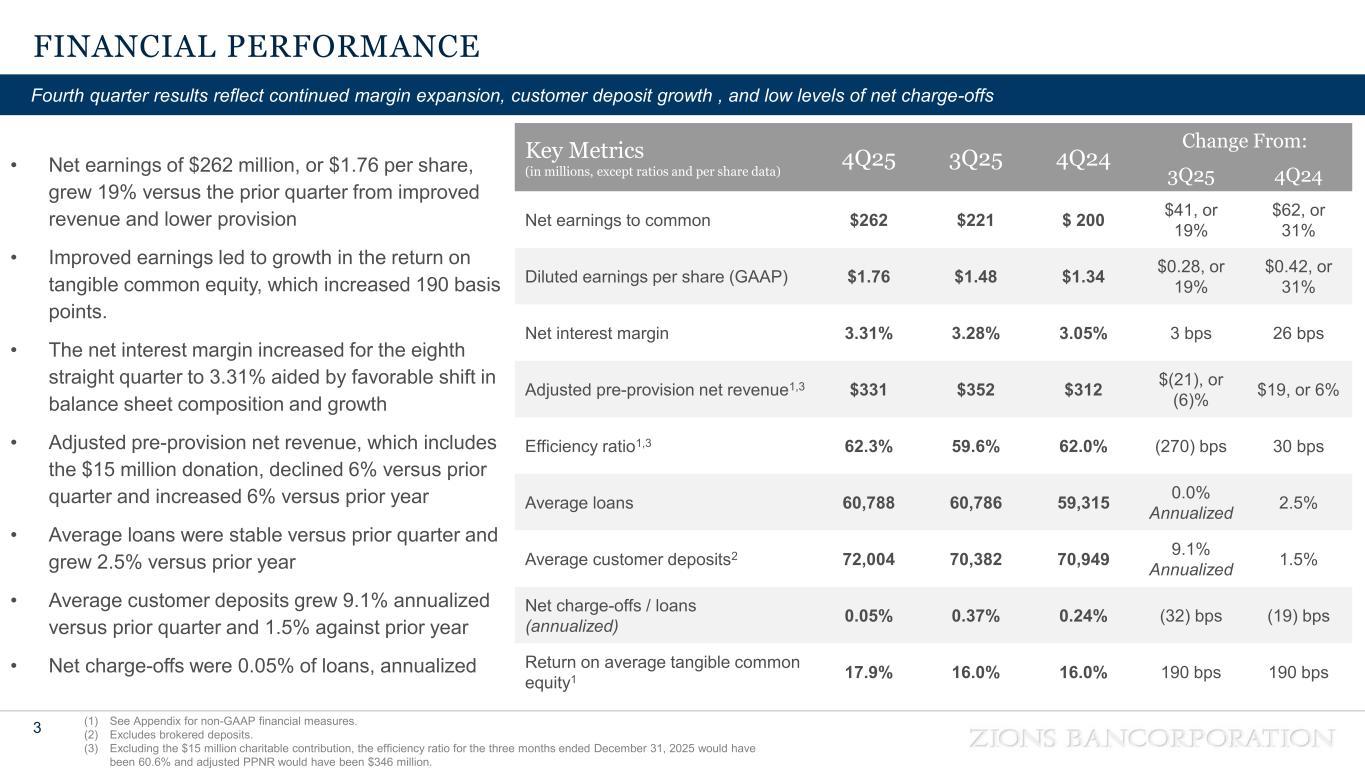
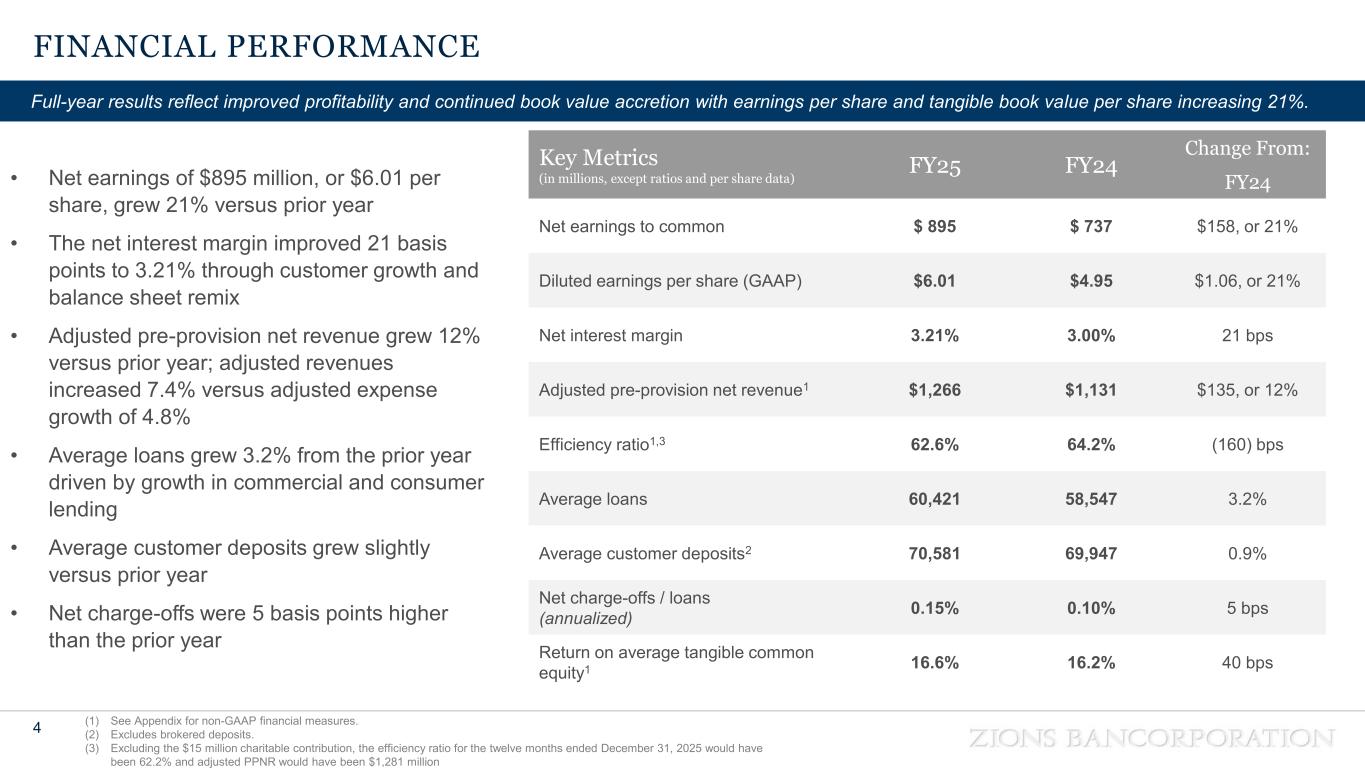
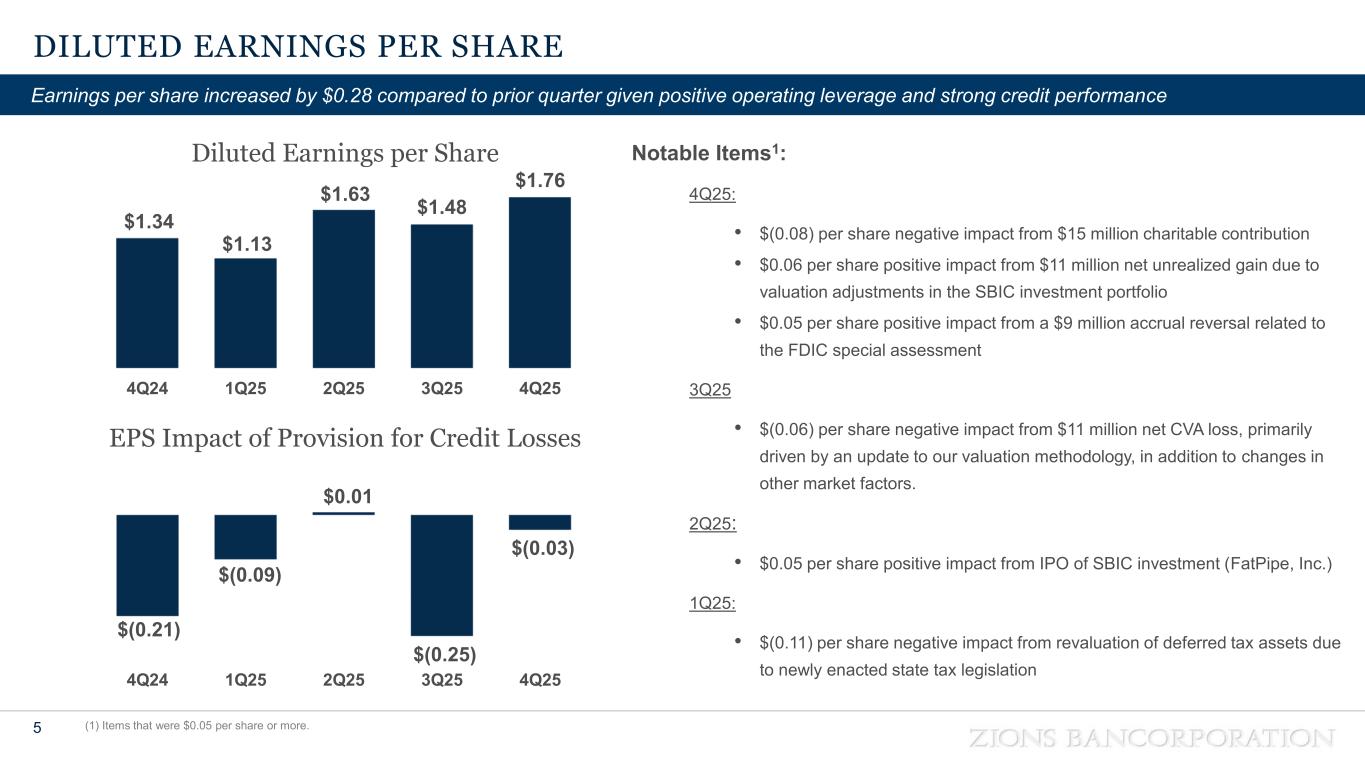
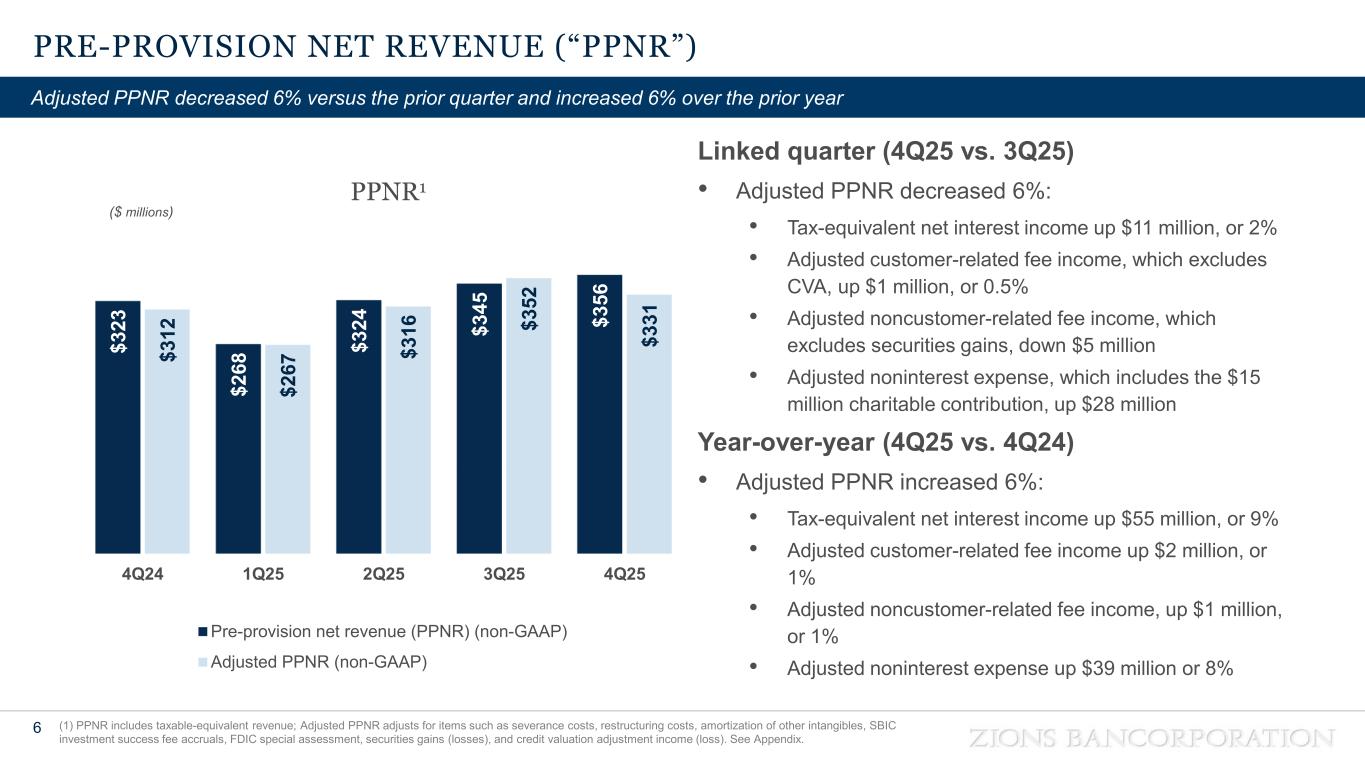
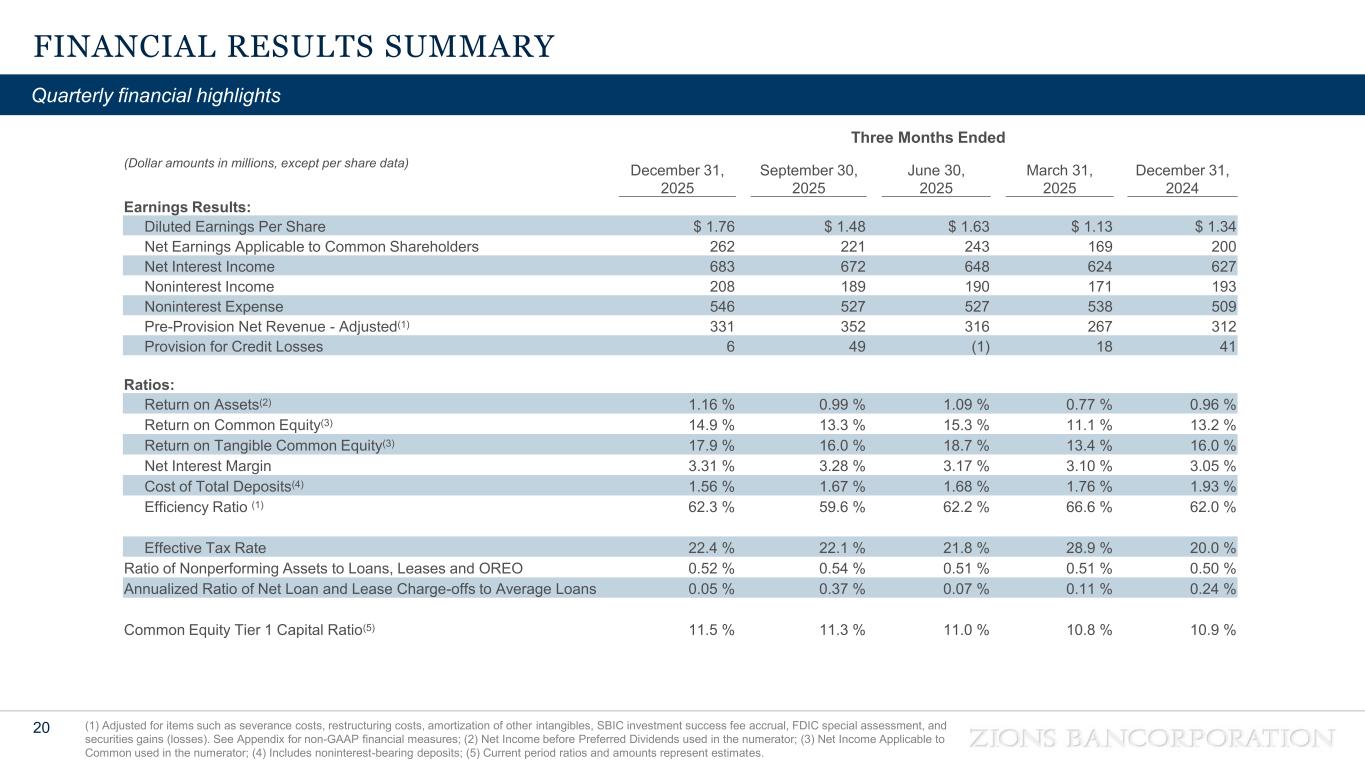
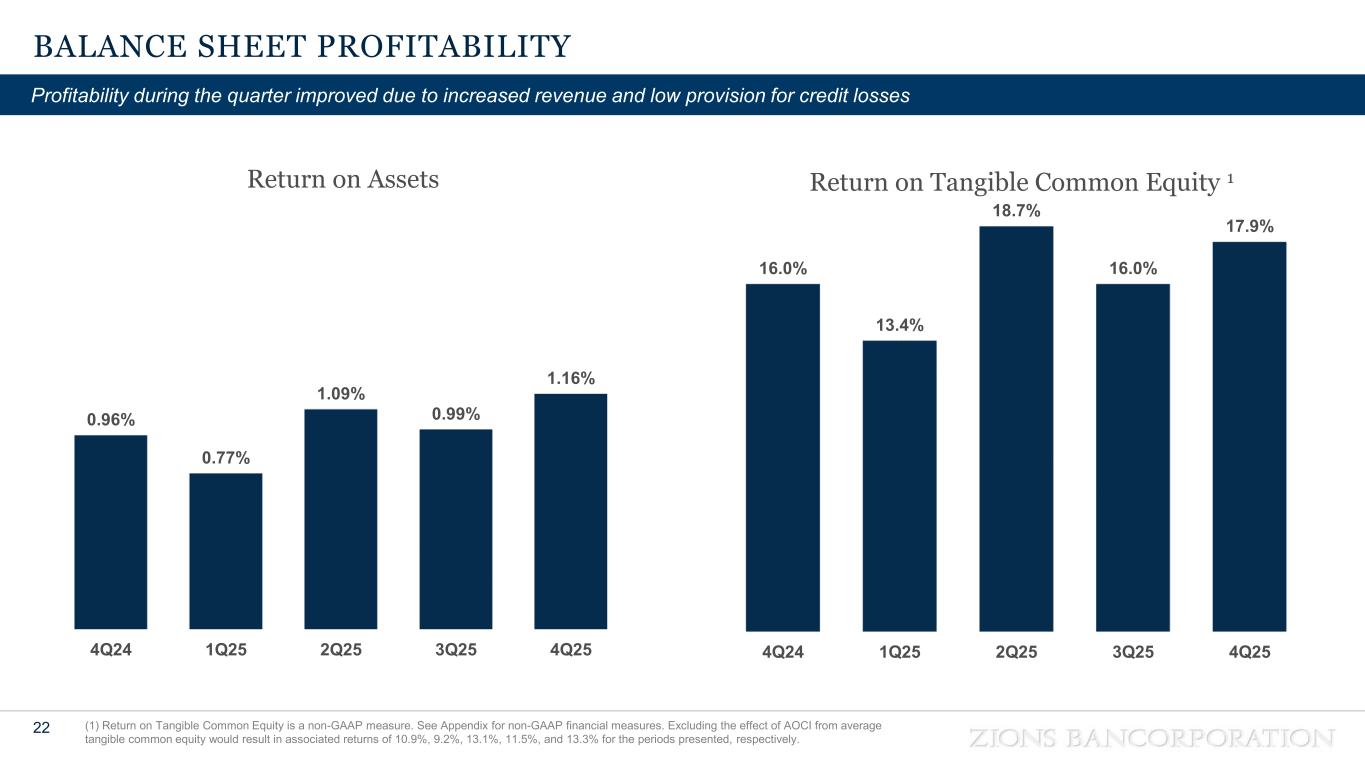
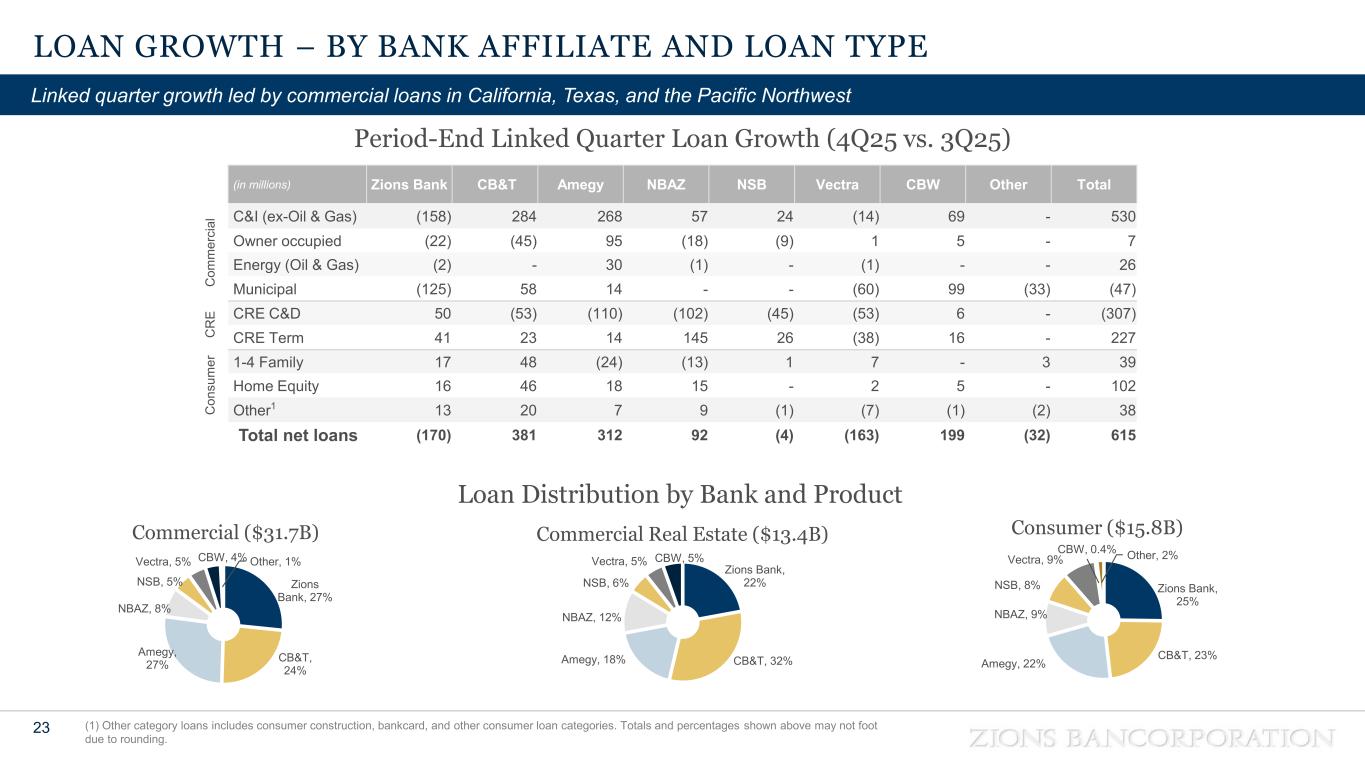
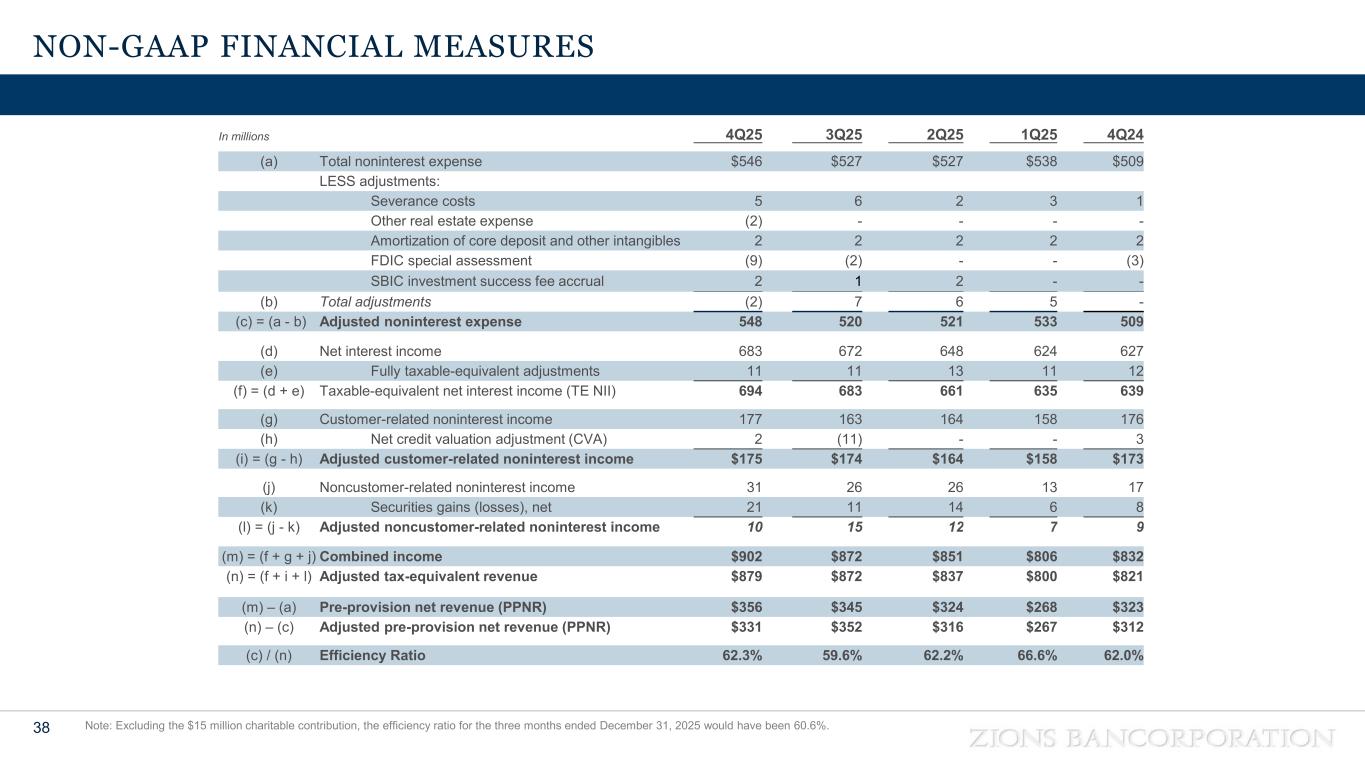
Harris Simmons Thanks very much, Shannon, and good evening to all of you. As you've seen on slide three, our fourth quarter results reflected continued progress and steady improvement across a variety of key financial metrics earnings of 262 million dollars were up meaningfully 19 percent from the prior quarter and 31 percent from a year ago driven by stronger revenues and notice notably lower provision for credit losses our net interest margin expanded for the eighth consecutive quarter to 3.31 percent benefiting from an improved funding mix as customer deposit initiatives reduced our reliance on short-term borrowings. Customer deposits grew at a healthy pace, up 9% annualized. Average loans were essentially flat compared with last quarter, reflecting the payoffs we saw at the end of last quarter. The period end balance has increased by $615 million on solid production. Credit quality was strong with net charge-offs of just five basis points annualized of total loans. This quarter's results also included a $15 million donation to our charitable foundation to be spent down over the next three years to make charitable donations that we expect would otherwise have been non-deductible for tax purposes as a result of the recent tax law changes. Turning to slide four, full year results were similarly improved relative to the prior year. Earnings grew 21% and net interest margin expanded by 21 basis points. Adjusted PPNR increased 12% and when excluding the charitable contribution, we achieved over 300 basis points of positive operating leverage. After several years of industry-wide disruption from the 2020 pandemic to the 2023 regional bank crisis and stress in the commercial real estate sector, we're pleased with the resilience of our performance, particularly the stability and credit outcomes throughout that period. Tangible book value per share increased 21% this year, the third straight year of growth greater than 20%, and we believe that we're nearing the point where we'll be able to increase capital distributions while continuing to further strengthened capital. On slide five, diluted earnings per share was $1.76, up from $1.48 last quarter, and $1.34 a year ago. This quarter's figure includes an $0.08 per share headwind from the charitable contribution, offset by a positive $0.11 per share combined impact from the reversal of the FDIC special assessment and net gains in our SBIC portfolio. As shown On slide 6, adjusted PPNR of $331 million was down 6% sequentially and up 6% year-over-year. When further adjusted for the aforementioned charitable contribution, it was down 2% versus last quarter and up 11% versus the year-ago quarter. With that high-level overview, I'm going to turn the time over to our Chief Financial Officer, Ryan Richards, for additional details related to our performance. Brian. Thank you, Harrison. Good evening, all.
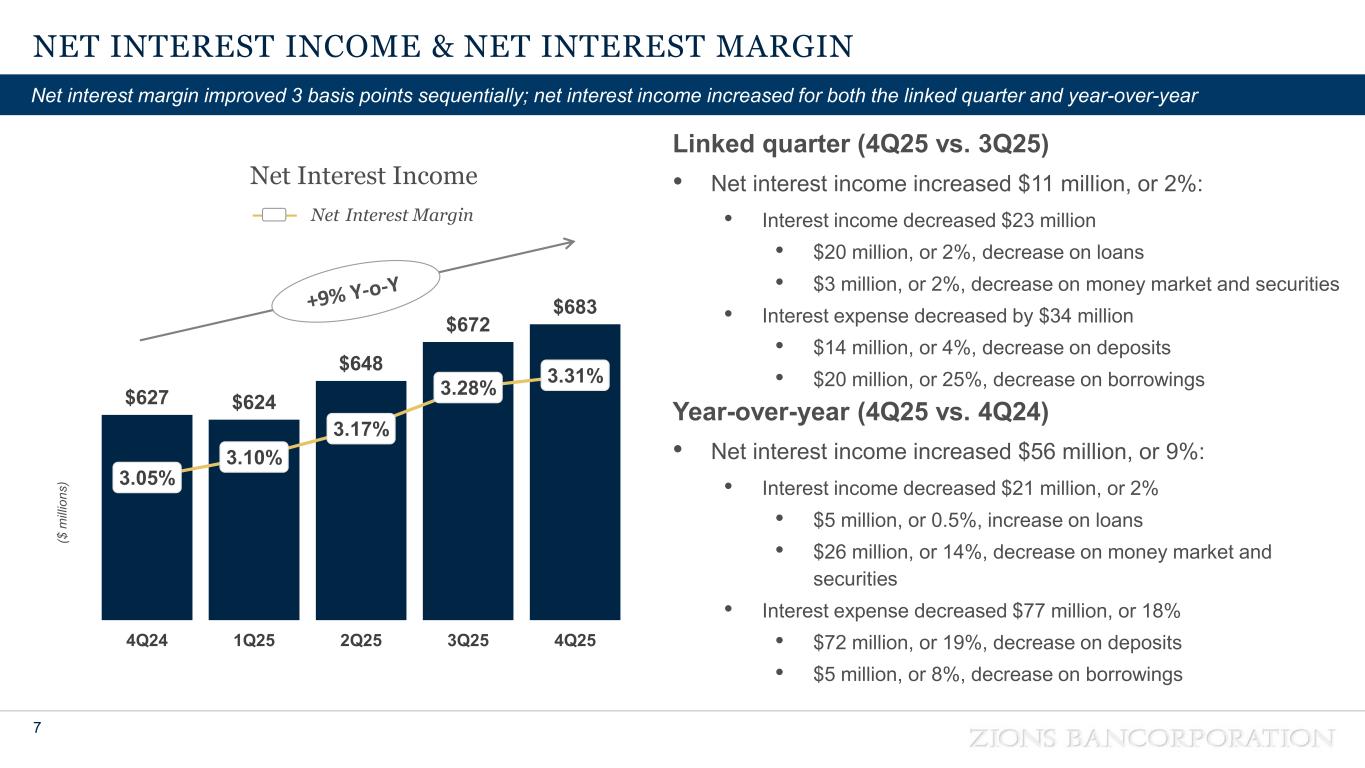
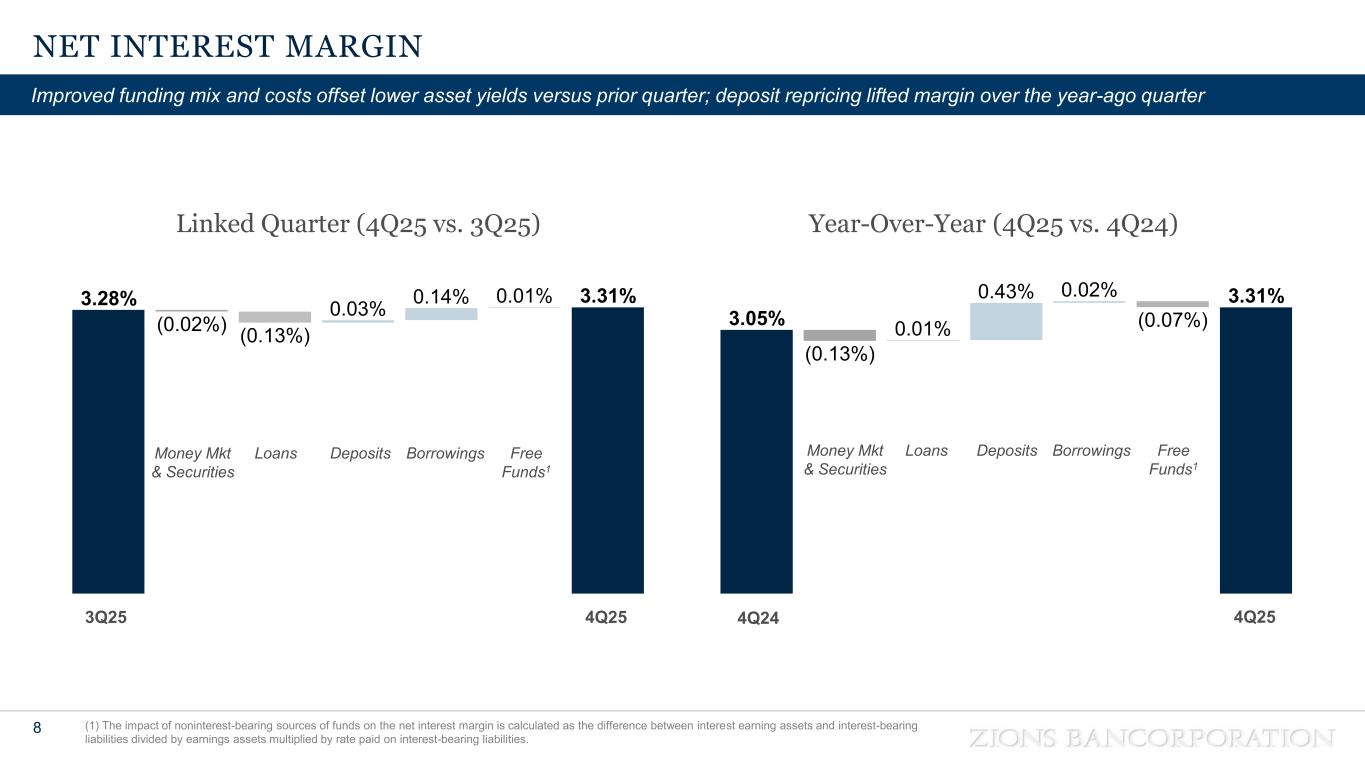
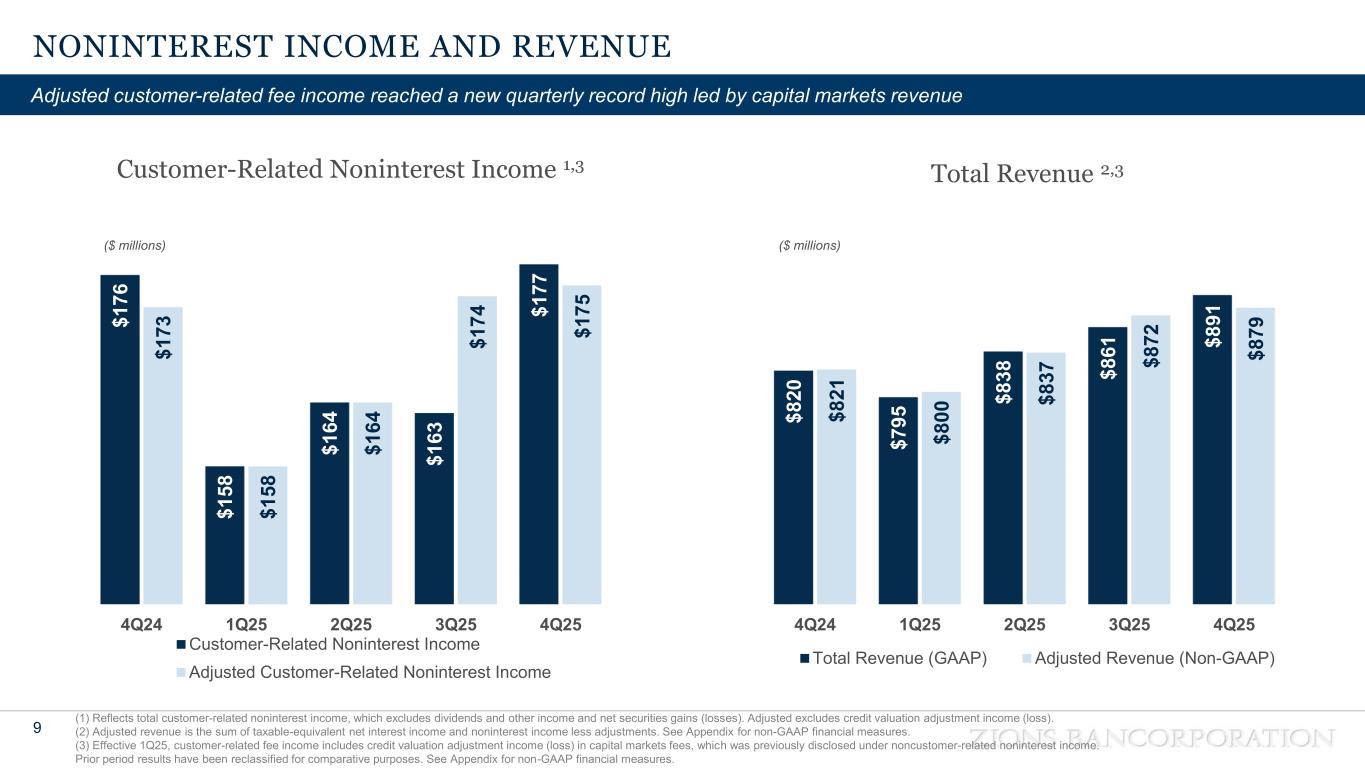
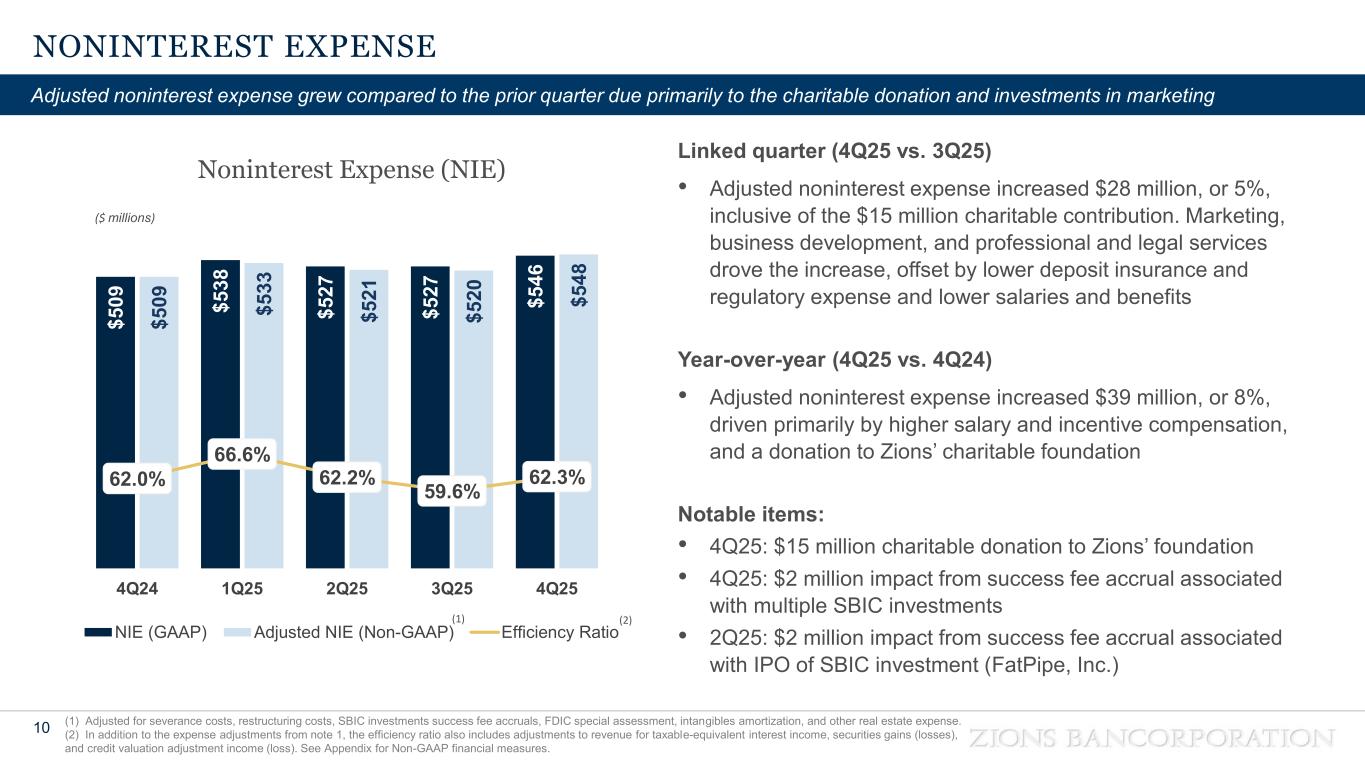
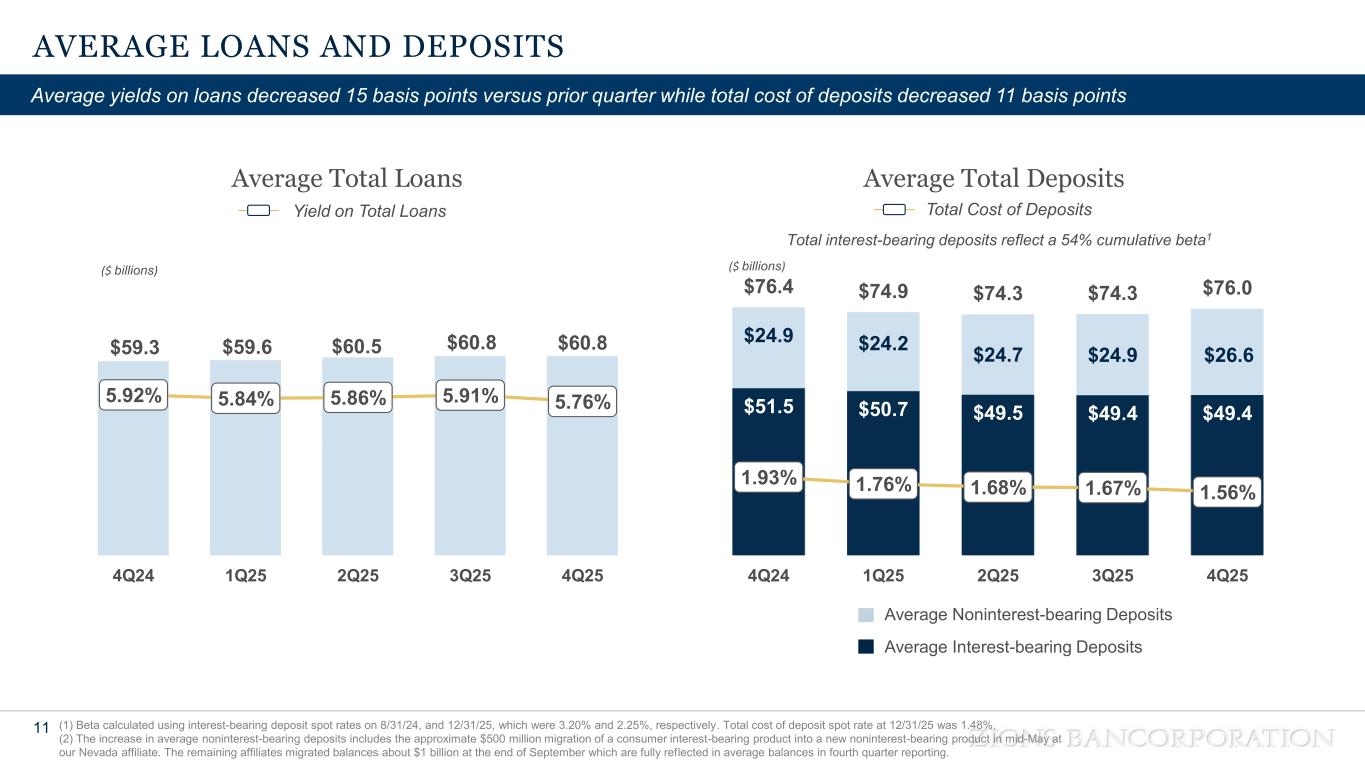
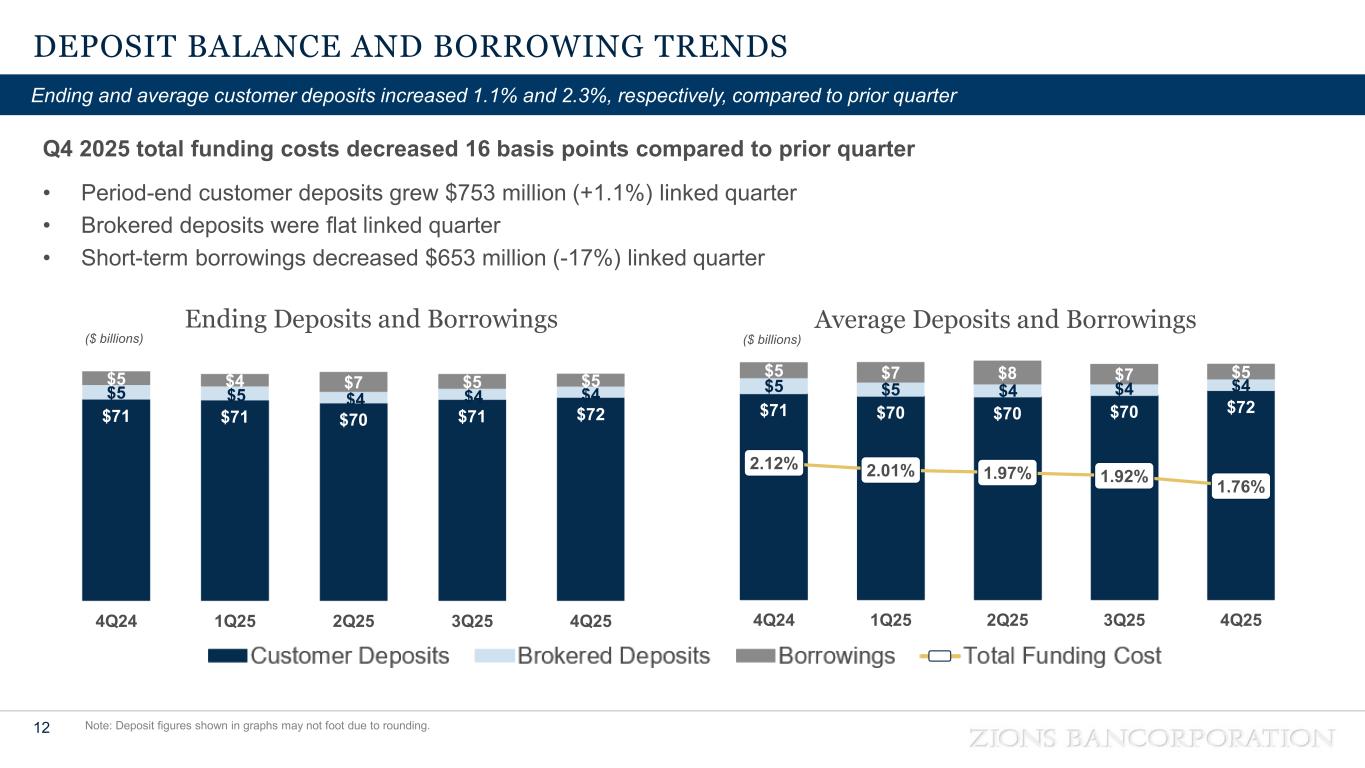
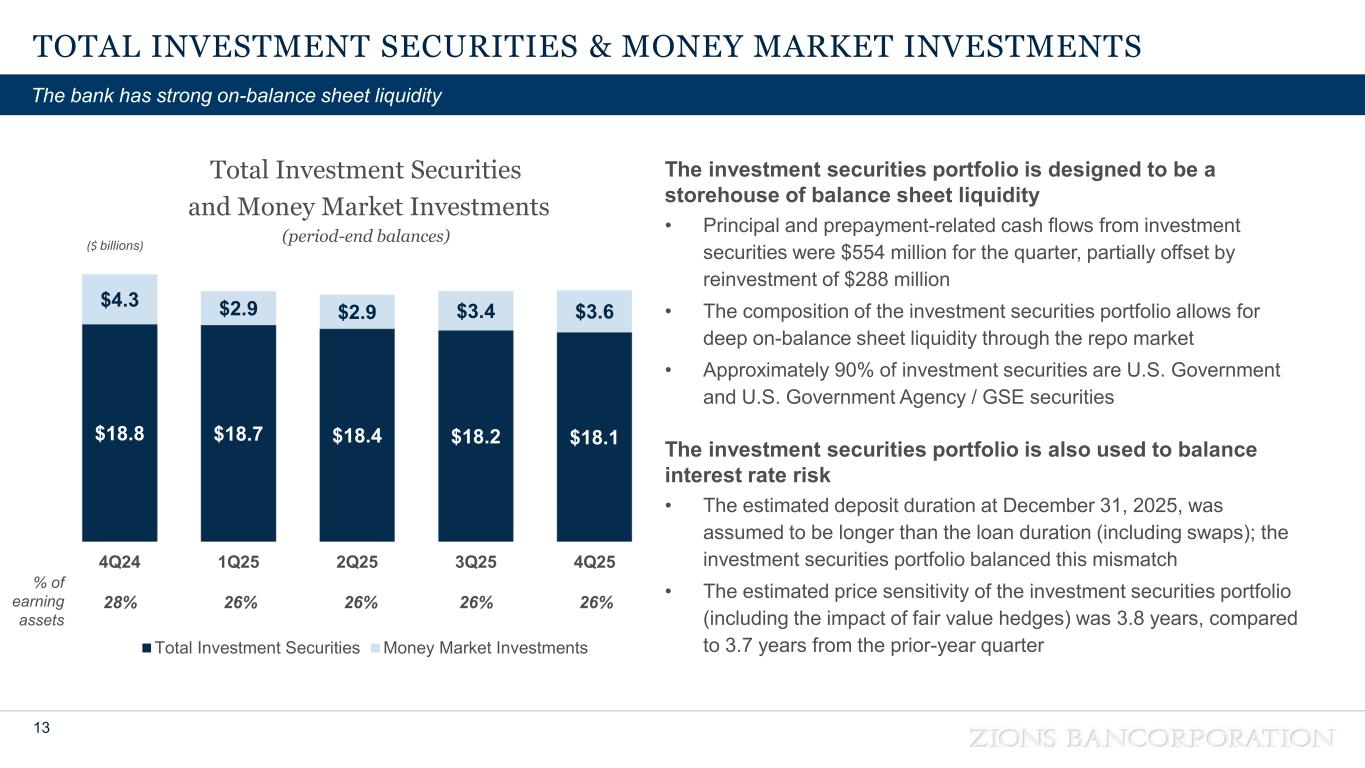
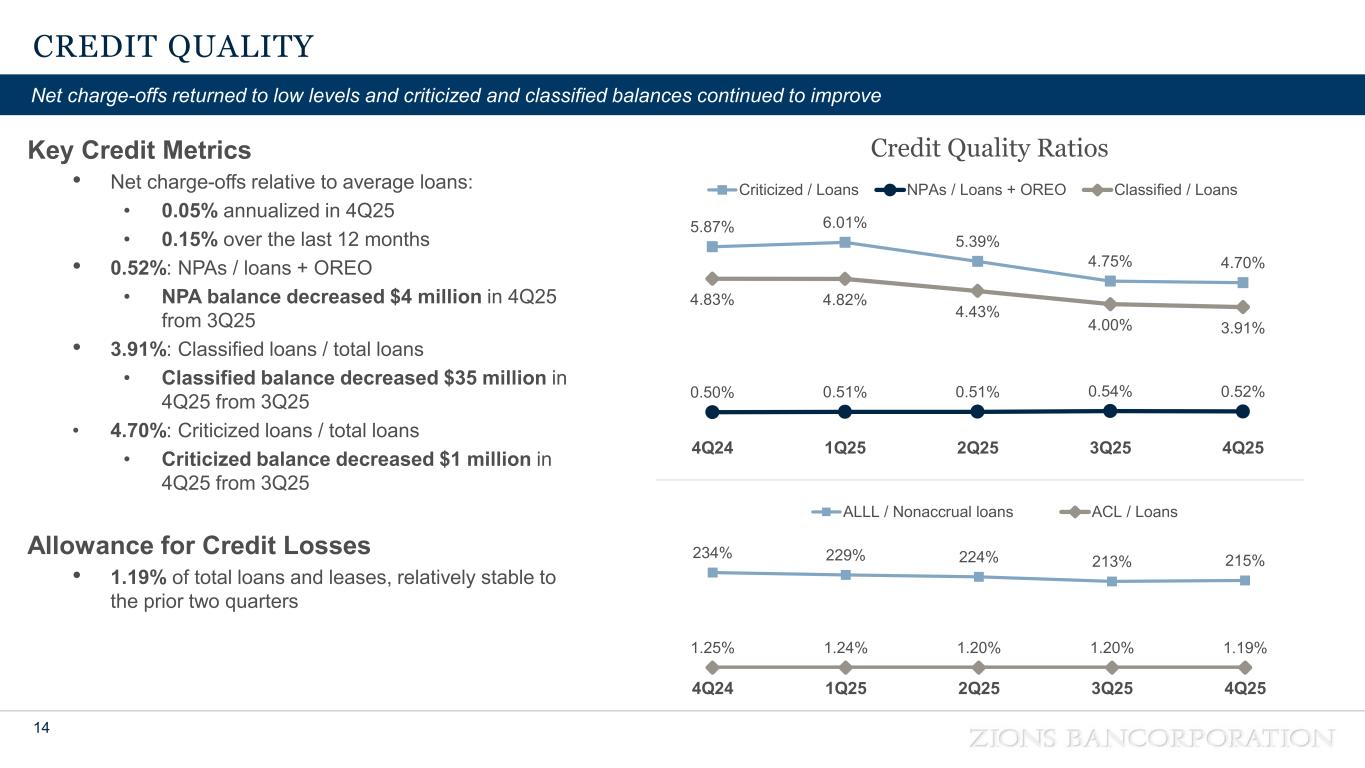
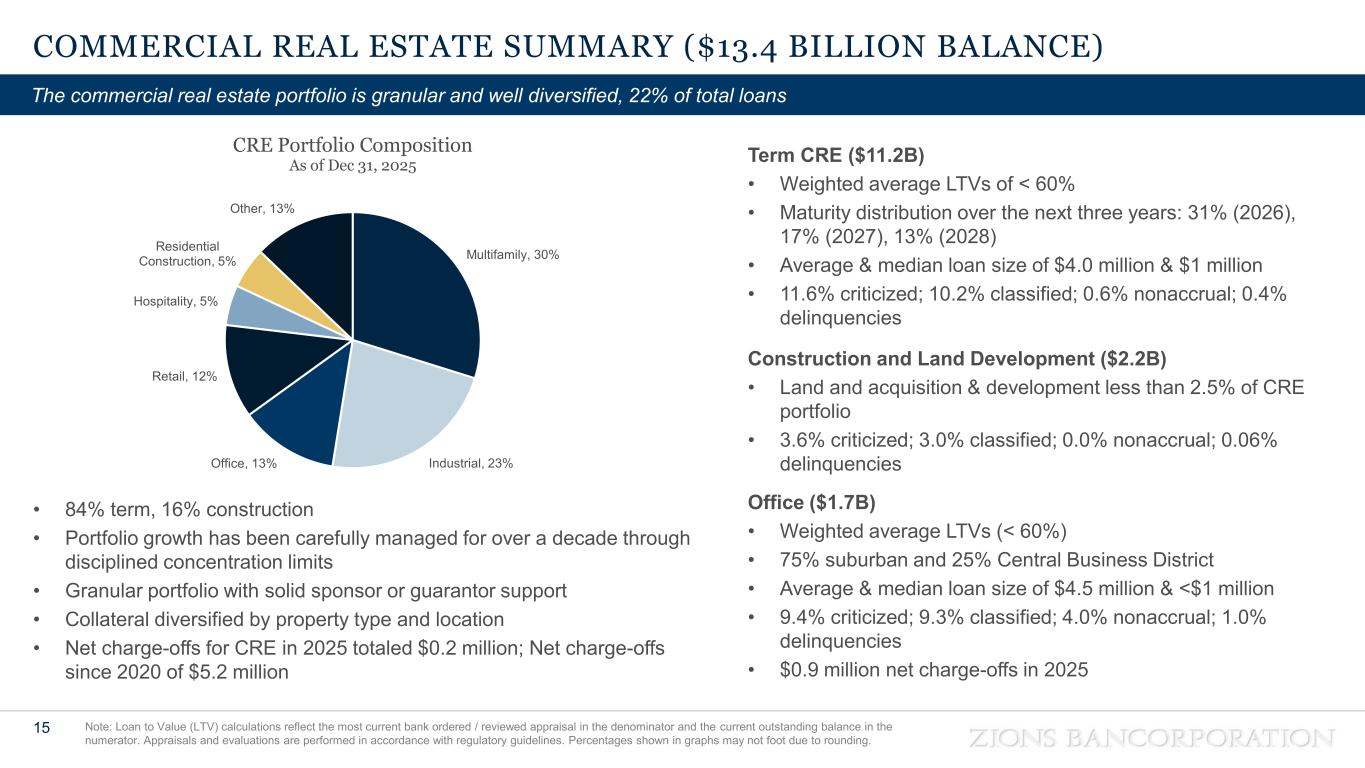
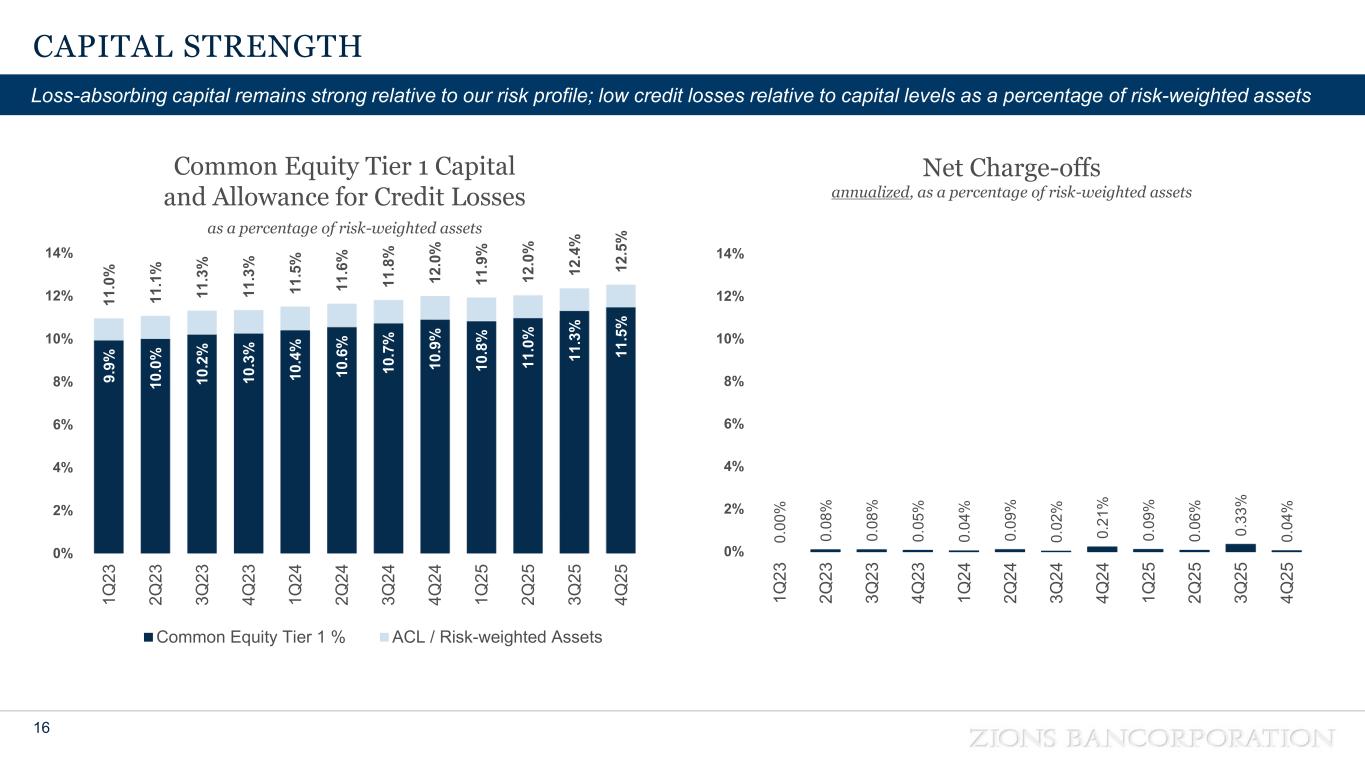
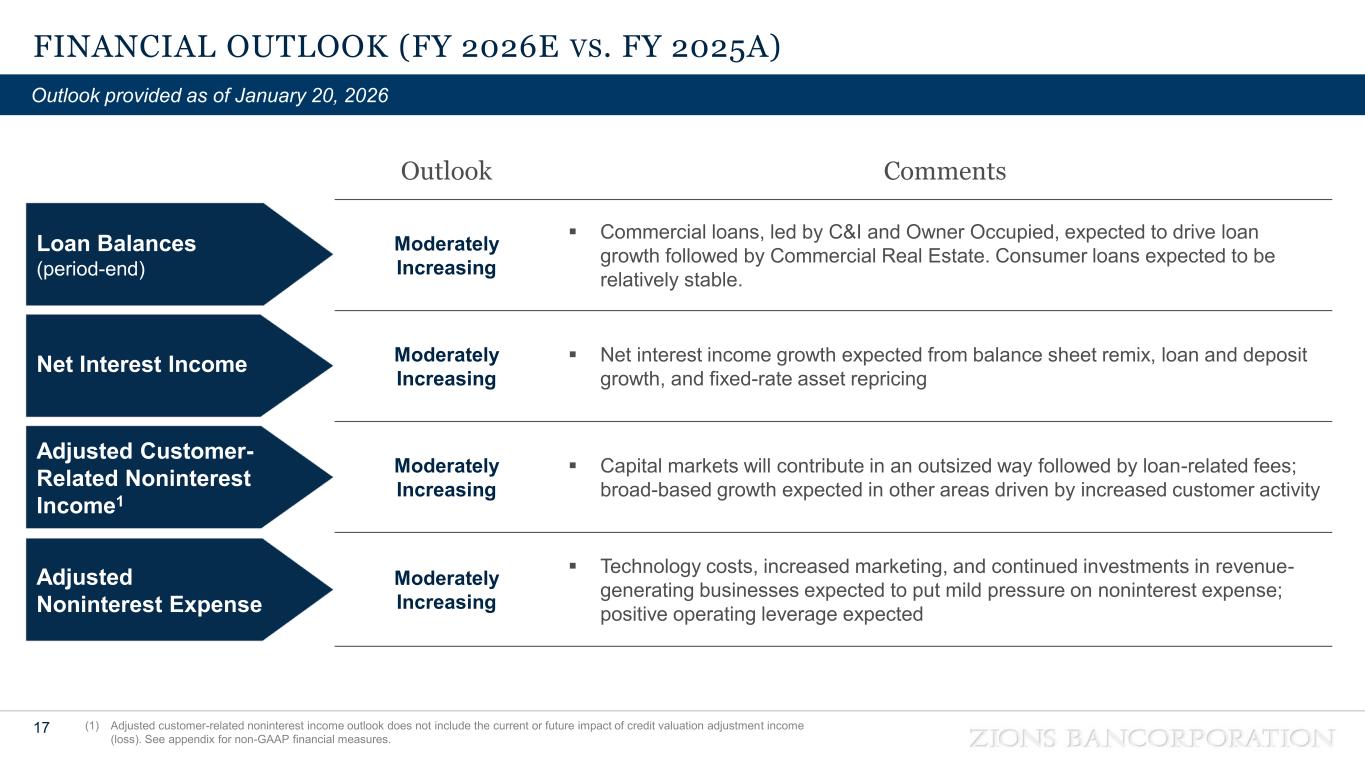
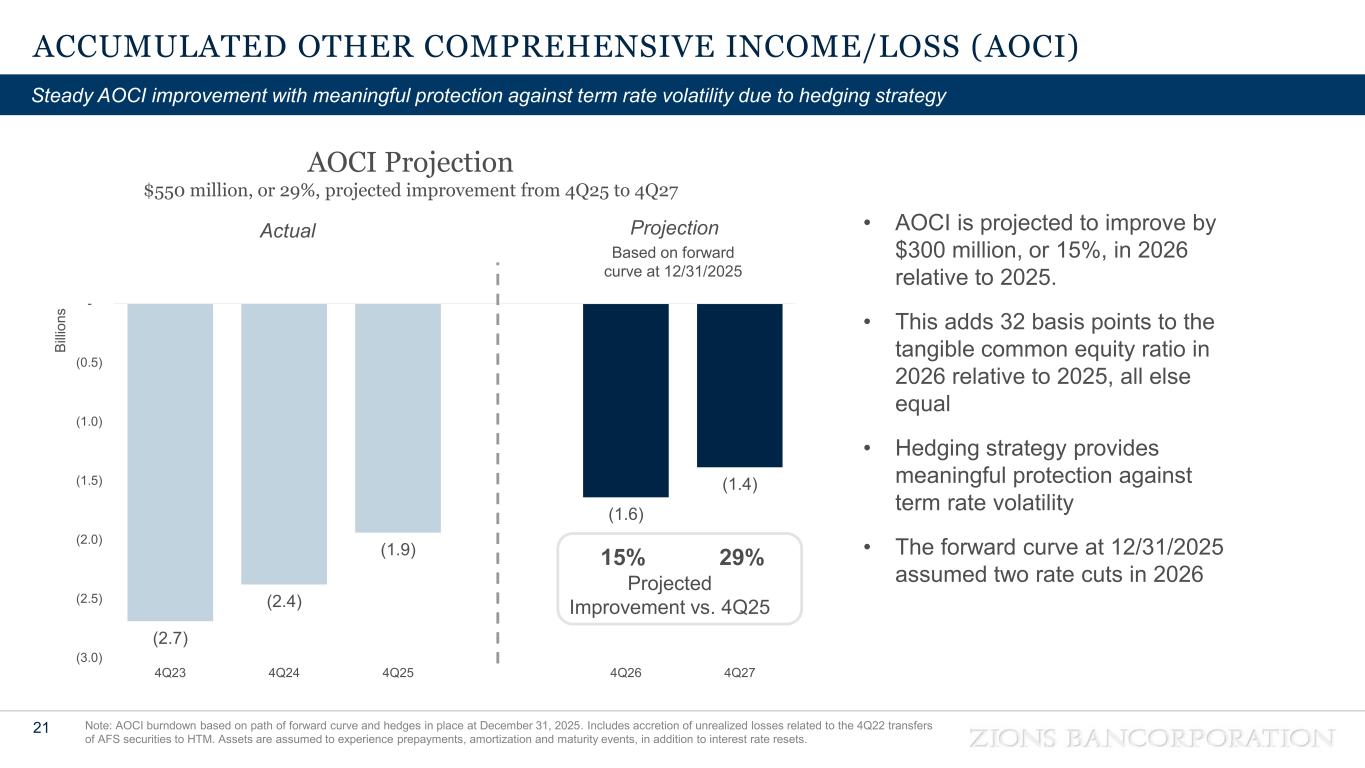
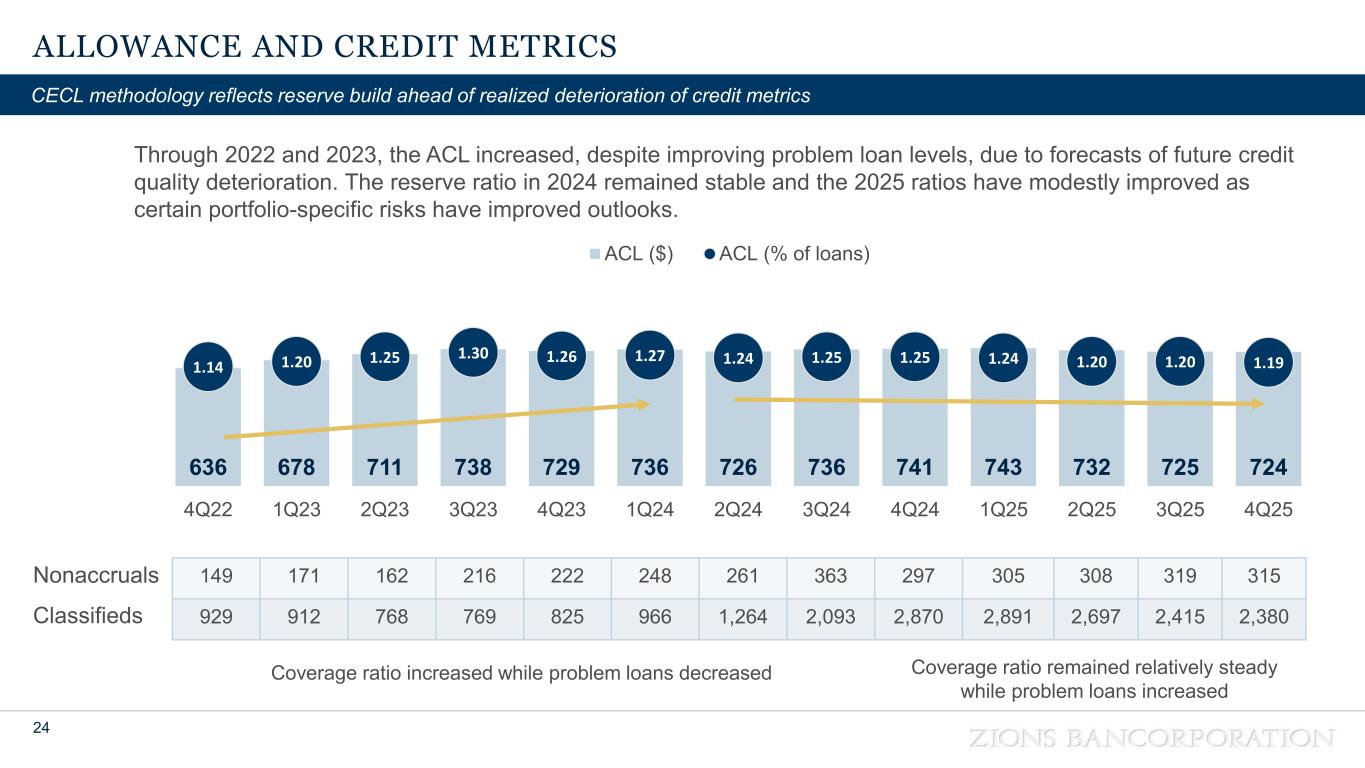
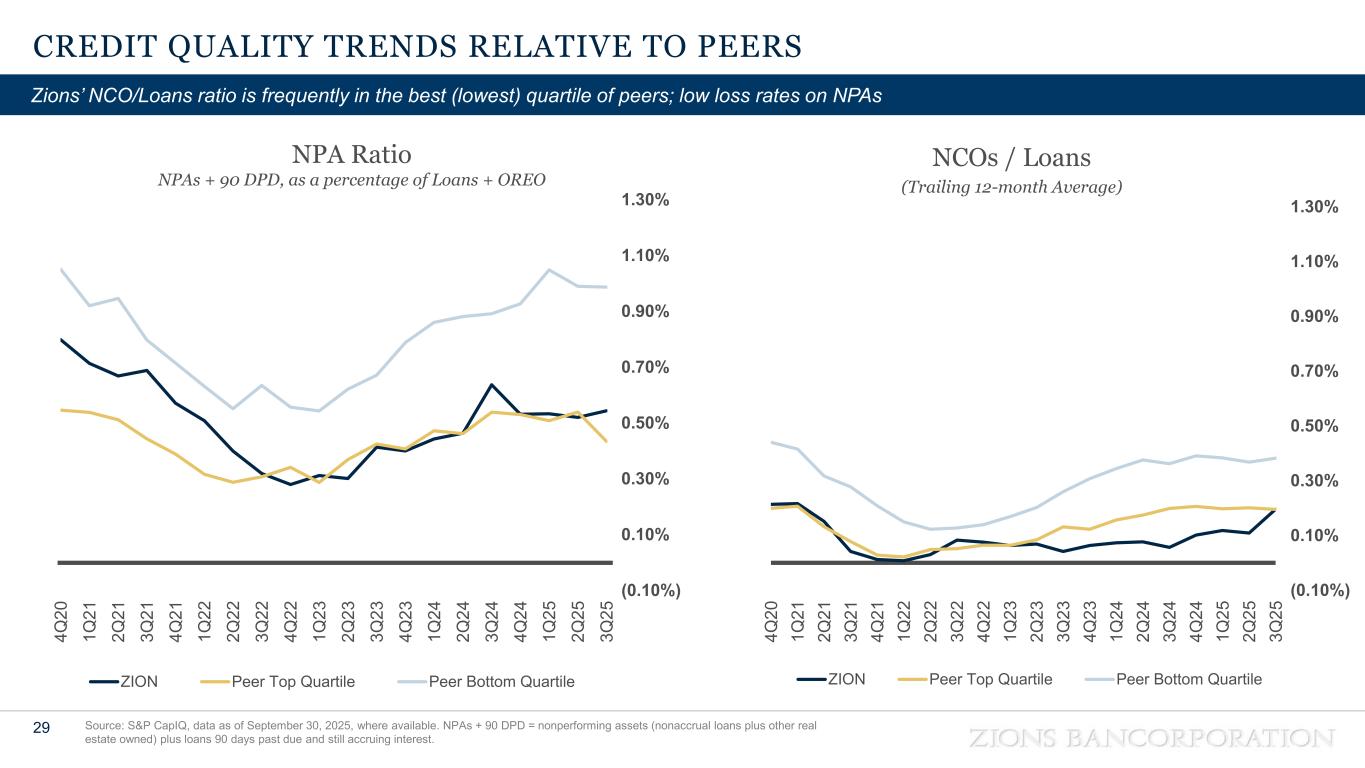
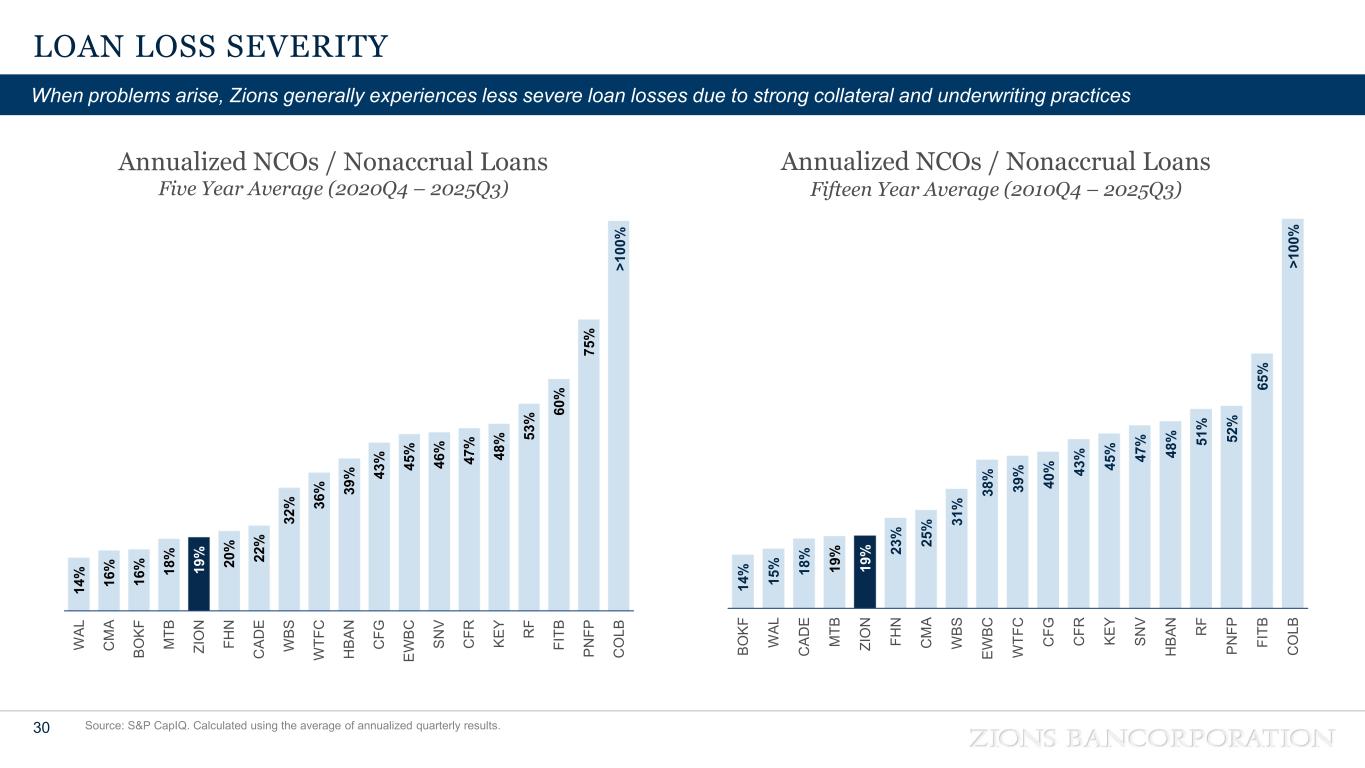
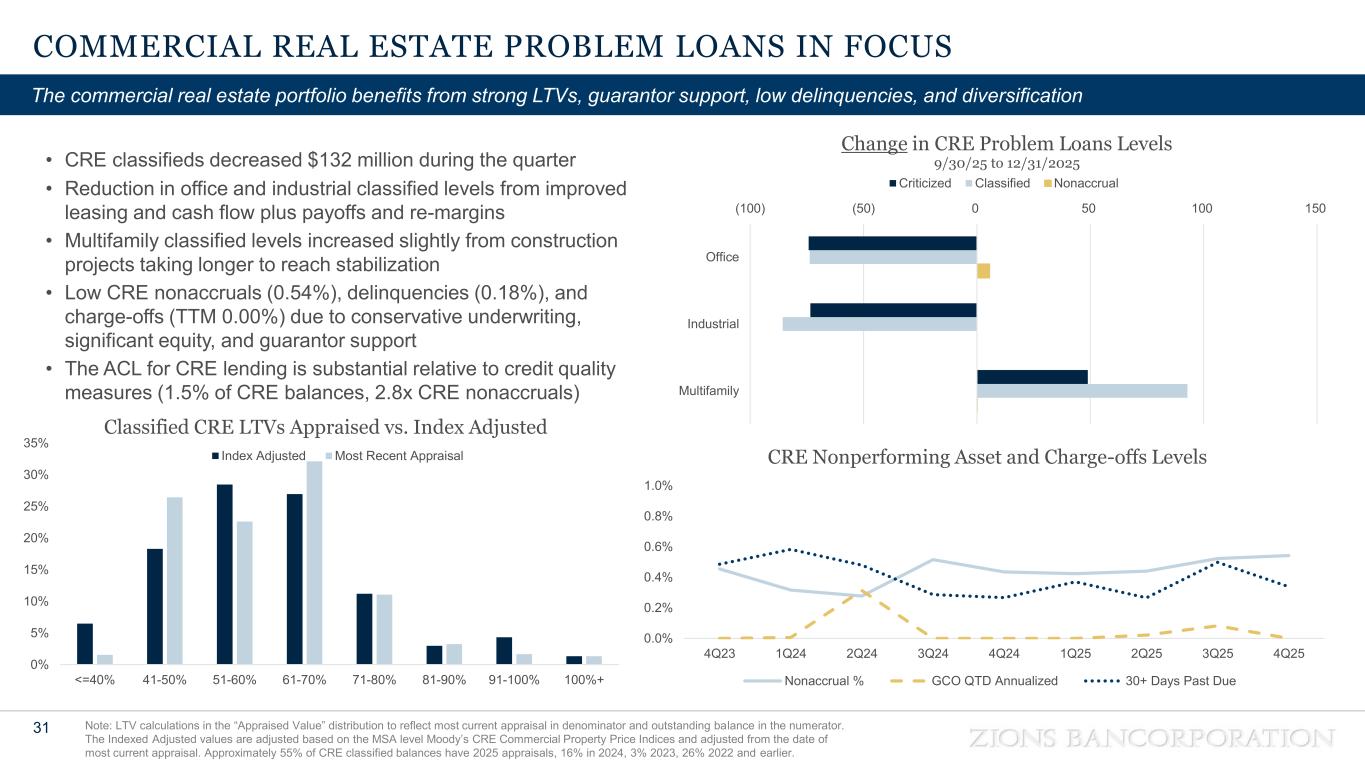
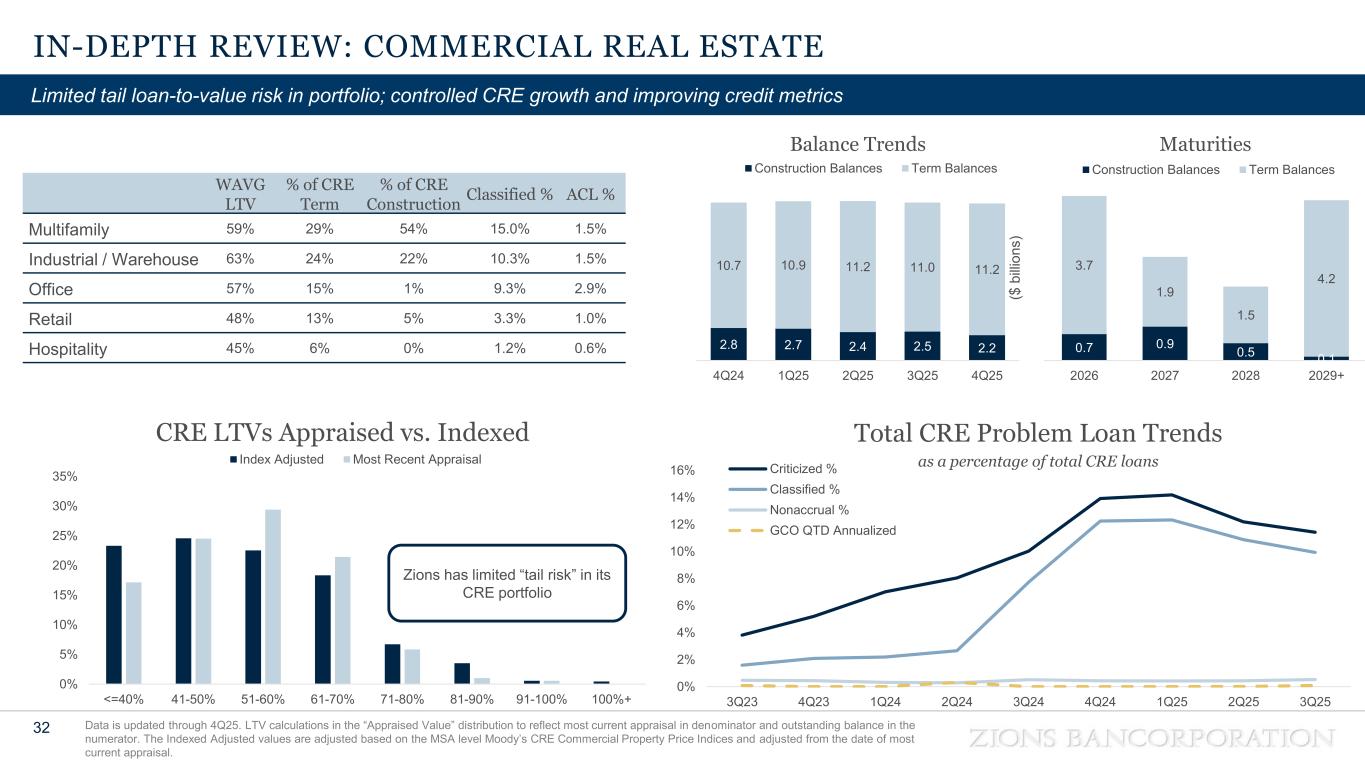
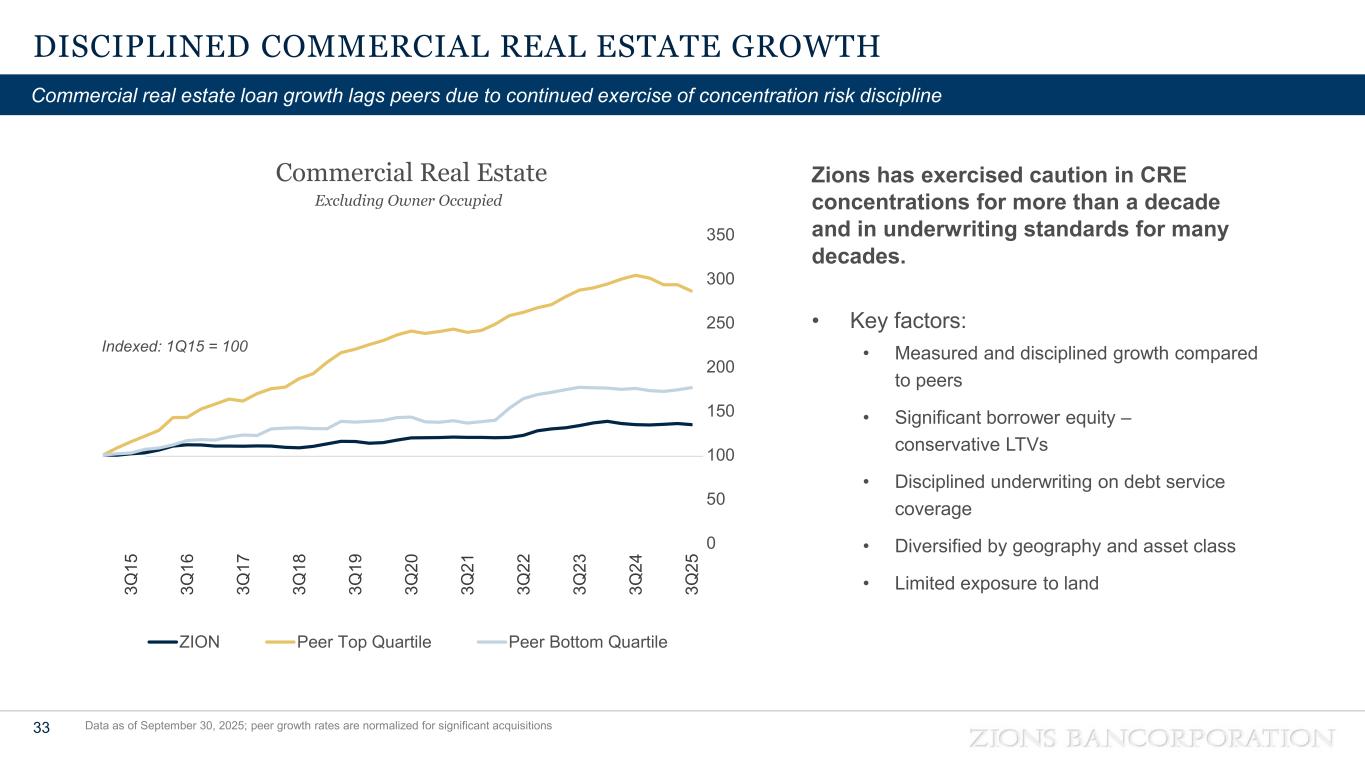
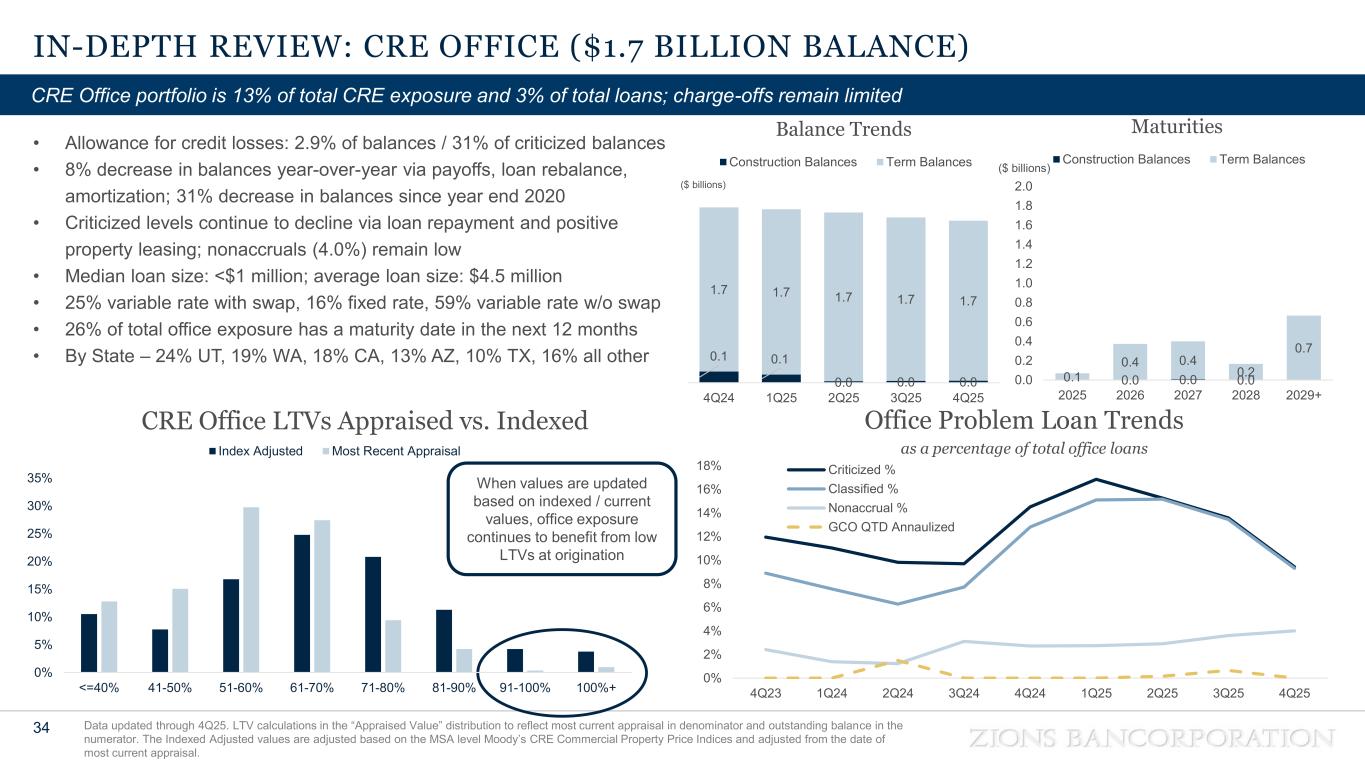
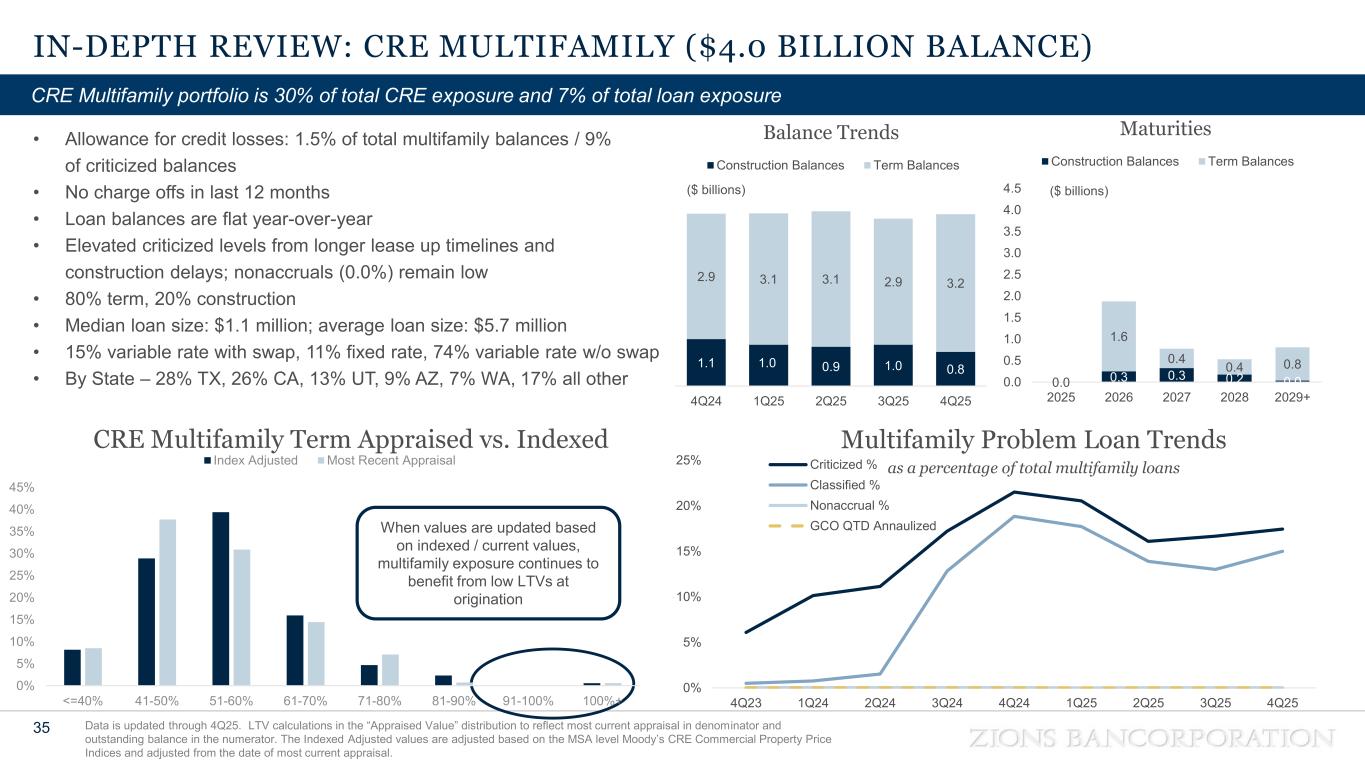
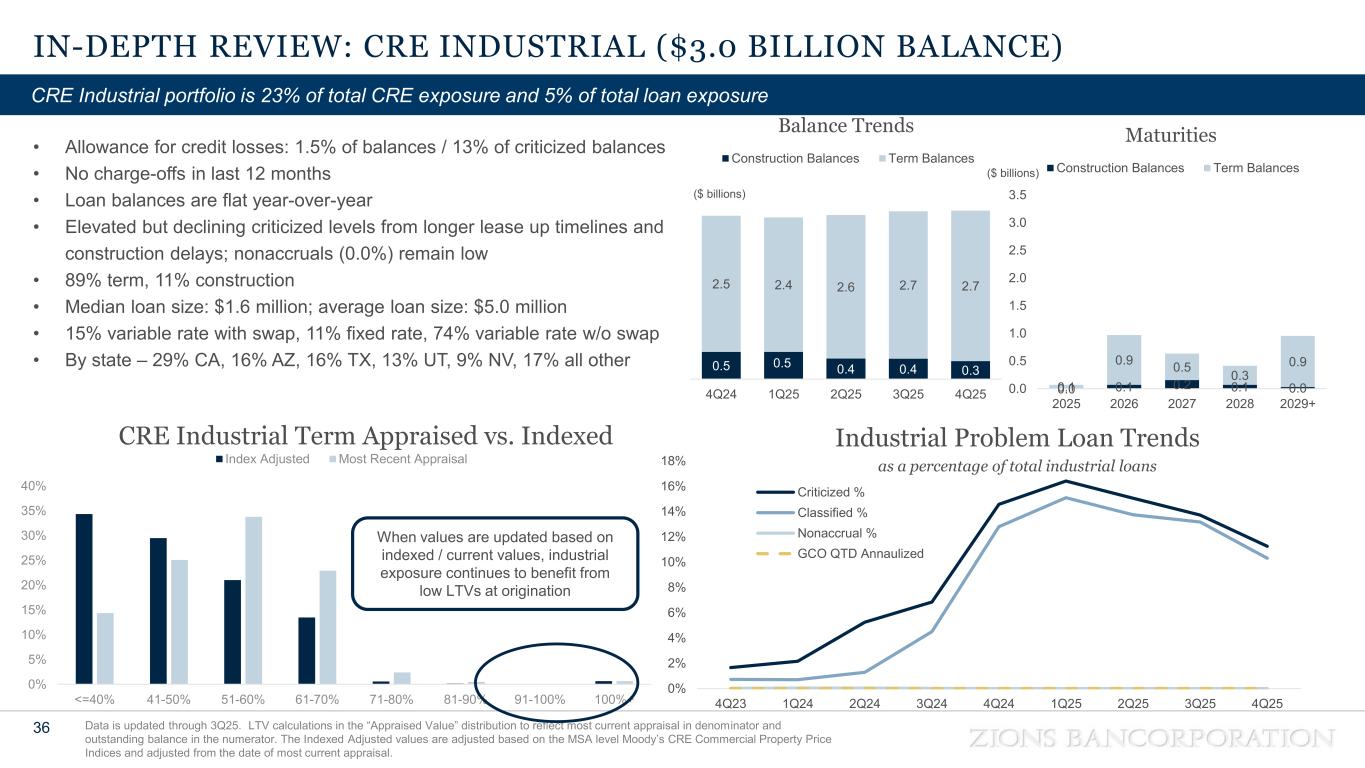
Beginning on slide seven, you will see the five-quarter trend for net interest income and net interest margin. Net interest income increased by $56 million, or 9%, relative to the fourth quarter of 2024, and increased by $11 million relative to the prior quarter. For the second consecutive quarter, growth in average customer deposits in excess of loan growth aided our ability to improve funding mix and reduce overall funding costs. As a result, the net interest margin expanded for the eighth consecutive quarter to 3.31%. Our outlook for net interest income for the full year of 2026 is moderately increasing relative to the full year of 2025, supported by a favorable earning asset and interest-bearing liability remix in addition to growth and loans and deposits our guidance assumes 225 basis point cuts to the fed funds rate occurring in june and september of this year slide 8 presents additional details on changes in the net interest margin the linked quarter waterfall chart on the left outlines changes in both rate and volume for key components of the net the net interest margin expanded by three basis points sequentially as improved funding mix and lower borrowing costs offset reductions and asset yields. Against the year-ago quarter, the right-hand chart on this slide presents the 26 basis point improvement in the net interest margin, which benefited from the improved cost of deposits. Moving to non-interest income and revenue on slide 9, presented on the left at the darker blue bars, customer-related non-interest income was $177 million for the quarter versus 163 million in the prior period and 176 million one year ago you will recall that last quarter's customer related non-interest income results included an 11 million dollar impact from the net cva loss primarily driven by update and evaluation methodology adjusted customer related non-interest income which excludes net cva was 175 million for the quarter representing a new record quarter for the company. This increased $1 million versus the prior quarter and $2 million versus the year-ago quarter. The chart on the right side of this page presents both total revenue and adjusted revenue for the most recent five quarters, which were impacted by the factors previously noted for net interest income and customer-related fee income. While not presented on this page, it is notable that on a full-year basis, capital markets fees, excluding net CDA, increased 25 percent compared to the full year 2024, driven by higher customer swaps, investment banking, and loan syndication fee revenues. As was mentioned in prior earnings call, we set an aspirational goal to double capital markets fees when Science Capital Markets was formally launched in 2020, consolidating existing product offerings and our new effective leadership with a mandate to invest in additional capabilities. We have accomplished that goal and see continued opportunity for outside growth. Our outlook for customer-related fee income for the full year 2026 is moderately increasing relative to the full year 2025. We currently expect that we will be at the top end of that guide. Growth will continue to be led by capital markets, followed by loan-related fees with broad-based growth in the remaining categories for increased activity. Slide 10 presents adjusted non-interest expense in the light or blue bars. Adjusted expenses of $548 million increased by $28 million or 5 percent versus the prior quarter and increased 8 percent versus the year-ago quarter. As presented here, adjusted non-interest expense includes the aforementioned $15 million charitable donation. When further adjusting for the donation, expenses were up 2 percent versus the prior quarter and up 5% versus the year-ago quarter. Expense increases for the quarter include increased marketing and business development expenses, higher costs associated with application software licensing and maintenance costs, and normalization of legal fees after an approximate $2 million reimbursement of attorney fees last quarter. We expect to continue to manage expenses prudently while investing in revenue generation to support growth. Our outlook for adjusted non-interest expense for the full year of 2026 is moderately increasing relative to the full year of 2025. The expense outlook considers increased marketing-related costs, continued investments in revenue-generating people on business lines, and increases in contractual technology costs. We continue to expect positive operating leverage in 2026 that we currently estimate around 100 to 150 basis points. Slide 11 presents the five-quarter trend in average loans and deposits. Average loans were flat over the previous quarter and 2.5% over the year-ago period. Ending loans increased by $615 million sequentially with strong commercial growth in our Texas, California, and Pacific Northwest markets. Local yields decreased 15 basis points sequentially. Our outlook for period-end loan balances for the full year of 2026 is moderately increasing relative to the full year of 2025 and assumes growth will be led by commercial loans, primarily in the C&I and owner-occupied subcategories, with additional growth from commercial real estate loans. Average deposit balances are presented on the right side of the slide. Relative to the prior quarter, total average deposits increased 2.3%. Average non-interest-bearing deposits grew $1.7 billion for 6 percent compared to the prior quarter. This was partially as a result of the approximate $1 billion migration into a new customer interest-bearing product—excuse me—migration of a consumer interest-bearing product into a new non-interest-bearing product at the end of the last quarter, which is now being fully reflected in average balances but also represents the success our bankers have had this quarter and executing on deposit gathering initiatives. The cost of total deposits declines by 11 basis points, sequentially to 1.56%. It is somewhat by the lag effect from time deposit repricing from benchmark rate cuts in the latter part of 2025. Further opportunity to reduce deposit costs will depend upon the timing and speed of short-term benchmark rate changes, growth in customer deposits, and market competition and market depositor behavior. Slide 12 provides additional details on funding sources and total funding costs. Presented on the left are period in deposit balances, which grew by 766 million versus the prior quarters, enabling us to reduce higher cost short-term borrowings which declined by 653 million, or 17 percent, during the quarter. As seen on the chart on the right, our total funding costs declined by 16 basis points during the quarter to 1.76 percent. The trending in our securities and money market investment portfolios over the last five quarters is presented on slide 13. Maturities, principal amortizations, and prepayment-related cash flows from our securities portfolio were $554 million during the quarter, or $288 million when considered net of reinvestment. The paydown and reinvestment of lower-yielding securities continues to contribute to the favorable remix of our earning assets. The duration of our investment securities portfolio, which is a measure of price sensitivity to changes in interest rates, is estimated at 3.8 years. Credit quality is presented on slide 14. Realized net-charge jobs in the portfolio were 11 million – excuse me, were 7 million this quarter, or five basis points annualized. Non-performing assets remain relatively low at 52 basis points of loans and other real estate-owned, compared to 54 basis points in the prior. Classified loan balances declined sequentially by $35 million, driven by a $132 million reduction in CRE offset in part by a $92 million increase in C&I classified levels. We expect that CRE classified balances will continue to decline going forward through payoffs and upgrades. During the fourth quarter, we reported a $6 million provision for credit losses, which, when combined with our net charge-offs, reduced the allowance for credit losses by $1 million relative to the prior quarter. The allowance for credit losses as a percentage of loans declined one basis point to 1.19%, and the loan loss allowance coverage with respect to non-accrual loans increased to 215%. Slide 15 provides an overview of the $13.4 billion CRE portfolio, which represents 22% of loan balances. Notably, this portfolio continues to maintain low levels of non-accruals and delinquencies. The portfolio is granular and well-diversified by property type and location, with its growth carefully managed for over a decade through disciplined concentration limits. As it continues to be of interest, we have included additional details on certain CRE portfolios in the appendix of this presentation. Our loss-absorbing capital position is shown on Slide 16. The Common Equity Tier 1 ratio of the quarter was 11.5 percent. This, when combined with the allowance for credit losses, compares well to our risk profile as reflected in performance for loan losses we expect our common equity both from a regulatory and gap perspective to continue increasing organically through earnings and the aoci improvement will continue through unrealized loss accretion the securities portfolio as individual securities pay down and mature importantly our organic earnings growth when coupled with aoci unrealized loss accretion has enabled us to grow tangible book value per share by 21 percent versus prior year and as harris noted earlier is our third year of tangible book value growth in excess of 20 percent we believe that we are nearing a position to increase capital distributions while continuing to invest in our franchise to support profitable growth fly 17 summarizes the financial outlook fight over the course of our prepared remarks for the full year of 2026 as compared to the full year of 2025. our outlook represents our best estimate of financial performance based upon current information.
This concludes our prepared remarks. As we move to the question and answer section of the poll, we request that you limit your questions to one primary and one follow-up question to enable other participants to ask questions. Vaughn, can you please open the line for questions?
Operator
Thank you. We will now be conducting a question and answer session. As stated, the format will be for one question and one follow-up. If you would like to ask a question, please press star 1 on your telephone keypad. A confirmation tone will indicate your line is in the question queue. You may press star 2 if you would like to remove your question from the queue. For any participants using speaker equipment, it may be necessary to pick up your handset before pressing your star keys. Our first question comes from Manan Gosalia with Morgan Stanley. You may proceed with your question.
Hi, good afternoon all. I just wanted to start with a quick clarification question. Just on the guide for expenses, what is the base for the moderately increasing guide? I know you have at the back of the earnings release an adjusted non-interest expense number of $2.1 billion, $2122. too. Is that the right base, or should we also be stripping out the charitable contribution for this quarter?
Yeah, I would ask you to think about the base stripping out the charitable contribution for this quarter and then rolling forward into next year, thinking about really that activity relates to, as Harris mentioned, the three years forward look about things that might otherwise be tax-deductible with the spend outlay at that time. So that's probably where I would anchor you.
Got it. So basically take that 2-1-2-2 number and then strip out the charitable contribution from that and then do moderately increasing off of that.
Yeah, that's certainly how I think about our core result, yes.
Got it. All right, perfect. And then just a broader question on expenses. You guys operate in a pretty attractive footprint, And we've seen a lot of larger banks come out and highlight growth in branches and new markets, including some of yours. Are you seeing any increased competition in your markets? And if you are, is that the driver behind some of the increased marketing and tech spend that you called out in the deck?
Speaker 2
I think, you know, we have, for as long as I can remember, we've faced new competition, particularly during good times. You know, these times are reasonably good. Sometimes they go away when times turn tough. But that is not per se what is driving our focus on. increased marketing spend. It's a revamp of some of our products. And it's a belief that after spending the better part of a decade doing a lot of internal kind of re-engineering and fixing a lot of plumbing, that we're really in a position to be able to grow at a better clip than we had been over the last decade so we you know we want to do it prudently and carefully we care a lot about the credit culture in the company etc but we're determined to actually spend more on growth initiatives and so that's what you've seen this past year you'll continue to see that the coming year it's not because of any particular new entrant or anything like that, although they're certainly there. We're in markets that are pretty attractive, and so that's wonderful, but the dark underside of that is it's attractive to folks who aren't here yet. that's always part of the story.
That's very helpful. Thank you.
Operator
Our next question comes from Dave Rochester with Cantor Fitzgerald. You may proceed with your question.
Hey, good afternoon, guys. Just want to start on the NII outlook for 26. Appreciate all the color of the rate cuts. I was just wondering what you're assuming for the funding of loan growth, if you're assuming that securities runoff continues and you fill in the rest with deposit growth, and then the magnitude of any kind of funding remix out of broker deposits or out of wholesale funding that you're assuming within that guide, any caller on any of that would Yeah, thanks, Dave.
And I can give you some broad strokes. We don't typically deconstruct the growth or have any, you know, specific guides about that moving forward to a year. But to your earlier point, certainly we see the potential for a remix on both sides of the balance sheet contributing to the NII outcome. We believe we still have some room to run with the investment securities portfolio before where we really feel pinched on the sort of how we think about liquidity stress testing and liquidity ratios. That said, I don't know that we'll continue to see it maybe as forceful as it has been in the past. We're probably getting closer to a taper point. But there is room for additional remixing out of securities into loans and or paying down broker deposits or wholesale funding. We're spending a lot of time, you know, building back from Harris's comments, thinking about growth and what growth looks like for 2026. And we certainly have some aspirations and some plans, more than aspirations, to build out our deposit base, focusing on granular deposit growth and putting marketing dollars behind initiatives that would help us drive that with the intent, of course, of continuing to pay down those broker deposits where we've had good success year over year, but also other short-term borrowings and the like. So stopping short of giving you a specific number because I'd be hazarding a number of assumptions. That is certainly where we're headed, intend to be headed as an organization.
Great. Sounds good. And then I know you guys have, we talked about this in the last call, talked about a 350 margin. We're only 19 bips away from that now. We're in 26. Is this something you think that we can hit by the end of 27?
Speaker 2
I'm not going to hazard a – put a timeframe on it. I think it has so much to do with what happens with rates, and we're going to have a new Fed share. We're going to have more going on there that I want to hazard a guess about. But, you know, as I've said previously, you know, my comment about it's really intended to suggest that I think over time that that's probably getting pretty close to what a stable state could look like for us. We've made a lot of progress. We've got a ways to go. So I continue to believe that, you know, over a longer period of time that the risk is to higher rates. And so we've reduced our asset sensitivities somewhat. We're closer to neutral right now, but I think very mindful of the possibility of higher rates and want to be careful that we can deal with that. But in a little – in a prolonged period where you have kind of moderate short-term rates, some slope to the curve, I think that's where we can get to. But before that happens in the next seven or eight quarters, it's harder to say.
All right. Great. Thanks, guys. Appreciate it.
Operator
Our next question comes from John Pamkari with Evercore ISI. You may proceed with your question.
Good afternoon. On the loan growth front, I appreciate the moderately increasing guide. Underneath that, could you help unpack it a little bit in terms of what type of dynamics you're seeing on the loan growth front? Are you seeing demand strengthen? And, you know, are you seeing some pull through in terms of line utilization and are any of these growth initiatives that you just discussed, Harris, in response to the question, is that banker hiring that in certain areas that can drive some of this growth?
Speaker 2
Yeah, I mean, we've hired some really good bankers, particularly in the California market, but elsewhere as well. We are very focused on small business lending. That's really central to our thinking about growth. Banking smaller businesses, they bring great deposits. We think that our history and our organizational structure and our people are really geared toward that kind of business in a big way. We've seen this past year a near doubling of the number of SBA 7A loans that we made, about a 53% increase in dollars produced. I expect that we'll continue to see very strong growth in that category. I mean, we're putting training dollars and marketing dollars and a lot of focus into that. It's not just the SBA program, but just banking smaller businesses generally. And so if there's a particular sweet spot for me it's kind of watching what happens there that you know a dollar of growth there is better than typically than a couple of dollars of growth in a lot of other places and so it's not always just the percentages it's kind of the quality I mean we're really trying to build a balance sheet that that is more productive and it's growing and serving more customers at the same time. So that's anyway that's you know in a nutshell how I think about it.
Speaker 14
Hey, John, this is Scott. I would just add to that that similar to what I said last quarter, you know, the growth is really going to come in C&I and owner-occupied. We do think we're going to see some growth in CRE. You know, our goal for as long as you've been covering us has been that we want to grow CRE a little less than we're growing the overall portfolio. And we've fallen a little short on that recently. But I think you'll see some CRE growth where we haven't seen much in the past. I think our municipal business and our energy business are two businesses that have some nice upside potential and they've been a little flat. And so clearly, you know, the real estate, the sentiment about CRE and tariffs and economy, you know, has caused the whole industry to see sort of sobering loan growth numbers. But I think we're well positioned as business sentiment improves for the reasons Harris said, but also our, this is going to sound kind of squishy, but it's true. Our call programs are more energized than ever before. And this advertising spend and marketing spend that Harris referenced, it's not just incrementally. It's not just sort of a sequential thing. I mean, it's a significant change, and it's very targeted to small and medium-sized businesses, granular deposits, this SBA initiative that Harris mentioned.
Speaker 2
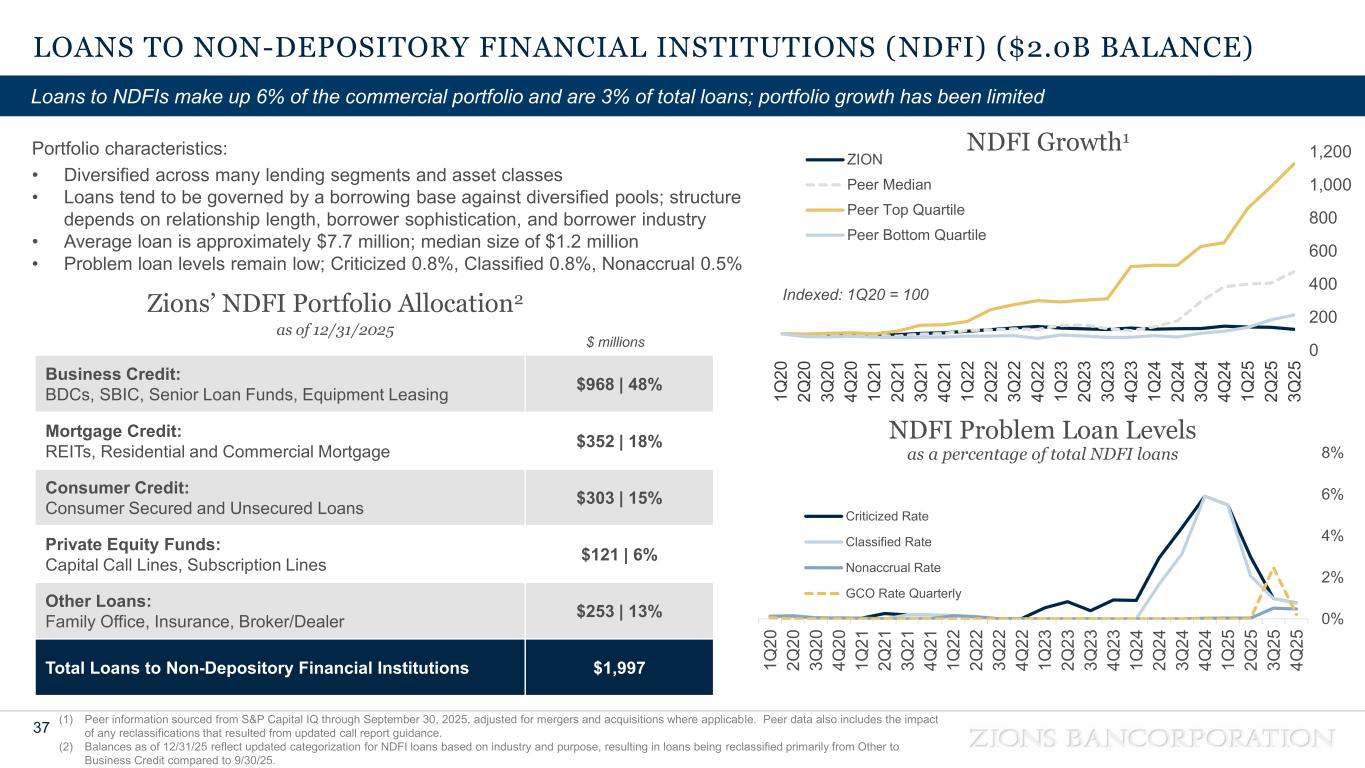
I'd add one other thing. And that is, you know, if you look across the industry, a lot of the commercial loan growth has come out of increased exposure to the NDFI sector. And notwithstanding having stepped on a landmine in the fourth quarter, we have not been growing that portfolio and don't really intend to in any kind of meaningful way, any deliberate way. And so, you know, in a relative sense, that's actually kind of a headwind comparatively to Pierce. So my hope is that we can actually make up for that, again, in some of these areas we've been talking about, small business. We will have some CRE growth, and we'll probably see a little bit of municipal growth, but a lot of it will be commercial.
And just underscoring what both Harris and Scott have said and Bridgie back to Dave's earlier question, it's not just the tradeoff between securities and loans or broker deposits or wholesale borrowing. It's the mix within the loan portfolio that both Harris and Scott described that will be beneficial for NII as we're seeing it. The other part that I didn't pick up in my earlier response was, and we talked about it, the terminated swap effect. Speaking of headwinds, that's been a headwind for us that's been diminishing, thankfully, over time, that as we chart the year of 2026, we see about $29 million worth of headwind associated with that, about half of what it was in 2025 as being another contributor towards a better NII outcome for 2026.
Got it. All right. Well, thanks for all that color. And then separately on capital, just want to get your updated thoughts on a potential timing of a return of share buybacks. I believe you had indicated you're kind of nearing the point where you could consider capital return an increase in it. I think your CET1 ratio, which you've been watching a little more closely, you know, increased about 40 basis points this quarter, and then your CET1 up 60 bits. And so both TCE and CET1 heading in the right direction. So curious what your updated thoughts are there.
Speaker 2
I think it's probably this year, but probably not this next quarter. In the second half, I think you'll see – I would expect we're going to be in a position to start to accelerate the capital returns. Okay, thank you. But I'm not going to give you a target amount, et cetera. At some point, in order to be positioned to do so, we'll announce something. But I don't think it's a long ways off.
Operator
Our next question comes from Chris McGrady with KBW. You may proceed with your question.
Oh, great. Thanks. Just following up on that question on the buyback, I know during the 2023 banking drama, the rating agencies got pretty loud about capital levels. I guess when you do announce or when you are preparing to announce the buyback, how important is that? And, again, is that a tangible common equity consideration versus CET1? How are you thinking about all the constituents?
Listen, clearly that's an important stakeholder for us, and we really appreciate the engagement that we get, and certainly I think they've appreciated the fact that we've been in build back mode here for a good long time. So we're not suggesting there's a wholesale change here. I think that it's more of a recognition that we're still building back on an AOCI inclusive basis to where we think peers are. It's just the timing, whether there's an opportunity to kind of change the pacing of how long it takes to converge. So as Harris pointed out, you know, it's yet to be determined. All those things are subject to OCC approval and board approval. But we continue to thank you for John's acknowledgement earlier that there's been some really good trending on this basis. We've seen that as well, and it's showing up in our statistics and how we're growing our tangible book value, all really, really positive. And when you look at that headline number, there's a lot to like on it. We still tend to screen lower among our peers that we include AOCI. So we're not giving up on this kind of tangible book value accretion path that we're pursuing. It's just a question of whether or not there's an opportunity to do something along the way while you're driving convergence.
Speaker 2
I think it's helpful that a good portion of this tangible common equity build has been facilitated by – you know, it's, it's, it's locked in place. I mean, it's, it's, it's predictive. It's highly predictable. And that, that ought to be important to rating agencies. It is to us that it's something that time takes care of as much as anything. So I, you know, I, we'll, we'll feather things in. It's not going to be a cliff event, but we're, you know, we want to continue to build capital, and we're looking at it, you know, CET1, and we think about it in a world where AOCI is included in the number, but, you know, also from a regulatory perspective, it looks like there's nothing really imminently on the horizon that would change the current treatment of ALCI in capital. So, I think we'll have some room.
Great. Thanks for all that. And the follow-up would be on the source of deposit growth. You may have touched on it, so I apologize. Ryan, about 5% non-interest-bearing growth in 2025. I hear you on the initiatives. Within your guide for 26, did I miss – what are you assuming for NIV growth or NIV mix?
Yeah. Yeah, we don't typically guide on the deposit side of that, Chris. Certainly, we just try to roll it into our NII, and now we see that holistically. But suffice to say, based upon the things that we're prioritizing for strategic initiatives, that we certainly would expect to see growth across the non-interest-bearing dimension as well as interest-bearing deposits, trying to pull those whole relationships, net new relationships into the bank. So that's where that whole growth orientation you're hearing from us, not just this year, but going into last year, putting some market dollars and some real focus behind those campaigns. In terms of the refreshing, as Harris alluded to before, of our offerings, potential to bundle products that we think are really relevant for our clients and the like.
Great. Thank you very much.
Operator
Our next question comes from Bernard Von Giske with Deutsche Bank. You may proceed with your question.
Hi, good afternoon. Maybe just following up on non-interest-bearing deposits, you know, I'm just curious that, you know, most of the growth there, the $1.1 billion year-over-year, and then, you know, the decline, $310 million sequentially, was there growth from new customer acquisitions within the consumer gold account? And can you just share now that legacy account migration has now ended? How do you expect this to trend from what you've been hearing from the branches?
Speaker 2
Yeah, there was – yeah, there has been growth, although it's – these accounts, we've opened new – these aren't just conversions of existing accounts, but new accounts, we've opened close to about 4,000 of them since we kind of relaunched this a few months ago. So I expect that number to pick up in 26. We're seeing average balances of about $10,000 per account. For established accounts, we're seeing it's about triple that. In other words, it's attracting a kind of clientele that we think actually can lead to really substantial balances. The total size of a deposit relationship in this whole portfolio of almost 50,000 accounts averages about $125,000 per customer. And so we think it's a really attractive kind of focus that a group could be focused on. And, yeah, it should help. But it also, I mean, non-inspirating accounts are also, they're subject to what happens to interest rates. A big portion of the commercial ones are supporting the provision of services through account analysis, for example. There are a lot of other things going on. They can move these numbers around, but we're trying to make sure that as we think about the long term, that we're continuing to build a really solid base of granular accounts that are smaller, they're insured, but they're not tiny. They're actually really good business. So that's what we're trying to do.
Speaker 14
And I would just add that the number Harris referenced on sort of met new kind of accounts, We're really just kicking this campaign off. We were piloting it in the second half of 25, but it's now rolling out with greatly enhanced marketing across the entire company.
Got it. I appreciate that. Just my follow-up, I think you've indicated in the past that you expect two to three base points a quarter fixed rate asset repricing. You mentioned the two rate cuts assumed in 26. Just update us here, same assumption, and if the Fed is at a rate cut pause, how does that estimate change, if at all?
Yeah, thanks, Bernard. I mean, what we're currently seeing now, obviously, with the changes we had later in the last year, we're not seeing quite that level in terms of fixed loan repricing impacts on our earning asset yields. Right now, we would say it's at around one basis point as opposed to what we were previously. And then with additional types of the future, you can imagine that it would erode that value opportunity for us.
Thanks for taking my questions.
Operator
Our next question comes from Ken Ustin with Autonomous Research. You may proceed with your question.
Hi, good afternoon. Just wondering, I know the question of tailoring has come up on prior calls, but now that there's been even more discussion from the regulatory front about the potential to either index levels or maybe even raise the bar fully. Are you thinking about anything differently with the asset base still hanging around $90 billion in terms of either future growth, investments you have to make, your outlook on acquisitions, et cetera, as we wait maybe a more formal change than we've seen in a couple of years?
Speaker 2
I think as we've seen, as we've said periodically over the last couple of years, Even without the announcement from the OCC, but with respect to their heightened expectations rule and others, I've got similar kinds of changes that have been posed or made. We didn't see the $100 billion threshold as posing any real kind of a threat. But as we've noted, because we were actually the smallest systemically important financial institution in the wake of the passage of Doc Frank back in 2011, I mean, we were subject to all the industrial strength stuff at J.P. Board and Chase Bank, where everybody else was. And so we built the capabilities, the models, not only for credit stress testing and stressing the balance sheet, but, you know, liquidity, et cetera, all of the work that went in, building sort of COSO compliant, three lines of defense, risk management infrastructure, et cetera. uh our intent is to never dismantle that we we found a lot of value in it uh i mean some of it was taken to extremes some of it was i know some of the documentation etc was uh was painful and overly expensive etc but we've maintained the capabilities and it i think makes us a stronger company and uh and so we we just don't think there's even much of a any kind of speed bump going across 100 billion um we don't feel compelled to try and boy if you're going to cross 100 you got to get to 200 or anything like that of the sort uh it's it's going to you know it's going to be about the same as crossing 80 watts which was kind of an on event so that's how we're thinking about it it's not it's not a inhibitor in terms of thinking about deals it's not a reason that we would think about deals we'd only think about deals in the event they were really uh really attractive and uh and right now it's it's it's you know i i don't know that uh we're likely to see anything and we need to improve our valuation something comes along that that is absolutely, absolutely compelling, we'll certainly consider it. We're not going to be taking pledges or paint it into a corner of thinking about things in a particular way. I hope we'll think about it as good long-term ownership of a business would. But the $100 billion threshold isn't a factor one way or the other in that thinking.
Understood. Thanks. Thanks. And, Ryan, I want to just follow up on the operating leverage point earlier. So, is it the right way to think about it? You mentioned the core base and then add back the charitable or take out the charitable contribution. That's the base in which you're talking about the 100 to 150 basis points of operating leverage?
And just the range, it's great to hear you guys focusing to the $100, $150, but what would be the difference on your expense growth? Would it just be like how revenues come out and you have some flex triangulate up and down? Sorry for that extra one.
Yeah, I think you always have to recognize that if the revenue requirement changes, you have to rethink the way that you approach your expense side of it. But I included that as part of my written remarks and spoken remarks because it wasn't obvious, of course, with our forward guidance and the words we choose, whether or not there was positive operating leverage in there. And we absolutely believe that's the case as we see it today. And that's where we, you know, if you look at what our results have been for quite a long time, you know, we've been pretty consistent in driving customer feed growth on a compound annual growth rate of about 4%. That's really what we showed up with this past year as well. And we think we see an opportunity to do a little better on that dimension moving forward, building on some of the momentum we've been having in our businesses. And that's going to be, we think, really helpful in driving some of that leverage. But we'll pay attention to expenses as we move through the year. Harris has always said we're going to run this place for the long term. We're going to invest in growth and do things that maybe in the moment don't pay for themselves. But we've had some pretty nice returns on the investments we've been making in recent years. So that's how we're thinking about it.
Okay, got it. thanks. I appreciate you pointing that out.
Operator
Our next question comes from David Smith with Truist. You may proceed with your question.
Hi, good afternoon. On credit, you highlighted an expectation for CRE classified to continue to decline. You know, there had been an uptick in C&I classified offsetting some of the CRE decline we had this past quarter. Is there anything chunky in that 92 million C&I increase this quarter in terms of like a few big particular names? And just as a follow-up, would you also expect general stability in the C&I classified size of the portfolio? Or would there be a bias towards an increase or a decrease as you see things today? Thank you.
Sure. David, this is Derek. Let me answer the second question first. Just it's hard to say exactly where the CNI downgrades may come from or improvement. It just generally depends on the economy. We do see CRE improving throughout the year. We have a good line of sight on that. We can just continue to see it taking a little longer for some companies to perform. One thing I will say, because we're not concerned with losses, I think we're going to try to retain a lot of the loans. We may be willing to carry some of the criticized and classified real estate loans a little bit longer just because they're on their way to performance and an upgrade. As far as the C&I downgrades, I wouldn't say there's anything chunky in there. It's pretty broadly distributed across industries, and it's something we're watching. Again, it depends on where the economy goes. I would point out that while we've seen the uptick this quarter in the C&I classifieds, we're actually down since year-end 2024 for C&I classifieds. So it's not jumping out as a concern at this point, but something that we're paying attention to.
Operator
Our next question comes from Anthony Ellion with J.P. Morgan. You may proceed with your question.
Hi, everyone. And a follow-up on operating leverage, you gave us the base for expenses backing out the foundation contribution. But just to clarify the base for revenue, Ryan, does the base for fee income exclude the adjusted non-customer fees? I think that was $44 million you have in the back of the press release. Yeah, can you say that one more time? Yeah, I'm just curious if you can give us the base for fee income. Right, you have some items you back out on slide five and the back of the press release. So if you can give us the base to use for operating leverage, that would be great.
Speaker 2
I think it would be the customer income.
It's hard to predict year-to-year what we're going to get on the security gains and losses, so that's kind of how we think about core expenses.
Speaker 2
What's available is customer-related non-interest income.
Okay. And then my follow-up. So from this call, it sounds like there's a lot more emphasis on growth initiatives this year, including hiring, which I fully appreciate. But you left the expense outlook unchanged. So I'm wondering if there's directionally a range you point us to for expenses within your guidance of moderately increasing.
Yeah, I mean, listen, if we first the tape about a year ago, we were coming at a time when we were keeping things, I think, pretty tight. Slightly increasing would have been more, and maybe at times slightly to moderately. We allowed that to start migrating up because of this growth agenda. So I don't know if that would point you to a specific point. We usually talk about, you know, moderately being like a mid-single-digits type number. You know, I probably just want you to somewhere to the middle of that. You know, we'll see what we get. But I really think that the intent here is to do things that feel strategic to us, And it should feel different and look different if we're successful in seeing our growth goals. But the types of numbers that we're talking about that Scott alluded to before may not be fully evident, but we have some real aspirations in driving commercial loan growth and allowing for some increased CRE. There can be some offsets there in the sense that, you know, we've talked a little bit in the past about what we're doing on our one to four family resi strategy and having more of an orientation to help her sell. So we think that there's potential for more of that to show up this year. But without that, we could really put, I think, some decent loan numbers up.
Speaker 14
On the expense guide, also, I would just say that there's, and we've said this in previous years, but there's probably about $40 million of savings initiatives in there that keep us at the expense growth rate number that we're at. So this isn't just, you know, it's just the same as last year plus a little bit more. There's quite a bit of work on continued efficiency gains and optimization, and particularly with AI and some of the things we're doing with process change and new technologies that can help us lower cost as well as outsourcing. We have a lot of levers to pull on, and that helps keep the expense number down and has for years. There's nothing new about it. Thank you.
Operator
Our next question comes from Janet Lee with TD Cohen. You may proceed with your question.
Good afternoon. For clarification on NIM, so if I look at your earning asset yields in the fourth quarter, it looks like lower rates had an impact on your earning asset yields declining about 15 basis points. And you talked about one basis point of fixed rate asset repricing lift. So if I assume, you know, two to three rate cuts in 2026, is it fair to say earning asset yields are declining through 2026 and the NIMP trajectory is really dependent on the shape of the yield curve and what you can do on the deposit front?
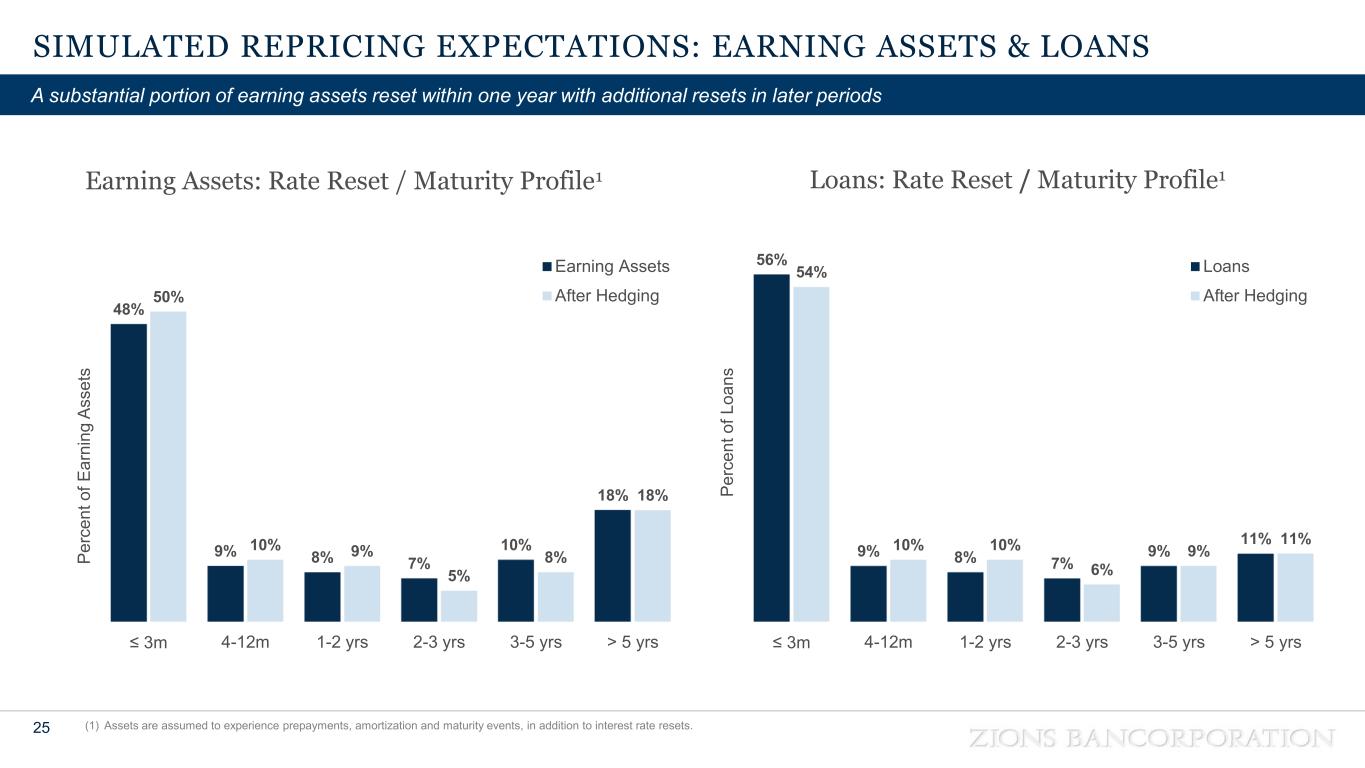
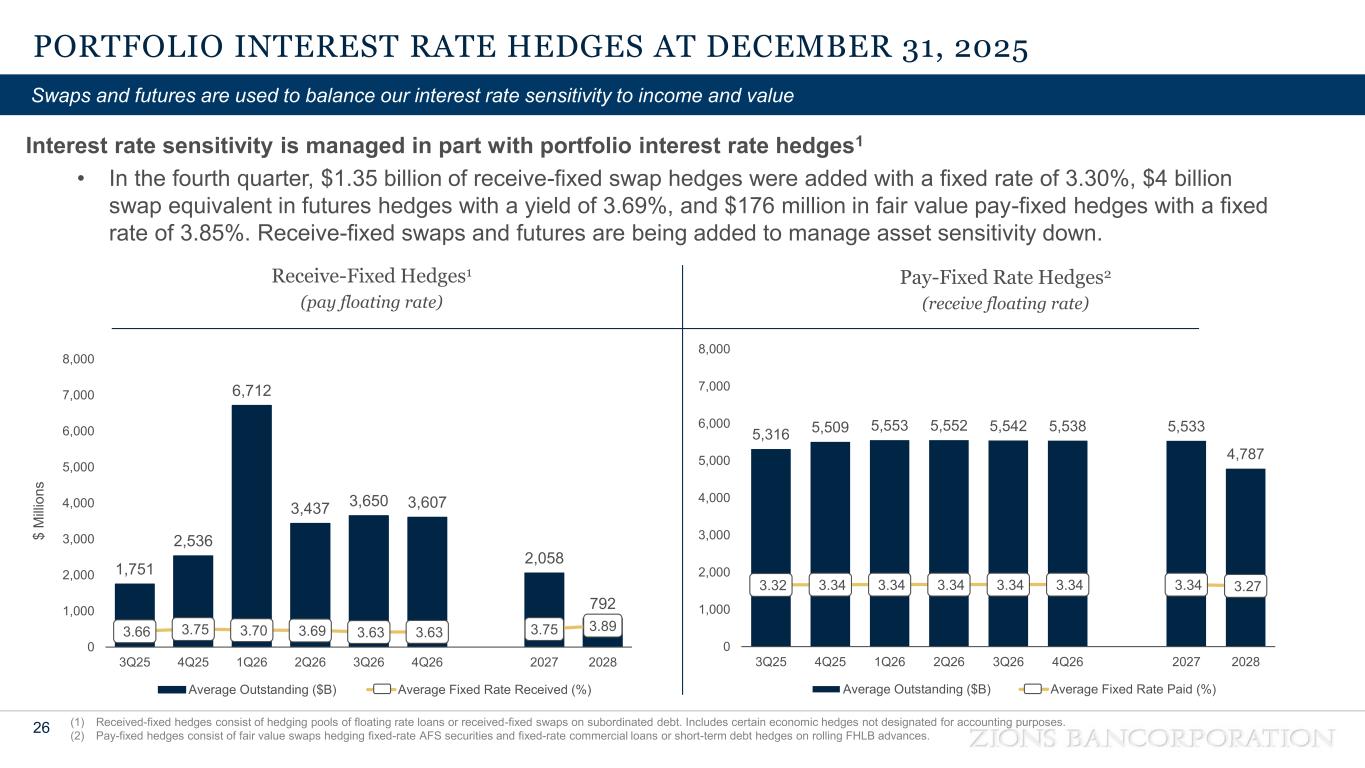
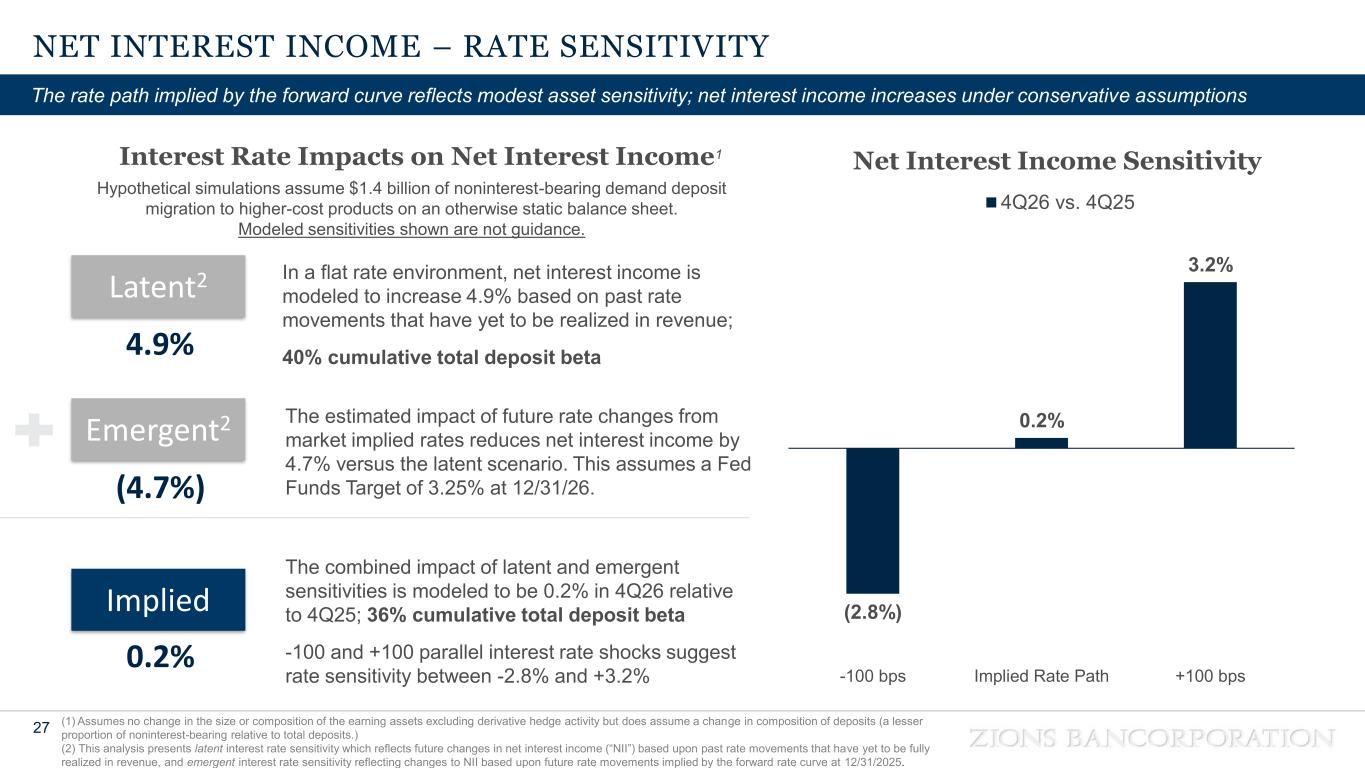
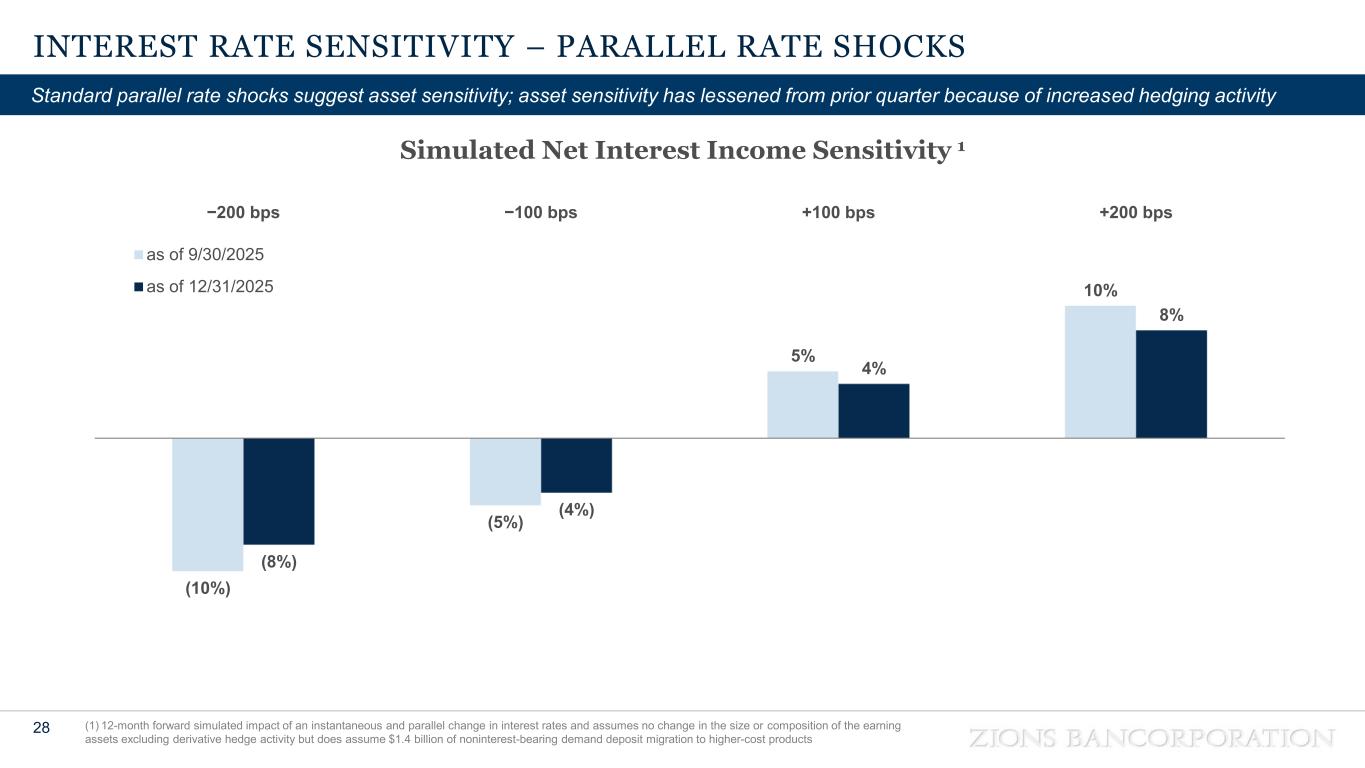
Yeah, I think that those are all fair observations. And deposit production and our success there will always have an outsized impact on how we show up on. Our success year over year has been able to manage down our funding costs more aggressively than what we're seeing in terms of on the asset side, because we've had some really nice remix that's an offset to some of the things that would otherwise play through on the resetting and benchmark rates. We haven't gotten it yet, and it's almost like I can't imagine we go through a call without saying something about late and emergent type things, But we do include some of those materials in the back. I think Harris alluded to before, we took a little bit of the edge off of some of our asset sensitivity metrics that you would have otherwise seen us maybe earlier through some hedging activities that we put on, just trying to guard against maybe some near-term rate cuts. What the asset sensitivity would tell you is that we still think there's opportunities for things to play through on a latent basis, things that haven't already found price discovery on fixed assets playing through. We have about 60 percent of our term deposits that are set to reprice in the first quarter of 2026. But as a group that's still asset sensitive on the whole, we show with the overlay of the forward curve that, again, just using a sensitivity view, that we could stand to have a better one-year quarter forward outcome, even against a backdrop of a forward curve that would imply two more rate cuts. And that, of course, doesn't take into account our prospects for loan growth and a dynamic balance sheet, the mix of our loans, how we would be taking cash flows from our securities portfolio and reinvesting them in other places, including loans and other gainful uses. So there's lots of contributing factors in there. Hopefully that gives you a little bit of direction about how we feel and how we're guiding for NII at one year hence.
Thank you. That was very helpful. Well, and clearly you've made some good strides in improving your capital levels, including AOCI accretion that has happened over the past years. Could you, and clearly you're more open to doing buybacks over the near to intermediate term. Could you give us a refresh on your M&A stance?
Speaker 2
Well, I think I did a few minutes ago. Our stance is – we don't have a stance, per se. We're not looking for deals. They come along and they make a whole lot of sense. I'd be interested. I don't see us doing anything really large. It would surprise me at the moment. and so it's just not it's not a part of our daily day-to-day kind of thinking frankly in terms of what we're really focused on so I you know I've been pretty determined to not say that we're not that we never do a deal or anything of that sort that said we're not looking to do deals to you know like as I said earlier, to become a particular size or, you know, we do things that we think are really, really attractive financially and fit, culturally, et cetera. I have to check some boxes before I'd be particularly interested.
Operator
We have another question from Manon Gosalia with Morgan Stanley.
Speaker 14
You may proceed with your question. hey uh thanks for taking the follow-up um i think you uh mentioned in the prepared remarks that you could come in at the top end of the guide on customer related fees um can you just talk about uh what the drivers are there yeah man this scott um i i think we're um inclined to make that comment principally because we're seeing really good momentum across a wide range of our customer fee product areas, and we see that carrying into the new year. So that combined with this additional advertising and these products just give us really a nice outlook, we think, on customer fee income. But it's, instead of capital markets, you know, dominating the growth in our fee income, we're very encouraged by what we're seeing across almost all of our fee income businesses. And that's a little bit different story and a little bit different guide.
Relative to what you've said before. Got it.
Manan, we appreciate you found your way back into the queue.
Operator
Our next question comes from John Arfstrom with RBC Capital. You may proceed with your question.
Hey, thanks. A couple of follow-ups. Scott, one for you. When you look in the earnings release, the FTEs are down the last couple of quarters, and you might have just touched on it a few minutes ago, but can you talk a little bit more about what you're doing in terms of AI and tech and just the general FTE outlook? Look, are you seeing real impacts, and that's what's showing up in the FTE counters?
Speaker 14
Yeah, no, thank you for that question. And, you know, you'll remember a high point for us was August, really the third quarter, second quarter of 2019, when we were at about 10,300 colleagues. We're now down below 9,300. and we think that that number will continue to go down over the next couple of years. And it's, over the short term here, outsourcing, our outsourcing strategy, we've been reengaging with that and with three outstanding partners that work with us in other ways as well. And so that will continue to have momentum. We probably, you know, a year ago, we were well below where peers are. Most peers would report that they outsource somewhere between 10% to 15% of their stated FTE base, and we were probably around 3%. So we're really just leaning into a lever that has always been available to us, but we're more encouraged and confident about it. So that's where you're going to see some of it. But the use of AI, again, we've been using AI for a long time for things like fraud detection, client authentication, product recommendations, financial statement spreading, some unstructured document processing, et cetera. And so, but the proliferation of new ideas that can remove touches, human touches from a process, can remove multiple data entry, can streamline what we do, it's significant. And we're moving kind of from an exploratory phase, which I'd say we've been in for the last year and a half, to really highly focused on a small couple of handfuls of projects where we can see the most leverage in simplifying what we're doing in end-to-end processes. So those would be the kind of automation, AI, outsourcing would be pretty meaningful contributors.
Okay. Thank you for that. And then just one more on loan growth, just the improved expectations. Are the borrowers more optimistic, or is it you becoming more comfortable or a combination of both? And then I'm just also curious kind of what's going on at Commerce Bank. The growth numbers were pretty strong there, if you could touch on that.
Speaker 14
I'm happy to take the first one. I mean, I think borrowers are business owners, CEOs. They're kind of in the same place they've been for the last couple of years. Again, between commercial real estate, industry concerns, tariffs, the economy in general, whatever happens to be in the newspaper this morning. It just has people a little uncertain, and so I think that's one piece. And the other piece is just we feel very encouraged about all the steps we're taking to grow, which we've talked about in this call.
Speaker 2
I'd say, you know, Commerce Bank, their relative size can produce more volatility probably in terms of growth numbers. You'd see in other parts of the company. So I don't think there's anything that's probably necessarily a trend there.
Thank you. Appreciate it.
Operator
This now concludes our question and answer session. I would like to turn the call back over to Shannon Drej for closing comments.
Thank you, Vaughn, and thanks, everyone, for joining us tonight. We appreciate your interest in Zion Bank Corporation. If you have additional questions, please contact us at the email or phone number listed on our website, and we look forward to connecting with you throughout the coming months. This concludes our call.
Operator
Ladies and gentlemen, thank you for your participation. This concludes today's conference. Please disconnect your lines and have a wonderful day.