Operator
Good morning, and welcome to the Agri Realty Second Quarter 2026 Earnings Call. All participants will be in listen-only mode. Should you need assistance, please signal a conference specialist by pressing the star key, followed by zero. After today's presentation, there will be an opportunity to ask questions. To ask a question, you may press star, then 1 on your touch-tone phone. To withdraw your question, please press star, then one. Please limit yourself to two questions during this call. Note, this event is being recorded. I would now like to turn the conference over to Ruben Treatman, Senior Director of Corporate Finance.
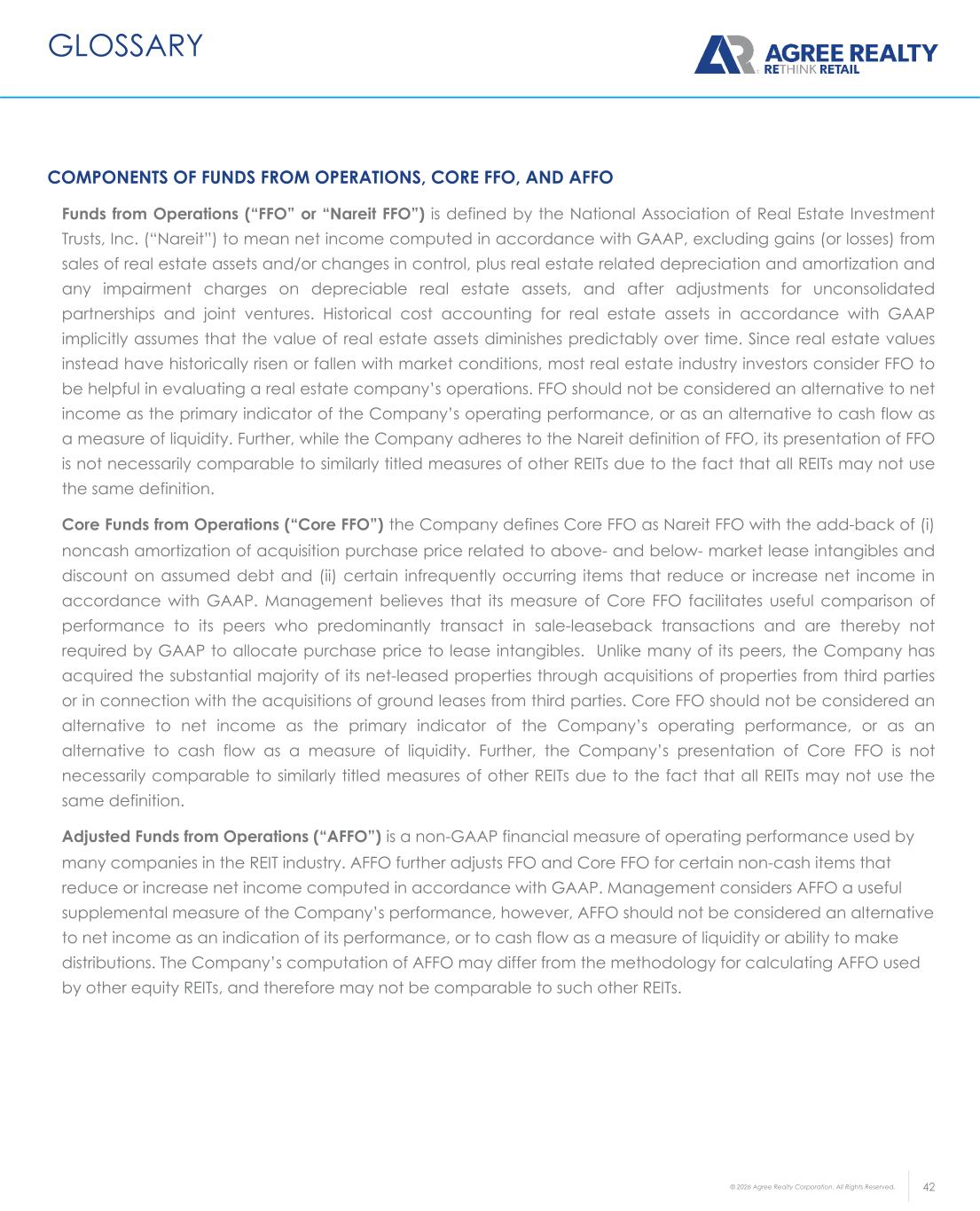
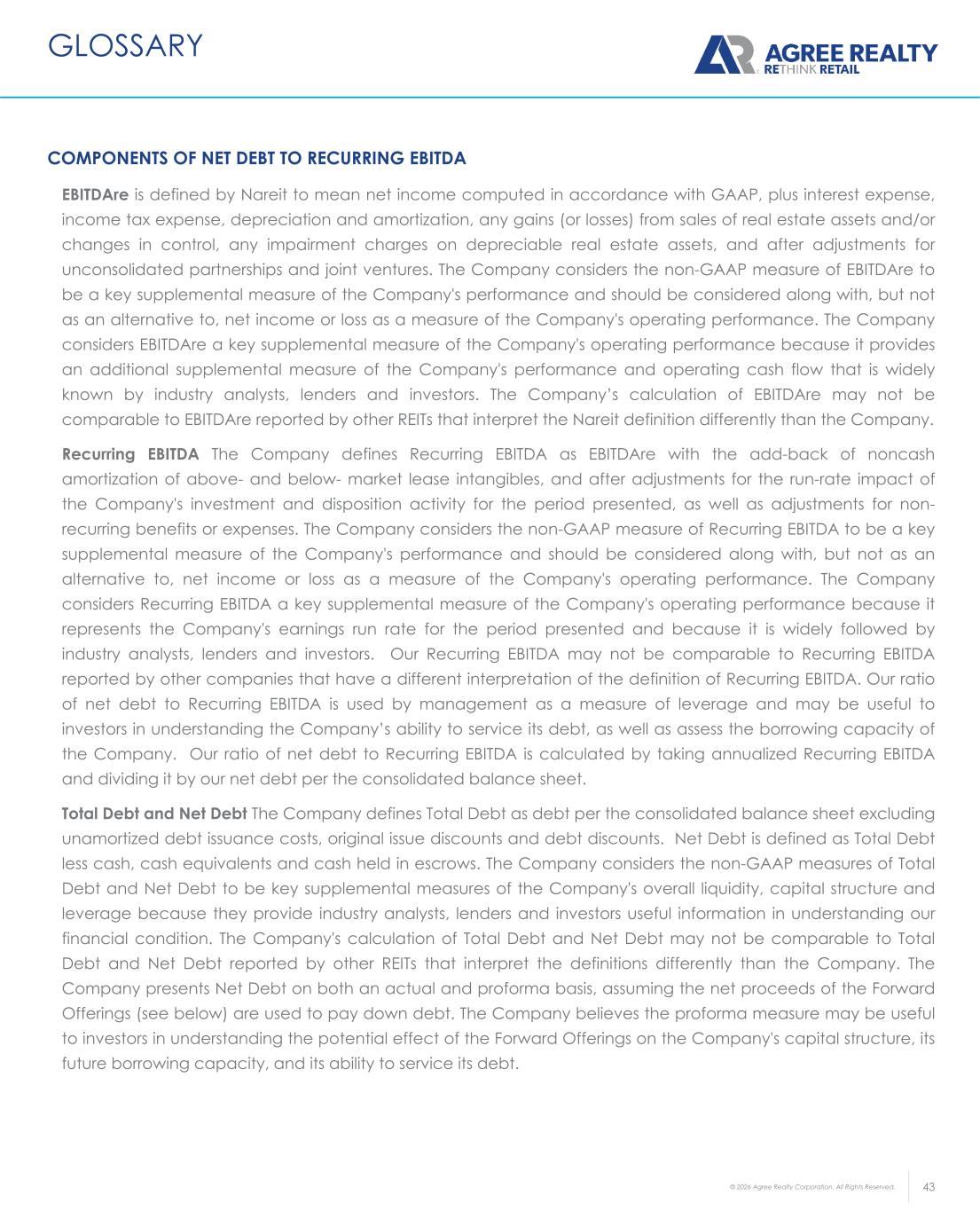
Please go ahead, Ruben. ...2026 earnings call. Before turning the call over to Joey and Peter to discuss our results for the quarter, let me first run through the cautionary language. Please note that during this call, we'll make certain statements that may be considered forward-looking under federal securities law, including statements related to our updated 2026 guidance. Our actual results may differ significantly from the matters discussed in any forward-looking statements for a number of reasons. Please see yesterday's earnings release and our SEC filings, including our latest annual report on Form 10-K for discussion of various risks and uncertainties underlying our forward-looking statements. In addition, we discuss non-GAAP financial measures, including core funds from operations, or core FFO, adjusted funds from operations, or AFFO, net debt to enterprise value, fixed charge coverage ratio, and pro forma net debt to recurring EBITDA.
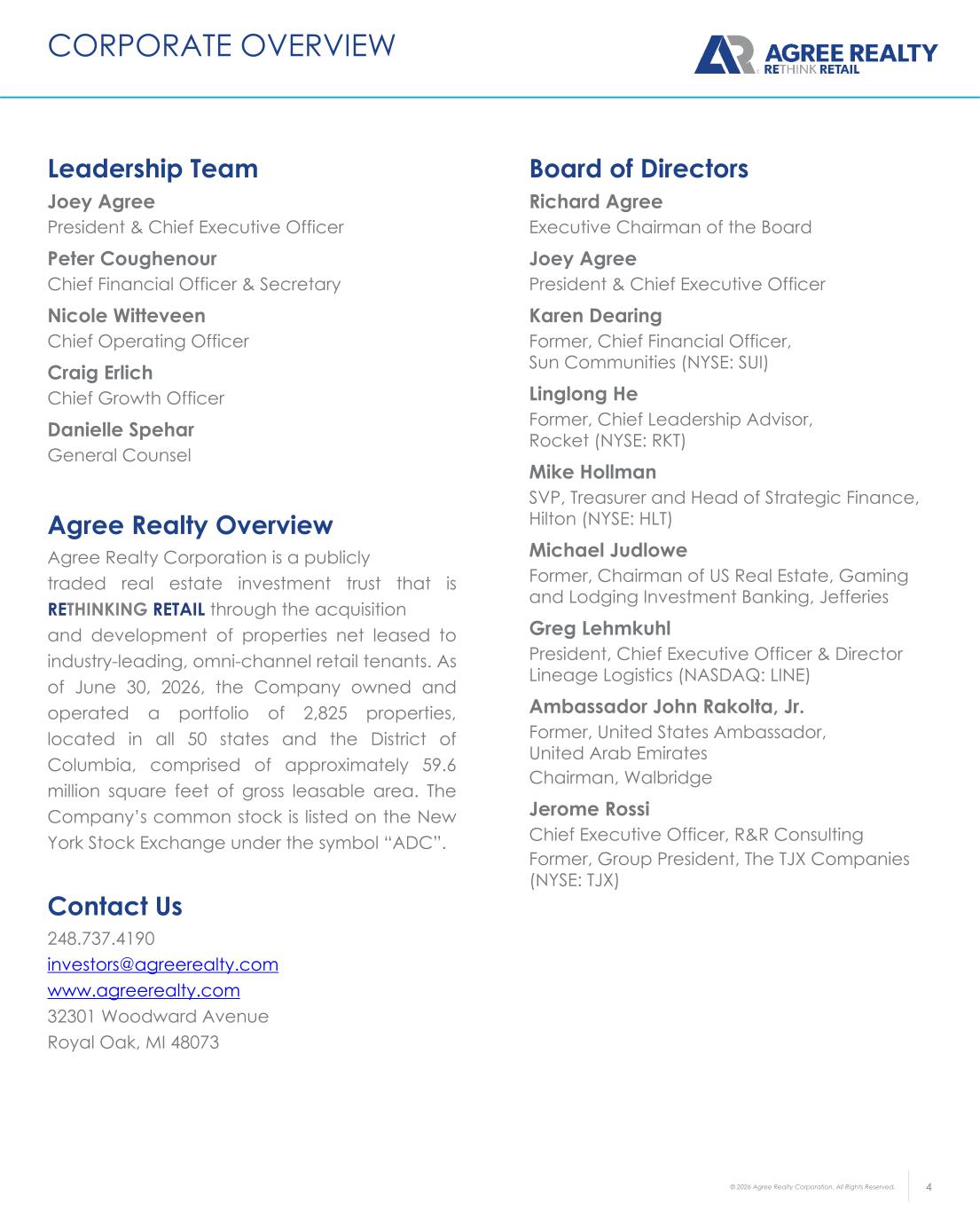
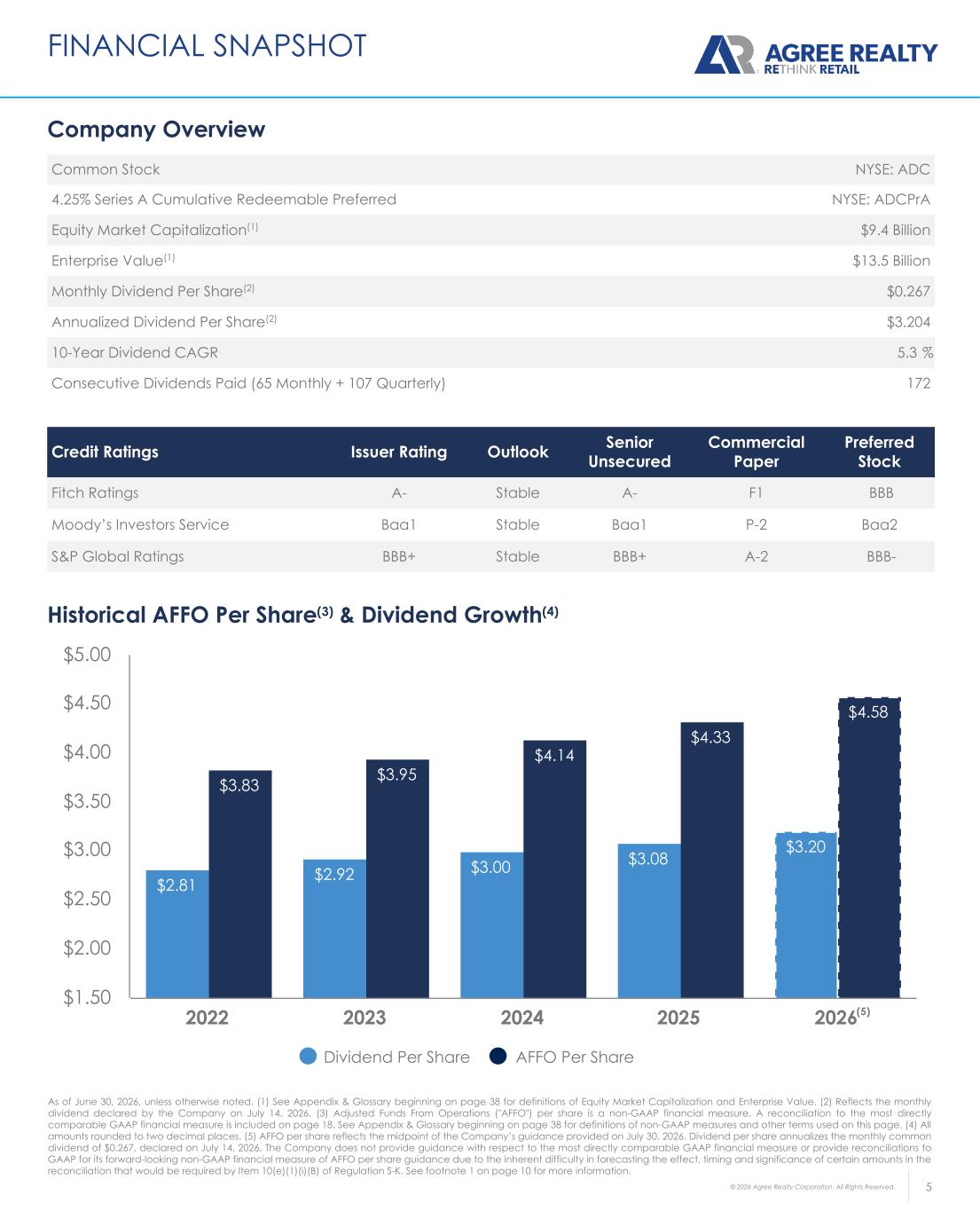
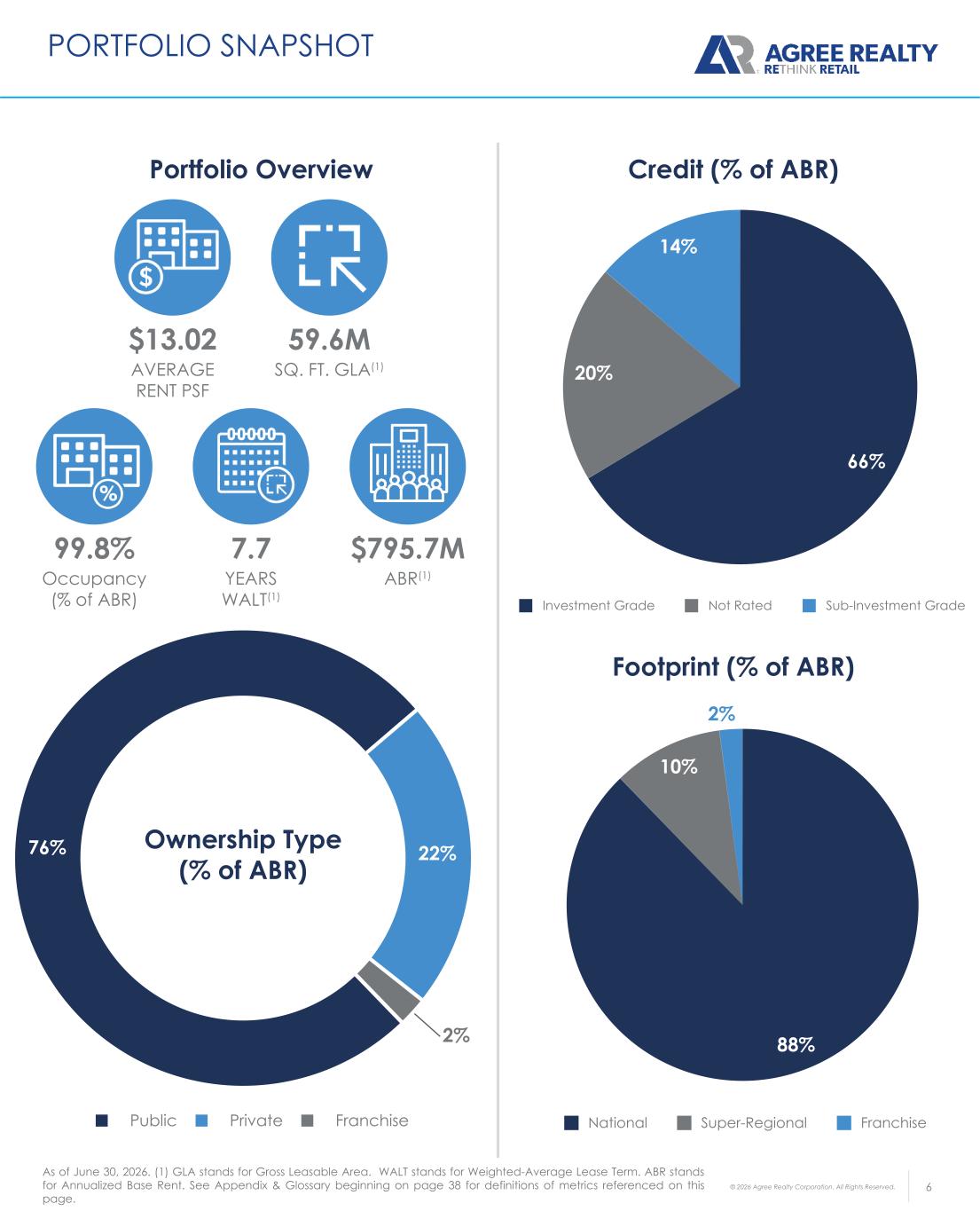
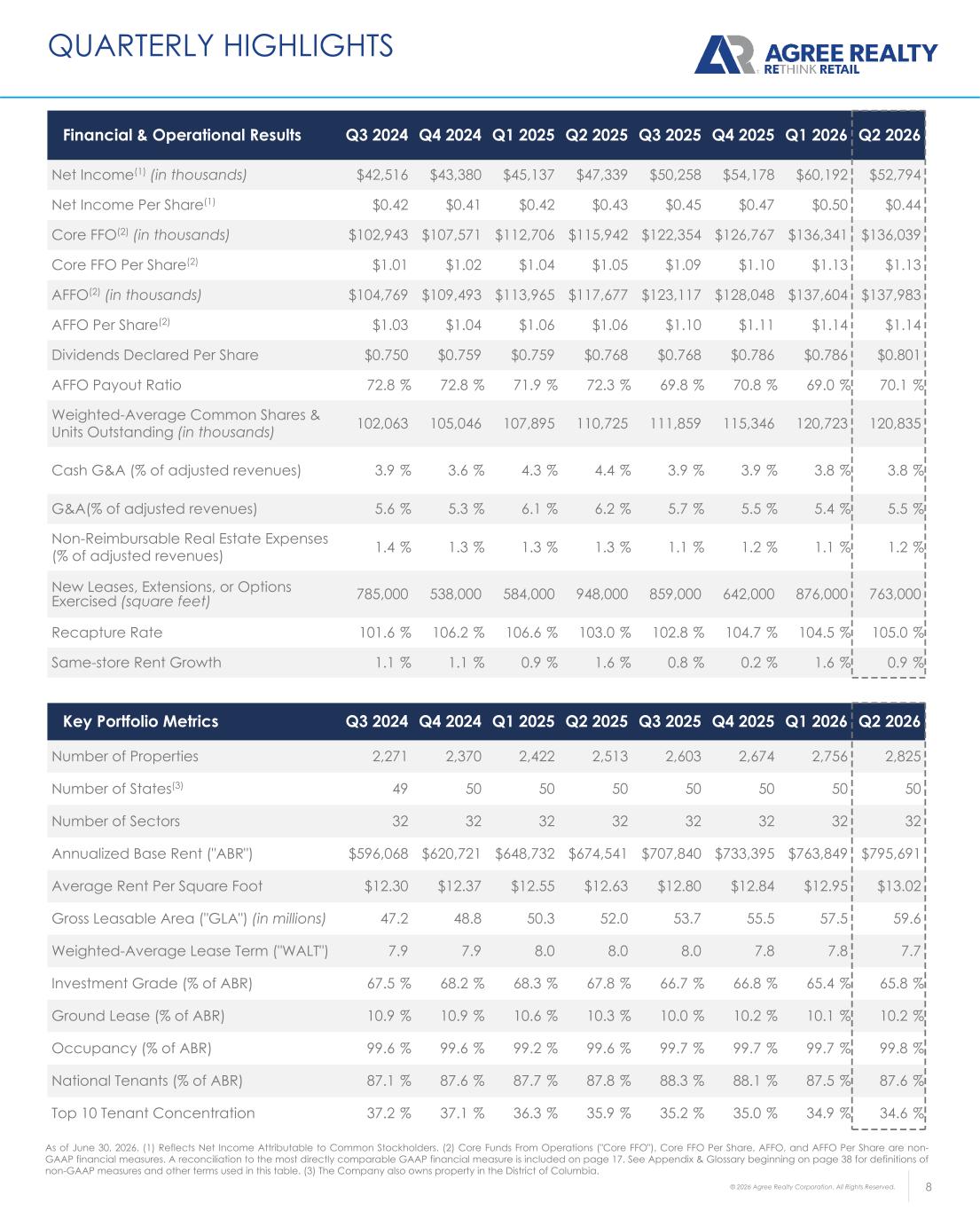
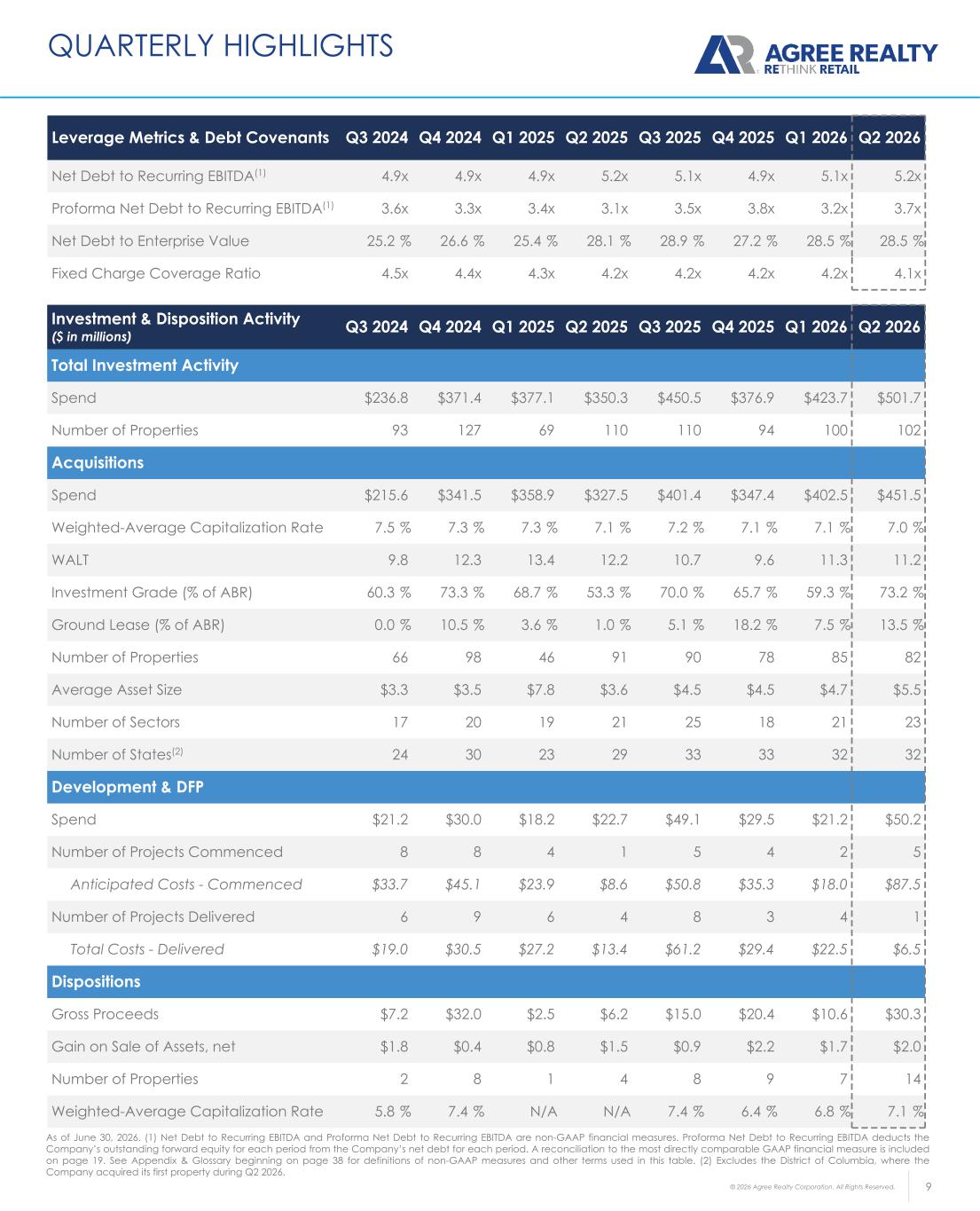
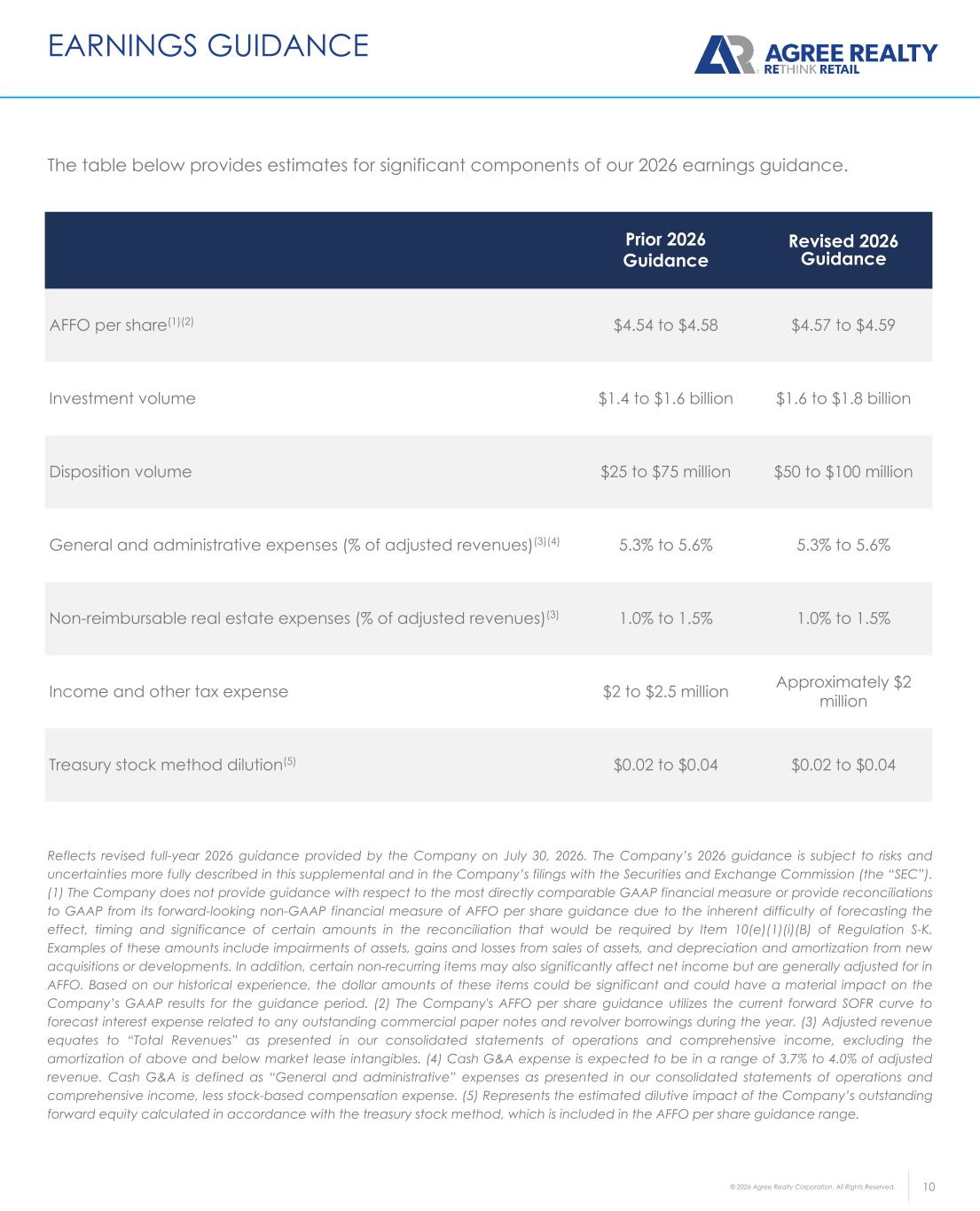
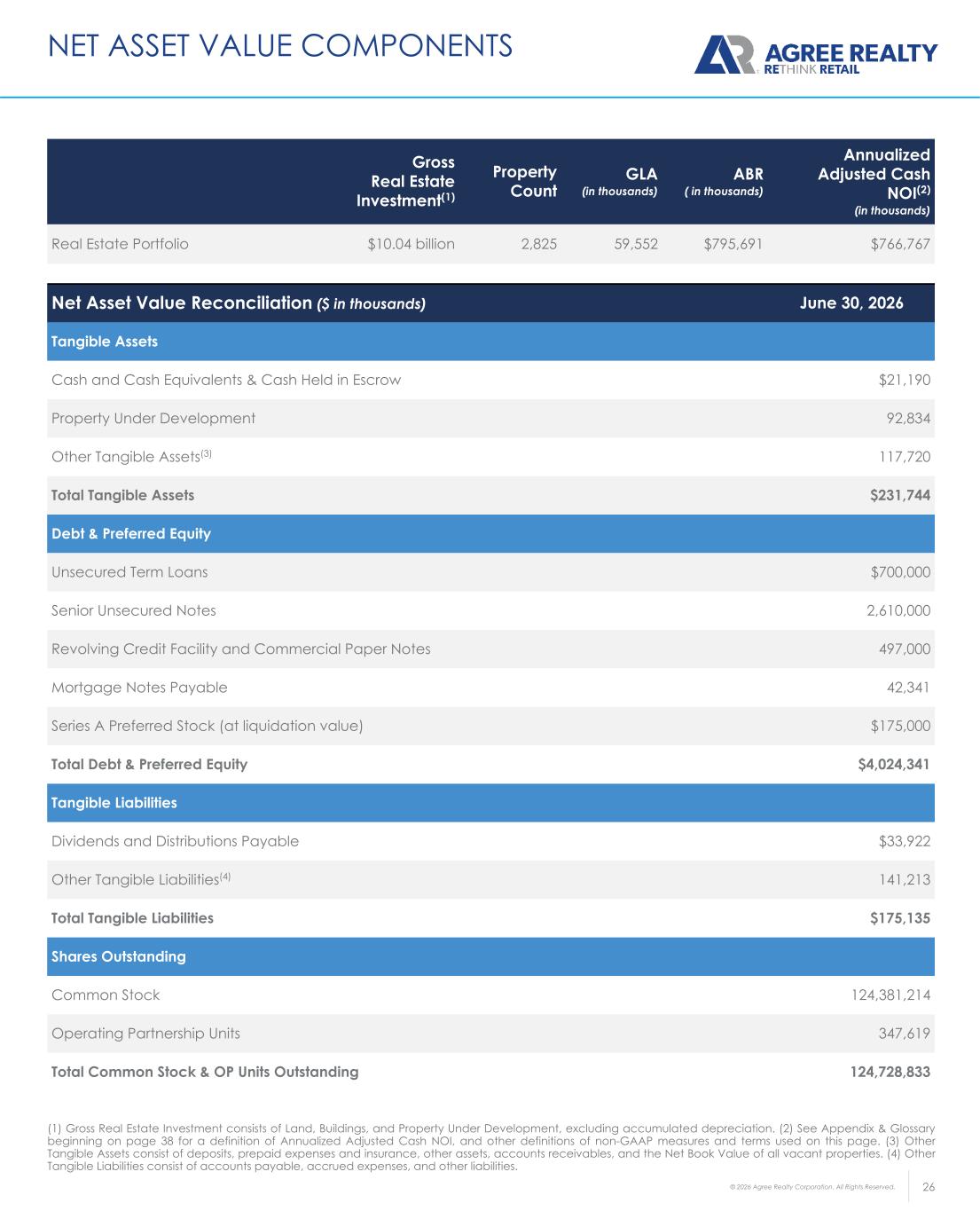
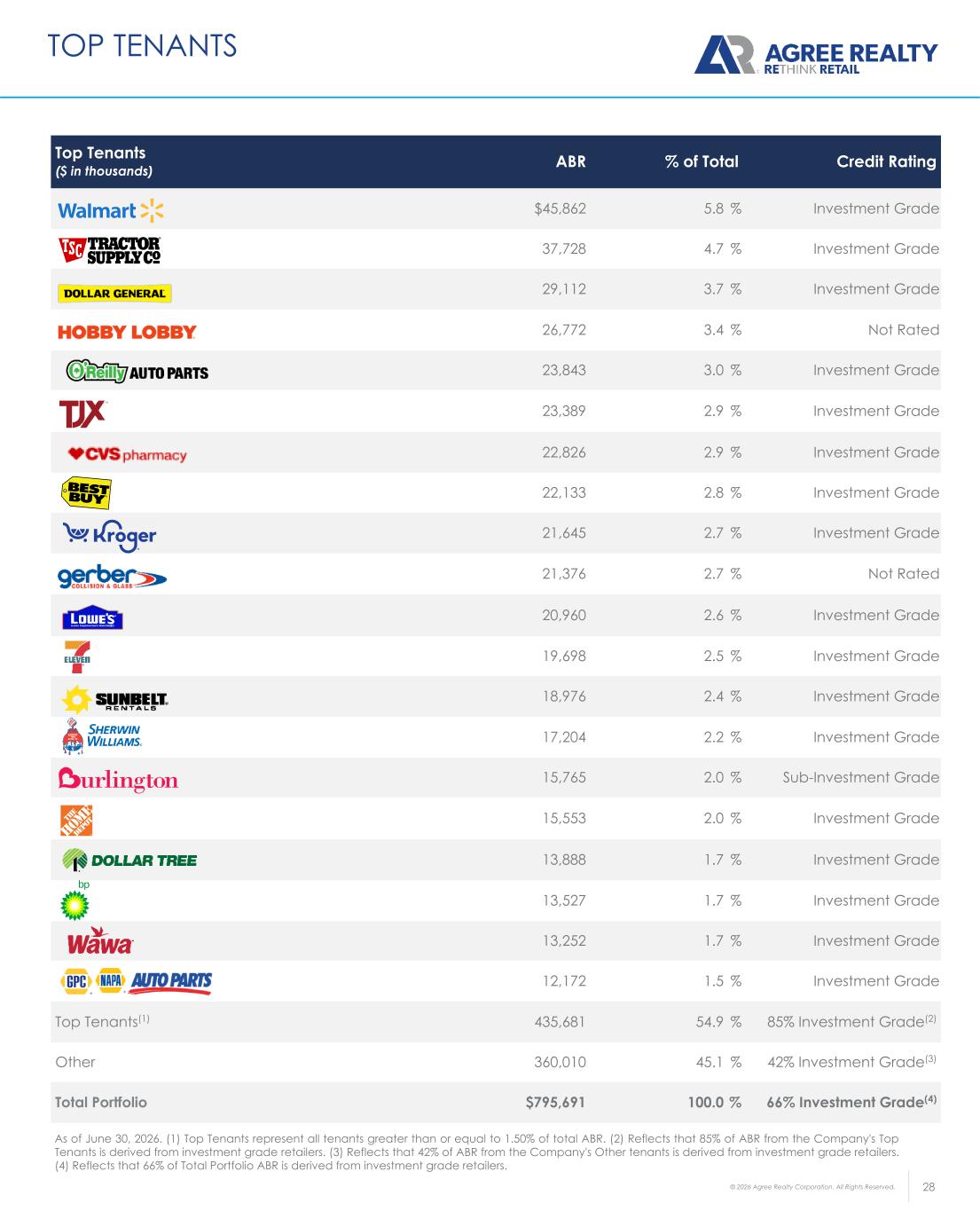
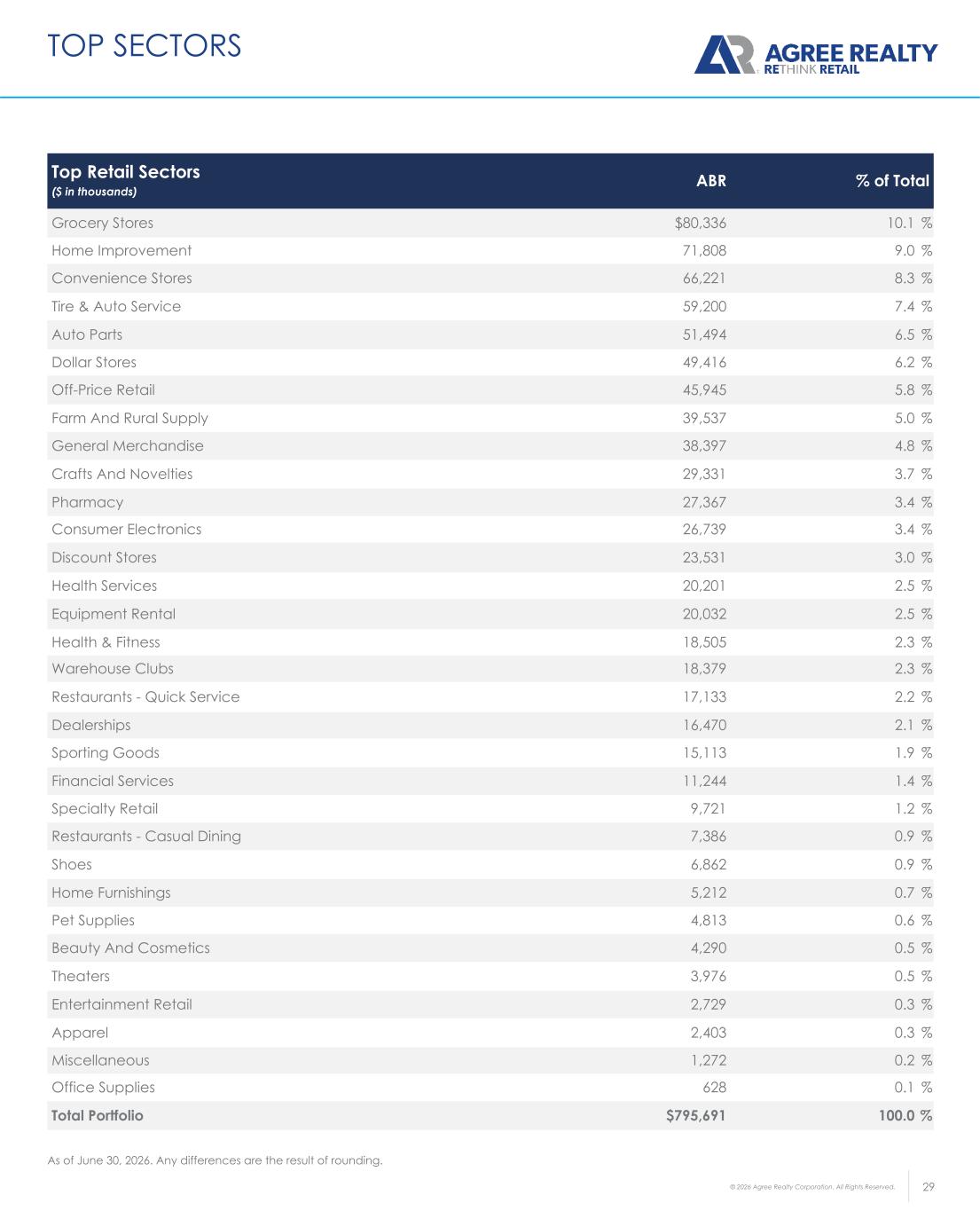
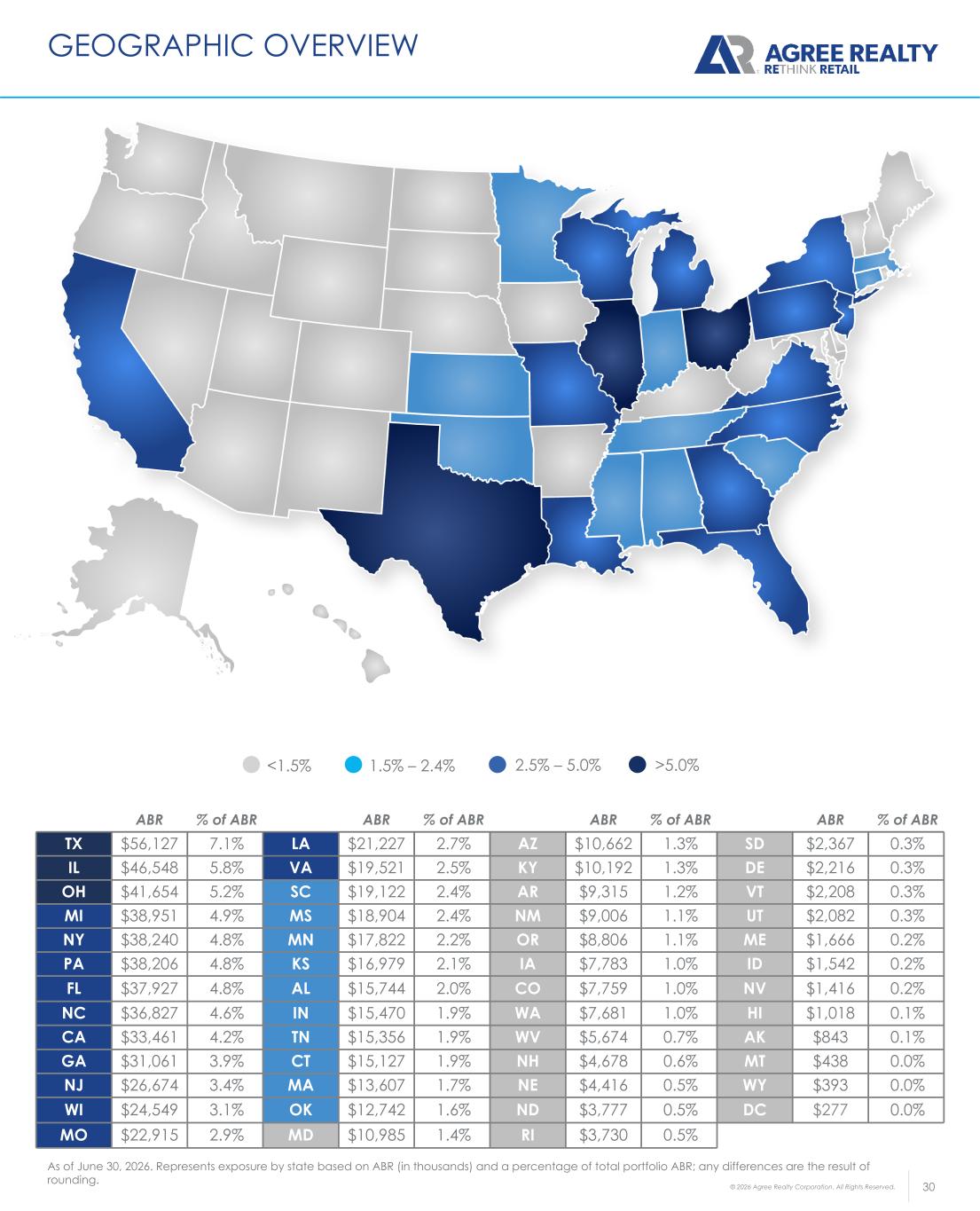
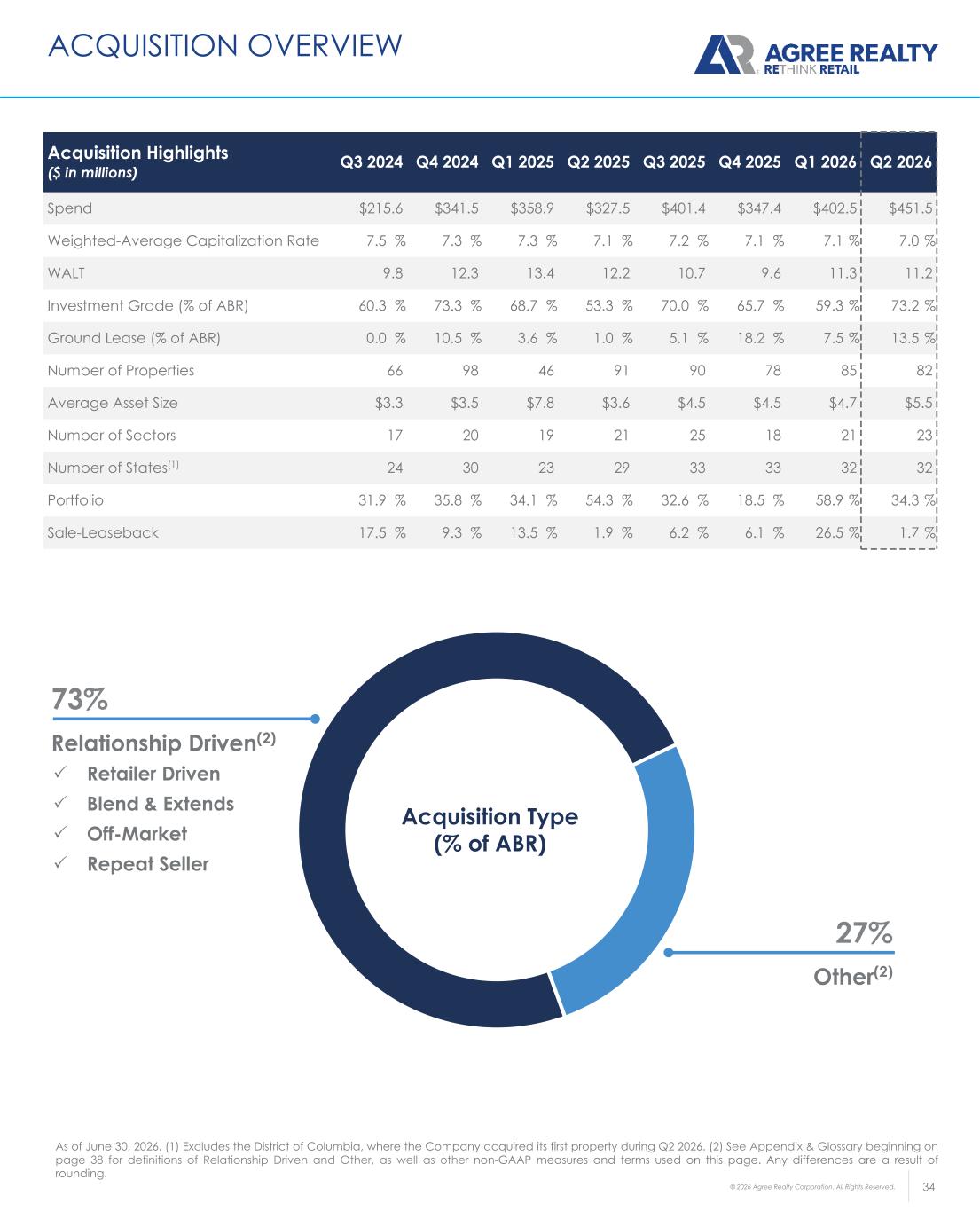
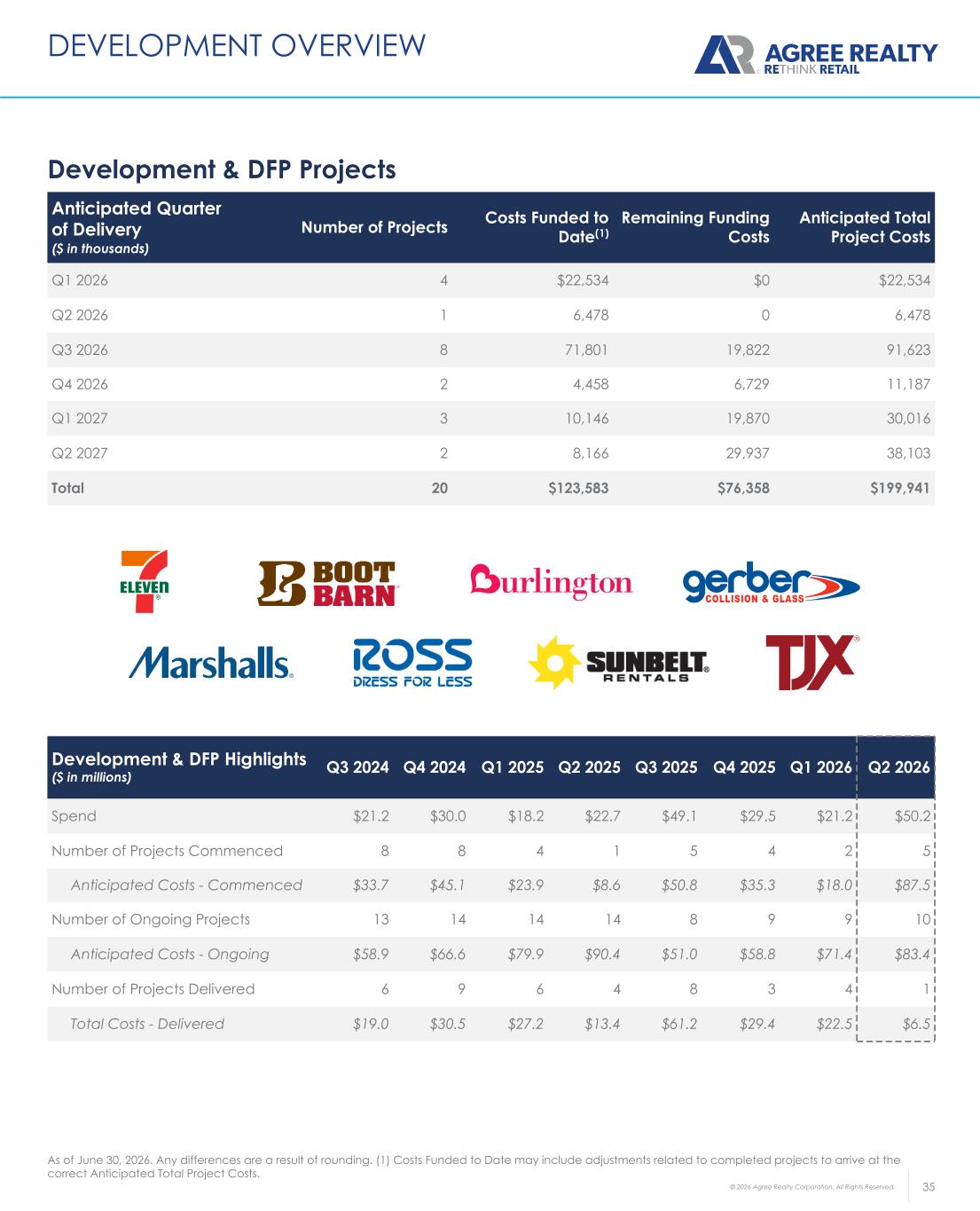
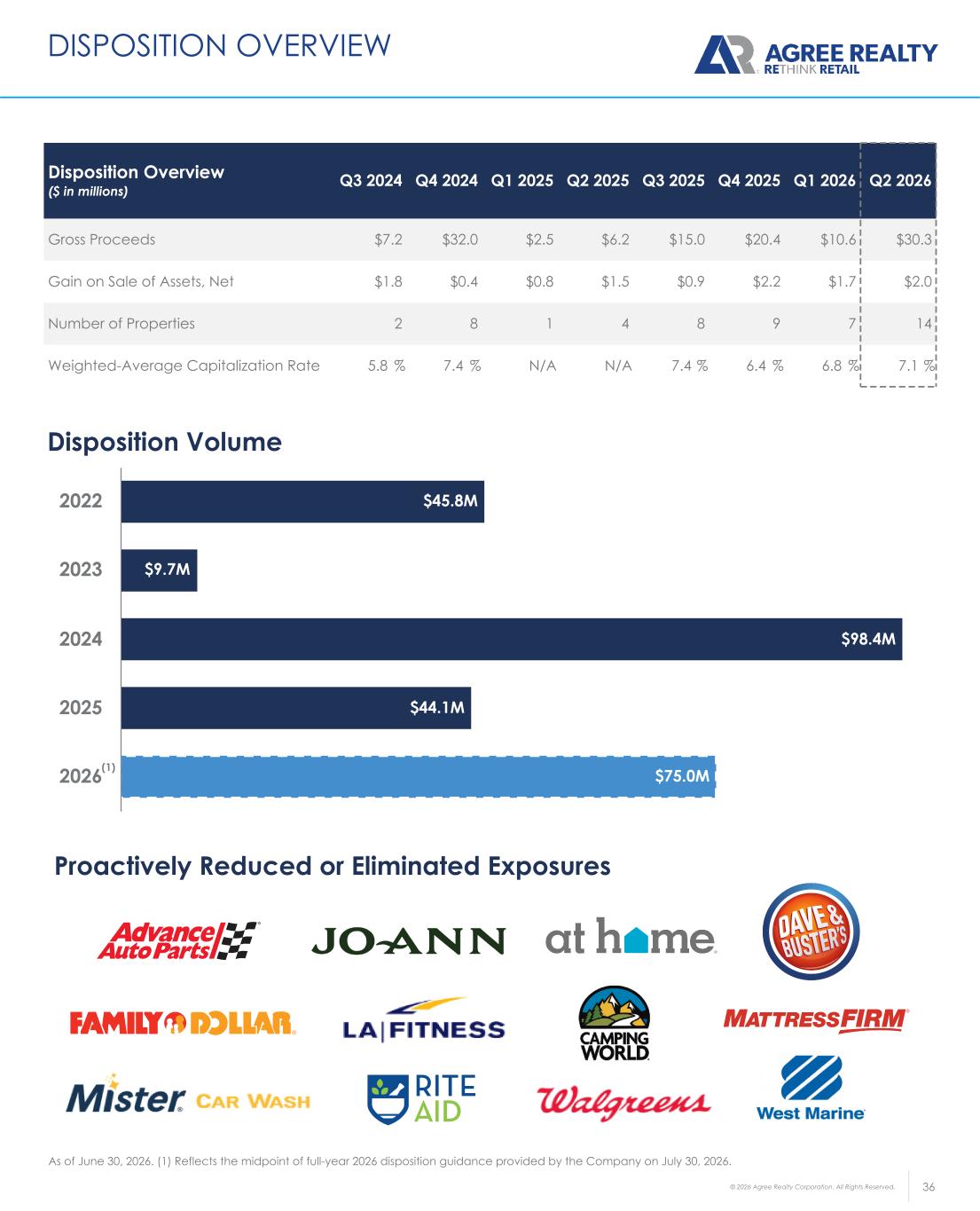
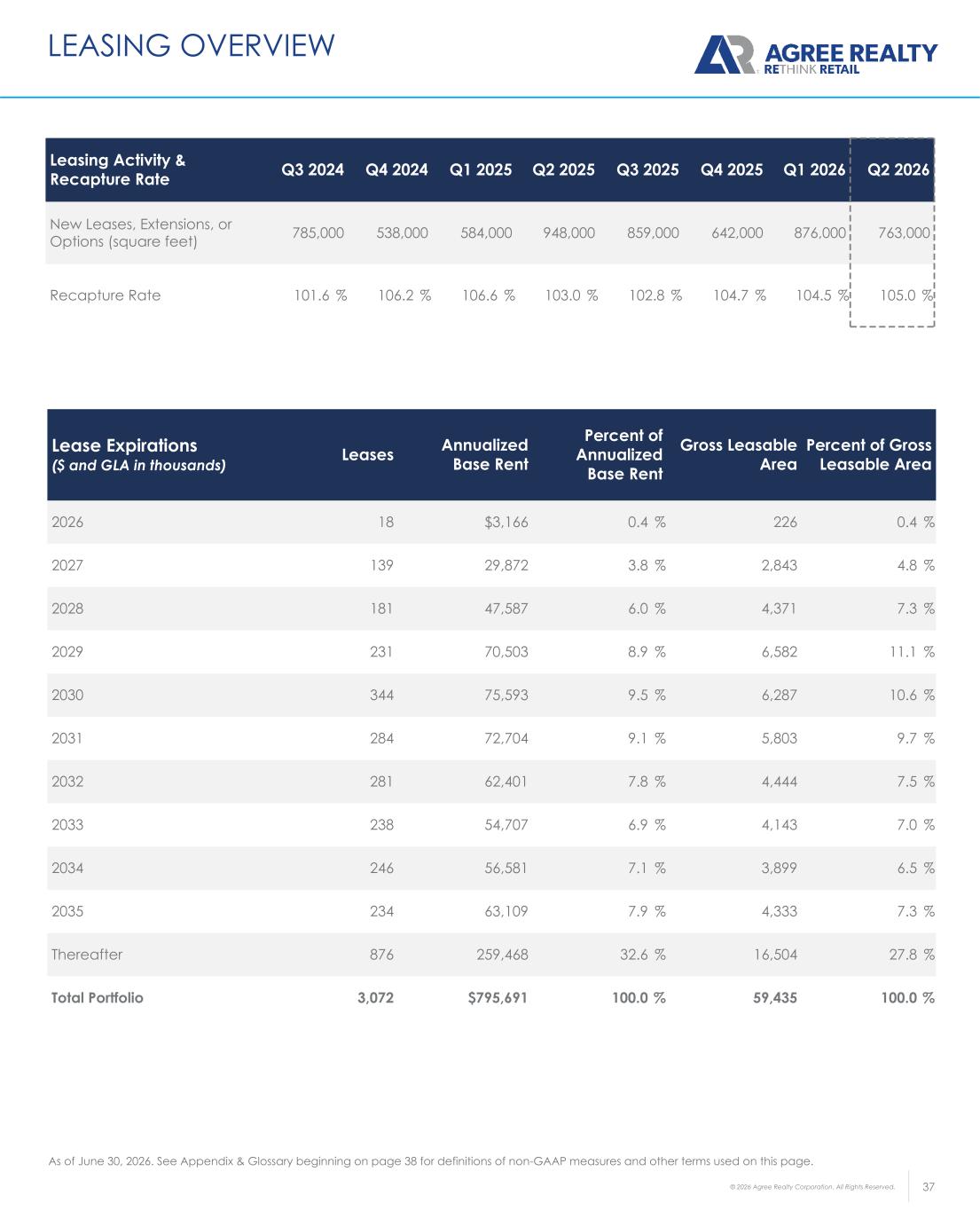
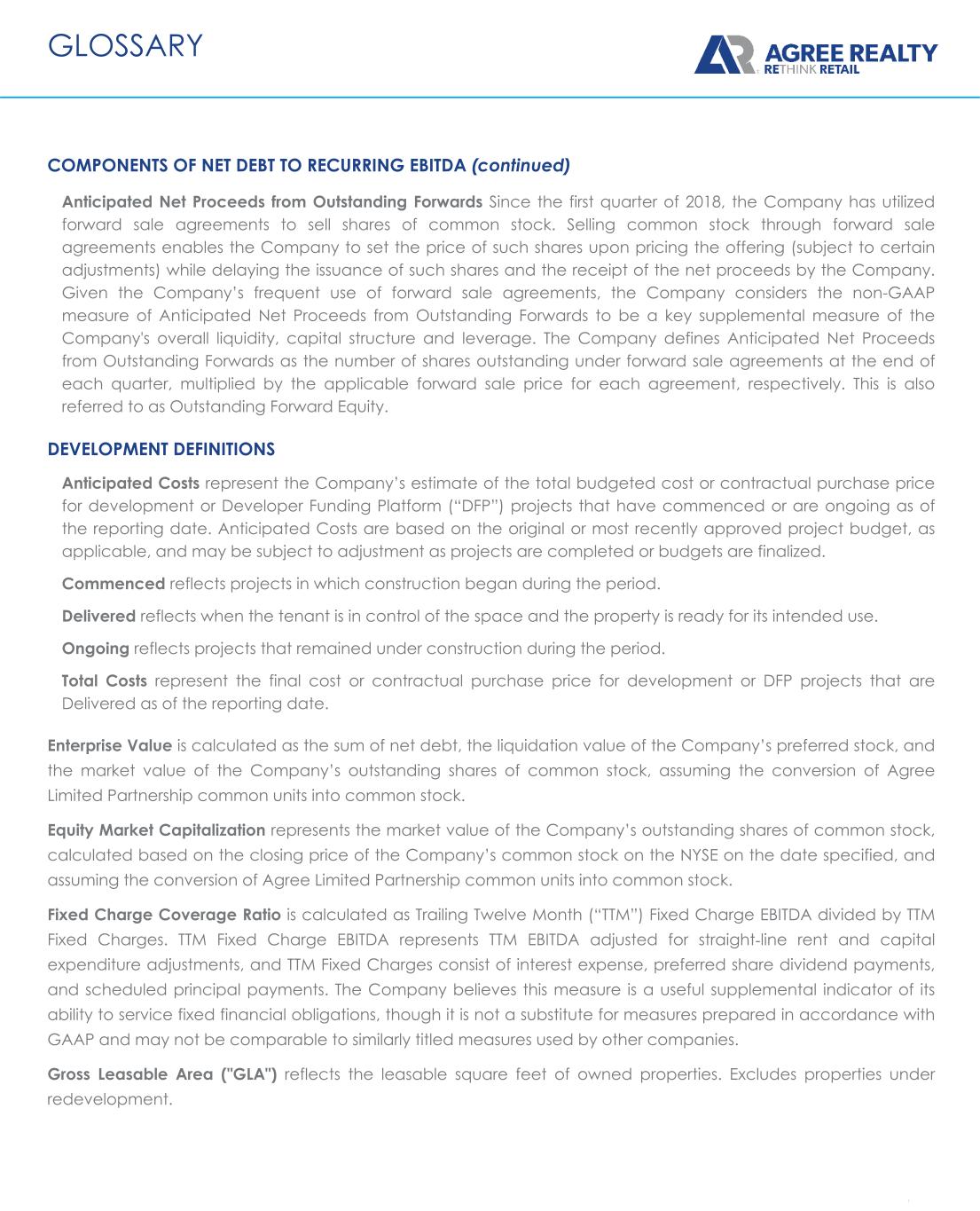
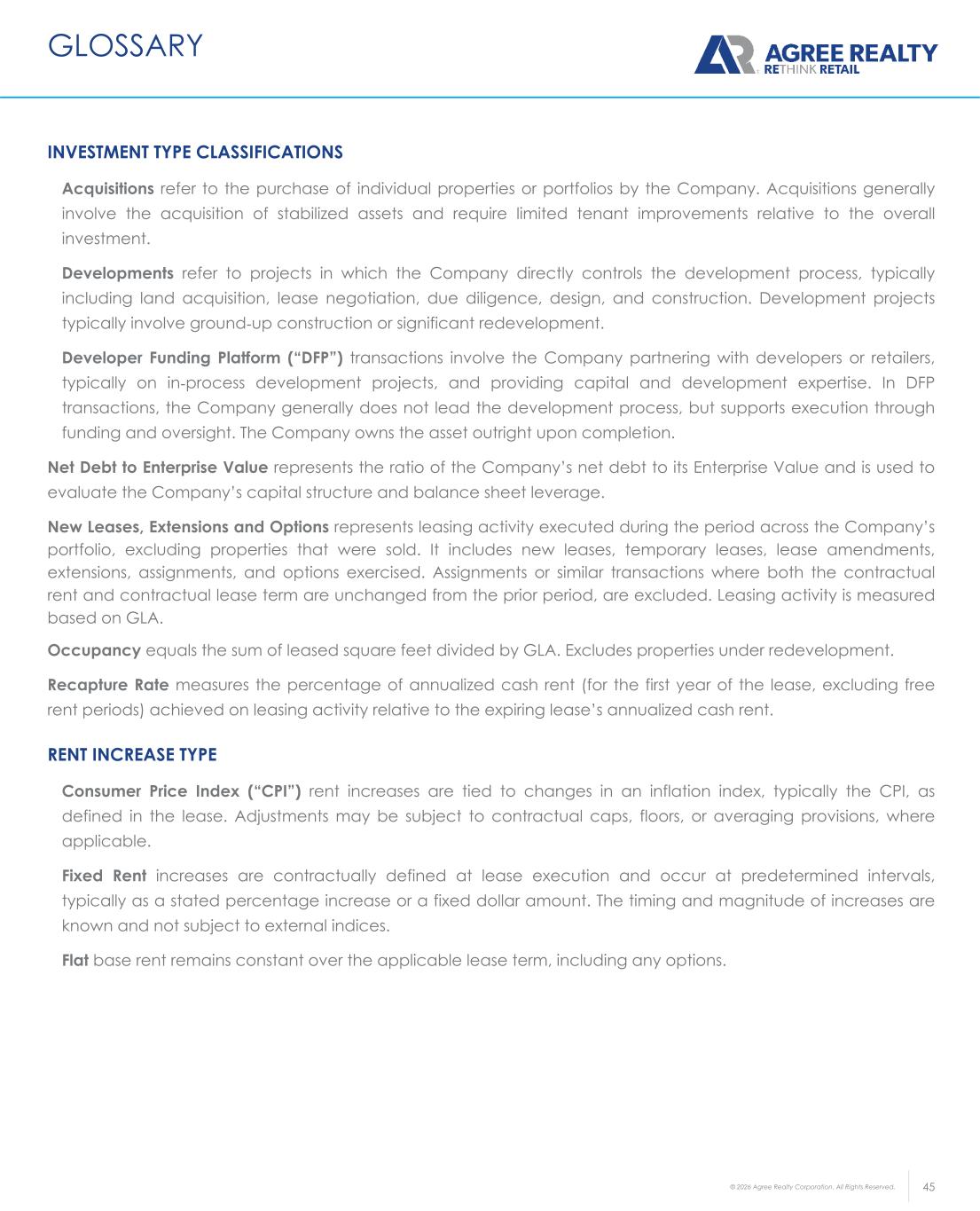
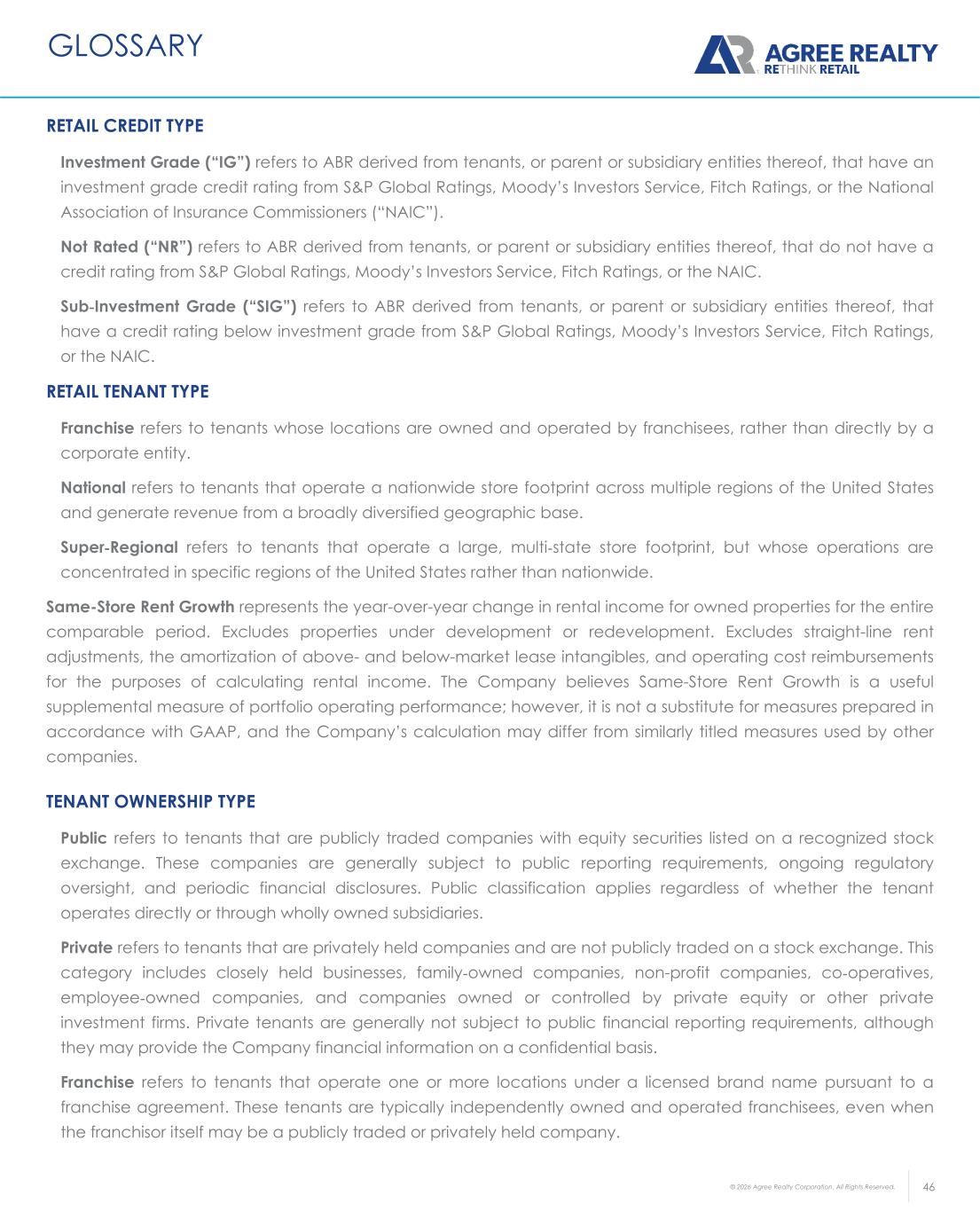
Reconciliations of our historical non-GAAP financial measures to the most directly comparable GAAP measures can be found in our earnings release, website, and SEC filings. i'll now turn the call over to joey thanks reuben and thank you all for joining us this morning i'm extremely pleased with our performance during the second quarter which represents a significant milestone in our company's history during the quarter we invested a company record of over 500 million dollars across our three external growth platforms while the numbers are quite impressive the combination of real estate attributes credit composition and lease term similarly represent the highest quality quarter in our company's history. All three of our external growth platforms have broad and expansive pipelines, enabling us to once again raise our full-year investment volume guidance to an updated range of $1.6 to $1.8 billion. The midpoint of this range surpasses last year's investment activity and represents a 24% increase over our initial investment volume guidance provided at the beginning of the year. Based on our increased investment activities and the performance of our portfolio year to date, we're raising our full-year AFFO per share guidance by $0.02 at the midpoint to a new range of $4.57 to $4.59. This translates to nearly 6% AFFO per share growth at the midpoint and underscores what has long differentiated ADC, our ability to compound consistent, reliable earnings growth while maintaining unwavering discipline to our investment and balance sheet strategies. Peter will provide further details on the guidance range and its input shortly. That said, the underappreciated and I believe more compelling story is the unique market position that we have now established. Over time, we have built durable competitive moats, deep retailer relationships, and an internal asset management platform that delivers a full suite of solutions to our partners. these advantages have created a differentiated business that has been over 15 years in the making as i have said many times spread investing is quite simple constructing a retail net lease leader with multiple growth frontiers wholly focused on a distinct sandbox of the country's best retailers was the ultimate goal we are supporting this growth by continuing to invest in the people processes and technology that underpin our platform that commitment to constant improvement has long been part of our DNA. Today is reflected in how we are leveraging AI across the organization to improve decision-making, streamline workflows, and accelerate transaction execution. While we are already benefiting from meaningful efficiencies, we believe the longer-term opportunity is even greater as AI becomes increasingly embedded throughout our platform. Combined with enhanced integration for the next iteration of ARK coming online later this year, These investments will further strengthen our operating leverage. Moving on to the second quarter in detail, we invested a company record of over half a billion dollars in 102 properties across our three platforms. This includes $451 million of acquisitions across 82 retail net lease assets, the highest level of quarterly activity since the depths of COVID. The properties acquired during the quarter are leased to leading operators in the auto parts, home improvement, grocery, farm and roll supply, and convenience store sectors. Notable acquisitions during the quarter included three Walmart Supercenter ground leases in Missouri, Ohio, and Wisconsin, a Walmart neighborhood market in Oregon, a portfolio of BP-branded travel centers, and a Home Depot ground lease to New Hampshire. The acquired properties had a weighted average cap rate of 7% and a weighted average lease term of 11.2 years. Approximately 13.5% of annualized base rents acquired were derived from ground lease assets, while investment-grade retailers accounted for over 73% of the annualized base rents acquired. During the second quarter, our development and DFP platforms continued to scale and set a company record for construction start volume. Five projects broke ground with total anticipated costs of approximately $88 million, including our seventh and eighth 7-elevens currently under construction, as well as three raw stress for less locations, two Burlington's, and three TGX concepts. Through June 30th, we have commenced more than $105 million of projects, over three times the level achieved in the prior period, underscoring our continued progress toward our medium-term objective of 250 million dollars of annual development and developer funding platform conventions in total we had 20 projects either completed or under construction during the first half of the year representing a company record of approximately 200 million dollars of committed capital we anticipate development and dfp spend to materially progress in coming quarters construction continued on 10 projects during the quarter with aggregate anticipated costs of over 83 million dollars these projects include burlington sunbelt reynolds and ross one project of sunbelt reynolds in missouri was completed during the quarter for just over six million dollars as ever foreshadowed in our prior white papers we continue to believe deeply and invest heavily in both the off price and large format convenience source sectors today we are amongst the largest owners of both in the country and have a significant pipeline of additional opportunities. On the disposition front, we sold 14 properties during the quarter for gross proceeds of approximately $30 million at a weighted average cap rate of 7%. The dispositions were primarily comprised of three Goodyear locations and four advanced auto parts stores as we continue to call our portfolio of lower-performing or attractive 1031 opportunities. I would note that none of the dispositions were of investment-grade credit and limited term remaining of approximately 6.9 years. Our asset management team continues to address upcoming lease maturities. We executed new leases, extensions, or options on approximately 760,000 square feet of gross leasable area during the second quarter with a recapture rate of approximately 105 percent. This included a Sam's Club in Maryland and a Walmart Supercenter in georgia in the first half of the year we executed new leases extensions or options in approximately 1.6 million square feet of gross leasable area with a recapture rate of approximately 105 percent we are in excellent position for the remainder of the year with just 18 leases or 40 basis points of annualized base rents maturing which is down by over 100 basis points from the start of the year Given the progress achieved year to date, our occupancy ticked up 10 basis points sequentially to match another company record of 99.8%. At quarter end, our best-in-class portfolio stood at 2,825 properties spanning all 50 states and the District of Columbia. The portfolio includes 268 ground leases comprising over 10% of annualized base rents, and our investment-grade exposure stood at nearly two-thirds of our portfolio. With that, I'll hand the call over to Peter to discuss our financial results for the quarter. Thank you, Joey.
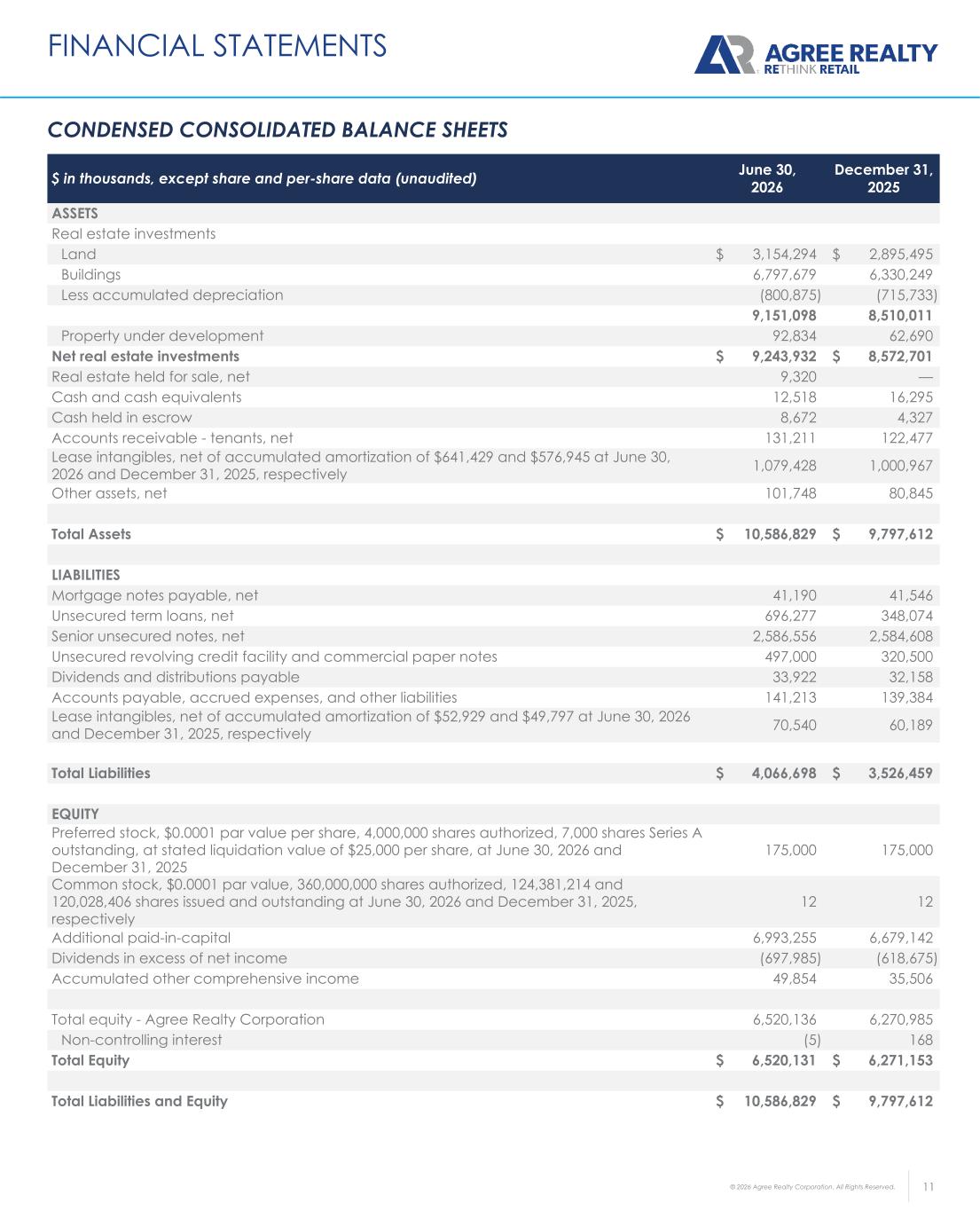
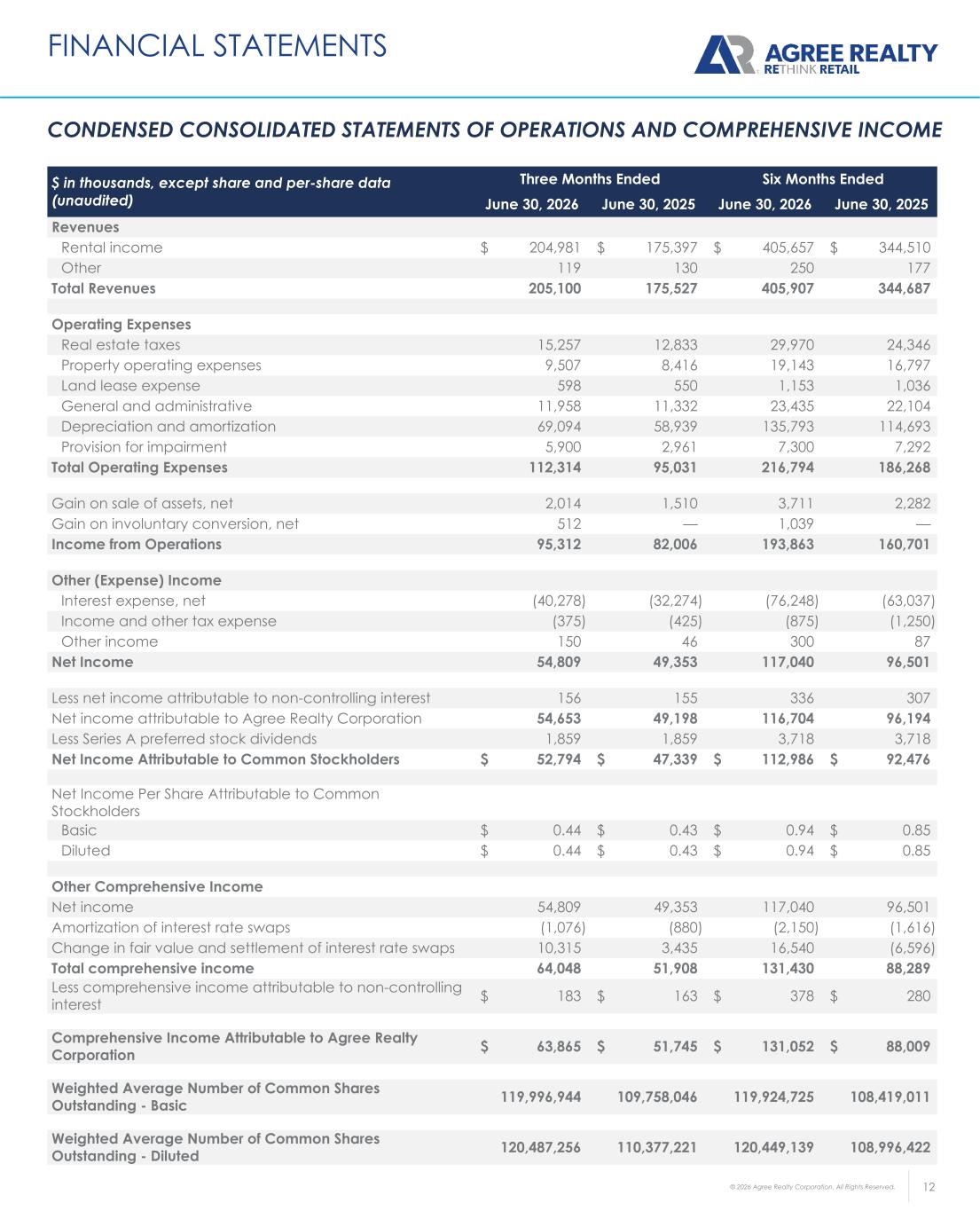
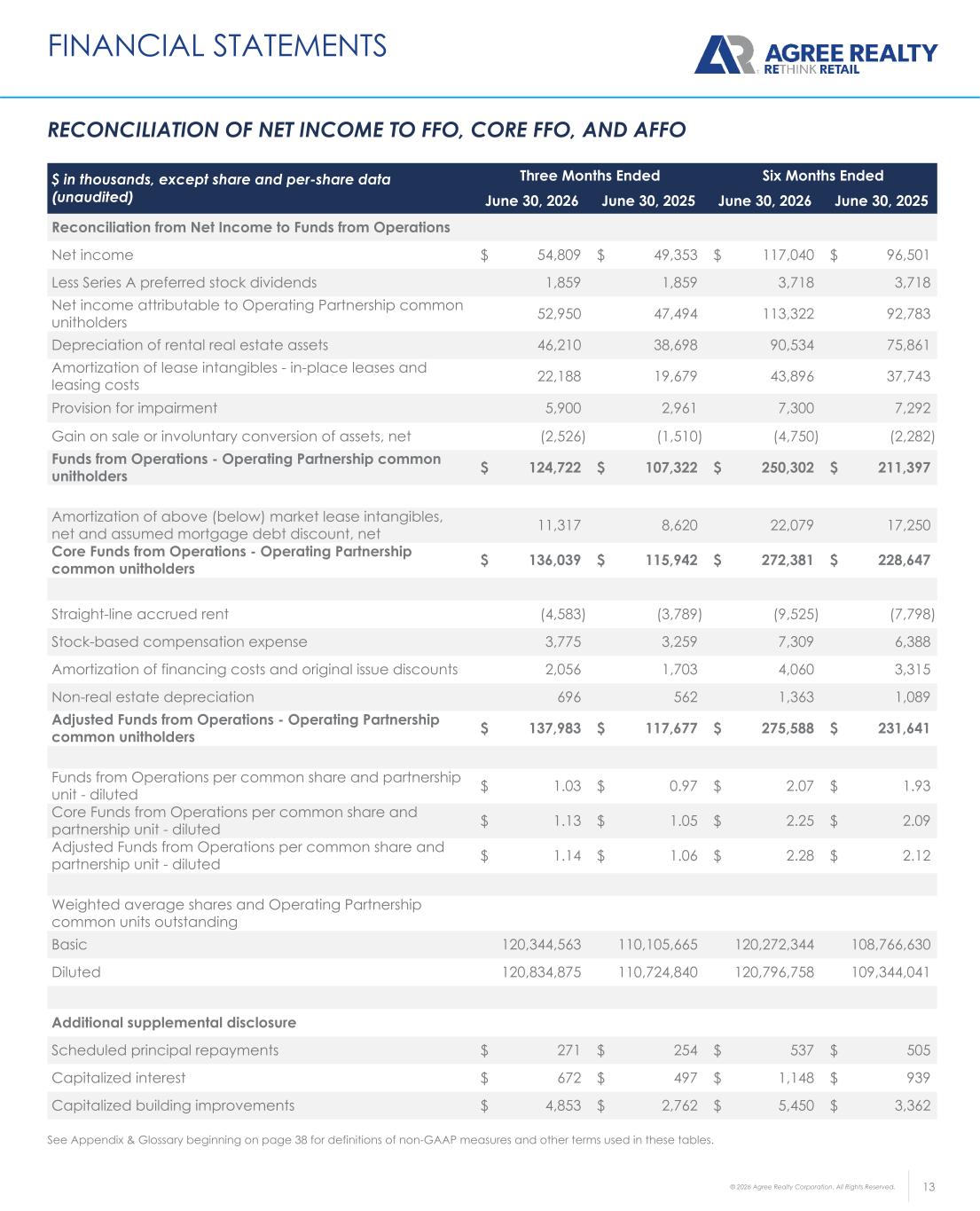
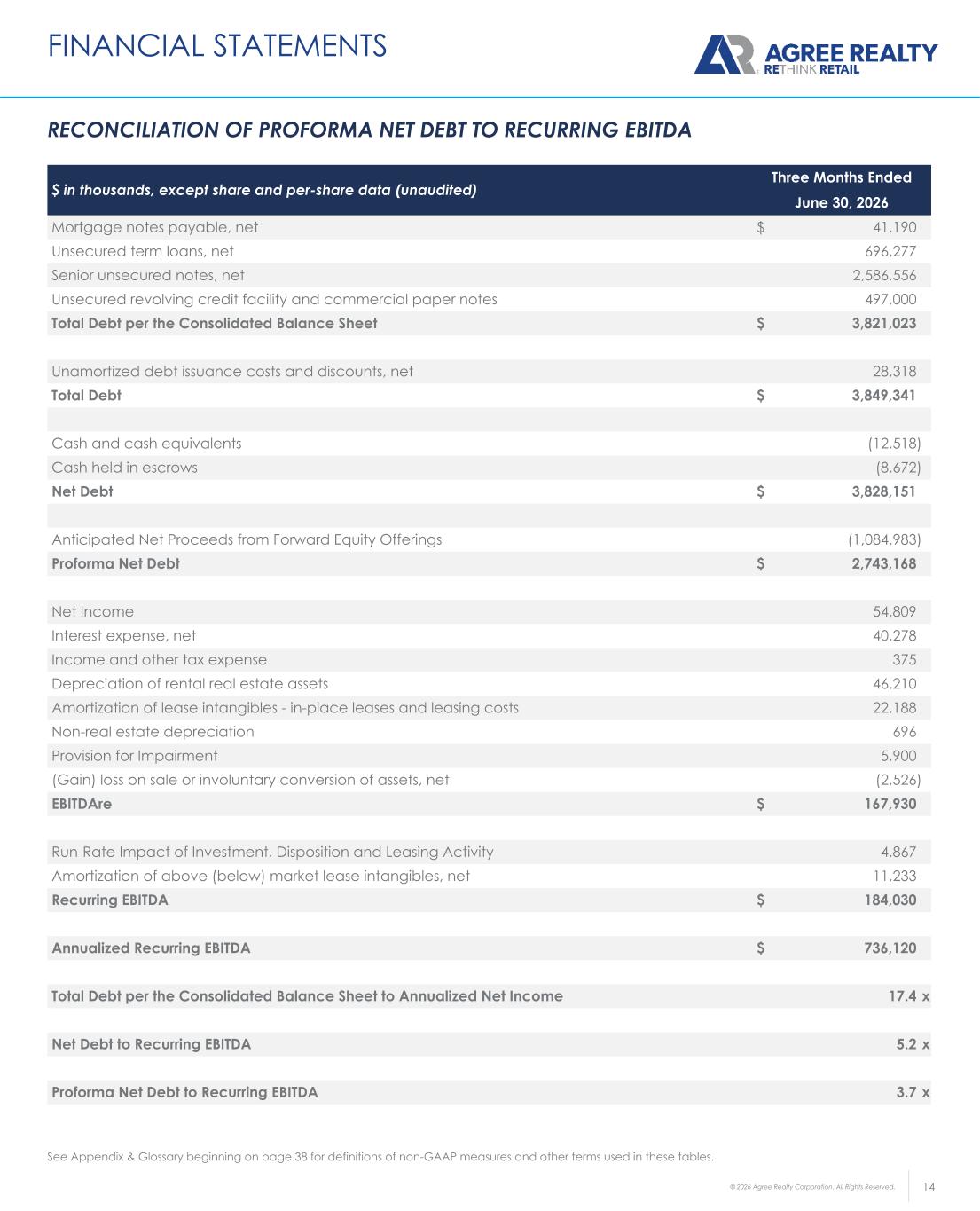
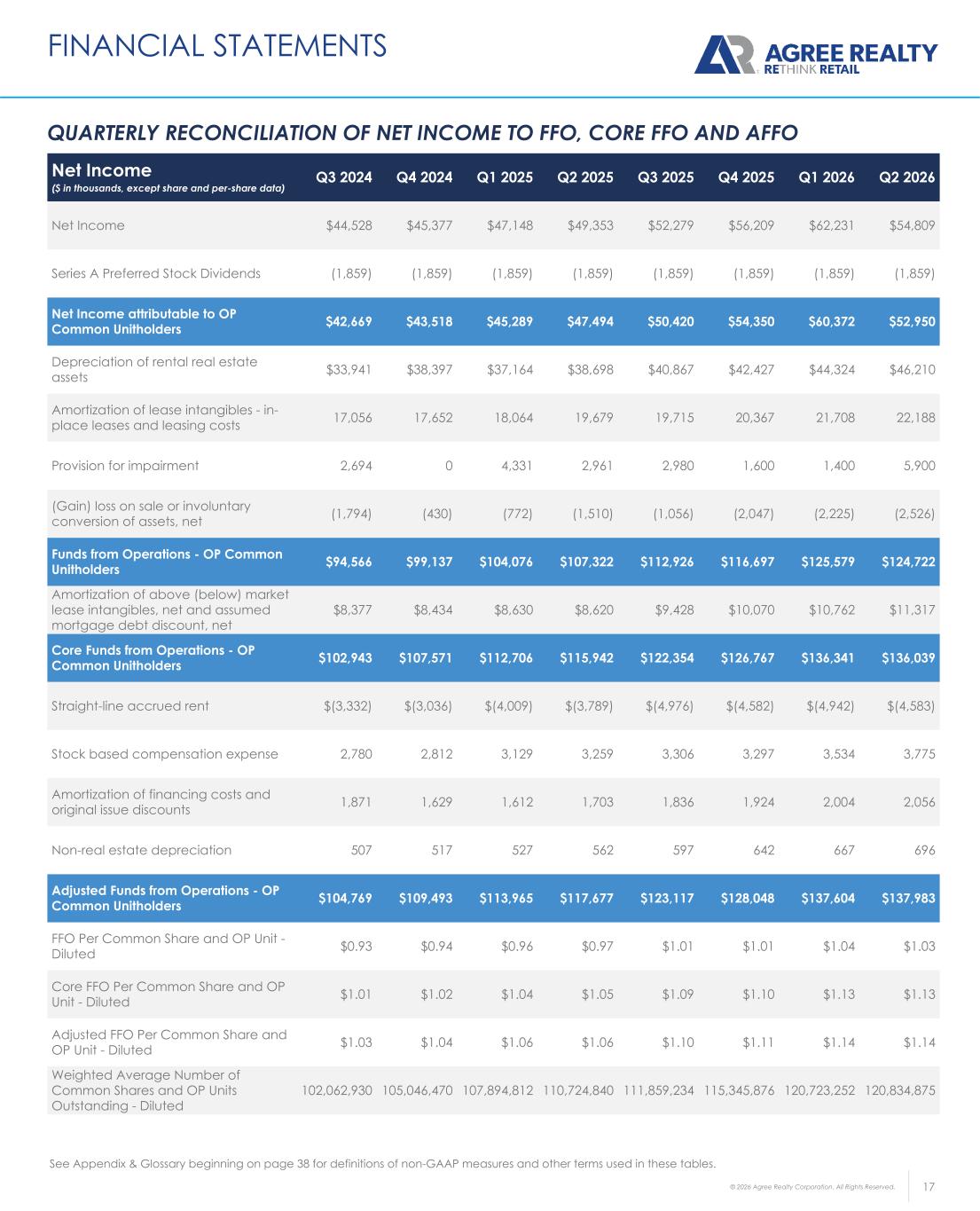
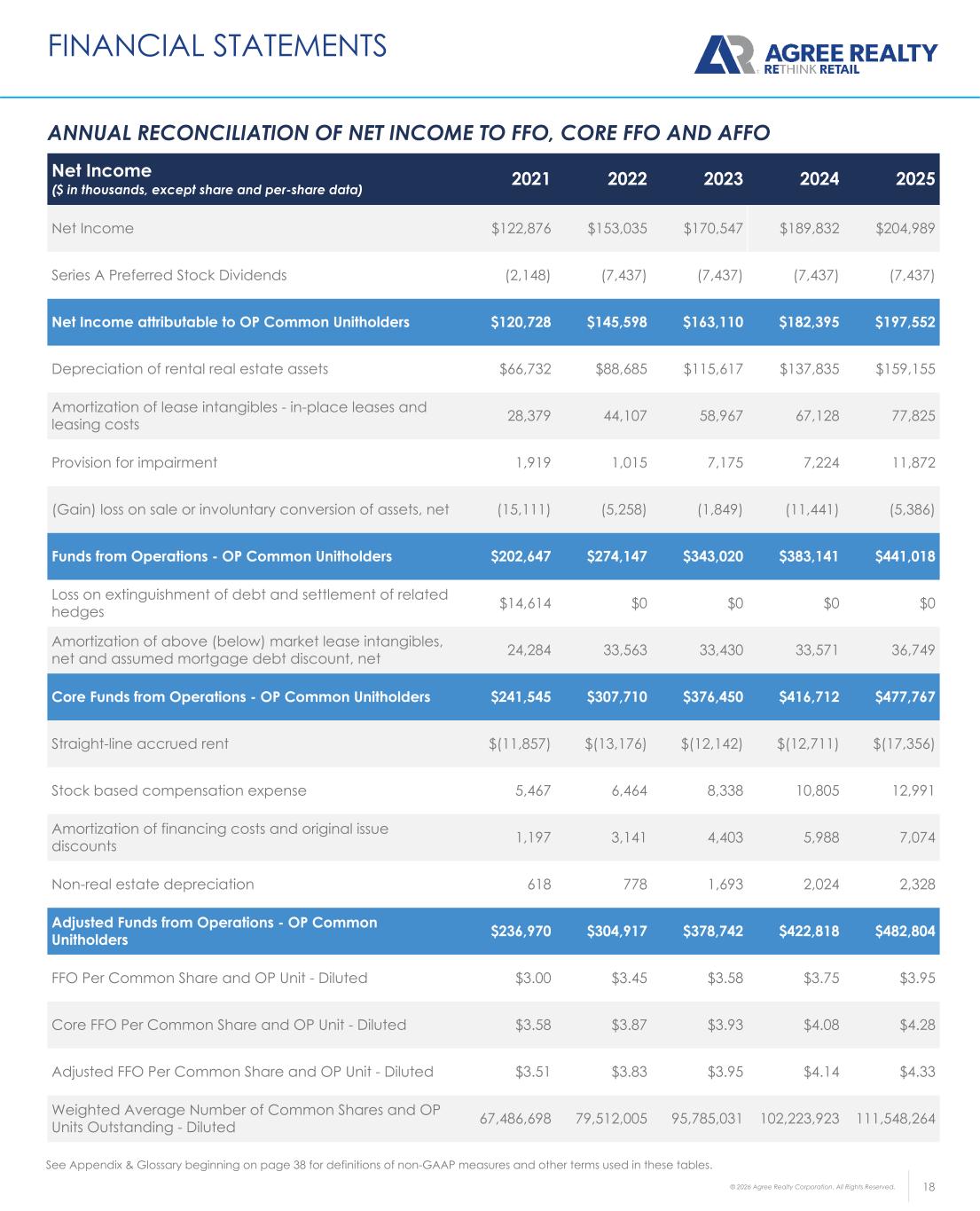
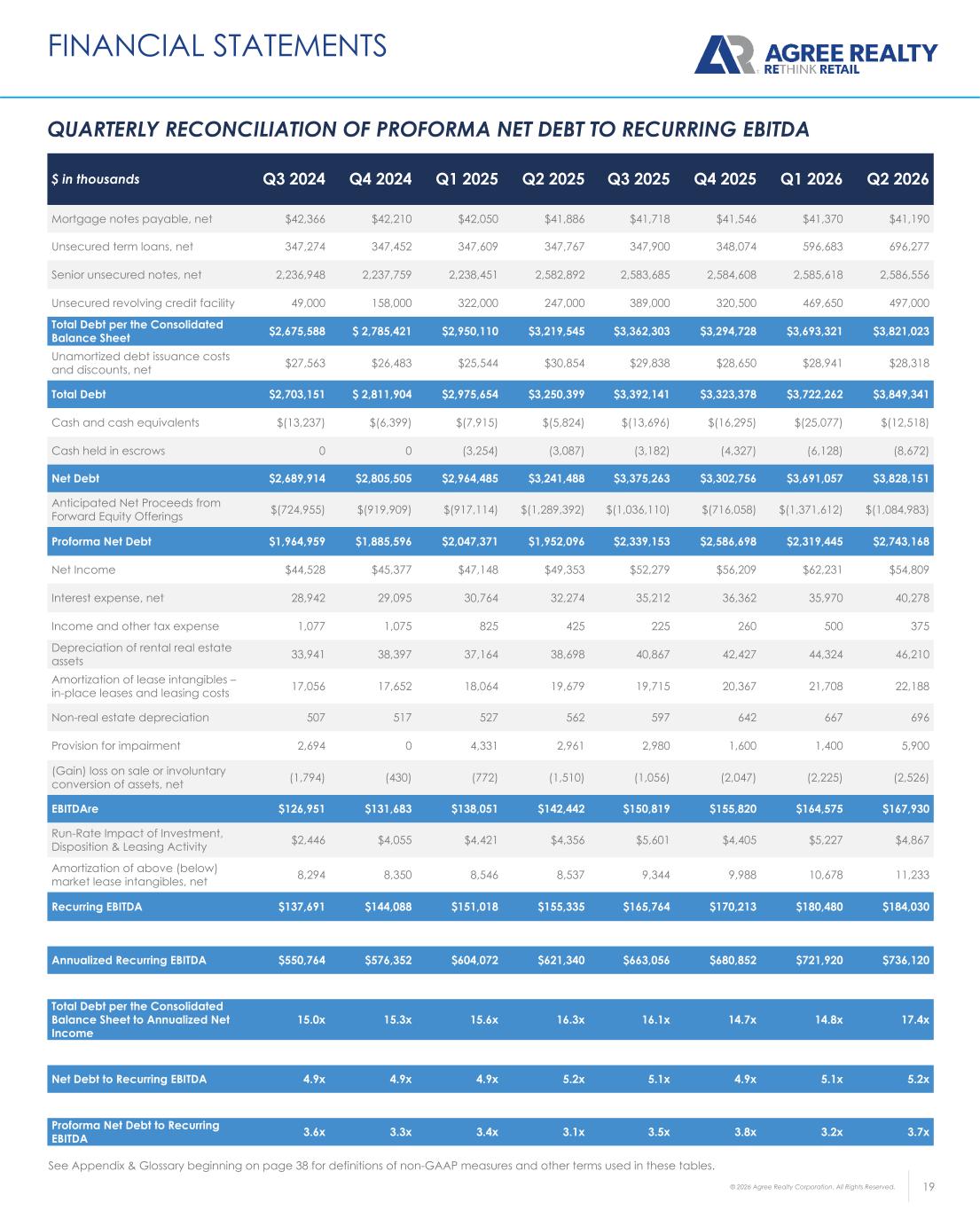
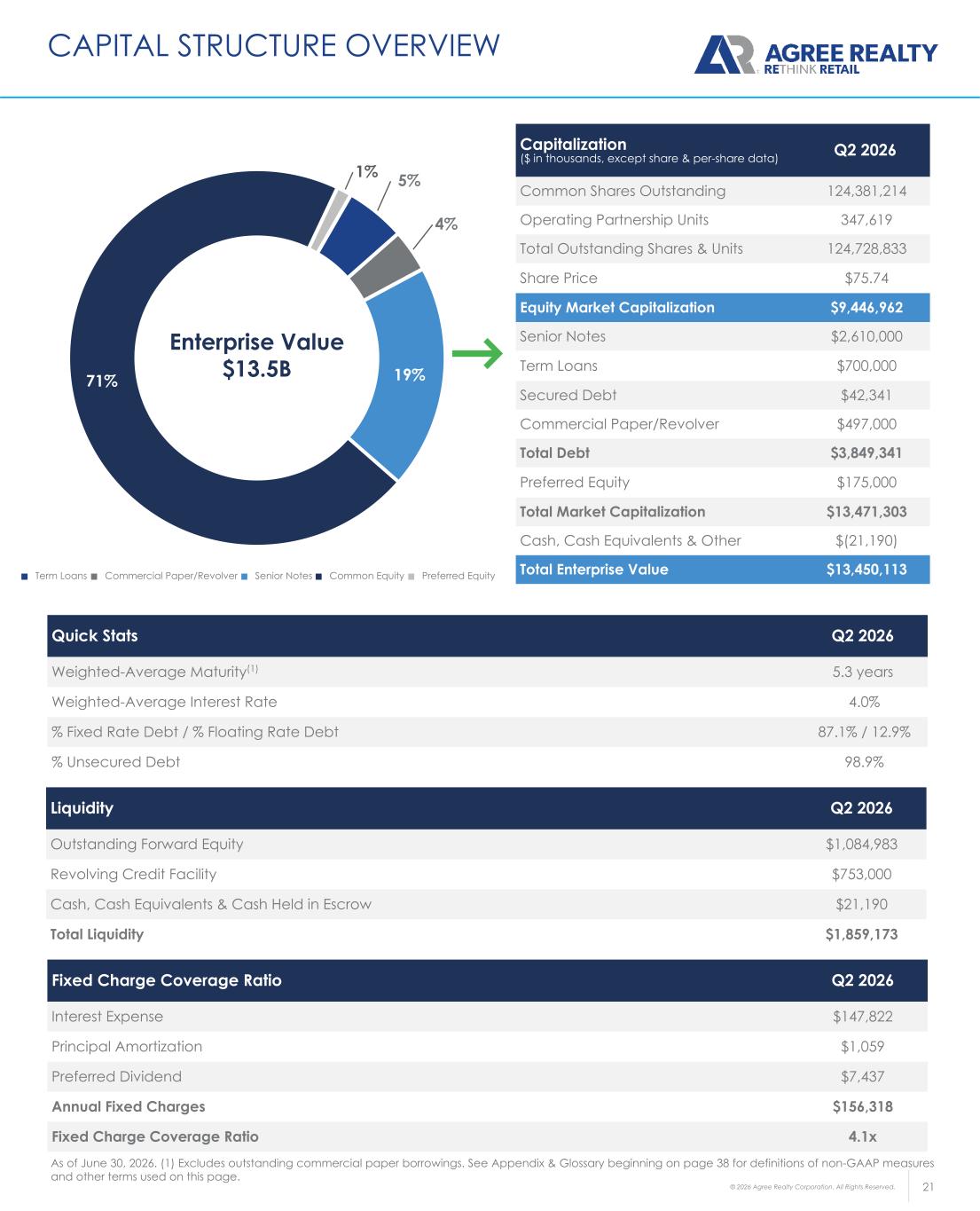
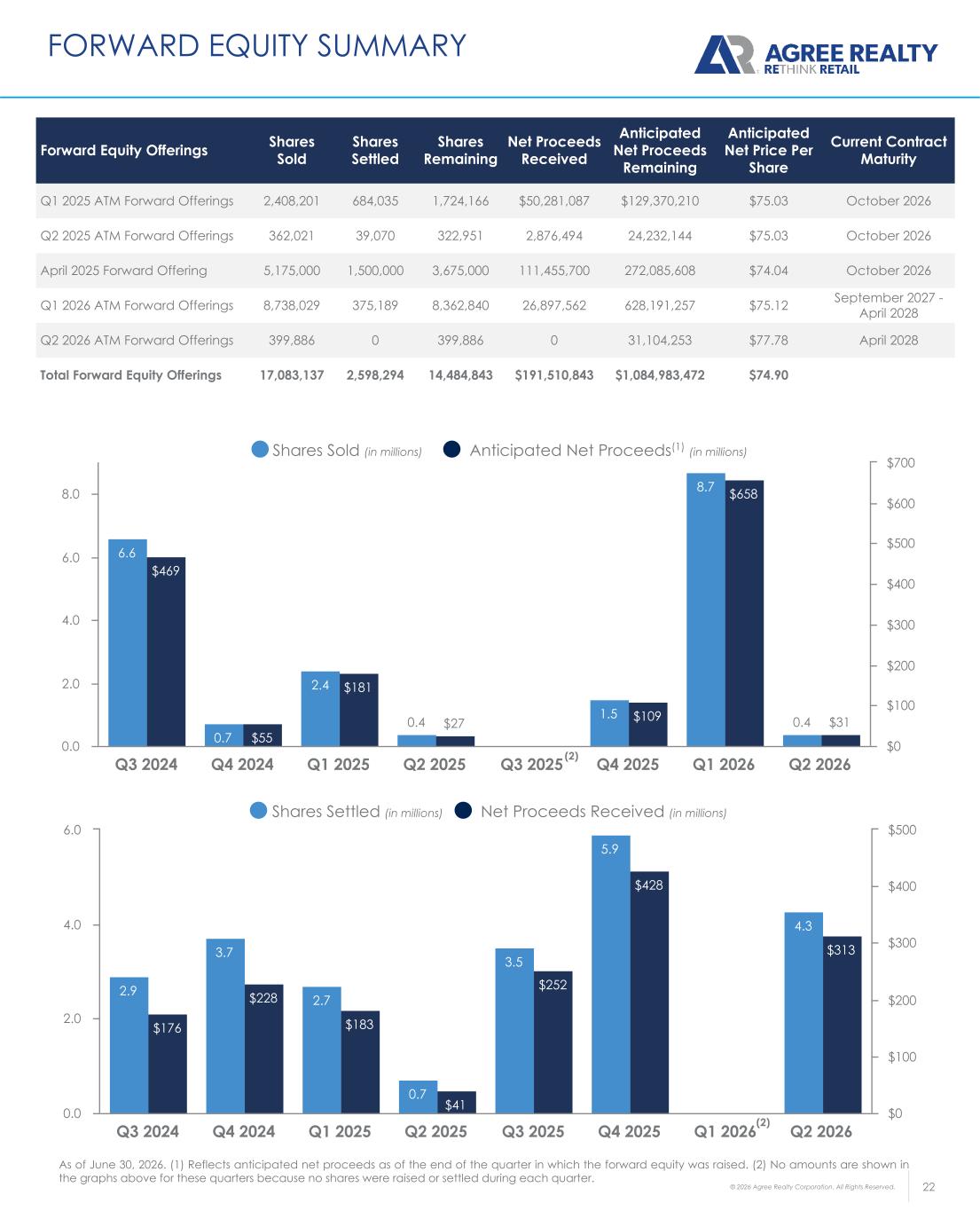
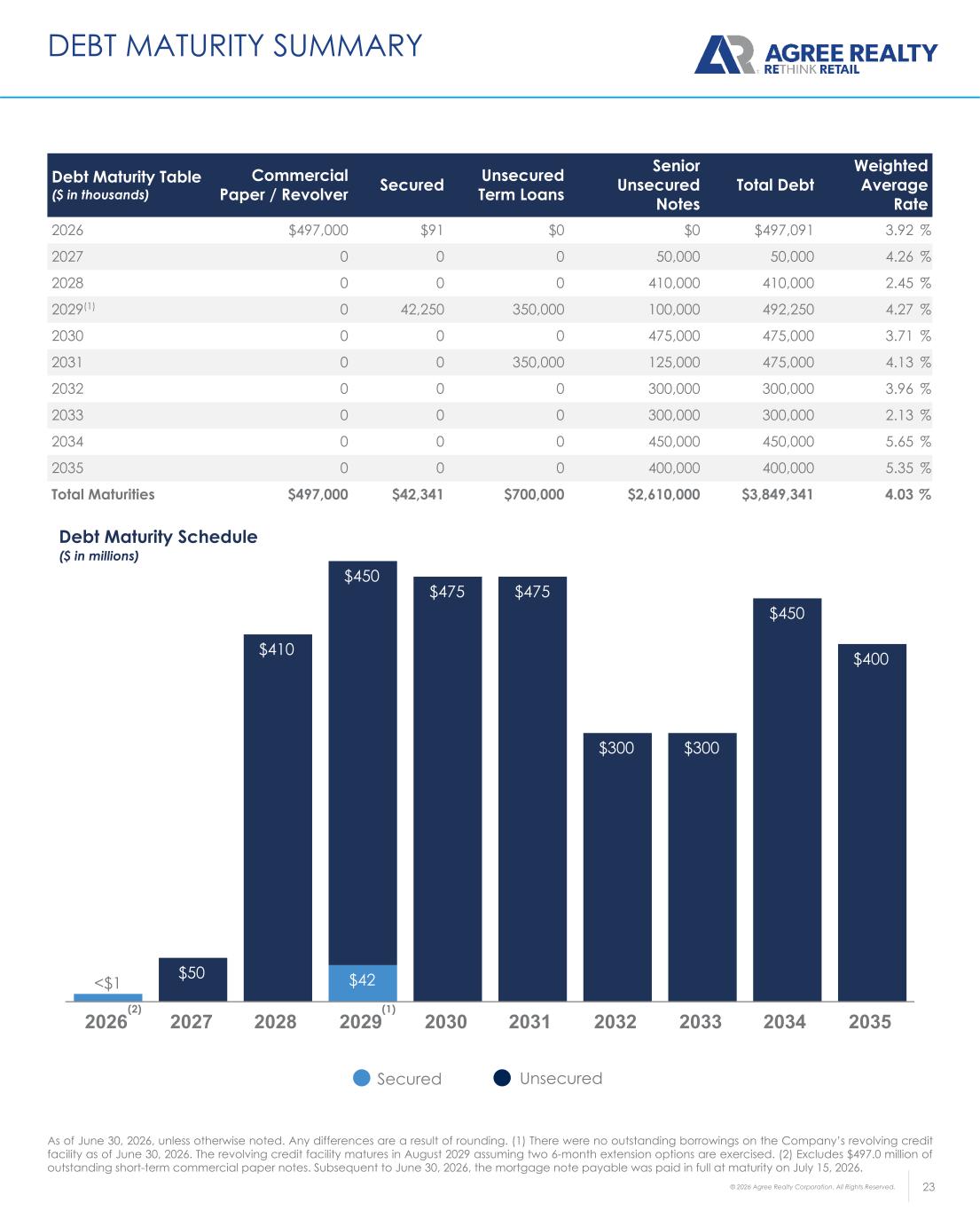
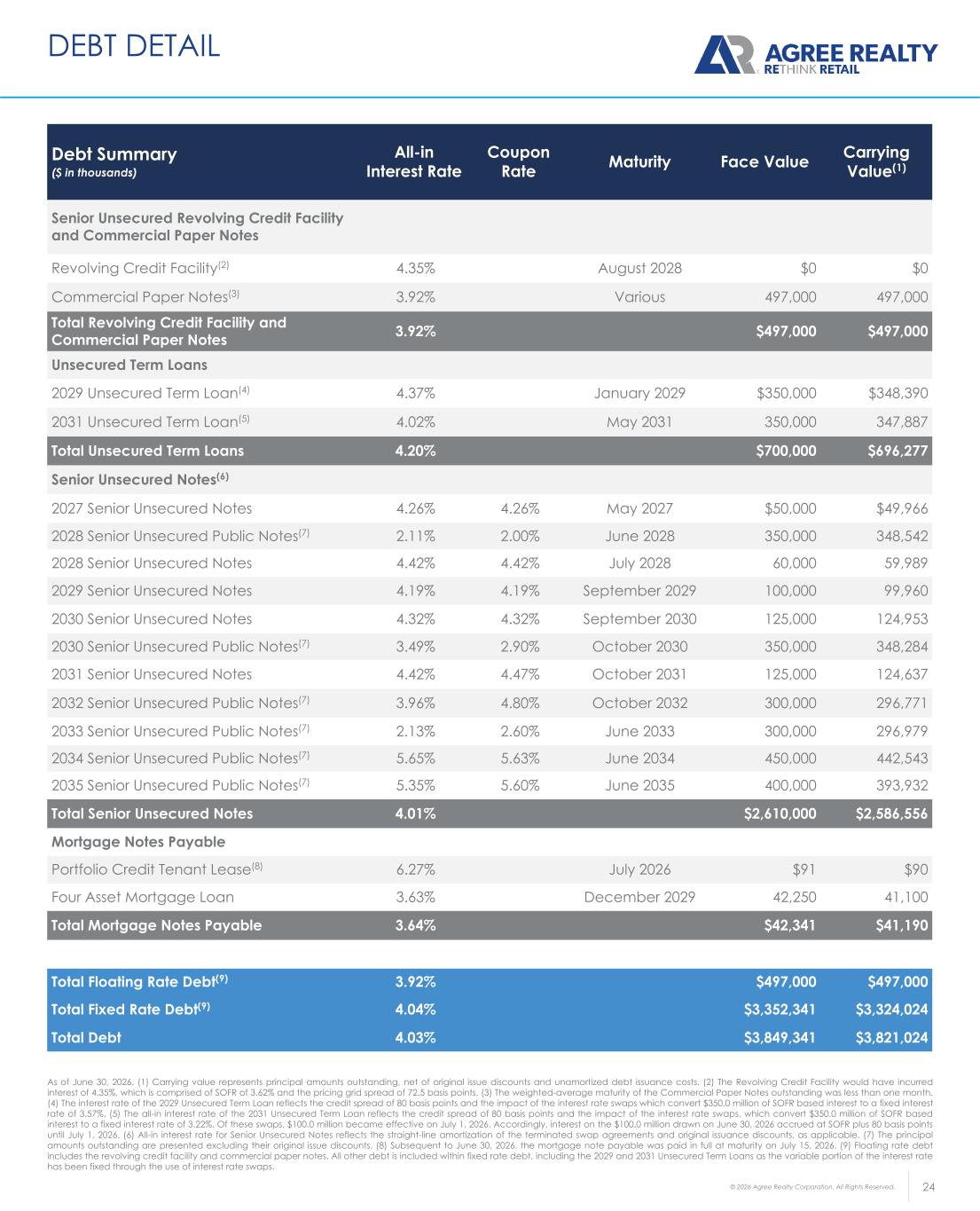
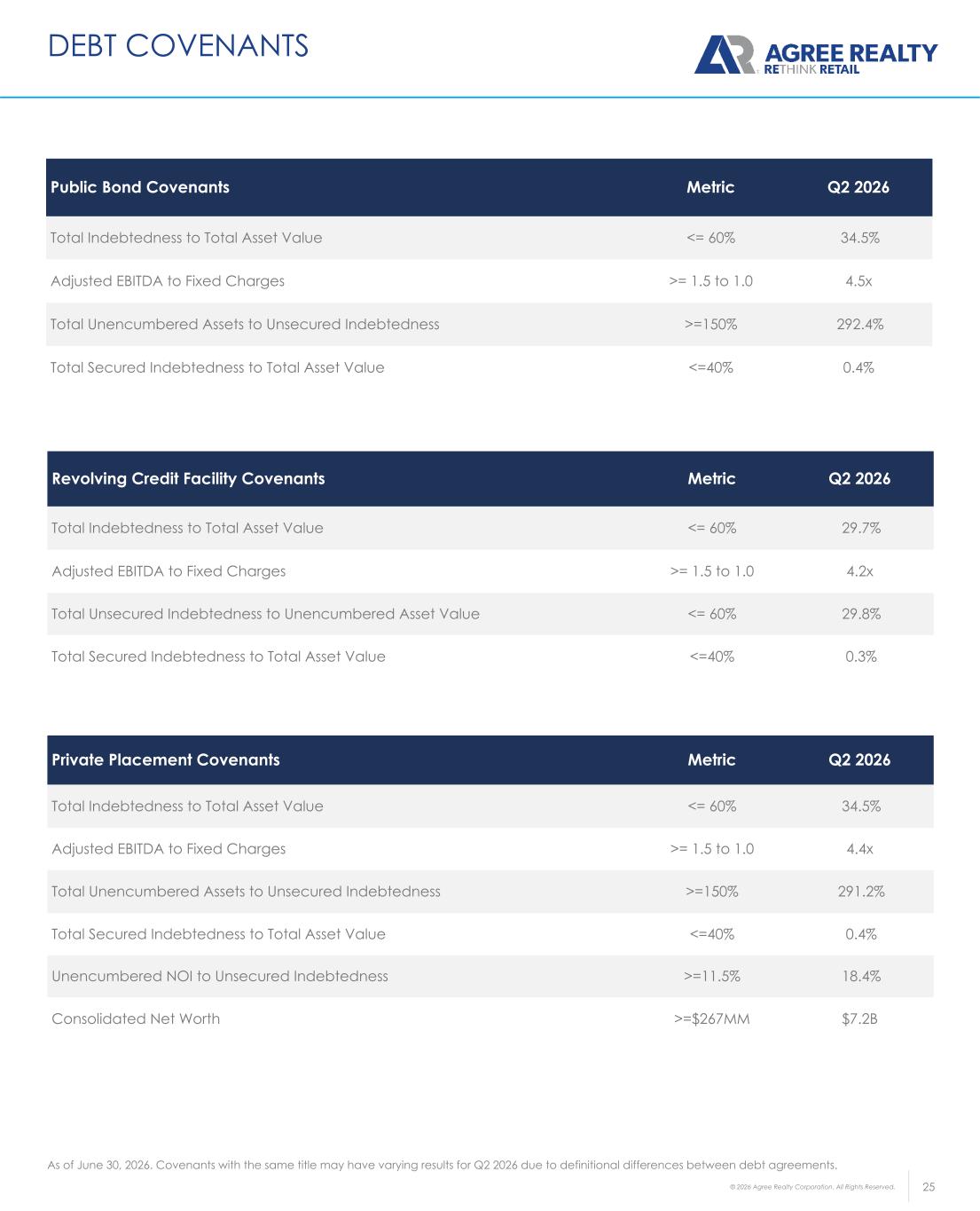
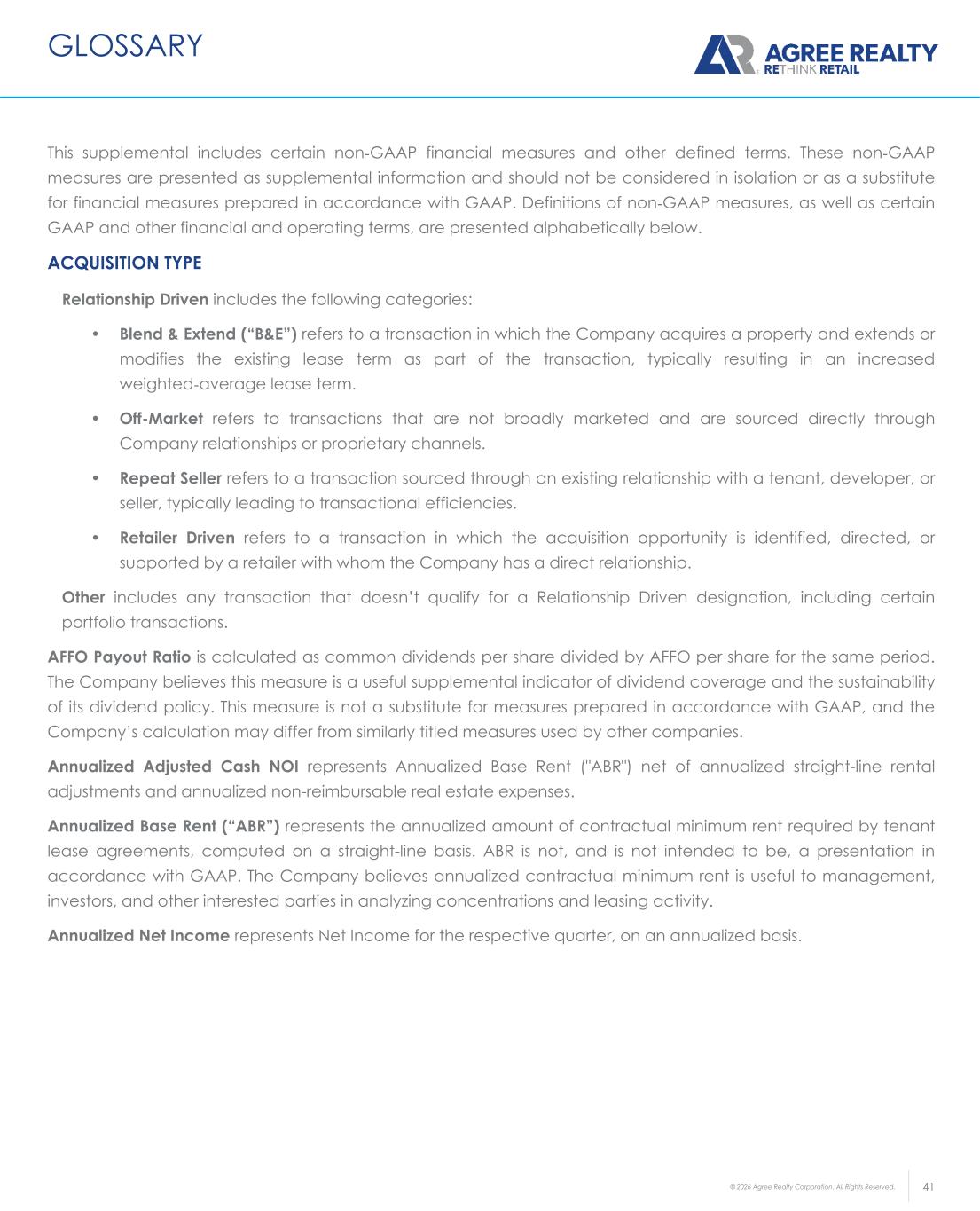
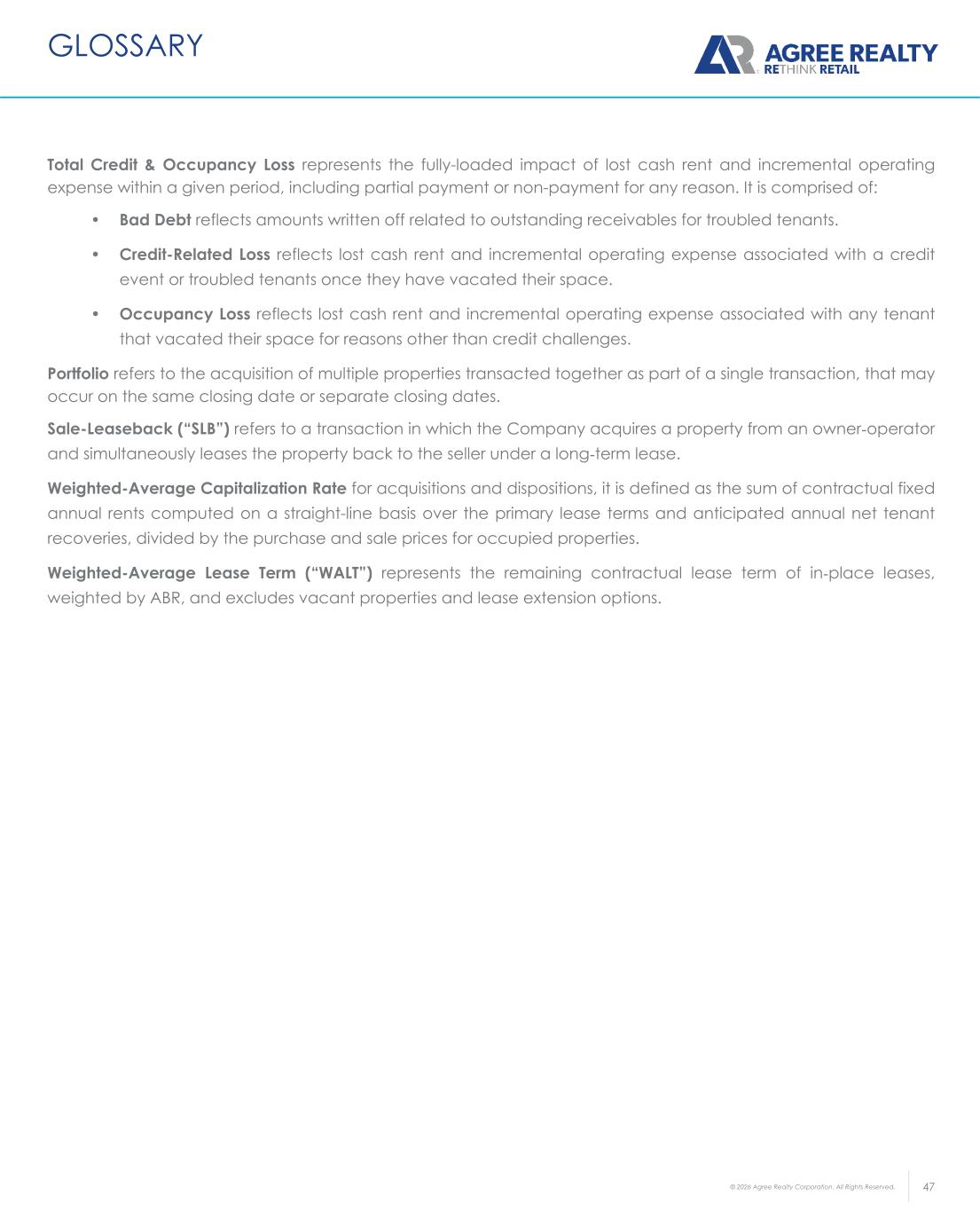
Starting with earnings, core FFO per share was $1.13 for the second quarter, which represents a 7.5% increase compared to the second quarter of last year. AFFO per share was $1.14 for the quarter, representing a 7.4% year-over-year increase. As Joey highlighted, we have updated our full-year 2026 earnings outlook to reflect a very strong first half of the year. We raised our full-year AFFO per share guidance to a new range of $4.57 to $4.59, which is a $0.02 increase at the midpoint and implies year-over-year growth of nearly 6%. The increase in our earnings guidance is driven by higher investment activity as well as the continued strong performance of our portfolio. Our guidance has been updated to include an assumption of 25 basis points of credit and occupancy loss for the year, which is at the low end of our prior range of 25 to 50 basis points. As a reminder, our definition of credit and occupancy loss is fully loaded, encompassing not only credit events, but downtime due to a tenant vacating at least maturity unrelated to credit issues and other partial or non-payments for any reason. It also includes all operating and tax expenses that ADC is responsible for paying while a space is vacant, in addition to lost rental revenue. The supplemental that we introduced last quarter breaks out these components. Year-to-date, we've experienced 10 basis points of fully loaded credit and occupancy loss. Moving on to the balance sheet, total capital markets activity year-to-date is over $1 billion. During the quarter, we sold approximately 400,000 shares of forward equity for net proceeds of approximately $31 million. We also settled approximately 4.3 million shares of existing forward equity for net proceeds of almost $315 million. From a debt perspective, we drew down the remaining $100 million on our $350 million 5.5-year delayed draw term loan, which has swapped at a fixed rate of approximately 4%. We also took further steps to hedge against interest rate volatility, entering into another $50 million of forward-starting swaps during the quarter. In total, we now have $300 million of forward-starting swaps, effectively fixing the base rate for a contemplated 10-year unsecured debt issuance at roughly 4.1%. Over the past five years, we have received approximately $63 million of net proceeds from our proactive hedging activity, resulting in annual interest savings of over $6 million. This excludes the $300 million of outstanding forward starting swaps that are currently in the money. Those swaps, together with approximately $1.1 billion of outstanding forward equity, represent approximately $1.4 billion of hedge capital, providing meaningful visibility into our medium-term cost of capital during a period of macro uncertainty. At quarter end, total liquidity stood at approximately $1.9 billion, including cash on hand, forward equity, as well as over 750 million dollars available on our revolving credit facility which is net of amounts outstanding on our commercial paper program at quarter end in addition we anticipate free cash flow after the dividend to exceed 140 million dollars this year a more than 10 percent year over year increase pro forma for the settlement of all outstanding forward equity our net debt to recurring ebitda was approximately 3.7 times as we continue to maintain a conservative and well-positioned balance sheet. Excluding the impact of unsettled forward equity, our net debt to recurring EBITDA was 5.2 times. Our net debt to enterprise value was approximately 29 percent, and our fixed charge coverage ratio, which includes the preferred dividend, remains very healthy at 4.1 times. Our only floating rate exposure remains short-term borrowings, and we continue to have no material debt maturities until 2028. Our balance sheet is extremely well-positioned fund our growth in the next year as we've locked in an attractive cost of capital with an expansive opportunity set across all three external growth platforms. Our consistent and reliable earnings growth continues to support a growing and well-covered dividend. During the second quarter, we increased our monthly cash dividend to 26.7 cents per common share for April, May, and June. The monthly dividend equates to an annualized dividend of over $3.20 per share and represents a 4.3% year-over-year increase. Our dividend is very well covered with a payout ratio of 70% of AFFO per share for the second quarter. Subsequent to quarter end, we announced a monthly cash dividend of 26.7 cents per common share for July. The monthly dividend also equates to an annualized dividend of over $3.20 per share and represents a 4.3% year-over-year increase. With that, I'd like to turn a call back over to Joey. Thanks, Peter.
Operator, at this time, let's open it up for questions.
Operator
We will now begin the question and answer session. Please limit yourself to one question and one follow-up. If you would like to ask a question, please press star one to raise your hand. To withdraw your question, press star one again. We ask that you pick up your handset when asking a question to allow for optimum sound quality.
If you are muted locally, please remember to unmute your device please stand by while we compile the q a roster your first question comes from the line of michael goldsmith with ubs your line is open please go ahead good morning thanks a lot for taking my question uh you had robust acquisition volume in the first quarter and now again on in the second quarter just with acquisition activity accelerating across the net lease sector are you seeing any changes in the bidding behavior for the transactions you're pursuing particularly maybe the larger portfolios or investment grade assets
good morning michael no no no material changes we've seen again we've cap rates have effectively been within a van for going on three years now so we haven't seen any material changes any new entrance to the competitive set i think uh we'll continue to execute as you would anticipate and we have through the first half of the six months of the of this year so we don't anticipate any changes we'll see and continue to monitor obviously the 10-year treasury with it being elevated to 4.7 percent but uh no anticipated material changes just maybe more specifically here right the quality of the acquisitions improved over 73 percent came from an investment grade this
quarter up from 60 percentage last quarter cap rates remaining the same so what's allowing you to acquire higher credit assets without sacrificing yield is that something that you expect to persist and are you just seeing are you seeing any broader change in transaction opportunities across the net lease market i appreciate the question is due to the to the our team the depth the relationships we have, the asymmetrical opportunities that we pursue with our retail partners.
I'd remind everybody that we're not imputing any investment grade ratings here. Hobby Lobby, we continue to show is unrated. Alta, Publix, Boot Barn, other leading operators in their respective spaces. But I think what you're seeing is the results of the depth of our team, the strength of our team. And then what we talk about all the time, all three platforms creating value across the relationships for our the top retail partners in the country.
Thank you very much. Good luck in the back half. Thanks Michael.
Operator
Your next question comes from the line of Smeeds Rose with Citi. Your line is open. Please go ahead.
Hi, good morning. This is actually Nick Curran for Smeeds this morning. Could you just walk us through the BP transaction and some of the rationale behind that and what makes travel centers of interest for Agri?
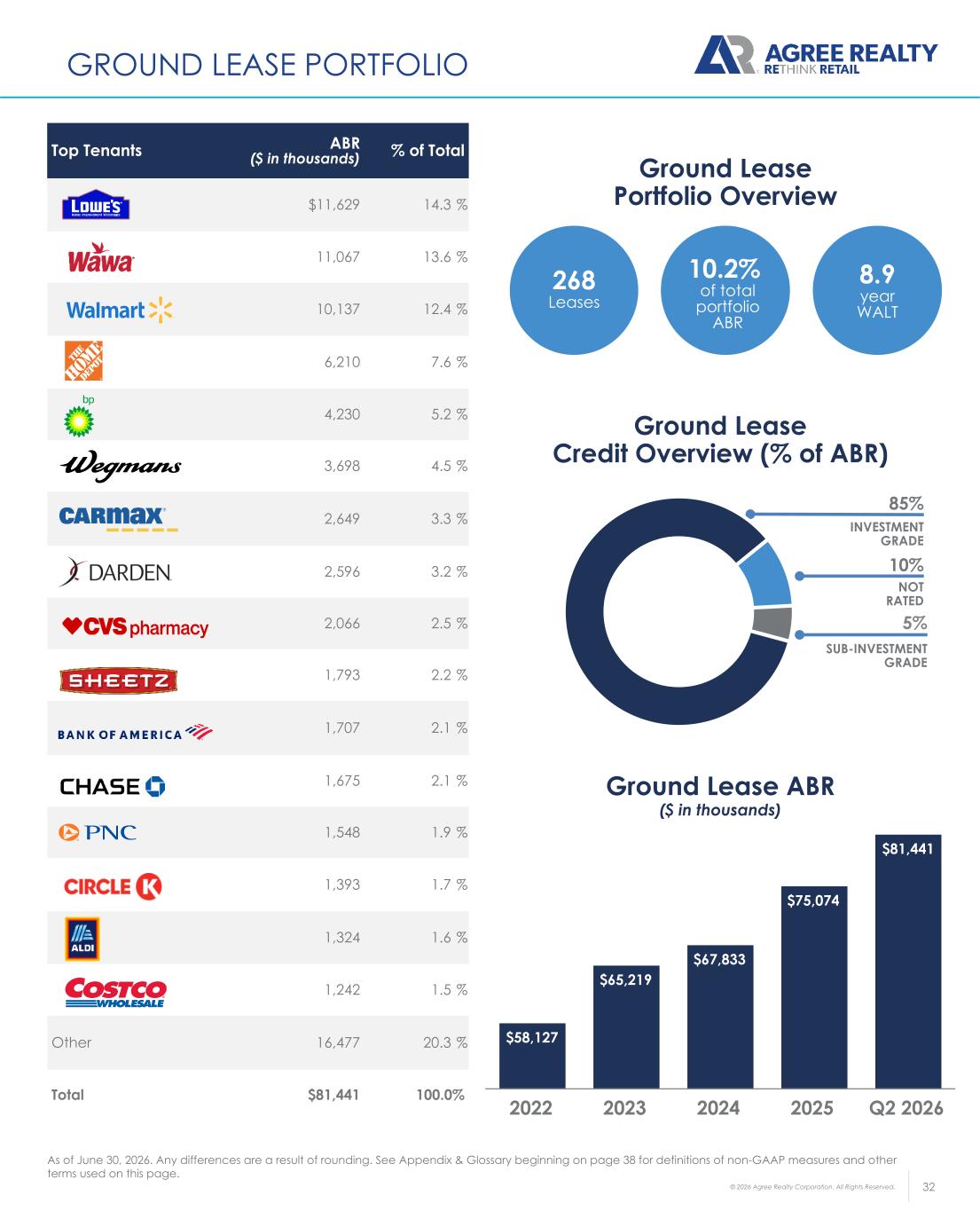
Sure, Nick. We have the BP transaction was approximately $75 million. These are large format travel centers with BP North America credit guaranteeing them and A-rated credit. I talked to the prepared remarks how we continue to pursue large format C stores as well as off price. We put out white papers on both spaces. These are tremendous opportunities for us with great participants in in both sectors and we'll continue to work across all three platforms to execute on opportunities to add them to our portfolio so again these are large format bp travel centers typically interstates located on major interstates exit ramps that have long-term leases with significant escalations thanks for that and then the second one is on the ground leases you guys have been leaning more into those and so i guess just walk us through maybe what makes those attractive on a risk-adjusted return perspective? Yeah, look, I wouldn't say we've been leaning in. Again, what we do is a function of what we are able to uncover through all of our efforts across our platforms. This quarter, obviously, ground lease exposure was elevated. I think we have some significant ground lease exposure coming in the second half of this year in the pipeline already. And we've talked. We also put a white paper out. you know nothing in life is free except the building on a ground lease if they ever leave and so our ground lease portfolio is sitting in over 10 percent of the overall portfolio we think is extremely unique it is high credit it is again the tenant has built the building at their own expense we own the land if they were to leave for any reason it reverts to free for us um so just again to compare and contrast these to leaseholds we own the fee simple interest in the land here if the tenant were to leave, it's not on our books, the building, excuse me, is not on our books, we're not taking any depreciation, then we will own the building free and clear. And we've demonstrated in the investor deck case studies where we've recaptured the building and that had significant markup of the rent. So it's my favorite risk-adjusted returns in the overall net lease sector. We'll continue to pursue opportunities across our three platforms and will continue to execute on.
Operator
Your next question comes from the line of John Kilachowski with Wells Fargo. Your line is open. Please go ahead.
Hi, good morning. First question is just on the DFP and development pipelines growing. Joey, is that from just more effort on your end and more emphasis on those investment lines?
Or is there something about this environment that's creating more opportunity for you all so john we've told everybody we're going to we are going to pick up our efforts going back uh 18 months uh approximately that we were going to pick up our efforts given our capabilities with our retail partners to both develop as well as use our developer funding platform and we're seeing those efforts come to fruition so 7-elevens numbers seven and eight have both commenced construction obviously we're extremely active in the off-price space. We're getting outsized returns with superior credit. And most importantly, I think we are creating that full-service value proposition, a true real estate investor in the net lease space, as I mentioned, not just a spread investor. And so all three platforms are firing on all cylinders. Most importantly, again, is that full-service value proposition to the biggest and best retailers in the country. And so our discussions are comprehensive when we talk about new stores, net new stores, or opportunities for retailers. We can develop them. We can buy them on a sale leaseback. We can acquire them from third parties. We can do early extensions, all different types of permutations of transactional activity, which really separates us from our peers.
Got it. And then on the credit loss side, a very impressive performance this quarter. I'm curious how this has impacted your guide and the expectations, you know, from here on out, really, what's kind of on the watch list today? Where are concerns? Are you seeing, like, the run rate of this portfolio continue to trend down in terms of what average credit and occupancy loss should look like?
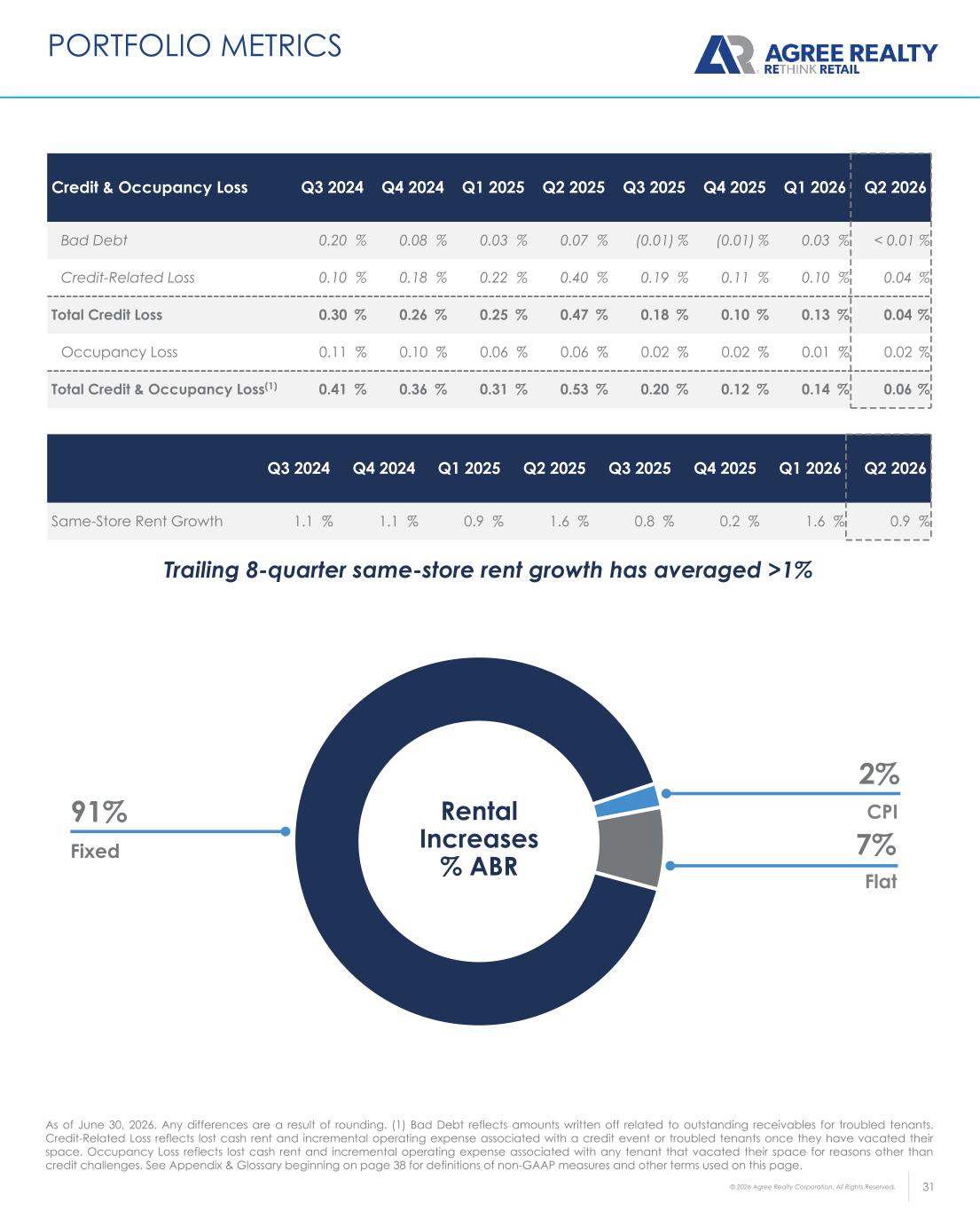
Sure, John, this is Peter. In terms of our credit loss guide, as you alluded to, we've brought that down, our assumption for credit loss, and our guide to 25 basis points from a prior range of 25 to 50 basis points. Through the first half of the year, we had just 10 basis points of fully loaded credit and occupancy loss and only six basis points in the second quarter. So the portfolio has performed exceptionally well here in the first half of the year. Occupancy, as we noted, matches the company record at 99.8%. As we think about the 25 basis points of credit loss in our guide, that's relatively aligned with our longer-term average in terms of the credit loss that we've seen in our portfolio on an annual basis. But looking at the back half of the year, there's no material exposure or tenant that we've identified that would drive a significant acceleration in credit loss in Q3 or Q4.
I think the watch list today is in a really good spot.
It's lower than it was a year ago or two years ago. The biggest piece we really have is a few AMCs in the portfolio, but they were upgraded by S&P earlier this week. They've raised a good amount of equity capital here recently. There seems to be some box office momentum this year, which is contributing to the upgrade. So I think the portfolio is in a really good spot as we look ahead to 26 and beyond.
Operator
Your next question comes from the line of Jim Kamert with Evercore. Your line is open.
Please go ahead. thank you good morning you know joey guys i think you kind of answered it but when you think about and you're achieving this partnership relationship with your retailers you're not really seeking any sort of ancillary fee streams or anything like that this is more about partnering and getting you know greater market share it's not really an economic immediate kind of gain i guess it's trying to understand you know what you really extract from that correction where there's no ancillary fee streams that we're receiving or would would frankly anticipate receiving i think again our ability to sit down with the largest retailers in the country which we do quite
frequently and uh deploy all the myriad of capabilities that we have um is wholly distinct we they have private developers that aren't multi-billion dollar organizations that have a billionate in liquidity who develop for them, who have financing challenges or capital stack challenges. There's public and private institutions that can acquire. And then there's ADC that can do both. And so that differentiated strategy that we have been pursuing and has now accelerated across all three platforms is extremely appreciated by our retail partners now. You pair that with an active asset management platform with our tremendous team here in asset management, who is on call and ready at any time, given any challenges at a property. And we're a very unique partner for retailers. It's one-on-one.
Operator
Your next question comes from the line of Spencer Glimcher with Green Street. Your line is open. Please go ahead.
Thank you. So you guys commenced five projects in the quarter for roughly $90 million. I'm just curious, as you continue to grow and expand the asset base, do you think that there's a path to larger format or multi-tenant development that would let you to deploy more capital at one time?
Yes, Spencer. Obviously, the 7-Eleven projects, these are turnkey developments. They average approximately $10 to $12 million ballpark per project. And then some of the off-price stuff, we're more than open to doing two or more concepts. And so whether that is two TJX concepts, call it a HomeGoods and Marshalls, or whether it's Burlington and Ross or Burlington and TJ and BootBard or another tenant that fits in our sandbox, we're more than open to executing on those as well. And we'll continue to.
Okay, great. And then just on the investment pipeline, as you look at the back half of the year, Can you talk about what we should expect to see in terms of the composition of future acquisitions or capital deployment as it relates to your three different growth verticals?
Yeah, in terms of asset composition, you won't see any surprises for us. We're not going to go up the risk curve. We're not going to do private equity backs, sale, lease backs. Our sandbox is pretty fixed. Obviously, we monitor that. There are new entrants from time to time or we'll lay off an exposure. but our pipeline across all three platforms is extremely strong it's growing um we're really focused for sourcing acquisitions for q4 right now but we have a couple dozen projects through development and dfp going through the uh the process as well here so we will see a continued accelerated activity or um through q3 and q4 obviously that's subject to diligence and timing but there's no shortage of of opportunities here for us right now okay great thanks so much thanks your next question comes from the line of eric borden with bmo if your line is open please go ahead great thanks good morning everyone um you know ground leases were um a large part of the portfolio in the investment value in this quarter just curious how large do you ultimately see the ground lease portfolio becoming you know it's percent of the percentage of the business Eric it's it's hovered around that double digit 10 and 11 percent mark now for a number of quarters actually a number of years we continue again this isn't a concerted effort to go out it's not a separate channel for us oftentimes owners don't know if they have a ground lease or a turnkey lease and so we continue to uncover those opportunities through through our external activities. We'll continue to execute that on them. I'll tell you, there is an elevated ground lease exposure in the back half of the year currently through some unique opportunities. But we will continue to find them at what rate, what goal. There really is no ultimate goal. Our ultimate goal here is to assemble the highest quality retail portfolio in the country that is growing at the tune of approximately 400 properties per year right now and continue to drive outsized AFFO to our shareholders while maintaining a fortress balance sheet. That's the ultimate goal. If it comes in the form of a turnkey or a ground lease, we're pretty agnostic.
Speaker 8
Appreciate that. My next one's for Peter, just on the cadence of the funding sources. You have about $425 million of forward equity contracts maturing in October. And then in your prepared remarks, you also noted that there's some potential for some 10-year unsecured paper that you could potentially issue, you know, just kind of curious what you're thinking about in terms of the different funding sources and the cadence of those sources throughout the back half of the year.
Yeah, I mean, I think first and foremost, we're in a great position today with $1.9 billion of liquidity, including the $1.1 billion of outstanding forward equity. And so I think we have plenty of flexibility and optionality as we think about capital raising here in the back half of the year as you mentioned we do have about 425 million of forward equity that currently matures in the back half of this year we can always choose to extend those contracts if we see fit but i do think there's a good chance subject to uses capital alternatives and other factors that those shares are settled in the back half of the year and then to your point we have 300 million dollars of forward starting swaps in place which has taken a lot of the base rate risk for a future 10-year debt issuance off of the table. And I think we'll continue to evaluate the appropriate of an issuance throughout the back half of the year. But we're not in a rush here, given all the capital that we have available to us and can afford to pick our spot.
Operator
Your next question comes from the line of Rob Stevenson with Huntington. Your line is open. Please go ahead.
Joey, how should we be thinking about your expense growth over the next couple of years versus today you've done a good job bringing the gna down as a percentage of revenues you talked to your prepared remarks about a bunch of tech and ai initiatives how much more of an opportunity is there for you guys to limit growth on the expense side as a triple net company i think there's tremendous opportunity we talked about it in the prepared remarks but also i would even back up we we have built to scale and so we're approximately 100 team members here today, you combine that with lean-based processes and with systems that are constantly improving, there are tremendous opportunities for efficiency. Our COO, Nicole Witteveen, really runs that side of this business and does a tremendous job. And so we are leveraging a lot of different tools, many created now in-house from a systems perspective. We are getting better every single day and we think we're going to continue to see a compression of gna as a percent of revenues undoubtedly and so um there's tremendous efficiencies look this is a approximately 100 organization that just did over 100 transactions again in a quarter and we've got room and capacity uh to continue to do more we will add select headcount our preferred method to add headcount to team members of this to this organization is bring them in young train them let them grow let them flourish and then watch them and support their professional development um but we are in a tremendous position right now and i'm excited about the initiatives that we mentioned in the prepared calls including arc 3.0 to come online later this year.
Okay. And then, Peter, just back to the capital standpoint, given the steeper yield curve, where is your most attractive source, and what's the pricing on a debt perspective for you guys, if you did anything in the back half of the year?
Yeah, including the swaps that we have in place, the $300 million report in certain swaps that contemplate a 10-year issuance, we could probably issue 10-year debt in the low fives today. I think given we have those swaps in place, that's taken a lot of the base rate risk off of the table. And the fact that we've now fully drawn down our $350 million term loan, a public unsecured offering is the most attractive longer term debt option as we look forward here.
Okay. Thanks, guys. Appreciate the time. Have a good weekend. Thank you, too, Rob.
Operator
Your next question comes from the line of Ronald Camden with Morgan Stanley. Your line is open. Please go ahead.
Great. Hey, just wanted to follow up on the longer term target of $250 million for development and DFP and so forth. Can you just double click a little bit in terms of is that existing tenants? How much of that is new tenants? Sort of how you guys are going about scaling that opportunity? Thanks.
Good morning, Rod. No new tenants that we don't currently own in the portfolio new tenants that we'll be developing for selectively certainly that 250 million dollar goal which we said about 18 months ago um was a three-year goal there's a there's a 50 50 shot we hit it this year subject to just diligence and timing and so we are ahead of schedule and then we will set a new goal but our development and our developer funding platform continue to ramp we've got a great team in place we've got great relationships that continue to produce opportunities we have new geographic territories that we're working on a preferred basis for retailers and we continue to demonstrate our value proposition to retailers so
we're excited to continue to grow it we haven't had any any any new entrance to it would we look at it most certainly um but i wouldn't anticipate anybody that we don't currently own it's that's tough to find in the portfolio over 2850 properties today got it makes sense um and then just coming back to the record sort of investments quarter um specifically on the acquisition front um i think just talk a little bit more about the competition and the cap rate trends i think you said you haven't seen sort of much changes so far but you know just sort of curious as you know rates have moved a little bit if that's impacting anything the rate movement is is obviously volatile the
most recent move has been near term we haven't seen any any consequences or cascading impacts from that yet we'll see where the rate environment goes and what comes out in truth social uh later today or this weekend um but i i would tell you that um our space we have not seen much change in terms of competition. We enjoy competition. It makes us better. It sharpens our edge. That's our theme for the year, sharpening our edge. At the end of the day, we are confident that in any type of situation, if we want to get something, we can win it. And so we will continue to execute. We'll be selective, but when we choose to move, we move quickly and we move aggressively. Great, thanks so much. Thanks, Brian.
Operator
There are no further questions at this time. I will now turn the call back to Joey Agri for closing remarks.
Well, thank you everybody for joining us this morning. We look forward to seeing you in the near future and enjoy the rest of your summer.
Operator
This concludes today's call. Thank you for attending. You may now disconnect.