Operator
Good afternoon, ladies and gentlemen, and welcome to the Alchemy Technology 2nd Quarter 2026 Financial Results Conference Call. At this time, all lines are in a listen-only mode. Following the presentation, we will conduct a question-and-answer session. If at any time during this call you require immediate assistance, please press star zero for the operator. I would now like to turn the call over to Steve Kopp. Steve, you may begin.
Speaker 11
Thank you, Chloe. With me on today's call are Alex Schutman, Chief Executive Officer, and Cassandra Hudson, Chief Financial Officer. During today's call, we may make forward-looking statements about guidance and other matters regarding our future performance. These statements are based on management's current views and expectations and are subject to various risks and uncertainties. Our actual results may be materially different. For a summary of risk factors associated with our forward-looking statements, please look at today's press release and the sections in our latest 10K entitled Risk Factors and Forward-Looking Statements. Statements made during the call are being made as of today, and we undertake no obligation to update or revise these statements. Also, unless otherwise stated, financial measures discussed on this call will be on a non-GAAP basis. We believe these measures are useful to investors in the understanding of our financial results. A reconciliation of the comparable GAAP financial measures can be found in our earnings press release and in our filings with the SEC. And now I'd like to turn the call over to Alex.
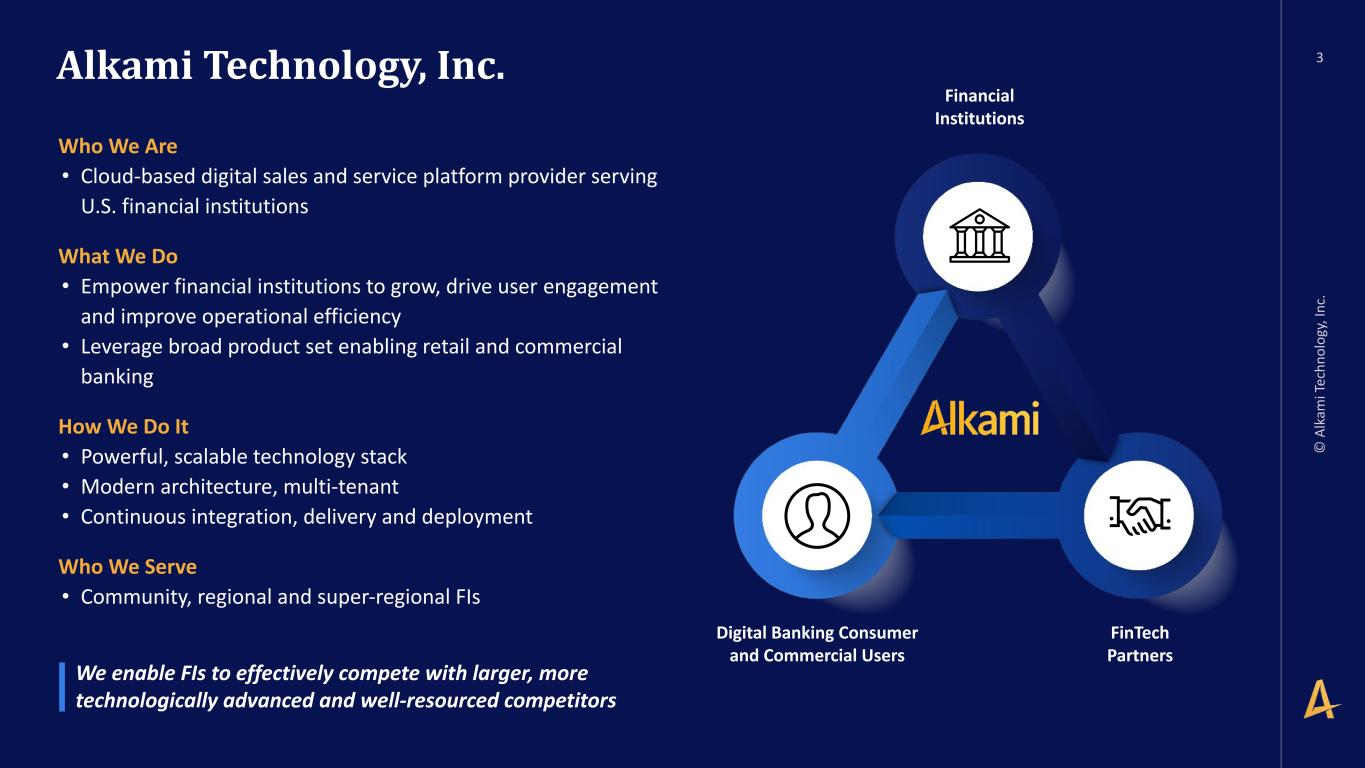
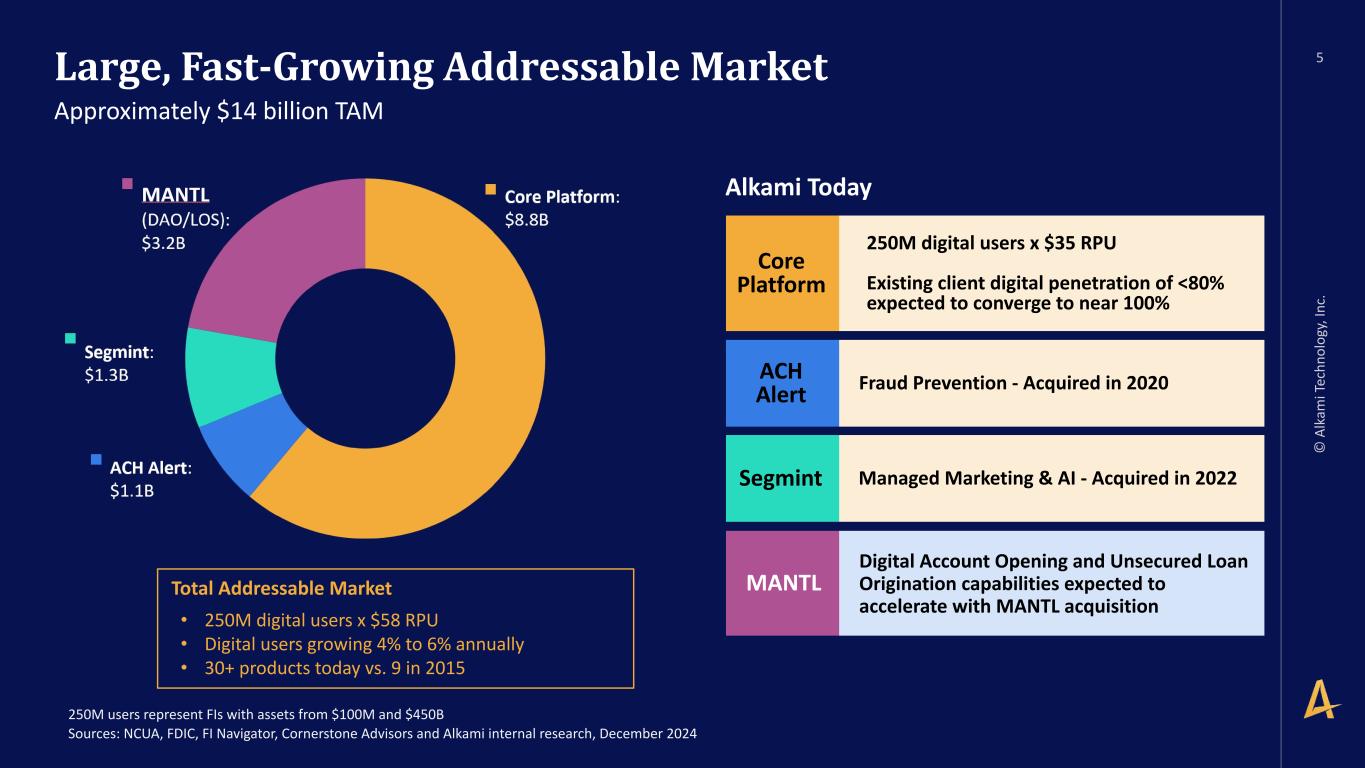
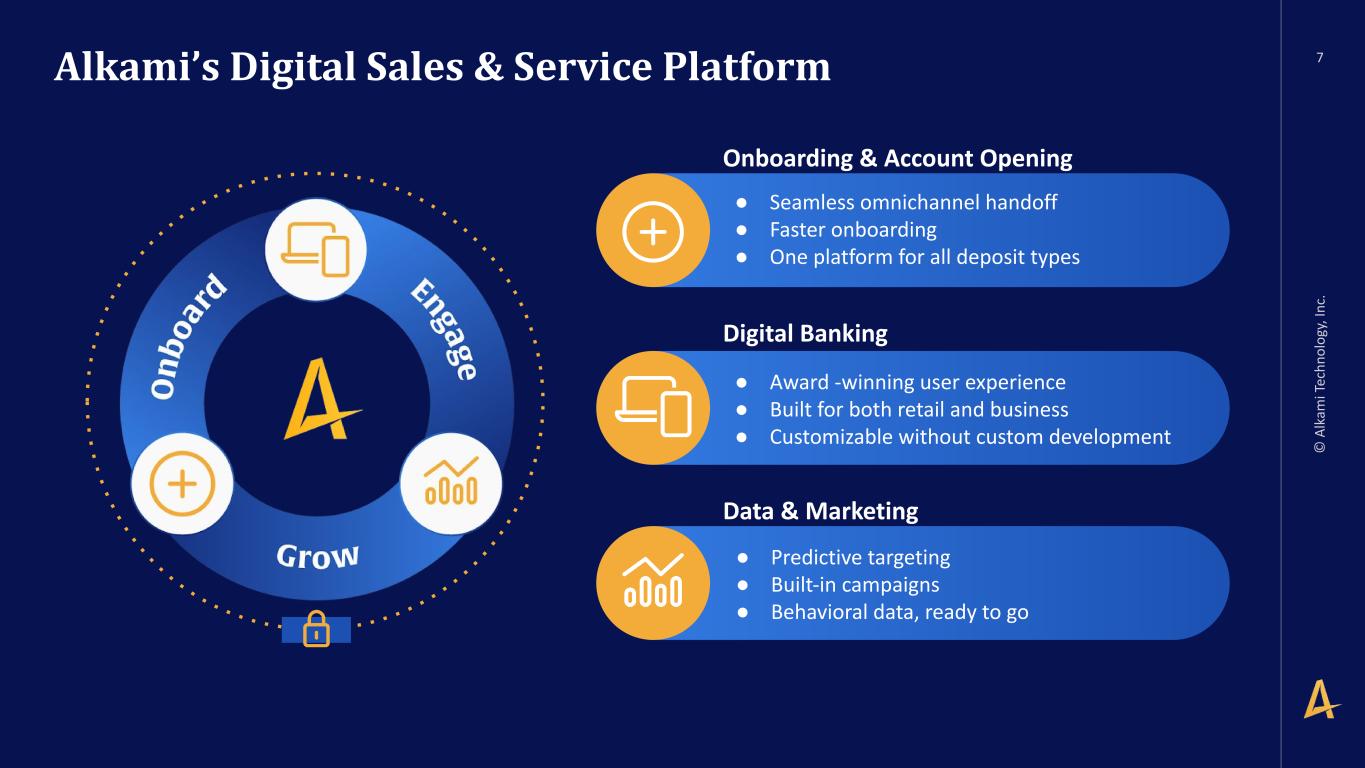
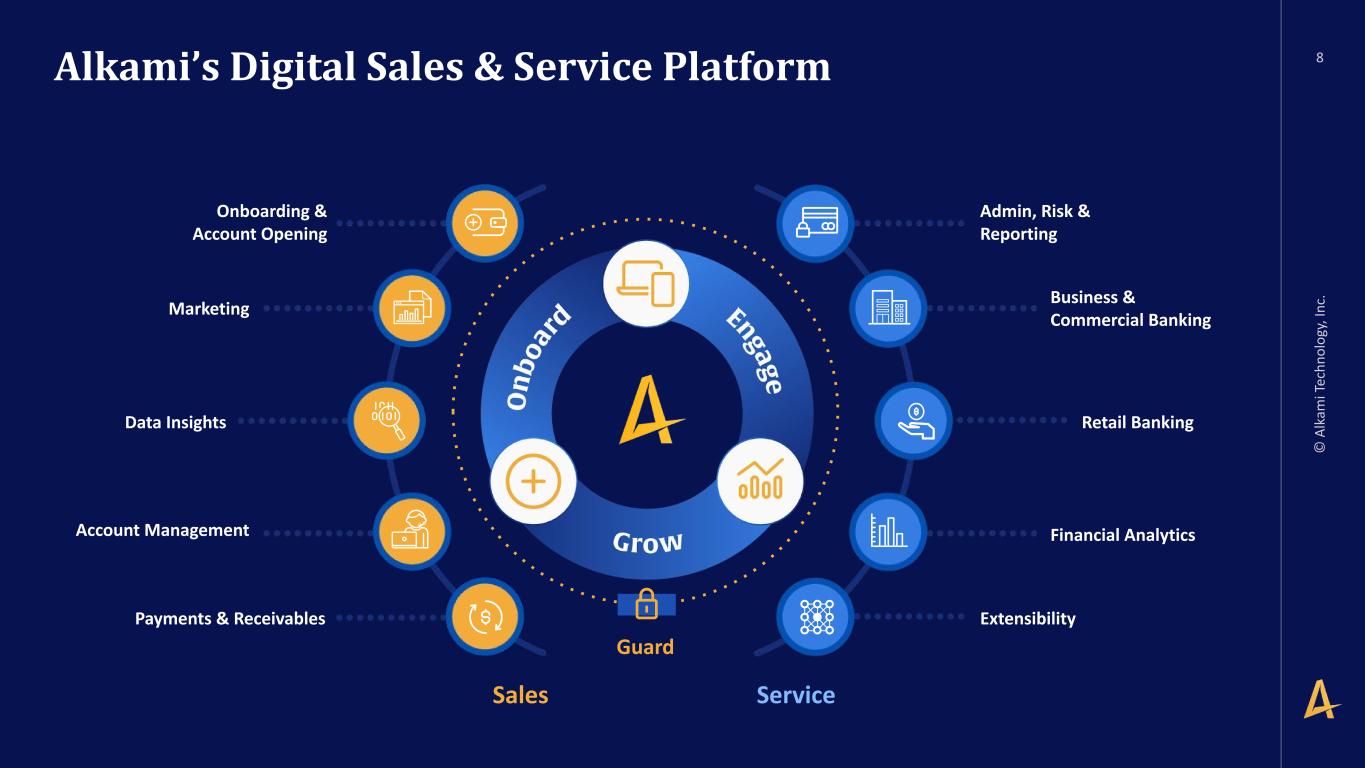
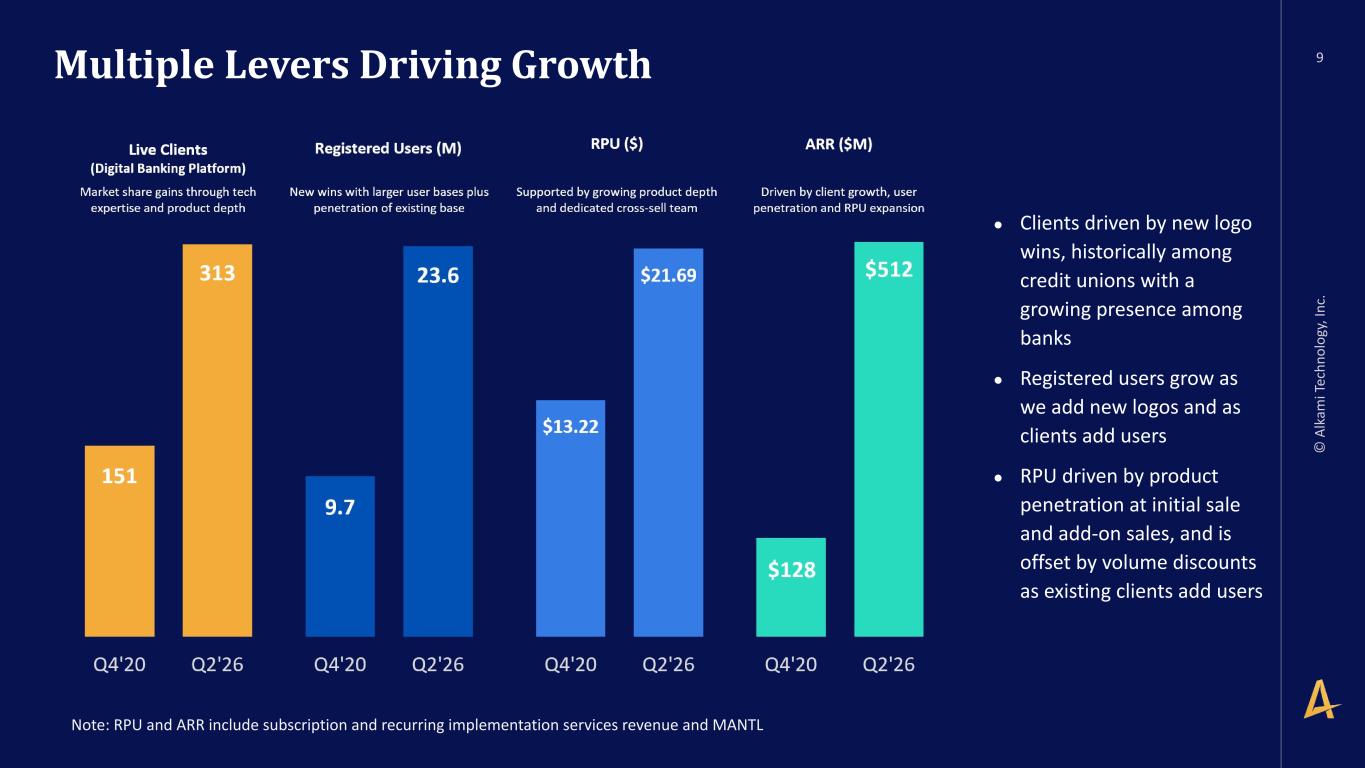
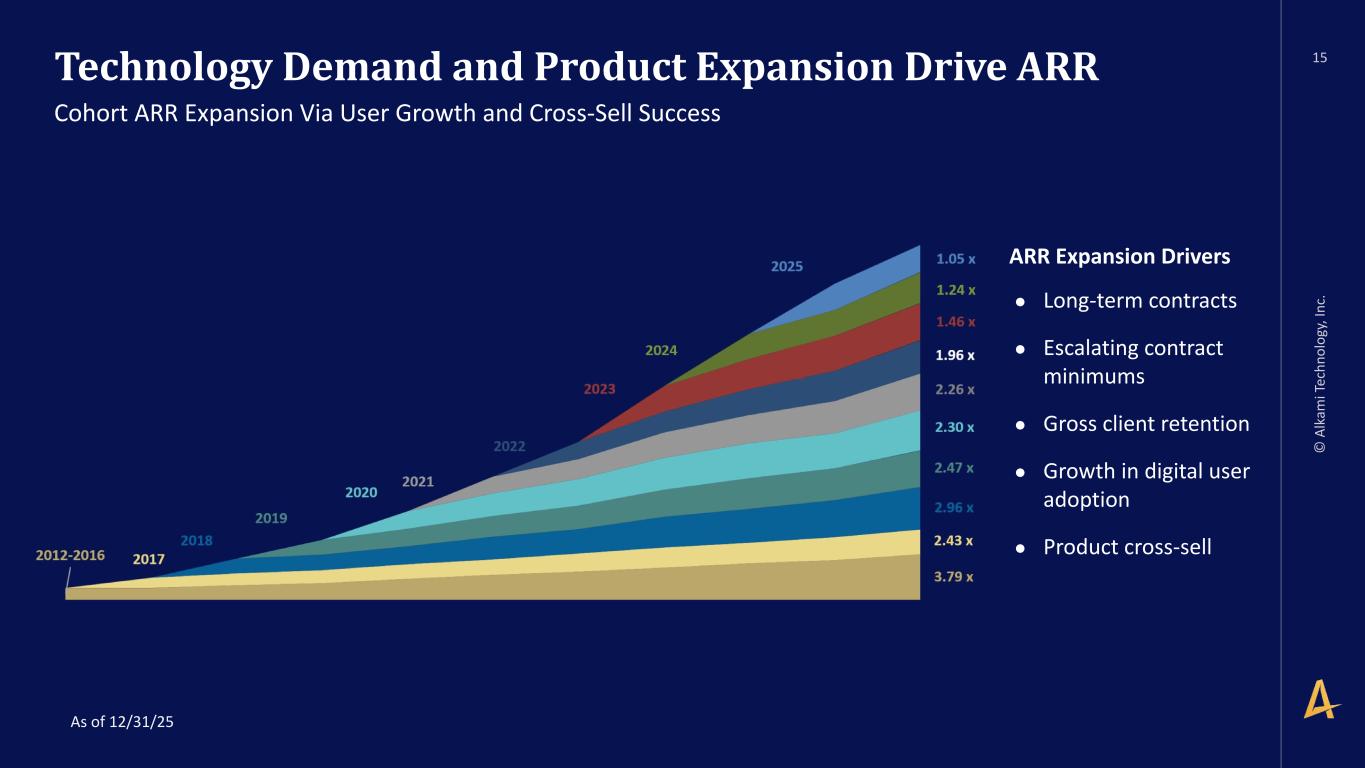
Good afternoon, and thank you for joining us. In the second quarter, Alchemy delivered revenue growth and profitability ahead of our expectations. On my first earnings call in 2022, we reported a little over $42 million in revenue, a negative adjusted EBIT of more than $4 million. Prior to that call, we established an internal five-year goal. Become the industry-leading digital banking platform, generate $500 million in revenue, and produce $100 million of adjusted EBITDA. Despite economic and geopolitical uncertainty, goals that seemed extraordinary are now within reach. Our progress reflects three durable strengths. Our people and culture, the digital transformation of community banking, and our belief that the customer is our North Star. That principle guides every important decision we make. When faced with choices and trade-offs, the single most important thing we can do is create and keep customers. In Q2, we signed five new digital banking relationships, including three banks. We also added eight mental clients and three data and marketing clients. Seven clients adopted our digital sales and service platform, or DSSP, through new logo or add-on sales, bringing the number of clients contracted for all three DSSP products to 55. We also brought eight digital banking clients and 18 mental clients live. Over the last 12 months, we added 2.7 million users, the most users added in any trailing 12-month period since mid-2024. In that same quarter, back in 2022, we noted that we signed two banks. At the time, we had three live bank clients, and on that foundation, we stated that we would strategically pursue the bank market. Today, we have 54 bank clients under contract and 42 live on the Alchemy Digital Banking Platform. Success in the bank market required four things. First, banks needed to know Alchemy was a credible alternative. We consistently ranked first or second in awareness and consideration among credit unions, but historically lacked the same recognition among banks. Since entering the bank market, awareness has increased from 37% to 52%, while consideration has increased from 8% to 21%. Second, we needed to build the treasury management capabilities banks require. Once we had enough live customers to assess product market fit in mid-2024, we identified 28 required capabilities. We delivered 18, with six more expected to enter beta or become generally available in the second half of 2026. We needed to integrate with bank cores and improve implementation execution. We now support multiple live implementations across seven bank cores and single implementations across two more, covering the majority of our target market. Bank implementation time improved from more than 13 months in 2023 and 2024 to less than 11 months in 2025. In 2026, banks represent nearly 30% of our digital launches. Fourth, we needed to have bank expertise throughout Alchemy. Half of our implementation personnel now have bank market expertise, supported by dedicated bank sales and pre-sales teams, and increased banking expertise across product and engineering. Banks launch at higher RPU and purchase more commercial functionality. More than three-quarters of the bank market still uses legacy digital banking, leaving substantial room for displacement. The bank story is no longer, can Alchemy sell into banks? It's becoming, can Alchemy operationalize and scale what is working? Last quarter, I explained why expansion within our client base will drive a greater share of future growth. The evidence is visible in our customer cohorts. Our five-year customer cohorts have grown to more than twice their original platform investment, while our 10-year cohorts have grown to approximately four times their landing ARR. On my first earnings call with you, we had 18 clients with $2 million or more in ARR. Today, we have 50. Second, clients are adopting more products at launch. In 2021, clients launched with an average of 10 products. Today, their launch was 16. and the RPU of clients launching in 2026 is expected to be nearly twice the average of our install base. RPU has grown from $13.68 in 2021 to over $21 today. Importantly, this growth did not result from a client-wide price increase. It occurred because clients purchased more product from Alchemy. These results demonstrate that expansion is not merely an assumption in our 2030 framework. It is established customer behavior. Alchemy is evolving from a vertical application into a vertical platform that lands with more products and compounds in value over time. DSSP accelerates this model by increasing the number of products clients adopt at launch and creating more opportunities to expand over time. Even as we've grown, we continue to have significant opportunities to deliver more value to our clients. Our clients spend meaningfully more on the technology surrounding the core than they spend with Alchemy today. That creates room to expand, but only if we earn it by delivering products that compete independently and create greater value together. Our objective is to become the technology partner of choice for regional and community financial institutions. In the near term, we are continuing to build treasury management capabilities to improve bank win rates. We're adding functionality for the specialty account opening needs of our largest banks to increase revenue per client. We're also building our lending platform and our point-of-sale capabilities that integrate with other loan origination systems to increase our addressable market. In addition, we're encouraged by demand for existing products that incorporate AI. Behavioral biometrics, unified messaging, and predictive marketing are growing nearly 30% year-over-year and contributing to Alchemy's growth. Those investments increase the value we deliver today. Over time, AI expands that opportunity even further. We believe Alchemy can provide the trusted data, workflow, and intelligence layer that allows community financial institutions to deploy AI in regulated environments. Our advantage is not access to a model. It's our understanding of regulated banking workflows, our integrations, our data, and the trust created through relationships across more than 1,000 financial institutions. Right now, more than 100 Alchemist use an internal prototype every day, helping us learn where AI creates measurable value before we determine how to bring those capabilities to our clients. When we do, our advantage will come from the trust we've earned, the data and integrations we've built, and our regulated banking expertise. In closing, over the last five years, Alchemy has proven it could add customers, grow with them, and expand profitability. The next phase builds on that foundation. Scale what's working in banks, increase the value delivered to every client relationship, and use DSSP to become the technology partner of choice for regional and community financial institutions. I hand the call to Cassandra to discuss our financial results.
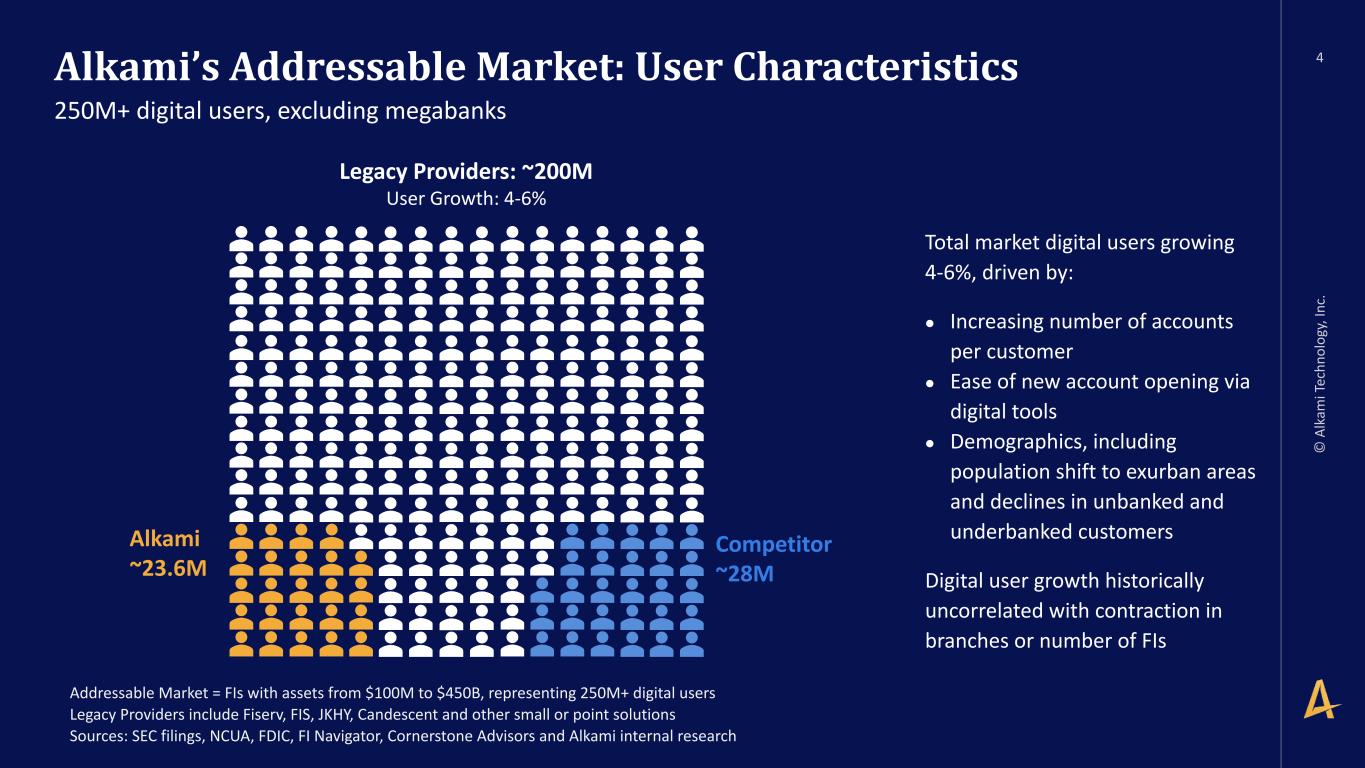
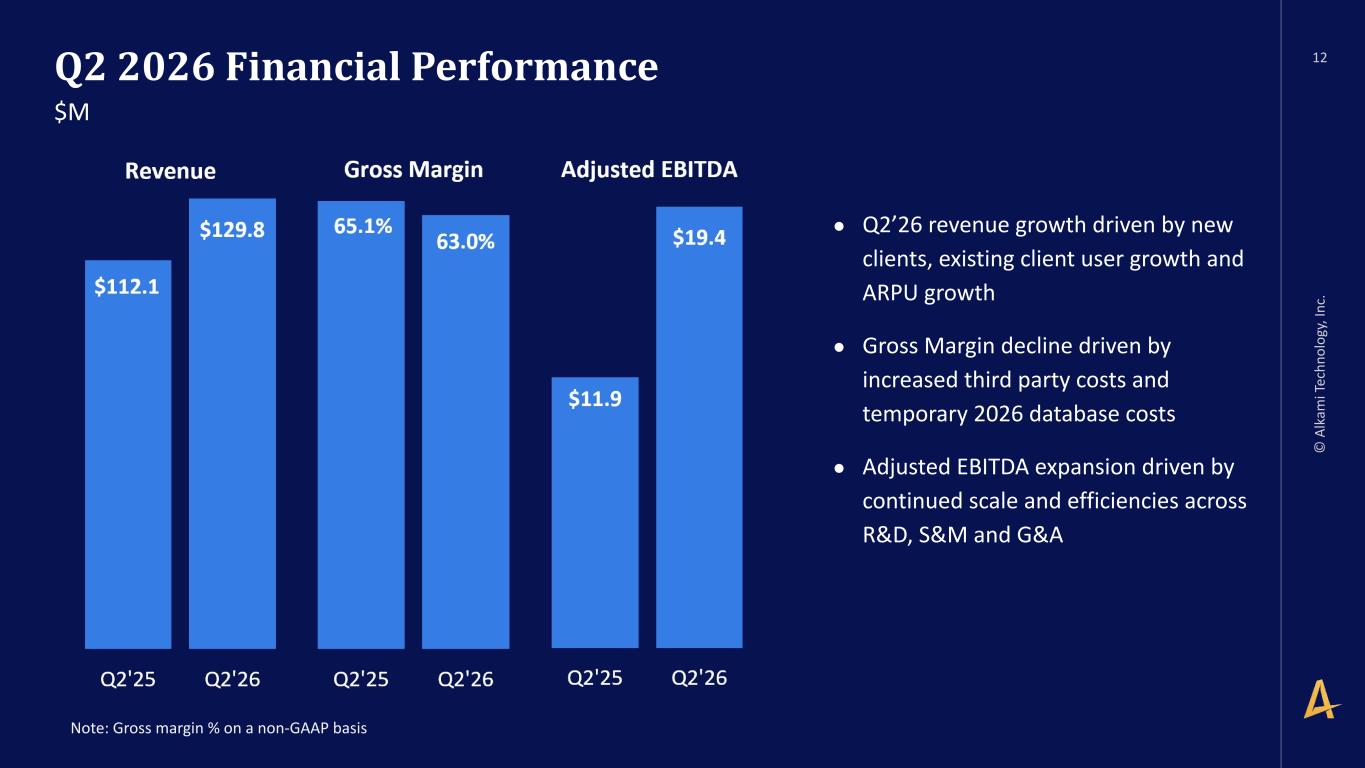
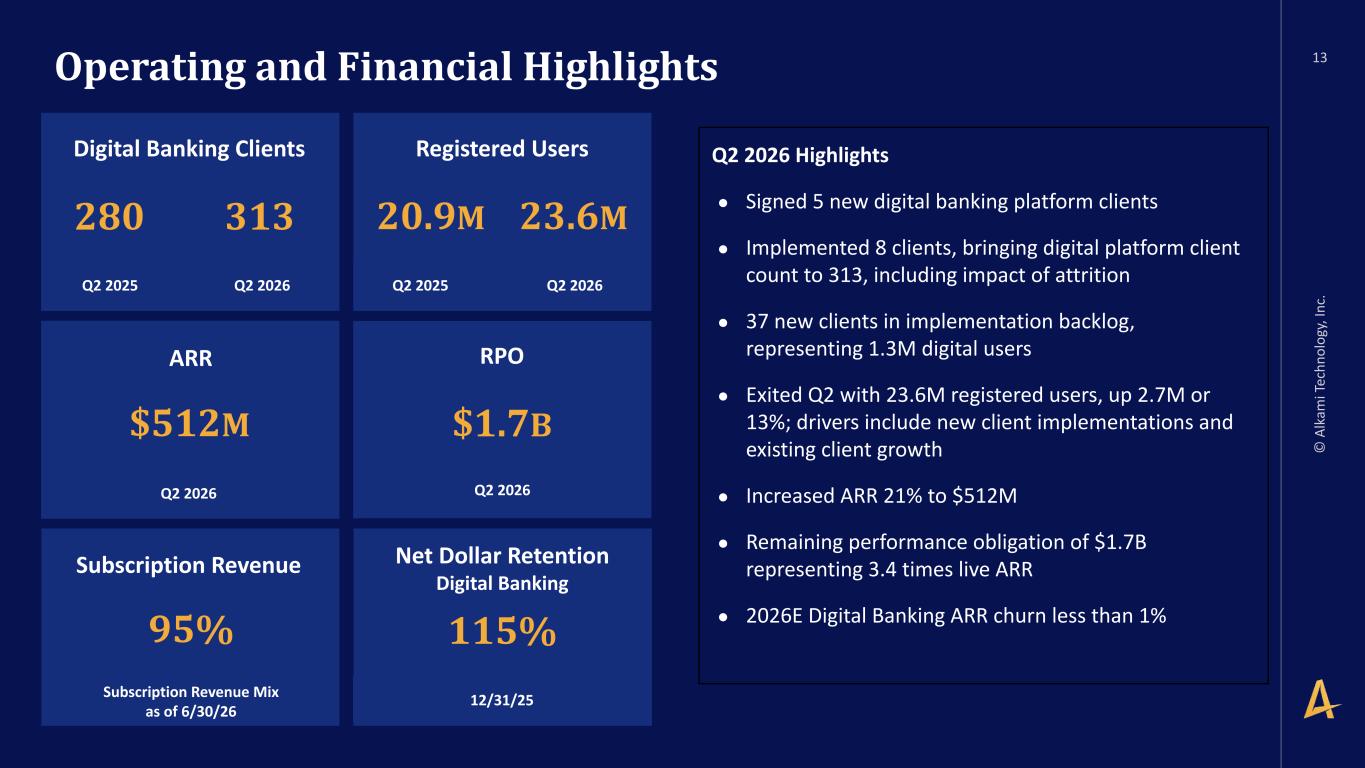
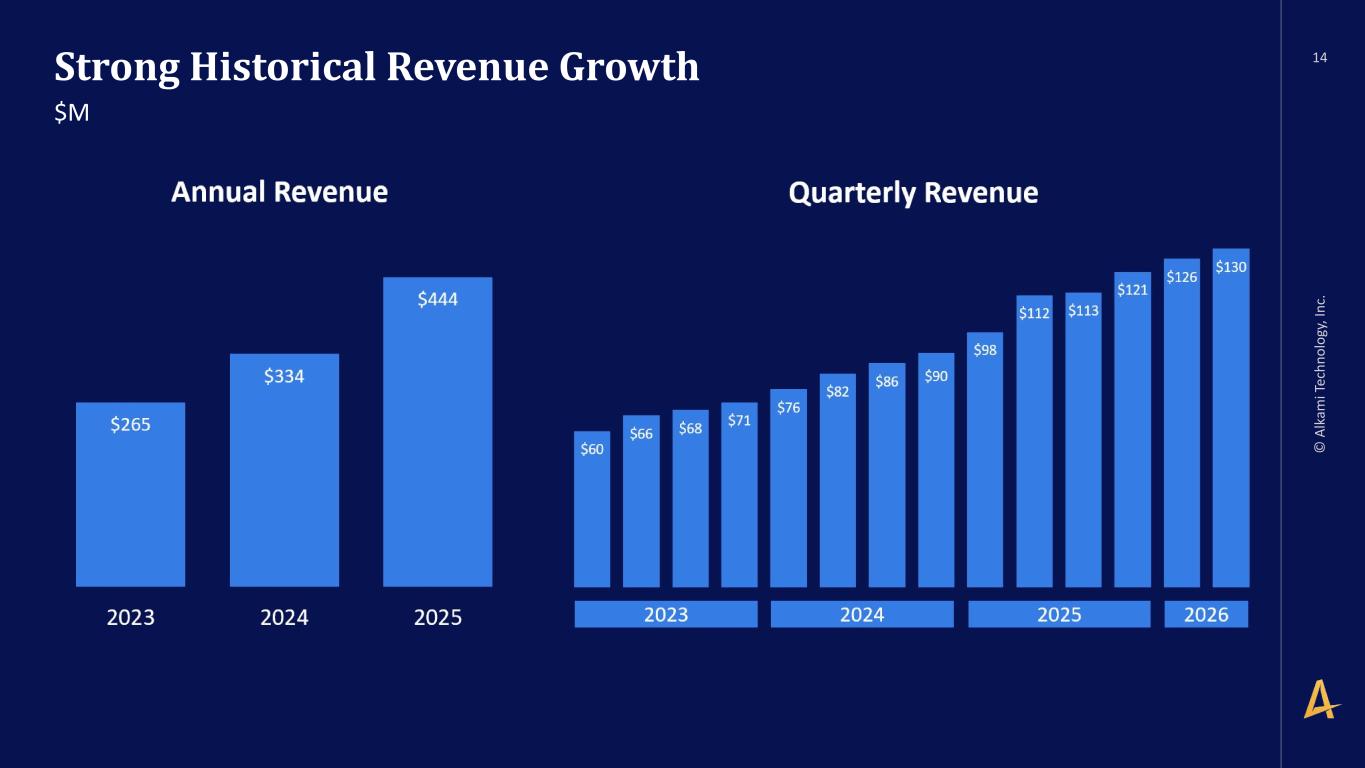
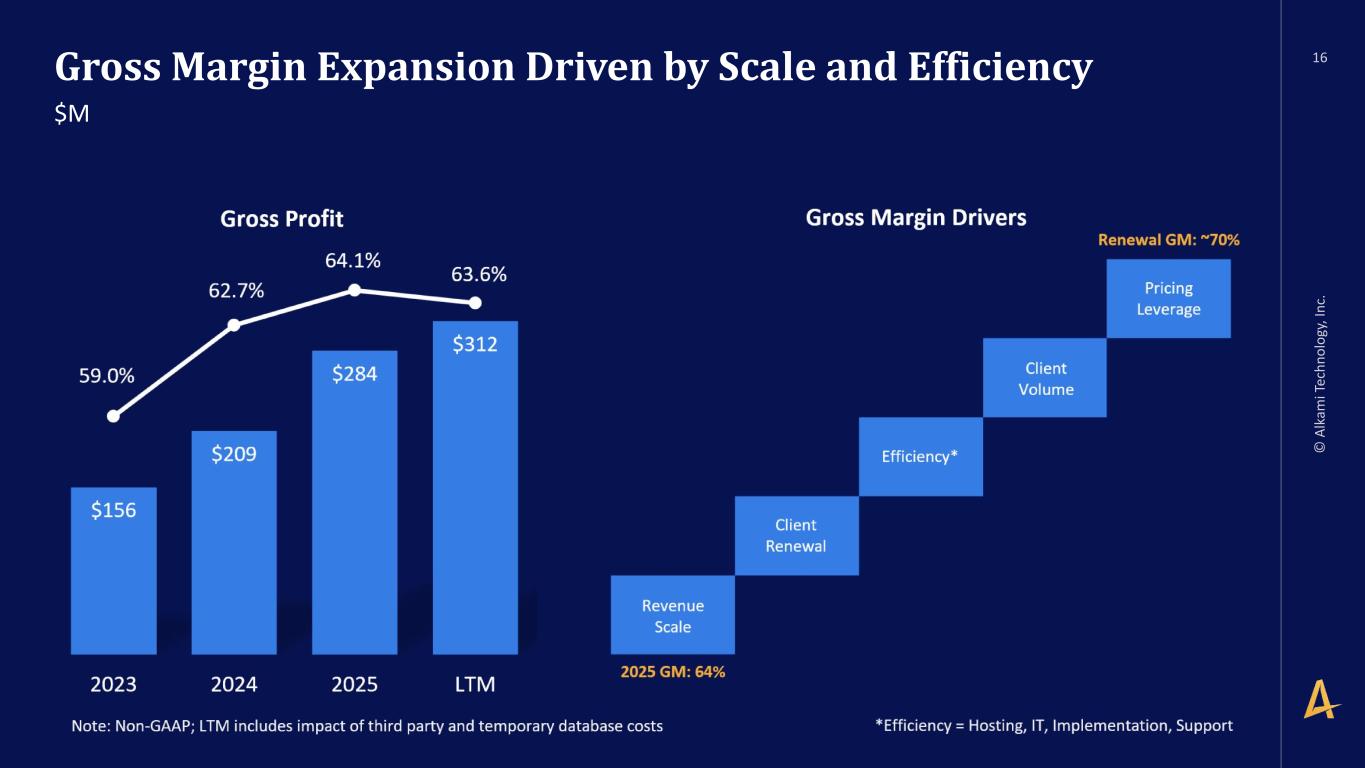
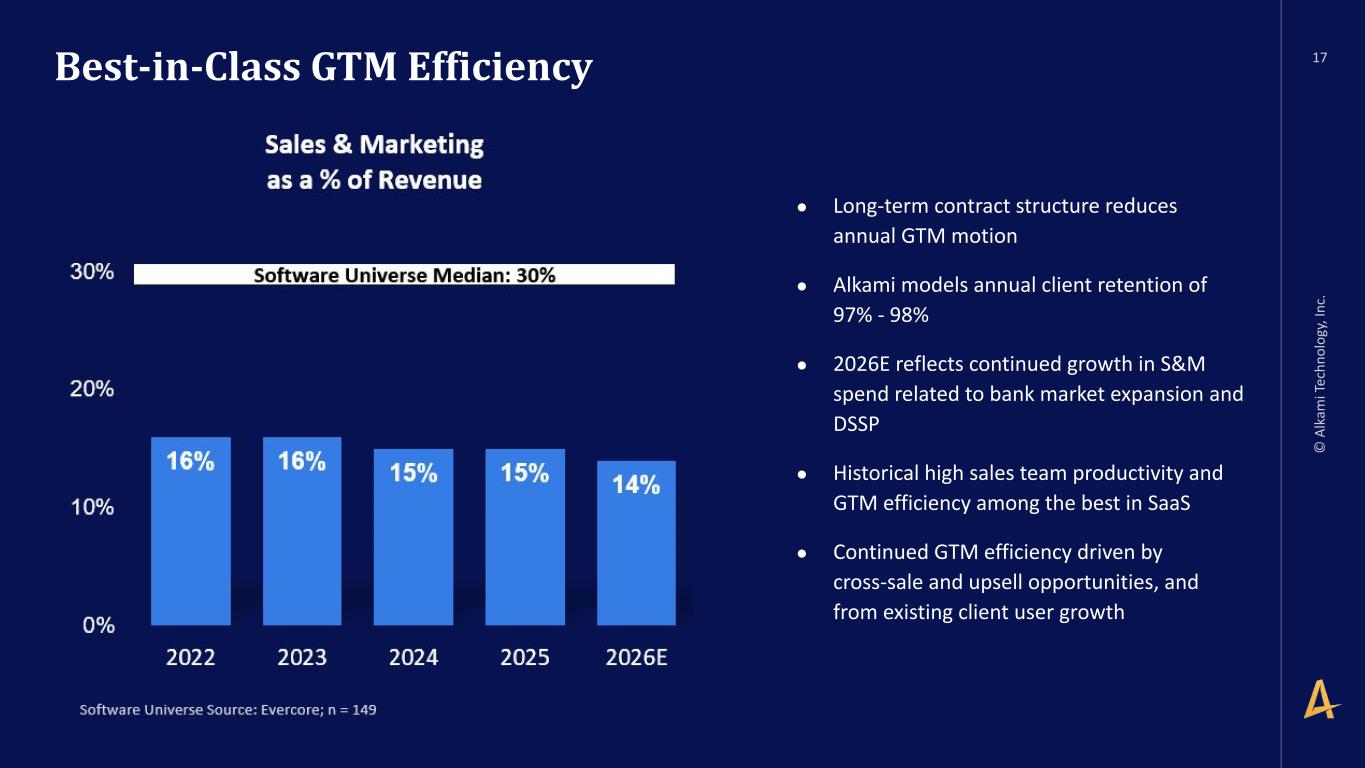
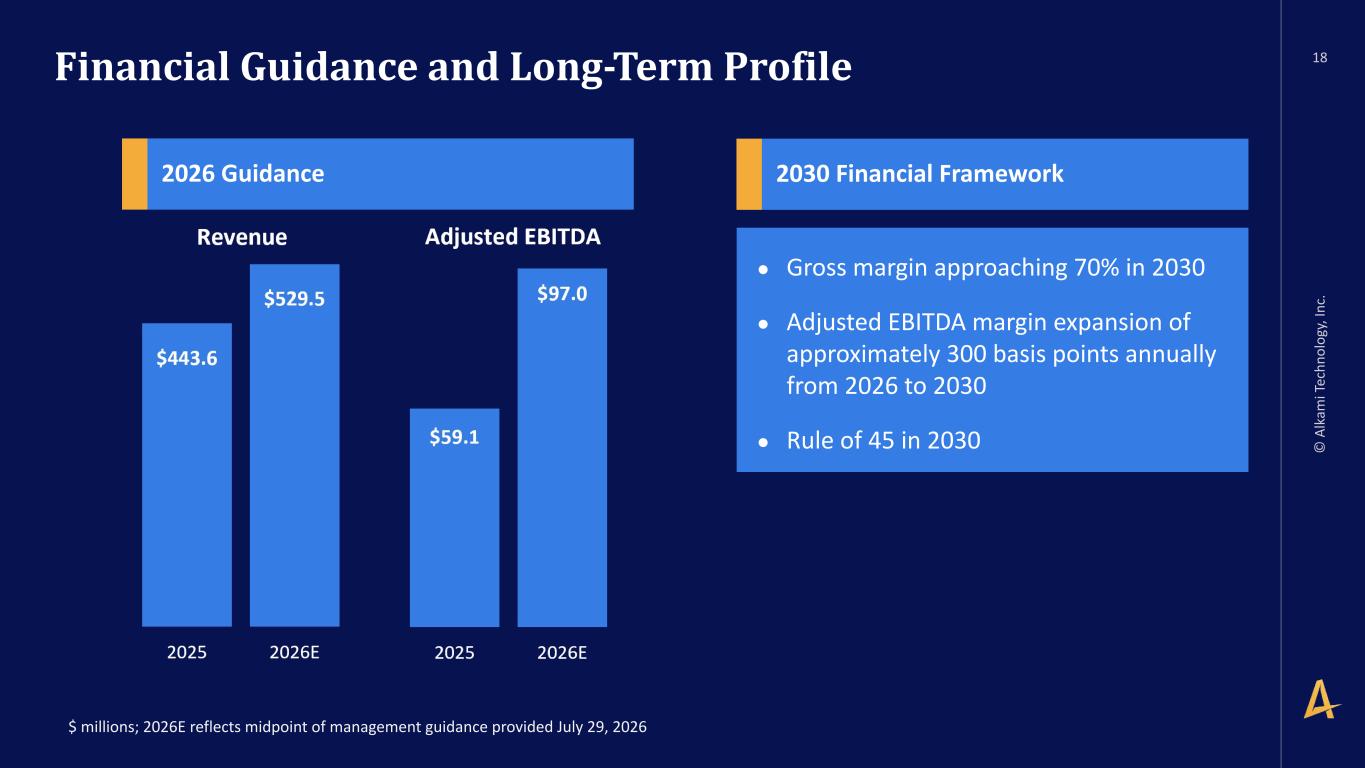
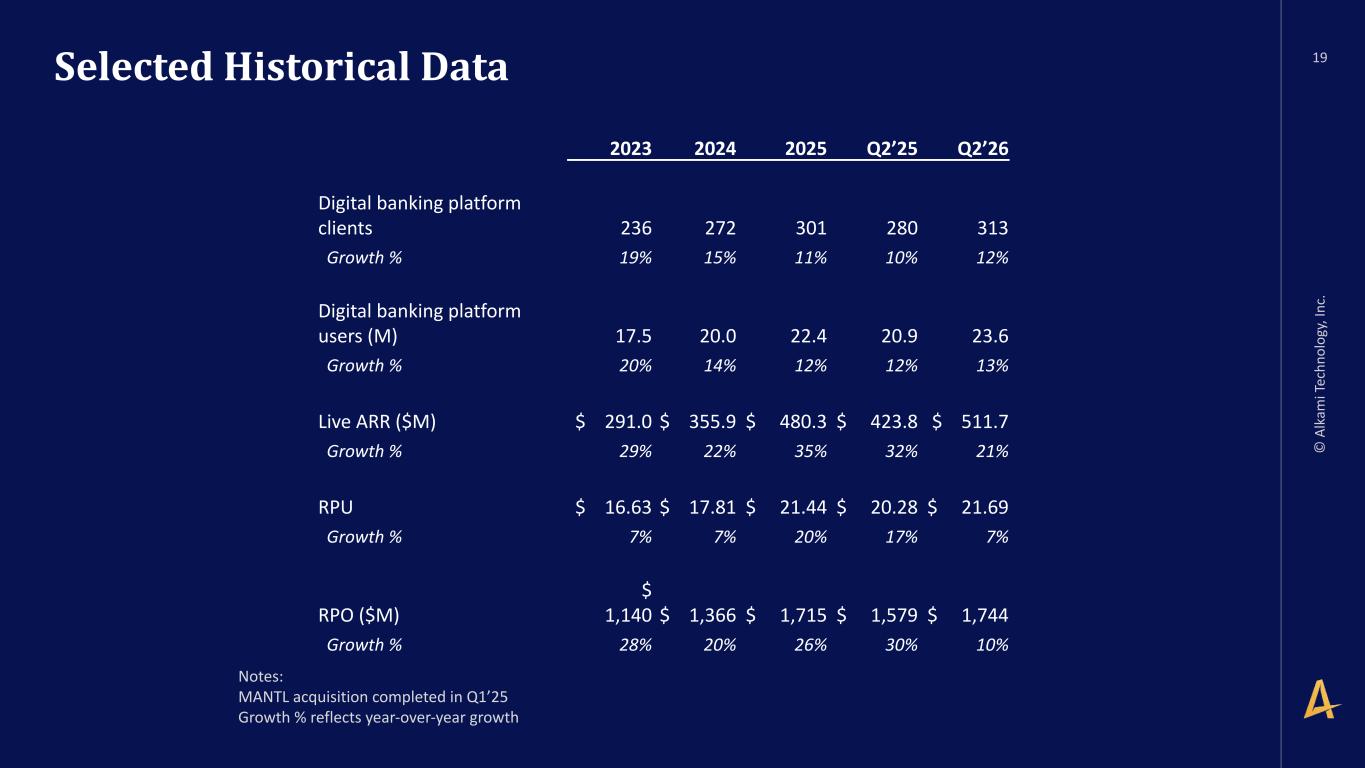
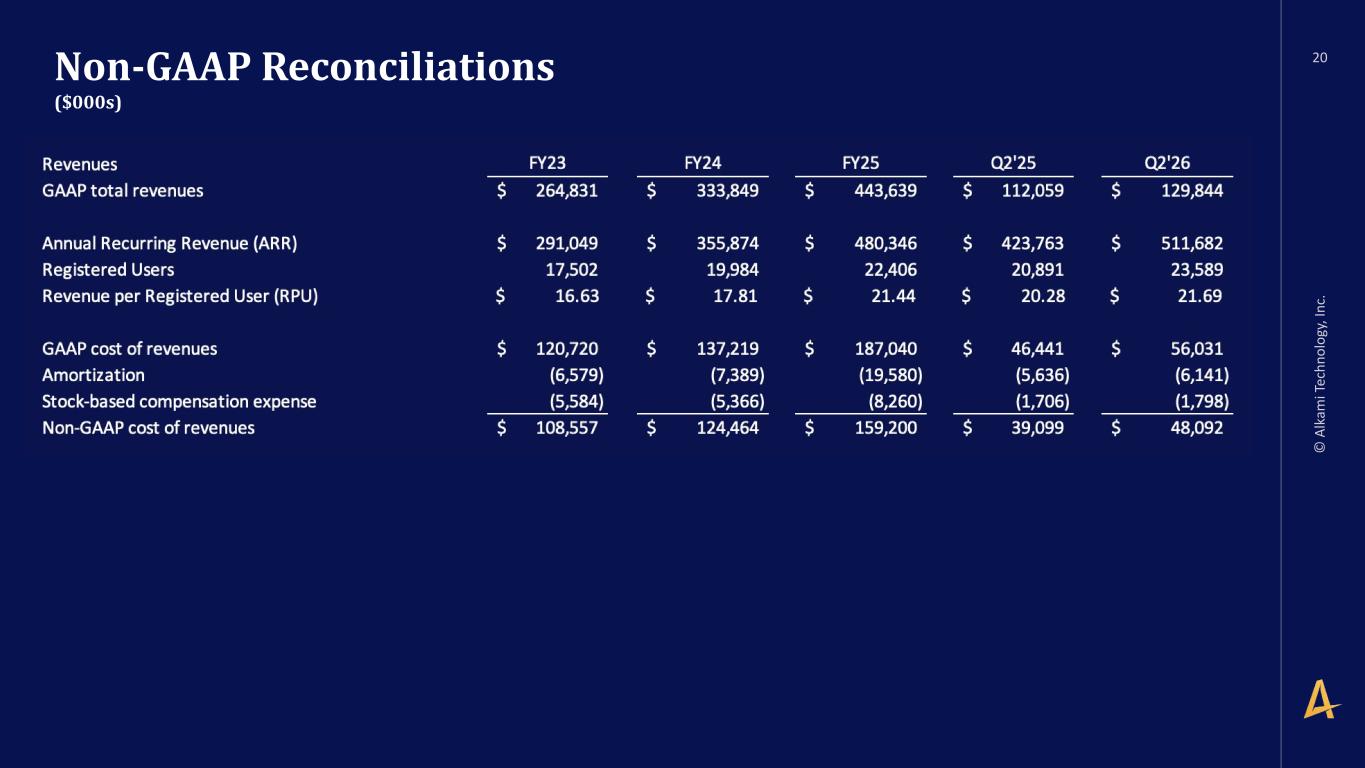
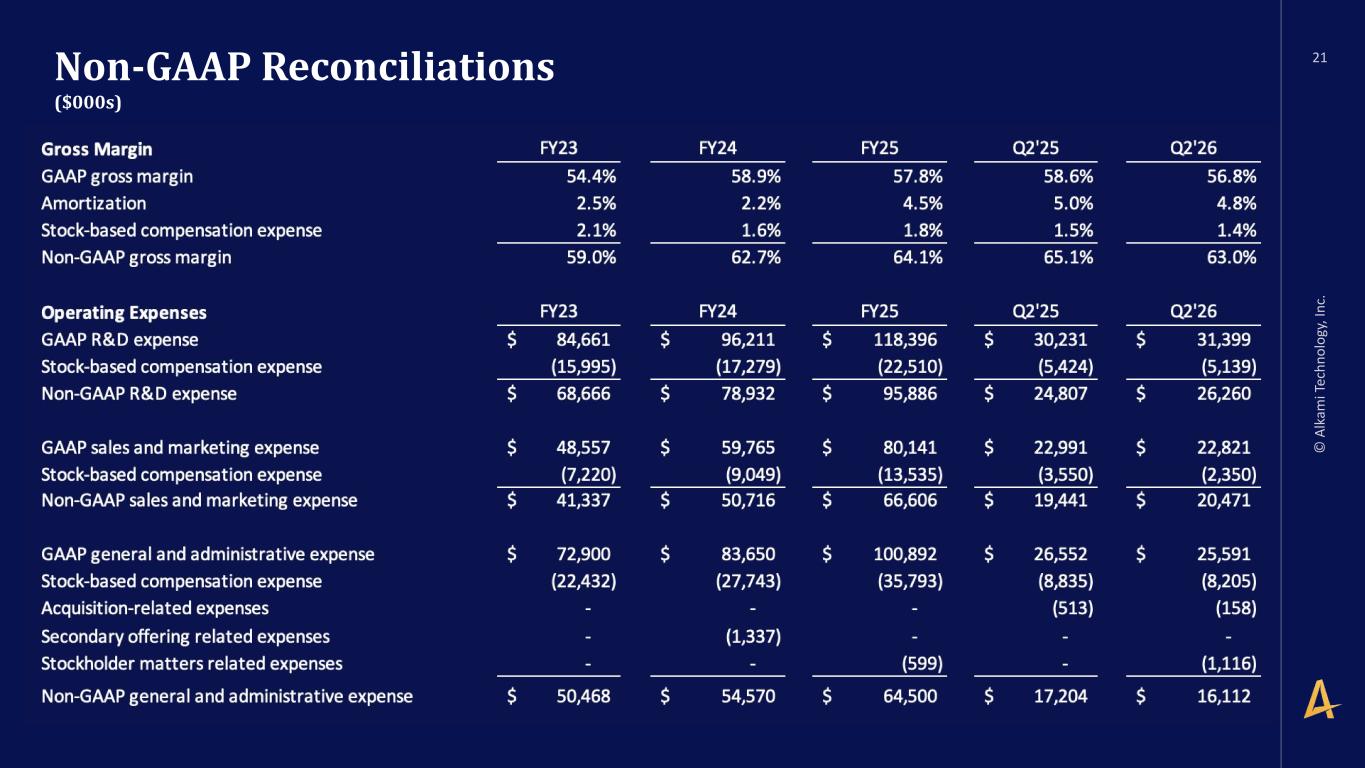
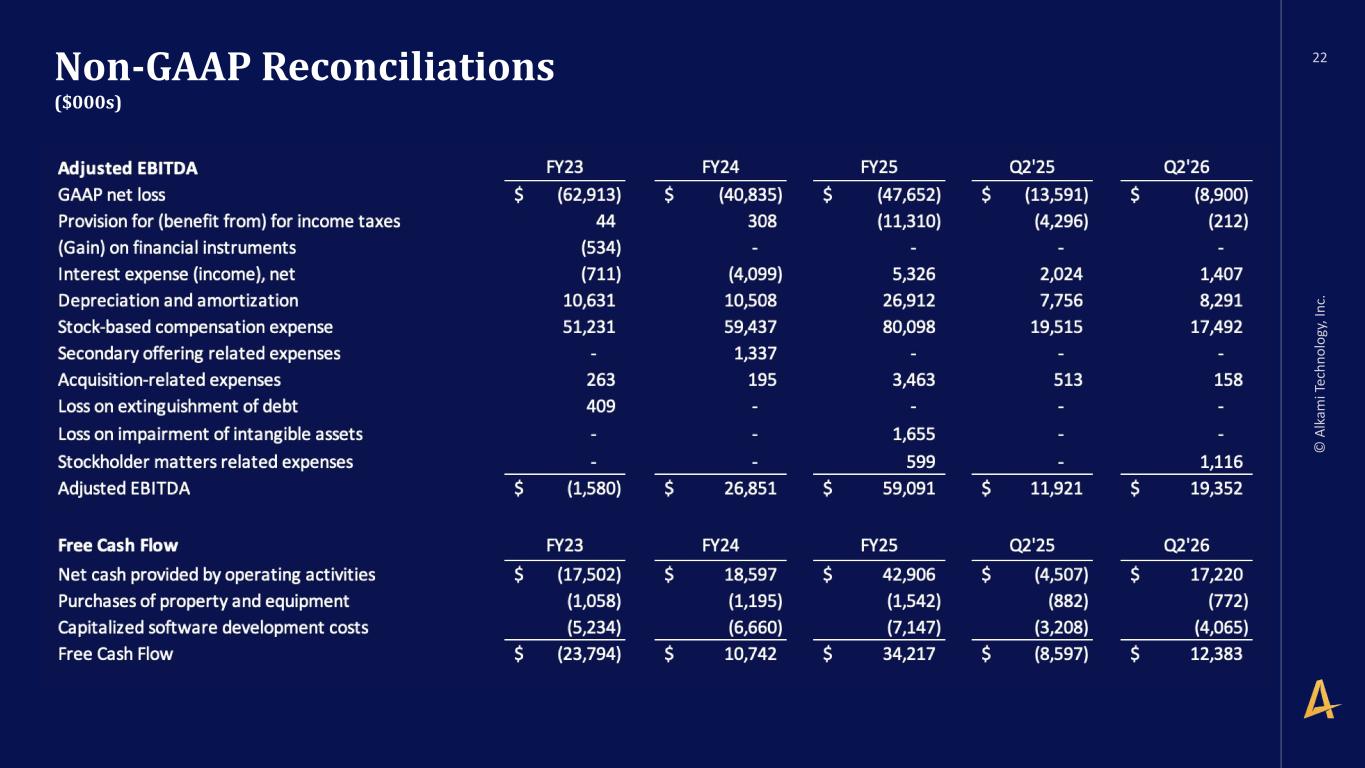
Thank you, Alex. Alex just described a strategy built on three things, creating customers, growing with them, and expanding profitability. This quarter's financials are the proof. We again exceeded expectations on both revenue and adjusted EBITDA. ARR grew faster than revenue, a leading indicator of the momentum still ahead of us. And operating cash flow continued to improve. reflecting the strengthening cash generation of our model. This is what a durable recurring subscription model looks like as it scales, growth that compounds within our client base and converts into expanding profitability, even as we continue to invest for long-term value creation. Let me start with our outlook. Because the guidance we are providing today effectively delivers the five-year goal Alex described at the top of this call, roughly $500 million in revenue and $100 million in adjusted EBITDA, a target that once seemed extraordinary is now our plan for the year. For the third quarter of 2026, we expect revenue of $132.7 million to $134.2 million, representing growth of 17.5% to 18.9%. And we expect adjusted EBITDA of $23.5 million to $24.3 million, or 17.9% margin at the midpoint. Our sequential cadence this year is shaped by the timing of one-time revenue, which falls more heavily in the fourth quarter. As a result, both revenue and margin step up in Q4, with back half adjusted EBITDA margin north of 19%. For the full year, we expect revenue of $528 million to $531 million, representing growth of 19% to 19.7%, an adjusted EBITDA of $96 million to $98 million, or 18.3% margin at the midpoint, reflecting expanded operating leverage as we scale the business. We also expect stock-based compensation to be less than 14% of revenue for the year. Our revenue outlook reflects continued cross-sell momentum across the platform, a steady cadence of ARR launches throughout the year, and mid-to-high single-digit ARPU growth. For the year, we expect approximately 500 basis points of margin expansion, driven by operating leverage and cost discipline, achieved while we continue to fund targeted investments in product innovation and AI. These investments are intended to increase both value per client and Alchemy's own operating leverage over time. As our long-term model framework is relatively new, I'll provide a brief recap. Our targets reflect what we believe are achievable outcomes given current market trends and the exceptional visibility our long-term contracts provide. We continue to expect to reach Rule of 45 by 2030. The framework assumes continued leadership in credit unions and a gradual increase in bank wins, add-on sales consistent with our historical performance, an annual dollar churn of 2% to 3%, roughly half of which is associated with digital banking clients. One point worth emphasizing. As we scale, the composition of our growth will evolve. Historically, it has been split roughly evenly across new logos, user growth, and ARPU. Since we are somewhat range-bound on contribution from new logos, a larger share will come from ARPU expansion. Expansion is our highest visibility, highest margin source of growth. We believe our profitability assumptions are equally achievable and appropriately conservative. We expect non-GAAP gross margin approaching 70% over time as we improve execution and efficiency. approximately 300 basis points of annual adjusted EBITDA margin expansion, driven by gross margin improvement and continued operating leverage, and stock-based compensation declining to approximately 10% of revenue. Over the past three years, we expanded gross margins over 400 basis points and adjusted EBITDA from negative to more than 15%. We have strong visibility into continued leverage in the model and the combination of recurring revenue, long-term contracts, and expansion within our installed base give us real confidence in our path to Rule of 45. Turning to second quarter performance, revenue was $129.8 million, up 15.9% year-over-year. Subscription revenue grew 16.2% and represented 95% of total revenue, outpacing total revenue growth despite the tough comparison associated with termination fees recognized in the prior year. We increased ARR by 21% and exited the quarter at $512 million, once again growing faster than reported revenue. Surpassing the $500 million ARR mark is an important milestone for Alchemy, underscoring the scale we've built and the durability of our growth. We have approximately $61 million of ARR in backlog, representing 37 new clients and roughly 1.3 million digital users. We expect the majority of this backlog to go live over the next 12 months. Our strategy is increasingly centered on expanding value per client, and our financial results continue to support that thesis. In the second quarter, average ARR per client reached approximately 1.6 million, and we now have 50 clients at or above 2 million in ARR, up from 18 at the end of 2021. This illustrates the central premise of our long-term model. As clients adopt more of the platform, the value we create and the value we capture both increase. Importantly, this expansion does not depend on customers' increasing technology budgets. It depends on Alchemy earning a larger share of budgets that already exist. As Alex highlighted, we continue to see strong momentum with our digital sales and service platform. From a financial perspective, DSSP is important because it is driving higher quality revenue across several dimensions. The financial characteristics of the business are evolving as well. As clients adopt more of the platform, contract value, duration, retention, and onboarding ARPU improve. In fact, new logo implementations in 2026 are on track to onboard at nearly double our overall ARPU. This is influenced by the number of bank implementations we have in the pipeline and the uplift from DSSP. We exited the quarter with 313 clients and 23.6 million registered users, an increase of 2.7 million users, or 13% year-over-year. Over the past 12 months, we implemented 39 clients supporting 1.3 million digital users, and existing clients increased their digital adoption by 1.5 million users. Our digital banking contracts provide strong visibility into attrition, typically several quarters in advance. Over the past three years, we have turned less than 1% of our digital banking ARR annually, usually resulting from a client merger. This speaks to the mission-critical nature of our platform and the strength of our long-term client relationships. Revenue per user increased to $21.69, up 7% year-over-year, driven primarily by strong cross-sell execution, increased user adoption among existing clients, and the increase in the number of live banks which tend to onboard at higher ARPUs given the commercial to retail mix. Remaining performance obligations were approximately $1.7 billion or 3.4 times live ARR, providing strong visibility into long-term revenue. The second quarter non-GAAP gross margin was 63%, and we continue to expect to exit 2026 nearing 65%. As anticipated, the quarter reflected lower termination fee revenue, which is inherently variable quarter to quarter, alongside timing of direct costs. Underlying platform margins remain on the expansion path we've outlined, driven by scale, execution improvements, and operating efficiencies. Second quarter operating expenses were $62.8 million, or 48% of revenue, representing 640 basis points of year-over-year improvement realized across all areas of operating expense. Adjusted EBITDA was $19.4 million, above the high end of our expectations, with an adjusted EBITDA margin of 14.9%, an expansion of approximately 430 basis points year-over-year. In the second quarter, operating cash flow improved to $22 million, up from $1.2 million in the year-ago quarter. This growth reflects stronger underlying cash generation, driven by improved profitability and disciplined working capital management. We ended the quarter with $81 million in cash and marketable securities. In the first quarter, the Board of Directors approved our inaugural stock repurchase program of up to $100 million. We repurchased $15 million of stock in the second quarter and an additional $10 million in the third quarter to date as we believe our stock represents an attractive investment at these levels. We continue to believe in a disciplined and balanced approach to capital allocation that enables us to grow through acquisitions, deliver the balance sheet through debt reduction, and opportunistically repurchase shares to deliver increased value to our shareholders. In closing, our results this quarter reflect the strength of our platform and continued execution against our strategic priorities. We are scaling with discipline, balancing growth and profitability, while investing in the capabilities that we believe will further differentiate Alchemy over time. The visibility in our model and continued momentum across the business position us to drive sustained long-term value. With that, operator, please open the line for questions.
Operator
Thank you. Ladies and gentlemen, we will now begin the question and answer session. To join the question queue, you may press star, then 1 on your touchtone phone. You will hear a tone acknowledging your request. If you are using a speakerphone, please pick up your handset before pressing any keys. To withdraw your question, please press star, then the number 2. Our first question comes from the line of Ella Smith from JPMorgan. Your line is open.
Hi, this is Bella Camajon for Ella Smith. Thanks for taking our questions. So, first, you're coming up on a year since you launched DSFP. Given that you've begun landing new customers at higher average selling prices with the bundle of products, do you foresee any harder comps for the back half of 2026 or for next year?
You know, we started selling last year in the August timeframe. And, you know, the majority of those customers are really still sitting in our backlog for the most part. You know, it does take time for them to effectively be onboarded. So no difficult comps for the back half because of that.
And then just also maybe to add on to that, the 55 clients that have the three products that make up DSSP are just a little under 15% of our customer base. So we still have a very large customer base that we can sell the technology into.
Understood. And just as a quick follow-up, given that digital banking implementations are notoriously lengthy and cumbersome, how could AI help you speed up the process? And realistically, how could AI help take days or even weeks off of implementation timelines in the next few years?
AI has already made a huge difference in terms of our ability to be effective. Just as a proof point, if you go back to, I think, 2021 and you look at our customer experience group as a percent of revenue, it was about 16%, and today it is close to 11%. The majority of that step down came after that group, which was really one of the first groups to internally adopt AI at scale, started using AI. And so that's been highly – it's already been effective for us in terms of impacting the business.
Got it. That's very helpful.
Operator
Thanks. Our next question is from Chris Kennedy from William Blair. Your line is open.
Yeah. Good afternoon. Thanks for taking the question. Alex, you mentioned efforts regarding the lending platform. Can you just talk about that and the implications as you go after banks?
The lending platform is part of an overall strategy, which is to create an integrated, for lack of a better term, front of house that allows a financial institution to deliver the kind of amazing experience that the large megabanks can deliver. So that's bringing in a new client, them bringing in a new customer, opening a new account, buying a new product, which would be a loan product. And so the loan origination effort is part of bringing together deposit origination, loan origination, and digital banking fed by our data and marketing platform so that these institutions can create competitive parity with the larger institutions. We have the loan platform live with a couple of customers today. And then there's a second strategy. There are many customers that have an existing back-office loan origination system that they don't want to convert, but they would like to create that integrated experience. And so we're also building, call it a point-of-sale capability, which would integrate with some of the existing loan origination systems on the market today so that those clients could also have an integrated experience.
Thanks for that. And then, Cassandra, you mentioned some one-time revenue benefits in the fourth quarter. Can you just give us a little bit more color on that and any implications as we think about 2027?
Thanks for the question, Chris. No implications as it relates to 2027. Really, this is just shifting small amounts of revenue kind of between Q3 and Q4, if you And this is for things like termination fees, as you know, as well as some one-time work that we do for our customers around core conversions and other customization requests. So that is the driver. You know, it is generally small but is leaning us a little bit more weighted to the fourth floor.
So we'll do merger work so when our customers are merging with somebody else, we're supporting them. what Cassandra mentioned on core conversion is a customer may convert their core, and then we have to integrate their existing Alchemy digital banking system into their new core.
Got it. Okay. Thanks for taking the questions.
Operator
Our next question is from Jacob Stefan from Lake Street Capital Markets. Your line is open.
Hey, I appreciate you taking the questions. Nice quarter. As it relates to guidance, I just want to get some clarity on kind of the gross margin front. Obviously, a little step down in this quarter, but I think, you know, your guidance implies a pretty meaningful ramp in the second half, maybe even reaching 67% in Q4. You know, maybe help us think through that a little bit. Is this related to the one-time kind of revenue, you know, items that you talked about, or am I missing something else?
Yeah, just to clarify, we expect to exit 2026 with gross margin nearing 65%. So, you know, it is a step up from Q2. You know, there was some, you know, in Q2 in particular, we know we, you know, had the impact of termination fees and lower termination fee revenue. So, that was expected and drove our gross margin a bit lower in the quarter. So, you know, I think we'll see that kind of get behind us, if you will, in the back half of the year. And we're still seeing a lot of gains from efficiency just around our implementation, customer support, and site reliability engineering groups. So that continues to benefit us, especially as we see revenue ramp in the back half.
Got it. And maybe just, you know, the capital allocation question, has you guys, you know, become more profitable? Obviously, free cash flow margins expanding here. What's the plan, you know, with that excess cash? Is it, you know, focused on the debt, more, you know, share repurchases, mix of both? What's your targets?
Yeah, I mean, I would say definitely those two, as well as continuing to pursue selective acquisitions. I think we're still kind of busy with the mantle acquisition and all things DSSP right now, but I do still see M&A as an important element of our growth strategy over the long term.
Great. I appreciate the color. Thanks.
Operator
Our next question is from Aaron Kimson from Citizens. Your line is open.
Great. Thanks for the questions. The first one's for Cassandra. ARPU growth came in at 7% year-over-year in 2Q, down from 9% in 1Q. You mentioned mid-to-high single-digit ARPU growth for 2026 in the updated guide in your prepared remarks. On the 1Q call, you spoke to high-single-digit ARPU growth. Can you talk to the Delta in 2026 ARPU outlook going from high-single digits to mid-to-high single digits?
Sure. You know, I mean, I think we're still very much in that range. You know, and I think we're seeing things normalize post the mantle acquisition. So the 9% growth that we saw in Q1 in particular still had kind of the timing benefits of the mantle acquisition. So kind of normalizing for that, you know, we would have been closer to the 7% or so that we saw in Q2, which we're, you know, we're pleased with. You know, as you know, the composition of our growth is continuing to shift to ARPU expansion. And, you know, we don't see, we won't see that happen in any one quarter jump. It will play out over time. So, you know, really just kind of trying to, you know, indicate that ARPU expansion is happening. You know, it's kind of more normalized, I would say, for the back half of this year.
That makes sense. Thank you. And then for Alex, how are you and Nathaniel thinking about the channel motion? Do you see an opportunity to meaningfully grow the reseller motion with the course? And relatedly, can you talk to any potential co-sell and referral opportunities you see?
Well, today, we have two of our main four products, the data and marketing product and our ACH Alert Positive Pay product are sold to a large degree, sold through channel. We've established a very good relationship with one of the bank core organizations where we've got an economic relationship where we get support from them in implementation planning, in support when a customer is live. They've got payment products that are interesting to us to bring to market. and then we've just signed an integrator agreement with a second large core that is one of the two large cores in the bank market and we're hopeful that that continues to expand expand as well so today we do have reseller channels we obviously have quite a bit of embedded ip that we bring through the alchemy you know, the Alchemy storefront, for lack of a better term, and we do have two emerging core relationships where we feel like there's some additional product that we can bring through the Alchemy storefront.
Operator
Our next question is from Jeff Van Rie from Craig Hallam. Your line is open.
Great. Thanks for taking the questions. Alex, maybe high level as it relates to the banking efforts, just talk to me kind of the evolution in your thinking and what you've learned since you've launched those products. You know, as I look at the numbers, I think you had five, and correct me on any of these if I'm wrong, I think you had five go-lives versus four in the first half a year ago. I think you have 12 in backlog for implementation now versus 16 a year ago. And if you look at most of the numbers in terms of banks being implemented from backlog, it looks like sideways numbers. And I know you've said there was a point at which you would have enough integrated banking fabrics, and you'd have that skill set, and you'd sort of get the motion down that we would see that acceleration. So I guess what I'm asking is, how is your thinking about when and where that acceleration point is and why it is?
The first thing I would just answer is from a standing start four years ago to having more than 50 bank clients under contract and more than 42 live, uh just frankly that that as a standalone company would be a successful startup so i'm very pleased with going from essentially three live bank clients to 42 live bank clients in a short period of time i'm very pleased with the treasury management capabilities that we've uh that we've built out um and so i need to i'm looking at cassandra where we're both trying to square the numbers that you're quoting and we're both squinting at each other you may be a million percent right but from our perspective you know we we had quite a few that we closed last year it's still 30 percent of our backlog for this year so jeff i don't feel like the i don't feel like the business is going sideways i feel like it's becoming an increasingly important part of our business now when we model the future you know we're not modeling uh you know pulling a number off the top of my head if we sold uh 10 banks a year ago we're not modeling that we jump to 25 banks the next year we're being pretty conservative to say that we're going to increase the number of new logo banks you know by a couple every year in the planning horizon and over time When we look at the profile of the business, we think that half of the new logos are going to be banks and half of the new logos are going to be credit unions. But from where I sit, we've built a very successful business in the bank market, essentially from scratch. We've got the product to be able to take to market. We've got the implementation capabilities to be able to take to market. We're beginning to have awareness in market. And so I've got a lot of confidence in that business. I don't know if you have any numbers that you looked up. I was trying to square with you.
Yeah, I mean, I think those numbers are right. But, you know, I think we're not expecting to see some dramatic reacceleration in any one quarter. I mean, I think we're pleased with the progress that we've seen in the bank market, you know, especially in the first half. and, you know, it will, as Alex had just described, it will kind of take time for us to get to a place where our mix is 50% banks and 50% credit unions.
Okay, and I'll leave that one there. And then maybe the second one, just from a new wins, sort of current tone of business standpoint, Alex, as you're seeing these new wins, I'm just curious if you had any incremental color around maybe sort of what core banking fabrics they're coming from, you know, what people are on that you're signing up, the newest signings, maybe any color commentary around sales cycles, lengthening, shortening, win rates, improving, steady, declining, just any incremental color sort of at the leading edge of what you're seeing in the marketplace.
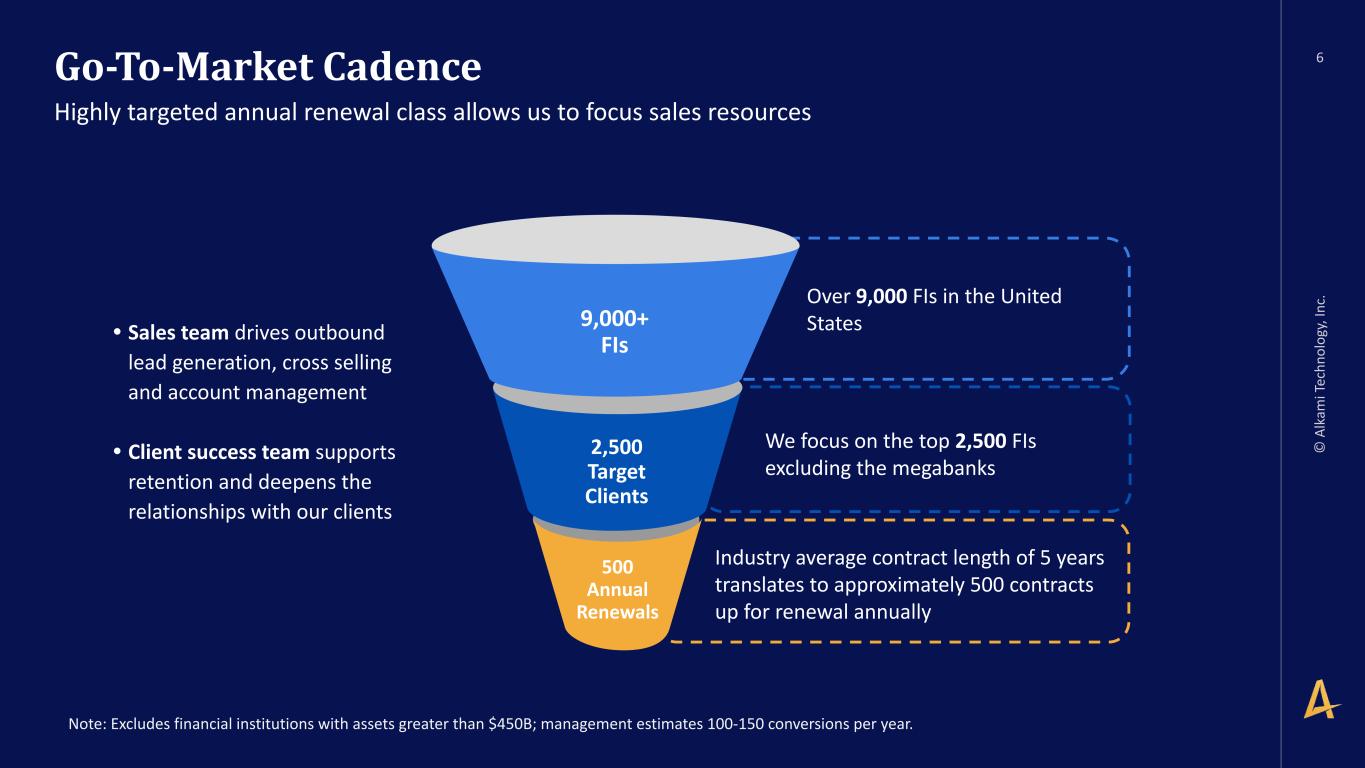
Yeah, I mean, we were pleased with an improvement in the bank win rate through the first half of the year, so that's encouraging for us, especially as we continue to have a qualified pipeline that's about half bank and half credit union. In the bank market, there's much more of a concentration of cores. There's three FISERV cores and two FIS cores. Remember, RICP, Jeff is, and I know you know this, RICP is pretty specifically a community bank between, say, $500 million and, you know, $20 billion in assets. And in that market, when you look at the ICP, there's about 1,330 banks that are on just a handful of cores across Jack Henry, FIS, and Pfizer. And so that remains pretty consistent across the bank market, much broader range across the credit union market. I would say that in terms of our customer base in the credit union market, we have helped a couple of customers move on to the correlation core, and so we've seen some expansion into that core. But that would be my commentary on the cores that we're integrating into. No change in sell cycle, pleased with the increase in the bank win rate. Once again, because of the buying cycle and because of the length of the contract, and I know you know this, even if things are going on in the economy or in other places around the world, it hasn't really impacted the demand that we see coming in and then the length of time that people prosecute a sale.
Okay, helpful. One last quick one for you, Cassandra, on the numbers database. I think you'd come to the last quarter, you were thinking second half database expense, and then you'd wrap it up by the year end. Can you just refresh me on the amount of sort of excess expense there for the remainder of the year, and then is that still on track that sort of wraps by the end of 26?
Cassandra, I'm going to take that because there's actually a business decision, so I think that was about a point maybe was that. And so when we looked at, you know, earlier on, I said, hey, the most important things we can do is create and keep customers. When we looked at our priorities, what we decided to do is push that project into 2027 and invest those dollars into building out the loan platform, building out treasury management capabilities. And so the continuation of that project goes into 2027, and that's a priority decision that we made.
And one thing I would just add is we have saved some of those costs. We have done some of the work in the first half, so we are seeing some of the savings. But to Alex's point, we don't expect to realize the full amount of those duplicative costs in 2026.
So thanks for that question. It gave us an opportunity to explain. Happy to help.
Operator
My next question is from Andrew Schmidt from KeyBank Capital Markets. Your line is open.
Hey, Alex. Hey, Cassandra. Thanks for taking the question. First, I apologize if I missed this. I jumped on a little bit late. But I wanted to just clarify the comment on gross margin, the 65%. Is that now an exit rate versus a full year rate? I just want to be clear in terms of the 65% target. Thanks.
Okay, great. Thank you for clarifying that. And then maybe just on the DSSP-related sales, it sounds like you continue to have momentum there, and I think the premise was on the revenue side that these take a little bit longer but should show up in the form of larger deals and potentially kind of have a larger revenue contribution exiting 26 into 27. I'm just curious if there's any color on that in terms of just, you know, some of these sort of higher revenue deals coming on live and going live post kind of DSSP implementation.
They're really, you know, really just starting to come online. I think we had one customer go live recently on the full DSSP and, you know, they went live in about nine months. So ahead of kind of the 12 months that we were signaling a couple quarters ago, which is encouraging. Now it's only one customer, and we still have many implementations to go. But so far, we're really pleased with that progress.
And I think when you look at the current backlog of launching customers' RPU, there's a couple things that are contributing to that. One is the mix of bank customers that are in that. And then the second is the fact that some of those customers are customers that have bought all three products.
And one other follow-up I would just make is just a reminder that in 2026, our new logos are onboarding at nearly double our overall ARPU, and a lot of that is related to DSSP.
Got it. That's helpful. Maybe just sneak one more in just on competition. And maybe more on the credit union side, just any sort of competitive changes there, win rates, are those relatively stable, just anything incremental on the CU side?
No, I mean, I continue to see that really good companies on the credit union side, I think that Alchemy, Lumen, and Q2 are all good companies that bring good products to market and fight really hard for customer wins. Obviously, as a CEO of Alchemy, I think our products and offerings are better, but largely the market has become concentrated on a smaller number of competitors.
Right. Smaller number of modern competitors sort of gaining share. That makes sense.
What I was trying to, I should be more precise. I'm thinking about if, if a customer has decided to make a change, so not if they're evaluating their current vendor versus making a change, but if they've decided to make a change, you know, I think there's three good companies in the market that are competing for that, for that business. And like I said, that's Lumen and Q2 and Alchemy. I like our chances, but my point was in the credit union market, although there are maybe some other companies, it's becoming concentrated in terms of customers making a decision.
That makes sense. Thanks, Alex. Appreciate the time.
Operator
There are no more questions at this time. Thank you for joining us. You may now disconnect.