Operator
Good day, and thank you for standing by. Welcome to Allstate's fourth quarter earnings investor call. At this time, all participants are in listen-only mode. After prepared marks, there will be a question and answer session. To ask a question during the session, you'll need to press star 1 on your telephone. If your question has been answered and you'd like to remove yourself from the queue, simply press star 1-1 again. Please limit your inquiry to one question and one follow-up. As a reminder, please be aware that this call is being recorded. And now I'd like to introduce your host for today's program, Alistair Gobin, Head of Investor Relations. Please go ahead, sir.
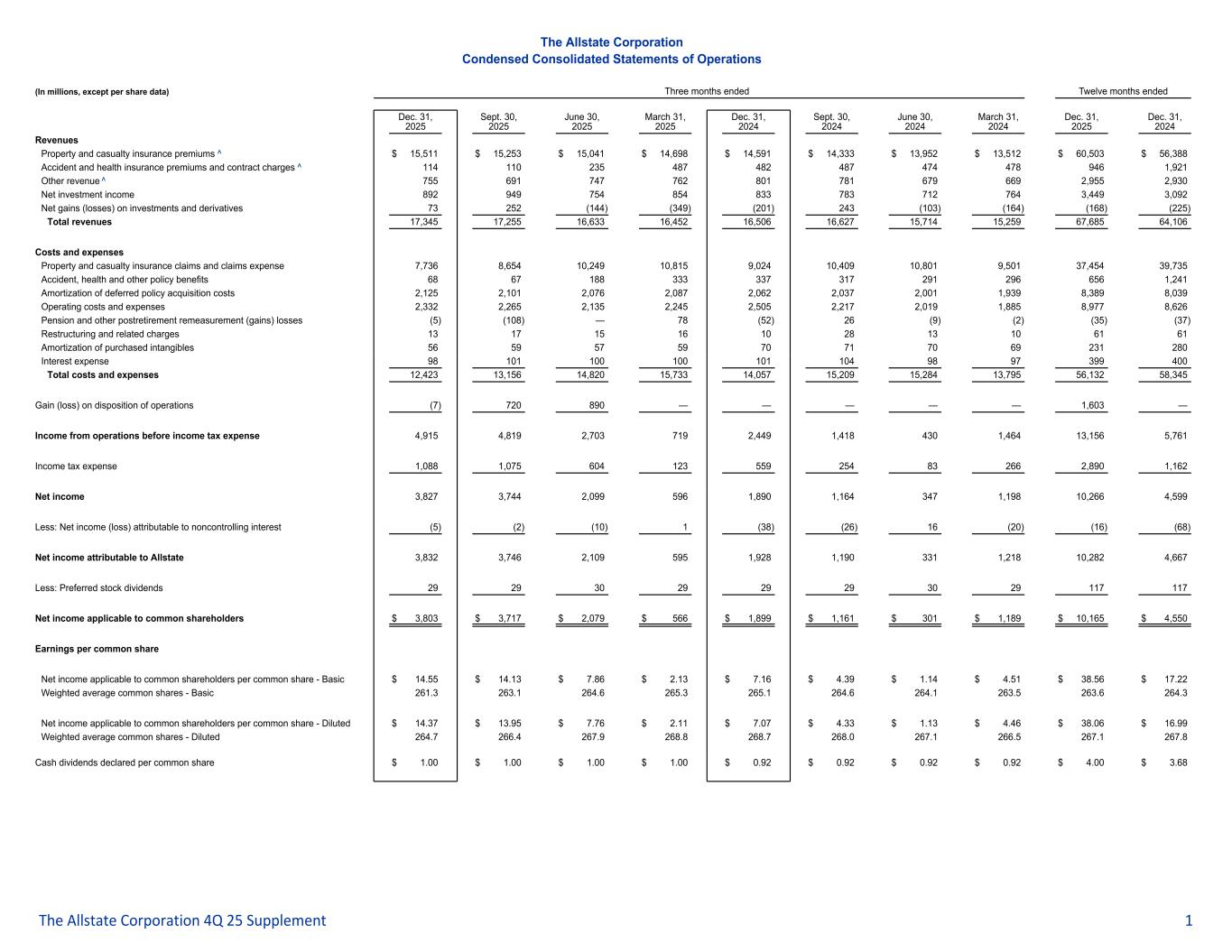
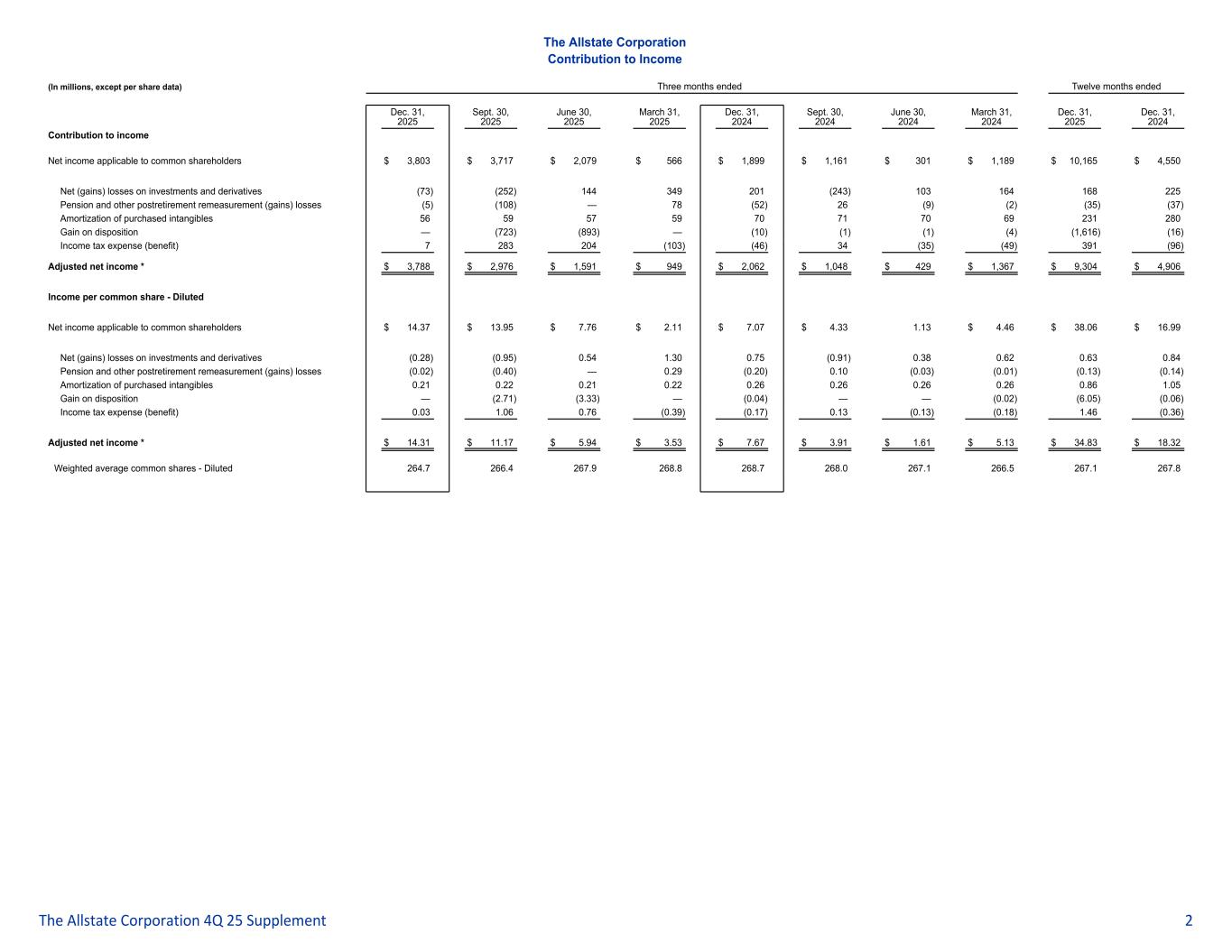
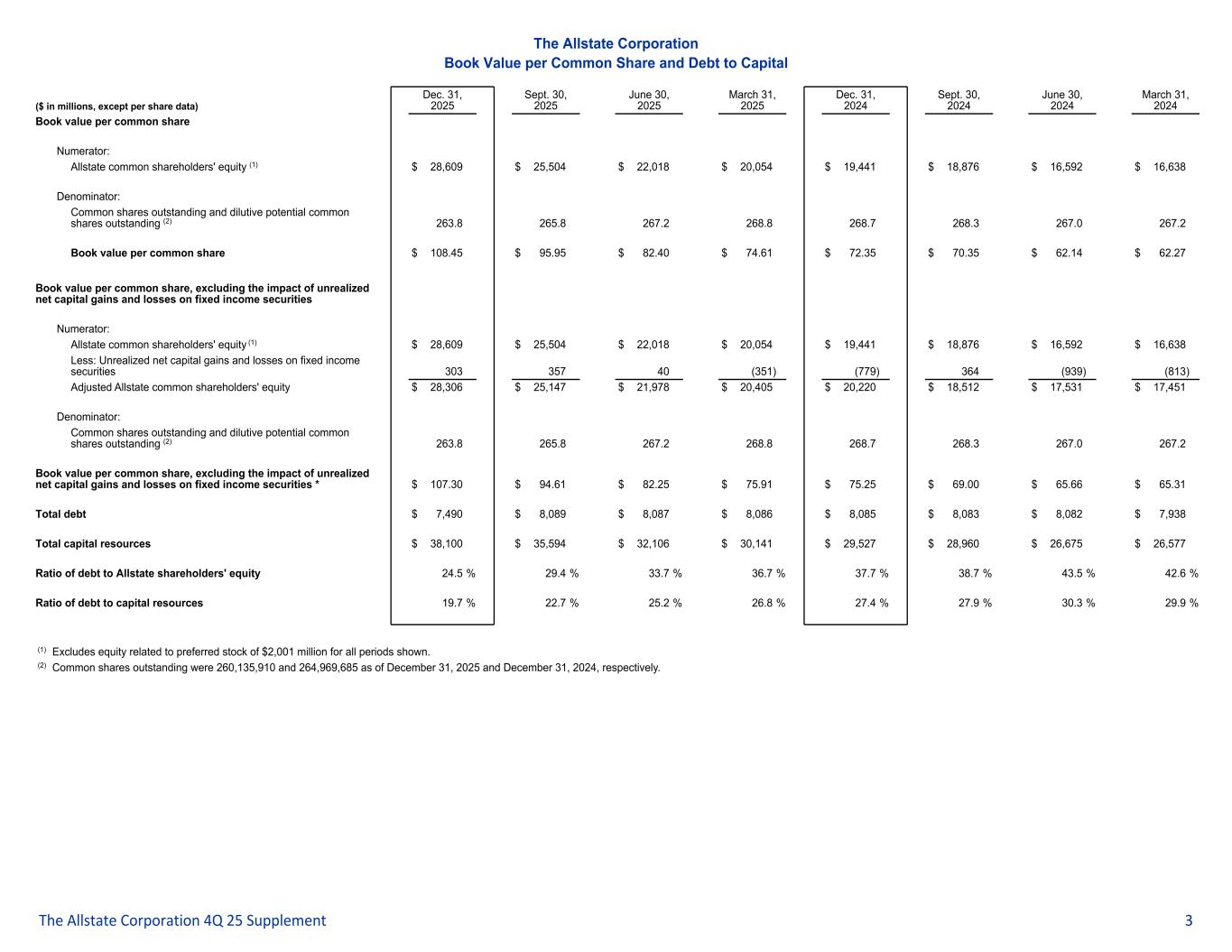
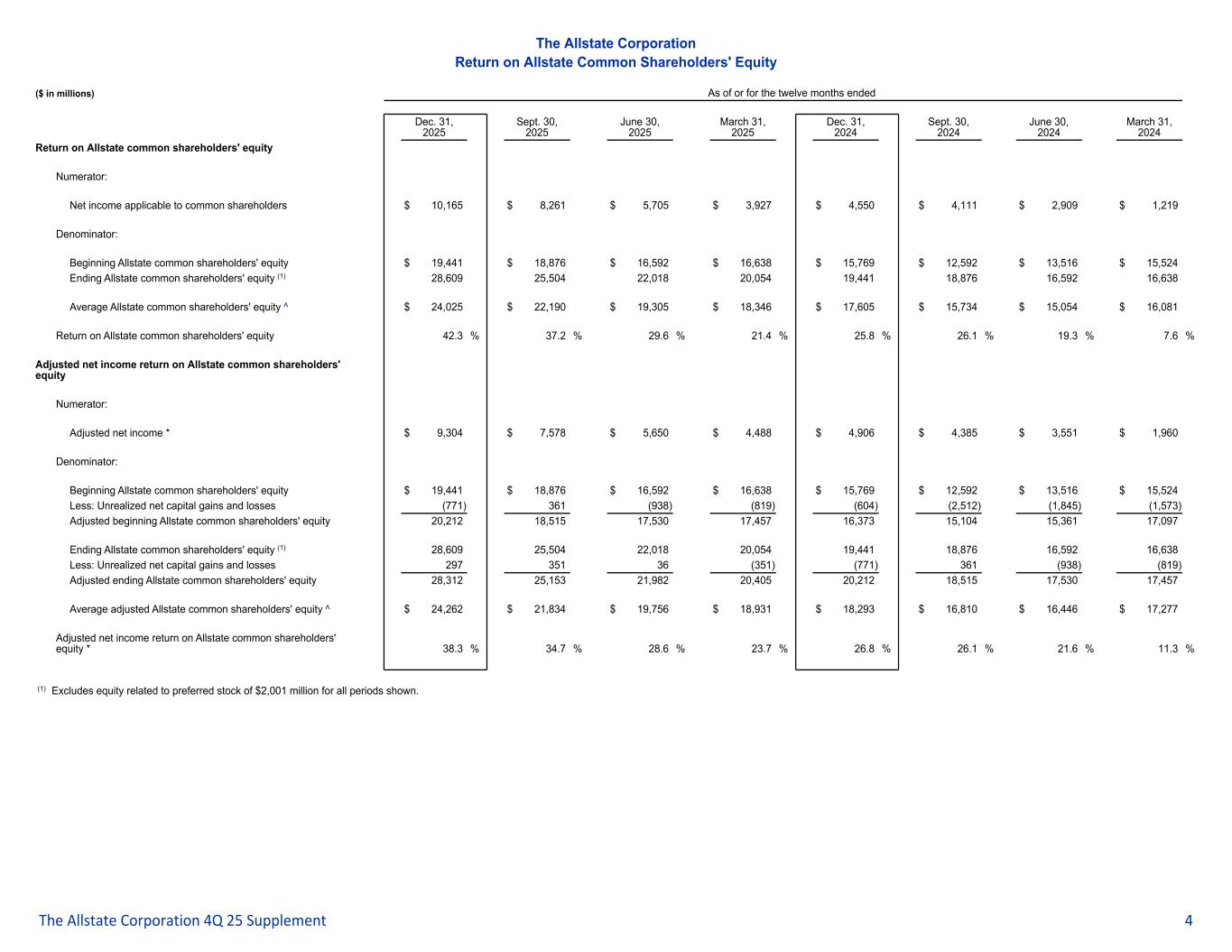
Good morning, everyone. Welcome to Allstate's fourth quarter 2025 earnings call. Yesterday, following the close of the market, we issued our news release and investor supplement and posted related materials on our website at allstateinvestors.com. Today, our management team will discuss how Allstate is creating shareholder value. Then we will open up the line for your questions. As noted in the first slide of the presentation, our discussion will include non-GAAP measures for which there are reconciliations provided in the Muse Release and Investor Supplement. We will also make forward-looking statements about all states' operations. Actual results may differ materially from most statements, so please refer to our 2024 10-K and other public filings for more information on potential risks. our 10 K for 2025 will be published later this month and now I'll turn it over to Tom good morning thank you for investing time in all state today we're going to cover financial results and how all state is successfully addressing insurance affordability so let's start on slide 2 all state strategy has two components is shown on the left increase personal property liability market share and expand protection provided to customers. On the right are performance highlights. Allstate improved auto and homeowners insurance affordability for millions of customers in 2025. Results benefited from the transformative growth initiatives, which generated strong financial results and increasing growth of property liability policies in force. Shareholders were provided $2.2 billion of cash returns last year. The dividend has been increased and a $4 billion share repurchase program will be initiated. Slide three is an overview of Allstate's financial results. Total revenues increased to $17.3 billion for the fourth quarter and $67.7 billion for the year. Net income applicable to common shareholders was $3.8 billion for the quarter and $10.2 billion for the year. Adjusted net income was $3.8 billion, or $14.31, per common share for the fourth quarter and $9.3 billion for 2025, $34.83 per share. The lower table provides a reconciliation of that income for the fourth quarter to the prior year quarter. In 2024, we earned $1.9 billion. The three primary drivers of increased income were better underwriting losses, lower catastrophes, and the benefit of reserve releases from prior years and adjustments within 2025. Net income for the quarter was $3.8 billion. Now let's discuss our success in improving affordability while maintaining margins before going through the details of this performance with Mario, Jess, and John. Slide four discusses the levers to improve insurance, auto insurance affordability at the industry level, and then we'll go through all states' actions. In summary, improving affordability will require a focus on costs, not profits. Let's go through the math. The pie chart on the left shows a composition of auto insurance industry costs from 2020 to 2025. Physical damage costs out of repair and replace vehicles represent the largest share of costs at 43%. Injury costs are 34% of premiums and expenses are 23%. Over the last five years, industry underwriting income was close to zero. To improve affordability, then, costs must be lowered. Some costs move with inflation. Other cost reductions will require legislation or regulatory changes. So physical damage costs have increased 47% over the past five years. Now, a portion of this was because used car prices rose 43% during the pandemic, which drove up the costs to replace and repair vehicles. That inflation has started to reverse, which will improve affordability since insurance is a cost-plus product. The second largest driver of cost is bodily injury claims, which are when our customers get sued by people that are injured in an auto accident. These costs have increased 52% over the last five years due to more attorney involvement in higher settlements. Tort reform has reduced litigation in Florida, which has enabled the top five insurance companies in the state to request rate reductions of 5.9% in 2025. Consumers will benefit if states like New York and others work to reduce what I would call fender-bender litigation, so you barely touch somebody and they sue you, and then also work to control exorbitant damage costs. For example, in New York, the average bodily injury settlement is twice that of Florida and the countrywide average. Louisiana and Georgia have recently addressed litigation, which we are hopeful will reduce the cost of suits against our customers. Uninsured and underinsured motorists' costs have increased 72%, which means responsible drivers are now carrying more of the load. This can be mitigated by enforcement laws requiring insurance coverage and raising mandatory coverage limits. Changing laws or regulations so that insurance companies lose money at the underwriting level will not create a stable and affordable set of choices for consumers. Now, Allstate is successfully addressing the issue of insurance affordability with customers, as shown on slide five. Customer value has been improved by using renewal processes for auto and homeowners insurance to optimize coverages and discounts. that show all state customers value every day or save program reduced 7.8 million customers premiums by 17% on average by adjusting coverage and other changes in 2025 we continue to roll out new all the new auto and homeowners affordable simple connected insurance products auto insurance rates for the ASC price were reduced in 32 states with an average reduction of 9% we also expanded direct purchase options which have lower prices Jess is going to go through the impact of this on this year's earnings which was substantial in terms of the top line but we manage margins well operational excellence also supports affordability while maintaining margins the transformative growth initiative has lowered expenses improving claims processes also enable us to offer lower prices so all states strategy is to deliver strong results while successfully adapting to a changing external environment. Mario will now provide an update on the Transformative Growth Initiative to increase property liability market share. Thanks, Tom.
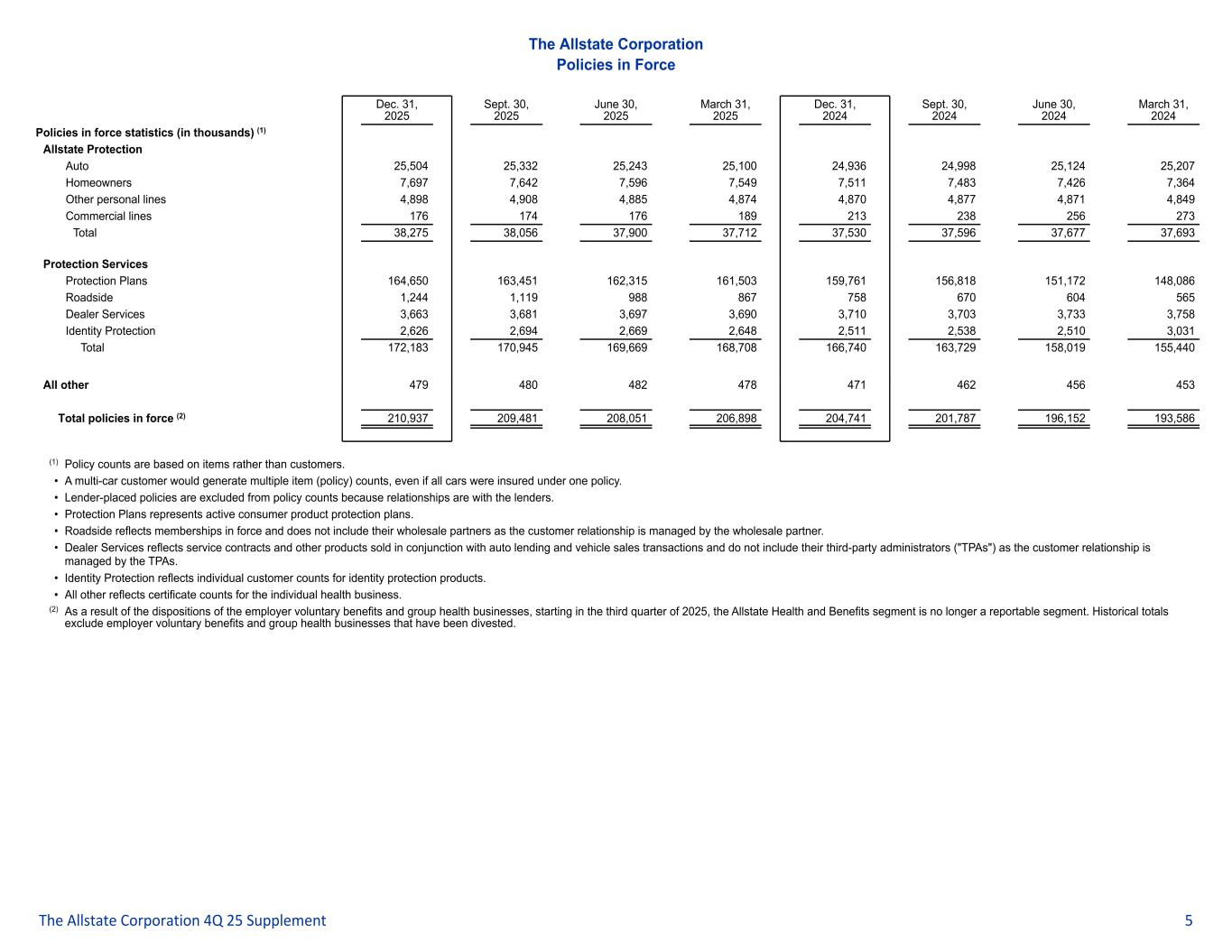
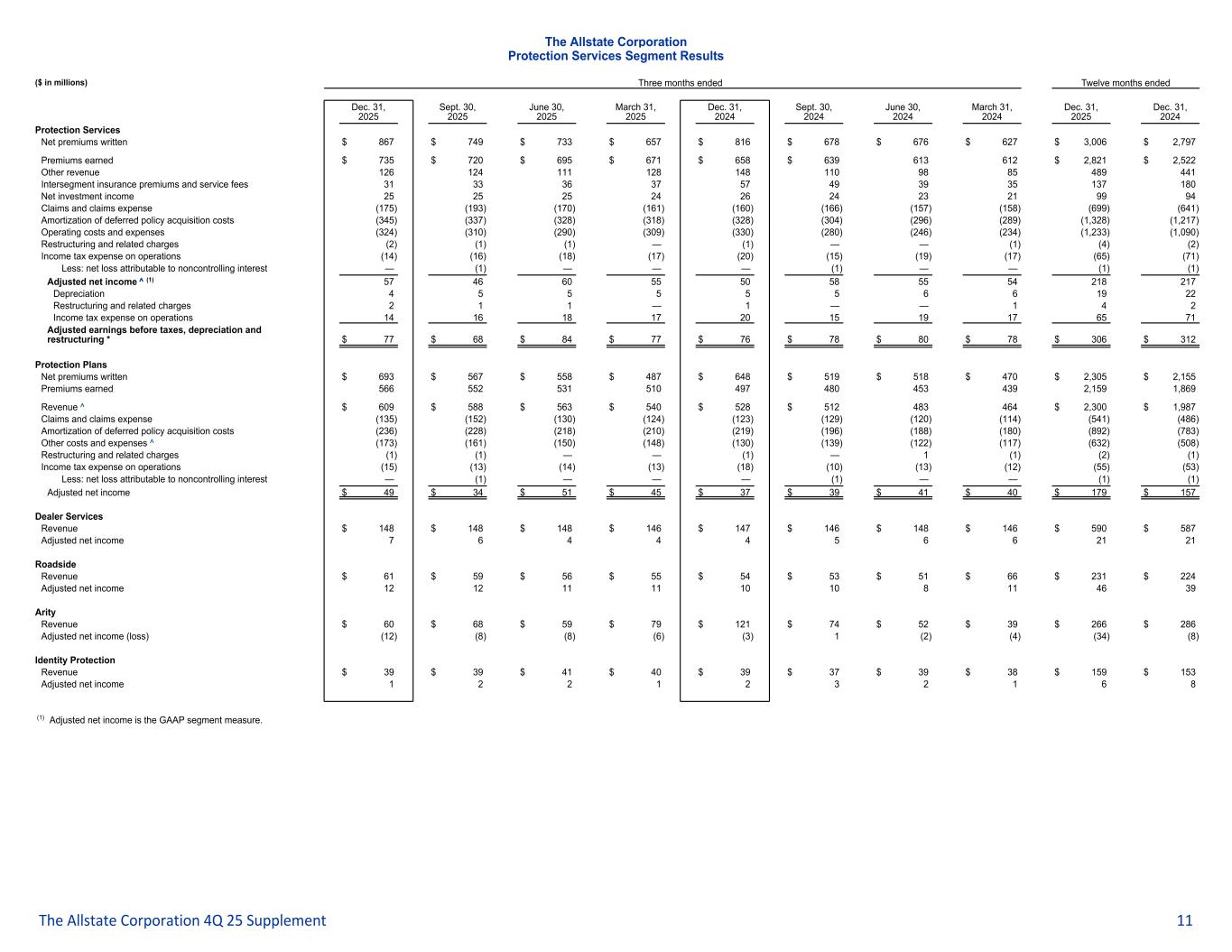
Let's move to slide six, which shows how Allstate has benefited from transformative growth. In the top left, you can see the progress made on competitive prices. We've reduced the adjustment expense ratio by 6.6 points since 2018, which allows us to offer lower auto and homeowners insurance prices while maintaining margins. We also increased the sophistication and precision of pricing models, enabling more accurate pricing. Allstate now has the broadest distribution in the industry. Customers can shop for Allstate coverage through Allstate agents, independent agents, and directly by phone or via the web. We acquired National General in 2021 to strengthen independent agent channel capabilities and expand non-standard auto insurance offerings. We increased direct sales using the Allstate brand and improved Allstate agent productivity. We enhanced the product portfolio by introducing the affordable, simple, and connected auto insurance product in 43 states and the new homeowners insurance product in 31 states. we also have ASC renters available in 30 states in the independent agent channel custom 360 auto and homeowners insurance products are available in 36 states these new products create value for customers by improving affordability broadening our risk appetite and expanding availability for consumers sophisticated marketing has enhanced has enhanced acquisition capabilities and economics marketing investment increased to 2.1 billion dollars in 2025 up from 900 million dollars in 2019 enabling us to effectively reach more consumers with a more competitive price and better customer experience at the bottom of the slide you can see the results personal lines new business increased from 5.5 million in 2019 to 11.6 million in 2025 more than doubling new business is now also balanced between all state agents independent agents and the direct channel total personal lines policies and force increased from 33.5 million to 38.1 million with a more balanced distribution across channels these proof points demonstrate that transformative growth is working turning to slide 7 we are now into phases 4 and 5 of transformative growth focusing on rolling out new platforms and decommissioning the existing ones in these phases we continue to broadly focus on the five components of transformative growth shown in the gray boxes in the middle of the page as we scale the new model and retire legacy technology and processes now let's turn to slide 8 to discuss protection services the protection services segment is comprised of five businesses protection plans dealer services roadside assistance parity and identity protection where protection is embedded in other offerings in 2025 the protection services segment group policies enforced by three point three percent to one hundred and seventy two million while revenue increased eleven point seven percent to three point three billion dollars for the year adjusted net income was two hundred eighteen million dollars in 2020 in the quarter or for the year policy growth in this segment was led by protection plans which continues to expand both domestically and internationally as you can see on the lower right domestic revenue increased eight point one percent over the prior year quarter while international revenue increased thirty nine point seven percent the business generated forty nine
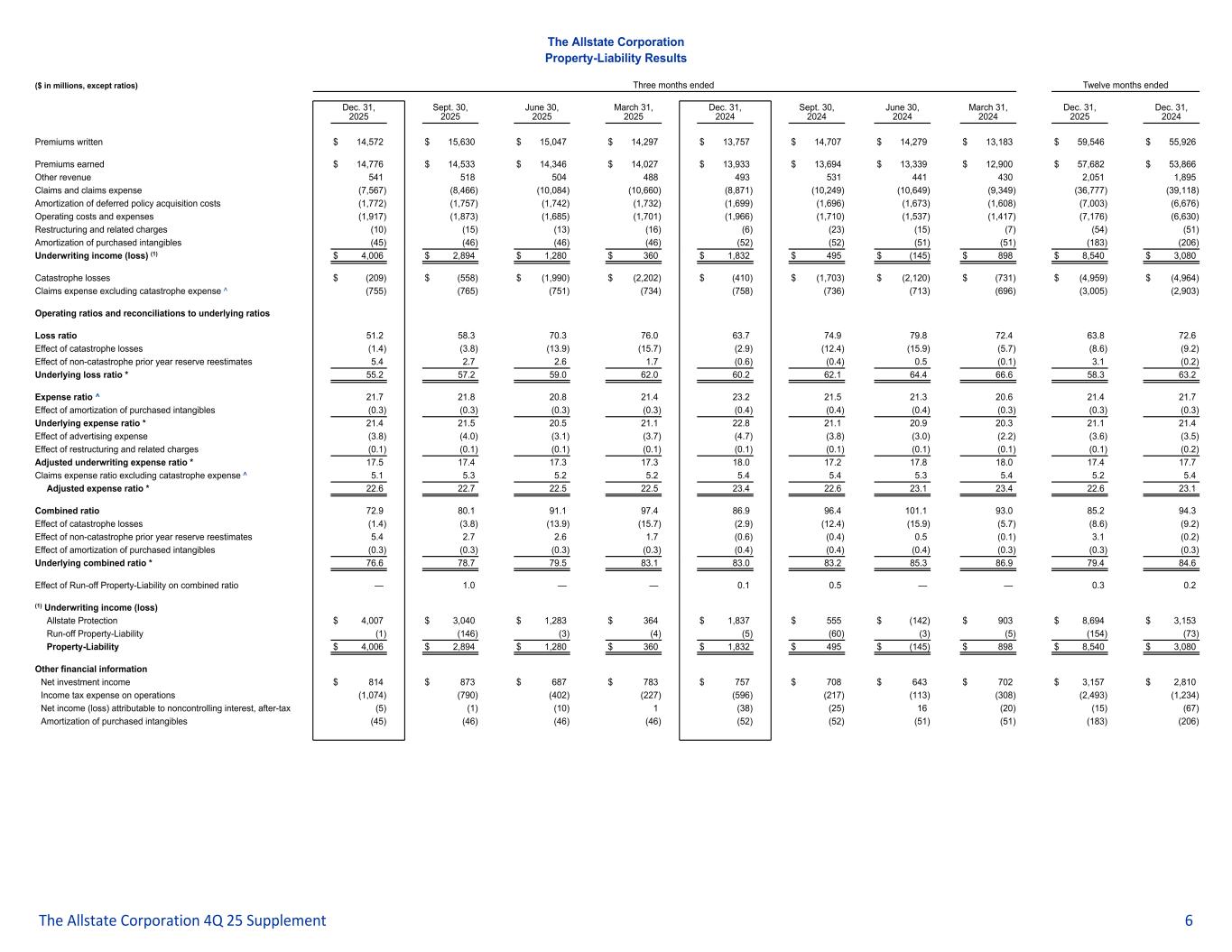
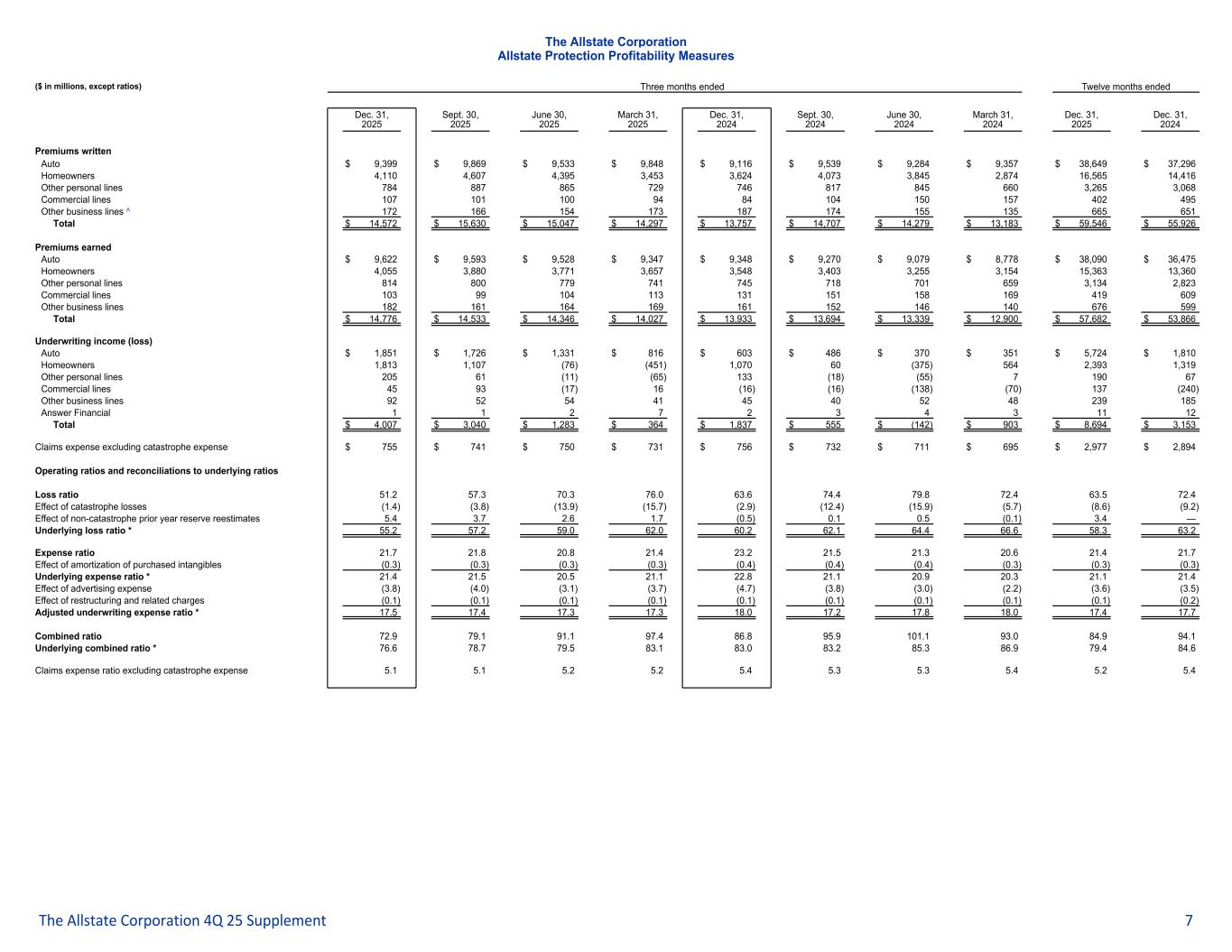
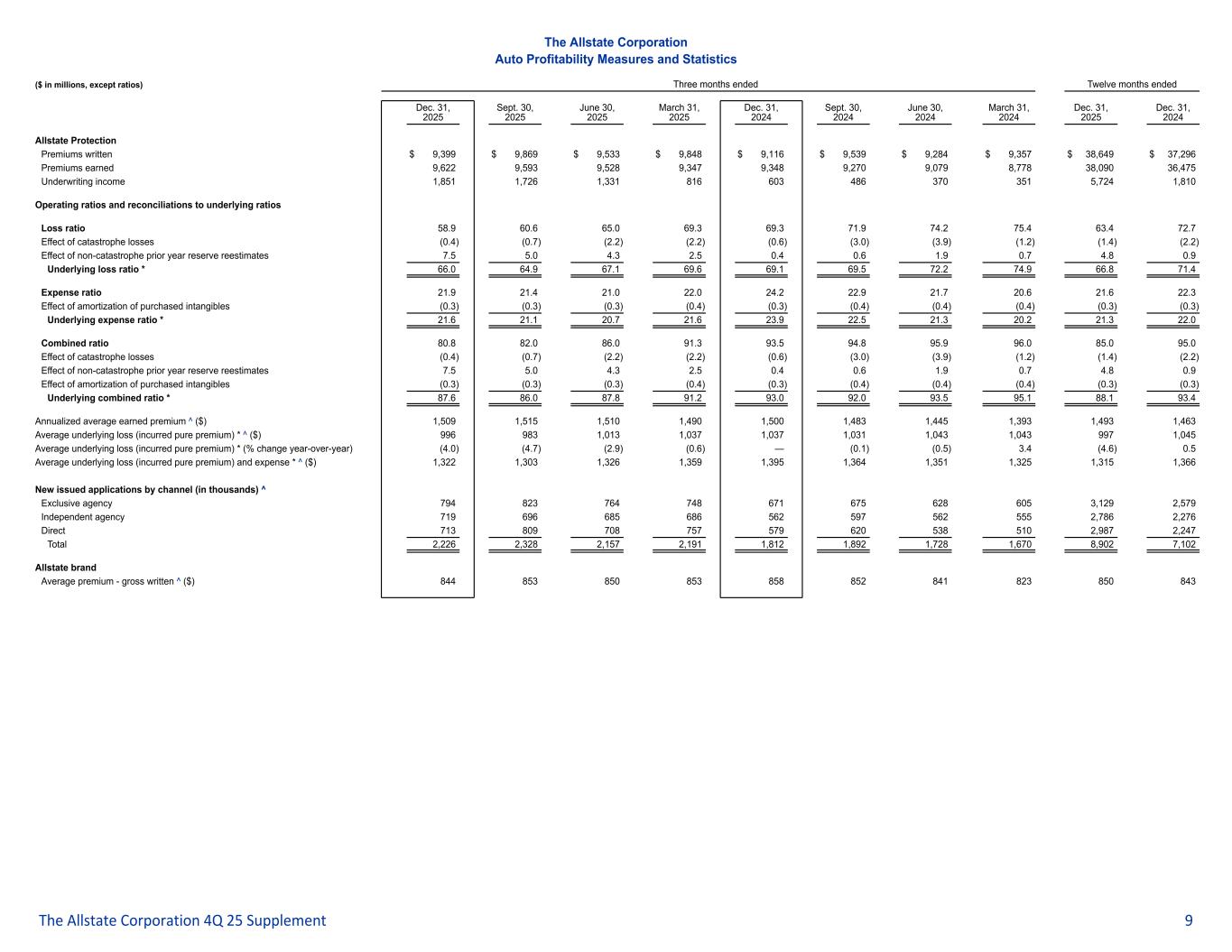
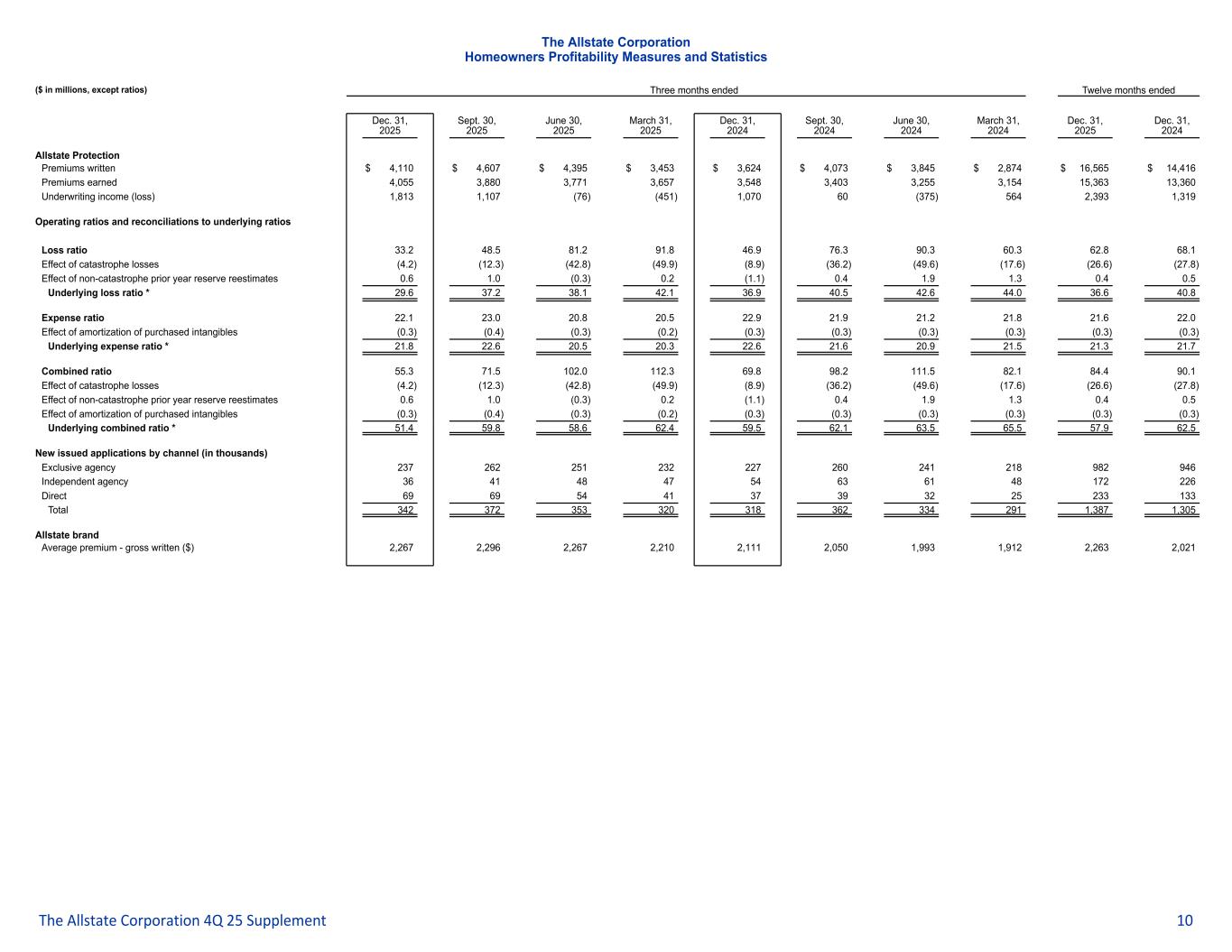
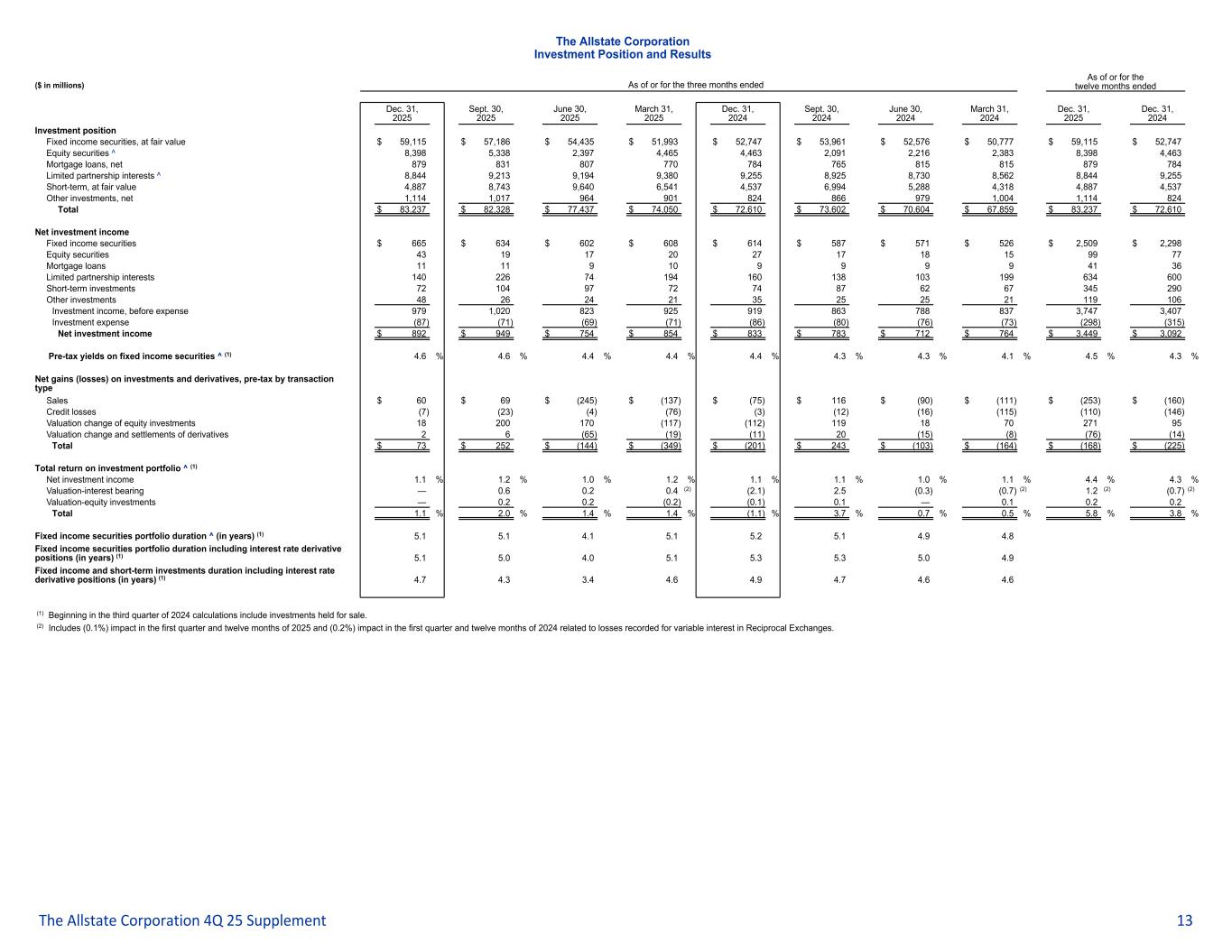
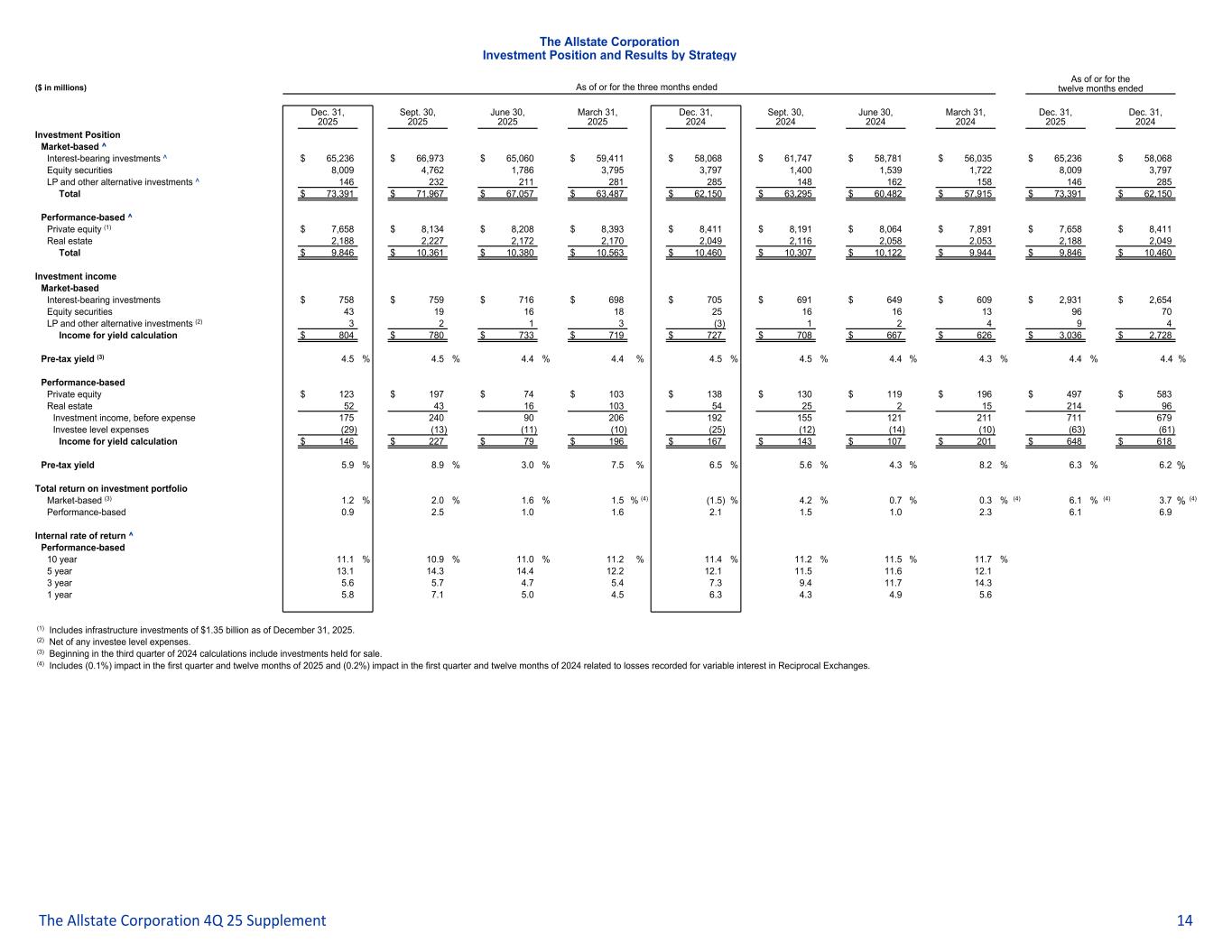
million dollars in adjusted net income in this quarter of thirty two point four percent from the prior year quarter now I'll turn it over to Jess to discuss the property liability business all right thank you Mario starting with slide nine the property liability business generated strong results in 2025 the table on the left shows full year 25 2025 results premiums earned increased 4.4 percent in auto insurance and 15 percent in homeowners insurance with auto policy growth of 2.3 percent and homeowners growth policy growth of 2.5 percent at the bottom of the table you can see that the auto combined ratio improved by 10 points compared to the prior year this is due to strong underlying performance as well as lower catastrophes and favorable prior year reserve releases excluding the benefit of reserve changes in lower catastrophes the auto insurance combined ratio was about 90 the homeowners insurance combined ratio of 84.4 reflects continued strong underlying performance and lower catastrophe losses when compared to last year for the full year 2025 auto insurance generated 5.7 billion dollars of underwriting income and the home and homeowners insurance generated 2.4 billion dollars the right side of this slide shows earned premium impacts of actions taken to improve affordability which are included in our financial results the chart shows the cumulative auto insurance earned premium impact from rate decreases and save actions taken through 2025 by the end of the year the total impact was 810 million dollars or approximately 2% of 2025 auto earned premiums improved affordability supports growth turning now to slide 10 auto claims process improvements are helping to offset increasing loss costs support increased affordability and contributed to favorable reserve adjustments on the left side is an overview of improvements that we've made to physical damage claim processes these processes are being enhanced by optimizing the method inspection focusing on adjuster training and using advanced computing capabilities on the right you can see what we're doing to manage injury costs we redesigned our operating model to accelerate payments to injured parties were appropriate utilizing new tools and quality assurance processes to enhance claim handling predictive models are also being used to identify potentially injured parties earlier earlier in the process to resolve claims promptly and control liability on slide 11 you can see that auto insurance growth accelerated and broadened geographically in 2025 these graphs show the distribution of policy growth by state and percentage of premiums written for example on the right hand chart you can see that at the end of 2025 less than 30% of premium were in states that were not growing staying on that chart and moving to the second blue bar from the right 14 states were growing policies enforced by 4 to 10 percent and represented more than 30 percent of premiums comparing the left graph to 2024 for 2024 to the right graph for 2025 shows a reduction in red bars higher blue growth bars and a shift towards the right which is higher growth we now have 20 states growing policies by at least 4% and are growing in 38 states that represent more than 70% of countrywide written premium. Turning to slide 12, the homeowners insurance business continues to grow and generate industry-leading returns. Premiums earned have increased each year since 2021. Polities in force have also grown steadily, supported by expanded distribution and new products. We target a low 90s recorded combined ratio for homeowners and an underlying combined ratio in the low to mid 60s. The underlying combined ratio for 2025 was 57.9, which demonstrates the effectiveness of our differentiated model with advanced risk selection new products pricing sophistication and efficient claims handling the recorded combined ratio is 84-4 which is well below the industry average all states average combined ratio over the last 10 years was 92.0 this business remains a competitive advantage and growth opportunity for all states with that I'll turn it over to John thanks Jess good morning everyone let's turn to slide 13 to discuss the investment portfolio the portfolio continued to perform well with net investment income rising to 3.4 billion dollars in 2025
more than 350 million higher year over year while maintaining strong risk discipline over the past 12 months total portfolio carrying value increased from approximately 73 billion dollars to 83 billion dollars due to operating and investment cash flows that growth combined with higher fixed income yields led to a meaningful increase in investment income from a return perspective market-based assets generated a six point one percent total return materially higher than last year due to increased bond prices from lower interest rates and higher equity returns performance based investments delivered a five point eight percent return down slightly year-over-year consistent with broader performance in private markets. During the year, we took several deliberate actions as private markets adjusted to a tighter capital and liquidity backdrop in 2025. This included selling approximately $270 million of fund interest in the secondary market, accelerating and deepening expectations for financial reporting, and moderating new commitments in response to lower industry-wide distributions. Let's wrap up with slide 14 for an overview of Allstate's significant cash returns to shareholders. In 2025, Allstate paid over $2.2 billion in common shareholder dividends and share repurchases. The quarterly stock dividend will increase by 8% to $1.08 per share, payable in cash on April 1, 2026, to stockholders of record at the close of business on March 2nd of 2026 additionally a four billion dollar share repurchase program has been authorized and execution will begin upon completion of the existing 1.5 billion share repurchase program which will be completed in the first quarter of 2026 in the last five years all state has purchased 18% of common shares outstanding and in the last 10 years all state has purchased 39 of shares outstanding now let's
move to questions certainly and our first question comes from the line of gregory peters from raymond james your question please good morning everyone um so uh i'd like to for the first question focus on the regulatory and legislative changes slide. And I know there's been some attention in the marketplace to certain states announcing a more proactive approach towards rate relief for their consumers. I also recognize that this is very much a state-by-state process for you guys. So I was wondering if you could provide us some color on how um the regulatory environment how you think it might change for you guys in terms of what regulators might ask you to do over the next uh 20 24 months or so uh in terms of rate relief um thank you for the question greg uh of course predicting politics is uh you know probably should get on polymarket to do that but um so first uh i would say the numbers we showed our countrywide numbers.
So this issue of affordability for consumers is an issue everywhere. So our SAVE program, we were everywhere. Every state we go after, every customer, they all care about the amount of money. And the costs have increased a lot recently, obviously accelerated by the pandemic on physical damage. But then underneath that for a long time has been the bodily injury costs, where, you know, if you make a mistake and you run into somebody and bash them on the side of the car, you don't feel like you should be sued for, you know, $100,000. And so I'm hopeful that what this will do is put the attention on that needs to change. Like, people don't need to be paying for lawyers and for fender bender lawsuits. And so this is really an issue everywhere in the country. As I mentioned, Florida has done some really good work, and it's turned into benefits for customers. So, you know, Florida should be acknowledged that. Other states are starting to get this. You know, there's been a longstanding discussion between us regulators and the trial attorney as to what's fair and right. And we obviously think that our customers should pay less for litigation against them.
And we'd like to see everybody take this on.
I guess related to this, I thought the slide, slide 11, where you talked about your enforced growth as you're dealing with, I think you said you lowered prices for 7.8 million customers in 2025, and you highlighted where you're growing. growing. You know, we're hearing in the marketplace that certain mutuals and other companies might be getting more aggressive in the marketplace around auto and home. So maybe you could step back and give us some perspective on sort of the competitive landscape as you see it today, both in auto and home across the country.
It does seem to be people looking for, you know, what's lurking around the corner so let me talk about competition we've always been in a highly competitive market in all of our products so this is nothing new sometimes it changes as you point out by state sometimes it changes by company but you know that's the way in which you compete is you know very broad you understand is first you have to have a product that's differentiated you got to have to have an attractive price you got to have a great brand you got to have broad access and you got advertising is a game of precision scale these days and transformative growth that Mario went to addresses all of those right so we've been at this for a while if you look by product then and you say okay in auto insurance you know we have three really aggressive competitors they've been the same three competitors for a while progressive Geico and State Farm progressive as you know well has been growing rapidly. Geico's lost a couple of points of market share and State Farm picked up, but not quite that amount of market share gain. So volume tends to go. They just pointed out, there's a bunch of states where we think we're picking up share. So if you're over four points, there's not 4% more cars in the United States in total or in any of the states. So if you're over four points, you're picking up market share. So our transformative growth plan has helped us pick up market share. Homeowners is kind of the same but a little different because about half of the business is done by mutuals so as you point out they have different profit requirements. That said we've been able to grow that business. It's what we think is higher than market share with a fair amount of constraints on task free losses and earn of economic rents better than the industry by a large margin. So we feel really good about continuing to compete in auto insurance, continuing to compete in home insurance. In fact, we think home insurance has more growth potential. We think we can dial up growth. And so Jess and Mario may want to comment on these two. So specialty lines, we also, we don't talk much about it. And, you know, there are some specialty lines insurers which have valuations which seem relatively large compared to us, and yet when I look at our growth, our size, our scale, like where everybody's good and in many ways better, and then in our protection plans business, that's also a highly competitive business. So we didn't get Walmart and Home Depot because we're no good.
We got it because we compete on the things I was talking about, and Mario already talked about international but maybe you guys want to comment on what you're seeing at the ground level in auto and home and then in protection plans yeah sure so you know I think Greg where I would start is Mario covered transformative growth and when I think about the competitive environment I really go back to all of the efforts and investments we've made in transformative growth so think focusing on affordability right this isn't the first quarter we've been focused on affordability it's in ASC affordable simple and connected and we've rolled out a significant number of states with that new product. We continue to drive down expenses and focus on claims, again, to lower costs. Marketing sophistication makes us better able to compete in this environment. And then the broad platform that we have, the broadest platform in the industry, exclusive agents, independent agents, and direct business allows us to compete differently in all the different product lines that Tom went through. So I feel good about the investment. And I think when you go through the lines, the results show that. So as Tom said on slide 11, we showed if six states growing greater than 10%, 14 from four to 10%. So that's 20% or sorry, 20 states that are picking up share. We have 38 states growing in total and they make up about 70% of our premium. So in the auto line, we're showing proof that transformative growth If I flip to home, homeowners insurance is growing in 36 states. We've got ASC in 31 of those states, and we have some significant launches in the back half of the year. The reason that's important is we can better compete on a direct basis in homeowners when we have the ASC product. We see great traction, and I think we've proven that that's a product that can be sold on a direct basis when we get ASC into the market. So we're seeing very good trends in elevated production levels, particularly on the web in the homeowners line. And then, as Tom said, it's good to give one of our specialty lines, renters, some attention. We have, I think Mario mentioned, 30 states in ASC. The renter's line is growing faster than auto and home, so we're picking up share in growing the renter's line. And we're doing it all at profitable levels, so it continues to run below target profitability. So as I look across those lines, and there's other specialty lines we could talk about, but I think we're seeing the results of investing in transformative growth. We're seeing the results of the system working to help position us competitively, to your question, to continue to win. So that's kind of my view of the property liability business.
Yeah, and Greg, the only thing I'd add on protection plans, you know, we've grown that to be a $2.3 billion business. And we've done it in a variety of ways. First, as Tom mentioned, it is a highly competitive business, both in terms of incumbents and new entrants into the market. But we've been able to leverage the capabilities at Allstate Protection Plans to add new partners, like Tom mentioned, with Home Depot and Walmart and a number of those logos that you saw on the slide that I covered. We've expanded into new categories, into appliances and furniture. And so we've seen growth there. And then we've been able to expand geographically. Our business in Europe is expanding rapidly with some very large mobile carriers and consumer electronic carriers as well within Europe, and there's opportunity for us in the Asia Pacific as well. So the playbook has been to continue to leverage capabilities, enhance our capabilities, and use that to expand in a number of different ways in what is a very competitive market, and we've been really successful at doing that.
Operator
Thanks for the additional detail. Thank you. And our next question comes from the line of Yaron Kinnar from Mizzo. Your question, please.
Thank you. Good morning. Maybe to stick and remain on the subject of PIF, for auto-PIFTA, does slide 11 include the decreases in the legacy insurance and Encompass policies? And when do you expect that drag to end?
So to make sure I get the question, are you talking about the overall numbers or the active brands numbers that would include?
I guess my question is, is slide 11 just for active brands or does it also include the drag from the other, the ISRA and Compass policies?
Yeah, Jeroen, this is Jeff. It includes the inactive brands as well. So to the extent we're losing policies, that's reflected in this chart.
Yeah, we hold ourselves accountable for total growth. We do show the active brands because people found that interest. I think active brands are 3.3%. But, you know, we should be accountable for overall growth.
Okay. And when do you expect that drag from the non-active brands to end?
That's not – I would look at the chart just showed that showed by state. and another question is how do we get some of those red states into the blue states and we're working on all those we have we've had some good movement in one state recently but we still have a couple of other states that we need to make some change so it's less about the brands though shutting down those old brands is really part of TGA cutting costs if we just don't need all the technology the separate advertising I would cut all that stuff out that's how we're getting expensive now so and we try to roll some of that business into
the Allstate brand so I would really focus on it you're on from a state standpoint and say how do we have those reds all become blue and shift the blue even farther to the right so we're picking up share everywhere the other thing that you can watch your own is the rollout custom 360 right so when we roll in custom 360 it is in 36 states at the end of the year and so as you watch us continue to roll that out that as effectively that's what replaces the encompassed brand so that that's something you can keep an eye on as well thank you and then shifting gears about the regulatory and legislative changes
it's one one question I have and I don't know if it's something you've discuss with the the relevant parties it is a two or even three-year look back to determine access profitability too short of a time period um I think it was by line right so homeowners would be a longer period of time because you have two testers that go I guess though my general reaction is I don't know what excess profits mean right like so in the homeowners business the industry loses money and so if the if legislators or regulators want customers to pay less having the insurance industry is total lose money is not the right way to go that's the message we're trying to say like you can't ask you know companies to give up more of their capital to support lower prices because that's not sustainable because they only have so much capital uh and then you look at us and you say well we do better than the industry in uh in profitability and homeowners i don't think there's excess i just think we're better uh and so you know we have better products better costs better than and so i'm sort of not in the camp of people should be thinking about excess profits i'm like let's get cost down totally agree with that uh and the way to get cost down are to address cost because we're cost plus industry, not to go after what some people might perceive to be excess rents. It's a highly competitive market. We earn every dollar legitimately we make in homeowners because we're good at it. And our customers still get great value.
Operator
Thank you. Thank you. And our next question comes from the line of Rob Cox from Goldman Sachs. Your question, please.
Hey, thanks. Good morning. So the first question is just on new business penalty. I think Allstate's mix of growth here is coming more from new business than on average historically. So I'm curious how the new business penalty has trended relative to your expectations and if we should expect margins to potentially normalize quicker than in past cycles because of all the new apps' growth.
I'll make a couple of overall comments and then Jess can jump in here. first with the increasing pricing sophistication you have I would just say in general less new business penalty because you can be much more precise about what you charge people so we're much more sophisticated pricing that said you do sometimes when you have acquisition costs you got to spend money and advertising to give people and it does cost more money to get a new customer than to keep a customer. And so it does, there is some penalty there. It depends by the type of business you're written. So a lot of our growth in the last couple of years has been driven by expanding in the higher risk drivers or what's traditionally called non-standard business. And that has a smaller new business penalty because it's going to hang around less. So you're looking at it in terms of lifetime value of your cost. That said, we feel very comfortable. We can grow with transformative growth, increase market share, and still earn our attractive and target margins. The system works, like the math works, to grow and handle whatever the new business penalty is, whether that's non-standard or standard. Just anything you want to add to that?
No, I would just say that, you know, it's a state-by-state evaluation that we do. We're aware of both mix of business. As Tom said, the non-standard or the high-risk business is priced to make money right away. So we can focus on mix of business as we look at potential new business penalty. You also have seen we've lowered ASC rates in 32 states, right? So we're managing overall profitability on a state-by-state basis, considering both target margins and what potential new business penalty we project out. But overall, I would say it's something that we're very focused on, again, at a granular state level.
Thank you. That makes sense. And then just to follow up on, you know, specifically independent agents channel, I think the growth in the IA channel and new apps accelerated quarter over quarter, which is somewhat of a step change from historical seasonality from what we can tell. And you've got a number of factors improving growth. But I was hoping you could just walk through the primary drivers of the improvement in new apps, specifically within the IA channel.
I'll provide some overview, and then Jess can jump in. First, I would say I wouldn't really look at the new apps by quarter, by channel. So I'm going to take you up a minute, and then Jess can talk about what's going on in the future. So transformative growth was maintain the productivity of the Allstate agents, and we've done that. we're writing more new business to our all-state agents with fewer of them. So productivity is actually up. We have dramatic growth in both direct and independent agent. Mara and I were talking about, I think we're writing like five times in direct what we used to write before we got started. So it's a 500% increase in direct. And those are big numbers. It's not off like writing one policy. And you can see that in the chart that Mario showed. The independent agent business, we also expanded quite rapidly. In part, that was, of course, because we bought National General because we were in the independent agent business and we just weren't that good at it. So we bought them. They made us a lot better. We then expanded the nonstandard business by a number of states, so that drove some growth. And there's lots of room to grow in the independent agent channel, as Jeff was mentioning with 360. So that's the overview. Is there something specific that you think you want to talk about? relative to the quarter or maybe the prospect for IA?
I would focus on the prospects. I think specific to the quarter, we continue to see really good balance across all distribution channels. So to your point, Tom, I don't think focusing on one quarterly trend is as important as overall production and the balance that we get EA, IA, and direct. A lot of the growth in the independent agent channel has been the higher risk drivers or non-standard. And we're continuing to focus as we look into 2026 of both rolling out the new custom 360 products but we're doing other things to make sure that we engage independent agents in the middle market standard and preferred segment where we still believe there's a huge opportunity where we can compete with best-in-class products and engage them differently beyond just the high-risk drivers.
And so I look at both the strength in production in Q4 as a positive, but I look forward to what we're doing in 2026 to continue to see growth in IA beyond the higher risk driver segment maybe in this I think will tie together with grace comment and what just just said and which is competition but let's go down to a state level let's take state a and just has got a team working on that state a and let's say that there's nobody that the the exclusive agent competition doesn't really have much of a presence there so we have we can hit hard on our exclusive agent presence expanded and off we go let's say that we want to then compete with Geico in that market and we can ramp up our direct stuff so we have and the same thing is true with independent agents and once we broaden that portfolio to independent agents besides just being non-standard and having you know whatever more traditional mainstream custom 360 products so we have many ways to compete at an individual level with all the different carriers, and nobody has all those levers. That doesn't mean we're going to win in every state. It doesn't mean everybody should go home, but it does mean we feel very comfortable about the balance of ways we have to compete from distribution, sophisticated pricing, really good advertising, low expenses. We have plenty of ways we can grow.
Operator
Thank you. And our next question comes from the line of Bob Huang from Morgan Stanley. Your Question, please.
I want to throw a little bit of a curveball here. Autonomous driving, it's been an increasingly more topical discussion.
Just curious on your view on the pace of the technological development there and then how that could potentially impact personal auto.
Is it more of an opportunity, how you're thinking about it, how you're positioning it? that's the first question so on autonomous driving I would say it's a curveball we've been watching for about 15 years and that's a good thing because we've been after it for 15 years so we've been in telematics we now have over 2 trillion miles of data you need that kind of data to be able to adjust to what autonomous driving can do and what different cars can do so on the autonomous driving is think of it it's almost like safer driving and so you have fully autonomous might be the safest because we take people completely out of it but there's steps along the way so you're seeing that in declines in frequency and so whether that's the little light on the side of your rear rear your side view mirror or that's the beep beep thing when you're backing up for the camera there's lots of things that have impacted frequency now what that has also done though is increased severity because replacing all the equipment is not cheap so as we've been modeling that out for 15 years we've been watching it we think there is potential that that it will continue to get safer frequency go down we'll see what happens with severity I think eventually we'll figure out how to engineer these cars to not be as expensive as they are today but in all that case would be like there's as long as we're ahead in pricing we're very sophisticated we're involved in telematics we're watching the data and then we'll be fine in terms of the pace of change one of the things that's different about this technology change than some other technology changes so if you go to like the software and AI and stuff like that you know that can happen very rapidly here you got four trillion dollars in hardware and you got to turn over that hardware it doesn't mean the hardware can't be turned over it just takes four trillion dollars to do it as opposed to I'm gonna unplug this piece of software because I can use AI to program so the pace of change will come but it's at a curveball pace where
you can watch it so you can hit it got it really appreciate that so as long as the curveball you're seeing hopefully the home run maybe a follow-up on that severity point yeah yeah for sure so but maybe on that severity point right like um if i look at your slide uh um on essentially like the the cost split between physical damage injury and expenses obviously bodily injury is about a third of that if we're believers that autonomous is going to reduce frequency. On the point of severity, shouldn't theoretically we see an improvement in severity, like pretty immediately? Like how do you think about the parts cost versus the bodily injury component of that?
Yeah, okay. Yeah, I just want to make sure I got the question right. Actually, the severity goes up because you have fewer small fender benders, so you don't back into the pole when you're at the grocery store, and so you don't have $1,000. So that said, if you're going, you know, 75 miles an hour, the autonomous safe driving stuff doesn't really help much. So we've actually seen the bodily injury severity go up. It's a little hard to parse and to do, in fact, it's impossible to do attribution as to whether that's because people were driving faster we know that from our telematics data that people are driving faster and so there's more severe accidents but we can't say how much of the 50 some percent was due to that versus how much is just to the fact that attorneys are very aggressive in getting to anybody who's been in an accident for anything and saying I can represent you and give you some money it doesn't cost anything so most people buy that we have to figure out how we control that cost, but I can't give you an attribution of how much was because of runaway tort costs and how much is just people going faster and driving into more severe accidents.
Operator
Thank you very much. Really appreciate that. Thank you. And our next question comes from the line of Elyse Greenspan from Wells Fargo. Your question, please.
Hi, thanks. My first question on, I just wanted to start with, you know, capital. You guys announced a new buyback program that's higher than the last authorization. So, just trying to get a sense of, you know, is the priority now just to take, you know, excess capital and use it for share repurchase?
Or, you know, are you, you know, is M&A, I guess, further down the list in terms of capital priorities right now just looking to get an update there um the priority at least sorry i'm hearing an echo the priority at least would be to maximize the amount of money we create for shareholders from that capital um and first is just organic growth so we look at capital like person just start grow auto home get the multiple re-rate that should drive the stock uh up just on the multiple regret forget the fact that you're earning more money on capital and we're getting exceptionally high returns in our businesses you can see this year will it always be you know have a three on it no but is that still way higher than the S&P 500 a hundred percent so we feel very good about the organic growth in that driving business second that we say well what other things where are we a better owner of a business so when we bought square trade we were a better owner and they were better for us when we bought National General we were a better owner so and that's where we're leveraging our skills our capabilities and then we say okay well where are we in capital we are long capital now we think with a four billion dollars share repurchase we're still long capital we have plenty of capital we've always had a lot of capital so and we feel like this is a way to give that cash back to shareholders so they can deploy it in a way that gives them the kind of returns we're able to get with somebody else if we think we can get higher than that we will but we also think the stock is so cheap that it's like a really good deal for those shareholders who want to hang with us and you know you can increase your ownership and as john pointed out we've helped people those people who stayed with us to increase their ownership dramatically since i've been here i think we've bought back over 80 percent of the year. So we're happy that those, you know, people want to sell, then that's fine. Those who believe in the story, we think there's huge shareholder returns coming here.
Thanks. And then my follow-up question, in auto, right, the average gross premiums written per policy turned negative in the fourth quarter. I know you guys have been taking less price, right, but there's still been positive price running through the book, right, if I look at the disclosure in the supplement. So I'm just trying to tie those two figures and then, you know, just more color on why that, you know, premium's written, you know, inflected negatively in the quarter.
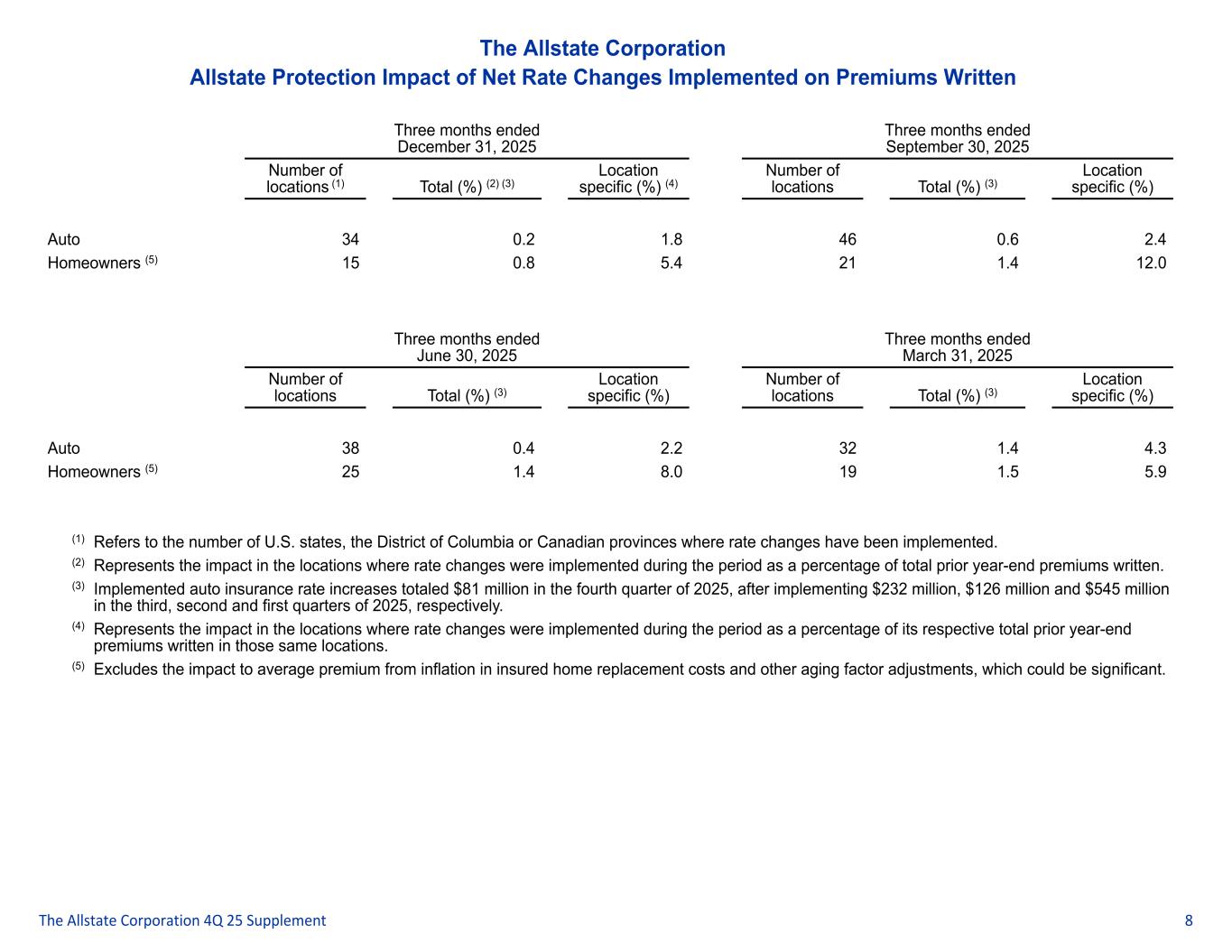
It's a complicated piece of analysis to do because you have both the rates you talked about you also have the mix the coverages the state levels and so you know if you look at what a non-standard policy generates versus and so it's complicated but I understand I think where you're going is what should you be thinking about in terms of profitability we have the average premium is going down and I would say I would go back to the slide that Jeff showed where we reduced prices this year by over 800 million dollars in this year we still earn great returns so we're focused on giving customers the most affordable price we can and still getting our target margins we obviously had a combined ratio that was better than our target margin this year so do I think that the combined ratio will drift up over time yes and that's because we're going to grow faster.
Operator
Thank you. And our next question comes from the line of Joshua Shanker from Bank of America. Your question, please.
Yeah, thank you. Elise, who is super smart, asked the first part of my question, but I wanted to go into the second part. One thought that I had is maybe premium for policy is coming down because of all states flexibility and maybe people are buying down coverage. I want to know if that's true.
And if that's true does that help uh retention which has been weak and it doesn't seem to be necessarily getting better so far i guess it's a bit complicated is there something to that effect going on um let me address for a couple points and maybe jess mario want to jump in here um first i would just uh and maybe this is defensive but i wouldn't call a retention weak uh i would say you know compared to some of the other companies and it's better other places it's not as good. Like, I'd like to have, you know, some other companies' retention as well, but we are working on retention. You are correct in that price does impact retention, which is why we went back and did the SAVE program, and we'll do the SAVE program again this year. Like, we're very happy with this result. We also have an effort coming up, which is to move people from what we would call our classic all-state brand products those pre affordable simple connected and move them into affordable simple connected which we think will also help us from a lifetime value retention it might mess up the numbers a little bit because somebody shows up at a different set but we're we are focused on trying to improve retention to that point coverage does matter we want our customers to have the right amount of coverage not too little not too much the save program helps us go back to and say what's different in your life is your teenager no longer at home do you have a different car you know do you want to have a higher deductible do you need lower limits because of where you're at now in terms of financial position so it does make a difference we but we so for example we have found in the direct channel in one particular state that high net worth people are still buying lower coverage because that's what they want like they can choose so and we've had good growth it was up there so coverage is a a good tool but you want to make sure you're serving your customers well anything you guys would yes I mean I would double
down that's the essence of save was to do exactly what you described right so it's to look at coverages look at available discounts that's going to drive down average premium but we're adjusting the risk and we're putting the policy terms what you know where it makes sense for our customers and so these 7.8 million customers save more than 5% they saved on average of 17 and that's through exactly what you're getting at I think it's really again getting at the essence of what that program was meant to do if we go back to where we were reporting so We just showed this slide of $800 million of reduction of premium, and I know you all know this, but keep in mind that that's different than when we were doing rate increases, and
we showed you the rate increases coming through. In this case, your loss costs go down some, too. So it's not dollar for dollar that you lose that in the bottom line.
So you said that retention is good, and maybe it is, but I have a theory that I'm I want to play out here that we're not going back to the retentions of the pre-pandemic era that the, that shopping behaviors have permanently changed because affordable and connected works so well that people can constantly change their price and change their coverages. And that means going to different auto insurers. Are we in a new future where retentions are naturally going to be lower than they've been in the past?
Shopping is up and not everybody who shops switches, But shopping is up, so I would say, yes, you would expect to see retention. And so I think that's true. The question is, how many of them do you keep? And that's what happens in the industry. So building an ongoing connection, so the connected part, should not be underlooked, save as part of being connected. So if you feel like you have a relationship, you're much less likely to shop. I would point out a couple of other things. One, while shopping is up, our new business is up much bigger than that, which shows that our advertising and broad distribution are working in this competitive environment. So even though people are shopping more, we've got more places they can go, and we're more sophisticated about buying it. And I would just come back to one thing. I said our retention wasn't weak. It's not as good as I want it to be. And that's a message for our team, less than you. Thank you.
Operator
Thank you. And our next question comes from the line of Michael Zerimsky from BMO. Your question, please.
Great. Good morning. I wanted to maybe focus on slide 10, auto claims process improvements, which have, you know, clearly been supporting profitability in a big way. Maybe high level, you know, you've been working on auto claim process improvements for many years now, just trying to understand, you know, what base bonding are we in? You know, AI, I'm sure, is helping it. Will the benefits, are they, is also more of a first mover, or this is proprietary to you all, or, you know, are using third parties and the industry will eventually catch up over time? Just trying to understand where we are on the journey.
So this is Jess. I would, I would like to baseball innings analogy you have to pause on that one and figure out exactly where I would put us middle innings in the journey certainly not early innings but not done I think there's a lot that we have a I argue a best-in-class claims organization that's really focused on the right things as you could see on the page in the slide deck that doesn't mean we fully implemented all the AI enabled technologies it doesn't mean that we're not going to continue to focus on quality we have great leadership that is going to continue to sort of push along the journey of getting even better and lowering those costs. If I look competitively, you mentioned it largely outsourced to something that others will catch up on. I don't believe it is. This is proprietary to all state. We're not leveraging third-party insights or technology. We obviously bring the outside in and we look at third-party trends to make decisions, but it's not like this is something someone else can pick up and buy from another vendor. This is our organization pushing, you know, for operational excellence, for claims quality, and continuing to sort of focus on how we can be better each and every year. So I would put it middle innings with the later innings probably being where you really see the benefit of artificial intelligence and the insights and tools that we can use to improve in the claims organization. Is that helpful?
Yes. I guess I asked, not trying to spoon feed, because the underlying loss ratio true up. I guess some investors are saying it's too good to be true, but clearly some of it's just you guys are doing a better job than others.
I would think about switching. I think about claims. I think of claims kind of as a river of money. and at the top you have us and at the bottom we have customers and we have to get them the money so if it goes down the river lots of people dip into the river and like to take money out so it's and it's constantly changing like the banks are changing so you know where the where the banks are and the rocks it goes over and so you know you get attorneys who are doing something new you've got car companies who decide they want to give away the razor and sell the blade and sell their parts a lot higher so you just you're constantly adapting so I think Jeff is right here this is like this is like the never-ending game all right you're doing it and the question is is your team good do they have the processes do they have the data do they have you know the measurement in the disciplines to do what you need to do and we're good at it did we have to get better at it because of what happened in the pandemic yeah because when prices go up that rapidly, the old way in which you control the river, it has to be different. So I think it's just an ongoing thing, and so you're buying capabilities, it claims, as opposed to a specific set of processes. That's helpful.
And my follow-up, you know, I think is slide four of the deck talking about kind of, you know, what really could send the needle on affordability. I think as an insurance specialist, we get it. But I'm just, you know, the powers that be don't always see the forest for the trees in the short run. So just curious, are there potential legislative changes in certain states that if things were enacted, and I'm sure you all in the APCIA are, you know, in discussions with those folks, But if they were enacted, that could, you know, would change the course of your strategy or, you know, not just you all, but the industry in a material way? Or is this more kind of noise that ebbs and flows as, you know, now we're in a softer market and things should, you know, should ebb as affordability gets better?
Well, affordability is a real issue for every politician these days, whether they're talking about food or insurance. We tend not to be on the highest order of what people think about in terms of affordability. But it is important to them, and it's become more important as costs have gone up. I think the blow for freedom for consumers is tort reform. It's just about time that, and you're starting to see some states taken on, States that I would have said, you know, 10 years ago were more controlled by the plaintiff bar than they appear to be today. And I gave the example of Florida, great moves. I like what they're doing in Louisiana. Georgia's doing some things. You know, politicians are smart. Like, they know how to do it. And so if they're looking at this same chart, they're going to say, okay, my voters want cheaper insurance. how am I going to get it for them? And they might not think about a 10-year cycle, but they're certainly going to think about a four- or five-year cycle, and this is one where it can make a difference really fast. Thank you.
Operator
Thank you. And our next question comes from the line of David Muffman from Evercore ISI. Your question, please.
Hey, thanks for fitting me in here. Just a question on slide 11. and sort of on just New York and New Jersey, where that fits into these different buckets here in terms of how much, you know, I think those were a drag. I'm assuming those are still a drag. I'm wondering how much. And then also, I think last quarter you had mentioned considering opening up underwriting guidelines there further, even without getting the new product approved. I'm wondering where you guys are at there.
I'll make an overall comment. Jess can talk about what's going on in New Jersey and New York. First, we don't identify our problem children, nor do we do performance evaluations in public. So we're not going to call out, like, which states are in which category. And we also don't necessarily want to let our competitors know where we're not growing as well. But that said, those are two states, which we talked about before, you're correct, that we need to move to more growth. Did you want to talk about what's going on in New Jersey and New York?
Yeah, I think the headline in both states is we're making money in those states, which is a good thing. Not growing, but we're making money. That is step one. We have, as you mentioned, loosened up some of our underwriting restrictions, but the key to getting back to growth in both New York and New Jersey is new product approvals specifically are affordable, simple, and connected products, which will allow us to really open up with the best product in market and get back to growth. On the plus side, New Jersey, we recently got approval for implementation of the ASC product, ASC auto product, in February. So we're going to be with the new product in market. Now, that takes some time, obviously, to get momentum, but that's a very positive sign in the state of New Jersey. New York, we're waiting for approval for the ASC product. So we'll be a little bit slower. We're hopeful that we see that relatively soon. we're actively engaged with the department and answering questions but that's going to be critical to us getting back to a growth trajectory in the state of New York so we're working working hard with the regulators to get our products approved so we can get the best solutions to customers and in the meantime we're back to making profit in those states so that's kind of where they're at so first thank you for spending time with us we're going to keep creating value for both our customers and our shareholders it's a combination of an aggressive growth strategy and great operational execution so we'll talk to the next board thank you ladies and gentlemen for participation in
Operator
today's conference this does include the program you may now disconnect good day