Operator
Hello, and welcome everyone joining today's Bank of America earnings announcement. At this time, all participants are in a listen-only mode. Later, you will have the opportunity to ask questions during the question and answer session. To register to ask a question at any time, please press star 1 on your telephone keypad. Please note this call is being recorded. We are standing by if you should need any assistance. It is now my pleasure to turn the meeting over to Lee McIntyre, Bank of America. Please go ahead.
Good morning, everyone, and thank you for joining us to talk through our second quarter results and what is a busy bank earnings day. As always, the earnings release and presentation are posted on the Investor Relations section of bankofamerica.com, and we'll reference those materials during the call. Before we begin, a quick reminder that during the call, we may make forward-looking statements and refer to non-GAAP financial measures. These measures reflect management's current views and are subject to risk and uncertainties, which are outlined along with the relevant GAAP reconciliations in our earnings materials and our SEC filings on our website. With that, I'll turn the call over to Brian Moynihan, our CEO.
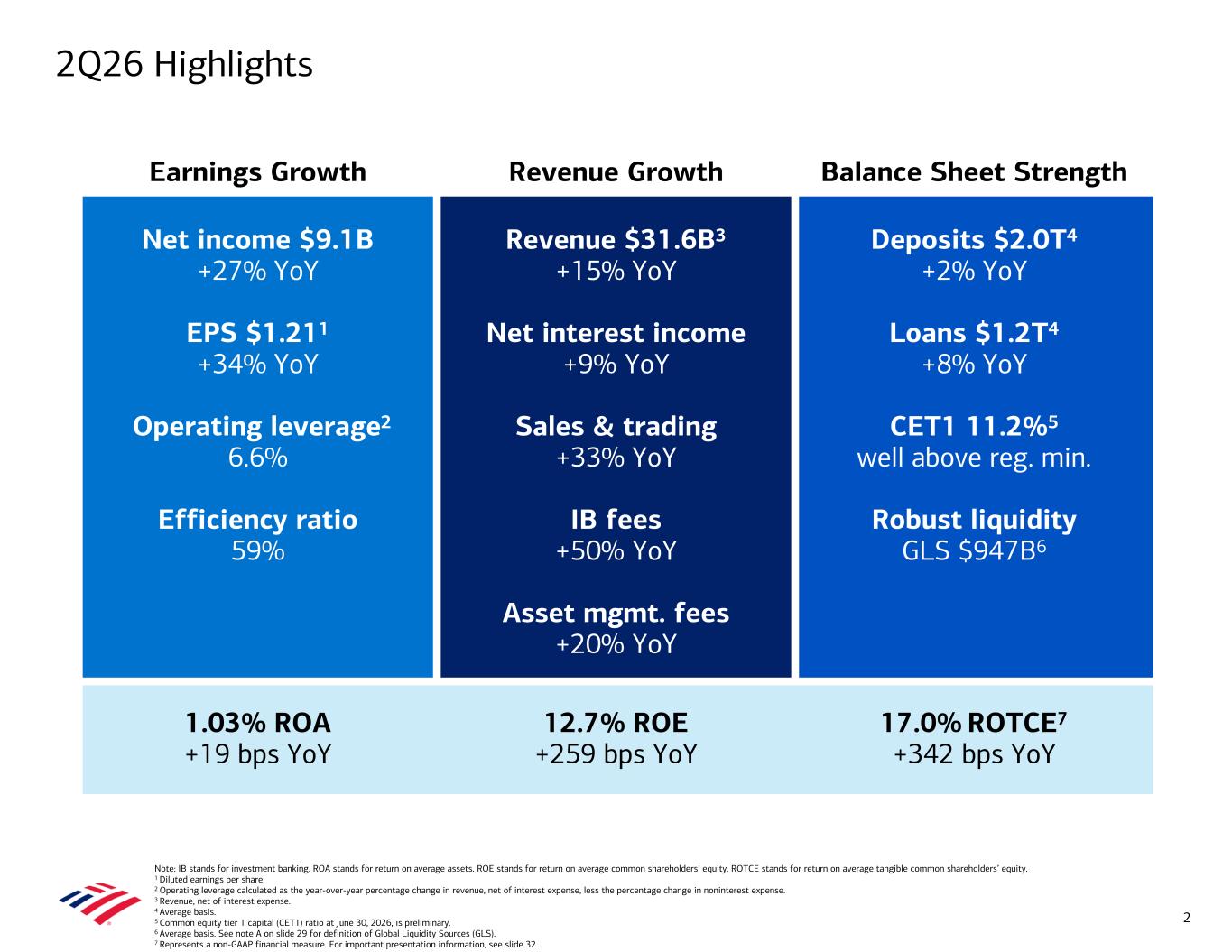
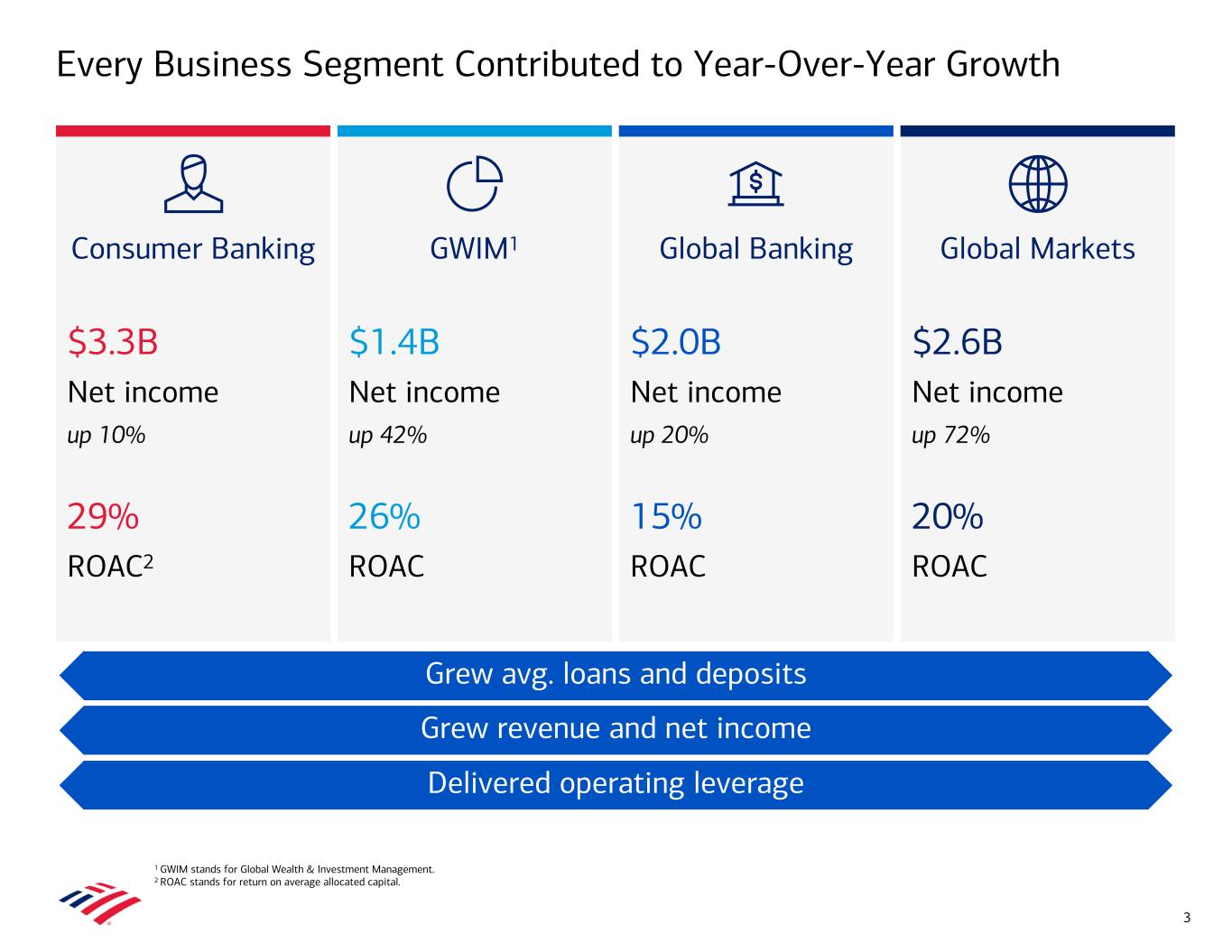
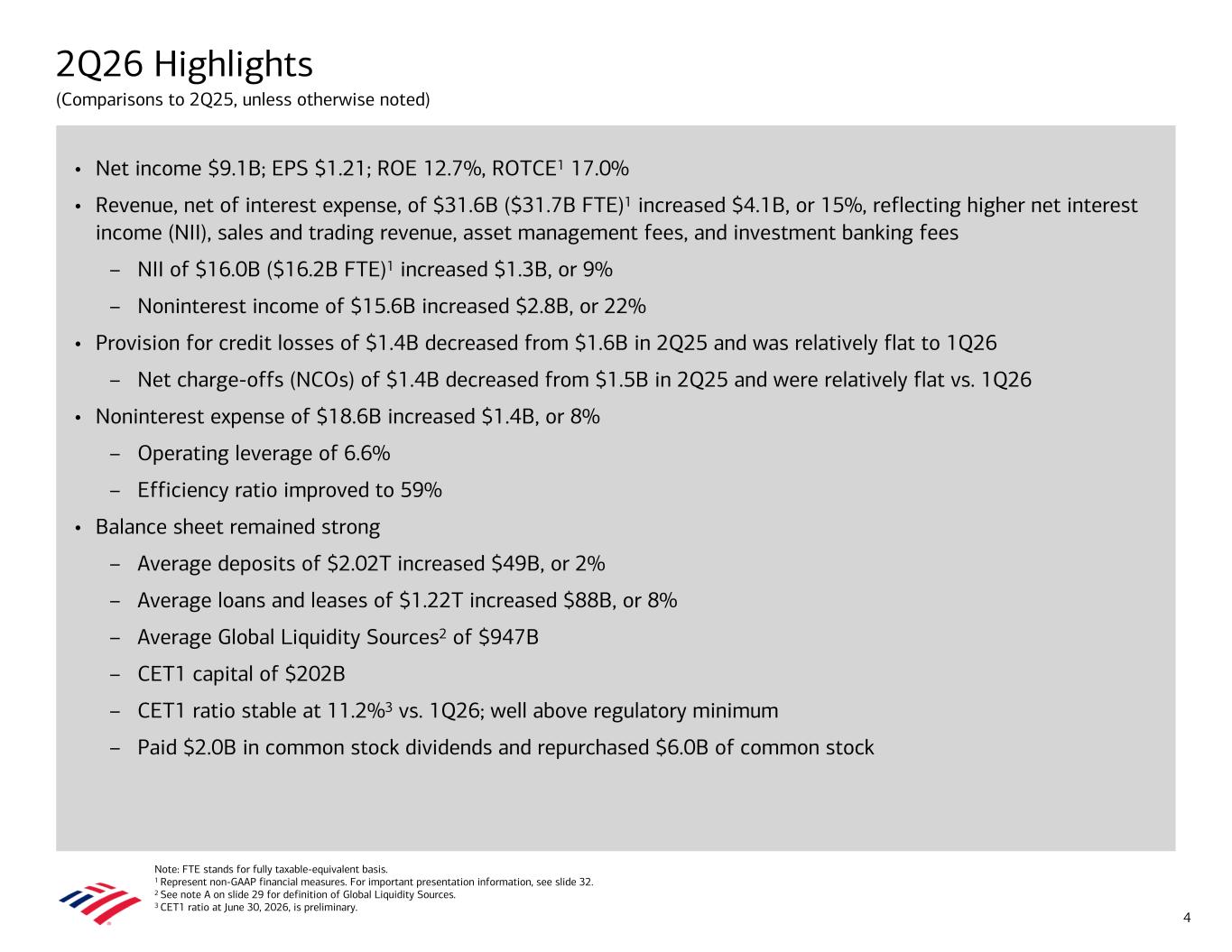
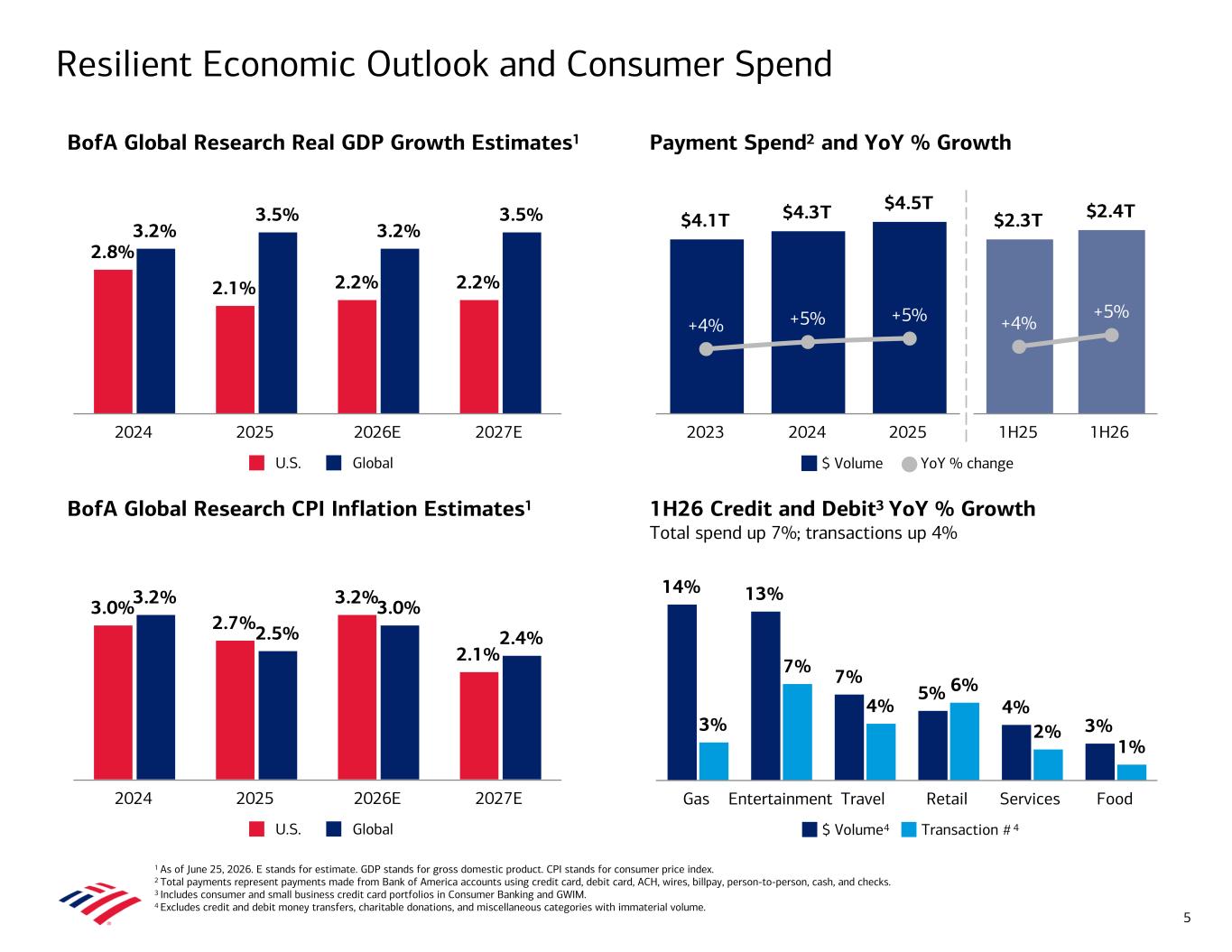
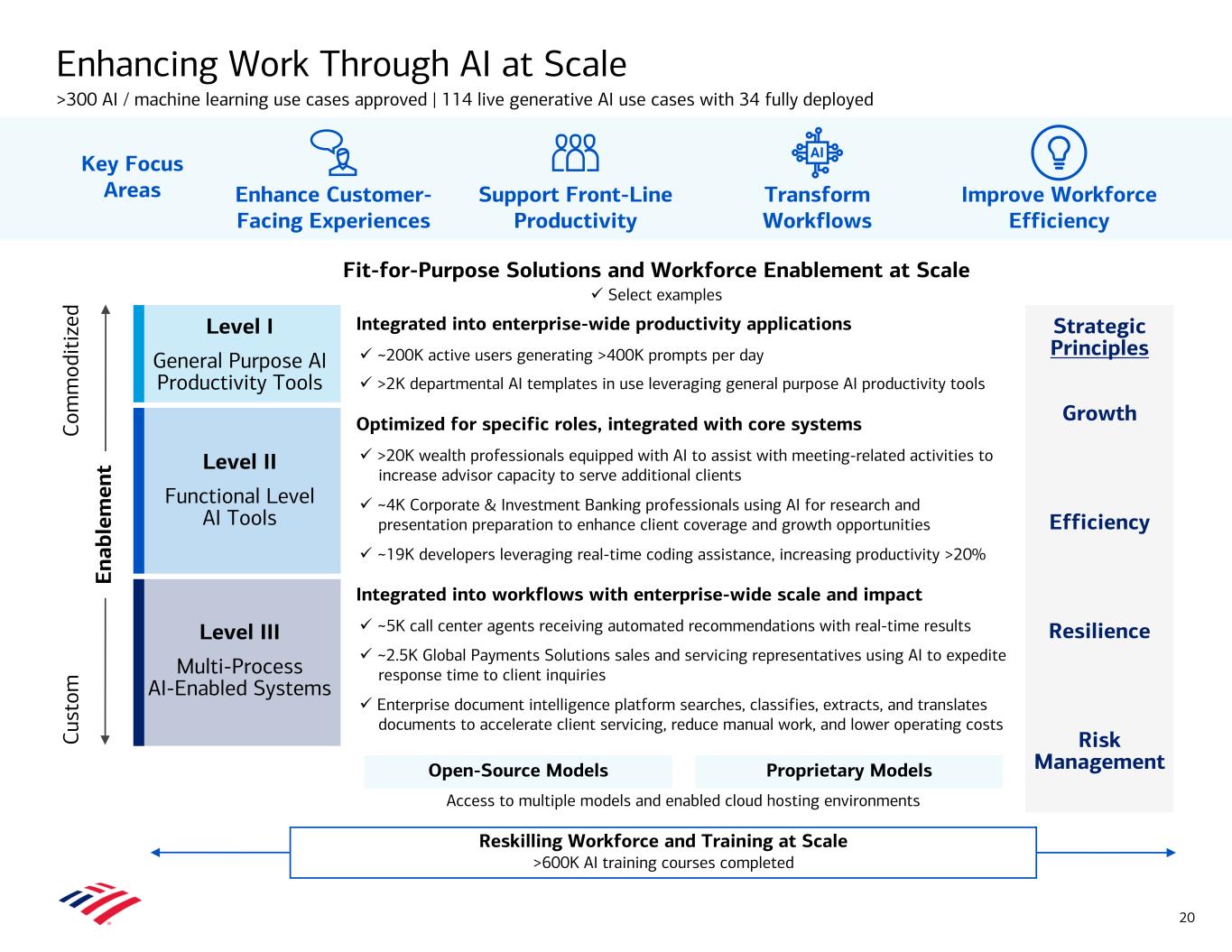
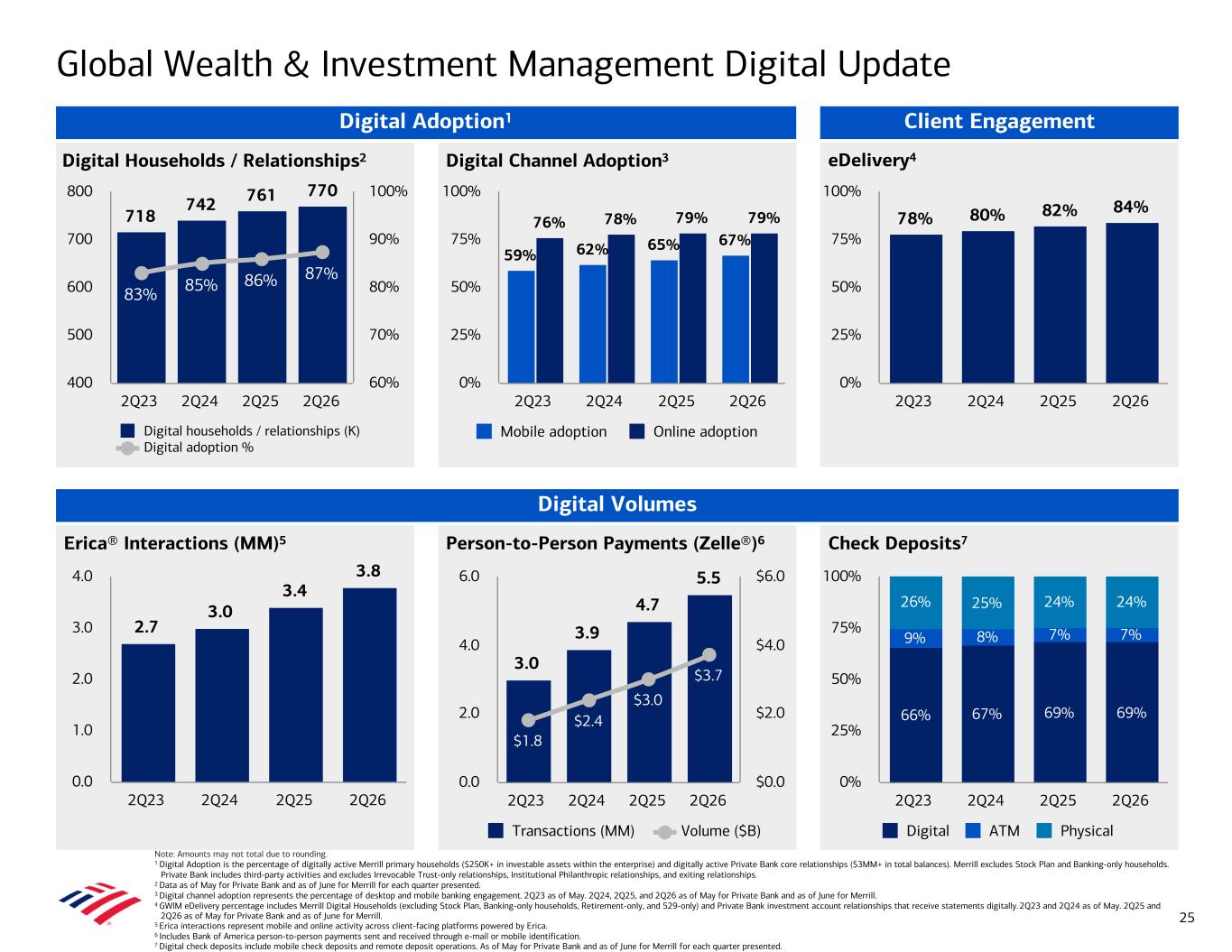
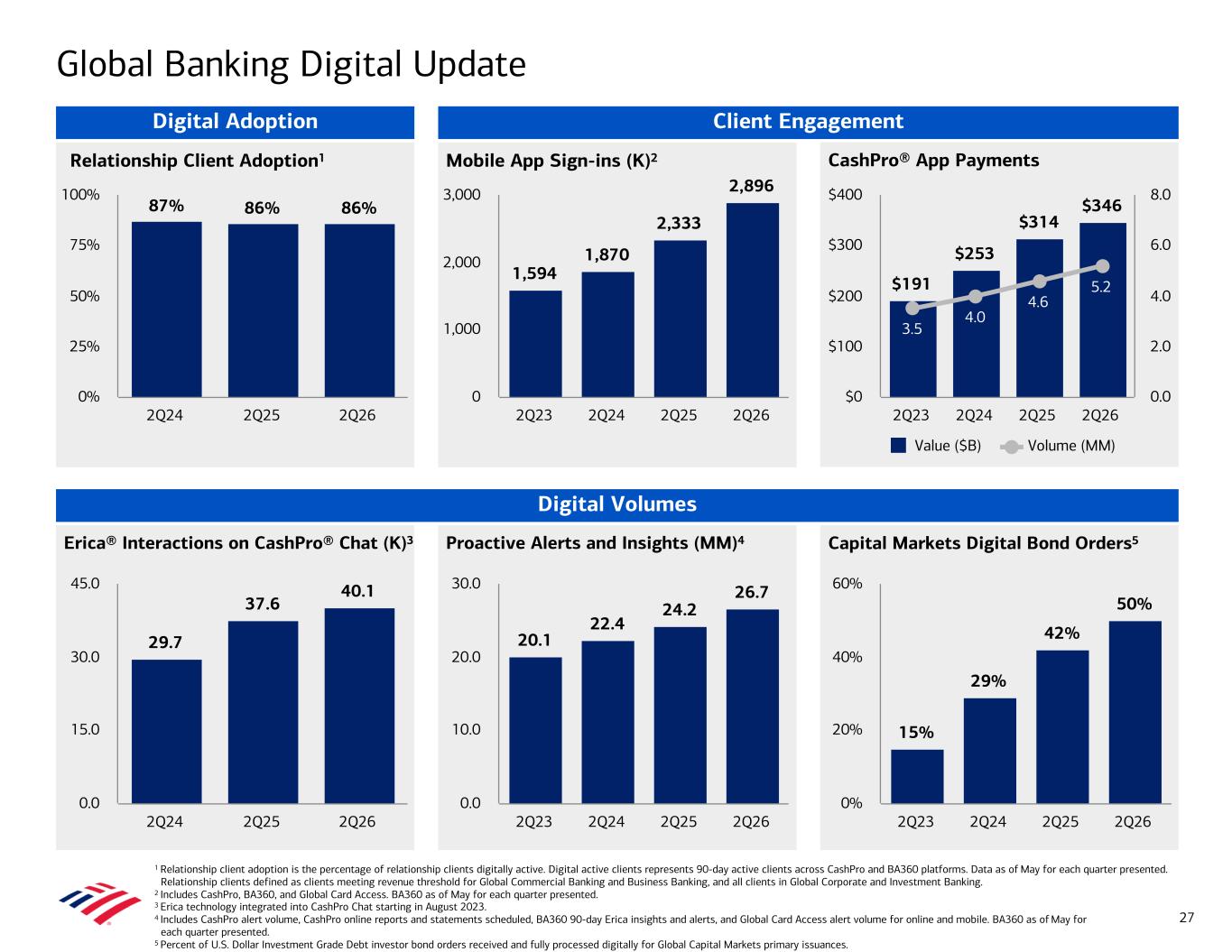
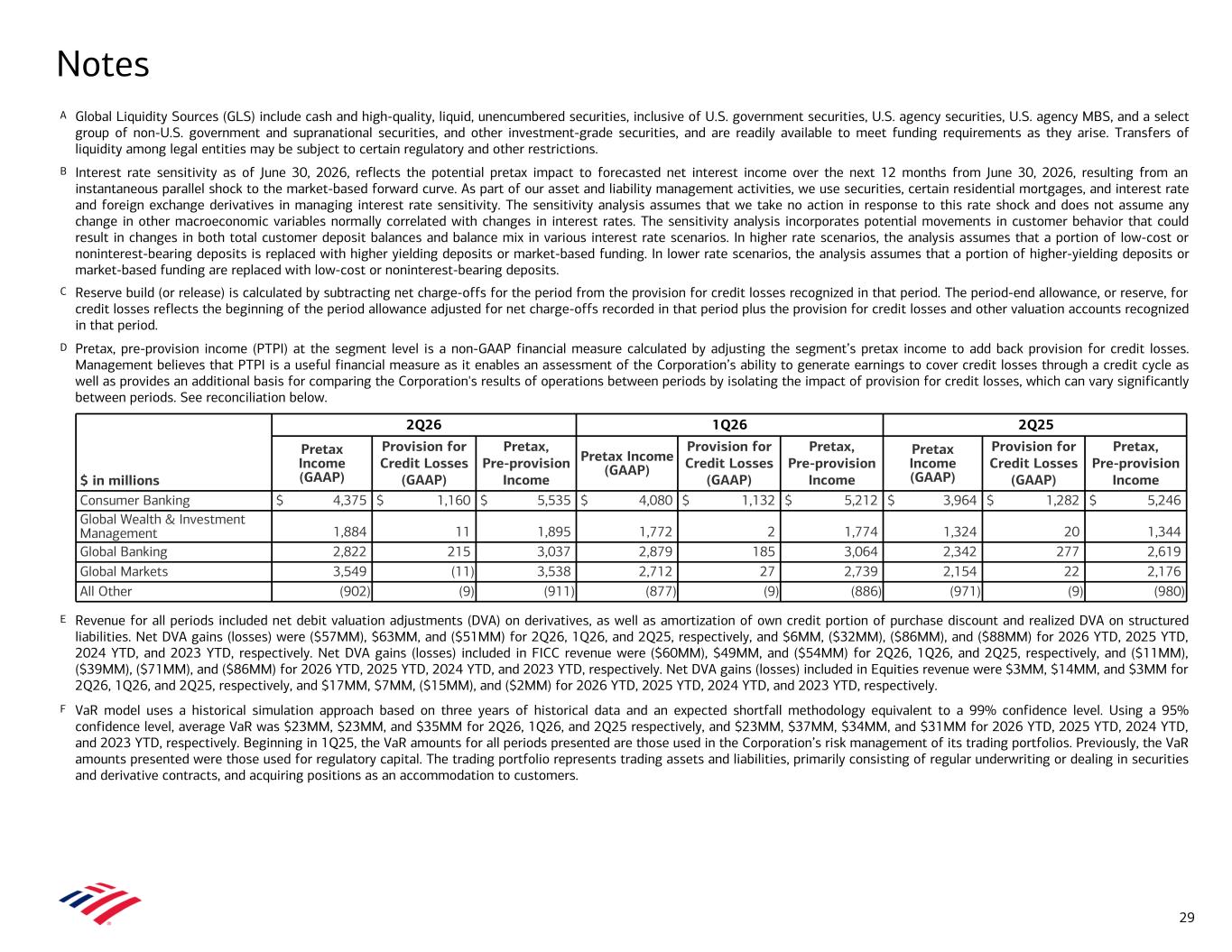
Good morning, and thank you for joining us. Once again, our team delivered strong second quarter results, extending our momentum of the past several quarters. Our revenue grew 15 percent year-over-year to $31.6 billion. Our net income was $9.1 billion, up 27 percent from last year. Our EPS increased 34 percent to $1.21 a share. Our results show organic growth, operating leverage, and efficiency ratio improvement in every business segment. On the bottom of slide two, you can see the progress against several of our key financial metrics. For the quarter, we delivered 6.6% operating leverage, and our efficiency ratio improved to 59%. We generated return on tangible common equity. Organic growth was broad-based, and coupled with operating leverage, which translated into stronger returns on both equity and assets, contributions and growth. Every business segment contributed to our year-over-year growth. has continued to grow, supported by healthy client engagement. Revenue and net income increased in every business segment. Each segment improved its efficiency ratio, and each segment demonstrated the benefits of its scale. Together, those results drive strength. Let me touch on a few earnings highlights from slides, led by NII, Investment Banking, Wealth Management Fees. On the basis, NII was approximately $16.2 billion, up 9 percent, driven by the strength of our accord of lending and deposit of lending in our global market, facing the lower-yielding assets. Our fee-based businesses delivered exceptional results, translating into 22% management. It's all benefit from healthy client activity and favorable capital markets conditions. Advisors drove the 18% growth in investment brokerage fees. Investment banking fees increased 50% year-over-year to more than $2.1 billion, while sales and trading generated $7.2 billion in revenue, of 33%. Third, we managed costs and our people, our technology, and our AI-enabled products. Stable and consistent. Finally, capital generation and capital returns to investors remain strong. We've returned $8 billion to you. We ended the quarter with Common Equity Tier 1 capital of nearly $202 billion of 11.2%. Remains very constructive as slide 5 illustrates. Last week, our research team raised its 2026 U.S. GDP GDP growth forecast to 2.25% in 2020. Consumer spending has recently expanded and continued to outperform our expectations. While the slide reflects 5% growth in year-over-year spending, the spending picked up during the second quarter, and now during the second quarter, year-over-year comparison. So overall, the U.S. economy has proved more durable than easing energy costs, though inflation. Before I turn it over to Alistair, I want to bring your attention to a couple slides. slides. First, we have our digital slides in the appendix. In addition, we added a slide on AI. It's slide 20, which shows how our over 200,000 teammates are actively using AI-enabled capabilities across our company. These range from productivity tools to more advanced agentic workflows and coding support. Our associates are generating more than 400,000 prompts a day, and as of last week, we had over 300 AI use cases approved, all of which have good economics 34 of those cases are fully implemented and we see new capabilities coming on every week these tools are designed to help our customer relationship managers automate the research and presentationally and all our teammates improve productivity consistency and significant opportunities ahead of us on slide six and start with a balance sheet where you
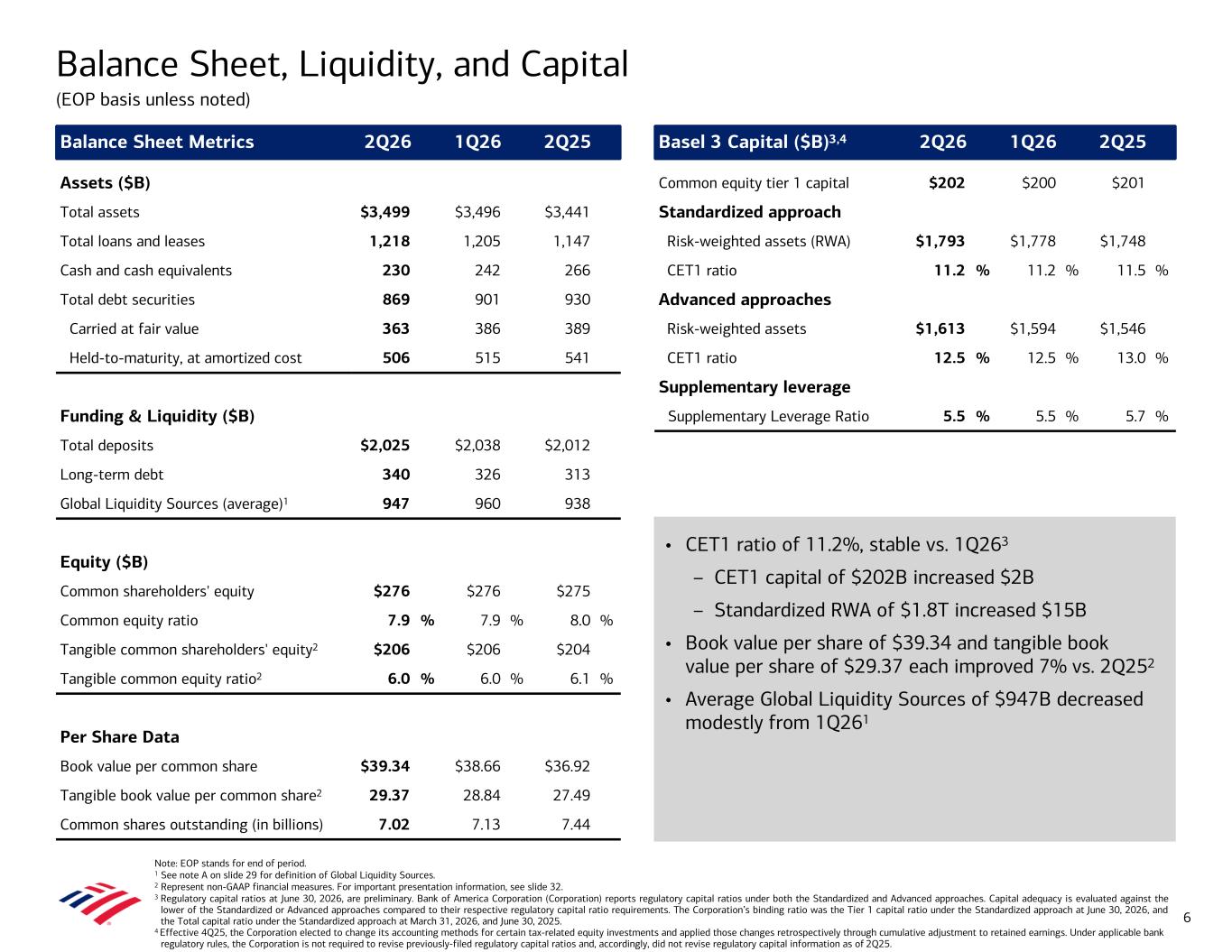
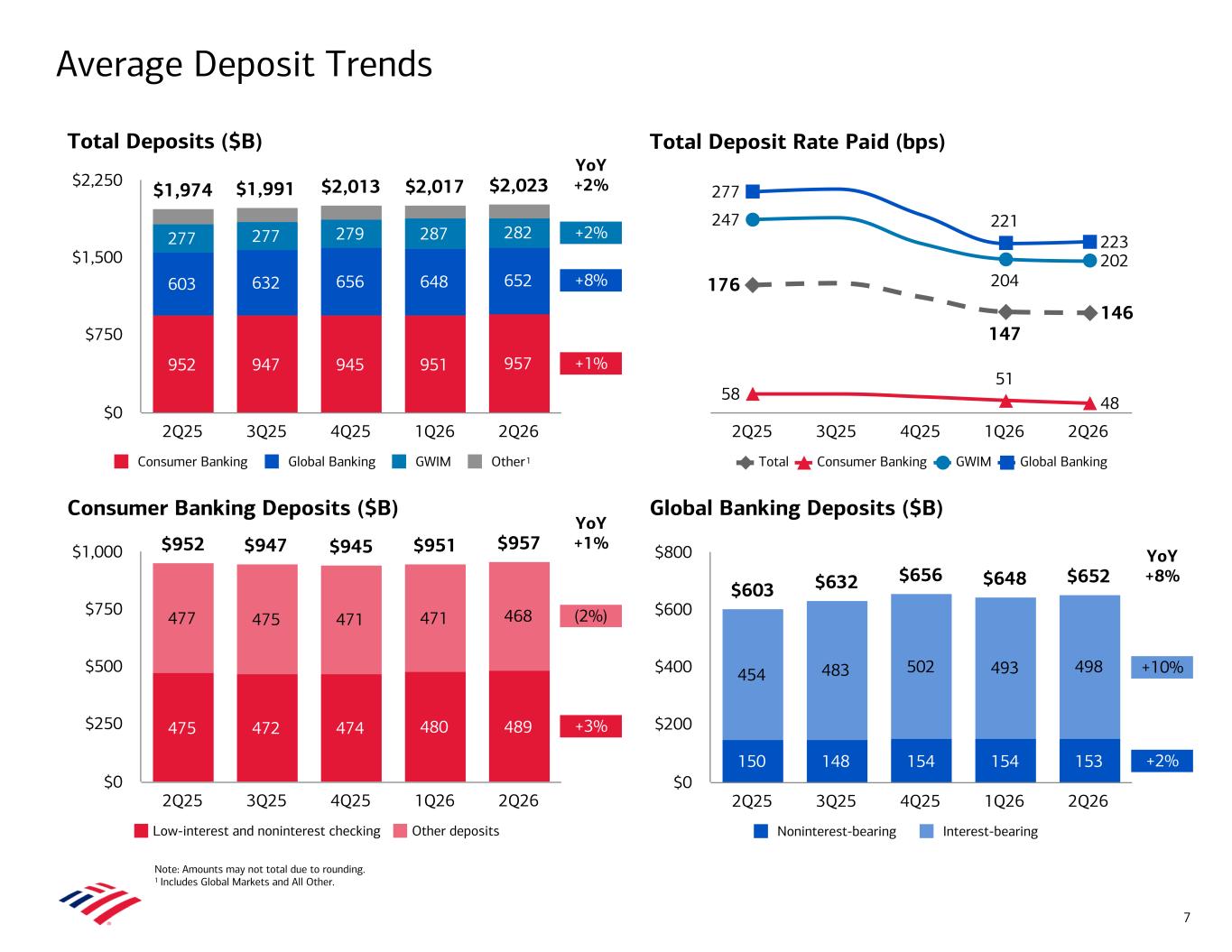
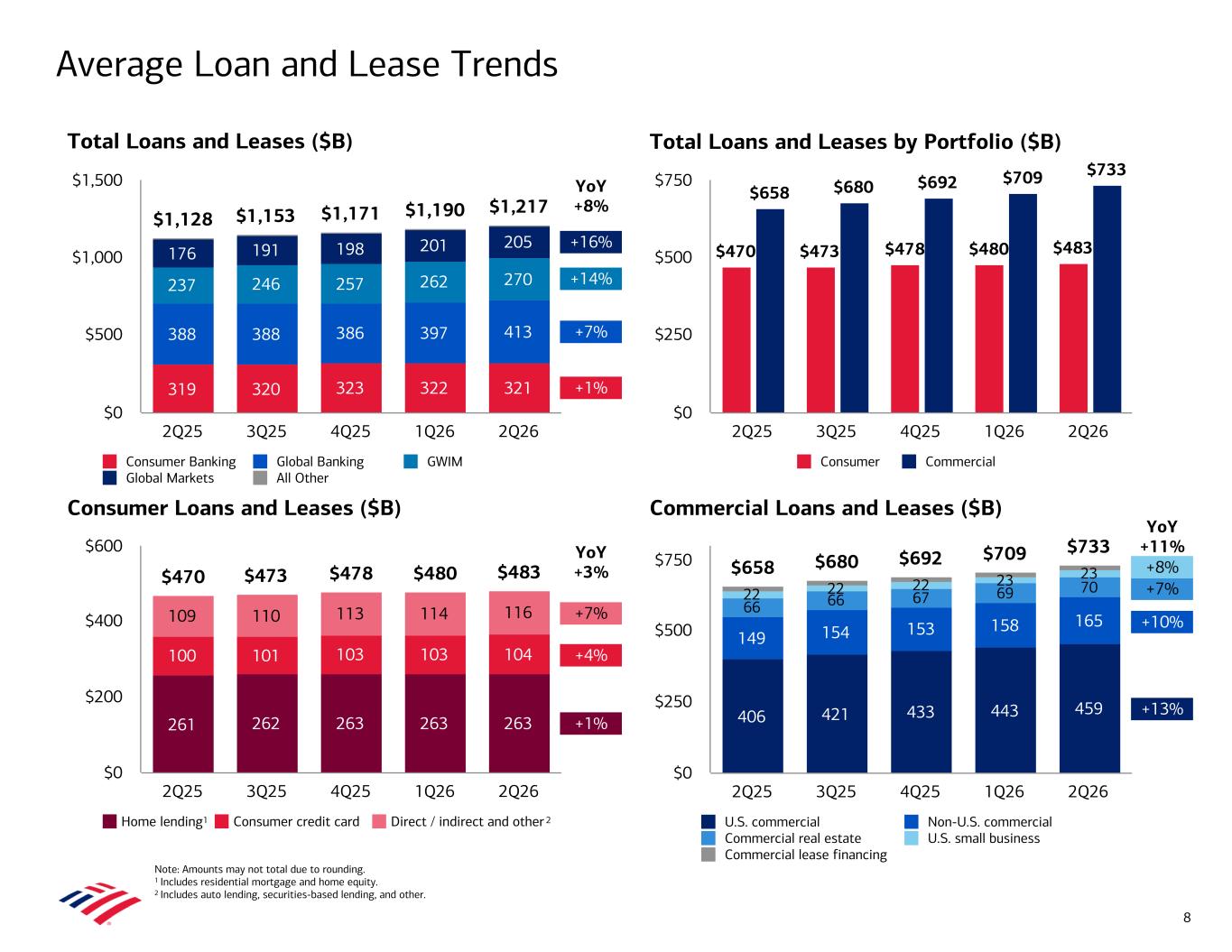
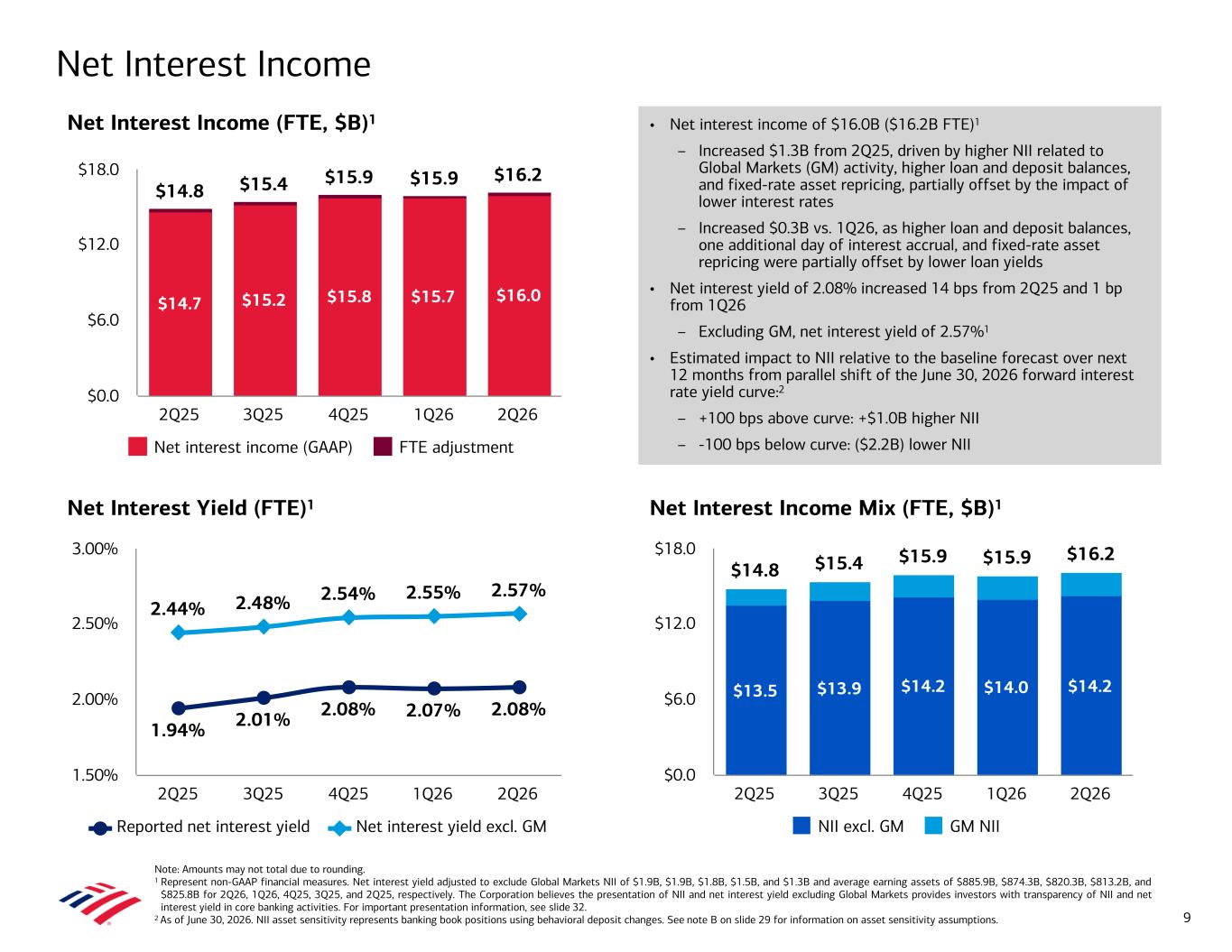
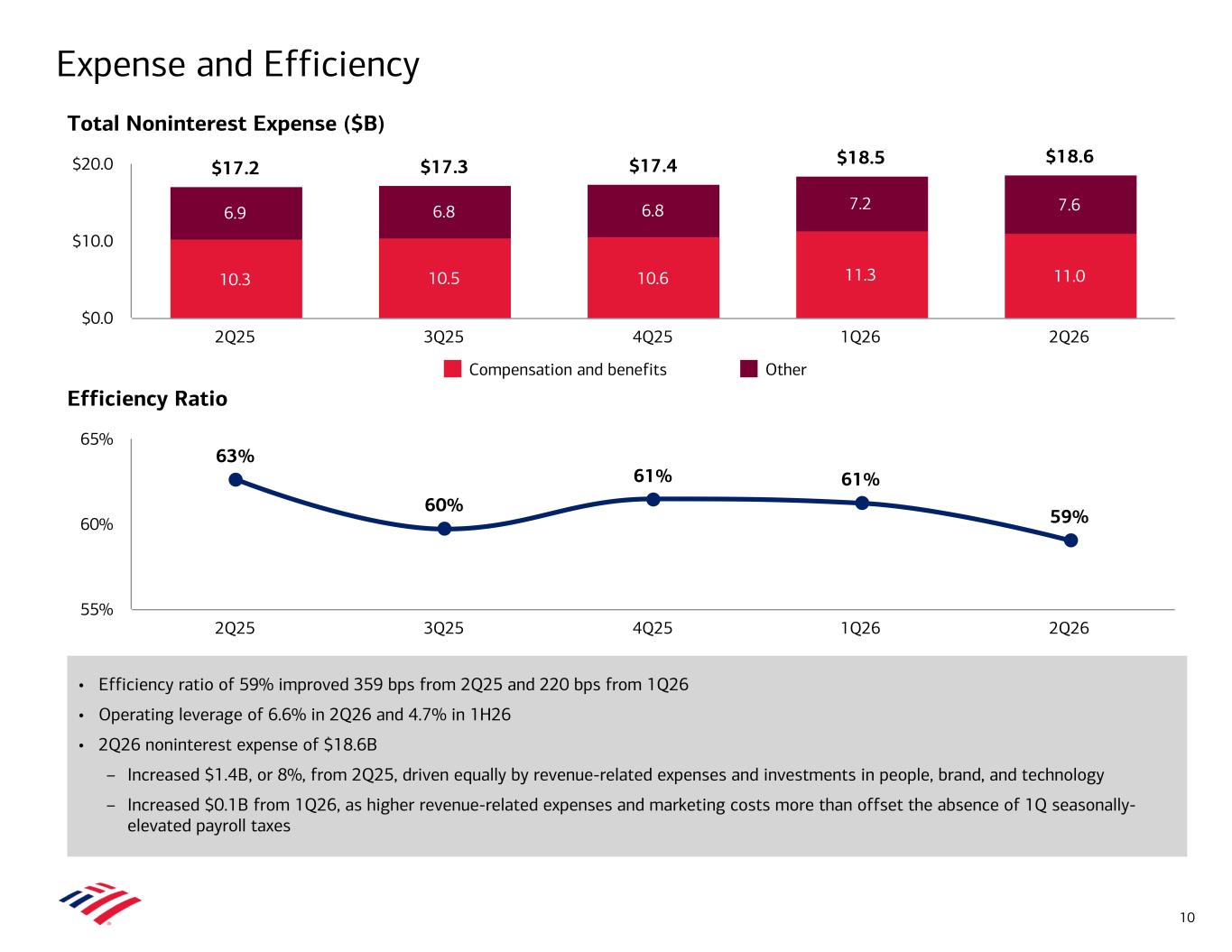
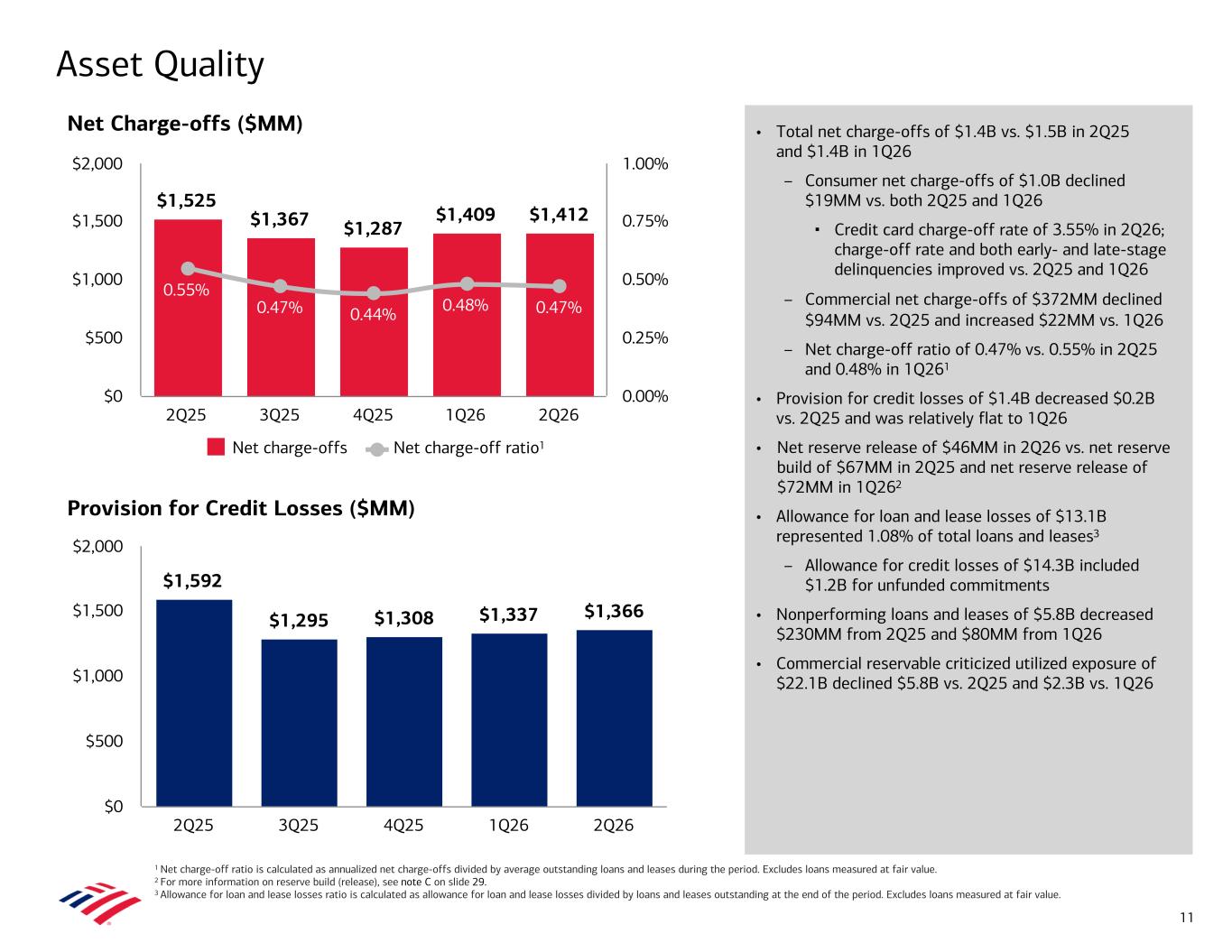
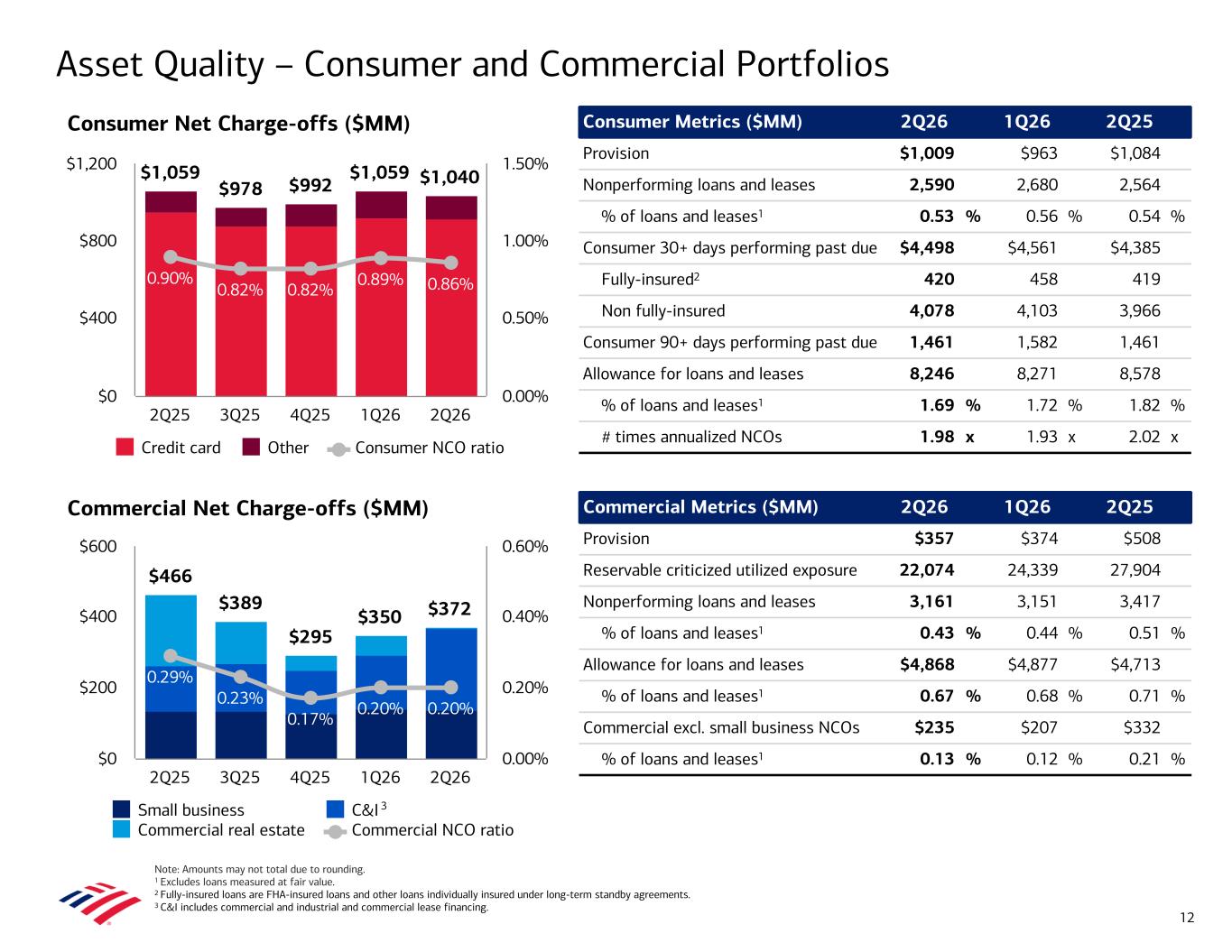
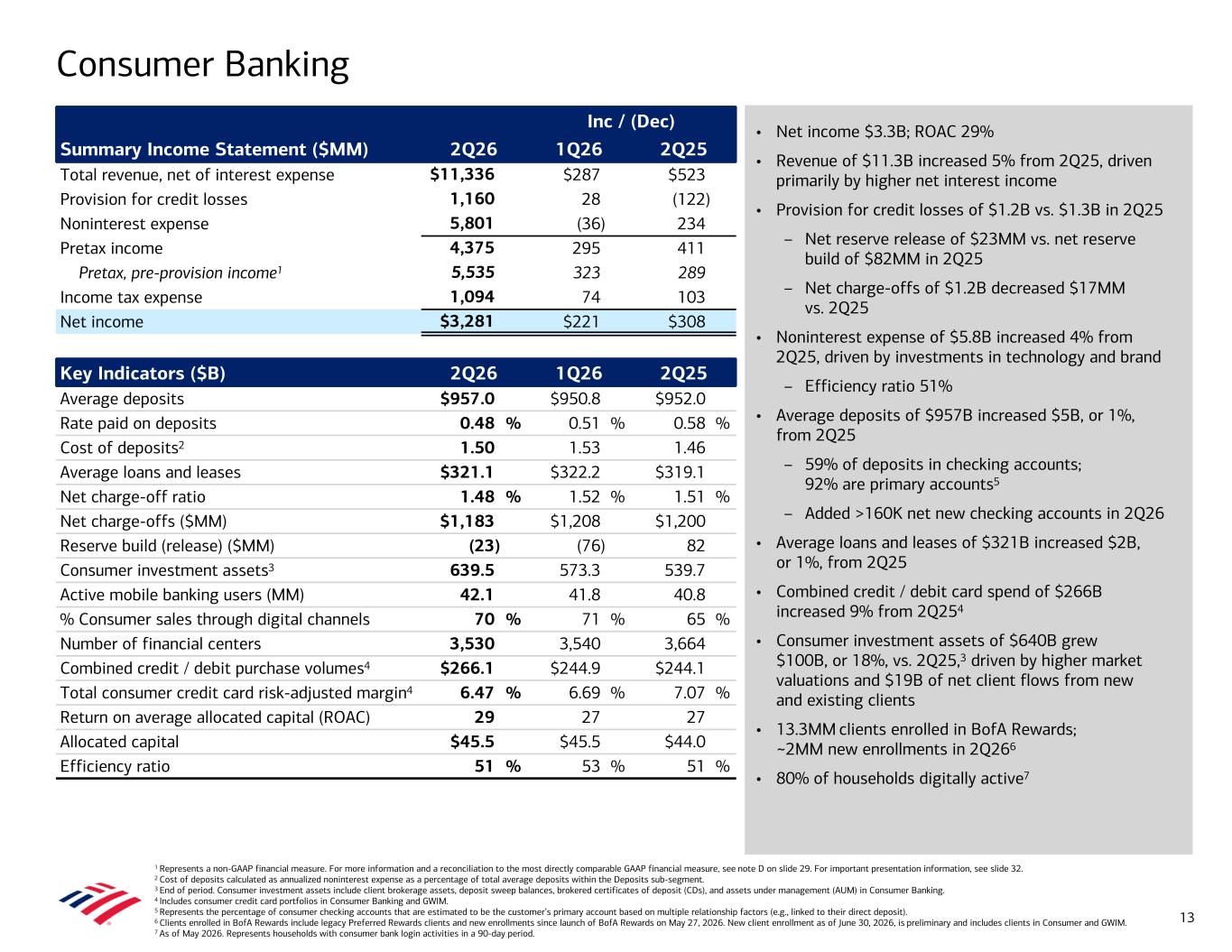
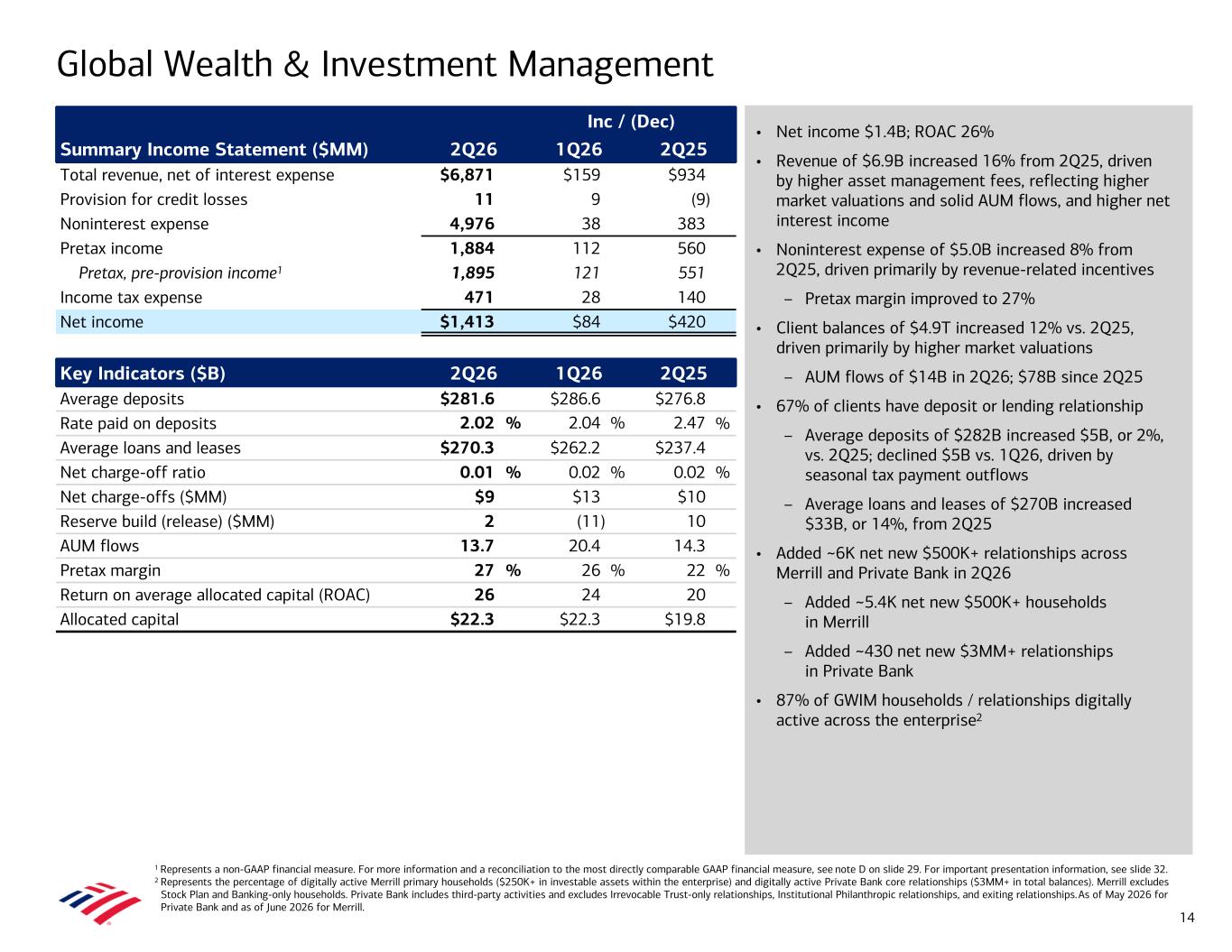
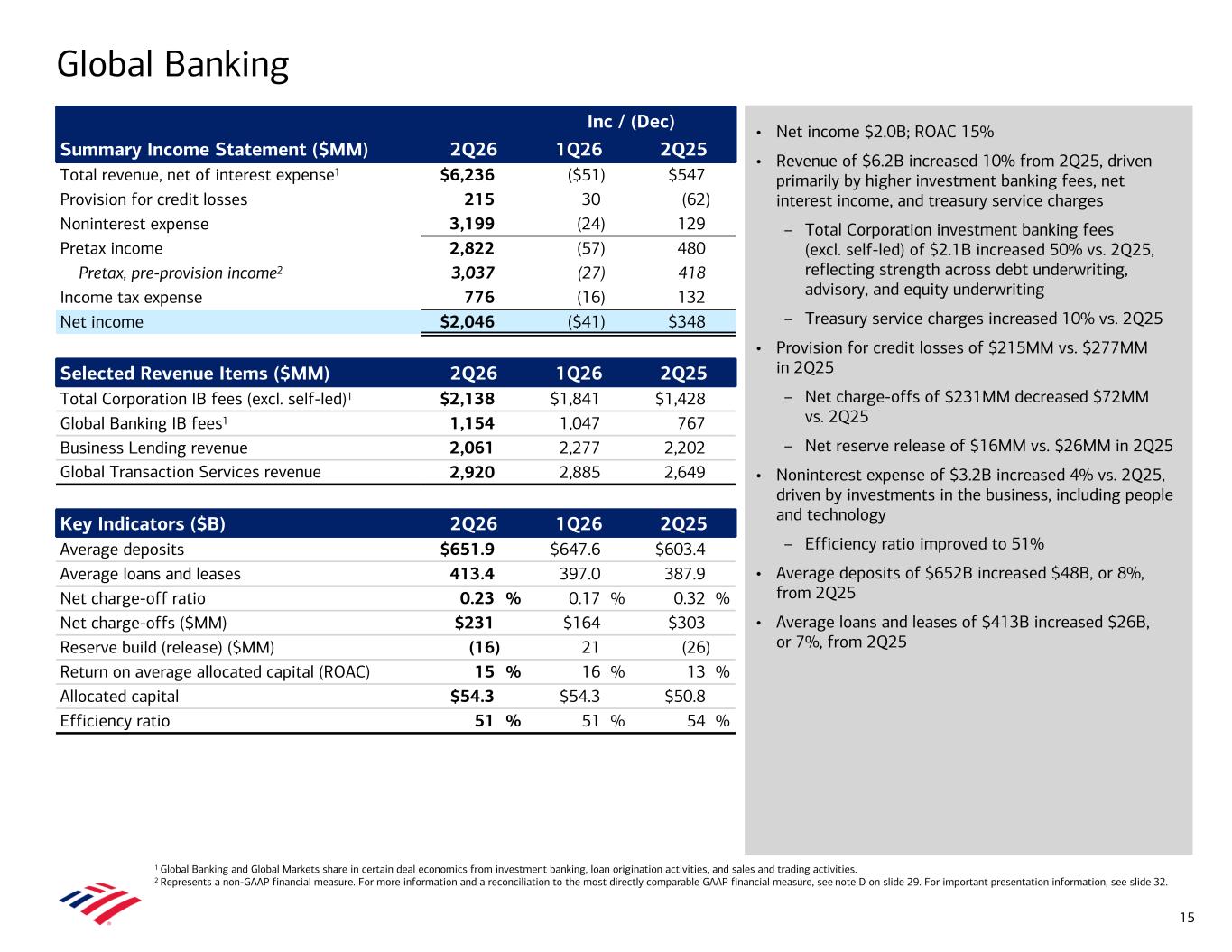
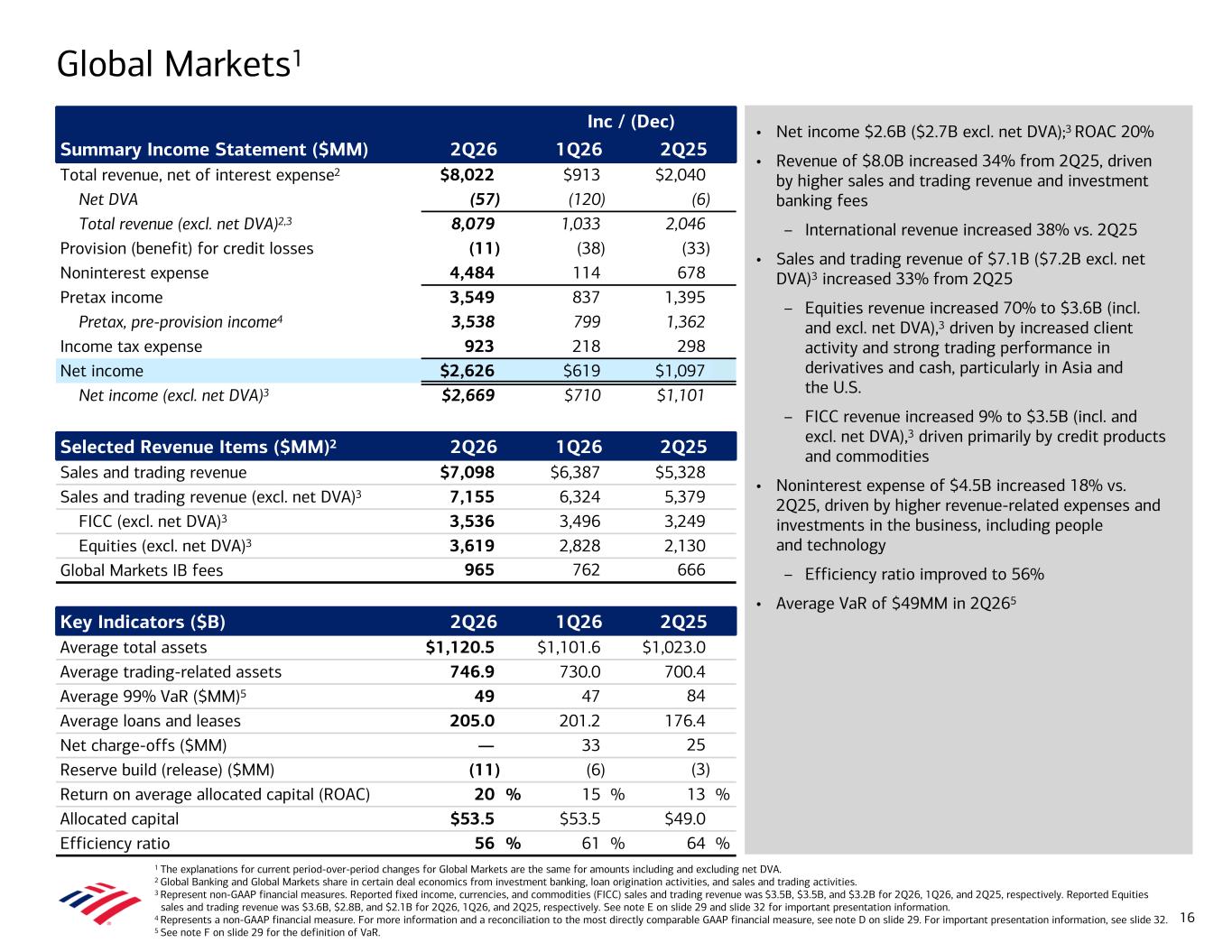
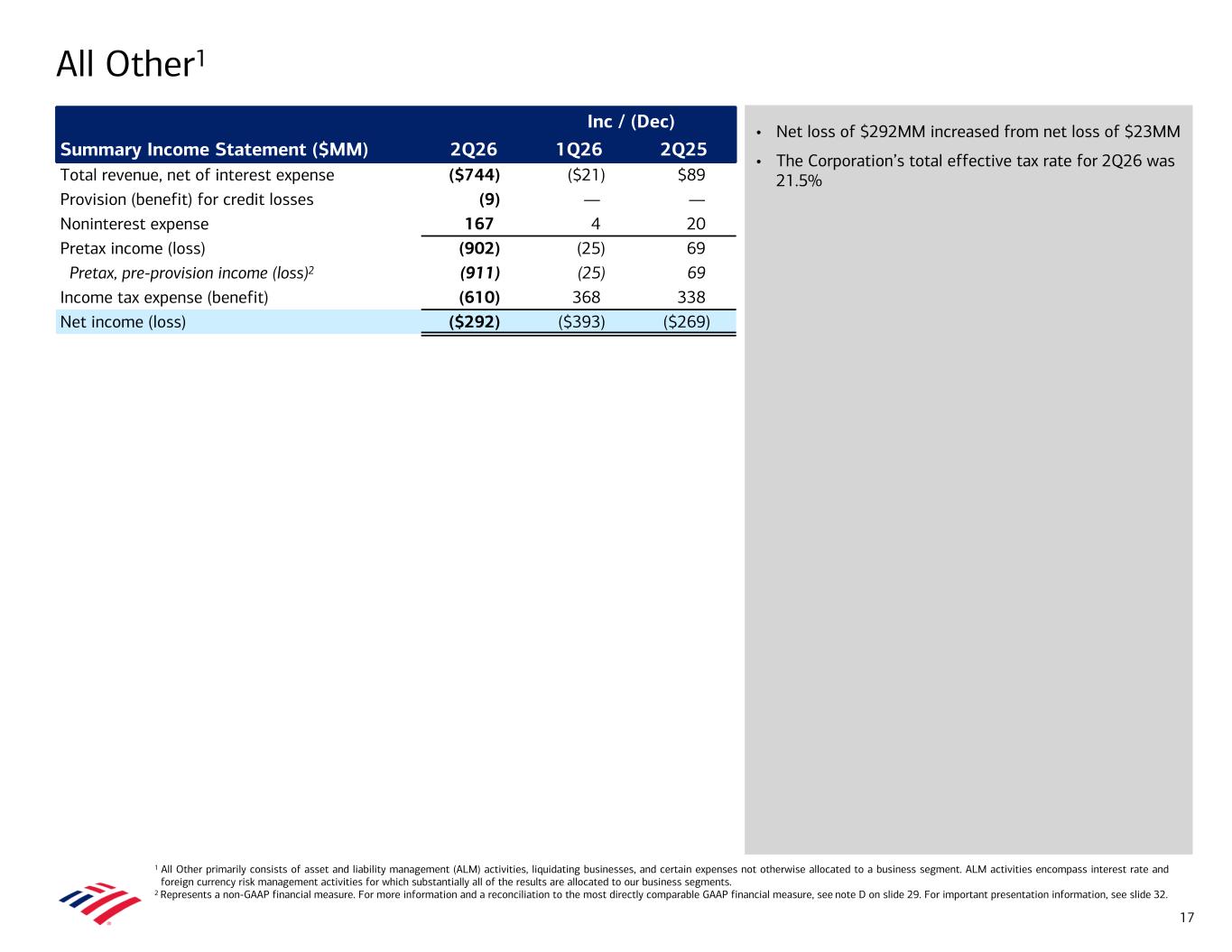
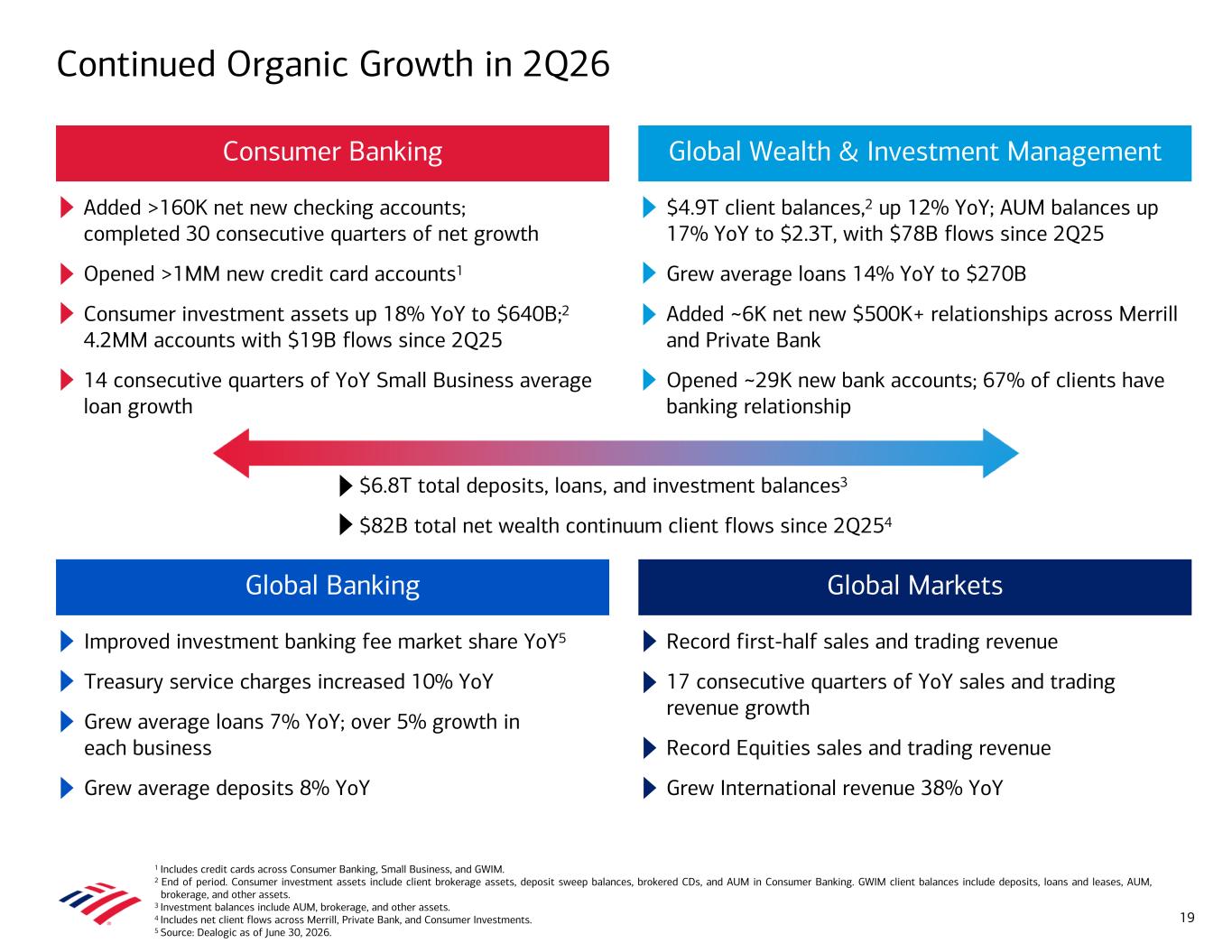
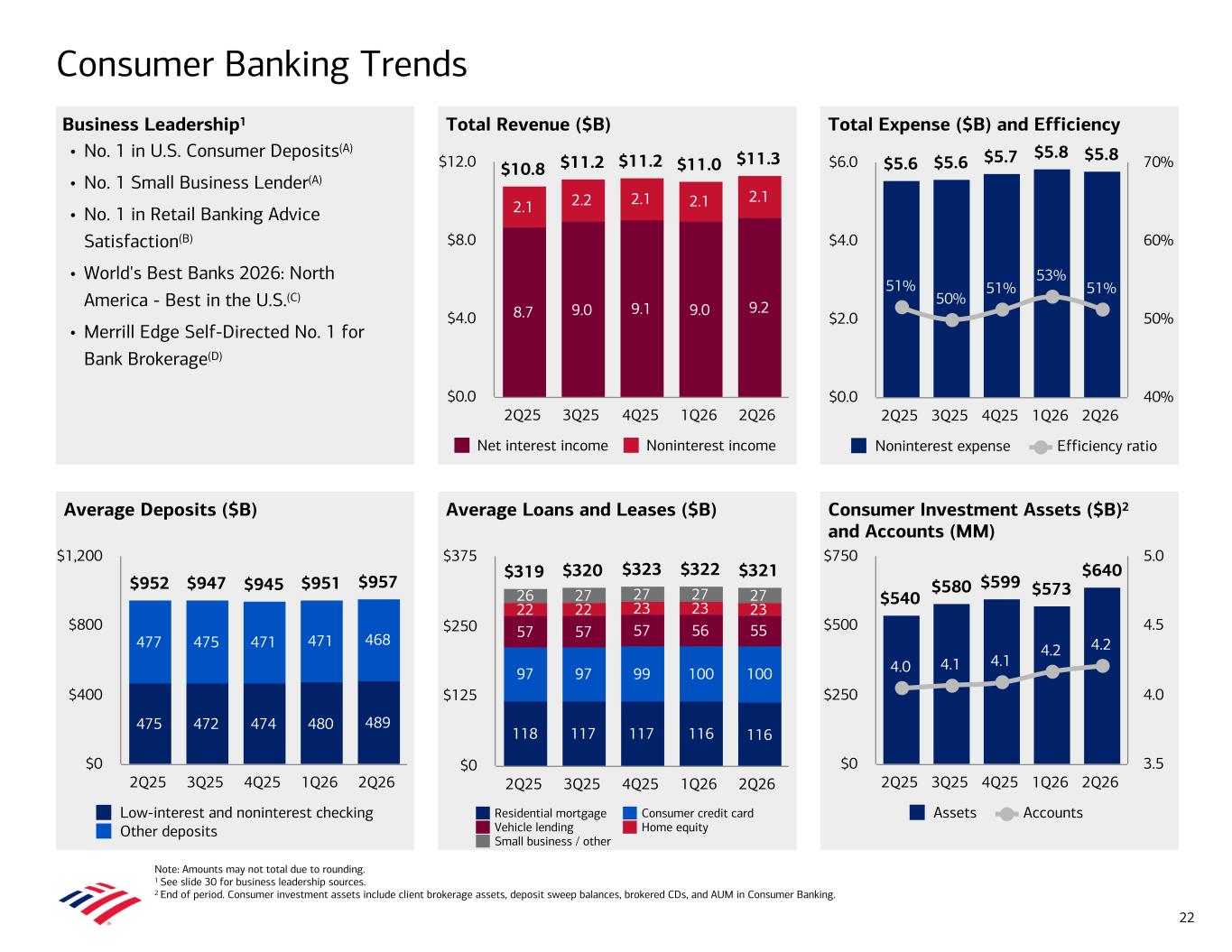
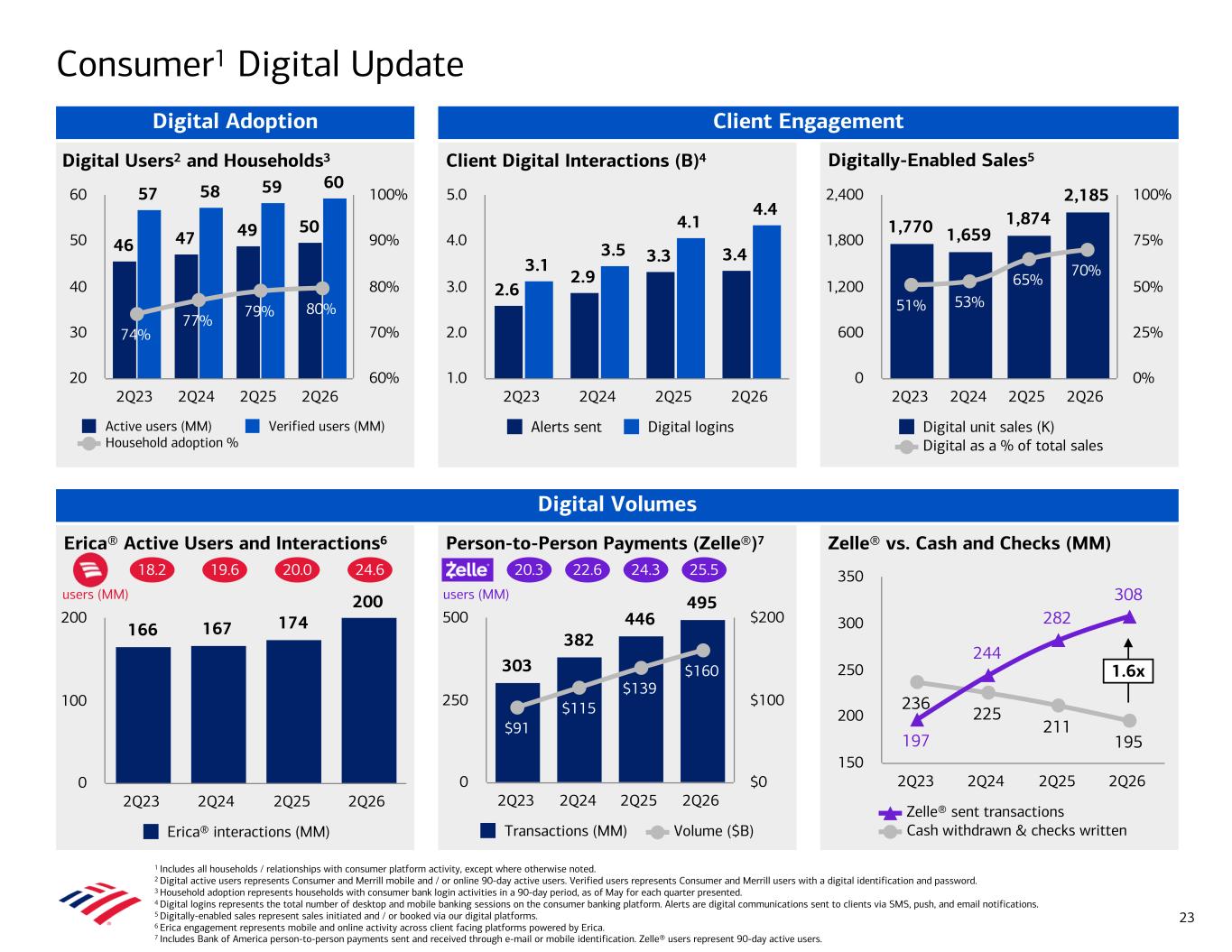
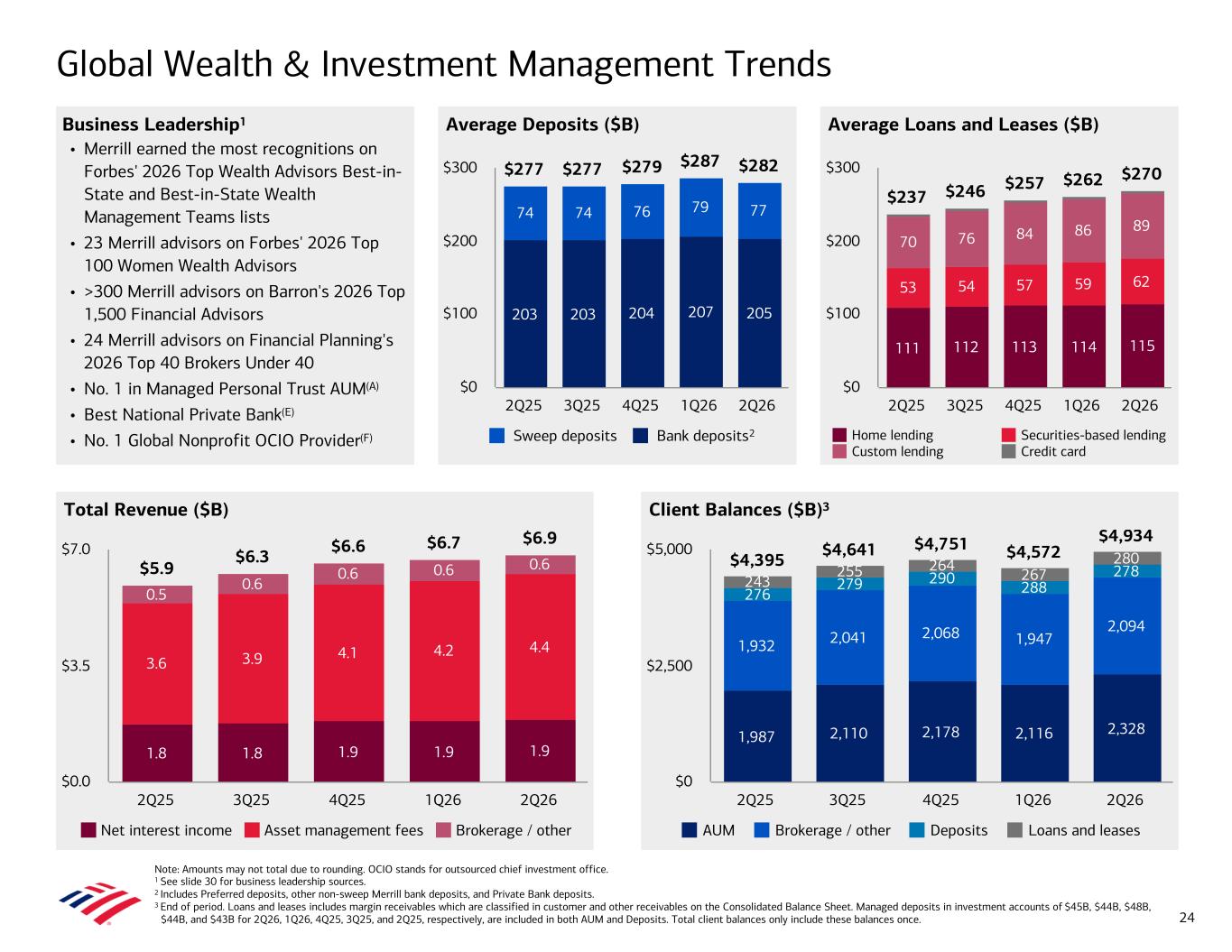
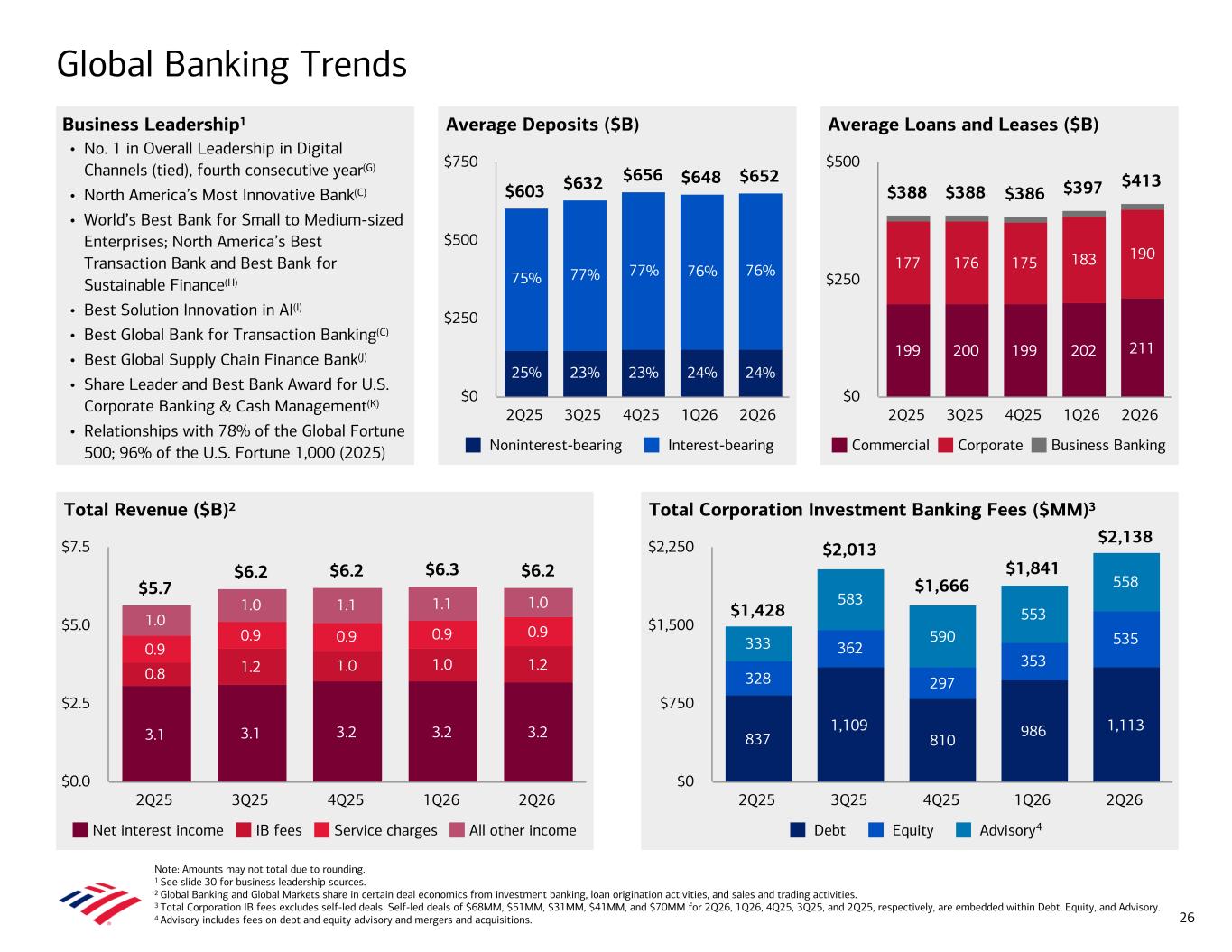
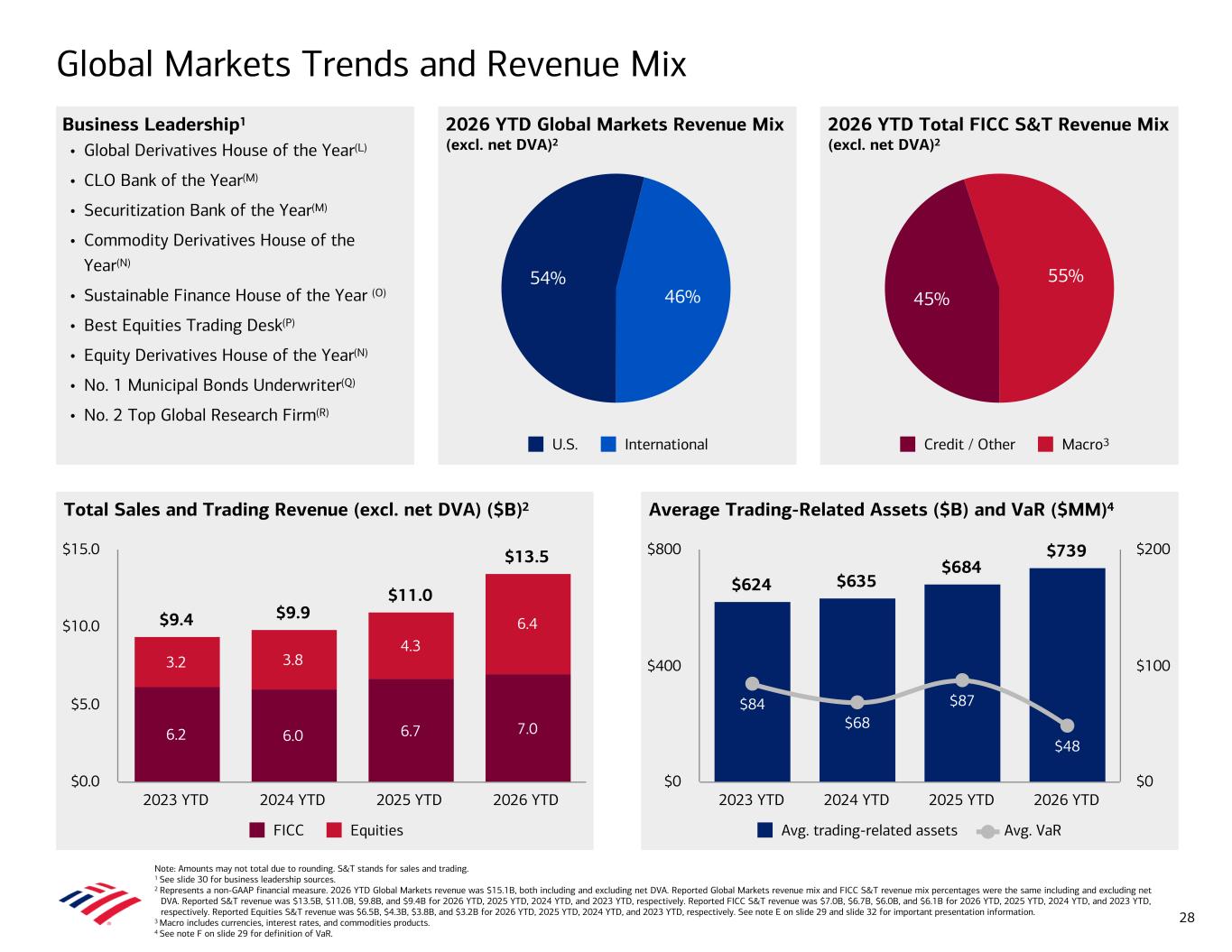
can see it remained a source of strength and we continue to support client activity across the franchise. Our ending assets were steady at $3.5 trillion, steady compared to the first quarter, and primarily reflecting lower securities balances replaced by loan growth and global markets activity. We maintained strong liquidity in funding while we optimized our balance sheet, and we supported all that with diversified funding and healthy client-driven growth. When you look at regulatory capital, we remain in a strong position with our CET1 ratio stable at 11.2%, and that remains well ahead of our 10% minimum ratio. Tier 1 common equity grew to nearly $202 billion, while our RWA increased to $1.8 trillion, driven by loan growth and capital markets activity. Supplementary leverage remains strong and well above our minimums. We turn to slide 7. You can see deposits remain a key competitive advantage and a source of strength for our company. Average deposits were $2.02 trillion, up $49 billion, or 2.5% from a year ago, and importantly, included non-interest-bearing growth of $19 billion, up 4%. This marks our 12th consecutive quarter of average deposit growth, and growth was primarily driven by global banking, where deposits increased 8% year-over-year, reflecting continued client engagement and operating account growth. The second quarter saw muted sequential growth in average deposits because it was impacted by typical seasonal tax-related outflows. Otherwise, underlying client activity remains healthy and on track with our expectations. Our deposit base remains highly diversified across consumer, wealth, commercial, and corporate clients, providing a stable and attractive funding advantage. Our strong liquidity and funding position means we don't need to chase rate-sensitive balances, and with the other relationship values like rewards, digital, and security features, it allows us to offer customers attractive rates and grow balances. And we continue to see growth in both interest-bearing and non-interest-bearing balances. As shown in the upper right, rate paid was modestly lowered this quarter, led by consumer deposits of 48 basis points on $957 billion in balances, so favorable balance moves. Turning to slide 8, loan growth remains strong and broad-based. First, average loans and leases increased to $1.2 trillion, up $88 billion or 8% from a year ago. Ending loans were also $1.22 trillion, up $71 billion or 6%, marking the ninth consecutive quarter of both average and ending loan growth. Commercial lending continues to lead growth, with average commercial loans increasing to 733 billion up 75 billion or 11 percent from a year ago and we've seen growth both domestically as well as internationally illustrated by the chart at the bottom right of slide eight additionally commercial growth has broadened away from the global markets activity that we saw last year consumer loans increased three percent year-over-year led by growth in securities-based lending and credit card balances. Credit card grew 4% year-over-year as we increase marketing and enhance product offerings. The combination of first and second lien mortgage balances remains relatively stable, reflecting elevated rates, and included the ninth consecutive quarter of average home equity growth. These trends reflect healthy client activity across both commercial and consumer businesses, and they demonstrate the benefits of our diversified lending franchise. Turning to slide 9, net interest income continues to perform well despite a modestly lower short rate environment which impacted variable rate asset yields. NII on an FTE basis was approximately $16.2 billion and increased $253 million from the first quarter and $1.3 billion or 9% from a year ago. On a year-over-year basis, growth was driven by higher loan and deposit balances, fixed-rate asset repricing, and global markets-related activity. And this was partially offset by the impact of lower average short-term rates. We've seen steady improvement now since the second quarter of 2024, when NII has grown from $13.9 billion to now $16.2 billion. Net interest yield was 2.08%. That's up one basis point from Q1 and 14 basis points from a year ago, reflecting favorable asset and liability mix and loan and deposit growth, partly offset by global market's balance sheet growth. Bank of America's banking book remains asset sensitive, and on a dynamic deposit basis, a 100 basis point parallel shift above the forward curve is expected to increase NII by a billion dollars over the next 12-month period. Looking ahead on NII expectations, in January we told you to expect 5-7% full-year NII growth. And then in April we raised that full-year range to be 6-8%. We now expect full-year 2026 NII growth to be at the upper end of that 6% to 8% range, supported by anticipated loan and deposit growth, fixed-rate asset repricing, and balance sheet optimization. And this assumes modest loan and deposit growth in the second half of the year, and it's based on the current forward curve, which has one 25 basis point rate hike in September. Overall, NII remains a significant contributor to earnings growth and reflects the core franchise advantages of our scale and diversified balance sheet. Non-interest expense on slide 10 was approximately $18.6 billion, up roughly $100 million from the first quarter and $1.4 billion from the second quarter of 2025, reflecting continued investment in technology, sales teams, financial centers, and brand marketing. And it also includes higher activity-related costs that come from trading in our global markets business, particularly in our overseas markets. With those investments, we generated 660 basis points of operating leverage and improved our efficiency ratio to 59%, highlighting the performance of the franchise and the return on our investments. AI-enabled tools are now more embedded in workflows across operations, risk, finance, technology, and our client-facing teams. And that's helped reduce manual work, improve speed, and enhance consistency for clients and teammates. First quarter earnings call in April, we told you we expected full-year operating leverage of more than 200 basis points. and operating leverage for the first half of 2026 has now exceeded 450 basis points so with that first half performance and our continued expectations for a strong second half we now expect full-year operating leverage to be in the range of 300 to 400 basis points turning to slides 11 and 12 you can see credit quality remains stable and consistent with the strong underwriting discipline that's characterized our portfolio for many years. Provision expense was approximately $1.4 billion. Net charge-offs were also $1.4 billion, and both were largely unchanged from Q1. Consumer card charge-offs and delinquencies improved both year-over-year and quarter-over-quarter. Commercial credit also remained solid, with CRE improvement offset by some isolated corporate in commercial lending losses. Reservable criticized commercial exposures declined by approximately $2.3 billion from Q1 to roughly $22 billion, driven primarily by CRE improvement. Non-performing loans remain stable at approximately $5.8 billion, and we recorded a modest reserve release. Our portfolio remains well-positioned, supported by strong client fundamentals and disciplined risk management. Starting to slide 13, and now we get into the business segments. Consumer banking delivered another strong quarter, combining solid financial performance with continued investment in growth, innovation, and client engagement. Over the past few months, we refreshed our rewards program, and that's generating more than 2 million enrollments since the late May relaunch. We also launched one of our largest consumer marketing campaigns around the FIFA World We expanded our financial center network in new and growth markets, introduced new card products, and deployed new AI-enabled tools designed to enhance both the client and teammate experience. All of these investments helped to strengthen the franchise and drive organic growth. Net income increased 10% year-over-year to approximately $3.3 billion, while revenue rose 5% to $11.3 billion. Through strong expense discipline, we generated our fifth consecutive quarter of positive operating leverage, maintained a strong 51% efficiency ratio, and delivered a 29% return on allocated capital. With regard to client activity, our deposit franchise remains a key competitive advantage. Average deposits rose to $957 billion, our fifth consecutive quarter of year-over-year growth. Flight engagement was also strong, with record checking account balances, 162,000 net new checking accounts, and card spending up 9% year-over-year to $266 billion. We continue to deepen relationships across the enterprise, and consumer investment assets reached a record $640 billion, up 18% year-over-year, supported by strong market levels and net client flows. Digital engagement remains a clear differentiator with roughly 50 million active digital users, more than 24 million active Erica users, and digital sales representing 70% of total sales. New AI capabilities have improved service, increased efficiency, and allowed teammates to focus on higher-value client interactions. Finally, consumers remain resilient as average deposit, investment balances, and spending all showed linked quarter increases. Additionally, consumer credit quality remains strong and in line with expectations, reflecting the strength of our customer base and our disciplined approach to risk management. Overall, consumer banking continues to demonstrate the power of our scale, digital leadership, and relationship-based model, positioning the business for sustainable and attractive long-term growth. To slide 14, GWIM delivered another outstanding quarter, highlighted by record revenue and pre-tax income, expanded profit margins, and continued client growth. Clients continue to consolidate more of their financial lives with Bank of America. During the quarter, we added another 6,000 net new affluent households to serve, and the continued strong growth in banking relationships and lending balances demonstrates the power of our integrated wealth and banking model. At the same time, both Merrill and the private bank continue to attract talented advisors who are drawn to the breadth of our platform and our ability to deliver comprehensive solutions for clients. The franchise continued to benefit from strong advisor productivity, growing digital engagement, and new AI-enabled tools that help advisors prepare for client conversations, identify opportunities, and deliver more personalized advice at scale. Net income for the segment increased 42% year-over-year to $1.4 billion, while revenue grew 16% to a record $6.9 billion, driven by higher asset management fees, strong flows, higher market valuations, and higher NII. With good expense discipline, we generated another quarter of positive operating leverage and saw pre-tax margins expand to more than 27%, demonstrating the scalability of this business. Appliant balances reached a record $4.9 trillion, up 12% from a year ago. Assets under management grew 17% year-over-year to $2.3 trillion, supported by approximately $14 billion of AUM flows this quarter and $78 billion of AUM flows over the past four quarters. Also, loans grew $13 billion, or 5%, linked quarter, to $277 billion, driven by custom and securities-based lending demand. Overall, GWIM continued to demonstrate the strength of our advice-led, relationship-based model and remains well-positioned for sustainable growth. Moving to our commercial and corporate client-facing businesses and global banking on slide 15, where global banking delivered strong results in the second quarter, reflecting healthy client activity, near-record investment banking performance, strong treasury service revenue, and continued balance sheet growth. Client engagement remained broad-based with activity across capital markets, strategic transactions, liquidity management, and we continued our program of growth investments, including technology modernization, digital infrastructure, and AI-related initiatives. We're also using AI-enabled tools to help bankers accelerate their research, prepare materials, and identify relevant client opportunities more efficiently. Increased 10% year-over-year to $6.2 billion, while net income grew 20% to more than $2 billion. Banking was a particular highlight. Total corporate investment banking fees, excluding self-led transactions, increased 50% year-over-year to more than $2.1 billion, reflecting strength across debt underwriting, advisory, and equity underwriting. Average loans increased 7% to $413 billion, while average deposits increased 8% to $652 billion, demonstrating continued franchise growth and client confidence. Credit quality remained solid and returns remained healthy with a 15% return on allocated capital. Turn to slide 16, global markets delivered an exceptional quarter. Excluding DVA, net income was $2.7 billion, up 70% from a year ago. Sales and trading revenue, excluding DVA, increased 33% to $7.2 billion. Equities delivered a record $3.6 billion of revenue, up 70%, driven by client financing activity and strong trading performance in derivatives and cash. FIC generated $3.5 billion, its strongest quarter in more than a decade. Growth was broad-based across the franchise. Domestically, our revenue in the U.S. increased 31%, while our international business delivered a 38% improvement with Asia Pacific as the standout. And this is generally consistent with our investor day messaging of continuing our improved performance internationally but perhaps what stands out most is the consistency of our performance because we've now delivered 17 consecutive quarters of year-over-year sales and trading revenue growth and 14 consecutive quarters of year-over-year net income growth and combined with 16 operating leverage and a 20 return on allocated capital, these results reflect the strength of our client franchise, diversified platform, and disciplined execution. Client activity remains strong, and the connectivity between markets, global banking, and wealth and investment management continues to create value for clients. Investments in technology and AI are helping teams deliver insights faster, operate more efficiently and further strengthen our competitive position so this was a record quarter bill on scale client engagement and consistent execution across the franchise into all other on slide 17 we recorded a 292 million net loss in the quarter which is larger than the year ago with no significant drivers to note and we reported an overall tax rate of 21.5% consistent with our full year guidance. In closing, the second quarter reflects the strength of our diversified operating model. We produced double-digit revenue growth and more than $9 billion of net income with EPS growth of 34% and return on tangible common equity of 17%. We also delivered strong operating leverage while continuing to invest in the franchise and supporting our clients. Across the company, clients continued to invest, transact, and grow. Activity remains healthy across lending, payments, investment banking, markets, and wealth management, including technology, digital infrastructure, and AI-related opportunities. We also see meaningful opportunities to continue using AI and automation ourselves to improve productivity, strengthen client engagement and support disciplined growth across the company so taken together these trends simply reinforce our confidence in the long-term earnings power of the franchise and our ability to deliver responsible growth and attractive returns for shareholders and with that leo let's open it up and we'll see what questions we can answer thank you if you'd like to ask a question press star one on your keypad.
Operator
To leave the queue at any time, press star 2. Once again, that is star 1 to ask a question, and we'll pause for just a moment to allow everyone a chance to join the queue. Thank you. Our first question comes from Chris McGrady with KBW. Please go ahead. Your line is open.
Oh, great. Good morning. Thanks for the question. Notice the deposit discipline in the quarter. Allison, I'm interested in your thoughts about pricing in a higher for longer environment. I know you didn't change the full year NII guy, but your deposit pricing outperformed some of your peers this quarter. Any comments on the near term outlook would be great. Thanks.
Yeah. So I'd say we kind of just kept nudging NII a little bit higher as we've gone through the year. First from that five to seven up to the six to eight, and then more recently saying and we're probably going to be at the top end of that range. So we've tried to express our confidence in the momentum of NII. And some of that comes from the deposit gathering. I think you know we've got a lot of liquidity. We're not loaned up at this point. We've got $800 billion of excess between our cash and securities over our loans. And that really allows us to concentrate on our strategy. Our strategy is very clear. We're trying to grow clients and operating accounts. that's the highest quality growth it's the highest quality clients because when you get that operating account is key to the financial lives so when consumer puts up 162,000 of net new checking accounts or when we grow non-interest bearing for seven consecutive quarters that's what helps us to drive the non-interest bearing up four percent so the lower rate paid is really about mix Chris. We're competing out there for deposits like everyone else. We compete tooth and nail to get deposits where we can. But at the end of the day, our strategy is about relationship value, all the things around digital and security and rewards that we talk about. And it's that favorable mix of growing the non-interest bearing that makes a difference.
Okay, that's helpful. Appreciate that. And then on the operating leverage conversation in the new slide um i'm interested in the two to three hundred basis points plus of operating leverage that you talked about in november you're clearly off to a great start i'm interested in kind of the sustainability uh obviously the comps will be a factor but the influence that ai might have on that uh over time there are two elements to that i think um first obviously we we said at investor day the sustainable kind of thing that we're aiming for is something like 200 to 300.
Right now, we're outperforming that. We've had a terrific first half of 450 basis points. So that's what's giving us the confidence for the full year to say it's going to be above the range. AI plays a role, I think, in two ways. The first one is on the revenue side. There's obviously a big AI theme going on in the world. We're leading in investment banking and global markets around capital raising, financing, that massive capital investment and infrastructure build around the world. so that's helping us there and then you're you're asking a question that's you know really about sustainability going forward can it help us with our own operations the answer is yes that's why we put that slide in so if you go to the slide it's slide number 20 and you just take a look remember we've been at this for a little while now but you can begin to see now in these general purpose productivity tools or the tools that are aimed at specific functions like the bankers or the wealth professionals or the software developers you can see what we're doing there and then there's another layer of AI on top of that that accesses a lot of the company so on the right hand side here's what's going to come out of that we believe growth efficiency risk management and resiliency so that's what we're trying to make sure we're updating you on the AI as we're going through and at this point we've got we put it at the top of the page just so you could see it but you can see the number of model cases at this point is 300 you can see the number we've got in here that we're using 114 so this is going to be something for the future and we're just working our way through it understood thanks so much thank you we'll now move on to Glenn
Operator
Shore with Evercore your line is now open Mr. Shore please check your mute switch. Your line is open. We'll move on to Ken Uzden with Autonomous Research. Your line is now open.
Hi, thanks a lot. Hey, Alistair, just on the positive operating leverage point, I think you've made it very clear about the comps getting a little harder in the second half because of the ramp you had last year, starting with the NII and also markets. Can you just help us put it into some kind of context, obviously, with 300 and 660 basis points of leverage and now talking to a full year of 300 to 400. Just, you know, how do we kind of box the operating leverage potential for the second half as we get into this kind of tougher comps, albeit with the good top-line revenue growth continuing? Thanks.
Yeah, so we're offering the 300 to 400, recognizing that we've already booked 450 for the first half, so that's good. And then we're just trying to give you a range Ken that allows you to kind of work backwards because as you point out in the second half of last year the NII went up more than the first half now we think that'll happen this year as well but it might not just the numbers are bigger this year so the percentages just change a little bit and then remember second quarter last year was a slower quarter for investment banking for the entire industry so you know you think about it if we put up 2.1 billion of investment banking this year up 50 percent, if you kind of sustain that relative to what we did in third quarter of last year, which was two billion or so, you just don't get the same kind of uplift in the second half. So that's what we've got our minds on. Otherwise, as you can imagine, the business conditions are very good. We're trying to maximize operating leverage where we can.
Okay, got it. And you mentioned balance sheet optimization from here. Can you talk about where you have that room to continue to optimize, notably, well, across the balance sheet, I guess, on both the asset side and the liability side as you focus more on that? Thanks.
Well, there are really two places I think that you'll see it. The first one is we've talked about the fact that we believe we can improve net interest yield over time. We've done that. You can see we're at 208 now. We're up from 194 a year ago. So that's been a contribution to some of the NII gains. But we've talked about on prior calls, we still feel like we carry some repo, some institutional CDs, but over time we're just continuing to pay down. If those are invested at the Fed, we're not capturing a lot of spread. It doesn't do anything for NII. It actually hurts NII. But it also ties up a little bit of capital.
So as we continue to pay that down and I think you'll see more of that happening in the second half of this year that'll free up more capital it'll help us on the return on tangible common equity as well so we're sticking to that program we'll have a pretty good opportunity in the second half we're looking forward to that just note that there's no constraint on the growth of loans or the core deposits etc so that's that all can grow turns and things like that it's really a question of sort of the centralized security portfolios the term debt the repo as Alistair said a lot of the build-up that came because of the rules getting flipped around as now we're through that on the other side.
Got it. Thanks, guys. Appreciate it.
Operator
Thank you. We'll move on to Manan Gosalia with Morgan Stanley. Your line is open.
Hey, good morning. Alistair, I know you outlined higher rates as a positive. You can talk a little bit about if the rate environment changes here because we're getting a lot of changes overall would that impact the NII guide and you know as we think about just markets NII overall as well you know given that you know prime brokerage and some of the other businesses are doing better if there's any offset to getting to the high end of the six to eight percent NII guide well first welcome to coverage nice to have on the call thank you second um yeah i mean if rates if we've got one rate hike in the curve it's in september so its impact this year is pretty modest because you're really only capturing
anything in october november and december um we will obviously adjust pricing in each of our segments for any rate hike but net net net we expect that to be a positive so that's in our guide right now where we're saying it was five to seven then it was six to eight now we're saying it's going to be at the top end of that range and that's with that hike now i i think generally speaking because the banking book is liability insensitive that that's the predominant benefit but the markets business is slightly liability sensitive so that's a slight offset but net net
net it's a positive for us and that's what we're trying to communicate got it all right thank you and um apologies if i missed it but um you know if you think about um loan growth in the back half of the year and you think about uh you know i guess just middle market cni growth um you know how is that trending you know and and what do you expect uh overall as we get into the back half of the year yeah so if we look at the the middle market we're sort of growing kind of like commercial loans overall they're growing around eight percent or so middle markets kind of in there larger cap corporates are in there so the growth looks pretty good we would say in the commercial
side and if you go back now i think it's over nine or ten quarters we've been growing loans at 20 billion or so per quarter seven percent last year full year eight percent this year so the the commercial growth there we don't necessarily see that changing feels to us like we're in a good environment for loan growth. And then just keep half an eye also on card where Holly laid out a plan to say we want to get back towards 5% type card growth. We're at 1%, then 2%, then 3%. You can see this quarter we're at 4%. So some good news on the consumer side. And then things like securities-based lending have been pretty positive as well, just with the way the markets have performed and what our wealth management clients want to do. So we remain pretty constructive on loan growth in the second half. No changes there.
Operator
Thank you. We'll move next to Ben Gerlinger with Citi. Your line is open. Please go ahead.
Good morning. I was curious. I get that the updated guide closer to the higher end of NII includes the forward hike potential. I was curious, does that also incorporate a little bit more productivity on the average earning asset mix. I know you guys have alluded to a little bit more productivity down the road, and I get that that takes time. I'm just kind of curious. Is the guidance based on a static balance sheet or the continuation of a little bit more loans in the average earning assets?
Yeah, so, Ben, also welcome to coverage. Thanks for joining. Yeah, the updated guide essentially assumes the following. First, modest deposit growth, similar to what we've been seeing. Second, good continued loan growth in the second half of the year, similar to what we've been seeing. So we haven't really changed our perspectives on either of those. We'll get the benefit from some fixed-rate asset repricing. We've got a little bit more of that in the second half than the first half. But otherwise, it's mostly balance sheet gains. And then what I described in terms of balance sheet efficiency, I would think about that as being more about net interest yield and less about NII, okay?
Gotcha. That's helpful. If I could do a follow-up in terms of operating leverage, I get that you've increased the guide for the full year this year. When you think about just the higher revenue production that you kind of alluded to, do you run the risk of potentially under-investing? I get that you're probably ahead of peers across every major category of AI and technology and is being a bit more digital. But if you have more revenue, do you think you could potentially speed up the spending so it pulls forward into this year, reducing that leverage?
Well, I think we are spending at a good clip overall of technology and also dedicating a lot of time in the company towards careful examination, implementation, catalyst, people working to understand the projects and AI. We give you the outline on slide 20. So I think there's productivity increases. There's a lot of spending. We're going to be spending more of it, whether that increases the expenditures of technology development dramatically or not really has to do with a couple things. One is their shifting of spending towards it, and then secondly, even the coding process has become more and more efficient using these tools. So the same amount of money in 27 will get us more code, for lack of a better term, in 28. So we're driving everything as hard as we can. And so our focus on operating leverage, and we just told you, and then we're continuing invest in the places that grow the business, especially around the consumer business, think financial centers and new markets, done a market build-out basis, not on a one-off, one-at-a-time basis, building out cities we're not in. And we continue to drive the marketing capabilities of the firm, and our consumer scores have now reached all-time highs. And then we invested heavily in our rewards program, its ability to cement relationships with great deposit mix, and the result cost of funds. So we're spending, I don't think you'll see a major change in our methodology of how we think about spending. A lot of the incremental expense growth from second quarter this year, last year was due to, if that keeps going, we'll all be happy as not, because that means the revenue's got to grow, it'll slow down, and it will have a different type of operating leverage that Alistair described.
Operator
Thank you. We'll now move on to Erica Najarian with UBS. The line is now open.
Hi, good morning. So the investor feedback so far is that they feel that the net interest income guide is conservative. So maybe I'll just re-unpack the number of questions that you've gotten already on this, Alistair. So the first half of the year NII growth is up nine. You know, clearly the second half of the year is tougher comps right which you're saying would get you within the range but as you know we just wanted to understand you know you mentioned that included in your guide is modest deposit growth good loan growth improving card growth which obviously is coming at a better yield so are we getting the vault are we getting earning asset growth for the second half of the year but not much nim expansion i guess we're just trying to think about the jumping off point you know to sort of let that that will slow your NII growth from the nine percent that you've printed for the first half of the year yeah okay well
the first thing I should say is it's not slowing it much second I think it's actually helpful I think to just lay out if you look at the four quarters of 2025 just sequentially and then lay out you know essentially 2026 what you see is most all of the nii build last year was in the second half of the year so we're just up against tougher comps that's all it's it's not more complicated than that so we just got to stick doing what we're doing we got to keep growing the loans we've got to keep growing the deposits with particular focus on operating accounts and non-interest bearing and then we'll get some benefit from fixed rate asset repricing as we do we've invested in global markets with their balance sheet that's a net positive, but I don't expect that to be anything particularly big in the second half of the year because markets, generally speaking, is sort of at a good run rate right now. So we're talking about 8% or 9%. I don't know. They're both very good, but we kind of feel like right now it looks to us like more like 8% for the full year just based on the comps.
Got it. And my second question is, you know, Brian, you know, you printed, you know, a return of, you know, 17% on tangible common equity this quarter, you know, granted the equities number and, you know, the IB numbers are huge. So I guess a two-part question. Number one, just sort of reaffirming that this, you know, your positive operating leverage being, you know, better in a full year but slower in the first half is only due to the seasonal revenue factors that you're taking into account. So in theory, if the pipeline continues to be robust in banking and markets, it could be better, right? And second, you know, as you think about sort of a very strong year in terms of returns, are you willing to invest in, you know, perhaps slightly lower return than the 16% to 18% target businesses like equities financing, for example, to continue to set yourself up for earnings growth going forward?
So I think, Erica, there's a lot in assumptions and things. Let me just be clear. The return of tangible common equity was 17. We thought it would take us longer to get there. That has, in part, businesses that are operating very well, getting good and benefiting by the NII lift, as well as, you know, now we see very strong performance this quarter, and we expect it to continue based on the market conditions. But, you know, the Iran war is infractious, and we can't predict, you know, what will happen next in it, and that could affect, you know, the IPOs, et cetera. But right now, the pipelines are fully very good about that, the long growth, deposit growth Alistair described. so we feel very good about the return you know in this current quarter there was a pretty healthy lift off of last year uh in the in a strong markets return as you mentioned so we're a balanced company the other parts the key for everyone to understand is it's all going to come to the bottom line and that's our goal was to make sure all the ni lift as we marched from 190s in uh then up to the 230s that fell the bottom line so if you line and that's why the earnings growth was 30-plus percent EPS. So expect that to continue. Seeing it from me, we're growing, we're having operating leverage of 660 basis points, so we're letting it come to the bottom line. But company, turning business or not, always look at all the businesses and say, what can you swap out from low return to high returning based on the return intent? That 6 percent plus or minus we think is the right standard to look at. We think it's what the rating agency look at. We think the people operating below that have to be careful. That's a lesson learned from the financial on that level. And, you know, when people have optimization opportunities, if they grow with more return, we're pushing them to do that as well as letting them grow.
Operator
Thank you. We'll now move on to Mike Mayo with Wells Fargo. Your line is now open.
Hi. Could you elaborate more on the change in your operating leverage guide? That's quite a big lift there. And you did address the NII. You know, that all falls to the bottom line. I get that part. and we get the equities trading going up more but aside from that it still seems to be guided quite a bit higher so your marginal margin or the scalability of your model i think you've been kind of waiting for this moment when you can layer on more revenues at lower marginal cost can you highlight the areas uh that's impacting that the most so mike when we got together at Investor Day, we essentially outlined for our shareholders that we felt like the financial model works if we can create 200 basis points of operating leverage from the organic growth and the expense discipline that we expect to put up every cycle.
What we also said is we benefit from fixed-rate asset repricing for a period of time here, so we kind of felt like what we were prepared to commit for the next three to five years was 200 to 300 basis points of operating leverage. obviously we have performed positively and outperformed that in the first six months of the year the two reasons for that our first nii just keeps grinding higher and as brian pointed out all of that's dropped into the bottom line that's really powerful and then second we had really terrific fee-based performance over the course of the first six months you can see the assets under management you can see it in sales and trading you can see the investment banking So that's really boosted. And at some point, you're halfway through the year with 450 basis points of operating leverage, and it's pretty clear we're going to be above 300. So we know we've got tougher comps in the second half, but it's still a strong second half. And when we put that up, we should be in a good place to report full-year results. So that's what we're aiming at.
And did you provide any expense guidance for the year or the second half?
No, we've largely gone away from that, Mike. for the very simple reason that, you know, when you have revenues increase this quickly and some of them come with brokerage clearing and exchange costs, some come with FA incentive cost, it's really hard for us to just keep updating the expense through the case of the quarter. So our shareholders have just said, look, it's sometimes easier to stick with operating leverage. We found that. But I think if you look at the core, the best core measure is probably headcount. Our headcount discipline over the last six quarters has been excellent it's flat to slightly down so we expect good core expense discipline and the and the expense at this point is really going to be based on what happens with revenue if the revenue isn't there then the expense will come down if it sustains where it is currently they see what it costs to operate the company right now on the fees that we just put up and then to follow up going back to investor day I think you're looking for cards to grow 5%.
And as you said, it's gone from 1, 2, 3, now 4%. So that's there. But you also are hoping for net new asset growth at 5%. And I don't think this quarter, the net client flows weren't as good. So just if you could comment on that. And then lastly, on commercial loan growth, traditional commercial at CNI growth, away from the hyperscalers and all that.
I'm trying to figure out that's actually coming back or not you're you know being across the u.s. a good guide for that first I think you were referring to the Merrill five percent guide where we said we are aiming for five percent over the course of the next three to five years yes it's been seven months and I think we're off to a good start there we added net new households again this quarter this was the best quarter in the last few so that was good probably the most important flow is the assets under management flows where they were up four percent so we were happy with that the loans were up team percent i think it was year over year so you know i think what what lindsay and eric are trying to drive there what katie's trying to drive there is just keep growing the sales force well advisor attrition is now at near historic lows so we're pretty happy with that we've got more to do we know that over the course of the next three to five years but i think we feel like we're off to a good start so we're happy with that on the commercial loan growth yes it's it's broader than just an AI theme the AI theme has helped because there's so much in the way of capital investment going on globally now but if if when we look at our global banking segments each of the lines of business whether it's business banking the commercial bank or the corporate bank they're all contributing it's very broad-based loan growth at this point it's consistent one growth in commercial so that's another reason why we're pretty comfortable with our NII guide for the second half of the year all right thank you thank you we'll now move on to Gerard Cassidy with RBC your line is now open.
Hi, Brian. Hi, Alistair. Can you guys take a step back and just give us a sense, what are you seeing in the underwriting area for credit? Is there a risk on going on? I mean, numbers are great for you and your peers. The economy is healthy. What are you guys seeing for the trends there?
I'd say, Gerard, overall, we see, from what we're underwriting, we stick to our credit you know credit knitting so to speak it's been consistent it's been long-term you can see it in the stress test results again it just got issued so it is and what we do we maintain that consistency and the nice thing is we can maintain that consistency and actually grow stronger strong in the industry in core middle market areas that you're thinking about small business etc so we feel very good about that do we see some excesses on outside we always do a lot of that went to a different market, not in the banking system. Some of that's come back and now needs to, so to speak, so we're seeing pressure ease a hair, but then we'll see if it stays that way. And we're seeing price pressure in some of the more liquid products like auto loans and stuff, and that's why we laid off a little bit as the pricing got very tight, and that we feel good that the credit quality is high, the underwriting that we see is high, as mitigated as that quality. It's all going to come down to the economy, and right now our team is fairly in a good And so that's why you're seeing a complete sort of steadiness in our, importantly, the issues of the moment, whether it was real estate four or five years ago or whether it was.
Very good. And then as a follow-up, I don't know if you guys can frame this out, but AI is such a powerful economic force in this country. Have you guys been able to frame out not exposure to data center build-out, but the second derivative?
Because, you know, you wonder two, three, four years from now if AI ever kind of slows down and rolls over. what's the second derivative credit aspect from that have you guys given that much thought when we look at the work we do with clients and others we factor in you across all our companies as part of the underwriting work that the team does they have to factor in the question of what's the impact of AI in the industry and the company and what will happen I think it'll take time as you said and we continue to watch that as we look at underlying deals we're We're always looking at the credit, the capability and the earnings power of the underlying tenants, so to speak, that are driving the revenue to the build out, so that we can keep care And we look at the, we see the demand there. So we look at all the factors you're talking about. I think that, and what we learn from also is not only what happens outside, we see the impact on our company and the ability for us to use it effectively. It has great utility. It has to be carefully managed. You have to have your data perfect. you have to have your rules base so it doesn't make mistakes and how you use it has to you have to look at processes and not about it and we talk to the companies that are in our portfolios of lending to using this so they don't get left behind but on the other hand they're using a responsible security and things like that so we feel good about it uh and we feel it'll be a powerful thank you brian thank you we'll now move on to matt o'connor with deutsche bank your line
is now open all right good morning just a quick follow-up on an interest income the guidance for this year's essentially we have a percent what is that X markets take a look give me one second I need I need to work it back okay I mean I can help with that offline once we finish it up but it's not going to be a big factor because I think what's going to end up happening is either the markets NII is probably pretty stable here. It could even go down with the rate cut in fourth quarter, but it'll be flat to slightly down is my guess. So most all of the growth is going to come from the global banking books.
Okay. Yeah, that number would be helpful. I mean, I think on a year-over-year basis, I would think it's up just given it was going up throughout last year.
Well, year-over-year will be up because we've put more balance sheet into the business. So we can sort of see that. I'm just saying if you were to look at first quarter, second quarter, of expect a similar kind of number in third and fourth but we don't normally provide the guidance ex-global markets because it this there's lots of moving pieces that go backwards and forwards and there's a lot of loans in markets so it it gets a little confusing when we strip that out sometimes we have to think about the presentation there but bottom line is markets nii i think will be flattish could be slightly down with a rate hike but that's not the driver of second half performance of NII.
Okay, that's helpful. And then longer term, you know, you talked about NIM grinding higher, and I know this was a while ago, but you talked about a 2-3 or 2-4 NIM, but obviously, like, the balance is a lot bigger. There's been some mixed shift. Just any updated thoughts on the NIM over time?
Well, we still feel good about that 2-13 number that we're aiming for. I think when we started, we said it would be, you know, two to three years. We're inside, probably inside a couple of years now to get there just based on the progress that we've made one of the things that's just interesting over there is because we've grown the markets business which is quite low net interest yield that has suppressed the overall if you like the banking net interest yields have been quite encouraging over the course of the past couple of years so it's been a conscious choice to invest in markets that's obviously been a good decision particularly this quarter with the markets businesses up as much as they are but it's less about net interest yield and more about net interest income at the margin we're going to get the net interest yield we know that we're still confident we're still on track we'll get to that 230 and we're a year closer now okay thank you thank you there are no further questions in queue I'd be happy to return the call to Brian Moynihan.
Brian Moynihan I thank all of you for joining us. The consistency is the key as you look across all our metrics in every area, whether it's NII, fees, et cetera. The second thing is to keep in mind that the revenue growth is strong, but also very diversified across lots of different businesses, lots of different outcomes, and the third to keep in mind is that the credit costs in the company have flattened out at a very strong historical levels, and we continue to feel good about the delinquencies and everything we show you as getting better. If you think about all that, we gave you guidance that we're at the top end of the range in operating leverage, and so all that backs into a strong set. When you think about the atmosphere we operate in, it's a constructive environment, full pipelines in the markets, business investor demand for debt and equity, commercial lending strengthening, and continue broadening out, and we continue to see strong consumer spending activity with the U.S. economy. Our company is well-positioned, and we look forward to seeing you.
Operator
Thank you. This brings us to the end of today's meeting. We appreciate your time and participation. You may now disconnect.