Operator
Good morning, ladies and gentlemen, and welcome to the Bay First Financial Corp. Q4 2025 conference call and webcast. At this time, all lines are in a listen-only mode. Following the presentation, we will conduct a question and answer session. If at any time during this call you require immediate assistance, please press star zero for the operator. This call is being recorded on Friday, January 30th, 2026. I would now like to turn the conference over to Tom Czernick, CEO of Bay First. Please go ahead.
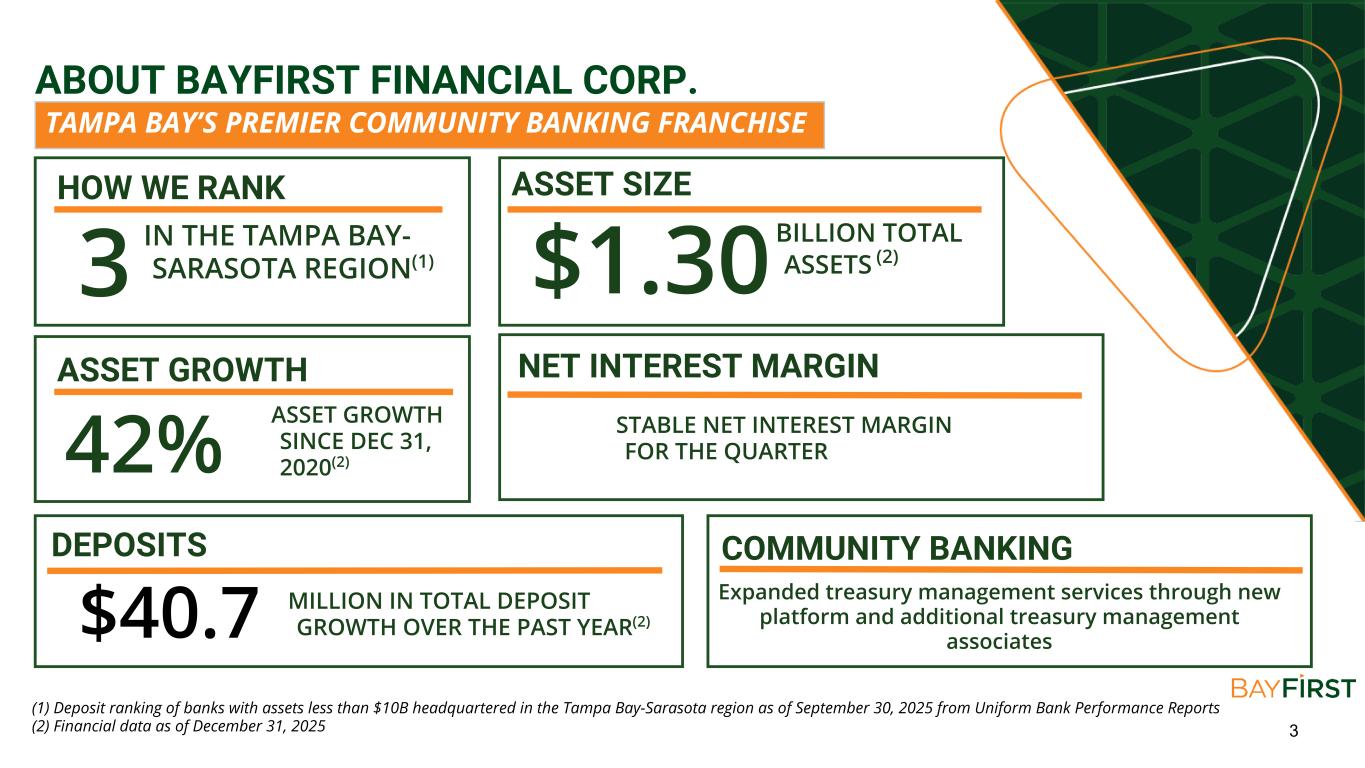
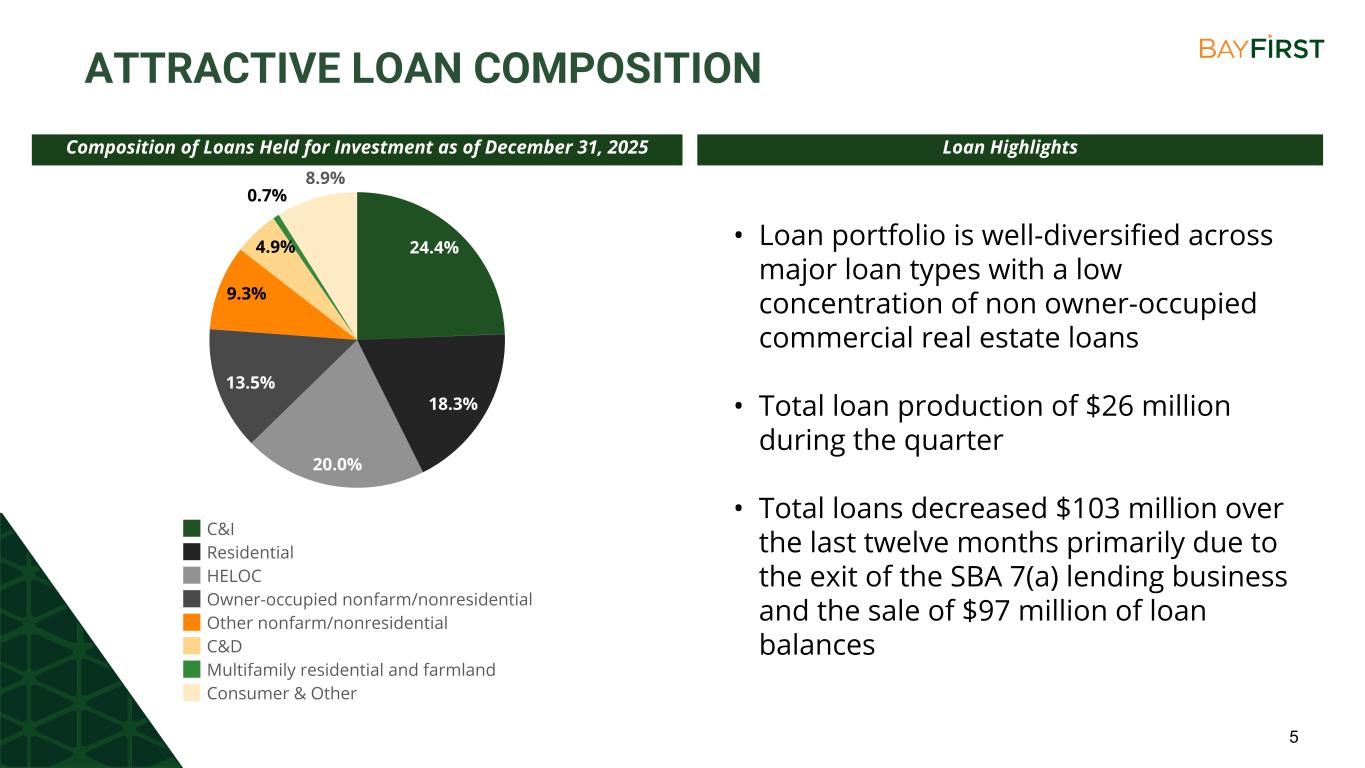
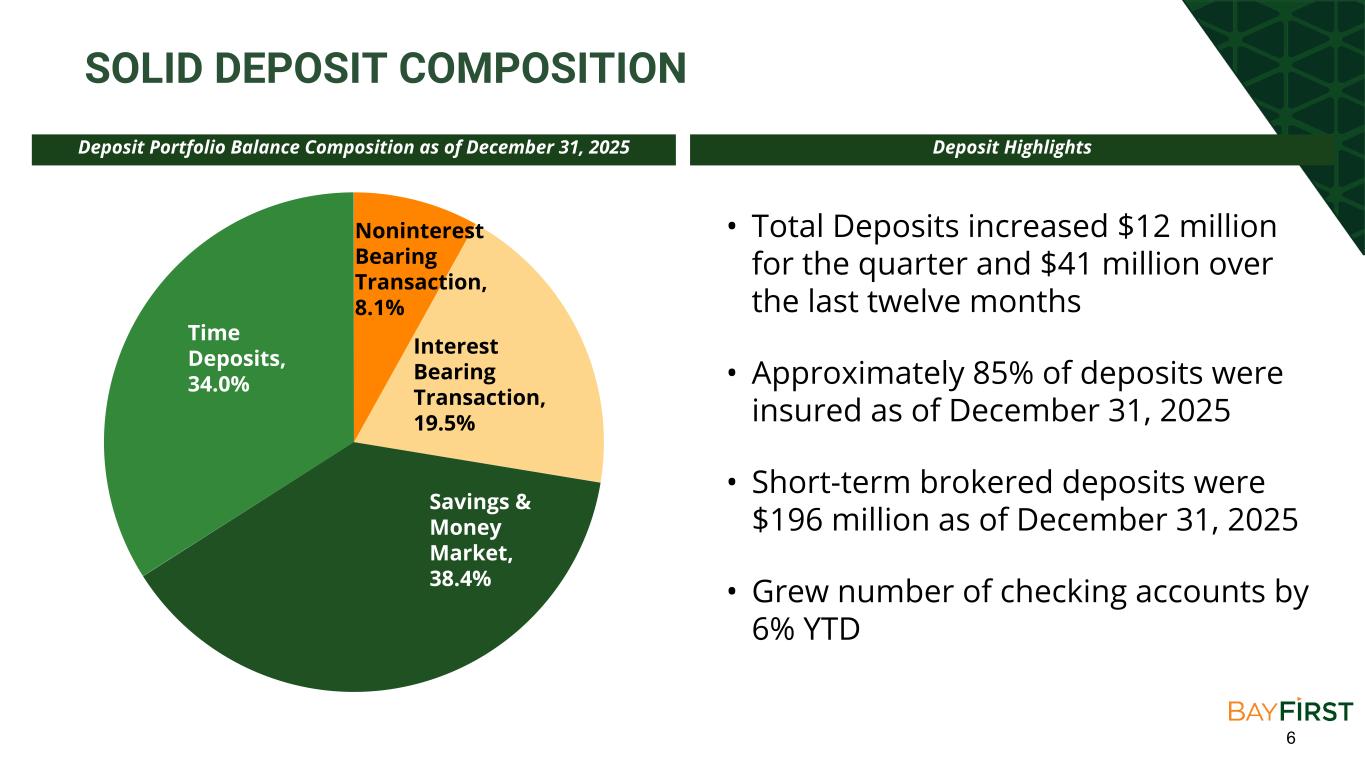
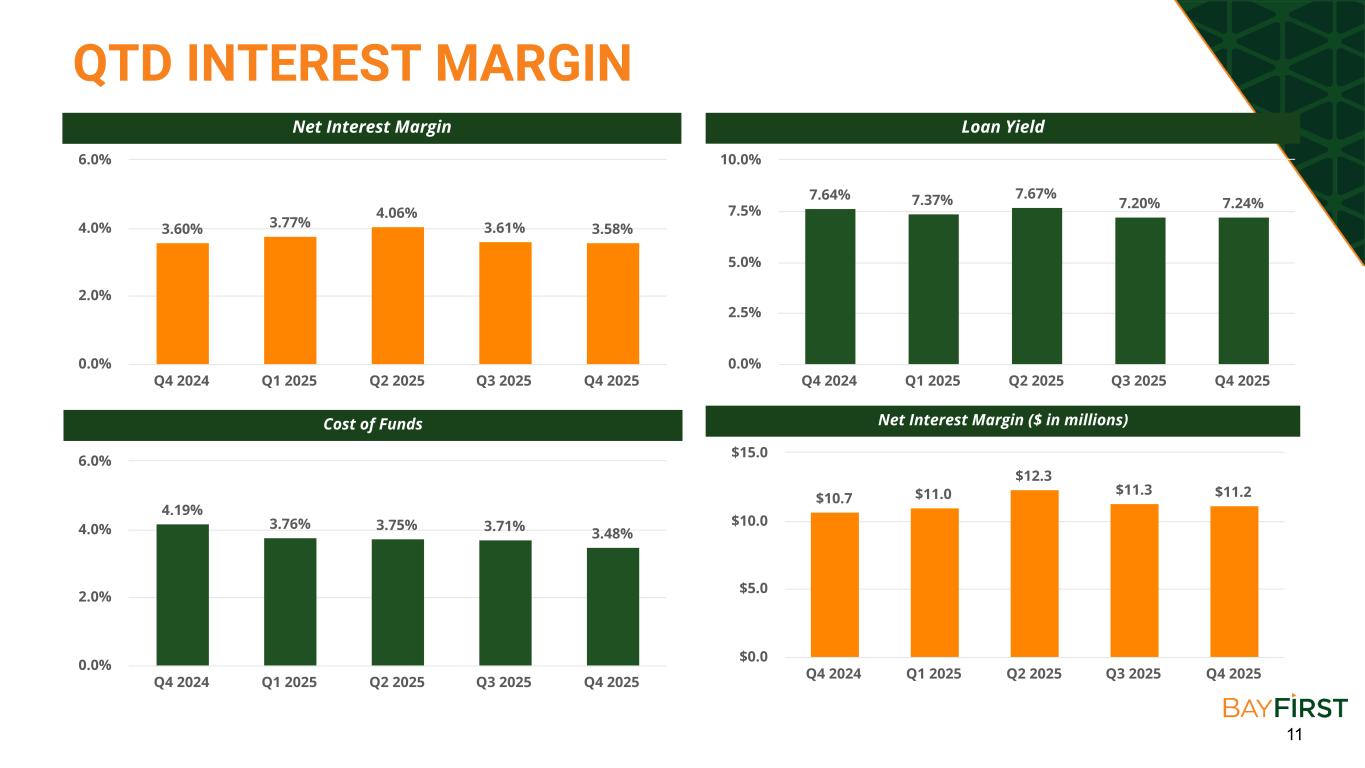
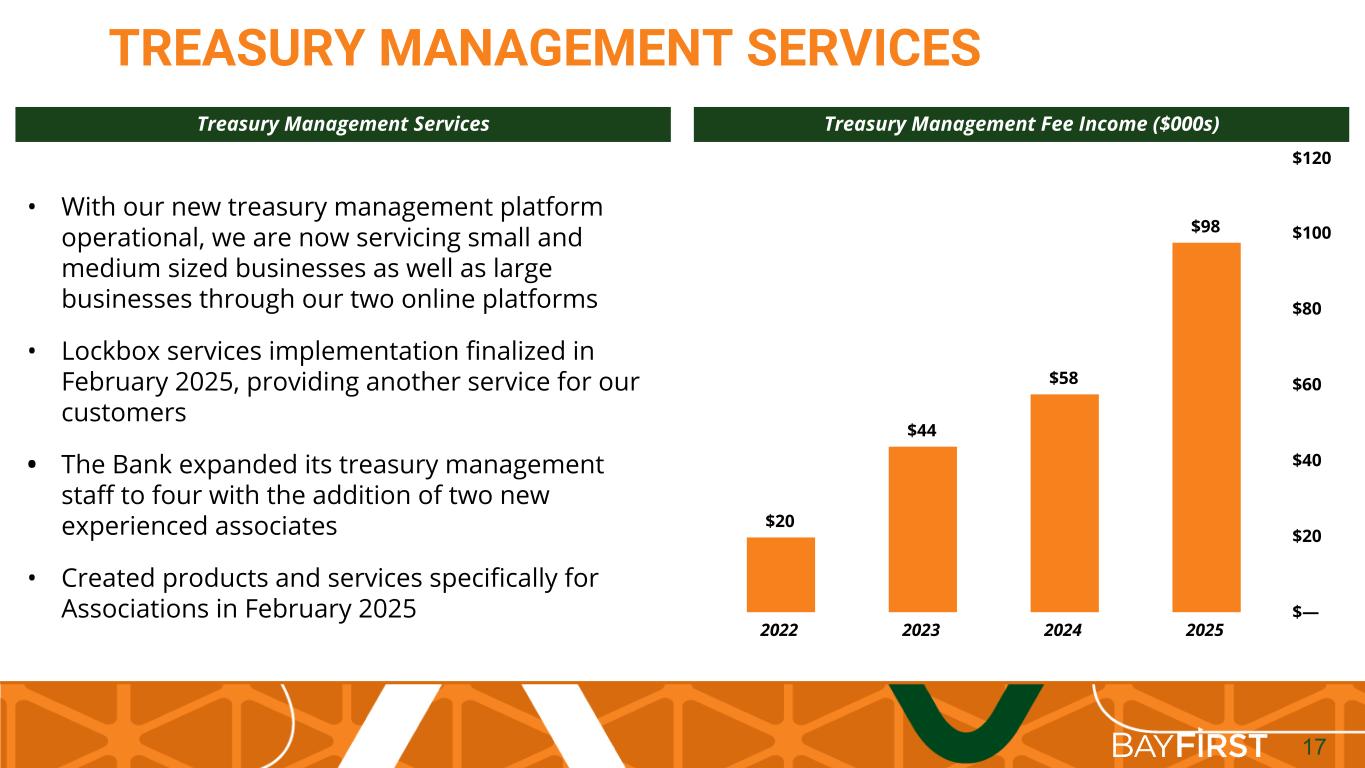
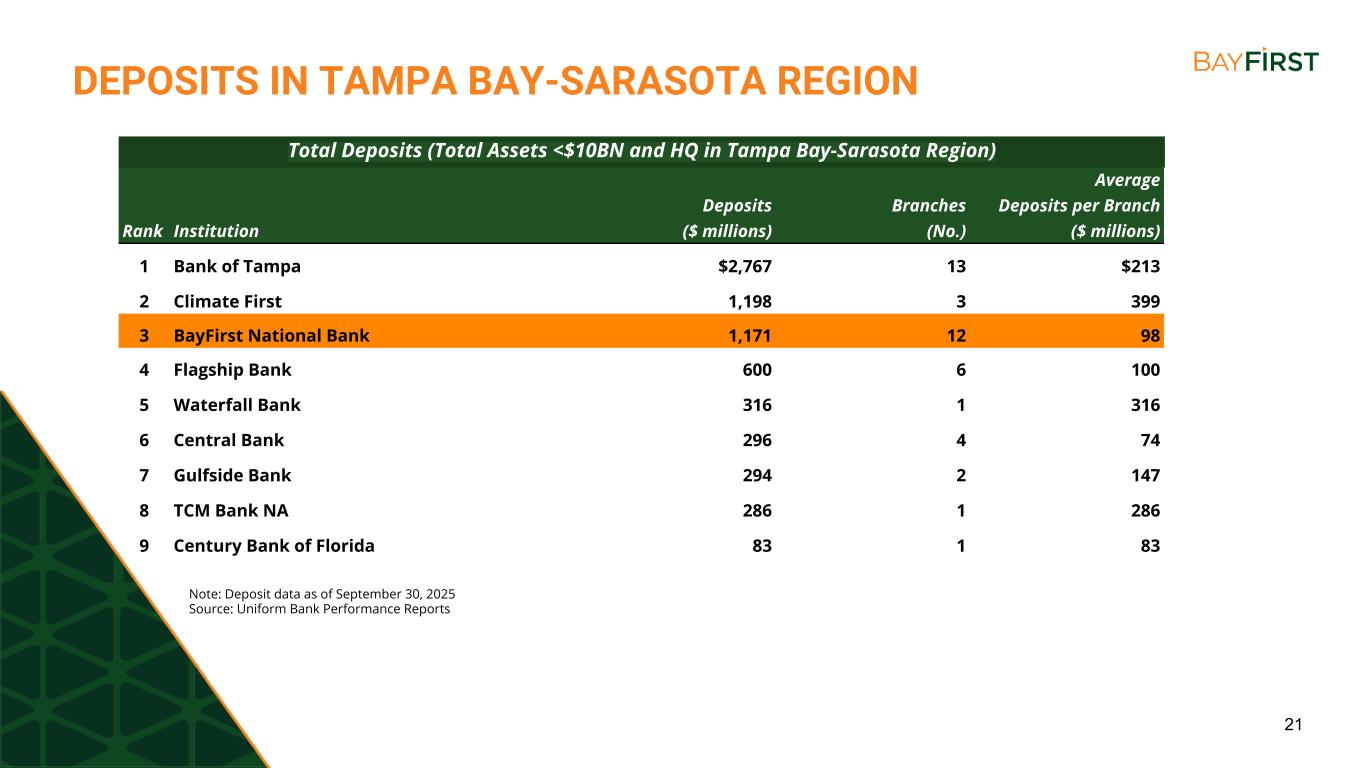
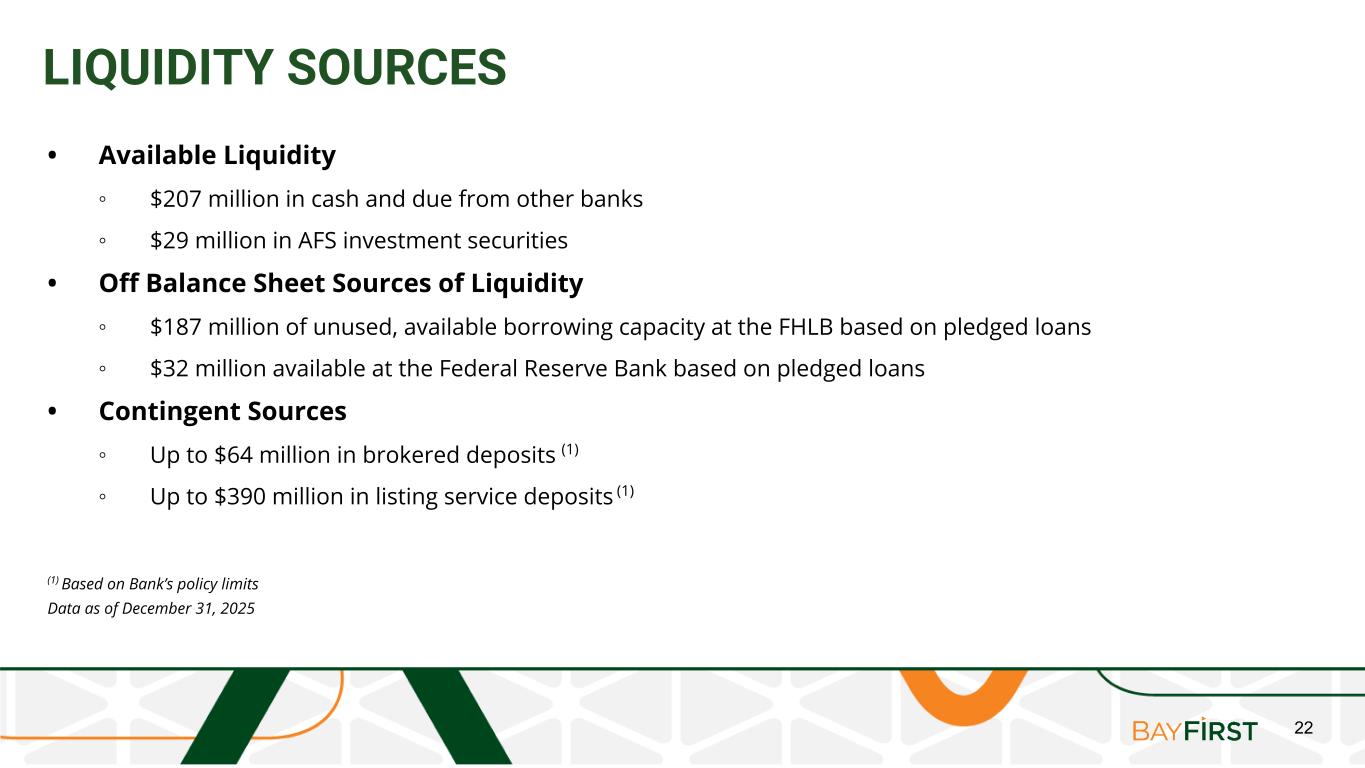
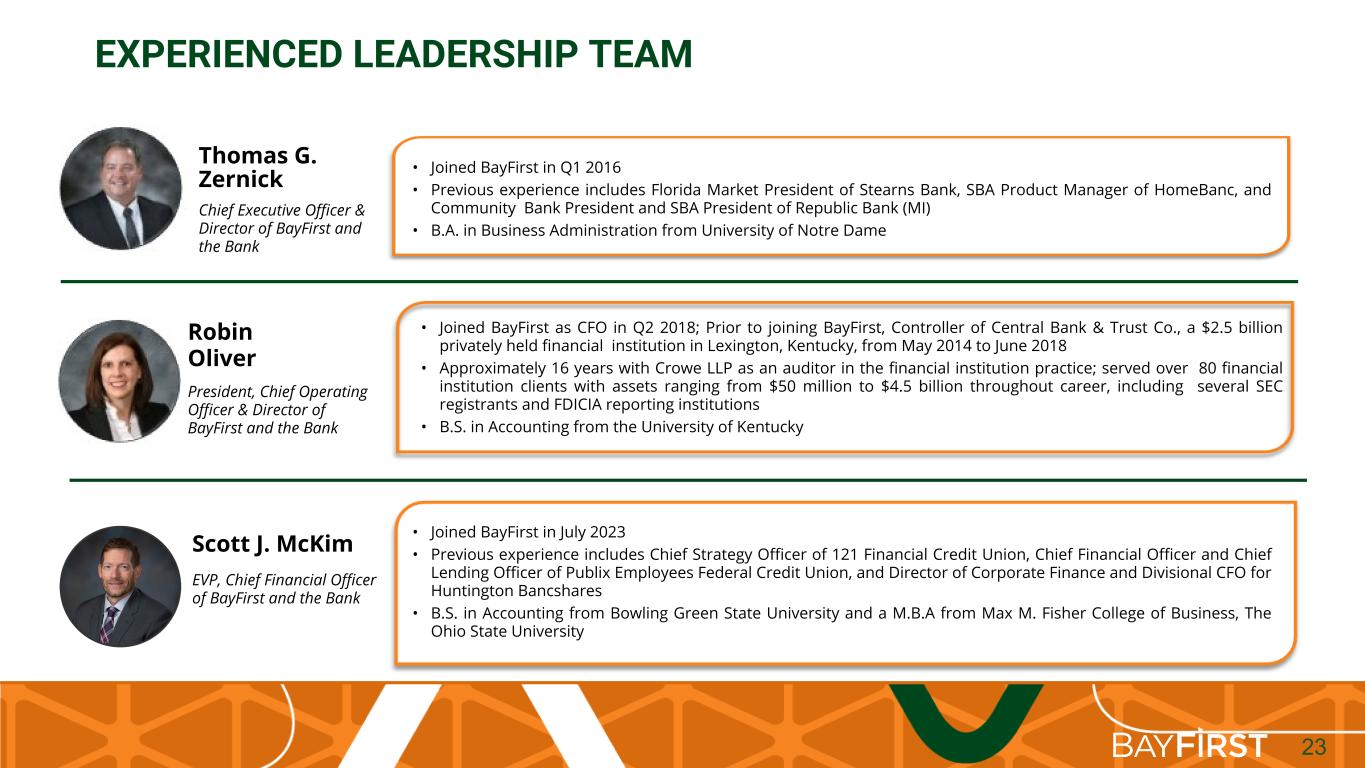
Thank you, Vanessa. Good morning, and thank you for joining our call today. Once again with me is Robin Oliver, our President and Chief Operating Officer, and Scott McKim, our Chief Financial Officer. Today's call will include forward-looking statements and non-GAAP financial measures. please refer to our cautionary statement on forward-looking statements contained on page two of the investor presentation. The end of 2025 marks the completion of several significant milestones. We have executed and completed a number of strategic initiatives, including the exit from the SBA 7A lending business, the sale of a substantial amount of 7A loan balances, a significant reduction in headcounts and expenses, and a complete focus on our community bank. The results of these efforts are lower risk, more efficient operations, and a better position for sustainable growth and enhanced shareholder value. We are also pleased to report that we close the year well capitalized, providing a strong foundation as we move forward. You have heard me talk about our community banking mission of delivering excellent service to our customers across the Tampa Bay and Sarasota markets. The next chapter for Bay First is our focus on what matters most, being the premier community bank in Tampa Bay. To that end, the bank organically grew deposits $12.5 million in the fourth quarter, and 85% of our deposits are insured. Our net interest margin was stable at 3.58%. Treasury management revenues continue to grow, showing a 69% improvement as compared to the fourth quarter of 2024. As we previously reported, we recorded additional provision expense in the third quarter in connection with our exit of the SBA 7A lending business, specifically allocated to our small loan program SBA loans. In the fourth quarter, net charge-offs from unguaranteed SBA 7A loans were elevated, and this additional allowance for credit losses covered a substantial portion of those charge-offs. Our provision expense for the fourth quarter was $2 million, and we acknowledge the risk in this legacy portfolio, but our efforts around credit administration are designed to make an impact to manage future risk. Although the SBA 7A portfolio was winding down and efforts to sell additional unguaranteed balances are ongoing, I will note that additional charge-offs are likely to continue into this year, but we expect a lessening impact over time. As Bay First CEO and on behalf of the entire leadership team, I want you to know that we take full ownership of these results. They fall short of our expectations, but we understand the responsibility we have for our shareholders to address these challenges and deliver better results. As I have already noted, outside of a legacy SBA 7A business, community bank metrics look strong. Furthermore, I want to highlight that the company's liquidity ratio was over 18% at year-end. As we work through our deposit pricing strategy, this additional liquidity will support efforts to reduce high-cost deposits and improve the bank's cost of funds to levels more in line with peers in our market. These actions are expected to drive improvements in profitability and competitive loan pricing while enhancing the bank's net interest margin. Now, I will pass the microphone to Scott McKim, our CFO, to provide an overview of our financial performance.
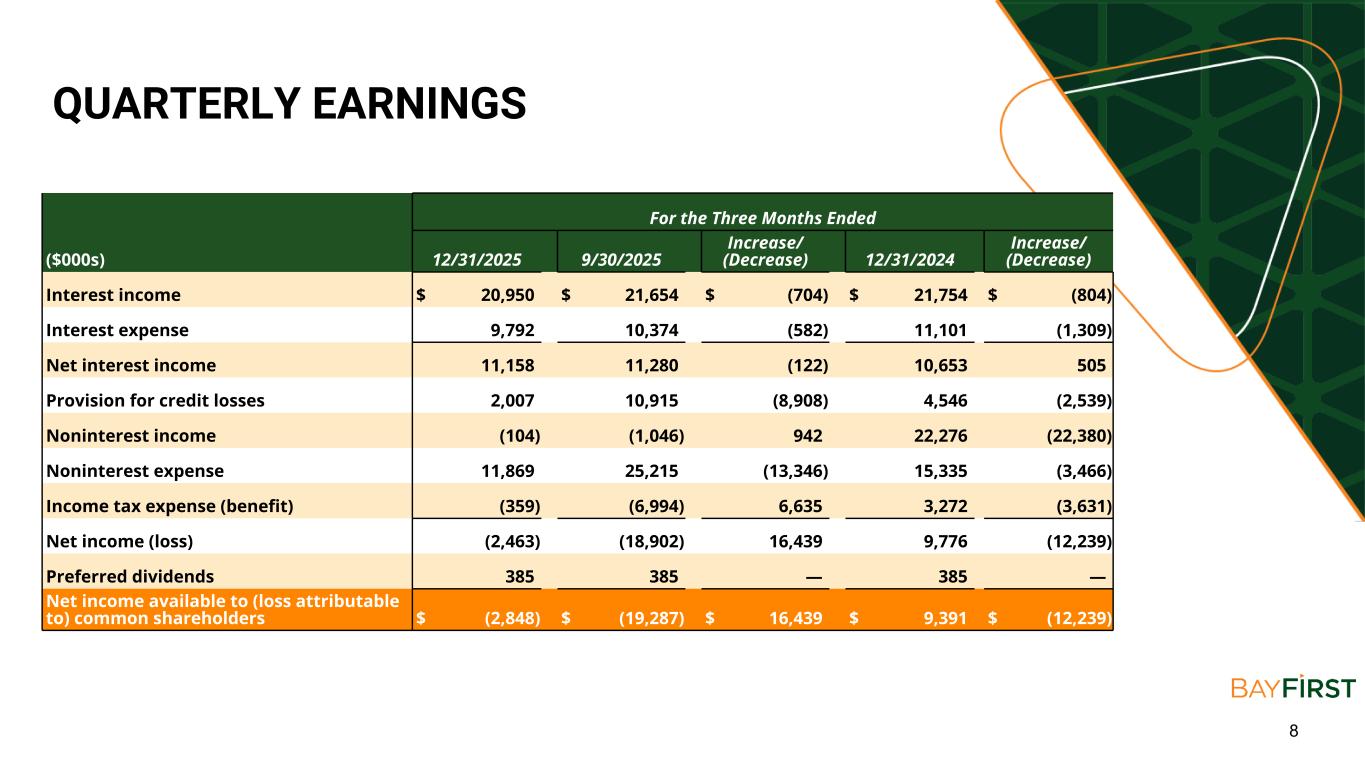
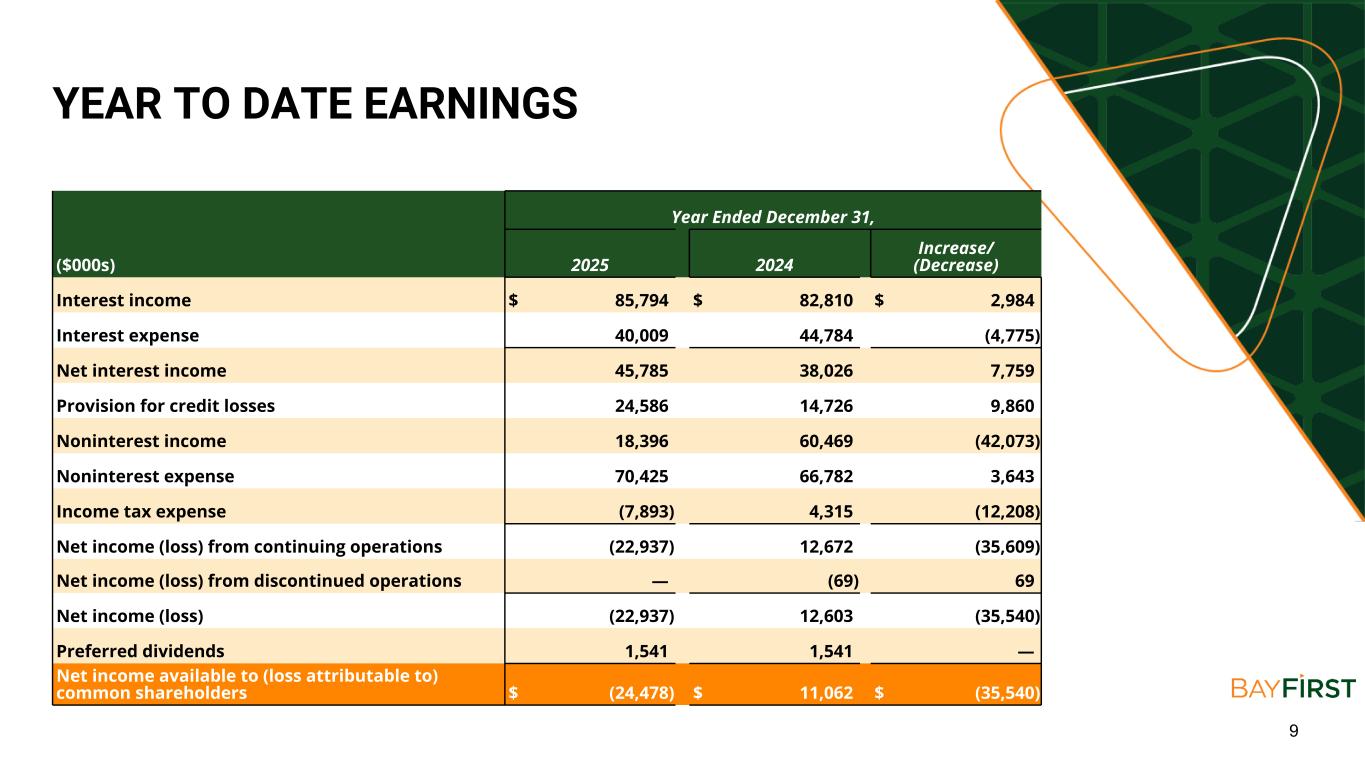
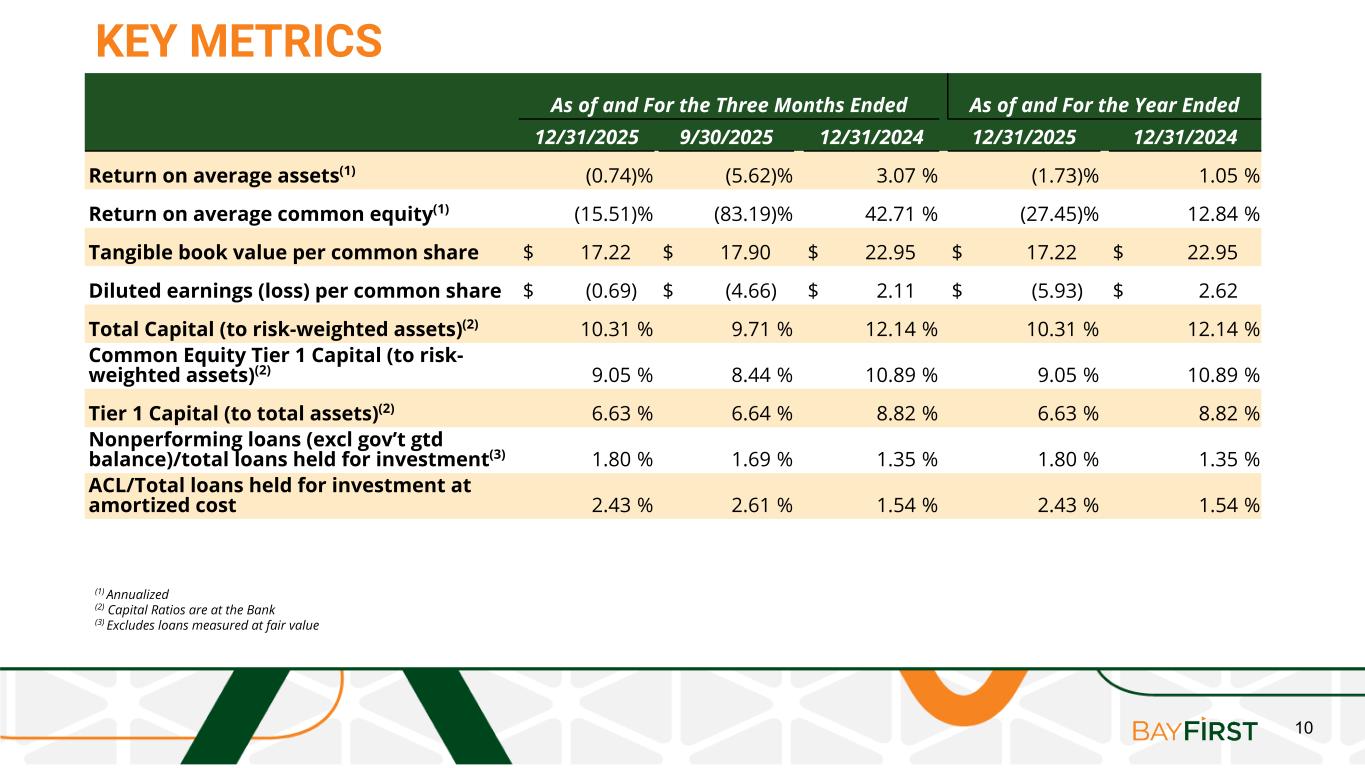
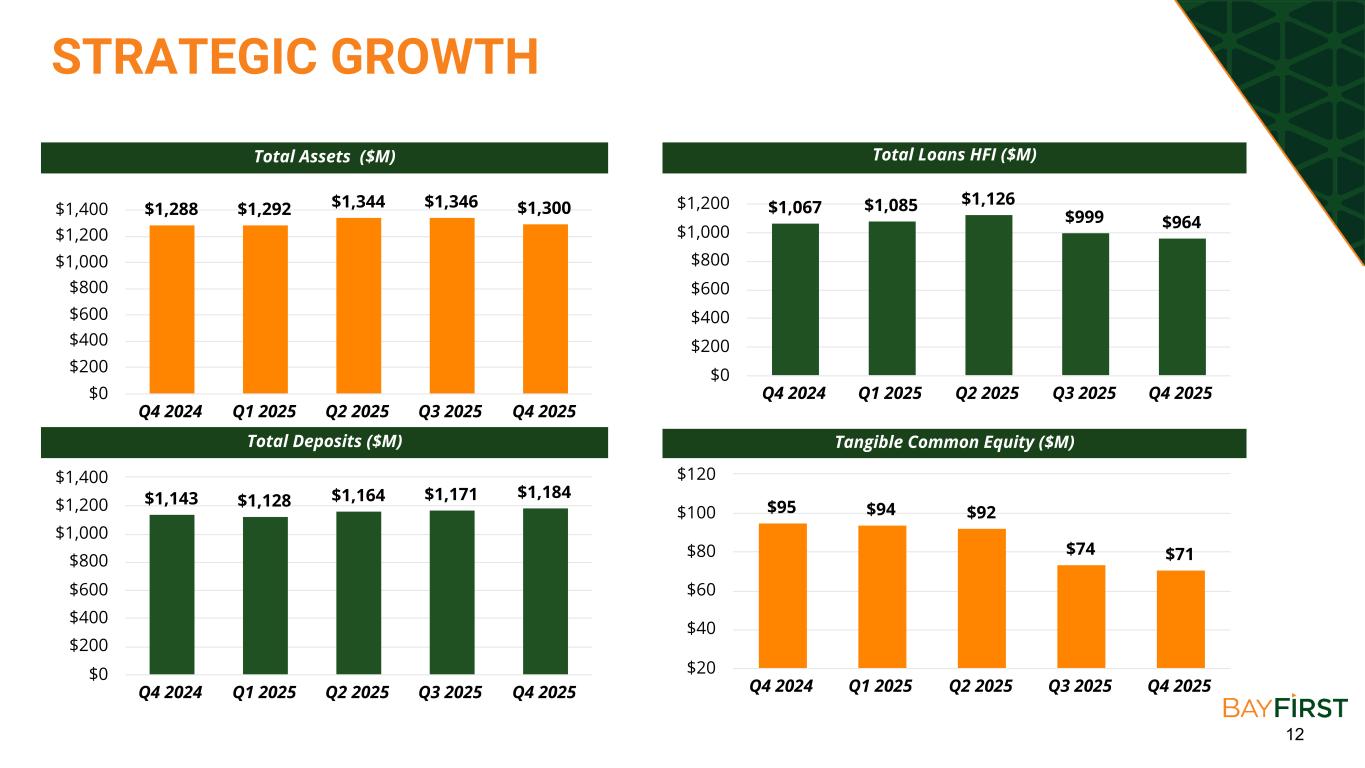
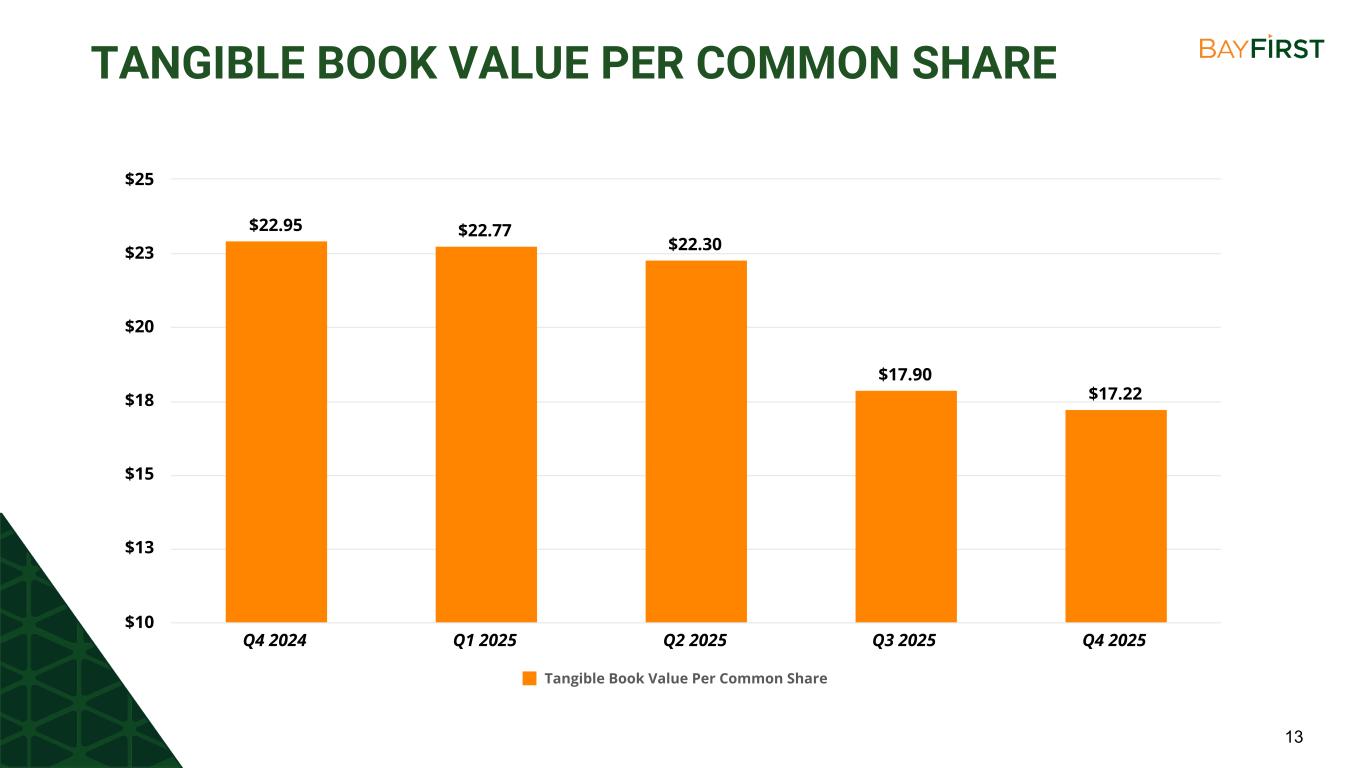
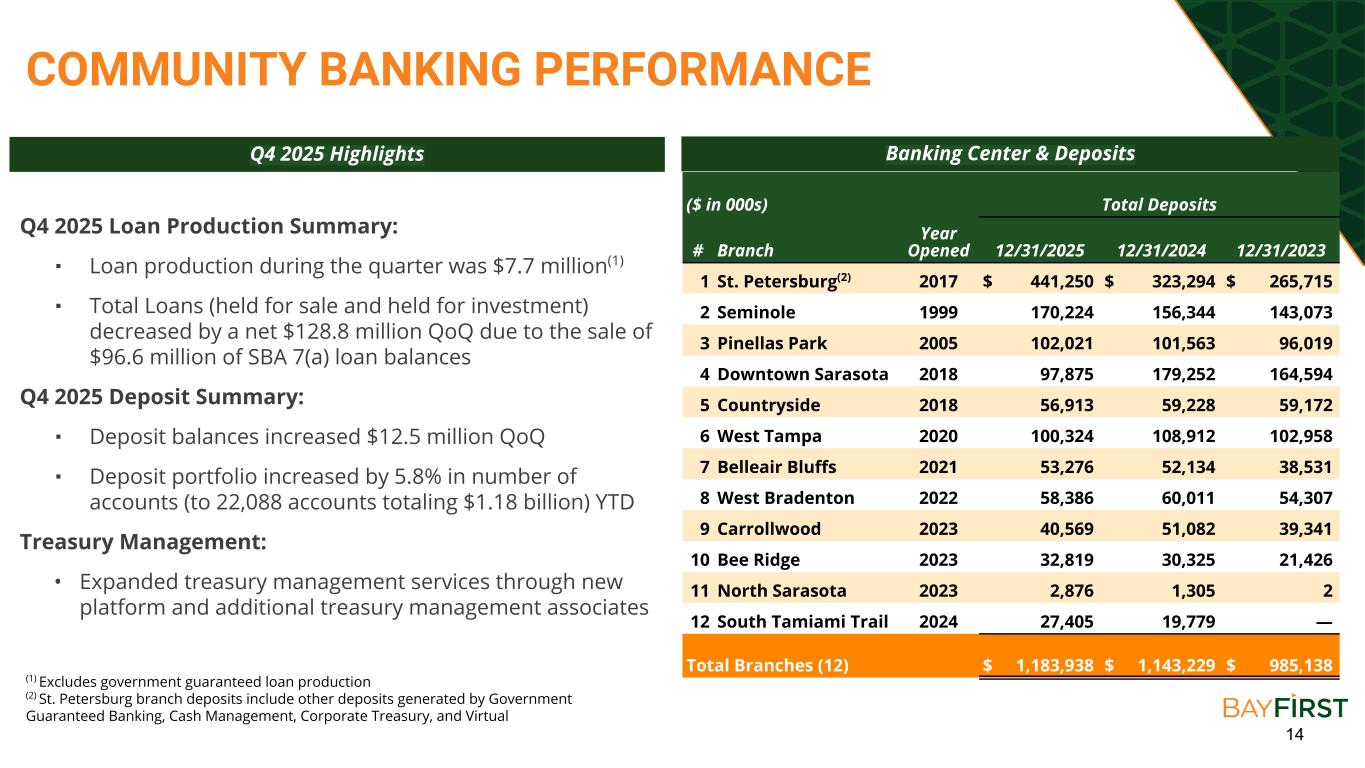
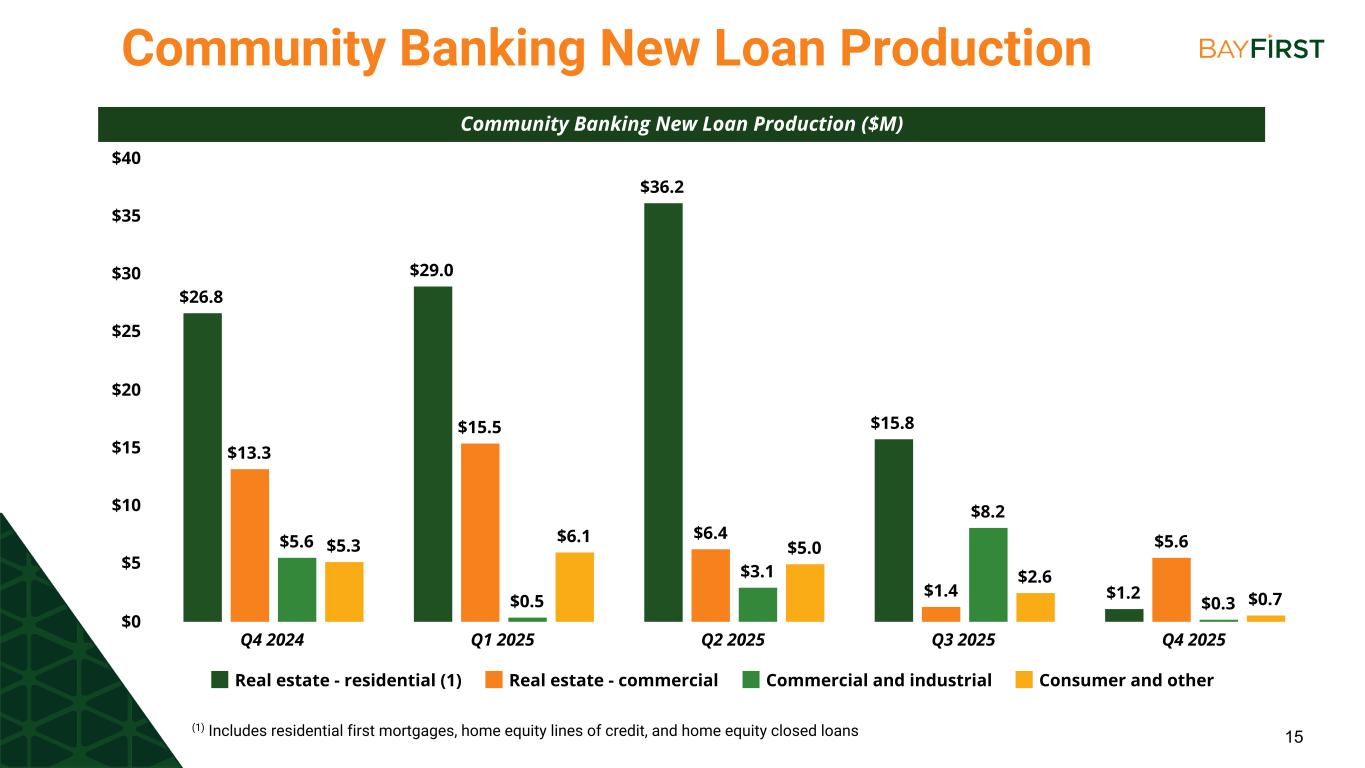
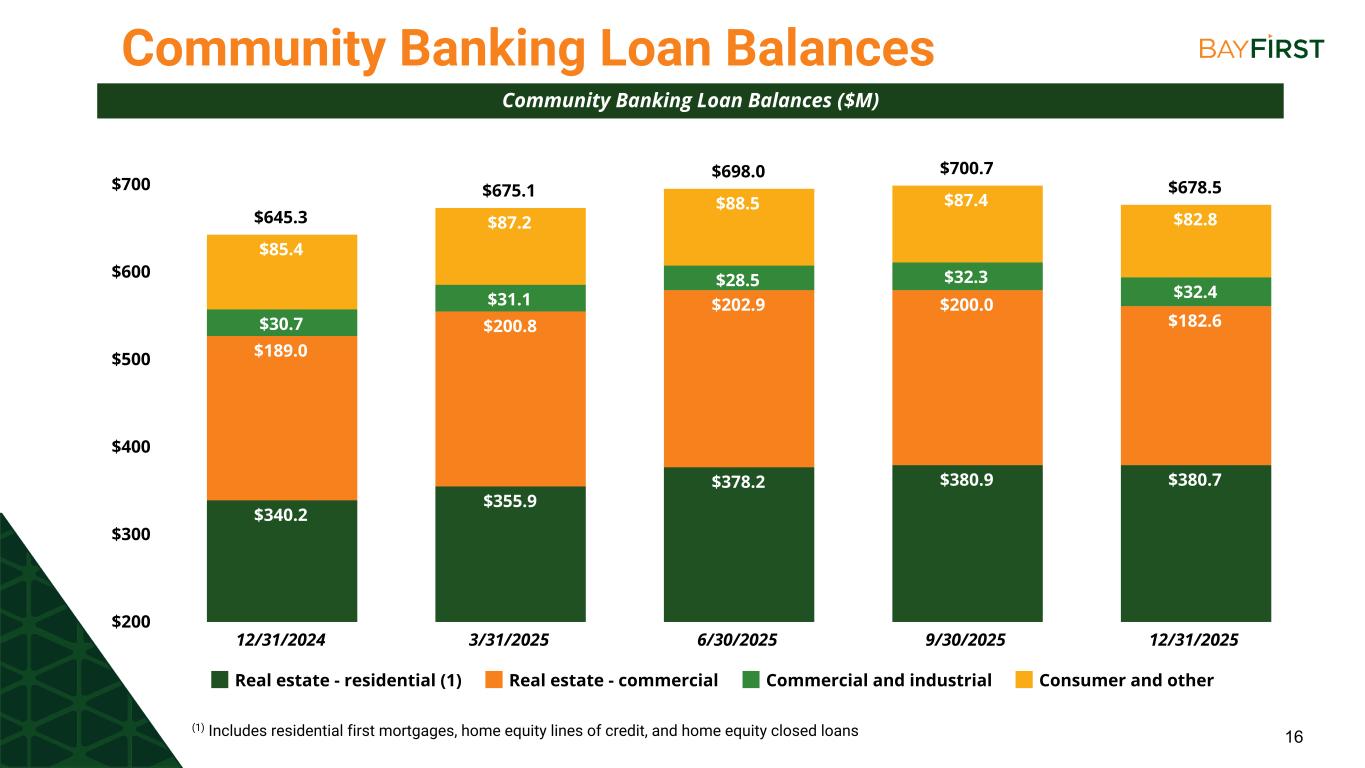
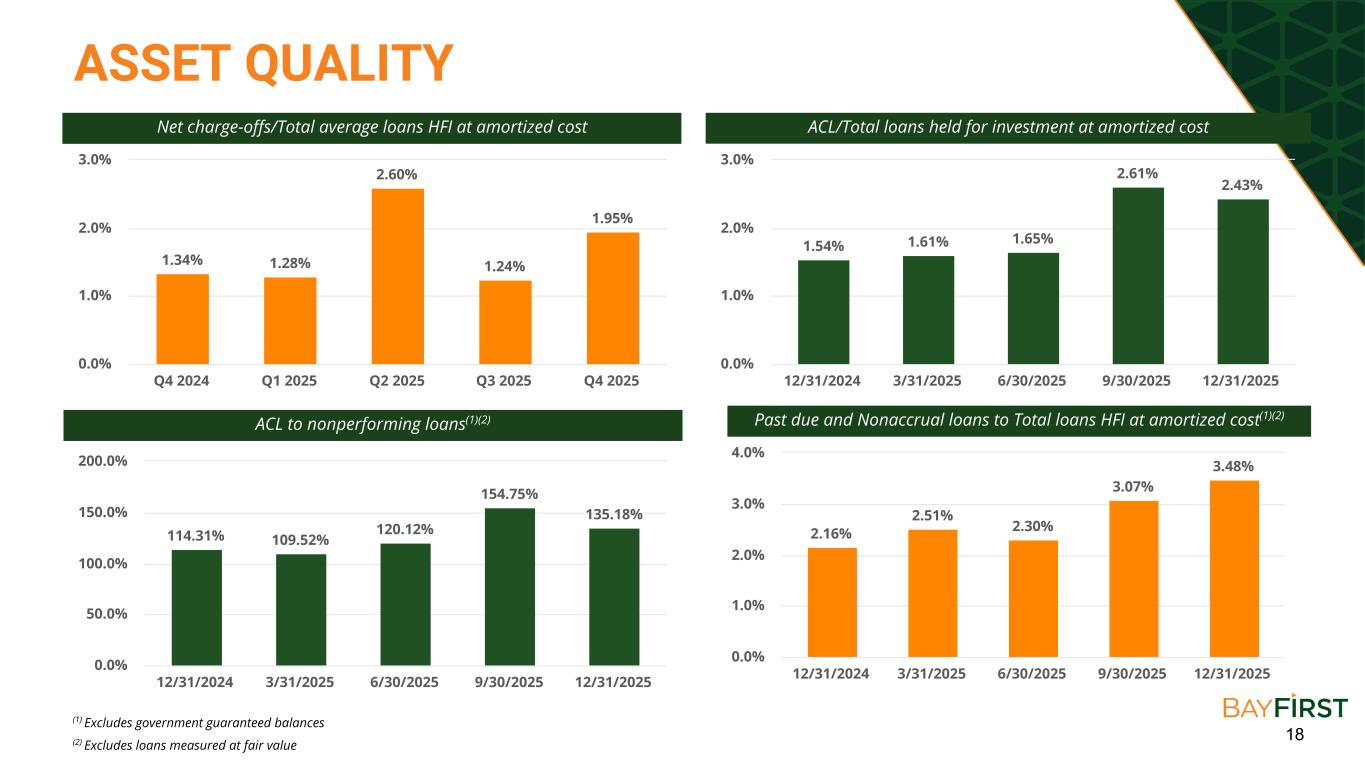
Thank you, Tom. Good morning, everyone. Today, we are reporting a net loss of $2.5 million in the fourth quarter. This compares to the net loss of $18.9 million we reported in the third quarter, which also included a restructuring charge of $7.3 million and additional provision expense of $8.1 million, as Tom had already explained. Loans held for investment decreased by $34.8 million, or 3.5% during the fourth quarter of 2025, to end at $963.9 million. And total loans held for investment decreased $102.7 million, or 9.6% over the past year during the quarter loans held for sale decreased by 94.1 million dollars reflecting the benesco usa transaction deposits increased 12.5 million dollars or 1.1 percent during the fourth quarter of 2025 and increased 40.7 million or 3.6 percent over the past year to end at 1.18 billion dollars the increase in deposits during the quarter were primarily due to an increase in time deposits of 26.4 million dollars and an increase in interest-bearing transaction deposits of 20.9 million dollars this partially offset decreases and non-interest-bearing account balances of 10.2 million dollars and in money market and savings accounts lower balances of $24.6 million. Furthermore, as Tom already mentioned, 85% of the bank's deposits were insured by the FDIC on December 31, 2025. Shareholders' equity at quarter end was $87.6 million, which is $23.4 million lower than the end of 2024. Net accumulated other comprehensive of law decreased by $109,000, ending the quarter at $2 million. Our tangible book value decreased this quarter to $17.22 per share from $17.90 per share at the end of the third quarter. Our net interest margin was 3.58%. This was down three basis points from the third quarter. Net interest income was $11.2 million in the fourth quarter, which is down about $100,000 dollars compared to the third quarter, yet it was up a half a million dollars from the year-ago quarter. During this quarter, the bank wrote off about $160,000 of unamortized premiums related to a single USDA guaranteed loan, which was liquidated during the quarter. Non-interest income was a negative $104,000 for the fourth quarter of 2025, which is $900,000 better than the third quarter of 2021, which included the impact of the loan sale and a decrease from $22.3 million in the fourth quarter of 2024. I should note that the fourth quarter of 2024 also included an $11 million gain from our sale leaseback transaction that we closed during that quarter. The year-over-year decrease is primarily, however, from the decrease in gains from the sale of FBA 7A government guaranteed loans as i mentioned when we spoke last with the exit of the sba 7a lending business revenue from gains on the sale of government guaranteed loans will no longer impact non-interest income as it has in prior periods turning out to non-interest expense which was 11.9 million dollars in the quarter which is a decrease of 13.3 million compared to the third quarter Most of this decrease, $7.3 million, represents the restructuring charge. Additionally, compensation expense was $2.9 million lower. Data processing was $350,000 lower. Loan servicing and origination expense was $2.2 million lower, slightly offset by an increase in professional services of $200,000. On a full-year basis, non-interest expense was $3.6 million higher, However, excluding the third-quarter restructuring charge, non-interest expense was actually $3.7 million lower year-over-year. Notable reductions this year include reductions in compensation of $2.6 million, bonus and commission expense was lowered by $3.6 million, marketing was lowered by $500,000, and these were offset by higher occupancy costs, primarily the rent expense from the sale-leaseback, and $1.2 million. dollars. Data processing was $1.2 million higher, and loan servicing and origination expenses were higher by $1.6 million. Finally, higher regulatory assessments were $700,000. The provision for credit losses was $2 million in the fourth quarter compared to $10.9 million in the third quarter and $4.5 million in the fourth quarter of 2024. Net charge-offs were $4.6 million, which was up $1.3 million compared to the third quarter, which came in at $3.3 million. Unguaranteed SBA 7A loans account for $4.1 million of the $4.6 million of net charge-offs during the fourth quarter. Our on-balance sheet, unguaranteed SBA 7A loans accounted for $3 million of the $3.3 million of net charge-offs which were reported in the third quarter. To highlight the basis for this risk, the bank had $171.6 million of unguaranteed SBA 7A loan balances on December 31, 2025. This is down $50.4 million from September 30, 2025, and also $51.4 million lower than it was at the end of 2024. Total annualized net charge-off as a percentage of average loans held for investment at amortized costs were 1.95% for the fourth quarter, which was up from 1.24% in the third quarter and also up from 1.34% in the fourth quarter of 2024. The ratio of allowance for credit losses to total loans held for investment at amortized costs was 2.43% on December 31st, 2025, 2.61% as of September 30th, 2025, and 1.54% as of December 31st, 2024. The ratio of allowance to credit losses to total loans held for investment at amortized costs, excluding government-guaranteed loan balances, was 2.59% at December 31st, 2025. It was 2.78% as September 30th, 2025, and 1.79% as of December 31st, 2024. At this time, I'm going to turn the call over to Robin to continue with our discussion.
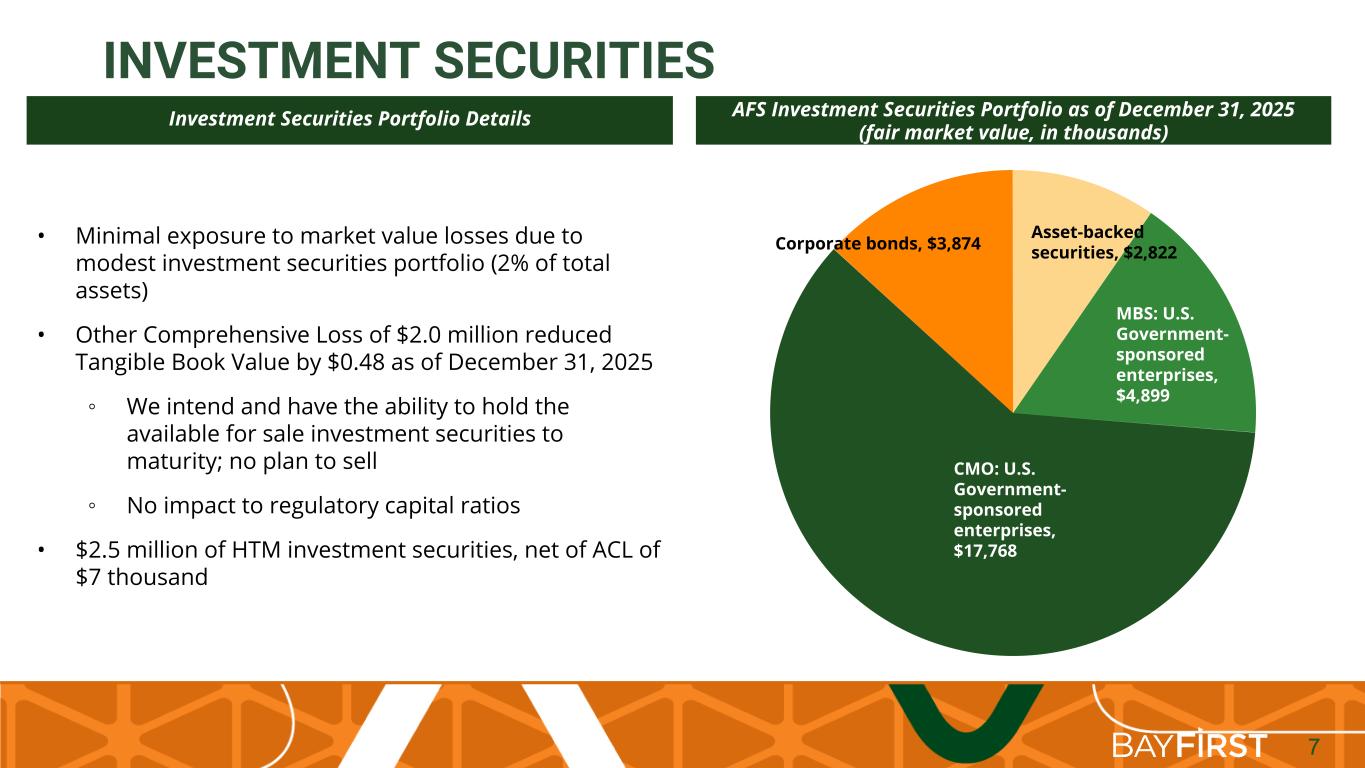
Thank you, Scott. Good morning, everyone. I want to further follow up on credit risk management as it is a major focus for organization. First off, total non-performing loans, excluding government guarantee balances, were $16.9 million at the end of the fourth quarter, relatively flat to $16.5 million at the end of the third quarter. The percentage of non-performing loans excluding government guarantee balances compared to total loans held for investments was 1.80% at the end of the year, up 11 basis points from September 30, 2025, and up 45 basis points from December 31, 2024. I want to note that of the $16.9 million in non-performing loans, $3.4 million of these balances were current and paying as agreed, and one loan with an unguaranteed balance of $815,000 was paid in full in early January. As I've mentioned previously, throughout this past year, we work to strengthen credit administration practices to ensure the timely identification of problem credits, as well as ensuring those same problem credits are resolved timely. Management has significantly increased its focus and resources to ensure all loans are properly risk-graded and accounted for, and as I mentioned last quarter, management scrubbed a significant portion of the portfolio to take an aggressive and conservative stance on problem credits. While that increased non-performing and classified assets in the short term, management is focused on reducing non-performing and classified assets expeditiously. I want to point out that as we manage classified assets going forward, more and more we are seeing classified loans paying current, paying off, and nearing resolution altogether. As of year end, 64% of the bank's classified loans were current performing loans whereby we are working with the borrowers towards resolution. As we move forward into 2026, the goal will be the continual reduction of non-performing and classified credits to bring these balances more in line with peer the overall wind down of the sba loan portfolio the potential sales of additional sba unguaranteed balances and the continued workout of problem loans is expected expected to improve asset quality in the coming quarters without significant additional provision for credit losses being necessary switching gears outside of our focus on credit the retail and commercial banking teams are actively engaged in our community and working to attract deposits to the bank with a focus on small businesses where we can serve as their primary financial institution and offer an array of treasury and merchant services. We saw significant growth in treasury and merchant services revenue this past year, and our team is dedicated to continuing to expand on that success. In addition, we are continuing to promote our Kids Club and Trendsetter Club programs, which have proven to be catalysts for deposit gathering and customer referrals. I want to end by being clear that our full-service community bank is poised to thrive in our fantastic Tampa Bay market. And at this time, I'll turn it back to Tom for his final thoughts.
Our Board of Directors and leadership team remain fully committed to driving resilience and innovation as we position the company for long-term success and enhanced shareholder value. With our 2026 strategic plan firmly in place, we are focused on its two central pillars, fortifying the balance sheet and focusing on maintaining a culture of disciplined risk management. We are confident in this plan and in our ability to execute it, and these priorities will enable us to flourish as a community bank and drive sustainable revenue growth. We trust that these efforts will position both the company and our bank to thrive in a dynamic banking landscape. Thank you for joining our call.
At this time, we'd like to turn it over for questions.
Operator
And thank you. Ladies and gentlemen, we will now begin our question and answer session. Should you have a question, please press star followed by the one on your touchtone phone. You will hear a prompt that your hand has been raised. Should you wish to decline from the polling process, please press star followed by the two. If you're using a speakerphone, please lift the handset first before pressing any keys. And it seems we have our first question from Ross Haberman with RLH Investments. Please go ahead.
Good morning. Thank you for the discussion. Could you focus on the, I think you said it was $171 million of unguaranteed government loans the portion. What is the specific allowance against that? And what's been your recent default experience on that category? Thank you.
Hey, Ross. This is Scott. I'll tackle that one for you. So, the $171.6 million represents all of our SBA 7A unguranteed balances that we had on December 31st. So, that portfolio is in a runoff and will continue to shrink as uh as we go forward uh plus uh when we are successful with selling portions of it that will help it run off a lot quicker today that portfolio has against it about 13 percent of the balances are within our allowance for credit losses so the default rate is much lower than that obviously within the seats of world we try to estimate what the I thought a good portion of that had gone along, gone away with the, with the loan sale.
What did that, what was that number, what did that peak at, I suppose?
Ross, you faded out there at the end. Would you ask that again, please?
Sorry. I thought a good portion of that went away with your loan sale. What did that number peak at? which number?
The unguaranteed portion.
Yeah, so as I mentioned in my comments, that it was about 50 and a half million dollars higher at the end of the third quarter.
Oh, okay. Okay. Thank you very much. Thank you for the help. Sure. Thanks, Ross.
Operator
And thank you. Our next question is from Julianne Castorino with Sycamore Analytics. Please go ahead. Hi, good morning.
Hi, I was wondering if you could talk about the deposits. I was wondering if you could talk about where the growth is coming. And just doing some quick calculations, looks like your deposit costs came down nicely. So, you know, whatever the mix, it looks like it came down over 13 basis points or close to 13 basis points sequentially.
And I was just wondering, it sounds like that's local customer relationships, and if those are coming in in part from the Treasury management platform. um thanks for the question julianne let me kind of like answer that quickly first and foremost i want to give credit to our retail and operations team people our frontline people our branch managers and uh also everybody working in our in our branches uh they're the ones that are working hard to address this organic deposit growth and they are also very actively helping us reduce the overall cost of funds. And they're doing that by growing and nurturing relationships with their customers. Some are existing, some are new. And really, we're just starting to see the positive impact of doing that. I think, you know, if you recall Tom's comments at the beginning of last year were that we really wanted to focus on this and we wanted to really get our cost of funds better in line with our peers in the marketplace. Granted, they're higher, and you can look at any number of different sources that support that, you know, Bay First tends to pay a little bit more on deposits. As we move forward and exit out of the SBA 7A business, which typically brought a lot higher loan yields for us, and we could afford to pay promotional rates on deposits, we're being much more disciplined around it. So the growth that you see is appropriate for how the bank is is growing its assets at the same time plus you know it's i'd be remiss if i didn't point out there was also a couple of rate changes during the quarter as well that assisted with with some of that happening um but you know you can't reduce rates on deposits without some form of customer outreach and engagement helping them understand what's going on um you know we still have i think um you know premium pricing on a number of our deposit products but what you're seeing is the results of better managing that and building relationships. And Tom, Rob, I don't know if you guys want to add anything to that, but this is kind of our top priority.
I would say Treasury, to your point, Julianne, our Treasury team was very busy and continues to be very busy. And, you know, they're really partnering with the market execs and the banking center managers to bring in those deposits and show people what they first can do and that we have all the the products that these, you know, small to mid-sized businesses need. So, you know, it's really a group effort. And then being very careful, we certainly don't want a lot of deposit runoff. So we're balancing, you know, reducing rates appropriately without creating, you know, any undue runoff that we don't want. And I think so far we're striking that balance, but that's going to be our continued focus in 2026 is to, you know, bring down any of those promotional rates, reduce any reliance on broker deposits, et cetera, to help reduce that cost of funds.
Just from a big picture perspective, how does the deposit franchise break down roughly between commercial deposits and retail?
I'm going to answer the question this way, Julianne. It is a very granular portfolio. So we have a lot of what I'll call individuals, family type of relationships that they treat us as their preferred financial institution. As far as how much is from the business side of things, we're very focused on growing our business relationships and making sure that as we establish new lending relationships, that there's compensating deposits. uh we want to make sure that we're the preferred financial institution for those businesses that get it that or that we write loans to i should say um i i think really it's to call it granular is the best definition versus just a breakdown between how much is commercial and how much is is not commercial okay thank you sure and we have no further questions at this time ladies and
Operator
gentlemen, this concludes the Bay First Financial Corporation Q4 2025 conference call and webcast. Thank you for your participation. You may now disconnect.