Operator
Hello, everyone, and welcome to the Banner Corporation's first quarter 2025 conference call and webcast. My name is Nadia, and I'll be coordinating the call today. If you would like to ask a question, please press star, fill it by one on your telephone keypad. I will now hand over to your host, Mark Grestovich, President and CEO of Banner Corporation, to begin. Mark, please go ahead.
Thank you, Nadia, and good morning, everyone. I would also like to welcome you to the first quarter earnings call for Banner Corporation. joining me on the call today is rob butterfield banner corporation's chief financial officer joe rice our chief credit officer and rich arnold our head of investor relations rich would you please read our forward-looking safe harbor statement sure mark good morning our presentation today discusses banners business outlook and will include forward-looking statements these statements include descriptions of management's plans objectives or goals for future operations products or services, forecasts of financial or other performance measures, and statements
about Banner's general outlook for economic and other conditions. We also may make other forward-looking statements in the question and answer period following management's discussion. These forward-looking statements are subject to a number of risks and uncertainties and actual results may differ materially from those discussed today. Information on the risk factors that could cause actual results to differ are available in the earnings press release that was released yesterday and the recently filed form 10k for the year ended december 31st 2024 forward-looking statements are effective only as of the date they're made and banner assumes no obligation to update information concerning its expectations mark thank you rich as is customary today we will cover four primary items with you First, I will provide you high-level comments on performance.
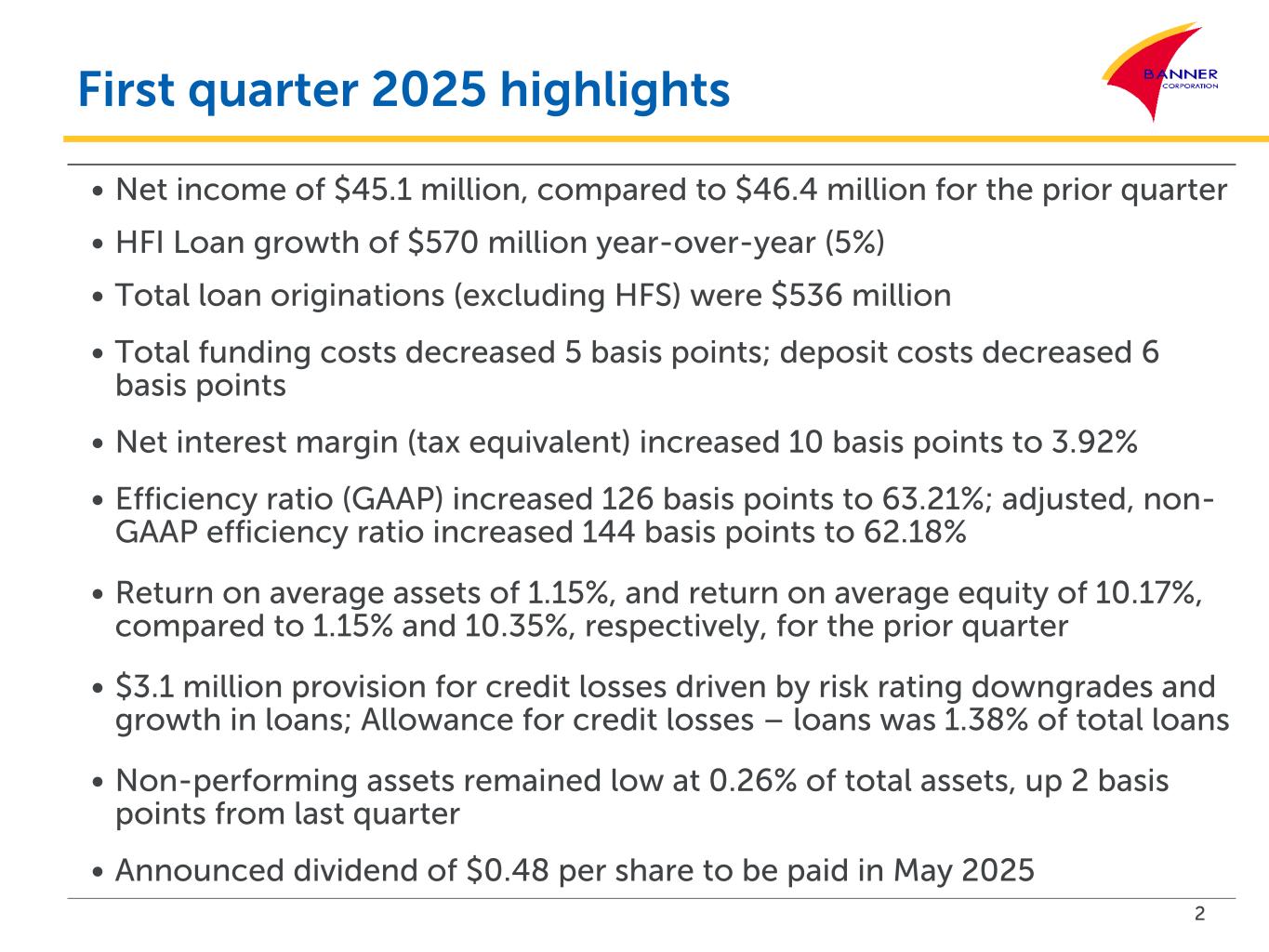
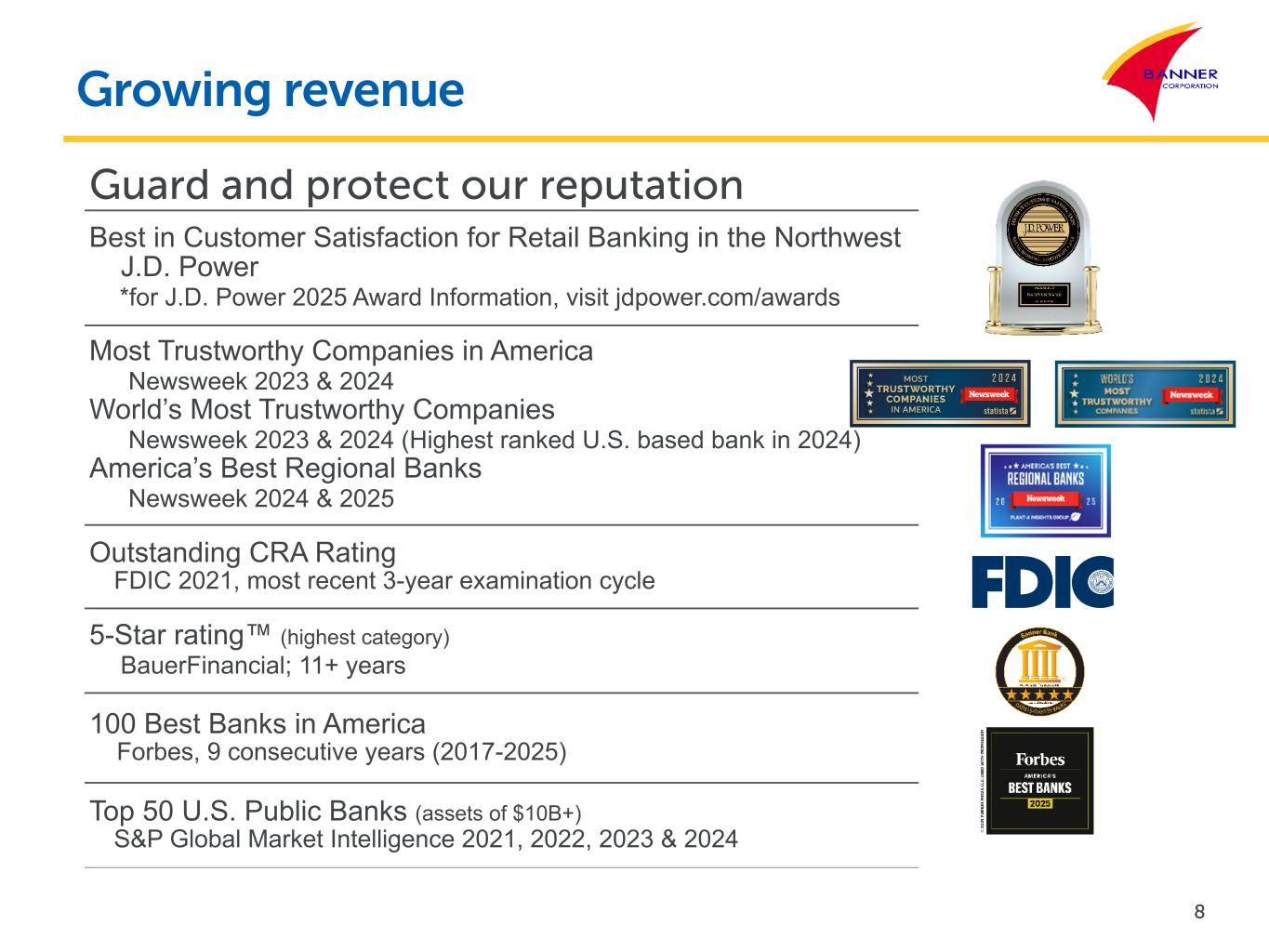
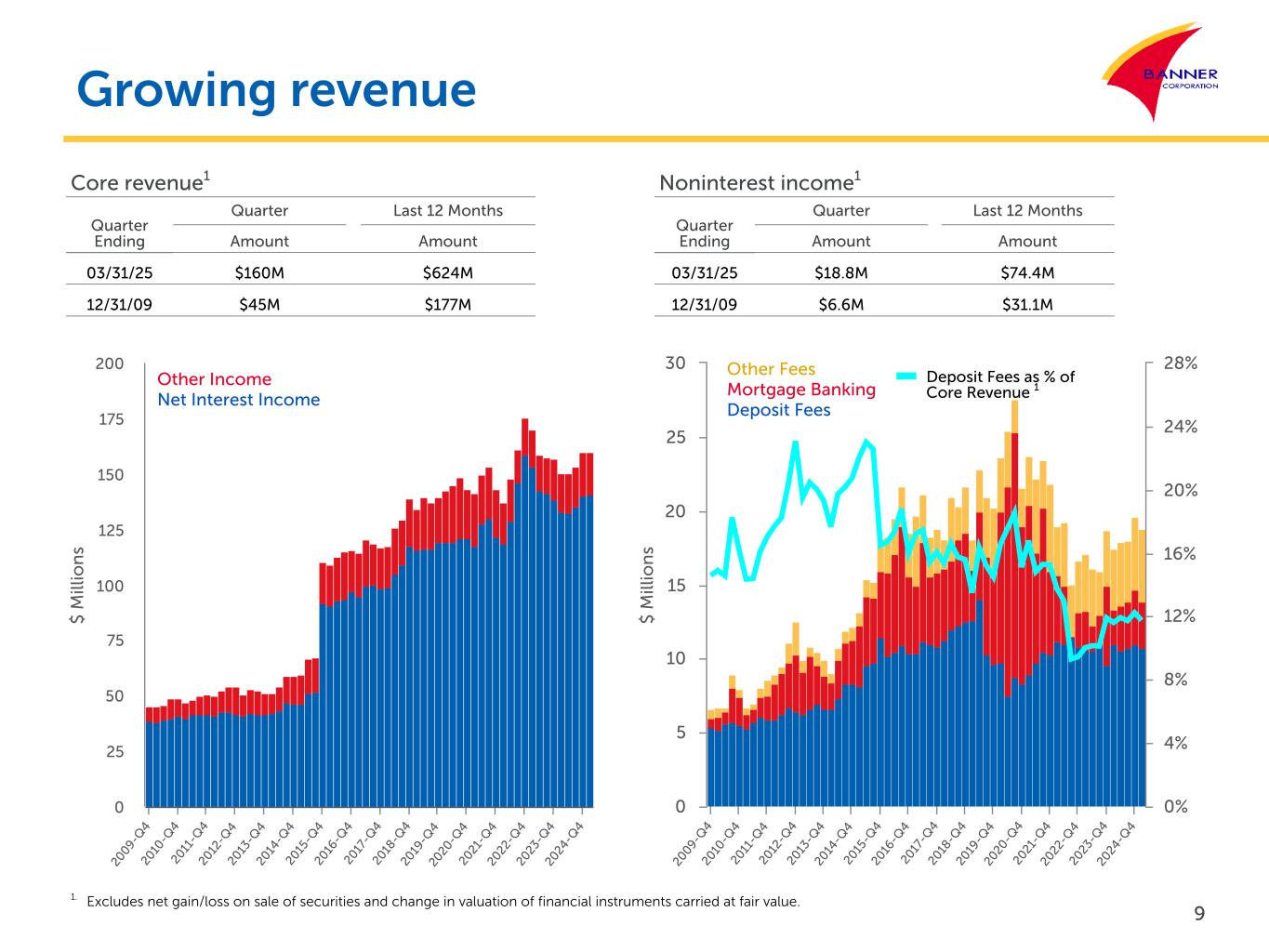
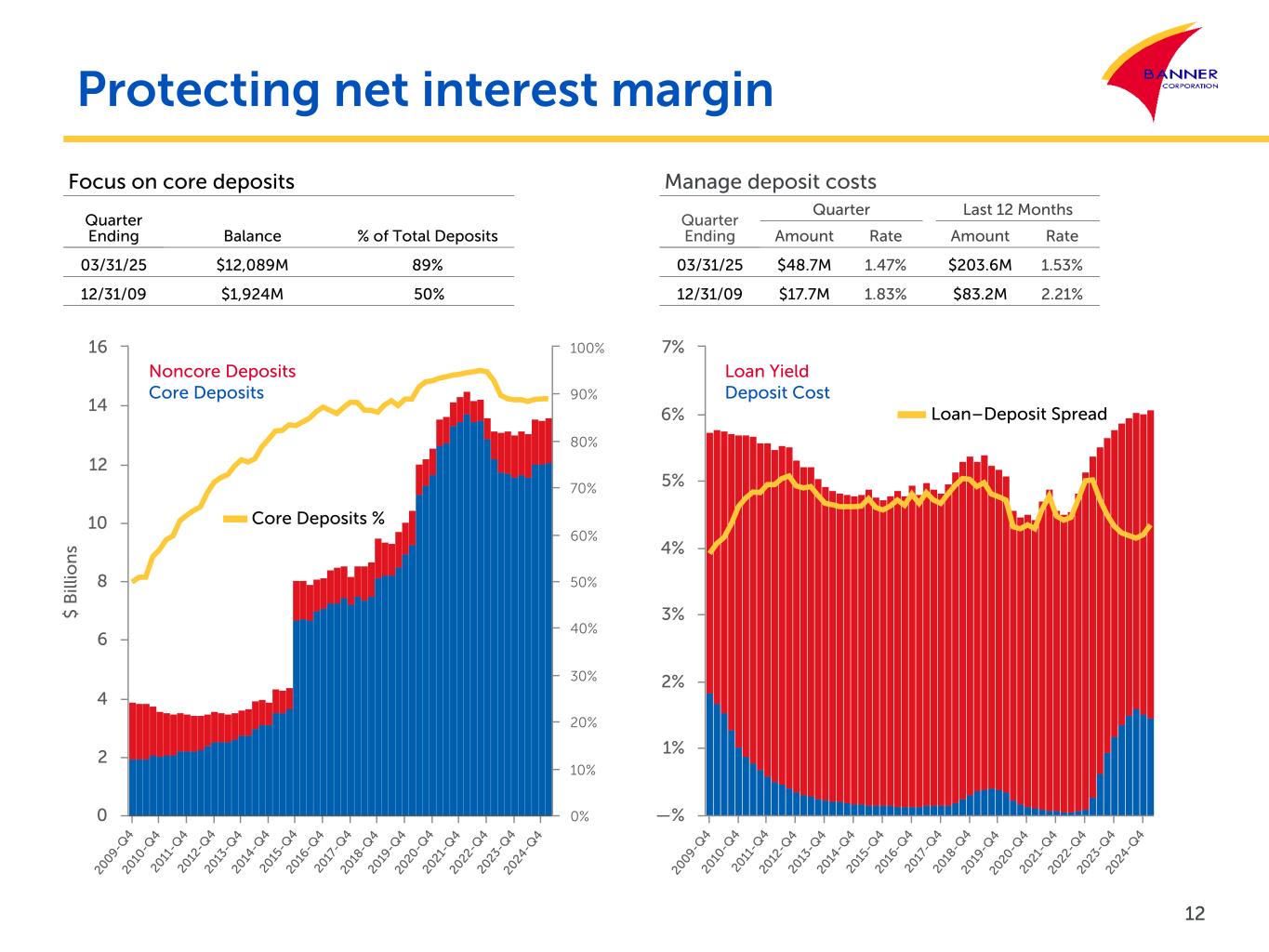
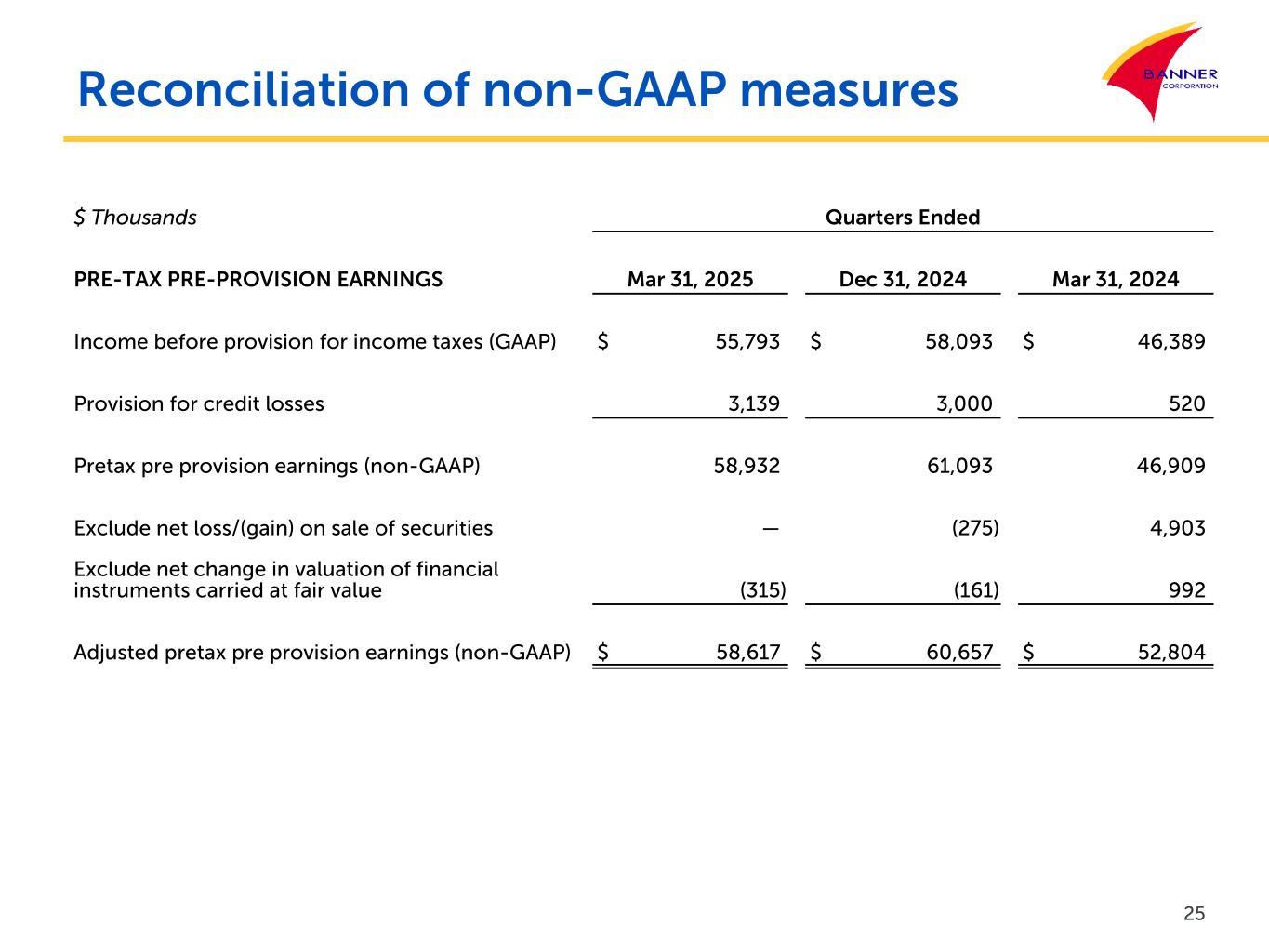
Second, the actions Banner continues to take to support all of our stakeholders, including our Banner team, our clients, our communities, and our shareholders. Joe Rice will provide comments on the current status of our loan portfolio and the potential impact due to the trade tariffs. And finally, Rob Butterfield will provide more detail on our operating performance for the quarter as well as comments on our balance sheet before i get started i wanted to thank all of our 2 000 colleagues in our company who are working extremely hard to assist our clients and communities has lived our core values summed up as doing the right thing for the past 135 years searching goal continues to be to do the right thing for our clients our communities our colleagues our company, and our shareholders, and to provide a consistent and reliable source of commerce and capital through all economic cycles and change events. I am pleased to report again to you that is exactly what we continue to do. I am very proud of the entire Banner team that are living our Corvette. Now let me turn to an overview of our performance. Available to common shareholders of $45.1 million, or $1.30 per diluted share, for the quarter ended March 31st, 2025. This compares to a net profit to common shareholders of $1.09 per share for the first quarter of 2024, and $1.34 per share for the fourth quarter of 2024. for. Our strategy to maintain a moderate risk profile and the investments we have made and continue to make in order to improve operating performance have positioned the company well for the future. The strength of our balance sheet, coupled with our strong reputation we maintain in our markets, will allow us to manage through the current market volatility. Rob will discuss these items in more detail shortly. To illustrate the core earnings power of Banner, I would direct your attention to pre-tax pre-provision earnings excluding gains and losses on the sale of securities and changes in fair value of financial instruments. Our first quarter 2025 core earnings were $59 million compared to $53 million for the first quarter of 2024. Banner's first quarter 2025 revenue from core operations was $160 million compared to $150 million for the first quarter of 2024. We continue to benefit from a strong core deposit base that has proved to be resilient and loyal to Banner, a very good net interest margin, and core expense control. Overall, this resulted in a return on average assets of 1.15% for the first quarter of 2025. Once again, our core performance reflects continued execution on our super community bank strategy. That is, growing new client relationships, maintaining our core funding position, promotion, promoting client loyalty and advocacy through our responsive service model, and demonstrating our safety and soundness through all economic cycles and change events. To that point, our core deposits continue to represent 89% of total. Further, we continue our solid organic growth with loans increasing 5% and core deposits increasing 3% over the same period last year. Reflective of this performance, coupled with our strong regulatory capital ratios, and the fact that we increased our tangible common equity per share by 13% from the same period last year, we announced a core dividend of $0.48 per common share. Finally, I'm pleased to say that we continue to receive marketplace recognition and validation of our business model and our value proposition. Banner, again, was named one of America's 100 best banks and one of the best banks in the world by Forbes. Newsweek named Banner one of the most trustworthy companies in America and the world again this year, and just recently named Banner one of the best regional banks in the country. J.D. Power & Associates named Banner Bank the best bank in the Northwest for retail client satisfaction, and S&P Global Market Intelligence ranked Banner's financial performance among the top 50 public banks with more than $10 billion in assets. Additionally, the Kroll Bond Rating Agency affirmed all of Banner's investment-grade debt and deposit ratings, and as we've noted previously, Banner Bank received an outstanding CRP. Let me now turn the call over to Jill to discuss the trends in our loan portfolio and her comments on Banner's credit quality.
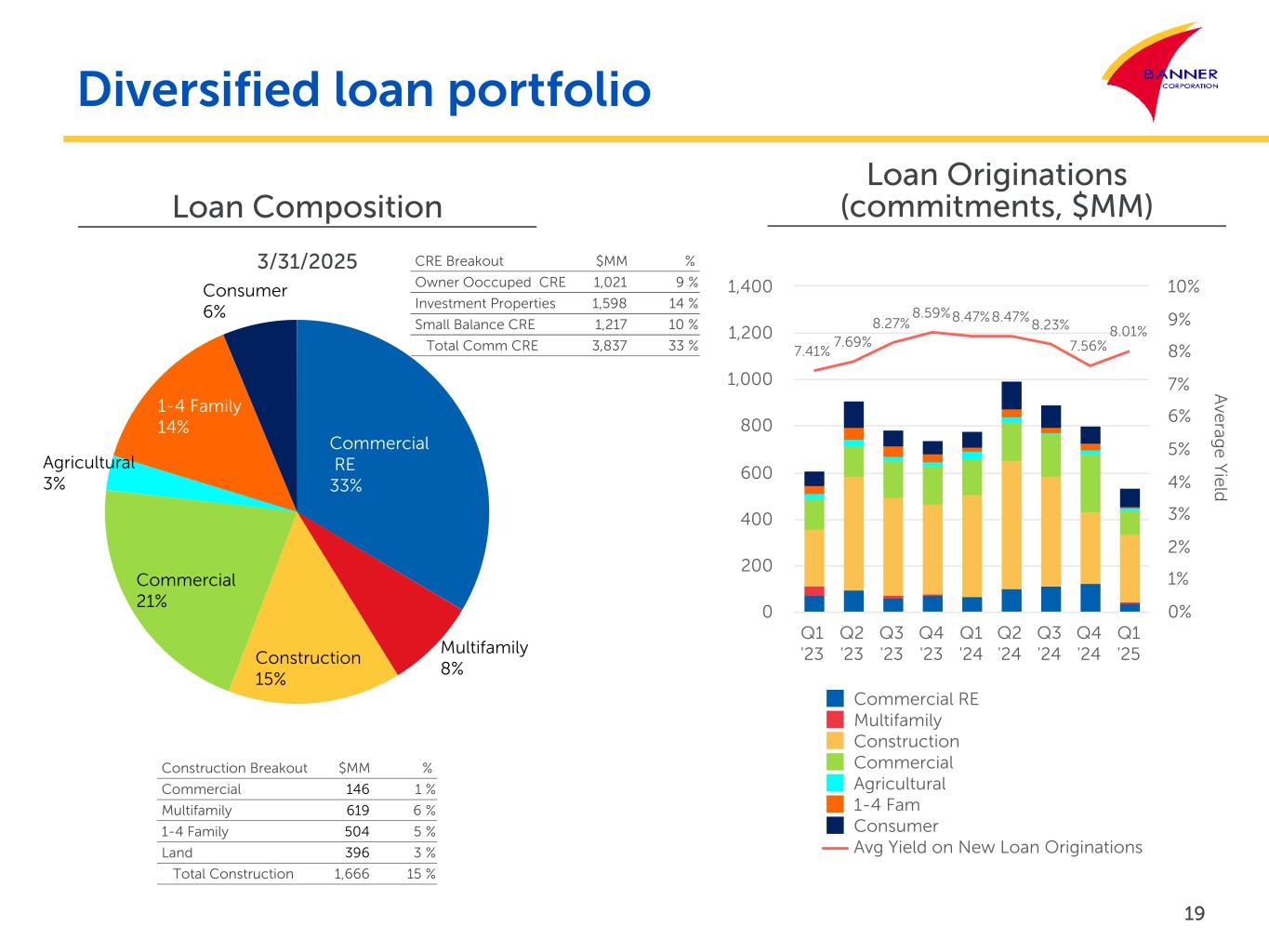
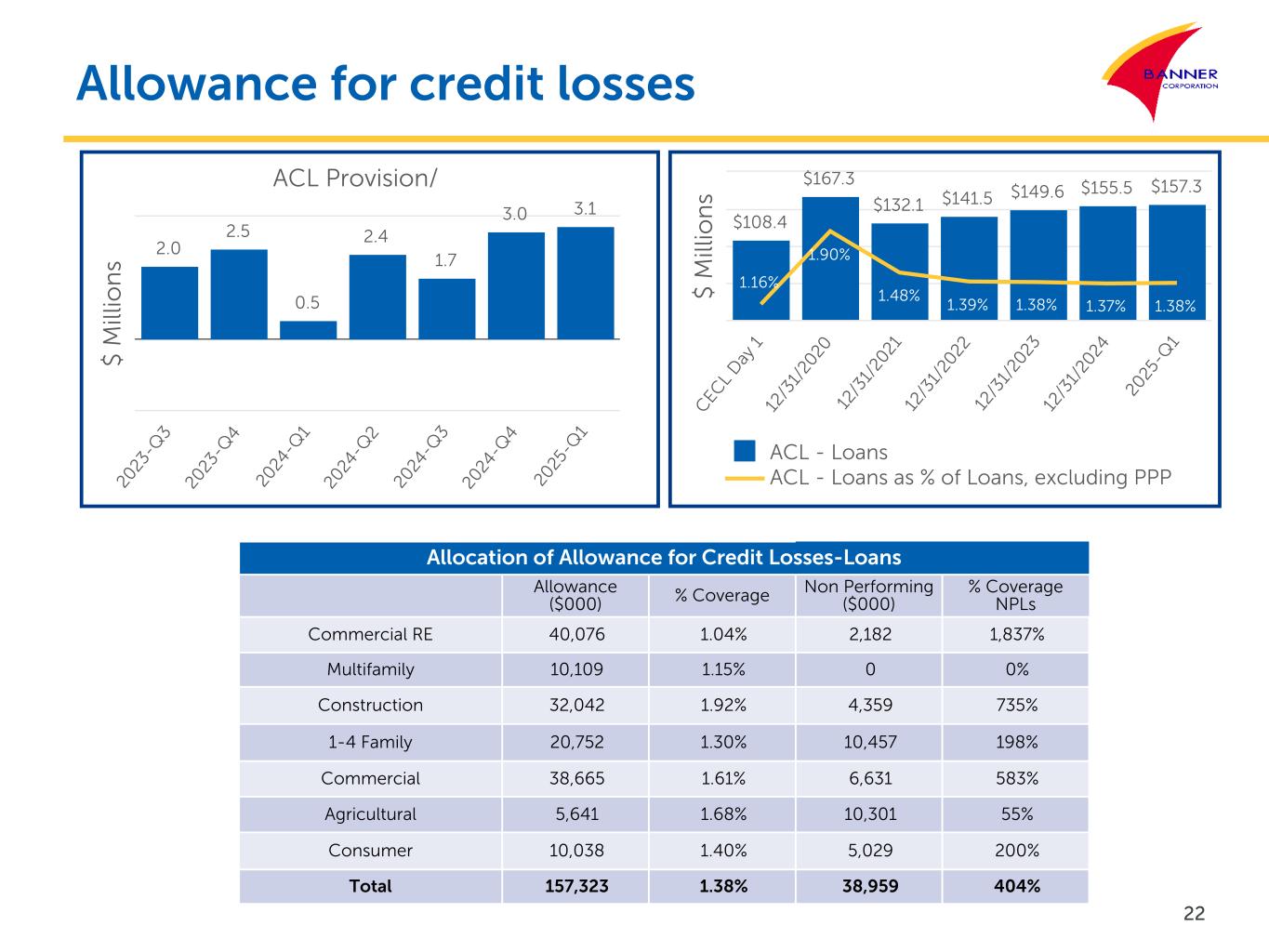
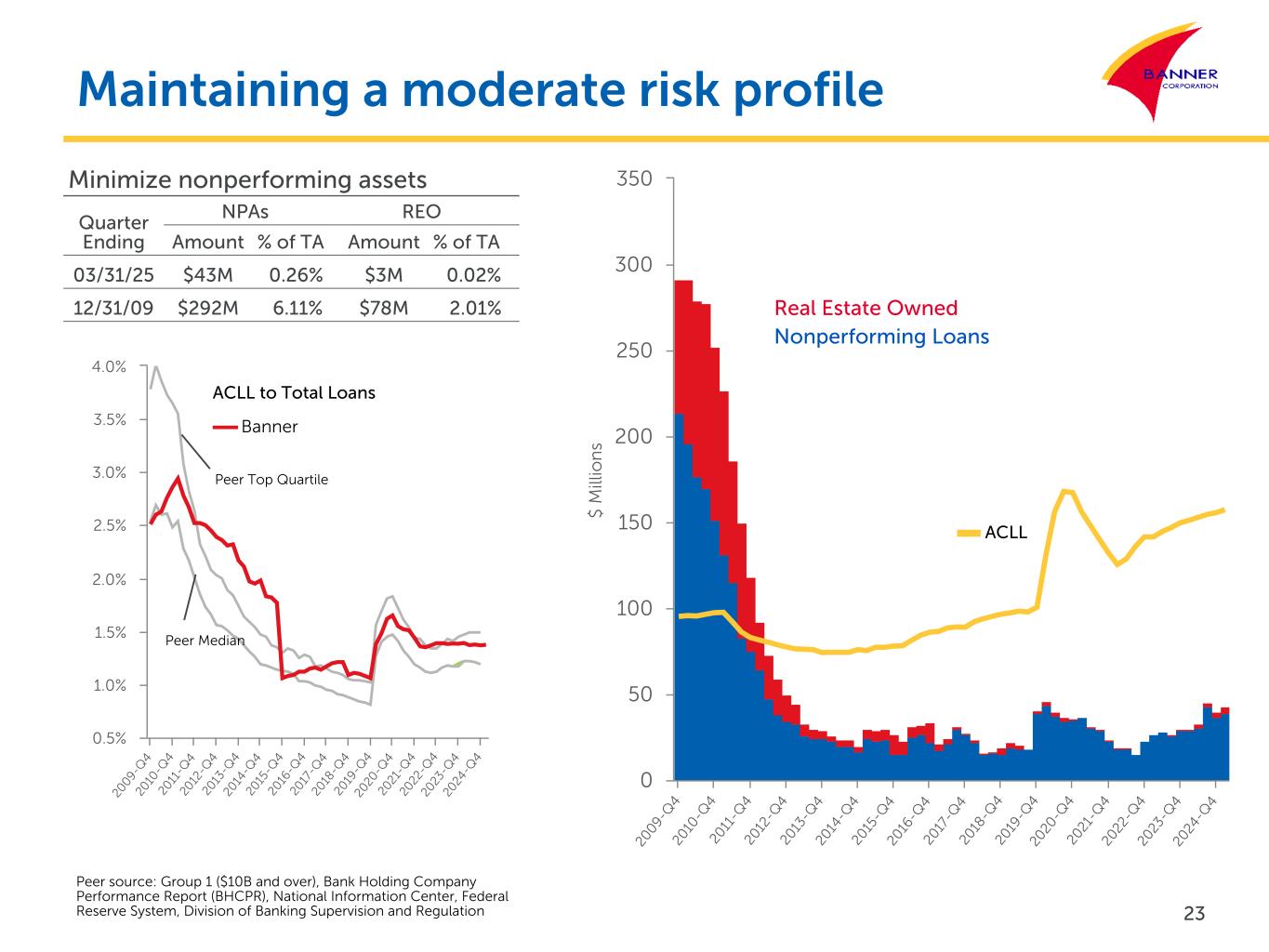
Thank you Mark and good morning everyone. As reflected in our earnings release, delinquent loans increased again this quarter 63% of total loans. This compares to 0.4.36% year-over-year the increase is the result of that. Still, in terms of total dollars, adversely classified loans increased 3% 9% as of the linked quarter. As with the increase in delinquencies, increase in adversely classified assets year over year reflects the increased interest. It is worth noting that by borrower, the adversely classified relationships are very granular on business line. Non-performing assets also increased in the quarter, up $3 million, and represent 0.26% of $39 million in non-performing loans, $3.5 million in REO, and $300,000 in other repossessed. Despite the modest deterioration, standards credit metrics remain manageable when considered in light of our loan loss reserve and capital positions and are indicative of Banner's culture of early and proactive loan losses in the quarter totaled 3.7 million and were offset in part by the net provision for credit losses for the quarter was 3.1 million including a 4.5 million provision for loan losses and a release of 1.4 million related to unfunded loan commitments. The provision was driven in large part by quantitative factors including growth in the construction portfolio, risk rating migration, and charge-off, and to a lesser extent, qualitative adjustments that were applied to address economic uncertainty. The Reserve for Credit Losses provides coverage of 1.38% of total loans in comparison to as of the linked quarter. Loan originations were down 33% when compared to the linked quarter, with the largest declines seen in the commercial and commercial real estate portfolios. These declines are in large part a reflection of heightened client uncertainty slowing prospective transactions it is worth noting however that both commercial and commercial real estate pipes proceed with capital investments when the economy loan outstandings grew by 84 million in a quarter or three percent primary drivers of the growth were within the construction and development of six million largely due to draws on previously committed projects and commercial and small business loan totals declined by 16 million quarter over quarter driven primarily by meaningful paydowns on a handful of larger commercial lines total cni utilization is up one percent in the quarter in spite of those paydowns the residential construction portfolio at four percent of total loans is continuing to perform well we did see a float a seasonal slowdown in the activity in the quarter still the for sale product continues to be bolstered by a limited supply of resale inventory and our level of completed and unsold starts remains below historical norms Looking at the entire construction portfolio, including residential, commercial, and multifamily construction, along with land and land development, the total construction, as expected, agricultural loans continue their seasonal decline, with balances down 5 million, or 2%, in comparison to the linked quarter. The consumer mortgage portfolio increased modestly, 9 million, and consumer loans, centered in home equity lines of credit, declined 4 million. Before I wrap up, I want to touch on the current operating environment in this time of economic uncertainty. While it is too early to see the impact, recent immigration enforcement activities across our footprint have heightened both business and community concerns, especially within our agricultural and border communities. The significant reduction in Canadian border crossings is negatively impacting businesses in our northwestern Washington markets and, if continued, is anticipated to have a meaningful impact to the larger summer tourism industry as well. And more broadly, while the final level and duration of the recently enacted tariffs remains uncertain and the impact is yet to be felt, tariffs will have a negative impact to West Coast businesses and the local economy. Given our diverse and granular loan portfolio, we expect the biggest impact to be felt by the small business community, who will be less able to absorb the increased costs, face supply chain issues, reduce demand, and the overall general market disruption that is likely to fall, and, of course, the consumer, who will ultimately bear the burden of increased prices. while we wait for clarity regarding the left and begin to see the impact to the general economy from the recent policy changes we will continue our practice of robust quarterly portfolio reviews and maintain close contact with our borrowers to better understand the longer-term implication to their businesses our moderate risk profile with a diverse and graduate the majority of which is supported by strong sponsors personal guarantees and properly margined collateral support will serve as well as we navigate these uncertain economic headwinds. I will follow my prepared remarks by reiterating what you have heard from me before. The losses remain robust and our capital base is well in excess which are designed to sustain.
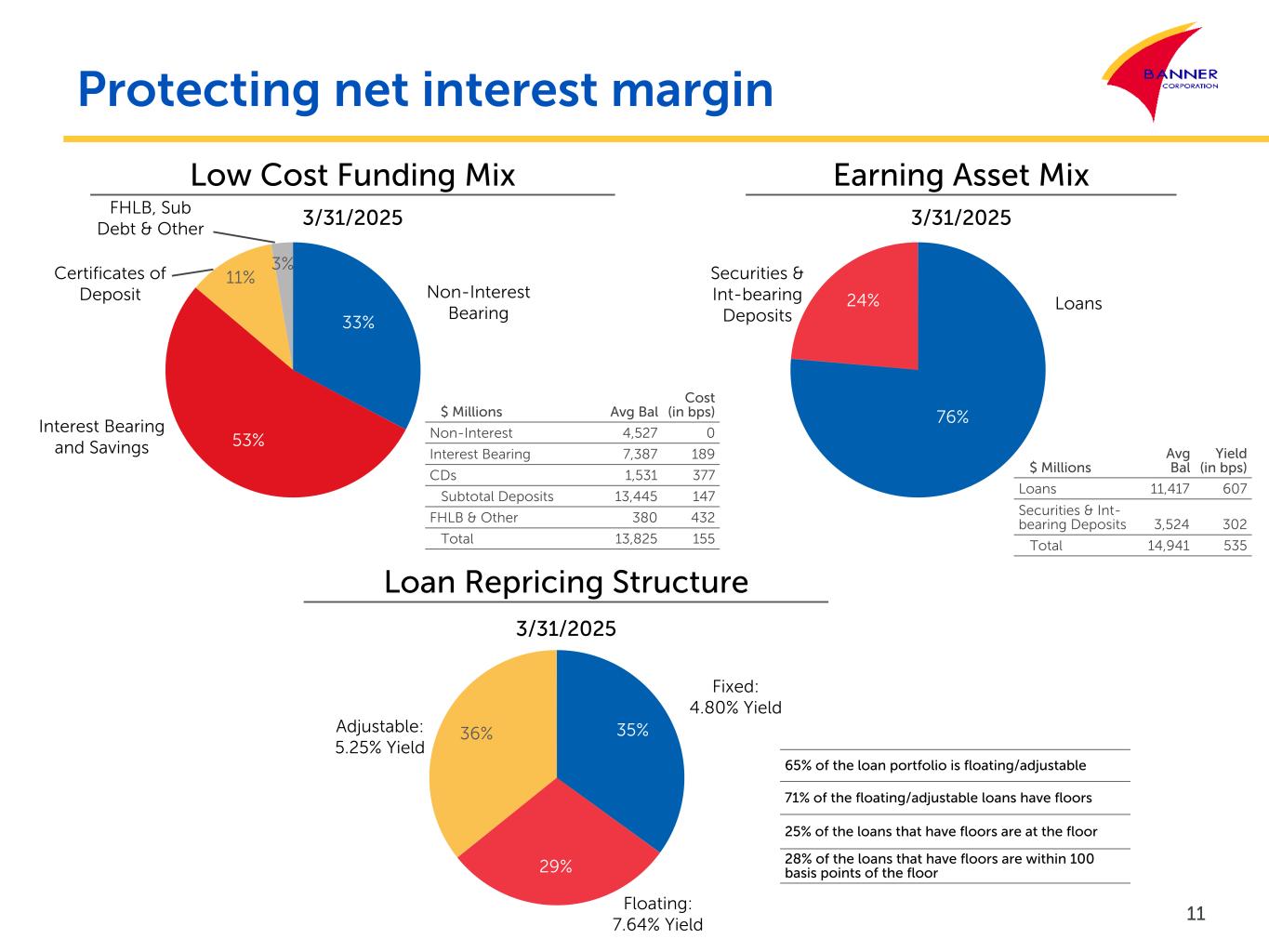
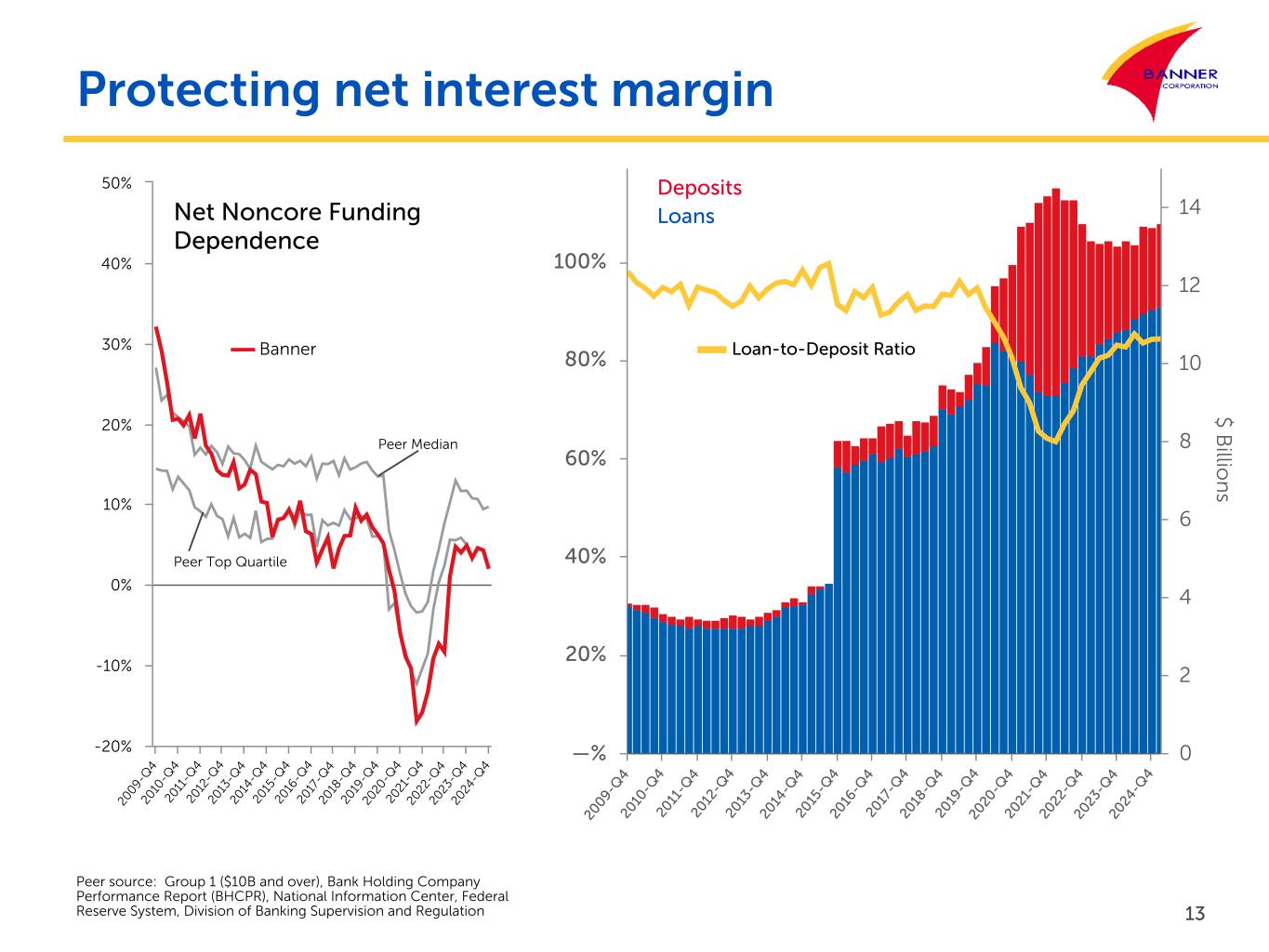
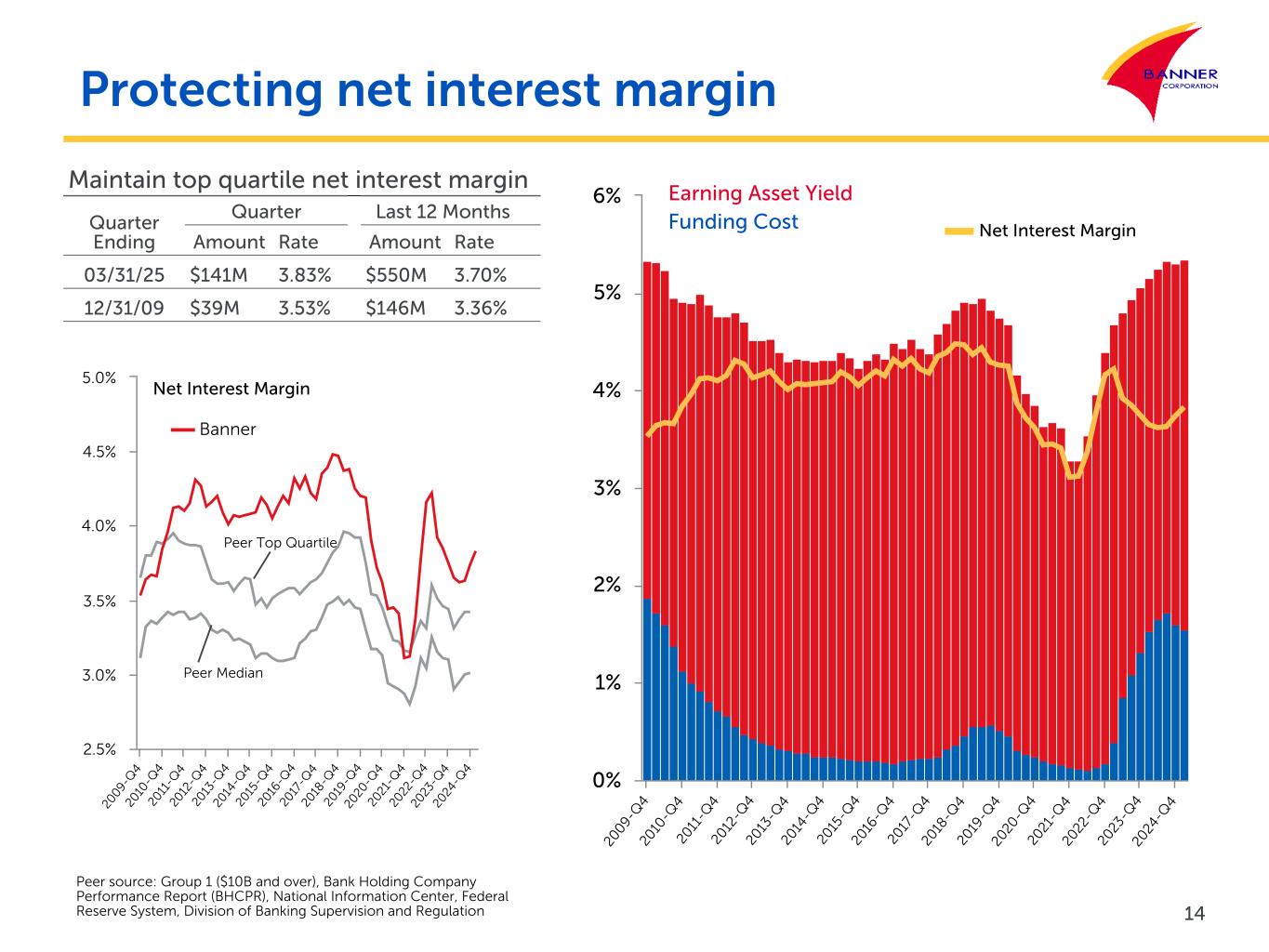
Great, thank you Jill. We reported $1.30 per diluted share for the first quarter compared to $1.34 per diluted share. The 4 cent decrease in earnings per share was primarily due to two fewer interest earning days in the current quarter and higher expenses. In addition, the prior quarter benefited from some non-reoccurring gain on loan sale. Total loans increased $77 million during the quarter, with portfolio loans increasing $84 million, partially offset by health for sale loans decreasing $7 million. The loans to deposit ratio ended the quarter at 84%. Total securities decreased $5 million, as normal portfolio cash flows were largely offset by an increase in fair value. deposits increased 79 million during the quarter due to core deposits increasing 74 million time deposits increased 4 million as a 21 million dollar decline in retail time deposits was offset by a 25 million dollar increase in broker deposits core deposits into the quarter at 89 percent of total deposits same as the prior quarter total borrowings decreased 116 million during the quarter due to a decrease in FHLB advances. Bander's liquidity and capital profile continue to remain strong, with Roque West core funding base, a low reliance on wholesale borrowing, and significant off-balance sheet borrowing capacity. In addition, all of our capital ratios are in excess of regulatory well-capitalized levels. Net interest income increased $500,000 from the prior quarter due to tax equivalent net interest margin increasing 10 basis points to 3.92 percent partially offset by a decline in average earning assets and two less interest earning days in the quarter the 10 basis point increase in net interest margin was driven by an increase in the yield on earning assets and a decrease in funding costs the four basis point increase in earning asset yields was due to loan yields increasing five basis points as adjustable rate loans continue to reprice higher and new loans are being originated at rates higher the average rate on new production for the quarter was 8.01 percent. Funding costs decreased five basis points as a result of deposit cost decreasing six basis points. Non interest-bearing deposits into the quarter at 34 percent of total deposits. The decrease in average earning assets was due to a 90 million decline in average interest-bearing cash and average loan balances increasing 64 million the earning asset yield continues to benefit from a remixing out of securities and into loans total non-interest income decreased 900 000 from the primarily due to the prior quarter including a gain of 735 000 on the sale of a non-performing loan and a gain of 508 000 on a pooled loan sale partially offset by the current quarter having a 300 000 gain on a fully claim. Total non-interest expense increased $1.8 million from the prior quarter. The increase reflected higher in salary, primarily due to typical higher first quarter payroll taxes and higher medical insurance expense. The increase in salary and benefits was partially offset by lower marketing and professional expenses. Despite the recent market volatility, we believe our capital and liquidity levels position us well to service our clients and to take advantage of any disruptions in the markets we serve this concludes my prepared comments now i will turn it back to mark thank you uh rob and jill for your comments um that concludes our prepared remarks and nadia we will open now open the call and welcome thank you if you would like to ask a question please press star followed by one on your telephone keypad if you would like to remove your question please press star followed by two when preparing to ask your question please
Operator
to your phone as I'm muted locally. Our first question goes to Jeff Rulis of DA Davidson. Jeff, go ahead.
Just a question on the margin. Seems like that's a little, maybe a little better than expected, and I guess the components of that are you more, maybe the surprise is a strong word, but I guess if you think about the earning asset yield increase versus funding costs coming down is any component there that you think you're um that that can continue or do you feel like both uh are in play at least in the short run um i guess ultimately leading to kind of margin um expectations yeah so what i would say there jeff is that on the on the funding side the funding
cost for the quarter was pretty much flat for the entire quarter so the same for the same for january february and march and whereas we did see on the yield side we saw throughout the quarter that the the yield did improve as we moved throughout the quarter and the other thing just to and i know you know this but you know the day count in february always benefits the first quarter and makes the yields look a little bit better just because of the 28-day count and you get 30 days on a lot of loans from an interest perspective. But if we think about going forward here, so we use Moody's for interest rate forecasting. They're currently showing three 25 basis point cuts in 25, the first one starting in July. And assuming that's correct, I would expect some NIM expansion in Q2. And that really is assuming that funding costs essentially stay flat and we see some additional expansion in our loan yields as adjustable rate loans continue to reprice up and due loans continue to come on at higher yields. The model is currently showing that we would see about a five basis point increase in loan yields while the Fed is on pause. If I think about the second half of the year under that Moody's forecast where there would be those rate cuts in the second half of the year, I would essentially expect that earning asset yields to be flat during that period of time while the Fed's decreasing rates, but we would see some benefit on the funding cost side where we would see funding costs come down a couple basis points a quarter during the second half, assuming that scenario.
That's great, Rob. Thank you. Maybe hop to the credit. I think, Jill, you mentioned really no real industry-specific stress, pretty granular, but just wanted to check back in on the ag side. You had mentioned some prior caution on commodity prices, and there was a small increase in non-performers in a quarter. Checking back in there, do you feel like that is just a continued area of watch, or just how is the trends on the ag side going?
Yeah, well, the ag side definitely is a continued area of watch especially as we think about the tariff implications um you know most of the crime with the increased impact um while the input cost the egg industry i think will continue to show signs of strain over the this next period of we just have to kind of wait and see how long it's like um and just joe i'll have it um you mentioned line utilization on on cni was
down i guess first part would be what what is that number uh currently and then jill if you could kind of kind of stabilize this on on growth for the full year do you feel like some of this uncertainty versus where we were entering the year any thoughts on the full year expectations would be helpful if we go on to your current questions there jeff just for everyone's benefit The egg represents 3%.
We continue to watch the risk in that portfolio. Commercial line utilization is in the mid-30% range, I believe, and kicked off each other out. To loan growth expectations, we're still targeting mid-single digits for 2025. When we went into the year, we were looking at a back half as where we would get more of that growth and still consider that as a possibility. We recognize that the consumer and business confidence has been negatively impacted by these policy changes, and we can't tell exactly what's going to happen with that level of uncertainty. We offset that, however, with the commercial pipelines that have been continuing to rebuild nicely. We had a good pull-through rate the first quarter, even with that high level of uncertainty. and when we, you know, hit our Q1 expectations, even with the uncertainty, we don't have enough to actually change our thoughts as to what's going to happen for the 2025 planet.
That's great. Thank you for the detail. Appreciate it.
Operator
The next question goes to David Feaster of Raymond James. David, please go ahead.
Hey, good morning, everybody. Good morning, David. um i kind of want to just follow up a little bit on that line of questioning a bit you know i mean obviously you talked about um you know the pipelines and and but you know originations did decline quarter of a quarter and it sounds like it's primarily a function of weaker demand even ahead of trade wars i was hoping you could could touch on maybe any other competitive dynamics that you're seeing um and and just you know how is client demand and and the pipeline looking today have you started to see any anything falling out um of that just kind of the complexion of the pipeline and just where you're seeing opportunities for growth today the end there and
the opportunities for growth that you know my answer to that is no different than it's been historically they range up and down our footprint and um in this you know across the industries pipelines have continued to grow closings have continued so we're pulling them through and rebuilding um i i think the slow part of q1 you know yeah the trade wars had not started but there was a level of just uncertainty that had everybody taking a step back to see what was coming and then And as it hit, even more uncertainty as opposed to that we still have people who want to, you know, move forward once they can understand where we are going to land. So I, you know, I feel so decent about where we're going to end this year, David, because of that. You know, they want to do business. They just need some of this noise to sell.
That's helpful. and then you know maybe following up you know on on just the potential impacts on from the tariffs and trade wars i mean where where do you see like as you as you look at the book where do you see the most risk and and where are you prepared like watching more closely if this does become more protracted i mean we've already touched on that which is obviously a small portion of the book but just you know you thinking about construction right and and multi you know you've had a lot of success especially within multi-family um you know how do you think about managing um you know just with potential rising construction costs and some of those kinds of things curious how your approach
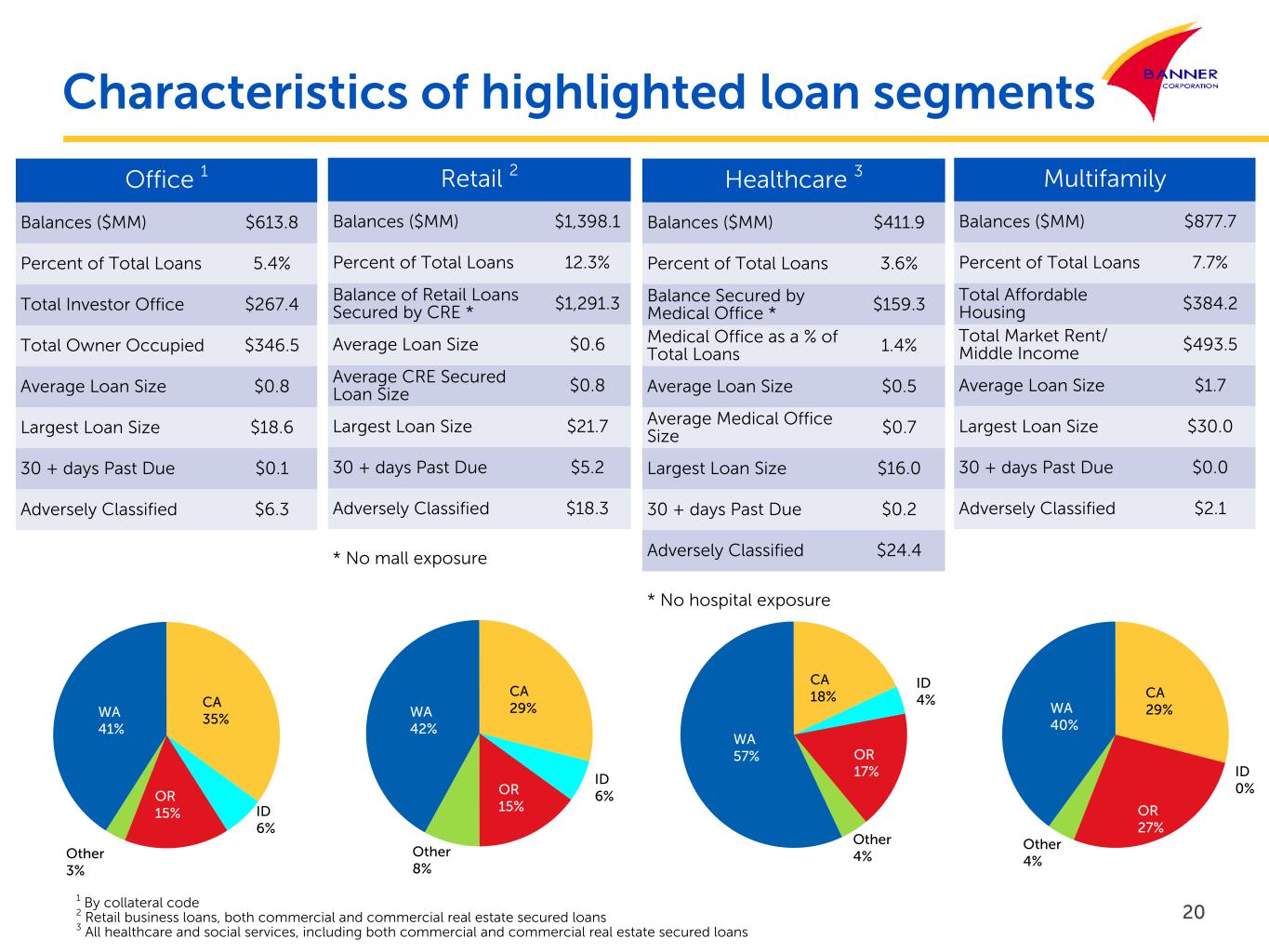
to this where you're you know where you're watching more closely and your approach to managing it and just in this kind of uncertain uh market so the approach to managing it is you know kind of what we do on a day-to-day always in terms of staying close to our clients and asking them what they're seeing what they're feeling and what the impact is to their bottom line if you step back into the heart of your question say what am i looking at and thinking about it the tariffs are going to impact you know energy sector we're not heavy into it but it's going to affect our economy agriculture we've talked about west coast pork that's going to affect our economy auto dealers retailers boeing and other manufacturers we don't lend to boeing but certainly we have some manufacturing and, you know, run, you know, the gamut there as well. So I step back and I look at the, you know, manufacturing would represent approximately 3% of our loan book. Average loan size within all of those manufacturing for a million dollars. So in terms of individual risk, limited. In terms of aggregate risk in the portfolio, again, pretty small for the manufacturing sector. We don't have a lot of exposure to auto dealers. Largest loan size to auto dealers in our book. I look at the transportation industry, 1% of our loan book. Look at the retail exposure. It's bigger. It's 12% of the loan book, but it's diversified geography. It's diversified by service and product. Industry, 93% of the retail exposure is real estate secured. So that reduces some risk there as well. And when you look at those last three segments I named, each one of them would have less than 1% or have an average loan size. I'm looking, we're watching, we're talking to our clients, and then we're just scoping the overall exposure. And we'll continue to do that as we see where do these tariffs land and who are they hitting the hardest. And I'll come back to what I said in my prepared remarks.
I think the biggest impact is going to be the small business sector and the consumer who's going to bear the brunt of it okay that's great color i appreciate that and then just just last one for me maybe touching on the funding cost side you you've done a great job continuing to drive core deposit growth reducing deposit costs even in a seasonally weaker quarter i was hoping you could maybe uh touch on the competitive landscape for for deposits your your strategy continue to drive core deposit growth um and and how you think about opportunities to further optimize funding costs and and you know uh you know fun fun loan growth going forward yeah so so thanks david it's rob so so yeah i guess a couple a couple things there i mean
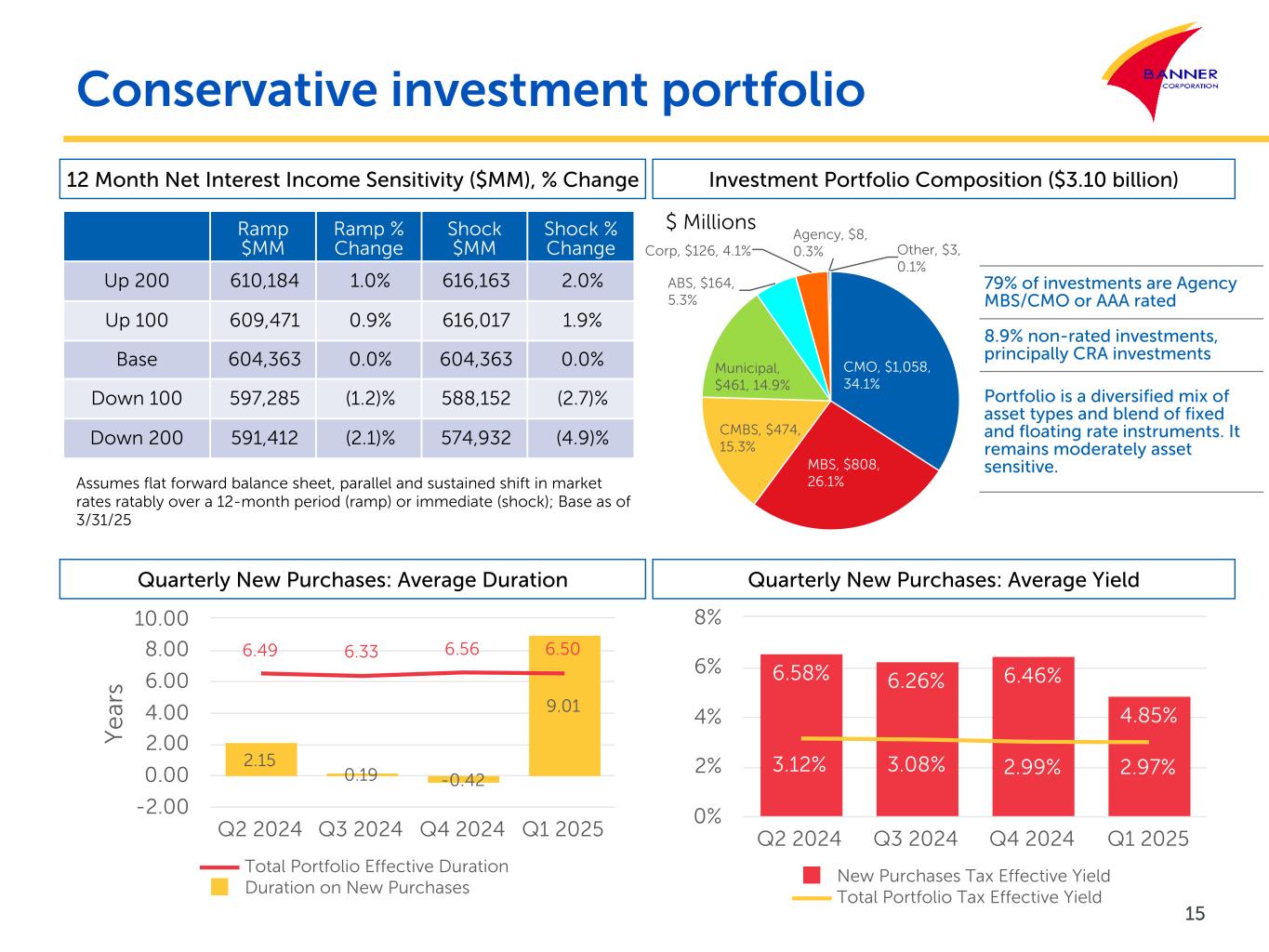
i i think there's limited opportunities as long as the fed is on pause to see additional reductions in funding costs and um but but what we've been successful as is as we're adding new clients from the lending side we've been successful at also bringing across the deposits so I think I think we're seeing the benefit that q1 also did have some seasonality into it we usually see some increase in our deposits as tax-free funds start to come in as well and and you know I mean I think from if we're like thinking about competitors right now in the marketplace from the CD side is where you're seeing we're still seeing rate specials out there I would say most of the rate specials are are in that three to seven month tenor right now although we we do still see some rate specials out there in that twelve or thirteen month range and see it and even some of the four percent but you know I mean we just have a very granular deposit base it's it's diversified from both metro versus rural and it's also diversified geography wise and and it's a very granular deposit base uh average deposit size you know in that twenty nine thousand dollar range so i think all that just helps helps us from uh uh being able to kind of control our deposit cost and our funding costs over time okay that's that's helpful so would you would you kind of expect maybe some continued optimization and and loan growth be funded with some securities cash flows or do you see the balance sheet continuing to grow yeah i think on the so if we think about the security side we're we're seeing around 60 million dollars of cash flows off that a quarter right now and we're not redeploying that back into the security portfolio the only thing we're purchasing from security portfolios for cra purposes and so the expectation is is that we We would see kind of a continued rotation out of the security portfolio and use those funds to help drive the loan growth and fund the loan growth. But I will say we're also, David, we're not currently planning on any larger security sale or any kind of loss sale at this point in time. We continue to look at that. We'll be flexible if market conditions change or if we think there's an opportunity there, but that's not a strategy we're looking at currently.
Got it. Thanks, everybody. Thank you, David.
Operator
The next question goes to you, Andrew Leisch of Piper Sandler. Andrew, please go ahead.
Good morning. Really helpful information here on the tariffs. Really appreciate it. You know, capital continues to be a strength for Banner. I guess how should we look at capital going forward? Is there an appetite to buy back stock with the stock down here? Do you want to retain it for uncertainty? Mark, can you just update your thoughts on your capital plans?
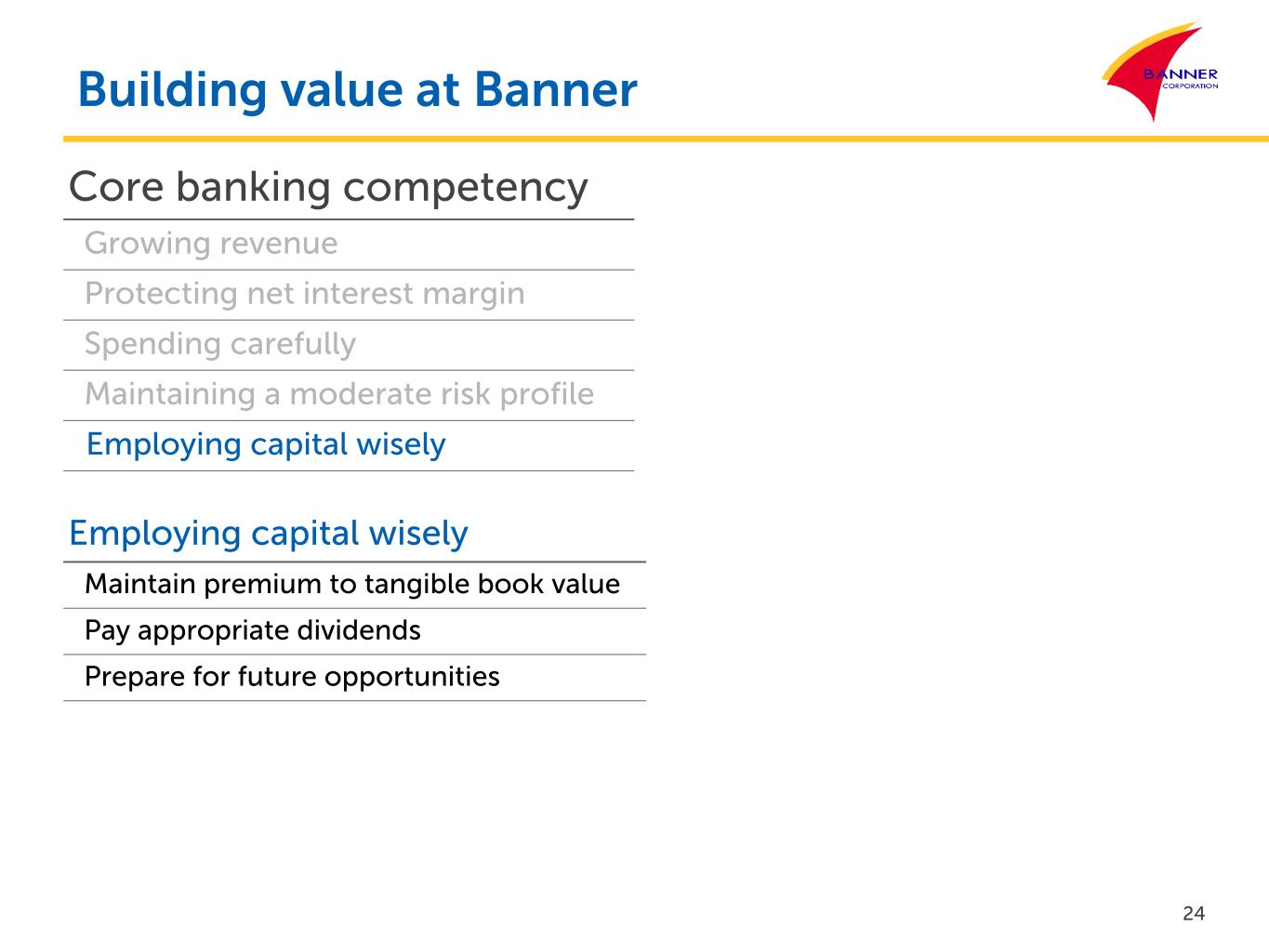
Thanks, Andrew. It's Rob. So, yeah, I mean, we always talk about our number one priority is the core dividend and maintaining that core dividend, which continues to be at a conservative payout ratio. And over time, as EPS continues to increase, we would look at, you know, kind of increasing the core dividend at some point in time as well. We do have that share authorization, which you just mentioned there, in place right now. We haven't executed on that. It is something that we continue to consider. And certainly with the stock price being down just due to, you know, overall market volatility, it makes it more attractive, certainly. I would say the other thing that's out there right now that's probably one of the top things on our radar right now is we do have that $100 million of sub debt out there right now. and it moves from a fixed rate to a variable rate on July 1st, and so we're currently considering whether we repay that or whether we look at replacing that. So that's probably one of our top capital priorities right now.
Got it. And then any sort of change in M&A conversations over the last couple months?
I would say thank you, Andrew. It's Mark. Let me just follow up on Rob's comment. You know, our philosophy has always been to try and have this fortress type of, there'll be an opportunity to deploy excess cash. I think the conversations, they continue to occur. You know, how do we proceed going forward? It's look like, positions look like. There is favorability on the regulatory side, which I'm encouraged by. The pullback in value.
Got it. Very helpful. Always appreciate your insights. I will step back. Thanks.
Operator
Thank you. The next question goes to Andrew Terrell of Stevens. Andrew, please go ahead.
Morning. If I could just circle back to the margin, just to maybe, you know, summarize some of the discussion around the margin. I mean, it sounds like, you know, in an environment where the Fed is not cutting rates, you've got, you know, pretty decent loan repricing opportunity. And then, you know, maybe that if we do get rate cuts, that falls out. But then you've obviously got room to further cut deposit costs. It sounds like, you know, no matter either of those outcomes, the progression throughout the year on the margin should be higher from here, correct? Yeah, I think as long as it's either Fed on pause or Fed gradually decreasing rates, that would be correct i think the one scenario where we would see some margin compression is if the fed got very aggressive on reducing rates yeah okay um got it so only negative just a more material uh rate cut okay um and then i'll just ask you we we talked about this um a while back but just you know line of sight to a four percent margin when i when i asked you that question previously i think we were 30 basis points or so away but you've closed that gap pretty quickly i guess you know thinking of those kind of ranges of outcomes on the margin does it
feel feasible you can you can kind of pass four percent on the nem in 2025 yeah i don't i guess i'm not i'm not prepared to give a timeline on when we're going to cross the four percent level but i mean clearly if you look at historically we have been above four percent and i think in under the right market conditions we can get back there again and you know if we continue to see you know the the favorable market conditions that would allow that and we see that you know expansion each quarter then eventually i think we would get there yeah um and if i could just lastly check in
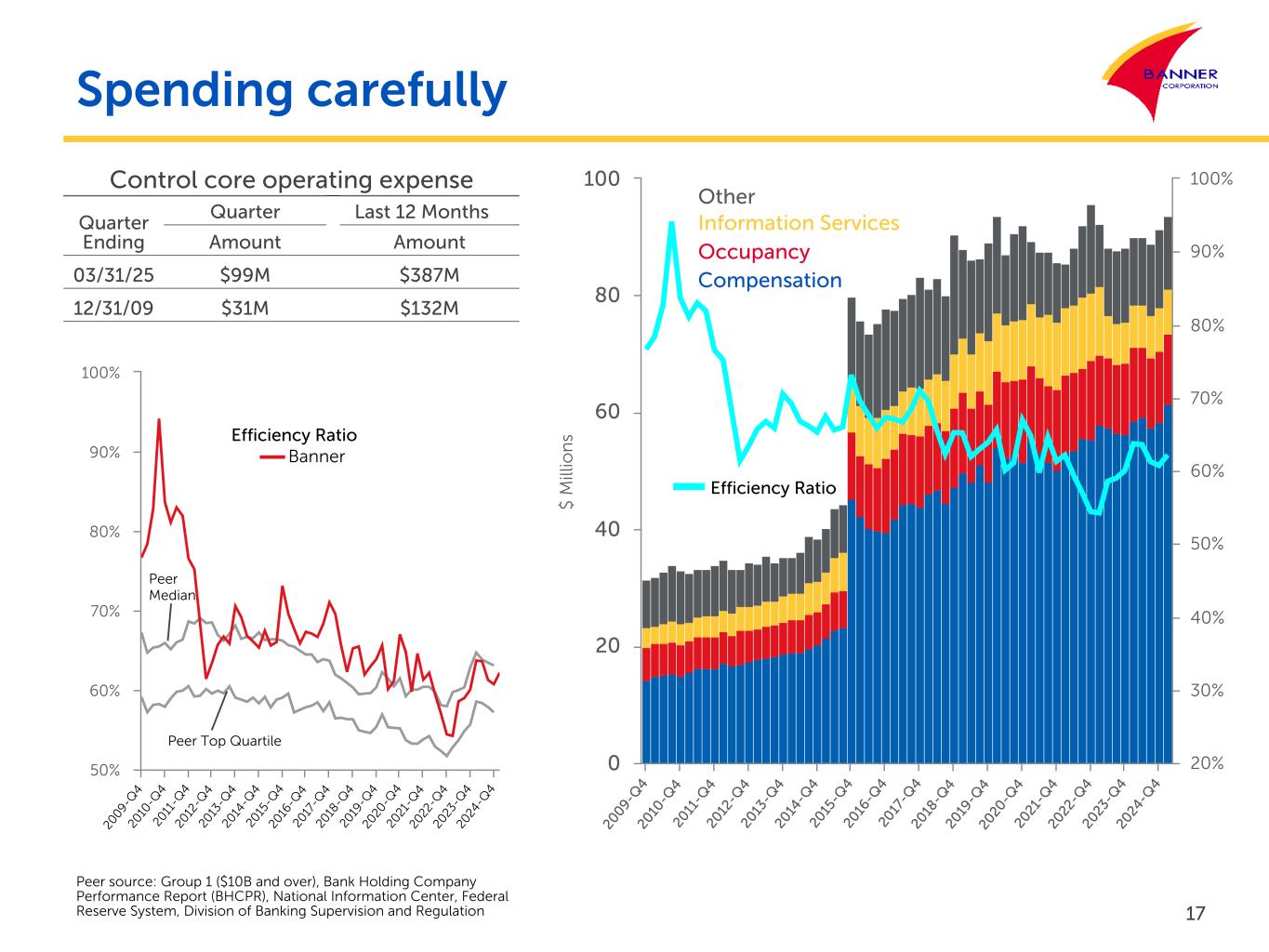
on um expenses i think i think last quarter we talked about you know 100 million or so run rate being a good base to build off of in 2025 with kind of normal inflationary growth just wanted to check in you know any any thoughts change on expenses um you know how should we think about kind of quarterly progression as we move throughout the year on the expense base yeah i mean expenses always move around a bit quarter to quarter so it's not unusual to see a swing of a couple million dollars up or down but if i just think about the run rate we saw the first quarter I think that's probably a decent run rate that we would expect if you annualize that for perfect uh thank you for taking the questions in the next quarter thank you the next question
Operator
goes to kelly motor of kbw kelly please go ahead hey good morning thanks for the question um most of mine have been asked and answered at this point um i just just wondering is is um this last quarter a good indication of the tax rate for the year and are there any you know upcoming tax credit investments or anything of that nature that um we should factor into the model yeah kelly it's rob so yeah i think i think the current quarter tax rate is is probably a pretty good judge on what we would what we would see for the year at this point got it that's helpful um last one for me i know part of banner forward initiative um we're um developing some source of fee revenue just wondering um if you could provide now an update on your outlook for fees it looks like maybe um the deposit fees and service charge line was was down a bit i'm assuming that was activity based but um if you could provide some color around that that would also be helpful thank you sure yeah i think if you look at q1 and and you just back out the the bully claim that we have there that's probably a decent run rate for for 2025 and you know if you think about mortgage
rates you know they when mortgage rates the third year dip down to six and a half percent we saw some pick up in activity there but then now that's back over seven percent we've seen some slow down there so mortgage banking is really going to be driven by the rates ultimately there and so it will be at the headwinds of whatever the rate environment is. The one item that we have been building out over time has been that SBA gain on loan sale business line that we have and we have seen some pick up there so in Q1 the gain on loan sale from SBA was around 800,000 and the run rate for landing off if we can continue to see that business line grow that we would continue from building that out got it that's helpful um thanks again for the questions really nice quarter i'll step back thank you kelly thank you and as a reminder if you would like to ask a question
Operator
please press star followed by one on the telephone keypad the next question goes to tim coffee of janey tim please go ahead great thank you morning everybody and thank you for the opportunity to ask a question or two.
Mark, if I can start with you, what is your outlook for the economy right now? Is it just anything more severe than just a potential growth slowdown?
I do think that if we continue on the progress that we're making right now, I think there's quite a bit of uncertainty in the economy than most, that I think we're going to continue to see a slowdown, which is why over 2024, we build our balance sheet. And there's a lot of market this week. I do anticipate that the economy is going to slow here.
And just a question about the defense spending in your footprint, right? I mean, there's a lot. It's hard to make doge cuts to support facilities for nuclear submarines and aircraft carriers, and that's big in the Puget Sound area and San Diego. Do you think that embedded level of spinning will help those economies and the markets that you're in there more than others?
I think that's an excellent question, Tim. Jill, do you want to?
No, I think Subbase Bangor, Puget Sound, Able Shipyard, the San Diego Shipyard, I think, Tim, you hit it. Those are going to be support and bolster those communities. We also have Hanford in eastern Washington that could have some, you know, negative implications in terms of doge cuts. So, you know, it really is going to be community by community specific as to the lift to the economy supported by the federal government is the way I would respond to that. I don't know, Mark, if you would add anything else to that.
No, I think you're – appreciate that.
And then this kind of marks about kind of your thoughts on a special dividend and just kind of what you think about it, you know, just holistically, totally unrelated to the previous two questions, but just how you think about a special year in cash dividend.
Hey, Jim, it's Rob. So, yeah, I mean, as you know, we have done special dividends in the past, and so it's certainly a tool in the toolkit that we might use to manage capital levels. I would say it's probably lower on our priority right now as far as using a special dividend. I think there's probably some other opportunities we have that would be a better way to deploy capital currently. But it's not something we're ruling out either.
I appreciate that, Rob. And then, Jill, I know you've been asked to answer a couple questions on tariffs, but I've got two more for you. The first one is, as you're collecting financials from C&I borrowers, are you seeing anything in those financials that give you pause?
It's a pretty broad question when you think about C&I borrowers. Hit and miss, certainly there are things that give us pause. You know, you're seeing take health care, increased costs, the top-line revenue in some cases, a special equation. They answer their statement on a specific case. You know, it's case by case. But, yeah, there are things that – how are they going to have a solution to that, whether it's expense control or, you know, demand and revenue slipping?
Bob Haldis, I should have made it a little bit more general. Are you seeing any changes year over year that indicate a slowdown in your footprint?
Yeah, of course it is. And given kind of the overall outlook right now, Jill, have you increased any kind of oversight on the retail CRE book?
No. We haven't changed the way we manage the portfolio, but I would suggest that we have been pretty hands-on from the get-go through all business cycles. You know, we have this review on a quarterly basis to just make sure we're all on the same page as to what's, you know, happening.
Well, those are my questions. Thank you very much.
Operator
Thank you. We have a follow-up from David Feaster of Raymond James. David, please go ahead.
Hey, thanks, everybody. Just one quick follow-up on California. When I look at – you've had a lot of success there over the past several quarters on both loans and deposits. I'm just kind of curious what you're seeing in that market. I think it's somewhat underappreciated.
But curious where you're having success and your thoughts on California what's driving that growth I would say what's driving that growth is the additional talent that we have brought into the market both in northern and southern California over client loans and deposits so we feel really good about that market and what they have been doing and would continue you know expect that to continue to grow certainly you're seeing some growth in the affordable housing construction that's been booked previously and
funding up as well but um the short answer is good talent added to the team okay great thank you thank you we have no further questions i'll hand the call back over to mark for any closing comments thank you as i've stated we're very proud of the banner team and the first quarter 2025 performance that we had uh it's a great way to kick off the year uh even though there's quite a bit of uncertainty to continue to grow them so thank you for your interest in and for joining
Operator
the call today thank you everyone and have a wonderful thank you this now concludes today's call thank you for joining you may now disconnect your line