Operator
Hello, everyone, and welcome to the Banner Corporation second quarter 2025 conference call and webcast. My name is Nadia, and I'll be coordinating the call today. If you would like to ask a question at the end of the presentation, please press star, followed by one on your telephone keypad. I will now hand over to your host, Mark Gretzkovic, President and CEO, to begin. Mark, please go ahead.
Thank you, Nadia, and good morning, everyone. i would also like to welcome you to the second quarter earnings call for banner corporation joining me on the call today is rob butterfield banner corporation's chief financial officer jill rice our chief credit officer and rich arnold our head of investor relations rich would you please read our forward-looking safe harbor statement sure mark good morning our presentation today discusses banners business outlook and will include forward-looking statements these statements include descriptions of management's plans objectives or goals for future operations products or services forecasts of financial or other performance measures and
statements about banners general outlook for economic and other conditions we also make other forward-looking statements in the question and answer period following management's discussion These forward-looking statements are subject to a number of risks and uncertainties and actual results may differ materially from those discussed today. Information on risk factors that could cause actual results to differ are available from the earnings press release that was released yesterday and are recently filed Form 10Q for the quarter ended March 31, 2025.
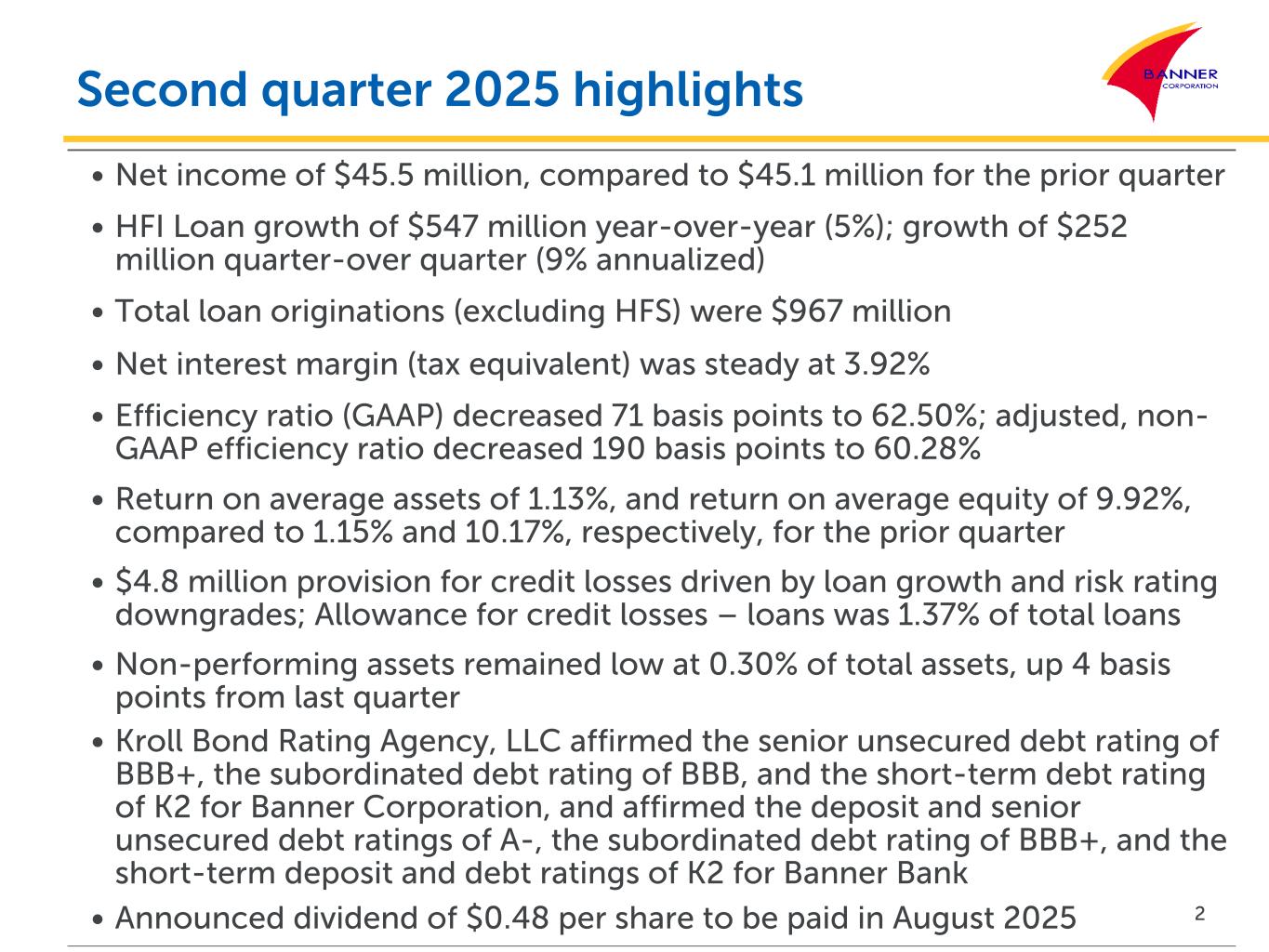
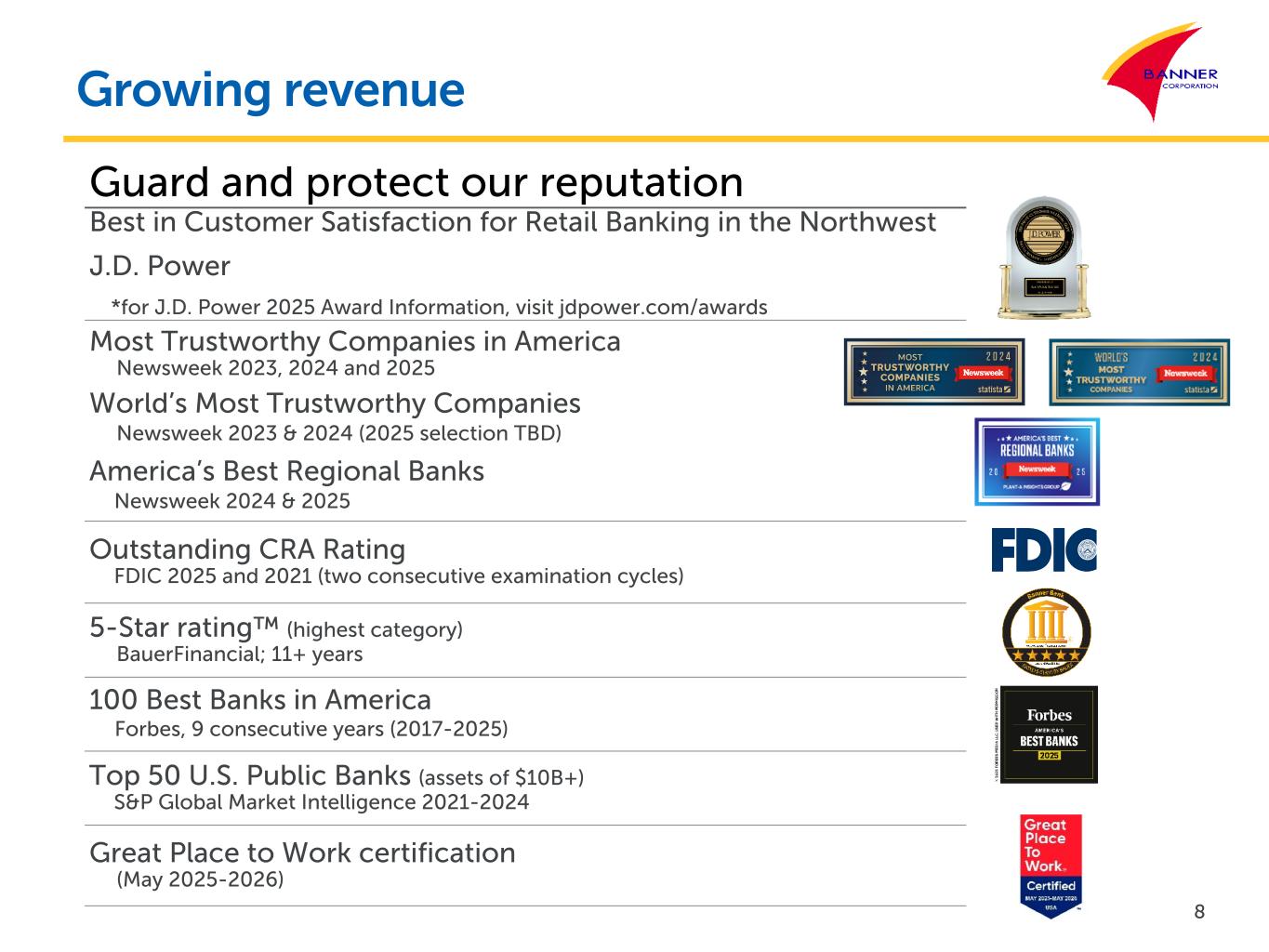
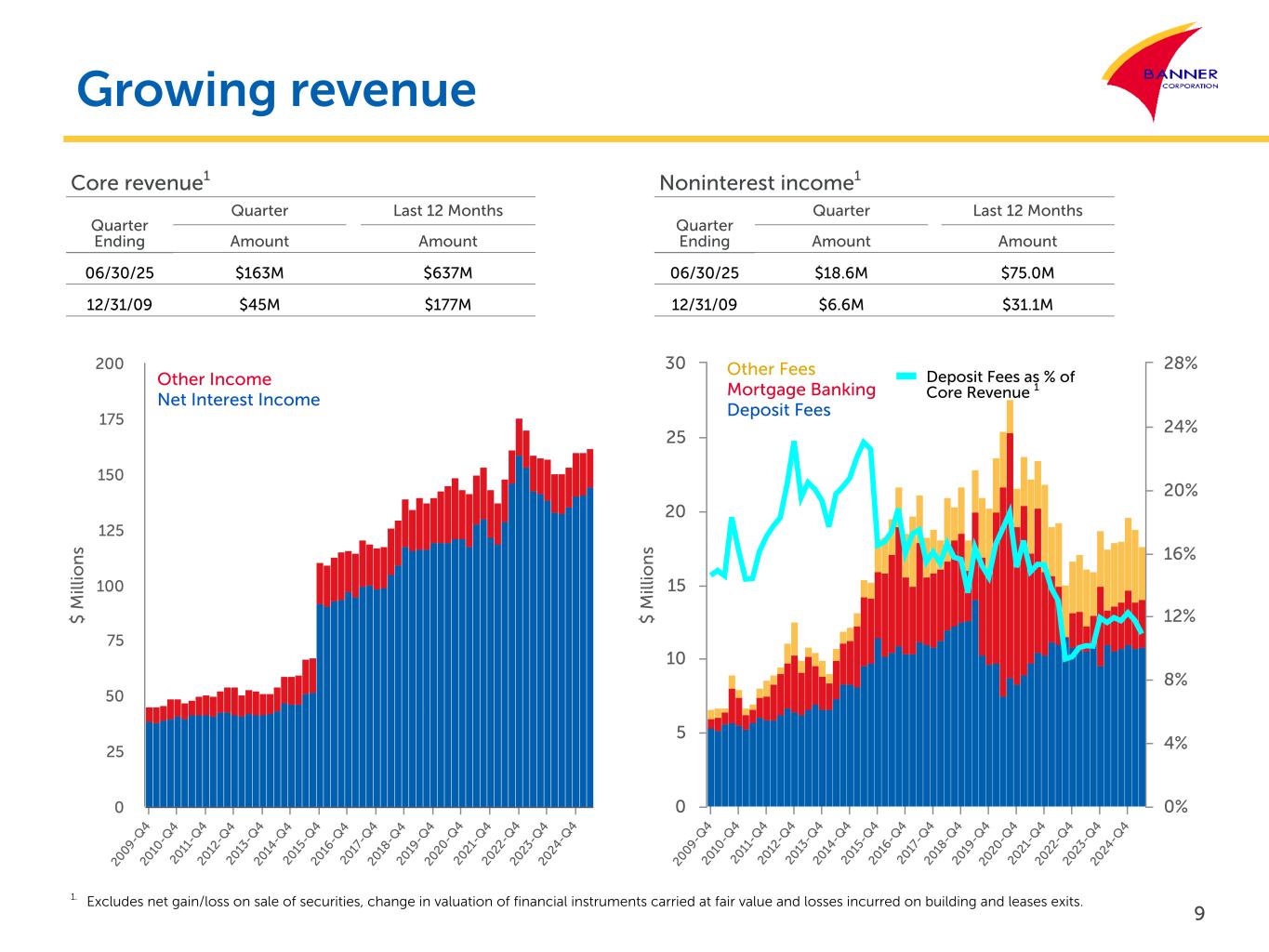
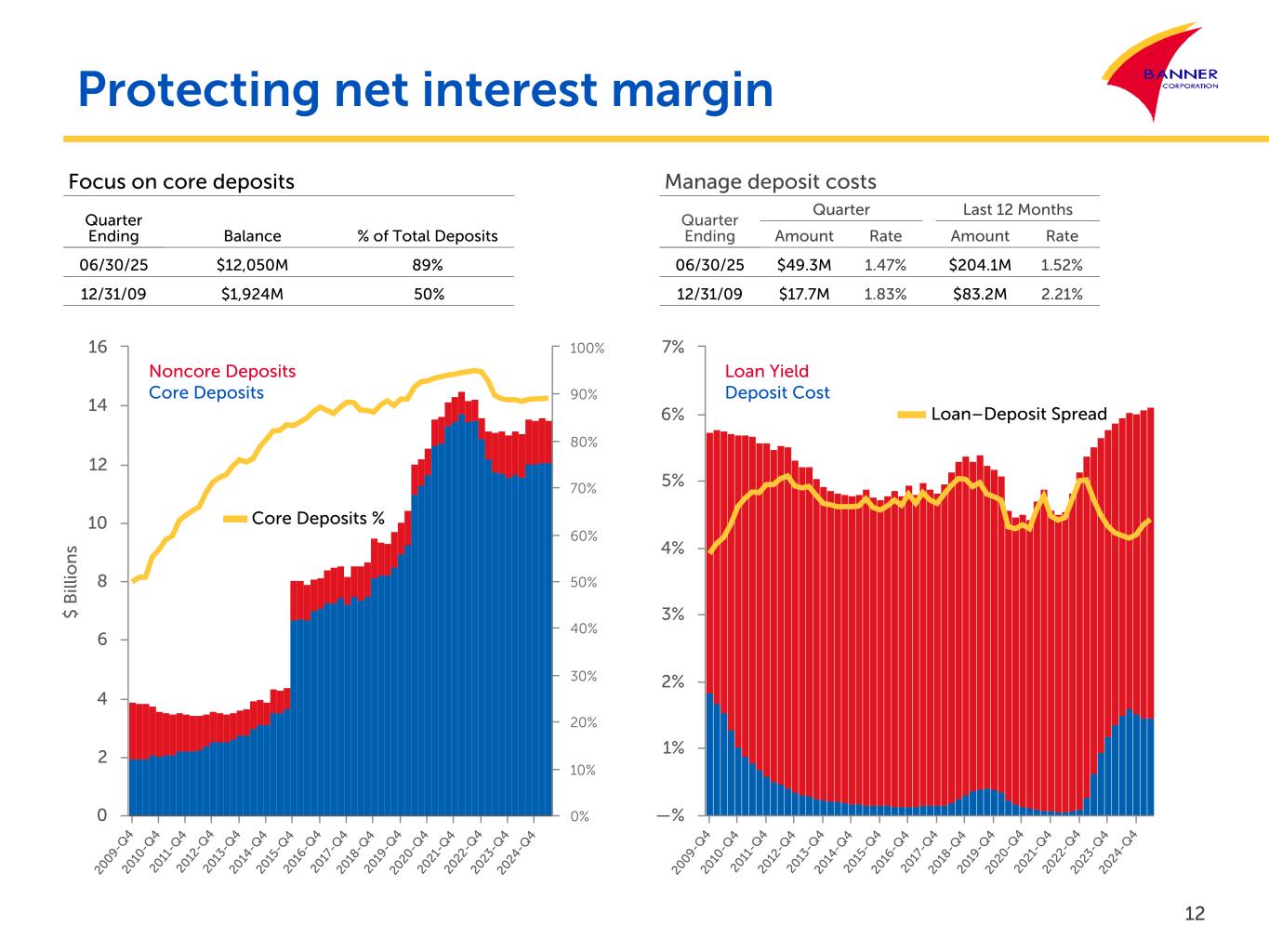
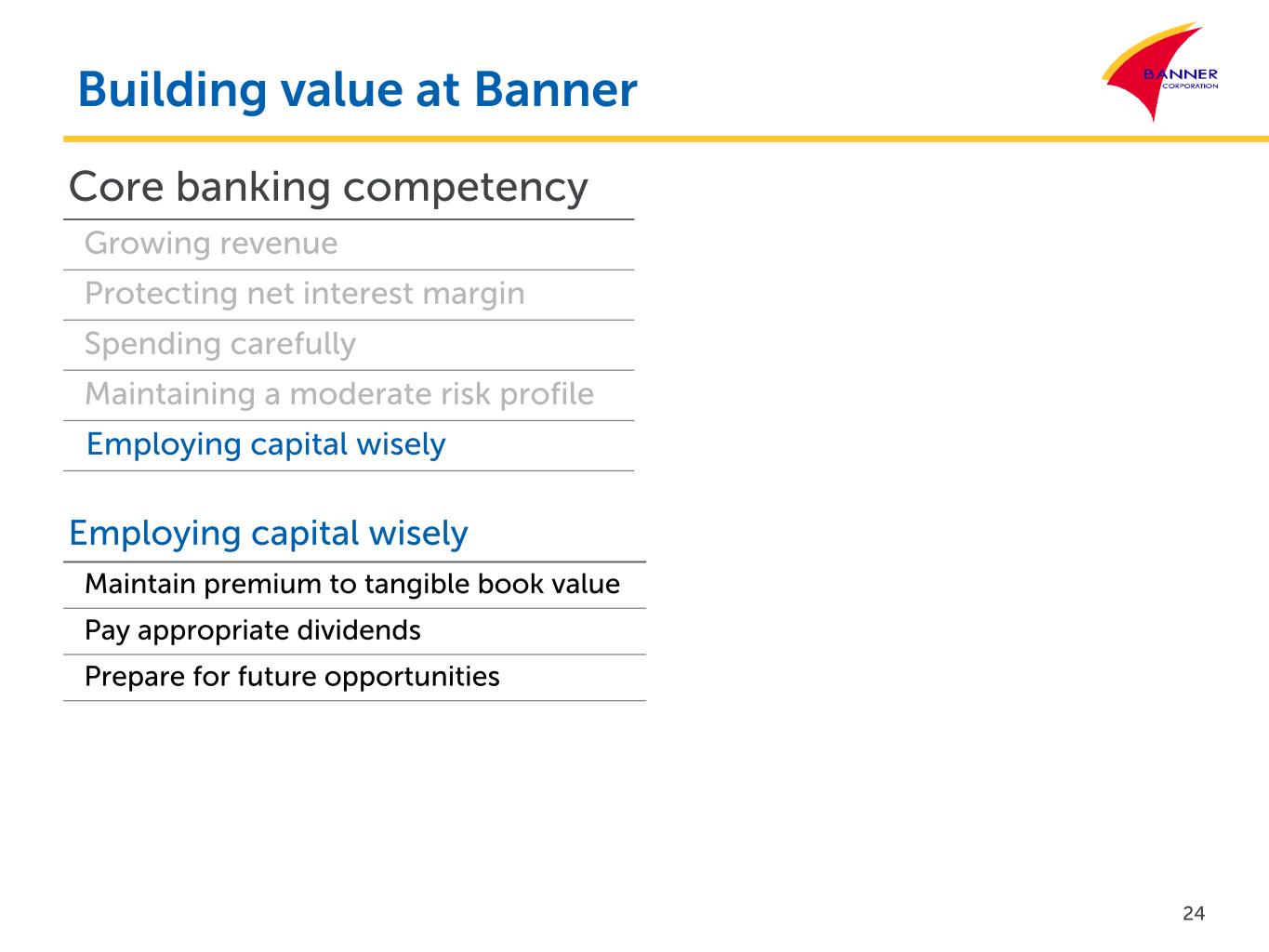
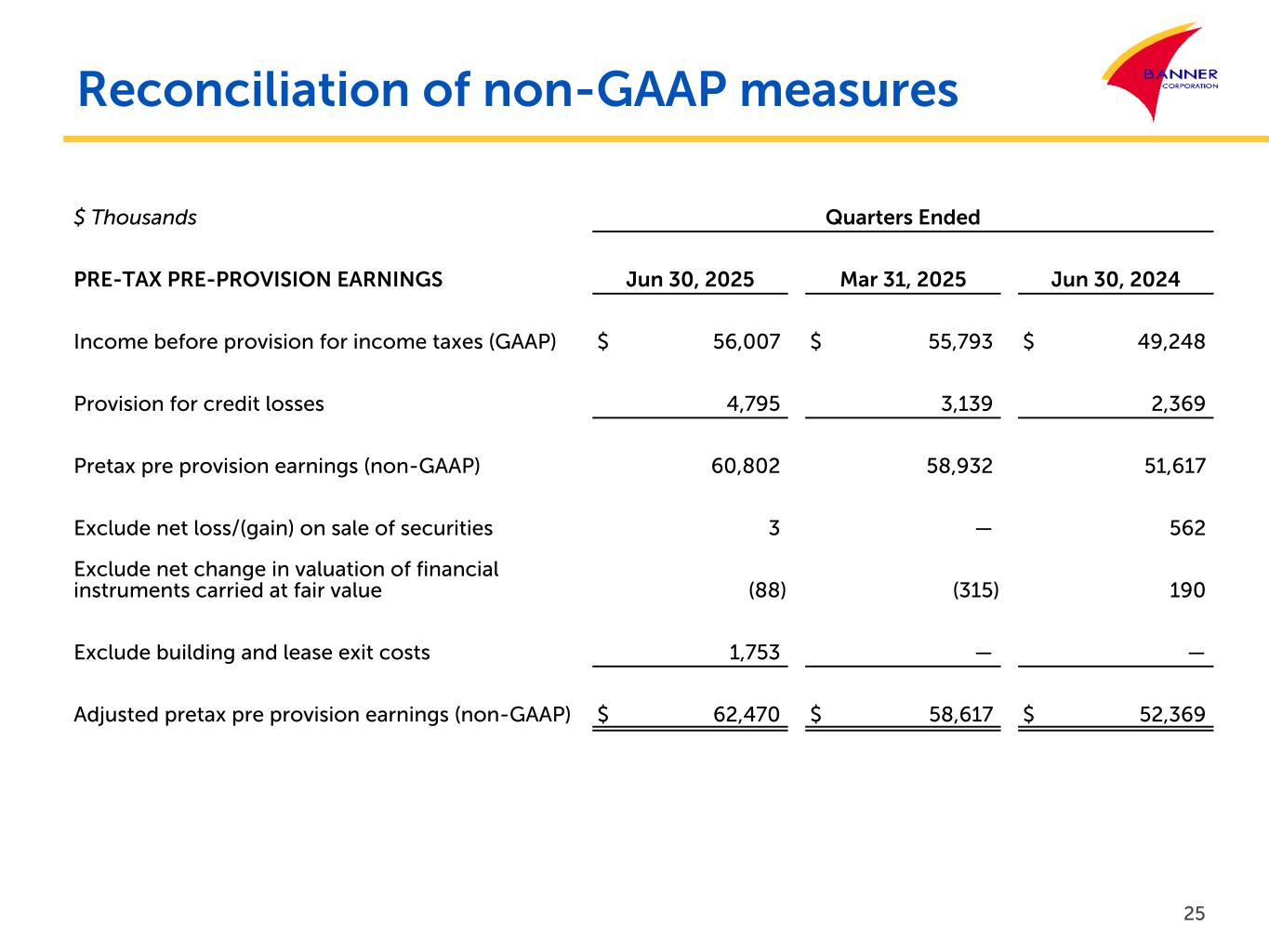
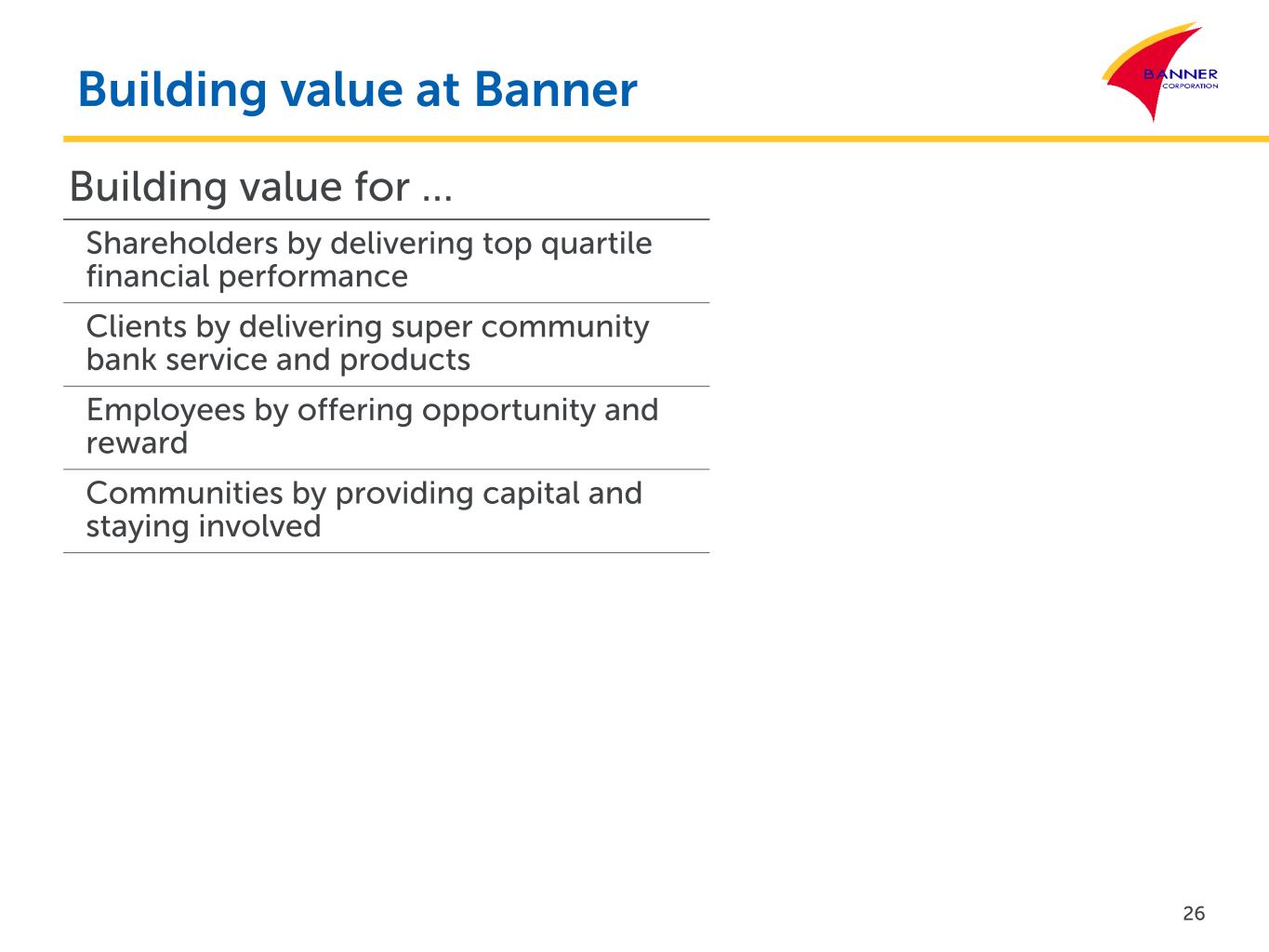
Forward-looking statements are effective only as of the date they are made and Banner assumes no obligation to update information concerning its expectations mark thank you rich as is customary to first i will provide you high level comments on banner's second quarter performance second the actions banner continues to take to support all of our stakeholders including our banner team our clients our communities and our shareholders third joe rice will provide comments on the current status of our loan portfolio and finally Rob Butterfield will provide more detail on our operating performance for the quarter as well as comments on our balance sheet. Before I get started I want to thank all of my 2,000 colleagues in our company who are working extremely hard to assist our clients and communities. Banner has lived our core values summed up as doing the right thing for the past 135 years. Our overarching goal continues to be to do the right thing for our clients, our communities, our colleagues, our company, and our shareholders, and to provide a consistent and reliable source of commerce and capital through all economic cycles and change events. I am pleased to report again to you that is exactly what we continue to do. I am very proud of the entire Banner team that are living our quarter. Now, let me turn to an overview of our performance. The corporation reported a net profit available to common shareholders of $45.5 million or $1.31 per diluted share for the quarter ended June 30, 2025. This compares to a net profit to common shareholders of $1.15 per share for the second quarter of 2024 and $1.30 per share for the first quarter of 2025. Our strategy to maintain a moderate risk profile and the investments we have made and continue to make in order to improve operating performance have positioned the company well for the future. The strength of our balance sheet coupled with the strong reputation we maintain in our markets will allow us to manage through the current market uncertainty. Rob will discuss a number of these items in more detail shortly. To illustrate the core earnings power of Banner, I would direct your attention to pre-tax pre-provision earnings, excluding gains and losses on the sale of security, and changes in fair value of financial insurance. Our second quarter 2025 core earnings were $62 million compared to $52 million dollars for the second quarter of two banners second quarter 2025 revenue from core operations was 163 million dollars compared to 150 million dollars for the second quarter of 2024. we continue to benefit from a strong core deposit base that has proved to be resilient and loyal to banner a very good net interest margin and core expense overall this resulted in return on average assets of 1.13 percent for the second quarter of 2025. Once again, our core performance reflects continued execution on our super community bank strategy. That is, maintaining our core funding position, promoting client loyalty and service model, and demonstrating our safety and soundness through all economic cycles and change events. To that point, our core deposits continue to represent 89% of total deposits. Further, we continued our solid organic growth with loans increasing 5% and core deposits increasing 4% over the same period last year. Reflective of this performance, coupled with our strong regulatory capital ratios and the fact that we increased our tangible common equity per share by 13 percent from the same period last year we announced a core dividend of 48 cents per company. Finally i'm pleased to say that we continue to receive marketplace recognition and validation of our business model and our value proposition. Banner was again named one of America's 100 best banks and one of the best banks in the world by Forbes. Newsweek named Banner one of the most trustworthy companies in America and the world again this year and just recently named Banner one of the best regional banks in the country. J.D. Power and Associates named Banner Bank the best bank in the northwest for retail client satisfaction. Our company was recently certified by Great Places to Work and S&P Global Market Intelligence ranked Banner's financial performance among the top 50 public banks with more than $10 billion in assets. Additionally, the Kroll Bond Rating Agency affirmed all of Banner's investment grade debt and deposit ratings, and as we have noted previously, Banner Bank received an outstanding Let me now turn the call over to Jill to discuss trends in our loan portfolio and her comments on Banner's credit quality. Jill?
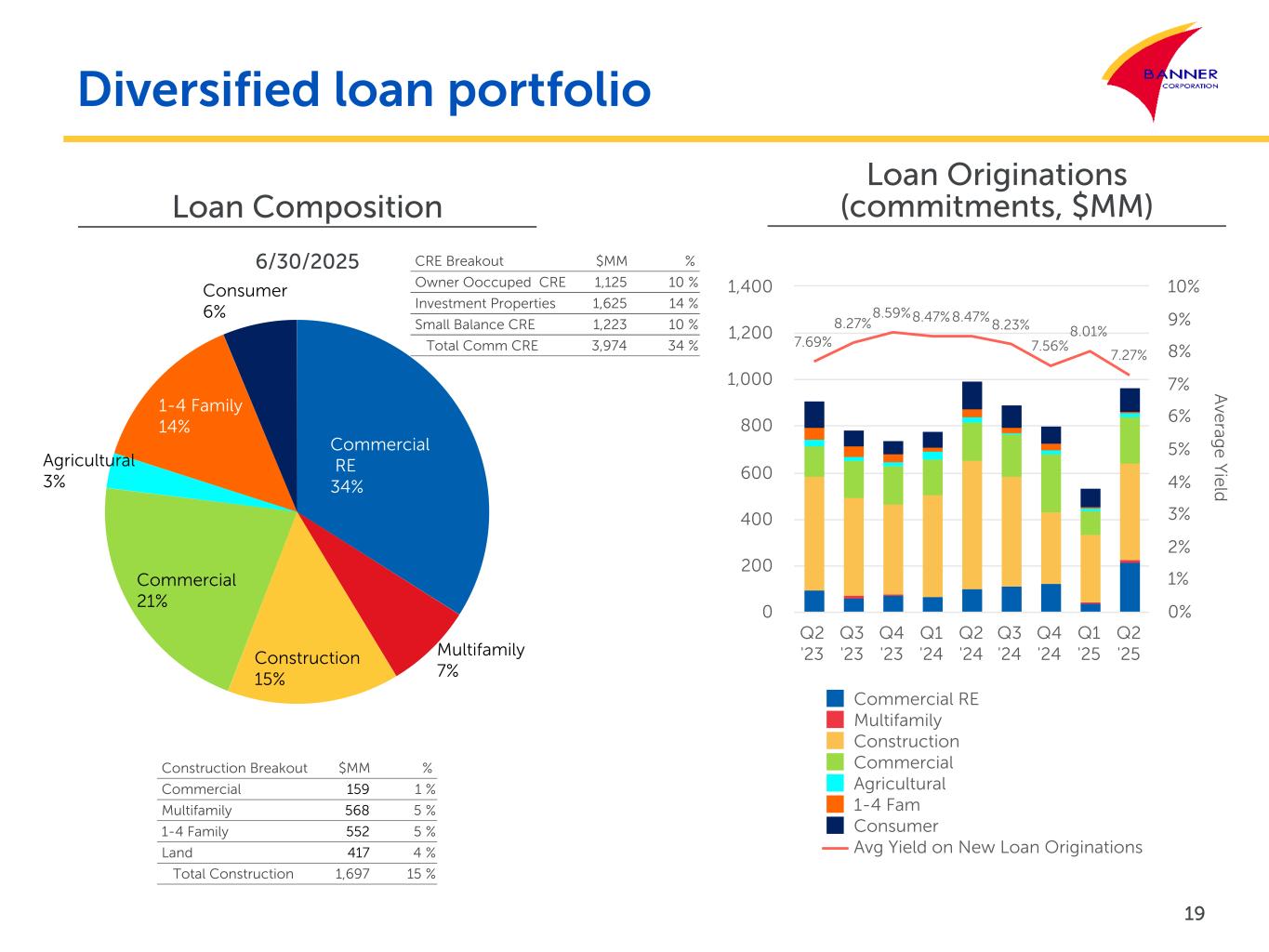
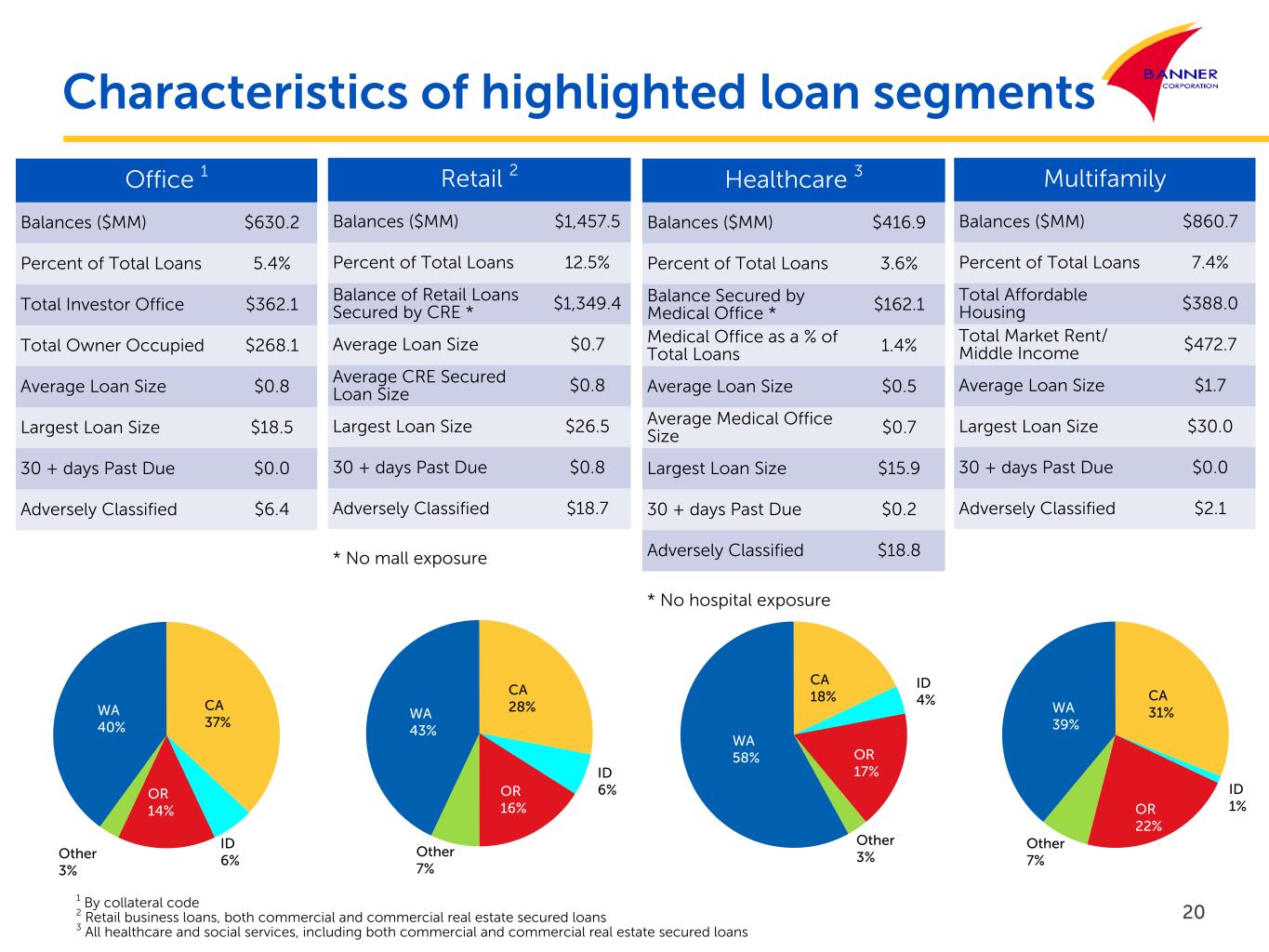
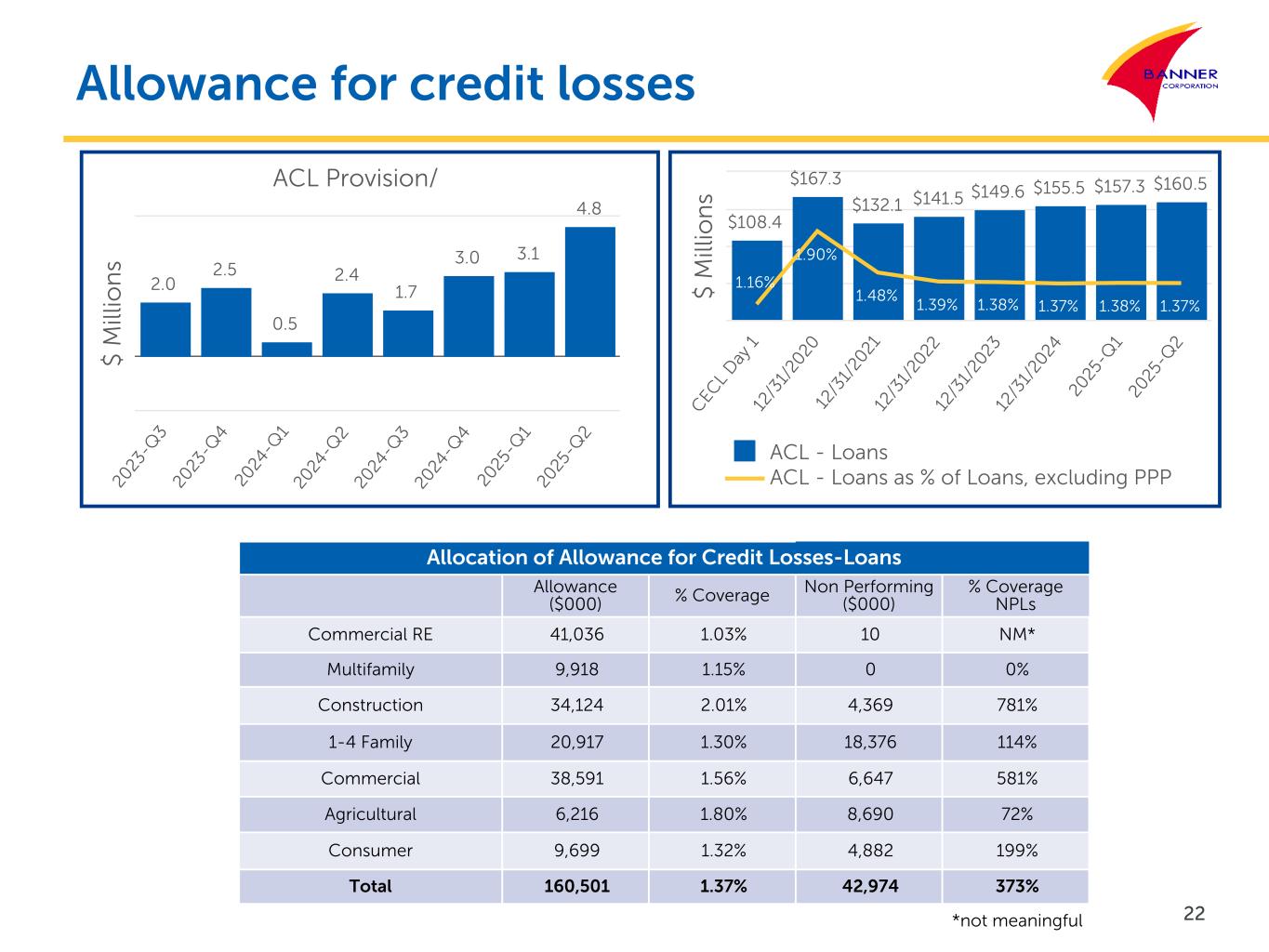
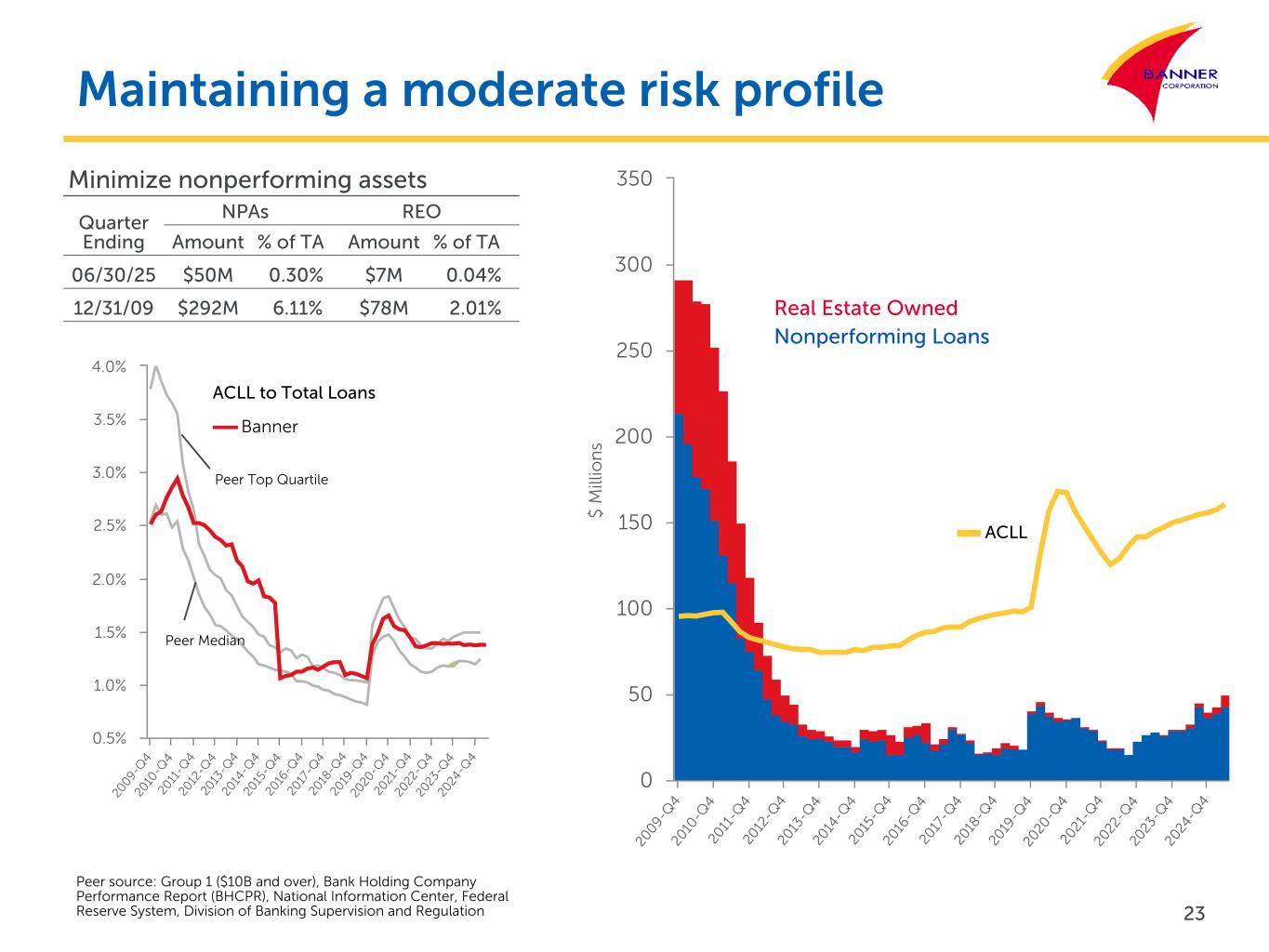
Thank you, Mark, and good morning everyone. As reflected in our earnings release, loan originations were strong, we reported solid loan growth across multiple product lines, and Banner's credit metrics remained stable. Loan originations increased 80 percent when compared to the linked quarter, with commercial real estate up 484 percent, C&I originations up 96 percent, and construction and land development increasing 43 3% respectively, all while commercial and commercial real estate pipelines continue to build. This level of activity reflects a certain amount of business confidence in spite of the continuing higher rate environment and yet-to-be-finalized trade negotiations. Loan outstanding grew by $252 million in the quarter, or 9% on an annualized basis, and are up 5% year-over-year, in line with our year-to-date expectations. The primary drivers of the growth were owner-occupied commercial real estate up $104 million, C&I loans up $65 million, and the construction and development book, with one-to-four family construction up $48 million, land development up $21 million, commercial construction up $13 million, partially offset by expected payoffs in the multifamily construction portfolio. The growth in owner-occupied commercial real estate is a mix of new middle market clients, expansion of existing relationships, and continued solid performance in new small business generations. The C&I story is similar, with growth coming from the expansion of existing relationships, increased line utilization, and meaningful small business originations. The residential construction portfolio, at 5% of total loans, continues to be diversified across markets and product mix and the level of complete and unsold inventory remains below historical norms as builders have become more cautious with replacement starts in this extended high-rate environment the increase in land and land development reflects the builders need to replenish finished lot inventory with land development financing reserved for the strongest vertically integrated clients within the portfolio aggregating all business lines in in the construction portfolio, the total remains balanced at 15% of total loans. Agricultural loans increased 3% in a quarter as both the size of operating line and line utilization increased to cover higher operating costs and normal seasonal activity. And the growth in consumer 1-4 family secured loans reflects the strong home equity promotion that occurred in the second quarter. Circling back to Banner's credit metrics, delinquent loans declined to 0.41% of total loans, as compared to 0.63% last quarter and 0.29% as of June 30th, 2024. Adversely classified loans also declined in the quarter-over-quarter, down $8.3 million, and represent 1.62% of total loans, an 11 basis point decrease when compared to March 31st. In spite of the $7 million increase in the quarter, non-performing assets remain modest at 0.30% of total assets. Non-performing loans total $43 million, the majority of which are consumer-related, primarily residential mortgage loans, which involve prolonged resolution timelines given consumer protection regulations. REO balances total $6.8 million, up $3.3 million in the quarter as we completed the foreclosure on an industrial property and two small single-family properties during the quarter. Loan losses in the quarter totaled $1.7 million and were offset in part by recoveries totaling The net provision for credit losses for the quarter was $4.8 million, including a $4.2 million provision for loan losses and a $588,000 provision related to unfunded loan commitments. The provision was largely driven by the strong loan growth, with the reserve for credit losses providing coverage of 1.37% of total loans, which compares to 1.38% as of the length quarter and 1.37% as of June 30, 2024. floor. Last quarter, I noted that the level of economic uncertainty, coupled with the myriad of policy changes that were being implemented, created a potential headwind that could negatively impact our clients and communities. To date, that has largely not materialized, evidenced by the strong loan originations and growth in the quarter, as the implementation of international tariffs were paused. With those policy changes again being suggested as imminent, I am compelled to reiterate that if adopted, they will almost certainly have a negative impact on the West Coast economies with the majority of the burden borne by the small business sector and further stressing the consumer. Still, in these uncertain times, Banner's super-community delivery model coupled with a consistent approach to underwriting credit has enabled us to expand existing and grow new relationships while maintaining our moderate risk profile. Our strong balance sheet, robust capital base, and solid reserve for loan losses continue to serve us well. With that, I will hand the microphone over to Rob for his comments.
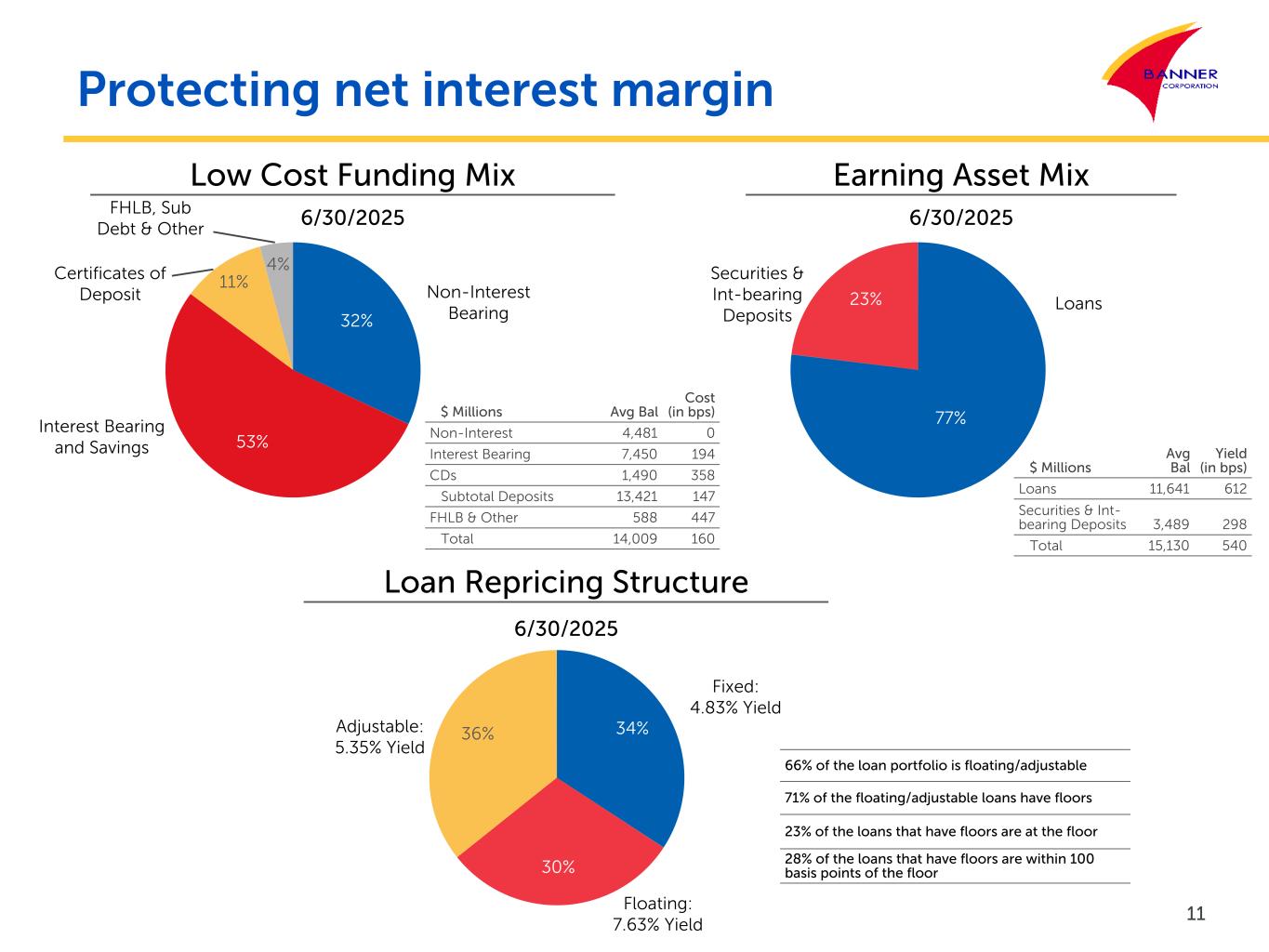
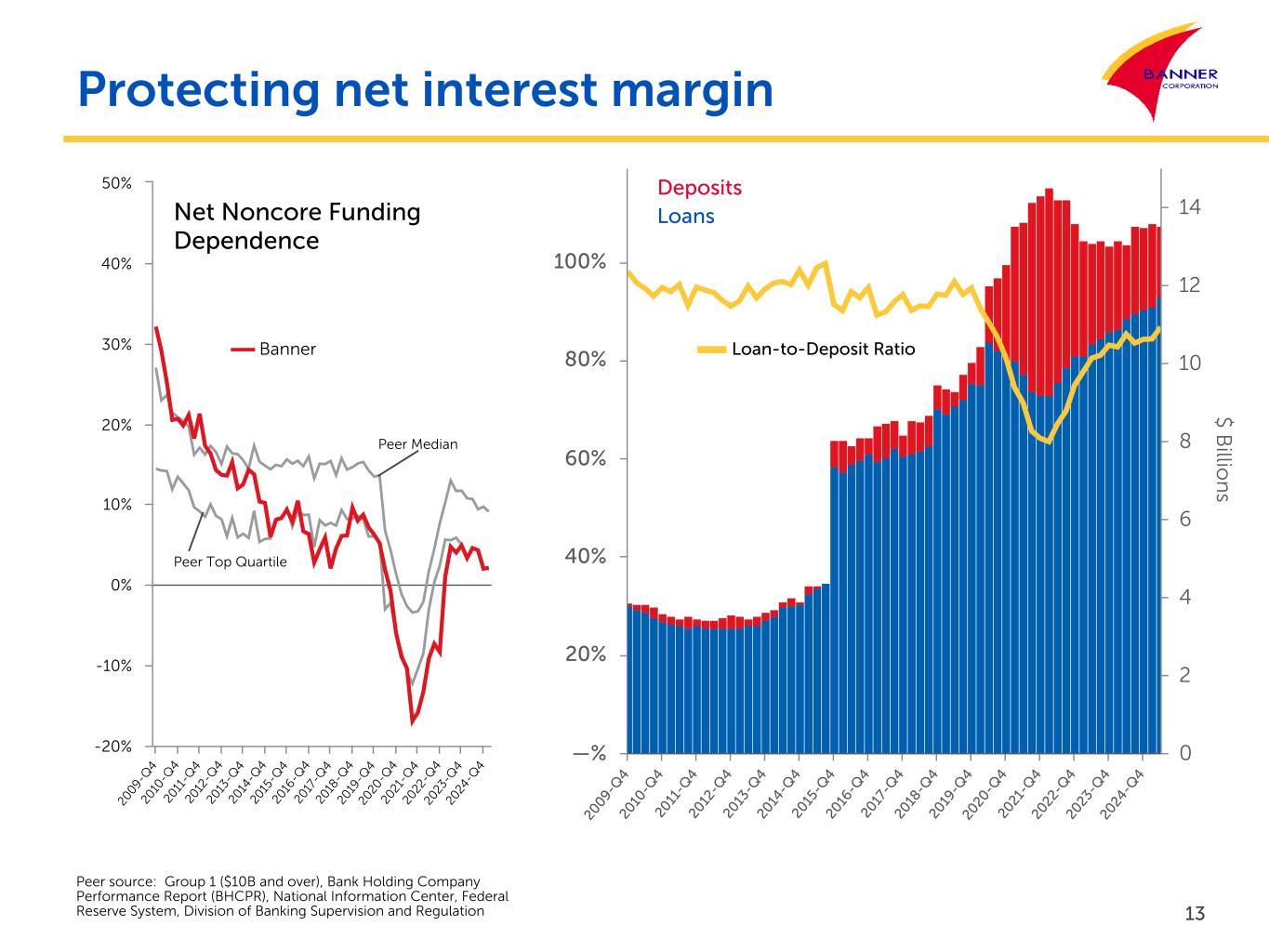
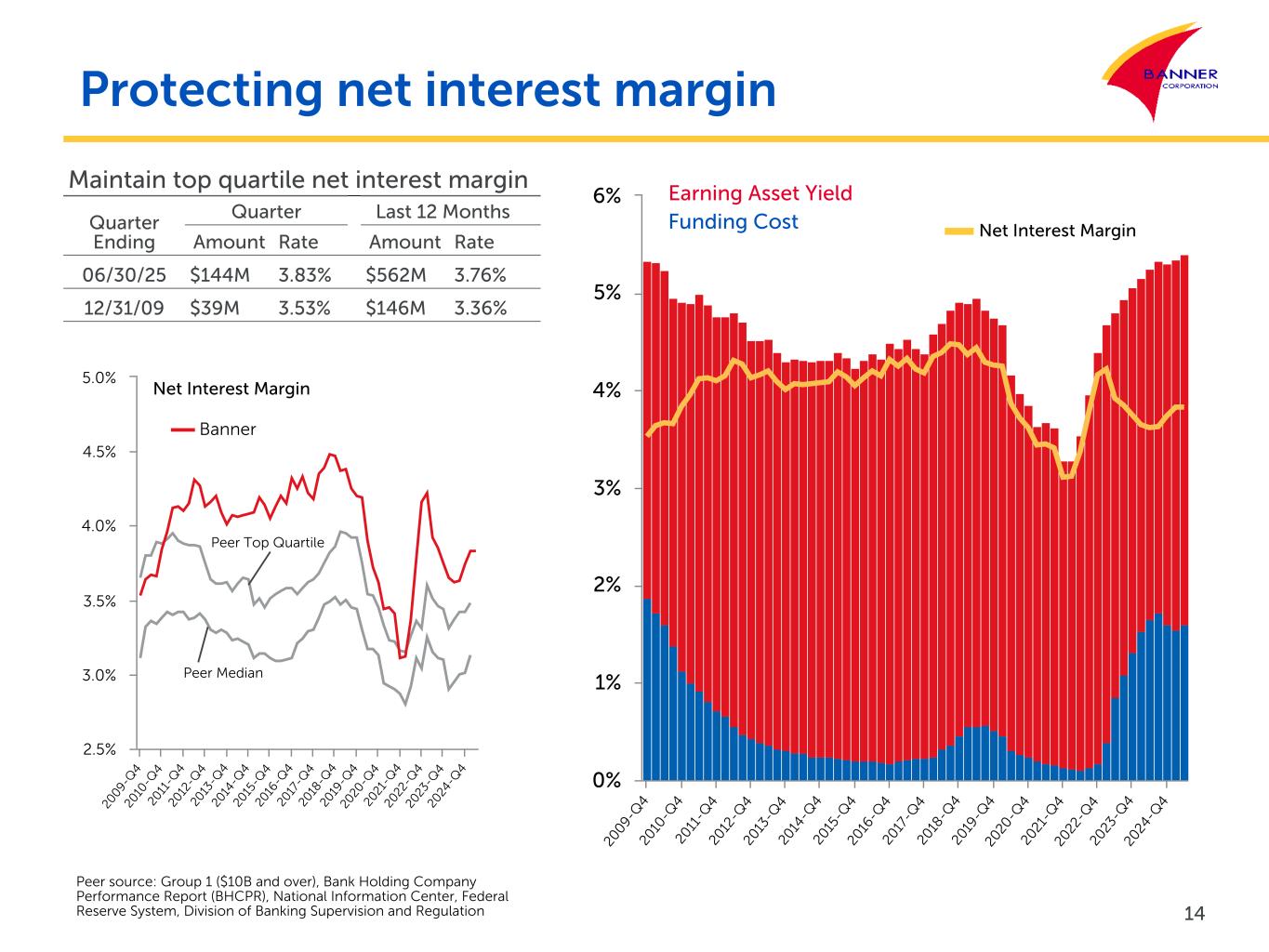
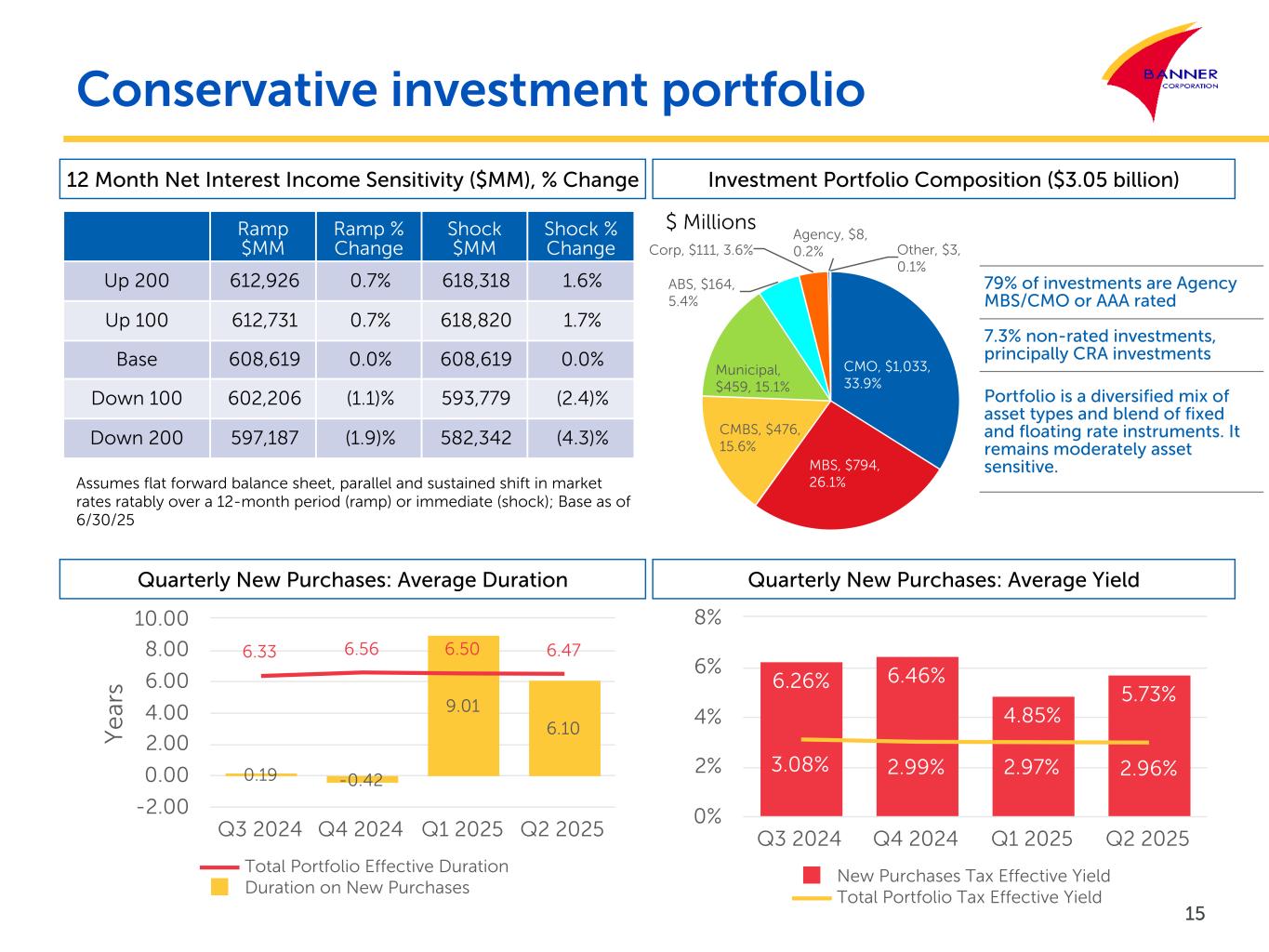
Rob? Great, thank you Jill. We reported $1.31 per diluted share for the second quarter compared to $1.30 per diluted share for the prior quarter. The one cent increase in earnings per share was primarily due to an increase in net interest income partially offset by the current quarter including cost associated with consolidating back office space as well as a higher provision for credit losses due to growth in the loan balances. We experienced strong positive operating leverage during the quarter compared to both the prior quarter and the quarter ended June 30th, 2024. As core pre-tax pre-provision income increased 6.6 percent or 3.9 million compared to the prior quarter and increased 19 percent or 10 million compared to the year ago quarter total loans increased 265 million during the quarter with portfolio loans increasing 252 million or nearly nine percent on an annualized basis and health for sale loans increased 13 million the loan to deposit ratio into the quarter at 87 percent total securities decrease 55 million primarily due to normal portfolio cash flows. Deposits decreased by $66 million during the quarter due to core deposits decreasing $40 million as a result of normal seasonal activity. Time deposits decreased $26 million due to a $25 million decrease in brokered deposits. Core deposits into the quarter at 89% of total deposits, same as the prior quarter. Total Wholesale borrowings increased $309 million during the quarter as FHLB advances were used to temporarily fund loan growth. Banner's liquidity and capital profile continued to remain strong with robust core funding base, a low reliance on wholesale borrowing, and significant off-balance sheet borrowing capacity. As a reflection of our robust capital and strong liquidity positions, Banner called and repaid $100 million of subordinator notes at the end of the quarter. Net interest income increased $3.3 million from the prior quarter due to average interest earning assets increasing $188 million and one more interest earning day in the current quarter. The increase in average earning assets was due to average loan balances increasing $223 million, partially offset by total average interest-bearing cash and investment balances decreasing $36 million. The earning asset yield continues to benefit from a remixing out of securities and into loans. Tax quote on net interest margin was 3.92 percent, same as the last quarter. Earning asset yields increased five basis points due to a five basis point increase in loan yields as the just for loans continue to reprice higher and new loans are being originated at rates higher than the average yield on the loan portfolio. The average rate on new loan production for the quarter was 7.27 percent compared to 8.01 percent for the prior quarter. The reduction was due to a higher percentage of production coming from owner-occupied CRE and CNI in the current quarter. Funding costs increased by basis points as a result of using FHLB advances to temporarily fund loan growth and seasonal tax deposit declines. Deposit costs were 1.47 percent for the current quarter which was consistent with the prior quarter non-interest bearing deposits into the quarter at 33 percent of total deposits total non-interest income decreased 1.4 million from the prior quarter primarily due to a loss of 919 000 on the disposal of assets related to back office space consolidation and a 227 000 net difference in the fair value adjustments on financial instruments carried at fair value. Total non-interest expense was similar to the prior quarter with increases in salary and benefits, information technology, marketing, and REO expenses which were offset by higher capitalized loan origination expense. The current quarter included $834,000 of lease termination costs associated with backoffs as faced consolidation.
Operator
Our strong capital and liquidity levels positioned as well to continue to execute on our super community bank business model this concludes my prepared comments now we'll turn it back to mark thank you jill and rob for your comments that concludes our prepared remarks and nadja will now open the call and we welcome your great thank you if you would like to ask a question please press star fill it by one on your telephone keypad if you would like to remove your question please press star fill it by two when preparing to ask your question please ensure your phone is muted locally our first question goes to david fiesta of raymond james david please go ahead
hey good morning everybody good morning david um i i just wanted to follow up maybe on on jill you touched on it a bit about the excel the improvement in origination is really an impressive increase and i was just hoping you could elaborate maybe a bit more you know on on from your standpoint Did anything change or do you feel like your customers are more comfortable with the broader economy? Or was there any kind of a timing issue? Just curious whether there's anything to read into that and just kind of how the pipelines are holding up just given that increase in originations.
So the increase in originations certainly pulled some of the pipeline out and so they're rebuilding now. If you look back historically, I think what you would see, David, is that Q1 and Q3 are generally slower than Q2 and Q4, so the tariff noise that happened at the end of Q1 certainly slowed things down there and the policy changes. That opened back up a little bit, pulled some of that through. What was muted long growth in Q1 came in in Q2, and I guess at the end of the day what would say to you is that i'm still expecting us to hit that mid single digit growth rate for the year i expect we'll see a little bit of a pullback in q3 but you know we had a five percent annualized year over year in q1 we had a five percent annualized year over year in q2 and that's roughly what we're projecting for the year of 2025. okay okay that's helpful and then maybe just touching on the funding side a bit you know anecdotally it's just we're hearing a lot more competition on the deposit side as growth has increased across the industry could you just
maybe touch on on obviously there's some seasonality too but just kind of curious what you're seeing on the core deposit front some initiatives that you got in place to maybe drive core deposits um and and maybe you know just how you think about funding that additional loan growth over the back half of the year yeah david so just from uh this is rob so just from a overall uh pressure on deposits we're not necessarily seeing competition heat up on deposits at this point where we're not seeing kind of competitive pure banks uh increasing rate specials right now everything seems to be a bit more static i mean deposits are always highly competitive so let's just keep that in mind but the ultra competitive department or environment that we experienced you know really you know a year ago it's not quite what we're seeing right now I mean really I mean our our whole philosophy all long has been relationship banking and so our expectation is is that as we are bringing in new clients we expect it to come with the total relationship not only the loans but also the deposits and we've also talked about that um we're heavily focused on on small business and small business tend to be deposit rich in their relationships so that tends to help as well okay and then to the extent that that loan growth continues to
to outpace deposits i mean would you expect to kind of bridge that gap i guess first could you remind us the cash flows from the securities book and then would you expect to kind of bridge the gap with or you know plug it with you know FHLB advances or is there any shift in appetite to maybe you know look at repositioning securities or selling anything to free up some liquidity to fund the growth that you guys are seeing?
Yeah so David on the security portfolio first of all it's about 60 million a quarter the cash flows that are coming off right now. We're not currently planning and kind of repositioning but we would you know we remain some flexibility there just depending on if market conditions change um what was the first part of the question i'm sorry i'm trying to and it just kind of to the extent that again growth exceeds core deposit growth is the fhlb advances kind of a plug or just you know kind of curious how you think about funding your growth going forward yeah it was a plug for this quarter certainly and i think that's why we saw that increase in funding costs during the quarter was deposit costs were flat but funding costs was up because of the combination of two both the really strong loan growth that we had for the quarter but then also just normal seasonal deposit outflows that we experienced during the first two months of the quarter and so that's why you saw FHLB advances increase if normal seasonality returns we would expect that we would see deposit growth happen in the third quarter and deposit growth could very well outpace loan growth in the third quarter if historical kind of trends come in line and so i mean usually during the third quarter that's when we see our ag clients their crops come in cash comes in from that so historically we've always seen increases in deposits during the third quarter that's helpful thanks everybody thanks david the next question go to andrew
Operator
Terrell of Stevens. Andrew, please go ahead.
Hey, good morning. If I could just finish up kind of on the margin of funding there, the subdebt that was redeemed or paid off this quarter, do you have the rate on that or the cost of it? Just trying to get a sense for the rate of what's remaining.
Yeah, the cost on that at the time, so it was 5%, but then there was also amortization of some of the original debt issuance costs there. So it was about $550 was the all-in cost on that sub-debt. And so we would expect some pickup reduction in funding costs because now effectively if you move that from the $550 to FHLB advances at least temporarily, I mean, they're in the $450 range. So maybe we pick up 100 basis points.
Yep. Got it. Okay. I appreciate it. And then And maybe sticking with you, Rob, on just the expense base, you definitely had maybe a little bit of a benefit this quarter from the deferred origination costs. It sounds like maybe loan growth's a little bit slower in the 3Q. Just hoping to get a sense of kind of the puts and takes of the expense base into the back half of the year and if you have kind of an expected quarterly run rate.
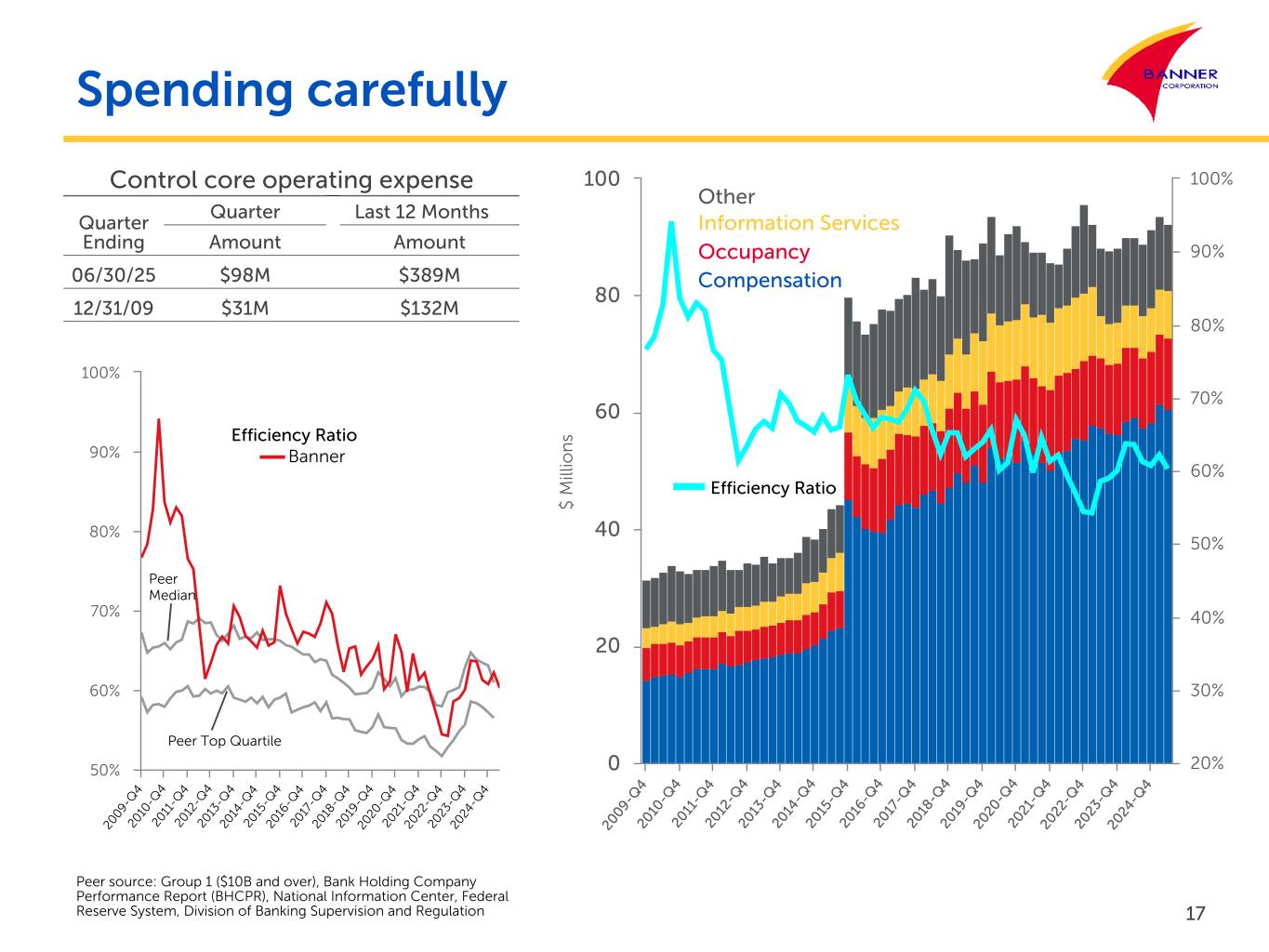
Yeah, so Andrew, on the expense side of the equation, you know, we continue to go live with some of the different modules on the new deposit and loan origination system. So in the second half of the year, we would expect IT expenses to increase. And what we're looking at is we're looking at kind of over the longer term offsetting a portion of that with consolidation of some additional back office space. I think you saw some of those non-reoccurring expenses come through during the current quarter, but we would probably expect that we'd continue to see some non-reoccurring expenses come through probably over the next three or four quarters related to that specific initiative. And if you think about a run rate, you know, what we talked about is the first quarter was probably a decent run rate that we would expect, and then if you kind of layer in just normal inflationary changes as you go forward from there as you mentioned the second quarter was was down and our capitalized loan cost higher origination you know just due to the higher originations but if you think about q1 was really low originations historically as well so we would expect capitalized loan costs probably be somewhere in between those two got it um okay thank you um and i just want
to ask um maybe for mark um you know the mna environment it seems like it's maybe a little more amicable today and we've seen quite a few deals announced just curious if anything has changed um in terms of your view on on mna how palatable you you see it being today and then just any update on kind of status of discussions or how how mna kind of fits into the the banner strategy over the kind of near to medium term yeah thank you andrew for for the question uh clearly there's been a number of transactions that have been announced i think certainly the the m a environment stations have have picked up but what i would remind
you is that our organization is totally focused on our organic and as you can see by the numbers that we put up quarter over quarter and year over year the organic business model and our execution we're we're very focused on it and it's very so opportunistic m a is something we will continue to look at but i don't feel compelled that we have to do anything it is simply it is simply something that you know i think the entire industry is going to continue to look to some consolidation to get additional efficiencies but we remain very focused on our organic business
model uh great uh thank you for taking the questions thank you andrew the next question goes to jeff rulers of da davidson jeff please go ahead good morning uh julie i had a question about that hey good morning mark uh the the loan growth comment you made about a pullback in the third quarter was that a a pullback from the nine percent pace from 2q or a net runoff my guess it's still positive correct yeah it's a pullback from the nine percent growth rate and if you look in our disclosures right if you just quarter over quarter third quarter is generally a little slower than second quarter and rob on the back to the margin you know you got that uh the pickup or reduction from from the sub debt um move as well as look if i guess if loan growth uh levels off or slows down a little bit and and fhlb needs are are somewhat reduced and you get that maybe the seasonal pickup in in deposits frames up a pretty good uh margin outlook i i guess if you think
about the second half absent any any fed moves um expectations there that that sounds like that's more uh i guess tailwinds than headwinds on the margin yeah i think that's right job um the as long as the fed is on pause which you know we use moody's i think last forecast i saw from them they were going to assuming uh when no rate cut until september that's a long time from now so we'll see what really happens and then an additional one in December and under that scenario we would expect loan yields to continue to increase four to five basis points a quarter so the third quarter we'd see that you know kind of the same clip that we experienced during the second quarter as far as loan yield expansion and the funding sites by a little less predictability but if we do assume that deposit costs would remain flat but where we could see the improvement in the funding cost would be that normal seasonal activity if if that third quarter seasonal increase comes in deposits then we'd have lower reliance on fhlb advances which would last one for me was maybe on the credit side where the risk rating downgrades so you kind of faded
out on me jeff but the um the decrease in substandard this quarter was really a mix We had several upgrades, a couple of payoffs, and then a handful of downgrades into substandard for that net change of $8.3 million. The agricultural sector has experienced more downgrades due to the pressure on commodities prices and input costs, so we are seeing some continued pain in the ag sector, so I'll remind you it's 3% of the loan portfolio, 50% operating lines, and 50% real estate secured. I continue to watch the small business sector looking forward. We haven't seen, you know, real pain in it yet. The delinquencies are pretty static in that as well. So it's just where I think the pain of the tariffs will ultimately land before they get pushed to the final consumer hopefully that answered your question as you were fading out on me Jeff if I didn't hit it all sorry yeah okay so the sorry it was a headset thing the the little bump in non-performing was was mostly AG actually no that was substandard sorry Jeff the bump in non-performing is almost exclusively one to four family residential properties due to that extended time periods and what you know the way we have to work with them with consumer protection laws it's they take a long time to work their way through okay that's good detail thank you
thanks jeff thank you as a reminder if you would like to ask a question please press star fill it by one on your telephone keypad and the next question goes to kelly motter of kbw kelly please go ahead hey good morning thanks for the question um maybe i would start off by circling back on um the margin i there's been a lot of moving parts and i appreciate all the color thus far but um wondering you know particularly in light of the really strong loan growth um i know one of the drivers of margin ahead has been just the back book repricing um of the loan
book so wondering how spreads are holding up new where new pricing is coming in and if there's um there's a lot of color on the deposit competition but wondering um how how things are holding up on the loan side in terms of pricing and spreads thank you so kelly on the loan side pricing on the term pieces are you know they're pretty they are holding up there you know there hasn't been a lot of change in that, you know, where we're going to see the change will be in the variable rate portfolio when the rates reset. If you look at the originations and see, you know, the dip in the yield quarter over quarter, it was really the different mix between the product type, you know, less construction and more CNI and owner-occupied CRE.
But in general, they um the yields are holding up got it nice i think rob the commentary on on prior calls have been like roughly a five basis point increase in loan yields absent um uh fed cuts which would cut into that i'm wondering if that kind of rough rule of thumb still holds in terms of modeling from the nim perspective yeah i think i think that's right i'd say four to five basis points what is what I would expect and I think the modeling showing that that would continue as long as the Fed is on pause for the for the next you know handful of quarters but over time that
backlog of adjustable rate loans that haven't repriced through the cycle kind of continues to dwindle so over time we'd expect that to you know in the near term we would expect it in that fortified basis point.
Got it that's that's helpful um maybe last question for me on on loan growth um obviously it was it was a really good quarter um wondering Jill are you seeing any particular markets where there's been better opportunities or um the activity is holding up a bit better just wondering if there's any sort of regional differences that um or color on that front that you could provide?
Yeah, Kelly, I would say this past quarter, largely when you think of the more middle market space, it was more Pacific Northwest generated than California. I think when you look at the small business origination, both CNI and the owner-occupied CRE, that's broad-based across the footprint. And then I guess I would add that I would expect to see some solid growth coming out California as we've added several seasoned relationship managers recently to that market. So I expect more growth coming in the California market in the near term.
Got it. That's helpful. I'll step back. Thank you so much.
Operator
It appears we have no further questions. I'll hand back to Mark for any closing comments.
Thank you, Nadia. As I stated, we're very proud of the Banner team and our second quarter 2025 25 performance. Thank you for your interest in Banner and joining our call today. We look forward to reporting our results again to you in the future. Have a great day everyone.
Operator
Thank you. This now concludes today's call. Thank you all for joining. You may now disconnect your lines.