Operator
Good day and welcome to the Brinks Company's Second Quarter 2026 Conference Call. All participants will be in listen-only mode. Should you need assistance, please signal a conference specialist by pressing the star key followed by zero. After today's presentation, there will be an opportunity to ask questions. To ask a question, you may press star, then one on a touch-tone phone. To withdraw your question, please press star, then two. And please note this event is being recorded. This call and the Q&A session will contain forward-looking statements. Actual results could differ materially from projected or estimated results. Information regarding factors that could cause such differences are available in today's press release and presentation and in the company's SEC filings. The information presented and discussed on this call is representative of today only. Brinks assumes no obligation to update any forward-looking statements. The call is copyrighted and may not be used without written permission from Brinks. I will now turn it over to your host, Jesse Jenkins, Senior Vice President of Financial Planning and Analysis. Mr. Jenkins, you may begin.
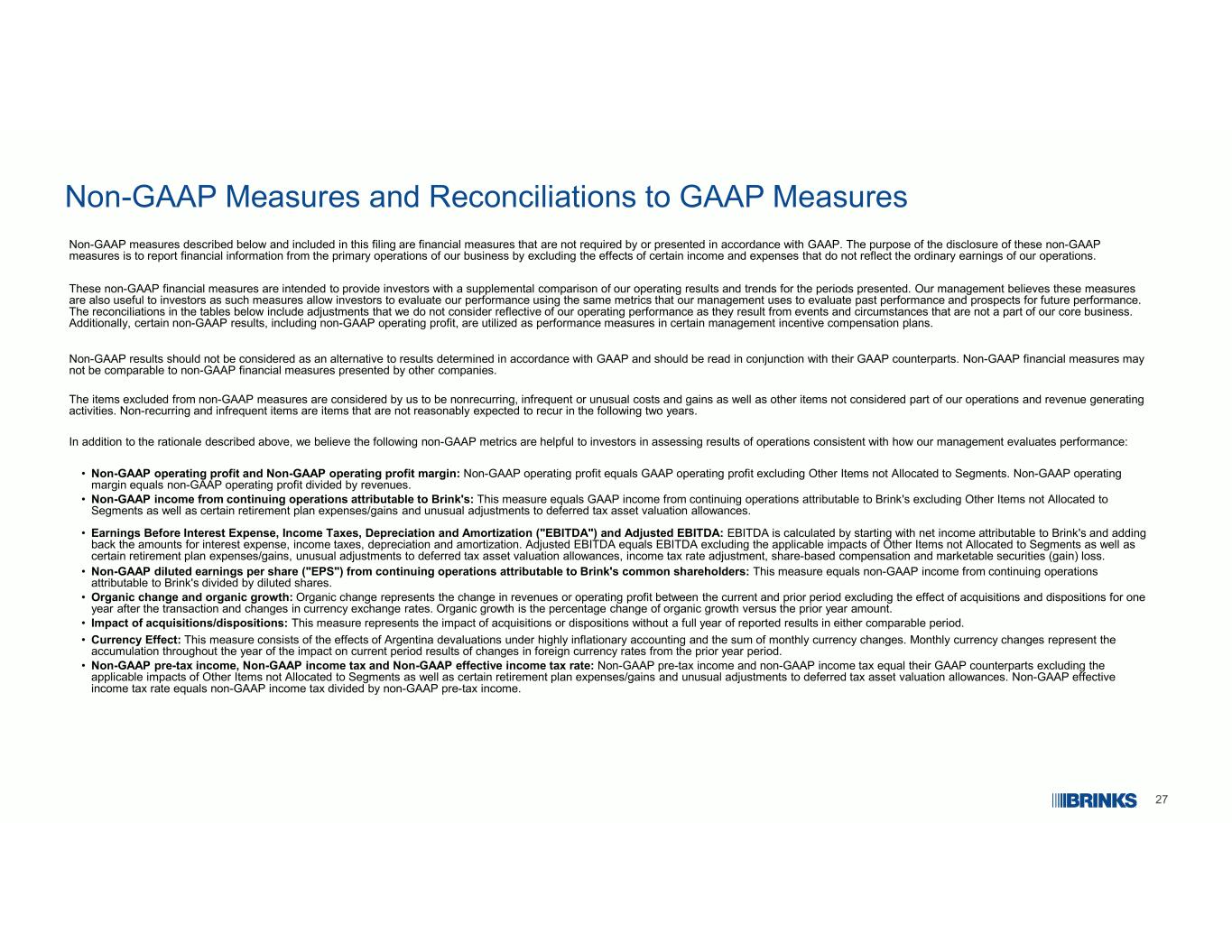
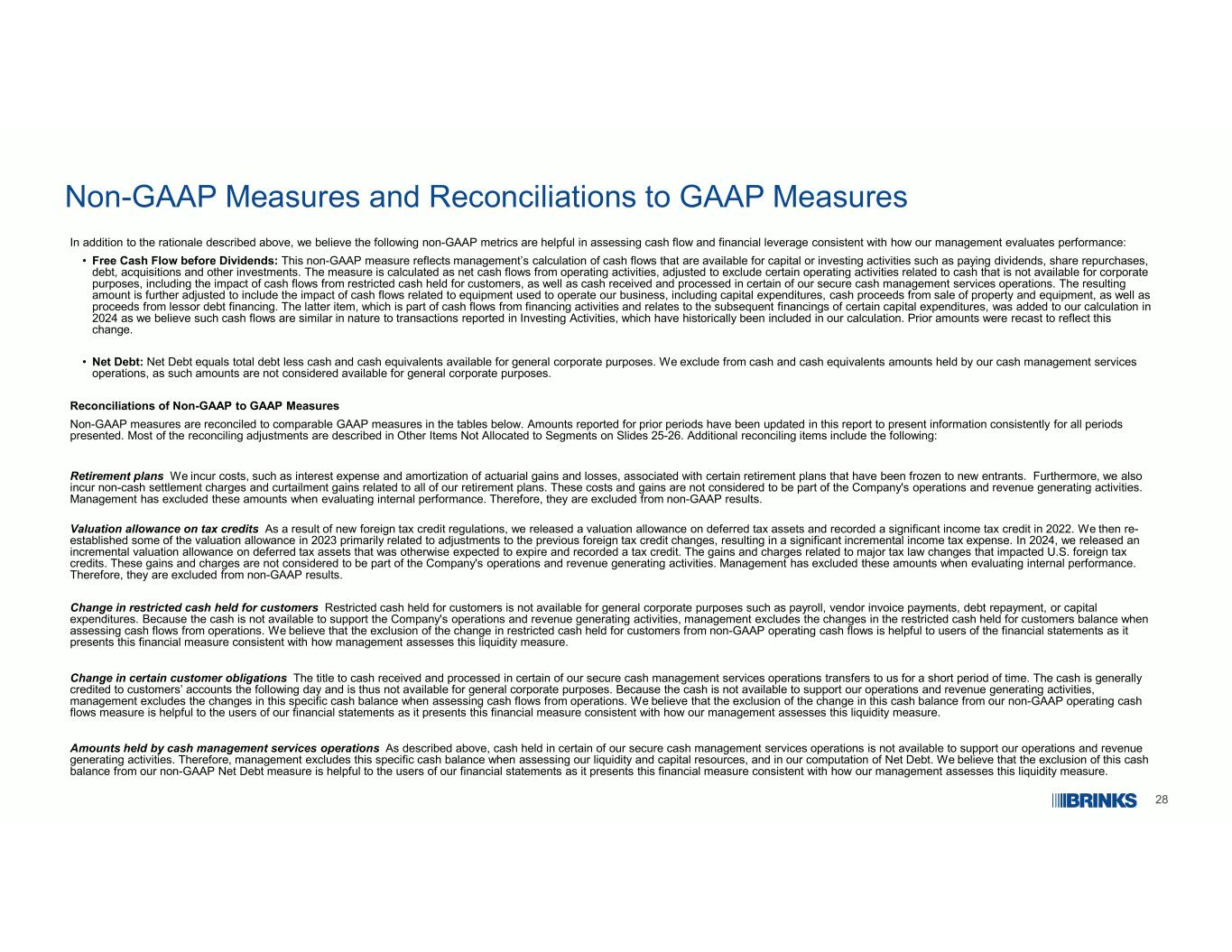
Thanks and good morning. Joining me are CEO Mark Eubanks and CFO Kurt McMacken. Today, Brinks reported second quarter results on a GAAP, non-GAAP, and constant currency basis. Most of our commentary today will be focused on our non-GAAP results. These non-GAAP financial measures are intended to provide investors with a supplemental comparison of our operating results and trends for the periods presented. We believe these measures allow investors to better compare performance over time and to evaluate our performance using the same metrics as management. Reconciliations of non-GAAP results to their most comparable GAAP results are provided in SEC filings, which can be found on our website. We will also have commentary on the status of our pending acquisition of NCR Atleos. As a reminder, this transaction remains subject to the completion of customary closing conditions and additional regulatory approvals. Other details, including risk factors related to the transaction, can be found in the pertinent SEC filings. I will now turn the call over to Brink CEO Mark Eubanks.
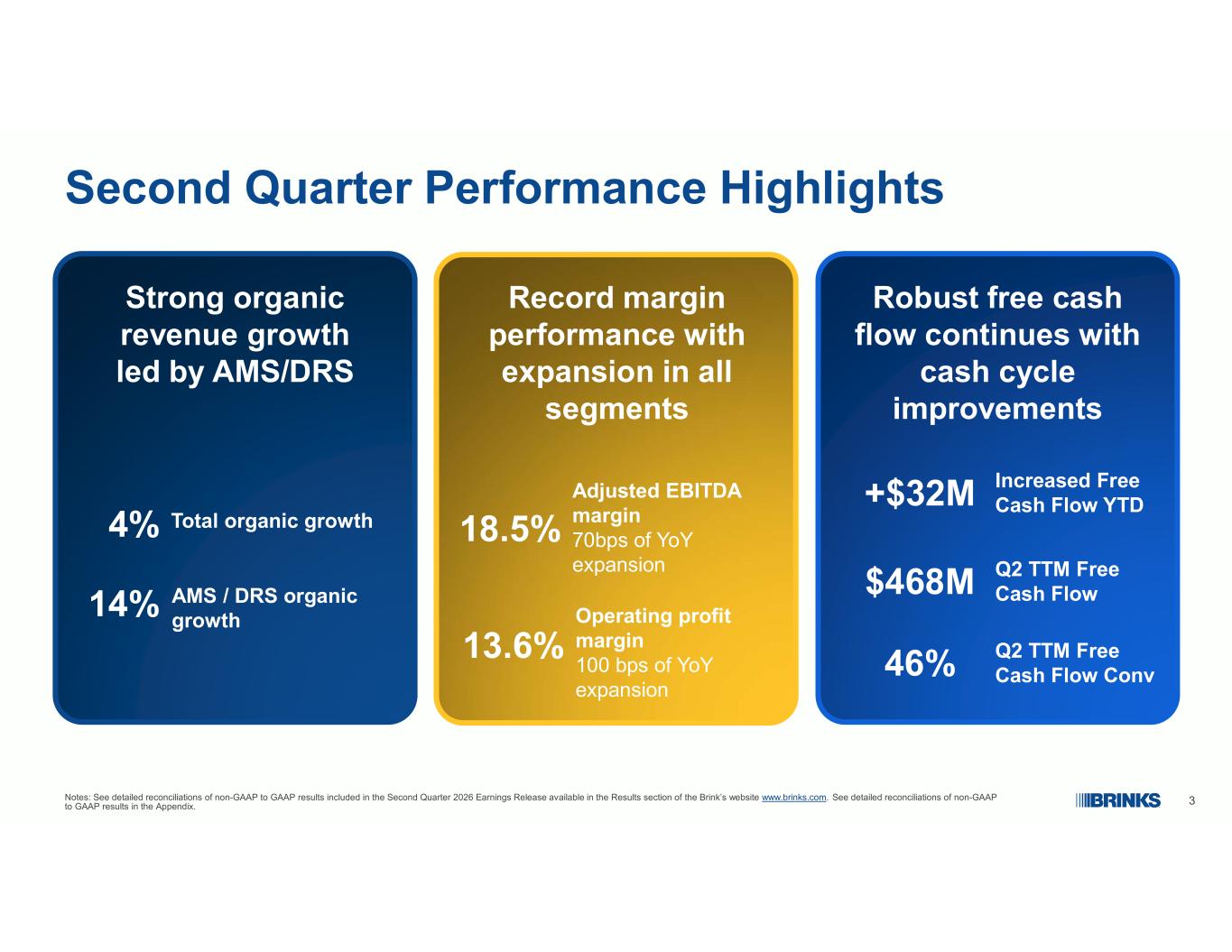
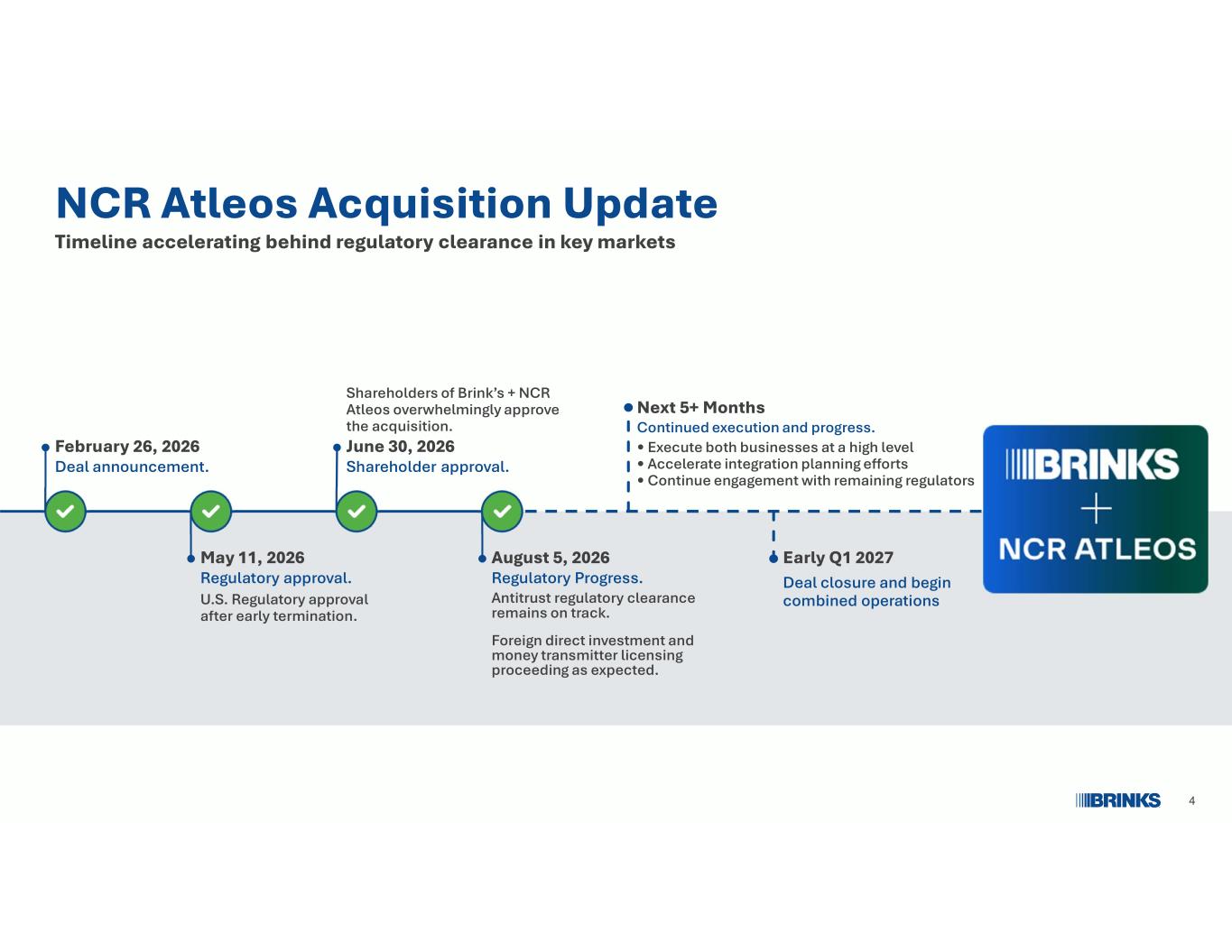
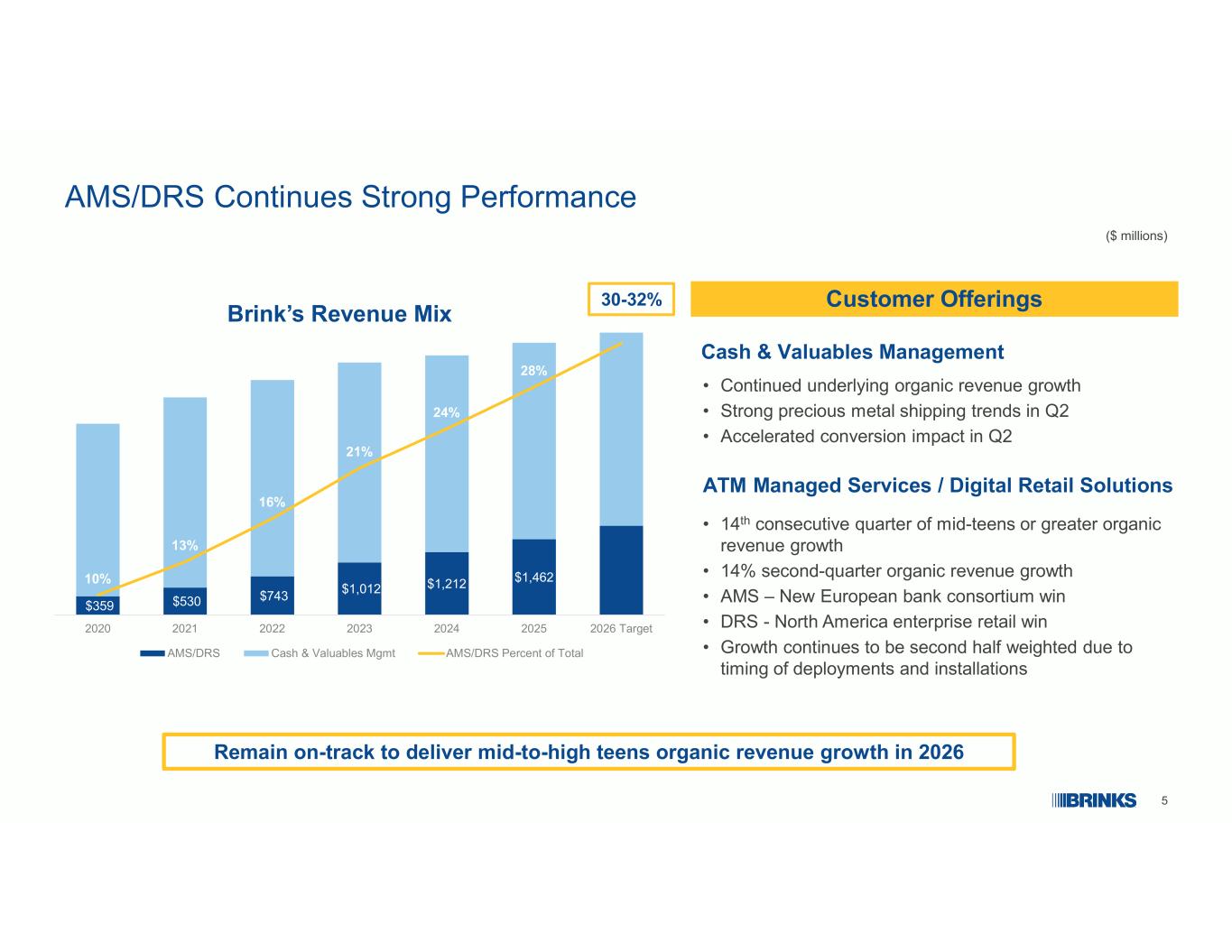
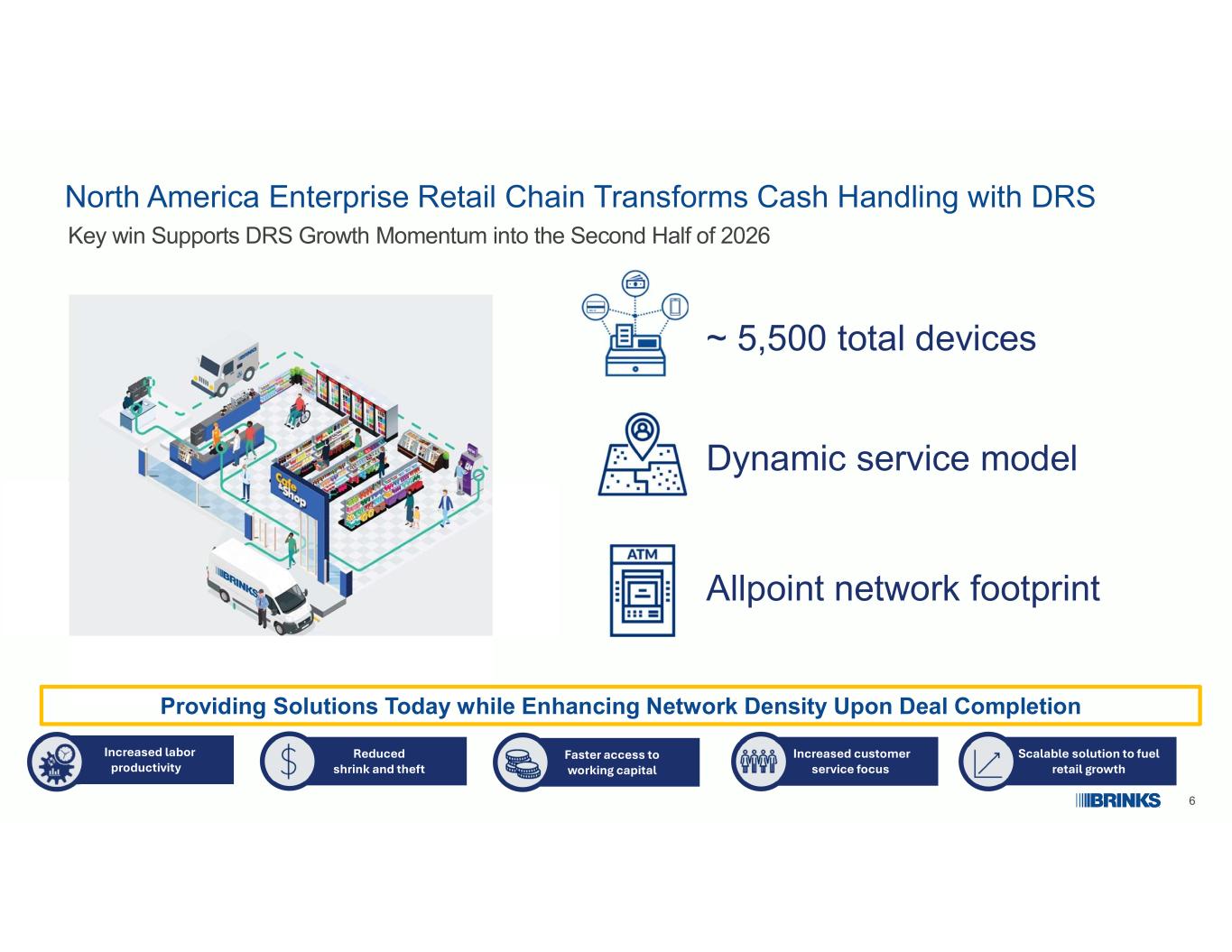
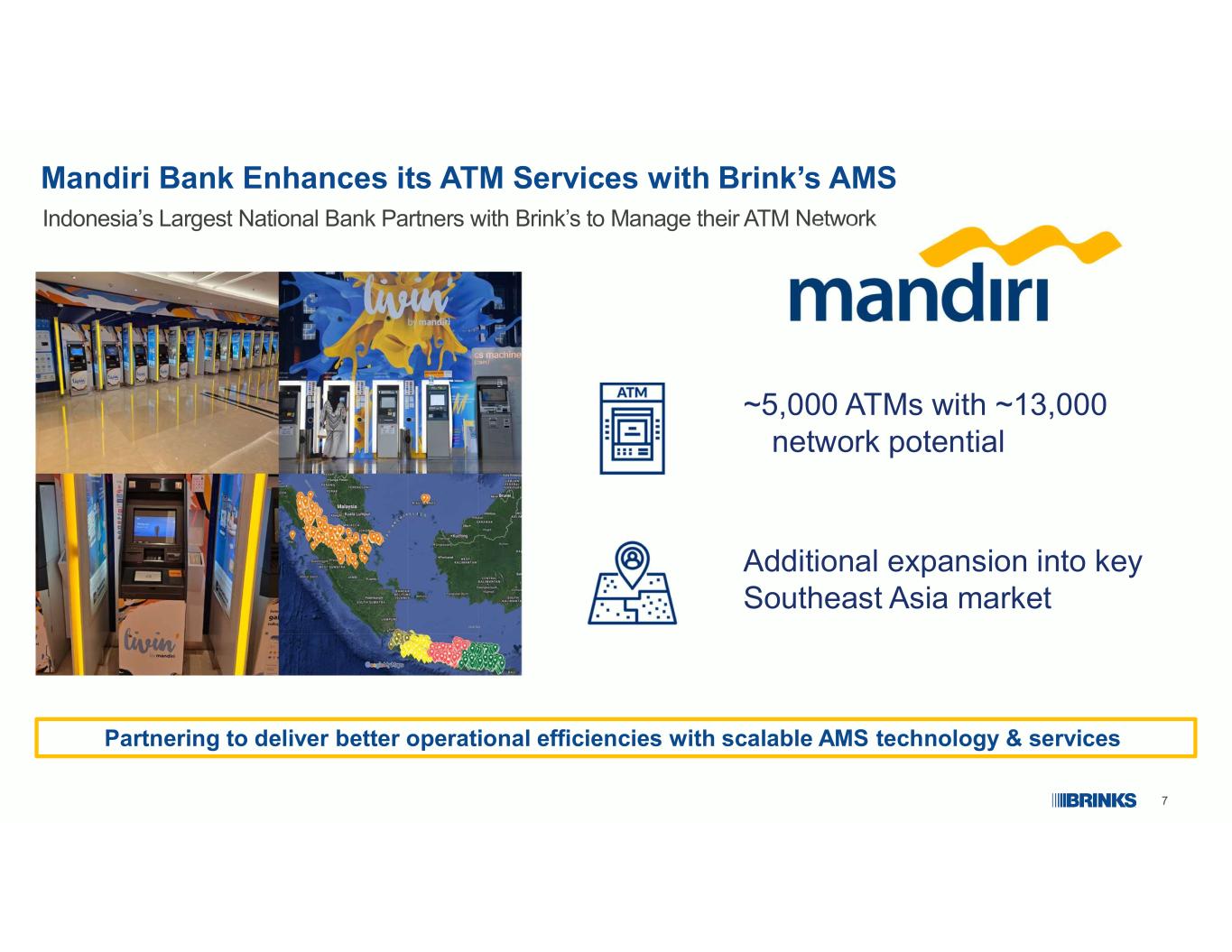
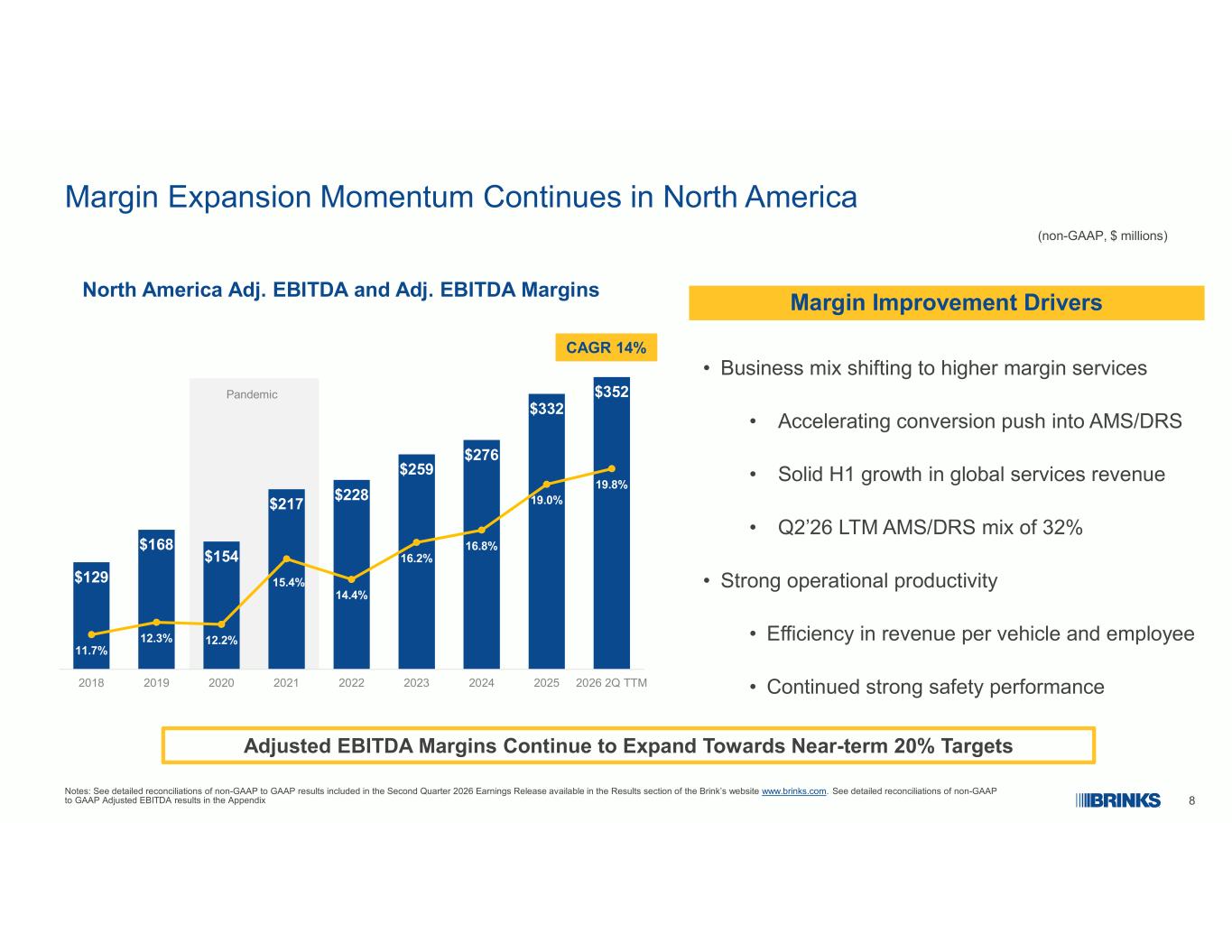
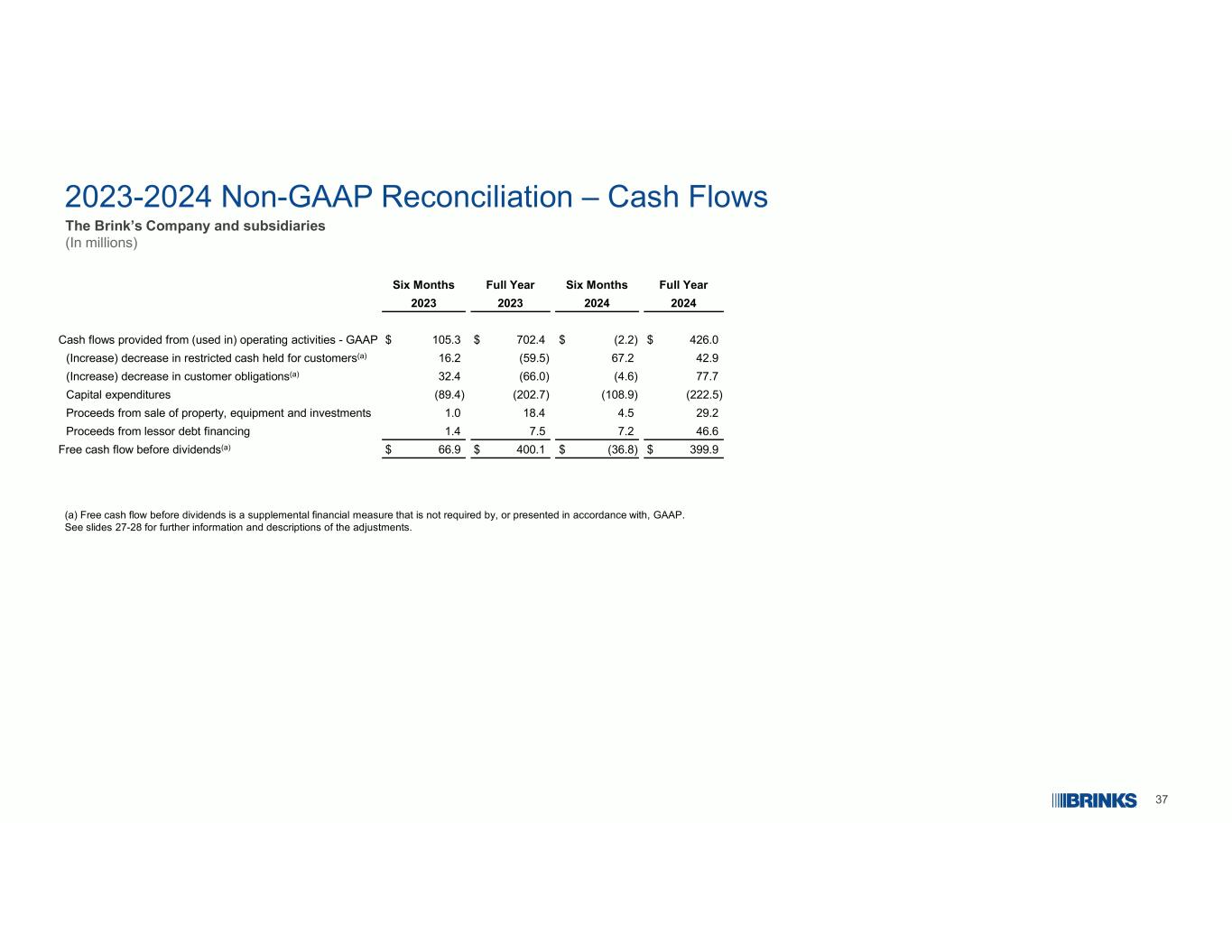
Thanks, Jesse. Good morning, everyone. Starting on slide three, we delivered a strong second quarter with organic growth of 4% and ATM-managed services and digital retail solutions, or AMSDRS, growing 14%. This marks the 14th consecutive quarter of mid-teens or better organic revenue growth in AMSDRS, more than doubling in total revenue over the same period of time to over $1.5 billion. We continue to focus our strategic efforts on growing these valuable lines of business and have good line of sight into continued growth in the second half, supported by some recent customer wins, which I'll talk about later. Cash and Valuables Management, or CVM, performance was highlighted by continued strong growth in our global services business as we drive incremental revenue in the volatile precious metals markets. Supported by favorable revenue mix and widespread productivity initiatives, we delivered record second quarter operating and EBITDA margins. EBITDA margins were 18.5% in the quarter, up 70 basis points year-over-year with expansion across each of our operating segments. Cash flow continues to grow with year-to-date and trailing 12-month free cash flow up $32 million over the prior periods. Total free cash flow generated over the last four quarters was $468 million with conversion from EBITDA of 46%, above our full-year framework. Year-to-date, our results are slightly ahead of our original expectations. With EBITDA above the midpoint of our prior guidance, we're raising our full-year profit expectations. As you'll see from our Q3 guidance in a few minutes, I'm confident in this team's ability to continue to improve the business, accelerate organic growth, and drive higher margins and free cash flow over the balance of the year. We remain well-positioned to deliver against our full-year 2026 framework of mid-single-digit organic revenue growth with even a margin expansion of 30 to 50 basis points. Now turning to slide four, I'd like to provide an update on the NCR Atleos acquisition. Over the last few months, we've made considerable progress on many fronts and have moved our estimated closing timeline forward to early in the first quarter. Since our last public comments, we received overwhelming support from both NCR Atleos and Brink shareholders, with more than 99% of the votes cast in favor of the transaction. That endorsement reflects the confidence in the strategic merits of the combined companies. We also have satisfied several outstanding regulatory requirements. During the quarter, we were granted an early termination by the U.S. antitrust regulators. This clearance represents a meaningful step forward, with the U.S. representing the largest concentration of combined company pro forma revenue of almost 40%. Other recent antitrust clearances include Brazil, India, Turkey, Colombia, and we continue to work constructively with the remaining other jurisdictions. We're also making meaningful progress with foreign direct investment regulators, having received clearance across the majority of the Eurozone footprint, including France, Germany, Spain, Italy, and the UK. Money transmitter licensing requirements with the U.S. regulators are also moving forward with urgency. We've achieved clearance in more than 80% of the necessary jurisdictions and remain well on track in the remaining markets. Over the next several months until closing, we will stay focused on the standalone commitments of both companies while accelerating integration planning. Although we'll continue to operate independently until closing, our dedicated integration teams will work closely to ensure that we capture the strategic benefits of the combined businesses. As I continue to engage with the NCR Atleos team, I'm increasingly encouraged by the potential of the combination. With deep expertise and strong performance across both organizations, I'm confident we'll be able to deliver the solutions to our customers' most important challenges. I look forward to closing the acquisition and moving forward as one team as quickly as possible. Now shifting back to the quarter on slide five, I'll provide some commentary on performance by line of business. Starting with CVM, organic growth was slightly positive in the quarter with strong global services volume and good pricing discipline offset by AMS-DRS conversions. As we discussed last quarter, our global services business remained strong through the first half of the year. Moving to AMS-DRS, revenue grew organically, $50 million in the quarter at a rate of 14%. Late in the quarter, we saw several large installations and customer wins moving to the second half, primarily reflecting customer-driven timing decisions. In the AMS business, we were recently awarded a full ATM outsourcing agreement for a network consortium of banks in Europe that will come online over the second half of the year. In DRS, we continue to deploy our solution across the Paradis footprint that we discussed last quarter, and I'll talk more about another key win in North America on the next slide. AMSDRS remains compelling outside of the more penetrated North America and Europe segments with strong growth in both Latin America and the rest of the world. These recent wins and solid deployment schedules in the second half give us confidence in our ability to deliver organic growth towards the top end of our full-year framework of mid-to-high teams for the balance of the year. As we said last quarter, the visibility into our pipeline and backlog continues to support accelerated growth in the second half of the year. Stepping back and looking at total revenue trends for the quarter, we delivered a second quarter in line with our organic revenue expectations, and customer engagement with our solutions remains very high. As you'll see in our Q3 guidance, we expect a slight acceleration in organic growth in the second half and remain on track to deliver against our organic growth framework for the full year. moving on to slide six you can see a few details on a new drs win north america we recently signed an enterprise agreement with a large retail chain to provide a full drs solution we are nearly doubling our share of wallet with this customer by providing our tech enabled solutions at over 5 000 retail locations across a broad u.s footprint this customer will enjoy the security and reliability of ring solutions the integration of physical to digital payments working capital transparency, and simplified cash handling. This in-store process simplification will unlock management time for more value-add activities across the entire retail environment, like employee training, customer assistance, and other in-store operational efficiency measures. While the customer benefits of DRS are clear, Brinks will also see meaningful productivity opportunities from this win as we increase density by adding a network that complements our existing footprint while optimizing the routes that already exist in most of our geographic locations. As I said before, DRS is a true win-win in the marketplace, and we continue to have meaningful conversations with customers of all sizes in all of our markets. As we continue to improve our go-to-market approach in highly under-penetrated verticals, we expect to continue to deliver these kinds of wins that will set the foundation for future growth and market accretion for years to come. One other important point before we move to the next page relates to NCR's own U.S. ATM network, AllPoint, which has ATMs in all of these locations. This is an example of the opportunities that will create significant routing synergies and improve service levels as we increase network density. This optimization creates significant benefits for our DRS value proposition while also reducing service costs for an owned ATM network in the combined company. As we look at the next several years post-acquisition, we see meaningful additional opportunities to drive operating efficiencies, enhance service levels, and create value through the expanded network of the combined company. Now on to slide seven, you can see detail on a recent AMS win in a key Southeast Asia financial institution market. We recently won an AMS deal at Mandiri Bank in Indonesia, servicing more than a third of their entire state. Mandiri is the largest national bank in Indonesia, operating over 13,000 total ATMs. Southeast Asia remains an attractive market for AMS as we add Mandiri to the previously discussed wins in Indonesia and, more recently, the security bank win in the Philippines. These end markets have favorable cash usage trends and remain attractive for outsourcing as banks look to optimize costs and better serve their customers. For reference, the total mandatory estate of over 13,000 ATMs is larger than many of the top 10 banks in the U.S. market. With the ATM managed services market still underpenetrated, we are having meaningful customer discussions across the globe. We continue to believe that outsourcing the operations and upkeep of these increasingly complex machines is the next logical step for financial institutions looking for ways to optimize their costs while continuing to improve customer experience at the intersection of physical and digital payments. After the completion of the NCR Atlios acquisition, we expect to have a best-in-class set of ATM-managed services capabilities, positioning us to better serve financial institutions as they evaluate outsourcing opportunities in the markets around the world. Moving on to slide eight, before I hand over to Kurt for more detail on the financials, I wanted to briefly update progress on North America margins. We continue to methodically advance toward 20% EBITDA margins, coming in at 19.8% on a trillion-12-month basis at the end of the second quarter. With a solid revenue mix outlook over the second half of the year, supported by recent customer wins at Paradis, Pandora, and a large enterprise deal I spoke about a few slides ago, we expect to continue to march towards this level as an intermediate milestone in our continuous improvement journey. Our operations continue to improve, And with a good pipeline of productivity initiatives, we expect to continue to drive asset efficiency and labor productivity as we move forward. Over the past five years, we've improved our service, strengthened our safety culture, improved our AMS-DRS selling capabilities, and eliminated waste from our operating model. The North America business is well-positioned operationally to absorb additional capacity as we integrate the NCR Atleos business into our daily activities. With meaningful cost synergies contemplated in the North American markets, I remain confident that 20% margins is just the next milestone in our journey as a company, and I look forward to pressing beyond these levels in future years. And with that, I'll turn it over to Kurt to walk through the financials and Q3 guidance before I return with some closing comments in Q&A.
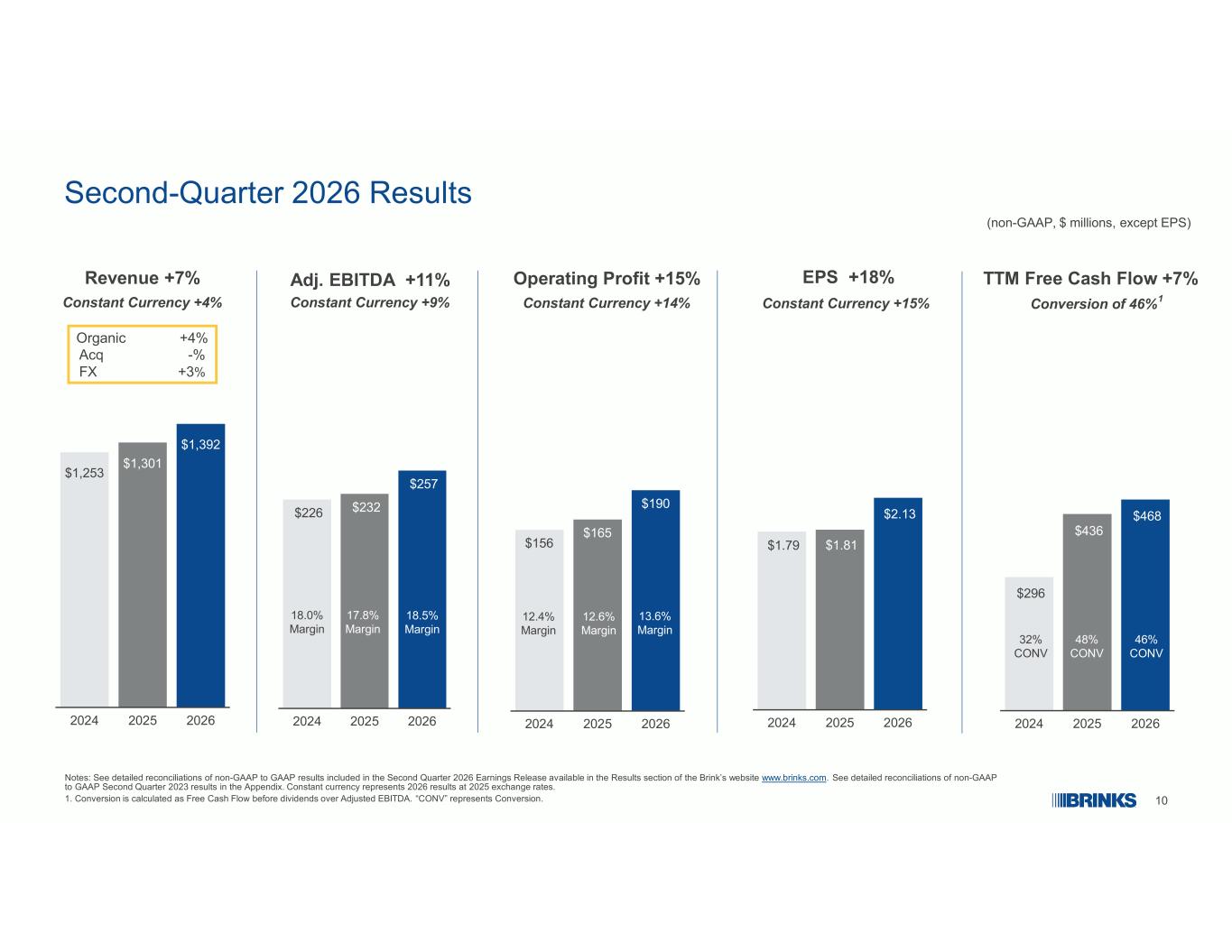
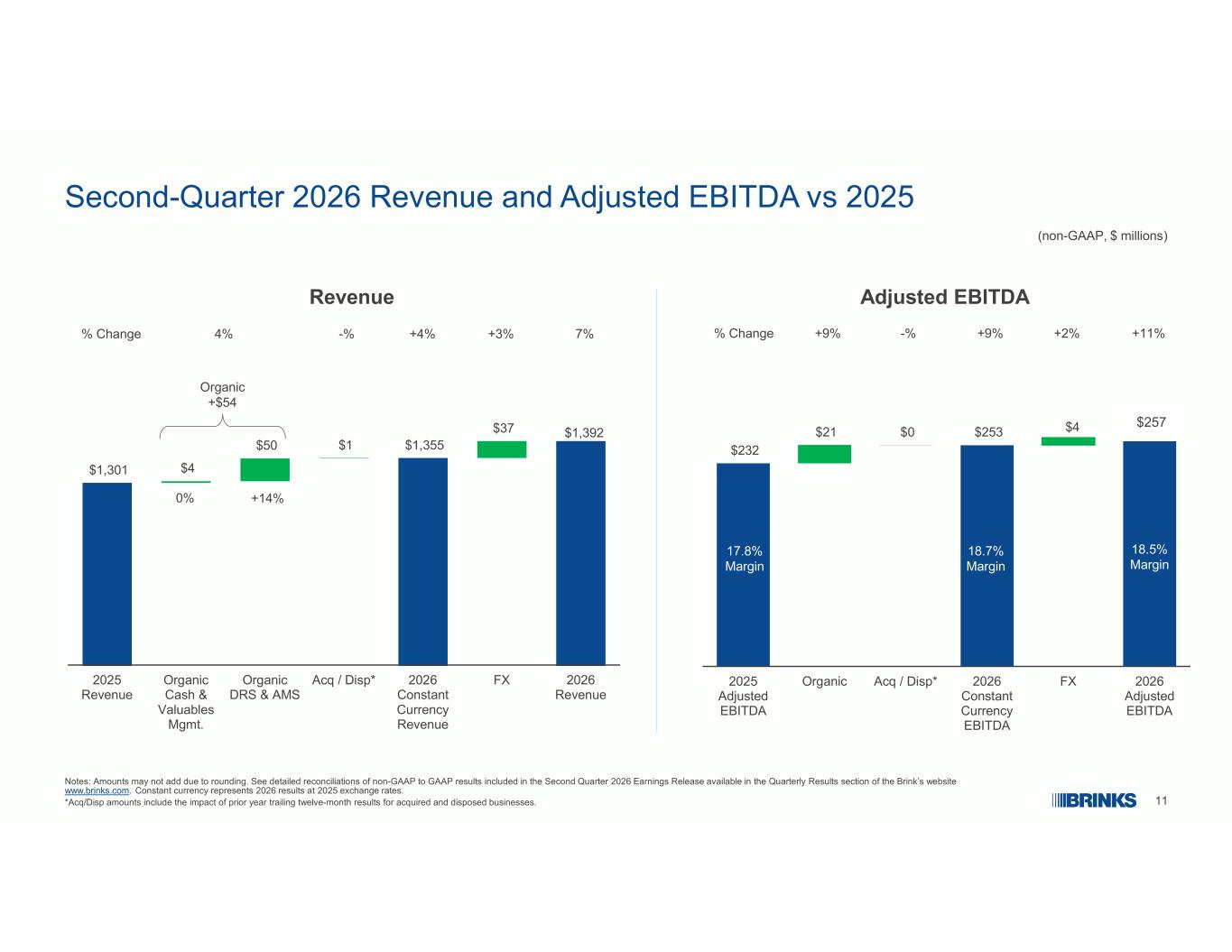
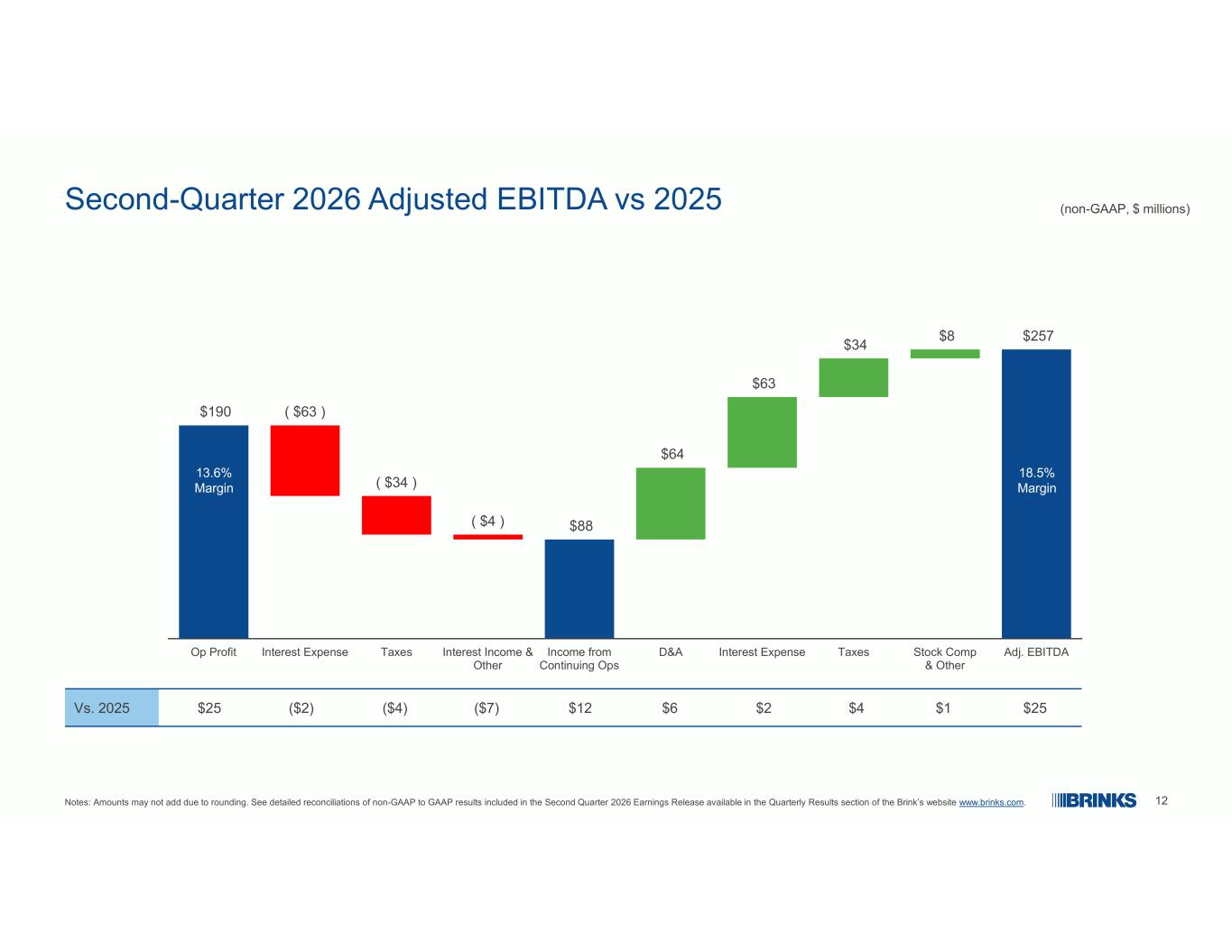
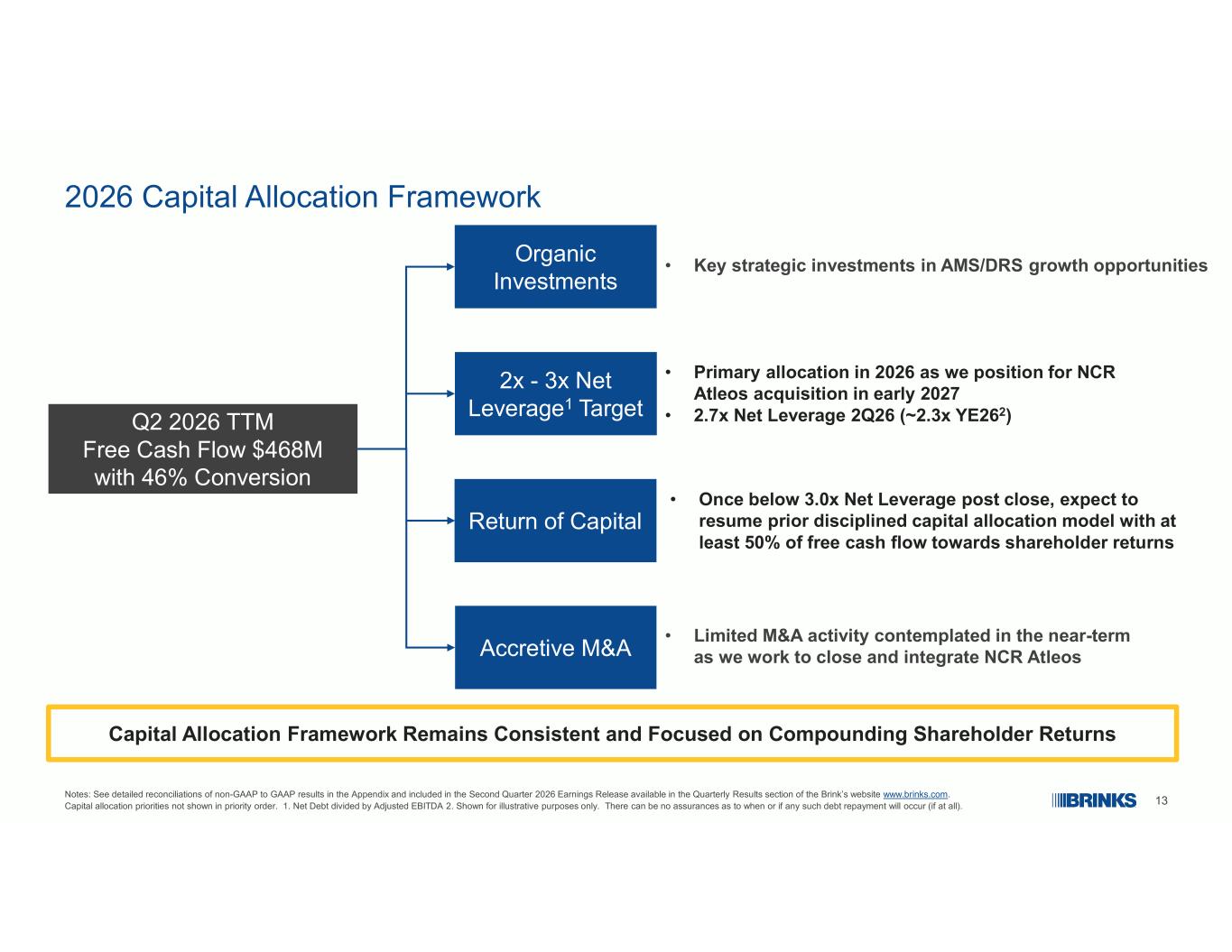
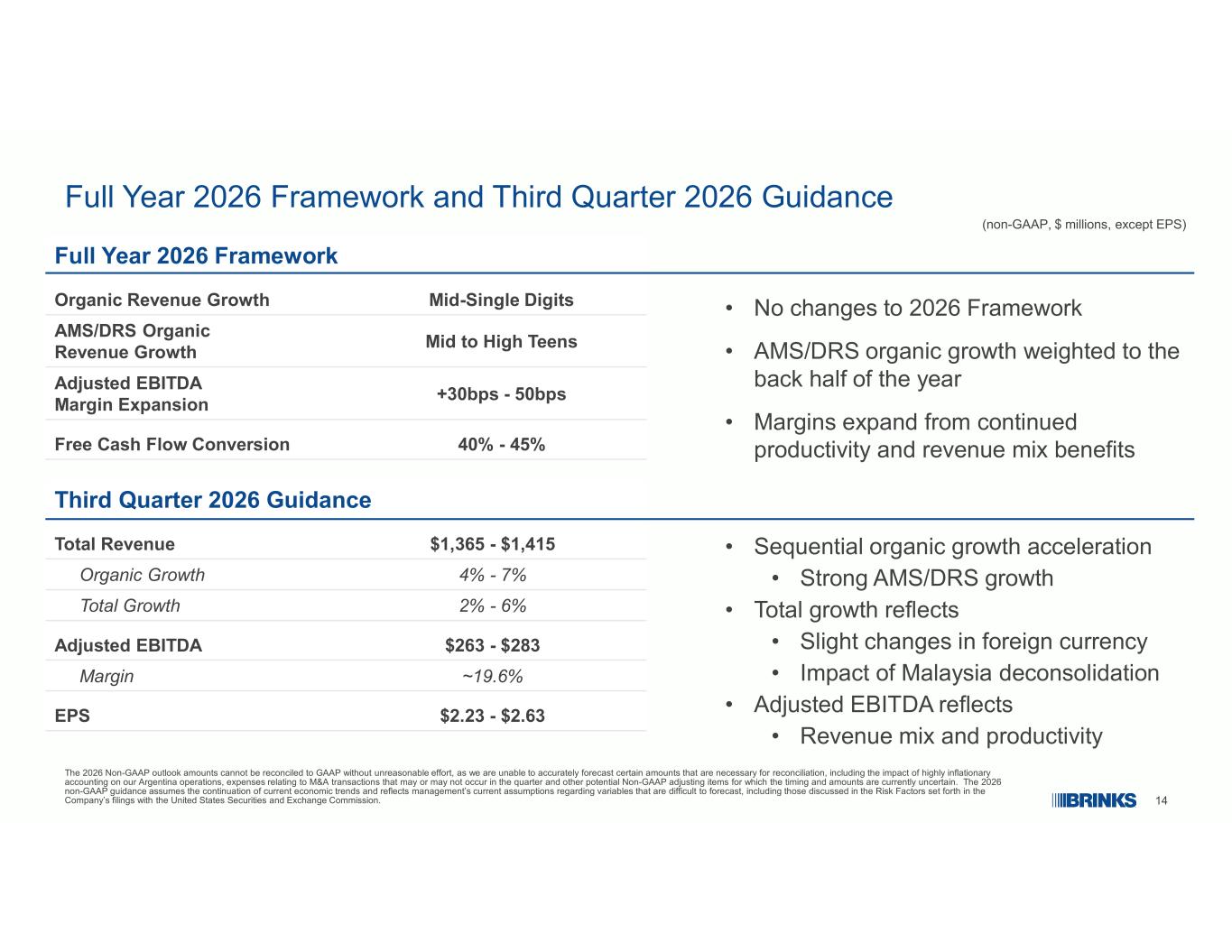
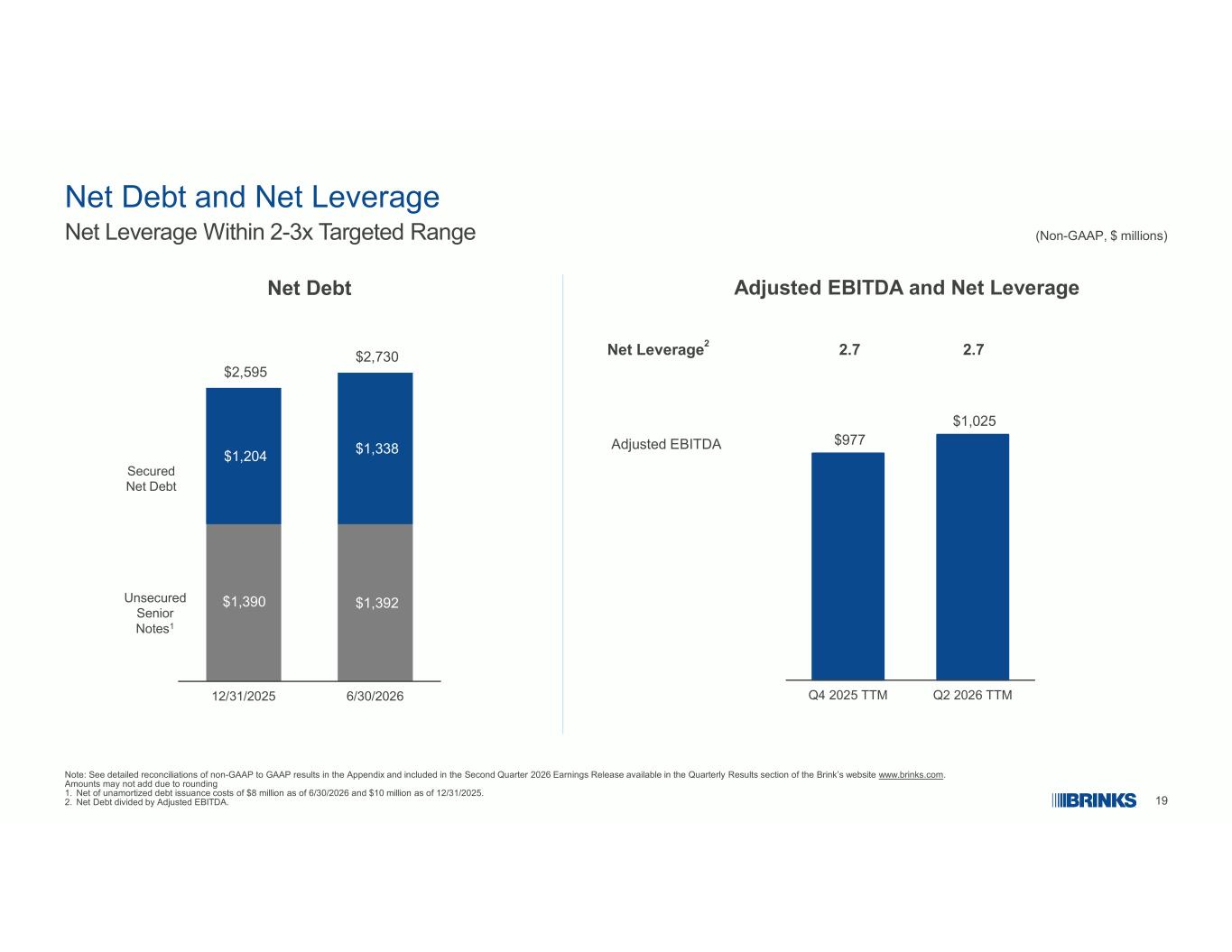
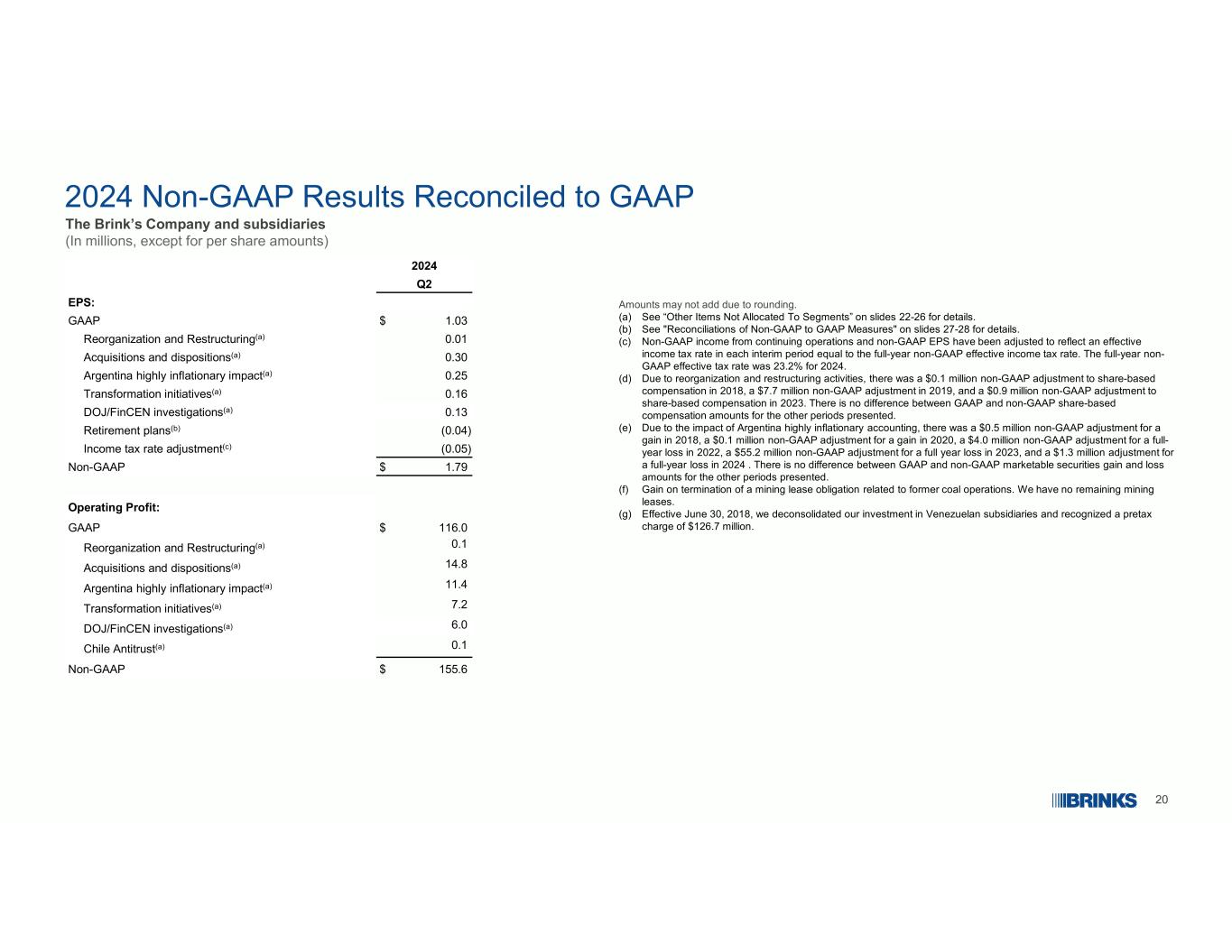
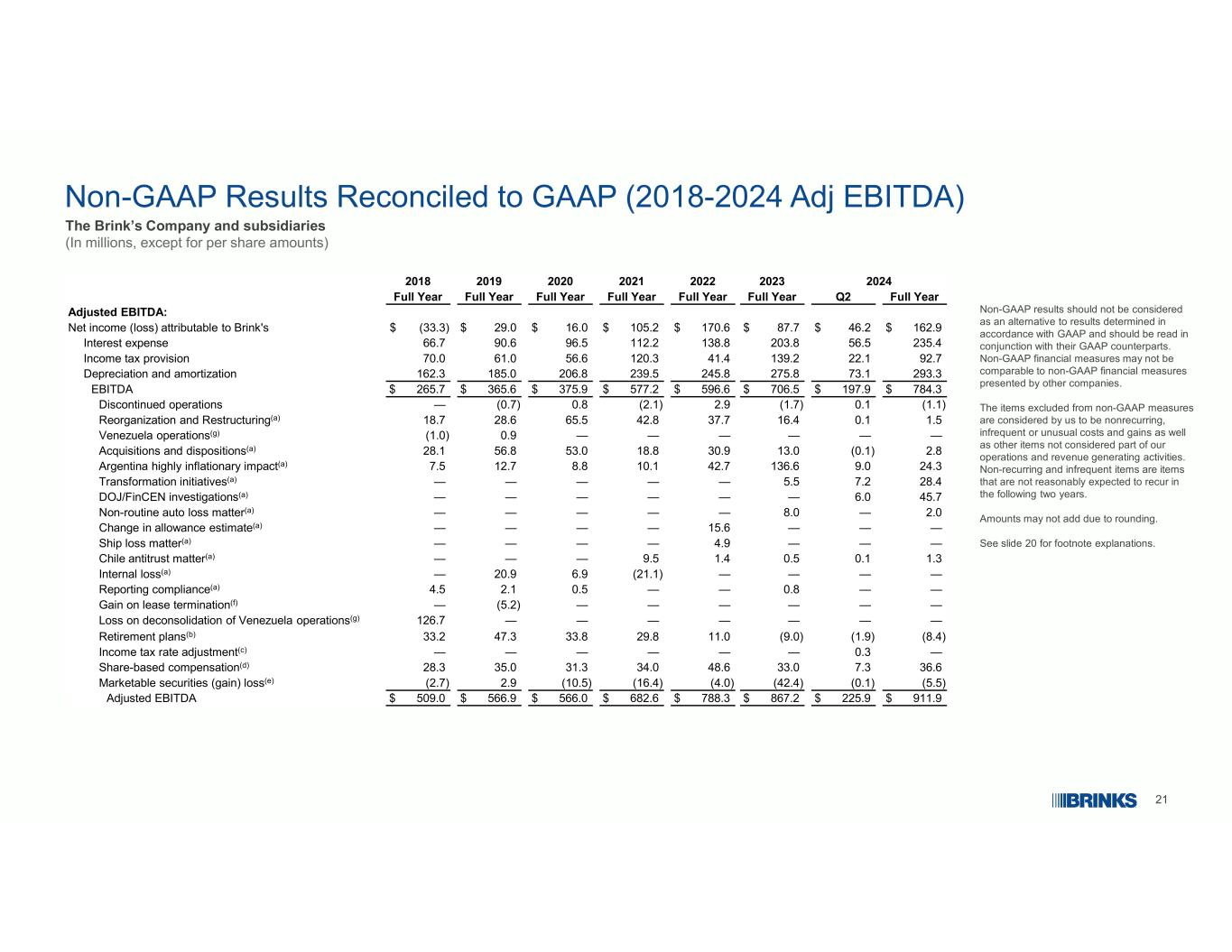
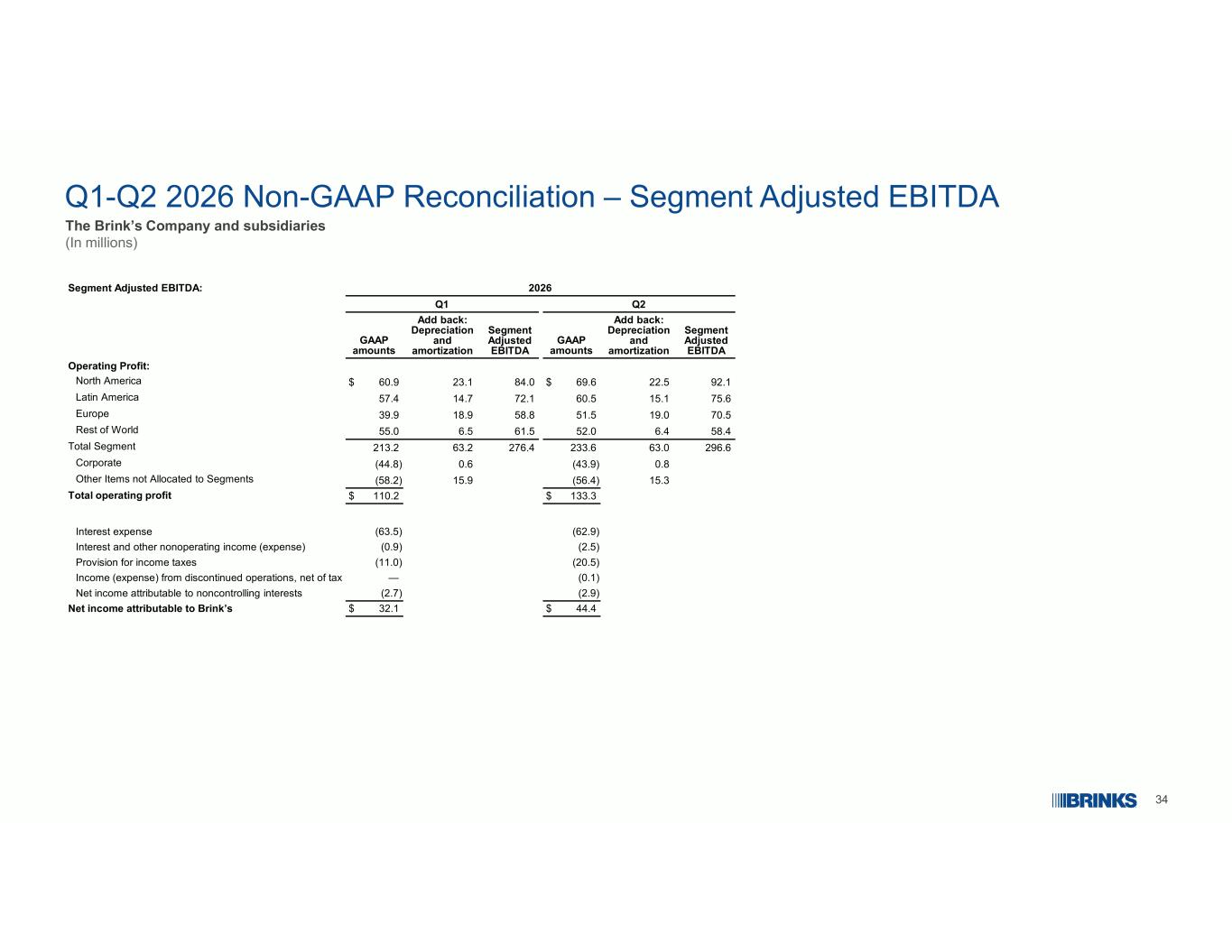
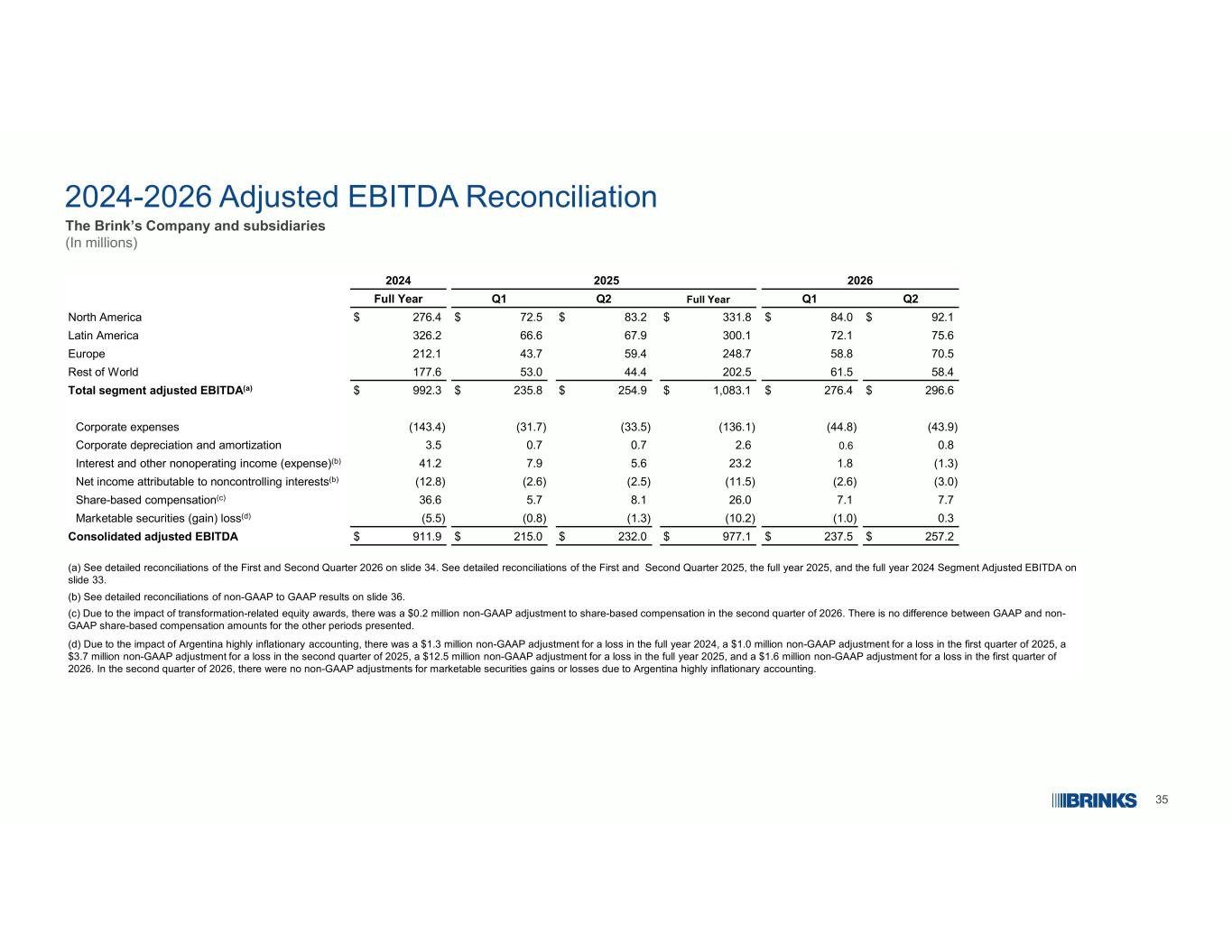
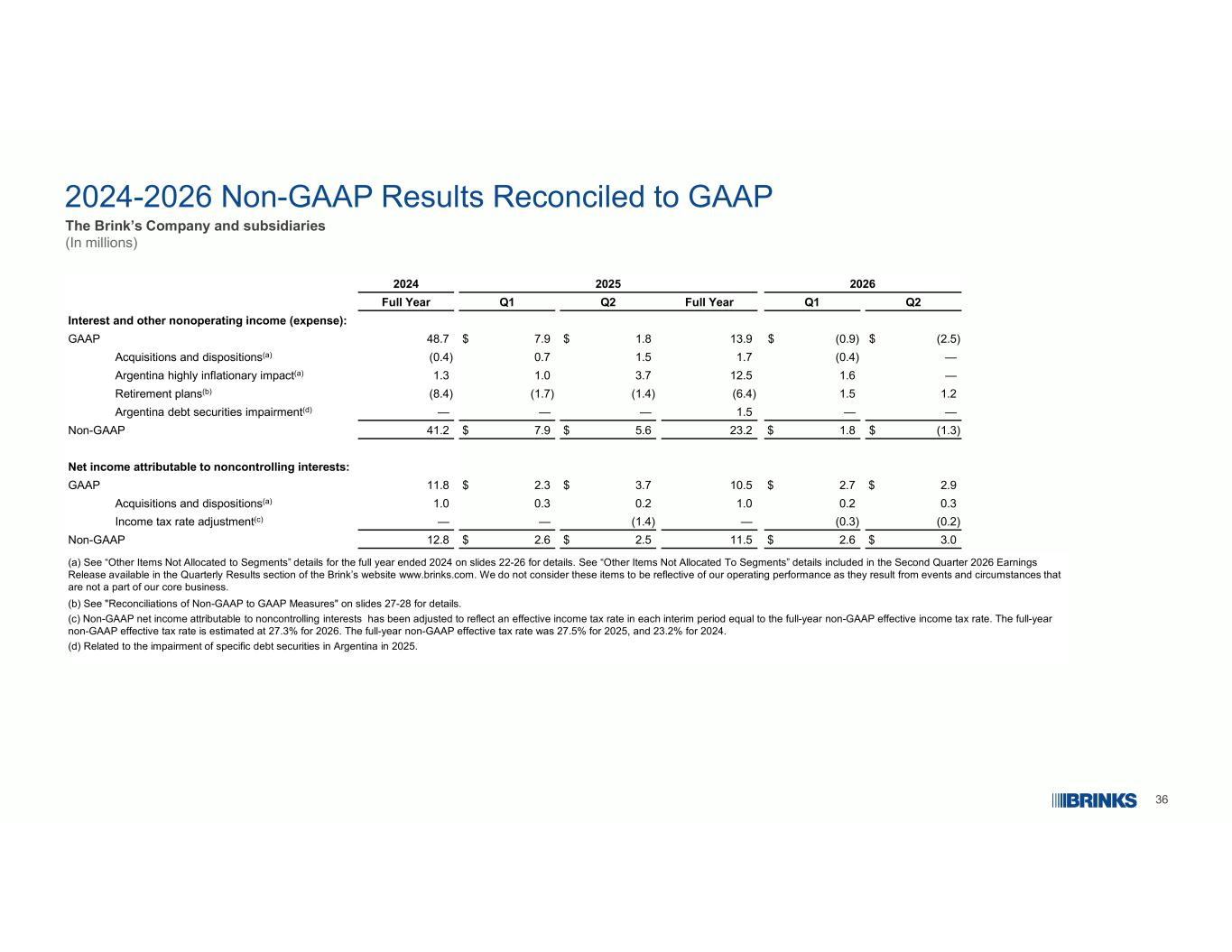
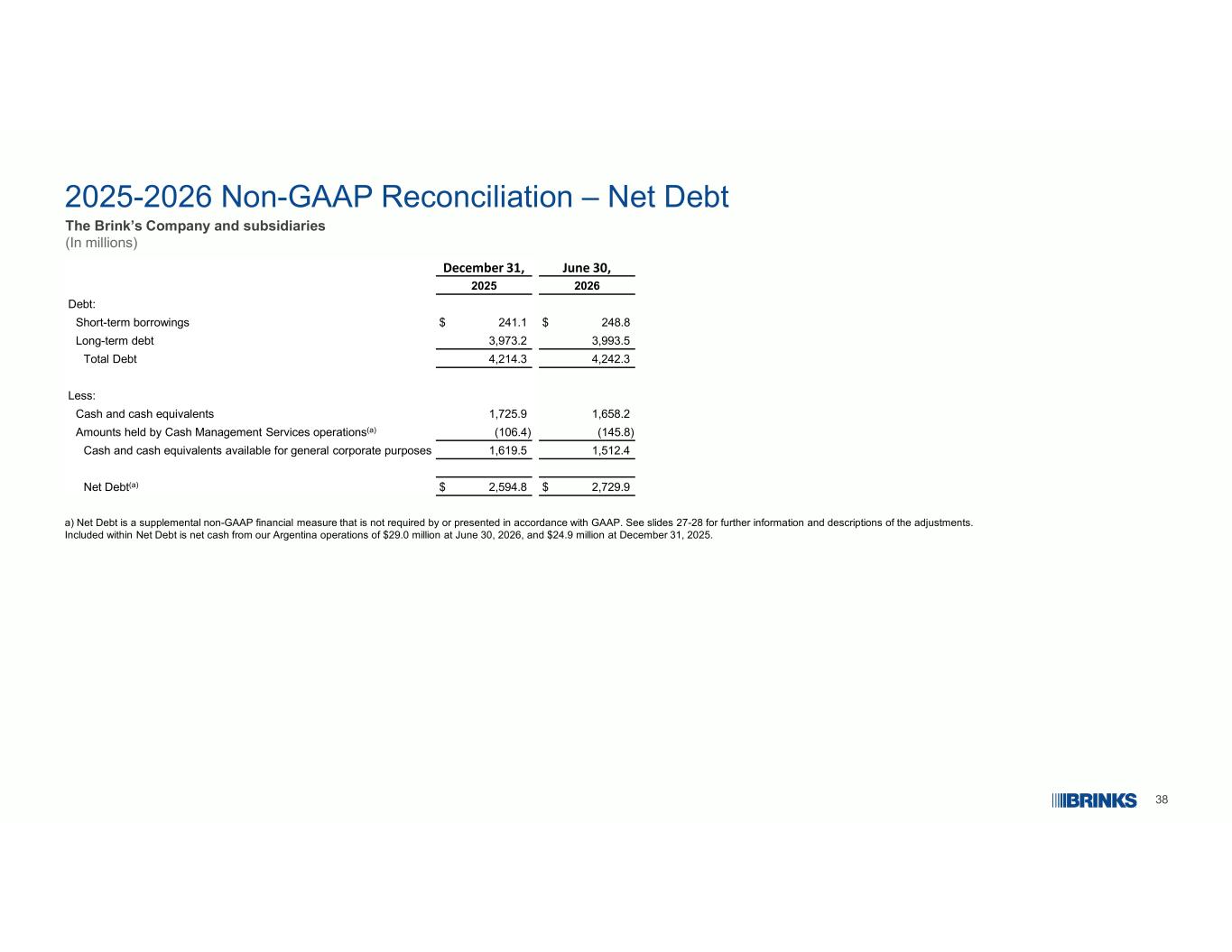
Kurt? Thanks, Mark. I'll begin on slide 10 with a look at the quarter. Revenue increased by 7% with 4% constant currency growth and a 3% tailwind from foreign currency. Adjusted EBITDA was up 11% to $257 million with constant currency EBITDA growth rates more than double constant currency revenue growth rates. Operating profit was up $25 million year-over-year, or 15%. EBITDA margins were up 70 basis points and operating profit margins were up 100 basis points, slightly ahead of our second quarter guidance expectations. EPS growth of 18% was more than double revenue growth as we continue to compound profits faster than our top line. Trailing 12-month free cash flow was $468 million with conversion of 46%. Solid year-to-date cash performance was driven by EBITDA growth and continued capital efficiency as we shift to less capital-intensive customer offerings. As we expected and experienced last year, we are currently ahead of our full-year cash conversion guidance. Given the timing of cash tax payments, working capital, and CapEx over the balance of the year, we continue to target 40% to 45% conversion for the full year. On slide 11, total organic revenue growth was $54 million, with the majority of the growth coming from our higher-margin, subscription-based, strategic focus areas of AMS and DRS. FX contributed $37 million, or 3% of growth in the quarter, with favorable year-over-year rates in the euro, Mexican peso, and Brazilian real, partially offset by the Argentinian peso. Moving to the right side of the slide, you can see that $54 million of organic revenue growth converted to $21 million of EBITDA growth for an incremental flow-through to profits of 39%, driving total EBITDA margin expansion of 70 basis points over the prior year to record second-quarter levels of 18.5%. Moving to slide 12, starting on the left, operating profit was up $25 million to $190 million, with a margin of 13.6% on strong productivity, pricing, and revenue mix. Interest expense was $63 million in the quarter, flat sequentially, and is expected to remain roughly the same in future periods using current interest rate expectations. Tax expense was $34 million in the quarter, representing an effective tax rate of 27.3%, slightly better than the prior year. Income from continuing operations was $88 million on 41.5 million diluted shares for an EPS of $2.13. Depreciation and amortization was $64 million in the quarter and is expected to be roughly $250 million for the full year. Let's move to slide 13 to discuss our capital allocation framework. Our capital allocation framework remains unchanged despite the pending NCR Atleos acquisition. Our leverage at the end of the second quarter was 2.7 times net debt to adjusted EBITDA. With the pending acquisition set to temporarily move us over three turns at close, we continue to expect the primary use of capital during 2026 to be preemptive debt paydown. Over the year, we expect to reduce our standalone leverage to approximately 2.3 times as we position for the transaction. As we have mentioned previously, we plan to rapidly deliver after closing and are targeting net leverage below three times by the end of 2027. Once we return to our targeted leverage level of two to three times, we expect to resume our prior capital allocation model with at least 50% of free cash flow focused on shareholder returns. Given the expected EBITDA growth after closing, both organically and through synergies, we expect to continue net debt leverage reduction during 2028. With approximately $1 billion of free cash flow, approaching $20 per share, we will have ample flexibility to capitalize on accretive uses of capital that will compound cash generation. Moving to the guidance on slide 14, our framework for 2026 is unchanged. We expect to deliver mid-single-digit total organic growth supported by mid-to-high teens organic growth for AMS DRS. With the second quarter EBITDA above the midpoint of prior guidance, we are raising our full-year organic profit numbers, despite the recent change in foreign currency. Using rates as of yesterday, we are currently expecting an FX benefit for the full year of between 1.5% and 2.5%, less than our expectations last quarter. EBITDA margins are expected to expand between 30 and 50 basis points, with conversion of EBITDA to free cash flow of between 40 and 45%. In the third quarter, we expect revenue between $1.365 and $1.415 billion, reflecting slight organic growth acceleration sequentially. As Mark mentioned earlier, we expect second-half organic growth in AMS-DRS to be towards the top end of our full-year framework to drive this acceleration. Using yesterday's spot rates, FX is expected to be flat to less than a percentage point of benefit year-on-year. Adjusted EBITDA is expected to be between $263 and $283 million, reflecting margin expansion of approximately 60 basis points to 19.6% at the midpoint. EPS is expected to be between $2.23 and $2.63. And with that, I'll turn it back over to Mark for some closing comments.
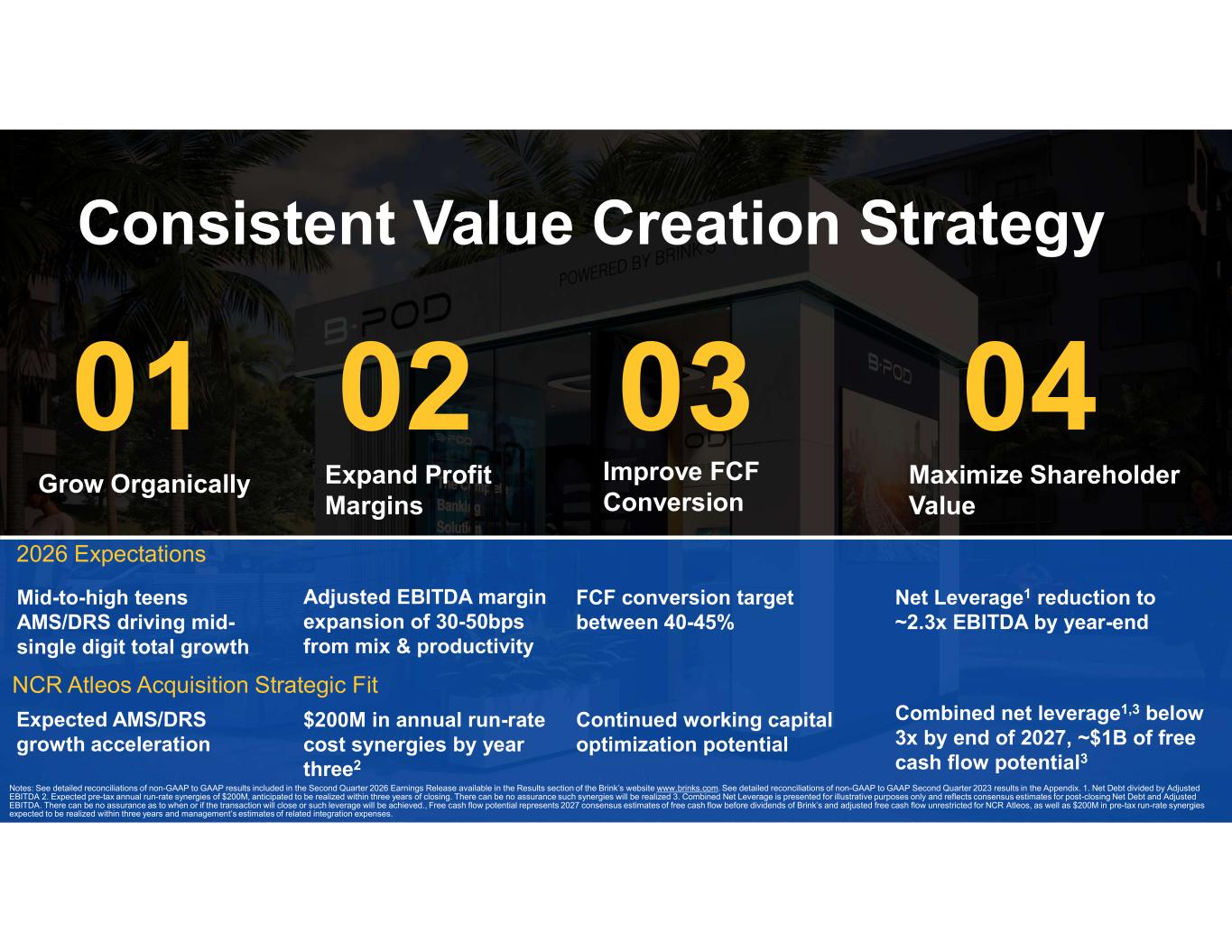
Thanks, Kurt. On slide 15, you can see how we plan to create value for years to come in our business. The key tenets of this strategy are unchanged over the years and will guide how we move forward through the rest of 26 and through the acquisition. We continue to operate at a high level, improving the growth profile, profit margins, and cash generation of the business in a consistent and measurable way. We've made good progress over the years, but in many ways, we're still in the early innings. There remains ample opportunities in our base business to continue to improve our operating model and drive waste out of our day-to-day frontline and back-office activities. After this acquisition, we'll be well-positioned to accelerate these efforts across a $10 billion global enterprise with fresh new growth and margin opportunities. While the size of the business changes, the strategy remains constant. We will grow the business behind higher margin recurring revenue service offerings that solve the complex problems of our retail and banking customers. We will be positioned to capture industry outsourcing momentum in the ATM market while we continue to transform the retail cash management industry through DRS. As I approach my five-year anniversary with Brinks next month, I'm proud of the progress we've made transforming our business, shifting our business model to higher margin, recurring revenue, AMS, DRS offerings, while driving consistent productivity, margin expansion, and improved free cash flow conversion. Even with this progress, I'm even more excited about the opportunities that remain in front of us. Working from the strong foundation we've built, I'm energized for the future, and I look forward to driving shareholder value creation to new levels in the years to come. Before we take questions, I want to congratulate both the Brinks and NCR Atleos teams on strong second order and for their steadfast focus on delivery for our customers and for our shareholders. And with that, we'll open the line for questions.
Operator
Operator? We will now begin the question and answer session. To ask a question, please press star then 1 on your touchtone phone. If you are using a speakerphone, please pick up your handset before pressing the keys. If your question has been addressed and you would like to withdraw it, please press start, then two. At this time, we will pause momentarily to assemble our roster. Our first question today comes from George Tong of Goldman Sachs. Please go ahead.
Sammy
Analyst — Goldman Sachs
Hi, this is Sammy on for George. Thanks for taking our questions. Can you break down the 14% AMS and DRS organic growth between pricing, new customer wins, and expansion with existing customers? And how much of your second half AMS and DRS growth outlook is already supported by contracted business versus opportunities during the pipeline?
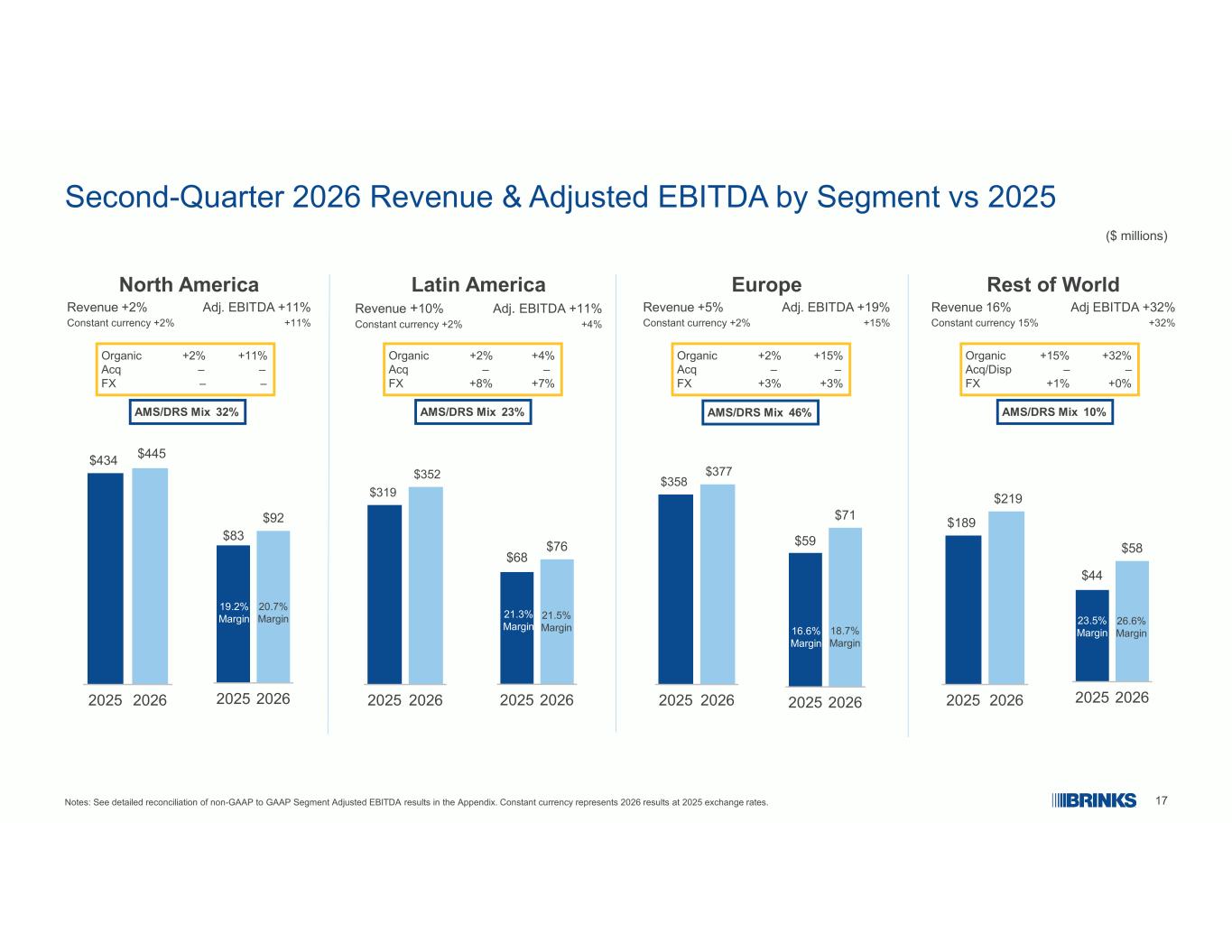
Sure. You know, let's talk about the back half first. you know, we have a very strong pipeline. In fact, in the quarter, had a few deals that actually deployments on AMS DRS that moved out of second quarter into third. So, we expect to have continued acceleration in the back app and have good visibility, you know, to many of those contracts and or, you know, sales pipelines where we have high confidence. And as we've said in the past, DRS is usually a shorter window of certainty, maybe a quarter, maybe two quarters, and AMS usually a bit longer, two quarters to maybe a full year in some of those deployments. So, you know, as we look at the third quarter guidance, you know, we've anticipated this acceleration as well as, you know, getting back to our, you know, our full year framework, you know, for organic growth in the mid to high teens, that continues to be supported by a few large deals. You know, as I mentioned, the enterprise retailer we laid out that we came to an agreement with in the second quarter, you know, were 5,000 locations and really an interesting opportunity for us as we look at the overlap of the NCR AllPoint network. As you think about that sort of post-transaction and really being able to improve service to those customers as we visit not only for DRS solutions, but also for AMS support. So really excited about that. And then if you move around the world, you know, we've got several large ATM deployments, one I mentioned in Europe around a bank consortium, and the second we explicitly talked about, which was Manduri, and, again, a large opportunity in Indonesia. And you think about that market, both Indonesia and the rest of Asia Pacific, it's a really big cash market with a big population, growing population, that continues to be an area of strength for us. And you can see in the individual growth rates for that market, the rest of the world growing 44% year on year, up admittedly a smaller base, but a big growth number down in that region. And we expect that to continue here in the short term.
I might just add on the question on price versus volume. If you remember, AMS and DRS, it's mostly volume. There's some price in there, but it's a much smaller piece of total price. It's really a volume-driven number.
And so that means mainly new customers or share of wallet. You asked about expansion within existing customers. I don't have that data in front of me. We are expanding share of wallet with customers, but for the most part, as Kurt said, That's really new locations, new deployments, new services, because the nature of these agreements are, you know, longer-term recurring revenue.
Sammy
Analyst — Goldman Sachs
That's helpful. And then just on organic growth, North America, Latin America, and Europe all decelerated to about 2% this quarter. Was there a common factor driving that across the regions? And where do you expect improvement as you move through the back half of the year?
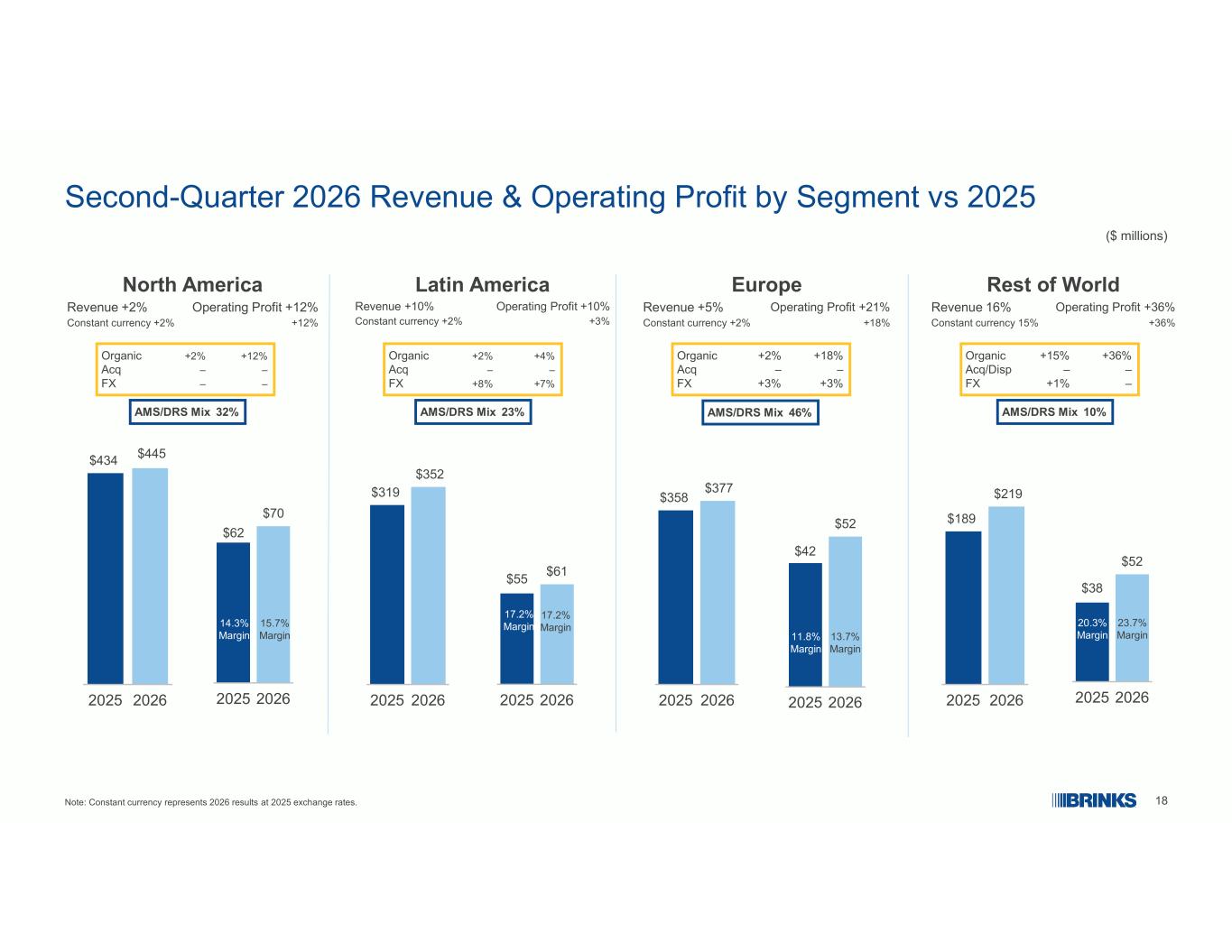
Yeah, really, this was, you know, North America specifically was really a timing issue on these customer deployments, as I said. You know, we expect the organic growth per total to pick up, but certainly that's mainly an ANS-DRS story, which was a large part of the growth number. You know, if you think about Latin America, I didn't talk about it earlier, but, you know, the economy is actually pretty stable down there across the region. We talked about Argentina. Of course, that's a bit of an anomaly in the region, you know, that we continue to see, you know, depressed consumption down there just given their austerity measures, you know, across the government. But, you know, long-term, it's a good business for us, good margins, good cash economy, and we think the austerity is probably healthy for them to get back on track. And, you know, our team down there is doing a really good job as well managing through a tough situation. So that provides a little bit of a headwind. But, you know, you look at Latin America, 34% quarter-on-quarter growth with AMS DRS, and probably could have been a little better, you know, given some of the contracts we have in hand, and, you know, just, again, timing on deployments that kind of moved out of Q2 or in Q3. So we're still very bullish about it. You know, Latin America particularly, around DRS, we continue to see good penetration of both our existing customers with conversions, but also with the unvended space. So, all in all, all in all, pretty good.
Sammy
Analyst — Goldman Sachs
Very helpful.
Operator
The next question comes from Tim Mulroney of William Blair. Please go ahead.
Five years goes by fast, doesn't it, Mark?
You're telling me. Good morning, Jim. Good morning.
So you're getting really close to your intermediate target for North America margins. As we think about your ability to press beyond that 20%, can you talk about how you think about incremental margins in this business, just a framework here, or potential incremental margins, help us understand what the opportunity is to press beyond 20% because, you know, if incremental margins aren't much higher than that, then folks are going to assume it kind of tops out there. So I thought I'd give you the opportunity to talk about, you know, in kind of a framework way.
Sure. Tim, the way we think about it, particularly on the AMS-DRS side is, you know, relative to the existing market, you know, it's almost infinite. The unvended space is so large. And so as we continue to shift our business model away from this linear investment of capacity to serve an incremental customer, you know, the network effect and the density continues to drive up those incrementals higher and higher as we create more and more density. And that's not just from the incremental new locations, but it's also, let's say, tracks productivity that's sitting inside of our existing CIT customers that are non-DRS, so as we think about converting those. So we think that that incremental rate can continue to creep up. You know, layer on, besides our own business, layer that on now with the NCR business, And we've laid out some of those synergies already in the beginning, but we would certainly hope that as we put those two businesses together, we continue to improve our density on the retail side, not just where their all-point network exists today as a cross-selling opportunity, but just more and more of our existing service base and the existing retail locations, we think that can continue to create. The 20% number is, you know, it's sort of a headline number, Tim, that we've had investors ask us about relative to other business services and route-based industrial business margins, and it's why we've continued to sort of point to it, but it's not, in our view, it's not a destination. It's only going to be, you know, a point in time that we maybe take a short victory lap with the team and celebrate, but keep moving. And that's the way we're thinking about it, and we think that framework can continue to move up from those 20% incrementals as we go further.
Yeah, that's a good point, Mark, that I hadn't fully considered. the incremental margins are not static as you continue to densify the network. So really good point. And then you also brought up, which was going to be my next question, how a combined BRINX and NCR could drive those incremental margins in North America higher, even higher. Is there anything beyond the cost synergies, the obvious cost synergies that would drive that higher? Is that what you were thinking about? Or are there opportunities beyond that that would also potentially drive that higher?
Sure. The cost synergies we've laid out already, and that's largely most of the, you know, we put in the business case. I think the other area, Tim, as we think forward, though, is as we build more density and leverage a shared network and think about customers, not just in terms of an individual contract or an individual location, but a network, a consortium, a continuum of services, we're going to think about that long-term, about where do we send the right technician, the right service person in the field to the right location with the right material or right skill set. And that optimization, we think, can continue to drive not just lower costs that we already laid out, it can drive better service and quality for our customers. It's going to allow us to grow more, and I think this is all part of the strategic thesis of this acquisition, is for us, the combined company, to really be a catalyst for an end-to-end solution, whether that's full outsourcing or some subset of that. We think that that combination can do that, and And, again, the more we grow in locations, the more services we're doing, the more we're going to create incremental market leverage going forward.
Yep, very clear. I did have one more question, but I don't want to be rude. Should I ask one more question, or do you want me to hop back in the queue?
Yeah, that's fine. Yeah, no worries.
Yeah, so shifting gears completely, ever since you announced this deal with NCR Atleos, we've been getting a lot of questions from investors around ATM managed services, AMS. And the one big question we've been getting is around the pace of ATM outsourcing in the U.S. and Europe with financial institutions. So the question is, what inning do you think we are in with regional and national banks? And is there anything that you can point to that suggests this is something that will or could accelerate in the coming years?
Sure. Yeah, good question. I think we are in early innings of this, and although you can see the strong growth numbers from the NCR Atleos team around ATM as a service, you can see our growth rates and some of the announcements that we've made. We've seen a little bit of bifurcation in market activity, though, between North America and Europe that you referenced. And, you know, in Europe, we've certainly seen more activities by financial institutions to either outsource networks, which we've done. We outsourced, you know, BPCE, which is, you know, over 10,000 locations today. You know, in France, there's also been banks taking another route, building out their, you know, cooperatives or consortiums. And so we see this as a trend that's going to favor our services, our outsourcing offering for the long term. And we think that will only continue as people continue to look for more and more efficiencies and productivity along the way and, you know, look to a partner that's going to have, you know, the most fulsome solution. And that's happening. And, of course, you know, we talked about there's a bank in Europe that we're contracted with now to outsource their consortium of banks, you know, their ATM network. So, you know, we definitely are seeing it, and there's a lot in the pipeline. Certainly, we're talking to, you know, all of the banks that are our customers, and I know the NCR Atlios team has been doing that also, you know, even before our announcement, obviously. In North America, it's been a little bit different in that we've seen lots of small banks, community banks, credit unions, and so forth, kind of the place where the managed services stack really has resonated. And that's largely a cost and efficiency scale play, and I think it's pretty obvious. And both us and the NCR team have had, you know, pretty good progress there, and that's pretty supportive. You know, the other part, though, Tim, that maybe you're getting to is, you know, what are the big financial institutions in the U.S. going to do? And we get this question from investors all the time. And, listen, we think that there's a time and point where our services, a full stack, a full suite of managed services will be attractive to these banks. And we would expect that to be part of our future growth algorithm. To say that there is someone ready today to just outsource everything, you know, that's not ready. to talk about that today, but we do think the growth opportunity that's embedded in the existing ATM, let's say, market construct, you know, relative advantage services or ATM as a service is very favorable in the long term. And, you know, we've talked about the TAM being 2 or 3X. If that's a 10-year TAM, you know, 2 or 3X in the available market over the next decade, that's a lot of incremental growth opportunity along the way. And I think I laid that out in previous calls that we think our solution will be the combined solution will be the kind of best in class from a servicing quality and kind of clear orchestration, not just cost efficiency, but servicing quality. And that for us is, you know, we think we're going to be sitting at the table having those conversations for many years to come to be a better partner for our financial institutions.
It sounds like a very exciting opportunity, Mark. Thanks for laying all that out for me. And, you know, good luck on the next five years.
Operator
Thanks, Dan. Our next question comes from Toby Sommer of Truist. Please go ahead. Thank you.
On the regulatory front associated with the deal, Nice to see you say the early part of 27. Could you maybe speak to what are the longest lead time items and geographies associated with that? And, you know, what would need to happen to be able to close even earlier?
Good morning, Toby. Yeah, we continue to be hyper-focused and, you know, moving with urgency and pace, and I mentioned it in my prepared comments, around not only the antitrust, but the foreign direct investment, as well as some of the, you know, money transmitter license, you know, here in North America. But, you know, Tim, I mean, Toby, we have so many kind of parallel paths going, it's hard to say any one thing is sort of in the way. What I can say is that all of the activities that we contemplated when we announced the deal have trended in the positive direction. And, you know, I talk about DOJ, particularly here in North America and in the U.S. with early termination. That wasn't, you know, that wasn't the 100%, you know, case. That could have gone longer. And, you know, I think, you know, we continue to make our case in the same way for these other jurisdictions. We still – we laid out, I think, a few that we've gotten through. But most of these processes are, you know, are all, you know, are all confidential And I probably wouldn't go any further to say anything on any specific. I think to make these go faster was your question, you know, what could change the date, you know, in advance of that. It would be that, you know, we got clearance from some of the remaining European area. And we've got some in Latin America and still some in Asia Pacific to get through. So, yeah, early termination, or not early term, early resolution of those beyond the track we're on, but nothing that they'll report today, Toby, that would say we could do any better than in kind of early Q1.
Thank you. I wanted to ask a question about your incentive comp and how you're thinking about that for the firm as you join with NCR Atleos. You've had, I think, a successful track record of changing compensation throughout the organization to focus efforts on growth in AMS and DRS, and wondering how you would contemplate any modifications to that to drive further growth and integration within the business as you turn the page into 27 and beyond.
Yeah, sure. It's a really good question. We certainly think the key tenets of the strategy are intact. And maybe I said that in the prepared comments as well, that, you know, this deal relative to our strategy is right down the middle and, you know, supporting, of course, AMS, but also DRS. I think as we think about incentive comp going forward, we really want to continue to do more of the same. And I think the acceleration, the meaningful push that we've had internally and, you know, culturally around AMS DRS, it's improving that our incentive comp worked. I think the other side of that is the operational side we've also seen, and certainly around free cash flow, and we've talked about that previously, and we would expect to do the same. Good news is, you know, the NCR team already highly focused on ATM as a service and improving their long-term contract and service recurring revenue base, which is where we want to be. And also, you've seen their performance, which has been strong in and around free cash flow. So I think culturally it won't be so difficult to do that. We just want to make sure we've got people pointed toward the right north star and reward them when they get there. And, listen, we think from a management perspective, you know, all the way up to our board, that, you know, making sure that our incentive comp lines up with what our shareholders are interested in and the profile of the company and where we want to take the company, I think is paramount to success. And we'll continue to do that. And I know, you know, the NCR team will be aligned.
Thank you. I appreciate that, Mark. And I want to pull out a string there, and that's the cash conversion. You've done very well year to date and noticed in some of your projections associated with the deal that maybe there's an opportunity to crack that 50% barrier. Could you talk about the puts and takes around, you know, setting and achieving an even higher cash conversion from EBITDA?
Hey, Toby, let me take this one. Look, I'd say, you know, both companies are really focused on improving their free cash flow conversions. And for us, as you know, a big piece of that is changing the business model, focusing on AMS and DRS because it's less capital intensive and getting capital out of the system, but also focusing on the basics around working capital turns and then other aspects of free cash flow generation. So we're marching towards that, and so are they. So we definitely see that between the EBITDA growth, better capital management between the two companies driven by the business model, and then both companies really working on working capital and both companies making progress there, that we're going to see us continue to march up on free cash flow conversion. There's nothing that holds us back from continuing to move up the levels you're talking about.
Operator
This concludes our question and answer session and brings us to the end of our conference. Thank you for attending today's presentation. You may now disconnect.