Operator
Good morning, and welcome to the Broadridge Fiscal Second Quarter 2026 Earnings Conference All participants will be in listen-only mode. Should you need assistance, please signal a conference specialist by pressing the star key followed by zero. After today's presentation, there will be an opportunity to ask questions. To ask a question, you may press star than one on a touch-tone phone. To withdraw your question, press star than two. Please note this event is being recorded. I would now like to turn the conference over to Eddings Thibault, Head of Investor Relations and Corporate Communications. Please go ahead.
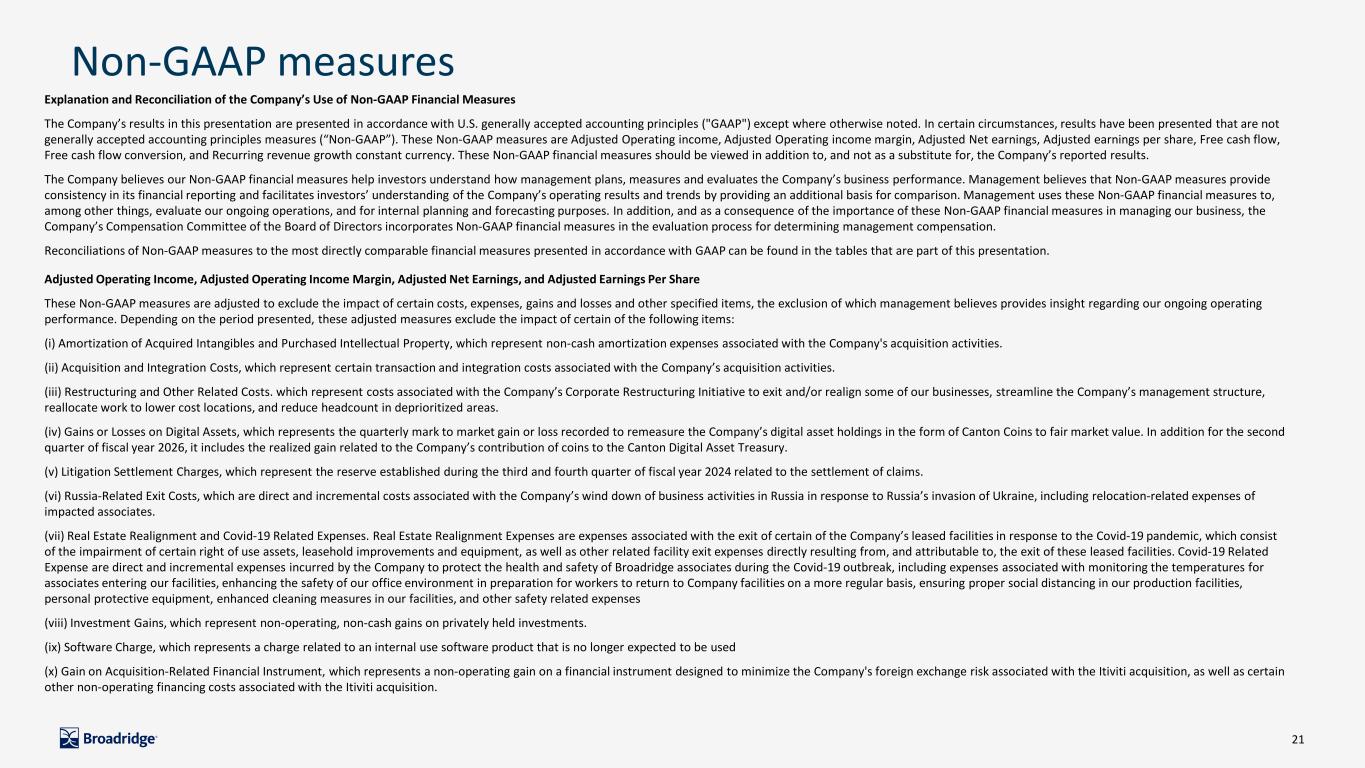
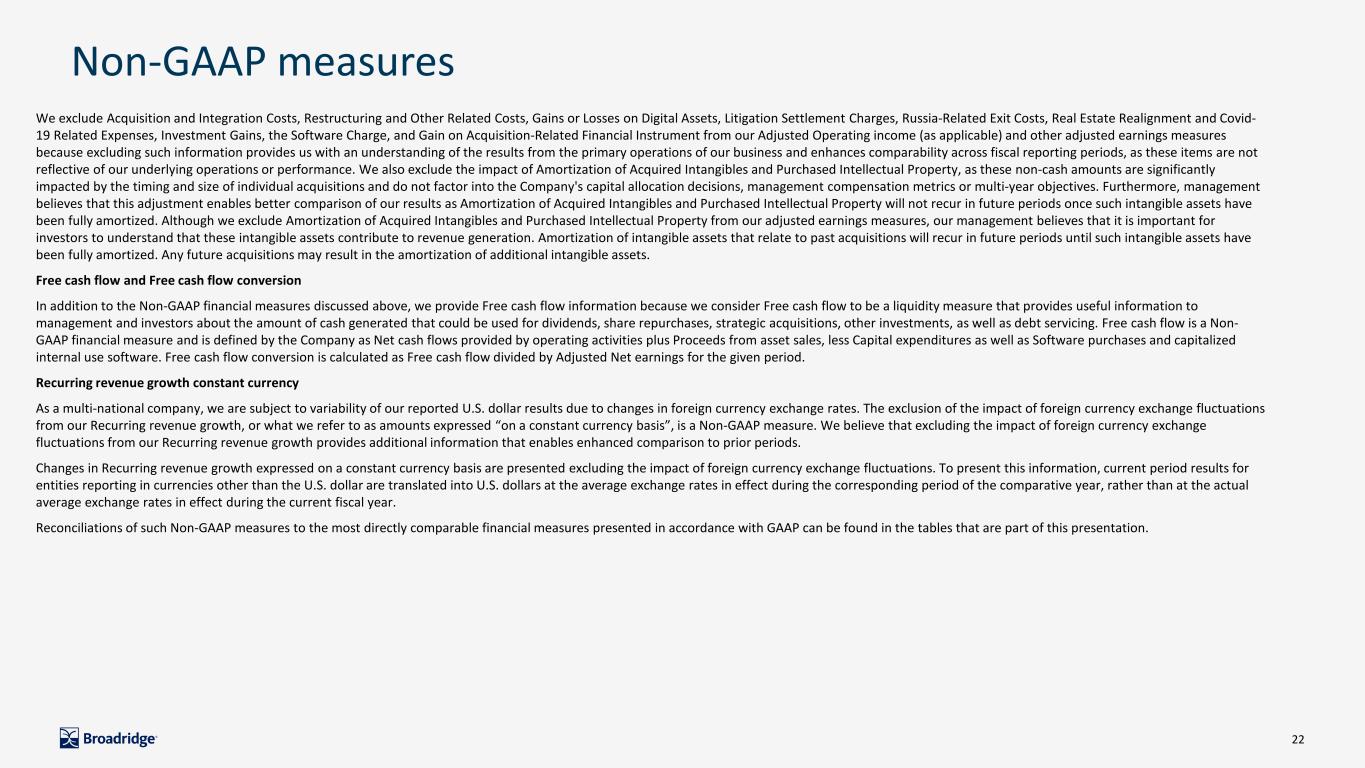
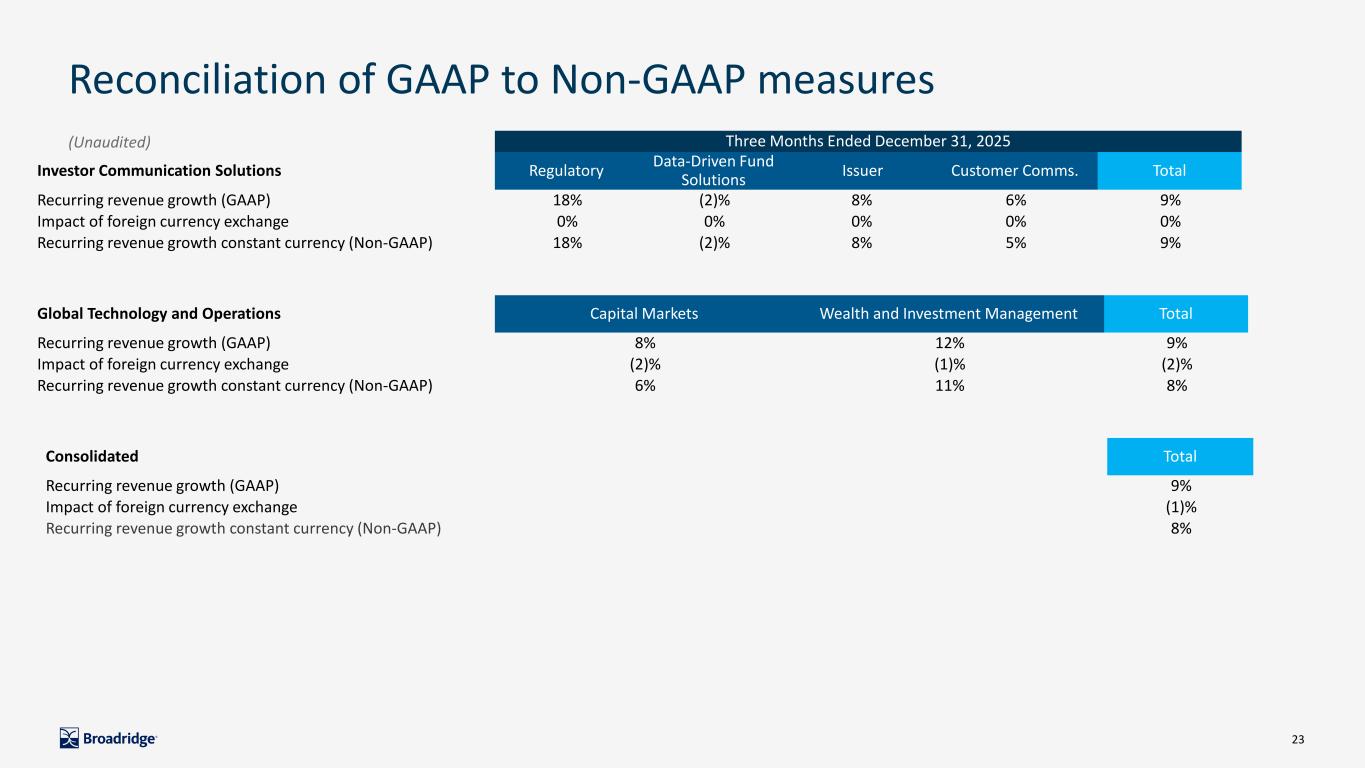
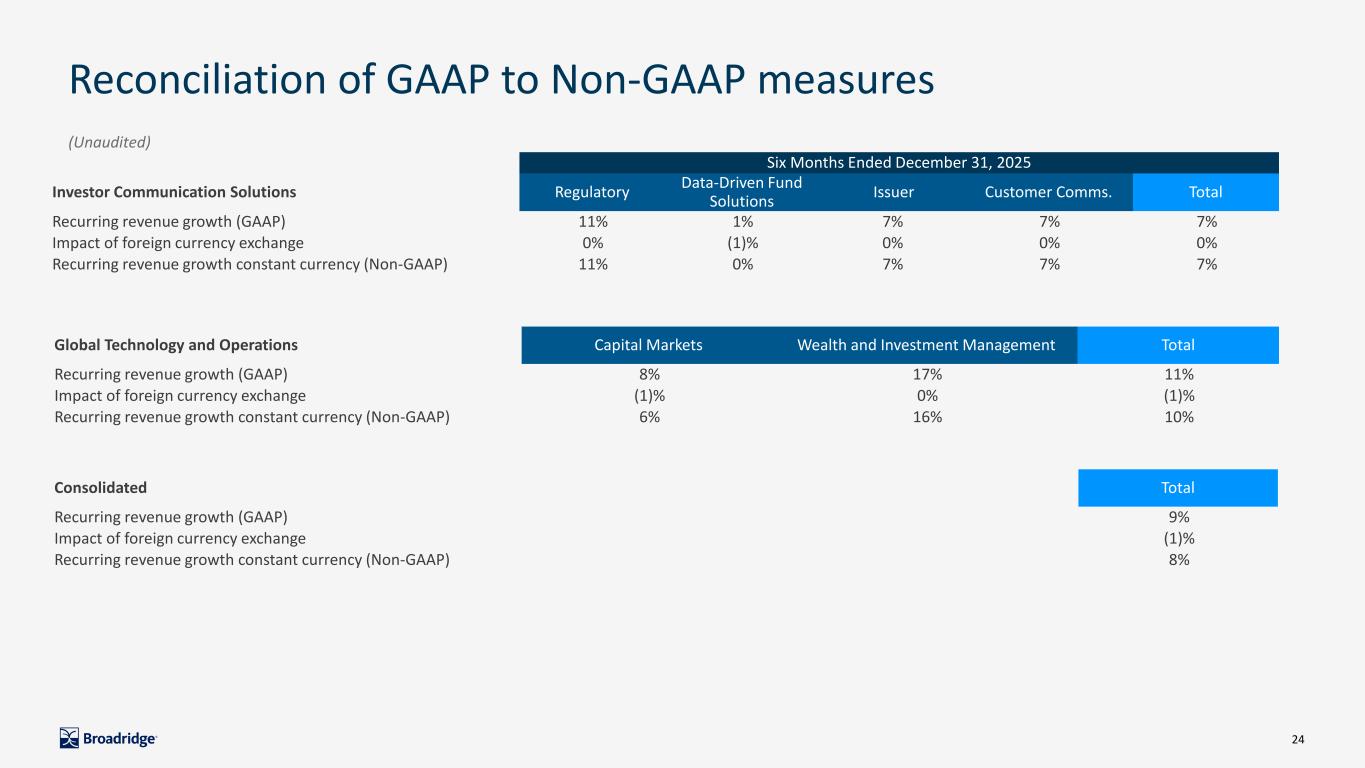
Eddings Thibault Welcome to Broadridge's second quarter fiscal year 2026 earnings conference. The company this call may be found on the Investor Relations section of Broadridge.com. Joining me on the call this morning are Tim Gokey, our Chief Executive Officer and our Chief Financial Officer. Before I turn the call over to Tim, I want to make a few standard reminders. One, we will be making forward-looking statements on today's call regarding Broadridge that a summary of these risks, the slides, and a more complete description on our annual report, Form 10-K. Two, we'll also be referring to several non-GAAP measures, which we believe provide investors with a more complete understanding of Broadridge's underlying operating results. An explanation of these non-GAAP measures and reconciliations to the comparable GAAP measures can be found in the earnings release. We now turn the call over to our CEO. Thank you, Watings.
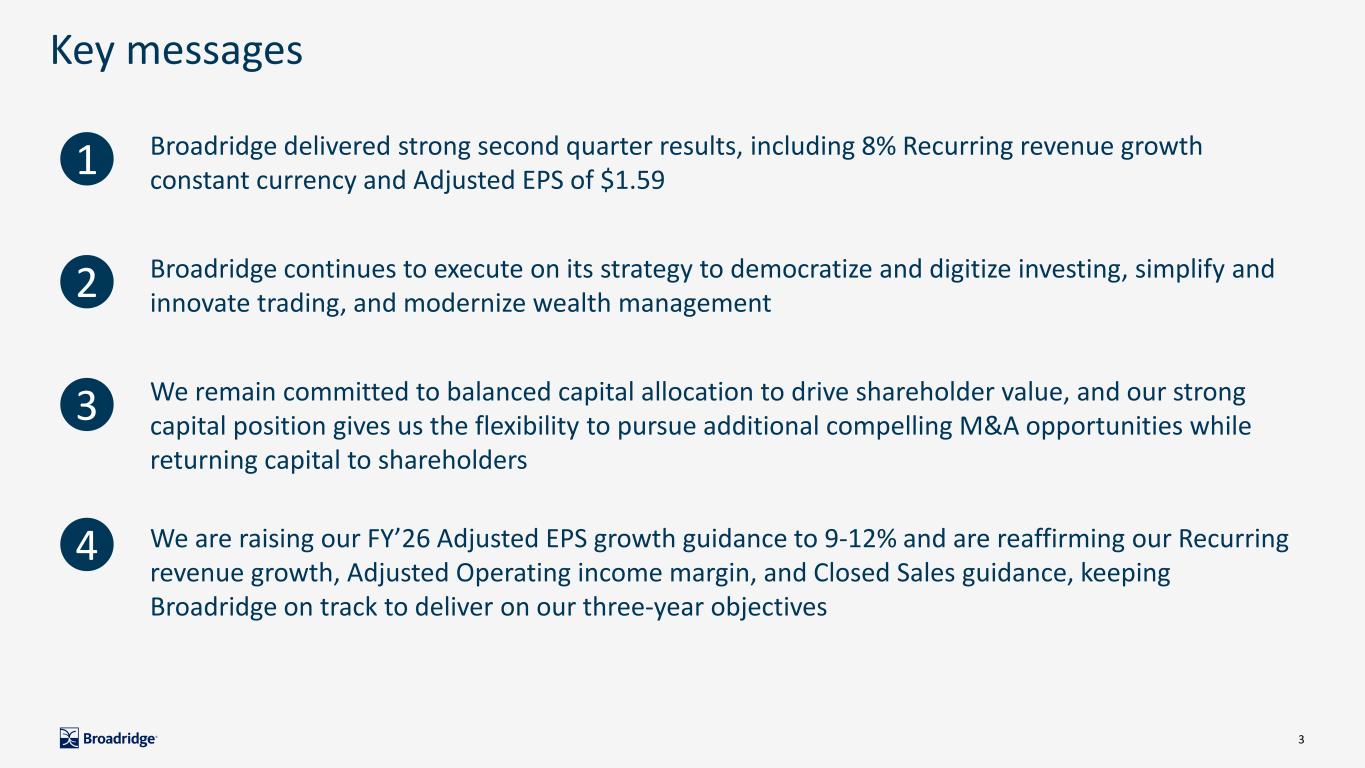
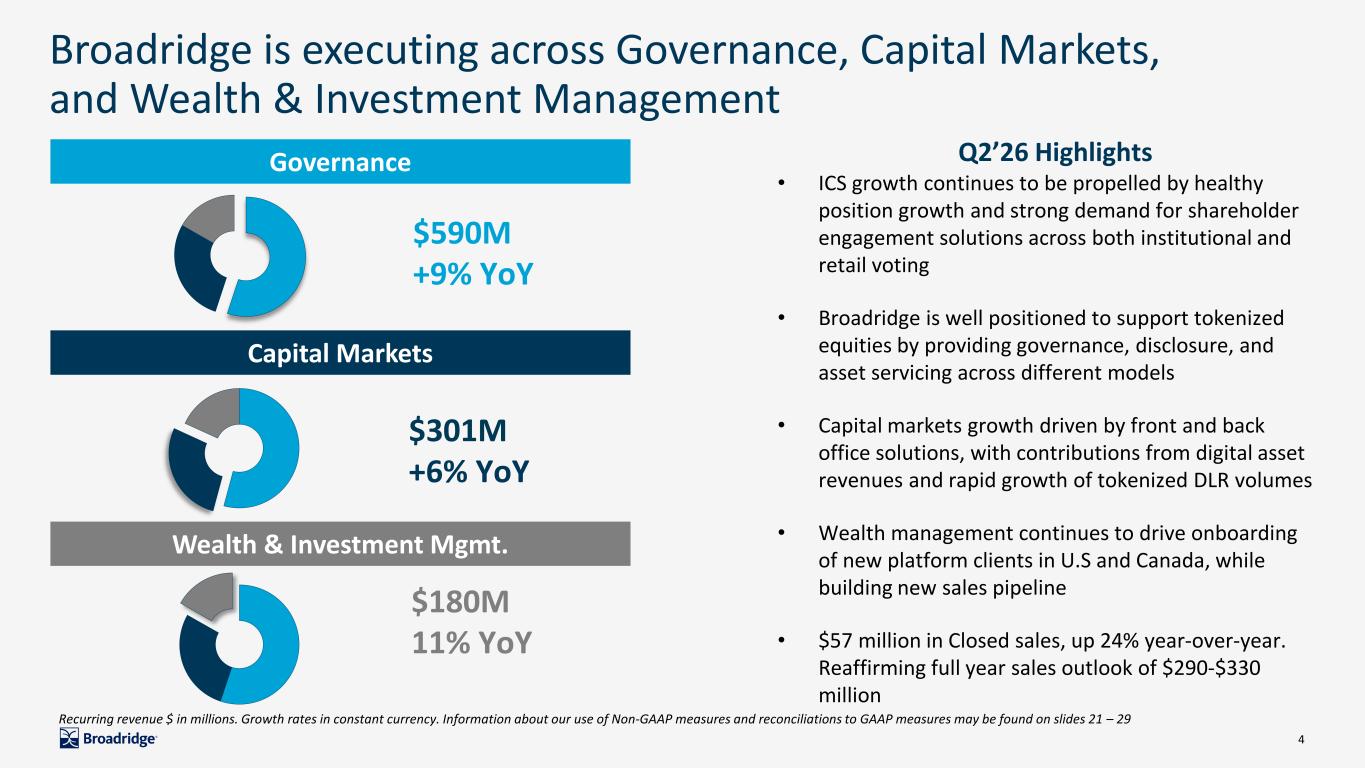
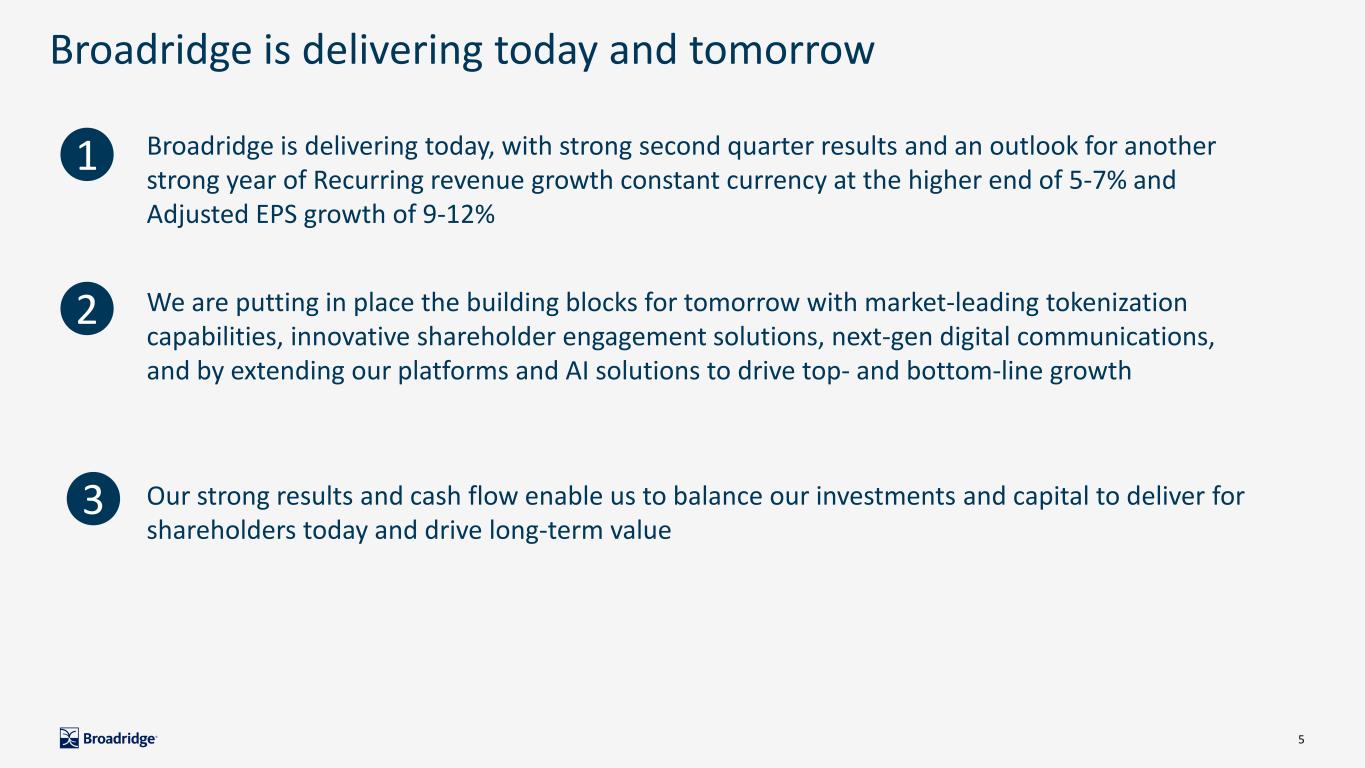
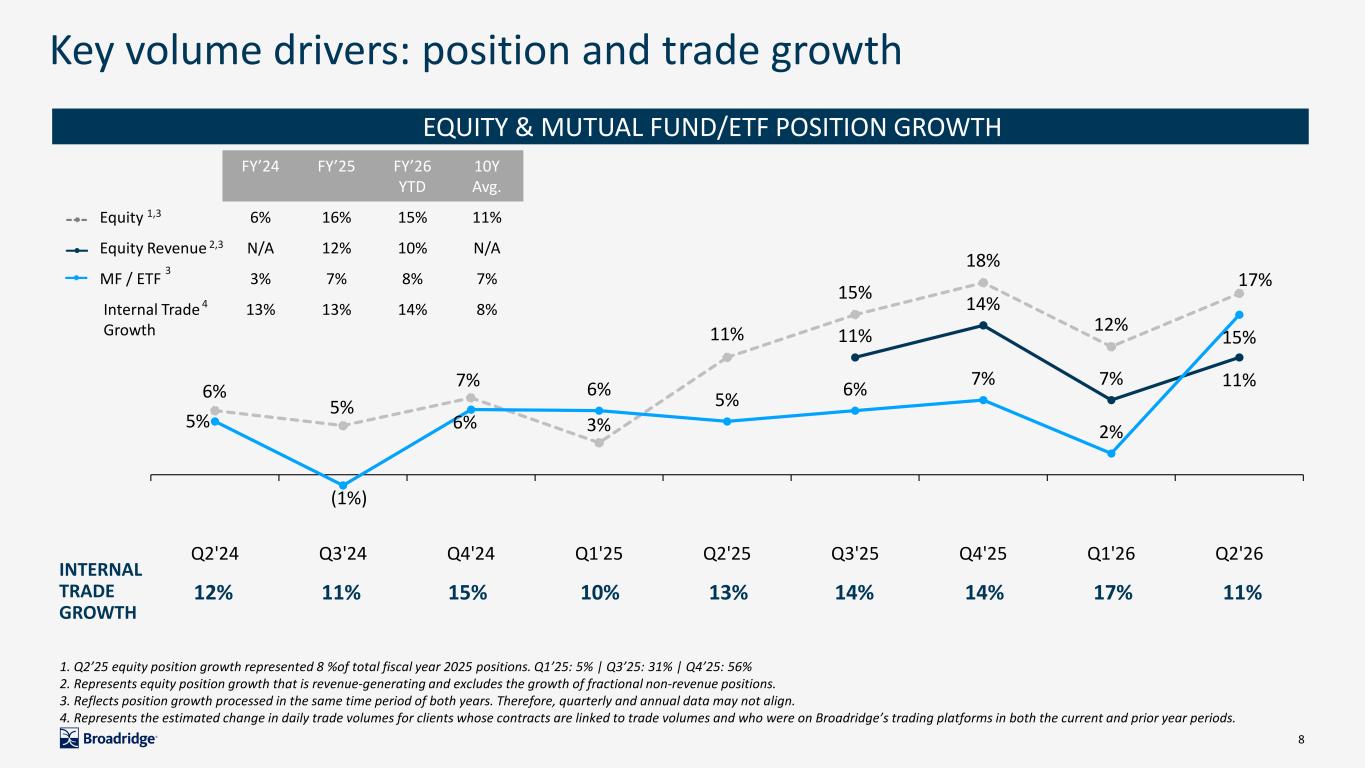
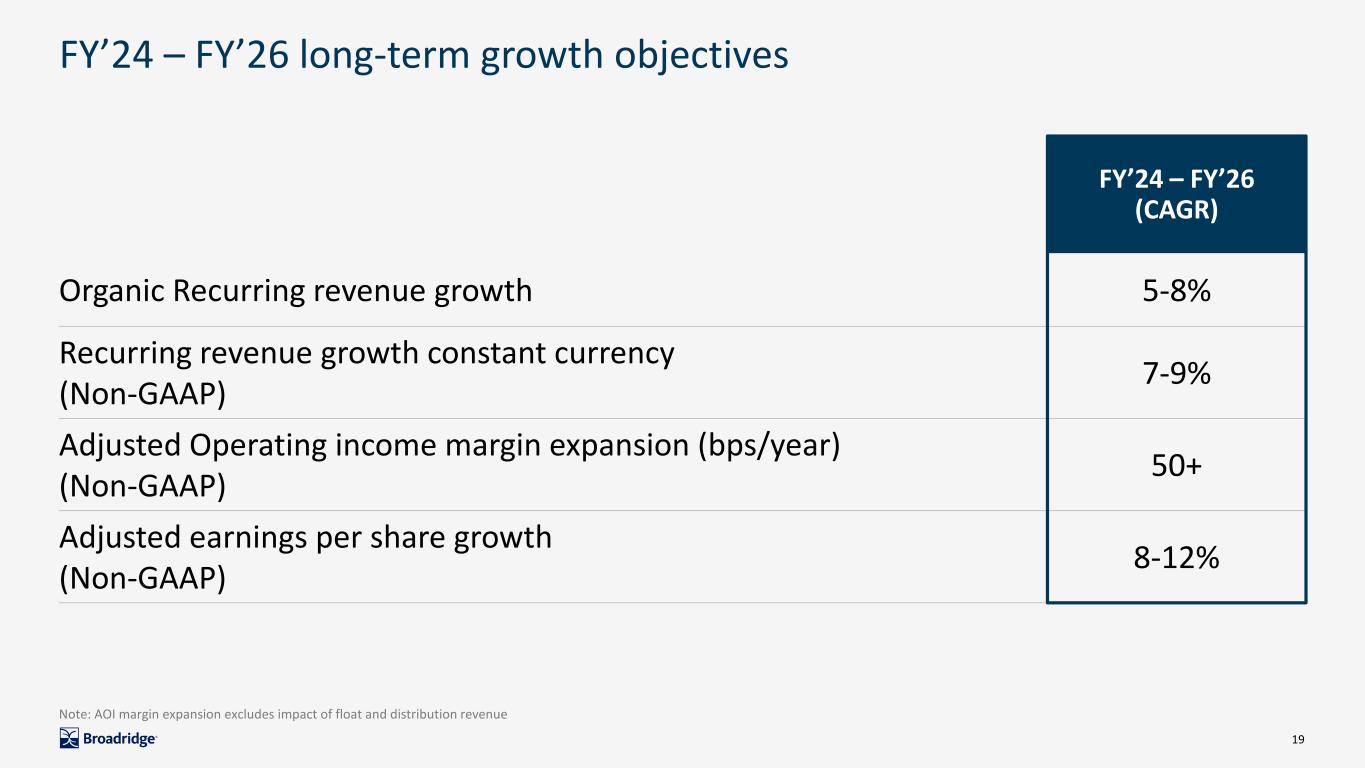
Good morning. We're here this morning to discuss our strong second quarter results of our strategic initiatives. Half of our fiscal year, the market back dropped. U.S. equity markets rose 16% in calendar 25, and they largely remained strong in January. We're clearly benefiting from strong capital markets activity. I'm especially excited to be here today because the accelerating pace of technology and a pro-innovation regulatory agenda are together creating exciting change, and Broadridge is uniquely positioned to help our industry drive innovation at scale. A few examples. Togenization continues to gain steam across capital markets, wealth, and asset management. In shareholder engagement, a quiet revolution is transforming how funds and public companies engage shareholders and manage proxy. Digital communications are driving down the cost of interacting with shareholders and increasing investor engagement, enabling all the transformational changes we have built Broadridge to address, and our ability to drive innovation at scale is creating opportunity for the future, even as it translates into results today. So let's dig into those results, bring revenue growth, constant currency, and adjusted EPS of $1.59. We continue to execute on our strategy to democratize and digitize investing, to simplify and innovate trading. We're beginning to see positive incremental impact from delivering new forms of shareholder engagement, extending our omnichannel digital capabilities, and driving tokenization across governance allocation to drive shareholder value. We're on track to deliver another year of 100% plus free cash flow conversion, which which gives us ongoing flexibility to pursue additional compelling M&A opportunities while returning capital. We remain on track to deliver strong results in Fiscal 26. We are reaffirming our 26 guidance for recurring revenue growth, margins, and closed sales. And we are raising our outlook for adjusted EPS growth to 9 to 12 percent. Look keeps us on track to deliver on our three-year top and bottom line objectives. Let's move to the drivers of those results on slide 4, starting with our governance business, where we continue to drive the democratization and digitization. Governance recurring revenues rose 9 percent, constant currency, driven by revenues from sales and continued position growth. Investor participation trends remain healthy across both equities and funds. Total equity position growth remained strong at 17%, with revenue position growth at 11%. We're seeing low teens position growth for the second half, which should drive high single-digit growth in revenue positions. Fund position growth, which was hurt by timing in Q1, 2% in Q1, to 15% in Q2. Looking through the timing noise, fund position growth was 8% for the first half. we continue to see fund position growth for the year trending in the mid to high single digits in line with H1. Expected event-driven activity across both fund elections and corporate events, which gives us the opportunity to accelerate our innovation roadmap for the benefit of our clients. Beyond position growth, our business is benefiting from our investments in innovation, starting with what we are calling a quiet revolution in shareholder engagement. This coming proxy season, we expect more than 600 funds covering $4 trillion of assets to use our voting choice solution, up from 400 funds and $2 trillion last year, and fewer than 100 funds two years ago. AI-native custom policy engine and vote implementation capabilities for institutional investors like J.P. Morgan and Wells Fargo who are seeking to reduce their reliance on proxy advisors. A powerful example of how our AI capabilities are enabling new revenue. And we continue to build on our pilot program, first launched with ExxonMobil, to enable retail shareholders to provide standing voting instructions for annual meetings. We also continue to make progress in driving the digitization of communications, closing a significant sale to extend our flagship Wealth in Focus platform to cover a million additional accounts. We are also excited to note the rapid progress we are making in addressing the tokenization opportunity in equities. It's called that we see tokenized equities as an opportunity for Broadridge, and recent client and institute conversations have only reinforced that conviction. The last several weeks have seen announcements by the major changes in the DTCC on their plans to build tokenized trading capabilities for equities, as well as announcements by issuers themselves of tokenized equity offerings. As tokenized equities scale, providers will need to ensure they meet the same governance and disclosure requirements as traditional equities. And for real liquidity, the market will need to access broker-dealers who are our core clients, even as we increasingly serve new intermediaries as well. For both, the challenge is to gather communications from every issuer and fund, distribute them accurately according to client's preferences, take back and reconcile votes, and ensure regulatory requirements are met and that proxy voting is accurate. And that's our core competence. While tokenized equities enable real benefits, they also represent new complexity across multiple models of tokenization and multiple layer 1 networks. The opportunity for Broadridge is to simplify that complexity for brokers and platforms, firms, issuers, investors, and regulators, just like Broderidge simplified that complexity in traditional models today. We expect to integrate tokenized and digital assets into our proxy capabilities by the end of this year. From there, we'll extend those capabilities to include other parts of the servicing model, including corporate actions and disclosures. We'll also extend those solutions to digital wallets to create a seamless client experience regardless of where investors hold their equities and other tokenized assets we have talked to and worked with dozens of clients regulators and industry partners feedback from them on our roadmap has been universally positive there is a clear market need and we are stepping into it ensuring ensuring that governance complexity does not inhibit market growth and as we open the market to new investors and new products that will drive additional position growth Just as innovation has done, I'll close my review of governance by noting that we also continue to strengthen our business with M&A. In early January, we closed the acquisition of Acklin, which will augment the suite of services we offer to funds in Europe across their life cycle, from creation and registration to ongoing distribution. The acquisition of Acklin, like the tuck-in deals we completed earlier this year for iJoin and Signal, extends our product and geographic reach. The recurring revenues grew 6% on a constant currency basis and back-office solutions, and from tokenization revenues, including the growing adoption of our Distributed Ledger Repo platform and revenue from Canton Coin. Volumes on our market-leading DLR platform, Distributed Ledger Repo platform, continue to grow as we add new clients. We tokenized $384 billion per day in December, or $9 trillion for the month. That's more than double where we were in June. As demand for our tokenized collateral solution grows, we are on track to launch a real-time repo capability in fiscal year 26, which will incorporate stablecoin to make repos a real trading and financing instrument, and further scale volumes. We are also pleased to note that we completed SOCGEN's first digital bond issuance in the U.S. during the second quarter. This issuance highlights the flexibility and power of our DLR platform to tokenize a wide range of assets. So it should be no surprise to know that Broadridge will be extending our tokenization platform to other asset classes, including deposits, in Fiscal 27. Beyond DLR, we are also actively working to enable our primary trade processing engines to support digital assets alongside traditional assets by the end of Fiscal 26 across both capital markets and wealth management. And speaking of wealth management, recurring revenues grew 11% during the quarter, propelled by strong organic growth and the final month of M&A revenue from the acquisition of SIS, continues to gain recognition in the marketplace and was recently named a leader in wealth management technology by IDC. That recognition is contributing to a growing pipeline of platform opportunity with closed sales. After a slower start in Q1, I'm pleased to report that our sales momentum is picking up. Q2 closed sales rose 24% to $57 million. In addition, new pipeline generation, which is our measure of new sales opportunities, rose more than 20% over the first half of fiscal 25, driven in part by the transformational opportunities I just mentioned. Clients are engaging with us on tokenization, shareholder engagement, and digital communications, as well as more traditional needs like preparing for T-plus-1 in Europe and 23x5 trading in the U.S. Those conversations are driving multiple exciting pipeline opportunities and keeping us on track to deliver on our closed sales guidance. I'll close my remarks with a few key takeaways on slide 5. First, Broadridge is delivering strong results today, with 8% recurring revenue growth and adjusted EPS of $1.59 in the second quarter. More importantly, we are on track to deliver a strong Fiscal 26 with recurring revenue growth constant currency at the higher end of 5-7% and adjusted EPS growth of 9-12%. And with this guidance, we are on track to deliver on our top and bottom line objectives for the three years ending this June, which will be the fifth consecutive three-year period in which we met our goals, the building blocks for continued growth tomorrow. I started my comments this morning by calling out the shifts we are seeing in the financial services industry. In each of those areas, we are investing to create what we will believe will be a significant opportunity tomorrow. We are leading in tokenized trading, and we are extending that capability to new uses and as tokenized equities begin to emerge, we will accelerate that adoption by addressing the full suite of proxy and other asset servicing needs so that tokenization platforms can focus on gathering assets, driving liquidity, enabling the next generation of shareholder engagement. Asset managers and issuers are dramatically changing the way they interact with investors, equity owners, and fund owners, and Broadridge is enabling that change with a suite of new solutions. We're driving the next generation of digital communications. Our wealth and focus platform is already making communication between wealth managers and their clients more effective, more engaging, and we're leveraging our strong AI and platform capabilities to rapidly build these and other new solutions while improving productivity. With our deep domain knowledge and critical role at the intersection of financial services, AI will both expand Broderick's opportunities and drive efficiency improvements. We are managing our investments and capital wisely and with balance to deliver for shareholders today and tomorrow we're leveraging the unexpected benefit of more event revenue in each of one of the key initiatives I just noted even while delivering higher carefully balancing capital allocation in light of the strategic opportunities we see for both share buybacks and for strategic tuck-in M&A with the pace of industry evolution starting to accelerate Broadridge has never been better positioned to play a critical role in helping our clients grow and win. And I've never been more excited about the opportunities that we have in front of us. Before I turn the call over to Ashmo, I want to thank our culture because we see firsthand how our focus on clients drives success for continued growth. With that client focused culture and unprecedented depth in financial markets, our associates have been and are the key to make Broadridge the trusted and transformative partner at the end of April. Brett has been an invaluable counselor for nearly 11 years and will miss his wisdom and insight. And I want to welcome Trish Moscone and our own Chris Perry to the board. Trish brings a wealth of experience from senior consulting roles at both McKinsey and BCG and from her senior executive positions at BlackRock and Synchrony. And Chris brings a long career in wealth, data, and financial services generally, along with intimate knowledge of Broadridge's most important clients.
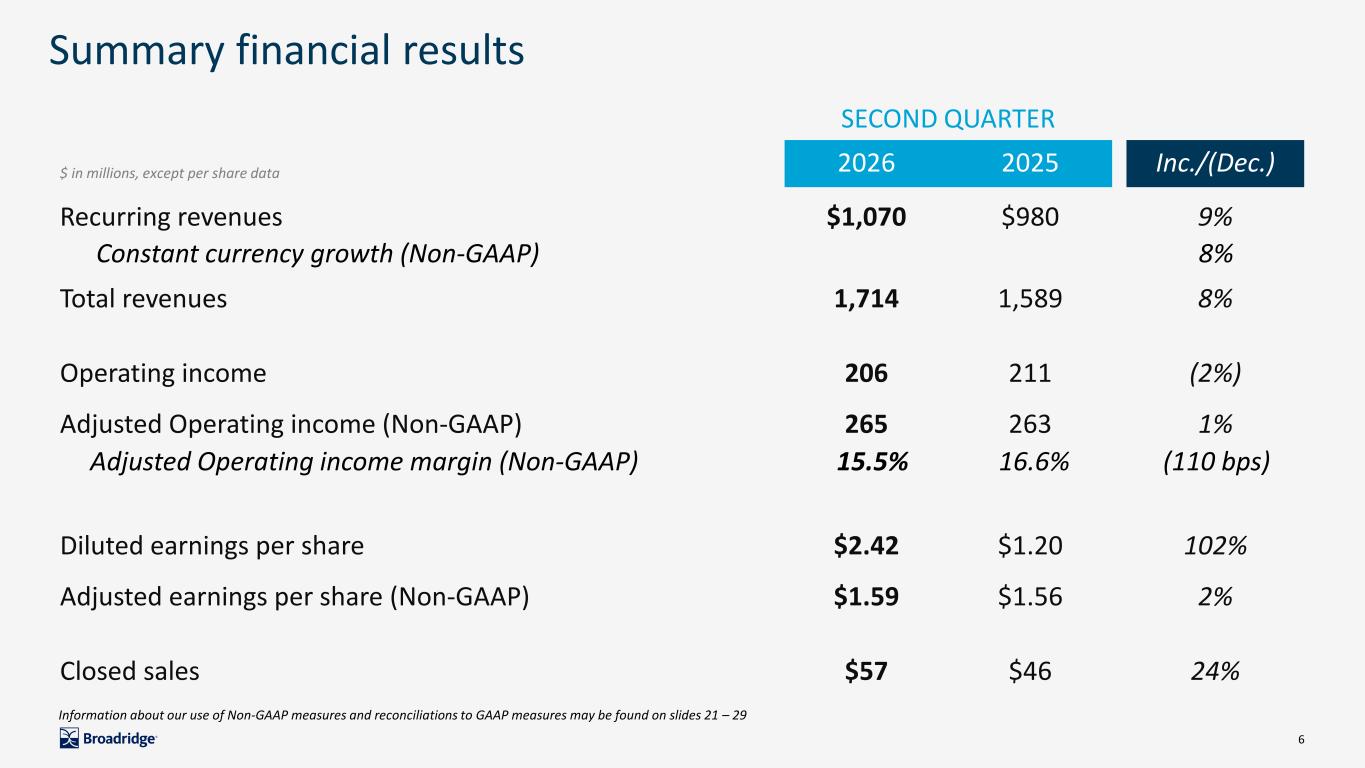
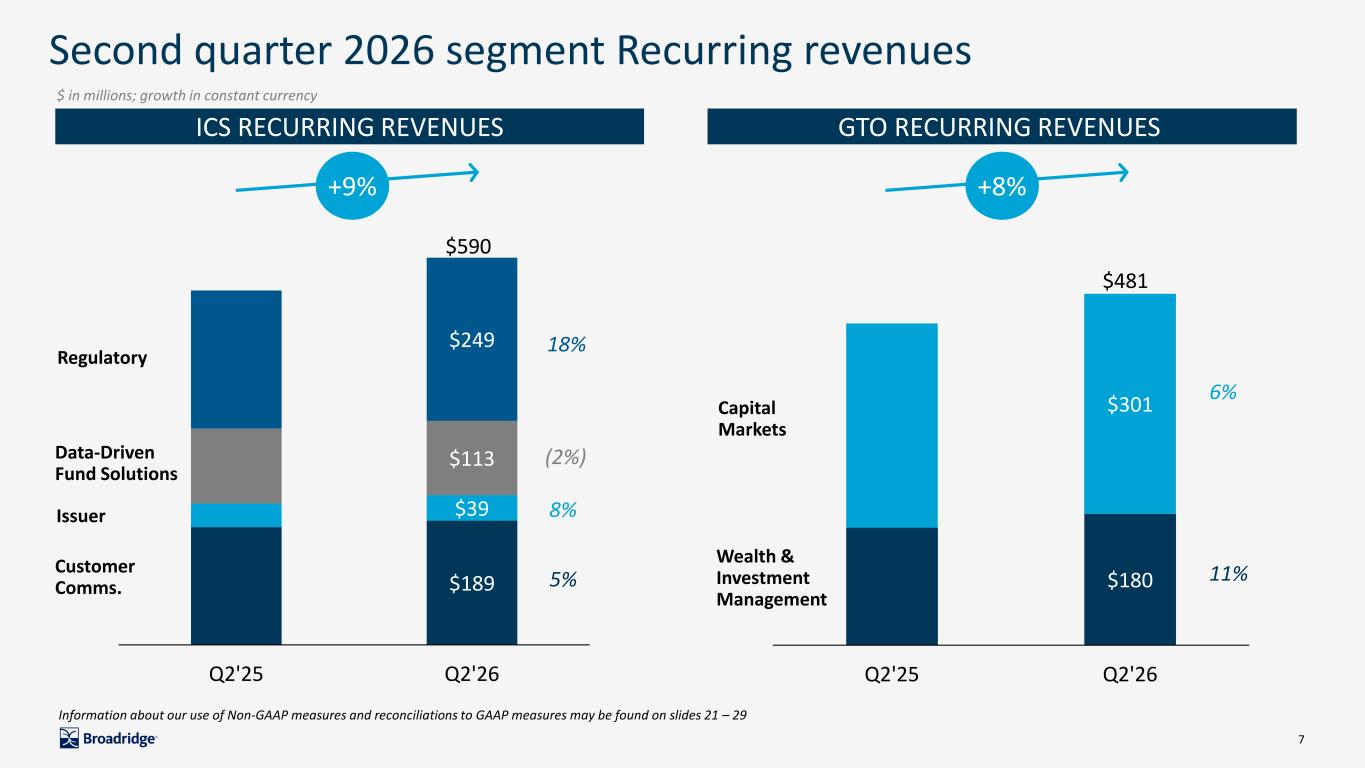
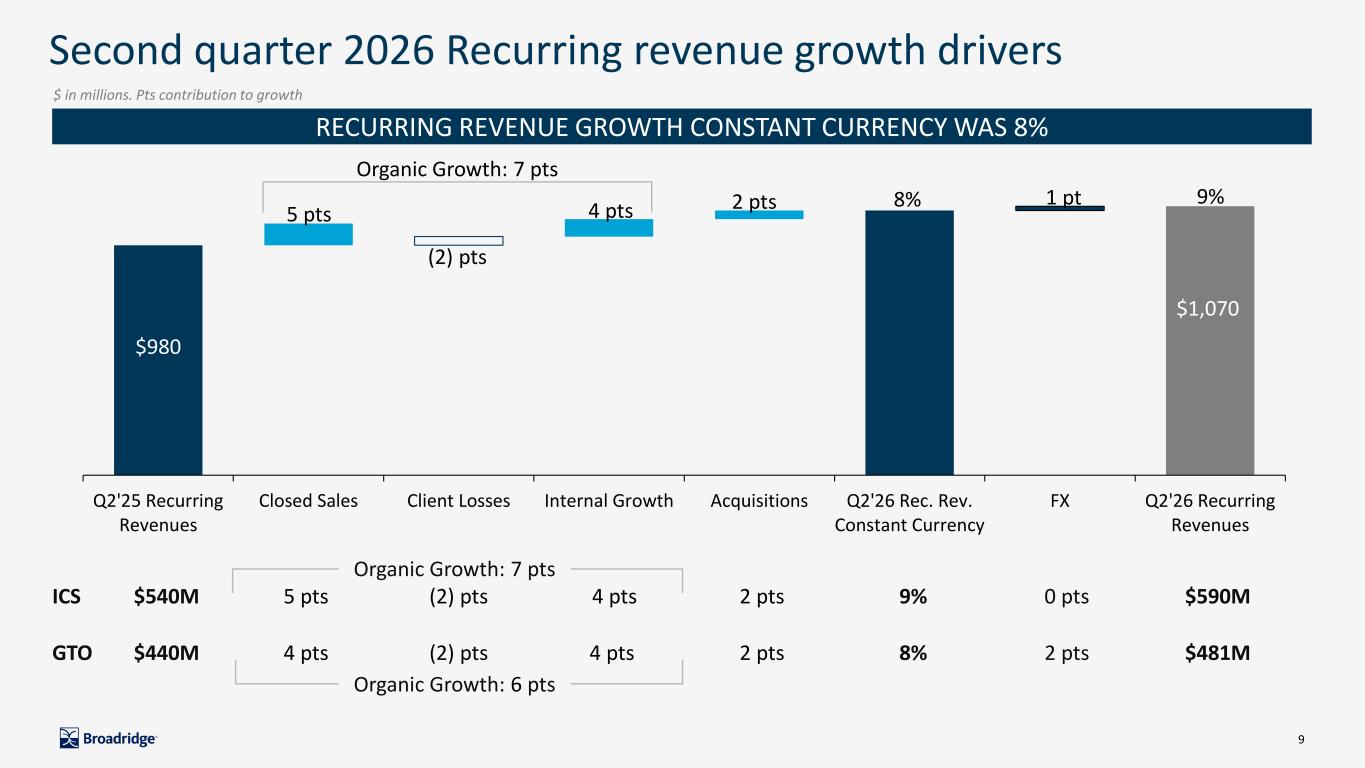
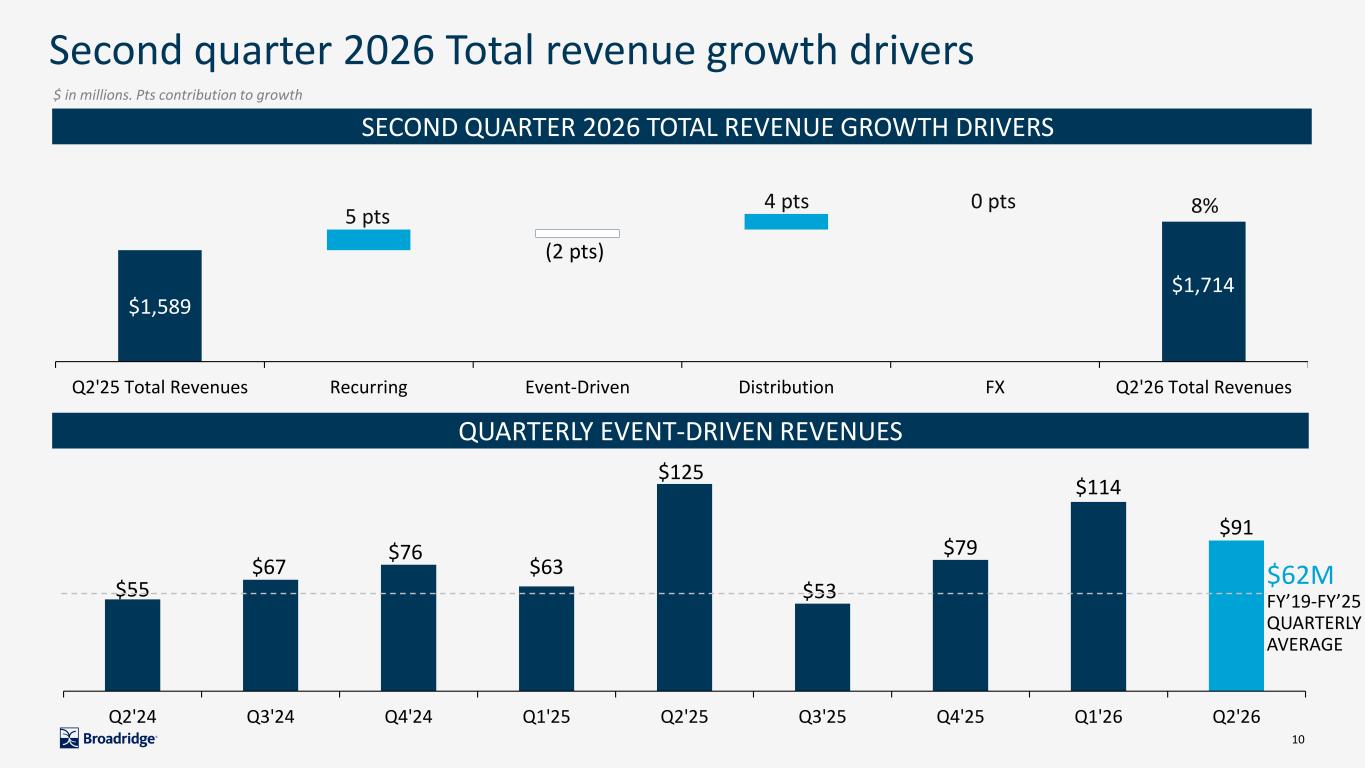
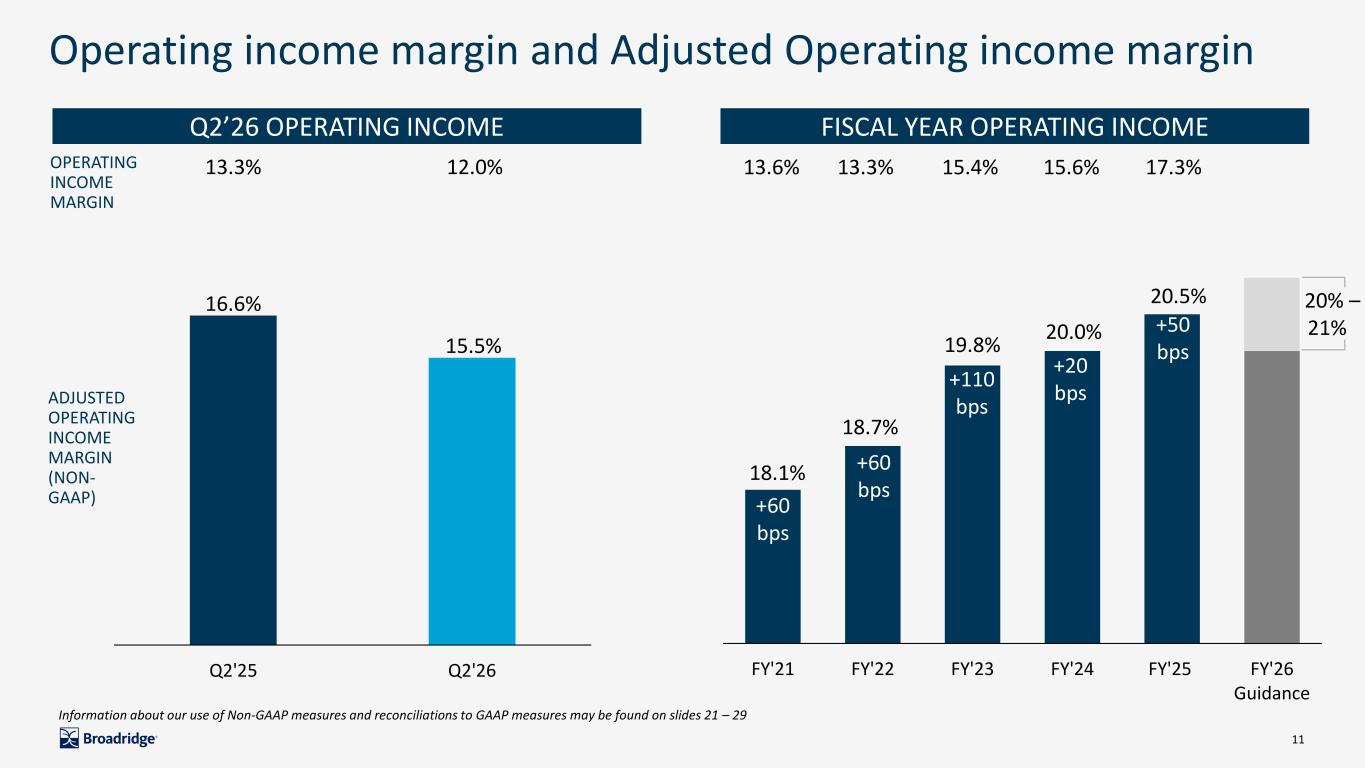
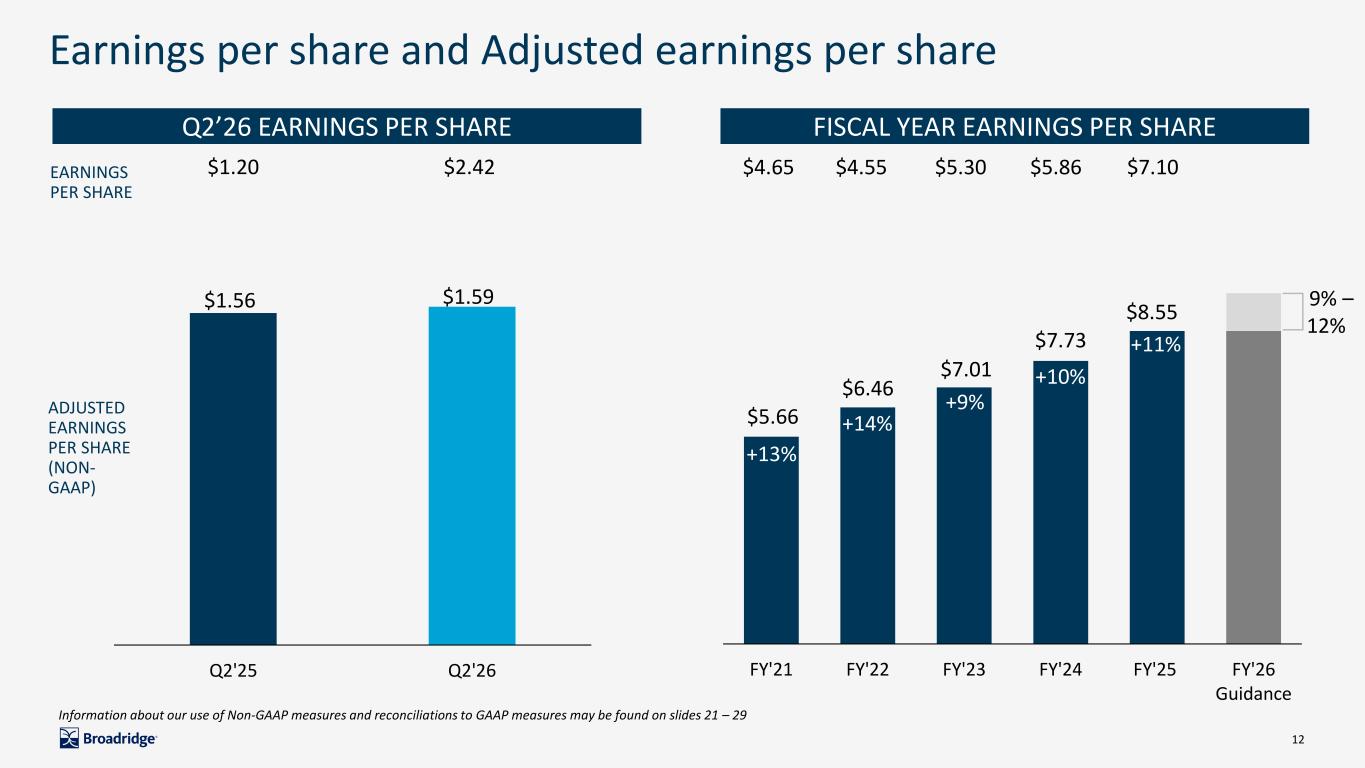
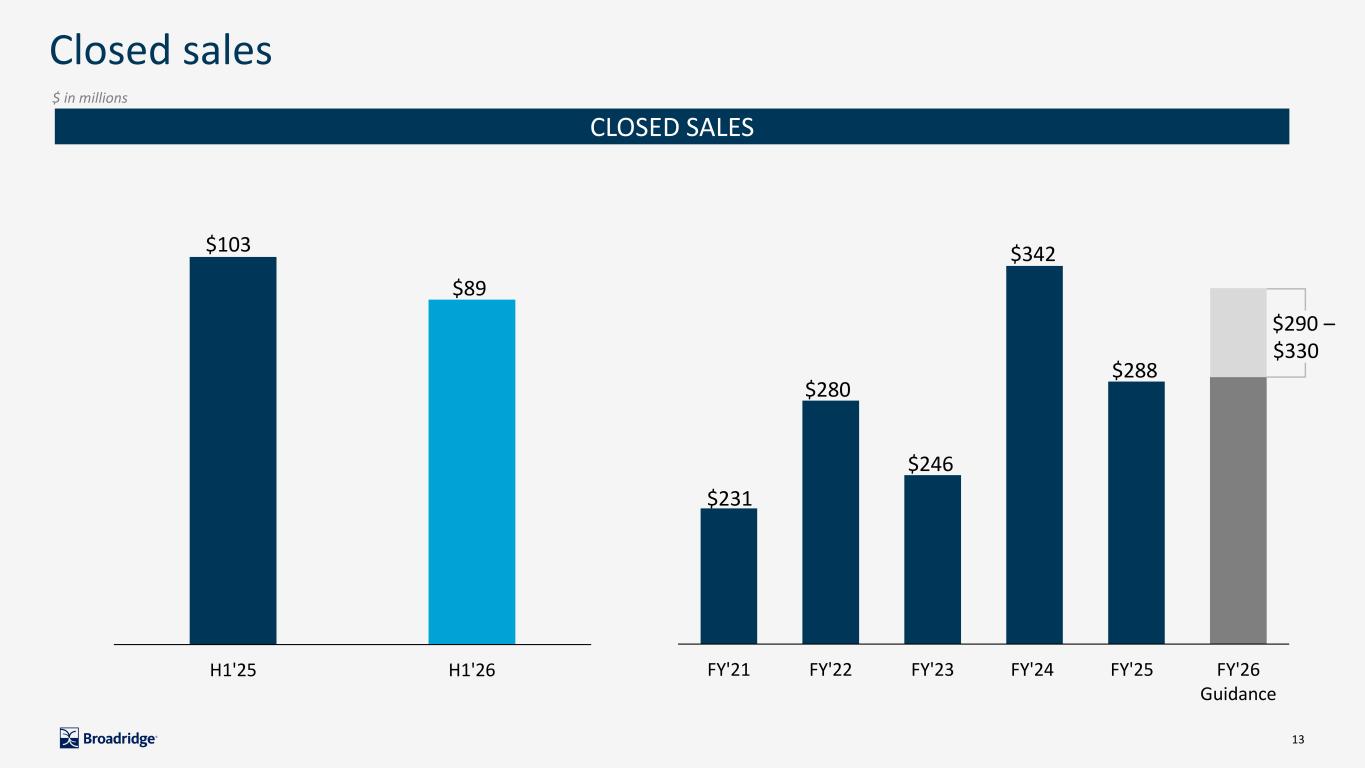
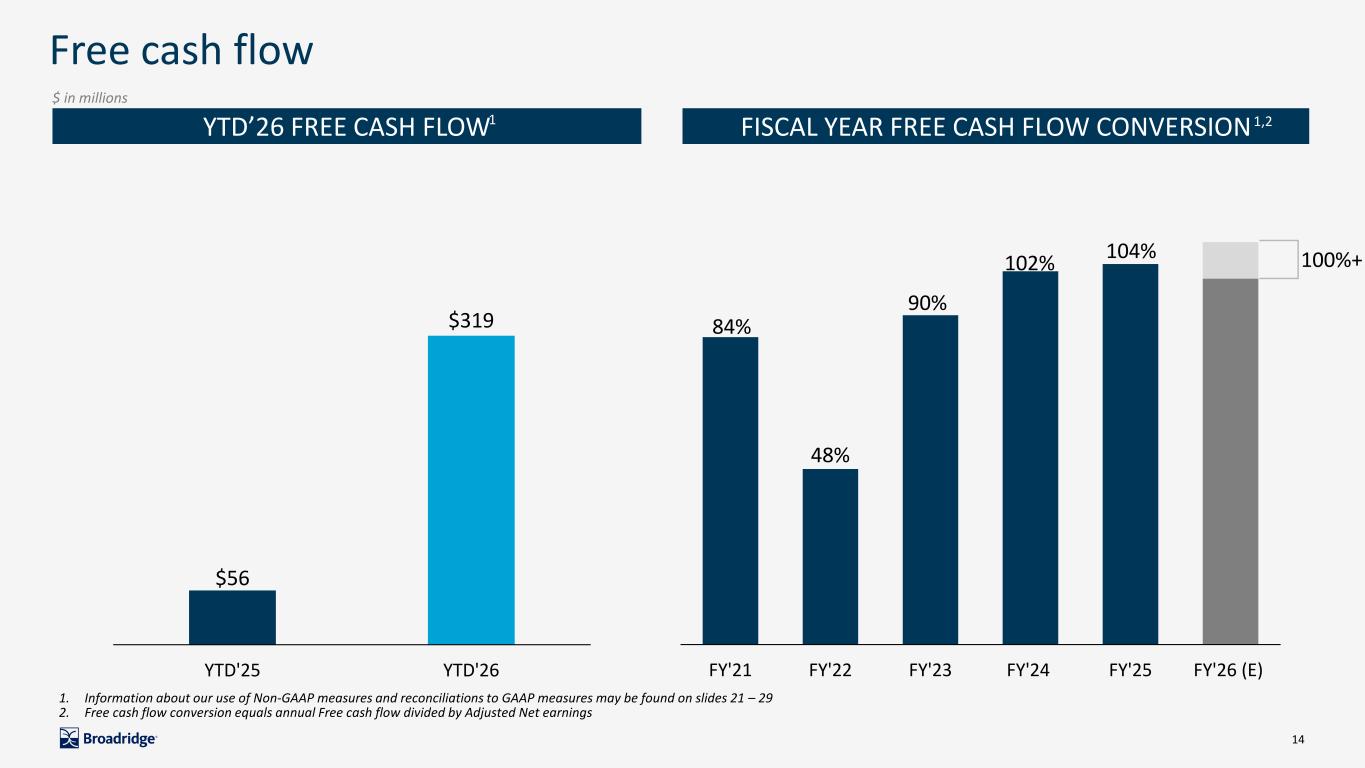
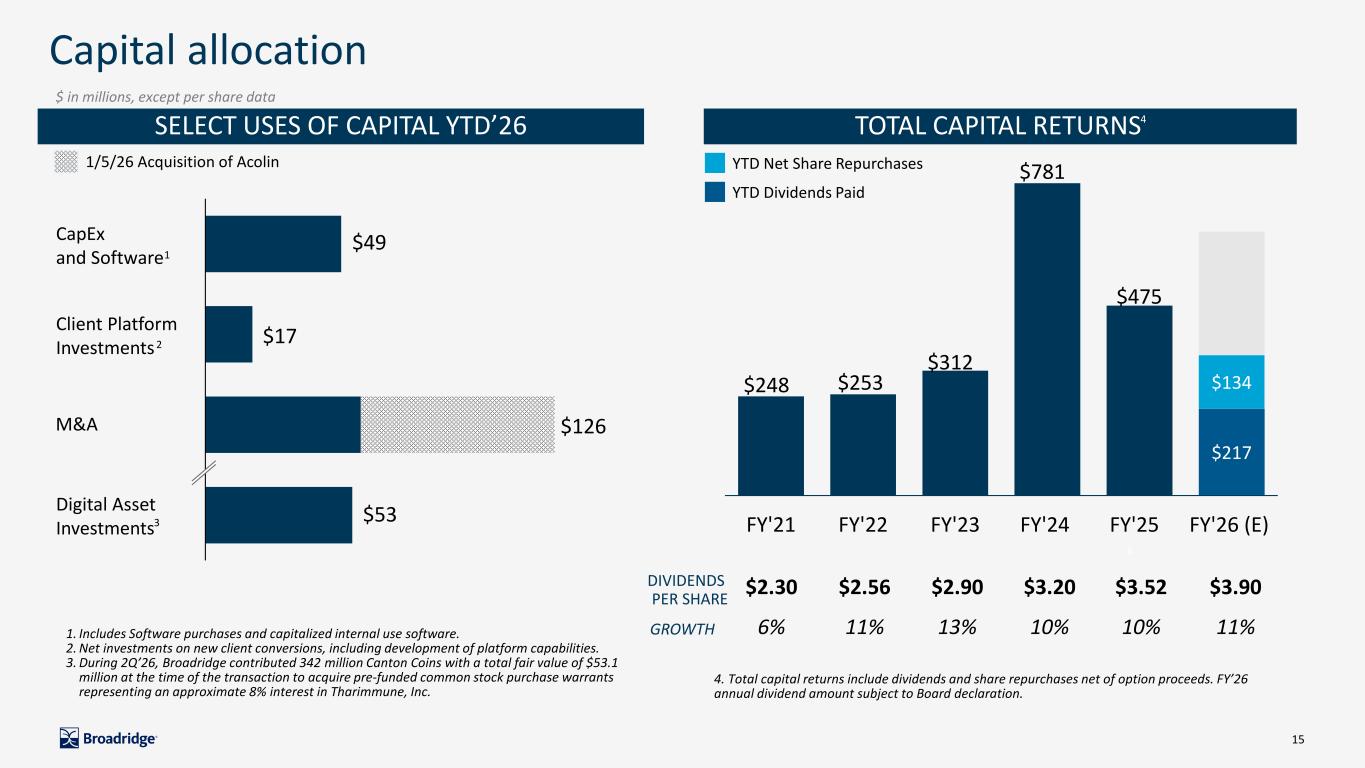
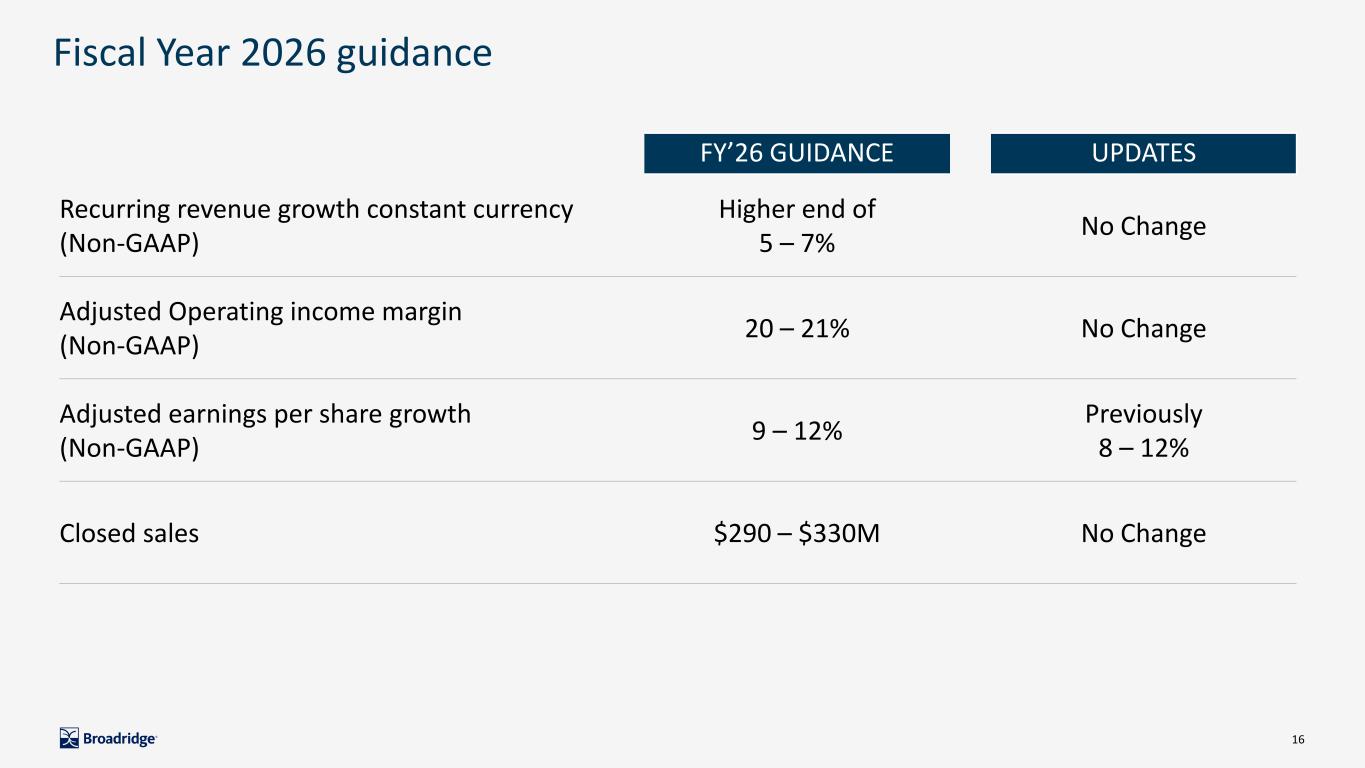
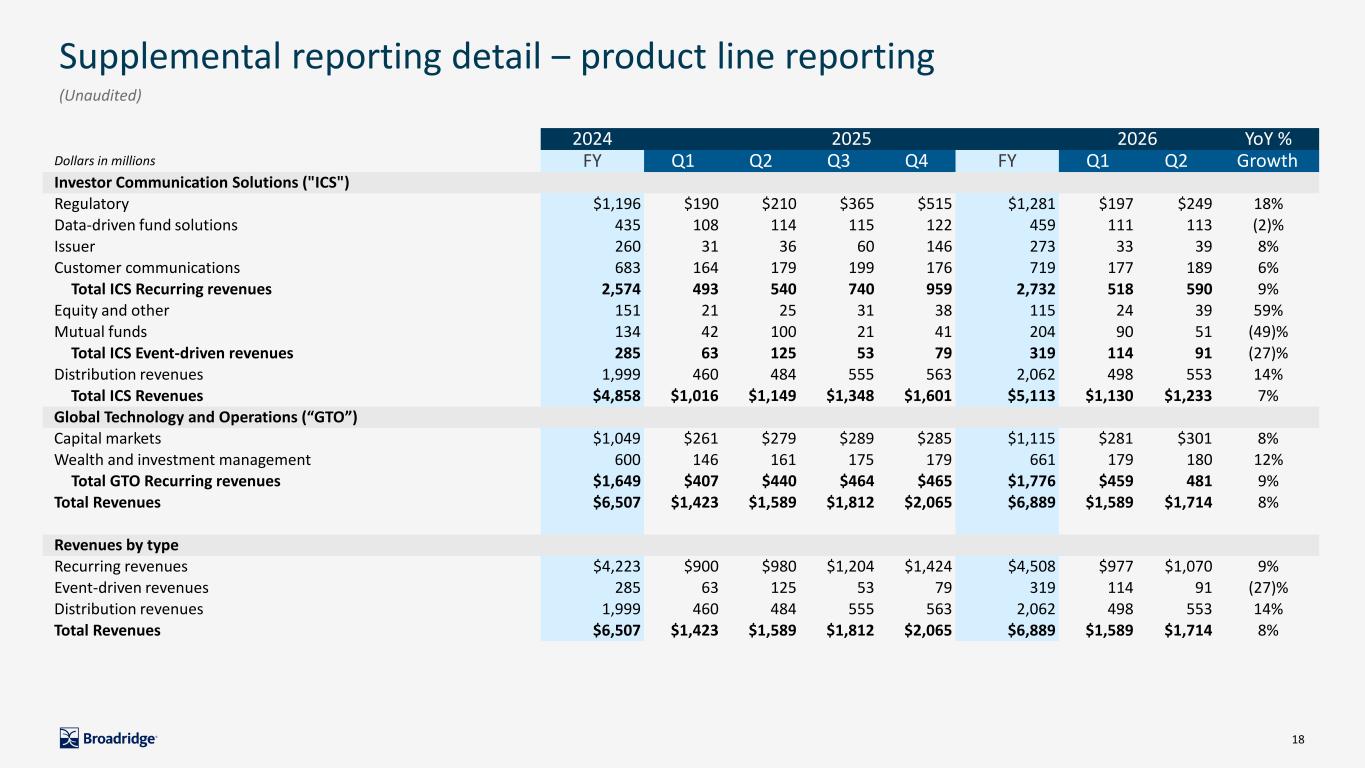
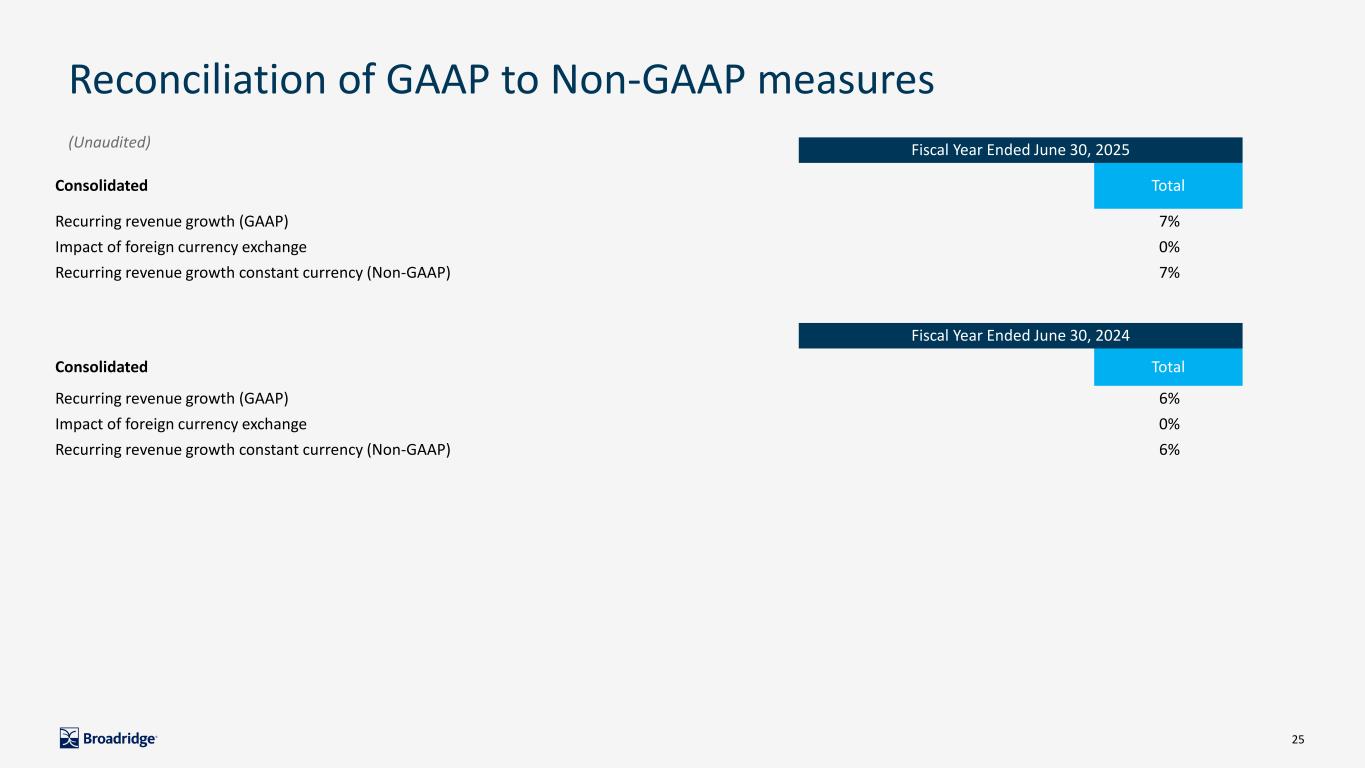
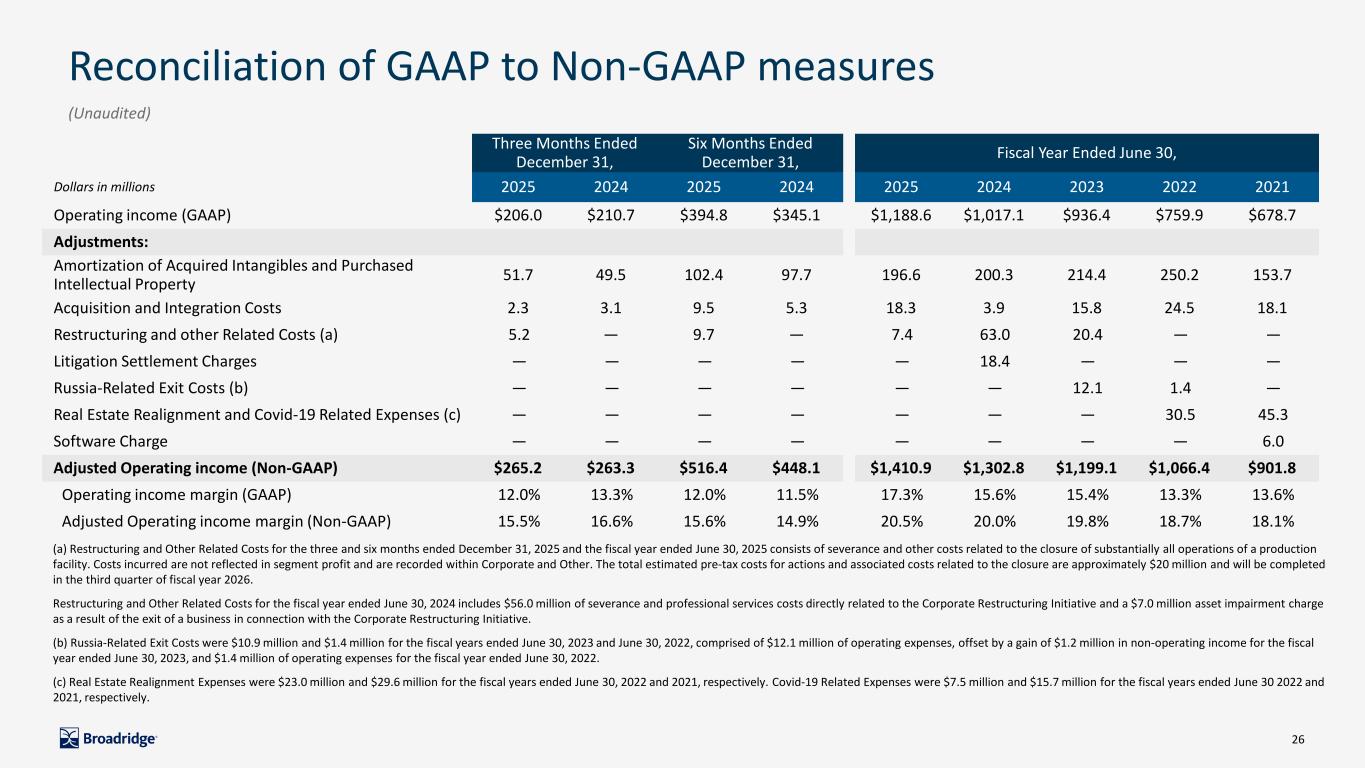
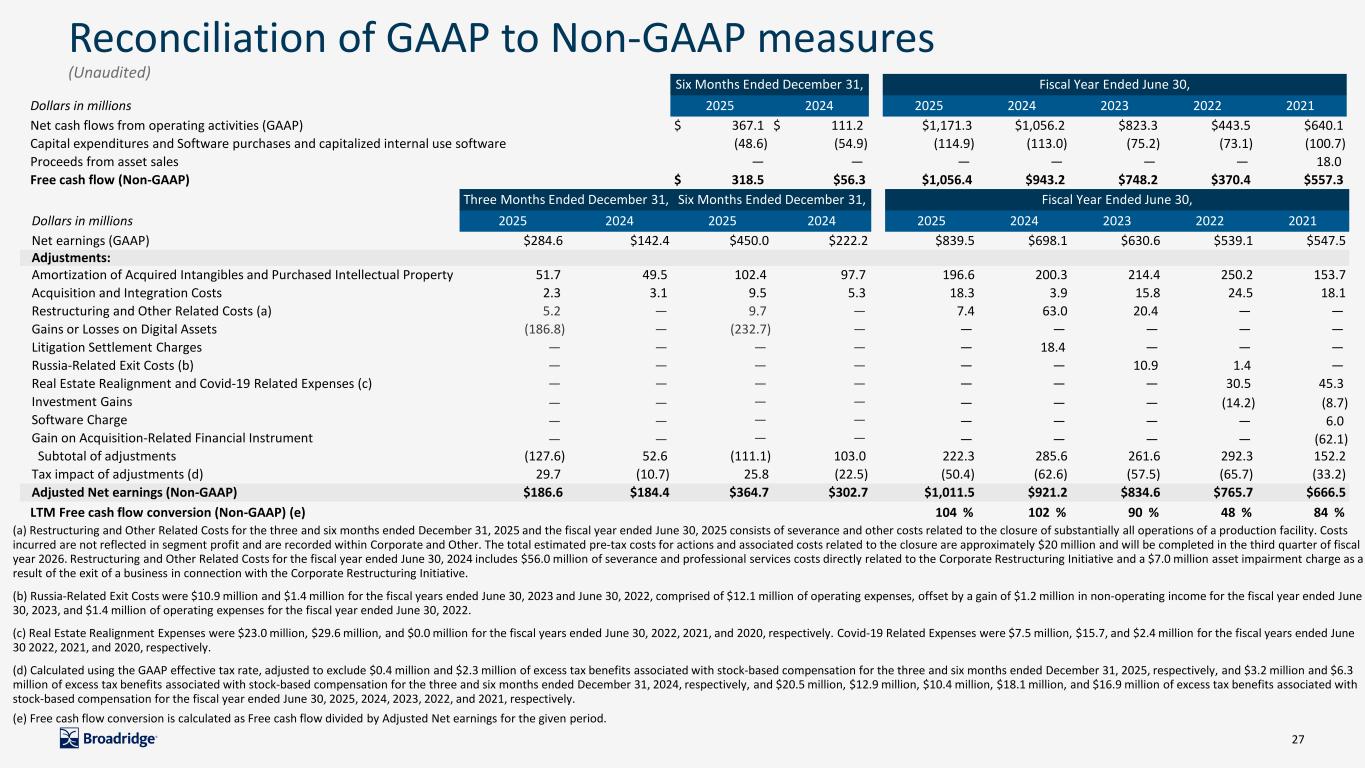
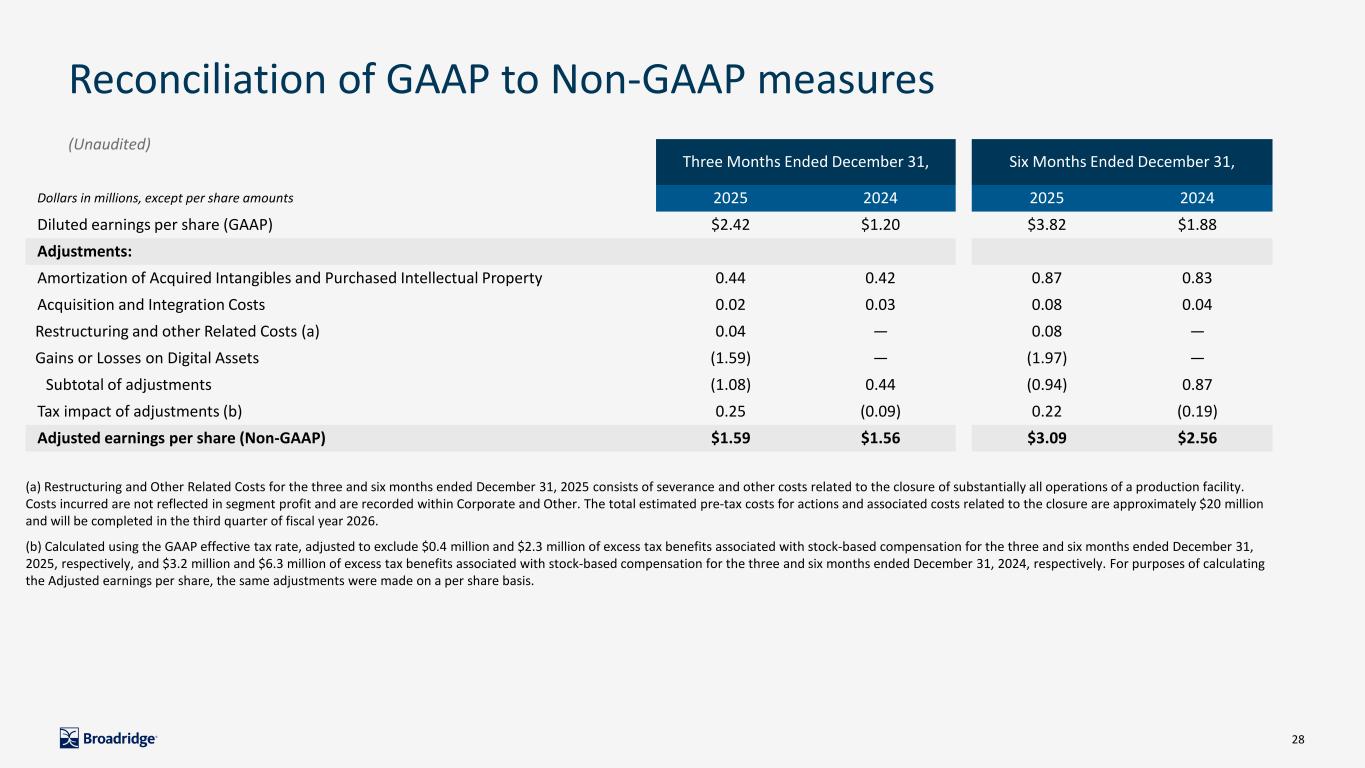
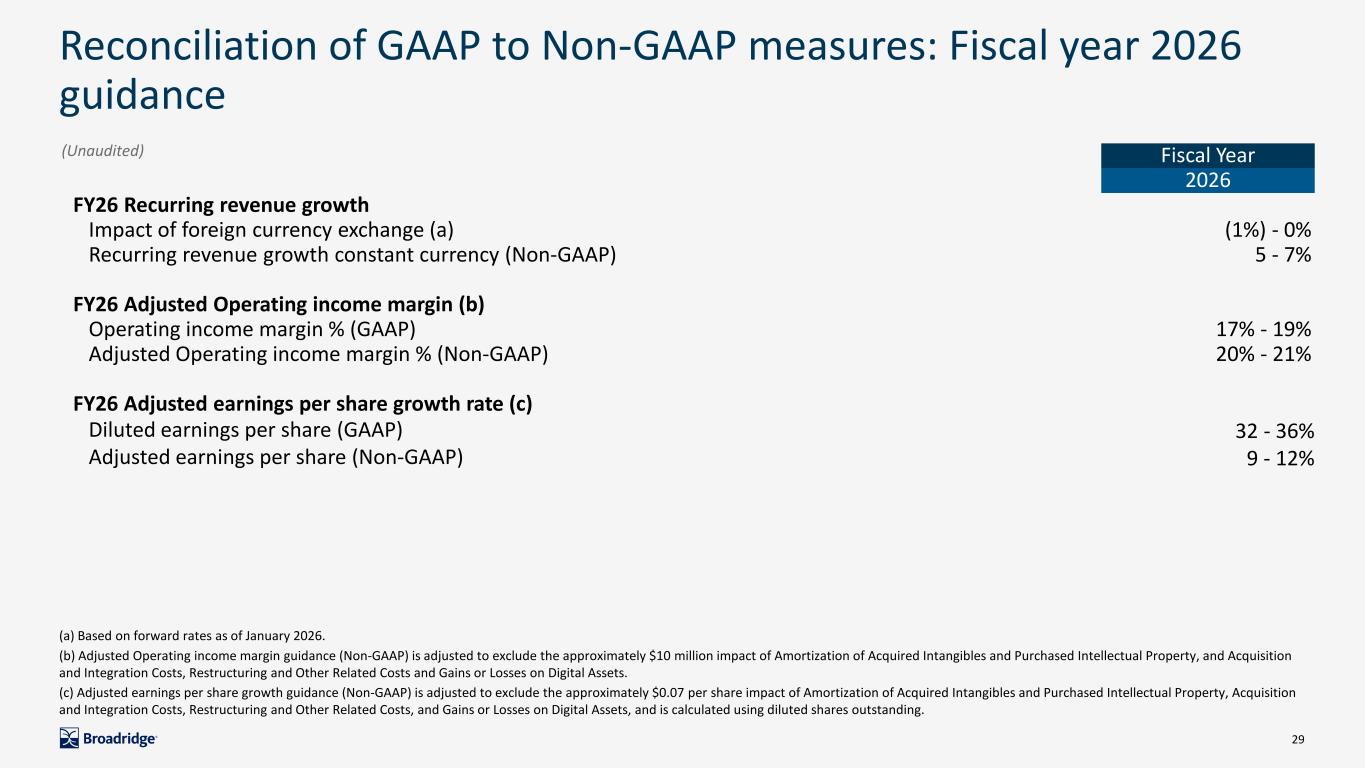
Thanks, Tim. It's great to be here with you today. I'll begin my discussion this morning with five key call-outs. First, Broadridge delivered strong second quarter results. We continue to benefit from elevated event-driven activity. We reported 91 million of event-driven revenues in Q2, which contributed to a record 204 million in the first half. As always, we take advantage of periods of elevated event-driven revenues to accelerate our long-term growth investment. And we are investing in key product initiatives around tokenization, shareholder engagement, digital communications, and in our co-tech infrastructure. We recorded $187 million non-cash mark-to-market gain related to our digital asset holdings. Between our coin holdings and our stake in the digital asset treasury, the value of our digital asset holdings rose to $265 million at quarter end, which represents real value for Broadridge shareholders. Fourth, our capital position remains strong and we are actively delivering against our balanced capital allocation policy. We recently closed on the Acklin acquisition and have now completed three tuck-in acquisitions in fiscal 26, totaling $126 million. As we enter the second half of the fiscal year, we remain on track to deliver free cash flow conversion of greater than 100%, and we are in a strong position to deploy additional capital to drive growth and shareholder returns. Finally, we expect to deliver strong Fiscal 26 results. We are raising our adjusted EPS growth guidance to 9% to 12% from 8% to 12%. Additionally, we are reaffirming our recurring revenue growth outlook at the higher end of the 5% to 7% range and close sales of $290 to $330 million. Let's go to the numbers on slide 6. Recurding revenues grew 9% or 8% on a constant currency basis, including strong 7% organic growth. Adjusted operating income margin declined by 110 basis points to 15.5% as we lapped record event-driven revenues in Q2 last year. Adjusted EPS grew 2% to $1.59, and closed sales grew 24% to $57 million. Let's move to slide 7 to discuss our segment recurring revenue, starting with our ICS or governance segment. ICS recurring revenues rose 9% to $590 million, including a two-point benefit from acquisitions. a one-point headwind from lower interest rates. As a reminder, the earnings impact of lower rates is functionally hedged by lower interest expense on our variable rate debt. Regulatory revenues rose 18% in Q2, driven by 11% growth in equity revenue positions and 15% growth in fund positions. Regulatory revenues in Q2 saw a six-point timing benefit, with approximately half coming from Q1 and half being brought forward from Q3. Data-driven fund solutions revenues declined 2%, with healthy growth in our data and analytics business offset by a decline in our retirement and workplace solutions. Lower interest rates represented a two-point headwind to growth. Looking forward, we expect to see data-driven fund revenue growth to accelerate, driven by stronger organic growth and an approximately five-point contribution from the iJoin and Akilin acquisitions in the second half. Issuer revenues grew eight percent, driven by growth in our shareholder engagement solutions, including revenues from our standing voting instruction solution. And customer communications revenues rose 5% driven by double digit growth in our digital communications revenues as we continue to execute on our print to digital strategy and a four-point contribution from the acquisition of Signal. For the year we expect ICS recurring revenue growth to be in line with our guidance for total recurring revenue and in line with the first half. Turning to GTO, recurring revenues grew 8% in Q2, including 6% organic. Starting with capital markets, revenues grew 6%. Our Q2 revenue growth benefited from a balanced mix of sales, digital asset revenues, and growth in trade volumes, which more than offset a point of losses related to the business exit that we discussed at the end of last year. Digital asset revenues were $7 million in the second quarter. Looking to the second half of the year, we expect digital asset revenues to moderate significantly as a result of scheduled changes in the Canton network minting curve. Overall, we expect digital asset revenues to contribute approximately one point to capital markets growth in Fiscal 26. Moving to wealth and investment management, revenues grew 11%, driven by 6% organic growth and a 5% contribution from the SIS acquisition. As a reminder, we have now lapped the November 1st, 2024 close date of the acquisition. For the year, we continue to expect GTO recurring revenue growth of 5% to 7% with higher growth in wealth. As a reminder, timing of licensed revenues can have an impact on quarterly revenue growth rates in both our GTO businesses. We expect lower licensed revenue to result in a four-point headwind to GTO growth in the third quarter, largely in our capital markets business. Now let's move to slide 8 to review our key volume indicators. We saw strong growth in investor participation across both equities and funds. Equity position growth was 17%, including 11% growth in revenue positions. Looking ahead to the seasonally more significant second half of the year, our testing indicates low teens growth in total equity positions, which we expect will generate high single-digit revenue position growth. Q2 fund position growth of 15% was partially impacted by the timing of fund communications in the quarter. First half position growth was 8%. Our testing continues to indicate mid- to high-single-digit position growth in the second half of the year. In GTO, trade volumes rose 11% for the quarter, driven by growth in both equities and fixed income volumes. I'll wrap up my discussion of recurring revenue growth on slide 9. In Q2, recurring revenue growth was 9%, primarily driven by seven points of organic growth. Revenue from closed sales remained the biggest driver of our organic growth at five points as we onboarded revenues from our $430 million fiscal 25 year-end backlog. Our revenue retention rate was 98% for the quarter. Internal growth contributed four points, driven by position and trade growth, timing of fund communications in the quarter, and digital asset revenues. Acquisitions, primarily SIS and Signal, contributed two points to growth. And finally, changes in FX contributed one point. The discussions of revenues on slide 10, total revenue increased eight percent to 1.7 billion, driven by five points of growth from recurring revenue. Lower event-driven revenues accounted for a two-point headwind. While event-driven revenues of $91 million declined $34 million versus the prior year's quarterly record, they remain elevated relative to long-term averages. Strong event-driven revenue was driven by a combination of healthy mutual fund proxy activity and higher levels of corporate actions, including the M&A contest for a major media company. Looking ahead to the second half of the year, we expect quarterly event-driven revenues to return to closer to the seven-year average of approximately $60 million. Low to no margin distribution revenues grew 14%, driven by a balance of higher postage rates and higher volumes, and contributed four points to total revenue growth. Turning now to margins on slide 11. Adjusted operating income margin was 15.5%, a decrease of 110 basis points from Q2 25. The decline was driven by a year-over-year reduction in event-driven revenues, which more than offset the operating leverage from higher recurring revenues. Additionally, the net impact of lower interest rates and higher distribution revenues reduced AOI margins by 40 basis points. Looking ahead, we remain on track to deliver full year adjusted operating income margin of 20 to 21%. Let's move on to earnings on slide 12. Q2 adjusted EPS grew 2% to $1.59. As I noted in my call-outs, in Q2, Broadridge recorded an $187 million non-cash gain, driven by the increase in the value of our digital asset holdings in the quarter from $0.04 at the end of September to $0.15 on December 31. That non-cash gain was reported in other non-operating income and was excluded from our calculation of adjusted EPS. Due to the volatility of digital asset prices, we will continue to exclude quarter-to-quarter non-cash gains or losses in the value of our digital assets from our calculation of adjusted EPS. Let's turn to sales now on slide 13. Broadridge recorded Q2 closed sales of 57 million, an increase of 11 million from Q2 25. Year-to-date sales were 89 million, down from 103 million last year. As Tim noted, we're seeing higher levels of client engagement, which is translating into to a more than 20% increase in pipeline creation and giving us confidence in our full-year close sales guidance of 290 to 330 million. Turning to our cash flows on slide 14, Broadbridge generated free cash flow of 319 million in the first six months of fiscal 26, up from 56 million in fiscal 25. Our strong cash performance continues to benefit from higher earnings and working capital management, and we remain on track to deliver free cash flow conversion of over 100% in Fiscal 26. Turning next to capital allocation on Slide 15, we are delivering against our balanced capital allocation policy. Year-to-date, we have deployed $49 million in capital spending and software, with an additional $17 million to onboard clients onto our solutions. We have invested $126 million in M&A in three strategic duck-in acquisitions, including the acquisition of Ackerlin on January 5th for $70 million. We have also returned $367 million in capital to shareholders via our dividend and share repurchases through the first six months of the year. Separately, in the second quarter, we contributed 342 million Canton coins, valued at 53 million, for an approximately 8% stake in the Tharamione Digital Asset Treasury. Looking forward, a strong balance sheet and free cash flow conversion leaves Broadridge well-positioned to fund additional tuck-in M&A and repurchase additional shares over the balance of the year. Let's start to wrap by reviewing our Fiscal 26 guidance on slide 16. We are reaffirming our guidance for recurring revenue growth, constant currency, to be at the higher end of the 5% to 7% range. We continue to expect adjusted operating income margin of 20% to 21%. We are raising our adjusted EPS guidance to 9% to 12%. And we continue to expect close sales of $290 to $330 million. I'll wrap by summarizing my key points. Broadridge reported strong second quarter results. Second, our key revenue drivers remain healthy, giving us incremental confidence that we will continue to deliver strong results in the second half. As a result, we remain on track to deliver another strong year of recurring revenue and adjusted EPS growth in Fiscal 26, while funding additional investment in key growth initiatives. And that, in turn, should enable Broadridge to deliver again on our top and bottom line three-year objectives. And finally, our strong balance sheet and cash flow generation positions us to continue to fund additional share repurchases and pursue attractive M&A opportunities as we focus on driving shareholder value. With that, let's move to Q&A.
Operator
We will now begin the question and answer session. To ask a question, you may press star then 1 on your telephone keypad. If you're using a speakerphone, please pick up your handset before pressing the keys.
Operator
If at any time your question has been addressed and you would like to withdraw your question please press star then two please limit yourself to two questions each at this time we will pause momentarily to assemble our roster the first question comes from alex cram with ubs please go ahead yes hey good morning everyone tim thanks very much for the color on on tokenization and how you think you're going to benefit from that i will have to obviously uh note though that as you're probably aware there's a there's a big debate out there and you've seen this in your share price that tokenization is actually something that's going to work against you i think there's a lot of different ways of this narrative but i think in its purest form it's basically hey in a tokenized world you know companies can directly engage with shareholders maybe through smart contracts they're going to cut you out of the process, or at the very least, it's going to drive pricing down. So maybe you can just respond to that and give us your view on maybe that side of the debate.
Opportunity. We think they're going to create new sources of demand for U.S. equities, and that's going to drive position growth. You know, when you think about, and I think implicit in your comment is the agreement that tokenized securities are still subject to all the core regulatory principles, and including governance so the question is really how that's going to happen you know we see the vast majority of tokenized equities in the future irrespective of the model whether they're tokenized directly by the issuer or they're tokenized by an intermediary or by a depository or wrapped in some way we see the vast majority of those are going to be purchased through a broker dealer or through a digital trading platform and those intermediaries are going to have the same asset servicing obligations that they have today including proxy but also corporate actions class actions tax and all the other things that are actually big opportunities for us and you know it's not you know we think about are those intermediaries going to give knowledge to the underlying corporate issuers as to who the shareholders are you know it's not at all clear that they're going to want to turn over their client list that way you know when you think about the oboe renewable protections, the ability of investors to keep their identity and their private information separate. So, you know, we do think that it is going to remain a complex situation between issuers, brokers, and other intermediaries. And managing that complexity is what we do irrespective of the model of tokenization. And, you know, obviously there are multiple models out there. It's not clear which one is going to win. As we talk to the SEC, You know, they're clearly going to let the market decide. And I would also comment just on the new entrants in the market, the CoinBases and Krakens of the world. We think they are drawing in new investors. We think that expands the market, and that's going to contribute to long-term growth. And then let's not actually forget, Alex, you talked about issuers, and there are benefits if they do end up with a little more direct access. but don't forget this also creates significant complexity for issuers also because now and i said this in the script but in addition to their regular shares uh you know they have registered shares beneficial shares tokenized shares across multiple models across multiple l1s so trying to get materials and distributions and events to all of those different all those different endpoints take it back reconcile it that's a lot of work and we think that's a great opportunity for Broadridge to help issuers for 80% nearly 80% of the Fortune 500 engages Broadridge today to reduce the complexity of proxy when they only have to worry about registered and beneficial and so in the future world you know we see that even more value created there so whether it's creating value directly with issuers or really to the intermediaries where we think the the vast majority of investors will go, we think there's a great opportunity.
Operator
Thanks for the color here. And then maybe staying on topical items, clearly a lot happening on the proxy advisory side. You mentioned JP Morgan. I think you hadn't disclosed that one before. And also Wells Fargo, which I think we've heard about. So you're clearly helping, I guess, drive change. can you just talk a little bit more what that means financially I mean is there a big pipeline behind the JP Morgan's and Wells Fargo's of the world how do you view the TAM how quickly do you think this can ramp I know it's it's it's all just beginning but just curious how you see that opportunity because it is I guess a very specific item where you're winning in the marketplace right now yeah and and look we can do different things for for for different people it sometimes it'll be the full AI driven custom policy engine sometimes it will be helping more on the vote execution side you know we think that this is when we
look across all the different things and shareholder engagement and you know this is one of the needs that we're talking about with with helping with data driven and objective voting but we think collectively this is a multi hundred million dollar market so it's an opportunity to expand the services obviously it will take time to grow into that but but we think collectively this could add as much of a point of growth to our governance business over the next few years, really create more revenue per position. And I think there are multiple topics here, and collectively we really love what's happening as we work with our clients to create what I would call really the next generation of shareholder engagement. It's deepening our role, and as I just said, it's a substantial business opportunity because there are multiple industry issues that have been building and are reaching a critical mass. there's the I you know what we just talked about in terms of the concern about proxy advisory firms there's also growing concern about the concentration of power with passive asset managers and this concern that retail participation has been lower and each of those are opportunities for us to work with our clients to bring market-driven technology to help solve those obviously we're good asset managers like JP Morgan and Wells Fargo but we're also working with the large passive funds that I mentioned in the script and you know we see a big opportunity to work with public companies to make retail shareholder voting more convenient through standing instructions we launched that with Exxon but there's a lot of demand behind that one so collectively all of those we think really create a significant opportunity financially but also just strategically as we deepen our role all right excellent thanks again for the color.
Operator
The next question comes from Patrick O'Shaughnessy with Raymond James. Please go ahead.
Hey, good morning. So going back to the topic of tokenized equities, what do you see as some of the main obstacles that need to be worked through by the SEC as the SEC considers various exemptive relief requests?
You know, one of the questions that the SEC has is, is this all going to be too complex? And therefore, you know, how much exemptive relief do they need? And I think in our conversations with them, you know, we've really stressed that, you know, we're here to solve that complexity and that irrespective of the tokenization model, you know, it's completely feasible for, you know, for there to be really good front-to-back communication and connectivity. So, I actually don't think there's a need for exemptive relief in this area. And, you know, So, you know, we'll see how it all plays out. I think the, you know, the conversation that we're having with each of the, whether it's with issuers, whether it's with the DTCC, whether it's with the exchanges and the digital trading platforms, I think it's pretty clear how this model can work and work really well.
And then staying with the topic of tokenized equities, if they were to clear and settle on the blockchain, how would you see that impacting the range of services that you provide to your post-trade processing clients? part of this is we have to expect to have you know a significant role in that we are one of the largest trading platforms today and and and you know when you think about our DLR platform it is it is designed as a multi-asset platform and and we'll be extending that to additional asset classes I think the other thing is that there is all the other complexity around asset servicing that needs to take place and when you think about uh what takes place today uh there's a trade uh and then uh what happens after that uh there is obviously we've been talking about proxy corporate actions but let's talk about tax let's talk about margin talk about seg talk about securities lending the idea that all of that is going to happen uh through some sort of smart contract is is you know I don't think people are really thinking through all the implications of a tax for instance you know it's not just the instrument it's the person and it's in what position the person is and what are the other things that they have and when where are they so it's really there's a lot of complexity there I think you know one of the concerns that many players have is actually that in the very you know as long as they can foresee the costs could go up instead of down because they could have you know a whole infrastructure around the digital assets and a separate infrastructure around their their regular assets and that's one of the things when we talk about enabling digital assets in all of our core engines you know what we're talking to clients about is actually mirroring the positions in their core engines so they can use all their existing technology for margin tax all those other other things so they don't end up with that duplication of cost and that's something that they are finding really attractive because it is you know it's it's complicated to to handle all of those downstream activities that makes sense thank you the next question comes from James Fawcett with Morgan Stanley please go ahead hey guys it's Michael and Fontan for James thanks for taking question.
I just wanted to ask about obviously the reaffirmed closed sales outlook, but can you maybe just speak to, you know, how you're thinking about your visibility into the second half? Like how much is, is already sort of late stage from a contracting perspective or, you know, sort of timeline of expected renewals versus, you know, truly jump on that new logos. I'm just curious how you would describe, you know, confidence levels on being able to deliver on the full year. Thanks.
Yeah, thank you. Thank you very much. And look, first of all, I'll just say with $89 million year-to-date, we clearly have wood to chop in the second half. That's not uncommon for us, given the seasonality of business, and we do really like the momentum that we're seeing. You know, I think one of the things that I talked about in the remarks is how we've seen origination pick up in the first half of the year, up more than 20 percent. And that's a really nice indicator for us, for clients. I think maybe as implicitly in your question that you rightly point out is that things that we've just originated in the first half, maybe those aren't necessarily things. Some of those are things that will close this year. Some of them are things that will close next year. But when I look at that, we're seeing growth driven by our strategic initiatives around shareholder engagement, ginger communications, platform, wealth, and tokenization. And we have really nice things in each of those areas that were originated some time ago. Just last week, we closed strategically significant DLR sale to a Tier 1 global bank. That's the largest sale to date for that. So we really see continued momentum there. We're really seeing, as I was just in Davos a couple weeks ago, talked to more than a dozen client CEOs, and it's clear that they welcome our help in contributing to the transformation of our business. You know, as we look deep into our pipeline and look at, you know, what stage things are in and which of those are, you know, solidly on track to close this year versus could close this year, we really like that mix. And that's why we are reaffirming our guidance at 290 to 330, because that's what we think we're going to finish by the end of the year.
That's helpful, Tim. Just one housekeeping follow-up for me, just on the sort of spread between equity position growth and equity revenue position growth, you obviously gave some helpful commentary on the forward look. But it looks like the spread there is widening, at least marginally. How do you think about sort of the underlying mechanics of that spread and or whether or not you expect the spread to sort of remain consistent with recent levels or perhaps widen or compress?
Yeah, I think it's an interesting question, and I think it's one we're still figuring out ourselves as the growth of this is really new. And I think of it a little bit more as a little bit less than the top-line number from which you're taking away some things, a little bit more as there's growth in equity revenue positions, and then on top of that, there's this additional growth in fractional shares and sort of small-dollar managed accounts. And so it's really, you know, I tend to come back to sort of say what's just the driver of the core revenue positions, which is around, you know, good sort of single name and then continued growth in managed accounts, which remains very healthy. So I think that spread, so to speak, will go up and down a little bit. But what we're really monitoring is the core drivers of the revenue positions.
And I'll just add on to that a little bit, right? If you think about the revenue position growth that we're seeing, 11%, of course, for the quarter, it is still higher than our long-term history. We typically talk about mid- to high-single-digit position growth. So this is still elevated versus those levels. And like Tim alluded to, the additional is incremental on top of it, which I would akin to almost position backlog that we might see converting at a later point. but even the base level is higher than what we've been.
Operator
The next question comes from Kyle Peterson with Needham.
Operator
Please go ahead.
Good morning. Thanks for taking the questions, guys. I wanted to start off on some of these on-chain progress that you guys have had on the Canton Network, the DLR stuff seems to really be making some good milestones. I wanted to see if you had an update or pipeline on, you know, potentially moving, you know, some other asset classes, you know, to this platform and, you know, how we should think about, you know, the potential for this to expand, both in the near and medium term?
It's one that, you know, that I'd love to talk about. You know, as you know, so as I said, this has doubled since last June, and we have a nice roadmap of additional additional significant clients that that we're looking at and talking to I think you know I think about the roadmap for this platform and as I said it is multi-asset and has a lot of lot of capabilities built into it including you know as I noted in the script that we we did our first issuance of a corporate bond for for SOC gen in the second quarter I think the next real thing is is taking it real time you know when we think about repos today they're sort of largely a finance by Treasury on overnight basis and as we move that and largely a lot of the volume we're doing is intra institution as we move that to bilateral and to real time this can become you know you know we see that really unclear you know where the volumes could go but it becomes less you know can be more than a financing function but really a trading function to you know and allowing desks to do trades and finance them you know simultaneously that we expect to be doing in in the first half of the calendar year you know within this this fiscal year and then going to other asset classes you know other things in fixed income deposits we're talking to a number of institutions about that and so I think that over the course this year you'll see us continue to advance both the the speed and the breadth I think the other factor to think about here is moving moving this into the which is separate from that which is makes the interoperability you know not as high as it will be when we're on the on the main version there are some things for that version that still need to take place for it to be ready for that DTCC has a statement of work with with DAH and it's looking toward this sort of the calendar year for that to all be ready and we're committed to move on to that when it's ready and and of course you know we are we stated that we will be multiple L1s beyond the Canton Network as well so a lot to do a lot of roadmap that's one of the reasons why we're really excited to be able to accelerate the investment that we've talked about and really move up and accelerate some of these things on our roadmap great that's that's really helpful and then maybe as a follow-up one do ask about you know kind of the plans for your balance sheet as you guys are continuing to accumulate more of the canton coins here I guess like you know the the mark to market gains it's it's
a little bit material now and assuming you guys will continue to get more even if the minting curve slows a little bit. But, you know, we wanted to see, like, are there additional opportunities such as, you know, Theramune out there that you guys would consider? Are there other avenues you guys would take to potentially create some more liquid assets from that?
Or just any thoughts on that as you guys continue to accumulate more, especially would be, you know, great to hear about. yeah Carl thank you well we are continuing as a super validator as you mentioned the minting curve has has changed that was sort of something that sort of built into it a change as of January 1st so we will be accumulating at a lower rate in the future just to you know be you know level set for a call you know we're an operating company not not an investment company so we're not going to be the next micro strategy and you know on the other hand you know when you look at the value of these uh network coins versus others they are uh you know there's real argument they could be a lot more valuable than this so so you know we'll see but i think our intent is to really sort of you know over some time out of these you know but that's probably over multiple years and uh you know that's that's i don't see us sort of trying to get you know immediate liquidity or things like that from but i think it's something that will will be on the balance sheet, but could be a nice source of value in the future. We're not looking for particular investments like Tharamune. It came up because the key actors around Canton were just trying to make sure that there were sort of multiple ways for people to access.
Thanks for taking the questions and next results.
Operator
The next question comes from Matthew Roswell with RBC Capital Markets. Please go ahead.
Yes, good morning. Congratulations on a nice quarter. There's been a lot of talk about the innovation that's been going on in the whole space, and I'm thinking specifically of the capital markets piece. Are you seeing any changes among clients looking at their legacy systems and kind of the competition with either them doing it in-house or your more traditional competitors? Hopefully that question made sense.
Yeah, yeah, it does, Matt. I think the, you know, when we think about liked Matt is, because, really, our legacy competitors in this area have globalized our platform, evolving it onto the new platform functionality and utility of our platform relative to legacy competitors, certainly within cash securities. Anyone looking at internalizing or doing self-builds?
Thank you. If I could sneak in a modeling question. Are there any timing differentials we should think about between in the fiscal third and fourth quarter? Like, if I remember correctly, last year, the timing of Easter caused a flip in the proxy business. Is there anything that we should be thinking about?
Yeah, there's just two things I'll call out in terms of what we're aware of right now. One, when I spoke about, in my prepared remarks, I spoke about timing in our regulatory business, half of which you should expect to see in Q3. So that's one timing impact that you'll see, not so much between Q3 and Q4. And two, I also called out in my remarks term license, the impact of term license on our GTO business, specifically in capital markets. So you will see a seven-point headwind in our capital markets in Q3, and I'm more modest about a one-point impact in wealth in Q4. But those are just term license swings to be aware of. The only other thing I'll call out is event, as you know, varies from quarter to quarter. Where we sit right now, we're not aware of any large mutual fund proxy or any large 10-pole event that would lead us to believe that it'll be anything higher than the 60-ish million average that we see in terms of long-term averages.
And anything hitting the margin other than the revenue switches?
Nothing hitting the margins, except for what we called out already. The strong growth that we've seen in the first half of the year is allowing us to increase our investments. You will see the impact of some of those investments come through in Q3 and Q4.
Okay. Thank you very much, and congratulations again.
Operator
This concludes our question-and-answer session.
I would like to turn the conference back over to Tim Gokey for any closing remarks and we're seeing in the industry the opportunities that is creating for Broadridge the opportunities for us to add value for our clients and our industry and to really take that innovation and and scale it and through that to deliver returns to you our shareholders thank you for an investment in our company the conference has now concluded thank you for attending today's presentation you may now