Operator
Good day, and welcome to the Bright Spire Capital 4th Quarter and Full Year 2025 Earnings Call. All participants will be in a listen-only mode. Should you need assistance, please signal a conference specialist by pressing the star key, followed by zero. After today's presentation, there will be an opportunity to ask questions. To ask a question, you may press star, then 1, on your touch-tone phone. And to withdraw your question, please press star, then 2. Please note this event is being recorded. I would now like to turn the conference over to Mr. David Palame, General Counsel. Please go ahead, sir.
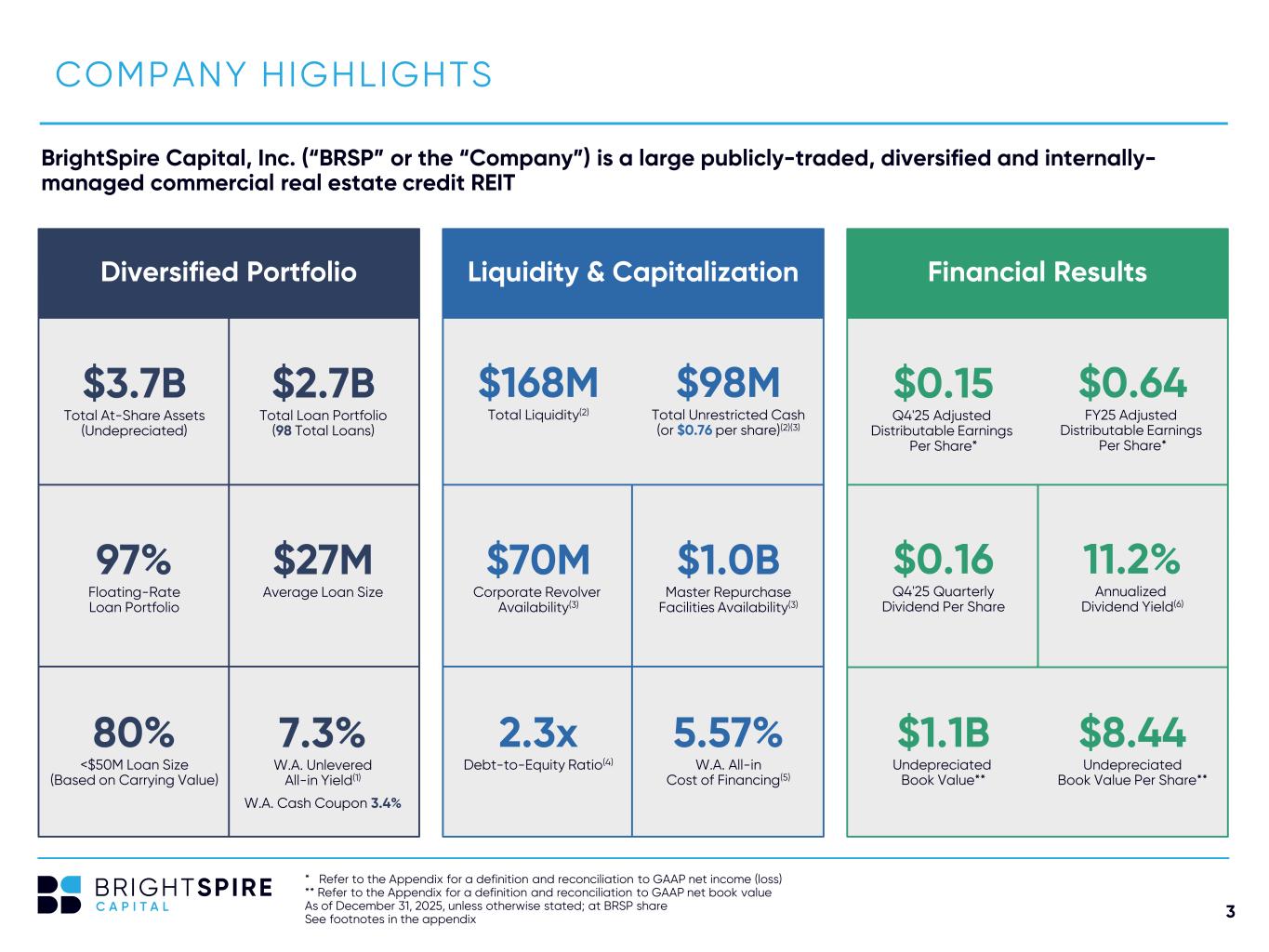
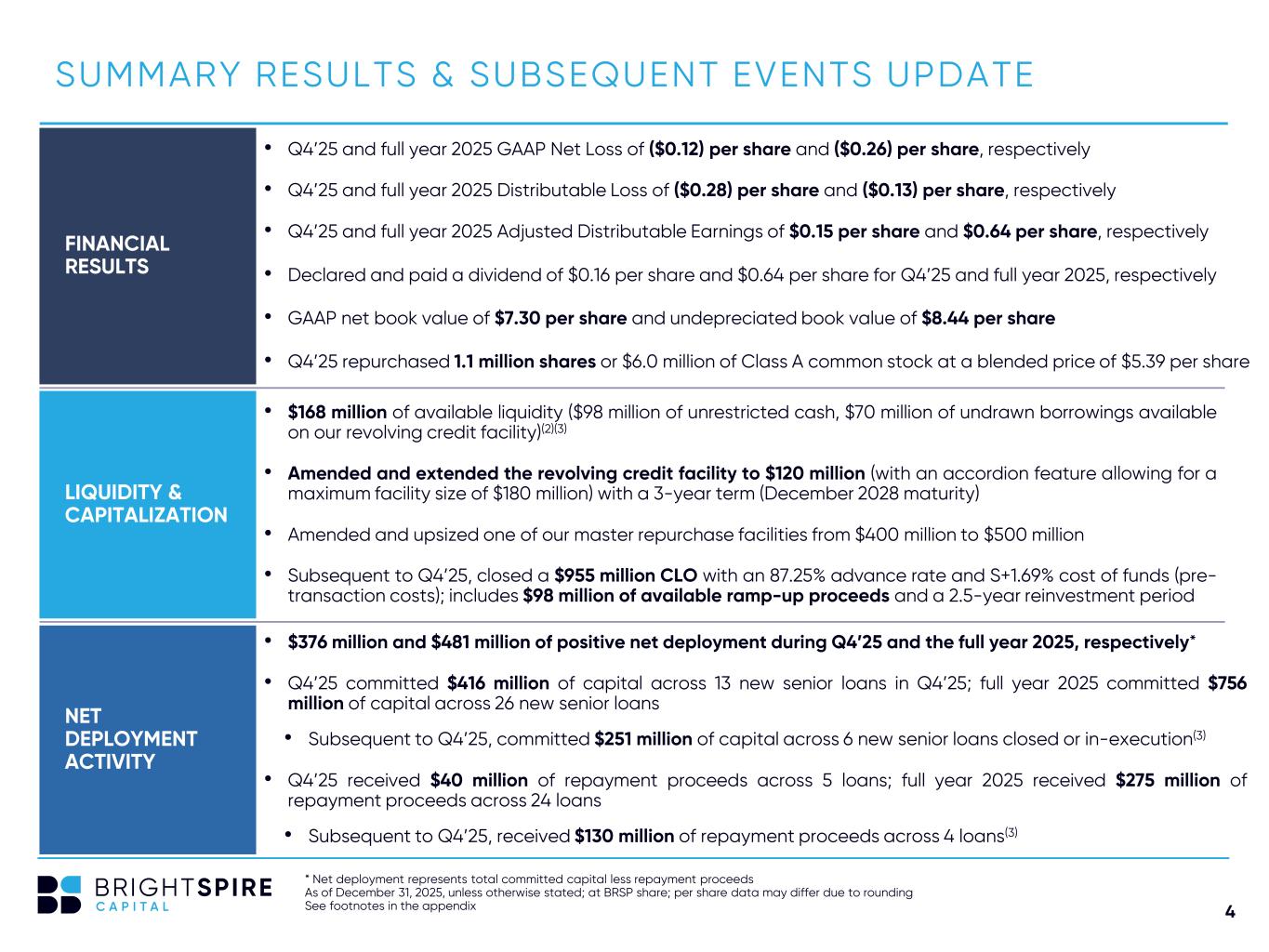
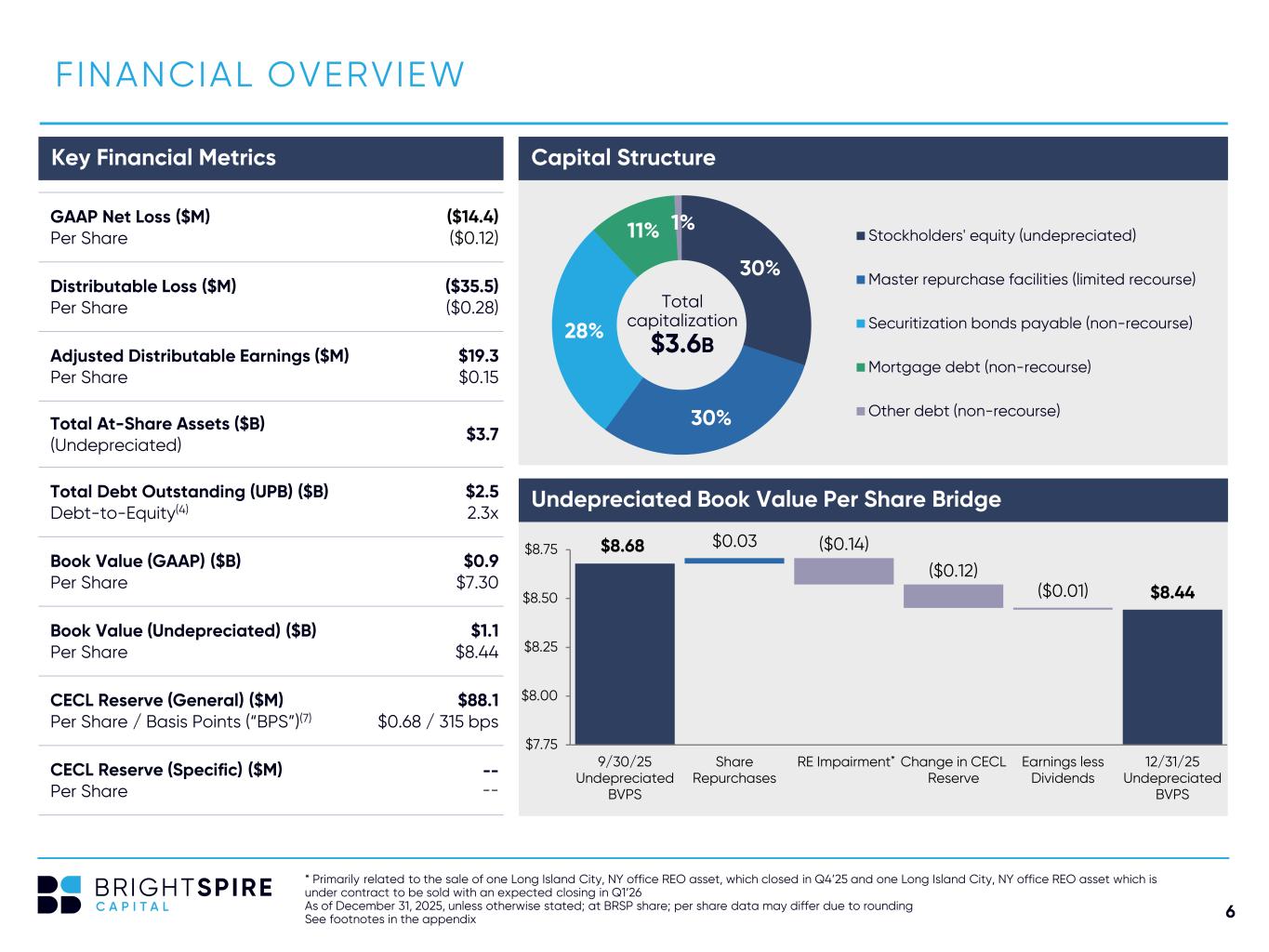
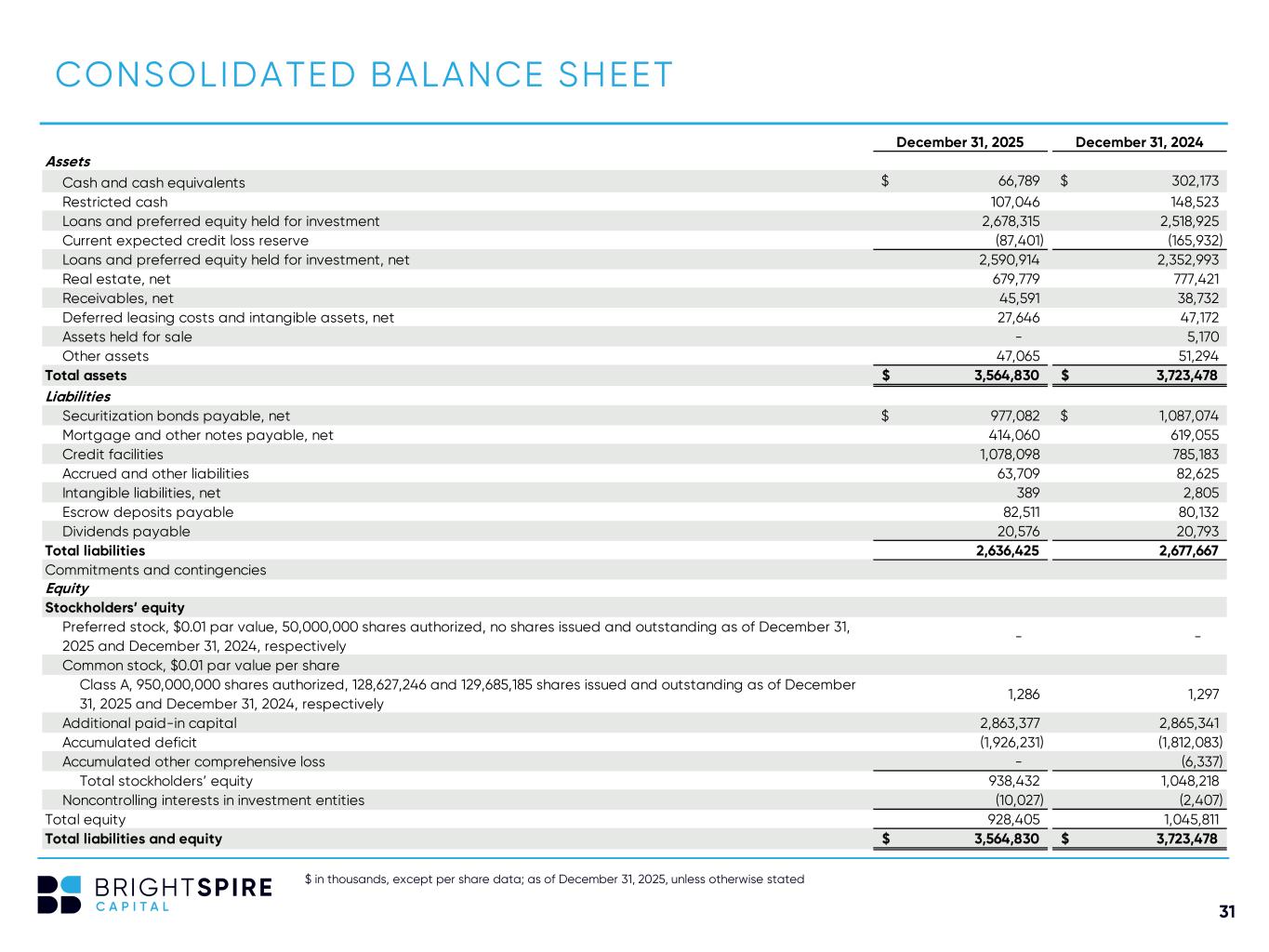
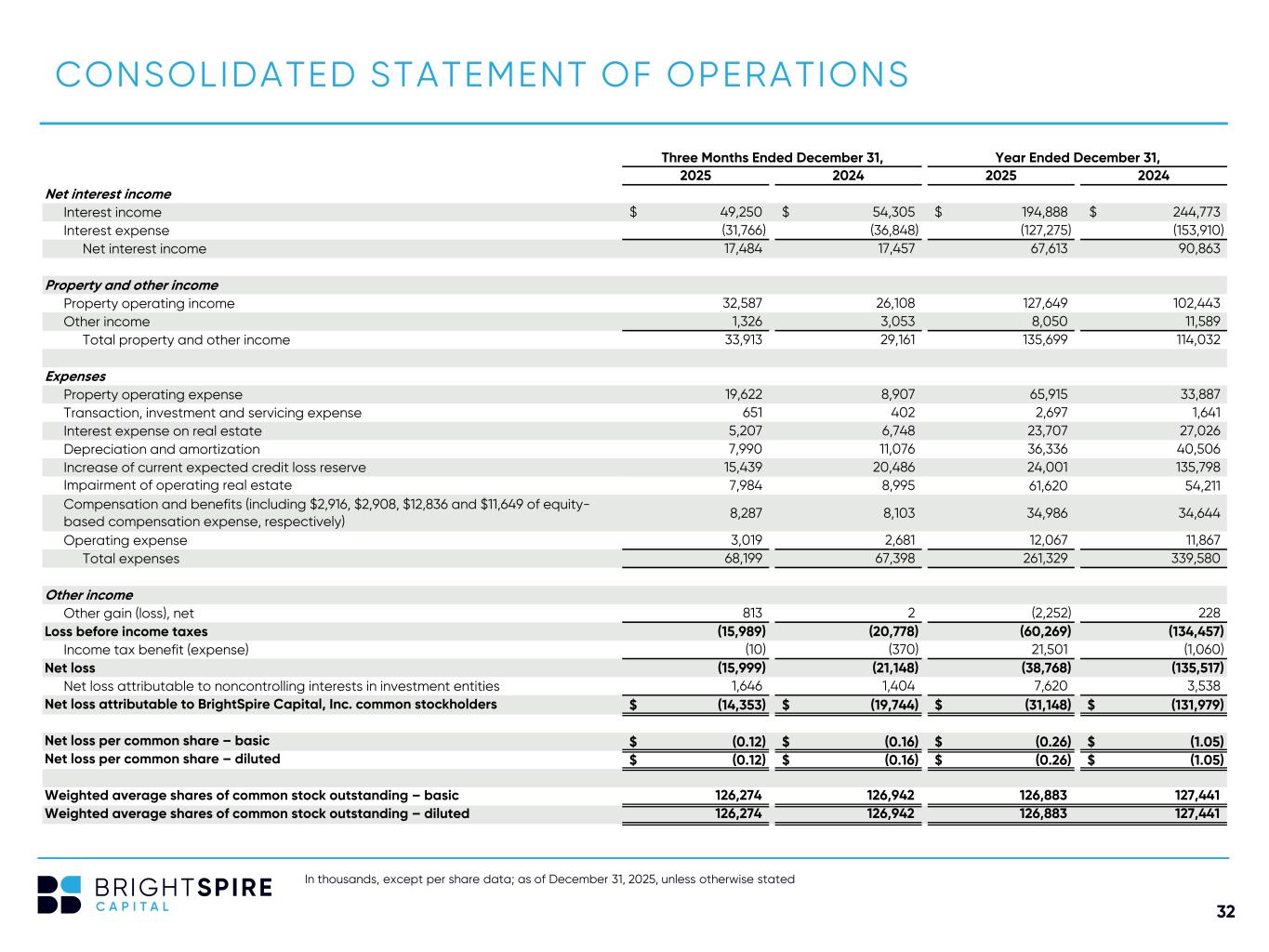
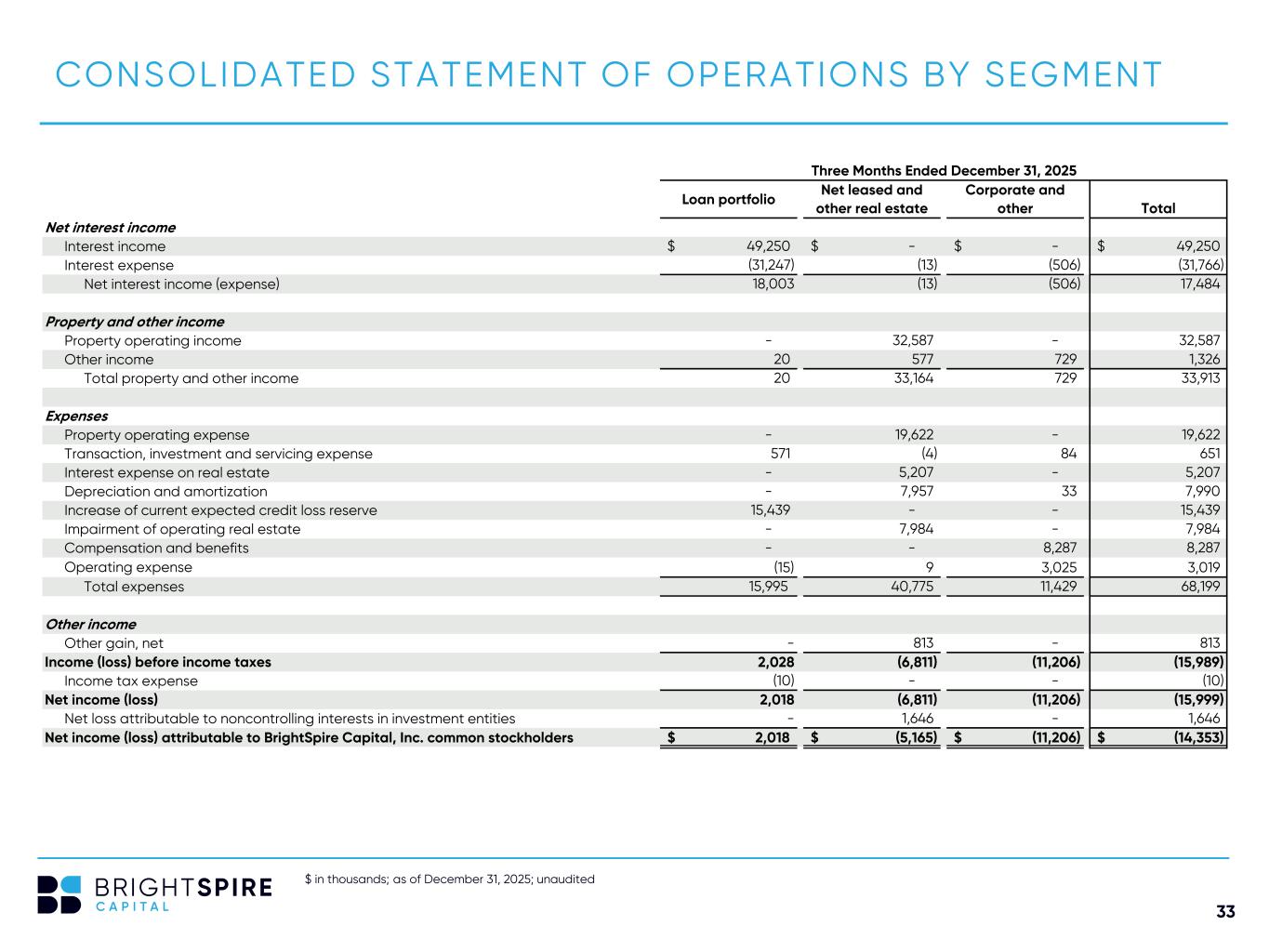
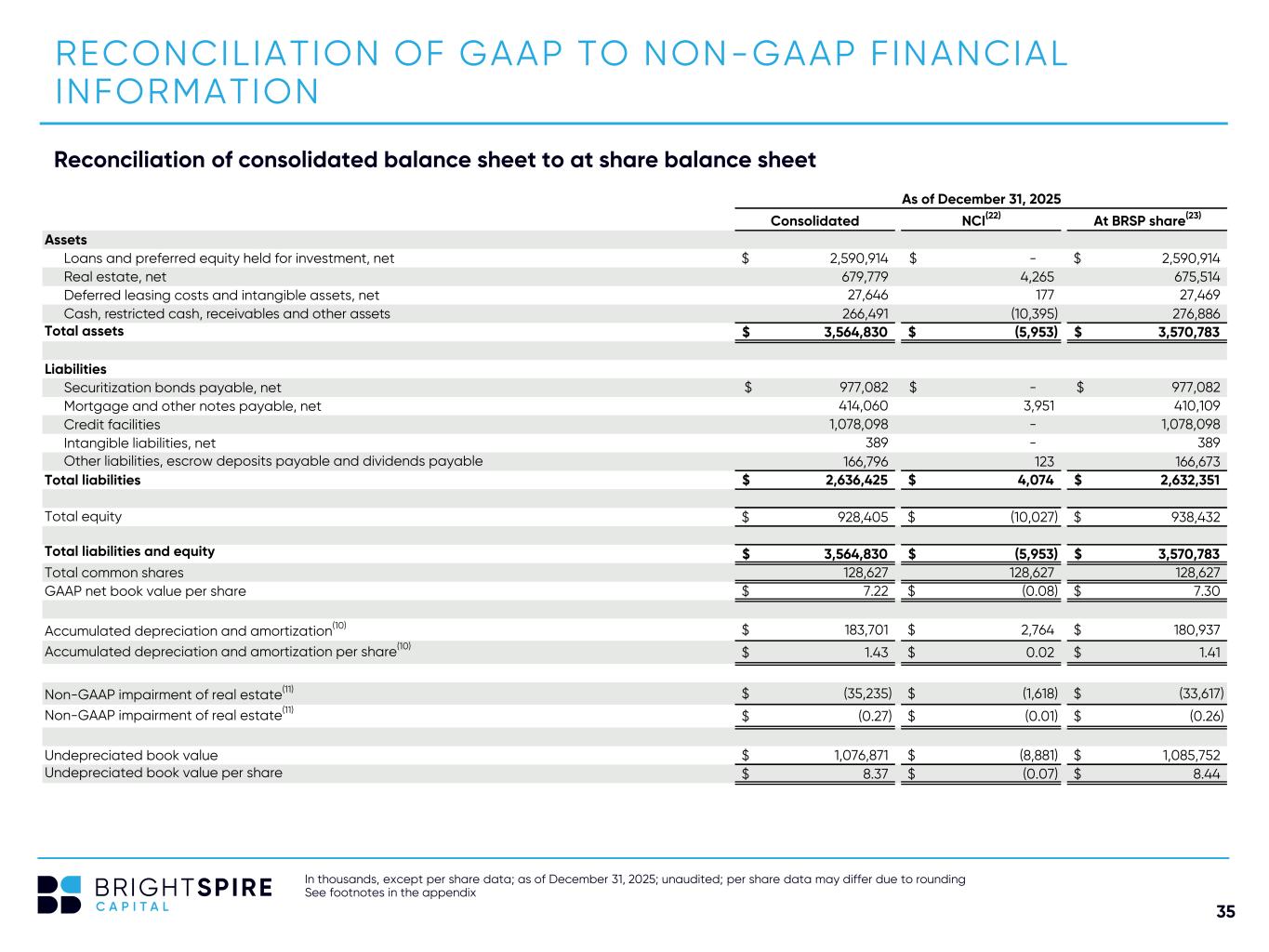
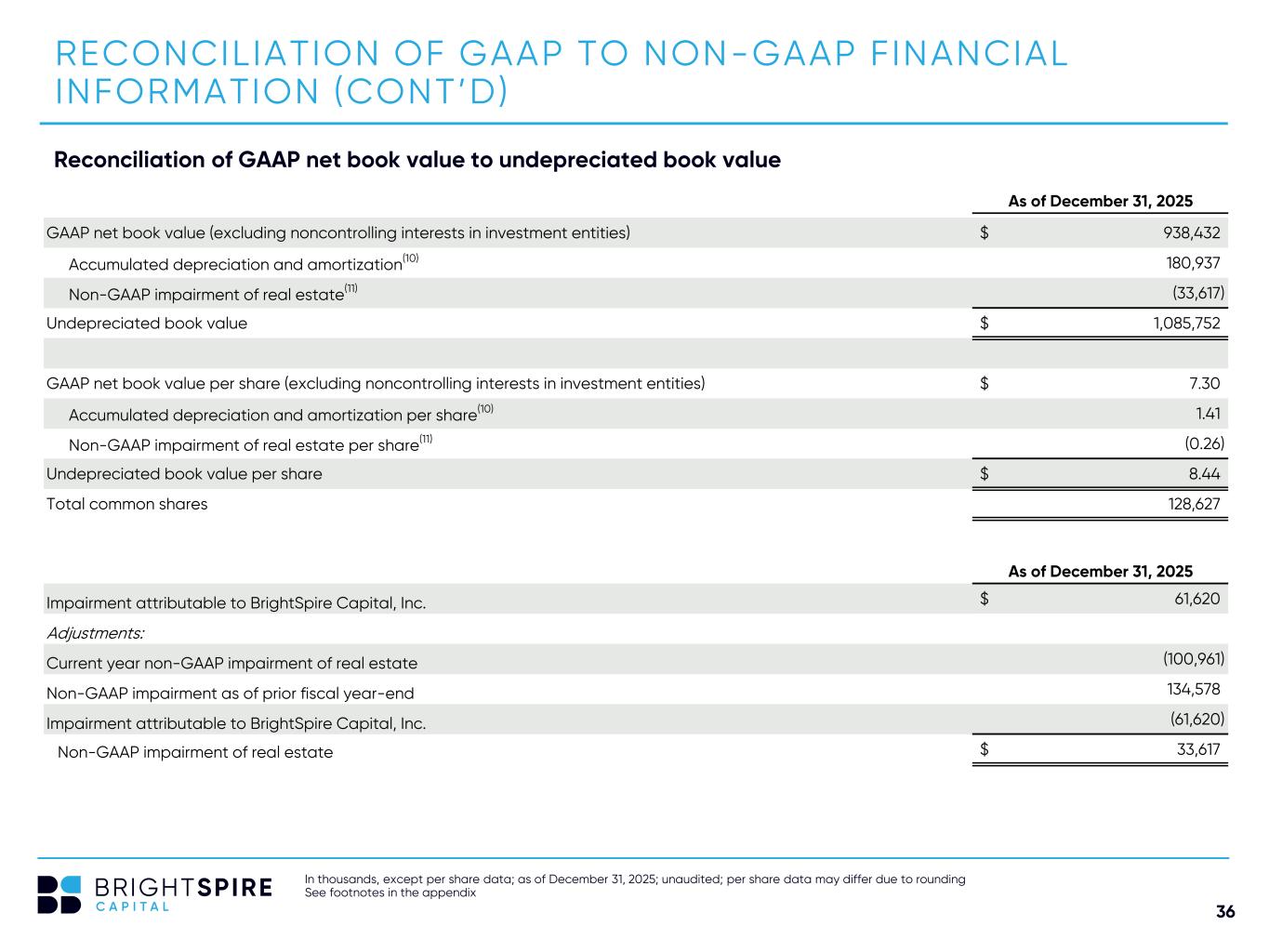
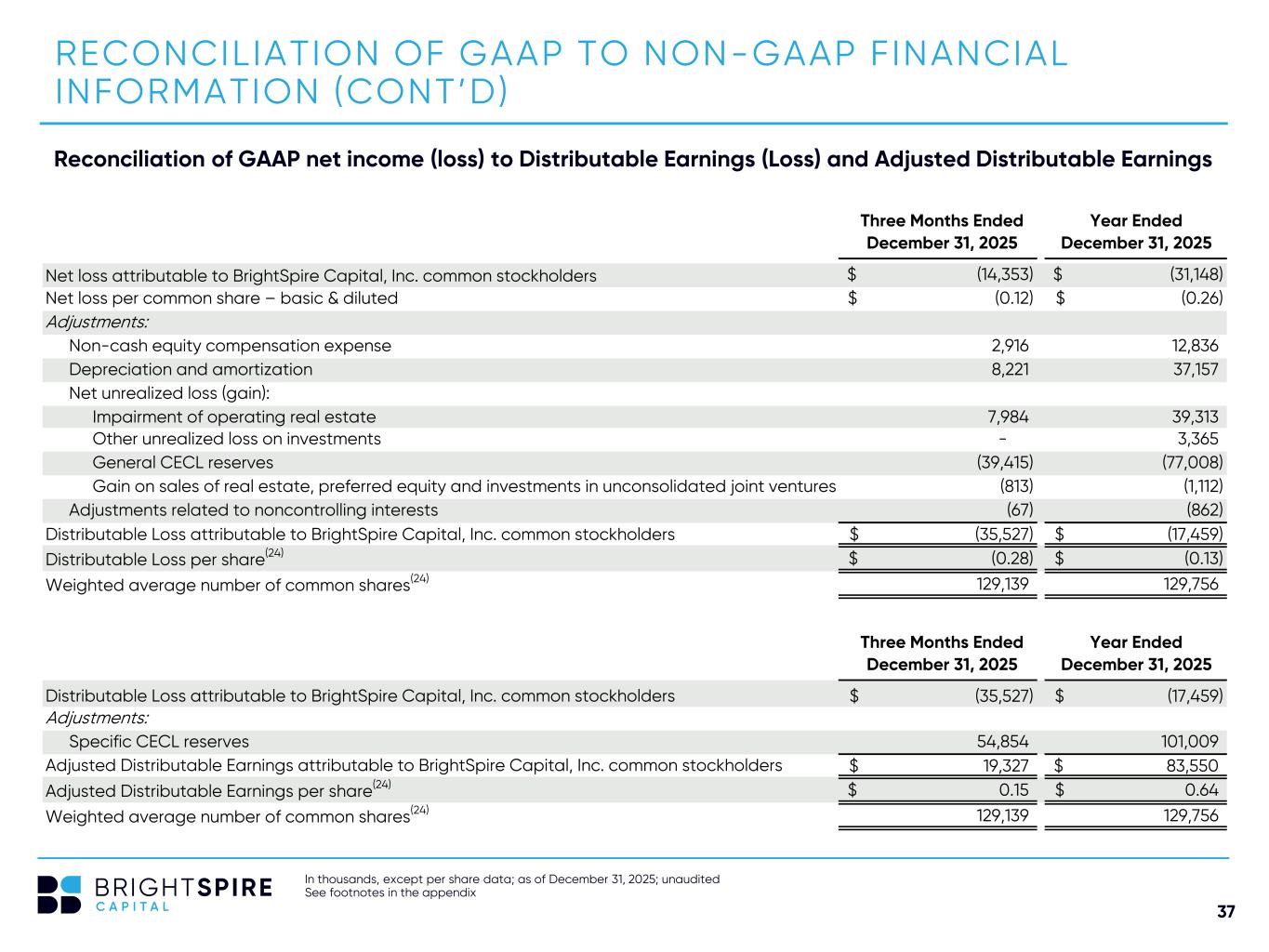
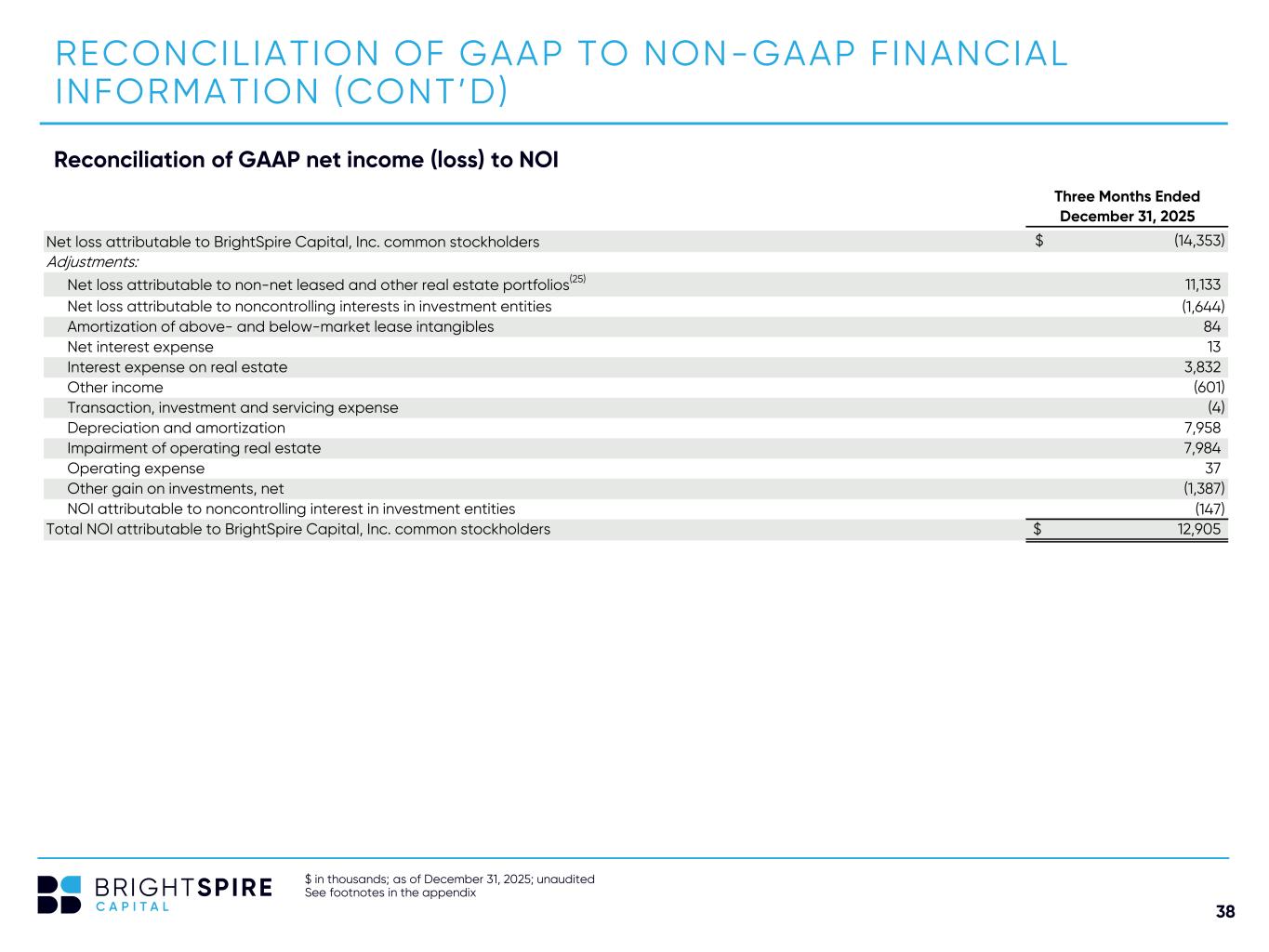
Good morning, and welcome to Brightspire Capital's fourth quarter and full year 2025 earnings conference call. We will refer to Brightspire Capital as Brightspire, the RRSP, or the company throughout this call. Speaking on the call today are the company's Chief Executive Officer, Mike Mazze, President and Chief Operating Officer Andy Witt, and Chief Financial Officer Frank Saraceno. Before I hand the call over, please note that on this call, certain information presented contains forward-looking statements. These statements, which are based on management's current expectations, are subject to risks, uncertainties, and assumptions. Potential risks and uncertainties could cause the company's business and financial results to differ materially. For a discussion of risks that could affect results, please see the risk factors section of our most recent 10-K and other risk factors and forward-looking statements in the company's current and periodic reports filed with the SEC from time to time. All information discussed on this call is as of today, February 18, 2026, and the company does not intend and undertakes no duty to update for future events or circumstances. In addition, certain financial information presented on this call represents non-GAAP financial measures. The company's earnings release and supplemental presentation, which was released yesterday afternoon and is available on the company's website, presents reconciliations to the appropriate GAAP measures and an explanation of why the company believes such non-GAAP financial measures are useful to investors. Before I turn the call over to Mike, I will provide a brief recap on our results. The company reported fourth quarter gap net loss attributable to common stockholders of $14.4 million or 12 cents per share, distributable earnings loss of $35.5 million or $0.28 per share, and adjusted distributable earnings of $19.3 million or $0.15 per share. Current liquidity stands at $168 million, of which $98 million is unrestricted cash. The company also reported gap net book value of $7.30 per share and undepreciated book value of $8.44 per share as of December 31, 2025. Finally, during this call, management may refer to distributable earnings as DE. With that, I would now like to turn the call over to Mike.
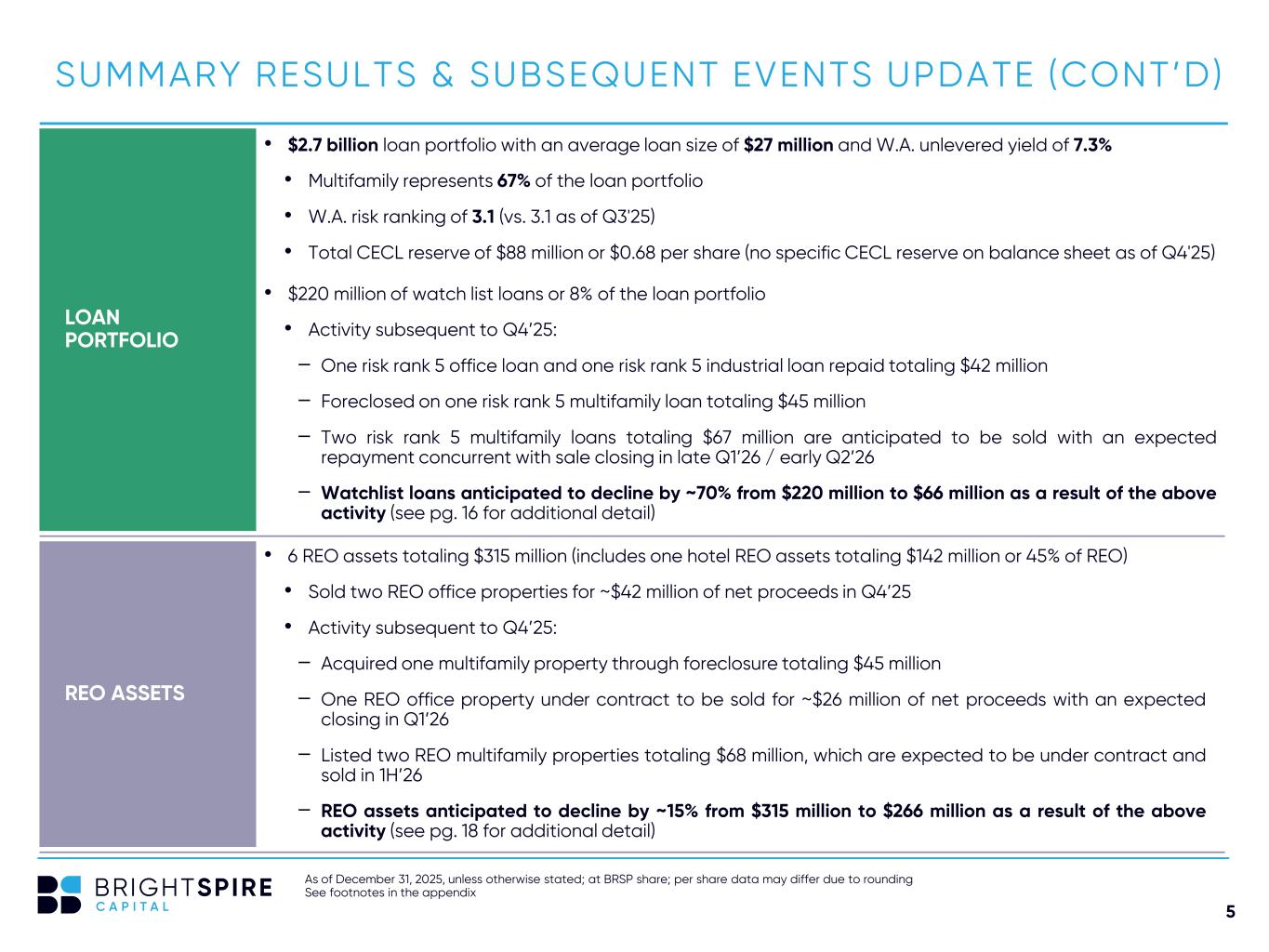
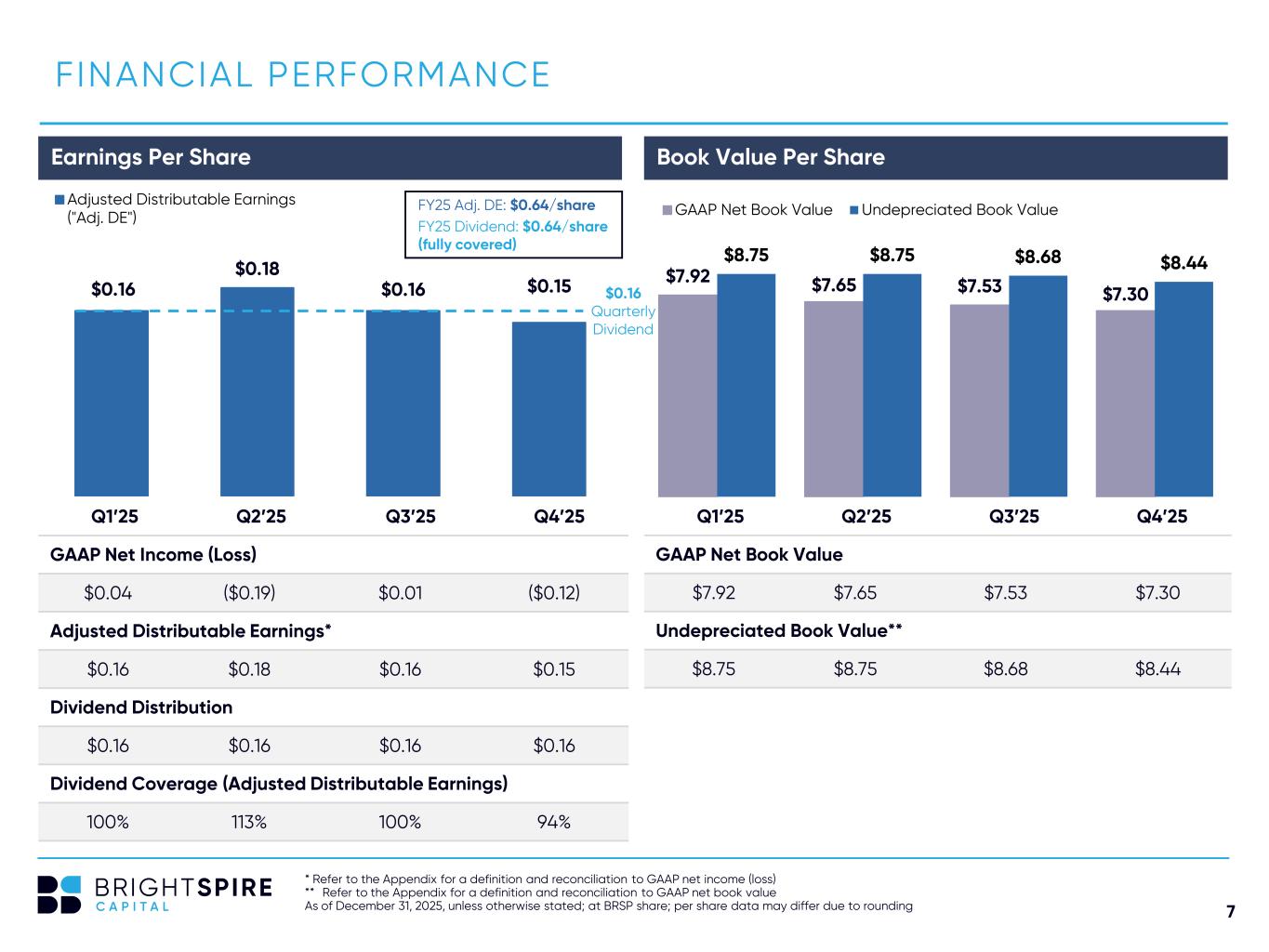
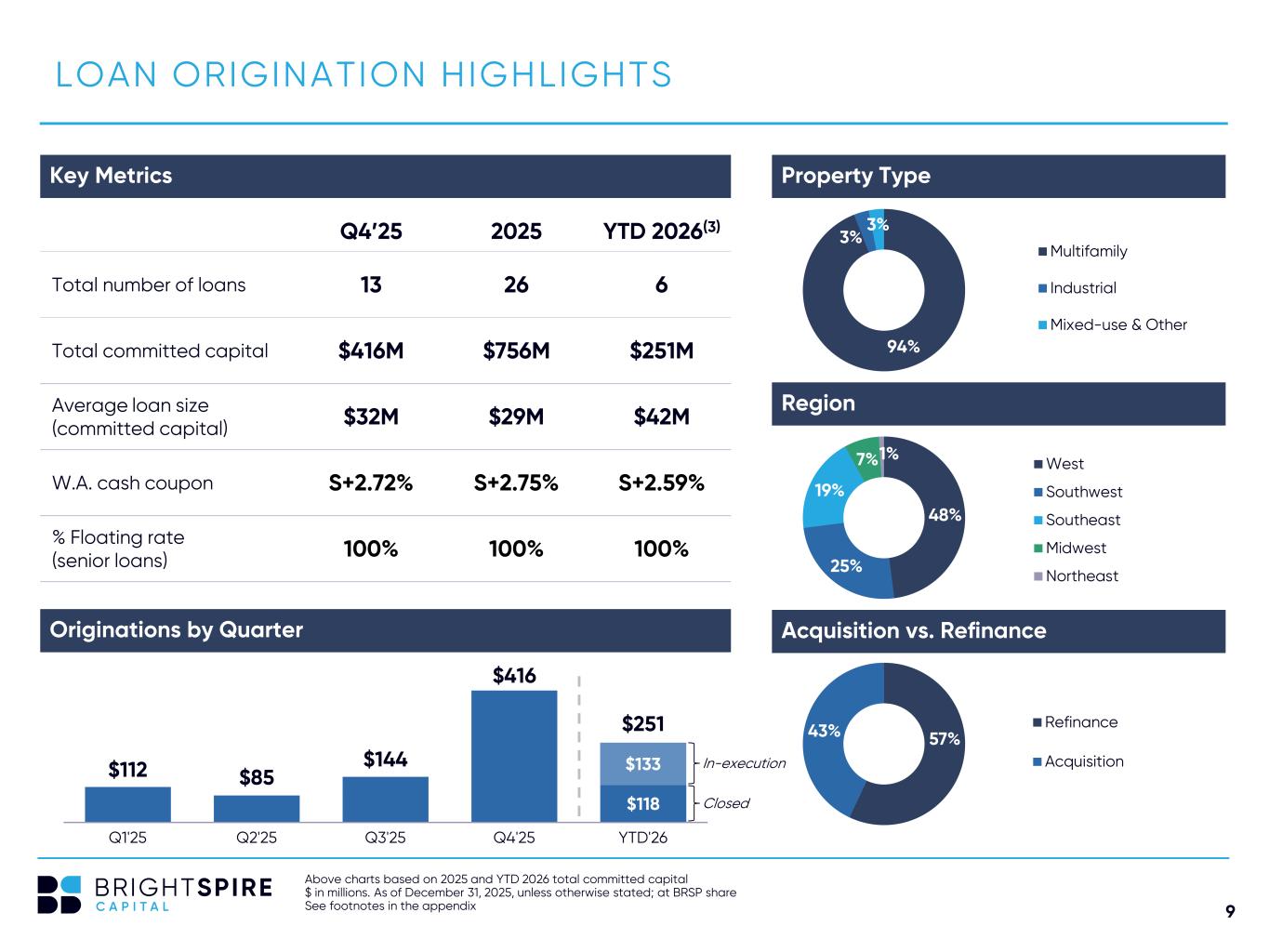
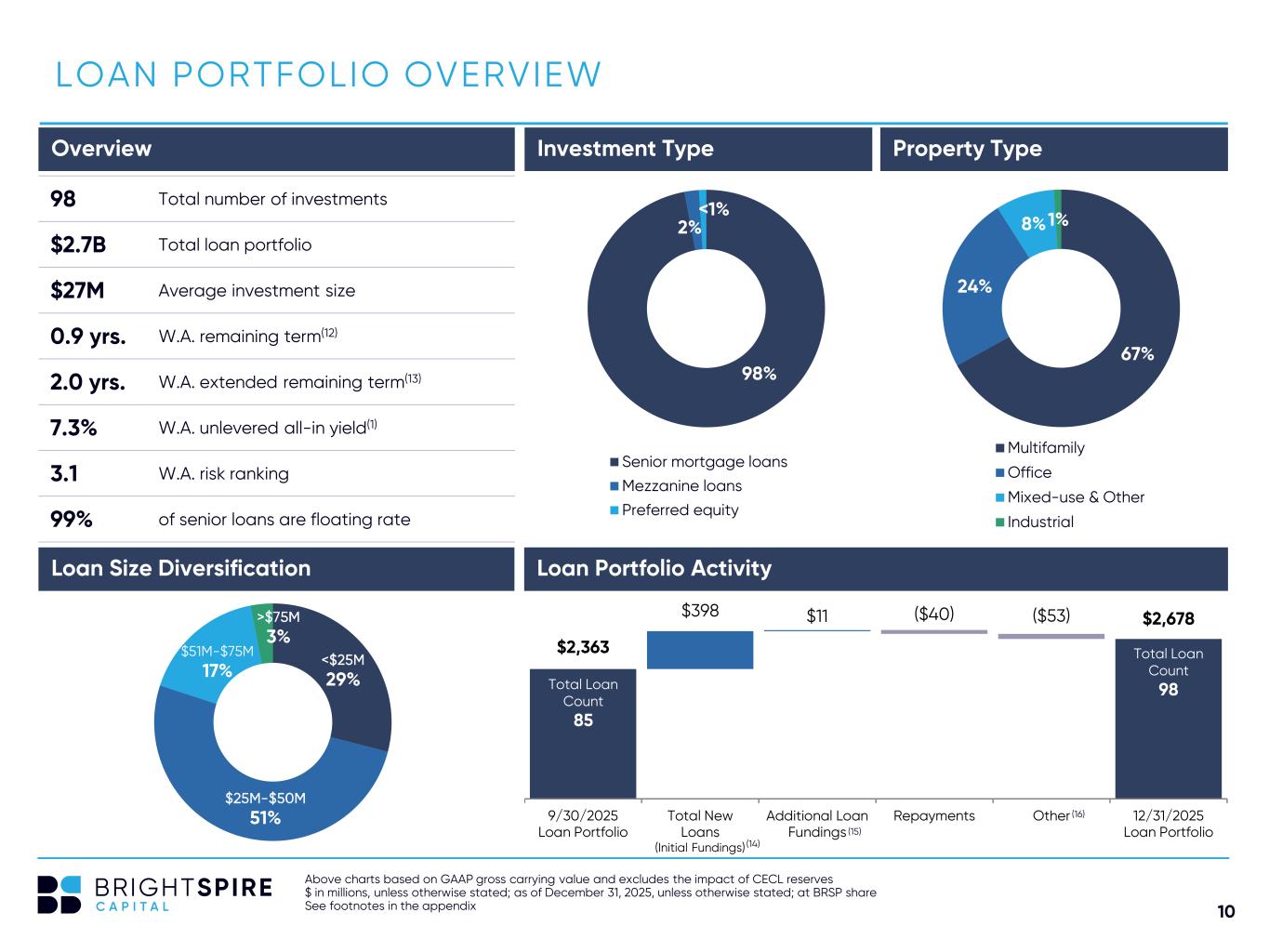
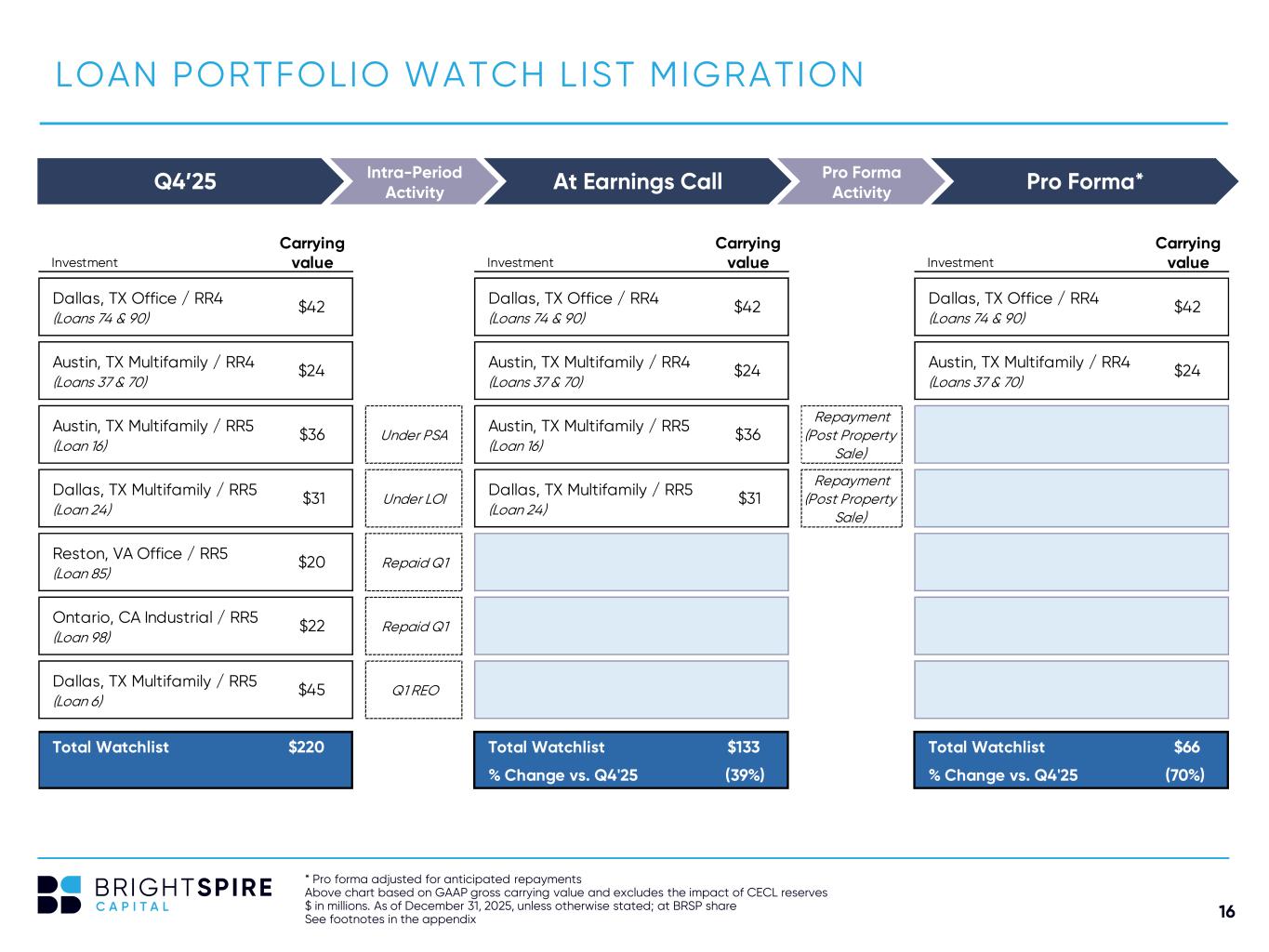
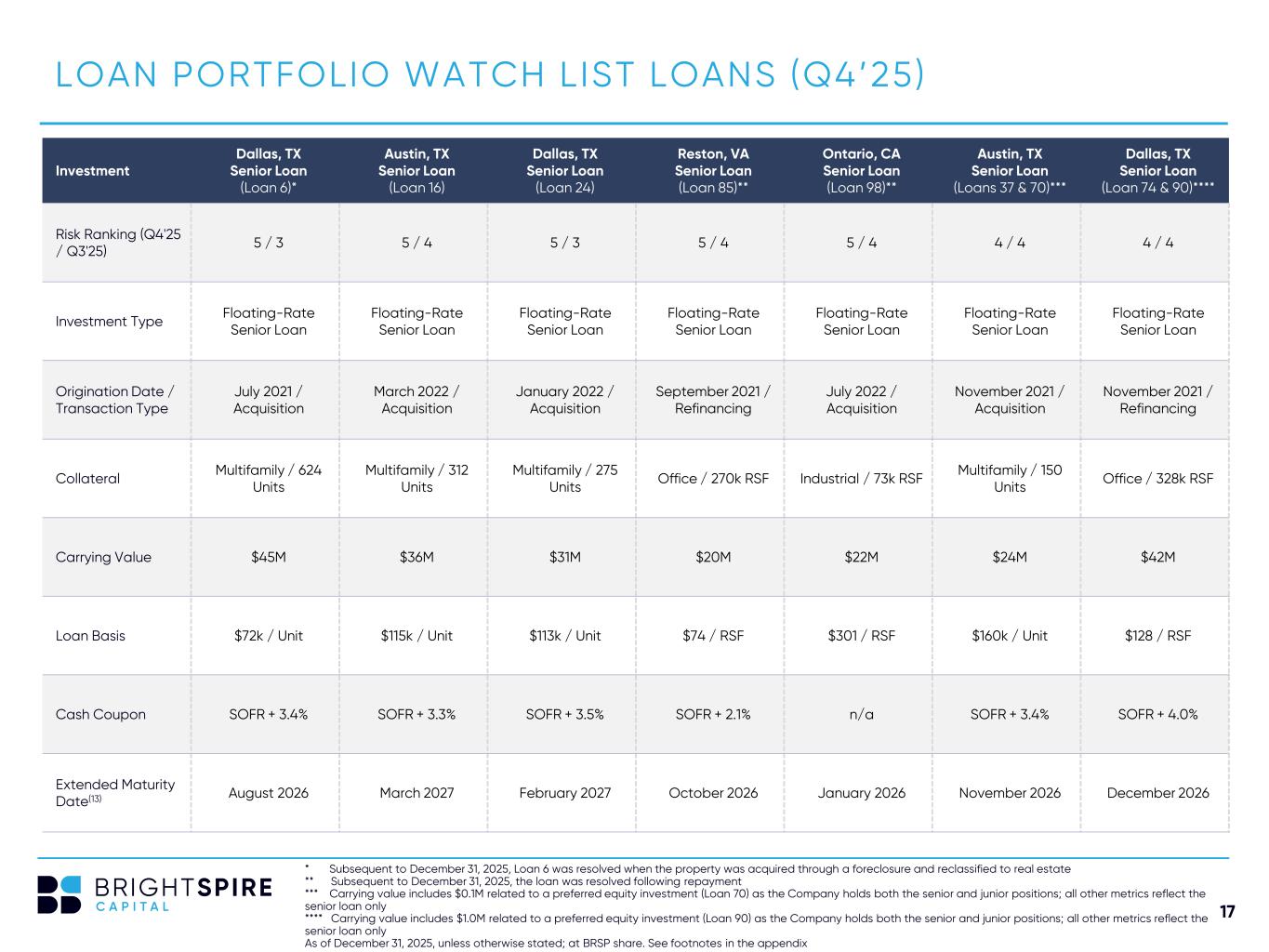
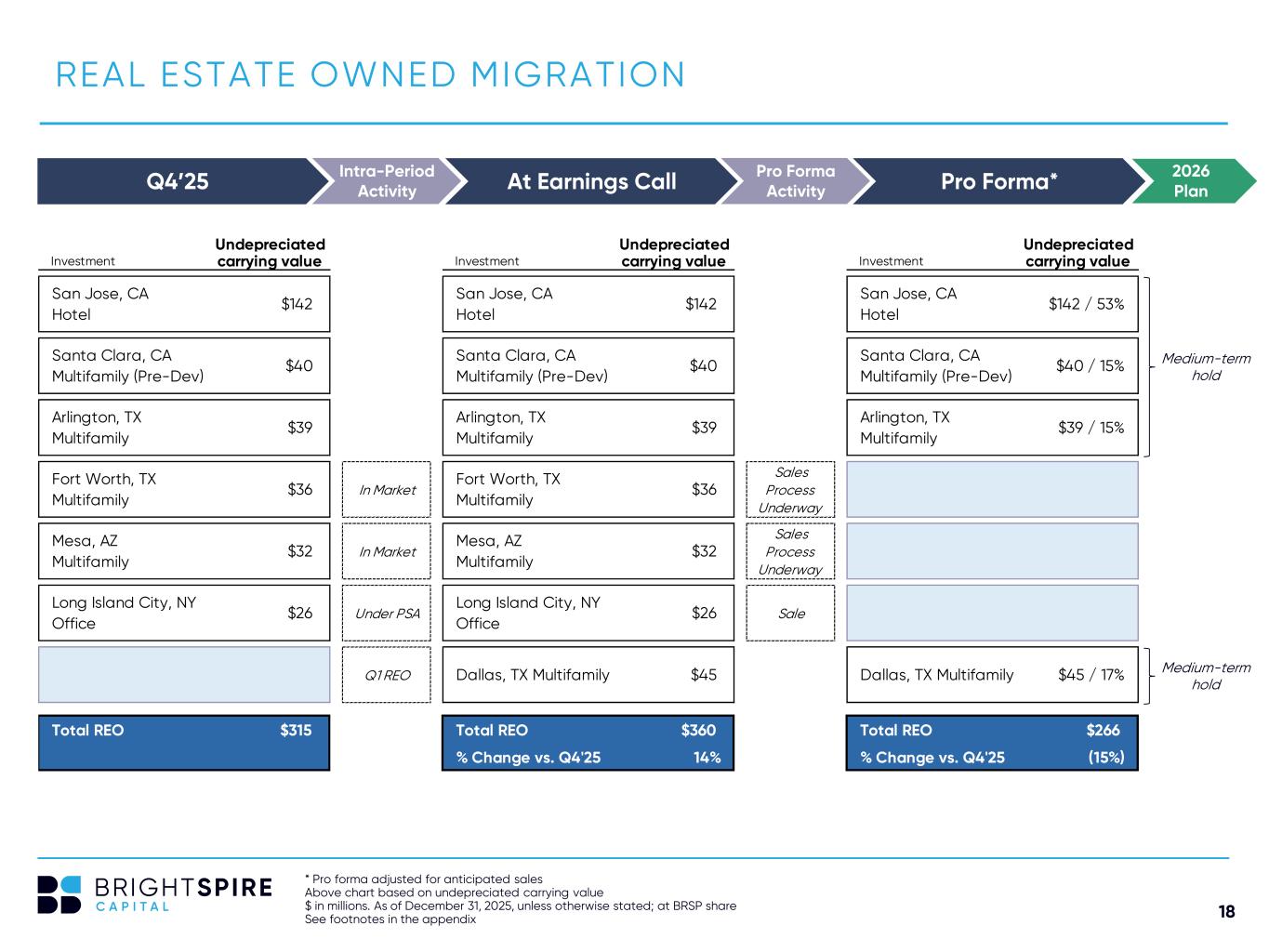
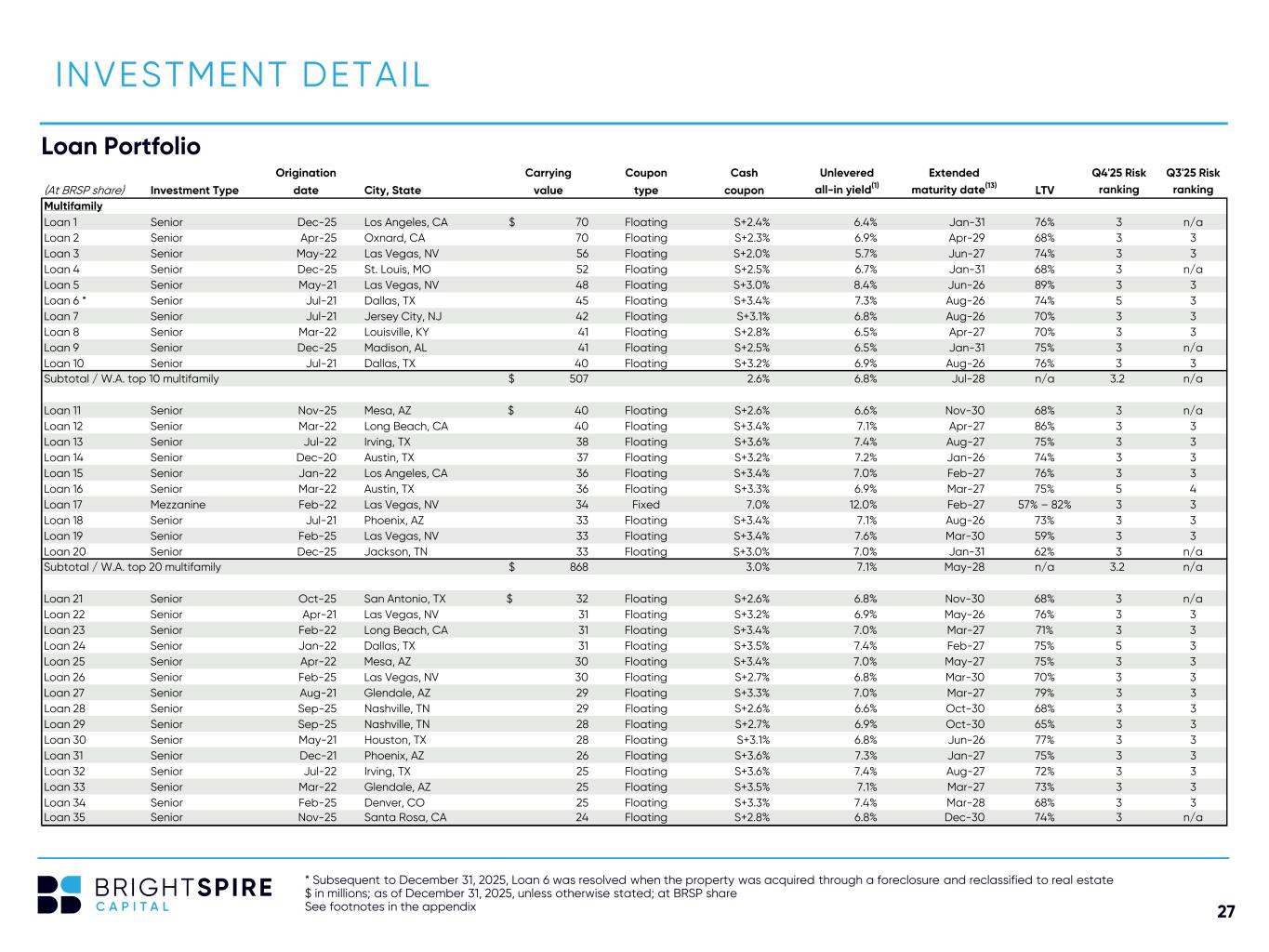
Thanks, David, and welcome to our fourth quarter 2025 earnings call. As we reflect on the past year, I'm pleased to highlight the significant progress we've made across our business. We entered 2025 focused on rotating the portfolio by addressing challenged investments while simultaneously increasing our new loan originations. Throughout the course of the fourth quarter and into the new year, we have continued to reduce watchlist loans and REO property exposure. As a result of these efforts, we've improved the quality of the portfolio, ensuring a solid foundation for future growth. Perhaps most importantly, we gained considerable momentum in originations. As the year progressed, our pipeline grew steadily, with loan inquiries and quoting activity increasing with each quarter. Against this backdrop, the fourth quarter ended the year on a high note and was one of our most active periods in several years. Since commencing originations at the tail end of 2024, we have closed 32 new loans for $941 million of total commitments. of which 13 loans of $416 million were closed during the fourth quarter, our largest funding quarter since restarting originations. As of December 31st, the loan portfolio increased by $315 million to $2.7 billion. That equates to a 13% increase from the third quarter. We also had a very active period executing REO sales as well as resolving loans from the watch list. We made the strategic decision to accelerate the resolutions in this part of our portfolio. We concluded that the certainty associated with monetizing these assets and reinvesting the proceeds outweighed the prospective upside associated with holding the assets longer term. As a result, we took a limited reduction in book value to effectuate these sales during and subsequent to quarter end. In the fourth quarter supplemental presentation, available on our website, we included two pages summarizing the watch list and REO activity. The materials illustrate the substantial progress made to date, along with our projected resolution timeline for each of these two segments of our portfolio. I want to reiterate that these resolutions continue to be a major focus as they represent a critical source of capital for new loan originations. Over the coming months, our goal is to cut our current as-is watch list exposure to two loans totaling approximately $66 million. Further, each of the remaining REO assets has a business plan for their ultimate exit. This, of course, does not reflect the possibility of any downgrades in the future. Also, as David mentioned, our adjusted DE for the fourth quarter was $0.15 per share. As discussed on previous calls, when we resize our dividend to $0.16, we noted there could be a brief period of modest coverage shortfall primarily related to the timing of capital deployment. For the full year 2025, we covered our entire annual dividend. However, as anticipated, in this last quarter, our adjusted DE reflects a dividend coverage of just one penny shy of break-even. Our plan is to once again cover the dividend by mid-year and achieve a positive coverage by year-end. Turning our attention to the market, commercial real estate debt capital markets are wide open with a surge of new issuance in the first 45 days. This was met with high investor demand, especially for CRE CLOs, which is driven by strong historical credit performance and attractive spreads versus other credit sectors. Along those lines, I'm pleased to report that we announced the closing of Bryce Spire's fourth managed CLO. This transaction was $955 million and features a $98 million ramp, as well as a two-and-a-half-year reinvestment period, further expanding our lending capacity and flexibility. This transaction was also very well-received, with 19 investors participating across all offered tranches, including the sale of the lowest-rated investment-grade tranche. Looking ahead at the demand side for CRE loans, we expect there will be a significant tailwind from continued increases in property sales transactions. On one side, property equity investors are anxious to see monetizations of legacy assets, while on the flip side, mortgage lenders are also encouraging borrowers to refinance or sell these same underlying assets. This is precisely what we are experiencing in our own portfolio. We are therefore optimistic that there will be a solid demand for loan originations as more assets change hands in 2026. In closing, allow me to reiterate and underscore our priorities for 2026. First, grow the loan book to approximately $3.5 billion. Second, to accomplish this, we must continue to resolve our remaining watchlist loans and monetize the majority of our remaining REO. most notably the San Jose Hotel. Third, execute on a fifth CLO in the second half of the year to match fund our loans and further maximize our capital deployment efficiency. And lastly, in accomplishing these initiatives, we will grow earnings and reestablish positive dividend coverage by year end. I would like to thank our team, clients, and banking partners for their contributions and collaborations throughout the year. With that, I would like to turn the call over to our president, Andy Witt. Andy?
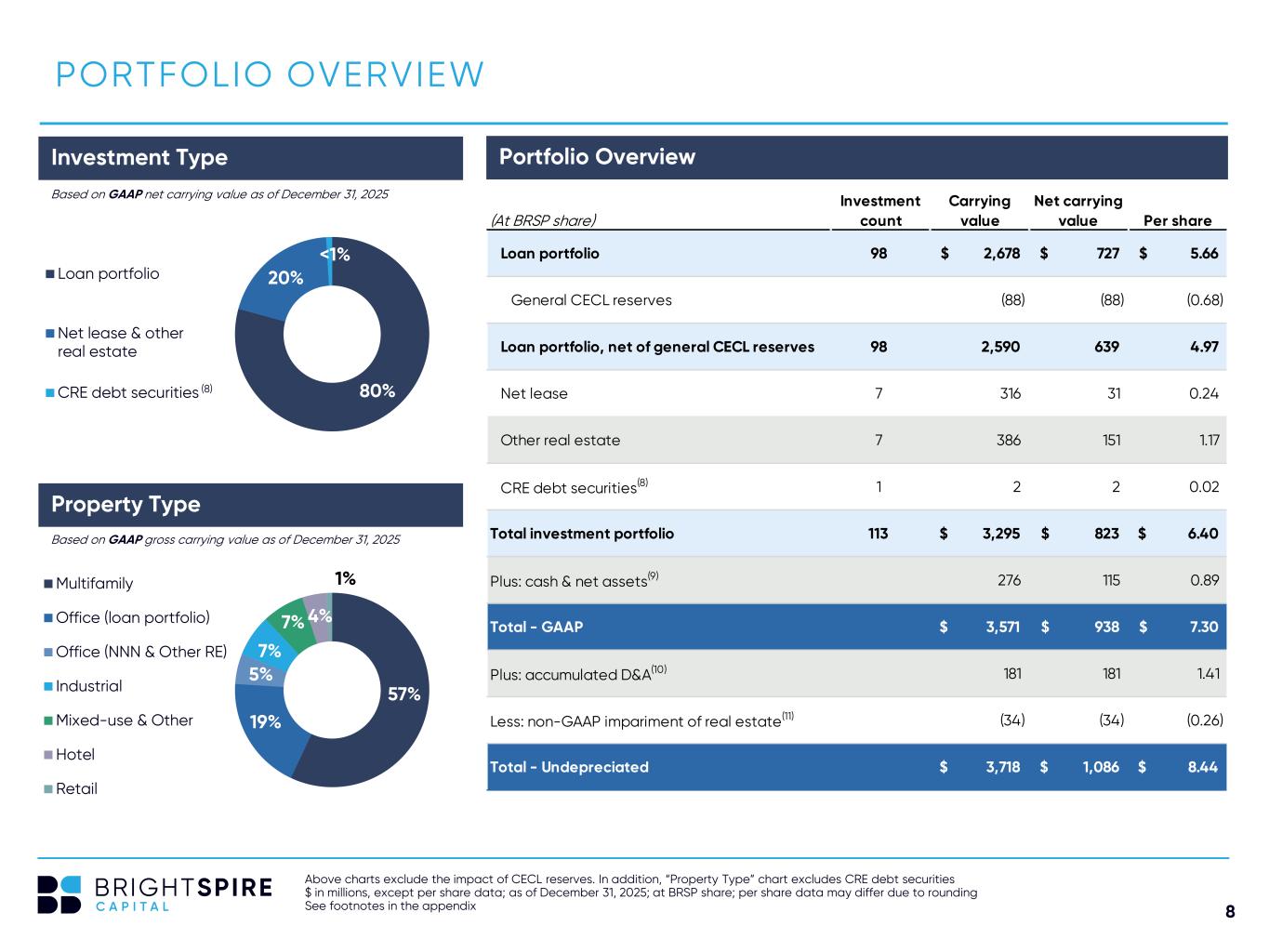
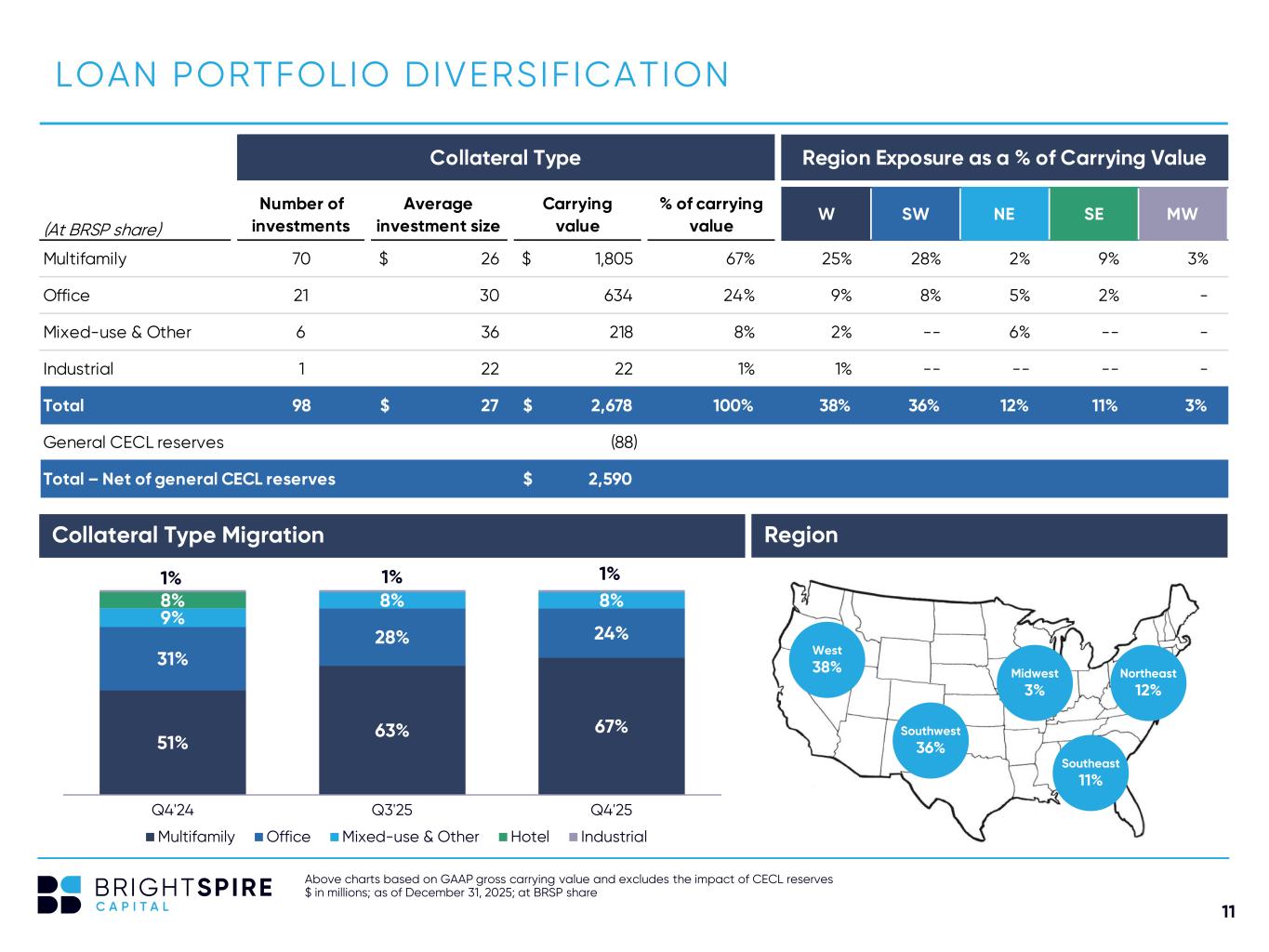
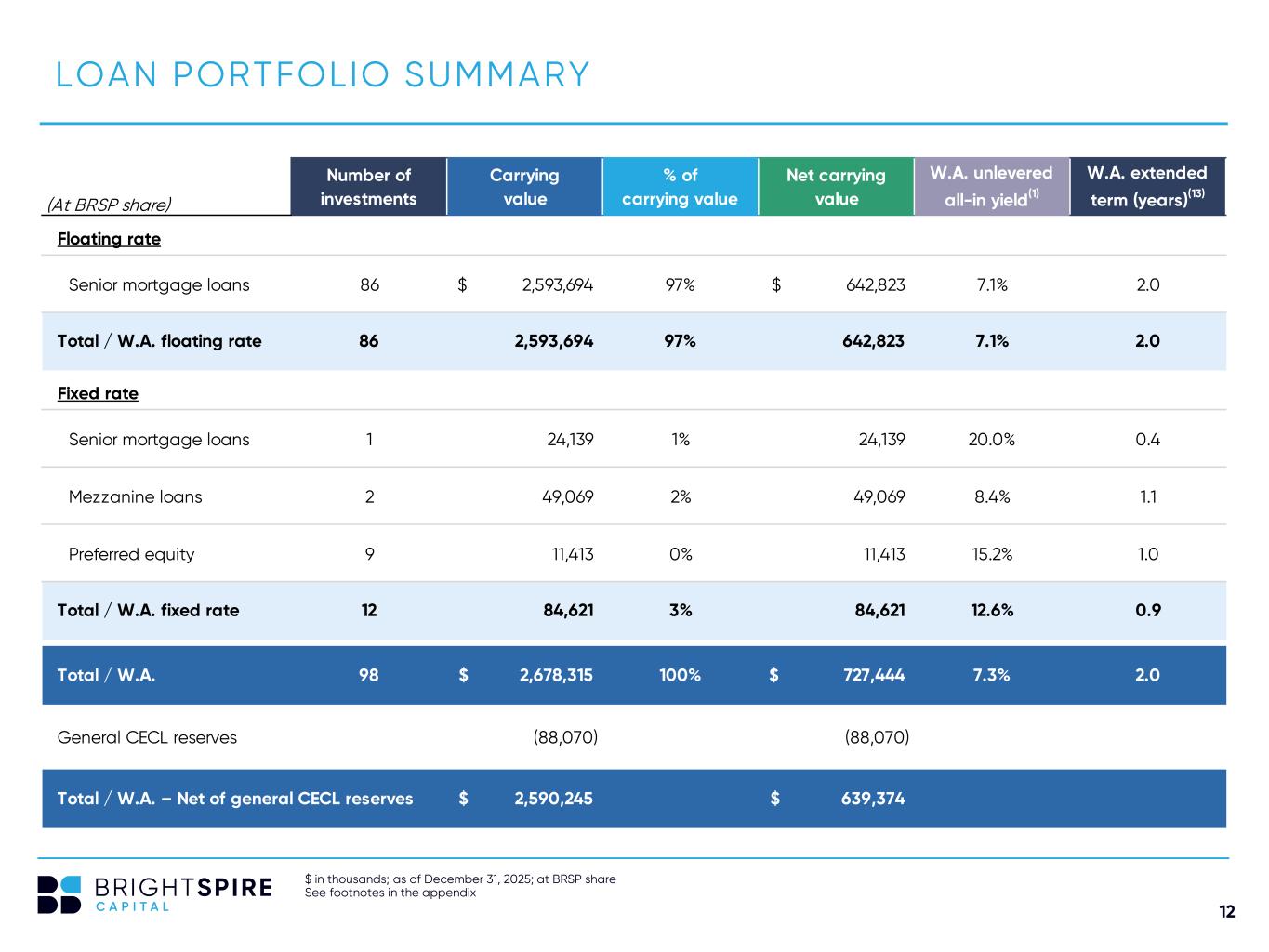
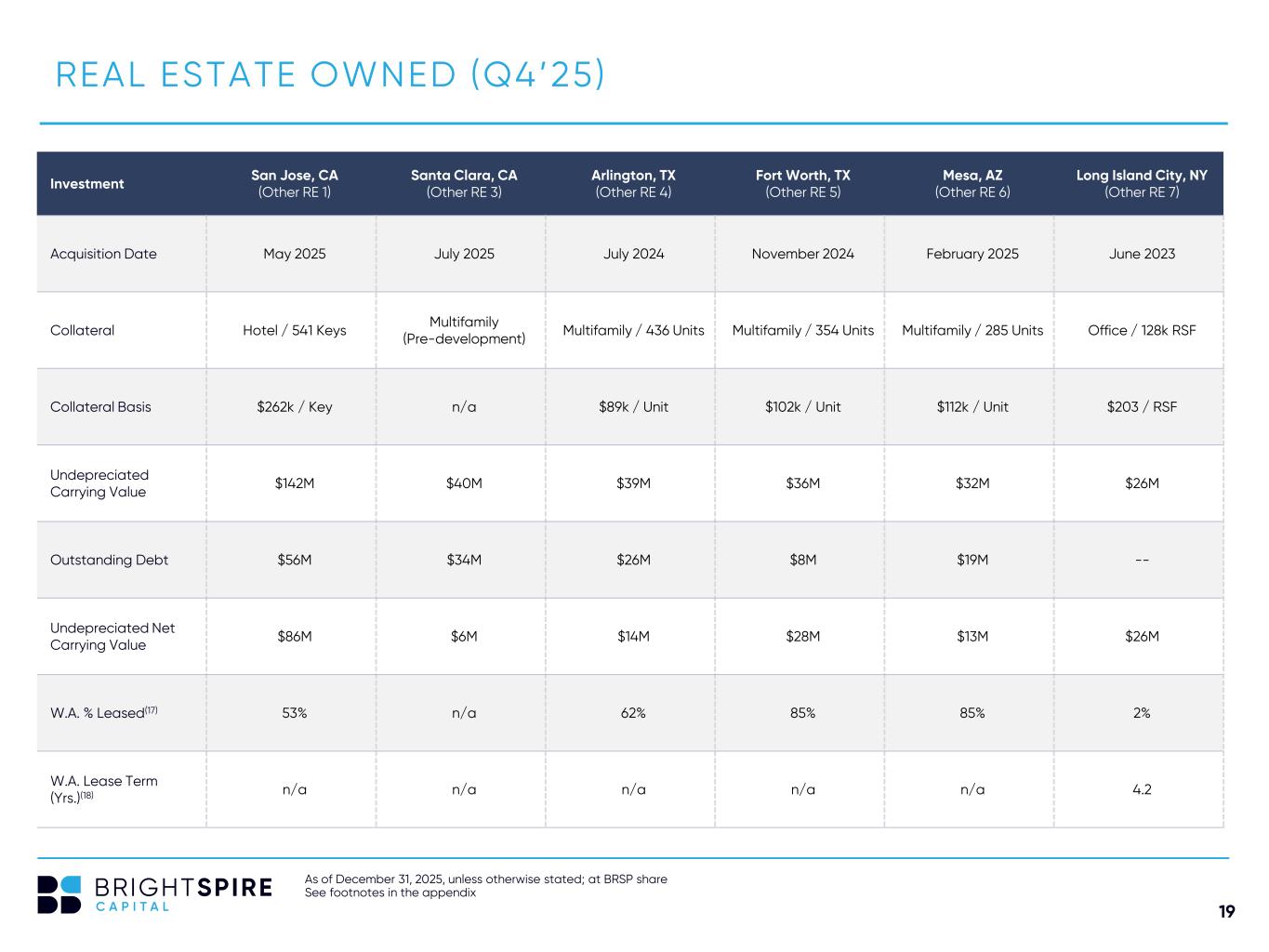
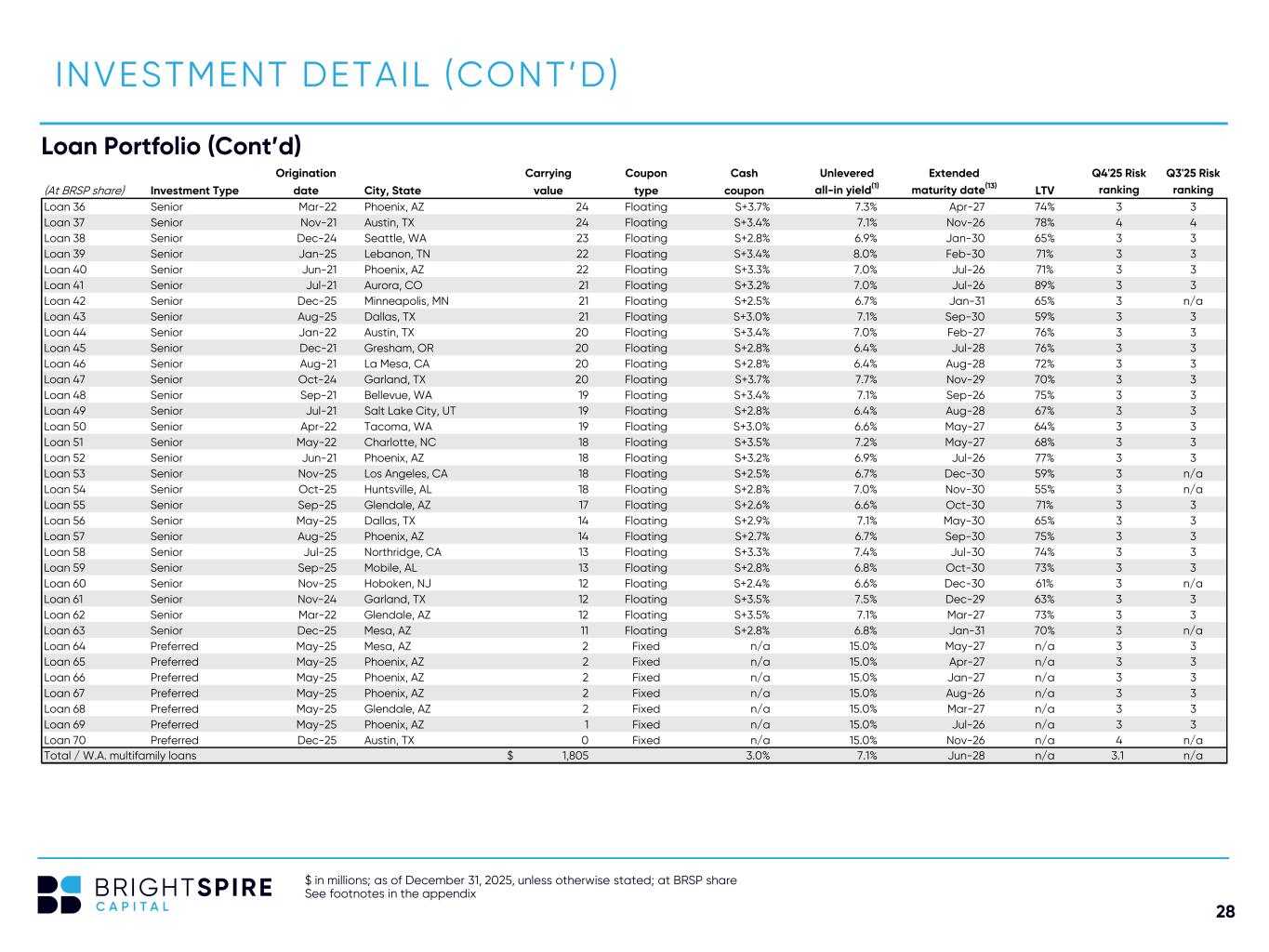
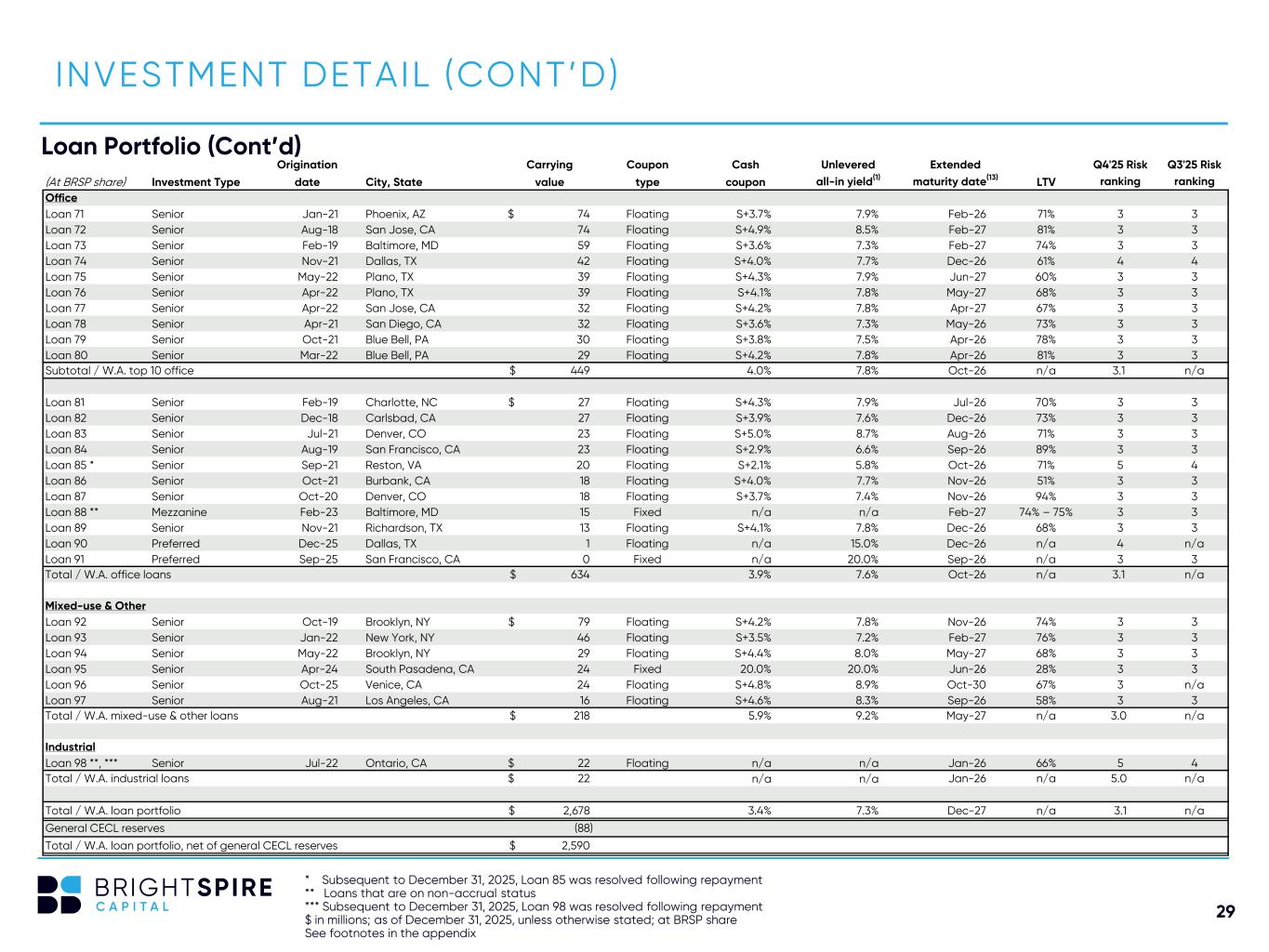
Thank you, Mike. It has been a transformational year for Brightspire and a productive fourth quarter. This year was punctual fourth quarter originations activity. It was our most active quarter in 2025, closing on $416 million in commitments across 12 multifamily loans and one mixed use loan. Repayments during the quarter were minimal and largely attributable to two loan payoffs. Our loan book at $2.4 billion left 98 loans with an average loan balance of $27 million and a risk ranking of $3.1, consistent with the previous quarter. Following quarter end, we have closed on an additional three loans for $118 million. We anticipate the loan book will expand to nearly $3 billion by approximately halfway through the year. Furthermore, we anticipate our loan book will continue to grow in the back half of the year, targeting at least a $3.5 billion loan portfolio by year end. As it relates to portfolio management during the fourth quarter and subsequently, we have been active. I will start with a review of watch list. Two loans were added to $220 million, or 8%. As it relates to these two loans, A notable shift as a result of these observations and further analysis, a resolution, one of which was already on the watch list. Ultimately, we moved decisively, taking ownership of one by foreclosure and working cooperatively with the borrower to market the other two properties. Following quarter in, two watch list loans have been resolved via sales process. As mentioned earlier, two additional properties are in the process of being sold. and one watchlist loan property. Proforma for the anticipated sales of these two properties. Our watchlist would consist of two remaining loans, a Dallas office loan and an Austin multifamily loan for a combined total of $66 million. Repayment process will be repatriated and deployed into new loans. The plan for the Dallas property, which was for, is to implement a value-add business plan, stabilizing operating performance, and ultimately, as for the REO portion of the portfolio, during the quarter of the two long, as well as the Oregon office property. At the end of Q4 2025, REO exposure stood at $315 million across, as previously noted, post-quarter end, a Dallas multifamily property from the watch list moved to R, bringing the total to $7 million with an aggregate balance $360 million. The remaining Long Island City property is under contract to be sold. We expect that transaction to close. Only two multifamily properties are listed for sale, one located in Fort Worth, Texas, and the other in Mesa, Arizona. Pro forma for the sale of these three properties, our remaining REO will be comprised of 266. the San Jose of 50% of the remaining balance with two multifamily and one residential pre-development property making up the remainder. We anticipate marketing the majority, if not all, of the remaining REL properties for sale during the back half of 2026. In closing, we made substantial progress throughout 2025 managing and growing the loan portfolio, particularly the decisive actions taken this quarter should result in resolution proceeds which will fuel continued portfolio and earnings growth throughout the course of 2026. With that I will turn the call over to Frank Saraceno our Chief Financial Officer.
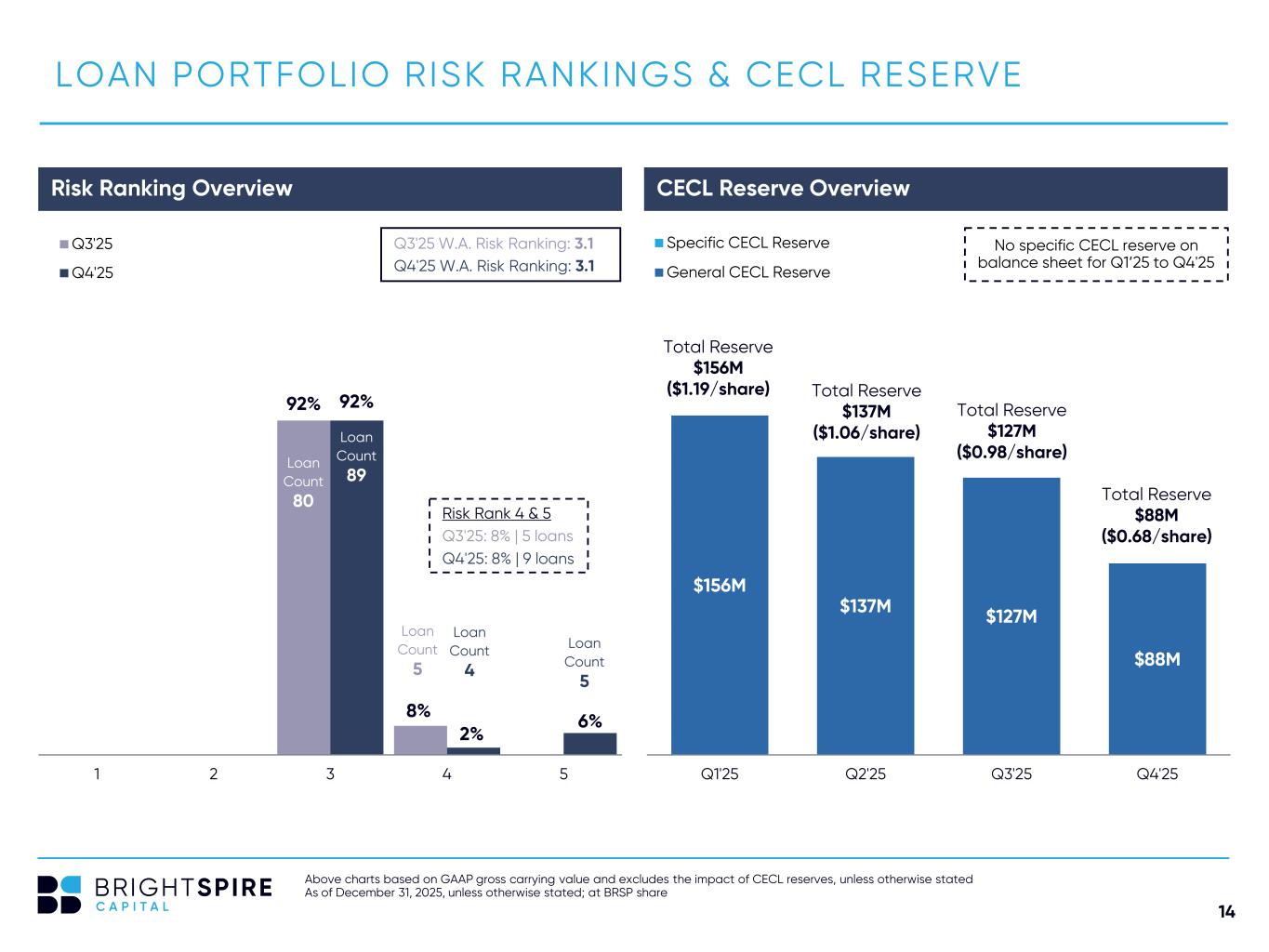
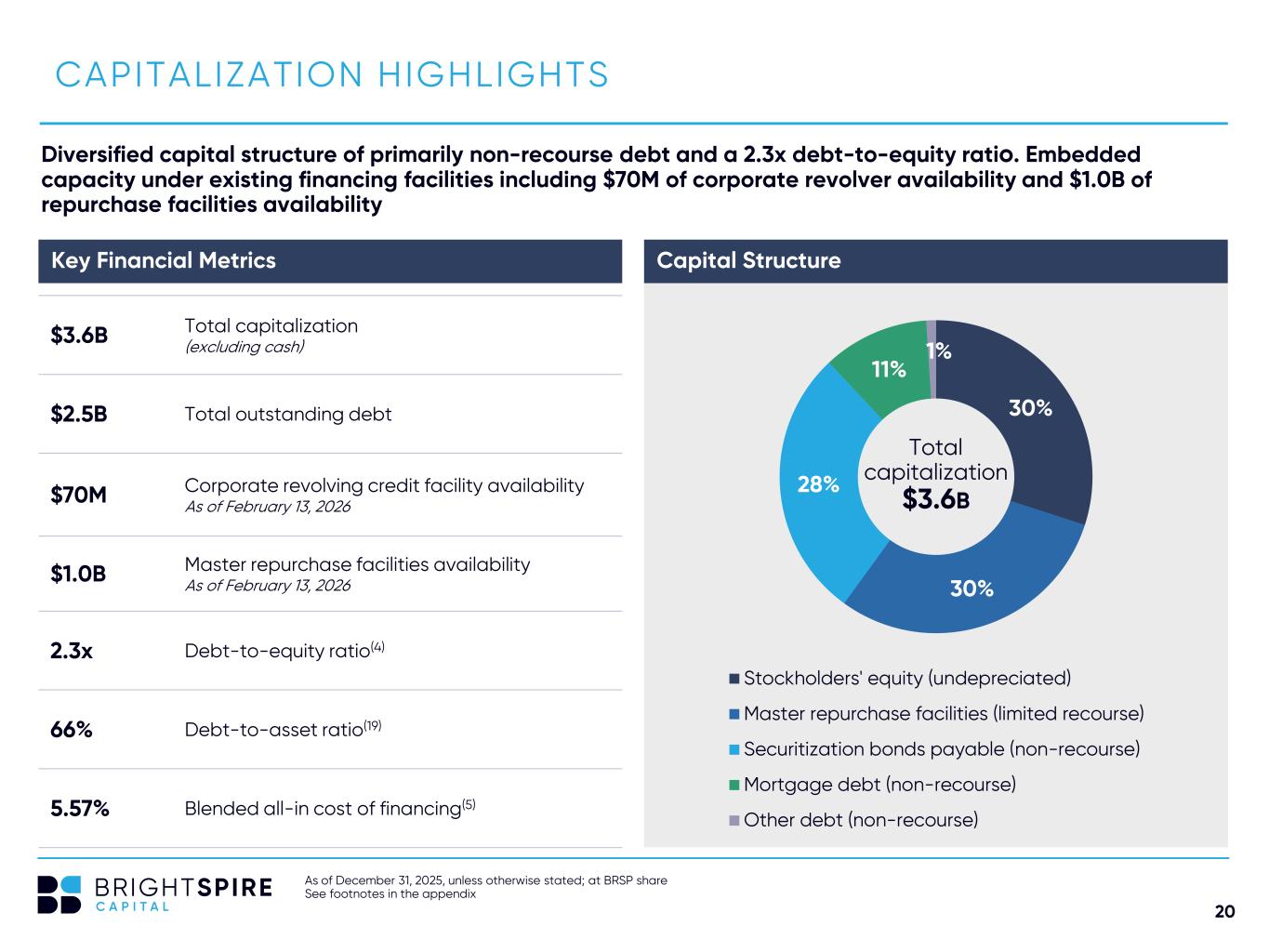
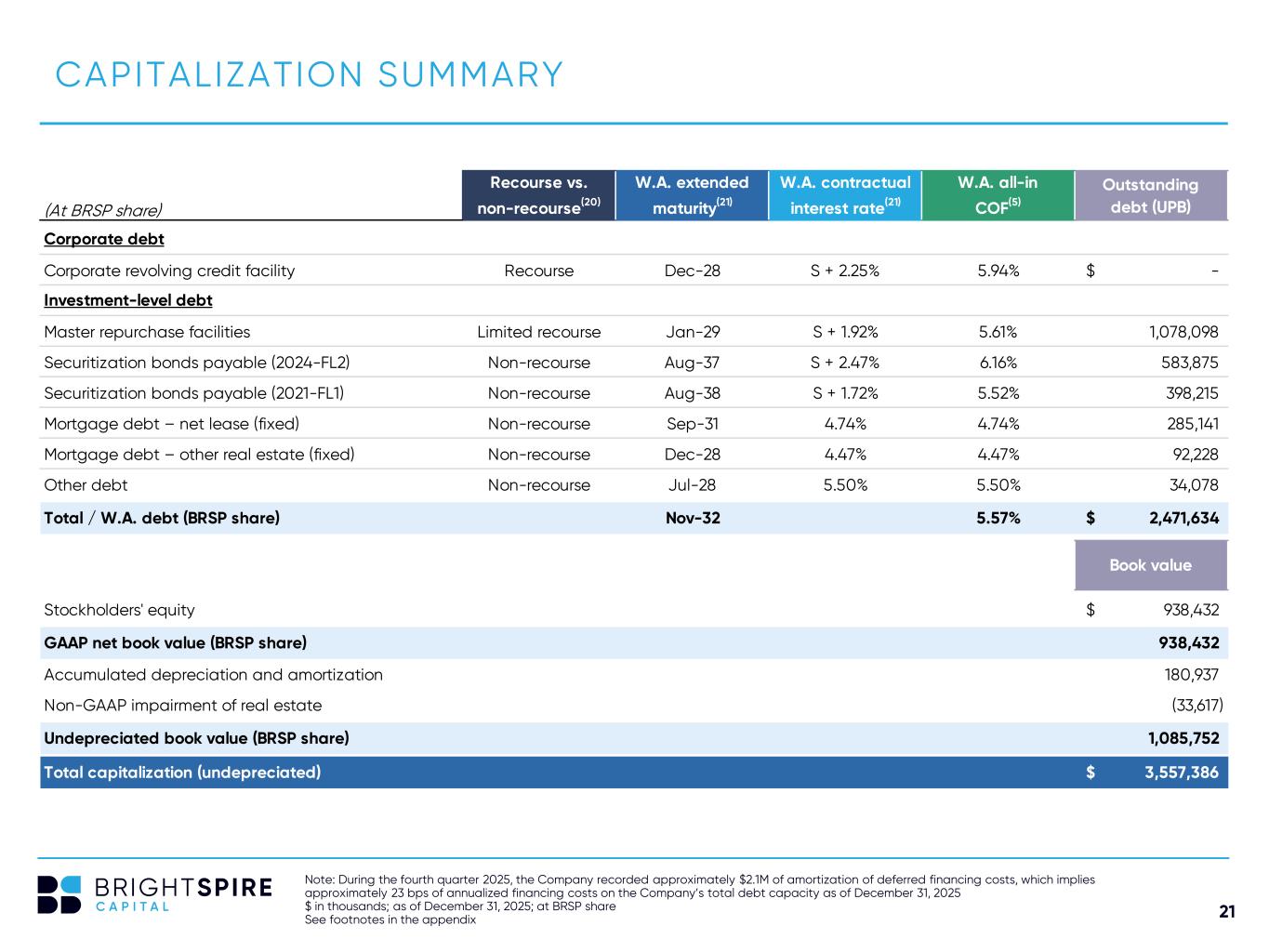
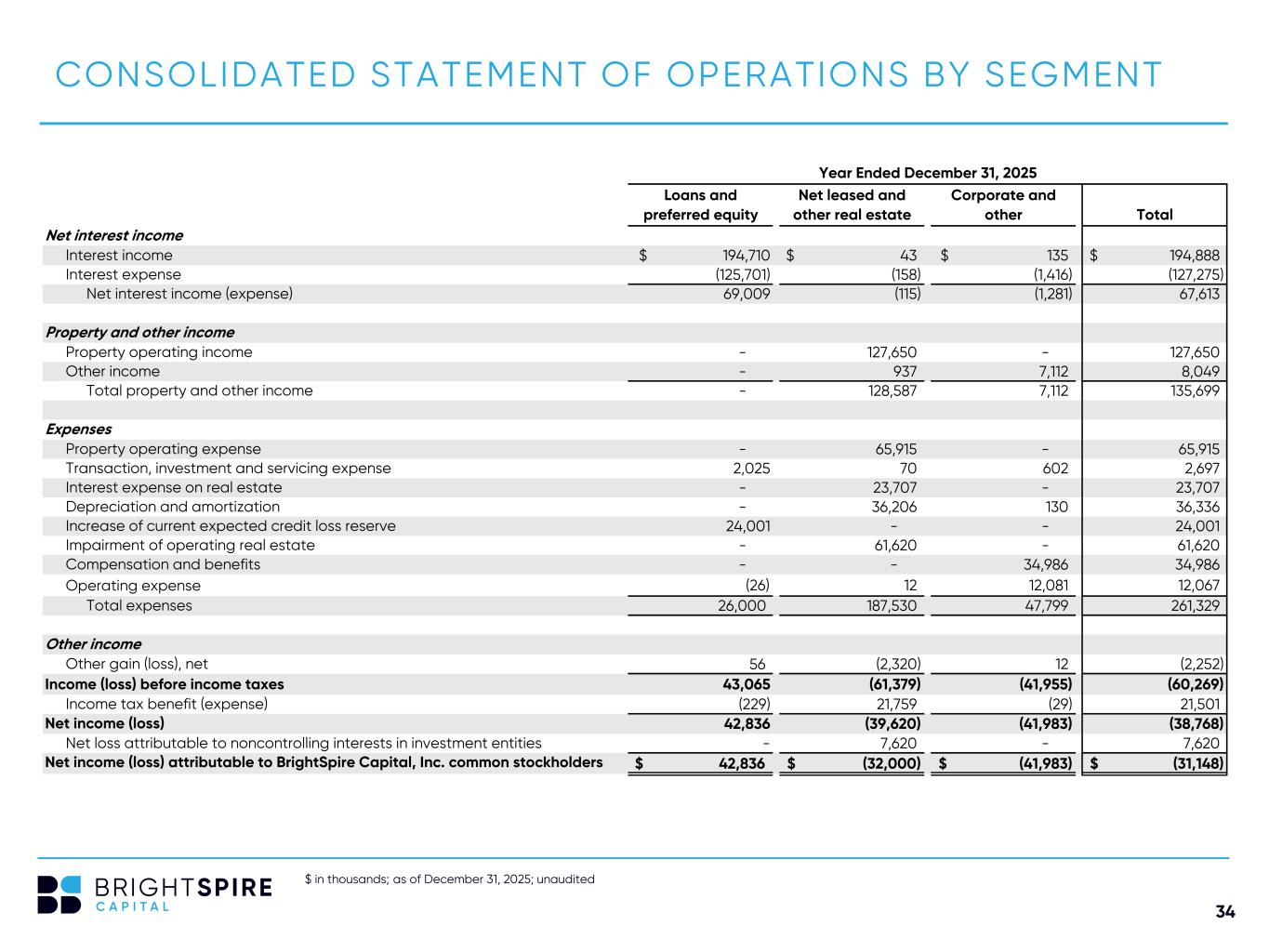
Thank you Andy and good morning everyone. For the fourth quarter we generated adjusted DE of $19.3 million or 15 cents per share fourth quarter de was a loss of 35.5 million or 28 cents per share de includes specific reserves of approximately 54.9 million dollars additionally we reported total company gap net loss of 14 4 million dollars or 12 cents per share which also included an approximately 8 million dollar impairment charge related to the sale of our Long Island City office properties. For the full year of 2025, we generated adjusted DE of $83.6 million. And 64 cents per share, representing a return on undepreciated shareholders' average equity of approximately 7.4%. Our dividend for the year of 64 cents per share was fully covered one time. Quarter-over-quarter, total company GAAP net book value decreased to $7.30 from $7.53 per share in the third quarter. We reported underappreciated book value of $8.44 versus $8.68 per share in the third quarter. As Mike mentioned earlier, we made the strategic decision to pull forward the resolution of certain watch lists and REO assets, noting that resolving and reinvesting these proceeds from these investments outweighed the prospective upside associated with holding the assets longer term. As a result, we took a limited reduction in book value. During the quarter, we also repurchased approximately 1.1 million shares of stock at an average share price of $5.39, which resulted in approximately three cents of book value accretion. Given the strong origination momentum and improvements in the portfolio, we continue to believe the stock is significantly undervalued. Looking at reserves, during 4Q, we recorded specific CECL reserves of approximately $54.9 million. As Andy mentioned earlier, we took ownership of a Dallas multifamily property that was previously held on the watch list, resolved two watch list loans via sales process, and have two properties underlying two additional watch list loans anticipated to close in the first half of this year since these loans are either resolved or will be resolved imminently we have charged off the reserves our general ceasal provision decreased to 88 million or 315 basis points on total loan commitments versus 127 million or 517 basis points reported in the third quarter our debt to assets ratio is 66 percent and our debt to equity ratio stands at 2.3 times lastly our liquidity as of today stands at approximately 168 million dollars this includes 98 million dollars of cash of which 64 million dollars will be received tomorrow associated with our clo execution and unwind of the 2021 fl1 clm additionally we have 70 million dollars available under our credit facility this concludes our prepared remarks and with that let's open it up for questions operator thank you we will now begin the question and answer session to ask a question you may press
Operator
star then one on your touchtone phone if you're using a speakerphone please pick up your handset before pressing the keys if at any time your question has been addressed and you would like to withdraw your question please press star then two and we ask that you please limit yourself to one question and one follow-up. And if you have further questions, you may re-answer the question queue. And our first question today will come from Gabe Augie with Raymond James. Please go ahead.
Hey, good morning, guys. Thanks for taking the question. Mike, Andy, how do you think about the amount of, just ballpark here, leverageable capital that sits underneath the various assets have been resolved or are in process of resolution kind of year to date?
And question two is a quick follow-up of just how do you think about the credit portfolio from a go-forward basis? You've only got now two four-rated watch list loans, a few assets in REO. What's the general kind of sense on where the book sits now from a 2026 credit perspective? Thank you.
Hey, Gabe. It's Mike. Welcome back.
Pleasure to have you. Thanks for your question. When you look at our portfolio and we talk about getting to the back half of the year where we get to positive coverage, that's really linked to your question. We have about, given the foreclosure we had subsequent to quarter end, we have about 200 plus million of equity tied up in REO assets, which are basically a drag on the portfolio. The only thing throwing off anything meaningful there is the San Jose Hotel, whose NLI is probably just shy of $9 million. So really, at the tail end of the year, you get a full game in the sense that we unwind that REO as best we can and redeploy that capital into 12-plus REO levered assets. And that's really what's going to kick us up. So to answer your question directly, about $200 million of latent capital is tied up in the portfolio right now, and we plan on getting out of that toward the end of the year. And as Andy said, a large part of that is the ROE on the San Jose Hotel. We're doing some deferred maintenance on that right now, much needed. We have a lot of things going on in San Jose during the course of the year that will help the cash flow. And so I think we're looking more toward the back half of the year for that asset. And the two multifamily assets that are REO just need to be stabilized, like we've done with the rest of the portfolio, and we'll sell those at the back half of the year. In terms of credit in the overall portfolio, given the turnover that you're seeing, we're feeling pretty good about it. We haven't said that for a while, but we are seeing a lot of positive things happen, especially with the movement of the watch list and the REO assets that we're embracing right now. So we're pretty optimistic about the credit in the underlying portfolio. And then you look at the average loan size. We've gotten rid of some of the bigger assets. Our average loan size is down to $30 million, maybe slightly less. And so we're feeling pretty good about the diversification in the portfolio. Thank you, guys. That's helpful.
A nice job on the recycling or the resolving of the book.
Operator
The next question will come from Timothy D'Agostino with B. Riley Securities. Please go ahead.
Yeah. Hi. Thank you. Good morning. I just want to touch on the San Jose property a little bit more. If you could just provide a little bit of color there. I know you said a couple of earnings calls ago that you're probably holding this through. second half of 26 due to events like the super bowl march madness the world cup i was just wondering you know with super bowl behind us how that how that event went for the hotel and you know are things progressing there uh out of expectations or ad expectations thank you thanks for the question no the event went very well the staff handled the volume incredibly well We're doing some things in the hotel.
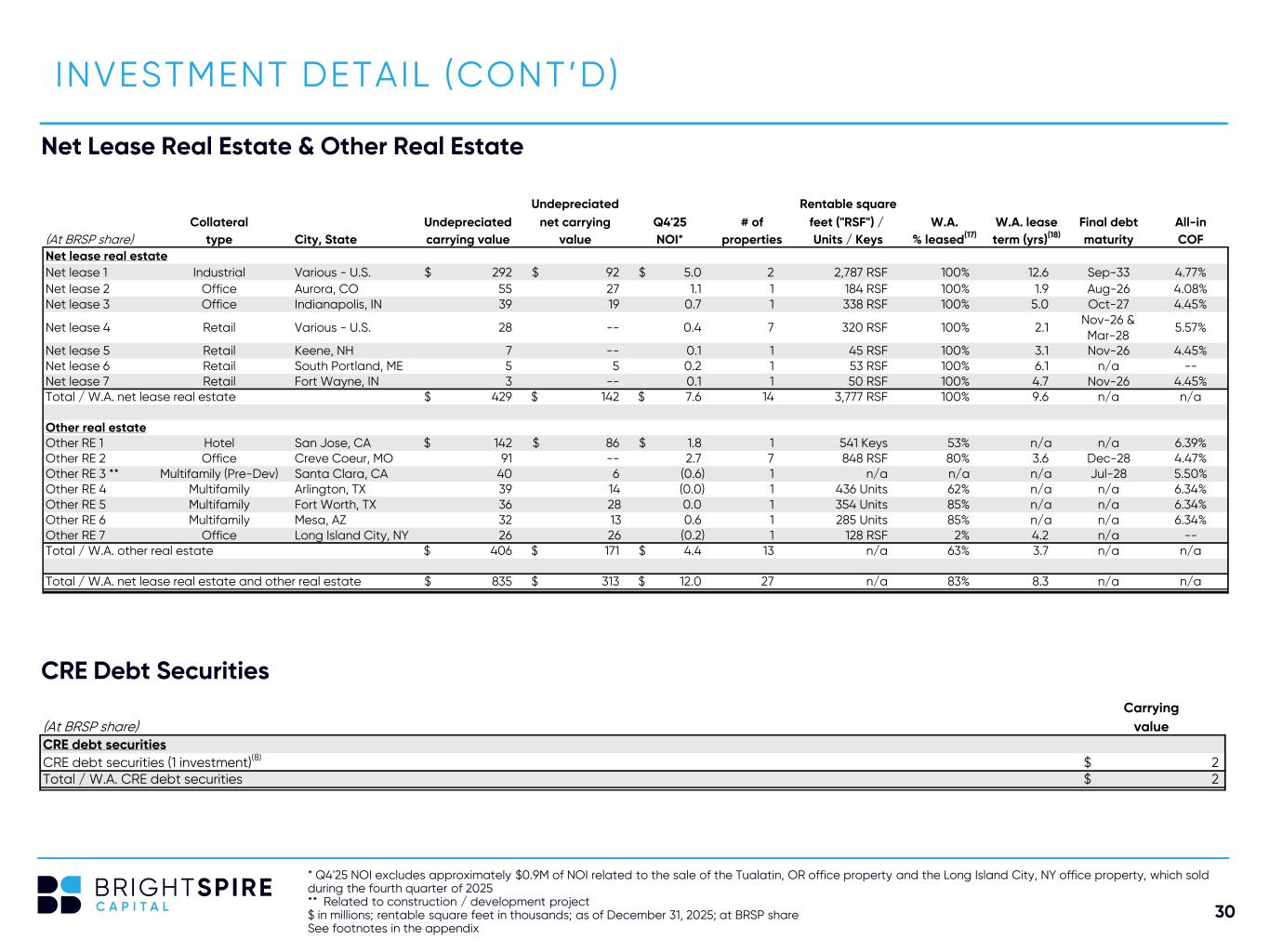
We're upgrading the lobby and we're upgrading the elevators and all of that takes a little bit of time. The lobby is well underway. We want to redo some of the washrooms and the ballroom and get that done. These are things that if you sold the property today, any buyer would look at those items and take those off of the sale price. So we want to get that done and get that behind us. And we also have, as you said, these major events coming up that we want to see through, including in July, we have the CrossFit National Championship there, and CrossFit is using our hotel as the headquarters for that staging event. So we're looking forward to that as well. We did have some non-recurring stuff that hit the NOI last year, some cancellation of events that fell right to the bottom line. We're not modeling that this year. Those were basically windfalls. So we're not modeling that this year. So we do expect right now we're budgeting plus or minus for purposes of our accrual, about $9 million of NOI. And we hope to punch through that as we get to the end of the year to get to more of a double-digit NOI cash flow. And then we'll consider selling the asset. But at this point in time, we're pretty comfortable. We're holding it well, well below replacement costs. We're seeing other assets trade at higher dollars per key. So we're going to be patient. But again, because we have a lot of capital tied up in that asset, it's throwing off some cash flow, but about $80, $85 million of equity based on the leverage we have on our today, we really want to sell that asset and redeploy into the loan book.
Okay, great. Thank you so much. And then just a quick follow-up. Could you provide maybe a little more color on kind of the plan for the net lease and other real estate portfolio in 26? I know you touched a bunch on the loan portfolio, but it would be great to get some color there.
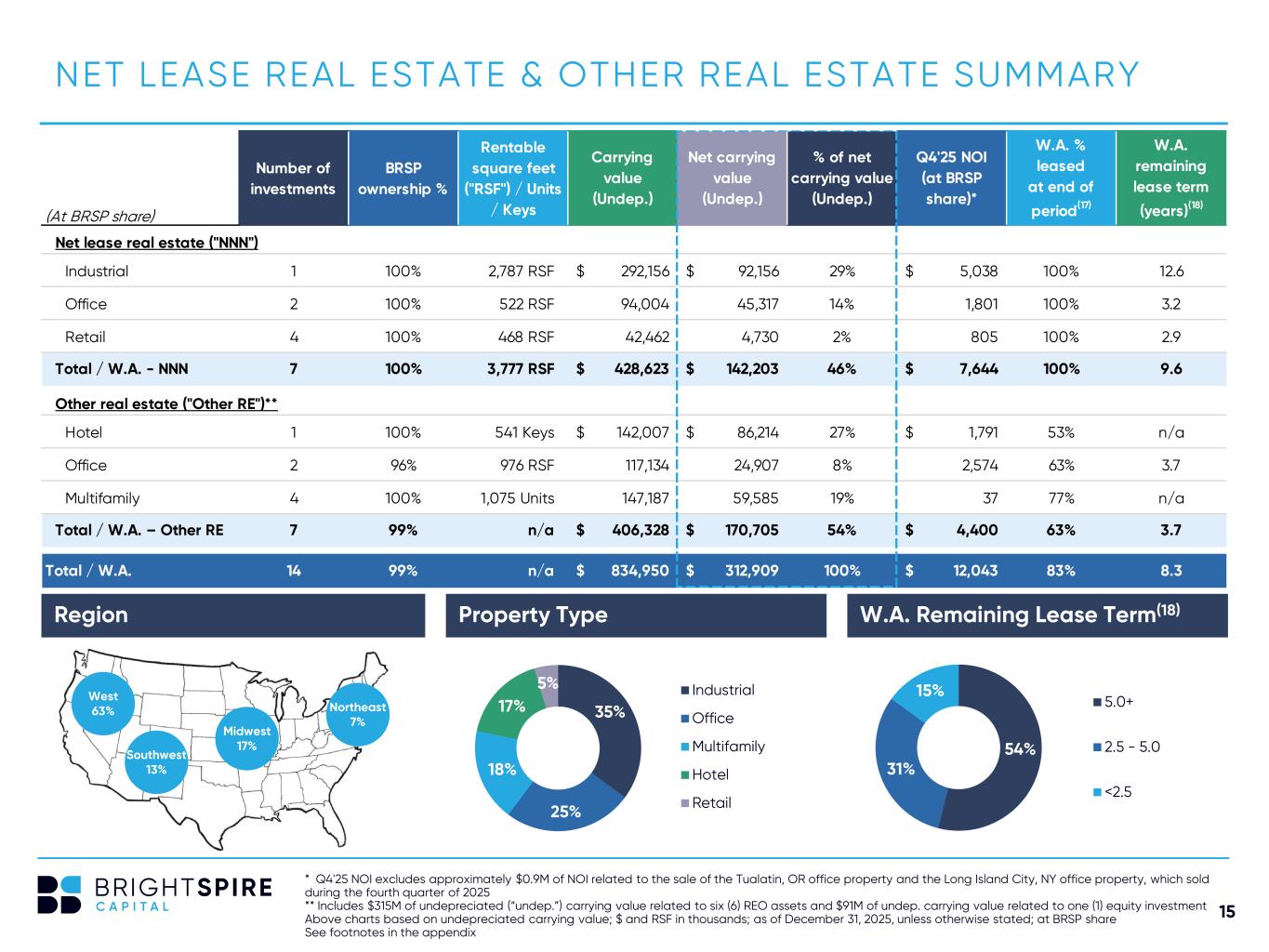
Okay, so the net lease is really made up of three components. We have a triple net to LabCorp in Indianapolis. We have a triple net to Northrop Industries in Colorado. And we have the largest part of that is the Albertsons portfolio. And nothing really is happening there at this moment. We have lease term on the LabCorp until 2030. that debt doesn't mature until 2027, and the Albertson debt not until 2028. Quite frankly, we're not really looking to grow the triple net portfolio. So if we could get into a position where we may be able to sell some of those assets, we'd consider doing it. But right now, there's really nothing going on in that portfolio.
Operator
Great. Thank you so much. Thanks for taking the questions.
Operator
The next question will come from Chris Muller with Citizens Capital Markets. Please go ahead.
Hey, guys. Thanks for taking the questions. So, it's nice to see originations picking up, and it looks like that momentum is carrying into the first quarter so far. I guess, how are you guys thinking about the pace of originations in 2026? Is 4Q a good baseline, or will it be more back-weighted in the year?
Andy, do you want to take that?
Thank you, Mike. In terms of the pace of originations, we had a great quarter in Q4 with just over 400 million, and we're on track here in Q1 in terms of loans closed and those that we have visibility in execution on at just over $300 million. And we think that's probably a pretty good rate going forward, somewhere between $300 million and $400 million a quarter is what we're modeling from a go-forward perspective.
Got it. That's helpful. And then just a quick follow-up. On the multifamily foreclosure that was subsequent to quarter end, should we expect to see a realized loss hit the first quarter related to that?
Operator
No, everything was taken in the fourth quarter. It was a loan at the fourth quarter, so it came through CECL.
So is that the $8 million impairment that hit the income statement?
No, that's for Long Island City. So the amount of the loss was associated with one of our specific reserves in the $59 million.
Got it. Appreciate you clearing that up. Thanks for taking the questions.
Operator
Again, if you have a question, please press star, then one. And our next question will come from Girov Mehta with Alliance Global Partners. Please go ahead.
Yeah, thank you. Good morning. I wanted to follow up on your comments around strong demand for loan originations. I was wondering if you could maybe provide some more color on which sector you're seeing the demand, and is it mostly multifamily, or are you guys open to other sectors as well?
We expect a lot of demand for credit in multifamily for the things that we laid out in the prepared remarks. We have seen, you know, we're pretty much at the end of the rope here. You've got 2021-22 loans that are getting to the point where they're past their first extension hurdles. Some are getting close to maturity now. We're seeing the equity getting exhausted and they want to move on. They want to get that equity repatriated back to the limited partners. So that's one of the drivers that we're seeing. The other driver we're seeing are lenders like us and what we just described in our own portfolio. We're encouraging borrowers to move assets, those same assets. We think the confluence of those two things are really going to push volume in 2026. We saw a little bit of a dip in originations in the fourth quarter, and we just equate that to some of these owners were saying, hey, it's past Thanksgiving. I'm not going to put something in the market at this point in time for refi or for sale, but we're starting to see that activity pick up tremendously in January and February, especially with the conferences, the mortgage banking conferences and the multifamily conference in Vegas that just transpired. After those conferences, it's very typical to see volume pick up. So I think while transaction volume was up in 2025 over 2024, we anticipate in multifamily the transaction volume would see 25 this year. So we're very optimistic about the demand for credit because we think we're just going to see a lot of assets changing hands.
Operator
All right. Thank Thank you. That's all I had.
Operator
The next question will come from Matthew Edner with Jones Trading. Please go ahead.
Hey, good morning, guys. Thanks for taking the question. I'd like to kind of stay on the credit side there. Spreads have compressed a good bit since this time last year. How are you guys thinking about that going forward and more competition kind of being in the space?
I've been doing this for 40 years, and there's never been a year but for a handful where we haven't had severe competition. So that's kind of business as usual. But what I'll say is I'll emphasize the points that we had around the capital markets. We just executed the CLO. The demand for that and for the army of CLOs that came out before and after us, the demand was incredible. I would have actually expected and told the team, hey, we may see spreads widen. given that supply. And we saw the opposite. Every deal, the demand was better. I think the market is outperforming the corporate market. We're seeing what's going on in the BDC market, the term loan market, and what's going on in software stock prices and the concern that's having in corporate credit. And we're seeing the opposite in the CRE market. A lot of it has already been dealt with over the past two years. And the CRE CLO market has performed very well. So spreads have come in. Bank lenders on our warehouse lines have also brought in spreads commensurately with loan spreads. We have seen loan spreads kind of floor out here. Maybe that's because of the supply that we're seeing. So we don't anticipate a tremendous amount of more tightening in the loan spread market. But right now, as long as we're getting the ROEs that we need based on where we're financing things and the liability structure, it's okay. And we've seen that. The market has been met with a lot of demand from investors on the CRE-CLO side. Matt, do we add anything to that? We have Matt, who runs our capital markets here as well.
Yeah, no, as Mike said, we saw tremendous demand. A lot of that market has kind of migrated to full multi. Our deal was predominantly multi, but with the ability to reinvest in various property types. So, you know, we're trying to keep our options open over the next two and a half years to deploy capital, you know, where we see fit, whether it be in, you know, some limited amount in hospitality, industrial, retail. So we're trying to keep options open and, you know, deploy where it's creative.
Got it. That's very helpful. And then quick follow up. The loans that you guys originated in fourth quarter, what was kind of the timing of that throughout or was it uh, pretty paced throughout the quarter.
It got pretty, it got pretty aggressive toward the end of the quarter. A lot of, a lot of deals pulled forward actually from the first quarter where borrowers wanted to close by year end. So we did have some pull forward there. So I think we'll see the first quarter not be like the, uh, the fourth quarter, but I think it'll pick up during the, uh, during the course of the year.
Operator
Got it. Awesome. Thank you guys. Thank you.
Operator
This concludes our question and answer session. I would like to turn the conference back over to Mr. Mike Mazze for any closing remarks. Please go ahead, sir.
We're very excited about the momentum we've had coming into 2026, both from our origination side and from the resolution of the assets in the watch list and REO. We're very much looking forward to updating you on our progress on those matters in April, and we thank you for joining us today.
Operator
The conference is now concluded. Thank you for attending today's presentation. You may now disconnect.