Operator
Good morning, ladies and gentlemen, and welcome to the EastGroup Properties Second Quarter 2025 Earnings Conference Call and Webcast Conference Call. This call is being recorded on Thursday, July 24, 2025. I will now hand over the call to Marshall Loeb, President and CEO, to begin the conference. Please go ahead.
Speaker 1
Good morning, and thanks for calling in for our second quarter 2025 conference call. As always, we appreciate your interest. Brent Wood, our CFO, is also on the call. Since we'll make forward-looking statements, we ask you to listen to the following disclaimer.
Speaker 2
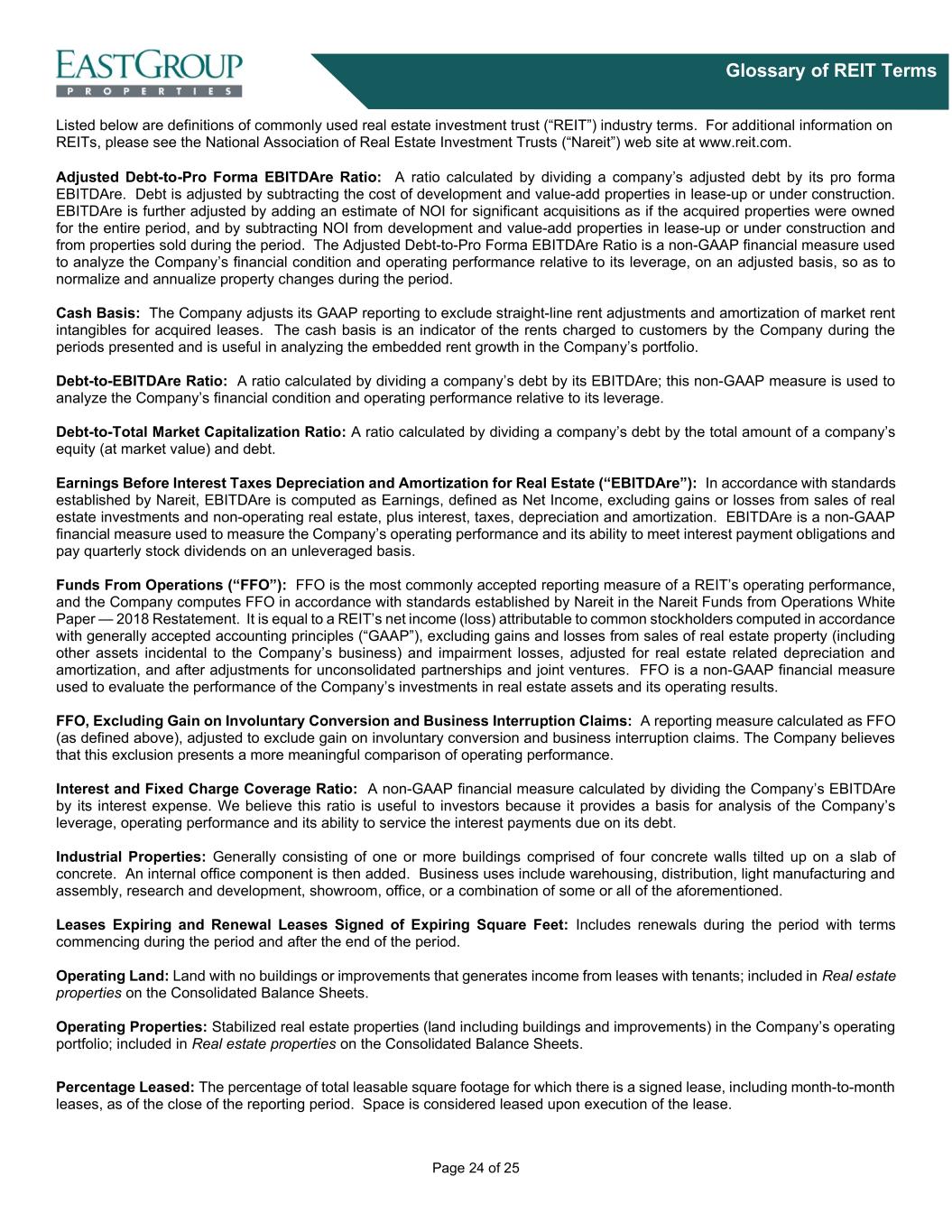
Please note that our conference call today will contain financial measures such as PNOI and FFO that are non-GAAP measures as defined in Regulation G. Please refer to our most recent financial supplement and our earnings press release, both available on the Investor page of our website. And to our periodic reports furnished or filed with the SEC for definitions and further information regarding our use of these non-GAAP financial measures and a reconciliation of them to our GAAP results. Please also note that some statements during this call are forward-looking statements as defined in and within the safe harbors under the Securities Act of 1933, the Securities Exchange Act of 1934 and the Private Securities Litigation Reform Act of 1995. Forward-looking statements in the earnings press release, along with our remarks, are made as of today and reflect our current views of the company's plans, intentions, expectations, strategies and prospects based on the information currently available to the company and on assumptions it has made. We undertake no duty to update such statements or remarks, whether as a result of new information, future or actual events or otherwise. Such statements involve known and unknown risks, uncertainties and other factors that may cause actual results to differ materially. Please see our SEC filings, including our most recent annual report on Form 10-K for more detail about these risks.
Speaker 1
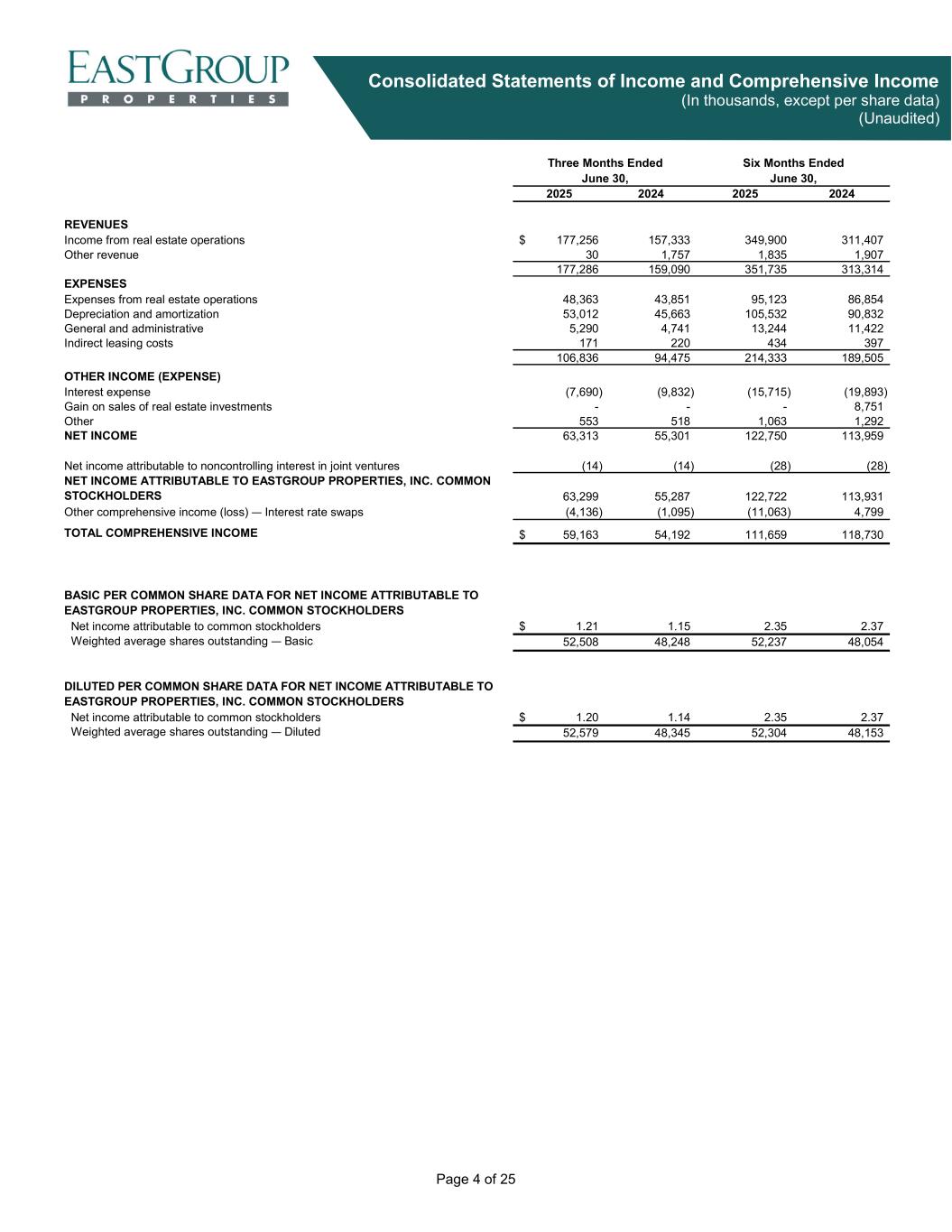
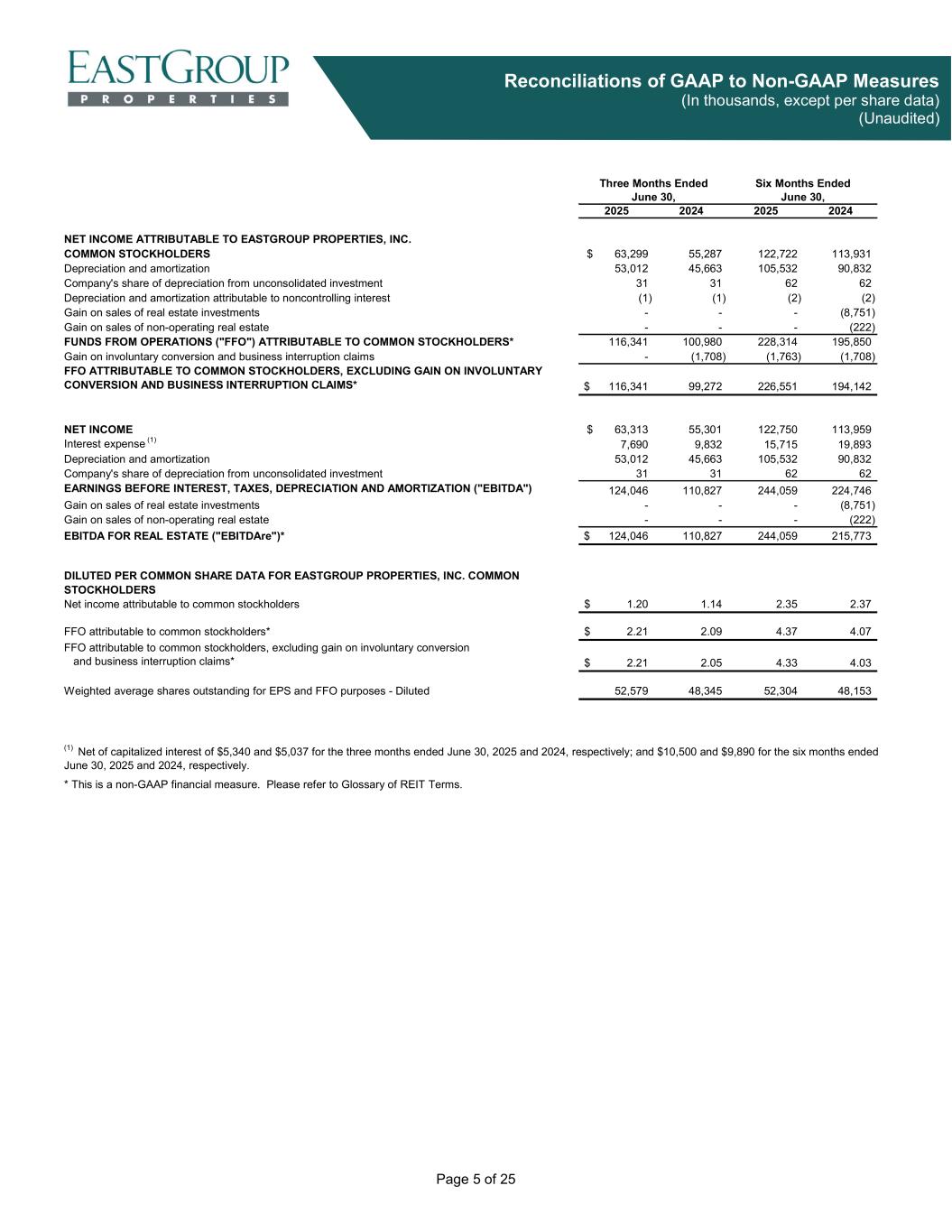
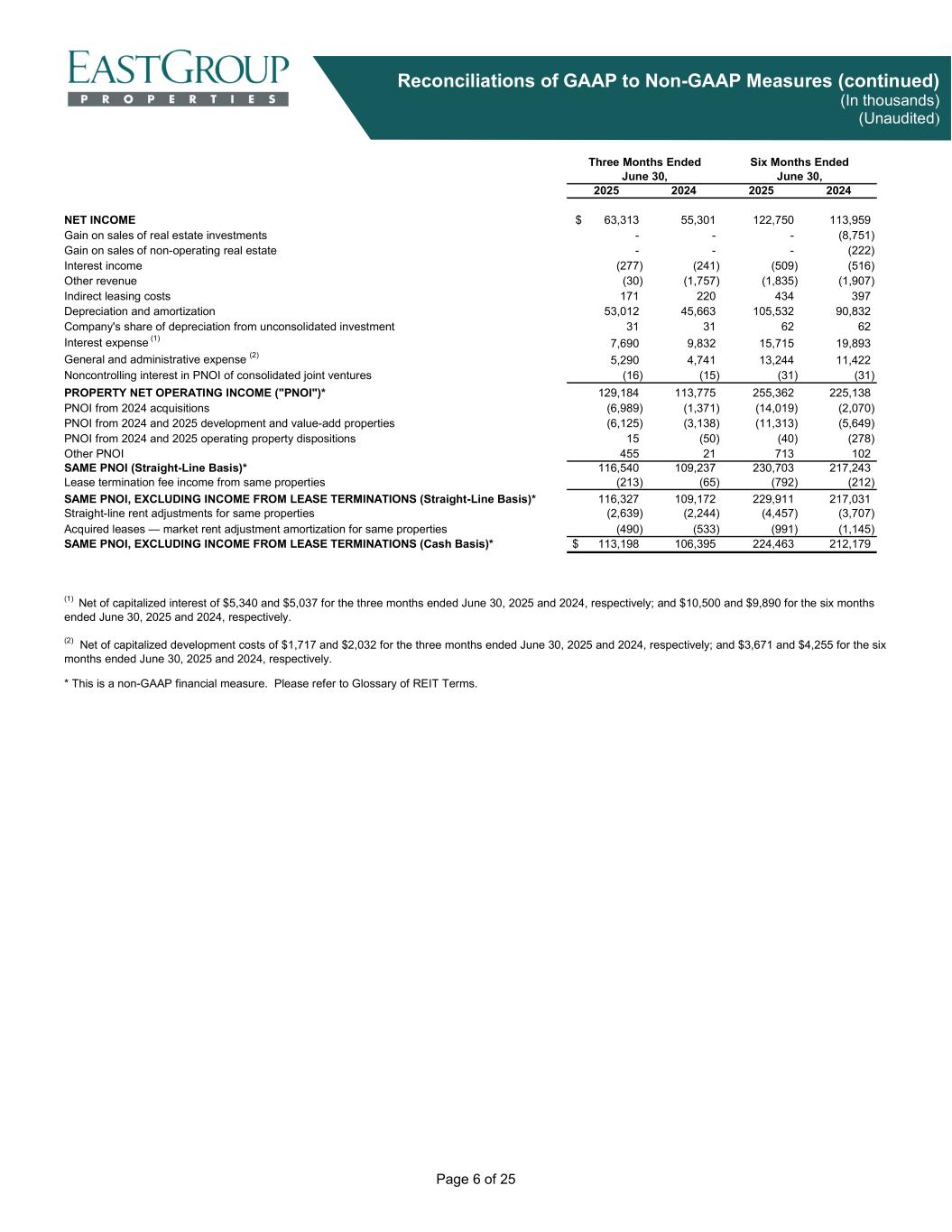
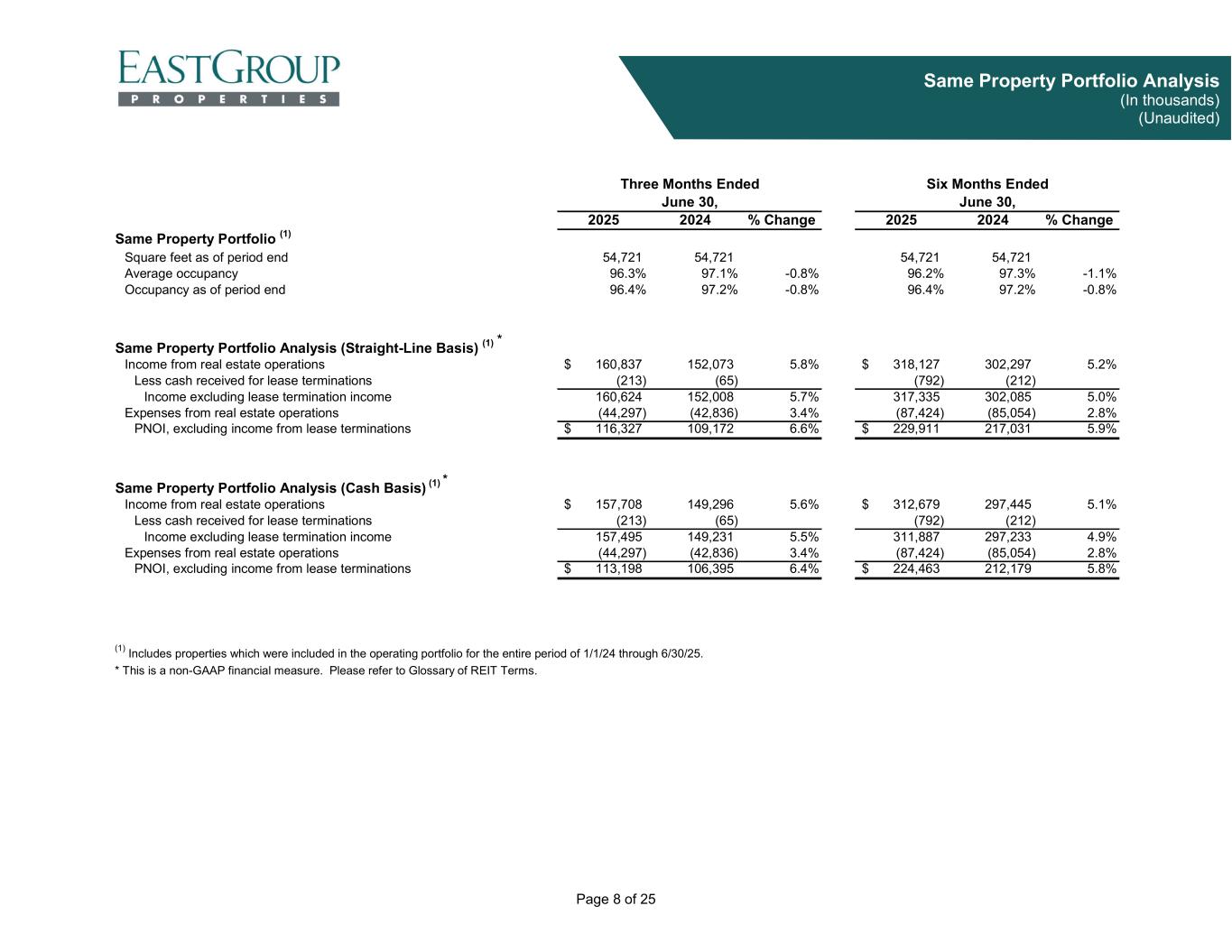
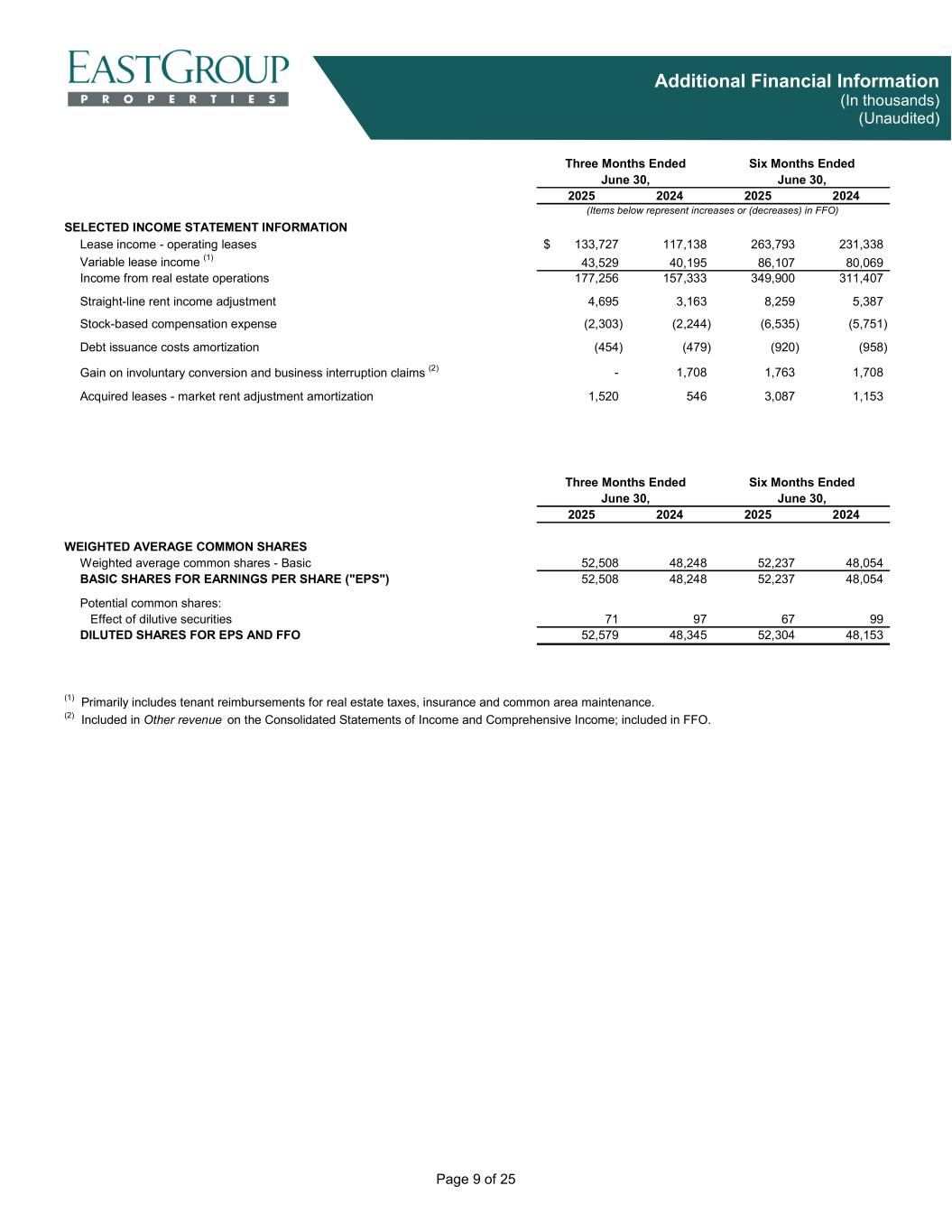
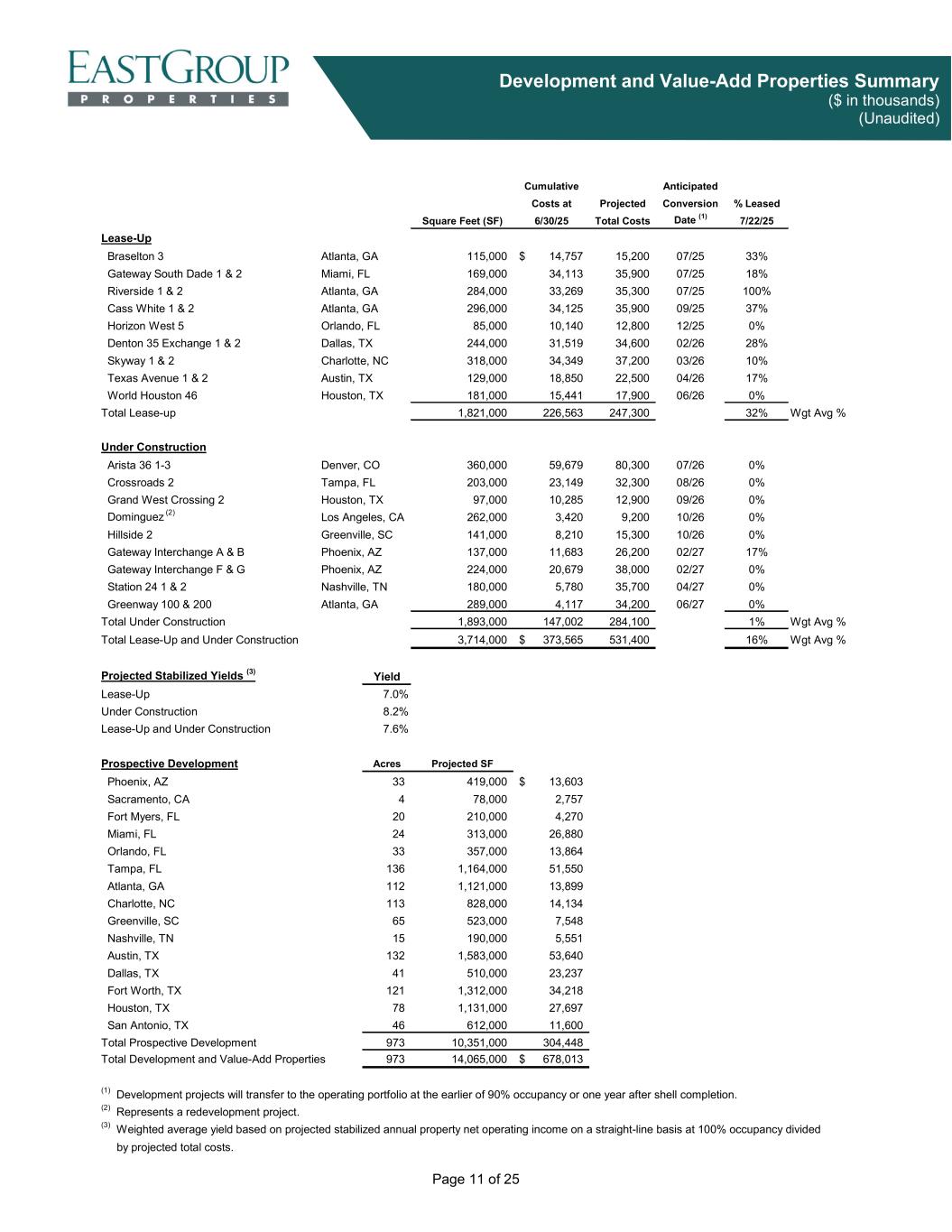
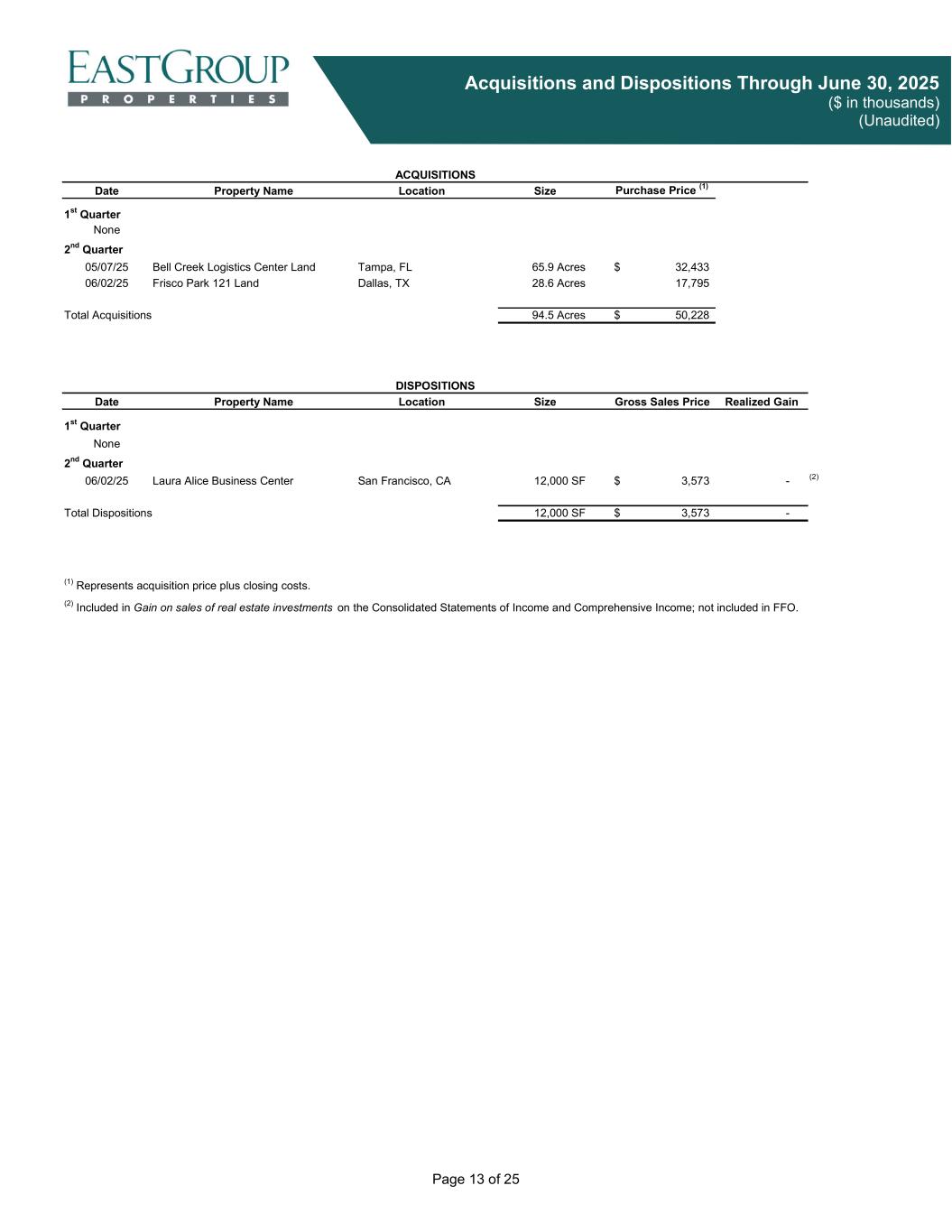
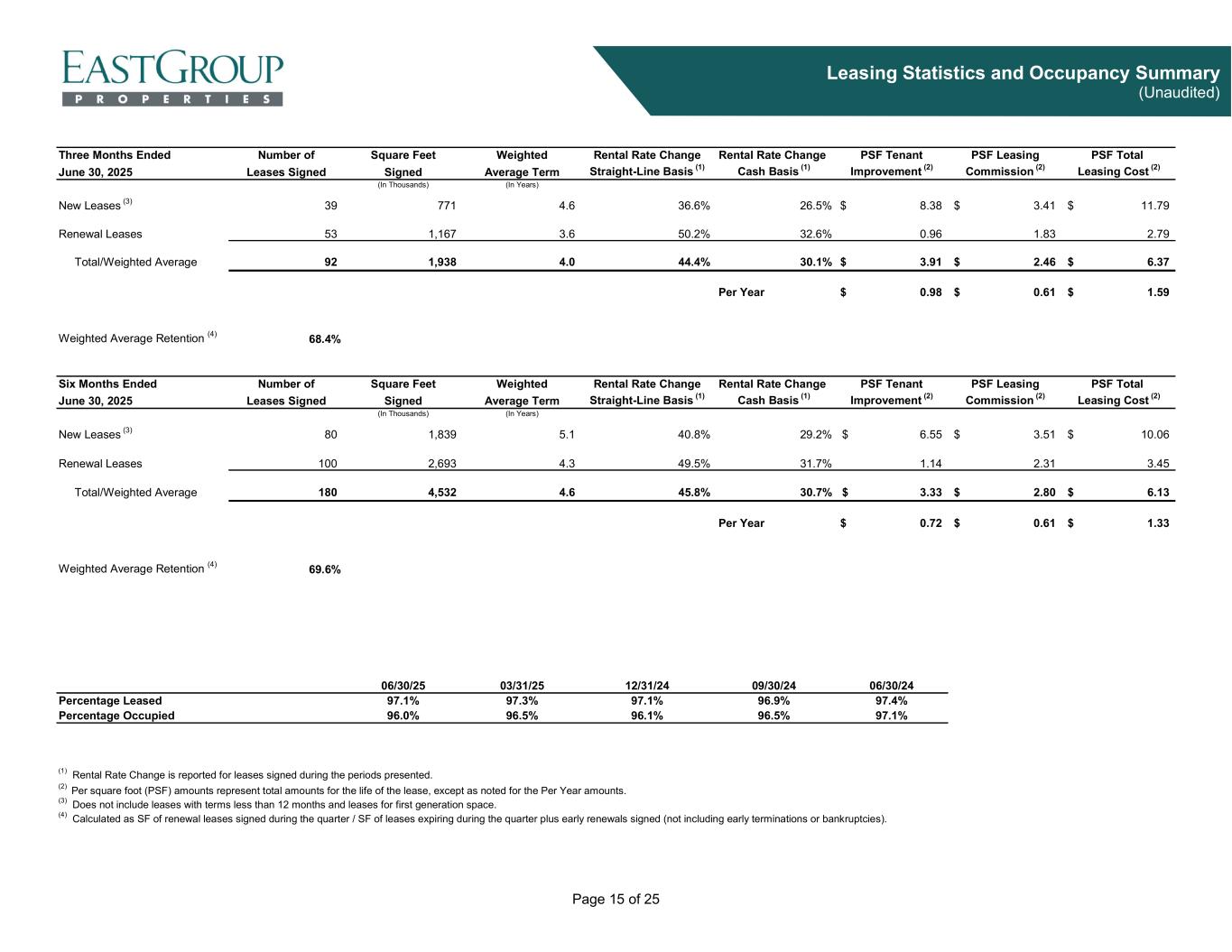
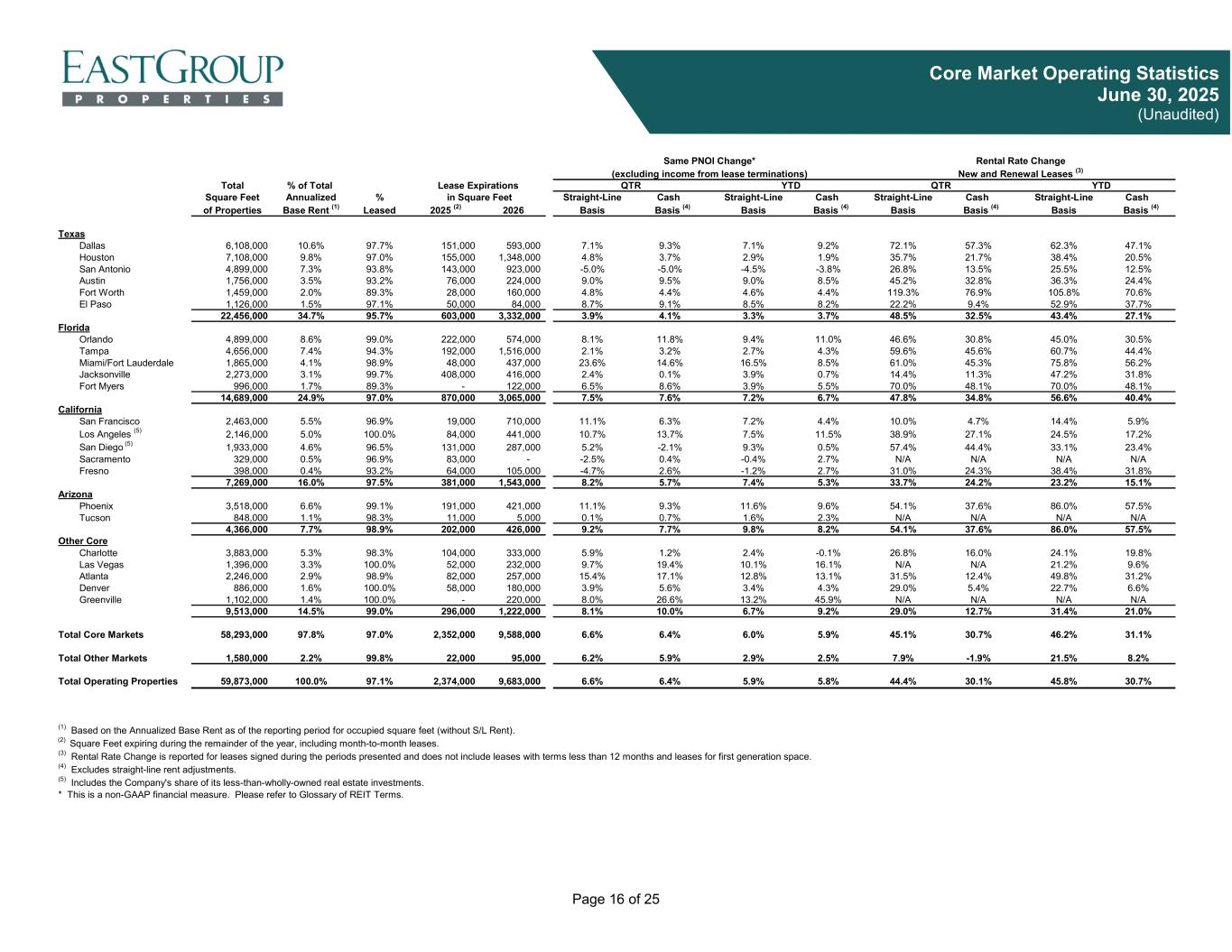
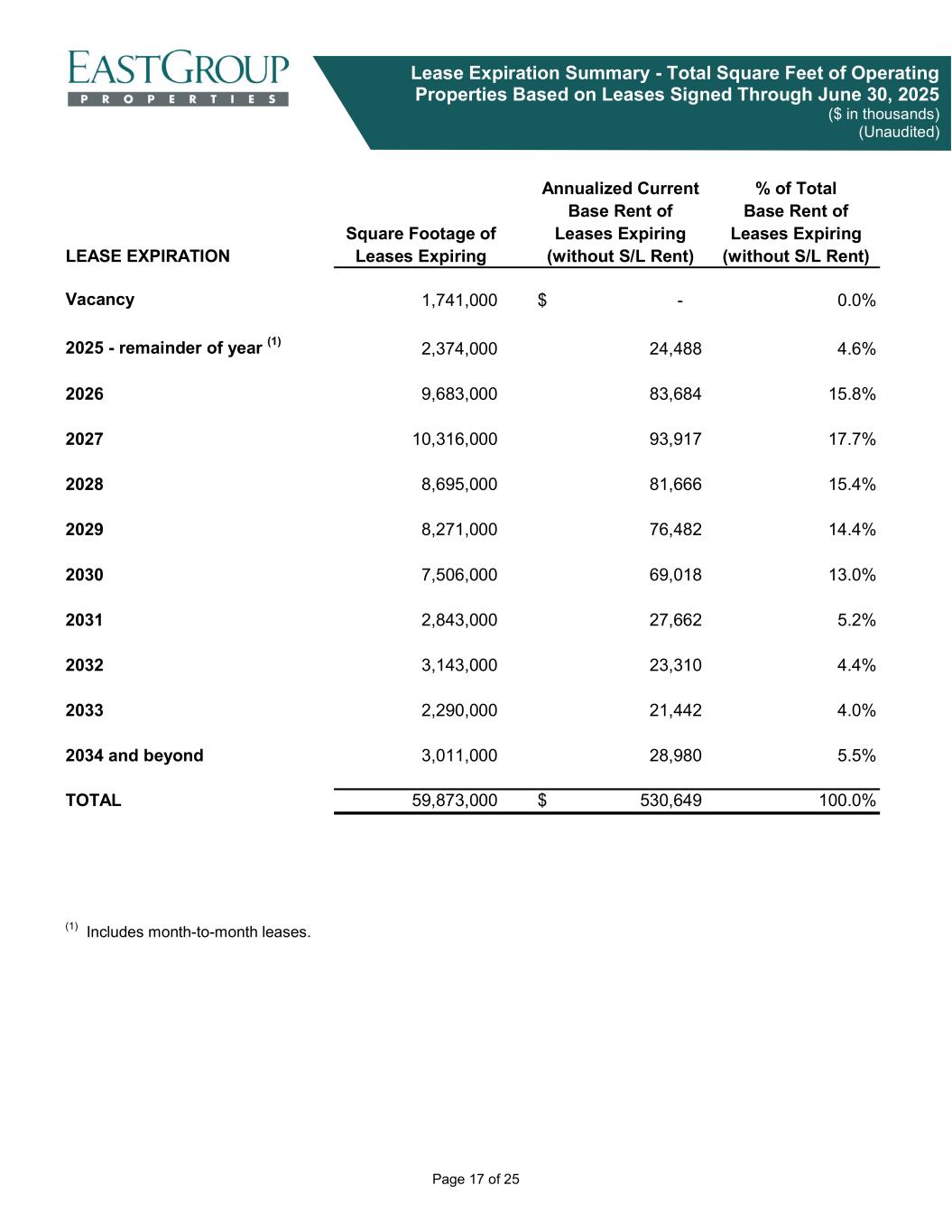
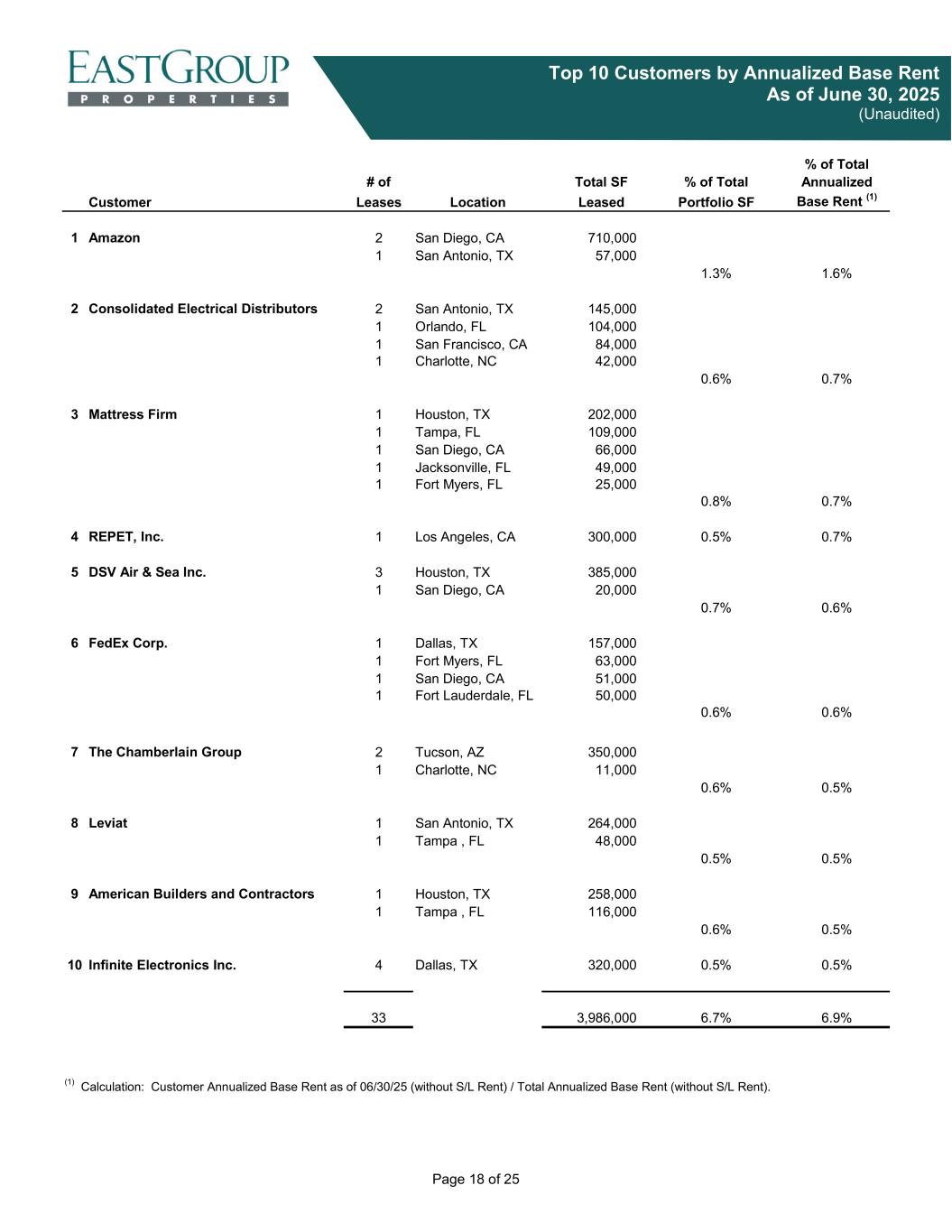
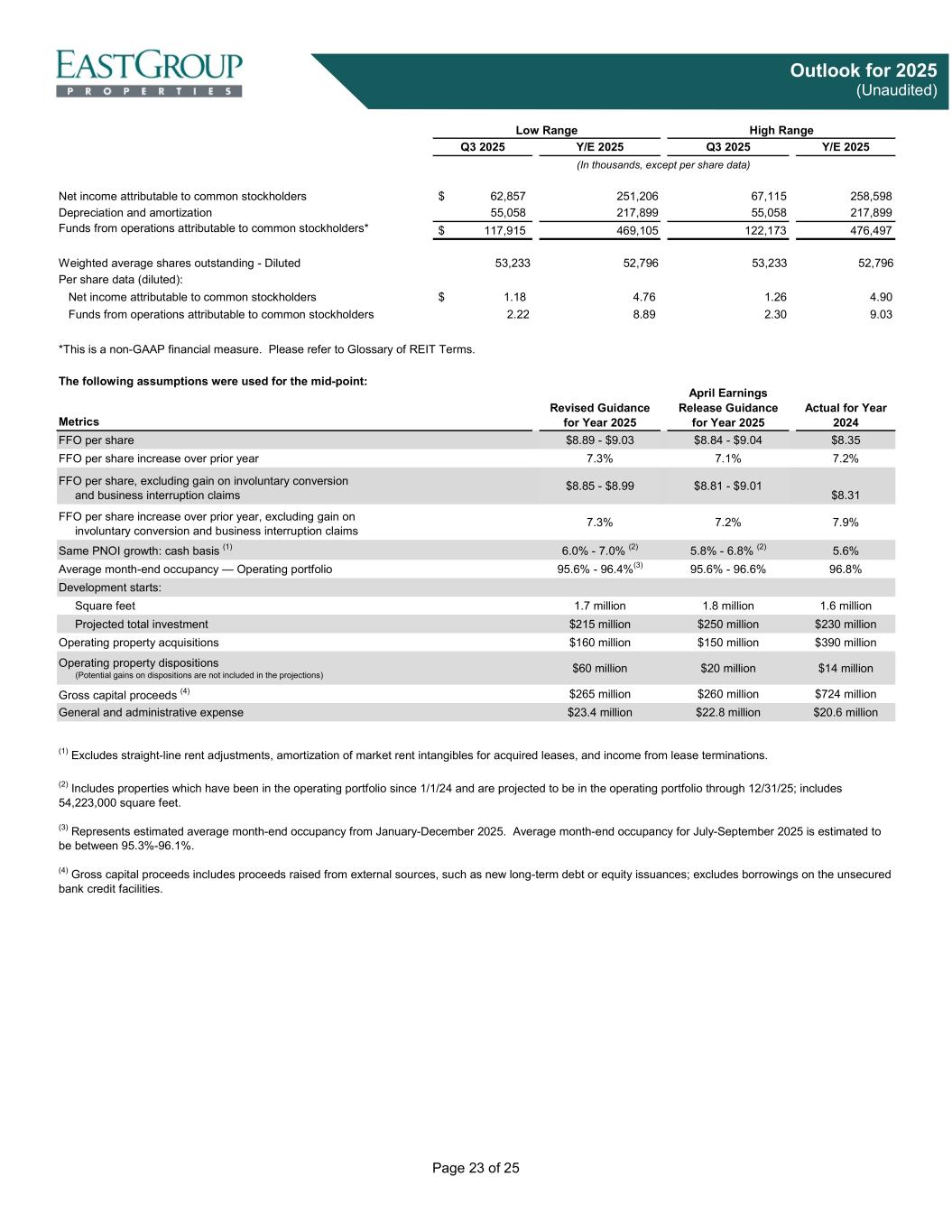
Thanks, Casey. Good morning. I'll start by thanking our team. They've worked hard this year, and we've made solid progress towards our 2025 goals, and I'm proud of the results we've achieved. Our second quarter results demonstrate the quality of the portfolio and resiliency within the industrial market. Some of the results produced include funds from operations were $2.21 per share, up 7.8% for the quarter over the prior year, excluding involuntary conversions. Now for over a decade, our quarterly FFO per share has exceeded the FFO per share reported in the same quarter the prior year, truly a long-term trend. Quarter-end leasing was 97.1% with occupancy at 96%. Average quarterly occupancy was 95.9%, which although historically strong, is down 110 basis points from the second quarter of 2024. Quarterly re-leasing spreads were 44% GAAP, 30% cash and year-to-date results were similar at 46% and 31% GAAP and cash, respectively. Cash same-store NOI rose 6.4% for the quarter despite the lower occupancy. Finally, we have the most diversified rent roll in our sector with our top 10 tenants falling to 6.9% of rents, down 90 basis points from last year. We target geographic and revenue diversity as strategic paths to stabilize earnings regardless of the economic environment. In summary, we're pleased with our midyear results. The tariff discussions raised market uncertainty towards long-term capital decisions. To address the uncertainty, we're focusing on a couple of things. The first is leasing to maintain occupancy, and we're making the best quick leasing decisions we can. Today's environment likely won't be tomorrow's environment, literally. Secondly, we're grateful our balance sheet positions us well during volatile moments. This strength allowed us to invest $61 million in 2 new properties, raising our market ownership in Raleigh to roughly 600,000 square feet, all near the growing Research Triangle Park. In terms of leasing, second quarter square footage slowed compared to the record-setting prior 2 quarters. In terms of total leases, however, the actual signed was greater during the quarter. As it played out, the market bifurcated such that we're continuing to convert prospects roughly 50,000 square feet and below and our larger spaces have prospects, but decision-making time is elongated, much like we experienced last year. That's impacting us in several ways. First, delaying expansions means the portfolio remains well leased and is ahead of initial forecast. On the other hand, our development pipeline is leasing and maintaining projected yields, but at a slower pace. This, in turn, lowered development start projections from earlier in the year. And our starts, as we've stated before, are pulled by market demand within the park. Based on current demand levels, we're reforecasting 2025 starts to $215 million with a lean towards the back end of the year. We're making solid progress on development leasing. However, larger square footage decision-making is slower. Our emphasis is on forecasted expectations, as our active prospects thankfully remain active and things can swing rapidly like they did late last year. In terms of starts, we ultimately follow demand on the ground to dictate pace. Longer term, the continued decline in the supply pipeline is promising. Starts were historically low again this quarter. We expect the uncertainty to further dampen new starts near term. The limited availability and modern facilities will put upward pressure on rents as demand stabilizes. And as demand improves, our goal is to capitalize earlier than our private peers on development opportunities based on the combination of our team's experience, our balance sheet strength, existing tenant expansion needs and the land and permits we have in hand. Brent will now speak to several topics, including assumptions within our updated 2025 guidance.
Speaker 3
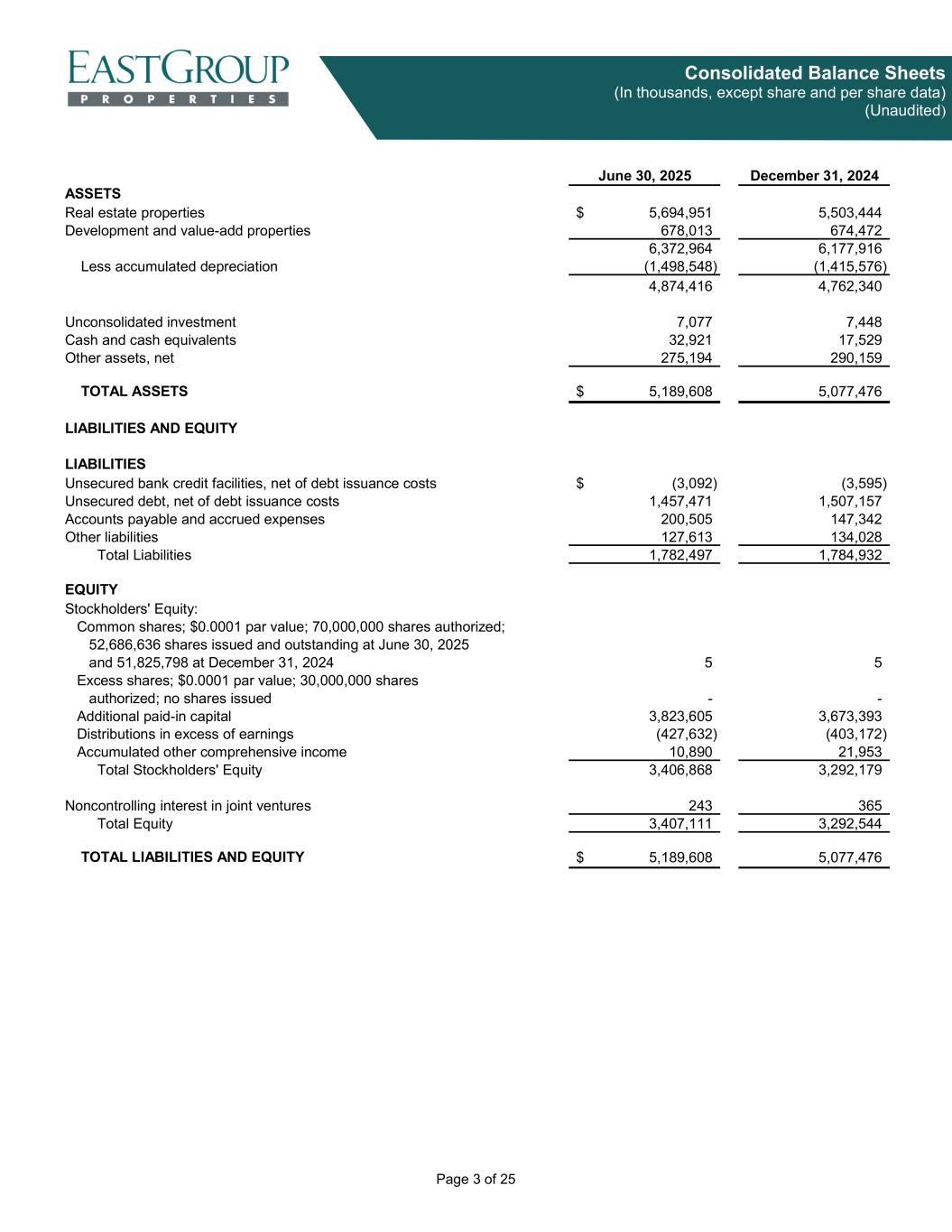
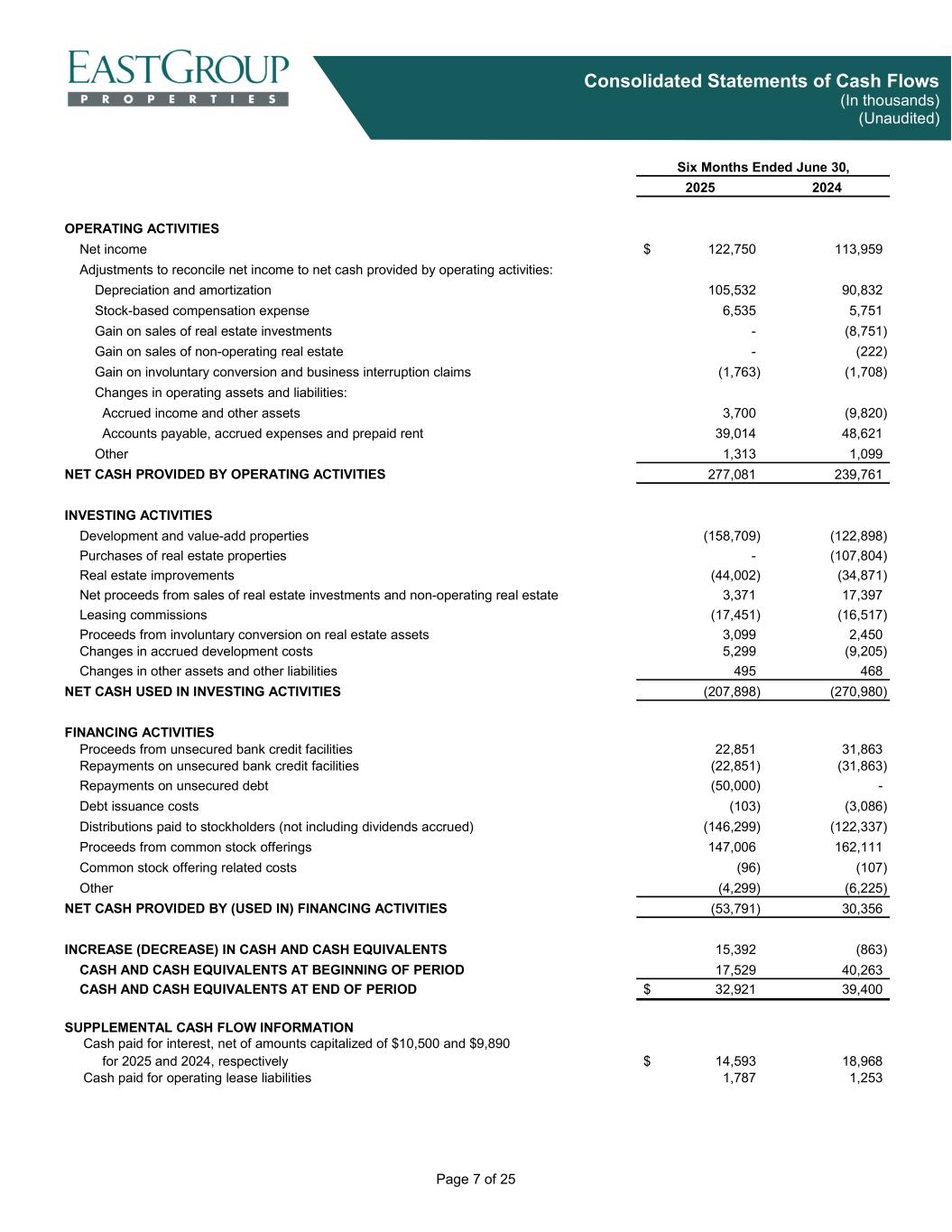
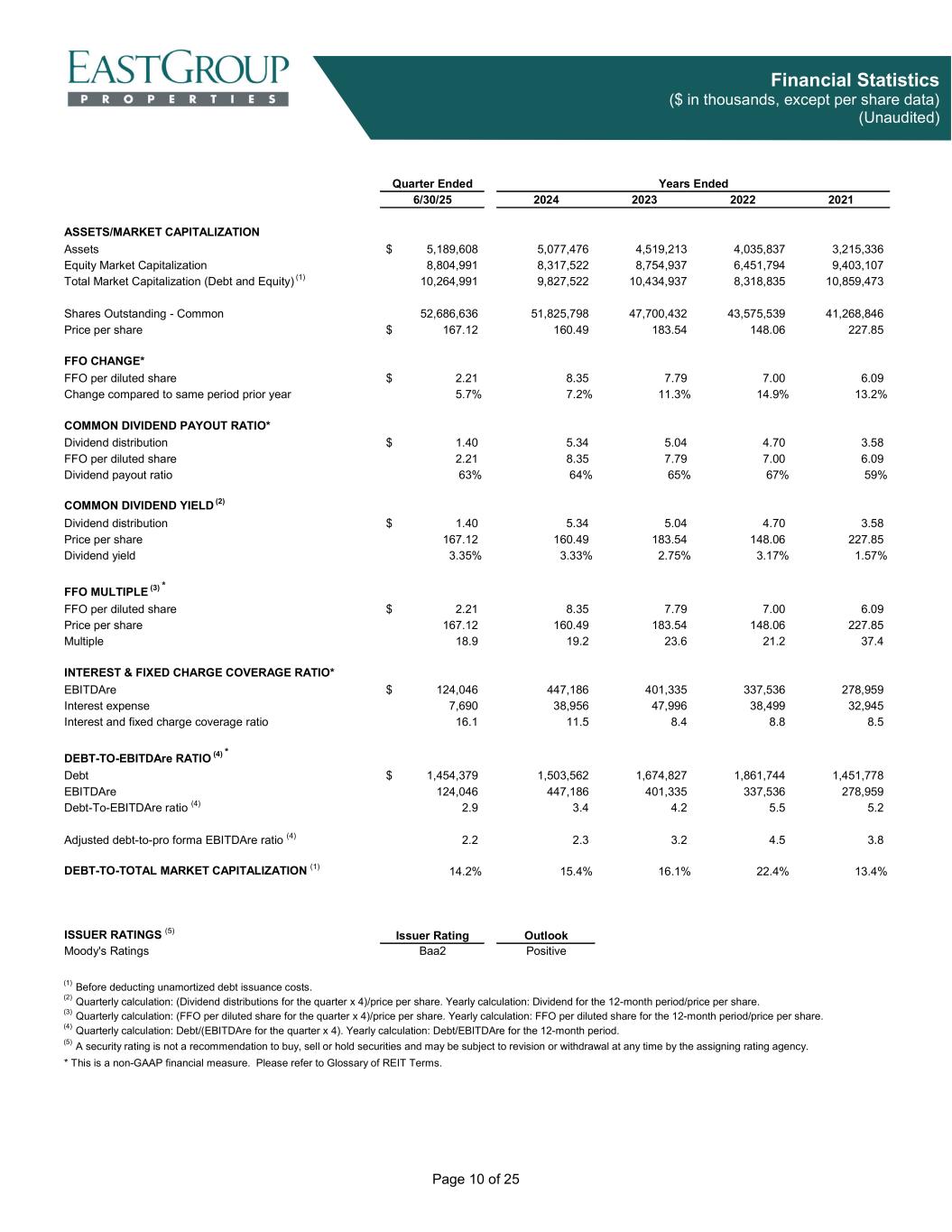
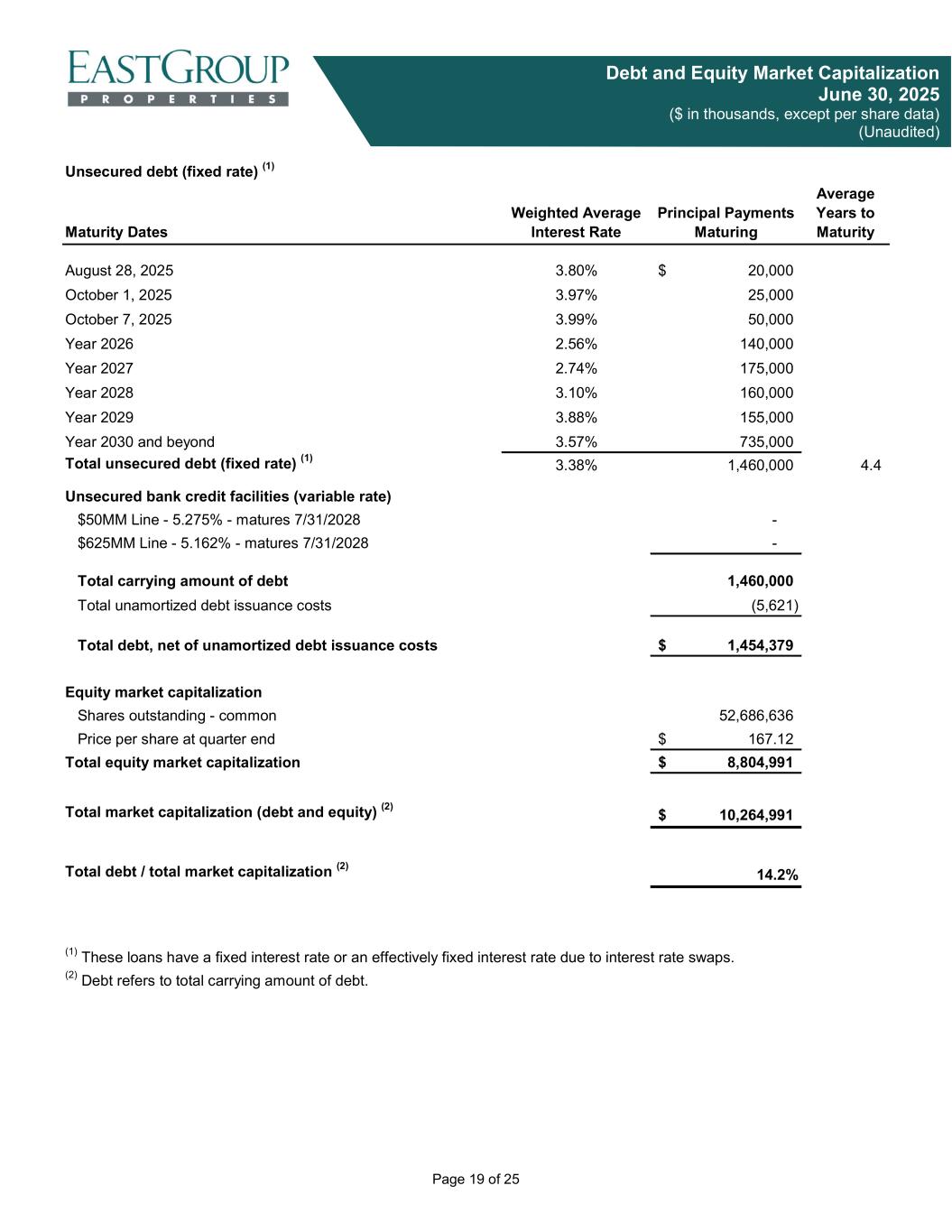
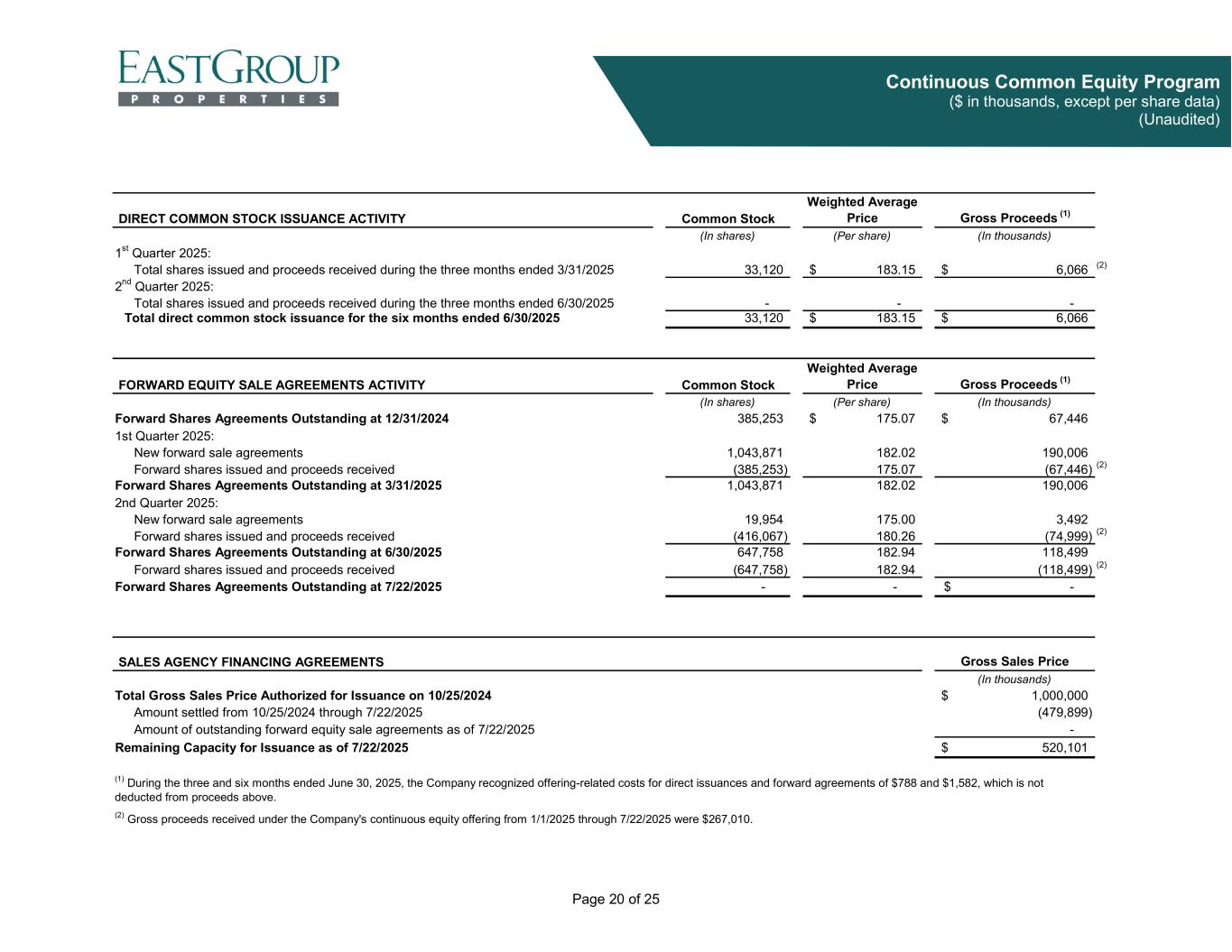
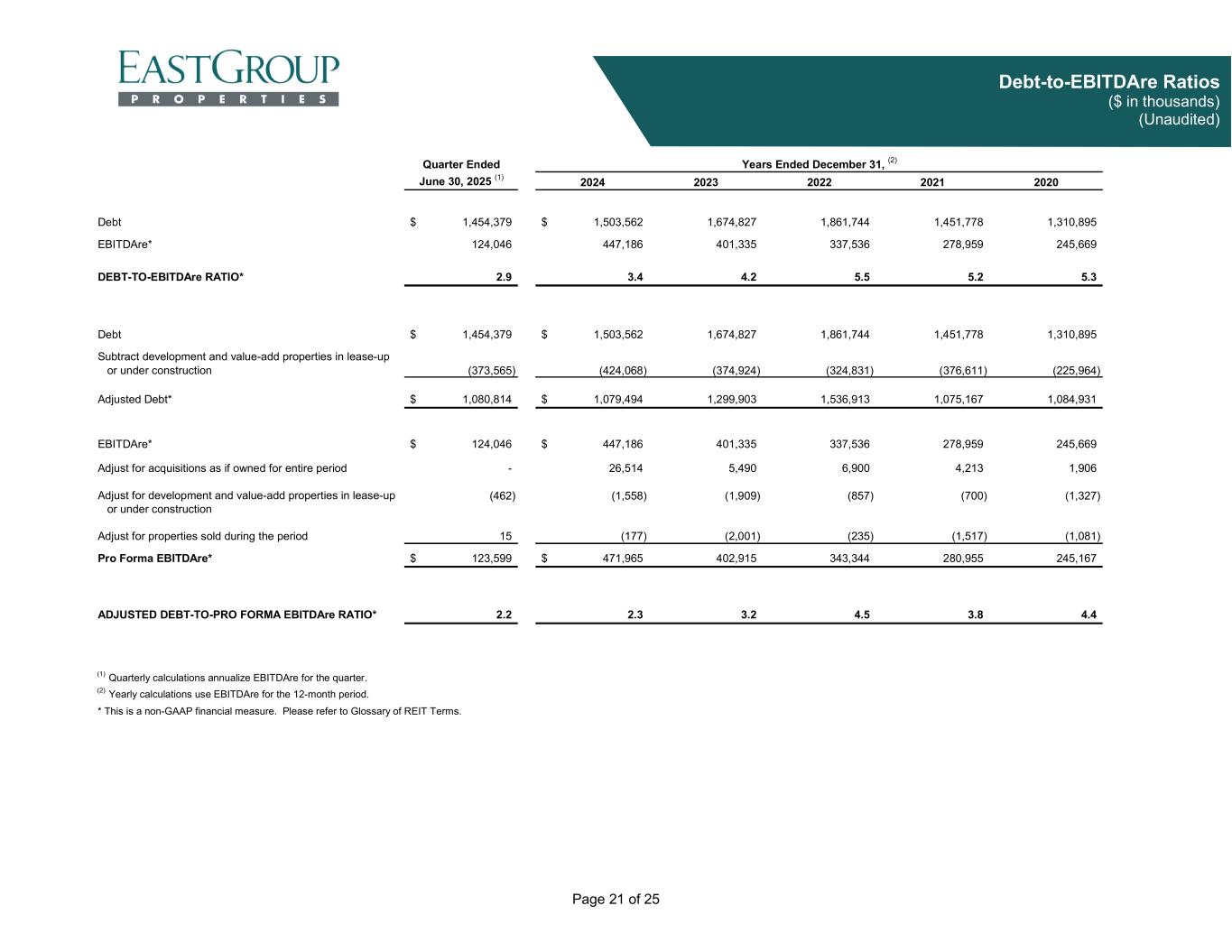
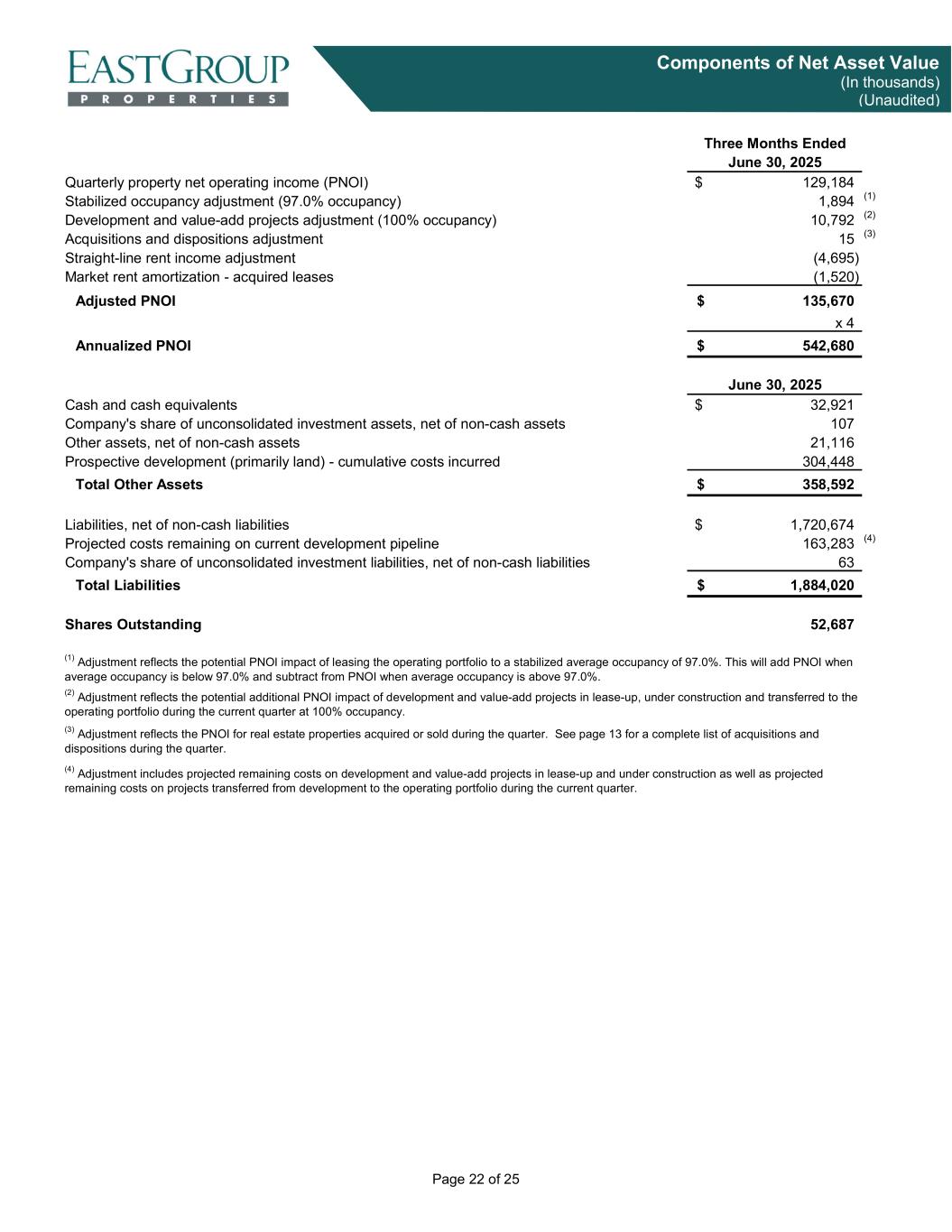
Good morning. Our second quarter results reflect the terrific execution of our team, the solid overall performance of our operating portfolio and the continued success of our time-tested strategy. FFO per share for the quarter met the high end of our guidance range at $2.21 per share compared to $2.05 for the same quarter last year, an increase of 7.8%, excluding involuntary conversion gains. From a capital perspective, we took advantage of favorable equity pricing early in the year, which allowed us to enter the quarter with a reserve of outstanding forward shares agreements. During the quarter and after quarter end, we settled all of our outstanding forward shares agreements for gross proceeds of $194 million at an average price of $182 per share. Our guidance for the remainder of the year contemplates that we utilize our credit facilities, which currently have the full $675 million capacity available. Although capital markets are fluid, our balance sheet remains flexible and strong with near-record financial metrics. Our debt to total market capitalization was 14.2%, unadjusted debt-to-EBITDA ratio of 3.0x and our interest and fixed charge coverage increased to 16x. Looking forward, we estimate FFO guidance for the third quarter to be in the range of $2.22 to $2.30 per share, with an average month-end occupancy range of 95.3% to 96.1%. For the year, we estimate FFO per share in a range of $8.89 to $9.03, with the midpoint up $0.02 per share from our prior guidance. Those midpoints represent increases of 6.1% and 7.3% compared to the prior year. Our revised guidance increases the midpoint for cash same-store growth by 20 basis points to 6.5% and decreases average occupancy by 10 basis points. The decrease is primarily due to the conversion of a few development projects prior to full occupancy. Considering the slower pace of development leasing, we reduced starts by $35 million. Our tenant collections remain healthy, and we continue to estimate uncollectible rents to be in the 35 to 45 basis point range as a percentage of revenues, slightly ahead of our historic run rate. In closing, we are pleased with the first half of the year, especially considering the continual macroeconomic uncertainty. And as we have in both good and uncertain times in the past, we will rely on our financial strength, the experience of our team and the quality and location of our multi-tenant portfolio to lead us into the future. Now Marshall will make final comments.
Speaker 1
Thanks, Brent. We're pleased with our execution year-to-date, putting us ahead of original expectations. Our management team has worked through periods of uncertainty before, and we're navigating our way through this turn as well. Regardless of the environment, our goals are to drive FFO per share growth and raise portfolio quality. If we do those, we'll continue creating NAV growth for our shareholders. And stepping back from the near term, I like our positioning as our portfolio is benefiting from several long-term positive secular trends such as population migration, nearshoring and onshoring trends, evolving logistic chains and historically lower shallow bay market vacancies. We also have a proven management team with a long-term public track record. Our portfolio quality in terms of buildings and markets improves each quarter. Our balance sheet is stronger than ever, and we're upgrading our diversity in both our tenant base as well as our geography. We'd now like to open up the call for your questions.
Operator
Your first question comes from Samir Khanal from BoA.
Speaker 4
I guess, Marshall, thank you for the opening commentary. Maybe you can talk about the cadence of leasing through the second quarter. And any color you can provide kind of in July as well, the first few weeks here, whether it's in your core portfolio or sort of the leasing on the development side?
Speaker 1
Sure, Samir, I'm happy to help. The first quarter and the end of last year were quite strong, showing a positive market shift compared to most of 2024. The recent tariffs caught many by surprise, leaving people feeling a bit unsettled. However, as the shock begins to fade and with more tariff agreements popping up, like the one we saw in Japan this week, people are becoming more accustomed to it and realizing they need to continue running their businesses. In the second quarter, we managed to keep our portfolio full despite some slower development leasing. We have signed several development leases this month, mainly in the 30,000 to 50,000 square feet range. There has been a slight improvement in June, and July seems to be picking up as well. Although we have a full pipeline and prospects for larger spaces, decision-making is taking longer than expected. Interestingly, this year we've experienced more instances than usual where tenants have reconsidered their development leases after they were already on the table. While this is frustrating, it’s not that we lost those prospects—tenants are simply putting decisions on hold. We've been close to signing leases, and corporate tenants are currently freezing new leases, which adds to the frustration. As we navigate through these challenges, we’re prepared to build out speculative office spaces, allowing us to accommodate tenants who are ready to move in quickly. Not all our competitors offer this flexibility, making it easier for tenants, especially in logistics, to make rapid moves. I find that encouraging, as things seem to be gradually improving.
Operator
Your next question comes from Blaine Heck from Wells Fargo.
Speaker 5
Just along those same lines, it looks as though you're expecting a bit more downside to average month-end occupancy in the third quarter. Can you just talk about whether that's driven mainly by additional under lease development properties coming online during the quarter? Or whether there are any other significant factors? And maybe touch on the leasing activity at those projects that are coming into the portfolio with vacancy and maybe how much of that vacancy is in spaces over 50,000 square feet, which you noted to be a little slower?
Speaker 3
This is Brent. I'll address the first part of that question and then let Marshall discuss leasing at the projects. To clarify, we received some questions after the release regarding a slight decrease in occupancy despite the same-store increase. I want to highlight that, as mentioned in our prepared comments, development conversions that are not at full occupancy are included in our overall portfolio occupancy. For example, in the third quarter, we noted in our guidance table that we are projecting an occupancy rate of 95.7% for the entire portfolio. However, for same-store only, we expect a rate of 96.7%. This is a 100 basis point difference, and it's being influenced by a few projects that converted in the second quarter. Three of those projects became operational on July 1, and some of them are not yet fully occupied, even though they are leased. This has had the most significant impact. Over the last six months, our same-store occupancy has been about 90 basis points higher than the overall portfolio. The midpoint same-store increase reflects the strong performance of the 60 million square-foot operating portfolio, though it has been somewhat offset by slower leasing in development projects, which Marshall can elaborate on regarding the project level.
Speaker 1
Yes, and thanks, Brent. Blaine, the additional information I would provide is that typically, when we construct a 120,000-square-foot building, we may include speculative office space in one corner or possibly at both ends. This way, if someone wants to occupy a space, we are prepared. It mainly depends on how many bays you require, and we will then install the dividing walls accordingly. We can build a 120,000-square-foot facility that usually accommodates up to four different tenants. In a strong market, it's common for one tenant to lease the entire building, which can lead us to quickly find ways to deliver and construct the next building. Although these buildings are not originally designed with single-tenant occupancy in mind, we can customize them based on demand. Someone once compared it to a salami, suggesting we can cut it as thick or thin as you need, and we are essentially waiting for that demand. As the development progresses, we adapt to meet those needs.
Operator
Your next question comes from Craig Mailman from Citi.
Speaker 6
Marshall, maybe just sticking on the topic of leasing. Just kind of a 2-parter here. Just, I guess, number one, earlier in your prepared remarks, you had mentioned focusing more on occupancy and just getting deals done. Could you talk about how the mechanisms you're doing there, is it rent? Is it concessions? And in what markets maybe are you seeing some elasticity to moving some of the economics around to spur demand? And then the other part of the question is just you had mentioned at the end of last year, you were surprised at how quickly the demand could turn on. And earlier to some of the other questions, you had said that you've been frustrated that some deals are kind of stalling at the finish line. So I'm just curious, as you look at your leasing pipeline, maybe if you could kind of tranche it, like how much of your leasing pipeline is in that really advanced stage to where if people just decide tomorrow to make that decision, how quickly those deals, like what magnitude could start to cross the finish line versus some deals that are kind of earlier in the life cycle?
Speaker 1
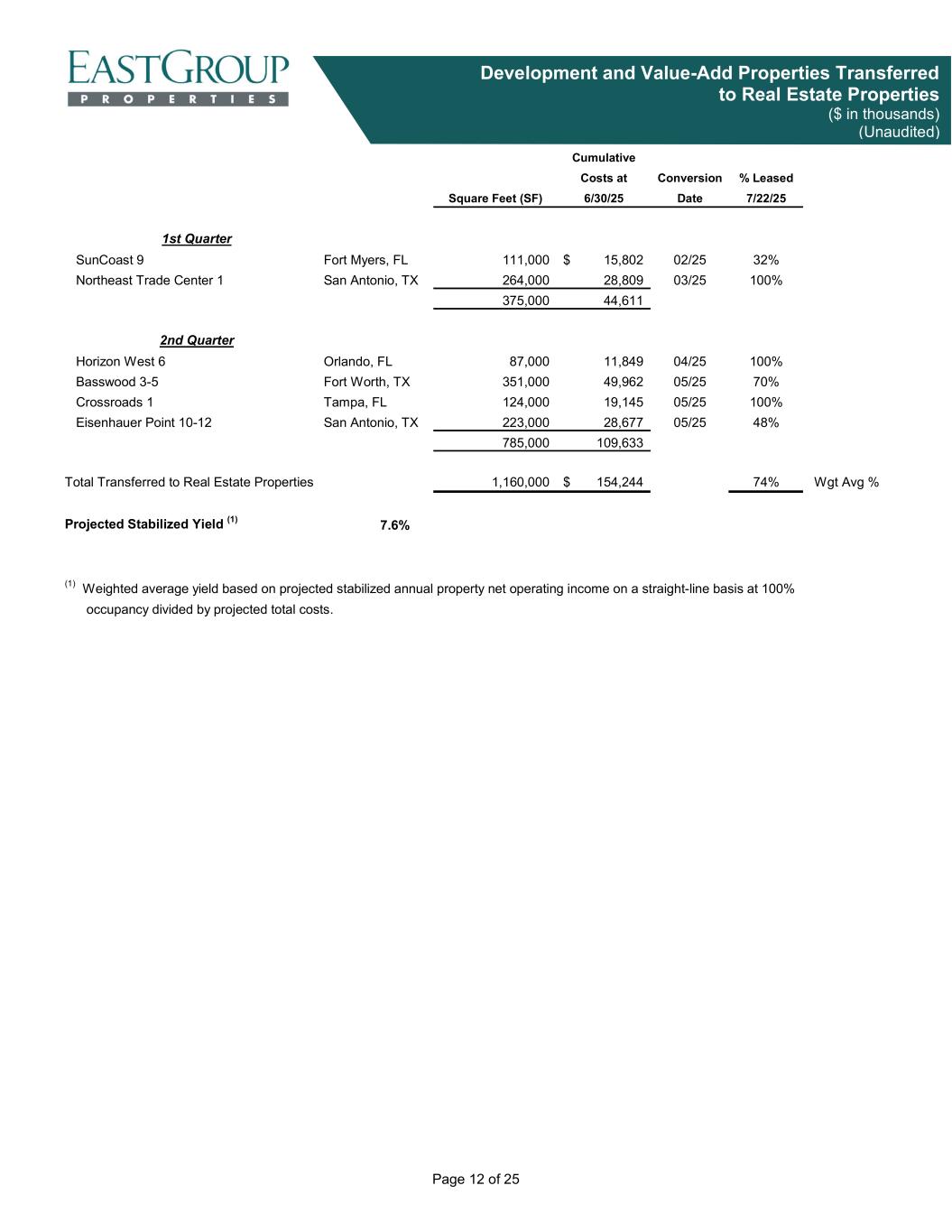
Sure, Craig. I'm happy to cover all your points, and if I miss any, just let me know. In terms of leasing response, we’ve had a couple of deals make it to the finish line but then get put on hold by someone in the corporate suite or at the tenant level. The good news is that regarding our developments, we’re achieving mid-7s in yields on what we’re building and transferring over. We’re not facing stalling due to economics; we’re actually meeting or exceeding our investment committee yields as projects wrap up. While rents have been somewhat higher and leasing is taking longer, we aren’t having to offer concessions, except in California, particularly Los Angeles, where there have been ten consecutive quarters of negative absorption. In that market, people are becoming very aggressive on rent and free rent, which has caused some stalling for buildings we've had leases out for. We need to get comfortable with our TI rents before the next political cycle results in corporate hold-ups, so we won’t get caught up in rare legal complications like eminent domain. Every deal has a shelf life, and we need to move quickly. Our teams and brokers are aware of market conditions, and if something is marketable, we want to get it signed quickly. There’s been a trend of people waiting, thinking rents might rise in 60 or 90 days, but we want to secure deals now because situations can change swiftly. Post-election, I was surprised that the fourth quarter ended up being our record quarter for leasing square footage, and the first quarter became our third-best quarter. I assumed there would be a lag effect, but we found that most people realized they needed to act, especially toward the end of the fourth quarter when holidays often slow things down. Our pipeline remains full, and we have a few larger deals nearing completion, although I’d caution against getting overly optimistic because the market seems to have shifted after COVID, and now companies are more cautious. Tariffs surprised many, and people wanted to gauge the situation. Last quarter, a lot of focus was on stress-testing guidance for the low end, but listening to our peers, that’s not the primary concern anymore. There’s a positive trend developing in June and July, and I’m hopeful that August and September will show even more improvement. We have the land and permits ready for development, and our construction teams are prepared to act quickly to break ground or build out spaces if someone needs to occupy quickly. Our pipeline is well-organized, with some deals in advanced stages and others still progressing. However, we do face delays when we approach the final stages, as there’s often a worry that corporate decisions may put deals on hold, pushing us back to the beginning.
Operator
Your next question comes from Nick Thillman from Baird.
Speaker 7
Maybe just wanted to touch a little bit on the transaction activity and maybe some of the yields you're seeing and characteristics of the Raleigh assets in particular, but then also maybe touch a little bit on the increase in disposition guidance and kind of the assets you're looking to sell here in the second half of the year?
Speaker 1
Sure. Nick, it's Marshall. We are really excited about our entry into Raleigh last year, particularly in the Research Triangle area between Raleigh, Chapel Hill, and Durham. This area is unique due to the substantial investments, amounting to hundreds of millions and even billions of dollars, in research projects. There is very low vacancy in this submarket, which we find attractive. As we consider our capital allocation, I can tie in our dispositions. One characteristic we look for is having a state capital with a significant university presence, as this typically leads to technology jobs and higher incomes. In challenging market conditions, such areas tend to stabilize better. When downturns occur, the lows in these markets don't tend to be as severe, especially with a state capital and university presence, along with topographical challenges in various markets. Our growth in cities like Austin, Nashville, and now Raleigh showcases this trend. Due to their geography, these markets often extend outward significantly. We are keen on these characteristics and are excited about our prospects. We have some older markets like Phoenix and Atlanta, which have somewhat outgrown these traits due to their size. Regarding our Raleigh assets, while being cautious due to confidentiality agreements, we are generally in the low to mid-5% range for cash and upper 5% for net effective rates, with new assets delivered in 2023 and 2024. We haven’t seen cap rates shift much, though development leasing did slow a bit in the second quarter due to recent tariff news. We anticipated potential disruptions in the acquisition market, but competition remains strong, so it’s not a straightforward situation for acquisitions. We continuously evaluate opportunities more strategically within existing submarkets. Related to our stock price and the impact on cap rates, we listed our last service center buildings, flexible buildings in Houston, and are under contract, hopeful for a close. These buildings are leased, functioning well, just classified differently. We also sold a small building in the Bay Area that we acquired a few years ago, a modest 12,000-square-foot space. As we expand our portfolio in areas like Raleigh and Nashville, we aim to shift from older, slower-growth markets such as Jackson, New Orleans, and Fresno, where we see more growth potential moving forward. This strategic shift allows us to invest in assets that are immediately beneficial and well-suited for long-term net asset value growth. While the older properties we sell may generate slightly higher cap rates, we want to continually optimize our portfolio by reallocating capital to areas with greater growth opportunities.
Operator
Your next question comes from Alex Goldfarb from Piper Sandler.
Speaker 8
Marshall, as you consider the next 12 to 24 months, it’s clear that your team has benefited from the significant rent increases during COVID, and you're still achieving around 30% in cash rent re-leasing spreads. Do you anticipate that most of your markets will continue to show healthy re-leasing spreads over the next year, or do you think we might be nearing the end of that trend? It could vary by region, so are there specific markets where you're more worried about those spreads tightening sooner compared to others? I'm looking for your insights regarding the upcoming year.
Speaker 1
Alex, that's a good question. You're correct that each market may experience different timing. Generally speaking, you're right. We have a few ways to think about this. We're still managing about 14% to 15% of our leases rolling each year. The rent growth from the COVID era still remains significant in our portfolio due to the timing of our lease rollovers. Looking ahead, and I acknowledge the risks of economic forecasting, over the next 12 to 24 months, I'm enthusiastic about EastGroup and the industrial sector, particularly in our niche of shallow bay properties. Based on our recent numbers, we're around 3% vacant, and while there's some vacancy in larger industrial spaces, our properties are largely full. Our competitors are also seeing low vacancy rates. Construction is currently at a decade-low level, making it a slow process. With zoning challenges, even a small increase in demand could lead to another period of substantial rent growth in the next year or two. As demand picks up, construction costs should rise, and there will likely be a race to add new properties since I expect demand to increase more rapidly than supply. While we deal with our current rent growth, I'm optimistic. I don't see any long-term issues affecting the industrial market; it may have slowed recently due to negative headlines, but factors like onshoring, near-shoring, population shifts, and e-commerce are still driving traffic positively in our areas. Our infill locations should become more valuable. We just need to see better news for a while, and I believe rent growth will accelerate soon. In the short term, we still have embedded growth to navigate. Looking ahead may have been premature for the last year, but the current inventory is limited, and as businesses return to activity, we'll be able to increase rents. Our development plans are carefully aligned with market demand. While we've reached as high as $400 million in development before, we are currently closer to $200 million, but I expect us to return to $400 million pretty quickly. That will challenge Brent and his team in terms of funding, but we'll address that issue when it arises.
Operator
Your next question comes from John Kim from BMO Capital Markets.
Speaker 9
Maybe a question for Brent. You mentioned utilizing the credit facility more, which certainly makes sense. Your debt-to-EBITDA is currently under 3x. Can you elaborate on your perspective regarding the cost of that line in the latter half of the year compared to your cost of equity, considering they seem to be quite similar at this moment?
Speaker 3
That's a good observation, John. We continuously monitor various opportunities for acquiring capital, especially over the last 24 months compared to previous years. The markets are fluid, and we were pleased as we entered the second quarter after stockpiling what we considered an attractive price in the first quarter. This resulted in us liquidating all our outstanding forwards for $194 million at $182 a share, which we believe was a strong execution. You're correct that for the second half of the year, we plan to use our revolver, which tends to be stable and based on SOFR. Currently, it's around 5.2%. While I won’t go into too much detail on our outlook for equity, we do assess it relative to consensus and our earnings growth. The market pricing has shifted since we made our move this quarter, and we had already secured forward stockpile access, so immediate access wasn't necessary. We're indeed factoring in using our revolver after a long time, and we retain full capacity for it. However, our debt-to-EBITDA has now dropped below 3, and we've been fortunate to be patient. If better opportunities arise, we will adjust accordingly, and it's reassuring to have that cushion. Additionally, Marshall and the team are consistently finding valuable opportunities that require capital, supporting strategic acquisitions and development investments, albeit at a slower pace than we'd prefer. We're happy that we can access funds that are beneficial to our shareholders right away.
Speaker 9
Where do you feel comfortable as far as net debt to EBITDA? I mean, is the lower the better?
Speaker 3
I believe it's crucial for the company to have a clear policy regarding maximum leverage. We have always aimed to keep this figure at a maximum of 5 and ideally below that, which we currently are. There isn't a strict floor per se; for us, it's more about being opportunistic. Our shareholders have rewarded our prudent capital management over the past few years. While it can be easy to lose sight of the big picture, we have generally maintained good access to equity in this high-interest-rate environment. This access has helped reduce our debt-to-EBITDA ratio more as a secondary effect than as a primary goal. That said, it would be great to take advantage of future opportunities when we see better conditions in the debt market. I believe it's vital to establish a ceiling for maximum leverage. However, when we have the chance to create flexibility, it's beneficial, and we've positioned ourselves well for that. If equity markets improve and we can leverage that, we will consider pushing the ratio lower if it presents the best opportunity. Eventually, debt levels will rise, and this current situation has lasted longer than I expected. At some point, as you mentioned, the dynamics will shift, and we will align our strategy accordingly, giving us the flexibility to choose what works best for us.
Operator
Your next question comes from the line of Mike Mueller from JPMorgan.
Speaker 10
It looks like you controlled about 1,000 acres of land for development at quarter end, and you've definitely been adding to that. I guess, 2 questions tied to that. One, are you still expecting to be fairly active over the near term and kind of further supplementing that? And then are there any parts of the land bank that are more likely to be sitting for a while compared to some other parts of the bank?
Speaker 1
Good question, Mike. The situation varies by market, particularly within our land bank. For instance, in Atlanta, we have properties spread across different areas. Historically, about a third of our development leasing comes from existing tenants, so we aim to keep that inventory available. Earlier in the year, we lost a couple of tenants in Florida, and we hadn't developed as needed. Thankfully, we managed to fill that space, but it led to tenants being spread across various buildings, which isn't optimal. Finding land has become quite challenging. As you've seen this year, we've explored various options, including an office building in Florida that we will demolish for a different use. The process is difficult, especially with zoning becoming stricter, which we refer to as the Amazon effect—everyone wants faster delivery, but no one wants warehouses in their neighborhoods. It is harder to secure good land in our markets than many realize. We assess what submarkets to target, particularly in Atlanta, considering where we want to be and how much land is available to support the growth of our tenants and neighbors. In markets like San Antonio, we have a decent land bank, but it isn't growing as quickly compared to larger markets like Dallas or Atlanta. Progress may take longer, but we will incorporate different types of buildings, allowing us to develop the land relatively quickly. However, we do worry about sourcing more land in these markets.
Operator
Your next question comes from the line of Michael Carroll from RBC Capital Markets.
Speaker 11
Marshall, I want to ask a similar question, I guess, related to the Raleigh acquisitions. I mean, how aggressive do you want to expand in Raleigh? And should we think about these recent acquisitions, more of a strategic way for EastGroup to kind of get their foot in the market and you kind of needed to do that before you can start buying land and building new assets kind of in that Raleigh area?
Speaker 1
No, we like the market. We don't have any specific targets for our team to make purchases in Raleigh, nor do we intentionally pursue those goals. If we encounter the right opportunity, we will expand there. It just so happened that we had two opportunities in the Research Triangle area. The circumstances aligned favorably, allowing us to make a couple of acquisitions. Once we are active in a market, people take us seriously and recognize our commitment. If our balance sheet status is positive, we may gain an edge in bidding as a credible buyer. If we remain the same size in Raleigh in two years, that would be acceptable. We would still consider development or purchasing vacant buildings depending on the market cycle. Typically, when entering a new market, we often miss out on initial bids, which happened in Raleigh as well, but we managed to secure our first acquisition last year. This experience helps us understand the market better. Once we have acquired one or two properties and have tenants in place, it strengthens our relationships with brokers, making us more confident in pursuing further investments, whether they are existing buildings or land. We will certainly look for land, but we don’t rush. Once established in a market, we prefer to self-manage the properties. Generally, around 1 million square feet allows us to move to self-management, which is our goal for managing our own customers. We aim to avoid being in a market for five years with only 150,000 square feet. We don't set a strict timeline, and it seems that circumstances have aligned favorably for us rather than forcing acquisitions just to justify our presence. We can expand, but we want to avoid overpaying simply to appease our position as newcomers.
Operator
Your next question comes from Vikram Malhotra from Mizuho.
Speaker 12
I have a couple of clarifications, Marshall. One, one of your larger peers indicated that with the current U.S. vacancy rate at 7.5%, market rent growth might not be seen for another year or even two. Can you provide some specifics on the rent growth you are experiencing in your key markets? Secondly, they also mentioned that tenants are eager to sign leases and are feeling more at ease with the current level of uncertainty, citing a robust build-to-suit pipeline. I would like to understand how this compares to what you are seeing in your markets, particularly regarding midsized spaces of around 100,000 square feet, which seem to be experiencing slower decision-making. Can you address both of these points?
Speaker 1
Yes, I can discuss that. Nationally, the vacancy rate is around 7.5%, which seems to have peaked. Construction and new starts have been declining for about 10 quarters. However, for our specific sector, about 88% of our revenue comes from tenants occupying 200,000 square feet or less, so our actual vacancy rate is closer to 4%, which historically has been lower. This is why we feel good about our position in the market, as there is less competition and fewer new starts. We estimate our current rent growth is likely aligned with inflation, ranging from 0% to 5% depending on the market, making it difficult to predict this year. We believe our lower vacancy rate will allow us to benefit sooner than our peers during an economic recovery. I've heard that a market needs to have a vacancy rate of 5% or lower to be favorable for landlords, and we're already seeing that and experiencing steady activity, particularly in smaller spaces. Though the conversion rates for some areas are taking a bit longer, we're seeing strong performance across various space sizes. Regarding build-to-suit projects, we delivered one earlier this year and will continue pursuing similar opportunities. However, our primary focus is on average tenant sizes of 35,000 square feet within buildings that are typically just under 100,000 square feet. While we occasionally take on pre-leased buildings, they are not the core of our business. I believe that since early April, there has been an increasing comfort level among people, which is evident as June showed some improvement over April and May, and July appears to be stable. We expect that people will start to become accustomed to the volatility and return to routine business operations. We have no control over political factors; our objective is to lease our properties, like SunCoast building #9, regardless of external circumstances. I am optimistic that as conditions stabilize, we will experience a swift recovery compared to our competitors because of our low vacancy rates and fewer new starts. Additionally, it’s generally easier to find larger sites on the west side of Phoenix than it is to locate infill sites in the East Valley.
Operator
Your next question comes from the line of Michael Griffin from Evercore.
Speaker 13
Maybe just going back to the development pipeline for a bit. It seems with your commentary that expectations are for probably a longer lease-up time just given the uncertainty in decision-making there. Can you give us a sense when these projects were initially underwritten, was it under the premise of getting some of those larger 50,000 square foot tenants that just aren't back yet? Could you try to maybe find more of those 20,000 to 40,000 square foot tenants to make up the difference? Or do you really need those larger space takers to come back to start that development pipeline engine rolling?
Speaker 1
Yes, Michael, it's Marshall. We always underwrite the project assuming a 12-month lease-up period, which means they join the portfolio once we reach either 90% occupancy or 12 months after completion. At the peak of the market, around early 2020, we experienced a 6- to 7-month lease-up period as larger tenants were taking space, which helped us move forward with acquiring new land sites quickly. Although last year and recently we joked about extending our lease-up time from 6 to 16 months, we have managed to maintain or even improve our yields during this time. The buildings are designed to accommodate multiple tenants, and while we're filling them with 30,000-square-foot tenants, it just takes longer compared to someone taking 90,000 square feet. I don’t believe this is a permanent shift; it relates to larger capital decisions for companies. It involves starting new businesses or expanding from a smaller space, which requires more equipment and hiring. This could be causing a bit of caution in the current environment due to the headlines. Renting smaller spaces like 30,000 or 40,000 square feet requires less capital investment than larger ones. I anticipate a shift back to a more normalized environment, but until that happens, it has slowed our development leasing. I want to commend the team for responding appropriately by reducing our starts this year as we focus on the market's signals. We've previously acquired vacant buildings when our development pipeline was active, but currently, we aren't seeing larger scale decisions being made, which is why build-to-suit projects make up a significant portion of our starts now, as people are struggling to find available inventory and consequently need to build it themselves.
Operator
Your next question comes from the line of Vince Tibone from Green Street.
Speaker 14
You mentioned earlier that you potentially consider taking on leasing risk with acquisitions. Are there many value-add opportunities on the market today? And curious to hear how leasing risk is being priced in the private market versus a more stabilized asset? Like what kind of yield premium can you get to lease a vacant building versus like a Raleigh where there's durable income on day 1?
Speaker 1
Vince, it's Marshall. I apologize if I misspoke earlier. We have been avoiding what we refer to as leasing risk or value add. We will return to that when new leasing and expansions are happening more quickly. Earlier this week, we evaluated a property in an existing submarket from a known seller. The only issue with the building is that it doesn't meet our current needs. We are reducing our own development projects to consider others at this time. We haven't delved deeply into those questions yet, so it's somewhat uncertain. Typically, we look for something around 150 basis points above the market cap rate to justify new development. If we were to take on a value add situation where the building is already constructed, we might consider leasing at 75 to 100 basis points. However, we haven't thoroughly explored anything yet. We've identified some preferred locations and buildings, but given the extended 16-month timeline versus 6 months, we prefer to purchase the new properties available in the market with leases at below-market rents. We believe that's a more favorable risk-reward scenario. This perspective may change in a few months, but that reflects our current stance.
Operator
Your next question is from the line of Ronald Kamdem from Morgan Stanley.
Speaker 15
Just quickly, I have two questions. First, regarding Southern California, I understand you have less exposure compared to your peers, but I'd like to know what you're observing in terms of activity and 3PL on the ground. As for the cash re-leasing spread, should we expect a swift slowdown in this market? Secondly, in reference to your opening comments about the slowdown in development pipeline leasing, my question is what might act as a catalyst for improvement? Is it related to an upcoming election, the recent trade deal announcement, or simply the need for more time to see how things unfold?
Speaker 1
Yes, Ron, I believe Southern California is quite distinct compared to other markets I’ve encountered over time. Typically, market slowdowns are caused by oversupply, but that's not the case here. During COVID, many third-party logistics providers created some false demand that has since diminished. We’ve experienced ten straight quarters of negative absorption, totaling over 1 million square feet, with both L.A. and the Inland Empire showing negative absorption as well. We need something to change in this situation, and until that happens, it's challenging for us to forecast market rents unless we see absorption stabilize. We are not accustomed to negative demand in the market; for contrast, Dallas has enjoyed almost 60 continuous quarters of positive absorption, and Austin recently celebrated its 44th quarter of positive absorption. The Bay Area has seen negative absorption in 7 of the last 9 quarters and L.A. is at 10 and counting. We're monitoring this quarter closely, especially since port demand is down. We are actively trying to re-lease the building we're redeveloping and are open to selling it at the right price if a potential user comes forward. The market there is particularly complex. I believe the current uncertainties stem from factors like tariffs. Once there’s clarity, especially regarding China, people will feel more confident moving forward, as Brent indicated with the passage of the tax bill offering some stability for planning. The situation with Japan is also reassuring. Eventually, there will be a tipping point where more people feel it's safe to invest again, which excites me about our low vacancy rates. Given the lengthy duration of this downturn, many of our private developer competitors will find it challenging to gather land, secure financing, and reassemble their construction teams. We, however, already have those resources lined up, giving us a significant advantage. I’m speculating about what the catalyst for change might be. I acknowledge I’ve been forecasting an economic upswing for some time but believe I'll ultimately be proven correct as confidence around tariff information grows.
Operator
Your next question is from the line of Brendan Lynch from Barclays.
Speaker 16
It sounds like most of your tenants are working through the macro challenges reasonably well. But can you give us an update on your watch list and how you're tracking versus your bad debt assumptions for the year?
Speaker 3
Yes, Brendan. Our tenancy remains strong. We've maintained a consistent number of tenants on our active watch list from quarter to quarter. In the second quarter, our bad debt was approximately 30 basis points of revenue, and we are performing better than last year. We slightly exceeded our budget for the quarter concerning bad debt. We're currently estimating a run rate of 35 to 45 basis points of revenue over the last six months. Importantly, we haven't seen an increase in the number of tenants on the watch list, which hovers around 30 out of more than 1500 tenants. A notable trend is that California-based tenants still account for about half of our bad debt this year. Additionally, most of the bad debt, $509,000 in the second quarter, is concentrated within just five tenants. Overall, we are very satisfied with our situation, and there are no significant issues that are concerning us at this time.
Operator
Next question is from the line of Ki Bin Kim from Truist.
Speaker 17
Just a couple of follow-ups here. On the balance sheet, with your leverage where it is, I was curious, Brent, besides the math working out such that the cost of equity is not too far off near term versus the cost of debt. Are there any other kind of major considerations that would kind of make you lean towards maintaining a 3x levered balance sheet?
Speaker 3
We need to assess our options. If debt becomes more appealing at any point compared to equity, we are open to increasing our debt levels. In fact, we look forward to that as it means we're raising capital to support our team. We're continuously monitoring the situation and are happy to see debt and equity moving closer together, providing us with more choices. We're exploring various avenues, including private placements, public debt, unsecured loans, equity, and our revolver, to ensure we stay informed and adaptable. While reaching around 3x leverage isn't a hard and fast rule, we would consider growing that if the opportunity arises. Our approach has been to take advantage of equity when it's available rather than waiting until we have to make a move. We're pleased that managing our balance sheet this way has afforded us significant flexibility, and we'll continue to evaluate options through this lens.
Speaker 17
Okay. And just one last question for Marshall. Could you provide some high-level insights on the bid-ask spreads for acquisitions? Do you believe that you are being adequately compensated for the associated risks? Are those spreads tightening to a reasonable level?
Speaker 1
Ki Bin, there was a time when we believed that acquisitions favored buyers over sellers, leading us to follow up on deals that fell through. This prompted us to engage Brent and the team for forward equity, and we were quite active during that period. Currently, the acquisition market seems to have become more efficient, with multiple bidders involved. Private bidders likely look past tariff news as cap rates haven’t shifted much since April, and may have even decreased slightly. Although it's hard to pinpoint exactly, the market feels a bit tighter. This influenced our decision to raise our disposition guidance. Additionally, I mentioned earlier that we would consider selling our Dominguez building in L.A., which is still under development, and that sale wouldn't be included in our guidance. If we were to sell it, it would be in addition to our current plans. The attractive disposition market allows us to maintain a solid balance sheet and provides a good source of capital for the right strategic investments, whether through acquisitions or developments at this time.
Operator
Your last question comes from the line of Blaine Heck from Wells Fargo.
Speaker 18
Early on in the call, you kind of mentioned a few development leases being signed in July. Just wondering if there's any way you can quantify that leasing progress you've made after the quarter or even put it in the context of how much of your FFO guidance is dependent on additional leasing at this point? I think last quarter, you mentioned $0.05 to $0.06.
Speaker 1
Yes, thankfully, we are making progress. I believe we've reduced the development leasing impact from about $0.05 to approximately $0.01 at this point. So out of our $8.96 of FFO, about $0.01 is still tied to development leasing. Thankfully, that number has decreased, and depending on how the rest of the year unfolds, there may be some upside, which I hope for. Since the end of the quarter, we've signed around three leases, all of which are smaller, totaling about 100,000 square feet.
Operator
There are no further questions at this time. I'd like to turn the call over to Mr. Marshall Loeb for closing comments. Sir, please go ahead.
Speaker 1
Everyone, thank you for your time and your interest in EastGroup this morning. I hope we got to your question. If not, or if there's follow-up questions, Brent and I are certainly available and look forward to speaking with you again soon. Take care.
Operator
This concludes today's conference call. Thank you very much for your participation. You may now disconnect.