Operator
Hello, everyone. Thank you for joining us and welcome to the First Financial Bank Corp second quarter 2026 earnings conference call and webcast. After today's prepared remarks, we will host a question and answer session. If you would like to ask a question, please press star one to raise your hand. To withdraw your question, press star one again. I will now hand the conference over to Scott Crawley, Corporate Controller. Scott, please go ahead.
Thank you, Leah. Good morning, everyone, and thank you for joining us on today's conference call to discuss First Financial Bank Corp's second quarter financial results. Participating on today's call will be Archie Brown, President and Chief Executive Officer, Jamie Anderson, Chief Financial Officer, and Bill Harrod, Chief Credit Officer. Both the press release we issued yesterday and the accompanying slide presentation are available on our website. at www.bankatfirst.com under the Investor Relations section. We will make reference to the slides contained in the accompanying presentation during today's call. Additionally, please refer to the forward-looking statement disclosure contained in the second quarter of 2026 earnings release, as well as our SEC filings for a full discussion of the company's risk factors. The information we will provide today is accurate as of June 30, 2026, and we will not be updating any forward-looking statements to reflect facts or circumstances after this call. I'll now turn the call over to Archie Brown.
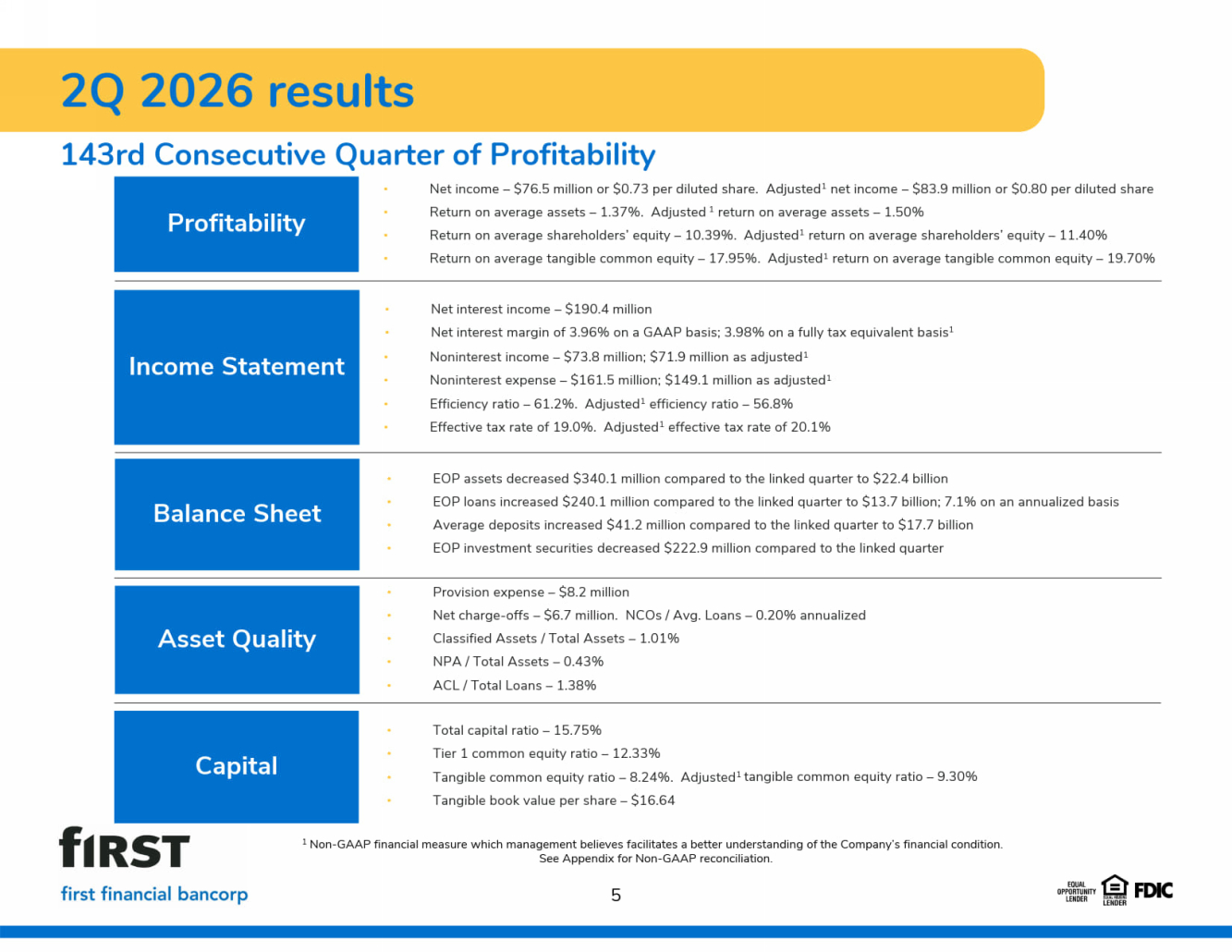
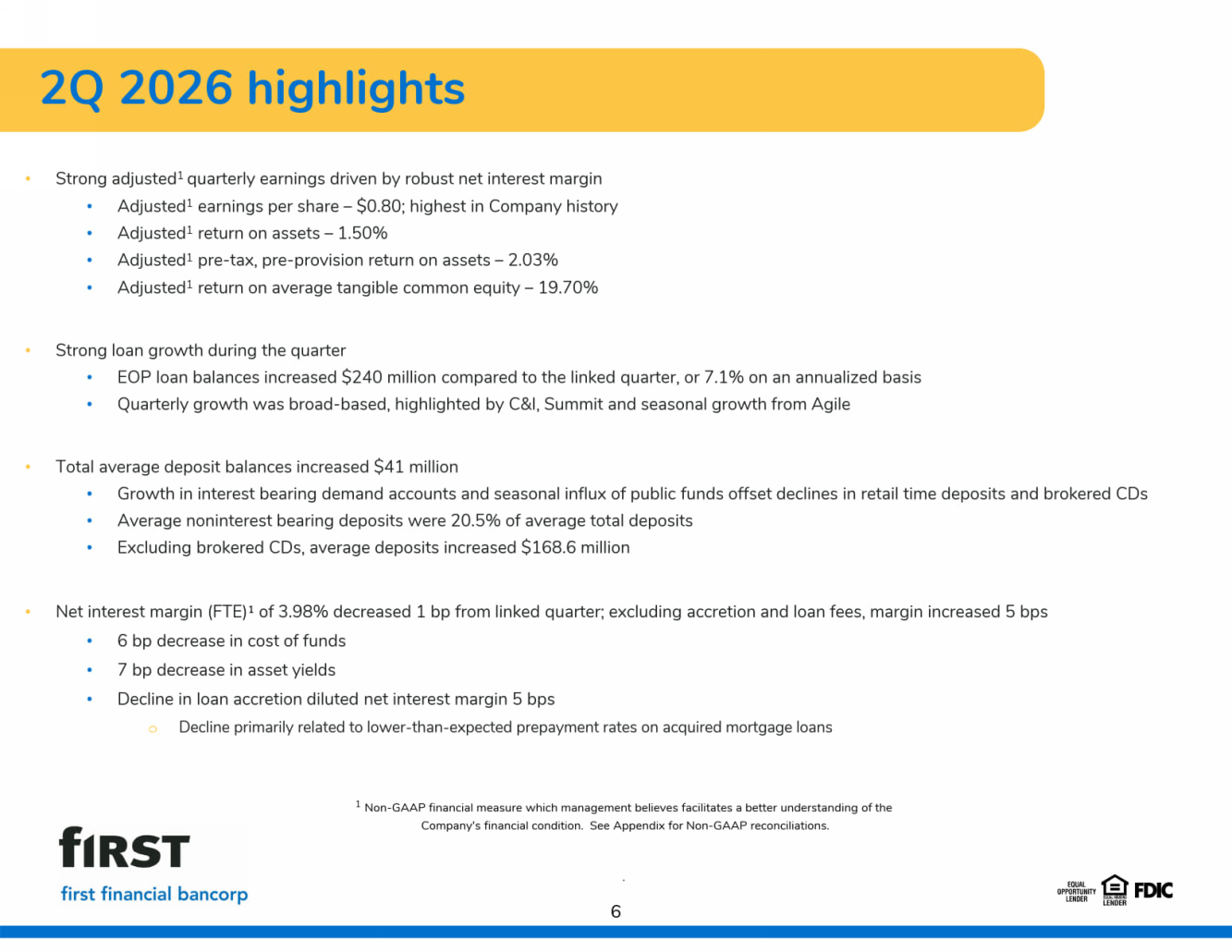
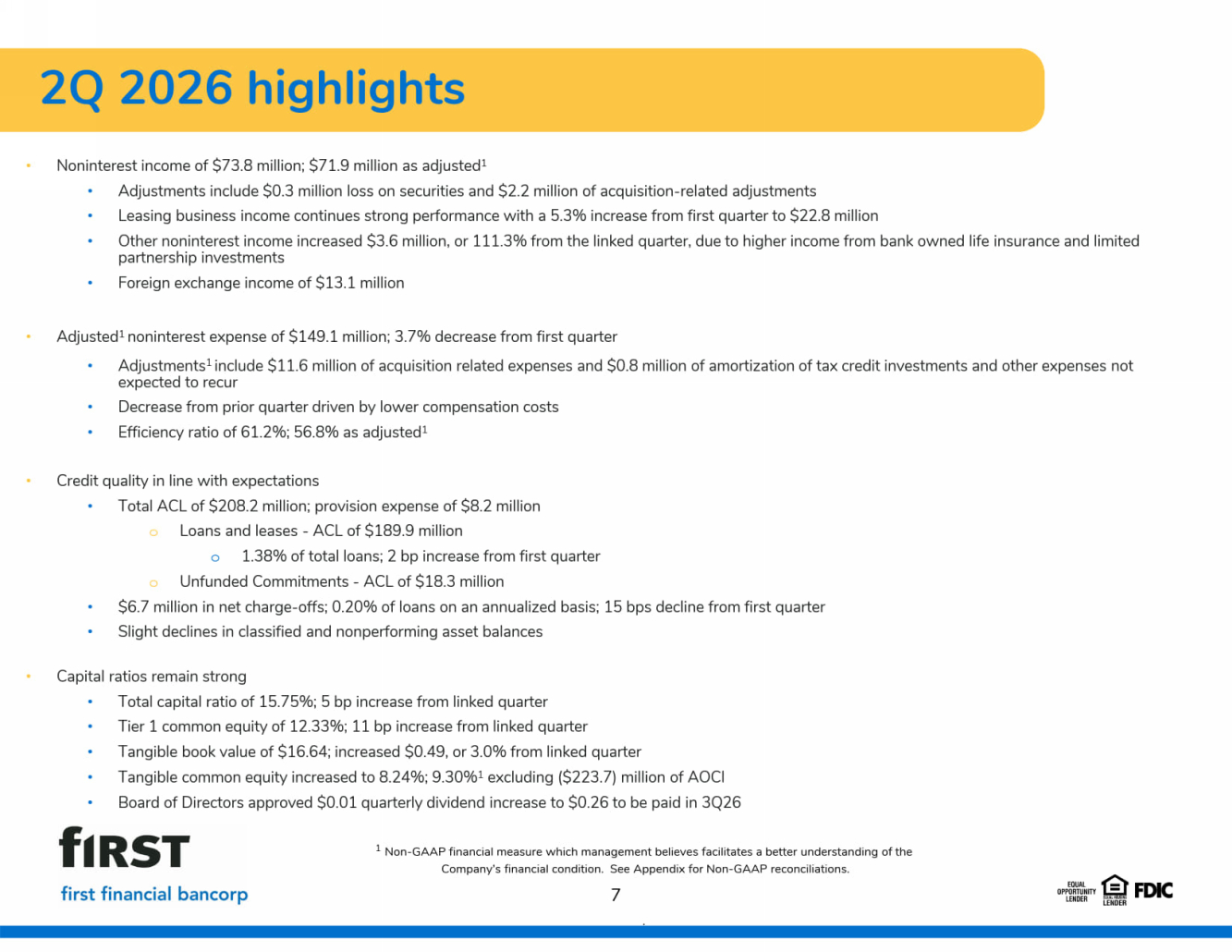
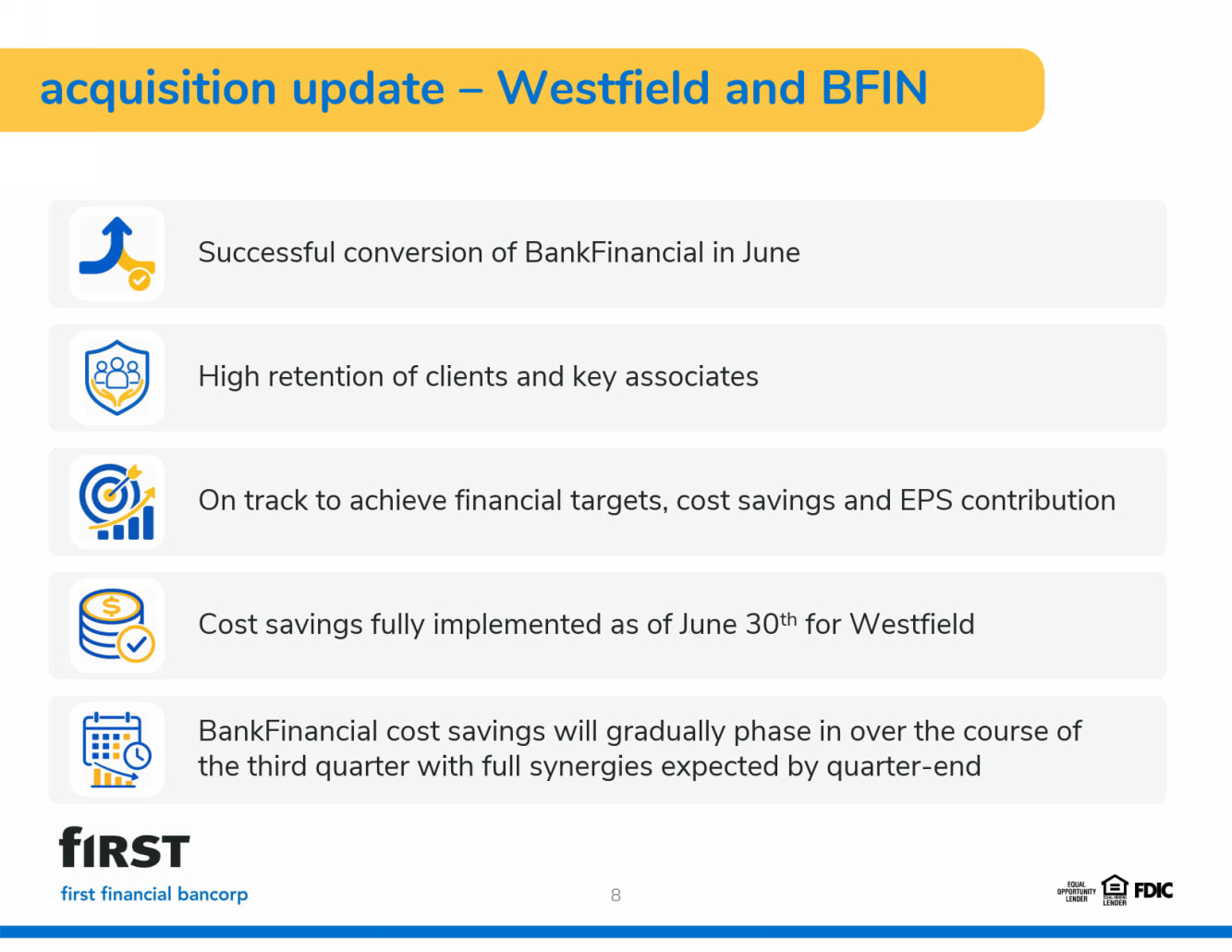
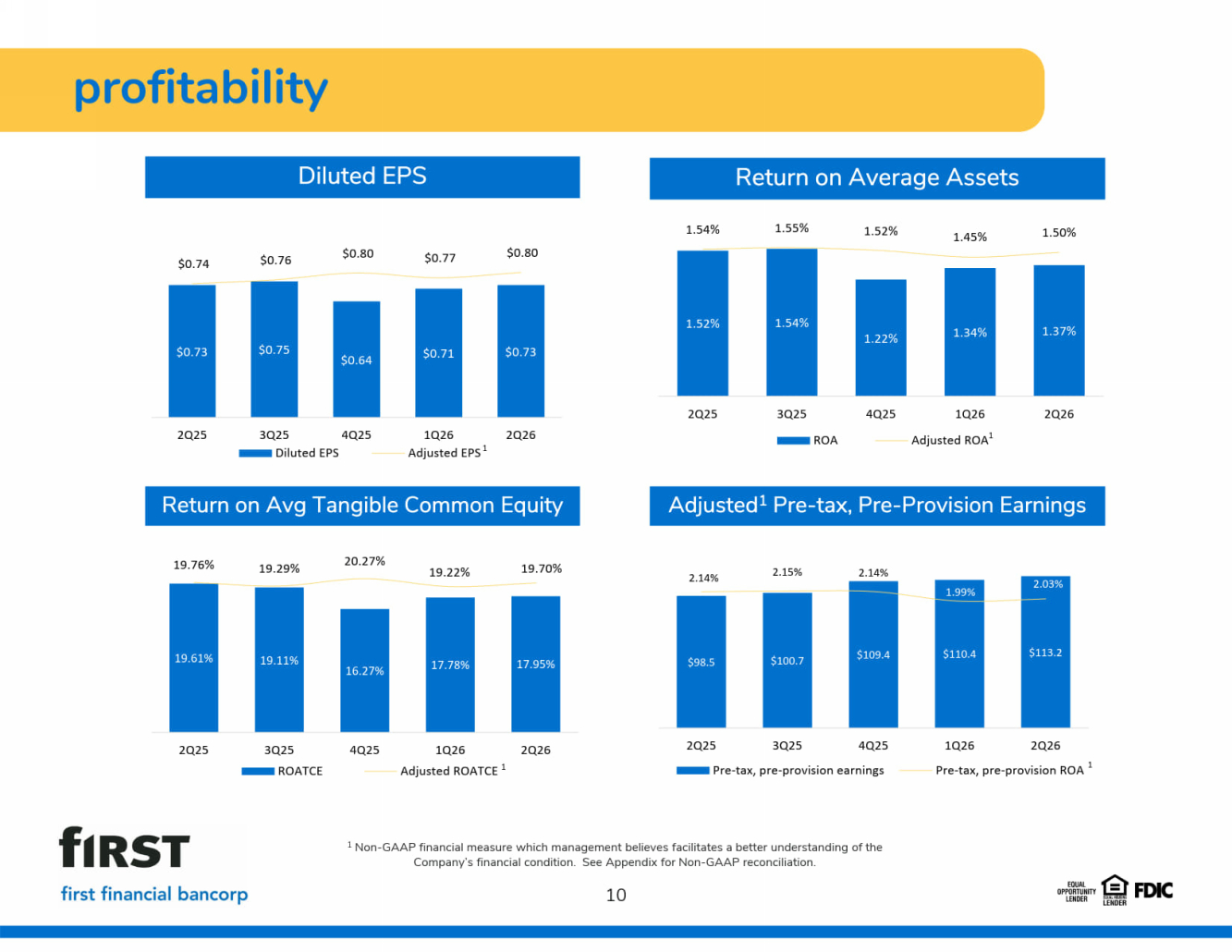
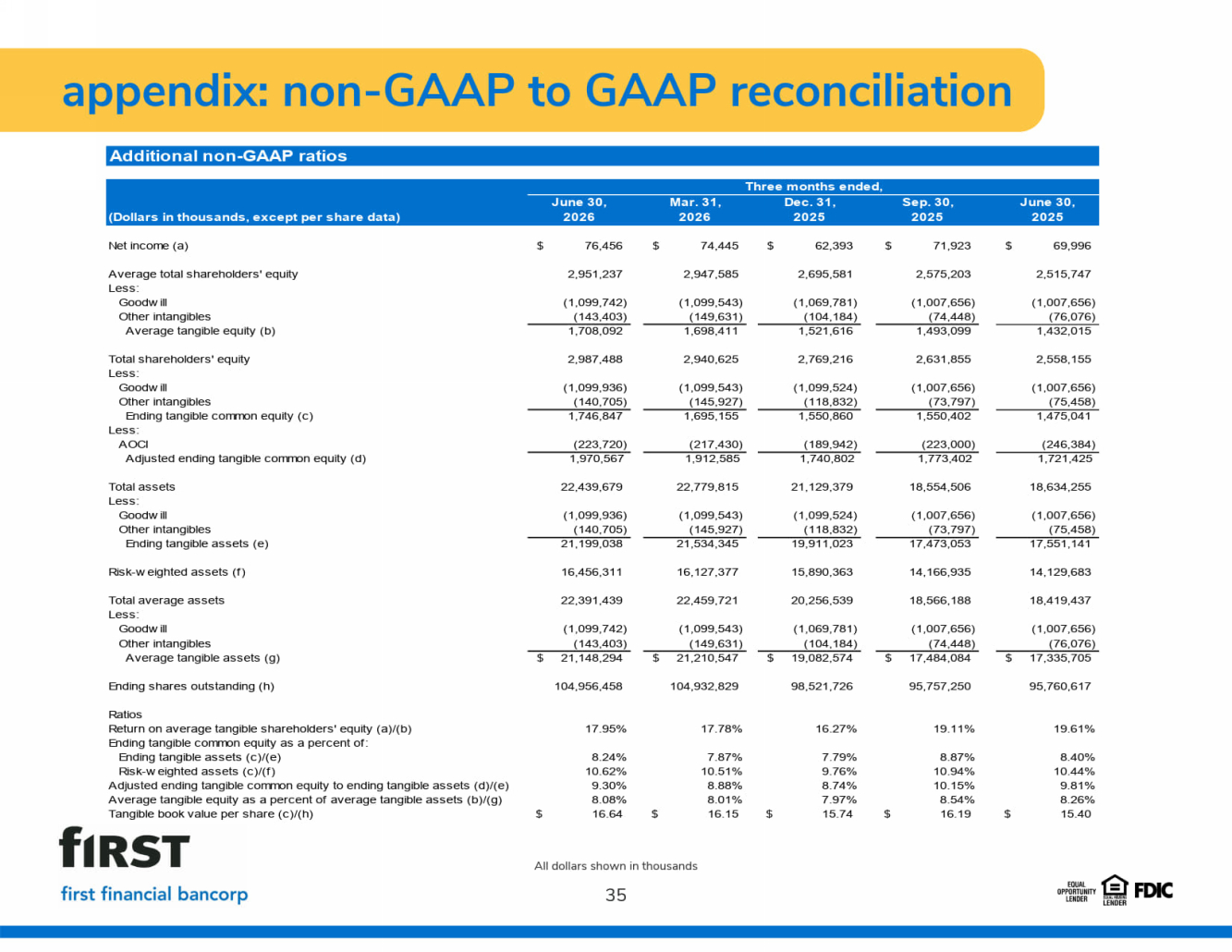
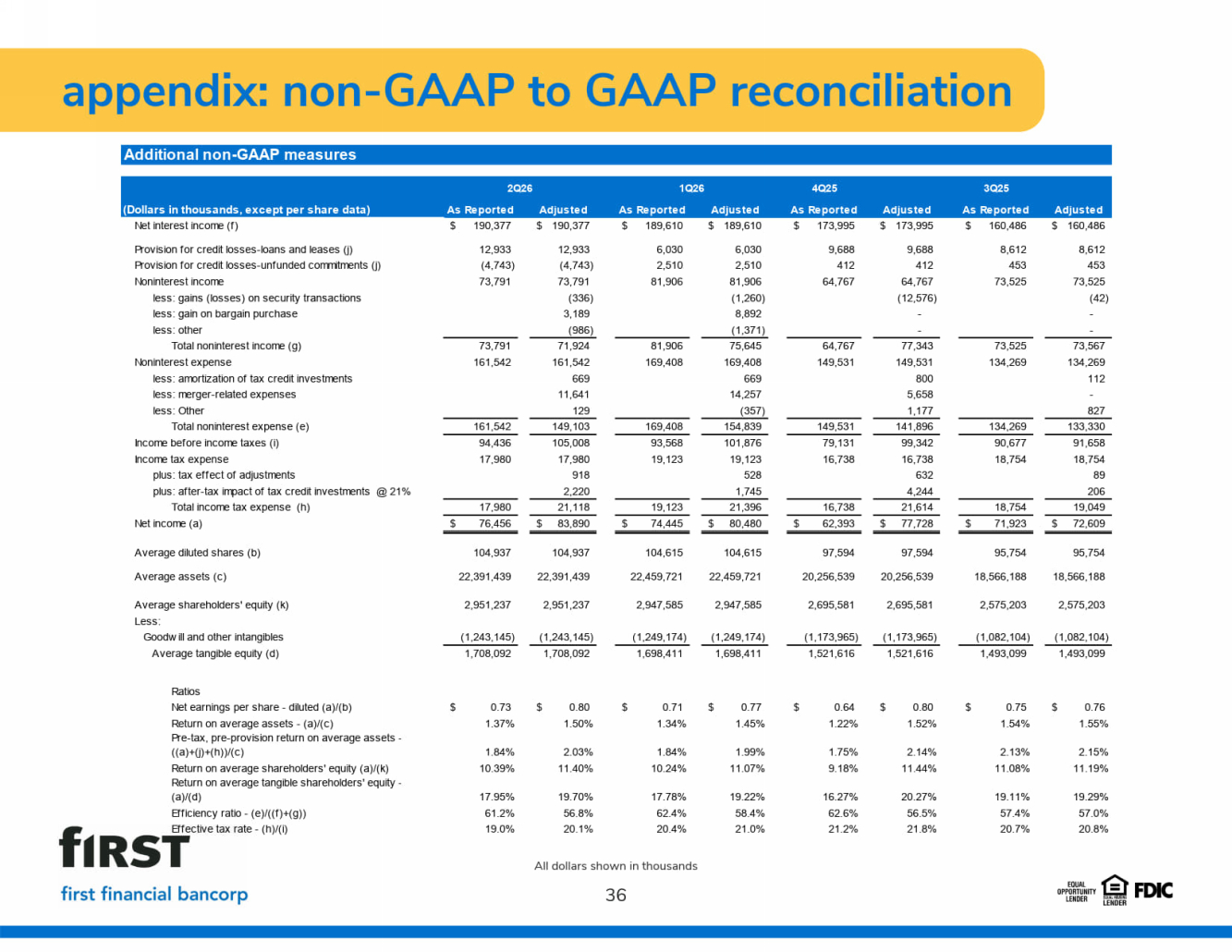
Thanks, Scott. Good morning, everyone, and thank you for joining us on today's call. Turning to FinWord and start with my summary of the quarter, then turn over to Jamie, who will add his comments on the financial results. After Jamie's finished, I'll provide thoughts on our third time. I've wrapped up the outlook commentary. We'll then pivot to discuss the details of the FinWord acquisition, which is a deal that we're very excited about. It's integration efforts related to the Westfield acquisition and successfully converted bank financial system. We were very pleased with our performance. Adjusted net income for the period was a record $83.9 million, or $0.80 per share, with an adjusted return on assets and an adjusted return on tangible common equity of 19.7%. These adjusted earnings per share represent an 8% of 2025, and they were driven by increases in earning assets. Our net interest margin was stable for funding costs. Assuming no significant changes in interest rates, we expect our margin to remain stable. Long growth of the quarter continued momentum across the portfolio with C&I, Agile, and Summit being the primary drivers of our increase. Loan originations increased lines remain strong heading into the back half of the year. We expect loan production to remain healthy and contribute to solid loan growth in the third quarter. Adjusted fee income was below our expected investment banking fees led to a decline in total non-interest income compared to the linked quarter. Results in these business lines can adjust that non-interest expenses were materially lower than the linked quarter, driven by lower commission expense, payroll taxes, and acquisition-related synergies. With virtually all the expiled savings related to the bank financial acquisition, we'll gradually phase in over the course of full savings expected that charge-offs declining by 15 to 0.20% of total loans. Capital levels remain strong with tangible common equity increasing to 8.2% and tangible value increasing 3% from the length quarter to $16.64. Focus on integrating recent acquisitions and preparing for the acquisition of Fenward. Now I'll turn the call to Jamie.
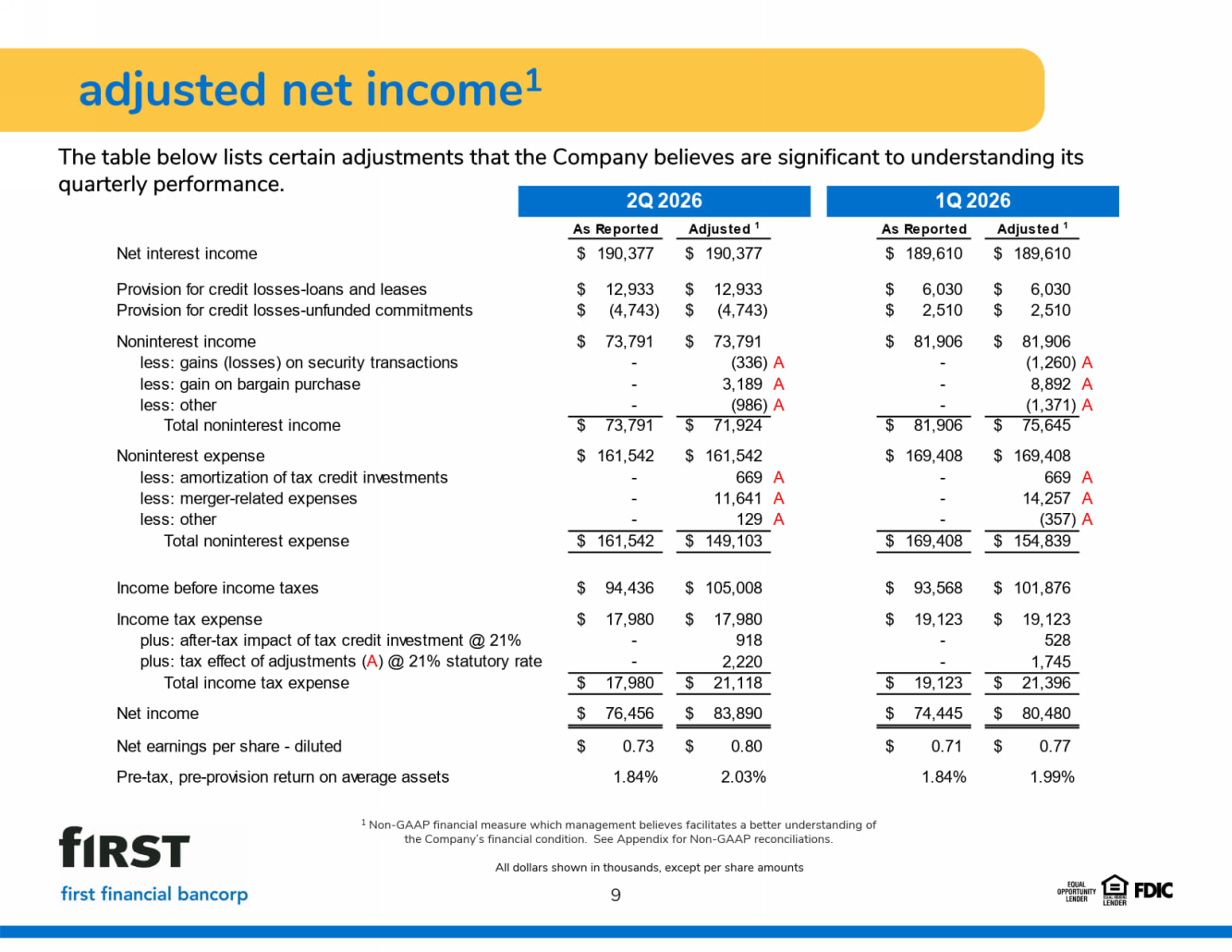
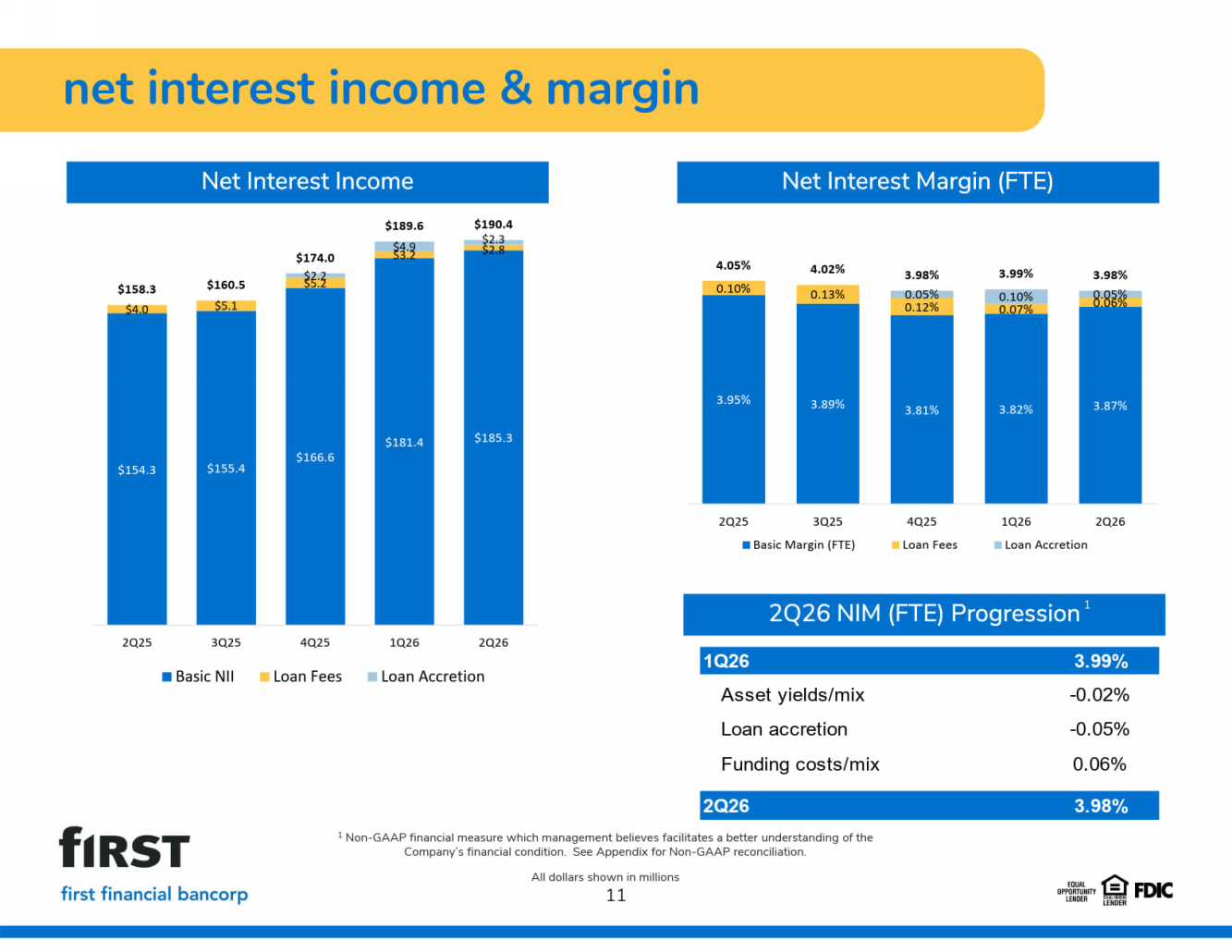
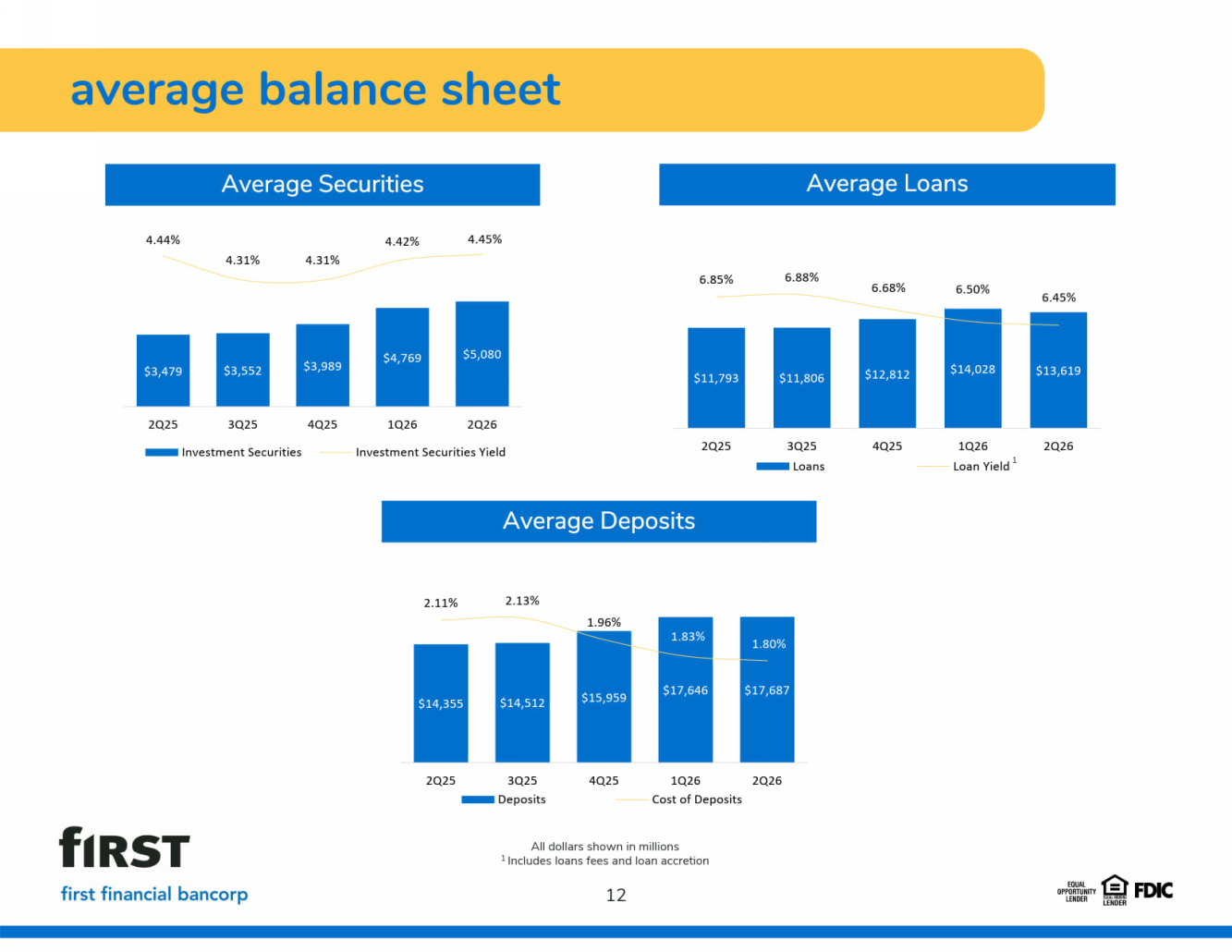
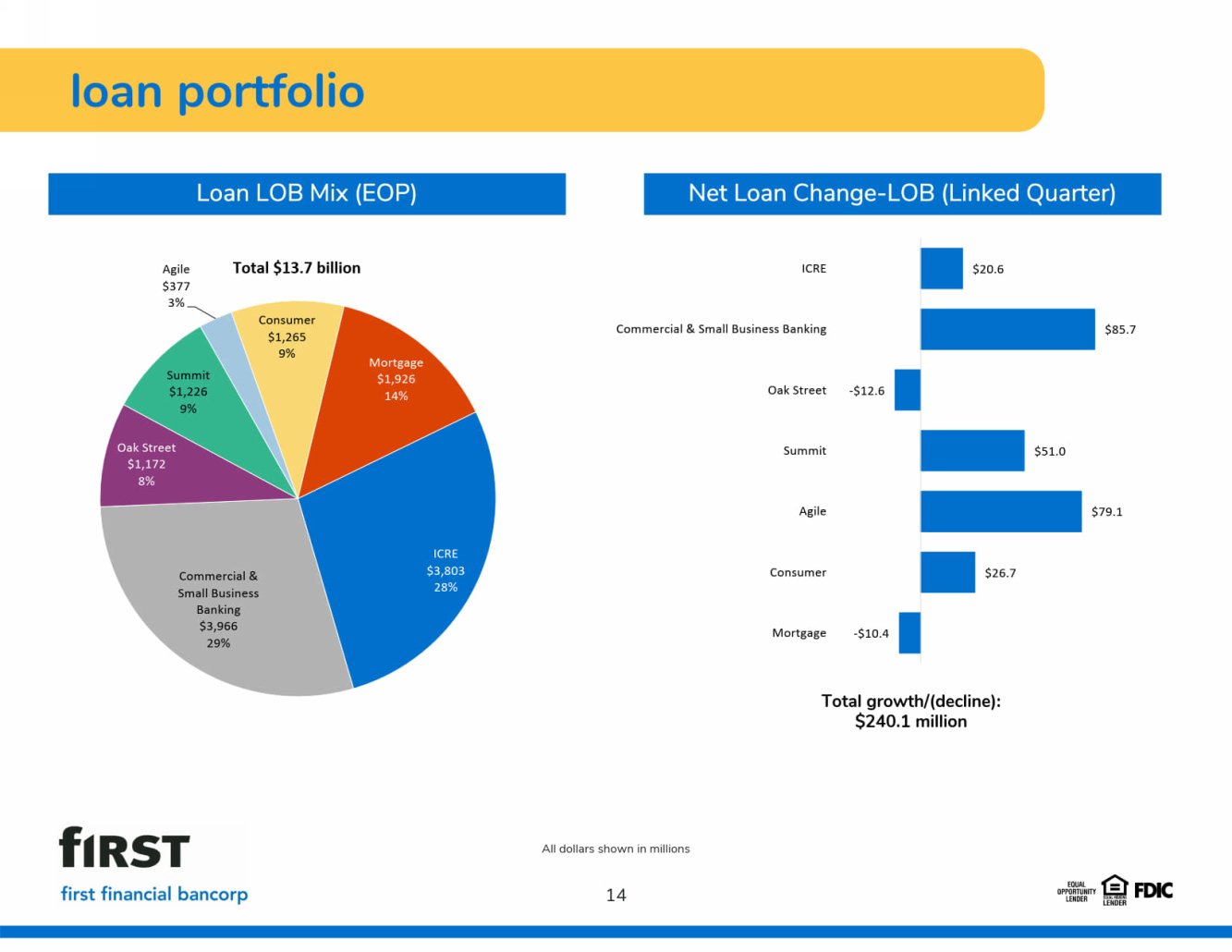
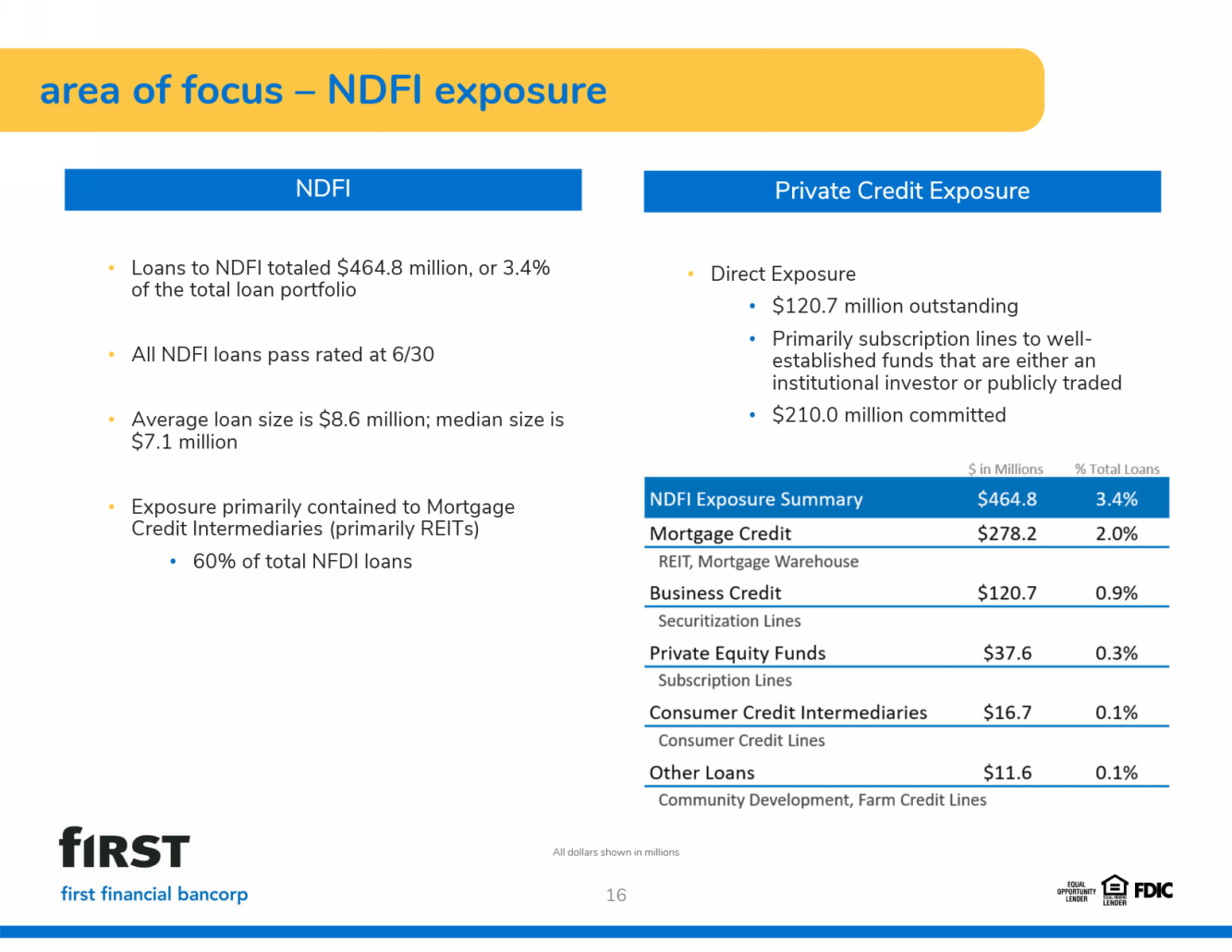
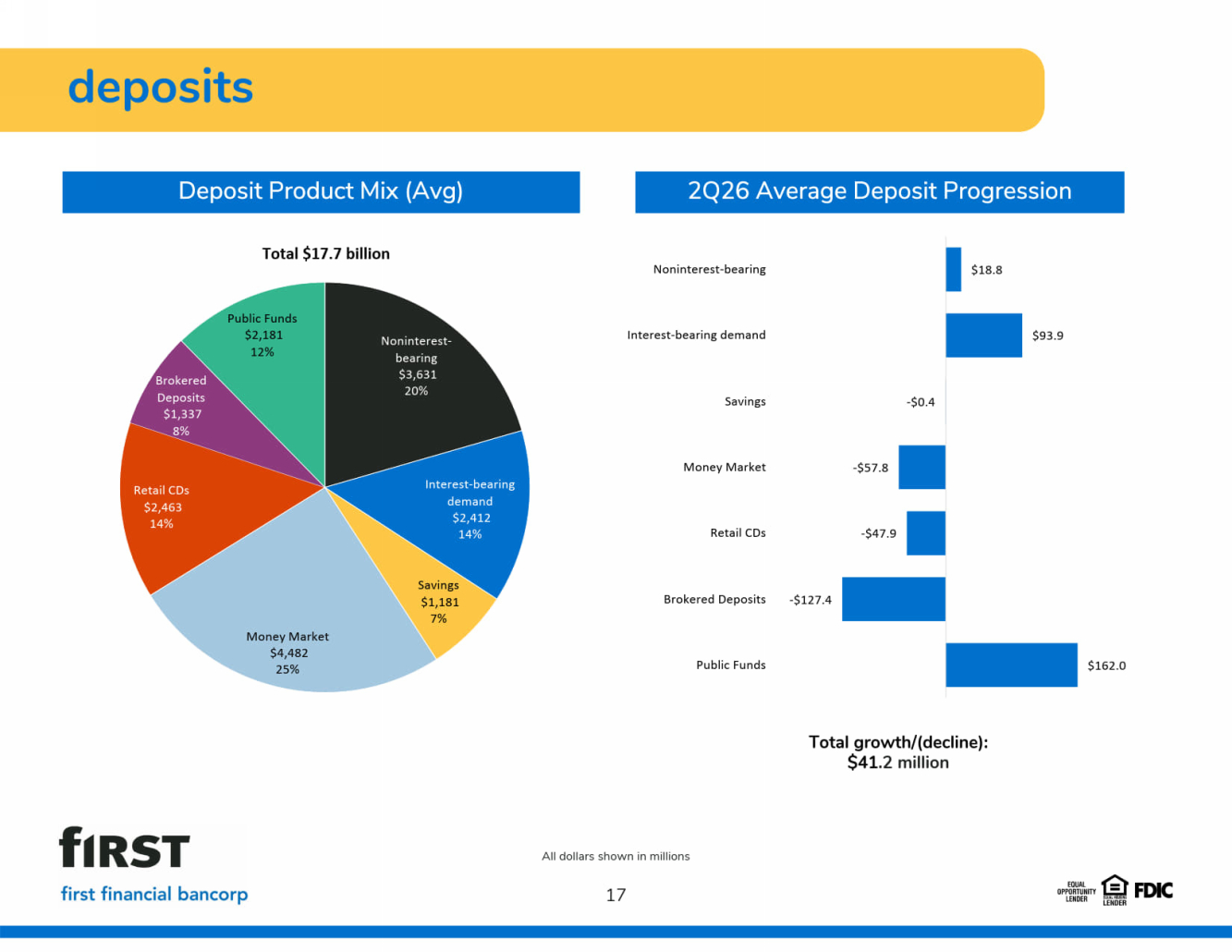
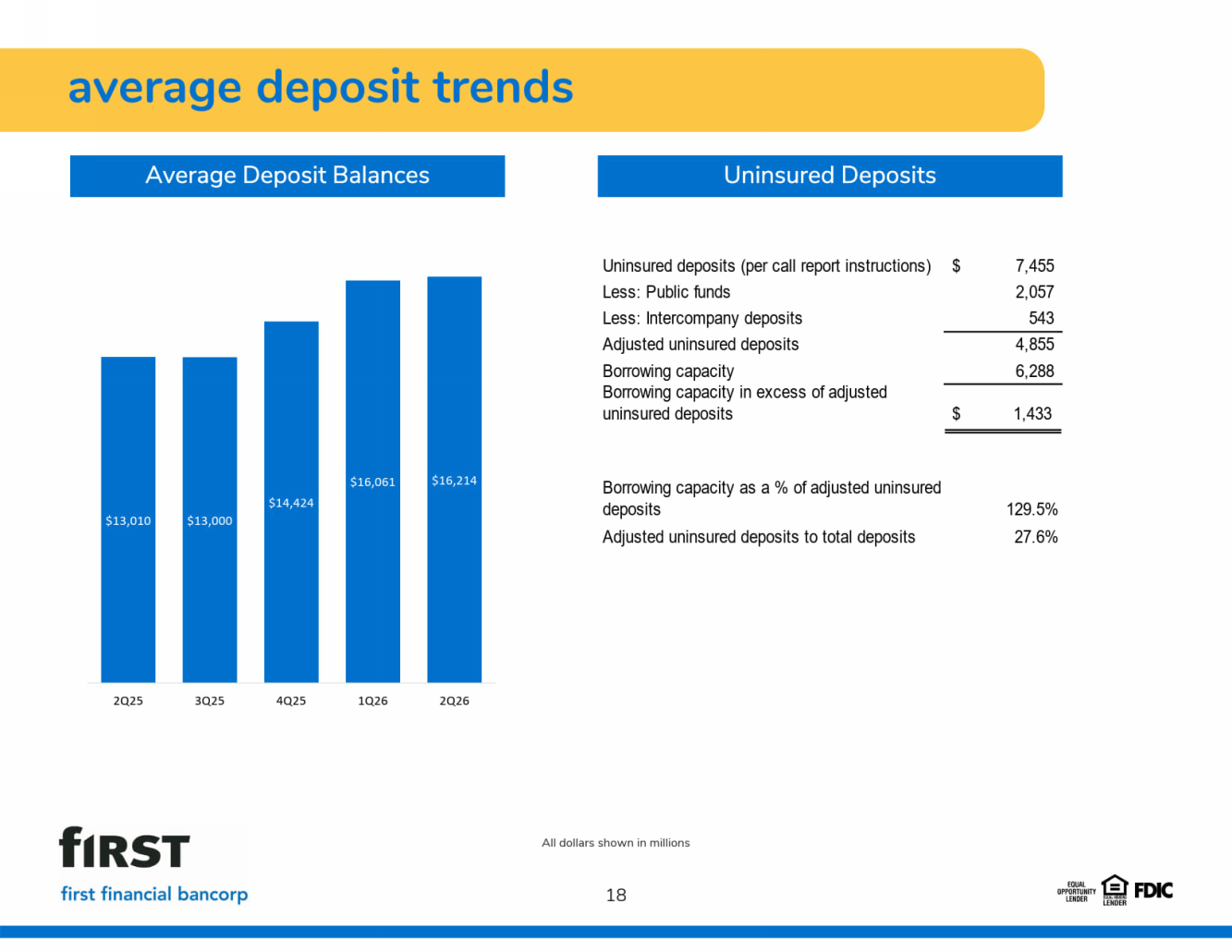
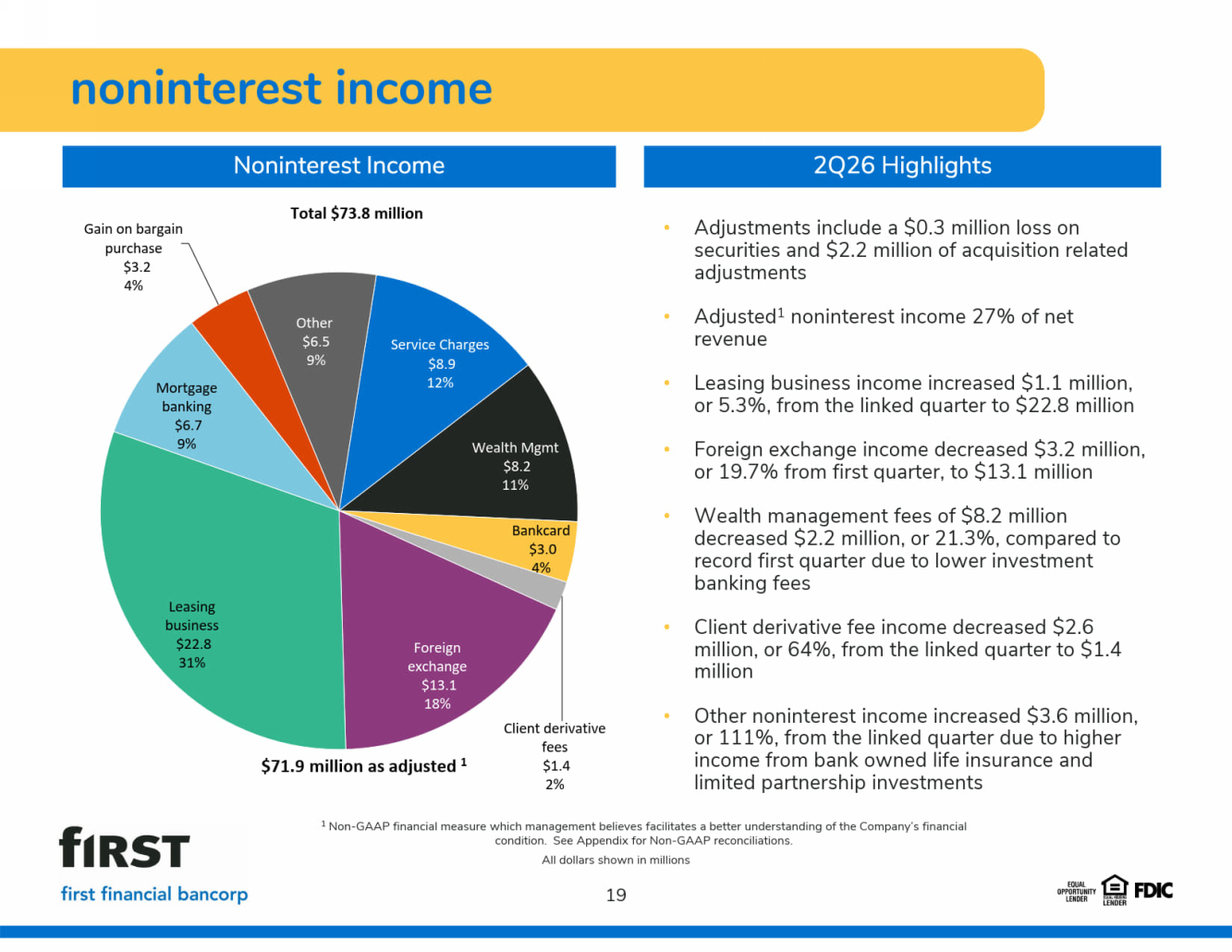
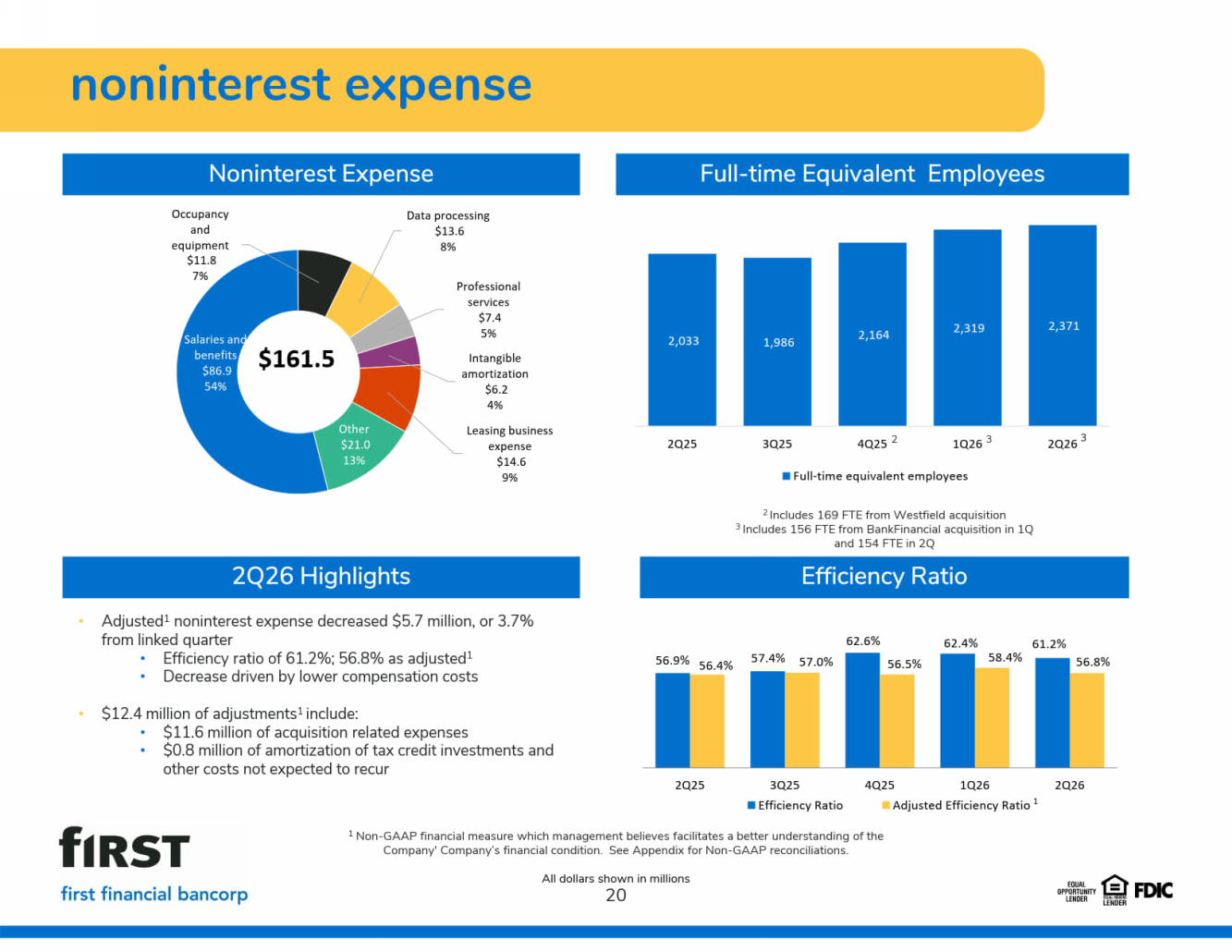
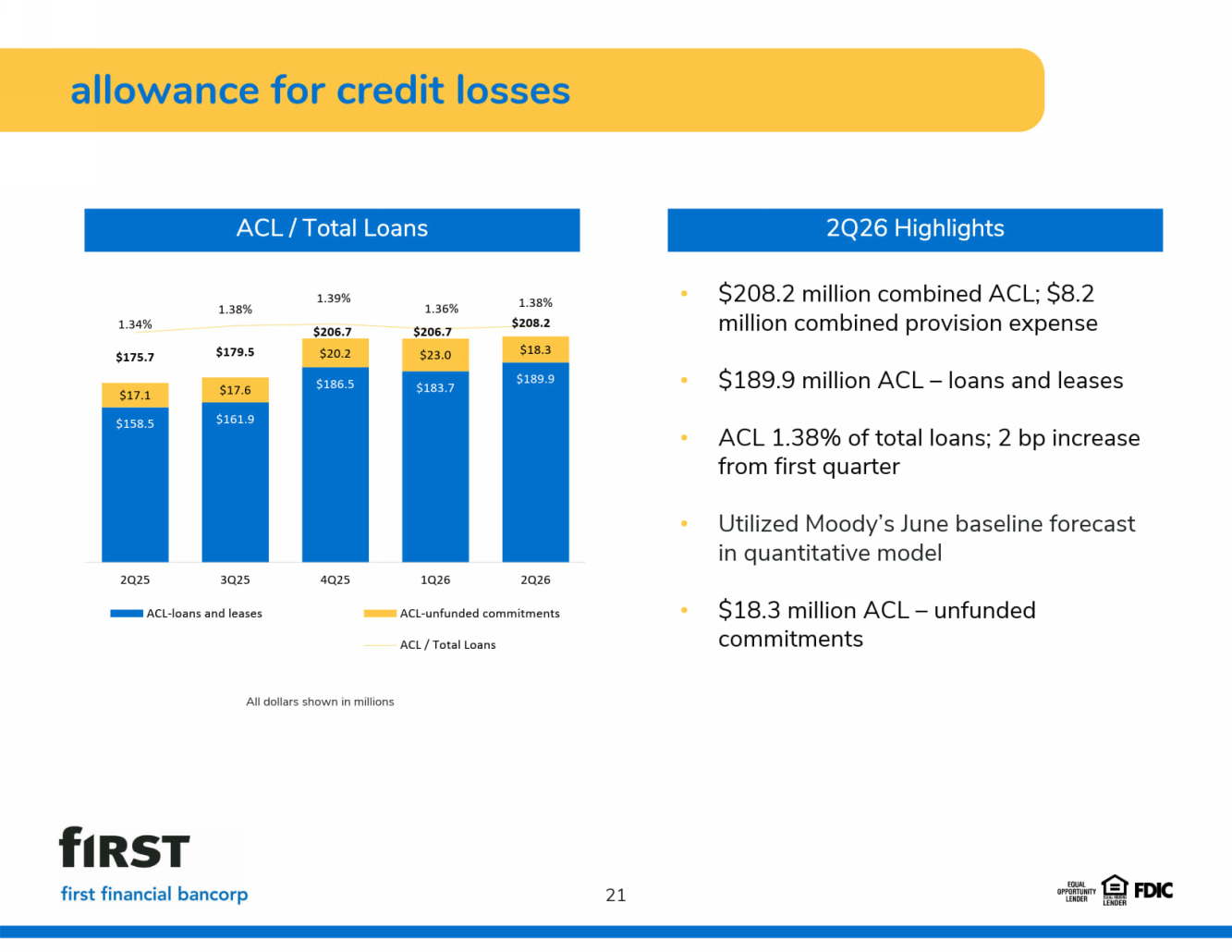
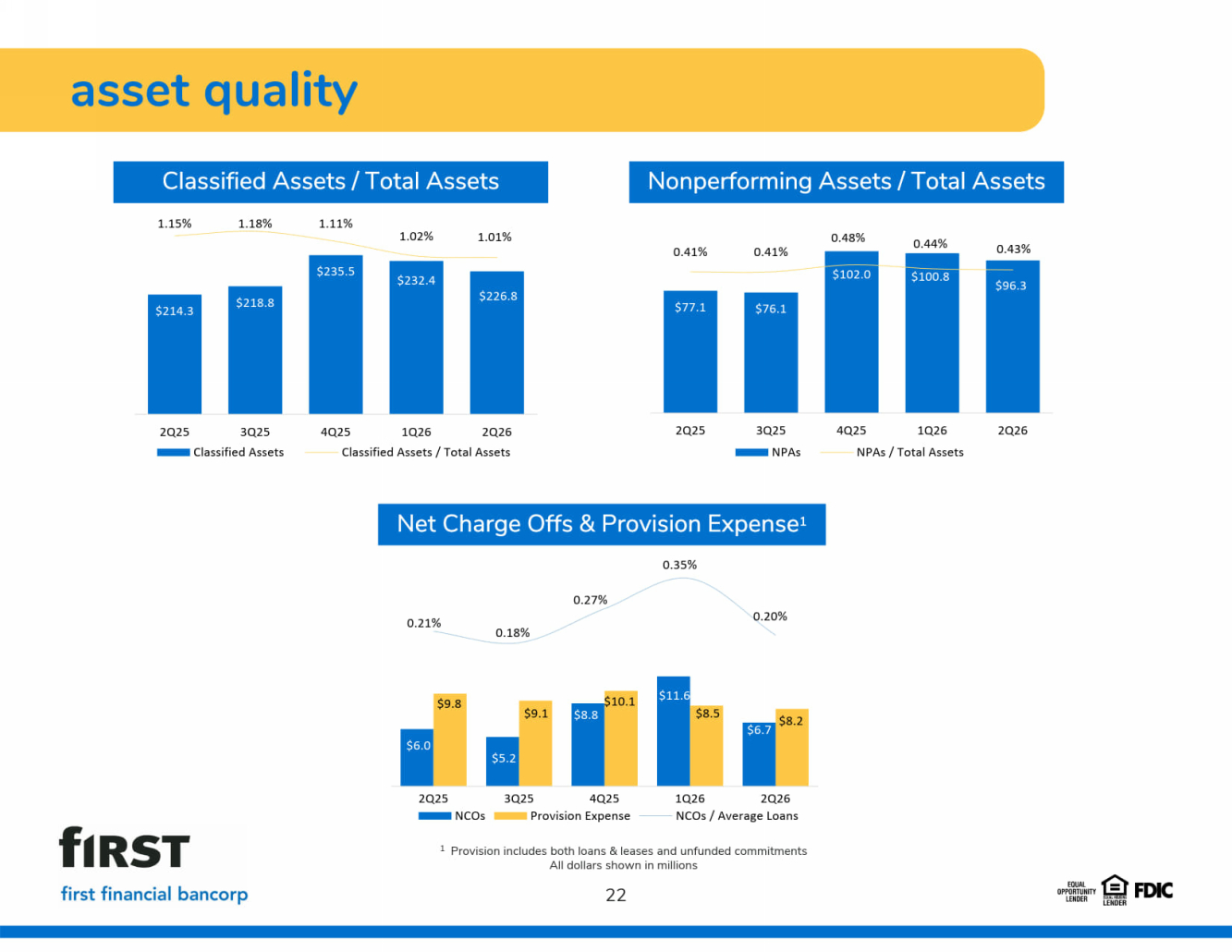
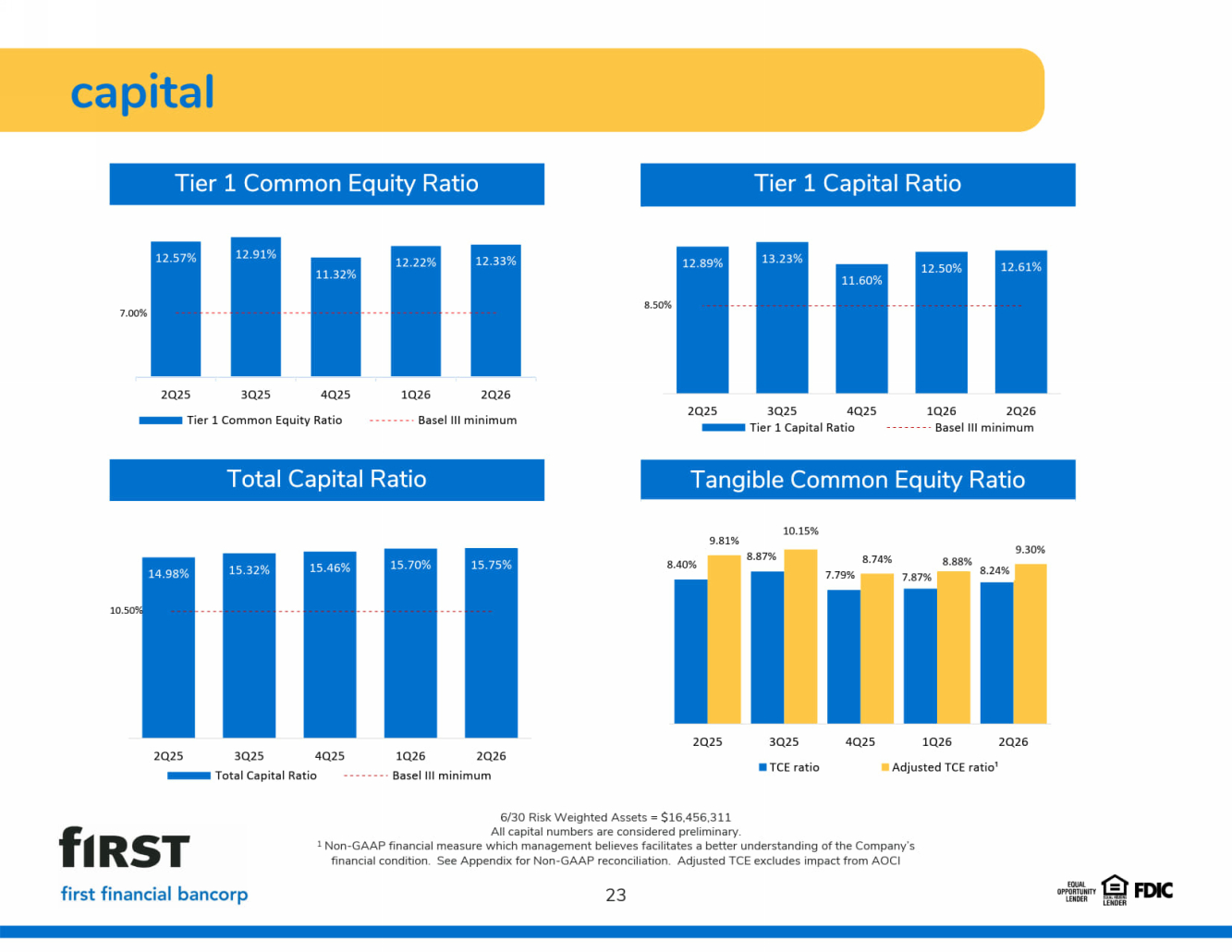
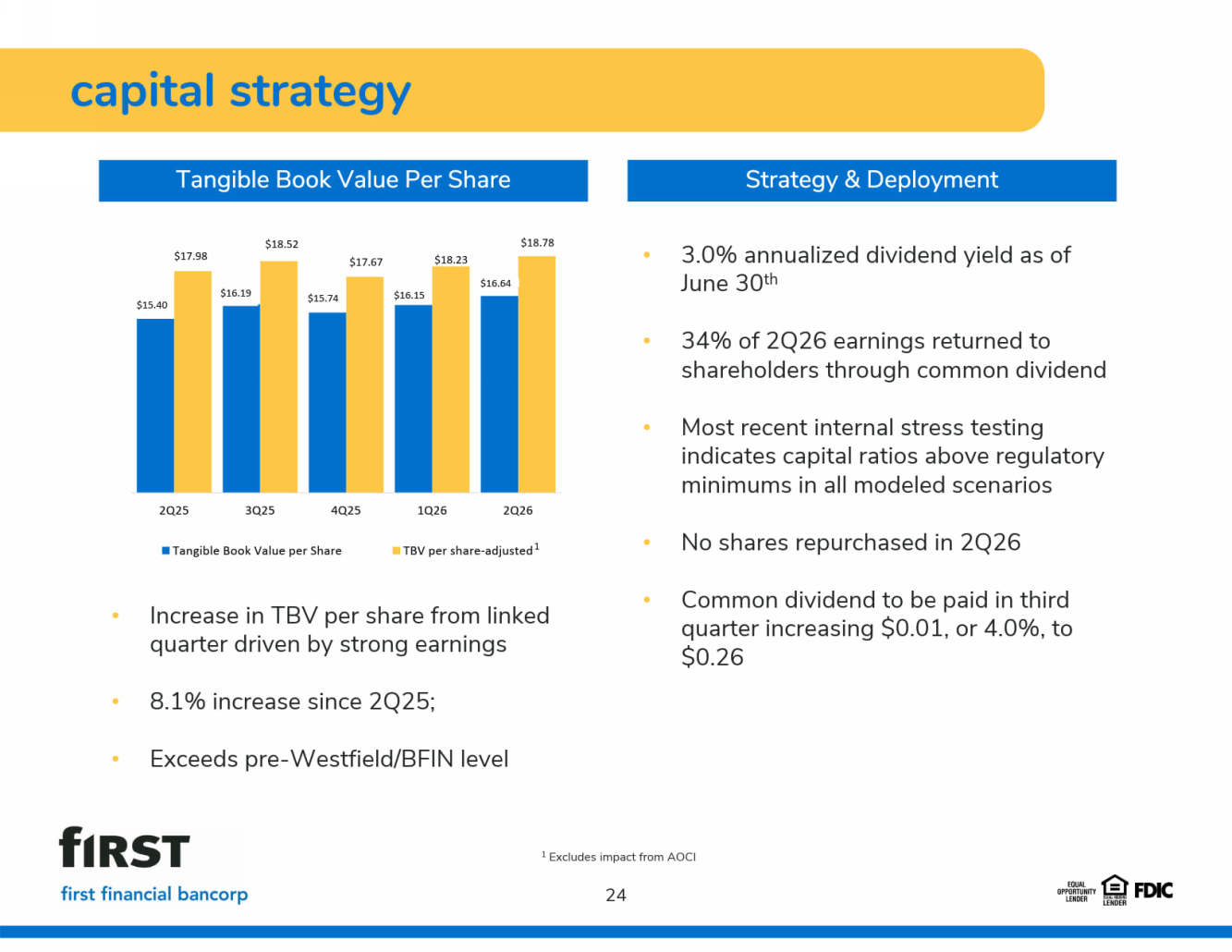
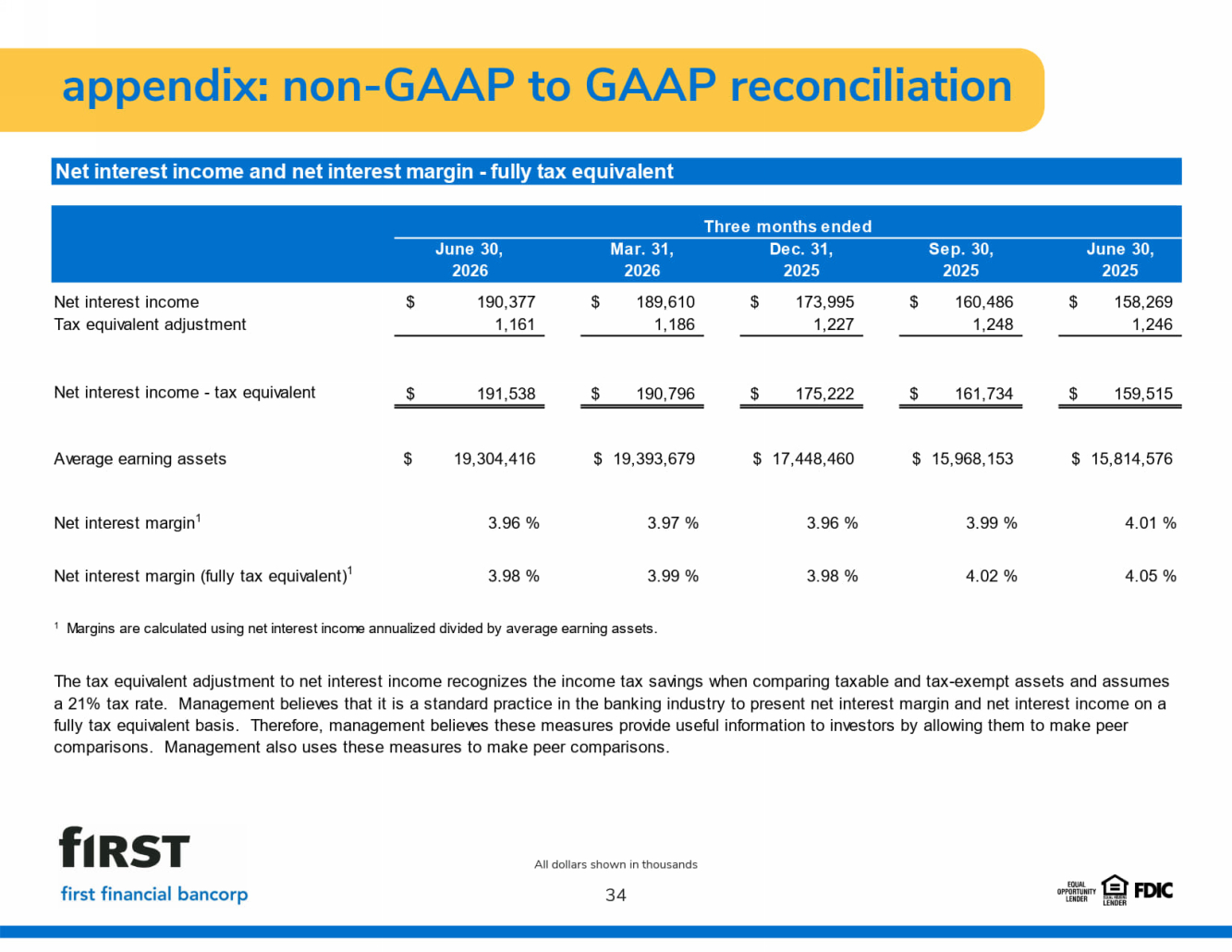
And good morning everyone. Most recent financial results. The second quarter was another outstanding quarter, highlighted by strong earnings, 7% loan growth, a solid net interest margin, and positive credit trends. Our net interest margin remains very strong at 3.98%. Deposit costs declined 6 basis points from the length quarter, while asset yields decreased 7 basis points through the lower accretion income. Conses increased $240 million, or 7% on an annualized basis. Growth was broad-based, with C&I, Summit, and Agile all having strong balances increased $41 million due primarily to a seasonal influx in public funds and higher interest-bearing deposits. We maintain 21% of our total balances in non-interest-bearing accounts and remain focused on growing lower-cost deposit balance. Turning to the income statement, despite a decrease from the first quarter, second quarter fee income was solid led by the leasing and foreign exchange business lines, while non-interest expenses declined from the linked quarter due to lower incentive-based compensation costs. Our ACL coverage increased two basis points during the quarter to 1.38 percent. We reported $8.2 million of provision expense during the period, which was driven primarily by net charge-offs and loan growth. Overall, asset quality trends were positive. Net charge-offs declined 15 basis points to 20 basis points of loans on an annualized basis, while NPAs and classified assets also declined during the period from a capital standpoint our ratios are in excess of both internal and regulatory targets tangible book value increased to sixteen dollars and sixty four cents while our TCE ratio increased to eight point two percent slide nine reconciles our gap earnings to adjusted earnings highlighted highlighting items that we believe are important to understanding our quarterly performance. Adjusted net income was 83.9 million dollars or 80 cents per share for the quarter. Non interest income was adjusted for losses on investment securities and 2.2 million dollars of acquisition related items. Non interest expense adjustments exclude the impact of acquisition costs, tax credit, investment amortization, and other expenses not expected to recur. As depicted on slide 10, these adjusted earnings equate to a return on average assets of 1.5%, a return on average tangible common equity of 20%, and a pre-provisioned ROA of over 2%. Slides 11 and 12, net interest margin decreased one basis point from the linked quarter to 3.98%. The core margin remains very strong with a slight decline from the linked quarter, driven by a five-basis point decline in loan accretion, which was impacted by low prepayment rates on our acquired mortgage loans, and six basis points from the linked quarter, partially offsetting the impact of lower asset yield. Slide 14 illustrates our current loan mix and balance changes compared to the linked quarter. Loan balances increased 7% on an annualized basis with growth across most of the portfolio, highlighted by C&I, Summit, and seasonal growth from Agile. 16 depicts our NDFI exposure. As you can see, our total NDFI balances are approximately 3% of our total loan book, and all NDFI loans were pass-rated at the end of the second quarter. The majority of our NDFI lending is concentrated in loans to REITs, which we believe further mitigates our risk. Slide 17 depicts our average deposit mix, as well as a progression of average deposits from the length quarter. In total, average deposit balances increased $41 million during the quarter, driven by a seasonal influx of public funds and growth in interest-bearing demand accounts. These increases were offset by declines in retail time deposits and brokered CDs. Absent of the decline in brokered CDs, average deposits increased $169 million from the first quarter. Slide 19 highlights our non-interest income. Total adjusted fee income was $72 million with leasing and foreign exchange income, both delivering solid quarters. Additionally, other non-interest income increased $3.6 million for the quarter due to higher income from Bank on Life Insurance and other limited partnership investments. Non-interest expense for the quarter is outlined on slide 20. Core expenses decreased $5.7 million during the period, driven by lower compensation costs tied to lower fee income. Turning now to slides 21 and 22, our ACL model resulted in a total allowance which includes both funded and unfunded reserves of $208 million and $8.2 million of total provision expense during the period. This resulted in an ACL that was 1.38% of total loans, which was a two-basis point increase from the first quarter. Provision expense was primarily driven by loan growth and net charge-offs, which were 20 basis points for the period, declining 15 basis points from the first quarter. Overall, credit trends were positive, with a 42% reduction in net charge-offs and slight declines in both non-performing and classified assets. Finally, as shown on slides 23 and 24, capital ratios remain in excess of both regulatory minimums and internal targets. During the first quarter, tangible book value increased to 1664, while the TCE ratio increased to 8.2% at the end of the period. At this point, our tangible book value exceeds pre-Westfield and bank financial levels. Total shareholder return remains strong, with 34% of our second quarter earnings returned to our shareholders during the period through the common dividend. We are also very pleased that the Board of Directors voted to increase the common dividend going forward to $0.26 per share. We maintain our commitment to providing an attractive return to our shareholders, and we evaluate capital actions that support that commitment. I'll now turn it back over to Archie for some comments on our outlook.
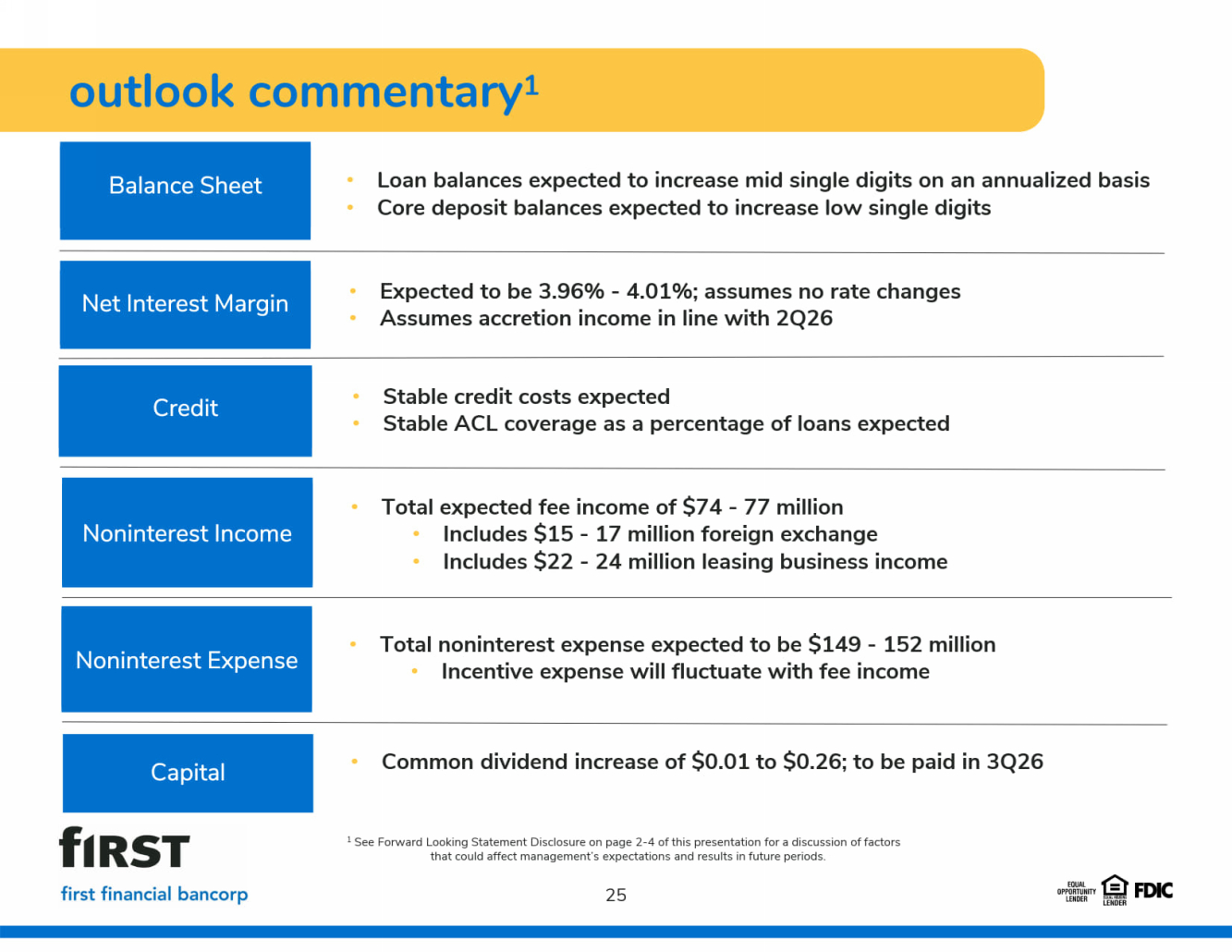
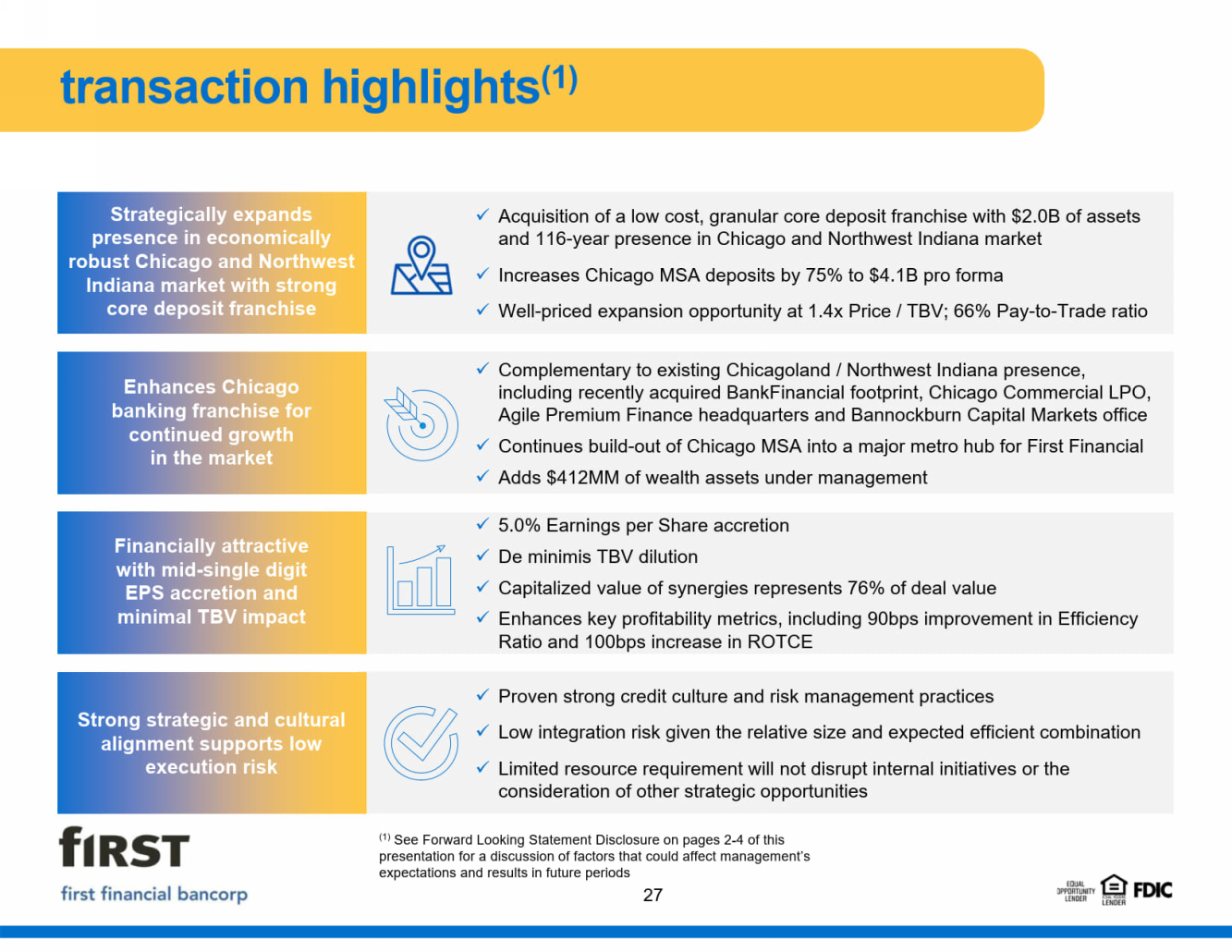
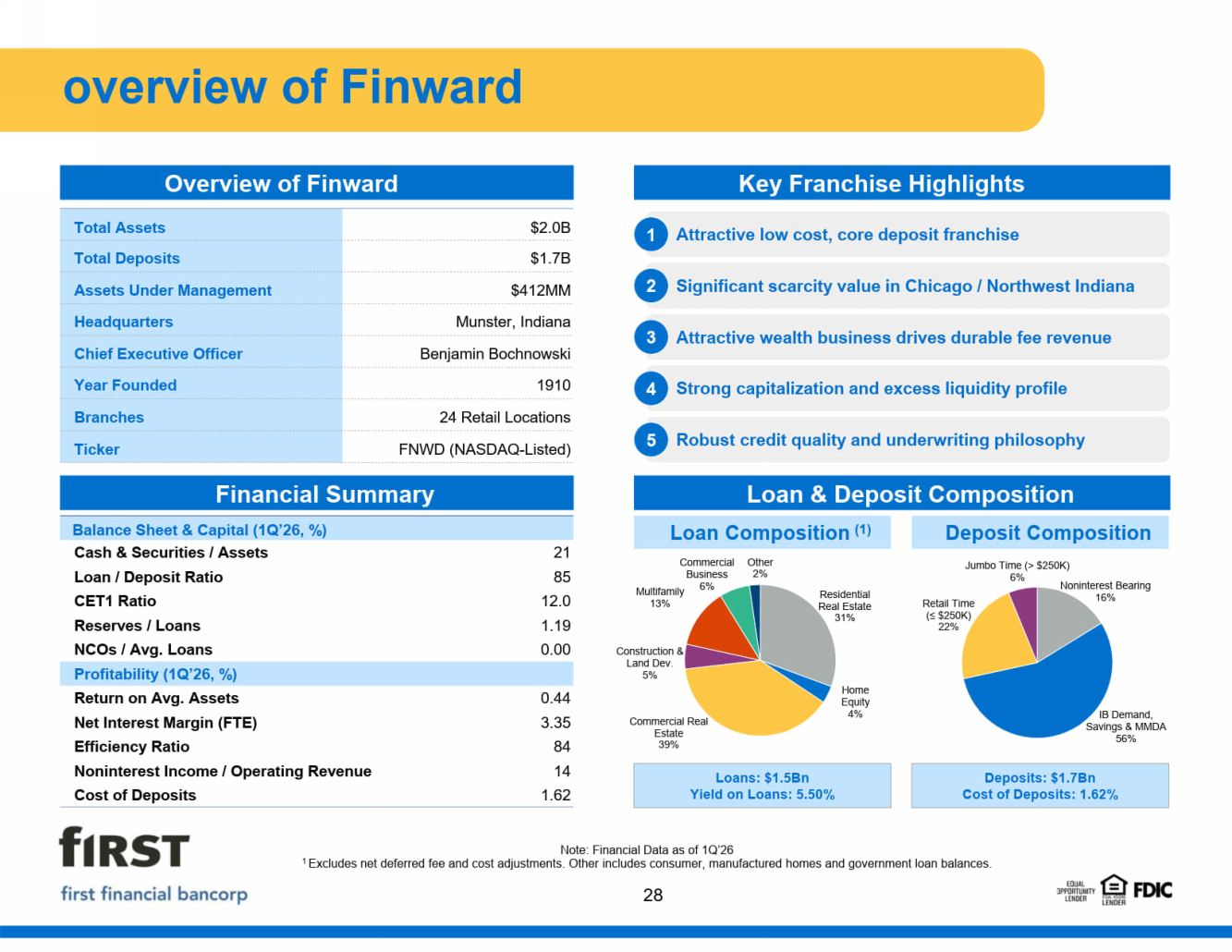
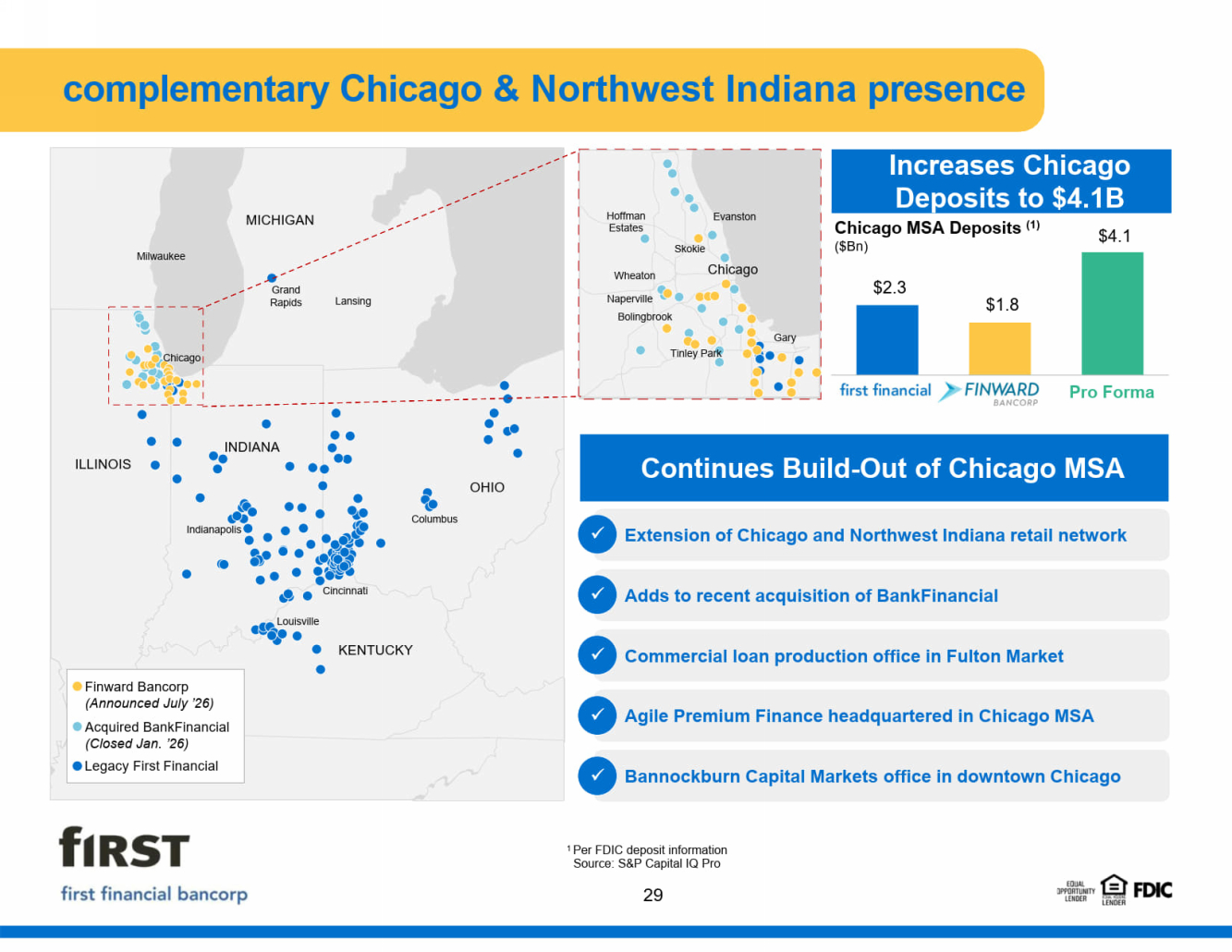
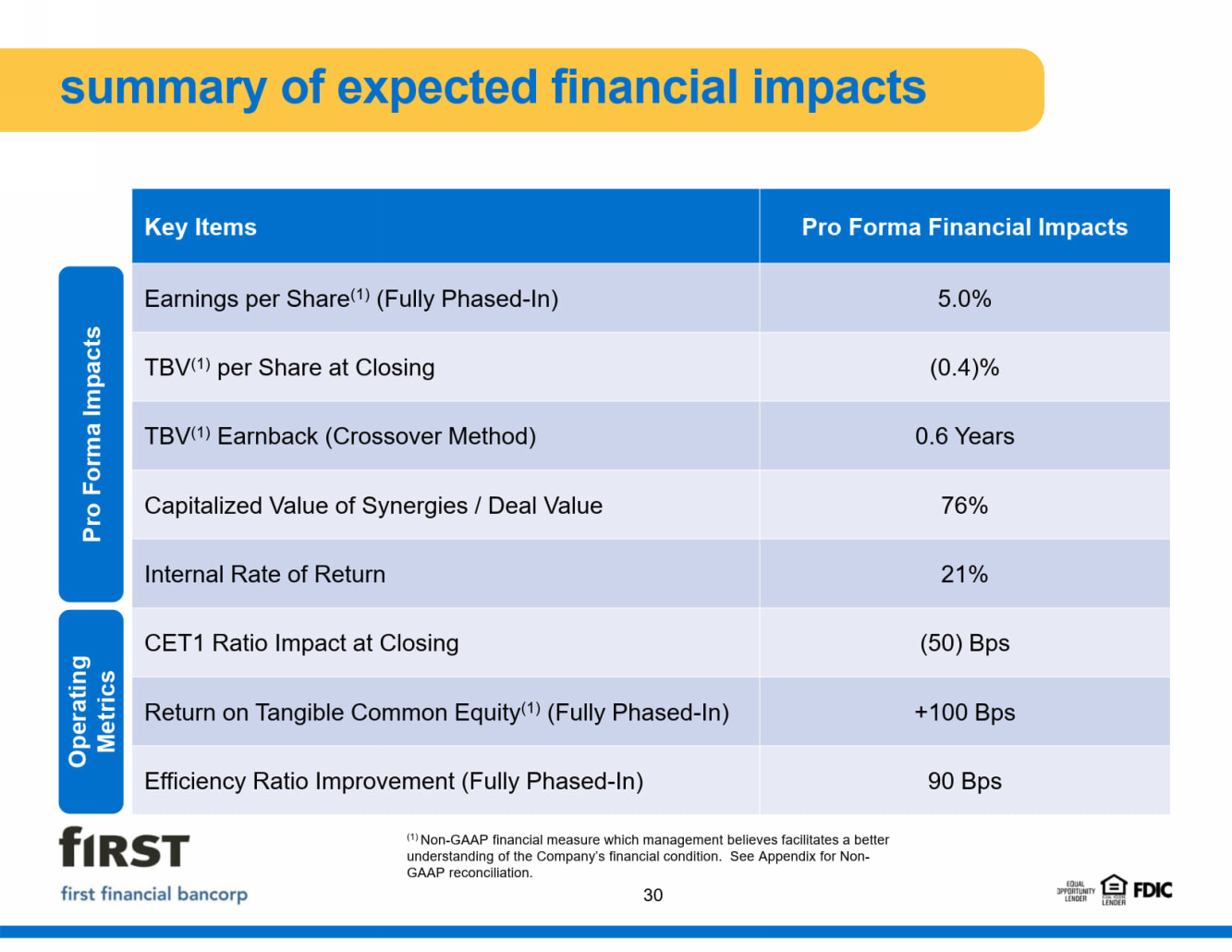
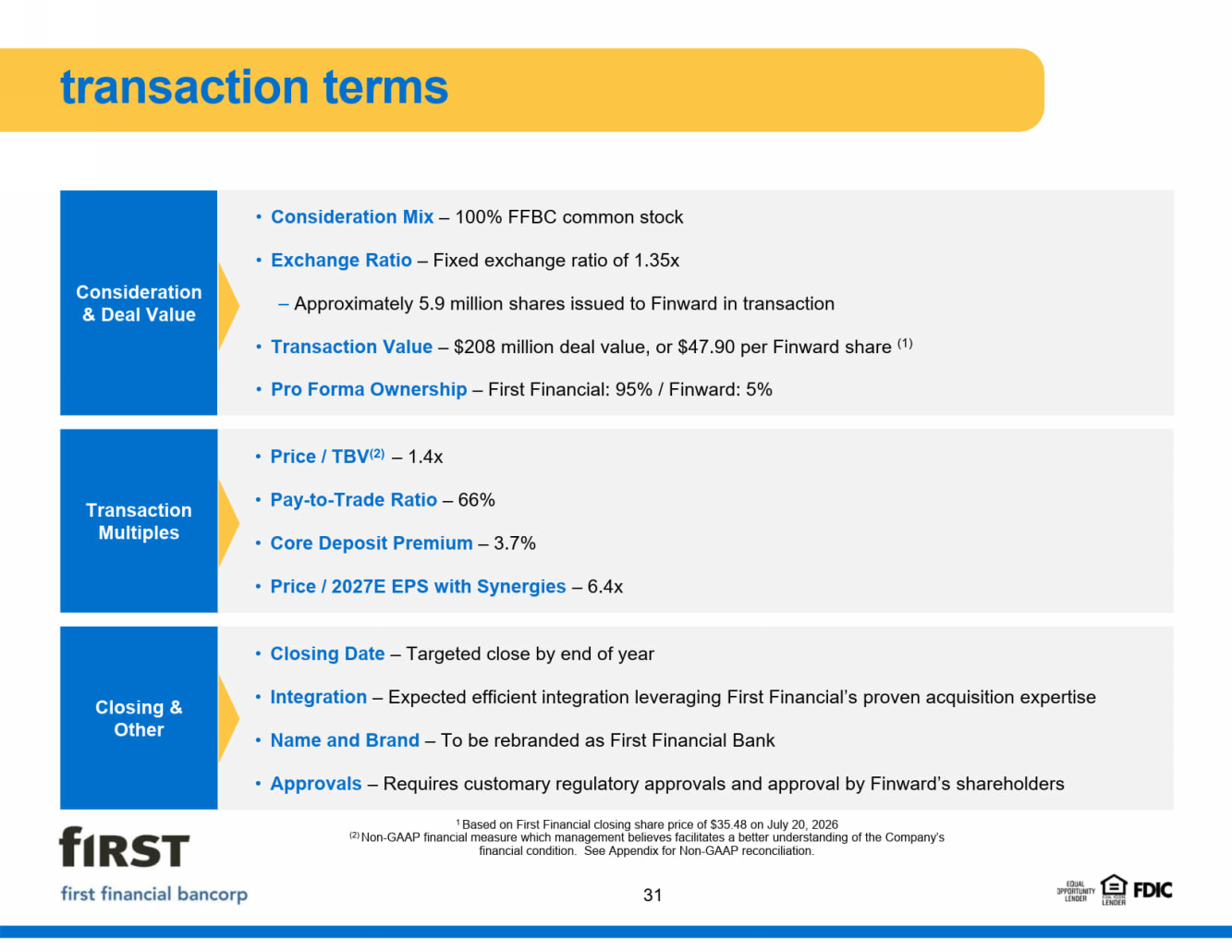
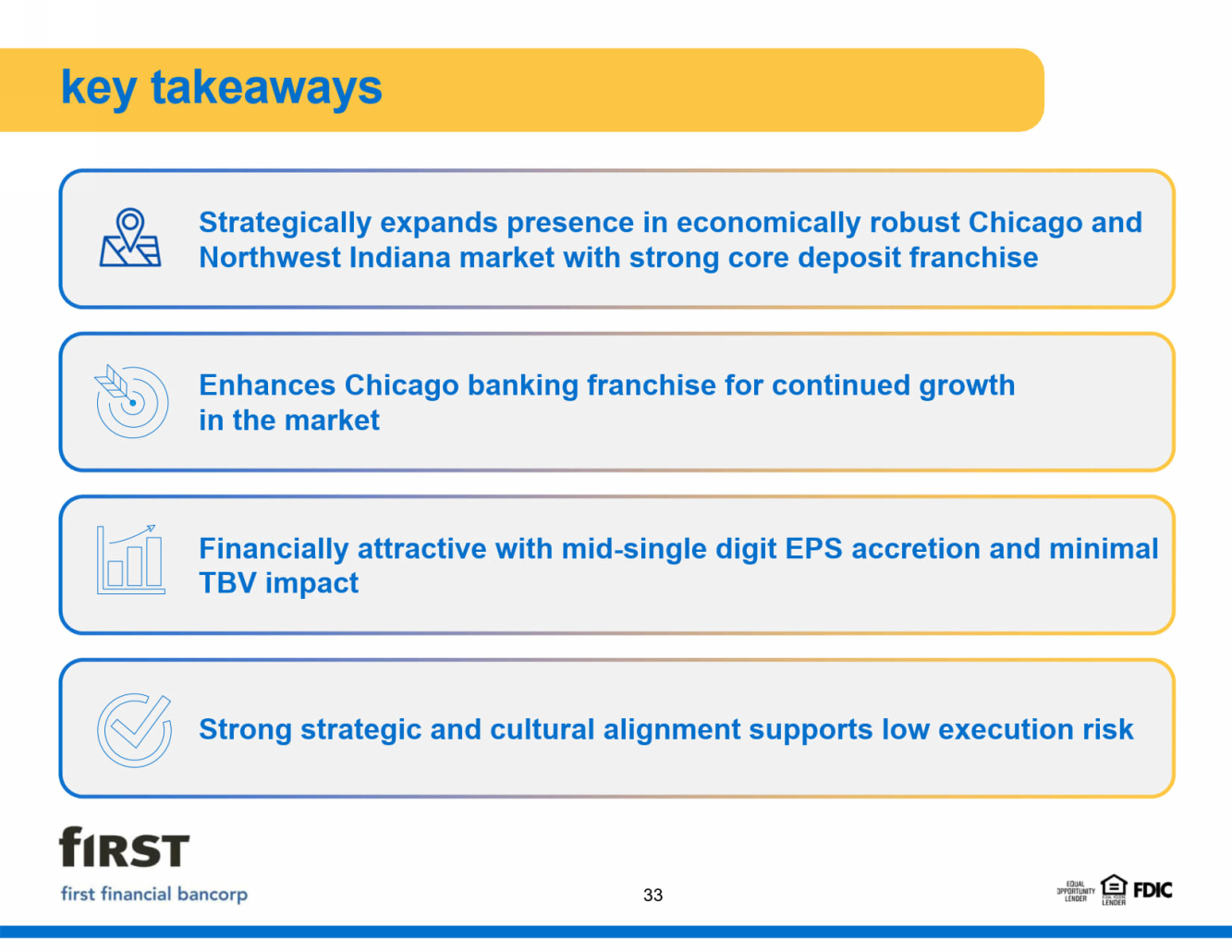
Thank you, Jamie. Before we conclude our prepared remarks, I want to comment on our third quarter outlook digit loan growth on an annualized basis, while on the deposit side, we expect low single digit quarter margin remains around the highest in the peer group, steady in the 3.9 range over the next year. That assumes no changes in interest rates. This also assumes purchase accounting accretion that's in line with the second quarter. credit we expect third quarter levels and acl coverage to remain relatively stable pleased to see positive trends and we see net charge also approximating 25 to 30 basis points for the back half of the year consistent with our outlook for the last couple of years on fee income we expect foreign exchange and investment banking income to rebound and total fee income to be between 74 and 77 million dollars in the third quarter 17 million for foreign exchange and 22 to 24 million for leasing business revenue. Non-interest expenses are expected to be between 149 and 152 million dollars. We successfully completed the bank financial conversion in June and we are on pace to achieve our modeled costs. Banking locations is headquartered in Munster, Indiana and as such this acquisition is expected to strategically expand First Financial's ability to serve the consumers and businesses of the Chicagoland and northwest Indiana markets. $1.7 billion in deposits, $1.5 billion in loans, and $412 million in wealth assets under management with a similar operating philosophy. And not only does this transact request Indiana and Chicago, we believe the transaction is also an outstanding share of FinWord common stock will be converted into the right to receive 1.35 shares of First Financial common stock, valuing the transaction at approximately $208 million based on First Financial's closing price on July 20th. In addition, we expect the transaction to be approximately 5% accretive to First Financial's earnings per share and First Financial's tangible look value per share at closing is estimated to be only slightly diluted with an anticipated tangible look value earned back of just over half a year. For further details on the transaction, please refer to the slides 26 through 33 in our deck. including our recent acquisition of bank financial we will have added 2.9 billion dollars in lower cost deposits to our legacy operation in northwest indiana and have a total of 4.1 billion dollars in deposits in chicago and northwest indiana we'll have a branch network of over 40 offices and we'll have built an impressive combination of talent in commercial banking mortgage banking wealth management and specialty bank solutions complemented by our client-centered community focused business model that is the alternative to larger banks in the region. Through these two acquisitions, we expect to add approximately 8% in earnings per share accretion with no impact to change of look value, and the Chicago, North Dakota, Indiana market will become the second largest market in our company. Commitment to this market, First Financial is committed to donate $500,000 to its foundation for the benefit of local organizations in the community served by In addition to the $1 million we donated to the foundation when we entered the Chicago market with the completion of the acquisition of Bank Financial in January of this year. To wrap up my comments, the second quarter was another great question. We achieved record earnings while successfully integrating two bank acquisitions and positioning the company for continued success in the second half of the year. Regarding the recently integrated Westfield and Bank Financial acquisitions, we're very pleased with how our newer associates have assimilated into the company. they remain deeply committed to serving their clients and communities and their efforts have been instrumental in high client retention levels we are thankful for their dedication hard work and client focused approach over the past year i'm very proud of the work our teams have done throughout the integration process in our newly expanded markets finally we're really excited to announce our expansion in northwest indiana and chicago with finward and we look forward to the opportunities that this combination provides. With that, we'll now open up the call for questions. So, Leah?
Operator
We will now begin the question and answer session. If you would like to ask a question, please press star one to raise your hand. To withdraw your question, press star one again. We ask that you pick up your handset when asking a question to allow for optimum sound quality. If you are muted locally, please remember to unmute your device. Please stand by while we compile the Q&A roster. Your first question from the line of Brendan Nozell with Hovde Group. Your line is open. Please go ahead.
Hey, good morning, guys. Hope you're doing well.
Morning. Maybe starting off here on capital, just in light of the Finner deal, you're using some capital, but honestly, not that much for the transaction. So I guess two parts. One, three deals in short order. Are you on the M&A sidelines now? Or is there there's still an ability to transact. And then two, last quarter, you started talking about a higher total payout ratio. So, curious for your updated thoughts in light of the FinWord announcement.
Hey, Brennan, you're right. This is the third transaction. I think we closed, of course, Bank Financial in January, converted it in June. FinWord, we would hope we would close by year end and then convert sometime in the second deal. Very strategic. We think it's very important for what we're doing in that part of our footprint but it is uh somewhat incremental so we don't see ourselves on the sideline but we're not i mean you know there's just a window here where opportunities are popping up and so we'll we'll assess them as they come we don't see anything in the near term i would say near to intermediate term that we're focused on other than you know getting that company so that's probably i'd say uh four quarters or so and then we'll just see what happens uh as we get into 27 and brendan this is jamie so on the um and you had there
so you know just with the with the common dividend we kind of look in that 33 range i think we're right in that mid-30s right now and yeah we talked about i think um the last quarter bumping that up to include um to include some buybacks and so with the with the deal kind of you know in in quarter, I think we'll be in the market. We're kind of looking at breaking them up into three parts with a third-ish, a common dividend, retaining for organic growth and potentially some small M&A like we're doing now, and then allocating a third. So I think that's the long term going forward.
Fantastic. That's a helpful color for both of you. Maybe pivoting to fee income. As always, you give really good color on expectations for the lease and forex lines. Maybe just help us with client derivative fees and kind of the wealth management piece. I guess there was an investment banking component for wealth this quarter. So just kind of help us on what was going on this quarter and then how those kind of fit into the fee outlook going forward.
Sure. Brendan, this is Archie again. So on foreign exchange, a little bit lower than Q1, a little bit lower maybe than their their run rate but if you look at it for the first half of the year so q1 q2 we always said this is a little bit of a lumpy this business has some lumpiness to it but if you look at it even over the last first half of last year they're up about almost 12% in revenue so you know this year 29.4% first half last year 26.3 so they're doing fine they do have lumpiness you know we've always said there's a core part of their business, a lot of small transactions, and then they have some chunky pieces a little bit larger based on some of the clients they work with, especially those who may be buying or selling companies. So that creates a little bit of chunkiness in their results. So we look at it over the first half of the year, their own plan versus our internal budget and doing quite a bit. On the wealth side, we have a small amount that really makes up our investment banking income. again it's very small it probably does five to six million in revenue uh so you think about it kind of you know a million half a quarter uh kind of would be kind of an average but again it's chunky coming into the quarter we had two deals we expected to get done in the quarter and they both just got put in the in the third quarter there's a pipeline the nice pipeline of other deals but they just get closed when they get close so it's just a small enough business that But if you don't get one, then it changes what happens there.
Thank you for taking my questions. Much appreciated.
Operator
Your next question is from the line of Daniel Tameo with Bancorp. Your line is open. Please go ahead.
Thanks, guys. Still with Raymond James, by the way, but moving on.
Hey, Archie and Jamie. Um, so I guess first just on the deal, um, curious what your plans are for the, uh, the FinWord balance sheet, any, um, sales considered in terms of, um, you know, anything in the loan side securities, um, book, curious what you're going to do with that and, um, you know, bigger picture, how you see the size of the balance sheet trending over the next several quarters.
Yeah, Danny, on the loan side, the asset quality is stable. We just see that we'll bring in a team of, you know, that big of a team up there. So we're going to incorporate the abilities. So if anything, we can do more with the clients they have and, you know, go out and I think the loans on the books, we're going to use that team to go deeper with their clients and bigger on the security side.
I mean, I think what we'll end up doing just because, you know, typically, you know, these smaller banks will have a lot of different pieces and Q-sips. And so we'll probably we'll probably blow a lot of it out. But that, you know, that gets all gets accounted for in purchase accounting. So we we already have that, I guess, their unrealized loss built into the accretion in the deal. So, you know, we'll basically blow it out and reinvest it at current rates, which is what purchasing does anyway. But nothing really, you know, any big change in the balance sheet, nothing like we had on Bank Financial where we sold, you know, the big chunk of loans. It's really just, you know, kind of, I would say, selling and reinvesting into, you know, more of our side. But nothing radical that would change the math or anything.
And in terms of, like, I know it's a tough question, but ultimate balance sheet, you know, the trajectory of the balance sheet post-close, you expect, and this kind of wraps in a question on, you know, the legacy bank. But obviously, you've been kind of staying flattish, maybe modest growth, just overall balance sheet despite the sizable loan growth. Is that probably still the plan over the next several quarters as the balance sheet kind of continues to normalize?
Yeah, Danny, this is Jamie. So, yeah, I think you're talking about last quarter, we talked about kind of going forward what our plan was in terms of earning assets. And so I think with the loan growth that we see going forward, our plan, you know, if you look at our balance sheet now, the securities portfolio is a little bit outsized compared to what we would normally run just because of all the cash that we got in. in the first quarter from bank financial. And then, you know, they already had a fairly low loan to deposit ratio. And then we sold, you know, about 400 million of their loans. So we basically got about a billion dollars in excess funding there, which we put most of that to work in the securities portfolio for the time being. And then over time here, and really when I say over time, it's probably over the next year to two years, we'll let that securities portfolio kind of bleed back down. So our plan for the short term is that we're funding roughly about 50% of the loan growth through the cash flow in the securities portfolio.
So if we are growing uh if we're growing loans in that uh kind of mid mid to high single digits call it six seven percent about half of that will get funded through the securities portfolio and half of that will be great that's very helpful appreciate it um and then i guess this last one uh for you archie on on the m&a um side just more more high level i mean does this feel like you mentioned your or this is now, Chicago is now your second biggest market. Does that feel like it's a good size for you post close of this deal that, you know, you're fine kind of growing organically going forward or are you still interested in opportunities to further the penetration in Chicago?
Yeah, I think, Daniel, $4 billion at least gets us to a place where, you know, when we're smaller it's harder to do so I think we've got ourselves to that we can do that now also just spend more money on the brand and introducing a brand of the market probably we're probably better able to do that I think there's opportunities in the in that market still and I think you know these two these two these two companies that well one we've we've closed and now the The one that we were announcing yesterday will give us opportunity, you know, some more to do. But I think if if this is where we landed, it's big enough.
OK, well, great. Thanks for all the color guys. Appreciate it.
Operator
Your next question from the line of Brandon Rudd with Stephen Zink. Your line is open. Please go ahead.
Morning. I said maybe my first one on on expenses. With the close at the end of this year, can you maybe kind of talk about when the conversion takes place and then in which quarter next year do you think you have 100% of the cost saves realized?
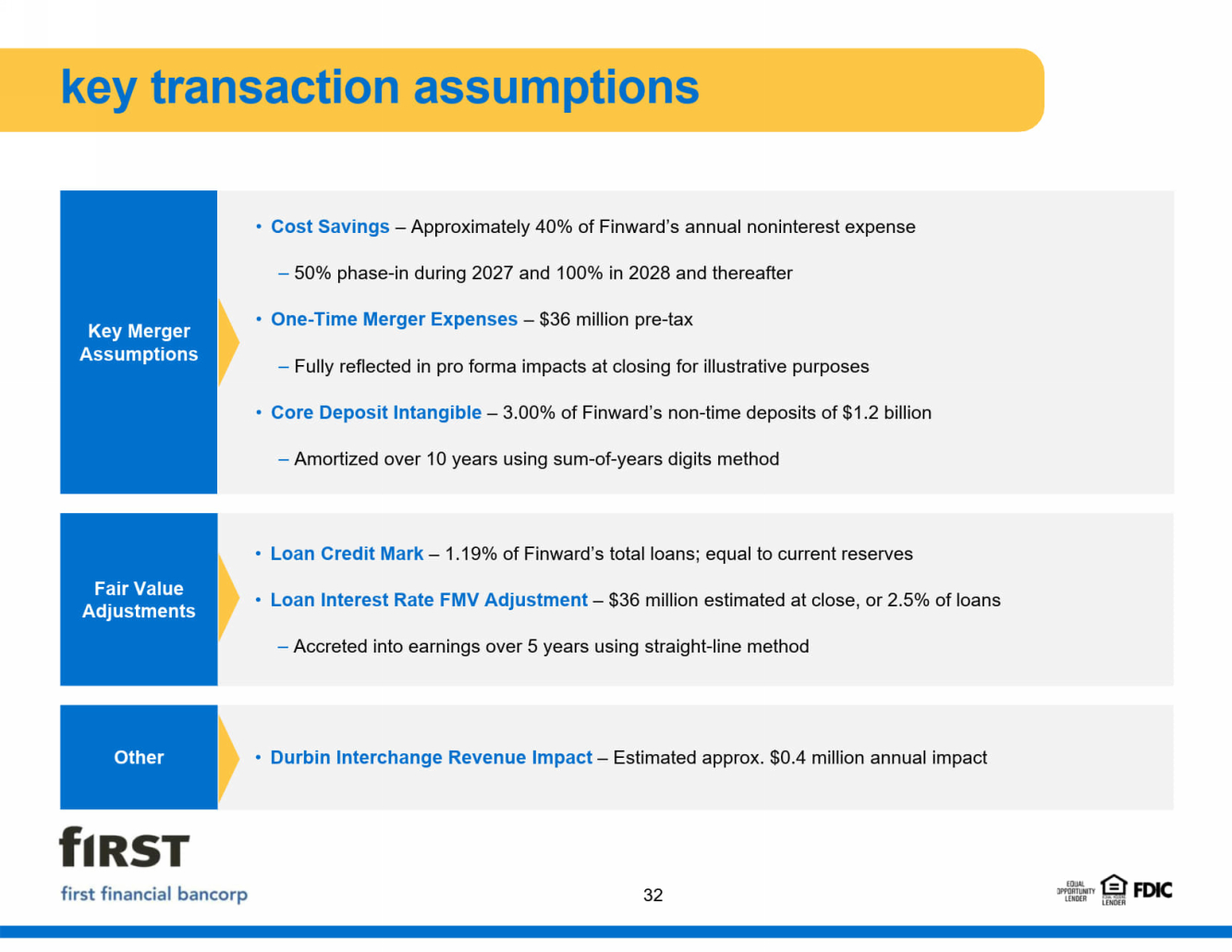
Right. Yeah, so right now, obviously we're early in the process through the application process and whatnot, but we are anticipating that we would close at the end of the year, so call it January. one um you know we think that the the conversion then would take place sometime um in the second quarter so if you just said right now let's just say that the conversion takes place in the middle of the second quarter then we would realize cost savings you know for the um you know those would bleed in a little bit post-conversion so call it you probably have 90 days after that conversion So if you said as of the end of the third quarter of next year, everything would be fully baked in. And I guess the first cost savings would be the fourth quarter of next year.
Thank you for that. And then can you talk about the trajectory for your core margin on a go-forward basis? And what I mean by that is like when you look at new balance sheet growth, where are you seeing new loan yields come on on a blended basis and then same for blended interest spring deposit costs?
Yeah. So right now, I mean, I would tell you, absent any changes in rates, you know, we look at our margin here going forward as being relatively flat. You know, we're in that. And I guess the only variable there, which is what we had in the second quarter, would be on the accretion income front. So, you know, if we're at 398, I mean, I think the bias here going forward is we see a little bit of a slight uptick in deposit costs, and that's mainly due to, on the CD side, those repricing slightly higher than what we have on the books right now. And then the same thing on the loan side, in the second quarter, essentially our origination yields and payoff yields were essentially right on top of each other. So we get the loan side, and then so we get a little bit of growth, so we'll get a little bit of net interest income dollars growth, but we see the margin staying relatively flat. Now, I mean, here going forward, obviously, the markets are indicating, you know, the next movement in rates could be, you know, rates going up, which would obviously help us from a margin standpoint. And so at this point, post bank financial and Westfield, we're still asset sensitive, slightly less than what we were maybe a year or so ago or a year or two ago. But we see a 25 basis point rate hike helps us initially about seven or eight basis points. And then when it, because the loans are going to move right away with SOFR and then the deposit costs will bleed in over time. And then as everything kind of stabilizes, the 25 basis point increase is about, call it around three or four basis points of increase in the margin.
Got it. Thank you very much for the caller, and I appreciate you for taking my questions.
All right, Brandon. Thanks, Brandon. Take care.
Operator
Your next question comes from the line of Brian Soran with Truist Securities. Your line is open. Please go ahead.
Oh, hey. I had one question on M&A and then one follow-up on the new loan production yields. And to start on M&A, I mean, it just feels like with other banks, it's almost like a truism that, you know, you've got to accept tangible book value dilution up front. You get the earnings accretion, hopefully, going forward, and you kind of solve for a three-year earn back. You know, when we look at these deals you've done and the ability to generate, you know, 20% accretion now across the three deals with really not much impact on tangible book, Would you say it was more just unique opportunities or is there something you're doing and the type of deals you're looking for, the way you're structuring the transactions that, you know, this is more of a sustained thing you can do going forward as well if opportunities arise?
Brian, this is Archie. Certainly in the bank financial case, that was so. I think we hit it with a bargain purchase gain there. And you think about this one, it's probably a significant part of the opportunities that way. And we are disciplined that we certainly wouldn't want to go over three. And, you know, we like, I think, the differential in prices or the earnback mass. But we are going to stay within a pretty tight discipline with regard to how we do the capital.
And then maybe on the new loan deal, I know you all have been pretty intentional about building, you know, a pretty diversified platform. And maybe that's serving you well in the current environment. You know, a lot of your peers are kind of starting to point to new production being below the existing book and creating some margin pressure. You know, is it as you break apart all the pockets of loans you have, is it kind of across the board that it's relatively equal or are there maybe some unique or niche businesses that or markets that are maybe coming in a little better? And that's why, you know, maybe you're not seeing the same trend that some of the peers are citing.
Yeah, Brian. Hey, it's Jamie. So, yeah, like I mentioned that essentially the origination and payoff yields were right on top of each other for the second quarter within like five, 10 basis points. And that's for the whole portfolio. But yeah, there are some, I would say, some puts and takes in there. And where we are picking up, I think, a little bit of yield and spread that's kind of offsetting the payoffs really in the specialty. I think those are – the fact that that makes up about 15%, 20% of the loan book, and that's where we really saw, especially in the second quarter, a decent amount of our growth, I think that is helping prop those yields up a little bit. But, I mean, overall, we're seeing some deterioration in spreads and resulting yields in what I would call the core bank, but it's not significant. So, again, we're able to kind of offset that with the specialty lines.
Operator
As a reminder, to ask a question, please press star 1 on your telephone keypad to raise your hand. Your next question comes from the line of Henry Walczak, private investor. Your line is open. Please go ahead.
Good morning. Thanks for buying FinWord, or the old Northwest Indiana Bancorp. Hey, you guys are really making my summer super. And also, thanks for buying Bank Financial. show. I also had positions in those two companies. And again, super thanks for raising our dividend by a penny. It helps us all that are on Social Security. Thank you. I pull back.
Thank you, Henry. We look forward to the announcement.
Operator
This concludes the question and answer session. I will now turn the call back to Archie Brown for closing remarks.
Thank you, Leah, and integrating it into the company and building a much bigger market in Northwestern. Thanks for following us. We look forward to talking to you again next quarter. Have a nice day.
Operator
This concludes today's call. Thank you for attending. You may now disconnect.