Operator
Hello, everyone, and welcome to the Heritage Financial 2025 Q4 Earnings Call. My name is Emily, and I'll be coordinating your call today. After the presentation, you will have the opportunity to ask any questions, which you can do so by pressing star, followed by the number one on your telephone keypad. I would now like to turn the call over to Brian MacDonald, President and CEO, to begin. Please go ahead.
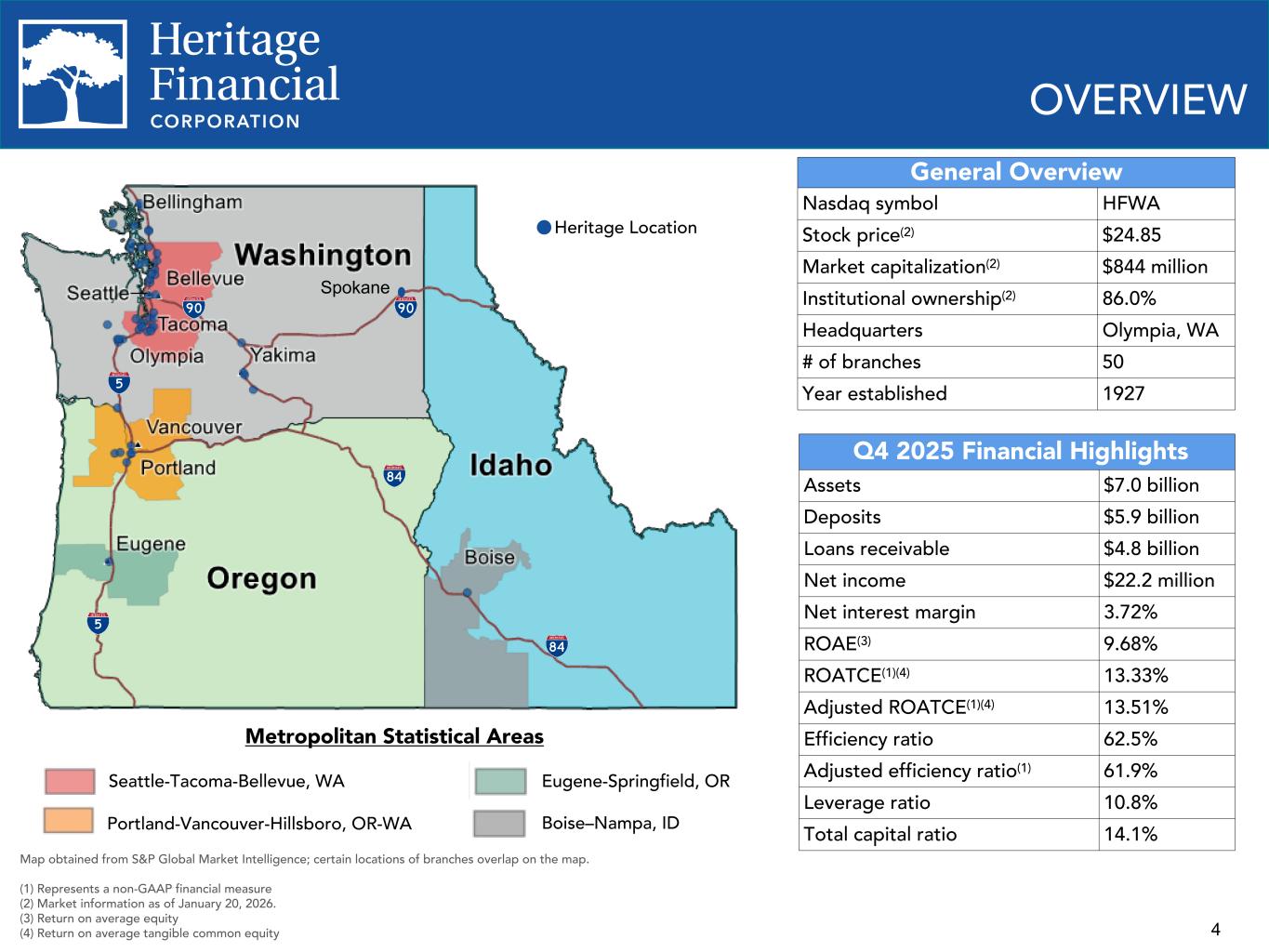
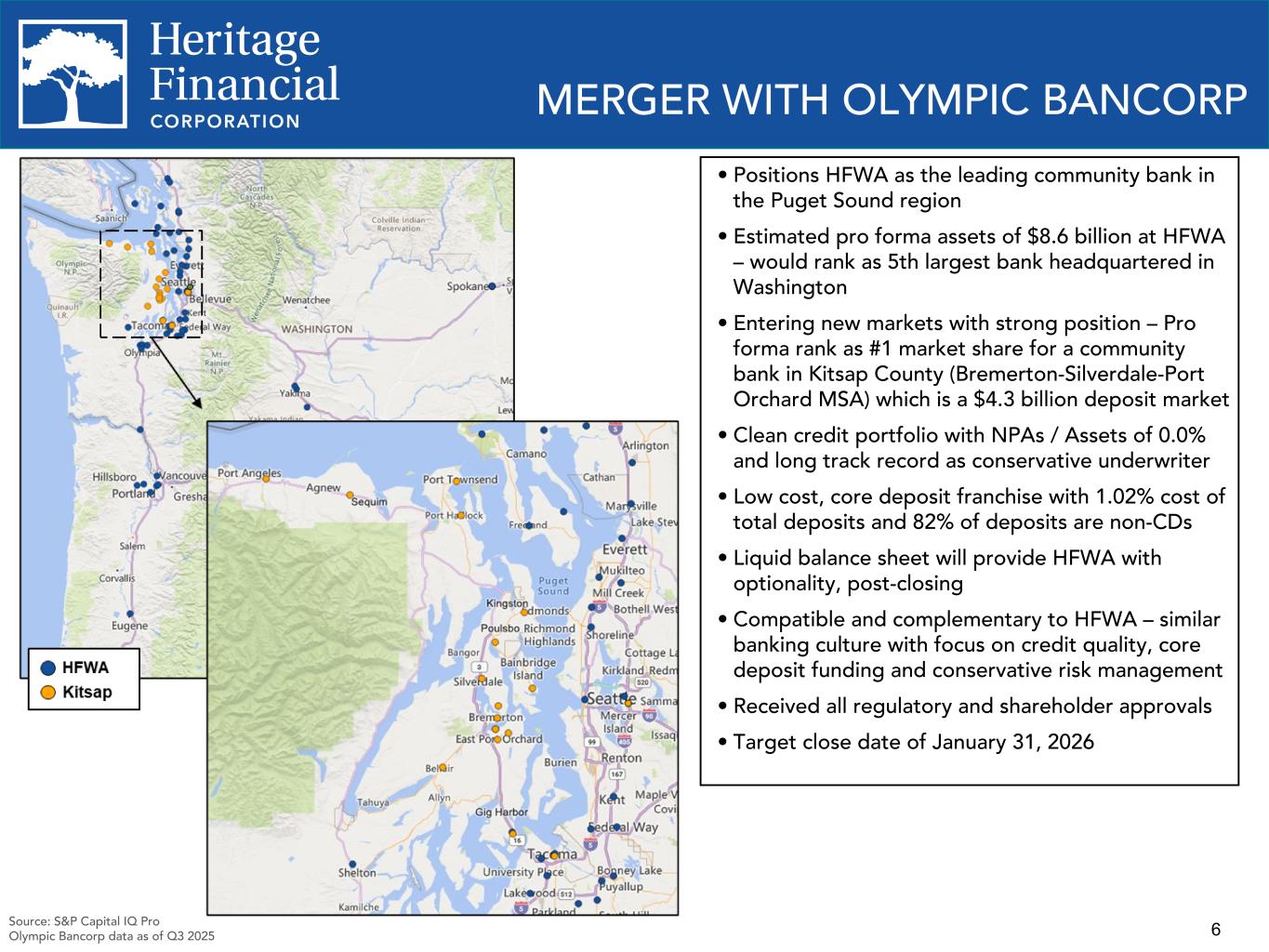
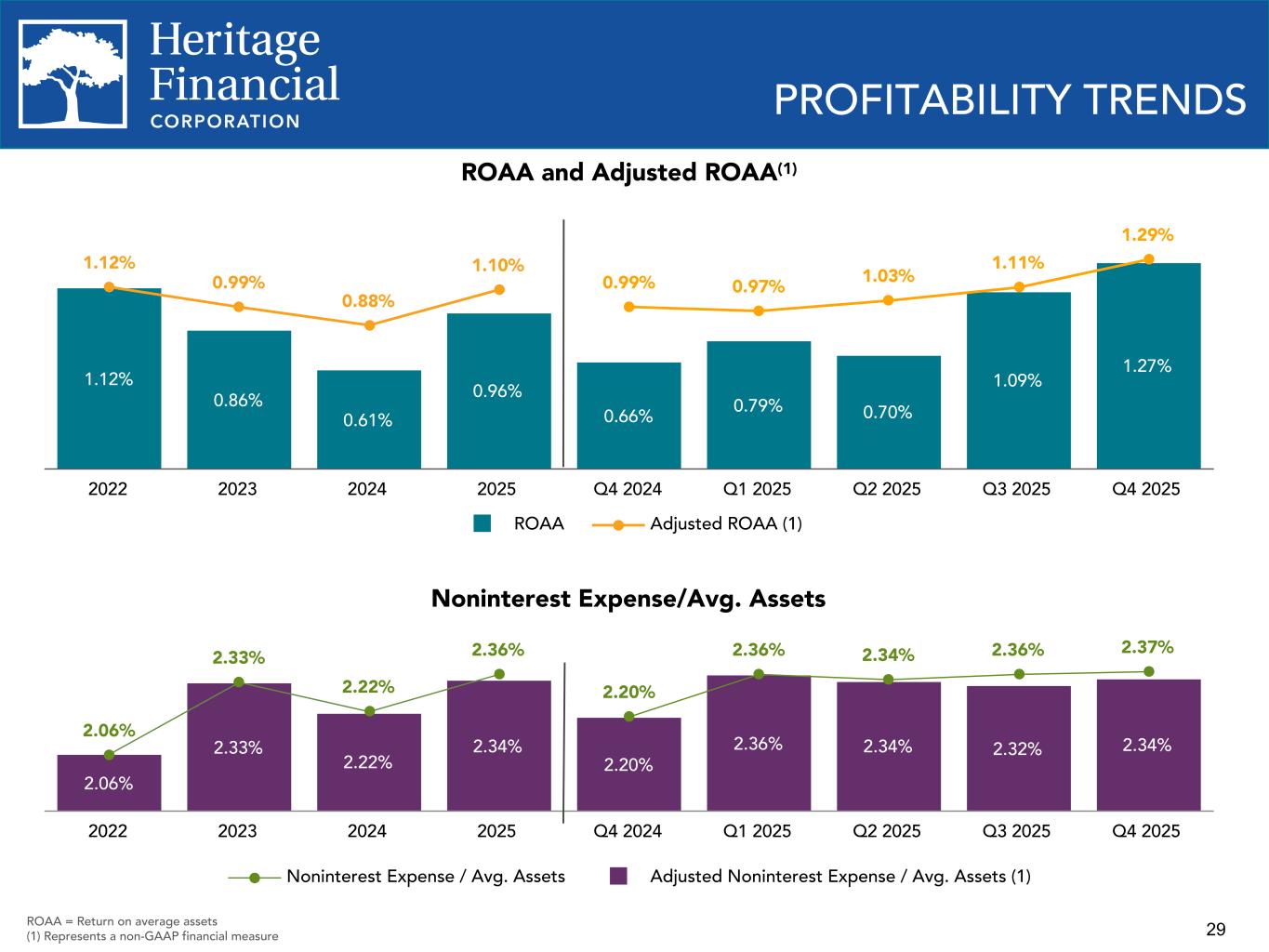
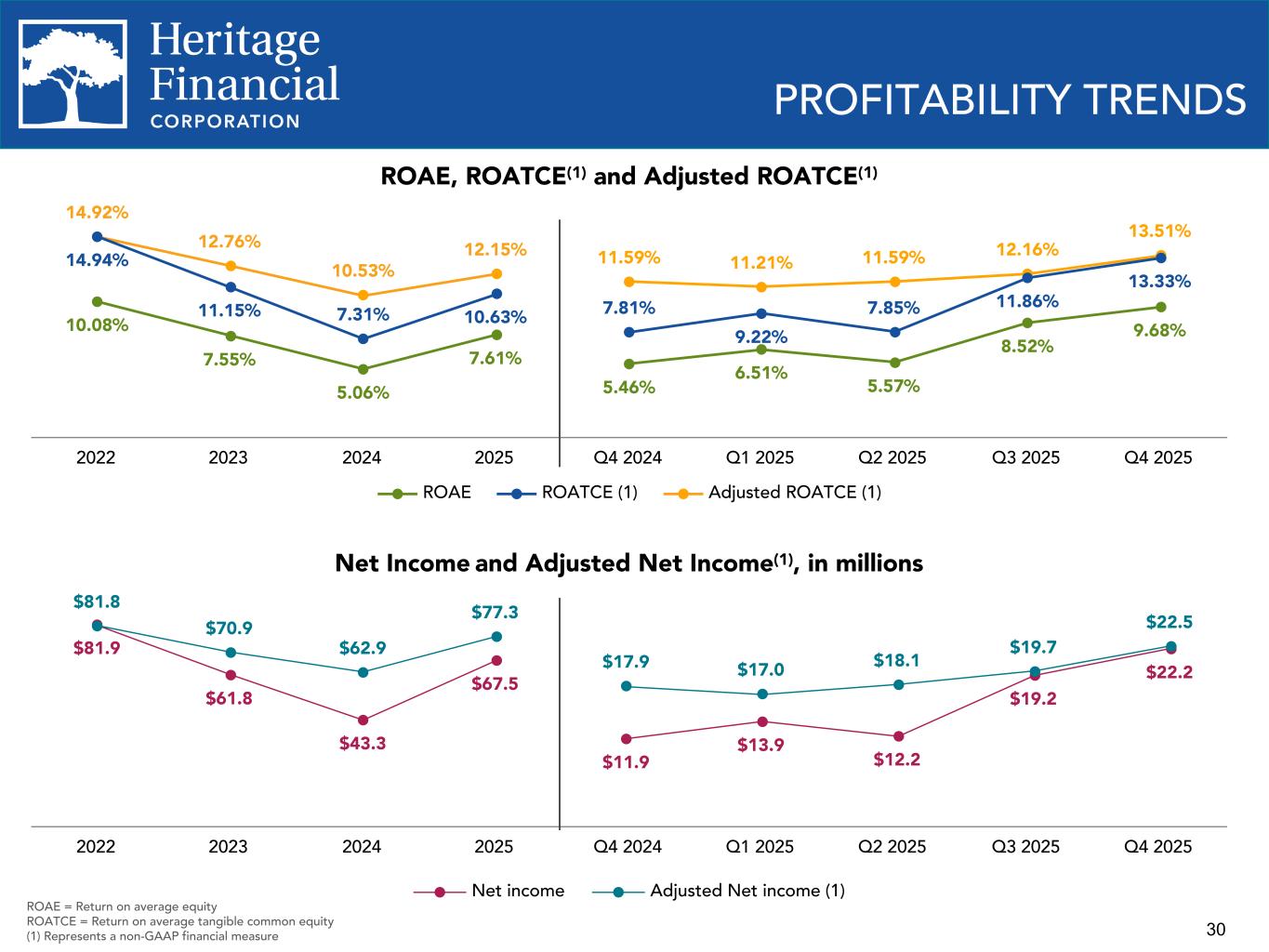
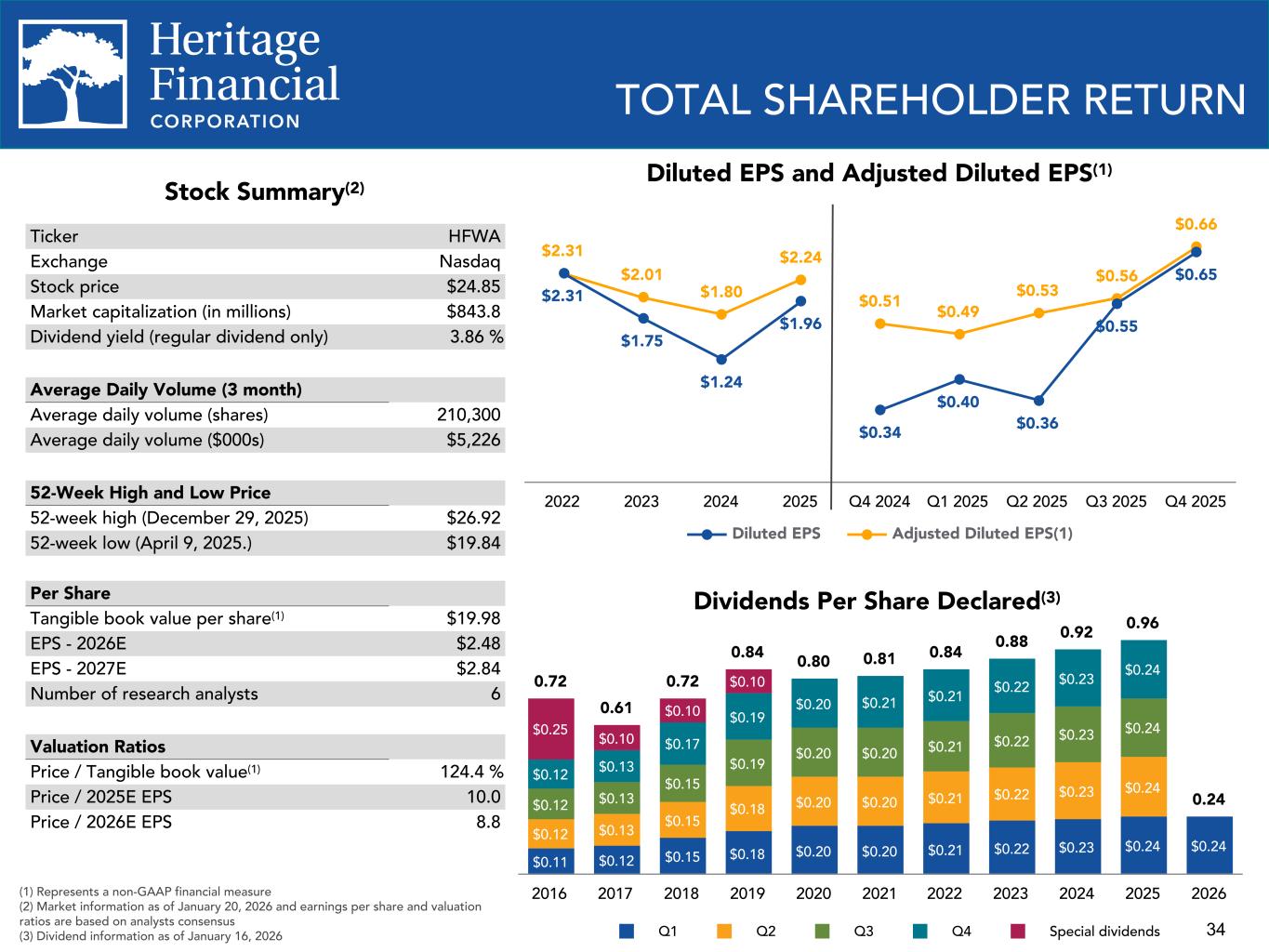
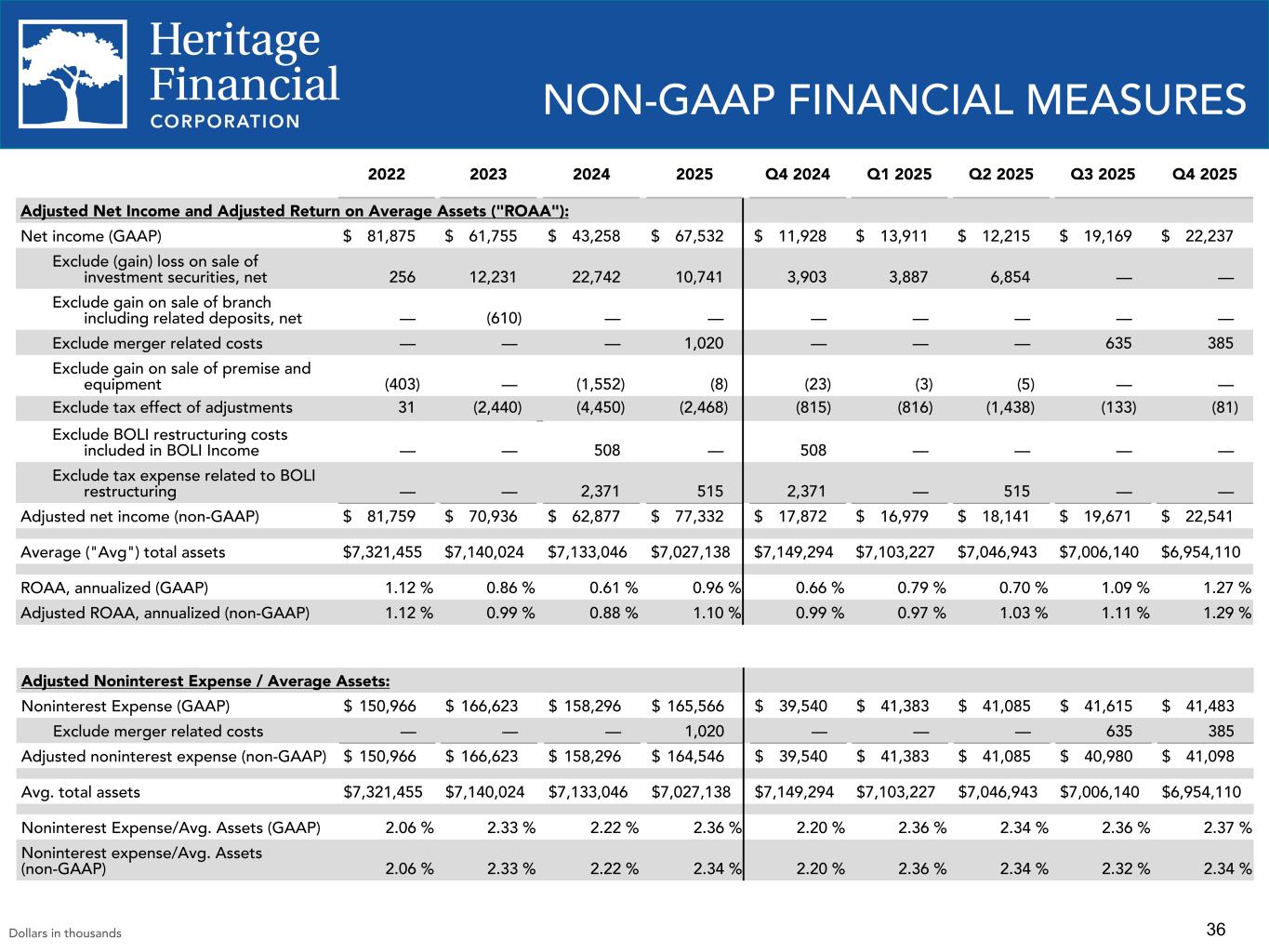
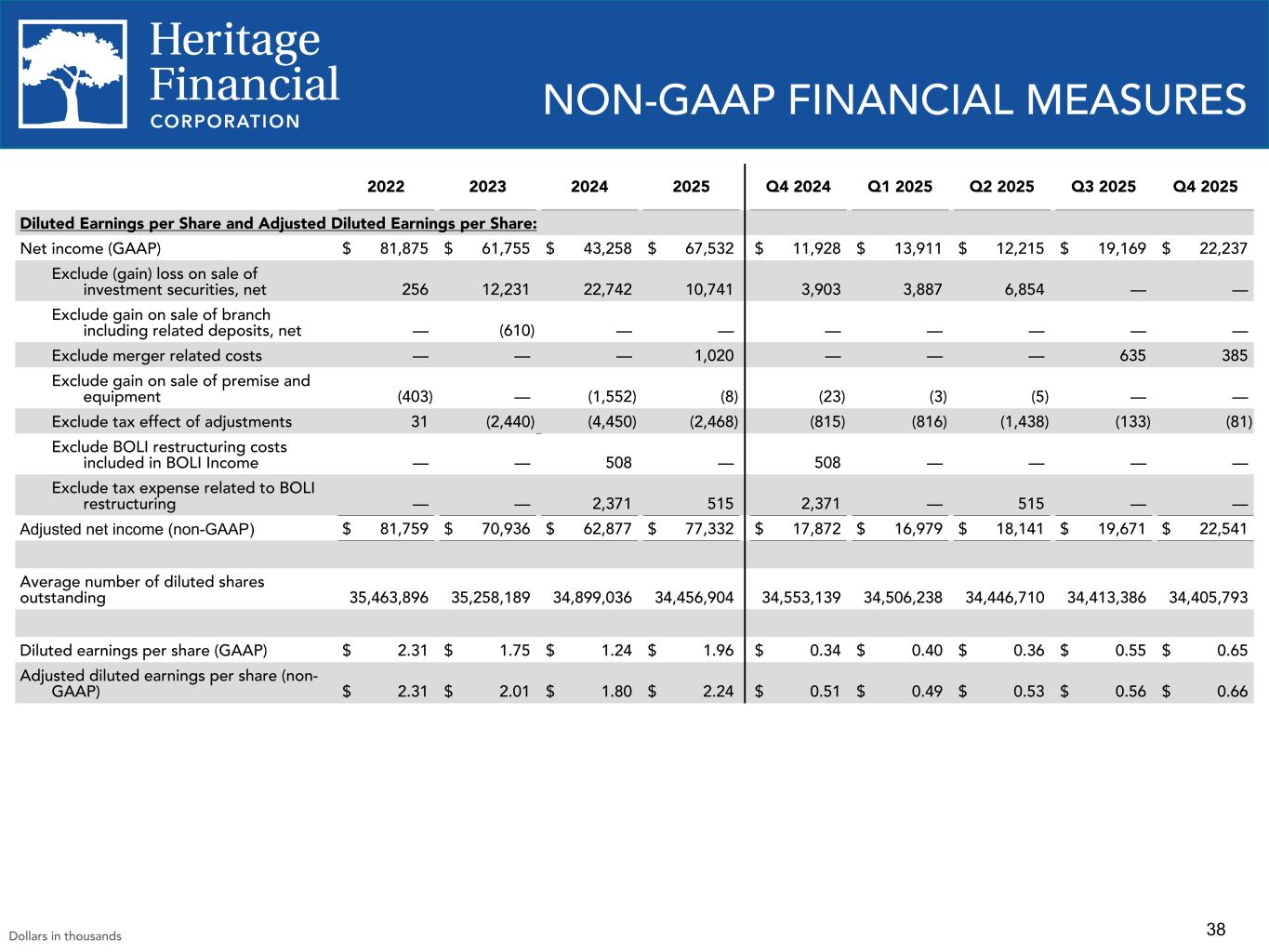
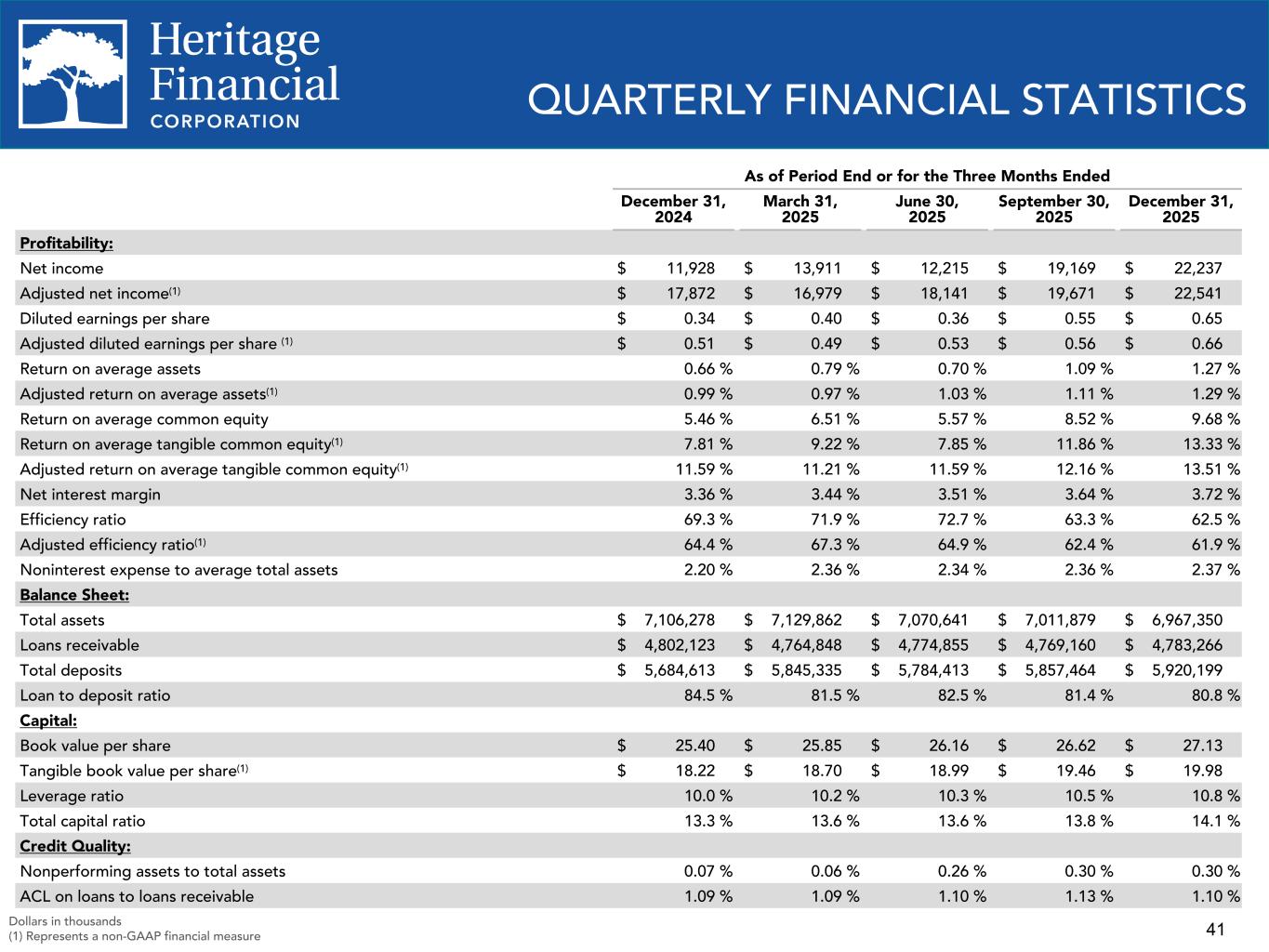
Thank you, Emily. Welcome and good morning to everyone who called in and those who may listen later. This is Brian McDonald, CEO of Heritage Financial. Attending with me are Don Johnson, Chief Financial Officer, and Tony Chalvant, Chief Credit Officer. Our fourth quarter earnings release went out this morning pre-market, and hopefully you've had the opportunity to review it prior to the call. In addition to the earnings release, we also posted an updated fourth quarter investor presentation on the investor relations portion of our corporate website, which includes more detail on our deposits, loan portfolio, liquidity, and credit quality. We will reference this presentation during the call. As a reminder, during this call, we may make forward-looking statements which are subject to economics and other factors. Important factors that could cause our actual results to differ materially from those indicated in the forward-looking statements are disclosed within the earnings release and the investor presentation. Our improving net interest margin and a shift in our loan mix benefiting the provision expense drove earnings higher in the fourth quarter. On an adjusted basis, diluted earnings per share was up 18% versus last quarter and up 29% versus the fourth quarter of 2024. And on the same adjusted basis, our ROA improved to 1.29% versus 0.99% in the fourth quarter of 2024. We now have regulatory and shareholder approval for the pending merger with Olympic Bancorp and plan to close at the end of January. Their addition to the Heritage franchise will add to the profitability of our operations and better position our company for growth in the Puget Sound market. We will now move to Don, who will take a few minutes to cover our financial results.
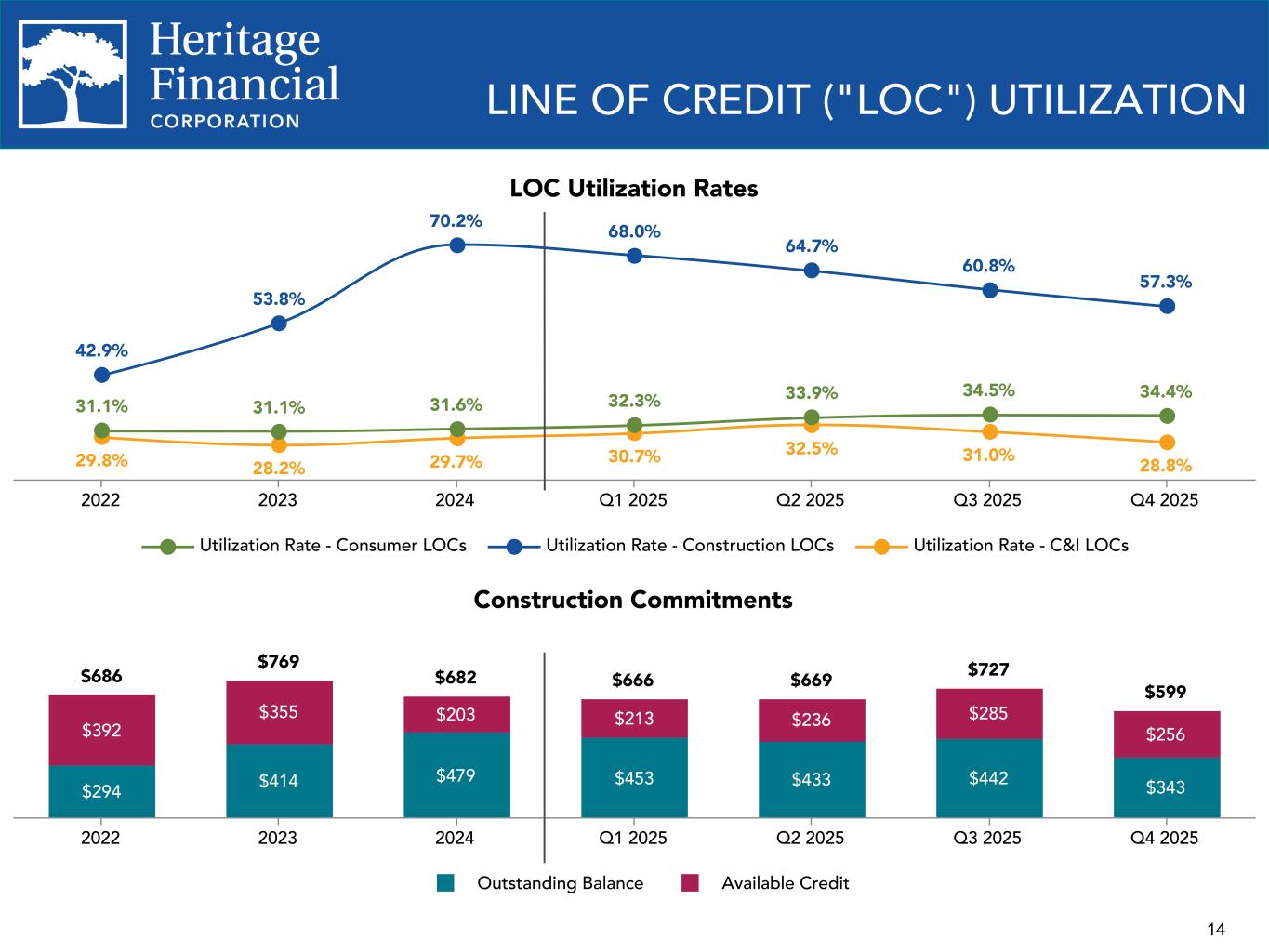
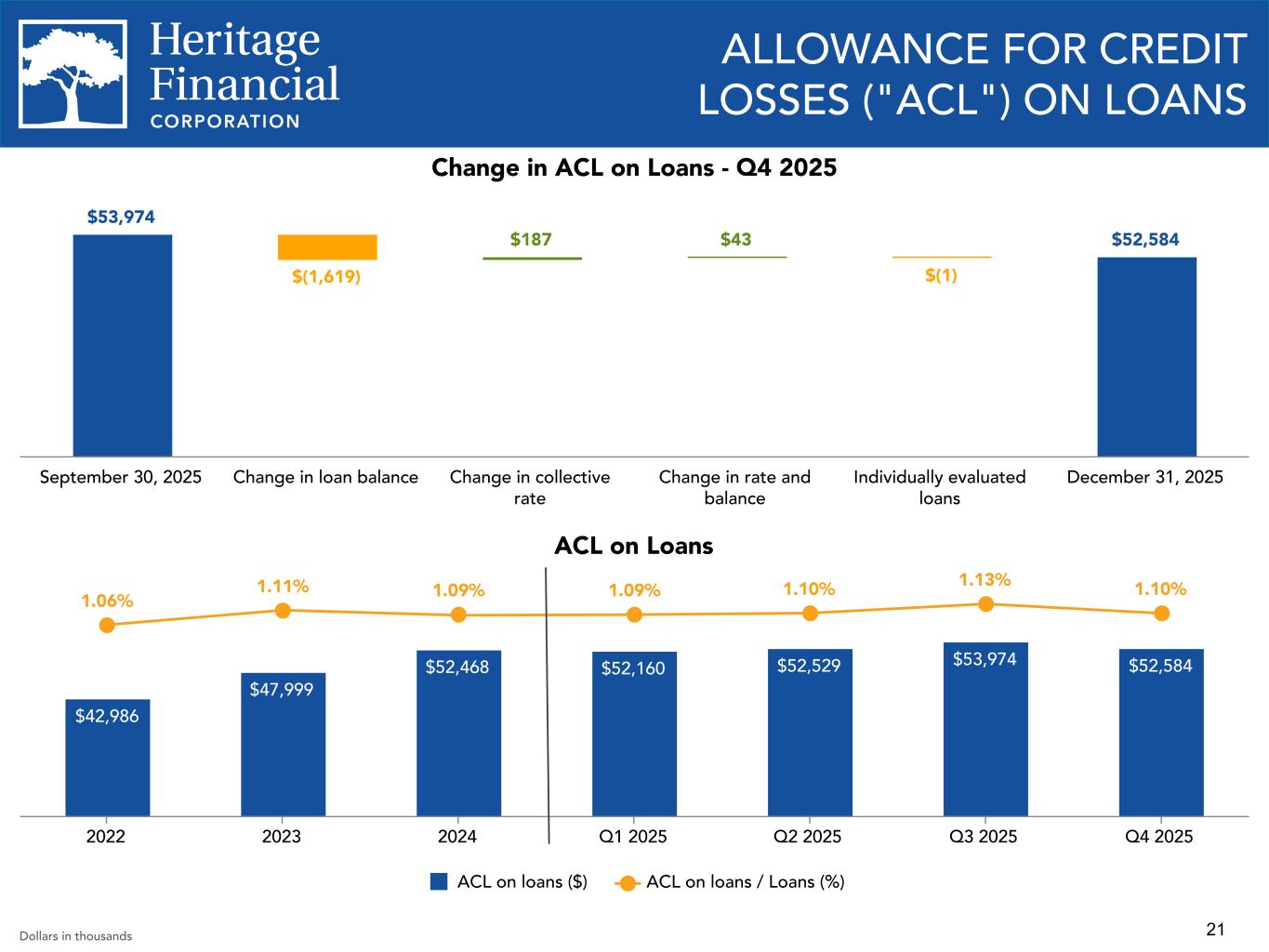
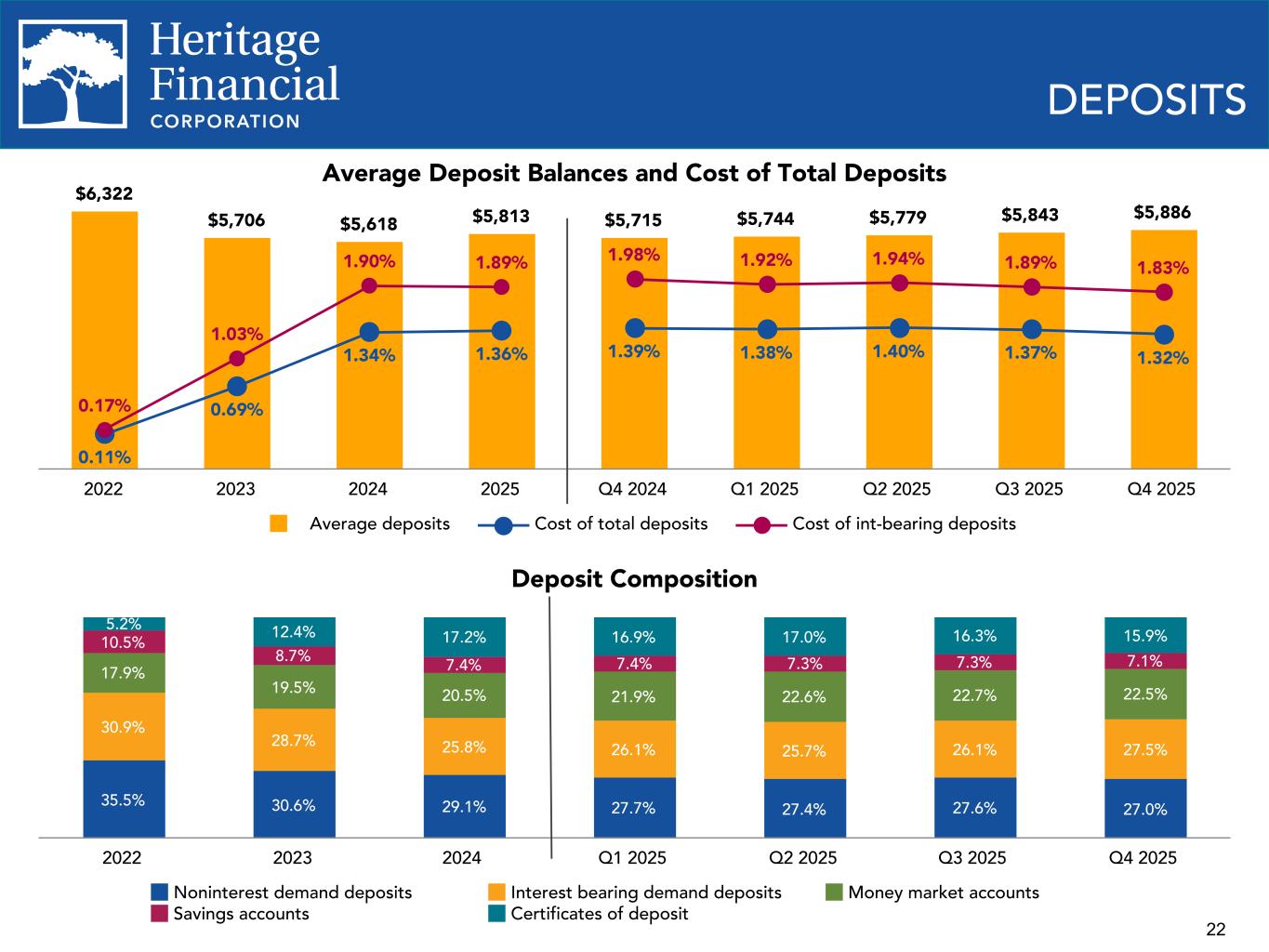
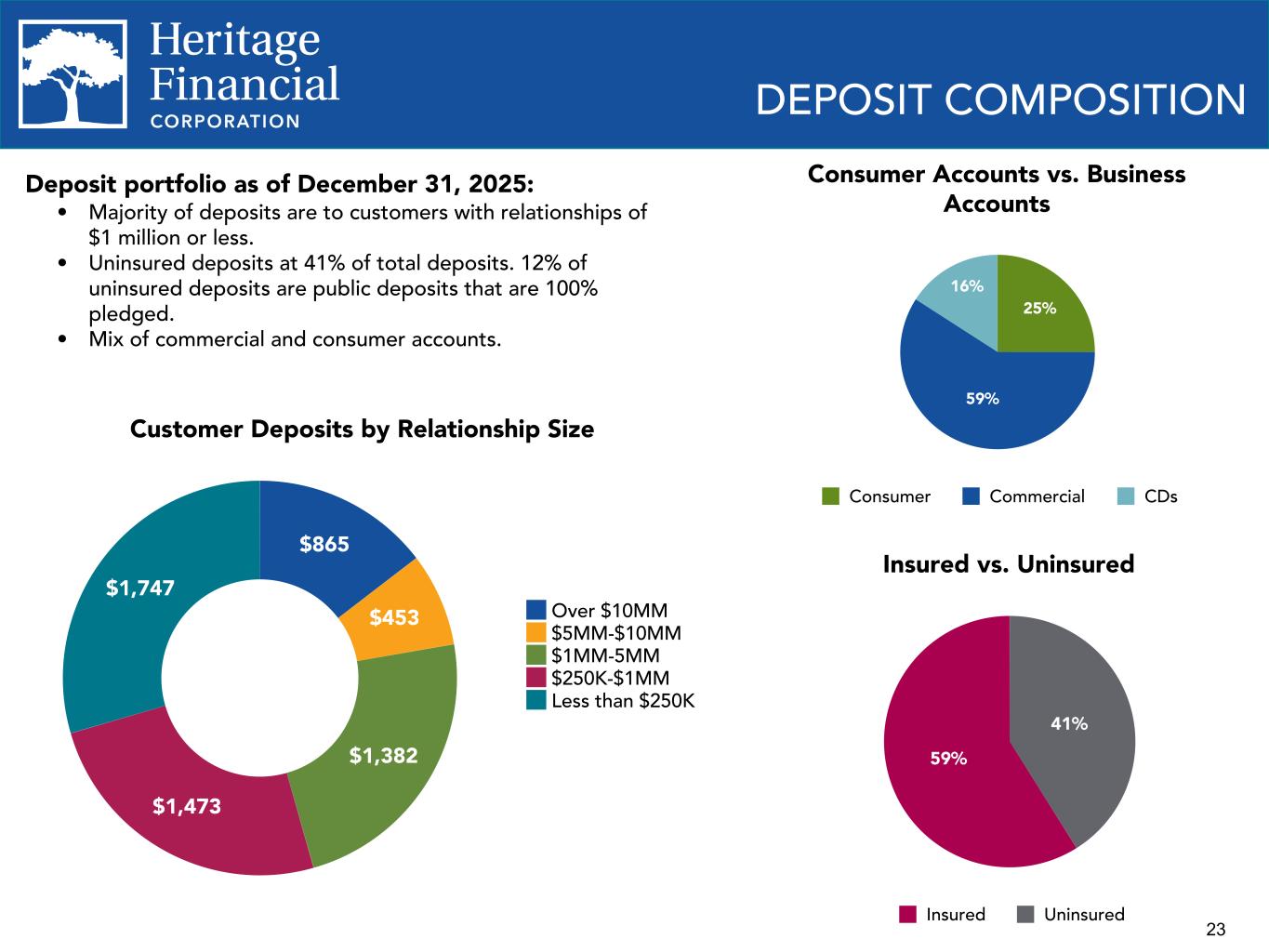
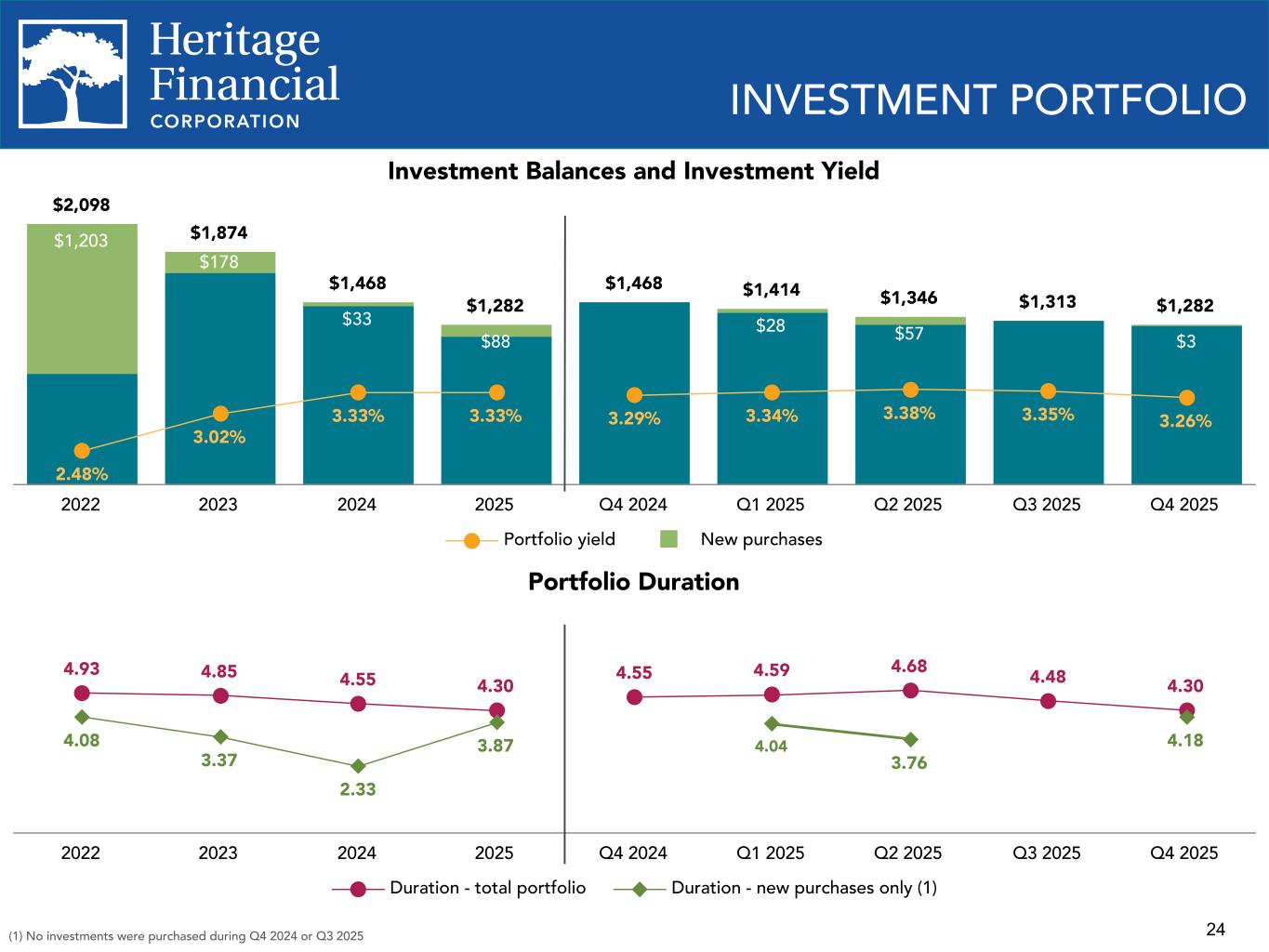
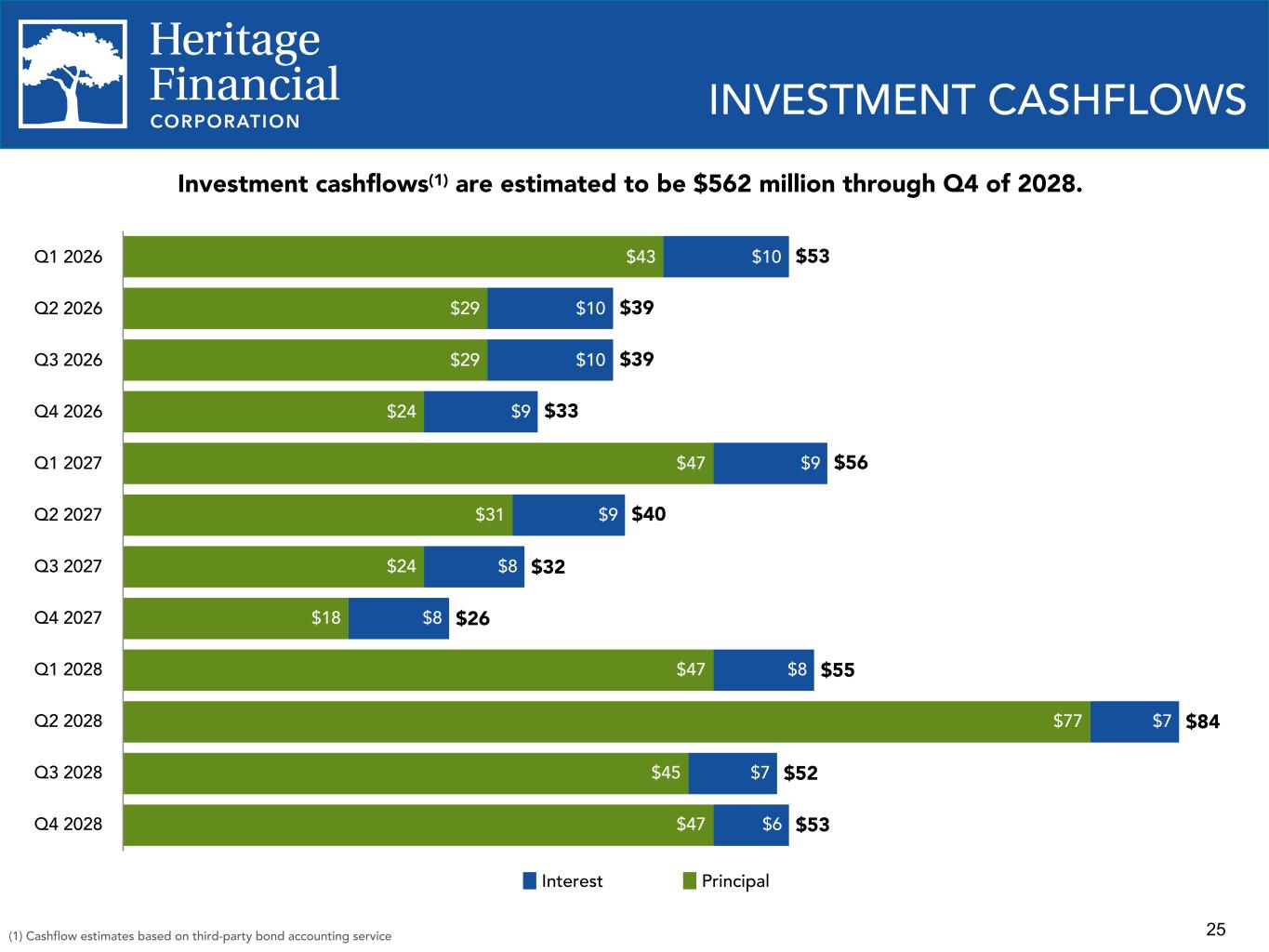
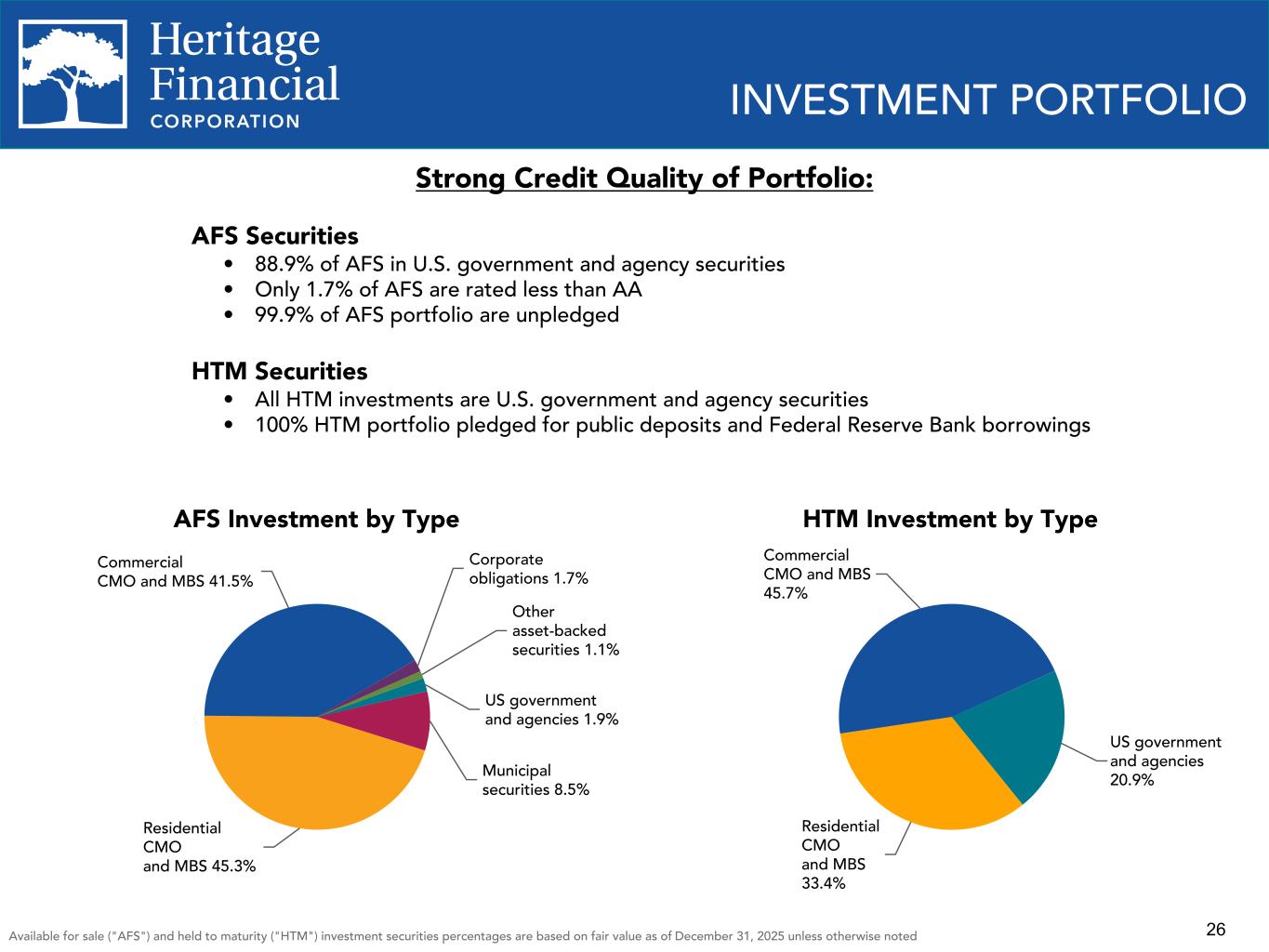
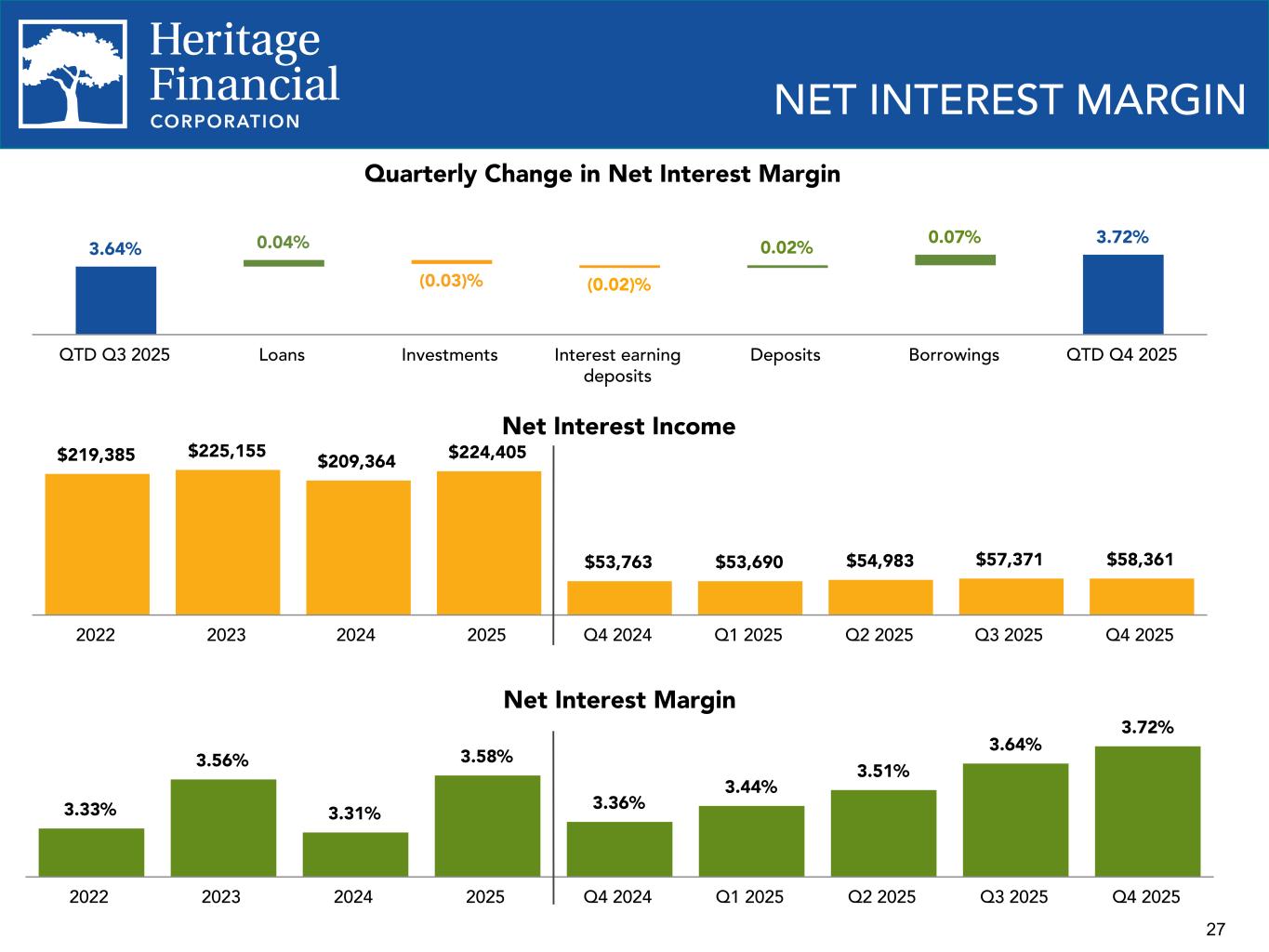
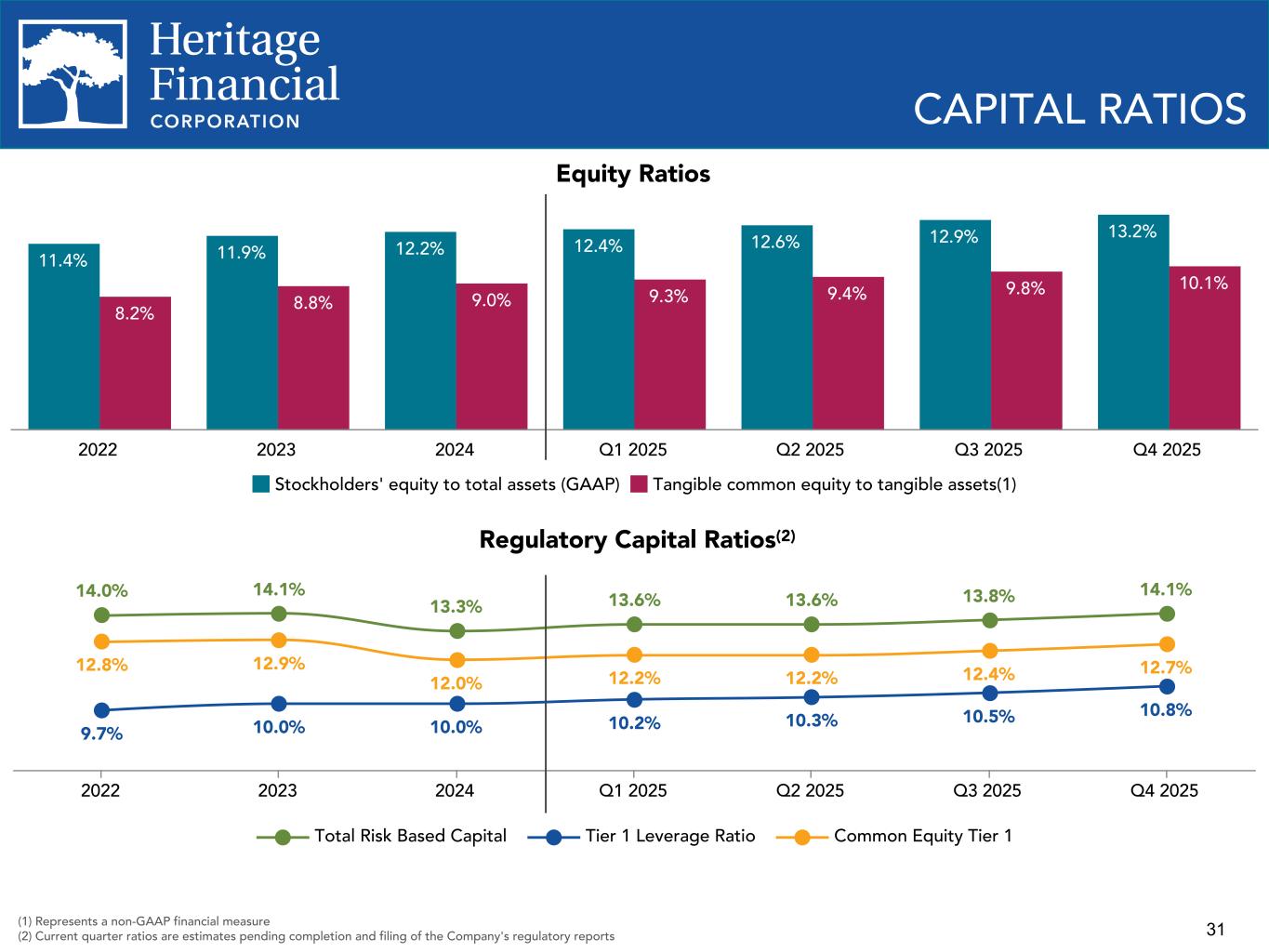
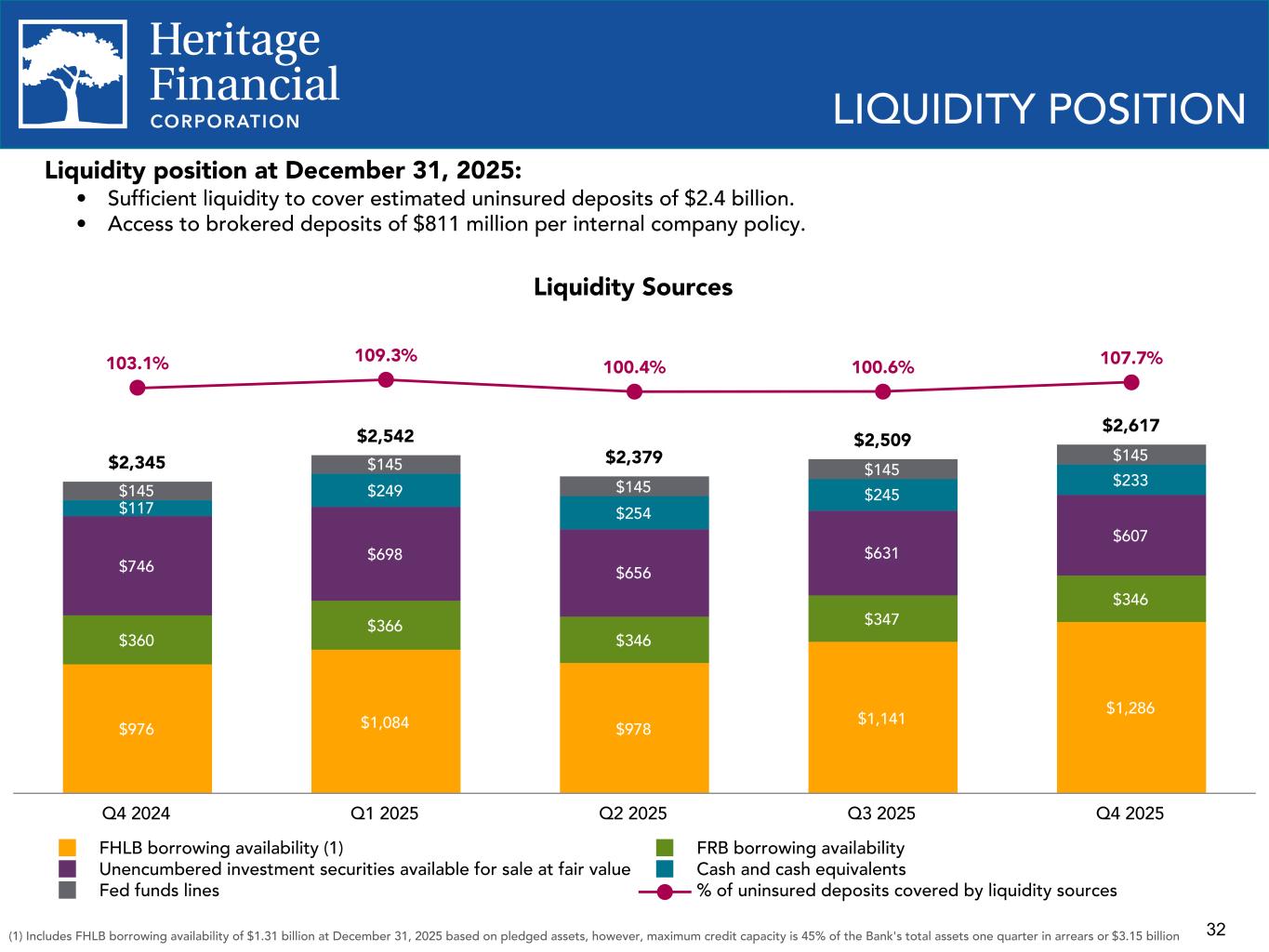
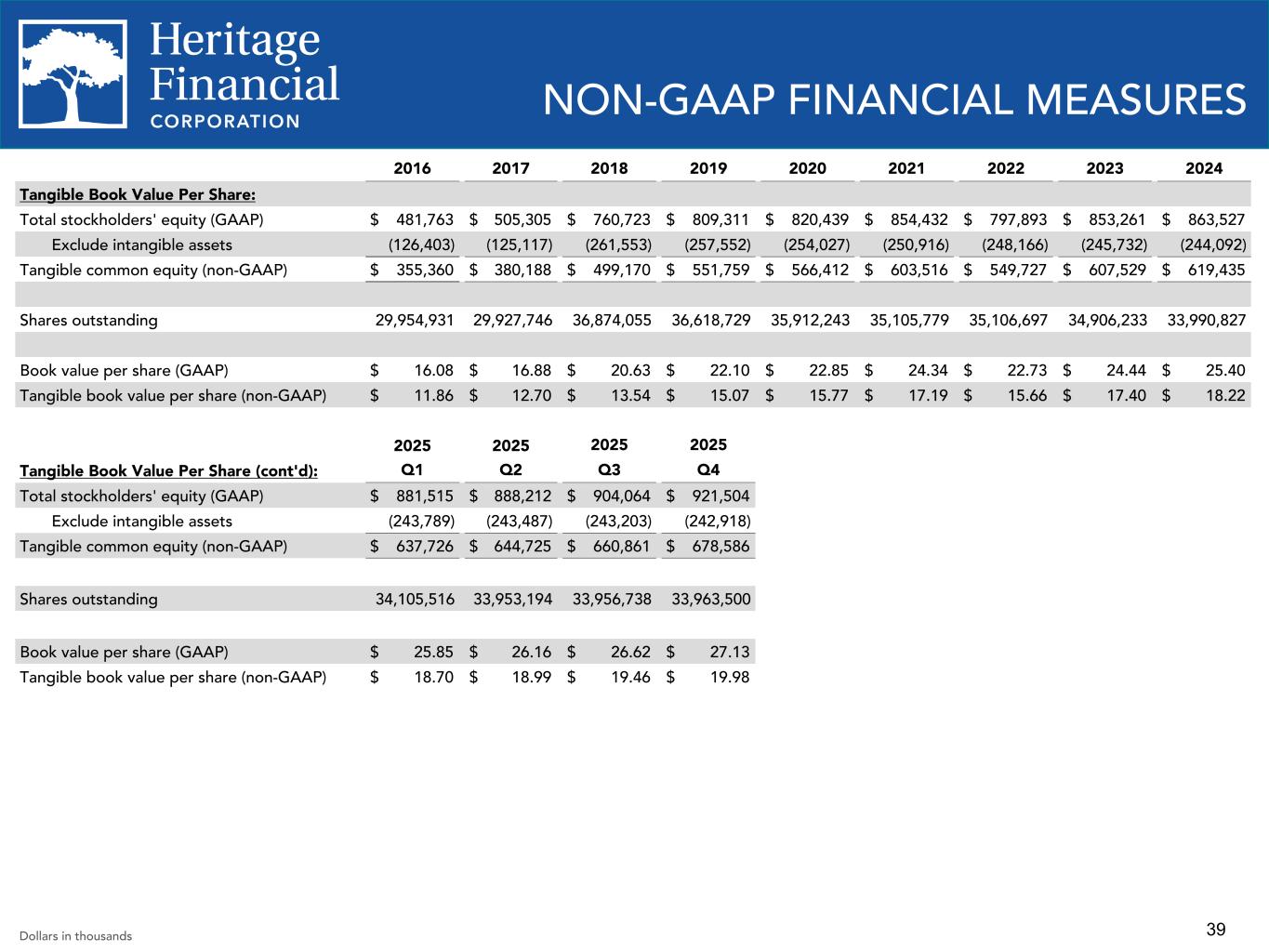
Thank you, Brian. I will be reviewing some of the main drivers of our performance for Q4 as I walk through our financial results unless otherwise noted all the prior period comparisons will be with the third quarter of 2025. Starting with the balance sheet total loan balances increased 14 million in Q4. Yields on the loan portfolio were 5.54 percent which is one basis point higher than Q3. The positive impact of new loans being originated at higher rates and adjustable rate loans repricing higher was partially offset by the impact of three rate cuts over the last four months of the year. Brian McDonald will have an update on loan production and yields in a few minutes. Total deposits increased to $63 million in Q4. This increase was due primarily to a $100 million increase in interest-bearing demand deposits. The cost of interest-bearing demand deposits decreased to 1.83% from 1.89% in the prior quarter. As a result of the rate cuts in Q4, we expect to see continued decreases in the cost of deposits. Investment balances decreased $31 million, due primarily to expected principal cash flows on the portfolio. The yield on the investment portfolio decreased nine basis points to 3.26% for Q4 compared to 3.35% in Q3. This decrease was partially due to a bond called in Q3 that provided approximately four basis points of additional accretion income that quarter, and partially due to the runoff of higher yielding bonds without replacement of those balances at current market rates. The cash flows provided by the investment portfolio, as well as growth in deposits, was used to pay down borrowings during the quarter. Barring balances decreased to $20 million at year end, from $138 million at the end of Q3. The remaining balances all mature in 2026. Moving on to the income statement, net interest income increased $1 million or 1.7% from the prior quarter due primarily to a higher net interest margin. The net interest margin increased to 3.72% from 3.64% in the prior quarter and from 3.36% in the fourth quarter of 2024. We recognized a reversal of provision for credit losses in the amount of $814,000 in Q4. This reversal was due primarily to a change in the mix of the loan portfolio. During Q4, commercial construction loans decreased, while permanent commercial real estate loan balances increased. We consider construction loans to have an inherently higher credit risk component and provided a much higher allowance on those loans. Therefore, the reallocation of those balances resulted in the allowance decreased to 1.10% in Q4 from 1.3% in Q3. In addition, net charge-offs remain at very low levels. Tony will have additional information on credit quality metrics in a few moments. Non-interest expense decreased $132,000 from the prior quarter due mostly to lower merger-related expenses. Comp and benefits expense was hired due primarily to increased incentive compensation accrual and not due to additional employees. We continue to manage our employee levels carefully as shown by decreases in average FTE from both the prior quarter and the same quarter in the prior year and finally moving on to capital all of our regulatory capital ratios remain comfortably above well capitalized thresholds and our TCE ratio was 10.1% up from 9.8% in the prior quarter we were inactive in both lost trades on investment and stock buybacks I will now pass the call to Tony who will have an update on our credit quality thank you Don I'm pleased to report that we ended the year with strong credit quality across all segments of our loan portfolio.
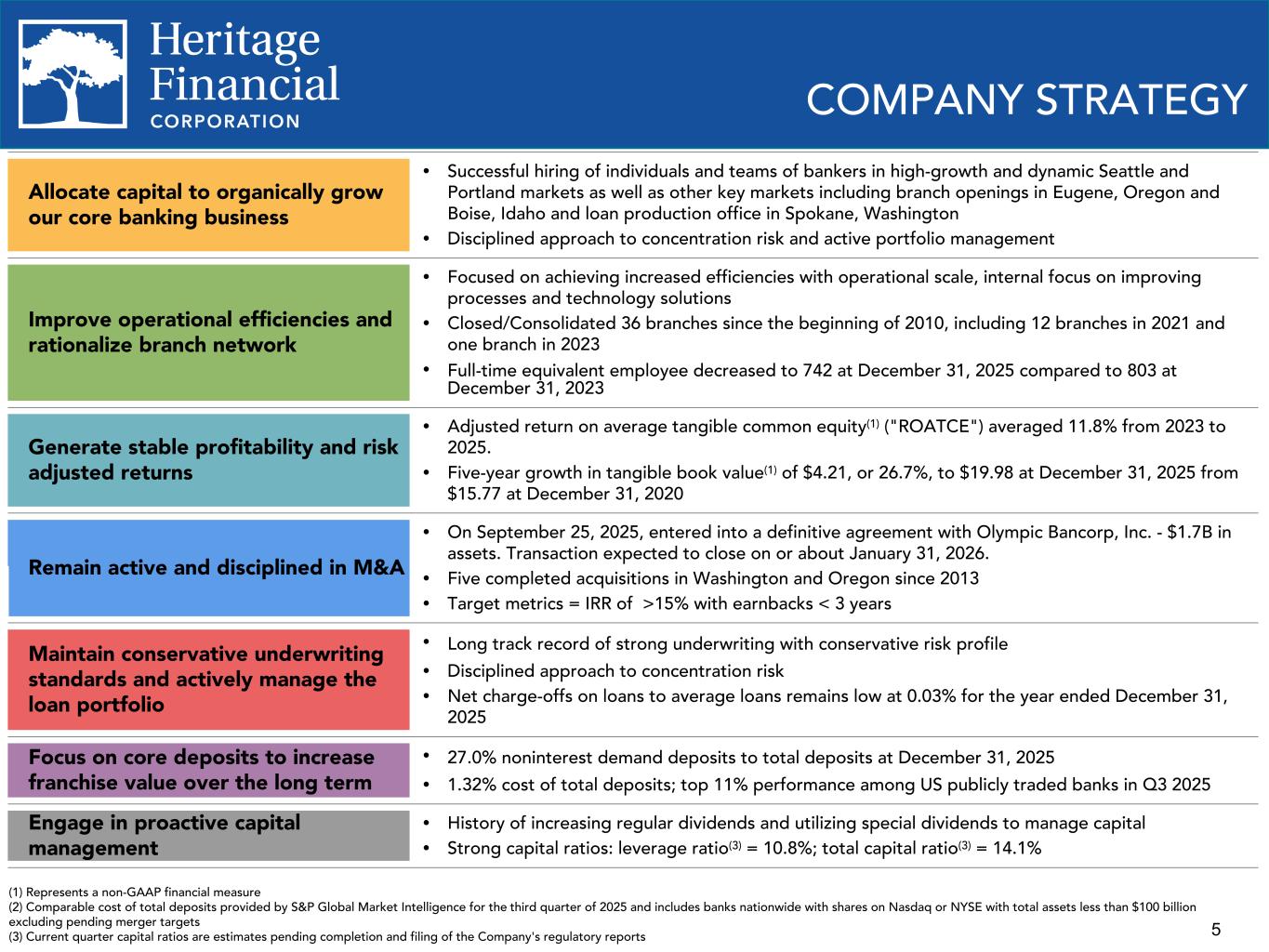
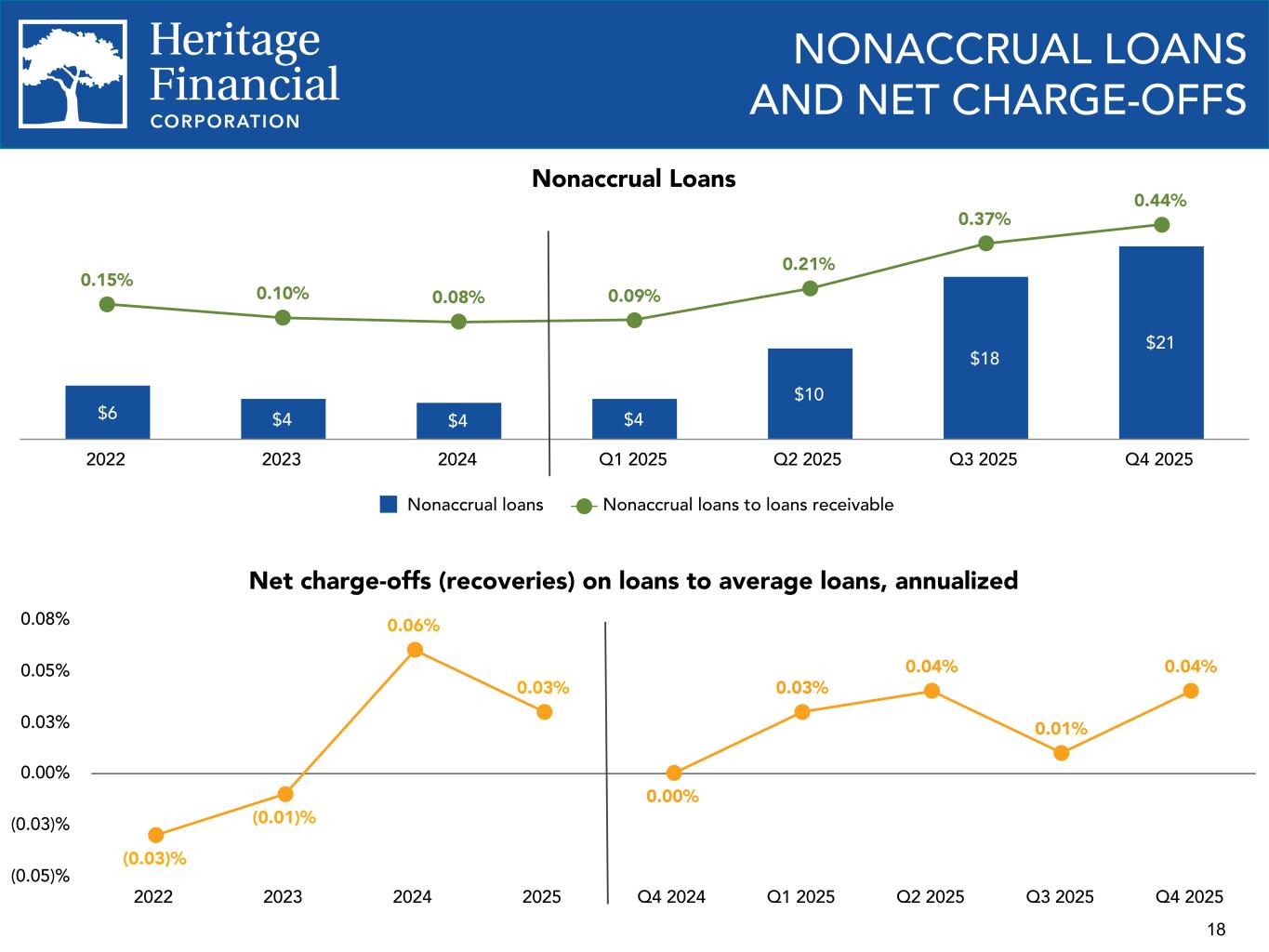
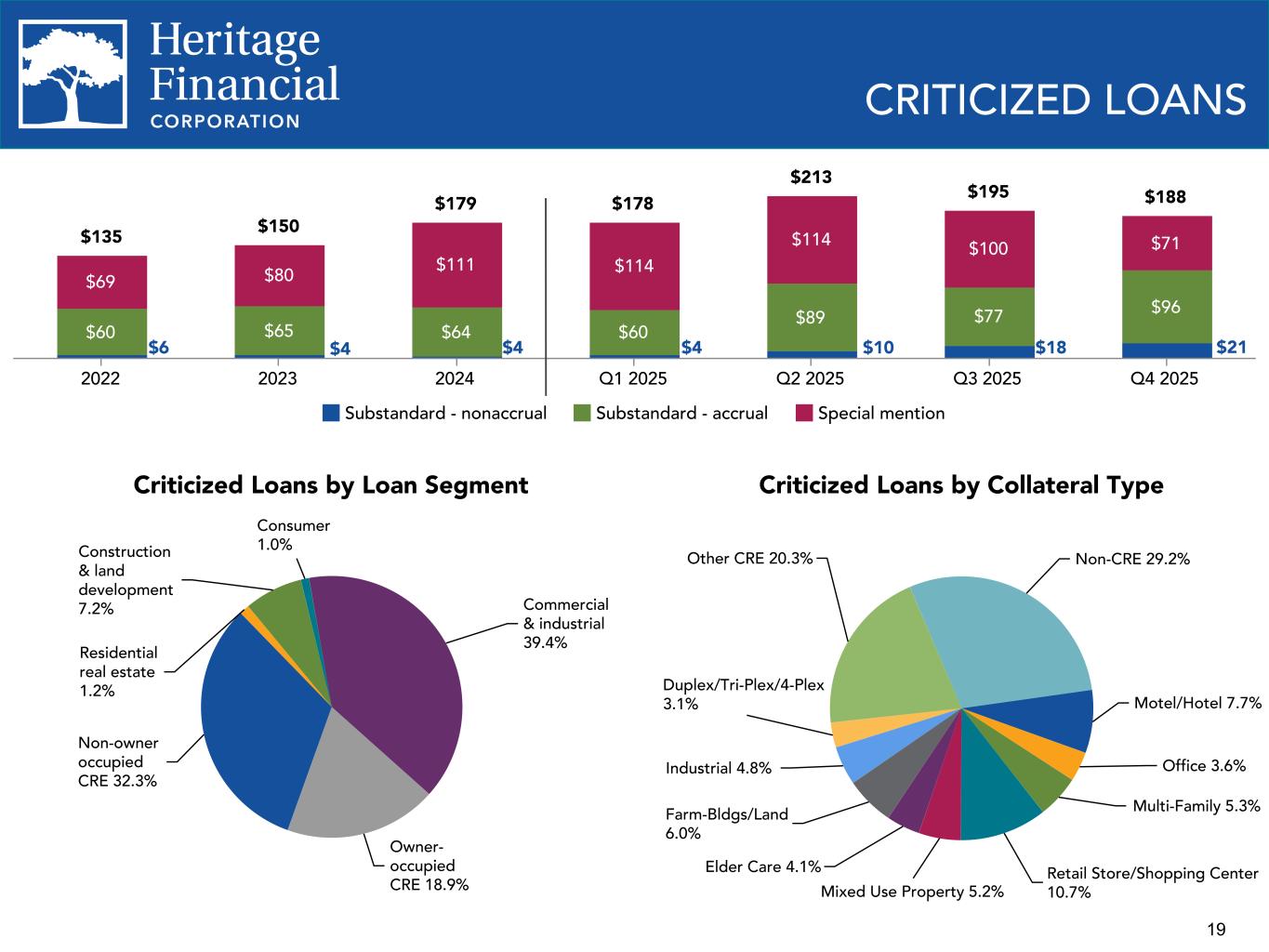
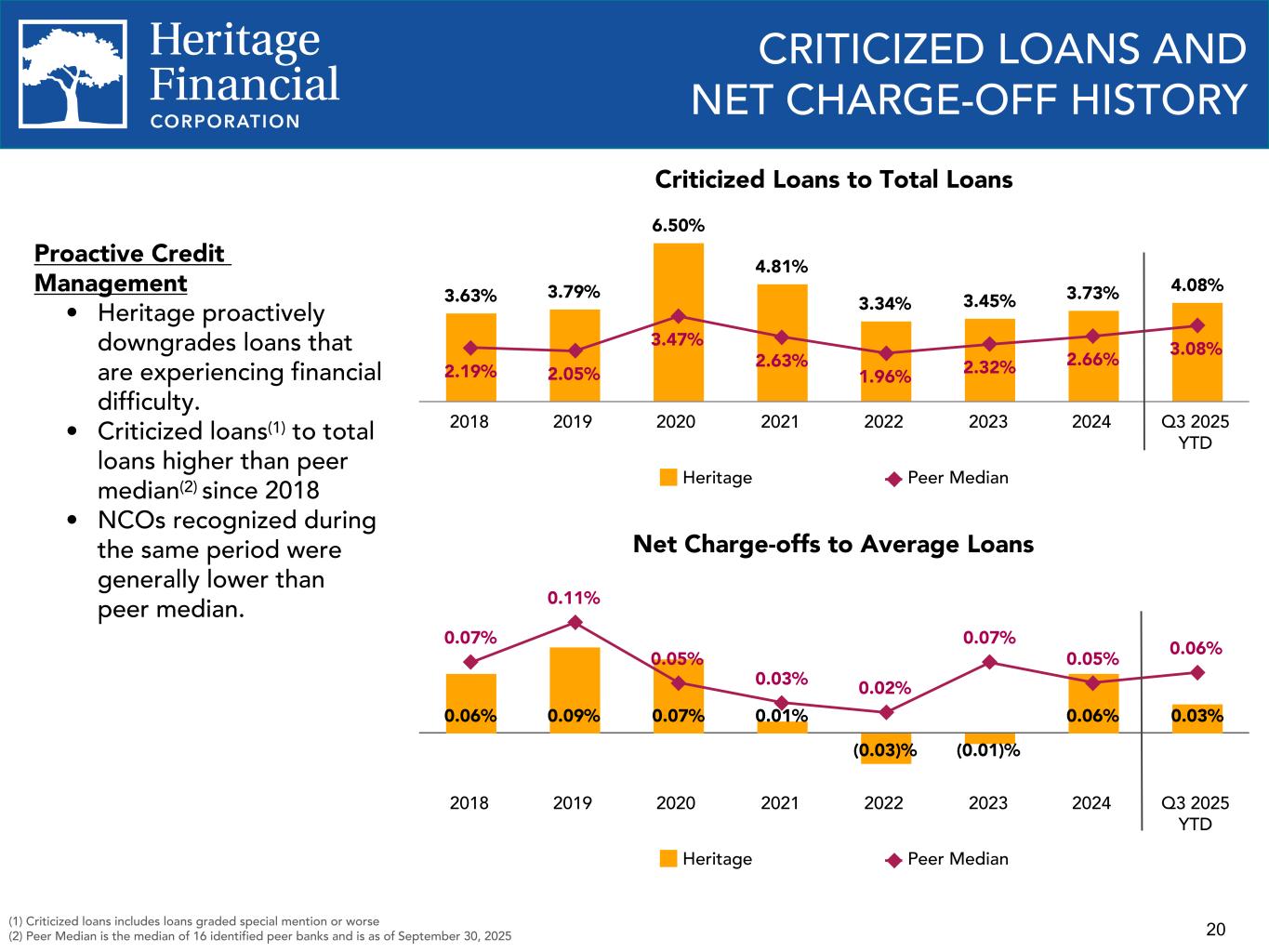
Nonaccrual loans total $21 million at year end and we do not hold any OREO. This represents 0.44% of total loans and compares to 0.37% at the end of the third quarter. The increase is primarily attributed to three non-owner-occupied CRE loans that were moved to nonaccrual status due to their delinquency. These loans are all well secured and are expected to pay off from either sale or refinance of the underlying properties with no anticipated loss. Total nonaccrual additions of $4.4 million were partially offset by $1.1 million in payoffs or paydowns. Within our nonaccrual loan portfolio, we have just over $2.4 million in government guarantees. Nonperforming loans were stable during the quarter with the .44% of total loans matching the ratio at the end of the third quarter in addition to non-accrual loans loans over 90 days and still accruing was limited to one small residential mortgage loan with a balance of 194 000. criticized loans moved lower during the quarter however we did see an increase in our substandard loans criticized loans totaled just under 188 million at year end declining by 6.6 million during the quarter while special mention loans were lower by 29% some were downgraded to substandard resulting in a 24% increase in that risk category during the quarter the largest contributor to the increase came from the downgrade of two C&I relationships totaling just under 30 million partially offsetting the downgrades was the resolution of a long-term problem loan workout for a non-owner occupied CRE loan resulting in a full payoff of fifteen point six million while we are closely watching this increase in substandard loans they remain at manageable levels at 2.44% of total loans and in line with our longer-term historical performance page 19 in our investor presentation provides more detail from the composition of our criticized loans and reflects the stability we've seen over the past two years during the quarter we experienced total charge offs of six hundred to $40,000, primarily in our commercial loan portfolio. The losses were partially offset by $159,000 in recoveries, leading to net charge-offs of $481,000 for the quarter. For the full year, total net charge-offs were just under $1.4 million, or 0.03% of total This compares favorably to our 2024 performance, where net charge-offs were just over $2.5 million, and representing 0.06% of total loans. We are pleased that our early identification and proactive management of problem credit has led to another year of exceptionally low loan losses. The correlation between these credit management practices and our low level of historical loan losses is demonstrated on page 20 in the investor presentation. Overall, we remain pleased with the credit quality of our loan portfolio at year end. We believe our consistent and disciplined approach to credit underwriting and concentration management will continue to generate strong credit quality performance in a wide range of economic conditions. I'll now turn the call over to Brian for an update on our production.
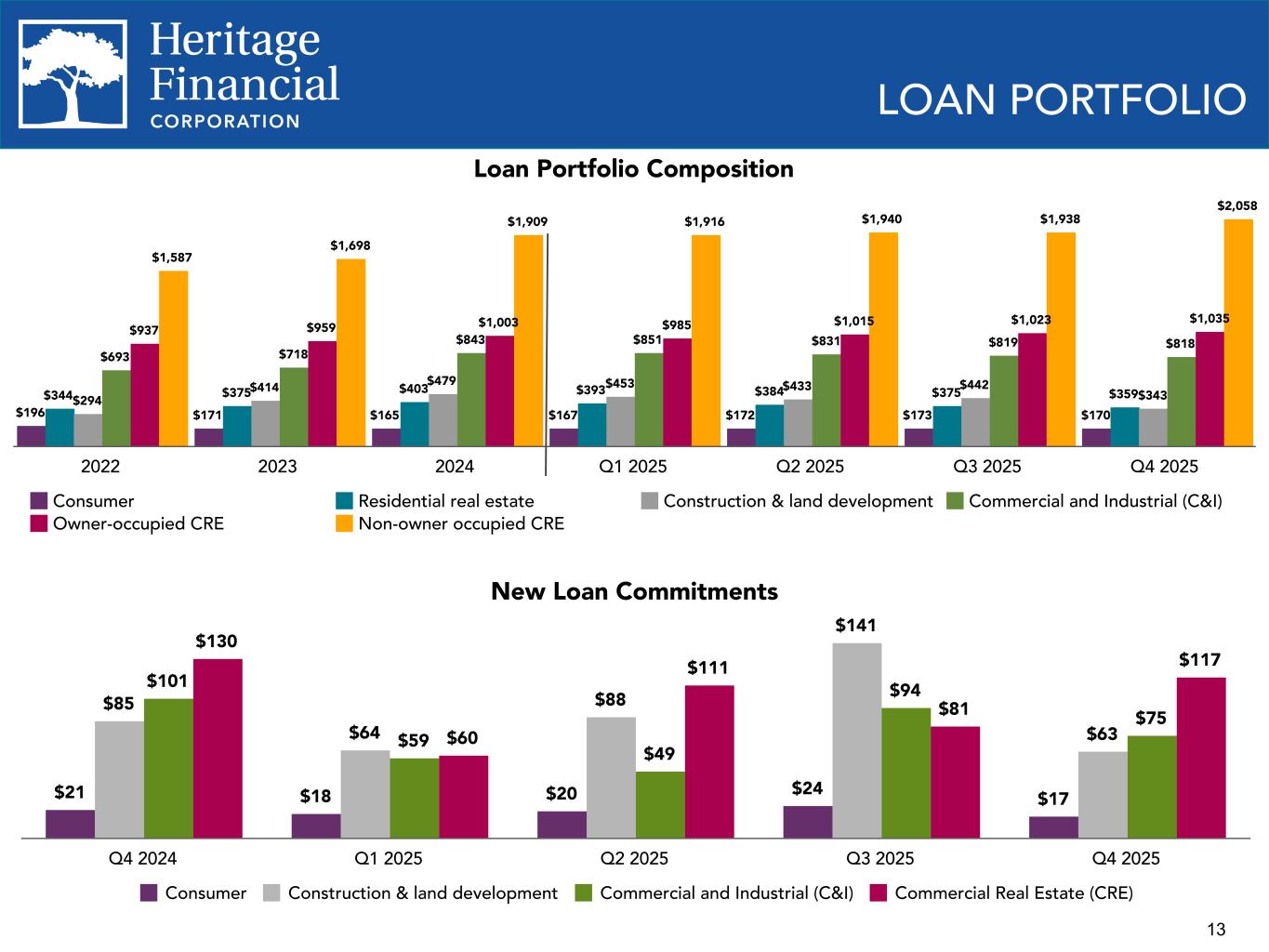
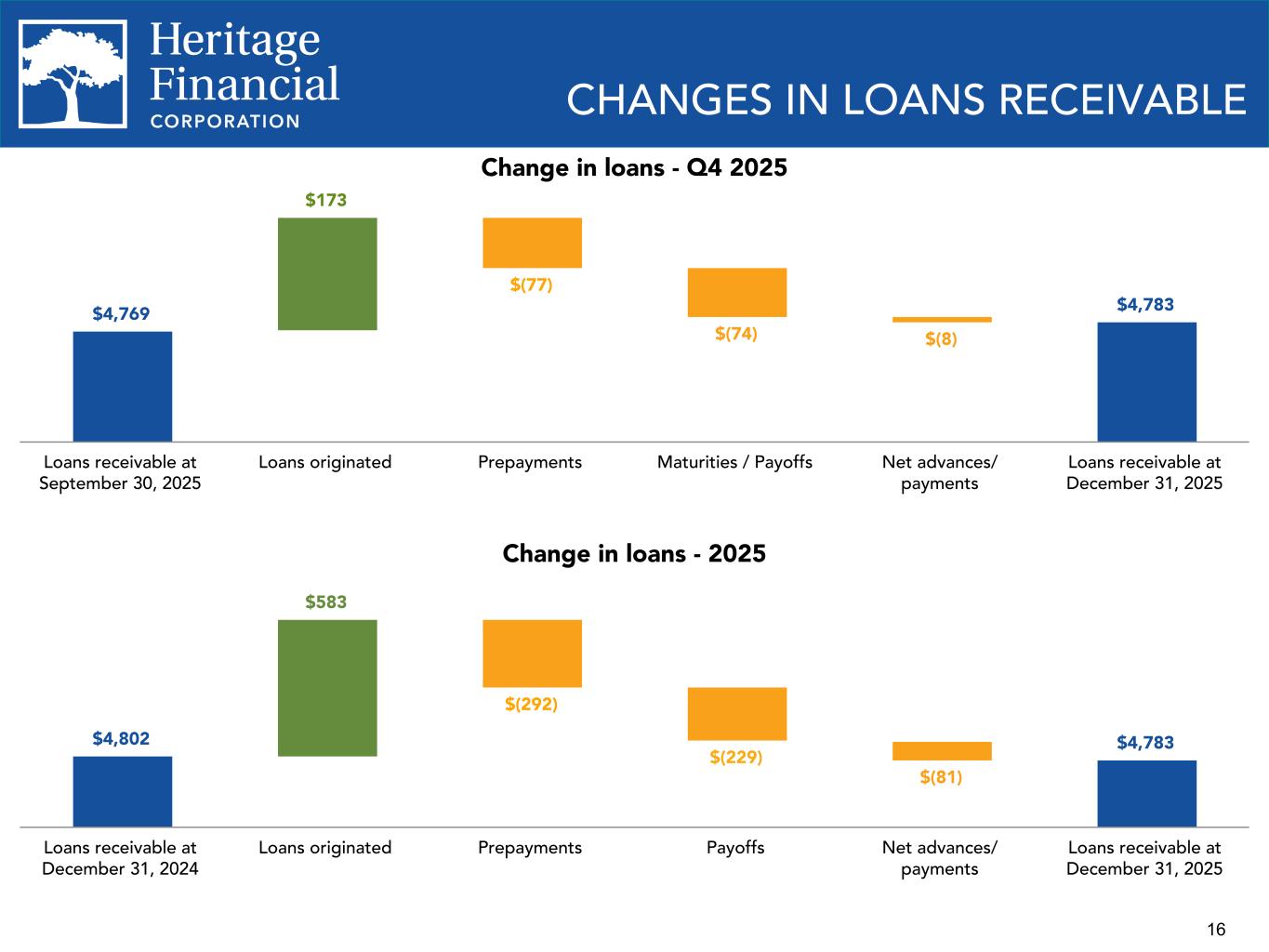
Thanks, Tony. I'm going to provide detail on our fourth quarter production results, starting with our commercial lending group. For the quarter, our commercial teams closed $254 million in new loan commitments, months, down from $317 million last quarter and down from $316 million close to the fourth quarter of 2024. Please refer to page 13 in the investor presentation for additional detail on new originated loans over the past five quarters. The commercial loan pipeline ended the fourth quarter at $468 million, down from $511 million last quarter and up modestly from $452 million at the end of the fourth quarter of 2024. As anticipated, loan balances were fairly flat quarter-over-quarter, with a $14 million increase in the quarter. Total new loan production of $271 million was largely offset with elevated payoffs and prepaids. Looking year-over-year, prepayments and payoffs were $208 million higher than the prior year, and net advances on loans have swung from a positive $153 million last year to a negative $81 million in 2025. Please see slides 13 and 16 of the investor presentation for further detail on the change in loans during the quarter. Looking ahead to 2026, we expect to resume loan growth at more historical levels as we are through the period of no-unnovated loan payoffs, and we expect net advances to move back to a positive position. Deposits increased $63 million during the quarter and were up $236 million for the year. The deposit pipeline ended the quarter at $108 million compared to $149 million in the third quarter. And average balances on new deposit accounts open during the quarter are estimated at $43 million compared to $40 million in the third quarter. Moving to interest rates. Our average fourth quarter interest rate for new commercial loans was 6.56%, which is down 11 basis points from the 6.67 average for last quarter. In addition, the fourth quarter rate for all new loans was 6.43%, down 28 basis points from 6.71% last quarter. In closing, as mentioned earlier, we are pleased with our solid performance in the fourth quarter. Our assets continue to reprice upward and deposit growth has allowed us to pay down borrowings. These factors drove our net interest income up $1 million versus last quarter and up $4.6 million versus the fourth quarter of 2024. The combination with Olympic Bancorp and its subsidiary Kitsap Bank will add to this positive momentum. We look forward to having the exceptional bankers of Kitsap join the Heritage Bank family and are excited about what we can accomplish together. Overall, we believe we are well positioned to navigate what is ahead and to take advantage of various opportunities to continue to grow the bank.
Operator
With that said, Emily we can now open the line for questions from call attendees thank you we will now begin the question and answer session as a reminder if you would like to ask a question today please do so now by pressing start followed by the number one on your telephone keypad if you change your mind or you feel like your question has already been answered you can press start followed by two to remove yourself from the queue our first question today comes from Jeff Brulis with DA Davidson Jeff please go ahead Thanks.
Appreciate that slide 20.
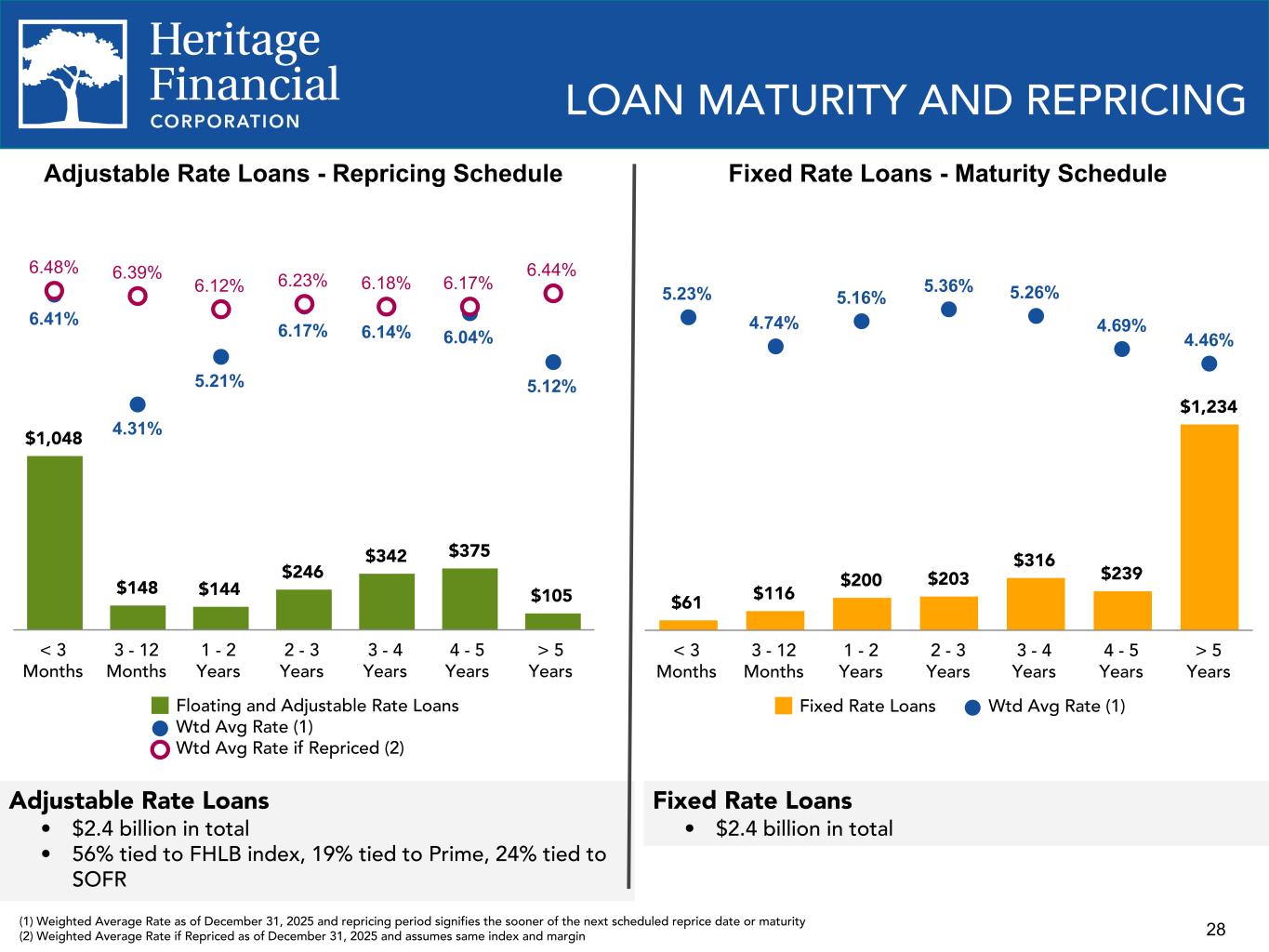
The slide 28, I think, outlined a pretty good outlook for your adjustable rate opportunity. It looks like within the next year, almost a 200 basis point potential there for price. I mean, maybe, Don, if you could kind of unpack the margin outlook, given it looks like you've got some earning asset or price opportunities still to come.
There's, you know, if we look back and see what happened, this last quarter we had, well, we've had about three rate cuts in the last four months of the year. And we were still able to just slightly grow our, you know, loan yields in Q4. So this is where the, in a quarter where we have rate cuts, we're going to have this balancing where we're repricing our adjustable rate loans higher, putting on new loans at higher rates. But the adjustable rate loans, or the floating rate loans, you know, obviously repriced down those tied to prime or so forth. So, kind of even for this last quarter, if we have quarters where we, you know, don't have rate cuts, we expect, you know, more improved improvement in the loan yields. And then on the deposit side, you know, the cuts help us speed up, I guess, you know, our deposit betas, but at the same time, I think because we have rate cuts at the end of the year, I think we'll continue to see some improvement in, in our on the cost so overall i think that and this is all without the merger that's you know going to occur so just on the on the legacy heritage side we expect to see margin improvement continue over the you know next year or two got it and and if i could take that step of incorporating olympic look like you know their margin was a little bit lower but a smaller balance sheet and add in accretion any thoughts on that kind of the blended if we look at legacy upward trending role in Olympic any broad level thoughts on the consolidated margin well and I'm going to preface this if I get questions about the about this year as far as the combined because obviously we have you know we have some fair value work to do once the deal closes and we will get that done in this quarter and so I'm we've got some initial estimates from that we did in our due diligence I don't think they've changed a whole lot but we'll just preface that that it's a little less precise than we would might normally be on this but you know they're you know I think their loan portfolio will probably reprice with with yields up in the you know low sixes so if you think about that and then their deposits are already I think they're over 20 basis points lower than our cost deposits and then the investor portfolio should be priced probably up into the the low to you know fours which I think they're I think there are three or a little under on theirs currently so I think that we're we're going to get a nice bump in
in margin you know where we could potentially you know get near that four percent range by the by the end of the year I appreciate it thanks and maybe if hopped over to well but Brian I appreciate the commentary on maybe getting back to normal on with payoffs maybe subsiding a bit is that historical rate kind of a mid to high single digit is that what we could expect absent the balances from Olympic yes Jeff it would just add to that yes so the short answer
Yes, but would add to that, looking at the pipeline at the end of the fourth quarter, you know, the 468 million, and we have good visibility near term. So I would say low single digits is our estimate, you know, kind of Q1. And then I would move that to upper single digits, you know, based on what we're seeing, you know, from the customer base and loan demand, you know, heading into 2026, which is you know the pipelines been been increasing you know since since year-end so that's our you know thought based on what we're seeing today okay so a slow rate and then accelerating as we over the course of the year appreciate it yeah thanks I'll step back thank you our next question comes from Matthew
Hi, this is Adam Kroll, I'm for Matthew Clark, and thanks for taking my question. Sure. Yeah, so Brian, I think last quarter you mentioned having a few chunky loans you expected to pay off in the fourth quarter.
Just wanted to check if any of those got pushed in the first quarter, and just digging more into the loan growth guide in 26 you know what industries or geographies do you expect to drive that loan growth yeah so the I would say the bulk of the payoffs we were anticipating did did come through the payoffs were payoffs and prepaid for a little over 170 million for the for the quarter which was the highest quarter you know of the of the year and and so for the total you You know, year was more like, you know, $540, $550 million, around $45 million a month. We think that's, you know, going to moderate at least based on our current visibility, potentially a third less. And then, as I said in my comments, you know, last year we had this last year being 2025, you know, We had net advances on loans fall, $81 million versus 2024, where they were up $153 million. So we've cycled through that, and I think we should also see net advances move up modestly in 2026. So potentially a third less payoff, prepay volume, and then not the negative drag from net advances that we had in 2025. So that's kind of what's happened in 25, and, you know, it has played out substantially based on our expectations as we came into 25.
Got it. No, that's great to hear.
And maybe switching to expenses, you know, how are you thinking about operating expense growth both on a legacy heritage basis for 26 and just maybe what's a good starting point for Proforma 2Q expense run rate? sure yeah I think we're combining which there's so much I think noise going on I think maybe we'll just maybe just talk about what kind of we're expecting they are expecting you know approximately 20 21 million of bridge-related expenses so but removing those I think you know starting in Q2 and the other thing we have going on here is our conversion it's not expected to take place until sometime in September so we're keeping you know a large amount of the employees that at some point will will be will be gone by the end of the year but we'll keep them through Q3 you know because it will be on two separate systems then we'll have a reduction of employees after that but the probably run rate for Q2 and Q3 will probably be in the in the 56's some you know probably somewhere in the 56 range maybe a little 56 57 so that would be for Q2 Q3 and then we'll we'll have some we'll get more of our cost
savings in Q4 and the core will probably be down more in the in the 54 million dollar range after that got it um and then just last one for me um I'd like to hear your updated thoughts and uh crossing the 10 billion in asset threshold and just maybe what inning you're in in terms of making the necessary investments to cross that 10 billion mark?
Brian, you want to take that one?
Yeah, sure. I'll take that one. Let me take the second part of your question first, just in terms of preparedness. We did extensive planning back in 2023 when we were about 7.7 billion in assets. You know, felt like we had, you know, three or four years, but we wanted to be very clear on what, you know, we needed to do. So, we put together a pretty detailed plan, met with our regulators and a variety of other parties. And so, we've been making progress on that plan. Since then, with our deposit outflows we had in 2023, you know, we felt like we had a little bit of additional time. And so, anyway, we've been making progress on that and have a good view and you know what what the requirements are in terms of when we we cross the ten you know our focus now is is is on integrating you know Olympic and and making sure that you know all aspects of that you know go as planned on an organic basis you know we're several years out from from crossing the ten ten billion so you know that's how we're looking at it right now executing on the plan to be ready but still seeing ourselves a ways off from crossing it got it thanks for taking my questions sure thank you our next question comes from Jackson Lawrence with Stevens
please go ahead hey good morning this is Jackson on for Andrew Terrell morning Jackson morning if I could just start out on the margin more specifically loan yields you guys already touched on the the fixed reprior benefits to loan yields a little bit earlier I was just wondering if you could kind of give some color on what you're seeing on the competition front in your markets it looked like region origination yields step down a little bit quarter quarter over quarter yeah sure Jackson I'll take that so on commercial loans the you know the new loan production went on at 556 during the quarter and then in total it was 643
So, that was down a bit over, you know, a bit over Q3. Some of that's due to, you know, the drop in short-term rates, you know, variable rate loans we have just kind of naturally are going to come on at lower levels. And then, you know, the rest is just driven really off of what the Federal Home Loan Bank, particularly the five-year index does, you know, during the quarter. from just purely a competitive standpoint, it continues to be a really competitive market for, you know, the clients that we're going after, and particularly so, you know, if it's a new relationship to the bank where there's, you know, you know, maybe several banks, you know, competing for that opportunity, although I would say that's not significantly different, you know, than it normally is so we're not we're not seeing you know necessarily any outsides you know competition is just always competitive for that for the type of
clients we're going after got it that's helpful thank you and then just on the the deposit cost front sounded like maybe some some positive carry forward into the into the the first quarter just wondering last quarter you guys talked about around a billion dollars of exception price deposits that we're sitting around a three percent rate just wondering where that bucket is and where that is priced today and also just how much room you guys have have left on the deposit repricing front yeah we have we're still at about the same level of
exception priced but it's the cost overall cost at year-end I think we're down to about I think we're at maybe 270 at this point so and we still have there's some other still other we still have about a hundred million of you know floating rate public deposits that would come down if there were rate cuts we didn't experience all that impact because again we've had a rate cut in December so that will help out and of course the CDE rates I think keep coming down. So, you know, our average rate of, you know, CDs, core CDs is like 360, I think. We'll keep working those down. I think the current, our current highest rate is like 330. So, there's definitely, we're expecting cost to keep coming down.
You know, our December cost was lower than for the quarter by about four basis points so that's just again another sign that it's going to keep coming down a little bit got it that's helpful thank you and then just last one for me i know we talked about like uses of capital being on hold until uh the closing of the the olympic transaction but with a clear line of sight to deal close later this month and in capital building nicely i was just wondering if you could kind of update us on uh capital priorities in 2026 sure Don you want to take that sure well again the first one
was just closing the trend of the transaction and that will use about a again we mentioned this before about 100 basis points of capital so that's the that's the most important use of capital of this year we will look into no other uses as as we do more planning and as we get through again the fair value so we really know what our balance sheet looks like we'll we can take I guess more steps to to manage it to the levels that we want to be at so we're there could be some buybacks we have about 800,000 shares left in our current repurchase program there's always a chance we could do more lost trades but we're not planning any at this point but there's a chance we could do I would say we could do buybacks we find that the dilution is less but maybe the accretion is less us from the deal then maybe buybacks makes sense to kind of offset that so we'll kind of we're working on that now again after the deal closes at the end of the month we'll definitely be looking carefully at that got it thank you that's helpful thank you for taking the questions thank you Jackson thank you Thank you.
Operator
Our next question comes from Liam Coohill with Raymond James. Please go ahead.
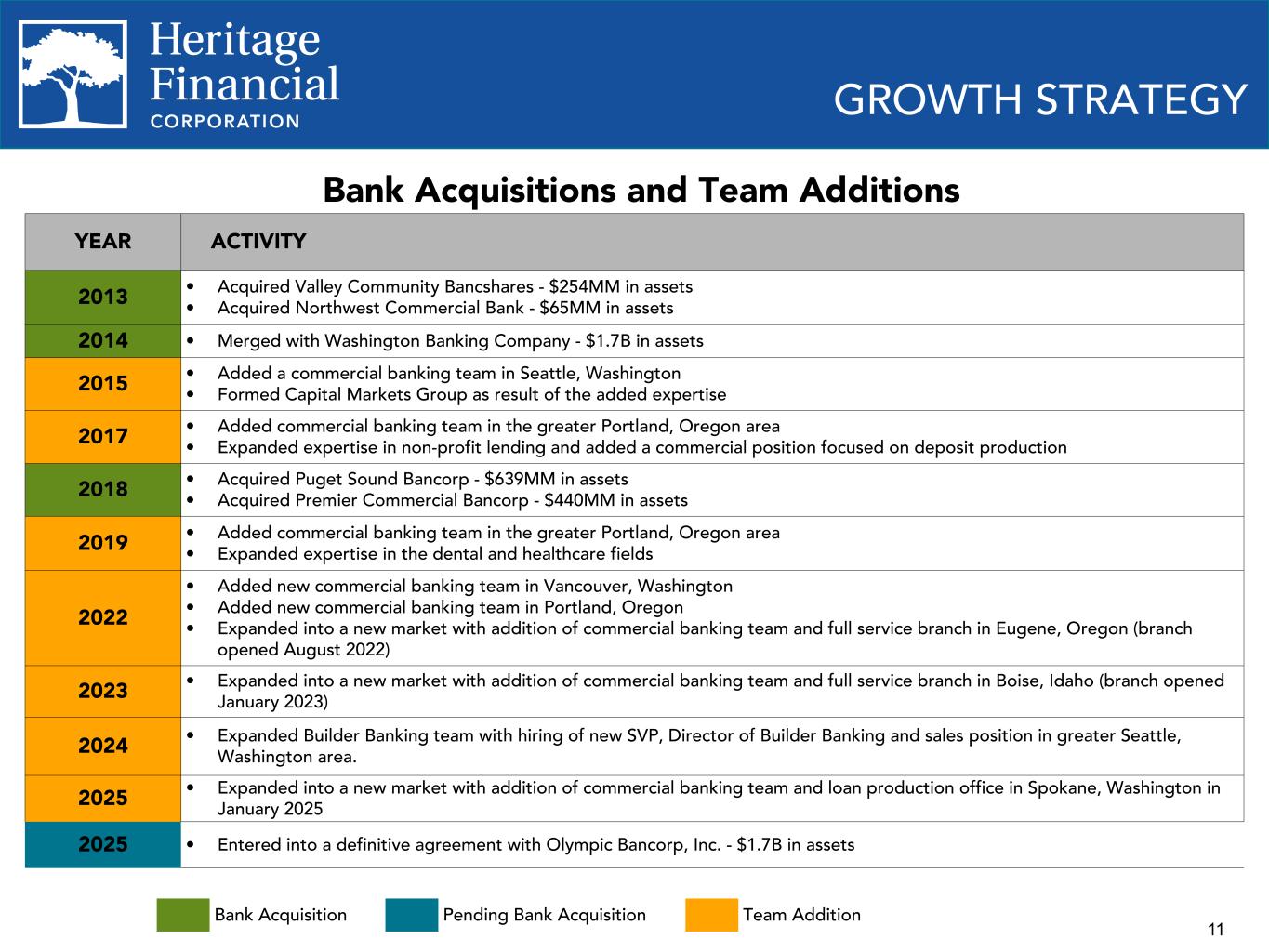
Hey, good morning, everyone. It's Liam on for David Feaster. Morning, Liam. So, I wanted to touch on some of the impressive interest-bearing demand deposit growth you saw in the quarter. Could you maybe discuss some of the initiatives that you've been using to see success there? Is it mostly granular wins across the franchise? Yeah, Liam, it is. It's really a continuation of what we've been doing, you know, throughout the bank's history, you know, just, you know, relationship banking, high service quality delivery. And then we added, you know, significantly to our deposit sales team, you know, over the last several years. And so, we continue to see, you know, new relationships coming in from, you know, the investments we've made, you know, with our deposit teams. And, you know, slide 11 in the investor deck, you know, has that detail. But back in 2022, we added three teams that year and two-thirds of that group were, you know, deposit generating, you know, staff. And then, of course, several new locations, both in Oregon and then Boise and then also Spokane. So it is a continuation of what the bank's always focused on, which is the relationship clients. But we have benefited pretty significantly from both the new teams as well as our existing efforts in that area. Great. Thank you for the color. And just one more for me, on the credit side, I'm just curious if there's any underlying trends or industries that you're watching more closely. And on a couple C&I downgrades in the quarter, were those idiosyncratic or were there any commonalities? Thank you. Sure. Tony, you want to take that one?
Yeah, sure. Good morning, Liam. You know, there was really no correlation between those two deals. They're kind of separate industries. And I guess, you know, the big question is, you know, was there any tie-in to tariffs or things like that? And I would say no. So not really anything that I can really point out, too. Obviously, both being in C&I category, you know, jumps out. But I think that was just more, you know, timing than anything else. And it doesn't really reflect anything that we're watching any more closely in the portfolio.
Well, I appreciate the color. I'll step back. Okay.
Operator
Thank you. Our next question comes from Kelly Mossa with . Kelly, please go ahead.
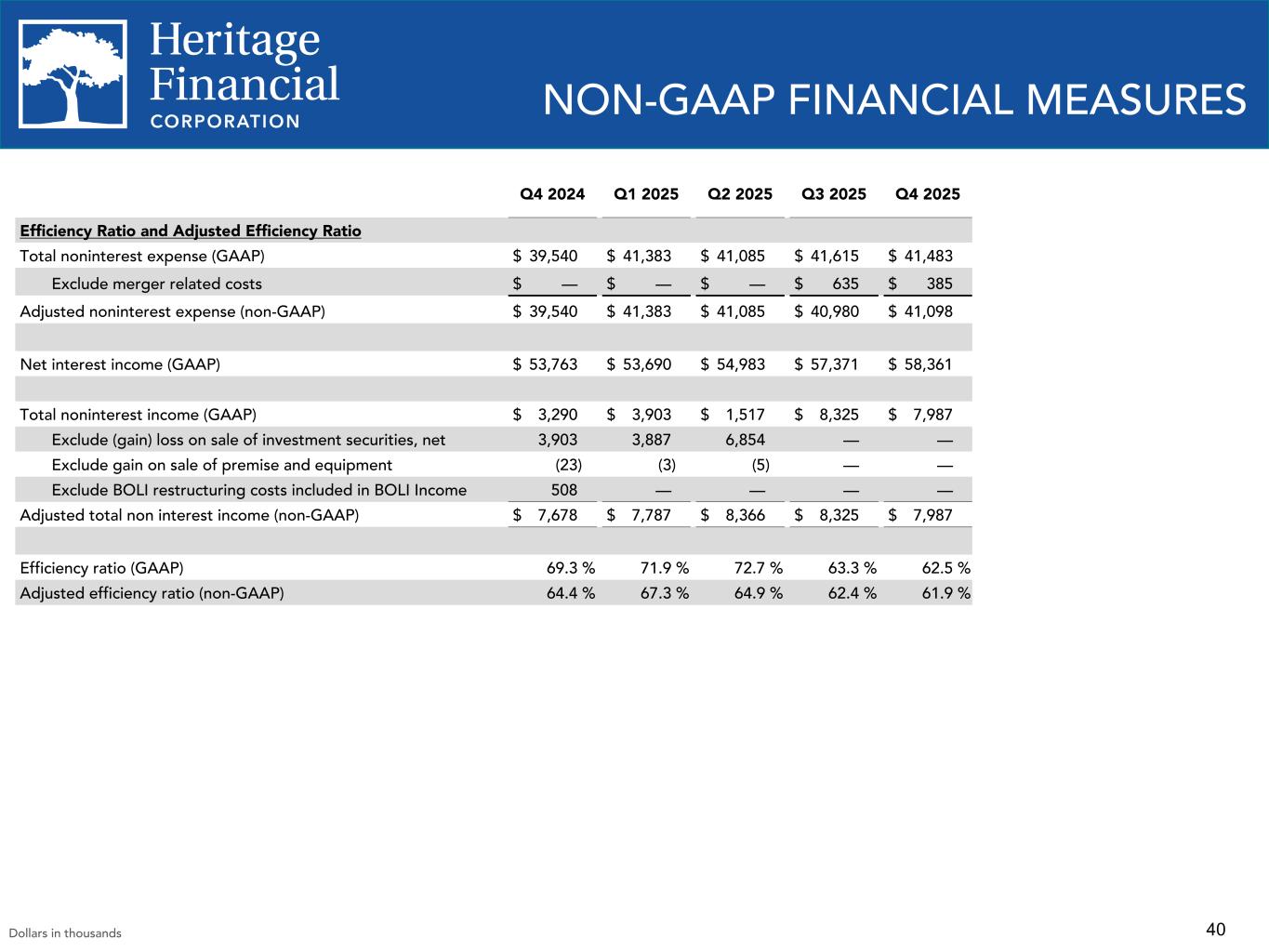
Hey. Good afternoon. Thanks for the question. I guess as we look ahead, you know, your efficiency ratio for the past couple years has hovered in that mid-60 percentage range. You did a bunch of things with the securities loss trades and such, expense saves, in order to kind of mitigate some profitability headwinds. Now with the increased scale from Olympic, wondering how you're thinking about how that helps with generating, you know, perhaps better efficiency ahead. Is that a way you're thinking about it? I'm just interested in thoughts here since it seems like the growth and margin picture is shaping up quite nicely thank you yeah maybe Kelly thanks for the question I'll have Don start and then maybe I'll provide some comments after after Don shares his thoughts okay thanks Brian yeah we're going to I think they're just the overall you're talking about this efficiency ratio itself Kelly are you just talking about operations yeah I was I was speaking specifically with the efficiency, but I don't know how you necessarily think about it. So, if it's easier to talk about it, just is operational efficiency in general, that's okay, too.
Well, I'll just touch on the – obviously, we're going to get overall efficiencies, you know, with the – between the two organizations. Our efficiency ratio will continue to go down over time, but I will say also that I think it will be mostly driven on the revenue side as opposed to the expense side. But we are looking at, again, trying to keep our expense base at a good level. But, Brian, I don't know if you want to talk any more about what you see in the overall efficiency of the organization.
Yeah, I would just add a little bit on to what Don said. You know, if you look at the trajectory of Heritage kind of independent of the combination with Olympic, you know, we've had a big increase in our margin year over year. So, you know, Q4 last year was 336 and 372. 372 and, you know, Don had mentioned in terms of answering, you know, Jeff Rulis' question, you know, we see, you know, potential to get that, you know, margin, you know, potentially up in the four range within the not-too-distant future. So that's the revenue driver. You know, beyond that, you know, the combination with Olympic is bringing a significant amount of low-cost deposits. You know, there's a little bit of a recap on slide six of the investor presentation, you know, on the merger with Olympic. And, you know, one of the bullet points highlights their cost of deposits at .02. It doesn't note their loan deposit ratio, but it's in the mid-60s, and ours, of course, is just over 80. So, you know, there's potential, significant potential upside, you know, of just the moderate additional leveraging. you know in the in the loans over the next few years that will give us room to drive that efficiency ratio lower so those are my thoughts obviously we'll be continuing to focus on ways that we can continue to scale the company without you know adding adding significant cost we'll be continuing to focus on you know our expense run run rates but if you look at kind of what's happening on the loan repricing side and the asset repricing, you know, the addition of the KITSAP balance sheet, you know, mark to mark, and on the asset side, you know, it's a pretty good outlook. And then, of course, if you add the additional leveraging, there's a lot of additional potential beyond that.
Got it. Maybe the last question for me, I realize this is a little early to be asking this question, But with Olympic on board, I'm just wondering if there's been any updated, you know, M&A conversations, you know, knowing that you've been, you know, more recently active here.
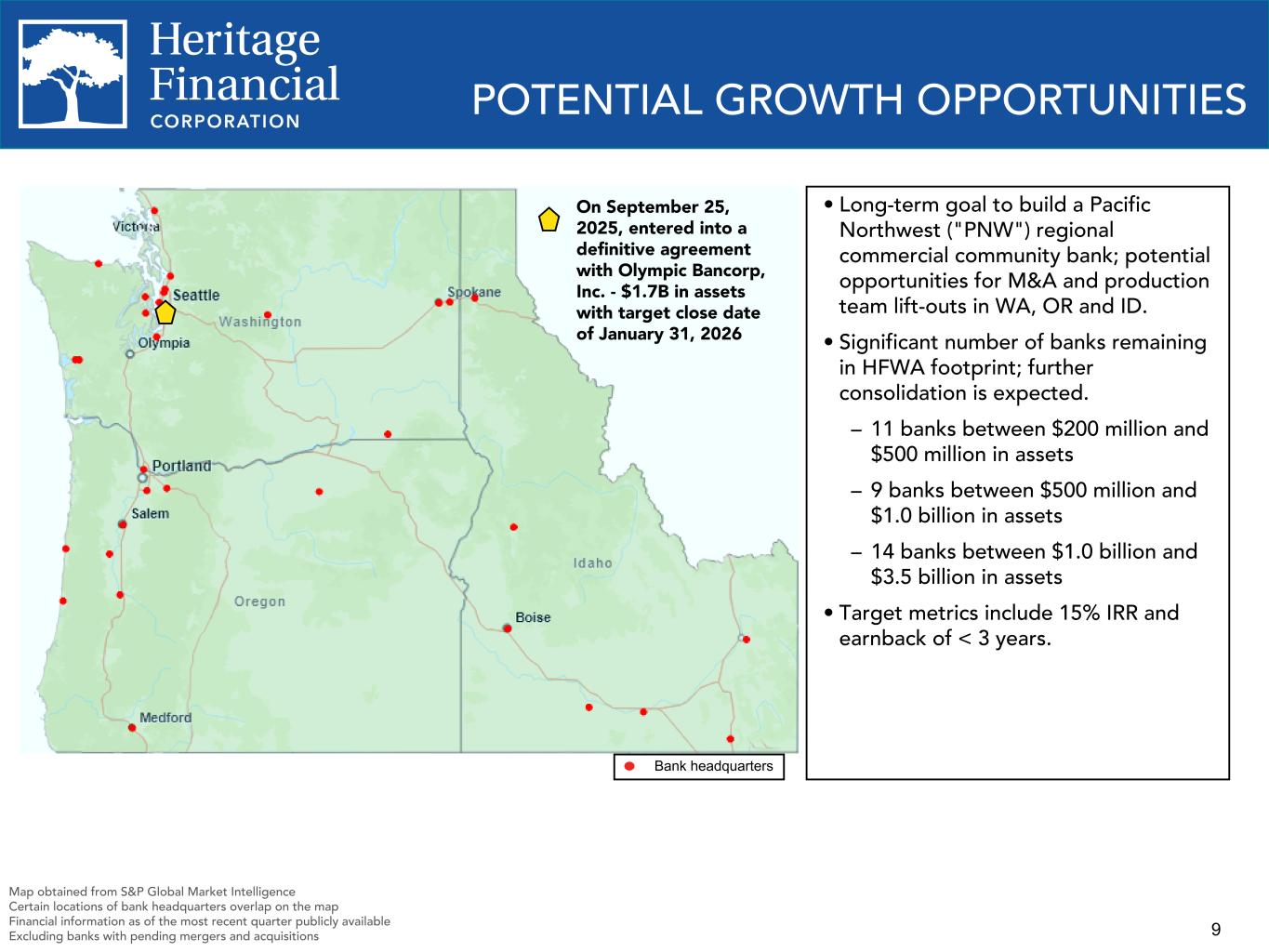
Sure. You know, we're really focused on, you know, making sure that we get the, you know, combination with Olympic, you know, successfully integrated, and that's definitely our, you know, our number one priority here in 2026 um we at the same time we have you know continued to be active in conversations just as you know we always do um so that if um another bank you know within our footprint makes the decision that they they want to partner with somebody that you know we're a known party to them and and and hope to be considerate if that was the case so really no change from our you know past conversations we're continuing to have them the only nuance which I just added is you know we're very focused on making sure that that we we get KIDSAP integrated you know over you know additional you know additional M&A got it thanks so much I'll set back okay thanks Kelly thank you at this time we have not received any further questions until I hand the call back over to Brian for closing remarks okay if there are no more questions then we'll wrap up this quarter's earnings call we thank you for your time your support and your interest in our ongoing performance and we look forward to talking with many of you over the coming weeks goodbye thank you all for joining us today.
Operator
This concludes our call and you may now disconnect your lines.