Operator
Greetings ladies and gentlemen, welcome to the Home Bank Shares Incorporated 4th Quarter 2025 Earnings Call. The purpose of this call is to discuss the information and data provided in the quarterly earnings release issued after the market closed yesterday. Company presenters will begin with prepared remarks, then entertain questions. Please note that if you would like to ask a question during the question and answer session, please press star then 1 on your touchtone phone. if you decide you want to withdraw your question please press star then 2 to remove yourself from the list company has asked me to remind everyone to refer to their cautionary notes regarding forward-looking statements you will find this note on page 3 of their form 10k filed with sec in february 2025 at this time all participants are in listen only mode and this conference call is being recorded if you need operator assistance during the conference please press star then zero It is now my pleasure to turn the call over to Donna Townsville, Director of Investor Elections.
Donna Townsville Good afternoon and welcome to our fourth quarter conference call. With me for today's discussion is our Chairman John Allison, Stephen Tipton, Chief Executive Officer of Centennial Bank, Kevin Hester, President and Chief Lending Officer, Brian Davis, our Chief Financial Officer, Chris Poulton, President of CCFG, and Scott Walter of Shore Premier Finance. The fourth quarter capped off a bell ringer of a year for home, and our team is excited today to share some of those details with you. Our opening remarks today will be from our chairman, John Allison.
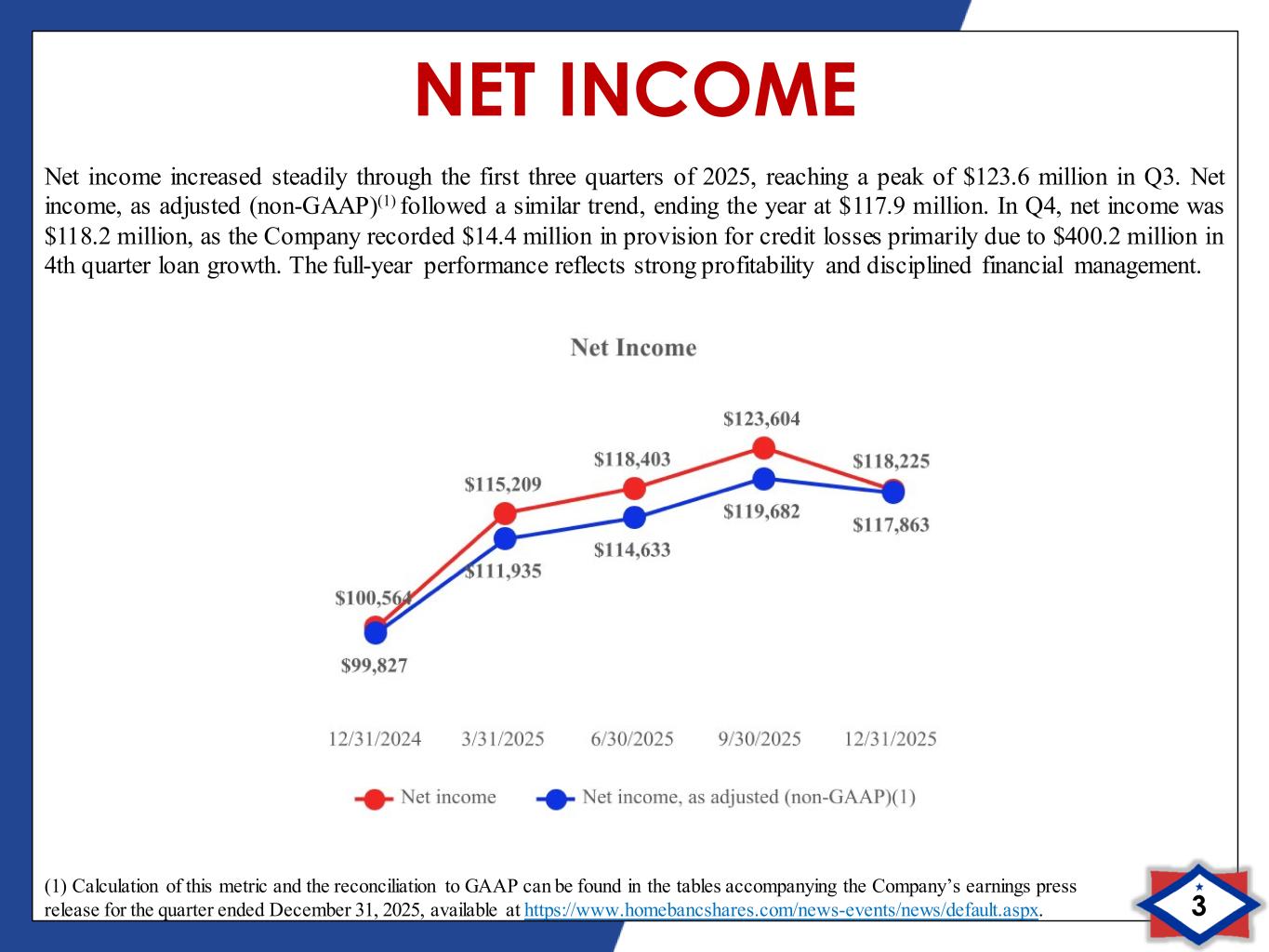
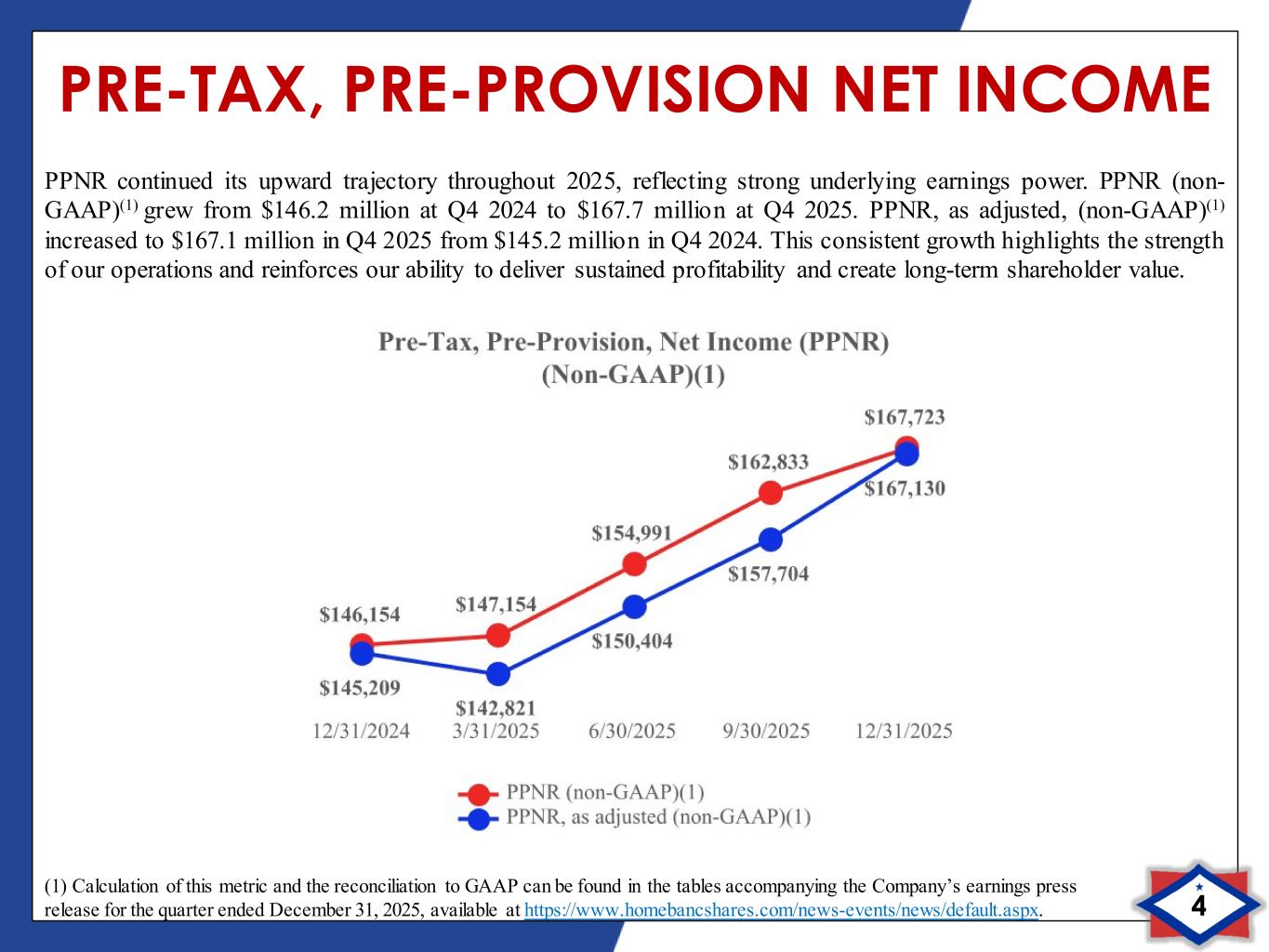
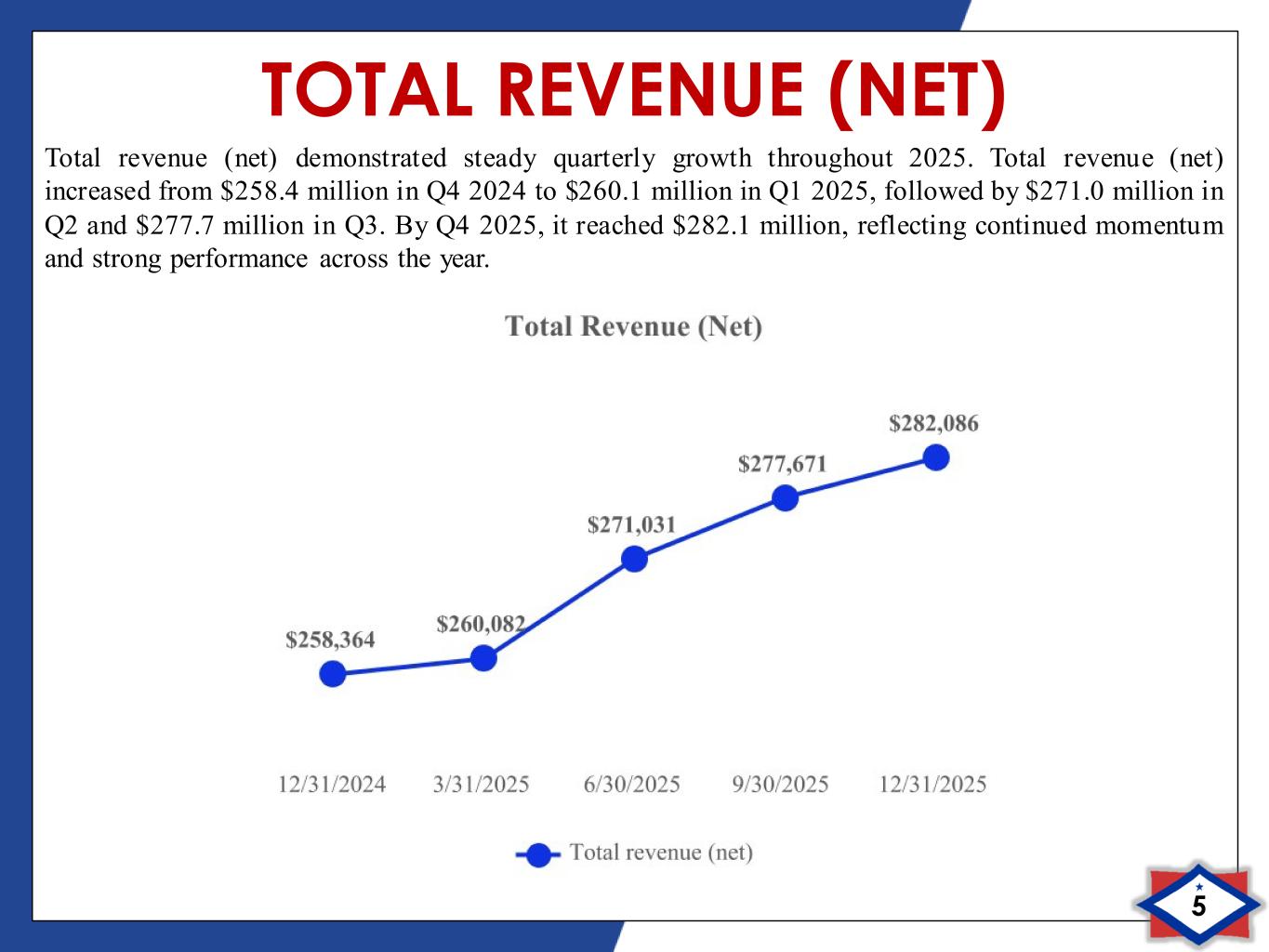
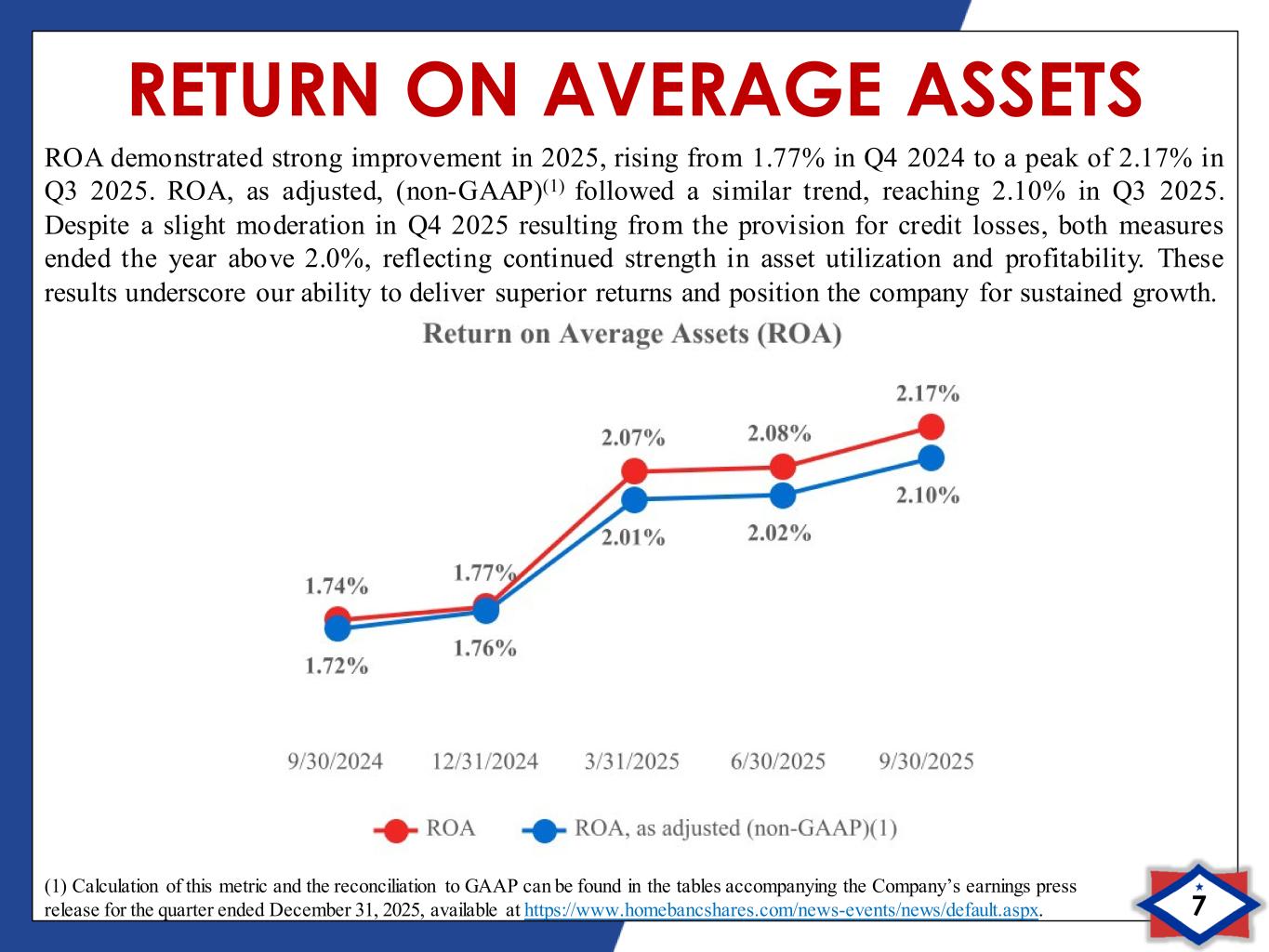
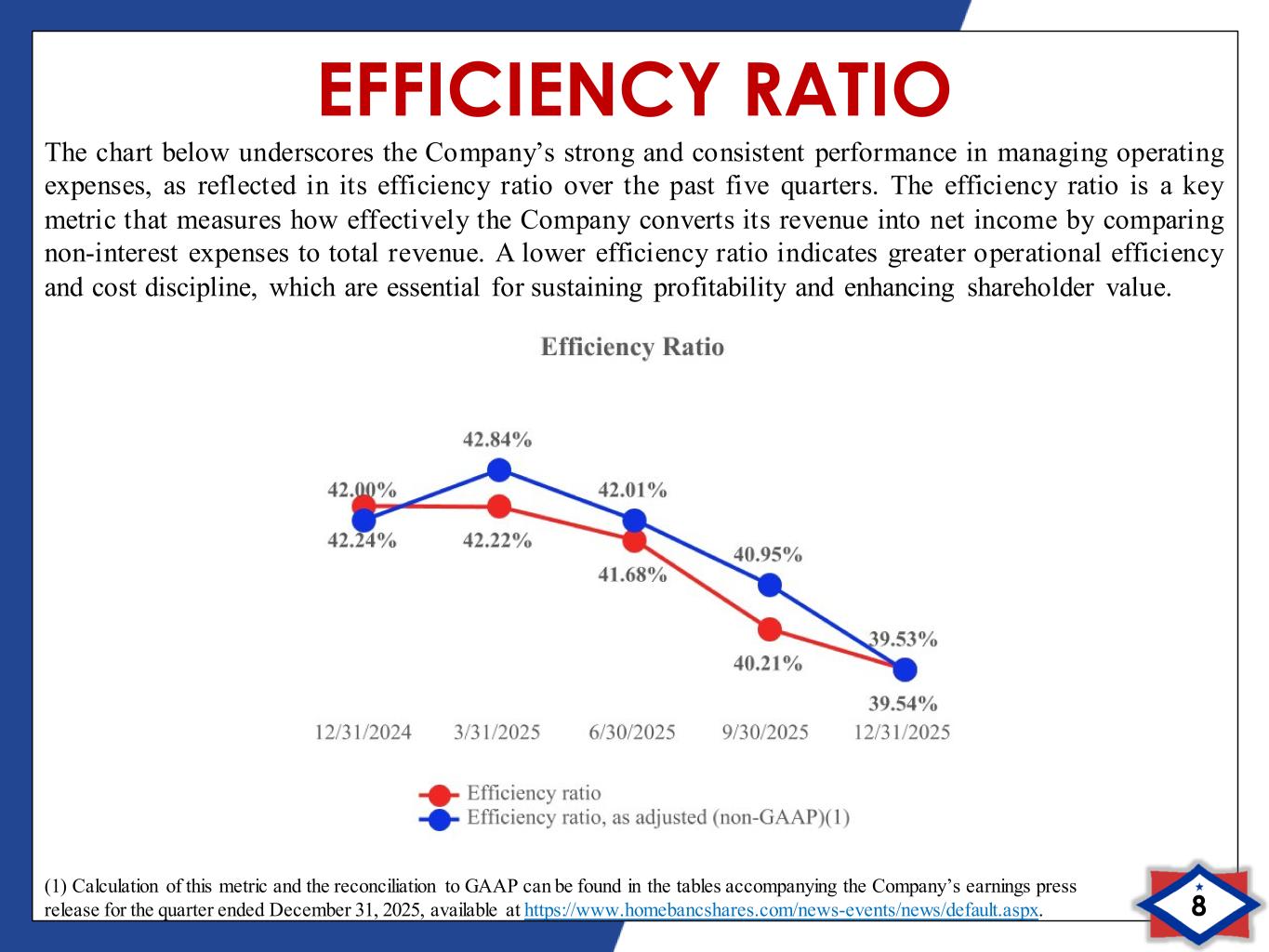
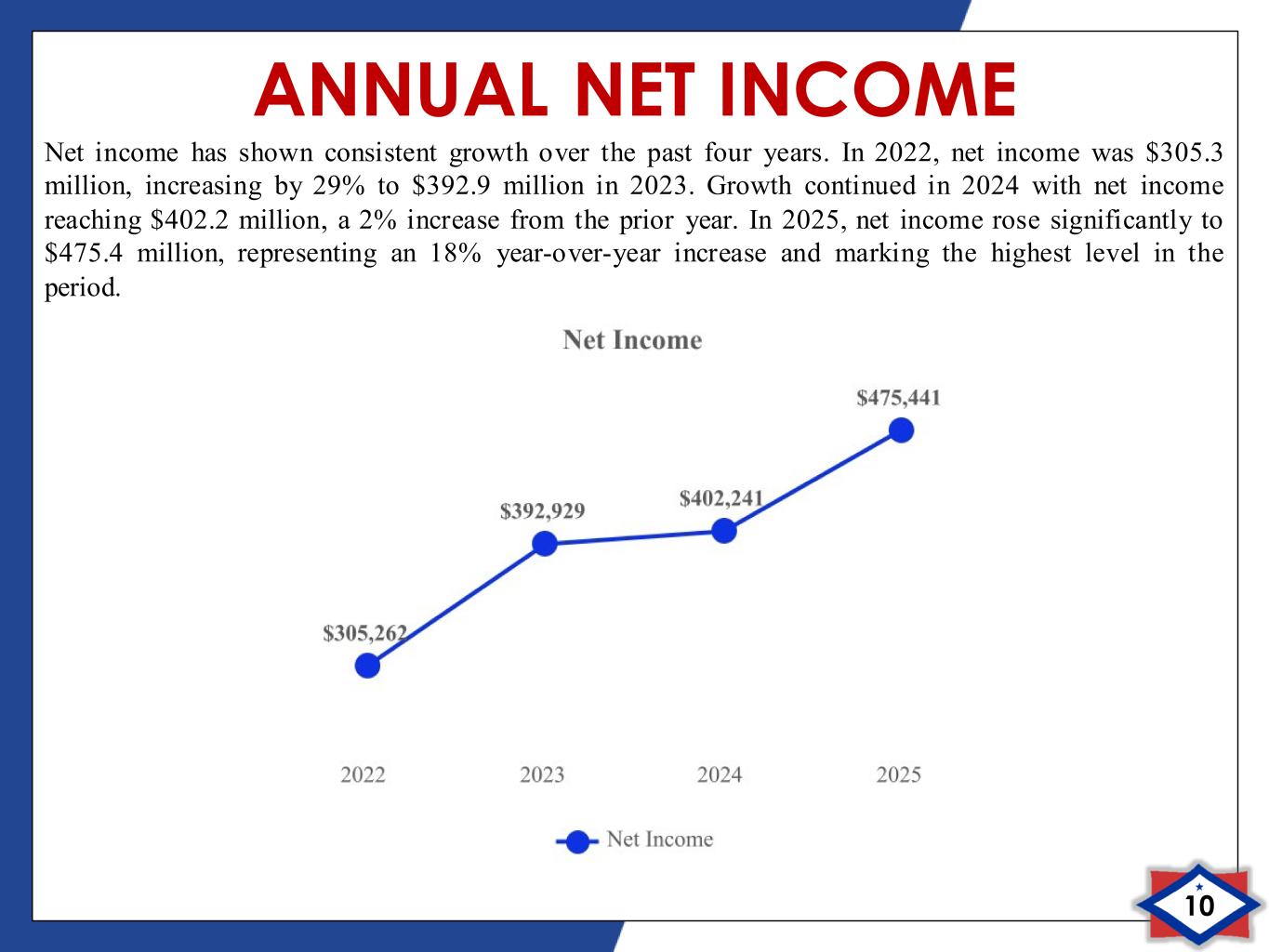
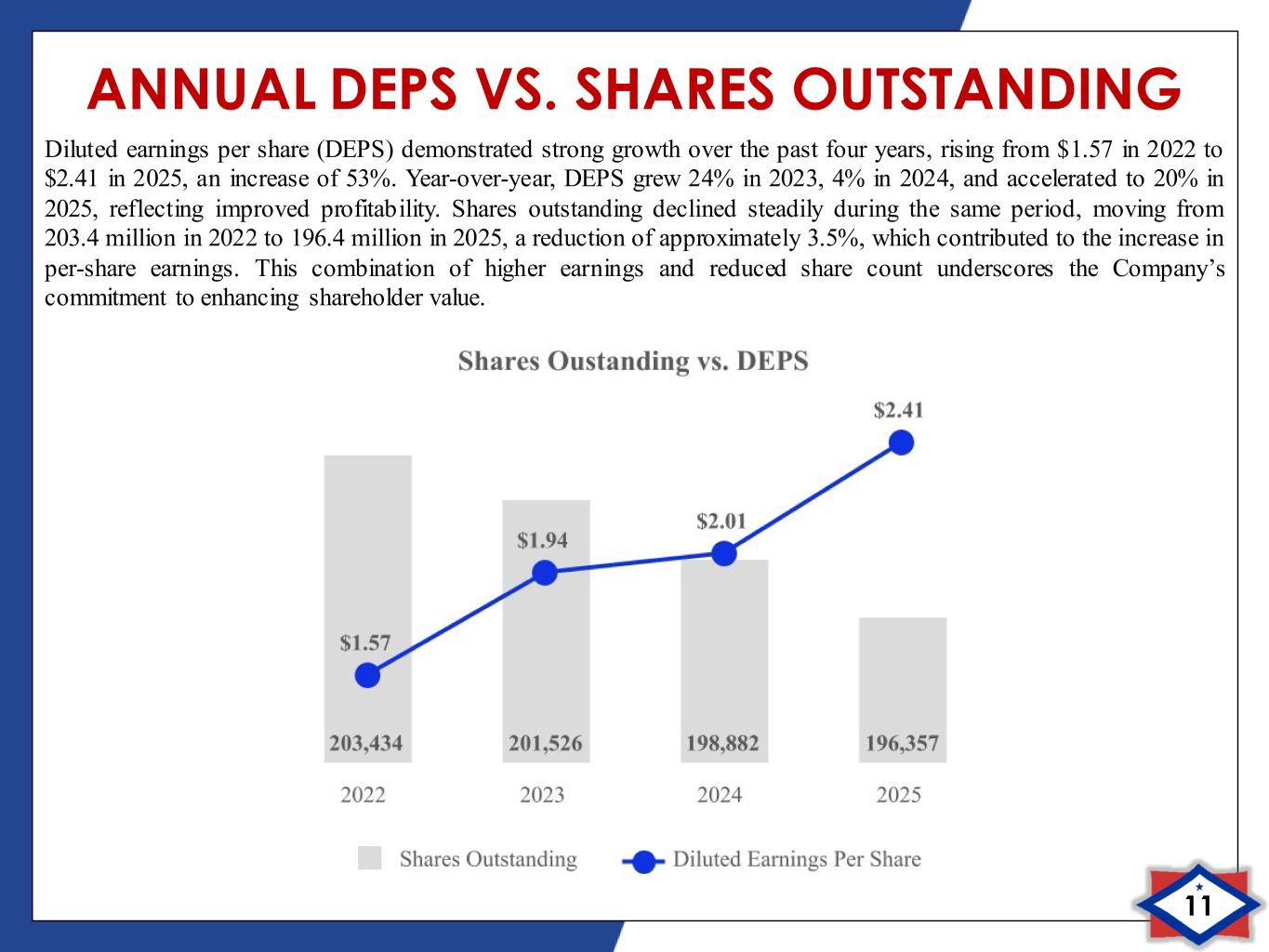
John Allison Thanks, and thank you all for joining Home Bank Chair's fourth quarter earnings report in our 2025 year in conference call. I want to thank all of our team members for leading home to one of the most successful years in our 26-year history. The numbers really speak for themselves. They're the best numbers we've ever produced. Thank you for all you do and continue to make home one of the top performing banks in America. If we're not the best, we're certainly one of the most consistently profitable performers year in and year out. We're certainly a contender. For the full year of 2025, the company earned a little over $475 million in net profit. That's an 18.2% increase over 24. And we ran a 2.05 ROA and a 41-29 efficiency ratio, had record revenue of $1,090,000,000. We had earnings of $2.41 EPS, that's a 20% increase over 2024. We purchased for the year 2,890,706 shares for 81.3 million and so far this year we bought back about 96,000. For the fourth quarter of 25, we reported 118 million dollars in profit. That's 18% increase over the 2024. It was about 100 million as I recall. PPNR was 167,723,000 good numbers and a 2.06 ROA. And for the first time in a while, efficiency ratio of sub 40 at 39.53. Net interest margin of 4.61 and we built reserves to about 1.90. Revenue was 282.1 million and ROTCE of 16.65. We purchased 540,706 shares for 14.7 million for the fourth quarter. As I said, the numbers speak for themselves. We're excited about our announced LA with Mountain Commerce and our entry into the great state of Tennessee. Having been a founder, I know what it takes to build a good financial institution with all the ups and downs, and I look forward to working with Mountain Commerce's founder, Bill Edwards, and his outstanding team. I walked in the same shoes as Bill in building our company. Our transaction is triple-accreed, and both sets of shareholders will be accreting the benefits of the merger on day one, not some BS earn back, but from day one. I just want to talk a little bit about the past and what's happened to bank values and bank stocks. In 1998, we sold our bank for 22.5 times projected earnings and 4.11 times bull. It was a really good bank, doing an ROA of 150 plus, but not as strong as home runs today, but really a good bank. What's happened to the value of bank stocks? I understand that was the days of pooling and now we're on tangible book, but it trades at about 10 times earnings. Where did the money go? Bank stocks have been about cut in half. We have allowed people to self-inflict the damage to ourselves and our industry, not just once, but over and over and over again by dilution, dilution, dilution. We have already run nearly all of the journalists completely out of the bank space. Donna and I were recently at a major bank conference, and a young, sharp female analyst from a well-known national company said, I can't get a single PM, portfolio manager is what she was referring to, of my company to even look at a bank. She said, including your bank, Johnny, as good as you all are, they say no banks, period. So what has created that? What has led to the fact that generalists want nothing to do with a bank space? I think it's an attitude. I think it's because banks have done bad deals that management and boards of directors allowed, both in the purchase of long-term low-rate securities that cost shareholders hundreds of millions and billions of dollars, plus the management teams paying too much on acquisitions and diluting their shareholders into oblivion. We're forcing the good long-term investors completely out of the space. We were told that a three- or four-year earnback to tangible book was acceptable to the investors. That could not be farther from the truth. It should never have been done and it should never be done again. When does the poor shareholder ever get back to at least even? Add that to poor operating performances of many of the companies coupled with a three- to four-year diluted deals and hedge funds that will trade you over two bits. we have inflicted the pain into the entire industry. Look at what bank stocks have done over the past decade. Some dividends are the same and some are at the same price as they were 10 years ago. That's pretty sad. Look at bank stocks when you look at one, if you think about selling, look at the bank stocks and see what their history is for the last five or 10 years. I know you don't want to hear the facts, but it is what it is. All Meanwhile, the larger banks are performing much better than small-caps and mid-cap banks. Banks wanting to grow through acquisitions whose bank stock multiple trades below the multiple they are paying for the bank they are acquiring are almost always setting themselves up for dilution. Instead of buying, they need to improve their performance and buy back their own stock. Why would a bank trade at 1.3 a book, pay two times a book? Again, they would be better in most instances to buy back their own stock and improve their performance rather than diluting itself with a deal that obviously does not work from the The math is not complicated. They either work or they don't work, and most don't. Home has never intentionally done a diluted deal. A happy bank transaction did not perform as well early as we expected, but it was certainly not because the math in the deal did not work. It was circumstances beyond our control. But it's much better today and the man is mostly behind us. The industry's poor performance opened the door to invite HOCO into our world. If you think that's a bad deal, we have no one to blame except ourselves. It is a good wake-up call for every one of us to recognize the insanity of what we are doing to our shareholders, our industry, and our future. The shareholder is who we work for. They are owners. I've watched banks dilute them into infinity because they did not know what they were doing. They will never give you an earned back report. When's the last time someone sent you an earned back report on the M&A deals over the years? They don't because they can't, simply because they don't work as intended. The CEO gets a bigger salary because he now runs a much bigger bank. So the salary goes up and the shareholder gets screwed one more time. I've labeled this shareholder abuse. We have to clean up our act or we will continue to lose the investment community and they will leave the bank space. It took us a while to screw it up and it will take a while to turn it back around, but we need to start today and save our future and realize who our bosses are and who we work No more delusion from this point. I know I've made a lot of poor performers unhappy and a lot of serial deluders very unhappy by telling the truth, but remember it's not your money or you would not dilute your shareholder because you'd be diluting yourself. That's why I like founders and owner-operators, they are the best partners in the bank space. The CEO of the bank should only make more money when he's responsible for increasing the EPS of the bank and make the shareholders a higher solid EPS increase. including dividends, home is up 68% over the last five years, maybe not the best, but certainly a contender. It appears the stars are lining up in this Trump-led economy, and we don't need to miss this opportunity. The banks had a foot on the throat by the past administration, and that foot has been removed by President Trump's administration. I'm speaking out as a large shareholder today, an owner-operator with the majority of my network tied up in this company. We care about performance and we know who we work for, and my entire executive team is vested in the stock, the same as I am. This is not our job, it's our future. We try to distinguish ourselves from the pack by being one of the 10 or 12 best performing banks in the country, but at the end of the day, the investors see us as a bank. They paint us with the same brush. during all four quarters of 2025. After removing the credit card companies, the auto finance company, the home was first, second, or third of all banks over $10 billion in ROA, sporting a 2.05 for the entire year. In spite of all the craziness in the bank space, home has had a record year because we did not make those ridiculous stupid mistakes because it's our money and our future Donna I think I have probably said enough and made enough people mad today but it is what it is thank you well thank you Johnny congratulations on a great year and thank you for the insightful industry update our next report now will come from Steven Tipton thanks Don as Johnny mentioned the fourth quarter was another strong performance for home at Centennial Bank, and by all accounts, 2025 was a great success.
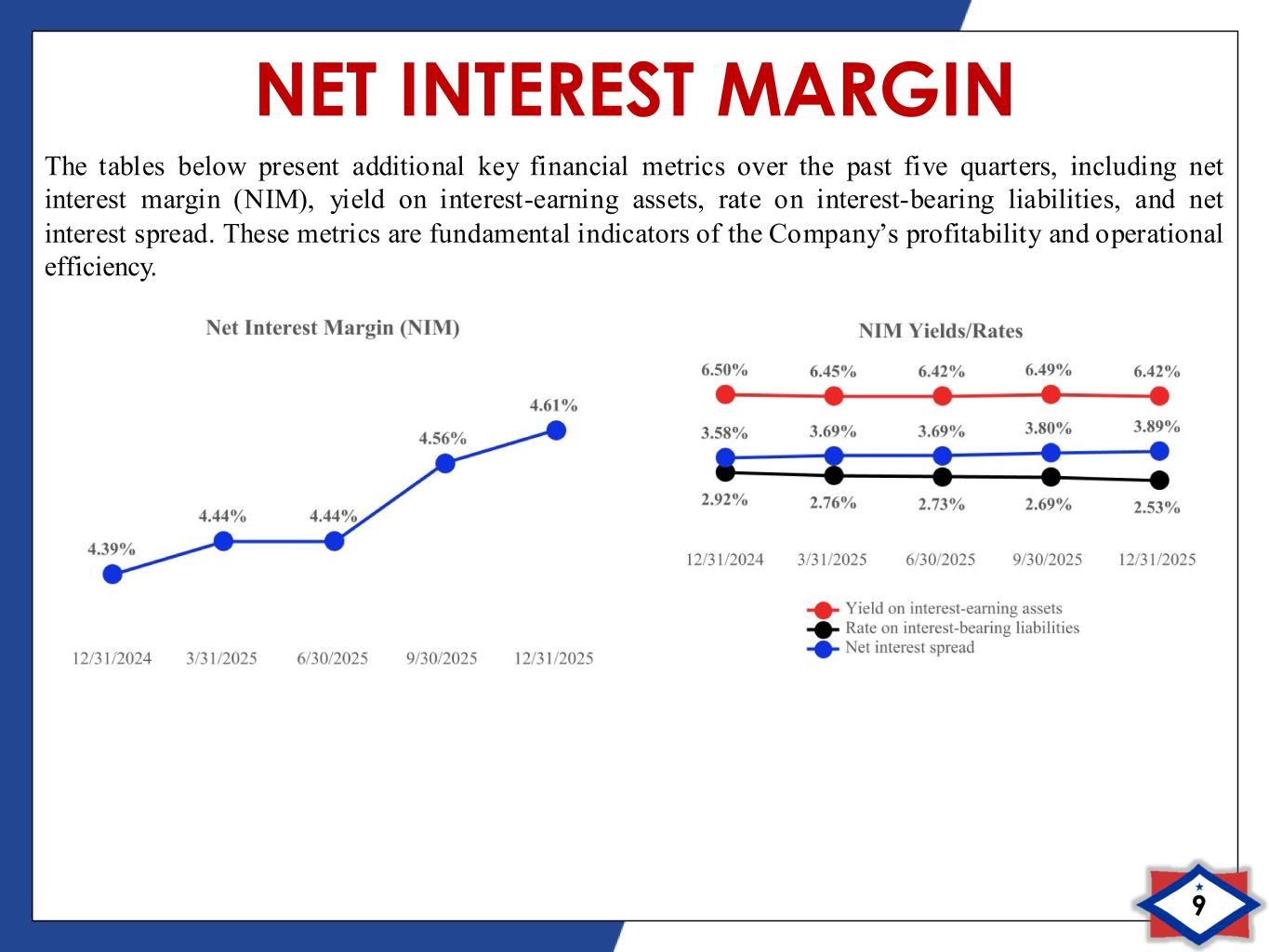
Continued strong earnings, asset quality metrics, and capital generation all capped off by our announcement of the Mountain Commerce Bank acquisition in December. Highlighted by strong revenue and continued net interest margin expansion, we were able to produce an adjusted return on assets of 2.05 percent and adjusted diluted earnings per share of 60 cents. The reported net interest margin improved to 4.61%, up five basis points from Q3 and up 22 basis points from the same period a year ago. The core margin, excluding event income, was 4.56% versus 4.53% in Q3. The loan yield declined by 13 basis points to 7.23%, but was offset by a 15 basis point decline in interest-bearing deposit costs to $247. Total deposit costs were 1.91% in Q4 and exited the quarter at 1.86%. Deposit balances improved by a little over $150 million in Q4 and showed growth of $334 million for the full year of 2025. Non-interest-bearing balances remain stable in Q4 and comprise 22% of total deposits. A top-tier efficiency ratio continues to be a focus and priority for us, and while we had some tailwinds in revenue for the quarter, I'm proud to report an adjusted efficiency ratio of 39.53% for Q4 and 41.29% for the full year 2025. Loan production was one of the highlights for the quarter. at over $2.1 billion, highlighted by nearly $1.2 billion from the community bank footprint, with half of that origination volume coming from Florida. Capital levels continue to grow throughout the year, with common equity Tier 1 capital ending at 16.3% and total risk-based capital at 19.1%. As we've mentioned previously, we're thrilled to be partnering with Bill Edwards and Mountain Commerce Bank bank in the vibrant Middle and East Tennessee markets. Our conversations have gone extremely well so far. We filed the regulatory applications that is for earlier this week and anticipate a quick process there. We're excited to welcome the MCB employees, customers and shareholders to the home family With that said, I'd like to thank our regional and division presidents and all of our bankers on another quarter and a great 25. and I'll turn it back over to you Donna.
Thank you Steven. Next is a lending update from Kevin Hedger.
Thanks Donna. Another year is in the books here at Home Bank Shares and from a lending perspective it was one of the best ever. When you combine the fourth quarter loan growth of $400 million with the loan growth that we've posted through the first three quarters of the year, total loan growth for the year was $922 million or 6.24%. Both CCSG and the community bank footprint contributed to the fourth quarter loan growth and this marks nine out of the last ten quarters in which we've posted organic loan growth. I do want to point out that the fourth quarter loan growth number was higher than we anticipated because of 150 million dollars in payoffs that did not occur as scheduled. Even though the origination pipelines remain strong the migration of these payoffs into 2026 may dampen early loan growth with expectations. Asset quality remains strong with a sequential decline in criticized assets and no material change in the NPA and NPL ratios. We continue to work through the small group of problems that we've discussed previously, and I have both good and bad news on the DFW apartment loan that we discussed last quarter. The loan sale agreement that we were trying to get closed fell through, but we have applied the significant hard deposit to the balance and our carrying value is at a materially lower number. We continue to work with other parties to move this credit out of the bank. The Texas CNI credit continues to be a work in process. As I mentioned last quarter, it could end up going to non-accrual before we get it out of here and that looks like that could be the case, so stay tuned on that.
We enter the new year with a seasoned lending staff that is focused and understands our credit culture I expect very good things from them and while it will be tough to compete with 2025 we believe that 2026 will be equally as successful with that Donna I'll send it back to you thank you Kevin and now Chris Bolton has an update on ccfg thank you Donna fourth quarter was a busy one for ccfg we originated over a hundred million dollars in loan commitments resulting in two hundred thirty six million dollars in that loan growth this This pulled outstanding loans into positive territory for the year with just under 200 million or 10% growth for the year. You may recall that during the year loan balances dipped to approximately 1.7 billion before rebounding and closing the year at over $2 billion in total outstanding. For the year we originated just under $2 billion in loans and received just over a billion dollars in paydowns, payoffs. Both of these figures are a bit higher than average.
Similar to Kevin's comments, I would say that as we turn attention to 2026, I do expect paydowns to moderate growth in the near to mid term but much like this past year future funding and new volume may largely offset expected paydowns over the course of the year Donna I'll now hand the call back to you thank you Chris Johnny before we go to Q&A do you have any additional comments that's a great quarter and a great year overall we hung in there pretty good we didn't make the mistakes and hopefully our investment community will appreciate anybody else have anything said Brian gay comments to that I was a really good year we blew it out and did quite a bit better than we even had budgeted if you remember I didn't vote for your budget last year after that wasn't 427 something of the 425 I was the only one vote against it but anyway it turned out good but I knew we could do better I thought y'all were laying by the law maybe you were so anyway I guess we're ready to go to Q&A Okay. Operator, we'll turn it back over to you.
Operator
Thank you. If you would like to ask a question, please press star followed by one on your telephone keypad. If you would like to withdraw your question, please press star followed by two. When preparing to ask your question, please ensure your advice is unmuted locally. First question comes from John Armstrong with RBC. Your line is open. Please go ahead.
Good afternoon, everyone.
John, just maybe it's a question for Kevin or for you, John, but what do you attribute the growth to for the quarter? I know you flagged the payoff that didn't happen, but you still had a strong growth quarter relative to what you've had historically. Are the pipelines changing, or is there anything else that you feel is driving this stronger growth?
Hey, John, this is Kevin. And so, I mean, the size and geography of the loans is similar. It's the same. Most of our loans, larger loans, tend to be construction loans. You know, those fund over, let's say, 18 months. This quarter, we had a couple larger loans that were fully funded because they weren't construction. That helped. And we see that from time to time. If they're big loans, they make a difference. Pipelines are strong. I think it was helpful. the last quarter that there wasn't a lot of rate movement I think that you know when rates start dropping and you we see people doing crazy stuff and that's we're seeing that that's happening but if we're higher for longer than I think that slows down a little bit and that that always helps us so it's a mixture of two or three different things it just happened to all come together and make it a little bit higher than what we thought it was okay but pipelines are pretty consistent they haven't really changed that much not not really no I was pleased John is John I was pleased with with the loan growth and we had a
Chris my comment I would get a large payoff that didn't happen Chris you want to comment yes I think that's fair I think I think two things for us in the quarter one was we had a loan that closed at the beginning of the quarter that we had originally scheduled to close in the third quarter. I think we talked about that before as well, that it slipped into the fourth quarter, and then we had a payoff that we expected in the fourth quarter to slip to the first quarter. So, you know, if you look at things on, like, a rolling four-quarters or rolling three-quarters basis, it all kind of evens out, but sometimes you get both those things happening in a quarter and your number pops a little bit, but I just view it as a little bit of timing.
I think Shore had a pretty good month, too, the December. Scott, you want to comment? Have I lost you, Scott? Are you on mute? I don't know where Scott is. Maybe we lost him, but he had a good December. We were discussing earlier. He had one of his best months in December.
He probably gave us the most eloquent answer on mute, but I noticed that was good. Johnny, just one more thing. Just overall reserve level goals. I know you've expressed the desire to keep the reserve levels high and maybe grow them a little bit, but is 190 enough considering what you've seen with pretty stable and good quality credit?
Yeah. You know I've always run one of the 2% reserve and I always run one of the 2% reserve. We had a little settlement this time. You don't normally run right at a 3% pre-tax, pre-provision ROA like we did in this quarter. So we had a little extra money and I thought it was a good time. I think I said in the past we get an opportunity, we'll build reserves. And I just like a 2% reserve. When we get an opportunity, we'll probably continue to take that up. So if we don't get an opportunity, we won't take it up. Yeah, it's plenty. The reserve's plenty. But we don't know what's going to happen next, right? we just don't know what's going to happen something's going to happen we don't know what's going to happen however it looks pretty good for us for for the future I mean it looks like countrywide it looks like we may have a 26 might be a good year for all of us in 27 maybe even a better year so I'm pretty excited about what the future yields thank you for taking my questions nice job thanks for thanks for your support John you've been a supporter since 2006 I think. I appreciate it.
Operator
We now turn to Steven Scutin with Piper Sandler your line is open please go ahead.
Hey good afternoon everyone I guess maybe going back to loan growth for a second I think Kevin you said like no no major changes nothing different but I did see one larger loan kind of get flagged a potential larger energy loan get flagged in some publications and just curious if that's a sector that you guys are lending to anymore significantly now at this point in time and if there's any kind of larger chunkier loans that were within the quarter's results hey Steven this Kevin so that particular loans alone we've had for some time I think we upsize it a little bit but maybe why I got flagged but it's a customer we've had for a while I don't know that it's
indicative that we're that we're really diving into that market anymore it's just a really good opportunity that we that we liked very well and felt like we could size up and then got very comfortable with so will we do that again we might if we see things we like but that's one we've had for a while it's not a brand new relationship that was part happy was in that credit a syndicated credit for five or six banks in it at one time, the lead bank if you remember got in trouble and we took everybody out so it is from an oil credit perspective it may
be the best oil credit in the country and that's not something, we're a little nervous about some of those markets but we like his credit a lot, we like his operator a lot, He's done extremely well. By the way, that's a $350 million credit, and it's at about $280 now. So that's not the credit that popped the loans up for the quarter.
Got it. Super helpful. Thank you there. And then maybe thinking about deposit growth for a minute, I mean, do you feel like you can drive enough deposit growth to fund the opportunities you guys have on the loan side? and kind of how do you think about the loan-to-deposit ratio from here I know you used to you used to be willing to run it pretty hot but I think lately you've said maybe keeping it between 90 to 95 percent would be the goal just wondering how you're thinking about that hey Steven this is Steven yeah I guess last part first you know mid 90s is is probably you know where we would would target where we ended the quarter at 89 you know Mountain Commerce will will
increase that very slightly. They're running a little hotter than we are, but something in the mid-90s. I mean, I think our approach is, you know, we've long said we don't run CD ads. We run, you know, we advertise the company's strength. You know, there's certainly opportunities to be a little more aggressive at times from an interest rate perspective if we have to. And, you know, the markets that we're in are certainly, you know, potential deposit providers for us down the road, particularly in parts of Florida. So we're optimistic, and I think optimistic in Tennessee as well that, you know, the company strength and our size and branding that Bill and his team will be able to capitalize on that from a deposit growth standpoint too.
Yeah, that's great. Appreciate that, Stephen. And then just maybe last thing for me, I did notice, obviously, I mean, the reserve at $190, I'm not particularly concerned about anything on the credit side with you guys, ton of capital, ton of reserves. But I noticed the 90-day delinquencies on the short premiere did increase a little bit. And I know you said they had a good month in December, so maybe that's just episodic. But just wondering if there's any kind of change in your view about that line of business and kind of how it's performing or how trends are going there.
Hey, Stephen, this is Kevin. So we've got three or four single loans that are kind of one-off in nature that it's just taking longer to get through the process to get them back and get them sold than we would like. And it's a function of just going through your repossession process, nothing major.
One boat that we've talked about for six months now was arrested. We're in it 50% on the dollar, the $10 million boat, and we got less than $5 million in it now. We can't get it out of the court system. The guy just keeps it. The attorney had a cardiac problem. I mean, every kind of excuse in the world they keep doing, but we're in good shape on that boat.
We've had the boat for nine months.
Yeah, we've had it for nine months. We got arrested for nine months. We're paying a ticket on it. It's eaten, by the way. So, you know, it's just getting it out of the court system, you'll see $5 million of that could pop up. He says he's going to pay for it, and he says he's going to refinance it, and he begs the court, and the judge gives him another 30 days. I don't know. It's frustrating. I've talked to him this morning about exactly what you said. One of them was a guy who shot himself. I mean, it's a lot of scattered stuff, and probably we've got four or five others that probably have to think about the fact that what you loaned on it, and what we're going to get out of it and how much loss is in there. And, you know, maybe you need to improve our loan to value a little bit on the origination. As it turned out, only half of these were we had originated, the other half we bought in pools. So I feel better about that.
Got it. That's great, Culler. Thank you, guys. Congrats on a great 2025. Look forward to watching another great year here in 26. Appreciate your time.
Hey, thank you. Thanks for your support. You've been a great supporter. We all thank you for that. We know you wrote the best report on us this time, so thanks.
Operator
We now turn to Matt Olney with Stephens. Your line is open. Please go ahead.
Hey, thanks for taking the question, guys. Appreciate all the details on the loan pipelines. I was looking for more color on loan pricing. Some of your peers are talking about incremental data points around loan pricing getting a little bit tighter more recently. I'm curious what you're seeing and hearing with respect to competitive pressures in various markets from CCFG to the community bank.
Well, I'll cover this guy. I'll cover the community bank. I mean, we're seeing some really silly stuff. I mean, it's one-off here and there. It's different groups in different locales, so it's not one group. But, I mean, we saw a deal of floating minus 75 with no floor, a ceiling of 6, and you can fix it at any point during the next 10 years. I don't know how you compete with that. There is crazy stuff out there. I think it does slow down a little bit when you don't have rate drops. If we stay here for a little while, maybe that gets a little better. But it's silly.
When yesterday they asked for a 160 or 170 reduction in right, I told them I'd never done that before. A 160 or 170 reduction in right. So anyway, it's just – they're starting. I mean, it's starting. The kids have got the money and they're running with it. So, this is the toughest part of the cycle that we're going through as rates come down is watching these people. One yesterday, Kevin said that it has no floor. And you can set it any time within five or ten years, whatever it is. It's hilarious. But, I mean, that's what you got to deal with. And you got to live with it. It's just part of banking. It's a silly, silly part of banking, but that's what it is.
You know, I'd say our group's navigated through all of this competitive environment really well. I mean, I think the community bank originations in Q4 were about 690, and I think in December, you know, reflective of the last two drops, we're in the 675 range, you know, on a coupon plus fee. So our folks are still doing a great job in getting the yield.
Yeah, good. Well I appreciate that color and then just I guess take it following up on the margin overall I mean the core margin continues to move higher I think we're at 350 or 453 this past quarter. Terry's kind of what you see the puts and takes on the margin as you move into 2026.
Matt we said for a year now we just hope to keep it flat and it continued to go up a little bit so I guess we'll say we hope to keep it flat a couple things there I mean you know I guess it ties into your your question on competition but yeah I show we've got about a billion two in fixed-rate loans that mature over the course of this year that are in the aggregate about 540 so there should be some some room to bring those up if competition allows if everybody doesn't trade all this away so there's some room there our CD portfolio is pretty sure there may be a little bit of room there as as as those mature and are able to work rates down but again kind of same thing competition yeah I mean we exclude event income we were at 456 for the quarter um we we actually ended december at 459 so we've kind of got a good jumping off spot for for for q1 here but you know i think overall if we can keep it if we can hold it in this range we'd be we'd be pleased yep okay well appreciate the color and uh congrats on the year and and
looking forward to see what you guys can do in 2026. you bet thank you for we now turn to dave Rochester with Cancer Fitzgerald the line is open please go ahead hey good afternoon guys I wanted to start based on the great loan growth you guys had it looked like there was some pretty serious multifamily growth in there with with some of that coming through CCFG was just curious what got you guys to take a big swipe at multifamily this quarter and what did you like about the loans were they larger more granular and should we expect to see more of a focus on that in 26.
Hey, Dave, I'm going to let you mention Chris. I'll let Chris answer for him, and then I can give a little bit of a color on the community bank side.
Thanks. Yeah, Dave. Yeah, we had a couple loans this quarter where we had some clients that purchased a multifamily, either purchased multifamily loans or purchased multifamily assets, and we were levering those. So I don't know that we necessarily you know stepped back a few months ago and said let's do a lot of multi-family a lot of what we do is we have a kind of a roster of clients who we've done business with for a long time and they talk to us about the things they're doing and then we decide if we're going to do those that happen to be a lot of multi-family right now what we are seeing you know in multi-family is there's a there's a particularly bad vintage of multi-family from like 2021-ish range plus or minus months where that vintage hasn't done that well, and so some of those are now trading hands, and a lot of my clients buy either distressed or semi-distressed or expiring loans and things like that, so I think that's really what drove that this quarter. Gotcha. So, I mean, if that's a particular vintage, and I would imagine those came up on resets Is this something that maybe we can see over the next couple quarters, at least, as a nice driver for growth? I like the trade. We'll see how many more there are, right? These happen to come along, you know, right now. You know, I think there's a few more, you know, potentially coming through. So, again, I think it depends a little bit, I would say. But we like that trade. We think there's probably more to go there. But, you know, how much of that we'll end up doing, you know, we'll just have to see a little bit about whether our clients are full up on this now or not as well. And earlier you guys had talked about a lot of your production, your loan production was in Florida. Was a lot of this in Florida? For CPFG, no. A lot of Sunbelt and some New York.
But we generally don't do a lot of Florida because I think the bank has a great team down in Florida that's that's got you know giving the bank pretty good exposure to Florida I have a little bit in Florida but we don't really concentrate on Florida yeah okay oh I'm sorry go ahead segue to the community side you know some of our growth will be as we said before construction stuff that'll be things that we've already closed that are you know now funding so that's part of the third quarter we still got a really good there are some really good places in Texas in Florida to put new projects and so that's what the community bank is
mostly focused on and I think you'll continue to see that as long as there are good good markets for for us yep great appreciate that color maybe just one last one on expenses those are down a little bit this quarter on a core basis, and you guys have done a really great job keeping a lid on the run rate all year. How are you thinking about that run rate heading into 26?
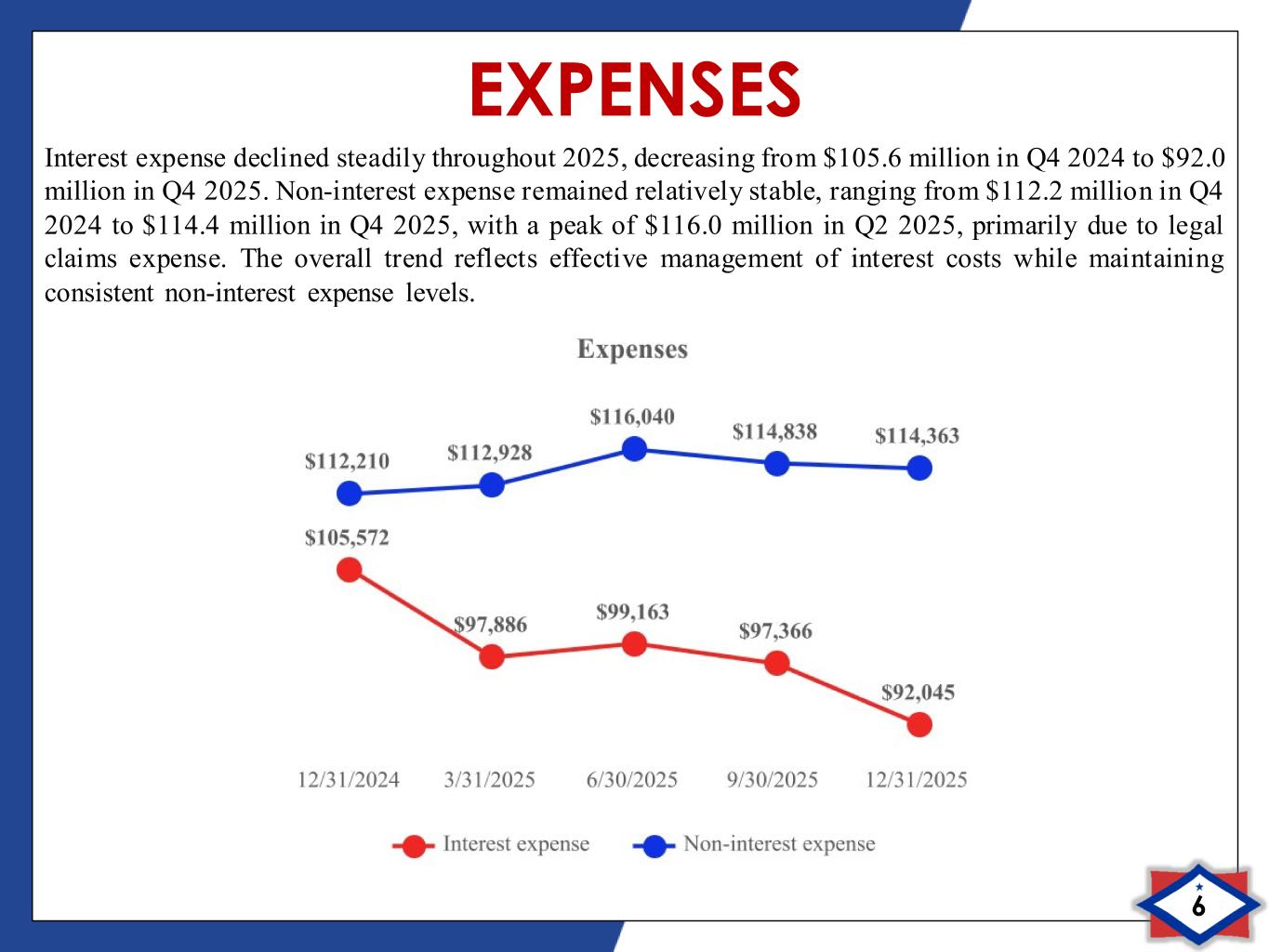
Yeah, I mean, if you look at where Q4 was, we had about half a million in merger expense. You take that out, we were just shy of 114. You know, we're going through the budget process now. It looks like, you know, one percentage in terms of growth on a standalone basis. It's obviously, you know, we're targeting the MCB acquisition early this year. That'll add some to the run rate before we get to the end of the year and get the integration happening there. But, yeah, I think fairly well controlled. And aside from, you know, merit increases and things this time of the year, we should be in good shape.
Yeah. No, that sounds great. Thanks, guys. Appreciate it.
Operator
We now turn to Catherine Miller. with KBW. Your line is open. Please go ahead.
I wanted to follow up on the margin. I'm great. How are you doing? Can you hear me?
When you turn those kind of numbers out, I'm a pretty happy, as I said one time before, pretty happy camper. Thank you.
Okay. I'm glad you can hear me. So my question is just circling back to Mountain Commerce. And just thinking about when we fold that acquisition in on day one, you know, they've got a 250 margin. I know you're going to be able to mark that balance sheet and then probably lower their funding costs over time. But kind of curious how we should think about any initial changes that you'll make to their balance sheet, either in wholesale CDs or their borrowing, or if that will be more of kind of a gradual thing to model in over time.
Kathryn and Steven, I think from a funding standpoint, I think that's something we'll model over time. Like I said earlier, we're optimistic that Bill and Kevin and the team, with the larger balance sheet and the strength of the company, can expand relationships and grow deposits in that market that would enable us to maybe work out of some of the wholesale funding that they have. But I think that'll happen over time. And I think, like you said, when you mark the balance sheet, our initial indications are little to no impact on where our net interest margin has run here over the last couple of quarters.
We've had some good opportunities already in Tennessee with some – one of them was an Arkansas customer who's buying something in Tennessee and picked up the phone and called it and said, I said, hey, I see you're going to Tennessee, and I said, we are, and they said, well, I just bought something over, I need four or five million dollars, whatever it was, and so I looked up with Bill and his team, and they're moving on that loan, and then yesterday, day four yesterday, David Carter, a recent president out of Jonesboro College, a small world, somebody he went to school with is one of the largest customers for Mountain of Mountain Commerce and Mountain Commerce had topped out with him and he said I'd sure like to do a lot more business with you guys and as it turned out he's a big customer of Mountain Commerce and we can help him with his growth in the future. So two good leads, that could be multi-million dollar credits there. So good stuff from the start just from announcements. So we'll be able to, they'll be able to do bigger deals with our balance sheet.
Great. Glad to hear that. And maybe on that theme just with M&A, it feels like you're on track to close that still early. You said early the first half of the year. We're kind of thinking beginning of second quarter. But let me know if you have a different opinion of that. And so if that's the case, how quickly do you think you'd be interested in looking at further M&A as you move through the year?
Well, I think we're open. Hopefully we close this April or May, and we're certainly looking for opportunities from there to do another. We think we're going to do another one this year. We're open. We're open for the right opportunity. Is that what you were looking for, Carol?
Great quarter and great year. Thanks, guys. It is? Thank you.
Operator
We now turn to Brett Rabison with Hope Group. Your line is open. Please go ahead.
Hey, good afternoon, everyone. I wanted to go on the M&A topic. You know, I certainly hear all the stuff that you said, Johnny, about, you know, buyers in the past maybe not having done great deals. One of the other things that, you know, investors complain about is, you know, hey, should you own buyer stocks? And I think there's some pessimism that maybe you shouldn't own buyer stocks. How does that factor into your thoughts on M&A and just what that does to your stock price?
How does it factor in the fact of whether we buy our stock or don't buy our stock? Is that what the question was? I don't get the question.
Yeah, well, just, you know, there's market sentiment from investors that maybe you shouldn't own the buyer stocks because they don't perform very well. And you guys have been inquisitive. I just am curious if hearing that from investors, you know, makes you more or less apt to maybe do M&A versus looking to do other stuff organically.
No, we'll continue. We'll continue to do M&A, you know, our first entree into Tennessee with Bill and his team. We'll let them guide us in Tennessee, and we're certainly open to something in that market. But we're not closing the rest of the markets either. I mean, if we found something in Texas or we found something in Florida that fits our bill, we'd certainly move on it and wouldn't hesitate. There's not a lot left in Florida to speak of. There's quite a bit in Texas to do, but we're certainly open to M&A, and so far as us continue by stock back, that's just one of the things we do. So when you run a 210 ROA, you can buy back stock and you can increase your dividend and you can grow tangible common equity all the same way. I think we grew tangible common equity 16% or something last year, almost two bucks a share in growth in tangible common equity and a couple hundred million shares. So that kind of puts it in perspective. If you don't make that kind of money, you can't do that. When you make those kind of returns, it gives you – you can pull, as I say, every capital handle that's out there and take care of your shareholders with a reward and grow the bank, too.
Okay. I appreciate that color, Johnny. And then the other thing was there's been a lot of comments about Florida. You just mentioned there was still stuff to do possibly in Texas. Where is the Texas franchise at this point relative to – you obviously had the gain in 4Q. you know it's all all of the noise around all that stuff died down and you're in a net growth perspective for Texas from here you know any thoughts on how the Texas piece is performing and what you might expect from that from that it's performing today to work the way it was supposed to performed three years ago so if we had a little bit early on we had a little bit of good good performance and then we kind of fell off and as you know, the trouble we had out And now it's back.
So it is, the Texas operation is growing and we had to make lots of changes and lots of clean ups, lots of work to do in that market but we're getting there. Our Dallas-Fort Worth area is really cleaning up well or West Texas area is really cleaning up well. So we're pleased with that. They're bringing good loans to the table, and we're happy with what we see. So it's probably now where we expected it to be three years ago. That's probably where it is. I haven't looked at that exactly, but that's my fear. I looked back at the P&L at the end of the quarter and looked at where our Dallas-Fort Worth and our West Texas operations were performing, And they're getting the numbers now. They're part of our system, and they're operating like the rest of us operate, and it's back-genning the way it should be.
Good to hear. And then just lastly on that repurchase comment, are you implying that maybe the pace of the buyback continues at the levels in 4Q, or any thoughts on how aggressive you might be with using the repurchase plan?
Probably. That's something Steven and I talk about all during the quarter. And when we see an opportunity and when we're having a great quarter, then we kind of move on it. And if things slow down a little bit for us, we just kind of, it's kind of a weekly conversation between he and I. So the answer is probably, you know, we like to buy our stock. I'd like to buy back. Mount Commerce is six-plus million shares. It would probably be my goal to buy all of that back over the next period of time.
Great. Turnabout's on the quarter.
Operator
We now send to Michael Rose with Raymond James. Your line is open. Please go ahead.
Good afternoon, guys. Thanks for taking my questions. Maybe just tangential to Brett's question. Just as we think about Tennessee and the opportunity set there, clearly we've had a big deal in that market. I think on a pro forma basis, you guys are like 20th in deposit market share in the state from day one once this deal closes. One of the aspirations there, clearly, you know, as I look at Florida as a case study for you guys, I mean, you guys have made tremendous strides over the years, done a lot of deals. Is the goal to, you know, have a similar trajectory? Is it a more targeted strategy? Is it, you know, just how would you describe the opportunity set as we think about kind of the intermediate to longer term for what home could be in the state of Tennessee?
I think we'll just continue to grow in that market. You know, that's not a market that we've never been in that market before. We've been in Texas before. We've never been in Tennessee before. So we found a guy that's a founder who built his own bank. And as an owner-operator, similar to our operation here, we like that. We like what we see. He's stumbled a little bit on his securities and low-rate loans, but we'll mark that day one. It's already marked. We'll let that. He'll come out gangbusters pretty quick. We get the expenses out of it over the next 12 months. Outside of that, we'll let him lead us into that market. I mean, we know people that operate in that market through all the bank conferences. As you know, Michael, we meet all those people. They know us and we know them, so who knows what the opportunities are in that market? But we're certainly open to the M&A in the Tennessee market. If we see something there or Bill finds something that he wants to do, we'll be on it the next day. We won't hesitate. We have the capital, you know. We have the ability to mark somebody's balance sheet and fix them overnight. and and we'll we'll use that capital everybody's always said what are you gonna do that capital nice well we'll use it someday well this is this is someday give us an opportunity to use some of it I don't know if that answered your question but that's kind of how I'm looking at Steven you got any different observation on that no I agree hundred percent we like what we see in the market so far and I think Bill and his team can provide some opportunities we've already talked some names here and there and we'll see what happens.
No, for sure. It's a, it's a great market and obviously a good deal. So appreciate it. Maybe just one follow-up for maybe for Chris Polton. You know, I think as I've talked to, you know, banks over the past couple of months, you know, one of the big topics has been, you know, just pay downs in commercial real estate and construction, just maybe a little bit of a hangover effect from, you know, all the activity that we saw come out of the COVID. Are you seeing that at all, and are there opportunities to maybe capitalize as maybe some of those paydowns play out to maybe take some market shares to try to get a sense for the business? You know, obviously, one of your competitors is talking about pretty big paydowns this year, so just wanted to get a sense for, you know, the paydown level that we should be thinking about. Is it greater than the past couple of years, and then maybe what's the opportunity set as we go forward?
Sure, sure. I think paydowns are elevated. I mean, as I said in my comments, we had higher than average paydowns this past year. I think that will continue. There are lots of opportunities for customers to get financing. I would say what we've seen more than anything is non-bank entrance into commercial real estate. They're sort of refugees from the corporate lending side. Pricing has collapsed in corporate lending, And so some of those funds and private lenders have turned their sites to commercial real estate because from the outside it looks pretty easy, I think, and higher yield. So we are seeing that. I think we'll continue to see that. I think this is really where the test for us is we've been doing this for, you know, going on 10, 15 years, and we've got a good stable of customers who understand who we are and how we can help them make money. And so I think that's the other side of that, which is, you know, I think those people will continue to put money out and we continue to be an interesting choice for them. If our business was tied to doing a significant amount of volume every year, as in we need to take share or take a certain amount of share, et cetera, I'd be concerned today because I do think it's getting harder. Our business has always been tied to finding those small opportunities out there that are a little off the run, et cetera, that we can be helpful to people on. Those continue to exist, and I think those will probably continue to probably strengthen. I'm not sure if that answers your question, but I think we are seeing both those things. If we see some paydowns on that, then I think we'll also see some pressure in the main thing. If I was trying to do $5, $10 billion a year right now, I'd be concerned.
No, very helpful, Chris. Thanks, everyone, for taking my questions.
Operator
Thanks. We now turn to Brian Martin with Janney. Your line is open. Please go ahead.
Good afternoon, guys. Thanks for taking the questions, and I just had a couple of follow-ups to things already answered or things already asked on the call. So just maybe Stephen, just on the – or maybe just back to Chris for a minute. Chris, your thought on kind of just giving the puts and takes in the year 26, just kind of how you're thinking about net growth for the year? I guess is it kind of a mid-single-digit type of growth is how you'd be thinking about it with the, you know, the origination activity versus kind of the payoffs you're anticipating?
That's what I'm currently estimating, right? So assuming the payoffs that we think and the fundings that we think and where we generally come out on lending, I would be happy with that. Okay. You know, and then you have to throw into it, you know, would you get a payoff you weren't expecting or things like that? You might. But, again, I think over a long enough period of time, whether that's quarter to quarter or month to month or, you know, over an 18-month period of time, et cetera, I can't tell you within the calendar year what that looks like. But I would expect, you know, we'll continue to grow. I believe that to be true. We usually find those opportunities. One of the things we talk about here is, you know, the universe expands and we grow. I think that will still continue to be true, and that's what we're projecting.
Okay, thanks for that. And then maybe just one or two for Stephen. And Stephen, just on the margin and expenses, I think expenses you were talking about, about $115 million a quarter, if you use your $114 number, that's kind of the standalone run rate in expenses, and then just factor in the acquisition. Is that fair? And then just the second one on the margin, just the biggest pressure point in the margin today, if you do see some potential compression, you know, where you anticipate that could come from.
Yeah, I mean, that's fair on the expenses. That's what we're showing from a budget standpoint. You know, we'll certainly strive to do better there, and we're talking with our presidents every day on where we can do. On the margin, you know, our folks have done a fantastic job this year navigating the rate decreases and being able to, you know, certainly hold on to customers and grow relationships while getting rates down. It feels a little bit today that outside pressure from the loan side is kind of the wild card. You heard Johnny say earlier about a customer that was looking for 150 basis point rate decrease. Kevin's comments about some stuff we're seeing from competition. So whether that stands to tighten things up a little bit, we'll see. But I still think we get our fair share and protect our franchise and what we have. and try to keep it in this, you know, four and a half percent range would be pleased with.
Gotcha. Okay, that's helpful. And maybe just one for Johnny on the, you talked a bit about the M&A, just kind of the pipeline today on M&A, and I guess any commentary just on, you know, smaller versus larger deals, how you're thinking about, you know, the next 18 months or so, where you'd be looking more?
In terms of the geography, you know, we've got enough in Texas right now that we could get some savings there. We certainly have enough in Florida to get some savings, not particularly in Tennessee yet, but one of those markets, a Florida deal would probably make more sense for us right now. However, unless Bill brings a Tennessee deal, some opportunity he thinks would be good for us. So I'm open. I'm just open. And I think there's opportunities, and matter of fact, I know there's opportunities in all three states right now. So we'll just have to see which one makes the most sense. We're not going to dilute our shareholders, as you heard. We've never done that, and we're not going to do that. Well, we may have diluted them a little bit early on in Happy for a couple of years, but that wasn't an intentional dilution. That happened to us. But since then, you know, we never did it before, and we won't do it again. so we find the right trade to do that as long as our currency we continue to perform where we are and our currency holds up the way it is it gives us the ability to do those transactions so I guess my word to those that they're running one three is get themselves to a two percent before they go out and do something it just makes all the sense in the world that's okay yeah no you're welcome and maybe just the last the last one for me He was just, I don't know, maybe for Brian Davis, just, Brian, is the, you know, kind
of the noise or the extra income in the quarter relative to the Texas resolution, I mean, is fee income kind of a core number around 45, yeah, call it 45 million, is that kind of a clean type of quarter as you look at, you know, some of the noise that was in there this quarter on the fee income side?
Yeah, the $4.9 million was really the only noisy thing that we had in non-income income.
That's a good look. Just wanted to make sure of that. And then the last one was just for Kevin. Maybe, Kevin, you went through the commentary about non-performing.
Can you just give a little thought or maybe I missed what you said in terms of, you know, what the puts and takes were on credit, like what could be resolved, you know, in the next quarter to or kind of what's what's the status of it those couple credits so the the DFW apartment credit the sale that we were working on the notes that we're working on fourth quarter fell through but we had a pretty good good sized deposit that was hard that we applied so we're we're still working with others and you know we hope that that will we hope we'll get that moved soon it may take a little longer than than I'd like but we're still working technically and I credit is you know we're we're working it through I think it it may get to not accrual before before it gets resolved but again we don't think we're going to have any additional loss there we took a charge off a year ago fourth quarter and we think that our that we're okay there so we're just continue to work through it's the same problems we've been talking about for a couple of quarters and you just take sometimes it takes a little while to get rid of a problem yeah and and how big are those credits kevin ballpark in terms of the the department in the cni you know the department's 10 the department's 10 cni credits about 90.
10 to 100 perfect okay perfect thank you guys for taking the questions and look forward to a great You bet.
Thank you for your support. We appreciate it.
Operator
This concludes our Q&A. I'll now hand back to John Allison for any final remarks.
Thank you, everyone, for joining the call today. It was a great quarter, great year for Home Bank shares, and we appreciate all your support, and we'll continue to be – we'll represent your investment properly and do the right thing and hopefully make the right investments and all our shareholders. We are a pro-shareholder company as you know, and we'll continue to do the right thing for the shareholders. So that's about it. Anybody else got a comment before we close out today? Thank you very much for your support. Have a good day, and we'll talk to you next quarter.
Operator
Ladies and gentlemen, today's call has now We'd like to thank you for your participation, you may now disconnect your lines.