Operator
Good day, everyone, and welcome to the first Internet Bancorp Earnings Conference Call for the first quarter of 2025. At this time, all lines are in listen-only mode. Following the presentation, we will conduct a question and answer session. If at any time during this call you require immediate assistance, please press star zero for the operator. And please note that today's call is being recorded. I would now like to turn the conference over to Ben Brodkiewicz from National Profiles, Inc. Ben, please go ahead.
Operator
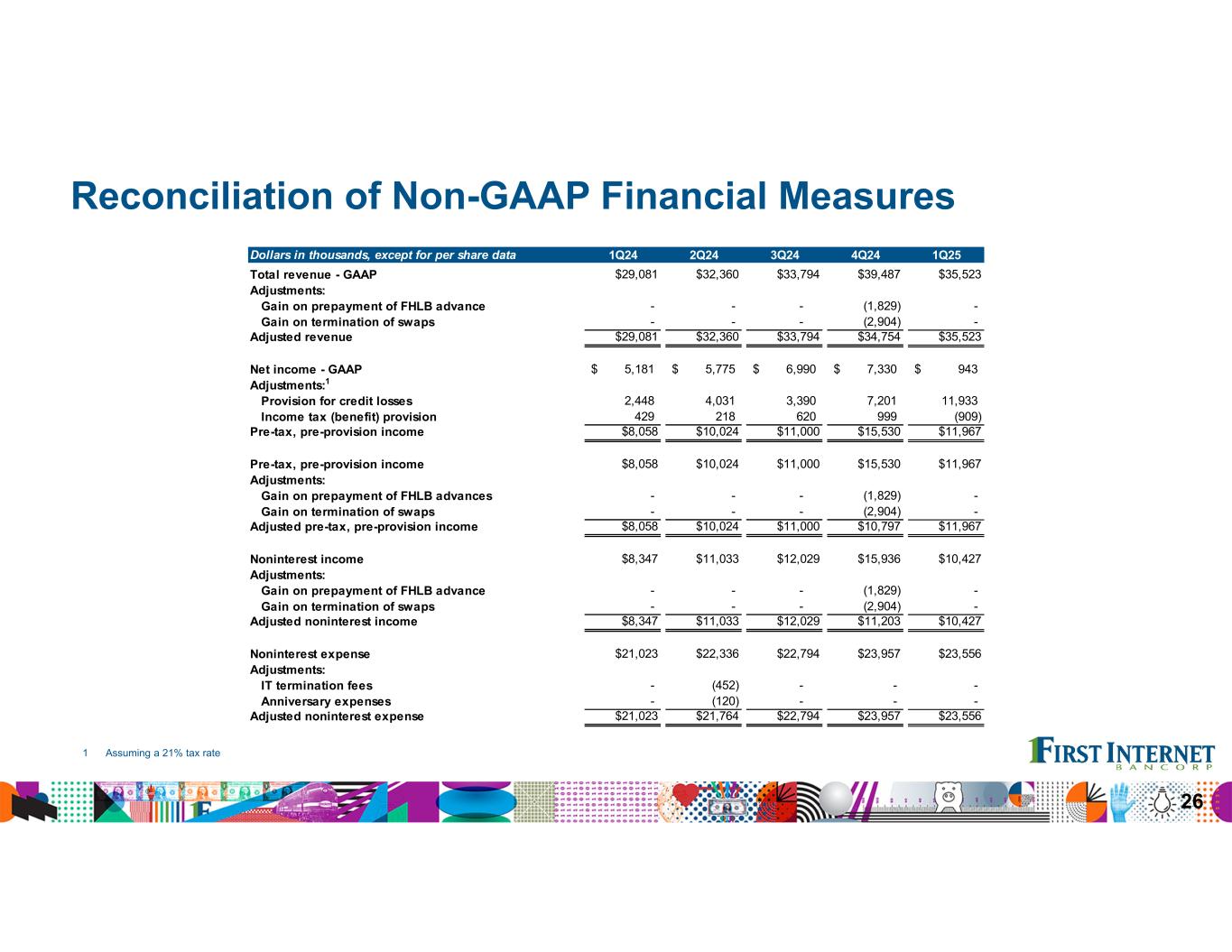
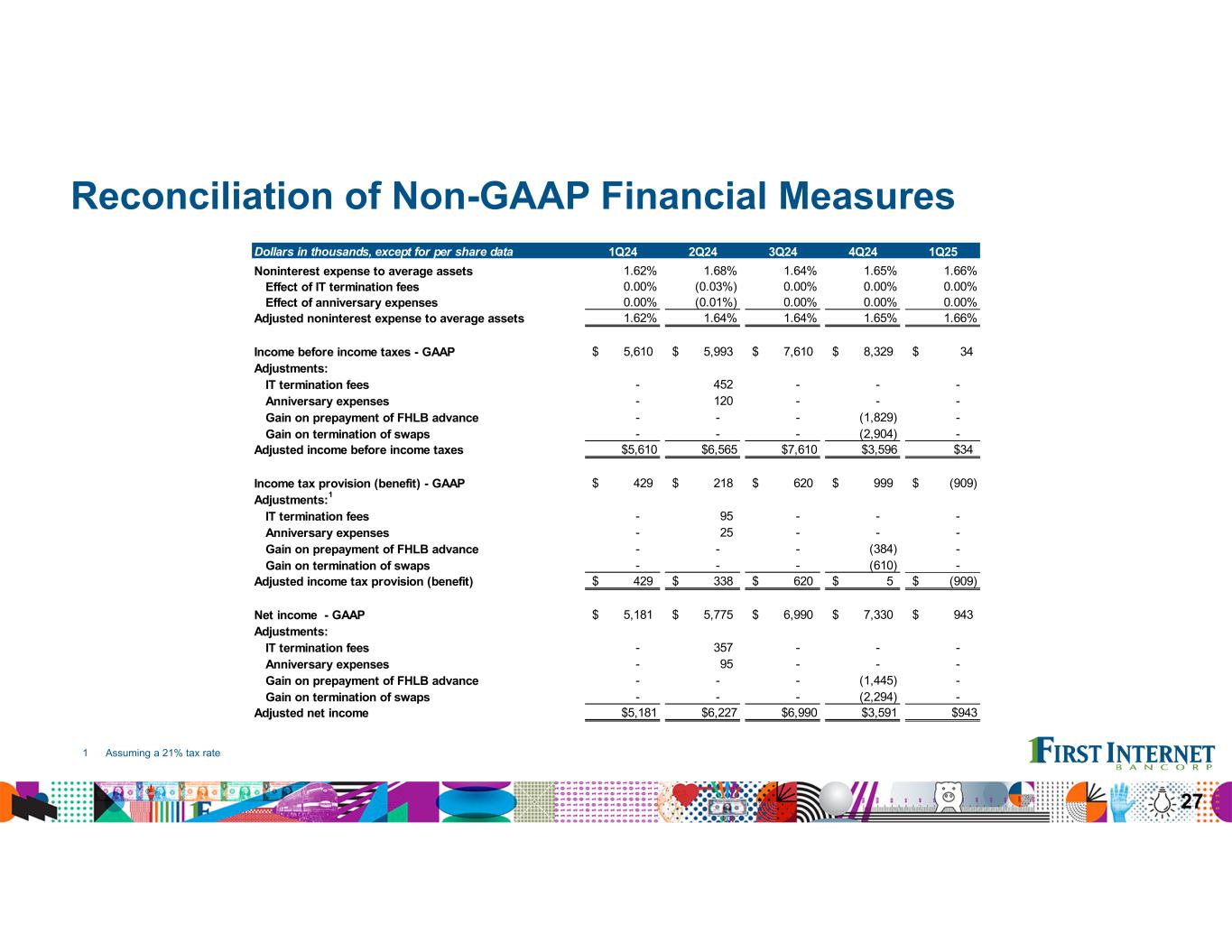
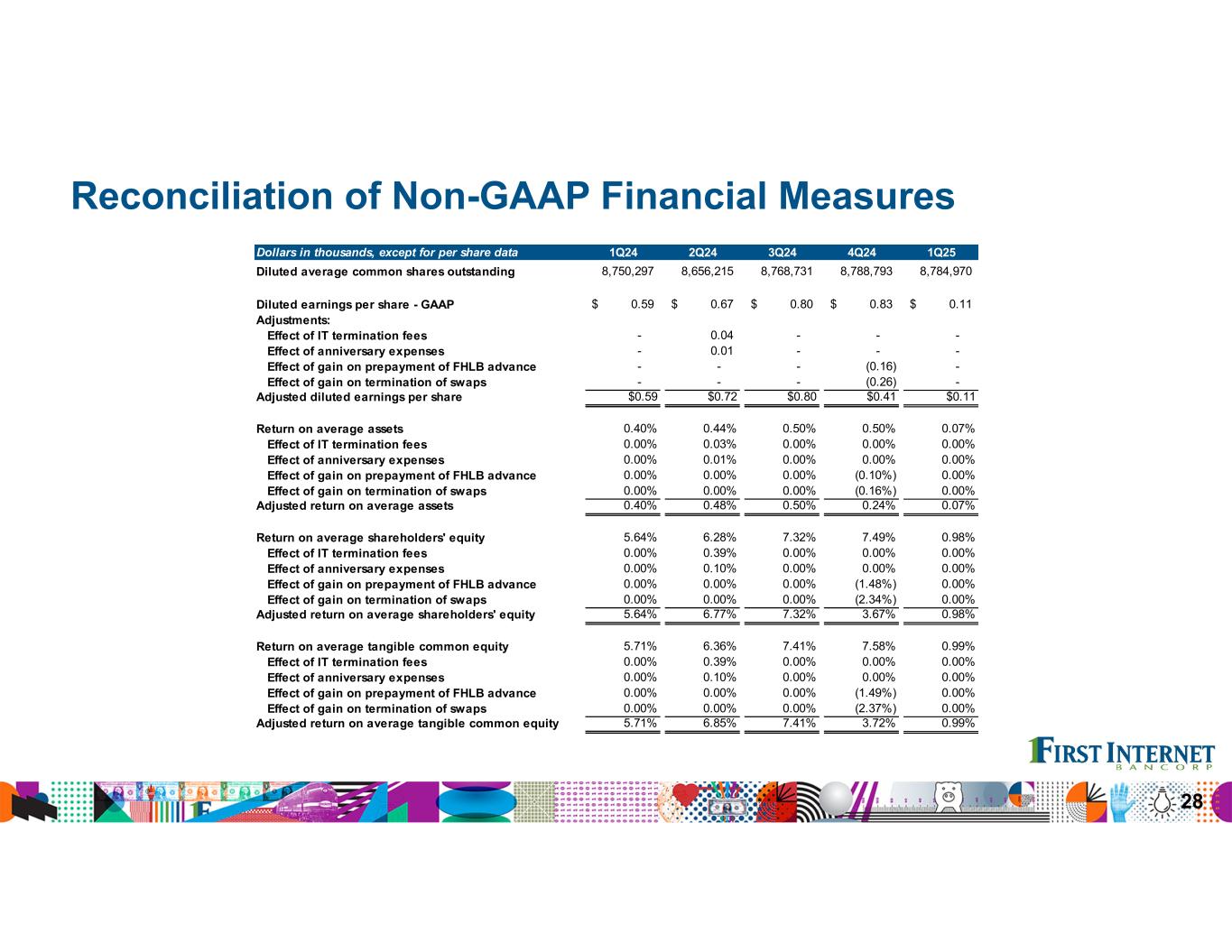
Thank you, Andrew. Hello, everyone, and thank you for joining us to discuss First Internet Bancorp's first quarter financial results. The company issued its earnings press release yesterday afternoon, and it is available on the company's website at www.firstinternetbancorp.com. In addition, the company has included a slide presentation that you can refer to during the call. You can also access these slides on the website. Joining us today from the management team are Chairman and CEO David Becker, President and COO Nicole Lorge, and Executive Vice President and CFO Ken Levick. David and Nicole will provide an overview and Ken will discuss the financial results. Then, we'll open up the call to your questions. Before we begin, I'd like to remind you that this conference call contains forward-looking statements with respect to the future performance and financial condition of First Internet Bancorp that involve risks and uncertainty. Various factors could cause actual results to be materially different from any future results expressed or implied by such forward-looking statements. These factors are discussed in the company's SEC filings, which are available on the company's The company disclaims any obligation to update any forward-looking statements made during the call. Additionally, management may refer to non-GAAP measures, which are intended to supplement but not substitute for the most direct comparable GAAP measures. A press release, available on the website, contains the financial and other quantitative information to be discussed today, as well as the reconciliation of the GAAP to non-GAAP measures. At this time, I'd like to turn the call over to David.
Thank you, Ben. Good afternoon, everyone, and thanks for joining us to discuss our first quarter 2025 result. Today, Nicole Lorch, our president and COO, will give an overview of the quarter. Many of you on the call have already met her in investor meetings over the past few years. Next, Ken Lubbock, our CFO, will walk through the numbers in more detail, and I'll hop back on for the Q&A session at the end. Nicole, over to you.
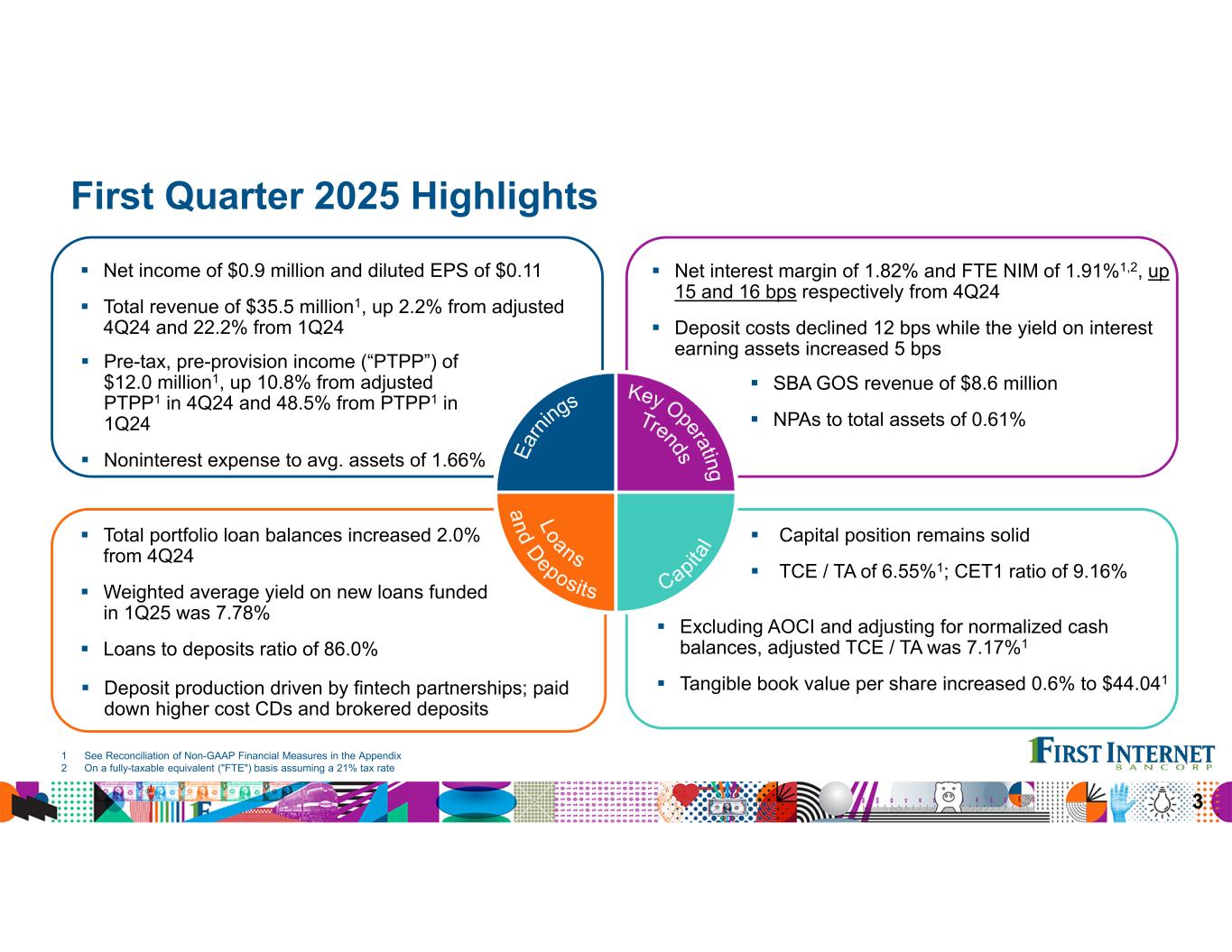
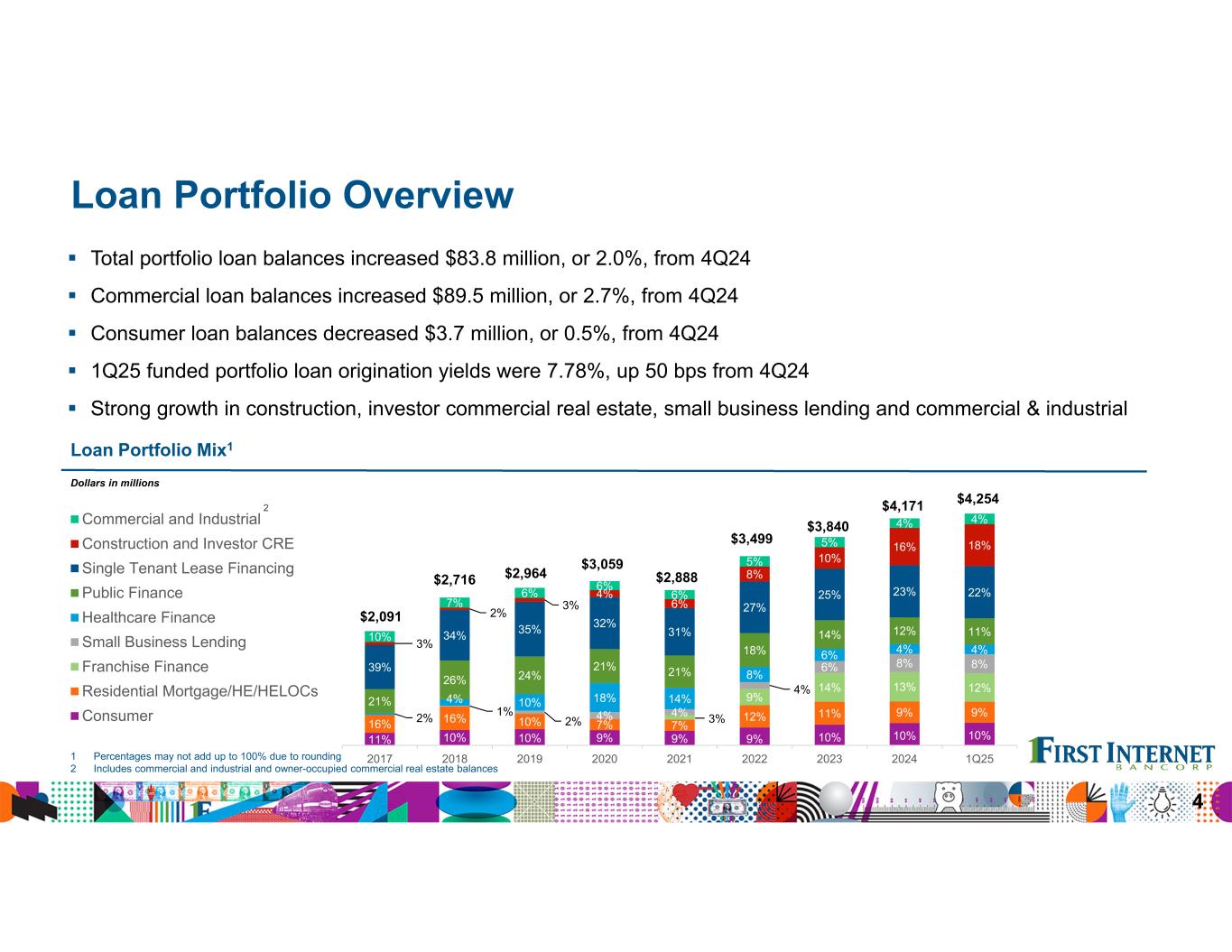
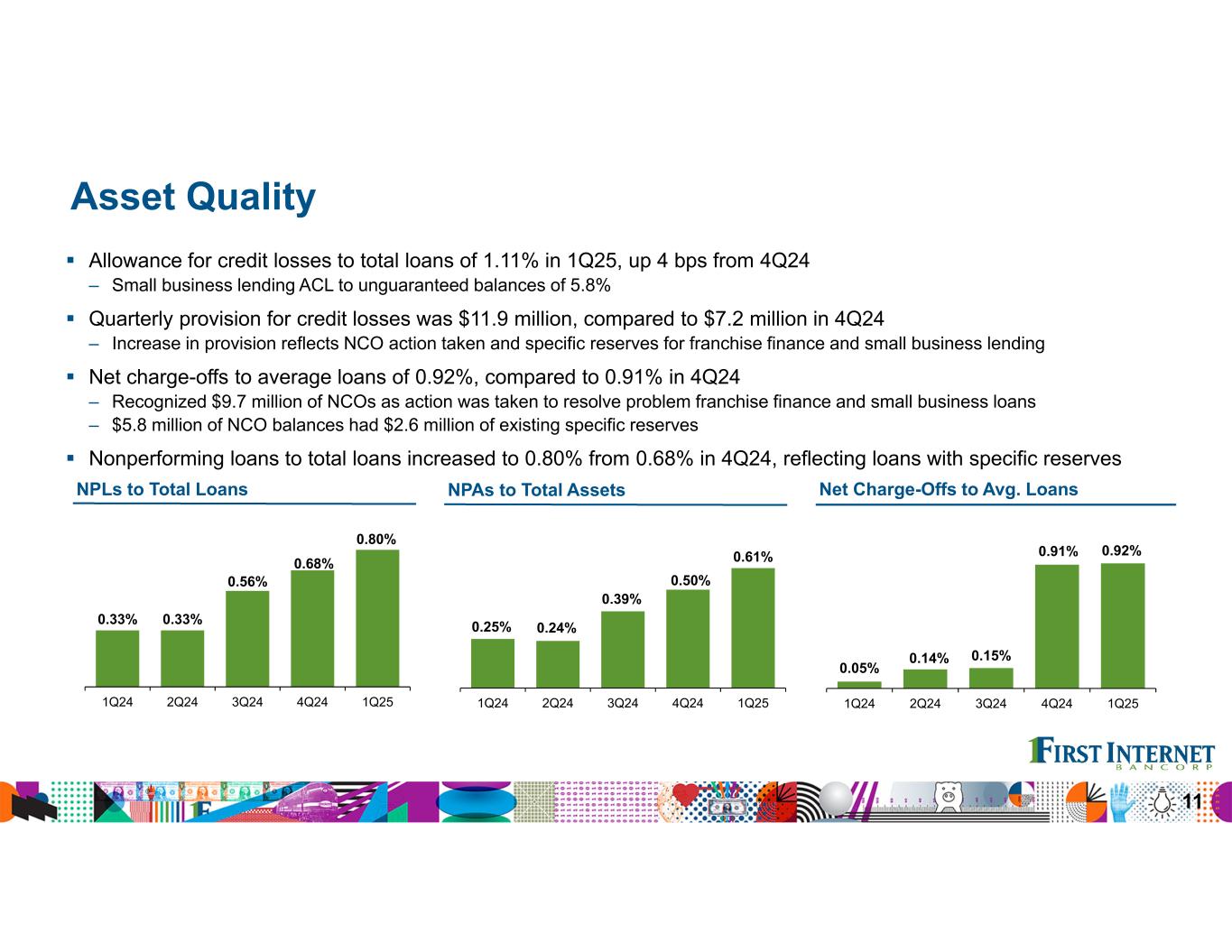
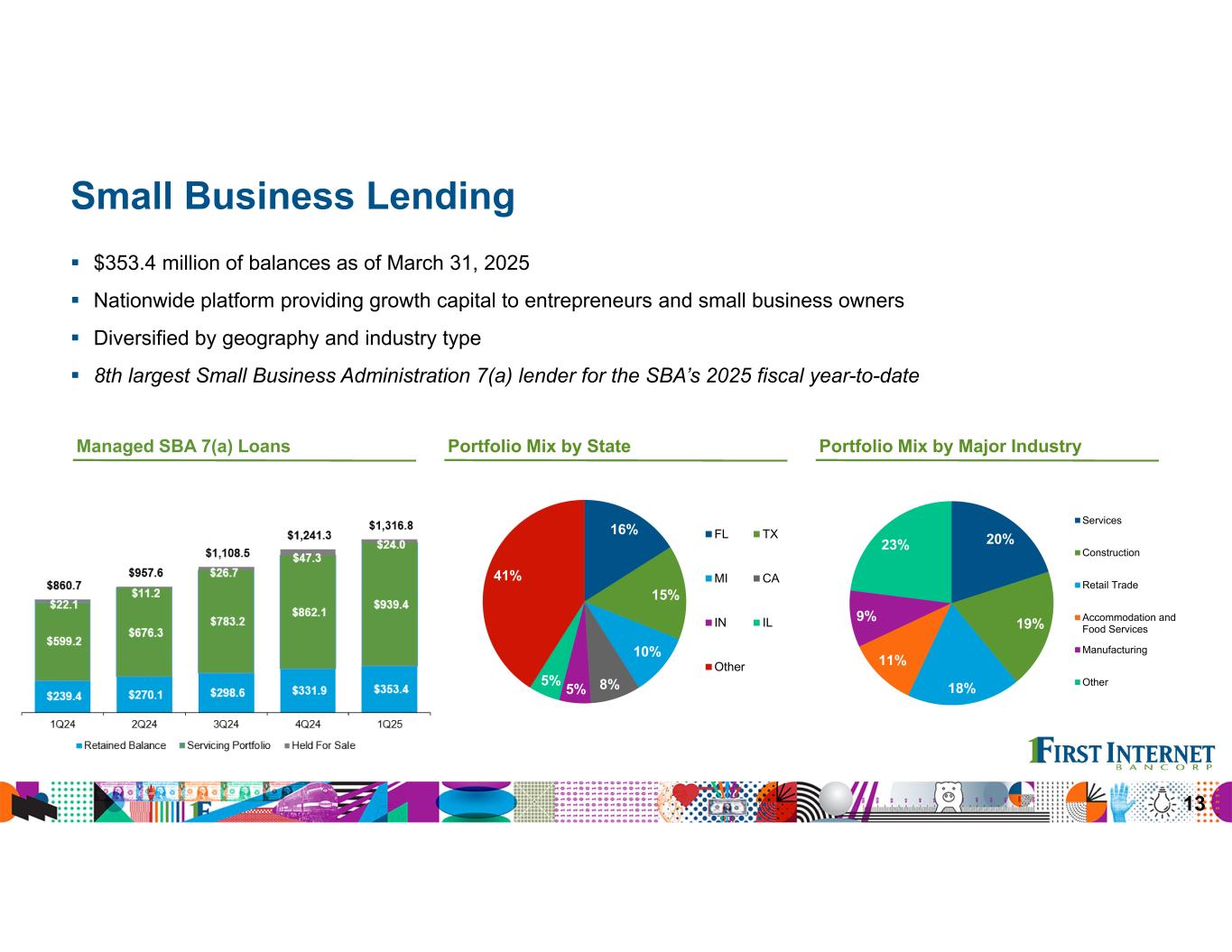
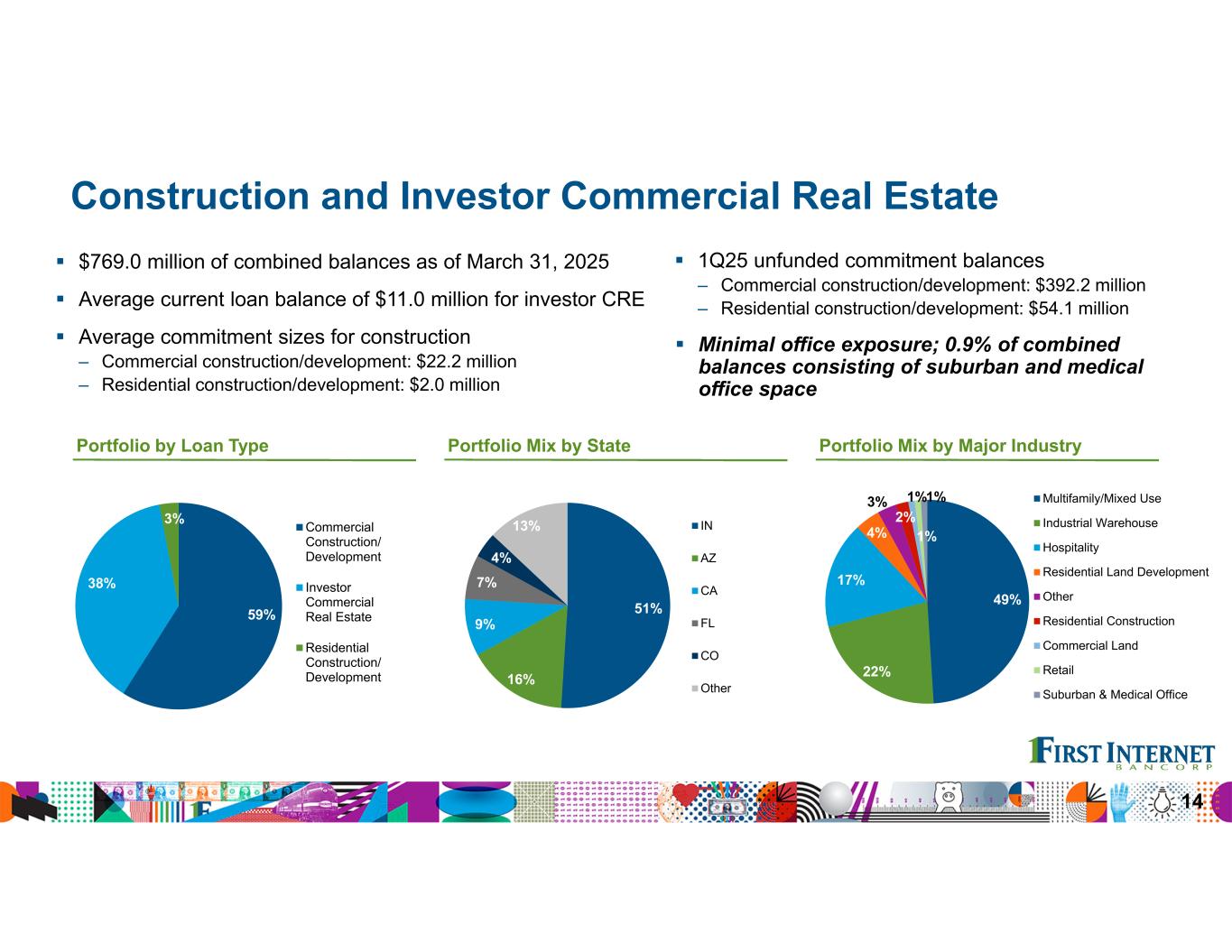
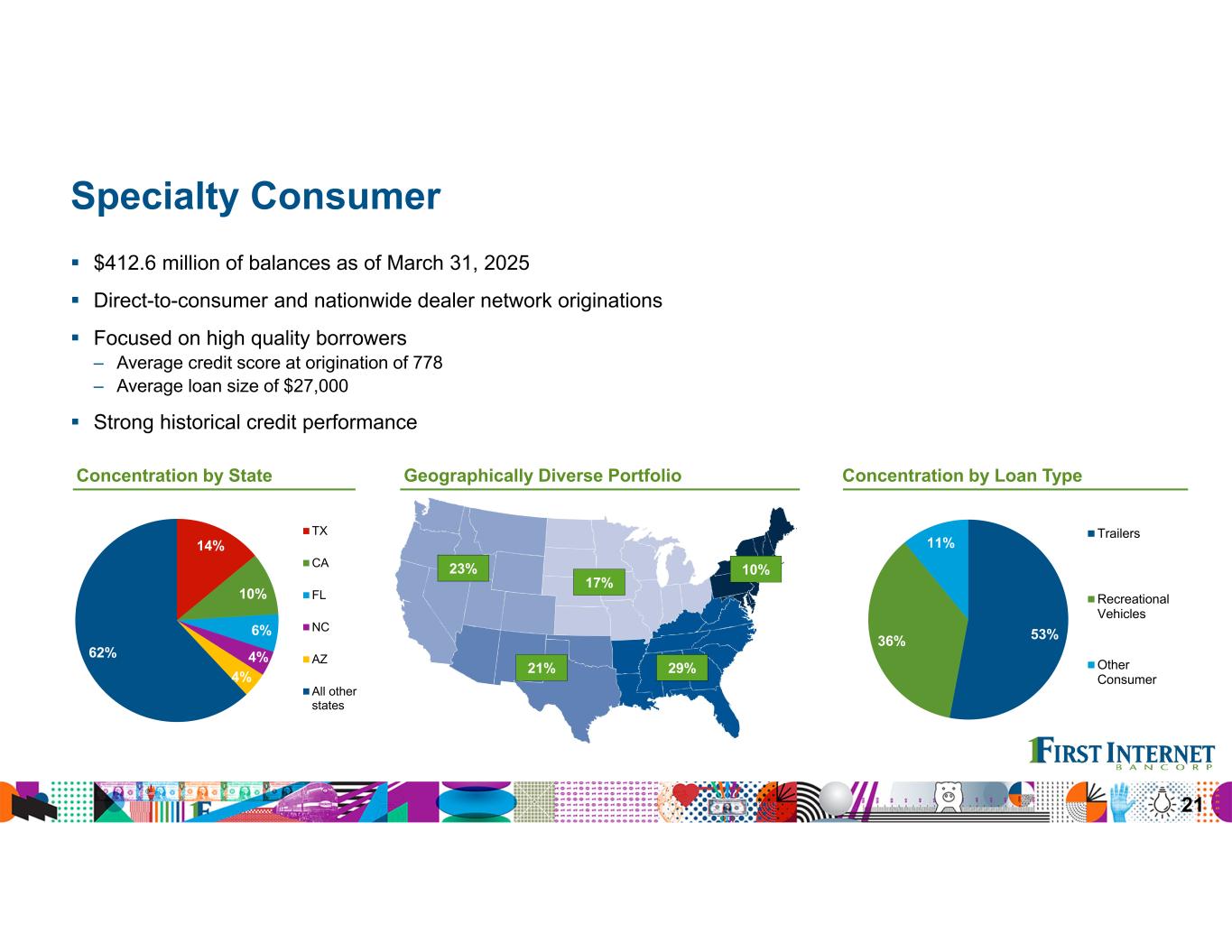
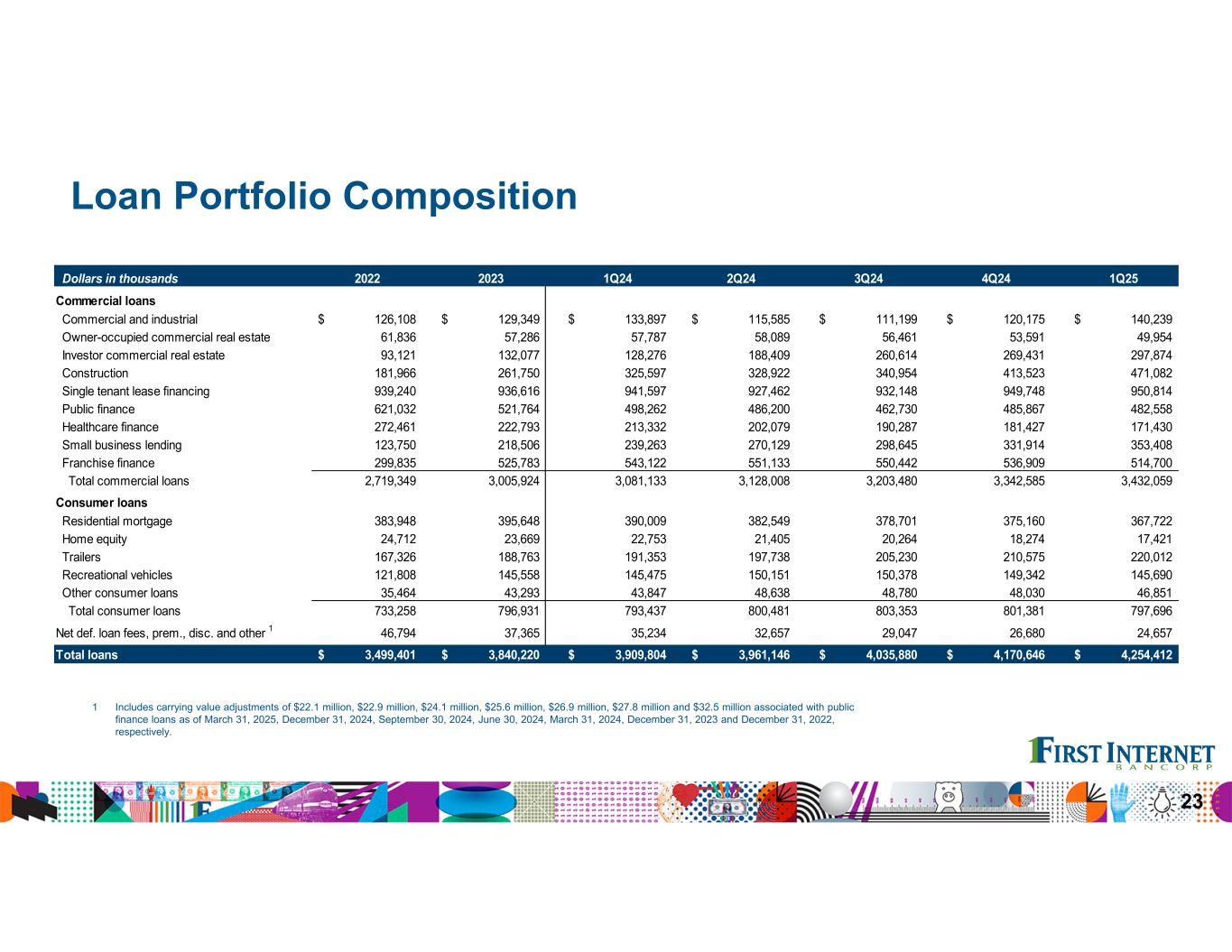
Thanks, David. The results for the first quarter were mixed. We continue to see strong, positive momentum in many key operating trends, which reflects a tremendous effort on the part of our team. Yet, that progress is tempered by credit issues in our small business lending and franchise finance portfolios, which I will address later in my commentary. Let's talk first about the things that are going really well. Net interest income continued to grow, and net interest margin continued to expand. In fact, we achieved our sixth consecutive quarter of net interest income and core revenue growth. Those results were fueled by strong loan growth that drove yields on earning assets higher, while deposit costs continued to decline. Simply put, our revenue performance continues to demonstrate strong improvement across the board. Compared to the prior quarter's adjusted amount, we delivered total operating revenue growth of over 2% and more than 22% year-over-year. Our teams maintain a keen focus on controlling the controllables. That means winning new relationships with timely follow-up, certainty of execution at disciplined pricing, and responsibly managing expenses. Starting with the highlights on slide three, I would like to discuss some key themes for the quarter in more detail. As a result of our continued improvement in operating performance and revenue growth, we reported pre-tax, pre-provision income of $12 million, which is up 10.8% over the prior quarter's adjusted amount, and up almost 50% over the first quarter of 2024. Revenue growth was driven by a 7% increase in net interest income compared to the fourth quarter and 20% compared to the first quarter of 2024. The yield on the overall loan portfolio increased six basis points from the fourth quarter. Deposit costs declined 12 basis points. The result was a 16 basis point improvement in fully tax equivalent net interest margin. We remain confident that net interest income and net interest margin will continue to trend higher throughout 2025 if the Fed takes no additional rate actions or moves rates lower. In either of those two scenarios, deposit costs would decline over the course of the year, driven in part by a significant repricing gap on maturing CDs. Additionally, thanks in part to the success of our embedded finance-Bintech partnerships growth, we have been able to pay down higher cost broker deposits. Side note, our fintech partnerships relationships also contribute non-interest income on oversight and transaction fees and on a limited basis interest income. Embedded finance is a complex business and we are proud of our teams for the collaborative effort it takes to grow meaningful partnerships while maintaining an appropriate risk management framework. Another bright spot in the first quarter was new loan origination yields that continue to remain well above our overall portfolio yield. During the first quarter, our weighted average rate on funded originations was 7.78%, which was up 50 basis points over the prior quarter. Yet another positive trend is the continued strong performance of our small business lending team, which is a key component in our strategy. Originations were down compared to the fourth quarter. That is seasonal and expected. Our pipelines give us confidence we will achieve $600 million of originations over the course of 2025. Solid loan volume and gain-on-sale revenue were both up over the prior quarter. But to really see the results of the investment we've made in this business, compare the progress we made on a year over year basis. Origination and loan sale volume were up 22% and 36% respectively over the first quarter of 2024. And through the date of this earnings call, we remain the eighth largest SBA 7A program lender for the SBA's 2025 fiscal year to date. Turning to earnings for the quarter, we reported net income of $900,000 and diluted earnings per share of $0.11. Net income for the quarter was significantly impacted by the elevated provision for loan losses. During the quarter, we took steps to address certain problem loans and recognized $9.7 million of net charge-offs, most of which were related to the franchise finance and small business lending portfolios. As a result, net charge-offs to average loans totaled 92 basis points. I would note that approximately $5.8 million of these charge-offs were related to loans that had specific reserves existing. Similar to loans we charged off last quarter, the issues with these loans and these credits were borrower-specific, not driven by any particular industry, geography, referral source, or lender, nor are we seeing any significant trends of stress within certain industries or regions. We had certain problem credits in various stages of workout or delinquency where the outlook for a positive outcome was becoming less likely. So, we made the decision to charge these loans off and recognize the losses now. Overall credit quality remains sound. Non-performing loans to total loans were 80 basis points and non-performing assets to total assets were 61 basis points at quarter end. The increase in non-performing loans came from franchise finance and small business lending. With the elevated level of economic uncertainty, we felt it was prudent to take action and get in front of some potential problem loans. Part of the actions taken included recording specific reserves where we believe impairment may exist, which added a net amount of $3.3 million dollars to the allowance for credit losses and was recognized in the provision for loan losses. At the moment, we have specific reserves on about a third of the total non-performing loan balance, while our teams work diligently with these borrowers for positive outcomes. Despite the increase in non-performing loans, our asset quality metrics remain in line with peers. While we're not pleased with the level of net charge-offs and the migration of franchise finance, and small business lending loans to non-performing status, we felt it was prudent to get in front of credits where there was no likely path to success and recognize those losses in the first quarter. Going back to the theme of controlling what we can control, we have adequate resources on our loan servicing and special assets teams, as well as processes in place to address any loan showing signs of stress. Our credit teams review data constantly to look for trends and areas to refine our underwriting standards. Turning to slide four, I'd like to take a few moments to highlight our lending activity for the quarter. We're proud of the work our lending teams did over the quarter to produce solid loan growth of 8% on an annualized basis. Nearly all of our lines of commercial lending experienced growth, with balances up over almost $90 million from the fourth quarter of 2024, or 11% on an annualized basis. Our construction and investor commercial real estate team delivered another strong quarter, originating almost $70 million in new commitments. In the aggregate, construction and investor commercial real estate balances increased $86 million. Projects continue to progress, leading to strong draw activity on existing commitments, and certain completed projects transition to the investor commercial real estate portfolio. At quarter end, unfunded commitments in our construction portfolio totaled $446 million. Upcoming draws on these loans, along with the option to deploy excess liquidity to retain a portion of SBA originations on on our balance sheet will play a meaningful role in the ongoing shift of our loan portfolio toward higher yielding variable rate loans. Approximately 30% of our loan book is variable rate today compared with 16% three years ago, demonstrating tangible evidence of our commitment to reduce interest rate risk. On the consumer side, total balances were down with expected declines in residential mortgage and home equity balances. combined with seasonally lower originations in the recreational vehicles and other consumer loans portfolios. We did, however, have solid origination activity in the trailers portfolio. We focused on the superprime borrower in our consumer lending and rates on new production were in the low 8% range. Furthermore, delinquencies in these portfolios remain extremely low at 10 basis points of total consumer loans. I'm proud of the work that the employees at First Intranet Bank put in to deliver continued improving performance and a six-quarter streak for growth in revenue and net interest income and strong net interest margin expansion. Combined with the ongoing investments we've made in small business lending, we remain confident in the earnings momentum we have built. With the ongoing evolution of our loan portfolio, greater revenue diversification, and anticipated reductions in deposit costs, we are well positioned to drive continued revenue growth and enhanced profitability for the balance of 2025. I will now turn the call over to Ken for more details of our financial results of the quarter.
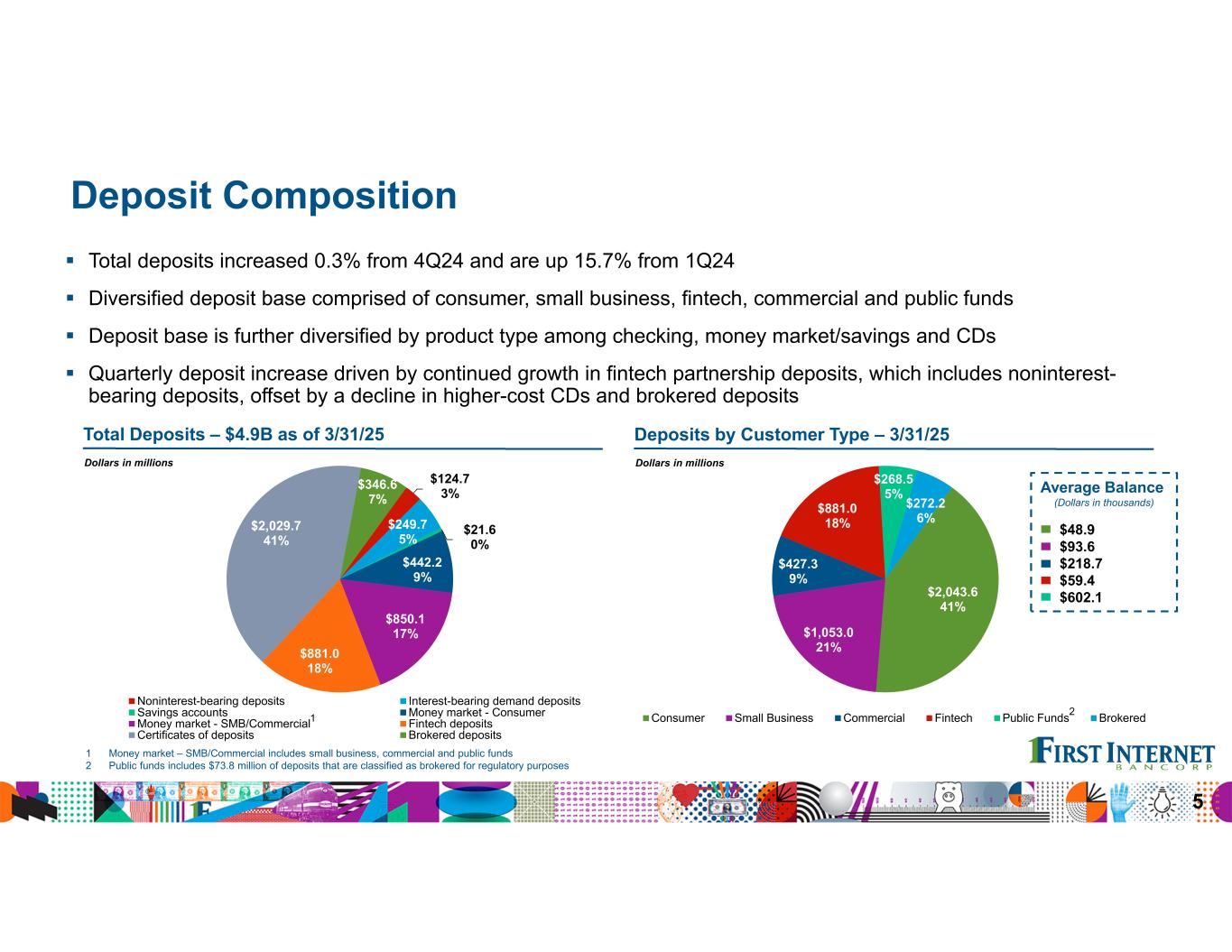
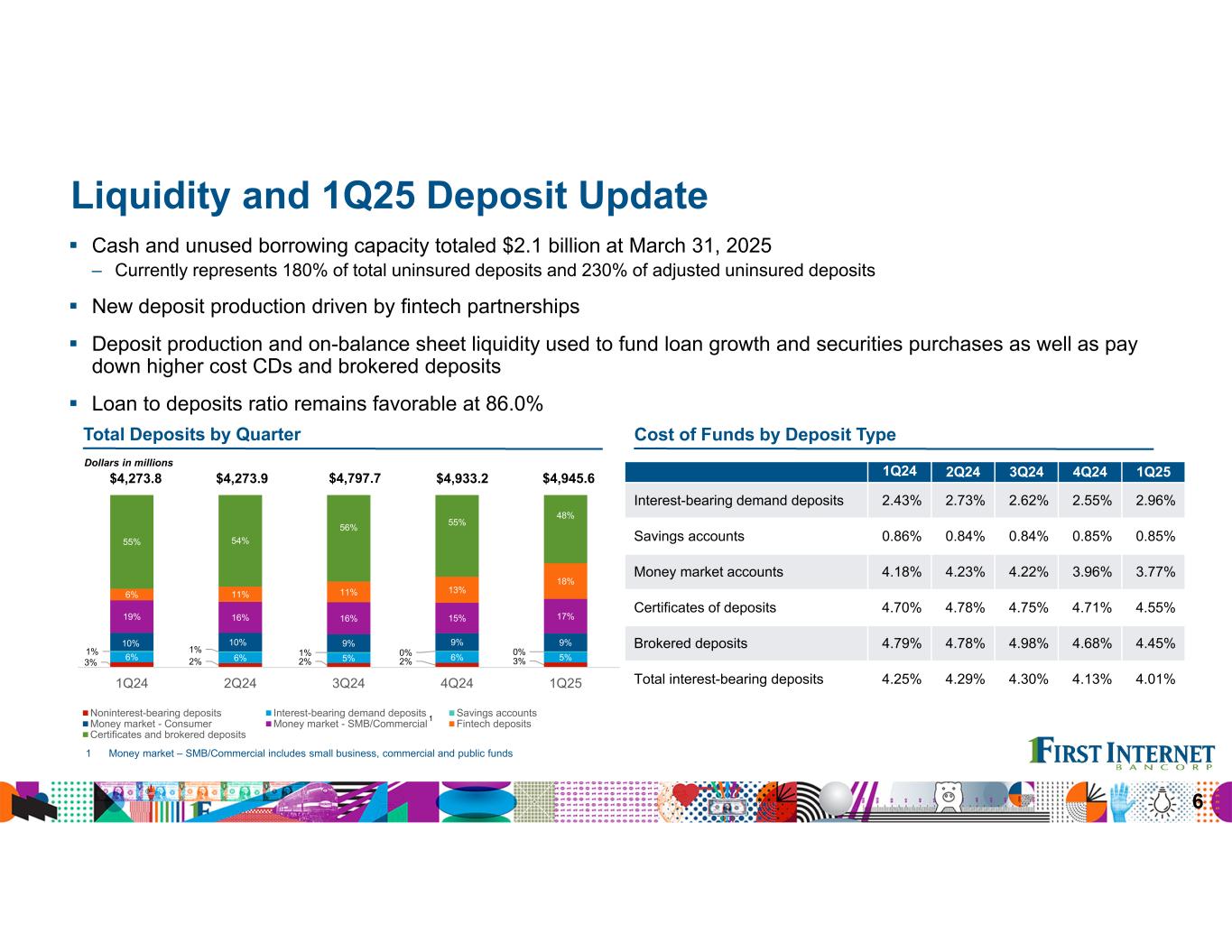
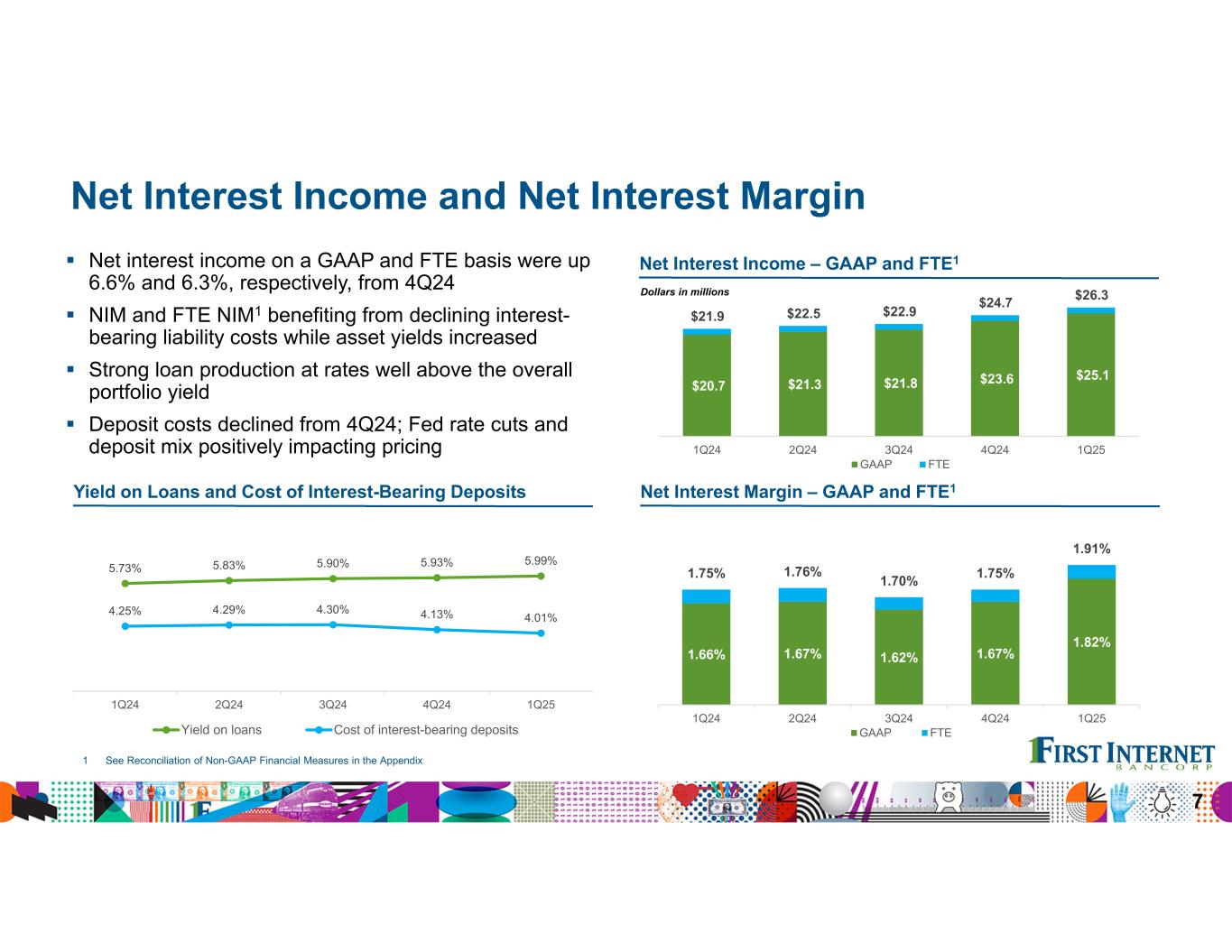
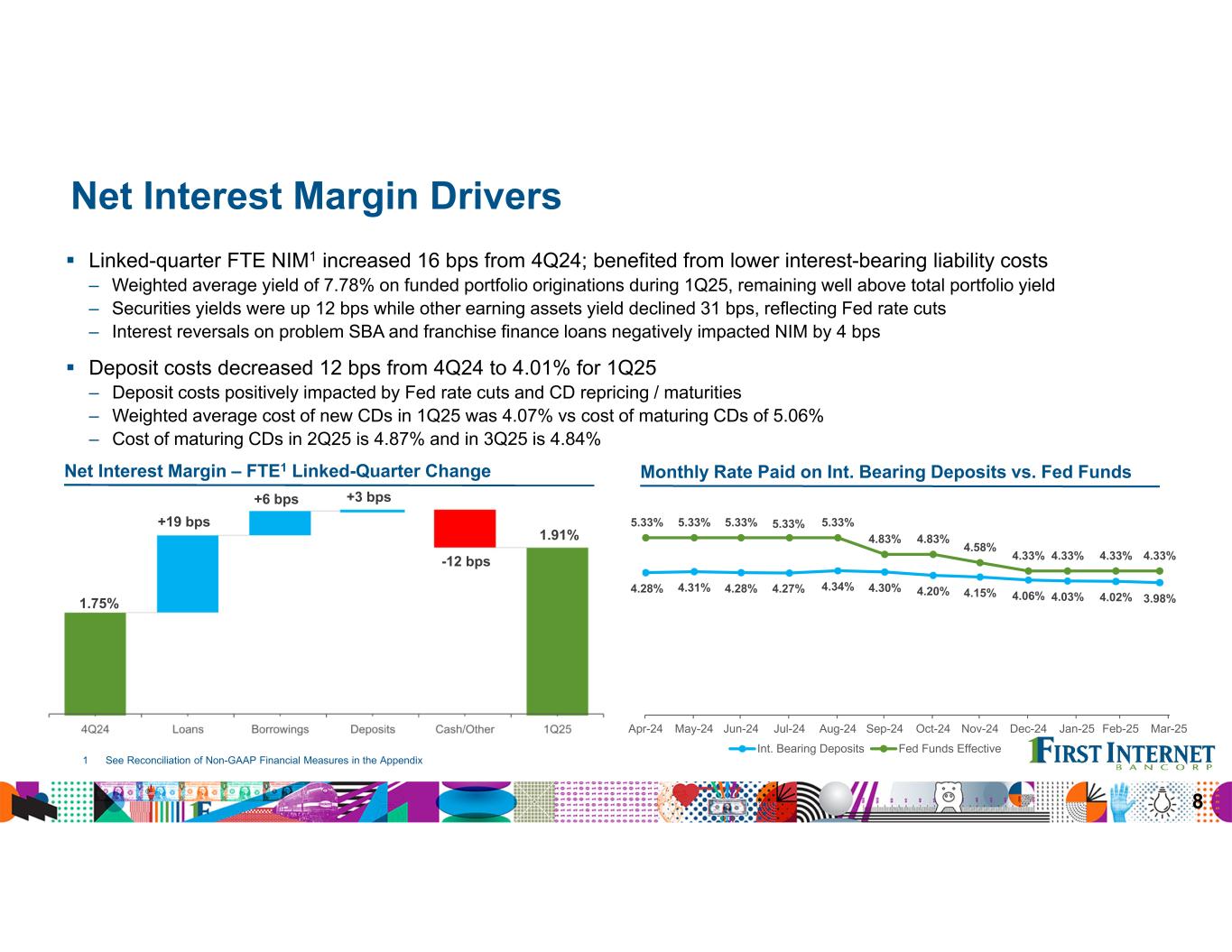
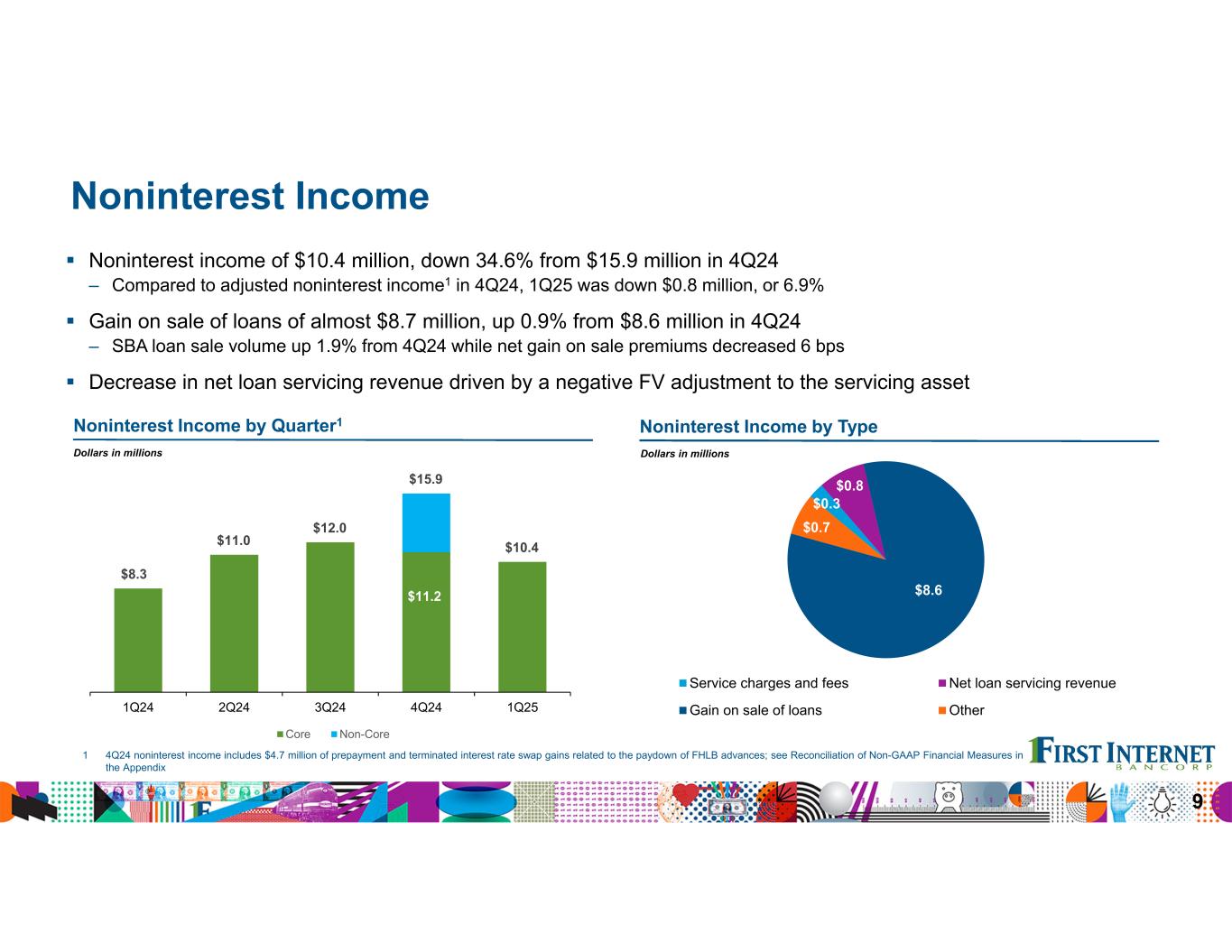
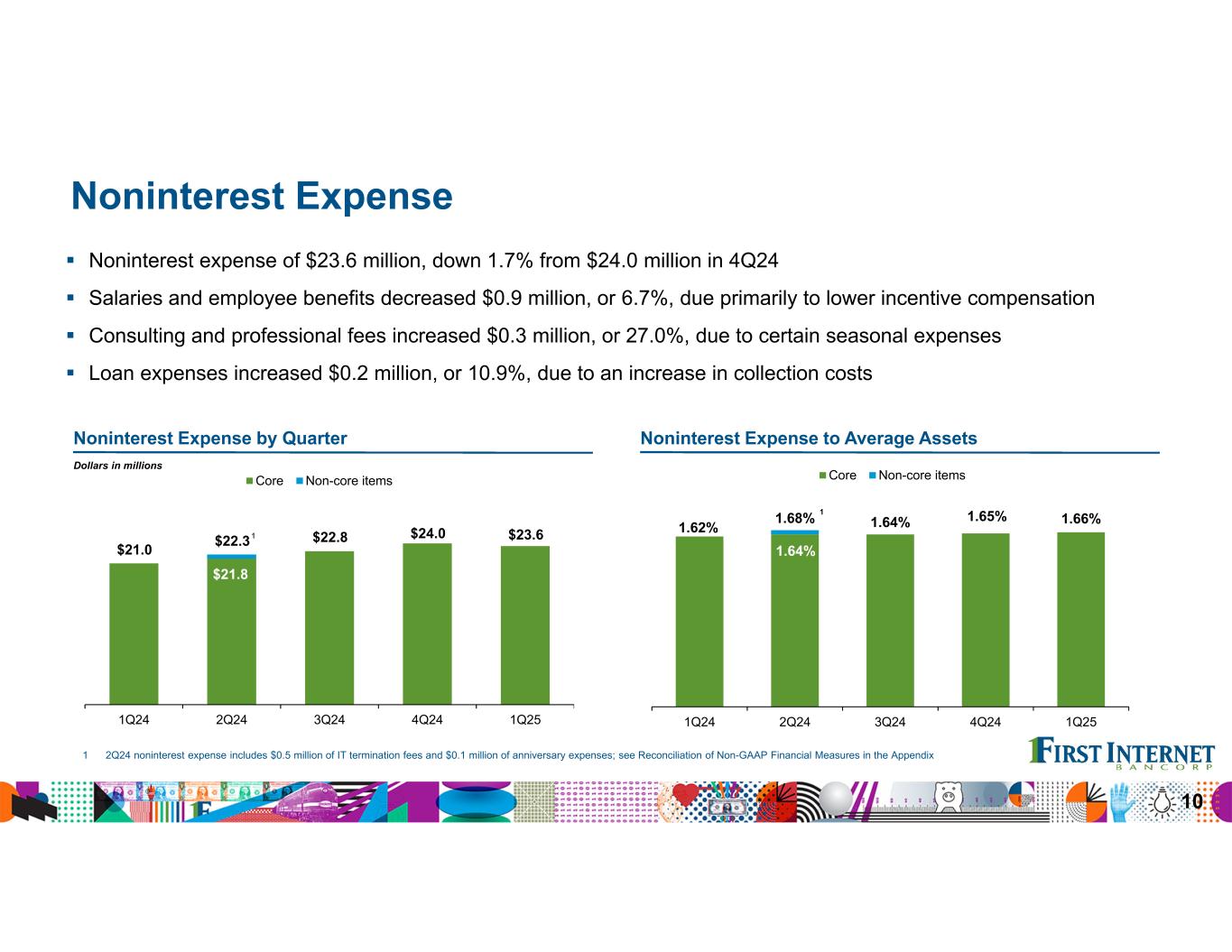
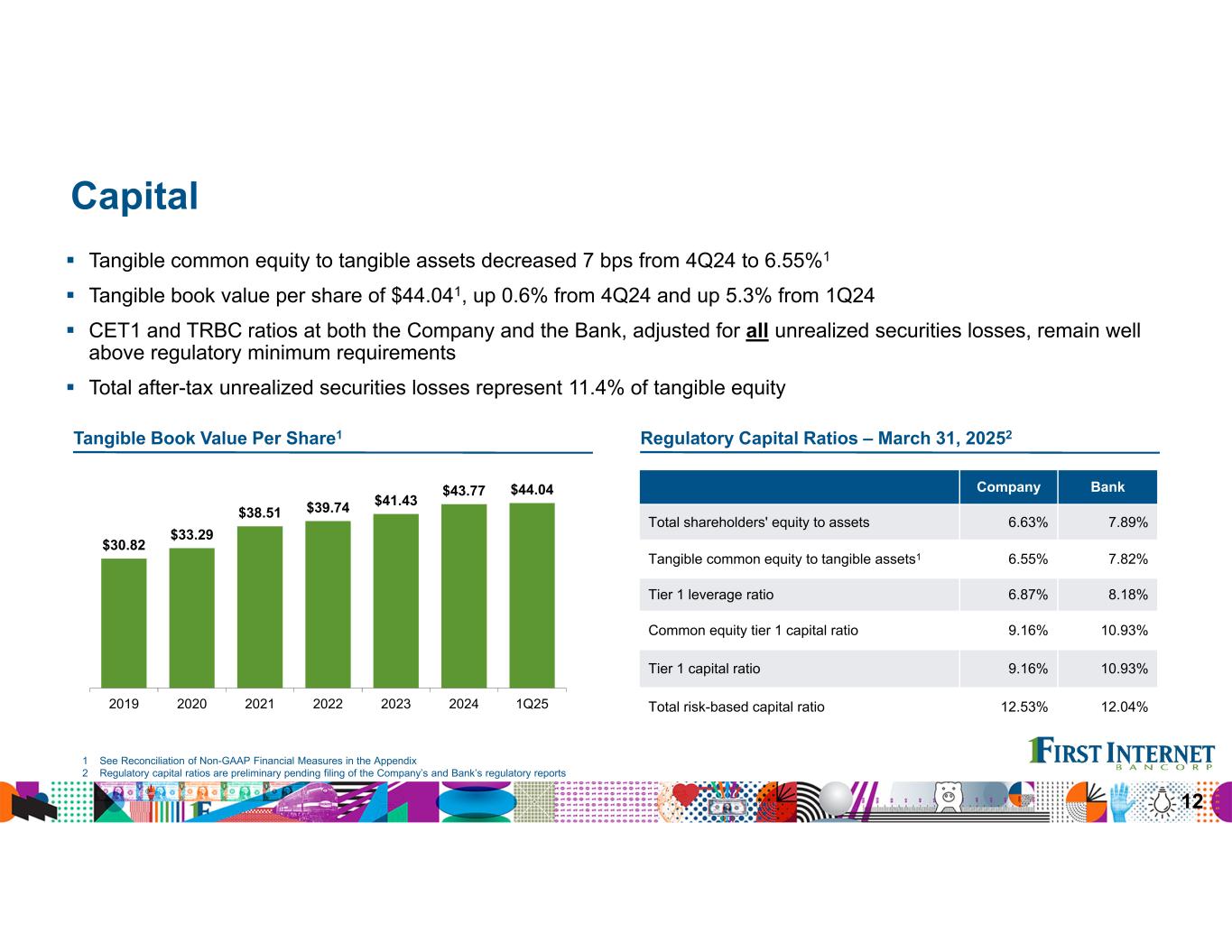
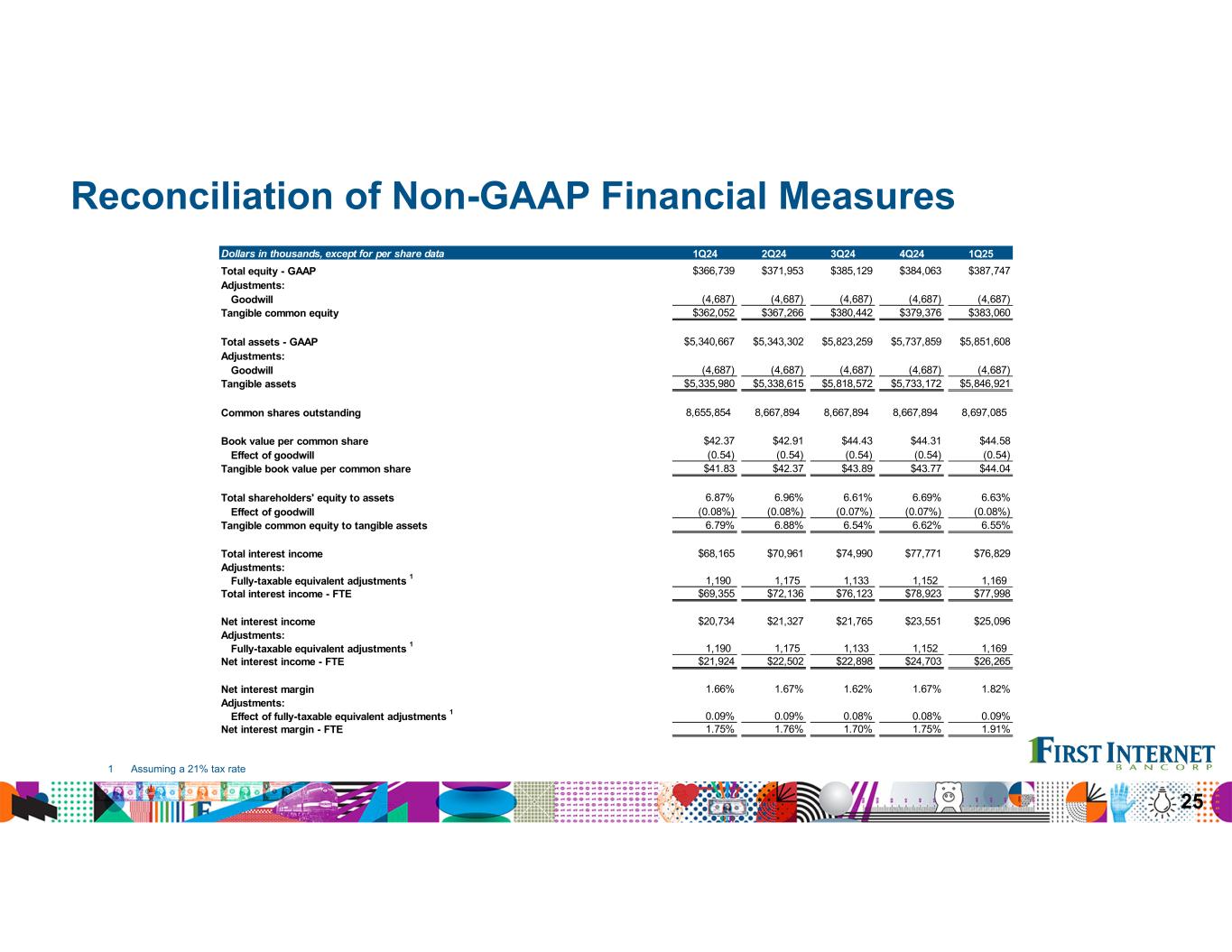
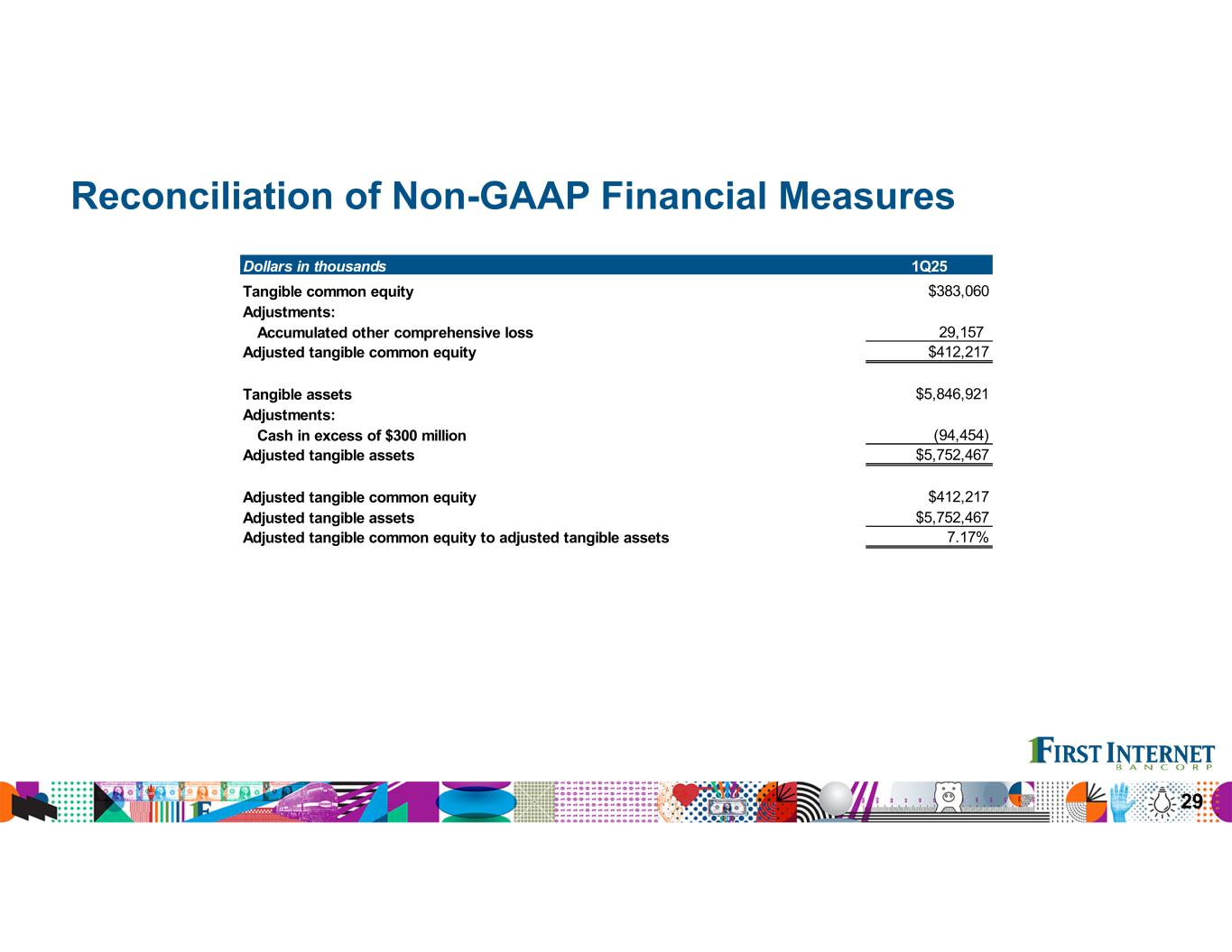
Thanks, Nicole. Since Nicole already covered the loan portfolio, let's turn to slides 5 and 6, where I will cover deposits in more detail. The average balance of deposits increased by $111 million, or over 2% during the first quarter, and period end deposits were up modestly from the prior quarter. Growth in deposits were primarily driven by growth in fintech partnership deposits, which are reflected in both non-interest-bearing and interest-bearing demand deposits, as well as money market accounts. The growth in deposits was partially offset by a decline in higher-cost CDs and broker deposits. Non-maturity deposits were up almost $335 million, or 15%, reflecting the increase in fintech partnership deposits. Total deposits from our fintech partners were up 37% from the fourth quarter and totaled $881 million at quarter end. Additionally, these partners generated almost $23 billion in payments volume, which was up 21% from the volume we processed in the fourth quarter. Total fintech partnership revenue was over $1.1 million in the first quarter, which was up 30% from the fourth quarter as contributions from and key partnerships continued to scale up, and new pricing terms went into effect. Related to CD activity during the quarter, total balances were down $104 million, or 5% from the linked quarter. The strong growth in fintech deposits allowed us to keep CD pricing lower and manage new production volume. We originated $285 million in new production and renewals during the first quarter at an average cost of 4.07% and a weighted average term of 12 months. These were more than offset by maturities of $414 million with an average cost of 5.06%. Looking forward, we have $355 million of CDs maturing in the second quarter of 2025 with an average cost of 4.87% and $486 million maturing in the third quarter of 2025 with an average cost of 4.84%. In total, for the remaining of the year, we have $1.1 billion of remaining CD maturities with an average cost of 4.73%. With current new production rates remaining in the range of 4.05 to 4.1%, we expect a continued positive pricing gap between new production and maturing CDs over the next several quarters, giving us confidence that deposit costs will trend lower over the course of the year. Moving to slide six, at quarter end, total liquidity remained very strong, reflecting cash and unused borrowing capacity of $2.1 billion. On-balance sheet liquidity grew through the quarter as growth in fintech deposits supplemented with existing cash balances from the end of the fourth quarter. We deployed a portion of this liquidity to pay off a significant amount of higher cost broker deposits in addition to the net decline in CD balances as well as fund loan growth and securities purchases. With modest deposit growth and loan growth of $84 million or 2%, our loans to deposit ratio increased to 86% from 84.5% at the end of the fourth quarter. At quarter end, our cash and unused borrowing capacity represented 180% of total uninsured deposits and 230% of adjusted uninsured deposits. Turning to slide seven and eight, net interest income for the first quarter was $25.1 million and $26.3 million on a fully taxable equivalent basis, up 6.6% and 6.3% respectively from the fourth quarter. The yield on average interest-earning assets increased to 5.57% from 5.52% in the linked quarter, due primarily to a six-basis point increase in the yield earned on loans and a 12-basis point increase in the yield earned on securities, partially offset by a 31-basis point decrease in other earning assets. A full quarter's impact of the Fed's rate cuts in November and December were felt during the first quarter as higher yields and average balances in the loan and securities portfolio were more than offset by the large decline in both average cash balances and the rate earned on these balances, leading to a 1.2% decrease in total interest income compared to the linked quarter. However, the impact of the Fed rate cuts was more pronounced on deposit pricing, which, when combined with significantly lower average Federal Home Loan Bank advance balances, resulted in an almost 5% decline in interest expense and drove continued growth in net interest income. Net interest margin for the first quarter was 1.82% and 1.91% on a fully taxable equivalent basis, representing increases of 15 and 16 basis points respectively compared to the linked quarter. The net interest margin roll forward on slide eight highlights the drivers of change in fully taxable equivalent net interest margin during the quarter. The yield on funded portfolio originations was 7.78 in the first quarter, up 50 basis points from the fourth quarter, reflecting the strong growth in construction, investor commercial real estate, small business lending, and C&I. Pipelines remain solid in these lines of business, giving us further confidence that net interest income will continue to grow in future quarters. Related to deposits, looking at the graph on slide 8 that tracks our monthly rate on interest-bearing deposits against the Fed Funds rate, you can see that our deposit costs are continuing to trend down along with the decline in Fed Funds. With lower CD pricing across the maturity curve, we anticipate that interest-bearing deposit costs will continue to decline in the second quarter as high-cost CDs mature and are replaced at much lower rates with either fintech deposits or new CDs. This is expected to help drive continued net interest income growth and net interest margin expansion even without any further Fed rate cuts. At quarter end, we had $1.5 billion of deposits indexed to Fed funds, so if the Fed does resume lowering rates later in the year, the potential exists for further deposit cost reductions. Turning to non-interest income on slide 9, non-interest income for the quarter was $10.4 million, down $5.5 million, or 35 percent from the fourth quarter. As a reminder, the fourth quarter benefited from $4.7 million of prepayment and terminated interest rate swap gains related to the paydown of federal home loan bank advances. Excluding these gains, the sequential decrease was $800,000, or 7%. Gain on sale of loans totaled $8.7 million for the quarter, up 1% over the fourth quarter, with SBA loan sales driving this increase. SBA loan sale volume was $108.8 million, up 2% quarter over quarter, while net gain on sale premiums were down a modest six basis points. The majority of the decrease in non-interest income was driven primarily by lower net servicing revenue, resulting from a negative fair value adjustment to the loan servicing asset. Moving to slide 10, non-interest expense for the quarter was $23.6 million, down $400,000, or 1.7% from the fourth quarter. The main driver was salaries and employee benefits, which decreased $900,000, or 6.7%, due primarily to a decrease in incentive compensation. The lower salaries and employee benefits expense was partially offset by seasonally higher consulting and professional fees, as well as higher loan expenses due to collection costs. Turning to asset quality on slide 11, Nicole covered the major components of asset quality for the quarter in her comments, so I will just add some commentary around the allowance for credit losses and the provision for credit losses. The allowance for credit losses as a percentage of total loans was 1.11% at the end of the first quarter, up four basis points from the fourth quarter. The increase in the allowance for credit losses reflects specific reserves taken on loan relationships in the franchise finance and small business lending portfolios that were placed on non-accrual during the quarter, as well as growth in the overall loan portfolio, partially offset by the impact of economic metrics and qualitative factors in certain portfolios. At quarter end, the small business lending ACL to unguaranteed SBA loan balances was 5.8%. Additionally, at a higher level, if you exclude the balances and reserves on our public finance and residential mortgage portfolios, which have lower coverage ratios given their lower or inherent risk, the allowance for credit losses represented 1.32% of loan balances. The provision for credit losses in the first quarter was $11.9 million, compared to $7.2 million in the fourth quarter. The provision for the quarter was driven primarily by the elevated net charge-offs and the increase in specific reserves related to franchise finance and small business lending. Moving to capital on slide 12, our overall capital levels of both the company and the bank remain solid. The tangible common equity ratio was 6.55%, which declined seven basis points, as balance sheet growth outweighed the positive impact of lower interest rates on the accumulated other comprehensive loss. If you exclude accumulated other comprehensive loss and adjust for normalized cash balances of $300 million, the adjusted tangible common equity ratio would be 7.17 percent from a regulatory capital perspective the common equity tier one capital ratio remains sound at 9.16 percent and before i wrap up i would like to provide some updates on our outlook for 2025. we expect loan yields to increase as we continue to originate new production at rates well above the current portfolio yield we also expect deposit costs to continue declining as one, we recognize the significant CD repricing gap on over a billion dollars of CDs maturing over the next nine months, and two, we see the benefit of paying down a significant amount of higher-cost brokered deposits at the end of the first quarter. Assuming loan growth remains in the range of 10 to 12 percent for the year and deposit growth in the range of 5 to 7 percent, we expect that full-year net interest income will increase in the neighborhood of 40% or more over 2024's full year amount, and fully taxable equivalent net interest margin will increase throughout the year and should be in the range of 2.35 to 2.45% by the fourth quarter of 2025. If the Federal Reserve were to resume reducing short-term interest rates, our net interest income and net interest margin would likely exceed these projections. One near-term change to our revenue outlook relates to non-interest income and specifically gain on sale revenue related to SBA loans. As many of you have probably read, the Small Business Administration is going through a number of changes right now, including elevated repurchase rates across its entire portfolio, as well as fresh amendments to 7A program standard operating procedures. Additionally, we have established First Internet Bank as a top 10 7A program lender. Our activities are falling under a more watchful eye at the SBA. Therefore, we're making some changes to our loan sale process that align completely with SBA standard operating procedure in order to protect the guarantee on these loans, which will result in a longer hold period before we sell a loan on the secondary market. This process enhancement will cause a temporary one-quarter decline in gain-on-sale revenue. However, we anticipate we will return to a normalized gain-on-sale run rate as we approach the second half of the year. Additionally, the decline in non-interest income during the second quarter will be partially offset by higher interest earned on the loans during the hold period which will also benefit net interest margin for the quarter side our outlook remains consistent with the guidance we provided on last quarter's call that is we expect annual non-interest expense to be up in the range of 10 to 15 percent over the full year 2024 amount with a modest ramp up on a quarterly basis and finally with respect to the provision as Nicole mentioned in her comments we believe we have made significant progress in identifying and acting on problem loans in the franchise finance and SBA portfolios. We recognized an elevated level of losses this quarter. If economic uncertainty is prolonged, we may experience additional losses in the second quarter. However, we are seeing a slowdown in the pace of new delinquencies, which provides some level of optimism that the provision for credit losses will moderate in the second half of the year. With that, I will turn it back to the operator so we can take your questions.
Operator
Thank you. Ladies and gentlemen, we will now begin the question and answer session. Should you have a question, please press the star followed by the number one on your touchtone phone. You will hear a prompt that your hand has been raised. Should you wish to decline from the polling process, please press the star followed by the number two. If you are using a speakerphone, please lift the handset before pressing any keys. One moment, please, for your first question.
Operator
Your first question is from Tim Switzer from KBW. Please go ahead.
Hey, good afternoon. Hope you guys are doing well. Hi, Tim. I appreciate your commentary on the impact of some of the changes going on at the SBA, and I had a few follow-ups on that. One more specifically, I'm sorry if I missed it, but did you quantify or can you quantify the expected one-time impact on fees in Q2?
Yeah, I think probably in terms of just total non-interest income for the quarter, we're probably going to be somewhere closer in the range of, say, $5 million to $6 million for the quarter. But then if you think about, if you look at the estimates for the back end of the year, third quarter and fourth quarter. I think we will be back to those levels. It's really just a one quarter impact as we hold loans longer and then the cycle catches up. I get you.
Okay. And that's on the non-interest income, but we also will pick up, as Ken mentioned earlier, additional revenue on the loan side. So we'll actually, although we're down four to five, we'll pick up part of that in the loan interest income.
Right, as you hold them on the balance sheet. Makes sense. Right. Looking further out beyond Q2, SBA reinstated a lot of the fees for smaller dollar loans, particularly those below a million dollars. Are you able to tell us what your average loan size is in the SBA or what percent of your originations are below a million dollars?
Our average loan size, Tim, is right just north of $1 million. So the fees that had been waived on small loans really didn't apply to us. We're not doing volume in the small loan game. So we were passing along to the borrower the SBA guarantee fee on our 7A loans that we're doing. We don't expect much impact there. And as it relates to the SOP generally, I mean, we're certainly digesting those changes that go into effect on June 1, along with every lender in this space. We have a fantastic pipeline right now, and we are looking at the loans that are in our underwriting phase to ensure that nothing needs to be restructured in response to the changes that are coming.
Okay, got it. The last question, I have switching topics a little bit, but could you provide some details on, it's just some updated expectations and what the impact of, say, a 25 basis point rate cut would be to NII?
Yeah, you know, obviously we're going to run this on a static balance sheet, but on a static balance sheet, a 25 basis point rate cut on an annualized basis is about $3.6 million of NII. Again, that's annualized, and the way to think about it is it does kind of ramp up on a quarterly basis. You can't just take 3.6 and divide by four. There's kind of a phase in period. So, you know, you're probably ramping up, you know, four to five hundred thousand first quarter, then, you know, double that, and then just kind of ramp up from there over the course of a 12-month period. Got it. Very helpful. Thank you, guys.
Operator
Your next question is from Nathan Reese from Pipe Sandler. Please go ahead.
Hey, everyone. Good afternoon. Thanks for taking the questions.
Going back to SBA, you know, just curious if kind of the loss assumptions that you guys laid out last quarter have changed much and, you know, if the Fed remains on pause for longer than the market's expecting, you know, how do you kind of think about, you know, SBA loss content, you know, in this kind of current short-term rate environment going forward and relative to last quarter?
Well, maybe we'll address the rate piece of it first. It's, yeah, I think the higher rate environment certainly makes an interest payment higher, but when you, you know, when you think about a 25 or a 50 basis point decrease on a monthly payment on a loan, it's not really significant. You know, it's the, I think the higher rate environment probably doesn't play as big a role on that. I think it's just more the economic uncertainty. You know, we have, you know, currently, as I mentioned, we got, you know, almost 6% reserved against the unguaranteed balance on our loan book. I think we've, you know, we've had some borrowers that have struggled and have, you know, either, you know, working with those borrowers and either addressed, you know, either taken action via charge off or specific reserve or continuing to work with the borrower. But it's an uncertain environment. So I think the, you know, loss history of the past couple quarters has been elevated. I think we put a big dent in that piece of it and expect, you know, that the loss rate should decline but if you look at the sba 7a program overall um as a whole i mean it's the default rates you know have been increasing so they're like i said there's the tremendous you know there's a certain amount of economic uncertainty that's that's kind of affecting the small business community today right um perfectly understand it's kind of tough to predict kind of the magnitude of kind of how much lost content goes down starting the same quarter and i think you alluded to that dropping even further in the back half of the year, but, you know, just curious if you can kind of frame up kind of what you're seeing more specifically here in 2Q in terms of SBA charge-offs
and then, you know, what that translates into kind of the overall charge-off level as this year progresses.
Well, so far in 2Q, I think we've seen activity. I think we've seen delinquencies come down. We've seen, you know, so far in 2Q, we've seen charge-off activity you know, and or specific reserve come down, say, compared to last quarter. You know, but there's still a pipeline of loans we're keeping an eye on, but certainly activity seems a bit lower, at least so far through the second quarter, than what we saw last quarter.
Okay, that helps. And then we'd love to just get kind of your updated thoughts on share buybacks, just getting more of the stocks trading, and maybe kind of slowing balance sheet growth just to buy back the stock more so just based on where that's at today?
Yeah, we'll cover balance sheet growth first. I mean, we do have, you know, we had a, I think we had a solid quarter of loan production. And, you know, Nicole talked about the SBA portfolio or the SBA team continuing to have a high pipeline. Some of our commercial lending verticals still have good pipelines in front of them, good optimism. And we always do this too, but we're certainly looking at ways where we can kind of find some balance sheet capacity elsewhere. And the loan sale market hasn't, other than SBA, the loan sale market is starting to come back a bit. So we're looking at some other areas there to free up some balance sheet space. So we're certainly looking to manage capital that way and kind of manage balance sheet growth overall. You know, and on the buyback, we're certainly getting prepared and getting our ducks in a row to look back at that market.
Yeah, Nate, if the stock price stays below 50% of book, we'll definitely get back into buyback situation that's just lower than it should be so uh as ken said we'll look about settle for a few days but if it hangs here we'll we'll definitely step back in gotcha and i'm sorry can i think can you remind me what you're thinking for expenses in terms of that trajectory over the balance of this year um i think we we remain pretty confident in the guidance we gave last quarter about 10 to 15 percent growth year over year kind of annual over 2024.
So you know obviously kind of in prior years it's a bit of a ramp right you know a little bit more higher each quarter but yeah that 10 to 15 percent year over year growth is a good number.
Off 90 million or so in 24 correct? Yes.
Okay great I appreciate all the color thanks everyone. thank you your next question is from brett rabbiton from hovdy group please go ahead hey good afternoon everyone um wanted to make sure i i understood understand you know in the fourth quarter you know we had the asset quality cleanup and then this quarter you know it seems like franchise finance in particular was um more problematic and just wanted to see what you know And what kind of transpired during 1Q that made it obvious that some of these franchise finance loans were stressed? And then I didn't hear a number. I don't know how many specific credits that $5.8 million related to in terms of total deals.
You know, I think what we saw in there, I'll kind of divide it into two buckets. It's one is what we charged off. And we had loans that we had specific reserves on at the, you know, whether it was sometime in the fourth quarter or prior to then. And, you know, we put a reserve on it, move it to non-accrual, but we obviously continue to work with the borrower trying to get to the best possible outcome. Um, and late in the quarter, we just had some, had some developments on, on some of those loans that, uh, you know, a guarantor, you know, a strong guarantor that we were working with depended, you know, you know, decided to ultimately throw up their arms and file bankruptcy. Um, just some, some others where the, the, the unit was still open, but struggling and then ultimately closed near the end of the quarter. So that kind of drove some of the, that drove the charge off activity. And then on the specific reserve side, again, there were some loans that, you know, earlier, you know, go back to fourth quarter or, you know, maybe 10 days delinquent, something like that. The borrower, you know, maybe have been a loan we identified to keep our eye on. But, you know, as we worked through the quarter we just we had you know a handful of loans that as we kind of got into really late in the quarter hit 90 days delinquency um had you know whether it was a unit again a unit closed or some kind of negative event or perhaps a drink a drop in the guarantor strength just a you know some credits near the end of the quarter that uh you know the prudent course of action i mean again we're still continuing to work with these borrowers towards a an optimal outcome um but decide but you know elected the prudent thing to do was put a put a specific reserve on on these now the the one thing about these franchise loans in particular is it does take a while sometimes to kind of work through the collection process and work through the legal process it's you know a little bit different than a piece of real estate you know there's there's options you have as you work through these whether through legal proceedings percentual refis franchise or stepping in to find a stronger franchisee to buy the unit that is a course of action on some of these and it just take but it just takes a while to get there. Or another, you know, we've had some success with structured settlements on some of these where, you know, the borrower, you know, you might have one guarantor who's willing to pay off, you know, 85% of the loans, and we're starting to get some success working on those. But it just takes a while to work through some of those. But, you know, the the most prudent course of action is put a reserve on it. And when we collect recoveries, if at all down the road, we'll recognize them then.
And I would also note just our anecdotally, Brett, our credit teams are noting that recent trends were getting better rates, a better rate of callback from our borrowers and more interaction with them. So we're cautiously optimistic that that's showing some positive trend.
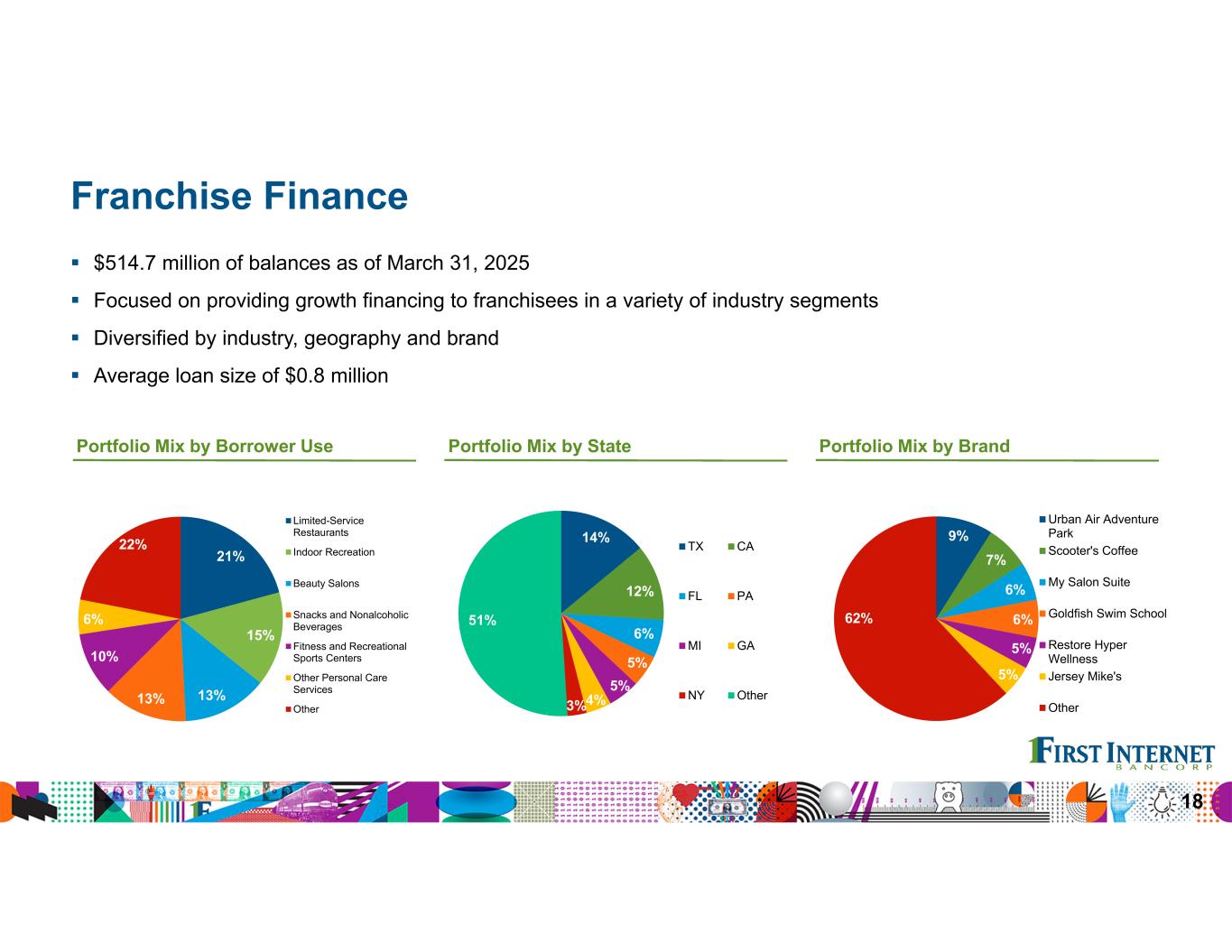
I was just going to ask, Nicole, I think you indicated, I'm looking at slide 18 with the detail on the franchise finance portfolio, and I think you indicated that there wasn't any kind of rhyme or reason in terms of concentration, but was it more limited service restaurants?
Was there anything in particular that seems to have been an issue? from a from a borrower use perspective i would say brett that we're not necessarily seeing a category that is problematic on both a retrospective and a prospective basis there may be some brands that we feel are not going to be a good match for our portfolio but categorically on the franchise finance um there's nothing that if we we talk about it with sba and we're seeing it in franchise as well that these are very borrower-specific situations.
Okay. And, Nicole, would you happen to have the total criticized number for the end of the quarter?
It's $13.8 million loans on the franchise category, and we've reserved 44% against that $13.8. One other point on it, Brett. Our internal policy, as Ken said, these loans are not as black and white as our consumer loans as our property loans and stuff and we had an internal policy hits 90 days we charge it off take a specific reserve so we kind of got caught up a little bit here in the first quarter uh kudos to the apple pie team they have switched servicers that we talked about a couple quarters ago uh they're getting in faster more furious and pressing. Obviously, some of these folks have been fighting inflation for a long period of time. I think if there's anything that caused a little bit of a blip up here in the first quarters, there's a threat of potential tariffs on top and cost of goods going up. So if somebody was kind of on the border, as Ken said, out of the blue, somebody would just say, hey, I'm done and we're gone. But we're much better on getting in contact, getting in front of them. It takes a longer workout cycle. So some of the reserves that we took and some of the charge-offs we had during the first quarter, we anticipate getting some of that money back. And as we've stated time and again here in both the SBA and the apple pie and the franchise loans, what is in that 30-60 category right now is down over what it was at this time in the first quarter.
So hopefully headed in the right direction but economic factors could blow it up again okay and um if i could ask one last quick one just around deposits you know you had a nice shift towards um interest-bearing deposits and maybe away from what you might call hot hotter money um what was the you know it just kind of gets stuck in that bucket which increased the link quarter interest-bearing deposit number Or what's the rate on those? And, Ken, it sounds like with all these CDs or pricing, I got the impression that maybe there wouldn't be more midshift change, but just wanted to make sure I understood that correctly.
Well, what's really driving the interest-bearing demand and the non-interest-bearing demand as well is just growth in fintech relationships. Those are all classified in interest-bearing demand. So obviously with the strength in those, it kind of talked about the growth in quarter over quarter there. So those certainly were more than able to replace some of the CD funding. So and we continue to experience growth in CD. So I expect, you know, our expectation is that CD balances will continue to decline. Now some of those some of those maturities will be replaced to a limited extent by new production and renewals, but really the bulk of what's going to backfill it and even grow the deposits is going to be on the fintech side.
Okay. Great. Appreciate all the color.
Operator
Your next question is from George Sutton from Craig Hallam. Please go ahead.
Logan
Analyst — Craig-Hallum
Hey, good afternoon, guys. This is Logan on for George. Maybe just kind of following up there on some of the deposit benefit you're seeing on the fintech side. Can you just give us an update on sort of the pipeline there, both from a new partner perspective and the partners that you're kind of trying to ramp? Are things going as you'd expect? And then it seems like we've kind of continued to see attrition in the space more broadly. Are you seeing anything change in terms of your opportunities to maybe take more share or just an update there would be appreciated?
Sure, I'll take that. Thanks, Logan, for the question. Our FinTech Partnerships and Embedded Finance team is doing really well with managing our relationships that we have. We have a couple of new prospects in the pipeline. As things have evolved over time, we are seeing better quality, more mature programs that are coming in looking for a bank partner. And because of our success and reputation in this space as being a solid, reliable bank sponsor, we're winning good looks. So I would say that the outlook there is strong. We expect to keep the numbers somewhat moderate in terms of programs that we sponsor. Right now, it's less than two dozen, and there's no reason for us to go nuts in that space because as you've seen, we're having good growth in deposits and in transaction volume with the partners that we have. And we're expanding the relationships with partners that we have. So a partner where we've been doing only a deposit program, now we're talking about some lending opportunities. I'd always love to talk about growing programs and relationships with our existing partners, because that's just going to bring success for everyone. So I don't expect us to go nuts in terms of growing the number of programs and relationships that we have, but certainly expanding the ones that we do have. So grateful for the relationships that we've been able to forge there. We have seen some movement in the sponsor bank space overall, but I would say that, you know, we try to stay focused on what we do well. And, you know, when they come knocking, we have a good story to tell.
Logan, real quick, George always asks me what's going on on the revenue side so you can fill them in on the other part. The bottom line on the FinTech space was $1.1 million in the first quarter compared to $2 million for all of last calendar year. And it continues to grow quarter over quarter. We had forecasted $4 million in revenue for this year, and all indications are we're going to blow through that. So as Nicole said, we have great partners today that are getting bigger and growing. We're adding on a judicious basis new partners, and it's pretty solid and going pretty smooth for us right now.
Logan
Analyst — Craig-Hallum
Got it. Well, that's great to hear. Maybe just a quick follow-up. You guys got the 15 basis points of expansion on the NIM this quarter. I think the full-year guide implies you do, on average, just a little bit more than that. Is there anything that we should be aware of in terms of the cadence? I mean, would 2Q see a little better, given that you're going to hold some of the SBA on the balance sheet? Or should that be kind of a good baseline for the rest of the year on a quarter-to-quarter basis?
I think we'll probably see a bigger benefit in the second quarter, again, going back to the SBA and the hold period on that. And then kind of maybe ramping, I mean, I think we'll continue to see some nice growth in the third quarter, albeit maybe not as much as second quarter, and then fourth quarter, probably not as much as third quarter.
Logan, we also had $200 million in high-cost deposits that we paid off right at quarter end, brokered stuff that we'd done back from the SBB bank days. So that had no impact on the first quarter, and that'll show up here in the second quarter. So both sides of the equation, the yield should go up because of the SBA side as well as the cost of funds continue to decline, both for the payoff we did at the end of the quarter and the recycling of the CDs.
Logan
Analyst — Craig-Hallum
Okay, that's helpful. Thanks for taking my questions. All right, thanks, Logan.
Operator
There are no further questions at this time. please proceed with closing remarks.
Thanks, everybody. We appreciate you joining on today's call. First Internet has consistently produced improving revenue, net interest income. While the macro environment remains uncertain, we're excited about the future. Our lending teams have continued to deliver very strong performance, particularly in the small business and construction lending. Furthermore, emerging growth opportunities with key fintech partnerships, as I just discussed, are expected to further diversify and drive revenue growth. So given our ongoing efforts to improve our loan mix and anticipate a reduction in deposit costs, we are confident that we are well positioned to achieve stronger earnings in the coming quarters. As fellow shareholders, we remain committed to driving improved profitability and enhanced value. We thank you for your support and wish you a good afternoon.
Operator
Ladies and gentlemen, this concludes your conference call for today. We thank you for participating and ask that you please disconnect your lines.