Operator
Good day, everyone, and welcome to the Littlefuse Third Quarter 2025 Earnings Conference Call. Today's call is being recorded. At this time, I will turn the call over to the Head of Investor Relations, David Kelly. Please proceed.
Good morning, and welcome to the Littlefuse Third Quarter 2025 Earnings Conference Call. With me today are Greg Henderson, President and CEO, and Abhi Kandawal, Executive Vice President and CFO. This morning, we reported results for our third quarter, and a copy of our earnings release and slide presentation is available in the investor relations section of our website. A webcast of today's conference call will also be available on our website. Please advance to slide two for our disclaimers. Our discussions today will include forward-looking statements. These forward-looking statements may involve significant risk and uncertainties. Please review today's press release and our forms 10K and 10Q for more detail about important risks that could cause actual results to differ materially from our expectations. We assume no obligation to update any of this forward-looking information. Also, our remarks today refer to non-GAAP financial measures. A reconciliation of these non-GAAP financial measures to the most comparable GAAP measure is provided in our earnings release available in the investor relations section of our website. I will now turn the call over to Greg.
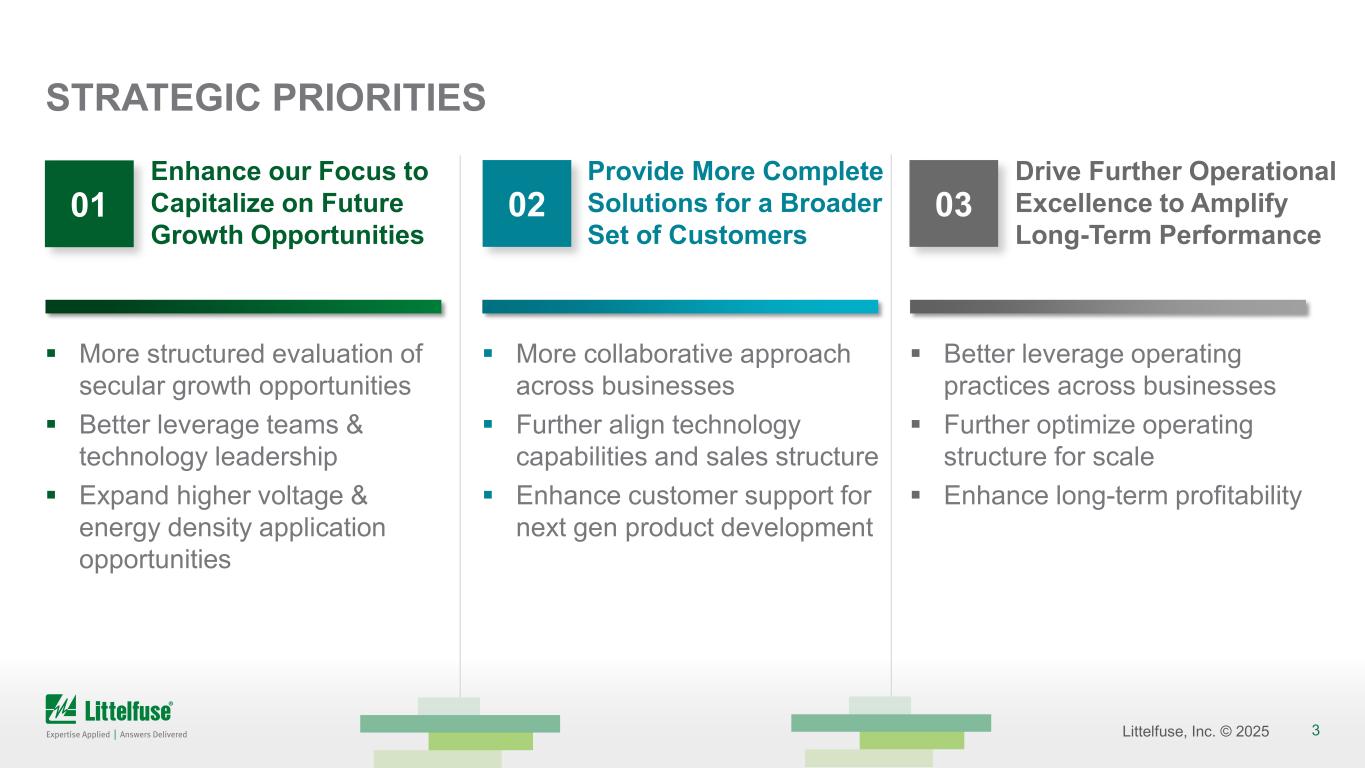
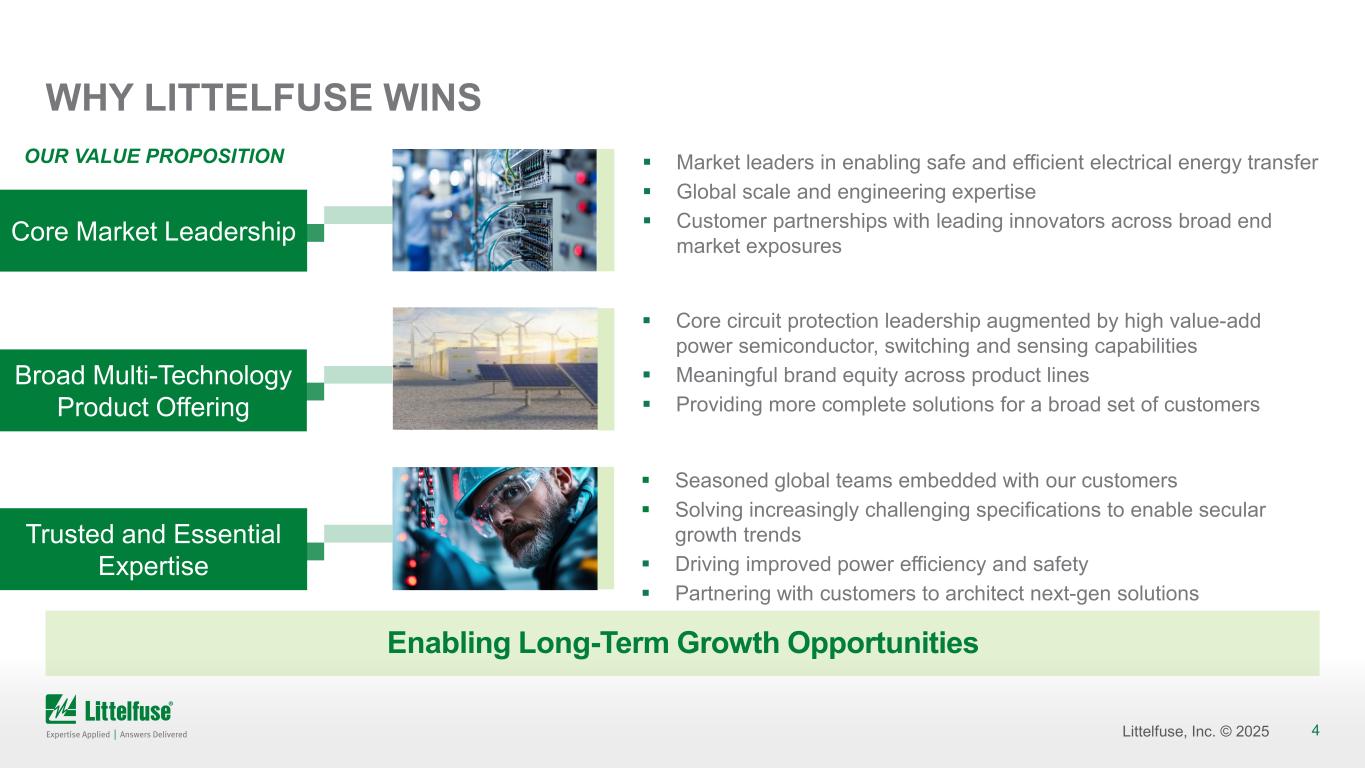
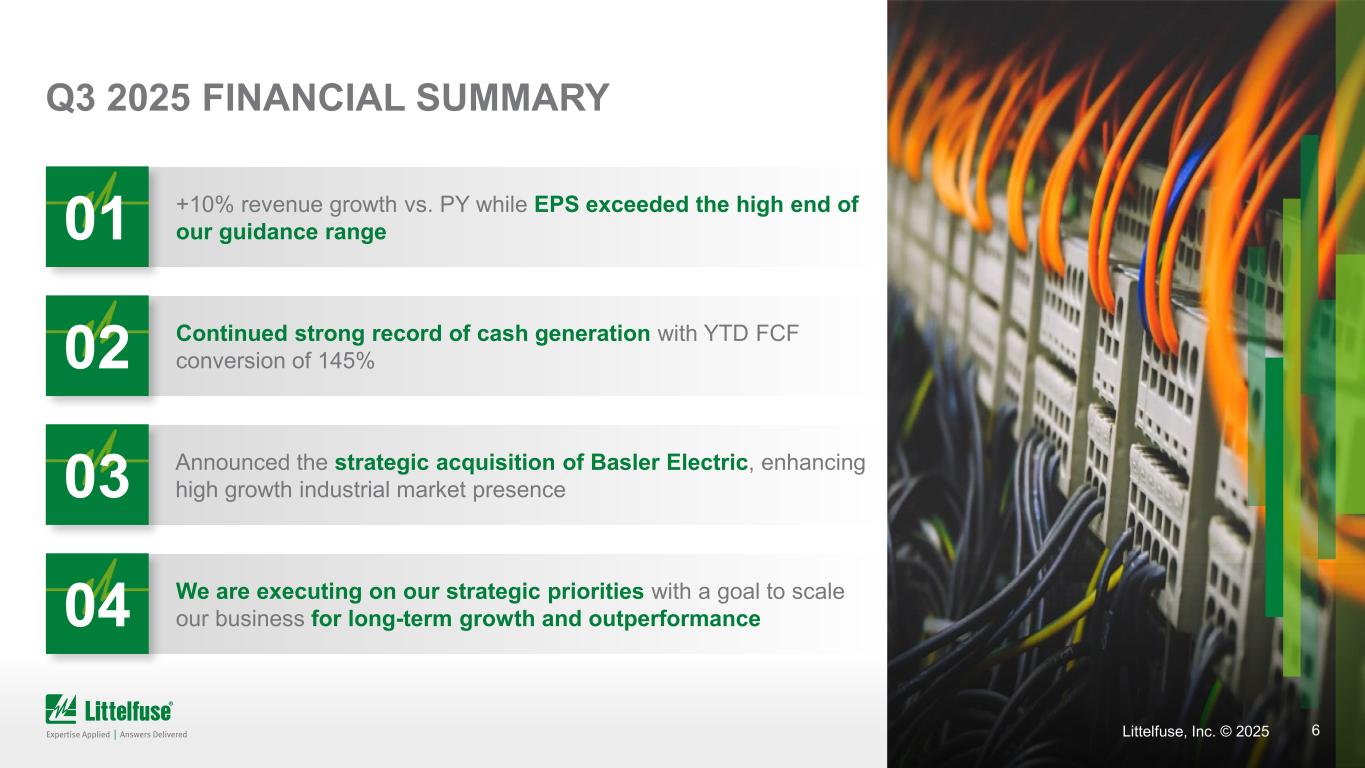
Thank you, David, and thank you to everyone joining us today. I wanted to start this morning with highlights on our third quarter and then provide an update on the progress we're making on our strategic priorities. As part of that progress, we're excited to announce the acquisition of BASA Electric. I will speak more about the acquisition and how it fits into our long-term strategy in a few moments, but we look forward to welcoming the BASA team to Little Feeds. Turning to our third quarter, we delivered revenue growth of 10% relative to the prior year, driven by strong electronic segment growth. We delivered industrial segment growth despite mixed underlying market demand. Finally, our transportation segment navigated well to a softer commercial vehicle market in the third quarter. Overall, our third quarter earnings results exceeded the high end of our guidance range, reflecting our team's commitment to operational execution. Looking forward, we expect solid fourth quarter revenue and earnings growth versus the prior year, supported by our third quarter bookings, which were up more than 20 percent versus the third quarter of 2024. Avi will discuss specific results and our outlook in more detail shortly, but I want to thank our global team for their persistent hard work and efforts. Now I want to share the progress we're making on our first strategic priority, which is to enhance our focus on future growth opportunities around the safe and efficient transfer of electrical energy. I wanted to start with the acquisition of Bassler Electric. Bassler provides essential and innovative electrical control and protection solutions for high-growth power generation and distribution markets. They are market leaders in grid and utility infrastructure and add significant new capabilities to lunifuse in the areas of high voltage excitation and very high energy protection. In addition, as data centers have such significant power generation demand, BASLR has key exposure to local data center power solutions. BASLR has a long history of selling complete solutions to a deeply embedded industrial customer base. They complement our industrial segment portfolio, and their addition will broaden our OEM exposure, particularly in grid and utility infrastructure, where BASLR is a key partner to industry-leading innovators. We are confident the addition of BASO will deliver long-term value for LittleFuse. Looking forward, strategic acquisitions will continue to be a key priority for us, supported by our strong balance sheet and cash generation. In addition to the acquisitions and across LittleFuse, we continue to see meaningful traction in our new business pipeline. Our teams are executing well, converting our growing funnel to future revenue opportunities. Supporting this, our design wins are tracking up double-digit year-to-date. As an example of our momentum, in the quarter, we delivered a multi-technology design win for a market leader in a 400-volt battery charging application. This charging solution brings best-in-class safety and protection, while delivering an optimized form factor and efficiency. Our solution utilizes our market-leading capabilities of passive and semiconductor overvoltage protection, electromechanical overcurrent protection, and our power semiconductor technologies. Combined, our solution enables a more precise and efficient current flow while protecting against potential surges from the power grid. Importantly, this multi-year partnership will start production with revenue contributions in 2026. Our second strategic priority is to provide more complete solutions for a broader set of our customers and to increase our engagement with our key customers and market leaders. To accomplish this, in the third quarter, we formally realigned our sales structure to better serve our broad customer base with our market-leading technologies. As part of this realignment, we established three market-facing sales organizations, with leaders who bring extensive experience and leadership across our evolving end markets. Our sales leaders will be supported by a realigned sales force that is now market-facing, customer-centric, and reinvigorated to engage our customers more frequently and with our complete technology portfolio. We see two key advantages to this realignment, which is a shift from our historical approach where Littlefew's sales teams were siloed in product-centric roles. One, we can now work more closely with our customers to help better understand and solve their technology challenges with our full product portfolio. Two, we can collaborate more meaningful with our customers on their future technology roadmaps, which will better inform and ultimately shape our R&D efforts. We believe our sales evolution will enhance our visibility to our end-market technology advancements and strengthen our long-term market leadership while we in the early innings of our go-to-market evolution we are beginning to see signs of increased traction with customers this is best exemplified by our data center go-to-market strategy where we're early to apply our new sales model our data center revenue continues to grow significantly while year-to-date our data center design wins are up more than 50 versus the prior year we are capturing multi technology wins with leading hyperscaler cloud and infrastructure customers we are also deeply engaged with market leaders that are building gigawatt scale ai factories and we are leveraging strong global collaboration and customer relationships through the data center ecosystem further as we are more strategically focused on the leading customers in the data center market we are sharpening our r d efforts and building a strong pipeline around new products turning to our third strategic priority we are focused on driving operational excellence as we grow today i wanted to highlight our power semiconductor opportunities enhancing our long-term growth and profitability positioning in this area is a leading priority for our team our power semiconductor capabilities are critical to the safe and efficient transfer of electrical energy importantly when combined with our market leading protection offering our semiconductor technologies can provide us a unique value proposition our long-term goal is to deepen our engagement with power semiconductor customers better utilize our footprint and ultimately drive improved long-term execution as part of this initiative in the third quarter we announced the hiring of dr kareem hamed as the new leader of our semiconductor business kareem most recently served at analog devices and brings a wealth of semiconductor industry technology and operational experience and we're excited to have him as part of our leadership team taking a step back we delivered a strong third quarter and are well positioned to drive further momentum through year-end. We will continue to execute on our three strategic priorities as we aim to scale our company with the goal of delivering long-term, best-in-class performance and returns. With that, I will hand the call over to Abhi.
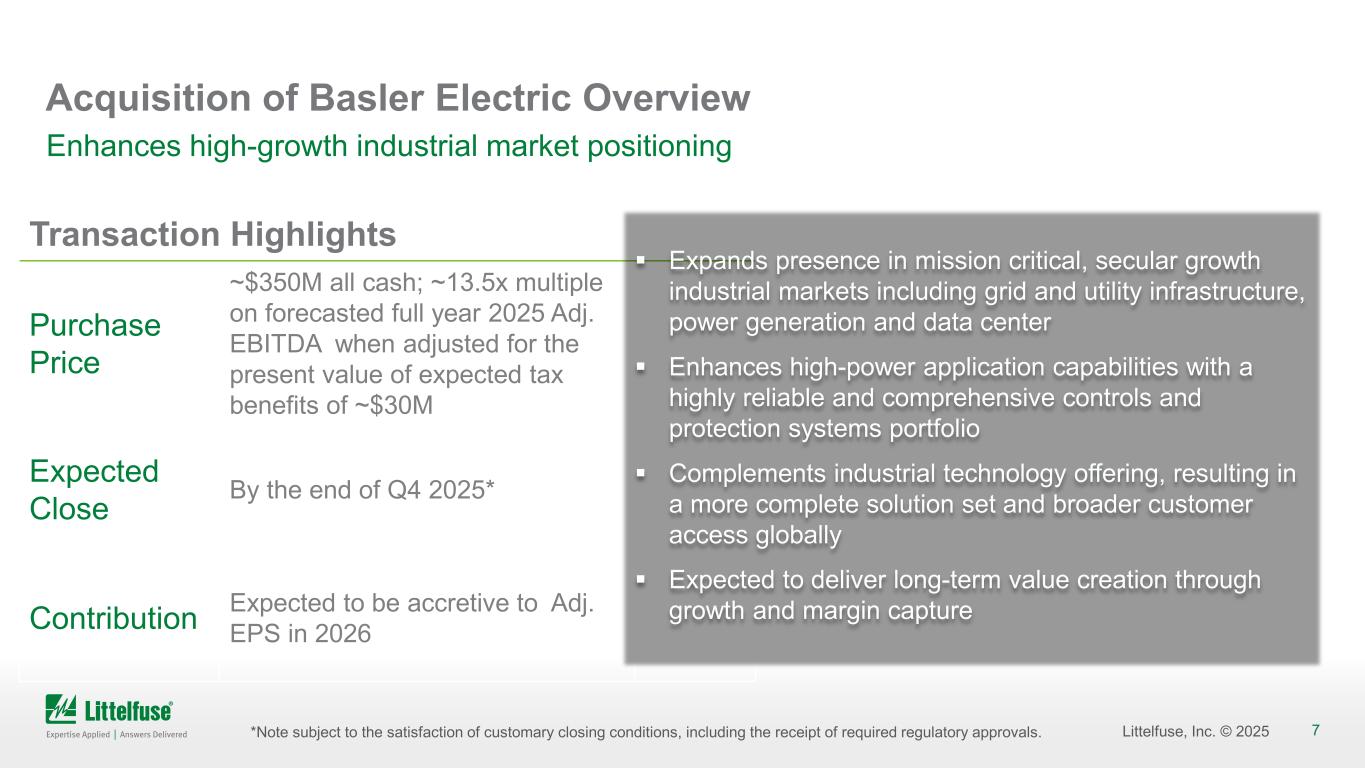
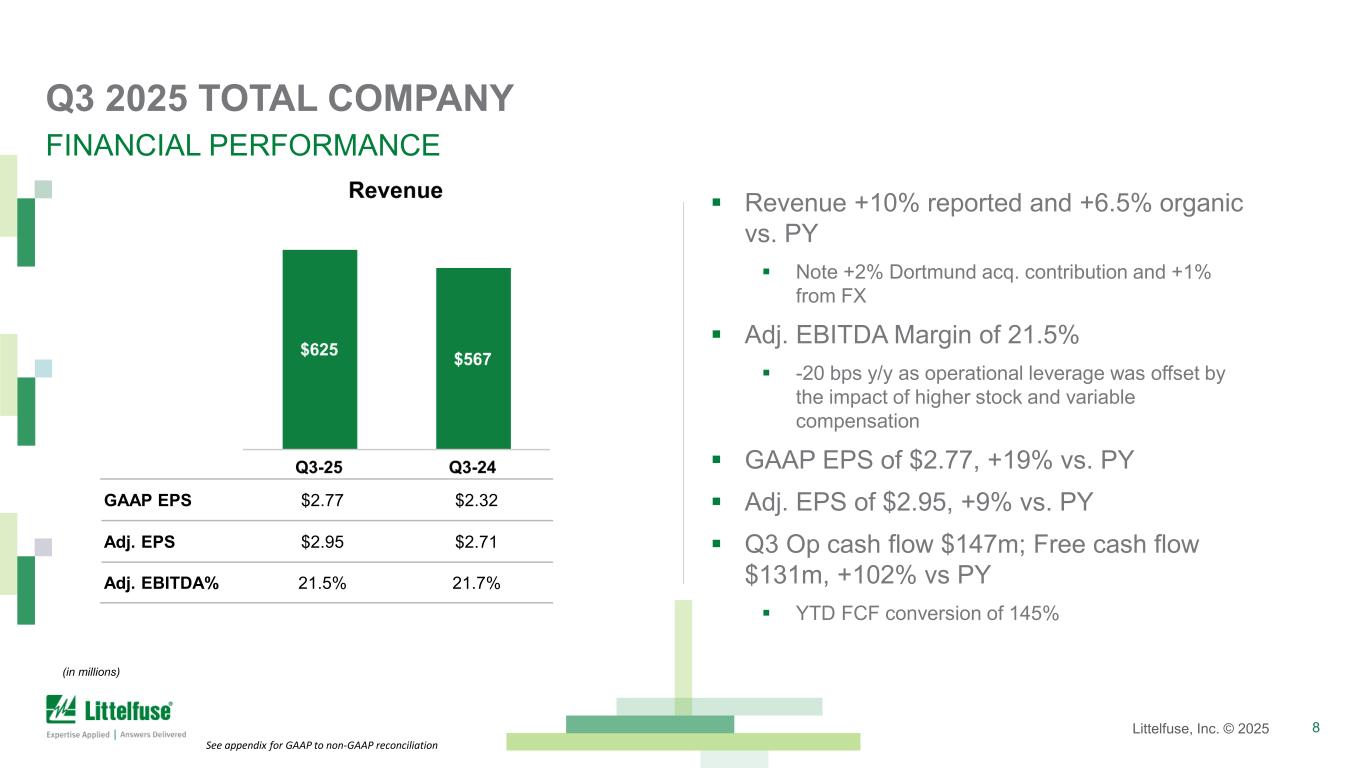
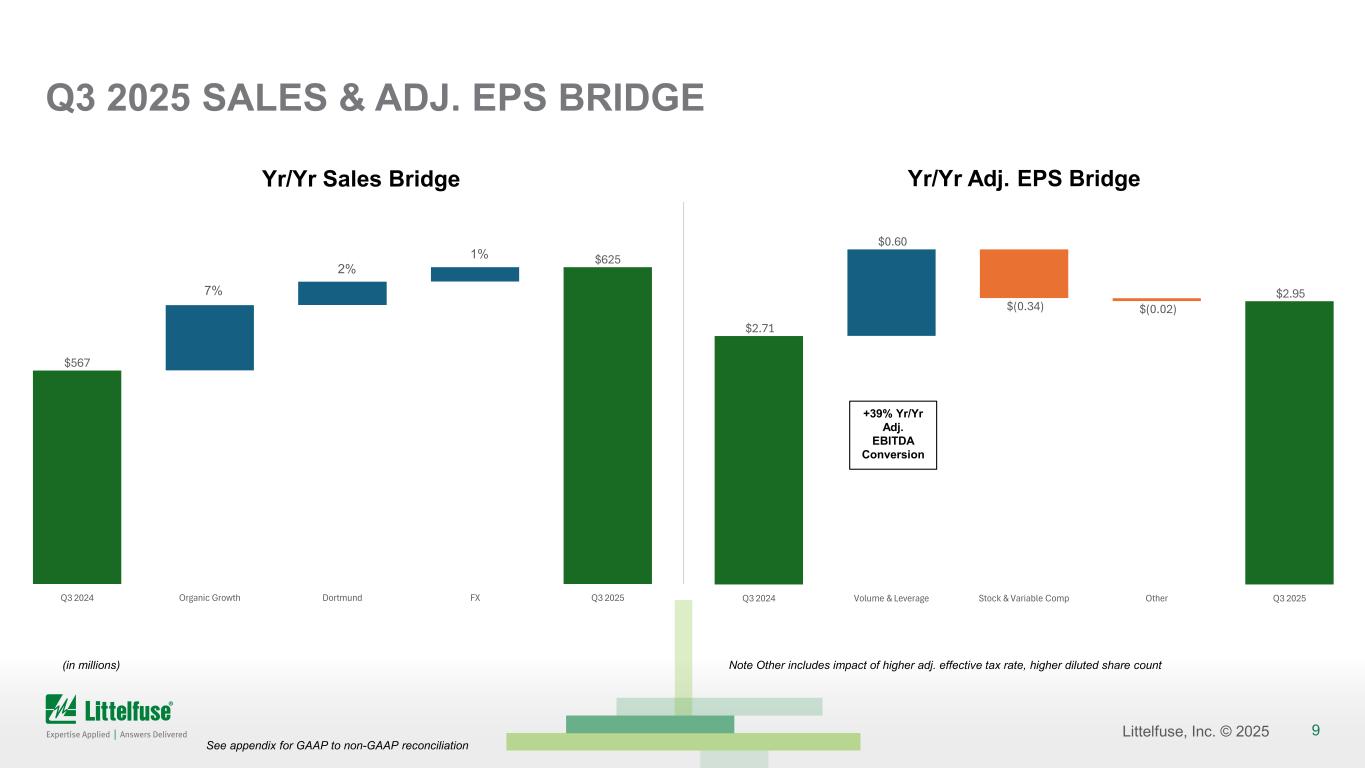
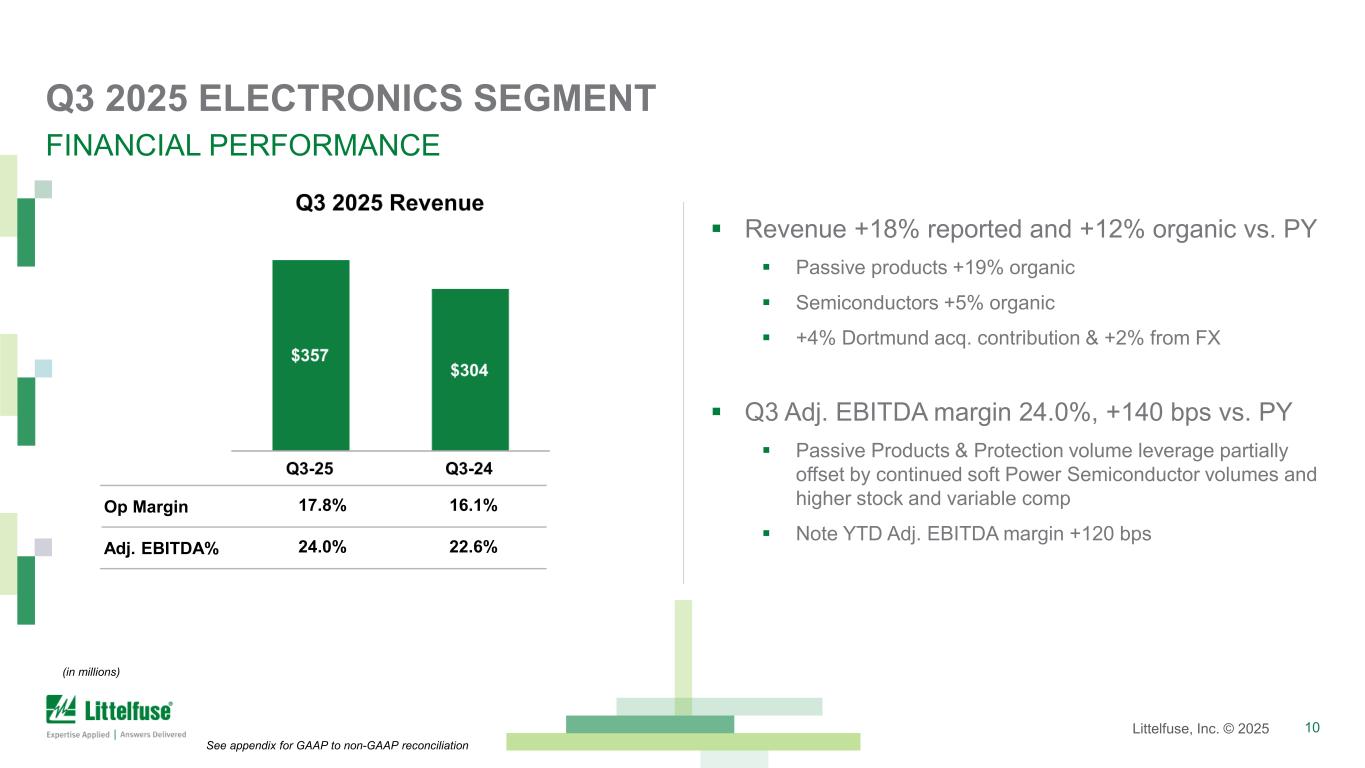
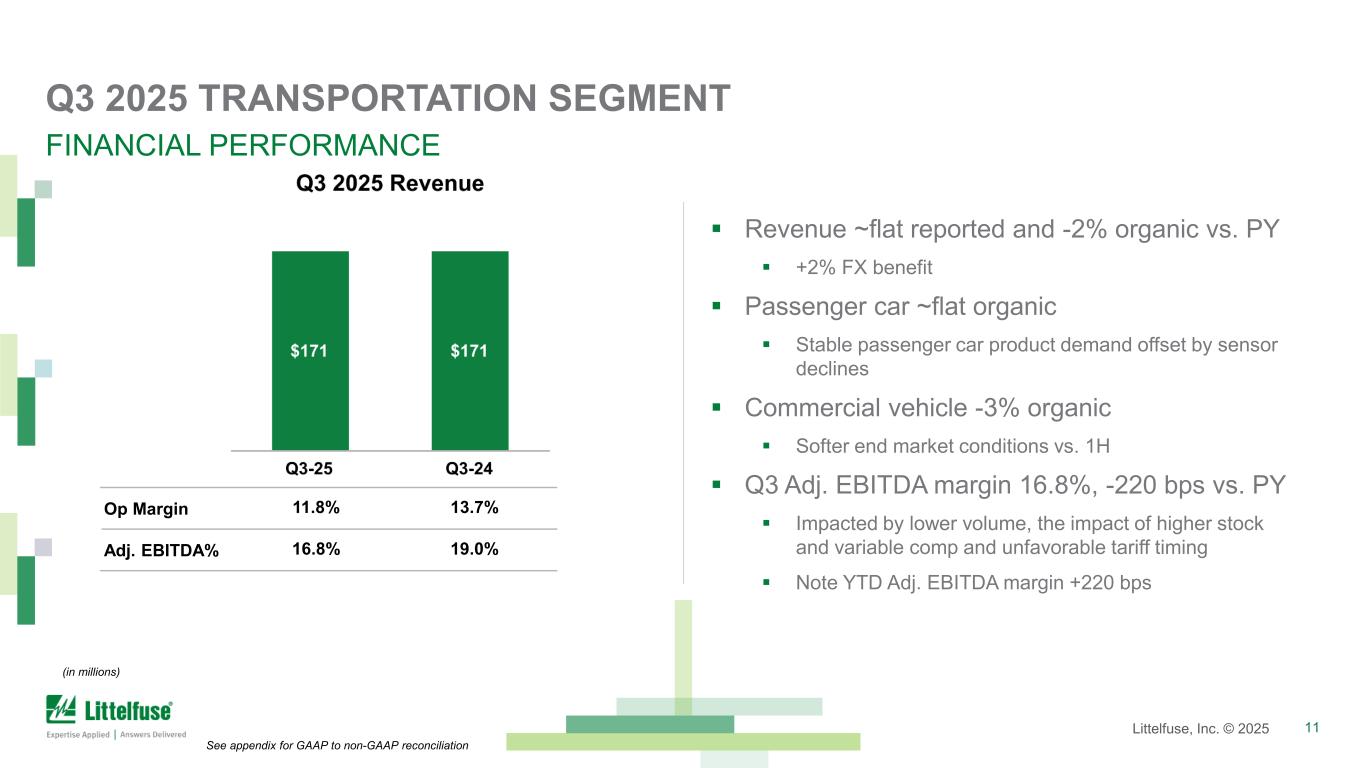
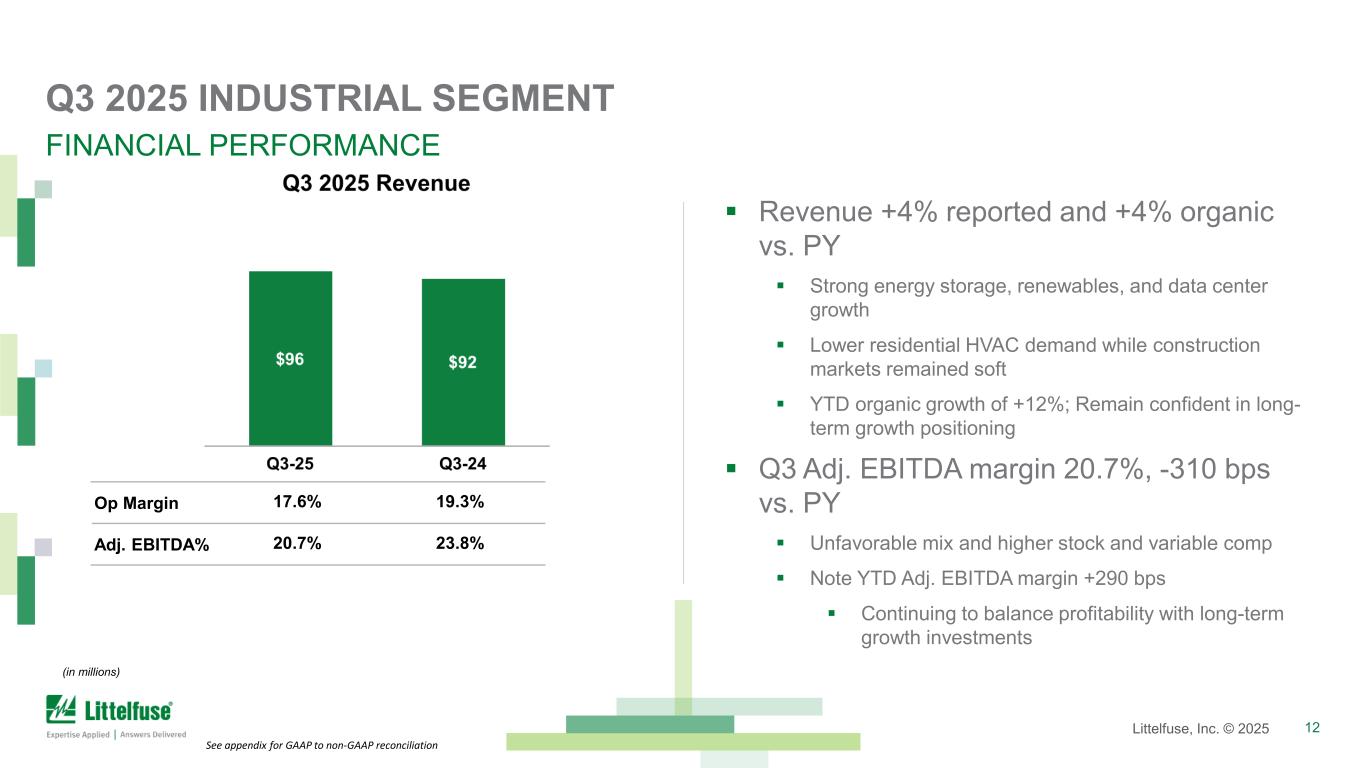
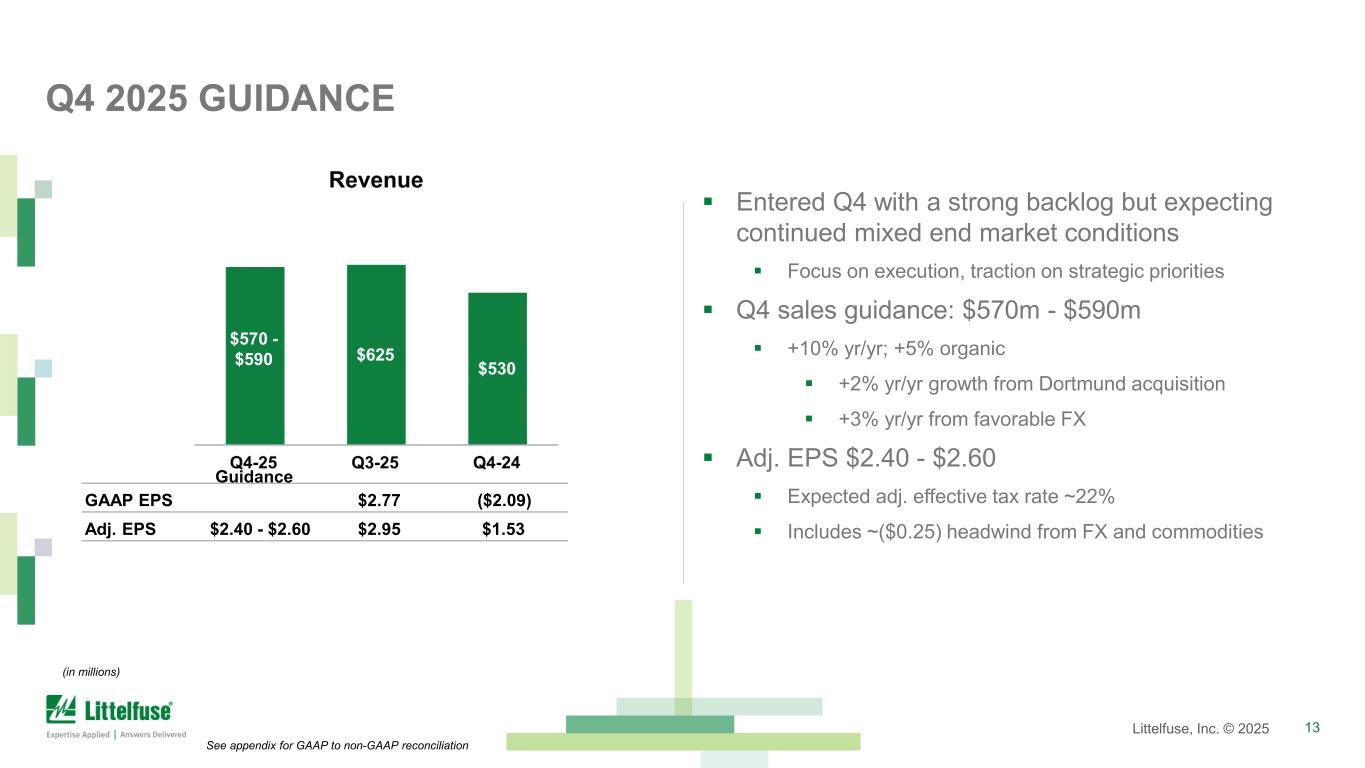
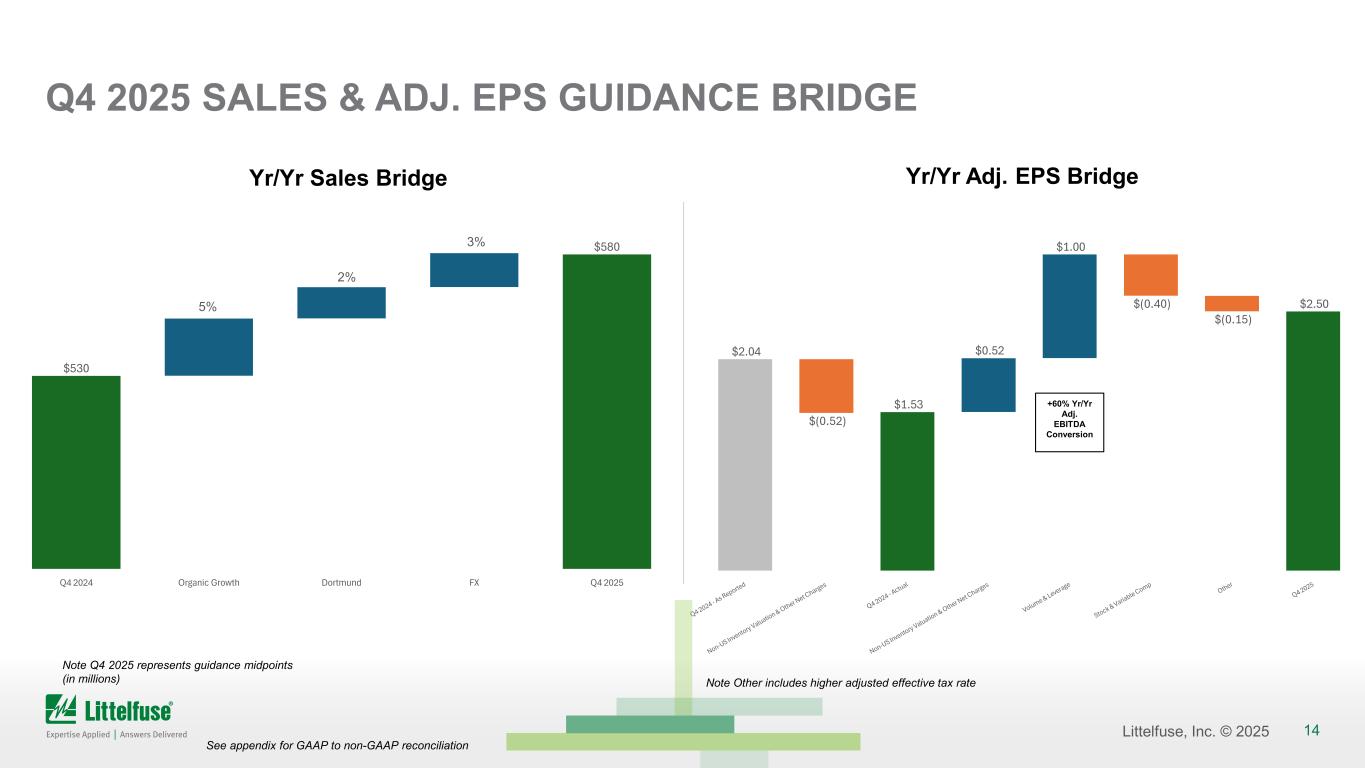
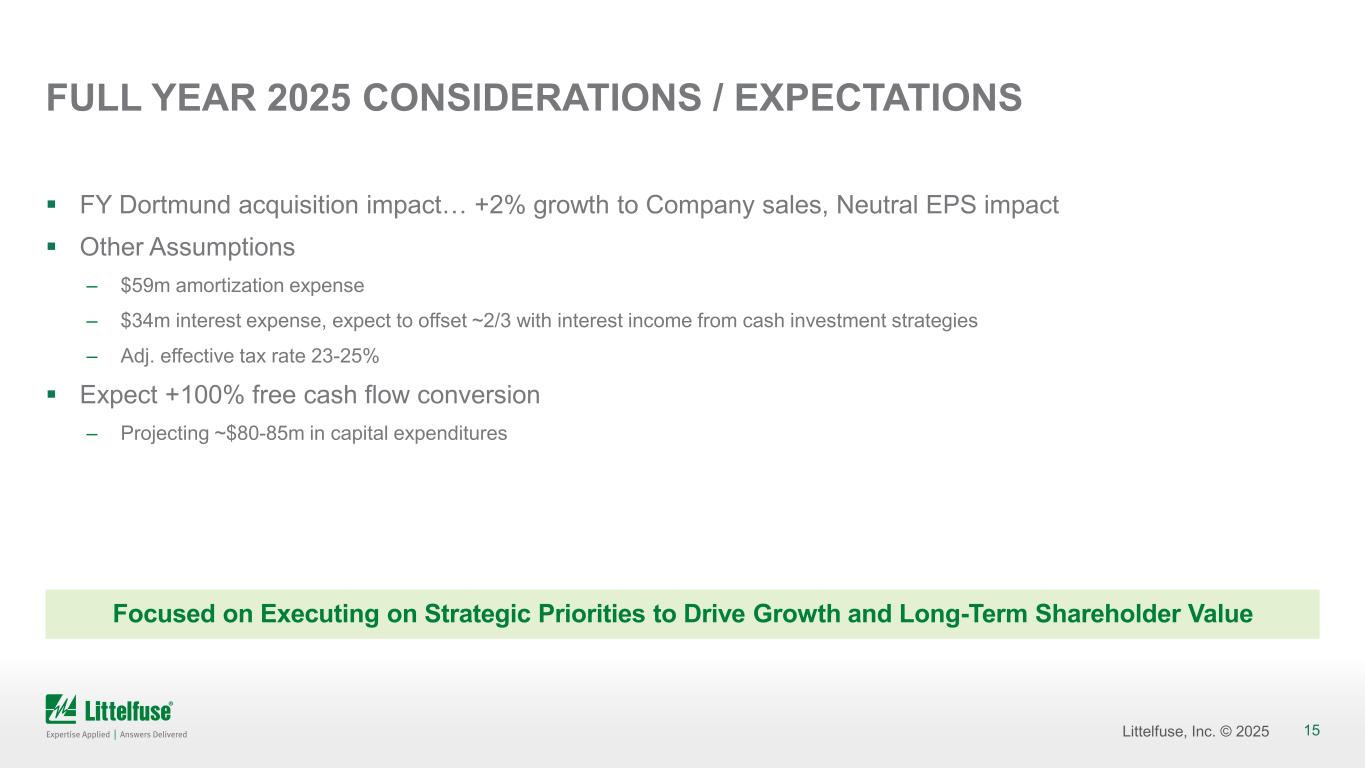
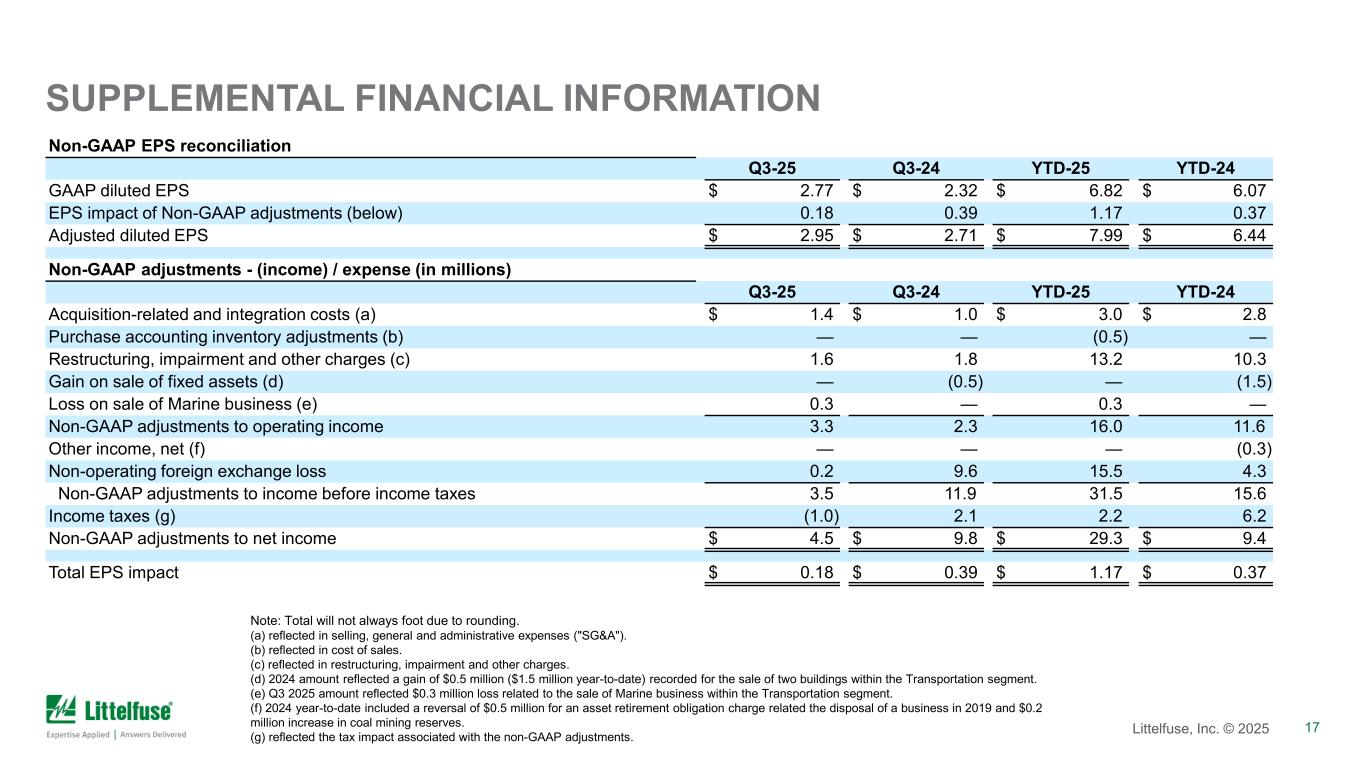
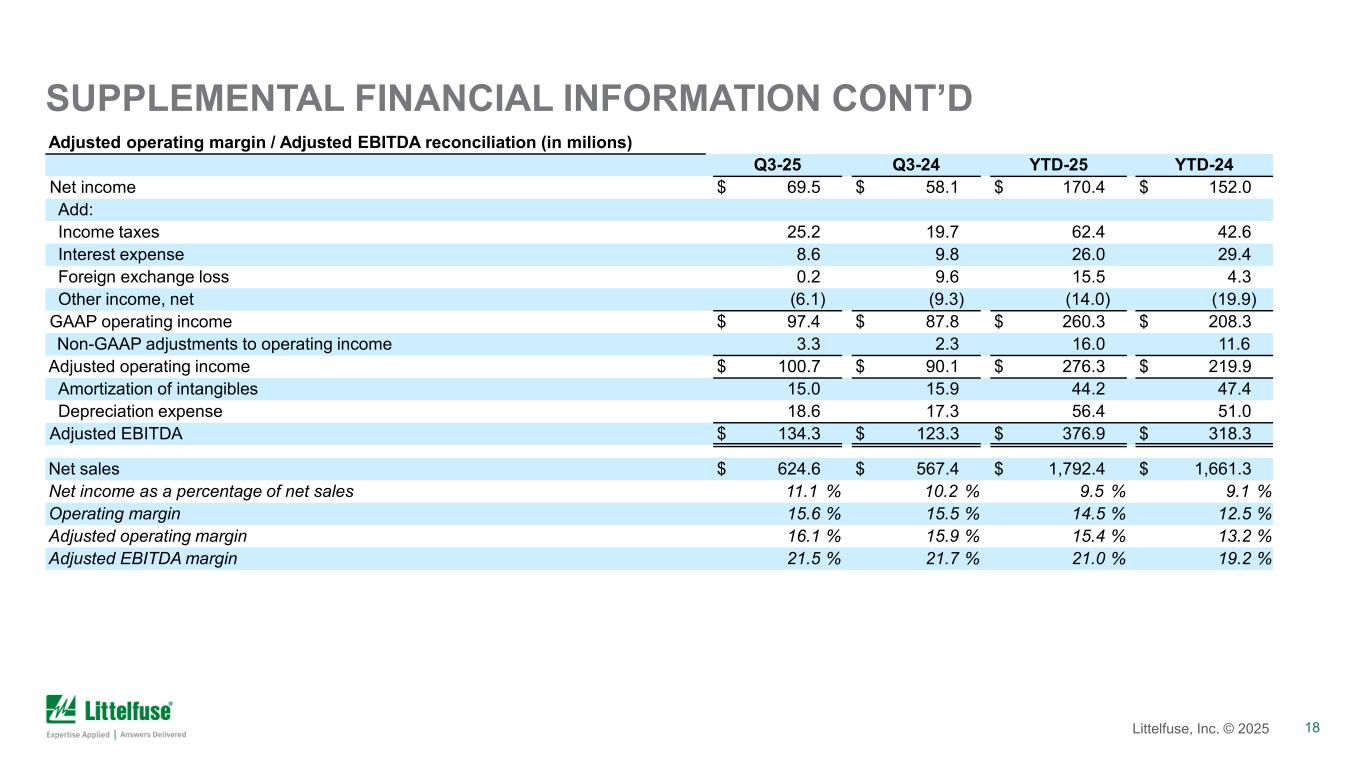
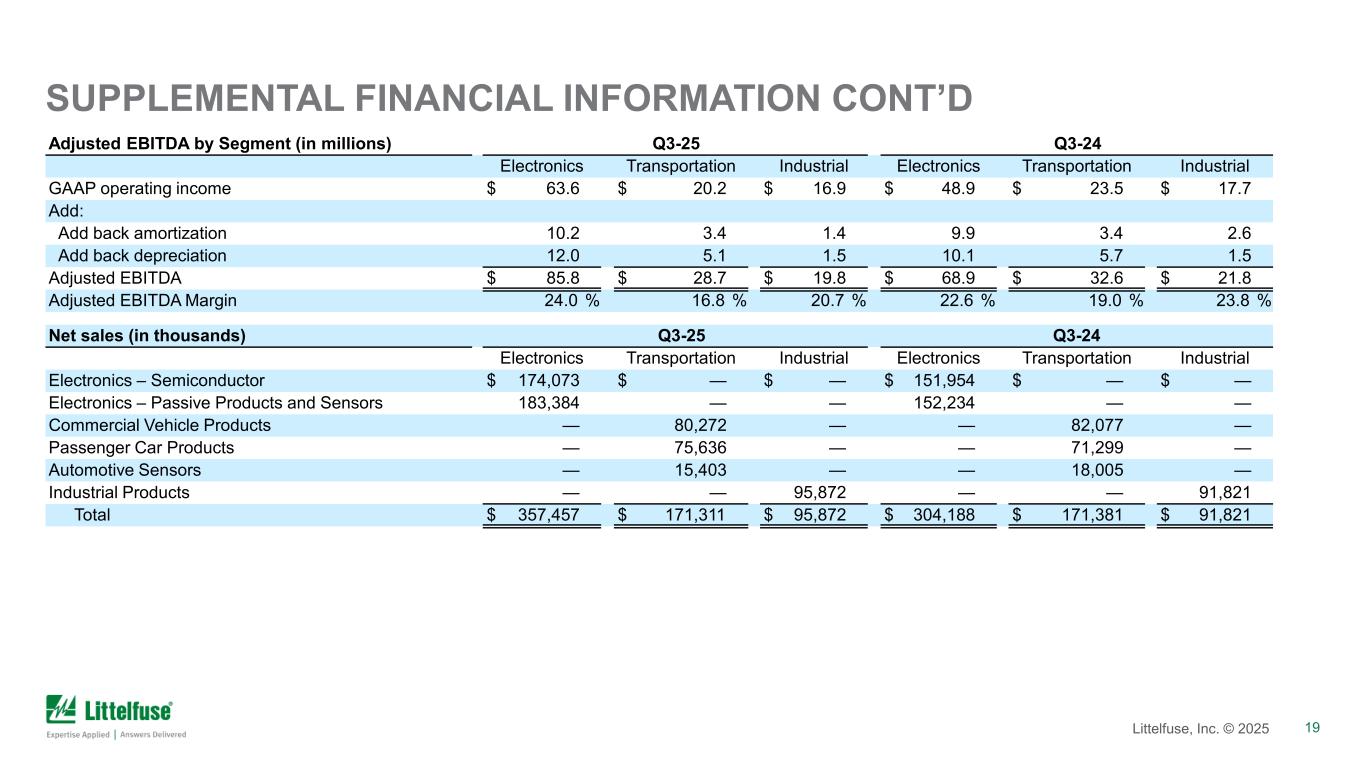
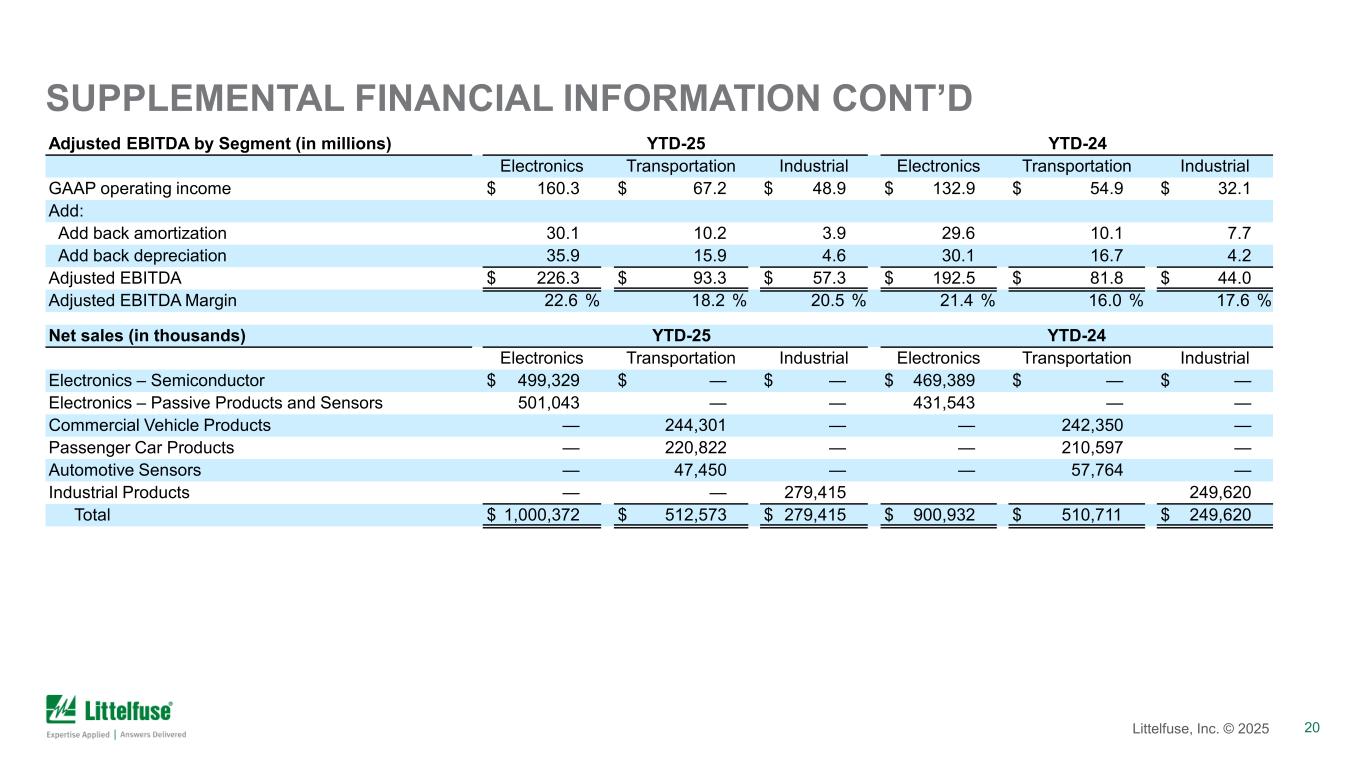
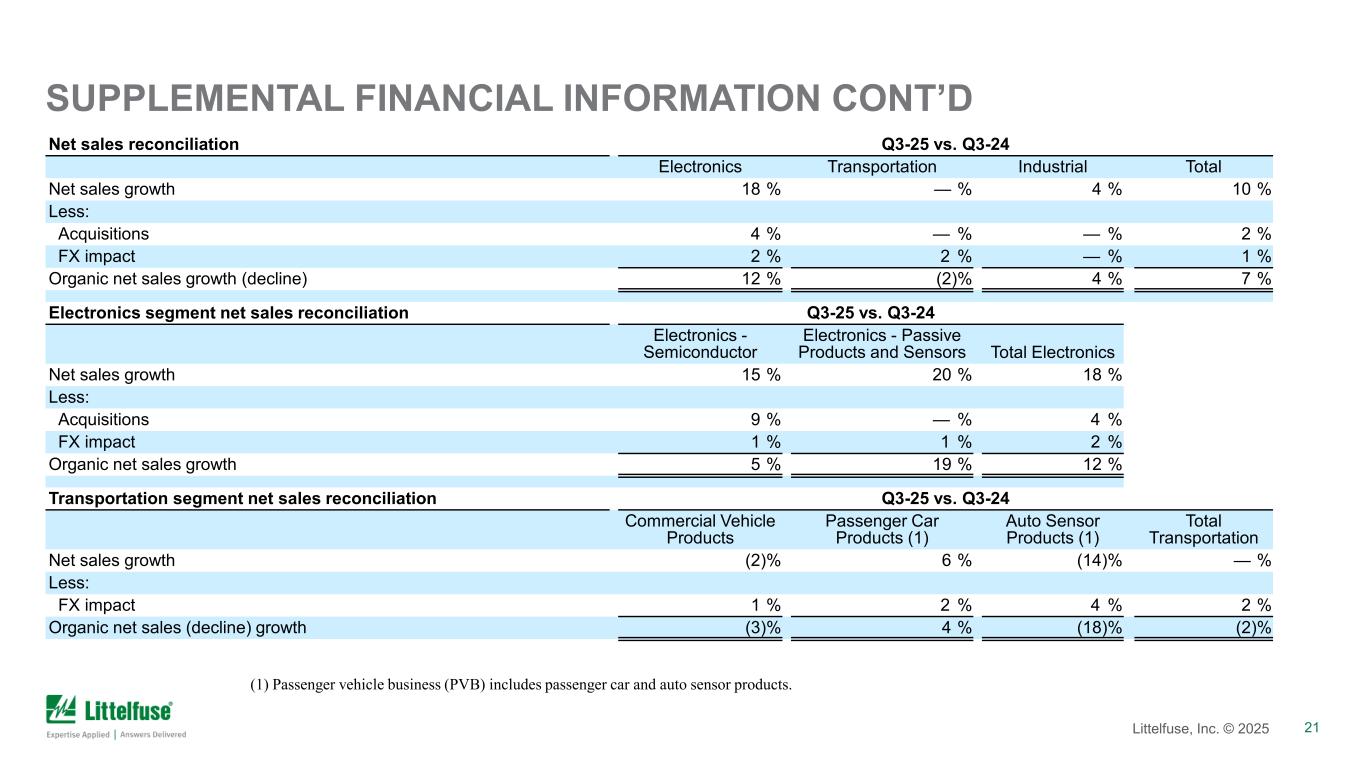
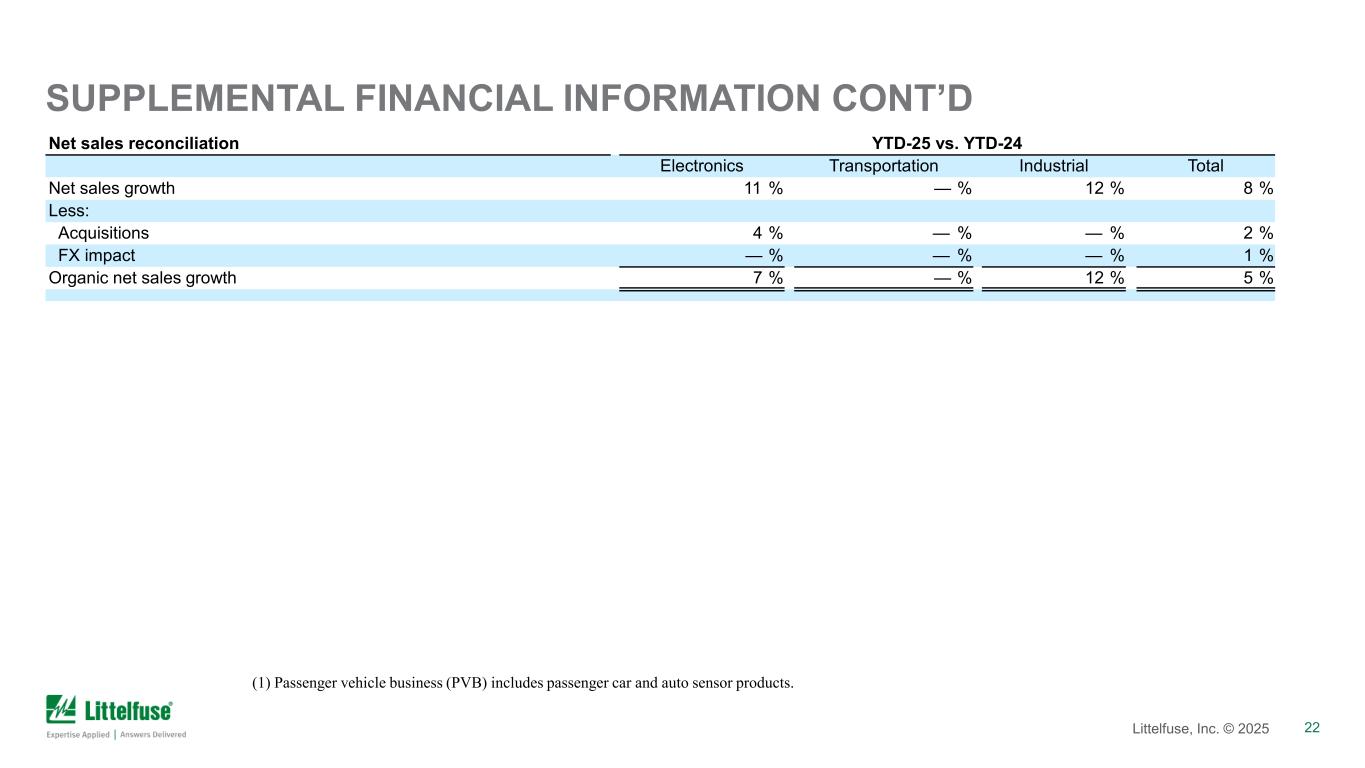
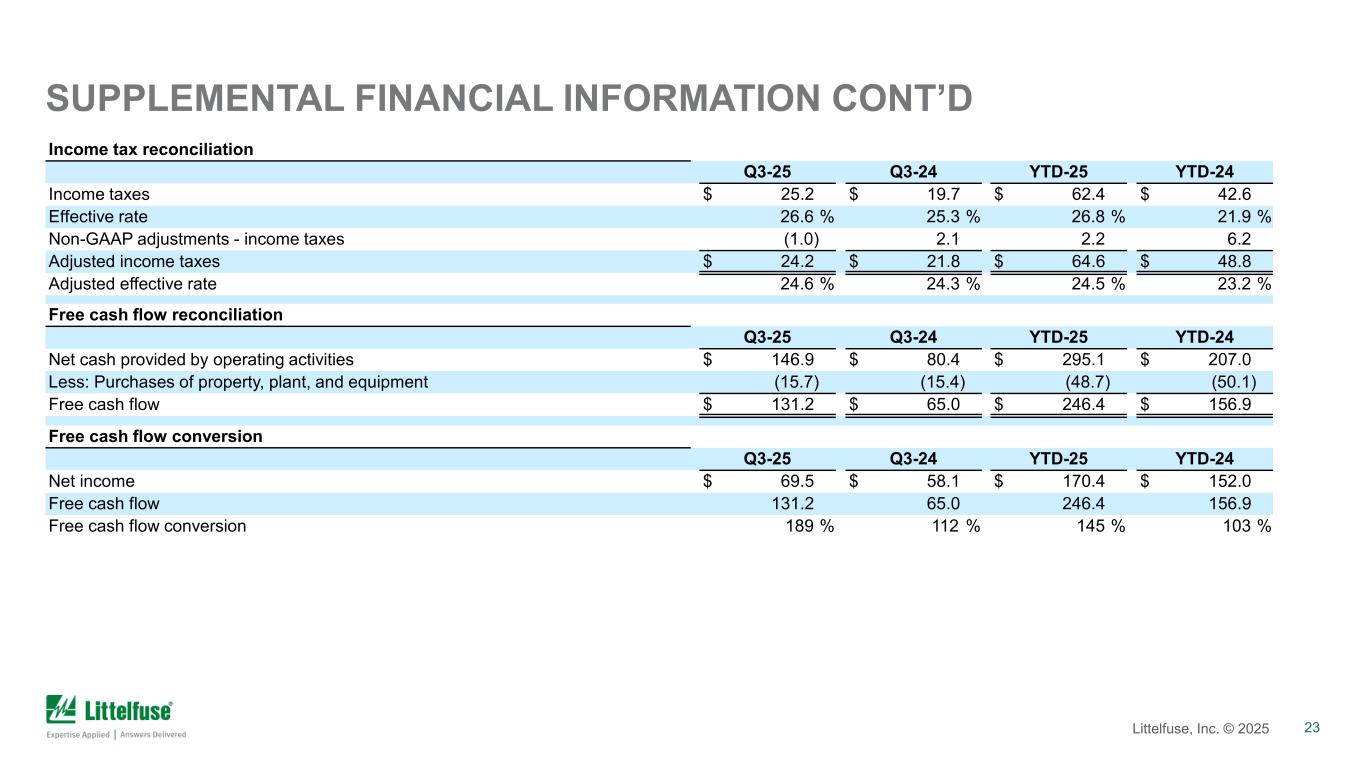
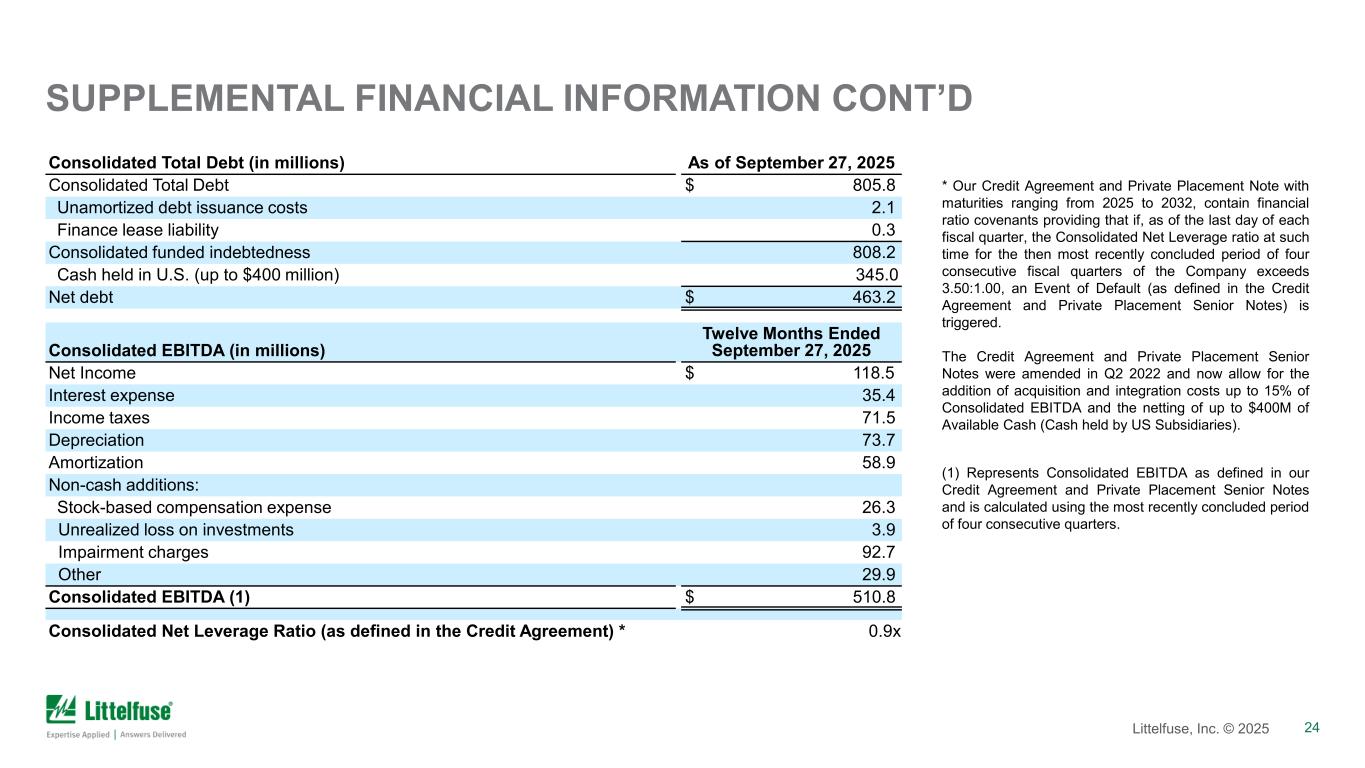
Thank you, Greg, and to everyone joining. I want to start by echoing Greg's sentiment as we're excited to announce the Basler acquisition. Today, I will provide some details on the acquisition, including financial metrics and the transaction timeline. Then, I will walk you through our third quarter results, followed by a fourth quarter outlook, and we will end the call with Q&A. If you turn to slide seven, Basler has demonstrated their leadership in controlling, regulating, and protecting mission-critical equipment for evolving power applications over the last 83 years. Their technologies and market position provide a distinct competitive advantage, while their footprint is highly complementary to little fees. The all-cash transaction is valued at approximately $350 million. When adjusted for the present value of expected tax benefits approximately $30 million, the net transaction value is roughly $320 million. This represents a 13.5 times multiple for forecasted full-year 2025 EBITDA. At closing, we anticipate our net leverage will be 1.4 times versus our current level of 0.9 times. We expect Basler will be accretive to adjusted earnings per share in 2026, while we target double-digit returns in year five, post-close. We expect to close the transaction by end of the fourth quarter, 2025, and look forward to welcoming the Basler team to low fees. With that, please turn to slide eight for details on our third quarter. As Greg mentioned, we delivered strong results with revenue at the high end of the guidance range, while adjusted EPS exceeded the guidance range. Going forward, comparisons I will discuss will be relative to the prior year, unless stated otherwise. Revenue in the quarter was $625 million, up 10% in total, and up 7% again. The Dortmund acquisition contributed 2% to sales growth, while FX was a 1% tailwind. Adjusted EBITDA margin finished at 21.5%, down 20 basis points, as solid volume expansion and operational leverage were offset by the impact of higher stock and variable compensation. Third quarter adjusted diluted earnings was $2.95, up 9%. We also delivered strong cash generation in the third quarter. Operating cash flow was $147 million, and we generated $131 million in free cash flow. The year to date, we have generated $246 million of free cash flow, and our conversion rate is tracking at 145%, well above our long-term target of 100%. We ended the quarter with $815 million of cash on hand and net debt-to-EBITDA leverage of 0.9 times. In the quarter, we returned $19 million to shareholders via our cash dividend. Please turn to slide 10 for our segment highlights. Starting with the electronics product segment, sales for the segment were up 18% versus last year and up 12% organically. The Dortmund acquisition contributed 4%, while FX contributed 2 points to growth. Sales across passive products were up 19% organically, while semiconductor products increased 5% in the quarter. Within our semiconductor products exposure, protection product sales were strong while we observed soft power semiconductor demand. Sequentially, we delivered modest power semiconductor growth. Adjusted EBITDA margin of 24% was up 140 basis points, reflecting favorable year-over-year passive and protection volume leverage, partially offset by lower power semiconductor volumes, and higher stock and variable compensation. Moving to our transportation product segment on slide 11, segment sales were flat year-over-year, as organic sales decreased 2% for the quarter, but were offset by favorable FX contribution of 2% to growth. In the passenger car business, sales were flat organically, reflecting stable passenger car product demand, offset by sensor decline. Commercial vehicle sales for the quarter decreased 3% organically as we observed softer end market demand across on-highway, off-road, and agriculture markets. For the segment, adjusted EBITDA margin of 16.8% was down 220 bases. Our transportation segment margins were negatively impacted by lower volume, higher stock and variable comp, and unfavorable tariff timing. We remain pleased with our transportation segment margin trajectory through a dynamic end-market backdrop. Year-to-date, our adjusted EBITDA margin of 18.2% is up 220 basis points. On slide 12, industrial profit segment sales grew 4% organically for the quarter. Third quarter sales benefited from solid energy storage, renewables, and data center growth. However, we observed softer HVAC demand and continued soft construction volume in the quarter. Third quarter adjusted EBITDA margin was 20.7% down 310 basis points, driven by unfavorable mix and higher stock invariable compensation. While margins tracked lower in the quarter, we're pleased with a solid year-to-date margin performance, which is up to 190 basis points. We will continue to balance profitability with long-term growth investments and remain confident in our long-term industrial segment growth trajectory. Please move to slide 13 for the forecast. We entered the fourth quarter with a strong backlog and expect solid growth versus the prior year. We expect typical seasonality given mixed conditions across transportation and industrial and market. With that in mind, our fourth quarter guidance incorporates current market conditions, trade policies and FX rates as of today. We expect fourth quarter sales in the range of $570 to $590 million, which assumes 5% organic growth at the midpoint and two points of growth stemming from our Dortmund acquisition. We are projecting fourth quarter EPS to be in the range of $2.40 to $2.60, which assumes a 60% flow-through at the midpoint. Fourth quarter guidance also assumes an unfavorable impact from stock and variable compensation of $0.40 and a $0.15 headwind from a higher adjusted effective tax rate. Moving to slide 15, for the full year 2025, we're assuming $59 million in amortization expense and $34 million in interest expense, two-thirds of which we expect to offset through interest income from our cash investment strategies. We're estimating a full-year tax rate of 23% to 25% and expect to spend $80 to $85 million in capital expenditures. With that, operator, please open the call for Q&A.
Operator
We will now begin the question and answer session. If you would like to ask a question at this time, please press star followed by the number one on your telephone keypad. And to withdraw your question, press star one again. And your first question comes from the line of Luke Young with Baird.
Luke, please go ahead. good morning thanks for taking questions um maybe uh apologies i missed part of the prepared remarks maybe if we could start with power semi i think abhi you mentioned that it did see some growth sequentially despite still being soft year over year can maybe you just speak to book to bill there um kind of the outlook into the fourth quarter in power semi and some of the puts and takes from a demand standpoint and then how you'd expect any improvement to float low to margins as well thank you yeah thank you luke this is uh greg maybe i'll start and then hand it to abby to give a little bit more color but you know just kind of zooming out on power 70 and we've talked about this before i think you know our view on the power
70 business is that it is strategically important from a strategic perspective um as part of our overall portfolio and part of our safe and efficient transfer of energy actually in the The example I gave on the battery charging solution in the script, that is a protection solution and it uses our semiconductor protection, our passive protection, but actually also uses power semiconductors as part of the overall customer solution. And actually Bassler also is a customer of LittleFuse today and actually has a lot of semiconductor content in their solutions for protection relays and in their excitation system. So semiconductors is an important part of our business, but I think as we've said before, we have had some issues internally from kind of an execution perspective. So we talk about our strategic priorities as a company on sharpening our focus and improving our go-to-market and improving our operational performance, and actually all three of those apply to our semiconductor business as well. So, you know, we're working on sharpening the strategy, improving our execution. And so this is going to take some time, but we're on the journey. And maybe I'll hand it to Avi to give a little bit more specific color.
Yeah, no, I think Greg covered it. But I think if you kind of think about my prepared remarks and what I mentioned, if I think about our Q3 performance in our Power Semi business, Q2 to Q3, we saw sequential improvement, right? year over year we're still down but but as you kind of think about performance in q3 versus q2 we just see improvement in the in the quarter very helpful thank you um just a quick one on the um the 40 cents dot com is that uh an outsized impact in the fourth quarter i know typically stock com from a seasonal standpoint tends to be weighted i think you said 2q and 3q this year just want to make sure i understand yeah yeah absolutely i can walk you through it look um so there's two things here. It's not just stock comp, it's also the impact of wearable comp. So if you kind of think about our last year performance and where we ended the year, our teams didn't get paid. So this is a reset back to paying a target. That's majority of the 40 cent headwind. And then a small portion of that is just the year over year impact of stock comp. Got it.
So if we just to put it in different words, as we think into then into this, into 2026 that especially the variable comp piece should kind of normalize. Is that the right way to think about it?
That is absolutely correct. If you think about 2026, on a year-over-year basis, 26 versus 25 will be normalized. But given that performance in 24, like I said, we didn't pay the variable comp piece of it. And so you saw a good guy in the P&O. And this year, you're just seeing it being reset back to target. So if you, you know, just to kind of build on that story then, as you kind of think about a Q4 guide at the midpoint, And what you're really seeing is an EBITDA conversion of 60% on our top-line growth on a year-over-year basis. Very helpful. Thank you.
And then lastly, and apologies if I missed any comments on this, but, Greg, just be curious to get your kind of incremental update on your efforts in data center, both near-term opportunities hitting, you know, maybe things that can move quicker over the next quarter or two, and then your progress getting designed into sockets on future architectures as well.
Yeah, thanks, Luca. I think we continue to be excited about our momentum in Data Center, and we continue to make progress. And actually, we talked about in the call this sales realignment that we did across the business. We actually did this a little bit earlier in Data Center. And we are making progress. Design wins are up more than twice year to date. And I would say that data center is, you know, our growth in the quarter. Data center was a meaningful driver of overvalued growth in the quarter. So we are continuing. We have meaningful revenue now from data center based on activities that we've had in the past. We have improvement on our go-to-market strategy. Our design wins are up. And with our improved focus from a go-to-market perspective, we're getting closer to our customers. We're working more closely with hyperscalers, with cloud computing companies. and starting to work more on our long-term R&D roadmap around that as well. So I think this is something that is the message, I would say, that's delivering growth now. And we do believe that with our enhanced focus, it's going to continue over time.
Great. I will leave it there. Thank you for all the color. Thanks, Luke.
Operator
Your next question comes from the line of Christopher Glean with Oppenheimer. Christopher, please go ahead.
Thanks. Yeah. Good morning, all. Just want to build on the last question on the data center comment. I think I heard up over 50% and up maybe doubled just on the last question about the design win. So just want to clarify that. And is that like a count of the design win instances or a dollar value? Just trying to think of, you know, what that might imply for growth, what the design end to revenue kind of lead time is like, and maybe if we could clarify what the current scope of the data center business is for Little Fuse.
Yeah, maybe I'll start with a little clarification. Thank you, Chris. And then I hand to Avi for a little bit more. But just to clarify, right, I think that what we are saying now in the quarter, data center was a meaningful driver of our overall growth. I think that's the first thing I want to say. So that's kind of revenue in the quarter. Design wins being up, it's design wins that are up more 2x on a year-on-year basis. So basically, design wins this year, year-on, you know, design wins year-to-date, year-on-year versus a year ago and we track design wins as when things you know the timing of that varies a little bit right so you know the timing of that varies so it's a little bit hard to predict just based on that one number but I would say that data center is one of the faster markets you know if you compare to some of our markets like automotive or industrial which take longer to go from design to revenue data center is probably not surprising is a relatively faster market so that's what I'll And maybe I'll hand to Abhi to give a little bit more color on the relative impact of data centers.
Yeah, so Chris, thanks for your question. I think the best way to think about the data center growth is if you kind of look at electronics, electronic segment performance, you know, it's a good reflection of our data center exposure. And that's where you see, you know, the real growth in terms of, you know, the segment being up 18, 12 percent organic, passive products being up 19 percent organically, right? Now, we haven't quantified the exact impact of data centers for us as a total company, but I would say it's high single digits.
Okay, great. Appreciate that. I'm sure we'll get a further deep dive in February. And then, you know, it sounds like the overall company is seeing some good momentum in new business opportunities. How's that funnel looking besides data center? I'm curious, at least, especially for industrial, where, you know, first half you had really outsized outgrowth and, you know, that moderated a bit. I don't know if there's some noise in any channels or just a real noisy quarter for Resi HVAC, which is well known. But I'm curious about the kind of scalability for industrial and the NBO funnel there. you know, as pertains to maybe extending the outgrowth that you saw here to date?
Yeah, thank you, Chris. Yeah, I think, let me just start by, if we zoom out to the industrial segment, I mean, we had solid growth in the quarter, and actually have had, you know, many quarters of solid industrial growth. In the quarter, growth was driven by markets that continue to see strong demand and do well, energy storage, renewables, data center infrastructure, and actually some of our industrial business plays into data center infrastructure that continues to see strong demand that said as you note we do have uh softer residential hvac demand and the construction mro continues to be soft so that's kind of where there's a mixed performance and that's we do have exposure there which has made maybe a little bit more muted performance on the industrial in the quarter but if you zoom out from you know eight quarters of growth. And this continues to be a significant investment area and growth driver. You mentioned the Bassler Electric is an acquisition as well that brings significant kind of industrial exposure and that will be part of our industrial business.
And then just to add to Greg's commentary, just one last point I'd point out is if you kind of look at the year-to-date performance for the segment, we're up 12% year-to-date. So that's another positive sign of growth in that segment. Appreciate that. Thanks, guys. Thank you.
Operator
Again, if you would like to ask a question, simply press star followed by the number one on your telephone keypad. And your next question comes from the line of David Williams with Benchmark. David, please go ahead.
Hey, good morning. Thanks for letting me ask the questions, and congratulations on the continued progress here.
You talked about realigning your sales force and breaking down some of the silos, and just kind of curious if you could provide a little more color there. I mean, you talked about being able to engage more deeply, with your customers and what that means, but is there a way to kind of quantify what your expectations are and how we can kind of gauge that success?
Yeah, I mean, I think, you know, it's hard at this point to quantify, but maybe I'll help explain, right? I think historically our sales organization was basically aligned with our products, and we had kind of these individual product organizations that had the individual sales teams and the sales teams were representing our products, even though, as we've talked about, largely our products are largely about the safe and efficient transfer electrical energy, we often are selling to the same person. The customer would give lots of examples actually in the script, right? The example I gave on the battery charging application had passive over-voltage protection, semiconductor over-voltage protection, power semiconductor solution, and passive circuit protection. That comes from at least probably three of our business units. And so in the past, we would have had three different sales teams trying to call on that customer for that solution if they actually even all called on that customer. So two things happen. One, we would miss opportunity because we would be selling a part of our solution as opposed to being able to sell the complete portfolio. So in some cases, more cases than not, we were missing opportunity because we weren't bringing the full portfolio. But other cases we're also stepping on ourselves in front of the customer because we have multiple people so we've realigned to have the this is kind of the fundamental change the sales team is representing our customer not our products and we do believe that this is going to bring progress to us we did this early on some of our e-mobility business and actually also in our data center business we it's we already see progress from where we had done that early we've now done this across the sales force. So this is a change. We're in the process of that reorganization. It is a change that's going to take some time, but we believe it's going to bring significant benefits because it puts us, as I said, first and foremost, we get to sell the portfolio we have more effectively. But secondly, it drives our R&D strategy to be more about where the markets are going and making sure that we're developing the right products for where our lead customers are going. And this is really about focusing on aligning with those market leaders to make sure we're in the right position.
Fantastic color. Thanks so much for that. And then maybe secondly, just on the tariff side, I know you'd mentioned it in the script. It seemed like it was a modest headwind, but are you seeing anything developing there in terms of, do you think that growth is being tempered by tariffs or any delays, just any color maybe around the impact of that tariff?
Yeah, absolutely. I can take that, David. So when I talk about the impact of tariff, What I'm really talking about is if you're going to go back and go back and think about a 2Q call, we had some tariff timing in the quarter where we saw the benefit of where we saw the pricing, but the cost hadn't quite flushed to the P&L. That was about a six million tailwind in Q2. That was going to be a headwind in Q3. So when I talk about timing of tariffs, that's what I'm referring to. And about three million of that hit our transportation segment. OK, so that's that. Now, if you kind of think about where we are today and the guidance for Q4, what we have baked in is a neutral price tariff impact for the quarter.
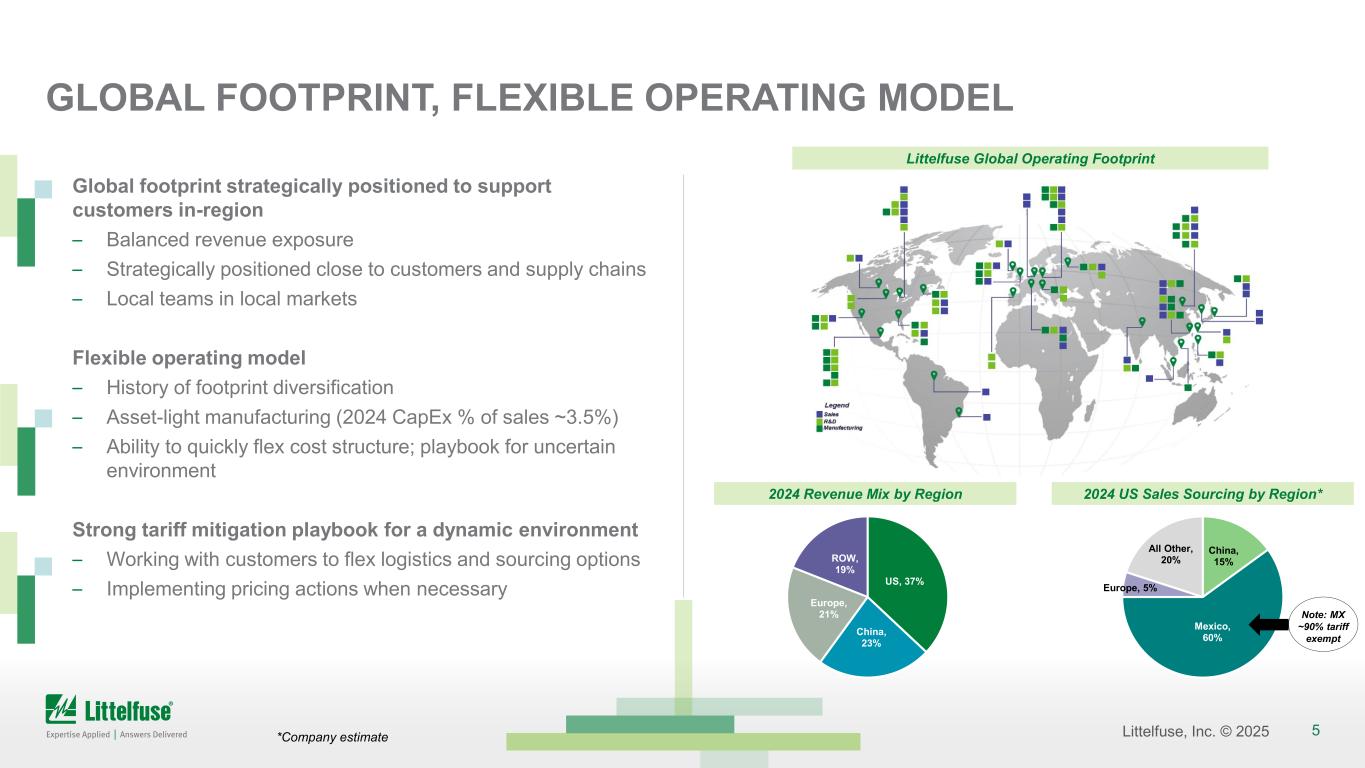
Yeah, and I also say, you know, I think, look, there's still noise that can happen, but I think the market dynamics of this have largely stabilized. We've talked before that we have a diversified manufacturing footprint. We're trying more and more manufacturing close to our customers. So, you know, there is some impact, as Abhi mentioned, but broadly speaking, we feel like this is somewhat stabilized in our customer base, and we don't see a major impact from it.
Operator
Your next question comes from the line of, again, Christopher Glynn with Oppenheimer. Christopher, please go ahead.
Yeah, thanks. Just on transportation, I wanted to just ask about the difference between the passenger vehicle fuses up 4% and the sensors down 18% organic. Is the census side still engaged in attrition, exits, product pruning there?
Yeah, maybe I'll start, and then Avi can give a little bit more color on the transportation business. But actually, if you zoom out, actually, in our core passenger products, we actually had a reasonable quarter, given the kind of passenger car builds and so forth. We had a reasonable quarter. But we do continue to have, I would say, lower revenue and profitability in the central product. So we talked before in the past about the fact that that was a business that we were kind of realigning. We continue on that journey. So I would say that if you put aside that central product, which is not really a strategic focus of ours, the core passenger business actually did do pretty well, considering kind of the stable car build and some of the kind of easy slowness that we all see in the market.
Okay, great. And then just back to the power semis and Dr. Hamed joining. So it sounds like you think you can get a lot more juice out of the power semiconductor strategy there, I guess, relative to benchmarking some of the other areas of the business, perhaps. But could you, you know, comment on that as well as go into, you know, what the focus markets are? Is it a middle market strategy and the scope of the, you know, what you visualize there to kind of bring that up to the standards you envision?
Yeah, look, I mean, if you look in 3Q, for example, right, if you look at the performance of our electronic segment as reported, right, The passive products were 19% semiconductor products or 5%, right? And that semiconductor products is really because the power semis is not performing as well. The power protection semis is actually doing pretty well. So we, I mean, we have some areas there where we're underperformed. It's really, you know, like I said before, I think for us, power semis is a microcosm of some of the bigger strategy that we have at Little Fuse, right? The three strategic priorities, one, sharpened focus. So where we play and why we win. And again, we want to focus on the high growth markets. We want to focus on high energy density and growth markets, things like data center, grid, utility, et cetera. So that's, I would say, the first thing that we focus on. Or other areas where we have strong performance, for example, like the medical market in our power semiconductor business. So first, it's about increasing that focus. Secondly, it's about making sure we're focused on the customers. One of the sales realignment benefits we get actually is that we actually have a big pipeline for power semiconductors. But, again, some of our sales teams that were representing the other businesses at those customers weren't selling the semiconductor products. So we have an opportunity with the sales alignment to improve our semiconductor position at customers. But then it also comes to about execution. We mentioned in the remarks actually about, in Avi's remarks, about using our footprint more effectively. And so this is something that we're going to be focused on as well is optimizing our operational performance in power semiconductors. we believe that ultimately is going to drive both growth and profitability. So it's kind of a microcosm of the bigger picture. But where we want to focus is where we have differentiated value and also where it fits into this broader strategy around safe and efficient transfer of electrical energy.
Great. Thanks for the caller.
Operator
There's no further question at this time. I will now turn the call back over to Greg Henderson for closing remarks.
Okay, great. Thank you. I just, in closing, I have two things really. First, I want to just thank our global teams. You know, we did have good performance. And secondly, I'm really excited about Basler. And so I'm really excited to welcome the Basler team and the Basler business and taking significant growth opportunities for us in data center and grid and utilities. And finally, thank you all for joining our call. And we look forward to talking to you more and seeing many of you at the Barrett Industrial Conference in Chicago in a couple of weeks.
Operator
This concludes today's conference call. You may now disconnect.