Operator
Good morning, everyone, and thank you for participating in Magnolia Oil and Gas Corporation's First Quarter 2026 Earnings Conference Call. My name is Danielle, and I will be your moderator for today's call. At this time, all participants will be placed in a listen-only mode as our call is being recorded. I would now turn the call over to Magnolia's management for the prepared remarks, which will be followed by a brief question-and-answer session.
Speaker 7
Thank you, Danielle. and good morning, everyone. Welcome to Magnolia Oil and Gases First Order Earnings Conference Call. Participating on the call today are Chris Stavros, Magnolia's Chairman, President, and Chief Executive Officer, and Brian Corrales, Senior Vice President and Chief Financial Officer. As a reminder, today's conference call contains certain projections and other forward-looking statements within the meaning of the federal securities laws. These statements are subject to risks and uncertainties that may cause actual results to differ materially from those expressed or implied in these statements. Additional information on risk factors that could cause results to differ is available in the company's annual report of Form 10-K filed with the SEC. A full safe harbor can be found on slide two of the conference call slide presentation with the supplemental data on our website. You can download Magnolia's first quarter 2026 earnings press release as well as the conference call slides from the investor section of the company's website at www.magnoliaoilgas.com. I will now turn the call over to Mr. Chris at Ambrose.
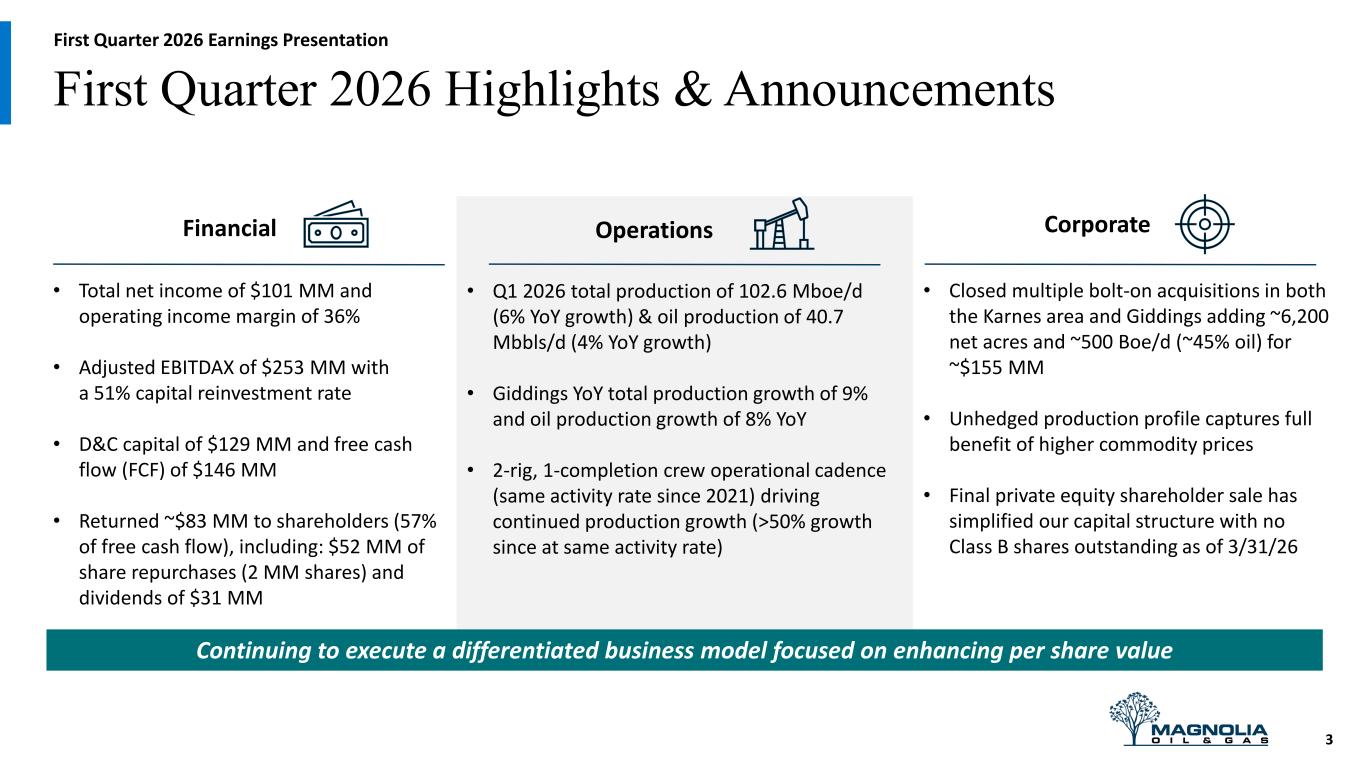
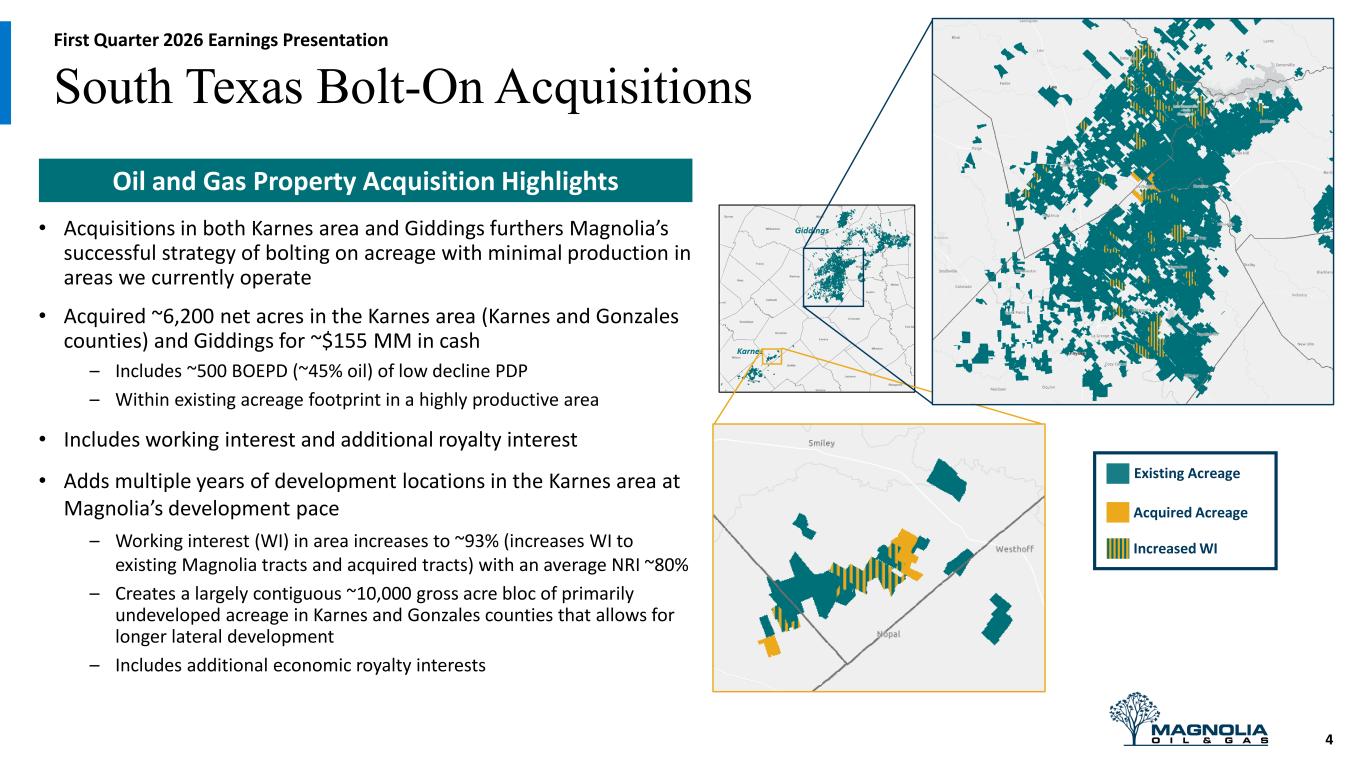
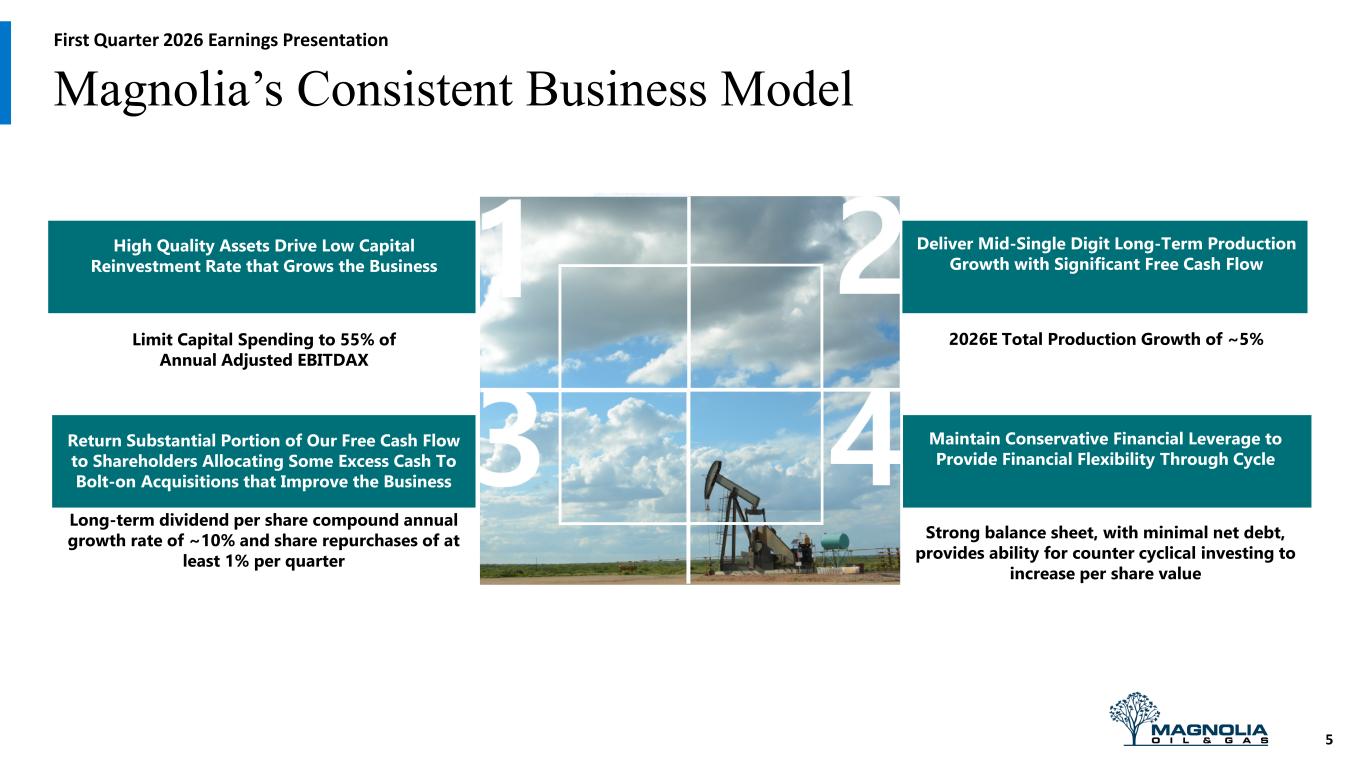
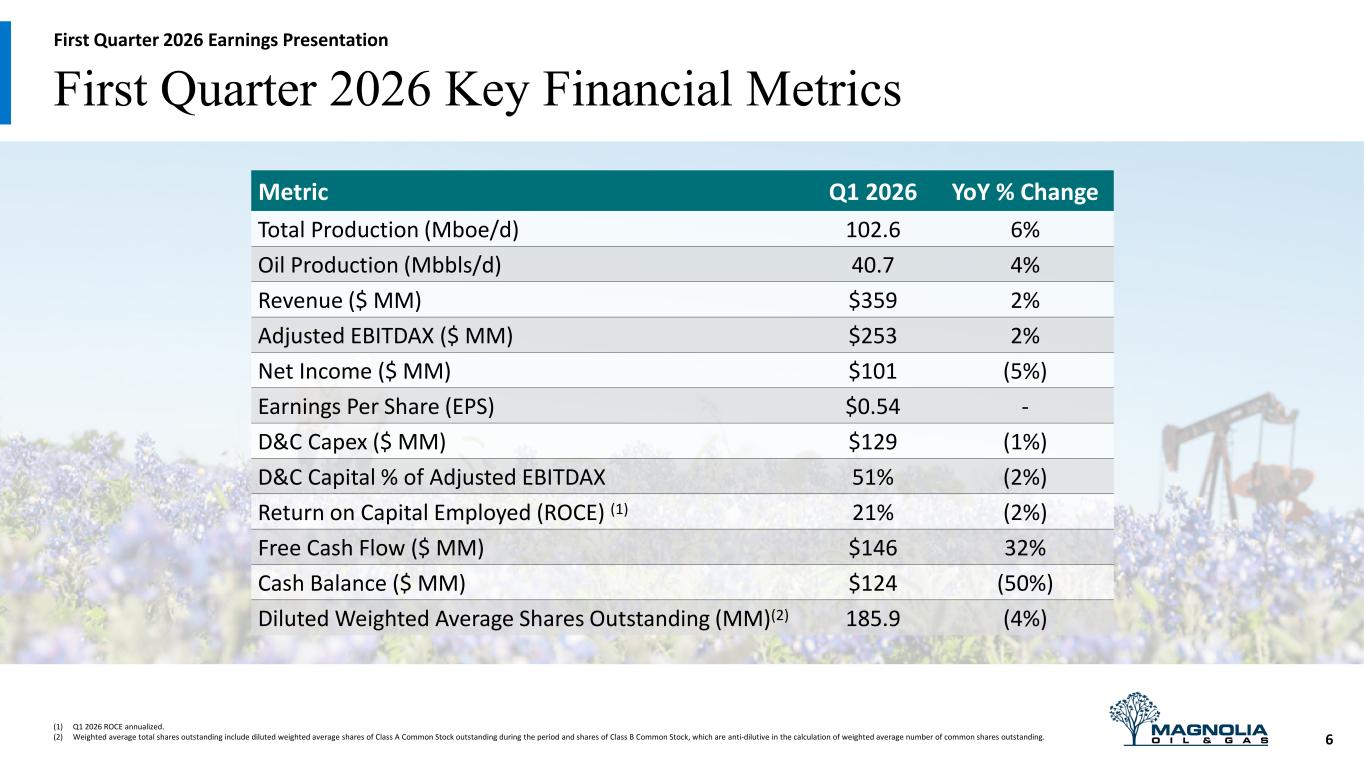
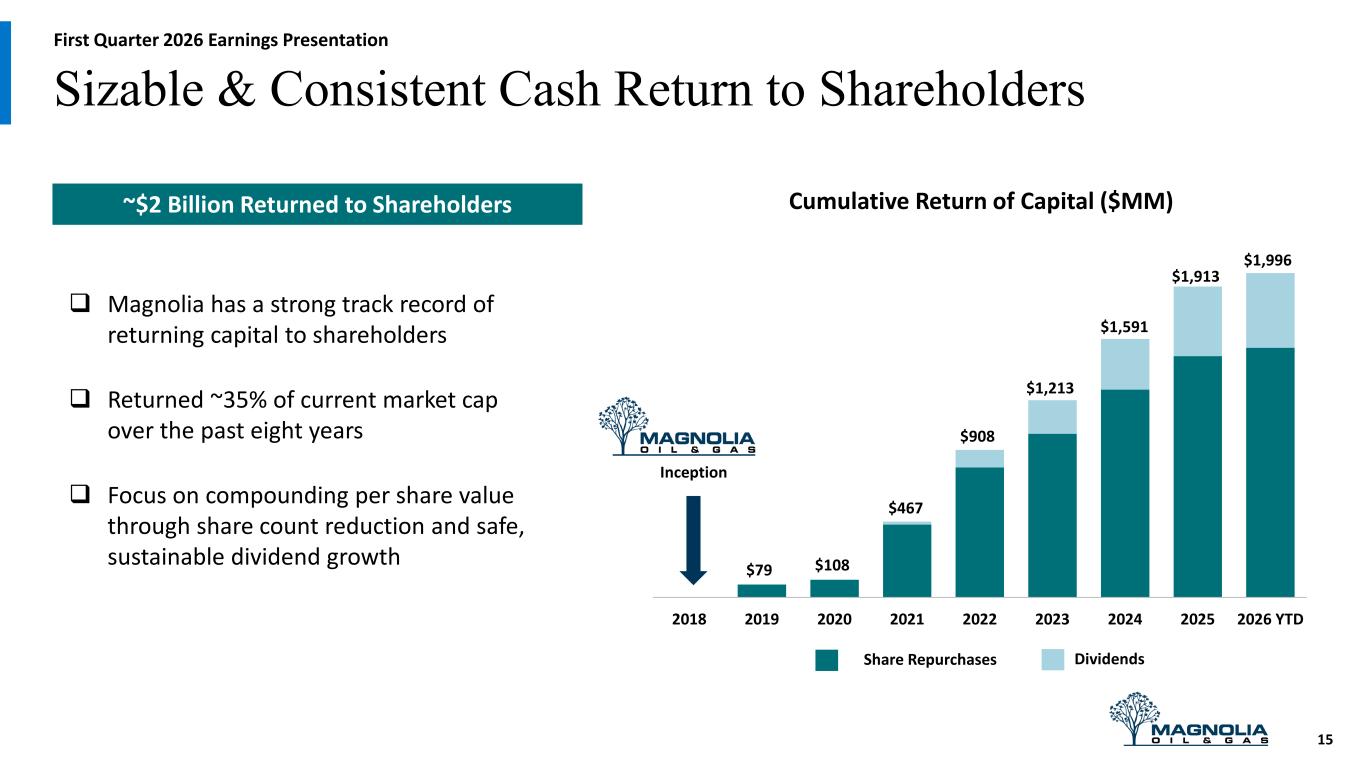
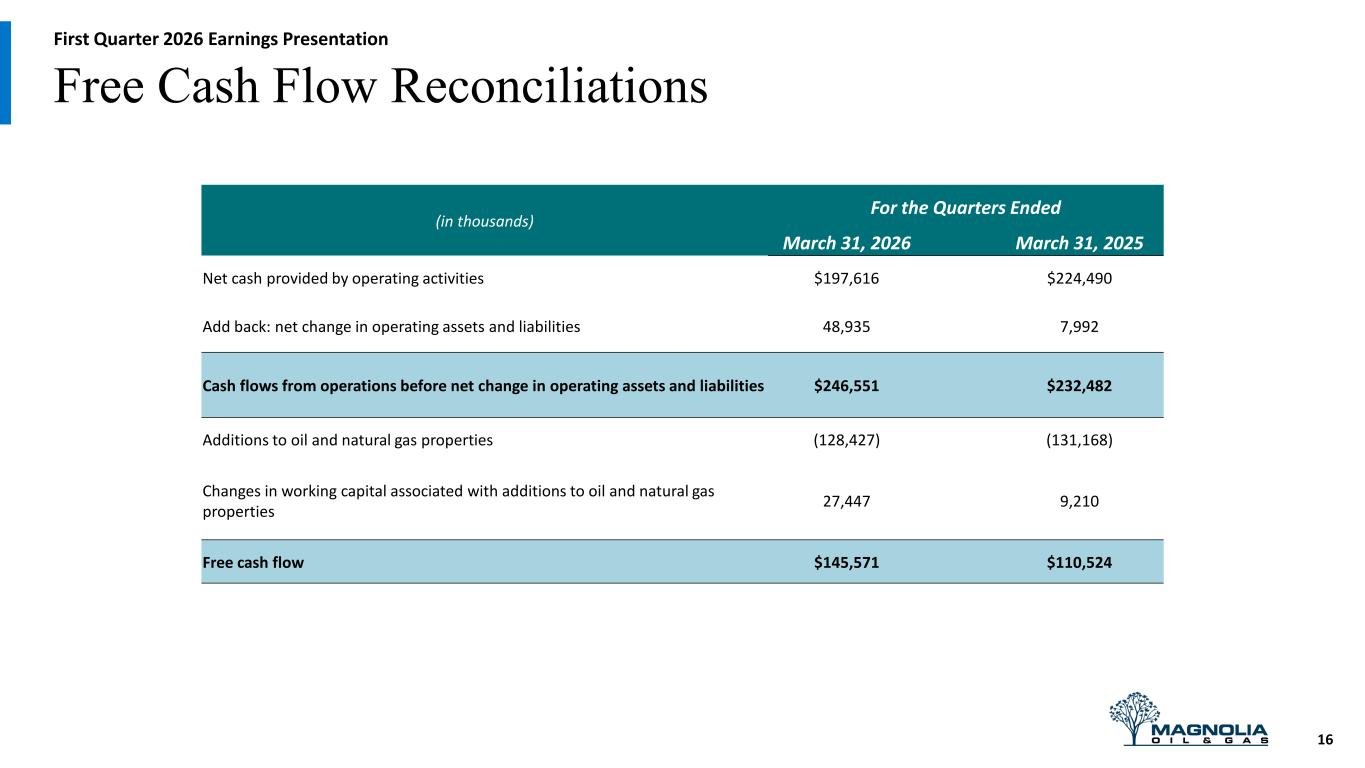
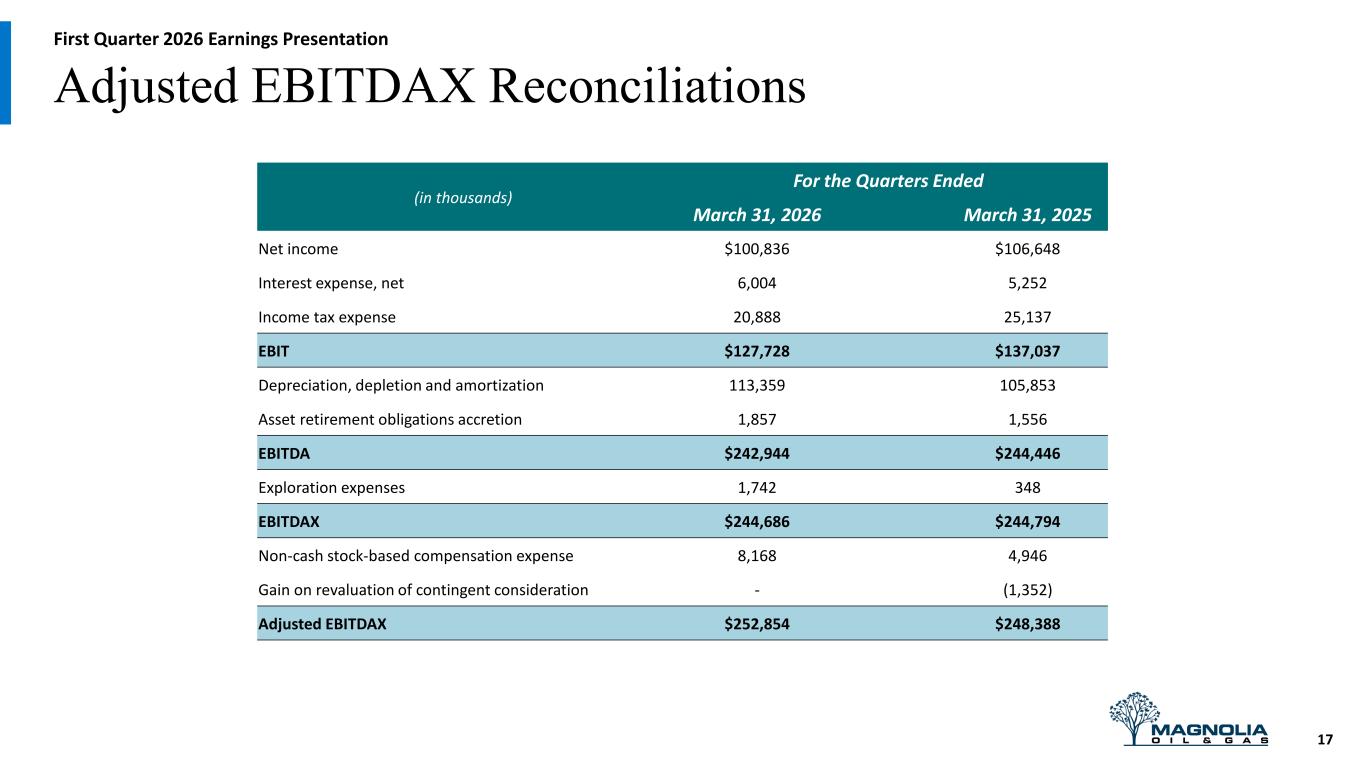
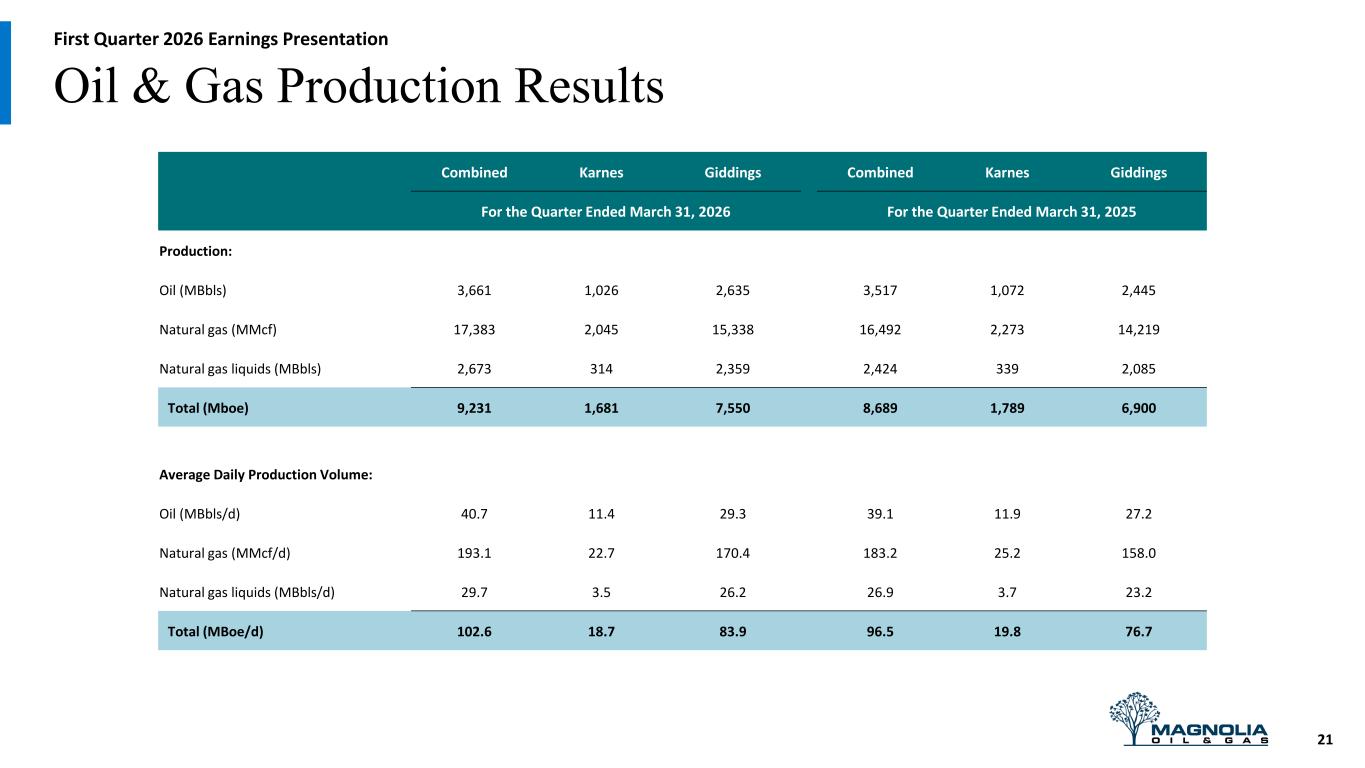
Thank you, Tom, and good morning, everyone. Thank you for all for joining us today for discussion on our first quarter 2026 financial and operating results. I plan to briefly speak on our first quarter results, which provided a strong start to the year and consistent performance across our financial and operating metrics. I'll then highlight what turned out to be an active quarter for old-on oil and gas property acquisitions from Magnolia, adding to our working interest and royalty interest in both of our operating areas by closing several deals during the quarter. I'll finish up by speaking to Magnolia's 2026 Capital and Operating Plan, which is well positioned during this period of product price volatility, driving incremental free cash flow, and improving our financial flexibility. Brian will then review our financial results in greater detail and provide some additional guidance before we take your questions. Starting with slide three in our quarterly investor presentation, Magnolia delivered another strong and consistent quarter of execution across our financial and operating metrics and centered around our disciplined business model characterized by a low reinvestment rate, high operating margins, and moderate production growth. For the first quarter of 2026, total company production volumes grew by 6% year-over-year to 102.6,000 barrels of oil equivalent per day, with oil production growing by 4% and averaging 40.7,000 barrels per day. Production in Giddings was the primary growth driver for the company, with total Giddings production increasing 9% year-over-year and oil production showing growth of 8% over the same period. Giddings' production volumes were a record for the company in the quarter. Giddings' production currently accounts for approximately 82% of Magnolia's total company volumes. The quarter was equally solid around our financial metrics supported by growth in our oil and gas production and higher oil prices for which production or production is entirely unhedged. Our first quarter net income was approximately $101 million or $0.54 per diluted share, with adjusted EBITDAX coming in at $253 million. Journey and completion capital for the period was roughly $129 million, providing a reinvestment rate of 51% of our adjusted EBITDAX. Pre-tax operating margins averaged 36% for the quarter. Our low reinvestment rate and high operating margins demonstrate our capital spending discipline, proactive cost management, and further capture of operational efficiencies. Magnolia generated approximately $146 million of free cash flow during the first quarter and returned $83 million to our shareholders through accommodation of our base dividend on our share repurchase program, where we bought back just over 1% of Magnolia's outstanding shares during the period. Additionally, Enervest, Magnolia's original private equity shareholder, completed the sale of their remaining ownership position during the quarter. This action simplifies our capital structure through the elimination of any remaining Class B shares outstanding at the end of the first quarter. As shown on slide four, the first quarter turned out to be a busy period for acquisitions as we completed the purchase of several small bolt-on oil and gas property acquisitions in both our Carnes area and Giddings, totaling $155 million. These transactions, which closed in the latter part of the first quarter, include roughly 6,200 net acres and approximately 500 POE per day of low-declined PDP, about 45% oil, and with significant undeveloped upside opportunities located in highly productive areas where we currently operate and understand well. In our Carnes area, the acquired acreage creates a sizable and largely contiguous 10,000 gross acre block of primarily undeveloped and highly attractive acreage in the core of the Eagleford trend across both Carnes and Gonzalez counties. The acquired tracks increase our working interest in the area to approximately 93%, with an average NRI of around 80%. At our current development pace in the Carnes area, this acquisition adds multiple years of development locations and blocks up a large contiguous position in both Carnes and Gonzalez counties, allowing for longer lateral development. In Giddings, our successful ground game continues to increase our working interest and royalty interest by acquiring new acreage in and around our current operated position. The Giddings transactions increased our interest in approximately 45,000 gross acres in addition to adding some new continuous acreage, furthering our strategy of buying more of what we already Each of these transactions leveraged the deep technical knowledge we've gained from our drilling and completion activities in the field while meaningfully extending our already robust inventory of high-return drilling locations, increasing our working interest in existing assets and adding valuable duration to our overall resource portfolio. This further demonstrates our ability to deploy a portion of Magnolia's excess-free cash flow into high-quality targeted opportunities. Our goal in pursuing these is intended to not simply replace produce reserves, but to expand our long-term opportunity set and reinforce the sustainability of our strong financial returns. We continue to actively seek out additional asset acquisition opportunities that improve our business using our technical experience in developing the Austin Chalk and Eagleford formations in South Texas that provide us with a clear competitive advantage. As I often mention, Magnolia's primary goals are to be the most efficient operator of our best-in-class oil and gas assets to generate the highest return on those assets while spending the least amount of capital on drilling and completing wells. Magnolia's high-quality assets and the strategy of discipline around capital spending should continue to serve us well during periods of product price volatility. Our capital allocation priorities, which include a low reinvestment rate and returning a significant amount of our free cash flow and shareholders, remain unchanged. We are maintaining our original activity plan of running two rigs and one completion crew, which is expected to deliver total production growth of approximately 5% in 2026 and within the same range of drilling and completion capital we outlined earlier this year. Some of this year's activity is expected to occur on the recently acquired acreage. Oil price differentials have narrowed significantly in recent weeks, which should provide us with higher oil price realizations in the second quarter, and similar to the Magellan East Houston benchmark, which is currently higher than the price of WTI. Beyond the benefit of higher oil prices, Magnolia is well positioned for success through the consistent execution of our business model. The absence of commodity hedges on all our production is expected to translate into higher earnings and free cash flow in the current quarter, adding to our significant financial flexibility.
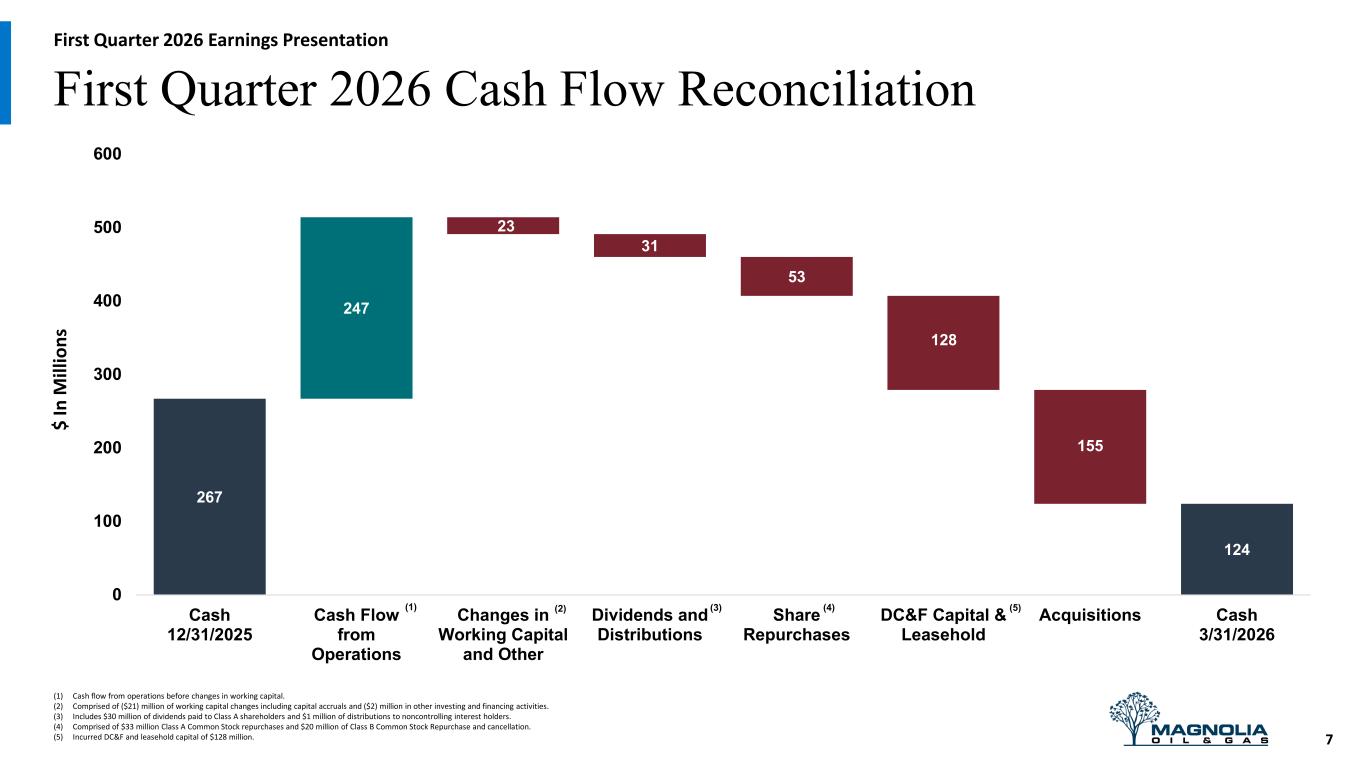
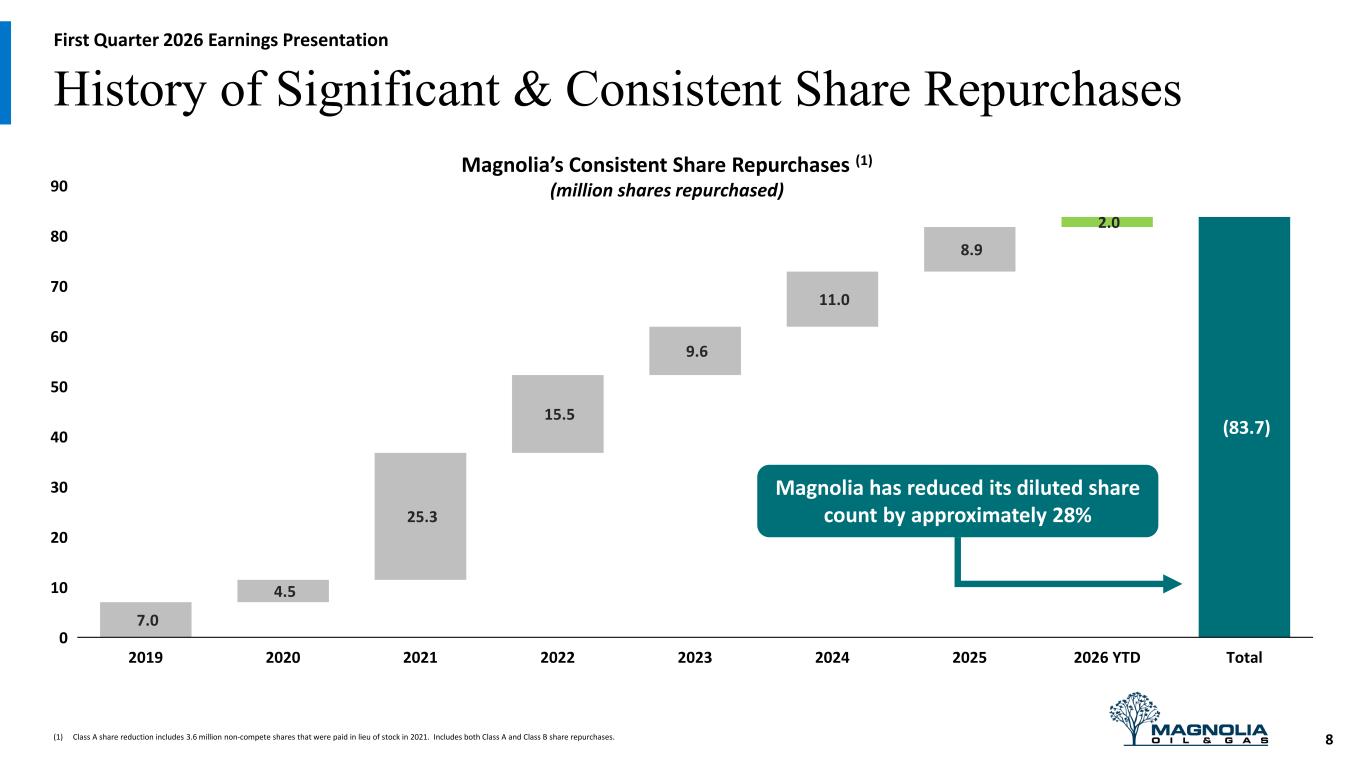
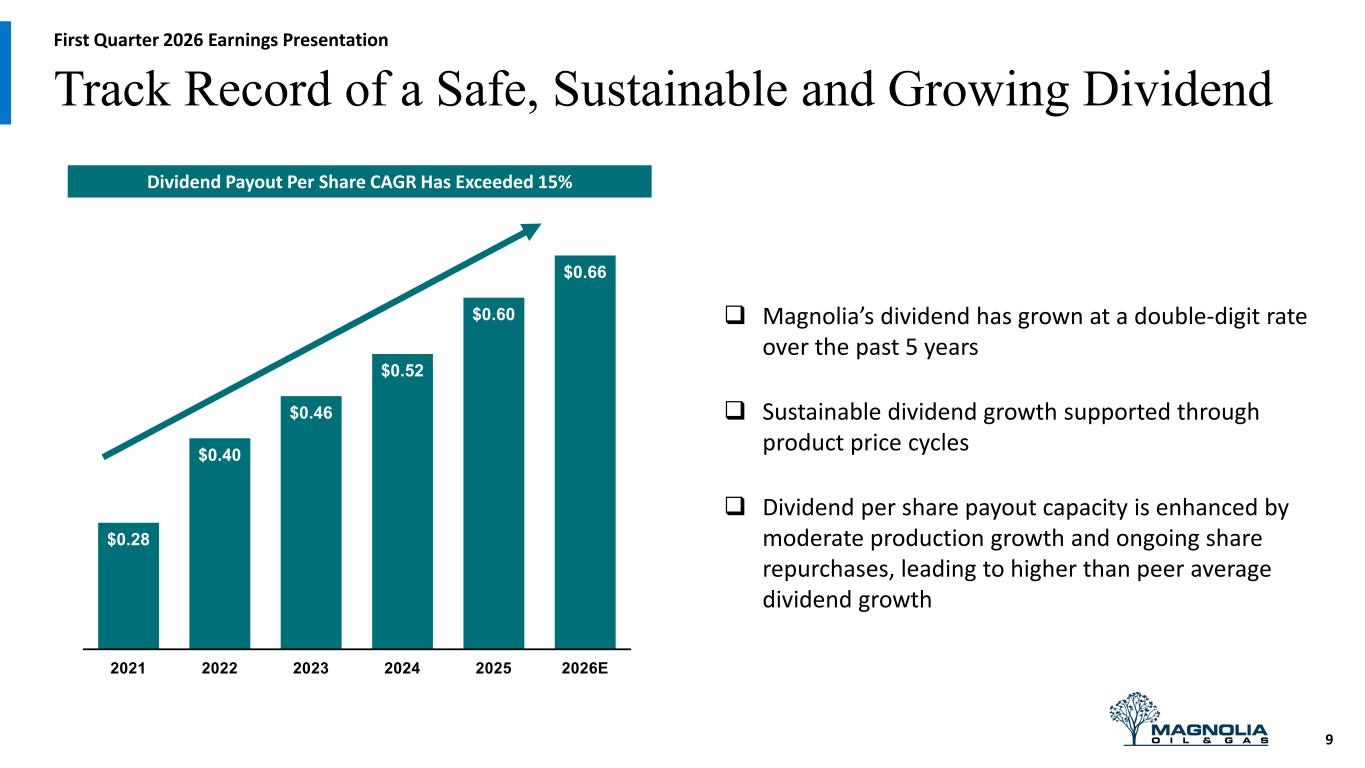
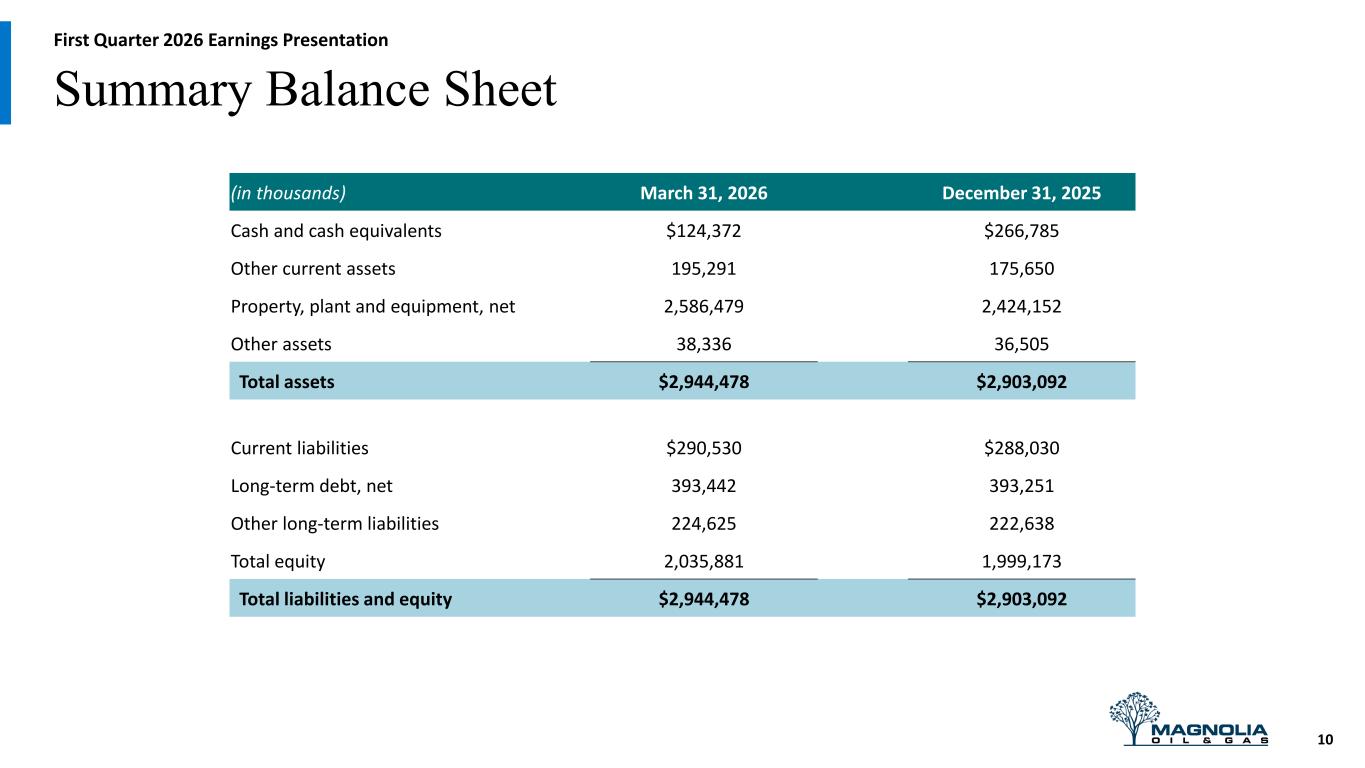
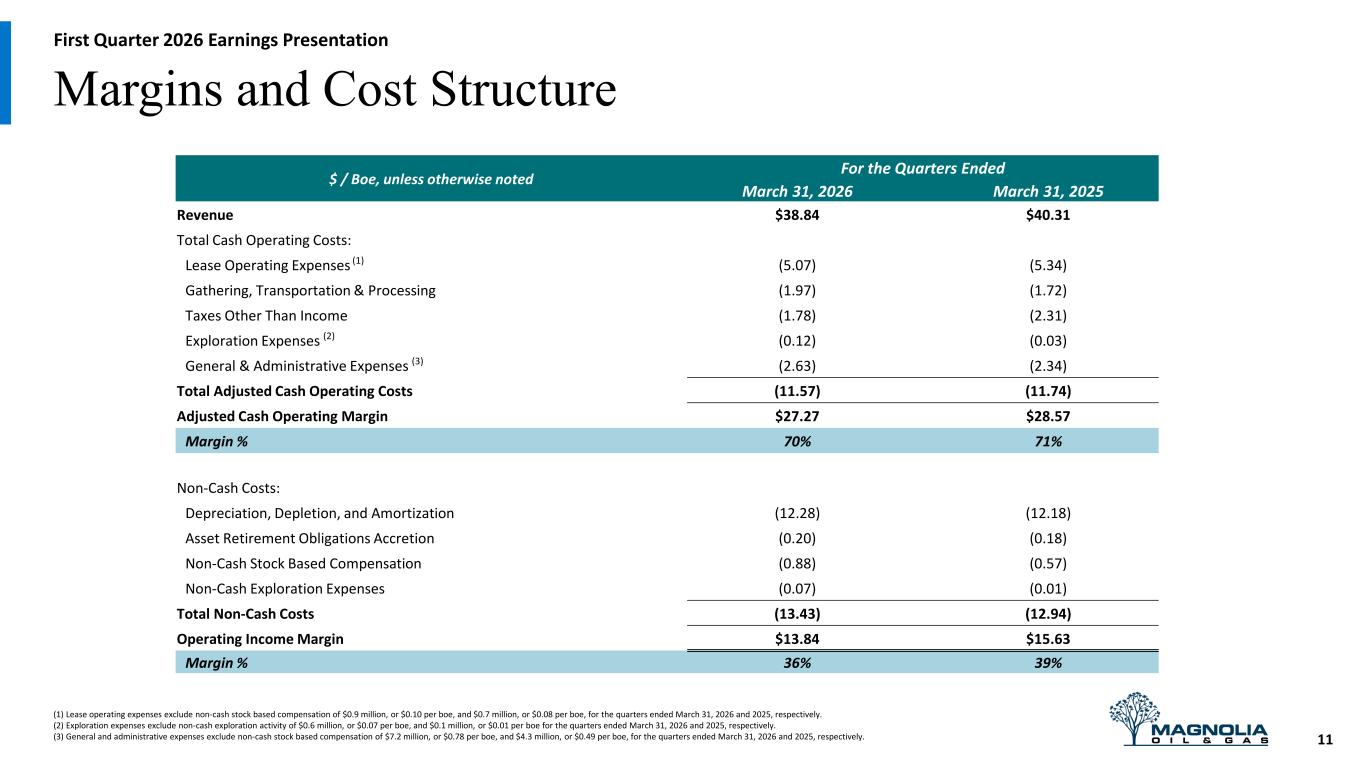
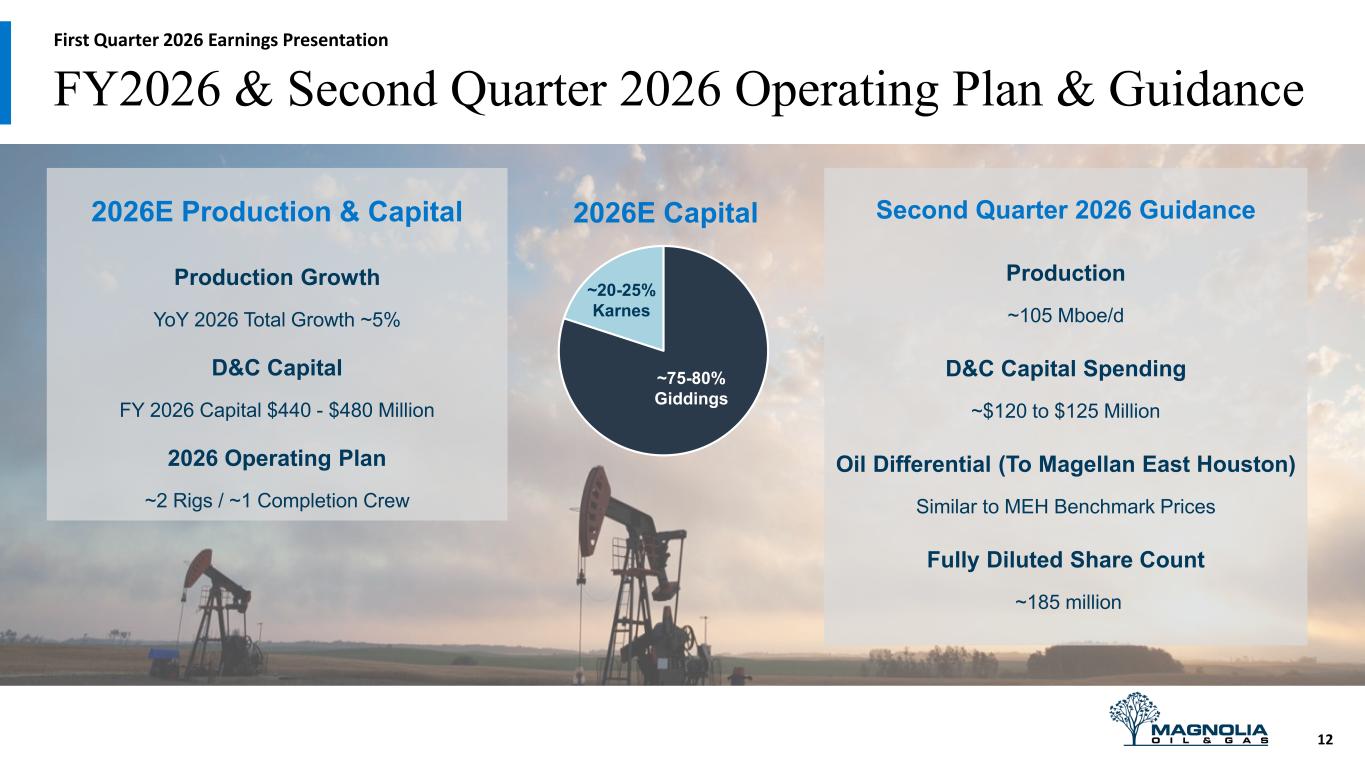
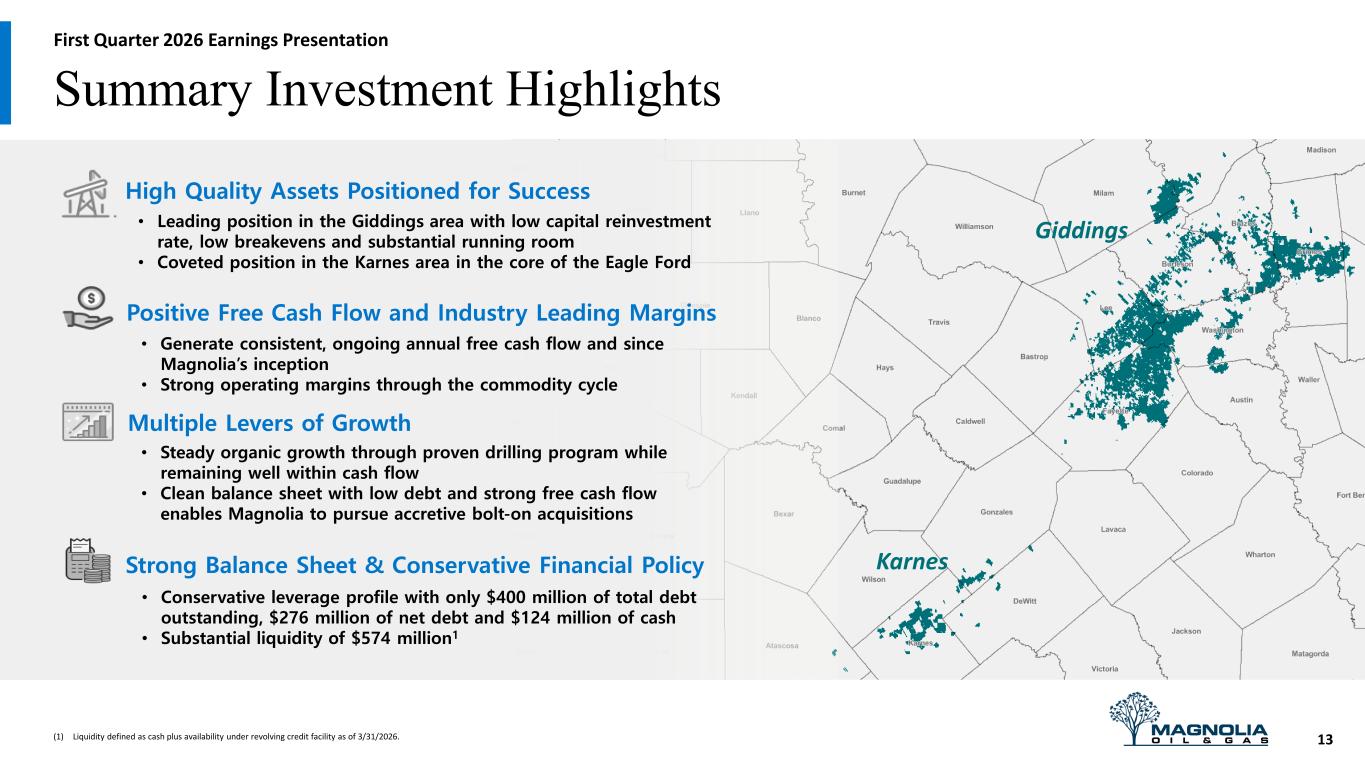
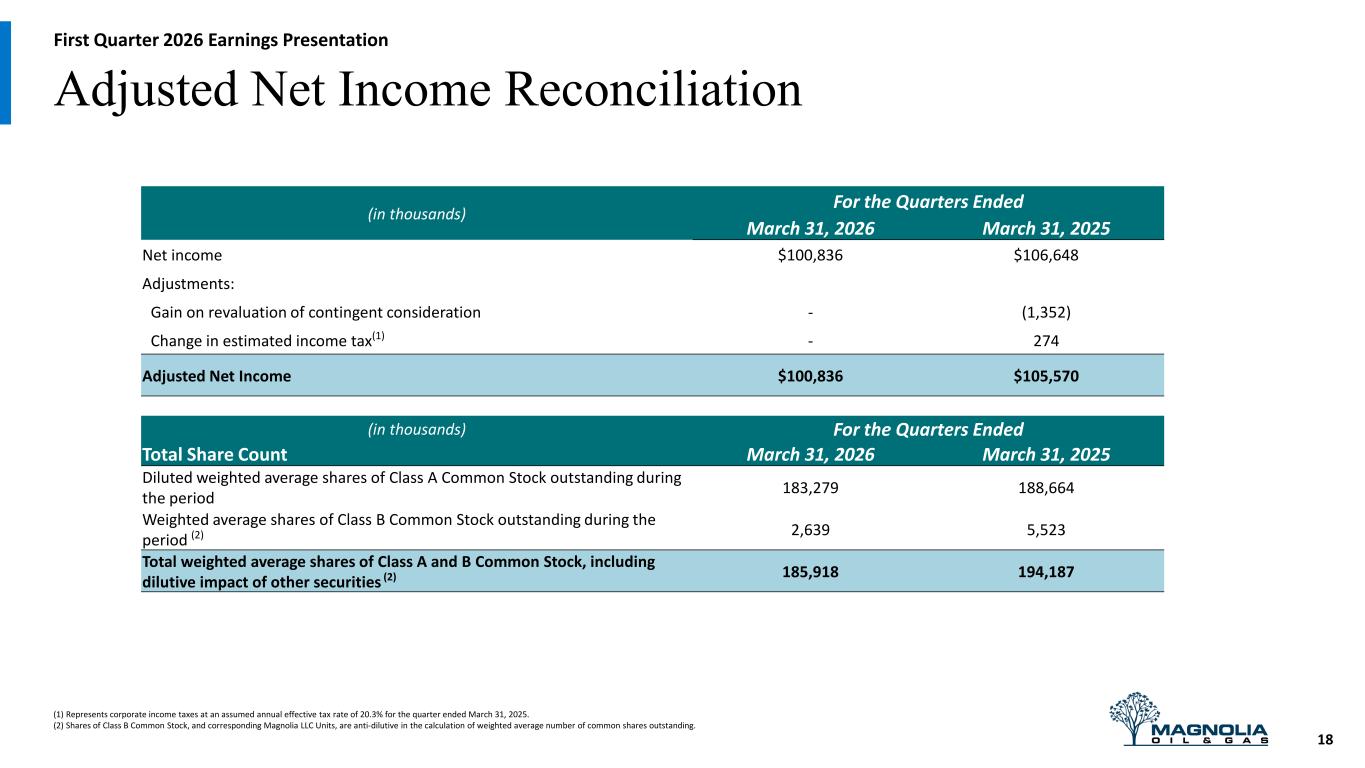
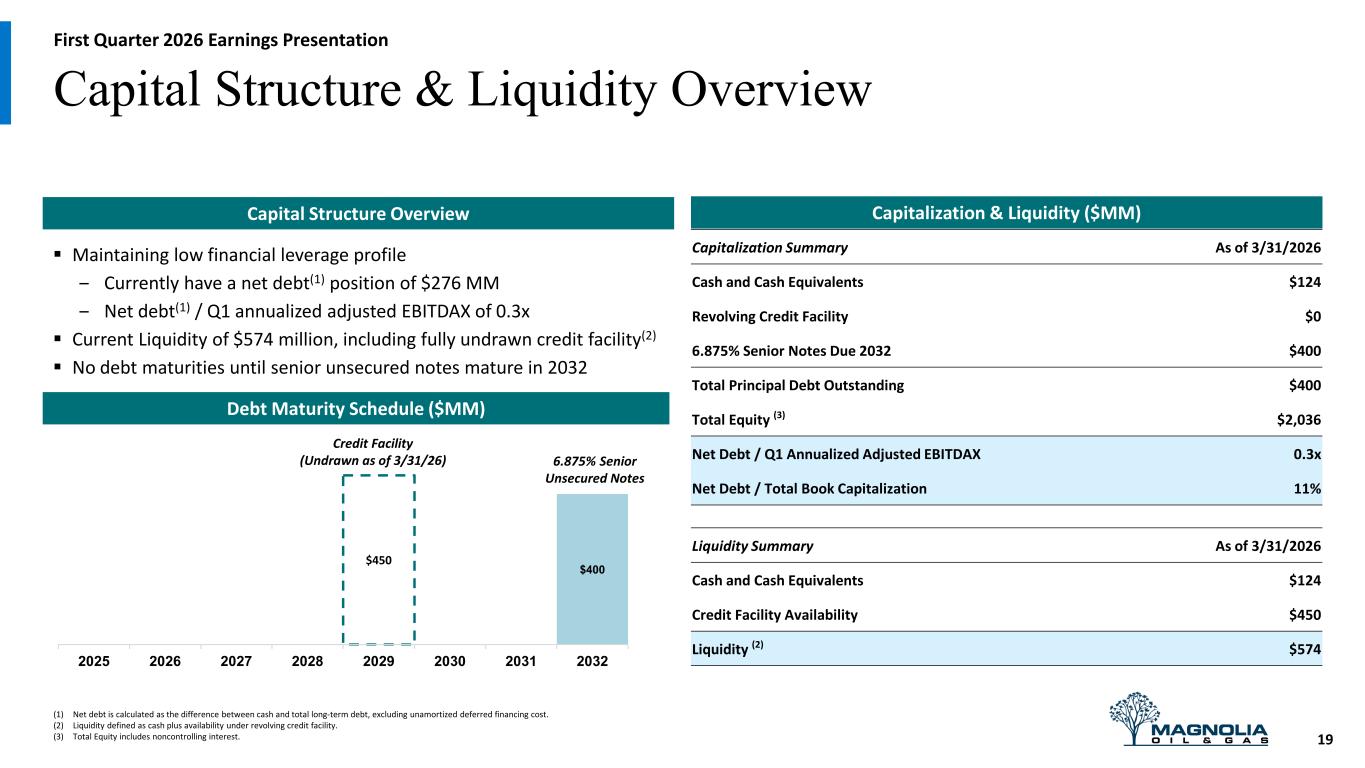
I'll now turn the call over to Brian to provide further details on the quarter and some additional guidance. Thanks, Chris, and good morning, everyone. I'll review some items from our first quarter results and refer to the presentation slides found on our website. I'll also provide some additional guidance for the second quarter of 2026 before turning it over for questions beginning on slide six magnolia delivered an excellent quarter as we continue to execute execute on our differentiated business model during the first quarter we generated net income of 101 million or 54 cents per dilute share our adjusted ebitdax for the quarter was 253 million with total capital associated with drilling completions and associated facilities of 129 million representing 51 of our adjusted EBITDAX. First quarter production volumes grew 6% year-over-year to 102.6,000 barrels of oil equivalent a day, while generating free cash flow of $146 million. Looking at the quarterly cash flow waterfall chart on slide 7, we started the quarter with $267 million of cash. Cash flow from operations before changes in working capital was $247 million, with working capital changes and and other small items impacting cash by $23 million. During the quarter, we paid dividends of $31 million and allocated $53 million towards share repurchases. We incurred $128 million on drilling completions in associated facilities and leasehold, and added $155 million of small bolt-on acquisitions, comprised of additional acreage, working interest, and royalties. We ended the quarter with $124 million of cash. Looking at slide eight, this chart illustrates the progress in reducing our total outstanding shares since we began a repurchase program in the second half of 2019. Since that time, we have repurchased 83.7 million shares, leading to a change in weighted average diluted shares outstanding of 28% net of issuances. Magnolia's weighted average diluted share count declined by approximately 2 million shares sequentially, averaging 185.9 million shares during the first quarter. We currently have 11.6 million shares remaining under our repurchase authorization, which are specifically directed toward open market repurchases. Turning to slide 9, our dividend has grown substantially over the past few years, including a 10% increase announced in early 2026 to $0.165 per share on a quarterly basis. Our next quarterly dividend is payable on June 1st and provides an annualized dividend payout rate of $0.66 per share. Our plan for annualized dividend growth is an important part of Magnolia's investment proposition and supported by our overall strategy of achieving moderate annual production growth, reducing our outstanding shares, and increasing the dividend payout capacity of the company. Magnolia continues to have a very strong balance sheet, and we ended the quarter with $124 million of cash. Our $400 million of senior notes does not mature until 2032. Including our first quarter ending cash balance of $124 million and our undrawn $450 million revolving credit facility, our total liquidity is approximately $574 million. Our condensed balance sheet as of March 31st is shown on slide 10. Turning to slide 11 and looking at our per unit cash costs and operating income margins, total revenue per BOE declined approximately 4% year-over-year due to the decline in NGL and natural gas prices, partially offset by a small increase in oil price. Our total adjusted cash operating costs, including G&A, were $11.57 per BOE in the first quarter of 26, and our operating income margin for the first quarter was $13.84 per BOE, or 36% of our total revenue. Turning to guidance, first quarter DNC capital are expected to be between $120 and $125 million, and we are reiterating our full-year budget we outlined in February of $440 to $480 million. In addition, we are reiterating our full-year 2026 outlook for total production growth of approximately 5 percent. Total production for the second quarter is estimated to be approximately 105,000 barrels a day. Oil realizations have improved and we are anticipating prices for the second quarter to be similar to Magellan East Houston benchmark pricing. Magnolia remains completely unhedged for all its oil and natural gas production and benefiting from the improvements to oil prices. The fully diluted share count for the second quarter of 2026 is expected to be 185 million shares, which is 4% lower than second quarter 2025 levels. We expect our effective tax rate to be approximately 21%, and our cash taxes for 2026 to be in the mid-single-digit range. We are now ready to take your questions.
Operator
We will now begin the question and answer session. To ask a question, you can press star, then 1 on your telephone keypad. If you are using a speakerphone, please pick up your handset before pressing the keys. If at any time your question has been addressed and you would like to withdraw your question, please press star then 2. The first question comes from Neal Dingman from William Blair. Please go ahead.
Yeah, it's a nice quarter. Chris, my first question is just on the very interesting recent bolt-ons that you all have done. Specifically, could you talk about, I don't know, maybe any color, how much you were able to, just on the Carnes side, able to add and wondered by doing this, does this change upcoming activity plans specifically in that play?
Yeah. Good morning, Neil. Thanks. You know, I think the important takeaway for me and for us on the Carnes transaction specifically is that we were able to, you know, pull this together. It was really sort of a tactical commercial transaction that was a bit unique. We were able to pull this together, creating this 10,000-acre contiguous block of acreage. It's largely undeveloped, very high working interest, advantageous NRI, located in a very good area. The undeveloped contiguous nature of the acreage really does provide us with, you know, multiple years of term. You know, I could probably count it on my hand in terms of, you know, what it adds to us as far as years and beyond. It's sort of a blank canvas, the way I would describe it, and allows us to optimally develop the asset. So, regarding our plans going forward, it's not going to change our overall allocation around activity or capital or proportional. view, but it's going to be easily worked into our drilling program, and I would imagine sooner rather than later.
Perfect. And then just my second question on Giddings development. So, specifically, could you speak to maybe just talk a bit about what the average pad size and well cost is in that play?
Again, what I'm after here is wondering, you know, would you consider now that you're in full development in that play and and you know if so how did the economics today compared to you know a couple years ago when you know you were newer in the play and you were certainly doing more testing and kind of drilling you know what i call more one-off wells yeah on the on the on the pad size uh we've we've been we're pretty close to optimizing that i would tell you i mean occasionally the some some of the pads are a little higher but a little or a little lower I mean on average there are three to four well pads uh and that's over the full development of that you know 240,000 acre uh development area that we we talk to or speak of um like I said occasionally they there could be a five well pad or a six well pad or a three well pad or a two well pad but on average about three to four is sort of optimal as far as the economics um They're better than they were earlier because we've gotten more capitally efficient, and we know the play better. We've tightened some things up. We're drilling faster. We're completing faster. We continue to do that. So I think the economics are broadly better.
Sure. the next question comes from philip jungworth from bmo please go ahead uh thanks good morning um coming back to the karns bolt-on um having this large 10 000 uh acre undeveloped contiguous block um i was just wondering if you could talk about how you see the development scheme here whether it's wells per DSU, lateral lengths, or the zones you can target, just given that there's generally a lot of resource in this area?
Yeah, we're getting around the, you know, the wells per DSU. I mean, we're still not quite there yet. But, I mean, the laterals will be, you know, sort of approaching 10,000 feet in some cases and beyond. So, that's substantially more than what we've typically been able to do in the Cards area generally.
Okay, great. And then you noticed, yeah, active quarter for A&D, and then you did notice and noted in the release that you'll actively be looking to seek out additional acquisition opportunities just to improve the business, leverage technical expertise. Just given that you've grown the company significantly over the years, is there kind of an upper limit on transaction size? And just remind us on balance sheet parameters, if you would consider larger size transactions.
I mean, it really depends what's out there. You know, we do look at everything, but the plan is not to shock and awe. It's not about that. So, you know, you're not going to wake up one day, and that's my objective, really, is to run a public company, so we're trying to build trust and, you know, faith within our shareholder base in terms of what we're doing. So you won't find us looking at out-of-base deals. All of what we look at is really what we understand and within our ability to manage and in and around our neighborhood. So we should know it well. um so the the size really sort of depends um on on what's out there and as things become available as you'd imagine uh with with pricing doing what it's done you know there's probably more things that are available or out there but it sort of really depends what it looks like and how it fits into our ability or the art of the possible if you will makes sense thanks thank you The next question comes from Peyton Dorn from UBS.
Operator
Please go ahead.
Hey, guys. Thanks a lot for getting me on. You know, you're obviously keeping the budget a little unchanged here, and I know the preference isn't to add any rigs or crews kind of writ large. I'm just curious about the opportunity to maybe accelerate some workovers or some timings of the tills across the asset base just to kind of take advantage of the higher oil prices that we've seen year to date.
Yeah, no, we could certainly consider some of those things, whether it's a little bit more appraisal or maybe even an exploration. Well, and, you know, the math or arithmetic on drilling faster or adding more activity, you know, kernel price is certainly not lost on me. I get it. But, look, I've been doing this for a long time. You know, I view this more as a marathon, not a sprint, so you never know what's right around the bend. With every barrel we accelerate and pull forward, it simply means I have to replace that barrel that much quicker, and it creates a little bit of added tension in terms of a higher rate of decline that we face. We are, you know, we're planning to grow about 5% this year, which is probably a little higher than most. We have a reasonable chance of surprising a little higher because of good well-performance. I'll probably take the over on that one. And if we were to add anything new, I think almost as you said, it would probably be a little bit more on the appraisal work side. Yeah, maybe workovers, but, you know, sort of less incremental or maybe even an exploration well. But, again, I wouldn't – it's not a dramatic shift or change because of the price per se. However, you know, at current load prices, it also wouldn't surprise me to see a little bit more non-op activity as well.
Great. We'll look for all those.
And then just, you know, in the recent acquisition and some of the past transactions, you guys kind of highlighted the pickup of some royalty interest across the leasehold. I wonder if you could just kind of quantify the total royalty acreage that you have right now. And do you see acquisitions of royalties or mineral interests kind of becoming a larger part of the acquisition strategy on maybe a go-forward basis? Thank you.
Yeah, I mean, I'll let Brian answer on that as well. But honestly, if you're speaking to something where, you know, acquiring royalties is really more, you know, sort of an event that leads to something to either monetize it in a financial opportunity, The answer is not really. This is just enhancing our own economics.
Yeah, I mean, we do have relatively high NRI, especially at Giddings. You know, it's definitely, you know, we'll call it, you know, $5,000 plus a day in terms of production. That's straight from royalties. But that really enhances our margin. And, you know, the ultimate goal is, you know, to control as much as you can and have the highest margins you can. And, you know, whether it's royalties or higher working interest, we want to own more of what we have.
That's helpful. It makes sense from an economic perspective, for sure. Thanks for having me on.
Operator
The next question comes from Carlos Escalante from Wolf Research. Please go ahead.
Hey, good morning, Brian, Chris, and Tom. I wanted to circle back on the deal. I know that you had a lot of questions this morning, But just curious to hear your perspective on how you thought this deal cleared at this crisis, because you typically don't see M&A at peak oil prices if you believe this is the peak or we're close to some kind of peak. So if acreage of disquality is clearing at this crisis, what does that say about the broader bid ask in Carnes and also Giddings? And how deep is the pipeline of similar opportunities relative to when we last talked to you last quarter, considering the move in commodity pricing?
Yeah, good morning, Carlos. Thanks for the question. I never said that it cleared at current prices. uh so um we know we we were in conversations around this for a period of time and you know sometimes better to be fortunate than than good so um you know what i would tell you about you know the bid ask as you can imagine like i said earlier uh it's clearly easier if you're a seller to sort of come to market now with the hope or belief that you'll find willing acquirers of assets. So there's lots of things out there. And you ask anyone, there's plentiful. It's really a, I don't want to say a seller's market so much. Maybe that's not the best way to put it, But just in terms of availability or opportunities that are coming, whether they're in processes or one-off opportunities, there's a lot to be had if you want it. You know, the way I think about it is it's got to make sense. But, you know, when we look at anything for Magnolia, this needs to support our business model and have characteristics that look similar to what we already are and, frankly, improve us. You know, I always joke a little bit. I mean, the objective of any acquisition is to make you better, not worse. And so there can be these unique one-off opportunities, irrespective of the price that it may clear at, that still work for some, depending.
Yeah, and my question was precisely to get at the motivation behind the deal. But it sounds like you have been working on it, and I think that does much of the work for the answer. On my follow-up, my question really is on your realizations as a whole. I know I've pushed you guys around asking you this question for quite some time now, but I'm looking for some sort of validation that the second half of this year when we bring so much Permian gas to market that may be connected to part of the sell points you guys sell your gas and won't be affected. And you've had some very thoughtful commentary around that before, but as we get close to those pipelines coming to market, I wonder if you have any new perspectives on what the dynamics will be on the natural gas front.
The new perspective is really gained through the experience of the old perspective or the old outcome, which, you know, oftentimes we'll get these exact questions on infrastructure that comes on that could create changes and realizations or free up supply in some fashion. Specific to what you're talking about, you know, as an example, last year when Matterhorn came on you know that was the question and there was a concern that that would have an impact yet it did not and you know you're seeing what's going on in waha most recently and you know it's here here we are so i don't i don't know the the true answer but my experience suggests that it may not be all that different than what occurred a year ago irrespective of what's happening right now well i'd also i'd also add i mean both oil and gas we sell our products at the
market um you know on the water we're very close to where our products are sold the tolling fees are less um and they're attractive pricing and so you're seeing that the oil market today you're seeing that you know at ship channel um and so we're happy with the markets that we sell Always appreciate the call.
Thank you, guys, for coming back.
Operator
As a reminder, if you have a question, please press star 1. The next question comes from Neil Mehta from Goldman Sachs. Please go ahead.
Yeah, good morning, Chris and team. First question is just around capital returns or shareholder returns, specifically the repurchase. You guys knocked out another 2 million shares in the first quarter. And so just your perspective on the buyback here and how it fits into the tools you have to create shareholder value.
Yeah, it's always been part of the model as far, and frankly, its compounding effects are enormously beneficial in terms of helping us with the dividend growth and growth per share in the dividend, if you will, by sort of reducing the actual cash outlays while you grow the dividend on a higher per share rate. Look, it's part of the same old ABCs of what we do on our model, and frankly, I see it as part of a consistent plan for us. I don't see that going away. I think it's at a size that is appropriate for what we are and what we're capable of doing and delivering consistently. So our shareholders like it. It rewards the remaining holders, of which I am one, and I enjoy it, too. And so I think it's a good way to create shareholder value over time.
And that's the follow-up. It's just the dividend. I think you guys talk about at least 1% of the stock getting bought back every quarter over the long term. But then you also talk about a 10% long-term dividend growth rate. You know, how do you feel about that double-digit level and is there potential for upside if we end up in a higher for longer environment and given the strength of the balance sheet?
Yeah, I try to catch myself on really creating these targets. The target is somewhat artificial in a way, but it's really designed to speak to what the business is capable of doing. So if the business grows mid-single digits, which I would define as 4%, 5%, 6%, and then you're buying back 1% of your shares per quarter, it's built into sort of the investment proposition of what we're doing. So the dividend growth is an outcome of what I just said around the volume growth and the share of purchases. So it sort of just falls out of the model.
Make sense, Chris. Thank you.
Operator
This concludes our question and answer session, and the conference is now concluded. Thank you for attending today's presentation. You may now disconnect.