Operator
Hello, everyone. Thank you for joining us, and welcome to the Bancorp, Inc. second quarter 2026 earnings conference call. After today's prepared remarks, we will host a question and answer session. If you would like to ask a question, please press star one to raise your hand. To withdraw your question, press star one again. I will now hand the conference over to Andres Vieraslav. Andres, please go ahead.
Speaker 1
Thank you, Operator. Good morning, and thank you for joining us today for the Bancorp's second quarter, 2026 Financial Results Conference Call. On the call with me today are Damian Kozlowski, Chief Executive Officer, and Dominic Canuso, our Chief Financial Officer. This morning's call is being webcast on our website at www.thebankcorp.com. There'll be a replay of the call available via webcast on our website beginning at approximately 12 p.m. Eastern Time today. Before I turn the call over to Damian, I would like to remind everyone that our comments and responses to questions reflects management's view as of today, July 31, 2026. Yesterday, we issued our second quarter earnings release and updated investor presentation. Both are available on our investor relations website. We will make certain forward-looking statements on this call. These statements are subject to the safe harbor provisions of the Private Securities Litigation Reform Act of 1995 and are subject to risk and uncertainties that could cause actual results of different material from the expectations and assumptions we mentioned today. These factors and uncertainties are discussed in our reports and filings with Securities and Exchange Commission. In addition, we will be referring to certain non-GAAP financial measures during this call. Additional details and reconciliations of GAAP to adjusted non-GAAP financial measures are in the earnings release. Please note that the Bancorp undertakes no obligation to publicly release the results of any revisions to forward-looking statements, which may be made to reflect events or circumstances after the date hereof, or to reflect the occurrence of unanticipated events. Now, I'd like to turn the call over to the Bancorp's Chief Executive Officer, Damian Kozlowski. Damian?
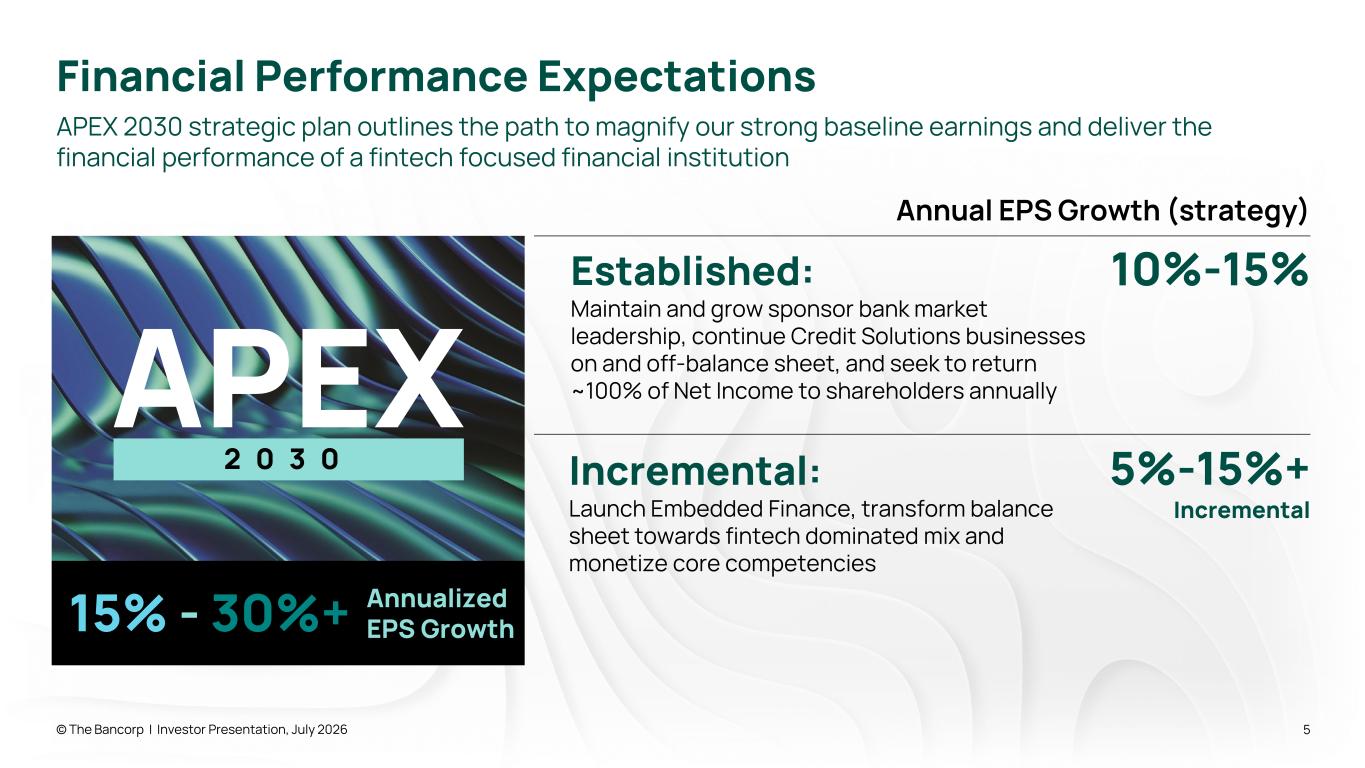
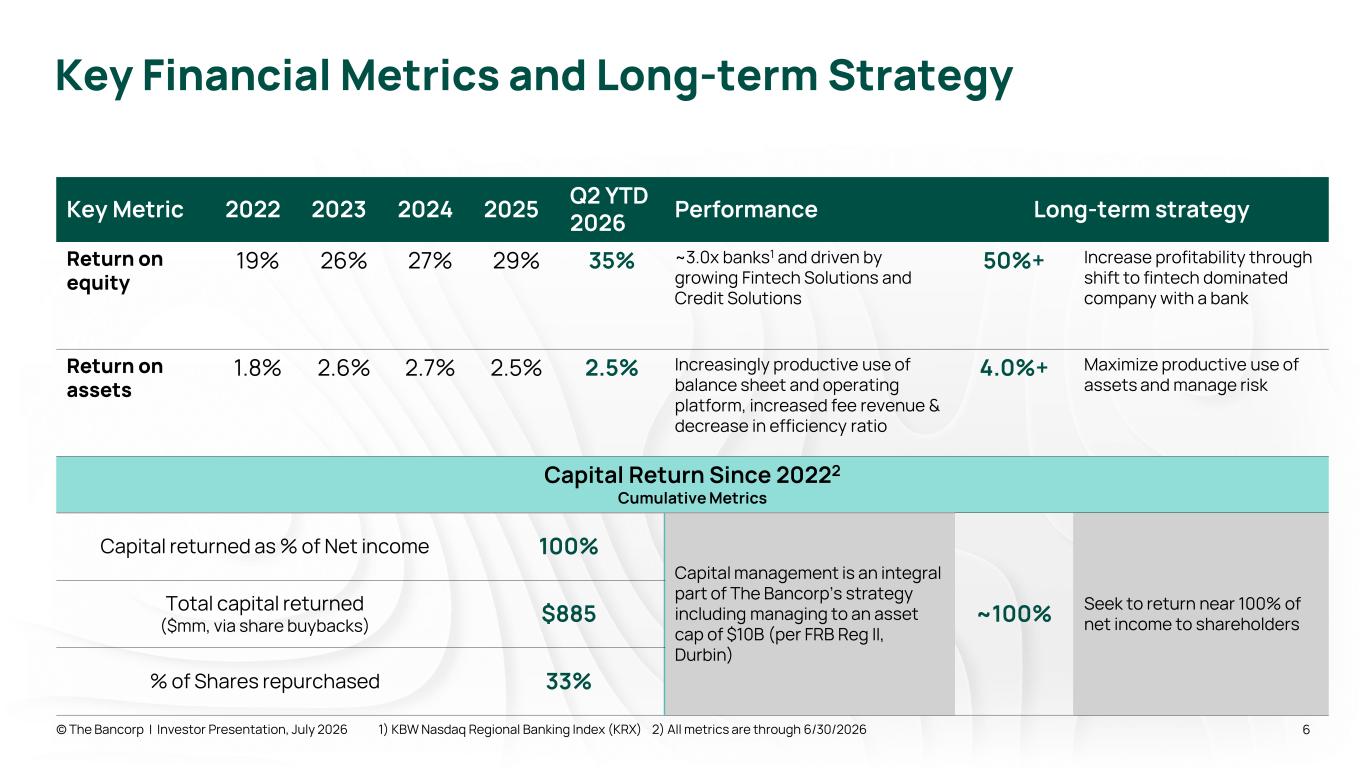
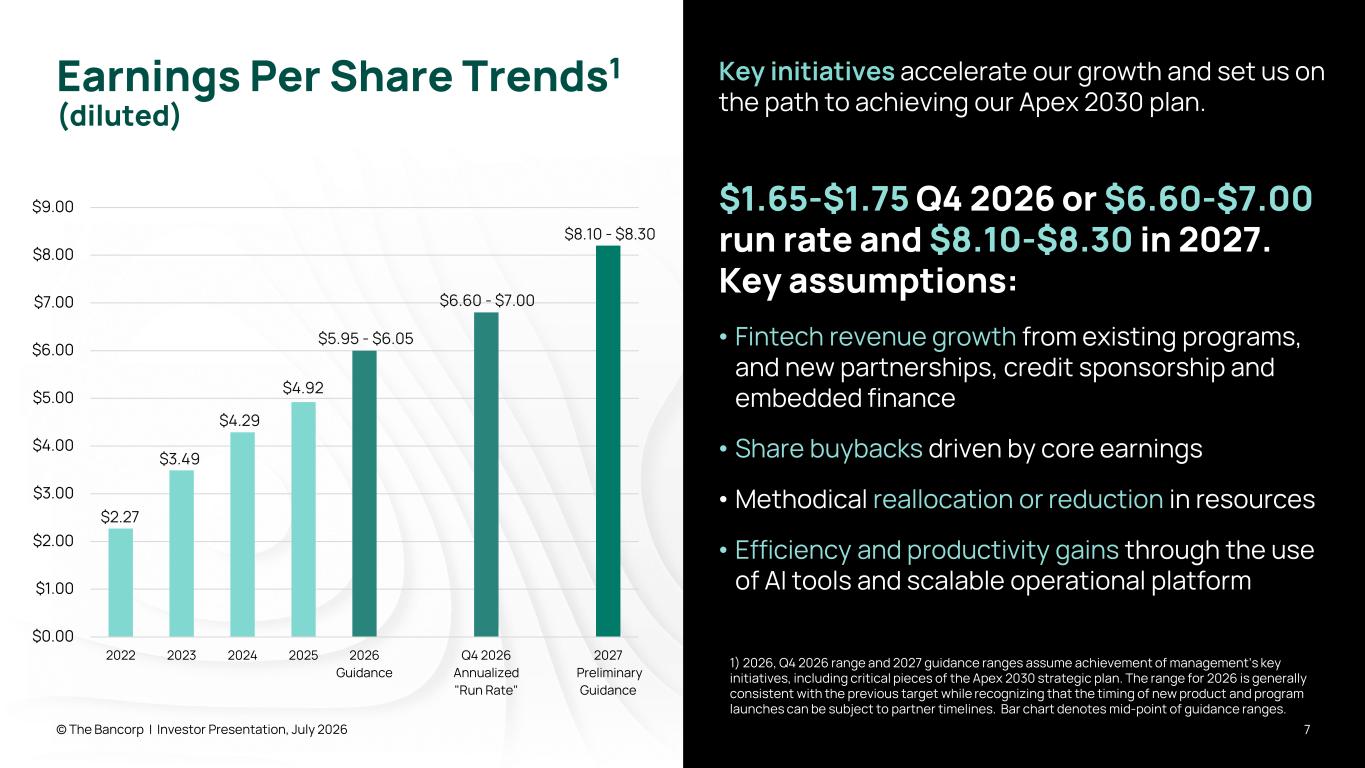
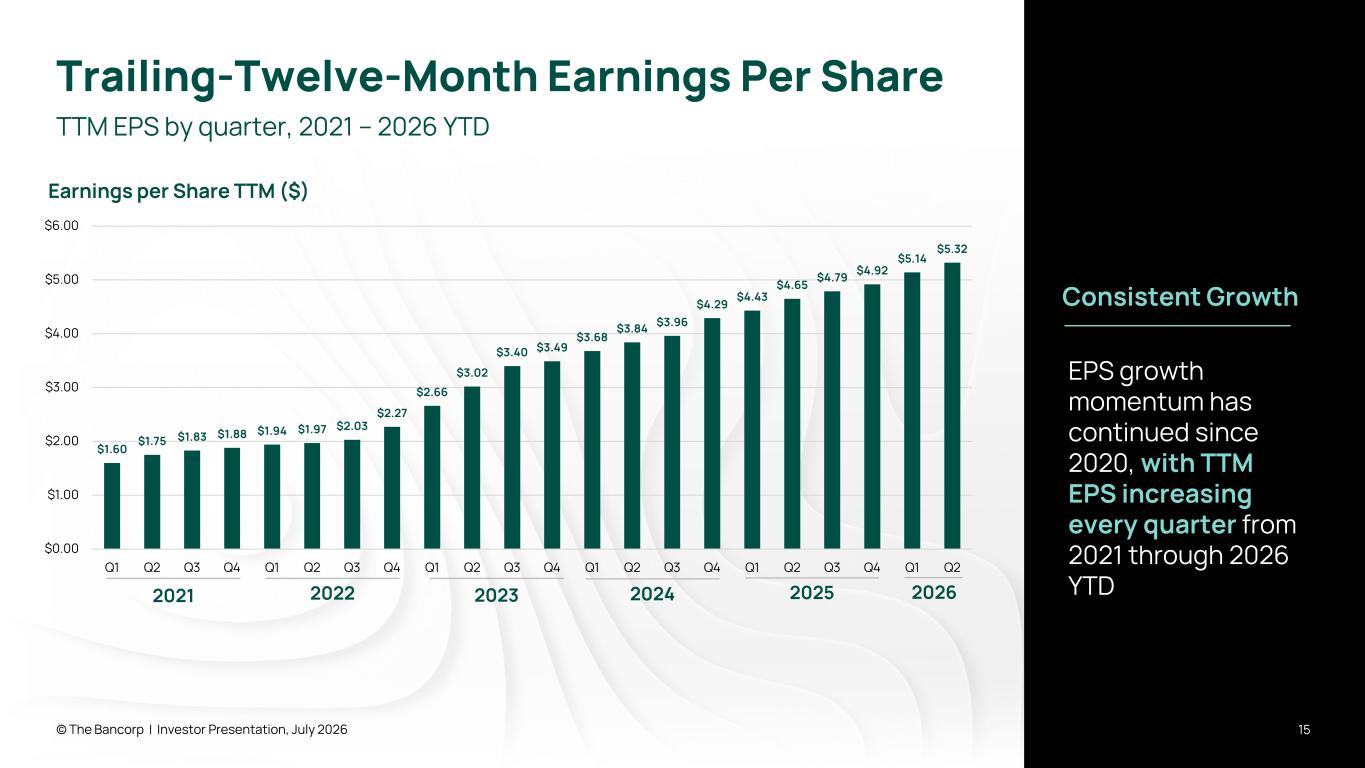
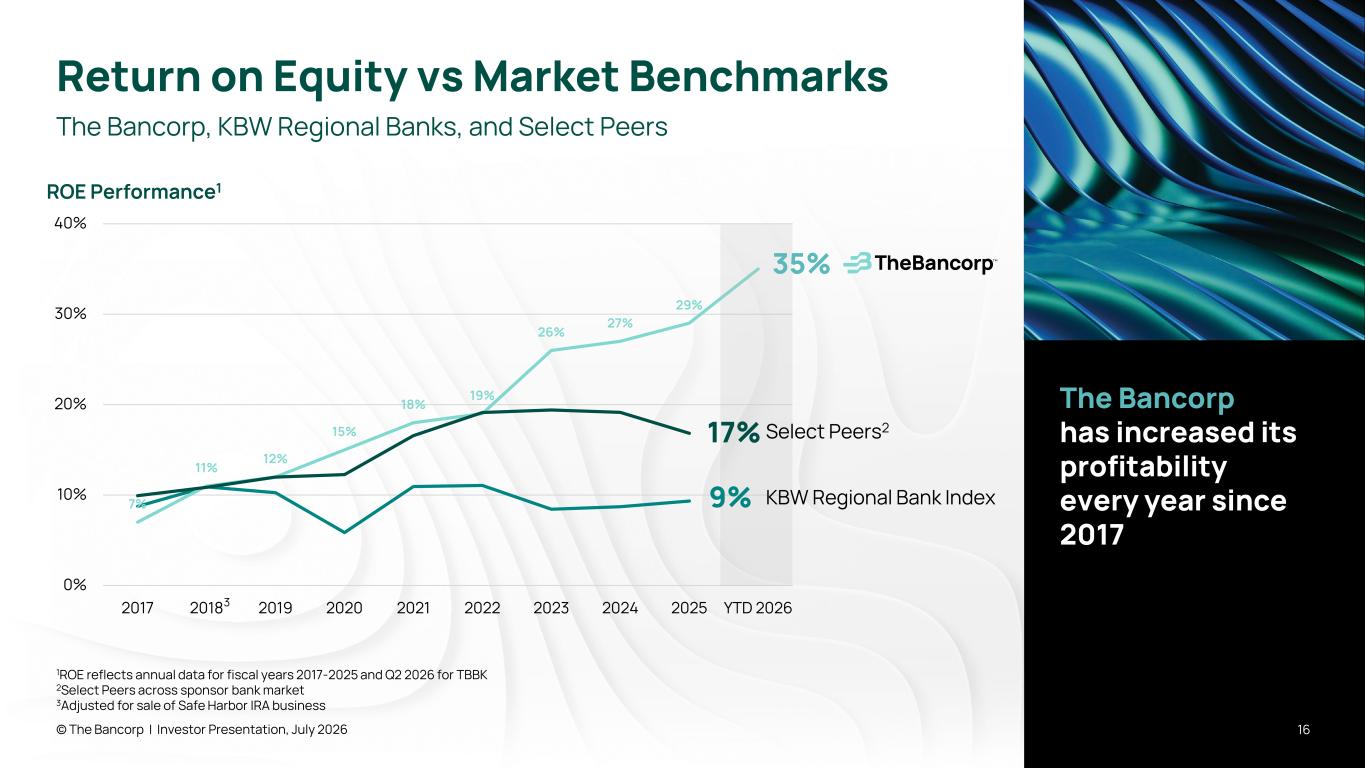
Thank you, Andres. Good morning, everyone. The Bancorp earned $1.45 a share in the second quarter. EPS growth year-over-year was 14.2%. ROE was 34.7%, continuing on its upward path. The Bancorp already has an ROE roughly triple the average of the banking industry, and we expect sizable increases over the next three years. Consistent with our capital return philosophy, profitability increases are expected to be returned to our shareholders through share repurchases. In the last four and a half years, the bank has returned the equivalent of 100% of equity capital base back to shareholders through buybacks. We expect that time frame to decrease to around three years over the next three years. After that, buying back the equivalent of our capital base in two years or less is a reasonable forecast. This results in annual EPS accretion of approximately 5% to 10% depending on the price of shares purchased and before a projected increase in net income, which should result in dramatic EPS accretion over the next five years. Fintech GDV continued to grow significantly above trend at 22.5% year-over-year for the second quarter of 26. Fintech revenue growth in the quarter, which includes both fee and spread revenue, was 21% year-over-year. Our three main Fintech initiatives that underpin our APEX 2030 strategy continued to progress quickly and are well positioned for substantial long-term success. Our onboarding with new programs and expansion of current programs continues within or exceeding our targets. The Cash App program is now ramping up and should start contributing to GDP growth and profitability over the coming quarters, with more material contributions coming in late Q4 and Q1 of 27. Credit sponsorship balances continue to surpass our expectations. We anticipate announcing two new programs that, subject to implementation timing and other customary factors, would be expected to come online next six months. Embedded finance platform development continues with significant progress in building a robust integrated platform connected to our one-of-a-kind ecosystem. We should soon make an announcement on our first embedded finance partner. Lastly, we're increasing our full-year guidance to a range of 595 to 605 EPS for 26. We are targeting a range of 165 to 175 a share in the fourth quarter of 26, and we are maintaining a preliminary guidance for 27 of 810 to 830 a share. Our guidance in 26 and 27 includes anticipated stock buybacks. 2026 buybacks are forecast to be 200 million total or 50 million a quarter, and we forecast future share repurchases to be near 100% of annual net income. We expect that our three main fintech initiatives, along with platform efficiency and productivity gains from restructuring and AI tools plus a high level of capital return through buybacks will be the driving forces behind continued EPS secretion. EPS gains are subject to development implementation timelines in fintech and our stock price for any future buybacks. And now turn the call over to our CFO Dominic Canuso. Dominic? Thank you, Damian.
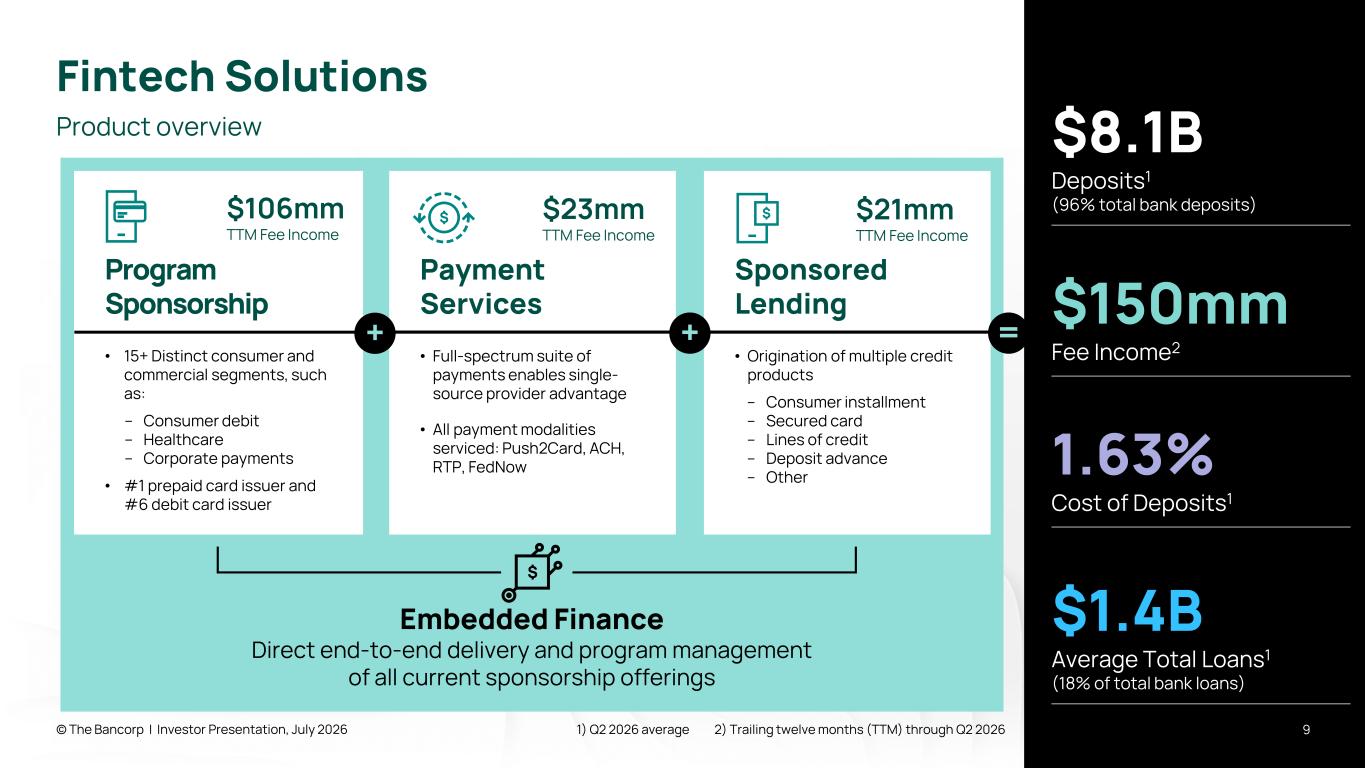
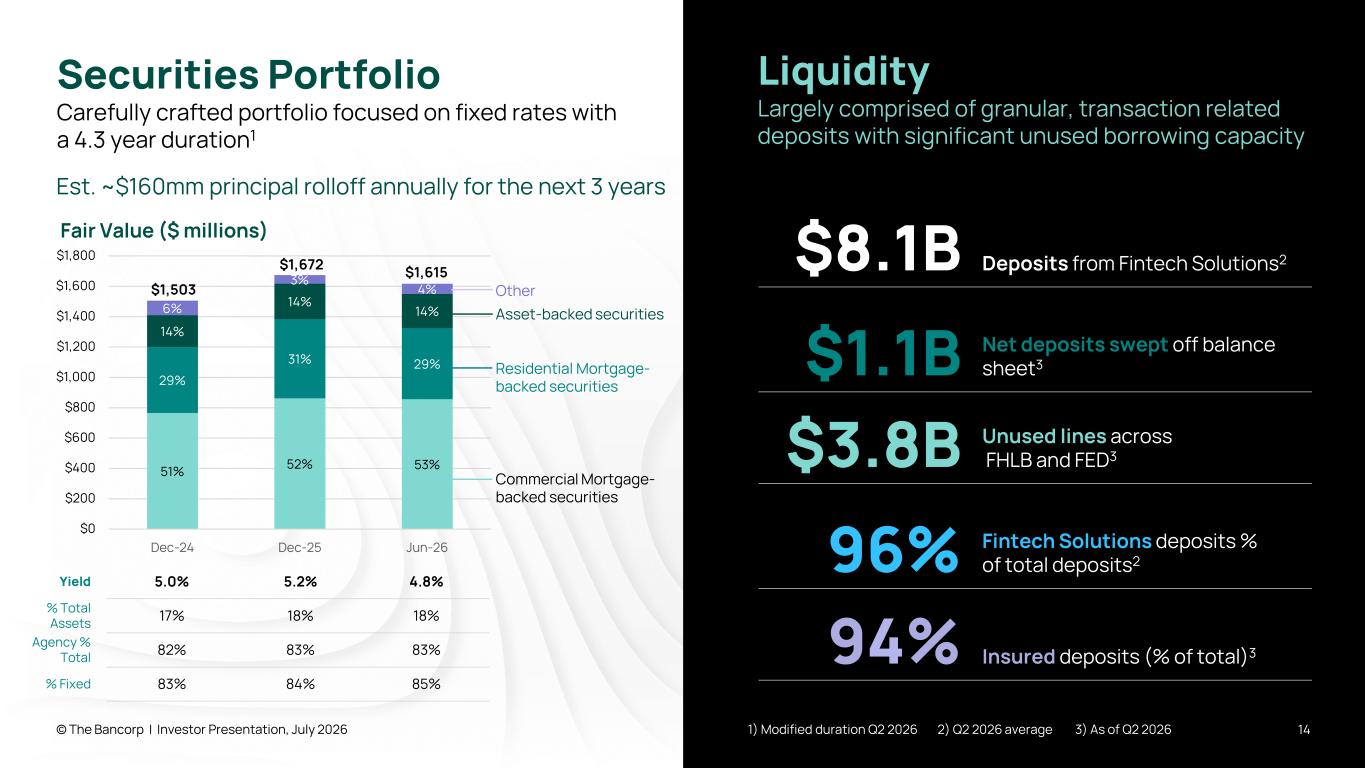
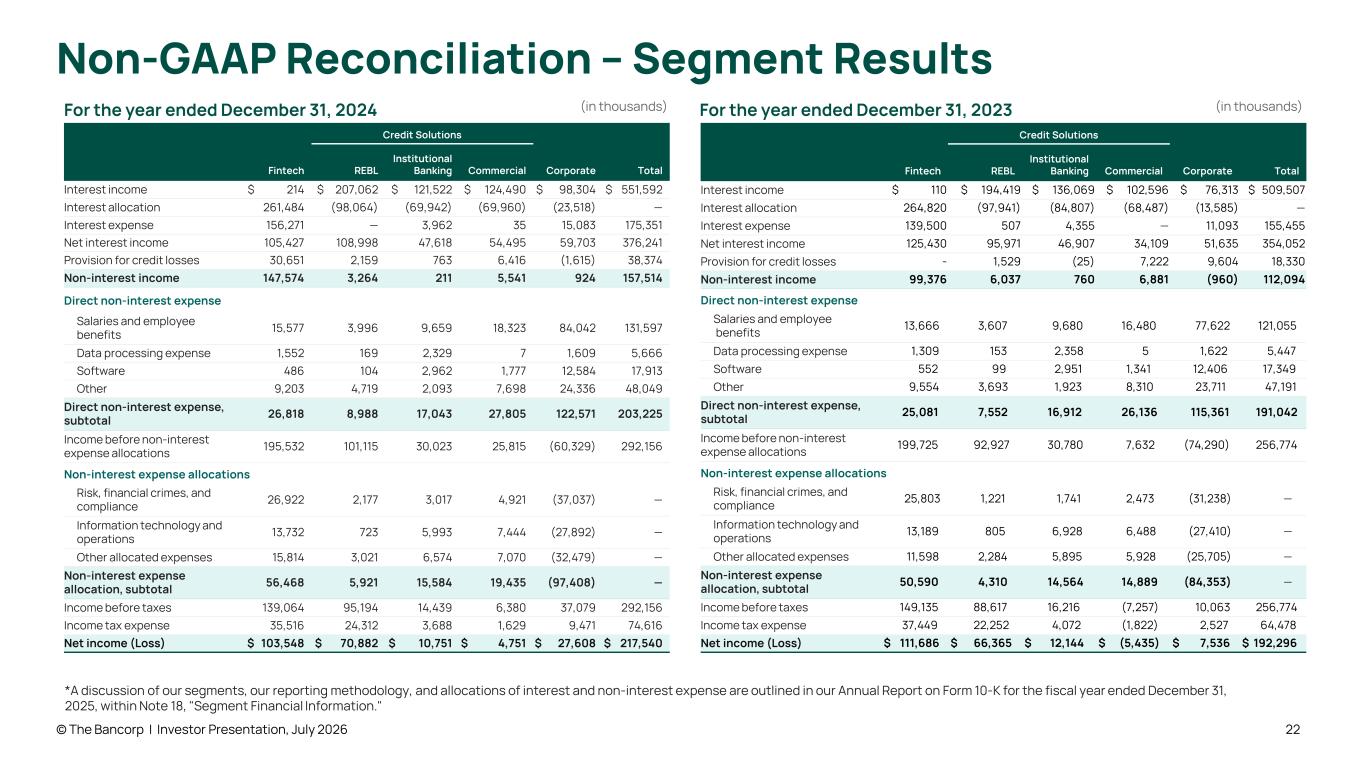
The second quarter was a very strong quarter topping off record level earnings for the first half of the year and positions us well to achieve our expectations for the second half of 26 and full year 27. While ending loans were down from the first quarter, this was due to a change in month-end customer billing cycle and payment due dates with our lending partner. This does not affect customer performance or our economics. Average loans for the quarter of $7.63 billion increased 5% not annualized from the first quarter and 16% compared to the second quarter of 2025. Average fintech loans in the quarter were $1.39 billion or 18% of average total loans up from 15% in the first quarter and 8% in the second quarter of 2025. Our strategy is to continue to shift the loan mix towards the higher velocity, the higher returning credit sponsorship business. Average deposits increased 97 million or 1.2% not annualized from the first quarter and 357 million of 4.4% from the second quarter of last year. The average cost of deposits decreased seven basis points in the quarter to 1.63%, which is 55 basis points lower than the second quarter of 25. We ended the quarter with $1.1 billion net deposits swept off the balance sheet, which is down 16% from the first quarter due to seasonality, but up 32% from year-end 25. While there may be quarter-to-quarter fluctuations in our off-balance sheet sweeps due to seasonality or other factors, due to the strength of our partnership model and their growth, we expect this to increase over time. NIM of 3.85% in the second quarter was relatively flat with the first quarter and consistent with expectations. Our fintech lending fees, which are recognized as fee revenue, generates an equivalent to an additional 28 basis points of NIM compared to 24 basis points in the prior quarter and 18 basis points in the second quarter of 25. In addition, we generated $680,000 in fee revenue from our deposit sweeps, which would equate to three basis points of additional NIM. Non-interest income, excluding credit enhancement, was $47.3 million, an 8.2% increase not annualized compared to the first quarter, and 16.7% versus prior year quarter. This equates to 34.3% of total revenue, with 29.7% of total revenue coming from fintech fees, upper percentage point from the first quarter and four percentage points from the second quarter of 25. As I mentioned last quarter, growth in credit sponsorship loans is a leading indicator of fintech fees due to the velocity of the portfolio and was demonstrated in the growth in the fintech fees in the quarter, including the 17% non-annualized growth from first quarter, specifically from the consumer credit fintech fee line. Credit performance was strong across all asset classes with continued improvements in rebel and leasing rebel criticized loans were down another 13 million dollars or 22 percent to 46 million dollars the lowest level since mid-23 when excluding the fintech credit sponsorship loans which are supported by full credit enhancement our traditional lending portfolio saw provision of 0.4 million dollars in the quarter consistent with the loan growth and overall credit performance from the traditional lending portfolio Non-interest expense in the quarter was $56.5 million with an efficiency ratio of 41%. Costs continue to be managed prudently, generating continued positive operating leverage driven by our investments in AI, repositioning our revenues towards fintech and the demonstrated scale of our fintech platform. Operator, you may now open the call for questions.
Operator
We will now begin the question and answer session. If you would like to ask a question, please press star 1 to raise your hand. To withdraw your question, press star 1 again. We ask that you pick up your handset when asking a question to allow for optimum sound quality. If you are muted locally, please remember to unmute your device. Please stand by while we compile the Q&A roster. Your first question comes from the line of Joe Yonchunas with Raymond James. Joe, your line is now open. Please go ahead.
Good morning. Good morning, Joe. So I was hoping to start with the fintech loans. Can you provide a little more detail on the payment timing dynamic that you called out that impacted the period end balances? And I mean, should we think of average balances, you know, as a better indicator of the underlying trajectory?
And do you expect like the period end balance to kind of normalize over the next couple Yeah, so it doesn't affect our economics and stuff, but Dominic will go into detail.
Sure. Thanks, Joe. Yes, I would say overall average balances in each quarter are more indicative of our economics because traditionally the fintech lending products are short-term in nature and are affected by seasonality. With that said, this was a one-time change, particularly with the Fintech lending product, where we actually accelerated the payment due date by one day to actually align with the terms and conditions with the customer. So there was no contractual changes, no changes with our customer performance, and no changes in our economics. And you saw that in both the loans stepping down and deposits on an ending balance basis. from here is normalized. So this was a one-time change. So while average balances will be more indicative of economic performance, the ending balance from here forward will also be in line with the change in average balances.
God, I appreciate that. And then you mentioned expecting two additional sponsored lending programs to come online over the next couple quarters. Can you think about the characteristics of those programs?
Are they going to be similar to like Chime would be balance sheet intensive or, you know, something a little more higher velocity than I'd see in Johnson?
No, they will be much higher velocity. Our Chime relationship is extremely synergistic. And so it'll be less, you know, it'll be, once again, it'll be very structured. It will be with partners that you'll know. It'll be similar types of loan products. though we'll have changes as we go forward in different categories, but they won't use the balance sheet in the same way that CHIME does.
Got it. So would that volume show up under GDV then?
Well, no. The loans will be loans, of course, and there may be some spend in these programs off the back of the loans in certain cases, but know that they will be booked as loans and you'll see them in the fintech loan line and may have some ancillary impact on GDV.
Understood. And then last one for me here, just kind of want to talk about your outlook for a moment. I mean, you made a couple tweaks to the 4Q number, you know, reiterated your preliminary 2027 outlook. Can you walk us through some of the factors behind the change, the 14 number?
Okay, Dominic, do you want to handle that? Sure. Yeah, I would say this was a minor change in our expectations, and it really comes down to honing in on the timing of that pipeline that we just talked about, which is why we reiterated our 2027 expectations. So, from our perspective, we continue to anticipate a ramp up in profitability from the second quarter to the fourth quarter and ability for that step-off point to hit our 2027 target. So from our perspective, the changes to that range is really a function of aligning with the phaging of onboarding and the growth anticipated from those programs.
Operator
As a reminder, if you'd like to ask a question, please press star one. Your next question comes from the line of Tim Switzer with KBW. Tim, your line is now open. Please go ahead.
Hey, good morning. Thank you for taking my questions. The first one I have is on net interest margin or maybe more appropriately NII for you guys, but how should we think about the trajectory of NII going forward and the potential impact of Fed rate hikes and what's the impact of higher rates on your loan yields now that that portfolio has kind of changed a little bit?
Dominic will go into detail, but we're fairly neutral on the balance sheet. We're slightly, maybe a little bit asset sensitive on that side. So rate hikes won't really help us that much, but it definitely will not hurt us. Dominic?
Sure. And just to hone in on that. We try to manage to the interest rate neutral position. However, there could be some intra-month or intra-quarter impact from the timing of any Fed rate changes due to the timing in which they impact loans versus deposit pricing resets. But over a quarter or two, it's a very neutral impact. And we've been disciplined in managing to that level. From an NII perspective, as we look through the rest of the year, I would say on a dollar basis, it's relatively neutral. We should see some compression in NIM as we migrate further to the fintech lending, but that should be offset by continued strength in the traditional lending average balance for the second half of the year. On a NIM equivalent, just like you saw this quarter, we may see a slight tick down in that traditional calculation of NIM, but when you normalize for the fintech lending fees, like we saw this quarter, when incorporating those, it actually blended up a couple basis points. So, in summary, NII should be flat for the – near flat for the second half of the year with a step down in NIM and a slight flat to up on the equivalent.
Very helpful. Okay, thanks, Dominic. And on the cards piece, good to see some of the acceleration in GDB. Is there any color on how much was driven by Square, Cash App, and the other new programs versus legacy ones? and being in your comments about cash app making a more significant contribution in late q4 and q1 of next year that seems like a change from your commentary previously about the second half of this year so is that a little bit more delayed but other programs i mean appear to be making up for it right now okay cash app is a very unique because the potential volume there because it's an ongoing program is very large compared to for the portfolio.
So it can really produce a lot of incremental growth. That's usually not the case where it's that large. And it's really just impacting us now. And we'll ramp through the end of the year. So it will have meaningful impact on GDV as we approach the end of the year. It's not really, we don't give independent, you know, for each program, we'll let the programs give their own dialogue on their growth, but it's very broad-based. It's coming from most of our 15 verticals. And, you know, it's really, you see across the virtual, the neobank, the virtual wallet segment, you see it through healthcare, corporate payments, It's very broad-based.
Okay, all right. So if I'm interpreting what you're saying correctly, it sounds like the acceleration would have happened regardless of Chime, or sorry, Cash App. Oh, yeah, yeah, yeah. And further acceleration over the course of the year, quarter over quarter?
Yeah, this has nothing. There's very little of Cash App in there. It's really not impacting your number, maybe up a point percent or less at this point, but it's quickly ramping. And it should really, you know, start to affect GDV as we approach the end of the year.
Okay, great to hear. And then I know this has been a common discussion point on these calls recently, but you have some prominent partners who have applied for a bank charter, others who have indicated they will eventually maybe apply. And could you provide some examples of how Bancorp could still provide some best services to companies with an ILC or other type of charter and what those partnerships could look like?
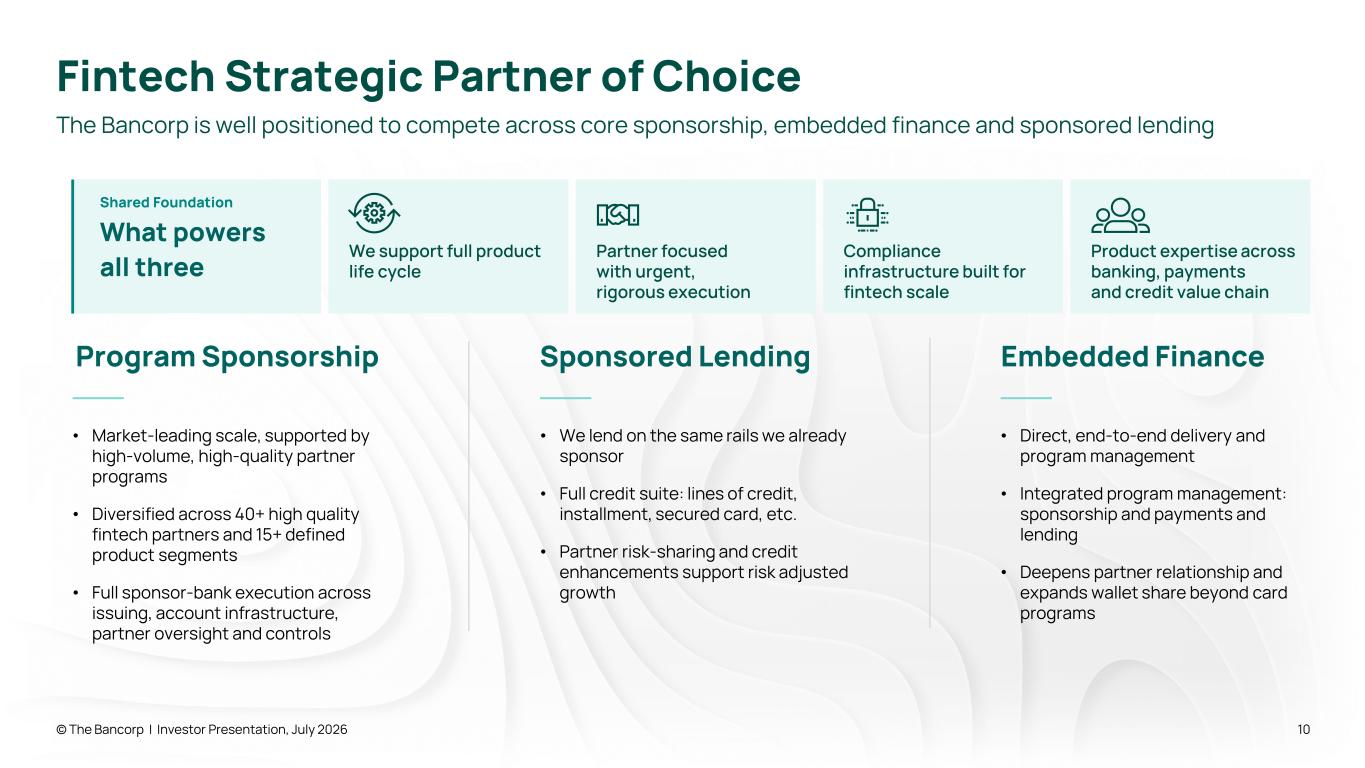
Yeah, so we, you know, we provide a very scalable infrastructure, right? And we're talking about there's many segments we're in that you really never going to be a bank, right? it could be corporate payments, it could be healthcare. In certain cases, they're never going to be government payments. There's never going to be a bank. They're never going to become a bank. So you're really talking about the neobank segment. And we're providing an incredibly scalable middle office platform that can't be replicated by these programs, right? That cost to go in to replicate it is is enormous and uh we are a very small expense in on their on their own uh financial lines so there's a lot of value we bring uh you enter our ecosystem you you benefit from this incredible scale and sophistication that's very hard to replicate on your own so uh we don't think first of all it takes a very long time to build these platforms the right way. You lose an information, which is in a lot of cases a big competitive advantage of us. You lose the sophistication with regulators. So we think that it's not going to impact us, especially in the near to the medium term. And as we continue to build our scale and become much more efficient. I think we can add value to those, regardless of the license or not, we can add substantial value to these large programs, nevertheless. And so we don't think it's going to impact us.
Okay. I mean, if they're applying for their chart, these starters, they obviously want to do something with it. So like, how could these change what your partnership or programs look like? And is there any sets of their product base where we see more risks or more opportunities as this goes on, whether that's deposits, credit sponsorships, the paying side, anywhere else?
Yeah, it depends on what charter they want, but it's usually a funding situation where they want to have in some way a deposit. And we're talking about a charter that's consumer-based, that's not an industrial charter, right? So they become a bank and they are able to self-fund, but we're kind of doing that already, if you think about it, with the Chime where they're using our balance sheet. But for some of these programs that are only lending-based, they want that capability to self-fund. And that's where it's mostly coming from.
And Kim, just to add to that, one consideration is if you think about the velocity of the loans generated, particularly by NEOs. Having their own balance sheet allows them to be the buyer first choice and control the economics around holding loans. So to the extent that there are partners with bank charters that want to hold the loans, we actually see that as a potential benefit because as the velocity increases, we are looking to off-balance sheet these loans over time as we grow that business. And it would be a logical place for that particular partner if they had a charter to hold their own loan after we, you know, originate and go through our compliance efficiencies that we bring to the table. So we think there could be a net net benefit in that particular situation.
Okay. Yeah. And just to make sure I understand your point here, it would make a lot of sense for Bancorp to still be the originator of these loans for a lot of the neobanks because you guys have the expertise on the regulatory side. And, Damien, going back to your comment on my first question about, you know, how expensive it is to build this out, and you guys have spent a lot of time with this infrastructure, I think in the past you guys have shared, you know, the overall investment cost it took to build the robust, you know, regulatory compliance infrastructure you guys have over the last, like, five-plus years. Could you go into that just a little bit? Oh, yeah, the cost is – Can you explain just how expensive it is?
Well, it's very expensive. I mean, we've spent, I mean, over the last 10 years, you know, well north of $100 million, just $100 million just for the base platform. So, and that's every year you're investing in building for the future. So that adds up every year. And it's not just the amount of money, it's the amount of time that it takes to do that. It takes multiple years to build a platform that's robust enough to handle the broad middle office that you need to do in compliance, you know, regulatory relationships, but also the tech stack. And we have that already. We've invested in it, you know, to really have the best in class over 10 years and to catch up to that in a shorter time frame just costs more money. So say you can do it in three years, you're going to balloon your costs. And this has been seen when people try to build it out in other places. The cost, the shorter time that you take to try to do it, and that's problematic in itself, the costs skyrocket. So if you're going to get your banking license and you want to have everything done in-house, first of all, it starts with multi-year. It doesn't start with a six-month project. This is a three- to five-year project. It requires you to increase your investment upfront because you're going to want to reduce the time and that is going to have a significant premium to what we're charging, right? So the payback on that investment and you're going to get less quality, of course, especially over the first part of that until you get sophisticated, you know, it's going to be multitudes of what we charge over any reasonable time. So there's a real value we believe we bring. The investment is prohibitive to get to where we are. And at the end of the day, it's a timeframe issue. I mean, we're talking about long-term commitments, ongoing investment, and it will never be at scale. No matter how big you are, you'll never be at our scale, not even close. So you can't, you'll never get to that unit cost that we can get to across our portfolio.
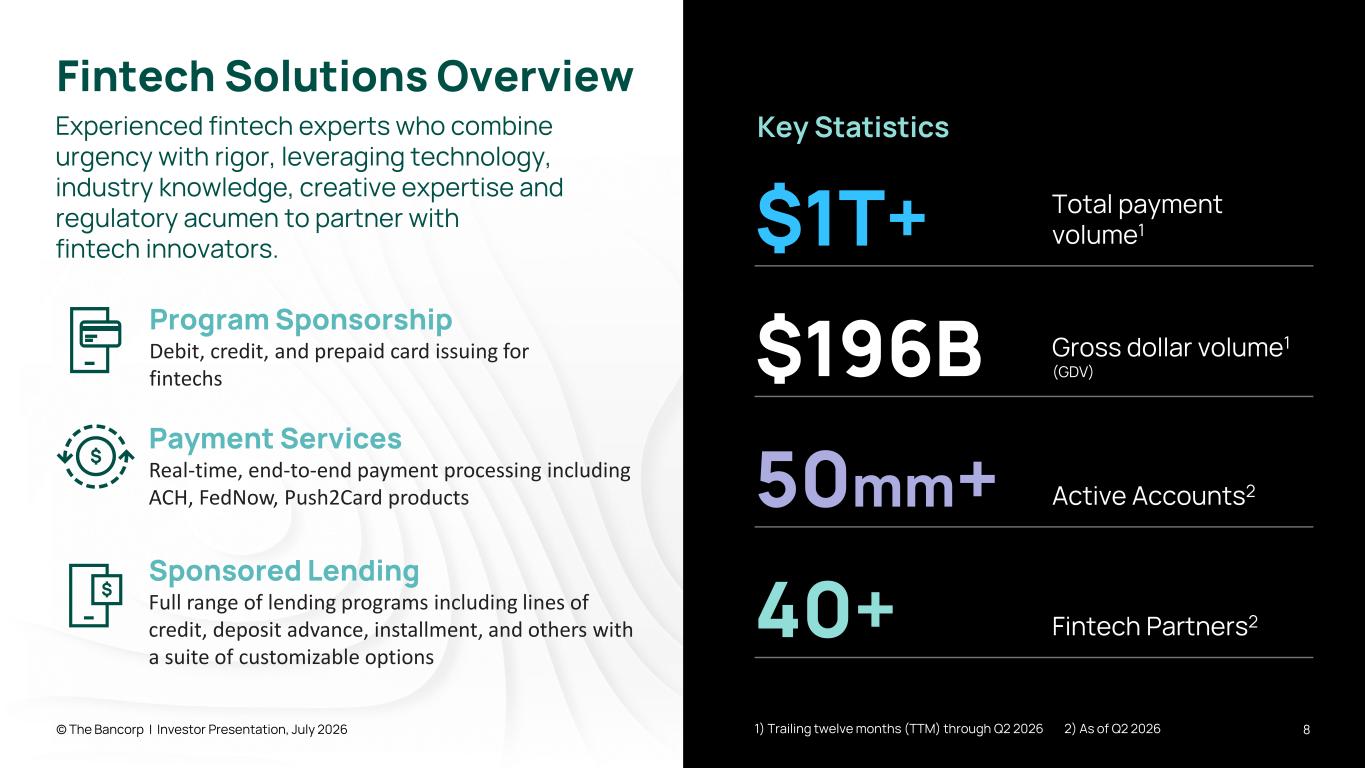
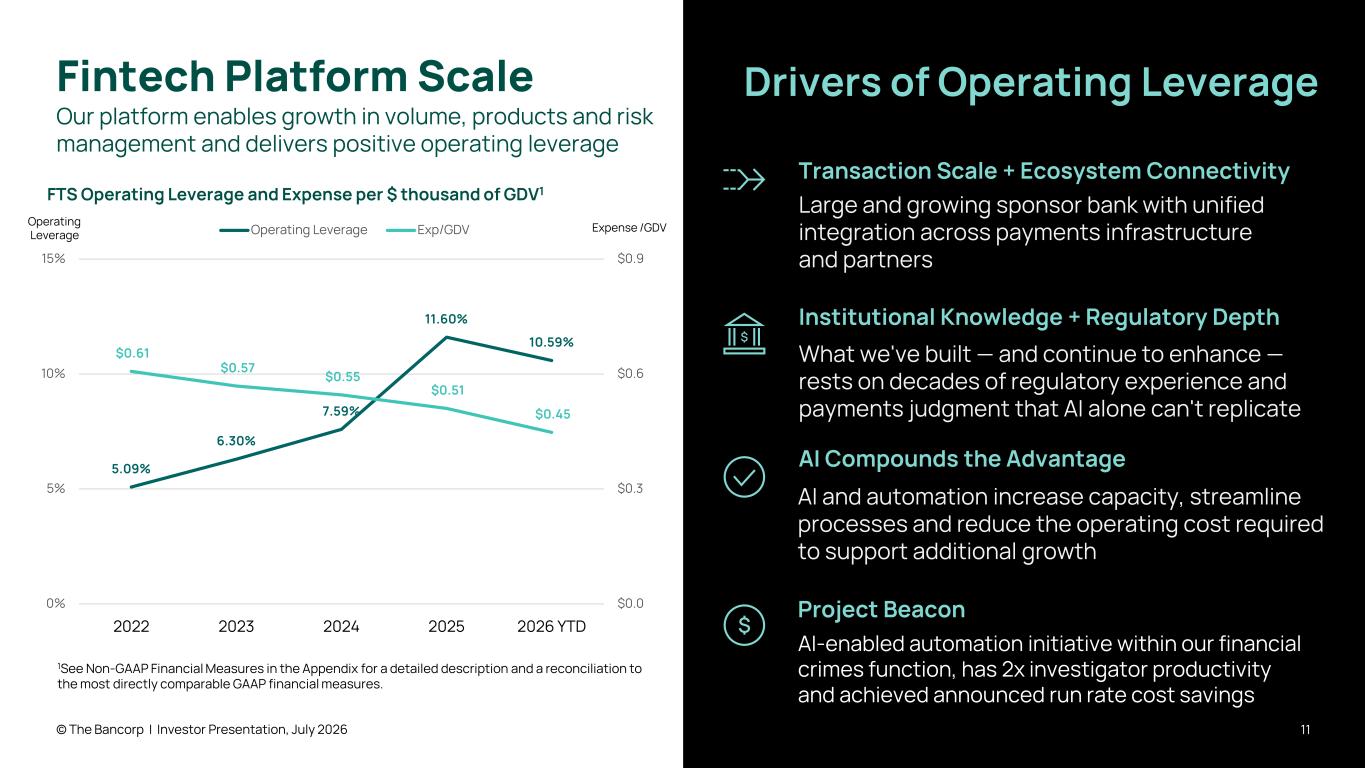
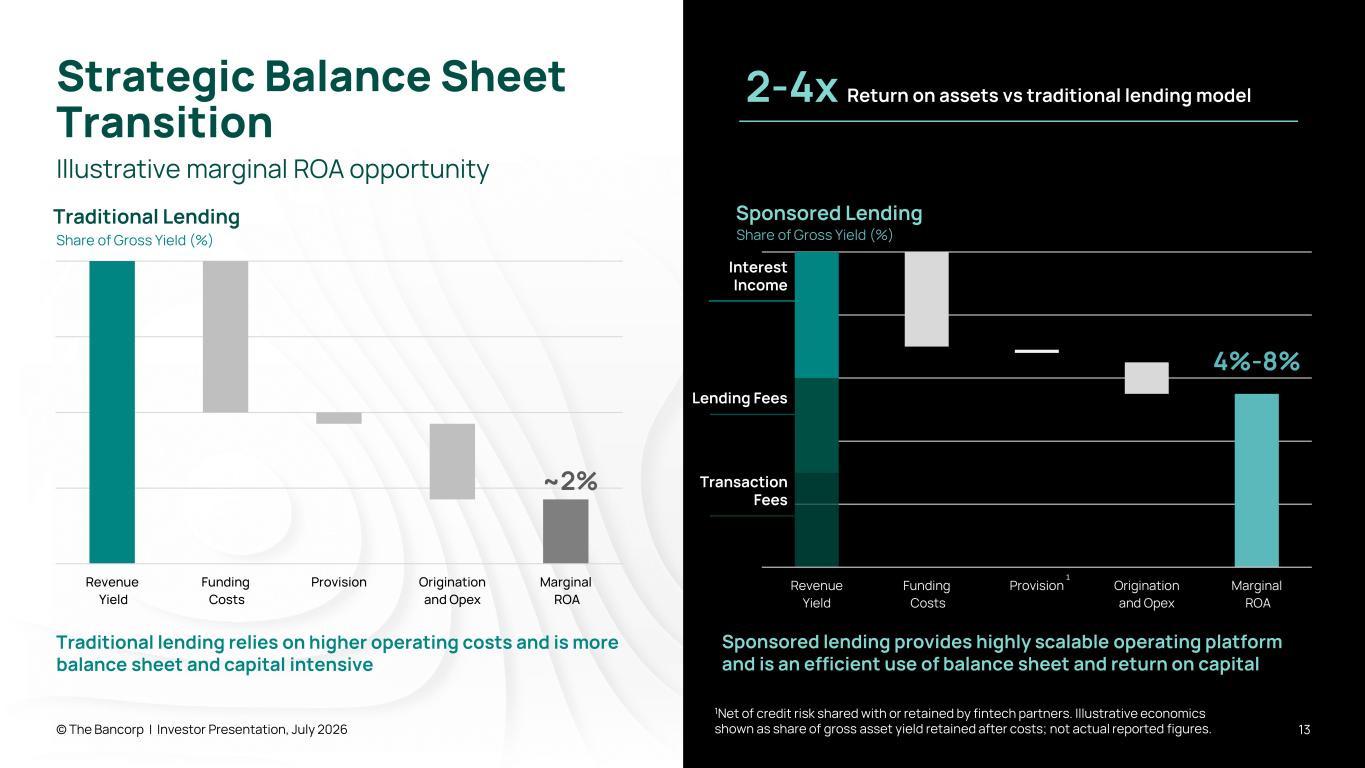
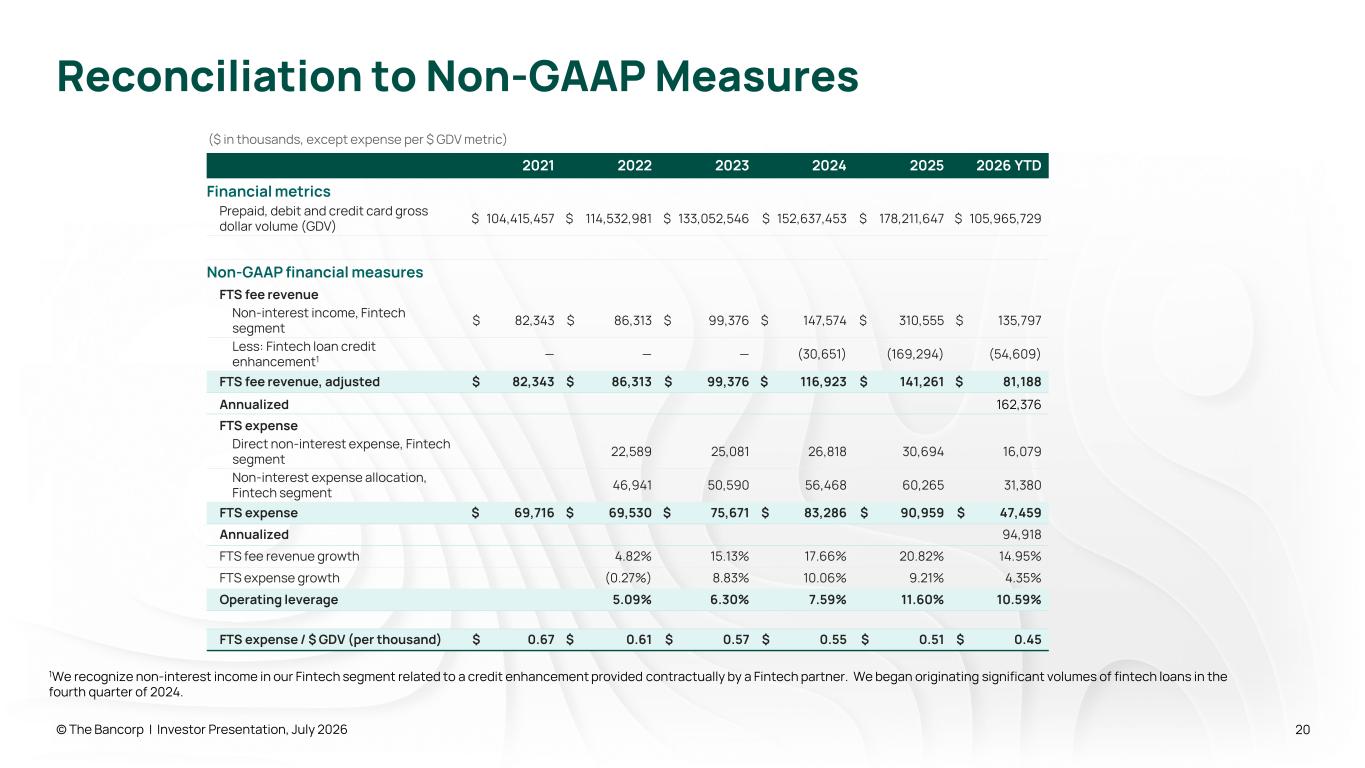
And to add a finer point to that, is there is a significant benefit to all of our partners from what we call the halo effect, right? We're at $200 billion of GDV in the last 12 months. So our ability to see across payment types, across partners, across programs, you know, ongoing fraud, financial crimes that we can transfer the benefit across all of our partners that you just can't get with one program or a few programs. And then just to add, again, you know, we have added slides in our investor presentation, particularly slide 11, that demonstrates the scale and efficiency of our platform on a cost per GDV basis and our ability to improve our operating leverage and increase it over time, which, again, comes down to the inability to replicate.
Operator
Your next question comes from the line of Manuel Navis with Piper Sandler. Manuel, your line is now open. please go ahead.
Hey, good morning. Talk about the fintech loan balances. Is the target still the same in terms of growth by the end of the year? And how would you judge kind of the progression of growth so far this year? Like it's 1.4 billion on an average basis. Is that the number we should be growing from in the third quarter?
We do expect that to continue to improve both with our existing partners and the pipeline. The exact amount is a function of the timing of the launch of partners and the velocity and product that are launched. So we do expect it to increase. We've talked about working towards a $2 billion level by the end of this year. We expect to work towards that however we could have programs that just have higher velocity and lower average balances but ultimately deliver the fourth quarter expectations and for full year 2027 outlook that we've provided and um was just to kind of confirm on the on the client side on the customer side there was no disruption in any services from this payment date processing shift Not at all. In fact, it was just an acceleration of a couple of days of the payment from the credit builder, my chime card product to align with the actual terms and conditions. So it was seamless and effectively unnoticeable. It just changed the ending balance by one or two days, depending. So again, no change in economics, customer impact, customer terms, or performance.
And the progression and growth of that program is going as expected. I thought it was kind of, you know, figuring out some nuts and bolts, but the progression of that program continues well.
Absolutely. It's on, if not better. And as you've seen in the average balance of growth that we demonstrated in the quarter.
Yes. And then switching over, you still have the range on the 2027.
Based on this quarter's results, your progression with the programs that are expected to hit, what are kind of like the updated factors driving the low end or the high end of the 27 EPS guide, please? at the end of the day the range that we're talking about is 20 cents on eight dollars so it's incredibly small range from a percentage perspective and just captures the recognition of significant growth from where we are today to the fourth quarter into a full year of next year and recognizes the fact that our pipeline is strong and that the exact timing and launch and phasing of those programs have some variability to it which we're comfortable with because we when we launch new products and partners, we want to be disciplined, have the right controls around it, the enterprise risk management around it. So the range we're offering is really, really tight, and it demonstrates that there could be some phasing, but the overall economics and growth in ROA and ROE hold to be significantly above this year.
I appreciate that. Thank you.
Operator
I'll from Joe Yachunas with Raymond James. Joe, your line is now open. Please go ahead.
Hey, guys. Thanks for letting me back in the queue here. I just want to ask a couple more. So as sponsored lending becomes a larger part of the balance sheet, can you discuss how the framework for monitoring fintech counterparties has evolved? Like beyond credit enhancements, what ongoing financial liquidity or operational metrics do you track to ensure your partners remain capable of supporting their obligation?
Yeah, first of all, you got to remember, we're dealing with very large enterprises, many of which are public companies. Okay, so the disclosure there is enormous. And we go through a very rigorous process around all our partners and third party risk management. So we delve into understanding their liquidity, their business plans, their metrics, what they expect to spend on things like marketing. We get a full disclosure of not only their current financial position, but their future forecasts. And we test that. And we monitor it very closely and ensure that the partner has the wherewithal to continue business and build its own business. And we do disengage when, and we do it early. We don't wait. We monitor these things, and we've done smaller programs in the past, and we've disengaged from those programs when they're not successful before you get to a point where there will be some type of impact. So we take very proactive, high scrutiny, and this is continuous through our third-party risk management process.
Thank you for that. And then I was also hoping you could provide an update on your AI initiatives. Are the productivity gains still tracking in line with your expectations, and where do you see the next opportunities for efficiency? it's incredibly exciting.
You know, it's the improvement in AI has been dramatic over the last year, where it's really impacting us. First of all, it's in two ways on the enterprise level, where our people are getting, you know, more empowered through AI to, you know, make their jobs more interesting even and cut the, and get their productivity up substantially. And then secondly, in use cases, one, for example, is financial crimes, where we have an AI-empowered narrative writing capability that's improving monthly and making our people much more productive. And this really helps us manage the number of employees and make them much more efficient and productive, make their job better, and it's improving rapidly. So we're growing this GDV in four, five, six times what the market is growing, and we're able to handle that new volume by using some of these tools. So it's very exciting. It's getting better. We really are embedding it in the way we do business in both ways, enterprise level and then use case level. And it's going to have a dramatic impact on our ability to continue to grow and control our expenses going into the future.
That was very helpful. Please state my follow-ups.
Operator
Your next question comes from the line of Arif Gangat with Cygnus Capital. Arif, your line is now open. Please go ahead.
Hey, good morning, guys. Thanks for taking my questions. I had a question about the debt balance on the balance sheet. If you could please kind of, you know, funding the business with additional debt, and if we should expect that to continue.
Dominic, do you want to handle it? Sure. Yes. When you're looking over the financials year over year, clearly that's impacted by the upsizing of the debt issuance in late 2025, which was very strategic for us as we saw an opportunistic position to raise debt, repurchase our shares and have an accretive impact to our shareholders, which has played out meaningfully over the past year and aligns with our capital returns. philosophy, which we talk about. There was an increased quarter over quarter in some short-term borrowings, more from a liquidity perspective as we just managed the balance sheet. We're very focused on optimizing our returns and have significant access to borrowing. First of which is the fact that, you know, 95% of our deposits are from fintech and FDIC insured. so they're very stable and granular and low cost. We have $1.1 billion of deposits off balance sheet, which we have the ability to pull back and optimize both to fund the business and or generate revenue. We have more than 50% of our deposit base in readily accessible borrowings at market costs. And most importantly, strategically, we expect our business, our core business on the fintech side to continue to grow to deposits. And so with the fact that we're near maxed out on the asset side of the balance sheet with the run rate to continue to grow deposits, we see ample opportunity to continue to fund the business without taking on any long-term debt and any short-term borrowings would be to fund intramonth or intracourder seasonality.
Got it. That's very helpful. I appreciate it. just to clarify, you know, sequentially debt went up ballpark $265 million or so. So from a liquidity point of view, given that the fintech loan book, for the reasons you outlined earlier on the call, you know, the one-time change actually shrunk, can you help us understand what drove the liquidity need?
Sure. Well, first is the first quarter is a seasonally high deposit generating quarter. And so there is an expectation that there's a seasonal step down from first to second quarter, plus the continued average balance growth that we've seen both on the traditional lending side and the fintech side. So the impact from 1Q to 2Q is more seasonal in nature and not business trend. The long-term trend is our ability to fund the business. And so, as I mentioned, we expect for the rest of this year to deposit growth to outpace our lending growth, so that will bring that amount back lower. And again, we have many levers to pull to be able to optimize that. So when we consider liquidity, the cost and access of liquidity, that's all incorporated in our expectations for continued earnings growth and EPS growth in our guidance that we've provided.
Okay, very helpful. I appreciate it. And then we do have another question on the, a couple of questions on the Rebel Portfolio. The 10Q is not filed yet, but if you could please share how much of the Rebel book, just ballpark, you expect to mature within the next 12 months.
So we're over. Sure. So we have, go ahead, Dominic.
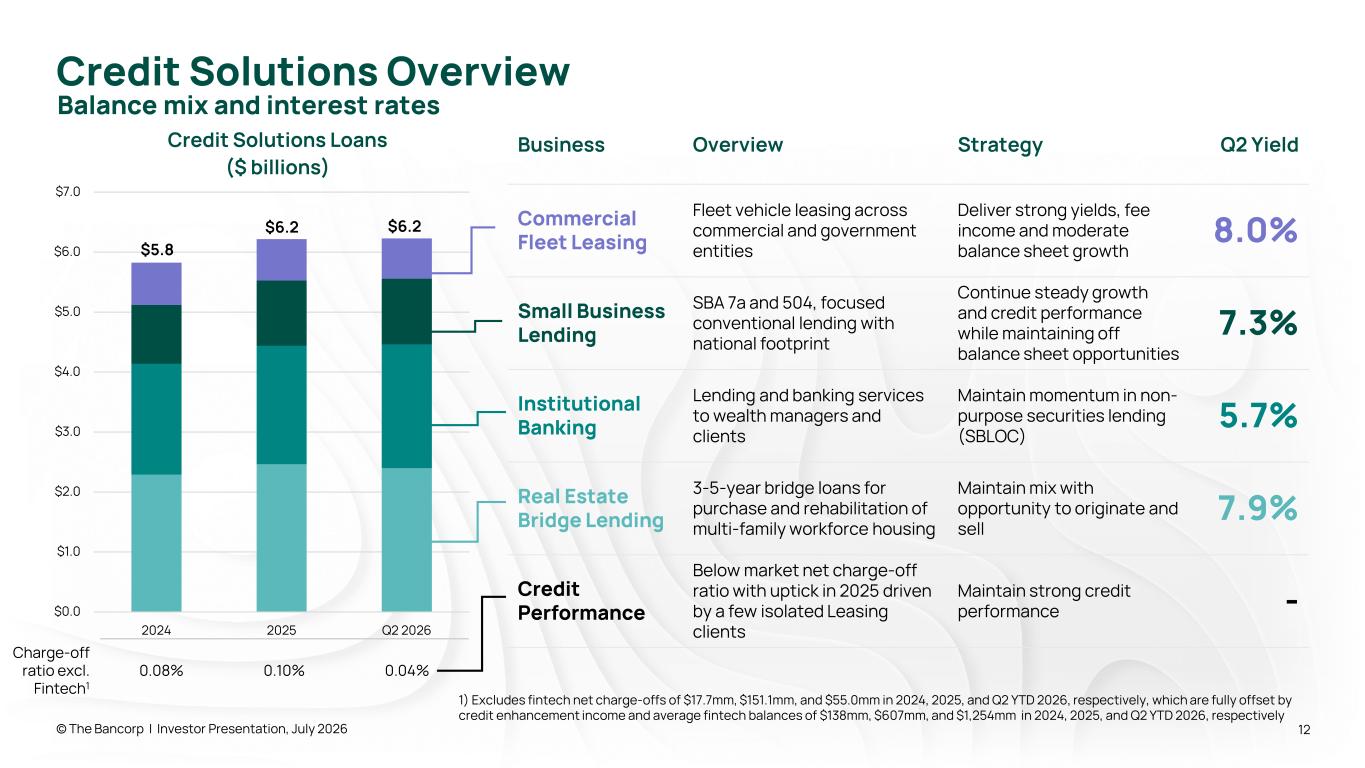
Sure. Just as a reminder, you know, the Rebel Portfolio is structured. These are structured loans, three-year loans with a plus two one-year extensions. So in general, they're naturally short-term in nature. So we expect at any year, a third of the portfolio to churn or redo. And with the continued improvement, the maturation of the investments in the loan portfolio, the properties themselves, the loan to value continues to improve, the sponsors are stronger. And we're comfortable with where pricing is in the market relative to where the pricing is, contractual pricing of the book. So we do not see a credit or price cliff given the short-term nature of that portfolio. We're very comfortable with how it's performing and its expectations to continue to contribute meaningfully on an ROA and ROE basis going forward. Okay.
Yeah, we did have a bump. Yeah, Just adding to that, we did have a bump in the past, but we're through that, and that was because we got back into the business in the early 2020s, the 22 vintage, which became a migrated in credit quality due to all the pandemic. that bump we've gotten through. So now it's much more on a normal basis because we're originating kind of as a replacement cycle. So you're getting a much normal role on the portfolio.
Got it. Okay. I think if memory serves from the March queue, you know, as of 331, roughly just shy of a billion dollars was slated to come due. So my question is those loans as they mature, would be refied out by external third-party lenders generally, or would you folks look to refinance yourselves out with a new loan to the same sponsor?
No, we don't do new loans. What we do, unless we had an asset that's been repositioned, what usually occurs is that it's a three-year loan with two options to extend it, depending on if they've accomplished their business plan and everything. So there's two extensions built in. And that's totally dependent on completion of the project. After that is done, then they go, if they choose to, they will leave, right? They usually, a lot of agency, but they'll refi with another bank. We don't do the stabilized finance. So that's where the role comes from. And you can be anywhere in that cycle. So when you're looking at that number. That could be somebody that's extended already. It could be somebody who's just finished their project. But generally, we want to keep loans when you complete a project and they want to extend a year or even two. That's a very good stabilized loan. And it's usually at their discretion, even though we obviously have a say in it. But it's their discretion because they're waiting for change in interest rates or they're looking out for their own takeout strategy within their portfolio, so we accommodate that and that's built into the structure of the credits.
Okay, got it. Very helpful. And then lastly, could we please have an update on the status of the Aubrey stabilization and how you folks are thinking about getting that asset out of REO?
Yes. So it's past 70% occupancy. We're so far along. We have a few buildings. There's a lot of buildings at the site. So we're down to the last few buildings, and we're in three phases of renovation of those buildings. We're way north of 70% of the buildings that are already completed. So we're at the point now that the appraisal's way above 50, and our basis is in the low 40s. So now we're at the point that we're going to get to the stabilized takeout, and so that's a different market than somebody who's going to be a financial sponsor. There's just been so much work done. We're at the break-even point, and as we continue with the occupancy, well actually, it'll be a profit positive rather than a drag. So we should be able to be completed from the first quarter, and that's where the stabilization will occur. Okay, great. Thank you.
Operator
We have reached the end of the Q&A session. I will now turn the call back to Damian Kozlowski for closing remarks.
Thank you, everyone, for joining us on the call today. We will be attending various investor conferences during the third quarter and we'll be on the road with investors in the coming weeks. We look forward to meeting with many of you throughout the quarter. Thank you, operator. You may discontinue the call.
Operator
This concludes today's call. Thank you for attending. You may now disconnect.