Operator
Hello, everyone, and welcome to the UMB Financial Third Quarter 2025 Financial Results Conference Call. My name is Carla, and I will be coordinating your call today. I would now like to hand the call over to the Investor Relations at UMB, Kay Gregory, to begin. Please go ahead when you're ready.
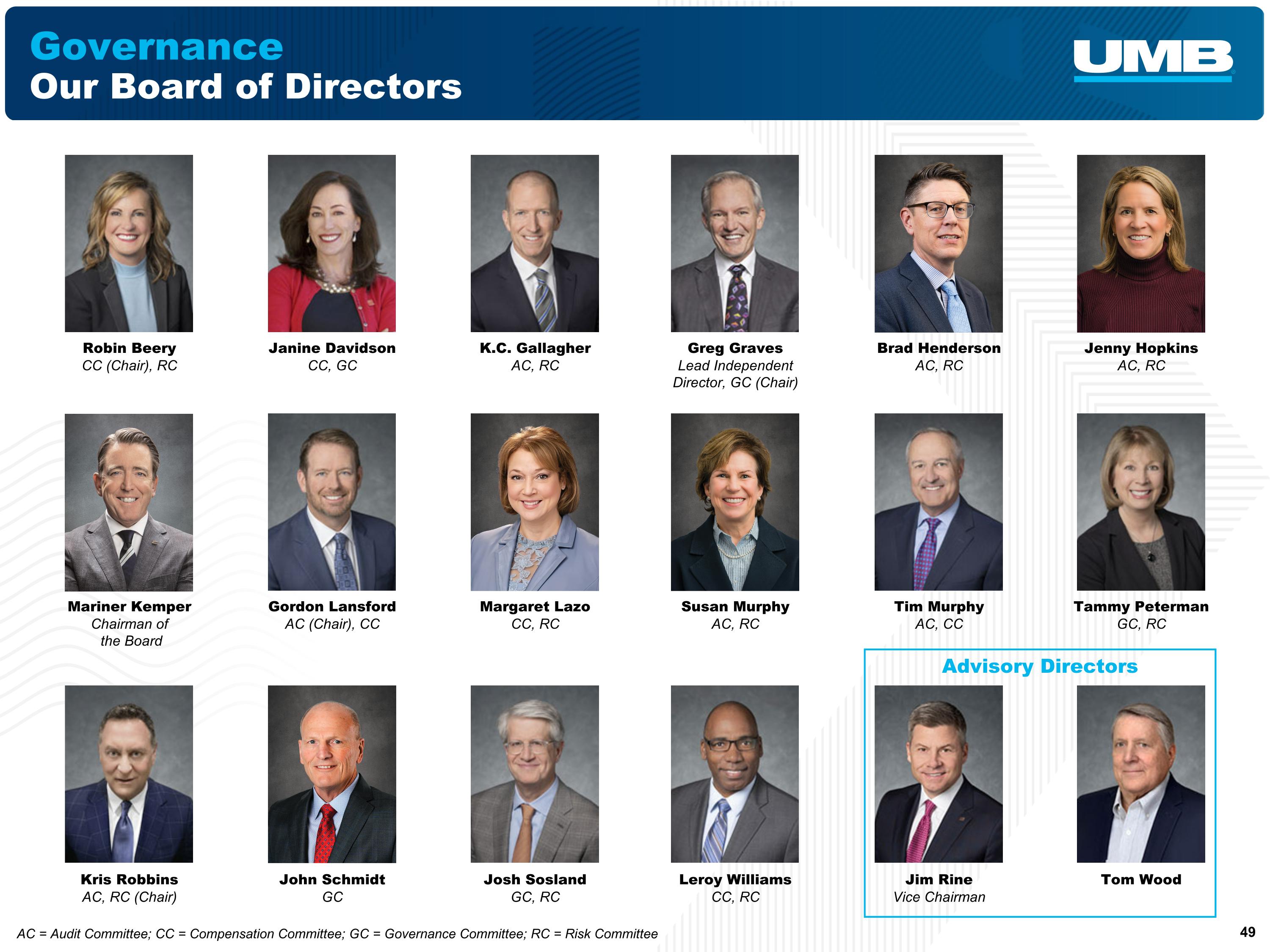
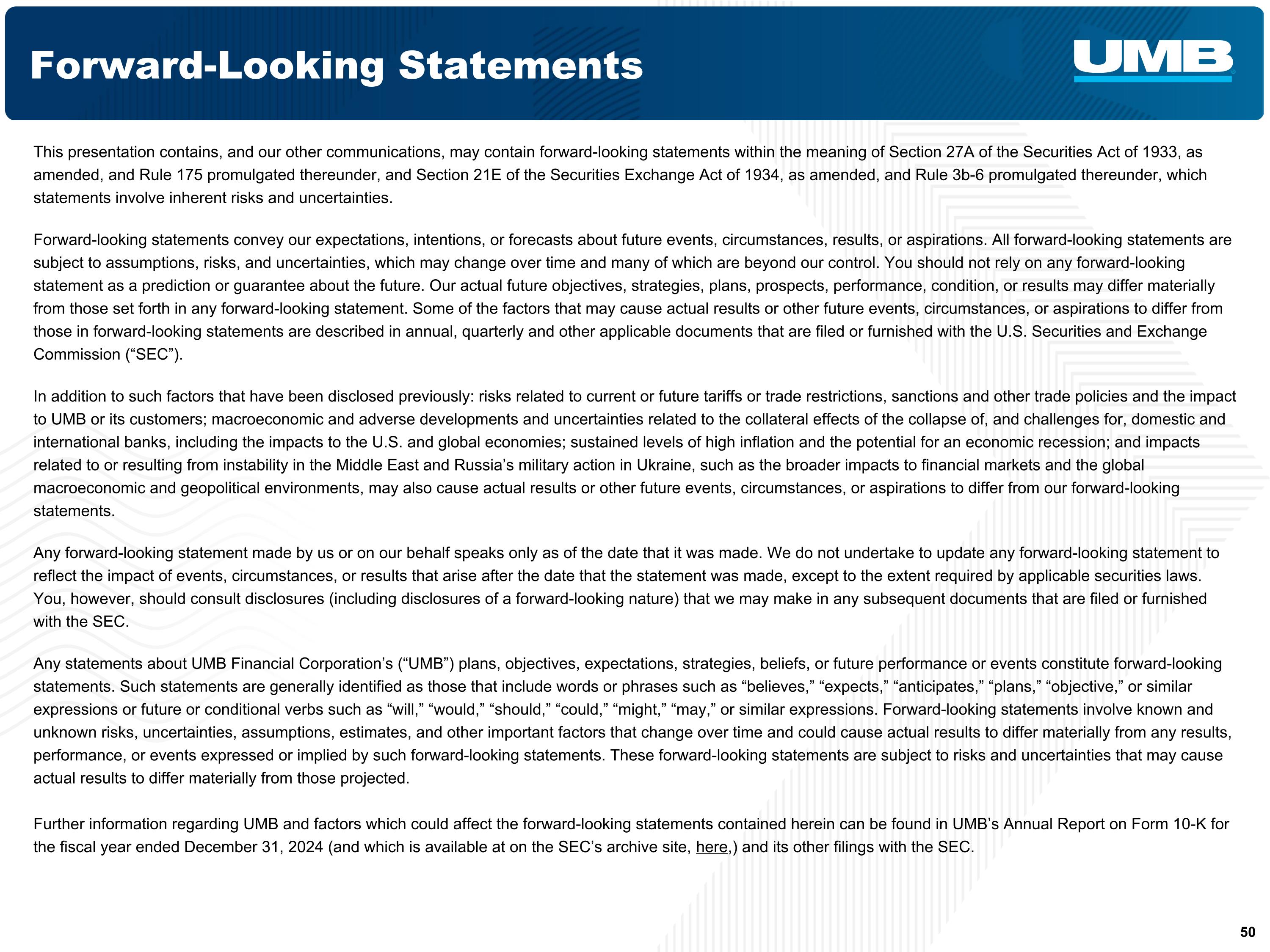
Good morning, and welcome to our third quarter 2025 call. Mariner Kemper, Chairman and CEO; and Ram Shankar, CFO, will share a few comments about our results, then we'll open the call for questions from our equity research analysts. Jim Rine, President of the holding company and CEO of UMB Bank, along with Tom Terry, Chief Credit Officer, will be available for a question-and-answer session. Before we begin, let me remind you that today's presentation contains forward-looking statements, including the discussion of future financial and operating results, benefits, synergies, gains and costs that the company expects to realize from the acquisition as well as other opportunities management foresees. Forward-looking statements and any pro forma metrics are subject to assumptions, risks and uncertainties as outlined in our SEC filings and summarized in our presentation on Slide 50. Actual results may differ from those set forth in forward-looking statements, which speak only as of today. We undertake no obligation to update them, except to the extent required by securities laws. Presentation materials are available online at investorrelations.umb.com and include reconciliations of non-GAAP financial measures. All per share metrics refer to common shares and are on a diluted share basis. Now I'll turn the call over to Mariner Kemper.
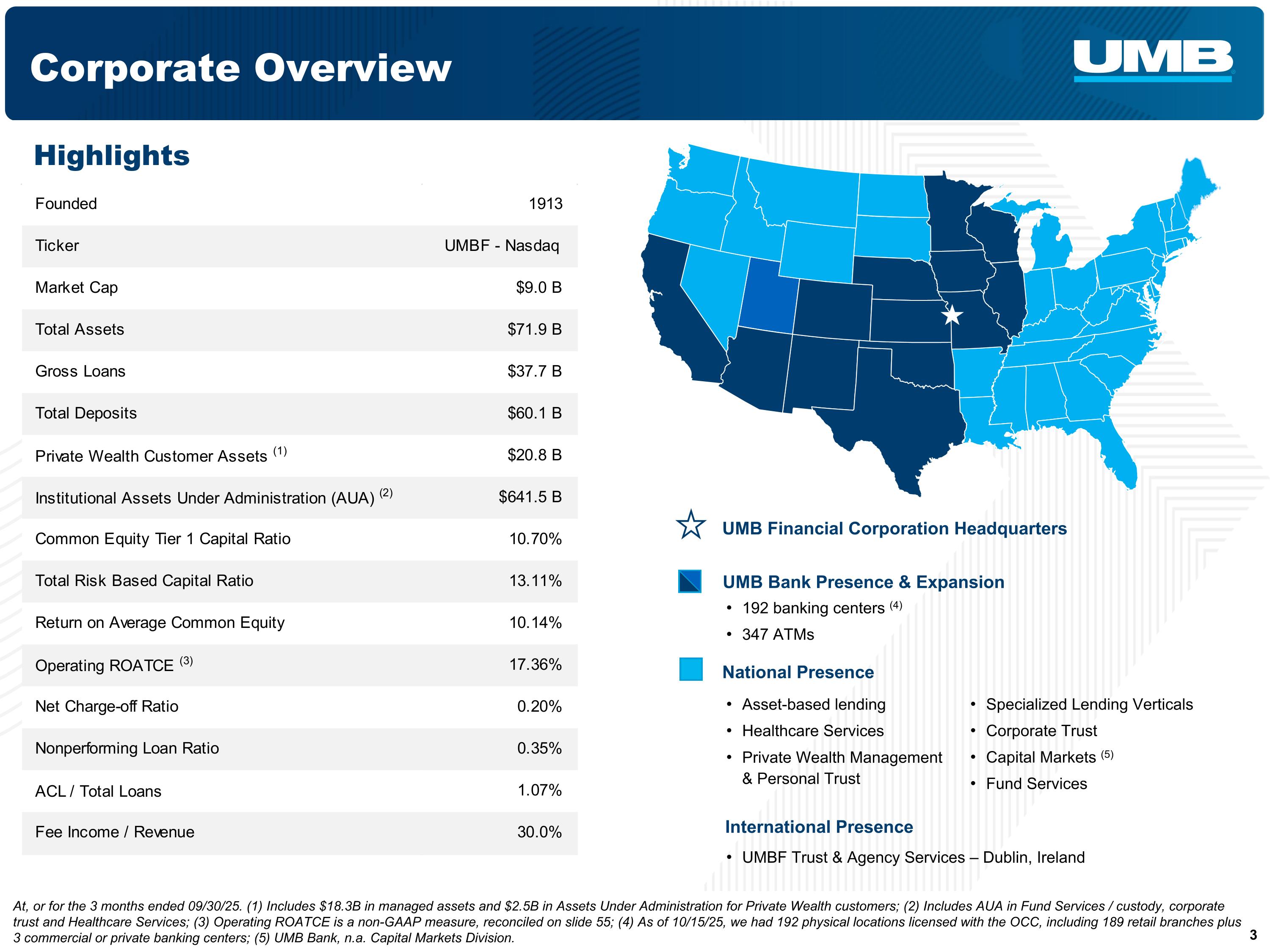
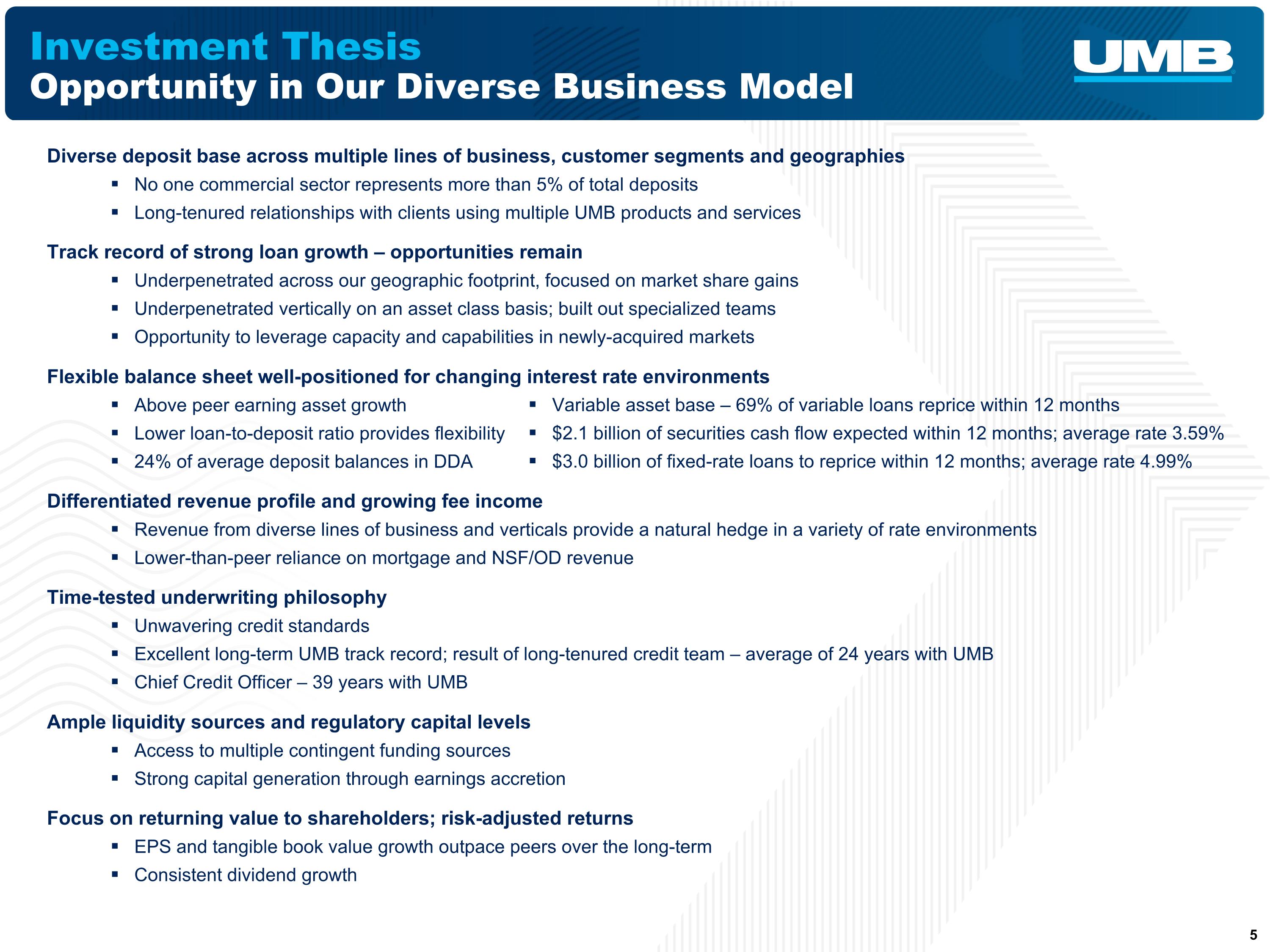
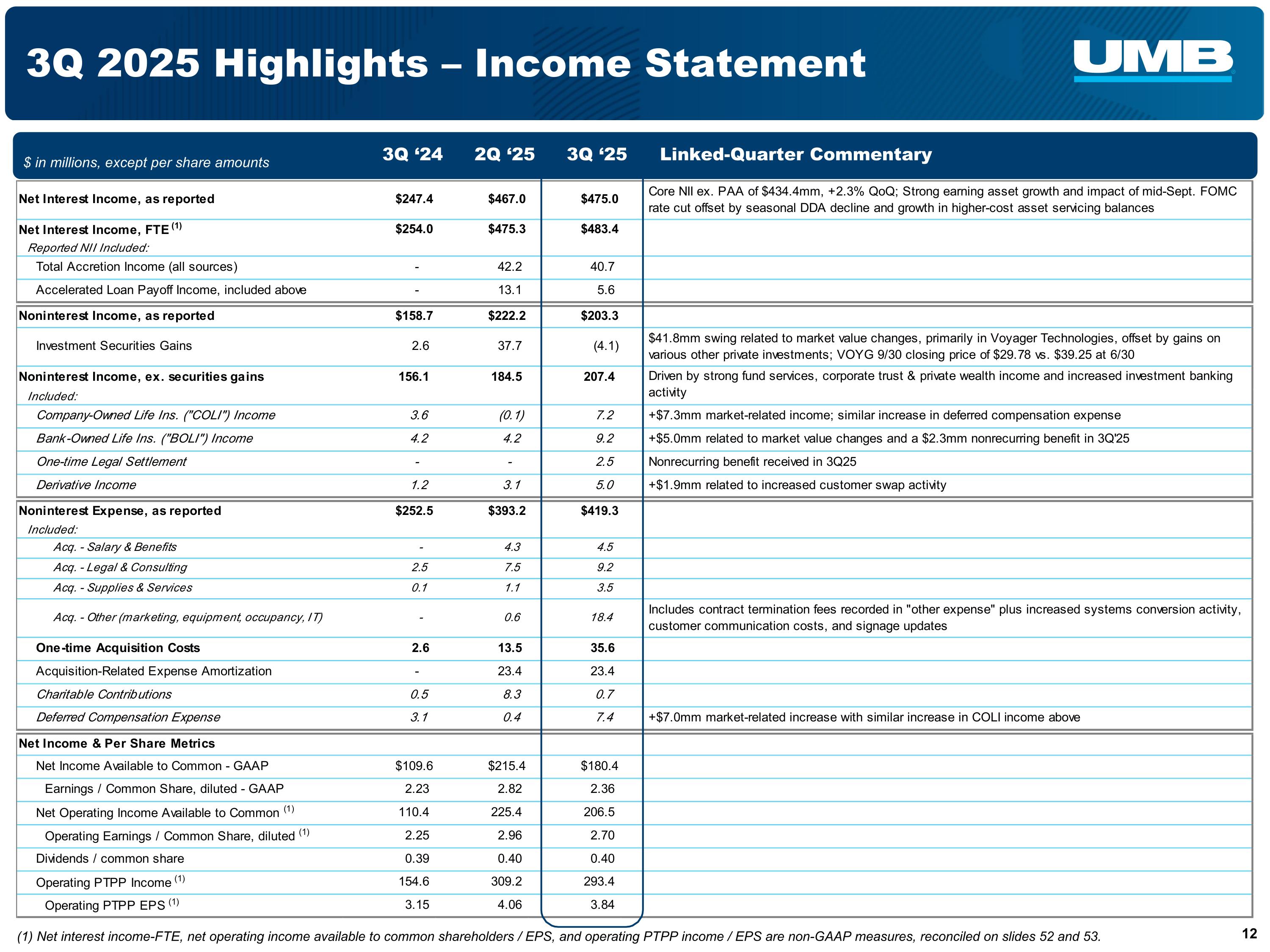
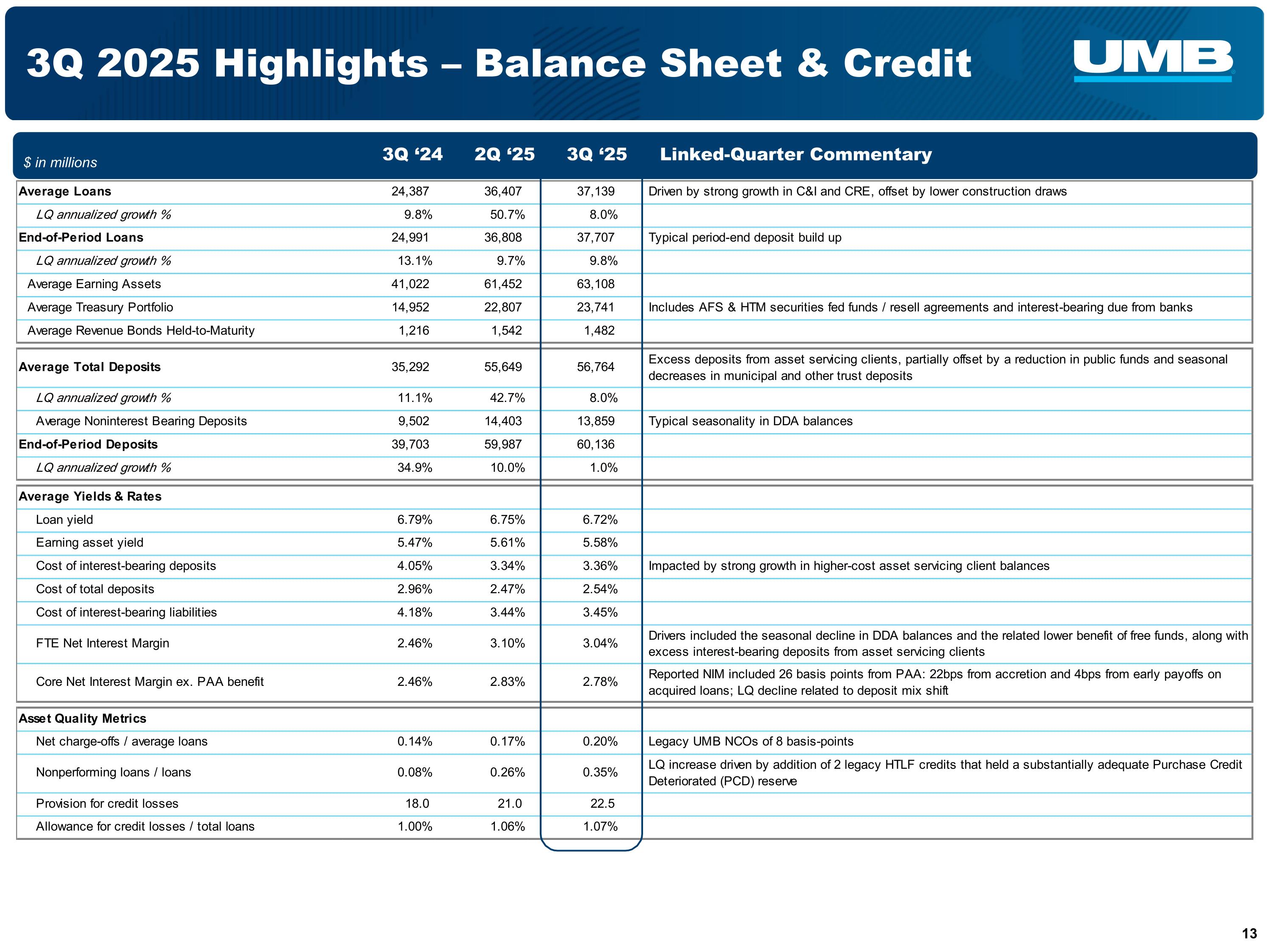
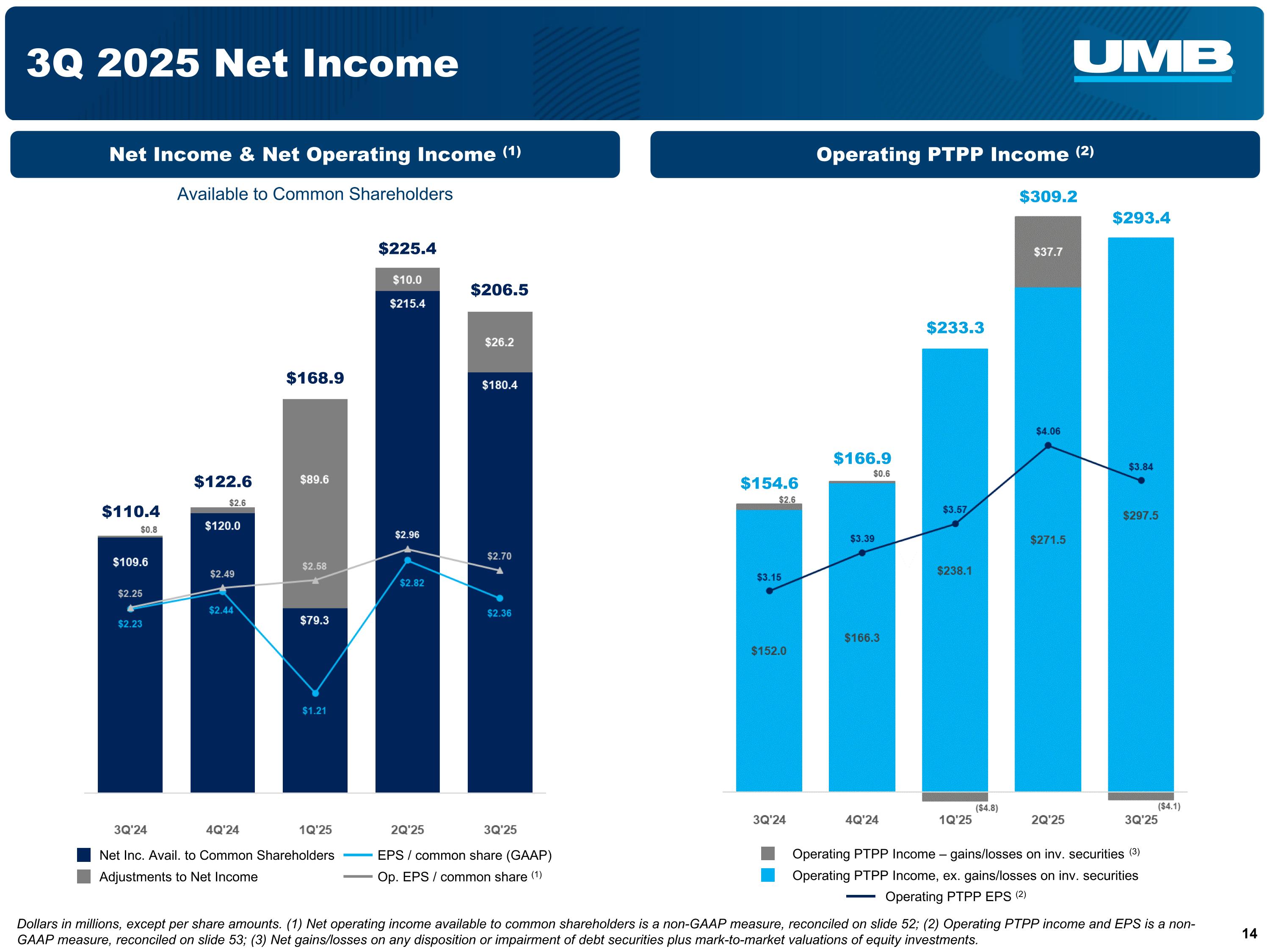
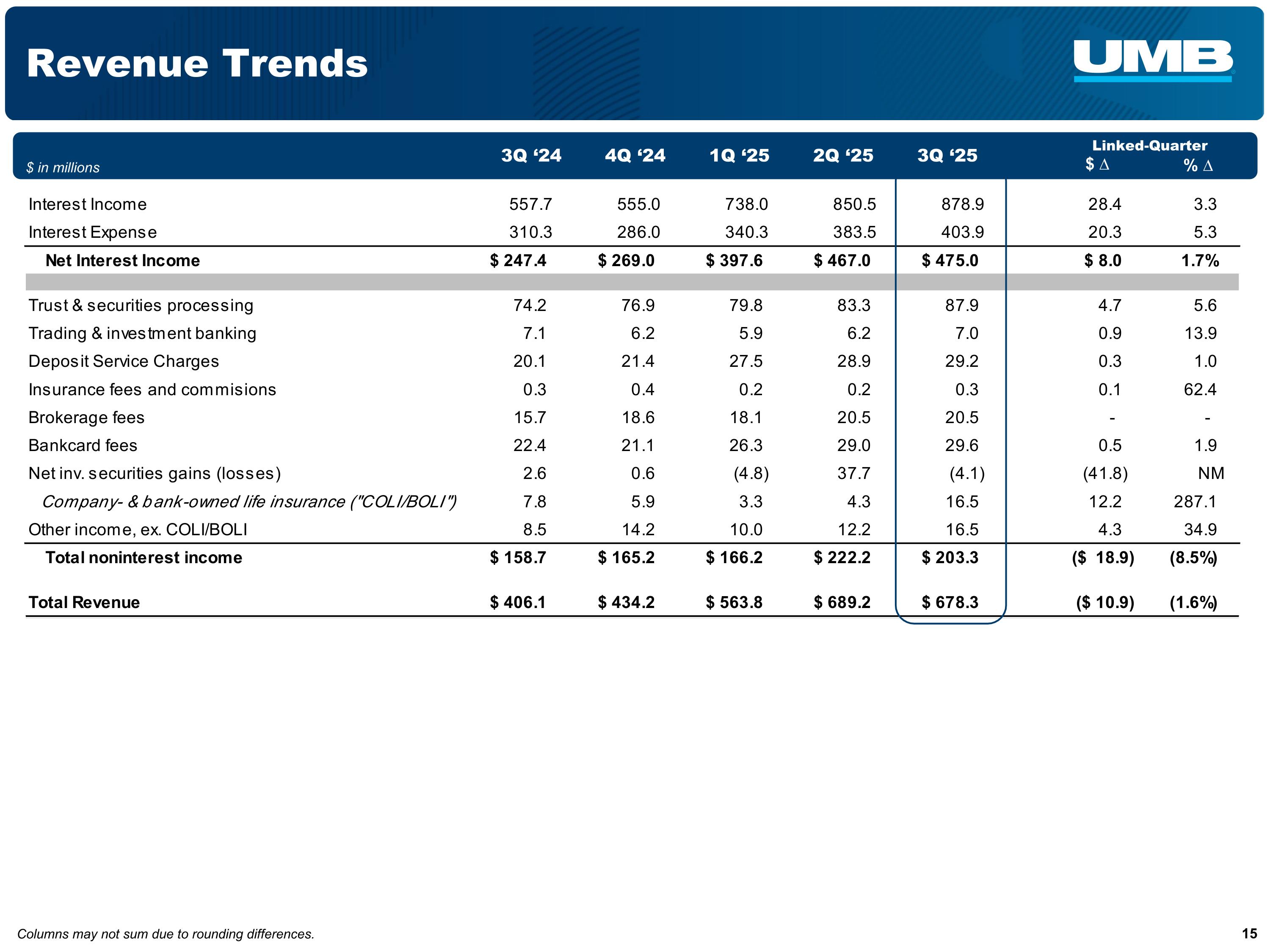
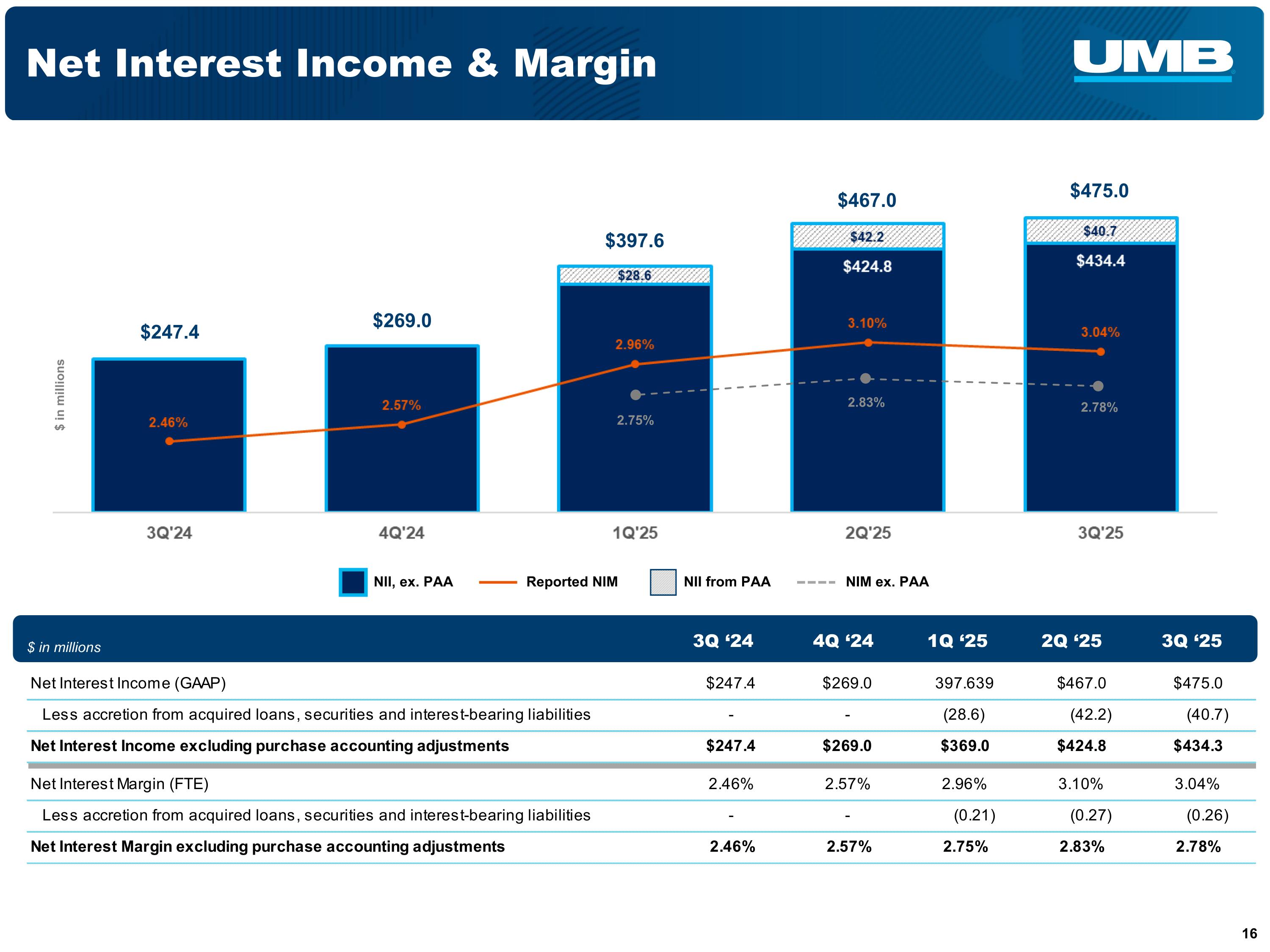
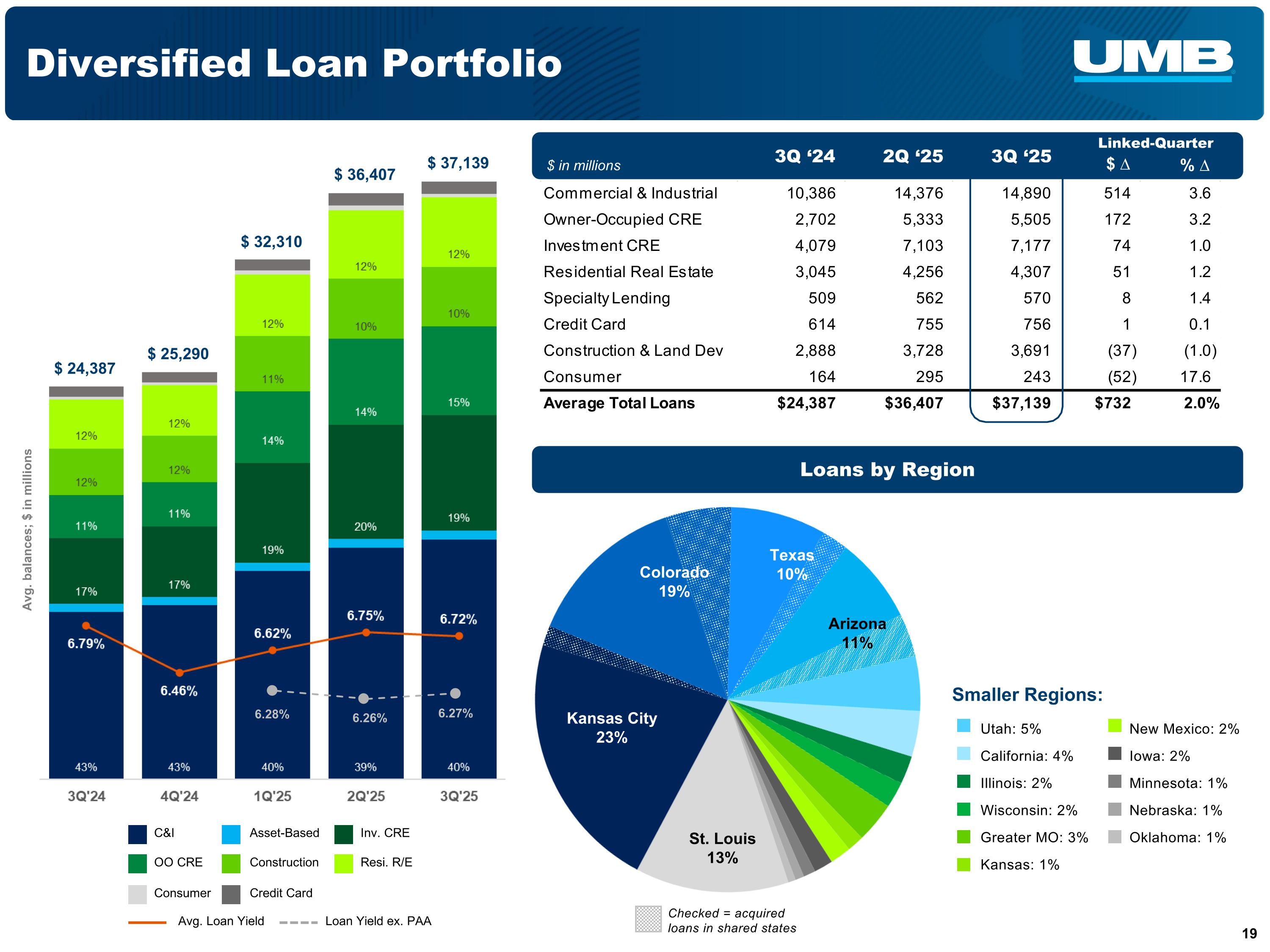
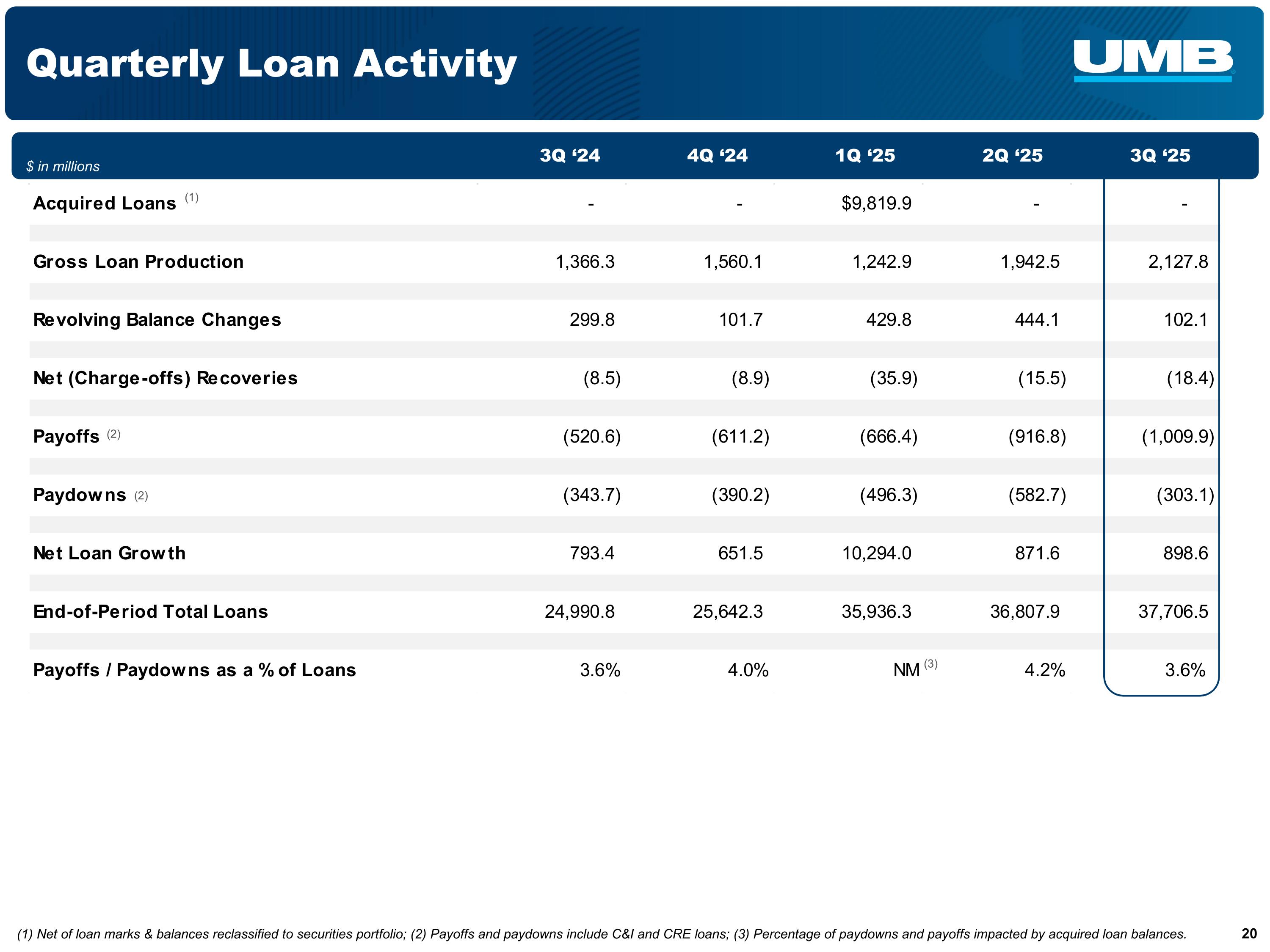
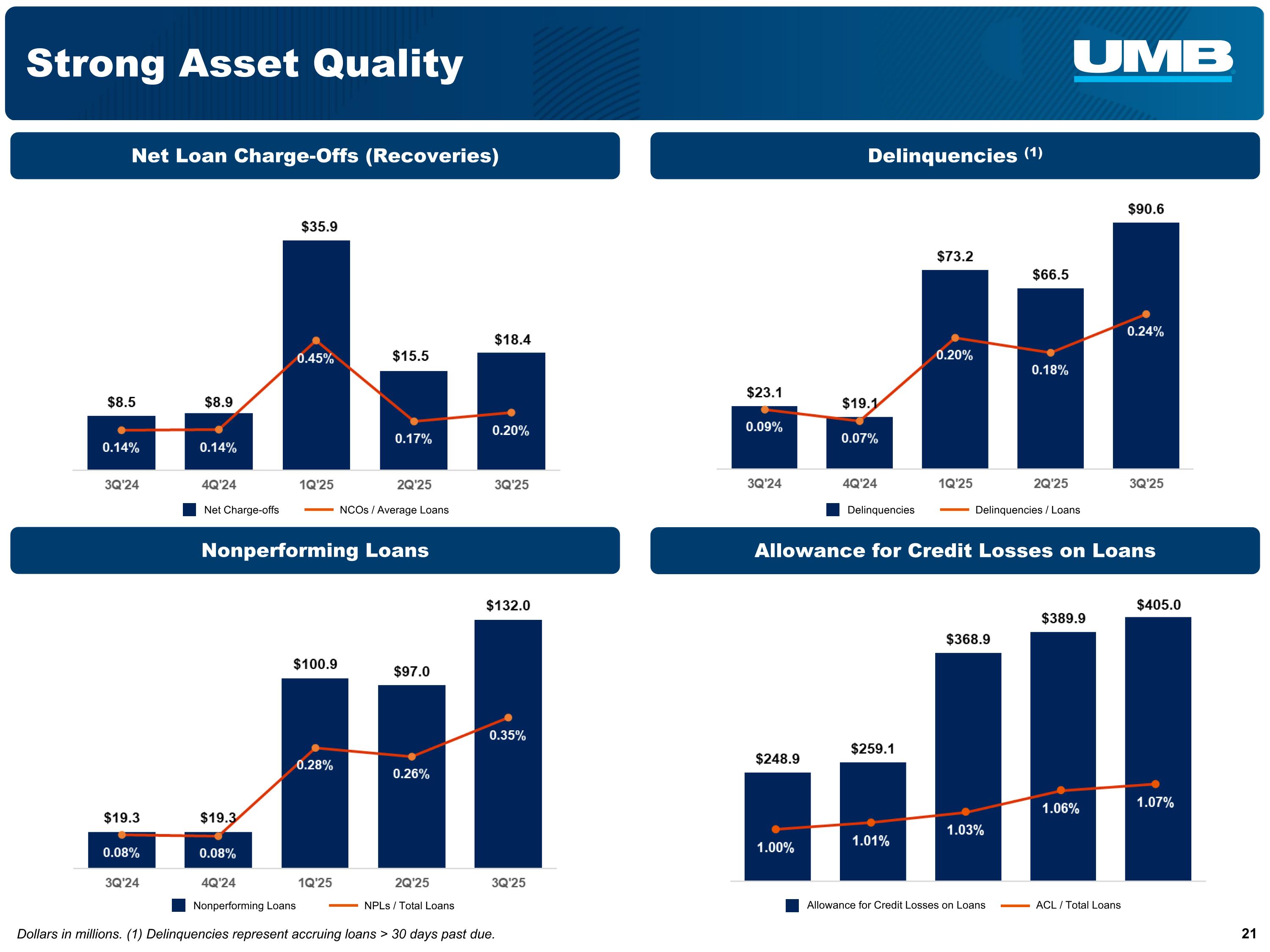
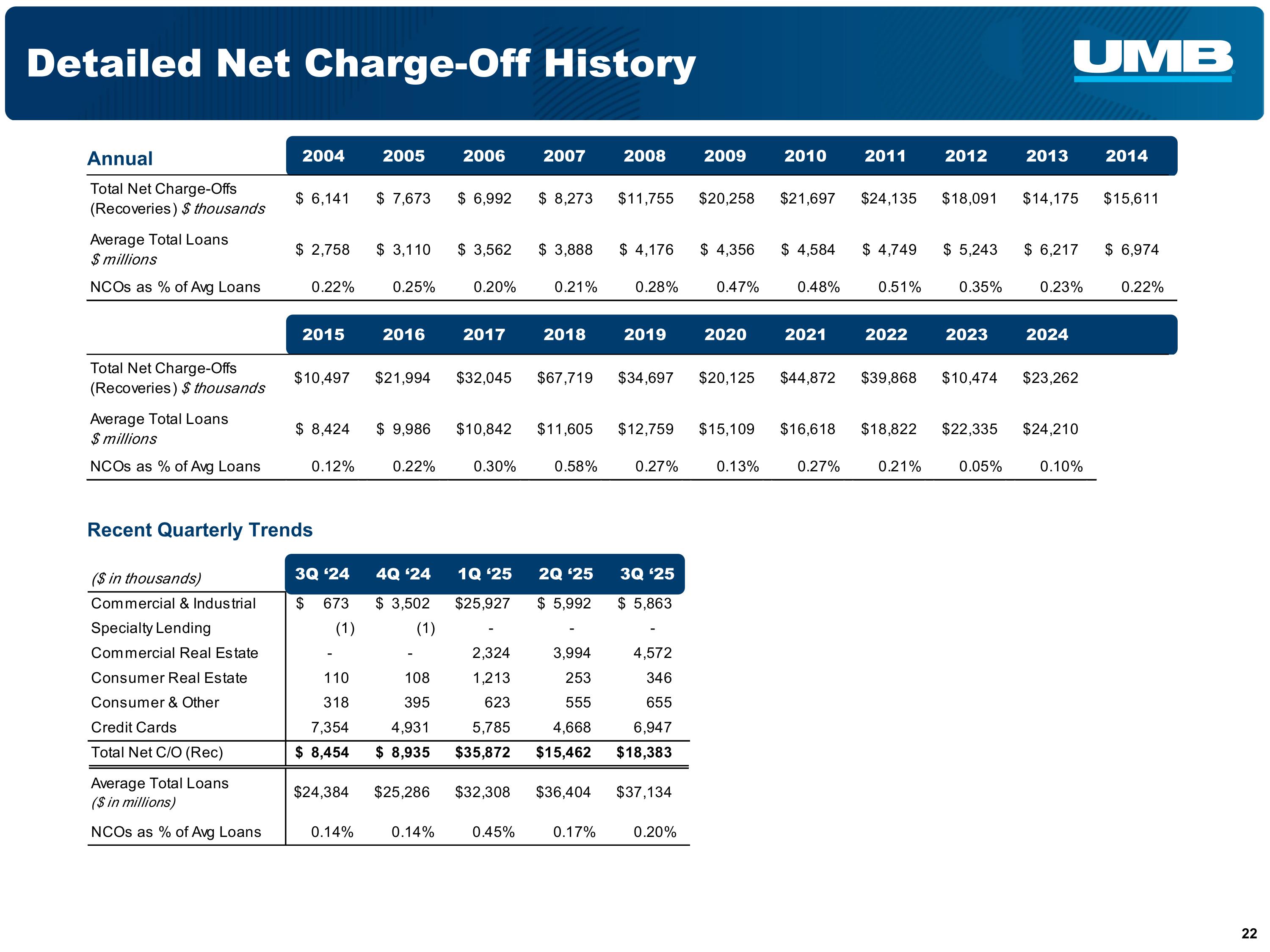
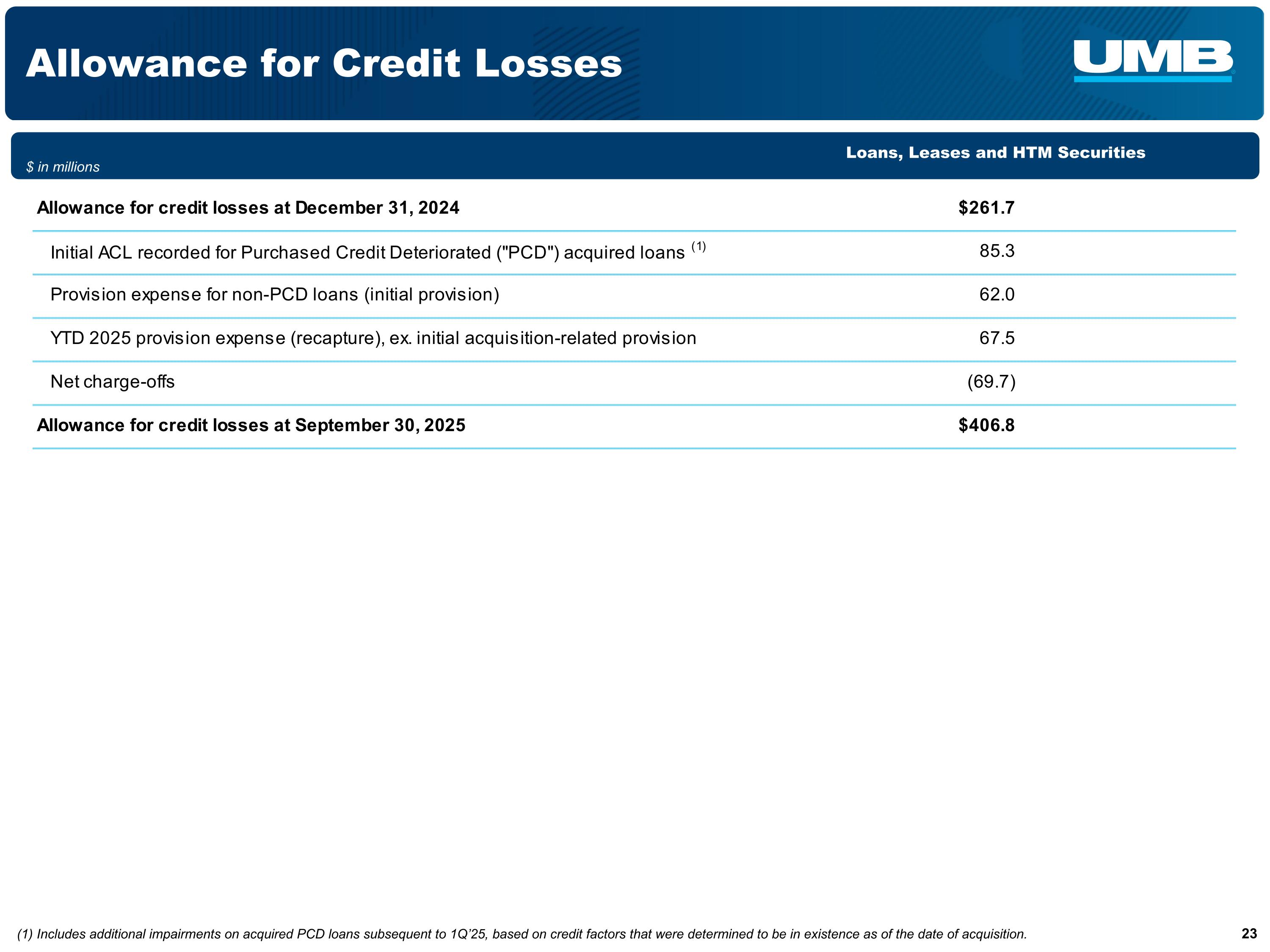
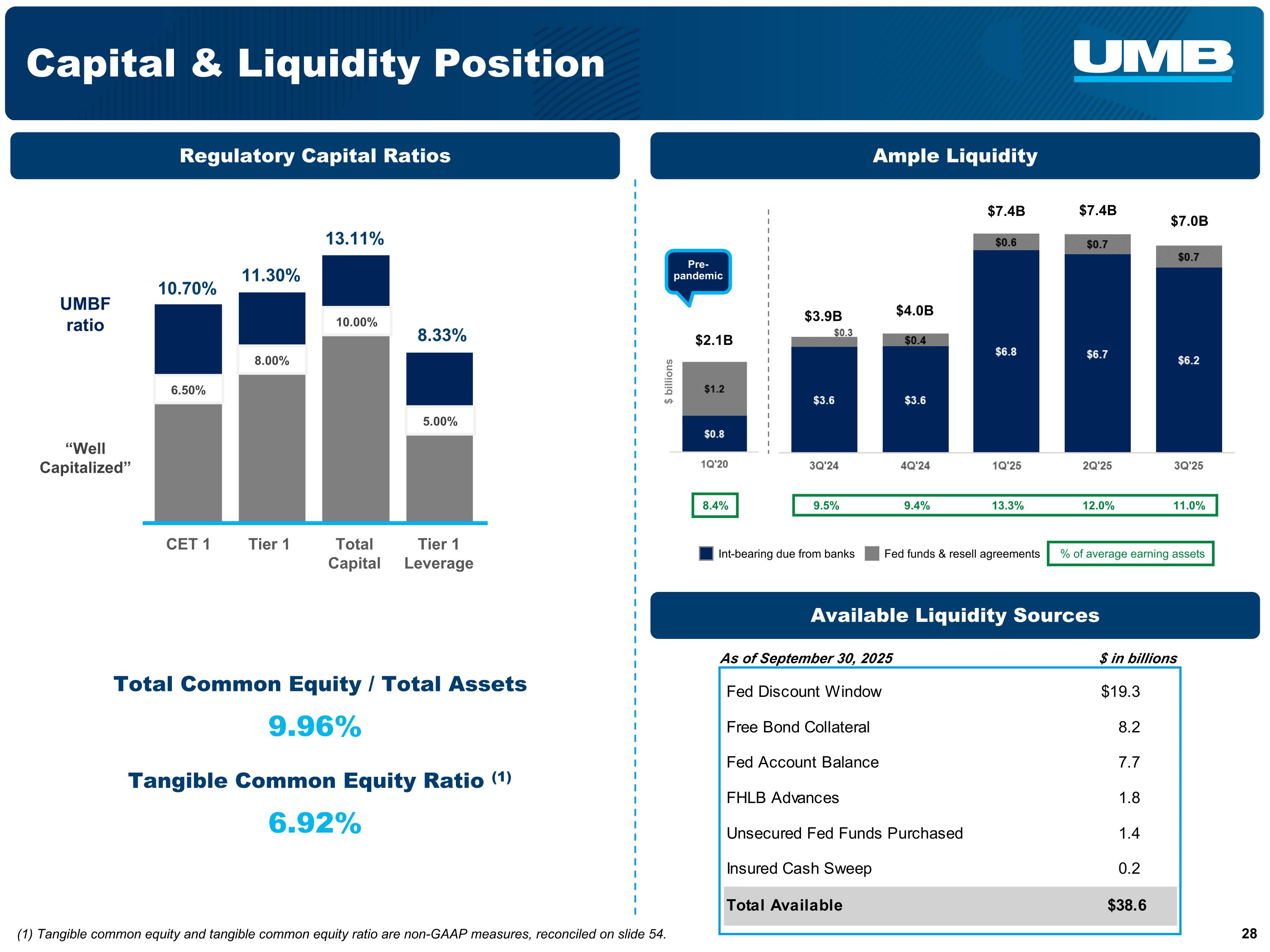
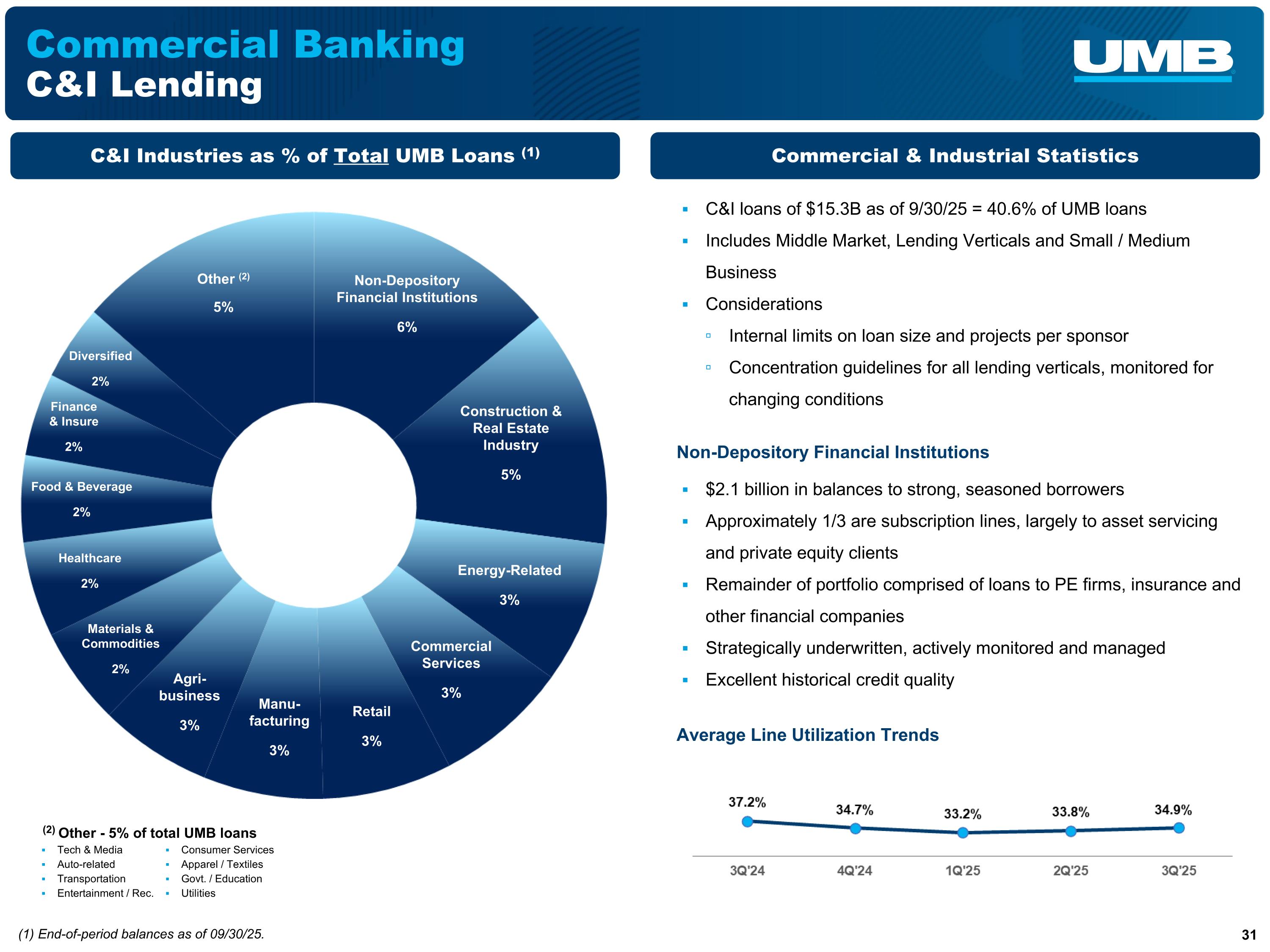
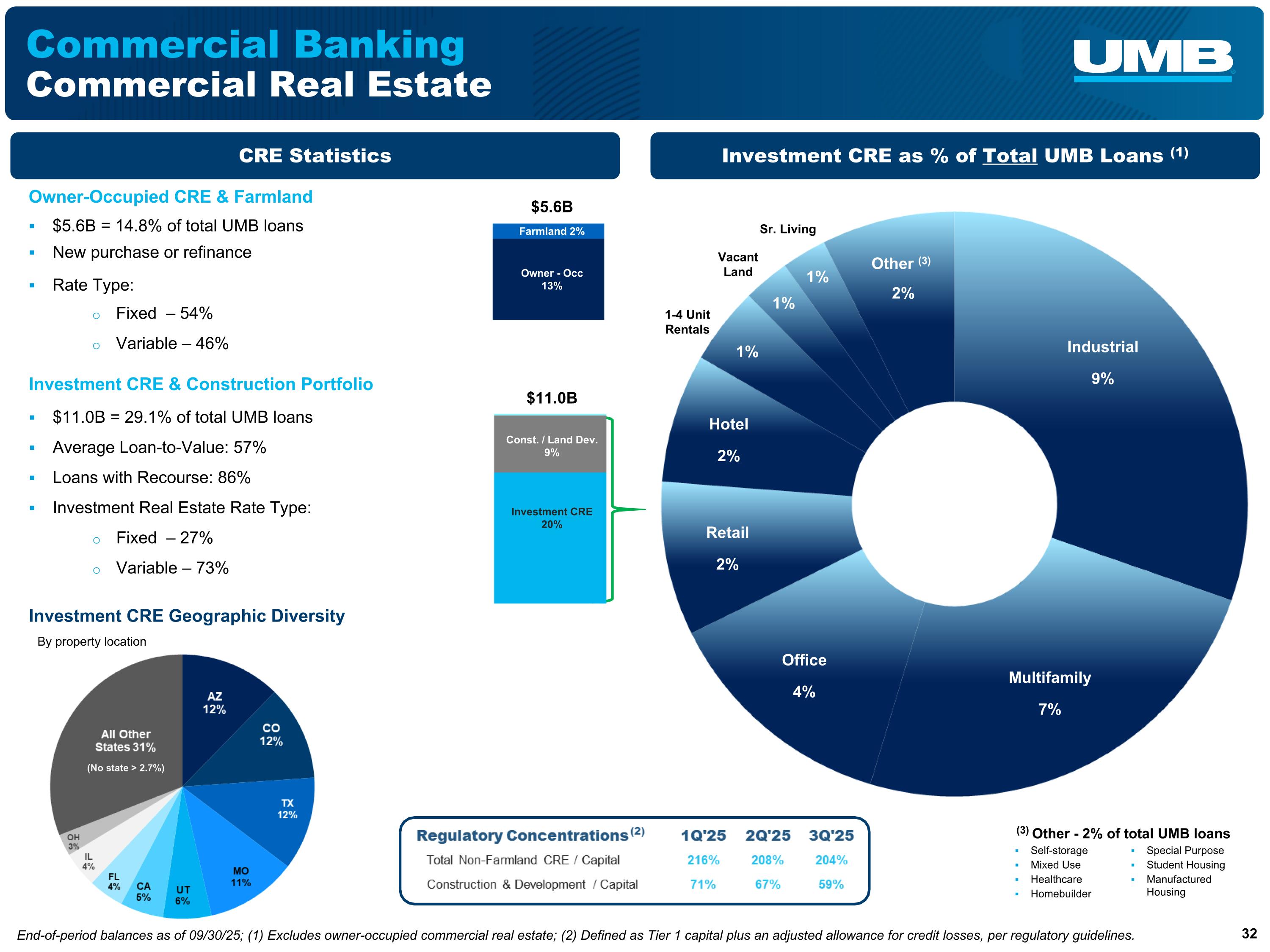
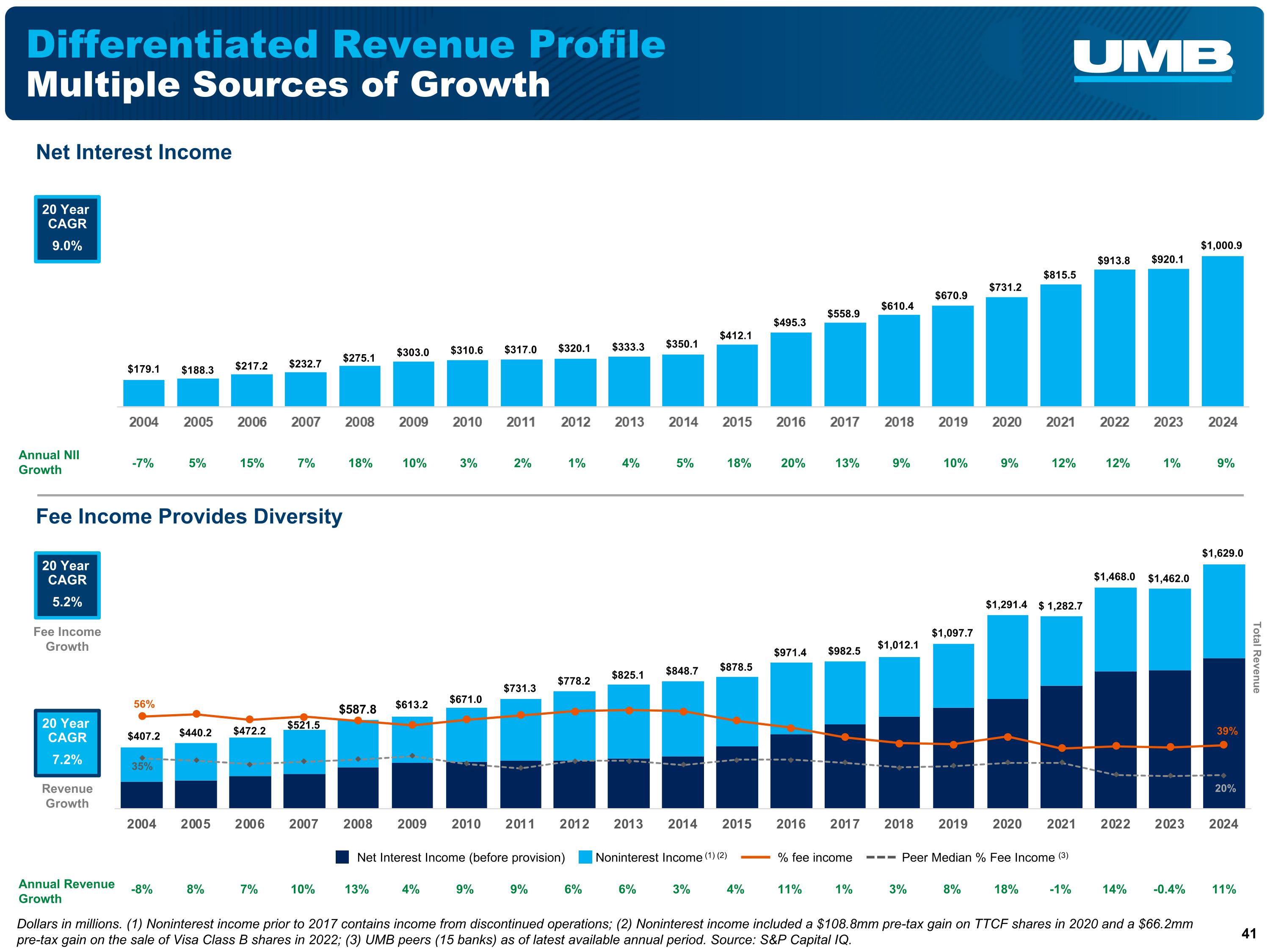
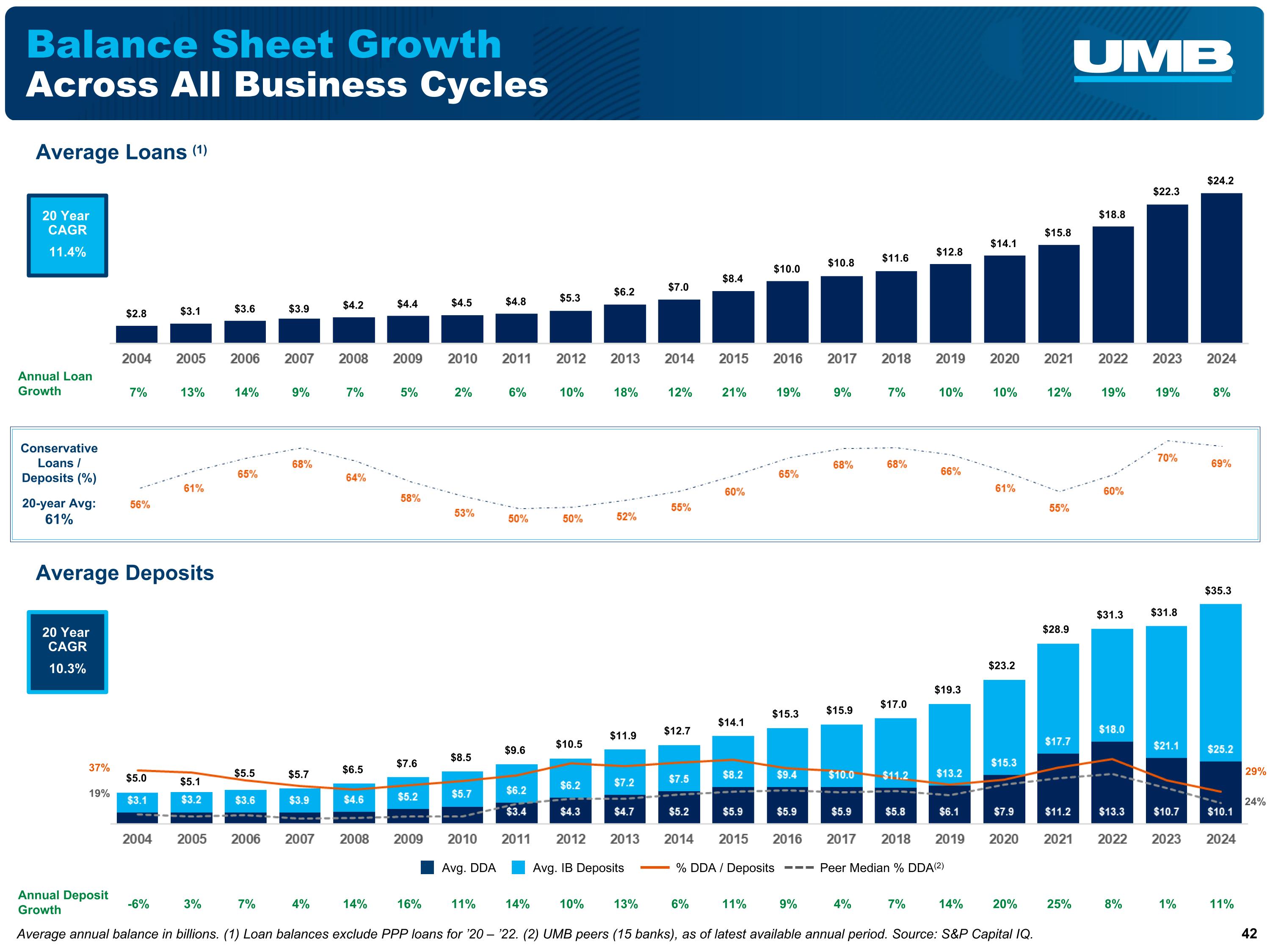
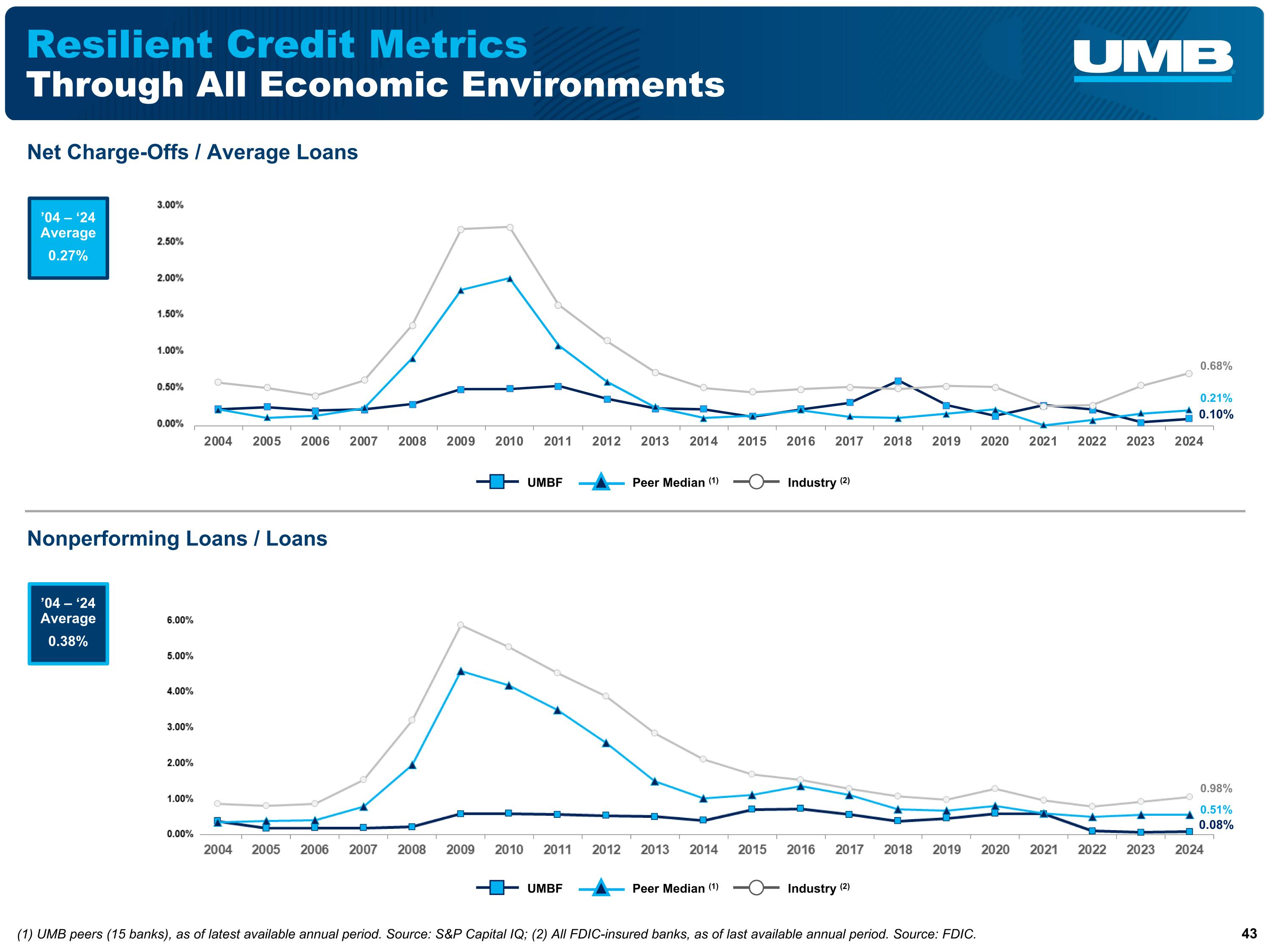
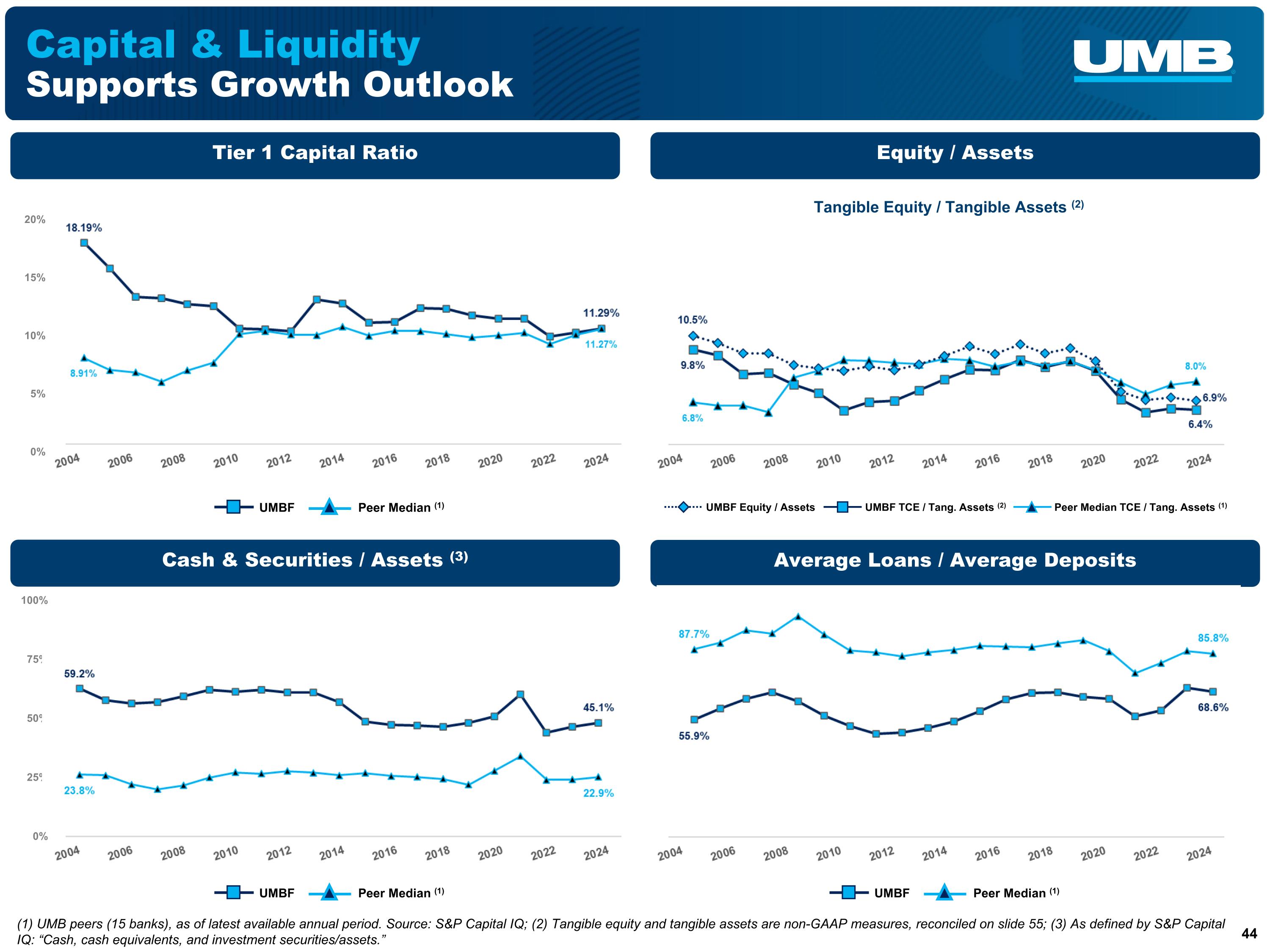
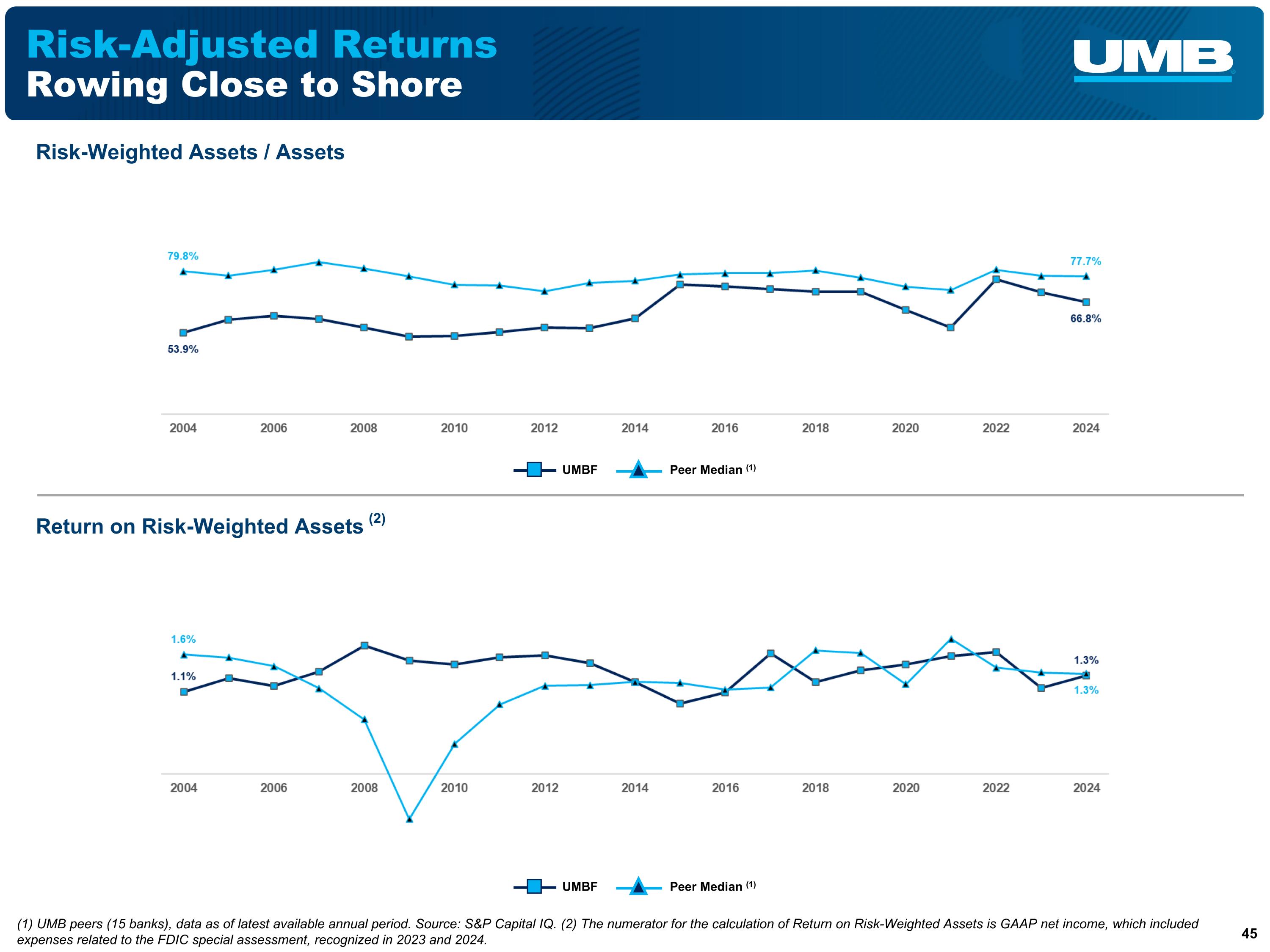
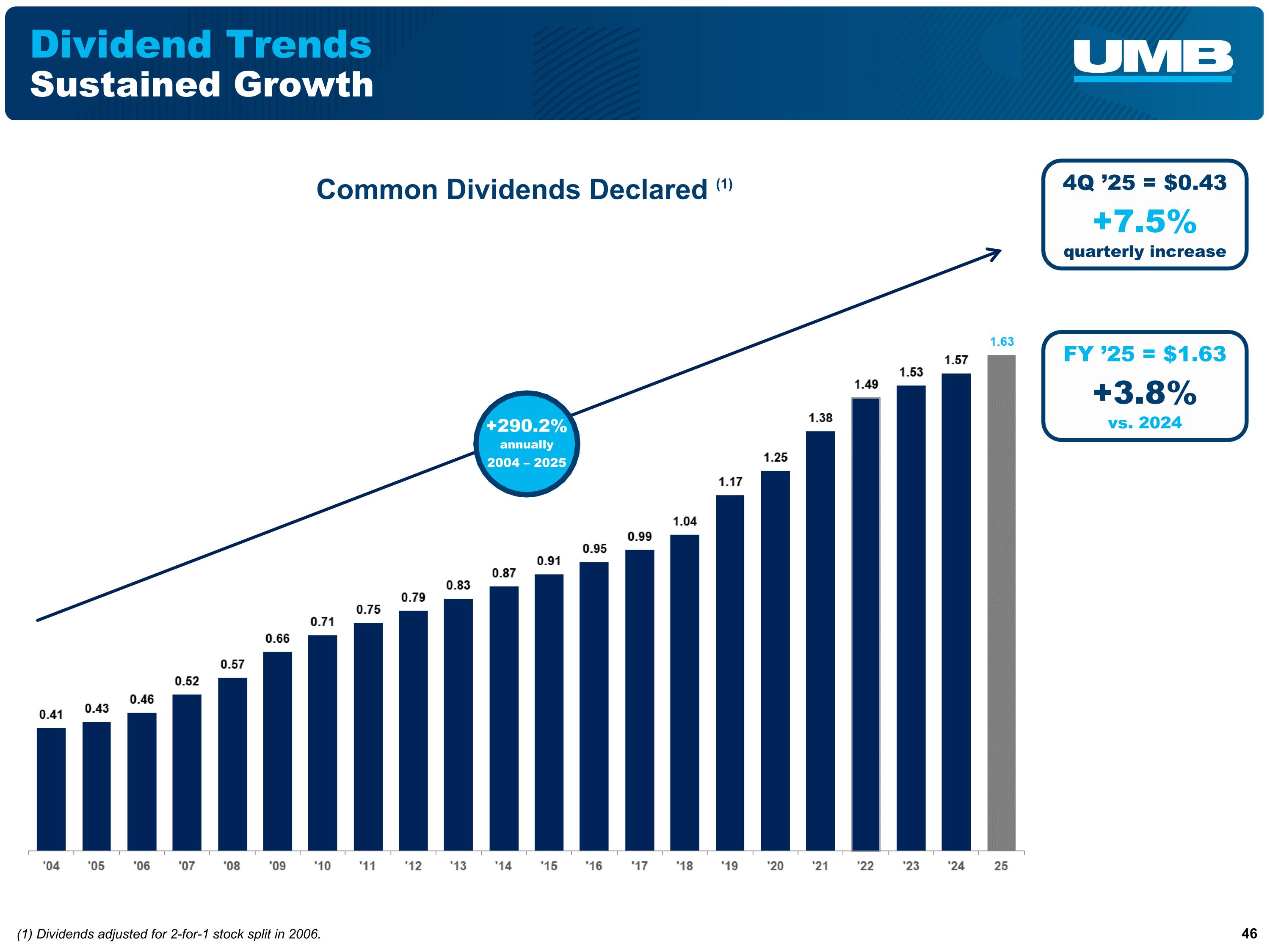
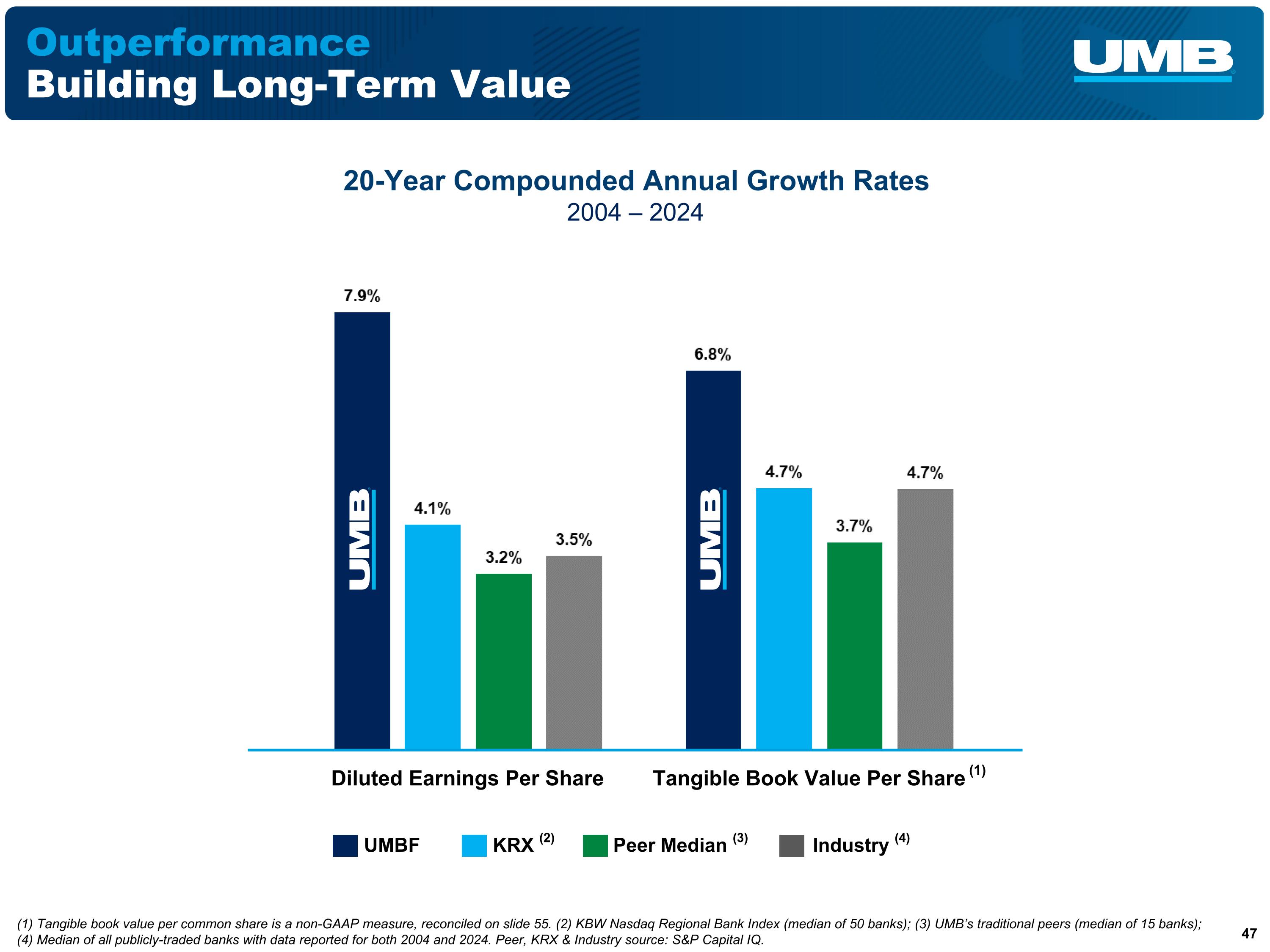
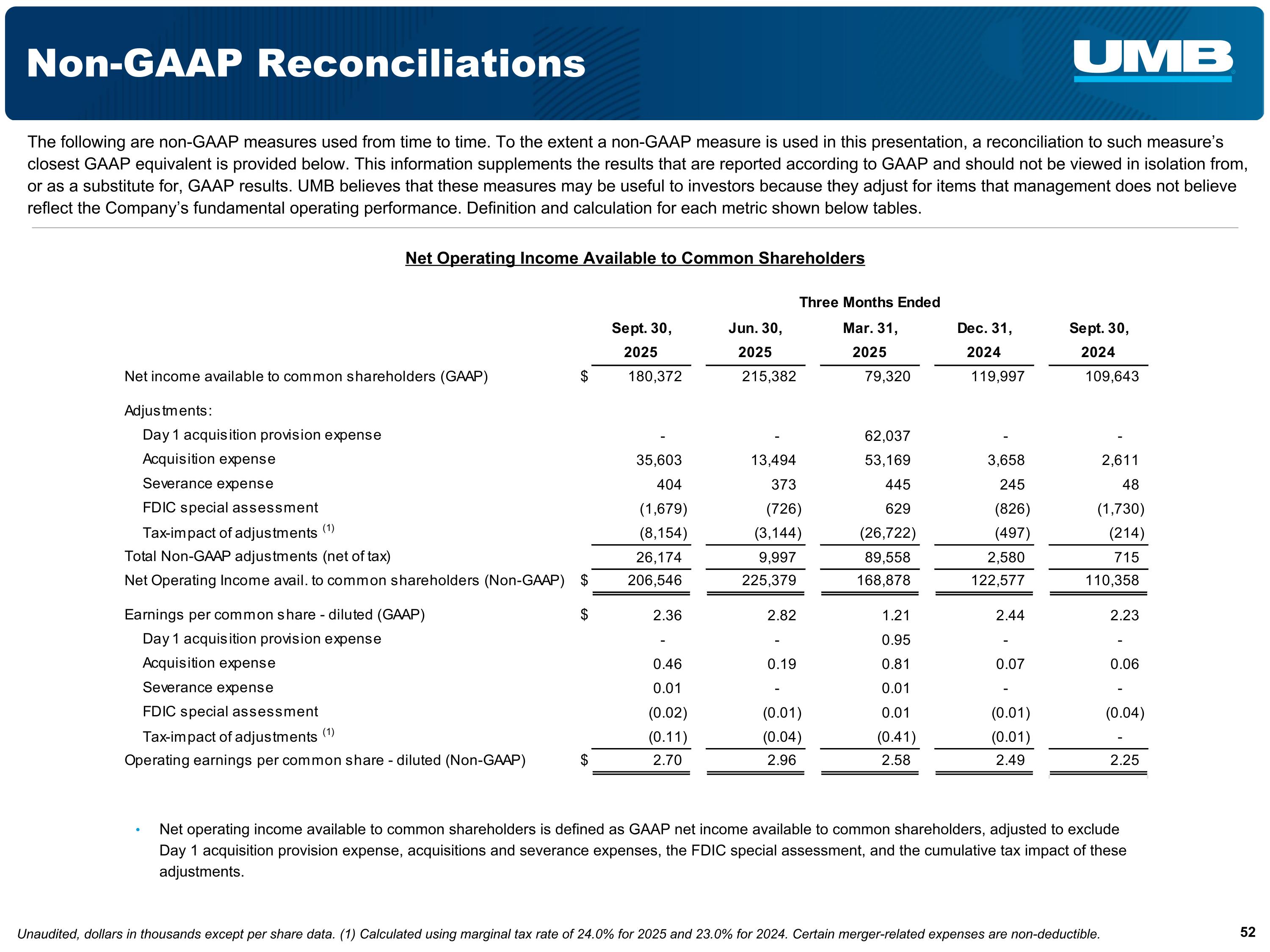
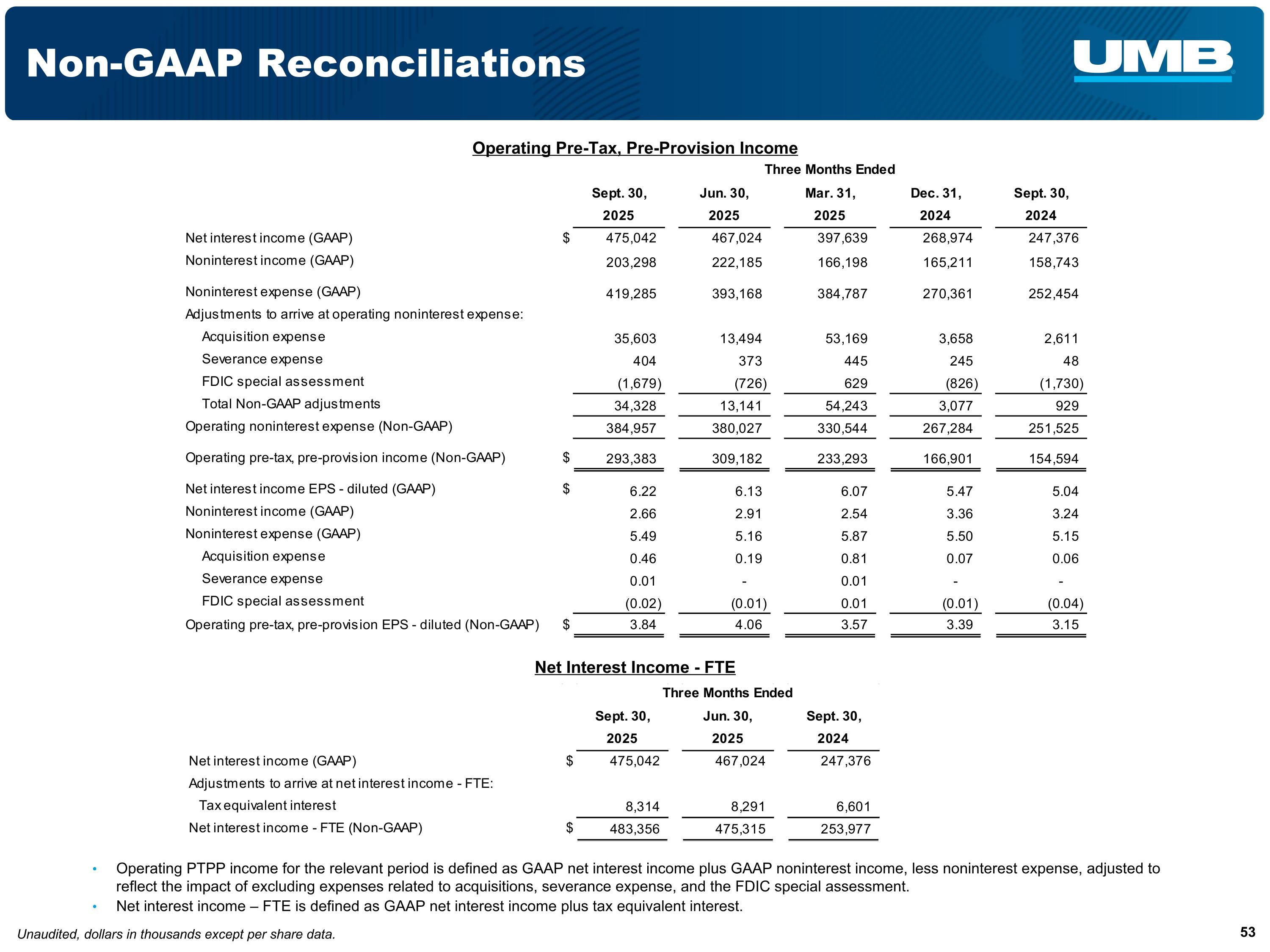
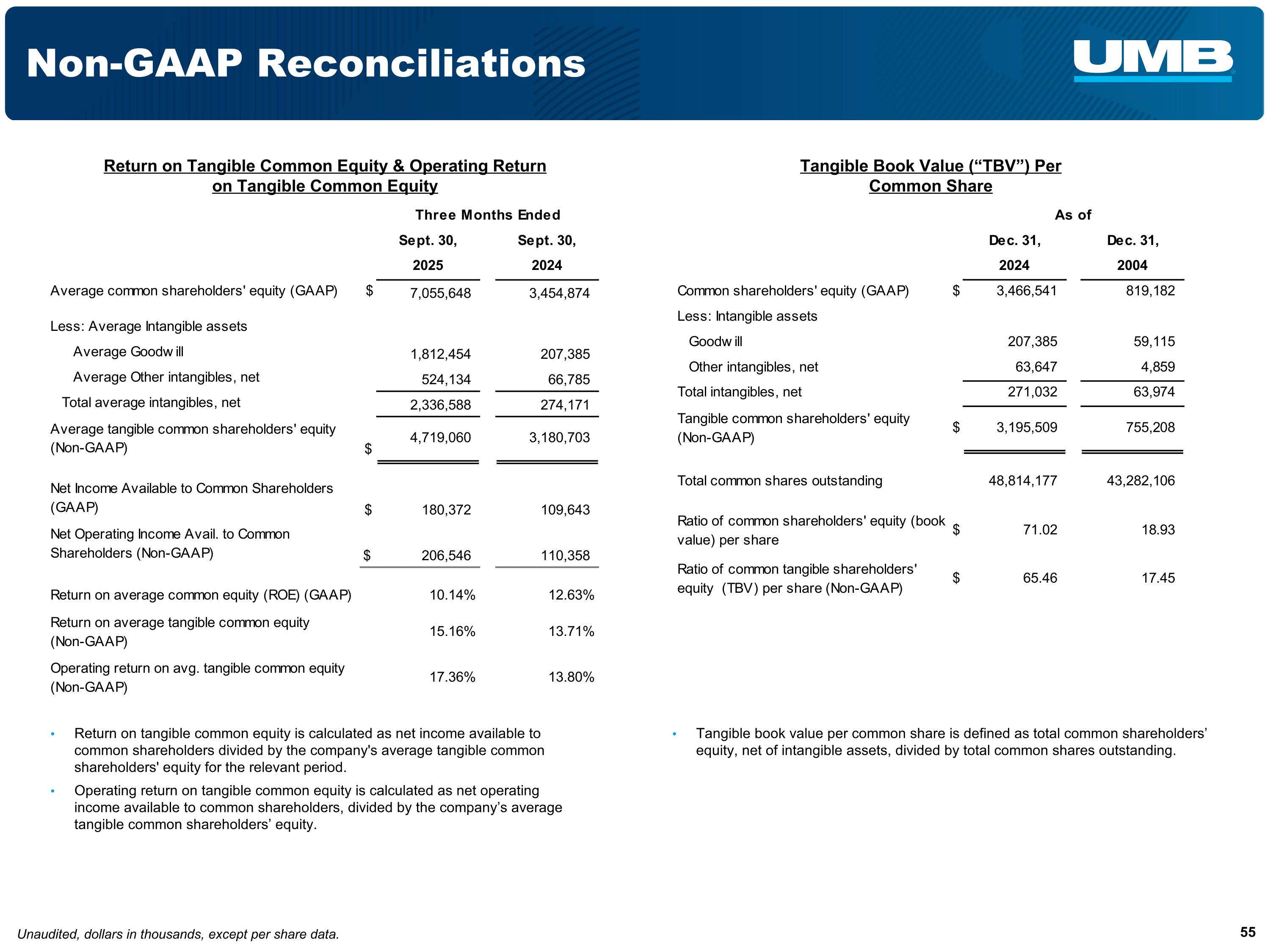
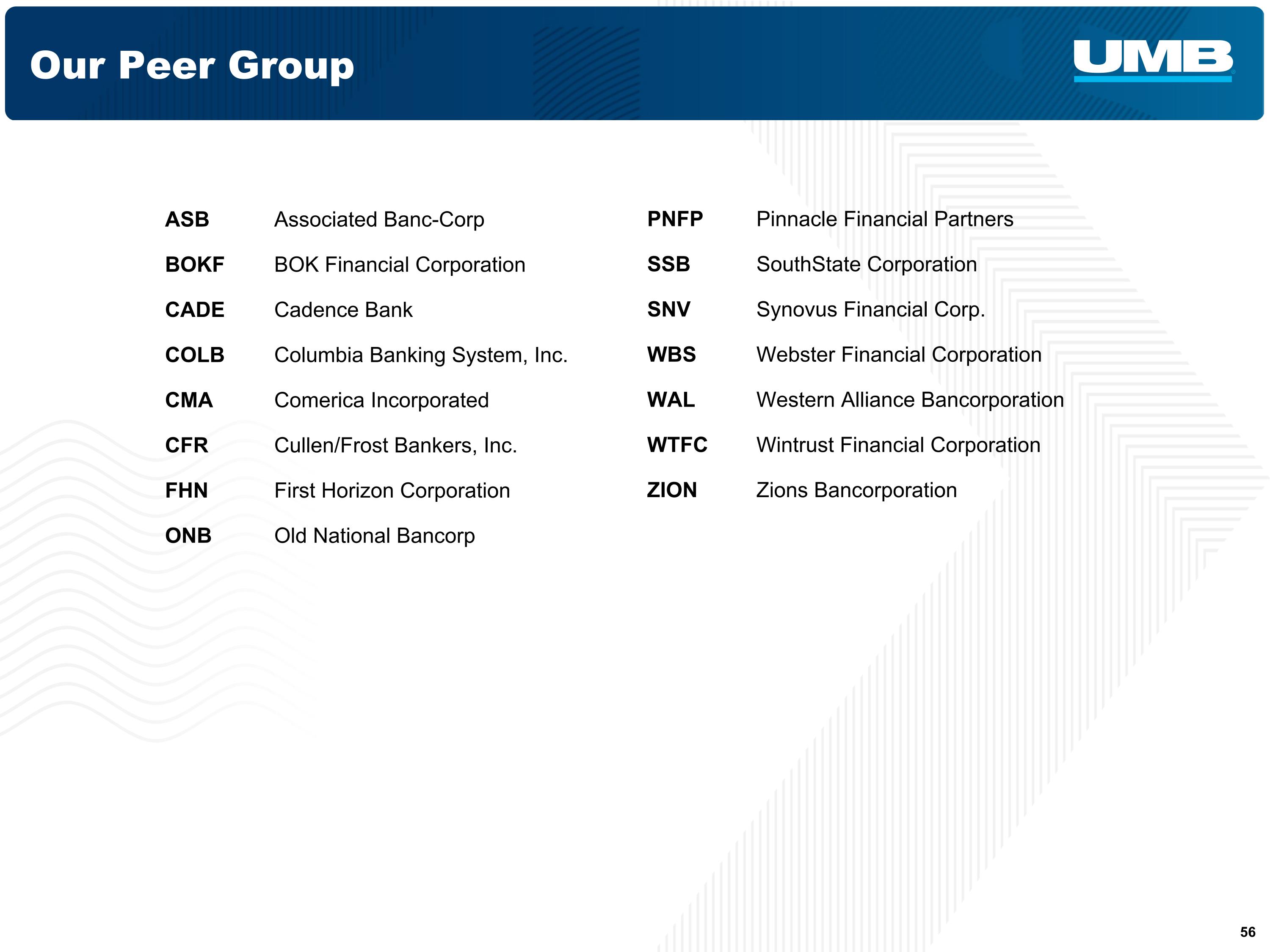
Thank you, Kay, and good morning, everyone. We'll share some brief comments about our third quarter results, then open it up for questions. As you may have seen in our recent release, I'm very excited that we've reached the important milestone in our acquisition of Heartland Financial early this October. We successfully completed the full systems and brand conversion of all HTLF locations. I'm incredibly proud of the teams that have been working together around the clock to make the smooth transition for our clients as well as for our associates, all while continuing to excel at their day jobs, which is evidenced by our strong third quarter results. We saw a new record for gross loan production, strong fee income, consistent credit quality and continued positive operating leverage. Reported net income available to common shareholders of $180.4 million included $35.6 million of acquisition expenses compared to $13.5 million in the second quarter. Excluding these and some smaller nonrecurring items, our third quarter net operating income was $206.5 million or $2.70 per share. Third quarter net interest income totaled $475 million, an increase of $8 million or 1.7% from the second quarter, driven primarily by continued organic growth in average loans and earning assets, partially offset by the impact of strong growth and higher cost interest-bearing deposits from our institutional businesses. Fee income was strong, increasing 12.4% on a linked-quarter basis, excluding the impact of market valuation changes on our equity positions. Trust and securities processing income was positively impacted by solid contributions from corporate trust, fund services and private wealth. And in investment banking, increased activity in agency and mortgage-backed trading drove nearly a 14% increase from the second quarter. Looking at the balance sheet, we had solid increases on both sides with 8% linked-quarter annualized growth in both average loans and deposits. Quarterly top-line loan production surpassed $2 billion for the first time with strong organic growth momentum supplemented by the continued success from our acquired markets. The rate of payoffs fell slightly to 3.6% and remains in line with historical trends. C&I was our strongest contributor for the quarter with more than 14% annualized growth over the second quarter average balances. Additionally, as I mentioned last quarter, we've begun offering mortgage products in our new regions in the spring and have been encouraged by the early success, which has led to nearly $20 million in closed loans. We continue to see a strong pipeline. Looking ahead in the fourth quarter, overall loan activity and pipeline remains strong, both in legacy and HTLF markets. Our loan growth has continued to outpace our peer banks. Banks that have reported third quarter results so far have reported a 5.5% median annualized increase in average loan balances compared to our 8% growth. With the recent discussions around lending to companies designated as nondepository financial institutions, we've added some stats on our C&I page to give some context. Expanded definition from the Fed on loans to NDFIs was merely a reclassification of a broad range of exposures that includes high-quality working capital or capital call lines, private equity partnerships and loans made to insurance companies. These have long existed within bank C&I portfolios. After recalibrating our reporting to meet these updated definitions, our portfolio was approximately $2.1 billion at the end of September, representing just under 6% of total loans. Approximately one-third of these are subscription lines, largely to our fund services and private equity clients. And like all of our loans, these are strategically underwritten and actively monitored and managed and have historically had excellent credit quality. Speaking of credit quality, our allowance increased to 1.07% of total loans on September 30. Total net charge-offs for the third quarter were 20 basis points, with the largest portion being credit card as has been consistent in past quarters. Net charge-offs on legacy UMB loans were just 8 basis points of average loans, down from 13 basis points in the prior quarter. Given what we know today, we continue to expect charge-off levels to remain near or below our historical averages for the remainder of the year. Total nonperforming loans were $132 million or 35 basis points of loans. The quarterly increase was driven by two legacy HTLF loans that have substantially adequate reserves today. Banks that have reported third quarter results so far have reported a median nonperforming loan ratio of 48 basis points. While we've seen a slight increase in nonperforming loans, we don't expect that there will be any significant change to our outlook for charge-off levels. We continue to build capital with a September 30 common equity Tier 1 ratio of 10.70%, a 31-basis point increase from June 30, moving closer to our pre-acquisition levels. Finally, as announced yesterday, I'm pleased to report that our Board of Directors declared a quarterly dividend of $0.43 per share to common shareholders. This represents an increase of 7.5% from the prior quarter and marks the 23rd dividend increase in the past 20 years. You can see our strong track record of growing our dividends on Slide 46. Since 2004, we've increased our annual dividend almost 300% while continuing to grow our balance sheet and tangible book value. Now I'll turn it over to Ram for more detail.
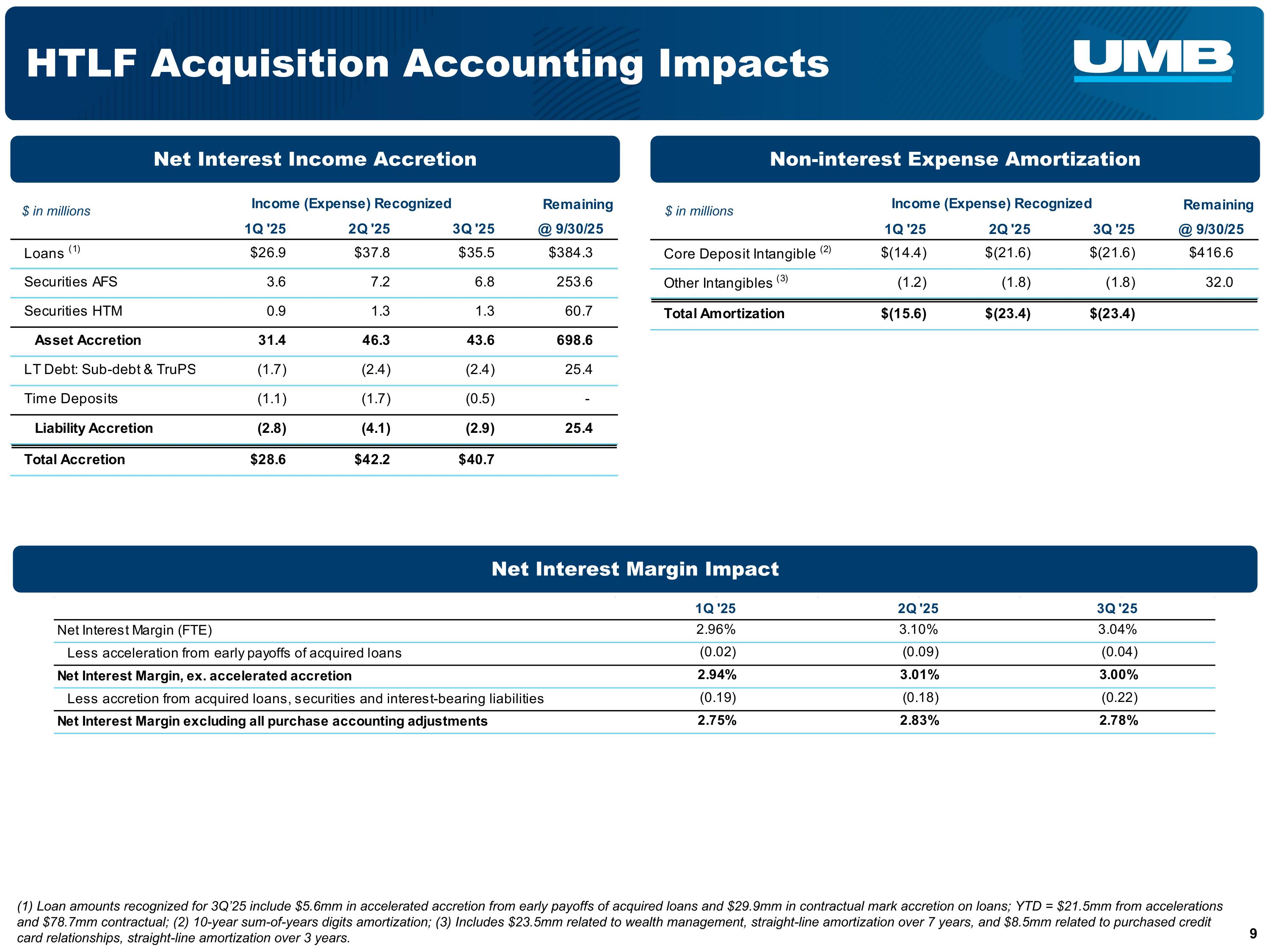
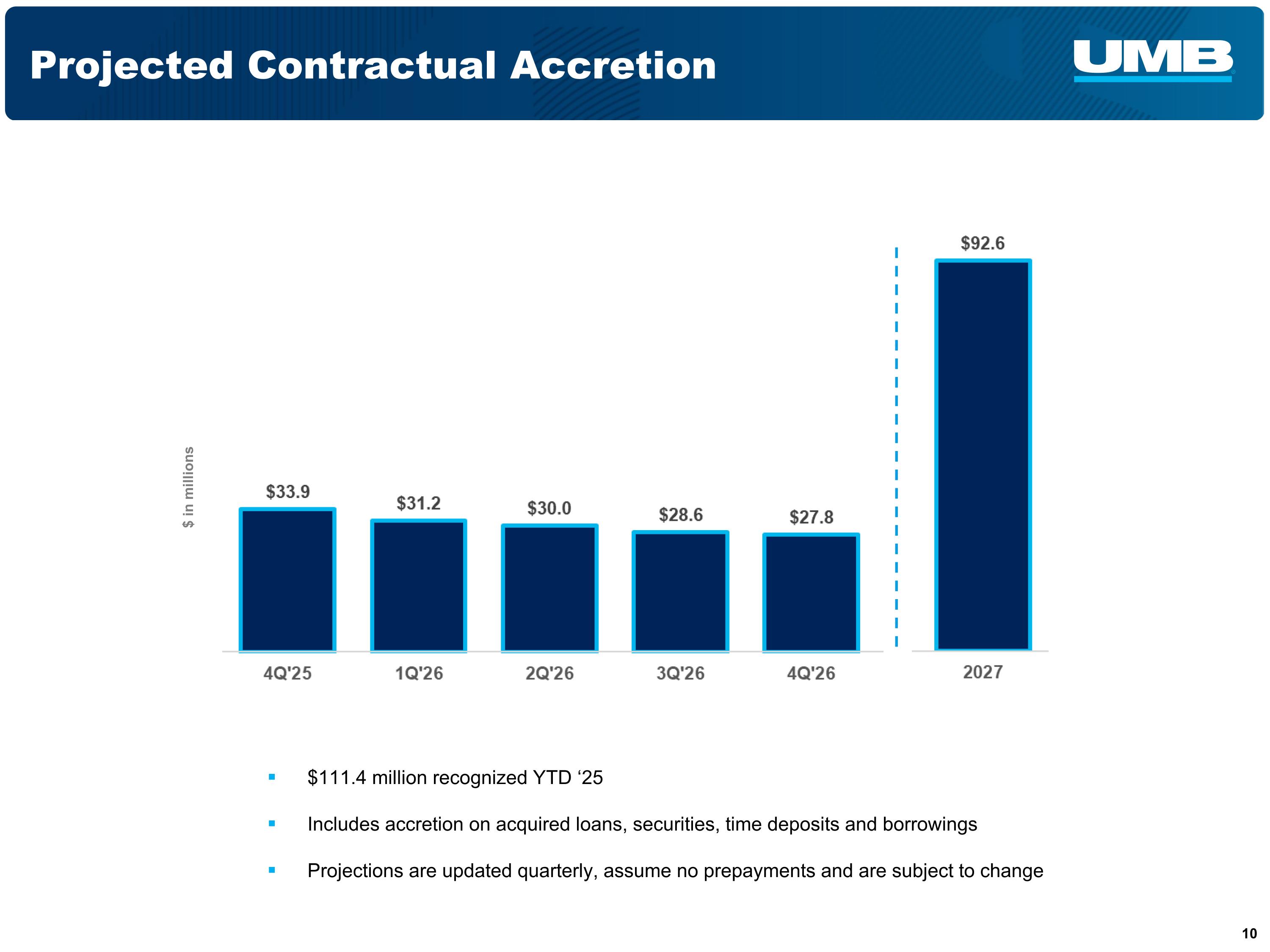
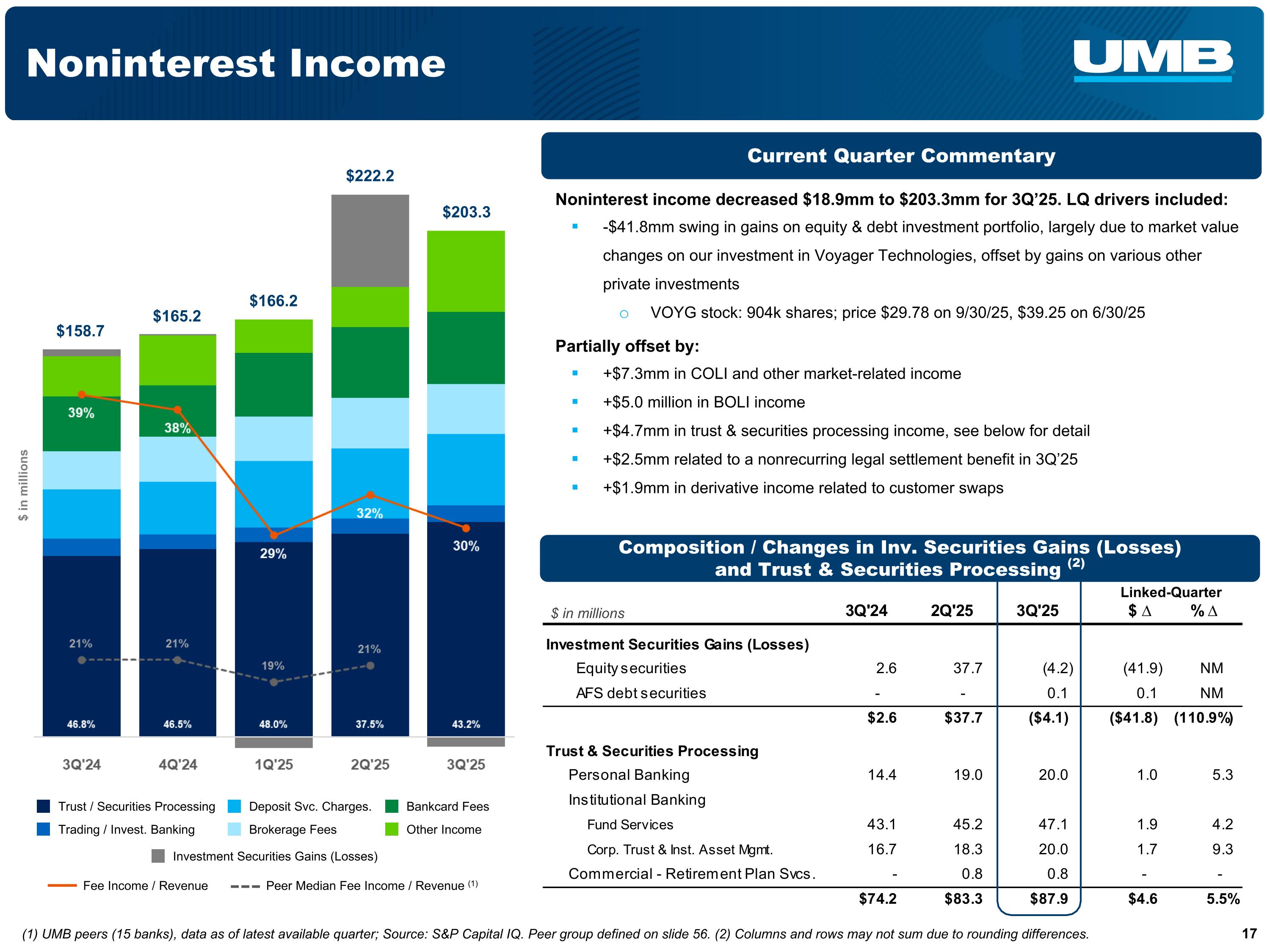
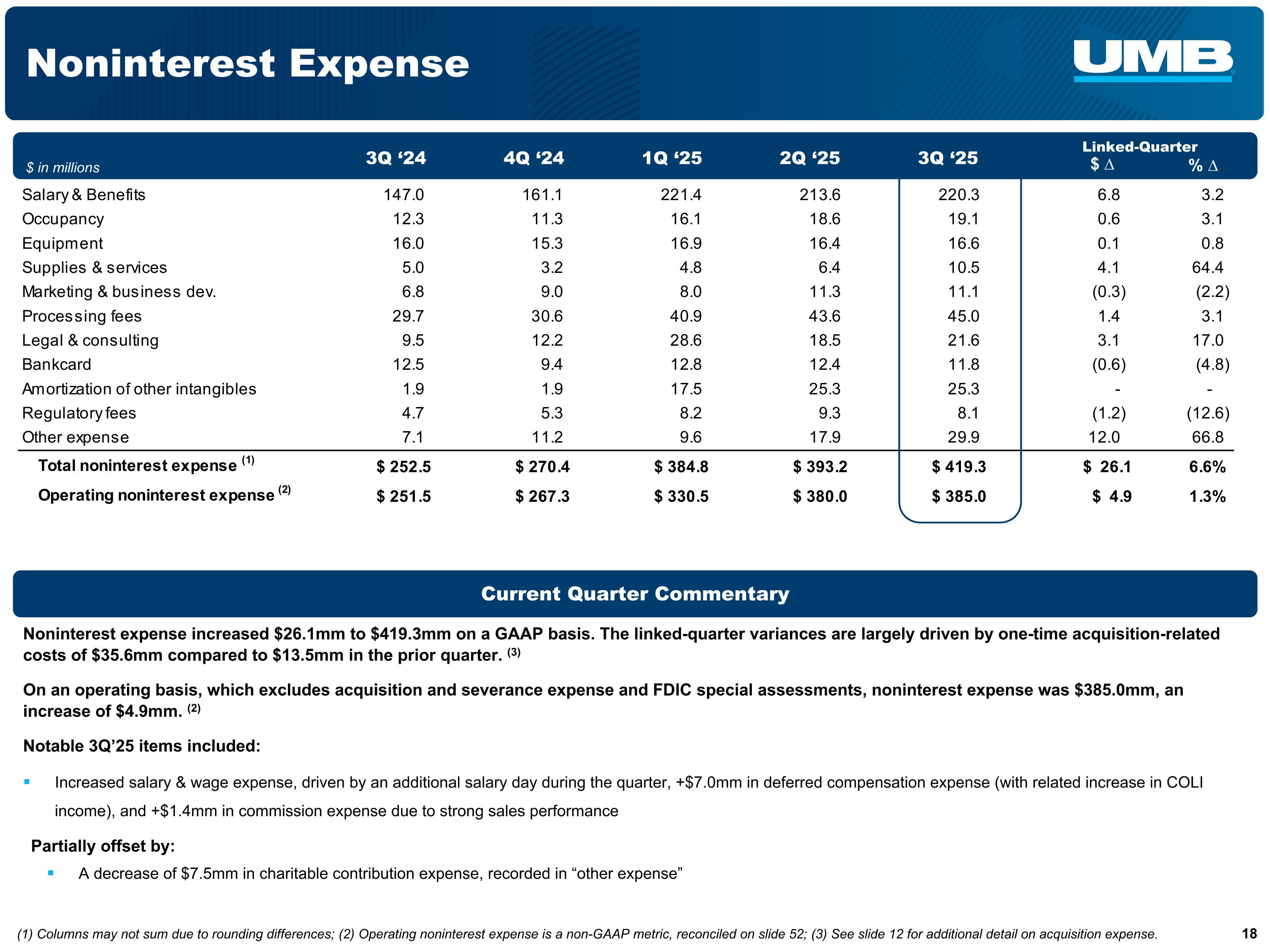
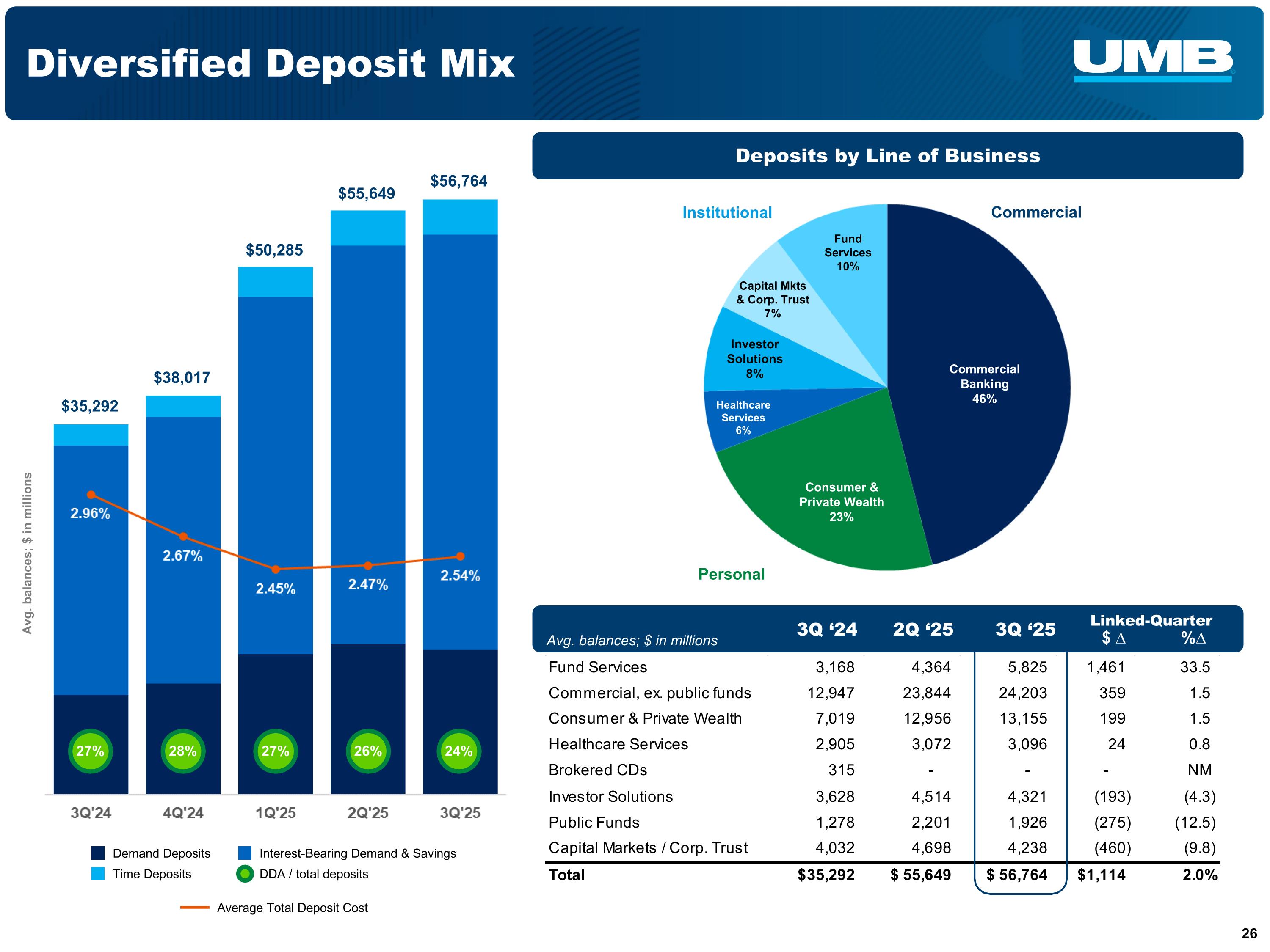
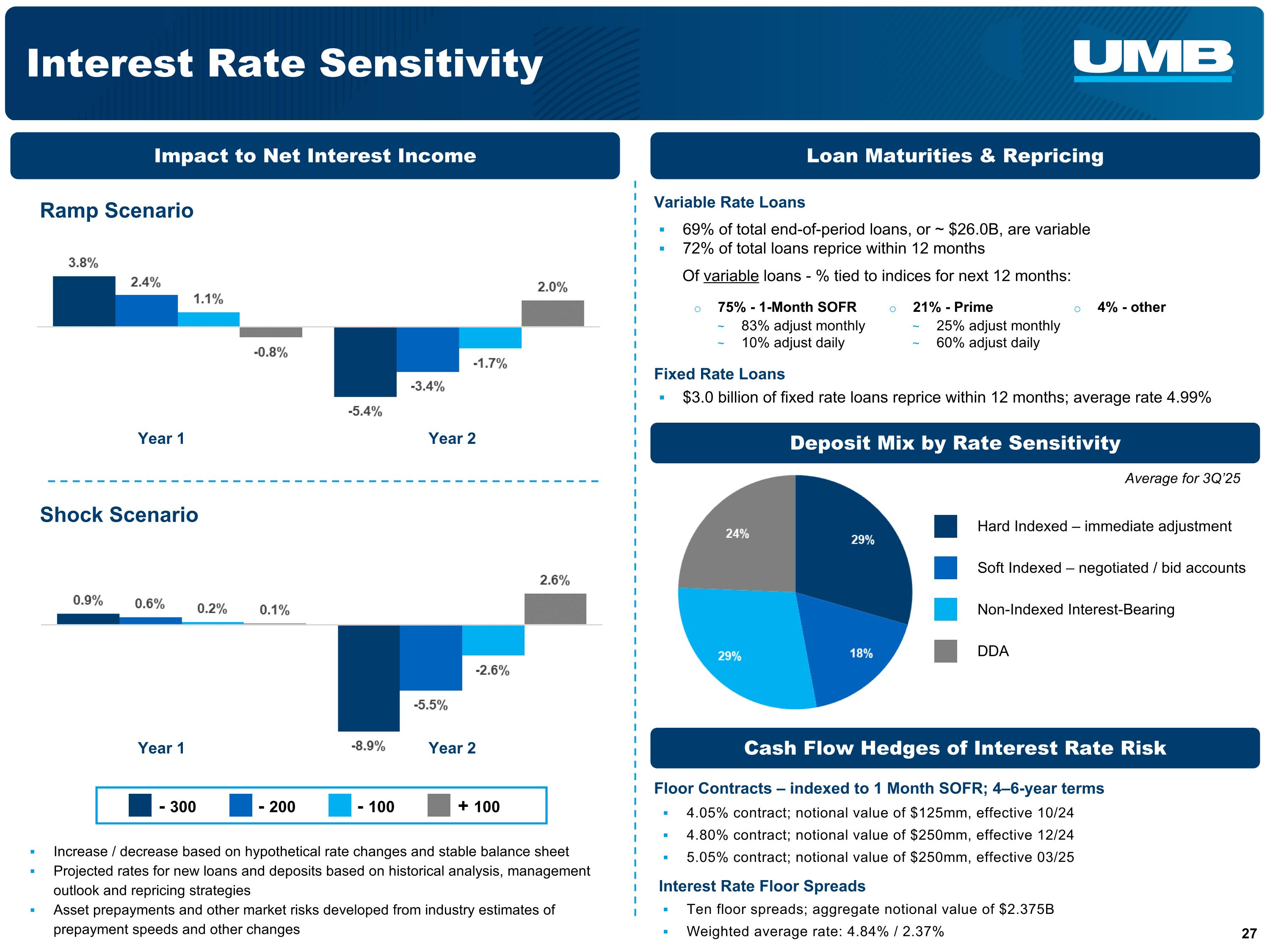
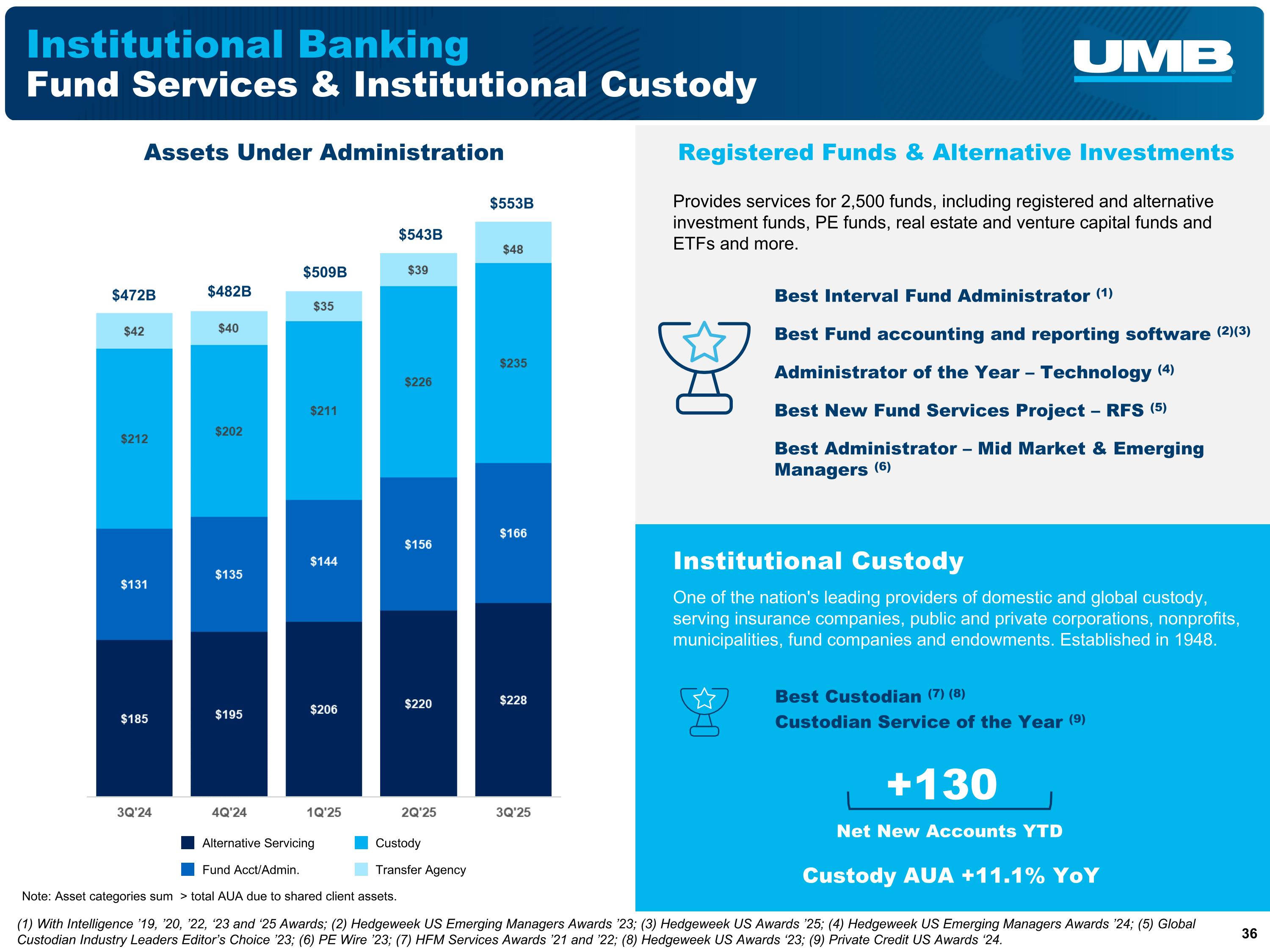
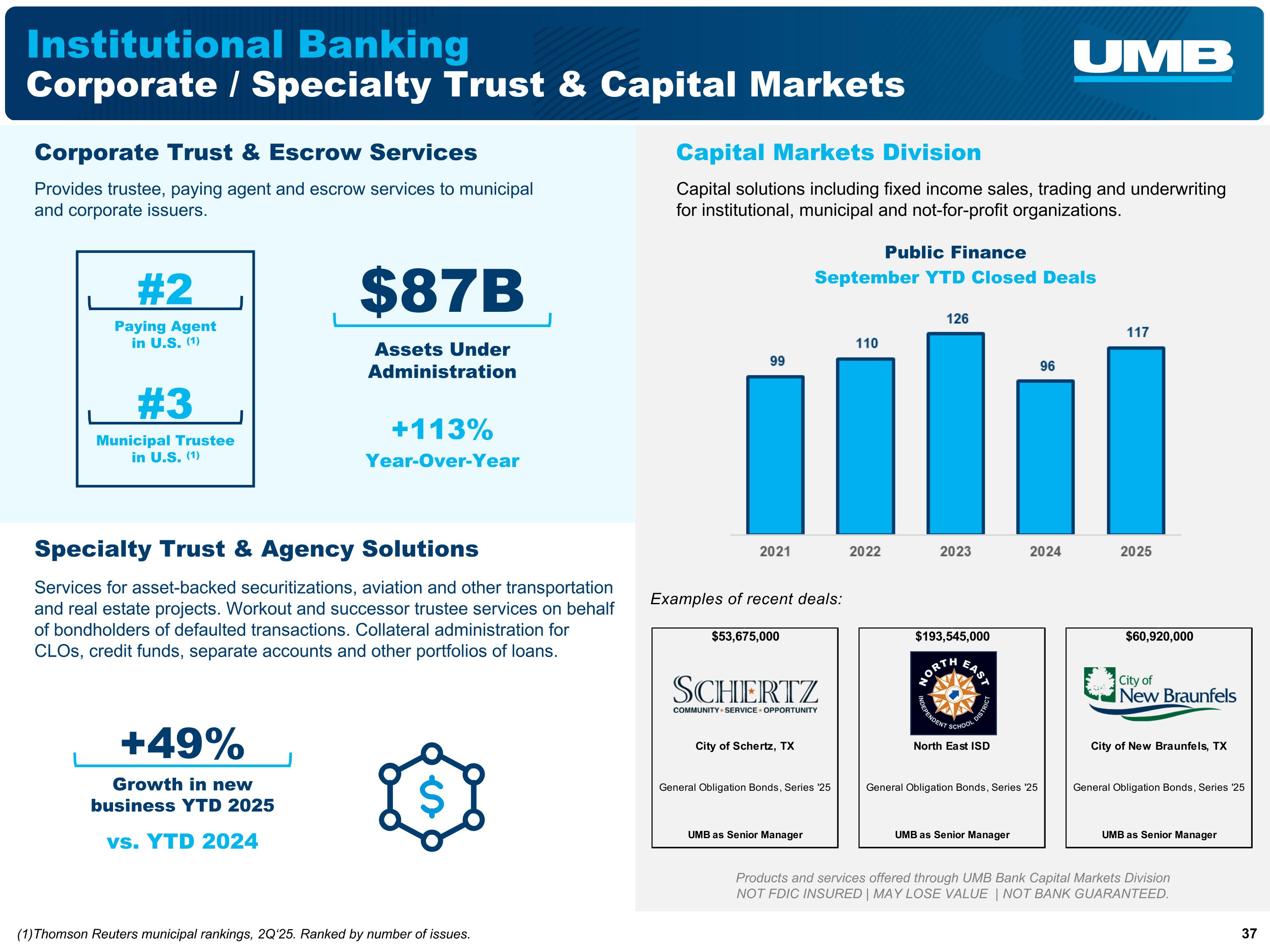
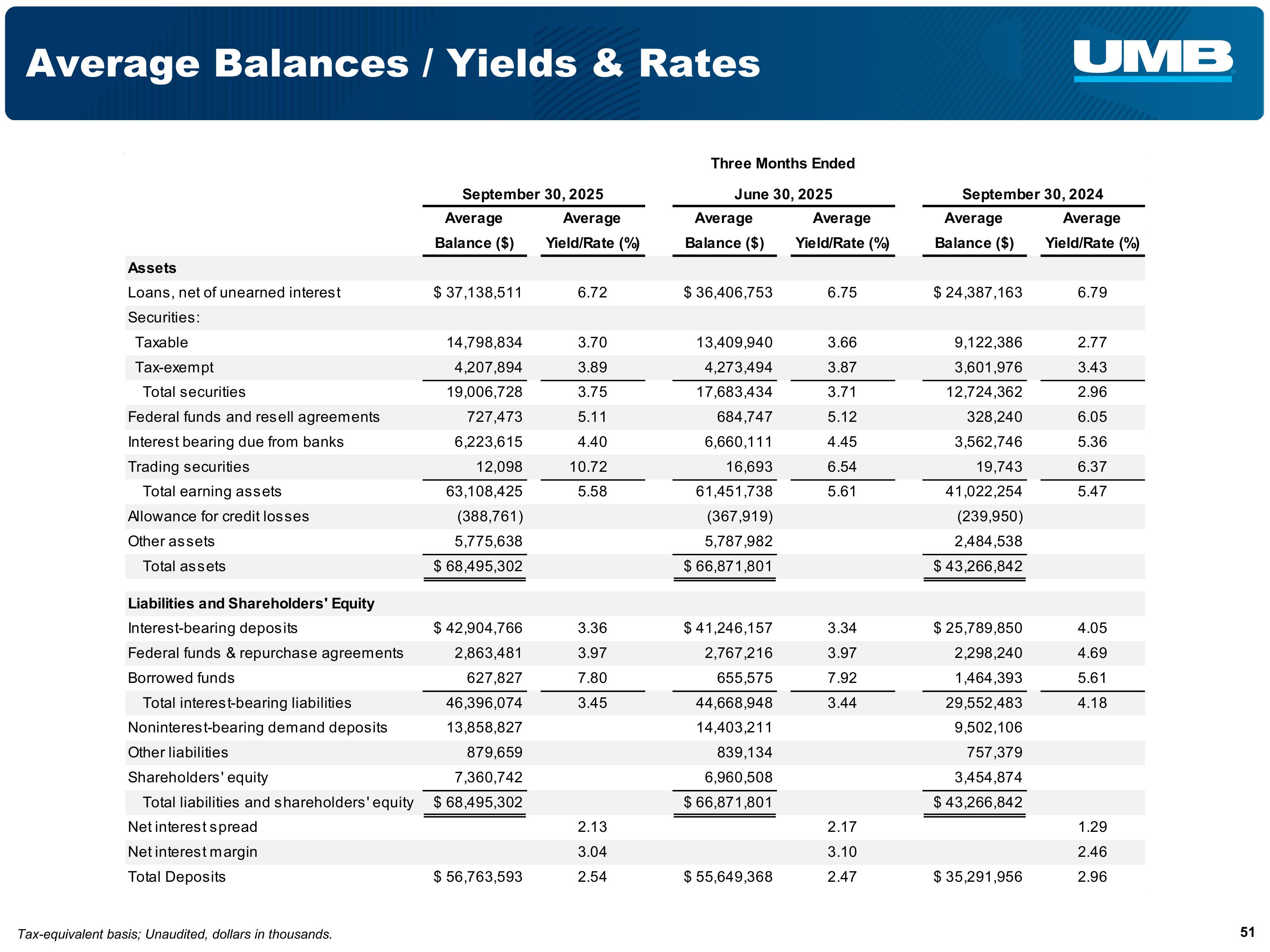
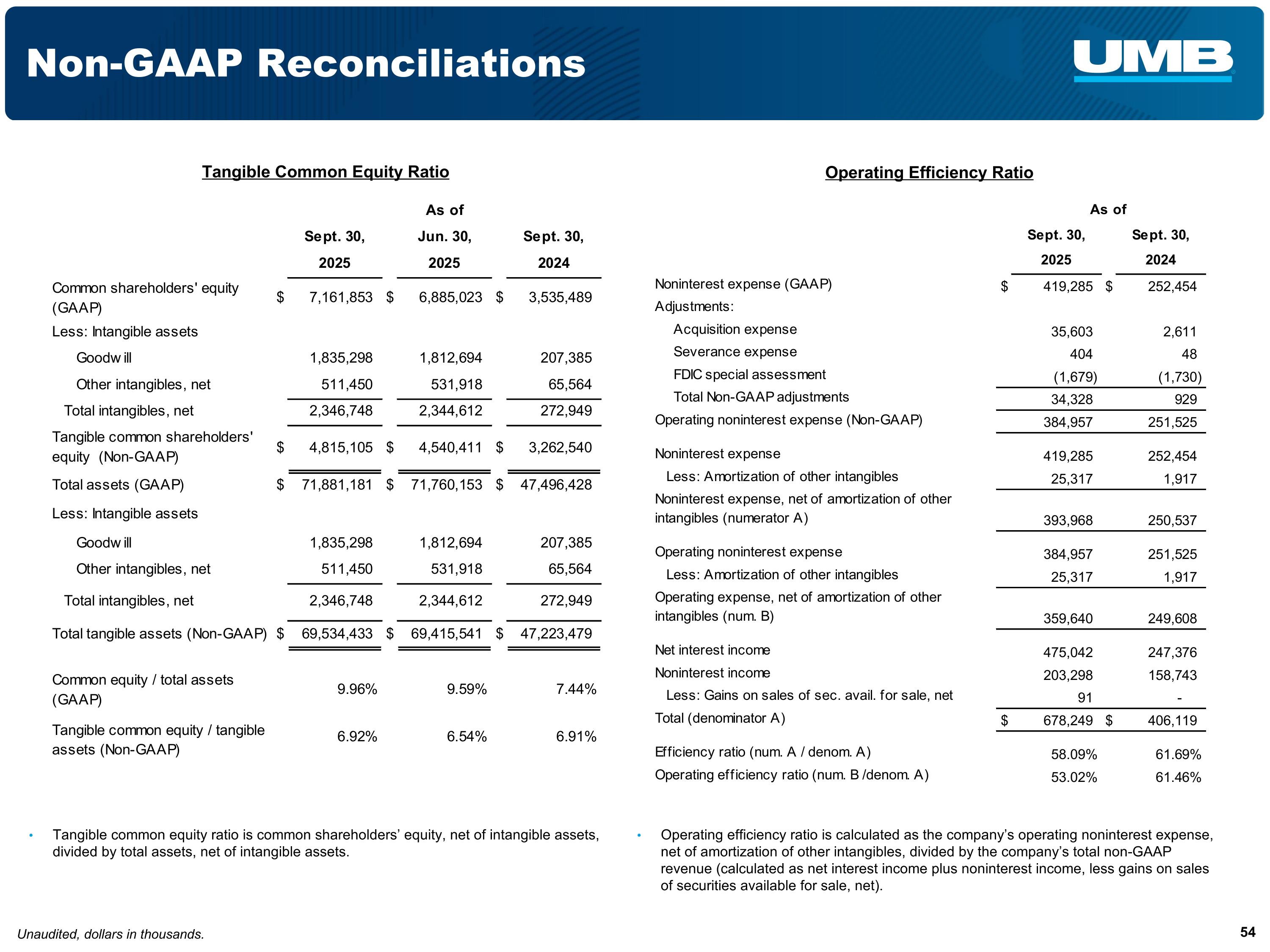
Thanks, Mariner. I'll begin with the purchase accounting update included on Slides 9 and 10 of our materials. Our third quarter results included $40.7 million in net accretion and net interest income, $5.6 million of which was related to accelerated accretion from early payoffs of acquired loans. The net benefit to net interest margin from total accretion was approximately 26 basis points. Our operating expenses again included $23.4 million in acquisition-related amortization of intangibles. On Slide 10 is the projected contractual accretion for the next 5 quarters as well as for full year 2027. Slides 12 and 13 include some key highlights and drivers of our quarter-over-quarter variances as well as a breakout of one-time costs by expense categories. You will see the accretion income there, along with the solid noninterest income growth Mariner mentioned. Metrics behind our fee income included a 6.8% increase in total institutional assets under administration, which now stands at $642 billion. Additionally, our Specialty Trust and Agency Solutions team have seen a 49% increase in new business year-to-date and public finance has closed 117 deals in 2025, an increase of 22% over 2024. Fee income will continue to be impacted by changes in market value of our ownership in Voyager stock. As noted, the September 30 closing price was $29.78 compared to $39.25 on June 30. The second quarter gain from the IPO of $29 million and a $9 million mark-to-market from the change in stock price during the third quarter resulted in a negative $38 million swing in fee income sequentially. As we've said previously, our pipeline remains strong in our private investment business, and we are likely to see periodic monetizations going forward. Also, as noted, excluding the investment gain line item and normal mark-to-market accretion on BOLI and COLI investments, we also benefited from some one-time fees this quarter to the tune of $6 million. These primarily included a $2.3 million BOLI debt benefit and a $2.5 million legal settlement paid to us. On the expense side, we had $35.6 million of merger-related costs compared to $13.5 million in the previous quarter. Excluding the impact of merger and one-time costs, operating noninterest expense was $385 million, an increase of just 1.3% compared to the second quarter. Looking ahead, we would expect fourth quarter operating expense to be in the $375 million to $380 million range to include a $2 million charitable contribution and the expected ramp-up in performance-related incentive compensation net of cost savings. We remain on track with our announced acquisition-related expenses as well as cost synergies. Turning to the balance sheet and margin. Reported net interest margin for the third quarter was 3.04%. Excluding the 26-basis point contribution from purchase accounting adjustments, core margin was 2.78%, down 5 basis points sequentially. The primary drivers of the linked-quarter decline in net interest margin were a 3-basis point negative impact from free funds and 4 basis points compression due to a strong 4% growth in average interest-bearing deposits, led by higher cost deposit balances held by our institutional clients. These balances totaling over $1 billion, coupled with the seasonal decline in DDAs, drove our cost of interest-bearing deposits higher by 2 basis points and our cost of total deposits up by 7 basis points. We realized blended betas in line with our expectations on our index deposits in the month of September, but the benefit was muted due to the mid-September timing of the FOMC cut. On Page 27, we disclose our current composition of deposits by rate sensitivity. As a reminder, our interest rate simulation on that page shows us positioned as essentially neutral and is a static balance sheet analysis where cash flows are replaced by similar instruments at current market yields. It does not contemplate growth in the balance sheet, which may impact overall margin. Relative to the third quarter core margin of 2.78%, excluding accretion, we expect fourth quarter margin to be essentially flat. Key assumptions include one additional 25 basis points rate cut in October and the residual benefit from the September rate cut, along with a slight seasonal rebound in DDA balances and positive churn in the bond and fixed-rate loan portfolios. Offsets include the impact of September and October rate cuts on our variable rate loan portfolio and lower benefit of free funds in a lower rate environment. Finally, our effective tax rate was 20.4% for the third quarter compared to 19.2% for the same quarter last year. For the full year 2025, our effective tax rate is expected to be between 19% and 22%. Now I will turn it back over to the operator to begin the question-and-answer session.
Operator
And our first question comes from Jon Arfstrom with RBC Capital.
Speaker 4
I asked about this last quarter on production trends, and I just want to go back to it because trends are up again. Curious, Mariner, you touched on it, but can you dissect it a little bit more for us? Is that improvement from borrower sentiment? Anything you're doing differently? Is it Heartland? Or is it something else? And then maybe comment on the sustainability of that?
Yes. Thanks, Jon. It's a long-standing answer. We use the term runway and penetration often when we talk about our loan growth. And it's really across all categories, all regions. It's coming from Heartland, it's coming from UMB. And as we've talked before, our loan growth budgeting and forecasting comes from what the penetration is locally, the size of the opportunities that we have from the towns that we're in and then importantly, what the capacity and capability of the officer core is. So it's a bottoms-up exercise and the tenure of our associates building long, deep pipelines and the sheer opportunity we have across our footprint. So nothing really new to report, lots of execution opportunity as long as we keep our people, keep let them build their pipelines. And the exciting thing is it's really early days on seeing the penetration opportunities in the new footprint. So we're seeing some already early signs from it, but I mean, it's just super early days. When we did the acquisition, we talked about the chassis and the engine. So the chassis is that we picked up through Heartland is absolutely what we thought it was going to be, and we're seeing the early indications of that success. But again, really good news. It's still very early.
Speaker 4
Okay. Good. Maybe for you, Tom, credit has been topical. I think yours looks just fine and you guys touched on it a little bit. But anything new on credit? It looks like the balance changes are primarily Heartland driven, but anything to note on some of the core trends on credit?
Speaker 5
No, we're still very pleased with how we're handling the new Heartland credits. And we've talked about the last couple of quarters, the fact that we've identified a lot of these. We have already put reserves against them, and now we're just working them through. So still feel very good about where we are today and what we see over the next couple of quarters in terms of charge-offs. We think we'll be right in line with what we've talked about and the one thing to keep in mind is we did have a couple of larger additions to the nonperforming. We still expect those to come out in good shape. We're secured. We have reserves against them. We're secured. We just need to work through them. So still feel optimistic about the economy. Our borrowers are making money. So it's kind of the same message we've had the last couple of quarters.
And I would just reiterate that our comments on guidance around charge-offs, I just reiterate that, which is that we don't expect anything different, and we'd expect the remainder of the year to be at or below our historic charge-off levels.
Operator
And our next question comes from David Long with Raymond James.
Speaker 6
Ram, I appreciate the color on the fourth quarter outlook on the expenses. But as we look into the first quarter of '26, you guys have completed the core conversion. How should we be thinking about the step in expenses into the first quarter with the conversion being done then?
Yes, I will address that. We don't provide specific guidance beyond the next quarter. I’ll focus on the key points. We anticipate that all the cost savings we projected from Heartland at the time of the announcement will be realized by the end of the first quarter. Back on the first legal day in January, I mentioned we achieved close to $70 million in annualized cost savings. After the conversion, we've taken measures that contribute an additional $5 million quarterly, which totals about $20 million in extra savings, leaving approximately $30 million remaining to be realized in the next three to four months. This will be fully integrated. The reason I can confidently address your question is due to the core inflation affecting UMB in certain investments. However, we still expect results to be in the range of $375 million to $380 million.
Speaker 6
Got it. Just to be clear, it sounds like there might still be some costs that need to be addressed in the first quarter. Is the second quarter the one that's expected to be free of these issues?
Speaker 6
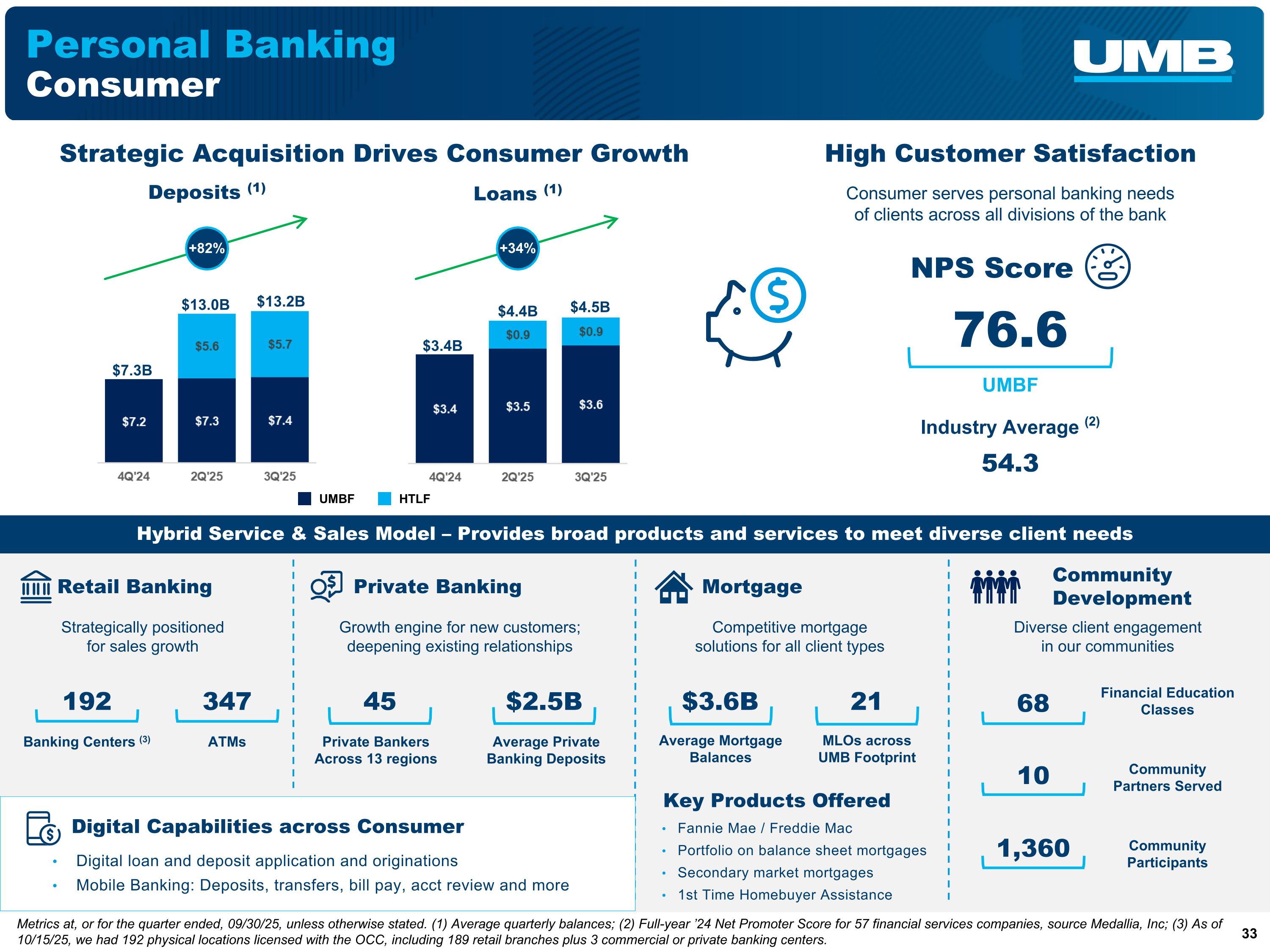
Okay. Okay. Perfect. And then switching gears, just on the lending side, with the acquisition of HTLF and bringing in their lenders, how have they been integrated? And are they continuing to operate with the same sort of customer focus as they had under the HTLF brand? Or are there opportunities for them to step up and maybe take on some larger relationships? Just talk about that integration process.
I'll start this off and then let Jim chime in. As we discussed earlier, the advantage here is that we were able to implement our approach across the organization from day one. We had sufficient talent in our group with regional credit officers who could be deployed throughout the entire area to provide guidance and quick turnaround times, access to decision makers, and more. This has not only allowed us to maintain their prior performance but I believe to enhance it in terms of turnaround times and lending quality. They seem to be very satisfied with what we are offering. The transition has been swift because we weren't trying to blend two different cultures. Jim, would you like to add anything?
Yes. There, I don't have much else to add other than the former HTLF officers certainly embraced it. They have more support in market, more ability to turn answers around to the clients quicker. And our sales process, it differs in various banks, but we feel like our credit culture is extremely strong, and they've embraced what we do, and it's also increased their ability on higher hold limits where it's necessary. So it's working great. It really is.
Yes. The most important thing is that we are not combining two different cultures, which could slow down our progress. Therefore, we have no such issues to deal with.
Operator
The next question comes from Brian Wilczynski with Morgan Stanley.
Speaker 8
Maybe just staying with Heartland and the opportunity there. It definitely sounds like you're still early innings in terms of the benefit. Can you just elaborate a little bit more in terms of where you see the most opportunity for new loan production, either across Heartland's regions and in particular or any particular loan categories where you're seeing the most opportunity?
How much time do you have? It really varies across different regions and stages. For example, California is a major market opportunity with endless possibilities for us. The focus is on the pace and type of hiring we can manage there, making it difficult to quantify. Rockford turned out to be a positive surprise for us; we anticipated some added benefit, but its proximity to Chicago and the productivity from the team there has exceeded our expectations. Wisconsin also presents numerous fantastic opportunities, with a great team in place. I hesitate to single out specific areas because we have many exceptional people across all markets, including a lot of valuable activity in New Mexico. Some opportunities correlate with population size, suggesting more potential in densely populated areas. We also consider how many people we have already hired versus how many we can still bring on board, and our current market penetration. There is significant opportunity for further penetration; even achieving a small share, say 10% in those markets, could triple UMB’s size. This potential is immense, and we are just in the early stages of retaining and expanding the talented team we have built over the next few years.
Speaker 8
That's really helpful. And then I wanted to ask about bank M&A activity clearly picking up across many parts of the country, including in your footprint. I was wondering what opportunities that presents for UMB, either as an acquirer or as a way to win business from other banks who are doing deals? How do you think about the opportunity for the bank here?
Yes. I'm going to reiterate some comments I've been making about this subject for some time. We don't need to do M&A. We have a very strong engine. But because of that very strong engine, we do believe strategically, over time, we want to augment our loan growth ultimately as a company with acquired deposits through M&A because they're sticky, they're granular, they're low cost and they're hard to come by to ultimately keep up with the kind of loan growth we've had over time. So we think it is a good strategic move for us to back up the engine we have with augmented acquired underleveraged deposits to really great franchises across our footprint. So we don't have anything other than a desire and a strategic focus. It is part of our strategy. So we build relationships and are looking for good partners over time. No need from a time line perspective other than we just think over the life cycle of UMB, it's good and additive to add good partnerships to the well-run banks to the mix.
Operator
And the next question comes from Jared Shaw with Barclays.
Speaker 9
I guess sticking with the capital discussion, you grew CET1 this quarter. It's still below where it was before the Heartland deal. Do you think you could deploy capital through a deal with the CET1 here? Or would you want that to be above 11% before sort of embarking on any capital strategies?
Well, there's a lot of moving pieces in the M&A space. Anything from picking up a bank that has excess capital itself to our ability to earn back very quickly after an M&A transaction to raising capital, et cetera. I mean, there's any number of variances and variables to answer that question with. We certainly think over time, for some one quarter or two or a couple of quarters connect to each other, we'd like to be at higher levels of capital. We're very comfortable dropping down for a couple of quarters if it's based on a high-quality transaction. Ram, I don't know if you want to add anything to that?
Yes. Just on the capital side, Jared, related to the M&A comment, our capital build to get back to 11%, that will happen within one or two quarters on the pace that we're growing, right? So we are ahead of our schedule in terms of what we thought would happen to our capital accretion from the Heartland transaction because of both the benefits of the merger as well as for UMB outperformance. So that could be a couple of quarters away.
Yes. And so the answer to the extent that M&A played a role on that, those were my answers.
Speaker 9
Great. Regarding the securities portfolio, last quarter you suggested we might see increased growth in securities. How are you approaching the cash securities mix as we head towards the end of the year?
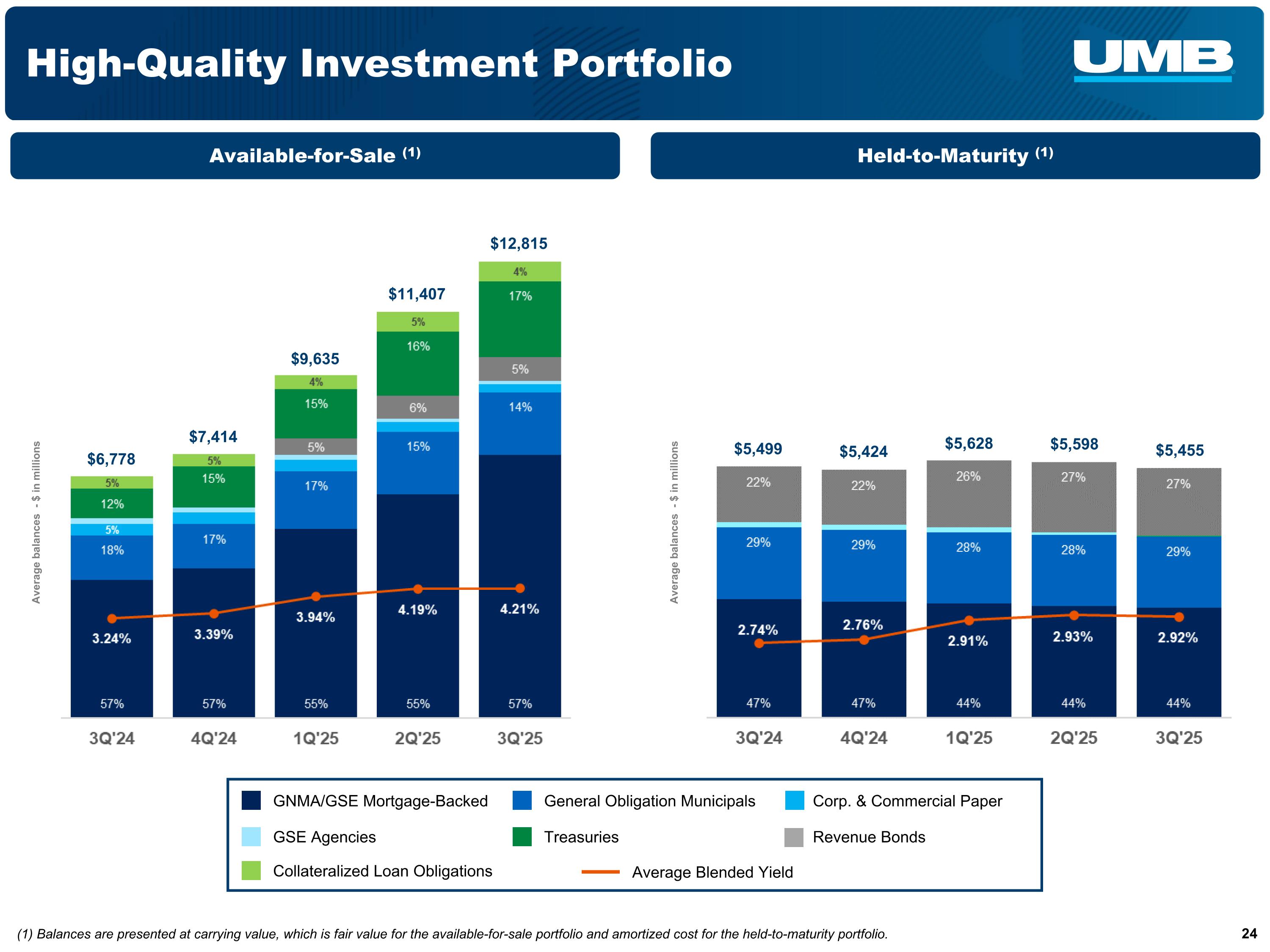
Yes. What I said last time was our treasury managed portfolio, which includes the Fed account will be about $24 billion. So we've added a new line on the summary pages you noticed what's between AFS held to maturity and the portfolio. So we could see based on the overbuy activity that we were doing, we could see that going up to about $24.5 billion versus the $23.7 billion that you are seeing for third quarter averages.
Speaker 9
If I could ask one last question about the accretion. If we receive the cut as anticipated in your outlook, what impact could that have on accelerated accretion? How much do you believe is at risk with another cut in terms of our ability to accelerate?
It's difficult to determine exactly what's causing the prepays. It could be due to the market, property sales, or various other factors. I'm unsure if the initial 50 basis points cut will significantly impact refinancings at this stage. Ultimately, it's uncertain. What we present on Page 10 reflects the expected contractual accretion. We anticipate it will likely surpass that due to the prepays and the changes in the loan portfolio. However, quantifying this or linking it to the number of rate cuts we receive is quite challenging.
Operator
The next question comes from Janet Lee with TD Cowen.
Speaker 10
I want to talk about your Institutional Banking division. Obviously, that is a key differentiator and growth driver for you. If I look at the trust and secure processing fee line, it's up almost 18% year-over-year. And if I look at the assets under administration, it's up very strong over the past year. What is the key driver behind that? Are you just taking more market share away from the competitors? Or are you seeing more accelerated growth from the Heartland acquisition where maybe you're picking up some growth? I would assume a lot of that is just like legacy UMB. But I want to get a sense of where your outlook is for this division. I would also assume the one big beautiful bill that could also increase the TAM for your HSA deposits. So I just want to get a sense of where you think this business is headed.
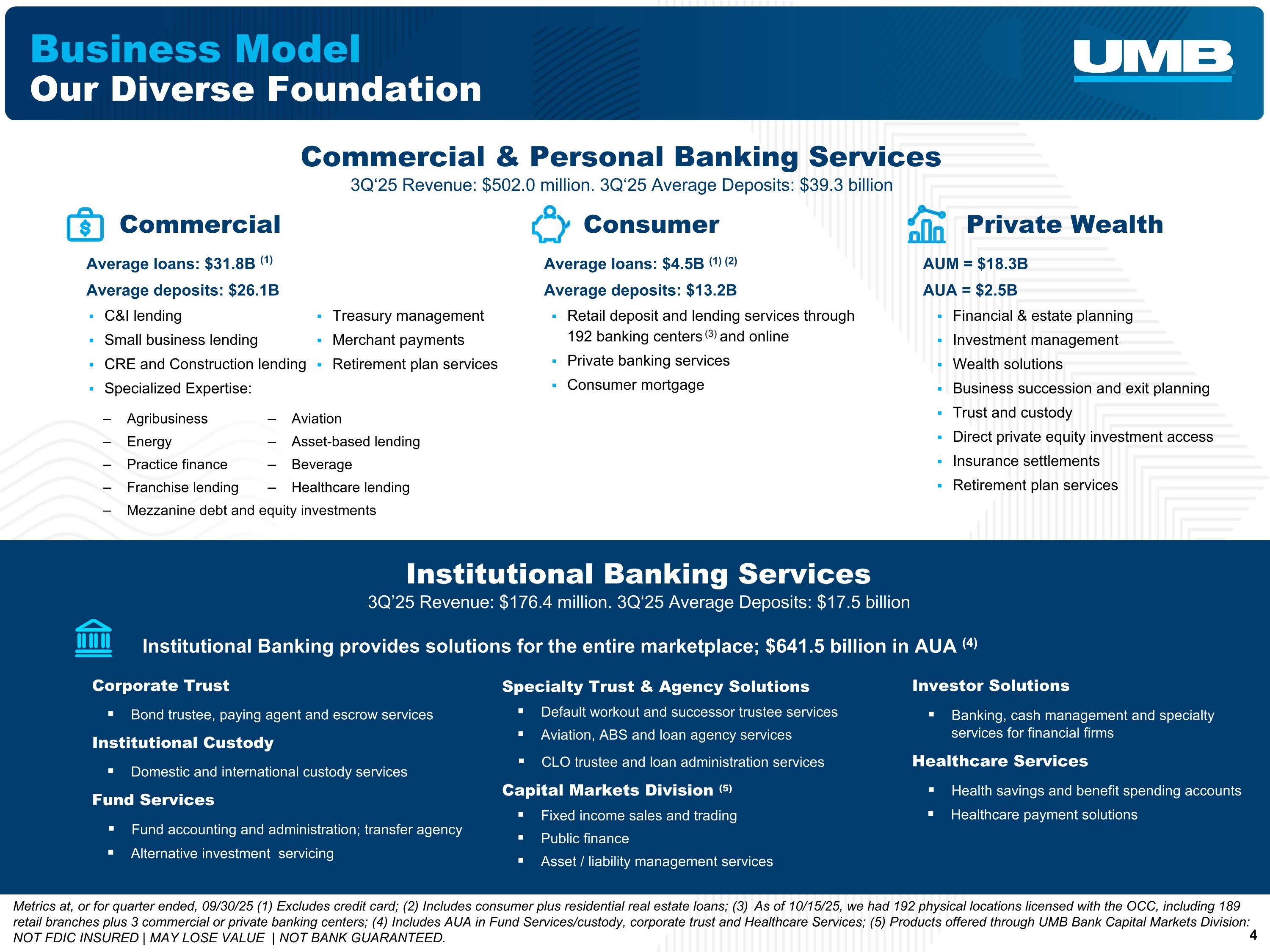
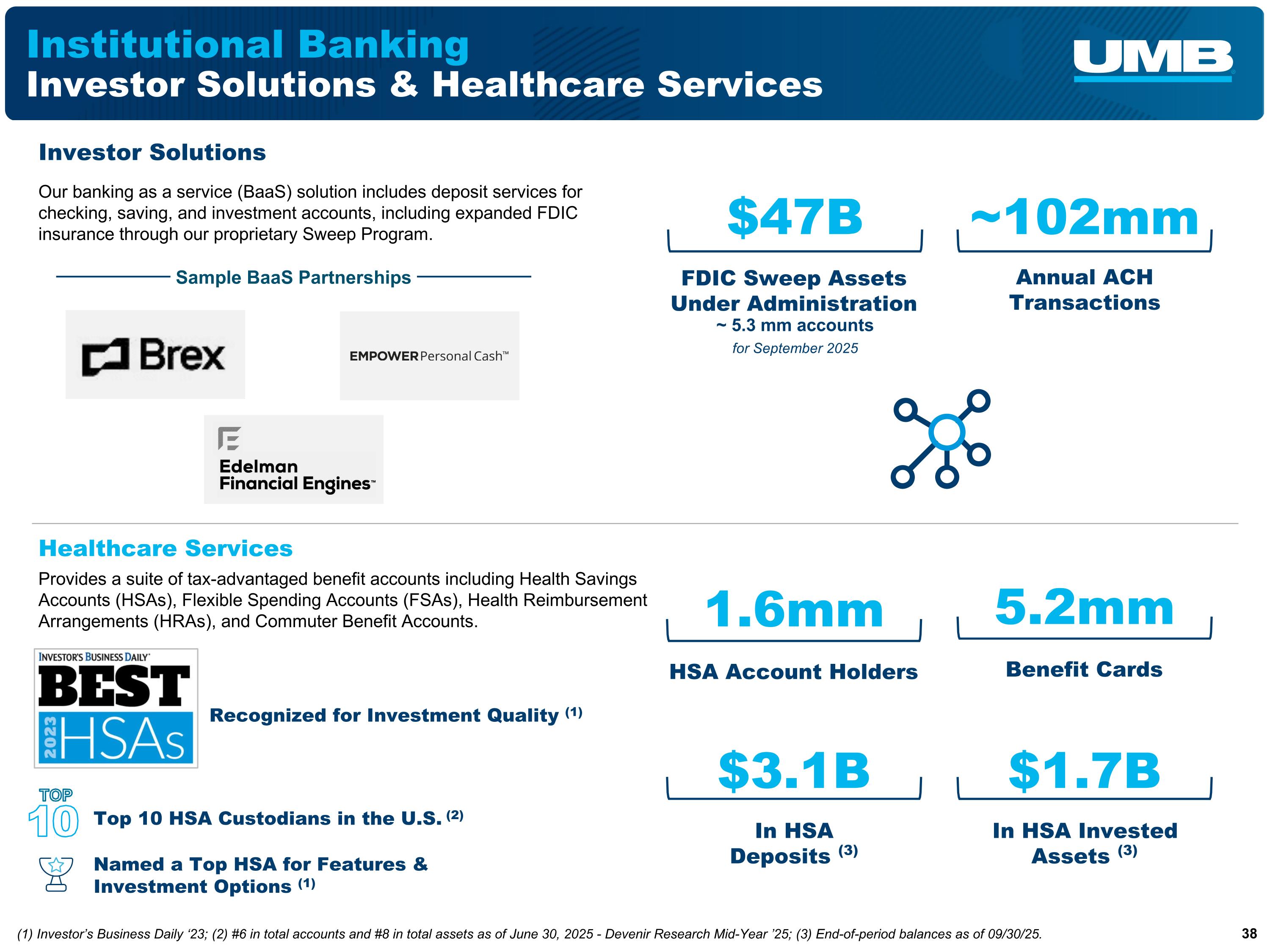
I'll highlight a few key points, and Jim may want to add some thoughts since those businesses report directly to him. At a high level, two business lines are major contributors: our asset servicing business, highlighted on Page 36 of our investor deck, primarily driven by alternatives like hedge funds and private equity, where we are a leading player nationally. Despite significant disruptions in the industry, particularly from private equity acquiring many firms, we've capitalized on new business opportunities arising from boardroom discussions. Our momentum is strong, and our reputation is exceptional, as recognized in the awards we consistently receive for fund accounting. Additionally, there is a growing trend towards democratizing private investing, and we have partnered with key players to provide nationwide access to private investment vehicles, which is fueling our growth through these collaborations. Fund services are in a great position, aiming for $1 trillion in assets under administration with a strong team driving this effort. On the corporate trust side, we are consolidators nationally and rank among the top players, as noted on Page 37. We've also been expanding by opening offices in L.A. and New York over the past five years, enhancing our chances to move up in the lead tables. For instance, a sewer or water deal in Des Moines, Iowa, may be a couple of hundred million, while the same deal in L.A. could reach billions, significantly boosting our market share opportunities. Excitingly, we have new verticals, including CLOs and ABS, while our aviation business is thriving, positioning us as a leading player in that sector. Regarding HSAs, it's a reliable business, primarily growing through existing relationships, especially during enrollment seasons. There may be some benefits from the big beautiful bill, but I believe its impact has been somewhat exaggerated. Jim, I've likely covered most of what you would say, so feel free to add your comments.
It's okay, Mariner, I'm used to it. But I would add that this is all legacy UMB as far as the business and the opportunity is very strong in the corporate trust space, especially in these new markets as you know a lot of this sort of local issuance and when you're doing business in those markets. So it will be a great referral source from the HTLF team and also be able for us to expand our footprint. But institutional banking will continue to benefit from the Heartland acquisition.
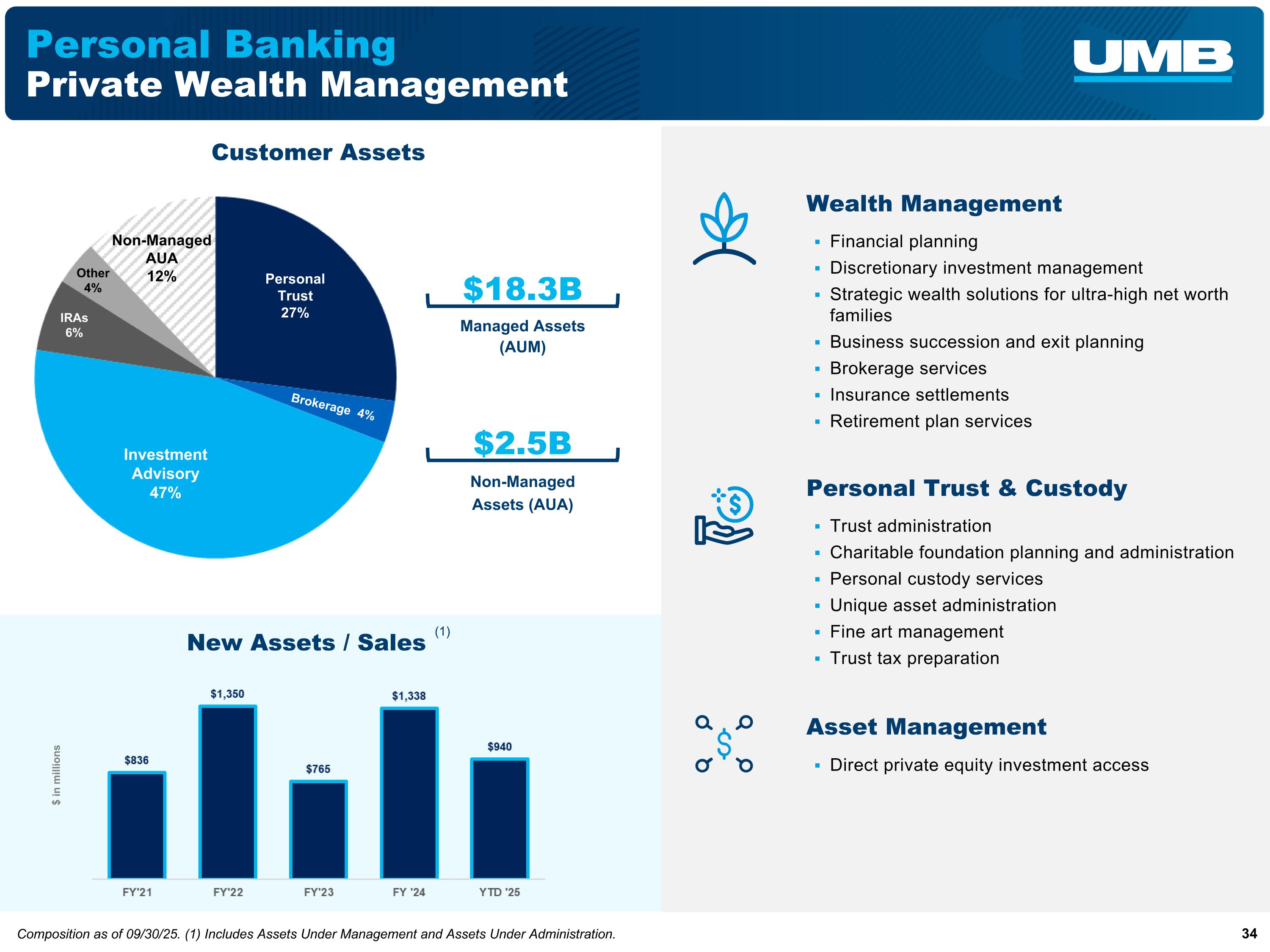
Our wealth business, there's other businesses in there that are very additive and doing a great job, but our wealth business is on fire as well. But those are the two big drivers right now.
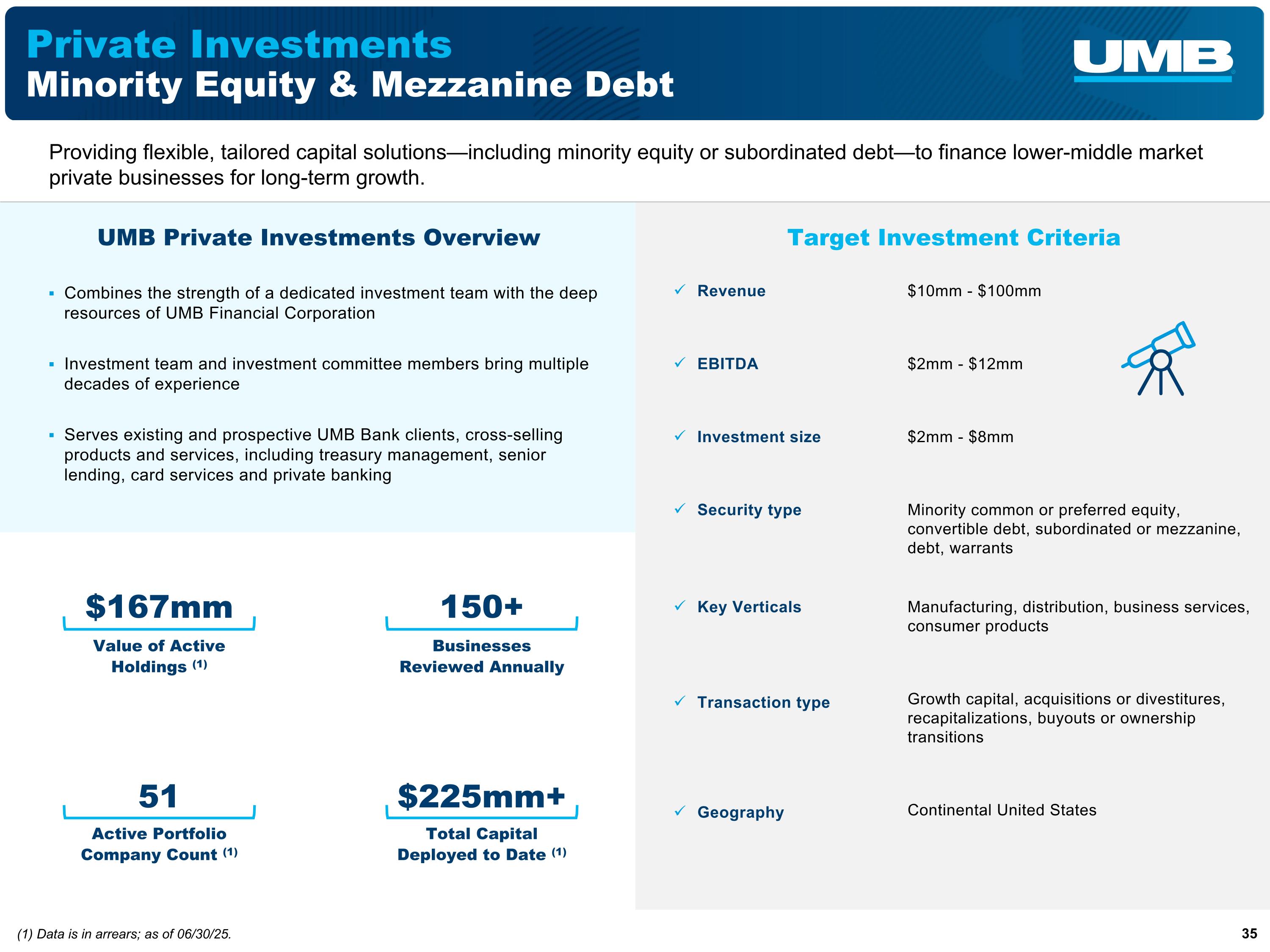
Yes. If you look at Page 15, I will explain our financial breakdown. Our GAAP fees totaled $203 million. Adding back the $4 million in security losses brings us to $207 million. In this quarter, we separated BOLI and COLI; the total for BOLI was $16.5 million, which included a $2.5 million debt benefit that I referred to previously. The remaining $14.5 million has a corresponding offset of 50% with deferred compensation expenses, which increased by $7 million as a result. There is market volatility involved that we cannot control, leading to fluctuations depending on equity market performance. Excluding COLI and BOLI, we identified $16.5 million from other sources, which included a $2.5 million one-time legal settlement that benefited us and another $1 million from one-time fees. The ongoing run rate is approximately $13 million, with the primary contributor being back-to-back swaps. Our derivatives team performed notably well this quarter with $5 million in fees, up from about $3 million to $3.5 million last quarter. If you consider all these items, you could anticipate a figure around $190 million, contingent on COLI and BOLI outcomes. Additionally, as I mentioned earlier, we expect our private investment portfolio to see more frequent monetizations, which is a positive trend for us, alongside the volatility from our existing equity investments.
Operator
And the next question comes from Timur Braziler with Wells Fargo.
Speaker 11
Maybe tying fees into NII, but really strong quarter for some of the trust and securities processing fees. And then I noticed you called out the asset servicing client deposit balances as part of the mix shift that was maybe weighing on margin. I'm just wondering, in general, as we look out and we get a couple of rate cuts in here, the remixing on the institutional side for the deposit base, just the puts and takes of whether or not incremental dollars of deposits coming in are still dilutive to the cost of funds. Does that kind of neutralize as we get a couple more rate cuts? Just maybe talk us through some of the mix shift on the deposit side and what that might portend for cost of funding as we start getting some rate cuts here.
It's challenging to forecast the behavior of some large clients for various reasons that aren't always clear. They might be conserving cash before investing or rebalancing their portfolios. Using asset servicing as an example, they are classified as hard index deposits, which could be priced at Fed funds minus 25 basis points. Given our overall cost of interest-bearing deposits is 3.30% based on the Fed funds rate, this rate could exceed the current deposit costs. Furthermore, we anticipate that in the fourth quarter, we will see between $1.5 billion and $2 billion in new deposits from our public funds business between late December and February, which will positively influence deposit growth. As I mentioned earlier, we expect to see a slight increase in demand deposit accounts from the seasonal low of the third quarter. Additionally, the index deposits will be repriced lower following the September rate cut, meaning we did not fully benefit from this in the third quarter, but we'll see the effects in the fourth quarter. If a rate cut occurs today, the timing early in the quarter will also contribute to reducing the cost of deposits.
And over time, I mean, again, some of this is just guessing, but from history, if we get all the cuts that are anticipated, there's less interest in the rate paid, the further you get down. And so moving rates down becomes easier in a lower rate environment. So that history has played its way out. That's a few quarters away.
Speaker 11
Okay. That's good color. And then looking at the two legacy HTLF loans that were moved to NPL status this quarter. I know earlier in the call, you had referred to the fact that a lot of these had already been reserved for. But with these two specific ones, were these part of kind of the purchase accounting mark taken at deal close? Or did something happen kind of subsequent to deal close that drove the credit migration there?
Speaker 5
Yes. We had identified the larger of the two during due diligence and had set aside a specific reserve for it. The smaller one, which was newer, was on their watch list, but we had not reserved for it until this quarter. So...
But again, I'd reiterate our comments around charge-offs, which is even with them being further deteriorated, we still feel confident in our charge-off rate comments.
Operator
And the next question comes from Brian Foran with Truist.
Speaker 12
Just circling back to the M&A discussion, I guess when you talk about the primary attraction being deposits that can feed the loan growth engine over time, beyond whole bank acquisitions or anything like branch divestitures, maybe consolidation in the trust and custody space, I think people immediately think to like buying a bank outright. But are there any other kind of other avenues that might accomplish the goal of getting some low-cost funding to help you going forward?
Sure. We are open to various options but remain focused on profitability. It’s more challenging to evaluate branch deals compared to whole bank acquisitions from a profitability perspective. Typically, when branches are sold, they are the ones that the sellers do not want, making it harder to find value in those deals. While we have considered branch deals and there is potential appeal, it can be difficult to identify advantages that the sellers might not have recognized. We are committed to profitability, and while we are exploring other ideas, we want to ensure we don’t lose focus. The core of UMB is our loan growth, which we excel at, so we must stay attentive. If we pursue other opportunities, it should not divert us from maintaining our primary strengths. We are disciplined in our approach to this.
Operator
And the next question comes from Nathan Race with Piper Sandler.
Speaker 13
Just a point of clarification on the margin outlook for the fourth quarter. I think you said stable versus the 3Q level. Were you referring to the reported margin or the core margin that I think came in at 2.78% in the quarter?
The 2.78%, yes, core margin. As I said earlier, it's hard to predict what might happen with accretion outside of the contractual part. So my comments were about the 2.78% core margin, excluding all accretion.
Speaker 13
Okay. Got it. And then I know you guys don't provide guidance into next year but just thinking about some of the margin factors at play. I mean, is there still an opportunity to continue to work down the cash levels as we saw here in the third quarter? And then I imagine with the cash flow coming off the bond portfolio and just the higher beta nature of your deposit base that the margin can maybe kind of grind a little higher if we get Fed rate cuts spread out over the course of next year. And I know you guys provide the NII sensitivity in your deck, but I don't think necessarily we're going to see a parallel shift down in rates. So if we just see some movement on the short end, is that generally a positive scenario in terms of the margin outlook?
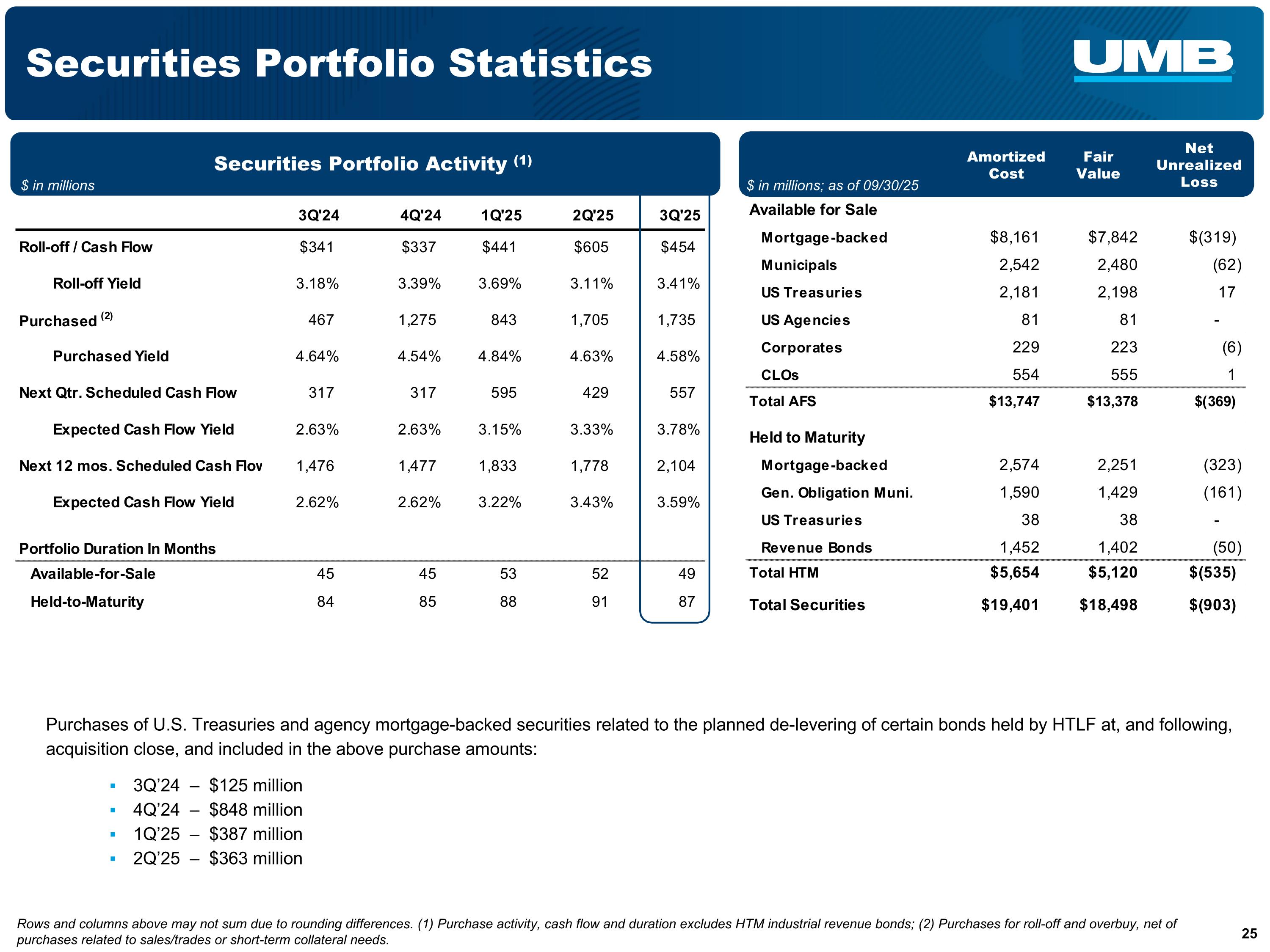
Yes, absolutely, Nate. Based on cash flows, if you look at Page 25, we have $2.1 billion of cash flows coming from our securities portfolio over the next 12 months at 360 yields. Today's repurchase yields are around 450 on mortgage backs, and potentially 80 to 100 basis points higher on the municipal side, depending on the available supply. There is still positive churn in the bond portfolio. The buy yields need to decrease by 100 basis points to achieve breakeven between what is rolling off and what is rolling on. Additionally, referring to Page 27, we have $3 billion of fixed-rate loans that will reprice in the next year, with an average rate of less than 5%. This presents an opportunity for another 150 basis points increase. Nearly half of our total deposits are linked to short-term rate movements, positively impacting our margin outside of accretion. The downside involves loan pricing. As shown on Page 27, two-thirds of our loan portfolio will reprice with a delay based on either the prime rate or 1-month SOFR, which could have a negative effect. In terms of interest rate simulation, from a balance sheet standpoint, we are neutral. In the first year, a 100 basis points rate cut could result in a 1.1% increase, while in the second year, there is a 1.7% drag due to loans catching up with deposits. Overall, considering both factors, our rate positioning appears neutral.
Speaker 13
Okay. Really helpful. And then not to beat a dead horse on the M&A commentary. But Mariner, can you just remind us if the right opportunity came along, what type of acquisition should we be thinking about in terms of maybe size, geography and what kind of earn-back period you would look to include in that type of deal on tangible book dilution?
Well, I understand you might not be satisfied with this answer because it's somewhat vague. However, I believe it comes down to discipline. There are established standards and solid data regarding market acceptance of deals, particularly concerning the payback periods that are typically acceptable in the market. We're aware of these norms and maintain a disciplined approach to our considerations. Regarding the size of potential deals, there are numerous variables at play. We're focused on finding high-quality partners. Additionally, considering what we've already achieved, the effort required for a small deal is comparable to that for a larger one. We're confident in our ability to handle loans of varying sizes effectively. Therefore, I won’t provide specific guidance on size. The dynamics surrounding our operations, such as exceeding $100 billion and the regulatory environment, complicate this matter. Whether those conditions are shifting adds another layer of complexity to the discussion, making it difficult to delve deeper in this setting, but I hope this information is helpful.
Operator
And our next question comes from Brendan Nosal with Hovde Group.
Speaker 14
Just wanted to ask a follow-up on M&A, but more about the perspective of how you folks think about preserving what you already have in that scenario. Specifically, how do you think about preserving your fee franchise and your strong fee revenue mix with a potential deal, just given that your fee franchise is one of the most unique characteristics of UMB and seemingly any deal you do would probably dilute that mix at least a little bit? So how do you approach balancing that?
I believe that the absolute growth rate of our fees is more significant than their percentage of total revenue. As long as we continue to grow those fees healthily and potentially accelerate that growth, I am more focused on that than the percentage of total revenue. It's essential to remain disciplined; we won't pursue a deal that generates more net interest income than fees unless it substantially contributes to our overall goals. As long as we see growth and improvement in profit profiles, the specific percentages of total revenue are less concerning to me. That's my perspective.
Operator
And our next question comes from Chris McGratty with KBW.
Speaker 15
Ram or Mariner, just going back to the fee income discussion. I mean, for the industry, fees aren't really growing. You've got unique businesses, which I think have some structural tailwinds that you talked through. But I just want to try to put a little bit of a finer point on the opportunity in the trust and securities processing asset servicing. I mean, would you think this is kind of a mid- to high single-digit opportunity growth annually, double digit? I'm just trying to get a sense because I think we've all been underestimating the potential here.
Yes, it's difficult for me to provide specific guidance, so I can't directly address that. However, we are indeed aiming for significantly higher growth and feel confident in our ability to enhance our profile. Recently, while in New York with our team, we observed a shift in our business. We've transitioned from targeting and securing smaller boutique clients to winning contracts with major, globally recognized companies. This change in our business profile has been substantial. The range of clientele we're attracting is evolving, and we now have the ability to compete for any business in fund services or corporate trust sectors. Our technology, personnel, and overall momentum are strong, which puts us in a great position for execution. It's crucial for us to retain our team and continue investing in technology. As demonstrated by our profitability metrics, we can maintain this investment. There's nothing preventing us from expanding the profile of our businesses and capturing a larger market share.
On the regulatory front, we're paying close attention. There's ongoing discussion about what $100 million could signify in the future. We are going to conduct research on it, but we're being cautious about any expenditures related to that in 2025 or even 2026 until we understand the regulations we will face. For now, I wouldn't anticipate any major investments in that area because the indications are generally positive that most of the $100 million requirements will likely increase or be eliminated.
Thank you all for joining. We had a productive discussion with many great questions. As you know, we enjoy talking about UMB. It was a successful quarter, and we look forward to sharing our results next quarter. Thank you.
Operator
Thank you, everyone, for joining today's call. This concludes the call. You may now disconnect. Have a great rest of your day.