Operator
Good morning. Thank you for joining us and welcome to the Customers Bancorp 2025 Q4 and year-end earnings report. My name is Devin and I will be your call moderator for today. After today's prepared remarks, we will host a question and answer session. If you would like to ask a question, please press star 1 on your telephone keypad. To withdraw your question, press star 1 again. I will now hand the call over to Philip Watkins, Executive Vice President Head of Corporate Development and Investor Relations. Please go ahead.
Thanks, Devin, and good morning, everyone. Thank you for joining us for the Customers Bank Corp's earnings webcast for the fourth quarter and full year of 2025. The presentation you will see during today's webcast has been posted on the Investors webpage of the bank's website at www.customersbank.com. You can scroll to fourth quarter and full year 2025 results and click download presentation. You can also download a PDF of the full press release at this spot. Before we begin, we would like to remind you that some of the statements we make today may be considered forward-looking statements under applicable securities laws. These forward-looking statements are subject to change and involve a number of risks and uncertainties that may cause actual performance results to differ materially from what is currently anticipated. Please note that these forward-looking statements speak only as of the date of this presentation and we undertake no obligation to update these forward-looking statements in light of new information or future events except to the extent required by applicable securities laws please refer to our sec filings including our most recent form 10k and 10q and our current reports on form 8k for a more detailed description of the assumptions and risk factors related to our business copies of these filings may be obtained from the sec or by visiting the investor relations section of our website At this time, it is my pleasure to introduce Customers Bancorp Executive Chairman, Jay Siddur.
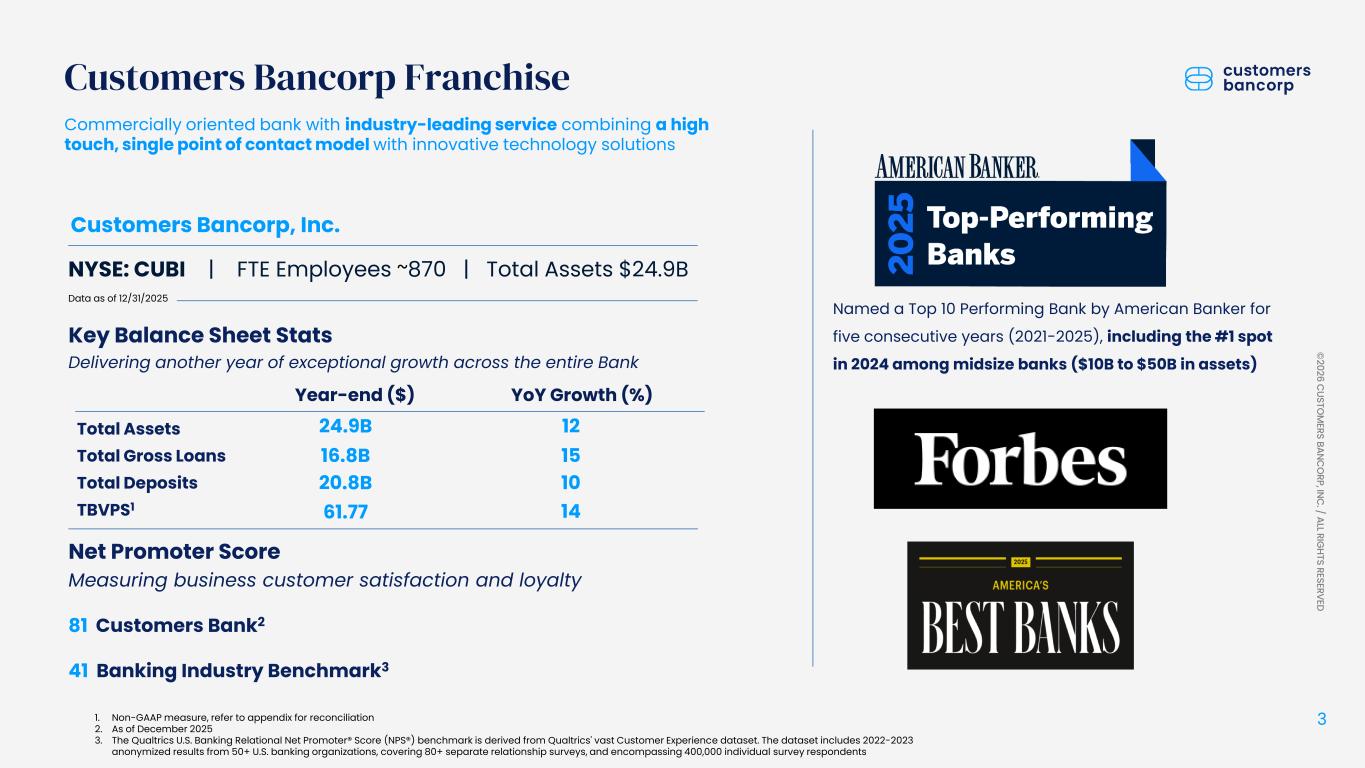
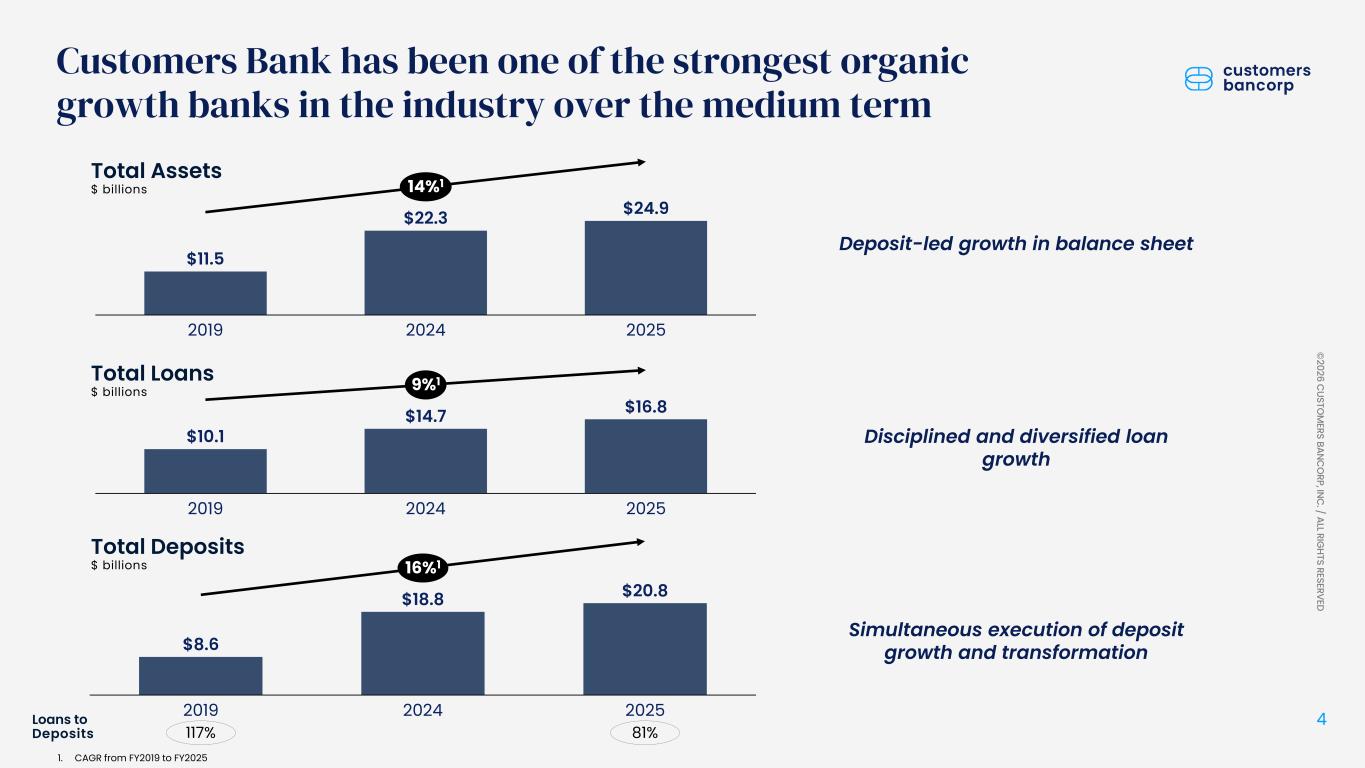
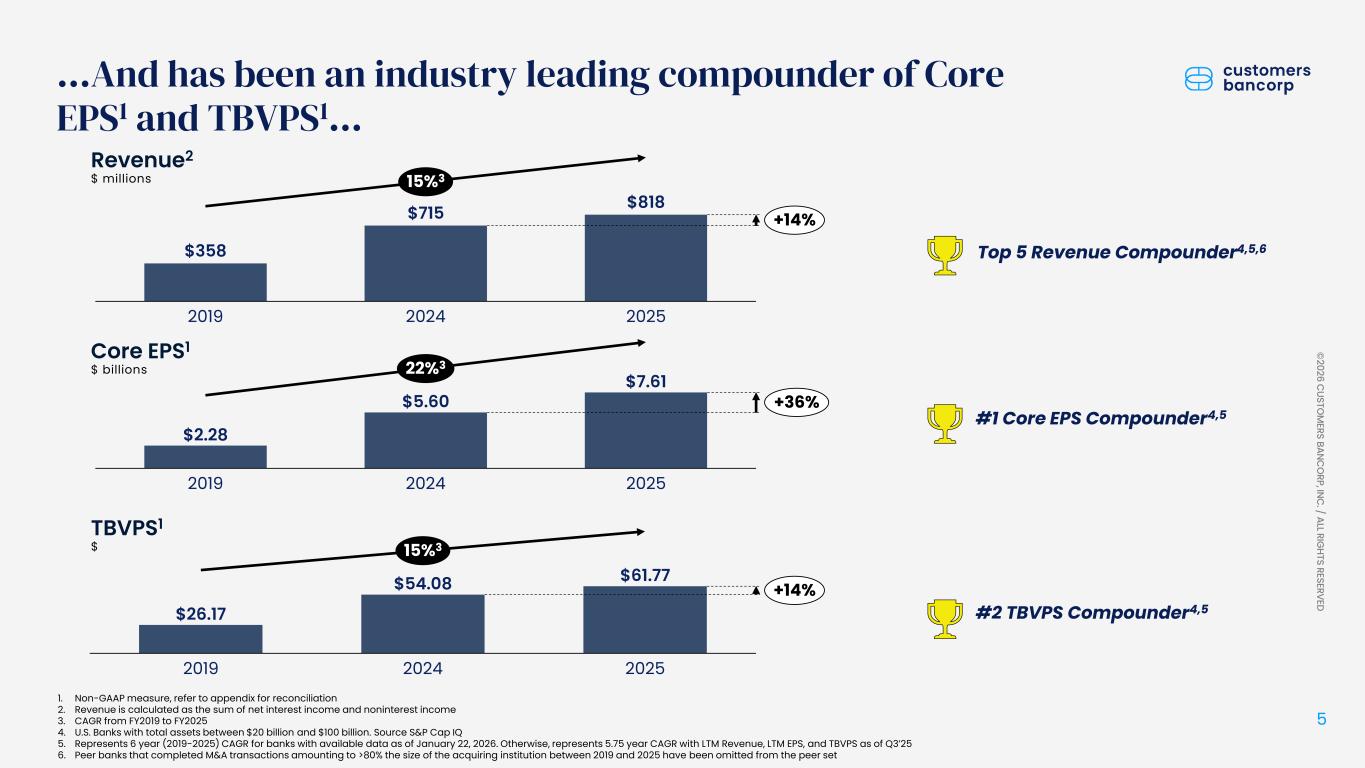
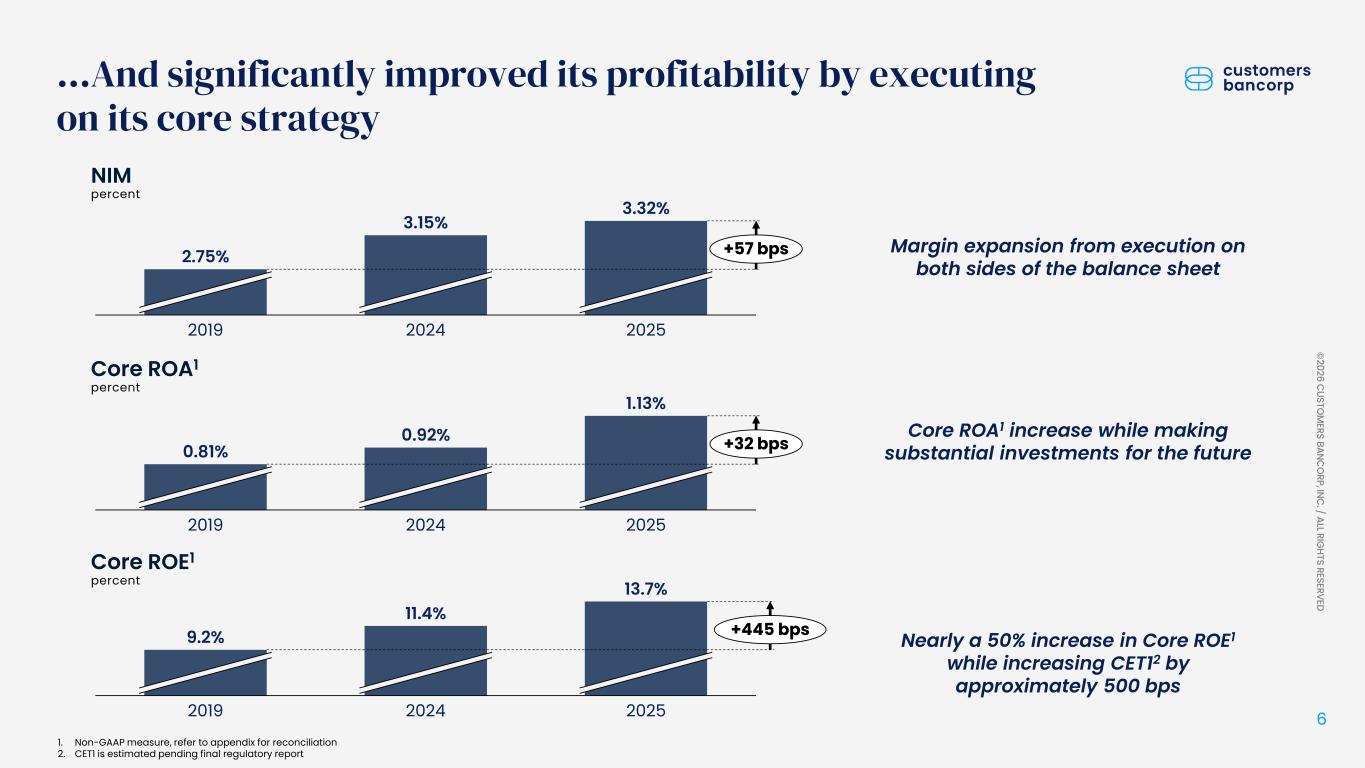
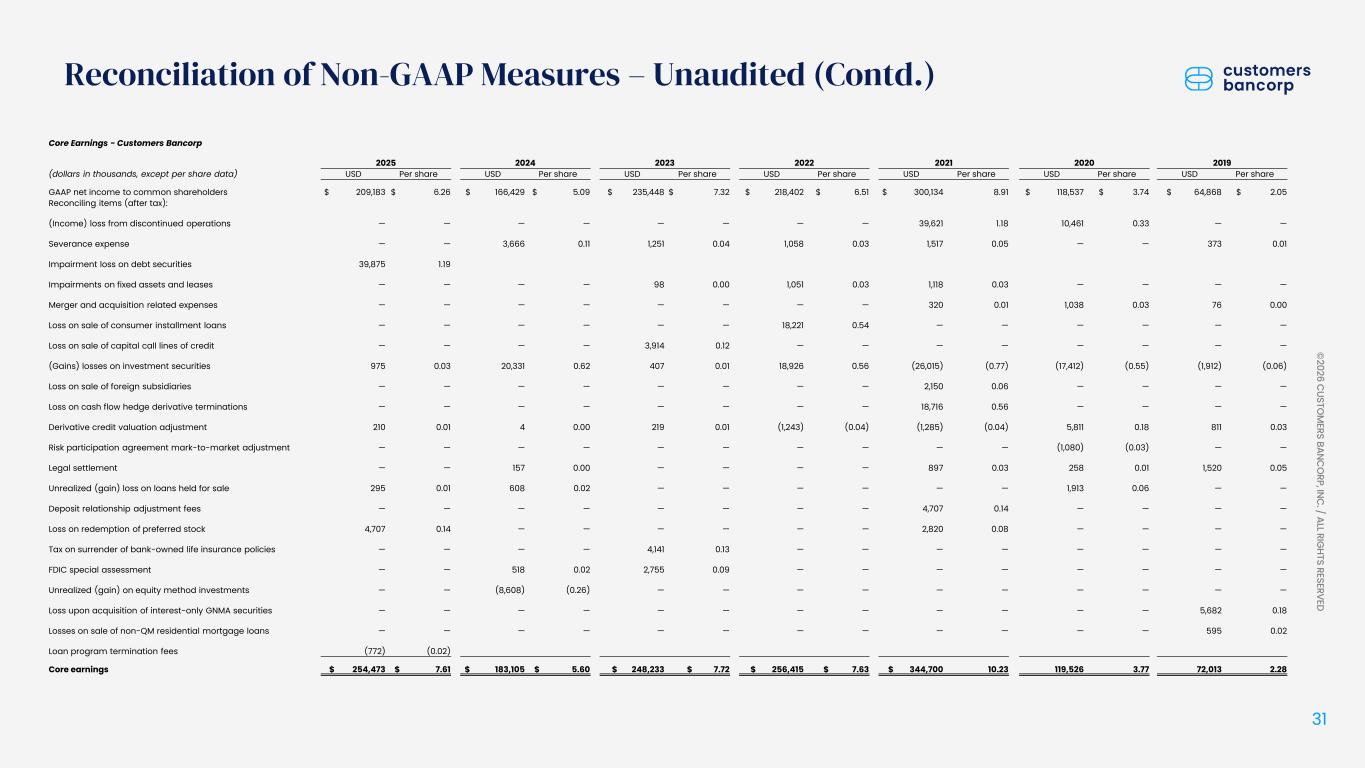
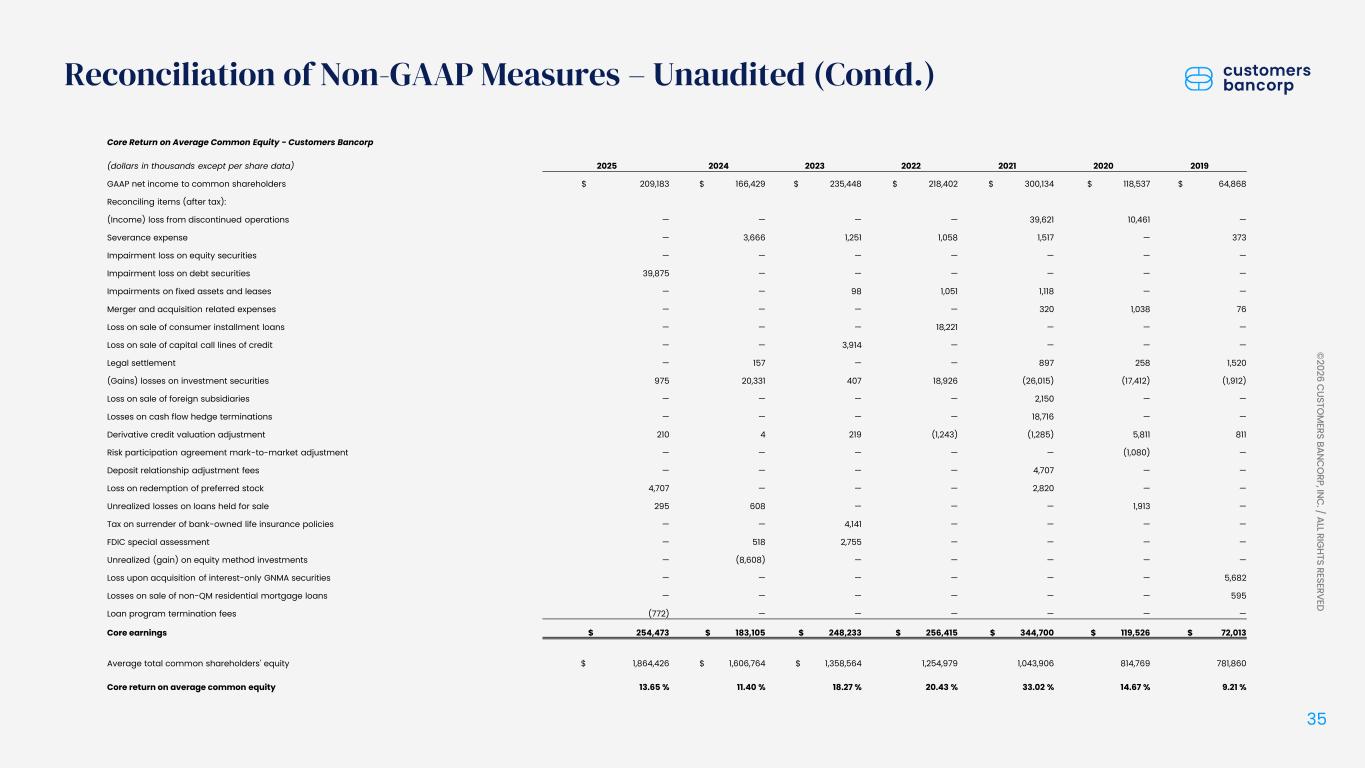
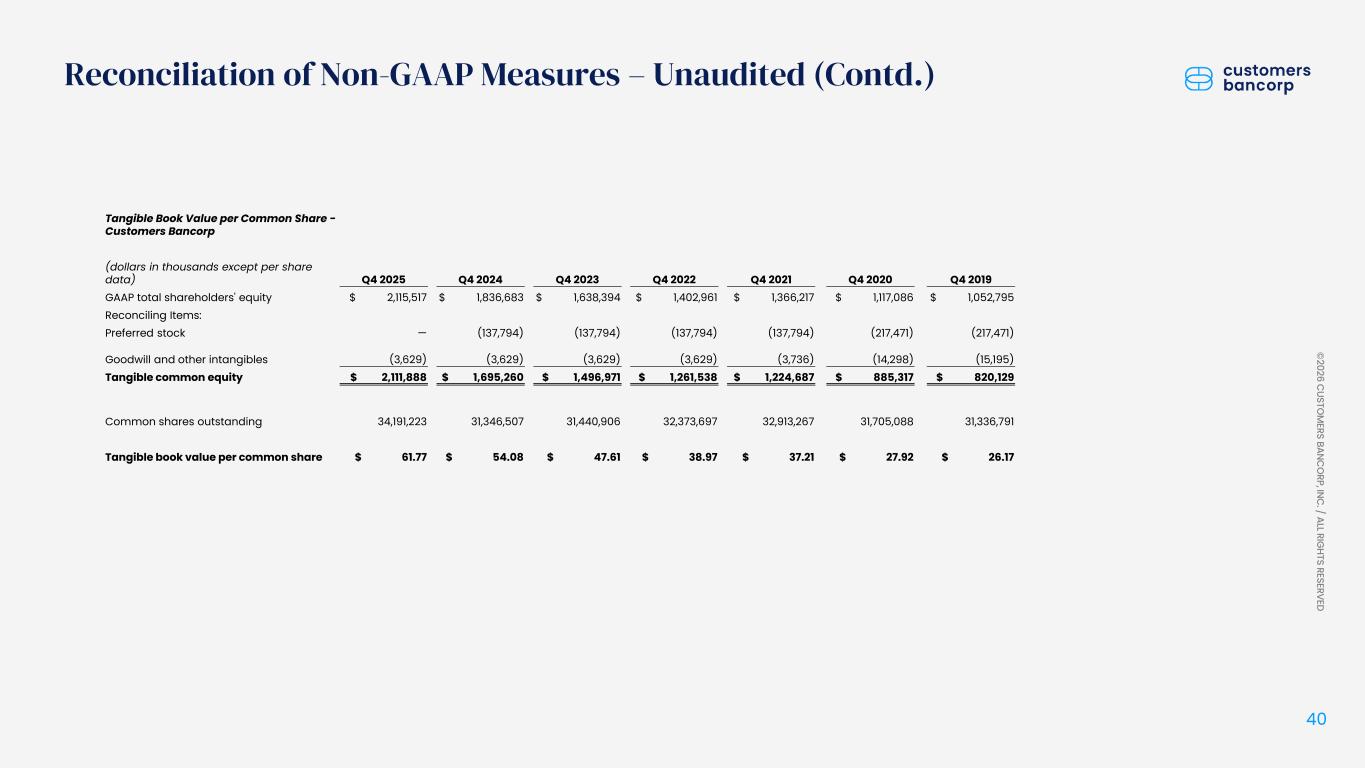
Thank you so much, Phil, and good morning, ladies and gentlemen. I do want to welcome you to the Customers Bancorp fourth quarter and full year 2025 earnings call. Hope you've all had a great start to 2026. I'm joined this morning by Customers Bancorp and Bancorp CEO, Sam Siddur, and Customers Bancorp and Bancorp CFO, Mark McCollum. I'd like to start by congratulating Sam again on his appointment as CEO and also to the Board of Directors of Customers Bank Corp. The Board of Directors and I are delighted with this transition, which has been in work since we began our succession planning exercise at the board level over five years ago. We have every confidence that Sam and the team that he has assembled will continue to build upon the incredible results we have achieved over the past few years since we founded this bank in late 2009 the journey has been exciting with a clear vision and a lot of determination what began as an approximately 175 million troubled failing bank has now grown into a 25 billion asset institution, recognized for its unique single point of contact strategy, its exceptional customer service focus, and a forward-thinking approach to technology. That success did not happen by chance. It's the direct result of superior execution by a world-class team. We have consistently put customers first and built a best-in-class risk management infrastructure while embracing innovation and change. Moving to slide four, we are pleased to report another quarter, and a very strong quarter, and a very impressive full year of 2025, which Sam and Mark will talk through in more detail. As you know, our 2025 core EPS was $7.61 a share, and up from $5.60 a share in 2024. Before they discuss the details of 2025 with you, I wanted to spend some time putting into perspective our performance over the past few years. Customers Bank has been one of the strongest organic growth stories in the entire industry, and we see no reason that will change in the years to come. We've had incredible deposit-led growth in our balance sheet with low-cost core deposits, growing at a 16% compounded annual rate over the last six years. And we did this while materially improving the quality of our deposit franchise, as you will hear much more about that later from Sam and Mark. Moving to slide five, we highlight that we believe is the clearest way to evaluate sustainable franchise value creation, long-term compounding returns in revenue, earnings, and tangible book value. We've been an industry leader in growing these metrics by a number of years now, for a number of years. We are the number one compounder of core earnings per share over the last six years, which represent outstanding performance against the peer medium. And so we performed over five times better than the peer median, and we performed over three times better than the top quartile. Similarly, tangible book value per share compounding is the number two among the entire peer group and represents outperformance of the peer medium by about three times and the top quartile by over two times. Finally, on slide six, our core strategy has translated into significantly improved profitability over the last several years. Our margin increased by 57 basis points, and our return on asset increased by 33 basis points. And very importantly, our return on equity increased by 450 basis points, while we simultaneously increased our capital level by 500 basis points. This profitability improvement has been achieved while making substantial investments for the future, Investments in people, investments in technology, investments in processes, and huge investments in risk infrastructure for the future. These have turned into incredible results for our shareholders, while helping us build a very strong foundation for the future. Our five-year total shareholder return has been over 300%, placing us at the very top of our peers as an industry, in fact, in the entire financial services industry. It is exactly these kinds of financial results and multi-year transformation that give us the great confidence in Sam and the rest of the management team to continue building on our momentum and to take on tomorrow. Our mission will remain unchanged, and that is to deliver long-term value for shareholders and our communities by putting client first and continuing to innovate and build strong risk management and execute with excellence. We believe our best years are still ahead of us. With that, I'm going to turn it on now over to Sam.
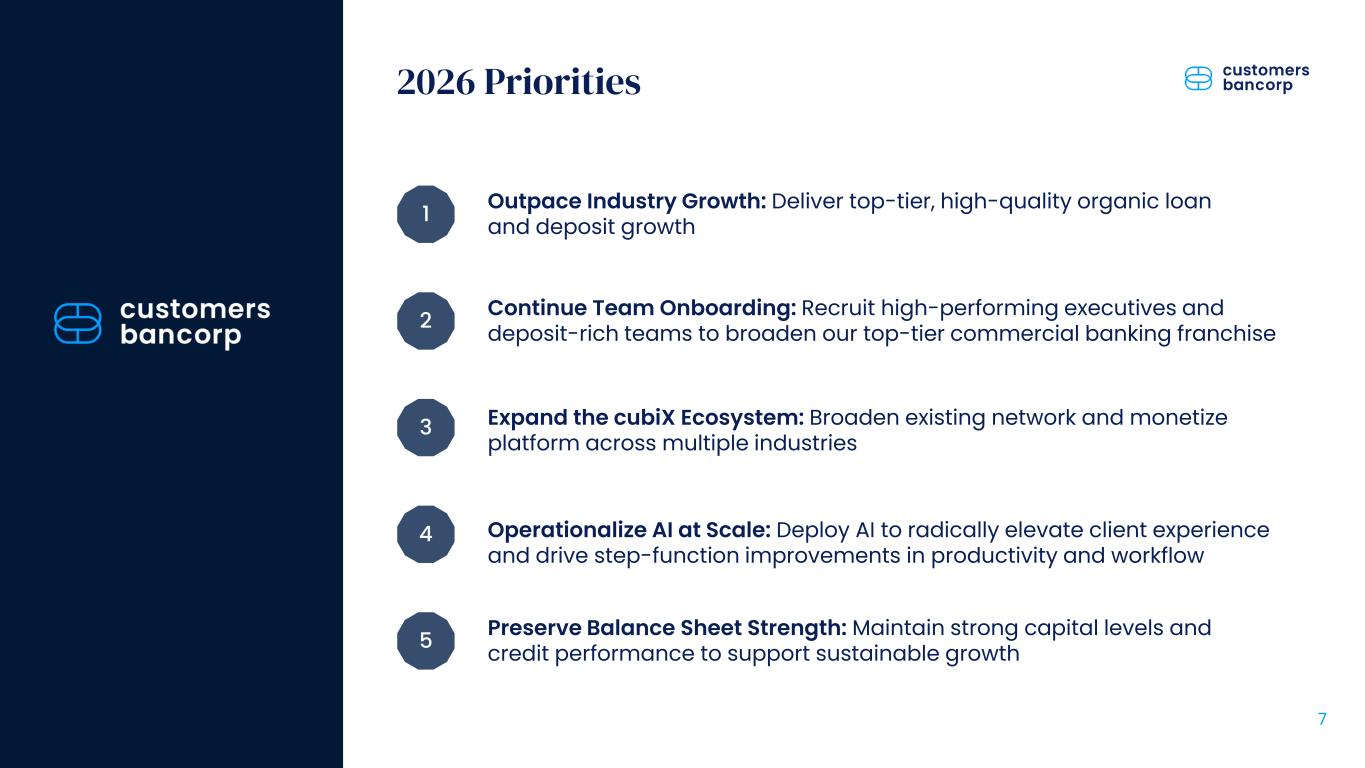
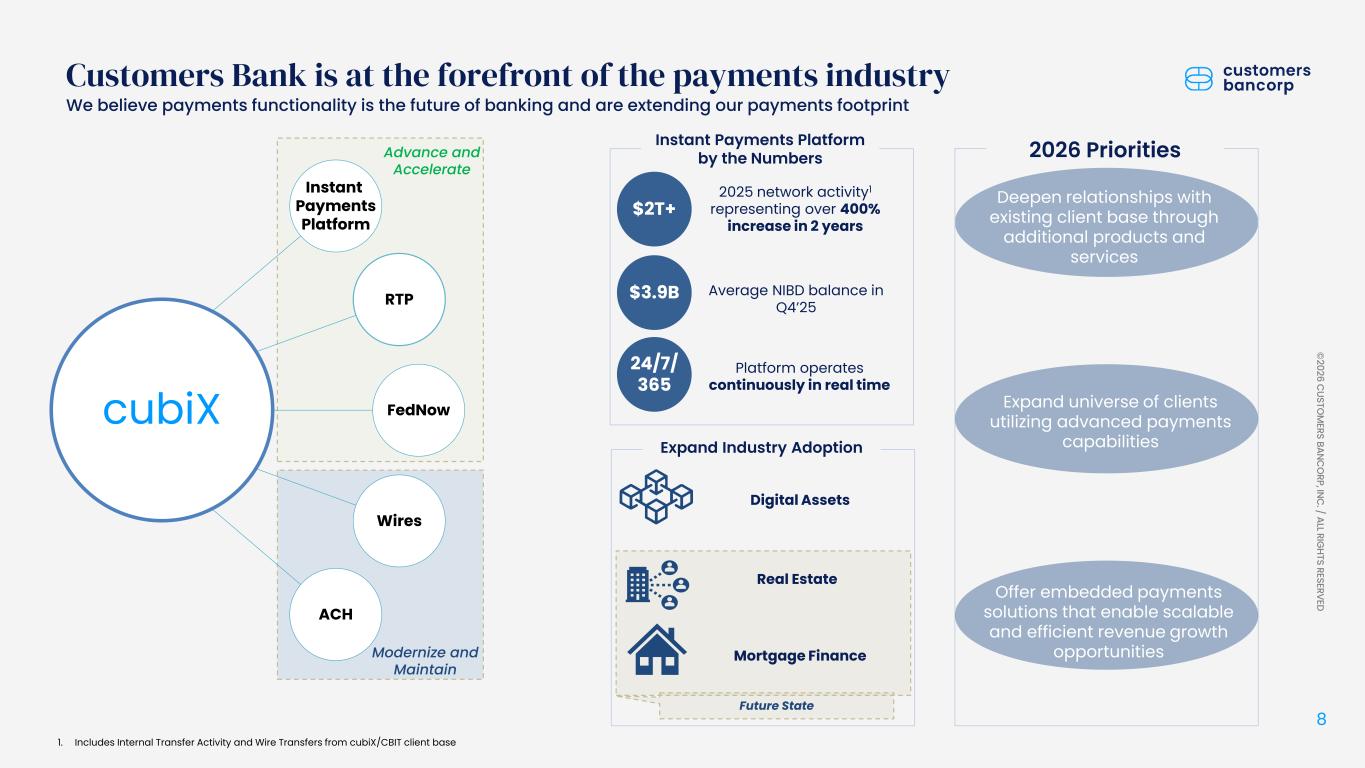
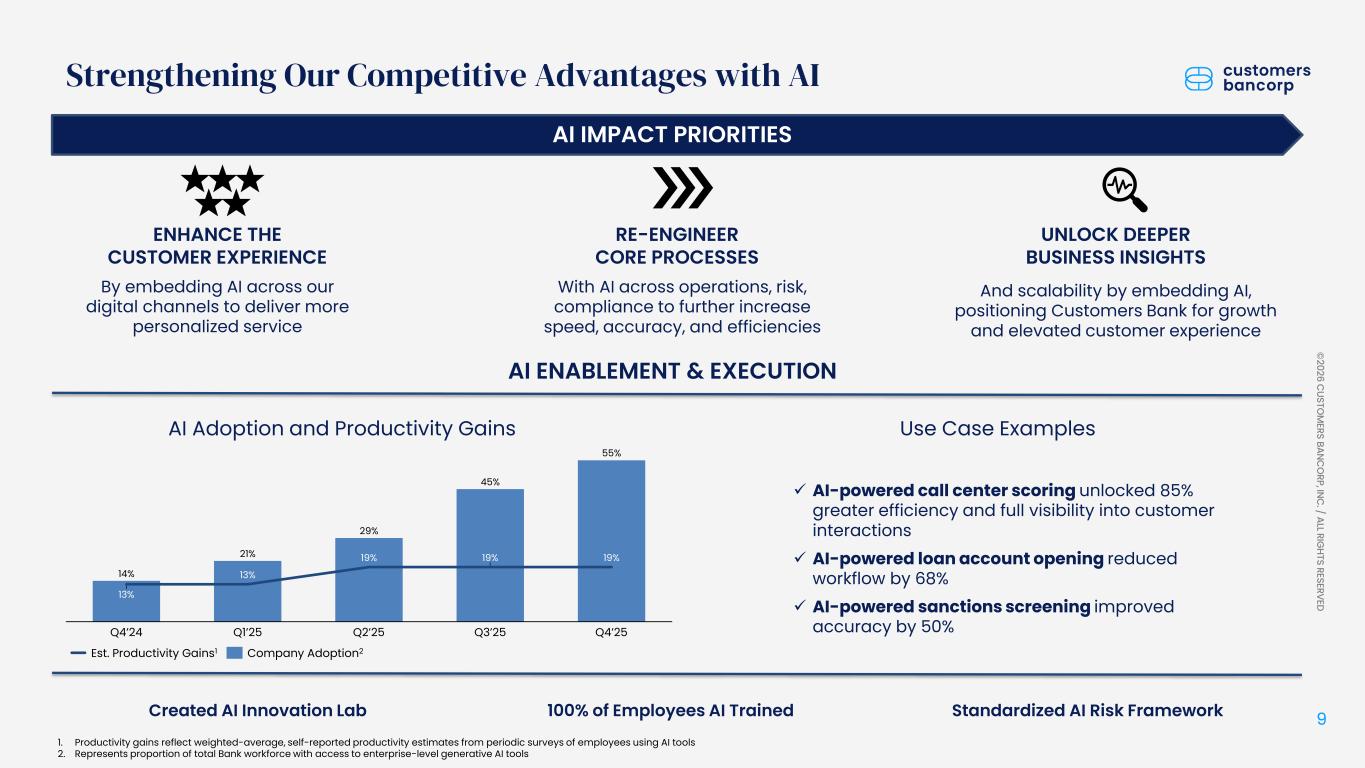
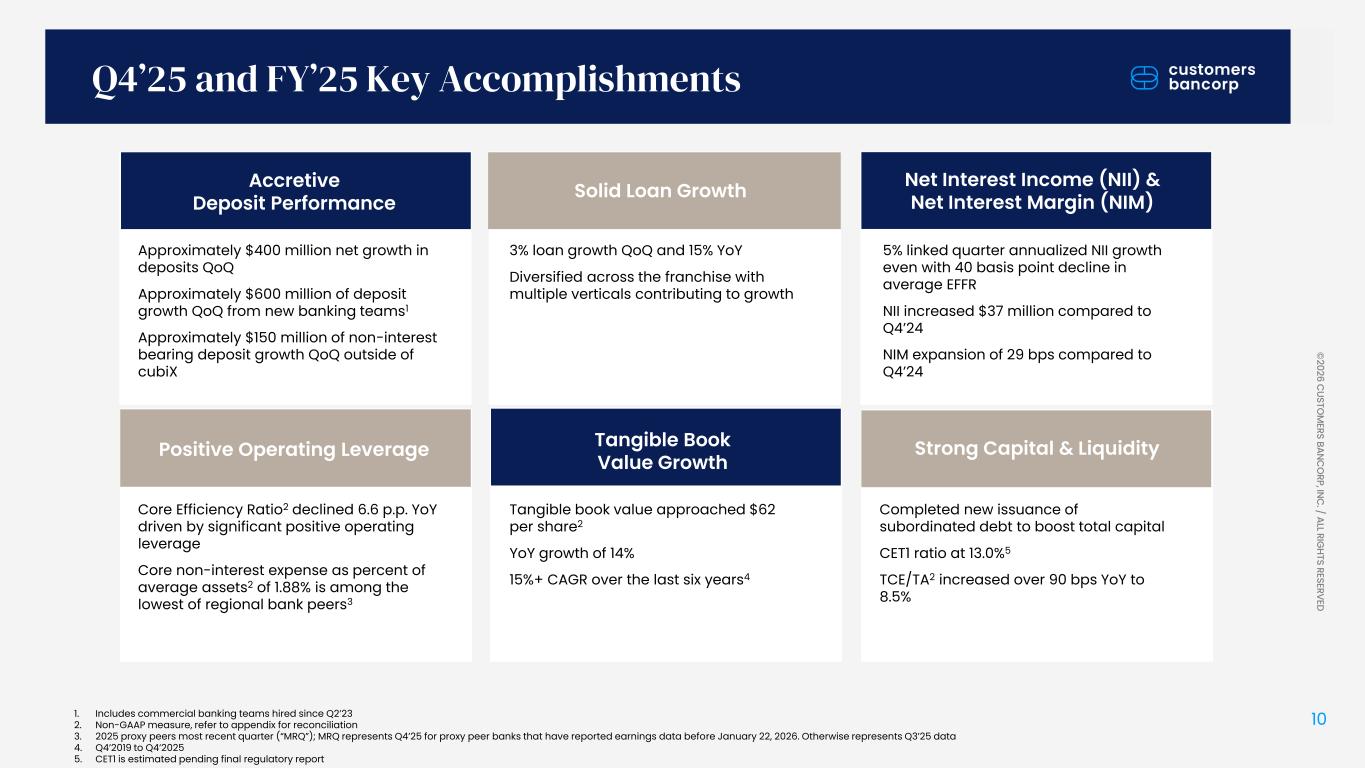
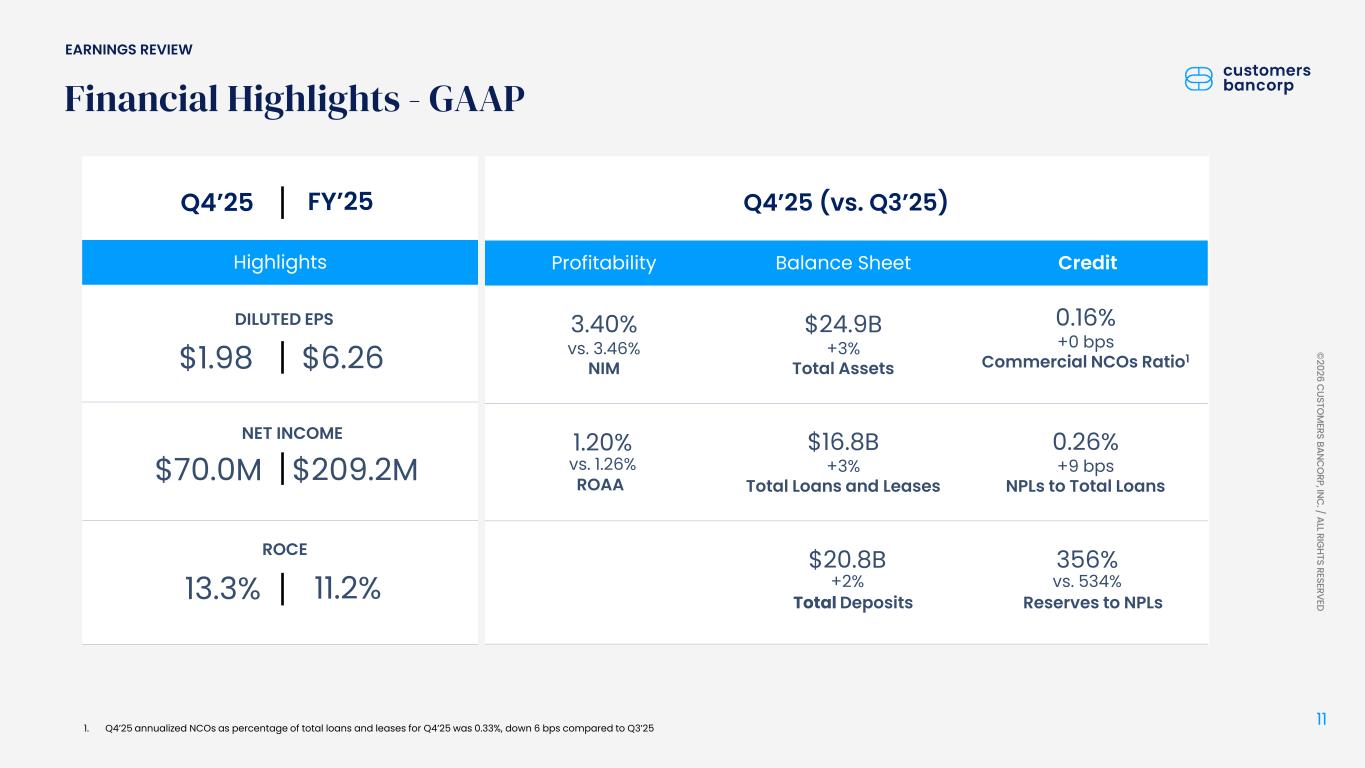
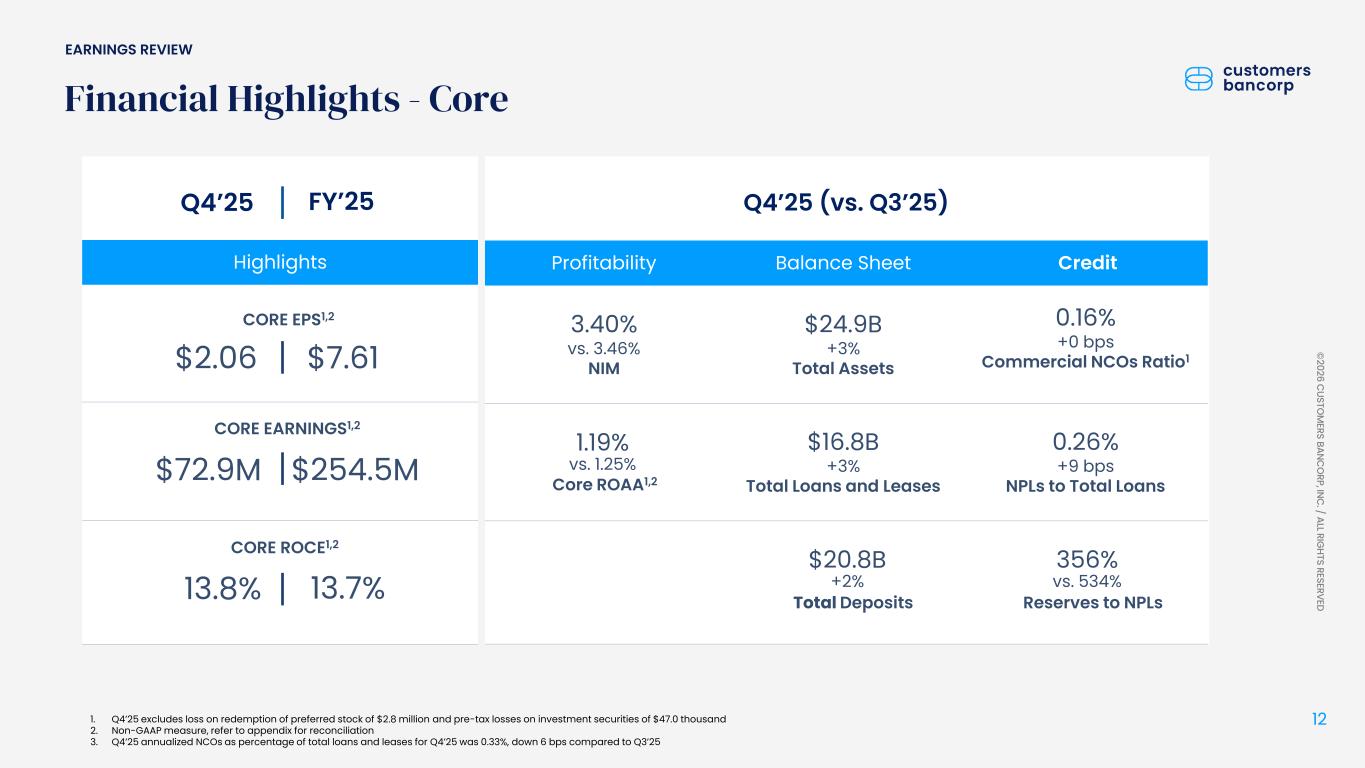
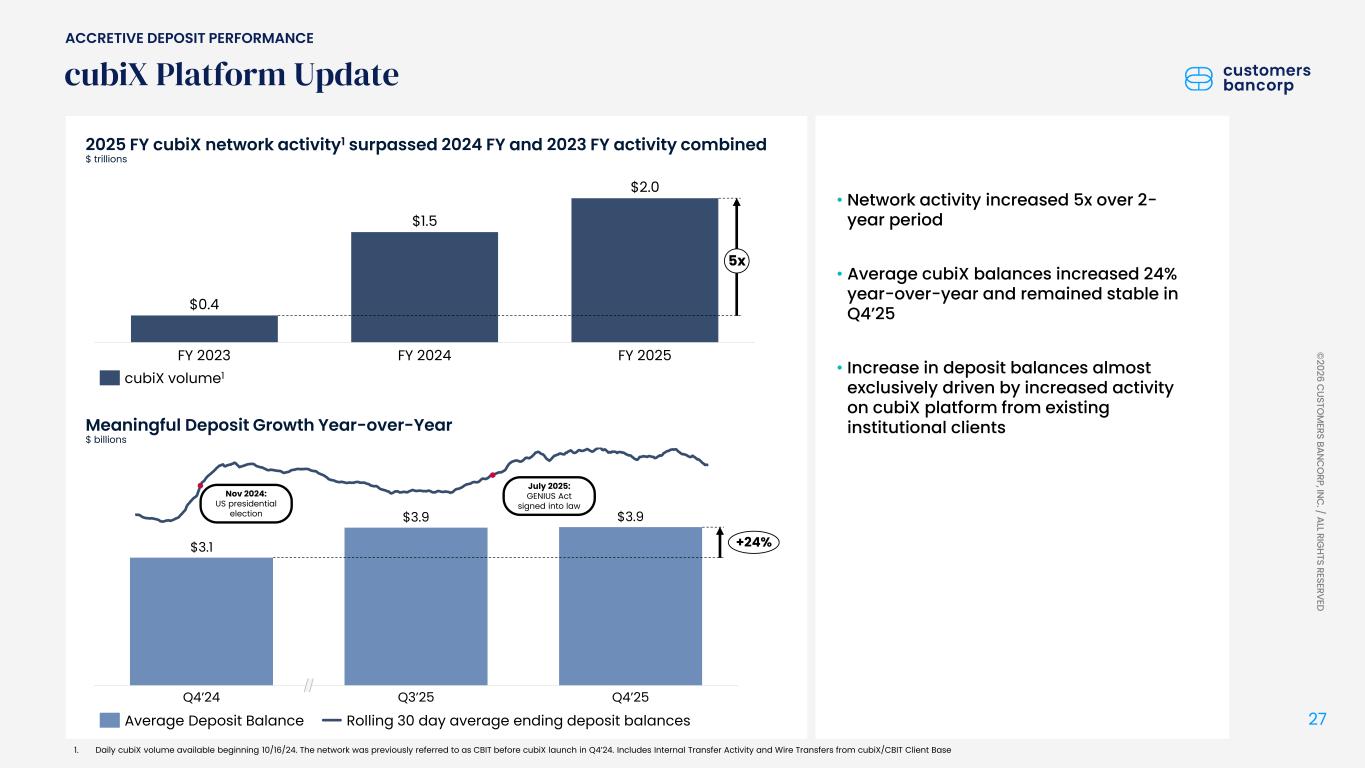
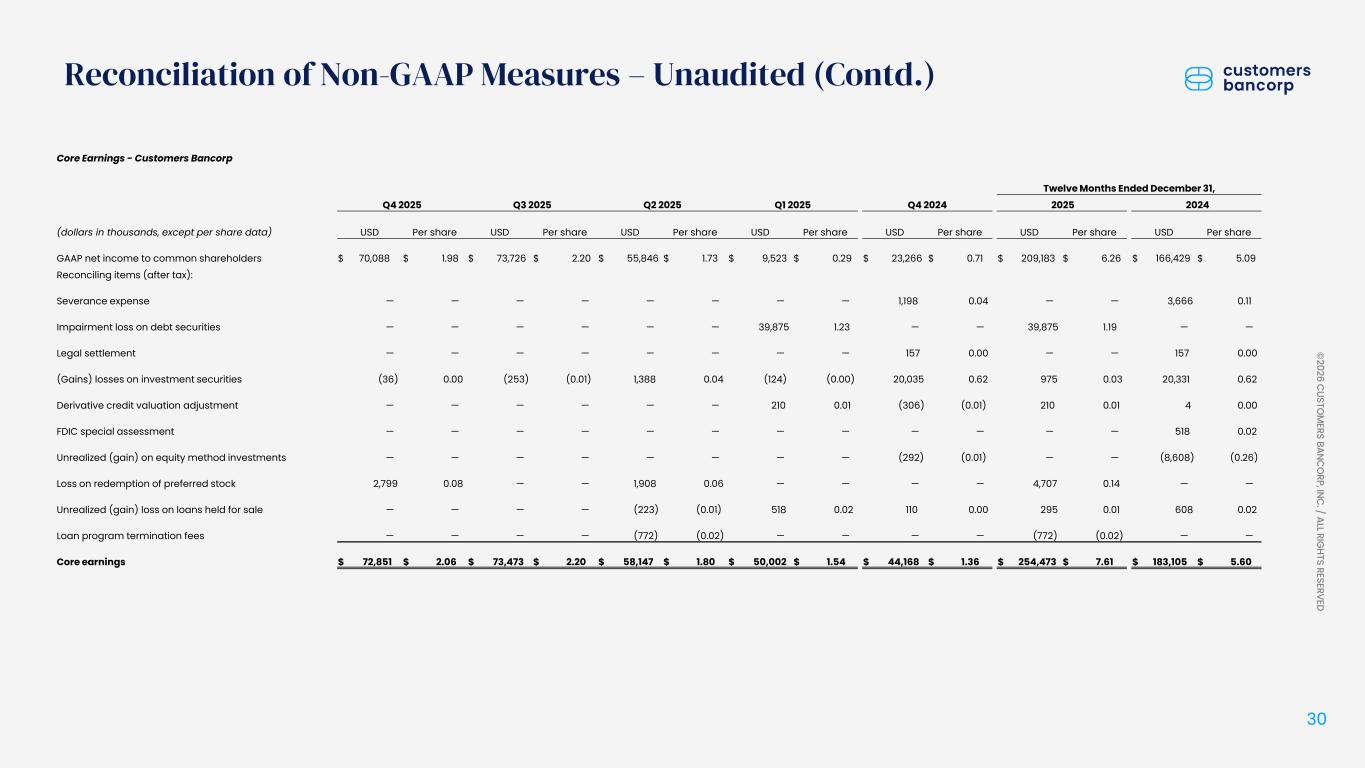
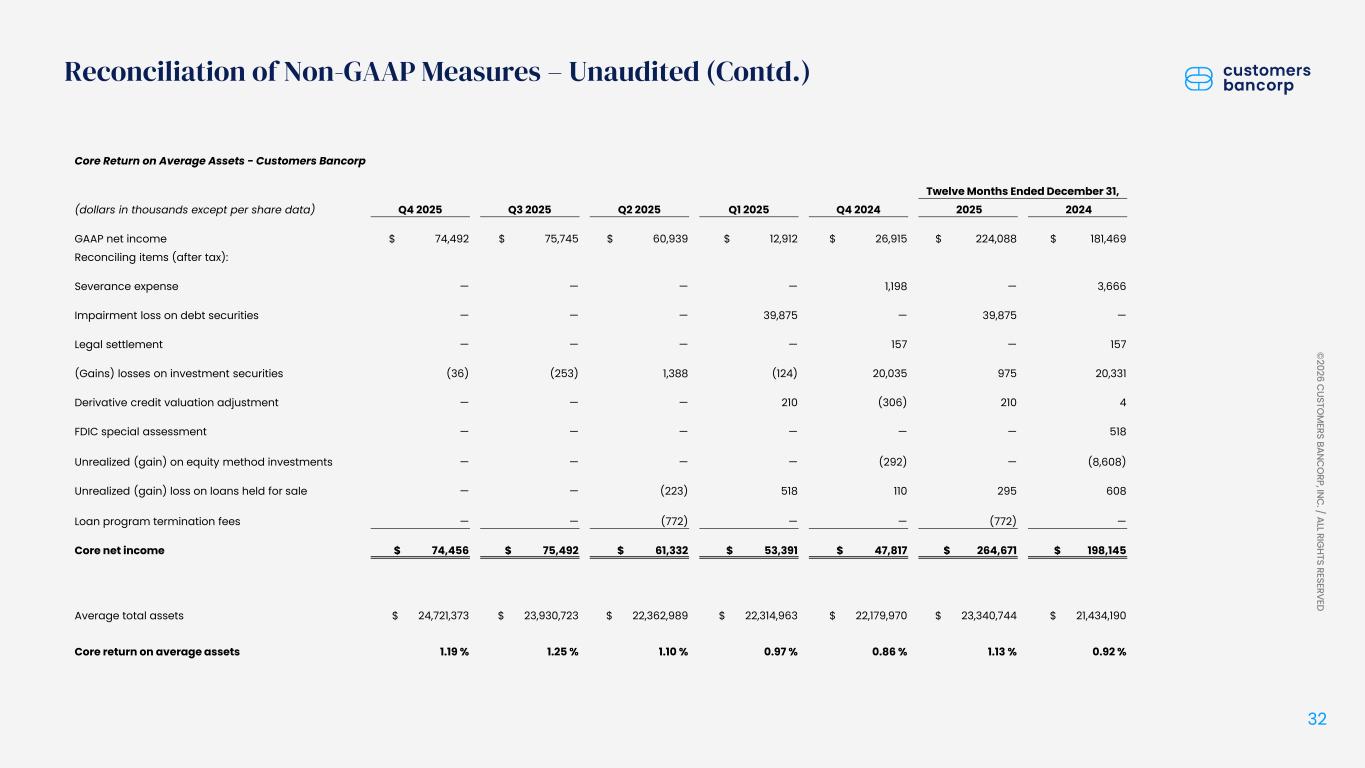
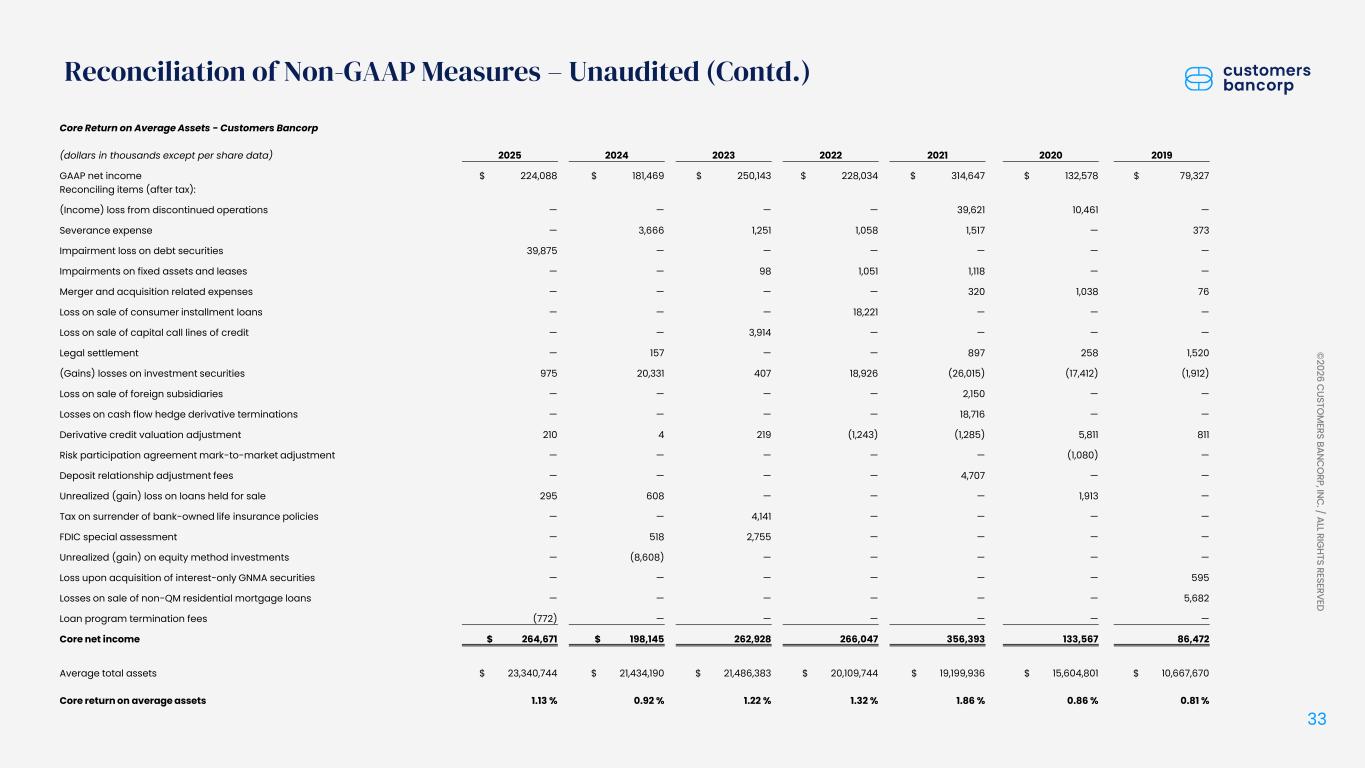
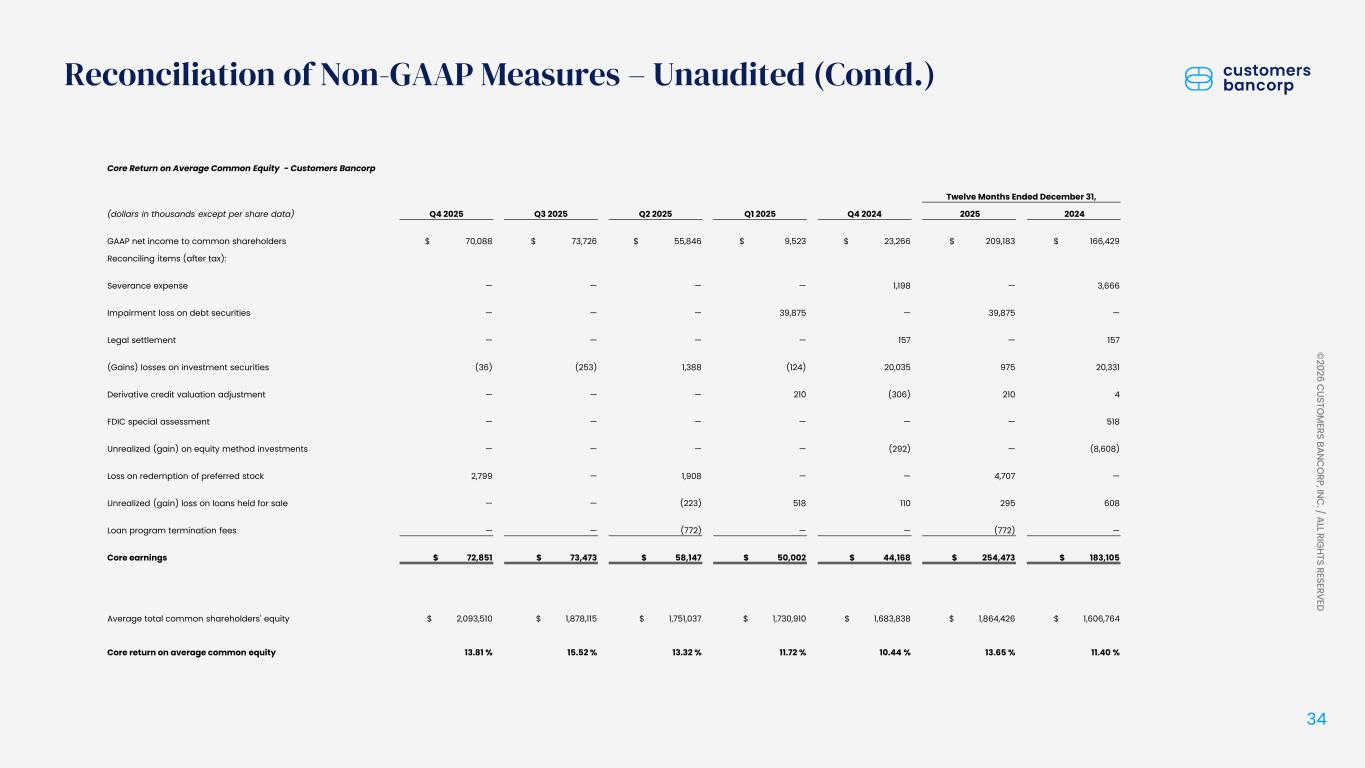
Thank you, Jay, and good morning, everyone. I want to begin by expressing my deep gratitude and excitement to Jay and our board of directors as I lead the organization through its next phase of growth as CEO. It is truly an honor to step into this role and to build upon the extraordinary foundation Jay and the team have established since the bank's founding 16 years ago. What makes this moment especially meaningful is the opportunity to lead alongside such an extraordinary team. Across the organization, from our client-facing bankers to the team members in our operations, technology, risk, finance, and many other areas, I see a shared drive to innovate, serve with purpose, and never settle for average. It's the efforts of this exceptional team and their relentless focus on the customer that has resulted in our net promoter score increasing to 81, up 8 points from 73 last year. This is nearly double the industry average and places us among the very top of companies, not just in the banking industry, but of all service-oriented firms. With that, I'll turn to our top priorities for 2026. You'll notice in many ways these look similar to last year, but evolved, highlighting our consistent strategic focus and entrepreneurial culture. First, our top financial priority is continuing our organic growth story on both sides of the balance sheet. With the hires we made in 2025 stacked on top of 2023 and 2024 vintage teams hitting their stride, we have the pipeline in place for 2026, which brings me to our next priority. Our team recruitment strategy has been foundational to our recent success. On top of the previous team onboardings, we continue to have active discussions with top performing teams that are looking to join an entrepreneurial and customer centric bank. We will have more to share on this as the year develops, but if 2025 was any indication, TopTalent is excited about leveraging the unique platform here at Customers Bank. Third, we believe payments are a key driver of the future of banking. We have an ambitious goal of being a commercial payments leader in the industry. We are tirelessly working on expanding our payments, offerings, and capabilities to meet that target. Next, as a future-focused bank, we see an immense opportunity to leverage AI to deliver enhanced client experience and productivity gains across our organization. More importantly, we look to do all of this while not taking our eye off the risk management areas, ensuring we maintain strong capital, liquidity, and credit quality. We did an amazing job executing our priorities in 2025, and that was evidenced by the fact that we were one of the top performing bank stocks of the year as our stock price increased by over 50 percent on slide eight i'll cover our priority to continue to enhance our payments capabilities and further establish customers bank as an industry leader across verticals first i want to provide some more insight into exactly what makes our approach so powerful core to our strategy was the in-house development of cubix which allows clients to communicate and operate seamlessly across all of our payment rails cubix allows our clients to digitally interact with and access both traditional products like wire and ach as well as more advanced systems like rtp fed now and our 24 7 365 intra banks instant payments platform which gets a lot of the attention turning to our instant payments platform 2025 was truly an exceptional year where we saw incredible scale and utilization. We had over $2 trillion of payments volume during the year, which was a 30% increase over last year's impressive $1.5 trillion. That level of payments activity now puts us as the number one commercial payments network in the U.S. ahead of household names like Amex and Visa based on the latest publicly available data. That volume supported consistent average deposit balances quarter over quarter of 3.9 billion as exceptional as these results have been going forward in 2026 we will look to showcase the durability and unlock the franchise value of the network we'll seek to achieve this by deepening and broadening our existing network and product offerings by expanding cubics utilization to other existing commercial clients and traditional verticals and onboarding networks of new clients in verticals that can drive meaningful low-cost deposit growth with that let's move to our ai efforts on slide nine for us ai represents an opportunity to elevate quality customization and responsiveness across the bank while continuing to deliver the high touch white glove experience our clients expect ai will redefine the banking industry and our organization given this i'm personally leading our ai efforts and empowering and encouraging our team to effectively leverage this transformational technology after building a strong foundation 2025 became a year of broad enablement and adoption our company has trained every employee on ai over the last year we began rolling out more focused ai training for each department to develop use cases from generative and agentic ai tools as you can see from the chart here our employees already report a nearly 20 percent productivity gain using this technology and over half of our firm is already using our enterprise level ai operating platforms as we continue to leverage this technology we see the ability to orchestrate our workflow across our operating platform and deliver our products and services to our clients faster frankly we're only in the early innings of unlocking the vast potential of ai for our clients in our organization moving to the next slide we had an excellent quarter and an exceptional year let me start off by saying a big thank you to all of our team members you really went above and beyond in 2025 and the entire executive team our board and i'm sure our shareholders are so incredibly appreciative we had a strong finish to 2025 this quarter and full year 2025 was yet another clear demonstration of the strength of customers diversified model Our results represent very strong financial performance across the board. Here are a few of the highlights of the year's performance. Deposits grew by about $2 billion, or 10%. This was led by our new commercial banking teams, which added $1.6 billion in deposits. Loans grew by 15%. We had record net interest income, which grew by 15%. Our efficiency ratio dropped by over 6 percentage points. And we grew tangible book value, as Jay mentioned, over 14% in the year, continuing our multi-year trend of 15% annualized growth, which is industry-leading. We accomplished all of this while maintaining strong credit performance and ample liquidity. Moving to slide 11, you'll see our gap financials. And then moving to slide 12, I'll run through a few core financial highlights for the quarter and full year. In the quarter, we delivered core EPS of $2.06, core ROE of 13.8%, and ROA of about 1.2%, respectively. And for the full year, we achieved $7.61 in core EPS, which is up 36% from last year. With the highlights now covered, I'll turn it over to Mark to dive deeper into the details of the quarter.
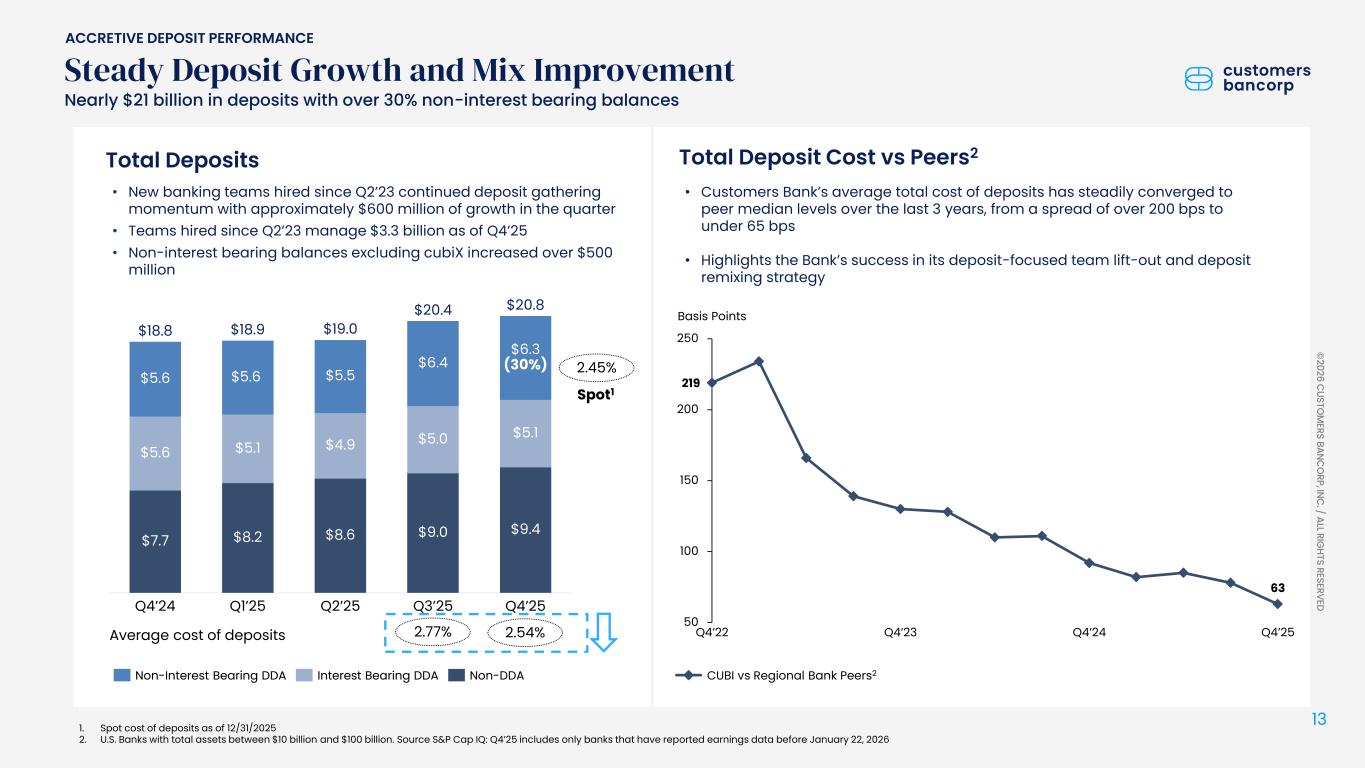
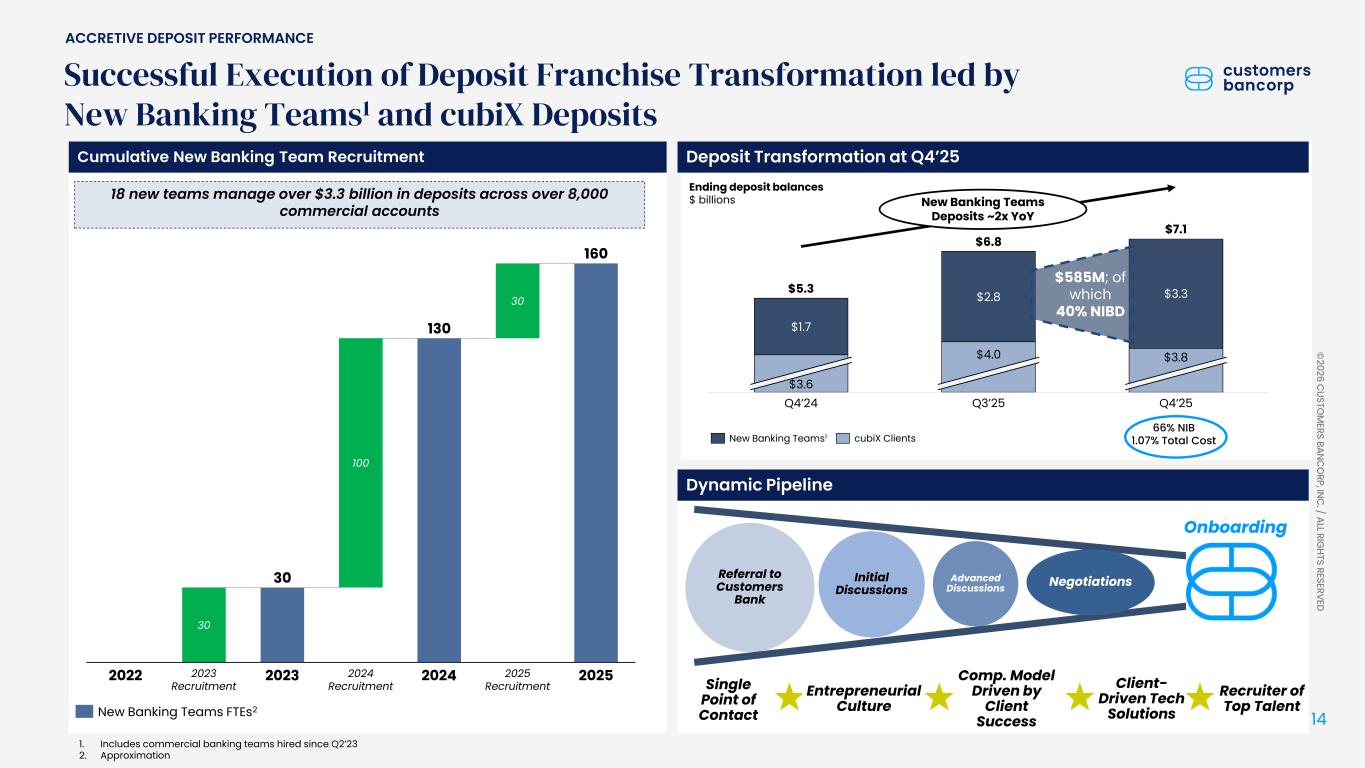
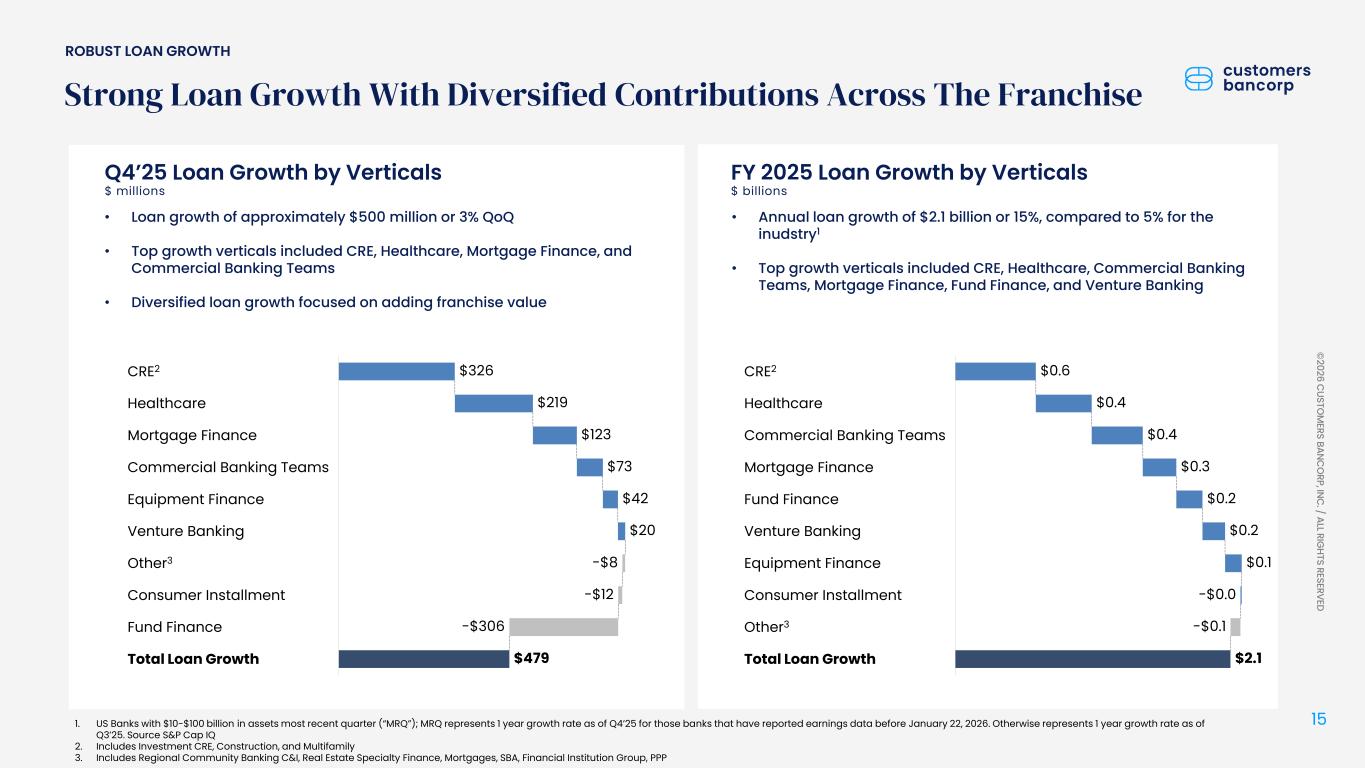
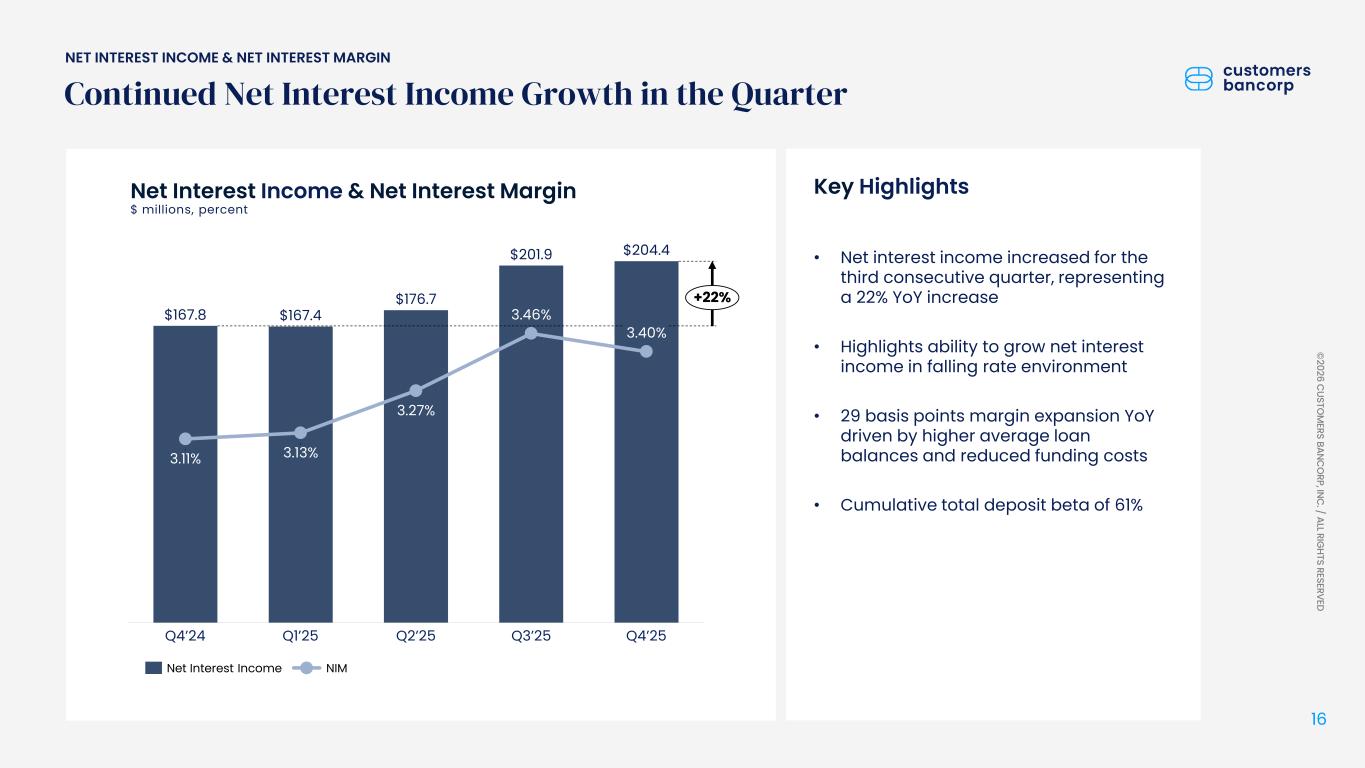
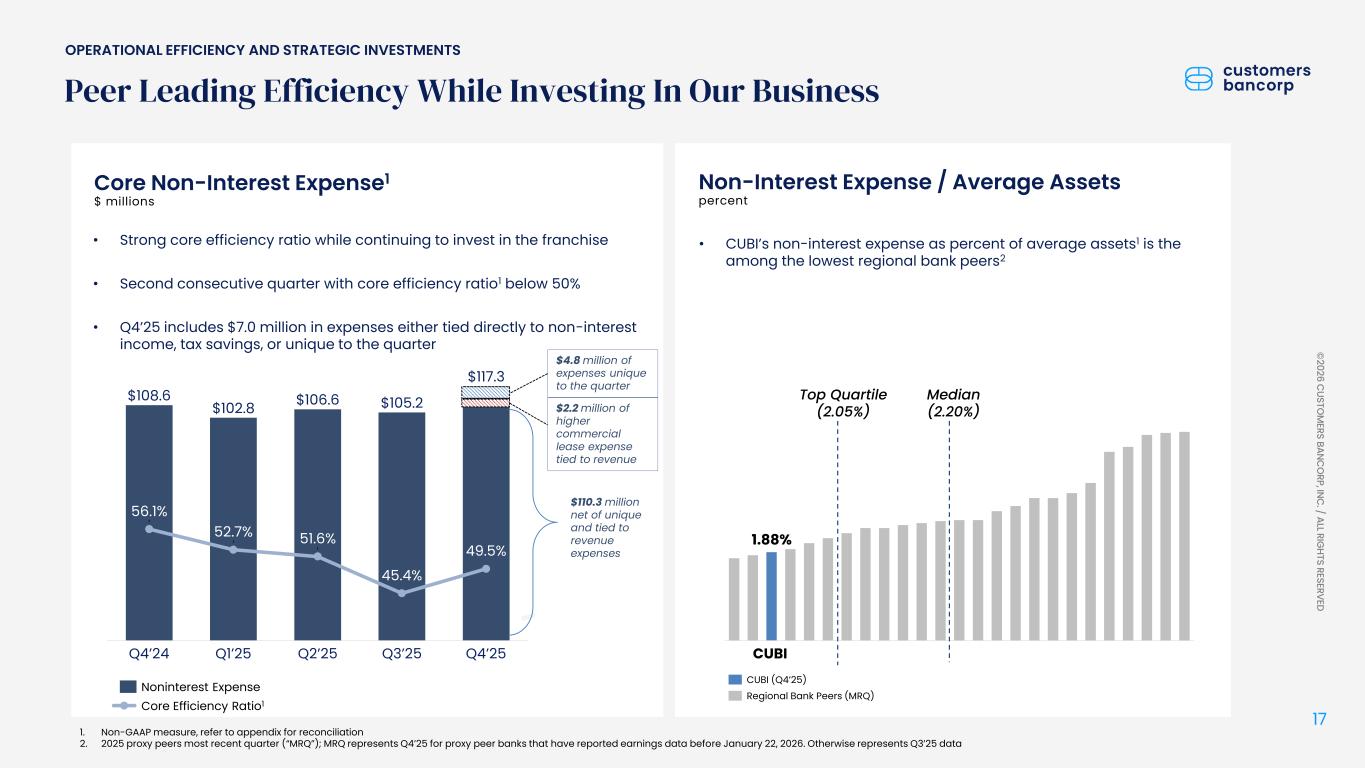
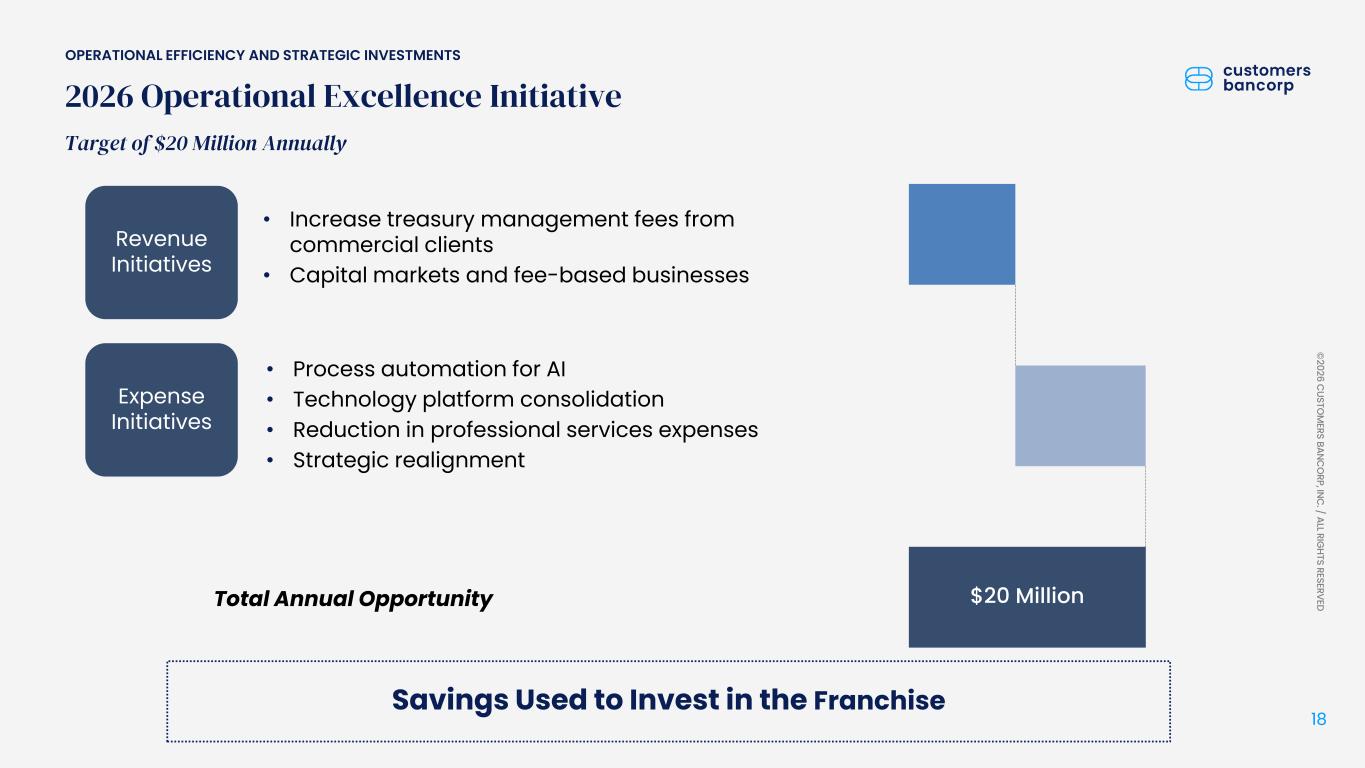
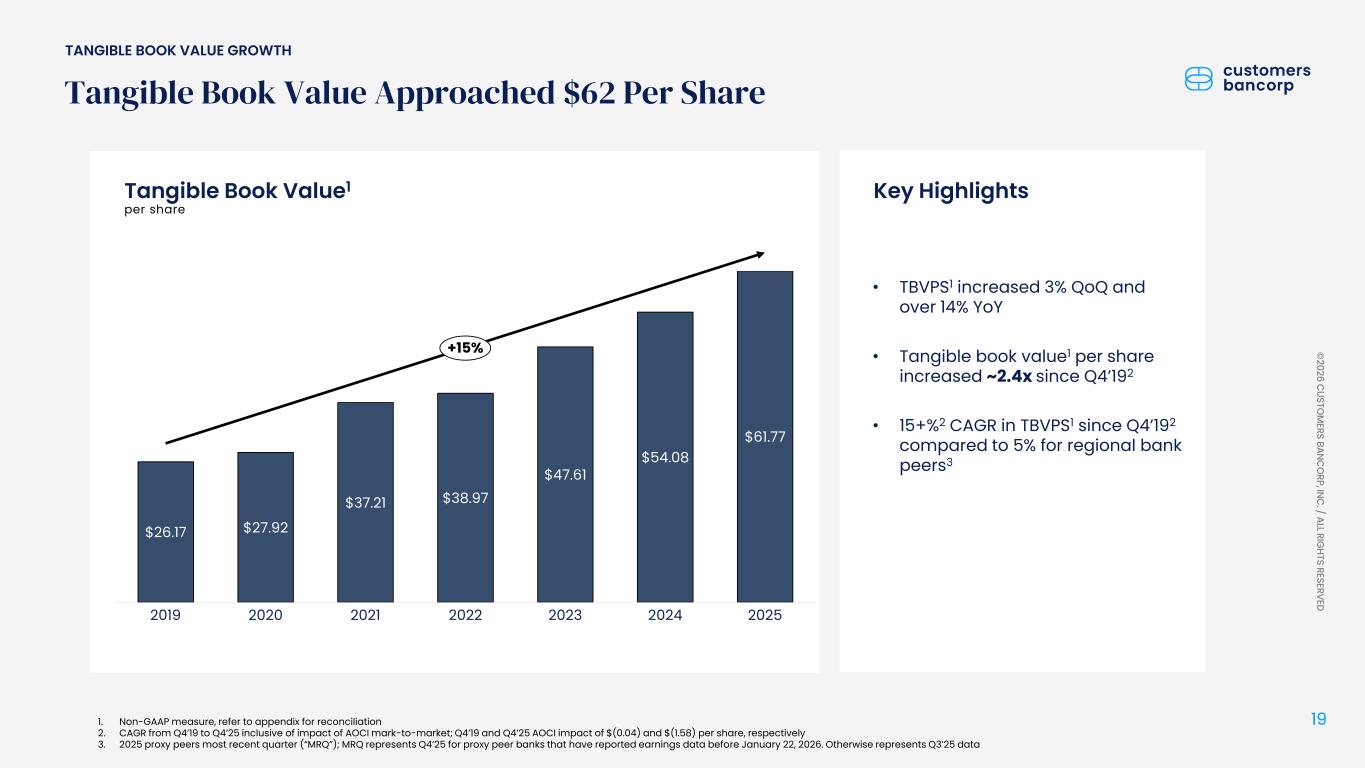
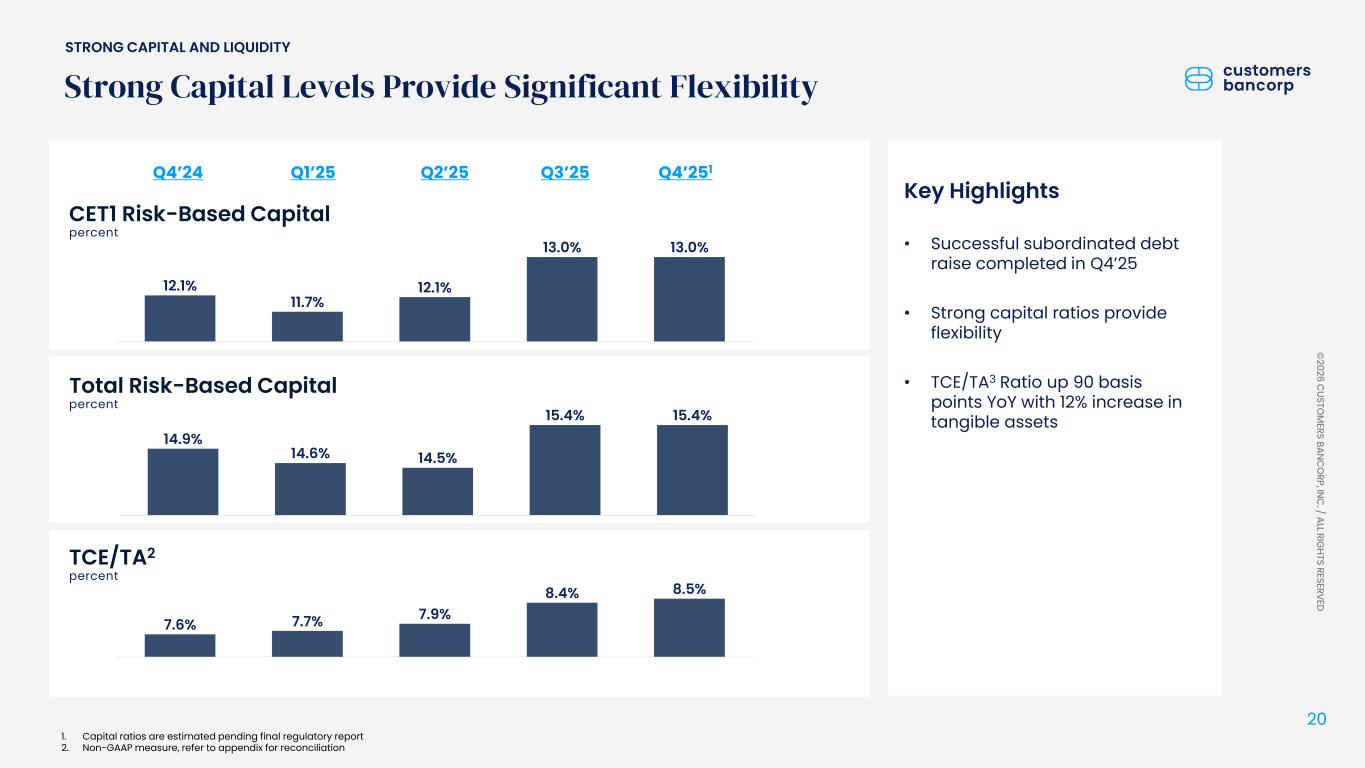
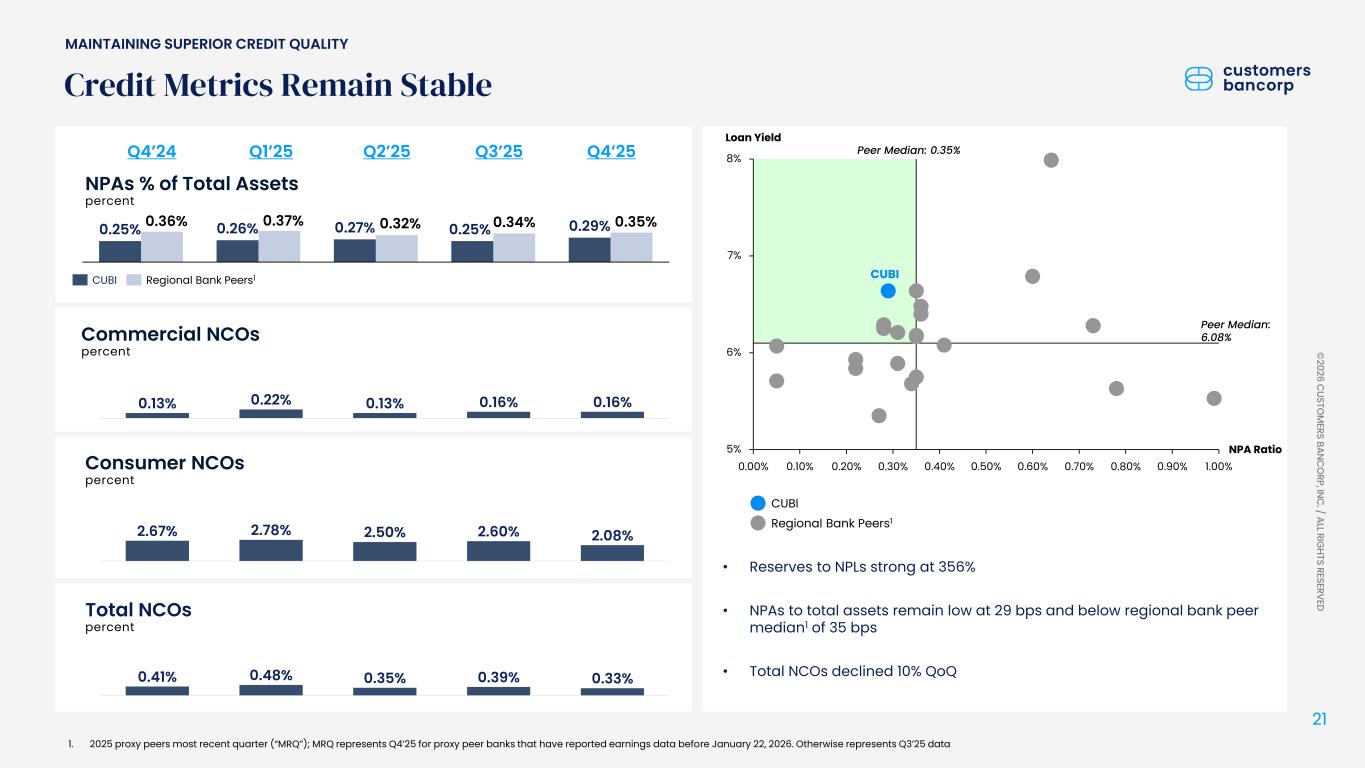
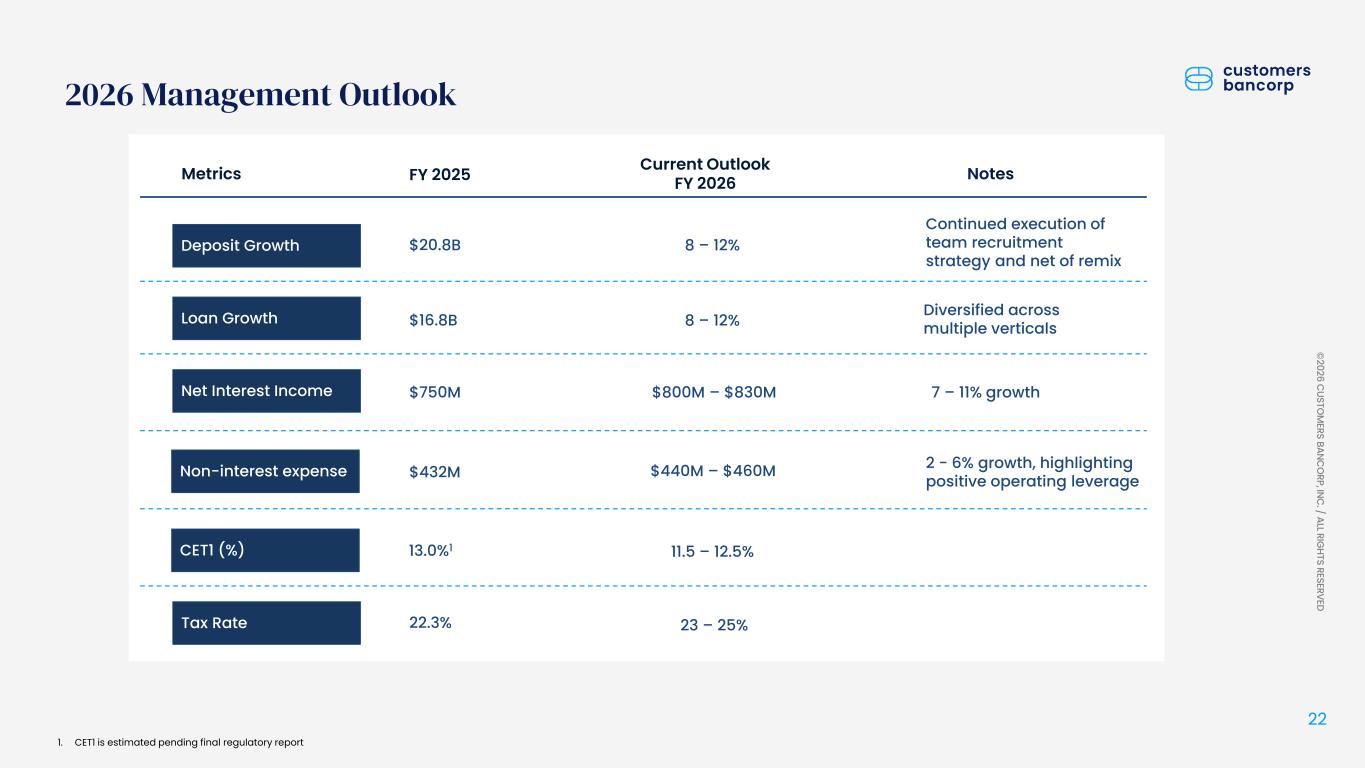
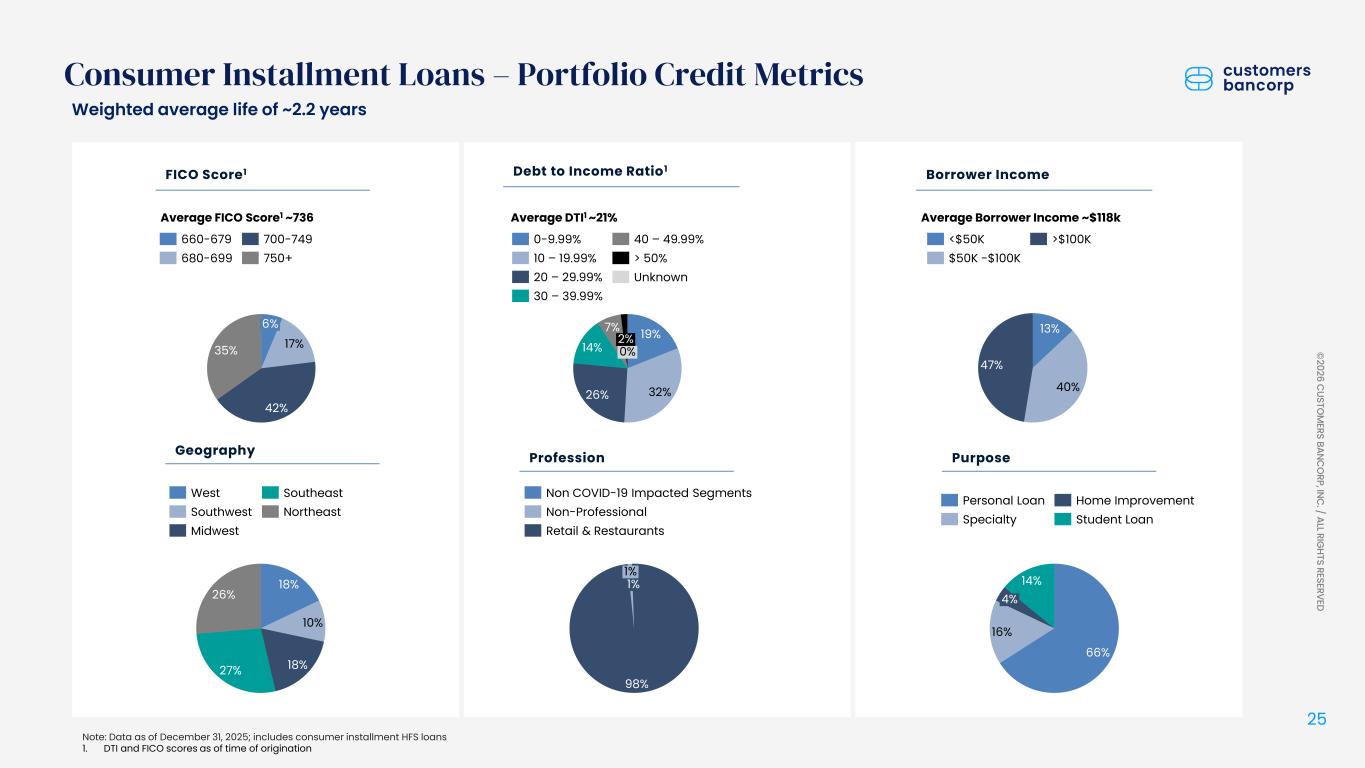
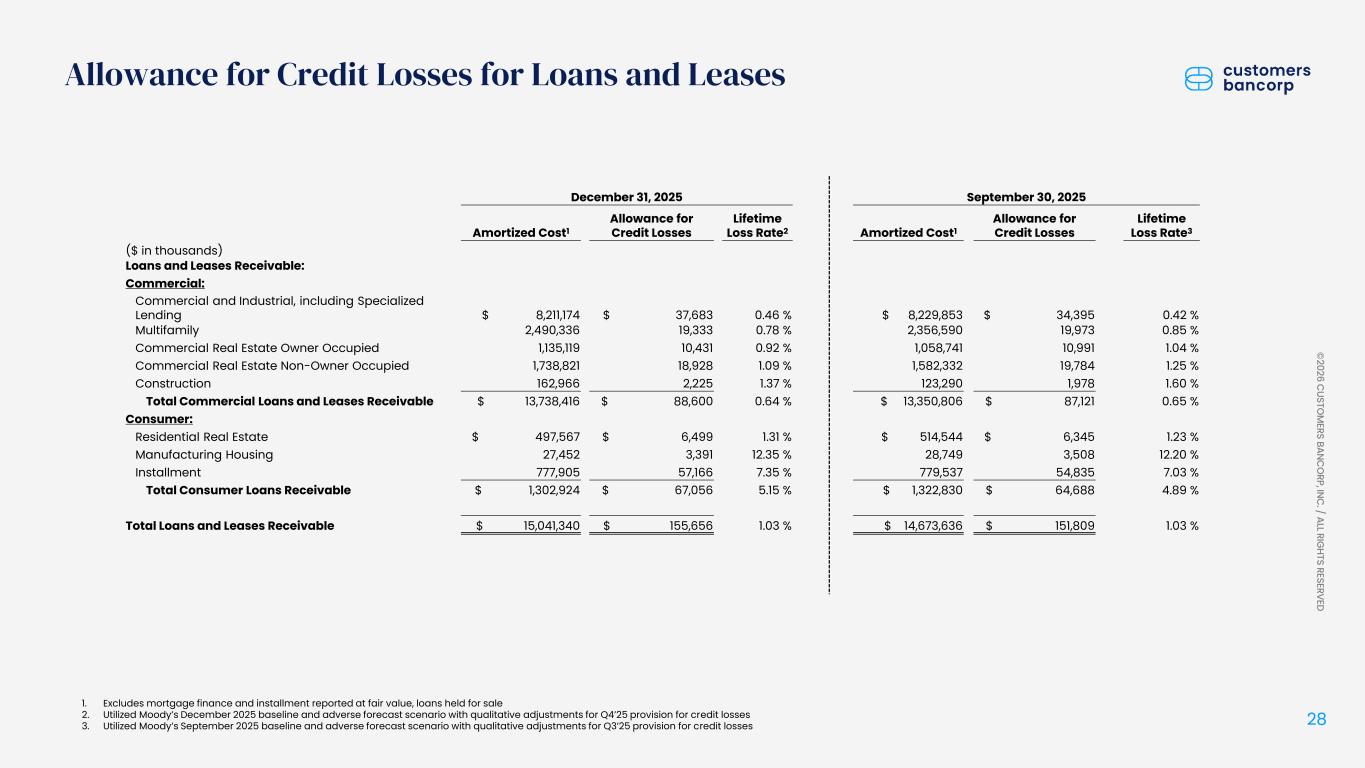
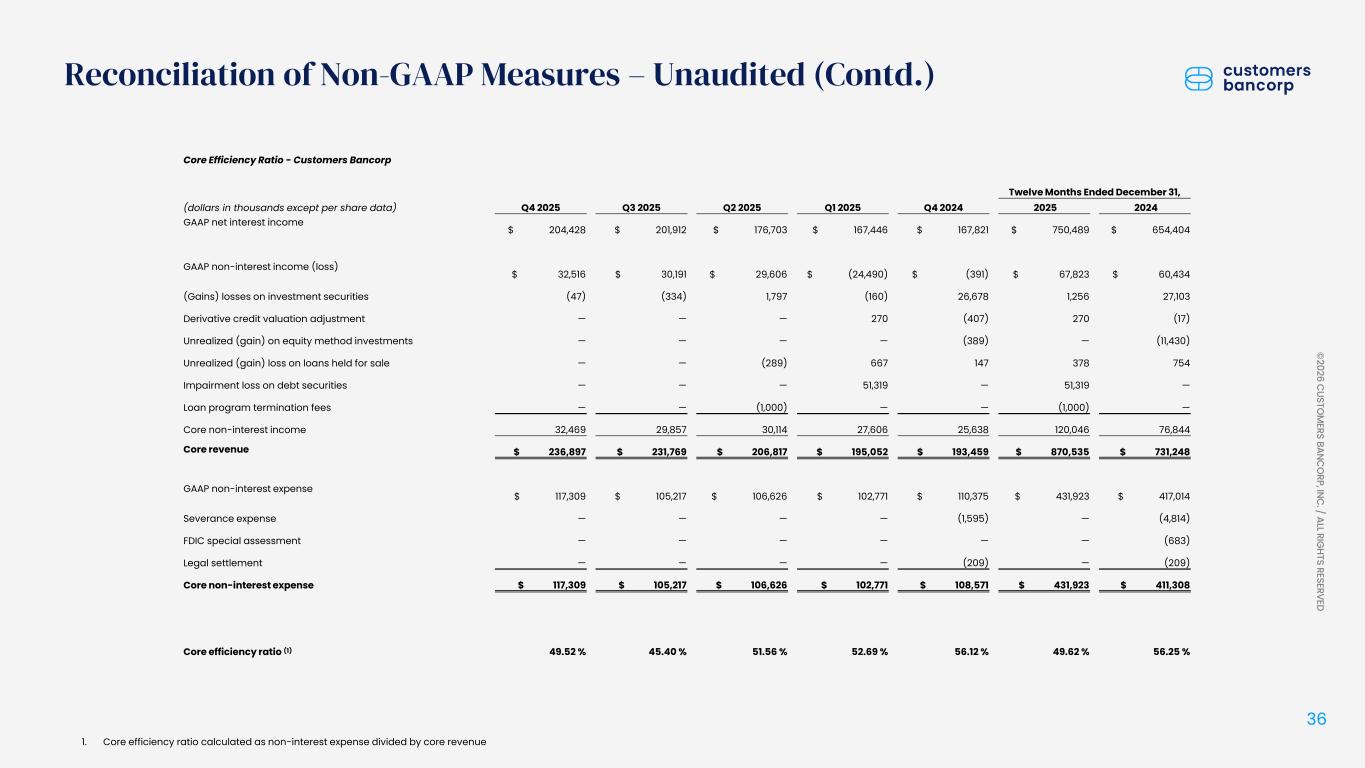
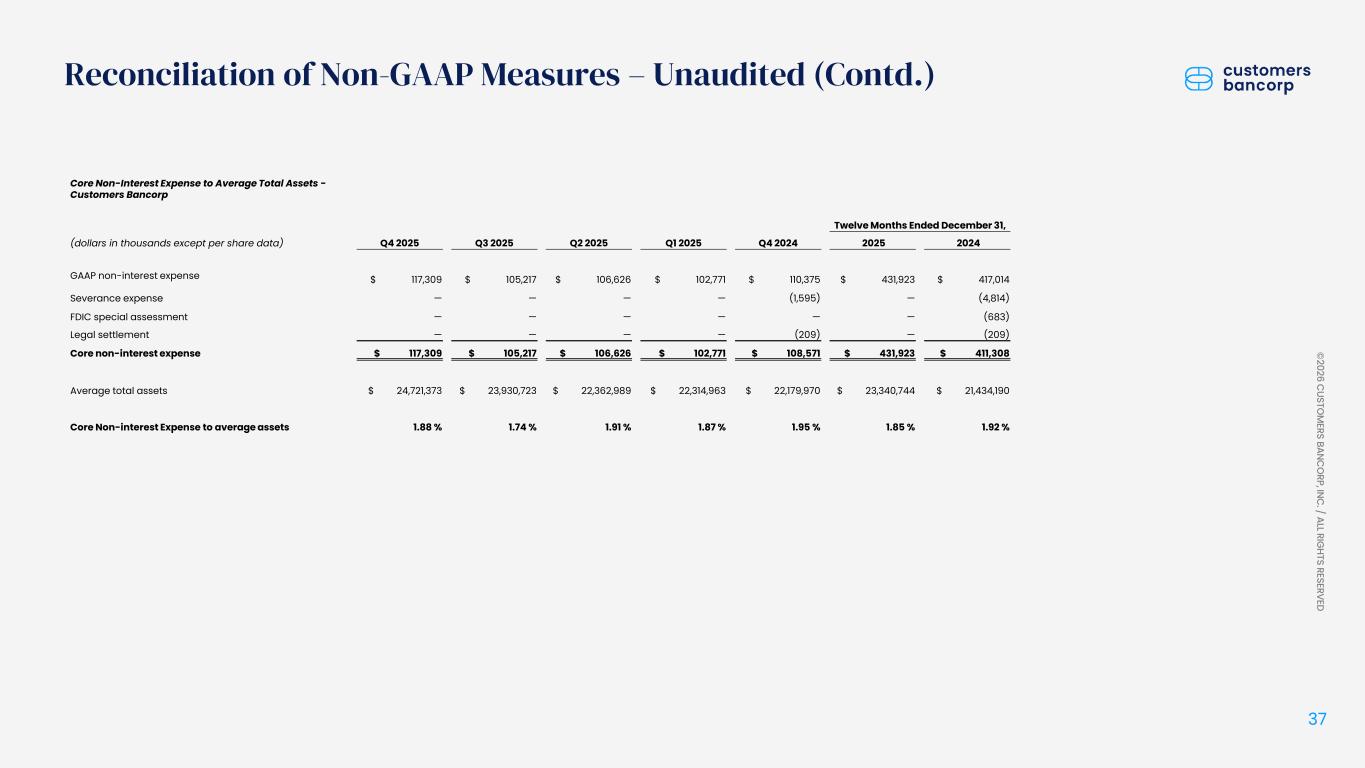
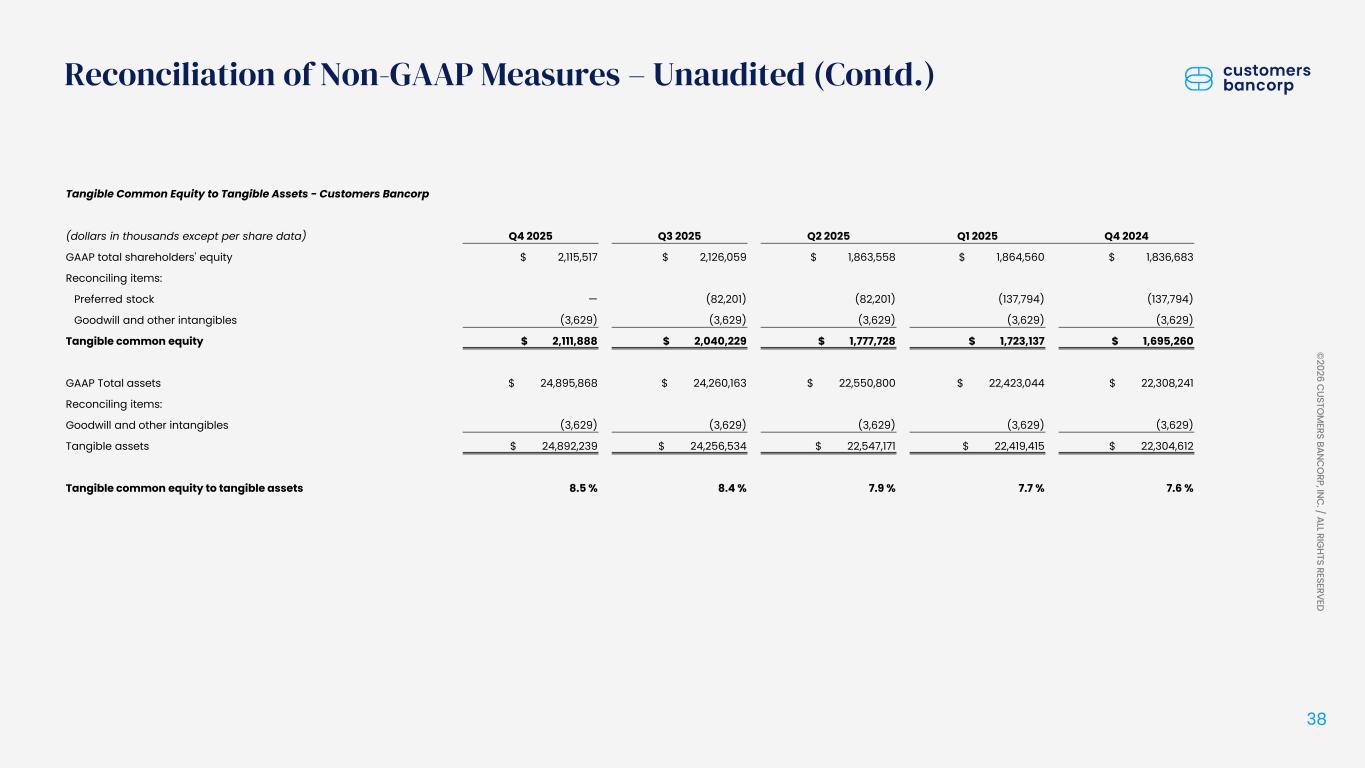
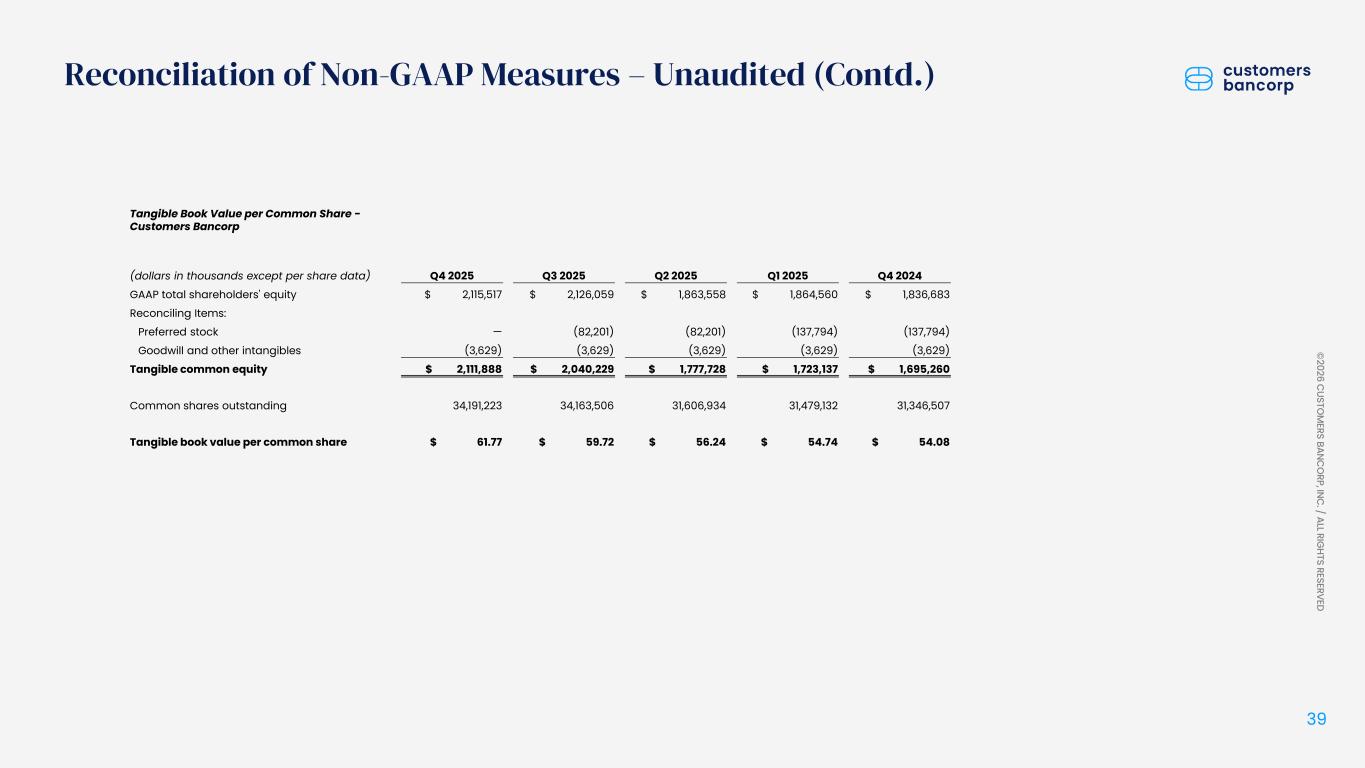
Thanks, Sam, and good morning, everyone. Turning to slide 13, during the quarter, we continued to enhance the quality of our deposit franchise with a meaningful shift toward relationship-based, granular, high-quality deposits. Total deposits grew almost $400 million during the quarter, ending at just under $21 billion. And as you heard from Sam, these balances were up about $2 billion, or 10% for the year. This was led by a great performance from our new teams, which I'll give more detail on shortly. This growth is also after giving effect to the fact that we averaged about $675 million of quarterly deposit remixing throughout 2025, which helped drive the strong deposit beta, I'll detail shortly. For non-interest bearing deposits, our core franchise again delivered nine figures of gross at about $150 million for the fourth quarter. And for the year, we had over $500 million of non-interest-bearing DDA growth, apart from the large DDA increases we saw from our Cubix clients. Because of the momentum with our deposit teams, we think we have the potential to replicate or even beat this performance in 2026. Our team responded very well to the Fed rate cuts in October and December. Our deposit beta in the quarter was 54% and a very strong 71% on interest-bearing deposits only. Through the full easing cycle to date, our total deposit beta has been about 61%, which is a number that we're very proud of. The results of our deposit transformation over the last few years can be seen on the right-hand side of page 13, which shows we've been steadily converging to peer median deposit costs from a spread of over 200 basis points in the fourth quarter of 2022, or three years ago, to under 65 basis points today. Now let's turn to slide 14, where I'll provide more detail on the incredible success of our deposit gathering efforts with a particular focus on our new banking teams. Sam discussed earlier how critical recruitment is to our strategy, and here you can see the results of that hard work. The teams we've recruited over the last two and a half years now manage over $3.3 billion in deposits, excluding our Cubix payments business. And that's a very granular book of business with over 8,000 commercial accounts. In 2025, they increased deposit balances by $1.6 billion, essentially doubling the balance from the prior year and in the fourth quarter alone they added 585 million in deposits of which 40 percent was non-interest bearing and that's without any meaningful contribution from the teams that we onboarded in 2025 which we believe could be a meaningful driver deposit growth in 2026. now let's turn to loans on slide 15. loans grew approximately 500 million dollars or three percent quarter over quarter. Growth was broad-based and led by commercial real estate, healthcare, and mortgage finance, while we saw net paydowns in our fund finance business. You can see the same diversification in loan growth when looking at the full-year view, as the majority of our businesses contributed to 2025 growth in some way. As we often say, the chart on loan growth can vary each quarter, but the diversified nature of our quarterly and end results highlight the multifaceted nature of our asset generation capabilities. Given the depth and breadth of our platform, we see opportunities to add franchise enhancing loans in 2026 with a continued focus on credit quality. Turning to slide 16, net interest income increased 22% year over year to $204 million, and our net interest margin expanded by 29 basis points to 3.4% over the same period. Net interest income increased $2.5 million sequentially and was driven by the following core trends. An increase in average loan balances of nearly $800 million, an increase in average deposits of over $300 million, a decline in our blended cost of deposits from 2.77 last quarter to 2.54% in the fourth quarter, and nearly 250 million of higher average non-interest bearing balances, despite flat average cubic balances quarter over quarter. This performance highlights our ability to grow net interest income even in a falling rate environment. And with levers to pull on both sides of the balance sheet, we're optimistic about our ability to continue net interest income growth in 2026. Moving on to slide 17, our reported non-interest expense was $117 million in the quarter. The linked quarter increase was mostly driven by expenses that were either unique to the quarter or directly related to fee income or tax savings. To give some more color, we had a total of $4.8 million of unique expense in the quarter which included 1.9 million in legal fees associated with a new team onboarding 2.2 million of insurance expense on tax credit purchases which had a corresponding direct benefit to our effective tax rate and seven hundred thousand dollars in compensation and benefits additionally our commercial lease depreciation expense was 2.2 million higher quarter over quarter, but that came with higher volume in the business, so our non-interest income for that business was up $2.7 million late quarter. It's also worth noting that our expenses last quarter benefited from a positive adjustment to our FDIC expense of about $1.8 million. But even with these discrete items, our efficiency ratio was 49.5%, and our non-interest expense to average asset ratio was 1.88%, placing us firmly in the top quartile of tiers even as we invest in growth. Now turning to slide 18, many of you recall that during our third quarter 2024 earnings call, we outlined our first operational excellence initiative. It was designed to identify revenue enhancement and cost saving opportunities that we could use to reinvest into areas of strategic growth for our future while maintaining strong efficiency for our organization. Based on the success of that program, we're once again undertaking a similar program. Between revenue and expense initiatives, we're targeting $20 million in run rate proceeds, which we will again invest in our future. We believe this ongoing philosophy is reflected, well, sorry, the result of this ongoing philosophy is reflected in the guidance I'll provide in a minute, and it's a key component to having sustainable, long-term, positive operating leverage. On slide 19, you can see our tangible book value for share grew to $61.77, up 3% sequentially, or 14% annualized. This represents one of the clearest markers of long-term shareholder value creation and continues our multi-year track record of double-digit tangible book value growth. And we achieved 14% growth during a year in which we added 9% to our shares outstanding and enhanced our capital ratios across the board. Let's now turn to slide 20 to discuss that capital growth. We further strengthen our capital position this quarter with a successful subbed issuance, which provided us with $100 million of additional tier two capital. Our tangible common equity ratio continued to climb higher, now reaching 8.5% even after a quarter of strong balance sheet growth. And this ratio is up 90 basis points year over year, growing meaningfully while still supporting 12% growth in our asset base. On slide 21, credit performance remains stable across the board. A strong credit culture will always be a critical success factor for customers, and our results support this. NPAs were just 29 basis points of total assets and have been consistently below peers for the last five quarters. Total net charge-offs declined by 10% in the quarter as we saw strong performance from both our commercial and consumer portfolios. Excluding our small consumer portfolio, which represents only about 5% of our loans, commercial net charge offer mean very low at 16 basis points annualized. Overall, we believe the loan portfolio is well positioned and we have a strong reserve coverage within our allowance for credit loss. With that, I'll wrap up my comments with our 2026 outlook on slide 22. As most of you on the call know, I've been with the company for about eight months now. I went back and reviewed last year's guidance against what we delivered, and I was very impressed with the fact that we beat on every line item. We had also raised our guidance a couple of times along the way as our execution panned So with another strong quarter and year in the books, we're pleased to share our initial guidance for 2026. With strong pipelines across the franchise, we're targeting loan growth of 8 to 12%. Led by the commercial teams we've onboarded and continue to accrue, we see deposit growth net of remixing of 8 to 12%. The result of this growth is expected net interest income of $800 to $830 million for the year, or growth of 7 to 11%. On non-interest expenses, we project $440 to $460 million for the year. This is growth of 2% to 6% as we continue to make investments in our future, largely in people and technology. But this range results in very significant positive operating leverage. On capital, we are targeting Common Equity Tier 1 of 11.5% to 12.5%, with our strong organic earnings potential positioning us well to support solid balance sheet growth. And lastly, we expect an effective tax rate of between 23% and 25%. With that, I'll now pass the call back to Sam for closing remarks before we open up the line for your Q&A.
Thanks, Mark. In closing, Customers Bank is executing on its strategy, delivering exceptional client service, differentiated deposit gathering, diversified loan growth, the recruitment of top talent, leading payments capabilities, and maintain strong capital and credit. Our teams delivered a phenomenal deposit gathering year. Total deposits increased approximately $2 billion, with $700 million of that being non-interest-bearing growth. Our commercial teams delivered over $500 million of that non-interest-bearing growth, which should be the floor for 2026. And with this momentum, we feel good about the growth in our guidance. Similarly, our loan teams are well positioned to build on the diversified loan growth we delivered in 25. Our team recruitment efforts are kicking into high gear. We're already in active discussions with half a dozen teams. That's on top of the long runway from our recently onboarded teams. We're seeing a big payoff from the investments we've made in our payments infrastructure. We did over $2 trillion of Cubix activity in 2025, strengthening our market position and competitive mode. Last Friday, we enabled a network of existing customers in the mortgage industry that could add $50 billion in transaction volume this year. We are further targeting additional networks of prospective clients within the real estate industry as a starting point that could be a meaningful driver of non-interest-bearing deposits in the next couple of quarters. As you heard, we delivered strong profitability with an ROA and ROE of 1.2 and 13.8 in the fourth quarter. We completed two successful capital transactions during the year, all while maintaining excellent credit performance. As you can imagine, we're incredibly excited about the prospects for this company in 2026 and beyond. We'll now open the line for questions.
Operator
Thank you. We will now begin the question and answer session. Please limit yourself to one question and one follow-up. If you would like to ask a question, please press star 1 on your telephone keypad. To withdraw your question, press star 1 again. If you are muted locally, please remember to unmute your device. Please stand by while we compile the Q&A roster. Your first question comes from the line of Janet Lee with TD Cohen. Your line is open. Please go ahead.
Good morning, everyone, and congrats, Sam, on your new role. So, if I were to, obviously, if I look at that interest income guide and expense, it's very good positive operating leverage for 2026, and 2025 was also a good year for fee income. If I were to look at 2026, is there a good level of expectations that you could set for fee income growth and where you're most optimistic about that fee income line?
Sure, Jan, good morning. You know, when you look at our non-interest income, similar to our asset businesses that we built, we have a nice portfolio of fee income businesses. And at different quarters, different businesses step to the forefront. You know, in the third quarter of 2025, our venture business stepped to the forefront and we had outsized loan fees. If you look at our loan fee line on our five quarter progression, that's where we had some warrant income. This quarter, our commercial finance business stepped to the forefront, you know, where we have, you know, stronger commercial lease income. And then also down in the other line, we had some sales on operating, some operating leases that we sold residuals, lease residuals at a game. So, you know, my advice would be, you know, that while, you know, there will be different businesses that step to the forefront throughout the course of a year, on a quarterly basis, if you go back and look, we've averaged about $30 million. dollars. You know, so from 2Q to 2.4, you know, the average is right around $30 million. You know, so I think that's a good place to start. And then on top of that, we now think we have some businesses that have matured, that have a good, you know, full product set around them. You know, and now we know a focus in 2026 will be how to better monetize that.
Thank you. Very helpful. And for your deposit growth, obviously, the new banking team hires, I think they brought in $600 million of deposit growth in the quarter, and your deposit growth of 8 to 12 percent for 2026. I would assume a lot of that growth is driven by the new banking team hires continuing to bring in that lower cost deposit. What level of deposit growth are you assuming from Cubix? I believe the balances on an average basis were pretty stable quarter over quarter.
And what you're seeing on the adopt the institutional adoption of digital assets and how that's impacting the trend thank you yeah sure mark i'll i'll uh jump in and take that you know i think janet um conservatively we're not assuming that there's any major contribution you know from our uh you know digital assets uh you know balances there well i think you're right we could see you know potential increased market activity if there's sort of the legislation that comes into the forefront However, it's not something we're counting on. So the positive growth that you see there and sort of our guidance that Mark walked through is really going to be driven by, you know, the core commercial bank. And I think that's really one of the, you know, the highlights of this organization. There are potential levers that could be pulled or, frankly, maybe it's another way of saying it, there are potential embedded upside, you know, that could be there if we continue to see sort of broadening of the network and sort of increased activity. But, you know, to that point, you know, you touched on the $600 million in the quarter. We also talked about $2 billion of growth for the year. But I think Mark also touched on the, you know, $675 million on average, you know, plus or minus throughout 2025 of Remix that we did. If you put that all together, you know, our $2 billion on a percentage basis was industry-leading in 2025. We would have more than doubled that had we just not Remix and grown the balance sheet. And I think that really shows the diversified power across the organization. It's not just the 23 and 24 teams and the next year, the 25 teams. The core bank is delivering, you know, is continuing to deliver, you know, great strength to the organization. And I think given the investments we made, we focused on the, you know, highlighting the return on those investments for the 23 and 24 teams. But really, I think that the, you know, the commercial bank is firing on all cylinders. And as we continue to flex our, you know, payments expertise, you know, you heard me highlight it in my prepared remarks that, you know, we could also see lifts in deposits related to traditional payments verticals that would, you know, be operating on the QX platform.
Operator
Your next question comes from the line of Steve Moss. Your line is open. Please go ahead.
Operator
Good morning, Steve.
Good morning, Sam, Mark. Nice quarter here. And maybe just starting going back to the teams you're looking to hire this upcoming year. I think, Sam, you kind of touched on part of it at least that, you know, with looking to hire additional real estate teams, I think is what I heard. They were a little staticky for me. But just kind of curious, are they new verticals or just additive to existing verticals? And then kind of with the $50 billion transaction volumes, yeah, you touched on, Sam. I'm just kind of curious as to how we could translate that to deposits.
Sure. So I'll tackle those and let me know if I missed anything. So firstly, on future teams, I think was your first part of your question. You know, again, it's, you know, we're in discussions with half a dozen teams. You know, it's difficult to sort of say where we'll land out. We do think it's a question of a little bit of bottoms up as well as top down. So top-down, strategically, we think about different strategic areas that we'd like to be in that we aren't in today or we're already in, you know, in a decentralized way. It might be better to sort of centralize these and strengthen, you know, our overall go-to-market. And then from a bottoms-up perspective, we have inbounds that kind of come from teams. And that's actually where a lot of our teams came from, you know, from 2025. And we have to sort of prioritize and think about investments and, you know, and align those, you know, for 26. So we'll continue to keep you posted. The real focus is continuing on the low-cost deposit gathering, you know, in 26. And as you can imagine, the hiring we do this year will really be for next year. The hiring we did last year is going to start picking up by the, you know, the middle of this year. And I think we're really excited about that based upon the pipelines that we're seeing and the momentum that we're seeing. So that was the first part, you know, of your question. Can you remind me of the second part, the last part?
On the $50 billion in transaction volume that you mentioned, just kind of how do you think about that in terms of deposits?
So the projected sort of up to $50 billion of payments volume is related to existing customers. So today it's really sort of helping customers, you know, do business on our operating platform, on advanced payments, you know, rails, and strengthening our relationship with those customers and also strengthening, you know, their, you know, the effectiveness of the way that they sort of currently operate and use our platform. You know, I also mentioned that, you know, we'll be looking to new verticals. I think that, you know, that's also something that, you know, we did some hiring for last year, and we're also continuing to, you know, align with hiring this year. which is trying to bring on networks from more traditional verticals and you know as you can appreciate payments deposits typically are you know will be you know low to no cost you know to the organization and that's really going to be you know our focus and you know our goal I think you've heard me say this we had 500 million of non you know digital assets cubics related deposit growth and in 25. We hope that's the floor, you know, for this year, which would continue to increase our non-transparing deposit percentages of overall deposits.
Okay. Appreciate that. And then just on the loan growth guide here, just wanted to, you know, you had a really strong year for loan growth. Sounds like the pipeline is strong as well. So, you know, just kind of wondering kind of what the puts and takes are for your expectations around loan growth here, you know, where you see supposedly the best opportunities and maybe if there's some upside to the number here.
Yeah, sure. I'll take that. You know, again, when you go back and look over the last couple of quarters, Steve, what you've seen is that different groups, you know, step to the forefront. You know, commercial real estate, you know, was strong this quarter. Healthcare, you know, was a leader last quarter. You know, we have a lot of room on commercial real estate, you know, relative to our peers to be able to add that, you know, selectively if the credit's right. And, you know, so, you know, I would just say that there's no one particular, you know, segment that we're more bullish about than the rest. We just think that, you know, each group will continue to have its moments, probably to shine in 2026, as we saw in 2025. You know, and there's obviously that's an annual guide, you know, first quarters are typically slow, you know, across the entire industry. You know, second and third quarters, you know, tend to ramp up. And but, you know, we feel really good about the four-year guide.
Okay, great. I really appreciate the call here and I'll step back.
Operator
Your next question comes from the line of Kelly Mata with KBW. Your line is open. Please go ahead.
Hey, good morning. Thanks for the question and a nice quarter. I guess with your expense guidance for next year, as you noted, it allows for some decent positive operating leverage. I'm just wondering if that factors in any of this, like, additional team pipeline hiring, which, you know, presumably over time will drive stronger revenues, but comes with higher expenses. So part one of the expense question, then part two, what's embedded in terms of professional fees, which, you know, presumably also should come down as you work through the right order.
Yeah, you bet, Kelly. You know, on the first question, yes, our expense guide, you know, assumes that we're going to continue investing in teams, you know, and that's part of why we, you know, put a specific slide in the deck, you know, highlighting our operational excellence initiative you know where we're going to continue you know to find ways to be able to pay for uh you know that ongoing flywheel of recruitment of those new teams um and then on the second question on professional services um yeah we've been signaling you know to you folks for a couple of quarters that we would expect to see that number come down um you know we've been right around that sort of you know 12 and a half to 13 and a million dollars you know in that line item we are starting to see you know some of that decline occur actually in the fourth quarter related to some of the the build out of our risk infrastructure but in that professional service fee is legal expenses and we highlighted it in the fourth quarter you know we had what we think are more unique costs that should not continue of 1.9 million dollars related to uh some of those 20-25 teams that we've onboarded got it that's that's really helpful um and maybe maybe circling back to um the opportunity for cubix like i um it seems like you know it's a nice you're positioning yourself as you know a premier payments um
driven bank and looks like there's a good opportunity from industries outside the digital asset space like I think you know escrow makes sense but maybe you could just um provide us with a couple of use case examples of how do you see that you know fitting in with your existing client space as an as an opportunity ahead thank you yeah uh sure Kelly you know uh appreciate that and and uh you know I think that on the slide we had highlighted a couple of them I think the first two we mentioned were sort of mortgage nets um which is as you can appreciate existing business then And we also touched on sort of more broadly in the retail industry.
And, yes, you talked about Tidal, but really it's not just sort of, you know, Tidal and escrow. It's also sort of broadly thinking about, you know, the closings of commercial real estate transactions and how we can sort of help and facilitate our customers and their partners. And we're seeing, you know, really good traction, you know, there. And as you can appreciate, with the less tech-savvy industries, builds take longer, but the stickiness is even stronger. And so, you know, we are really, you know, excited about this. And frankly, because these would be new customer relationships, you know, the first part, you know, sort of like say on mortgage finance, it really helps you strengthen and deepen your existing relationships, helps you, you know, broaden, you know, customers around the edges. But de novo industries are, you know, are really exciting for us.
Great. That's a really helpful caller. I'll step back. Thank you.
Operator
Your next question comes from the line with Brian Wilchinski from Morgan Stanley. Your line is open. Please go ahead.
Hi. I was wondering if you could speak to the resiliency of the Cubix platform in light of some of the volatility in cryptocurrency prices that we saw in the fourth quarter. I understand that volatility does often drive higher trading activity, But can you just speak to what else drove the relative stability in Cubix-related deposits in the fourth quarter, despite some of the volatility we saw in the market?
Good morning, Brian. Yeah, so, you know, I think that you hit the nail on the head. I think that, you know, changes in prices actually mean increased volatility, just like you see in traditional markets with, you know, with volatility trading-related, you know, type traditional players. And it's a similar, you know, in the digital asset, you know, ecosystem. So on days of the highest amount of volatility, you use the highest amounts of network activity and balances. And I think that's really, you know, this speaks to that. So, you know, say our spot balances were 100 million below the average on, you know, 1231. On 930, they were 100 million dollars above the Q3 average. You know, and we've always said they operate sort of within a plus or minus, generally operate within a plus or minus, you know, 10 percent, you know, type thresholds. And, you know, so to put it in perspective, well, you know, New Year's Eve and New Year's Day was on a Thursday. You know, last Thursday, as an example, we were at $4.4 billion, you know, in balances and, you know, based upon, you know, market activity that was occurring, you know, over the prior week or so, which all ends up going through our balance sheet through multiple customers and exchanges and, you know, custodians and market makers. So and then, you know, over the last couple of days, a little bit less than, you know, the sort of the average that you're seeing there. So I think that that's really the power. But to sort of step back, you know, we've seen balances dramatically increase since Q4 of last year. And then we saw another step function in the beginning of Q3, you know, with the passing of Genius and then maintaining, you know, a new band within that higher step function. And I think that's really how we see the strength of this platform is as we continue to strengthen products offerings, as we continue to enable more, you know, payment rails for our existing customer, as we continue to bring on more traditional players, we'll, you know, our goal is to sort of see a new floor to sort of operate within that sort of, you know, payment span.
That's really helpful, Keller. Thank you. And, you know, earlier in the call when you were talking about the 2026 priorities, one of the things that you've talked about was deepening relationships with the existing client base, adding additional products and services. I was wondering if you could just give us a few examples of, you know, some of the key focus areas that you have, additional products and capabilities you're adding, and how that translates into deeper relationships with Cubix.
Yeah, sure. So, you know, I think that, you know, I talked about new payment rails. That's obviously, you know, incredibly important. You know, and I think that what we're also looking to, you know, to do is consider, you know, not all of our, to put it in perspective, not all of our customers use all of the payment rails that we offer. Secondly, you know, while we're the on-off ramp, you know, to the digital asset ecosystem from fiat to digital asset ecosystem, we're not always the on-off ramp for our customers, you know, onto the sort of fiat, you know, rails as well. You know, and then there's sort of bespoke sort of market specific and in many cases sort of trade, you know, secret specific type, you know, functionality that clients ask for, you know, from us that we also sort of enable. So we are continuing within each major customer. We're sort of very focused on on building and strengthening, you know, our our relationship with them. And frankly, what we're doing is we're helping them, you know, to to run their business more effectively. And as you can appreciate, a lot of our customers have been very focused on driving sort of, you know, regulatory clarity, no pun intended, as well as sort of legislation. And they're also very focused on product and, you know, to sort of be very, very effective on product. They need us, you know, and sort of, you know, the traditional fiat rails to sort of help them with that. So there's a lot, a lot of activity going on, you know, especially sort of beginning in sort of Q3, Q4 of last year.
I really appreciate all the detail, and thanks for taking my questions.
Operator
Your next question comes from the line of Peter Winter with D.A. Davidson. Your line is open. Please go ahead.
Thanks. Good morning. I wanted to start with credit quality. Obviously, it's been very good. It's low non-performing loans relative to peers, but there was a $15 million increase in C&I and $2 million in multifamily. Just could you provide some details around the increase and maybe give an update on the credit outlook?
Hey, Peter. Yeah, I would say that our credit quality was, as you pointed out, starting from a very, very low base. You know, so it doesn't take, you know, many deals, you know, to actually move, you know, move the needle for us. You know, on the non-performing side, I mean, know, it was largely one transaction, you know, about a 10, $11 million credit. You know, it is, you know, currently under agreement. And, you know, we're hoping to have, you know, either a restructuring or a resolution of that asset in the first quarter. You know, but, you know, I would continue to say that when you look back, we had two quarters, 3Q and 4Q, that were extraordinarily low in terms of, you know, NPA and NPL ratios. You know, so I think what you see here in the fourth quarter, you know, is certainly not unusual and still, you know, puts us, you know, feeling really good about overall credit quality.
And the multifamily, was that a New York City rent-controlled property? Just curious around that.
I don't have the stats to know specific of what it was because, as you pointed out, it was a $2 million credit. So I'm not sure, you know, if that came from, you know, primarily rent-regulated multifamily or just our broader multifamily, which is the majority of our multifamily is in, you know, sort of the four-state region around the Mid-Atlantic.
And then if I could just ask, the benefit, I believe, from the deferred loan fee ends this quarter. What's a good starting point for the first quarter margin and maybe talk about how you think about the trajectory of the margin this year?
Yeah, sure. If you go back to the second quarter of 25, you know, and, you know, kind of project forward from there, I think that's kind of a good place to start. You know, second quarter margin was a 3.7. You know, and we had just a little bit, one, you know, about half of a month of accretion in the second quarter. You know, but with some of the deposit remix that we've done, you know, I think that kind of 325, 327, you know, level might be a good place to start. And then and then build, you know, from there throughout 2026.
Thanks, Mark. You know, yeah. I guess one other thing I would add, you know, is that in the first quarter here, I mean, we are modestly, obviously, asset sensitive. And, you know, so, you know, we did see a couple of bit decline, you know, link quarter from 3Q to 4Q, you know. But I think somewhere around that 325, you know, plus or minus a couple of basis points would be a good place to start from and then build out from there.
Operator
Your next question comes from the line of Tyler Cacciatore from Stevens Inc. Your line is open. Please go ahead.
Good morning. This is Tyler on for Matt Brees.
Hey, Tyler, good morning.
Good morning. Most of my questions have already been answered, but I guess just starting on Cubix and appreciate a lot of the color you've provided there. Can you just provide us some context on the size of the customer base in that business?
Hey, Tyler, Sam here. So, you know, we have hundreds of customers, you know, that are, you know, that operate within that industry. And I think one of the things that I mentioned a couple quarters ago is there's no real material real change to our customer base because we actually are the market leader. We are around the edges adding for existing customers, some of their edge counterparties that aren't already on the network, and then we're also adding sort of new traditional finance nodes which are less active as sort of the more digital asset-first type customers. So we're broadening the network with some of those players who connect to a lot of our existing customers we don't drive huge deposit balances but they tremendously you know strengthen you know both the breadth the quality and the stickiness of the network thank you and then if you could just update us on the regulatory order and where you stand in terms of items that need to be addressed there yeah sure so as of the end of the year we are substantially done with our plan and I'm you know excited to say them 2026 our focus is to put this behind us so So one of the things, kind of just building off of what I just talked about with Cubix and the network, frankly, the work is now a massive competitive advantage, and the moat is, frankly, as a result of this, is as big as the benefit of the network.
All right, well, thank you. That was very helpful. I'll step off now.
Operator
Your next question comes from the line of David Bishop with Hovdi Group, LLC. Your line is open. Please go ahead.
Hey, good morning. This is Kyle Gierman on for Dave Bishop, and congratulations, Sam, on the transition. Most of my questions have already been answered, but I was wondering if you could provide some color on the yields at which new loans were originated and add to the books this quarter, and also your current read on the competition in your lending markets. Thanks.
Yeah, yeah, I'll take the first one and then Sam can comment on competition or markets. For new loan originations, you know, principally or commercial banks, I'll just focus on the commercial yields. We are going to be anywhere between, you know, 225 and 275 basis points over Fed funds or SOFR, you know, depending on the business line.
You know, a couple of our business lines might approach, you know, 300 basis points, but the majority of new originations are between 225 and 275 basis points over uh cost of funds yeah and just in terms of you know competition um you know what i would just say is that they think you it can see on the loan growth slide but not only for the quarter but also for the year that there's just a broad base of diversified loan growth across a number of you know commercial verticals um so you know the benefit we have is is that as uh you know uh both sort of supply and demand um you know dynamics in each of those verticals change. We're able to sort of lean in. And in some quarters, you'll have health care stepping up a little bit more. In other quarters, you'll have mortgage warehouse, you know, refinance activity step up. So generally, you know, we're seeing, you know, a good, diversified, durable, you know, loan growth. As you can appreciate in 25, generally the broad-based industry saw a bit of pricing pressure. But, you know, as you saw from sort of our NII, you know, growth and sort of Mark's comments related to margin, you know, we continue to see, you know, the benefit. There's a, you know, a great chart that the team kind of pulled together on the, you know, driving down of the delta between, you know, our interest rate cost deposits relative to our peer group relative, you know, versus, you know, from end of 22 versus where we are today. And that's really, you know, a much bigger driver than sort of changes on on both yields and competition.
Thank you for taking my questions. I'll start back now.
Operator
Your next question comes from the line of Hal Goetsch with B. Ryan Securities. Your line is open. Please go ahead.
Thank you. Great quarter and great year. I just wanted to ask you a couple quick questions back to Kubik. And just for more general information, you know, when you just, it's a great slide on slide X and thank you for that. I just wanted to know if the addition of instant payment platforms built on payments instead now, are those payment rails cannibalizing the traditional wire in ACH business, or are most of these new capabilities incremental to volumes? Or that's my first question, thanks.
Yeah, sure. Good morning, Al. Well, you know, right now we're sort of seeing an additional, you know, incremental to sort of more traditional rails. So it's not necessarily sort of a big tectonic shift. There are different ways that some of our, you know, customers, you know, like to, you know, utilize different channels, both for them as well as their counterparties. And we're helping them think about sort of also sort of next-gen type ways to sort of utilize, you know, pushes and pulls and, you know, within our network as well as sort of outside and and sort of bringing in you know new new dollars as well so there's a lot of interesting things that are happening in the industry and you know we continue to see evolution we really are at the forefront of advancing you know many of these technologies because we have an established existing you know tech forward you know payment focused customer base.
When you use the term you know you know large or massive competitive advantage in this in this platform now. How would you describe that competitive advantage? Is it a barrier to entry now? Is it network effects that you're generating before anybody else can try to start a new platform? There's like a narrow or like for example, is this a narrow window to innovate like this and now that you're up and running, you're garnering a lot of network effects that prevent others from trying something similar?
What are the sources or how would you describe the competitive advantages sure you know so it absolutely is sort of a you know a barrier to entry um and and the way that we sort of see the strengthening of that mode is sort of like you talked about with the network effect is um as you can appreciate in in 24 and early 25 um you know we were heads down and sort of making sure that we were focused on um you know uh you know make sure we satisfied sort of regulatory requirements. And now at this point in time, we're really importantly focused on fraudening, you know, the way that these guys and our customers, you know, do business. So to answer your question is that that flywheel of network effect just keeps getting stronger and stronger, which creates a lot more stickiness. And then you also just think about it operationally. Operationally, the volume that we are, you know, sort of operating under is really at levels of Category 3, We've had a 44-type, you know, banks and institutions. So when you think about a competition, and then you add in sort of the risk and compliance book that we talked about that we've sort of invested a tremendous amount of people processing technology on. You put all that together, you know, the types of institutions that could even compete, you can count on one hand, you know, with us. I mean, how many of those are actually focused in the space, et cetera? It's very de minimis. I think that's really the interesting, you know, position that we're in. We're more confident in our market position today than we were six months ago.
Great. Thank you for that. And if I could have one quick follow-up, I know I'm sorry, Conor, but on some of you're leading the AI efforts. Can you give us, like, a couple of anecdotes on how AI is making processes more efficient, saving money, improving underwriting? Let me know.
Yeah, sure. Sure. So, you know, we and frankly, the banking industry has been slow to discuss AI because there's actually, you know, as you can understand, a monumental amount of work that you need to do behind the scenes to really, you know, get going. So we started our journey with like AI governance, training. We did a lot of, you know, data transformation. You know, we are advanced and sort of fully digital onboarding for very complex commercial. you know, clients. Now, as we sort of look forward, we're focused on full, you know, complete, you know, loan deposit automated onboarding. We're, you know, looking to build an AI layer on top of our CRM. We touched on credit, you know, we're, you know, we're automating sort of cam draft creation and underwriting support. We are, you know, working on sort of risk and compliance automation and then in parallel to that we're also in the process of building a workflow orchestration layer you know to conduct you know all of this across the you know across the bank so only then are you able to deploy ai agents across your operating platform that's really where you transform the bank and and the way that we work internally our team members work and also the way that we do business and and really transform the way our customers see So right now, today, you know, how the work is sort of siloed where we're doing sort of AI and agentic work. It's used for micro use cases, which is nice, but not really transformational. You know, tomorrow it's going to be across the overall bank, and it's really going to differentiate us and agents who are working all the time versus, you know, working on two-hour projects to kind of help advance, you know, a specific, you know, use case, which is nice to have but not really needed to transform the way that we do business. And that's really sort of where we are on our journey. So hopefully that gives you a little bit of color. And if we, you know, get to the, you know, to sort of our, you know, initial sort of phase two end state, it's really going to transform the way that we do business And my guess is also, you know, you know, potentially just given the size of our organization relative to much larger complex organizations, while they may have much bigger budgets, they don't have the operational flexibility and visibility, you know, that we have.
Operator
There are no further questions at this time.
I will now turn the call back to Sam Zidou, CEO, for closing remarks. thank you to everyone for your continued interest in and support of customers Bancorp we appreciate you being a part of the incredible franchise we're building and we're excited about 2026 thank you and have a great day and great weekend this concludes today's call thank you Thank you for attending, you may now disconnect.