Operator
Hello, everyone. Thank you for joining us, and welcome to the Enterprise Financial Services Corp. 2026 Earnings Conference Call. After today's prepared remarks, we will host a question and answer session. If you would like to ask a question, please press star 1 to raise your hand. To withdraw your question, press star 1 again. I will now hand the conference over to Jim Lally, President and CEO. Please go ahead.
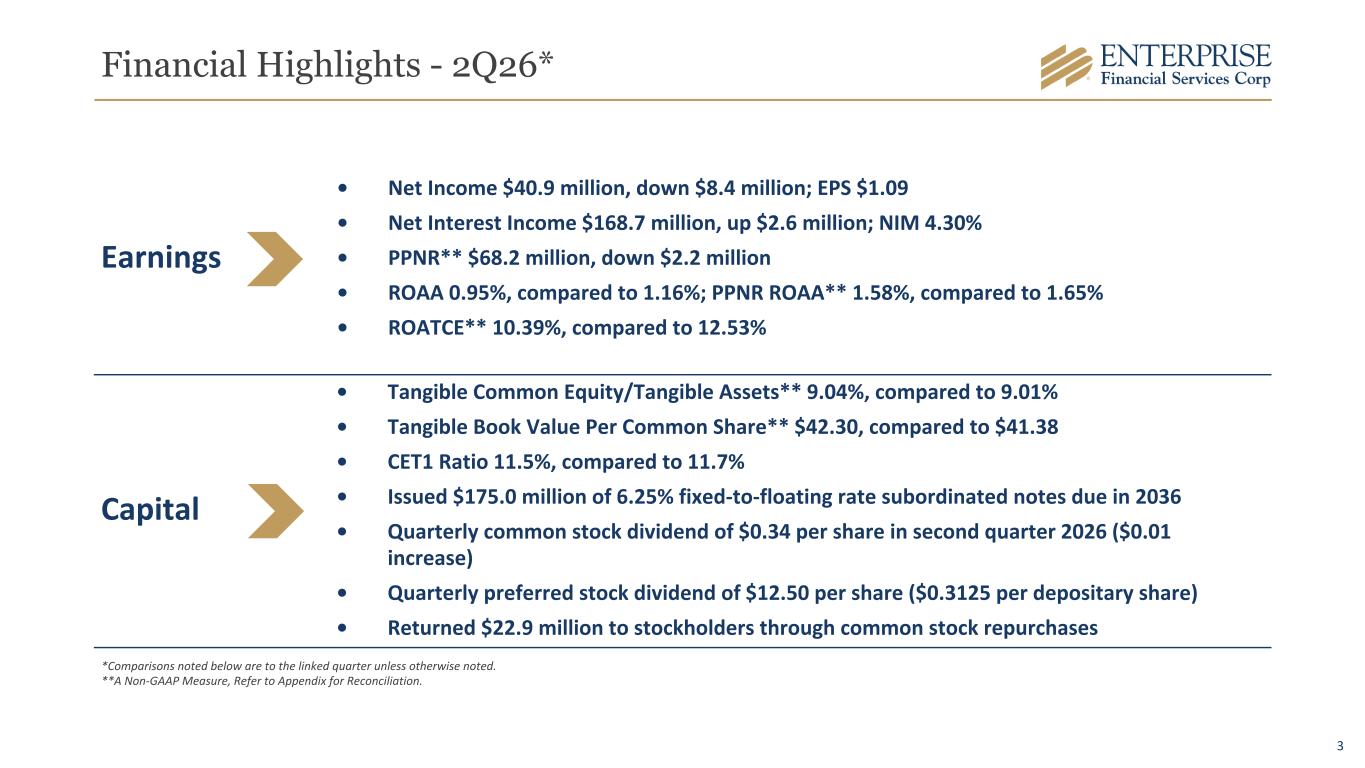
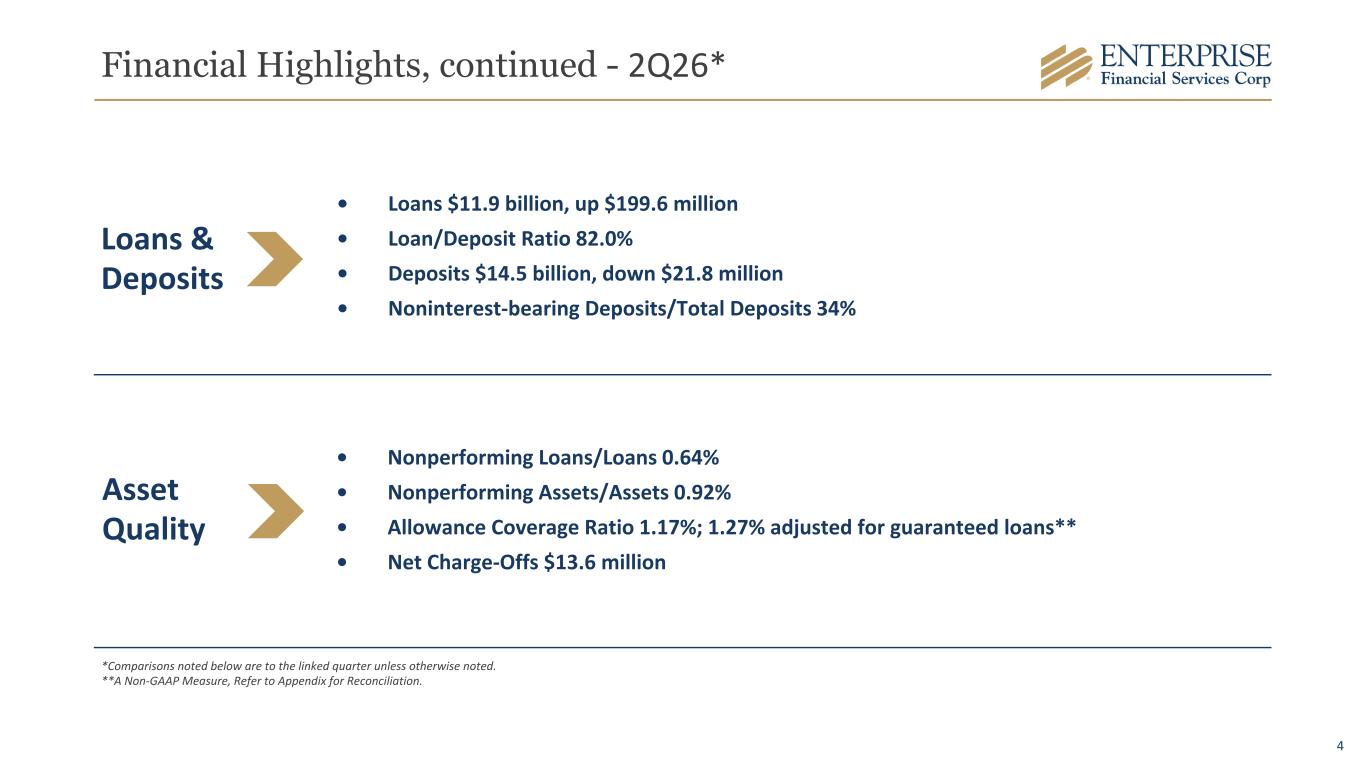
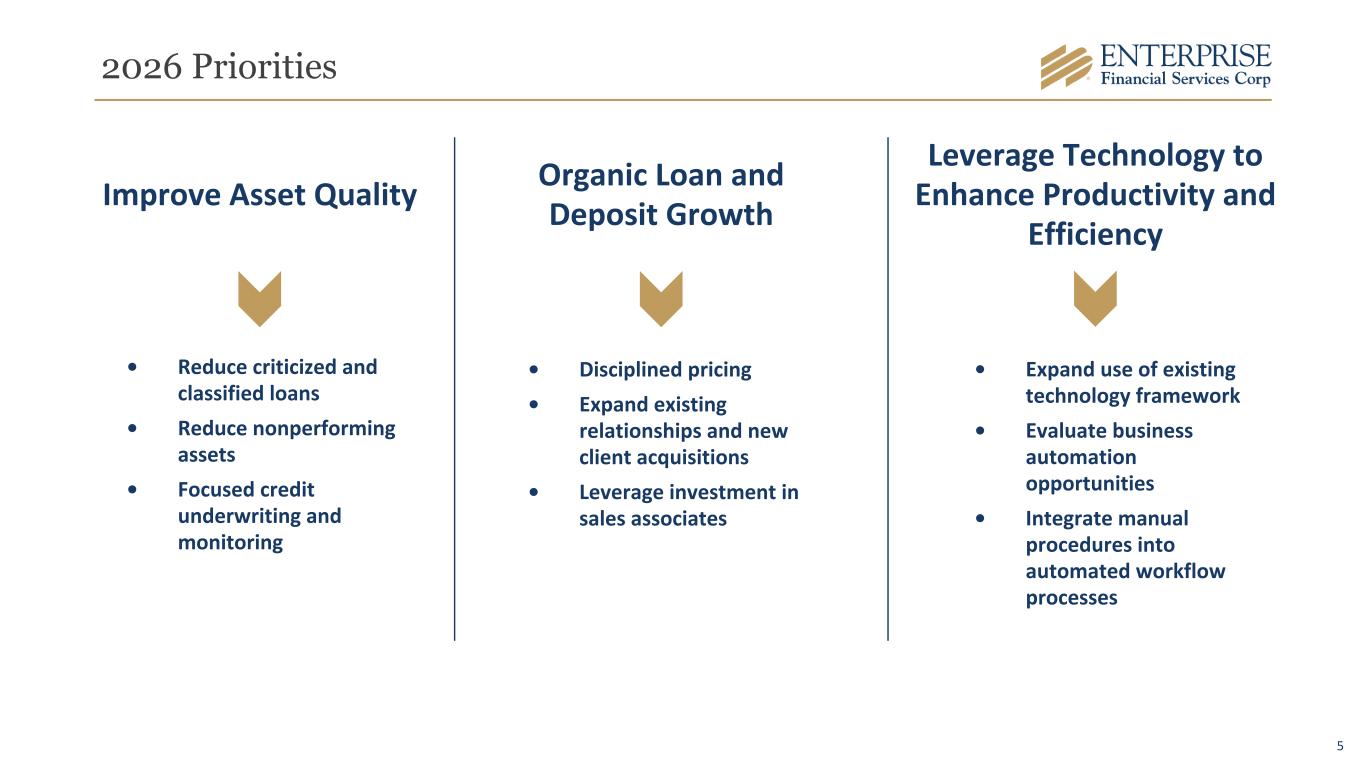
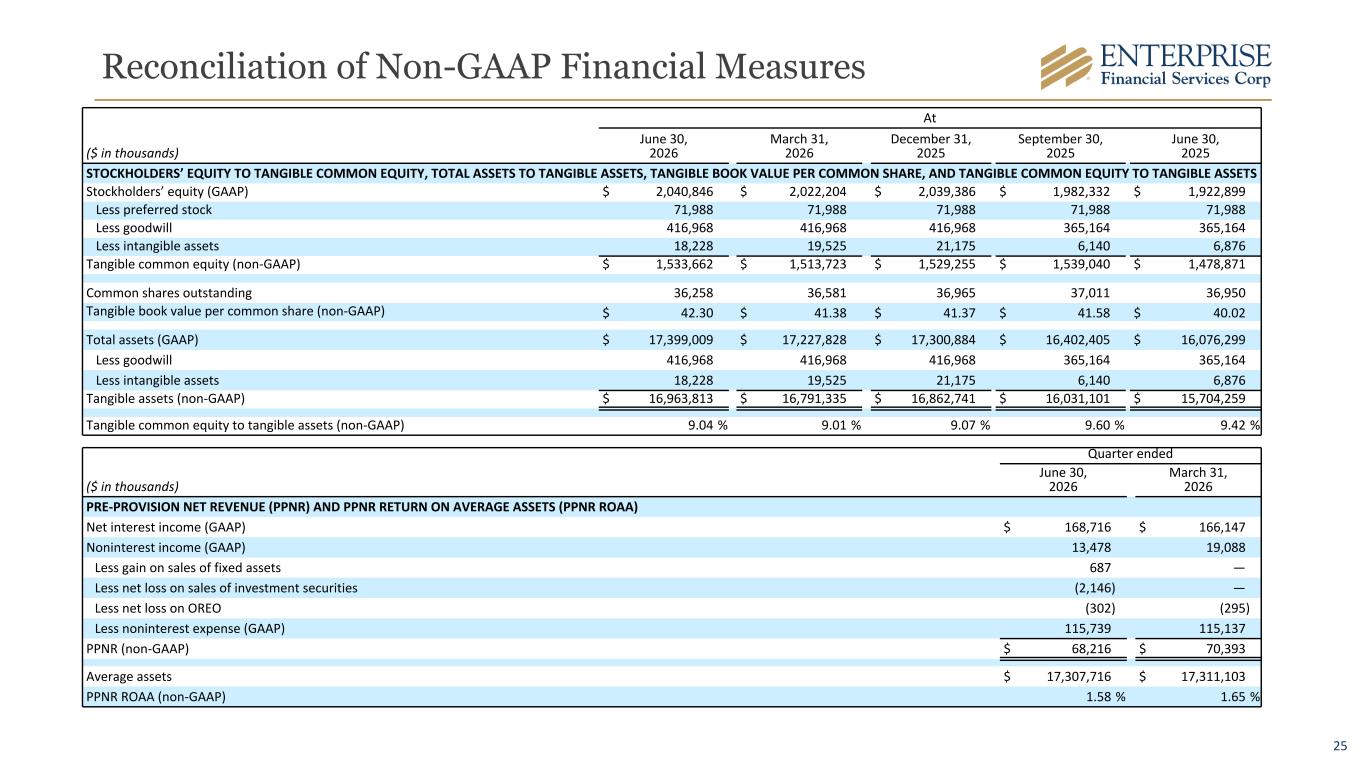
Thank you all very much for joining us this morning and welcome to our 2026 second quarter earnings call. Joining me this morning is Keane Turner, EFSC's Chief Financial Officer and Chief Operating Officer, and Doug Bauke, Chief Banking Officer of Enterprise Bank and Trust. Before we begin, I would like to remind everybody on the call that a copy of the release and accompanying presentation can be found on our website. The presentation and earnings release were furnished on SCC form 8K yesterday. Please refer to slide 2 of the presentation titled forward-looking statements and our most recent 10K for reasons why actual results may vary from any forward-looking statements that we make today. Our financial scorecard begins on slide 3. For the quarter, we earned $41 million or $1.09 per diluted share. This compared to the $1.30 that we earned in the first quarter this year and the $1.36 that we earned during the second quarter of 2025. This level of performance produced a return on average assets of 95 basis points and a pre-provision ROAA of 1.58%. While our core operating performance remained stable, a larger than expected provision expense impacted the operating results for the period. During the quarter, we took the opportunity to reposition our securities portfolio by selling investments with tax equivalent yields in the low threes and reinvesting the proceeds into securities with tax equivalent yields in the low fives, resulting in an additional $3.5 million in net interest income annually. Pulling this lever resulted in a current period pre-tax loss of approximately $6 million that was mostly offset by over $4 million in pre-tax gains on the sale of Visa Class B common stock and the sale of a piece of net interest income expanded by $2.6 million to $169 million, and that interest margin expanded two basis points to 4.30% when compared to the linked quarter. Higher loan and investment balances coupled with higher rates and stable deposit costs contributed to these results. Given the increasingly competitive environment that we find ourselves in, I'm pleased with how we were able to defend margin with our relationship-oriented business model. Our well-positioned balance sheet continues to be a strength for our company as it continues to provide great flexibility with respect to capital levels at quarter and remain stable and strong with total stockholders equity at two billion dollars and the tangible common equity to tangible assets ratio 9.04 percent additionally our tangible book value per share increased to 42.30 other balance sheet activity during the quarter included the repurchase of 382 000 shares the aforementioned balance sheet restructure, and the issuance of $175 million of 6.25% fixed to floating rate subordinated notes. All three of these tactics put us in great shape for the growth and expanded profitability for quarters to come. Keen will discuss all three of these strategies. Turning to slide four, you will see that loan balances grew as we expected by $200 million in the quarter. Doug will get into the specifics of where we saw this growth and other nuances related to our markets and businesses but i appreciate the diversity of where we experience this growth for the remainder of the year our diversified deposit base continues to be a differentiator for us while overall deposit growth was flat for the quarter we did see a positive remixing that resulted in dda growing modestly to 34 of total deposits and overall cost of deposits remaining flat at 1.5 we are working on several exciting opportunities in this area and when combined with our normal back-of-the-year swell, should produce a similar level of deposit growth that our teams have worked extremely hard for many years to garner full relationships, the results of which are the combination of larger, more sophisticated commercial relationships, granular business banking and consumer accounts, and the expanding national deposit verticals. In my opening comments, I mentioned a higher provision expense in the quarter than we did. In the quarter, we experienced approximately $14 million in charge-offs related to two commercial accounts the first of these was a texas-based cni relationship that failed on the integration of an expansion strategy and subsequently had to be liquidated the second of these was an entity within our sponsor finance group whose healthcare consulting business model was severely disrupted when the centers for medicare and medicaid announced on may 13th in 2026 was current and all with the charges taken in q2 our net charge-offs year-to-date are 31 basis points annualized, and we expect to have better results in the close. The buyers of these properties remain committed, and we fully expect there's a table in our press release that provides some insight and further clarity with respect to our NPAs. You can see that $135 million of the $160 million of non-performing assets net of government guarantees are secured by real estate that mostly has been recently appraised. These values support our comfortability, and we expect to resolve these with little or no loss. I would characterize the remaining $25 million, or 14 basis points, as normal for our credit. Turning to slide 5, you will see our priorities for the remainder of the year. I realize that credit is not where it needs to be, and we are focused to have a path to materially improve this over the next few quarters. The momentum we have in the business is solid, and adding core relationships and reaching our mid-single-digit growth for the year is another key focus and certainly attainable. Along the way, we will continue our automation journey using the existing technology framework that we have invested in, focusing on integrating manual procedures into automated workflow processes. We are already seeing strong adoption of various automation tools throughout our company, the benefits of which will provide a better overall associate and client experience. In my most recent travels and discussions with clients throughout our footprint, it is encouraging to hear the optimism that they have, despite some headwinds related to increased energy costs and other inflationary factors, companies in and around the data center ecosystem, power generation, defense, and aerospace, have a clear and robust run ahead of them. We're also still seeing pockets of industrial and retail demand in faster-growing markets in the Southwest. For some projects to reach the commencements for new clients is featured in our funding base and our consistent model of delivery such that we should continue to garner our fair share of the market and all of our geographies and businesses. Doug Bauke. Doug?
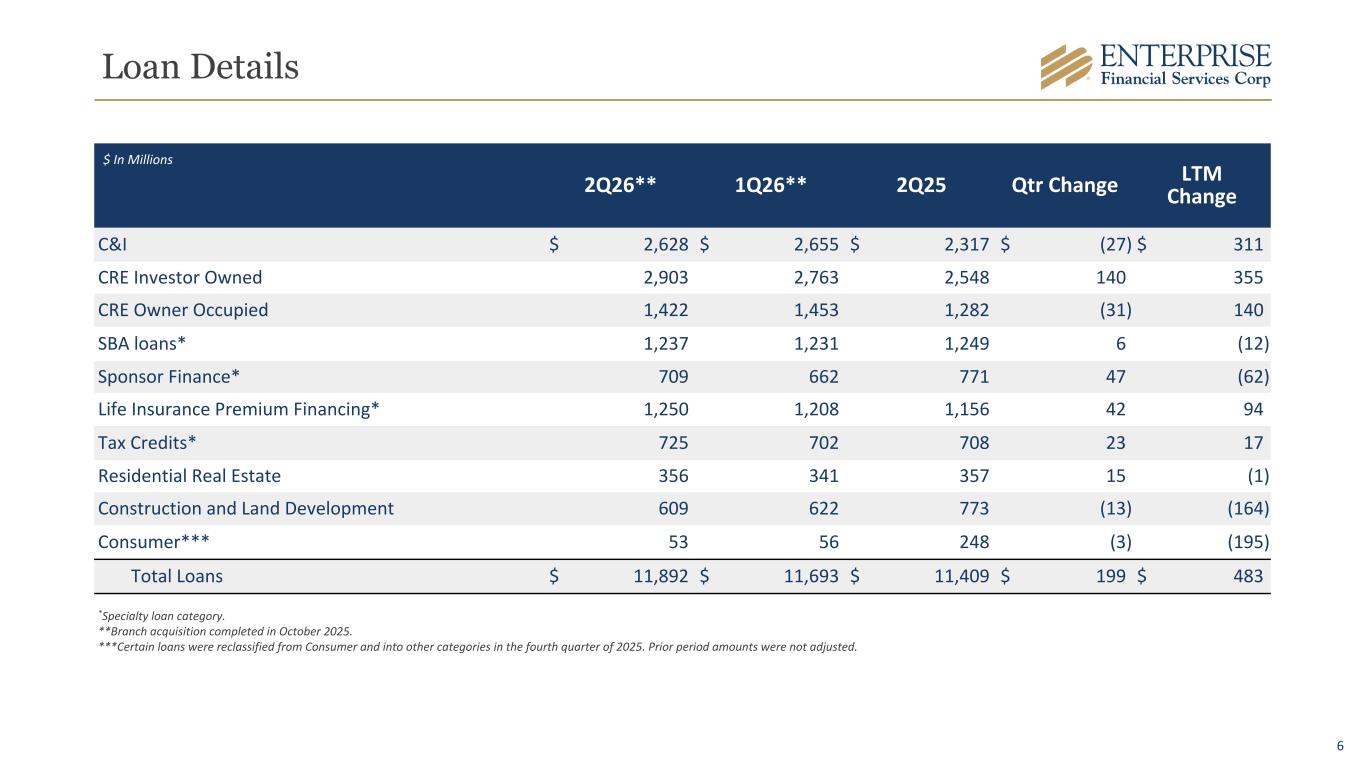
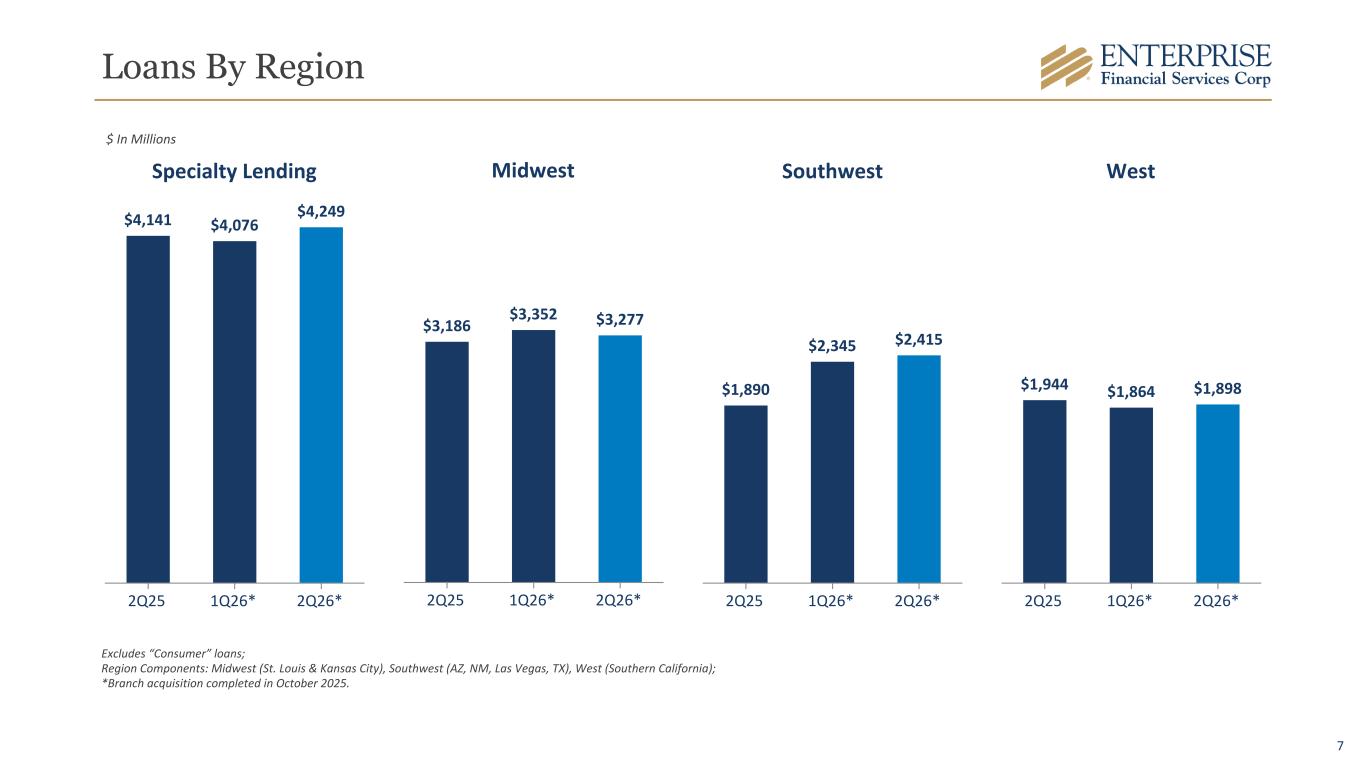
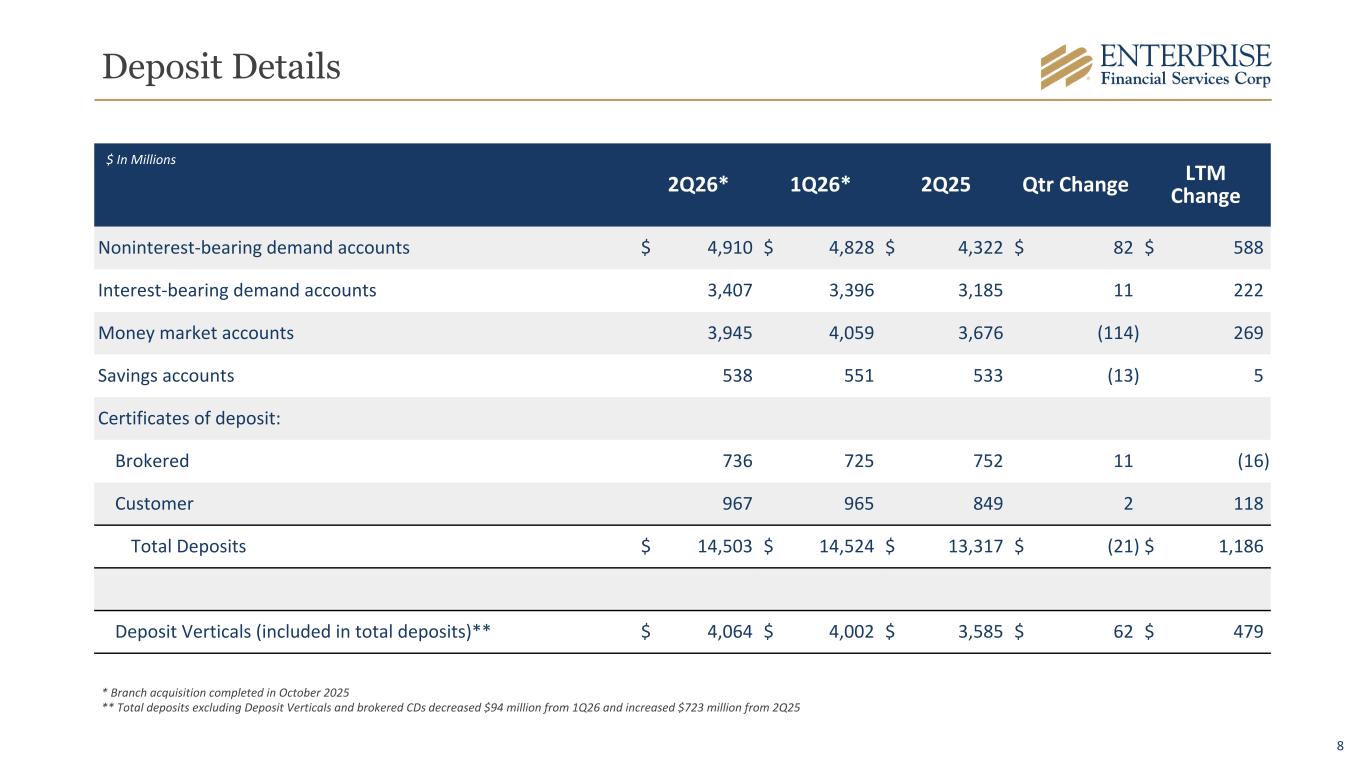
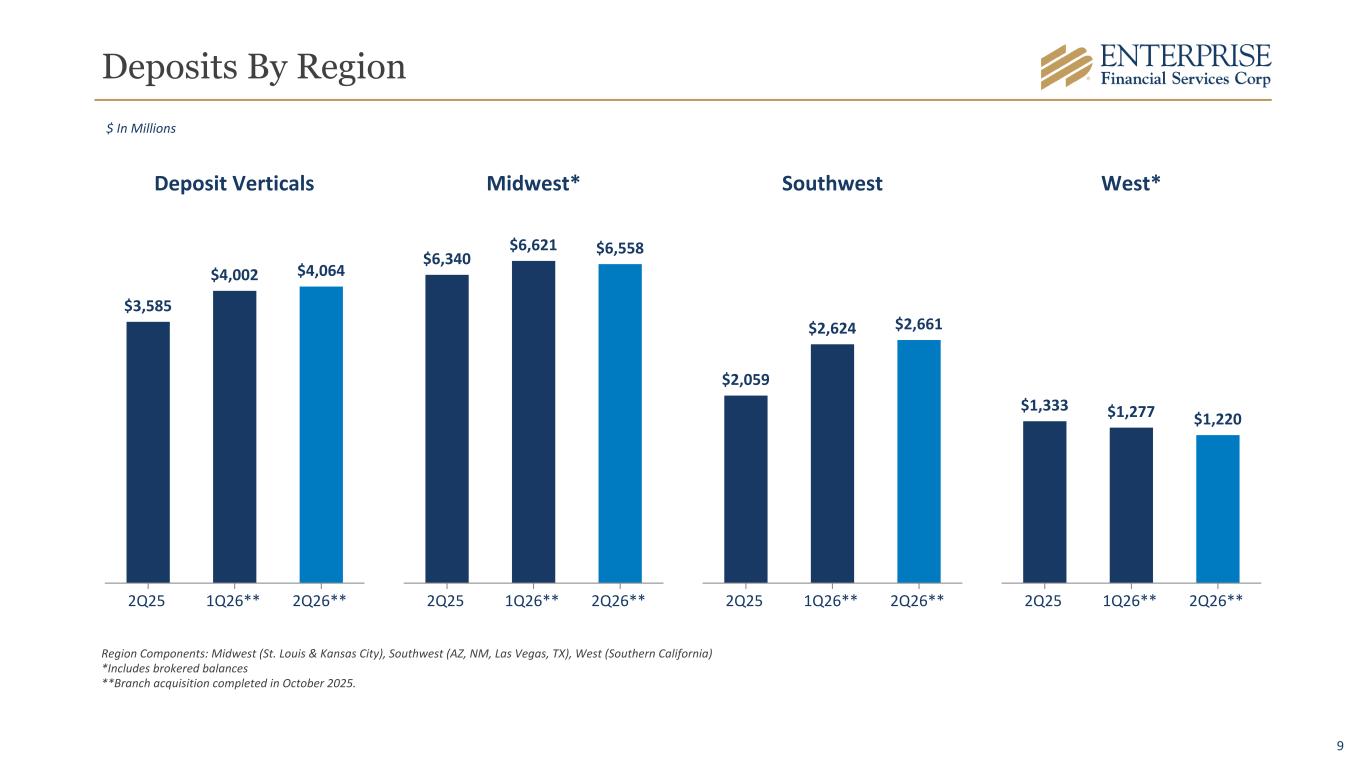
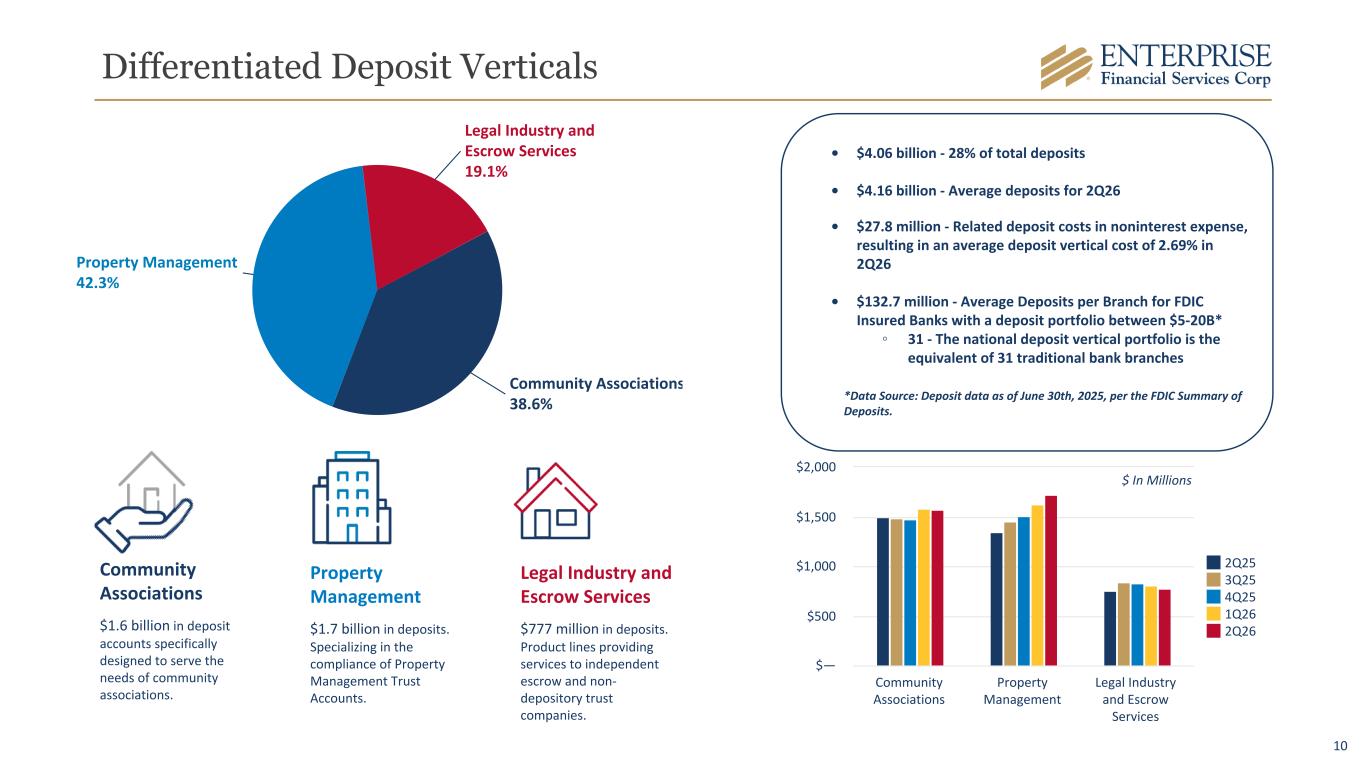
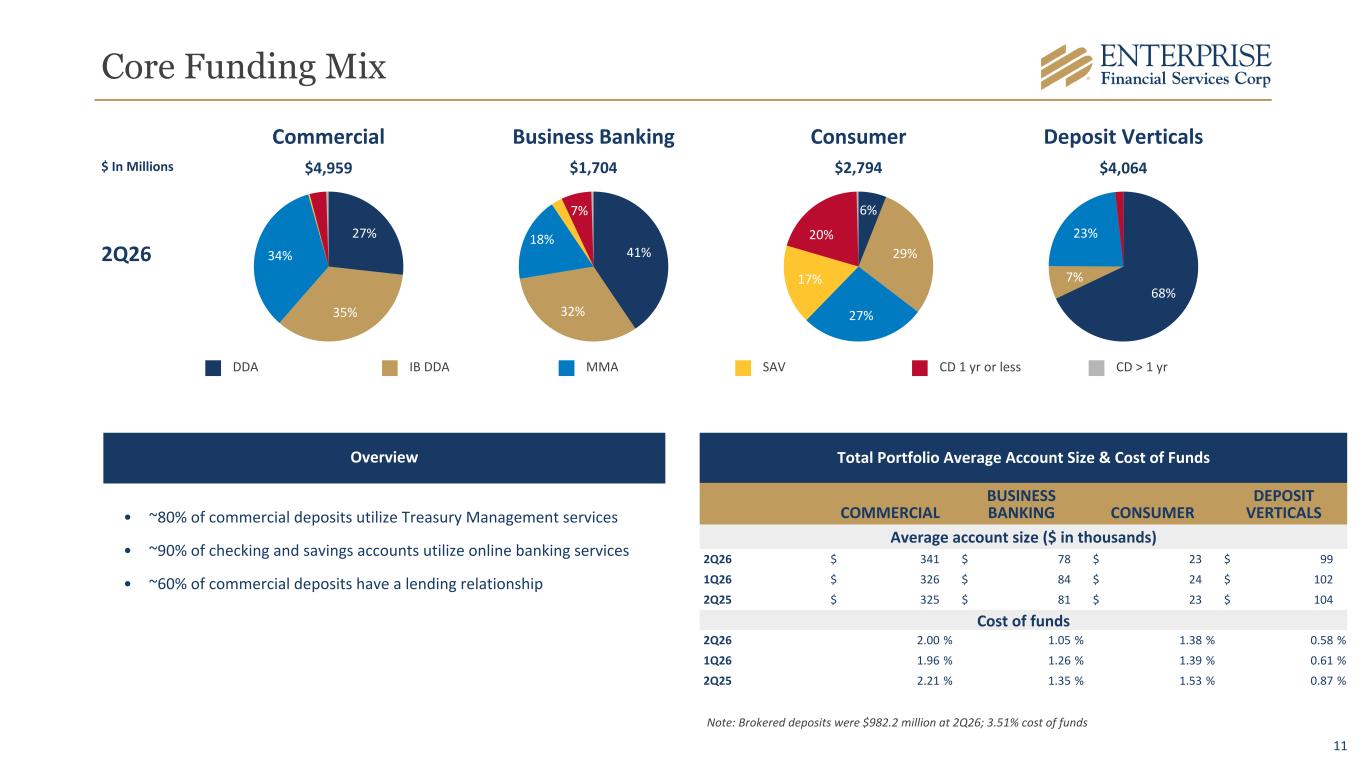
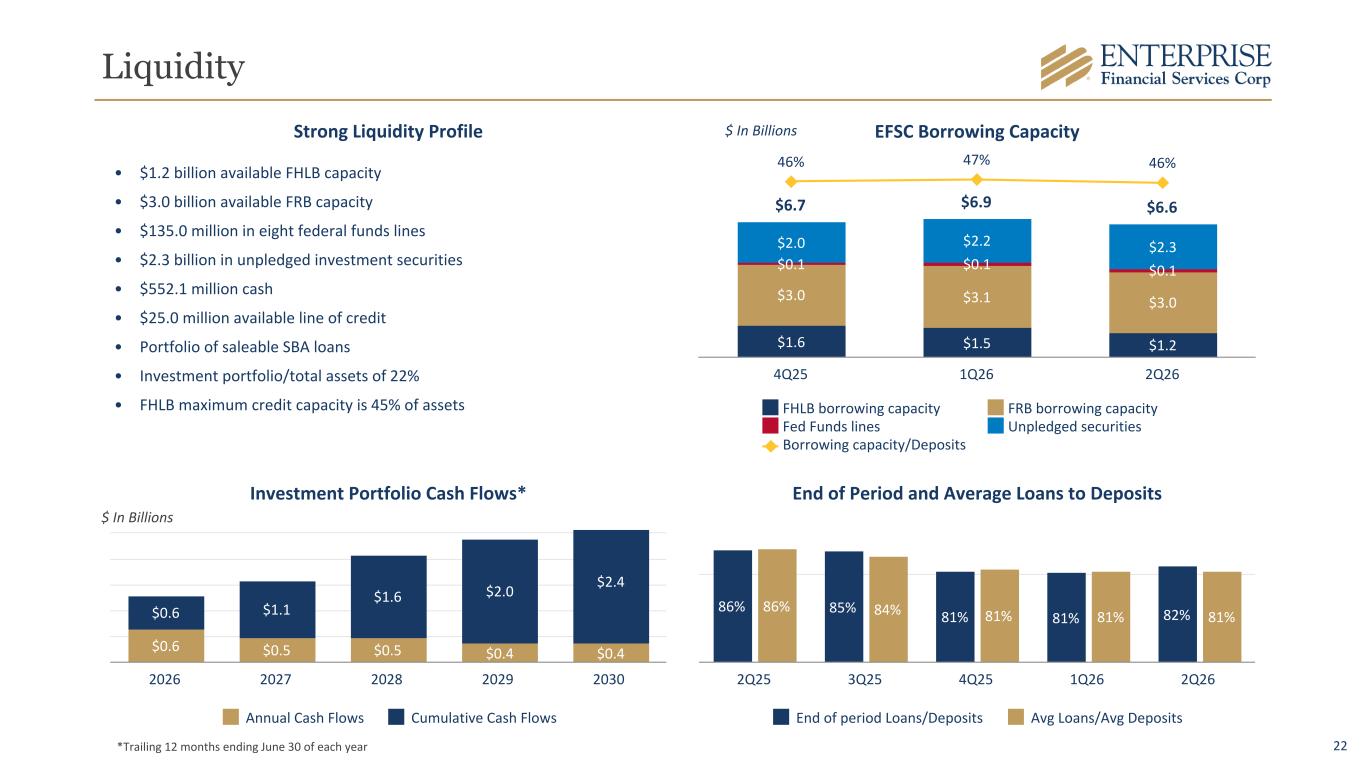
Thank you, Jim, and good morning, everyone. Consistent with our expectations, our teams executed well on the developing pipeline of quality CRE and C&I opportunities, leading to $200 million in organic loan growth in the quarter. Turning to page six, you'll see that the loan growth occurred in our investor-owned CRE secured portfolio and our C&I book, inclusive of our specialty lending niches of life insurance, premium finance, tax credit, sponsor finance, and SBA. Gross loan originations were particularly strong in the quarter, up 32% and 48% over the prior year and linked quarter. Growth in our investor-owned CRE portfolio is balanced between Kansas City, Southern Nevada, and Southern California. New CRE-funded projects in the quarter were largely centered around pre-leased and stabilized industrial and retail projects as we expanded relationships with existing clients and onboarded new high-quality developers and investors in our markets. Examples of traditional C&I originations in the quarter include working capital and owner-occupied real estate financing for a food distribution company in Arizona, a manufacturer of made-to-order stainless steel HVAC systems in Kansas City, and the Southern California-based manufacture of truck and van body equipment used in the utility, emergency, and construction industries. Within our specialty lending business lines, originations of SBA 7A owner-occupied real estate loans remain stable in the quarter, with 32 new loans funded, totaling $59 million, ranking us again in the top 25 SBA originators in the country. Additionally, we continue to capitalize on our strong brand and momentum in the life insurance premium finance market, with strong originations leading to $42 million in quarterly net growth and 8% growth over the trailing 12 months. Page 7 demonstrates the diversity of the loan portfolio across our geographic markets and our specialty lending divisions. Roughly $7.6 billion, or 65% of total loans, are attributed to our Midwest, Southwest, and West Region community banking markets, while $4.2 billion, or 35%, is from our specialty lending business lines. Previously discussed reductions in our low-income housing tax credit portfolio in Q1-2026 have muted the overall growth in our specialty lending lines to only 3% year-over-year, while our geographic markets have grown 8%, or $570 million, year-over-year, inclusive of the loans acquired in the first interstate branch acquisition in Q4-2025. Coming off a solid quarter of loan originations and net growth, I'm encouraged by the depth and diversity of our current pipeline of new opportunities yet to come. We are seeing resilient traction and growth, particularly from San Diego, Dallas, and Southern Nevada, complementing our historic strongholds in St. Louis, Phoenix, and Kansas City. Turning to Slides 8 and 9, while total deposits remain relatively flat quarter over quarter, core deposits are up $1.2 billion year over year, inclusive of the branch-acquired deposits in Q4 of 25. The mix of our deposit base remains favorable, with 34 percent non-interest bearing compared to 33 percent in the length quarter. Traditional outflows in the front half of the year are normal for our deposit portfolio, with growth particularly from our geographic markets occurring in late Q3 and into Q4. Specialty deposits grew $62 million in the quarter, which is consistent with the growth in the prior year quarter. The breakout of deposit mix and growth within the specialty channels is reflected on slide 10. Property management deposits account for 42% of specialty deposits and 12% of total bank deposits, while community associations account for 39% of specialty deposits and 11% of total bank deposits. As we've said during previous calls, the branch light specialty deposit verticals provide us an attractive, cost-adjusted source of funding that complements our community banking deposit base. With our favorable 82% loan-to-deposit ratio, we continue to execute disciplined pricing strategies to effectively manage our blended cost of deposits to protect net interest margin. Continuing with deposits, Slide 11 reflects our deposit base across our commercial, business banking and consumer, and specialty deposit channels. The strength of our commercial base with nearly $5 billion in deposits is well complemented by the granular and diverse nature of our business banking and consumer channels, contributing $4.5 billion in deposits with an attractive 1.25% weighted average cost of funds. The consistency, stability, and balance of our deposit base across these business channels remains a core strength of our company. And with that, I'll turn the call over to Keen.
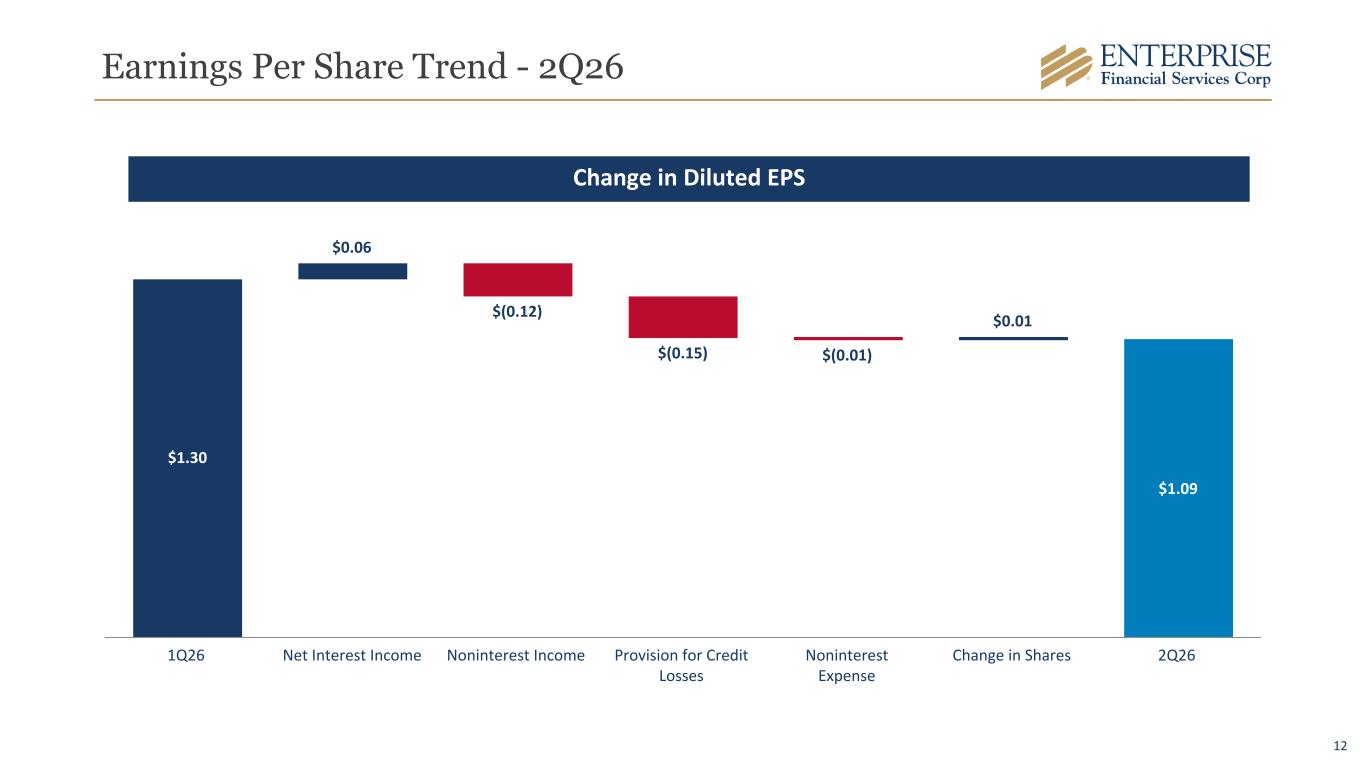
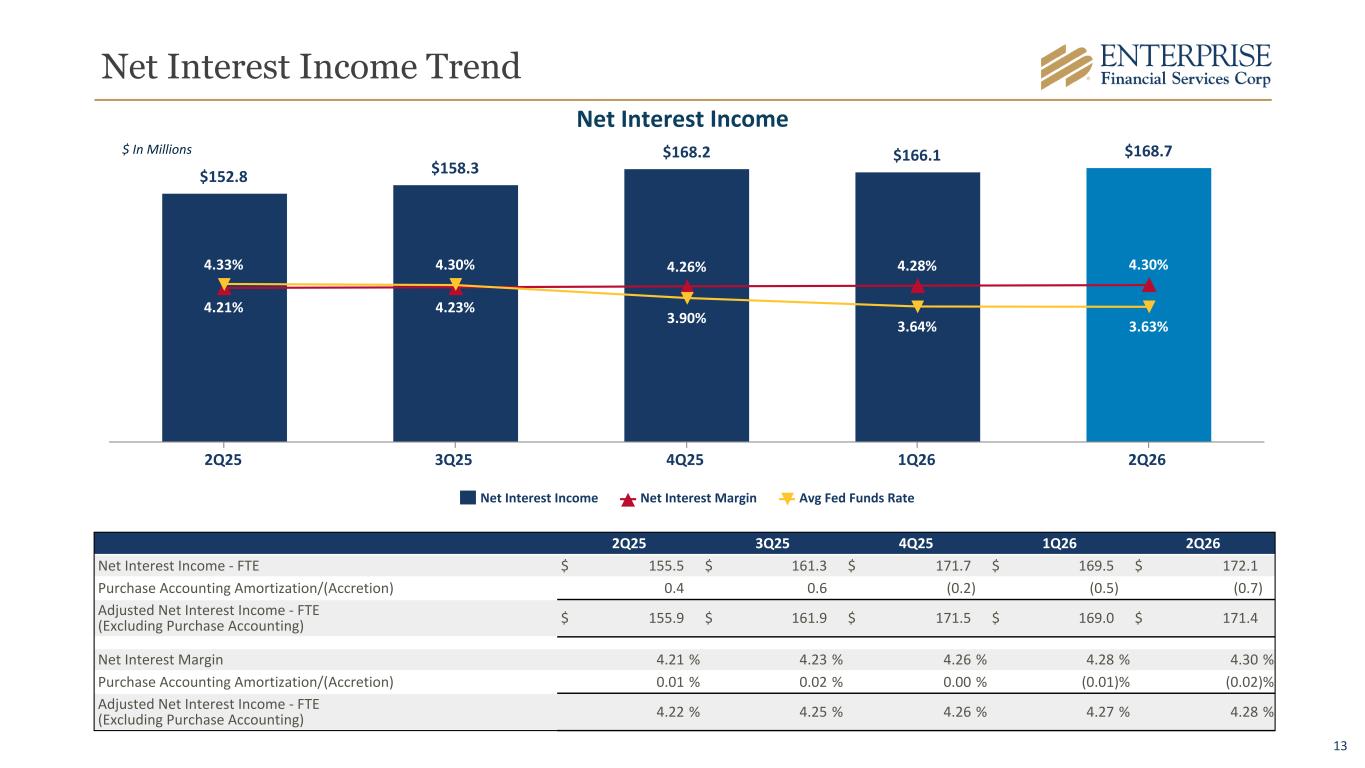
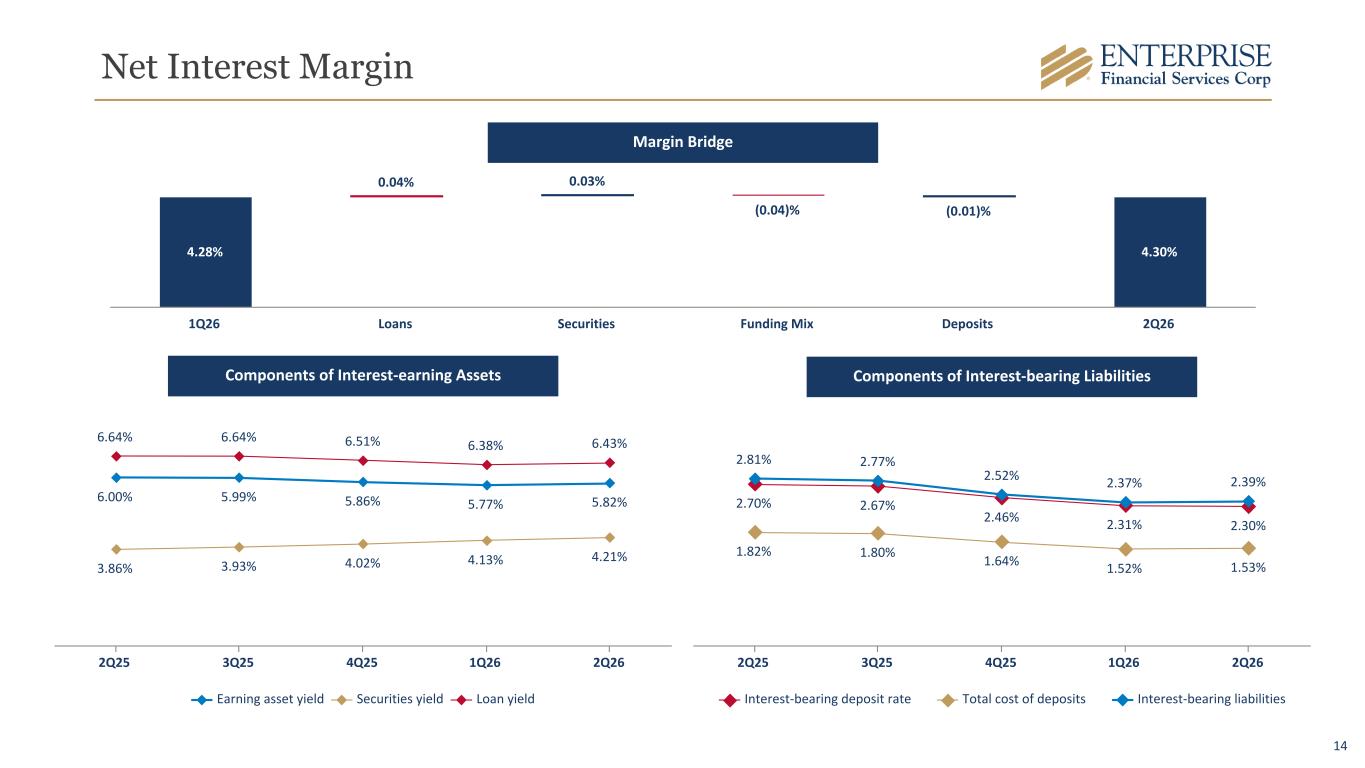
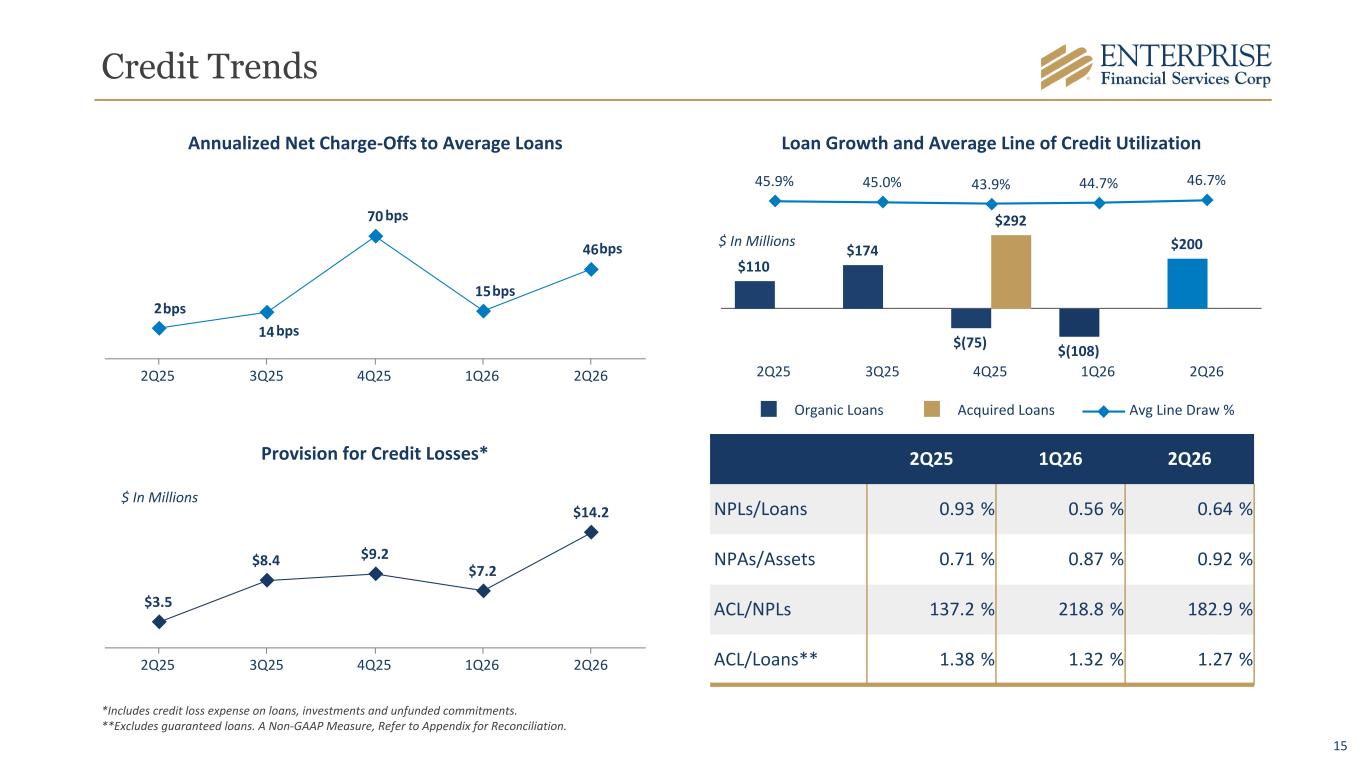
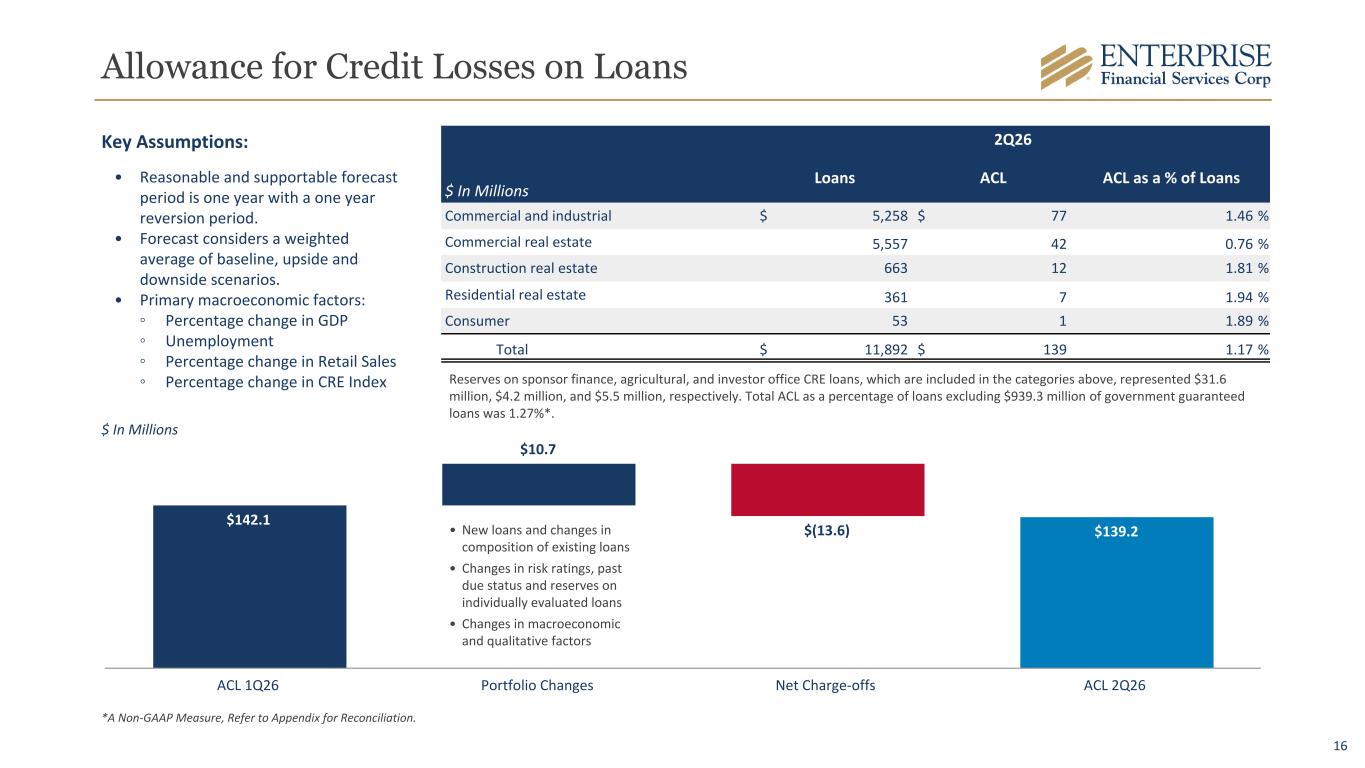
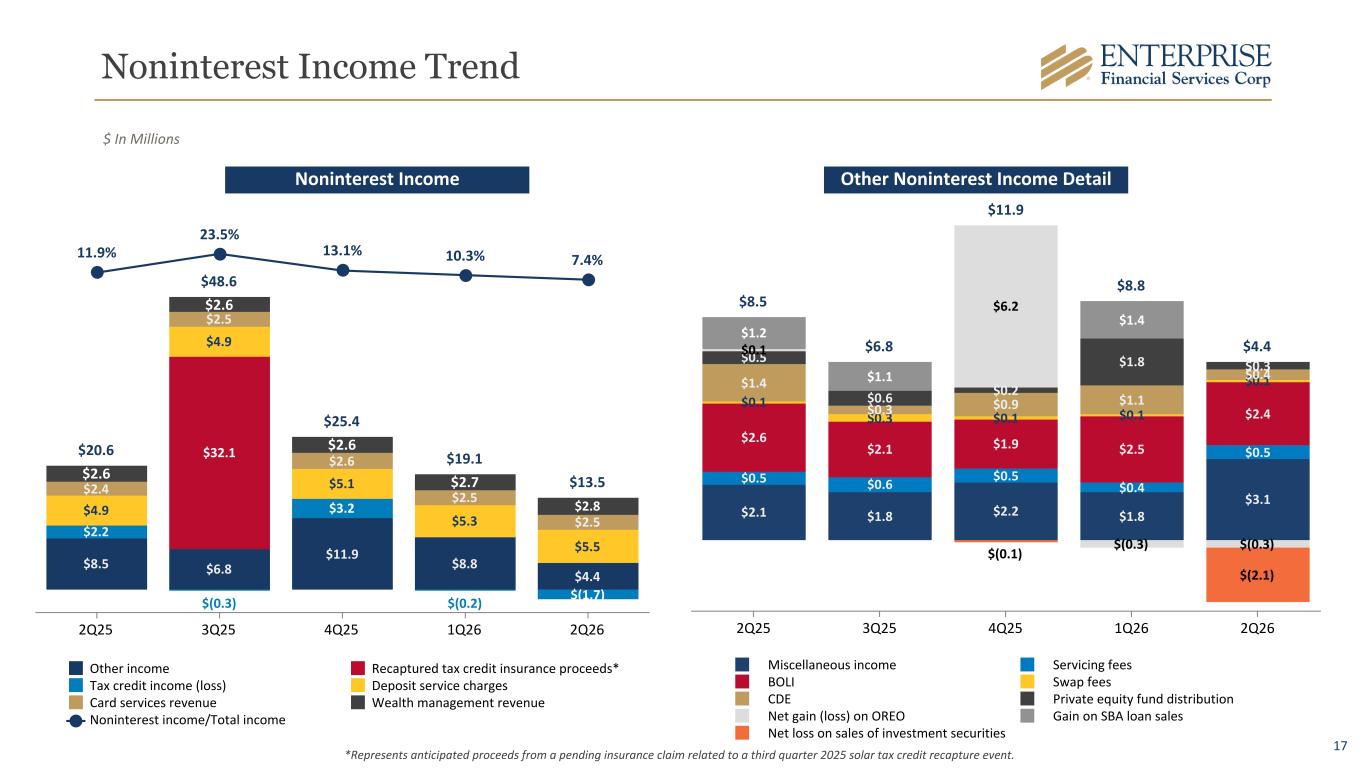
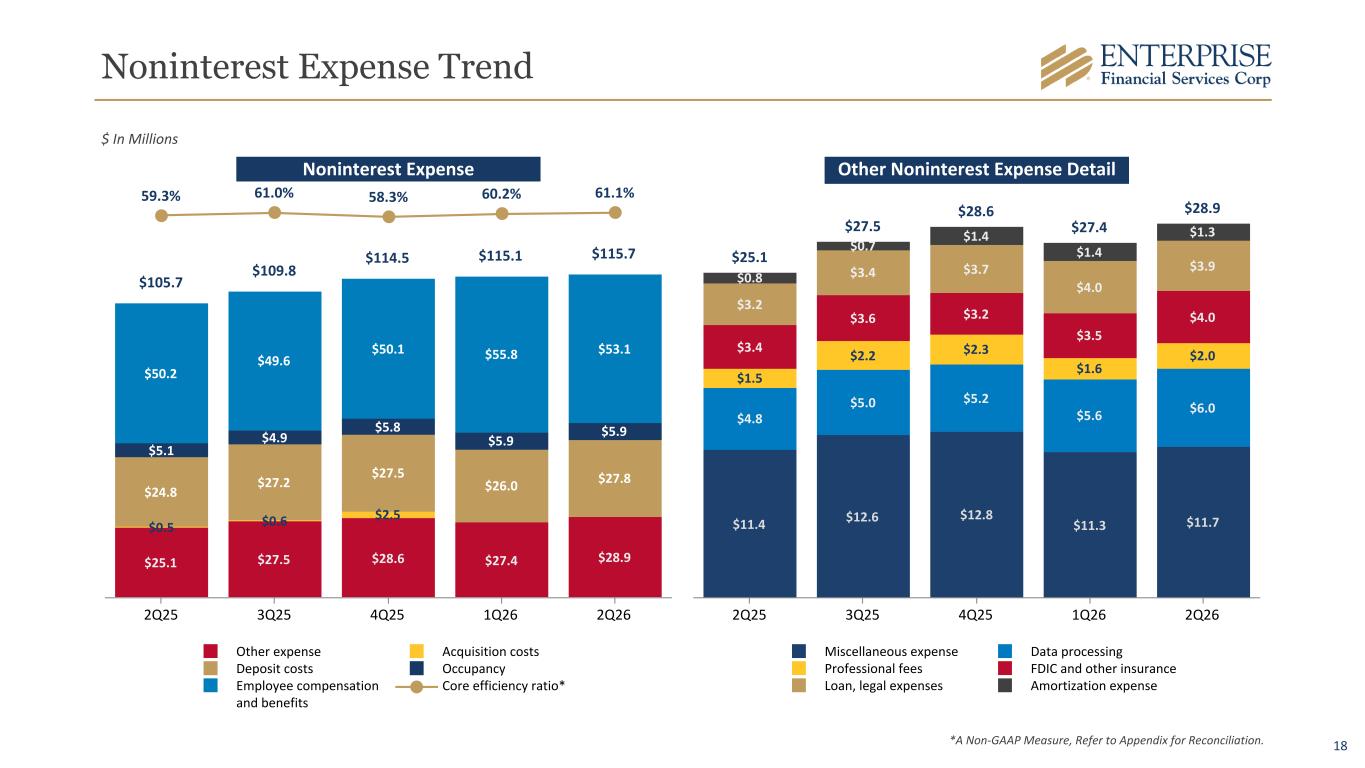
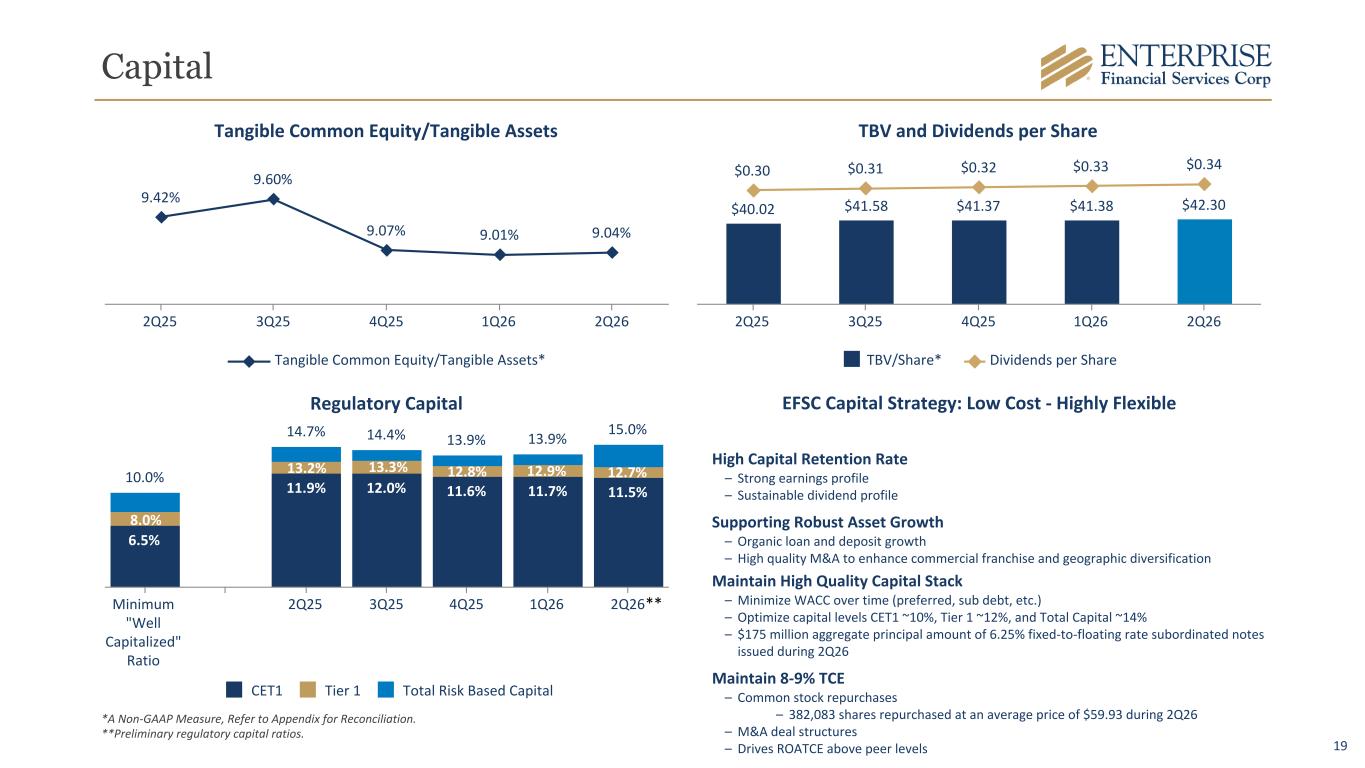
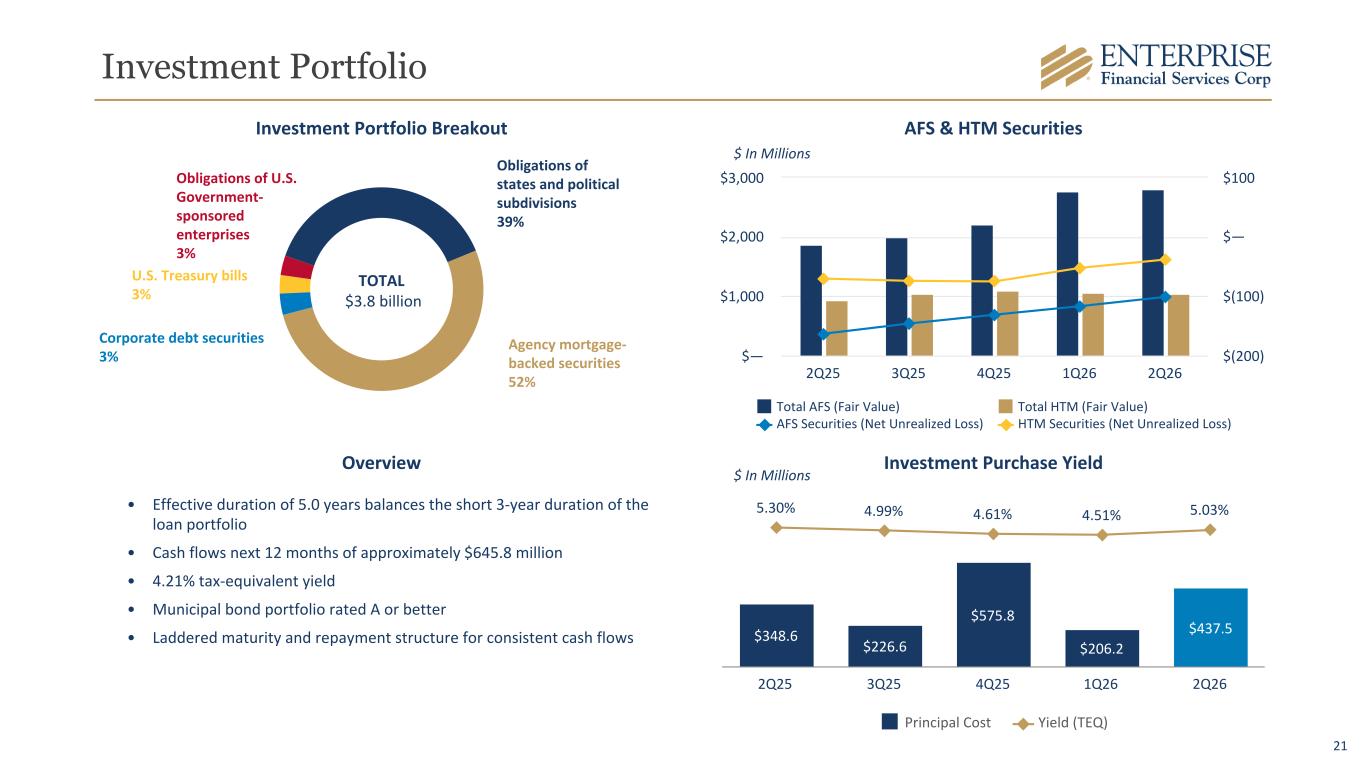
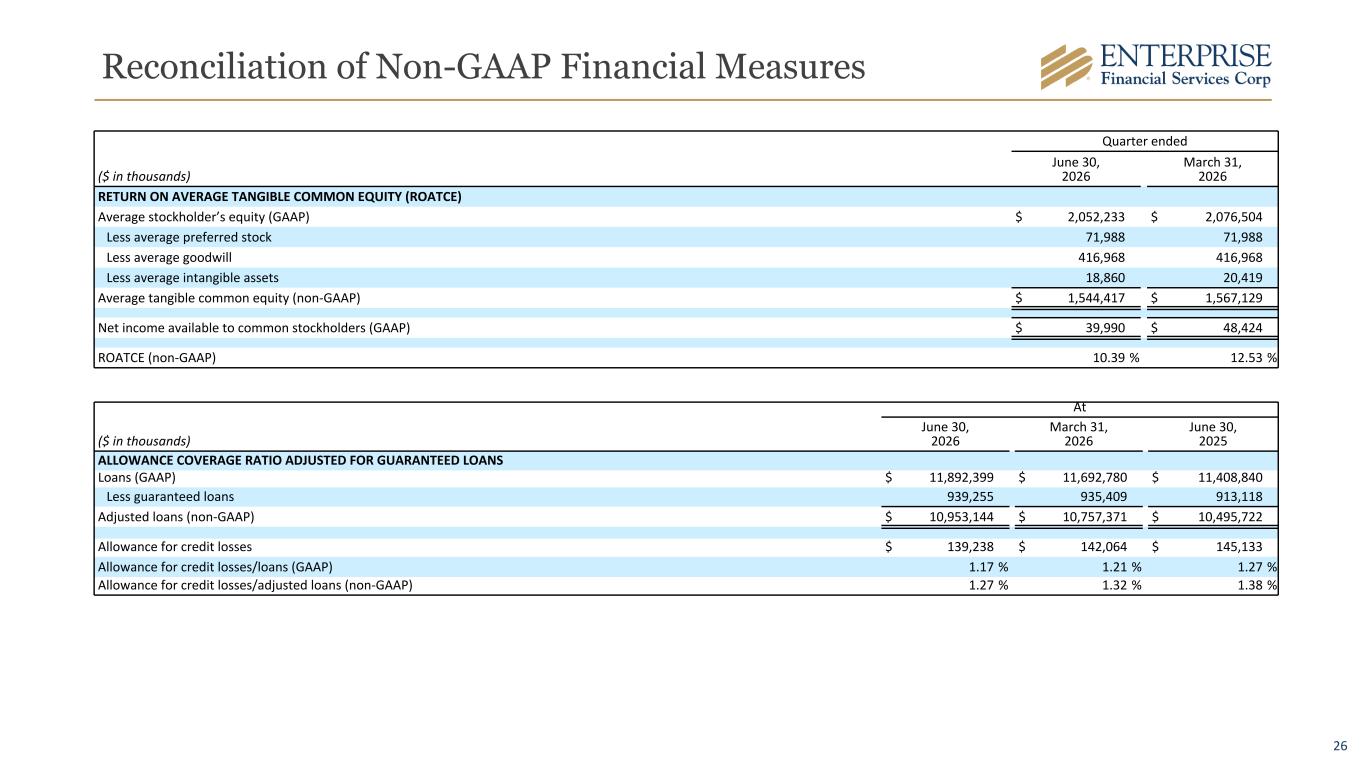
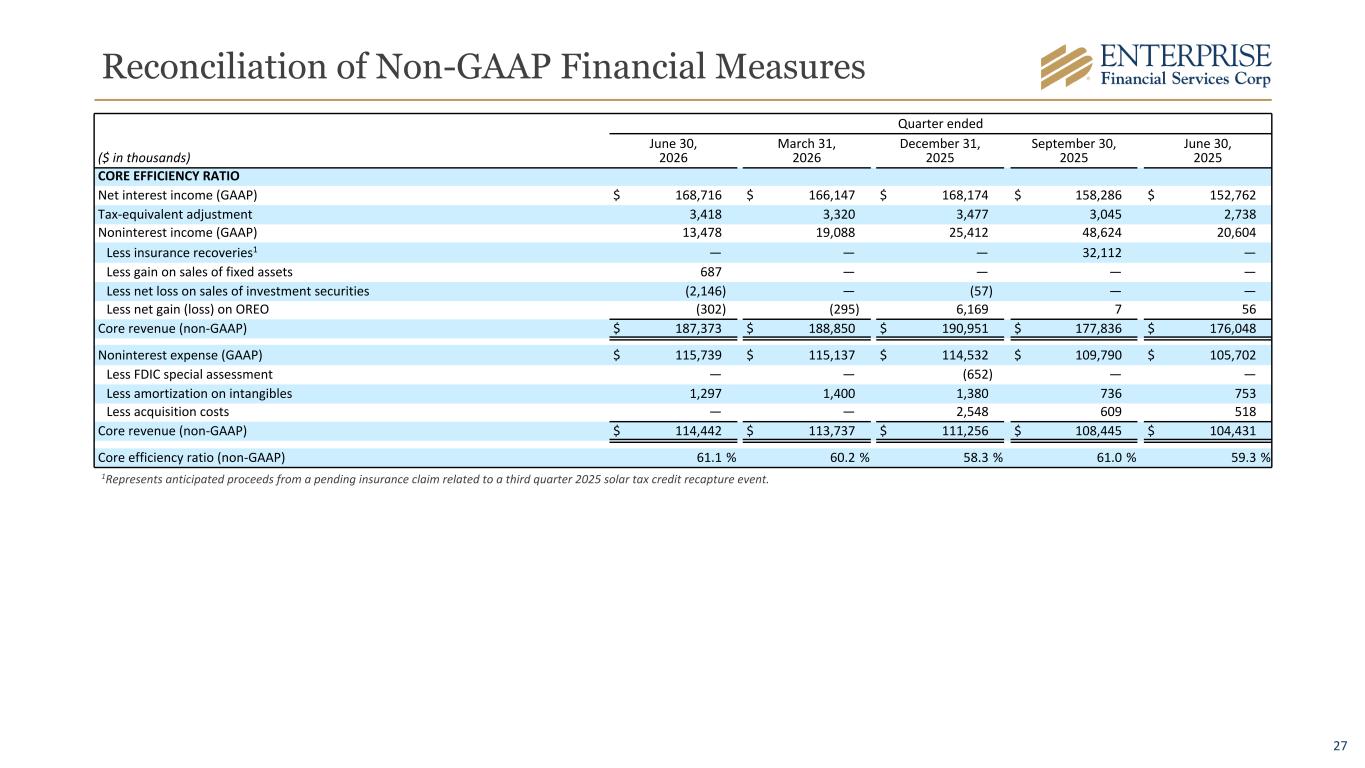
Thanks, Doug, and good morning, everyone. Turning to slide 12, we reported earnings per share of $1.09 in the second quarter on net income of $41 million. Excluding certain nonrecurring items, earnings per share on an adjusted basis was $1.13 compared to $1.31 in the linked quarter. Reprovisioned earnings totaled $68 million, a $2 million decrease from the linked quarter. The primary driver of the decrease was lower fee income, which was partially mitigated by a continued expansion in net interest income. On the cost side, non-interest expense was relatively stable compared to the first quarter. The linked quarter increase in the provision for credit losses was primarily due to the loan charge-offs from the two relationships Jim detailed, along with reserves for $200 million of loan growth in the period. Turning to slide 13 with more details to follow on 2014, net interest income in the second quarter was $169 million, an increase of $3 million from the first quarter, which was largely attributable to higher yields on earning assets and an additional day during the period. Interest income increased $4 million from the prior period, including $3 million of loan income and $2 million from investment securities, partially offset by lower earnings on cash balances. Interest expense increased $2 million compared to the link quarter, including $1 million in deposit interest expense, along with additional costs on short-term borrowings and our second quarter subordinated debt issuance. The net interest margin for the second quarter was 4.30%, an increase of two basis points from the link period. Earning asset yields expanded by five basis points, led by a five basis point increase in loans, including some favorable discount accretion, and an additional eight basis points on securities. The rate on loans booked in the quarter was 6.58%, and the average tax equivalent purchase yield on investments was 5.03%, both of which improved the yield on each of those asset classes. The cost of interest-bearing liabilities increased two basis points, mainly due to higher interest-bearing deposit balances, short-term FHLB advances, and the recent sub-debt issuance. Net interest income remains slightly asset sensitive, primarily in parallel interest rate simulation, with each quarter point cut in rates affecting net interest income $1 to $2 million per quarter, or a couple of basis points of net interest margin. Including deposit-related non-interest expense in this analysis, we modeled that we are effectively neutral as we continue to have success growing the related deposit vertical balances. We also added $200 million in loan hedges over the last several months to further reduce sensitivity to interest rate movement. We completed a modest repositioning trade on $180 million in investment securities in the latter part of the quarter, realizing a net loss of $6 million and adding $3.5 million in annual earnings. We offset the majority of this loss by selling Visa shares and a small parcel of land that generated a combined gain of $4.4 million. The trade added 10 basis points to the portfolio yield and approximately 2 basis points to margin without any material change in the overall duration of the portfolio. We anticipate margin to remain in the mid to upper 420s in the current interest rate environment. While the yield on asset additions and resets has been accretive and the repositioning trade is beneficial, we also expect to see some modest pressure on funding costs with a full quarter of the sub-debt issuance at 6.25% and rates on brokered and wholesale balances moving slightly higher. Slide 15 reflects our credit trends. Net charge-offs totaled $13.6 million in the second quarter compared to $4.4 million in the link quarter. As previously discussed, the charge-offs were primarily related to two credits that accelerated to a lost position at the end of the quarter. The ratio of non-performing assets to total assets increased by five basis points compared to the link quarter, primarily due to the addition of the $16 million loan secured by a flagged hotel in California. Net charge-off totaled 46 basis points of average loans compared to 15 basis points for the first quarter of 2026. The provision for credit losses was $14.2 million compared to $7.2 million in the link quarter. The provision was mainly due to net charge-offs and to a lesser extent, loan growth. Slide 16 shows the allowance for credit losses. The ratio of allowance to total loans decreased to 1.17% compared to 1.21% at the end of the first quarter of 2026. When adjusting for government guaranteed loans, the ratio increases to 1.27% of total loans. On slide 17, second quarter non-interest income was $13.5 million, dollars, a $5.6 million decrease compared to the linked quarter. The decrease was primarily due to the net loss on the investment portfolio restructuring and lower tax credit income from a decline in projects carried at fair value. The benchmark interest rate used to value these projects increased in the quarter, driving the decline in fair value. Non-interest income was also impacted by lower levels of private equity and community development distributions. We also elected not to sell SBA loans as we were evaluating the sale of certain OREO properties in the quarter that may have generated a potential gain. As Jim noted, recent developments on those properties have delayed the timing to a later date. We did, however, take the opportunity to sell a small parcel of land at a gain to also offset the investment portfolio restructure. Turning to slide 18, second quarter non-interest expense of $116 million was relatively flat with the link quarter with a few movements among various line items. Employee compensation and benefits declined by $2.6 million due to the seasonal impact on payroll taxes and certain benefits. Depositive costs increased $1.8 million quarter over quarter largely driven by an additional day in the quarter and the expiration of certain unused allowances that reduced expenses in the first quarter. Other expenses increased by $1.4 million in the linked quarter primarily due to the recovery of credit card loss that reduced expenses in the first quarter. The core efficiency ratio was 61.1% for the first quarter compared to 60.2% in the linked quarter. Our capital metrics are shown on slide 19. Tangible book value per share increased approximately 9% on an annualized basis to $42.30 and our tangible common equity ratio of 9% was stable with the linked quarter. Our capital management actions in the quarter included the issuance of $175 million of subordinated debentures to bolster total risk-based capital, the repurchase of 382,000 shares of common stock for approximately $23 million, and an increase to the quarterly dividend of $0.01 to $0.35 per share for the third quarter of 2026. These actions have helped to reduce our weighted average cost of capital, while ensuring that our regulatory capital levels remain a strong foundation to support the balance sheet. For the first half of the year, we have returned approximately $75 million to shareholders through common stock repurchases and dividends. As of the end of the quarter, we have 249,000 shares remaining in our current repurchase plan. In July, the Board approved an additional 2 million shares to the plan. With that, we can continue to opportunistically manage our excess tangible common equity. Our operating results drove a 1% return on average assets and a 10% return on average tangible common equity. While these results are below our expectations, our core business remains sound, and we expect to return to the level of profitability that is more in line with our standards. I appreciate your attention today, and we will now open the line for questions.
Operator
We will now begin the question and answer session. If you would like to ask a question, please press star one to raise your hand. To withdraw your question, press star one again. We ask that you pick up your handset when asking a question to allow for optimum sound quality. If you are muted locally, please remember to unmute your device.
Please stand by while we compile the Q&A roster. your first question comes from the line of daniel tamayo with raymond james your line is open please go ahead yeah thank you um good morning guys uh maybe yeah maybe just um if you could just frame the uh the decline in the um the charge off activity that you're expecting the back half of the year for us i think you i think you just said you expect that to come down and And it's kind of the underlying outside of, you know, these these losses, the underlying loss rates remain solid at roughly 15 basis point range. But if you can kind of give us a thought on on timing and, you know, size of the decline in the back half to be helpful.
Hey, Daniel, it's Doug. Listen, let me let me just kind of break it down in some buckets here. as we had pointed out, there's $160 million in non-performing assets, 84 of which are in other real estate owned today that we've largely discussed. It's the $77 million that makes up the Laguna, California portfolio that we're highly confident in our carry balance has given our commercial buyers on four of the seven properties and active interest on the remaining The rest of the OREO portfolio is largely made up of two SBA loans related to properties that we foreclosed on totaling $5 million, where we have the 75% SBA guarantee on any deficiency that's realized from the sale of that OREO, which we really expect to be minimal, if any. So that leaves non-performing loans, which total $76 million of 64 basis points at the end of the quarter, which we believe will normalize to close to the 45 basis points over time. And of that bucket, $76 million, roughly $50 million of that or two-thirds of non-performing loans are secured by real estate, and the balance are one-third or $25 million secured by CNI-related credits. So with that, I would expect our charge-offs going forward to normalize back to kind of our 10-year historical norms, which is 15 basis points. And I think that's the rate that we would expect against that level of non-performers and the quality of the balance of our portfolio.
That's great, Collar. I appreciate that. But so just to follow up on the credit side, the Medicare change that you described that impacted one of the biggest charge ops in the second quarter, anything else in the portfolio that might be impacted by that?
I'm not sure if you've done a kind of a deep dive yet on that. but we have yeah there's roughly in the entire portfolio is about you know close to 12 billion about 150 million or so that involves payment through a medicaid medicare process but these are treatment centers and assisted living and traditional things of that nature with other assets behind it so we've looked at it and those loans are performing well and diversified throughout our footprint and daniel and stug i just want to make a distinction because that moratorium from CMS, was specific to new applicants for Medicare licensing, and that moratorium did not affect, you know, those that are already licensed and practicing and providing services for Medicare
and Medicaid reimbursement. So, this particular credit was unique in that it was a consulting business that was largely engaged in qualifying applicants for Medicare and Medicaid recipients.
Great. All right. Well, thank you for all the color on the credit side. Appreciate it, guys. I'll step back.
Operator
Your next question comes from the line of Jeff Rulis with DA Davidson. Your line is open. Please go ahead.
Thanks. Good morning. Keen on the margin, I just wanted to make sure I heard that right. It looks like the go forward is that maybe the tail of benefit from the restructure is muted by maybe the sub-debt impact. And then so kind of a wash and then just regular way, kind of a core margin slight pressure is kind of where you get to the range. Do I have the pieces of that right? That's maybe oversimplifying, but just checking.
No, I think that expresses the high level. And then I would say the upside case is to the extent that we continue to have strong loan growth in sequential quarters, we expect that that will further strengthen that interest margin given where the loan deposit is. But yeah, I think we feel pretty good about absent any changes that margin is pretty stable.
Keane, do you have the June average on the margin? And do you think that's a fairly good read on the core as it came out of the quarter?
Yeah, the 430 is really like 427, 428. We had some prepayment activity that benefited the total quarter in the period. So, yeah, I think that's a pretty good proxy for moving forward.
And, Jim, I wanted to circle back on just the puts and takes of the OREO. It sounded like you said maybe one of the properties not under contract appealed, which is holding up the sale of the four that are under contract.
Yeah, yeah. The fact of the matter is the order from the bankruptcy court that was dismissed was encompassing of all seven. and because there's an appeal on one it creates a bit of a cloud for the entirety of the portfolio and we're confident relative to what's in front of us it's just a matter of time um we just need the attention of the courts to look at these last couple of appeals and put them aside so we can go ahead and move forward with what's planned and on the maybe the other properties that are not under contract you said there's interest are those closer to being i maybe it's interrelated with if there's bankruptcy issues or appeals it holds it up but yeah is there movement on that go ahead yeah there's there's high interest um and uh you know based upon what there's no contract there's no contract in the end though um Jeff, I'll just say we have received contract offers on the other three.
The challenge, Jeff, is we can't go into a contract with new parties that require us to pass title to them within a specified period of time because this appeal is going to require the ruling from the appellate court. And we just unfortunately don't control that timing. We're, you know, we're highly confident in what the outcome will be. and in time this will satisfactorily resolve itself, but suffice it to say there's a high degree of interest, and we have had offers, and offers pending right now in the other three.
And I'll just finally add to this. The parties of interest of the four that we've talked about remain highly engaged. We talk to them often. I was just with one of them last week, and there's no trepidation or what have you, so we're very confident that they'll remain patient with us.
Okay. I appreciate the backdrop there. Maybe just one last one on the fee income side, you know, certainly the tax credit impact in the quarter, but kind of pretty low across the board on a number of fronts. Even once you exclude the one-timers, just try to get a sense for the run rate on fee income.
Seems like this is certainly a low watermark, but expectations on maybe the second half of in the in the overall non-interest income yeah i think jeff you know maybe if you look back to to one q i think that's a little bit more of of what we would expect on a recurring basis i i do think that we expect the tax credit line to at least break even for the year i know that that's not uh you know anything that that's material but we don't expect that to be a negative consistently moving forward, that there will be activity or reversals of the fair value there. And then we do expect to resume our posture of selling SBA loans. So again, I think in my comments, we expected there to be maybe some more one-timers, and you were kind of poking around at that. And just given the timing of when everything came together, we're a little light in that line item. We didn't sell SBA loans, but we'll earn interest in income on those, and it'll strengthen margin and other places of the business. So unfortunately, just a little bit of bad timing and, you know, PPNR fundamentals, I think, as I view them are strong and improving. So, you know, we feel good about it rolling forward. Great. Thank you. You're welcome. Thank you.
Operator
Your next question comes from the line of Nathan Race with Piper Sandler. Your line is open. Please go ahead.
Hey, this is Adam Kroll on for Nate Race. Good morning. And thanks for taking my questions morning um yeah so maybe just starting on the loan growth guide for the mid single digit guidance um it'd imply a little pickup and growth in the back half of the year so i guess i'd be curious if you could dive into where the pipeline stands today and sort of what segments you see driving that growth yeah so this is jim i'll just say this that you You know, to me, it's very similar to what we saw in the first half.
It's throughout the company. We've got great momentum here in the Midwest, for sure. The strength of Arizona, and Doug had mentioned, San Diego and Nevada will continue. And then the life insurance premium finance certainly is a bright point in our business. So it's really diversified throughout the portfolio and the markets, and that's really by design and how we built the company.
Got it. I appreciate the cover there. And maybe for Doug or Jim, I was wondering if you could provide some core on what you're seeing from a pricing perspective. You know, from your comments, it sounds like loan yield are still coming on above the portfolio, but would just be curious to hear what you're seeing in terms of competition there.
Yeah, Adam, it's Doug. Listen, it's a highly competitive market. There's no question there's pressure on loan yields today in terms of new originations. But I think, listen, we take a disciplined relationship pricing view on everything that we originate. And, you know, we've got to be competitive in the market to continue to grow and originate at the clips that we expect. But, you know, I think, listen, we're in that six and a quarter, six and a half type probably origination rate. And then, you know, again, if you're not familiar, Adam, the duration of our portfolio is relatively short. Absent the SBA portfolio, you know, that originates with longer term maturities and repricing, the balance of the portfolio is typically a three to five year type maturity. And again, I think we just exercise pretty good discipline in terms of both variable and fixed rate pricing. and we priced a market to win, and then complement that with the ancillary services that we sell through to those relationships.
Got it. Thanks for the cover there, Doug.
And then last one for me, maybe for Keen, just expense growth expectations for the back half Yeah, I think really the only material growth that we expect in the back half is maybe just the $1 to $2 million per quarter step up in deposit costs, you know, running through non-interest expense. I think, you know, we're looking to make sure we're being optimized and efficient and maybe we can continue to whittle away at some of the line items to mitigate that, but really modest quarterly step up, you know, really driven by that line item and growth in that business is what we expect.
Got it. Thanks for taking my questions. Thank you.
Operator
Your next question is question comes from the line of Damon DeMalte with KBW. Your line is open. Please go ahead.
Hey, good morning, guys. And thanks for taking my questions. Good morning. Just to follow up on the last comment on the expenses, you said one to two million step up in deposit costs. Is that like per quarter or is that like kind of in aggregate off of second quarter numbers during the next two quarters?
Yeah, I mean, I think it goes up, you know, million 2Q to 3Q. And then depending on strength of seasonality of balances and 4Q, maybe it's another one to two is sort of what I think, given, you know, how averages tend to be a little heavier in the fourth quarter. You know, obviously we earn on averages, so that comes with some stronger net interest income, albeit maybe at a light lighter roa and spread um but you know that that's how we expect that line item and then that bucket to to trend got it okay thank you and then uh with regards to the fee income and the kind of like the outlook for the tax credit i know it tends to be stronger in the back half of the year um i mean do you think that that that's expected again this quarter or this this this go round you could get some positive income in the third quarter and then a big step up in the fourth yeah i think third quarter would have to be some a little bit of rate rate driven assistance there um just because activity is not usually very strong in the third quarter um and then i would expect the the fourth quarter will have some activity in it which we think you know if we don't get any if rates are stable uh you know makes up for maybe the negative two that we have with maybe a little bit of upside there possible. That book, depending on what sells, some of it's already at fair value, so that is affecting it. We did expect a lighter contribution year over year. We didn't expect rates to be against us on that portfolio, but the advantage is that net interest income is strong. Deposits continue to be well-priced, and we're driving net interest income. So, you know, we'll, I think we'll take that trade given the size of the contributions and the line items, you know, day in and day out.
Got it. Okay. And then just lastly, you know, any updated thoughts on the buyback? You called out the announcement from last week. So fair to assume you guys will remain active, kind of where the stock's currently trading?
Yeah, I think, you know, you saw us do the capital markets work and, you know, bolstering the whole co-liquidity and the total capital total and TCE are roughly 100 basis points higher than where we'd like to see them. And I think the announcement of the additional 2 million shares and us continuing to be active reflects our posture on managing that capital to where we think it's optimized.
Got it. Okay. Great. Everything else has been asked and answered, so thank you very much.
Operator
Your next question comes from the line of Brian Martin with Green Capital. Your line is open. Please go ahead.
Hey, good morning, guys. Good morning. Say just maybe one or two. I joined here late, but the king just with the restructuring and whatnot, and I appreciate the color on the margin outlook. In terms of where average earning assets kind of shake out into 3Q given the restructuring and some of the other initiatives, can you just give us an idea of a landing spot and how to think about average earning assets into 3Q and then can model it from there?
Yeah, I mean, the size of the earning asset base didn't really change with the restructure. okay um so that we you know we had 180 plus million dollars of proceeds and it was all redeployed so we didn't lever up or down the balance sheet in that process we'll just start 3q with a higher rate uh you know on the securities portfolio and then you know as jeff noted we're a little bit behind in terms of you know what we did with the the sub debt but i I think as we continue to manage share count, that should net-net kind of make up for it. So, you know, margin fortunately stays intact in the high 420s, and we should be able to get some, you know, EPS advantage here as we buy more stock.
Yeah, I just wanted to make sure there wasn't anything on that. I know you said you had done it late in the quarter, so that's helpful. And then just in terms of the strategic outlook, it sounds like the buyback is just kind of the best use, and it's really an organic focus going forward. You know, right now that's kind of the primary focus rather than anything strategic in terms of excess use of capital?
Brian, I think you hit the nail on the head. It's really about growth and buybacks and certainly keep looking at the dividend.
Yeah. And, Jim, it sounds like just in general the clients are optimistic on, I mean, I guess I don't want to put words in your mouth, Listening to your commentary and visiting with them recently, I mean, given the diversity of the loan book and just your segments, you still feel good about the growth and the clients are still relatively optimistic as you go into the back half and then into 27 on loan growth and sustaining that?
Yes, very much so. I think, too, it's, you know, entrepreneurs are amazing people. I mean, they have great confidence in their own business. They have great confidence in the economy. And so, you know, Doug's out there with me and very bullish on the impact of manufacturing returning to the United States, despite all the things that are going on in and around the world. We feel good about what we're hearing and what we're seeing, and frankly, what we're experiencing in the growth of the pipeline.
Okay. And then just the last one for me, I appreciate the commentary about the, you know, the credit quality and the expectations to get that better. I mean, at the end of the day, if we're not, if the lost content appears low, I mean, I guess the delay really, if anything, could be, could this, could these issues just extend out with the courts? I mean, I guess if you kind of frame up kind of the tail risk that it could just take longer than you thought, even if there are limited losses, is that real? Or I guess it sounds like you expect to see a little bit of improvement sooner rather than later, but I don't want to frame that the wrong way.
I would say this. I think it's extended longer than I would have imagined. And, you know, could they continue putting roadblocks up? I don't know. Maybe they could, but I doubt it. I think these last two are the ones that we're looking to get resolved. move forward. And so, you know, but Brian, I don't run the courts.
Yeah. Okay. I mean, if you feel, it seems like you're going the right direction. It's just timing. Okay.
The tea leaves look good.
Yeah. Okay. Well, good. All right. We'll look forward to seeing that. And thanks for taking the questions.
Operator
There are no further questions at this time. I will now turn the call back to Jim Lally, president and CEO. for closing remarks.
Kristen, thank you. And thank you all very much for joining us this morning and for your interest in our company. We look forward to speaking to you again at the end of the third quarter, if not sooner. Have a great day.
Operator
This concludes today's call. Thank you for attending. You may now disconnect.