Operator
Good day, and thank you for standing by. Welcome to the Eagle Bank Corp. Inc. First Quarter 2026 Earnings Conference Call. At this time, all participants are in a listen-only mode. After the speaker's presentation, there will be a question and answer session. To ask a question during the session, you will need to press star 1-1 on your telephone. You will then hear a message advising your hand is raised. To withdraw your question, please press star 1-1 again. Please be advised that today's conference is being recorded. I would now like to hand the conference to Eric Newell, Chief Financial Officer of Eagle Bancorp, Inc. Please proceed.
This is Eric Newell, Chief Financial Officer of Eagle Bancorp. Before we begin the presentation, I would like to remind everyone that some of the comments made during this call are forward-looking statements. We cannot make any promises about future performance and caution you not to place undue reliance on these forward-looking statements. Our Form 10-K for the fiscal year 2025 and current reports on Form 8-K, including the earnings presentation slides, identify important factors that could cause the company's actual results to differ materially from any forward-looking statements made this morning, which speak only as of today. Eagle Bank Corp. does not undertake to update any forward-looking statements as a result of new information, future events, or developments unless required by law. This morning's commentary will also include non-GAAP financial information. The earnings release, which is posted in the Investor Relations section of our website and filed with the SEC, contains reconciliations of this information to the most directly comparable GAAP information. Our periodic reports are available from the company, online at our website, or on the SEC's website. With me today is our President and CEO, Susan Reel, and our Chief Lending Officer for Commercial Real Estate, Ryan Reel. I'll now turn it over to Susan.
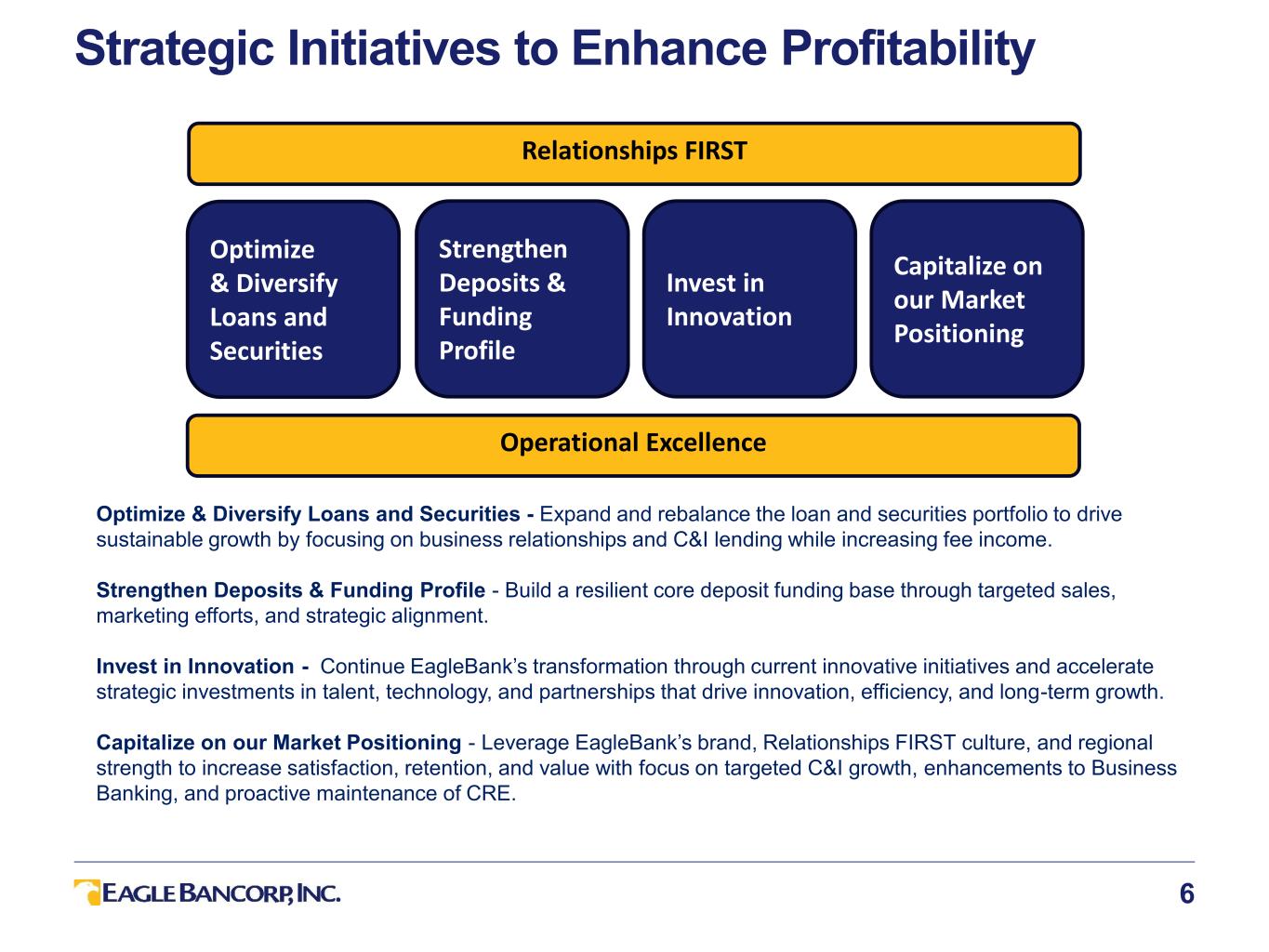
Thank you, Eric. Good morning, and thank you for joining us today. We are pleased to begin 2026 on track with our near-term strategic priorities, generating capital through earnings, diversifying the balance sheet across both assets and funding, and executing on the repositioning work we have been discussing with you over the past several quarters. The first quarter reflected meaningful progress on several fronts. We returned to profitability, expanded net interest margin, and delivered strong C&I growth, a direct result of the deliberate investments we have made across the franchise and the disciplined execution of our commercial teams. At the same time, we are realistic about where we are in this repositioning. The pace at which legacy exposures resolve and scheduled payoffs occur is faster than the pace at which we can prudently generate new earning assets. That asymmetry creates near-term pressure on net interest income and a smaller earning asset base as we work toward a higher quality balance sheet. We are not shrinking the balance sheet because deposits are leaving us. In fact, core deposits have grown $240 million year over year. We are making strategic choices on both sides of the balance sheet that we believe position us for stronger, more sustainable, and more durable earnings. We continue to reduce reliance on higher-cost broker deposits, refinancing the quality of our funding base. In parallel, our active resolution of problem credits is producing elevated charge-offs, a deliberate trade-off we are willing to make because we would rather absorb the near-term earnings impact and emerge with a cleaner balance sheet than carry these exposures for an extended time. The deliberate actions we took throughout 2025 are producing measurable improvement, A trajectory Eric will walk through in detail. We have a plan designed to deliver materially stronger pre-provision net revenue as the funding mix improves, as disciplined loan growth returns to CRE, and the asset quality work I mentioned continues to reduce the impact from non-accrual and resolution activity, and we are executing against it. With that, I'll turn the call over to Eric to walk through the quarter in more detail.
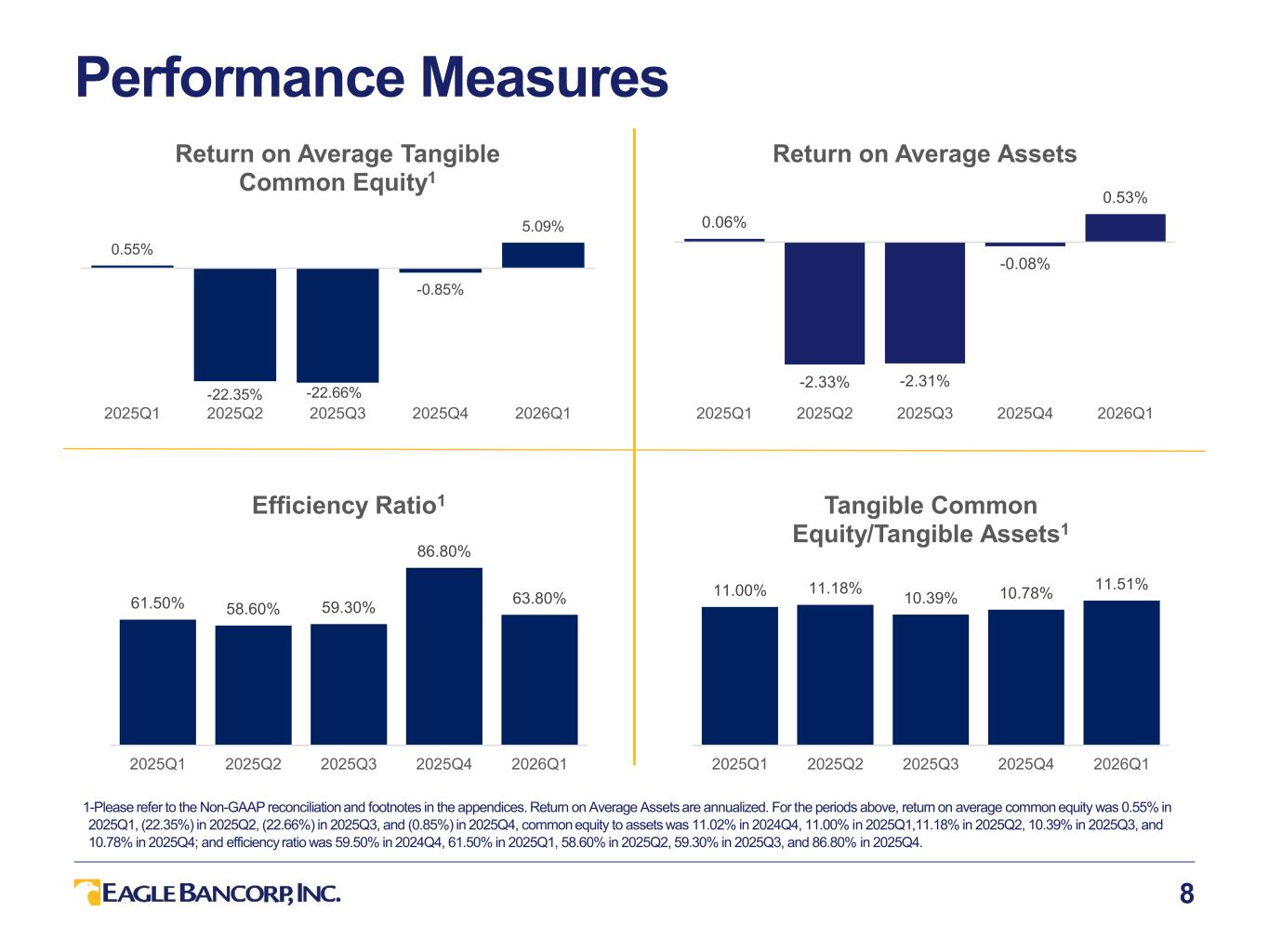
Thank you, Susan. Before I walk through the specifics, I want to step back and acknowledge the tangible progress we've made on asset quality this quarter. This quarter, we reported net income of $14.7 million, or $0.48 per diluted share, a meaningful swing from the $2.4 million loss we reported last quarter, and that improvement reflects the hard work underway across the portfolio. Rest assured, though, reducing criticized and classified loans, resolving non-performing exposures, and strengthening the overall health of the portfolio remain the top operational priorities for this management team. Based upon investor feedback and consistent with our commitment to transparency, we've continued to expand our disclosures to give investors a better picture of portfolio dynamics, both the progress and the challenges. That transparency is something we take seriously and it shapes how we'll walk through this quarter's activity today. Without its context, let me walk you through what we saw in the first quarter.
I'll start with our concentration metrics.
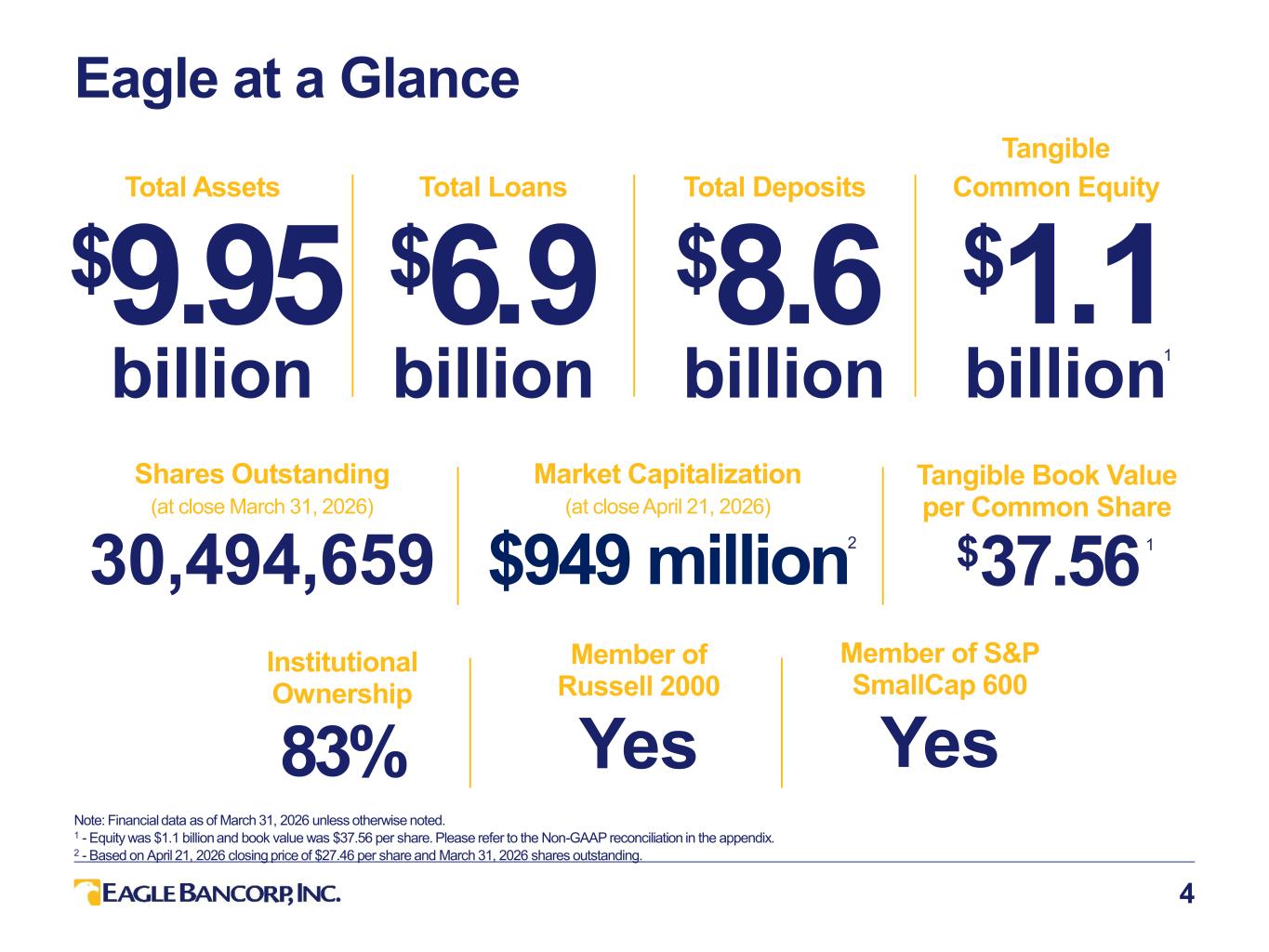
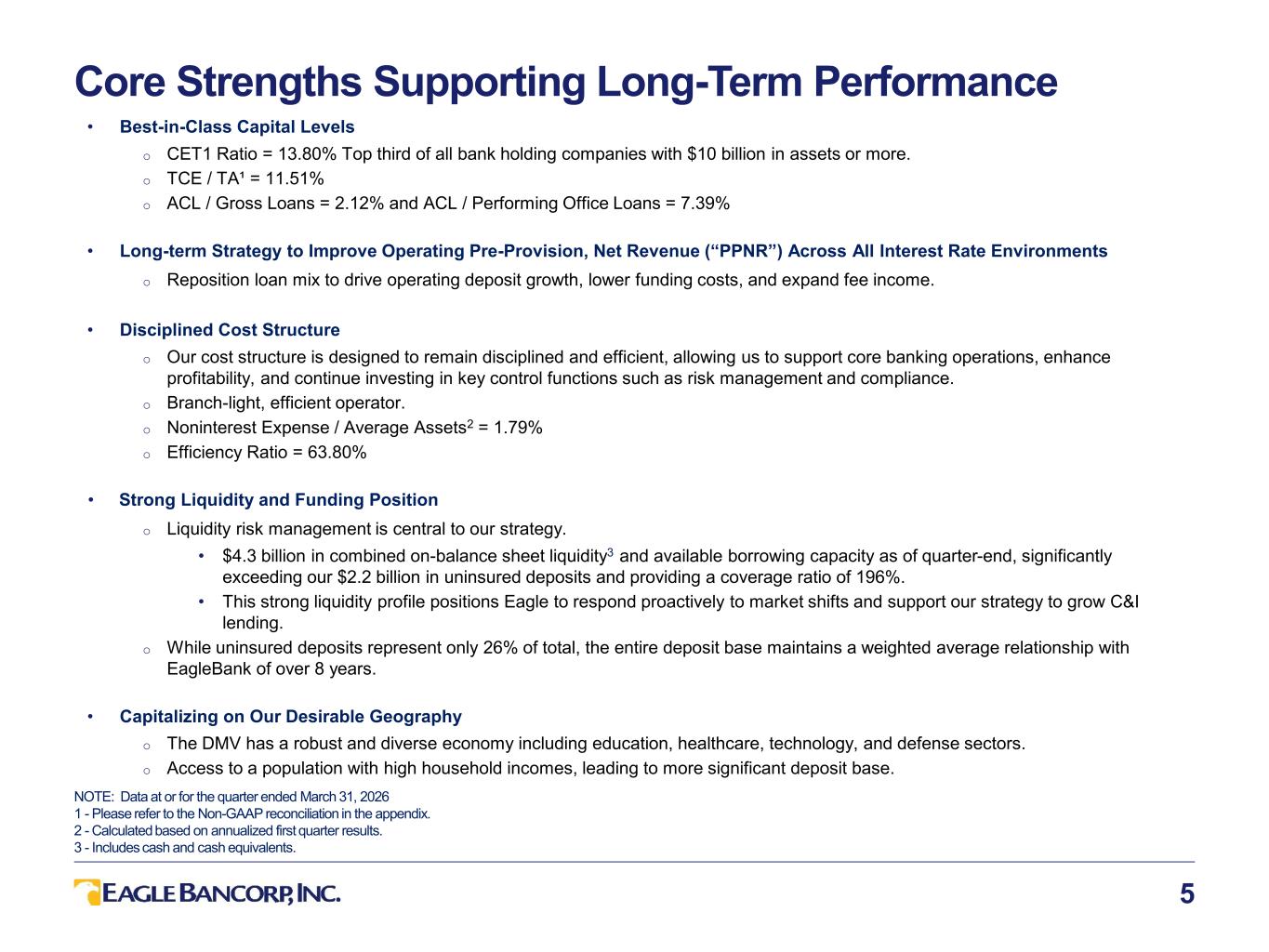
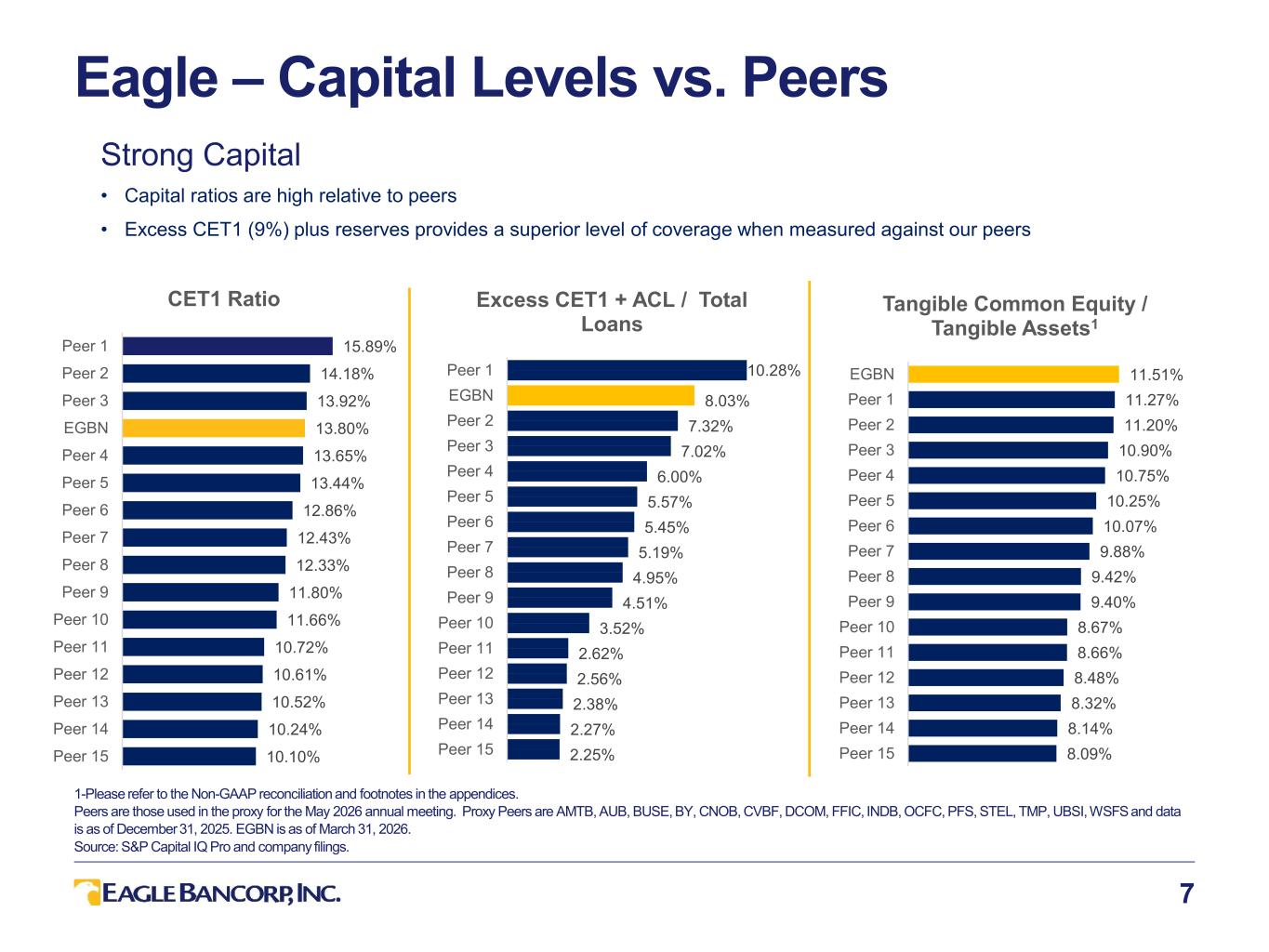
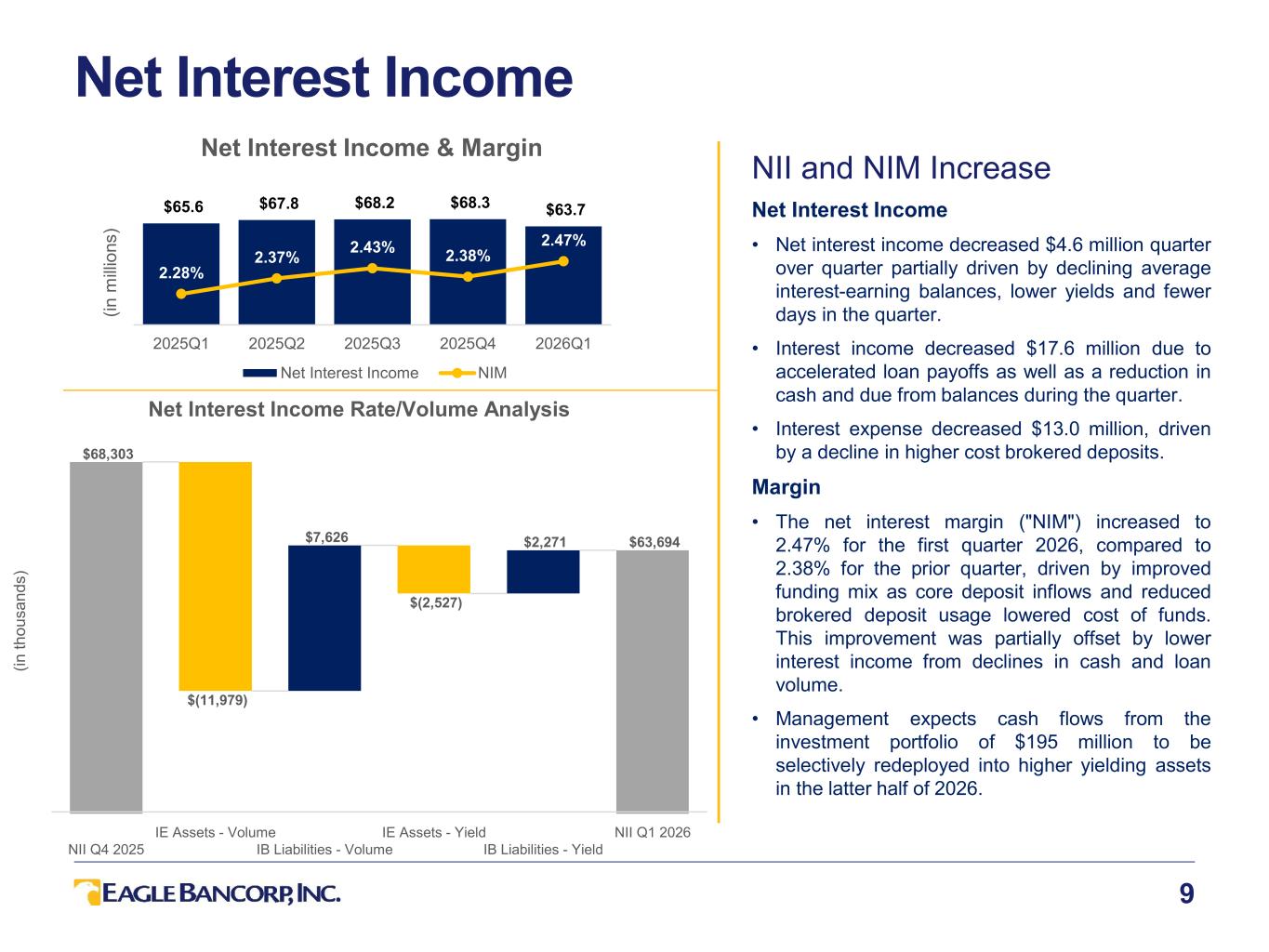
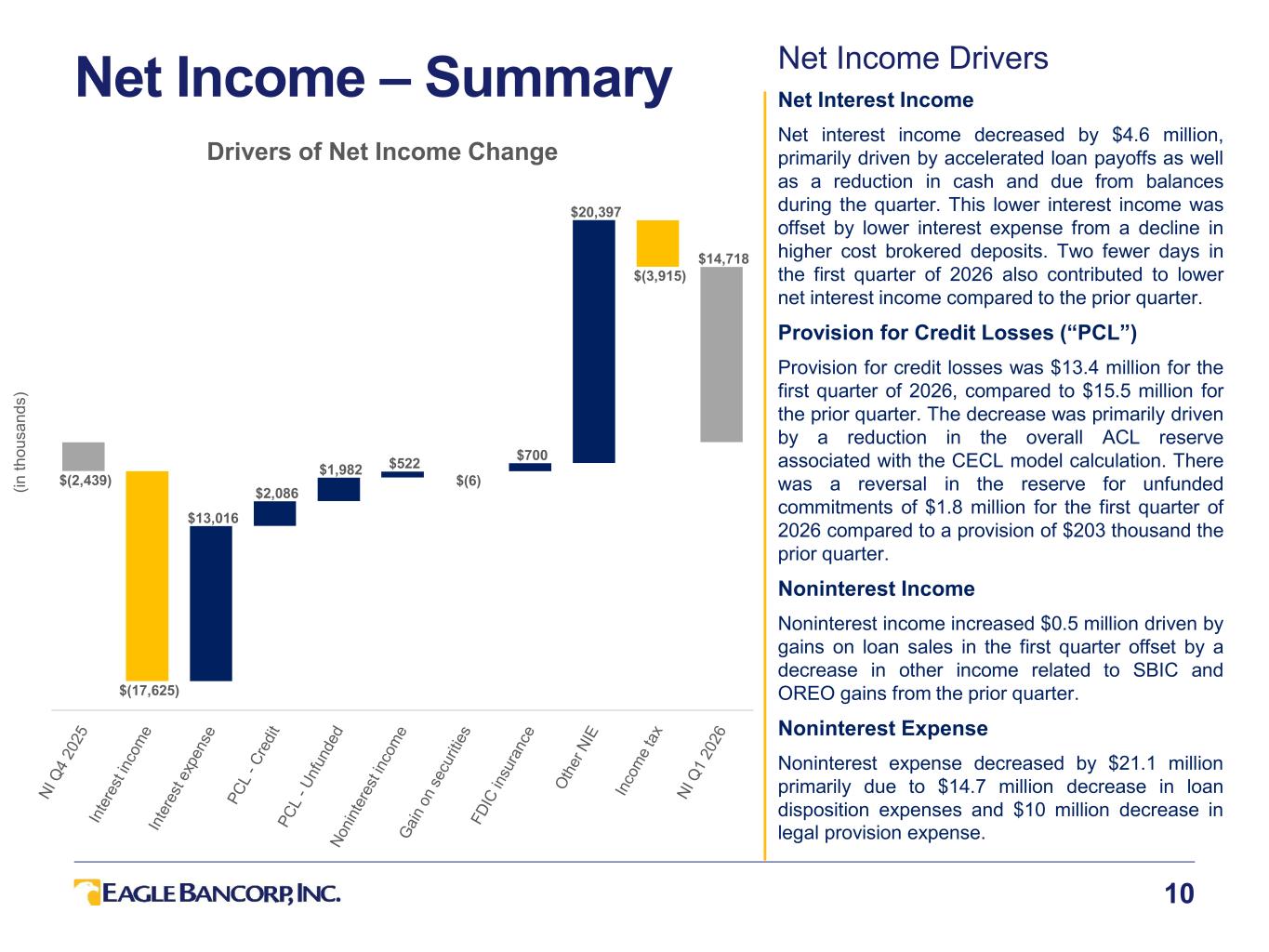
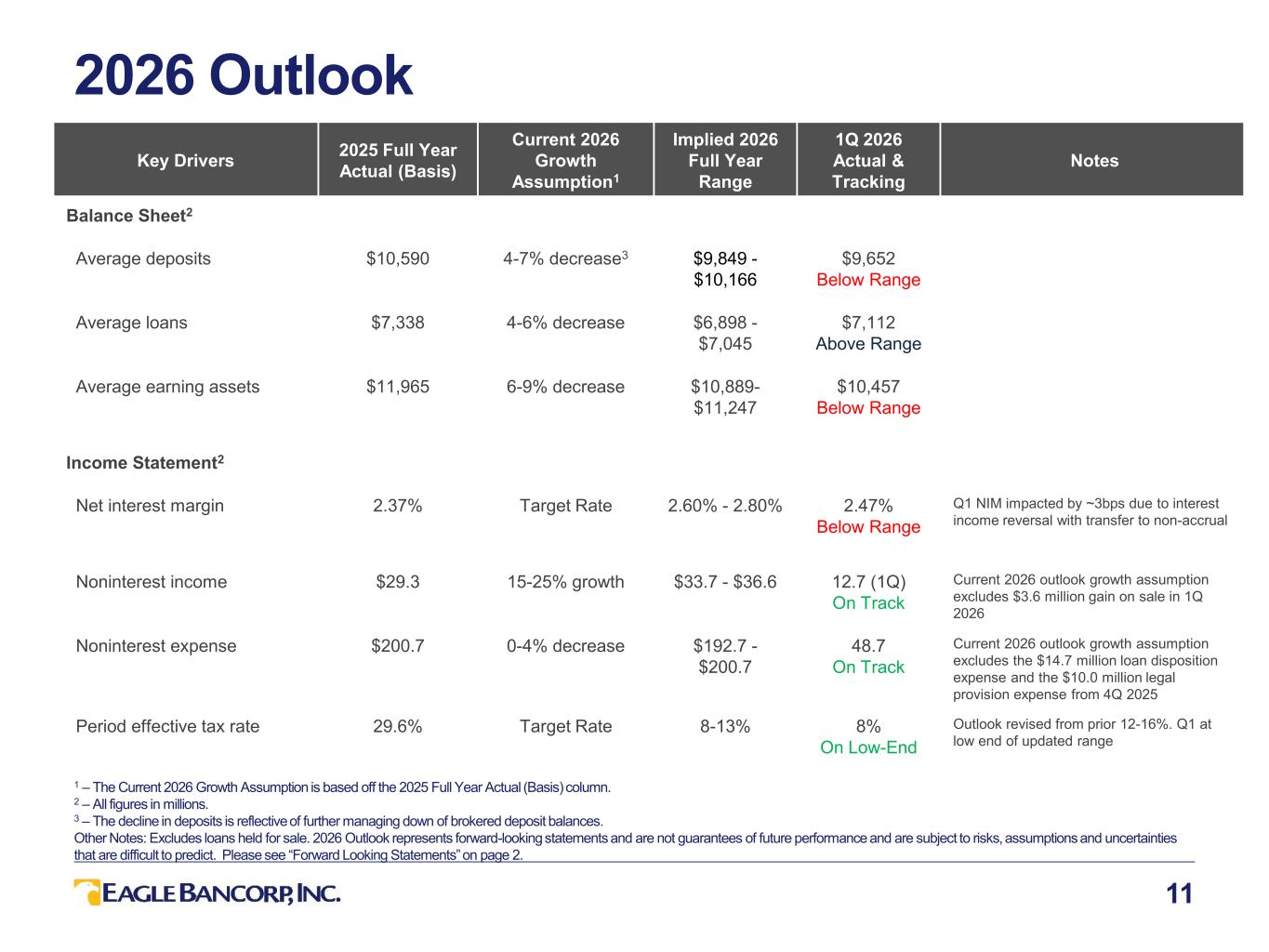
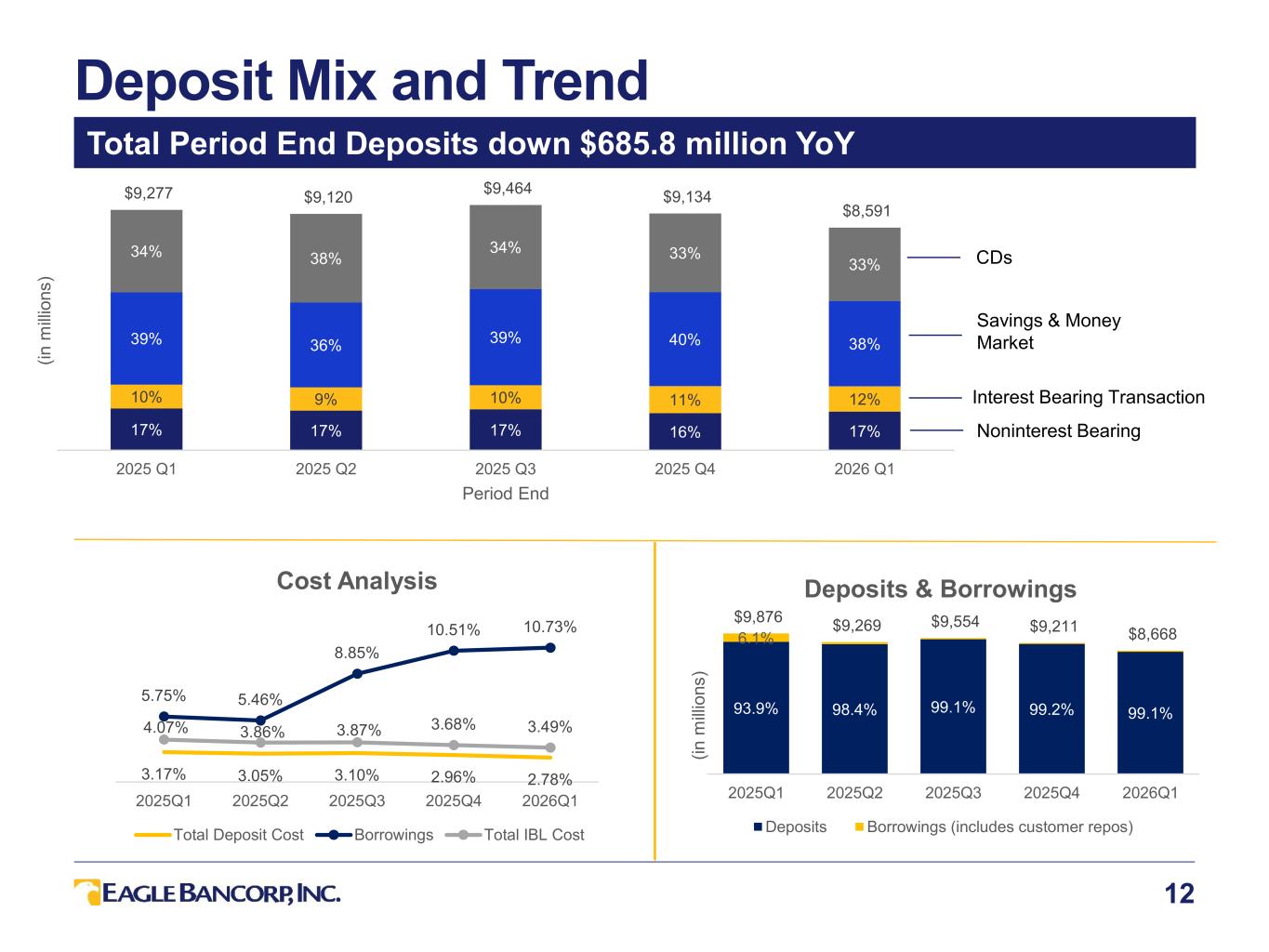
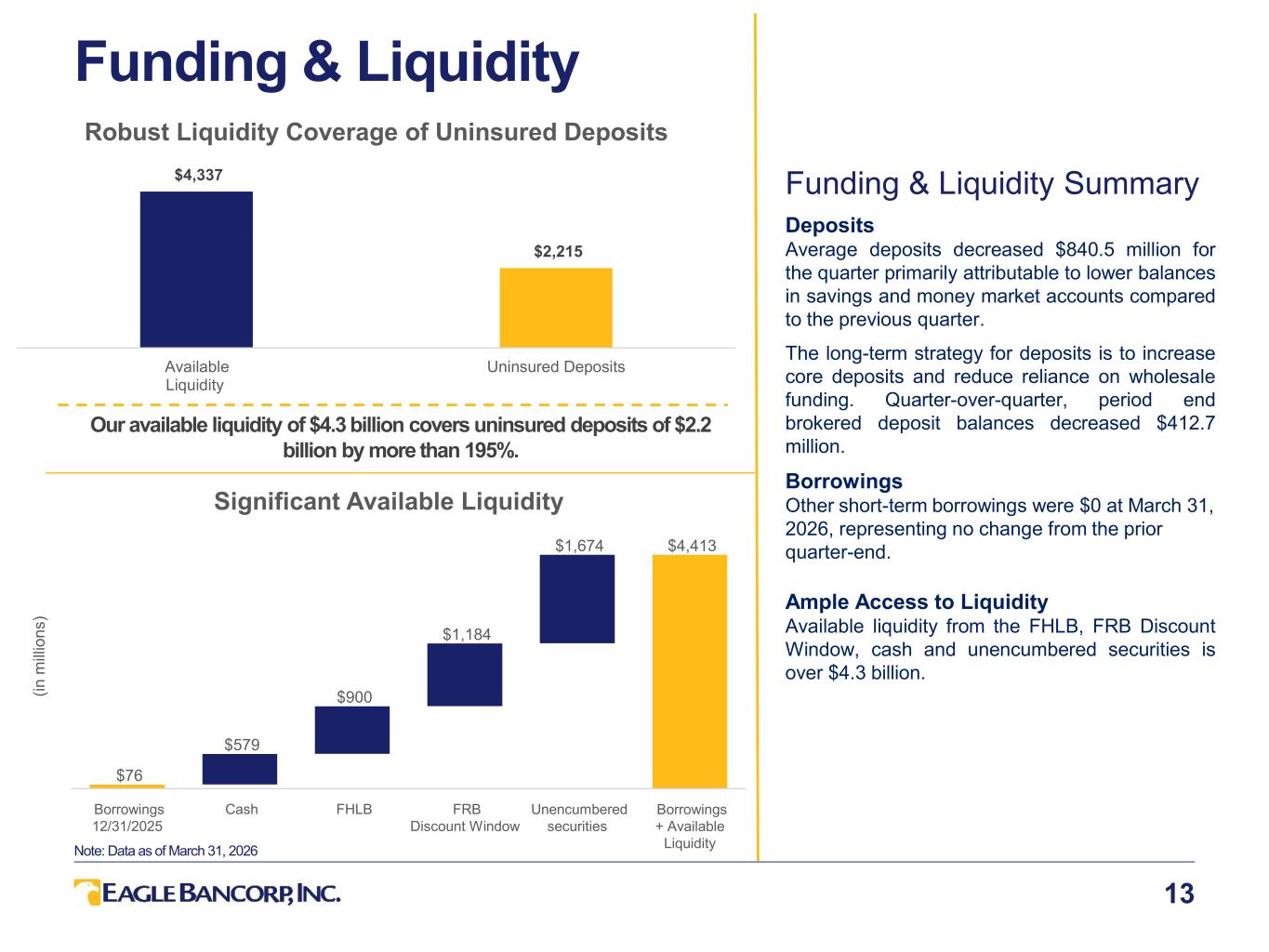
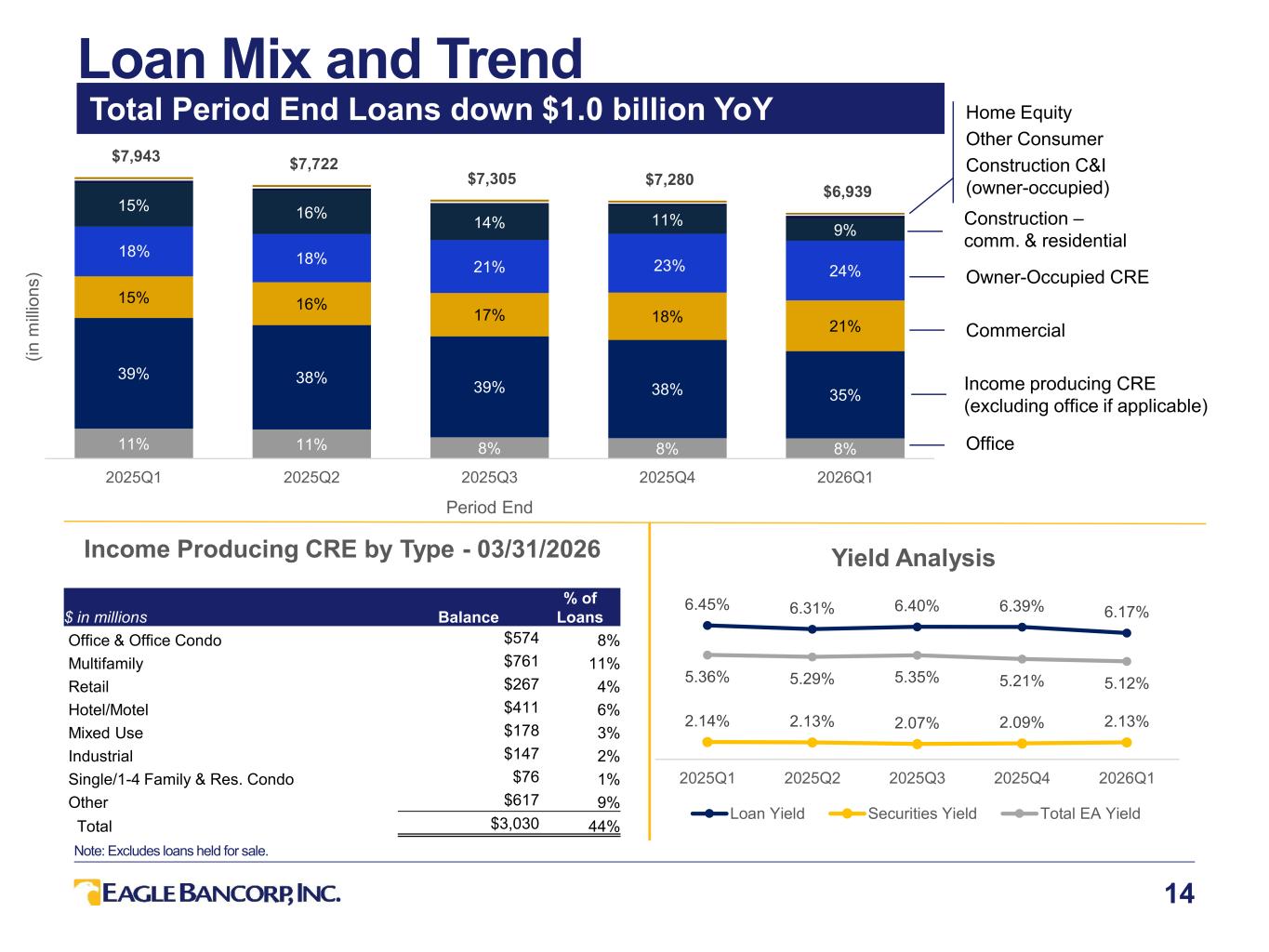
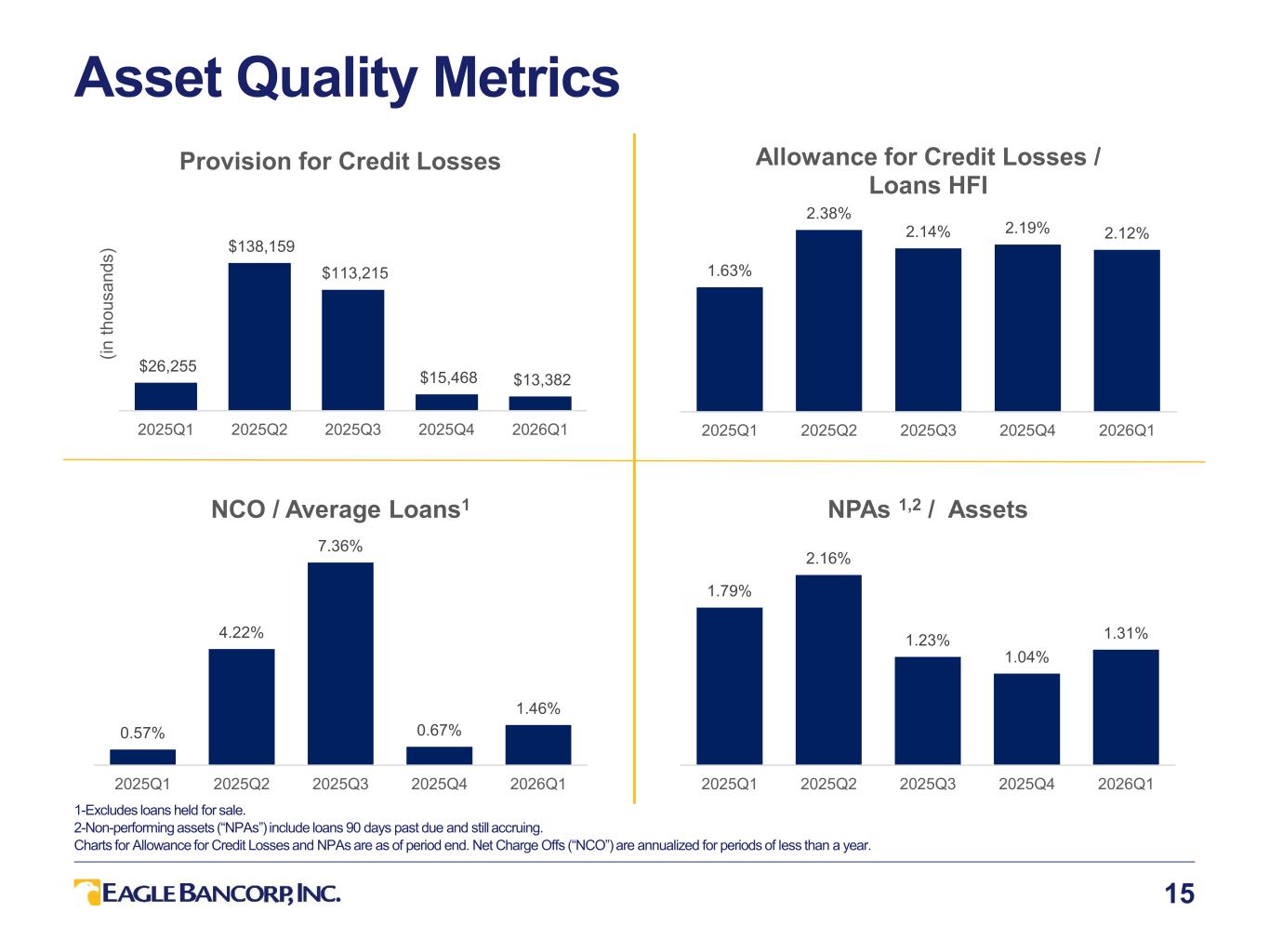
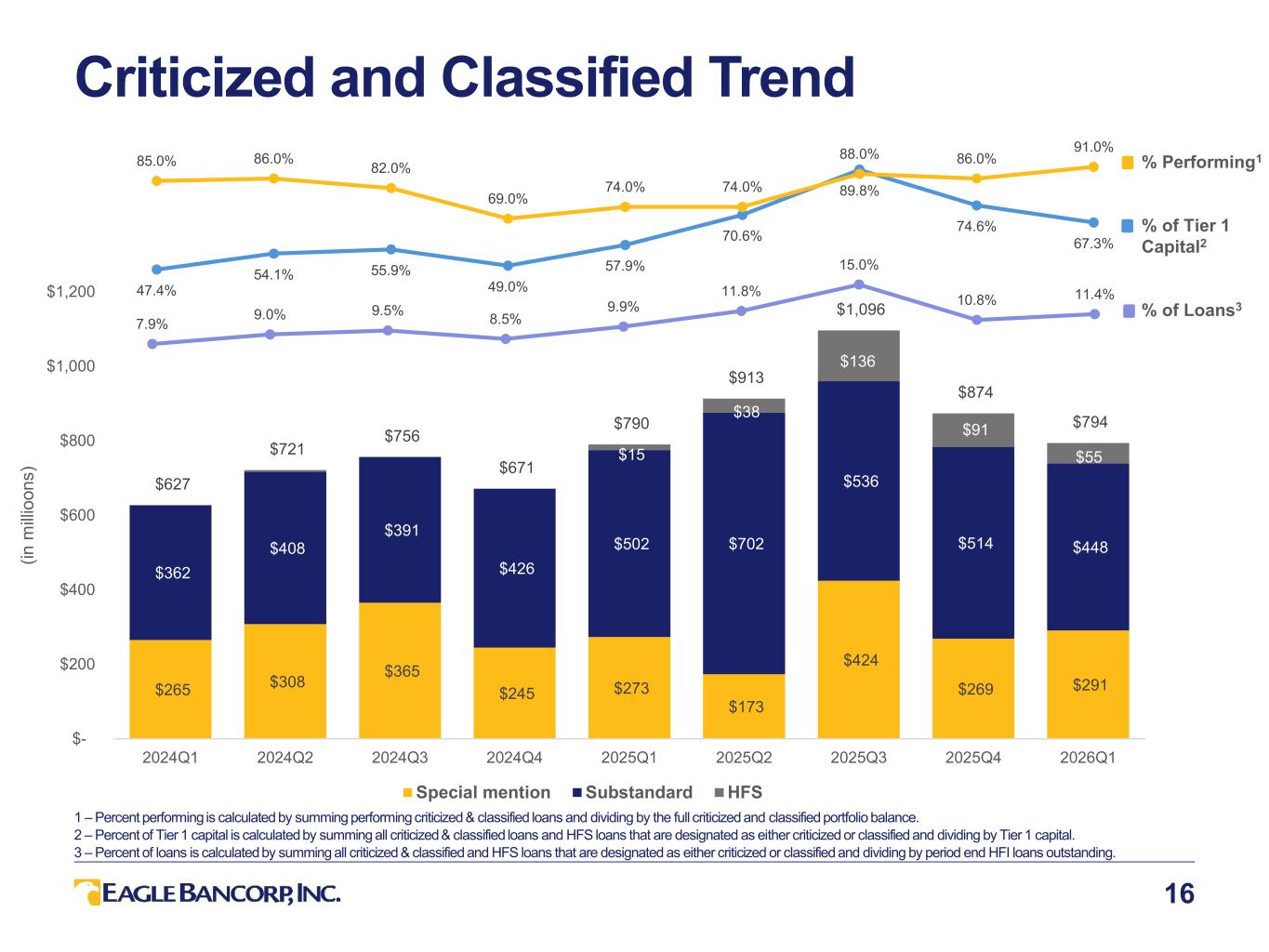
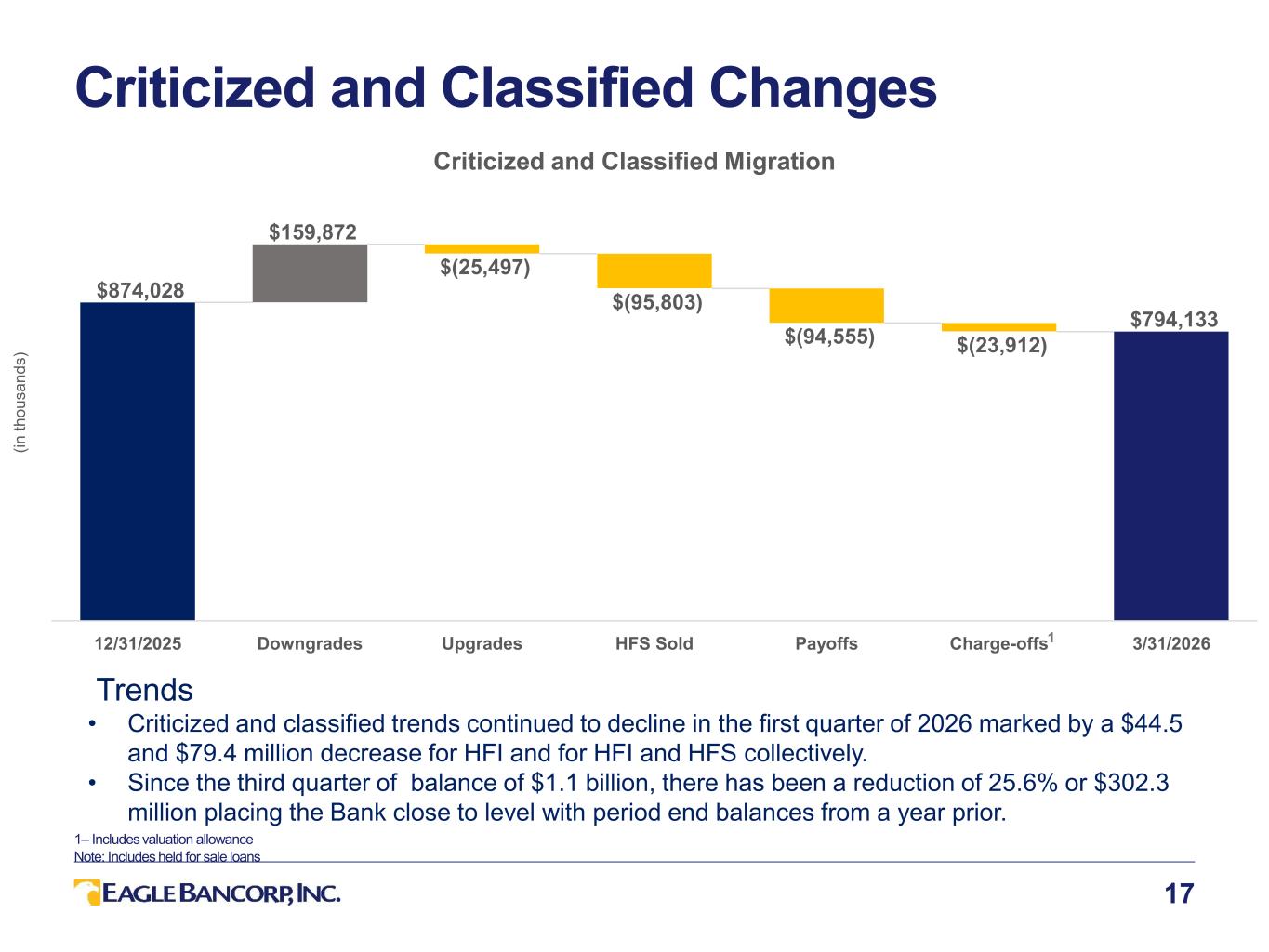
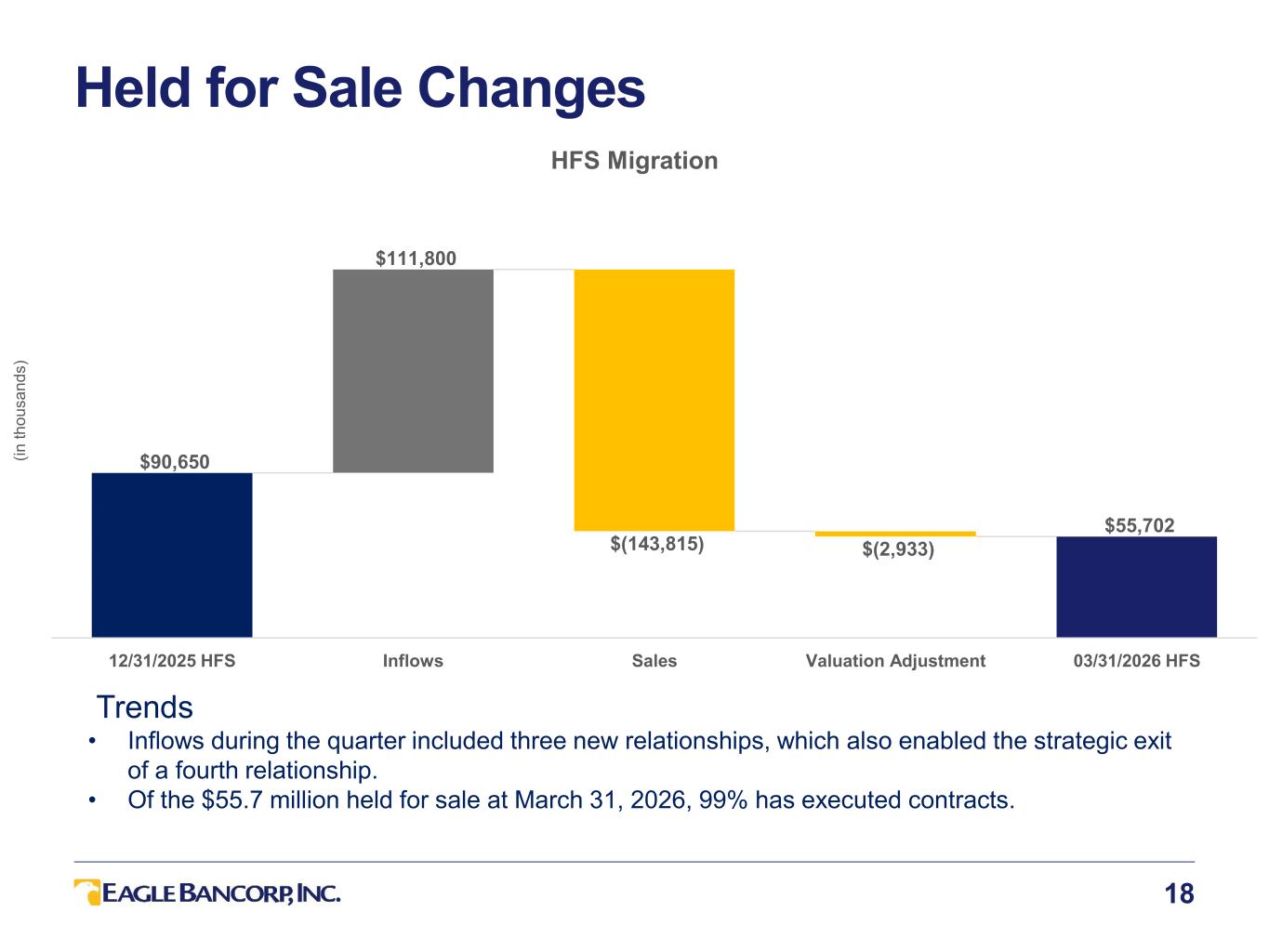
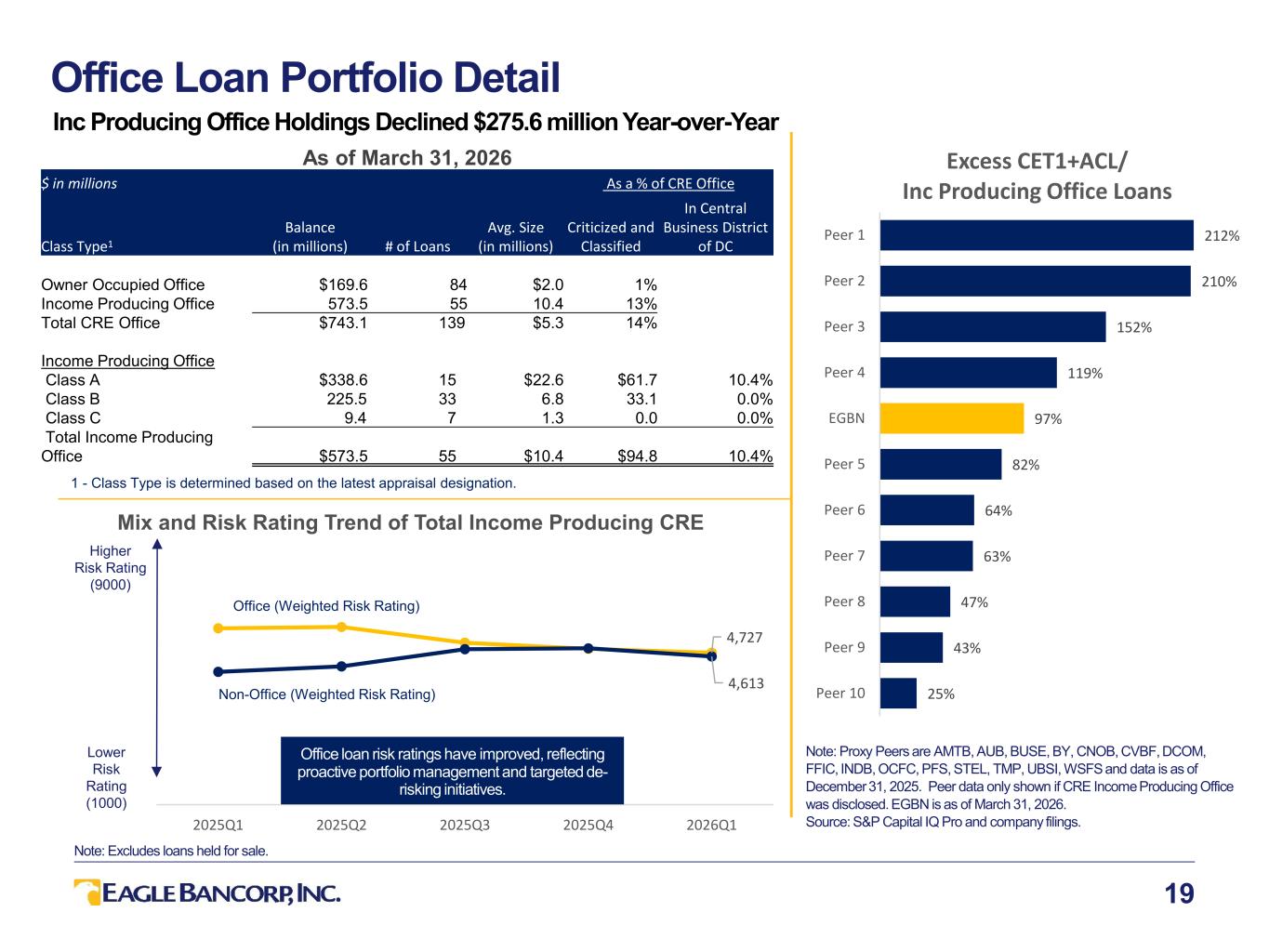
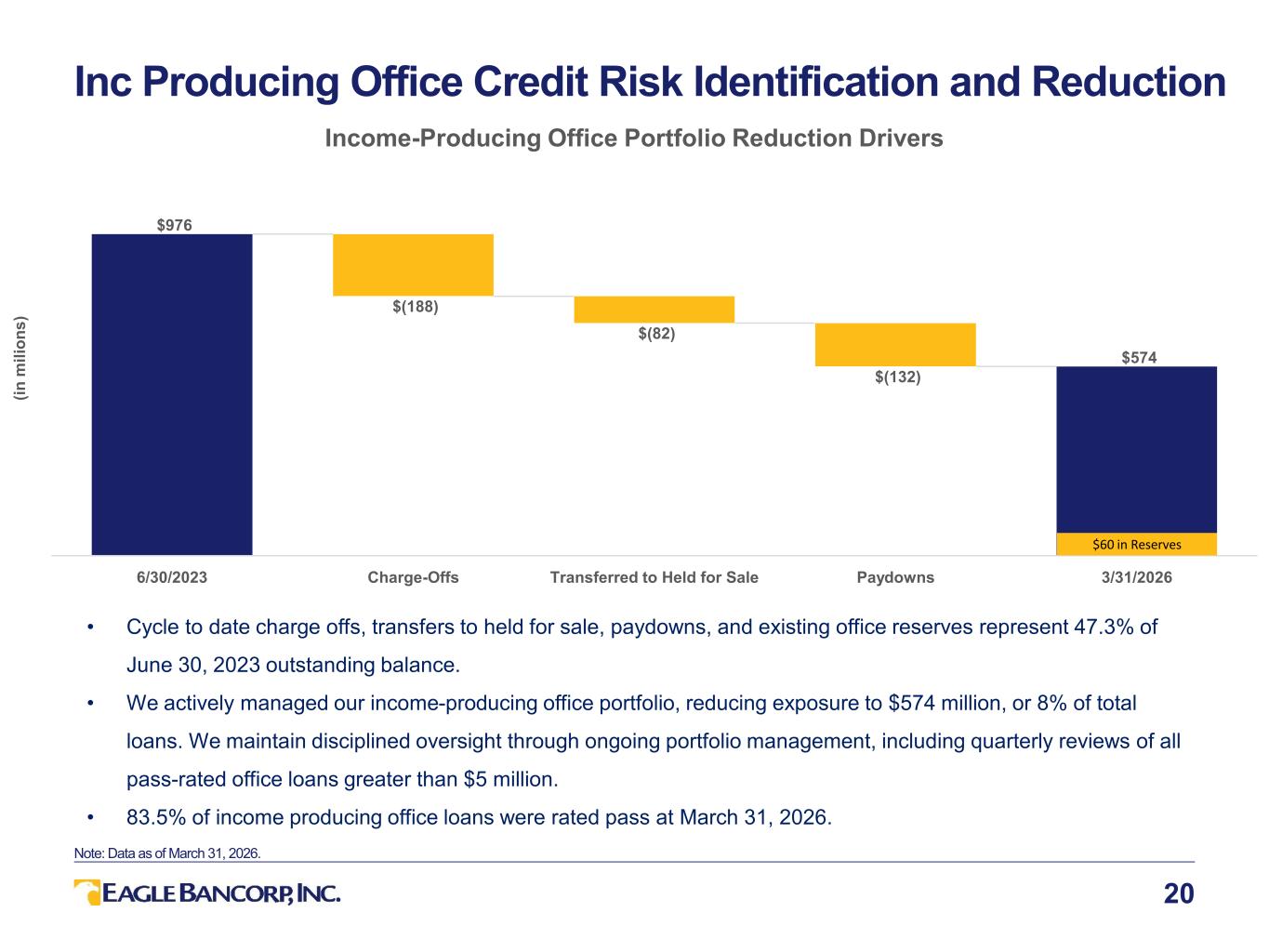
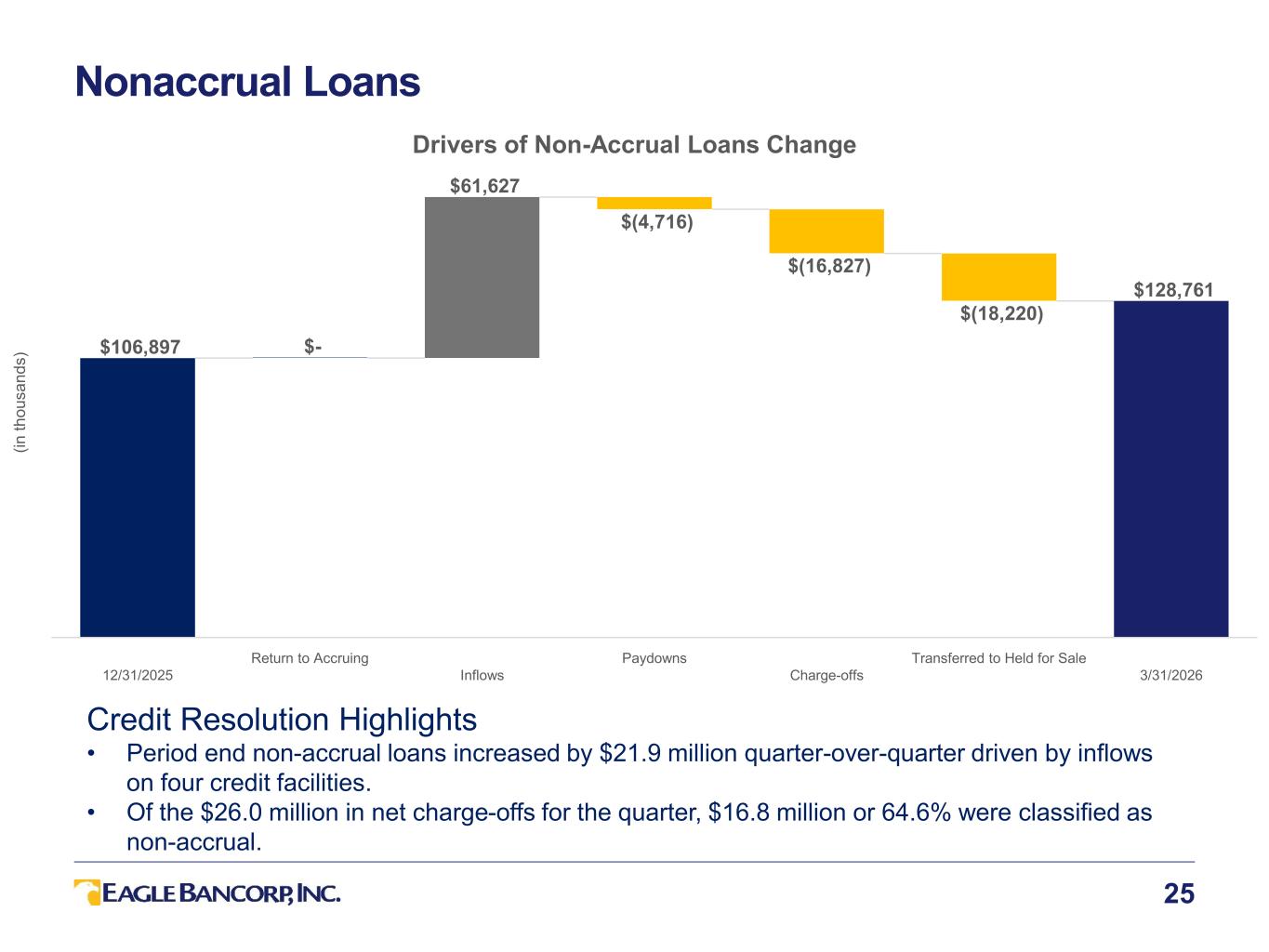
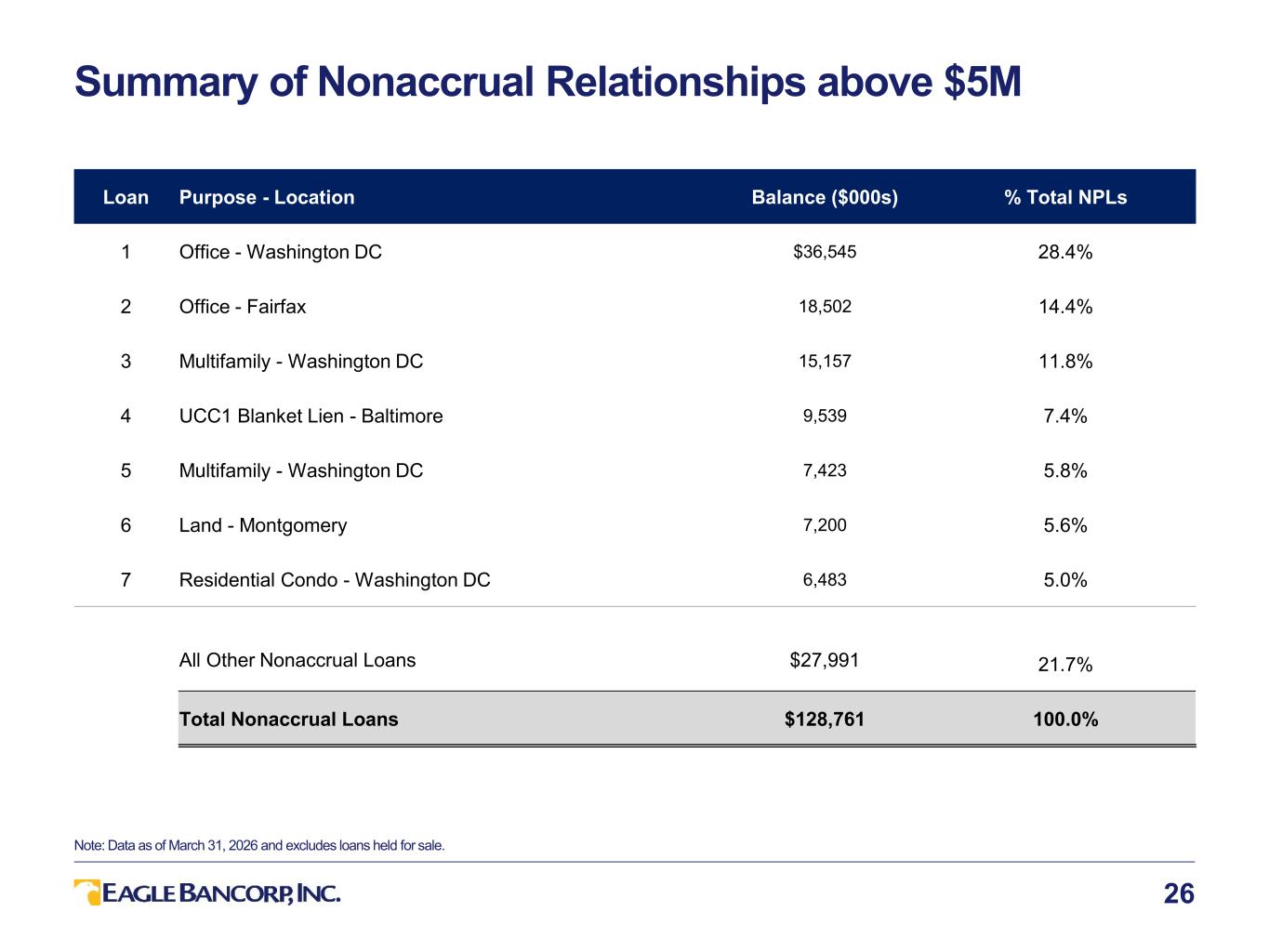
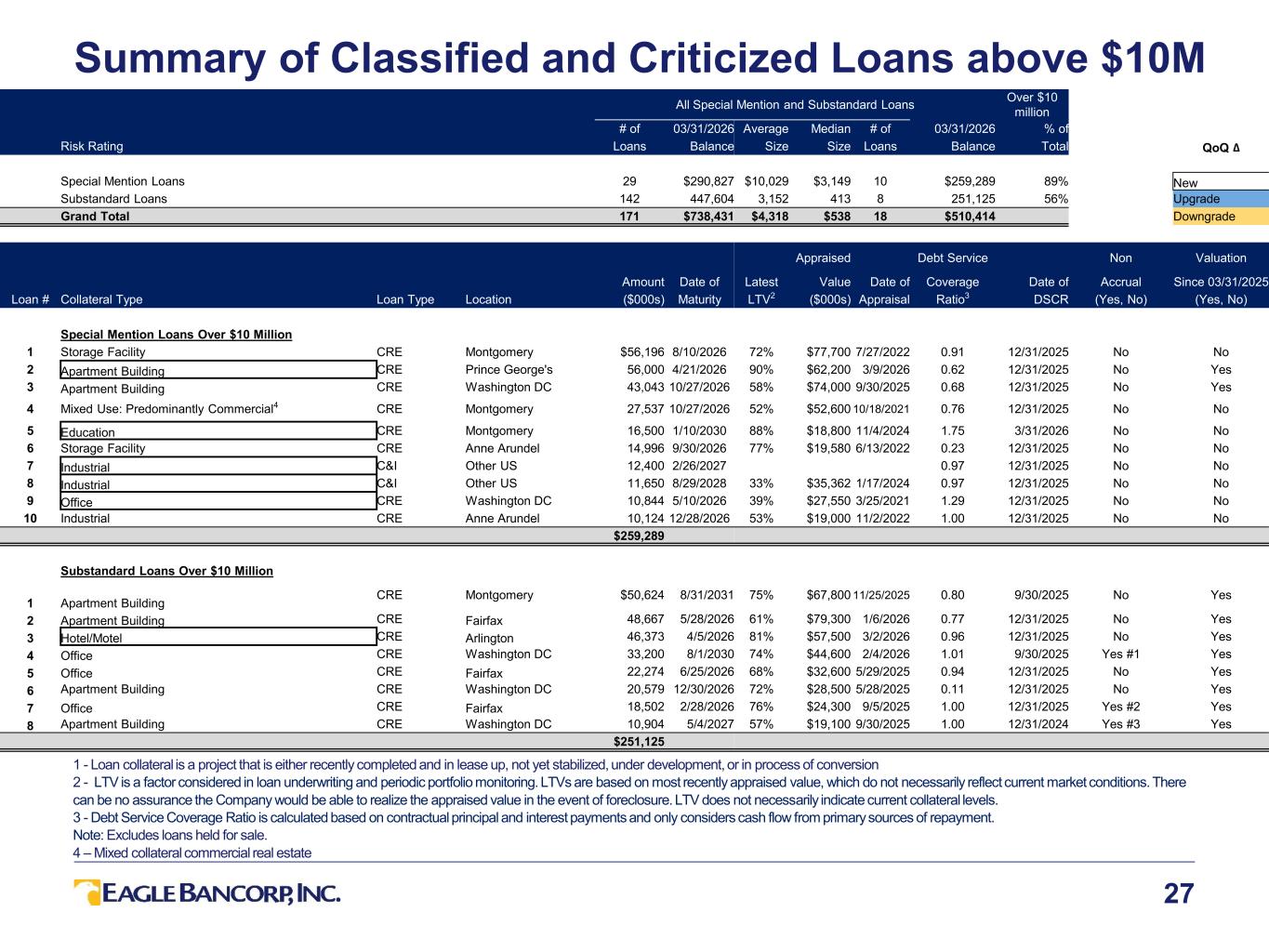
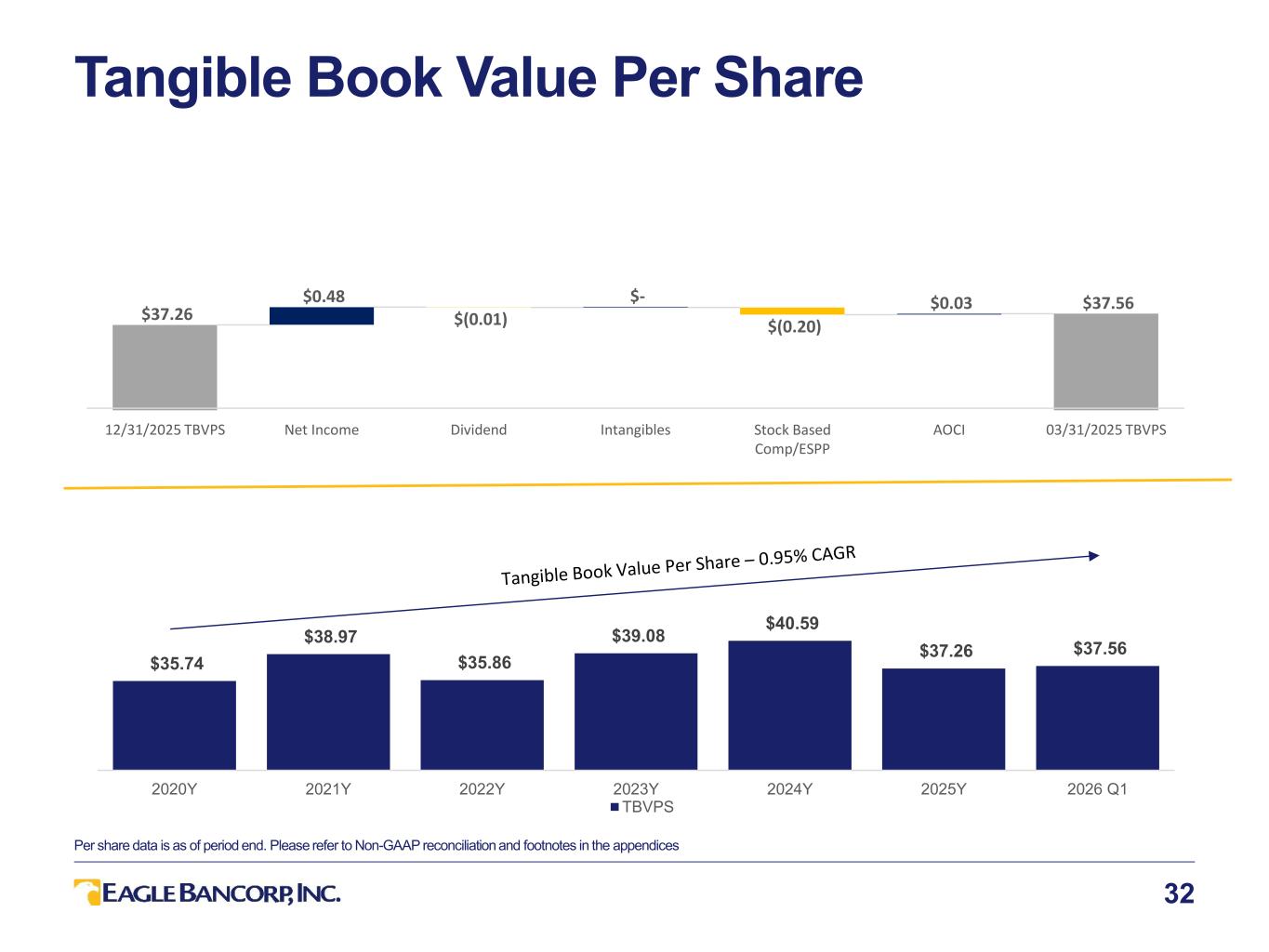
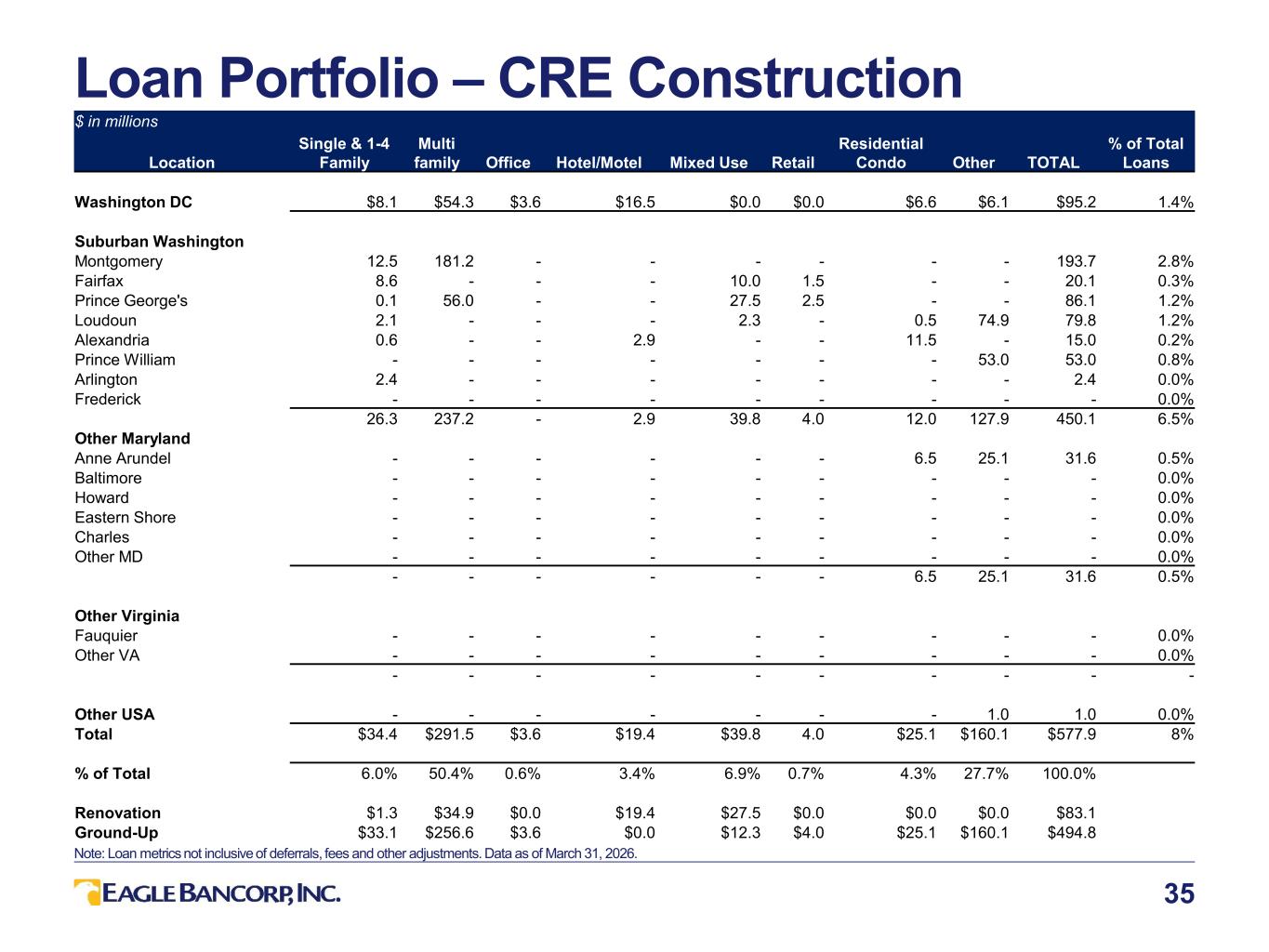
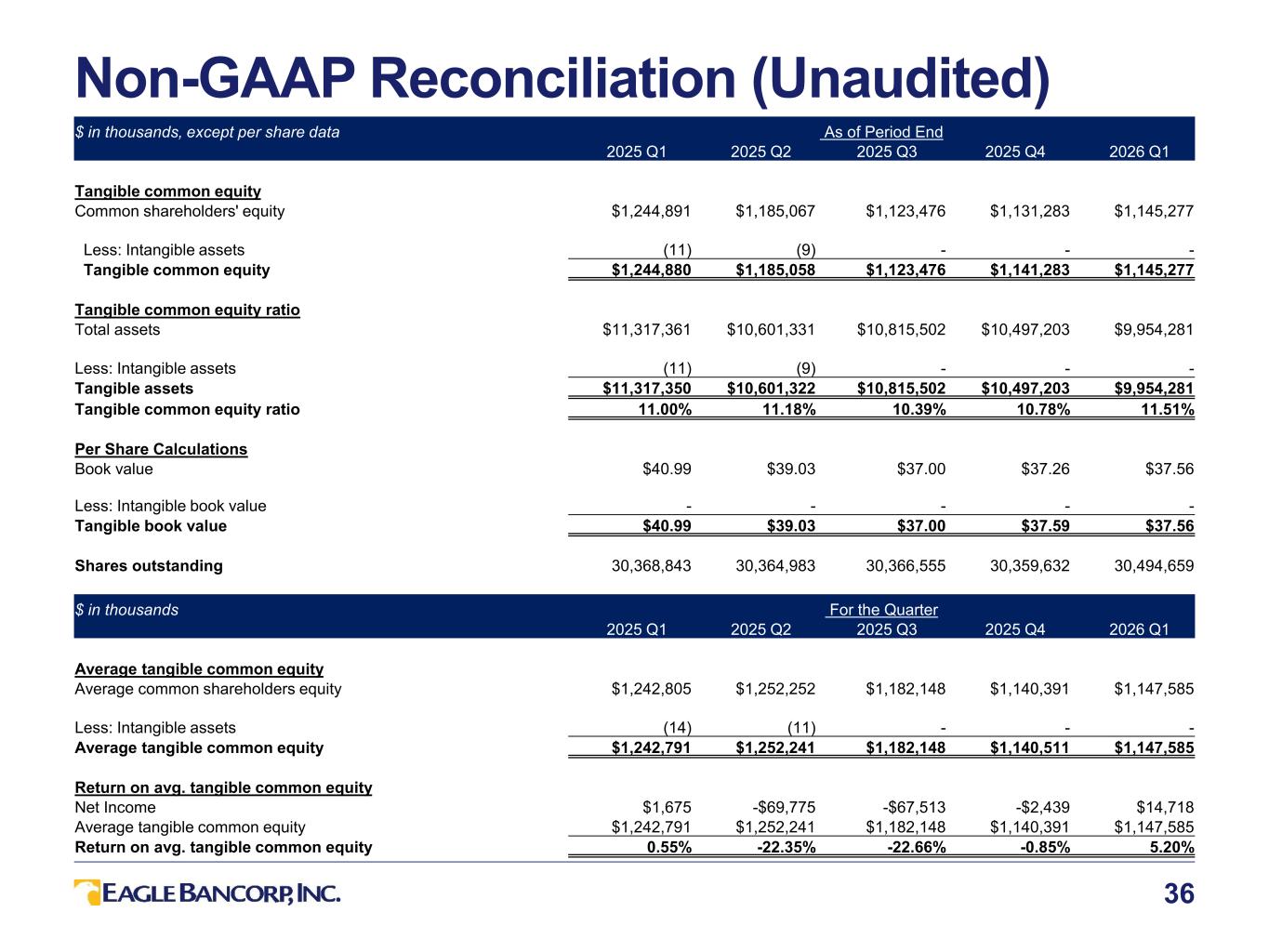
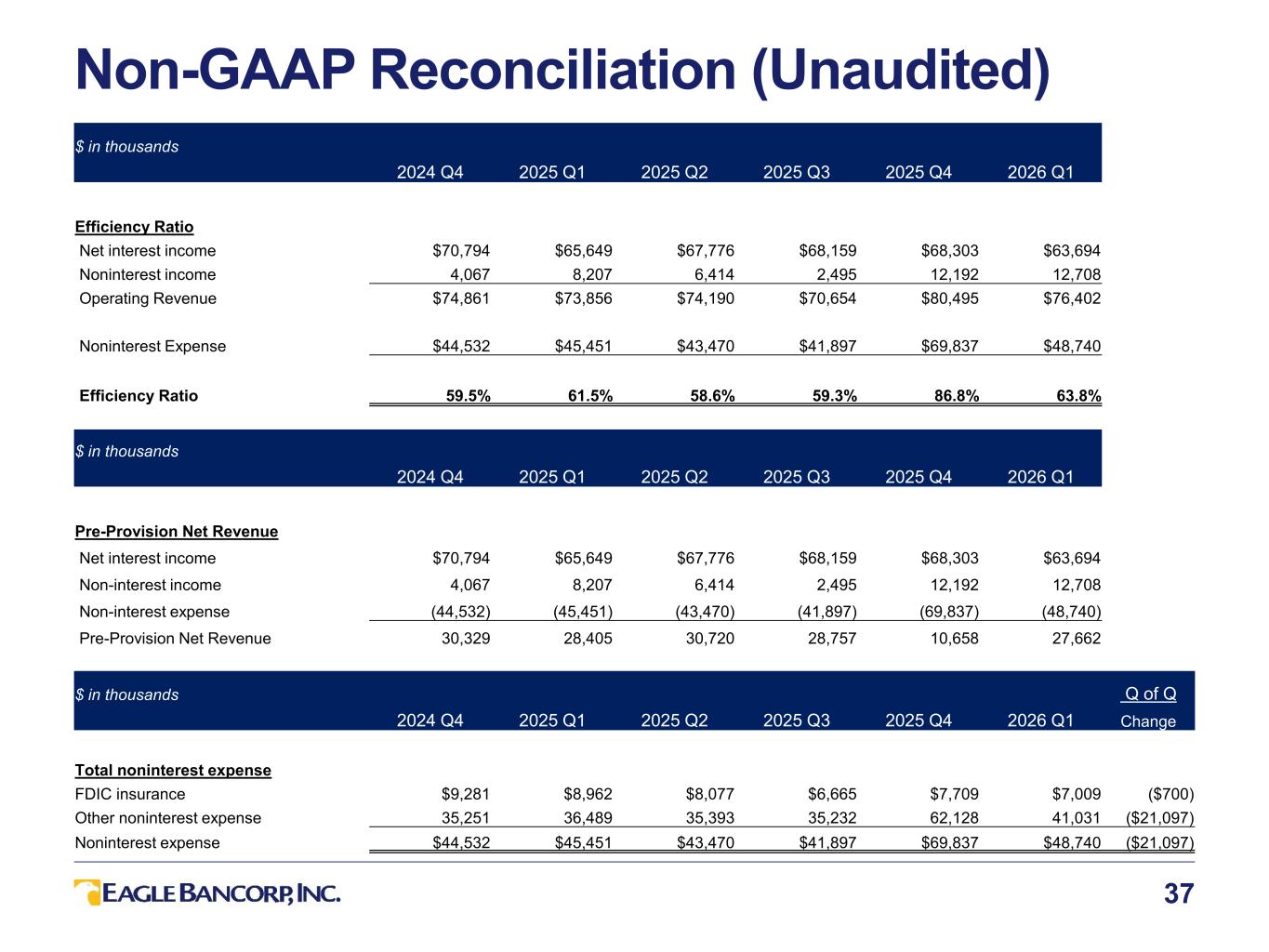
The first quarter saw continued reductions in our CRE and ADC concentrations as expected payoffs, resolutions, and the completion of construction projects drove meaningful progress to reduce overall concentration risk to the bank. Our CRE concentration ratio, which measures CRE loans to total risk-based capital and reserves, declined to 295% at March 31, moving below the 300% threshold. Our ADC concentration ratio came in at 76%. Turning to criticized and classified assets, when combining substandard, special mention, and all held-for-sale loans, balances declined by $79.9 million in the quarter to $794.1 million at March 31, compared to $874 million at year-end. As a percentage of Tier 1 capital, that represents 67.3% at quarter-end, down from 74.6% at year-end, and down meaningfully from the peak of 90% we saw at September 30th of last year. The directional trend is clear, and we're committed to continuing it. Slide 16 of the investor deck provides additional detail on the composition of that portfolio. On slide 17, we've added a portfolio walk to help illustrate the various inflows and outflows in the Criticizing Classified book during the quarter. I want to be direct about the inflow activity. 159.9 million of downgrades occurred in the first quarter, which is elevated relative to the 89.3 million we saw in the fourth quarter of 2025. However, it has materially improved from the $445 million inflow we experienced in the third quarter of 2025. Let me briefly touch upon the primary drivers of the inflow. Three relationships accounted for the majority of the downgrade activity. The first is a multifamily project in Maryland experiencing pressured net operating income due to tenant credit issues and releasing costs. The property has been reappraised and is not considered collateral dependent. The second is a hotel relationship downgraded upon receipt of 2025 financials reflecting lower occupancy. We're updating the appraisal and working with a borrower on a remediation path. The third is a single secured C&I relationship moved to special mention. We currently do not expect any loss. Taken together, these are discrete situations and we believe they are not indicative of broader portfolio weakness. What they do reflect is our portfolio management process working as intended. Loans migrating into criticized and classified are predominantly coming from our lowest pass risk rating category, relationships we have actively been monitoring through our criticized asset committee with upgrade and downgrade triggers and remediation strategies updated each quarter. Turning to the health for sale portfolio, we continue to make meaningful progress in the quarter. The portfolio ended at $55.7 million, down from $90.7 million at year end. Slide 18 of the investor deck walks through the inflows and outflows during the quarter. We transferred three relationships from help for investment during the quarter to facilitate the sale of a fourth help for sale relationship, a deliberate action consistent with our strategy of resolving exposures in a manner that minimizes loss. Importantly, of the $55.7 million remaining and held for sale at quarter end, $55.2 million is already under contract to be sold. While we made progress on total credit size and classified loans during the quarter, non-performing loans increased to $128.8 million at March 31, up $21.9 million from the prior quarter, representing 1.86% of total loans. Slide 25 of our investor deck walks through the linked quarter inflows and outflows. Loans on nonaccrual undergo specific reserve analysis, and those determined to be collateral dependent carry specific reserves in the ACL. The provision for loan losses in the quarter reflects the incremental reserves required for those exposures. Provision for credit losses totaled $13.4 million in the first quarter, a decline of $2.1 million from the prior quarter. Our allowance for credit losses ended the quarter at $147.2 million, or 2.12% of total loans. Within that total, we carry $60 million of reserves specifically against our income-producing office portfolio. Net charge-offs totaled $26 million in the quarter, an increase of $13.7 million. This was primarily driven by $11.6 million associated with loans moved to held for sale as part of our targeted resolution efforts. These actions reflect disciplined relationship-by-relationship strategies to resolve legacy exposures where outcomes are assessed individually to optimize value. In many cases, we believe proactively resolving these credits positions us for stronger long-term results compared to extended workout scenarios. Early-stage delinquency is often the leading indicator of future credit migration and the $31.9 million decline in 30- to 89-day past due balances is a constructive signal about the forward pipeline. We're encouraged by the trajectory. At the same time, the increase in non-performing loans is a reminder that this work is not finished, and we're not treating it as such. Resolving these exposures, maintaining our reserve discipline, and continuing to improve the overall health of the portfolio remain our highest priorities. Turning to earnings. The improvement in profitability this quarter is in many ways a direct function of the asset quality work I just walked through, the discipline around resolving exposures, managing expenses tied to loan dispositions, and repositioning our funding mix as showing up on the earnings line. With that as context, let me walk through the drivers. Net interest income declined $4.6 million to $63.7 million, primarily reflecting accelerated CRE loan payoffs and lower average cash balances, partially offset by reduced interest expense from the continued reduction of higher-cost broker deposits. Two fewer days in the quarter also contributed. NIM expanded nine basis points to 2.47%, driven by an improved funding mix as wholesale funding usage declined. We estimate approximately three basis points of NIMH pressure from loans moving to non-accrual and the associated interest reversals. Pre-provision net revenue was $27.7 million, an improvement of $7 million from the prior quarter. The improvement was driven by lower non-interest expense, which declined $21.1 million to $48.7 million, reflecting the absence of two notable items from the fourth quarter. $14.7 million of expenses related to loan dispositions and a $10 million legal provision tied to the probable and estimable resolution of a previously disclosed government investigation. Non-interest income increased modestly to $12.7 million, supported by $3.6 million of gains on loan sales, compared to a $1.1 million loss in the prior quarter. Our capital position remains strong and industry-leading. Tangible common equity of tangible assets was 11.51%. Tier 1 leverage was 10.63%, and CET1 was 13.8%. Tangible book value per share increased $0.30 to $37.56 as earnings contributed to capital. On funding, pre-edent deposits declined $542 million from December 31, of which $413 million reflected the intentional reduction of brokered deposits. Year over year, we reduced brokered deposits by $921 million while growing core deposits by $240 million, reflecting coordinated execution across all our deposit teams. Available liquidity stands at $4.3 billion, and we maintain close to two times coverage of uninsured deposits. Turning briefly to the outlook, our 2026 forecast is substantially unchanged from what we shared last quarter, and slide 11 of our investor deck provides the detail. We continue to expect full year NIM in the 2.6 to 2.8% range, non-interest income growth of 15 to 25%, and non-interest expense flat to down 4% when adjusting for the notable items I mentioned. Average deposits, loans, and earning assets are still expected to decline year over year, reflecting intentional balance sheet repositioning rather than operating pressure. Altogether, these trends support our confidence in expanding pre-provision net revenue in 2026 despite a smaller average balance sheet. I'll turn it over to Susan for final comments ahead of Q&A.
Thank you, Eric. Before we move to questions, I want to leave you with a few final thoughts. The first quarter demonstrated that our strategy is working, asset quality is improving, our funding mix is strengthening, and the earnings profile is beginning to reflect the repositioning work of the past year and true value of our franchise. We still have more to do, and we are not losing sight of that, but the direction is clear, and the discipline across this organization is real. What gives me the greatest confidence in the path ahead is the strength and depth of the team executing against it. Our priorities are well established, continuing to reduce criticized and classified balances, transforming our funding mix toward core deposit relationships, pursuing disciplined loan growth, and expanding pre-provision net revenue over the course of 2026. These priorities and the capabilities we've built across credit, finance, lines of business, and our risk and control functions are the foundation for the next chapter of Eagle's story. This franchise has exceptional talent, a distinctive market position, and the institutional strength to continue delivering against these objectives through the leadership transition ahead and well beyond it. Before we conclude, I want to thank our employees for their continued dedication and professionalism. Their commitment has been instrumental in navigating a challenging period and positioning the company for the future. Thank you again for your time and for your continued interest in Eagle Bancorp. With that, we'll open things up for questions.
Operator
Thank you so much. And as a reminder to ask a question, press star one one on your telephone and wait for your name to be announced to remove yourself press star one one again one moment while we compile the q a roster our first question comes from the line of justin crawley with piper sandler please proceed hey good morning everyone just wanted to uh start off on the level of criticized here um you know obviously good to that continue to fall with some help from the loan sales but just curious if you can speak a little more to the new inflows and to criticize eric and i hit on that a little bit but you know
is that a you know pace that you'd expect slows from here or how do you think about the trajectory as you move through the year uh hey justin this is ryan um i think the you know forecasting forecasting what that is is tough to do our our portfolio management practices touch on these loans each and every quarter. We shouldn't see many surprises in that process because we touch it so frequently, but it is expected to continue some migration in there.
Ultimately, though, just to build off of that, Justin, our goal and commitment in my prepared commentary is that criticized classified will continue to come down on an absolute level as well as relative to loans and tier one capital. So we're going to make some, we're expected based on what we see today and what we believe, and we're going to make some meaningful progress by year end.
Right, and Justin, to build on that, it's important for us to note that the regulatory definition of criticized and classified loans does not require lost content, right? The potential weakness or well-defined weakness that would define those roles don't necessarily have lost content in them. And that's part of the story we've been telling for several quarters, as you've seen the composition of that list fall away from office.
Okay, got it. And then, so I guess, you know, in terms of further loan sales, you know, with what's remaining in health for sale, and, you know, I guess anything that could get added from here, are we at a point where future disposals are largely coming outside of the office portfolio? You know, how would you set expectations there in terms of, you know, what you're looking to bring to that?
I think we're looking at each and every case on a one-off basis. We're evaluating it. management comes to a decision as to what the best path forward is, and we use the tools that are at our discretion that are there. The anticipation is that tactic will continue to be used as we determine it is the best path to reach the best possible outcome and maximize shareholder value.
Okay, that's fair. And then I guess just one last one on the office reserve, which you took down in the quarter, can you talk through just a little more on some of the factors that get you comfortable in that decision, you know, I guess in part considering, you know, the increase in non-accruals, you know, with a lot of that being office-driven?
The biggest driver of the decline in ACL quarter-over-quarter related to office actually comes due to the 37-ish million reduction of substandard loans that is a big driver of that pool. And that's the main driver of that decline. We assess the overall methodology that we apply qualitatively as well as quantitatively to the entire process, but particularly with office. And we believe that the $60 million that's associated with the total office portfolio and the ACL is appropriate at March 31.
Okay, great. I will leave it there. Thank you for taking the question.
Operator
Thank you. Our next question comes from David Chiaverini with Jeffries. Please proceed.
Hi, thanks for taking the questions. I wanted to follow up on this credit quality discussion. Good to see that criticized, classified down, and it sounds like you're expecting a continued decline through this year. Does this commentary also apply to the non-accrual loans that we saw increase in the quarter?
I would say yes, generally. What you're seeing in non-accrual loans is really the result of us working through some of the loans that have been identified as special mention and substandard. So to me, the way I look at it, the barometer of what could come is really looking at the total portfolio of criticizing classified. As that portfolio continues to decline, which we expect will occur throughout the year, the incidence or the likelihood of some of those loans flowing into nonaccrual or charge up will also fall. So I think you're going to see some improvement in non-performing as well as that entire portfolio gets worked through.
Great. Thanks for that. And on the held-for-sale portfolio and the sales that you have under contract, are you selling them? It looks like there was on slide 18, you know, a valuation adjustment of about $3 million. Are you selling loans kind of in line with what you originally, you know, thought? And I guess to ask another way, I'm curious at what percent of par on average are you selling loans?
I'll answer the first part of that question first, and maybe, Ryan, you can touch on the second part. But I think when you look at the totality of what we put into Held for Sale through this cycle, which is really over the last three to four quarters, we've pretty much hit the mark. Yes, we had some losses that we recognized in the fourth quarter, but we had gains that we recognized in the first quarter. So when you net all that together, I think that we feel comfortable with the process that we've been undergoing to transfer those loans into health for sale. I would remind everyone that when it comes to office, we're generally using broker opinions of value just because that's more forward-looking and reflective of the conversations that we've been having with market participants with those notes. Ian, if you want to touch on the second one.
On the question of relative to par, where's the landing spot? It's a hard one to answer, and it's been significant, frankly, dropped from par on the office side. If you go back and look through the last several quarters, you'll see those numbers, and that's second, third quarter, 25 was where the majority of those challenges is sort of showed through the financial statement. So we haven't compiled the data of where we are relative to the original unpaid principal balance or the starting unpaid principal balance, but it's a substantial decrease because the office market has had a substantial valuation decrease.
You're just building off that a little bit. Yep. Go ahead. I was going to say, just building off of that a little bit, When you look at the office portfolio and the cycle to date, the loss content that we've experienced, so that would be a function of loss given default and probability of default. I mean, for the office portfolio, we've been probably between 45% and 50%.
Got it. And then, you know, as a percentage of carrying value and the reserves, netting the reserves against that PAR, it's significantly higher, is my assumption. Would you say that's fair?
And that's what Eric's comments address, in that the reduction to the carrying value netted us for that portfolio right about at new PAR, if you will. Correct.
Operator
Thank you. Our next question comes from the line of Catherine Miller with KBW. Please proceed.
I have a question about just the size of the balance sheet. It looks like in your Outlook slide, you know, deposits, loans, average earning assets are coming in below your original range, and part of that just as you kind of clean up and push loans off the – or push loans in high-cost deposits off the portfolio. So, but we haven't changed the guidance. So, do you feel like there's, I assume that the range or your full year range will fall as we move through the year? Or is there any reason to think that you'll catch back up to where you originally thought the balance sheet would be?
Well, there's a couple things going on. You know, averages obviously are informing NII, but when you think about it from a period end perspective, our expectation is that CRE will continue to see some decline in the second quarter, but our expectation is that when you compare year-end 25 to year-end 26 for the CRE portfolio, it will be flat. So that's informing the forecast in terms of average balances for loans just because you're seeing a pretty material reduction in the first half for CRE, but we do expect that to come back up in the back half of 2026. In terms of C&I, that level of growth, I think it was approximately 5% linked quarter growth on the loan side. So on an annualized basis, that's 20%. I would expect that to actually be a little bit lower when you compare the growth when you compare year end to year end for C&I. And that is one of the reasons why when you look at the forecast, we're actually on a higher end of our loan growth target because of the contribution that CNI contributed relative to our initial expectations in the first quarter. I'll touch on another thing on the forecast. One of the reasons why we didn't touch the NIM range was because the forward curve at March 31 one has largely priced out the two rate hikes or reductions, pardon me, that were expected at year end. And so that, given our balance sheet on the interest rate risk stance at the moment, is actually beneficial to us. And then also important to note that we do believe that there will be growth in average cash in the second and third quarter. We have a third-party payment processor that doesn't really impact our quarter ends but does impact our averages because the balances are here for seven to ten days. And the first quarter is a lower level of seasonal activity for that third-party payment processor. When you put all that together, that's one of the reasons why we maintained the forecast from the first quarter or last quarter.
Yeah, that makes sense. Okay, awesome. Thank you. And then maybe just back to the credit piece. Can we talk about the three any new inflows in the classifieds that we saw this quarter that you talked about in your prepared remarks. And can you talk about maybe why those credits weren't originally identified when you did your full portfolio evaluation a couple quarters ago? And so if you've seen deterioration in those three since then, so then the question is, do we see more for the rest of the year? And so what are you looking for in your portfolio to kind of ensure that we've got everything that could be at risk within classifieds, criticized. Like, do you have any big appraisals that are coming up, maturities, and some credits that you may be worried about that it's good for us to know about?
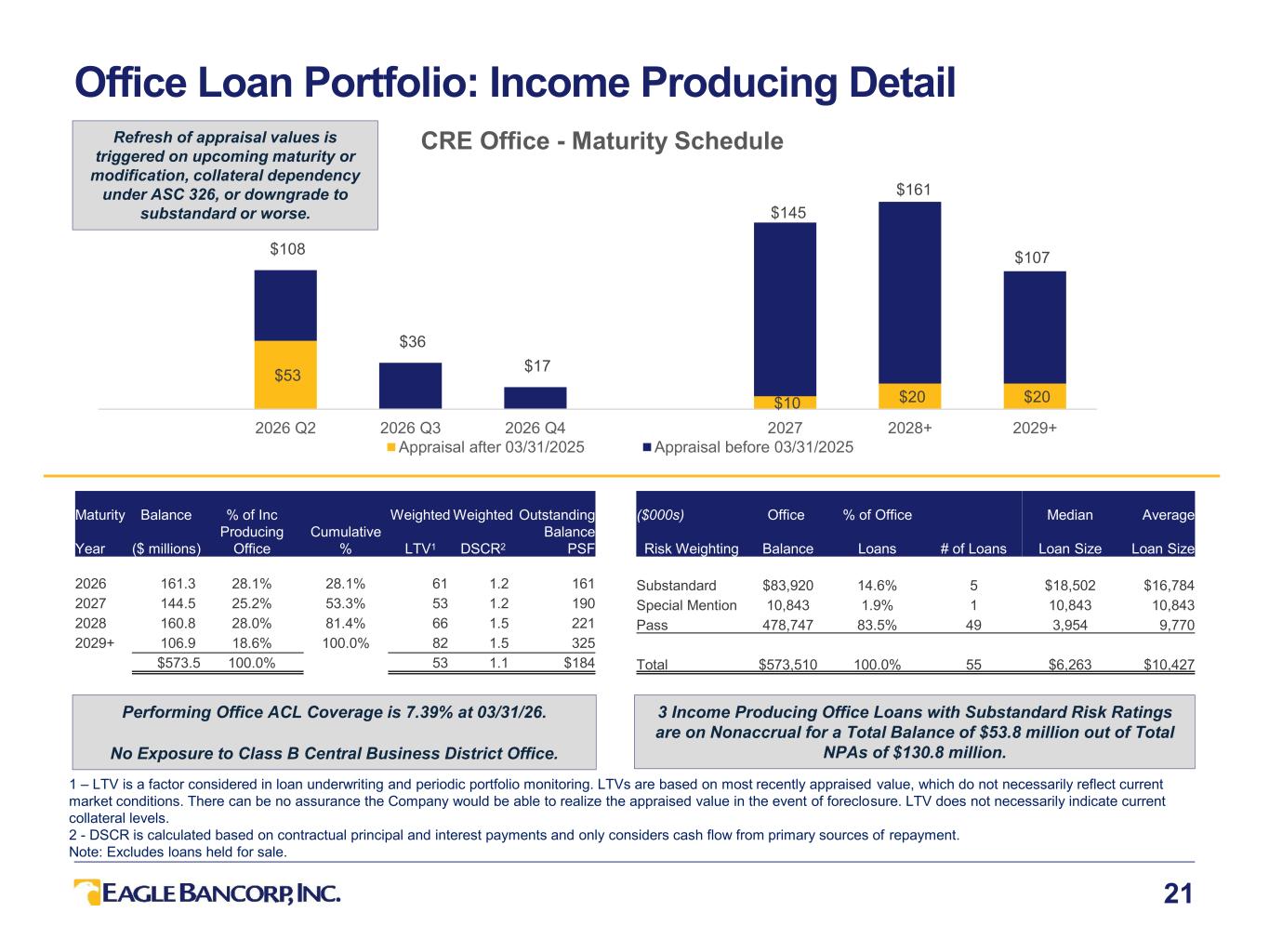
So, Catherine, starting with the maturity aspect of that, you look at our criticized, classified list. There's a number of loans on there that mature this year, some within a very close proximity to where we are today. We've been engaged with those customers for a long time, many months in figuring out what the next step for that particular asset is. The risk rating is obviously taking into account historical performance, but also forward-looking, what the expectations are as part of the considerations in landing where we do. Pardon me. On the inflow into the criticized and classified, The new entrants are really based on new information, not historic information, right? So the multifamily asset that Eric spoke to, new appraisal came in and informed that the performance of the property continues to suffer from tenant credit issues, as Eric said. That, frankly, on a month-over-month basis continues to get better, and we're continuously engaged with that particular customer. On the hospitality asset, that's a recent trend where coupled with the world, the secondary and tertiary repayment sources on that particular situation, coupled with the decline in occupancy for hospitality overall in our market, created a greater challenge, a well-defined weakness by the regulatory definition. I'll again make the comment that the lost content does not need to be present in those criticized and classified assets. So the point I'm trying to make, I guess, is more idiosyncratic to each individual relationship drove the risk-grading downgrades on those particular transactions, not something more consistent.
Thank you. our next question comes from the line of Steve Moss with Raymond James please proceed good morning maybe just following up on your comments there Ryan with regard to the couple of new inflows you have the hotel motel in Arlington and the Prince George's County apartment building as well those matured here in the last couple weeks just kind of curious you know did you give them extensions or kind of how to you know what's kind of the expectation there in terms of where you're going with those credits yeah the we had hoped obviously before the maturity date to have a longer term plan in place we didn't arrive at that so we did put short-term extensions in place in
both of those uh situations which have already been booked it's just you know obviously the data is as of 331 so the current maturity is actually um out into the future a bit uh and we continue to work with each of those clients for a longer-term solution.
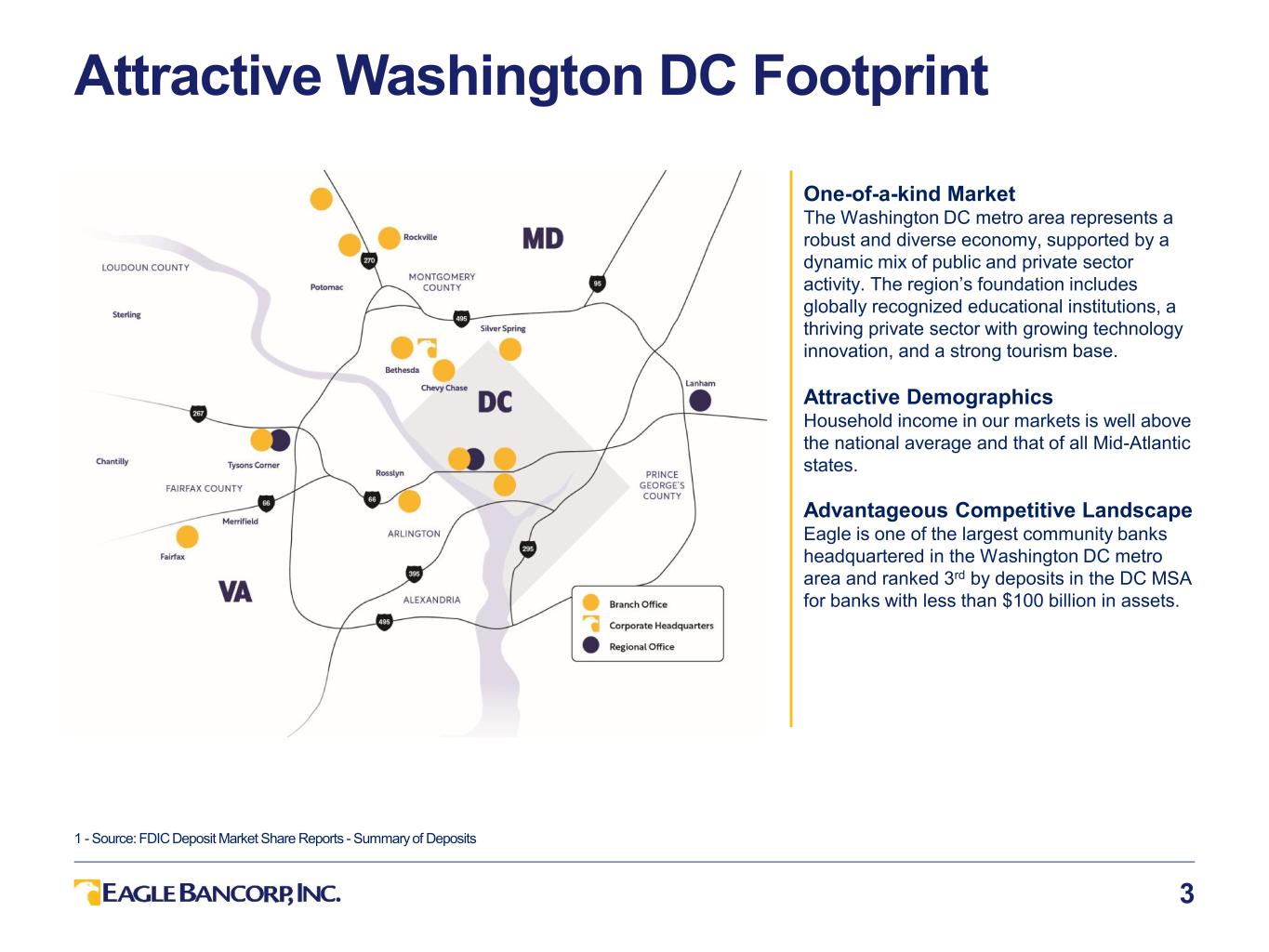
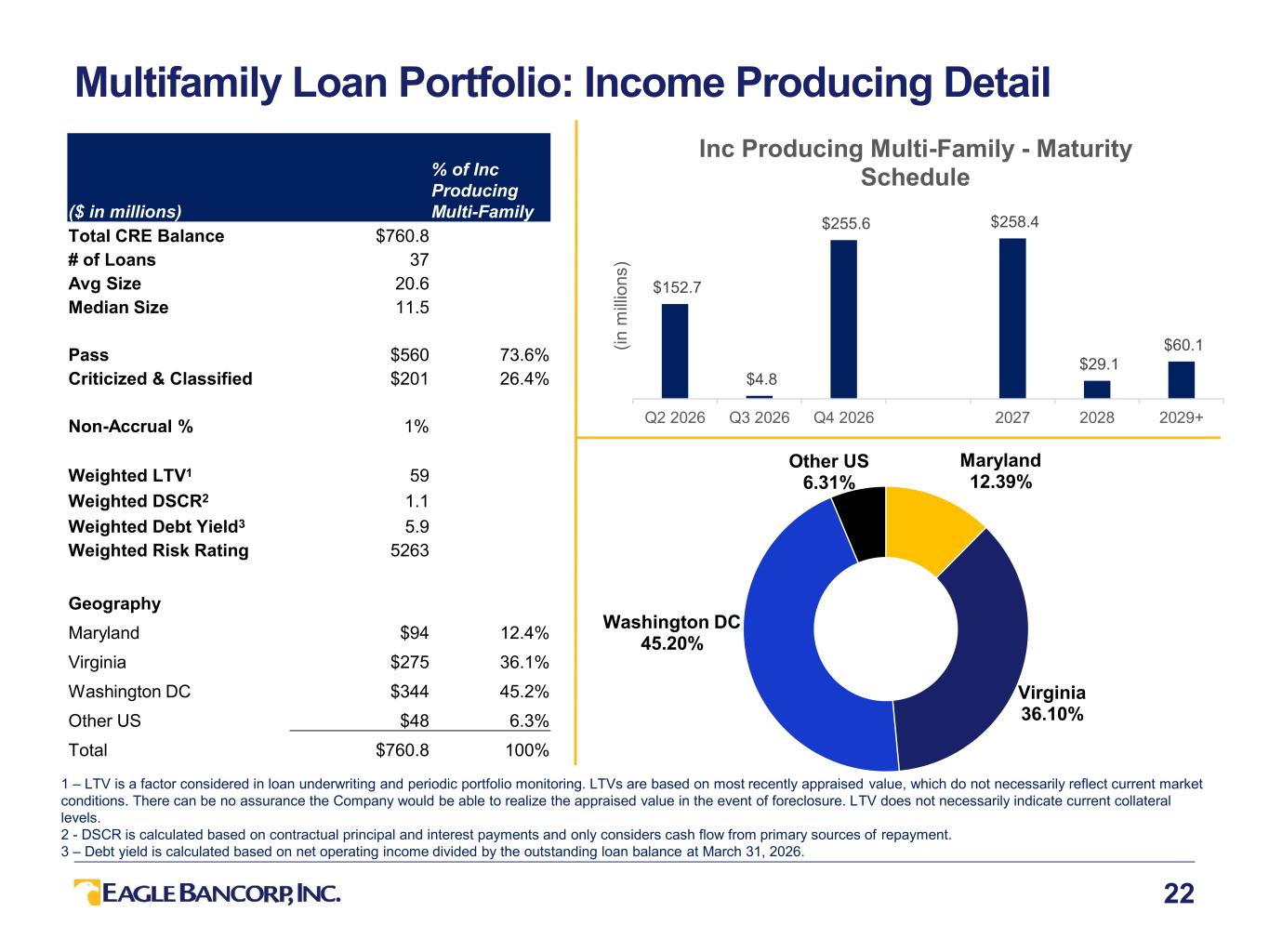
And in terms of just kind of like thinking about the overall Washington, D.C. market, you know, I know there's different sub-markets have issues and stuff, but just kind of curious, maybe just stepping back, what's your overall sense of activity, especially for the multifamily space in terms of renting renting out properties and where things are going so the multifamily market as a whole in Washington D in the region across Maryland DC and Virginia you know from a rent growth and occupancy or vacancy perspective is so it is lessening it's not leading to a challenge relative to the national averages we're more you know equating with those national averages where historically, we had exceeded them as a region. That's not necessarily true in each individual region, but as a whole, it's sort of lessened. Having said that, on the performance side, there's, you know, the absorption has slowed. New supply has also slowed even more dramatically than that. So that is viewed as a rebalancing mechanism for the supply and demand in the multi-family market across the region. Additionally, valuations have maintained, and the valuations across the region have maintained at higher than national averages. Cap rates, you know, in the high fives where national averages are in the low sixes. So overall, there's sort of cautious optimism in the multifamily market is how I'd phrase it, not without its challenges and not without our need and the owner's need to work through those challenges. But overall, there's still a good and stable multifamily market in our nation's capital.
And then maybe a similar question on the office side here. My sense has been there's just been better lease-up activity with regards to office in some of the markets. And just kind of curious, you know, what are you seeing for office activity here? You know, are the green shoots still there? Have they moderated from maybe a few months ago? You know, thoughts on that.
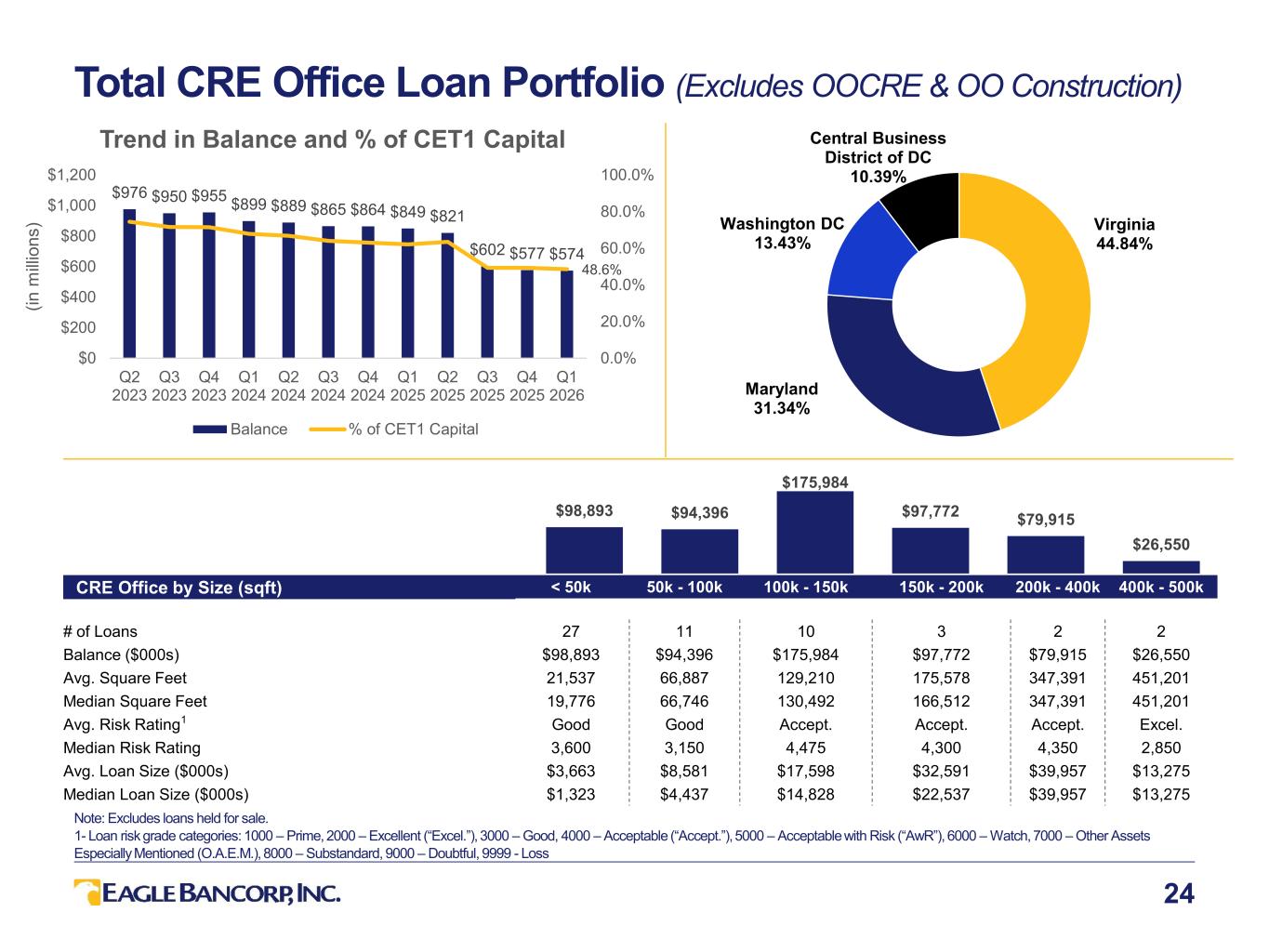
Yeah, so in the office market, the, you know, trophy in our region continues to, you know, perform really well. There's record-setting rents, it feels like, on a regular basis announcements are made. Trophy and A are really working. On the B and C side, it's still a struggle. The tenant demand is not there. There's a lot of supply that's being pulled off the market through conversions and other tactics by the individual owners. So it continues to be a challenge in the central business districts. The more suburban stuff, the more community amenity stuff, doctors, stuff that the neighborhood uses, there is more demand for that space. And the more suburban, even B&C office properties, have greater occupancy and therefore cash flow. So there's more health in that space.
Also, in those more suburban spaces, at least thinking about our portfolio in that space there's oftentimes secondary and tertiary sources of repayment tied to those loans so it's not just looking at the office valuation as a payment source great okay and then the other thing I want to ask about just thinking about the going back to the funnel of criticizing classified you guys kind of touched on that seems like a fair amount was related to updated data, you know, in terms of just annual financials, just kind of curious, you know, how do we think about that funnel here? Like, is this, was there just a greater update this quarter than other quarters in terms of financials, or do you expect more kind of a similar pace for updated financials, maybe a similar funnel in the second quarter.
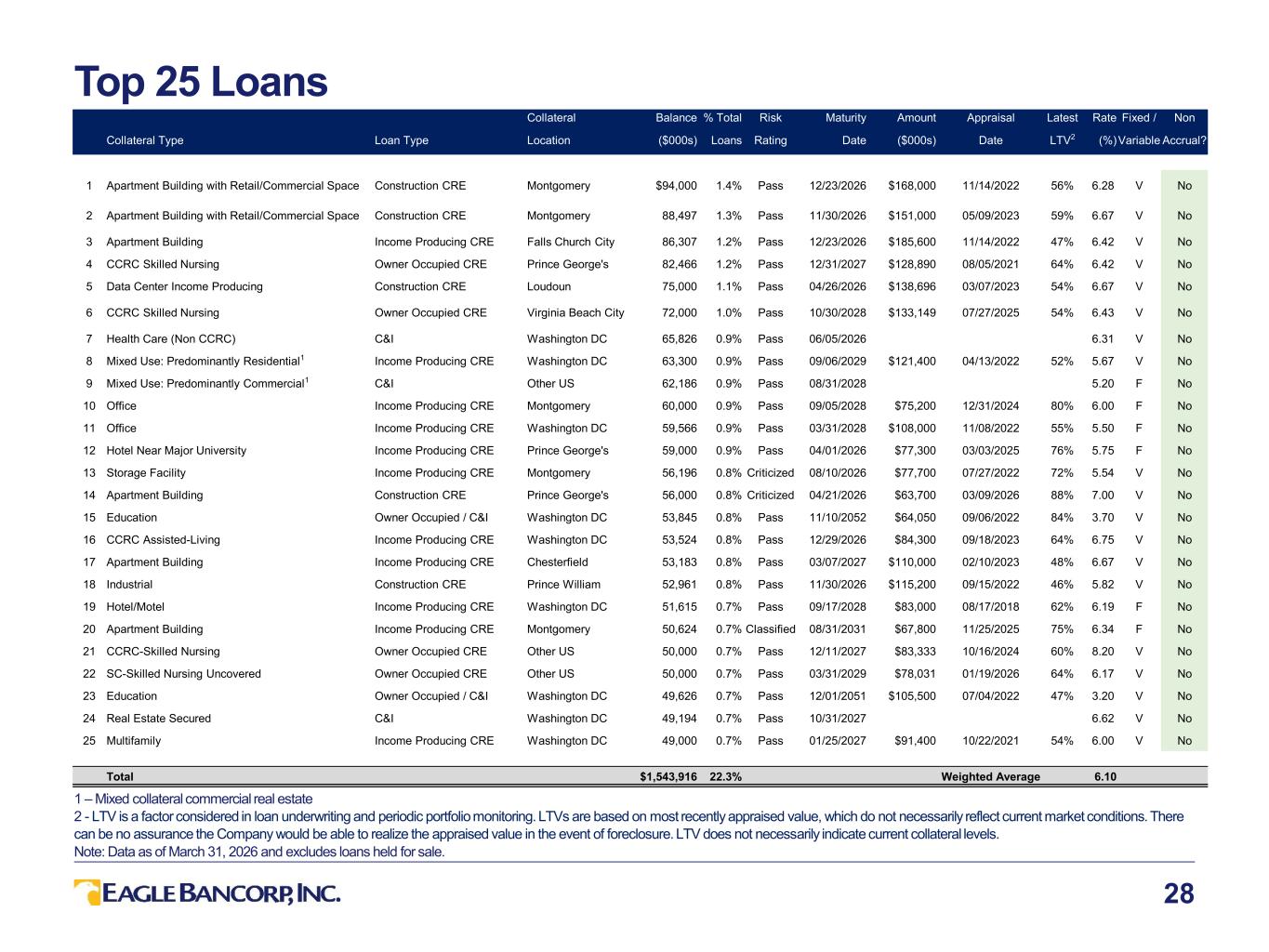
I think it's sort of the point in time, the loans, the loans that we're talking about are not high in quantity, right? It's the lumpiness of our portfolio that drives the dollars in there. And that's less than, if you track our top 25 loan list as, you know, the decline in CRE balances continue, there's a number of loans that have reach full payoff that we've seen, and that's, you know, the most significant, frankly, portion of our decline in CRE balances is that are those either refinances or sale of the assets underlying it. So, the answer to your question is that we don't anticipate this level of inflow every quarter, but, you know, we don't know, we don't know, right? We will continue to monitor our portfolio and continue to work to enhance our portfolio management practices.
I think it's important, just building off of that, it's important to reemphasize, though, the commitment that the team has to reducing the overall criticizing classified on an absolute basis by year end. And, you know, we're going to continue to show progress here in future quarters as well.
All right, great. I appreciate all the call here. Thank you very much, guys. Thanks, Steve.
Operator
Thank you. Our last question comes from the line of Christopher Maranek with Breen Capital LLC. Please proceed.
Good morning. I wanted to ask about the sort of granularity point that Ryan was just making. Is that going to work in your favor in terms of inflows possibly being less because of the smaller size loans as you continue to work through the book?
And can that drive the reserve's behavior from here? And I guess my question is, I know there's a scenario where reserves could go back up, but I know you've built this reserve over many quarters, so the decline was no surprise yesterday. Just curious on if the reserve should continue to come in and that we'll see you have, say, a provision expense less than charge-offs for a while.
Yeah, I would say that if you look at the first quarter provision expense as well as charge-off, that's a decent run rate for our expectation for the remainder of the year for each quarter. So when you put all that together, it does show a reduction in the reserve coverage to loans by the end of the year. Are we going to get to a peer level on that metric by year-end? No, but I do expect that the coverage of ACL to loans will be lower at year-end 26 than where we started the year.
Great. Thank you for that. And then just to go back to the C&I evolution, will we see the C&I deposits kind of grow year over year as we get further? I know there was some seasonality in Q1, as the slides imply. Just a curious kind of how to take through that a few quarters out.
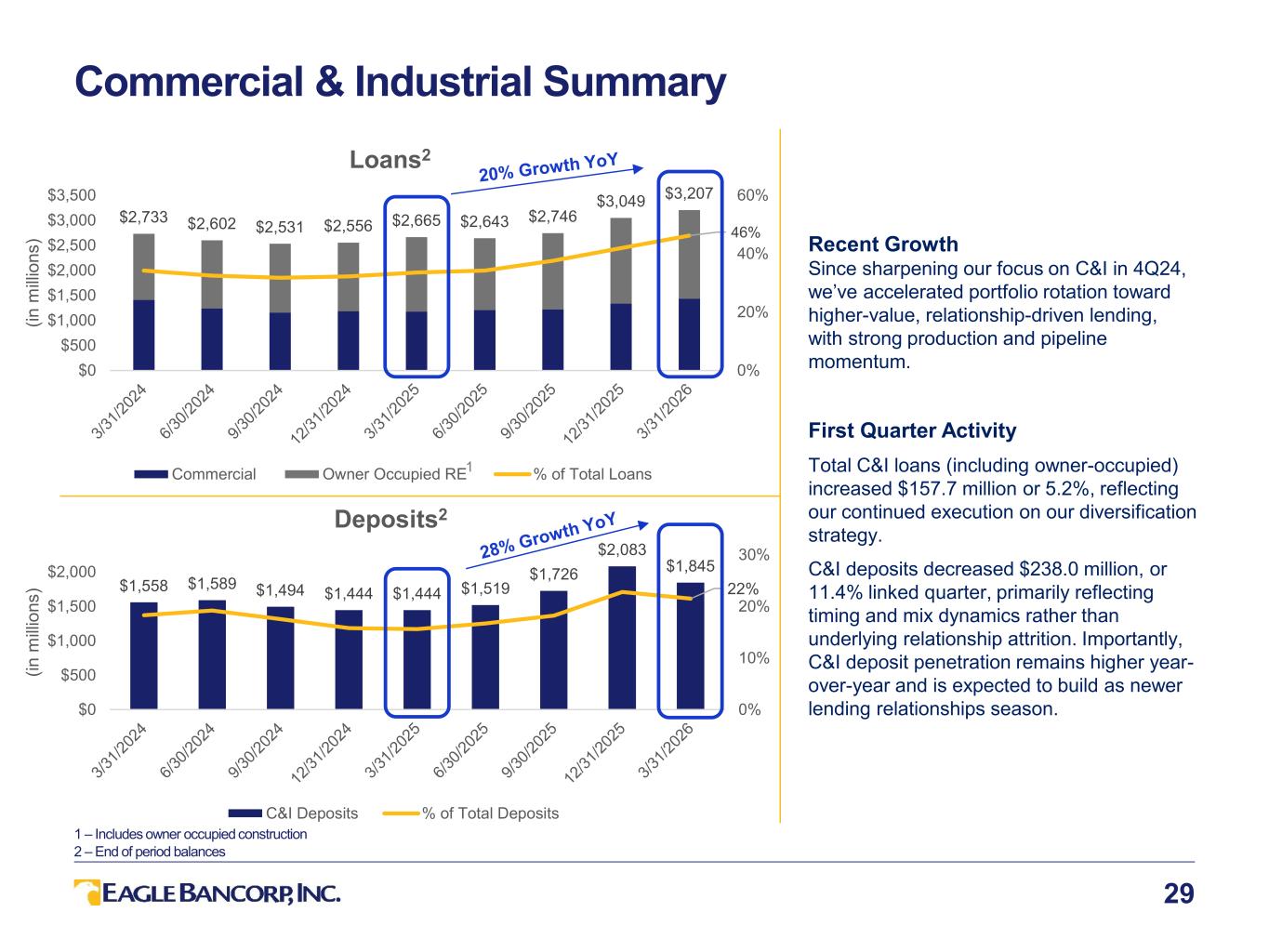
Yeah, Chris, if you look at that from a longer perspective and you go back a year from now to March of last year, C&I deposits have grown. They've grown by a couple hundred million dollars. So I don't think that the first quarter is indicative of any sort of trend in the C&I. The C&I pipeline continues to be robust. We continue to mandate primary relationships with the transactions that we bring in, and that's what you will see differently on the production side and the deposit side is the CRE pipeline, which is now building, will begin to be executed. To Eric's earlier point, we'll stabilize balances through the first half and look to grow from where 630 numbers are towards the end of the year. on both sides of the balance sheet.
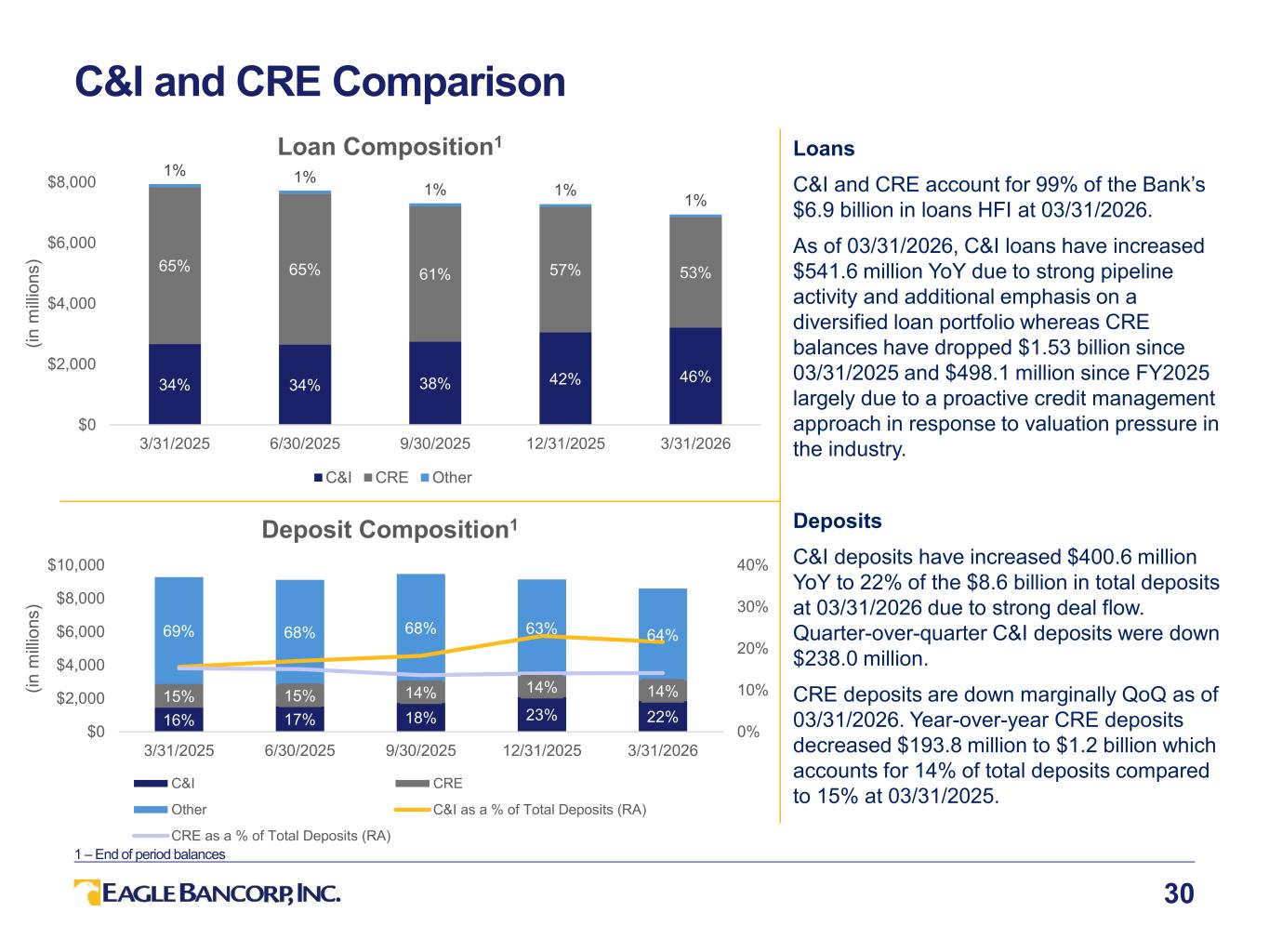
Chris, I would add on slide 29 of our deck, we have added some disclosure about the CNI portfolio, both loans and deposits. And there you can see that we had 28% growth of deposits in the CNI line of business year over year. You know, a lot of that, when you actually look at it from a dollar's perspective, CNI more than funded itself dollar for dollar in 25. I asked Evelyn if she could do it again in 26, and we'll see how she can deliver on that. But joking aside, I think our expectation is that you can't fund that line of business dollar for dollar year in and year out. So I think that is informing some of the percentage growth that you see here. But I think that it's certainly been evidence of execution of the strategic plan on how we have described it to you all and investors for the last several years on the remixing of the loan side to have more of a balance between CNI and CRE. Because what that lends itself to is operating account growth, relationship growth, reduction of brokered deposits, better cost of funds, higher NIM, higher pre-provisioned net revenue, better ROA.
Great. Thank you, Eric. Appreciate that. And just last question for me, Zahn, at the FDIC expense, is that going to be lumpy in terms of how it comes off in future quarters with this quarter any indication of kind of where it could go in the near term?
There's really two drivers to our FDIC insurance expense. You have our overall asset quality metrics, and then you have the structural liquidity improvement. So, we're getting a lot of benefit, and we have been getting a lot of benefit over the last year on the improvement of structural liquidity. Look back over the last two years, our net non-core funding dependency ratio in 2023 was 30-ish percent, and now we're well below, I think we're like 12 to 15 percent. And so that has meaningfully contributed to a reduction in the FDIC insurance expense. And, you know, as we continue to reduce the criticized and classified, and also the FDIC insurance calculation looks at modifications. They call it underperforming assets in the call report, but modifications. So as that activity lessens on our balance sheet going forward, that will have a very positive contribution to FDIC premium expense. I estimate if you look at where we're at on an annual basis run rate, when we're normalized on AQ, we're probably going to be about half of where we're at right now. And that includes food. In terms of timing, I would – you're always going to have a lag because that premium is based off of filings that are a quarter behind. But I would expect you're going to see some improvement here in the back half of 26 and definitely into 2027.
Okay. And half is still using this March pace that we just saw.
I would, you know what, Chris, I would take our full year 25 number and use that as the basis for that.
Great. Thanks for clarifying that. And thank you all for all the information this morning.
Operator
Thank you, ladies and gentlemen. This will conclude the Q&A session. I will pass it back to the President and CEO Susan Rio for closing remarks.
I want to thank all of you for your participation and your questions today, and we look forward to talking to you again next quarter. Have a great day.
Operator
Thank you. And this concludes our conference. Thank you for participating, and you may now disconnect.