Operator
Thank you for standing by and welcome to the First Hawaiian Inc. Second Quarter 2026 Earnings Conference Call. At this time, all participants are in listen-only mode. After the speaker's presentation, there will be a question and answer session. To ask a question during this session, you'll need to press star 11 on your telephone. If your question has been answered and you'd like to remove yourself from the queue, simply press star 11 again. As a reminder, today's program is being recorded. And now I'd like to introduce your host for today's program, Kevin Asayama, Senior Vice President, Strategic Planning and Investor Relations. Please go ahead, sir.
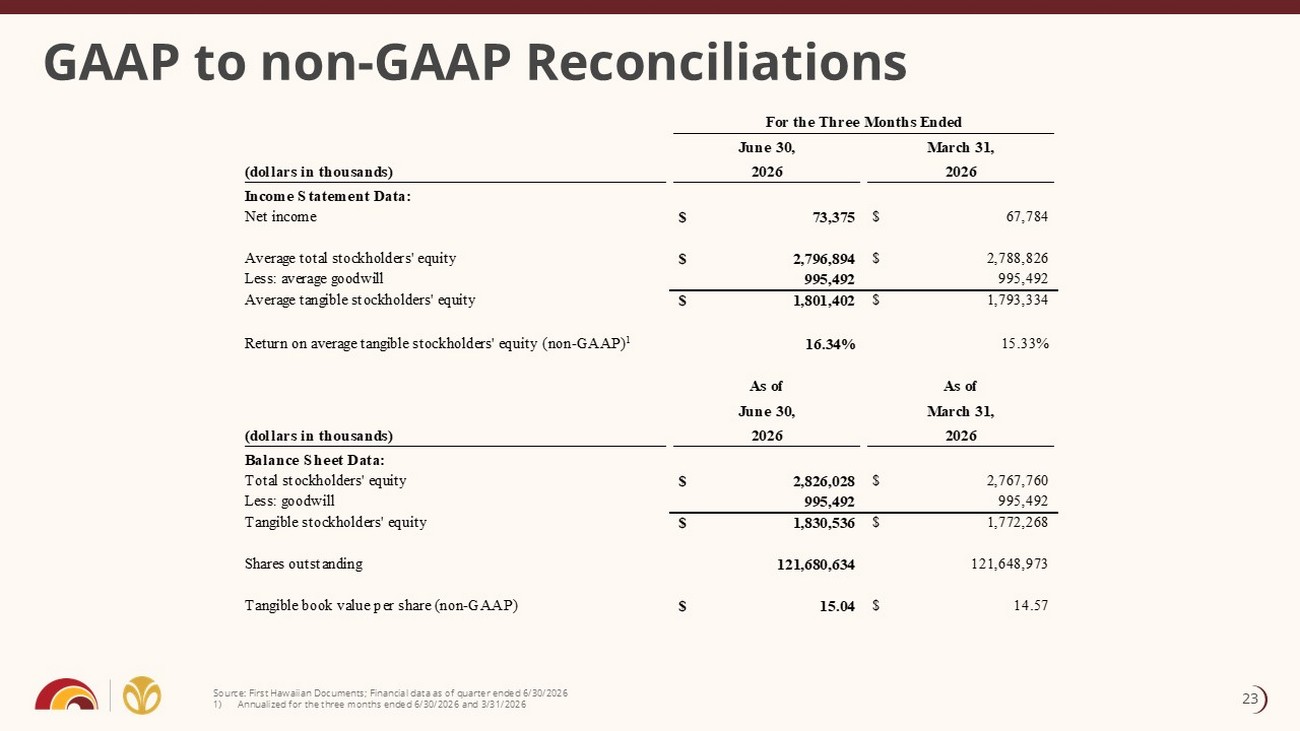
Thank you, Jonathan. And thank you, everyone, for joining us as we review our financial results for the second quarter of 2026. With me today are Bob Harrison, Chairman, President, and CEO, Jamie Moses, Chief Financial Officer, and Lee Nakamura, Chief Risk Officer. We have prepared a slide presentation that we will refer to in our remarks today. The presentation is available for downloading and viewing on our website at FHB.com in the Investor Relations section. During today's call, we will be making forward-looking statements, so please refer to slide 1 for our Safe Harbor Statement. We may also discuss certain non-GAAP financial measures. The appendix to this presentation contains reconciliations of these non-GAAP financial measurements to the most directly comparable GAAP measurements. And now I'll turn the call over to Bob.
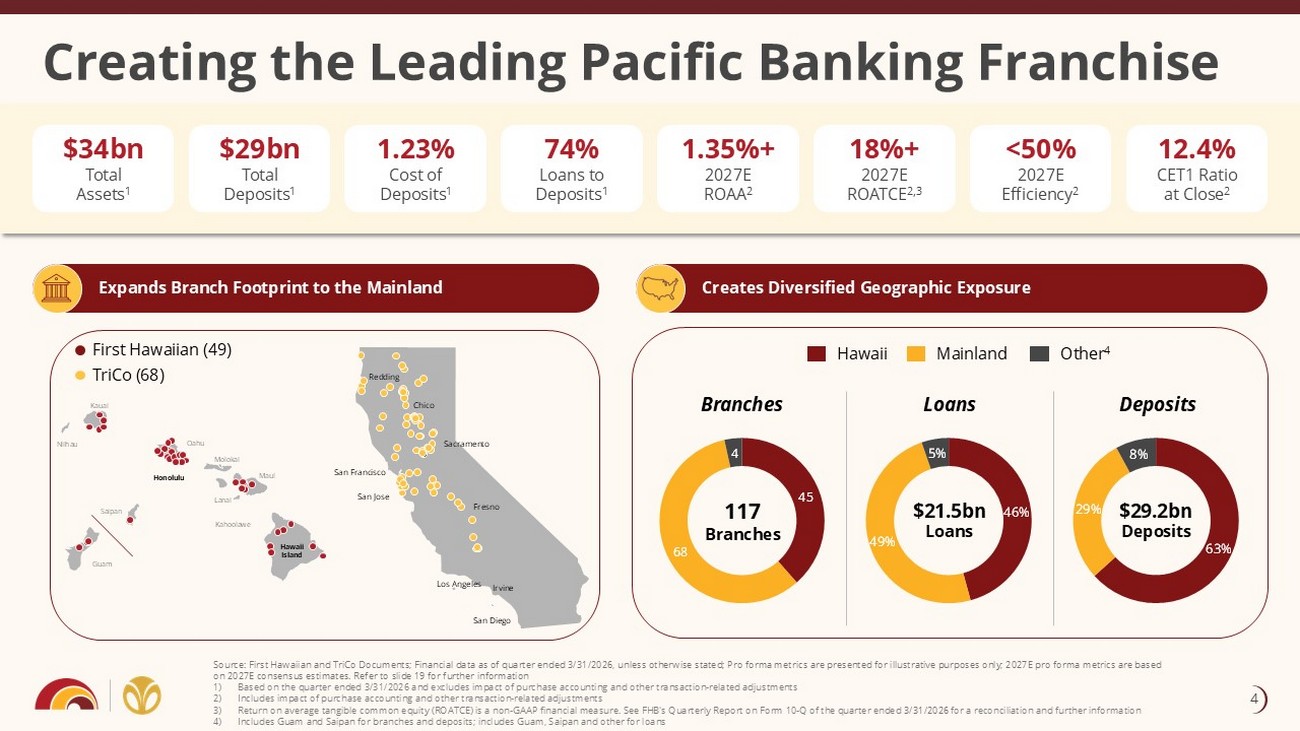
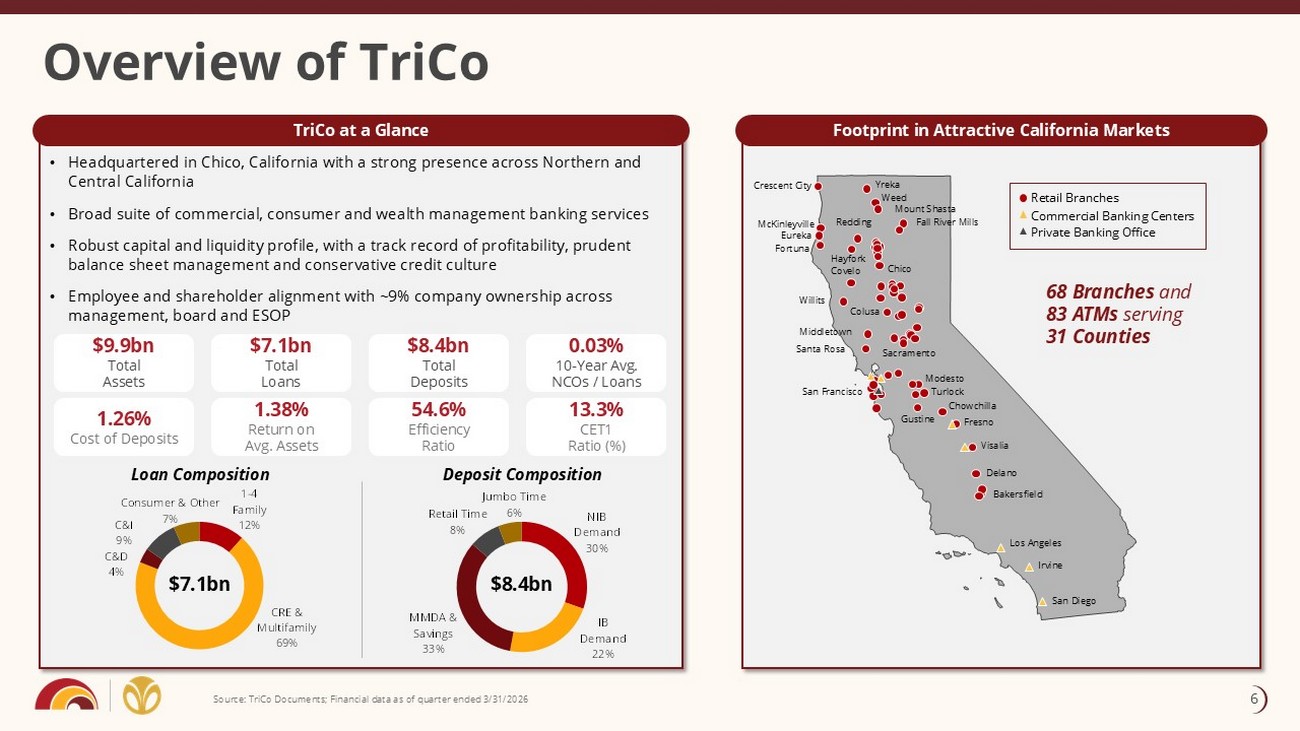
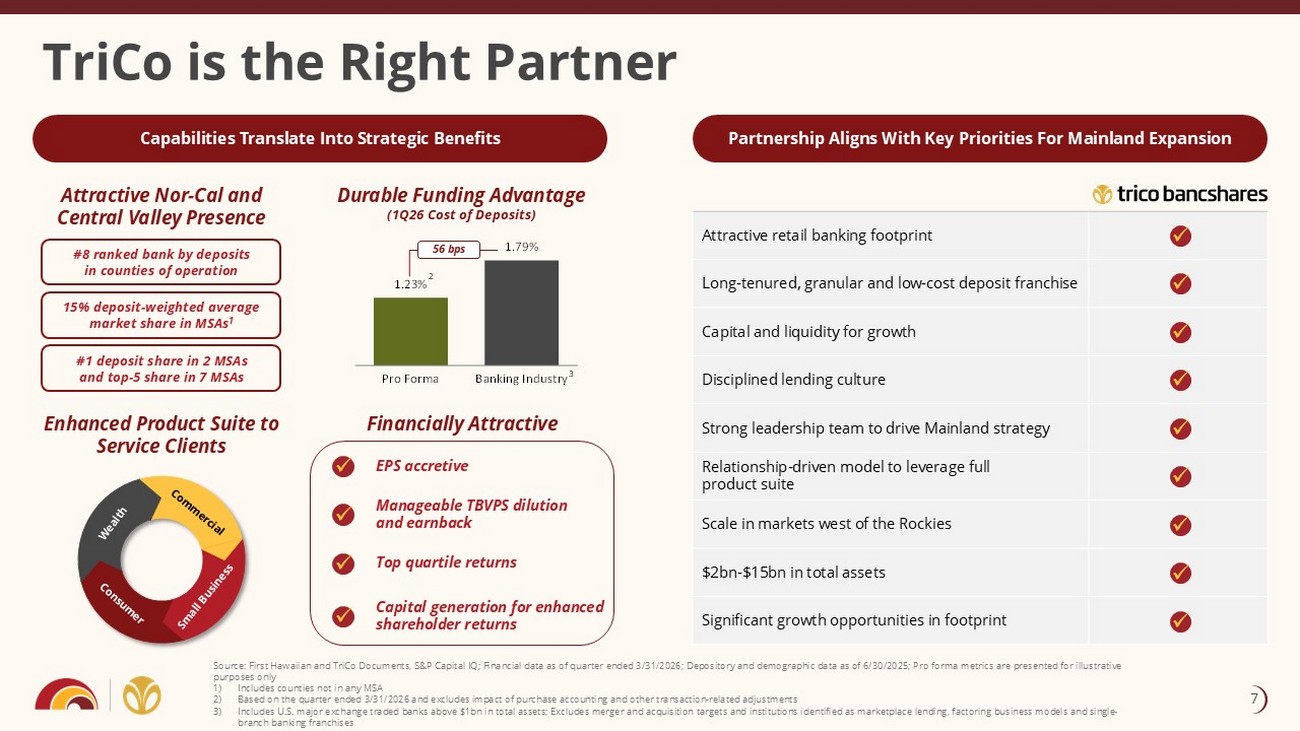
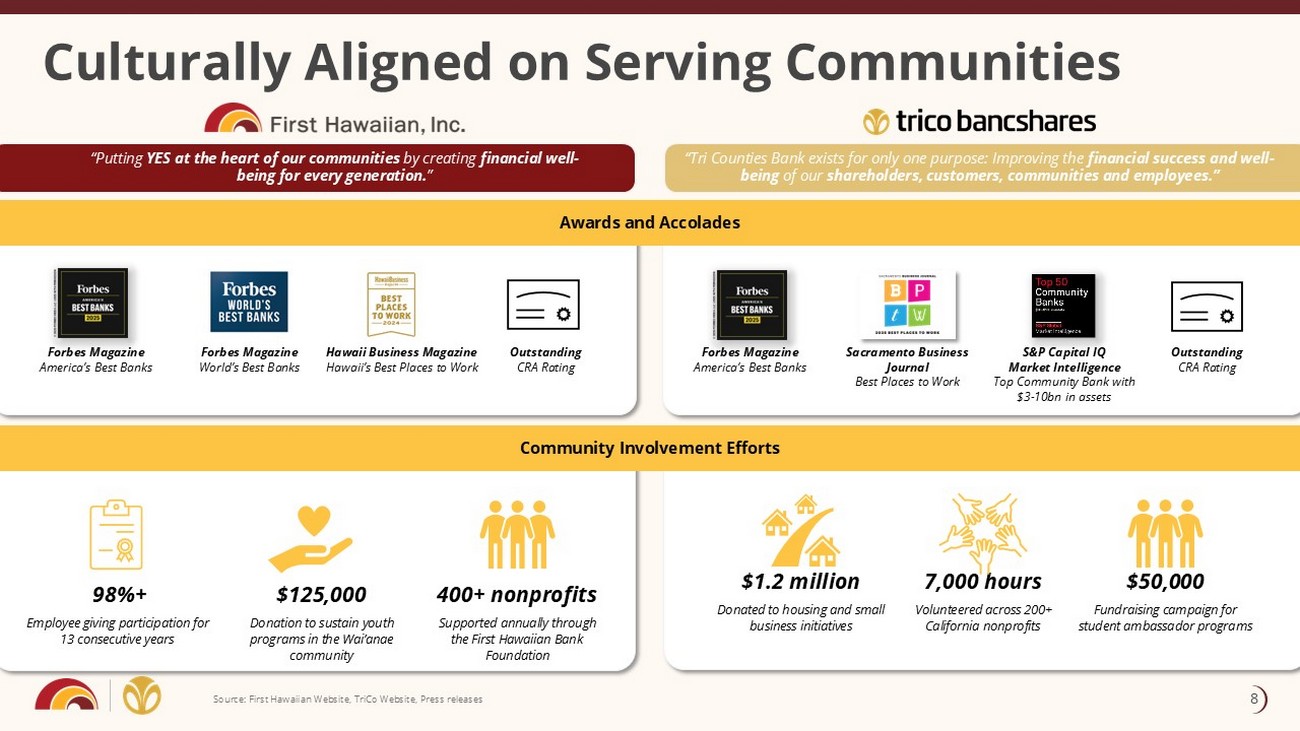
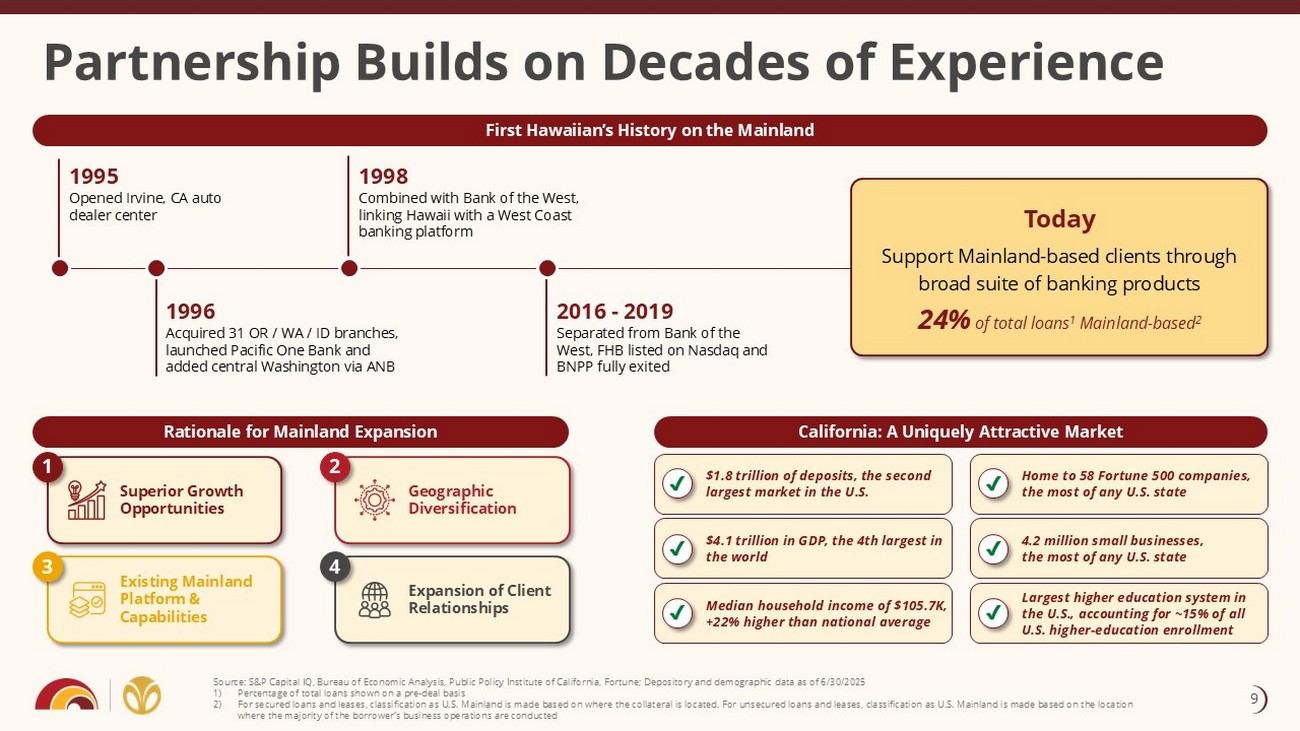
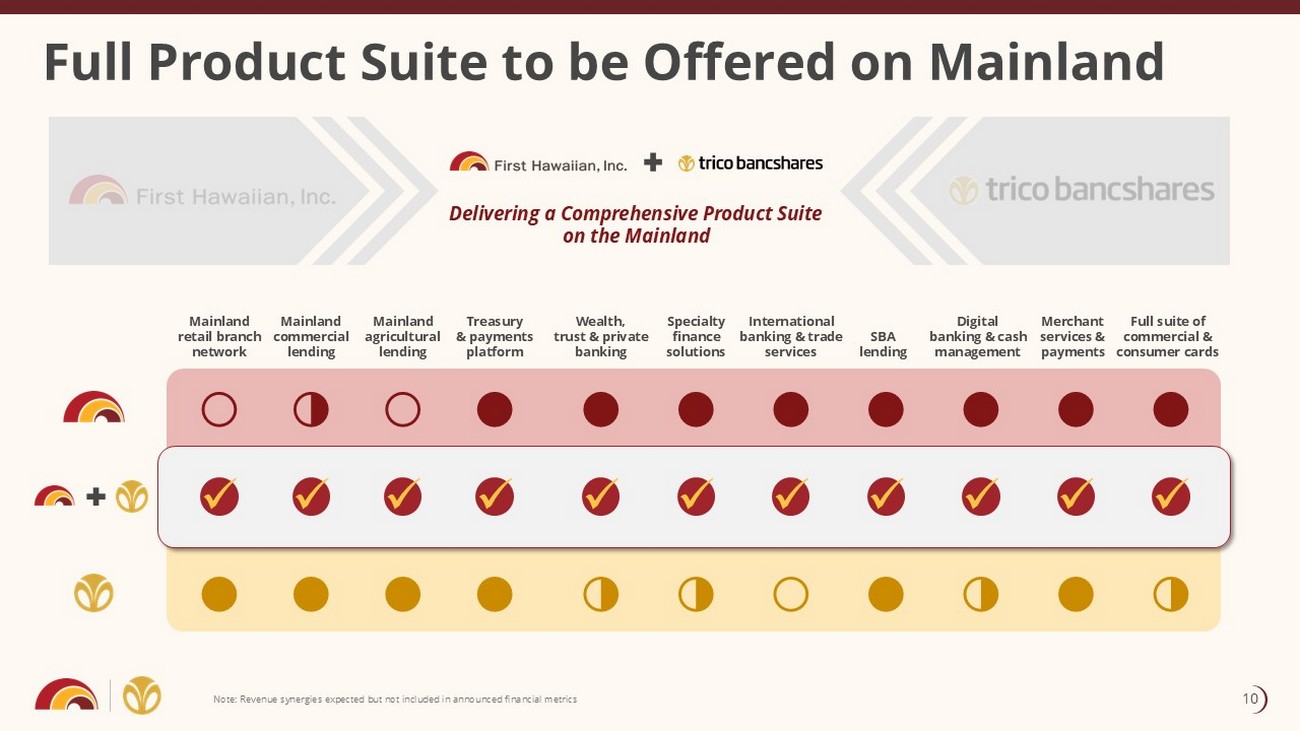
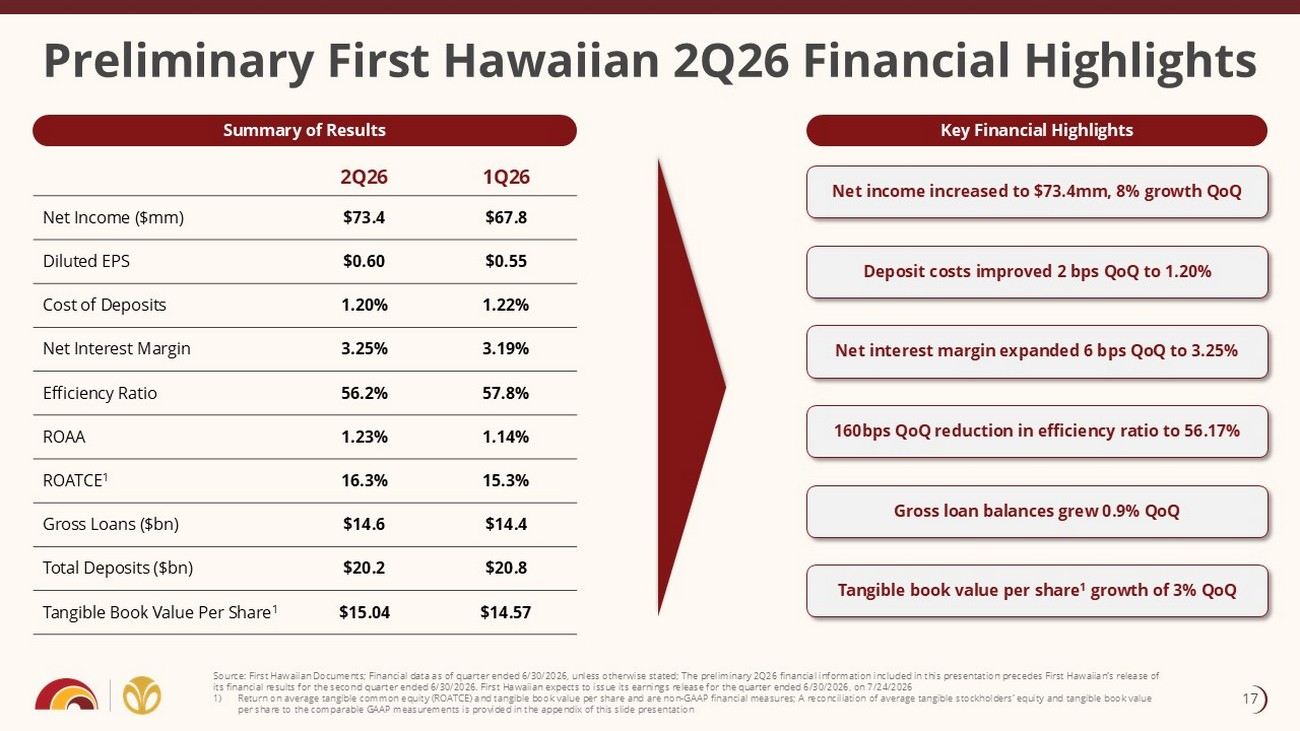
Thank you everyone for joining us today. I'd like to focus on our strong second quarter results on today's call, but first we'd like to start with my excitement about our recently announced deal with Trico Bank shares. And I'm looking forward to working with the Trico team to build a leading Pacific banking franchise. Starting with the local economy, statewide employment rate remained relatively stable at 2.5% in May, compared to the national employment rate of 4.3%. Through May, total visitor arrivals were up 2.9% compared to last year, primarily due to more visitors from the U.S. mainland and Japan. Year-to-date spending through May was $9.7 billion, up 7.5% compared to 2025 levels. The housing market remained stable. Median single-family home sales price on Oahu in June was $1.2 million, up 10.4% from the prior year. And the median condo sales price on Oahu in June was $528,000, up 3.5% from the prior year. Turning to slide two, we had a strong start to the year. Loans grew. Retail and commercial deposits were down slightly as expected. Credit quality remained solid and we remain well capitalized. Our profitability measures remain strong with a return on average tangible assets of 1.28% and a return on average tangible equity of 16.34%. The effective tax rate in the second quarter was 22.9%. Turning to slide 3, the balance sheet remains solid. We continue to be well capitalized with ample liquidity. Cash balances were lower in Q2, primarily due to the decline in public deposit balances. Based on our current outlook, we expect to maintain cash balances around this level for the rest of the year. The balance sheet remains asset sensitive and well positioned to benefit from a higher for longer rate scenario. During the quarter, we did not purchase any shares. Turning to slide four, total loans grew $137 million in the quarter, or about 3.6% on an annualized basis. Growth was led by CNI and CRE loans, partially offset by payoffs in the construction portfolio and lower residential loans, as payoffs exceeded production. The $98 million increase in CNI balances was primarily driven by growth in dealer flooring, as well as our Hawaii corporate portfolio. Completed construction projects led to the conversion of $95 million of construction loan balances to CRE loans. Now I'll turn it over to Jamie.
Thanks, Bob. Turning to slide five, our total cost of deposits fell by two basis points in the second quarter. Total deposits were down $623 million, with most of that decline due to outflows of public deposits retail deposits were essentially flat in the second quarter while commercial deposits were down about 156 million this decline was consistent with our expectations of seasonal volatility in that segment public deposits were down 467 million the majority of this decline was in the operating accounts while public time deposits were down by 115 million that was also expected as we had elevated balances at the end of Q1. The remaining balance of public time deposits is only $9 million. Finally, our non-interest bearing deposit ratio was 32%. On slide 6, net interest income was $171 million, $3.5 million more than the prior quarter. The NIM in the second quarter was 3.25%, up 6 basis points from the prior quarter. That was primarily due to deposit mix changes and repricing, higher loan and security yields and lower cash balances turning to slide 7 non-interest income was 60.3 million dollars primarily due to higher bully income an excise tax refund and higher swap fees non-interest expense in the second quarter was 130.4 million the quarter included 4.2 million of expenses related to the trico transaction now we expect to incur more of those expenses in the back half of the year as we move to close and integration. And now I'll turn that over to Lee.
Thank you, Jamie. Moving to slide eight, the bank continued to maintain its strong credit performance and healthy credit metrics in the second quarter. The reduction in the allowance for credit losses, both on a nominal and coverage basis, was driven primarily by a material decrease in classified assets. And with that, I'll turn it back over to Bob.
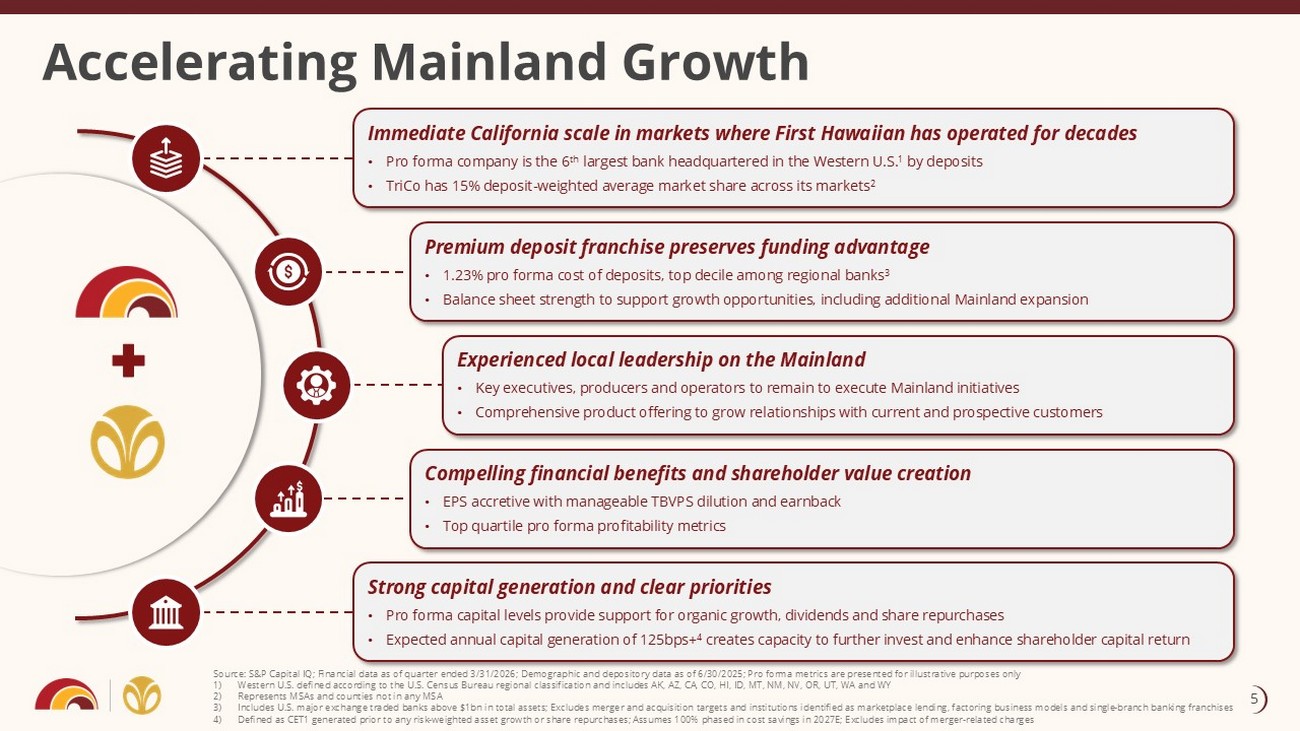
Thank you, Lee. Going to slide nine, we have updated outlook for our key performance drivers. We continue to expect full-year loan growth to be in the 3-4% range. With the markets now expecting one rate increase later this year, we have revised our full-year NIM outlook to be in the 3.24-3.25% range. We also expect the third quarter NIM to be about 3.27%. Our outlook for non-interest income remains unchanged at about $220 million for the year. And finally, we expect reported expenses to be between $515 and $520 million, excluding expenses related to the Trico transaction. In closing, we had another good quarter. The bank continues to perform well, and credit quality is still strong. We're very excited about our partnership with Trico Bank Shares, which is expected to close near the end of the year. Given that we recently announced a transaction, we don't have any new information at this time besides what we presented on our July 23rd investor call. We are focused on the work needed to be done to complete it and will continue to keep investors informed through our public filings and communications. Now we are happy to take your questions.
Operator
Certainly. And our first question for today comes from the line, Kelly Mata from KBW. Your question, please.
Hey, thank you for the question um maybe to kick it off on what you're seeing on the deposit side um the the kind of deposits as you you noted was mostly on the government deposits i know some of them are cds and some might be more operating accounts can you discuss kind of what you saw there and then otherwise um uh the the core trends of retail and and commercial where what those trends were and kind of how you're seeing activity, you know, shape up here as we look to the back half of the year.
Yeah, Kelly, thanks. It's Jamie. You know, the government deposits were elevated, I'll call it, at the end of Q1 in our operating accounts. And so we kind of expected that decline to happen there. This was, you know, this was not about loss of relationships or anything. And the time deposits related to, you know, related to those were kind of just, you know, they left, they rolled off our balance sheet. And I think our partners on the municipal side found better ways to invest that money off of our balance sheet, which is fine with us as well. When we go towards the retail and commercial side of things, you know, we have this seasonality, I'll call it, where we kind of decline deposits in the first half of the year, and then we'll expect to have those deposits increase in the back half of the year just from a seasonality perspective. For some reason, we see that a lot on the commercial side where balances kind of build through the third and fourth quarter. So, yeah, I think from a deposit perspective, we're happy with where we're at.
The teams are doing a great job out there. you know getting involved with their customers and and uh retaining them and uh you know this is not you know none of these declines were like you know losses of customers or anything like that i think it was just more more flows that we that we saw than anything else got it that's helpful and maybe you could speak to um pricing competition on both sides of the balance sheet you know hawaii has historically been a structurally just more rational market so wondering if you could offer any color both on loan pricing and deposit pricing as to how those are coming in and what you expect here you know it's just with the Fed on hold or
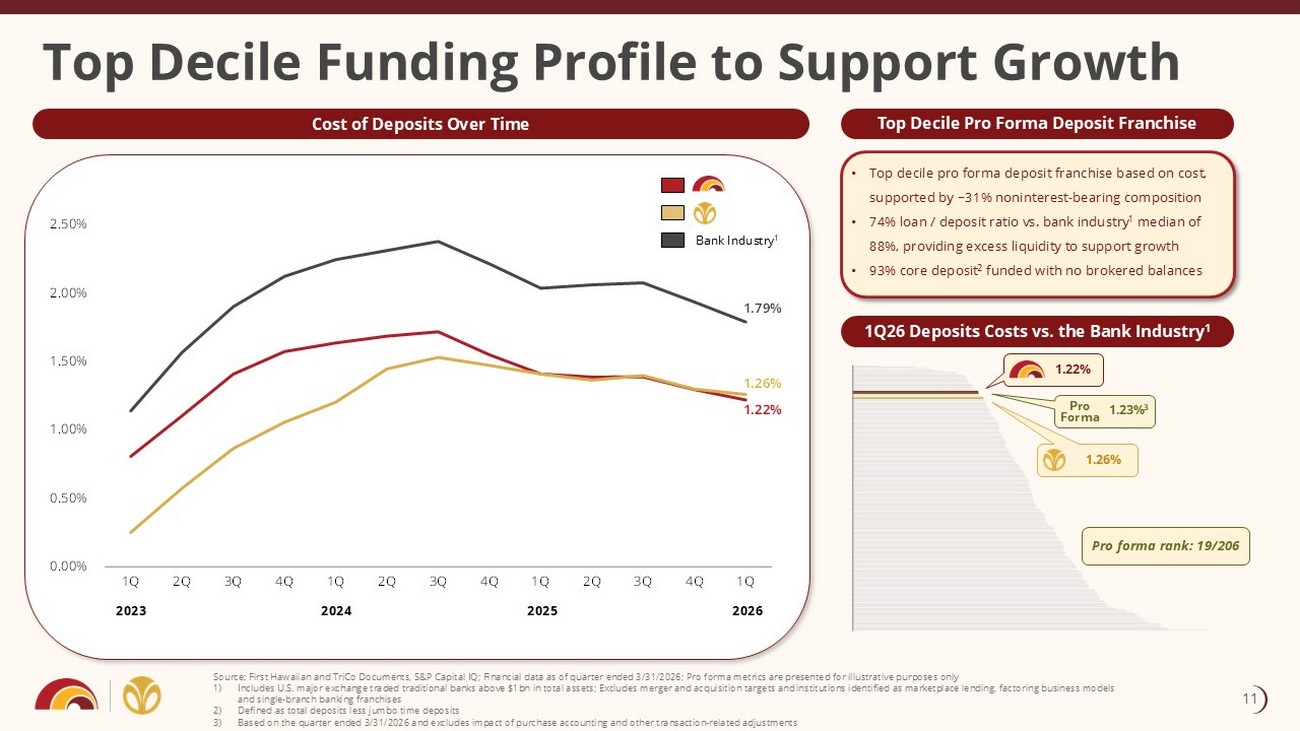
potentially get a get a hike here thanks yeah you know we are seeing the same type of competition that we've always seen and so as you know you described it as rational that's that works for me I think I think that there hasn't really been any change in that but with the Fed on hold and maybe looking looking higher you know there's a there's a decent chance that we're kind of at the bottom in terms of deposit cost in totality on our side of things I think peers on the mainland you've seen you know a little bit of a different reaction I think it's I think it's a lot more competitive there and so maybe you see some deposit costs rising there for us maybe we're going to keep it flat maybe up a little bit as we go forward, but the competition is basically staying the same here, I would say, on the deposit side.
Got it. That's helpful. Maybe last question for me. It was, you had some nice loan growth, reiterated the outlook. As you look ahead, how are pipelines and what areas do you see informing the back half of the year growth? Thanks.
Kelly, this is Bob. You know, we still see a very robust pipeline in both the C&I and CRE. The CRE is, again, mostly construction, and some of that turns into permanent. For the C&I, we're really seeing strength in the dealer side. So not only are existing customers growing their balances incrementally, but also working on a couple new customer relationships. So that's where we're really seeing it. But the residential side, you know, continues slow given the rate environment, so we probably won't see much in residential.
Great. Thank you so much. I'll step back.
Operator
Thank you. And our next question comes from the line of Anthony Elion from JP Morgan. Your question, please.
Hi, everyone. On the NIM outlook, Jamie, you listed the range by a few basis points. I think you said you're now including a hike, and 2Q NIM came in better than you guided Anything else you point us to for the higher range for the full year?
No, I think that really describes it, Tony, that, you know, the balance sheet repricing dynamics continue to exist, you know, here. So, you know, as we've described a number of times, you know, roughly $400 million a quarter, we think that that's, you know, that spread in Q2 was about 140 basis points on the roll on, roll off. And, you know, we think somewhere in the neighborhood of 140 to 150 is, you know, depending on the mix of those cash flows that come off the balance sheet. We think that'll continue to play out for that from that perspective. So, you know, I think it really is just a change in outlook on the on the macro side of things that that's that's driving an update to our tournament.
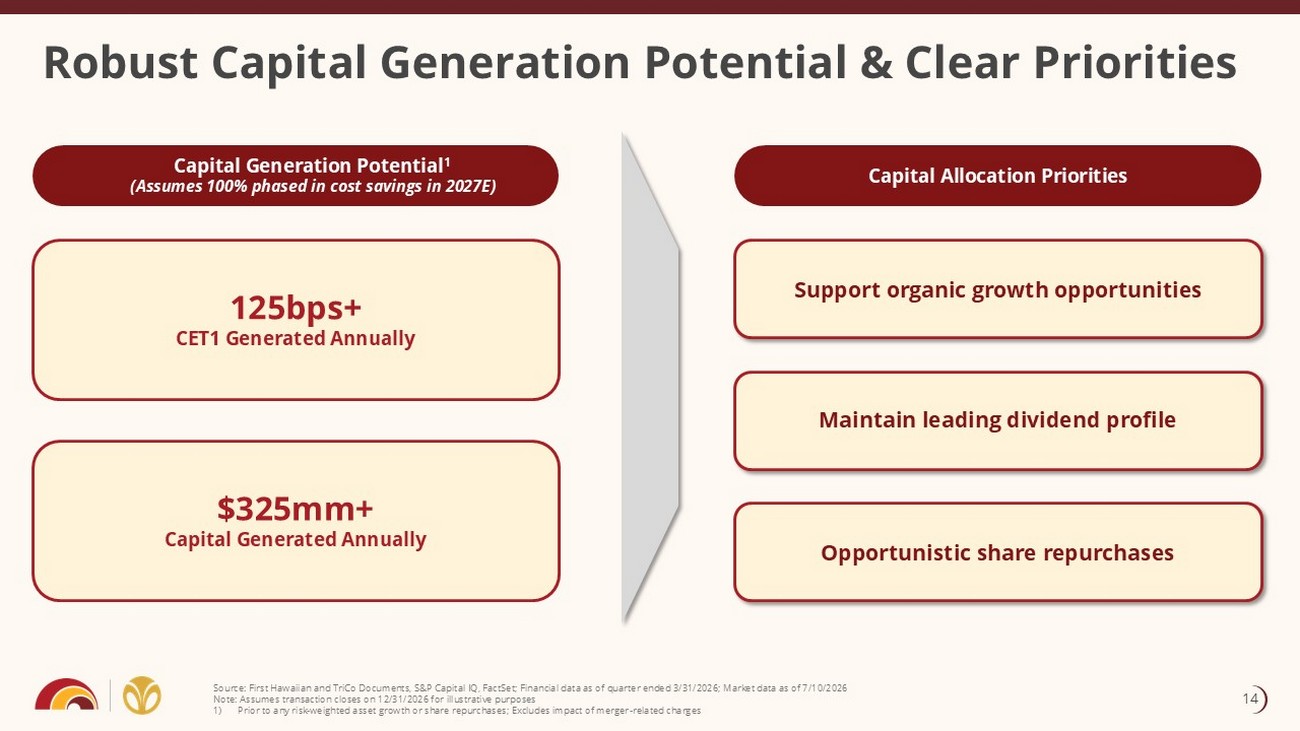
Okay. And then on capital, you didn't buy back any shares in 2Q, but your CET1 is still above 13%. How should we think about buybacks as you work through the Trico deal close? Thank you.
Yes, Bob. Good morning. We're probably not going to do buybacks throughout the rest of the year. Of course, that could change. We have the authorization, but as we go into the transaction, go through the regulatory process, it's unlikely.
Operator
And our next question comes from the line of Andrew Terrell from Stevens. Your question, please.
Hey, good morning. Just one quick one for me. You guys have done a great job on expenses so far this year. If I look at just the midpoint of the full year guide, it kind of implies you step up to like a 130-ish, maybe a little north expense run rate in the back half of the year. I just wanted to run that kind of run rate by you. And if that is the case, you know, what what kind of drive the expense pick up in the back half of the year?
Yeah, a couple of things, Andrew, you know, we're going to continue to hire people. You know, we want to make sure we're, you know, continue to keep our loan pipelines robust. We want to make sure we have folks out there to to, you know, investment that we're making in people to grow the balance sheet on the one hand. And then, you know, we also have some projects and things like that that that were that won't finalize until the back half of the year. And so then these expenses capitalize and go and then start to show up when they when they finish up. So you're going to see it. You know, you'll see it in the salary side, but then also like on the professional services and IT side of things as well.
Okay, great. And actually, while I've got you, on the margin, can you just remind us, Steve, which meeting do you have the hike in the guidance in? And are you going to quantify just the sensitivity of the balance sheet in terms of like what a 25 basis point rate hike does to the margin versus with that square models with the guide?
Yep. So I think the right way to think about your last question there is that we have, you know, $6 billion or so of assets that will reprice immediately upon an increase, you know, based on SOFR roughly. And then we have, you know, $3.5 to $4 billion of liabilities that we would expect that would reprice somewhat immediately around that. So from a from a, you know, an NII perspective, I think that's probably the right way to think about it for an increase in 25 basis points. And then I can't I'm sorry, Andrew, can't remember the first question.
No, I think that I think that covers it. Just trying to which part of which Fed which Fed meeting did you have?
No, I think it was the I think it's in the fourth quarter.
I think early in the fourth quarter is when we when we had it. okay awesome thank you so much and our next question comes from the line of jared shaw from barclays your question please hey there good morning um i guess actually just one comment bob at the beginning you said you saw an increase in tourism from japan i guess you know with with the currency rate here being so low i guess that's encouraging i mean is that um what sort driving do you think the the increased um traffic from there yeah i don't have a precise answer but
just talking to people in the industry you're just seeing the uh more enthusiasm i guess for the economy over there and there's still people that have means to travel and i guess they're just decided to stop waiting and start traveling but you know it's incremental off of a lower base So we're not anywhere near the pre-COVID number, but we're up from the bottom that we had hit. And that's every additional traveler from Japan is welcome because they're just very good travelers and guests and they really enjoy Hawaii. So, yeah, it's difficult. 160 plus exchange rate is not easy for them.
Okay, thanks. And then on BOLI, you called out the BOLI increase. Is that a death benefit or is that just a result of sort of your higher deployed capital on the BOLI?
Yeah, thanks, Jared. So what that is is we still have a component of our BOLI product that is sensitive to actual markets. And so we write it up and we write it down depending on how markets are going. And so that was a market impact on our BOLI this quarter.
And then finally, I guess just, you know, as you're doing more work on the deal, have you given any thought to how your management structure may change to reflect the bigger presence in the mainland? And, you know, going forward, I guess, how much time do you think, Bob, you're going to be spending sort of off-island versus before?
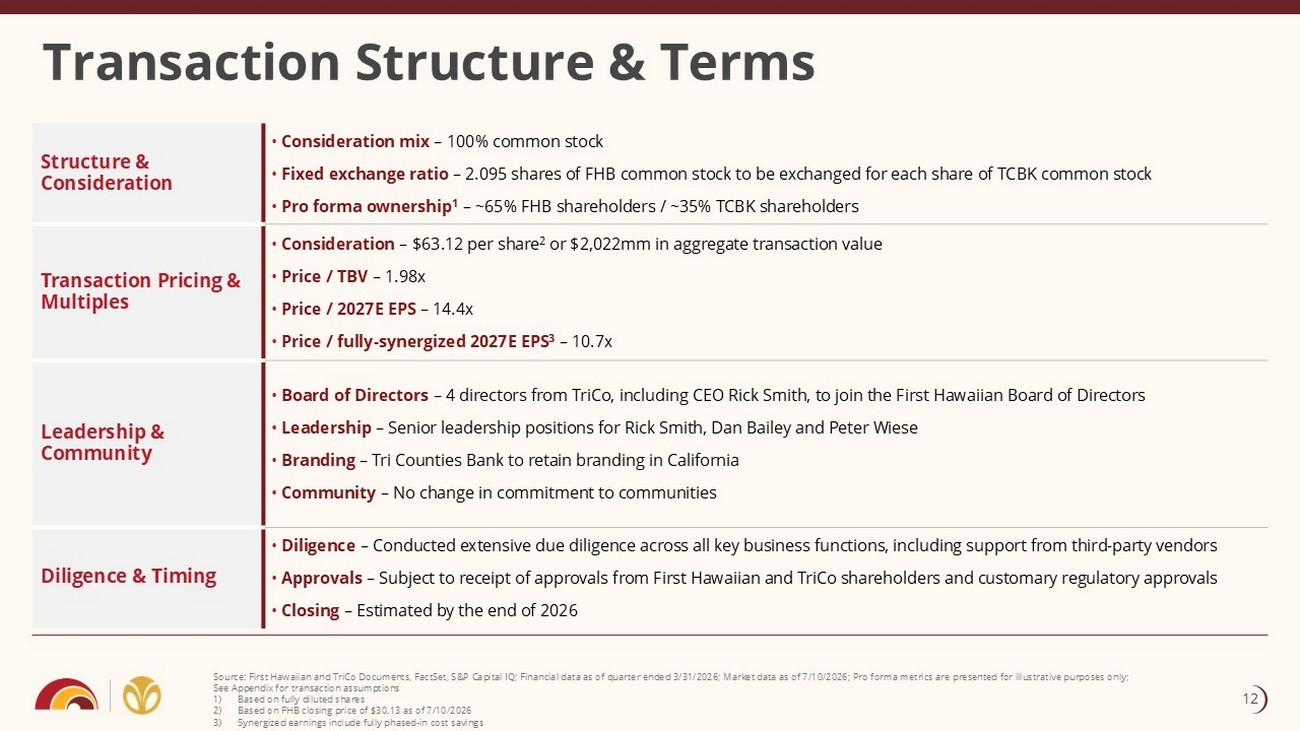
People accuse me of not being here enough already. Now, we have three members of their team joining our senior management team, Rick Smith, Dan Bailey, and Peter Wiese. And as far as my time, you know, I've been on the Federal Advisory Council now for three years. I'll be rolling off, so that's four to six trips a year to the West Coast or the East Coast. So those trips will probably be redirected to California, but, you know, it'll be pretty much the same as it is now, I would think.
Operator
Thank you. And our next question comes from the line of Tim Mitchell from Raymond James. Here, question, please.
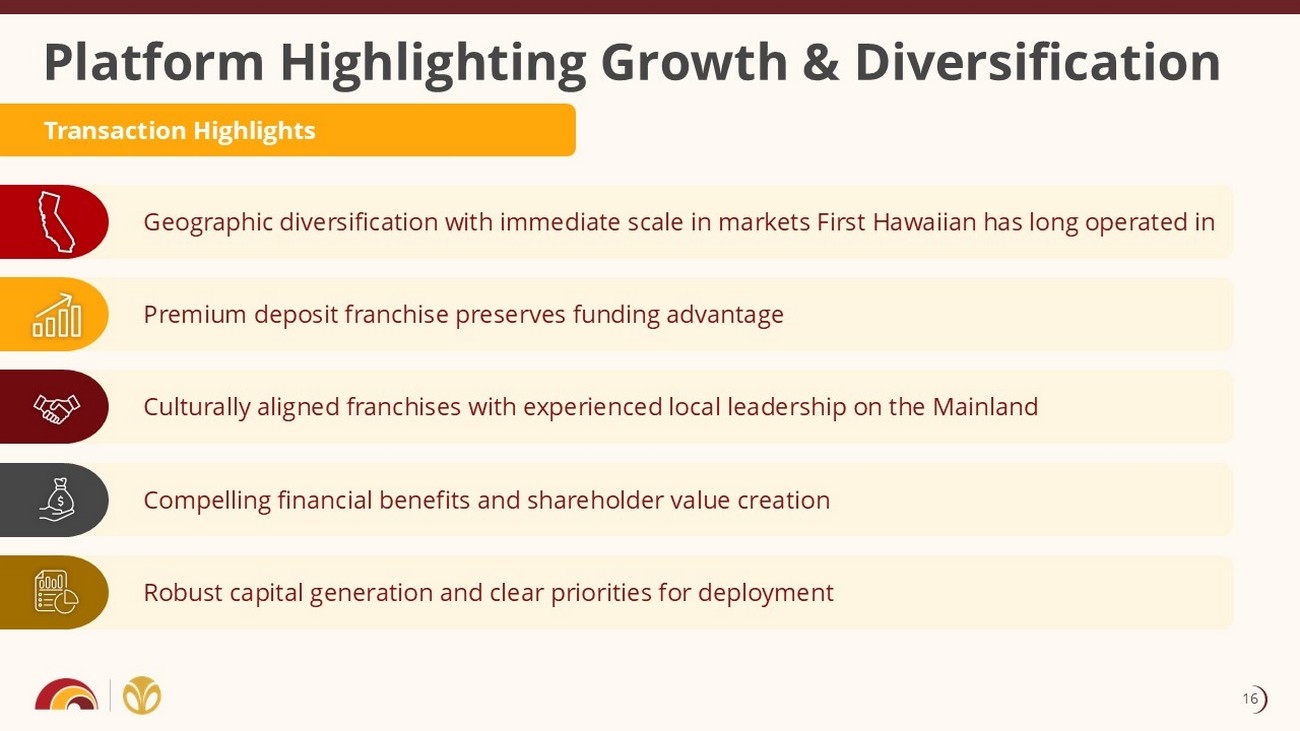
Hey, good morning, everyone. This is Tim on for David. One question on the deal. So, you know, how has reception been from the Trico bankers and clients since you guys announced the deal? And kind of what has your messaging been to them? And similar to Jared's question, like, what is your plan as it relates to letting that team operate more independently than we see in most bank mergers? just kind of given the unique nature of the transaction? Thank you.
Yeah, thanks for the question. And, you know, some of this, a good amount of this will be in the proxy, but just to maybe cover what we talked about last week, you know, one of the reasons we like Trico so much is they have a strong management team, and we're planning on keeping most of them there. So we're there to support them. We're here to learn from each other, but, you know, they have a great bank and they run it well, so that's what we're leveraging. okay great um and then you know just kind of on the earlier point of that question you know reception from you know conversations with bankers and clients since deals announced um do you have any update to that yeah we're still doing the outreach and um you know we can talk about that i think better at a later date but uh i'll be up there in a few more weeks a couple weeks from now to to meet many of the their employees i haven't already met and i'm looking forward to doing that. Awesome.
Thanks, Jake, for my questions.
Operator
Thank you. And our next question comes from the line of Andrew Leach from Stonex Group. Your question, please.
Hey, everyone. Good morning. Just to put a fine point on the fee income guide, does this imply like a step down towards like $54 or $53 million for the next two quarters?
You know, I think that's – so we always struggle with this one, Andrew, right? Because we have these things that show up every now and then, so hard to forecast the timing of those things. I think when you look at what we had in the first quarter and what we had here in the second quarter, you come pretty close to about what we've been expecting for the full-year guide of $220 million. And so I wouldn't categorize it as a step down or anything like that. I would just categorize it as it's hard to forecast some of these one-off, one-time things that seem to happen at different points in the year. So I think, you know, we generally think our number is about 55 million a quarter. And there will be some times when things show up and kick that up a little bit, and sometimes things don't appear and kick that down a little bit.
Got it. All right. That makes sense. You know, just on just the size of the average earning assets here going forward, you started the quarter with less cash on hand or interest bearing cash as you did the prior quarter. Because has that start to rebuild with deposits coming back in, just trying to get a sense of what average earning assets should shake out for the third quarter?
Yeah, no, I think we're probably going to run the cash at about where we're at, where you saw it at the end of the second quarter. So I think in general, what you're going to see is just a slightly smaller asset size, but that's based on like cash, right? We still expect to see some pretty good loan growth in the back half of the year. So probably run the cash balances at about this billion dollar level.
Got it. That covers all my questions. Thanks so much.
Operator
Thank you. And our next question comes from the line of Matthew Clark from Piper Sandler. Your question, please.
Hey, good morning, everyone. I heard your commentary on deposit costs, but just wondered what the spot rate was at the end of June.
Got it. Okay. And then just maybe since everything else has been asked, I think, just back to the merger, any update on the 25% cost savings target. I assume you're still working through that, but would love to hear where you expect a bulk of that to come from.
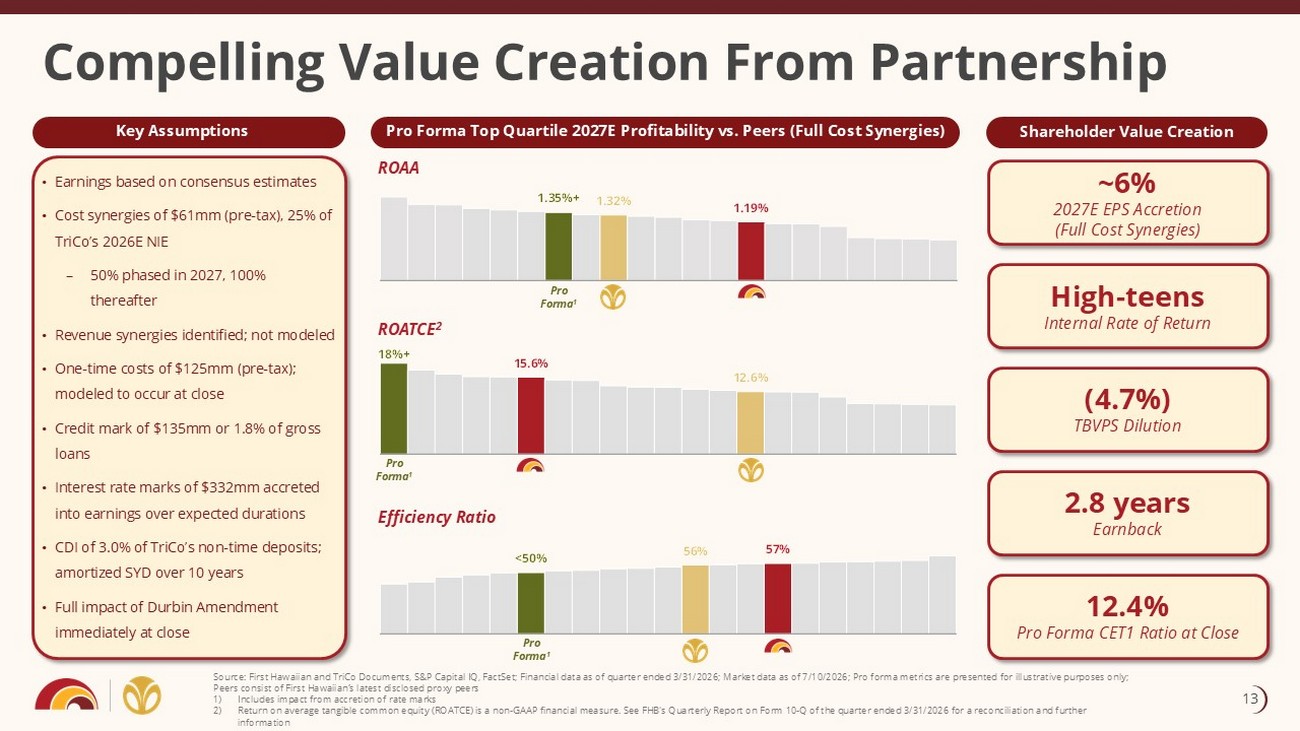
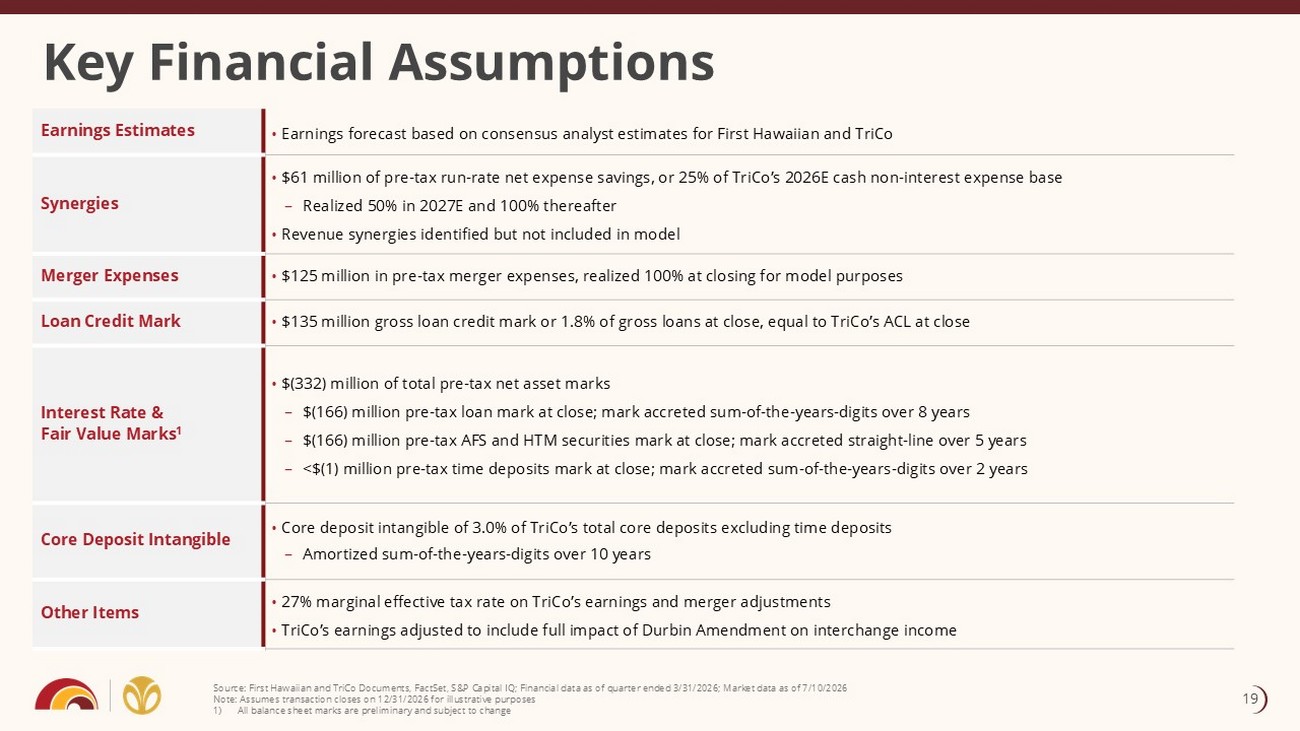
Yeah, I mean, I think we kind of covered that on the deal announcement call. No real update on that. 25% remains the target, and we feel comfortable that we'll be able to get there through a variety of ways. So we're just very excited to get working with our partners over there at TRICOP.
Operator
Thank you. This does conclude the question and answer session of today's program. I'd like to hand the program back to Kevin Haseyama for any further remarks.
We appreciate your interest in First Hawaiian, and please feel free to contact me if you have any additional questions. Thanks again for joining us, and have a good weekend.
Operator
Thank you, ladies and gentlemen, for your participation in today's conference. This does conclude the program, you may now disconnect. Good day.