Operator
Good morning. Thank you for joining us and welcome to Northwest Bankshare's fourth quarter 2024 earnings call. This session is being recorded and a playback will be available on our Investor Relations website. All participants are currently in listen-only mode. Towards the end of today's call, we will open the floor for a question and answer session. Now, I would like to introduce Michael Perry, who recently joined Northwest as Managing Director of Corporate Strategy and Development and Investor Relations.
Good morning, everyone, and thank you, Operator. Welcome to Northwest Bankshare's fourth quarter 2024 earnings call. It's great to be here. Joining me today are Lou Torshio, President and CEO of Northwest Bankshare, Doug Schosser, our Chief Financial Officer, Sean Morrow, our Treasurer, and T.K. Creole, our Chief Credit Officer. During this call, we will refer to information included in the Supplemental Earnings Release presentation, which is available on our Investor Relations website. If you'd like to read our forward-looking and other related disclosures, you can find them on Slide 2. Thank you, and now I'll hand it over to Lou. Good morning, everyone.
Thanks for joining us to discuss our quarterly results. I'm pleased to report that we delivered solid returns in the fourth quarter, and we're happy with our core financial performance, which Doug will cover momentarily. In particular, last quarter we saw significant improvement in our net interest margin, as well as in our efficiency ratio. This continues to demonstrate that we are delivering on our commitment to sustainable growth. Thanks to our company-wide focus on deposit gathering while maintaining near best-in-class cost of funds, we continue to maintain a stable and strong funding base. In addition, we're able to reduce classified loans, helping us further eliminate risk from the balance sheet. All these results can be attributed to the talent, hard work, and thought put forth each day by the members of our Northwest team. I want to thank them for their continued dedication to our company's success, as well as their focus on our customers and communities. As we have reported, at Northwest, we are steadfast in our commitment to responsible growth, both organically and through acquisition. With that, I'm happy to report that last quarter we announced that we entered into an agreement to acquire Pennswoods Bancorp. This transaction is expected to be completed sometime in the third quarter of this year. This merger is Northwest's largest to date and marks another milestone in our long-term strategy. It further connects our Pennsylvania franchise and will make us one of the top 100 largest banks in the nation. Finally, as we have for the previous 120 quarters, on behalf of the Board of Directors, I'm pleased to declare a quarterly dividend of $0.20 per share to shareholders of record as of February 3, 2025. Now, it's my pleasure to introduce Doug Shosser, our Chief Financial Officer, who will take us through our financial results.
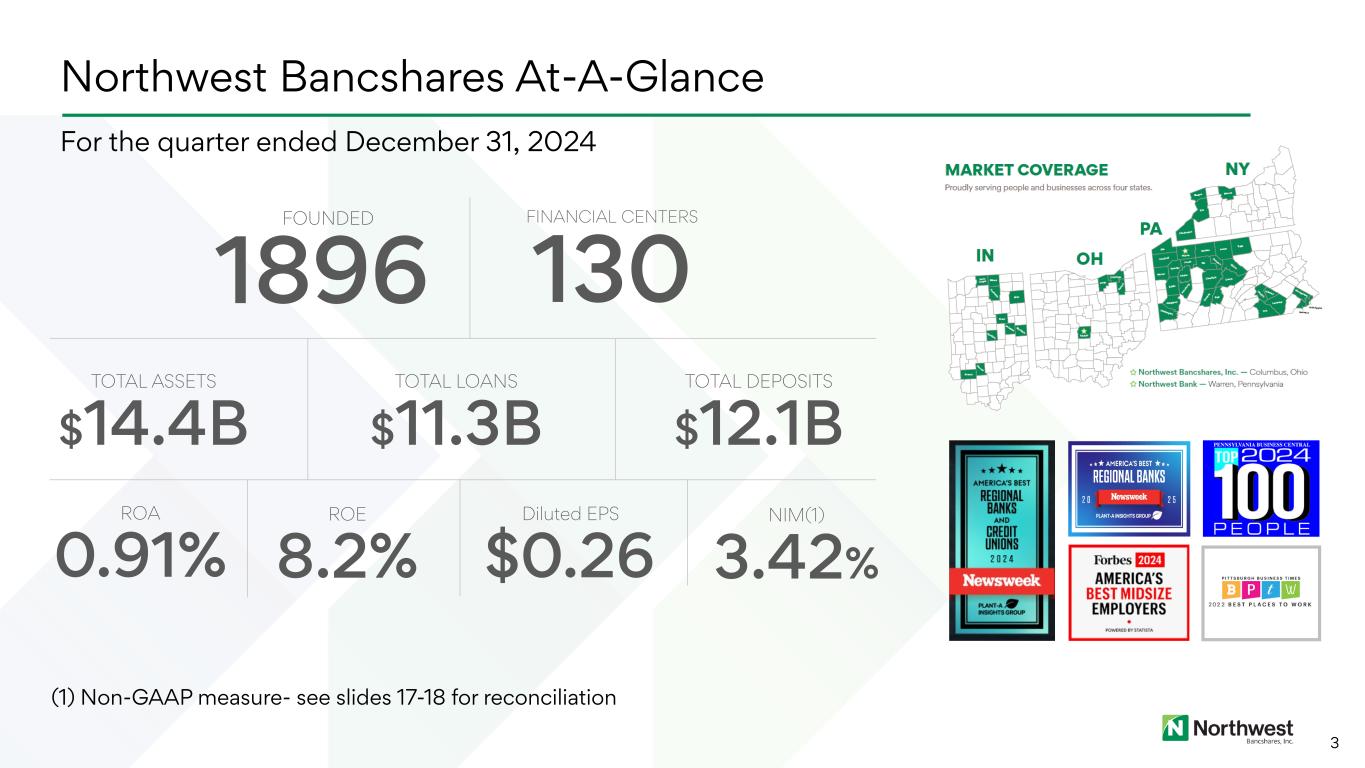
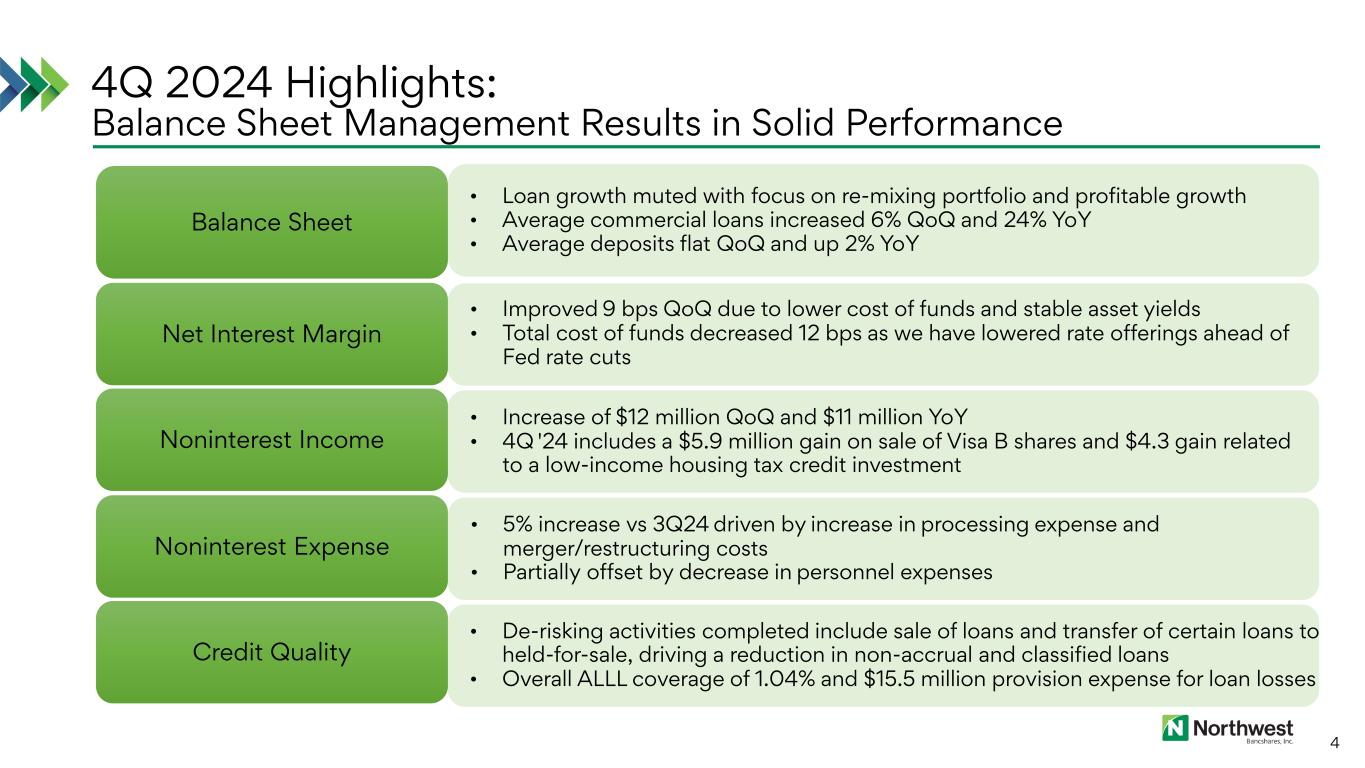
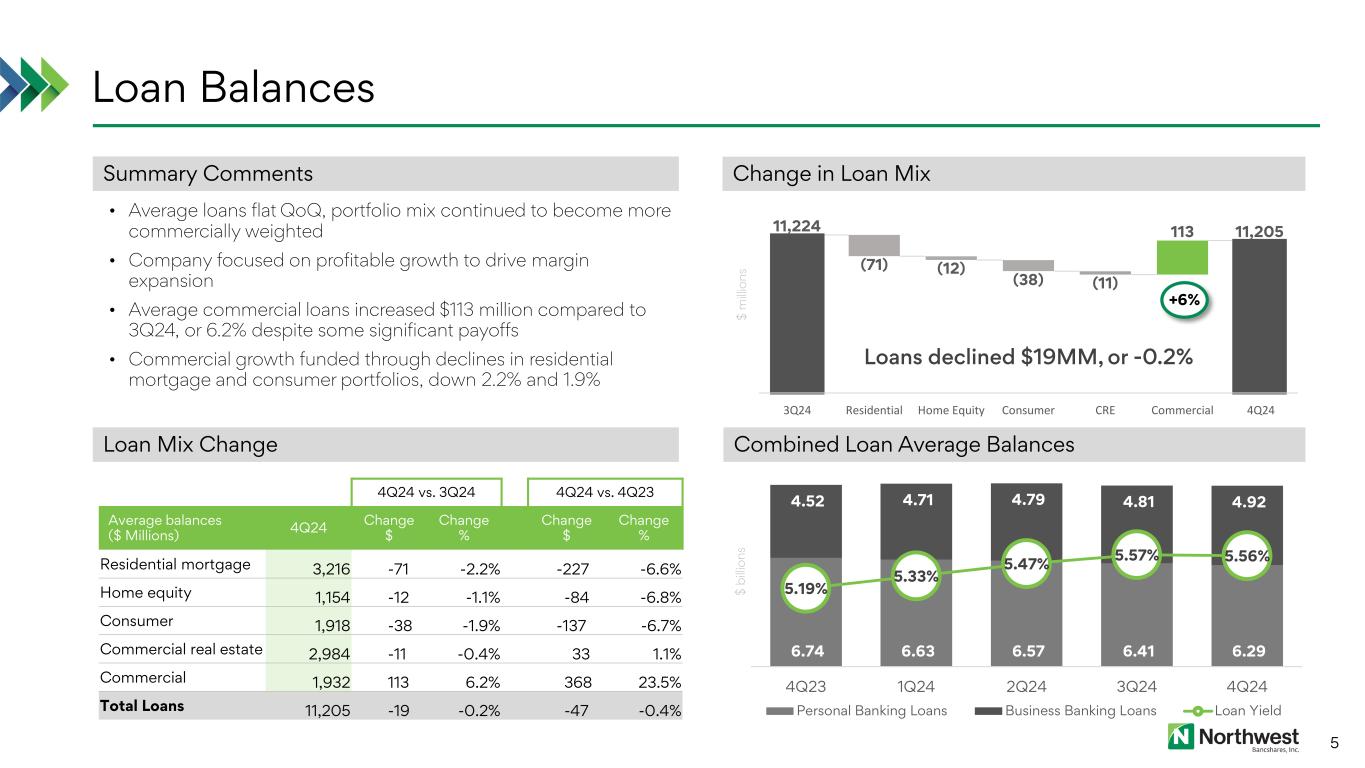
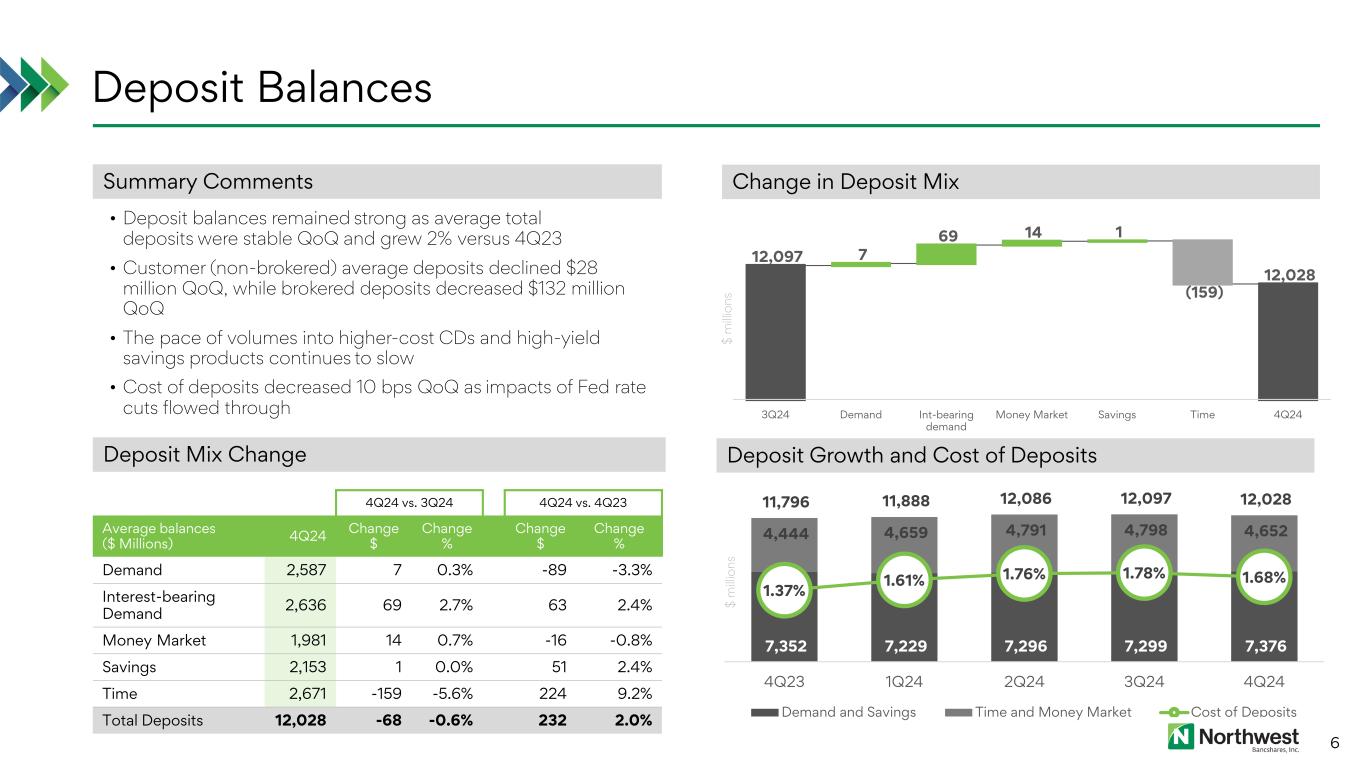
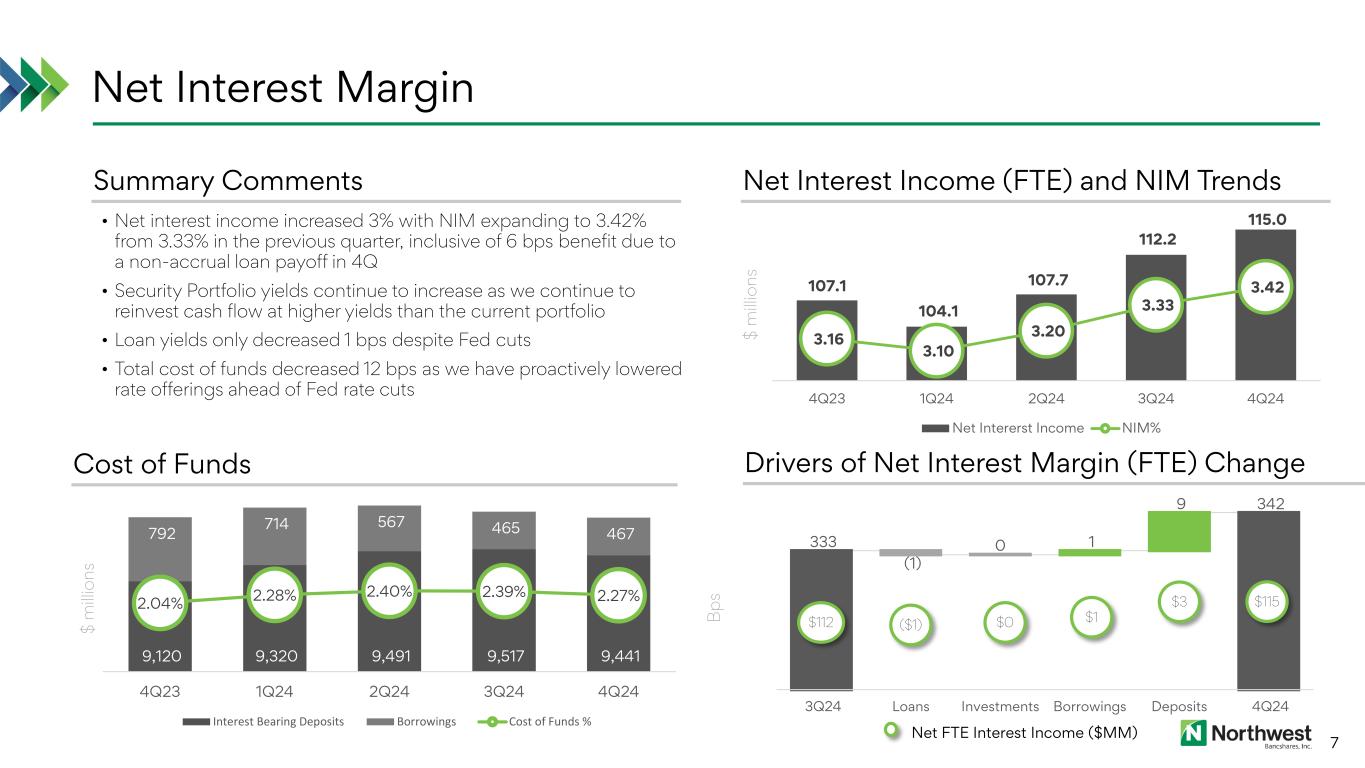
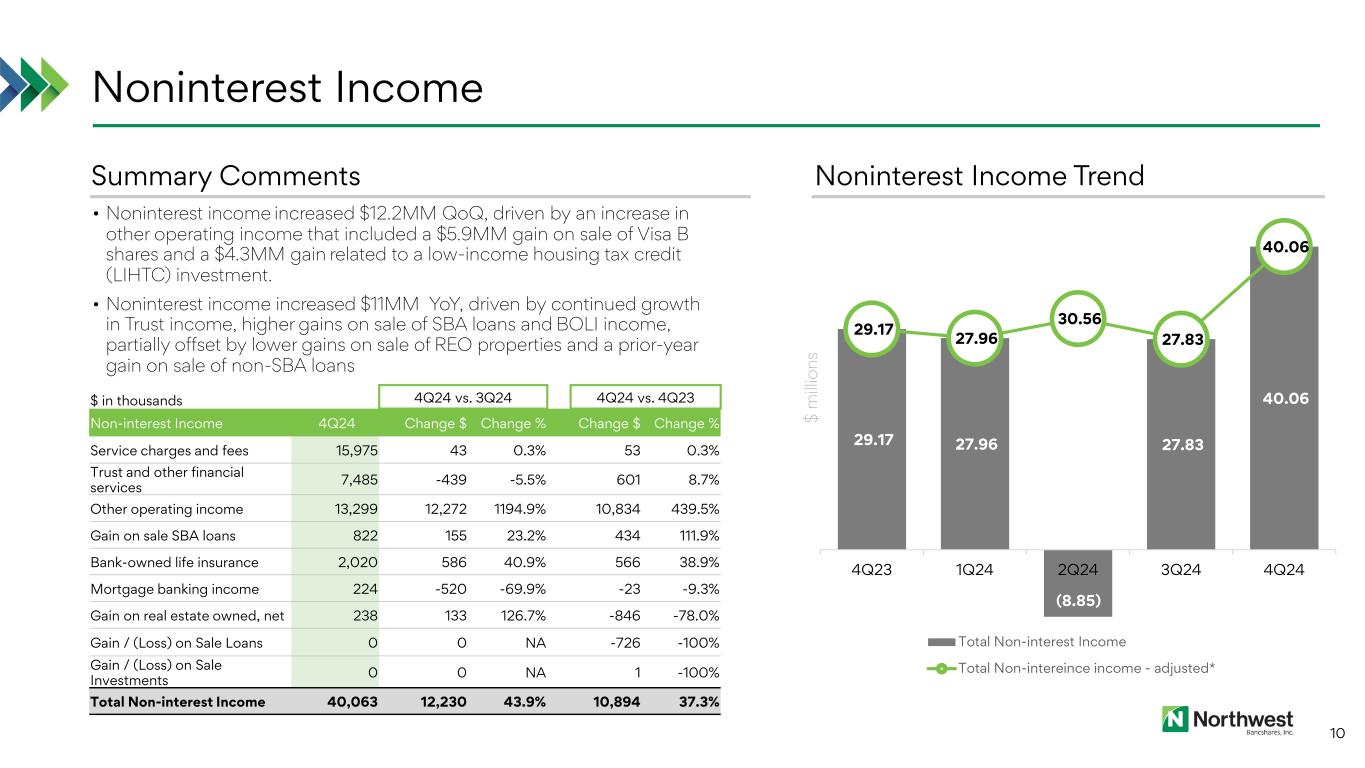
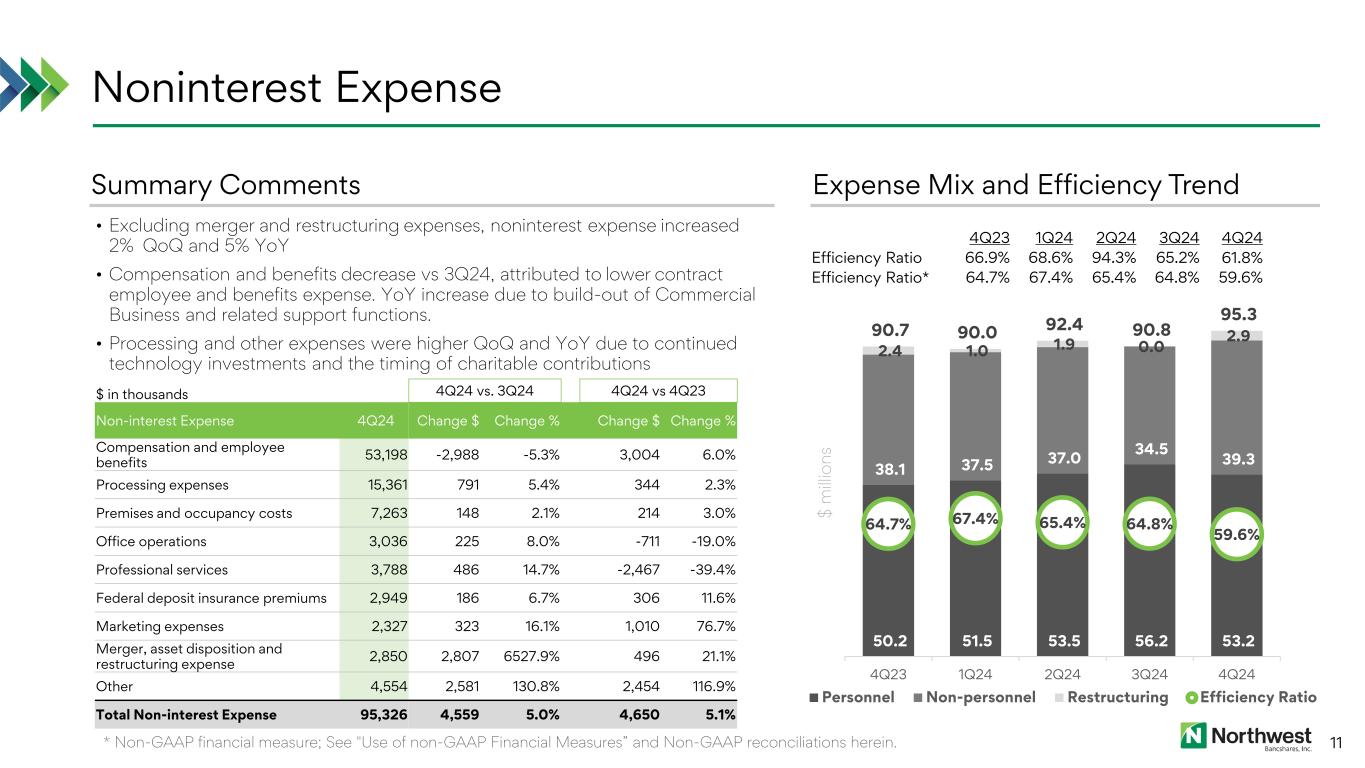
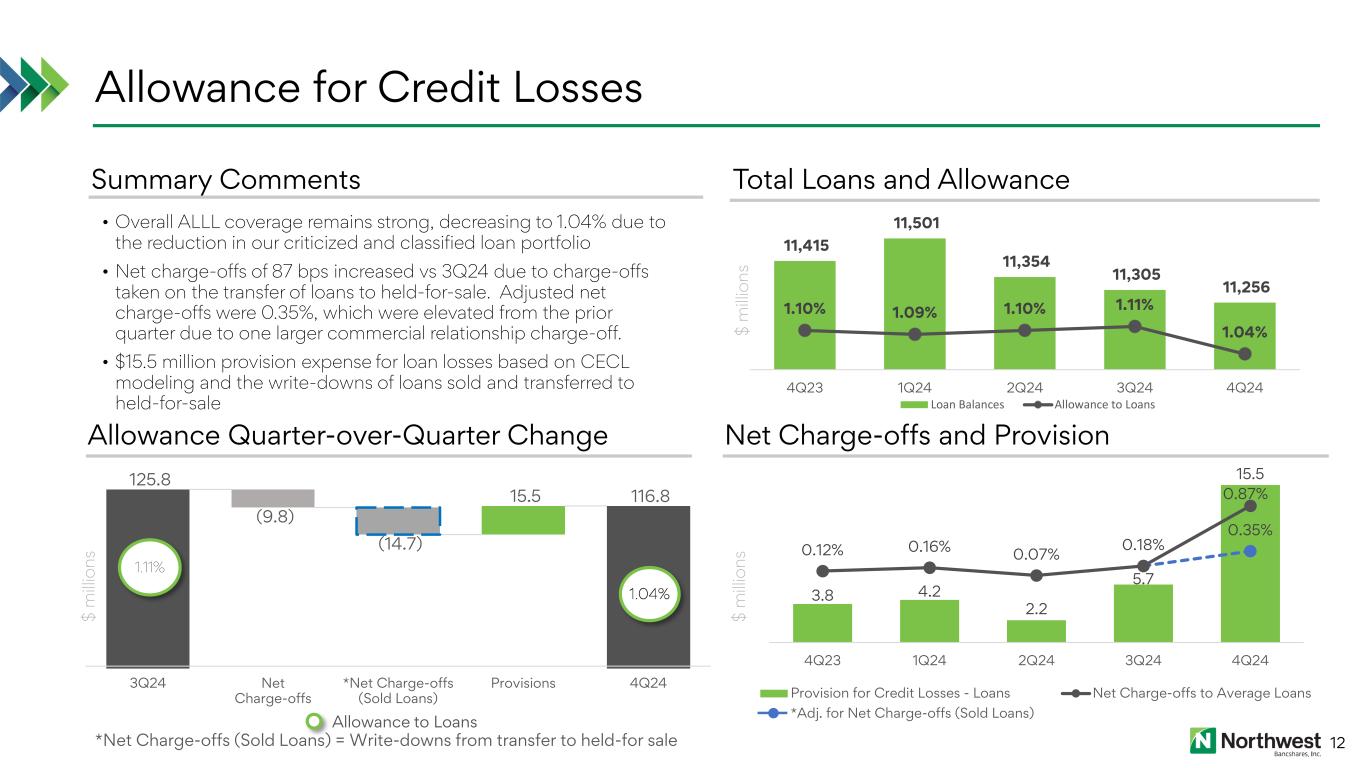
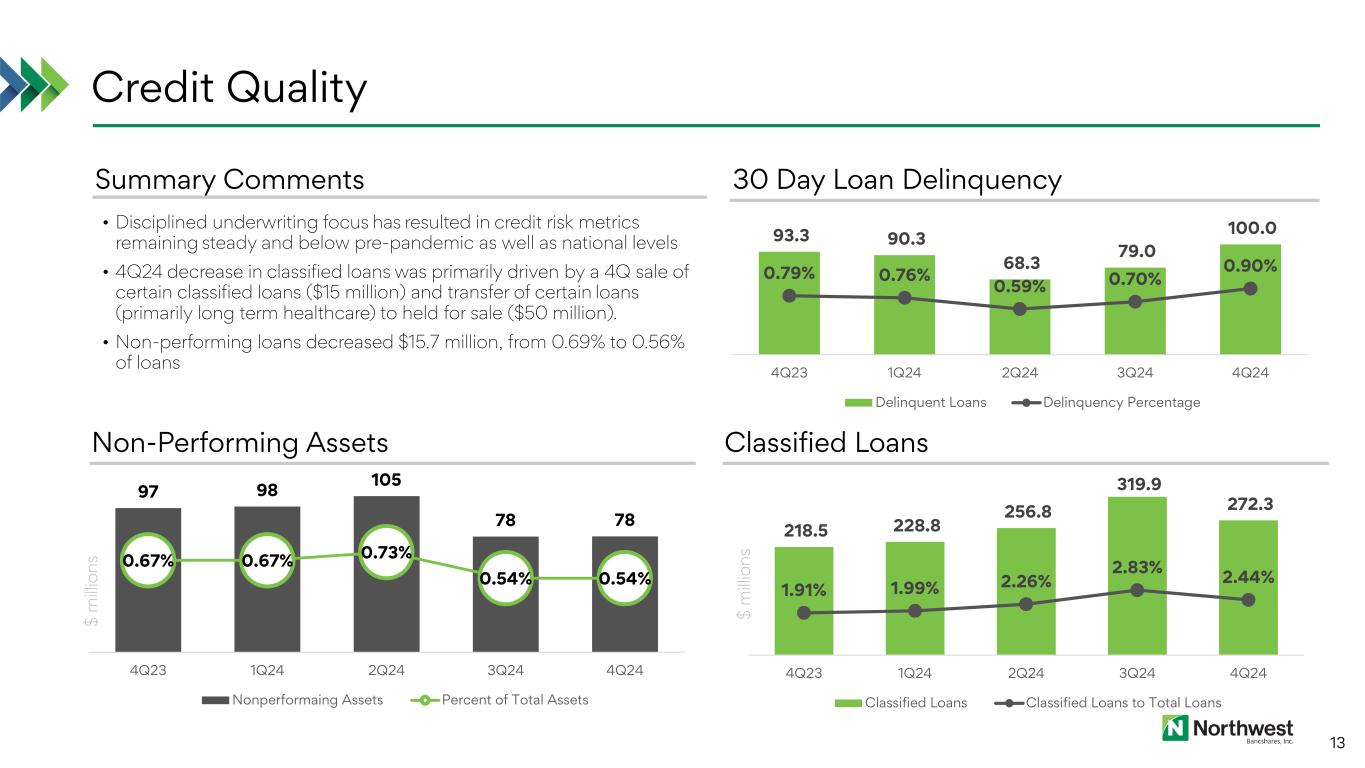
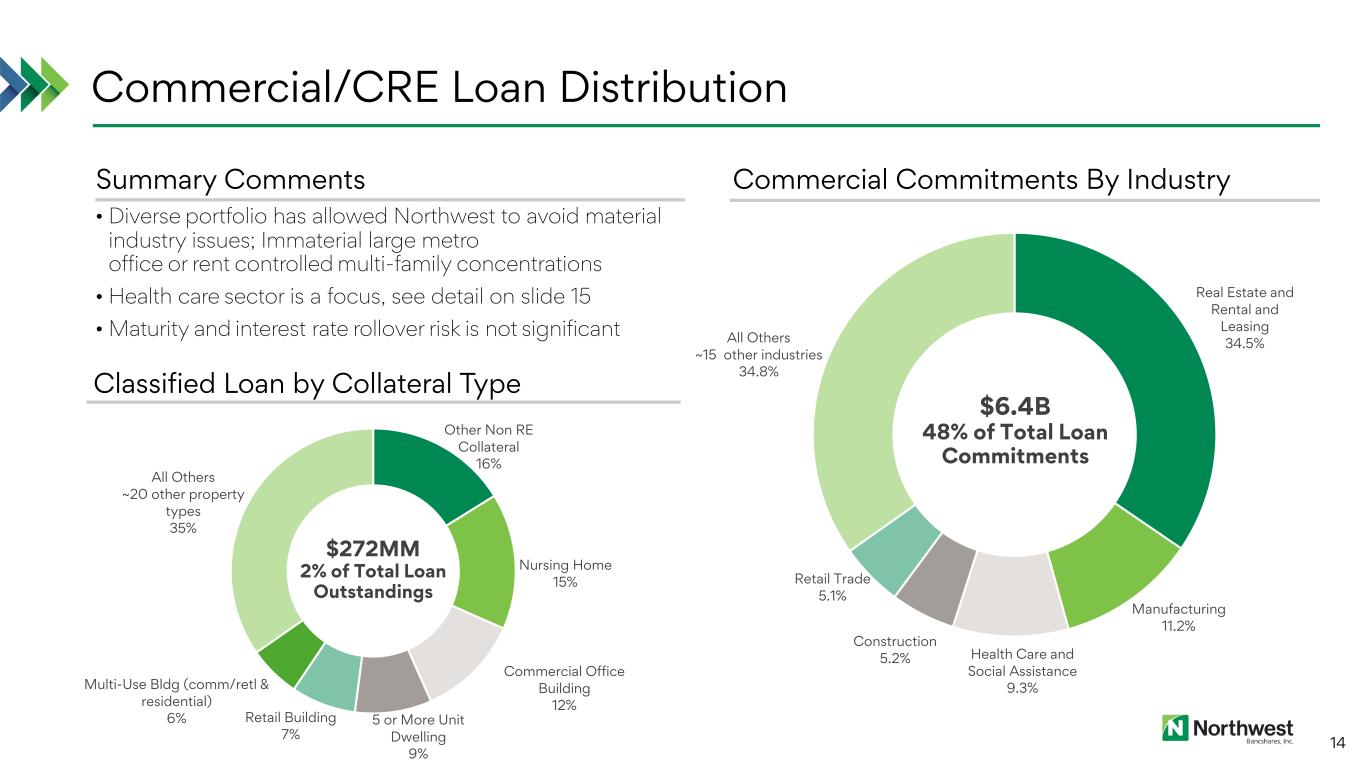
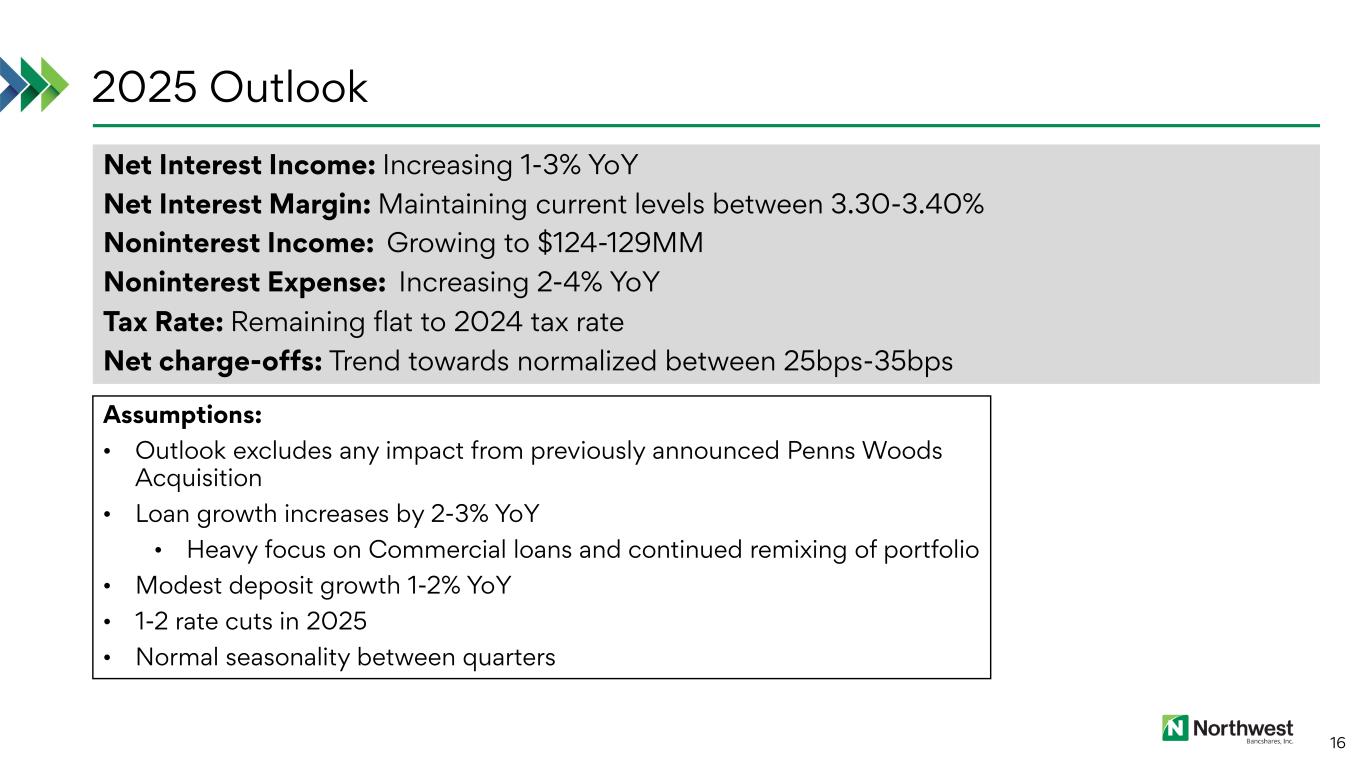
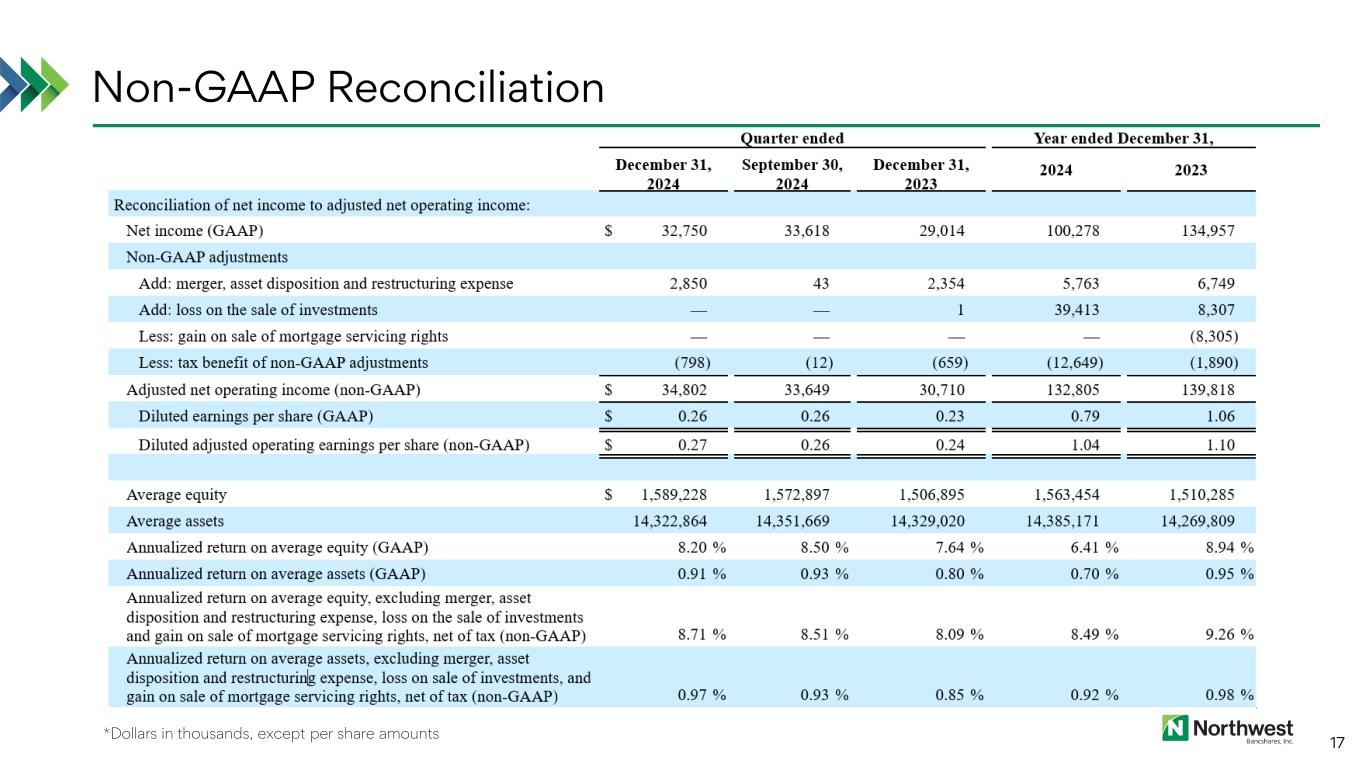
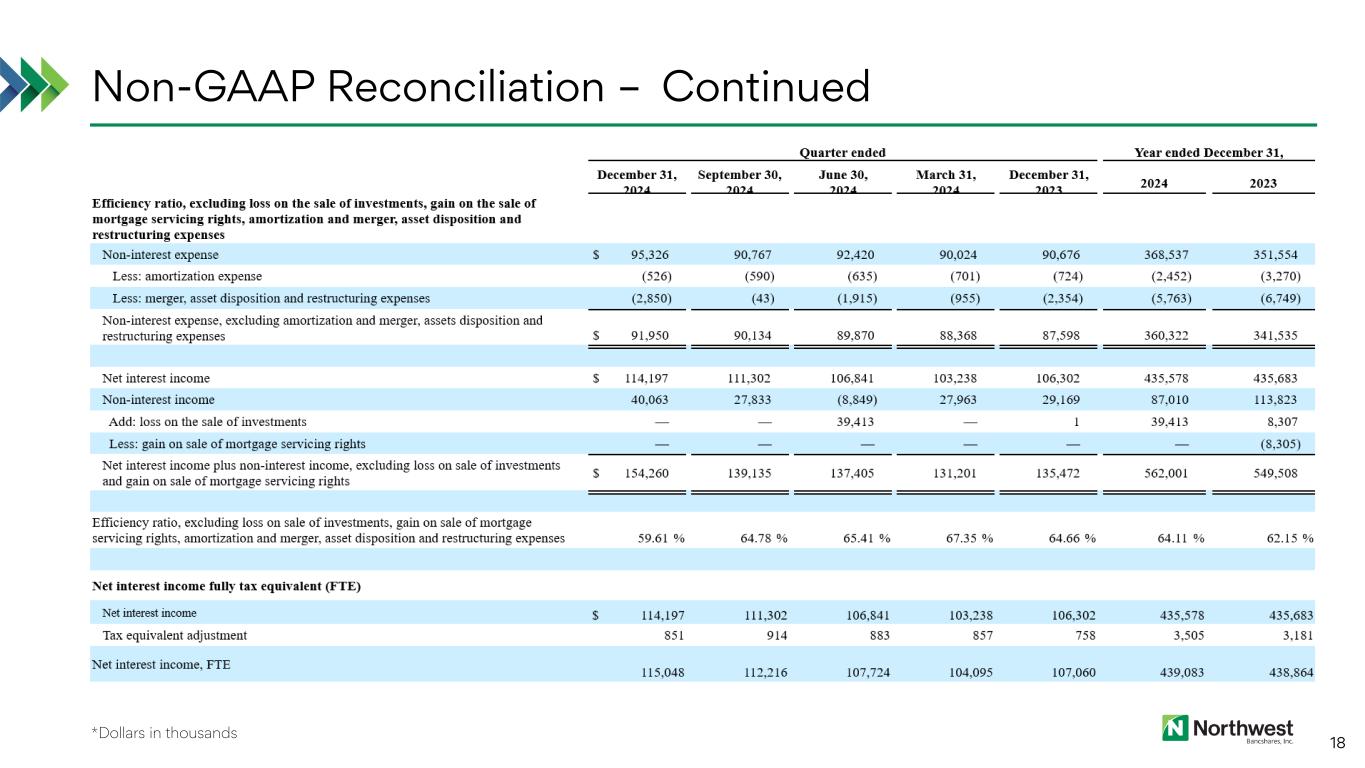
Thank you, Lou, and good morning, everyone. Before we dive into today's presentation, I'd like to comment on the addition of Michael In addition to helping us facilitate our M&A strategy, Michael will also lead our company's strategic planning process and our investor relations function, serving as a primary point of contact for the investment community. We're really excited to add Michael and his extensive knowledge and experience to the Northwest team. Now let's begin on page four of the earnings presentation, where I'll highlight Northwest's financial results for the fourth quarter of 2024. We reported a net income of $33 million or 26 cents per diluted share. Our net interest margin expanded by 13 basis points this quarter to 3.42%, aided partially by an interest recovery on a non-accrual loan, which added six basis points to that margin. We continue to see our margin increase due to our continued pricing discipline on our deposit portfolio and our focus on appropriate pricing on our originated loans, supported by a more favorable rate environment. Compared to the same quarter last year, our loan portfolio balances were essentially flat, though we do see improvement in our mix as commercial loans increased and the portfolio becomes more commercially weighted. Deposit balances grew by 2% compared to the fourth quarter a year ago and cost of funds decreased even further as we saw volumes into higher yielding savings products decline non-interest income increased 12 million dollars for the quarter which includes a six million dollar gain in the sale of the last tranche of our vis-a-vis shares and a four million dollar gain related to a low-income housing tax credit investment non-interest expense increased by five percent or approximately three million dollars from the third quarter. Credit quality remained strong, with overall allowance coverage decreasing to 1.04% of loans from 1.11% last quarter and a year ago. This can be attributed in part to the de-risking actions taken within the quarter, including the sale and transfer of certain loans from our books. Finally, our capital position remained strong, with an estimated Tier 1 capital to risk-weighted assets of 13.8% on December 31st estimated. Now, let's delve into additional details. On page 5, you'll see our commercial industrial loans grew by 6.2% since last quarter and 23.5% year-over-year, where all residential mortgages declined by 6.6% since last year. The shift underscores our focus on our commercial banking transformation. Our commercial real estate portfolio shrank by 0.4% since last quarter, reflecting a more desirable loan mix with a higher share of C&I compared to CRE. Our loan yields remain steady this quarter at 5.6%. Moving to page 6, deposits remain strong through the end of 2024, having grown 2% versus the end of 2023. During the last quarter, we recognized the benefits of lower short-term interest rates with a 10 basis point decrease in our cost of funds. Most deposit growth occurred in the interest-bearing demand products, while volumes in higher cost and higher yield savings products continued to slow. The current cost of deposits stands at 1.68, again down 10 basis once from the third quarter, and still near best-in-class relative to our peers. On page 7, we covered the net interest margin, which now stands at 3.42%, up from 3.33% last quarter. Included in the fourth quarter results was an interest recovery on a non-accrual loan that was paid off in full. This added six basis points to our margin in the quarter. A more normalized net interest margin in the fourth quarter would be about 3.36%. Fully tax-equivalent net interest income grew by approximately 4% from $112 million last quarter to $115 million this quarter. This marks our second consecutive quarter of net interest income growth, reflecting reduced borrowings, higher loan yields, and a reduction in our cost of funds. We ended the quarter with a cost of funds of 2.27%, a significant improvement from the last quarter. We have included some additional information on the margin on the next few slides. Now moving to slide 10, non-interest income increased $12.2 million from the previous quarter, driven by an increase in other operating income. That included the sale of those Visa B shares in the low-income housing tax credit I mentioned earlier. Compared to the year-ago quarter, we saw an $11 million increase in non-interest income as a result of our continued growth in trust income, higher gains on sale of SBA loans, and bully income partially offset by lower gains on the sale of REO properties and a prior gain on sale of non-SBA loans. Slide 11 details our non-interest expense. Our adjusted efficiency ratio improved to 59.5 percent, reflecting our continued focus on managing expenses without impacting quarter operations or sacrificing customer service. Regarding credit quality on page 12, our allowance to loans coverage decreased to 1.04 percent, with net charge-offs recorded at 87 basis points, including the impacts of our de-risking activities taken within the quarter. If we exclude those impacts, our charge-offs would be just 35 basis points. Page 13 shows that overall credit performance remains strong, with non-performing assets holding steady at 0.54%, while 30-day loan delinquency saw a slight increase to 90 basis points. Classified loans decreased to 2.44% of total loans, and our coverage ratio on non-performing loans increased to 188% from 162% recorded in the third quarter. Slide 14 highlights our commercial loan concentration, showcasing a diverse portfolio. Strong underwriting has helped us avoid many CRE-specific issues, and we have minimal exposure to large metro office or rent-controlled markets. With the success of 2024, we have entered 2025 with significant momentum. I'd like to review our 2025 guidance, which can be found on slide 16. We will still continue to focus on responsible and profitable loan growth in the commercial space, particularly C&I lending. We anticipate low single-digit loan and deposit growth. We'll manage deposit costs while balancing client expectations and market preferences, allowing for continued modest net interest margin expansion. We expect non-interest income to be in the range of $124 million to $129 million for the full year. We will keep expense growth in the low single digits in 2025 as we shift our focus to creating positive operating leverage and balance expense growth and our long-term investments. Both our tax rate and net chargeoffs are expected to normalize in 2025 as our net chargeoffs will remain within our normalized range of 25 to 35 basis points and our tax rate will remain unchanged. Our guidance excludes any impacts from the recently announced acquisition of Penns Woods. On behalf of the entire leadership team and the board of directors, thank you for joining our call this morning.
Operator
I will now turn the call over to the operator who will facilitate the live q a session at this time i would like to remind everyone in order to ask a question press star then the number one on your telephone keypad we will pause for just a moment to compile the q a roster your first question comes from the line of tim switzer with kbw your line is open please go ahead hey good morning thank you for taking my questions morning morning tim um we appreciate the the detailed guide um you provided in the slide
deck here um can you clarify real quick for the non-interest income outlook does that also exclude the impact of pens woods and what's driving that growth there yeah all of the guidance we're providing excludes the impact from pens woods and we are focused on driving better fee income performance and more consistent fee income performance strategically within the firm so that's an expectation that we'll be able to generate that type of activity through the course of the year i think we also provided more of a numerical guide only because we had so many things rolling through fee income this year that were a little bit unique like the securities
restructure that we wanted to be transparent with where we were targeting the income yeah no it's super helpful um appreciate you doing that and um if we think about the nii outlook with pins wood you know the rate movements have been pretty extreme over the last month or so can you talk about i guess first maybe how that's changed um the expected change of book value dilution and then you know what's the expected um purchase accounting as of uh you know most recently with the change in the yield curve yeah we're not intending to provide updated guidance on the penswoods acquisition until we get much closer to the closing date because as you know all of that will constantly change with uh our stock with changes in our stock price okay um And the last question I have is, you know, after cleaning up some of the credit book here, can you give us an update on, like, what's remaining in the healthcare portfolio, what the credit quality looks like, and then are you seeing any other areas outside of that book that, you know, you're more cautious about or anything you're seeing in maybe the consumer portfolio?
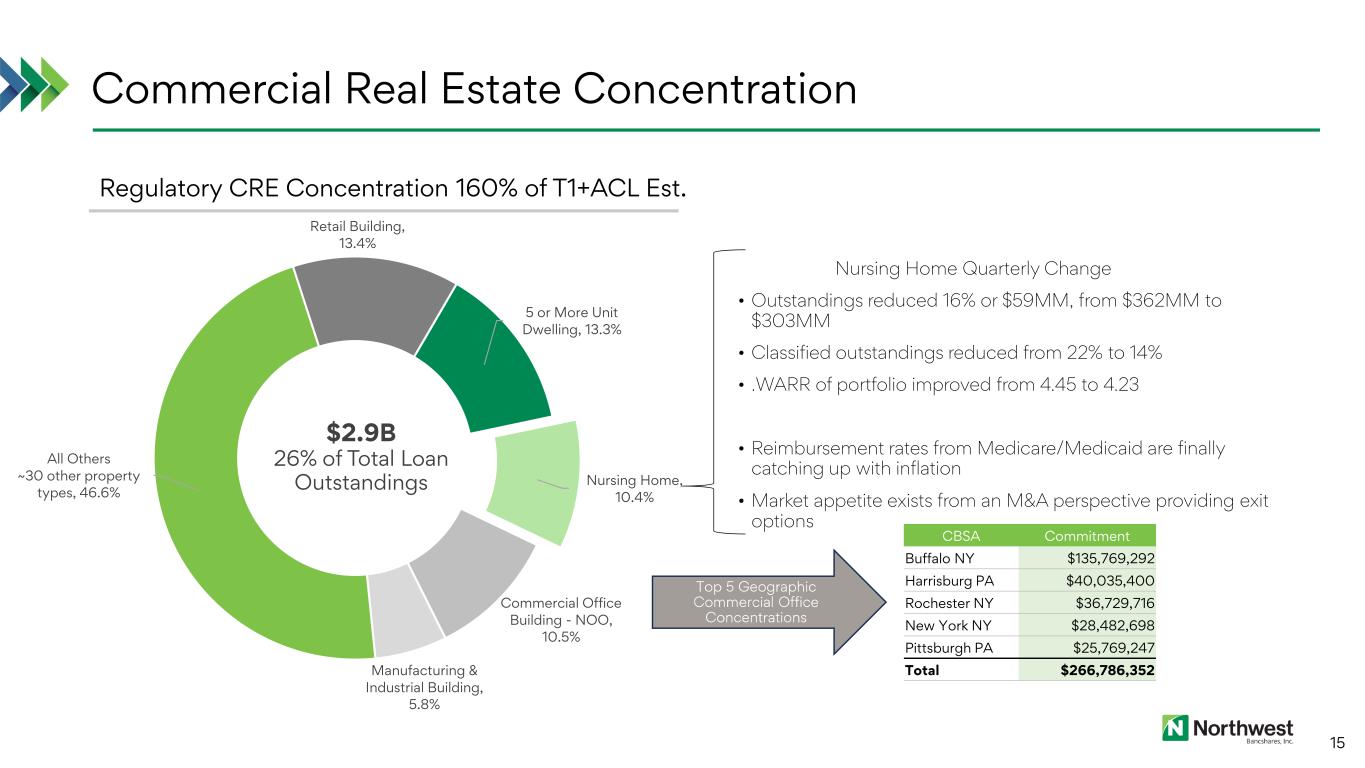
Yeah. So I think we dealt with most of the stress that we saw in the long-term healthcare portfolio with these transactions. I will remind everyone, we moved some of the transactions, some of the credits are in, held for sale. we would expect to execute a transaction to get those fully off the books over the course of the first quarter. So we don't have any concerns in any particular sectors in the rest of the book and feel like we're entering the year in a pretty stable position. We also tried to provide that normalized charge-off number just to show that absent some of those de-risking transactions, we would have been within the normalized range that we were projecting.
Okay, great. Thank you, you guys.
Operator
Your next question comes from the line of Daniel Tamayo with Raymond James. Please go ahead.
Thank you. Good morning, guys. Good morning. So, I guess my first question is just on the loan growth side. You talked about, I think, I heard low single digits for the year. You know, you've had strong momentum, certainly, on the commercial side. Maybe if you could just talk about What you're seeing in terms of momentum in the commercial side, if that's still strong and then really the driver of the net loan growth number is reductions in CRE or other portfolios, just how you're thinking about it kind of segmented out a little bit.
Yeah, so we are looking at decent pipeline, strengthen our pipelines right now for commercial. So we feel that there's going to be a more constructive environment in 2025 as all of the different companies. changes in administration and all of that settles down a little bit so we're thinking that that is going to be a net positive for us we also will take advantage of opportunities to grow consumer loans when those opportunities present themselves so in general we're going to try we're going to continue to focus obviously on commercial we also guided for some expense growth this year we will allow for some additional hiring in the commercial verticals as well just to continue to develop the build-out in commercial that we've talked about. So again, I think I would generally say just looking for a more balanced overall approach. And when we have the opportunity to generate good returns, either in the consumer portfolios or the commercial portfolios next year, we'll take advantage of them. And we expect some of that business to be available for us. So that's reflective of the overall guide of some modest balance sheet growth next year.
Got it. That makes sense. So you think it's maybe a little bit slower than what it what it can be on a, on a total loan growth basis, um, next year. And then, and then you, you could potentially end the year a little bit faster into going into 26, moving towards more of a normalized loan growth rate, maybe in the mid or a little bit above that, um, percentage growth rate.
Yeah. I mean, again, there's fluctuations that you have to deal with all along the way, right? Like all of these, uh, all these weather events are certainly going to slow down for example the car sale market right so when we have opportunities to take advantage we will but we can't accommodate exactly when the growth will come it'll be there when the market allows it to be we're still focused as we've been on making sure that we get good pricing and good terms on both consumer and commercial loans and when those are there we're going to take advantage of them and do them um but we are really working on you know maintaining the loan yields and improving the overall margin by making sure that we're not just out you know taking significant levels of growth at rates that aren't going to produce a stable and growing margin hey danny
it's lou i would just add that you know the strategy is intact right so we're going to have the maturation of the verticals that we've discussed in on prior calls um and prior meetings as well as we have a renewed focus on what we call the core franchise middle market, lower middle market in the four states that we have retail presence. And so, you know, to your point about while it may be a slower start to the year, you know, we're looking to pick up steam in the latter part of the year a little bit, as well as we have a continued focus on deposit gathering in our commercial franchise. And so that will become more evident as we move along through the year as well. And as Doug pointed out, it's not that we're completely focused on commercial. So notwithstanding, we have these mortgages on the balance sheet that really are low rate and long that we're running off. We'll have some opportunities in the consumer segment, and so we'll look for balanced growth in that area as well.
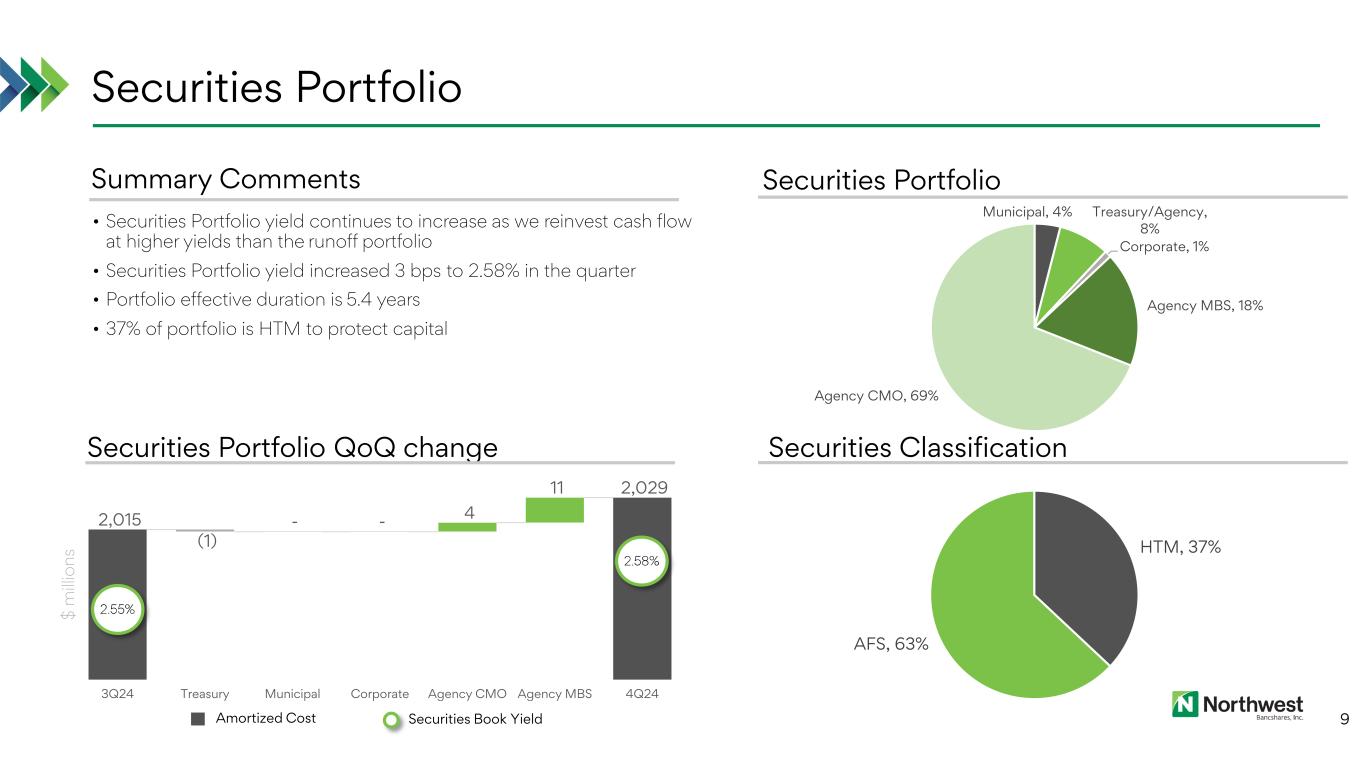
Terrific. Well, thanks for all that color. I guess there's one last one, maybe on the securities book. I'm just looking at your slide nine here on that. You've got the duration of five and four years. So I'm just curious kind of what's rolling off this year, where you might see some benefit in terms of the margin in 2025. Obviously, that book remains a little bit of a drag on the NIMM overall from a dollar's perspective.
Yeah, I can turn it over to Sean if he has any specifics he wants to highlight on things that are rolling off. I mean, we are reinvesting cash flows into higher yielding securities. So that will continue to help drag that return up over time. If there is an opportunity over the course of the year to consider a balance sheet or investment securities reposition, we would probably take advantage of that. But again, that's not a core focus of ours, and it would be something that would be opportunistic versus something that is in part of our strategies next year. So as we did last time, if we get closer to executing one of those, we have the opportunity. We'll certainly talk a little bit about it in advance. But I would say generally speaking, we're looking at maintaining the size and strength of that portfolio. And as we continue to get positive cash flows from it, we'll obviously be reinvesting at high rates. Does that answer your question?
It does. Yeah. No, thanks for all the color. I appreciate it.
Operator
I'll with Stevens Inc. Please go ahead.
Speaker 3
Hey, good morning. Morning. I wanted to touch on commercial real estate just for a second. A lot of your peers in similar situations as you with lower CRE concentrations, many of them have been kind of nibbling back into the space as a lot of your higher CRE concentration peers have kind of pulled back. And I'm curious if you've kind of looked at spreads and yields, and if there's been any sort of change in thinking there, and is that a book if the yields present themselves that we might see some growth in 25? Thank you.
Yeah, I think, I mean, I sit on our senior loan committee, so we see the largest deals that come through the firm. When there are commercial real estate deals that have appropriate hurdles and that have good risk profiles, we're going to take advantage and do those deals. I don't think it is a focus of ours to specifically go out and grow that book materially from where it is. But we also don't have a specific target that suggests it has to, you know, that we're planning to materially run it off necessarily either. So, again, I think you would just expect us to continue to practice good credit discipline in that space and take advantage when there are good opportunities to do commercial real estate deals. But, again, we're liking how the balance sheet is shaping up through the natural flows and the business opportunities that we're taking advantage of. And, generally speaking, we would like to get a little bit more focus on the C&I book and some of the variable rate deals that give us a little bit of different dynamics on our net interest income also. But if TK has anything to add, he can jump in.
No, I had some appropriate comments. We've just been really strategic about those opportunities.
We obviously have the balance sheet to lean into that space if we want to when we find the appropriate opportunities.
Speaker 3
So from our perspective, you know, is it fair to consider that that portion of the loan portfolio flattish for the year? Is that a fair statement? Yes. Thank you. And then I was hoping you could also just go into expectations around loan and deposit betas, expectations for the year. And as you exit 2025, do you think there's an upward bias to the NIM given the shape of the yield curve?
And I feel like this environment for you with an upward sloping yield curve is certainly improving, if not a more ideal one than we've seen the last couple of years. yeah i would agree that um there's definitely an opportunity to uh lean into the current rate environment and the current rate curves right so you know given sort of my earlier comments around how we think about consumer might be a good place to start we have the opportunity to grow the consumer portfolio in the first half of the year those are those are going to be when the rate profiles those credits are going to be the strongest um similarly as we get the opportunity to you know think about our deposit book over time we have a relatively good amount of cds that are priced in that year or less those as they mature we might take pause in issuing cds until rates come down a little bit and take advantage of issuing later and then just naturally you know with our deposits being a little bit on the shorter end and our lending tend to be on the little bit of the longer end that upward sloping yield curve is going to provide additional benefits and that's why we're guiding to sort of continued margin growth in that 330 to 340 range and we don't have a lot of rate cuts in our outlook we have two and i don't know that i would necessarily say if the two base if the two cuts didn't come we'd be in that much of a worse position i mean we're in pretty i think we're pretty comfortable with uh being able to manage through the rate environment uh in those parameters and even if they don't come got it okay and then the last one for me.
Speaker 3
I appreciate the net charge-off guide. Maybe you could help us out a little bit with provision and or, you know, where you expect the reserve to settle out given the mix shift in the loan portfolio.
Yeah, I would, you should expect to see slight increases in provision, all else being equal. I'm not going to speak to where the credit environment is going to take us because, as you know, the CECL models bake into that future expectations on credit losses. But if we're projecting some balance sheet growth and some loan growth, you should expect to see a similar amount of increases in the provision for loan losses because we'll have to provide for that growth as we go. So I would just sort of look at it that way.
Speaker 3
That's all I had. Thank you for taking my questions.
Operator
Your next question comes from the line of Daniel Cardenas with Janie Montgomery Scott. Please go ahead.
Good morning, guys. Hey Danny, just a quick follow just a quick follow-up excuse me on that provision comment uh when you say we're looking for a slight um increase uh I guess we have 24 that that's excluding the uh the fourth quarter results or yes okay yeah that would be you know if we're at 1.04 as a percent of loans at the end of the year if we have loan growth if you kind of stayed consistent with that level of reserving you would expect to see general levels of growth but it wouldn't you know it's kind of excluding the impact of those transactions gotcha gotcha okay and then um on capital deployment front uh what are your thoughts on buybacks here in 2025 were you kind of handcuffed until the deal's done um or would you guys be in the market looking to uh to buy back stock opportunistically yeah i think we've been pretty consistent with our capital priorities, but we'll go back through them, right?
Like our number one priority is we're going to support the dividend that we have out there. And then we look for opportunities to support organic growth. And then we look for opportunities to deploy for strategic M&A. And then last, if we end up not having any of those opportunities and we needed to think about an incremental return to shareholders, we'd have buybacks kind of in that category. So that has been consistent and will continue to be consistent. So given where our dividend payout ratio is, I wouldn't say buybacks are really contemplated in the near or intermediate future.
All right, other questions have been asked and answered. Thanks, so I'll step back.
Speaker 3
Great, thank you.
Operator
Your next question comes from the line of Frank Chiraldi with Piper Sandler, please go ahead.
Bader
Analyst — Piper Sandler
Morning, Frank. Hey, good morning, guys. This is Bader just filling in for Frank. Oh, hi. I had a question about the deposit base. Are you guys curious if you guys are experiencing any pressure or pushback on, you know, deposit costs as rates continue to drop? You know, maybe what you're seeing in the different markets with regard to any pressure, any competition, any color on that would be helpful.
Yeah. Yeah. I mean, I think we're still priced competitively everywhere that we are, right? We tend to operate in less competitively intense markets generally, and we have not had significant reaction or pushback at the rates that we've had in market. And in many markets, we have very good, very strong kind of top quartile rates for acquisition products and other things. So, I would not say we're experiencing that phenomenon.
Bader
Analyst — Piper Sandler
Understood. I had a previous question that was answered, so I'll return back to the queue. Thank you.
Operator
Again, if you would like to ask a question, press star one on your telephone keypad. I will now turn the call back over to Doug Schroeser for closing remarks.
Great. Well, thanks everybody. Again, we appreciate your interest in Northwest and taking time with us on the call, and we will uh come back to you next quarter thank you ladies and gentlemen that concludes today's call thank you all for joining you may now disconnect