Operator
Thank you for standing by. At this time, I would like to welcome everyone to the Northwest Bank Shares, Inc. first quarter 2025 earnings conference call. All lines have been placed on mute to prevent any background noise. After the speaker's remarks, there will be a question and answer session. If you'd like to ask a question during this time, simply press star followed by the number one on your telephone keypad. I would now like to turn the conference over to Michael Perry, Northwest Managing Director of Corporate Development of Strategy and investor relations. Please go ahead.
Good morning, everyone, and thank you, Operator. Welcome to Northwest Bank Shares First Quarter 2025 Earnings Call. Joining me today are Lou Torshio, President and CEO of Northwest Bank Shares, Doug Chaucer, our Chief Financial Officer, Sean Morrow, our Treasurer, and T.K. Creel, our Chief Credit Officer. During this call, we will refer to information included in the supplemental First Quarter Earnings presentation, which is available on our investor relations website. If you'd like to read our forward-looking and other related disclosures, you can find them on slide two. Thank you, and now I'll hand it over to Lou. Good morning, everyone. Thanks for joining us today to discuss our first quarter results.
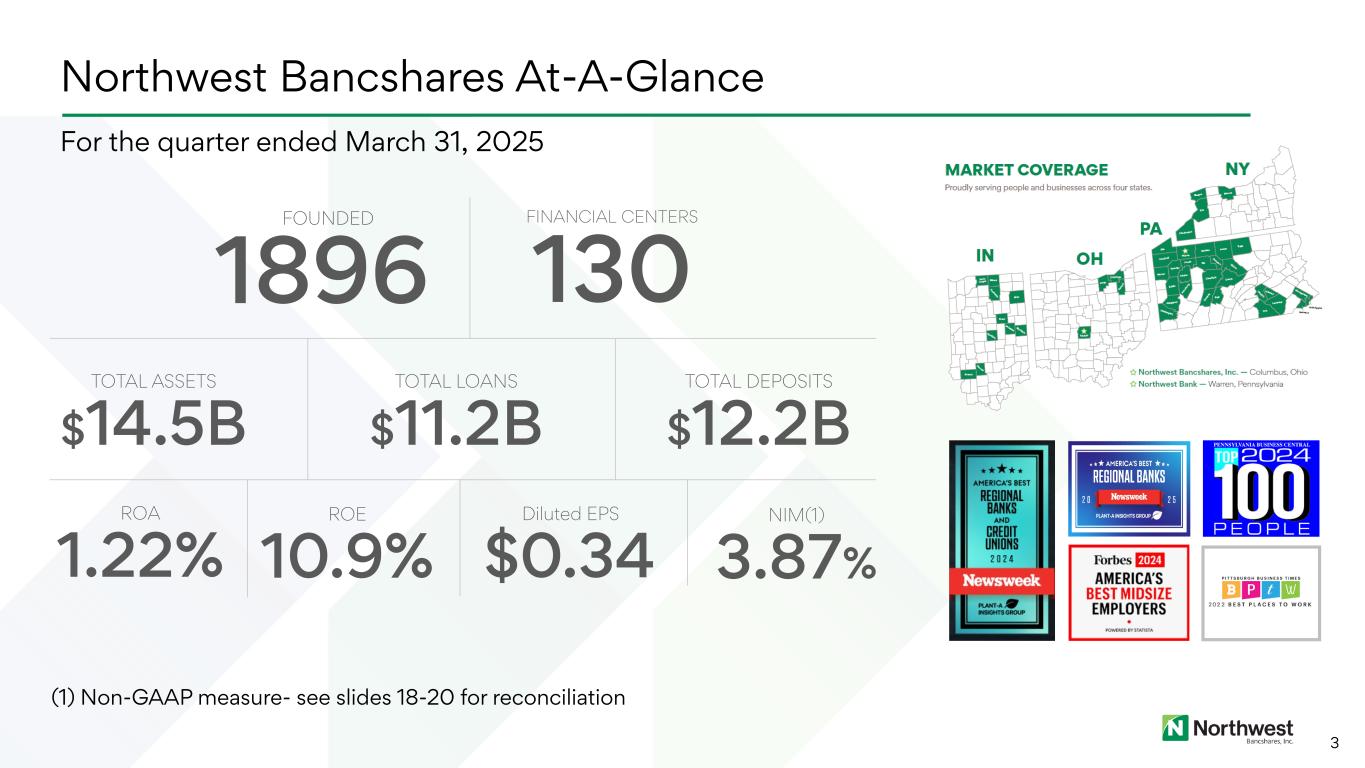
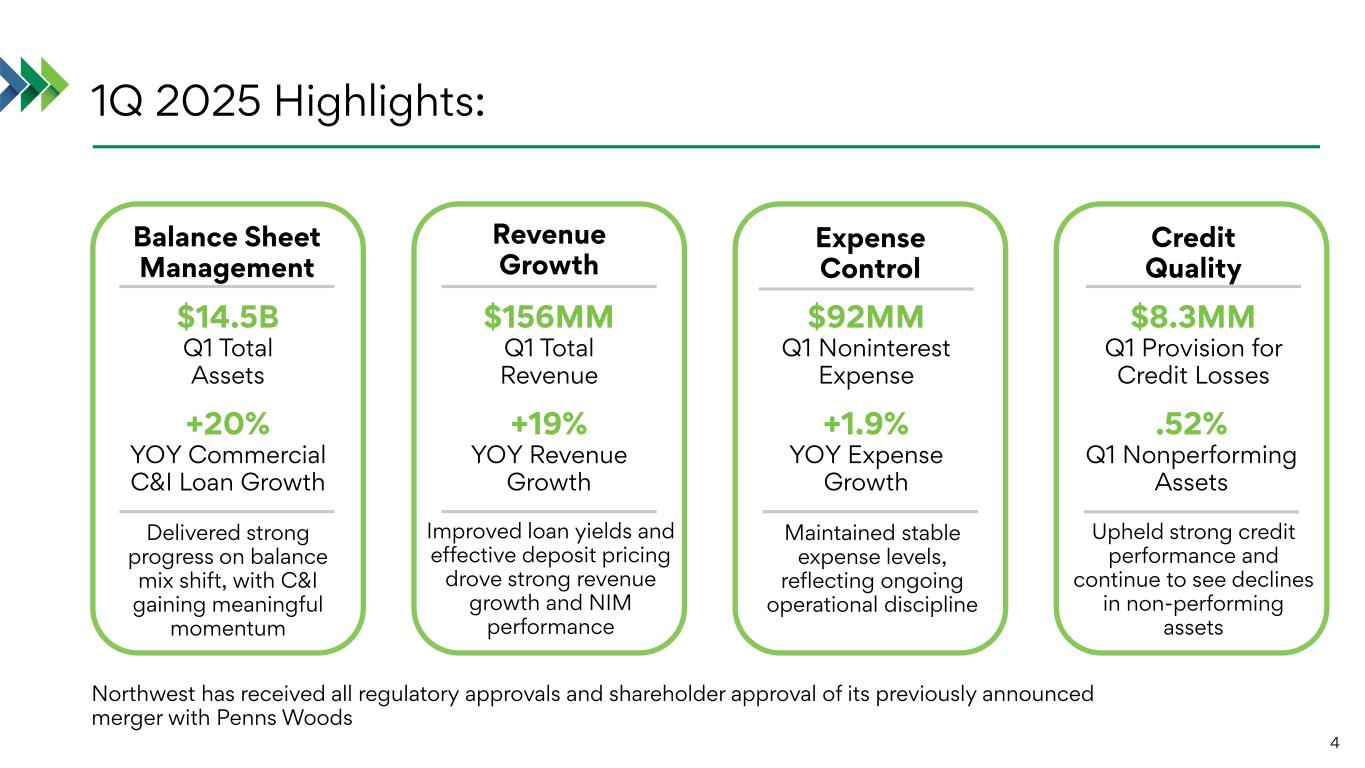
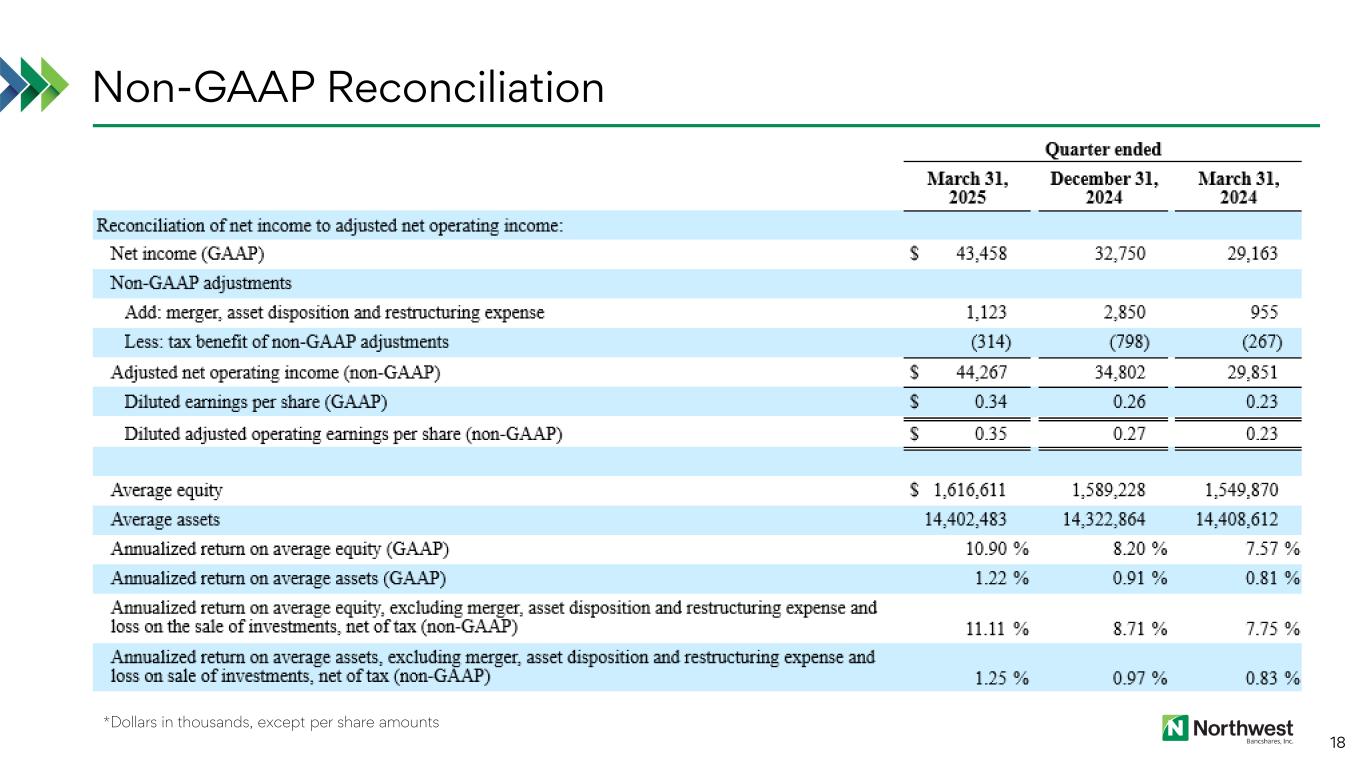
I'm pleased with our performance in the first quarter of 2025 as we continue to execute our strategy and deliver on our commitment to sustainable, responsible, and profitable growth. Doug will discuss the details of our core financial performance shortly, but I will address some of the highlights on slide four. Overall, we had a strong start to the year, delivering $156 million of revenue while controlling our overall expenses to deliver net income of $43 million, an increase of $14 million, or 48%, compared to the same quarter last year, and earnings per diluted share of $0.34 compared to $0.23 per diluted share in the first quarter of 2024. This represents record earnings in a first quarter and one of the best quarters in Northwest history. We continued our strategic shift towards commercial lending with a 20% increase in average commercial C&I loans in the last year. In addition, our successful focus on deposit gathering while maintaining near best-in-class cost of funds provides a quality and stable funding base for the organization. Additionally, we delivered a significant improvement in our net interest margin, as well as in our efficiency ratio, and we reduced our exposure to classified loans, further minimizing our balance sheet risk. And as we have for the previous 121 quarters on behalf of the board of directors i'm pleased to declare a quarterly dividend of 20 cents per share to shareholders of record as of may 8 2025. our strong performance this quarter is a result of our continued rigorous focus on execution cost control and risk management discipline we continue to enhance our capabilities expand our footprint and provide personalized services, and expertise to our customers, companies, and the communities we serve. Our renewed focus on enhancing our retail banking franchise continues. Additionally, we are making good progress with DeNovo branch opportunities throughout our existing footprint, particularly in Columbus and Indianapolis. I look forward to sharing more details in the upcoming months. Regarding acquisitions, in December of last year, we announced a merger with Penns Woods Bank Corp., the parent company of Jersey Shore State Bank and Luzerne Bank, headquartered in Williamsport, Pennsylvania. I'm pleased to report that we have now received all required regulatory approvals, and at a special meeting last week, Penns Woods shareholders voted to approve the merger. Integration activities are well underway, and we are working closely together to ensure a seamless transition. The strong cultural fit between our two organizations is evident as forward-thinking, employee and customer-centric banks, and a rich history focused on community banking. I am pleased to share that we expected to close the merger and convert the bank's systems by late July of this year. Upon closing the largest merger in our bank's history, Northwest will be in the top 100 banks in the United States by asset size, further enhancing our scale for driving sustainable forward momentum and revenue. This quarter's strong results can be attributed to the talent, hard work, and thought put forth each day by our Northwest team. I want to thank them for their continued dedication to our company's success. The current operating environment with significant market volatility and uncertainty over the economic outlook may be somewhat challenging. However, we continue to focus on managing the factors within our control, such as serving our core customers and communities, building on strong financial foundations, maintaining prudent cost control and risk management discipline, and being prepared to capitalize on opportunities aligned with our strategy. Now, it's my pleasure to introduce Doug Chaucer, our Chief Financial Officer, who will take us through our financial results.
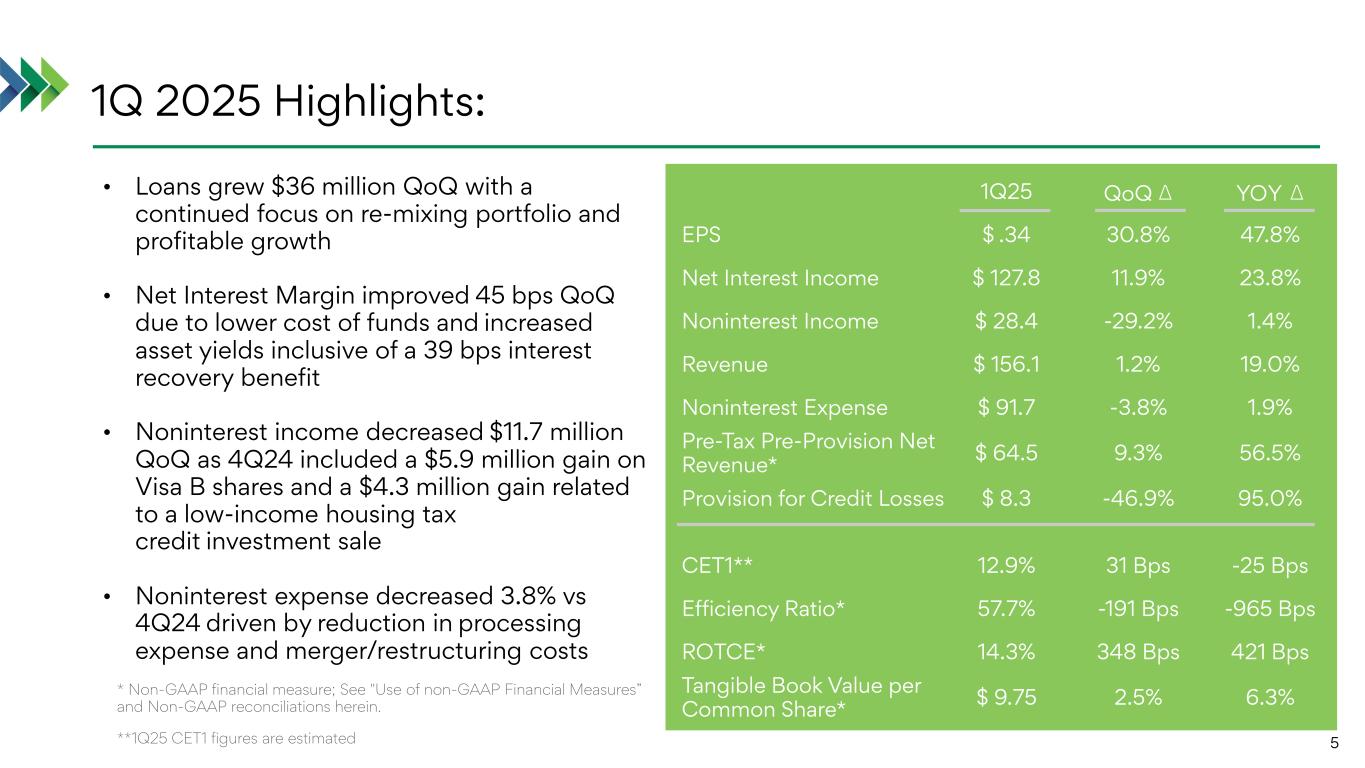
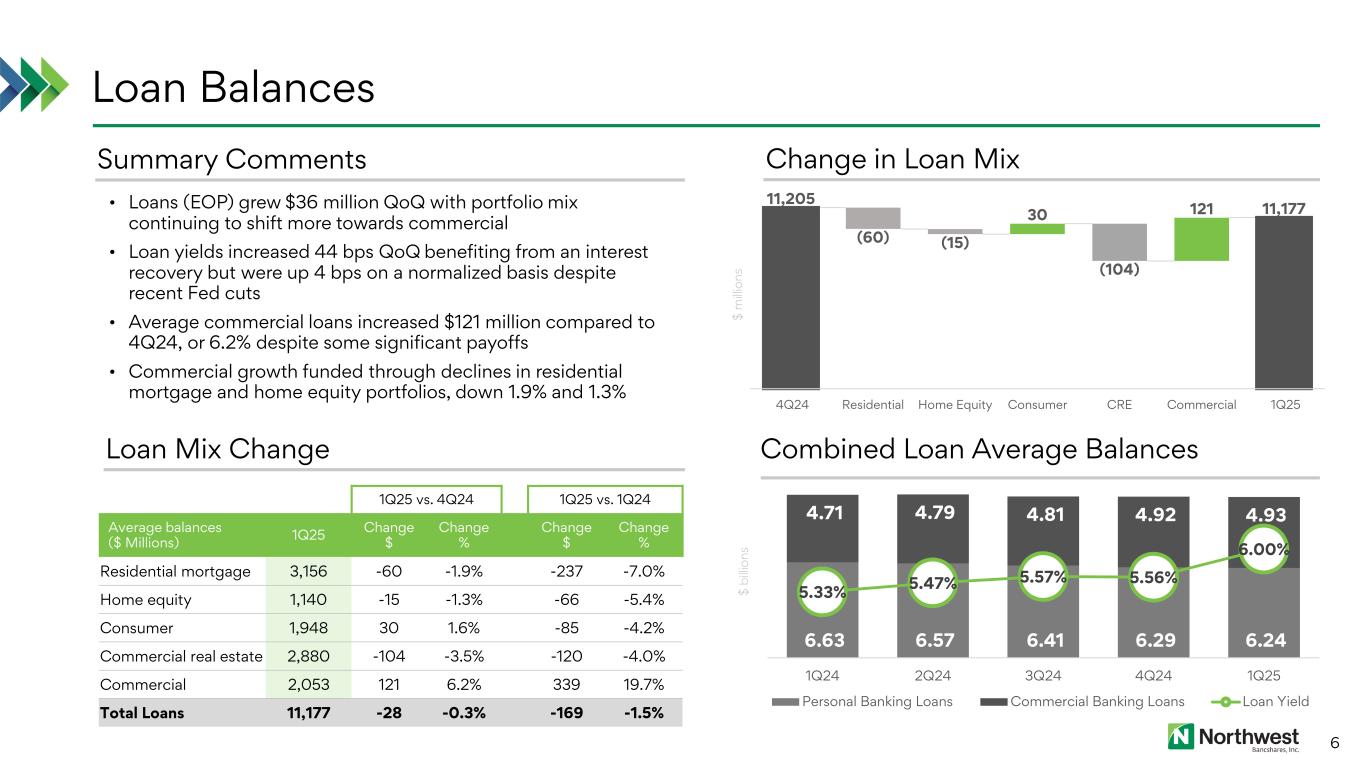
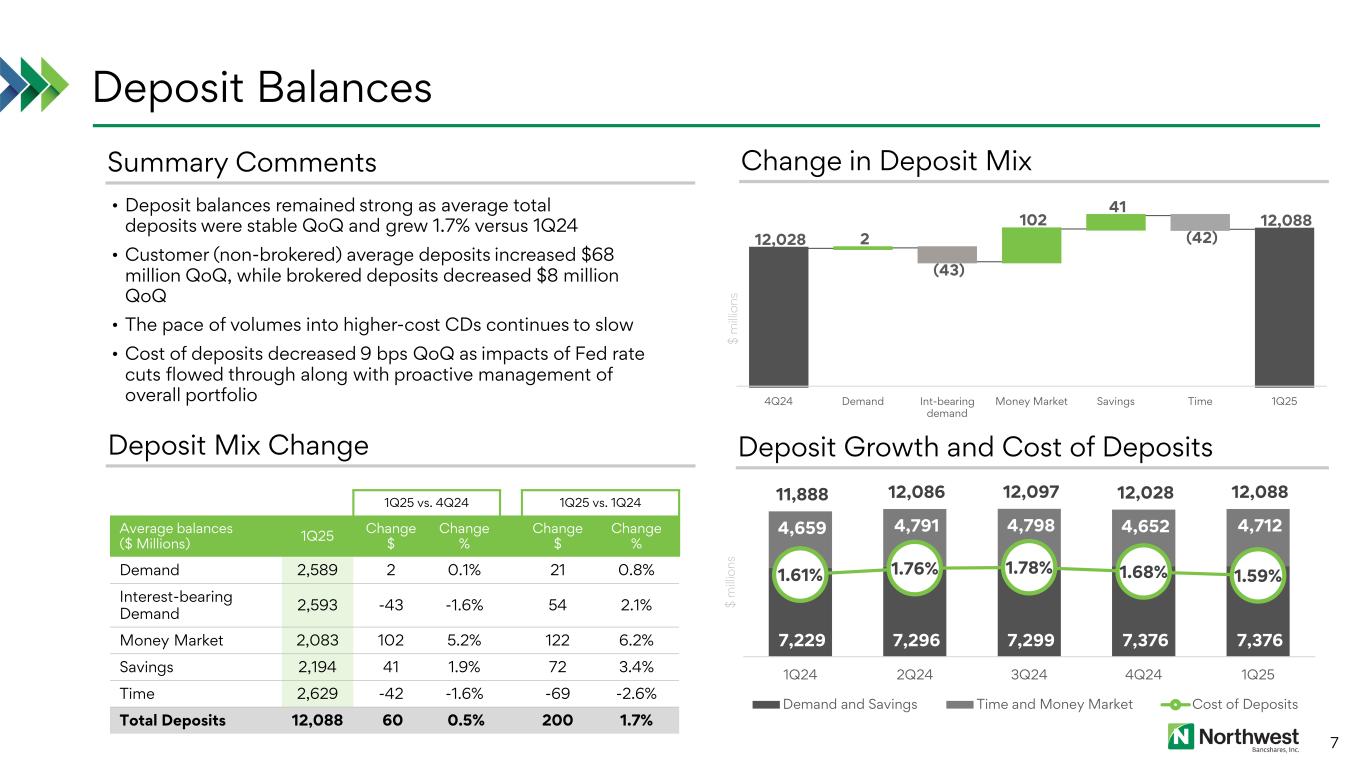
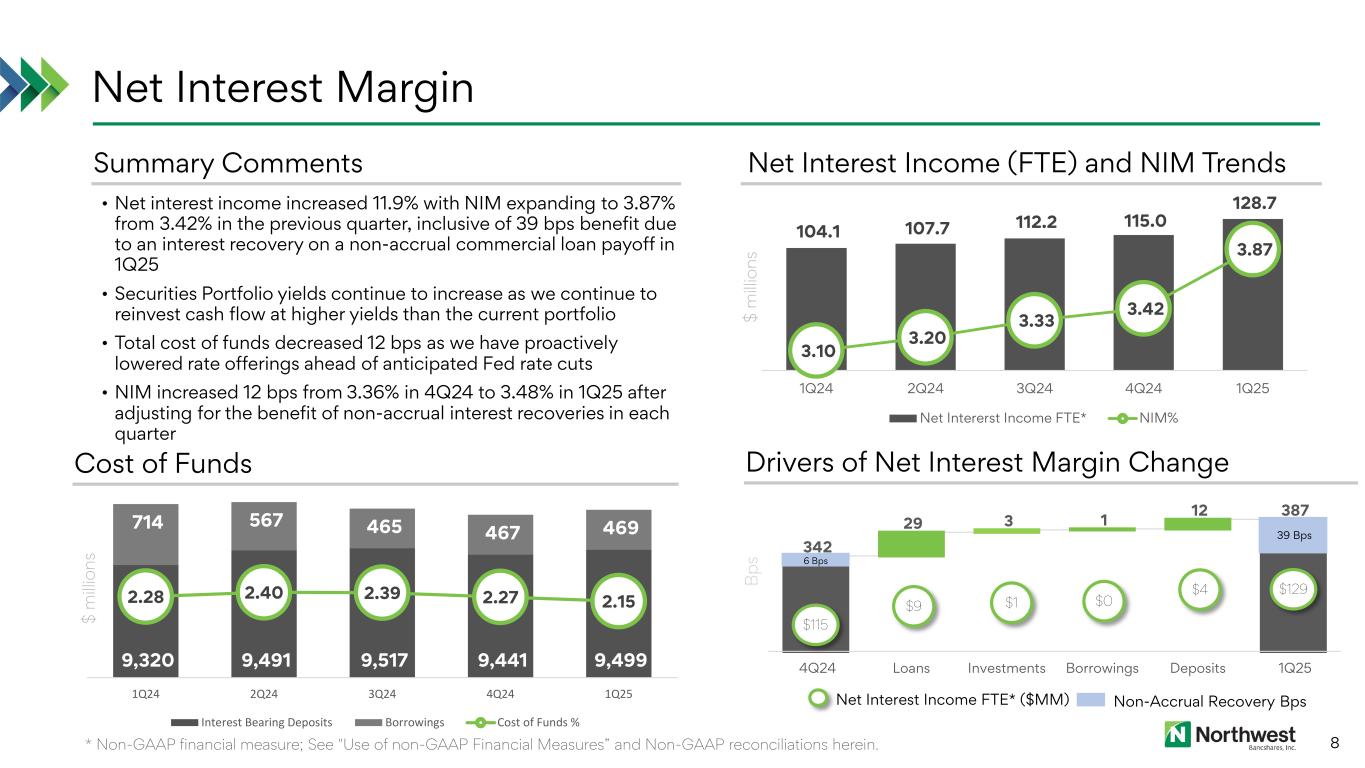
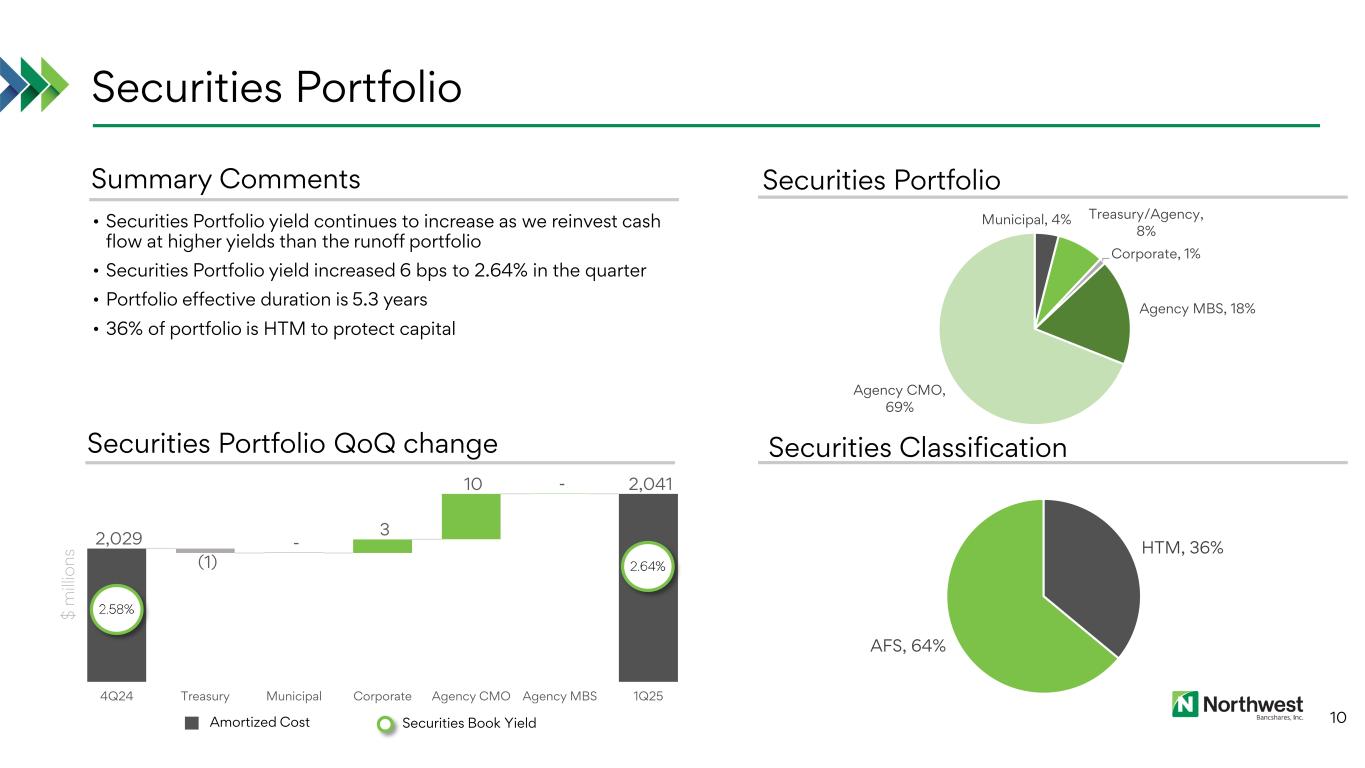
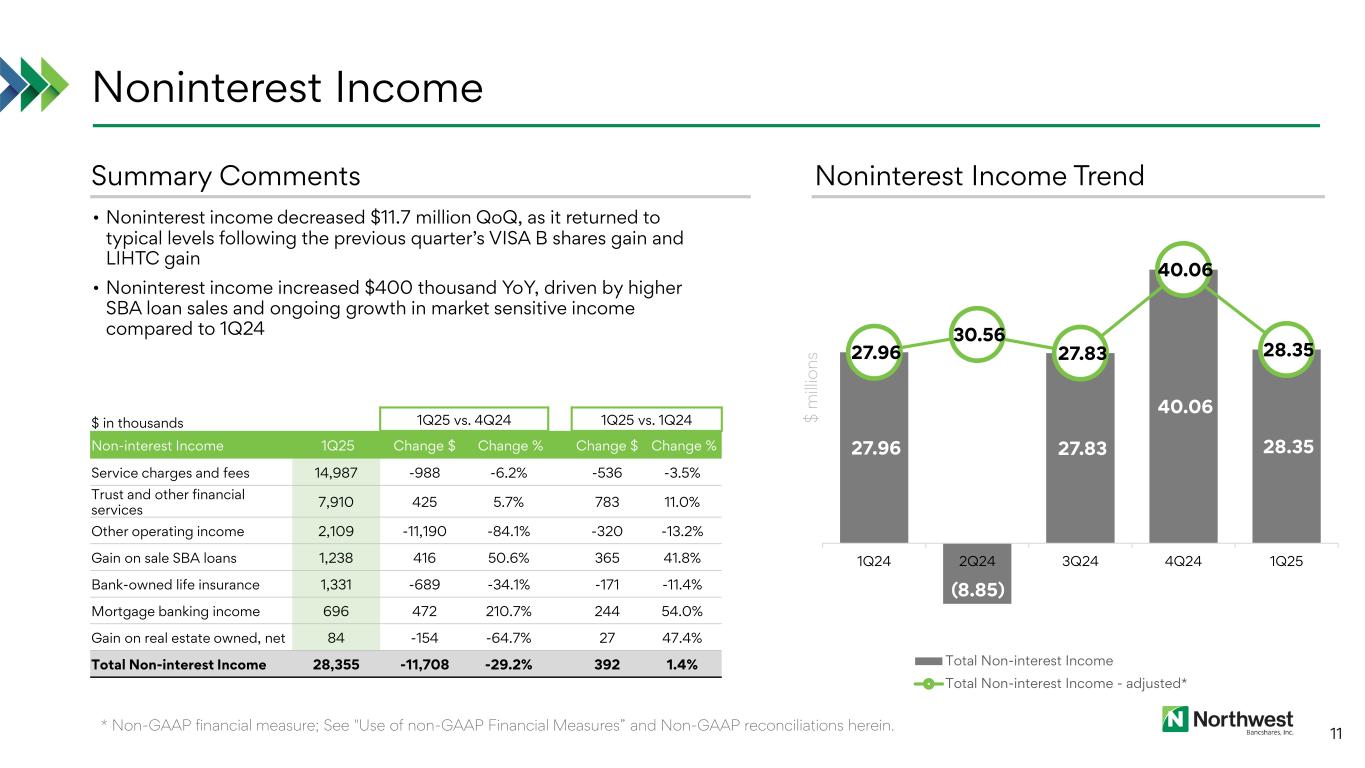
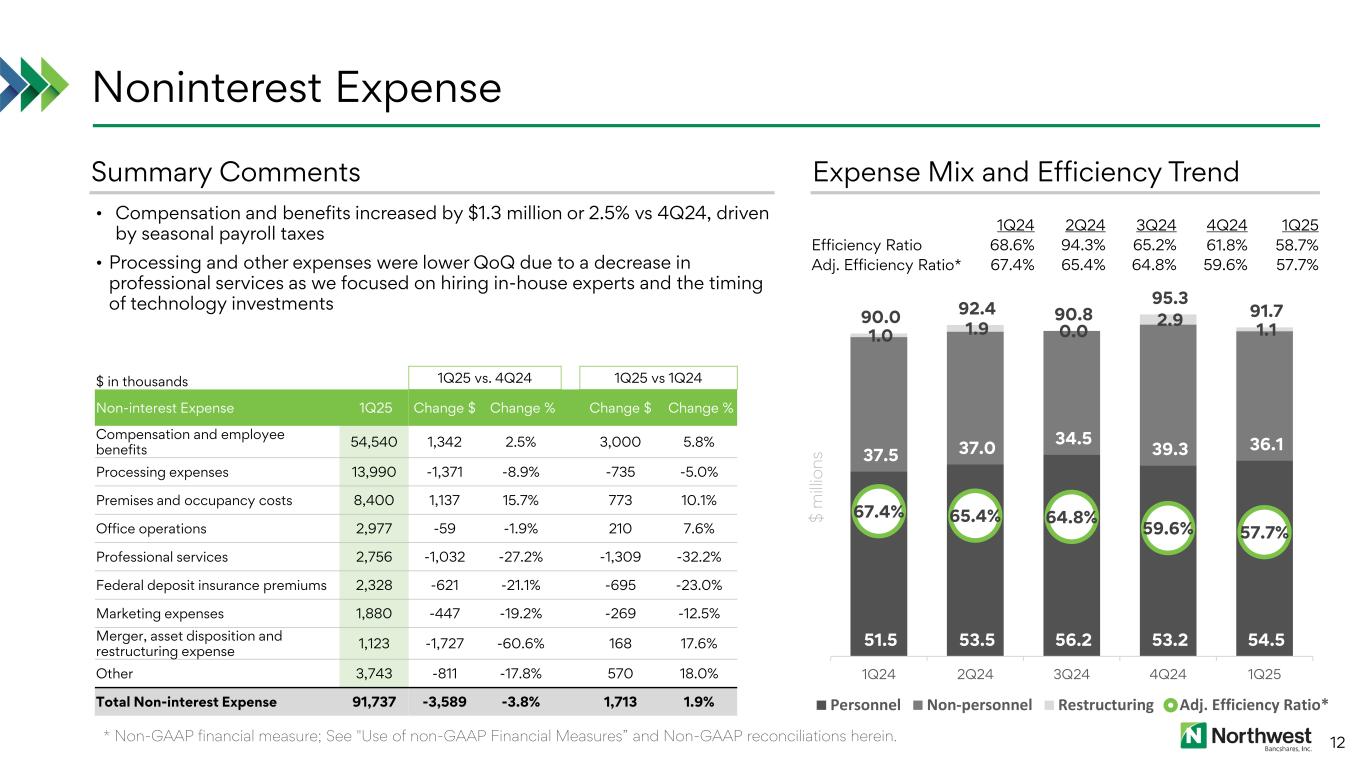
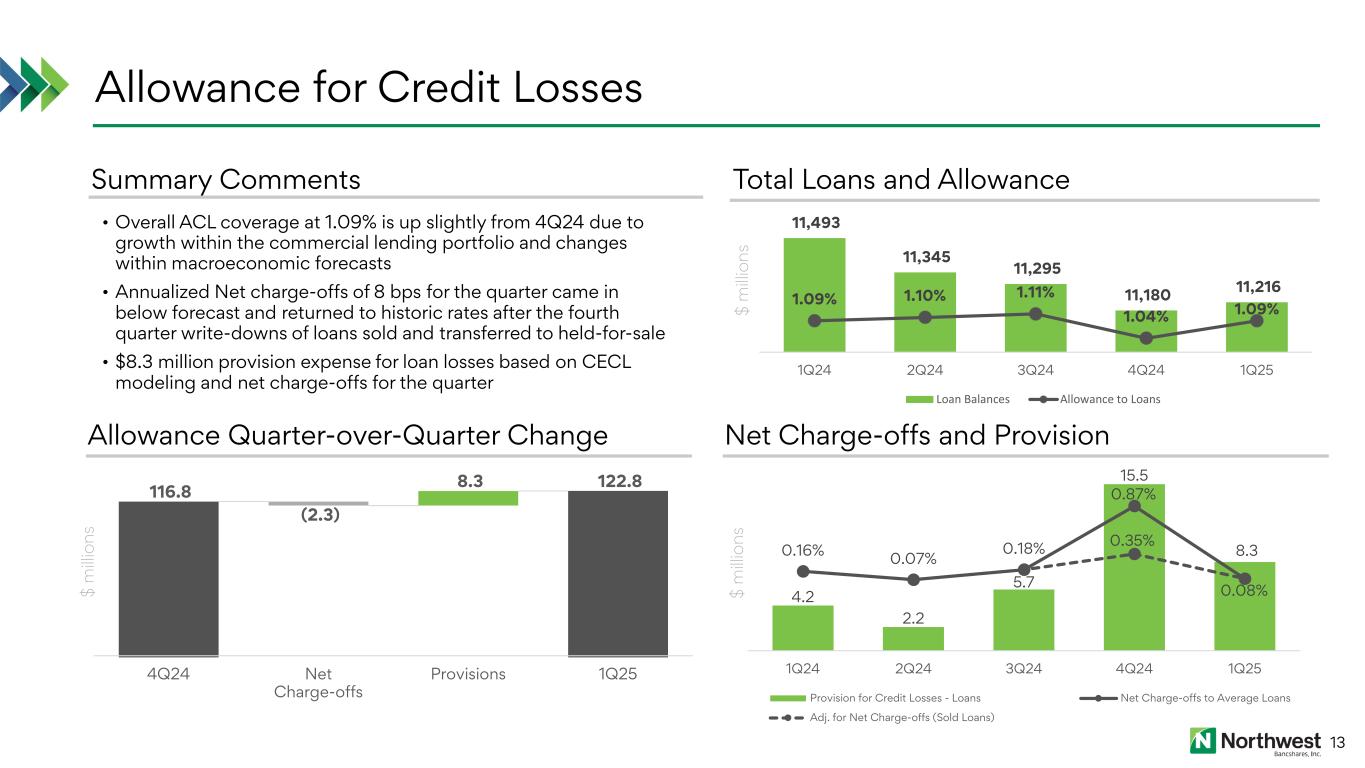
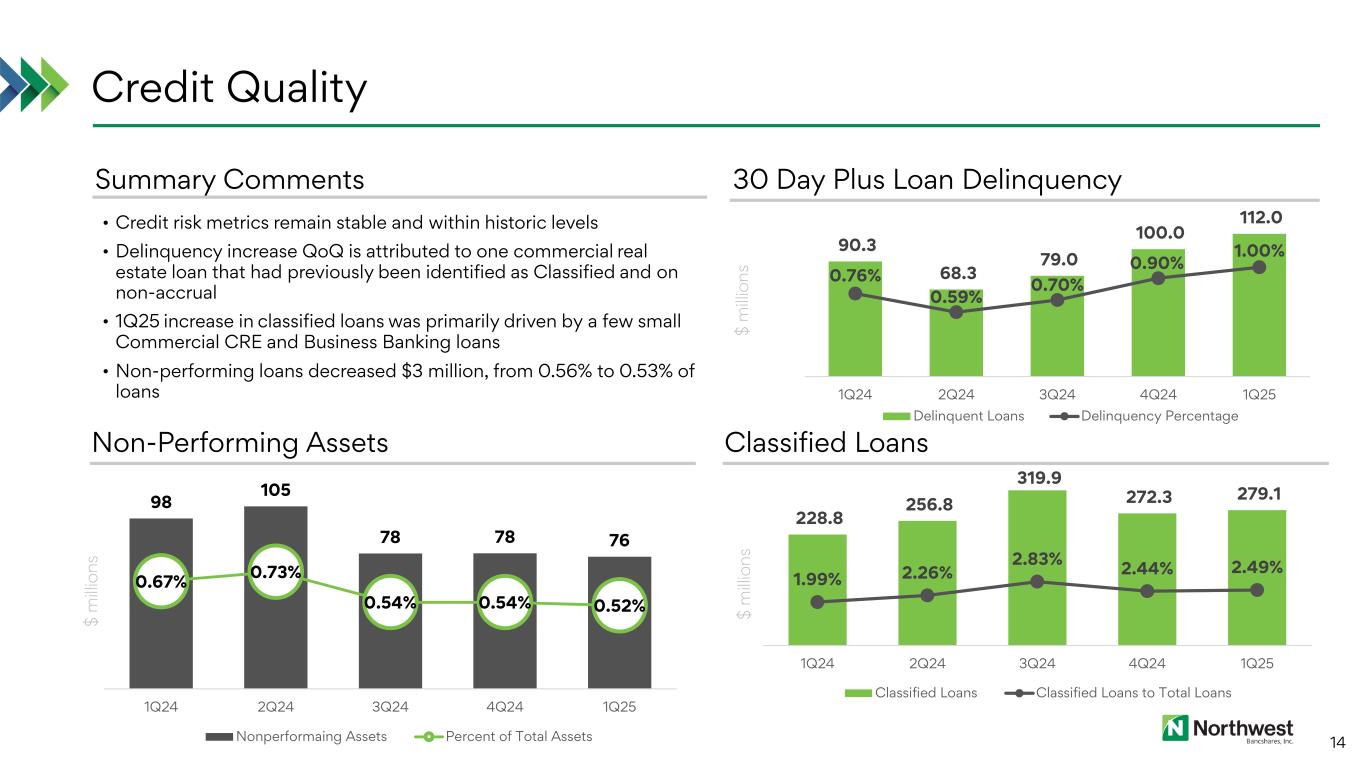
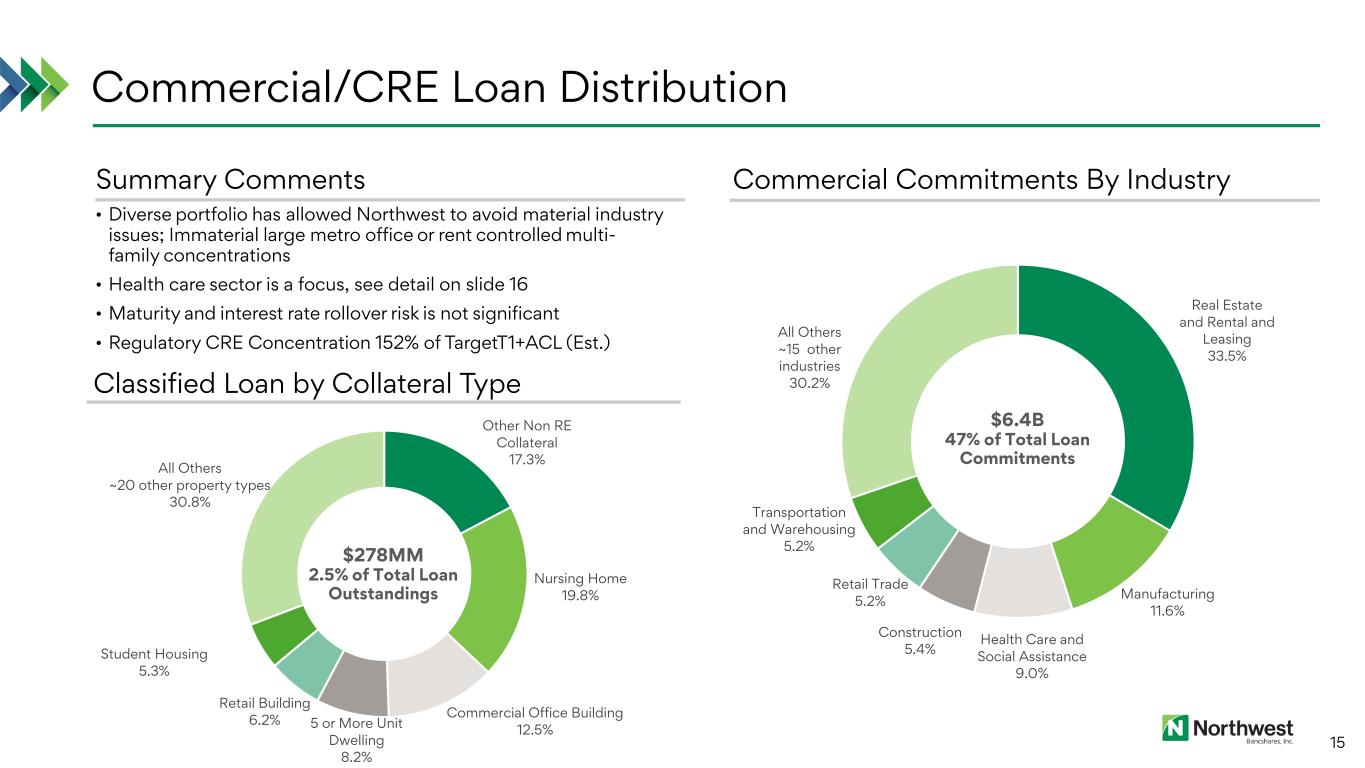
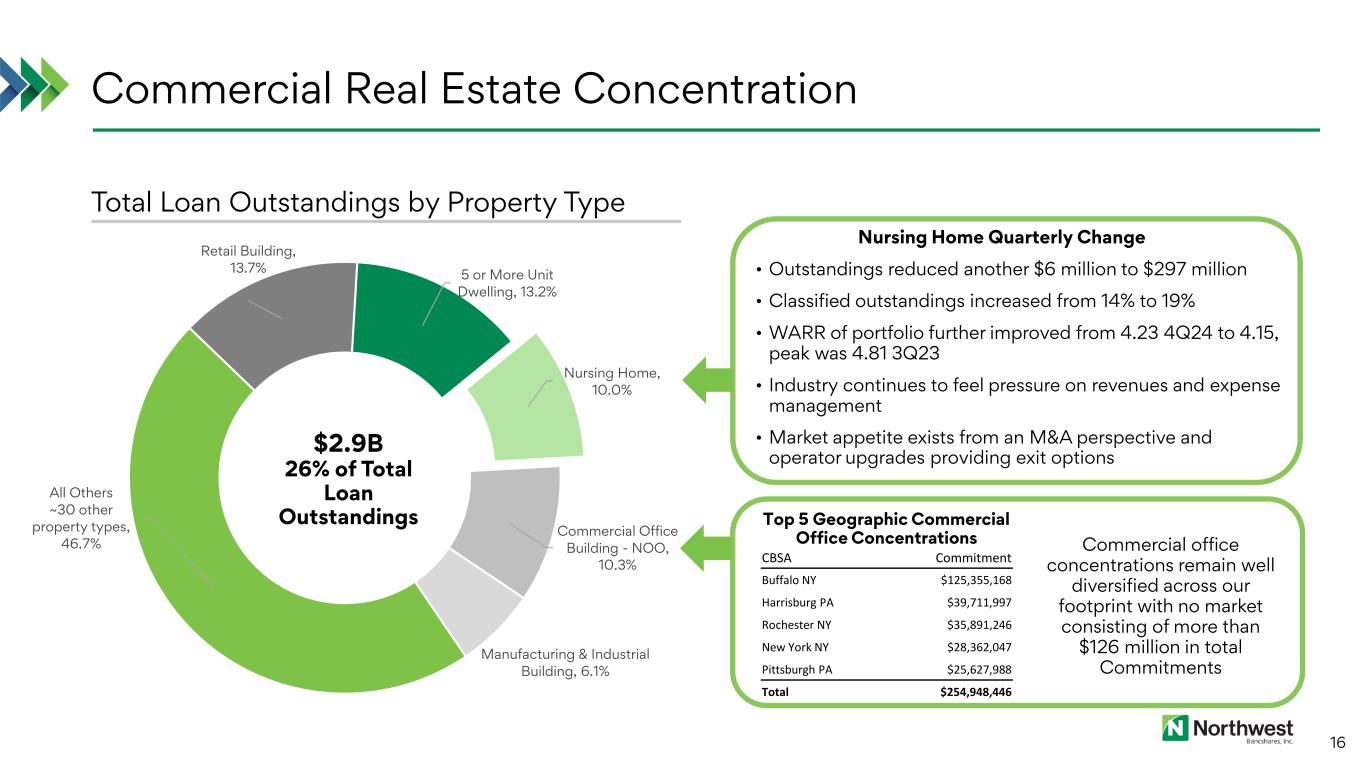
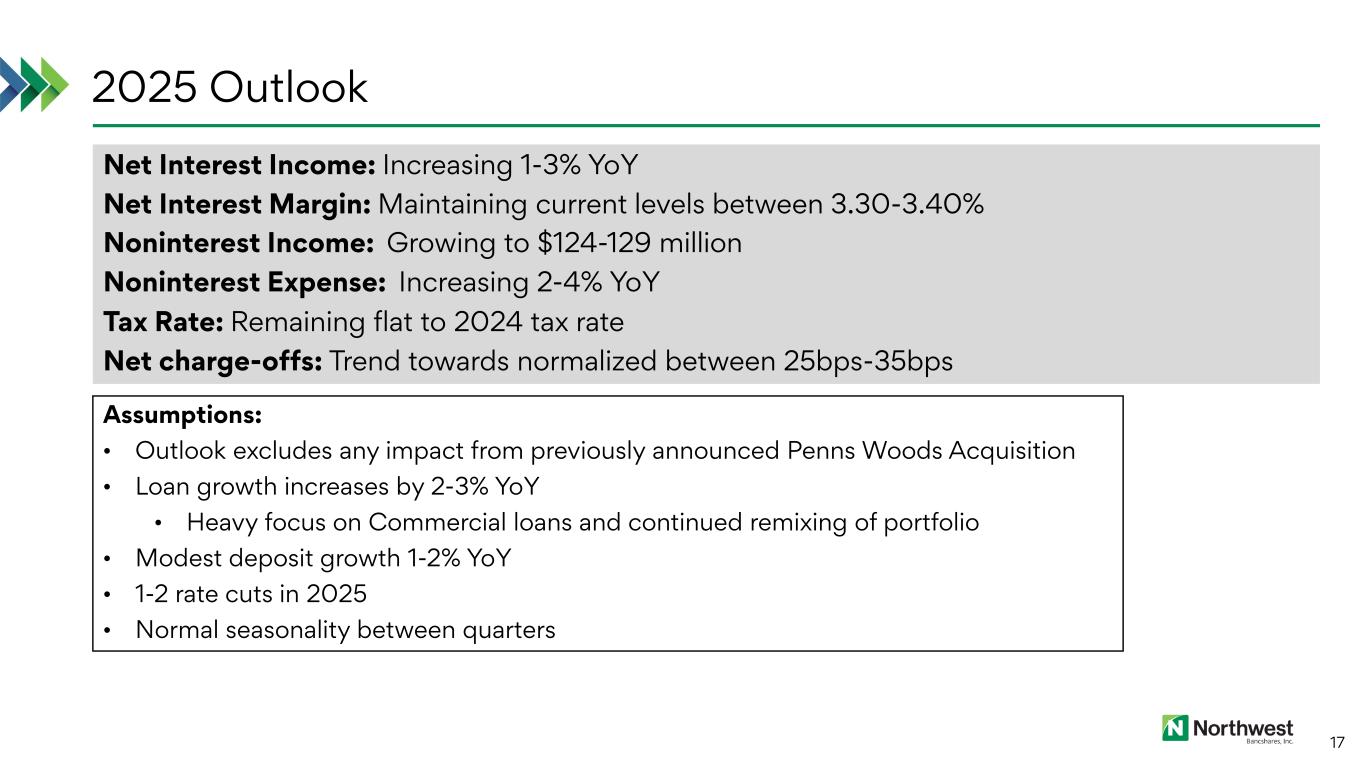
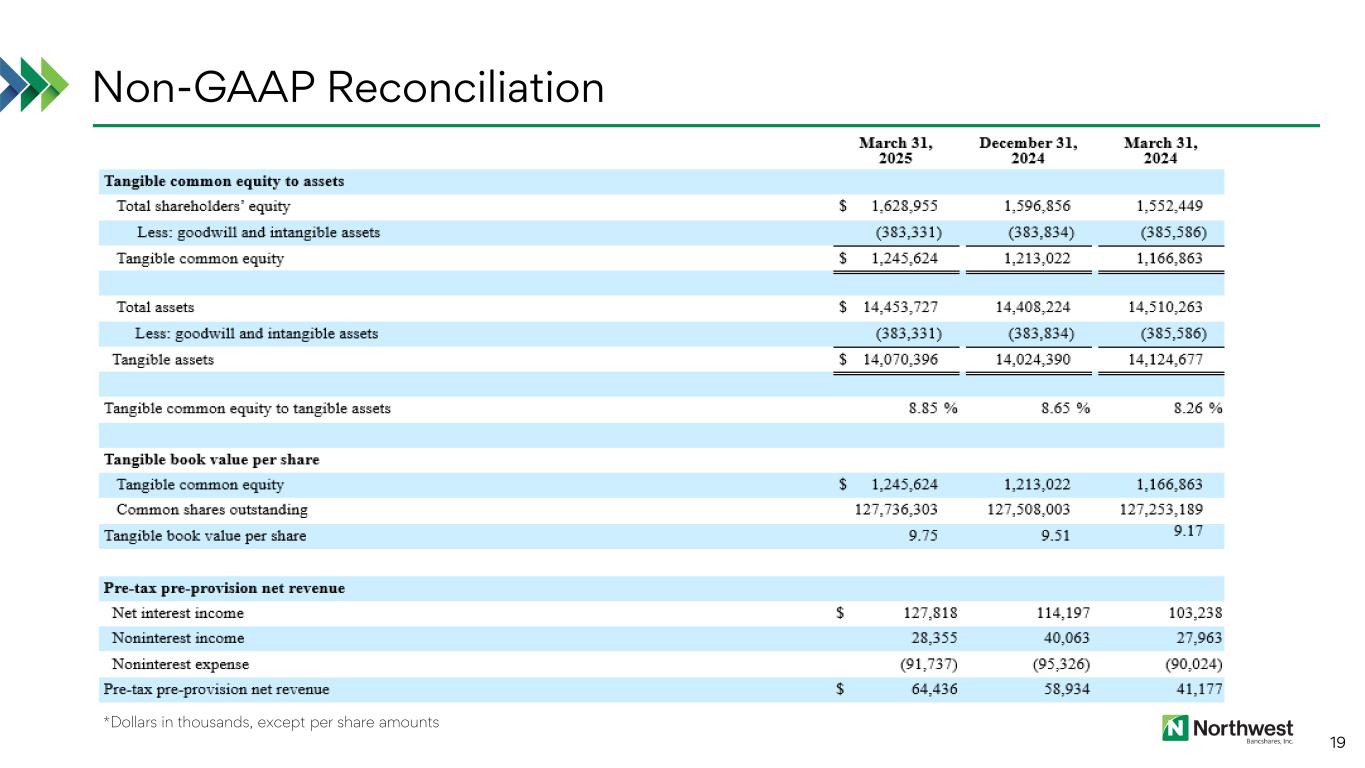
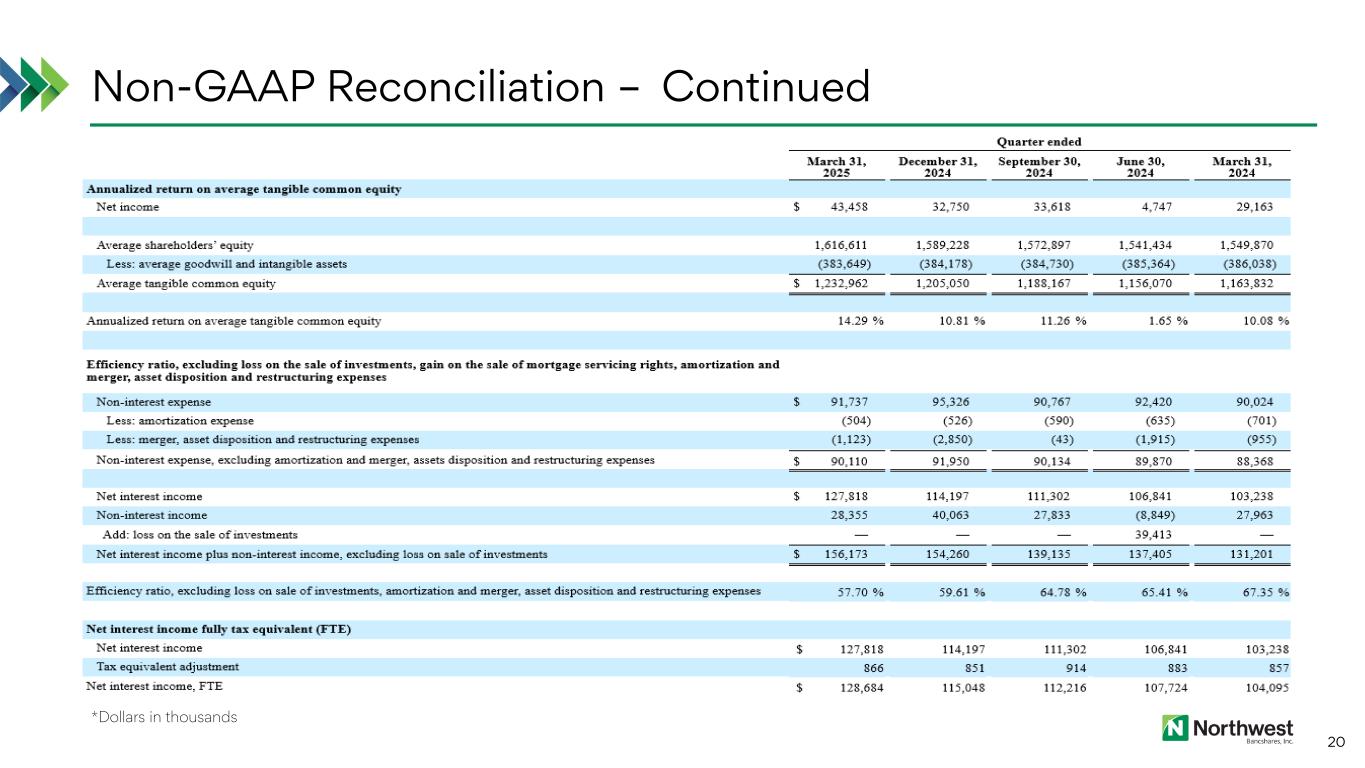
Thank you, Lou, and good morning, everyone. As Lou indicated, we are pleased with our performance. Now let's begin on page 5 of our earnings presentation, where I'll walk you through the highlights of Northwest's financial results for the first quarter of 2025. We reported net income of $43 million, or $0.34 per diluted share, and we expanded our net interest margin by 45 basis points from the prior quarter to 3.87% due to lower costs of funds and increased asset yields, inclusive of a 39 basis point interest recovery. This marks the fourth quarter in a row of improved margin for the company as we continue to manage our loan pricing and deposit costs. Non-interest income increased by $11.7 million, with the majority of the quarter-on-quarter change arising from two fourth quarter transactions, including a $5.9 million gain on the sale of our Visa B shares and a $4.3 million gain on a low-income housing tax credit investment. Overall, we did post 1.2% linked quarter revenue growth and 19% revenue growth compared to the first quarter 2024. Our non-interest expense declined 3.8% or $4 million compared with the prior quarter, driven by a reduction in processing expenses and merger-related costs and continued disciplined expense management. Pre-tax, pre-provisioned net revenue was $64.5 million, which was a 9% improvement from the fourth quarter 24 and a 56% increase from the first quarter 24 based on factors previously mentioned. Now I will highlight some additional details on our quarterly results. Turning to page 6 and our loan portfolio, we saw some modest growth in end-of-period loans, excluding loans held for sale, of $36 million over the quarter compared to the contraction we'd been experiencing. For the quarter, we capitalized on stronger consumer demand for indirect loans to offset a potentially slower start on the commercial side, and that did pay off. We continued to shift our portfolio mix more towards commercial and industrial loans as part of our longer-term strategy. Average commercial loans increased $121 million, or 6.2%, compared to the fourth quarter. Despite some significant payoffs, these increases were effectively offset by the declines in our CRE portfolio, which was down 3.5%, and our residential mortgage and home equity portfolios, which were down 1.9% and 1.3%, respectively. Loan yields increased quarter-on-quarter by 44 basis points to 6.0%, Again, benefiting from an interest recovery, where we are up four basis points on a normalized basis, despite recent Fed cuts, as we have been focused on pricing discipline. On to slide seven, and the bedrock of our financial strength and stability, namely our deposit base. Deposit balances remain strong, with average total deposits increasing $60 million quarter over quarter and growing 1.7%, or $200 million, versus the first quarter of 2024. Consumer non-brokered average deposits increased $68 million quarter over quarter, while brokered deposits decreased $8 million over the same period, and the pace of volumes into higher-cost CDs continued to slow. Our cost of deposits decreased nine basis points quarter over quarter as the impacts of Fed rate cuts flowed through, along with proactive management of the overall portfolio. Our current cost of deposits stands at 1.59 percent, still near best-in-class relative to our peers. Moving to slide 8 and our net interest margin. We have already covered our NIM improvement for the quarter in the summary, but I also want to highlight that the yield on our security portfolio has continued to improve as we continue to reinvest cash flows at higher yields than the current portfolio, and we have seen a reduction in our total cost of funds by 12 basis points this quarter. The next two pages provide some additional details on our funding mix and securities portfolio. Moving on to slide 11, non-interest income, as I mentioned earlier, decreased $11.7 million from the last quarter as it returned to more typical levels following the previous quarter's asset sale gains. Non-interest income increased approximately $400,000 compared to a year ago, driven by higher SBA loan sales and improvements in market-sensitive revenue streams, like trust income, compared to prior year periods. Slide 12 details our non-interest expense. In the first quarter, we incurred approximately $92 million of expenses, which was up 2% from the first quarter of 2024. About $1.1 million of that increase was merger-related. So excluding that line item, expenses dropped to around $91 million, consistent with the expense run rate in the second and third quarters of 2024. Our adjusted efficiency ratio improved to 57.7%, an improvement from the 59.6% in the prior quarter. This reflects our continued focus on managing expenses without an impact on our core operations or sacrificing customer service, while still investing in talent to support future growth. On the next few slides, we cover credit quality. On page 13, you can see our overall coverage ratio is at 1.09%, up slightly from fourth quarter 24, due to growth within the commercial lending portfolio and changes within the macroeconomic forecast. Our overall coverage is in line with the first through third quarters of 24, and we believe this is appropriately prudent given the overall level of market concern and general uncertainty over tariffs. Our annualized net charge-offs of eight basis points for the quarter returned to historic levels after the fourth quarter write-downs of loans sold and transferred to held for sale, and we booked an $8.3 million provision expense. As we have previously indicated in our 25 outlook, we expect the longer-term over-the-cycle level of net charge-offs will be in the range of 25 to 35 basis points. Turning to page 14, our credit risk metrics remain stable and well within historic levels. As previously reported, we took several de-risking actions in the fourth quarter, including the sale and transfer of certain loans from our books. We saw improvement in both non-performing loans and non-performing assets at 53 basis points and 52 basis points of loans and assets respectively, both at five-quarter lows. The 30-day-plus delinquency increased 10 basis points in the quarter and is attributed to one commercial real estate loan that had previously been identified as classified and on non-accruel. The increase of five basis points in classified loans over the prior quarter was primarily driven by a few small commercial CRE and business banking loans. Slides 15 and 16 highlight our commercial loan distribution, showcasing a diverse portfolio and some detail on our CRE concentration, including our healthcare sector focus. In short, our diverse portfolio and strong underwriting has helped us avoid many industry CRE-specific issues, and we have minimal exposure to large metro office or rent control markets. We have no significant maturity or interest rate rollover risk. I'd like to now review our 2025 outlook, which we shared earlier in the year, and which can be found on slide 17. As a reminder, our outlook excludes any impact from the previously announced Penswoods acquisition. As Lou mentioned, the operating environment is one of significant market volatility, and there is uncertainty over the economic outlook for the remainder of the year. At this time, we are not modifying the outlook we provided on last quarter's call, and we will continue to monitor economic trends and how they impact our firm. I would say we can expect our margin to perform at or somewhat above the high end of our range, assuming one to three Fed cuts occur in the back half of the year. Our fee income will likely be at the lower end of the range. We may not fully achieve that level. Loan growth will also be dependent on the broader economic environment, which is again unpredictable. We'll focus on controlling expenses in light of the uncertainty. I will now turn the call over to the operator who will open the lines and facilitate the live Q&A session.
Operator
Ladies and gentlemen, at this time, we will be conducting a question and answer session. If you would like to ask a question during this time, simply press star followed by the number one on your telephone keypad. If you would like to withdraw your question, Simply press star one again. Our first question comes from the line of Daniel Tamano from Raymond James. Sir, please go ahead.
Good morning, guys. Good morning. Maybe starting just kind of drilling into the margin guidance a little bit, Doug. I was about to ask you about the conservative nature, perhaps, of keeping the guide, And then you made the comment right at the end about at or above the range. So just curious kind of how you're thinking about that going forward. I mean, like kind of near term relative to the end of the year, you've got the one to three cuts in there. I'm sorry. I think you sorry. If you could just clarify the number of cuts that you've got in there and then just thoughts on on how you how that margin, the core margin may trend. and if you've got any updated thoughts on what the acquisition may do to the margin as well, that'd be great.
Yeah, thanks for the question, Daniel. So I think we closed the corridor kind of on a core margin of 348. I think that it is safe to assume we'll kind of be at the high end of the range. We're leaving a little bit of room because the overall pricing is pretty aggressive right now. So to the extent that we want to continue to work through loan growth, that may deteriorate the margin slightly, but I wouldn't anticipate it to be material. There's also still some opportunity on the deposit portfolio as it relates to future rate cuts. We do have one to two rate cuts in our guidance. Again, if we end up with three rate cuts, assuming the last rate cut comes very late in the year, it's really not going to change our margin outlook at all. And we'll update, we'll provide more guidance as it relates to Pennswoods and the impact of the acquisition in the second quarter after that deal will be closed and we'll have much better thoughts around where the loan marks came in as well as the purchase price. So there wasn't a lot of reason to update the guidance given the fact that it really is only good for another quarter anyway and that the performance right now kind of was where it was. Okay.
And then I guess just looking at the deposits, so kind of a similar question related to the margin, but you had good, really pretty strong money market growth in the quarter. Curious to the driver there, the overall average rates are still very low at 181 in the quarter. Just curious what you were bringing those on in the first quarter and where you're expecting to drive deposit growth going forward.
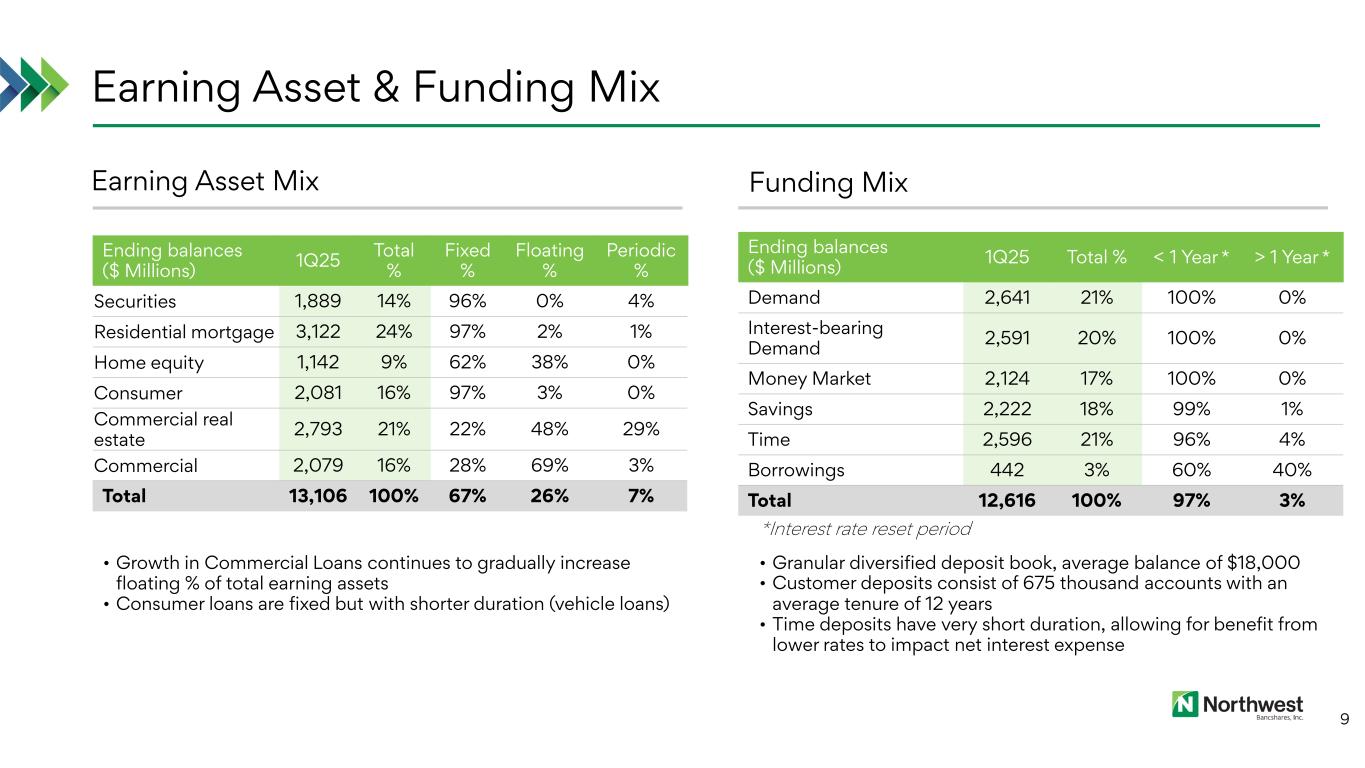
Yeah, so we continue to have a lot of CDs that are coming due, and we are trying to get those into more liquid pricing or more liquid products going forward. So you are seeing some of that transition from CDs into money markets. I believe the CDs went on at 3.75% on average across the franchise. So that's the strategy. We have seen really consistent, strong, stable deposit and slight growth throughout our footprint, and we'll continue to augment that with our de novo strategy. We are opening a new branch this year in Fishers, Indiana. That'll be our first branch opening in like six years. So I think there's a number of factors that are leading to that confidence in deposit growth, as well as the slowdown in the economy happens. You'll tend to see consumers hold deposits a bit longer anyway.
Okay. And it's safe to assume the new money market I mean money market rates going up basically but just moving out of CDs I'm assuming those are in the threes somewhere uh the CDs would be in would be higher than that they'd be in the fours because they would have all gone on last year before the rate cuts came through um and they're all relatively short so it would be an improvement if they ended up in money market in terms of overall yeah sorry positives I yeah just on the money market rates the new money market rates. Yeah. New money market rates around 375. Oh, got it. Okay. I understand. Okay. All right. Thanks for taking my questions. Thank you.
Operator
Thank you. Our next question comes from the line of Tim Switzer from KBW. Please go ahead.
Hey, good morning. Thank you for taking my questions. Hope you guys are doing well. Hey, good morning. Congratulations on getting the approvals for Pins Woods. Are you guys able to provide any kind of guidelines on maybe the changes to tangible book value dilution and the expected purchase accounting accretion due to the change in rate since you guys have announced the deal?
No, not specific. Generally speaking, rates have gone down, so that will tend to benefit us in terms of the marks that go on the portfolio and the overall our stock price has been lower across the performance horizon so we have a fixed exchange ratio so that would yield a lower purchase price but again both are volatile and variable so we're not going to provide incremental guidance because we have to constantly update it because of that so right now we would be in a better position relative to the originally announced metrics, but there is time between now and when we actually close the deal.
I got you. I understand. Are you able to provide a bit of an update on the credit trends you guys are seeing, particularly with a lot of the disruption from tariffs and macro uncertainty? Are there any industries particularly impacted by tariffs that you guys feel that you're exposed to and how have the conversations those customers been?
Yeah, I mean, it's still pretty early and there hasn't been a lot of impact that I think has rolled through even the broader economy or us specifically. We have looked at the exposure and I think we would look at industries like manufacturing, transportation and warehousing and hospitality being potentially the most impacted from these current actions the aggregate exposure to those industries is close to eight percent of the loan portfolio so not massive at this point but certainly something that we're looking at okay back got it and uh last question for me are you guys able to provide an update on the commercial loan bill that you guys have been working on and you know any specific categories where you guys have uh you know more recently been uh taking the chair in i think we continue to take share in the newer verticals that we put on so think about sports finance franchise finance etc the overall mix of commercial businesses it's the same six verticals or so that we had before so again we are able to pick some of that up just because those employees have been on now closer or two a year, they've had more time to transition and they have more time to work their books. Again, you know, we are part of this overall broader economic slowdown. It's anybody's guess where those volumes continue to go, but we are lucky in that we were building some of those into the softness. So there is a little bit of embedded growth through that.
Got it. Thank you for all the color. You're welcome.
Operator
Thank you. Our next question comes from the line of Manuel Nava. Please go ahead.
This is Sharon G. on for the normal. Good morning. Talking about the commercial book a little bit more, what do pipelines look like right now?
Again, we haven't seen a ton of slowdown just yet. It's still pretty early. And we do have some incremental pipeline growth, again, because we have the newer verticals out there. So the pipelines right now, relative to the first quarter a year ago, would show that they are a little bit stronger. But, you know, I still also think some of the tariff effects will continue to roll through the pipeline. So, right, cautiously optimistic non-reloan pipelines is how I would phrase it.
Great. Thank you. And then one more question on credit. So, charge-offs are at eight basis points. Thanks for the guidance. Could you give us updates on, like, your provision slash credit expectations going forward?
Again, there's so much economic volatility, it's very hard to predict where those levels would be. You know, we'll continue to operate under the current CECL methodologies, as everyone will, and we'll have to wait to see where the macroeconomic trends end at the end of the quarter.
Operator
Great. Thank you. Thank you. Our next question comes from the line of Matthew Rees from Stevens Inc. Please go ahead.
Hey, good morning. Good morning. I was hoping you could talk a little bit about the competitive landscape. Where are you seeing the most spread compression? And then I would love to hear a bit about roll-on versus roll-off yields. Across your lending categories, where are you getting the most pickup? Thanks.
So, I don't know that I have a lot of color to offer on the competitive environment, only because, again, we're not in many, many markets that other larger peers would be. So, I kind of refer you back to where they said new commercial loan yields are coming on at 7.26%, and they're rolling off at around 6.76%. I know that's part of your answer. So, there's definitely a decent increase in rates there. But again, from as far as competitive intensity goes, I mean, it's still very competitive out there. You know, as well as I do, everybody was projecting asset growth. So that asset growth does become harder to come by, especially when things slow down, but no specific guidance there.
I might add for you, though, that really we're looking at being very disciplined in the credits we're looking at and the pricing that we want to maintain. So I just think naturally that might constrict, and that's why our guidance hasn't really changed on the commercial side, notwithstanding our pipelines are a little stronger than expected. And I think, as Doug mentioned, what the pipelines are and what the pull-through rates are might be different 60, 90 days from now. So we're cautiously optimistic there.
Yeah, just to follow up on that last comment, if the pull through isn't as strong, one of the things we saw this quarter was consumer loan growth was a bit stronger than we've seen in a while.
Is that a lever you might pull?
And as we think about the composition of growth this year, should we anticipate a bit more consumer growth?
Potentially. I mean, we're balancing that with what we think the future environment is going to be from a credit quality standpoint. We do have that lever and indirect. We currently are out with a home equity campaign pretty significantly throughout the franchise. But if we see that the consumer credit starts to weaken, we can always pull that back. So obviously, we're balancing growth and risk and yield. And so we're pretty active around that. And one of the benefits of the organization as we've constructed it in the last few years is we are very diversified and we do have a lot of levers um so there's there's constantly conversation around uh strategy and how we go to market got it that's all i had i appreciate you taking my questions thank you thank you thank you our last question comes from the line of Brian Firauli from Piper Sandler.
Operator
Please go ahead.
Good morning. Morning. Just on the, obviously, you already talked about NIM and by the same token, the NII guy seems obviously quite conservative here at this point. You know, I know Penwood's going to change that anyway in the back half of the year, but just trying to think through in terms of you mentioned pipelines a little stronger here um that two to three percent uh long growth assumption has that always kind of been um uh back loaded uh is that still kind of the uh the way to think about it and does that always be the assumption here um uh in terms of long growth for the year i wouldn't say it was necessarily back loaded um i do think the way the economy started it was definitely a slower start for commercial because there was a lot of
uncertainty there so we did lean a little bit more heavily to consumer as was discussed earlier also just the way the rate curve is going to play out um long lower duration consumer assets that are priced at the high at higher rates today than they would be in the third or fourth quarter seems to make some sense to manage the margin so for all those reasons you saw us pivot and lean a little bit more heavily into the available consumer loan volume. And then, you know, towards the back half of the year, if things settle down with tariffs and you get a little bit more certainty out there and commercial customers are going to start borrowing, we would hope to take advantage of that as perhaps the consumer, if there was pull through of consumer demand up front, obviously that lever would sort of slow down for us and everybody. So we're just trying to be very active in the environment that presents itself.
Okay. And then now is probably not going to be the time you start doing it, but just curious for modeling purposes, if in the past, did you provide any sort of guidance on how the Pennswoods acquisition would impact NIM going forward?
No. If you go back to what we had originally published, I don't think we've provided specific guidance there again it's so volatile with rates it's very difficult to put guidance out there until we get closer to the closing so again with an anticipated close later in July when we come to this call in July we should be able to provide much more clarity around Penn's Woods and its impact great okay and then that's fair and then just just on M&A in general Obviously, you've got the one to still close, but it seems like at this point, it seems pretty confident.
It makes sense, given you've gotten approvals and so forth to close this thing. Just trying to think through how open you are to additional deals. You mentioned this is a larger acquisition, and the rate picture has been very volatile, which makes, obviously, to your point, marks difficult on an even day-to-day basis to calculate. But, you know, we've seen some banks come back and do deal after deal. I'm just curious how open you guys could be to additional M&A in the back half of this year. Is that something probably farther around at this point?
Yeah, hi, this is Lou. You know, in the current environment, I think it's sort of very tepid, right, given what's going on with stock prices and the volatility. But certainly, as we've sort of communicated to you before, we have a dual strategy in the interim until the M&A market really becomes more active again. We'll be focused internally on our discipline, on efficiency, on execution, you know, on growing the commercial vertical. So, we've got plenty to do. Having said that, I'm still engaged in conversations with other CEOs and taking meetings, and we will look for transactions in the future that are highly accretive, add to our revenue arc, our earnings per share, and add value to the firm for our shareholders. So, you know, I think, you know, from my perspective the uh the strategy is still in place uh but but certainly in in this environment there's there's a law okay i appreciate it thanks guys thank you thank you thank you this concludes our question and answer session i would like to turn the call back to mr lu for closing remarks thank you on behalf of the entire leadership team and the board of directors thank you for joining our call this morning. With strong and stable financial foundations and tight cost controls and risk management discipline, we are ready and well prepared to capitalize on opportunities for driving sustainable, responsible growth when and where they arise in the coming months. I look forward to updating all of you on our progress on our second quarter earnings call later this year.